Grand Duchess Xenia Alexandrovna’s Archive Donated to GARF
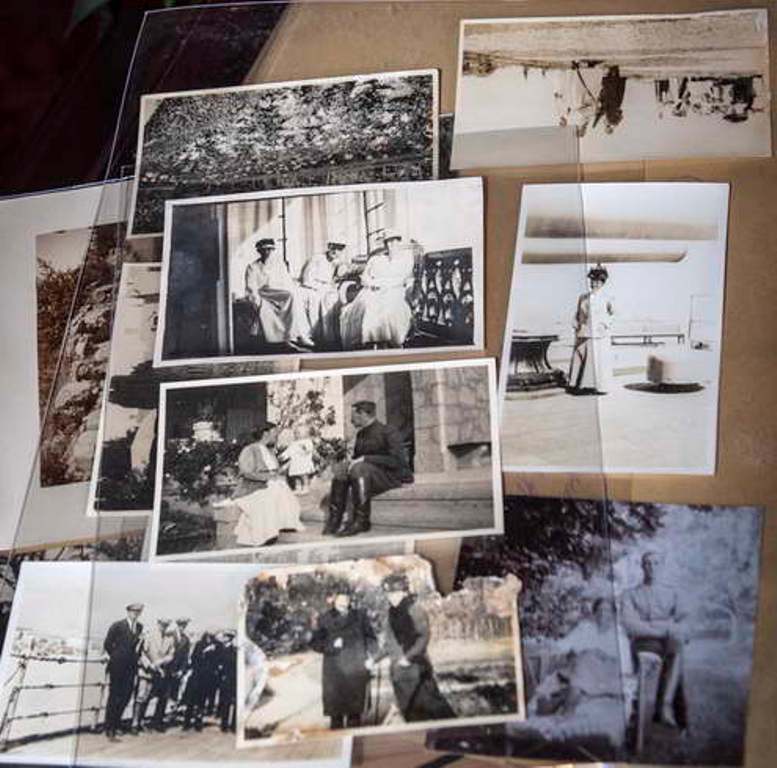
PHOTO: photos of Grand Duchess Xenia and her family
are among the archive donated to GARF

NOTE: the following article was originally published in Royal Russia No. 13, Winter 2017, and updated with additional information and photos on 3rd March 2026. While this article is dated, I believe that it is still relevant and will be of interest to my readership – PG

On 6th December 2017, a portion of the archives of Grand Duchess Xenia Alexandrovna (1875-1960), the eldest daughter of Emperor Alexander III and Empress Maria Feodorovna, was presented to the State Archive of the Russian Federation (GARF) in Moscow. The gift was presented to GARF by the Chairman of the St Basil the Great Charitable Foundation Konstantin Malofeev, who is also Chairman of the Board of Directors of the media group Tsargrad.

The archives of Grand Duchess Xenia Alexandrovna was purchased five years ago at an auction in London. It consists of 95 documents, which include five diaries, family photos unknown to Russian archivists, and in a separate canvas bag decorated with a satin ribbon, 25 letters from Xenia’s brother Grand Duke George Alexandrovich to their mother Empress Maria Feodorovna.

Especially valuable, are her diary entries of 1914-1919, in which she details the events of the First World War, the collapse of the monarchy and the Russian Revolution. “These documents allow us to see a crucial and very complicated period in the history of our country through the eyes of a representative of the imperial family,”- said the head of the Federal Archival Agency Andrey Artizov, who took part in the ceremony. “I want to emphasize that the archives of the Grand Duchess have not been studied and are almost unknown to both historians and the general public, so its future publication will be of particular interest” – he added.
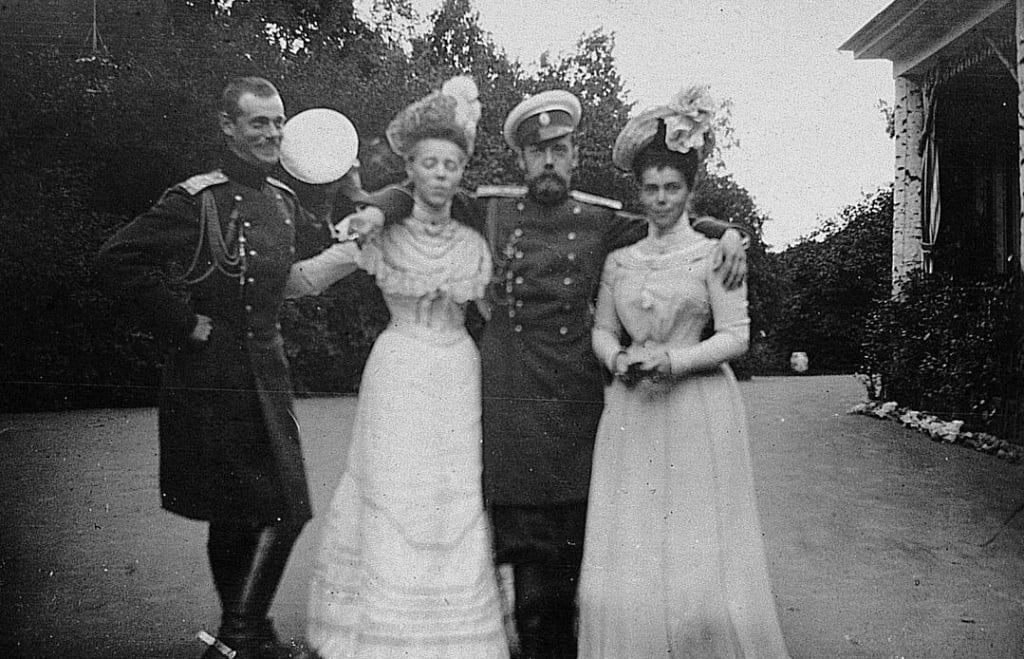
PHOTO: In happier times, Emperor Nicholas II and his siblings from left to right: Grand Duke Mikhail Alexandrovich, Grand Duchess Olga Alexandrovna, Emperor Nicholas II and Grand Duchess Xenia Alexandrovna. Year and location unknown

After the revolution, in 1919, the Grand Duchess along with her mother – the widowed Empress Maria Feodorovna, her family and relatives, left Russia forever. In exile Xenia Alexandrovna lived first in Denmark, and then moved to the UK, where she died on 20th April 1960, at Wilderness House, situated on the grounds of Hampton Court Palace, in the London Borough of Richmond upon Thames England.

The State Archive of the Russian Federation currently have in their collection 44 notebooks with Xenia’s diary entries dating from 1884 to June 1914. The five additional diaries, which refer to 1914-1919 now complete the collection, and are of immense historical importance. The last entry was made on the day which Xenia departed Crimea with her mother Maria Feodorovna and family. Her last tragic record of 1919 reads: “We are leaving Russia!”.

Konstantin Malofeev, the entrepreneur and founder of the St Basil the Great Charitable Foundation, said: “The main task of our organization is historical enlightenment, the cleansing of Russian history from slander and distortion. This can not be achieved without painstaking work with historical sources. Hence our close attention to various archival documents and the desire that they be accessible to the broad scientific community. After all, thorough study of sources and their publication is a necessary step towards establishing historical truth.”
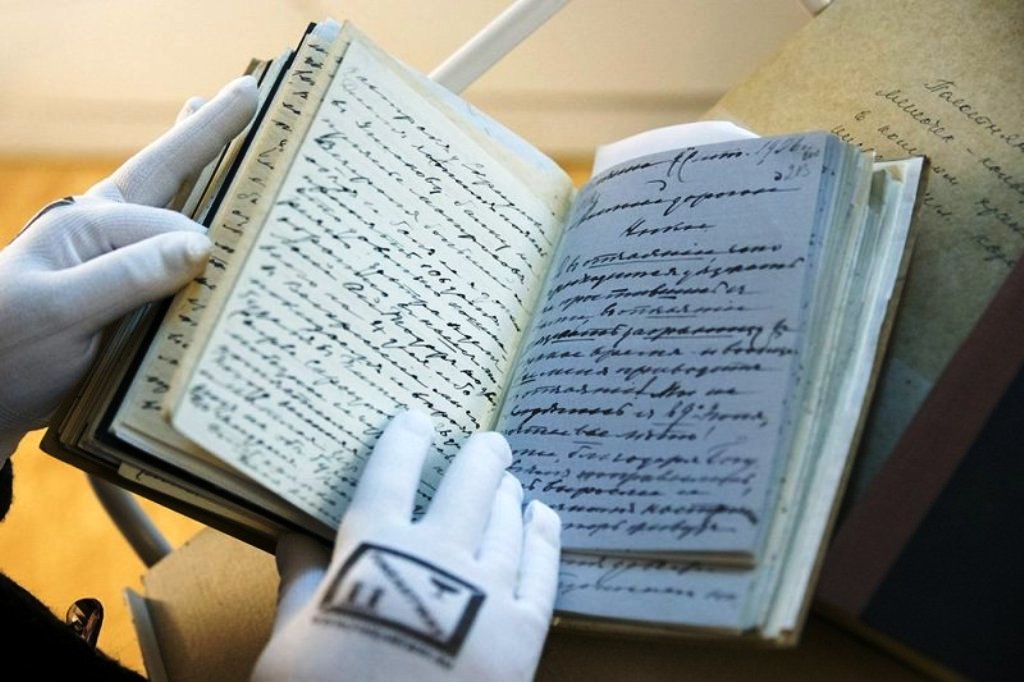
PHOTO: one of five diaries of Grand Duchess Xenia donated to GARF

The acquisition of the archives was made in 2012, in London. “After we contacted the owners,” Konstantin Malofeev said, “and they found out that we are from Russia and are going to return this archive home, they removed the archive from the auction and we agreed to buy it separately.”

The Grand Duchess Xenia Alexandrovna’s archive is part of a large project carried out by the Society St Basil the Great Charitable Foundation, to return to the people the knowledge of life in Russia before 1917.

FURTHER READING

The jewel albums of Grand Duchess Xenia Alexandrovna + PHOTOS

© Paul Gilbert. 9 March 2026
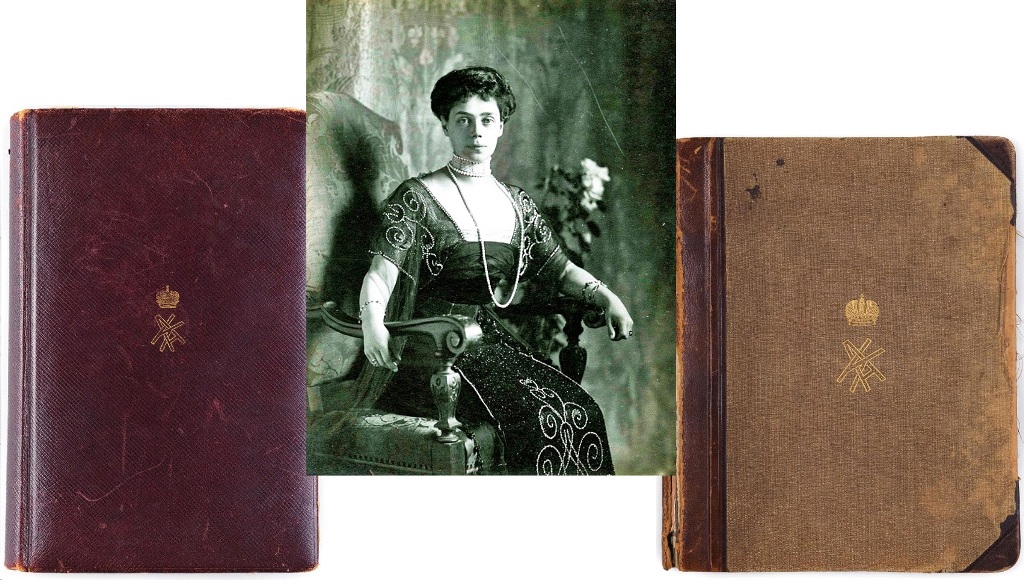
The jewel albums of Grand Duchess Xenia Alexandrovna

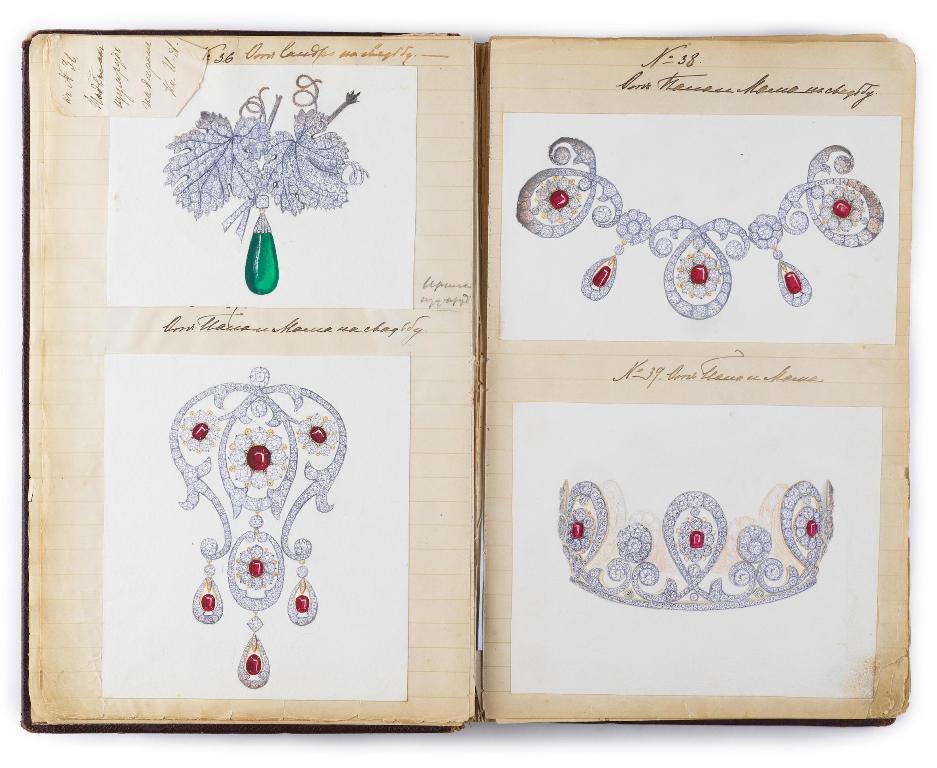
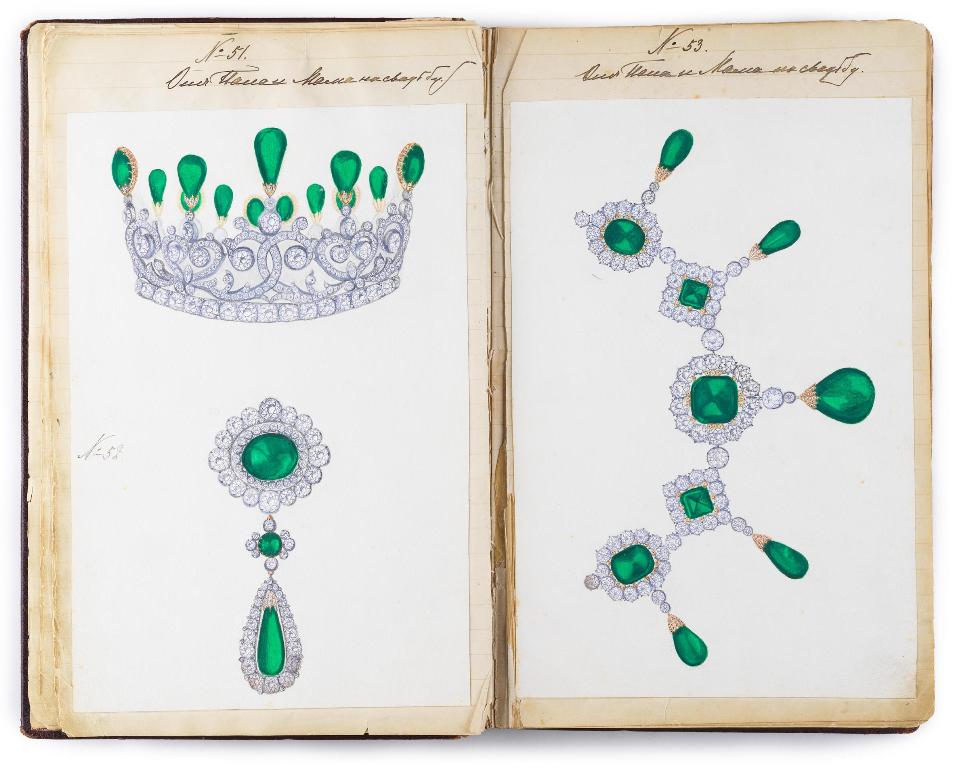
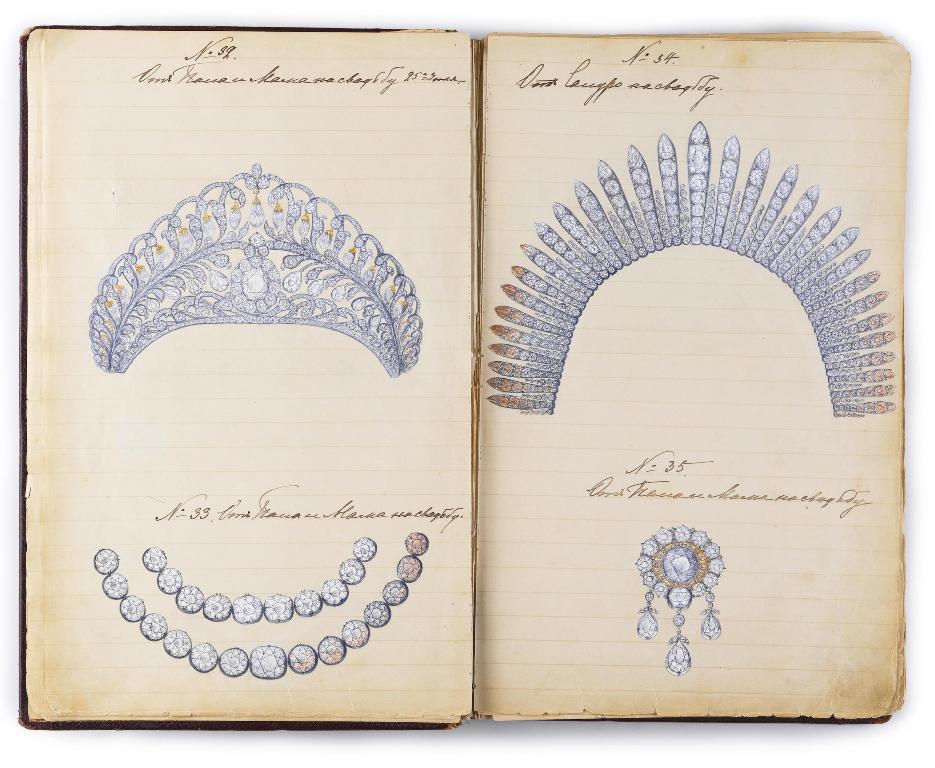
On 16th February 2023, two jewel albums belonging to Grand Duchess Xenia [Ksenia] Alexandrovna [1875-1960] – the eldest sister of Emperor Nicholas II – sold at a Bonhams (Paris) auction for 63,375 Euros [$69,000 USD].

The leather-bound albums were illustrated in watercolours by Xenia herself, and feature her personal collection of jeweellery and bibelots The first album is dated from 24th June 1880 to 1905, and the second album from 12th January 1894 to 25th March 1912. The jewel albums display the Grand Duchess’s exceptional skill with watercolours, a talent perfected from an early age.

When Grand Duchess Xenia Alexanrovna fled Boshevik Russia In April 1919, she had with her two precious jewel albums which she kept until her death in 1960 when they passed to her family. The two lavishly illustrated documents constitute a highly sentimental record of jewellery received between 1880 and 1912. Presented together, the 925 entries provide a fascinating insight into the private wealth of the Romanovs, their personal taste and family relationships. The albums illustrate the manner in which important occasions were marked and offer a crucial link to proving attribution and provenance for so many pieces later gifted, sold on by the Grand Duchess or seized by the Soviet authorities.

Of immense interest to historians, only a small number of select pages of the albums had been published in specialist books, and the albums remained largely private until they were offered at auction by Bonhams New Bond Street in 2011 (Bonham’s London, The Russian Sale, 30 November 2011, lot 155).

The albums themselves have prompted much debate among scholars who have sought to determine the overarching purpose of the tomes. It is notable that pieces the Grand Duchess purchased for herself are not itemised and while the pages are filled with her careful and exact notations, the texts do not emphasize the value of the stones or the name of the fashionable jeweller who had made or sold the piece. Rather, each carefully rendered drawing is usually accompanied by the briefest – and most heartfelt – of statements: “From Mama,” “From Papa,” or “From Sandro” (her husband, Grand Duke Alexander Mikhailovich).

It is little wonder that when the Grand Duchess had to flee revolutionary forces, she chose these books to accompany her. Akin to a photograph album or a journal, the albums acted as an aide-memoire, with each entry recording the generosity of beloved family members who had put every effort into finding pieces of jewellery which reflected the occasion of their presentation. Reciprocally, the Grand Duchess honoured each gift by carefully studying and recording its character with her considerable skill as a watercolourist.

NOTE: this article has been condensed from the original, pubished by Bonhams. Click HERE to read the entire article, and to view more photos from the jewel albums – PG

***

Other Romanov jewel albums

It is interesting to note that according to the art historian, Dr Karen L. Kettering, a third album of Grand Duchess Xenia’s jewels exist, however, the album is in “private hands”. Kettering confirms that she has studied the albums since their sale in 2011.

Between 1889 and 1913 Nicholas II, painted his jewellery in a small album as a private record of his collection. In 1992, curator Tatiana Muntian announced that the Kremlin Archives had since 1922 held Nicholas II’s Jewel Album. In 1997 The Jewel Album of Nicholas II was published in full by Alexander von Solodkoff and Irina Bogatskaya, in a handsome clothbound edition with slipcase. It has since become a highly sought after collector’s item by those who share an interested in the life of Russia’s last Tsar.

It was also revealed that the Kremlin Archives also contained a jewellery album Empress Alexandra Fedorovna kept of pieces she had selected for family and friends.

In 1992, Sotheby’s Book and Manuscript Department in New York sold a jewel notebook that had been kept for several years by Grand Duchess Maria Pavlovna the Younger.

Prompted by these discoveries, additional research was conducted in the Archives of Wolfsgarten Castle in Germany, where Empress Alexandra Feodorovna had spent part of her childhood, revealing a fifth jewel album her brother Grand Duke Ernest Ludwig had kept.

Training in drawing and watercolour was considered essential for the upbringing of any young lady or gentleman of distinction and most of the Romanov Grand Dukes and Duchesses were quite competent artists.

The discovery of these jewel albums continues to raise the question – are their others? How many other grand dukes and grand duchesses embraced the hobby of recording their personal collection of jewels in handsome leather albums?

Private collectors in Russia, Europe and even the United States as well as those of the now defunct royal houses of Europe, continue to find Romanov treasures lost or forgotten in old trunks, safes, and dusty shelves. Let us hope that other jewel albums surface from among their collections.

© Paul Gilbert. 22 January 2024