*You can order this title from AMAZON in the USA, UK, Canada, Australia, France, Germany, Spain, Italy, Netherlands, Poland, Sweden and Japan *Note: prices are quoted in local currencies
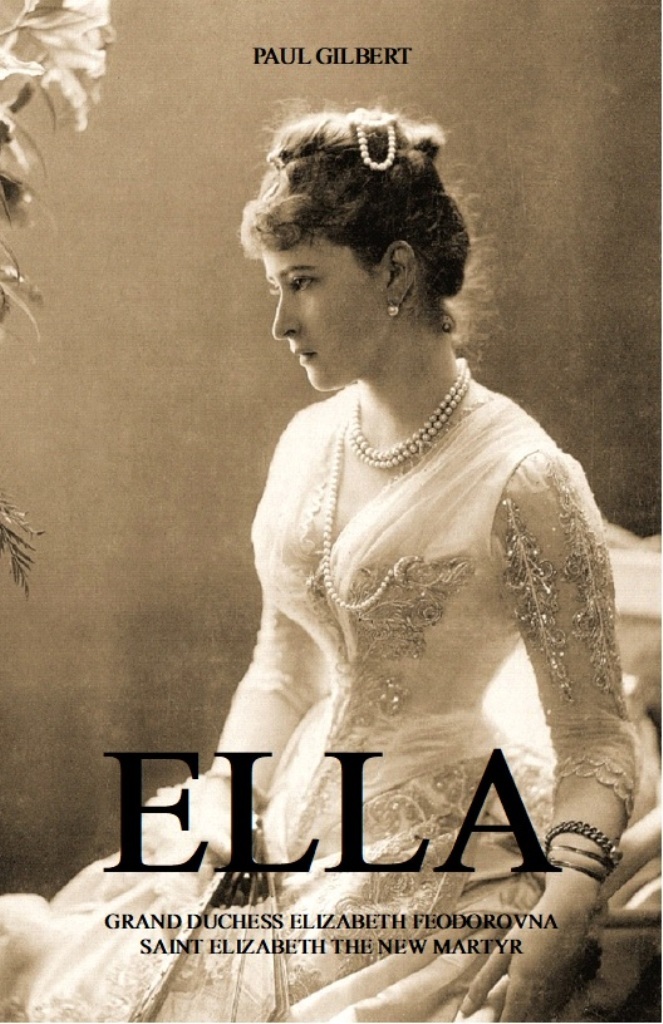
More than a century after her death and martyrdom, Grand Duchess Elizabeth Feodorovna (1864-1918) remains of one of the most beloved and respected members of the Russian Imperial Family. Affectionately known as Ella, she became famous in Russian society for her dignified beauty and charm, and later for her piety and acts of charity among the poor.
This new book features 7 essays – including 2 researched and written by Paul Gilbert. Read about Ella’s Hessian family; her relationship with her British grandmother Queen Victoria and her sister Alexandra, the last Russian Empress; her life in Imperial Russia; her years a a nun and abbess of her own convent of mercy in Moscow; her arrest, imprisonment and brutal murder; her burial in the Holy Land; her canonization; and how she is commemorated today in post-Soviet Russia.
Learn about her marriage and often misunderstood relationship to Sergei, a Russian grand duke and son of Emperor Alexander II, who from 1891 and 1905 served as Moscow’s Governor-General. Learn why the couple had no children and rumours that Sergei was homosexual. After her husband’s assassination in 1905, Ella departed the Imperial Court and became a nun, founding the Marfo-Mariinsky Convent dedicated to helping the downtrodden of Moscow.
In 1918, Ella was arrested and subsequently murdered by the Bolsheviks near Alapaevsk. In 1981, she was canonized by the Russian Orthodox Church Outside Russia, and in 1992 by the Moscow Patriarchate.
Ekaterinburg was founded on 18th November 1723, by decree of Emperor Peter I (1672-1725), but its ‘City Day is officially celebrated on the third Saturday of August (19th August in 2023). The name of the city was given in honor of Empress Catherine I (1684-1727), the second wife of Peter the Great.
In 1924 Ekaterinburg was renamed Sverdlovsk and lived with the Bolshevik name for 67 years, until 1991, when after the fall of the Soviet Union, the city returned to its historical name.
This historic anniversary will be marked throughout the year by a series of events and celebrations, plus the implementation of a number of significant construction projects dedicated to the founding of the Ural city, the center of the Sverdlovsk region and the Urals Federal District, the unofficial “capital of the Urals” and the fourth-largest city in Russia.
Preparations for the celebration began in 2017. It is estimated that the total amount of public and private funding for the celebrations and projects is 244 billion rubles [$4.4 billion USD].
Among the hundreds of events planned are the following Romanov themed events:
On 14th July 2023 a new permanent exhibition The Romanovs in the Urals opened at the Poklevsky-Kozell House Museum of the Sverdlovsk Regional Museum of Local Lore in Ekaterinburg
On 15th July 2023 a bust of Tsesarevich Alexei Nikolaevich was installed and consecrated in the Tsarsky Center, located in the Patriarchal Compound, across from the Church on the Blood in Ekaterinburg
Tsar’s Days, marking the 105th anniversary of the death and martyrdom of Emperor Nicholas II and his family. On the night of 16/17 July, Divine Liturgy was performed at the Church on the Blood, and then lead the 21-km (13 miles) Cross Procession to the Monastery of the Holy Royal Martyrs at Ganina Yama. An estimated 40,000 people took part in this year’s event
On 11th August 2023, a pair of busts depicting Emperor Peter I and Empress Catherine I were unveiled on Historical Square in front of the Museum of Architecture and Design of the Ural State Academy of Arts
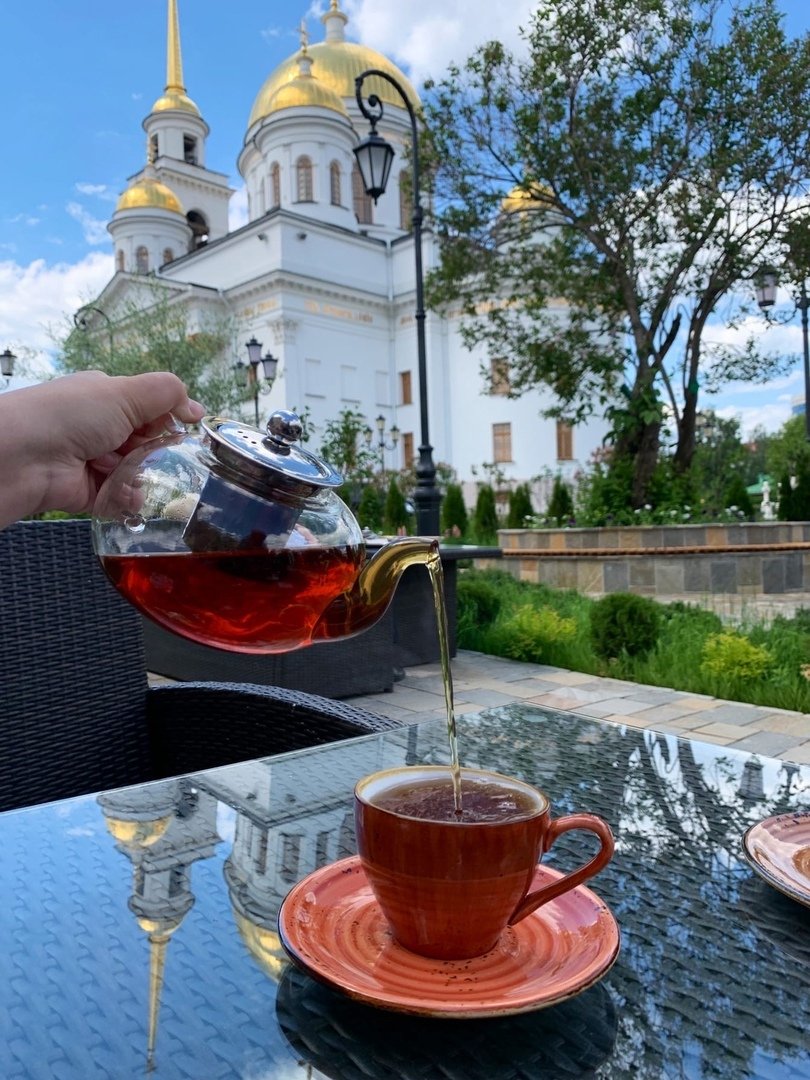
PHOTO: St. Alexander Nevsky Cathedral, Novo-Tikhvinsky Convent, Ekaterinburg
“Ekaterinburg: my favourite Russian city”
People often ask me “Why Ekaterinburg?” as opposed to the former Imperial capital of St. Petersburg, especially given that “Ekaterinburg has such a dark history.”
Once a bastion of Bolshevism, Ekaterinburg has slowly shed its status as the “capital of atheism”. Since the fall of the Soviet Union in 1991, the Urals has experienced a revival of faith, with Ekaterinburg as the center of Orthodox Russia in the region.
It is important to add, that Ekaterinburg has done more to honour Nicholas II and his family than any other city in Russia. Thanks to my visits to Ekaterinburg in 2012, 2016 and 2018, it is a city which I have grown to admire and love.
Articles about Paul Gilbert and his admiration for Ekaterinburg, published in Russian media:
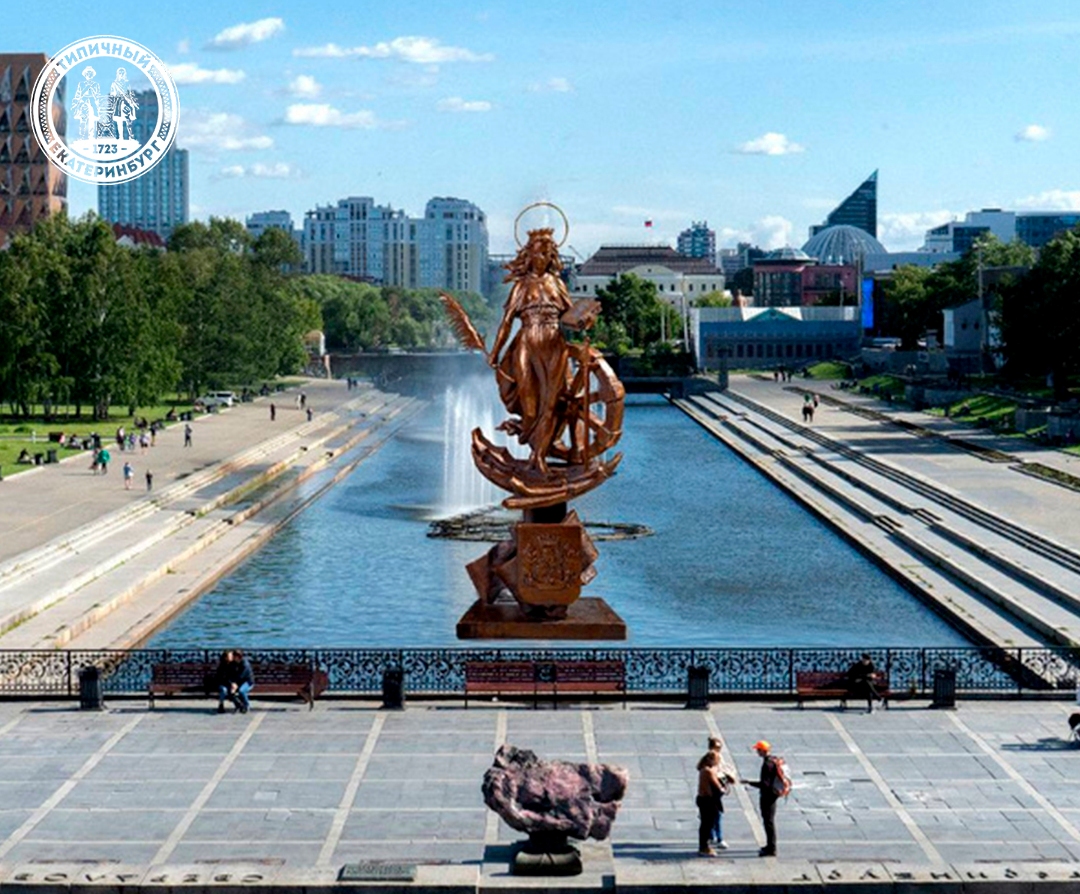
PHOTO: On the eve of the 300th anniversary of Ekaterinburg, the city plans to erect a statue – by the Russian sculptor Fedor Petrov – dedicated to the patron saint of the city – St. Catherine.
“The last capital of the Russian Empire”
“On a spiritual level, Ekaterinburg is the last capital of the Russian Empire, because the residence of the Sovereign was always considered the capital in Russia. Peter the Great never officially transferred the capital from Moscow to St. Petersburg, but since he lived there, it was the capital,” says Russian historian Peter Multatuli.
He noted that in 1918, for 78 days, Emperor Nicholas II and his family lived in Ekaterinburg, and that is why the Ural capital can be considered the last capital of the Russian Empire. [It is important to note that many historians – myself included – firmly believe that the Tsar’s signing of the instrument of abdication, his status as Tsar remained inviolate and unassailable – PG]
“Petrograd and Moscow to one degree or another welcomed his overthrow, and they bear a greater responsibility in this than any other Russian city. No matter what anyone says, it was Ekaterinburg that served as the last Imperial residence, which, according to God’s special plan, became the Royal Golgotha,” added Multatuli.
According to him, in the near future, Ekaterinburg will play a great role in the history of Russia, because “the city named after St. Catherine and becoming the Royal Golgotha will be the city of Russian resurrection.”
***
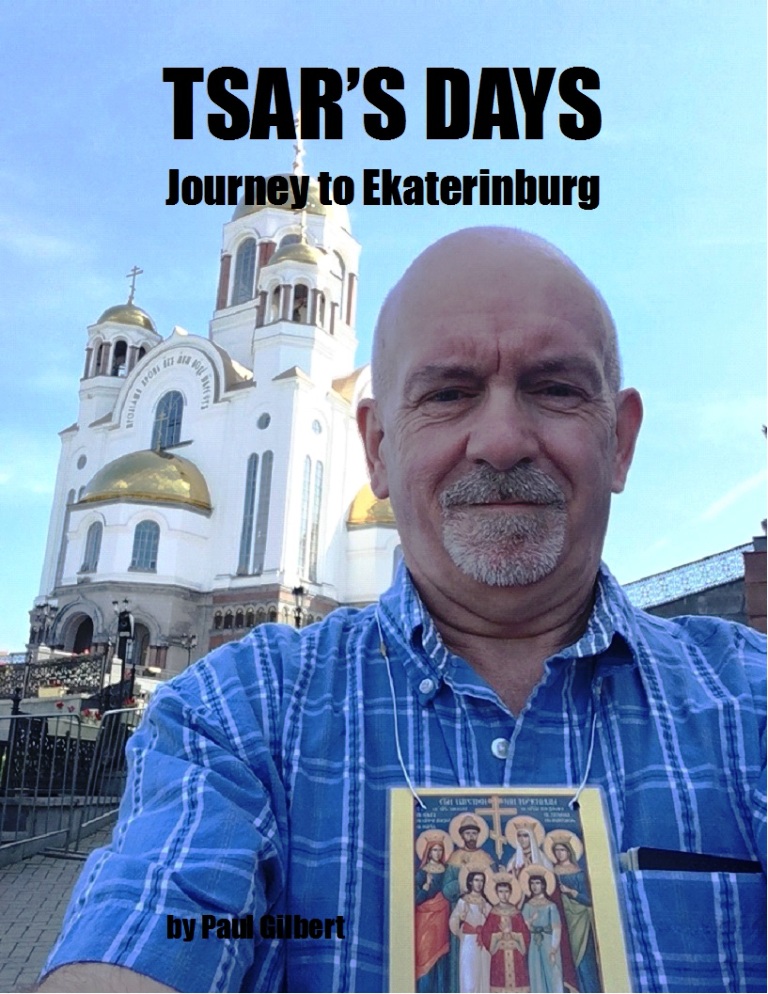
TSAR’S DAYS Journey to Ekaterinburg by Paul Gilbert
Read all about my journey to Ekaterinburg – my 3rd visit to the Urals – in July 2018, to take part in the events marking the 100th anniversary of the deaths and martyrdom of Nicholas II and his family.
“On 17th July 1998, independent researcher and writer Paul Gilbert travelled to St. Petersburg, for the interment of Emperor Nicholas II and his family. Twenty years later to the day, he journeyed to Ekaterinburg, to take part in the events marking the 100th anniversary of the Tsar’s death and martyrdom.
“In his own words and photographs, the author shares his experiences and impressions of this historic event, which include visits to the Church on the Blood, Ganina Yama, Porosenkov Log, the Patriarchal Liturgy, exhibitions, and much more.
“In addition are 24 illustrated news articles about events leading up to Tsar’s Days in the Urals, from 1st to 31st July 2018.
“Gilbert’s solemn journey to the Urals allowed him to experience history in the making, and to honour the memory of the Holy Royal Martyrs, a century after their death and martyrdom.”
BOOK DESCRIPTION
Hardcover and Paperback editions. 152 pages + Richly illustrated with nearly 200 COLOUR PHOTOS, 65 of which were taken by the author
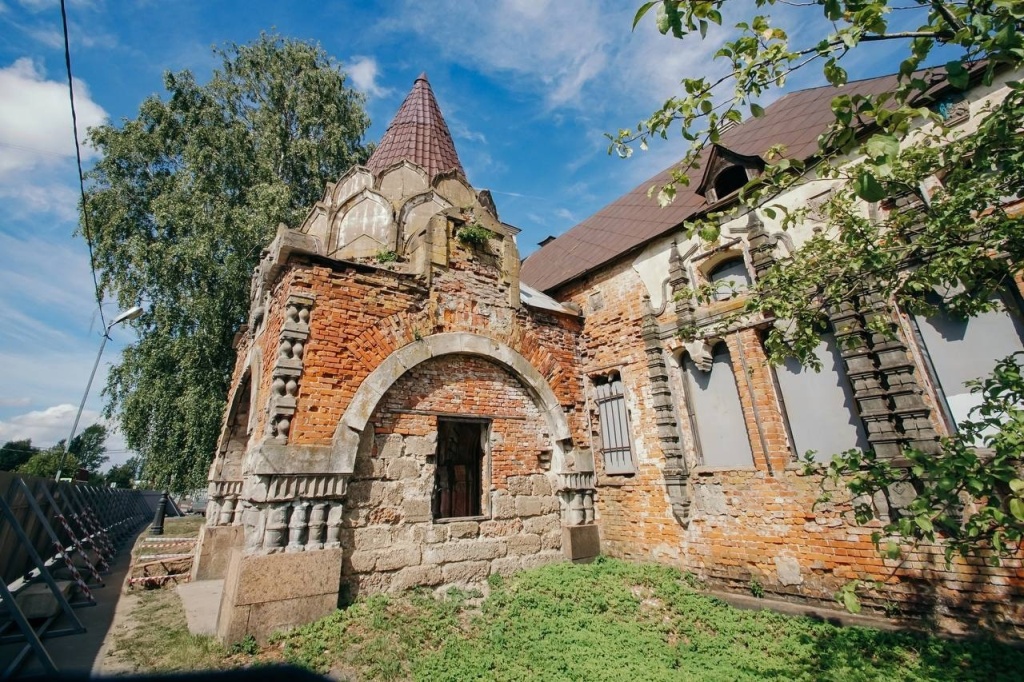
It’s official! After decades of delays and lack of funding, restoration of the Imperial Railway Pavilion to its original historic look in Pushkin (Tsarskoye Selo) is now underway. Having survived the revolution, war, vandalism and the elements, it is nothing short of a miracle that it has survived to the present day.
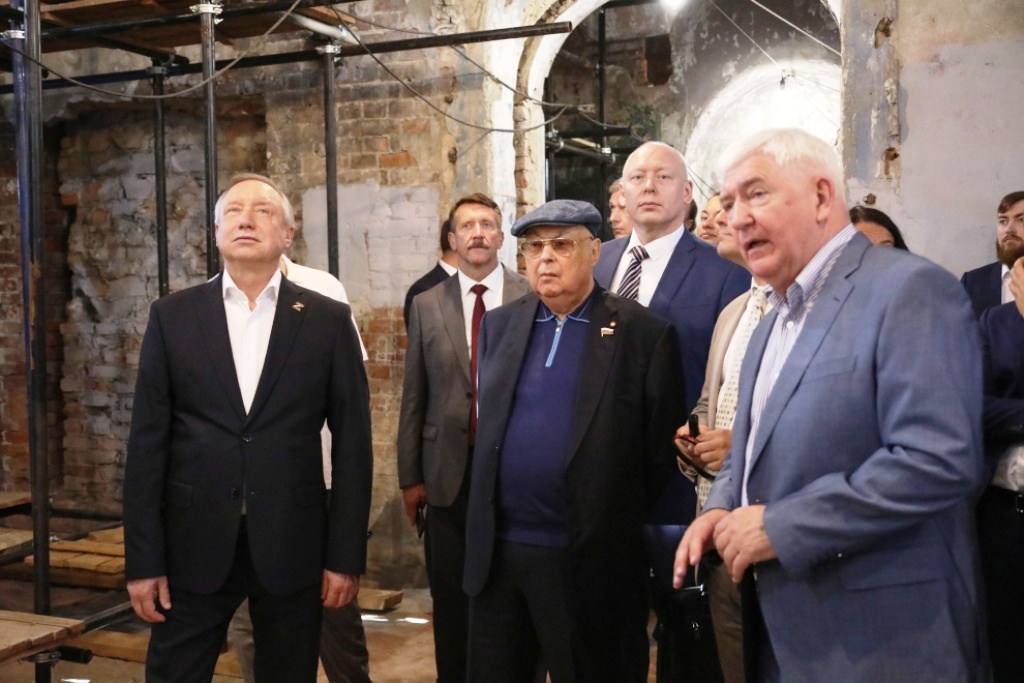
The project has some very high profile supporters, including the governor of St. Petersburg, Alexander Beglov and State Duma deputy Vladimir Resin. The official announcement was made during the first meeting of the Board of Trustees of the Tsarskoye Selo Station Foundation, which was held on 17th August in the Imperial Hall of the pavilion.
“We have created a special fund to restore the Imperial Railway Pavilion, the only imperial railway station in Russia. Ideas for the building’s use after the restoration has been completed are currently being developed. Funding will be provided at the expense of the city and federal budgets, as well as private and corporate donors,” Beglov said.
PHOTO: the first meeting of the Board of Trustees of the Tsarskoye Selo Station Foundation, was held on 17th August 2023, in the Imperial Hall of the pavilion
One of the finest examples of the Neo-Russian style
The construction of a special branch line from the Vitebsk Railway Station in St. Petersburg to the Alexander Palace in Tsarskoye Selo began in 1895. It was deemed a matter of security to provide safe transport links between the capital and the suburban residence for the Tsar and his family. The line was also convenient for government officials who arrived daily by train with their reports to the Tsar when he was in residence.
The original Imperial Pavilion was constructed of wood in 1895, however, it was destroyed by fire on 25th January 1911. A new stone pavilion designed by architect V.A. Pokrovsky, was constructed in the same Neo-Russian style as the buildings of the nearby Feodorovsky Gorodok [Town]. The Imperial Railway Pavilion served as a terminus for the Tsar’s Imperial Train. It was here that Emperor Nicholas II greeted many foreign dignitaries. A special road was laid from the station to the Alexander Palace.
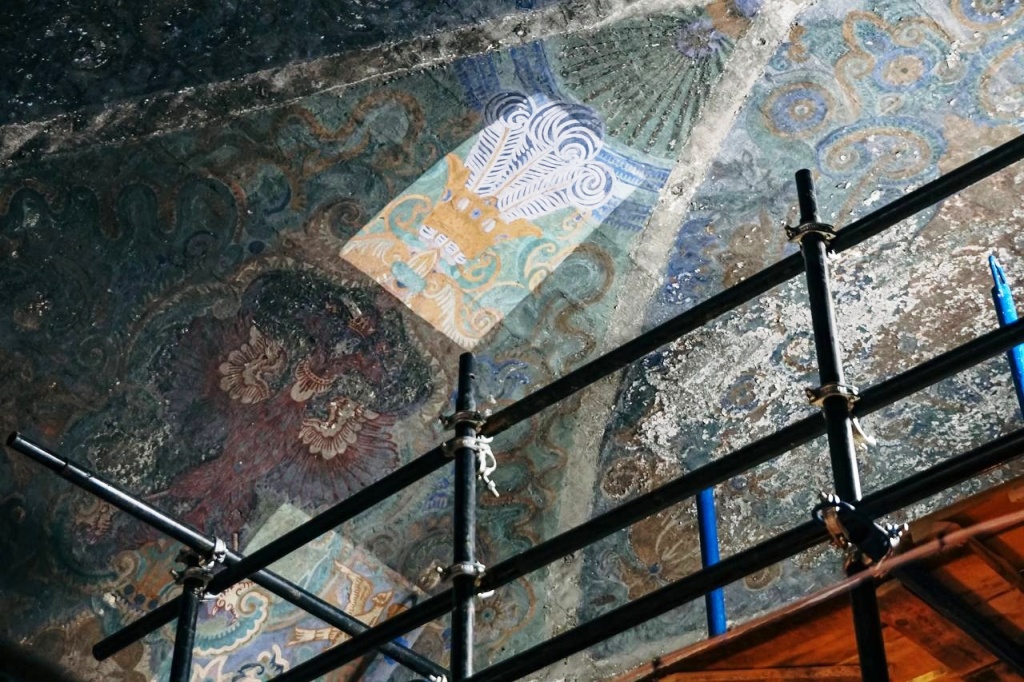
The richly decorated interiors were stylized as chambers with heavy stone vaults. The decoration of the facades and interiors corresponded to the grand presentation of the station, being an example of a synthesis of architecture, monumental painting and decorative art, which successfully combined the forms of ancient Russian architecture of the 17th century. with construction technologies and materials characteristic of the modern era. The imperial chambers of the station were painted by the artist M. I. Kurilko, reflecting the chambers of the beloved suburban palace of Tsar Alexei Mikhailovich.
The fate of the Imperial Railway Pavilion during the Soviet years
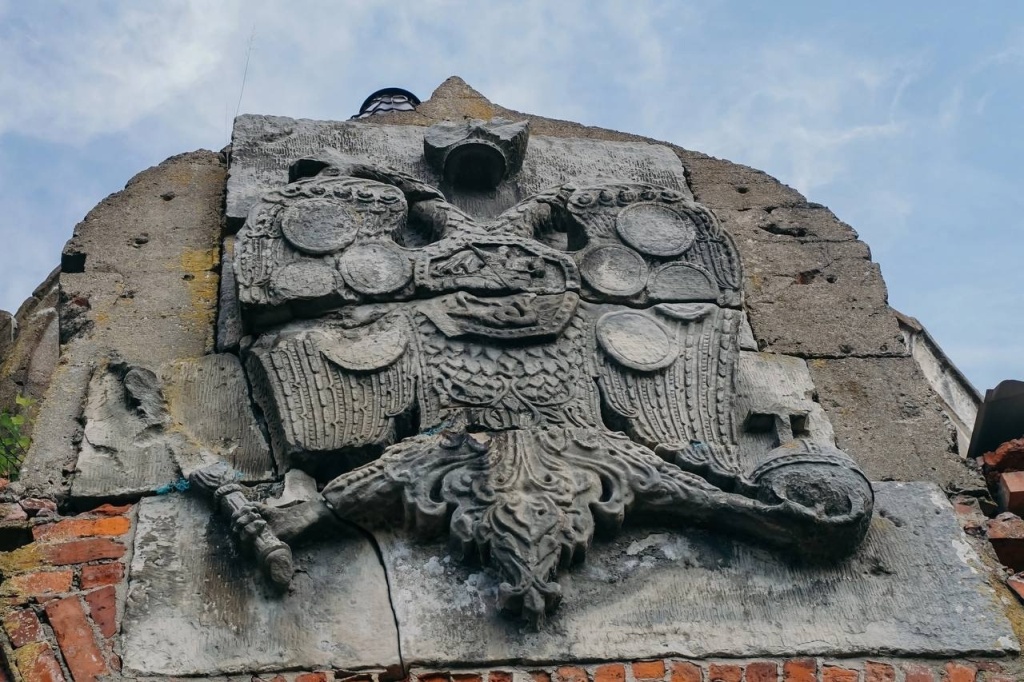
In 1918, the station was renamed the Uritsky[1] Pavilion and was used as a dormitory and canteen for workers of the Track Repair of the Mechanical Plant, created on the basis of the Imperial Railway Repair Depot. The Imperial emblems were removed and the building and adapted for housing. The rails and sleepers were dismantled and used for the construction of other railway lines. The 200-meter passenger platform was dismantled in the 1930s. The pavilion was badly damaged during the Great Patriotic War (1941-45).
The dormitory was moved in the 1970s, the former station closed and has not been used since. The former Imperial Railway Pavilion was declared an object of cultural heritage of Russia of federal significance, an act which saved the building from demolition.
The rebirth of the Imperial Railway Pavilion
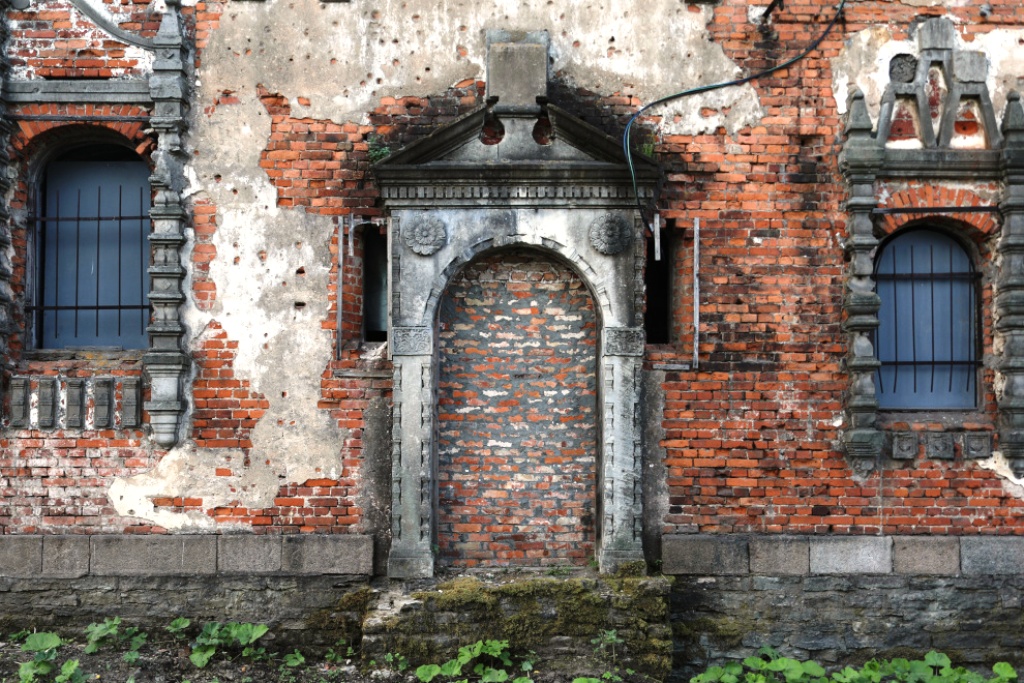
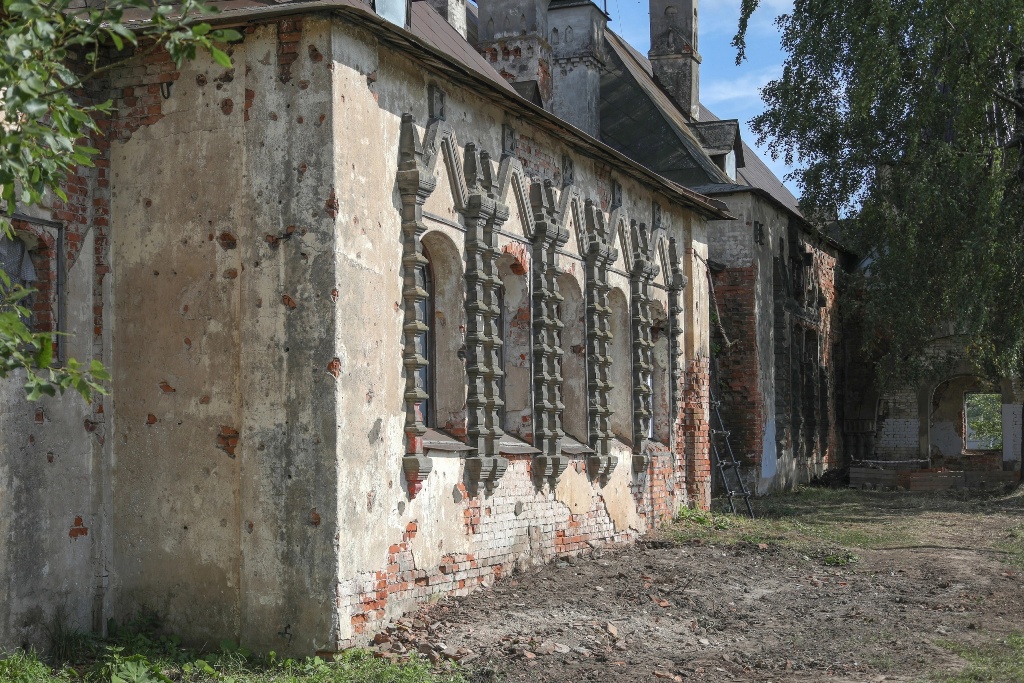
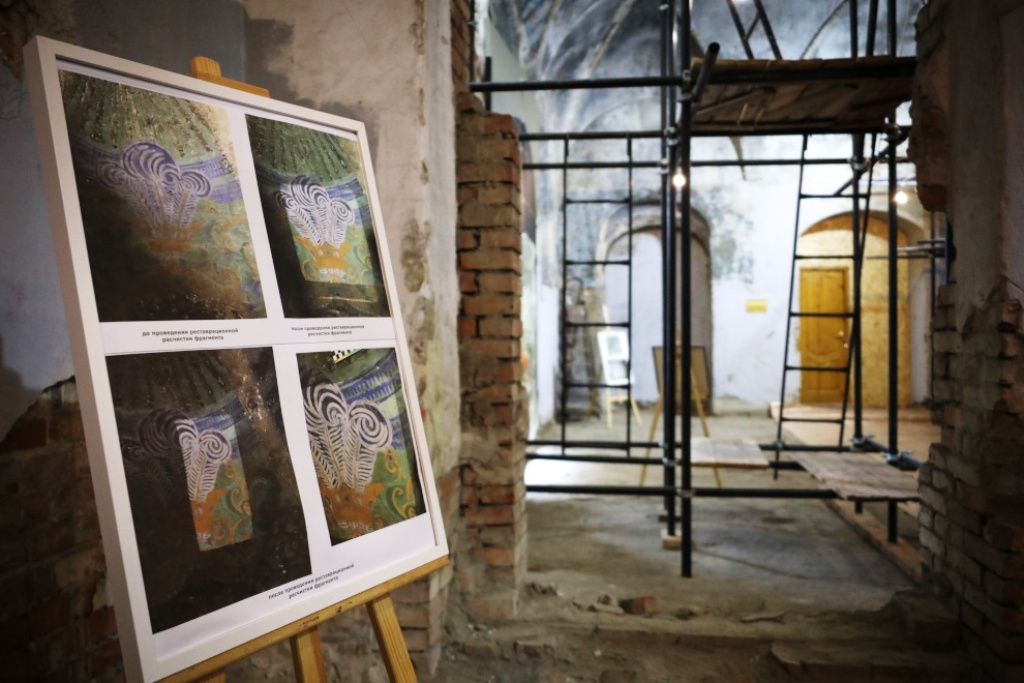
The Imperial Railway Pavilion in Tsarskoye Selo will be completely restored in its original form, including the terminal building, the platform and canopy, as well as the unique interior paintings, some of which have already been partially uncovered by restorers.
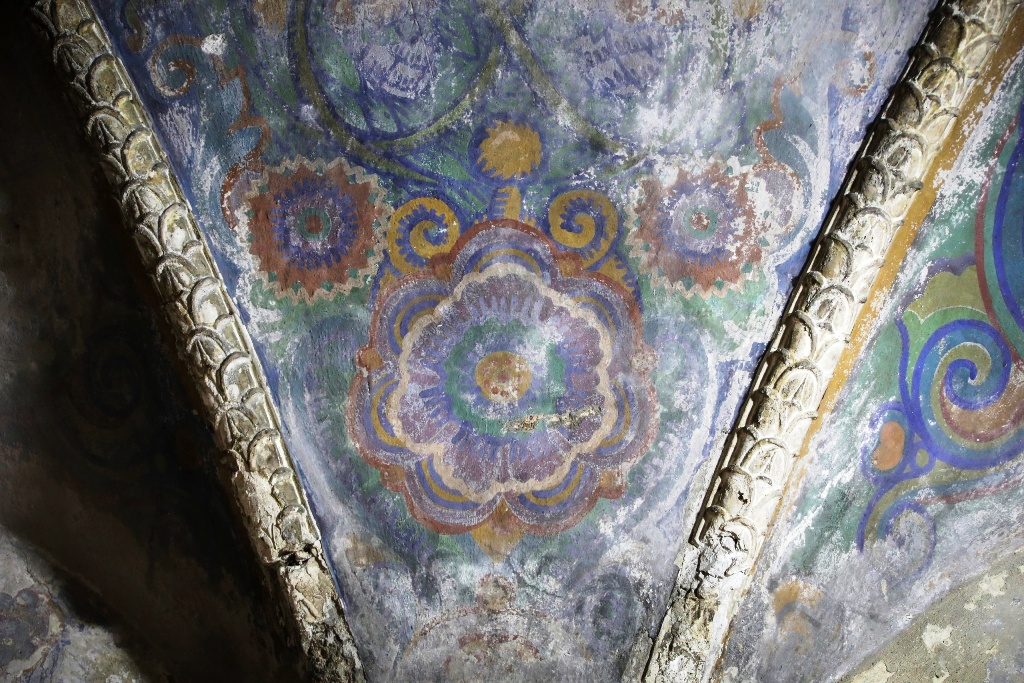
According to restorers, many of the building’s original details have surprisingly been well preserved. The historical painting of the dome of the main entrance to the Tsar’s Station has been miraculously preserved – see photos above, one of which shows an area which had been cleaned, revealing the colourful painting underneath. Early 20th century watercolours of the interiors – which have been preserved in archives – will be of great assistance to artists in their efforts to restore the once beautiful interior to its historic original.
The restoration of the Imperial Railway Pavilion will be one of the stages in the integrated development of the territory, which includes the Feodorovsky Gorodok (Town), Fermsky Park[2] and other facilities. This combined with the restoration of the Feodorovsky Sovereign Cathedral and the Alexander Palace will complete a revival of some of the most notable buildings associated with the life of Russia’s last Tsar, one which the Bolsheviks and Soviets failed to destroy.
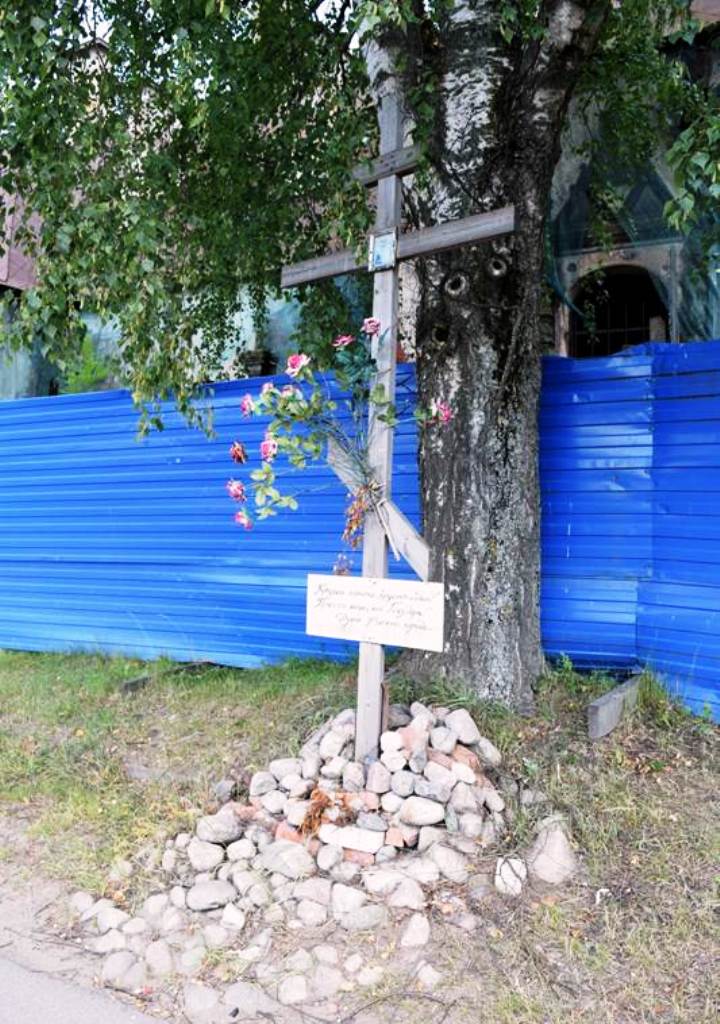
Several years ago, a wooden Orthodox cross – seen in above photo – was installed outside the Imperial Railway Pavilion at Tsarskoye Selo. The inscription on the plaque reads: “All around is betrayal and cowardice and deceit! Forgive us, sovereign” and signed: “The soul of the Russian people.”
NOTES:
[1] Moisei Solomonovich Uritsky (1873-1918) served as Chief of the Cheka of the Petrograd Soviet. After his assassination in 1918, Lenin initiated the first Red Terror on 20th September 1918.
[2] Fermsky Park is located near the Fedorovskiy Gorodok [Town] and Alexander Park. It was arranged by Adam Menelaws in 1818–1820 as a grazing area at the nearby imperial farm. A pond was dug in the park for watering.
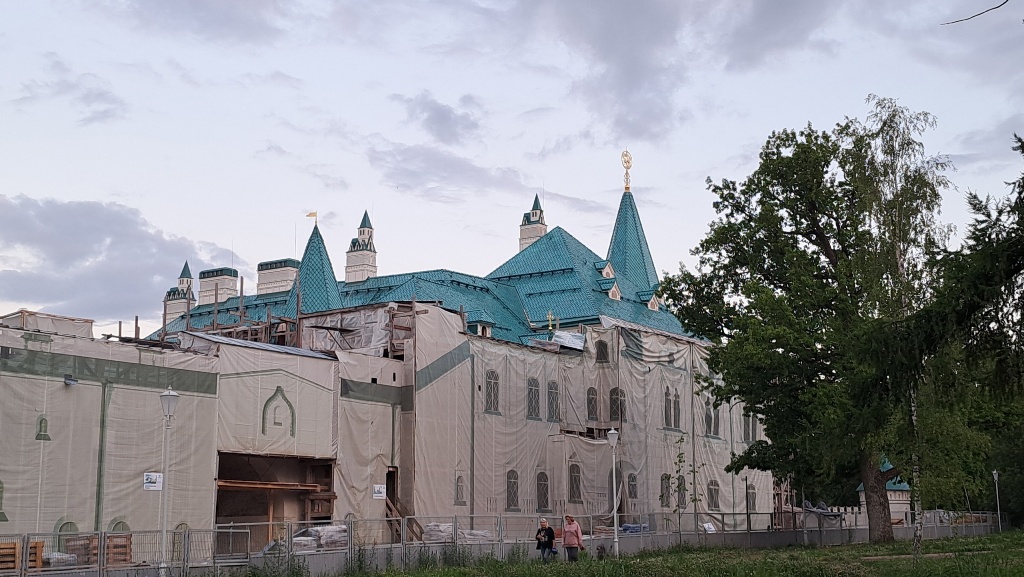
Further to my August 2023 announcement that the Imperial Railway Pavilion at Tsarskoye Selo would be restored, I am pleased to provide the following update, which includes photos [taken in March 2024] of the progress being made on this important historic project, one which is closely connected to Emperor Nicholas II.
If you enjoyed this article, then please consider making a donation to my research, which helps me with the acquisition of documents from Russian sources and the cost of having them translated into English for the first time.
Not only do these documents give voice to the works of a new generation of Russian historian, they are of immense historic value in helping me with my efforts to clear the name of Russia’s much slandered Tsar.
Donations can be made in US dollars by credit card or PayPal.
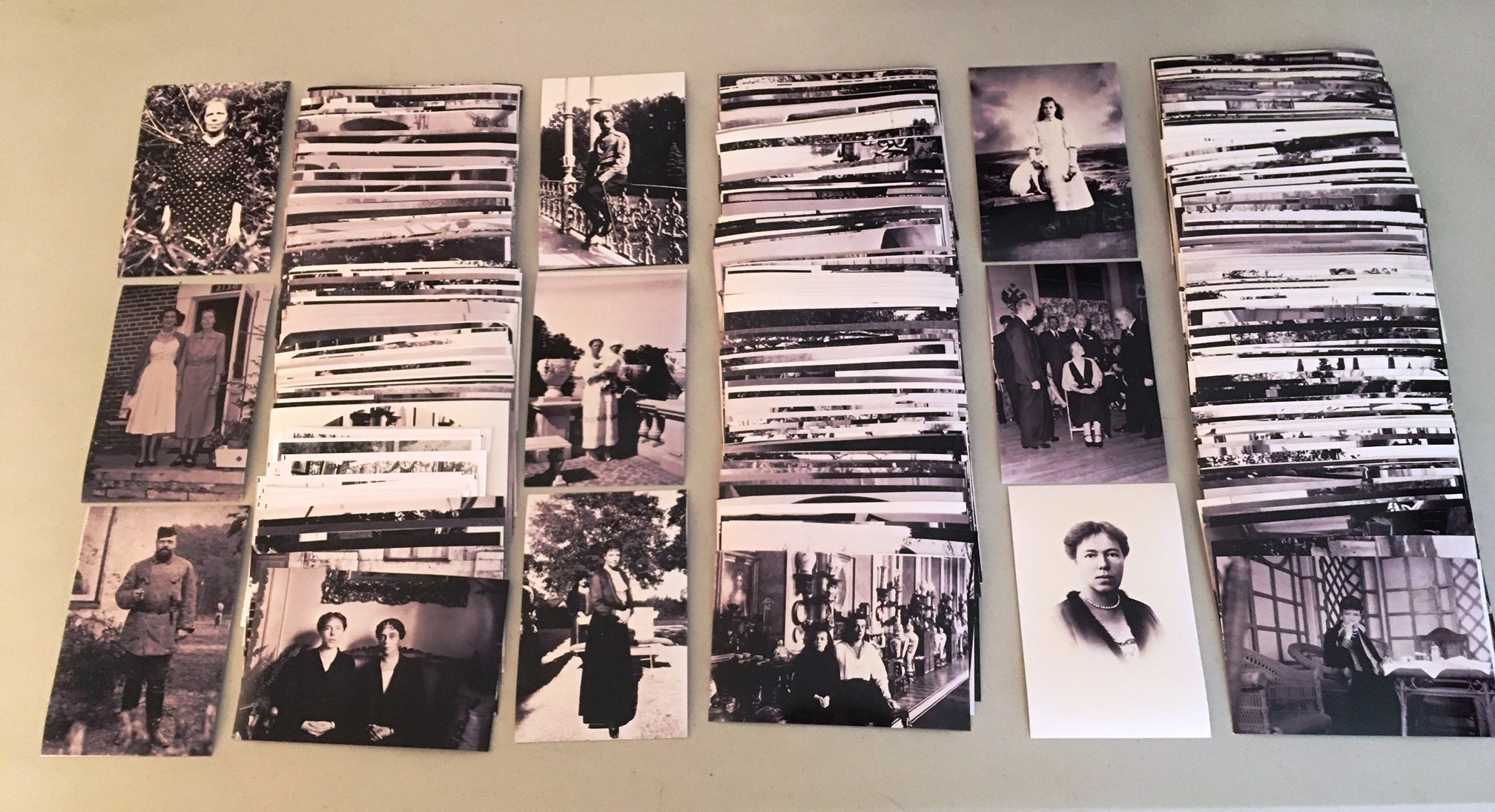
PHOTO: a collection of 332 black and white photographs from one of the private photo albums belonging to Grand Duchess Olga Alexandrovna are for sale from my collection. CLICK on the image to enlarge – PG
As many of you know, I will be moving back to England in the summer of 2025. As a result, I am forced to sell not only my furniture and other possessions, I have also made the very difficult decision to part with some of my Romanov treasures.
Back in 1998-99 I went to visit a man living in Rosedale, an historic and very affluent residential area in Toronto, Ontario. I had been invited by historian and author Patricia Phenix, who was researching for her book Olga Romanov: Russia’s Last Grand Duchess [Published in 1999 by Viking-Penguin]. The gentleman had a collection of photographs copied from one of the personal photograph albums belonging to Grand Duchess Olga Alexandrovna [1882-1960]. He was kind enough to show us the photographs, and even agreed to allow us to make copies.
Aside from the original album, ONLY three sets of these photographs exist. We had two sets made – a great expense at time – one for Pat, the other for myself. We returned the original set to the gentleman in Rosedale, who several years later “loaned” them to Olga Kulikovsky-Romanov, who used them for the exhibitions of Grand Duchess Olga’s paintings, which she was organizing in Russia. She never returned the photographs to the gentleman in Rosedale.
The photos depict Grand Duchess Olga and her family in Russia, Denmark and Canada, where she died on 24th November 1960. The photos from her Russian years include her mother Empress Maria Feodorovna, her brothers Tsar Nicholas II and Grand Duke Mikhail Alexandrovich, as well as her sister Grand Duchess Xenia Alexandrovna.
This lot consists of a total of 332 black and white photographs. The quality and clarity of each photo varies from one image to the next. The photographs are copies of those from Olga’s photo album. The fate of the photo album is unknown, but is believed to have been sold at auction.
PLEASE NOTE THAT THIS IS AN AUCTION SALE: I am offering this collection of 332 photos to the highest bidder. I have set the bidding price at $150 USD. I invite those of you who are interested to send me a private e-mail [royalrussia@yahoo.com], stating your highest bid. The winner will be notified by e-mail on Tuesday, 5th September 2023. Payment can be made by credit card or PayPal. All sales are final.
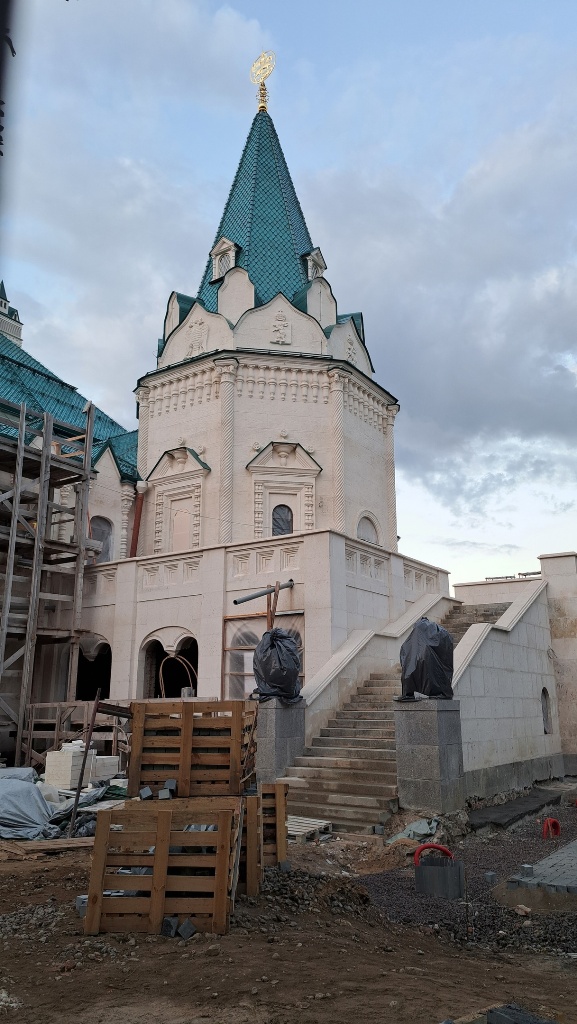
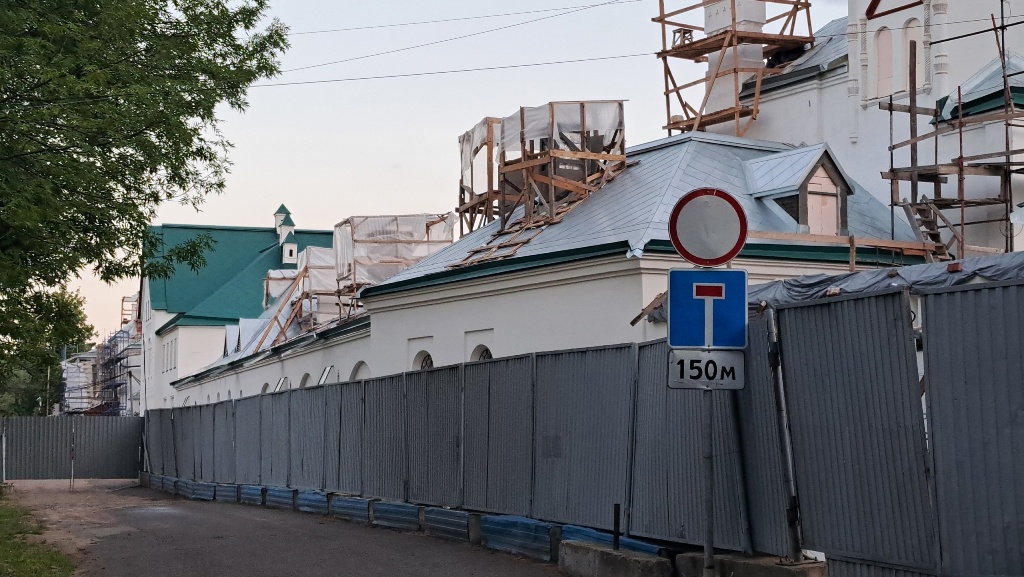
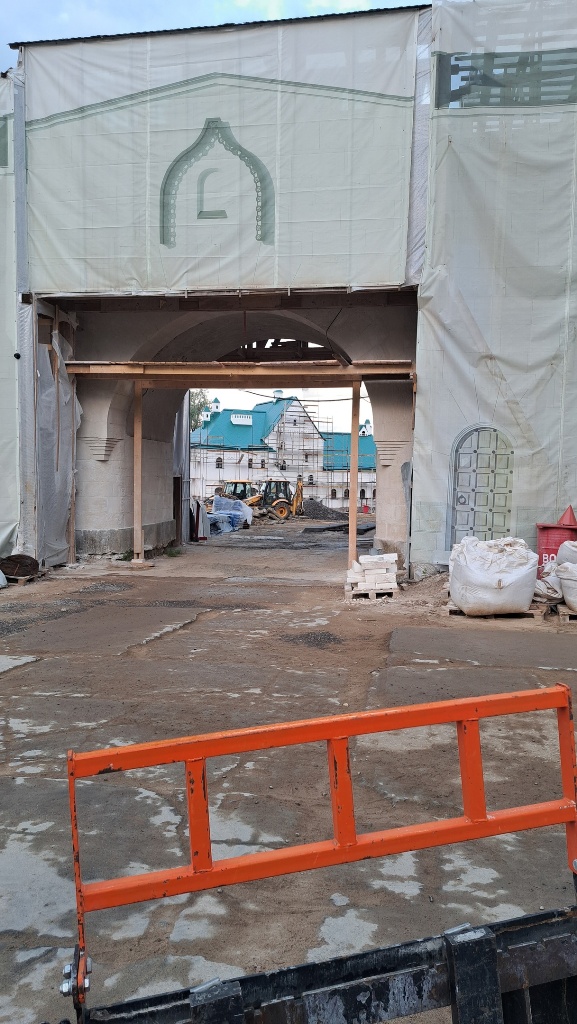
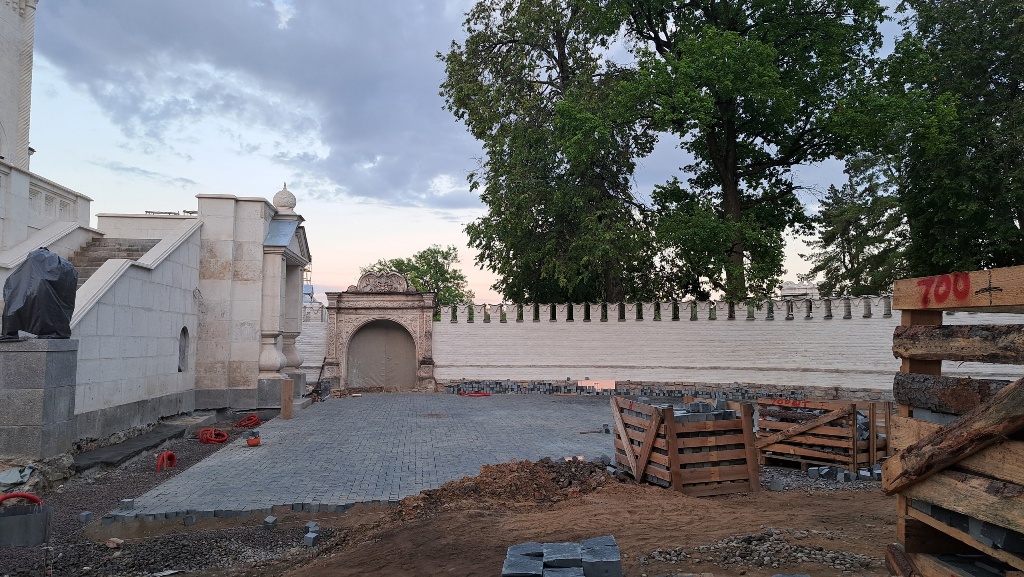
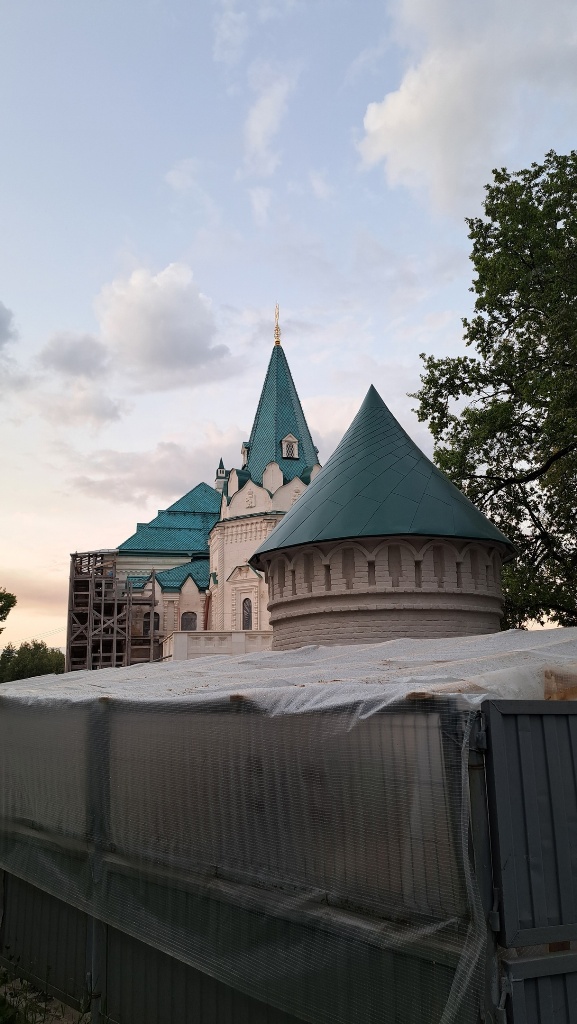
PHOTOS: view of the restoration work at the Feodorovsky Gorodok
After decades of neglect during the Soviet years. the historic Feodorovsky Gorodok [Town], situated near the Feodorovsky Sovereign Cathedral and the Alexander Palace in Tsarskoye Selo, is being returned to its former glory. The restoration of the complex – which consists of 7 buildings – has been ongoing for some years, and we are only now beginning to see the progress being made in this collection of new photographs.
The history of the Feodorovsky Gorodok began in 1905, when the family of Emperor Nicholas II decided to move from the Winter Palace in St Petersburg to the Alexander Palace in Tsarskoye Selo. Nicholas II ordered the construction of an ensemble of buildings in the Neo-Russian style. The sketches drawn up by the architect Stepan Samoilovich Krichinsky (1874-1923) were approved by Nicholas II in the summer of 1913, and included a railway station of the imperial branch linking St Petersburg – Tsarskoye Selo – Pavlovsk.
Next came the barracks of His Imperial Majesty’s Own Convoy, constructed on the lime avenue which led to the Imperial residence. A little later the Feodorovsky Sovereign Cathedral was built near the palace pond. The Emperor personally laid the foundation stone, and later attended the consecration with his family in 1912.
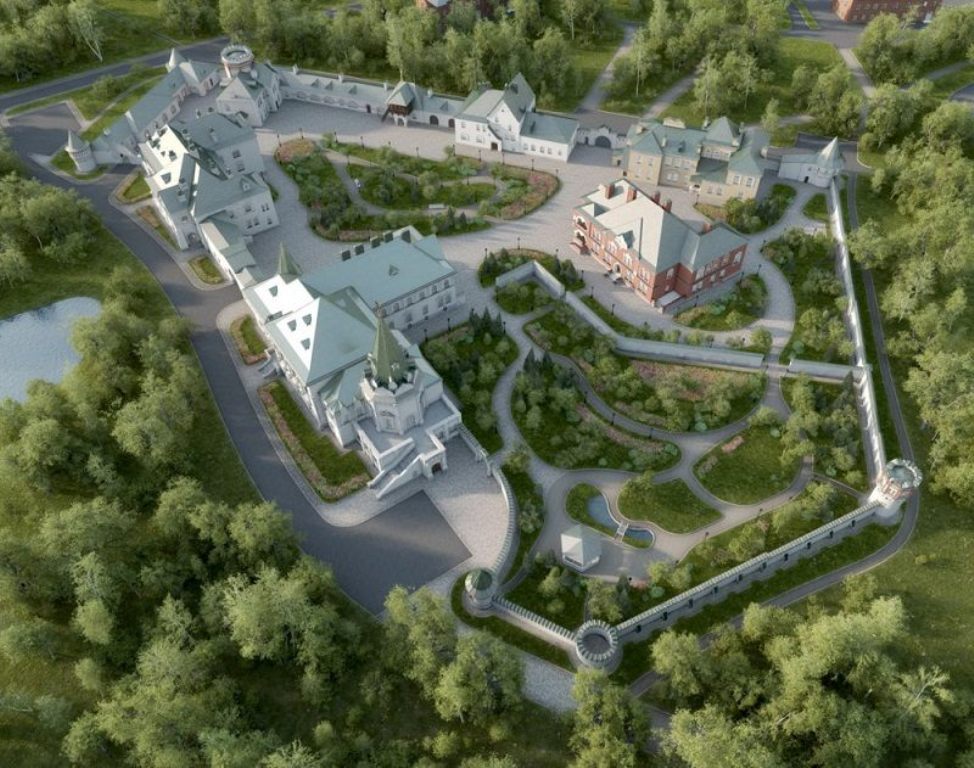
PHOTO: artist concept of the Feodorovsky Gorodok once the restoration has been completed
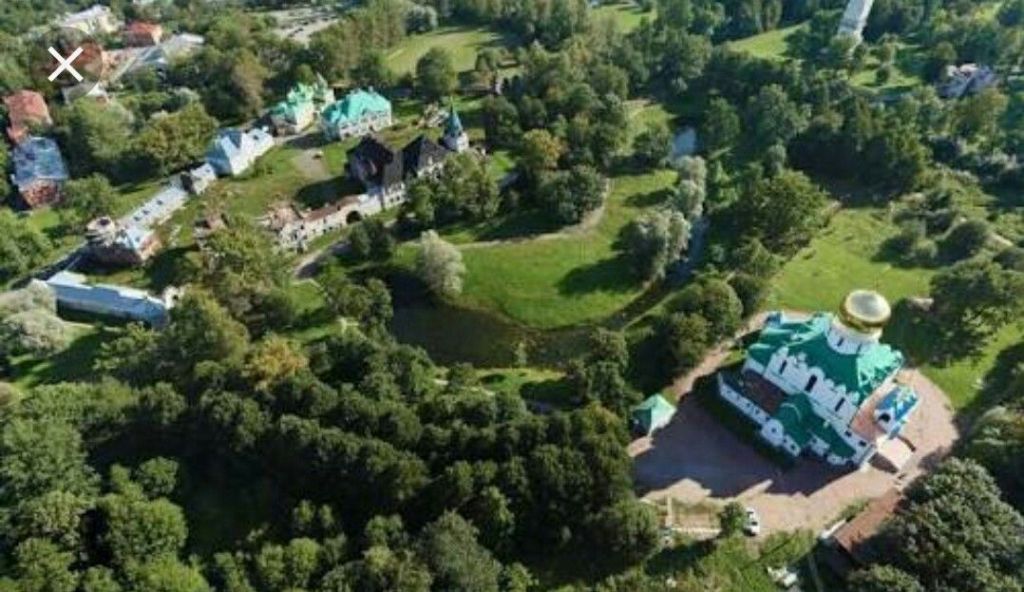
PHOTO: this aerial view of the Feodorovsky Gorodok (left) shows its proximity to the Feodorovsky Sovereign Cathedral (right) at Tsarskoye Selo
Opposite the cathedral, it was decided to build a town for the for the clergy of the Feodorovsky Sovereign’s Cathedral. Resembling a mini Kremlin, built in the Neo-Russian style, it was the last pre-revolutionary attempt to strengthen Russian statehood as a national idea. It became a masterpiece of atypical architecture for classical Petersburg.
During the First World War, an infirmary was located in the Gorodok. It was here that the Empress Alexandra Feodorovna, along with her daughters administered care for wounded Russian soldiers.
On 25th (O.S. 12th) February 1917, Emperor Nicholas II visited the Feodorovsky Gorodok and left a note in the visitor’s book: “On 12th February 1917, I inspected with pleasure the buildings at the Feodorovsky Gorodok and Cathedral. I welcome the good initiative in the revival of the artistic beauty of Russian everyday life. Thanks to everyone who worked hard. God help you all. Nicholas”
PHOTOS: 4 views of the restoration work at the Feodorovsky Gorodok
In 1994, the complex of the Feodorovsky Gorodok was transferred to the Russian Orthodox Church; in it, with the blessing of Patriarch Alexi II (1929-2008), a Patriarchal Metochion[an ecclesiastical embassy church within Eastern Orthodox tradition] was created, within the walls of which it was supposed to place: the residence of the patriarch; Museum of the History of the Russian Orthodox Church in the North-West Region of Russia; pilgrimage and training center; icon-painting workshops; and a hotel.
Due to lack of funding, restoration efforts were met with constant delays, which left the complex in a dilapidated state. In 2001, the architectural ensemble was registered as a monument of Russian cultural heritage, and protected by the Ministry of Culture of the Russian Federation. The restoration and reconstruction will not be financed by the Russian Orthodox Church, but by the management division of the Presidential Administration of the Russian Federation.
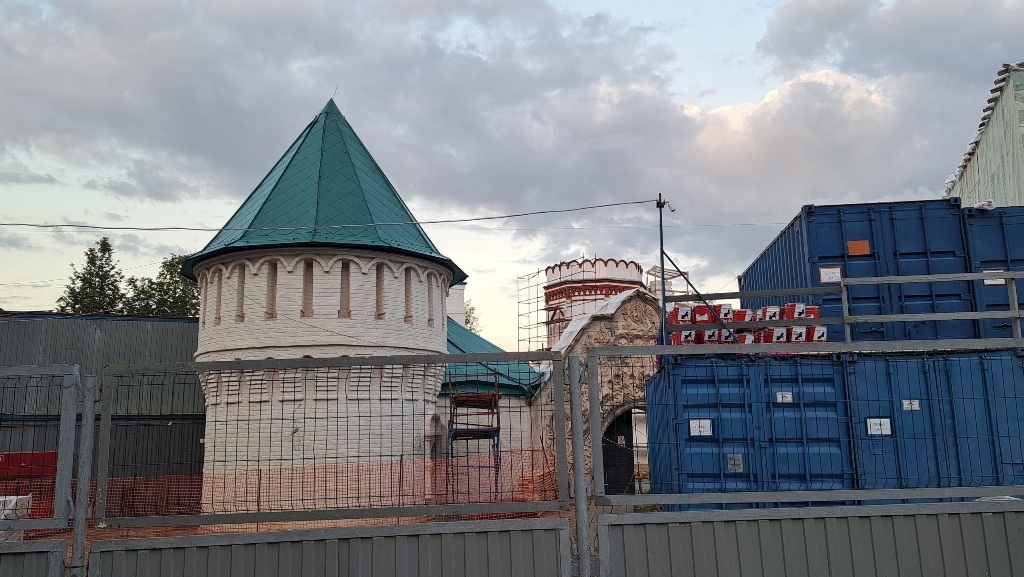
PHOTOS: 5 views of the restoration work at the Feodorovsky Gorodok
The management division of the Presidential Administration of the Russian Federation are now engaged in the restoration of the historic complex of buildings. The project’s plans were developed by the E. Yu. Merkuryeva Architectural Workshop LLC, a firm whose previous projects include the restoration of the Konstantin Palace (Strelna), and the Senate and Synod building (St Petersburg), which today house the Boris Yeltsin Presidential Library and the Constitutional Court.
The patriarch’s quarters will be housed in the Rose Chamber, while apartments for the nine permanent members of the Synod will be housed in the Belaya (White) Chamber. The project provides for the restoration of the historical appearance of the facades and interiors of all seven buildings, including the restoration of paintings and tiles, as well as landscaping and development of a park for guests.
The restoration of the Feodorovsky Gorodok was initially supposed to have been completed in 2019, however, lack of financing caused its delay. Project developers now speculate that it will be 2 or 3 years before the restoration of the complex is completed.
PHOTO: historian and author Pyotr [Peter] Valentinovich Multatuli
In the year marking the 105th anniversary of the deaths and martydom of the Russian Imperial Family, Pyotr Multatuli took part in this years Divine Liturgy, which was celebrated on the night of 16/17 July, on the square in front of the Church on the Blood in Ekaterinburg.
During a press conference held in Ekaterinburg last month – Multatuli, who has been regular participant of Tsar’s Days in the Ural capital for more than a decade – was asked about the importance of Tsar’s Days in the history of the Russian Orthodox Church – the Urals in particular.
“Tsar’s Days is our repentance before the Holy Tsar-Martyr Nicholas II and his family. What is repentance? Repentance comes from the Greek word metanoia – changing one’s mind or a transformative change of heart; especially: a spiritual conversion . . . We must radically change our view, our attitude towards Emperor Nicholas II and his family, who were brutally murdered by the Bolsheviks, who, above all, were a kind, loving and charitable family.
“Emperor Nicholas II did a lot for Russia, yet he continues to be slandered. Tsar’s Days are not only repentance for the brutal murder of the Imperial Family, but a radical change that must come to the people” – said Pyotr Valentinovich. — “If it does not come, if we do not have a radical change in our attitude towards the Sovereign, and our Lord will charge us for the absence of this repentance. That is why it is so important to be here in Ekaterinburg for the Divine Liturgy, to take part in the Cross Procession, and praying to the Holy Royal Family.
“It is impossible for me not to come to Ekaterinburg in during Tsar’s Days. Wherever I am: whether I am working or resting at home in Moscow – I always come here during these July days, I consider it my moral duty and responsibility to be here in the Urals.
“In addition, it was here in Ekaterinburg, that my great-grandfather Ivan Mikhailovich Kharitonov, the senior cook of the imperial kitchen, was murdered along with the Tsar and his family in the Ipatiev House, so for me, of course, I have a personal connection to Tsar’s Days.
Pyotr Multatuli also reflected on why the atrocity committed 105 years ago is today a feat of the Royal Martyrs for us.
“On the site where the Holy Royal Family were murdered, the beautiful Church on the-Blood now stands, where members of the Imperial Family are glorified as saints, and at Ganina Yama where the regicides threw the bodies of the Imperial Family into a mine shaft, a monastery today shines” – noted the historian. — “We see that the Church of Christ now stands on the blood of the martyrs. It is during Tsar’s Days that we must think not only about the atrocity which took place here more than a century ago, but more importantly about the feat of our Holy Tsar and his family. This is especially relevant now, when our Motherland is living through troubled times, and the Holy Tsar Nicholas Alexandrovich prays for Russia at the throne of God.
***
Peter Valentinovich Multatuli was born in Leningrad on 17th November 1969. He is a Russian journalist, historian and author. Multatuli is regarded as Russia’s foremost authority on the life and reign of Emperor Nicholas II. He is a prolific author of numerous books on Russia’s much slandered Tsar, and a regular guest and speaker on talk shows, documentaries and conferences.
He is the great-grandson of Ivan Mikhailovich Kharitonov (1872-1918), who served as the Head Cook of the Imperial family. He followed the tsar and his family into exile, and was murdered along with them in the Ipatiev House on 17th July 1918.
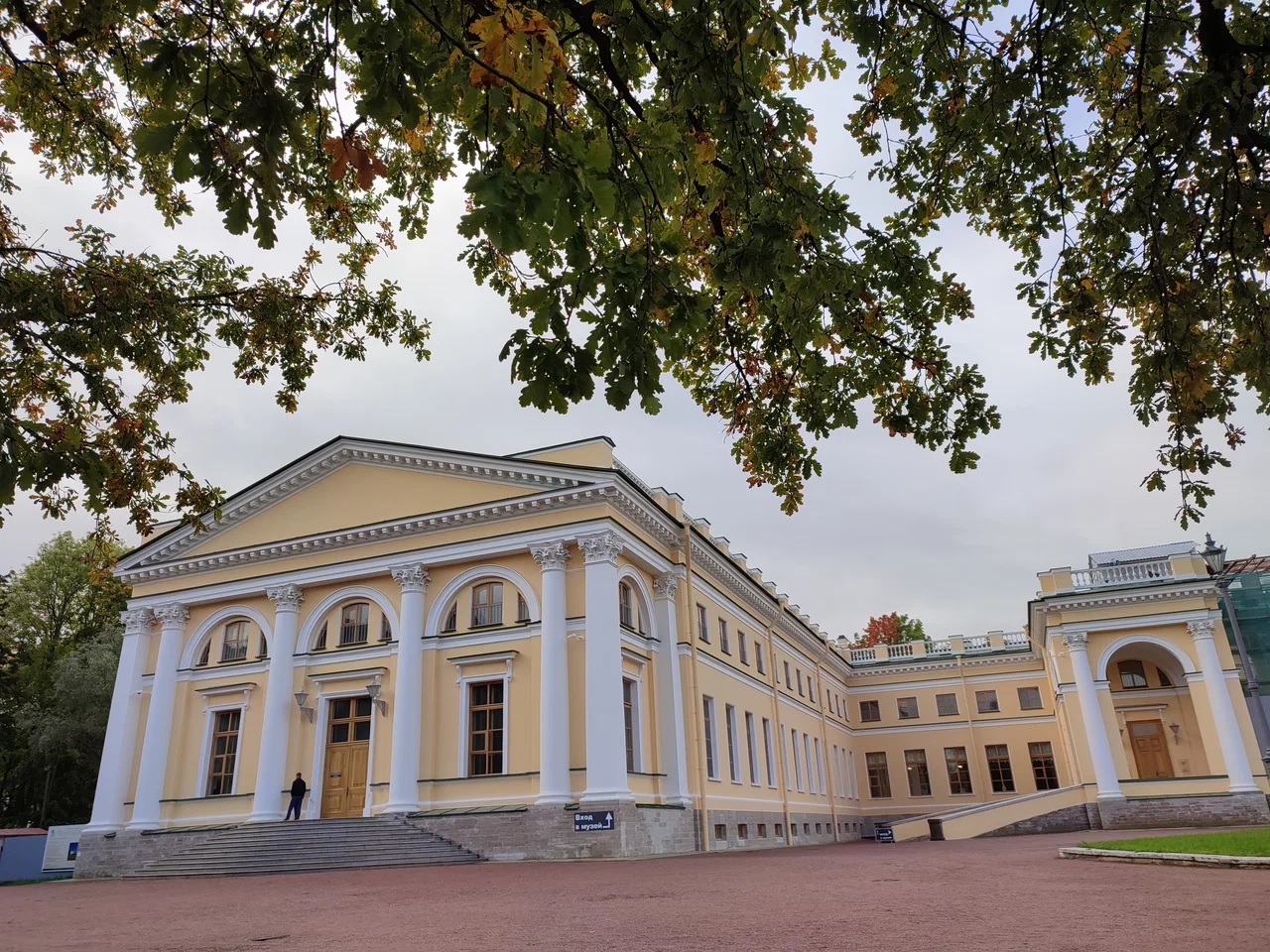
PHOTO: view of the eastern wing of the Alexander Palace
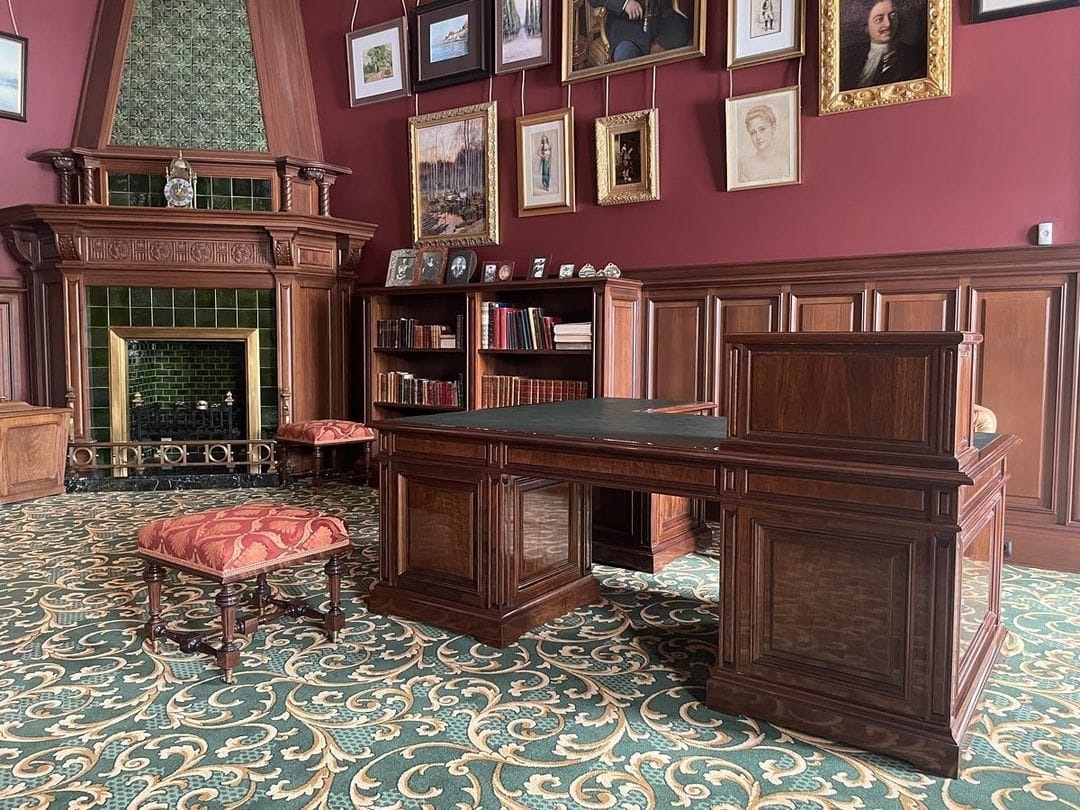
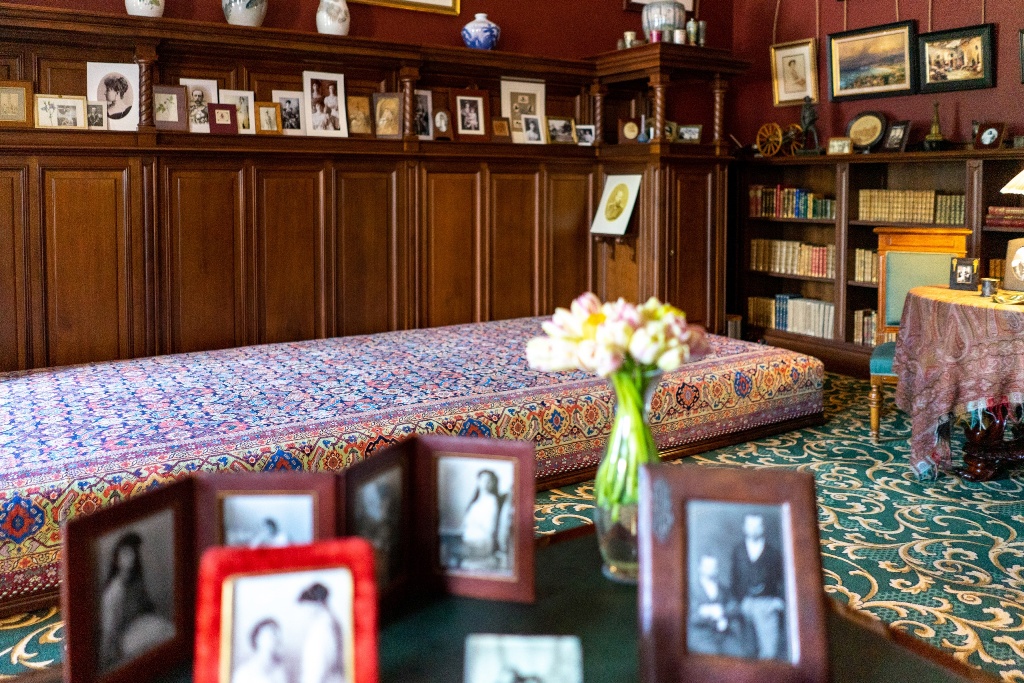
On this day – 13th August 2021 – the Alexander Palace at Tsarskoye Selo reopened, after an extensive restoration which began in the autumn of 2015. The Russian media were invited to tour the recreated apartments of Emperor Nicholas II and Empress |Alexandra Feodorovna, located in the eastern wing of the Alexander Palace. The palace welcomed its first visitors the following day on 14th August.
During the past 2 years, the Tsarskoye Selo State Museum restored one additional interior and recreated a number of items lost from the Alexander Palace during the Second World War . . .
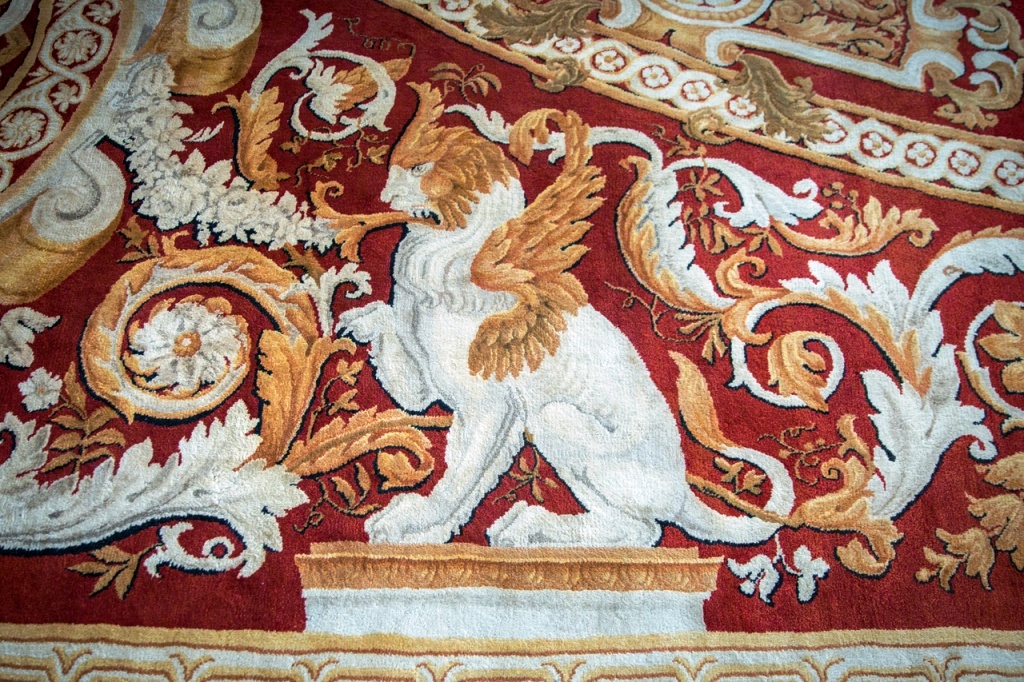
In February 2023 – the Marble [Mountain] Hall – which is part of the ceremonial enfilade – officially opened it’s doors to visitors for the first time in 80 years. The restored interior also includes the recreated wooden slide, which was enjoyed by members of the Russian Imperial Family.
The price tag for the first stage of the Alexander Palace restoration was $30 million USD. The project is the result of the colossal work of hundreds of people, including designers, architects, restorers, museum workers and dozens of organizations.
The Western wing is scheduled for completion no earlier than 2024. After the completion of the work, the Alexander Palace will become a multifunctional museum complex, which will include exhibition halls, halls for temporary exhibitions, halls for research work and conferences, as well as a library and a children’s center. The basement floor will house a ticket booth, a museum shop, a café, a cloakroom, a tour desk, as well as technical and ancillary facilities.
Dear Reader: I have written more than 100 articles and news updates on the history and restoration of the Alexander Palace at Tsarskoye Selo. If you have enjoyed all my updates, then please help supvport my research by making a donation in US dollars – donations can be made by PayPal or credit card. Click HERE to make a donation. Thank you for your consideration – PG
NOTE: the 6th and final episode ‘Ceremonial and Service‘ was added to this post on 9th August 2023 – PG
The State Hermitage Museum has released 5 short videos about the children of Emperor Nicholas II and Empress Alexandra Feodorovna: Grand Duchesses Olga, Tatiana, Maria, Anastasia Nikolaevna and Tsesarevich Alexei Nikolaevich.
NOTE: all of the videos listed below are in Russian, however, do not allow that to stop you from watching this richly detailed series, featuring vintage newsreel footage and still photographs. You can still follow the gist of the audio in English, by doing the following:
[1] click on the YouTube link, located in the banner at the bottom of the video
[2] turn on Google Translator, which will translate the text only
[2] click on the close captioning option [CC] option, located in the banner at the bottom of the video
The closed captioning will appear in English on your screen, allowing you a better understanding of the people, places and events presented in the video.
Part 1 – Pages of life
Duration: 16 minutes, 46 seconds
Part 1 is based on the memoirs of contemporaries, historical photographs and newsreels, as well as modern video footage of places associated with the life of the family of Nicholas II and Empress Alexandra Feodorovna: the Winter Palace, the Alexander Palace in Tsarskoye Selo and their Crimean residence in Livadia. It presents “portraits” of the Grand Duchesses Olga, Tatiana, Maria, Anastasia and Tsesarevich Alexei, compiled from the memoirs of people who knew them closely. You will learn about the serene childhood and youth of the August children, their upbringing and education, about the family’s summer vacation in Yalta and about traveling on the Imperial Yacht “Shtandart“, as well as their participation in the official side of life: court ceremonies, military parades and Celebrations.
Part 2 – The upbringing and education of the Grand Duchesses
Duration: 8 minutes, 29 seconds
Part 2 focuses on the education of the daughters of Nicholas II – Grand Duchesses Olga, Tatiana, Maria and Anastasia, about their daily routine and what role their mother, Empress Alexandra Feodorovna, played in the upbringing of the girls. The film is based on the memoirs of contemporaries, historical photographs and newsreels, as well as modern video filming of places associated with the day-to-day life of the Imperial family.
Part 3 – In the circle of the family
Duration: 8 minutes, 38 seconds
Part 3 explores the private world of the Imperial family, about the joint leisure activities enjoyed by the Imperial children and their parents, they books they read, what sports they were engaged in, their passion for photography and much more. The film is based on the memoirs of contemporaries, historical photographs and newsreels, as well as modern video filming of places associated with the life of the Imperial family.
Part 4 – Travels on the Imperial Yacht “Shtandart“
Duration: 6 minutes, 56 seconds
In Part 4 we travel on the imperial Yacht “Shtandart” – one of the most favorite pastimes of the family of Nicholas II – including walks along the Finnish skerries, enjoying their summer holidays, their day-today life and activities while living onboard their famous yacht. The film is based on the memoirs of contemporaries, historical photographs and newsreels of the life of the Imperial family. The State Hermitage Museum thanks the State Archives of the Russian Federation for the images provided for the film.
Part 5 – Rest in Livadia
Duration: 9 minutes, 4 seconds
Part 5 explores the day-to-day life of Nicholas II and his family at their Crimean residence Livadia in between 1911-1914: how the Imperial Family traveled to the Crimea, the celebrations marking the 16th anniversary of Grand Duchess Olga and the name day of Tsesarevich Alexei, their participation in charity bazaars, including the “White Flower Day”, in which Empress and her children took part. The film is based on the memoirs of contemporaries, historical photographs and newsreels of the life of the Imperial family, as well as modern filming of the Livadia Palace.
Part 6 – Ceremonial and Service
Duration: 11 minutes, 46 seconds
In the 6th and final part we learn about the duties of the Grand Duchesses and the Tsesarevich, who were trained from childhood to serve Russia. These include their activities and responsibilities as regimental chiefs, their participation in the celebrations marking historical anniversaries and significant events, as well as how their service to the Fatherland changed after the outbreak of the First World War. This film is based on the memoirs of contemporaries, historical photographs and newsreels of the life of the Imperial Family, provided by the State Archives of the Russian Federation.
I have published more than 30 titles to date through AMAZON – featuring one of the largest selections of books on Nicholas II, the Romanov dynasty and the history of Imperial Russia.
The net proceeds from the sale of each book help fund my research in clearing the name of Russia’s much slandered Tsar.
Please CLICK on the BANNER or LINK above to review my current selection of titles in hardcover, paperback and ebook editions. Listings provide a full description for each title, pricing and a Look inside feature.
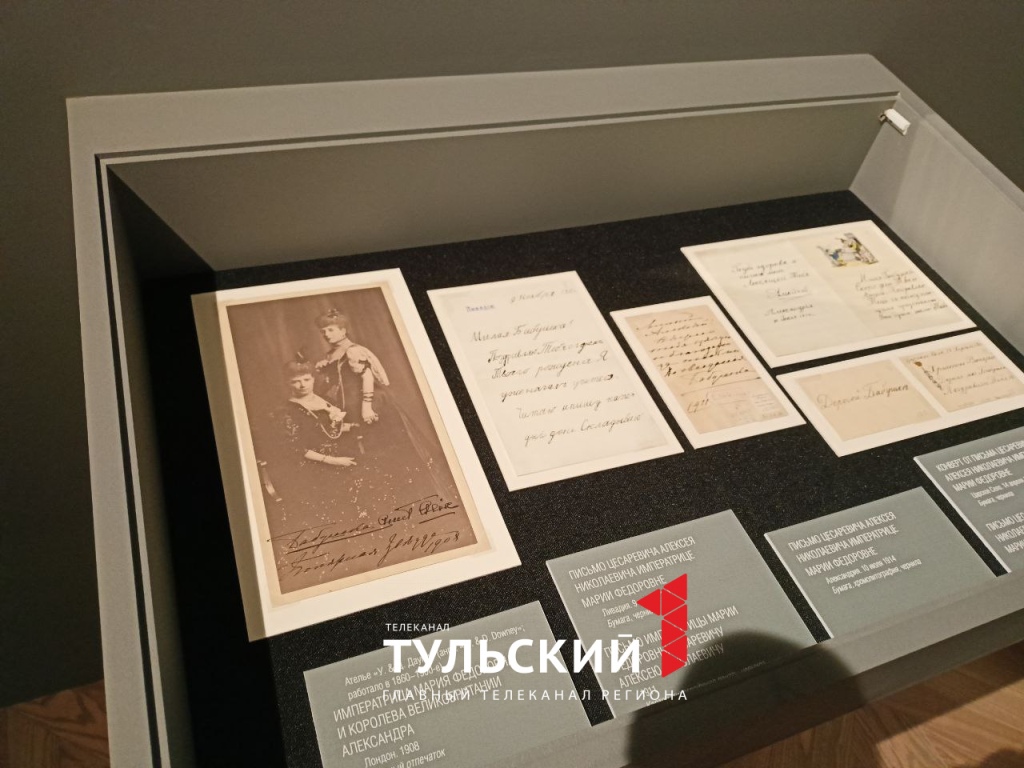
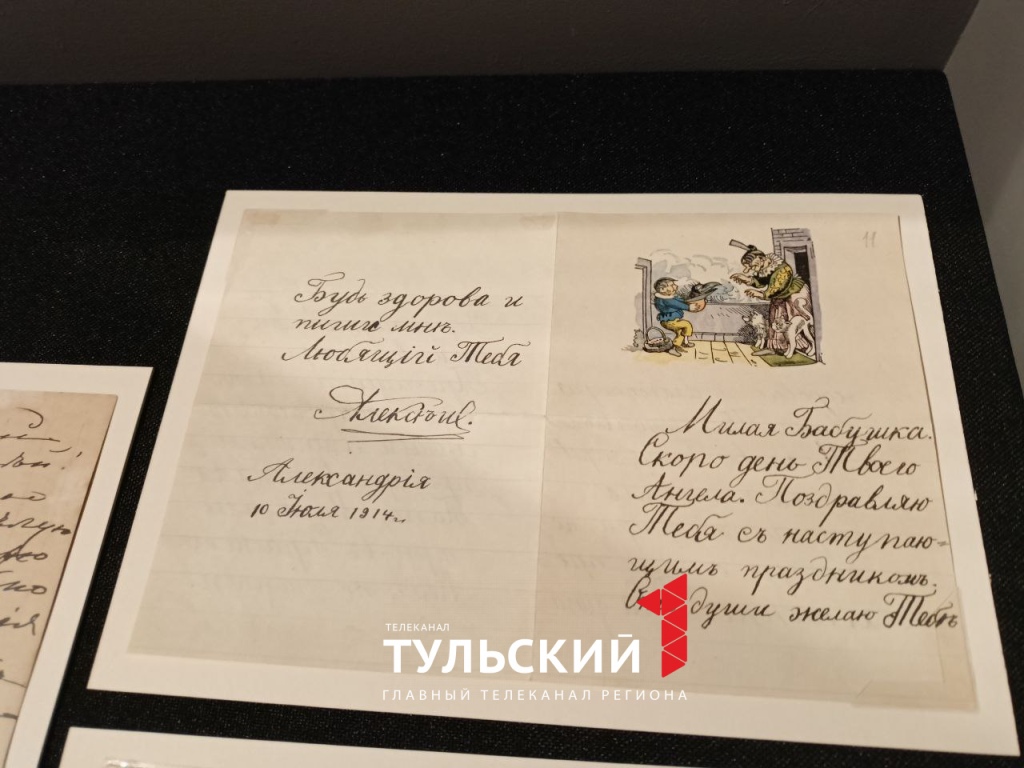
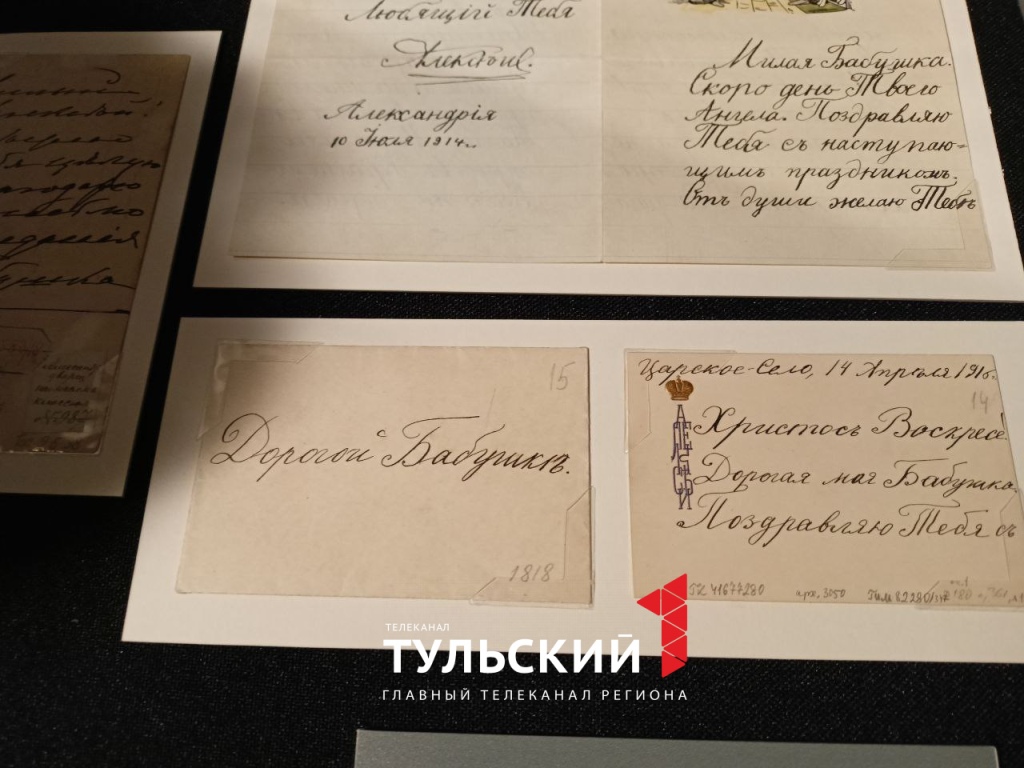
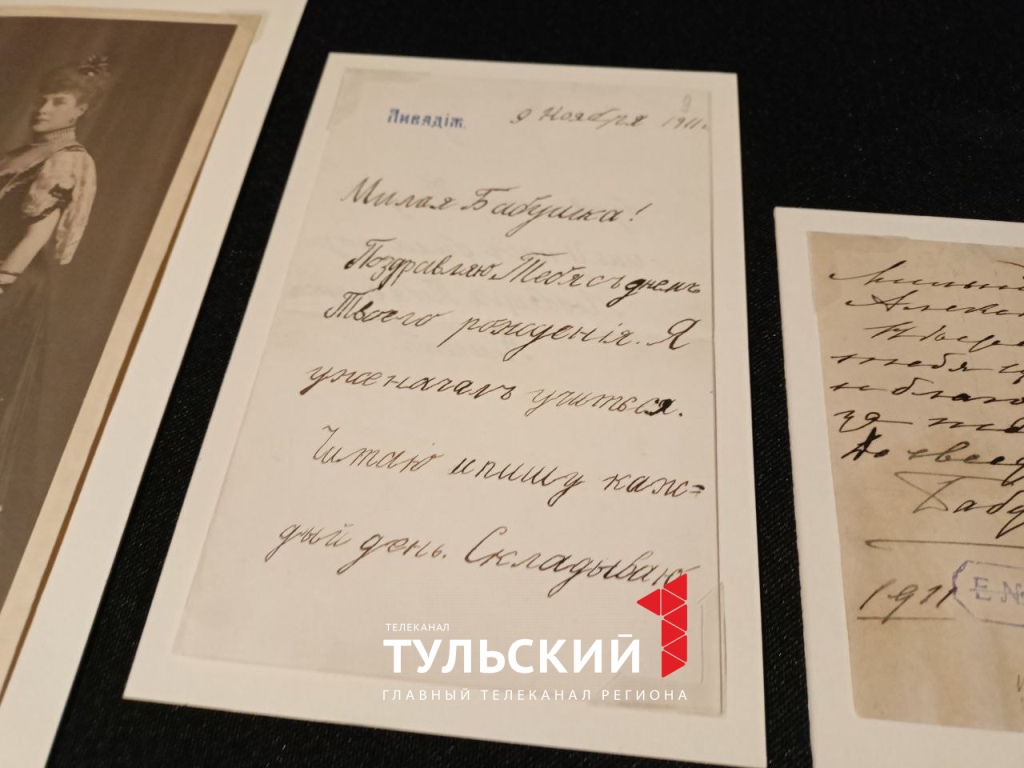
On 26th July 2023, three letters written by Tsesarevich Alexei Nikolaevich to his grandmother Dowager Empress Maria Feodorovna were presented at the Nicholas II. Family and Throne exhibition, which opened on 21st April 2023 at the Tula branch of the State Historical Museum. The letters will be on display until 15th August 2023.
Empress Maria Feodorovna, wife of Emperor Alexander III, mother of Emperor Nicholas II, had 15 grandchildren – many of whom grew up before her eyes. Many of her grandchildren’s letters to her have been preserved, including three letters dated 1911, 1914 and 1916 respectively from Tsesarevich Alexei Nikolaevich (1904-1918).
In these charming letters, the heir to the throne congratulates his grandmother on Easter and Birthday, while briefly updating her on his health and plans. Each letter is written a few weeks before the holiday. Dowager Empress Maria Feodorovna often visited her family in Denmark and her sister Queen Alexandra in England, so the letters often took weeks to reach her. Her grandson’s letters are quite short and affectingly signed “loving you Alexei”.
On 9th November 1911, 7-year-old Tsesarevich Alexei wrote to Maria Feodorovna from Livadia (above): “Dear Grandmother! I congratulate you on your birthday. I’ve already started learning. I read and write every day . . . “.
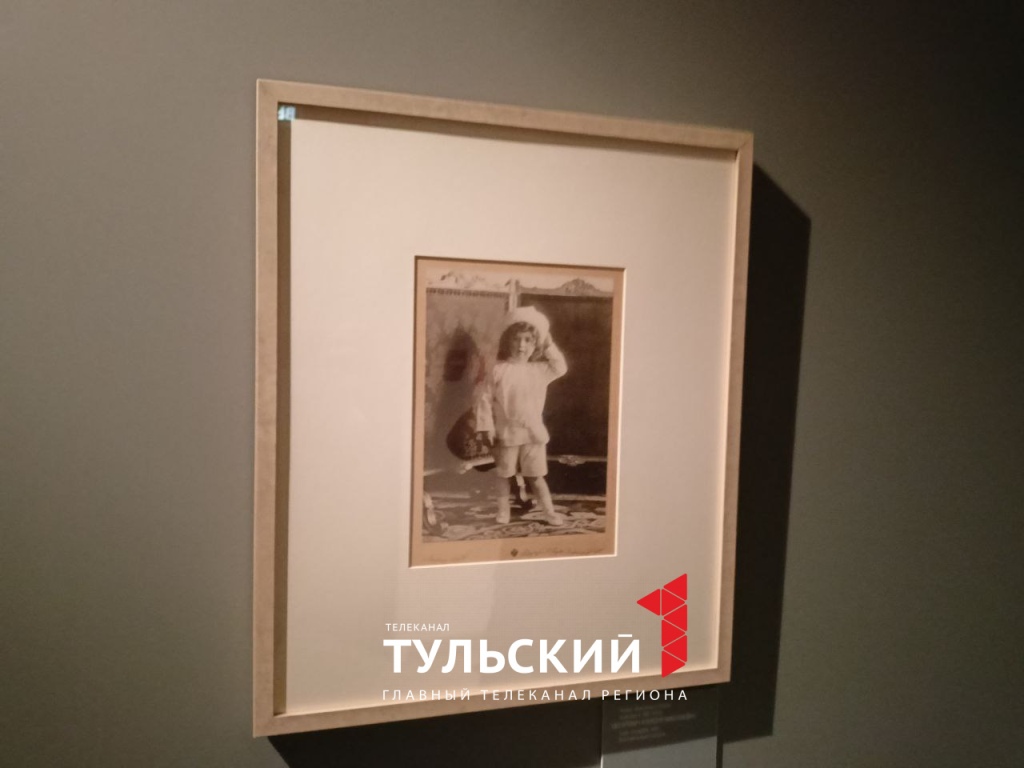
Also on display is a photograph of Alexei (above), taken in the Boassonnas and Eggler Studio in St. Petersburg in 1907, and a photograph of Empress Maria Feodorovna and her sister, Queen Alexandra of Great Britain, taken in 1908.
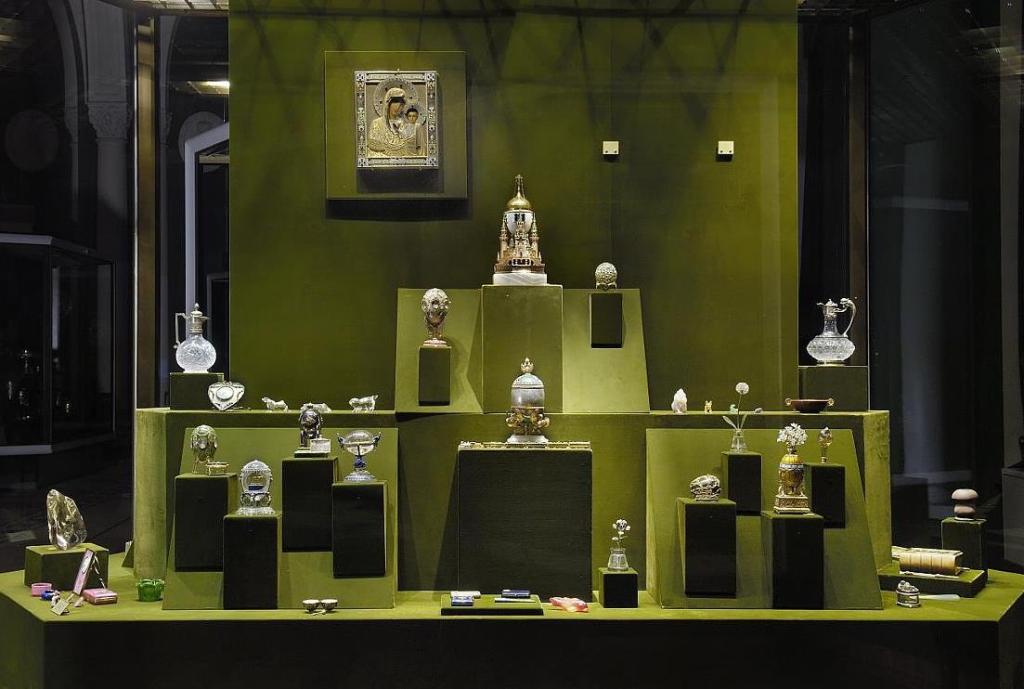
PHOTO: view of the display case in the Armoury Museum containing 10 Fabergé Imperial Easter Eggs, among other items
According to Elena Gagarina[1], director of the Moscow Kremlin Museums, the Collection of the State Armoury Chamber Museum will be moved to a massive new museum complex located on Red Square in 2024. The new K5 museum – which has been under construction for nearly a decade – will feature a “large Fabergé Hall” to showcase the 10 Imperial Easter Eggs[2] and other Fabergé items from the museum’s collection.
The Moscow Kremlin Museums were founded on 10th March 1806, when Emperor Alexander I (1777-1825) issued a decree on the creation of the Armoury, as a treasury of the Romanov dynasty. It preserves more than 4,000 items related to the life of the imperial, grand-ducal and patriarchal courts.
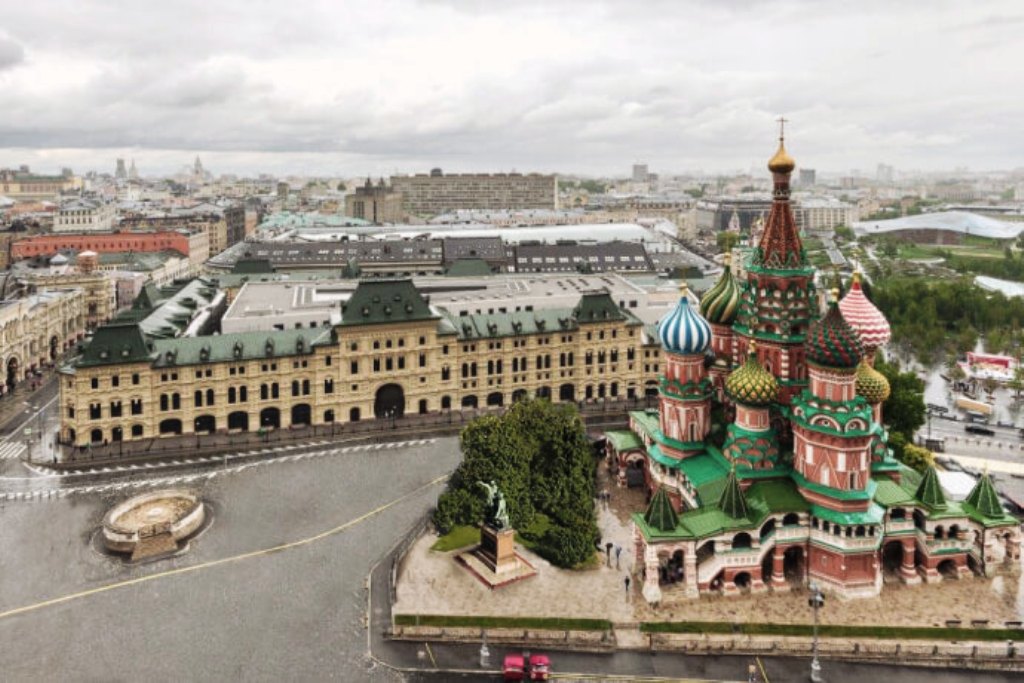
The creation of a new building to house the Armoury Chamber collection has been under construction in the Middle Trading Rows, which is situated on Red Square, next to the GUM Department Store and across from St. Basil’s Cathedral.
Elena Gagarina notes that the Armoury Chamber’s collection is so large that it is simply impossible to display the museum’s vast collection, most of which is in storage. In addition, she noted that due to the constraints of the museum being within the Kremlin make it difficult to host major exhibitions.
PHOTO: the Moscow Kremlin Museum’s new K5 Museum will be housed in the Middle Trading Rows, situated on Red Square, across from the iconic St. Basil’s Cathedral
She further stressed the fact that it is important that the Kremlin Museum now expands beyond the Kremlin wall, not just because of current space limitations, but also for the museum’s collection to be displayed in a modern museum setting, similar to those in many European cities. The new modern facility will feature an area for receiving visitors, ticket offices, lecture halls, restoration workshops, storage facilities, shops and restaurants. The new venue will allow for temporary expositions and special exhibitions.
It was in 2016 the Moscow Government signed a decree transferring the building of the Middle Trading Rows to the State Kremlin Museum, which will house the bulk of the collection of the Armoury Chamber Museum. Some items, including those related to coronations and state regalia will remain in the original Armoury Museum.
The K5 Museum complex includes the Middle Trading Rows and a new building constructed within the perimeter of the historic building. The new building is completely hidden behind the 19th-century façade, thus preserving the historically established composition of Red Square, included by UNESCO in it’s list of World Heritage Sites.
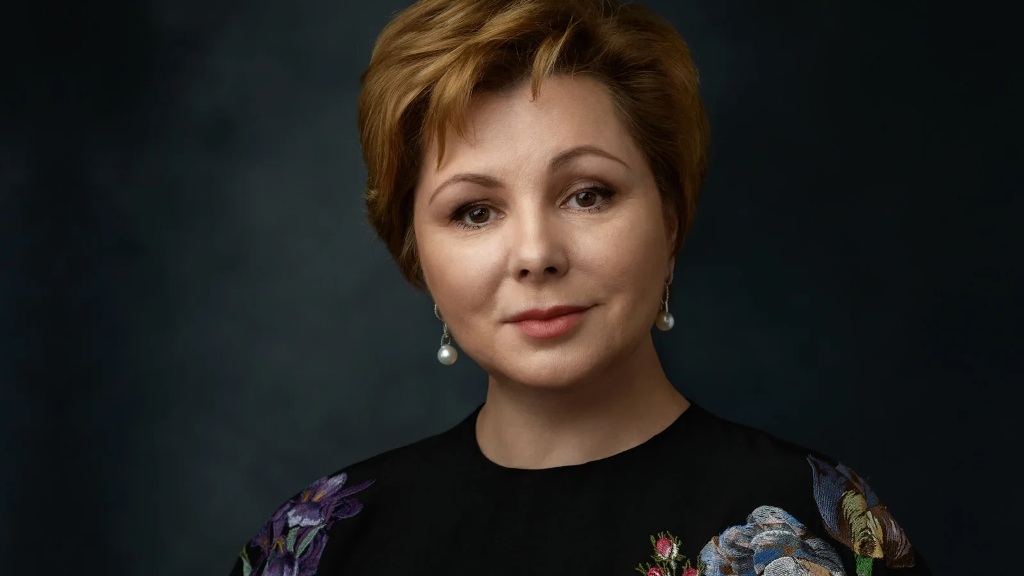
PHOTO: Elena Gagarina, director of the Moscow Kremlin Museums, the Collection of the State Armoury Museum.
The new K5 Museum will include a Fabergé Hall
Of particular interest to visitors to the new K5 Museum will will be a “large Fabergé Hall” which will showcase the Armoury Chamber’s 10 Imperial Easter Eggs and other Fabergé items from the museum’s collection. Each Easter egg will be presented in a separate showcase. Many more items that are associated with the master will be displayed in other glass display showcases.
According to Gagarina, the new museum has plans to host large Fabergé exhibitions, in cooperation with the State Hermitage Museum, the suburban palace museums of St. Petersburg, the Fersman Mineralogical Museum, the Fabergé Museum in St. Petersburg, and from private collections in Russia.
Over the past decade, the Armoury Chamber’s Fabergé collection has grown, thanks to generosity of gifts made by Russian oligarchs and corporations. In 2020, the museum received as a gift the archive of Peter Carl Fabergé (1846-1920), which was kept by his great-granddaughter, Tatiana Feodorovna Fabergé (1930-2020). She wanted the vast family archive of documents to be transferred to the Moscow Kremlin Museum.
During her lifetime, Tatiana Fabergé made numerous visits to the Kremlin Museum, and maintained good relations with Tatiana Nikolaevna Muntean, the curator of the Armoury Chamber’s Faberge collection. The circle of people who organize exhibitions and conferences, as well as those who write books and papers about Faberge, is quite small, and everyone knows each other. They communicate on a regular basis, to assess and discuss their research and discoveries.
According to Gagarina, it was Tatiana Fabergé’s with that the Fabergé archive be kept in a state museum, and under no circumstances should it fall into private hands.
The new K5 Museum was scheduled to open in September 2022, however, construction was interrupted by the COVID epidemic, which hit Russia very hard. In addition, the move was further delayed due to problems with getting showcases, which were being made in the UK. The exhibits from the Armoury Chamber Museum are expected to be moved to the new building sometime this year. The new museum is now scheduled to open to visitors by the end of 2024
NOTES:
[1] Elena Yurievna Gagarina [b. 1959] is the daughter of the famous Soviet pilot and cosmonaut Yuri Gagarin (1934-1968)
[2] Between 1930 and 1933, 14 imperial eggs left Russia. Many of the eggs were sold to Armand Hammer (president of Occidental Petroleum and a personal friend of Lenin, whose father was founder of the United States Communist Party) and to Emanuel Snowman of the London antique dealers Wartski.




 Nicholas II
You must be logged in to post a comment.