God, Save the Tsar! Боже, Царя храни!

SONY DSC

Imperial Anthem of the Russian Empire

God, Save the Tsar! (Russian: Боже, Царя храни!; transliteration: Bozhe, Tsarya khrani!) was the national anthem of the former Russian Empire. The song was chosen from a competition held in 1833 and was first performed on 6th December (O.S. 23 November) 1833. The composer was violinist Alexei Lvov, and the lyrics were by the court poet Vasily Zhukovsky. 

In 1833, Tsar Nicholas I (1796-1855) ordered Count Alexey Fyodorovich Lvov (1799-1870), the violinist and army general who was his court composer and aide-de-camp, to compose new music to replace the air that since 1816 had served as the music for the Russian Empire’s Anthem God Save the Tsar, namely Henry Hugh Carey’s God, Save the King. The lyrics of “God Save the Tsar” (Bozhe Tsarya Khranii) date from 1815 and came from Prayers of the Russian People by Vasily Andreyevich Zhukovsky (1783-1852), an officer and poet who served as tutor to the Tsesarevich Alexander Nikolayevich, the future Tsar-Liberator Alexander II.

After some initial creative difficulties, the melody that would serve as the anthem of the Russian Empire for the remainder of its existence came to Lvov in the course of a single night’s inspiration; he succeeded in creating a work of majesty and power that was suitable for the army, the church and the people – indeed, for the entire realm. None other than the great Alexander Pushkin himself reworked Zhukovsky’s verses to adapt them to Lvov’s new hymn. It was the first national anthem in Russian history to feature music and lyrics by Russian authors.

Upon hearing its beautiful strains for the first time, Nicholas I ordered the work repeated several times. At the close of the final rendition, the Tsar – a stern and military-minded ruler who was to be vilified by Karl Marx and Friedrich Engels as the “Gendarme of Europe” for his crushing of the forces of revolution wherever they appeared – clasped the composer’s hand with tears in his eyes and uttered the single word: “Splendid!”

The public premier of God, Save the Tsar took place on 6 December (O.S. 23rd November) 1833 at the Bolshoi Theater in Moscow, where it was performed by a choir of one hundred singers and two military bands. At Christmas that same year, by the Tsar’s personal order it was performed by military bands in every hall of the Winter Palace in Saint Petersburg. A week later, the Emperor issued a decree declaring the anthem a “civil prayer” to be performed at all parades and official ceremonies. As was the case with the Preobrazhensky March, the most widely-used arrangement for military band of God, Save the Tsar was created by Ferdinand Haase; it was the shortest anthem in the world at eight lines.

During the Coronation of Tsar Alexander II in 1855, Lvov led one thousand singers and two thousand musicians in a rendition of God Save the Tsar, the first performance of the anthem at a coronation. As Lvov directed the choir and orchestra, he, by means of galvanic batteries, set off forty-nine cannons, one by one, sometimes on the beat. At the conclusion, hundreds of Roman candles and rockets soared into the sky.

God, Save the Tsar! remained the Russian Empire’s national hymn until the February Revolution of 1917, after which the Worker’s Marseillaise was adopted as the new national anthem until the overthrow of the Russian Provisional Government in October of the same year.

Sources: Brandenburg Historica; Scenarios of Power (Wortman, Richard S.)

215c

LYRICS

Русский

Боже, Царя храни!
Сильный, державный,
Царствуй на славу, на славу нам!

Царствуй на страх врагам,
Царь православный!
Боже, Царя храни!

English translation

God, save the Tsar!
Strong, sovereign,
Reign for glory, For our glory!

Reign to foes’ fear,
Orthodox Tsar.
God, save the Tsar!

Below, are a selection of videos which present a variety of renditions of God, Save the Tsar! Боже, Царя храни!, performed by Russian Orthodox and professional choir ensembles – courtesy of YouTube:

1. Beautiful rendition of God, Save the Tsar! with vintage newsreels of the Imperial family. Duration: 2 minutes, 38 seconds

2. Performed by the Kuban Cossack Choir. Duration: 1 minute, 38 seconds

3. Performed by the Mikhailovsky Theatre Orchestra and Choir.
Duration: 1 minute, 46 seconds

4. Performed by Varya Strizhak. Duration: 3 minutes, 19 seconds

5. Performed by the Moscow Philharmonic Orchestra, and the State Academic Choir.
Duration: 2 minutes, 33 seconds

6. Performed by the Orlic Children’s Church Choir (Serbia).
Duration: 1 minute, 24 seconds

7. Performed by The Royal Scots Dragoon Guards.
Duration: 55 seconds

8. Performed by the Columbia Military Band in 1914.
Duration: 3 minutes, 16 seconds

© Paul Gilbert. 11 October 2022

The fate of Anna Kuzminykh, a servant in the Ipatiev House

PHOTO: Anna (right) with her mother and son Ivan in 1916

NOTE: the publication of this article has been met with both great interest and some skepticism. As Anna “Anyuta” Vasilievna Kuzminykh (1890-1954), did not leave any paper trail, which documented her brief period in the Ipatiev House, there is much to her story which allows for speculation, therefore, her story – as told through her niece and historian many years later, should be taken with a cautionary view – PG

Thanks to the research of a Russian historian, we now have a better understanding of the fate of Anna Vasilievna Kuzminykh (1890-1954), one of the lesser known servants in the Ipatiev House, during the summer of 1918.

According to the Kambarka (Udmurt Republic in Russia) historian and archivist Razif Mirzayanov, shortly before the murder of the Imperial Family in Ekaterinburg, the Tsar ordered Anna Kuzminykh, to leave the Ipatiev House, and thereby saved her life.

“I learned about the fate of Anna Kuzminykh in 1999, from her niece Zoya Grigoryevna Zhizhina” – says Mirzayanov. Anna herself was no longer alive by that time – she had died in 1954. The historian added, that Anna had not told anyone about her brief period as a servant in the Ipatiev House, during the summer of 1918, except for her niece Zoya Grigoryevna.

Anna was born on 9th February 1890, in the village of Kambarsky Zavod (now Kambarka), into the family of a local tailor Vasily Michkov. She married Yegor Kuzminykh, when the First World War broke out, who was ordered to the Front in 1914. Following the February 1917 Revolution, Anna left Kambarka the following year to work in Ekaterinburg, leaving behind her young son Ivan and mother. By some miracle, Anna was able to get a job at the Ipatiev House, the mansion requisitioned by the Bolsheviks and renamed the “House of Special Purpose”, where Emperor Nicholas II and his family were held under house arrest from April to July 1918. Anna was entrusted with the care of two cows, which provided milk for the prisoners.

PHOTO: in 2017, Razif Mirzayanov, Chairman of the Society of Historians and Archivists of the Kambarsky District, was awarded a medal in honour for his research on the Romanov’s

THE TSAR CALLED HER ANYUTA

One day, after having milked one of the cows, Anna went up to the house with a full bucket of milk, only to be rebuffed by the Empress herself: “Anna, once again, you milked both cows in one bucket. The milk will turn sour!” “What are you talking about,” Anna replied, “this bucket is from one cow that gives so much milk.” After straining the milk, Anna returned to the barn to milk the second cow. Then, pouring flour into a bucket for a mash to feed the cattle, she heard someone’s footsteps enter the barn.

Looking around, Anna saw Nicholas II and Alexandra Feodorovna standing before her. “Now I understand why cows are milked in buckets,” said Nicholas. One of the cows reached out to him with her muzzle, which was covered in flour, the Tsar gently stroked the animal. “Don’t you feel sorry, Anyuta, for using so much flour?” he asked the servant. “Yes, there is a lot of it, but it will be enough for a long time,” she replied briskly. From then on, the Tsar called her Anyuta.

Since there were few servants, Anna also had to work in the kitchen, helping the cook to prepare and serve meals, says Mirzayanov. She later recalled that the guards present in the dining room during lunch, often helped themselves to the food prepared for the Imperial Family.

PHOTO: the house in Kambarka, where Anna lived with her family. Her descendants still live here

THANKED FOR HER WORK AND ORDERED TO LEAVE

“On a hot summer day in early July 1918, a search was conducted in the Ipatiev House,” Razif Mirzayanov continues his story. A band of Chekist thugs examined the personal belongings of the Imperial Family, even roughly leafing through books and rummaging through linens. The captives and their faithful servants stood in silence while they carried out their work. Anna stood frightened in the doorway of the room where the Tsar knelt before a kiot with icons and prayed. He never turned around or stood up while the search was going on. One of the Chekists, while turning out suitcases, cursed and swore filthy obscenities at the Tsar. In one of the suitcases, the Chekist found a long black lace shawl. Turning it in his dirty hands, he angrily threw it to Anna and shouted: “Take it, it will come in handy for you, while you are still young!”

This black lace shawl was kept for a long time in the Kuzmin family: Anna’s daughter-in-law sometimes wore it to church, and many parishioners noted it’s beautiful workmanship, none even suspecting that it had once belonged to one of the female members of the Imperial Family.

After the search, the guards in the house were completely changed – and this detail of Anna’s story is also confirmed by historians. On 4th July 1918, Yakov Yurovsky was appointed commandant of the “House of Special Purpose”, instead of Alexander Dmitrievich Avdeev (1887-1947), the first commandant of the Ipatiev House, who was considered unreliable.

Shortly thereafter, the Tsar approached Anyuta, he thanked her for her work, and told her that his children had fallen in love with her, – says Razif Mirzayanov. He then told her to leave the Ipatiev House and never come back. He ave Anna a souvenir photo on a passe-partout, which depicted the Imperial Family, taken in 1913. With tears in her eyes, Anyuta said goodbye to the Imperial Family and left, concealing the photo and black lace shawl.

A few days later, on the night of 16/17 July, the Bolsheviks woke the Imperial Family in the middle of the night and ordered them to dress and go downstairs. The Emperor and Empress with their five children, along with four retainers: the doctor, the cook, the valet and the maid went to the basement of the house. At the request of Alexandra Fedorovna, two chairs were brought for her and her ailing son, the rest stood along the wall. Then Yurovsky brought in a firing squad, read out the verdict and gave the command to shoot every one – there were no survivors of the regicide.

PHOTO: the Emperor presented Anna with a copy of this famous photograph – taken in 1913 – as a keepsake. The Russian caption “Царь назыбал ее Анютой” translated reads “The Tsar called her Anyuta”.

COOKED “ROYAL DISHES”

There is no evidence to suggest that the Imperial Family could have guessed their captors plans to murder them in such a violent manner that fateful night, however, Anna Vasilyevna was sure that it was thanks to Nicholas II’s request that she leave the Ipatiev House that saved her life.

“After leaving the Ipatiev House, and her conversation with the Emperor, Anna went home. Her husband who had been a German prisoner of war, returned home to Russia, some 11 years after leaving for the front. Soon they had another son, Sergei, who then participated in the Great Patriotic War,” – says Razif Mirzayanov.

Subsequently, Anna Vasilievna often recalled her life in Ekaterinburg, but only her niece Zoya knew the details of her story. She didn’t keep any records, as it it was too dangerous during the Bolshevik and Soviet years. Zoya, however, remembered how Anna Vasilievna came to visit her with unusual dishes – for example, fried pike stuffed with grains and onions. “Such a dish was prepared for the Tsar’s table,” she said. The photograph of the Imperial Family – gifted by the Emperor – Anna carefully kept in a chest, but after her death, the picture was placed on a chest of drawers, and in 1970 it disappeared.

© Paul Gilbert. 9 October 2022

The Path of the Tsar’s Family: “Evil will not conquer evil, but only love”

I am publishing this post, with the hope that one of the numerous Orthodox publishing houses in the United States, will consider translating and publishing an English-lanaguage edition of this book, compiled by Sergey Milov in 2018, to mark the 100th anniversary of the death and martyrdom of the Holy Royal Martyrs.

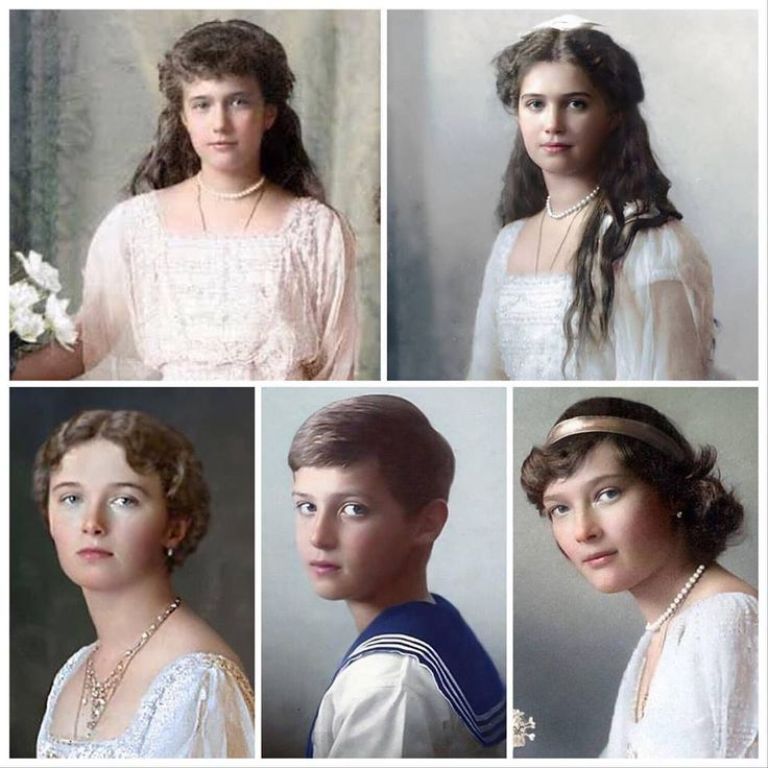
This gift book tells about the life and accomplishments of the Holy Royal Family – the martyrs – the last Russian Emperor-Tsar Nicholas II, his wife Empress Alexandra Feodorovna and their children – Grand Duchesses Olga, Tatiana, Maria, Anastasia and Tsesarevich Alexei. More than a century has passed since the tragic death and martyrdom of the Imperial Family, however, their veneration by Orthodox Christians continues to increase every year.

The contents include a foreword; individual chapters on the Emperor, the Empress, the Grand Duchesses and the Heir Tsesarevich; feats of the Imperial Family; their house arrest at Tsarskoye Selo, Tobolsk and Ekaterinburg; questions about the Ekaterinburg remains; and their glorification by the Russian Orthodox Church.

This book was published in Russian in 2018 by Letopis Orthodox Publishing House (Moscow). It is available in a small 9 x 13 cm [3-1/2″ x 5″] hard cover format, perfect for carrying in your pocket. The book features 256 pages, with illustrations. A total of 10,000 copies were published.

Copies of the Russian-language of this title can be purchased from Knigomania (Canada); Vasha-Kniga (United States) or Ruslania (EU).

© Paul Gilbert. 7 October 2022

Emperor Nicholas II tests new uniforms for the soldiers of his army in 1909

251e

Emperor Nicholas II tests new uniforms for the soldiers of his army. Livadia 1909
Photo © State Archive of the Russian Federation (GARF)

This series of photographs depict Emperor Nicholas II wearing the uniform of a private soldier in Livadia. During the autumn of 1908, the Tsar made it his duty to run tests on new uniforms for the soldiers of his army.

251a

Emperor Nicholas II tests new uniforms for the soldiers of his army. Livadia 1909
Photo © State Archive of the Russian Federation (GARF)

In 1909, Vladimir Aleksandrovich Sukhomlinov (1848-1926) the Minister of War was at work on an important reform, the determination of the type of clothing and equipment to be worn and carried in future by every Russian infantryman. When considering the modifications proposed by the Minister, the following provides a convincing proof of the extreme conscientiousness and sense of duty which inspired Nicholas II, as head of the Russian Imperial Army. The Tsar wanted full knowledge of the facts, and decided to test the proposed new equipment personally.

251b

Emperor Nicholas II tests new uniforms for the soldiers of his army. Livadia 1909
Photo © State Archive of the Russian Federation (GARF)

The Emperor told only Alexander Alexandrovich Mossolov (1854-1939), who served as Minister of the Court and the Commander of the Palace of his intention. They had the full equipment, new model, of a soldier in a regiment camping near Livadia brought to the palace. There was no falang, no making to exact measure for the Tsar; he was in the precise position of any recruit who was put into the shirt, pants, and uniform chosen for him, and given his rifle, pouch, and cartridges. The Tsar was careful also to take the regulation supply of bread and water. Thus equipped, he went off alone, covered twenty kilometres out and back on a route chosen at random, and returned to the palace. Forty kilometres — twenty-five miles — is the full length of his forced march; rarely are troops required to do more in a single day.

251c

Emperor Nicholas II tests new uniforms for the soldiers of his army. Livadia 1909
Photo © State Archive of the Russian Federation (GARF)

The Tsar returned at dusk, after eight or nine hours of marching, rest-time included. A thorough examination showed, beyond any possibility of doubt, that there was not a blister or abrasion of any part on his body. The boots had not hurt his feet. Next day the reform received the Sovereign’s approval.

251d

Emperor Nicholas II tests new uniforms for the soldiers of his army. Livadia 1909
Photo © State Archive of the Russian Federation (GARF)

The Tsar regarded himself as a soldier — the first professional soldier of the Russian Empire. In this respect he would make no compromise: his duty was to do what every soldier had to do.

Excerpted from At the Court of the Last Tsar by A.A. Mossolov. English edition published in 1935

1909

PHOTO: bas-relief depicting Emperor Nicholas II
testing new uniforms for the soldiers of his army

© Paul Gilbert. 5 October 2022

His Imperial Majesty’s Suite during the reign of Emperor Nicholas II, 1894 to 1917

PHOTO: the retinue of His Imperial Majesty Emperor Nicholas II, Tsarskoye Selo, 1916. From left to right: Grand Duke Dmitry Pavlovich; Admiral Konstantin Dmitrievich Nilov; Count Alexander Nikolaevich Grabbe; Colonel Anatoly Alexandrovich Mordvinov; Colonel Kirill Anatolievich Naryshkin; Major General Vladimir Nikolaevich Voeikov; Emperor Nicholas II; Count Vladimir Borisovich Frederiks; Prince Vasily Alexandrovich Dolgorukov; and Sergey Petrovich Federov

* * *

His Imperial Majesty’s Suite was a retinue unit of personal aides to Emperor Nicholas II, who reigned for 22+ years, from the death of his father on 2nd November (O.S. 20th October) 1894 to his abdication on 15th (O.S. 2nd) March 1917.

History

According to the Table of Ranks, established by decree of Emperor Peter I on 24th January 1722, the title of Adjutant General of the Russian Empire was originally a military rank. The title of His (Her) Imperial Majesty ‘s Adjutant Wing, was introduced in 1775 by Empress Catherine II.

In 1827, Emperor Nicholas I formally created the Retinue of His (Her) Imperial Majesty was established. From 1843 it was part of the Imperial Main Headquarters, an organization within the military administration of the Russian Empire that was tasked with carrying out the personal military commands from the Emperor.

The aides to the Tsar generally consisted of officers of the Army or the Guards units. The retinue consisted of persons granted the highest honors, who enjoyed the special confidence of the reigning Emperor. They were assigned the honorary title of Adjutant; used in parallel with the existing personal military, court or civil rank as defined in the Table of Ranks.

Emperor Nicholas I introduced a title of Major General of the His Imperial Majesty’s Suite. In 1841, a special title of Ajdutant General of the Emperor’s Person was created.

His Imperial Majesty’s Suite during the reign of Nicholas II

From 1894 to 1914, His Imperial Majesty’s Suite included the following number of aides:

  • 51 x adjutant generals to His Imperial Majesty;
  • 64 x Retinues of His Majesty Major General and Rear Admiral;
  • 56 x adjutant wing of His Imperial Majesty

Adjutant generals of the Russian Empire in as of 1894-1917 wore the following distinctive insignia on their retinue uniform:

  • gold general’s epaulettes (and later shoulder straps ) with the monogram of the reigning emperor;
  • gold aiguillettes of the adjutant general;
  • a white sheepskin hat with a red bottom and gold galloons located crosswise on the bottom (during the reign of Alexander III and Nicholas II ).

His Imperial Majesty’s Suite also included Grand Dukes and Princes of the Imperial Blood[1] of the Russian Imperial Family, each of whom served as aides to Emperor Nicholas II. Among these, included the Emperor’s brother Grand Duke Mikhail Alexandrovich, and his first cousin Grand Duke Kirill Vladimirovich, the latter who committed an act of treason against the Emperor during the February 1917 Revolution.

In addition, His Imperial Majesty’s Suite included notable figures, many of whom will be familar to persons who are more acquainted and well-read on the reign of Nicholas II, including:

Count Pavel (Paul) Konstantinovich Benckendorff; Emir of Bukhara Sayyid Mir Muhammad Alim Khan; Vladimir Nikolaevich Voeikov; Alexander Nikolaevich Grabbe; Vladimir Fyodorovich Dzhunkovsky; Prince Vasily Alexandrovich Dolgorukov; Count Fyodor Arturovich Keller[2]; Carl Gustaf Emil Mannerheim; Duke Georg Alexander of Mecklenburg-Strelitz; Alexander Alexandrovich Mosolov; Huseyn Khan Nakhchivanski[2]; Konstantin Dmitrievich Nilov; Duke Peter Alexandrovich of Oldenburg[3]; Prince Vladimir Nikolayevich Orlov; Prince Felix Feliksovich Yusupov, Count Sumarokov-Elston; Count Ilya Leonidovich Tatischev; and Dmitri Feodorovich Trepov; among others.

Their duties included carrying out special assignments of the Emperor (for example, investigating civil unrest), escorting foreign monarchs and delegations, and being on duty with the Emperor. In the middle of the 19th century, each retinue officer had an average of one watch every two months. The retinue title came with a number of privileges: the right of free passage to the Imperial residence, the right to file reports addressed to the Emperor, etc.

The Revolution and the end of His Imperial Majesty’s Suite

The ranks of adjutant generals, generals of the retinue and adjutant wing were abolished by order of the military department of the new Provisional Government on 21st March 1917.

Many of these men were noble and honourable, who remained faithful to Emperor Nicholas II, while others were self serving and traitors. Many of them managed to escape Bolshevik Russia, while others lived out their remaining years in Bolshevik and Soviet Russia. Sadly, for some of these men, their loyalty to their Sovereignwere tortured and subsequently exectuted, their crime in the eyes of their murderers, was .

© Paul Gilbert. 3 October 2022

NOTES:

[1] Under the new Family Law promulgated in 1886 by Emperor Alexander III, only the children and male-line grandchildren of a Tsar would be styled Grand Duke or Grand Duchess with the style of Imperial Highness—great-grandchildren and their descendants would be styled either “Prince” or “Princess of the Imperial Blood” with the style of Highness. The revised Family Law was intended to cut down on the number of persons entitled to salaries from the Imperial treasury.

[2] Commander of the Third Cavalry Corps of the Russian Imperial Army, General Count Fyodor Arturovich Keller (1857-1918) and Commander of the Guard Cavalry Corps Huseyn Khan Nakhchivanski (1863-1919), were the only two Tsarist generals, who remained loyal to the Russian Orthodox emperor Nicholas II and refused to swear allegiance to the Provisional Government.

[3] Duke Peter Alexandrovich of Oldenburg (1868-1924), was the first husband of Nicholas II’s sister Grand Duchess Olga Alexandrovna (1882-1960). The couple married on 27th July 1901 in the Gatchina Palace Church. In 1915, the couple separated; Olga had no children from her first marriage. On 27th August 1916, Emperor Nicholas II approved the definition of the Holy Synod, which recognized her marriage to Prince of Oldenburg dissolved

Nicholas II in the news – Summer 2022

Russia’s last Emperor and Tsar continues to be the subject of news in Western media. For the benefit of those who do not follow me on my Facebook page, I am pleased to present the following 12 full length articles, news stories and videos published by American and British media services, in addition, are several articles about Nicholas II’s family and faithful retainers.

Below, are the articles published in July, August and September 2022. Click on the title [highlighted in red] and follow the link to read each respective article:

How Moscow lit up on Nicholas II’s coronation day + PHOTOS

“Light with no fire” and a little sun – those were the names Russians first gave with astonishment to electrical lighting appliances. It hadn’t even been a quarter of a century since the appearance of the first light bulb in Russia when electricity sparked interest in the Winter Palace.

Source: Russia Beyond. 22 September 2022

The last Tsar: How Russia commemorates the brutal communist murder of Emperor Nikolai II’s family + PHOTOS

An RT correspondent learned the story of this extra judicial massacre and talked to pilgrims about their attitude to the Holy Royal Passion-Bearers in Russia today.

Source: Russia Today. 14 August 2022

The newest saints of the Russian Orthodox Church + PHOTOS

After the collapse of the USSR the resurgent Orthodox Church, among its other actions, canonized new saints. By and large, these were individuals who had suffered for their faith at the hands of the Communists – but not exclusively. Among them are Patriarch Tikhon, John of Kronstadt, Nicholas II and his family, Grand Duchess Elizabeth Feodorovna . . .

Source: Russia Beyond. 29 August 2022

The Russian Empire’s largest ‘EXPO’ + 21 PHOTOS

In 1896, the biggest industrial and art exhibition in the history of Tsarist Russia was held in Nizhny Novgorod, the country’s main trading city. Here is what it was like.

Source: Russia Beyond. 20 August 2022

Betrayed by All and Blessed by God. A Homily for the Feast of the Royal Martyrs

July 17th is a special, extraordinary day for all of us. It is on this day, that we glorify a man who was slandered, debased, subjected to scorn, misunderstood, and betrayed like none other in all of Russian history.

Source: Orthodox Christian. 26 May 2022

‘The Heart of a Saint: Holy Royal Martyr Elizabeth Feodorovna’ by Sophie Law

Letters have always been a mirror to the hearts of the saints, especially when these letters are addressed to people close to them. Grand Duchess Elizabeth Feodorovna’s correspondence with Tsar Nicholas II are very revealing.

Source: Orthodox Christian. 20 July 2022

‘Those who remained faithful’ by Oksana Garkavenko

July 17th is the feast of the holy Royal Martyrs—the family of the last Russian Emperor St. Nicholas II. While commemorating them, let us remember those who walked the path of the Cross with them and remained faithful in the days when betrayal became the norm.

Source: Orthodox Christianity. 19 July 2022

The Romanovs: The Last Chapter (VIDEO)

The Russian Imperial Romanov family, Nicholas II of Russia, his wife Alexandra Feodorovna, and their five children: Olga, Tatiana, Maria, Anastasia, and Alexei, were shot and bayoneted by Bolshevik revolutionaries under Yakov Yurovsky on the orders of the Ural Regional Soviet in Yekaterinburg on the night of 16–17 July 1918.

Source: The Romanov Royal Martyrs Project. 16 July 2022

‘About the Imperial Family’ by Bishop Basil (Rodzianko)

Vladyka Basil (1915-1999) recalls his memories of Fr. Nicholas (Gibbes), tutor to Nicholas II’s children, who later converted to Orthodoxy and was tonsured a monk with the name of Nicholas, in memory of His Majesty the Emperor.

Source: Orthodox Christianity. 16 July 2022

Remembering the Romanov Girls (VIDEO)

This account about the four Romanov girls was written by Lili Dehn, a close friend of the last Empress of Russia, Alexandra Feodorovna. She witnessed many of the most important events, of the sunset years of the Romanov Dynasty. Her words consist an intimate first-hand account, from the perspective of a palace insider, and close friend of Alexandra.

Source: The Romanov Royal Martyrs Project. 15 July 2022

Crown Jewels: The Romanov Children (VIDEO)

The Romanov children were extraordinary in their ordinariness. Despite being born in one of the highest and most enviable positions in the world, and having access to all possible worldly goods, they lived and were brought up like ordinary children. Even more amazingly, despite being surrounded by a court environment made up of the entirely secular and godless aristocracy, the children grew up to be God-fearing and endowed with all manner of Christian virtue.

Source: The Romanov Royal Martyrs Project. 6 July 2022

Archimandrite Nicholas Gibbes: From the Russian Orthodox Church in Exile to the Moscow Patriarchate by Nicolas Mabin

An archive-based study of Charles Sydney Gibbes (1876-1963), a figure well-known as a tutor to Tsesarevich Aleksei Nikolaevich, but quite obscure in his capacity of a ROCOR clergyman.

Source: ROCOR Studies. February 2020

For MORE articles, please refer to the following links:

Nicholas II in the news – Spring 2022
7 articles published in April, May and June 2022

Nicholas II in the news – Winter 2022
6 articles published in January, February and March 2022

Paul Gilbert’s Romanov Bookshop on AMAZON – UPDATED with NEW titles!!

I have published 30 titles to date through AMAZON – featuring one of the largest selections of books on Nicholas II, the Romanov dynasty and the history of Imperial Russia.

Please CLICK on the BANNER or LINK above to review my current selection of titles in hardcover, paperback and ebook editions. Listings provide a full description for each title, pricing and a Look inside feature.

© Paul Gilbert. 30 September 2022

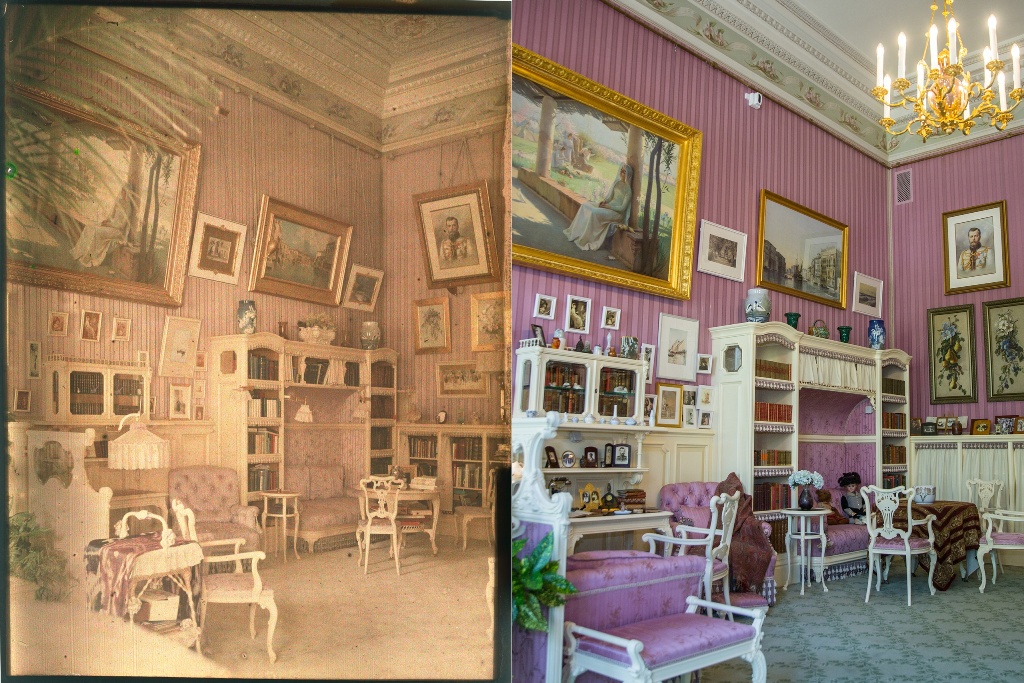
French Savonnerie carpet in the Corner Reception Room of the Alexander Palace

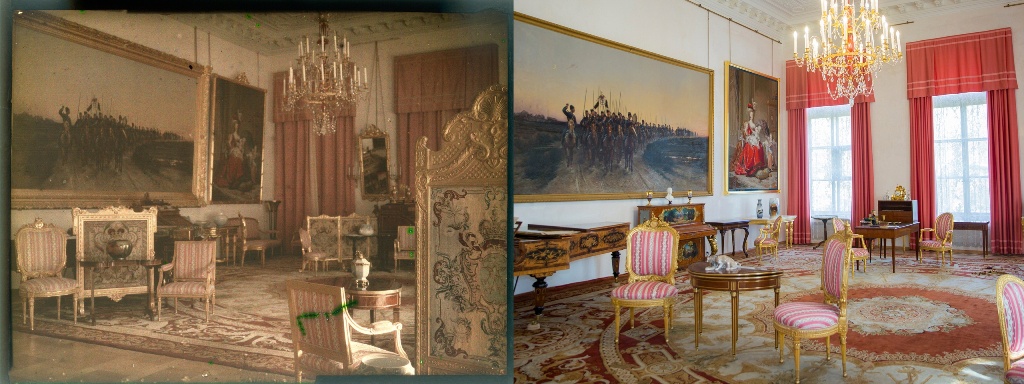
View of Empress Alexandra’s Corner Reception Room, in the Alexander Palace
PHOTO © Tsarskoye Selo State Museum

The Tsarskoye Selo State Museum have released some beautiful new photos of the Empress Alexandra’s Corner Reception Room, situated in the eastern wing of the Alexander Palace.

The room is decorated with a luxurious 100 square meter woolen carpet. The central includes griffins, dolphins, masks, and cartouches. The carpet was made at the French Savonnerie manufactory at the beginning of the 19th century and purchased specifically for the Billiard Room (later the Corner Reception Room) of the Alexander Palace. At that time, the carpet was spread out only during the Highest Presence of Emperor Nicholas II and Empress Alexandra Feodorovna. The room was sometimes used for family breakfasts and lunches, at which a “waterproof canvas” was placed over the carpet, in order to protect it from spillage.

The pre-history of the Savonnerie manufactory lay in the concerns of King Henri IV to revive the French luxury arts. When Savonnerie appeared in France in the 17th century, it was considered the most prestigious European manufactory of knotted-pile carpets of its time. It was established in a former soap factory (French savon) on the Quai de Chaillot district of Paris in 1615. Under an eighteen year patent, a monopoly was granted by Louis XIII in 1627 to Pierre DuPont and his former apprentice Simon Lourdet, makers of Turkish-style carpets. Until 1768, the products of the manufactory remained exclusively the property of the Crown. Not only did Savonnerie carpets adorn the rooms of the Louvre and Versailles, they were also among the grandest of French diplomatic gifts.

Detail of the Savonnerie carpet in Empress Alexandra’s Corner Reception Room
PHOTO © Tsarskoye Selo State Museum

Detail of the Savonnerie carpet in Empress Alexandra’s Corner Reception Room
PHOTO © Tsarskoye Selo State Museum

The formation of the individual style of the manufactory was influenced by classical oriental patterns and ornaments, to which elements of European art of different eras were added: luxurious baroque, exquisite rococo, and sophisticated classicism. Drawings of carpet products produced by Savonnerie manufactory are full of various floral ornaments, compositions of vignettes, bouquets and wreaths, decorated with images of heraldic medallions, and zoomorphic motifs.

Carpets were made mainly of wool with the addition of natural silk, which emphasized the beauty of a complex, detailed pattern. It took several months to create a sketch, from which some two hundred to four hundred colours and shades were used in the production of a single carpet.

By the end of the 18th century, the Savonnerie manufactory was producing not only carpets, but also screen panels and tapestries. The decline of the manufactory began during the years of the French Revolution. In 1825, the company experienced financial difficulties and became part of the Manufactory of Tapestries (later the Manufactory of National Furnishings), which resulted in the loss of its once privileged status at the French Court and the aristocracy.

View of Empress Alexandra’s Corner Reception Room, in the Alexander Palace
PHOTO © Tsarskoye Selo State Museum

It is nothing short of a miracle, that the luxurious woollen carpet in the Corner Reception Room of the Alexander Palace, survived the ravages of 20th century Russia, which included two revolutions, a civil war, two world wars, and more than seventy years of Soviet dogma. We are indeed fortunate, that it is once again on display, for all to see, in the reconstructed and restored interiors of the private apartments of Nicholas II and Alexandra Feodorovna, in the eastern wing of the palace.

© Paul Gilbert. 30 September 2022
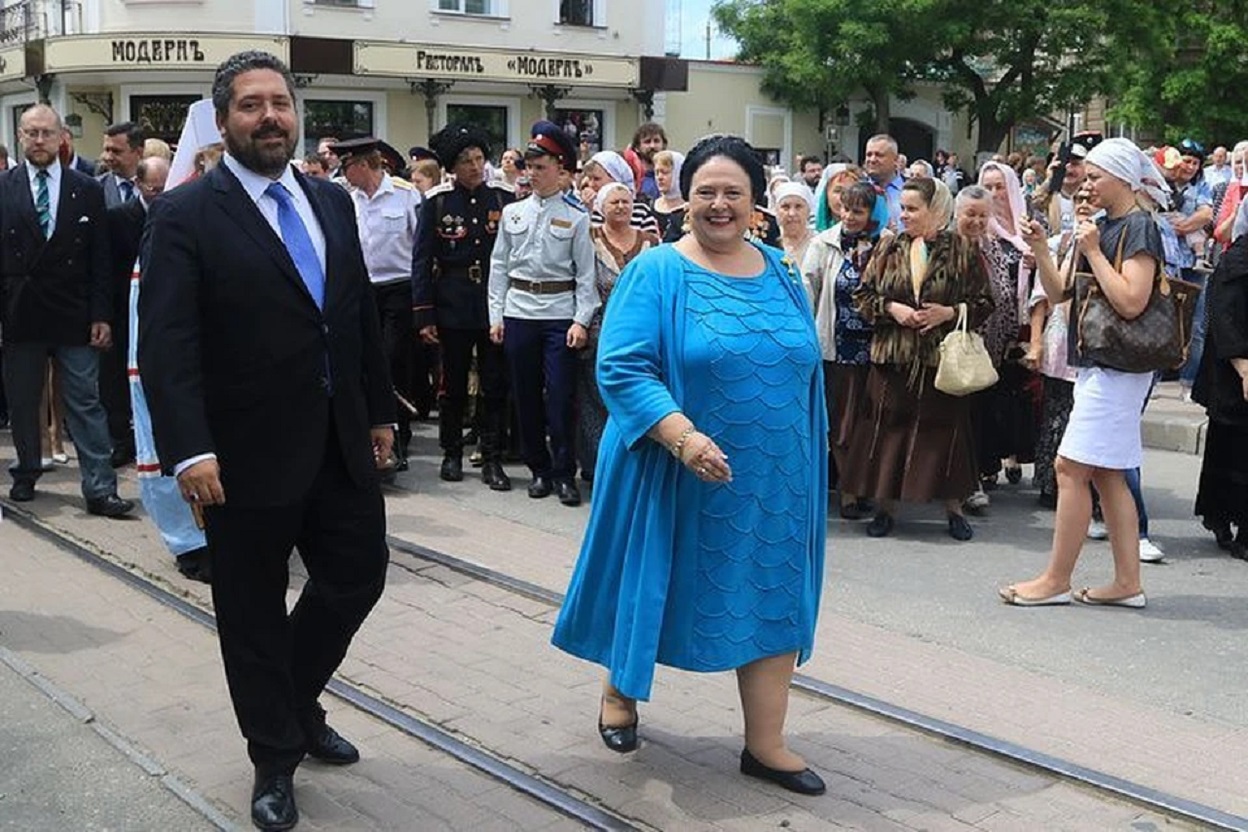
IOPS donates icon depicting Holy Royal Martyrs to parish in the village of Belousovo

PHOTO © Imperial Orthodox Palestine Society (IOPS)

On 28th September, the Irkutsk branch of the Imperial Orthodox Palestine Society (IOPS), donated an icon depicting the Holy Royal Martyrs Tsar Nicholas II and Tsesarevich Alexei Nikolaevich, to the parish in the village of Belousovo, situated in the Zhukovsky District of Kaluga Oblast, Russia.

Since the middle of the 19th century, there has been a parish of the Church of St. Innocent, Bishop of Irkutsk in the village of Belousovo. During the Soviet years, the church was closed, and the building became a club for local communists.

The original wooden [beech] church building was destroyed by fire in the late 1990s. A new church was constructed in 2012, however, in 2021, it was also destroyed by fire, the interior of which included an icon of the Holy Royal Martyrs.

The new icon was donated to the parish, Vadim Fisenko, a member of the Irkutsk branch of the IOPS, and comrade of the Ataman of the Irkutsk Cossack Army of the Union of Cossacks.

In honour of the transfer of the icon to the parish, a religious procession was held in the village, led by the Cossacks of the Irkutsk Branch of the Cossack Convoy of the Holy Tsar-Martyr Nicholas II. The Divine Liturgy took place on the site of the burnt church and in the parish’s Sunday school – and temporary building of the Church of St. Innocent, Bishop of Irkutsk.

© Paul Gilbert. 29 September 2022
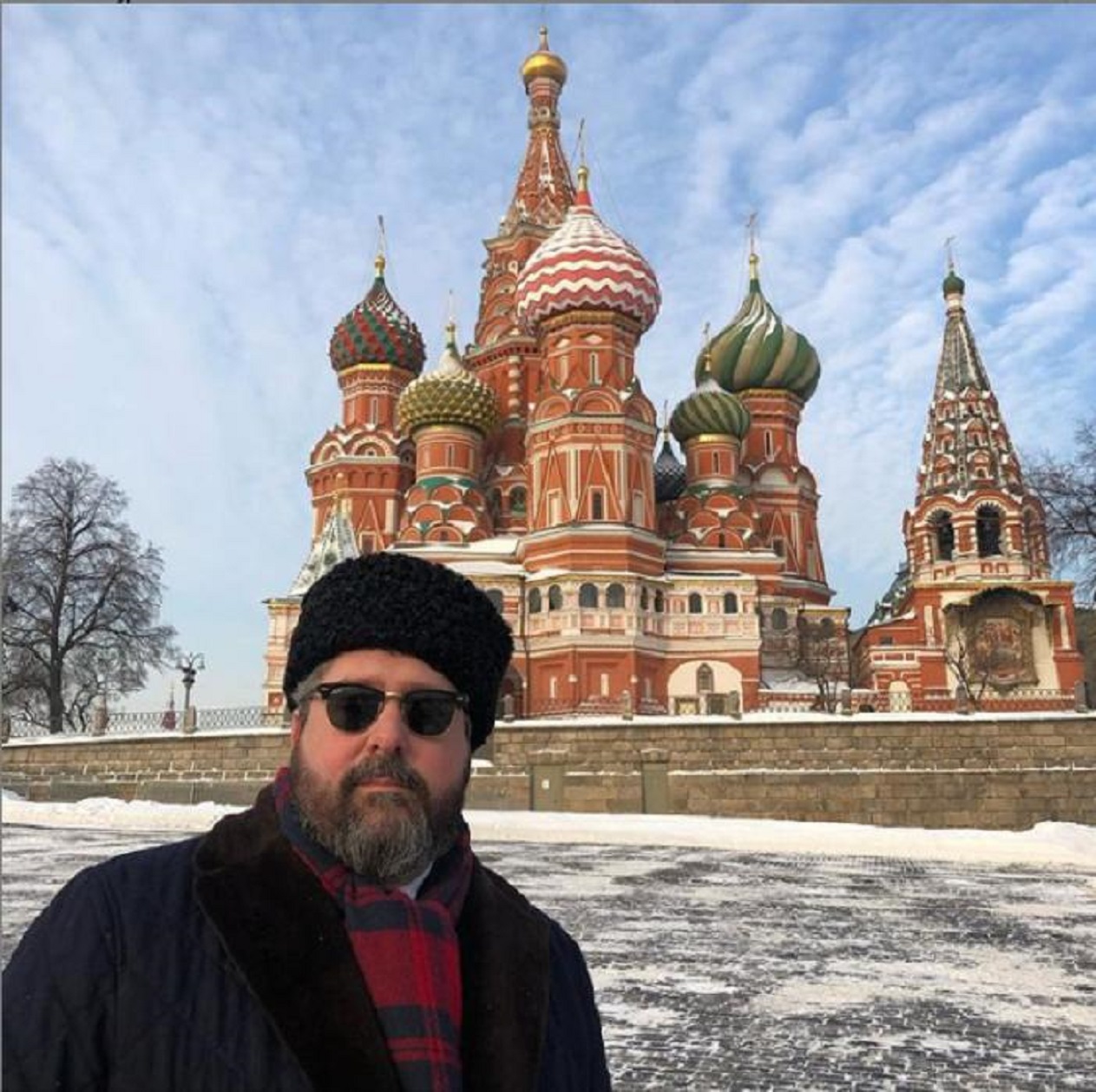
Act of historical justice: restored bust of Nicholas II returned to Livadia

PHOTO: the restored bronze bust of Emperor Nicholas II, installed and consecrated on 27th September 2022, on the grounds of the Church of the Exaltation of the Cross, Livadia

On the morning of 27th September, a restored bronze bust of Emperor Nicholas II was unveiled and consecrated on the grounds of the Church of the Exaltation of the Cross – the home church of the Russian Imperial Family, at Livadia Palace in Crimea. The event is dedicated to the 111th anniversary of the Grand Livadia Palace.

The sculptural image was discovered at Livadia in 1994 by Oleg Anatolyevich Permyakov, a representative of the Foundation for Slavic Literature and Culture. Due to the extensive damage, which consisted of mold and bullet holes, Permyakov was unaware of the identity of the bust, however, he was convinced that it was that of an important statesman from the Tsarist era.

He contacted People’s Artist of Russia Vyacheslav Mikhailovich Klykov (1939-2006) who, after conducting a comparative analysis of historic photographs and portraits of the Russian Imperial Family from the late 19th to early 20th centuries, Klykov came to the conclusion that this was a bust of the last Russian Emperor Nicholas II.

The restoration of the bust was financed by the Russian philanthropist, and honorary member of the board of trustees of the Public International Foundation for Slavic Literature and Culture Sergei Kozubenko. Klykov removed the mold and repaired the damage inflicted by Bolshevik bullets.

PHOTO: detail of the restored bronze bust of Emperor Nicholas II, installed and consecrated on 27th September 2022, on the grounds of the Church of the Exaltation of the Cross, Livadia

In 2003, a new bust was cast from the restored bust, and installed on the grounds of the Church of the Holy Martyrs Faith, Hope, Love in Kursk. The bust marked the historic visit and stay of Emperor Nicholas II and members of the Imperial Family at the large military maneuvers, held on the outskirts of the city in August-September 1902.

A plaster copy of the bust was also installed in the central columned hall of the Fund for Slavic Literature and Culture in Moscow.

According to the restoration plan of the sculptor Vyacheslav Klykov, the bust had to return to its’ historical place, the Livadia Palace, the residence of Emperor Nicholas II, situated on the southern coast of Crimea. This return was supposed to symbolize the restoration of the connection between the generations of Russians, broken as a result of the revolution and the Civil War. To become a symbol of repentance and the return of modern Russia to its historical roots, the origins of its cultural identity.

Sadly, the great sculptor did not live to see the realization of his plan. Klykov’s idea was implemented by his friend, Sergey Pavlovich Kozubenko, who organized the return of the bust to Livadia Palace.

PHOTO: Sergei Kozubenko (left), and Oleg Anatolyevich Permyakov (second from right), at the unveiling of the restored bust of Emperor Nicholas II on the grounds of the Church of the Exaltation of the Cross, Livadia,

The opening ceremony was attended by the Minister of Culture of the Republic of Crimea Tatyana Manezhina , noting the importance of a respectful attitude to the historical and cultural heritage of the country.

“Each monument of history and culture embodies a tangible connection between the past and the present, which allows for the study of national history for future generations. It is especially important and significant that public organizations and individuals take part in the preservation and popularization of Russia’s cultural heritage. I am sure that our joint efforts will contribute to the preservation of the traditions and rich spiritual heritage of Russia,” the minister stated.

PHOTO: view of the Church of the Exaltation of the Cross, which is connected by a gallery to the palace

Tatyana Manezhina also expressed her gratitude to the staff of the Republican Museum, representatives of the Public International Fund for Slavic Culture and Literature, personally to Sergei Kozubenko for his initiative and assistance in finding and restoring the lost and damaged sculptural image of the former owner of the Livadia Palace, Emperor Nicholas II.

The consecration of the bust was performed by Nestor Bishop of Yalta. The event was attended by Sergey Kozubenko, Head of the Yalta city administration Yanina Pavlenko , local government officials, members of the clergy, and the general public.

PHOTO: view of the restored bronze bust of Emperor Nicholas II on the grounds
of the Church of the Exaltation of the Cross, Livadia, as it looks today – 10 July 2025

A total of four monuments to Emperor Nicholas II have now been installed in Crimea: two on the grounds of Livadia Palace, one in Evpatoria and one in Alushta.

© Paul Gilbert. 27 September 2022
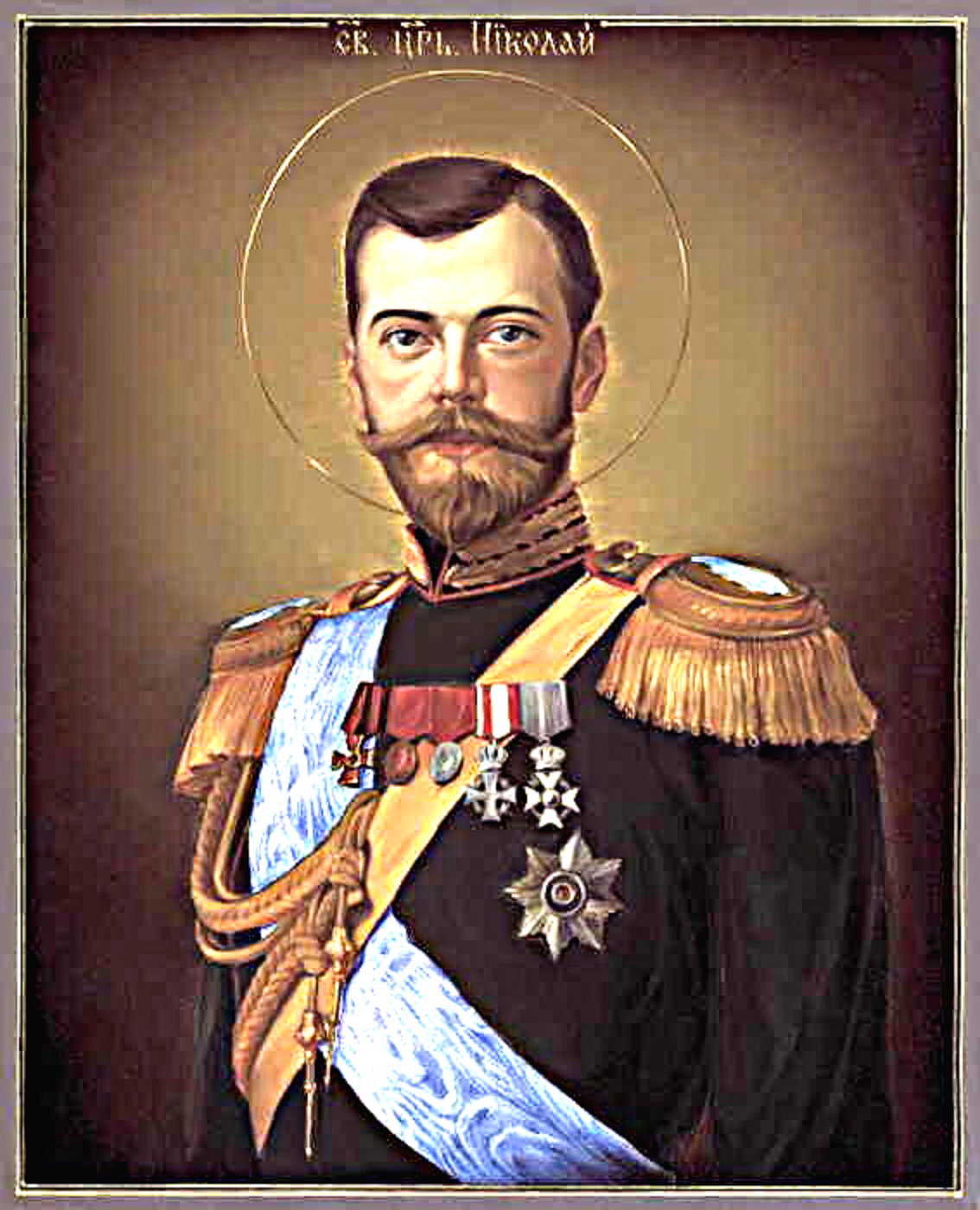
Nicholas II and Tsesarevich Alexei to be featured in monument in Grozny, Chechnya

PHOTO: information stand about the Caucasian Native Cavalry Division,
formed by order of Emperor Nicholas II, in 1914

A unique exhibit dedicated to the Caucasian Native Cavalry Division, is currently on display at the Akhmat Kadyrov Museum, in Grozny, Chechnya. The Heritage of the Empire exhibit is a project of the Grozny branch of the Union of Historical and Educational Societies.

In the center of the exhibit is a model of the future monument to the Caucasian Native Cavalry Division, to be installed in the Chechen capital of Grozny. The sculptural composition includes the figures of Emperor Nicholas II, his son Tsesarevich Alexei Nikolaevich – both of whom visited the regiment during World War I – and Grand Duke Mikhail Alexandrovich.

An information stand featuring photos, archival documents, and list of horsemen of the regiment is also presented, prepared by the senior researcher of the museum, candidate of historical sciences Isa Saidovich Khamurzaev.

PHOTO: model of the future monument to the Caucasian Native Cavalry Division

PHOTO: detail of Emperor Nicholas II, his son Tsesarevich Alexei Nikolaevich
and Grand Duke Mikhail Alexandrovich of the sculptural composition

The Caucasian Native Cavalry Division, also known as the “Savage Division” was a cavalry division of the Imperial Russian Army.

On 23rd August, Emperor Nicholas II ordered the formation of the Caucasian Native Cavalry Division, simultaneously appointing his younger brother Grand Duke Mikhail Alexandrovich as its commander. The Grand Duke’s appointment gave the unit an elite status and many foreigners in Russian service as well as Russian and Caucasian noblemen sought to join it.

On 6th March, Mikhail Alexandrovich personally led the division in an offensive on Tlumach, defeating two Austrian battalions and seizing the town. He was later awarded the Saint George Sword for the action.

The division consisted of three brigades, broken into six regiments, each of which numbered four sotnias. The 1st Brigade incorporated the 2nd Dagestan and Kabardin Regiments.

PHOTO: Grand Duke Mikhail Alexandrovich (center),
commander of the Caucasian Native Cavalry Division

Ninety percent of the personnel were Muslim volunteers from the Caucasus, the rest belonged to various nationalities from across the Russian Empire; totaling over 60 different nationalities. Each regiment numbered 22–24 officers, 480–500 riders and 121–141 support personnel. The regiment took part in World War I, distinguishing itself in numerous engagements, including the Brusilov and Kerensky Offensives.

The February Revolution and the subsequent Abdication of Nicholas II did not negatively affect the division’s morale. In the middle of June 1917, the division joined the 12th Army Corps at Stanislavov in preparation of the Kerensky Offensive. On 8th July, the division launched an offensive on Kalush and Dolyna. On 12th July, the 1st Brigade and the 3rd Caucasus Cossack Division thwarted a German counter-offensive at Kalush.

During the course of the war, approximately 7,000 people served in the ranks of the division, 3,500 of whom received varying degrees of the Order of St. George and the Medal of St. George. Initially, non-Christians were awarded a different version of the order, which replaced St. George with the Imperial double-headed eagle. However upon the request of the riders the jigit was restored in the place of the “bird”. During the period of its operation the regiment did not record a single incident of desertion, while capturing a number of prisoners four times its own size. During the course of the Russian Civil War, many veterans of the Kabardin Regiment joined the ranks of the White Movement’s Volunteer Army. In contrast, veterans of the Ingush Regiment enlisted into the army of the Mountainous Republic of the Northern Caucasus en masse.

© Paul Gilbert. 11 September 2022