‘Nicholas II. Portraits’ in FULL COLOUR!

CLICK ON THE LINK BELOW TO ORDER FROM AMAZON

*HARD COVER EDITION @ $50 USD

PAPERBACK EDITION @ $40 USD

BOOK DESCRIPTION

Large format 8-1/2″ x 11″ hard cover and paperback editions, with 178 pages + 200 Colour and black & white photographs

SECOND EDITION, FEATURING 185 FULL COLOUR PHOTOS!

I am pleased to announce the publication of my latest book Nicholas II. Portraits, in both hard cover and paperback editions. This is my first hard cover book and my first book featuring full colour photographs.

Originally published in 2019, with 140 pages with 175 black and white photos, this new expanded edition features more pages and more photographs: 180 pages + more than 200 photos, including 185 FULL COLOUR and 30 black & white!

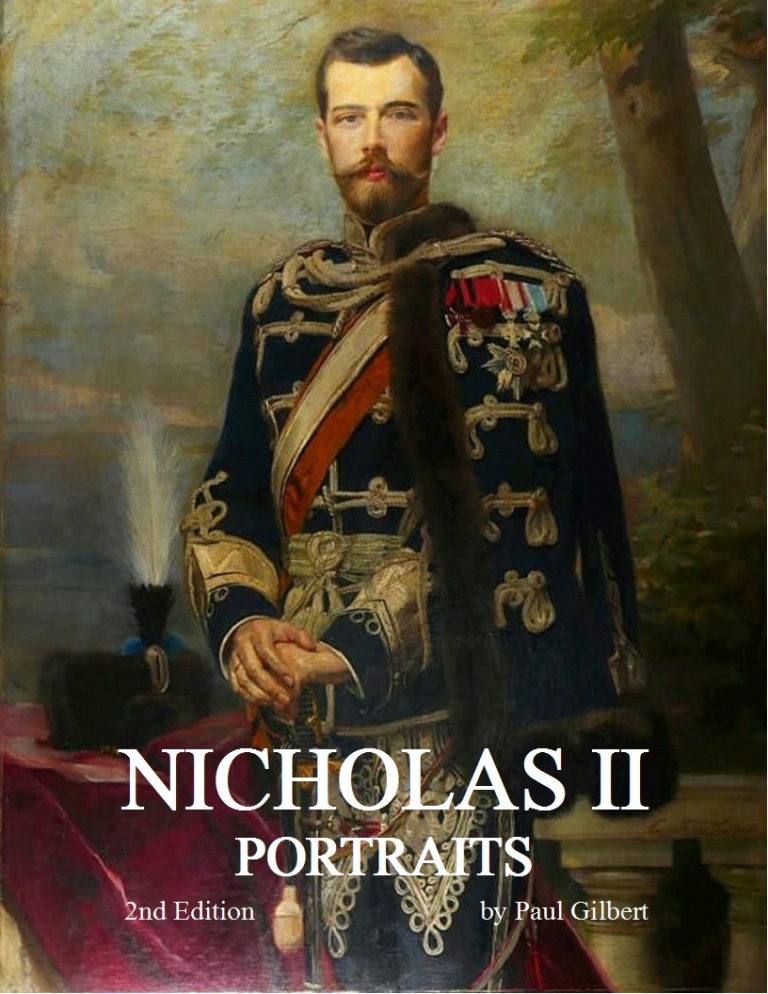
Nicholas II. Portraits explores a century of portraits of Russia’s last emperor and tsar, through the eyes of pre-revolutionary and contemporary Russian, and foreign artists.

This unique title – the first book of its kind ever published on the subject – features an introduction, as well as a series of short articles, and richly illustrated, including many full-page, with detailed and informative captions.

The cover features a portrait of Tsesarevich and Grand Duke Nicholas Alexandrovich (1889), the future Emperor Nicholas II, by the artist Baron Ernst Friedrich von *Lipgart (1847-1932).

* Lipgart painted a whole gallery of portraits of Nicholas II, my book features 10 of them – all in COLOUR!

The Emperor is depicted in the uniform of the Prussian 8th Hussar Regiment, of which he was appointed an Honourary Chief in 1889, his cape is decorated with the Royal Prussian Order of the Black Eagle.

The painting hung from 1890 to 1995 in the former dining room of Neuhaus Castle, directly opposite the portrait of Elector Clemens August of Bavaria. The officers of the 8th Hussar Regiment established a club for their meetings here and in the adjacent premises. The Prussian regiment was stationed at Neuhaus and Paderborn castle from 1851 to 1919. Following the end of World War I, the regiment was disbanded.

From the Collection of the Museum of the House of Bavarian History in Regensburg, Bavaria.

The articles include: Serov’s Unfinished 1900 Portrait of Nicholas II; A Nun’s Gift to Russia’s New Tsar. The Fate of a Portrait; Galkin’s Ceremonial Portrait of Nicholas II Discovered; among others!

Famous portraits and their respective artists are all represented, including Serov, Repin, Lipgart, Tuxen, Bakmanson, Becker, Bogdanov-Belsky, Kustodiev, and many others.

The last section of the book is dedicated to the works of contemporary Russian artists, who have painted outstanding portraits of Nicholas II since the fall of the Soviet Union in 1991.

AVAILABLE EXCLUSIVELY FROM AMAZON WORLDWIDE!

© Paul Gilbert. 10 December 2021

Ganina Yama to host Alexander Palace exhibition

On 19th December 2021, the exhibition Alexander Palace – The Tsar’s Residence opens in the Museum and Exhibition Center – located in the Church of the Reigning Mother of God – of the Monastery of the Holy Royal Martyrs in Ganina Yama.

The exhibition was prepared for the 225th anniversary of the opening of the New Tsarskoye Selo (later – Alexander) Palace, The palace has a long, eventful history, having served as the family home of the Russian Imperial family (from 1796 to 1917). Built for the grandson of Empress Catherine the Great, the future Emperor Alexander I, the palace was to become a favourite summer residence for Emperors Nicholas I, Alexander II, Alexander III and Nicholas II, for more than a century.

For Emperor Nicholas II and his family, however, the Alexander Palace, where he was born in 1868, became a permanent residence year-round [1]. It was here that the Imperial family began to spend Christmas in quiet surroundings, as opposed to noisy and bustling St. Petersburg. The Alexander Palace became the new Winter Palace during the last years of the monarchy in Russia.

PHOTO: early 19th century view of the Alexander Palace. Artist unknown

After the February Revolution, it was from the Alexander Palace in August 1917 that the Imperial family were sent into exile to Tobolsk in Siberia, and then to Ekaterinburg the following year, where they met their death and martyrdom.

Visitors to the exhibition will be presented with rare family photographs of the Tsar’s family from the Alexander Palace, as well as a number of interesting exhibits.

The exhibition will be open daily from 11:00 to 16:30. Free admission.

PHOTO: scale model of the Alexander Palace on display at the exhibition

NOTES:

[1] The Imperial family also maintained residences in Peterhof at the Lower Dacha, and in Crimea at the Livadia Palace

© Paul Gilbert. 9 December 2021

Obituary: Prince Andrew Andreevich Romanoff (1923-2021)

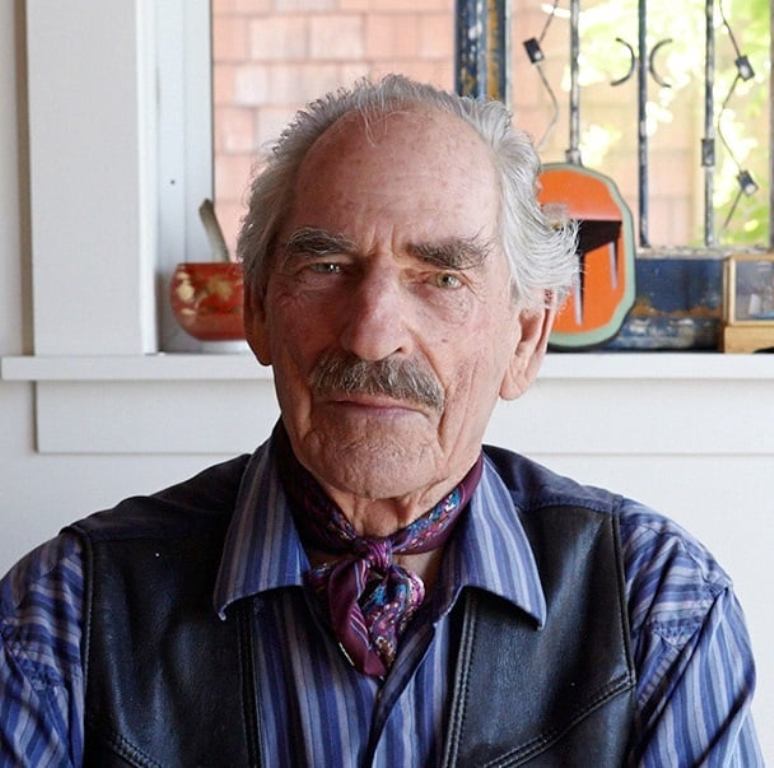
PHOTO: His Highness Prince Andrei Andreevich (1923-2021)

On 28th November, the head of the Romanov Family, His Highness Prince Andrei Andreevich, died in Inverness, California, at the age of 98.

Prince Andrew Andreevich was born on 21 January 1923 in London, England. He is the third child and youngest son of Prince Andrei Alexandrovich (1897–1981) and his first wife Princess Elizabeth Fabricievna, née Duchess of Sasso-Ruffo and Princess of San-Antimo. His godfather was the future King Edward VIII.

Prince Andrew belongs to the fourth branch of the Mikhailovich line of the House of Romanov. He is the great-great-grandson of Emperor Nicholas I and Empress Alexandra Feodorovna in a straight male line.

Through his grandmother, Grand Duchess Xenia Alexandrovna (1875-1960), he is a great-grandson of Emperor Alexander III and Empress Maria Feodorovna. His grandfather was Grand Duke Alexander Mikhailovich (1866-1933). He was a grand-nephew of Emperor Nicholas II.

After Prince Philip, the Duke of Edinburgh’s death in 2021, Prince Andrew became the oldest living descendant of King Christian IX of Denmark.

Andrei Andreevich was the last representative of the Romanov dynasty who received the traditional Russian pre-revolutionary education and knew the Russian language perfectly. Andrei Andreevich was the last of the descendants of the dynasty who met with the Dowager Empress Maria Feodorovna in 1927. The Empress was also present at the christening of Andrei Andreevich in 1923.

On the birthday of her great-grandson, Empress Maria Feodorovna wrote in her diary: “I received a telegram from Andryusha [Prince Andrei]. His son was born. Everyone is very happy about this.” Later, the Empress was present at the baptism of the baby, as evidenced by another entry in her personal diary: “… At 2:30 Olga came to take me, Xenia and Zina to Andryusha’s car for the christening of his little son Andrew. The ceremony took place at their home, where only family and loved ones gathered. The child is very cute. During the christening, Dmitry and I held him in our arms. He hardly cried and fell asleep right after it was all over. Minnie and her husband were there as well, so after the ceremony we sat and talked together. I gave Andrew a small silver bowl for the baby, and Alix, who also became his godmother, sent his mother a brooch.”

Prince Andrew Andreevich Romanoff was the eldest male descendant of the Russian Imperial Family, and a member of The Romanov Family Association, founded in 1979. He was recognized by many as the Head of the Russian Imperial Family. Andrew, like most Romanov descendants never recognized the illegimate claims of Grand Duke Kirill Vladimirovich, Vladimir Kirillovich, nor Maria Vladimirovna, as “Head” of the non-existent “Russian Imperial House.”

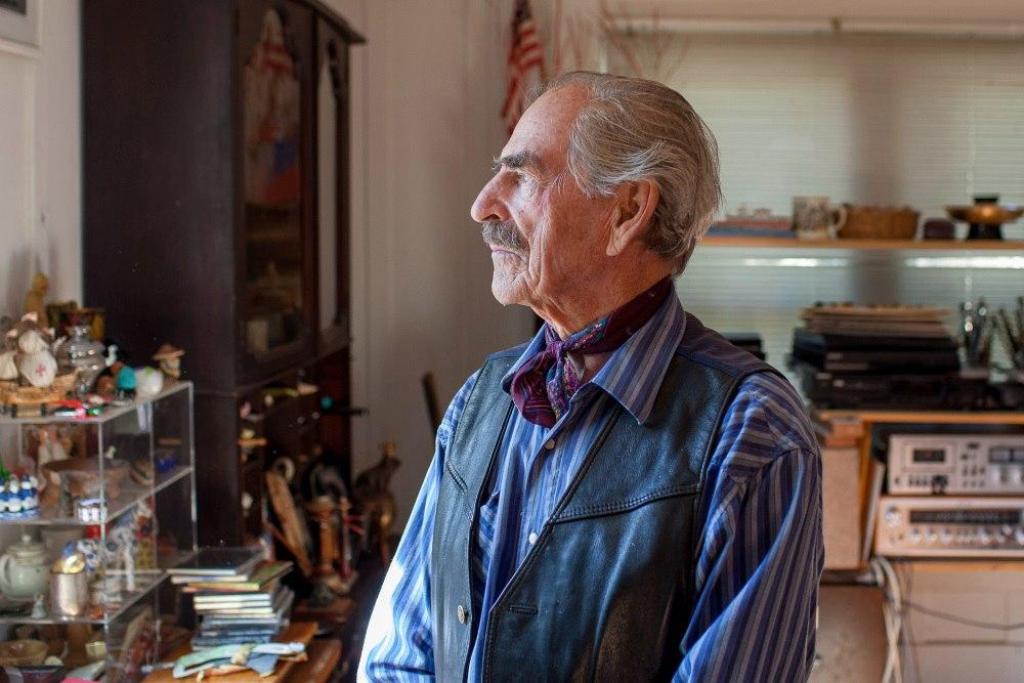
PHOTO: Prince Andrei at his home in Inverness, California

Andrei Andreevich was the first of the Romanovs to visit Russia after the revolution – in December 1942 he served as a sailor on the British cruiser Sheffield and took part in the Arctic expeditions to deliver cargo to Murmansk [formerly Romanov-on-Murman].

In 1954, Andrei Andreevich received US citizenship. After retirement, he was fond of painting and photography. After the fall of the Soviet Union, he visited Russia several times, including the funeral for Emperor Nicholas II and members of his family at the SS Peter and Paul Cathedral in St. Petersburg, the reburial of his great-grandmother Empress Maria Feodorovna in St. Petersburg in 2006. The last time he visited Russia was in 2013, in the year marking the 400th anniversary of the House of Romanov.

Prince Andrew married three times. He was married firstly in San Francisco on 9 September 1951 to Elena Konstantinovna Dourneva (5 May 1927, Tokyo – 31 May 1992, Oakland). She was the only daughter of Konstantin Afanasievich Durnev (1896–1970) and Felixa Stanislavovna Zapalsky (1903–2002). They had one son before divorcing in 1959.

He was married secondly to Kathleen Norris (1 March 1935, San Francisco – 8 December 1967, San Francisco) in San Francisco on 21 March 1961. She was a granddaughter of American authors Kathleen Norris and Charles Gilman Norris. She died after pneumonia at 32. They had two children.

He was married thirdly on 17 December 1987 in Reno, Nevada, to the American artist Inez Storer (née Bachelin; born 11 October 1933, Santa Monica, California). She is a daughter of Franz Bachelin and Anita Hirschfeld. The couple lived in Inverness, California.

In recent years, Andrew Andreevich lived in a nursing home in San Anselmo, California. Prince Andrew is survived by his wife, Inez, his three sons Alexis (1953), Peter (1961) Andrew (1963) his granddaughter, Natasha Romanov, and his half-sister, Olga Romanov.

Memory Eternal! Вечная Память!

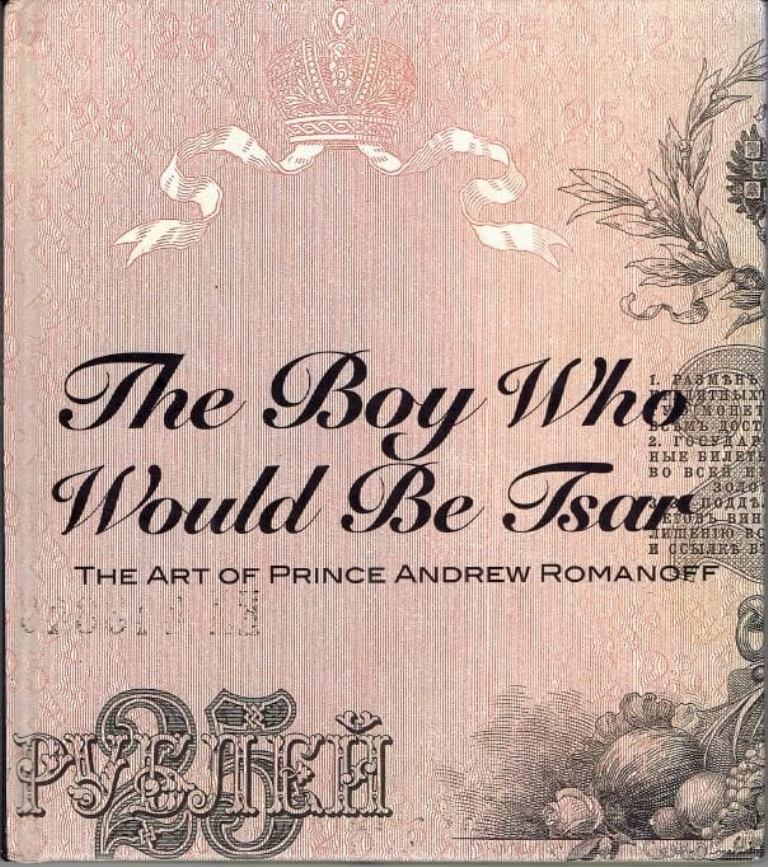
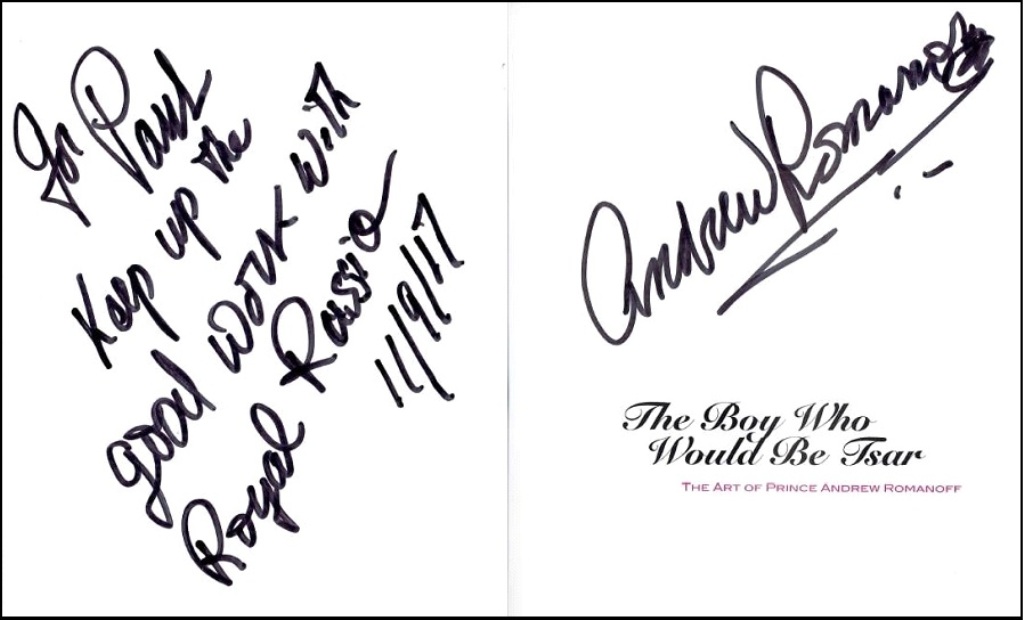
In 2017, I was presented with this copy of The Boy Who Would be Tsar. The Art of Prince Andrew Romanoff. It remains a treasured keepsake in my personal library. This 64-page autobiography is illustrated with family photographs and his artwork. Prince Andrew gives readers a glimpse life growing up in the guest house of Windsor Castle, where he spent his childhood with his sister and brother, granted to his family by King George V.

© Paul Gilbert. 29 November 2021

What was the colour of Nicholas II’s eyes?

046

Many people who met Nicholas II, whether friend or foe, testify to his overwhelming charm.

“With his usual simplicity and friendliness,” wrote his Prime Minister, Vladimir Kokovtsov. “A rare kindness of heart,” commented Foreign Minister Sergei Sazonov. “A charm that attracted all that came near him,” wrote British Ambassador Sir George Buachanan. “Charming in the kindly simplicity of his ways,’ said his niece’s husband Prince Felix Yusupov. His cousin Grand Duke Konstantin Konstantinovich wrote of “that clear, deep, expressive look that cannot fail but charm and enchant.”

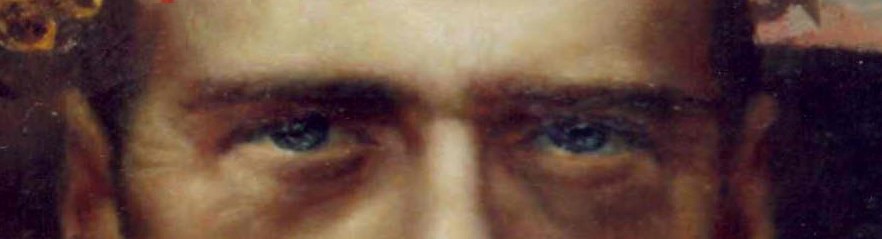
The colour of Nicholas II’s eyes, however is the subject of dispute, by both those who met him in person and among contemoorary historians and biographers today.

His early biographer Sergei Oldenburg refers to his “large radiant grey eyes,” which “peered directly into one’s soul and lent power to his words”; Hélène Vacaresco who met Nicholas when he was Tsesarevich, also wrote of his “large grey eyes.” One of his most intimate cousins Grand Duke Alexander Mikhailovich, on the other hand, refers to the “beauty of his frank blue eyes.”

One of the most vivid descriptions of Nicholas II’s features was recorded by his tutor Nikolai Nikolayevich Obruchevm who wrote: “. . .  The features of his beautiful elongated face, which often shone with a charming smile, were his blue eyes. All who had the honour of ever seeing the Emperor up close, were struck by the bottomless depth of these wonderful eyes, in which, as in a mirror, his beautiful soul was reflected. …”

More strangely Count Vladimir Nikolayevich Kokovtsov, who served as as the Prime Minister of Russia from 1911 to 1914, had the chance to stare into those eyes many times, writes that they were “usually of a velvety dark brown.” Perhaps he was colour blind?

The true colour of Nicholas II’s eyes is captured in Serov’s famous portrait, painted in 1900, the eyes are a grey-blue, matching the colour of his uniform. 

Archpriest Lev Lebedev (1935-1998) writes: “The direct gaze of his deep grey-blue eyes, which often flashed with welcoming humour, penetrated into the very soul of his interlocutors, completely captivating people . . .”.

Russian historian Konstantin Gennadievich Kapkov writes in his book Духовный мир Императора Николая II и его семьи [The Spiritual World of Nicholas II and His Family]: “The main thing that he inspired was awe, not fear. I think his eyes were the reason. Yes I’m sure it was his eyes, so beautiful were they. The most delicate blue shade, they looked straight in the face. With the kindest, tender and loving expression. How could you feel fear? His eyes were so clear that he seemed to open his whole soul to your sight.”

Charles Sydney Gibbes (1876-1963) – tutor to the Imperial Children – also reflects on Emperor Nicholas II’s eyes: ” . . . The main thing that he inspired was awe, not fear. I think his eyes were the reason. Yes, I’m sure it was his eyes, they were so beautiful. His eyes were so clear that it seemed that he opened his whole soul to your gaze. A simple and pure soul, which was not at all afraid of your probing gaze. No one else could look at you like that.”

© Paul Gilbert. 28 November 2021

4 NEW Romanov Titles for November 2021

I am pleased to offer 4 additional Romanov titles – published in November 2021 – available in PAPERBACK editions on AMAZON. Prices for paperback editions start at $12.99 USD. Each title offers a FREE “Look Inside” feature.

All of these titles are available from any AMAZON site in the world and are priced in local currencies: Canada, United Kingdom, Germany, France, Spain, Italy, Netherlands, Japan, India, Brazil, Mexico and Australia.

NOTE: if you cannot locate a specific title in your preferred AMAZON site, please contact me by email [royalrussia@yahoo.com] and I will be happy to provide you with the respective link – PG

Please refer to the links provided below to view this month’s selection:

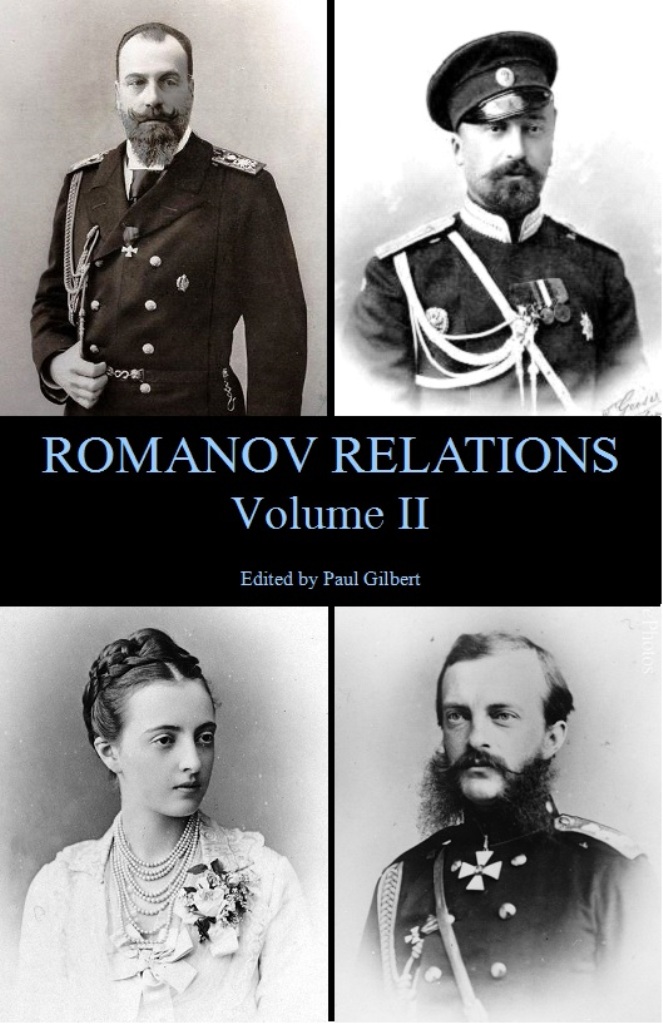
ROMANOV RELATIONS: VOLUME II
Compiled and Edited by Paul Gilbert

Paperback edition. 186 pages. Illustrated.

CLICK HERE TO ORDER

In this second volume of ‘Romanov Relations‘, we learn about several little known members of the Russian Imperial Family.

Volume Two contains the following four chapters:

(1) My Memories of Imperial Russia by Crown Princess Cecilie of Mecklenburg-Schwerin

(2) Grand Duke Alexis Alexandrovich: Child of Fortune Or A Victim Of The Monarch’s Will? by Zinaida Peregudova

(3) The Fall of the Romanovs by H. R. H. Viktoria Luise Princess of Prussia

(4) Last Days of Grand Duke Nicholas Mikhailovich by Général Constantin Brummer

Romanov Relations will be enjoyed by readers who have an interest in the Romanovs and their legacy, as well as providing a useful reference to writers and historians as they continue to unravel the mysteries and dispel many of the popular held myths surrounding the Romanov dynasty.

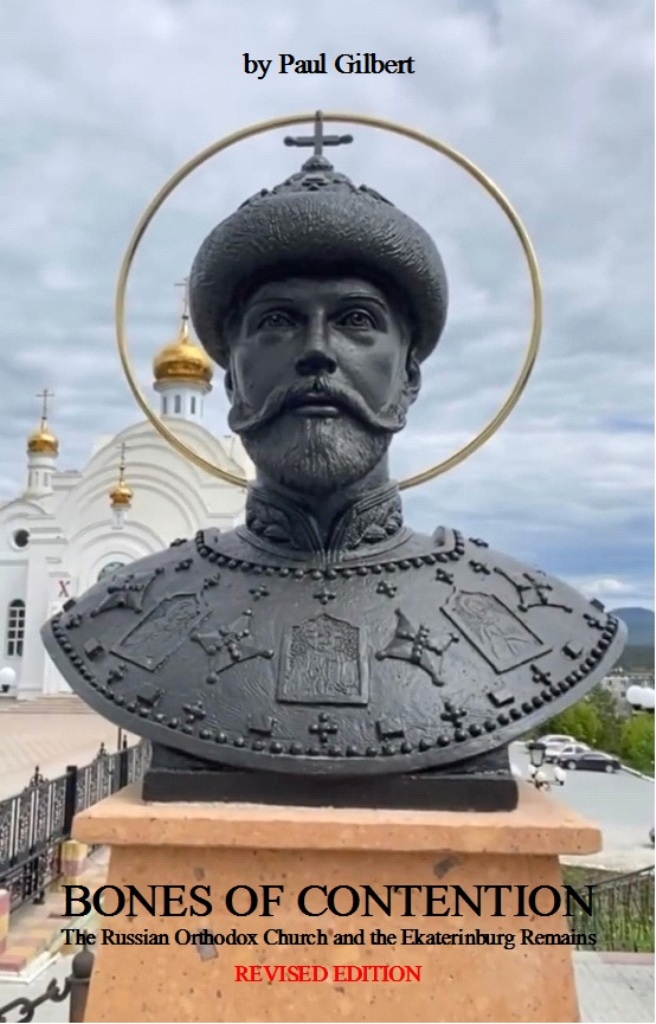
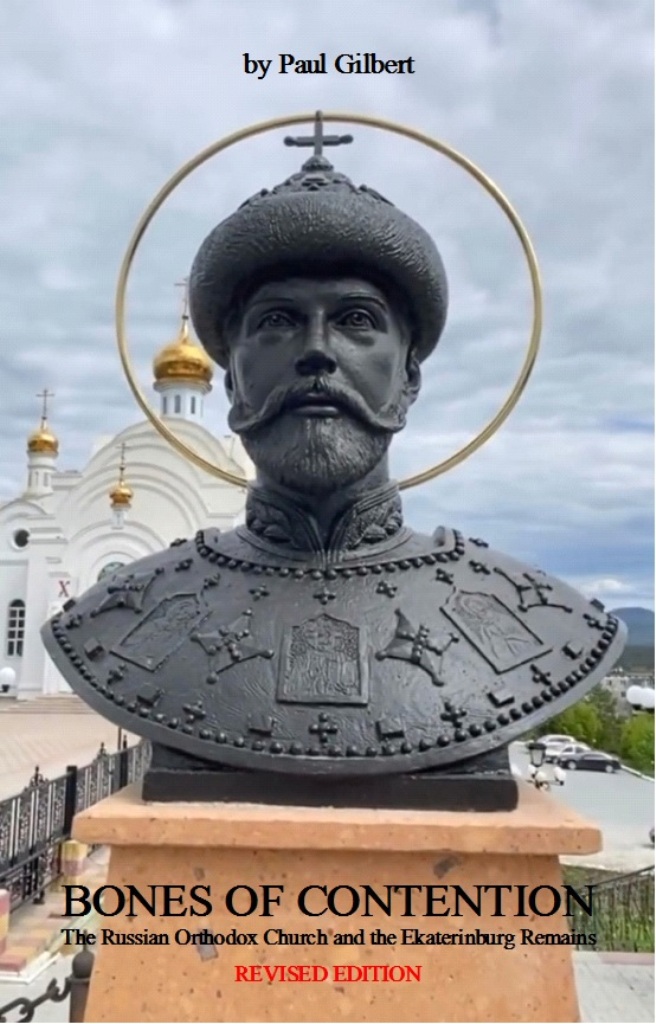
BONES OF CONTENTION:
The Russian Orthodox Church & the Ekaterinburg Remains

by Paul Gilbert

Paperback edition. 206 pages. Illustrated.

CLICK HERE TO ORDER

Originally published in 2020, this NEW REVISED & EXPANDED EDITION features an additional 40 pages of new information and photos, complimented with 90 black and white photographs.

In May 2022, the Bishops’ Council of the Russian Orthodox Church, will convene in Moscow during which they will review the findings of the Investigative Commission and deliver their verdict on the authenticity of the Ekaterinburg Remains.

The reopening of the investigation into the death of Nicholas II and his family in 2015, caused a wave of indignation against the Russian Orthodox Church. This book presents the position of both the Moscow Patriarchate and the Investigation Committee.

This is the first English language title to explore the position of the Orthodox Church in Russia with regard to the Ekaterinburg remains. The author’s research for this book is based exclusively on documents from the office of the Moscow Patriarchate, as well as Russian media and archival sources.

This unique title features a revised and updated introduction by the author, plus 8 chapters, on such topics as the grounds for the canonization of Nicholas II and his family by the Moscow Patriarchate in 2000; comparative details of the Sokolov investigation in 1919, and the investigations carried out in the 1990s to the present; reluctance of the Moscow Patriarchate to officially recognize the remains as authentic; interesting findings of Russian journalist, producer and screenwriter Elena Chavchavadze in her documentary Regicide. A Century of Investigation; and the author’s own attempt to provide some answers to this ongoing and long drawn-out investigation for example: “Will Alexei and Maria be buried with the rest of their family?” and “Will the Imperial Family remains be reinterred in a new cathedral in Ekaterinburg?”.

Interviews with Vladimir Soloviev, Chief Major Crimes Investigator for the Central Investigate Department of the Public Prosecution Office of the Russian Federation and Archpriest Oleg Mitrov, a member of the Synodal Commission for the Canonization of Saints – BOTH key players in the Ekaterinburg remains case, reveal the political undertones of this to this ongoing and long drawn-out investigation.

The final chapter explores the Ekaterinburg Remains, whose fate now rests in the hands of the Bishops’ Council of the Russian Orthodox Church.

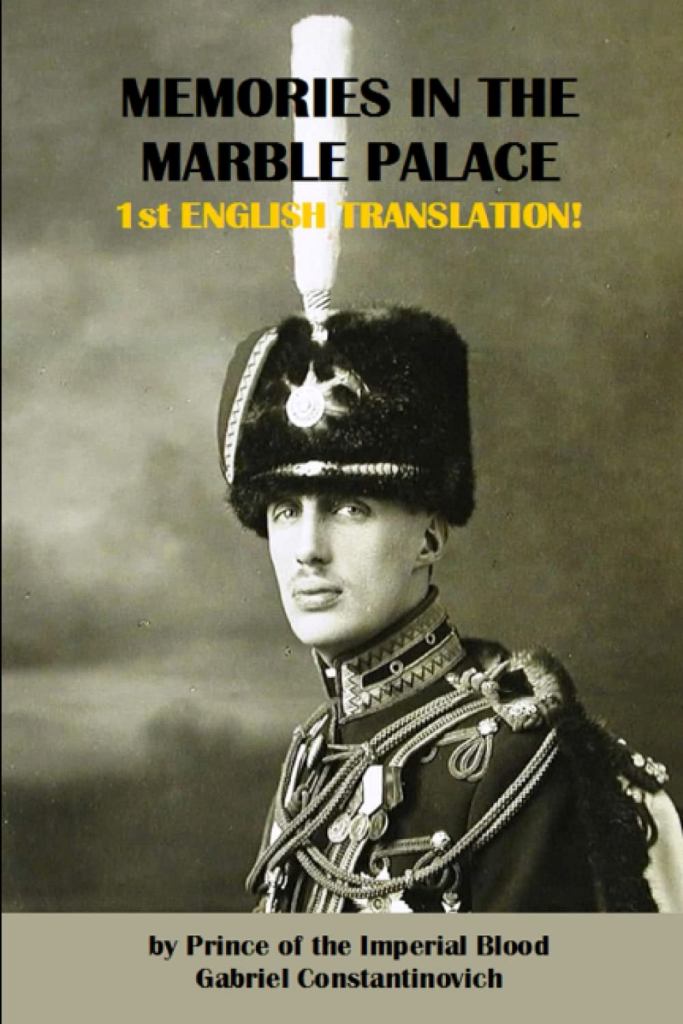
MEMORIES IN THE MARBLE PALACE
by Prince of the Imperial Blood Gabriel Constantinovich

Paperback edition. 338 pages. Illustrated.

CLICK HERE TO ORDER

Born at Pavlovsk in 1887, Gabriel Constantinovich was the second son of the Grand Duke Constantine Constantinovich and the Grand Duchess Elizabeth Mavrikievna. He was a great-grandson of Emperor Nicholas I.

He was born into a privileged world, growing up in lavish luxury in some of the most magnificent of the Romanov palaces including the Marble Palace in St. Petersburg, the Constantine Palace at Strelna, Pavlovsk and the family’s country estate at Ostashevo.

His memoirs, published here for the first time in English, paint a magnificent portrait of the beauty and splendour of the Russian Court in its twilight years before the First World War.

Gabriel recalls many events at the Russian Court, which he describes in vivid detail: elaborate balls and lavish dinners, four royal weddings, the Coronation of Tsar Nicholas II, and the 300th anniversary of the Romanov dynasty.

His memoirs also share many new anecdotes about his parents, his brothers and sisters, as well as those of his extended family. These included grand dukes and duchesses, princes and princesses. Gabriel paints a very sympathetic portrait of the last tsar, whom he held in very high regard.

His more solemn memories relive the personal pain he experienced at the death of his brother Oleg, his beloved father, and the horrors of World War One and his imprisonment.

He experienced the nightmare of the Revolution that was to engulf his beloved Russia. His release from prison and escape from certain death at the hands of the Bolsheviks is nothing short of a miracle, thanks to the efforts of his wife. Together, they fled to Finland and lived the rest of their lives in exile in Paris.

Gabriel’s memoirs are supplemented with excerpts from the diaries of his brother, Oleg, who perished in 1914, and his wife, Antonina Raphailovna Nesterovskaya, whom he married in 1917.

This is the story of a member of the Romanov dynasty who lived to tell his story of life at the Russian Court. Now, after more than half a century, his story may finally be read and appreciated in the English language.

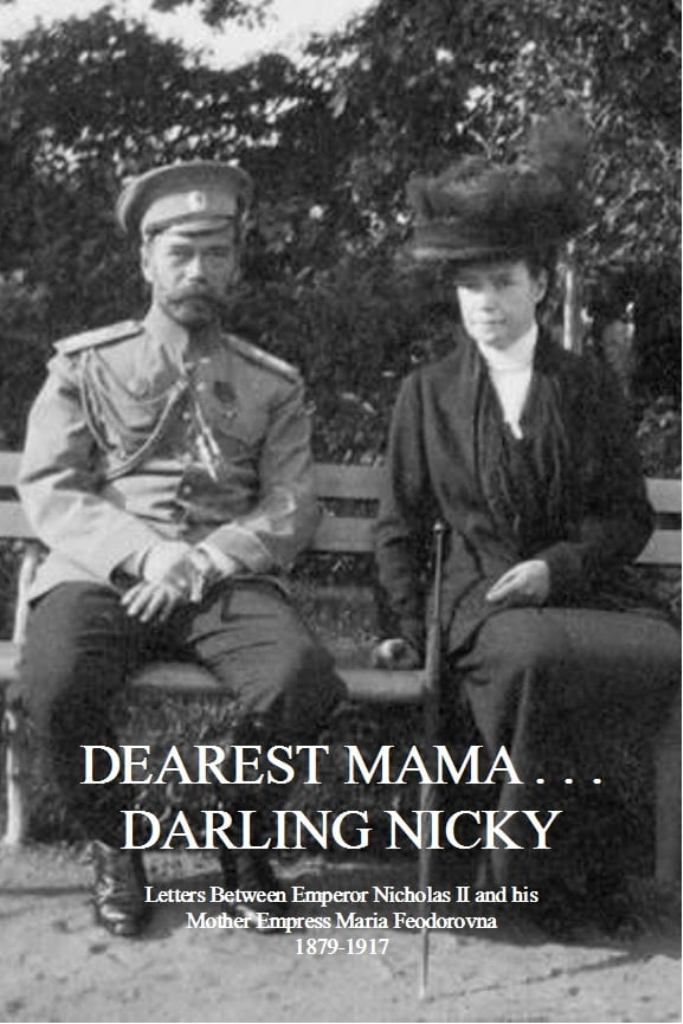
DEAREST MAMA . . . DARLING NICKY:
Letters Between Emperor Nicholas II and His Mother Empress Maria Feodorovna 1879-1917

Paperback edition. 246 pages.

CLICK HERE TO ORDER

Written between the years 1879, when Nicky was a little boy, and 1917, after his abdication, this collection of more than 200 letters are a revelation of the personalities of the Emperor and his Empress mother. They were never part of the imperial archives but the cherished possession of both correspondents, carried with them wherever they went. At the outbreak of the revolution, the letters were confiscated by the Soviets.

From some five hundred of them, Edward J. Bing has selected and translated from the French and Russian those which have particular bearing on the Tsar’s relatives in England, Germany, Italy and Greece; on political personages in Russia, and their Romanov relatives. All of their family but Uncle Willie, the German Emperor, found a place in their affections. To them, he was always an exhibitionist, dangerous in his national ambition. Uncle Bertie, Aunt Alix, Georgie, May, and Granny—respectively King Edward VII, Queen Alexandra, King George V, Queen Mary and Queen Victoria—emerge as human beings, minus crowns and ermine.

The correspondence sheds considerable light on Nicholas II’s character, family affairs, and politics, especially in regard to the 1905 Revolution. In the preface, R.H. Bruce-Lockhart provides an interesting assessment of the correspondence and its historical significance.

These letters are essentially human documents of great historic importance, and in the case of the Tsar, will alter many preconceived notions of his character, and the negative assessment which has persisted for more than a century.

Dearest Nicky, Darling Mama was originally published in England in 1937, under the title The Letters of Tsar Nicholas and Empress Marie; they were published in the United States in 1938, under the title The Secret Letters of the Last Tsar.

Click HERE to view 5 NEW Romanov titles published in October 2021

Click HERE to view 5 NEW Romanov titles published in September 2021

Click HERE to view 4 NEW Romanov titles published in August 2021

© Paul Gilbert. 28 November 2021
125th anniversary of the first voyage of the Imperial Yacht “Standart”

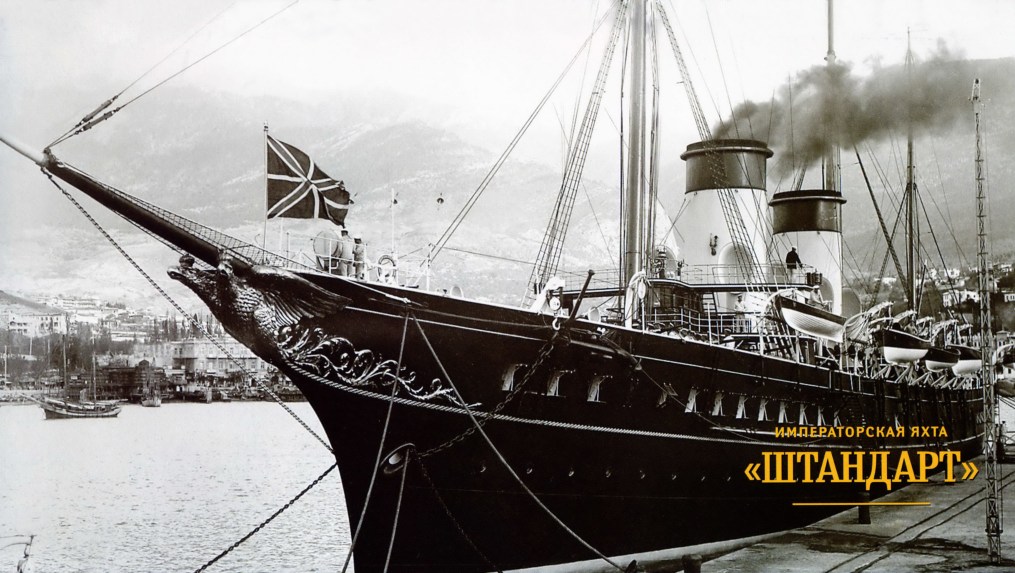
This year marks the 125th anniversary of the first voyage of the Imperial Yacht Standart [Shtandart].

It was on 8th September 1896 [after sea trials], that Emperor Nicholas II and Empress Alexandra Feodorovna first travelled by sea on board what many considered the “most perfect ship of her type in the world”. The Imperial couple were accompanied by their first-born child Grand Duchess Olga Nikolaevna.

The Imperial Yacht made its first long voyage to Europe stopping at Copenhagen (Denmark) – Plymouth (England) – Cherbourg (France), before returning to Kronstadt, its primary port.

The ship, built by special order at the Danish shipyard Burmeister & Wein, served the Imperial Family until 1914, when the Great War began, it was pressed into naval service. She was scrapped at Tallinn, Estonia, in 1963.

The hull of the yacht was made of riveted steel. The vessel had two decks – upper and main, as well as two platforms at the ends – fore and aft. In the middle section of the Standart, under the engine and boiler rooms, there was a second bottom, which was divided by watertight compartments.

The bow superstructure consisted of two tiers and had a navigating bridge. In the first tier of the bow superstructure, the navigator’s room and two cabins for the commanding staff were located. The second tier of the bow superstructure was the wheelhouse.

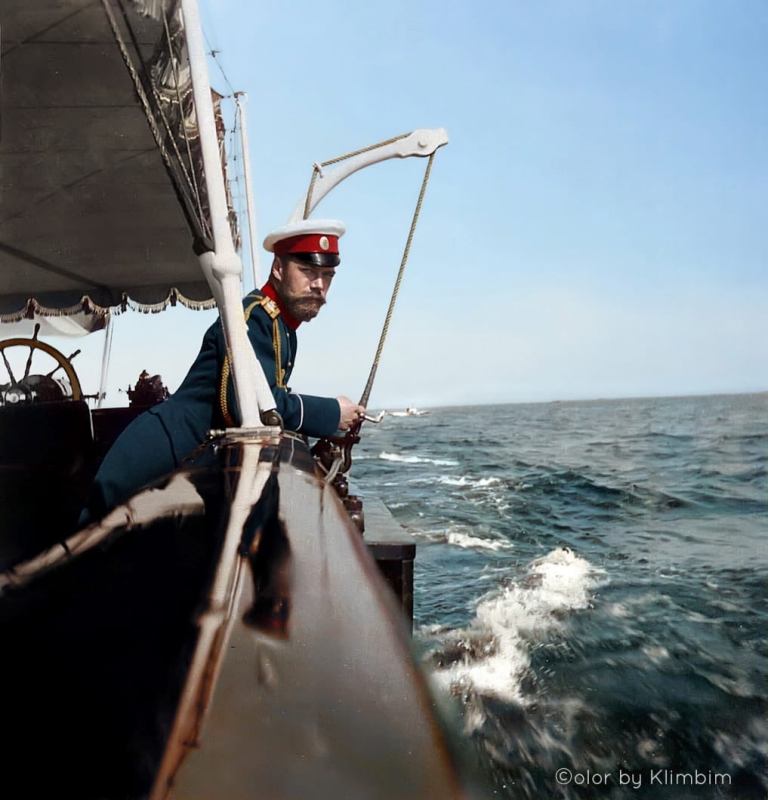
PHOTO: Emperor Nicholas II, on the deck of the Imperial Yacht ‘Standart’, colourized by Olga Shirnina [aka KLIMBIM], who consults with Russian historians and other experts to ensure the correct colours of the uniforms worn by Emperor Nicholas II 

The large aft superstructure was finished with mahogany, it housed a dining room for official receptions seating up to 70 people, a study and the emperor’s reception room. The flat upper deck was lined with American teak planks. On the main deck were the imperial apartments, which included a common living room, separate offices and separate bedrooms of the Sovereign, Empress and Dowager Empress, dining room, salon, cabins of the Heir, cabins of the Grand Duchesses, officers of the yacht and the ship’s wardroom. The bow platform housed storerooms, workshops, showers and crew quarters, below there was a cargo hold and a powder magazine. On the aft platform there were playrooms for the Imperial children, rooms for servants, a radio room, showers, and below – refrigerator chambers for perishable provisions.

The yacht’s life-saving accessories included 2 large mahogany steam boats, 2 powerboats, 2 large 14 row boats, 2 10 row boats, 2 six-oared yales and 2 8-row boats.

The yacht was powered by steam-sailing, with 24 boilers and two steam engines with an indicator capacity of 6000 hp each, which rotated two bronze screws.

The armament of the yacht consisted of 8 single-barreled 47-mm Hotchkiss cannons, which were located in the bow of the upper deck on both sides.

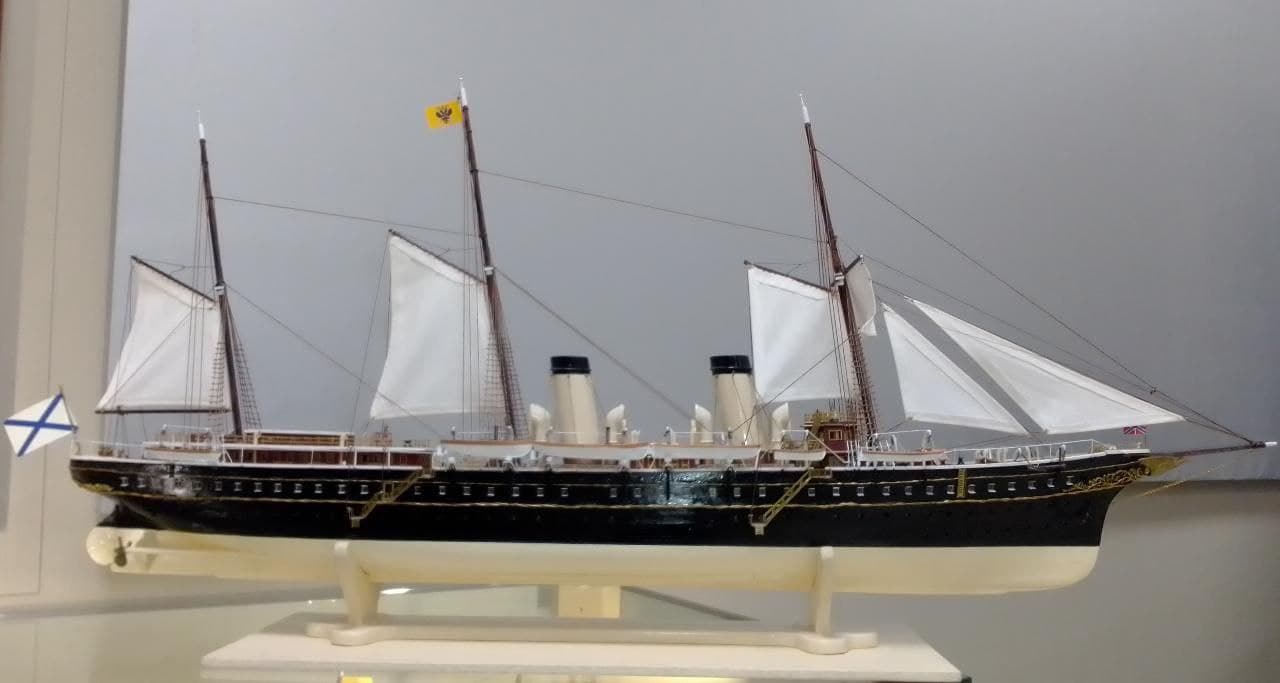
On the 125th anniversary marking the first voyage of the Imperial Yacht, a model was recently donated to the Monastery of the Holy Royal Martyrs Museum at Ganina Yama, near Ekaterinburg.

Other models of the Standart are on display in the Imperial Yacht Museum in Peterhof, which has a small room dedicated to the vessels; the Central Naval Museum in St. Petersburg; and at the Burmeister & Wain Museum at Copenhagen

CLICK on the LINK(S) below to read more about the Imperial Yacht Standart:

Exhibition: Imperial Yacht Standart and the Family of the Last Russian Emperor + VIDEO – published on 15th December 2019

The Fates of the Russian Imperial Yachts ‘Standart’ and ‘Polar Star’ – published on 21st October 2019

‘Ten years in the Imperial Yacht Standart’ by Nikolai Sablin – published on 27th August 2019

© Paul Gilbert. 27 November 2021

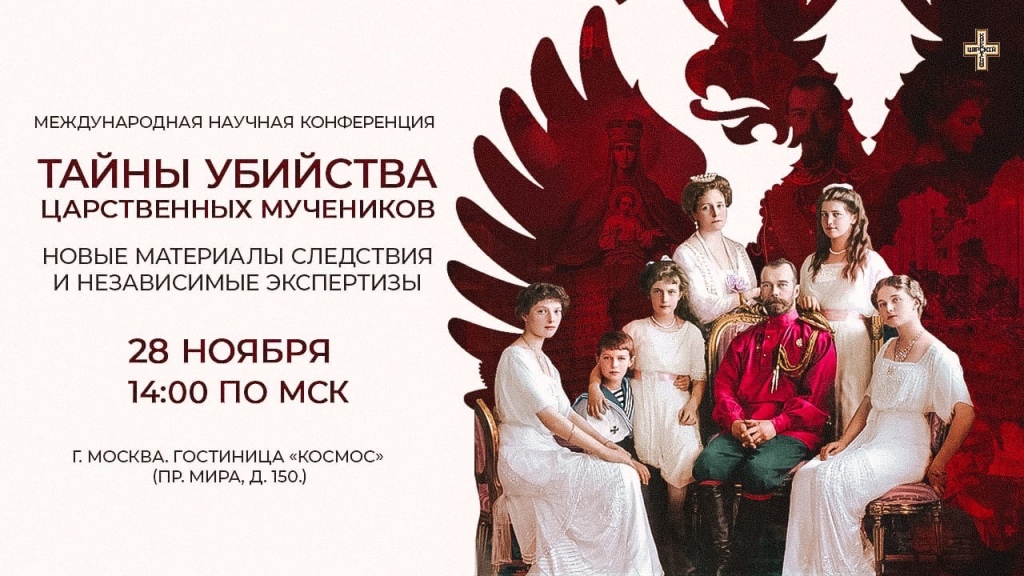
Moscow to host conference on Imperial Family’s murder

On 28th November 2021, the international scientific conference “Secrets of the Murder of the Royal Martyrs. New Materials of the Investigation and Independent Examinations,” will be held in the large congress hall of the Cosmos Hotel in Moscow.

The conference is a joint project of three Orthodox foundations in pursuance of the resolutions of the Councils of Bishops in 2016 and 2017, which provide for a broad public discussion of the materials of a comprehensive examination of the investigation, which were carried out between 2015 to 2021.

The conference will be attended by more than 15 scientists involved in the process of studying the Ekaterinburg Remains, currently interred in the Catherine Chapel, a side chapel of the SS Peter and Paul Cathedral in St. Petersburg. Each speaker will be alloted 15-20 minutes.

The first cohort of specialists consists of “experts of modern investigation”: forensic physician, doctor of medical sciences, professor Vyachesl av Popov, forensic physician, doctor of medical sciences, professor Vladimir Trezubov, geneticist, doctor of biological sciences Yevgeny Rogaev, anthropologist, candidate of biological sciences Denis Pezhemsky , forensic doctors, Doctor of Medical Sciences Viktor Z vyagin and Sergey Nikitin, Doctor of Historical Sciences Lyudmila Lykova, Candidate of Historical Sciences, Associate Professor Evgeny Pchelov. The participation of the investigator V. Soloviev and M. Molodtsova is also expected.

The second cohort of conference participants includes “independent experts”: forensic expert, candidate of medical sciences Yuri Grigoriev, forensic medical expert-criminalist, candidate of medical sciences Konstantin Teplov, dentist-orthopedist of the highest category Emil Agadzhanyan, doctor of historical sciences , professor at the Sorbonne Andrey P Achinsk th (France), Candidate of Historical Sciences Peter Valentinovich Multatuli, historians Leonid Bolotin, Inn and Simon, Mark Knyazev, a lawyer, a doctor juridich Sgiach Science Mikhail l Kuznetsov, a lawyer, PhD in law, Ph.D. George Shayryan.

The organizers of the conference are President of the St. Basil the Great Russian Educational Foundation Vasily Boyko, Chairman of the Women’s Orthodox Patriotic Society of the Patriarch Hermogenes Foundation Galina Ananyina, Director of the International Foundation for Slavic Writing and Culture Aleksander Bochkarev.

NOTE: the conference will be telecast LIVE [in Russian] at 6:00 am EST on 28th November.
CLICK on the image below to set a REMINDER

© Paul Gilbert. 26 November 2021

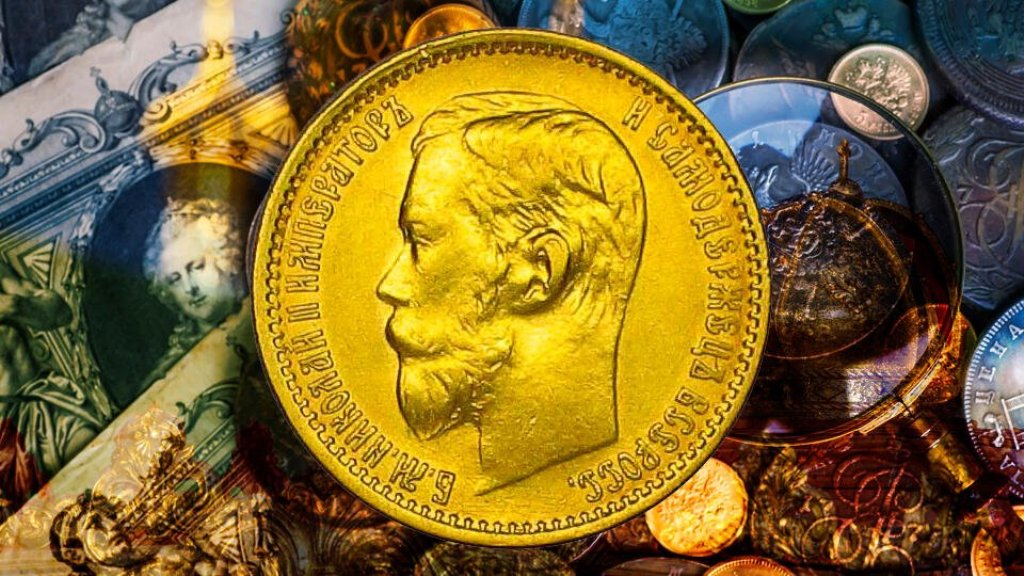
How Nicholas II Created The World’s Largest Bank

In any country in the world, its national currency is one of the main guarantors of its independence. Moreover, its issuance is carried out by a central bank owned by the state. Only the United States is different. A private financial company, the US Federal Reserve, is responsible for issuing the dollar, one of the world’s primary reserve currencies. Many believe that its shareholders run the global economy. It is a little known fact that during the early 20th century, Emperor Nicholas II helped finance the authorized capital of the US Federal Reserve System [FRS].

The Russian Empire as the world arbiter

Despite the popular opinion that pre-revolutionary Russia was the gendarme of Europe, in reality it was a world power that sought not only to end wars, but also to create an international body regulating relations between countries. While on the throne, Emperor Alexander II in 1868 initiated the signing in St. Petersburg of the convention on the “rules of war”. This document, in particular, provided for a ban on the use of a number of inhumane types of weapons. Nicholas II followed the example of his grandfather by organizing the First World Peace Conference in 1899. With the active participation of the last Russian emperor, a proposal was made to create the League of Nations, the prototype of the UN. It sounds incredible, but even then, at the end of the 19th century, Nicholas II spoke from a high rostrum about the need to end the arms race.

Money is the engine of politics

Simultaneously with the discussion of the creation of the League of Nations at the beginning of the 20th century, proposals were raised for the establishment of an international financial body. Its functions were to include the regulation of financial disputes between different countries. It was then that the proposal to create the US Federal Reserve appeared. From the earliest days of its existence, this financial institution was essentially an international private bank, which was required to have its own authorized capital, denominated in gold. Today, the US dollar is not backed by either gold or the mass of commodities in the United States. But in 1913 everything was different. At the time when the FRS was created, the dollar, like the ruble, was obliged, if necessary, to be exchanged for an equivalent in gold. Not surprisingly, the US Federal Reserve had large reserves of gold as its charter capital.

Where did it come from?

Under US law, however, American banks involved in the creation of the FRS, could not utilize their gold as authorized capital. It was assumed that it would be provided by those countries, for the settlement of financial disputes between which the FRS was created. The major world powers showed little interest in the proposal to finance the authorized capital of the FRS with their own gold and foreign exchange reserves. This was done only by Emperor Nicholas II from Russia’s vast gold reserves. The contribution of the Russian Empire to the US Federal Reserve amounted to 88.8% of its authorized capital in gold! At the same time, Russia was supposed to receive 4% of the invested funds annually, as dividends. However, soon after the establishment of the FRS, the 1917 Russian Revolution broke out, and then the Imperial Family were murdered by order of the new Bolshevik regime.

The USSR, refused to recognize the debts of Tsarist Russia, and, accordingly, did not have any rights to its income from foreign assets. There was no one to pay interest to the FRS. Had the history of Russia taken a different course, perhaps today it would be the owner of the printing press of the world reserve currency.

© Paul Gilbert. 25 November 2021

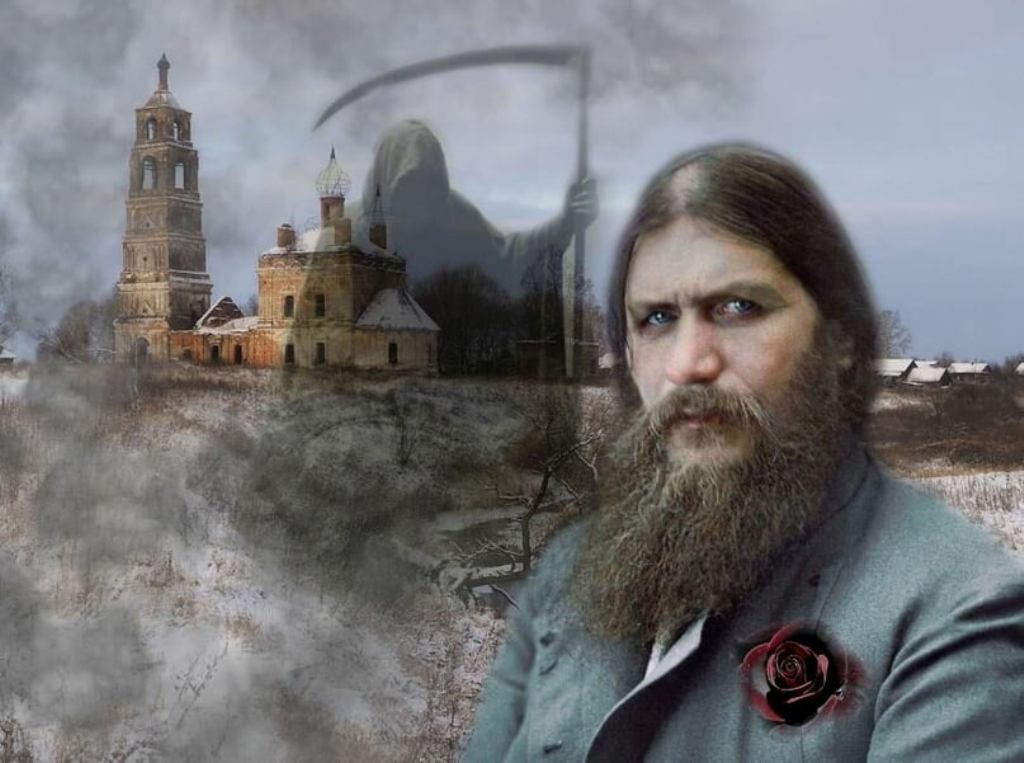
The Prophesies of Grigory Rasputin

PHOTO: Grigory Efimovich Rasputin (1869-1916)

Grigory Yefimovich Rasputin (1869-1916) was a Russian strannik [wanderer or pilgrim], and self-proclaimed holy man who befriended the family of Emperor Nicholas II, and is believed by many historians to have gained considerable influence in late Imperial Russia.

Historians often suggest that Rasputin’s scandalous and sinister reputation helped discredit the tsarist government and thus helped precipitate the overthrow of the Romanov dynasty a few weeks after he was assassinated. Accounts of his life and influence were often based on hearsay and rumour.

In 1912, Grigory Efimovich Rasputin (1869-1916) published the book Благочестивые размышления [Pious Reflections]. In it, he publishes prophecies, some of which soon came true, while others have yet to happen.

Which prophecies came to pass:

  1. The shooting of the Imperial Family

It is said that Rasputin foresaw the death of the Imperial Family long before the shooting in the basement of the Ipatiev House in Ekaterinburg, on the night of 16/17 July 1918,

“Whenever, I embrace the Tsar and the Tsarina, the girls, and the Tsesarevich, I shudder with horror, as if I embrace the dead. And then I pray for these people. I pray for the Imperial Family, because the shadow of a long Eclipse falls on them.”

  1. October revolution of 1917

Rasputin predicted the arrival of a new power in Russia and mountains of corpses, among which would be the bodies of the Grand Dukes, and the water in the Neva will be stained with their blood. He said,

“Darkness will descend on Petersburg. When it’s name is changed [Petrograd], then the Empire will end.”

  1. His own death:

Rasputin also foresaw the circumstances of his own death. He wrote “if I am killed by simple robbers of the Russian peasants,” he said, “Tsar Nicholas should not fear for his fate, and the descendants of the Romanovs will reign a hundred years and more. However,” Rasputin further added, “If the murder is committed by nobles – relatives of the Tsar – then the future of Russia and the Imperial Family will be terrible. The nobles will flee the country, and the relatives of the Tsar will not be alive in two years. Brothers will rise up against brothers, and will kill each other.” Rasputin was murdered by a group of nobles on 30th [O.S. 17th] December 1916.

PHOTO: Благочестивые размышления [Pious Reflections] by G.E. Rasputin (1912)

What prophecies have yet to pass:

  1. Global catastrophes

Rasputin predicted various troubles and catastrophes. As in the cases with other soothsayers, his prophecies are very vague, they do not contain any specific dates. But if you interpret them from the point of view of modern knowledge, then it becomes truly spine-chilling from the accuracy of his predictions.

Grigory Efimovich predicted more frequent earthquakes, rising sea levels.

“Earthquakes will become more frequent, lands and waters will open, and their damage will engulf people …”

“The seas, like thieves, will enter cities, into houses, and the lands will be drenched with salt …”

Sadly, Rasputin turns out to be right. Over the past 100 years, sea levels have risen by almost 20 centimeters.

Scientists at the Potsdam Climate Institute conducted computer simulations, according to which the current trend in climate change will lead to a rise in sea level by 3 meters or more over the next hundred of years. According to other studies, during the twenty-first century, the sea level will rise by 2 meters.

How could an illiterate peasant in 1912 even simply assume something like that?

  1. Loss of moral values

“When times draw near to the abyss, man’s love for man will turn into a dry plant …”

All one has to do is to turn on the television on any news channel to see proof of this on a daily basis.

  1. Development of genetic engineering

“Monsters will be born that will not be humans or animals….

“Irresponsible human alchemy, in the end, will turn ants into huge monsters that will destroy homes and entire countries …”

For example, let us recall the world’s most popular sheep – Dolly. On 5th July 1996, the first cloned mammal was “born”. The animal was produced from frozen genetic material from an already deceased donor. Dolly became a complete copy of her prototype and lived for almost 7 years. She gave birth to 6 lambs.

Nowadays, rumors about the cloning of a mammoth are already circulating. What is this if not the beginning of the implementation of the predictions of the “elder”?

  1. The third global conflict

In his prophecies, Rasputin mentions three world wars. Two of them have already passed.

“Three hungry snakes will crawl along the roads of Europe, leaving behind ash and smoke … The time of peace will come, but the world will be written in blood. And when two fires go out, the third fire will burn the ashes. “

Putting aside one’s personal views of Rasputin or beliefs in propecies, let us hope and pray that the unfulfilled predictions of Grigory Efimovich will remain so, otherwise humanity will face truly terrible trials and tribulations.

© Paul Gilbert. 24 November 2021

Bones of Contention: The Russian Orthodox Church and the Ekaterinburg Remains

CLICK HERE TO ORDER FROM AMAZON

Full-colour covers, 206 pages + 90 black & white photographs

Originally published in 2020, this NEW REVISED & EXPANDED 2021 EDITION features an additional 40+pages, new chapters and 90 black and white photos. It is the most up-to-date source on the highly contentious issue of the Russian Orthodox Church and their position on the Ekaterinburg Remains.

In May 2022, the Bishops’ Council of the Russian Orthodox Church, will meet in Moscow during which they will review the findings of the Investigative Commission and deliver their verdict on the authenticity of the Ekaterinburg Remains.

The reopening of the investigation into the death of Nicholas II and his family in 2015, caused a wave of indignation against the Russian Orthodox Church. This book presents the position of both the Moscow Patriarchate and the Investigation Committee.

This is the first English language title to explore the position of the Orthodox Church in Russia with regard to the Ekaterinburg remains. The author’s research for this book is based exclusively on documents from Russian media and archival sources.

This unique title features an expanded introduction by the author, and eight chapters, on such topics as the grounds for the canonization of Nicholas II and his family by the Moscow Patriarchate in 2000; comparative details of the Sokolov investigation in 1919, and the investigations carried out in the 1990s to the present; reluctance of the Moscow Patriarchate to officially recognize the remains as authentic; interesting findings of Russian journalist, producer and screenwriter Elena Chavchavadze in her documentary Regicide. A Century of Investigation; and the author’s own attempt to provide some answers to this ongoing and long drawn-out investigation for example: “Will Alexei and Maria be buried with the rest of their family?” and “Will the Imperial Family remains be reinterred in a new cathedral in Ekaterinburg?”.

This new revised and expanded edition also includes two NEW chapters!

Interviews with Vladimir Soloviev, Chief Major Crimes Investigator for the Central Investigate Department of the Public Prosecution Office of the Russian Federation and Archpriest Oleg Mitrov, a member of the Synodal Commission for the Canonization of Saints – BOTH key players in the Ekaterinburg remains case, reveal the political undertones of this to this ongoing and long drawn-out investigation.

ABOUT THE AUTHOR

Independent researcher Paul Gilbert has spent more than 25+ years researching and writing about the Russian Imperial Family. His primary research is focused on the life, reign and era of Nicholas II. On 17th July 1998, he attended the tsar’s interment ceremony at the SS Peter and Paul Cathedral in St. Petersburg. Twenty years later, he attended the Patriarchal Liturgy on the night of 16/17 July 2018, held at the Church on the Blood in Ekaterinburg. Since his first visit to the Urals in 2012, he has brought prayers and flowers to both Ganina Yama and Porosenkov Log on numerous occasions.

© Paul Gilbert. 23 November 2021