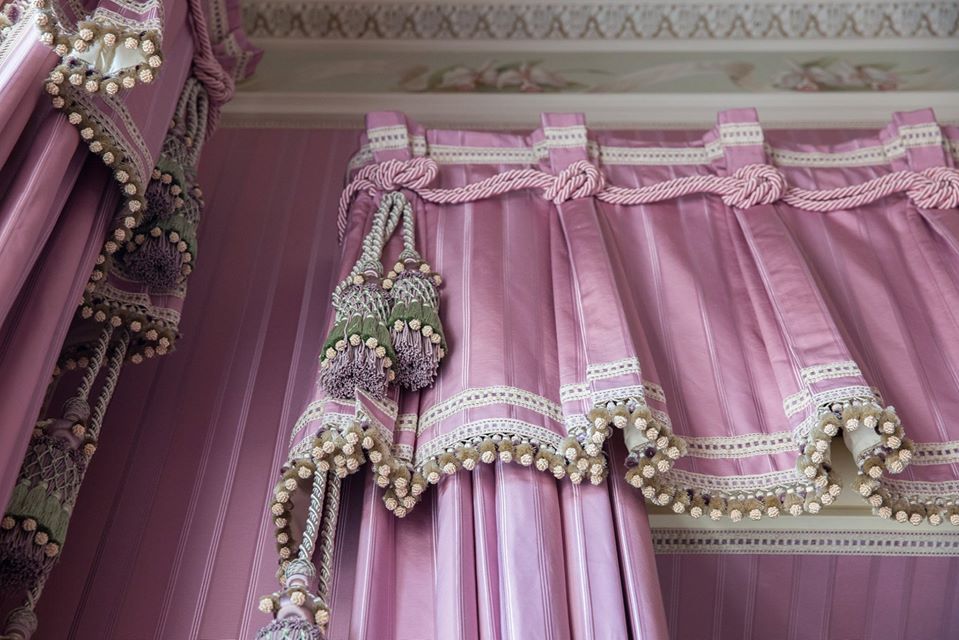
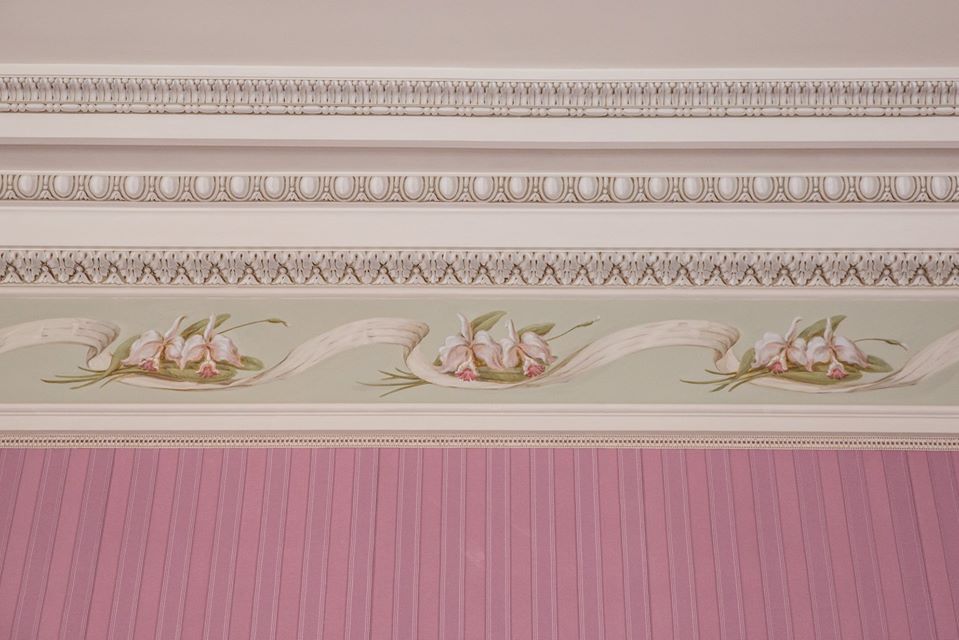
The Tsarskoye Selo State Museum Reserve have released these new photos of the progress of recreating the Mauve (Lilac) Boudoir of Empress Alexandra Feodorovna in the Alexander Palace.
Over the two decades of Alexandra Fedorovna’s life in Russia, the Mauve or Lilac Boudoir – her favorite room in the Alexander Palace, created by Roman Meltzer – has never been redesigned, despite the change in artistic fashion at the turn of the century. To decorate the interior, silk – mauve with a pattern of interwoven vertical threads – was ordered from the Parisian company Charles Bourget. The wood panels at the bottom of the walls and the furniture designed by Meltzer in imitation of the Rococo style were painted in two colors resembling ivory. Many furnishings, a corner sofa, half cabinets are built-in and connected with wall panels. Here the emperor and the empress with their children often drank coffee after breakfast, gathered for evening tea, and it was in this room where Alexandra Feodorovna spent many hours working and reading.
Works in the Mauve (Lilac) Boudoir: according to historical patterns, fabric upholstery of walls, curtains, built-in furniture, carpet, wood panels, fireplace, picturesque frieze were recreated.
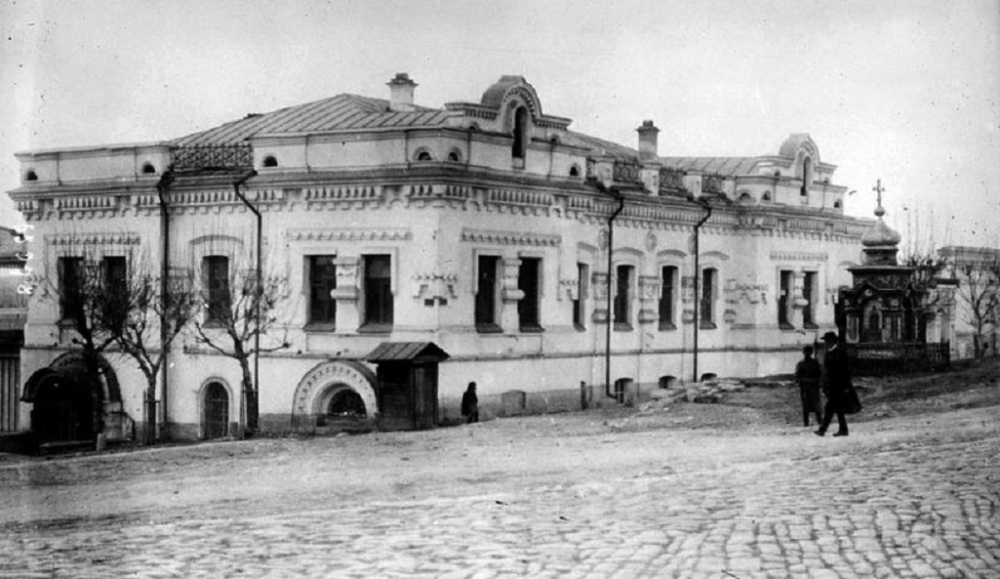
PHOTO: The Ipatiev House, also known as the House of Special Purpose was built 130 years ago
In July 2018, Russia will mark the 100th anniversary of the deaths and martyrdom of the last Russian Imperial family. On the possibility of restoring the Ipatiev House, where the Holy Royal Martyrs ended their earthly journey, AiF-Ural journalist Alexei Smirnov sat down with the head of the Department of Archives of the Sverdlovsk Region Alexander Alexandrovich Kapustin.
Alexei Smirnov: Alexander Alexandrovich, do you remember what the Ipatiev House looked like before it was demolished in 1977?
Alexander Kapustin: Yes, I remember it. From 1972 to 1977 I studied at the Ural State University and visited the Ipatiev House on a number of occasions. The first time I went alone, then I went returned several times with some of my fellow students. I remember walking up the steps to the entrance. We did not get into the “execution room”, it was boarded up. Some organization was working in the mansion at that time, the staff showed little interest in us. I did not feel any “aura” around the house, for me it was an old historic building, typical of Sverdlovsk at the time. Although, like any person interested in history, I knew perfectly well that the tsar and his family had been shot here. Of course, I did not know everything, I was only 17 years old at the time. I can not say that my visits found me shaking inside me. Do not forget that we studied at the Soviet school, so we were taught the official Soviet version of the events. We were taught that Nicholas Romanov was the not the best tsar, however, today the evidence held in our archives, proves that the Soviet version was wrong.
Alexei Smirnov: The decision to demolish the mansion was made in Moscow, was this a mistake?
Alexander Kapustin: It was a political mistake by the authorities. But Yuri Andropov, who headed the KGB at the time, was right in one thing: the Ipatiev House was steadily becoming a place of pilgrimage for those who wished to honour the memory of the imperial family.
Alexei Smirnov: Could Yeltsin disobey Andropov?
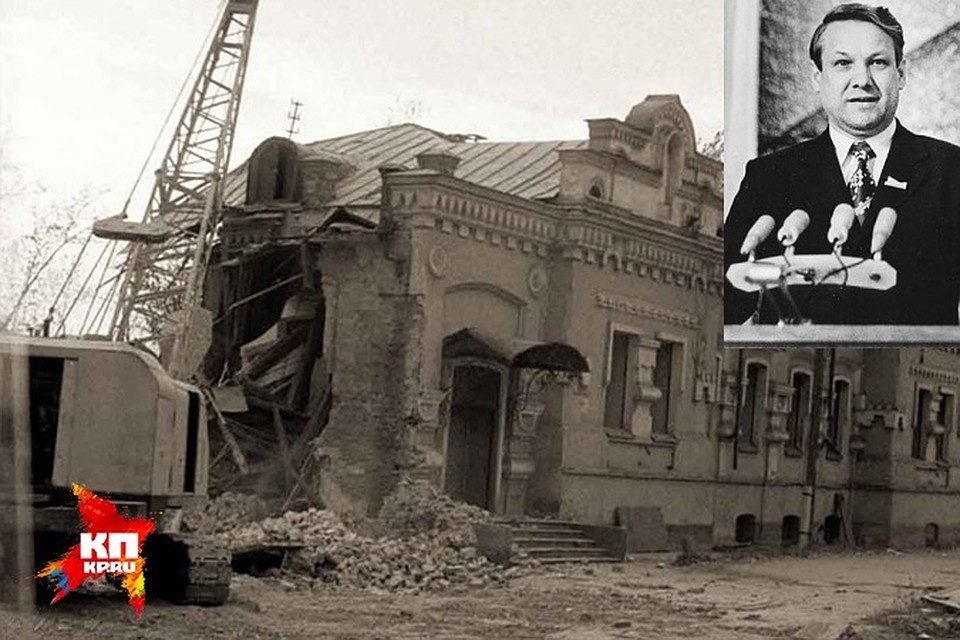
Alexander Kapustin: Yeltsin was a member of the party, the first secretary of the regional committee. He carried out the order, one which he simply could not disobey. And it was not just an order, it was the decision of the Central Committee. Another question, did Yeltsin realize the consequences of his actions? It is quite possible that he did not. Therefore we have no right to make any claims against him.
PHOTO: Boris Yeltsin was ordered to demolish the Ipatiev House in September 1977
Alexei Smirnov: Is it possible to reconstruct the Ipatiev House according to surviving documents? And whether it is necessary to do this?
Alexander Kapustin: I think that there would be no technical problems with a reconstruction. We know what it looked externally, we can determine its dimensions, the height of the ceilings, etc. Preserved drawings, numerous photographs – inside and out, will greatly benefit such a project.
NOTE: In the archives of the Sverdlovsk region, more than two dozen documents concerning the Ipatiev House have survived, as well as an extensive photo-fund. Up until 1977, the building was photographed extensively. A lot of the pre-revolutionary images have also been preserved. The earliest document in the archive is a list of owners dating from 1916, including Nikolai Nikolaevich Ipatiev. In 1929, Uralstroikontrol made a detailed plan of the mansion, which is kept in the archives in a separate file.
As to your other question: if to restore, for what purpose? When the idea of ”reconstruction” of the house arose, it created a lot of excitement and discussion. The problem is that we look at those events through the eyes of people of the 21st century, and this is not always entirely correct. Try to look at them through the eyes of people of that time. It should not be forgotten that on 2nd March 1917, that the tsar abdicated from the throne. The Bolsheviks shot not the emperor, but “Citizen Romanov”! And how did Russian society react to this? The event passed almost unnoticed. And already on 3rd March 1917, the church swore an oath of allegiance to the provisional government! Yes, he was a royal martyr, he died a martyr. But at that time, atrocities were occurring throughout Russia. It is pointless to demand that everyone worship the tsar, just as it is pointless that everyone worship Lenin. Society is divided.
The point is also that the figure of Nicholas II overshadowed many other worthy people in the public eye, including members of the Romanov dynasty. Why, for example, are we not interested in the life and fate of Grand Duke Mikhail Alexandrovich, whom I have great respect for? He was a man, independent in his decisions. He fell in love with a married woman and, due to the then conventionalities, was forced to leave Russia. They had a morganatic marriage. He was expelled from the country, but on the eve of World War I he returned, went to the Front, and commanded the Caucasian Division. Under his authority, Muslim volunteers showed great courage in defending Russia against her enemies. He proposed laws which were adopted after the February Revolution, abandoned the throne, was exiled to Perm, where in 1918 he died tragically.
Alexei Smirnov: If you restore the Ipatiev House, where would it be built?
Alexander Kapustin: Well, for example, near the Church on the Blood, where there is a lot of land, and certainly enough space. But what most people to not know, is that the foundation of the Ipatiev House is actually buried under the road. Therefore, we are not talking so much about reconstruction as that of a new construction.
Alexei Smirnov: Who could undertake the reconstruction of the Ipatiev House? Sponsors? The Russian Orthodox Church? The city? What would be exhibited?
Alexander Kapustin: I think that those wishing to reconstruct the building will eventually be found, and it does not matter who it is. Personally, I see it as an object of history, culture and architecture. We already have many places of worship for the Romanov family. For the majority of people, the Ipatiev House is associated only with the murder of the tsar and his family. But the mansion had a long history before this terrible tragedy. A new Ipatiev House would house an exhibition hall, a library with a reading room, a cultural and educational complex. In addition, another beautiful mansion to the landscape of Ekaterinburg would not hurt. The house, really, was very beautiful, I really liked it.
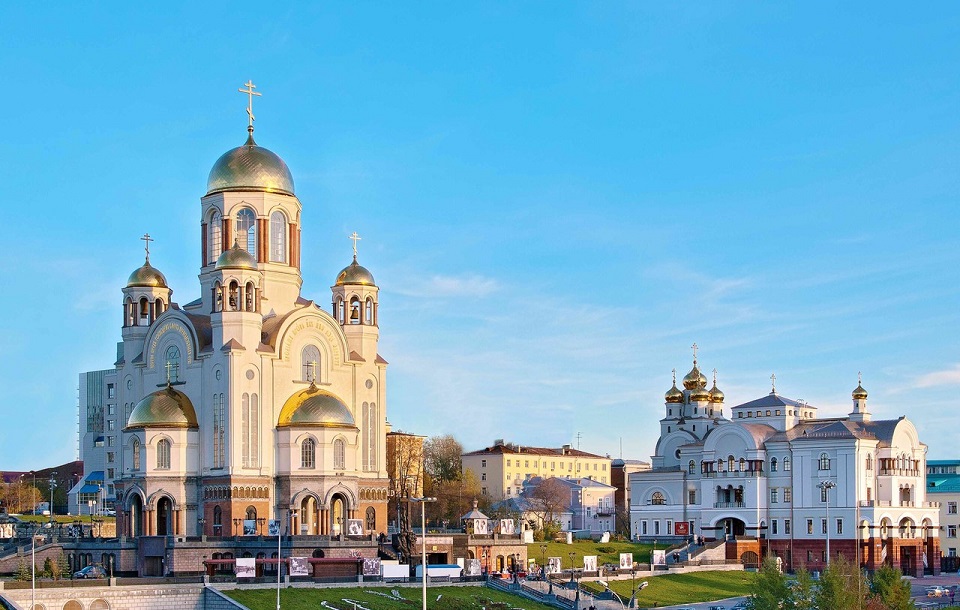
PHOTO: The Church on the Blood and the Patriarchal Compound in Ekaterinburg
Alexei Smirnov: But you understand that if the house is restored, it will automatically become a place of pilgrimage?”
Alexander Kapustin: Looking at who and for what purpose it will be restored. And there is nothing wrong with the pilgrims. They do not harm the house. And the capital of the Urals will receive an additional tourist facility. As with other historic buildings in the city, each house has its own history, it’s own individuality. The Ipatiev House is no exception, it is unique in terms of architecture and is already an important part of our history.
Alexei Smirnov: Recently an unfinished TV tower was demolished in Yekaterinburg …
Alexander Kapustin: I would not make any parallels here. The tower was a monument of mismanagement and irresponsibility. At one time, the authorities did not have enough funds for its completion and security. Yes, some people were angered by its demolition, but if it had collapsed, the consequences could have been terrible. I think that the dismantling of the tower was justified and logical, this is my point of view. Governor Evgeny Kuyvashev repeatedly tried to offer something, contests were held, but no one was willing to undertake the completion of the structure.
Alexei Smirnov: If a person or company comes forward, is the state archive ready to provide documentation on the Ipatiev House?
Alexander Kapustin: Of course! We are ready to cooperate with any organization, political party, the Russian Orthodox Church. Come, make copies of the documents, work, build!
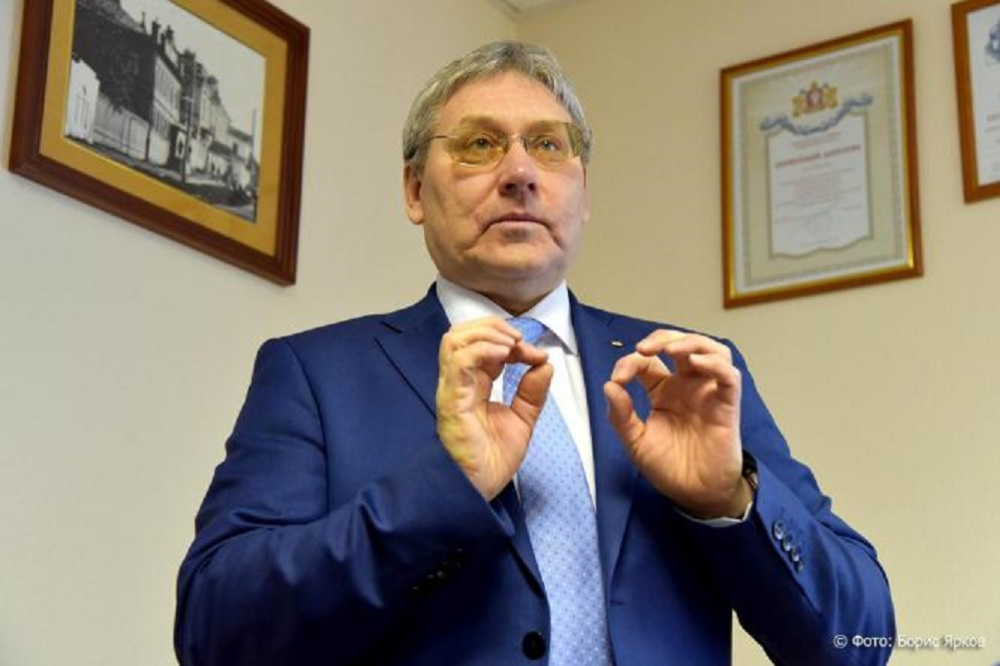
PHOTO: Head of the Department of Archives of the Sverdlovsk Region Alexander Kapustin
Alexander Alexandrovich Kapustin. Born 13 May 1955 in Nizhny Tagil. He graduated from the Faculty of History of the Ural State University. Initially, he worked as a school teacher, and then taught at a university. He is a Candidate of Historical Sciences (1986), and Head of the Department of Archives of the Sverdlovsk Region, since 1990.
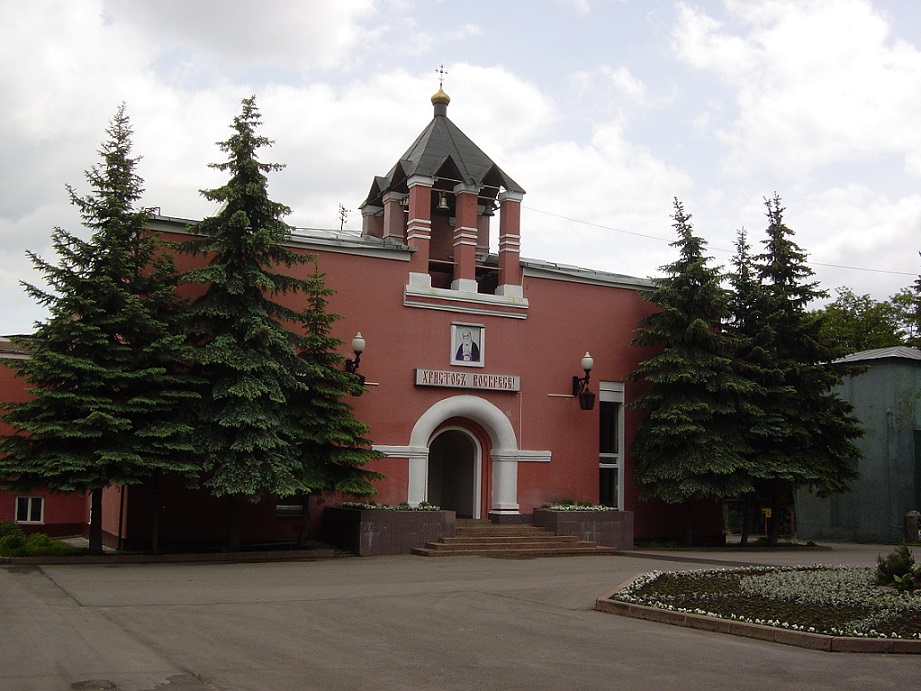
Situated on the grounds of the New Donskoy Cemetery in Moscow is a small church, above the entrance is the inscription ‘Christ is Risen’. In 1927, it was a crematorium and columbarium, the latter of which remains intact to this day.
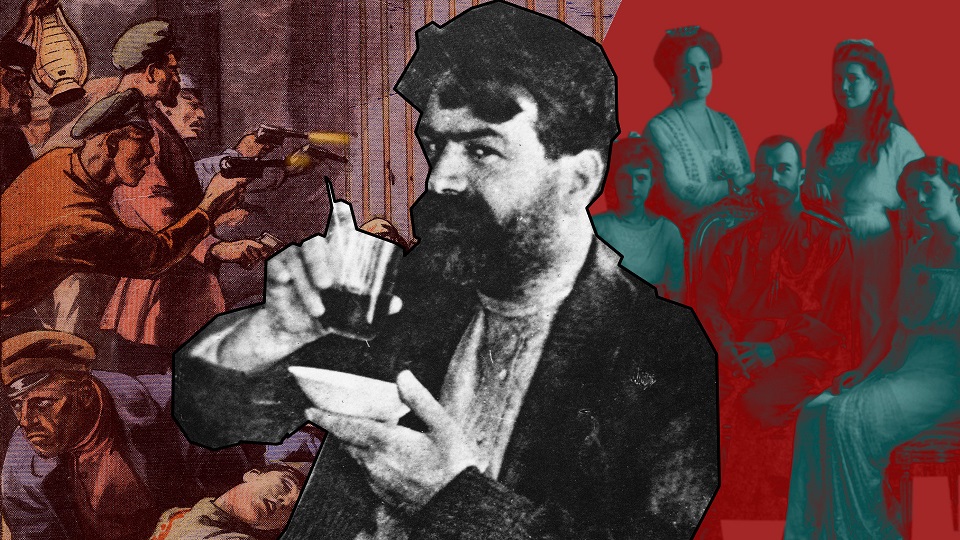
Parishioners attending liturgies performed in the Orthodox Church, are unaware that behind the false walls are the ashes of Russia’s most notorious murderer: Yakov Mikhailovich Yurovsky (1878-1938).
Yakov Mikhailovich (real name Yangel Khaimovich) Yurovsky was born on 19th (O.S. 7th) June 1878 in Kainsk of the Tomsk province into a large Jewish working family, the eighth of ten children. He was best known as the chief executioner of Emperor Nicholas II, his family, and four retainers on the night of 16/17 July 1918.
The regicide who died on 2nd August 1938, of perforation of a duodenal ulcer was cremated in the Don Crematorium in Moscow. His ashes were placed in an urn and placed behind a wall, in one of the cells of the columbarium. An urn containing the ashes of Yurovsky’s wife Maria Yakovlevna Yurovskaya were later placed next to those of her husband. Today, it is impossible to guess that the two urns contain their remains, as all the inscriptions and identification marks are draped with fabric.
PHOTO: Restored church at the New Donskoy Cemetery in Moscow
The Don Crematorium was the first crematorium built in Moscow and until 1947 the only mass crematorium operating in the USSR. It was constructed in 1926 in the unfinished church of St. Seraphim of Sarov in the New Donskoy Cemetery. Opened in 1927, more than 150 old Bolsheviks were cremated here. The crematorium was closed in 1992, whereupon it was transferred to the Russian Orthodox Church (ROC).
In 1998, Divine Liturgies resumed after the reconstruction of the building. In autumn 2011, the Russian Orthodox Church decided to regain the territory of the columbarium of the Don Crematorium and reconstruct it.
A baptismal font now stands in place of the crematorium oven. Everywhere there are icons, children’s drawings of the Workshop of Father Seraphim, a Christmas nativity scene. God’s grace! The church staff are ashamed of being under the same roof with the columbarium, and shudder when people come to inquire of the whereabouts of the niche containing Yurovsky’s urn.
You reap what you sow . . .
According to local Moscow journalist Felix Grozdanov, “workers in a private conversation admitted that they are strictly forbidden to show this place. It is not for nothing that it was stored in a special columbarium – entrance there for a long time was allowed by passes only to family relatives or important persons. It is forbidden to show this place during excursions which are regularly held here.”
The shroud of secrecy intensified after a number of acts of vandalism were carried out by monarchists seeking revenge for Yurovsky’s role in the murder of Russia’s last tsar and his family. “They came and spat on the glass of Yurovsky’s cell, where his urn was placed. They even tried to smash the glass,” one cemetery worked noted.
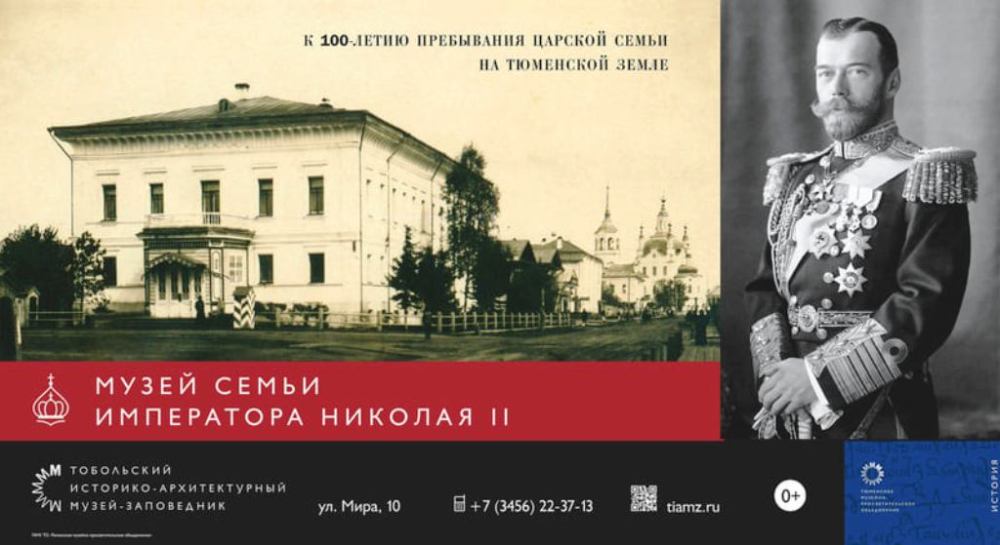
CLICK on the ticket for a virtual tour of the Museum of the Family of Emperor Nicholas II
The Museum of the Family of Emperor Nicholas II opened on 26th April 2018 in the Siberian city of Tobolsk.
The museum is the first museum in Russia, dedicated entirely to the family of Emperor Nicholas II. The museum is housed in the former governor’s house, where the Imperial family lived from 6th August, 1917 to 13th April, 1918. The mansion became a prison for the Imperial family before the Bolsheviks sent everyone to them all to their deaths in Ekaterinburg.
CLICK on the ticket above to take a virtual tour of the Museum of the Family of Emperor Nicholas II in Tobolsk
NOTE: it may take a few minutes to download. Simply follow the arrows into the former Governor’s Mansion, and tour the rooms and their contents. As you enter the house, make a left to follow the arrow up the stairs to the upper floor, where the exhibition rooms are located – ENJOY!
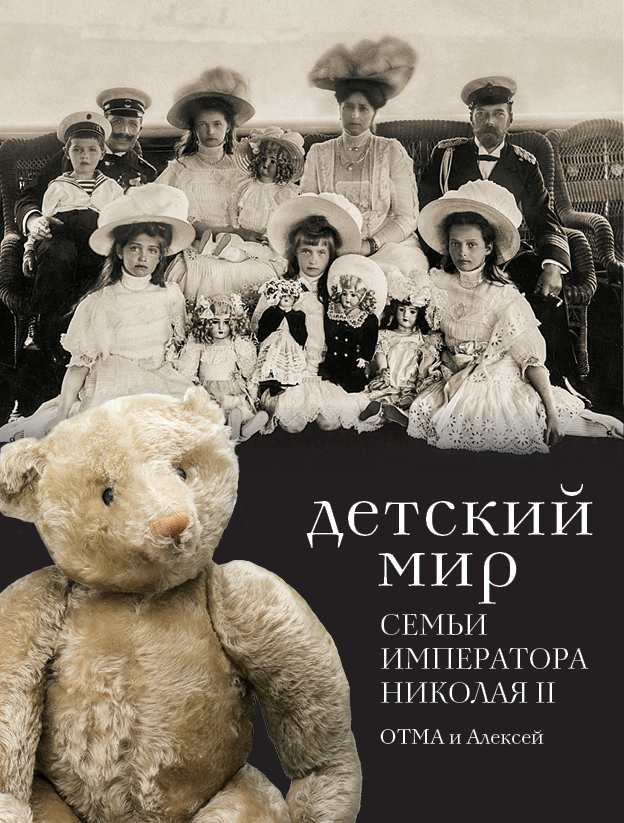
OTMAA: the children of Emperor Nicholas II and Empress Alexandra Feodorovna
The exhibition The Children’s World of the Family of Emperor Nicholas II. OTMA and Alexei opened in the Kolomenskoye Museum-Reserve in Moscow on 13th November 2019. This unique exhibit is a joint project of the State Hermitage Museum in St. Petersburg, the State Archive of the Russian Federation (GARF) and the Kolomenskoye State Museum Reserve in Moscow, which showcases the personal items – costumes, accessories, toys – that belonged to the children of Emperor Nicholas II. It is supplemented with exhibits from the collections of the Tsarskoye Selo State Museum Reserve, the Peterhof State Museum Reserve, and the Pereslavl Museum. The exhibition runs until 16th February 2020.
The following photos from the exhibition are courtesy of Dinara Gracheva and Православие.Ru
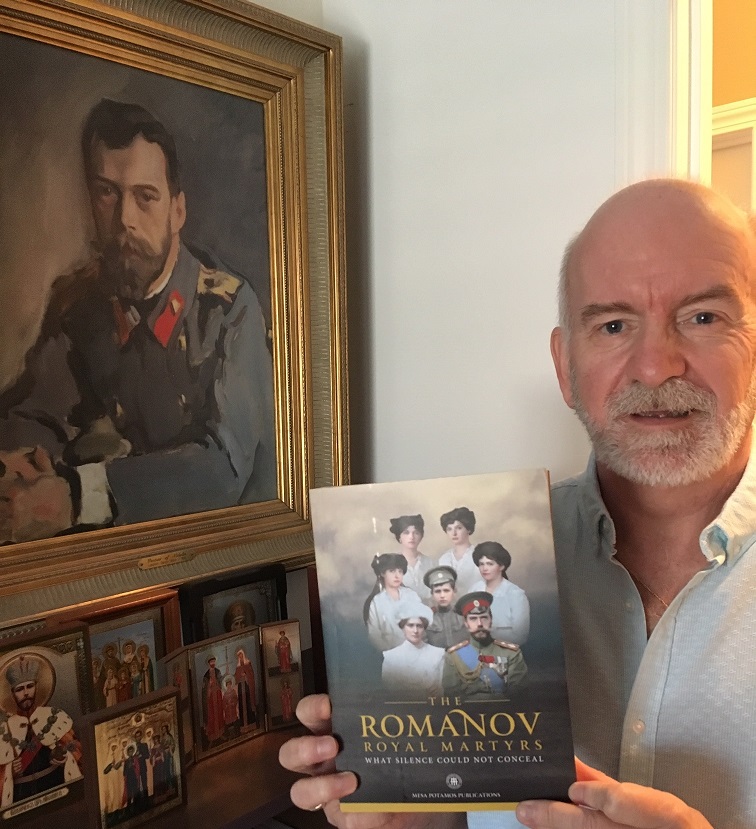
My personal choice for Romanov Book of the Year! – Paul Gilbert
Based on its comprehensive research and new information, The Romanov Royal Martyrs: What Silence Could Not Conceal is my personal choice for the Romanov Book of the Year for 2019. If you read just ONE book on Nicholas II and his family, make sure it is this one! – Paul Gilbert
NOTE: The book is set to arrive in North America at the end of November, and distributed to readers throughout the United States and Canada. As a result, I have had to exercise great care in writing this review. As a courtesy to those who have not yet read the book, I did not want to give anything away, or publish any spoilers, therefore, I have used material from the publishers web page and added my own additional comments and notes to this review- PG
* * *
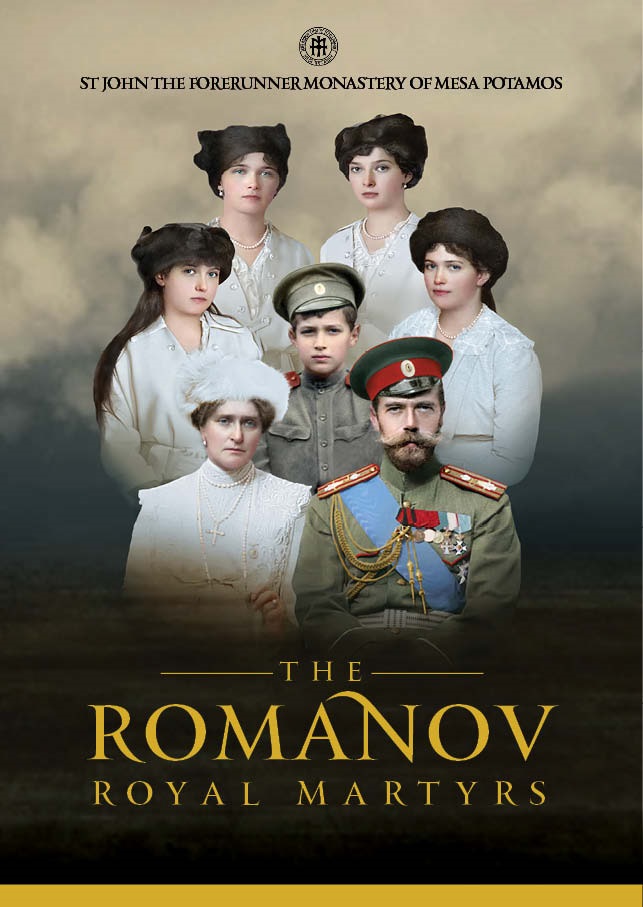
The publication of the English edition of The Romanov Royal Martyrs: What Silence Could Not Conceal is the crowning glory of a unique and comprehensive project of the Holy Monastery of St. John the Forerunner of Mesa Potamos in Cyprus. Originally published in Greek in February 2018, the long awaited English edition was published in September of this year.
The book draws on letters, testimonies, diaries, memoirs, and other materials never before published in English to present an honest and unique new study of Nicholas II and his family.
The work aims to present Nicholas II and his family through the prism of their spiritual grandeur and the purity of their souls. A lively portrait of the Imperial family emerges from their own personal writings and in the writings of those who lived very close to them. The result is a psychographic biography which explores the essential character of the Imperial family in a deeper and inspiring way.
Furthermore, the work brings to light a multitude of unknown and unrevealed facts, aspects and elements of history, which evince that many truths in regard to the life and martyrdom of the Imperial family remain silenced or distorted to this day. The book presents unvarnished factually sourced events, deriving all its material stringently from primary sources, which allow no grounds for questioning their legitimacy, gravity, and validity.
Thus, many major historical events, such as the 1905 revolution and Bloody Sunday, Russia’s involvement in World War I, the myth of the “Bread Revolution”, the February coup d’état of 1917, the plots and conspiracies to overthrow Nicholas II from his throne. the treachery, cowardice and deceit of the tsar’s ministers, generals and even members of his own family, the events relating to Nicholas’ II abdication, among others are set in their true proportions and presented through a proper perspective.
Since the publication of Robert K. Massie’s classic Nicholas and Alexandra in 1967, other Western historians have published their own assessments of Nicholas II, some of whom arrogantly arguing that their work is the “final word” – they were WRONG! Sadly, many people have blindly accepted these often negative assessments of Russia’s last tsar as the truth. With the publication of The Romanov Royal Martyrs, readers may be surprised by the facts surrounding the historical events noted above, because as noted, up to now these events have been presented in an inaccurate light.
In addition, this book presents the most accurate account of the murder of the Romanovs ever presented in a book. No fictional additions. The information used in The Chapter of Blooddraws exclusively from the memoirs and depositions of the murderers and the guards, as well as from the official forensic investigations and studies of the remains. The chapter also includes unpublished material relating to the family’s imprisonment in Ekaterinburg. Of particular note are excerpts from the testimonies of the nuns of the Novo-Tikhvinsky Convent in Ekaterinburg, who were taking provisions to the Imperial Family at the Ipatiev house, and from the testimonies of Ipatiev guards.
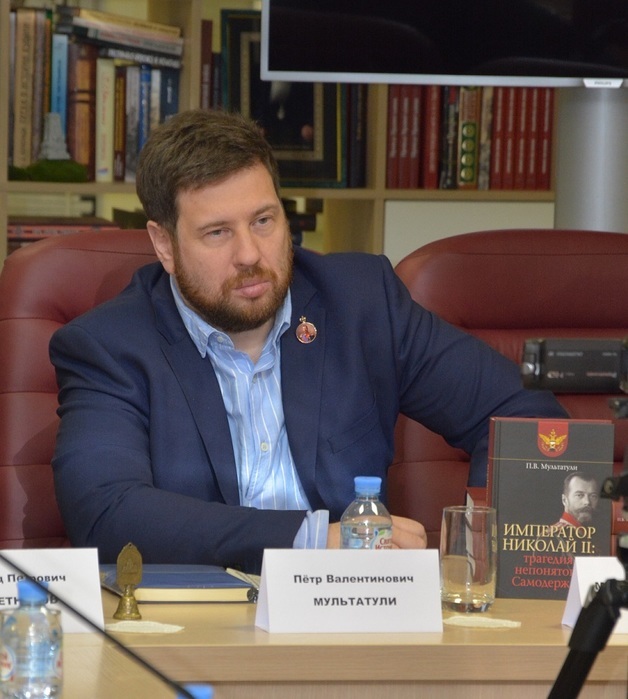
Dr. Pytor Multatuli, Russia’s foremost expert on Nicholas II
Among the historians who worked in the research team together with the fathers of the Mesa Potamos Monastery are Nicholas B.A. Nicholson, Helen Azar, Helen Rappaport, Sophie Law, and George Hawkins, all noted specialists in Romanov history.
A very significant member of the project team is Dr. Pytor Multatuli, and one whose contribution adds credibility to this publishing project. Multatuli is a renowned Russian author, journalist, historian, and Professor at the Moscow State Institute for Culture and Arts. He is recognized as Russia’s foremost authority on the life and reign of Nicholas II. His works on these subjects are unparalleled, yet sadly overlooked or ignored by his Western counterparts.
I was delighted to read numerous quotes from the memoirs of General Alexander Spiridovitch (2 Vols.) and Semyon S. Fabritsky are included in this book. I am very proud to note that the first English translations of both were published by the publishing division of Royal Russia during the last decade. Both Spiridovitch and Fabritsky knew Nicholas II personally, their memoirs reflect their honest, eye-witness assessments of the last tsar and his family.
The Romanov Royal Martyrs is an impressive 508-page book is in three parts: Part I:In the Path of Love (4 chapters); Part II:In the Path of Blood (2 chapters); and Part III:In the Words of the Saints.
It includes nearly 200 black and white photographs, and also features a 56-page photo insert, of more than 80 high-quality images of the tsar and his family, all of which have been colourised by the acclaimed Russian artist Olga Shirnina (aka Klimbim), and appear here in print for the first time.
The only criticism I have of the book are a number of errors which I found in the book. Many readers may not even recognize them, however, those who are familiar (particularly the purists) with Nicholas II and his family are sure to note. Perhaps some of the meanings were simply lost in translation?
For instance, the use of some of the titles throughout the book, such as “crown prince” or “tsarevich”[1] when referring to Nicholas Alexandrovich and Alexei Nikolaevich, instead of the correct “tsesarevich”[1] * Please see my notes at the bottom of this review – PG
The widowed wife of Alexander III is referred to as the “widowed Queen Mother” instead of the correct “Dowager Empress.” Maria Feodorovna was never “Queen” of Russia, she was Empress!
Even referring to Nicholas II and his family as “royal,” instead of “imperial” is incorrect. I have to confess that I am also guilty of using “Royal Family” instead of the correct “Imperial Family”, and have been criticized over the past 25 years for naming my web site “Royal Russia” instead of “Imperial Russia”.
On page 78, the translation of “Tsarskoye Selo” is incorrect. “Tsarskoye Selo was essentially a village, as it’s very name implied, which means “Royal Village.” The correct translation of the Russian spelling Ца́рское Село́ is in fact “Tsar’s Village”. The Russian word “Ца́рское” is quite often mistranslated and misused by Westerners as “royal”.
Another word that I would like to point out is on pg. 64: ” . . . Nicholas and Alexandra, under an imperial canopy . . .” The proper term for this “canopy” is baldachin. [2] * Please see my notes at the bottom of this review – PG
On page 136, I was distressed to read “Nicholas named his son in honor of his beloved ancestor, Tsar Alexis.” Sadly, this is an error often noted by many Western historians.
It was Robert K. Massie (among others), who have led us to believe that the only son of Emperor Nicholas II and Empress Alexandra Feodorovna, was named after Tsar Alexei Mikhailovich (1629-1676) . . . this is incorrect.
The long-awaited son and heir to the Russian throne was named Alexei, in honour of St. Alexei of Moscow.
Saint Alexius (1296–1378) was Metropolitan of Kiev and all Russia (from 1354). He was canonized by the Russian Orthodox Church in 1448 and is revered as one of the patron saints of Moscow.
Also on page 136, “From Nicholas’ diary six weeks after the birth of Alexis . . . Alix and I were very concerned about the bleeding of little Alexei from his umbilical cord . . .”. It has generally been accepted that Alexei began bleeding from his navel at the age of six weeks . . . this is also incorrect.
Two noted Romanov historians Margarita Nelipa and Helen Rappaport both tell us otherwise, that Alexei’s bleeding was noted the day following his birth. Their claim is based on two separate, yet reliable sources.[3] * Please see my notes at the bottom of this review – PG
On page 151, Rasputin is referred to as a muzhik (a Russian peasant), when in fact he was a Strannik (a holy wanderer, or pilgrim).
On page 279, ” . . . they set out by boat from the village of Pokrovskoye . . .” this is also incorrect. The Imperial family arrived by train from St. Petersburg in Tyumen, where they continued their journey to Tobolsk by boat, passing Pokrovskoye. [4] * Please see my notes at the bottom of this review – PG
Despite my criticisms above, this should not in any way deter any one from reading this book, nor should they in any way diminish the extensive research that went into it, which at long last presents the TRUTH!
I personally applaud the monumental efforts that went into this book. It presents much new material which dispels the many myths and lies about Nicholas II. Finally, the reader learns the truth about the tragedies which befell the tsar during his 22+ year reign, and the evil gossip which flowed freely in the salons of the capital, not to mention the vitriol distributed by the revolutionaries, whose propaganda turned the Russian people against their sovereign.
I am often asked to recommend a book, which tells the true story of Nicholas II, Alexandra Feodorovna and their five children. My answer was always the same, “It has yet to be written” – up until now!
‘The Romanov Royal Martyrs: What Nature Could Not Conceal‘ can now be considered the definitive work on the Imperial Family. It puts to rest so many of the negative myths, held for more than a century, and rehashed over and over again in the last 50 years by so many so-called Western experts. At long last the truth has been told! If you read just ONE book on Nicholas II and his family, make sure it is this one!
I think so highly of this book, that it will be placed on a special shelf of books in my home library, books which inspire and guide me, and include the Holy BibleKing James Version, The Orthodox Study Bible, Russian Golgotha and Last Tsar. Nicholas II, His Reign & His Russia.
Based on its comprehensive research and new information, I do not hesitate in naming The Romanov Royal Martyrs: What Silence Could Not Conceal as my personal choice for the Romanov Book of the Year for 2019!
I pray that this review will inspire many others to buy this book, read it, and keep it’s words close to their heart. Click HEREto order your copy.
Click HERE to review the Holy Royal Martyrs web site, which includes excerpts from the book, photos, videos, articles and more
[1] English sources often confused the terms Tsarevich and Tsesarevich, both distinct words with different meanings. Tsarevich (Russian: Царевич) is a Slavic title given to tsars’ sons. Under the 1797 Pauline house law, the title was discontinued and replaced with Tsesarevich (Russian: Цесаревич) for the heir apparent alone.
[2] “The procession of Emperor Nicholas II from the Assumption Cathedral on 26 May (Old Style 14 May, 1896), “was rich and imposing beyond the reach of exaggeration. The baldachin under which the Emperor walked was richly covered with velvet and cloth of gold, surmounted by plumes of ostrich feathers in three colours—–black, white, and yellow. This was supported at intervals by lances of ebony and mother of pearl, and held firmly by golden cords. The baldachin and cords were carried and held respectively by sixteen aides-de-camp generals of the highest rank in the imperial service.”
Source: Gilbert, Paul (Editor). The Coronation of Tsar Nicholas II. Published by Gilbert’s Books. 2012 (see page 36)
[3] “One day after Alexei’s birth, Grand Duke Peter Nikolaevich (1854-1931) came to congratulate the sovereign and stayed for lunch. Upon his departure, the sovereign mentioned the presence of “blood on the diapers”. Returning to his Znamenka estate (in Alexandria), he repeated this detail to his wife who telephoned Nikolai II (before visiting Alix later that evening). During their conversation, he said that the doctors had confirmed that the atypical bleeding was indeed due to haemophilia.”
Source: ‘Alexei. Russia’s Last Imperial Heir: A Chronicle of Tragedy’ by Margarita Nelipa. Published by Gilbert’s Books in 2015
[3] Grand Duke Peter Nikolaevich and his wife Grand Duchess Militza Nikolaevna (1866-1951) had driven over to the Lower Dacha the day Alexei was born . . . as their son Prince Roman Petrovich (1896-1978) later recalled in his memoirs [published in Danish].
‘When they returned in the evening to Znamenka, my father remembered that . . . the Tsar had told him . . . That the doctors were concerned about the frequent splatters of blood in his swaddling clothes. . . .”
Grand Duke Peter telephoned the palace, “When the Tsar answered that they had hoped that the bleeding would soon stop, my mother took the receiver and asked if the doctors could explain the cause of the bleeding. When the Tsar could not give her a clear answer, she asked him with the calmest of voices she could manage: ‘I beg you, ask them if there is any sign of haemophilia’ . . . The Tsar fell silent on the phone for a long time and then started to question my mother and ended by quietly repeating the word that had staggered him: haemophilia.”
Source: ‘Four Sisters. The Lost Lives of the Romanov Grand Duchesses’ by Helen Rappaport. Published in 2014
[4] From the diary of Nicholas II, 4th August 1917. We got over the Ural Mountains and felt the cold air. The train passed Yekaterinburg in the small hours of morning. It dragged on and on incredibly slowly, so that we arrived in Tyumen only at 11:30 pm.
The train pulled in almost to the quay and the only thing we had to do was to board a ship.
Then the reloading of cargo began and it went on all through the early morning. We departed from Tyumen by the river at around 6 am.
Pierre Gilliard noted in his memoirs: “We passed the native village of Rasputin, and the family, gathered on the deck, were able to observe the house of the staretz . . . “
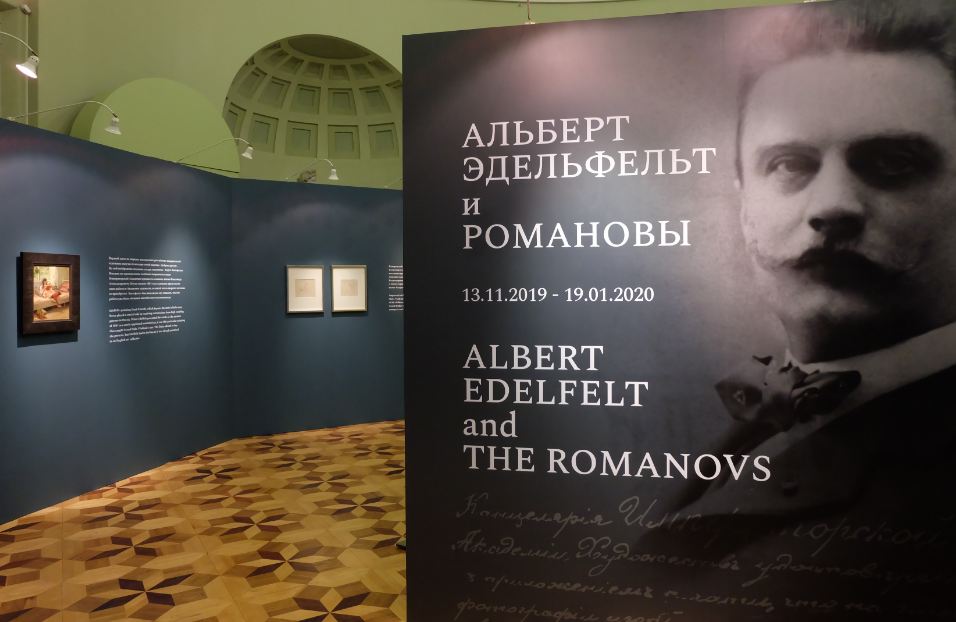
The exhibition ‘Albert Edelfelt and Romanovs’ is now on display in the Imperial Academy of Arts in St. Petersburg, and runs until 19th January 2020
On 14th November 2019, the director of the Institute of Finland in St. Petersburg Sani Kontula-Webb and the Consul General of Finland in St. Petersburg Anne Lammila opened the exhibition ‘Albert Edelfelt and Romanovs’ in the Imperial Academy of Arts in St. Petersburg.
The Institute of Finland in St. Petersburg, together with the Russian Academy of Arts, with the support of the Consulate General of Finland in St. Petersburg, organized the exhibition that will present Edelfelt’s work commissioned by the Russian Imperial Court. His works will be shown for the first time in the former Imperial capital in more than 130 years, including paintings that were previously considered lost.
Albert Gustaf Aristides Edelfelt (21 July 1854 – 18 August 1905) was a Finnish painter noted for his naturalistic style and Realist approach to art. He traveled to Italy, France, England (1878), Spain (1881), Sweden, Denmark and Russia. In 1877, the St. Petersburg Academy of Arts recognized him as an honorary associate, and in 1886 gave him the title of academician for his painting he Funeral of a Child’. He was recognized as a full member of the Imperial Academy of Arts in 1895.
Portrait of the sons of Grand Duke Vladimir Alexandrovich – Cyril and Boris Vladimirovich, 1881. Rybinsk Museum-Reserve. Artist: A. Edelfelt (1854-1905)
Portrait of Grand Duke Andrei Vladimirovich in childhood, 1881. Artist: A. Edelfelt (1854-1905)
He is known to have had good relations in Russia with the Imperial Family, serving as Court Painter for a period of 15 years. Grand Duke Vladimir Alexandrovich ordered the artist to paint a portrait of his sons Cyril and Boris, followed by a portrait of his youngest son Andrei. At that time, there was a tradition of dressing boys under 7 in dresses. It was believed that children at this age were pure and sinless, like angels and thus gender free. From the age of seven, children were dressed, accordingly in male or female clothes.
It is interesting to note, that in 2017, Edelfelt’s painting, depicting the sons of Grand Duke Vladimir Alexandrovich, was found in the Rybinsk City Museum in Russia. In Finland it was widely believed that the painting had been lost.
Grand Duke Vladimir Alexandrovich, brother of Emperor Alexander III, and his wife Grand Duchess Maria Pavlovna were very pleased with the artists’ work. So was the Empress Maria Feodorovna, who ordered Edelfelt to paint a double portrait of two of her children, 6-year-old Grand Duchess Xenia and 3-year-old Grand Duke Michael.
Portrait of the Grand Duke Michael Alexandrovich and Grand Duchess Xenia Alexandrovna, 1882. Artist: A. Edelfelt (1854-1905)
Edelfelt was officially introduced to Empress Maria Feodorovna in December 1881. The empress invited the artist to live in Gatchina, where he began work on the portrait of her children in early January 1882.
Alexander III commissioned Edelfelt to paint a number of paintings which would decorate Gatchina Palace, and Anichkov Palace in St. Petersburg.
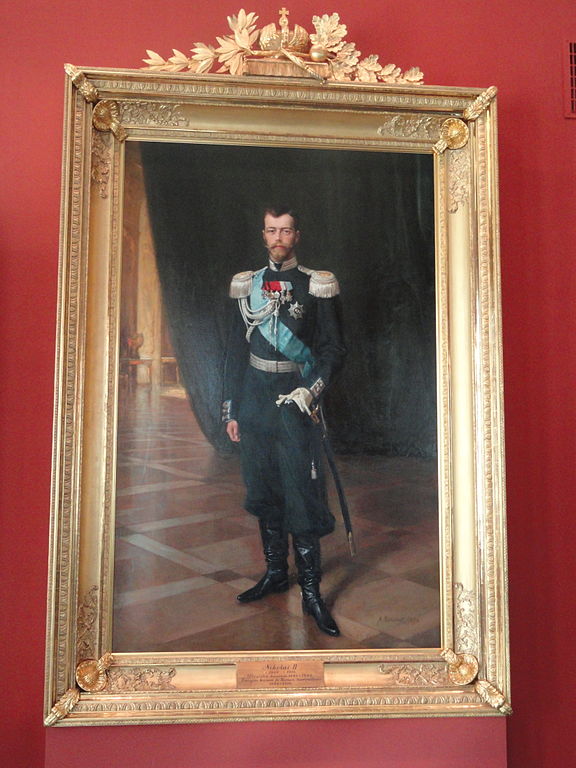
In 1895, the painter was invited to St. Petersburg for 2 weeks by the now widowed Dowager Empress Maria Feodorovna. The following year, Edelfelt received orders for portraits of the new emperor Nicholas II. Typically, such portraits were painted from photographs, but the artist really hoped that the emperor would personally agree to pose for him.
His wish came true. On 13th March 1896, he wrote to his mother: “Despite the fact that today is Friday the thirteenth, my day was happy because I completed the sketch and was able to visit the palace on time. I have already forgotten how luxurious and representative the Russian Court is. I was met by Grand Duke Alexander Mikhailovich, the husband of Grand Duchess Xenia, who said that the tsar would be arriving soon. I laid out my sketches in the billiard room and soon arrived the tsar, who was very natural and agreed to pose in the place I requested him to. He sat for an hour and, upon leaving, promised several sessions the following week.”
Portrait of Emperor Nicholas II. 1896. Arppeanum, Helsinki. Artist: A. Edelfelt (1854-1905)
Albert Edelfelt was to paint the official portrait of the emperor in Peterhof, for the Imperial Library in Helsinki. The artist said that from their very first meeting, he was impressed by the natural friendliness of the young tsar. “He seems very European. He has his mother’s eyes, which I noted to him. He well remembers Gatchina and the way I painted there, all of my paintings belong to his parents . . .
“The tsar gave me a task (of course, regarding painting), which is the highest honour for me, but His Majesty asked me to keep it a secret. So, I won’t say a word about this. I can’t understand how this young and well-educated officer, who was sitting with me together in the billiard room, talking and smoking, could be the monarch of more than eighty million Russian people and the Grand Duke of Finland, etc. That he is the greatest monarch in the world.”
Edelfelt nevertheless revealed the secret in the next letter (March 28, 1896). “The fact is that the second portrait, which I am working on now, was ordered by the tsar himself. He only asks me not to tell who will receive it, so I won’t say yet. He really likes the portrait, and he enjoys looking at it.”
The whereabouts of this portrait remains unknown to this day, its description: “The portrait of Nicholas II (1896, approximately 75 × 55 cm), the emperor is depicted in a gray knee-length caftan, in the background there is a tapestry, which was made according to the drawings of Walter Crane. The emperor is depicted waist-high, in full size. The painting was presented as a gift to Empress Alexandra Feodorovna, who hung it in one of her rooms in the Alexander Palace in Tsarskoye Selo.”
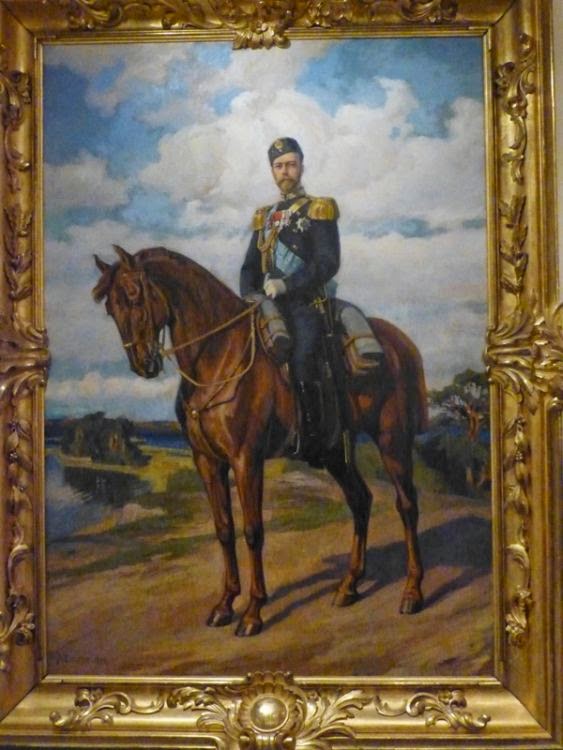
Equestrian portrait of Emperor Nicholas II. 1896. National Museum of Finland in Helsinki. Artist: A. Edelfelt (1854-1905)
Nicholas II liked Edelfelt’s sketch for a portrait intended for the University of Helsinki, and he invited the artist to come to Tsarskoye Selo to capture the interior. The emperor also invited Edelfelt to visit the Imperial stables to select a horse for a portrait of the tsar on horseback (for the Senate of Finland) in the uniform of a dragoon regiment.
This portrait, practically unknown in Russia, today hangs in the National Museum of Finland in Helsinki.
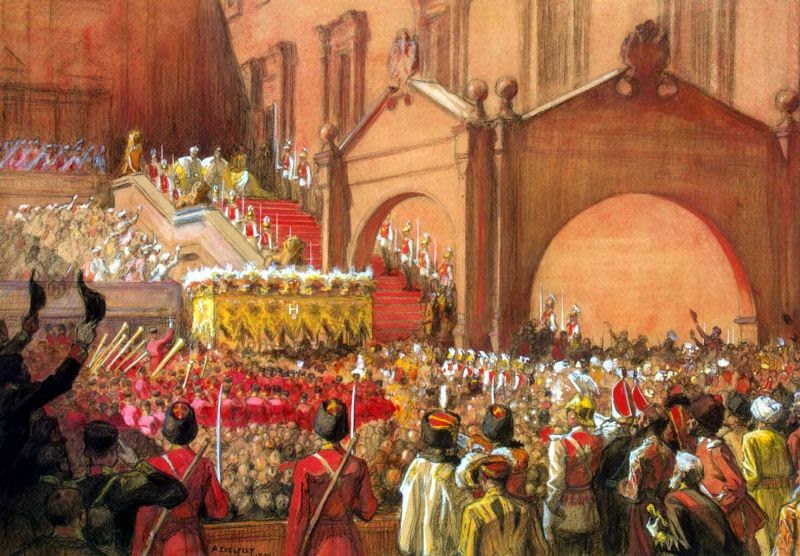
Solemn procession of Emperor Nicholas II on the Red Porch. Coronation in Moscow, 14 May 1896. Artist: A. Edelfelt (1854-1905)
In March 1896, Edelfelt received an invitation from the vice-president of the Academy of Arts, Count I. Tolstoy, to join the delegation of representatives of the Academy at the coronation of Nicholas II in Moscow on 14th May. Russian and foreign artists were invited to the ceremony, and various places in the Kremlin were allocated for them, from where they captured the historic event. Albert Edelfelt was outside the Cathedral and wrote the following coronation procession:
“When the tsar came close enough so that I could depict him (about 20-30 steps away from me), I must say that I felt some sympathy for him – the crown looked so big, so heavy: it was made of sparkling stones! The long mantle supported by the chamberlains also looked huge.
“The emperor himself looked a little pale and determined. Then I first understood what they mean when they talk about the weight of the crown. I was awakened by sympathy for him as a person, and at that moment I felt sorry for the young ruler, who now bore the whole great state on his shoulders. Gustav Mannerheim walked in front of the imperial canopy with a brilliant sabre and looked very noble and elegant – an excellent view! ”
Albert Gustaf Aristides Edelfelt died on 18th August 1905 in Borgo, Grand Duchy of Finland.
The exhibition ‘Albert Edelfelt and Romanovs’ is now on display in the Imperial Academy of Arts in St. Petersburg, and runs until 19th January 2020
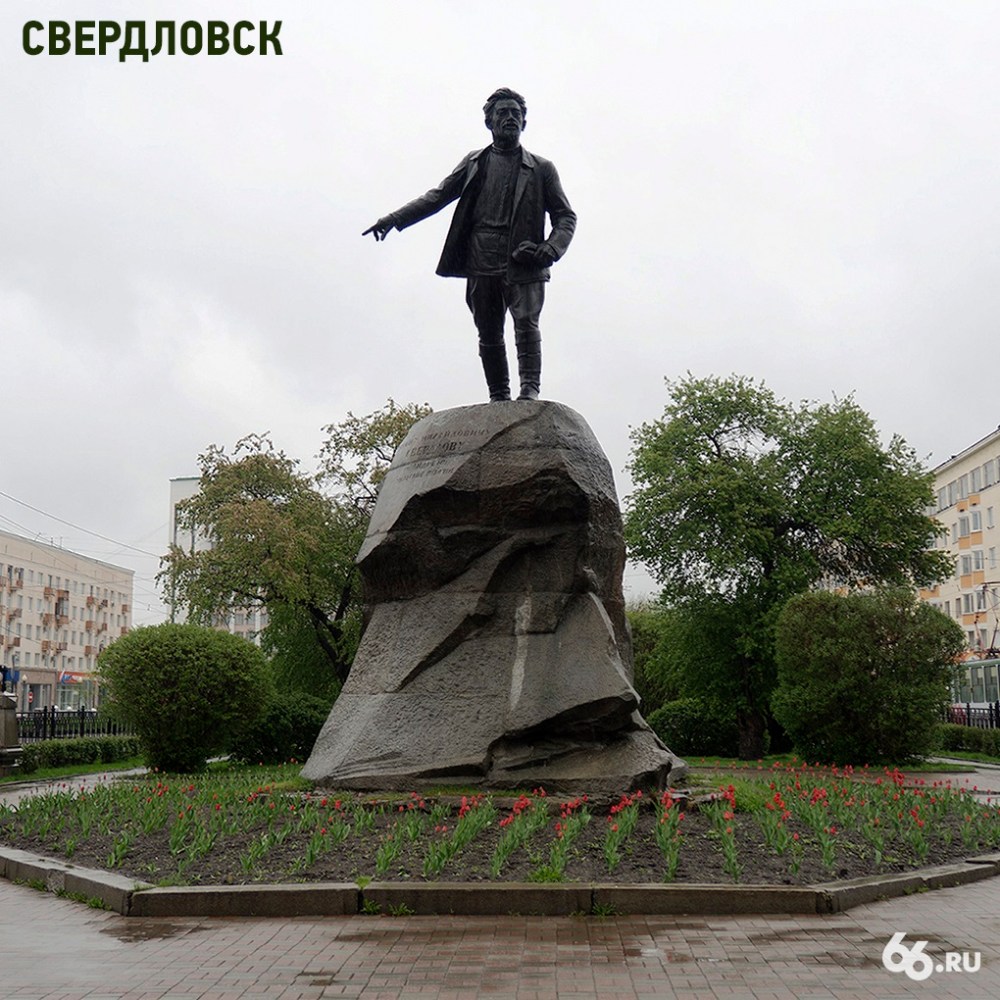
Monument to Yakov Sverdlov, established on Lenin Avenue in 1925
Almost a century ago, Ekaterinburg was renamed Sverdlovsk and lived with the Bolshevik name for 67 years, until 1991, after the fall of the Soviet Union, the city returned to its historical name. Few know that the capital of the Urals could have been called differently.
Today – 14th November – marks the 95th anniversary of the renaming of Ekaterinburg to Sverdlovsk. Ekaterinburg was founded on 18 November 1723 and named after the second wife of Peter the Great, who after his death became the Empress Catherine (Yekaterina) I (1684-1727). In 1924, however, Soviet newspapers condemned the Empress, and proposed alternative names for the city. So began the first renaming of Ekaterinburg.
A campaign was launched in early 1924, whereby a local newspaper came out with the headline “Rename the city of Ekaterinburg!”. Following this, propaganda was published explaining why Ekaterinburg was a bad name. The newspapers wrote derogatory comments about Empress Catherine I, referring to her as “a soldier’s wife under the Russian army”, “Menshikov’s laundress”, and an “illiterate, poor, depraved woman”.
At the same time, journalists offered alternative names. The very first option was Sverdlovsk, in honour of the revolutionary Yakov Mikhailovich Sverdlov (1885-1919), a Bolshevik party administrator and chairman of the All-Russian Central Executive Committee, and mastermind behind the murders of the Imperial Family.
The 1922 book by White Army general, Mikhail Diterikhs, ‘The Murder of the Tsar’s Family and members of the House of Romanov in the Urals’, sought to portray the murder of the Imperial Family as a Jewish plot against Russia. It referred to Sverdlov by his Jewish nickname “Yankel”. This book was based on an account by Nikolai Sokolov, special investigator for the Omsk regional court, whom Diterikhs assigned with the task of investigating the disappearance and murders of the Imperial Family while serving as regional governor under the White regime during the Russian Civil War.
Other names suggested included Red Urals, Leninburg, Uralgrad, or even Revanchburg – in honour of the execution of the last tsar, while, the newspapers also suggested Uralosverdlovsk, Andreigrad, and Krasnouralsk. But journalists in subsequent publications explained to residents why Sverdlovsk was the best name. Public discussions went on for nine months, and in October 1924 the Ekaterinburg City Council adopted a resolution on renaming the city Sverdlovsk. In mid-November, the document was signed at the CEC of the USSR, and the following year, in 1925, a monument to Yakov Sverdlov was established on Lenin Avenue.
Yakov Sverdlov was known in Ekaterinburg among the revolutionaries under the names “Comrade Mikhailovich” and “Comrade Andrei.” He spoke at lot at rallies, led the Bolsheviks, and even served a year in the Ekaterinburg Central on Repin Street. He was a member of the Central Committee of the party, chairman of the commission on the development of the first Constitution of the RSFSR. According to Yevgeny Burdenkov, a researcher at the Museum of the History of Ekaterinburg, Sverdlov transferred many of his people from the Urals to work in Moscow, and it was they who promoted the idea of renaming Ekaterinburg to Sverdlovsk as a sign of gratitude.
Sverdlov is commonly believed to have died of either typhus or most likely influenza, during the 1918 flu pandemic, after a political visit to Oryol. He is buried in the Kremlin Wall Necropolis, in Moscow.
It is interesting to note that Sverdlovsk Oblast, the federal subject (an oblast) of Russia located in the Ural Federal District, in which the city of Ekaterinburg, serves as its administrative center still retains its Bolshevik name. In January 2019, Russian state deputies again raised the issue of renaming Sverdlovsk Oblast, however, the issue remains unresolved.








 Nicholas II
You must be logged in to post a comment.