Old Ekaterinburg through the lens of Prokudin-Gorsky
152a

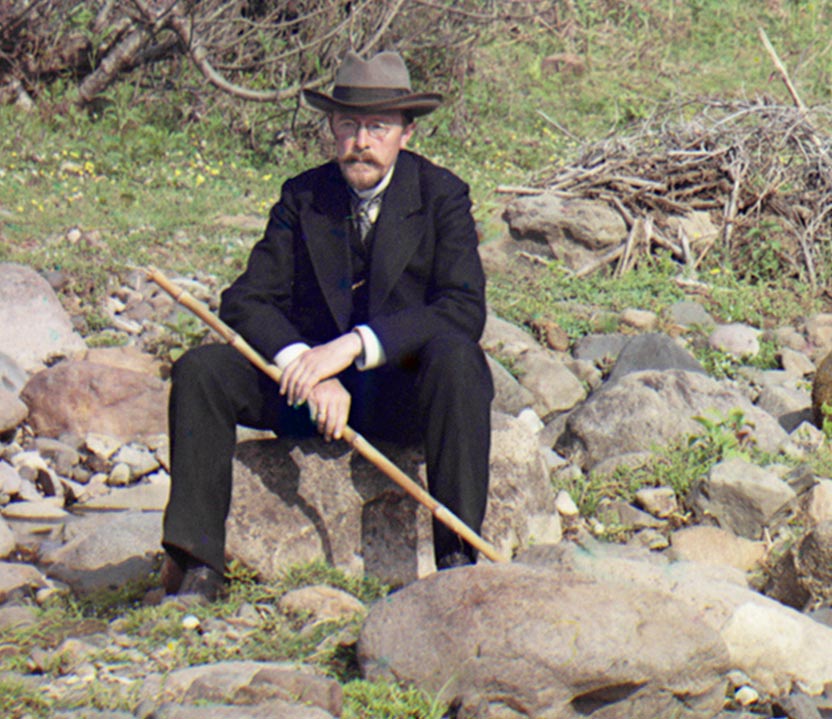
Sergey Mikhaylovich Prokudin-Gorsky, self-portrait 1912

NOTE: All of the articles pertaining to Nicholas II and his family which were originally published in my Royal Russia News blog, have been moved to this Nicholas II blog. This article was originally posted on 5 September 2018 in my Royal Russia News blog – PG

I have had the pleasure of visiting the Ural city of Ekaterinburg on three occasions over the past six years: 2012, 2016, and most recently in July 2018. Out of all the Russian cities which I have visited since 1986, Ekaterinburg has become my favourite.

It is a city rich in history, and the setting for one of the darkest pages in 20th century Russian history: the final days and murder of Russia’s last tsar Nicholas II and his family in the Ipatiev House on the night of 16/17 July 1918.

Sadly, the city is overlooked by most visitors to Russia. It is seldom included in group tours, relying mainly on foreigners travelling on the Trans-Siberian Express. Many of them stay for only one or two nights, which really is not enough time to explore and appreciate what Ekaterinburg has to offer. Having said this, however, Ekaterinburg is becoming increasingly popular with Chinese tourists, and the FIFA World Cup matches held in the city in June 2018 have helped spread the word to foreigners, that Ekaterinburg is indeed worth visiting.

As a devout book collector, I have always been on the hunt for pictorials, which offer vintage photographs of what life was like in Russia before the 1917 Revolution. During my most recent visit to Ekaterinburg, my book hunting skills produced a couple of gems to add to my personal home/office library.

152b

Дом Ипатьева: летописная хроника в документах и фотографиях

Дом Ипатьева: летописная хроника в документах и фотографиях (Ipatiev House. Documentary and Photographic Annals. 1877-1977) by photojournalist and historian Vitaly Shytov. Published in 2013 in a hard cover edition in Chelyabinsk by the Auto-Count Publishing House, the book features more than 700 pages and more than 1,000 photographs. Only available in Russian. Shytov has dedicated 40 years of study to the tragic history of the Ipatiev House in Ekaterinburg. There were only 500 copies printed, and it remains the the most comprehensive study of the Ipatiev House to date. Sadly, Shytov’s research has been virtually ignored by Western historians, who have written on the last days of the Imperial family in the ‘House of Special Purpose’.
152c

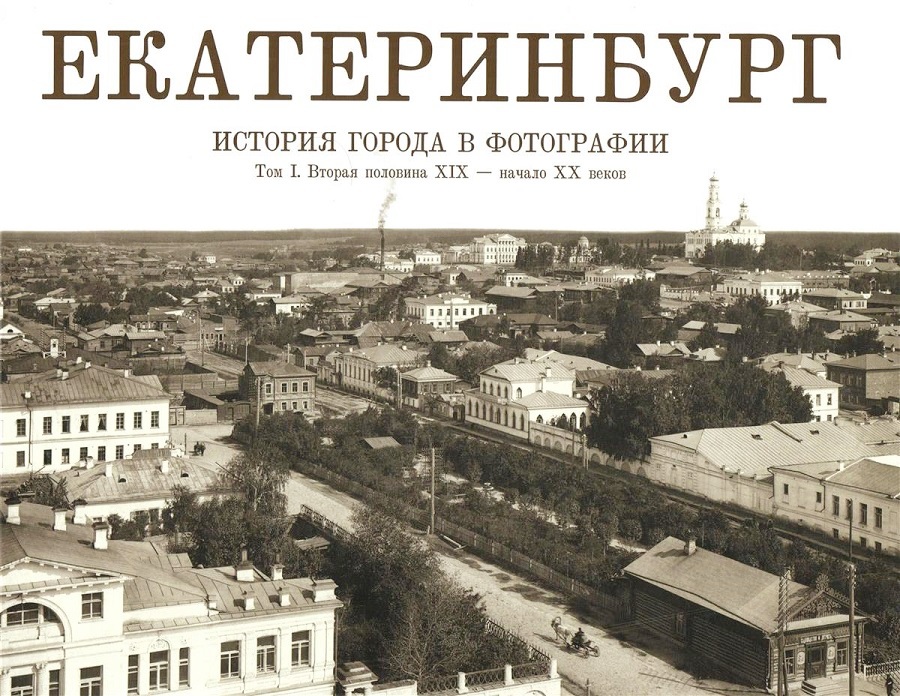
Екатеринбург: История города в фотографии

Екатеринбург: История города в фотографии. Том 1: Вторая половина XIX – начало XX веков (Ekaterinburg: History of the City in Photographs. Volume I. Second half of 19th – early 20th century) by A.V. Berkovich and O. A. Bukharkina. Second edition published in 2015 by the Ekaterinburg City Administration. Published in a hardcover edition, the book features 208 pages, and more than 200 vintage photographs. Despite the Cyrillic text on the book’s cover, the contents are in both Russian and English.

The latter presents a very different view of Ekaterinburg, in that it presents for the first time, a selection of historic photos from the most famous photographer of old Ekaterinburg Veniamin Leontiyevich Metenkov (1857-1933).
152d

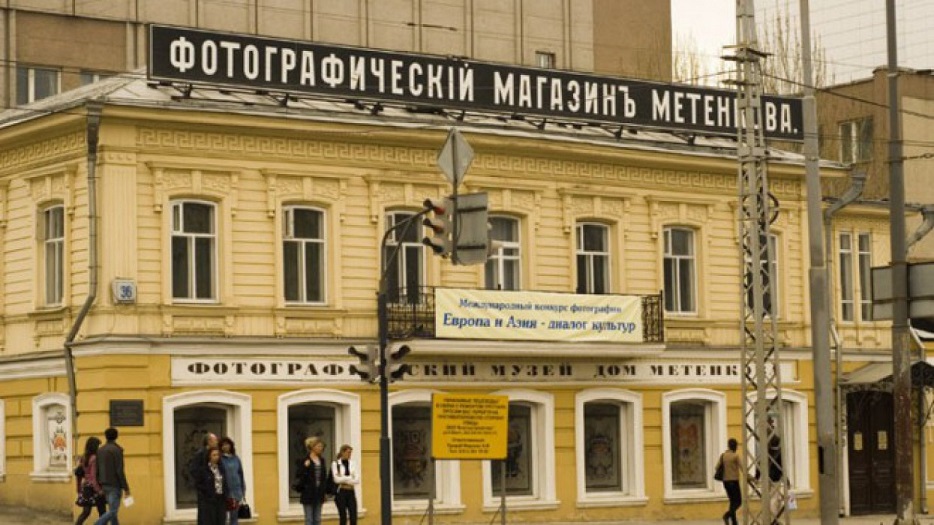
The Metenkov House and Photographic Museum is situated near the Church on the Blood in Ekaterinburg

Sadly, the Revolution destroyed the photography business which Metenkov created. He died in obscurity in 1933, his name forgotten for more than half a century. After the fall of the Soviet Union in the early 1990s, the house where Metenkov lived and worked was turned into a museum named after him. Until recently Metenkov’s archive was believed to be lost, however, a persistent search for the photographers’ legacy yielded the discovery of more than 200 negatives in the funds of the Sverdlovsk Oblast State Archive.

Another noteworthy Ekaterinburg photographer was the city doctor Vladimir Alexandrovich Paduchev (1859-1919). The Paduchev family archive of more than 500 negatives focus on the private world of the city middle class, taken during the first decade of the 20th century. The collection lay hidden in an old barn for more than a century, before their discovery.

ALL colour photographs below are courtesy of the Ekaterinburg City Administration

The unique photographic view of Pre-Revolutionary Russia and Ekaterinburg, however, belong to the pioneer of colour photography Sergey Mikhaylovich Prokudin-Gorsky (1863-1944).

His photos of Russia’s nature and monuments earned him invitations to show his work to the Grand Duke Mikhail Alexandrovich and the Dowager Empress Maria Feodorovna in 1908, and to Tsar Nicholas II and his family in 1909. The Tsar enjoyed the demonstration, and, with his blessing, Prokudin-Gorsky got the permission and funding to document Russia in colour. In the course of ten years, he was to make a collection of 10,000 photos.

Using a railroad-car darkroom provided by Tsar Nicholas II, Prokudin-Gorsky traveled the Russian Empire from 1905 to 1915, using his three-image colour photography to record its many aspects. He arrived in Ekaterinburg in 1909, where he gave lectures and visited Veniamin Metenkov at his home. Metenkov accompanied Prokudin-Gorsky on his trips in and around the city, suggesting interesting locations to be photographed.

Prokudin-Gorskii left Russia in 1918, after the Russian Revolution, and eventually settled in Paris, where he died in 1944. While some of his negatives were lost, Library of Congress purchased a collection of more than 2,600 images from the photographer’s sons in 1948.

All three photographers are represented in this handsome volume. Their legacies transcend a century, allowing the reader to look back to a unique and beautiful city, far removed from the ancient Russian capital of Moscow, and the glittering Imperial capital of St. Petersburg. These images document daily life in the Ural city, which has changed beyond recognition, many historic landmarks lost forever, and only the photographs preserve the flow of a lost world.

***

Why Ekaterinburg is my favourite Russian city

O have visited Ekaterinburg three times during the past decade: 2012, 2016 and 2018. It is a city which I have fallen in love with for many reasons. It is filled with history, as well as many architectural monuments associated the Tsarist period, including cathedrals, churches, mansions and museums.

People often ask me “Why, Ekaterinburg?” as opposed to the former Imperial capital of St. Petersburg, especially given that “Ekaterinburg has such a dark history.”

Once a bastion of Bolshevism, Ekaterinburg has slowly shed its status as the “capital of atheism”. Since the fall of the Soviet Union in 1991, the Urals has experienced a revival of faith, with Ekaterinburg as the center of Orthodox Russia in the region.

It is important to add, that Ekaterinburg has done more to honour Nicholas II and his family than any other city in Russia. Thanks to my visits to Ekaterinburg in 2012, 2016 and 2018, it is a city which I have grown to admire and love.

© Paul Gilbert. 4 November 2019

Exhibition: ‘The Romanovs. Family Chronicles’ in Moscow

NOTE: All of the articles pertaining to Nicholas II and his family which were originally published in my Royal Russia News blog, have been moved to this Nicholas II blog. This article was originally posted on 12 September 2018 in my Royal Russia News blog – PG

The following exhibition ran from 14 September to 28 October 2018

Beginning 14th September 2018, the Tretyakov Gallery in Moscow will present unique materials from the archives of the Russian Imperial family. An exhibition of photo documents from the Gallery’s collections will showcase a previously unknown collection of photographs.

The Romanovs. Family Chronicles exhibition features photographs taken during the reign of Russia’s last three emperors – Alexander II (1855-1881), Alexander III (1881-1894) and Nicholas II (1894-1917) – the collection dating from the 1870s to 1914.

The exhibits were sent to the Tretyakov Gallery in 1932 from two former imperial residences: the Gatchina Palace, where the Empress Maria Feodorovna Dowager lived after the death of her husband Alexander III, and the Alexander Palace, the last residence of the family of Emperor Nicholas II.

From the middle of the 19th century, the Imperial families employed the services of court photographers for both official and leisure images, photographing them in the interiors of the Imperial palaces and country residences, at official receptions, on vacations, hunting trips, and other leisure activities. The “Kodak” camera was first used by the Grand Duchess Maria Feodorovna (future Empress Maria Feodorovna) in the 1860s, when she took a great personal interest in photography. Over time, her enthusiasm for photography was taken up by her son Nicholas II and his family. His wife Alexandra Feodorovna are often seen in leisure photographs with the famous Kodak Brownie camera in hand.

Various photos from the time of the Emperor Alexander III include: portraits of Grand Duchess Maria Feodorovna, Grand Duchess Xenia Alexandrovna, Prince George Maximilianovich, Duke of Leichtenberg (K. I. Bergamasco), Grand Duchess Olga Aleksandrovna (S. L. Levitsky). The Polish photographer Conrad Brandel recorded events and trips of Emperor Alexander III with his family to Poland: a military review in Brest, an inspection of the new station in Brest, Emperor Alexander III and Maria Feodorovna with a delegation of local residents or at a children’s choir performance.

A series of photos from the family album-boxes of Maria Feodorovna are also featured. These charming amateur photographs offer an intimate look at family time together: walks to the Finnish skerries on the Imperial yacht Tsarevna, picnics on the beach, and leisure time onboard the yacht. In the album there are 60 photographs-business cards. A small folding album contains nine photographs of the installation of the monument to Empress Catherine II by the sculptor M.M. Antokolsky in Vilna in 1904.

In the section dedicated to the family of Emperor Nicholas II, photographs include the exteriors and interiors of the Alexander Palace, views of the park and pavilions scattered throughout the parks in Tsarskoye Selo, as well as photos from “Yacht Zarnitsa” album.

These historic photo chronicles are represented mainly by beautifully bound albums, some of which are interesting examples of arts and crafts of the turn of the century. These albums were produced in a single copy, using precious metals on the occasion of significant events for the members of the imperial family.

The album “Medzhybozh” was presented to Grand Duchess Olga Alexandrovna, chief of the 12th Hussar Akhtyrsky Regiment, on the occasion of her visit to the headquarters in the Medzhibozh Castle on 11th December 1908. The album includes 30 photos documenting the anniversary visit: the chief of the regiment enters the castle, the review of the regiment, the squadron’s songwriters, the hunting team, a group of regimental officers among others.

The photo album, which belonged to the heir Tsesarevich Alexei Nikolaevich, contains 289 small-format photographs from 1909-1914, which depict trips made by the imperial family to Germany, the Finnish skerries and Crimea, and onboard the Imperial yacht Standart, among others.

The exposition also includes a unique series of 40 photos received as a gift in 2004, dedicated to the first official visit of Emperor Nicholas II, Empress Alexandra Feodorovna and Grand Duchess Olga Nikolaevna to France in 1896.

During the preparation of the exhibition, the staff of the scientific and reference department of photo-materials of the Tretyakov Gallery conducted research work to determine the names of the photographers and unknown persons in the photographs, dates and places. The results of the work are included in an exhibition catalogue published in the Russian language only.

The Romanovs. Family Chronicles exhibition ran from 14th September to 28th October 2018, in the New Tretyakov Gallery, Halls 80-82

© Paul Gilbert. 4 November 2019

Captured on Film by U.S. Cameramen – The Romanov Murder Scene (1918)

NOTE: All of the articles pertaining to Nicholas II and his family which were originally published in my Royal Russia News blog, have been moved to this Nicholas II blog. This article was originally posted on the First World War in Film web site by Ron van Dooperen. It was reposted on 12 September 2018 in my Royal Russia News blog – PG

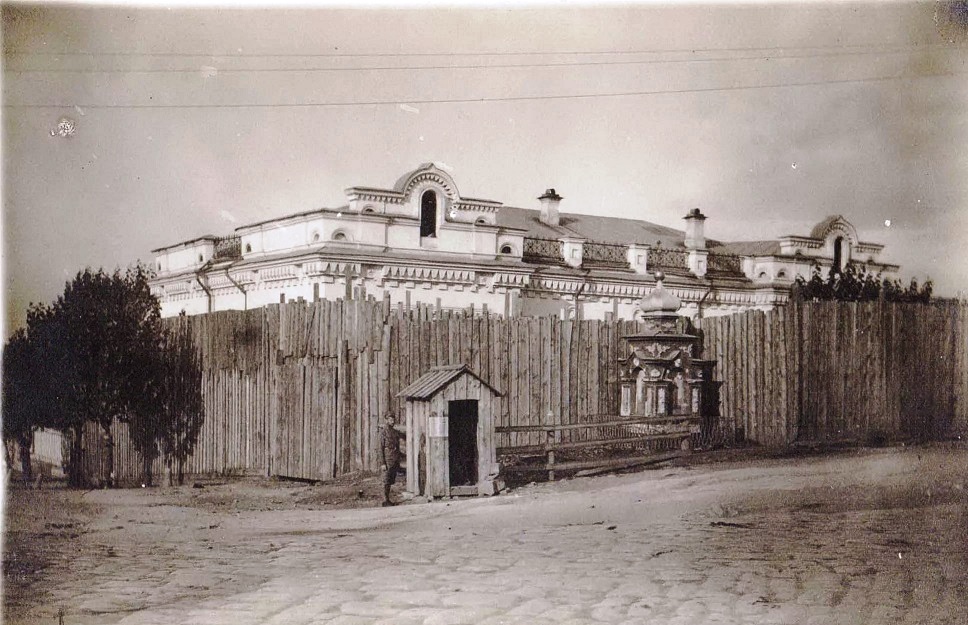
In December 1918, a photographic team of the U.S. Signal Corps led by Captain Howard Kingsmore arrived in Yekaterinburg, Russia, where they filmed inside the house where Tsar Nicholas II and his family was brutally murdered. Against all odds, we recently found Kingsmore’s personal story on this photographic assignment, as well as part of these historic films.

The execution of the last Russian Tsar and his family hardly needs an introduction. After the Bolsheviks had taken over power the Romanov family was moved to a so-called ‘House of Special Purpose’ in Yekaterinburg. The Imperial family was kept in strict isolation within the walls of a sinister heavily guarded building that was surrounded by a palisade. The Bolsheviks initially wanted to put the Tsar on trial, but in the summer of 1918 anti-Communist forces were at the gates of Yekaterinburg, and the Reds feared their captives would fall into enemy hands. As a result, death to the Romanovs was declared. Tsar Nicholas II, his wife Tsarina Alexandra and their five children Olga, Tatiana, Maria, Anastasia, and Alexei were shot, bayoneted and clubbed to death on the night of 16-17 July 1918. Their bodies were disposed of in a most gruesome manner.

The Cameramen

Howard P. Kingsmore was the photographic officer of a U.S. Signal Corps camera team that recorded the operations of the American Expeditionary Army in Siberia. Born in 1886, Kingsmore started his photographic work for the Philadelphia Inquirer, covering the burial of President McKinley, the coal strikes of 1901-1902 and the 50th anniversary of the Civil War battle of Gettysburg. Around 1907 Kingsmore became chief photographer for the Philadelphia Evening Ledger. For this newspaper he covered the civil war in Mexico, as well as the Punitive Expedition by General Pershing into that country in 1916. When the United States entered World War I he applied for a commission in the U.S. Signal Corps as a photographic officer. He was commissioned as a Lieutenant in September 1917, appears to have made mostly training pictures while he was in America and in Augustus 1918 was promoted to Captain, when a photographic section was set up for the Siberian Expedition. After the First World War Kingsmore became a cameraman for Fox News.

150a

The Ipatiev House in Ekaterinburg. 1918

Interview with Kevin Brownlow

Judging from the production file of the films that were made by Kingsmore and his camera team, they filmed across Siberia between November 1918 and February 1919, covering various operations by the Expeditionary Force that was trying to push the Red Army out of Russia. We have described this Signal Corps footage from Russia in more detail in a previous weblog. Five men were selected for this photographic team, including two movie camera operators. One of Kingsmore’s men, Philip Tannura, was interviewed by Kevin Brownlow for his book The War, the West and the Wilderness. Tannura was among Kingsmore’s cinematographers and in the interview with Brownlow Tannura mentioned how he accompanied Kingsmore while they visited the place where the Tsar and his family were executed. “We couldn’t find out whether they had actually been killed or not”, Tannura said. “We photographed all the rooms.”

Kingsmore said he boarded a Red Cross freight train in Vladivostok in November 1918. The trip across Siberia took about nine weeks. The accommodation on the train was of a most primitive nature. The American cameramen traveled in box cars that were originally built for cattle. Arriving in Yekaterinburg, the cameramen found the city controlled by Czech forces. These had taken Yekaterinburg shortly after the Tsar and his family were murdered. Kingsmore was told the Romanovs were subjected to many indignities by the Communist soldiers who guarded them. It should be noted here that at the moment when Kingsmore and Tannura arrived in Yekaterinburg an official investigation was still being carried out on the mysterious disappearance of the Imperial family. As far as the Kremlin was concerned, they had simply vanished into thin air and the Communists denied any allegation they had killed the Romanovs.

Photographic Evidence of the Romanov Execution

Kingsmore’s and Tannura’s pictures indicate this was a fabricated lie. One of their still photographs shows the cellar where the Romanovs were executed. Bullets were dug out of the wall by the Bolsheviks to destroy evidence of the crime, but the holes still remained and were clearly visible. Their pictures also demonstrate how the Tsar’s children had to sleep on the floor, as well as the search by the investigating committee for further proofs of the execution. Kingsmore also appears to have talked with eye witnesses. One told him the Romanovs were on their knees begging for mercy while they were executed in the basement of the house.

Part of the footage that was shot at Yekaterinburg has been retrieved and identified by the authors in the film collection of the National Archives in Washington, D.C. These scenes were probably taken by Tannura and show an exterior of the Czech military headquarters, the house the Romanovs lived in, as well as shots of the Czarina’s room and the room that was occupied by the Tsar’s daughters. We edited these historic scenes into a short clip that has been posted on our YouTube channel.

Click HERE to read the newspaper article In the House Where Romanoffs Were Put to Death, published in the Grand Forks Herald on 6 June 1919

© Ron van Dopperen. 3 December 2019

Exhibition: In Memory of the Last Emperor. Relics of the Emigrant Museum in Belgrade

149a

NOTE: All of the articles pertaining to Nicholas II and his family which were originally published in my Royal Russia News blog, have been moved to this Nicholas II blog. This article was originally published on 13 September 2018 in my Royal Russia News blog – PG

The following exhibition ran from 12 July to 10 September 2018

The State Historical Museum in Moscow is currently hosting an exhibition dedicated to the memory of the last Russian Emperor Nicholas II. The exposition, which opened on 12th July, features a unique collection of items from the Museum of the Memory of Emperor Nicholas II, which was opened in the Russian House in Belgrade in 1936.

Many of the exhibits presented at the exhibition are being displayed for the first time to the public. These unique items connected to Nicholas II and his family members were collected Russian emigres who settled in Yugoslavia after the Revolution. The items entered the Historical Museum in 1947 – after Yugoslavia became a socialist nation. Visitors to the exhibition will be able to see dozens of artifacts that have never before left the Historical Museum.

149b

Copy of telegram from Queen Marie of Roumania on the news of Nicholas II’s abdication

The exposition includes letters from members of the Imperial family, diaries, rare photographs, newsreel footage – which reflect the ordinary everyday life of the Romanovs.

In one of the photographs, the four daughters of Nicholas II are depicted – the Grand Duchesses Olga, Tatiana, Maria, Anastasia. They often signed photos and letters – OTMA, an acronym based on the first letters of their respective names. This photo was presented to the Belgrade Museum by Pierre Gilliard, the tutor of the Tsesarevich Alexei Nikolaevich. In addition, among the exhibits – the academic plan for the Imperial children in 1916-1917, as well as letter from the Tsesarevich Alexei to his grandmother the Dowager Empress Maria Feodorovna, dated 16 April 1916, congratulating her on Easter.

The exhibition ran from 12 July to 10 September 2018 at the State Historical Museum in Moscow

© Paul Gilbert. 3 December 2019

The Romanovs: Family of Faith and Charity

148a

CLICK HERE TO ORDER YOUR COPY

NOTE: All of the articles pertaining to Nicholas II and his family which were originally published in my Royal Russia News blog, have been moved to this Nicholas II blog. This article was originally published on 19 September 2018 in my Royal Russia News blog – PG

In this day and age, when children are exposed to more and more violence on television, distracted by video games and texting on their mobiles, it is still a blessing that we have books to enlighten them.

Holy Trinity Publications, the publishing arm of Holy Trinity Monastery of the Russian Orthodox Church Outside of Russia (ROCOR) in Jordanville, New York, have released a new publication in honor of the Royal Martyrs, for children aged 7-12, or for parents to read to their children of younger age.

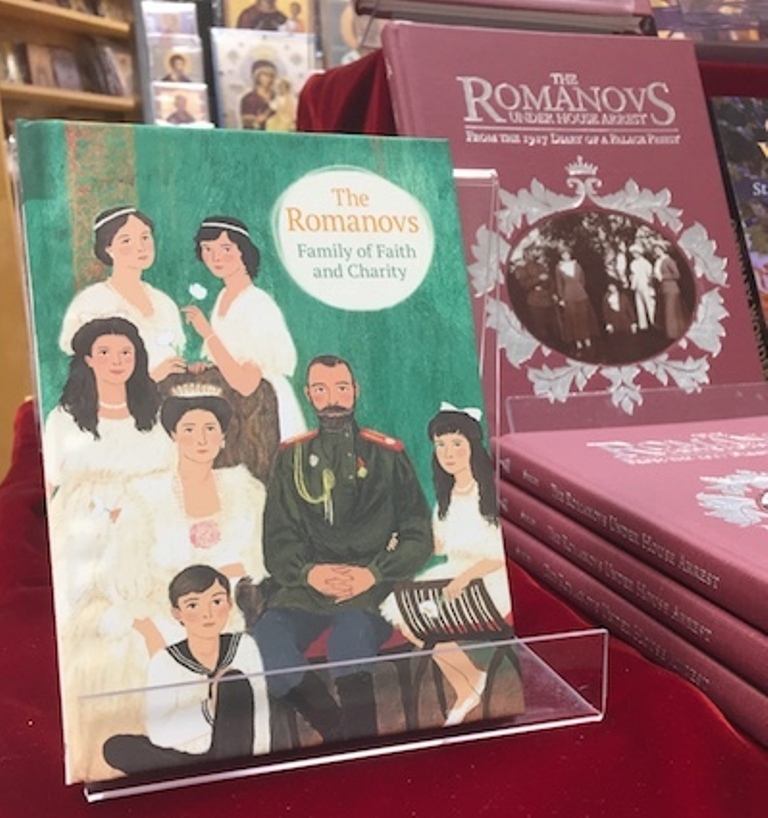
The Romanovs: Family of Faith and Charity by Maria Maximova, shares the story of the last Russian emperor and his family. Their life was not necessarily what one would expect; there was much more than fancy clothes and delicious food. They shared happy memories but also great hardships. They nursed the sick, ate porridge, kayaked along the Finnish coastline, and cared for chickens. Today we know them as the Royal Martyrs — deeply pious Orthodox Christians who laid down their lives for the Faith and role models of Christian virtue who showed kindness even to the guards who taunted them.

148b

Beautiful colour illustrations by Victoria Kitavina

148c

The author Maria Maximova is an expert on the history of Russian literary culture. She has authored a number of books retelling the lives of Orthodox Christian saints for children.

This thought provoking, hard cover book features 56 pages, with beautiful colour illustrations by Victoria Kitavina. Translated from Russian into English by Nicholas Kotar. The price is $9.95 USD.

148d

The Romanovs: Family of Faith and Charity is one of two new titles published by Holy Trinity Publications, in time for the 100th anniversary of the martyrdom of the Tsar Nicholas II and his holy family, on July 17, 2018. The other title The Romanovs Under House Arrest: from the 1917 Diary of a Palace Priest by Archpriest Afanasy Belyaev, rector of the Tsar’s Feodorovsky Cathedral at Tsarskoye Selo, and subsequently the father confessor of the Russian Imperial family during their first five months of confinement following Nicholas II’s abdication in early 1917.

© Holy Trinity Publications, Jordanville, NY / Paul Gilbert. 3 December 2019

Monument to Nicholas II consecrated in Zlatoust

146a

NOTE: All of the articles pertaining to Nicholas II and his family which were originally published in my Royal Russia News blog, have been moved to this Nicholas II blog. This article was originally published on 19 September 2018 in my Royal Russia News blog – PG

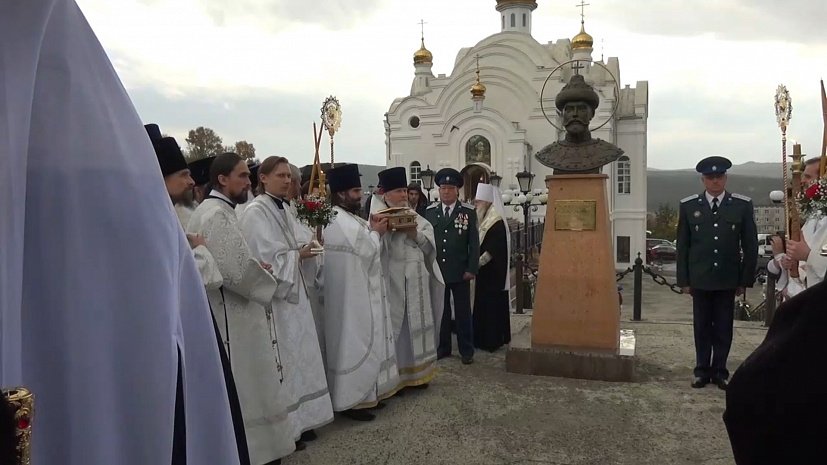
On 19th September 2018, the World Russian People’s Council met in the Ural city of Zlatoust. The event was timed to coincide with the 100th anniversary of the founding of the Chelyabinsk Diocese, as well as the year marking the 100th anniversary of the death of the Imperial family, and the 150th anniversary of the birth of Nicholas II.

146b

146c

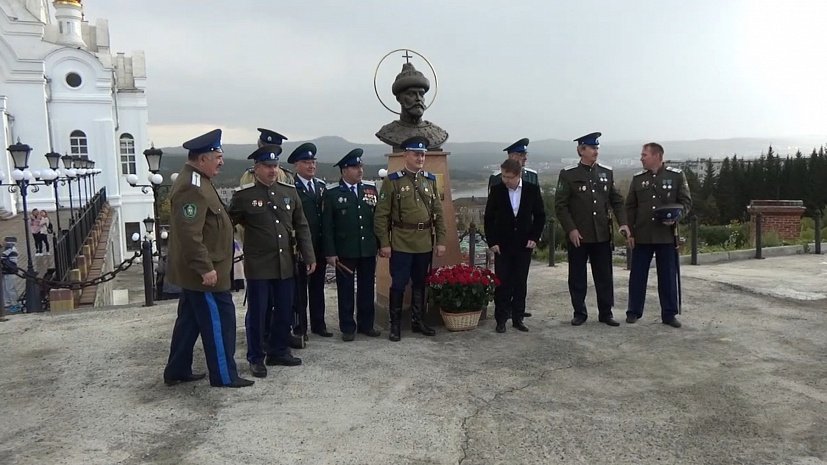
A monument to Emperor Nicholas II was installed in the courtyard of the Cathedral of St. Seraphim in Zlatoust. The monument by the sculptor Alexander Sadovsky, was consecrated, followed by prayers and hymns sung by the church choir. In addition, the relics of St. Andrew the First-Called were brought to Zlatoust.

© Paul Gilbert. 2 December 2019

London Exhibit Features Unique Items on the Last Tsar

145a

The following exhibition ran from 21 September 2018 to 24 March 2019

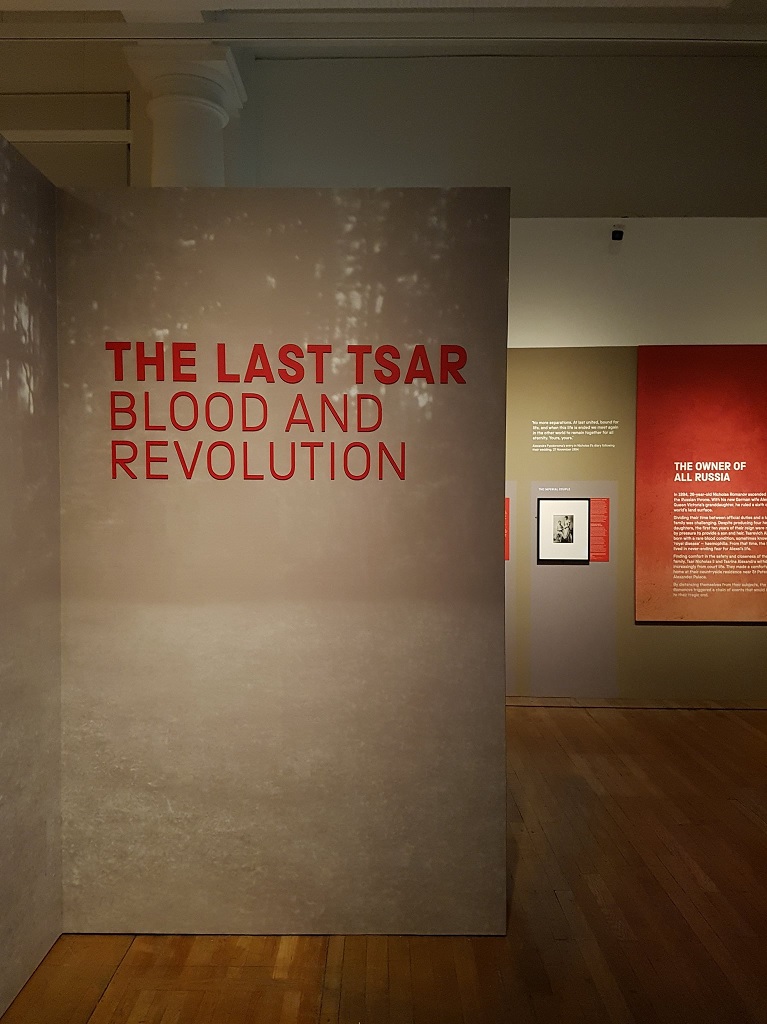
The Last Tsar: Blood and Revolution exhibition opened on Friday 21st September at the Science Museum in London, England. The exhibition marks 100 years since the death of Russia’s last ruler of the Romanov Family, Emperor Nicholas II (1868-1918).

The exhibition presents rare artefacts from collections in the United Kingdom, Russia, and the United States, including the family’s personal diaries, private possessions, such as the Empress Alexandra’s 1904 maternity dress, jewellery.

145b

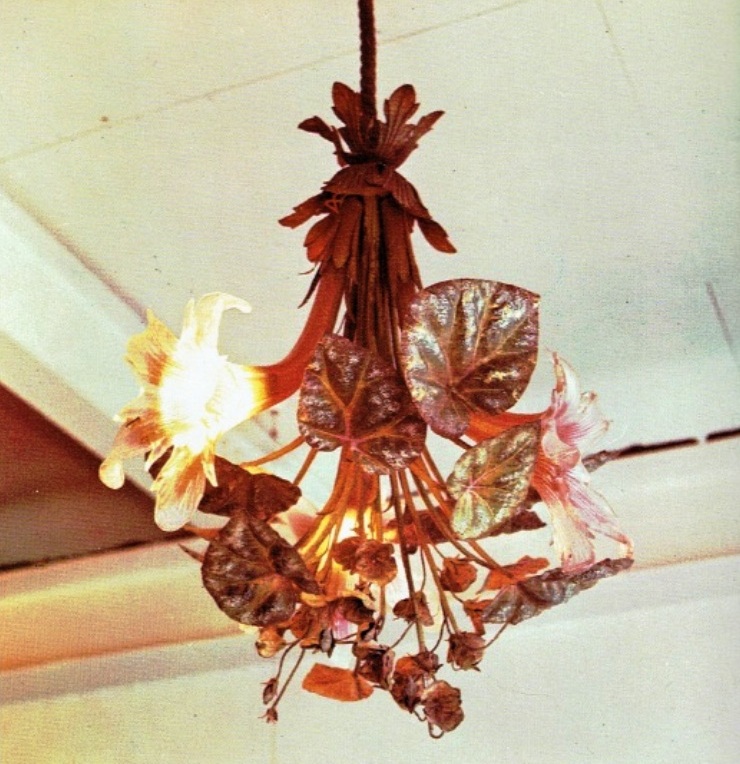
The glass chandelier from the Grand Duchesses bedroom in the Ipatiev House

Also on display is a Murano glass chandelier from the Grand Duchesses bedroom in the Ipatiev House. The chandelier was brought to England by the English tutor to the Tsesarevich Alexei Sydney Gibbes, where it was on display in Luton Hoo for many years. It is now in the private collection of the Butters Family in England.

145c

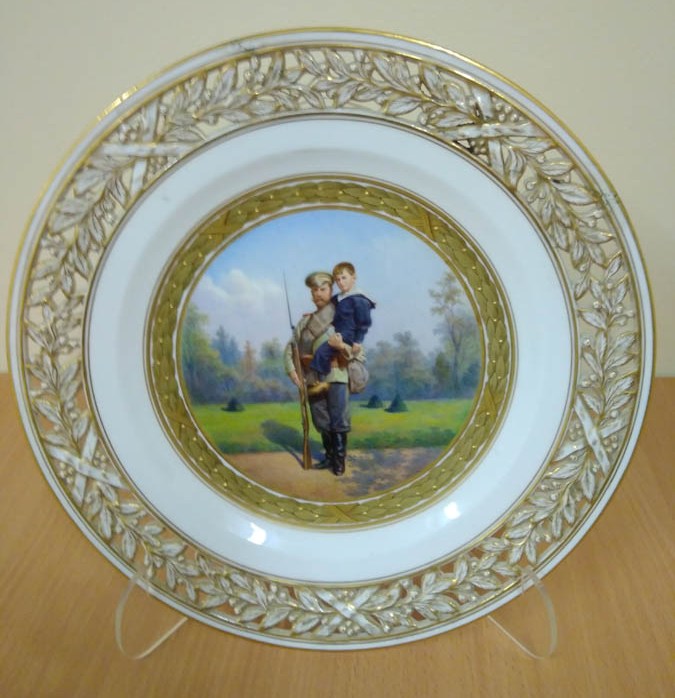
Meissen porcelain plate depicting Nicholas II and his son Alexei
Photo © Tsarskoye Selo State Museum-Reserve

145d

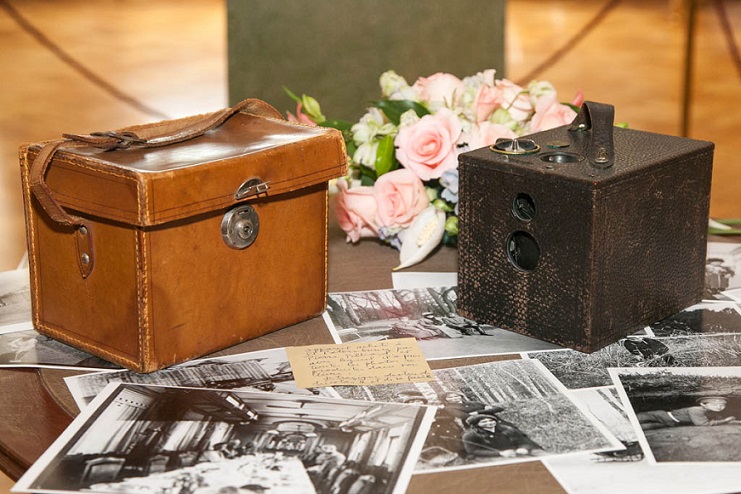
Pierre Gilliard’s Kodak Brownie Camera
Photo © Tsarskoye Selo State Museum-Reserve

The Tsarskoye Selo State Museum-Reserve have loaned 44 items from their collections, including portraits of Nicholas II and Alexandra Fedorovna, a cherkeska (ceremonial Circassian coat) – from the uniform of an officer of HM Own Convoy, a kokoshnik, and Pierre Gilliard’s Kodak Brownie camera.

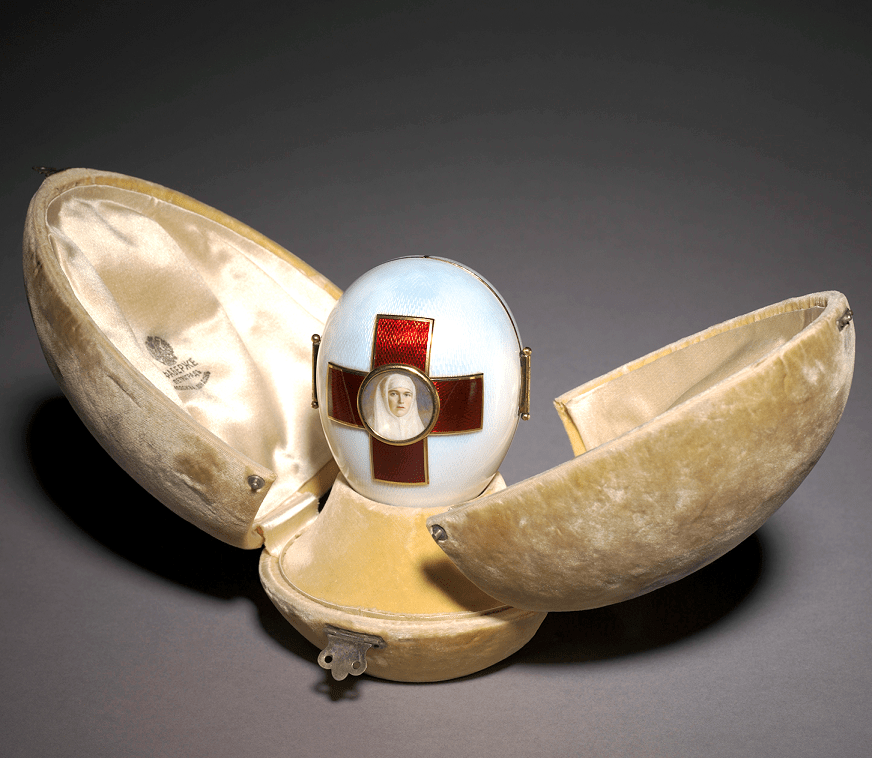
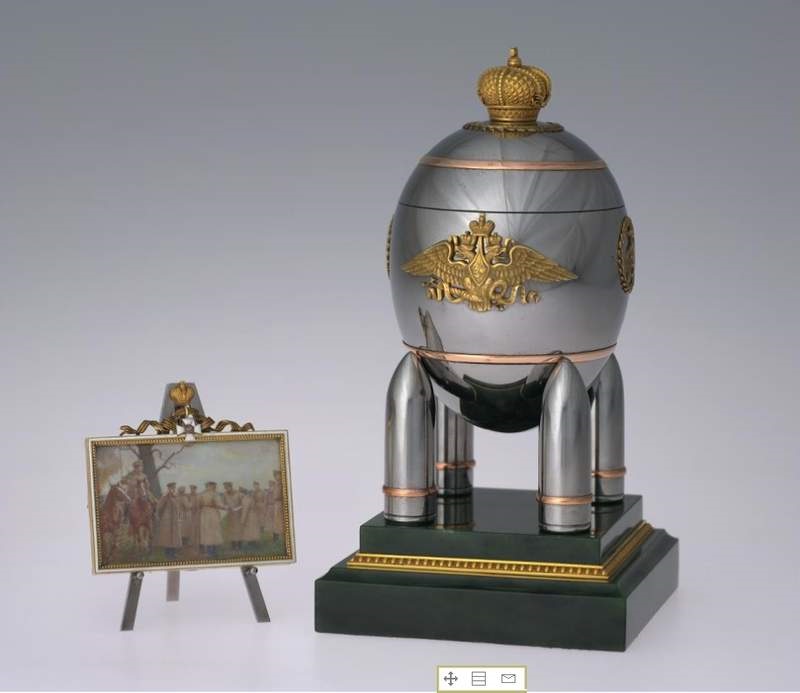
The exhibition also features two Fabergé Imperial Easter Eggs: the Red Cross Triptych Egg from 1915, honouring Empress Alexandra Feodorovna and her two eldest daughters, the Grand Duchesses Olga and Tatiana Nikolaevna, for their war efforts for the Red Cross; and the Steel Military Egg from 1916, sent to Alexandra by Nicholas when he was at the Russian front.

145e

Fabergé Red Cross Triptych Egg (1915)
Photo © Cleveland Museum of Art

145f

Fabergé Steel Military Egg (1916)
Photo © Kremlin Armoury Museum

Of particular note, are annotated photo albums created between 1908 and 1918 by Herbert Galloway Stewart (1866-1960), an English tutor who was invited by the Grand Duchess Ksenia Alexandrovna (1875-1960) to teach her son – Prince of the Imperial Blood Andrei Alexandrovich (1897-1981). The albums, which are now part of the Science Museum Group collection will be on display for the first time. These albums offer a fascinating glimpse into the lives of the Romanovs – from boating trips and picnics, to sledging in the snow-covered grounds of the Alexander Palace at Tsarskoye Selo.

The photographs were discovered by Natalia Sidlina, who found 22 albums packed inside a champagne crate from Harrods, in the archives of the Science and Media Museum in Bradford, England.

All Photos © Science Museum Group Collection

The exhibition retraces the lives of Nicholas II and Alexandra Feodorovna as they navigated their roles as autocratic rulers of Russia, while caring for their young son and heir, who was born with haemophilia B. The royal household faced a turbulent backdrop of social upheaval and war between 1900 and 1918, but we’ll be focusing on the significant influence of medicine on the private lives of the imperial family. Over 70 years after their sudden disappearance, advances in medicine and forensic science transformed the investigation into their fate and solved one of the greatest mysteries of the 20th century.

The exhibition consists of six sections: “Russia at the Turn of the Century”, “Deprivation of Liberty: Palaces and Prisoners”, “Doctors and Healers at Court”, “Sisterhood. The Empress and the Grand Duchesses”, “The Revolution and the Overthrow of the Romanov Dynasty”, and “The Investigation Which Lasted a Century”.

Explore the extraordinary lives and deaths of Tsar Nicholas II and his family and go behind the scenes to uncover the science behind one of the greatest mysteries of the 20th century in this FREE exhibition.

The Last Tsar: Blood and Revolution Exhibition ran from 21 September 2018 to 24 March 2019, at the Science Museum in London, England.

© Paul Gilbert. 2 December 2019

Exhibition: ‘Family Album’ in Kaluga

144a

NOTE: All of the articles pertaining to Nicholas II and his family which were originally published in my Royal Russia News blog, have been moved to this Nicholas II blog. This article was originally published on 25 September 2018 in my Royal Russia News blog – PG

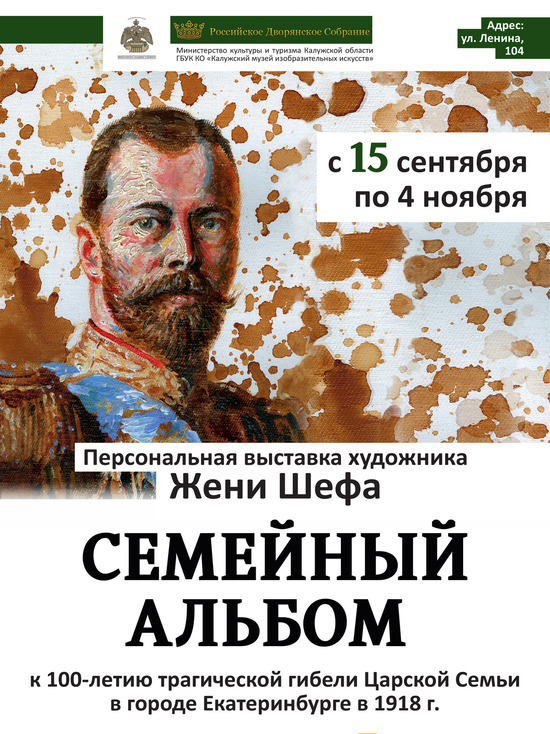
The following exhibition ran from 15 September to 4 November 2018

On September 15 a solo exhibition entitled Family Album opened at the Kaluga Museum of Fine Arts, presenting the works of the Honorary Academician of the Academy of Arts Evgeny Sheffer, known to the general public under the pseudonym ‘Zhenya Shef’.

The exhibition is dedicated to the centenary of the tragic death of Emperor Nicholas II and his family and the centennial anniversary of the Kaluga Museum of Fine Arts. The artist who now lives in Germany marked the terrible events that occurred in July 1918 in the basement of Ipatiev House in Ekaterinburg by a series of paintings.

His work presented in Kaluga – portraits of the Imperial family – were previously shown at the Venice Biennale in 2013, the year marking the 400th anniversary of the House of Romanov. The exhibition is organized by the Russian Noble Assembly with the support of the Ministry of Culture and Tourism of the Kaluga Region.

The chairman of the Kaluga branch of the Imperial Orthodox Palestine Society (IOPS) Vitaly Gorokhovatsky, opened the exhibition with a welcoming speech. He then awarded Honorary Deeds to the artist Evgeny Sheffer and the director of the Kaluga Museum of Fine Arts Natalia Marchenko for their excellent organization of the exhibition.

The opening ceremony was attended by the head of the Russian Nobility Assembly Oleg Shcherbachev, the head of the Department of Culture of the Kaluga diocese, priest Nikolai Zherzdev, the human rights commissioner for the Kaluga region Yuri Zelnikov , the president of the Russian Union of Philocratists Arsen Meltonyan among others.

In honour of the exhibition, the Russian postal service issued a special set of postcards featuring paintings presented at the exhibition. The artist took part to autograph them for guests at the exhibition.

The opening ceremony was followed by a concert, at which the Russian composer, pianist and violoncellist Victor Agranovich performed. His performance, a musical work was performed on the verses of Nina Kartasheva from the cantata Voices from the Skies, dedicated to the centenary of the tragic death of the Tsar’s family.

The Family Album Exhibition ran from November 4, at the Kaluga Museum of Fine Arts, and then in Novosibirsk, Tver and other Russian cities.

© Paul Gilbert. 2 December 2019
“A lie undermines our society” – Paul Kulikovsky

142

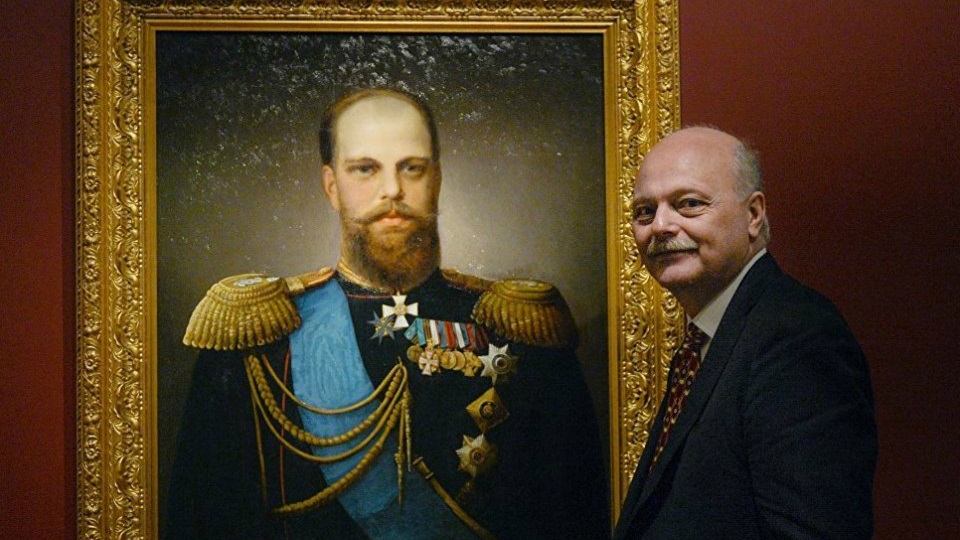
Paul Kulikovsky stands in front of a portrait of his great-great- grandfather Emperor Alexander III

NOTE: All of the articles pertaining to Nicholas II and his family which were originally published in my Royal Russia News blog, have been moved to this Nicholas II blog. This article was originally published on 18 October 2018 in my Royal Russia News blog – PG

A descendant of the Russian Imperial family, the great-great-grandson of Emperor Alexander III, Paul Kulikovsky, is convinced that there is a lack of reliable information about the last Russian emperor and the epoch of his rule for both Russians and foreigners. Kulikovsky believes that the new English version the Tzar-family.com website will help foreigners have a better understanding of the life and reign of Russia’s last emperor and tsar.

AiF-Ural: How important is this project today in the work of the Church for the return of the good name of the sovereign Nikolai Alexandrovich and the restoration of the historical memory of society?

Paul Kulikovsky: I think that the Tzar-family.com web site is very important for a variety of reasons. First, I would note that in modern society, people are trying to get information quickly and easily, by accessing the Internet, not books, magazines, newspapers, etc. Therefore, the Church must be represented on the Internet to be one of the sources, and be part of the learning process. They must make it interesting and attractive, and by offering something which other sources do not offer. I also find it important to attract young people. Many young people do not go to church, therefore, in order to reach them, you need to find another way. Some may be attracted to history, others like stories about princes and princesses, and some are looking for role models. As soon as they find something of interest to them, they will find such information on the site.

A more serious reason is that there is so much false information, direct lies, myths, propaganda and half-truths about Emperor Nicholas II and his family making it is very difficult to find material which contains the truth.

These massive repetitions of false information over the past 100 years have made people think that these old stories are true. But, as many of us know, a lie will not be true, no matter how much you repeat it.

It could be assumed that this would cease when the godless Soviet regime collapsed. But nothing like this happened. Twenty seven years later, the Communists and their supporters continue this senseless repetition of false information. Therefore, it is absolutely necessary to have a site that not only provides the truth, but is well known and respected as a reliable source.

You can deceive people for a long time, but not infinitely. Sooner or later the truth will prevail. One step in this struggle is to give people the opportunity to learn the truth, and this is, I think, what this site is doing – both in relation to Emperor Nikolai Alexandrovich and to restore the historical memory of society.

AiF-Ural: This project is dedicated to the royal family, which is a model of relations both between family members as well as their relations with their neighbors and their Fatherland. How relevant is this family example for modern society?

Paul Kulikovsky: I think that in terms of family relations, the imperial family is in many ways a model for modern society.

What, in essence, is the task of any family? I believe that it is this social institution that gives the new generation the best chances for family happiness, that is, creating their own family. It is in the family that children must learn to love and care, understand what is right and wrong, and how to become responsible adults.

In this, the imperial family can be a source of inspiration. Members of this family were associated with wonderful relationships based on love and respect. In everything they did, they were guided by Christian family values. They cared very much about each other, and about other people. They considered charity not as a debt, but as something natural.

Over the past 50 years, the family, as an institution, has undergone dramatic changes, a transformation. The traditional family is being destroyed not only in Russia, but throughout the world.

For many, happiness now lies in having more and more things. Family time and energy is spent on the acquisition of wealth and less – on relationships and spiritual values.

An increasingly secularized society dilutes fundamental Christian values ​​and makes it difficult for people to understand the difference between what is right and wrong. In a sense, people have lost their sense of proportion. Moral standards are changing.

Having learned about the imperial family, they will see an alternative, perhaps they will change their life both within their family and in relation to their neighbors and society as a whole.

AiF-Ural:  On 14th October, the English version of the web site was launched. Why is this necessary for a foreign audience?

Paul Kulikovsky: There is a great interest in the royal passion bearers outside Russia, but for the most part people abroad do not know Russian, so the English version of the site will help those who are looking for reliable information.

In addition to the learning aspect, there are also materials on the site which elicit an emotional response — diaries, letters, and memories — and this can inspire some. Foreigners, too, need it.

I also think that it would be really good if foreigners could learn more about Russia and, in particular, the history of the reign of Emperor Nicholas II. I think it would be fair to say that in the West many historical books and textbooks are colored by communist propaganda. This English web site will present a different perspective on the reign of Nicholas II, and some people may be surprised by all the successes that have been achieved thanks to him and his character. This can change their perception of the personality of Nicholas II, Russian history and, ultimately, Russia.

Finally, I think that the English site will present a positive image of Russia.

AiF-Ural: Information about the members of the House of Romanov is an important component of the restoration of historical justice in relation to the Russian tsars in Russia. What else do you think should be done to eliminate the “white” spots in the history of the country?

Paul Kulikovsky: I think this problem has two aspects. One of them is the real “white” spots, when information about something is simply not available in the public forum, but it can exist. You just need to conduct research, and then publish the results.

In the year of the 100th anniversary of the murders of the imperial family, one “white” spot was studied. The question was whether it was possible to save the imperial family after the abdication of Emperor Nicholas II, and did anyone try to do this? At least two books in English were published on this issue, and this gap was unexpectedly filled.

What else needs to be done? I would like representatives of the Church to compile a list of gaps in history and begin a research program. Perhaps different groups of historians, students, and the church community can explore these white spots and report at the end of the year. Perhaps a competition could be announced, during which a prize would be awarded and, of course, their work could be published in the future.

Another problem with the “white” spots, is that some are actually painted in black. This is information that someone decided that the public should not know or remember. This happens when events are distorted by propaganda and lies, and the real facts disappear from people’s memory.

The Bolsheviks and the Communists have accomplished this in Russia, during the last 100 years.

Here I see a real problem, because if society is based on myths and lies, in the end it’s very difficult to understand what is right and what is wrong. People create life based on the concepts of interconnections and come to an opinion on the basis of false ideas. And this can undermine our whole society.

That is why it is so important to fill in the “white” spots. Provide people with the truth.

And this also happens with the participation of the Church. The difficulty is to encourage people to absorb and accept this information. As the old saying goes, “you can lead a horse to water, but you can’t make it drink.”

And this is a real challenge. How to make people recognize that their knowledge of a particular subject is not 100% correct and perceived new information.

Maybe it is also necessary to provide training for journalists to reveal these myths, lies or fake news and urge them to reveal this or that as a lie every time it appears in the media.

Of course, a web site like Tzar-family.com can be used to refute lies and propaganda against Emperor Nicholas II and his family.

Click HERE for more information about the Tzar.family.com English-language web site

© Information Agency of the Yekaterinburg Diocese / Paul Gilbert. 2 December 2019

New English Language Web Site Dedicated to Nicholas II Launched

143a

NOTE: All of the articles pertaining to Nicholas II and his family which were originally published in my Royal Russia News blog, have been moved to this Nicholas II blog. This article was originally published on 14 October 2018 in my Royal Russia News blog – PG

A new web site Tzar-family.com dedicated to the last Russian emperor and his family was officially launched on 14th October 2018 in the Ural city of Ekaterinburg. The new English site was prepared by the Ekaterinburg branch of the Imperial Orthodox Palestine Society

The site offers reliable information about the last Russian emperor and the era of his rule in English. It chronicles the lives of Emperor Nicholas II, Empress Alexandra Feodorovna, and their five children – Grand Duchesses Olga, Tatiana, Maria, Anastasia, and Tsesarevich Alexei.

The creators of the English version, including professional translators, historians, journalists and priests, note that the translation of materials into English was conceived a year ago when they launched the Russian language website of Tsarskaya-Semya.RF. The subsequent appeals about the need for such a site for an English speaking audience, many of whom took part in the Tsar’s Days in the year of the centenary marking the death of Nicholas II and his family, convinced the creators of the demand for reliable English language resources.

The great-great-grandson of Emperor Alexander III Paul Kulikovsky noted the relevance of truthful information about the sovereign Nicholas II and his family not only for Russian society, but also for foreign audiences, who lack reliable information about the latest Russian the emperor and the era of his rule.

143b

“There is a great interest in the Nicholas II and his family outside of Russia, where the majority do not understand Russian, so the English version of the site will greatly help those who are looking for the truth about the Imperial Family,” said Kulikovsky.

“I also think that it will be very useful if, thanks to the site, English readers can learn more about Russia and, in particular, about the history of the reign of Emperor Nicholas II. Many, I believe, will be surprised at the achievements of Russia in the era of his rule. Perhaps this will change their perception of the Tsar, Russian history and Russia as a whole,” he added.

The first visitors to the portal, while operating in test mode, were citizens of Great Britain. The parishioners of a number of English Orthodox churches highly appreciated the new resource and are confident that it will be in demand by an English-speaking audience.

The creators of the site note that the portal Tzar-family.com , as well as earlier the site Tsarskaya-Sem.RF , will be updated with new information on a regular basis. The English site will continue to operate in a test mode up until Christmas. Working with foreign experts, articles will be updated, while additional documents will be translated and published.

143c

The Russian language site Tsarskaya-Sem.RF , was created in October 2017 with the blessing of Metropolitan Kirill of Yekaterinburg and Verkhoturye. It receives about 30,000 unique user visits per month.

According to users, the project is interesting because of the diaries, documents and eyewitness accounts about the Imperial family. The visitor enters into a dialogue with each member of the family by reading their respective diary entries and letters. A special section of the site is dedicated to the achievements of Russia during the reign of the last Russian emperor.

The project is generously illustrated with photographs, creative works of members of the imperial family – materials provided by the Ekaterinburg Museum of the Imperial Family, public and private archives, Orthodox Internet resources. Since its opening, the site has been updated with new materials every week.

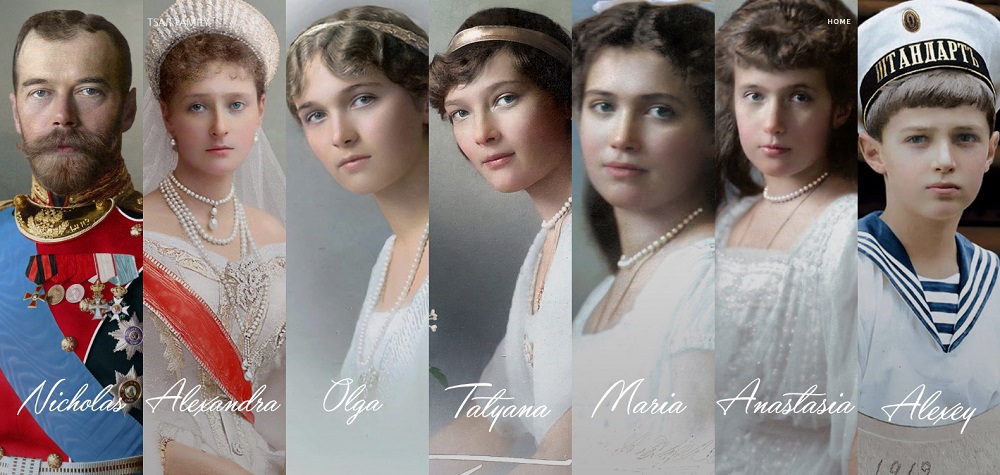
The main page of the site features a full-color image of all the members of the Imperial family. The “colorization” of the illustrations will continue with the support of specialists, in particular, the Moscow photo artist Olga Shirnina; the works of her historical photo-reconstruction “The Tsar’s Family in Color: the Image Disclosure” were recently exhibited in Ekaterinburg at the May Forum and in Tsar’s Days-2018.

Click HERE for the English version, and HERE for the Русская версия.

© Paul Gilbert. 2 December 2019