The Bolshevik sale of the Romanov jewels

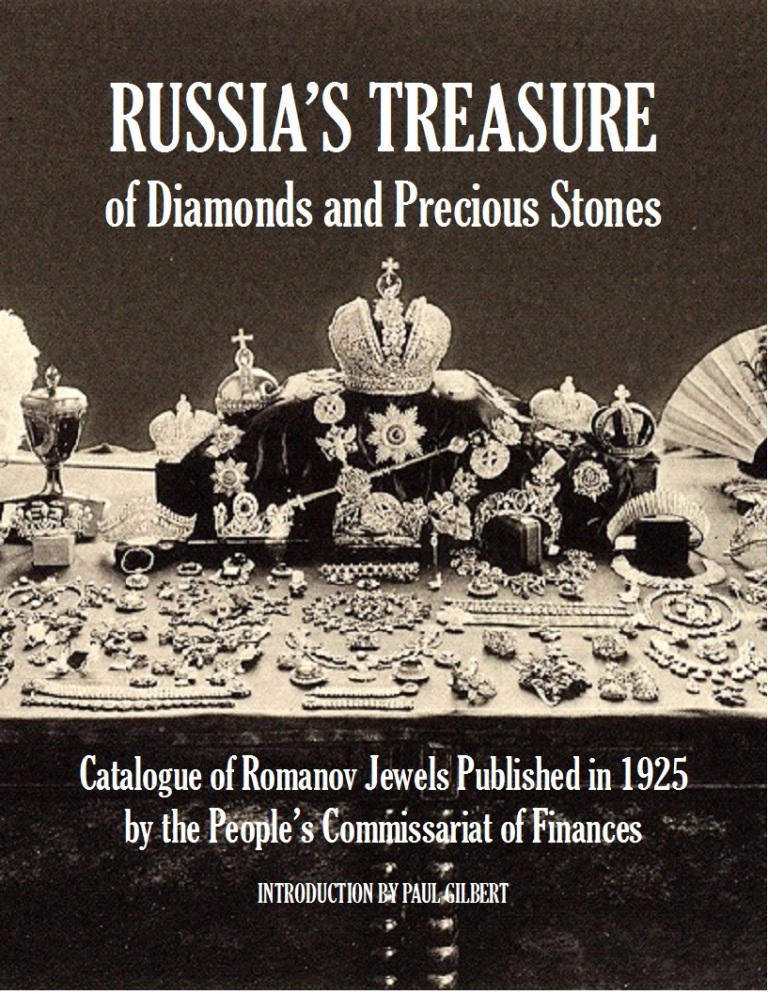
PHOTO: the Russian Crown Jewels, confiscated by the Bolsheviks

There is no greater example of such a large-scale criminal sale in history, than that of the jewels of the Russian Imperial Court – perhaps, the finest collection in the world. The Bolsheviks inherited an impressive legacy, and wasted little time in profiting from the sale of many pieces to eager buyers in the West during the 1920s.

Interesting testimonies have survived to this day about how the jewels were sorted and catalogued, and how the fate of these historically important treasures was determined. They are today preserved in the RGASPI (Russian State Archive of Social and Political History) in Moscow.

PHOTO: early 20th century view of the Gokhran building in Nastasinsky Lane in Moscow. Gokhran was created in 1920, in the first post-revolutionary years, the Gokhran collected jewels from the Romanovs, the Armoury, the Russian Orthodox Church, as well as valuables confiscated from private individuals. Many of these items were sold abroad.

Gokhran

The Bolsheviks made their first attempt to sell the Romanov jewels in May 1918. Then, in New York, customs officers detained two visitors with jewels (worth 350 thousand rubles) that belonged to Grand Duchess Olga Alexandrovna (1882-1960), the youngest daughter of Emperor Alexander III.

The following year, the founding congress of the Third Communist International was held in Moscow. From that time, the agents of the Communist International (Comintern) regularly exported gold jewellery and precious stones from Moscow. At first, there was practically no control over the agents, so many items were stolen rather than helping to “finance a world revolution”.

In order to stop this “lawlessness”, in February 1920, “Gokhran was created to centralize, store and account for all values ​​confiscated by the RSFSR, consisting of gold, platinum, silver bullion, diamonds, coloured precious stones and pearls”. The famine that began in the summer of 1921 forced the Bolsheviks to look for funds to buy bread. In addition, Poland had to be paid off. According to the Riga Peace Treaty of 1921, the western lands of Ukraine and Belarus were withdrawn to Poland, in addition to this, the Bolsheviks pledged to pay Poland 30 million gold rubles within a year.

Here they remembered the crown jewels that were kept in the basements of the Armoury (they were brought here from Petrograd at the beginning of the First World War, without inventories, and in 1917 jewels from the “Imperial palaces” were added). Crown values ​​were forbidden to give, change or sell by the decree of Peter I, issued in 1719. For almost 200 years, the Imperial Treasury was only replenished. Needless to say, the Bolsheviks ignored the autocrat’s Imperial decrees. The Politburo of the Central Committee of the CPSU outlined a program for the implementation of the so-called “Romanov Jewels”. At first, the Bolsheviks only planned to sell the treasure, but in the end they decided to sell the jewels abroad for hard currency. Before the sale, the treasures had to be sorted and evaluated. Gokhran, however, lacked the specialists to carry out such a task. Back in 1921, after thefts were discovered, three appraisers were shot, while many were imprisoned. Therefore, the Deputy People’s Commissar for Finance Krasnoshchekov in Petrograd reached an agreement with former experts and jewellers from Faberge: Franz, Kotler, Maseev, Mekhov, Utkin, and Bock. They started to work for Gokhran, and began to sort and evaluate the Romanovs jewels.
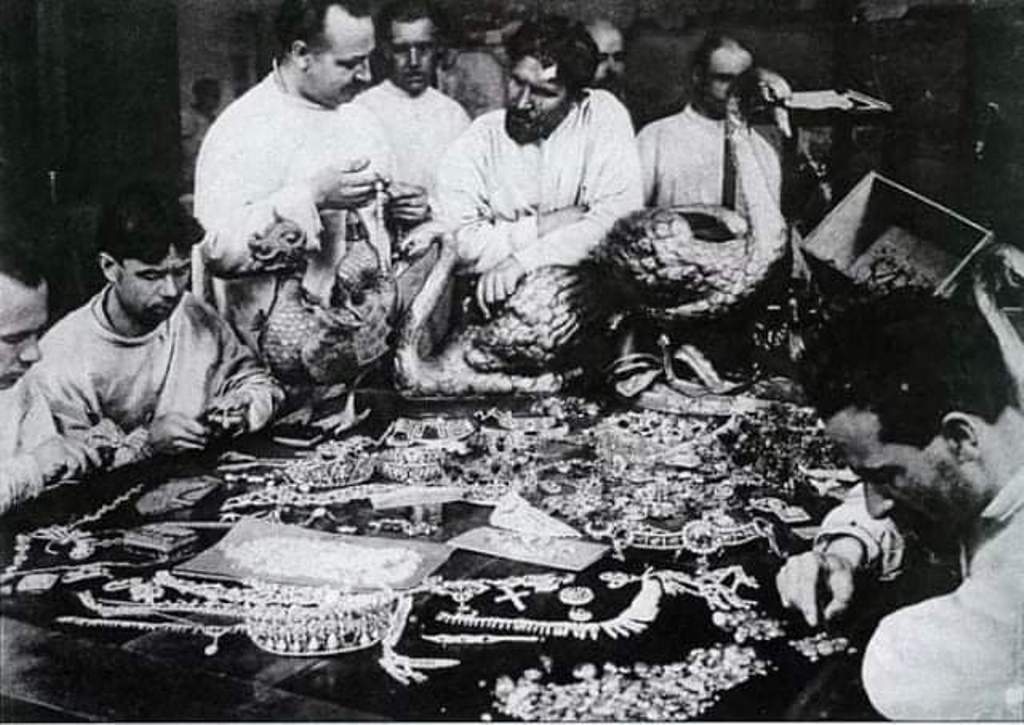
PHOTO: appraisers sort and catalogue the Romanov jewels and other items

The boxes of the “former tsarina”

On 8th March 1922, boxes marked with the “property of the “former tsarina” (the Dowager Empress Maria Feodorovna) were opened in the Armoury Chamber of the Moscow Kremlin. Two commissions were in charge of jewels: the first in the Armoury was responsible for sorting and creating an inventory; while the second sorted and evaluated them at Gokhran.

“In warm fur coats with raised collars, we walked through the frozen rooms of the Armoury,” later recalled a member of the commission, Academician Fersman. – “They brought boxes, there were five of them, among them a heavy iron chest, tied, with large wax seals. Everything was whole. An experienced locksmith easily, without a key, opened an unpretentious, very bad lock. Inside there were jewels of the former Russian Court, each one hastily wrapped in tissue paper. With our hands freezing from the cold, we took out one sparkling gem after another. There were no inventories found among the jewels.”

The following day, Kotler and Franz (both “serious jewellers,” according to Trotsky), said that “if there was a buyer for these valuables, then the estimate would be 458,700,000 gold rubles”. And this, in addition to the coronation treasures, which lay in two separate boxes and were estimated “at more than 7 million gold rubles.” The jewels were examined hastily, within an hour and a half, without a detailed determination of the quality of the stones. The Bolsheviks questioned how much the gems would sell for if they were sold as a separate commodity (they feared a scandal in Europe that could arise in connection with the sale of the crown jewels), experts estimated the amount of 162 million 625 thousand gold rubles.

The members of the commission were amazed. Truly beautiful jewels that belonged to the House of the Romanovs … For example, a diamond necklace with a sapphire cost 3 million rubles, diamond pendants 5 million. The amounts are impressive. Especially when you consider how much these treasures are worth now. For instance, the Faberge “Lilies of the Valley” Easter Egg, which in 1898 Nicholas II presented to his wife Alexandra Feodorovna, cost 6,700 rubles. A little more than a century later, it sold for $10-12 million USD at Sotheby’s, acquired by Viktor Vekselberg and now on display at the Faberge Museum in St. Petersburg.

As a result of such an optimistic assessment, the treasures were quickly (note, again without making inventories) from the Armoury to the Gokhran building in Nastasinsky Lane in Moscow. In the boxes from the palace of Dowager Empress Maria Feodorovna, in addition to the empress’s jewels, rare works of jewellery were kept. Only a few of these items later ended up in Soviet museums, while the rest were sold cheaply to foreigners …
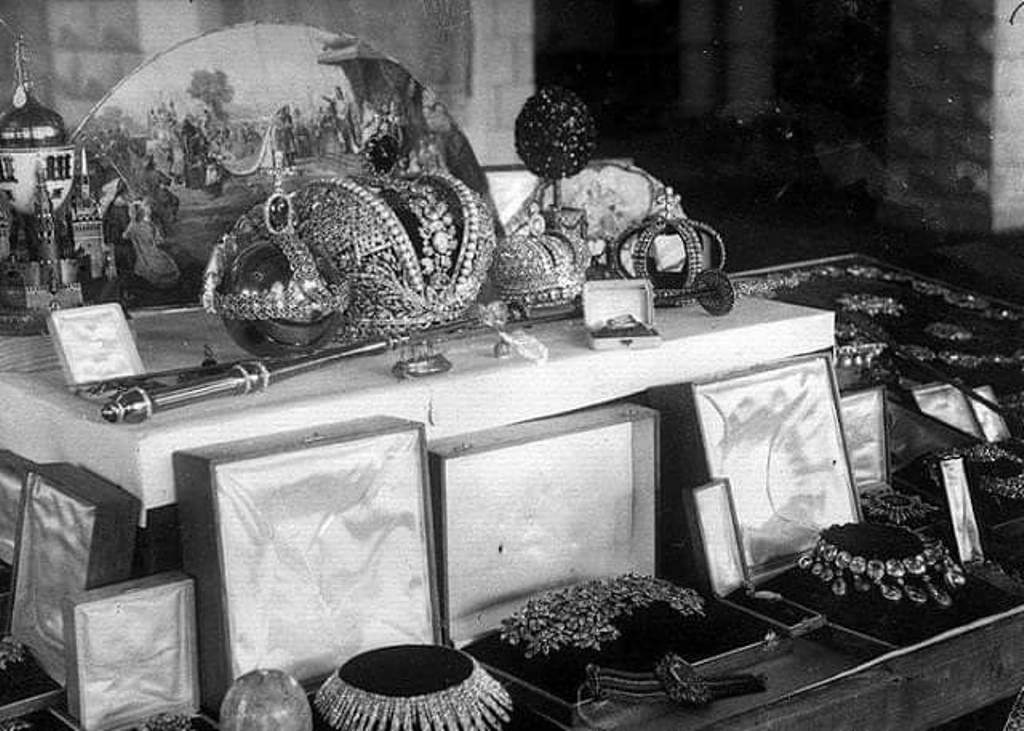
PHOTO: the Imperial Crown of Russia can be seen on the table among 2 Faberge eggs

Poles – the best diamonds

By mid-May, the sorting and appraisal of the crown jewels of the Empresses Maria Feodorovna and Alexandra Feodorovna in Gokhran had been completed. The items of the “former House of Romanov” were divided into three categories, taking into account, first of all, the value of the stones, the artistry of the work and the historical significance of the item. The first category – the inviolable fund – included 366 items valued at 654,935,000 rubles, of which the coronation regalia decorated with selected diamonds and pearls was valued at 375 million rubles. As reported to Leon Trotsky, Deputy Special Commissioner of the Council of People’s Commissars (Council of People’s Commissars) for the registration and concentration of the values ​​Georgy Bazilevich wrote, “when selling these items abroad, the receipt of 300,000,000 rubles is guaranteed.” Products of the second category, which had historical and artistic value, were estimated at 7,382,200 rubles.

At the end of his work, Deputy Chairman of the Council of People’s Commissars and the Council of Labor and Defence Alexei Rykov asked Faberge and Fersman if it was possible to realize coronation values ​​in the foreign market. They answered: it is possible, although there should be no rush. But the Bolsheviks were in a hurry to sell these pieces for the much coveted foreign currency they hoped to gain from such a sale.

In 1922, emeralds from Gokhran were sold in London and Amsterdam under the guise of those mined in the Urals. A year later, Gokhran pearls and diamonds were brought to Amsterdam. In the years following, the Bolsheviks continued to quietly sell diamonds and pearls from Gokhran in Paris.

As for the debt to the Poles, they decided to repay it with jewels. Bazilevich sent Trotsky a memo marked “Top Secret”, which provides a brief estimate of the value of the former “House of Romanov and valuables handed to Poland under the Riga Treaty”:

“In the preparation of of the Bolshevik debt to be paid to Poland the finest diamonds, pearls and coloured stones were selected. In addition to the stones, Gokhran selected gold items, including chains, rings, cigarette cases, bags, etc. in the amount of 2.728.589 rubles … “.
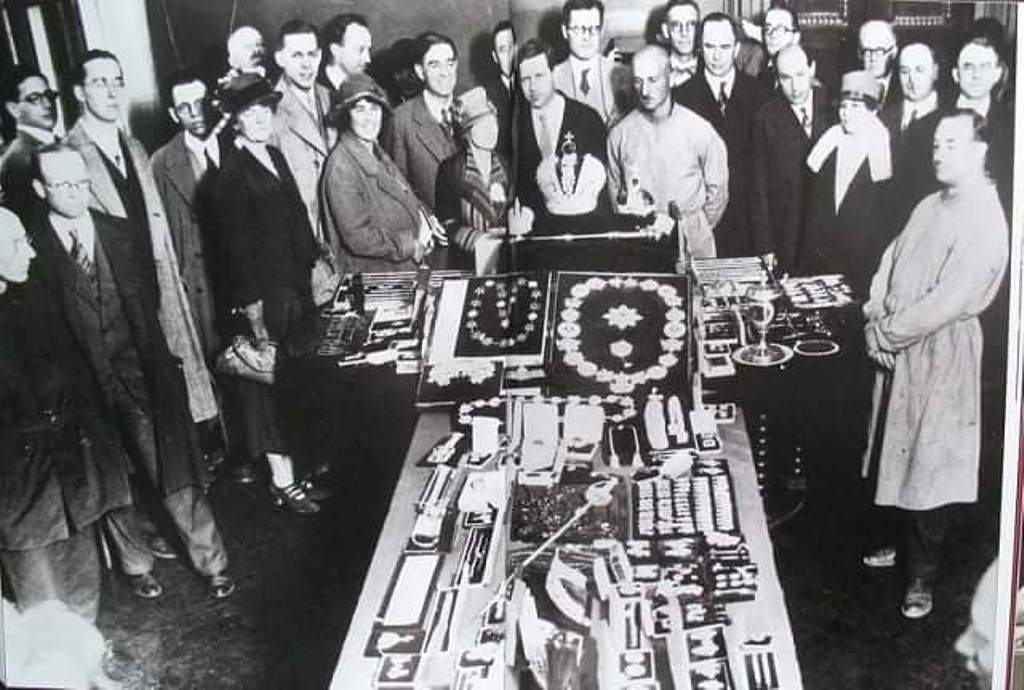
PHOTO: the Romanov jewels on display in Moscow, 1920s

Wholesale export

The apogee of the work of the Gokhran experts was the appearance in 1925-1926 of four issues of the illustrated catalogue “The Diamond Fund of the USSR”. The publication was translated into English, French and German in order to attract foreign buyers and was distributed in Europe.

As a result, “art connoisseur” Norman Weiss was not long in coming. He purchased items from the Diamond Fund in bulk, weighing 9.644 kilograms. The masterpieces of Russian jewellery art cost him 50 thousand pounds! In 1927, the resourceful merchant held an auction in London “Jewels of the Russian State”. The imperial wedding crown, a diamond diadem, and the jewels of Empress Catherine II “floated away” from him.

While the crown jewels were being sold in London, the head of the Armoury Chamber Dmitry Ivanov (he also participated in the cataloguing of the Romanov jewels in 1922) begged the officials to return the museum items sold by Gokhran. His efforts, however, were in vain. At the beginning of 1930, Ivanov became aware of the upcoming seizures of items from Russian museums to be sold abroad. Ivanov could no longer tolerate the theft and sale of Russia’s treasures, and ended up committing suicide.

In 1932, the Romanov treasures bought by Armand Hammer could be purchased at American department stores. Later, he opened an antique shop, which sold Easter eggs that belonged to the empresses, icons in jewelled frames of Nicholas II and Alexandra Feodorovna, a Fabergé cigarette case commissioned by Maria Feodorovna, her notebook embossed with her monogram and an Imperial crown, among many other items.

Of the 773 items of the Diamond Fund, 569 were sold in the 1920s – 1930s. These Romanov treasures were stolen from the Russian Imperial Family by the Bolsheviks, and bought up by greedy, materialistic buyers in the West. It is hardly possible to find in history an example of such a large-scale and criminal sale.
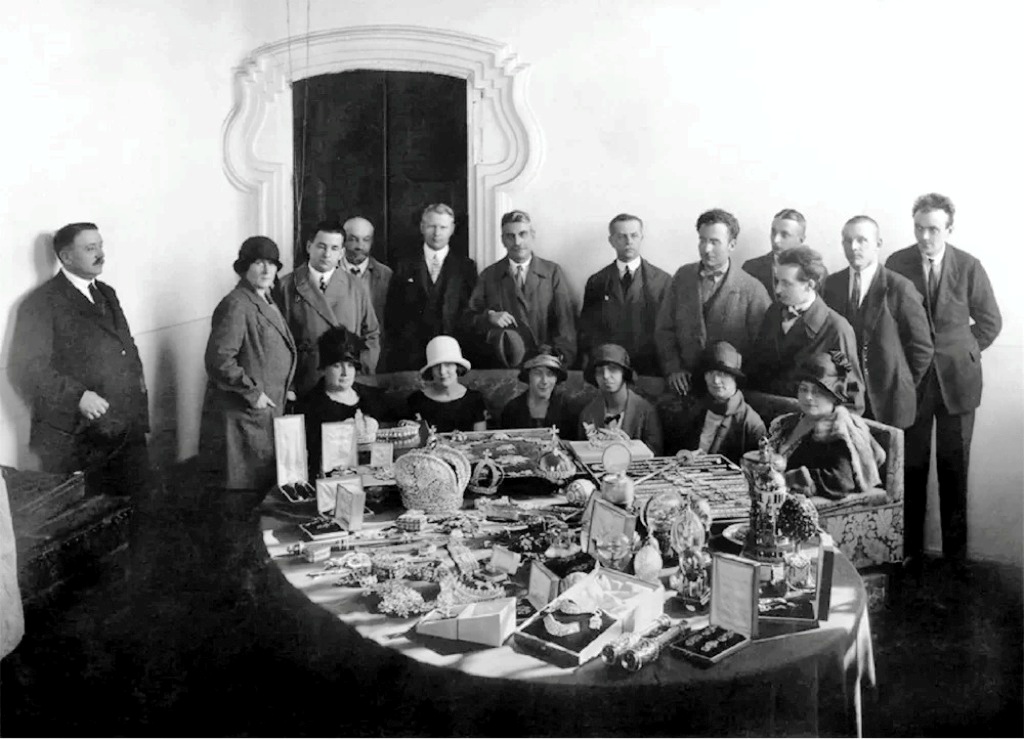
jewels

PHOTO: the Romanov jewels on display in Moscow, 1920s

***

Further reading: I highly recommend History’s Greatest Heist: The Looting of Russia by the Bolsheviks by Sean McMeekin. Published by Yale University Press in 2009

© Paul Gilbert. 9 October 2020
532

Click HERE or on the photo above, to order your copy of RUSSIA’S TREASURE OF DIAMONDS AND PRECIOUS STONES, available from AMAZON in hard cover and paperback editions
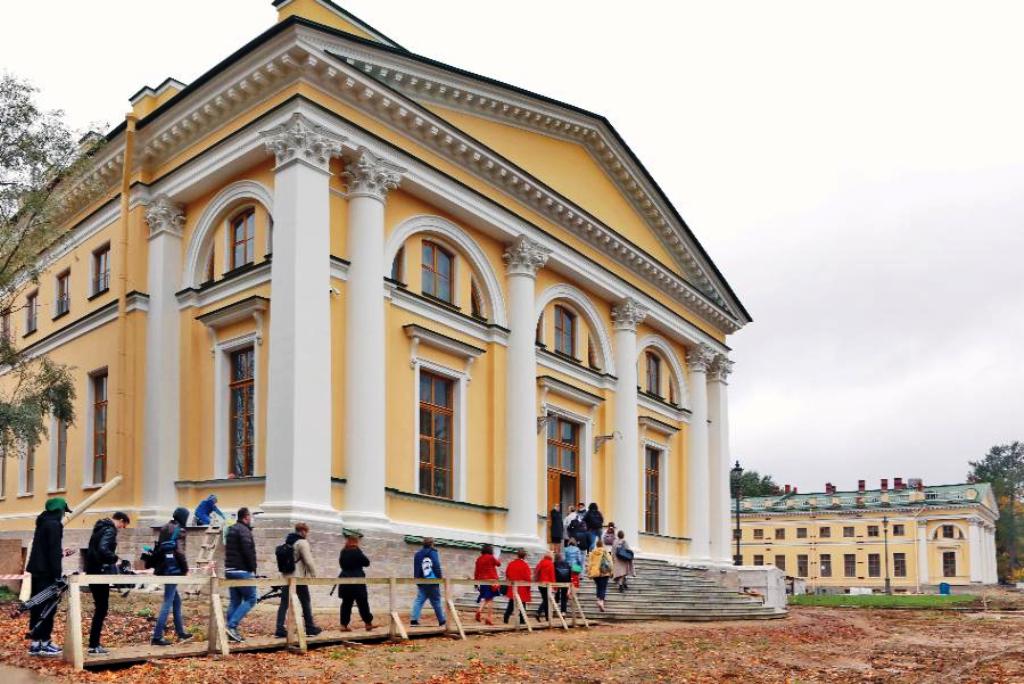
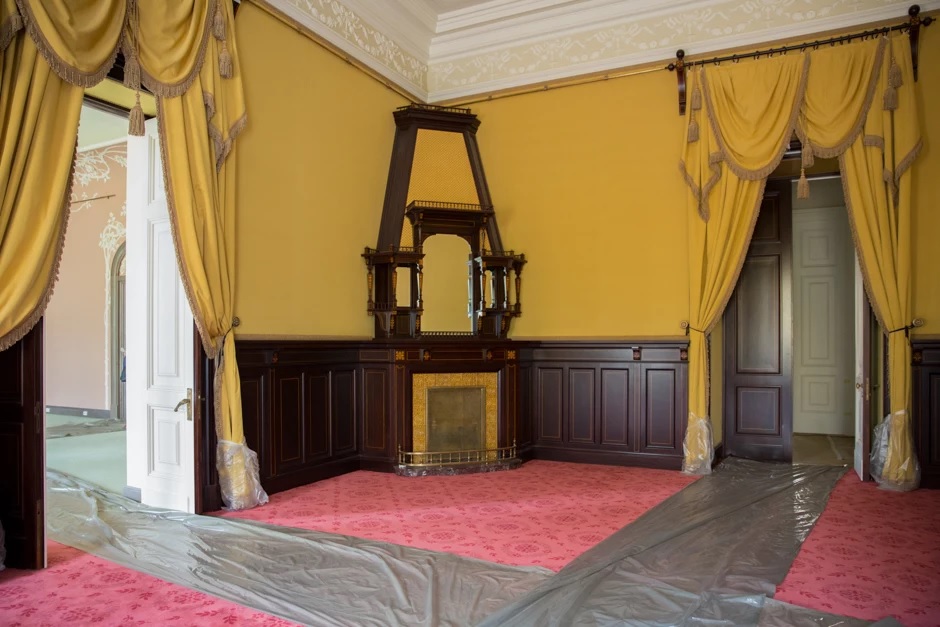
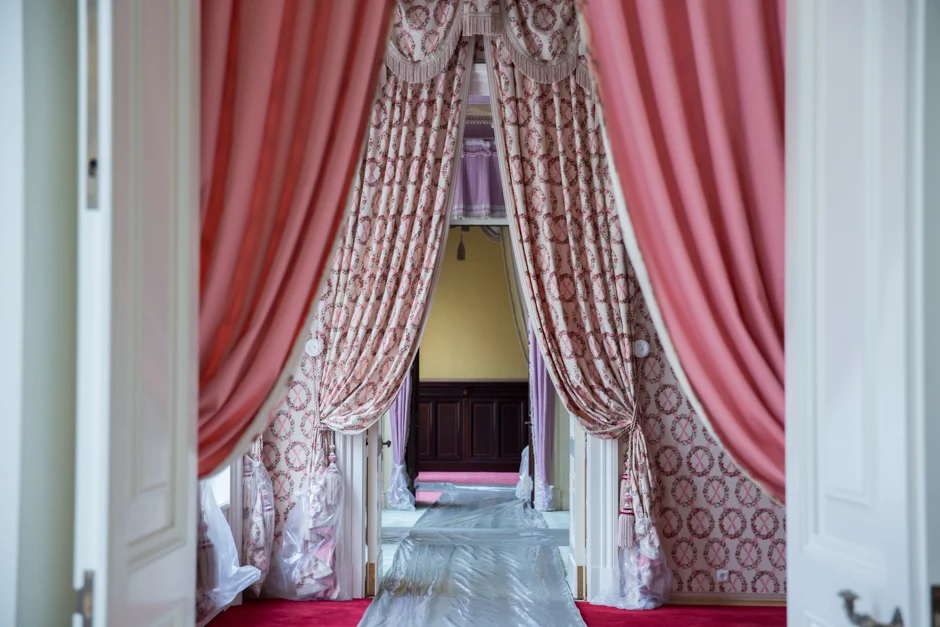
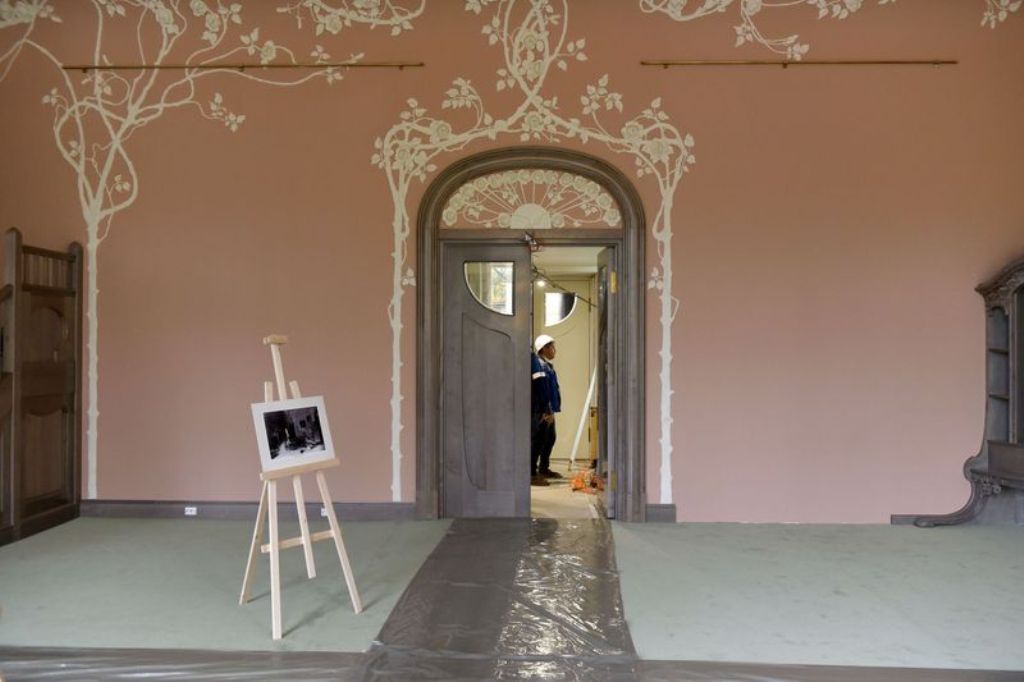
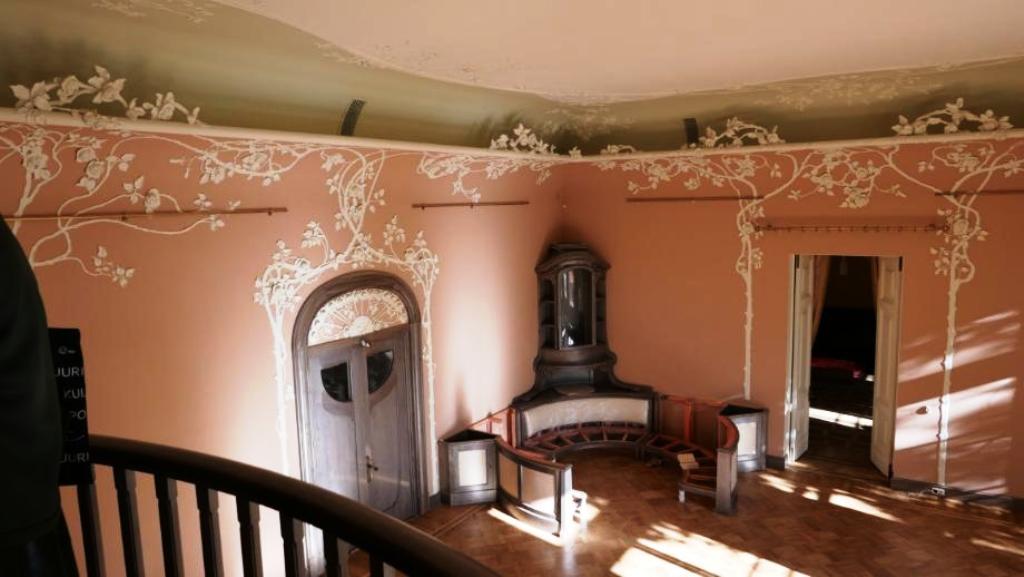
Russian media provide a first look at the progress of the recreation of the historic interiors in the Alexander Palace

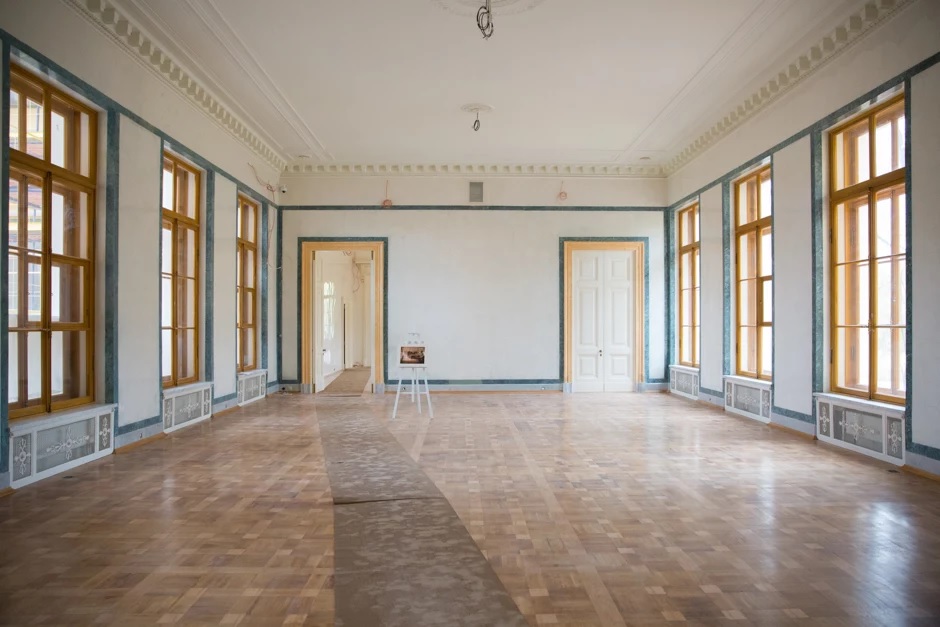
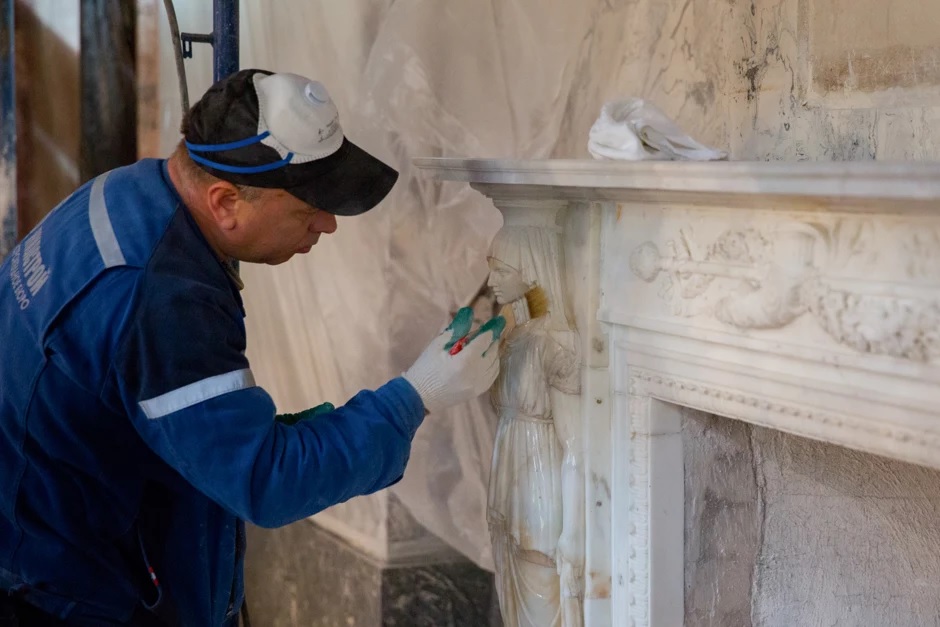
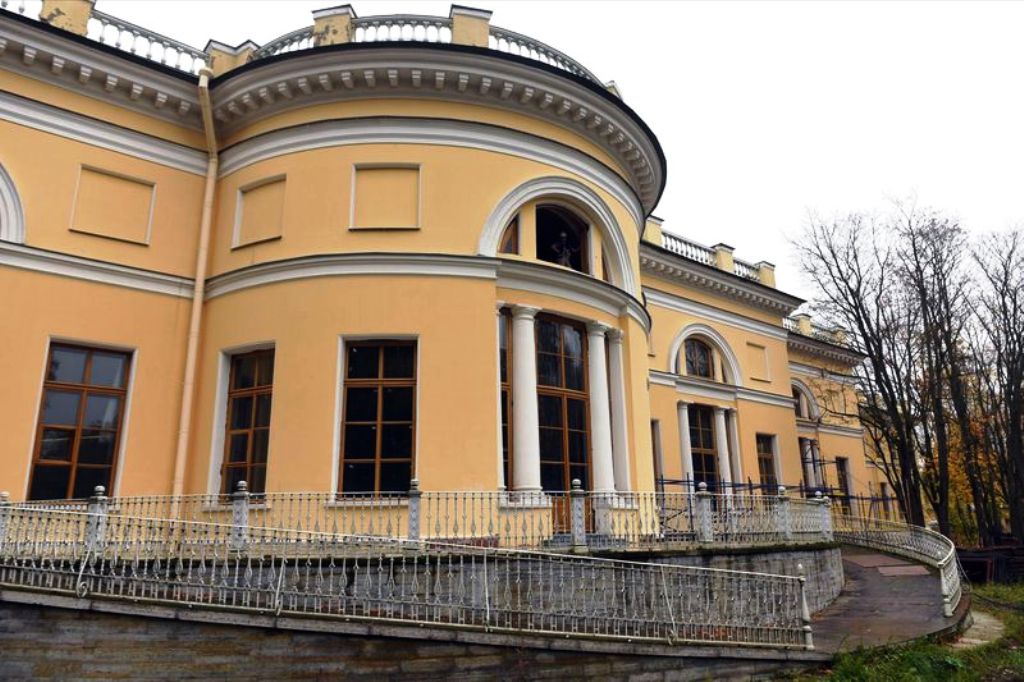
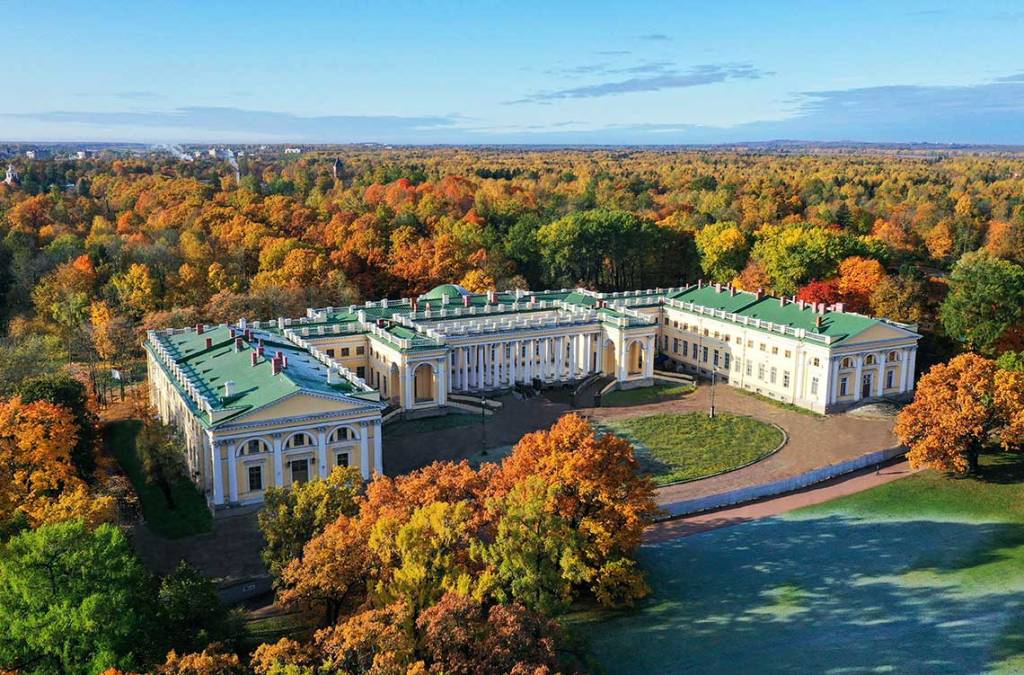
On 7th October, the Tsarskoye Selo State Museum Reserve invited Petersburg journalists to the Alexander Palace, where they were shown the progress of the restoration and recreation of the historic interiors of the last residence of Emperor Nicholas II and his family.

Ongoing restoration works have been carried out since 2012, and the palace was closed in the autumn of 2015 to embark on the large-scale recreation of the private apartments of Nicholas II and Alexandra Feodorovna in the eastern wing of the palace.

The project was developed by Nikita Yavein’s Studio-44. The restorers relied on amateur photographs taken by members of the Imperial family, autochromes from 1917, and design drawings to recreate the interiors.

In addition, the Tsarskoye Selo and Pavlovsk State Museums had stored original samples of fabrics, which were used to recreate the decoration of some interiors – Chintz (waxed cotton fabric with a printed pattern) in the bedroom, silk in the Lilac office, reps (a cotton or silk fabric formed by weaves) in the Rosewood living room, etc.

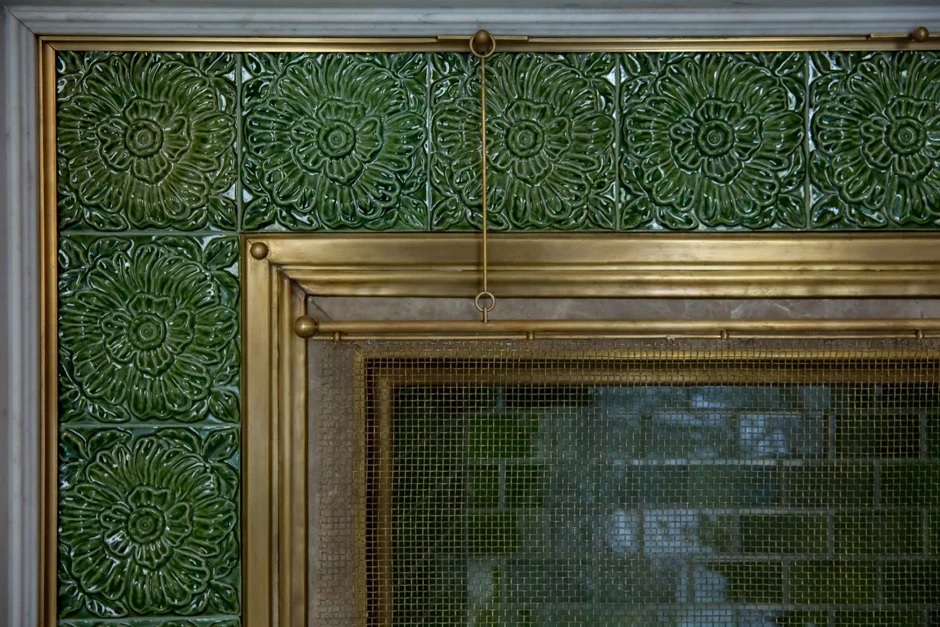
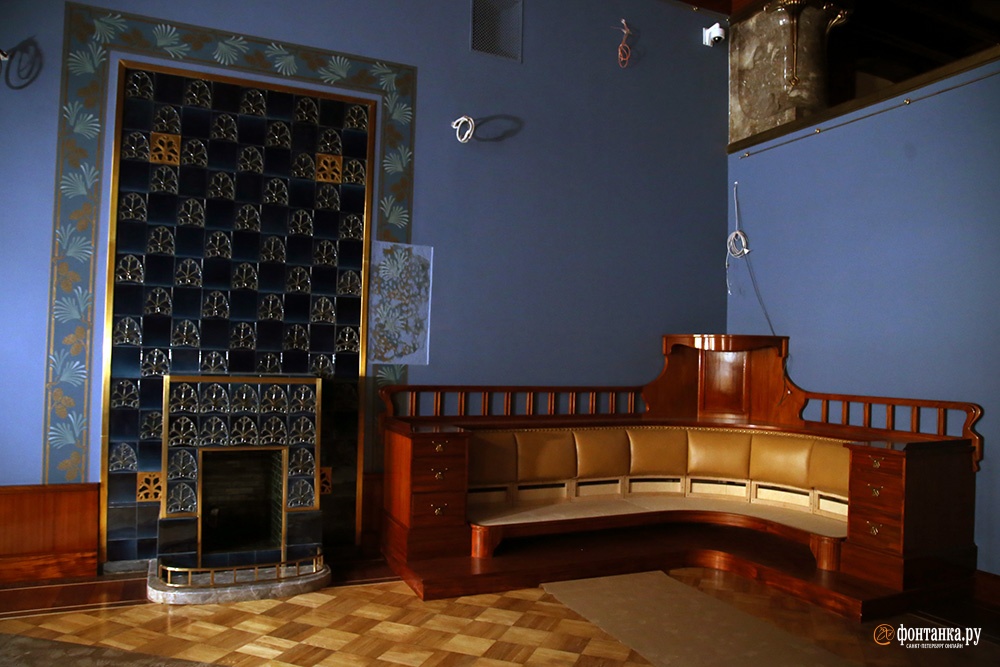
During the restoration, elements of the historical interior decoration were preserved, including oak wall panels, coffered wooden shades and ceramic tiles.

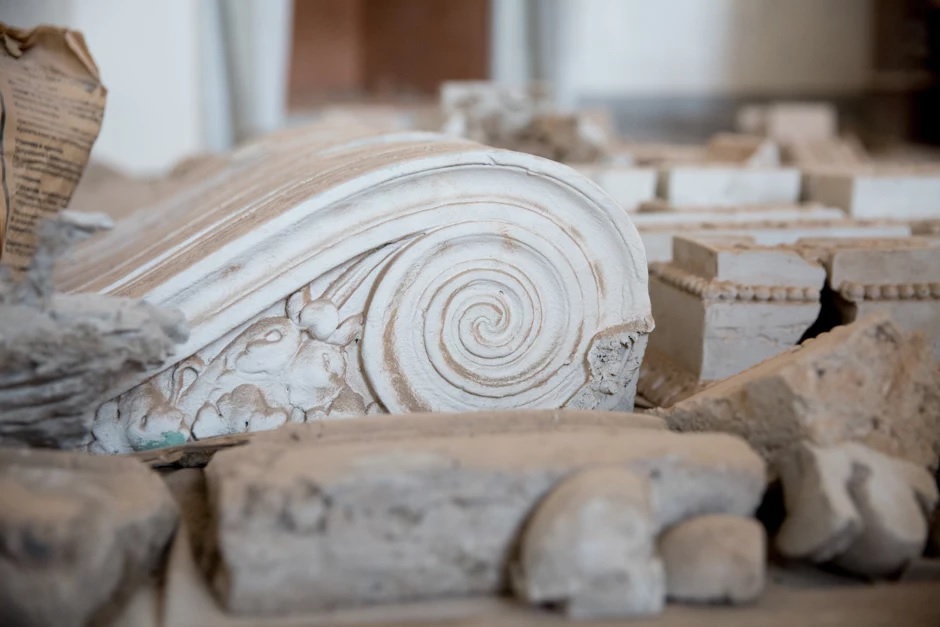
NOTE: the following images are from different Russian media sources, and are not in any particular order. They are presented to give you an idea of the tremendous amount of work and dedication which has gone into the recreation of these historic interiors, thus breathing new life into the Alexander Palace – PG 

On 7th October 2020, the Tsarskoye Selo State Museum Reserve (GMZ) announced that the opening of the Alexander Palace – originally scheduled for December 2020 – would be further delayed. A press release from the GMZ reported that a total of 15 rooms will now open to the public in 2021, in the Museum of the Russian Imperial Family located in the eastern wing of the palace.

© Paul Gilbert. 8 October 2020

Delays . . . delays . . . and more delays with the opening of the Alexander Palace

It may come as no surprise to any one that the opening of the Alexander Palace at Tsarskoye Selo has been delayed yet again.

Eight of the reconstructed private rooms of Nicholas II and Alexandra Feodorovna, were due to open in December of this year, however, the opening date of the palace has been further extended..

According to Russian media sources, a total of 15 rooms will now open to the public in 2021, in the Museum of the Russian Imperial Family located in the eastern wing of the palace

“At the moment, the Alexander Palace is our everything. Everything is aimed at its early completion. We have divided the restoration into two stages in order to open the most important rooms to visitors. Fifteen historic interiors of Nicholas II. and his family six months from now,” – said Olga Taratynova, Director of the Tsarskoye Selo State Museum Reserve.

According to Taratynova, the cost of the work is 2.7 billion rubles. Currently, 1.7 billion have been spent. The balance will go to the second stage of the restoration project.

“The second stage will take another three years. Thus, we will open the entire western wing of the palace,” she added.

© Paul Gilbert. 7 October 2020

Appeal launched to return the name of Nicholas II to the Severnaya Zemlya archipelago

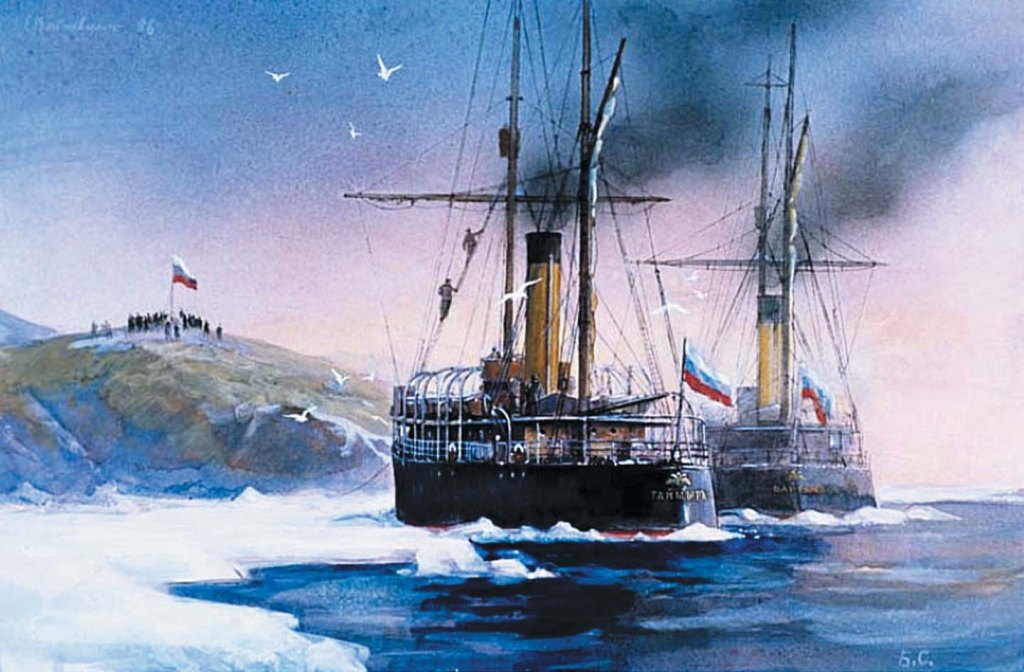
PHOTO: The Taimyr and Vaygach near the Land of Emperor Nicholas II (Severnaya Zemlya)
Artist: Evgeny Valerianovich Voishvillo (1907-1993)

The archipelago was discovered on 4th September 1913. In 1914 it was named Emperor Nicholas II Land, one of the islands was named in honour of Tsesarevich Alexei Nikolaevich.

On 1st October, a letter was sent to the authorities of the Krasnoyarsk Territory with a proposal to return the historic name of Nicholas II to the Severnaya Zemlya (Bolshevik name) archipelago situated in the Russian high Arctic. It lies off Siberia’s Taymyr Peninsula, separated from the mainland by the Vilkitsky Strait. This archipelago separates two marginal seas of the Arctic Ocean, the Kara Sea in the west and the Laptev Sea in the east.

Among the signatories are the explorer and traveler Fyodor Konyukhov; Irina Tikhomirova, the granddaughter of Boris Vilkitsky who discovered the islands; State Duma deputy from the Krasnoyarsk Territory Viktor Zubarev, among others.

The archipelago was not put on the map until the 1913–1915 Arctic Ocean Hydrographic Expedition of the icebreakers Taimyr and Vaygach. The chief organizer and first captain of the Vaygach was Aleksandr Vasiliyevich Kolchak (1874-1920) of the Imperial Russian Navy. The expedition was privately financed and launched in 1910, being led by Boris Andreyevich Vilkitsky (1885-1961) on behalf of the Russian Hydrographic Service. This venture accomplished its goal of exploring the uncharted areas of the continental side of the Northern Sea Route in what was seen as the culmination of the Great Northern Expedition, an ambitious enterprise initially conceived by emperor Peter I the Great in order to map the whole of the northern coast of Russia to the east.

On 4th September 1913 (O.S. 22 August 1913), members of Vilkitsky’s expedition landed on what is now known as Cape Berg on October Revolution Island. They raised the Imperial Russian flag on the shore and named the new territory Tayvay Land, after the first syllable of their icebreakers’ names. During the days that followed Vilkitsky’s expedition charted parts of the Laptev Sea coast of what they believed to be a single island. Barely six months later in early 1914, by order of the Secretary of the Imperial Navy, the new discovery was renamed Emperor Nicholas II Land, in honour of the ruling emperor Nicholas II.

In 1926, the Presidium of the Central Executive Committee of the USSR renamed the archipelago renamed Severnaya Zemlya (Northern Land), and the Tsesarevich Alexei Nikolaevich Island was renamed Maly Taimyr.

Severnaya Zemlya comprises four major islands – October Revolution, Bolshevik, Komsomolets, and Pioneer – and around 70 smaller islands, covering a total area of about 37,000 km2 (14,300 sq mi).

With regard to the current appeal, Zubarev noted: “Such a letter has been addressed to the head and parliament of the region. We hope that state authorities the regions will accept our arguments and take measures to restore historical justice”.

© Paul Gilbert. 3 October 2020

The History and Restoration of the Reception Room of Nicholas II in the Alexander Palace

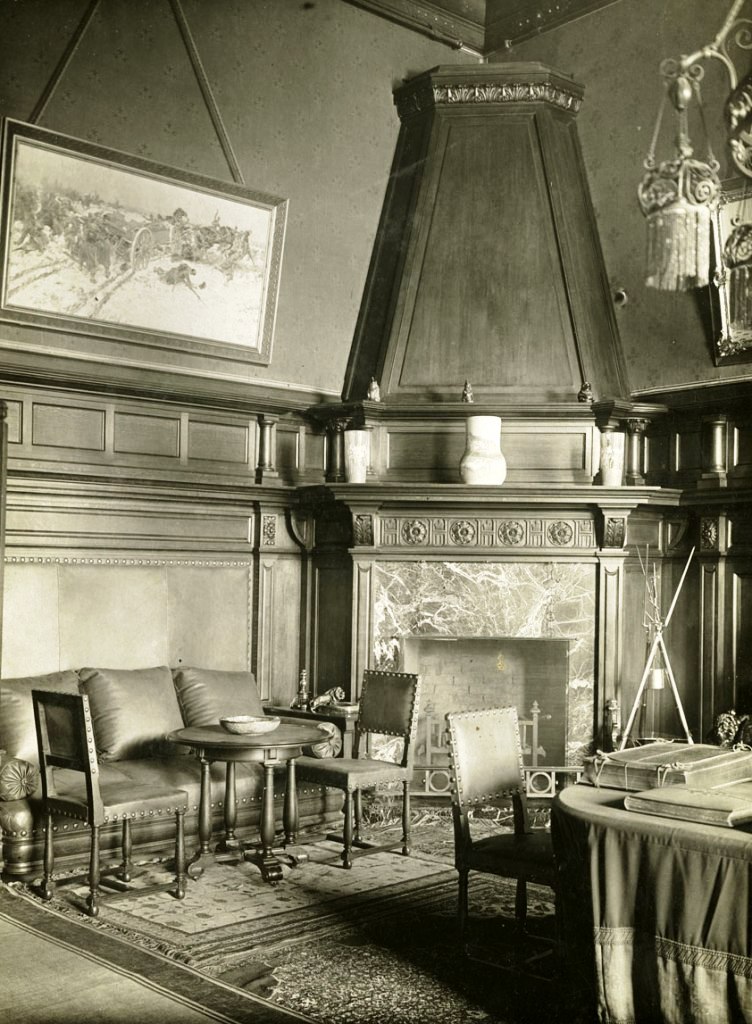
PHOTO: the Reception Room of Nicholas II as it looked in the 1930s

The Alexander Palace served as the home and official residence of Russia’s last emperor from 1894 to the summer of 1917. By the end of 1894, in the eastern wing of the palace, work was alreay underway on finishing the apartments for the young imperial couple, who had married on 27th November (O.S. 14th November). This part of the building was divided by a corridor into two enfilades: the rooms of Nicholas II, facing the courtyard, and the rooms of Alexandra Feodorovna, with windows to the park.

The first room in the Emperor’s half was the Dining Room (later the Reception Room). The renovation of this interior was carried out in 1895-1896 by architect Roman Feodorovich Meltser (1860-1943). For the wall decoration, a “high panel around the room with a seasoned shelf” was installed, above the panels, the walls were covered with printed fabric. On the ceiling there is a “wooden plafond” with a cornice. The interior decoration features a corner fireplace of oak wood, trimmed with dark green marble. The architect decorated the upper part of the two windows with square cathedral (stained-glass) glass.

PHOTO: the Reception Room of Nicholas II as it looked in the 1930s

The furniture was made by F. Meltzer & Co., which included a sofa with two folding tables, a round table for drinking tea, a dining table and 24 chairs, a serving table, and a table “for snacks”. The set of furniture included a fireplace screen, covered with fabric, decorated with mirrored glass with a facet in the upper part.

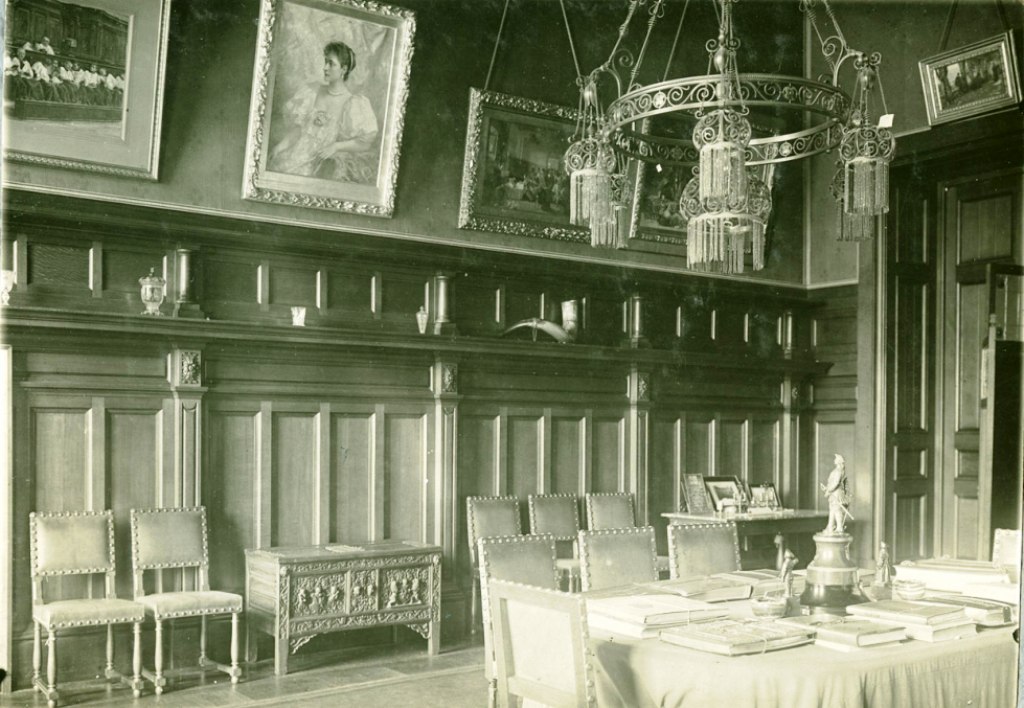
Subsequently, this room, preceding the Emperor’s Working Study, was used as a Reception Room. Despite the change in the purpose of the interior, its furnishings remained almost unchanged until 1917. Only a few items were added, giving the room a more businesslike character.

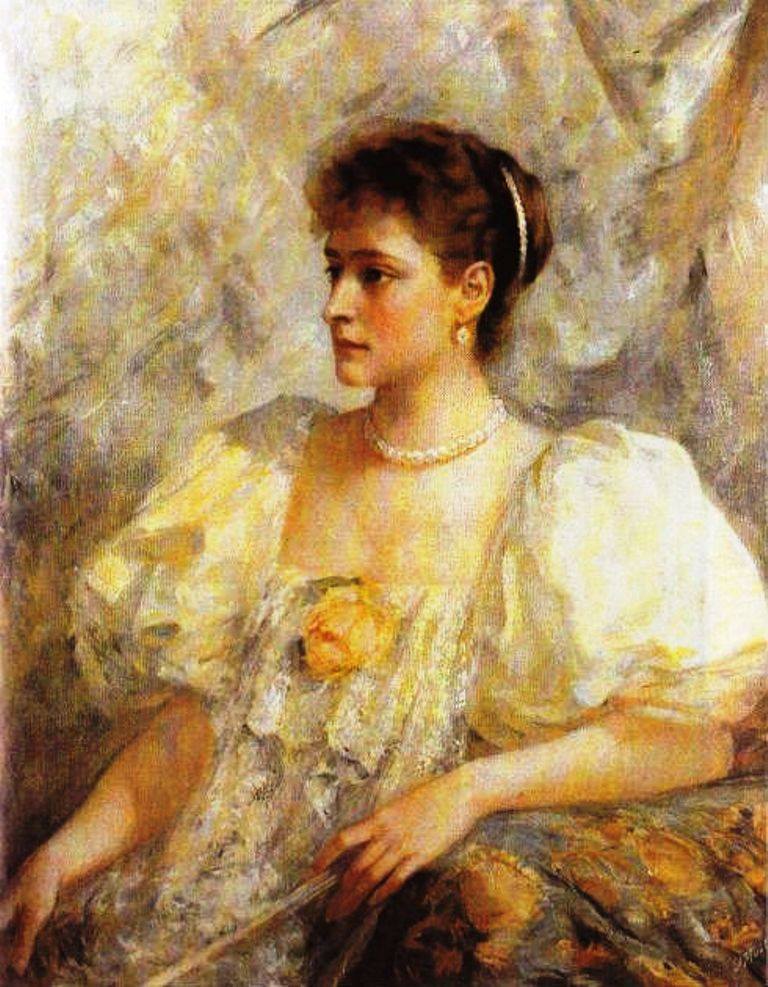
PHOTO: This lovely portrait of the Empress Alexandra Feodorovna (1896) by A. Muller-Norden, which originally hung in the Reception Room of the Alexander Palace (seen in the 2nd photo), is currently in the collection of the Pavlovsk State Museum.

It is just one of more than 5,000 items moved to Pavlovsk in 1951. The return of the items to the Alexander Palace remains a bone of contention between the two palace-museums. Click HERE to read my article Controversy over portrait of Empress Alexandra Fedorovna in Pavlovsk, published on 20th August 2019.

Unlike many interiors of the Alexander Palace, the decoration of the Reception Room practically remained intact during the Great Patriotic War (1941-45), which greatly facilitated the current restoration work in this room. Here are preserved wall and ceiling panels, a fireplace and a chandelier, which was installed by Melzer in 1899 and cost 2,275 rubles. Sadly, the furniture, curtains, and cathedral glass windows were all lost.

The interior was restored in the 1950s. In 1997, the exhibition “Memories in the Alexander Palace” opened in the eastern wing of the palace, the museum designated the room as the Reception Room. The room contained corresponding furniture of the late 19th – early 20th centuries from the museum’s collection: two tables, oak chairs, a chest, and a carpet. Memorial items were also exhibited in the Reception Room – in their historical places there was a chandelier and a model of the monument to Peter I by Ivan Schroeder.

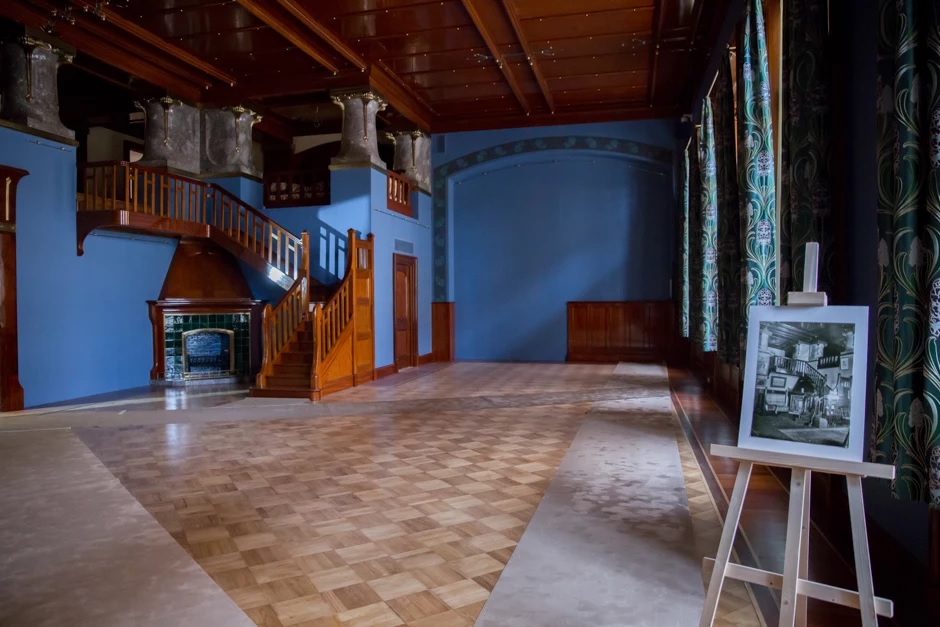
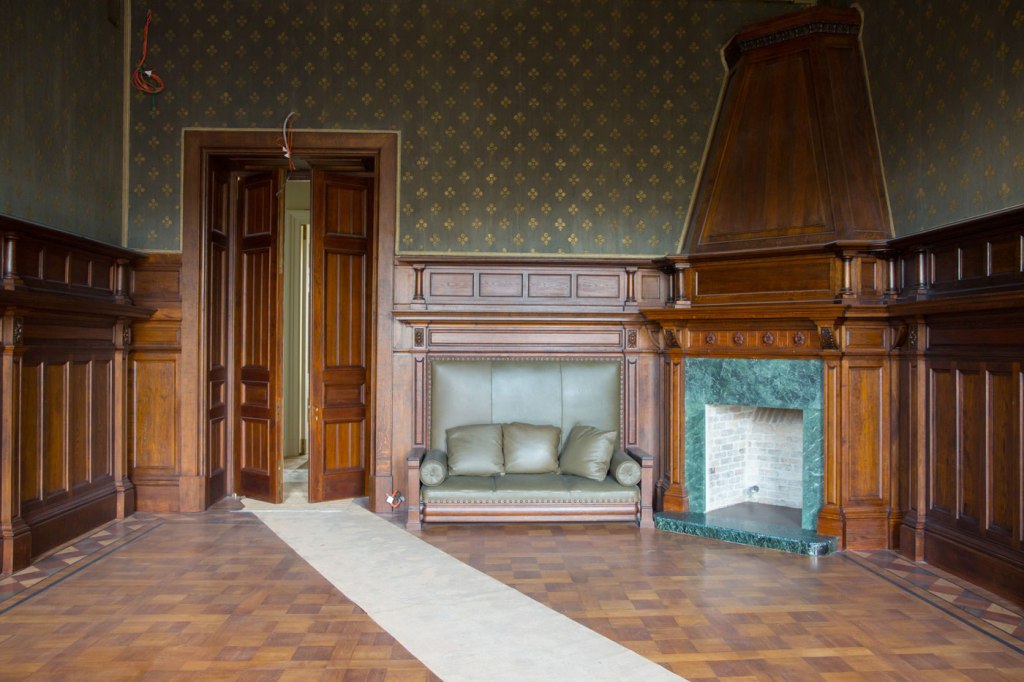
PHOTO: the Reception Room of Nicholas II as it looks

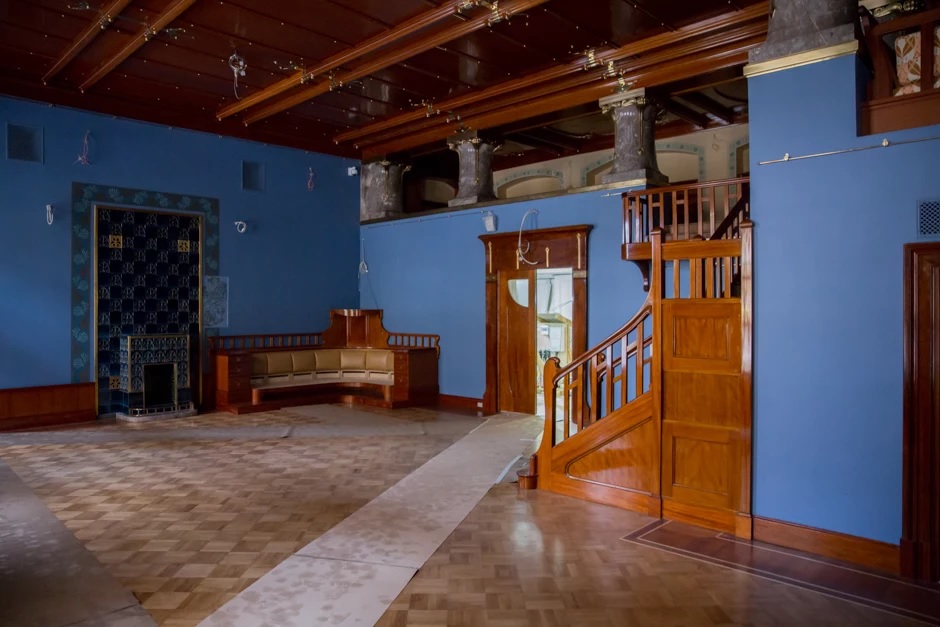
In the course of recent restoration work in the Reception Room, the oak walls and ceiling decoration, fabric on the walls, parquet and a fireplace have been beautifully preserved. In the process of working with the fireplace, it was discovered that the monogram preserved on the frieze differs from that recorded in historical photographs. These inaccuracies have been corrected.

During the restoration, the fabrics from the walls were dismantled and sent to the restoration workshops, where a method of dry cleaning of the fabric with its subsequent conservation was developed.

PHOTO: the Reception Room of Nicholas II as it looks today

From the surviving photographs, a built-in sofa upholstered in olive leather, a fireplace grate and an openwork metal mesh of the fireplace insert have been recreated. The restoration of the historic chandelier, the only surviving piece of the Reception Room interior, has also been completed.

At present, work continues on the design based on historical photographs of some pieces of furniture: an oak table and chairs are being made for the sofa, as well as a lattice-stand for banners; the elbows of the sofa will be supplemented with folding table shelves. Subsequently, there are also plans to recreate the stained glass in the Reception Room windows.

***

The Reception Room of Nicholas II is one of eight interiors to open in the eastern wing of the palace, scheduled to open in December 2020. The other interiors include: the Moorish Bathroom of Nicholas II, Working Study of Nicholas II, Pallisander (Rosewood) Living Room, Mauve (Lilac) Boudoir, Imperial Bedroom, Alexandra’s Corner Reception Room, and the New Study of Nicholas II.

In the future, the Alexander Palace will become a memorial museum of the Romanov family – from Catherine the Great to Nicholas II, showcasing the private, domestic life of the Russian monarchs who used the palace as an official residence. The eastern wing of the palace will be known as the Museum of the Russian Imperial Family. The multi-museum complex is scheduled for completion no earlier than 2022.

© Paul Gilbert. 2 October 2020