Nicholas II in the news – Summer/Autumn 2023
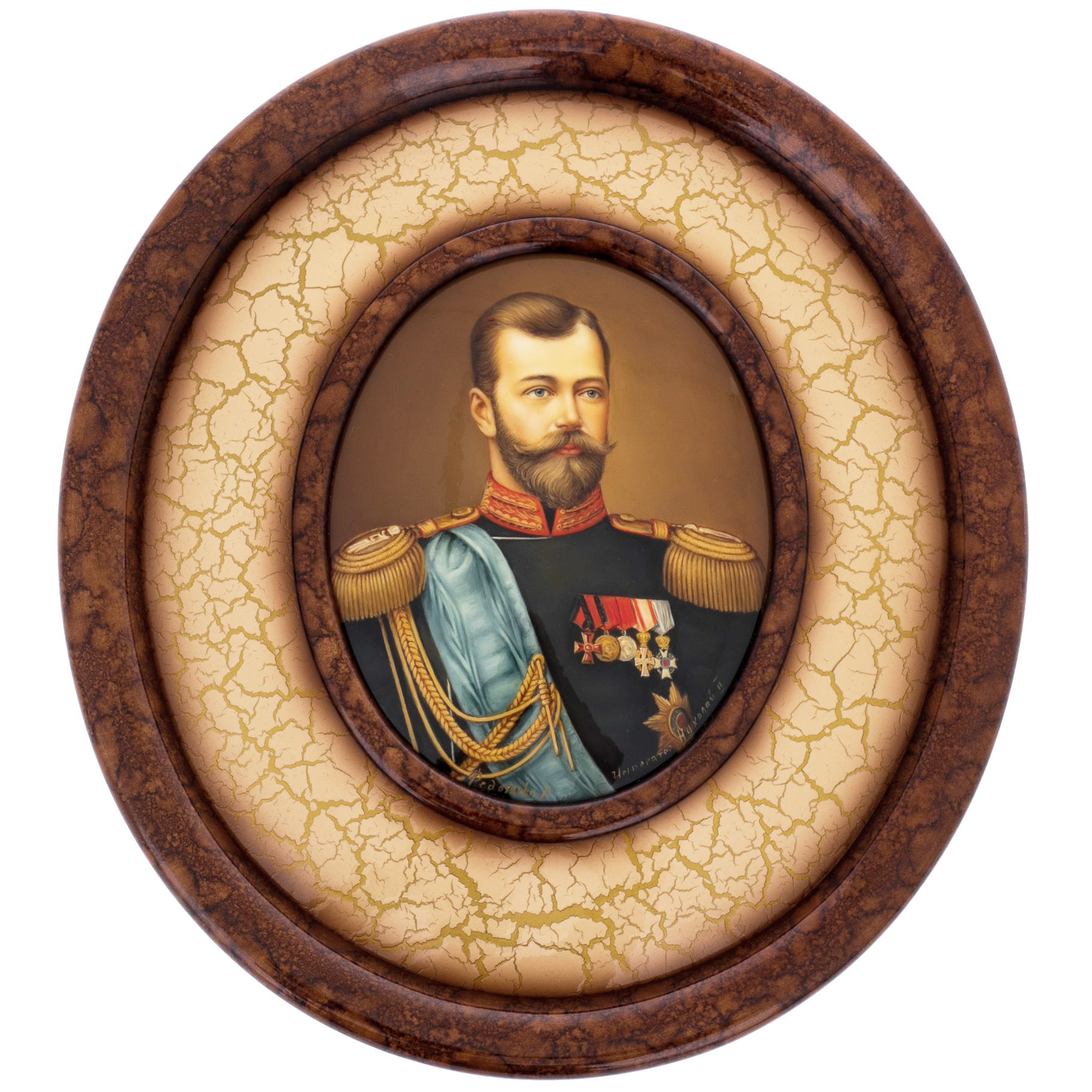
Russia’s last Emperor and Tsar continues to be the subject of news in Western media. For the benefit of those who do not follow me on my Facebook page, I am pleased to present the following 5 full length articles and news stories published by American and British media services, in addition to videos and articles about Nicholas II’s relatives and faithful retainers.

Below, are the articles published between July and December 2023. Click on the title [highlighted in red] and follow the link to read each respective article:
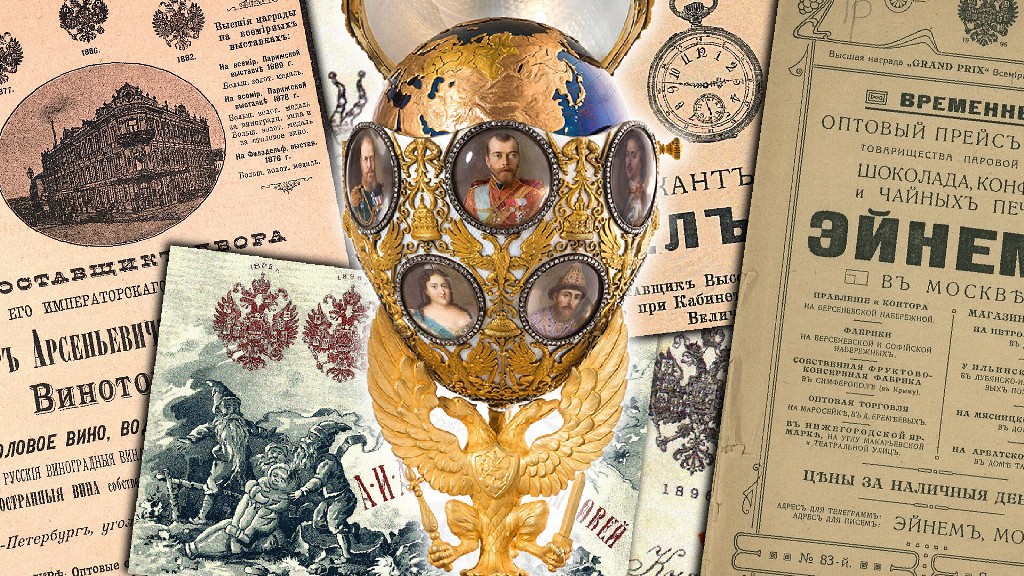
10 main suppliers to the Russian imperial court + 34 PHOTOS

These entrepreneurs supplied the imperial court with all sorts of expensive and exquisite goods. For this service the fortunate few were granted an elevated status as “purveyor to the court”, which in turn made them even more successful among the general population.

Source: Russia Beyond. 24 November 2023
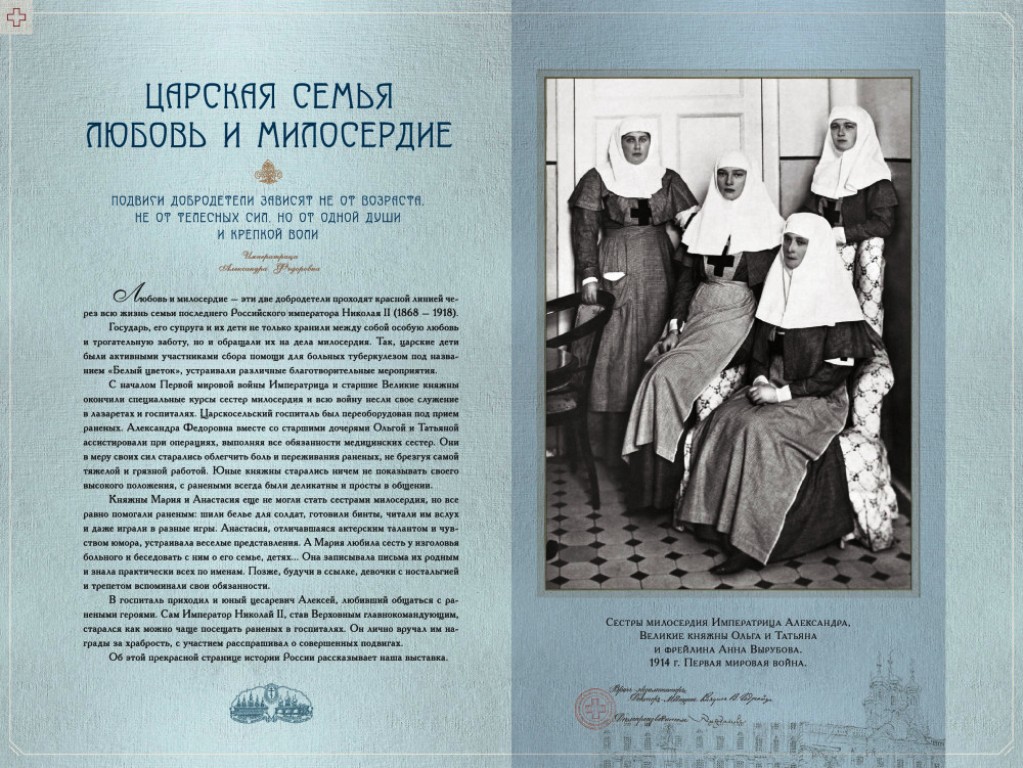
The Tsar’s Family: Love and Mercy Photo gallery + 37 PHOTOS

On Monday, 16th October 2023, a new outdoor photo-exhibition ‘The Tsar’s Family: Love and Mercy’ opened in central Moscow. Most of the photographs presented at the exhibition are dedicated to the participation of the Imperial Family II in matters of charity and service to others.

Source: Pravoslavie.ru. 3 November 2023
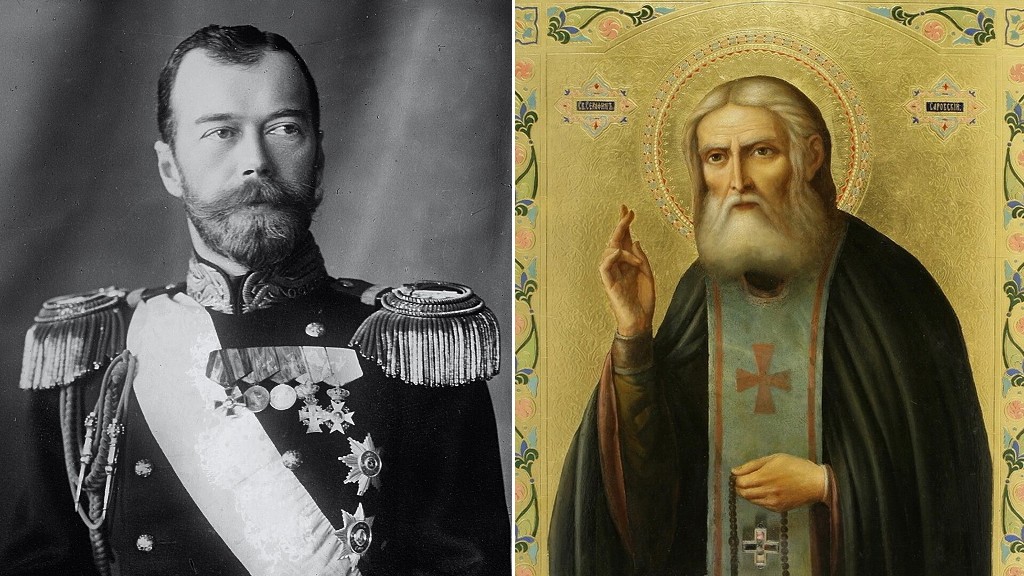
Why Nicholas II insisted on canonizing Seraphim of Sarov

Despite resistance by Church authorities, the last Russian emperor insisted that the holy Christian elder be declared a saint. This was not just to please ordinary Russian believers, but also because the emperor had a personal request of his own to make to Seraphim of Sarov.

Source: Russia Beyond. 1 August 2023]]
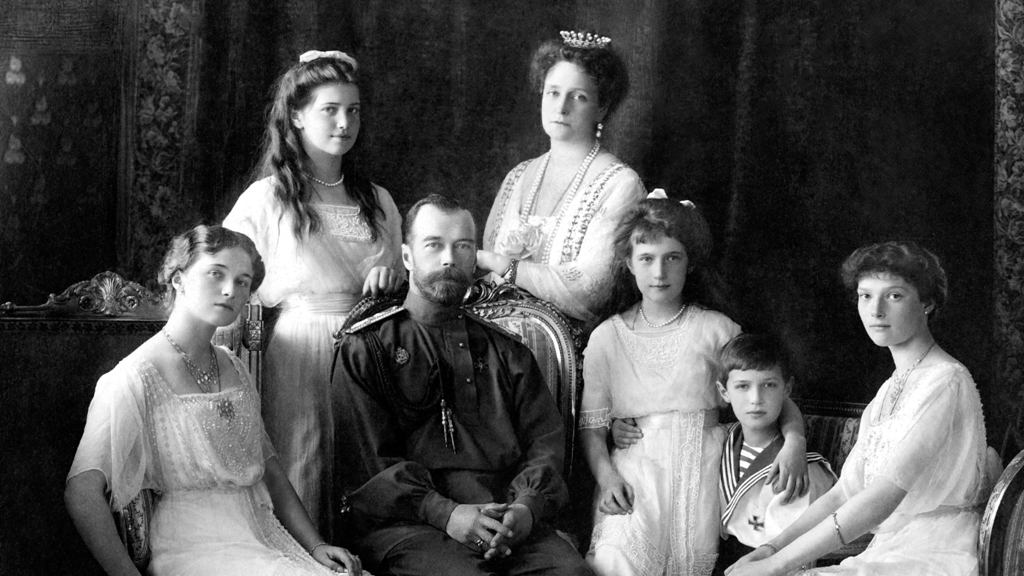
Chronicle of the veneration of the Royal Martyrs in the Urals: History and Modernit

This very interesting article discusses the veneration of the Royal Martyrs that began in Ekaterinburg in the late 1980s, and which eventually led to their formal canonization by the Moscow Patriarchate in 2000. The Imperial Family had already been canonized by the Russian Orthodox Church Outside of Russia in 1981.

Source: Orthodox Christianity. 17 July 2023
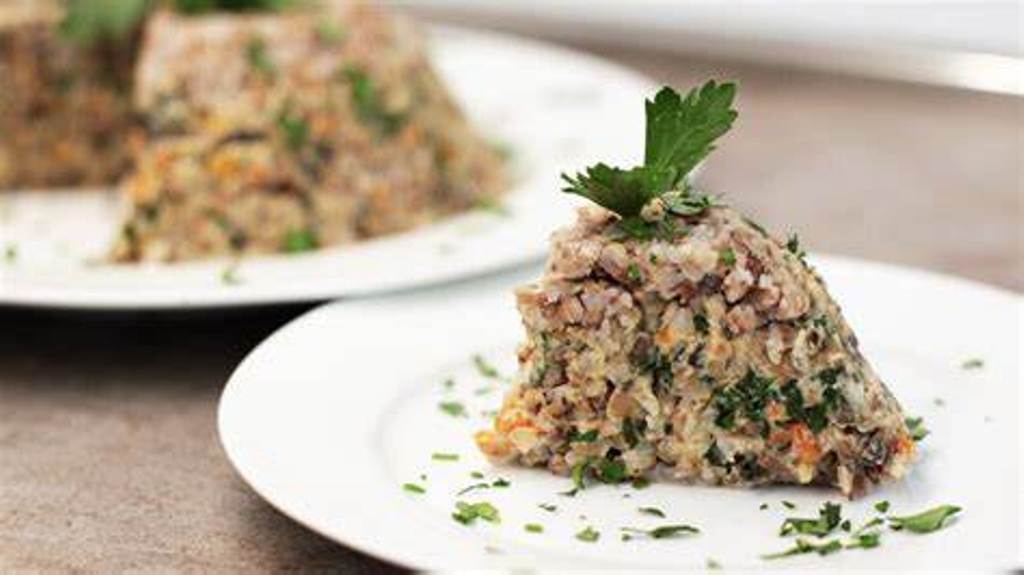
Dragomirov’s porridge: Mastering Nicholas II’s favorite brunch

According to popular legend, the last Russian emperor didn’t miss a single day without this savory mushroom and buckwheat porridge. If you want to try the most traditional Russian flavor combo, then give this recipe a try.

Source: Russia Beyond. 5 July 2023

***

For MORE articles, please refer to the following links:

Nicholas II in the news – Spring 2023
8 articles published in April, May and June 2023

Nicholas II in the news – Winter 2023
9 articles published in January, February and March 2023

Nicholas II in the news – Autumn 2022
7 articles published in October, November and December 2022

Nicholas II in the news – Summer 2022
12 articles published in July, August and September 2022

Nicholas II in the news – Spring 2022
7 articles published in April, May and June 2022

Nicholas II in the news – Winter 2022
6 articles published in January, February and March 2022
Paul Gilbert’s Romanov Bookshop on AMAZON – UPDATED with NEW titles!!

I have published more than 30 titles to date through AMAZON – featuring one of the largest selections of books on Nicholas II, the Romanov dynasty and the history of Imperial Russia.

Please CLICK on the BANNER or LINK above to review my current selection of titles in hardcover, paperback and ebook editions. Listings provide a full description for each title, pricing and a Look inside feature.

© Paul Gilbert. 31 December 2023
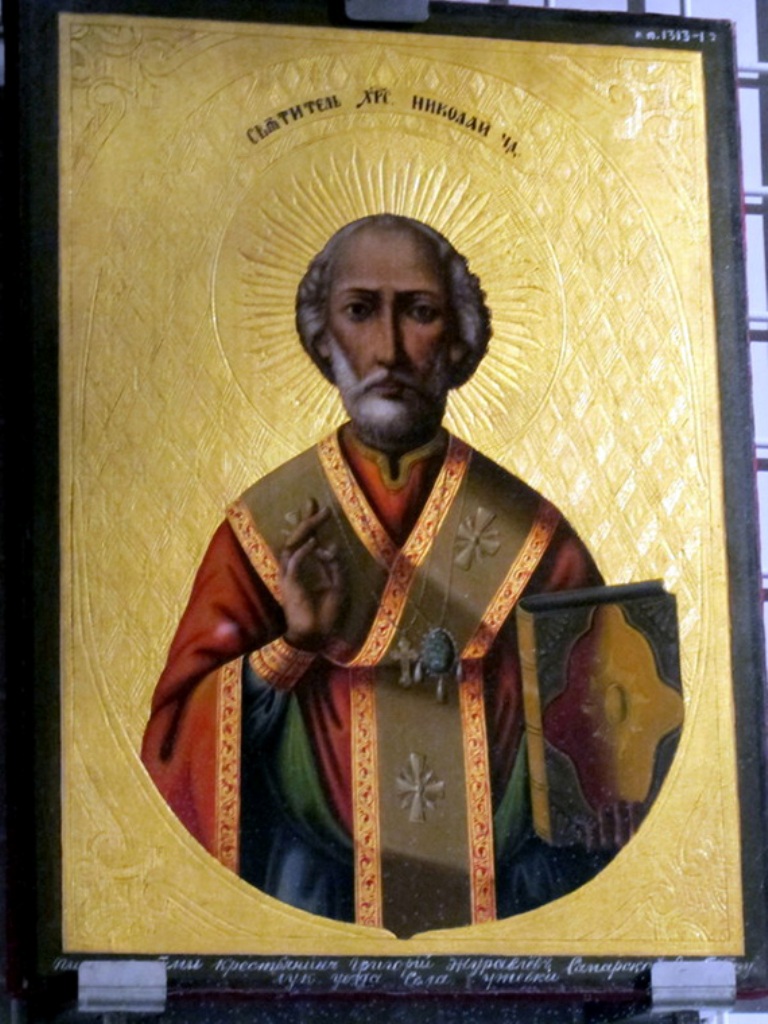
Icon belonging to Nicholas II discovered in the funds of State Hermitage Museum

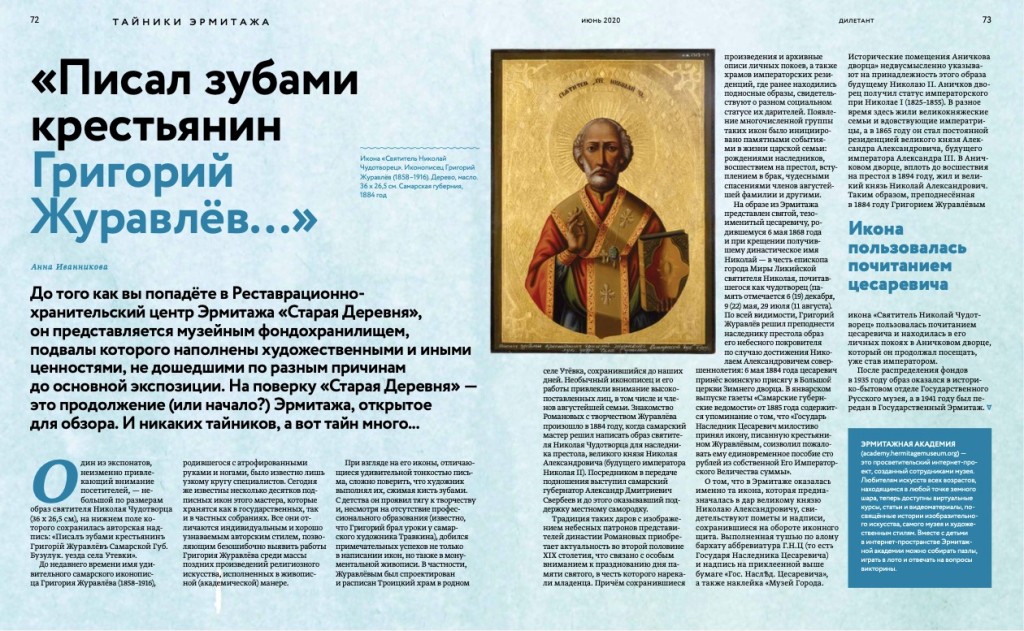
PHOTO: icon of St. Nicholas the Wonderworker by the iconographer Grigory Nikolayevich Zhuravlev (1860–1916). The icon was painted in 1884, specially for the future Emperor Nicholas II

In 1885, the heir to the Russian throne Tsesarevich and Grand Duke Nicholas Alexandrovich [the future Emperor Nicholas II], was presented with an unusual icon of his heavenly patron St. Nicholas the Wonderworker. It was unusual not in its execution, but in the way it was written [painted].

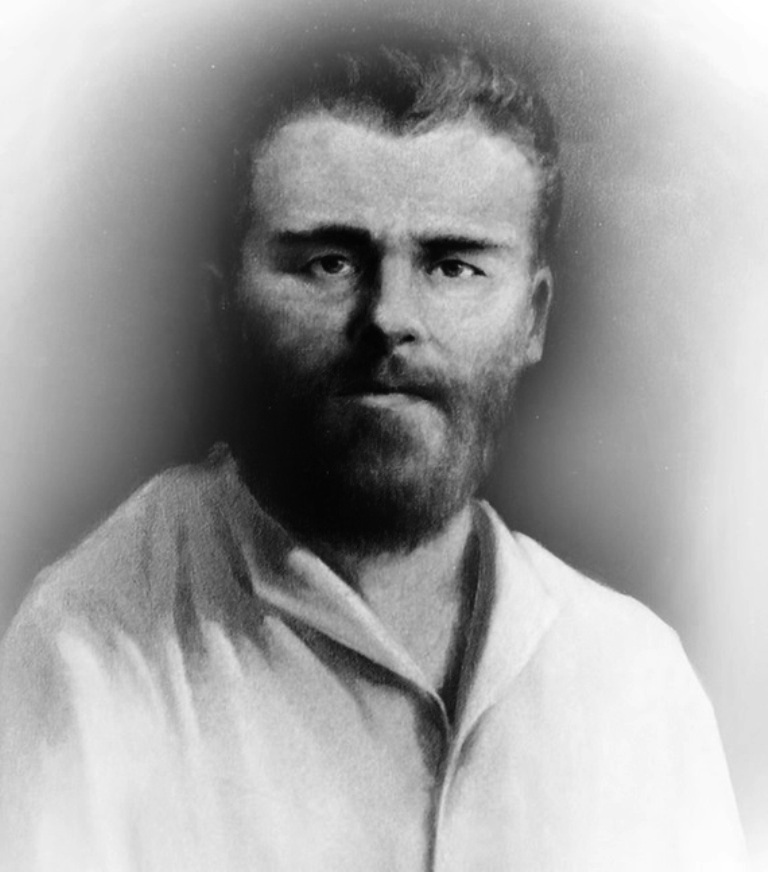
This icon was painted by Grigory Nikolayevich Zhuravlev (1860–1916), who used his teeth to paint the image of St. Nicholas. Zhuravlev was a bilateral amputee [a person who was missing both arms and both legs] a peasant from the village of Utyovka, Samara Province.

PHOTO: Grigory Nikolayevich Zhuravlev (1860–1916)

Grigory was born with arms up to his elbows and legs up to his knees. However, he was gifted with the ability to draw, which is revealed in his early youth in the painting of icons. Having learned the basics of icon painting from a Samara iconographer, Grigory began to create icons.

He did not receive any special education, he was self-taught. He painted icons for his fellow villagers. He received orders from prominent Samara residents, and was in regular correspondence with the Samara governor Alexander Sverbeev, who became the iconographer’s patron.

In 1884, Zhuravlev met with Sverbeev, and made a request to present Tsesarevich Nicholas Alexandrovich with an icon of St. Nicholas the Wonderworker – the future Tsar’s namesake. The governor heartily approved his request.

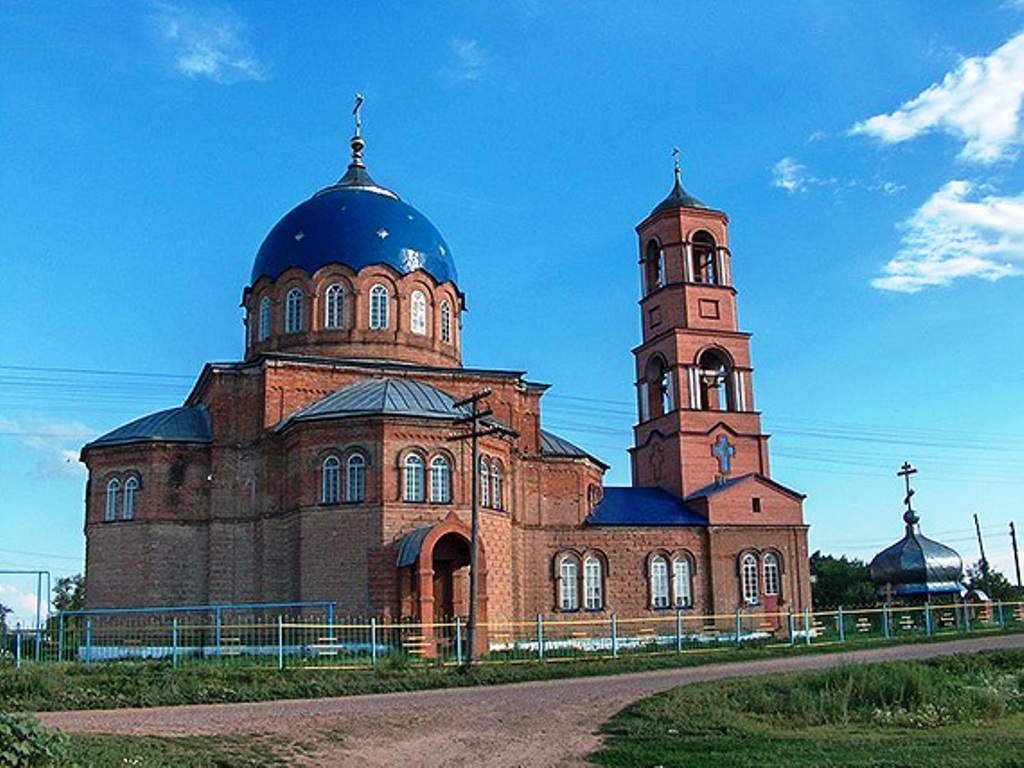
PHOTO: the Trinity Church in Zhuravlev’s native village of Utevka (near Samara)

Grigory Zhuravlev enclosed a letter with the icon:

“Your Imperial Highness! I most humbly ask you to allow this icon to come to Your Highest Name, because I have no hands and feet. And I painted this icon at the instruction of Almighty God, Who allowed me into the Light of God. And he gave me a gift. Using the movement of my mouth God I direct my skill to create this icon.”

The Tsesarevich graciously accepted the icon painted by the peasant Zhuravlev and deigned to grant him a one-time allowance of one hundred rubles from His Imperial Majesty’s own sum, a very generous sum.

Interestingly, the artist without arms and legs was invited to paint icons in the Trinity Church in his native village of Utevka (near Samara). The iconographer was tied to a cradle and lifted to the appropriate height, where he painted holy images, holding the brush in his teeth.

PHOTO: in 2020, an article by Anna Ivannikova, about the icon of St. Nicholas the Wonderworker, was published in an issue of the Russian magazine Дилетант [Diletant]

When Nicholas Alexandrovich returned to St. Petersburg, he kept the icon in his private rooms in the Anitchkov Palace. After the distribution of possessions of the Romanov’s in 1935, the icon ended up in the the State Russian Museum in Leningrad, and in 1941 it was transferred to the State Hermitage Museum, where it was placed into storage, as museum staff believed it had no historic significance.

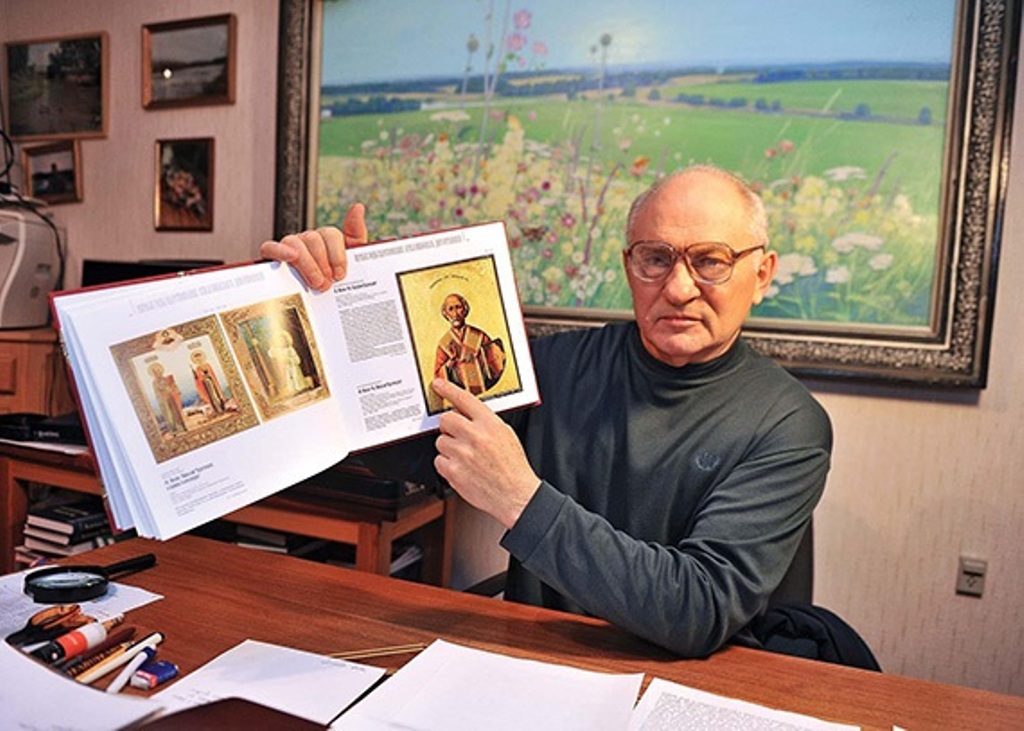
Several years ago, a unique icon was discovered in the funds of the Staraya Derevnya Restoration and Storage Center of the State Hermitage Museum. Researchers knew nothing of the icon’s provenance. That is, until Alexander Malinovskiy, a local historian, writer and Doctor of Technical Sciences, a researcher of the life and work of Grigory Zhuravlev, provided the Hermitage with information which solved the mystery of the icon and it’s famous iconographer.

PHOTO: Alexander Malinovskiy

Malinovsky cited two letters, which provided evidence. In one of them, Zhuravlev writes that he and his father are sending an icon commissioned by the governor. In the same archive, he found another letter from Zhuravlev to Tsesarevich Nicholas Alexandrovich dated 1884 with a request to accept an icon of St. Nicholas the Wonderworker, specially painted for him.

On the back of the icon there is an inscription: “From the archive of the Tsesarevich”.

Zhuraviev’s icon of St. Nicholas the Wonderworker, gifted to the future Emperor Nicholas II, has been preserved to this day, in the Collection of the State Hermitage Museum in St. Petersburg.

© Paul Gilbert. 30 December 2023

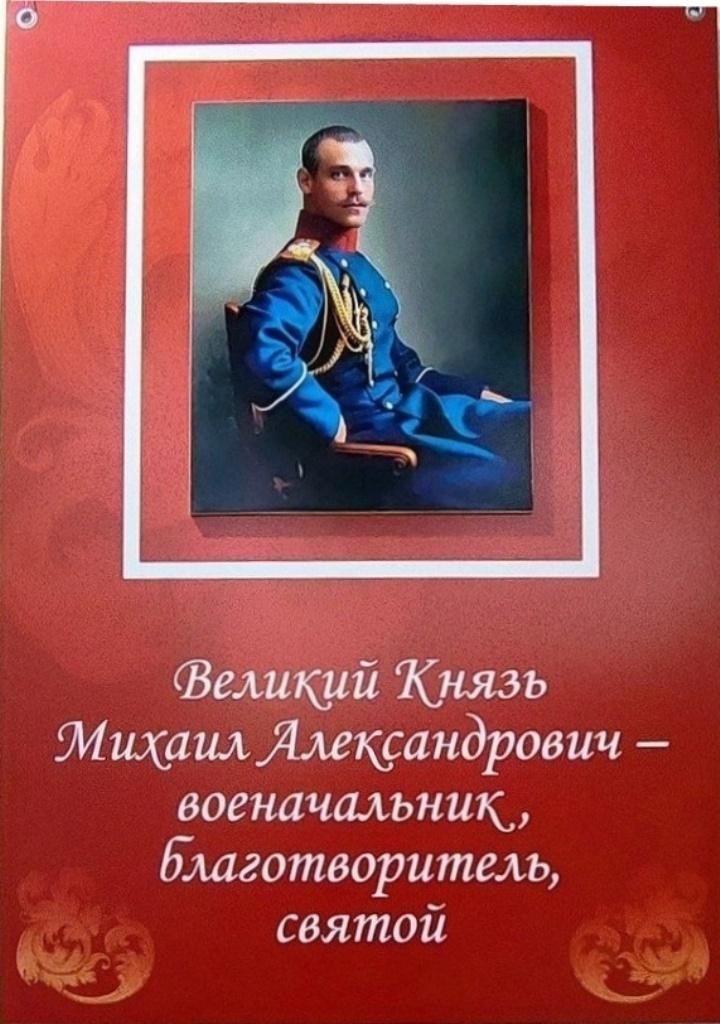
Grand Duke Mikhail Alexandrovich exhibit opens in Bryansk

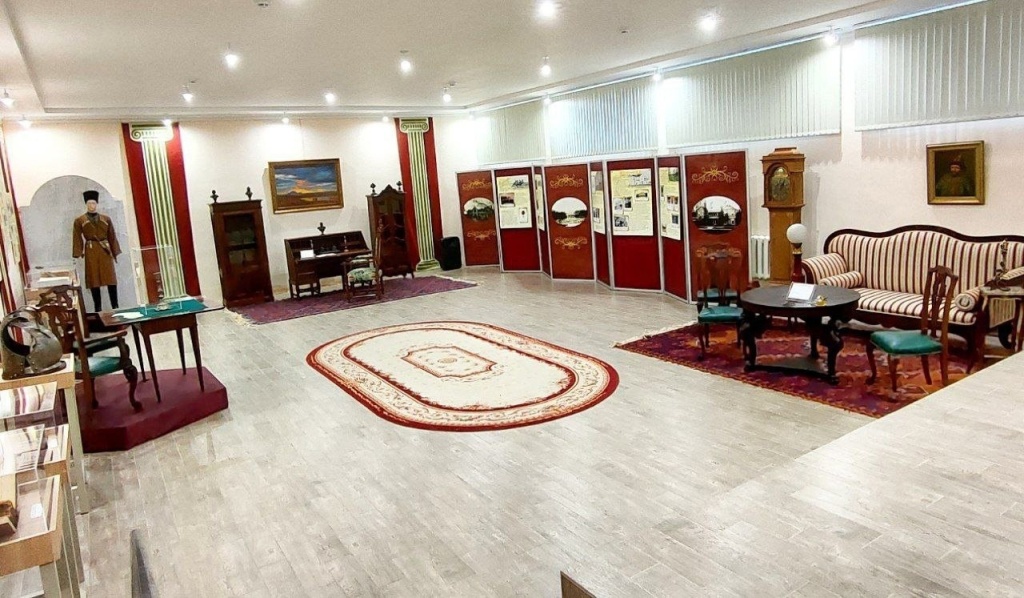
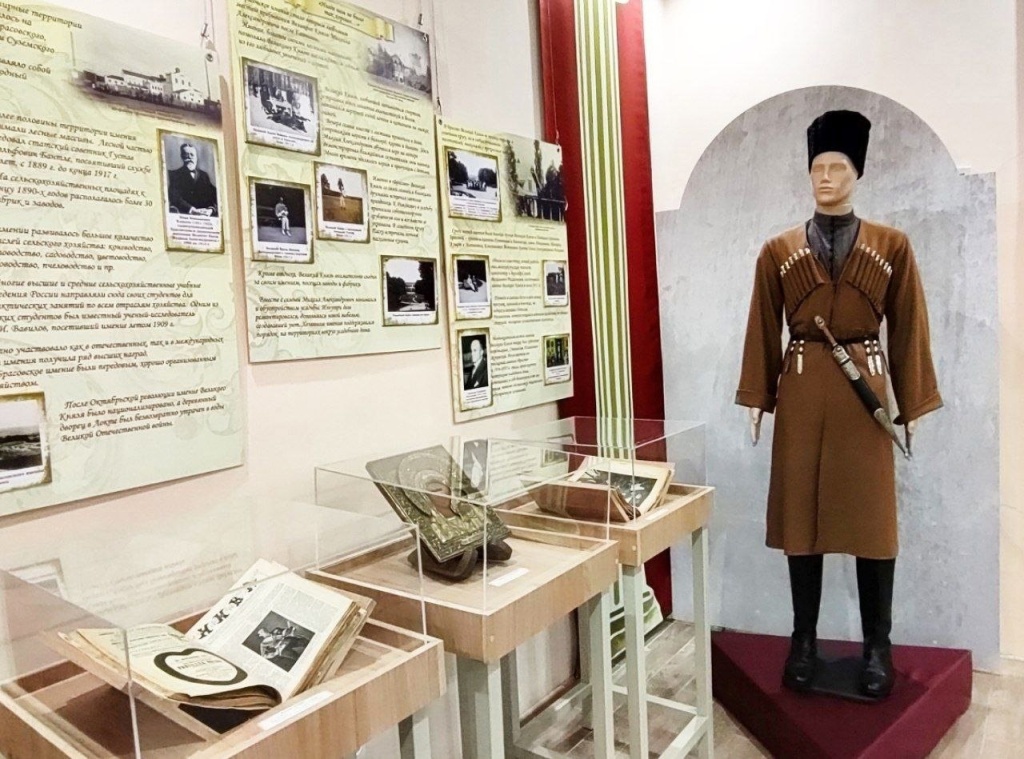
On 7th December 2023, the exhibition “Grand Duke Mikhail Alexandrovich – Military Leader, Philanthropist, Saint” opened at the Bryansk State Museum of Local Lore. The younger brother of Emperor Nicholas II, was the most closely associated member of the Russian Imperial Family with with the Bryansk region.

From 1899 to 1917, Grand Duke Mikhail Alexandrovich owned the vast Brasov estate, which he visited several times and which under his leadership turned into an exemplary economic enterprise. The main estate of the Brasov estate was situated in the village of Lokot, which included a beautiful manor house and park, it became a favorite place for the Grand Duke and his family. There Mikhail Alexandrovich received guests, among whom were the great Russian composer Sergei Rachmaninoff and the famous artist Stanislav Zhukovsky.

Visitors to the exhibition will have the opportunity to acquaint themselves with the main events in the life of of Grand Duke Mikhail Alexandrovich and the historical epoch with which he is so closely connected. The exhibition features many unique exhibits, including silver coins and Imperial Orders, issues of the magazine “Niva“, military uniforms of cavalry units and formations commanded by the Grand Duke, furniture and samples of decorative and applied art in the style of the interiors of the Brasov estate and the Gatchina Palace.

© Paul Gilbert. 29 December 2023

***

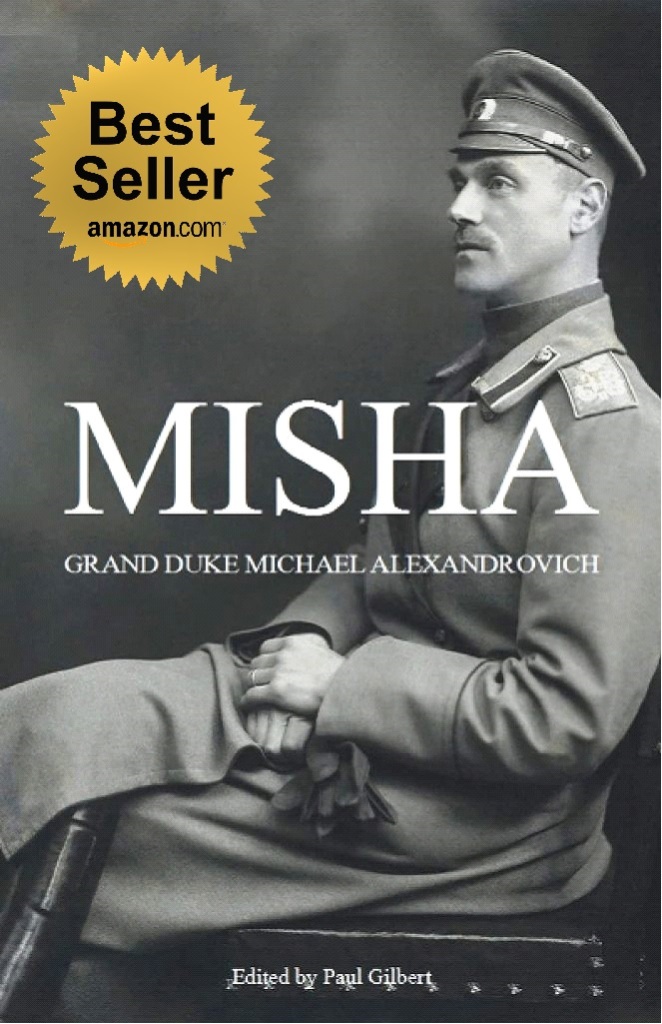
MISHA: GRAND DUKE MICHAEL ALEXANDROVICH
Compiled and Edited by Paul Gilbert

Paperback edition. 136 pages + 50 black & white photographs

CLICK HERE TO ORDER PAPERBACK EDITION

Grand Duke Michael Alexandrovich (1878-1918) was the youngest son of Emperor Alexander III and Empress Maria Feodorovna, and the younger brother of Russia’s last emperor Nicholas II.

This book explores the milestones in the life of Grand Duke Michael in a series of essays by four distinct authors, and complemented with 50 black and white photographs.

Among them are the memories of Princess Olga Pavlovna Putyatina, who in February 1917, offered refuge to the grand duke at her flat on Millionnaya Street in Petrograd.

Independent researcher Paul Gilbert offers two fascinating essays: the first reviews an album of some 200 photographs taken by Grand Duke Michael, during his stay at Knebworth House in Hertfordshire. England, 1913-1914 . The album sold at auction for more than 2 million rubles ($34,000 USD).

The final essay examines the myth that Michael was the last Tsar of Russia, he was not. Nicholas II remained Emperor and Tsar of Russia until the day of his death and martyrdom on 17th July 1918.

Grand Duke Mikhail Alexandrovich and his Secretary Nikolai Nikolaevich Johnson, were both murdered by the Bolsheviks near Perm on 13 June 1918. Their remains have never been found.

Unique icons belonging to the imperial family on display in Moscow for the first time

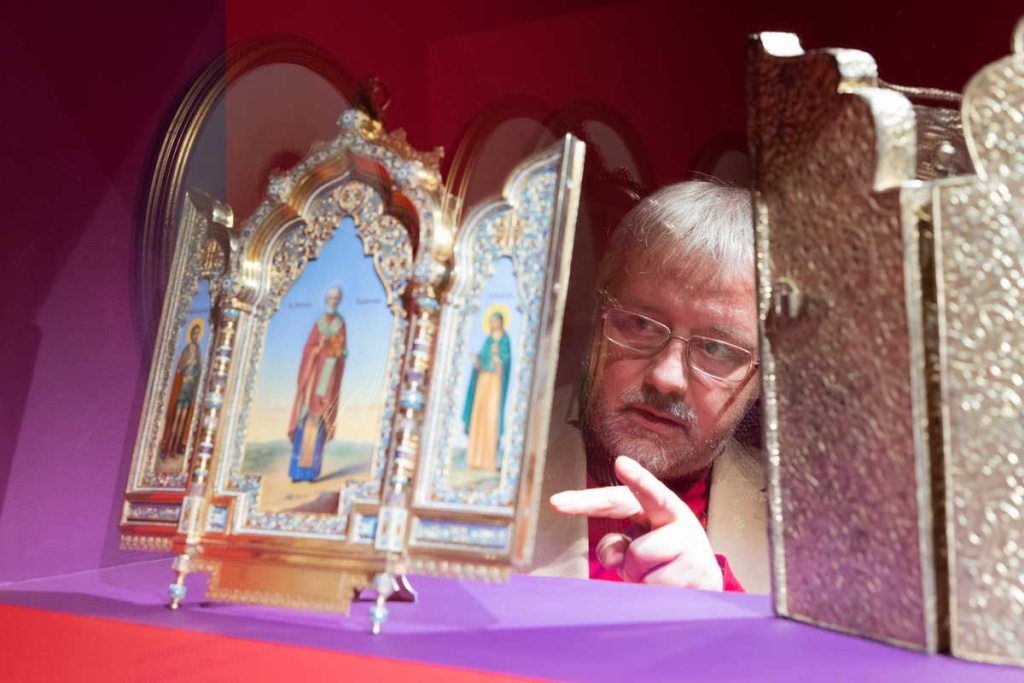
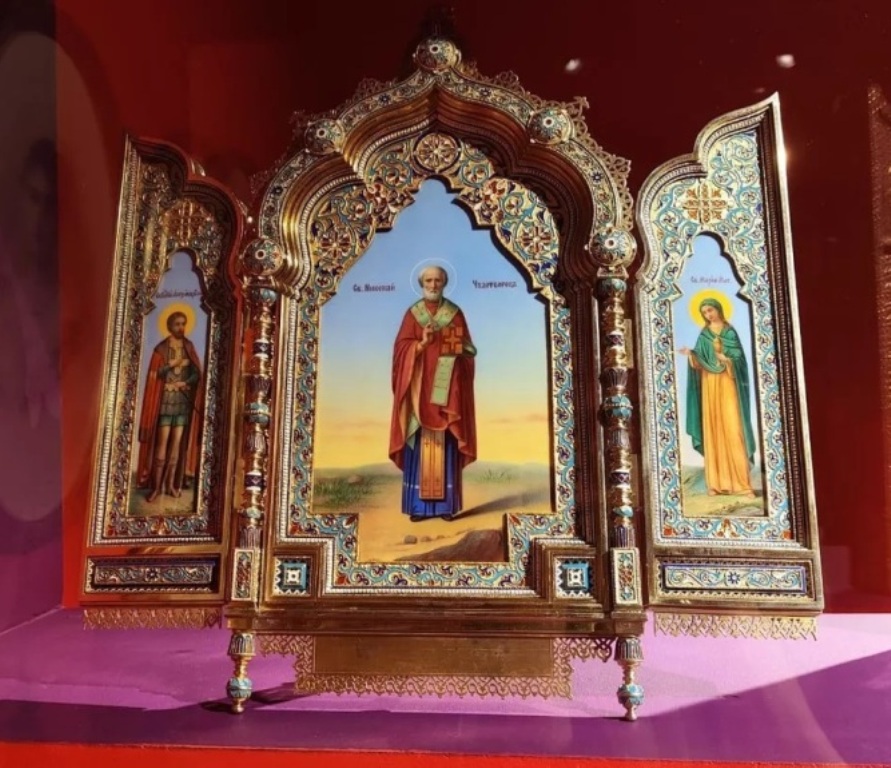
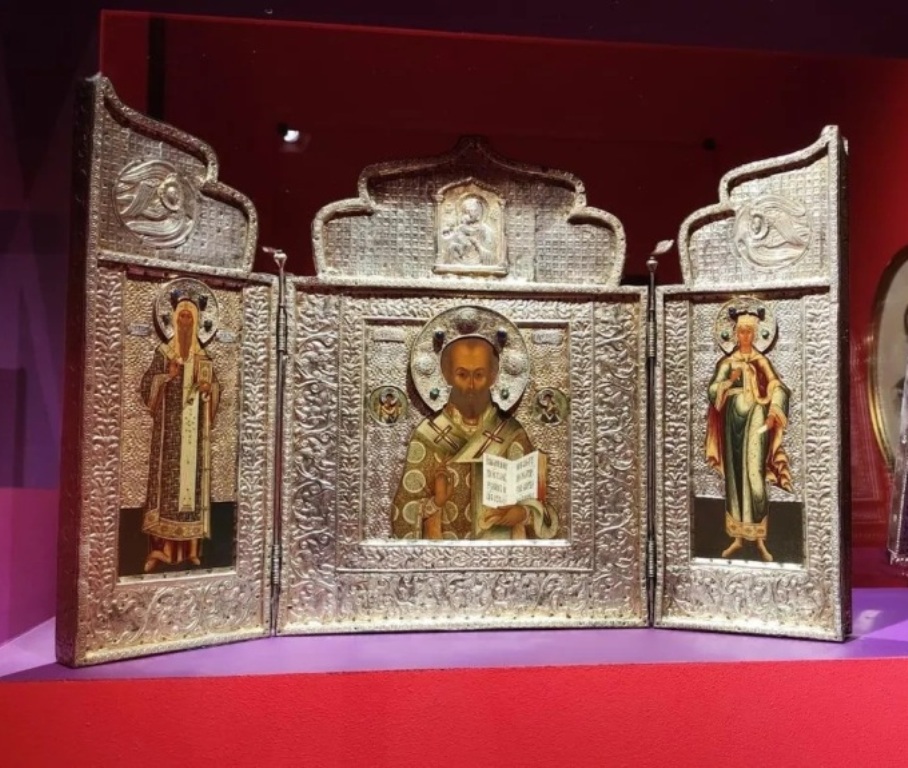
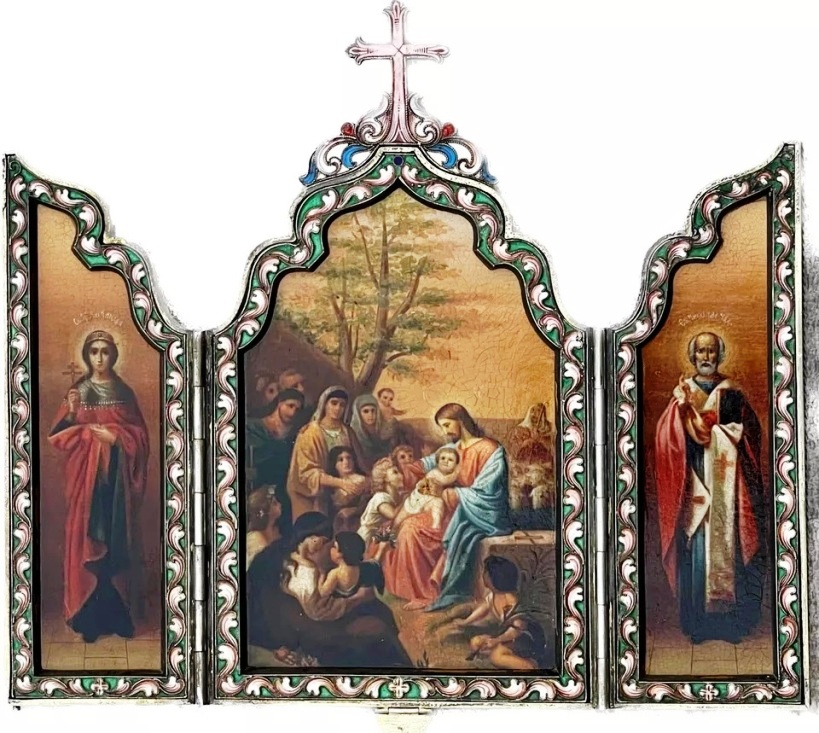
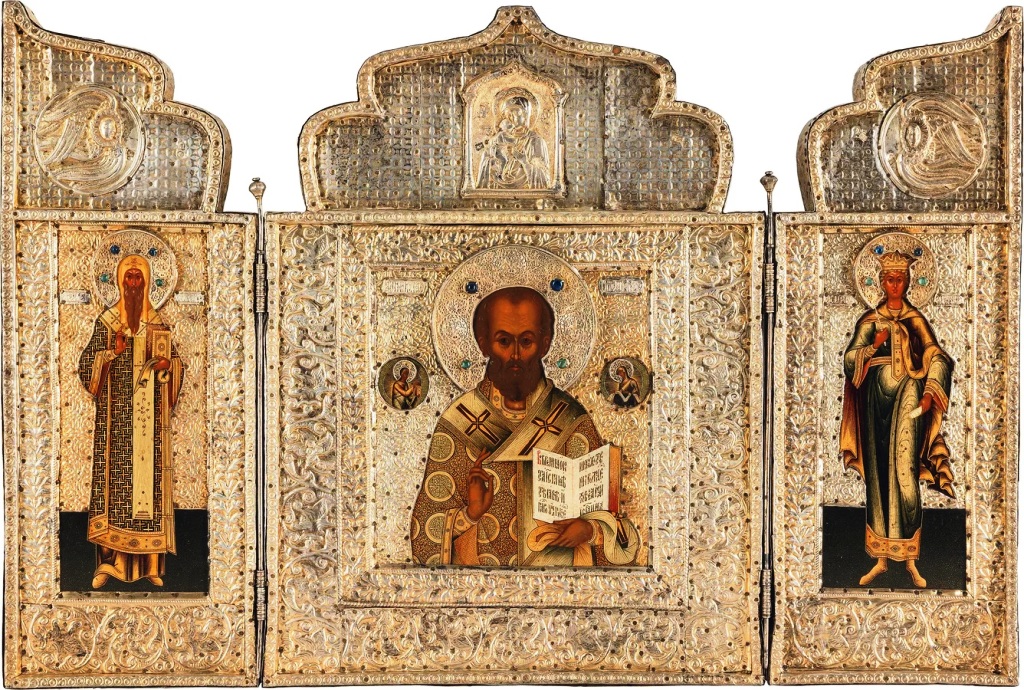
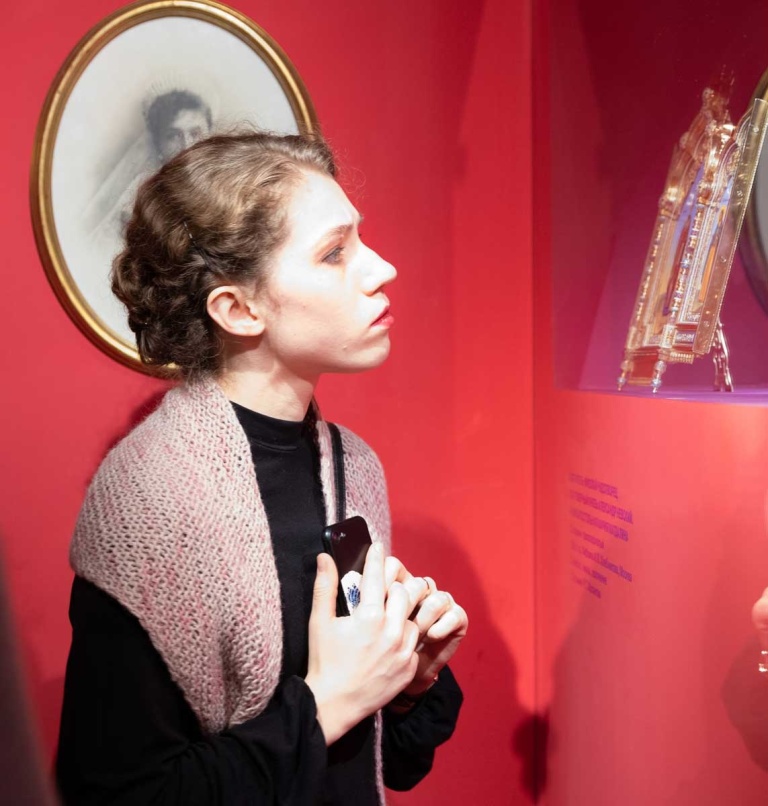
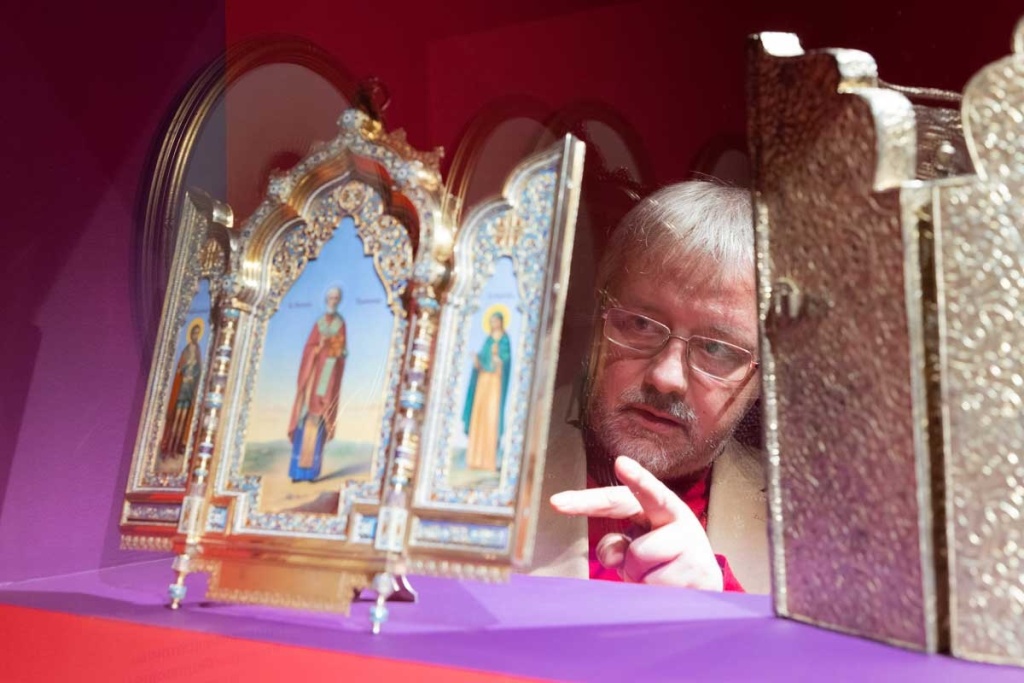
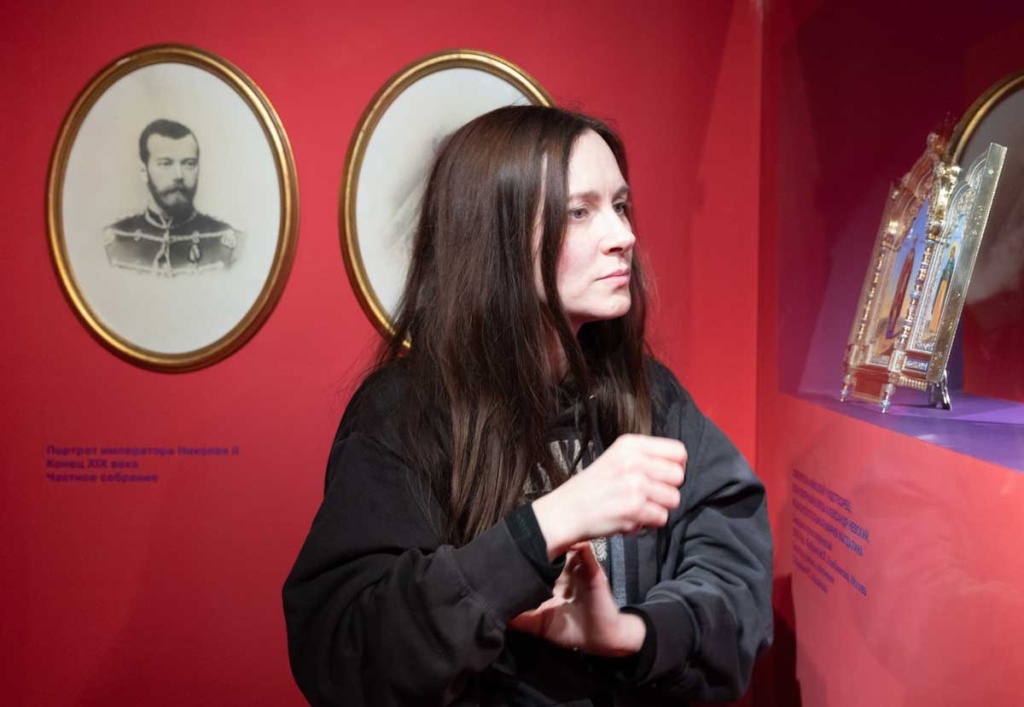
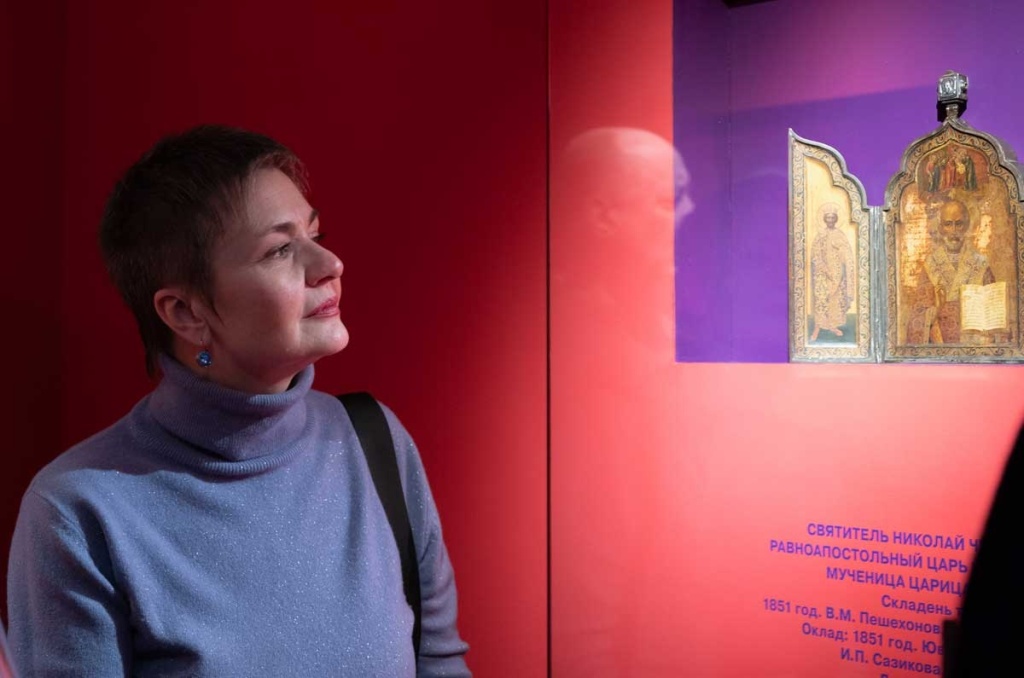
On 21st December 2023, a unique exhibit featuring four folding icons presented to members of the Family of Emperor Nicholas II, went on display at the Andrei Rublev Museum in Moscow.

According to Zhanna Belik, curator of the exhibition, “the icons, all of which are now in private collections, are being shown for the first time at the exhibition”.

“Each of the four folding icons is unique in its own way. They were personal gifts to members of the Imperial Family from organizations and donors from different walks of life. Gifts were given to the Imperial Family on special occasions throughout the year. For instance, on the occasion of the birth of children, their coming of age, the 300th anniversary of the House of Romanov, birthdays and namedays, etc.. To do this, it was necessary to submit a petition in advance, which was considered personally by the person to whom the gift was addressed,” Belik said.

CLICK on each IMAGE below to enlarge

According to Belik, the birth of Tsesarevich Alexei Nikolaevich in 1904 is associated with the folding icon gifted to Emperor Nicholas II and his wife Alexandra Fedorovna, by the abbot and brethren of the Trinity-Sergius Lavra [in the town of Sergiyev Posad, near Moscow]. The artists and jewelers who created it were outstanding craftsmen of their time.

“The exhibition also presents a folding icon with images of saints St. Nicholas the Wonderworker, Prince Alexander Nevsky and Mary Magdalene. The icon was presented to Tsesarevich Nicholas Alexandrovich [future Emperor Nicholas II] on his 18th birthday, by the guard of the Moscow Philistine Society. The folding icon was made in the workshop of Ivan Khlebnikov, a Supplier to the Imperial Court,” the curator said.

CLICK on each IMAGE below to enlarge

The curator noted that each of the four folding icons have the icon writer’s name on the back of each icon, the frames were made by jewelers – Suppliers of the Imperial Court. “At this time, jewelry art reached its apogee in Russian art, the work of jewelers of the second half of the 19th century and the beginning of the 20th century are world-class works,” Belik said.

The exhibition also features a sewn icon from the collection of the Andrei Rublev Museum, also created on the occasion of the birth of the long-awaited heir, and presented to Nicholas and Alexandra.

The exhibition runs from 21st December 2023 to 11th February 2024.

© Paul Gilbert. 28 December 2023

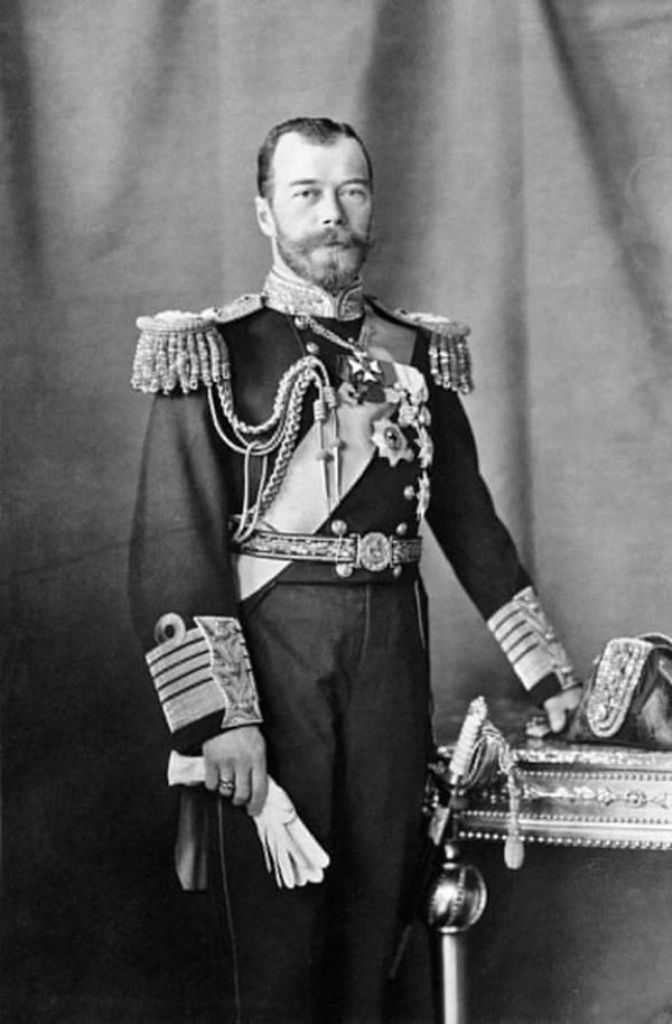
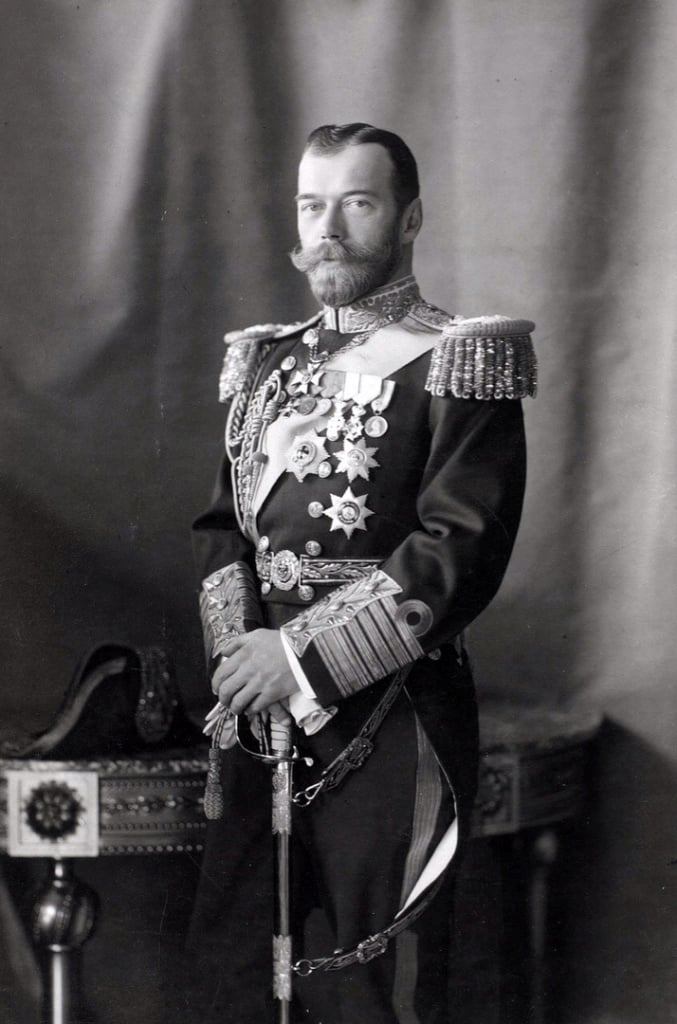
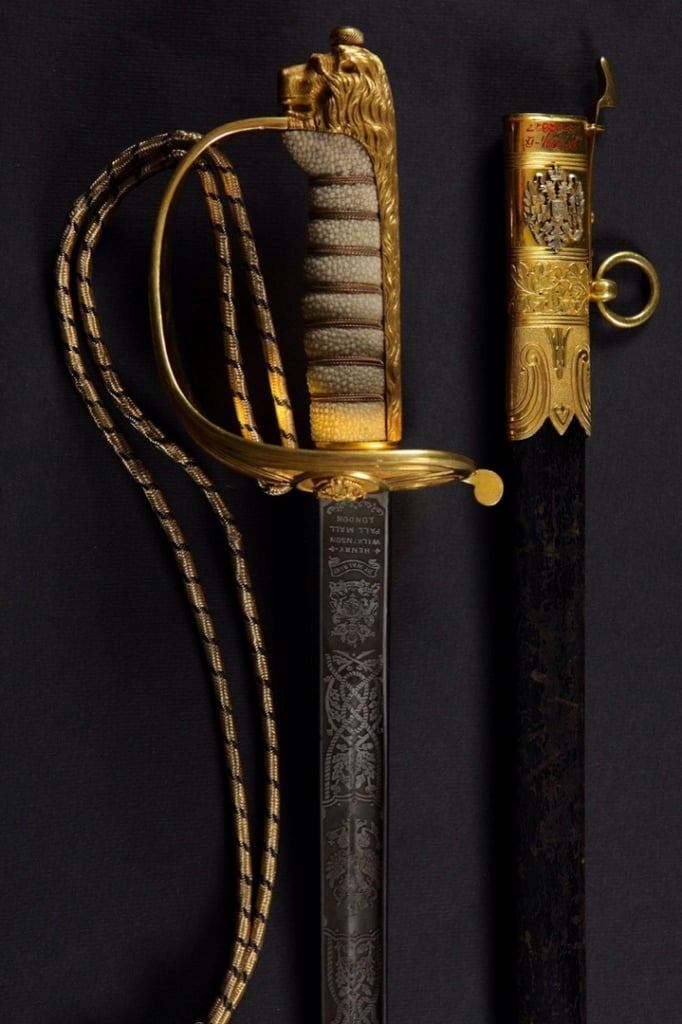
Nicholas II appointed rank of Admiral of the British Navy, 1908

PHOTOS: Emperor Nicholas II, in the uniform of a Royal Navy Admiral of the Fleet

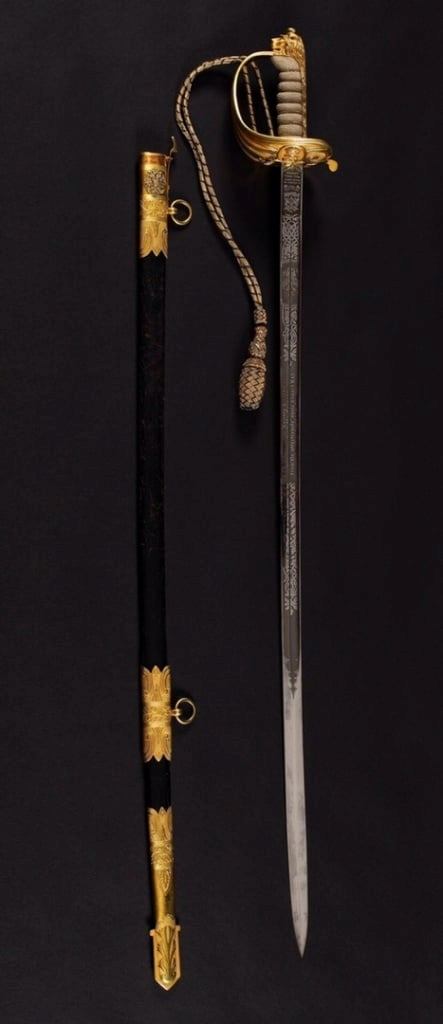
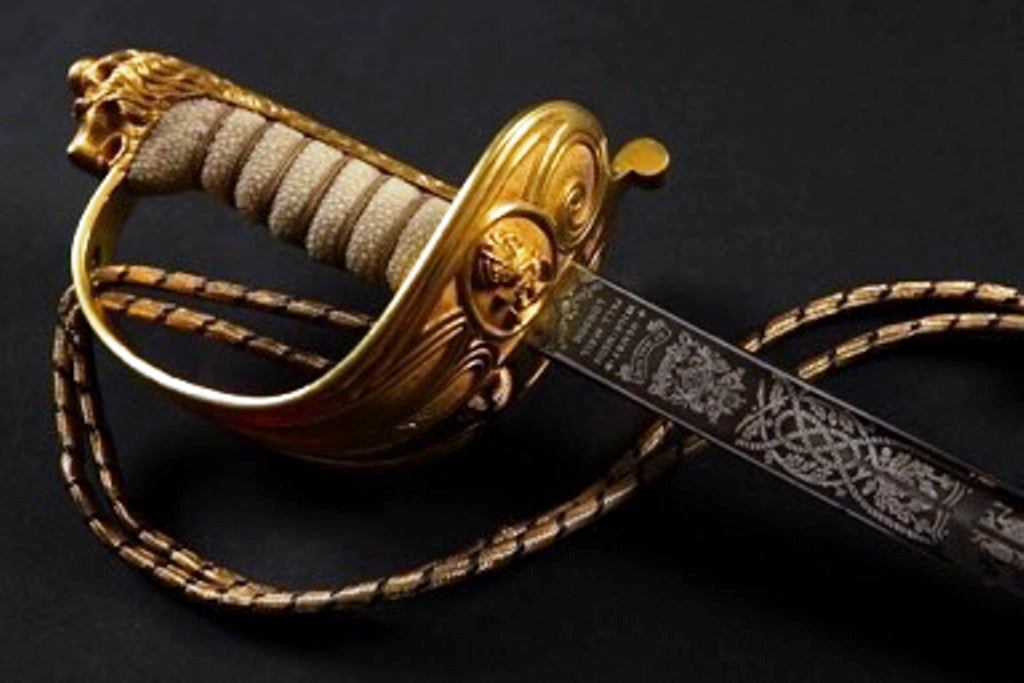
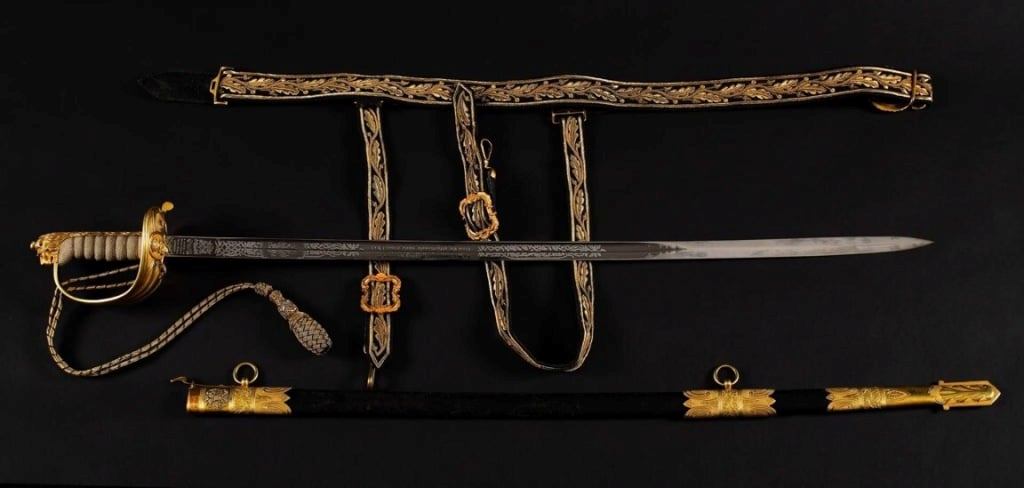
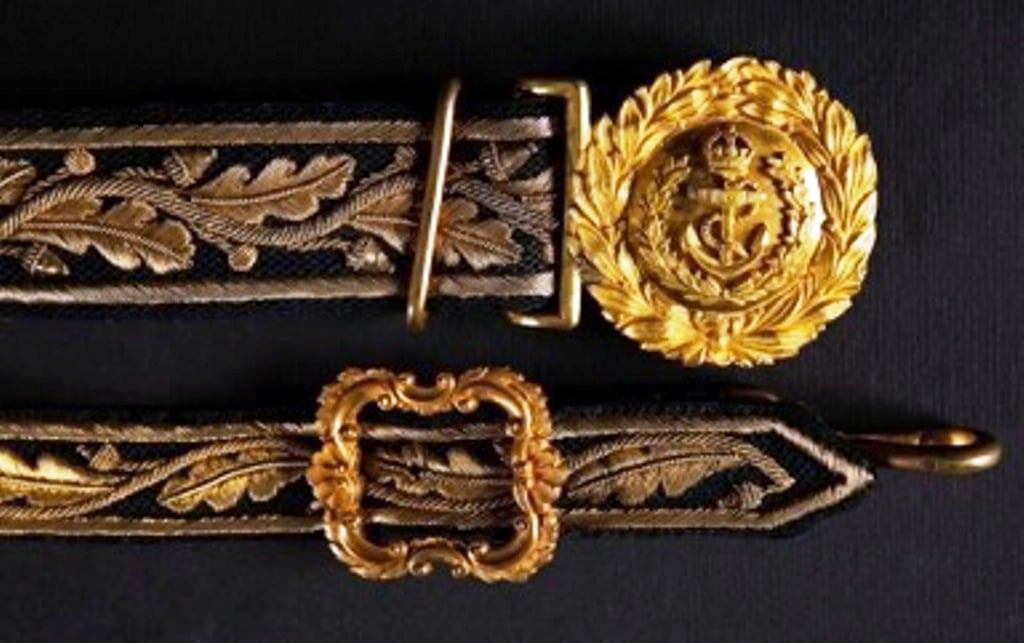
One of the many memorial items belonging to Emperor Nicholas II from the collection of the Military Chamber in Tsarskoye Selo, is this sabre of the admiral of the British Navy.

On 27-28 May 1908, King Edward VII of Great Britain met Nicholas II, during the King’s State Visit to Russia, which took place off Revel (now Tallinn, Estonia).

During their meeting, in addition to discussing diplomatic and trade issues, Edward VII granted Emperor Nicholas II the rank of Admiral of the British Navy.

CLICK on each IMAGE below to enlarge

PHOTOS: Emperor Nicholas II’s sabre of admiral of the British Navy, presented to him on 28th May 1908, by his uncle King Edward VII of Great Britain. From the collection of Tsarskoye Selo State Museum

On May 28, 1908, Emperor Nicholas II wrote in his diary:

“Again, a wonderful day. We slept well … At one o’clock a big breakfast was held on the ‘Standart’. Uncle Bertie appointed me Admiral of the British Navy … “.

On the blade is the English inscription “To His Imperial Majesty Nicholas II Emperor of all the Russians from his affectionate uncle Edward Revel 1908”.

© Paul Gilbert. 27 December 2023

Monument to Nicholas II proposed for Murmansk

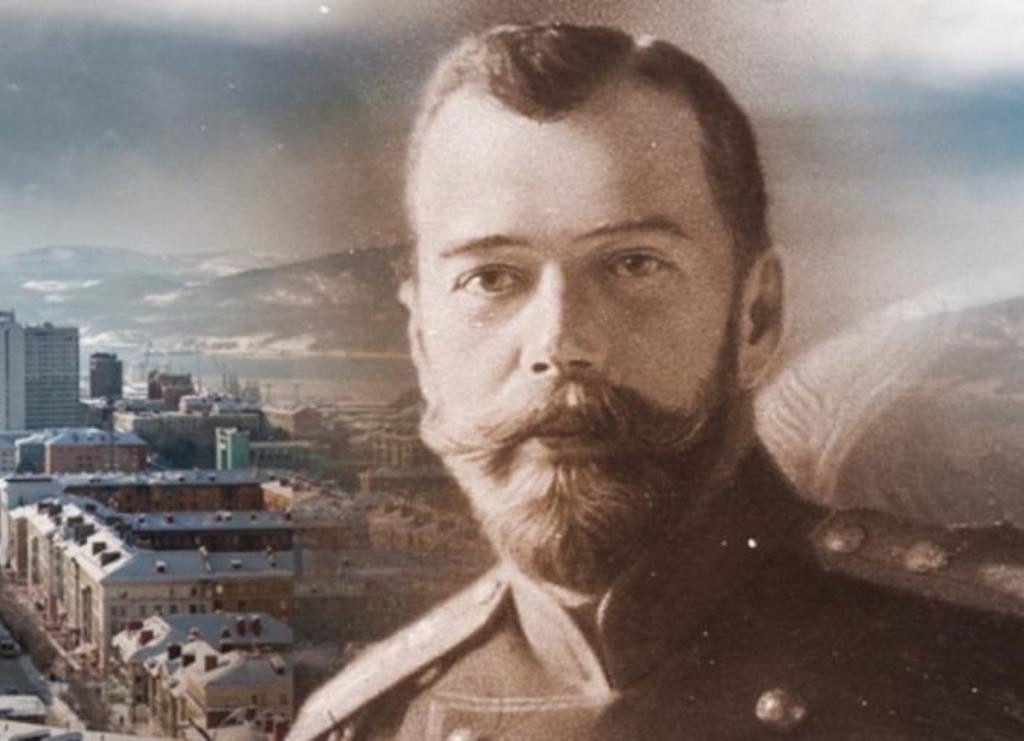
On 22nd December 2023, the Day of the Murmansk Region was held at VDNH in Moscow, during which a proposal was made to the Governor of Murmansk Region Andrei Vladimirovich Chibis, for the installation of a monument to Emperor Nicholas II in the center of Murmansk.

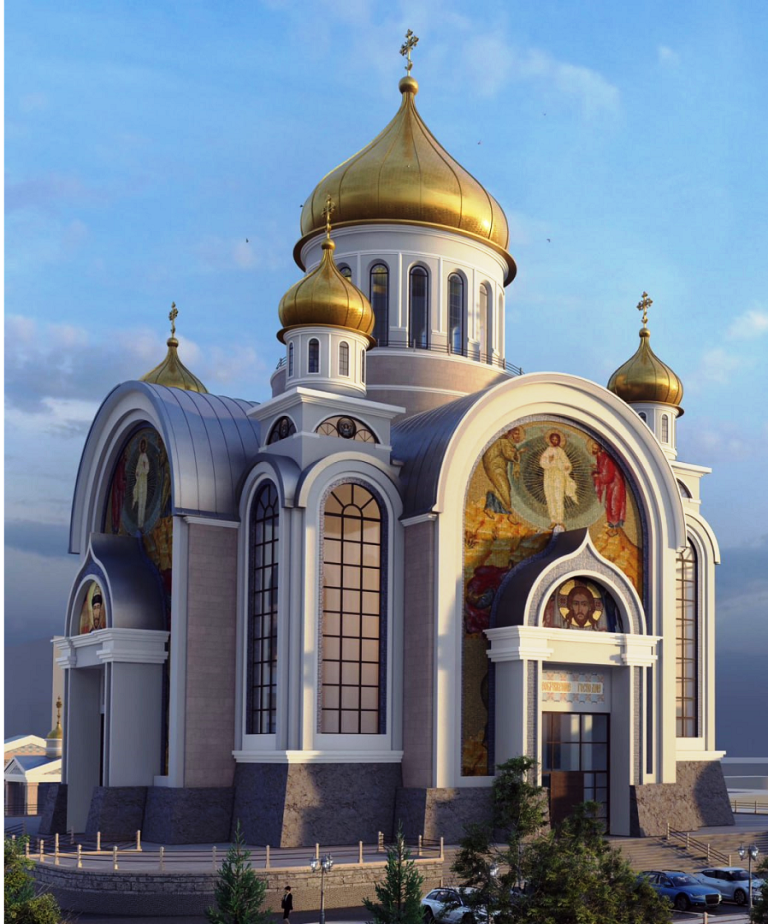
Historical memory must be observed, and in accordance with the initiatives of the residents and the blessing of His Holiness Patriarch Kirill, a decision was made to build a cathedral [Preobrazhensky St. Nicholas Naval Cathedral] in Murmansk. The cathedral will be dedicated to the heroes of the First and Second World Wars. In addition, the installation of a monument to Emperor Nicholas II on the grounds of the cathedral is already being considered, however, the proposal must be approved by the residents of Murmansk,” the governor said.

The decision to build a cathedral in Murmansk was proposed 106 years ago, by Russia’s last Tsar, who approved the project. According to project manager Archpriest Vladimir Semenov, the completion of the cathedral “will fulfill the last will of the Russian Emperor Nicholas II, who is the founder of our city and the governing synod until February 1917”. Construction on the cathedral began earlier this year and is expected to be completed in 2028.

PHOTO: artist concept of Preobrazhensky St. Nicholas Naval Cathedral in Murmansk, to be completed in 2028

***

Recall that Murmansk was the last city founded in the Russian Empire. Russia’s first ice free port was founded here in 1916 by Nicholas II and named Romanov-on-Murman. It was officially named Murmansk during the Soviet years.

In recent years, Emperor Nicholas II has been commemorated in a number of projects in Murmansk and the surrounding region:

  • In June 2019, Murmansk Airport was reamed Nicholas II-Murmansk Airport
  • In July 2019, plans were announced for a bust-monument to Nicholas II, to be installed in front of the main terminal at Nicholas II-Murmansk Airport
  • In November 2020, a permanent photo-exhibition dedicated to Nicholas II opened in the terminal building at Nicholas II-Murmansk Airport
  • In  December 2020, a bust-monument to Nicholas II was installed on the grounds of the Church of the Assumption of the Blessed Virgin Mary in the city of Kovdor
  • In January 2023, plans were announced for the installment of  sculptural composition of the last Russian Imperial Family, in front of Nicholas II-Murmansk Airport

© Paul Gilbert. 22 December 2023

“Nicholas II is the most slandered personality in the history of Russia” – Metropolitan Tikhon

PHOTO: Metropolitan Tikhon (Shevkunov) of Simferopol and Crimea, reading from his new book “Гибель империи. Российский урок” – “The Death of the Empire. The Russian Lesson

On 7th December 2023, *Metropolitan Tikhon (Shevkunov) of Simferopol and Crimea, held a press conference in Moscow, to promote his new book *“Гибель империи. Российский урок” – “The Death of the Empire. The Russian Lesson“, from which he read aloud excerpts.

Reading from his book, Tikhon’s said: “Our wonderful publicist Ivan Solonevich said that Russia was ruined by gossip. He is absolutely right, it was in the salons of St. Petersburg society in which false testimonies were being made of Russia’s last tsar. Nicholas II, is perhaps the most slandered personality in the history of Russia. Such slander that was spewed at him, from the West and from Japan, from the East, and from inside Russia, was unthinkable.”

In particular, the Russian nobility of that time, Metropolitan Tikhon said, “refused to conform to the rules of decency, and instead spread malicious gossip, in an effort “to despise the sovereign and his entire family.”

At the same time, he noted: “before the revolution, Russia was a prosperous country, the achievements were enormous. Thus, in terms of GDP, the Russian Empire was among the leading countries in the world, and in terms of industrial growth rates, it was in first place. By 1913, Russia was harvesting more grain than Canada, Argentina, and the United States combined. In the first 15 years of the reign of Nicholas II, many educational institutions were created in the history of the country.”

“Yes, the Soviet Union did a lot, but it inherited much of it from the economics and industrial achievements made during the reign of Nicholas II. An incomparable gigantic legacy fell on the heads of the Bolsheviks. <… >The potential that was already laid down from that pre-revolutionary time worked for many, many years,” the bishop of the Russian Orthodox Church said.

Tikhon notes that his new book, using the events of 1917, reveals the mechanisms that were used to fan the flames of revolution in Russia, the mistakes its government and society made during the ensuing 70+ years, and the Soviet Union’s eventual collapse in 1991. Research for the publication is based on nearly 300 scientific works and archival documents.

*NOTE: this title is only available in Russian. I regret. that I do not know how to obtain copies, or if we will ever see an English edition published – PG

***

* Tikhon is one of two Bishops in the Moscow Patriarchate, who believe that the Ekaterinburg Remains are those of Emperor Nicholas II, his family and their four retainers. It is no longer a question of “IF” but “WHEN” the Bishops Council will convene to bring closure to this issue.

© Paul Gilbert. 14 December 2023

“Becoming a Romanov” exhibition opens in Moscow

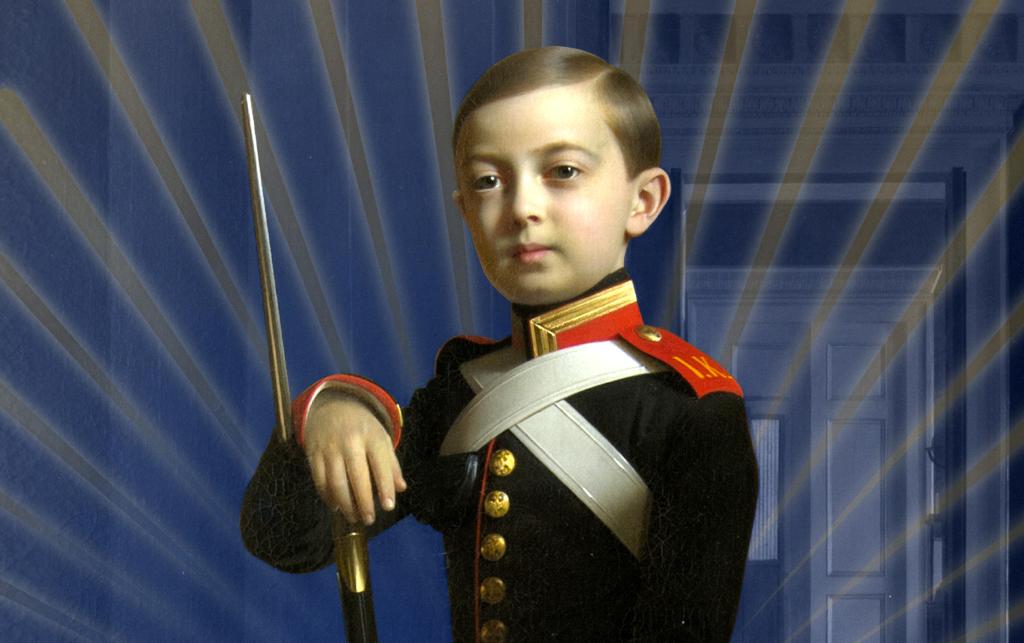
On 9th December 2023, a new exhibition “Becoming a Romanov” opened in the Grand Palace at Tsaritsyno State Museum, near Moscow. The exhibit explores the upbringing and education of grand dukes and grand duchesses of the Russian Imperial Family.

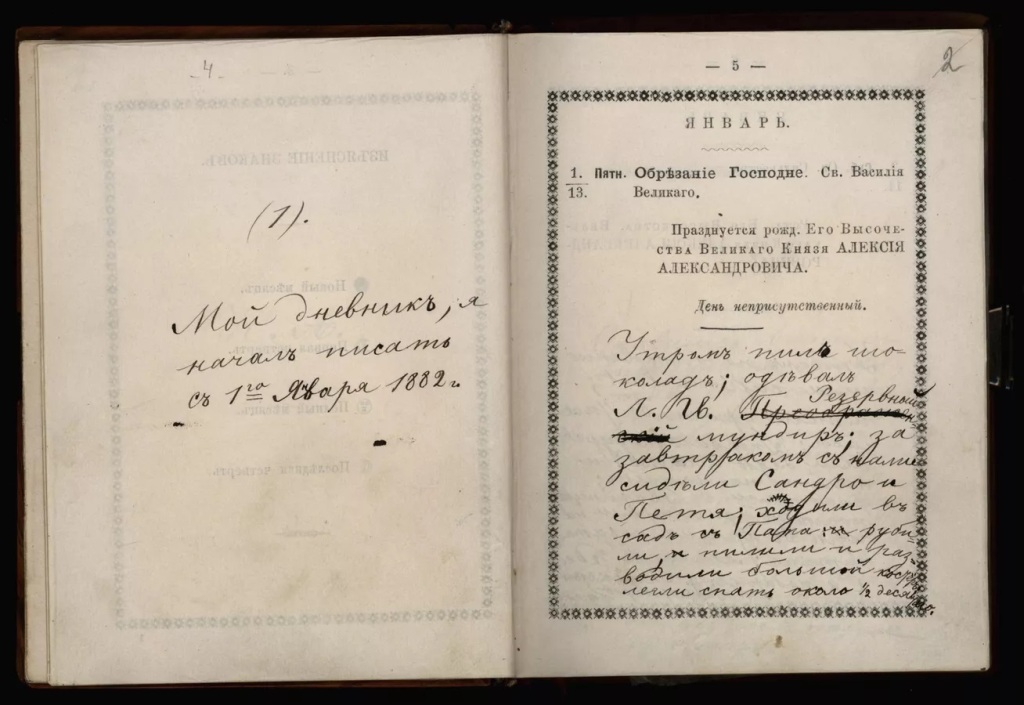
The exposition includes more than 500 exhibits, including a globe owned by Emperor Paul I, notebooks of Alexander I, a report card of Alexander III, as well as diaries, letters, contour maps, sketchbooks, board games, tin soldiers, toy cannons and a 17th century silver rattle, which belonged to Peter the Great.

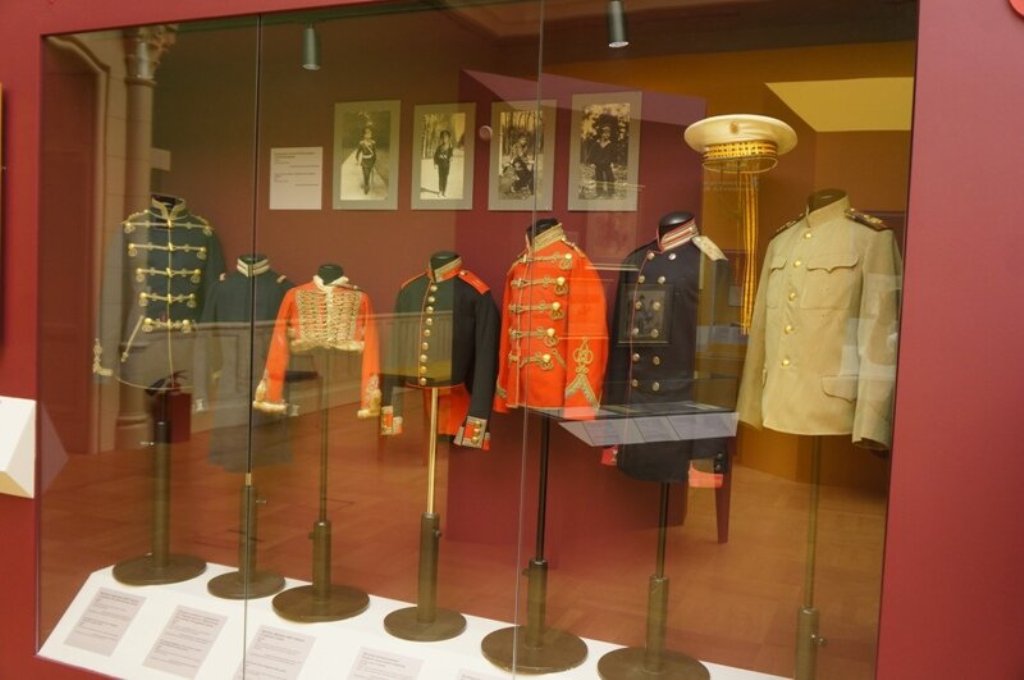
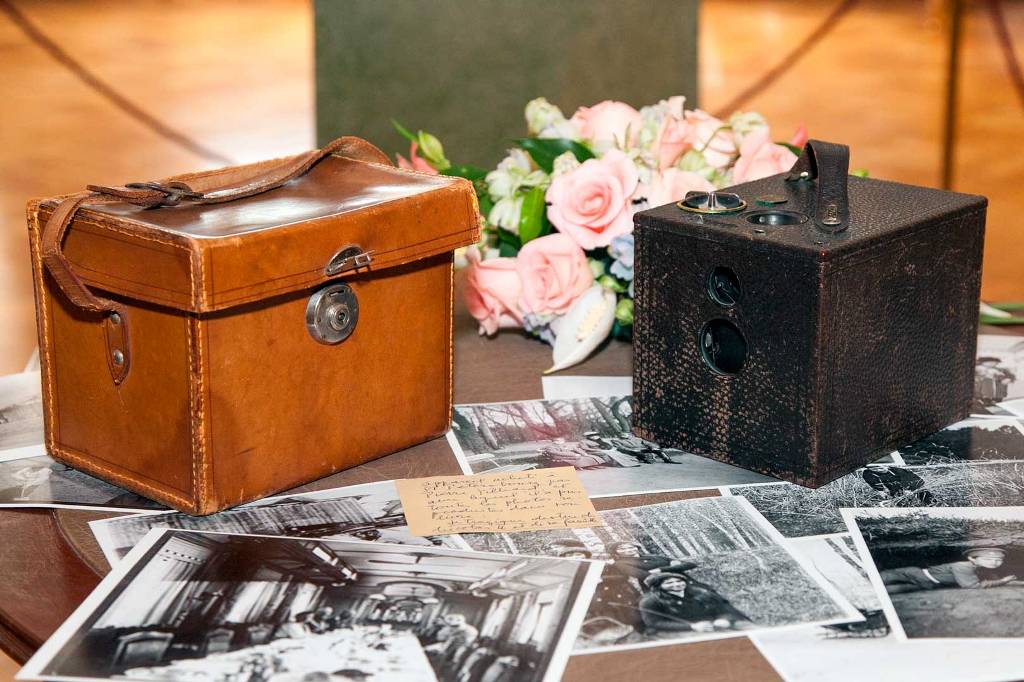
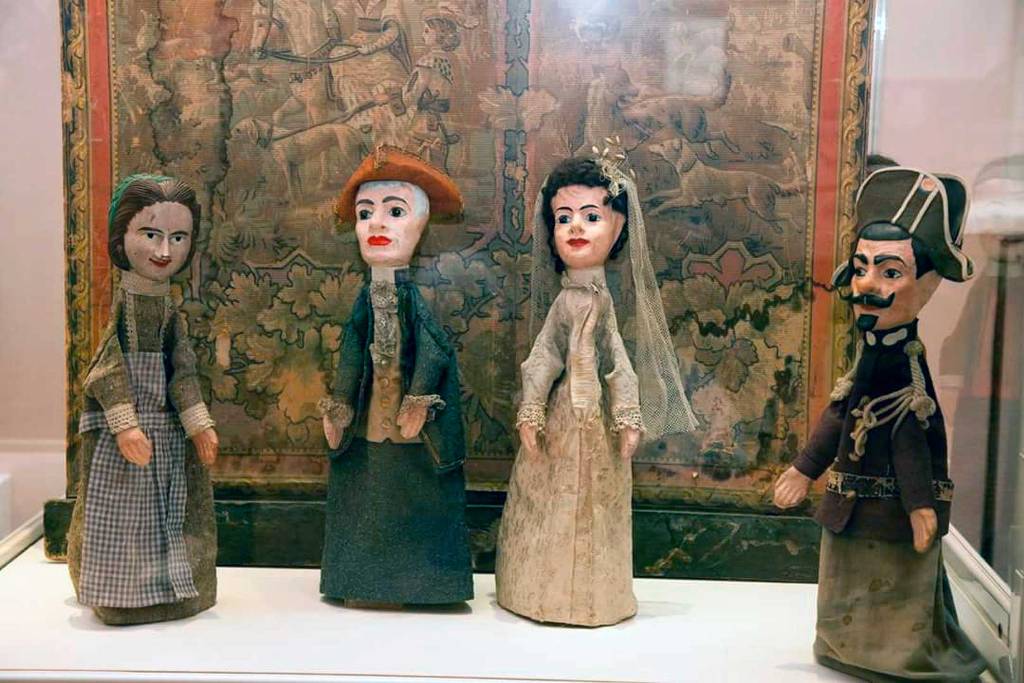
The Tsarskoye Selo State Museum presented more than 50 items for the exhibition, including children’s single-seater sleighs, the Guignol Theater, which was presented by Dowager Empress Maria Feodorovna to her grandson Tsesarevich Alexei Nikolaevich, a Kodak camera that belonged to the tutor of Emperor Nicholas II’s children, Pierre Gilliard, a baptismal set of Tsesarevich Alexei, portraits and uniforms of Grand Dukes, pieces of furniture, clocks, books and toys.

PHOTO: diary (1882) of Tsesarevich Nikolai Alexandrovich – future Tsar Nicholas II

PHOTO: regiment uniforms belonging to Tsesarevich Alexei Nikolaevich

PHOTO: Pierre Gilliard’s  Eastman Kodak Bulls Eye camera

PHOTO: the Guignol Theater, presented by Dowager Empress Maria Feodorovna to her grandson Tsesarevich Alexei Nikolaevich

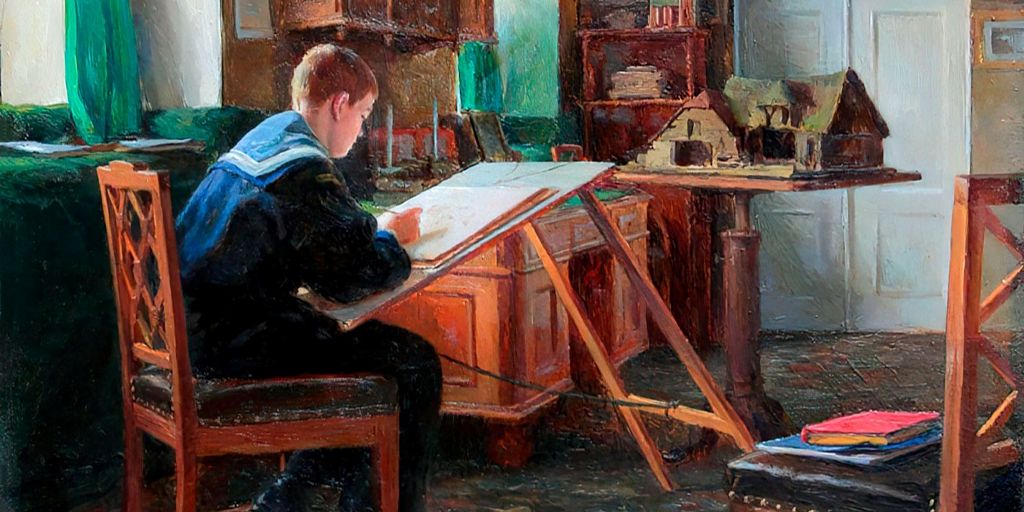
Portrait of Grand Duke Mikhail Alexandrovich in the Classroom at Gatchina. Artist Kirill Vikentievich Lemokh (1841-1910). 1890s

The exhibition is a joint project of the Tsaritsyno State Museum, the State Archives of Russian Documents and materials from the collections of the State Historical Museum (Moscow), the Moscow Kremlin Museums, the State Hermitage Museum (St. Petersburg), the State Museum of Russian History, the Russian State Library (St. Petersburg), the A.S. Pushkin State Museum (Moscow), the Scientific Research Museum at the Russian Academy of Arts, the A.E. Fersman Mineralogical Museum, the Russian Academy of Sciences, Ostankino Museum-Reserve, Kuskovo, Tsarskoye Selo State Museum, Pavlovsk State Museum and the Gatchina State Museum.The exhibition runs until 7th April 2024.

© Paul Gilbert. 11 December 2023
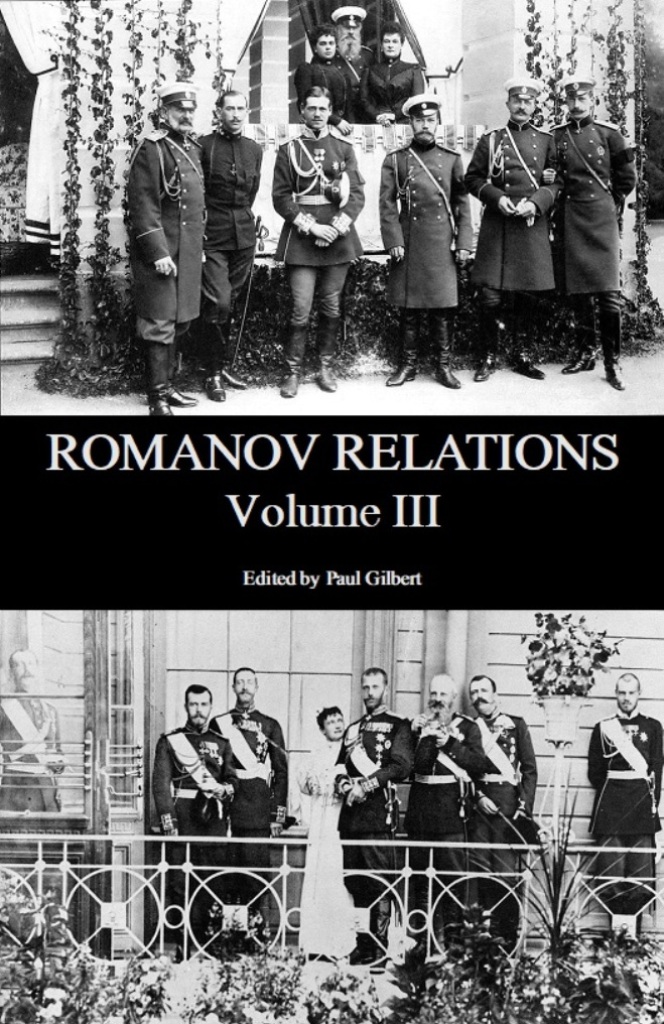
NEW BOOK – Romanov Relations. Volume III

*You can order this title from most AMAZON outlets, including
the United States, United Kingdom, Canada, Australia,
France, Germany, Spain, Italy, Netherlands, Poland, Sweden and Japan
*Note: prices are quoted in local currencies

CLICK HERE TO ORDER THE PAPERBACK EDITION @ $14.99 USD

English. 5-1/2″ x 8-1/2″ format. 214 pages. Illustrated

Romanov Relations is a popular multi-volume set of books, each volume offering a collection of both new and out-of-print articles, about the Romanov emperors, empresses, grand dukes and grand duchesses, as well as their descendants.

Volume Three features the following 4 chapters:

(1) The Romanovs in the Caucasus by Marie Tegulle

The bulk of this article focuses on the life and death of Grand Duke George Alexandrovich (1871-1899), the younger brother of Emperor Nicholas II, who – due to health reasons – was forced to live in the Caucasus region of the Russian Empire. He died at the age of 28, at Abbas-Tumani.

(2) Grand Duke Nicholas Alexandrovich: Life and Death of the Tsesarevich (1843-1865) by Emmanuel Fricero

This article (written in 1951) explores the life and death of the eldest son and heir to Emperor Alexander II and Empress Maria Feodorovna. Nicknamed “Nixa”, he was engaged to Princess Dagmar of Denmark (future Empress Maria Feodorovna). During a tour of southern Europe in 1865, he contracted cerebro-spinal meningitis. His health rapidly deteriorated, and he was sent to southern France, where he died on 24th April 1865, at the Villa Bermond in Nice.

(3) Emperor Paul I: Neither Demon nor Saint by Andrew M. Cooperman

For most of the three hundred years since his assassination, Emperor Paul I has either been demonized or canonized by historians. In truth, Paul I was neither demon nor saint, but rather a remarkable man who lived and reigned during an important time in Russia’s history.

(4) The Fate of the Romanovs: The Survivors by Professor Kent Sole and Paul Gilbert

The fate of Russia’s last Imperial Family is well known throughout the world. But what ever became of the other members of the Imperial House of Russia after the Empire was swallowed up by the Bolshevik Revolution? This examination explores the fate of the 53 members of the Russian Imperial Family, who were still alive when Nicholas II abdicated in March 1917.

Romanov Relations will be enjoyed by readers who have an interest in the Romanovs and their legacy, as well as providing a useful reference to writers and historians as they continue to unravel the mysteries and dispel many of the popular held myths surrounding the Romanov dynasty.

NOTE: Romanov Relations Volume I and Volume II are still in print, and available from my Romanov Bookshop.

© Paul Gilbert. 7 December 2023
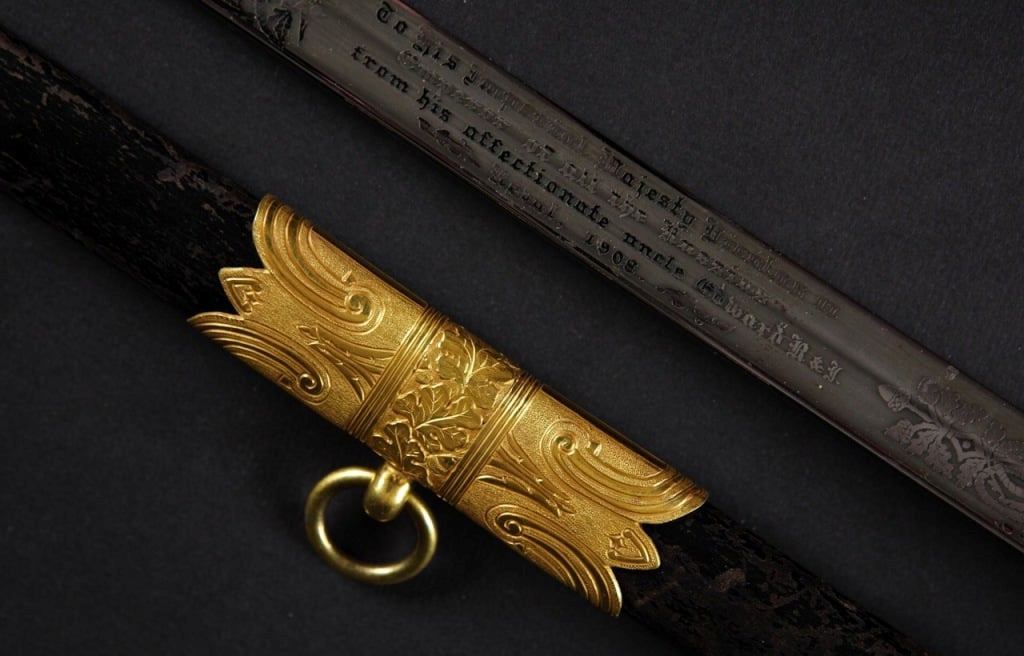
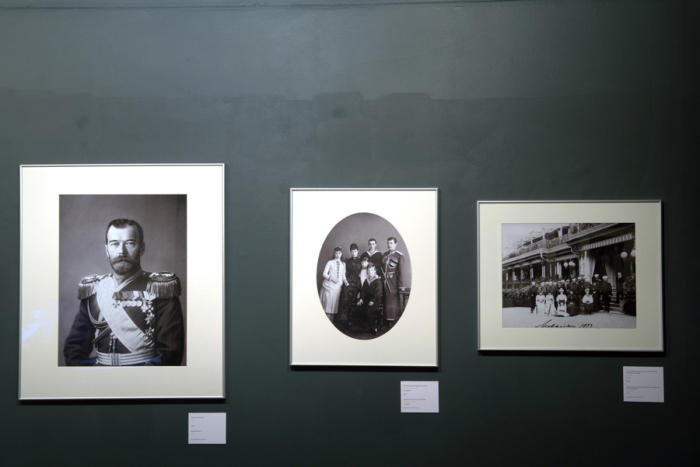
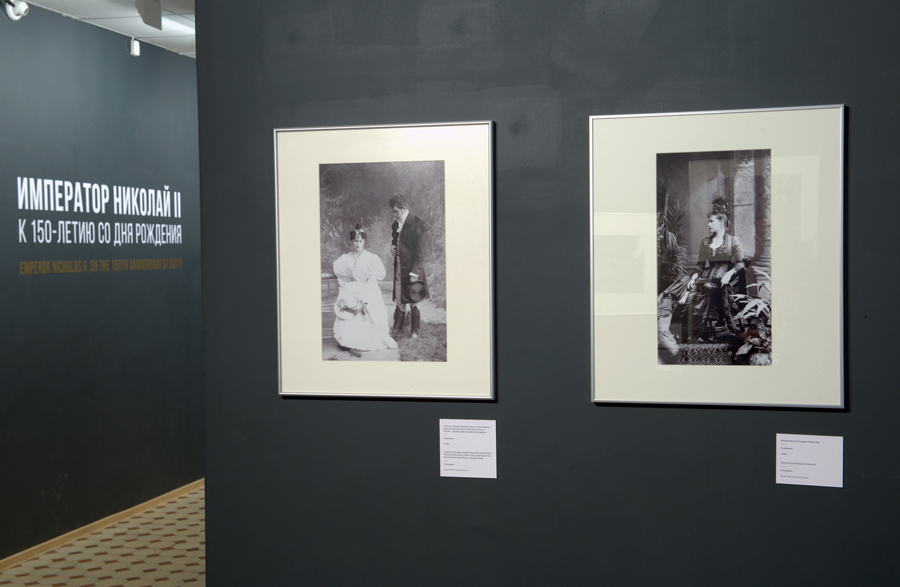
Photo Exhibition in St Petersburg Marks 150th Anniversary of Birth of Emperor Nicholas II

NOTE: this article was originally posted on 6th July 2018, it has
Been updated with the video below on 6th December 2023 – PG
CLICK on the IMAGE above to watch the grand opening of the photo-exhibition.
Language: Russian. Duration: 2 minutes, 27 seconds

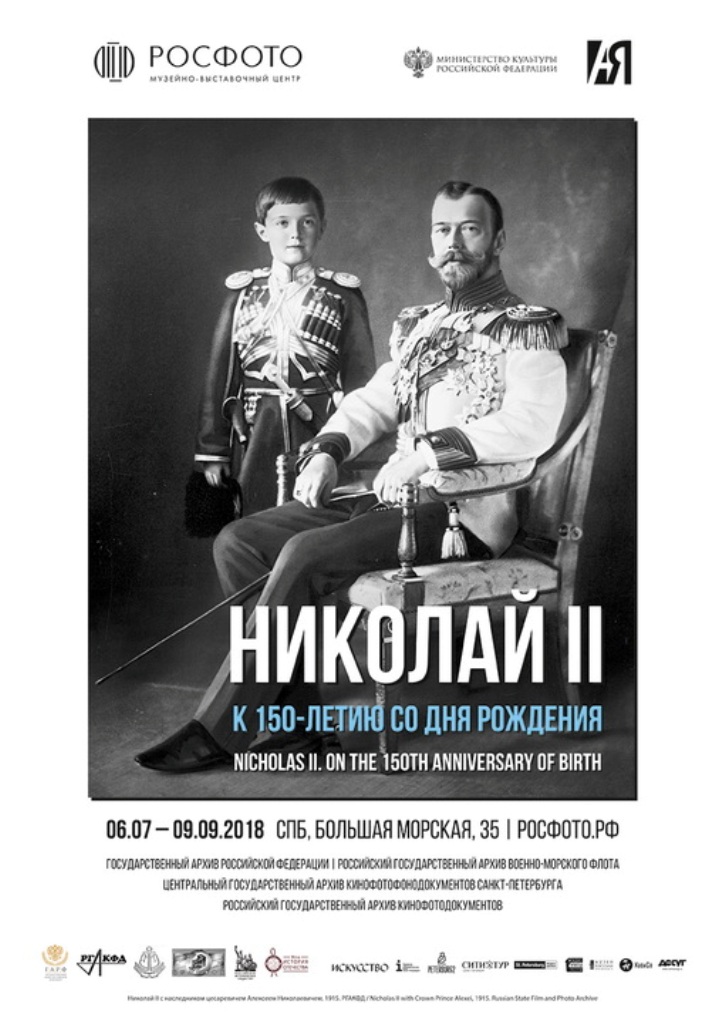
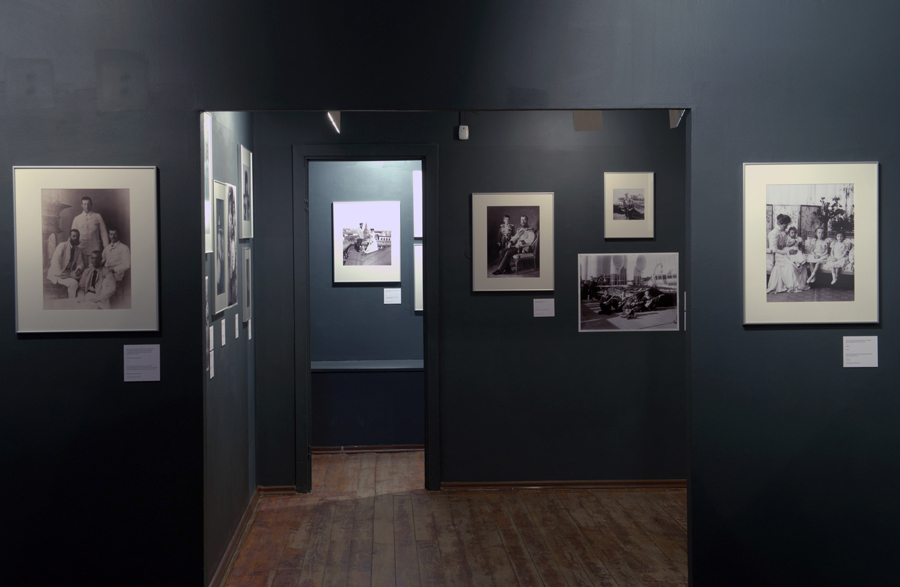
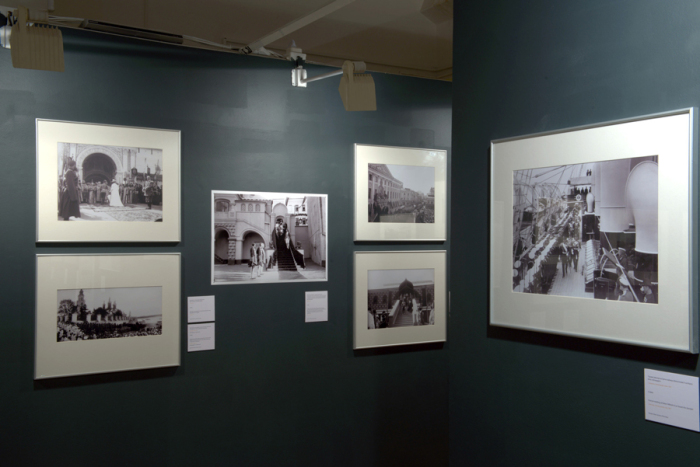
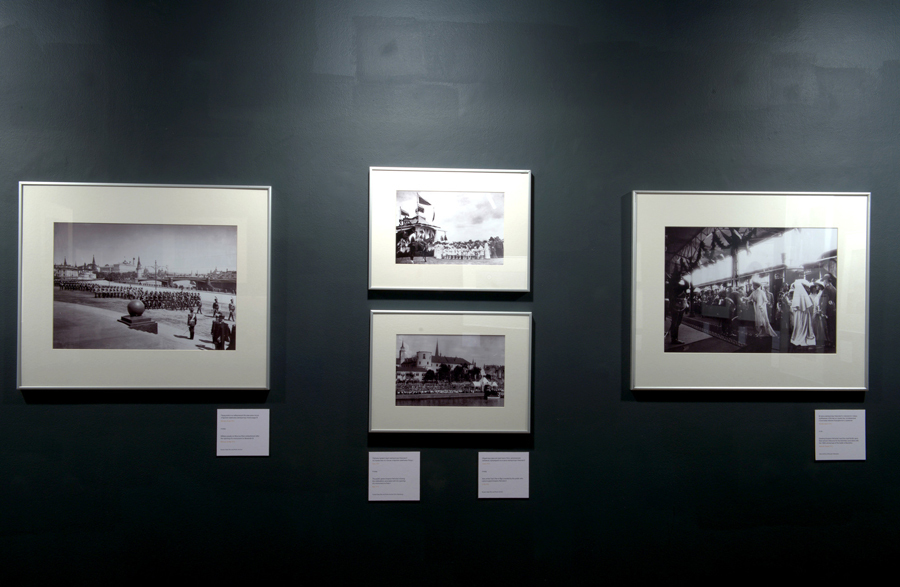
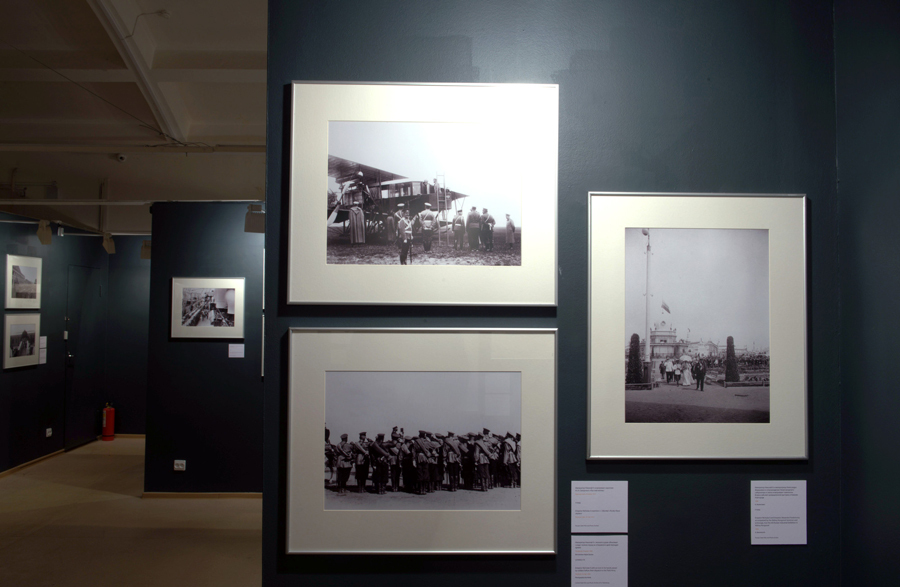
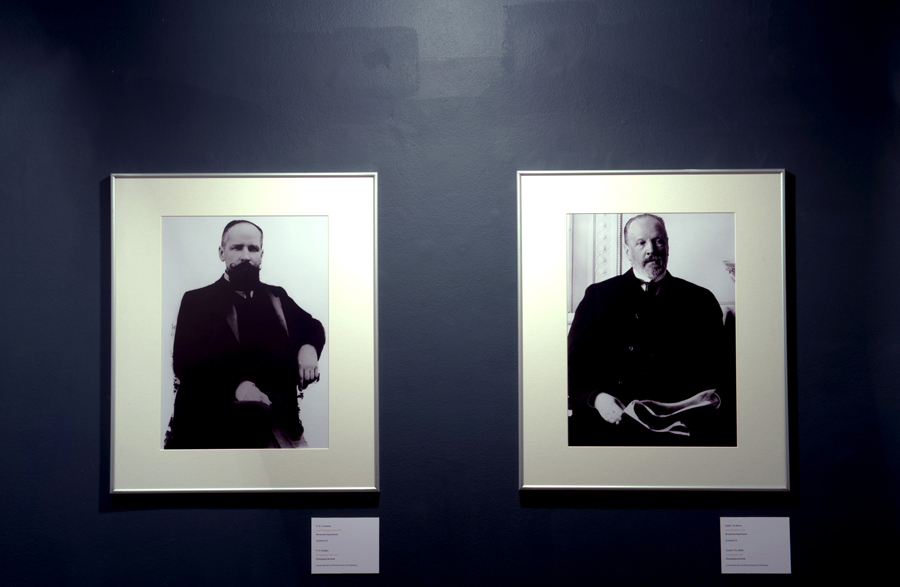
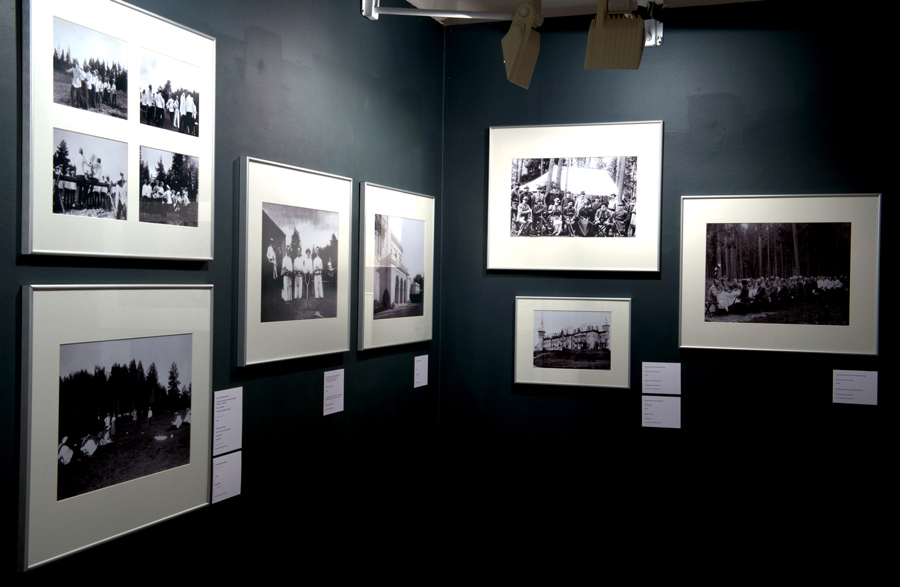
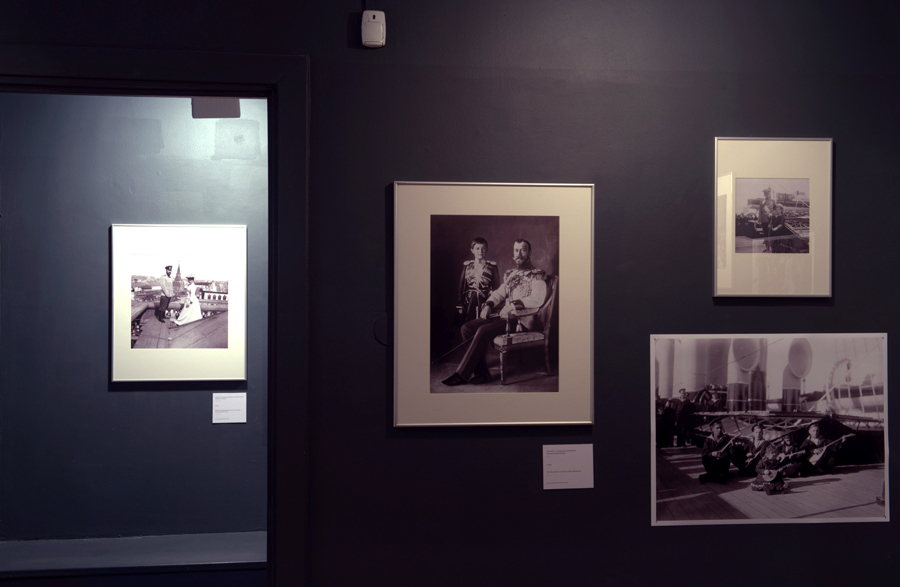
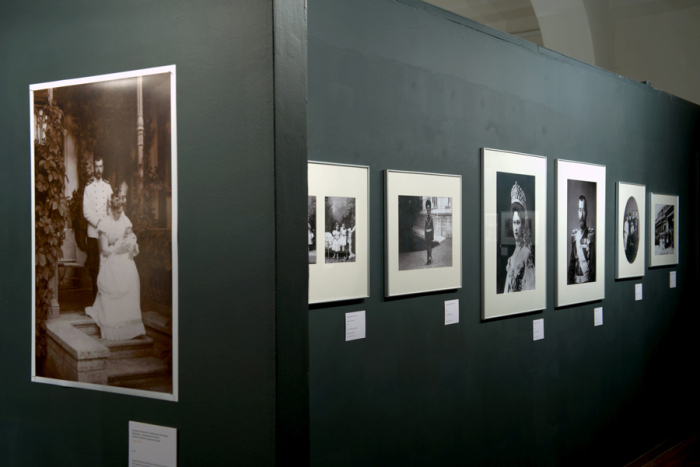
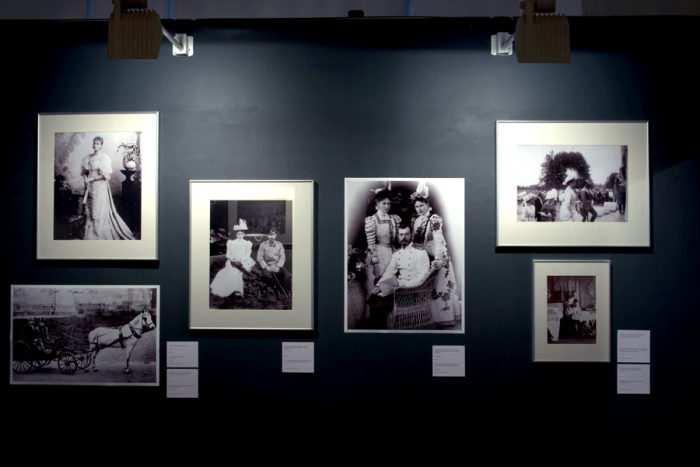
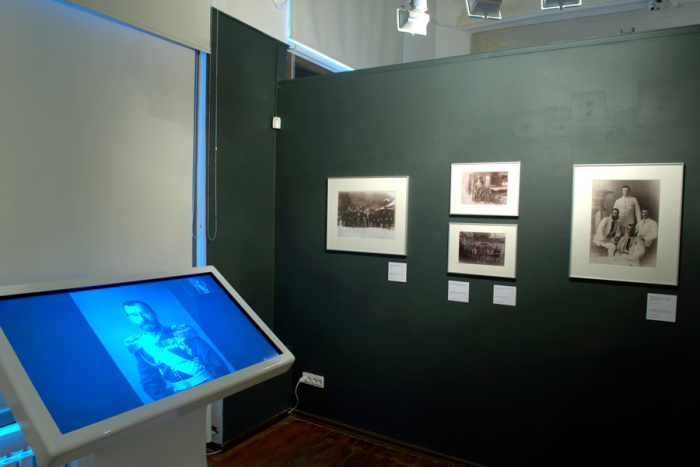
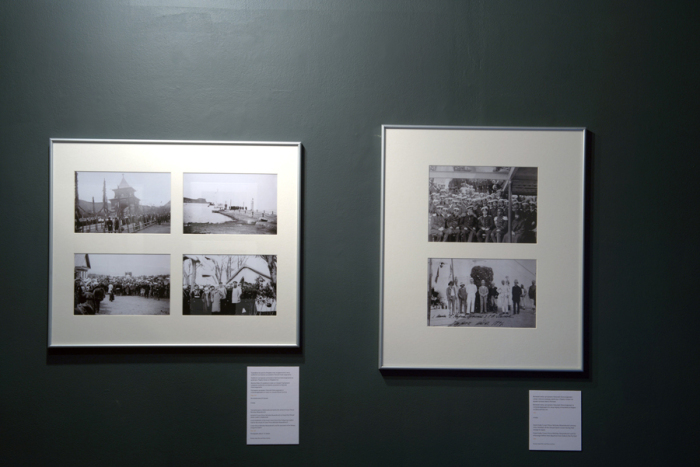
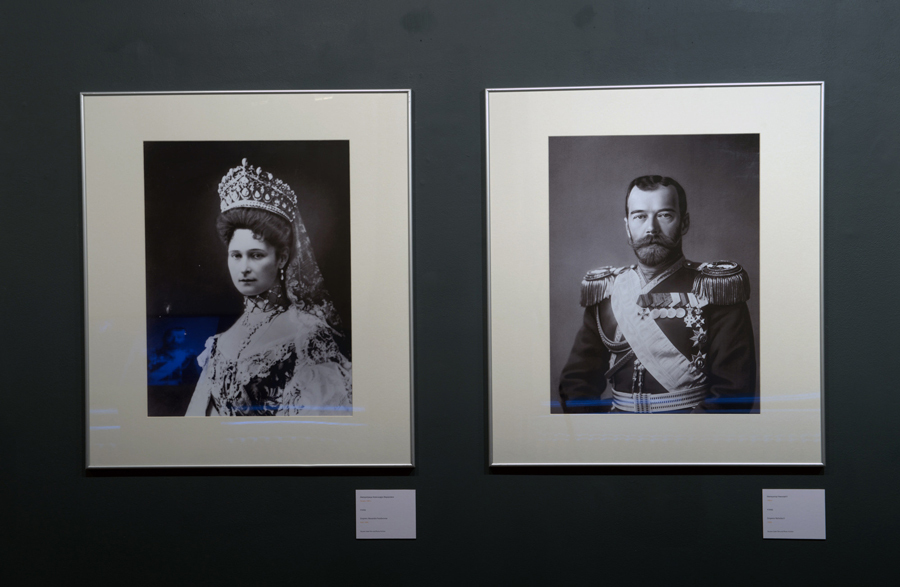
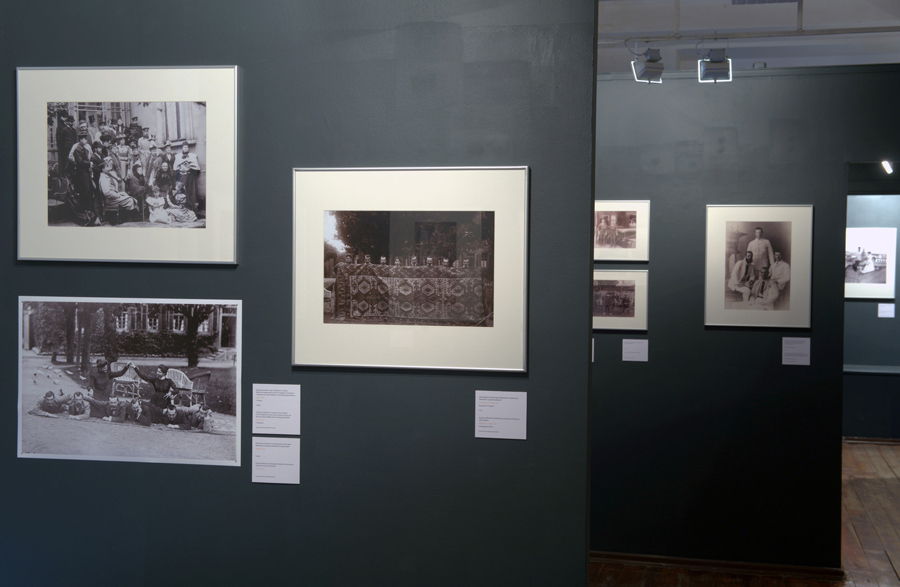
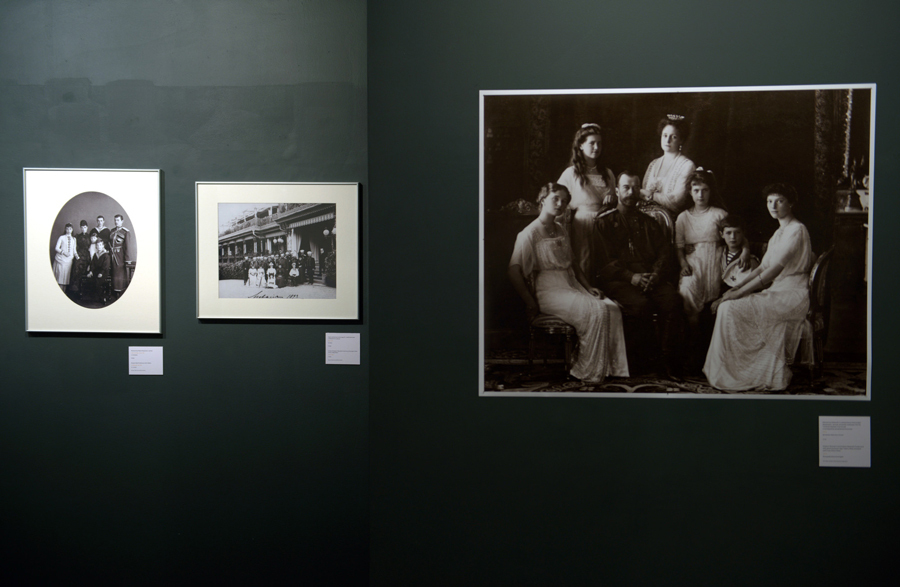
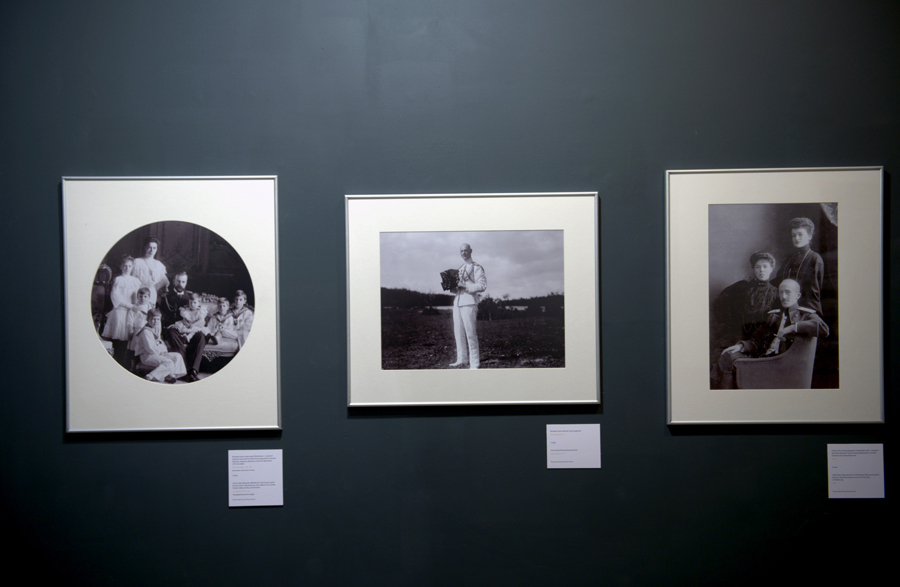
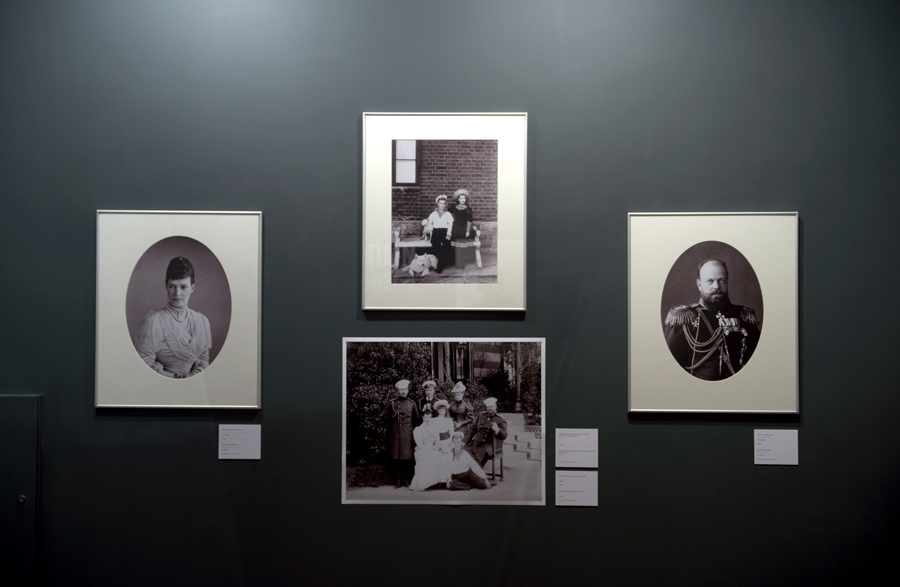
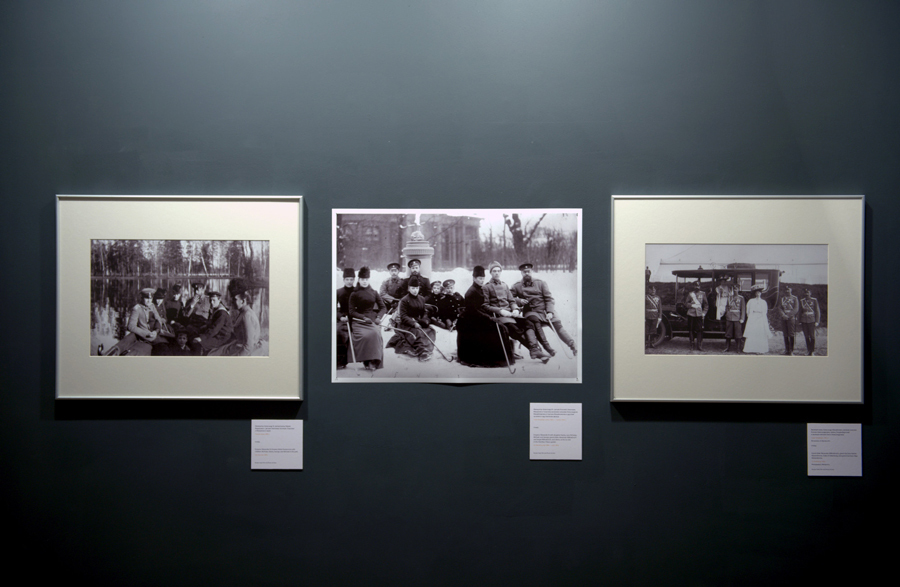
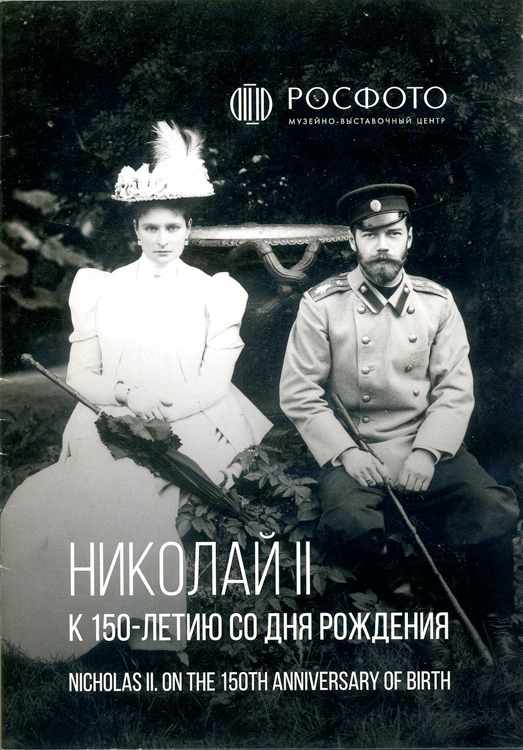
On 6th July 2018 a new exhibition Emperor Nicholas II. To the 150th Anniversary of his Birth, opened in the ROSPHOTO Museum and Exhibition Center in St. Petersburg.

The photo-exhibition is a joint project between the Russian State Archive of Cinema and Photo Documents, the State Archive of the Russian Federation (Moscow), the Russian State Archive of the Navy (St. Petersburg), and the Central State Archive of Film and Photo Documents (St. Petersburg).

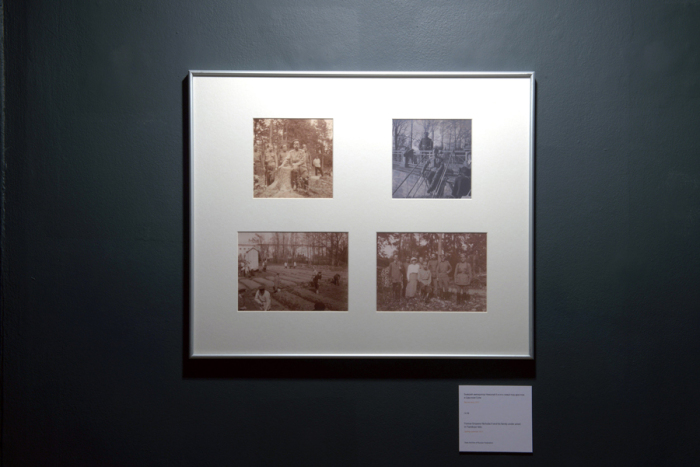
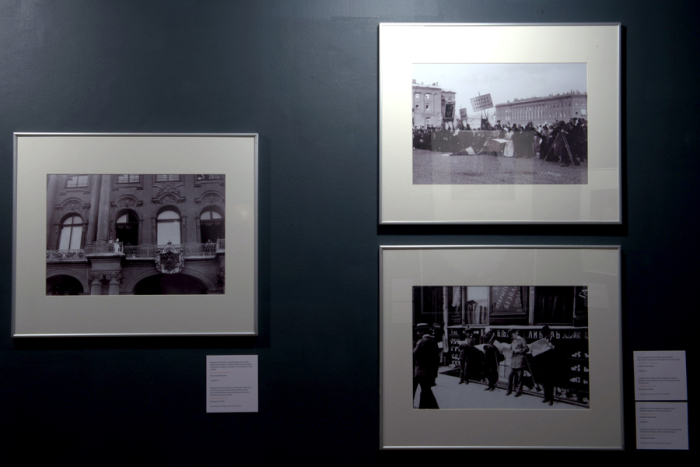
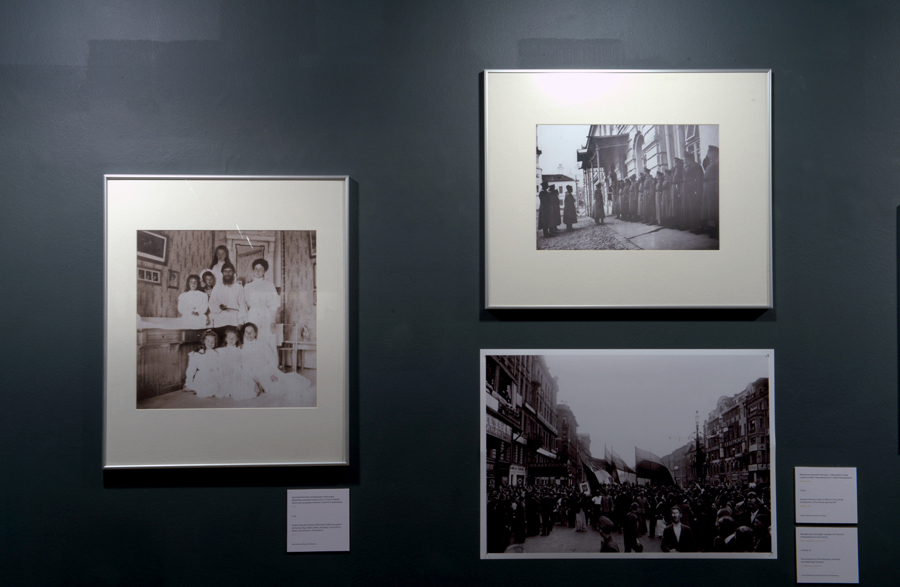
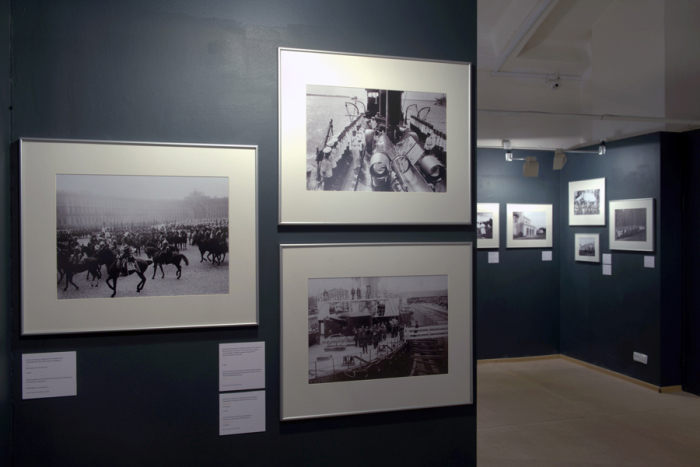
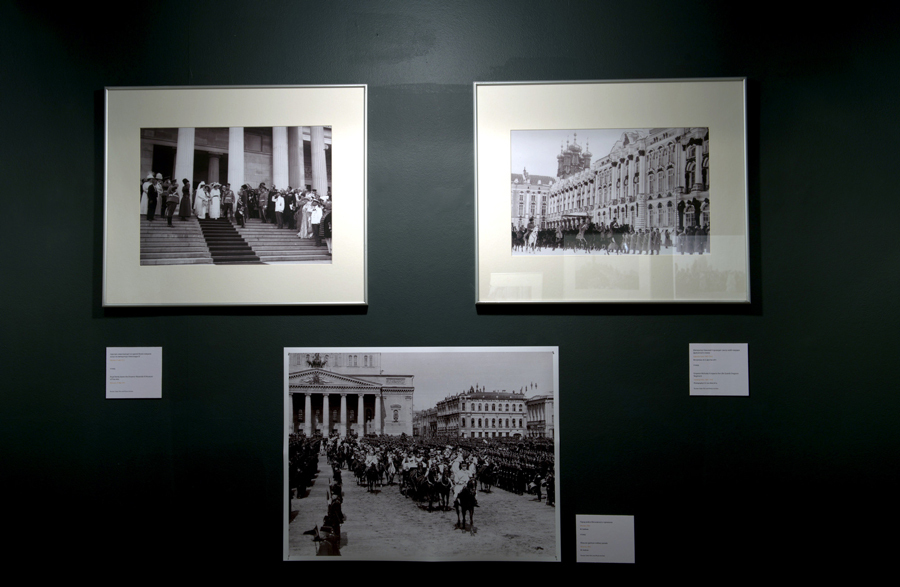
The exposition presents 150 photographs and 30 minutes of vintage newsreels related to the life and public activities of Nicholas II. The exhibition ran from 6 July to 9 September 2018

PHOTOS © ROSPHOTO / Click on each image to enlarge

The Imperial Family were photographed by the best photographers of the Russian Empire. In addition, the Romanovs were photographed by the best foreign photographed when they travelled abroad. The exhibition presents family photos of the emperors Alexander III and Nicholas II, taken by outstanding Russian and foreign photographers of the day.

The greatest number of photographs which have been preserved to this day were taken by the co-owner of the photographic studio “K.E. von Gan and Co., the famous Russian photographer AK. Yagelsky, who was appointed “photographer of His Imperial Majesty.” He photographed Nicholas II not only at court, but also in his day-to-day life, on trips around the country, and during diplomatic visits. The exhibition features numerous other photographs of the K.E. Von Gan and Co. Studio marking the state activities and private life of the last Russian emperor.

PHOTOS © ROSPHOTO / Click on each image to enlarge

The project further presents photographic images taken by the famous photographer K.K. Bulla. In 1904, he received permission to photograph views of the capital and important celebrations. Bulla received certificate of permission from the General Staff of the War Department, “to make photographic surveys on maneuvers and exercises of the Guard troops and the St. Petersburg Military District”, as well as a special certificate from the Main Naval Staff permitting photography “during maneuvers, reviews, exercises, and all events relating to naval life.” The exhibition includes K.K. Bullas photos from various jubilee celebrations, military reviews, launching of the ships of the Russian Navy, all of which were attended by Nicholas II.

PHOTOS © ROSPHOTO / Click on each image to enlarge

A separate part of the exhibition features photographs taken by Nicholas II himself and his family members. The Emperor, along with Empress Alexandra Feodorovna, Dowager Empress Maria Feodorovna, their five children, were all passionate amateur photographers. From 1896, when Nicholas II had his first camera, he hardly ever parted with it. Every year the emperor personally prepared family photo albums, placing and identifying each of them. The photos taken by the emperor and his family are sincere and warm; they were not intended for the general public, and therefore imbued with warm human feelings and true love that reigned in the family of the last Russian emperor.

163z

Exhibition catalogue

The exhibition Emperor Nicholas II. To the 150th Anniversary of his Birth, ran from 6th July until 9th September 2018, at the ROSPHOTO Museum and Exhibition Center, which is situated at Bolshaya Morskaya Ulitsa 35, near St. Issac’s Cathedral.

© Paul Gilbert. 6 December 2023