Video tour of the Museum of Nicholas II and his Family in Tobolsk

A new video of the Museum of the Family of Emperor Nicholas II in Tobolsk was released last week, which gives those of us who cannot travel to Russia at the present time, a wonderful opportunity to see the interiors and exhibits featured in the former Governor’s House, where the Imperial Family were held under house arrest from August 1917 to April 1918.

The commentary is in Russian, however, this should not stop those who do not understand the language from viewing this interesting tour.

Below, I have provided notes on some of the more interesting exhibits and interior details featured in this video tour. The times noted below indicate the location of the detail in the video:

The video opens with host Andrei Smirnov walking through the historic area of Tobolsk – the former capital of Siberia.

At 0:31 – Andrei Smirnov turns and points to the Kremlin.

At 0:45 – Andrei enters through the entrance to the former Governor’s House. The wooden fence has recently been recreated around the property, which provides visitors with a more accurate historic recreation of what the Imperial Family saw when they were permitted outside for walks and exercise.

At 1:15 – Andrei enters the Governor’s House, which is today known as the Museum of the Family of Emperor Nicholas II. Inside he meets Andrei Ivanov, who serves as a guide for groups visiting the museum.

At 1:45 – a full view of a scale model of the Governor’s House and grounds.

At 2:05 – tiny figures of Nicholas II and his children, sitting outside the Governor’s House, while being photographed. At 2:30, you can also see the tiny figures of some of the Imperial Family’s retainers crossing over a wooden walkway leading from the Kornilov House to the Governor;s House.

At 2:07 – a view of the main entrance to the Governor’s House (right), the greenhouse (left) and a partial view of the garden that the Imperial Family used to walk and exercise. The garden was surrounded by a wooden fence.
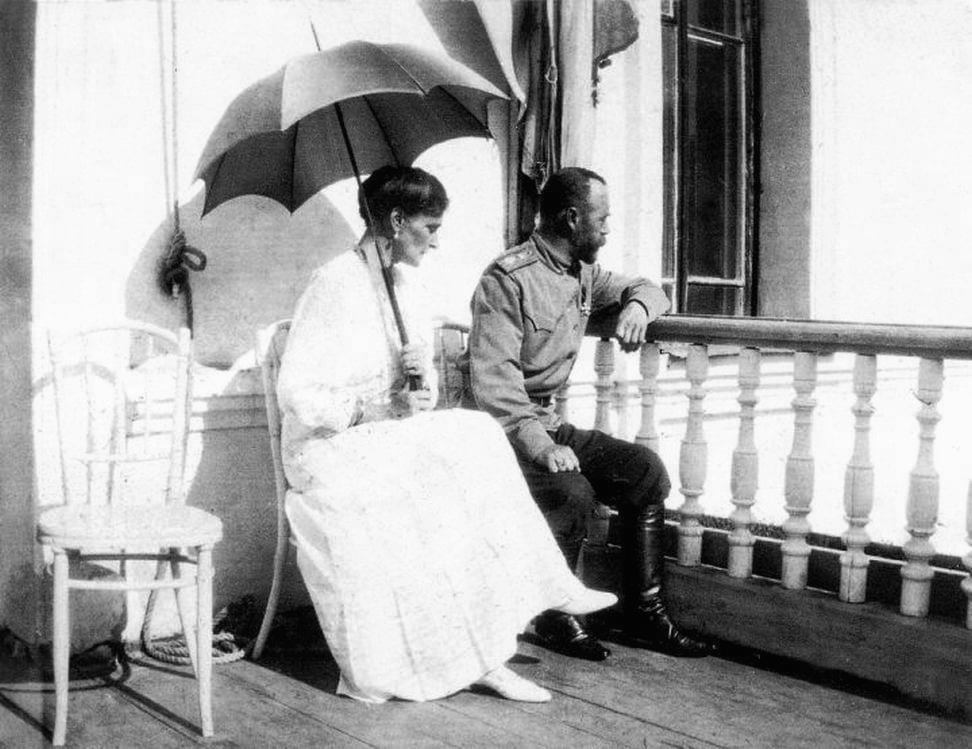
PHOTO: Emperor Nicholas II and Empress Alexandra Feodorovna seated on the balcony located above the entrance to the Governor’s House.

At 2:09 – the camera zooms in to the entrance and the balcony, situated on the upper floor. It was here that the Imperial Family would sit and watch the town’s residents pass by on a daily basis. Many of them would stop and make the sign of the cross and bowing towards the Imperial Family. It was on this balcony in what is believed to the last photograph (above) of Nicholas II and Alexandra Feodorovna was taken in early 1918.

At 2:11 – a scale model of the Kornilov House, situated across the street from the Governor’s House. It was here, that most of the Imperial Families servants and retirnue were housed.

At 2:27 – the garden appears much larger in the scale model than it does in vintage black and white photographs. The Emperor enjoyed all forms of physical exercise and activity. He spent much time in this garden, sawing and chopping wood, he even dug a small duck pond.

At 2:42 – the Dining Room, where the Imperial Family along with several of their faithful retainers dined together. A photograph shows where each of them sat during meals. The photographs on the table show who sat where.

At 3:00 – vintage photographs of the Imperial Family dining together in Tobolsk during their house arrest, as well as during happier times at Tsarskoye Selo, Livadia, even the Imperial Yacht ‘Standart‘. While at home, they did not dine surrounded by opulence and splendour, as did their ancestors, nor did they eat gourmet meals. Instead they enjoying more simple Russian and English fare. For instance, in happier times, afternoon tea usually consisted of nothing more than fresh bread with butter and a few biscuits.

At 3:43 – a beautiful tablecloth protected under glass, bearing the monogram of ‘Nikolai Alexandrovich’, made by the monks of a local monastery.

At 4:04 – account books and invoices which kept a record of the expenses for food and other essential items used by the Imperial Family. On display are receipts for “milk, cream, bread and Porcini mushrooms . . .”

At 4:25 – in recent years, a memorial plaque dedicated to the Imperial Family has been installed on the façade of of the Museum of the Family of Emperor Nicholas II in Tobolsk.

PHOTO: scale model of the Kornilov House, as seen in the video

At 4:27 – Andrei and the museum guide ascending the original staircase to the upper floor, where the Imperial Family slept.

At 4:50 – the staircase leads directly into the former Study of Emperor Nicholas II, who spent a lot of time here writing and reading.

At 5:09 – a piano which Empress Alexandra Feodorovna and the grand duchesses enjoyed playing in the evenings.

At 6:03 – Empress Alexandra Feodorovna’s room, where she spent much of her time doing embroidery and needlework, reading her books on religion, and resting. The original stucco ceiling has been preserved, it was cleaned and painted, however, one corner of the historic look can still be seen.

At 6:17 – this white natural silk shawl belonged to Empress Alexandra Feodorovna. The Empress’s wardrobe included several Manila shawls, one of which has been preserved to the present day and now in the collection of the museum.

At 6:39 – iconic photographs which depict Nicholas II and Alexei sawing and chopping wood in the garden, which supplied the Imperial Family with firewood during the cold Siberian winter of 1917/1918.

At 7:06 – the grand duchesses bedroom, which is filled with photographs of how they lived at both Tsarskoye Selo and Tobolsk.

At 7:28 – vintage photos of how the grand duchesses room looked during their stay decorate the wall. A folding army cot similar to what the grand duchesses slept stands against the wall.

At 8:11 – the bell tower of a nearby church is seen from a window of the upper floor, however, this is not the Church of the Annunciation of the Blessed Virgin, where the Imperial Family were temporarily allowed to walk to and worship in. This church was demolished by the Soviets in 1956.

At 8:44 – contemporary view of the facade of the former Governor’s House, now the Museum of Nicholas II and His Family, and a partial view of the recently reconstructed wooden fence which surrounded the house and grounds, where the Imperial Family were held under house arrest fromAugust 1917 to April 1918.

© Paul Gilbert. 30 April 2024

FURTHER READING:

*You can order this title from most AMAZON outlets, including
the United States, United Kingdom, Canada, Australia,
France, Germany, Spain, Italy, Netherlands, Poland, Sweden and Japan
*Note: prices are quoted in local currencies

CLICK HERE TO ORDER THE PAPERBACK EDITION @ $17.99 USD

English. Paperback. 246 pages with more than 80 Black & White photos

In August 1917, Russia’s last Tsar, his family and their retinue of faithful servants and retainers were exiled to Tobolsk in Siberia, where they were held under house arrest until April 1918.

The seven chapters in this book explore the eight months that the Imperial Family spent in captivity in the former mansion of the regional governor.

This book features the first Enlgish translations of Eugene Kobylinsky’s interrogation and Vasily Pankratov’s recollections, which provide twp very different eye witness accounts of the Tsar and his family.

In addition are chapters on the woman who photographed the Imperial Family in Tobolsk, the fate of the church where they worshipped, and the fate of both the Kornilov and Governor’s Houses.

This is the first book dedicated entirely to the Imperial Family’s stay in Tobolsk to be published in English. 
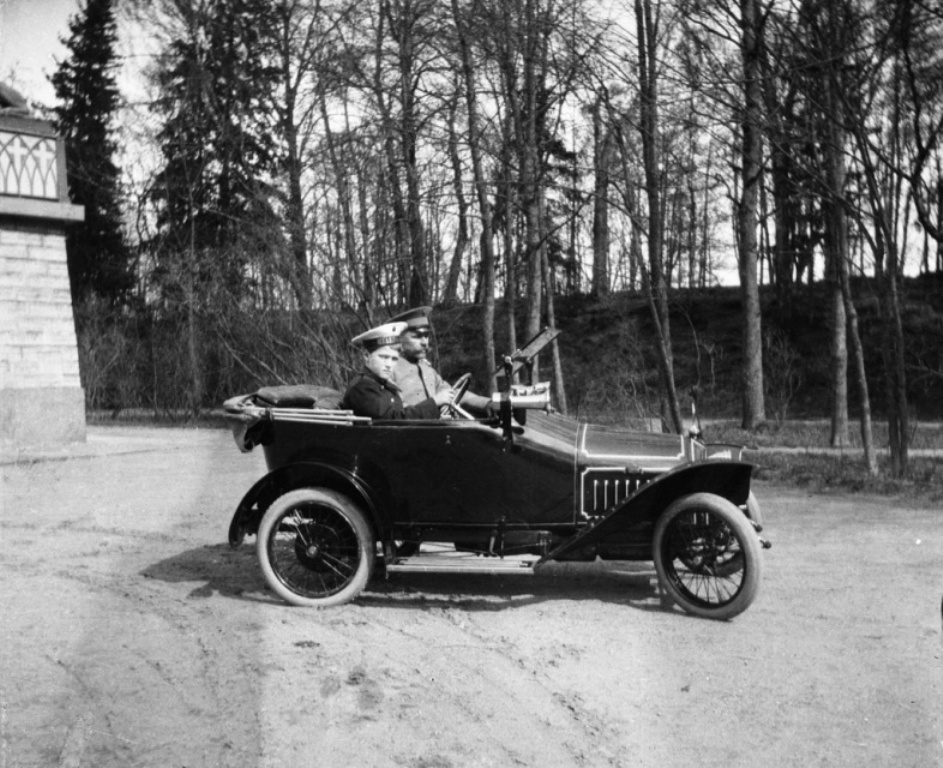
The fate of Tsesarevich Alexei’s Peugeot Bebe

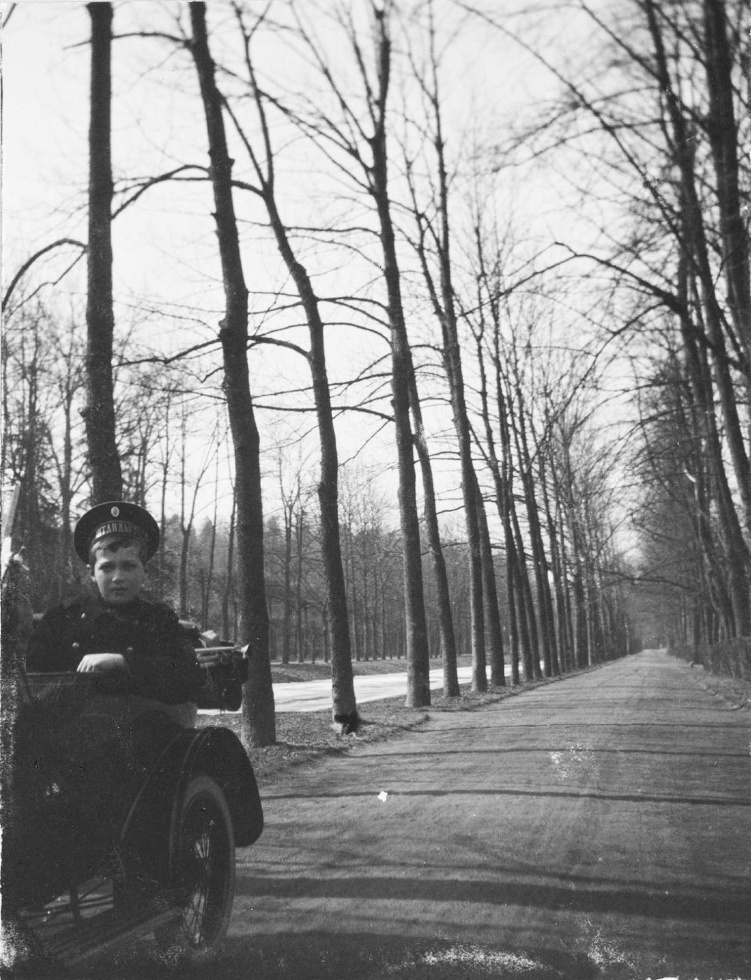
PHOTO: 10-year-old Tsesarevich Alexei Nikolaevich, driving his motorcar, a Peugeot BP1 Bebe, accompanied by driver Adolfe Kegresse in front of the White Tower, situated in the Alexander Park, near the Alexander Palace at Tsarskoye Selo in 1914

Among the fleet of more than 50 motorcars that were used only by Emperor Nicholas II and members of his family was a fully functional, gasoline-powered Peugeot BP1 Bebe. The Peugeot Bébé was a line of the smallest cars that Peugeot produced between 1901 and 1919.

In 1912, the famous French automaker Peugeot released the Peugeot Bebe, designed by Ettore Bugatti, complete with a four-cylinder engine with a displacement of 855 cm3 and power of 10 hp. The model was first presented to the public at the Paris Motor Show in 1912.

The Peugeot Bébé came to Russia in May 1913 at the IV International Automobile Exhibition in St. Petersburg, an event that was attended by the Tsar. Its price was 4000 francs (with bodywork). In 1913 one franc was worth 0.37 kopecks, thus the pricetag for this motorcar worked out to 1900 rubles including taxes.

PHOTO: Tsesarevich Alexei riding along the pathways of the Alexander Park in the back seat of his Peugeot Bebe, 1914

Alexei’s paternal grandmother Dowager Empress Maria Feodorovna, bought a Peugeot BP1 Bebe motorcar for Tsesarevich Alexei on his nameday[1] – 18th October.

Alexei received the car on Sunday, 18th (O.S. 5th) October, 1914, and on Thursday, 22nd (O.S. 9th) October, Emperor Nicholas II wrote in his diary: “I took a brisk walk with Maria and Anastasia todat. We saw Alexei in the park, riding in a small motorcar presented to him on 5th October”.

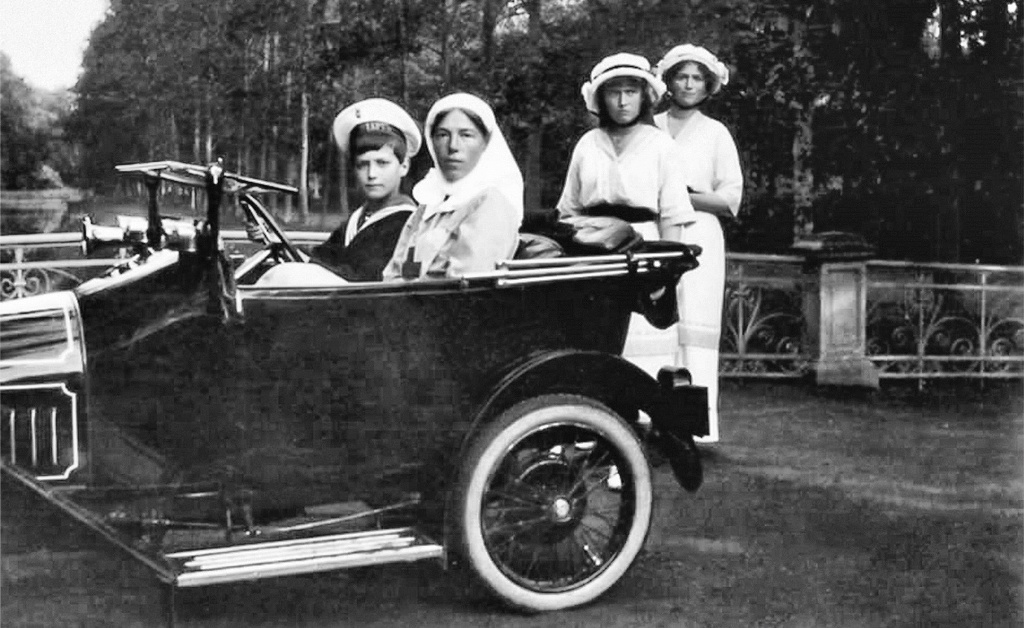
PHOTO: 10-year-old Tsesarevich Alexei Nikolaevich, accompanied by driver Adolphe Kegresse in his Peugeot BP1 Bebe, near the White Tower in the Alexander Park. In the back seat is Grand Duchess Anastasia. Standing next to the motorcar is the French tutor Pierre Gilliard. 1914.

PHOTO: Tsesarevich Alexei taking his aunt Grand Duchess Olga Alexandrovna for a spin around the Alexander Park in his Peugeot BP1 Bebe. Standing in the background are Alexei’s sisters Grand Duchesses Anastasia and Maria Nikolaevna. 1914.

Since all members of the Imperial Family were avid amateur photographers, each of them had their own camera. Thousands of their personal photographs have survived to the present day, including several photographs in which Tsesarevich Alexei is photographed behind the wheel of his Peugeot Bebe.

Despite the fact that the motorcar was very light (350 kg) and had a length of about two and a half meters, the 10 hp engine allowed it to reach speeds of up to 60 km per hour.

Of course, Alexei did not “drive” his motorcar very often. His parents could not risk the safety of their hemophiliac son, since any injury received in an accident could be fatal for him. Therefore, they assigned the Tsar’s personal chauffeur Adolfe Kegresse (1879-1943) to accompany Alexei while he was out driving. His drives were restricted to the tree-lined alleys of the Alexander Park at Tsarskoye Selo, and he was only permitted to drive in first gear. According to witnesses, Alexei drove “quite confidently”. He often took his sisters and tutors on short drives.

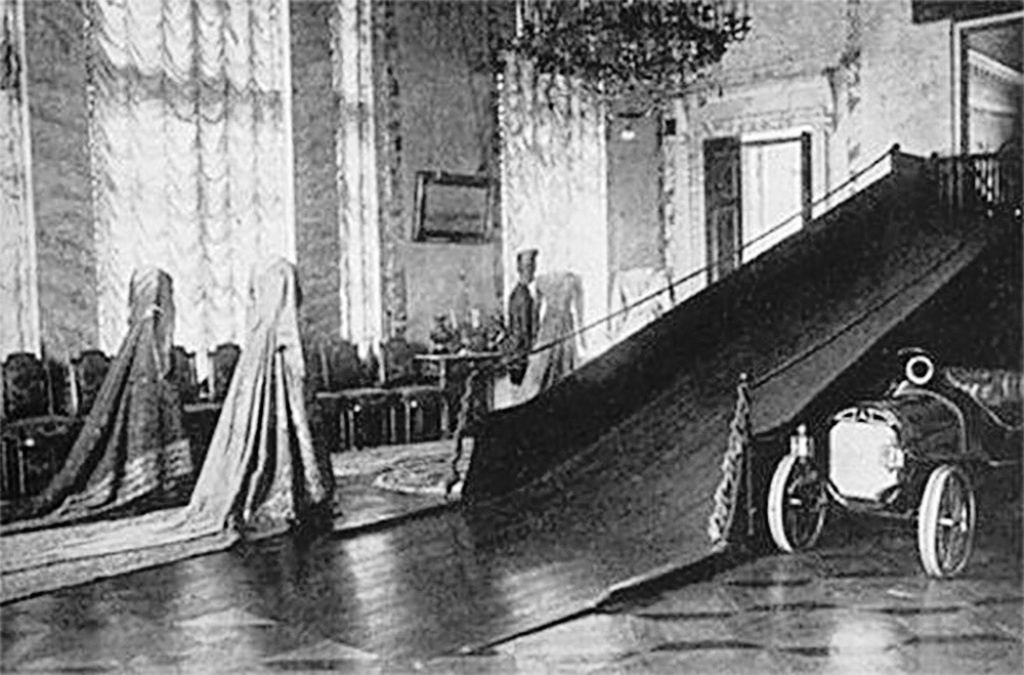
PHOTO: after the 1917 Revolution, the Alexander Palace became a museum. Tsesarevich Alexei’s Peugeot BP1 Bebe was put on display, bext the wooden slide in the Marble Hall [aka the Mountain Hall]

Following the February 1917 Revolution, Tsesarevich Alexei’s Peugeot Bébé stood ownerless for a very long time. After Emperor Nicholas II’s collection of more than 50 motorcars housed in the Imperial Garage’s at Tsarskoye Selo, St. Petersburg, Moscow, Livadia and Mogilev were “confiscated” by the Provisional Government, the Peugeot Bebe remained at Tsarskoye Selo, where it was placed on display in the Marble Hall [aka the Mountain Hall] of the Alexander Palace, and removed from the lists of the Provisional Government Motor Depot.

In photographs taken in the 1920s of the Marble Hall in the Alexander Palace, Alexei’s motorcar is clearly visible, sitting next to the wooden slide, constructed in 1833, at the behest of Emperor Nicholas I and his wife Empress Alexandra Feodorovna.

PHOTOS: after the 1917 Revolution, the Alexander Palace became a museum. Tsesarevich Alexei’s Peugeot BP1 Bebe was put on display, bext the wooden slide in the Marble Hall [aka the Mountain Hall]

There is no doubt that the Bolsheviks considered Tsesarevich Alexei’s Peugeot Bébé as nothing more than an extravagant “toy” and of no historical value. The motorcar stood in the Alexander Palace until 1929.

In 1930, Alexei’s Peugeot BP1 Bebe was transferred to the collection of the Leningrad Palace of Pioneers, also housed in the Alexander Palace. During the 1930s, pioneers who were members of the motoring club learned to drive in the Tsesarevich’s motorcar. In 1942 – during the Great Patriotic War – a bomb hit the Anichkov Palace [where the Peugeot Bébé jad been moved], and Tsesarevich Alexei’s motorcar was irretrievably lost.

NOTES:

[1] Russians celebrate name days separately from birthdays. Celebrations range from the gifting of cards and flowers to full-blown celebrations similar to birthday parties. Such a celebration begins with attendance at the divine services marking that day (in the Russian tradition, the All-Night Vigil and Divine Liturgy), and usually with a festive party thereafter. The Russian Imperial family followed a tradition of giving name-day gifts.

Before the October Revolution of 1917, Russians regarded name days as important as, or more important than, the celebration of birthdays, based on the rationale that one’s baptism is the event by which people become “born anew” in Christ.

© Paul Gilbert. 27 April 2024

Update on the restoration of the Imperial Railway Pavilion at Tsarskoye Selo

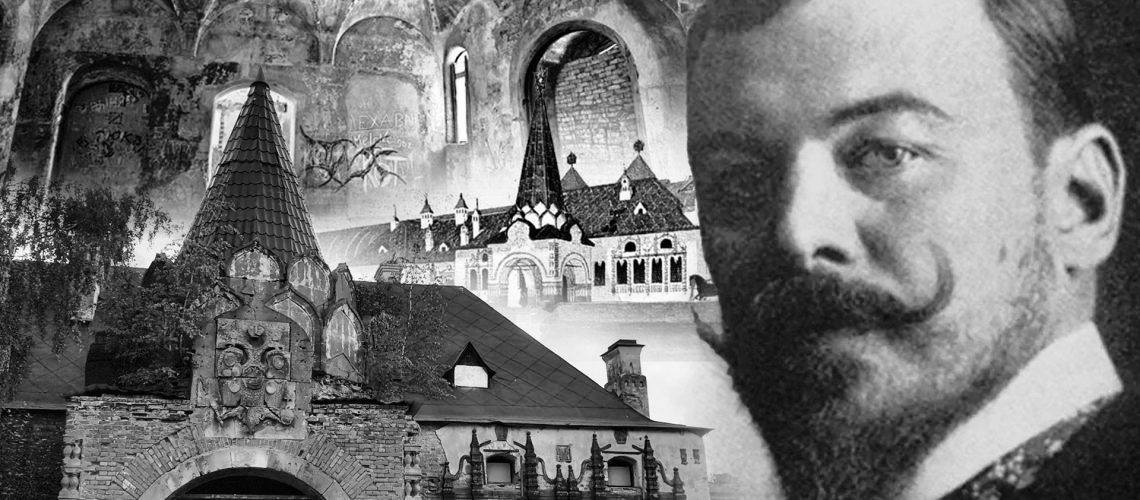
PHOTO: the Imperial Railway Pavilion [aka as the The Tsar’s Train Station] at Tsarskoye Selo and it’s architect Vladimir Aleksandrovich Pokrovsky (1871-1931)

NOTE: links to other interesting articles are highligted in red below – PG

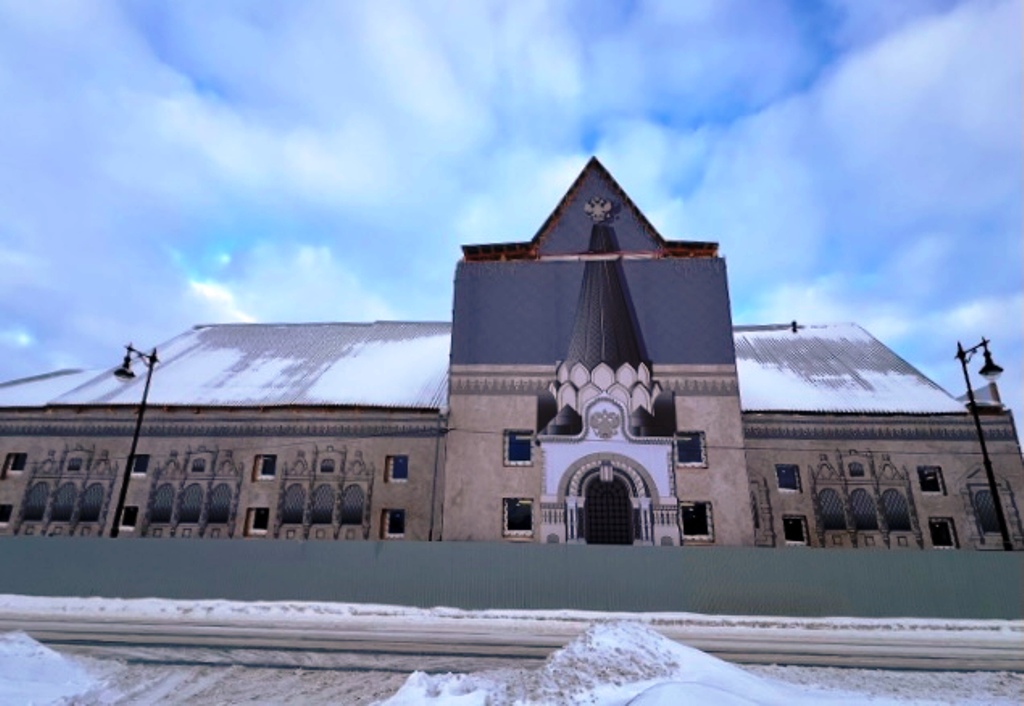
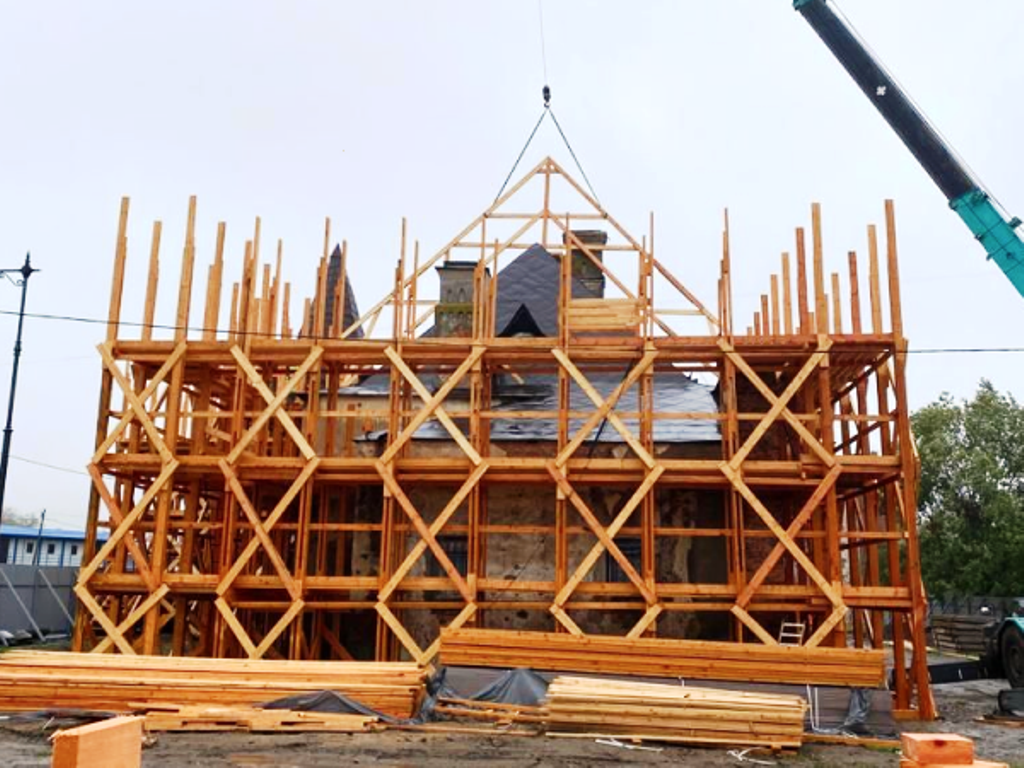
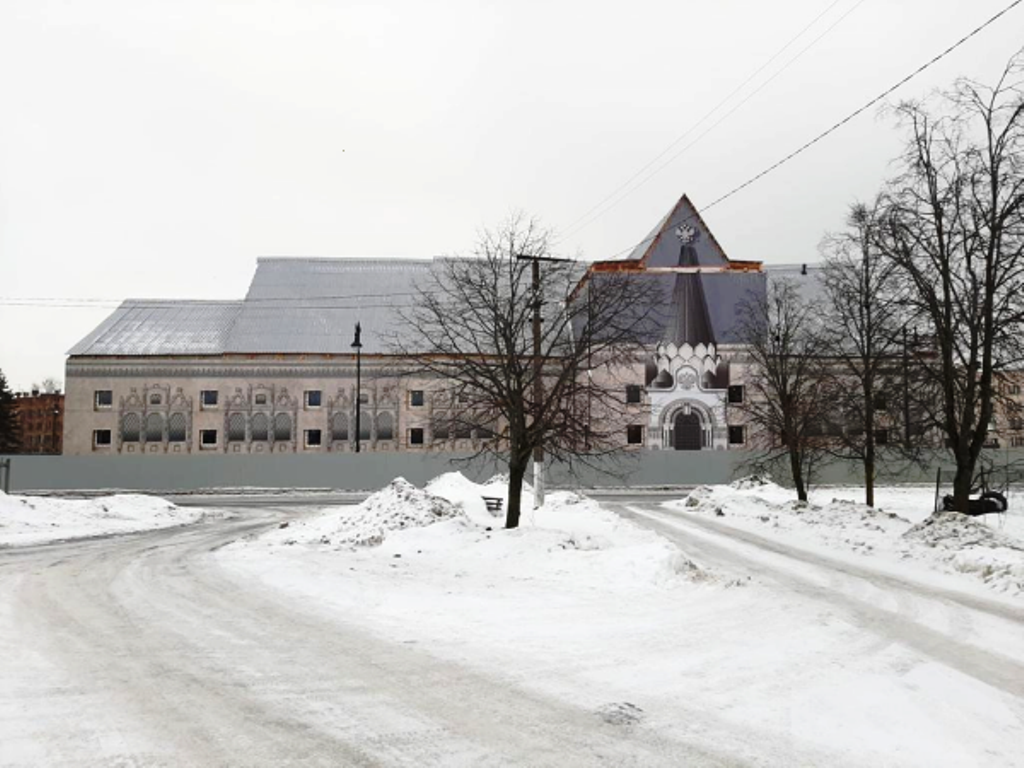
Further to my August 2023 announcement that the Imperial Railway Pavilion at Tsarskoye Selo would be restored, I am pleased to provide the following update, which includes photos [taken in March 2024] of the progress being made on this important historic project, one which is closely connected to Emperor Nicholas II.

The building is currently hidden under scaffolding and outdoor construction hoarding, as experts carry out the restoration of the facade, it’s historic elements and install a new roof. This work can be seen in the photos published in this article, all of which were taken a few weeks ago.

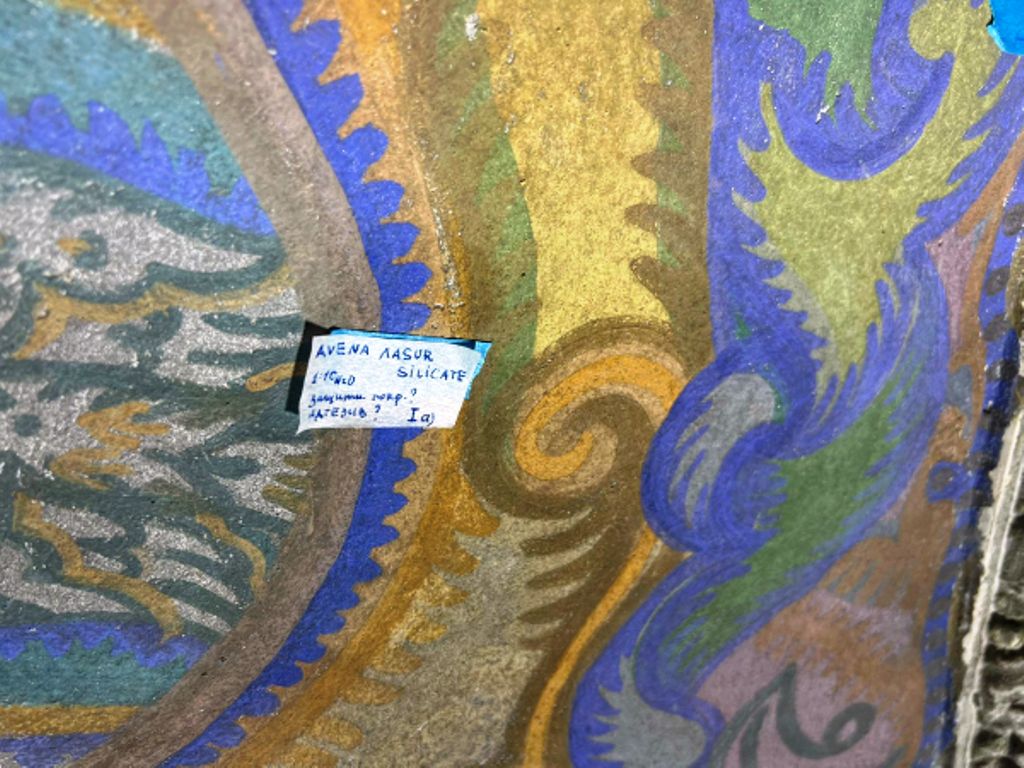
The Imperial Railway Pavilion [aka as the Tsar’s Train Station] is a registered cultural heritage site of federal significance, an act which saved the building from destruction. Despite the fact that the building has not been used since the 1930s, it has been preserved in fairly good condition. The unique building will be restored to its original. In addition to the building itself, the 200-meter passenger platform and canopy will be reconstructed and the unique paintings which once decorated the walls and ceilings of the interior, and which have been partially revealed by restorers, will be revived.

The next stage, after a detailed study, will be the design, and then the restoration. The concept of using the building as a museum after the completion of the work will also be worked out.

The restoration work on the Imperial Railway Pavilion is part of a comprehensive development proect which includes the nearby Feodorovsky Gorodok, and other buildings to their original pre-revolutionary look.

The original wooden Imperial Railway Pavilion and the covered platform were constructed in 1895. They were intended to receive Imperial Trains arriving at Tsarskoye Selo through the Aleksandrovskaya Station, which is situated north of the pavilion on the St. Petersburg-Warsaw railway line.

On 25th January 1911, the wooden station was destroyed by fire. It was decided to erect a new stone building on the same site by the architect Vladimir Aleksandrovich Pokrovsky (1871-1931) with the participation of a graduate of the Academy of Arts Mikhail Ivanovich Kurilko (1880-1969).

The new pavilion was designed in the Neo-Russian Style beloved by Nicholas II. The Fepdorovsky Gorodok, the Feodorovsky Sovereign Cathedral, the Sovereign’s Martial Chamber, and the barracks of His Majesty’s Own Convoy were all built in the same style. Together, they form an architectural ensemble in which motifs of ancient Russian architecture were used. In addition, the planning and design of the Imperial Railwat Pavilion was influenced by the Imperial Railway Station, which has survived to this day at the Vitebsky Railway Station in St. Petersburg.

The front part of the building consists of three halls. In the center there is a square lobby with a front porch, large enough to accomodate automobiles and carriages. The halls on the sides of the vestibule were intended for the Emperor and his retinue: on the south side was the Tsar’s Hall, on the north side – the Retinue Hall. A metal canopy was built above the platform and tracks, adjacent to the eastern façade of the station.

Paintings became an unusual decoration of the walls and ceilings of the building’s interior. They were made using a tempera-glue technique on plaster. A unique painting has been partially preserved [see photo below] to this day, which will allow experts to restore it in full to its original.

During the First World War of 1914-1917, the Imperial Railway Pavilion was used to receive wounded Russian soldiers, who were transferred to the hospital established by the Empress Alexandra Feodorovna in the Feodorovsky Gorodok. And after the Revolution of 1917, it was renamed the Uritsky Pavilion and was used as a dormitory for workers of the Track Repair of the Mechanical Plant.

The Tsarist emblems were removed from the building’s facade, and the ceremonial halls were divided by walls. The building began to lose its former grandeur and ceremonial appearance: the porch was adapted for the kitchen, furniture, lamps, objects of decorative and applied art were lost.

Now in the 21st century, a new life awaits the former Imperial Railway Pavilion. Following completion of the reconstruction of the building and restoration of the interiors, the Board of Trustees of the Tsarskoye Selo Station Foundation, will discuss proposals for the future use of the building.

© Paul Gilbert. 16 April 2024

Watercolours by Grand Duchess Olga Alexandrovna sell for 60 million rubles

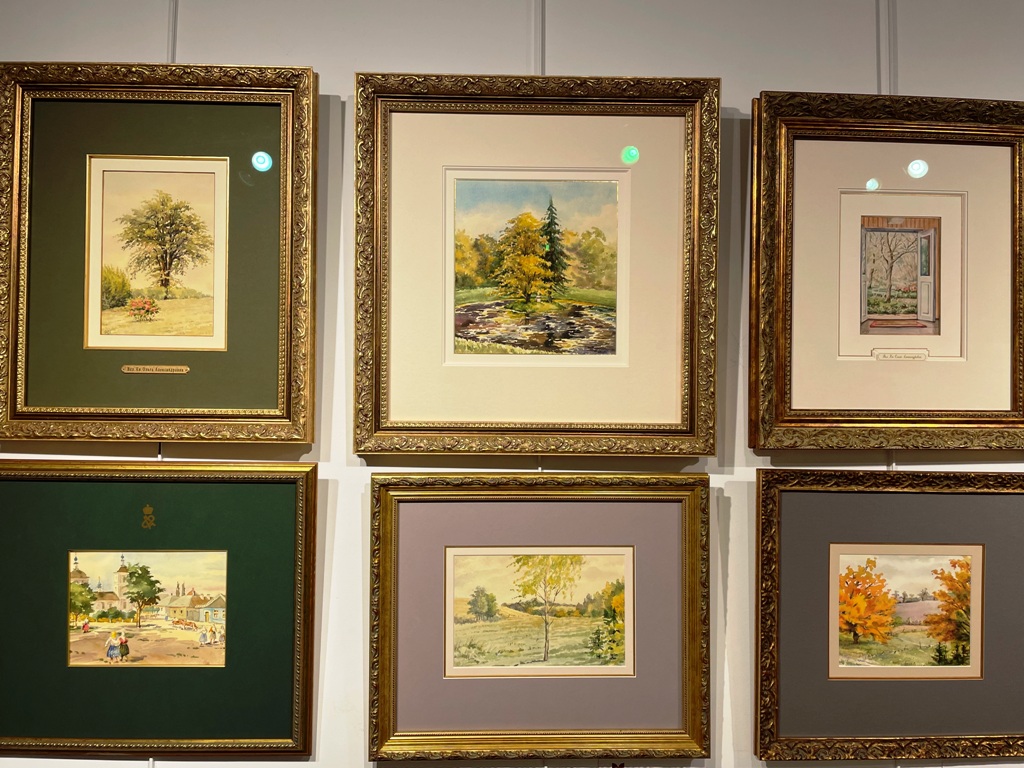
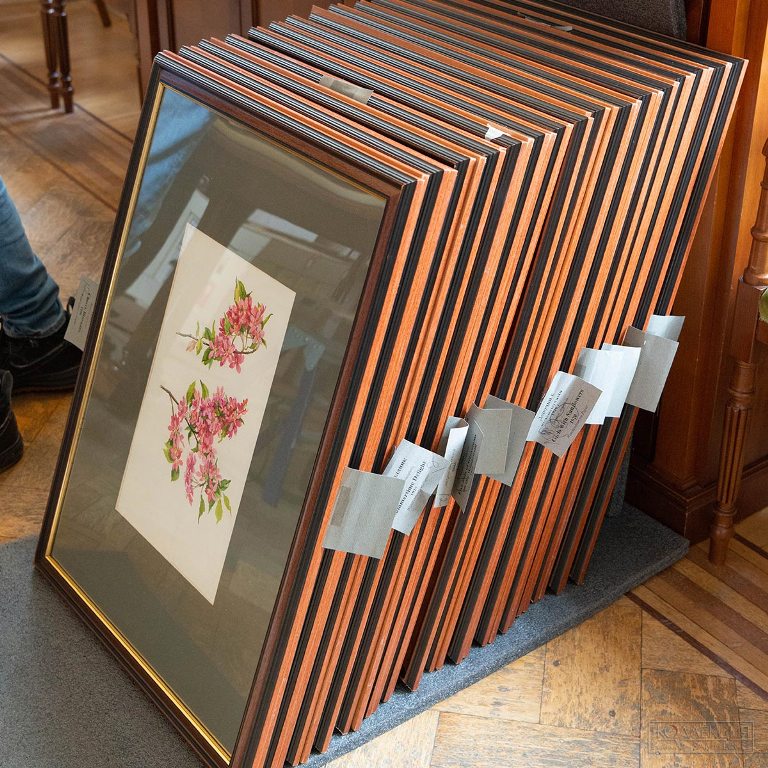
On 14th April 2024, a collection of 43 watercolors, painted by Grand Duchess Olga Alexandrovna, sold at a Moscow auction for 60 million rubles [$640.000 USD] – which is double their estimated value.

For the first time, a collection on this scale of the grand duchess’s works went under the hammer at the Moscow Auction House. The total value of the collection was estimated at 30 million rubles [$325,000 USD]. The authenticity of each work was confirmed by art historians and experts of the Tretyakov National Research Institute in Moscow.

It was hoped that the entire collection would be purchased by one of Russia’s wealthy oligarchs or a corporation and donated to a museum, however, most of the watercolours were snapped up by private collectors.

During the auction, several records were set for Olga Alexandrovna’s works. One of her watercolor’s “From the Service” of the 1920s and 1930s” sold for 7 million rubles [$74,500 USD], while a second watercolour “Landscape of a Provincial Town” sold for 3.1 million rubles [$33,000 USD].

Prices such as this will most certainly increase demand for Olga’s paintings, as well as increase their price, when they are offered to the art market, both in Russia and the West.

Grand Duchess Olga Alexandrovna (1882-1960) painted more than 2,000 watercolours during her lifetime. She was 78-years-old, when she died in in Toronto, Canada, she was the last Grand Duchess of Russia.

© Paul Gilbert. 15 April 2024

‘The Tsar’s Family: Love and Mercy’ exhibit opens at Faculty of Humanities, Moscow

s

On 11th April 2024, the exhibition ‘The Tsar’s Family: Love and Mercy’ opened at the Higher School of Economics, Faculty of Humanities in Moscow.

The participants of the opening of the exhibit enjoyed a performance by the choir of the Sretensky Theological Academy, followed by a guided tour of the exhibition, by one of the curators of the project, Mikhail Googe.

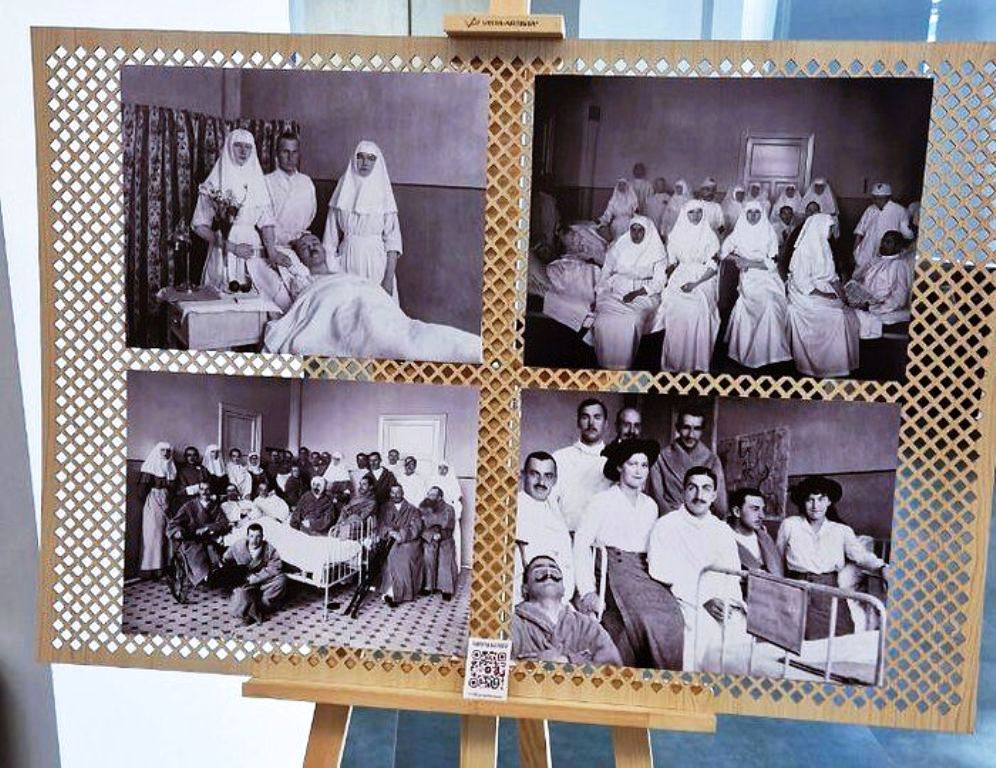
The exhibition presents more than 200 historical photographs depicting the life and service of Emperor Nicholas II and his family. The exhibition is divided into three themes:

• Love and family: the love shared by Emperor Nicholas II and Empress Alexandra Feodorovna, which was extended to their five children.

• State service of Nicholas II: the patriotic duties of the last Russian emperor, his economic reforms and the welfare of his subjects.

• Works of mercy: charitable and patronage activities of the Imperial Family.

***

The photo project The Tsar’s Family: Love and Mercy was created in 2016 by the Sretensky Monastery in Moscow. The travelling exhibition has already been presented in Serbia, Germany, Italy, Canada, Argentina, New Zealand, South Africa, Romania, Croatia, Montenegro, Bosnia and Herzegovina, Macedonia, and the Czech Republic. The exhibition has also been presented in many cities of Russia: Moscow, Voronezh, Kursk, Ryazan, Penza, Krasnodar, Belgorod, Velikiye Luki, etc.

*As I have noted in similiar posts, I support any initiative – big or small – to help keep the memory of Nicholas II and his family alive in post-Soviet Russia – PG

© Paul Gilbert. 12 April 2024

State Russian Musuem receives collection of 180 watercolours by Grand Duchess Olga Alexandrovna

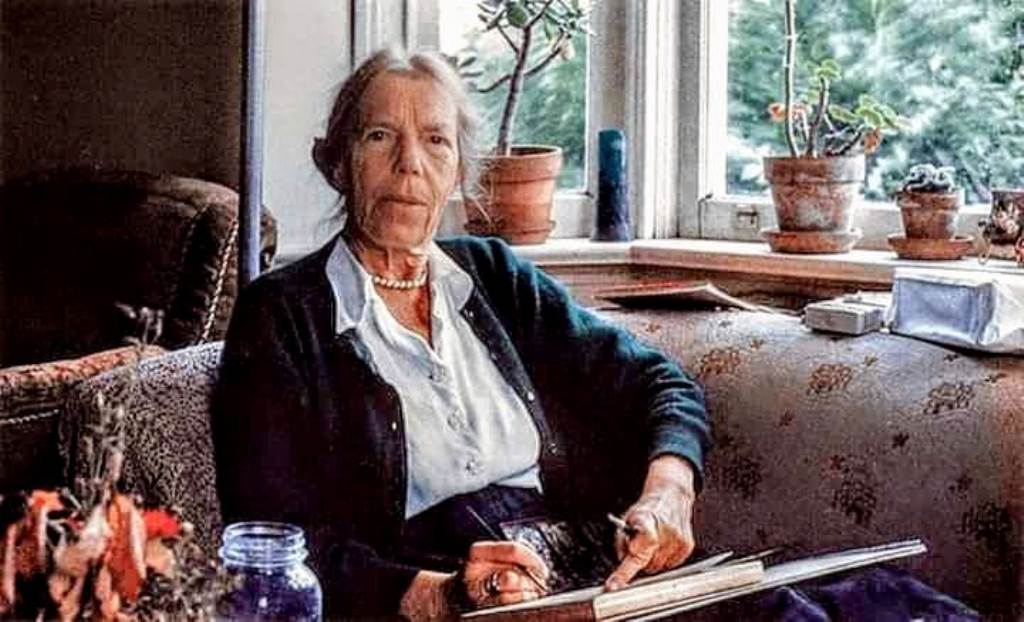
PHOTO: Grand Duchess Olga Alexandrovna, self portrait. 1920
from the Collection of the State Russian Museum, St. Petersburg

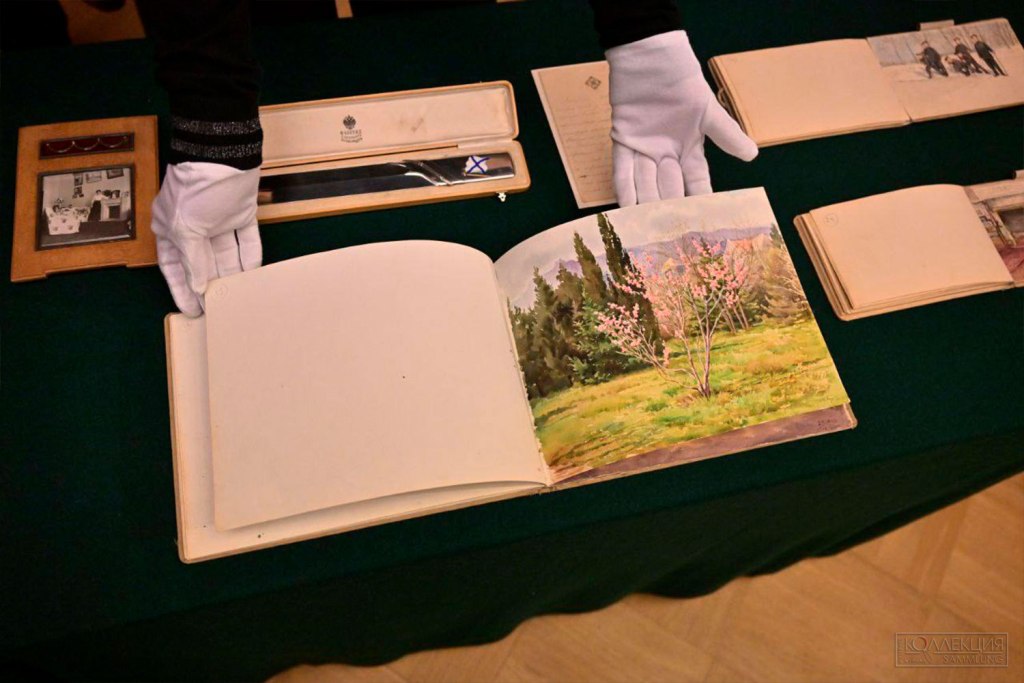
On 2nd April 2024, the State Russian Museum[1] in St. Petersburg, added 180 watercolours, painted by Grand Duchess Olga Alexandrovna (1882-1960) to their funds. The collection was handed over to the museum, by the Ministry of Culture of the Russian Federation, during a press conference, held at the Mikhailovsky Palace[1].

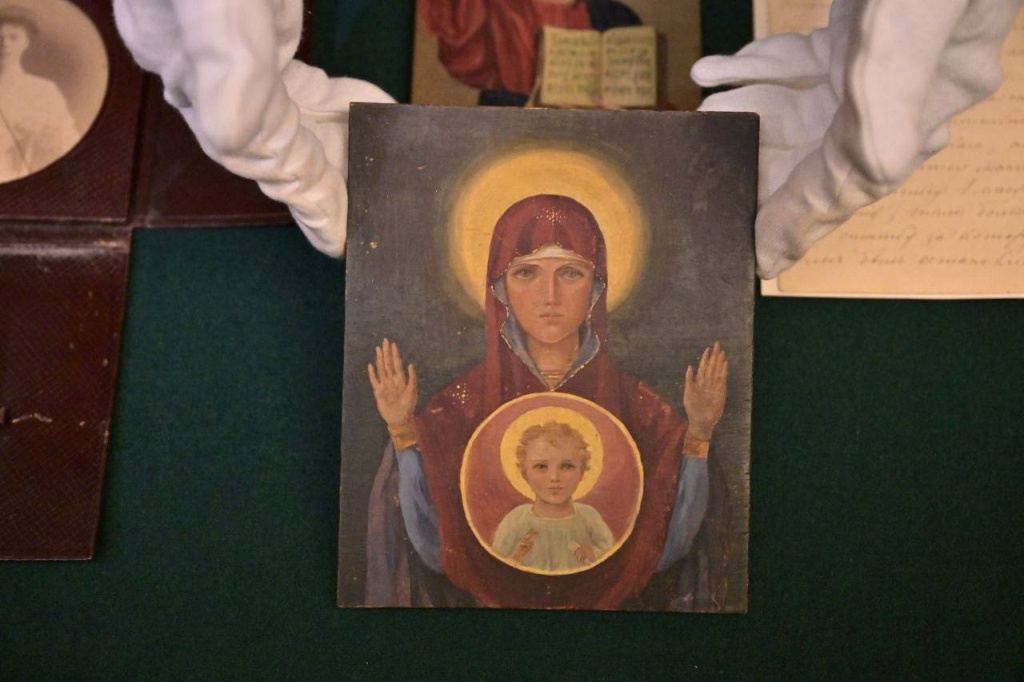
The paintings were donated to the museum in November of last year. The generous donation included an additional 46 items from the family of Emperor Alexander III, including drawings, icons, photographs, personal items and jewelry, all of which will be carefully studied by professional art historians of the State Russian Museum.

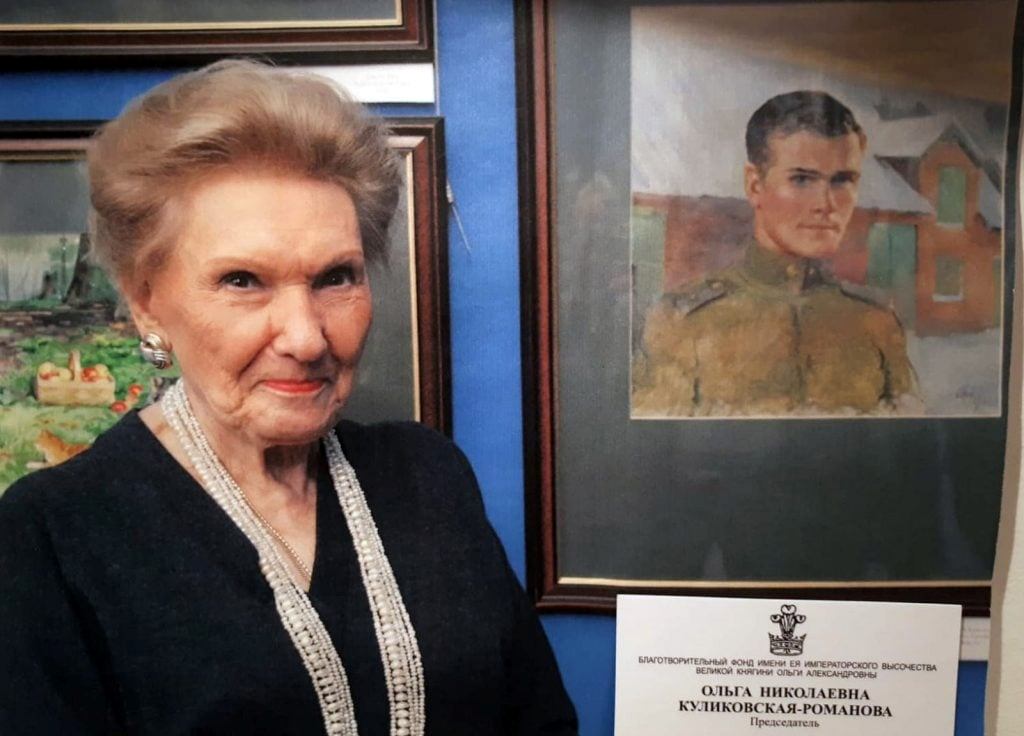
The collection was in the possession of Olga Nikolaevna Kulikovsky-Romanov (1926-2020), the third wife of Grand Duchess Olga’s eldest son, Tikhon Nicholaevich Kulikovsky (1917-1993). The donation to the museum was made possible thanks to the St. Catherine’s Charitable Foundation and the Ministry of Culture of the Russian Federation.

The priceless collection by the youngest daughter of Emperor Alexander III and Empress Maria Feodorovna, and the younger sister of Emperor Nicholas II, included watercolours created in different years of the Grand Duchess’s life: Russian landscapes, family sketches, everyday scenes, bright still lifes and views of the places in which Olga Alexandrovna lived. Her works are represented on both canvas, as well as watercolour sketches in albums.

During her years in Russia, the Grand Duchess patronized the Imperial Society of Russian Watercolorists. Her watercolours were represented in exhibitions organized by the Kuindzhi Society of Artists, who helped to organize exhibitions of the works of young Russian artists.

During the First World War, Olga Alexandrovna opened the First Evgenievsky Hospital at her own expense, which was under the auspices of the Russian Red Cross. It was here, where she worked as a nurse, bandaging wounds, and cared for the wounded soldiers. Even at the front, the Grand Duchess devoted her free time to painting – her watercolors depict scenes in the hospital and portraits of officers. Selected sketches from this period are also included in the collection.

The art collection also includes photo albums of the Romanov family, personal objects and icons. Two of the icons were painted by the Grand Duchess for her son Tikhon, who later created the Foundation of Her Imperial Highness Grand Duchess Olga Alexandrovna, which provided humanitarian aid to Russia. His portrait by the Grand Duchess is also included in the collection.

For the first time in the history of the museum, the collection will be kept entirely in the custody of one specialist, rather than divided into specialized departments. The indivisibility of the collection is necessary for the study of the objects and their connection to in the Russian Imperial Family.

The State Russian Museum are already making plans to host an exhibition showcasing the collection of 180 watercolour by Grand Duchess Olga Alexandrovna, plus the additional 46 items from the family of Emperor Alexander III. A date for the exhibition has yet to be announced.

NOTES”

[1] The State Russian Museum was officially opened on 19th [O.S. 7th] March 1898, as the Russian Museum of His Imperial Majesty Alexander III, who was a connoisseur of Russian art. The museum was established in the Mikhailovsky Palace, a splendid Neoclassical residence of Grand Duke Michael Pavlovich (1798-1849).

The museum was established on 13th April 1895, by order of Emperor Nicholas II to commemorate his father, Alexander III. Its original collection was composed of artworks taken from the Hermitage Museum, the Alexander Palace, and the Imperial Academy of Arts.

After the Russian Revolution of 1917, the museum and its collection were nationalized and renamed the State Russian Museum. Today, the museum is the world’s largest depository of Russian art with more than 400,000 items.

© Paul Gilbert. 9 April 2024

Western Wing of the Alexander Palace to open next year

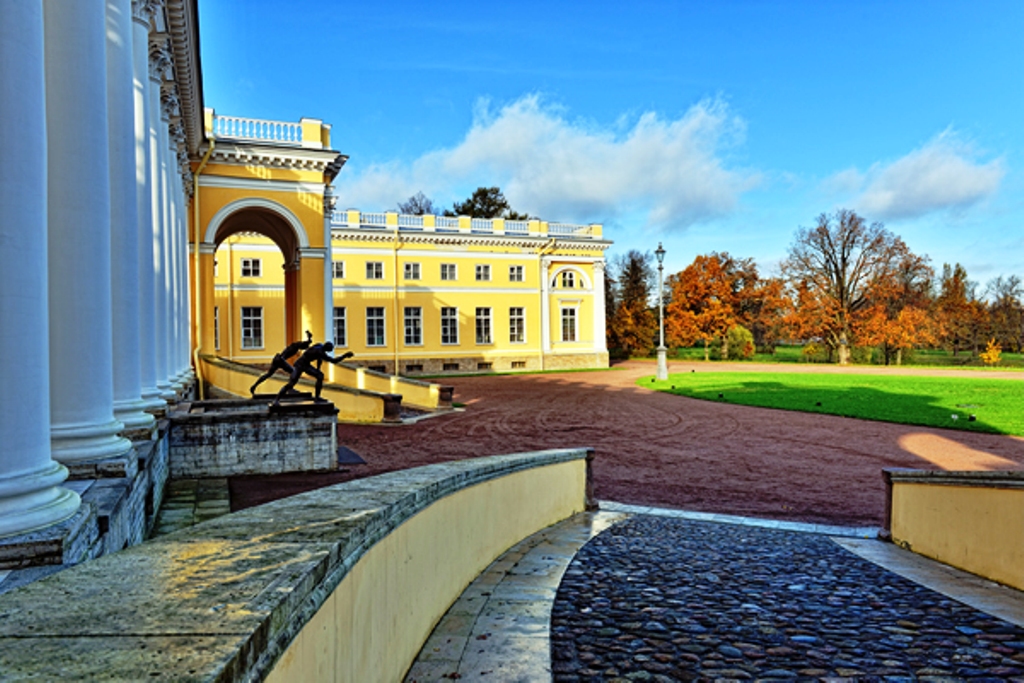
PHOTO: view of the Western Wing of the Alexander Palace, Tsarskoye Selo

According to the TASS News Agency, the Western Wing of the Alexander Palace at Tsarskoye Selo is now scheduled to open to the public in 2025.

Recall that the Eastern Wing of the palace, which houses the private apartments of Emperor Nicholas II and Empress Alexandra Feodorona, reopened to the public in 2021, after an extensive restoration which began in the autumn of 2015.

The Soviet navy in the Western Wing

In 1951, by a government decree, the Alexander Palace was transferred to the Ministry of Defense of the USSR. The Naval Department used the building as a top-secret, submarine tracking research institute of the Baltic Fleet. As a result, the former palace would be strictly off-limits to visitors for the next 45 years.

When it appeared that the Soviet Navy intended to vacate the complex, the Alexander Palace was included in the 1996 World Monuments Watch by the World Monuments Fund (WMF).

In the summer of 1997, a permanent exhibition dedicated to the Nicholas II and his family was opened in the Eastern Wing of the palace. It was at this time that my annual Romanov Tour became the first group from the West to visit the interiors of the Alexander Palace.

The rest of the palace, including remained under the administration of the Naval Department, who continued to occupy the Western Wing. It is due to their occupancy of this section of the palace, that very few of the original interiors and their elements survived.

It was not until October 2009, according to the order of the Federal Property Management Agency, that the Alexander Palace was placed under the administration of the Tsarskoye Selo State Museum Reserve.

Current restoration of the Western Wing

During her recent press conference, the Director of the Tsarskoye Selo Museum-Reserve Olga Taratynova told the Russian news agency, that “restoration work continues in the Alexander Palace. A huge effort is now being made to complete work on the interiors of the Western Wing of the palace.” She further noted, that “the largest part of the work will be completed by the end of this year, and that the opening of the entire Alexander Palace will not take place until next year (2025).

Upon completion, the Alexander Palace will become a multifunctional museum complex. The Western Wing will include exhibition halls, halls for temporary exhibitions, halls for research work and conferences, as well as a library and a children’s center.

This latest development will be welcome news to those who have been following the progress of the restoration of the Alexander Palace, and anxiously awaiting it’s completion. It is my understanding, that future restoration projects include a restoration of the the Children’s House and Island, and the restoration of the Children’s Rooms, situated on the second floor of the Eastern Wing of the palace. No time frame has been given for these projects, therefore, we could be waiting years before their completion.

© Paul Gilbert. 8 April 2024

Tikhon Nikolaevich Kulikovsky-Romanov (1917-1993)

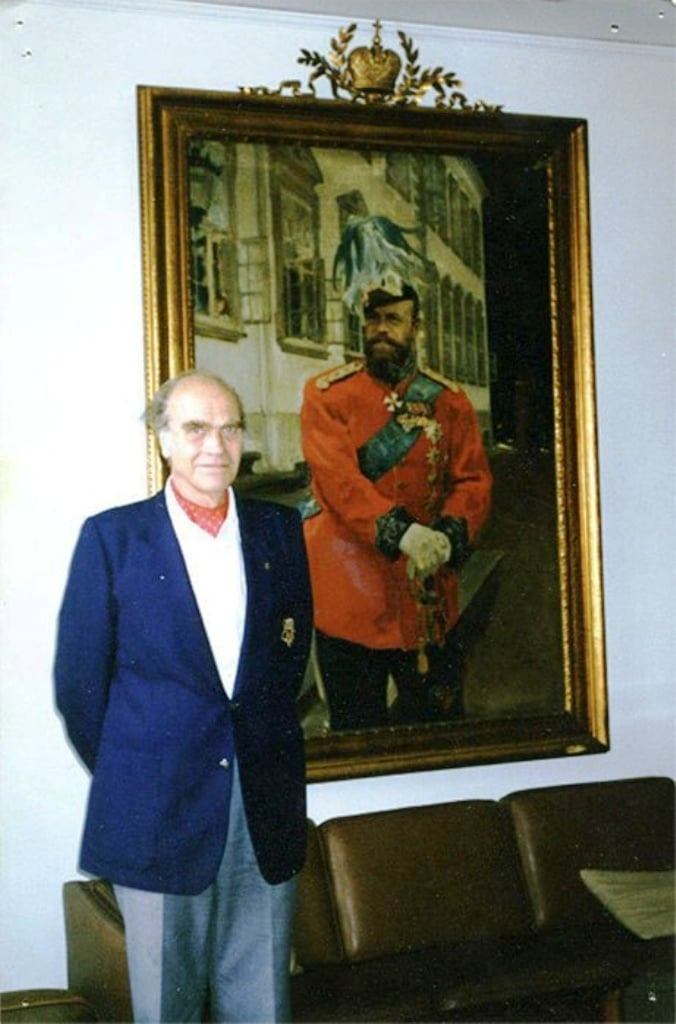
PHOTO: Tikhon posing in front of a portrait of his grandfather Emperor Alexander III in the Uniform of the Danish Royal Regiment of Life Guards (1899). Artist: Valentin Serov (1865-1911)

On this day – 8th April 1993 – Tikhon Nikolaevich Kulikovsky-Romanov died in Toronto, Canada.

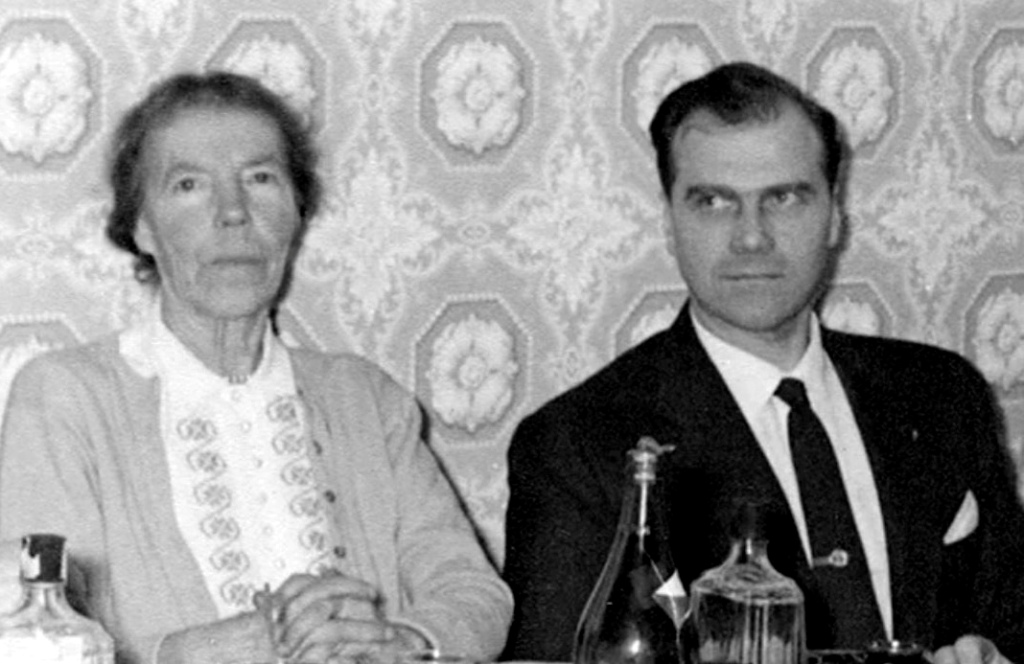
Tikhon was the eldest son of Grand Duchess Olga Alexandrovna (1882-1960) and Colonel Nikolai Alexandrovich Kulikovsky (1881-1958), grandson of Emperor Alexander III and Empress Maria Feodorovna, nephew of Emperor Nicholas II.

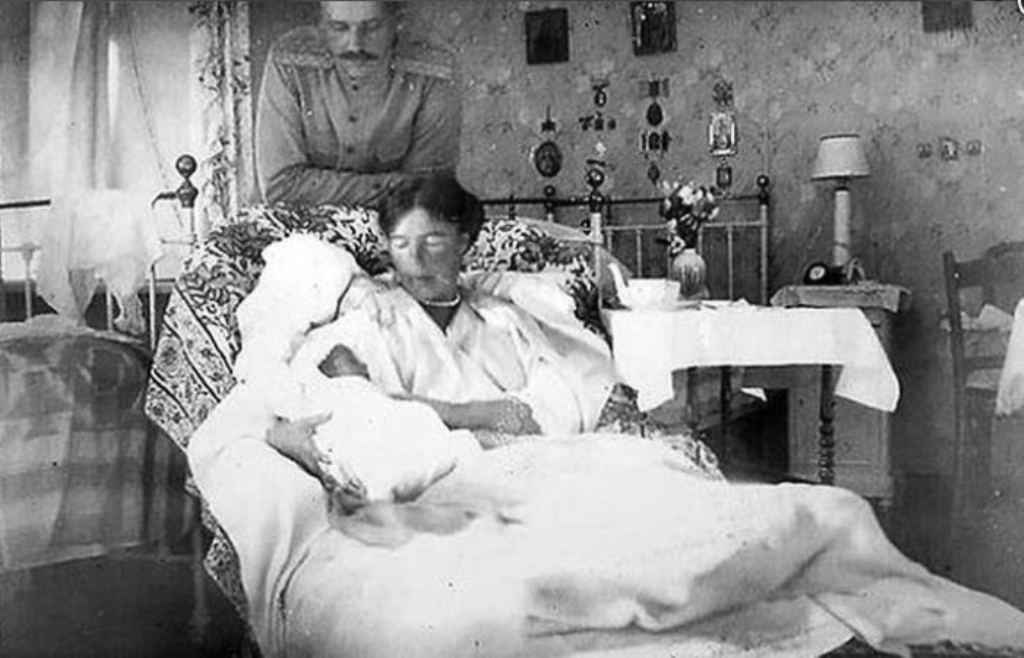
Born in Ai-Todor in Crimea on 25 August (O.S. 12 August) 1917, where Olga Alexandrovna’s family had moved with the Empress Maria Feodorovna in March 1917 after the February Revolution . Maria Feodorovna wrote in a letter to to Grand Duchess Olga Konstantinovna:

“Just last evening, when I felt completely lost, my dear Olga gave birth to Baby, a little son who brought such unexpected joy to my broken heart … I am very glad that Baby appeared just at that moment when from grief and despair I suffered terribly.”

PHOTO: Nikolai Kulikovsky and Grand Duchess Olga with their newborn son Tikhon on 25 August (O.S. 12 August) 1917

in 1920, when the Red Army was approaching, together with his parents and brother Tikhon Nikolaevich left Russia and emigrated to Denmark, where his grandmother, the Dowager Empress Maria Feodorovna had already arrived.

Tikhon was brought up in the Russian spirit, spoke excellent Russian and was closely and directly connected with refugees from Russia, as his parents’ house gradually became the center of the Russian colony in Denmark.

He was educated in the Russian gymnasiums (schools) in Berlin and Paris, then studied at the Danish military school and served in the Danish Royal Guard, during the Second World War. After the occupation of Denmark, the Wehrmacht and the Danish army were imprisoned in special camps, where he spent several months in prison.

PHOTO: Tokhon with his mother Grand Duchess Olga Alexandrovna. 1950s

In 1948, together with his parents and brother Guri Nikolaevich (1919–1984), they left Denmark for Canada.

Tikhon married three times, his last marriage to Olga Nikolaevna Pupynina (1926-2020). He had one child, a daughter Olga Tikhonovna (born 9 January 1964) from his second marriage. He had no children from his first or third marriages.

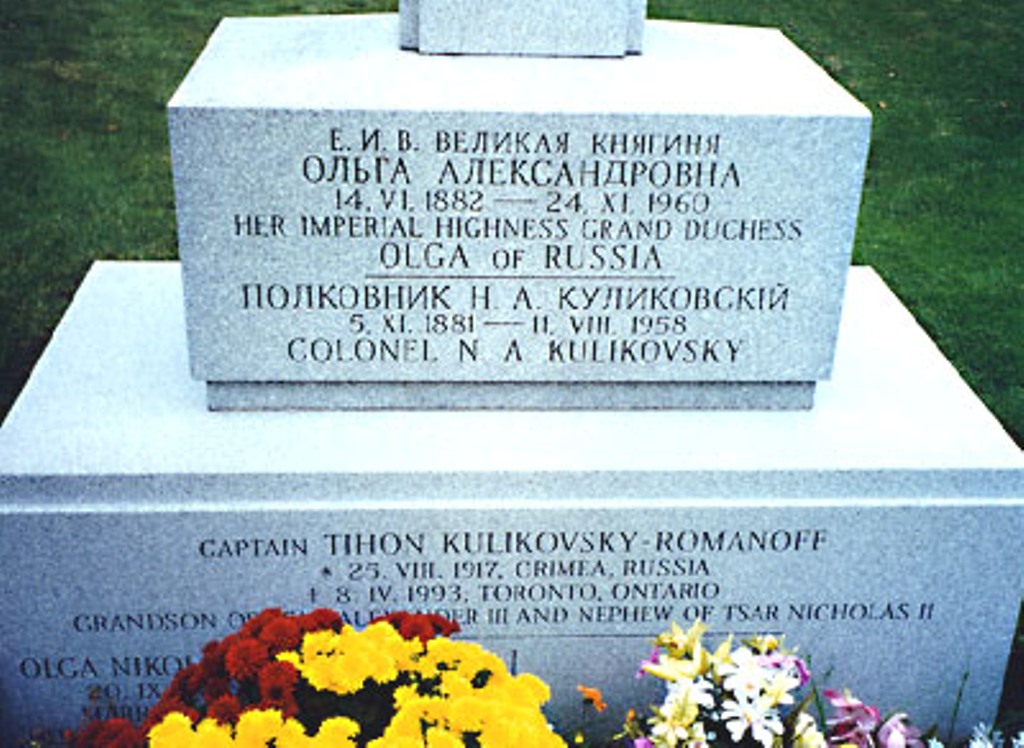
On 6 April 1993, Tikhon Nikolaevich was hospitalized at Women’s College Hospital in Toronto, it was found that he suffered a myocardial infarction. On 8 April after a second heart operation, Tikhon Nikolaevich died. The funeral service took place on 15 April at the Holy Trinity Church in Toronto. The burial took place on the same day at York Cemetery in the north of Toronto, where he was buried next to his parents, Grand Duchess Olga Alexandrovna and Colonel N. A. Kulikovsky.

Tikhon never recognized the dynastic rights of the descendants of Grand Duke Kirill Vladimirovich (1876-1938). Although he did not make any claim to the throne, his candidacy was supported by a number of monarchist organizations that believed that the tsar should be elected by the All-Russian Zemsky Sobor.

PHOTO: Tikhon’s third wife Olga Nikolaevna Pupynina (1926-2020), posing in front of a portrait of her husband, painted in 1940, by Grand Dichess Olga Nikolaevna

He was an honorary member of the Romanov Family Association, and served as an arbiter of the Supreme Monarchical Council. In 1991, Tikhon organized a Charity Fund named in memory of his mother. Tikhon Nikolaevich was also a trustee of the “Orthodox Brotherhood in the Name of the Tsar-Martyr Nicholas II.” In the midst of perestroika, Tikhon Nikolaevich addressed a number of appeals to the Russians. One of them was devoted to the need to rename the city of Sverdlovsk to Yekaterinburg.

In the early 1990s, Tikhon Kulikovsky-Romanov was the closest surviving relative of Emperor Nicholas II, therefore, his genetic material should have been a strong argument in identifying the remains of the imperial family. During his lifetime, however, he refused to provide his blood to experts, believing that the investigation was not conducted at the proper level, by incompetent people and organizations. However, samples of his blood taken during the operation had been stored and transferred for examination to Russian expert E.I. Rogaev. Rogayev’s studies showed a one hundred percent match between T. N. Kulikovsky-Romanov and Nicholas II.

In 2007, Tikhon Kulikovsky’s genetic material also helped identify the remains of the two remaining children of the last tsar Tsesearevich Alexei and Grand Duchess Maria.

PHOTO: Tikhon was buried with his parents in York Cemetery in Toronto, Canada

Memory Eternal! Вечная Память! 

© Paul Gilbert. 8 April 2024

The Last Tsar: The Abdication of Nicholas II and the Fall of the Romanovs

Below, is the publisher’s summary of the forthcoming title The Last Tsar: The Abdication of Nicholas II and the Fall of the Romanovs by Tsuyoshi Hasegawa, to be published in December 2024. Please take a moment to read my personal comments which follow – PG

***

When Tsar Nicholas II fell from power in 1917, Imperial Russia faced a series of overlapping crises, from war to social unrest. Though Nicholas’s life is often described as tragic, it was not fate that doomed the Romanovs—it was poor leadership and a blinkered faith in autocracy.   
 
Based on a trove of new archival discoveries, The Last Tsar narrates how Nicholas’s resistance to reform doomed the monarchy. Encompassing the captivating personalities of the era—the bumbling Nicholas, his spiteful wife Alexandra, the family’s faith healer Rasputin—it untangles the dramatic struggle by Russia’s aristocratic, military, and legislative elite to reform the monarchy. By rejecting compromise, Nicholas undermined his supporters at crucial moments. His blunders cleared the way for all-out civil war and the eventual rise of the Soviet Union.  
 
Definitive and engrossing, The Last Tsar uncovers how Nicholas II stumbled into revolution, taking his family, the Romanov dynasty, and the whole Russian Empire down with him.

About the Author

Tsuyoshi Hasegawa is professor emeritus in history at the University of California at Santa Barbara. The award-winning author of many books on Russian history, World War II, and the Cold War, he lives in Santa Barbara, California.

A few comments on the publisher’s summary

Based on the above summary, one can only presume that this new book will be yet another negative assessment of the Holy Tsar Nicholas II.

Hasadawa makes radical claims, but nothing we haven’t heard or read before. For instance, he states that it was “poor leadership and a blinkered faith in autocracy” which “doomed the Romanovs” . . . and that “by rejecting compromise, Nicholas undermined his supporters at crucial moments” . . . and that, “his blunders cleared the way for all-out civil war and the eventual rise of the Soviet Union”.  

Such broad accusations, putting the blame at the feet of one man during some of the most difficult times of his reign, are simply not a fair assessment. One man cannot be held responsible for civil unrest, revolutionary activity, war, revolution, etc. There were so many different elements at play which led to the end of the monarchy and Tsarist Russia.

Nicholas II was surrounded by enemies, including self-serving ministers, generals and even members of his own family. Worst of all, were the various revolutionary groups, who did not want a “constitutional monarchy”, but a new world order. Just look at what replaced the monarchy in Russia in early 1917: the Provisional Government, led by Alexander Kerensky. The enemies of the Tsar blindly followed Kerensky and his cronies towards the abyss, until October 1917, when the Bolsheviks seized power, ushering in decades of totalitarianism, terror, and destruction of the old order.

Hasadawa then goes on to claim that Nicholas’s resistance to reform “doomed the monarchy”. What utter nonsense! More than a century after the fact, it is so easy to criticize or cast judgement on why “did” the Tsar do this, or why “didn’t” he do that? Hindsight is always 20/20. Nicholas II carried out many reforms during his 22+year reign, however, these are often ignored or overlooked by academically lazy historians. In addition, any reforms of a 1000 year old autocratic system would have to come slowly and with great care.

The author then resorts to insults. He refers to Nicholas as “bumbling” , so it will be interesting to read how Hasadawa explains just how the Tsar was “bumbling”. Then he insults Empress Alexandra Feodorovna as “spiteful”. Alix spiteful? Really? He then goes on to refer to Rasputin as “the family faither healer”, which is incorrect. Rasputin was a strannik, meaning a holy wanderer, or pilgrim.

The publisher claims that this new book is based on “on a trove of new archival discoveries”. I for one am intrigued, and looking forward to reading these “discoveries” Did the author actually travel to Russia and carry out research in the Russian archives? Did he meet with and interview his Russian peers for perhaps, a more balanced understanding of history from a Russian perspective? We shall have to wait and see.

I will be anxious to see if Hasadawa will touch on the many reforms and accomplishments made by Nicholas, and while discussing the Tsar’s abdication, will he even dare touch on the fact that the abdication was in fact an illegal coup?

Back in 2018, I remember prematurely balking at reading The Last of the Tsars: Nicholas II and the Russian Revolution by British historian and author Robert Service. I did this simply because the author was a Sovietologist, anticipating that the entire book would be an all out attack on Nicholas II. I was wrong. There is no question, that Service is not a fan of the last Tsar, but as it turned out, the book was one of the most interesting I had read in many years. Service writes about the last 18 months of the life of the Tsar, presenting many new facts and much new information, primarily from Russian archival sources. Therefore, I feel it necessary to afford Hasadawa the same courtesy. I have already pre-ordered a copy from Amazon, and look forward to reading it in due course.

© Paul Gilbert. 6 April 2024

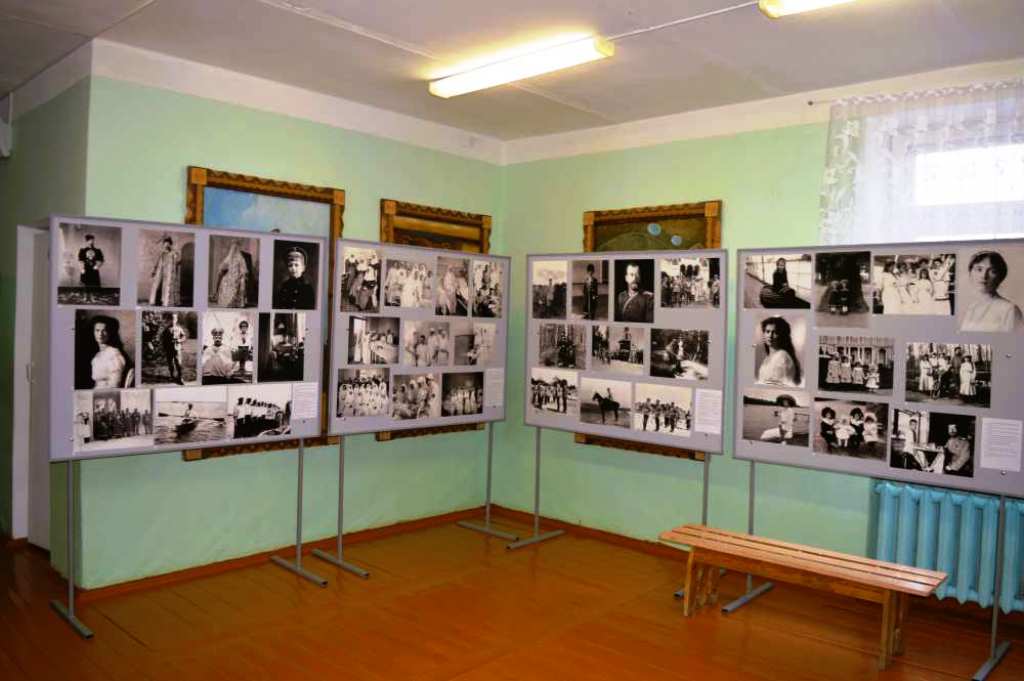
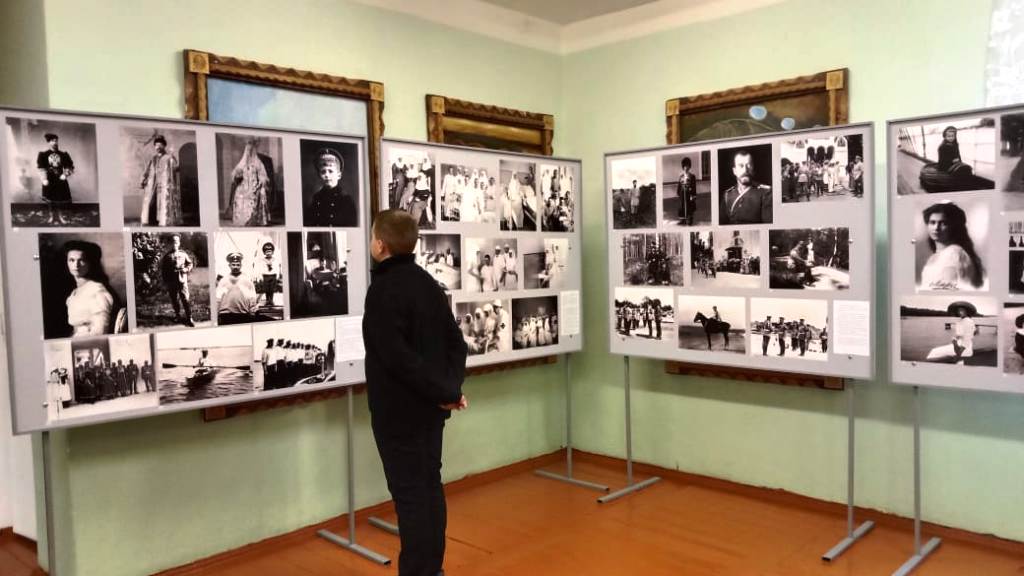
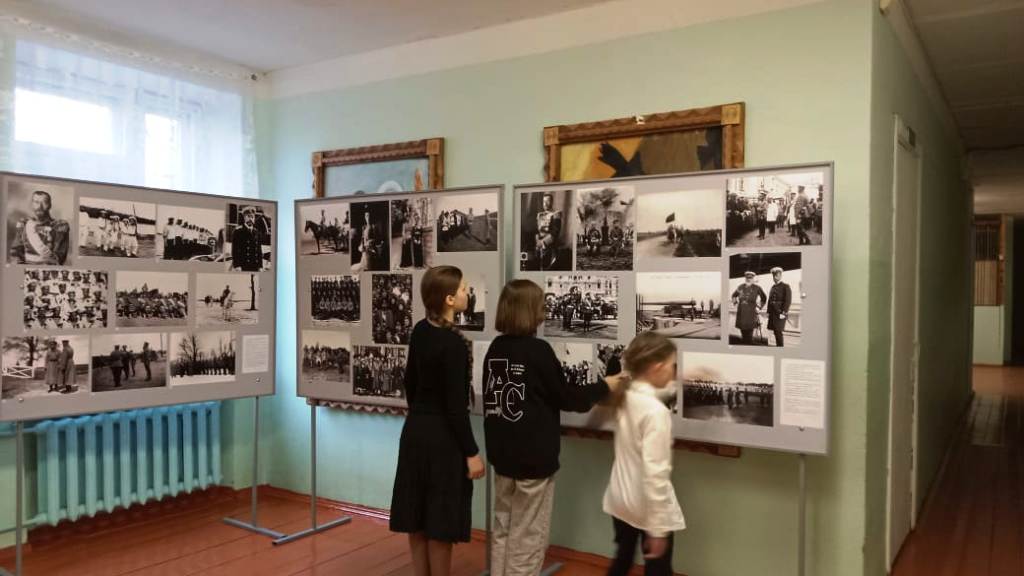
Photo-exhibition teaches Russian schoolchildren about Nicholas II and his family

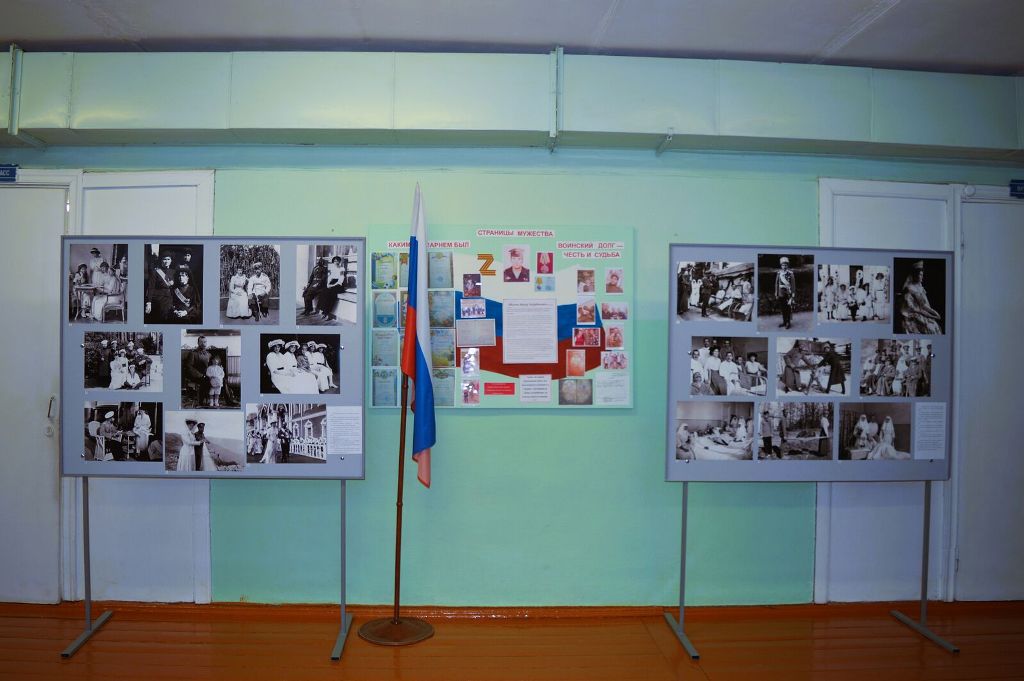
On the day of the Reigning Icon of the Mother of God, 15th March, the monks of the Nikandrova Hermitage opened the photo-exhibition The Tsar’s Family. Love and Mercy, in the secondary school of the village of Dubrovno, Porkhov District, Pskov Region.

The exhibition presents more than 100 vintage photographs that tell about the close relationship within the family of the last Russian emperor Nicholas II. The photographs reflect many aspects of the life of the Tsar’s family during the late 19th and early 20th centuries, including the upbringing of the children, and the warm and loving relationship, which they shared with both their parents and each other.

The brethren of the Nikandrova Hermitage made stands for the exhibition, on which the photographs were displayed. The photographs were provided by the Sretensky Monastery in Moscow.

Hierodeacon Spyridon (Drygailo), a resident of the Nikandrova Hermitage, conducted a special lesson with the schoolchildren and teachers dedicated to the Imperial Family.

The exhibition was open to all residents of the village of Dubrovno, admission was free.

The photo project The Tsar’s Family: Love and Mercy was created in 2016 by the Sretensky Monastery in Moscow. The travelling exhibition has already been presented in Serbia, Germany, Italy, Canada, Argentina, New Zealand, South Africa, Romania, Croatia, Montenegro, Bosnia and Herzegovina, Macedonia, and the Czech Republic. The exhibition has also been presented in many cities of Russia: Moscow, Voronezh, Kursk, Ryazan, Penza, Krasnodar, Belgorod, Velikiye Luki, etc.

*As I have noted in similiar posts, I support any initiative – big or small – to help keep the memory of Nicholas II and his family alive in post-Soviet Russia – PG

© Paul Gilbert. 5 April 2024