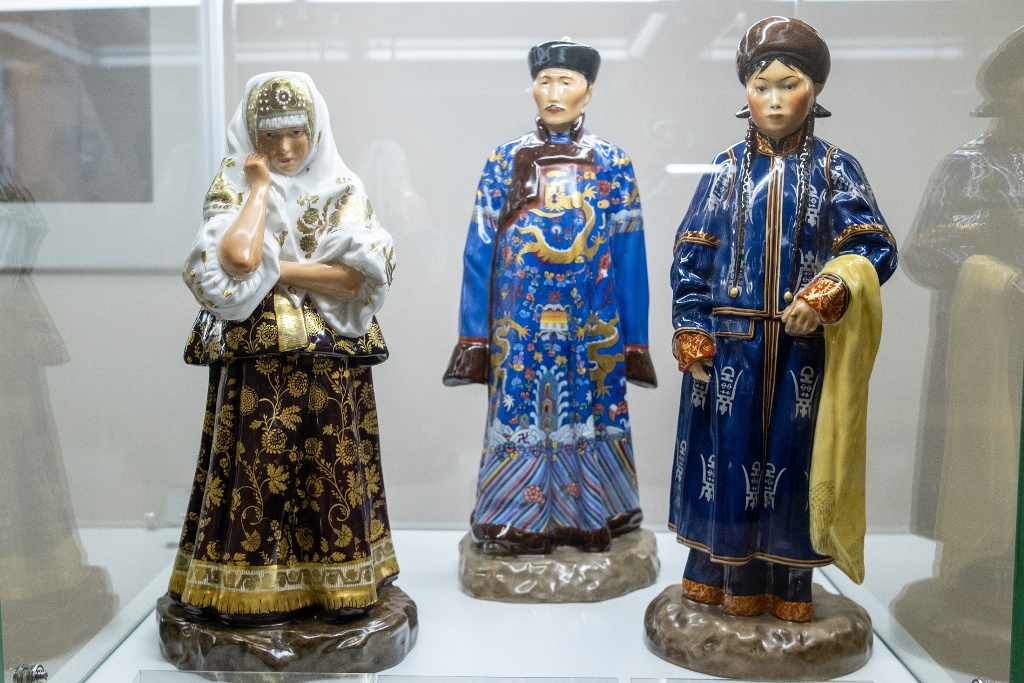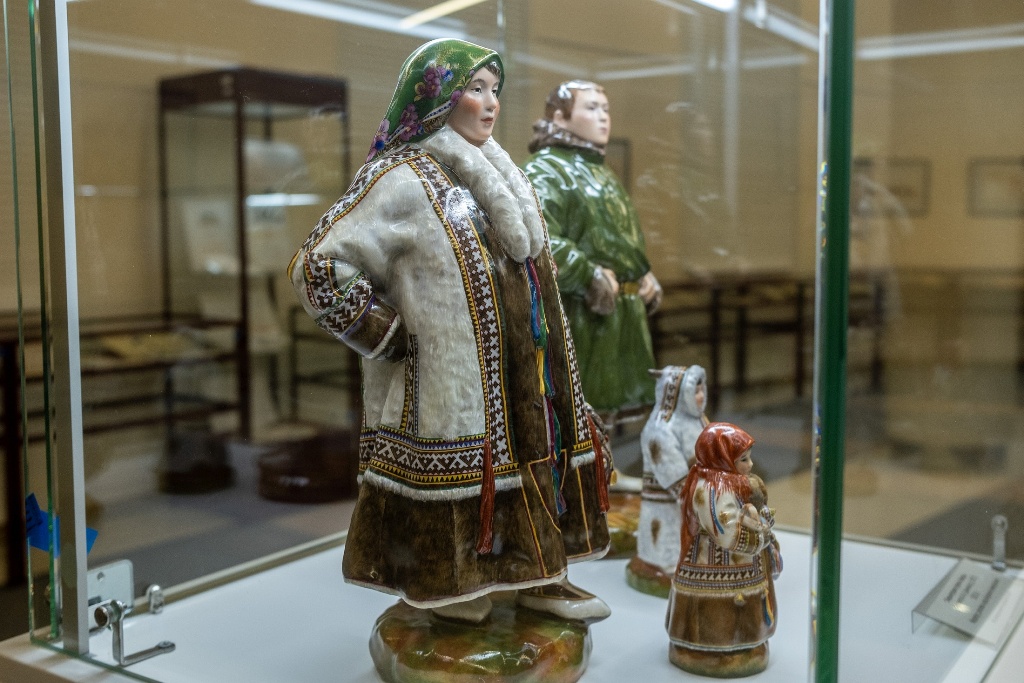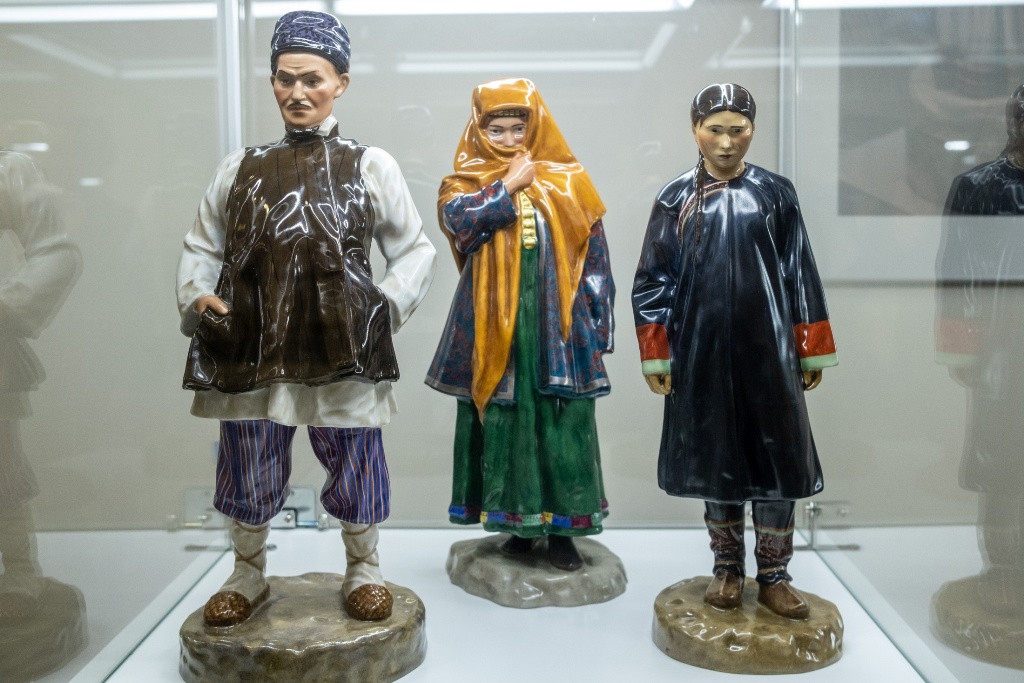
Nicholas II’s porcelain project presented in St. Petersburg

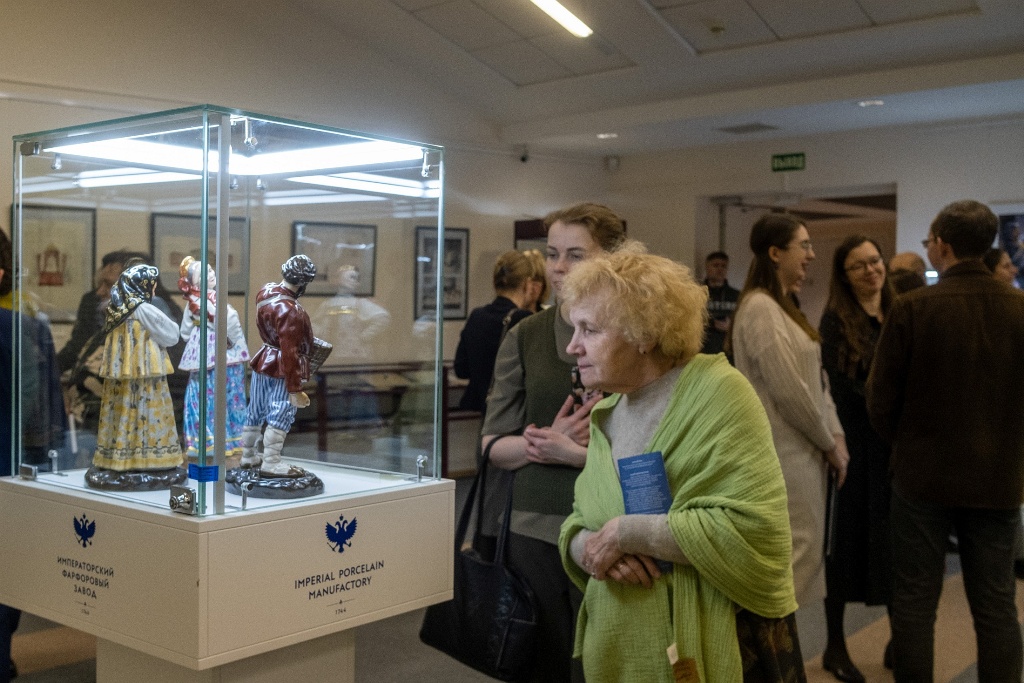
Earlier this week, a new exhibition opened in St. Petersburg, featuring items from the Imperial Porcelain Factory. The exhibition was organized by the Russian State Historical Archive (RGIA) in St. Petersburg and the Imperial Porcelain Factory [established in 1744].

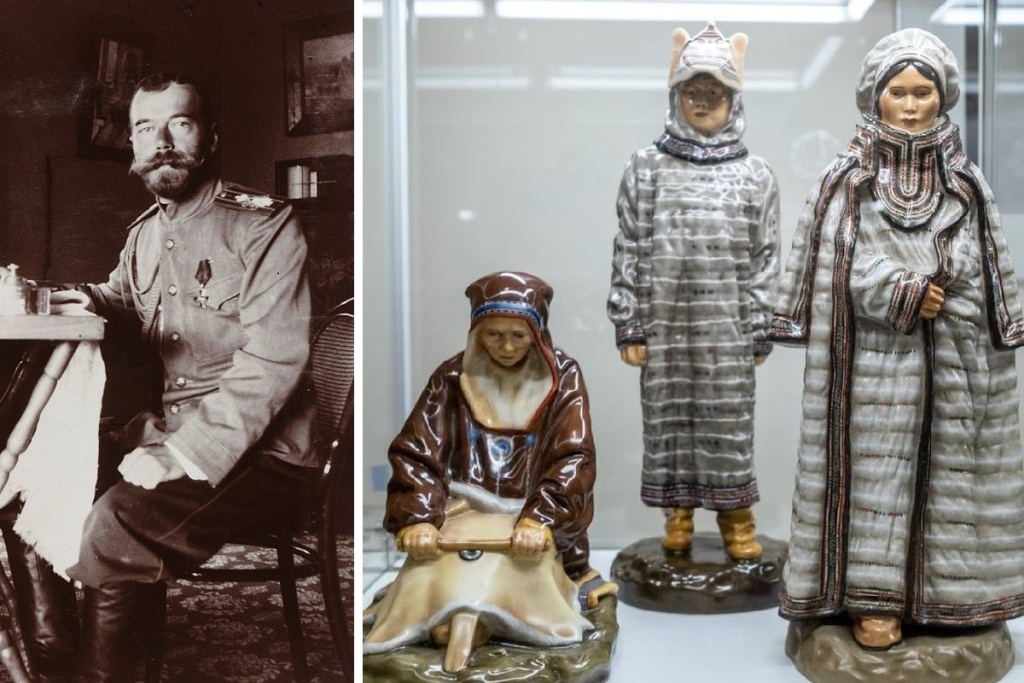
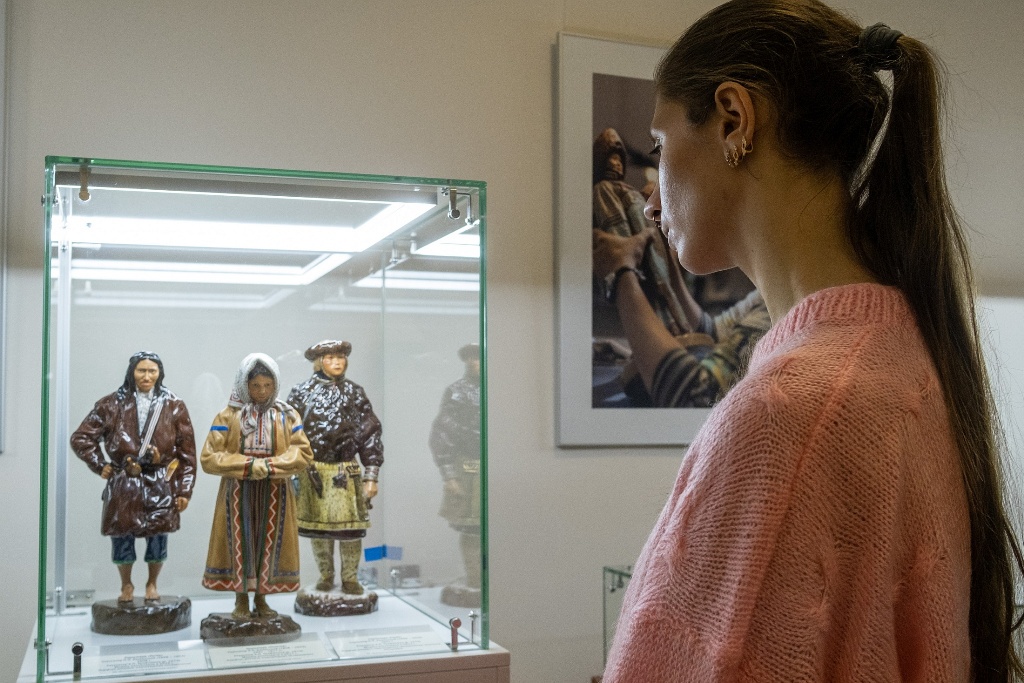
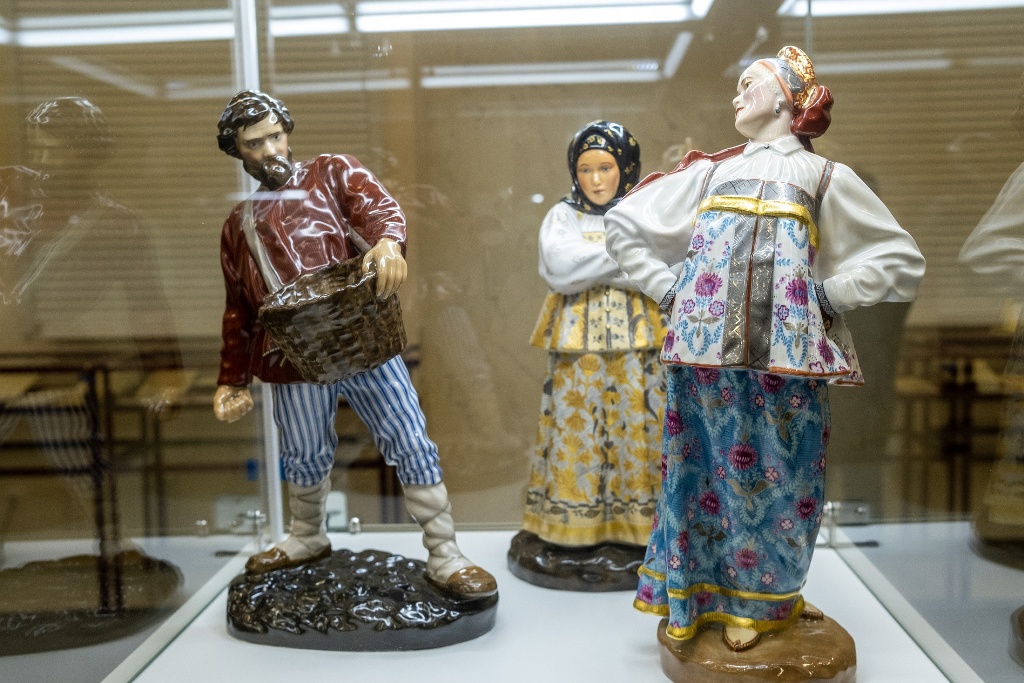
The highlight of the exhibition is a unique porcelain series “Peoples of Russia”, which represents the peoples of the former Russian Empire. The series was and remains the largest project in the history of the Imperial Porcelain Factory, created by the personal order of Emperor Nicholas II.

In addition, are more than 200 archival documents dedicated to the history of the Imperial Porcelain Factory and the author of the “Peoples of Russia” series, sculptor Pavel Pavlovich Kamensky (1858-1922). The documents include Kamensky’s personal files, letters, and documents on the procedure for making the porcelain series. Many of these documents are exhibited for the first time.

The “Peoples of Russia” series of porcelain figurines was created between 1907-1917 by order of Emperor Nicholas II. The series was created to mark the celebration of the 300th anniversary of the Romanov Dynasty in 1913. The series represents the 73 nationalities of the Russian Empire, according to the results of the first General Population Census of 1897.

Kamensky managed to create over 150 figures, depicted in their respective national costumes. The sculptor relied on a wide range of historical, ethnographic and anthropological materials from the collections of the Kunstkamera and the Museum of Alexander III [State Russian Museum].  He was assisted by a team of molders and painters – Anatoly Lukin, Pavel Shmakov, Ivan Zotov, Andrei Dietrich, Lyudmila Midina and others.

Nicholas II personally evaluated the new statuettes of the series. Every year before the Christmas holiday from 1907 to 1914, several new figures were brought to the Alexander Palace at Tsarskoye Selo, and shown to the Emperor.

The majority of the original “Peoples of Russia” figurines are today in Collection the Porcelain Museum of the State Hermitage in St. Petersburg. In addition, there are 47 figurines in the collection of the Russian Museum of Ethnography in St. Petersburg.

Copies of these beautiful figurines are still manufactured at the Imperial Porcelain Factory in St. Petersburg, and available to purchase by collectors.

© Paul Gilbert. 28 February 2025

Rasputin’s alleged will hidden in KGB archives for 80 years

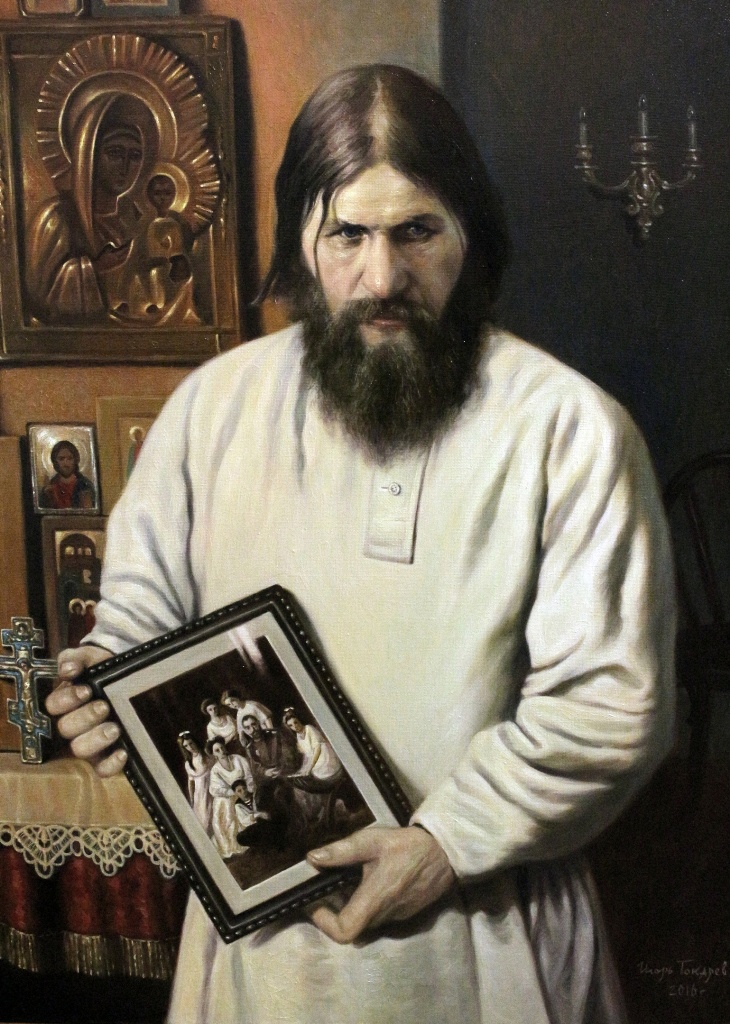
PHOTO: Rasputin holding a framed photo of the Imperial Family. Artist unknown.

DISCLAIMER: for the record, I do not support any of the conspiracy theories related to the Imperial Family and those close to them. During the past week, the subject of this post was discussed in the Russian media, and I thought that it would be of interest to some readers. Upon reading the article, you are free to draw your own conclusions – PG

At the end of the 20th century, reports appeared in the Russian press that the will of Grigorii Rasputin, had been discovered in the archives of the First Chief Directorate of the KGB of the USSR in Moscow.

Rasputin’s alleged will contained mysterious prophecies about the future of Russia and the world. The eleven-page document was kept secret for 80 years, as were the personal documents of Russia’s last Imperial Family. Recall that it was Stalin who had these documents sealed, they were even forbidden to Soviet historians, with the exception of course, for propaganda purposes. The archives were only unsealed in the 1990s, after the fall of the Soviet Union.

Grigorii Yefimovich Rasputin (1869-1916), was assassinated on 30th December [O.S. 17th] 1916, by a group of conservative nobles led by Prince Felix Yusupov (1887-1967), and whose death still attracts the attention of historians.

According to the memoirs of Aron Samuilovich Simanovich[1] (1872-1944), who became the strannik’s[2] personal secretary, Rasputin predicted his own demise and the future of Russia. Simanovich claims that shortly before his death, Rasputin summoned the lawyer Aronson to draw up a will, in which he described the fate awaiting the Imperial Family. Simanovich, finding himself in emigration, in 1921 published the text of the will, which according to him, was read by Nicholas II only after the death of Rasputin.

Rasputin predicted that he would meet a violent death before January 1917 and if he was killed by the nobles, then war would break out in Russia, and the Russian nobility would suffer greatly. This warning is especially relevant, because Grand Duke Dmitri Pavlovich (1891-1942), a cousin of Nicholas II, participated in the conspiracy.

In the 1990s, information appeared in the Western press that an American historian David Norwalk found the full text of the will in the KGB archives in Moscow. In his will, Rasputin further predicted not only the 1917 Revolution, but also the collapse of the Soviet system. Vasily Vedeneev, author of the book «100 великих тайн России ХХ века» (100 Great Secrets of Russia of the Twentieth Century), confirmed that the document had been sealed by Soviet authorities. The will spoke of the emergence of a “new empire” – the Soviet Union and its future collapse. Rasputin also predicted the war with Germany resulting in a victory for Russia.

Many believe question the authenticity of Norwalk’s claim, and with good reason. His discovery appeared in the dubious American tabloid Weekly World News, known for renowned for its outlandish cover stories and for spreading fake news. Some sources claimed that Rasputin’s will did not exist, lost or destroyed. In his notes, Grigorii Rasputin wrote more about his role in history and the fight against secular power, than about global catastrophes.

FURTHER READING:

The prophesies of Grigory Rasputin

NOTES:

[1] In emigration, Simanovich wrote the book «Распутин и евреи. Воспоминания личного секретаря Григория Распутина» (Rasputin and the Jews. Memoirs of Grigory Rasputin’s Personal Secretary), in which he writes about his relationship with Rasputin. It was first published in 1921 in Russian. Following the 1917 Revolution, Simanovich fled the Bolsheviks, first to the United States and then France. During the German occupation of France, he was interned in a camp for stateless persons, then deported to Auschwitz, where he died on 31st July 1944.

[2] Rasputin is often described as a monk, however, this is incorrect. He was a strannik (wanderer or pilgrim), though he held no official position in the Russian Orthodox Church. 

© Paul Gilbert. 27 February 2025

Louis Mountbatten on his Romanov relatives

Louis Francis Albert Victor Nicholas Mountbatten, 1st Earl Mountbatten of Burma (born Prince Louis of Battenberg (1900-1979), reflects on his Romanov relatives . . . [Note: Emperor Nicholas II was his maternal uncle through marriage and paternal second cousin]: 

“The Tsar was my father’s first cousin…and the Tsarina was my aunt on my mother’s side. Another aunt, Elizabeth, had married the Grand Duke Serge. So our Russian connections were very close. We used to see each other quite often either in Germany, or in Russia. I loved my Russian family and I loved Russia too.

These old family photograph albums bring back memories of all the happy times we had together in that almost unbelievable world before the Revolution. In this photo with my cousins I was just ten…my little cousin the Tsesarevich Alexei is in the carriage. He was heir to the Russian throne and was younger than me by about four years and in very poor health sometimes… he was a haemophiliac, which was a great worry to us all.

…Olga, Marie, Anastasia and Tatiana were all very beautiful. I remember I had always secretly hoped to marry Marie.

Russia was an autocracy at that time, the Tsar had absolute power and was answerable only to God. Yet anyone less like an autocrat than my uncle Nicky would be hard to imagine…he was a very, very kind-hearted simple charming man. But at the same time he was rather weak and indecisive.

He was never happier than when he was outside playing with his children. I remember he would purchase us all chocolate-ices, and after, settle down with a long book to read quietly in peace

And now, all that was finished. All the happy memories were things of the past…

My uncle had lost his throne – he, my aunt, and all my cousins were under arrest. We were shocked and dismayed but we didn’t dream of the terrible things which were yet to come… I don’t think anyone could of.

We had very little news of the family after the Bolsheviks took over. We all hoped they would be safe but we feared the worse. It was a very long time before we heard of all the details…which were quite….horrible… They were all shot together. Alexei and one of his sisters did not die immediately…Even their doctor and their helpers were murdered with them. Soon after, my aunt Elizabeth who had loved children and orphans and nursing people back to health so much, was also murdered by being flung down a mineshaft and buried alive.

These sad deeds cast a shadow over the whole of our family, for a very, very long time…”

© Paul Gilbert. 21 February 2025

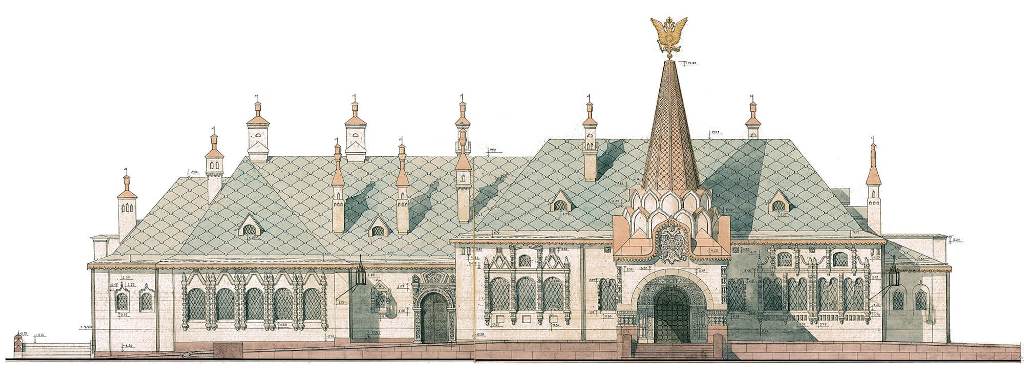
Reconstruction of the Imperial Pavilion in Tsarskoye Selo

PHOTO: historical look of the Imperial Railway Pavilion at Tsarskoye Selo

The Imperial Railway Pavilion in Tsarskoye Selo was built according to the project of the architect Vladimir Aleksandrovich Pokrovsky (1871-1931). It was constructed in the Neo-Russian style, beloved by Nicholas II. The station became the main terminus for the Imperial Train.

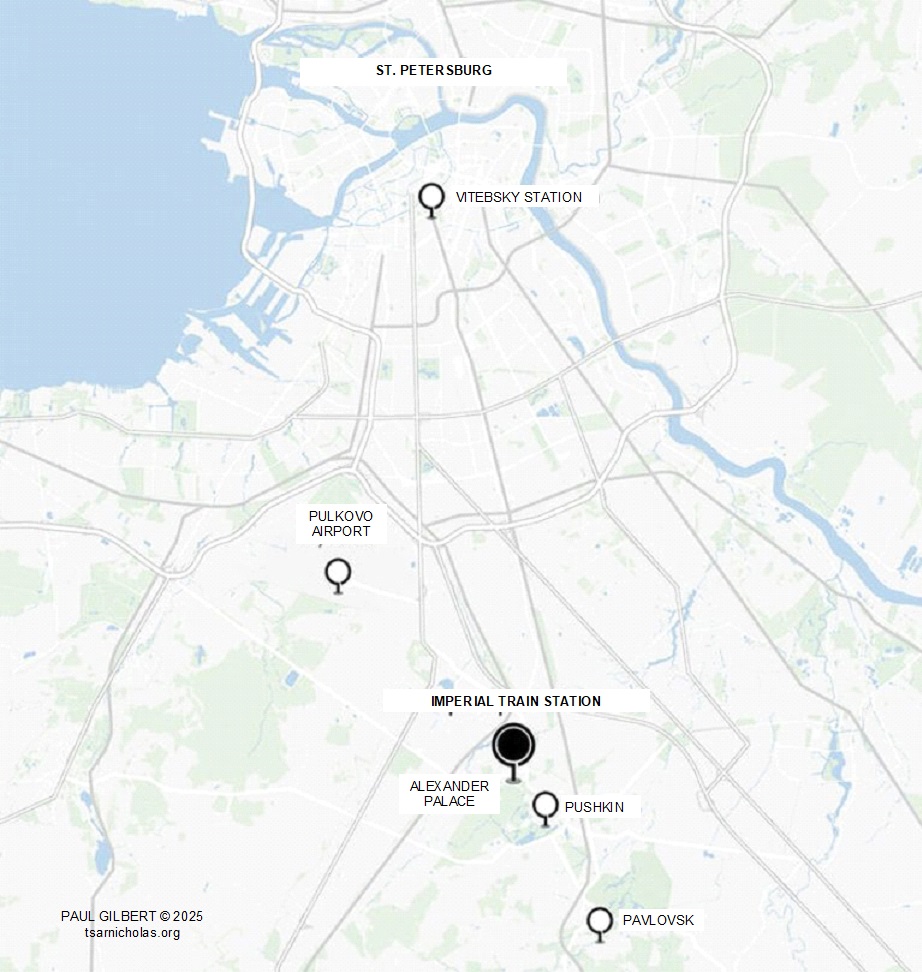
The building was located on the third branch of the Imperial Railway, which connected the Vitebsky Railway Station in St. Petersburg with Tsarskoye Selo. This special branch was built for the purpose of transporting the Emperor, members of the Imperial Family, government ministers and foreign delegations to and from the capital. During the First World War, the Imperial Train transported Nicholas II to the headquarters of the Russian Imperial Army, in Mogilev.

Many historians note that it was from the Imperial Railway Station at Tsarskoye Selo, that the Imperial Family departed for their last journey to Tobolsk in August 1917. This is incorrect. The Imperial Family were sent into exile from the Alexandrovskaya Station – Tsarskoye Selo’s third railway station on 14th (O.S. 1st) August 1917.

PHOTO: contemporary map showing the location of the Imperial Train Station and it’s proximity to the Alexander Palace in Tsarskoye Selo.

On 25th January 1911, the original wooden pavilion was lost as a result of a fire, only the platform and part of the canopy survived. On the site of the lost pavilion, a new stone building, according to Pokrovsky’s plan was erected in 1912. A special road – which has survived to this day – was laid through the Fermsky [Farm] Park leading to the Alexander Palace. 

The architectural style of the Imperial Pavilion – asymmetry, window design, “checkerboard” roof with steep slopes, tented porch) makes it akin to the buildings of the nearby Feodorovsky Gorodok [Town], the Feodorovsky Sovereign Cathedral, the Sovereign Military Chamber and the barracks of His Imperial Majesty’s Own Convoy. Together, they formed an architectural ensemble in which motifs of ancient Russian architecture were widely used. The original red-brick façade was plastered and painted white by order of the Emperor. It was decorated with relief white-stone double-headed eagles above the arches and on the façade walls, ornamental carvings are made at the portals, figured columns are made on the outer corners of the porch. 

The main part of the building included three halls: in the center there was a square vestibule with a front porch, the halls on the sides of the vestibule were intended for the Emperor and his retinue: on the south side was the Tsar’s Hall, on the north – the Retinue’s Hall. A metal canopy above the platforms and tracks, adjacent to the eastern façade of the pavilion, served to receive trains. A ramp was added to the main entrance, allowing motorcars and carriages to drive directly under the arched opening of the front porch.

The paintings on the walls and ceilings in the halls are made in the tempera-glue technique on plaster. Polychrome ornamental painting is a stylized borrowing of elements of the pictorial décor of the interior design of the palace of Tsar Alexei Mikhailovich (1629-1676) in Kolomenskoye, near Moscow. The unique painting, which has partially survived to this day, is an integral part of Pokrovsky’s design. The vaults of the inner chambers were painted by the artist Mikhail Ivanovich Kurilko (1880-1969).

During the First World War of 1914-1917, the Imperial Railway Station served to transport wounded Russian soldiers to the hospital set up in Feodorovsky Gorodok.

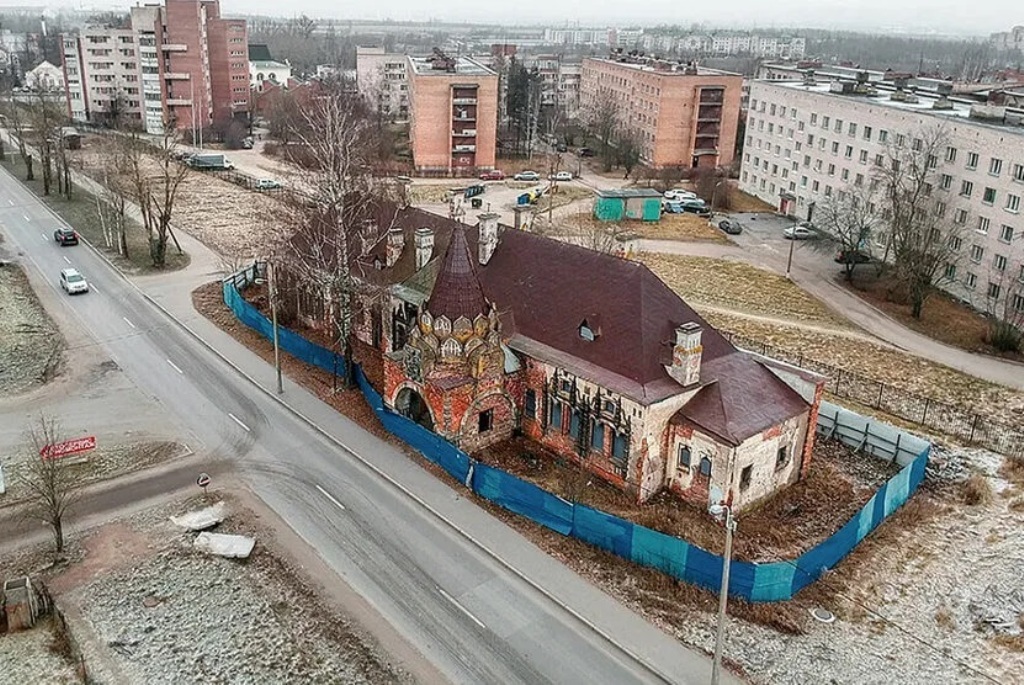
PHOTOS: for decades, the Imperial Railway Pavilion at Tsarskoye Selo
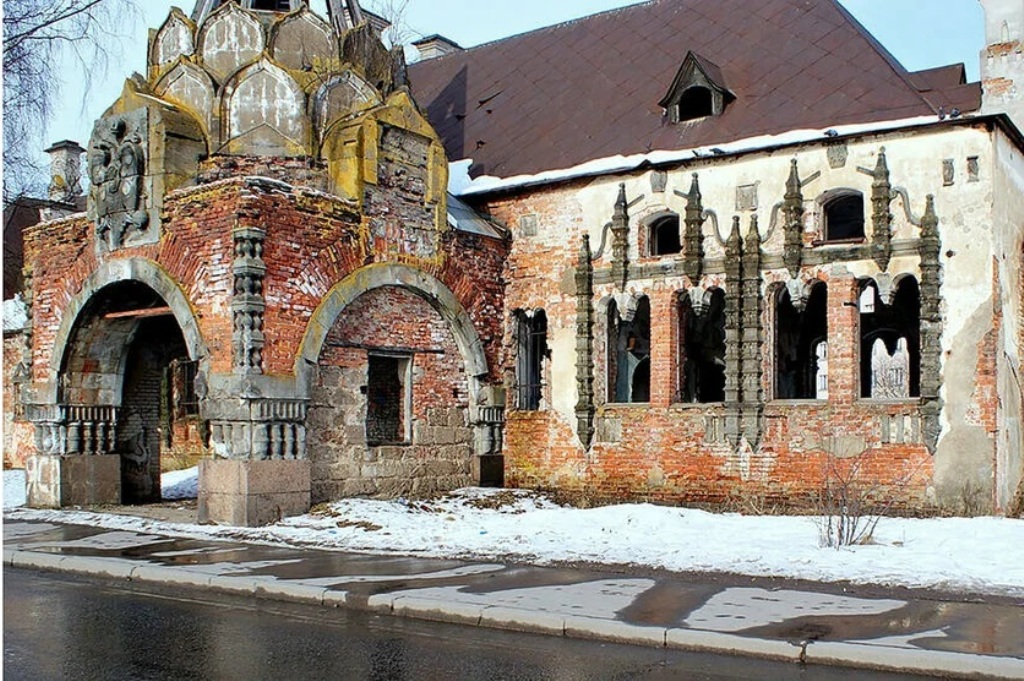
has been left in a shocking state of neglect and disrepair 

In 1918, the station was renamed the Uritsky Pavilion [after Moisey Solomonovich Uritsky (1873-1918), a prominent Bolshevik and chairman of the Petrograd Extraordinary Commission]. Initially, it was used as a dormitory for workers of the Track Repair Mechanical Plant. The Tsarist emblems were removed from the tent above the wing, the ceremonial halls were divided by makeshift walls, the porch was adapted for use as a kitchen. The Imperial Pavilion’s furniture, lamps, objects of decorative and applied art were all lost. The hundred-meter landing stage was dismantled in the 1930s.

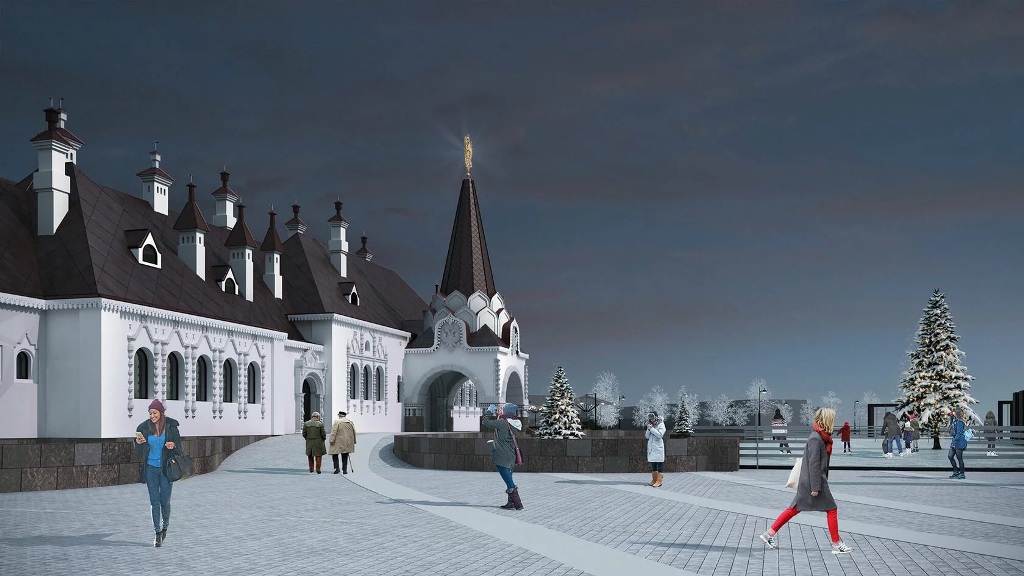
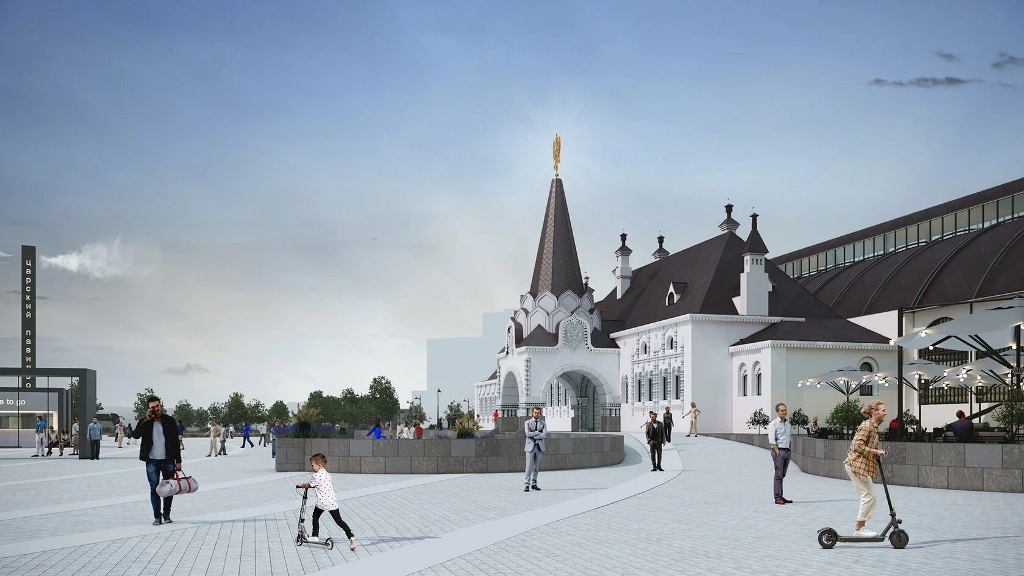
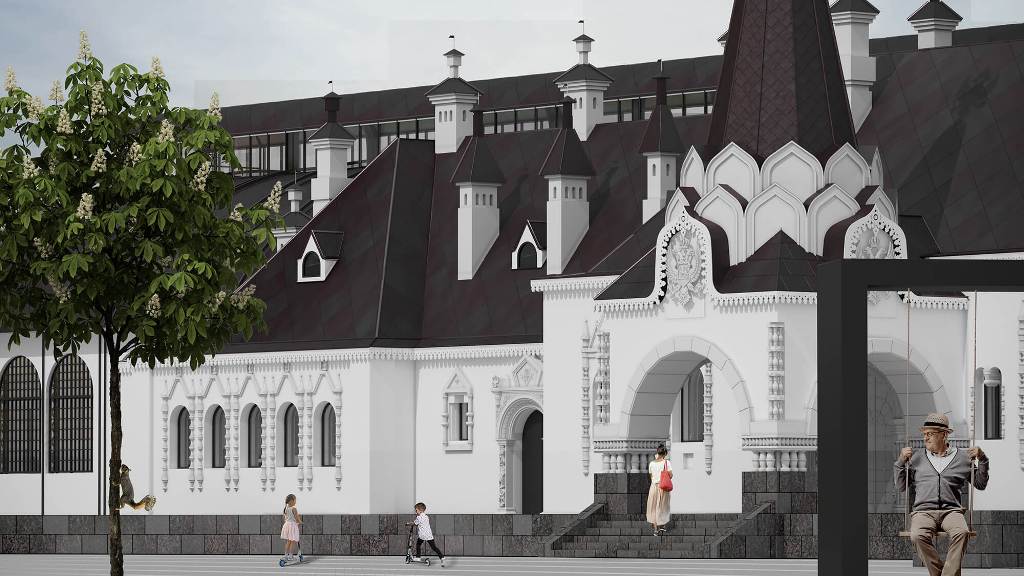
In the summer of 2023, work began on on the restoration of the Imperial Railway Pavilion to it’s historic original, under the direction of  the Tsarskoye Selo Station Foundation. Below are the artist concepts of what the Imperial Railway Pavilion will look like following it’s restoration:

© 2024 First Design Institute

© 2024 First Design Institute

© 2024 First Design Institute

© 2024 First Design Institute

© 2024 First Design Institute

Aside from being a museum, there are plans to use the restored Imperial Pavilion for other purposes, including a Wedding Palace. In addition, the façade of the building, it’s rich interiors and painted vaults will be offered as an ideal place for celebrations and photo shoots.

FURTHER READING:

This author has been closely following the progress of this project since August 2023. Below are my articles which provide details on the restoration of this historic building, among others on the Imperial Train of the last Russian Emperor . . . .

Imperial Railway Pavilion in Tsarskoye Selo is being restored – features 13 photos of the initial restoration work

Update on the restoration of the Imperial Railway Pavilion at Tsarskoye Selo

Artist concept of Imperial Railway Pavilion restoration project at Tsarskoye Selo – features VIDEO

The sad state of the Imperial Railway Pavilion at Tsarskoye Selo – features 20 photos!

Imperial Railway Pavilions during the reign of Nicholas II

The fate of Nicholas II’s Imperial Train – features 8 historic photos

© Paul Gilbert. 19 February 2025

Thousands of items at Pavlovsk have not been returned to the Alexander Palace

In 1951, by a government decree, the Alexander Palace was transferred to the Ministry of Defense of the USSR. The Naval Department used the building as a top-secret, submarine tracking research institute of the Baltic Fleet.

Any hope of the Alexander Palace being reopened as a museum – as it was before the Great Patriotic War (1941-45) – were now lost. The palace’s collection, which consisted of thousands of items, and which had been part of the evacuated items held in the Central Depository of Museum Collections of Suburban Palaces-Museums, were at this point transferred to the Pavlovsk Palace State Museum.

From 1951, the Alexander Palace would remain strictly off-limits to visitors for the next 45 years. When it appeared that the Soviet Navy intended to vacate the complex, the Alexander Palace was included in the 1996 World Monuments Watch by the World Monuments Fund (WMF).

In the summer of 1997, a permanent exhibition dedicated to Emperor Nicholas II and his family was opened in the Eastern Wing of the palace. It was at this time that my annual Romanov Tour became the first group from the West to visit the interiors of the Alexander Palace.

Despite the exhibition, the rest of the palace remained under the administration of the Naval Department, who continued to occupy the Western Wing. It is due to their occupancy in this section of the palace, that very few of the original interiors and their elements survived.

PHOTO: he Alexander Palace at Tsarskoye Selo, as it looked in the 1990s, when the palace was still surrounded by a security fence and watchtower.

It was not until October 2009, according to the order of the Federal Property Management Agency, that the Alexander Palace was placed under the administration of the Tsarskoye Selo State Museum Reserve.

After an extensive restoration project which began in the autumn of 2015, the private apartments of Emperor Nicholas II and Empress Alexandra Feodorovna opened to public on 13th August 2021.

Visitors to the Alexander Palace can now visit the New Study of Nicholas II, Moorish Bathroom of Nicholas II, Working Study of Nicholas II, Reception Room of Nicholas II, the Valet’s Room, PLUS the Maple Drawing Room, Pallisander (Rosewood) Living Room, Mauve (Lilac) Boudoir, Alexandra’s Corner Reception Room, the Imperial Bedroom, the Small and Large Libraries and the Marble/Mountain Hall.

Today, more than 6 thousand items from the funds of the Tsarskoye Selo State Museum-Reserve are displayed in the recreated interiors of the Alexander Palace.

In a recent interview with Art Newspaper Russia, the Director of the Tsarskoye Selo State Museum-Reserve Olga Taratynova talked about the restoration of the Alexander Palace and the reconstruction of the Private Apartments of Emperor Nicholas II and Empress Alexandra Feodorovna.

“The Alexander Palace suffered much less than the Catherine Palace,” said Taratynova. “Unlike the Catherine Palace, it was not destroyed by fire [as a result of shelling by the Nazis]. Instead, it endured a different fate. The Alexander Palace served as the residence of the family of the last Emperor, and it is a miracle that anything survived at all,” she added.

“For Alexander] Pushkin’s anniversary in 1949, an exhibition dedicated to him was opened in the palace, and for this purpose, a number of interiors were lost. Soviet dogma of the time believed that Art Nouveau was a decadent style, citing no need to preserve it. And then the building was transferred to the Ministry of War. In 2009, when the Alexander Palace was transferred to us [the Tsarskoye Selo State Museum-Reserve], we quickly carried out “cosmetic repairs” in three of the State Halls and opened them to the public. But all the things were in Pavlovsk. They were transferred there in 1951, and have remained there ever since, Taratynova continued”

PHOTO: Director of the Tsarskoye Selo State Museum-Reserve Olga Taratynova

“In preparation for the reopening of the Private Apartments of Nicholas II and Alexandra Feodorovan in 2021, they [Pavlovsk State Museum] gave us about 200 items from their collection for “temporary use”. We knew from inventories and photographs, that these items originated in the Alexander Palace], and knew exactly where they were historically located. So I can’t complain, Pavlovsk assisted us. But they did not return everything, of course, because many of the items have been on display in Pavlovsk Palace for many years now.” [On the third floor of the latter palace is dedicated to the history of Russian furniture, many items from the Alexander Palace are on display here – PG].

“Now in the Alexander Palace, we have tried to create the atmosphere of a beloved home. This was really the case – a closed space, where Nicholas II invited only a small circle of close friends and trusted associates. And in the apartments of Alexandra Feodorovna and the children, only extended family members and devoted servants were allowed. We tried to focus on the atmosphere, we even added sound: in some rooms, for example, you can hear, the sounds of billiard balls, in others – a distant piano playing. There are also smells – first of all, the scent of lilacs, because Alexandra Feodorovna loved them very much, they now bloom in her rooms. We revived this tradition two years ago, our gardeners have been growing lilacs even in winter,” Olga Taratynova concluded.

***

Prior to the outbreak of the Great Patriotic War in 1941, the Alexander Palace housed more than 52.5 thousand items, of which more than 44.8 thousand items were lost [destroyed or stolen] between 1941 to 1945. From the 7.7 thousand items which survived, a significant part of the items are now in the collection of other museums in Russia. Among these were 5,615 items, which were moved from the Alexander Palace to the Pavlovsk State Museum Reserve in 1951. Of these, nearly 200 pieces were originally from the Alexander Palaces’ three ceremonial halls: the Portrait, Semi-Circular and Marble Halls. These include 39 pieces of porcelain, 41 paintings, 73 decorative bronze pieces, and 28 pieces of furniture.

Since the fall of the Soviet Union in 1991, and in particular since the restoration of the Alexander Palace, the return of these objects has been a bone of contention between the two palace-museums. During a visit to Pavlovsk several years ago, I raised the subject with one of the Directors [who shall remain anonymous] at Pavlovsk. “If we return these exhibits to the Alexander Palace, then we [Pavlovsk] will have nothing,” he declared.

Personally, this author believes that Pavlovsk have a moral responsibility to return all of the items transferred there in 1951. The history of these items is connected to the Alexander Palace, not Pavlovsk Palace. It seems that the current Minister of Culture of the Russian Federation Olga Lyubimova, should step in to right this historic wrong. Let us hope that she does the right thing, and order the return of the 5,615 items to the Alexander Palace, where they can be put on display in the rooms from which they originated.

© Paul Gilbert. 18 February 2025

Recommended reading: books on the life and reign of Nicholas II

One of the questions I am asked most is “can you recommend a good book on Nicholas II?”

Putting aside the numerous beautiful pictorials which have been published over the years, I have compiled the following *list of 6 books, which for the most part, present an honest assessment on the life and reign of Russia’s last Emperor and Tsar.

In addition, are the following honourable mentions: Nicholas and Alexandra by Robert K. Massie (1967); Last Years of the Court at Tsarskoe Selo Volume I (2010) and Volume II (2017) by General Alexandre Spiridovitch; Thirteen Years at the Russian Court (1921) by Pierre Gilliard; At the Court of the Last Tsar (1935) by A.A. Mossolov; and The Coronation of Tsar Nicholas II (2012)

*NOTE: all of the books listed here are in English and listed in order of the year they were published. With the exception of Oldenburg’s 4-volume study, all the remaining titles are available from your favourite bookseller. Second hand copies can also be found on eBay, aLibris, Biblio, etc.

The True Story of the Romanov Family
Published in 2024 by the Diaconești Monastery (Moldavia)
68 pages, richly illustrated

A new graphic novel, featuring exceptional illustrations and content that evoke the true story of the last Russian Imperial Family. This books is a labour of love by the nuns of the Diaconești Monastery in Moldavia, motivated by their deep reverence for the Holy Tsar Nicholas II and his family.

Drawing from numerous historical sources—studies, memoirs, and diaries—the nuns have meticulously reconstructed key moments in the life of the Imperial Family and presented them in a visually captivating format suitable for readers of all ages.

From the love story between Nicholas and Alix to the children’s education in the Alexander Palace at Tsarskoye Selo, from the tragedy of the Otsu Incident to the prophetic meeting with the Blessed Pasha Ivanovna of Diveevo, all are captured in exceptional illustrations, crowned with artistic refinement by the eleven Fabergé Imperial Easter Eggs—famous jewels from the Romanov collection—depicted on the book’s title page.

This graphic novel aims not only to captivate Romanov history enthusiasts but also to offer a model of family, faith, and dignity in a world where these values are increasingly under threat. This book is a must read for all dedicated ‘Romanovphiles’.

***

The Last of the Tsars: Nicholas II and the Russian Revolution
Author: Robert Service
Published in 2017 by Pan Macmillan (UK)
382 pages, illustrated

The Last of the Tsars was published just before the 150th anniversary of the birth of Emperor Nicholas II in 1868, and the 100th anniversary of his murder in 1918. I have to say that I was reluctant at first to read this book, however, once I got into it, I couldn’t put it down!

This book was researched and written by the well known British historian and Sovietologist Robert Service. Wile the author is clearly not one of Nicholas II’s adherents – he rehashes the negative Bolshevik assessment of the Tsar – this book is still worth a read.

Service’s meticulous research offers some very interesting new details about the last eighteen months of Nicholas II’s life. What sets Service’s book a cut above those previously written, is that he avoids the details of the murder and burial of the Tsar and his family, and instead, explains in intricate detail the events between the Tsar’s abdication in February 1917 and his death in July 1918.

Drawing on Nicholas II’s own diaries and other hitherto unexamined contemporary documents, The Last of the Tsars reveals a compelling account of the social, economic and political foment in Russia in the aftermath of Alexander Kerensky’s February Revolution, the Bolshevik seizure of power in October 1917 and the beginnings of Lenin’s Soviet republic.

***

The Romanov Royal Martyrs: What Silence Could Not Conceal
Published in 2019 by Mesa Potamos Publications (Cyprus)
508 pages, illustrated

The Romanov Royal Martyrs: What Silence Could Not Conceal draws on letters, testimonies, diaries, memoirs, and other texts never before published in English to present a unique biography of Tsar Nicholas II and his family. A lively portrait of the Imperial Family emerges from their own personal writings and in the writings of those who lived very close to them. Based strictly on primary sources, the book also brings to light a multitude of unknown and unrevealed facts, which evince that many truths in regard to the life and martyrdom of the Royal Martyrs remain silenced or distorted to this day. The result is a psychographic biography that explores the essential character of the royal family in a deeper and inspiring way.

This voluminous book includes nearly 200 black and white photographs, and also features a 56-page photo insert, of more than 80 high-quality images of the tsar and his family, all of which have been colourised by the acclaimed Russian artist Olga Shirnina (aka Klimbim), and appear here in print for the first time.

The Romanov Royal Martyrs: What Silence Could Not Conceal was my personal choice for Romanov Book of the Year in 2019. Click HERE to read my review, published on 18th November 2019.

***

The Court of the Last Tsar: Pomp, Power and Pageantry in the Reign of Nicholas II
Author: Greg King
Published in 2006 by John Wiley & Sons, Inc. (US)
559 pages, illustrated

While a massive body of work has been devoted to the last of the Romanovs, The Court of the Last Tsar is the first book to examine the people, mysteries, traditions, scandals, rivalries, and riches that were part of everyday life during 22+ year reign of Nicholas II.

This richly illustrated volume includes 24-pages of colour photographs; more than 80 black-and-white photos; floor plans of the Winter Palace (St. Petersburg), the Alexander Palace (Tsarskoye Selo), the Grand Kremlin Palace (Moscow), among others.

King’s study draws on hundreds of previously unpublished primary sources, including memoirs, personal letters, diary entries, and official documents. His research invites you to experience dozens of extravagant ceremonies and entertainments attended by members of the Imperial Court, which numbered more than fifteen thousand individuals.

Chief among these, of course, was Nicholas II, Emperor and Tsar who ruled an empire that stretched over one-sixth of the earth’s land surface. His marriage to Princess Alix of Hesse in 1894 and their Coronation in 1896 are two of the most spectacular ceremonies described in this lavish volume.

The Court of the Last Tsar brings the people, places, and events of this doomed but unforgettable wonderland to vivid and sparkling life.

***

A Lifelong Passion: Nicholas and Alexandra, Their Own Story
Authors: Sergei Mironenko and Andrei Maylenas
Published in 1997 by Doubleday (US); Weidenfeld & Nicolson Ltd (UK)
559 pages, illustrated.

These letters, most of which are published here for the first time, offer an intimate look at some of the most momentous events of the early 1900s, including Russia’s participation in World War I and the fall of the Romanov dynasty in the October 1917 Bolshevik Revolution. Among the correspondents are Alexandra’s beloved but domineering grandmother, Queen Victoria of Great Britain, and Nicholas’ cousin, Kaiser Wilhelm II of Germany. Most poignant, though, are the letters and diaries of the last Tsar and Tsarina, which stand as eloquent expressions of one of the great love affairs of the late 19th and early 20th centuries.

A Lifelong Passion begins in 1884 with the couple’s first childhood meeting and chronicles their intense courtship and first joyful years of marriage. Their happiness, however, was not to last, as they were quickly overtaken by the forces of war and revolution. The discovery that their only son and heir Alexei was stricken with hemophilia opened the family to the formidable and perhaps malign influence of the monk Rasputin, whose gory death is here recounted by one of the murderers. Though unshaken in their love for one another, Nicholas and Alexandra could not hold their country together, and their story ends with a chilling account of their murder by the Bolshevik revolutionaries.

***

Nicholas II: Twilight of the Empire
Author: Dominic Lieven
Published in 1993 by St. Martin’s Press (US); Pimlico (UK)
292 pages, illustrated

What is there new to say about Russia’s last monarch? Almost everything. Previous biographies have told of the shy family man, the father of the hemophiliac heir, the victim of the infamous murder at Ekaterinburg in 1918. This book provides new insights into those parts of the story, but it looks above all at Nicholas as political leader and emperor, as it portrays the Old Regime’s collapse and the origins of Bolshevik Russia in a way that will surprise readers.

Nicholas II was not stupid. Nor was he weak as is commonly thought. The dilemmas of ruling Russia were vast and contradictory, and it was an illusion to think that simply by agreeing to become a constitutional monarch Nicholas could have preserved his dynasty and empire. Drawing many eerie parallels to events unfolding in Russia today, Lieven shows that social and technological change had far outstripped the existing political and executive structures. Lieven argues that the inability of the Tsar and his government to recognize these growing anachronisms and to devise new systems constructively helped lead to the devastating chaos out of which the new order arose.

Drawing on his fifteen-year study of Imperial Russia and using archival material and other sources all over the world, Cambridge Research Professor Dominic Lieven shows that the downfall of both the Imperial and Soviet Regimes fit into a pattern of ongoing Russian history, one that bears close scrutiny if we are to understand the turmoil of the post-Cold War period. 

***

OUT OF PRINT, BUT A HIGHLY RECOMMENDED READ! 

Last Tsar: Nicholas II, His Reign and His Russia – 4 Volumes
Author: Sergei S. Oldenburg
Published in 1975 by Academic International Press (US)
228 pages (Vol. I), 315 pages (Vol. 2), 224 pages (Vol. 3), 356 pages (Vol. 4)

The 4-volume Last Tsar. Nicholas II, His Reign & His Russia by the noted Russian historian and journalist Sergei Sergeiivich Oldenburg (1888-1940), remains the most comprehensive English language study of Nicholas II to date. Originally published in 1939 in Russian, the first English edition was not published until 1975. 

It is a major document in modern Russian historiography. The final contribution of a Russian nationalist historian, it provides uniquely sensitive insights into the character, personality, and policies of Russia’s last tsar. It has no rival as a political biography of Nicholas II and is without peer as a comprehensive history of his reign.

Click HERE to read my article about this highly sought after set and its’ author Sergei Sergeiivich Oldenburg

© Paul Gilbert. 16 February 2025

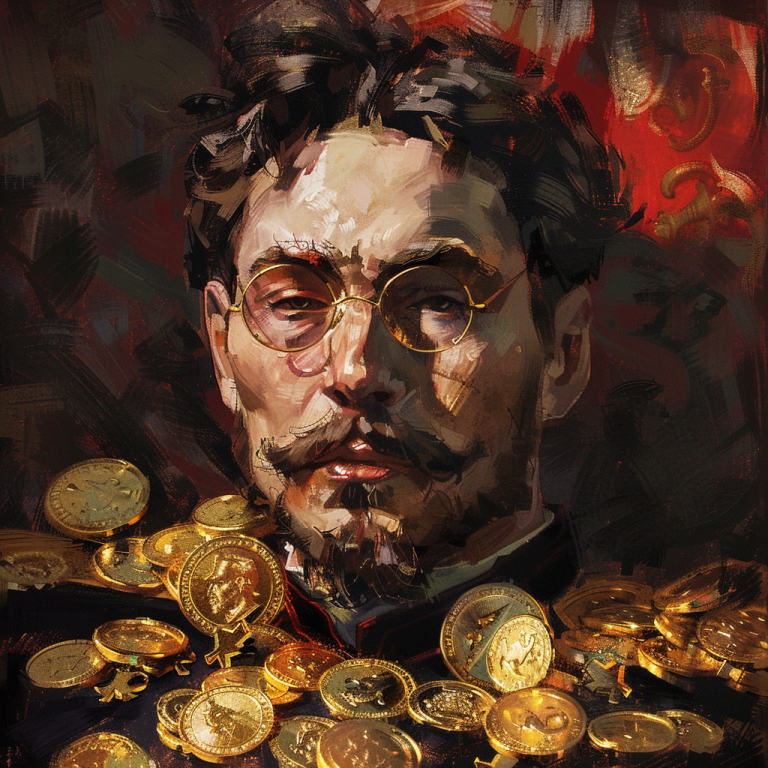
The hidden wealth of the Bolshevik devil Yakov Sverdlov

Note: the book titles mentioned in this article are translated from Russian – PG

Since the death of Yakov “Yankel” Sverdlov on 16th March 1919, the Russian revolutionary and Soviet politician has remained one of the most popular topics for debate among Russian historians. Yakov Mikhailovich Sverdlov (1885-1919) was a Bolshevik party administrator and chairman of the All-Russian Central Executive Committee.

Sverdlov, nicknamed “the Black Devil”, played a major role in the murders of Tsar Nicholas II and his family on 17th July 1918. According to Yuri Slezkine in his book The Jewish Century: “Early in the Civil War, in June 1918, Lenin ordered the killing of Nicholas II and his family. Among the men entrusted with carrying out the orders were Sverdlov, Filipp Goloshchyokin and Yakov Yurovsky“.

Sixteen years after Sverdlov’s death [he died on 16thth March 1919, age 33 of the Spanish flu, and was buried in the Kremlin Wall Necropolis], Kremlin employees discovered a fireproof safe that once stood in Sverdlov’s office. Genrikh Grigoryevich Yagoda (1891-1938), a Soviet secret police official who served as director of the NKVD, the Soviet Union’s security and intelligence agency, reported its contents to Stalin in an internal memo.

The Sverdlovs’ legacy

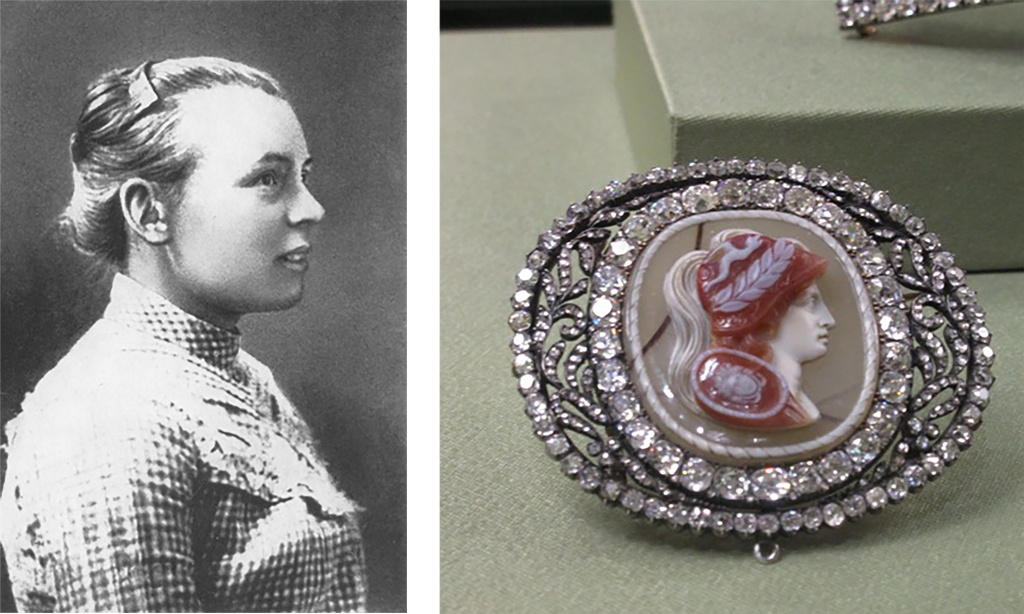
Klavdia [Claudia] Novgorodtseva (1876-1960), a Bolshevik activist and the second wife of Yakov Sverdlov, claimed that after the murder of one of the founders of the Communist Party of Germany, Karl Liebknecht, her son Andrei Yakovlevich Sverdlov (1911-1969) asked his father: “how will the bourgeoisie deal with me?” However, Sverdlov assured his son that such an outcome should not be feared. “When I die, I will leave you an inheritance greater than anything in the world. I will leave you the untarnished honour and name of a revolutionary,” Yakov said to Andrei. At least, this is the story described by Valery Shambarov in his book “Sverdlov“. As it turned out, the Sverdlov’s possessed a large amount of wealth.

According to Boris Bazhanov, the author of the book “I Was Stalin’s Secretary“, in 1919, when Soviet power was hanging by a thread, the so-called “Politburo diamond fund” wasconfiscated. This fund was supposed to ensure the continued financial support of the revolutionaries in the event of the collapse of the Soviet Union. Claudia Novgorodtseva was appointed the keeper of the “diamond fund”. Even after the death of Yakov Sverdlov, his wife continued to keep precious stones at home in a desk drawer. Andrei Sverdlov once told Bazhanov about this. But Sverdlov Jr., then still a teenager, was sure that the diamonds he saw were fake.

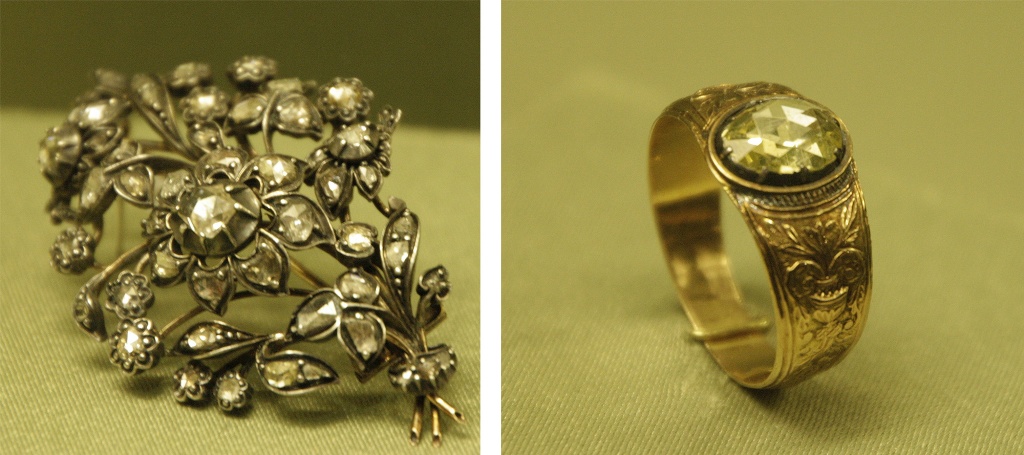
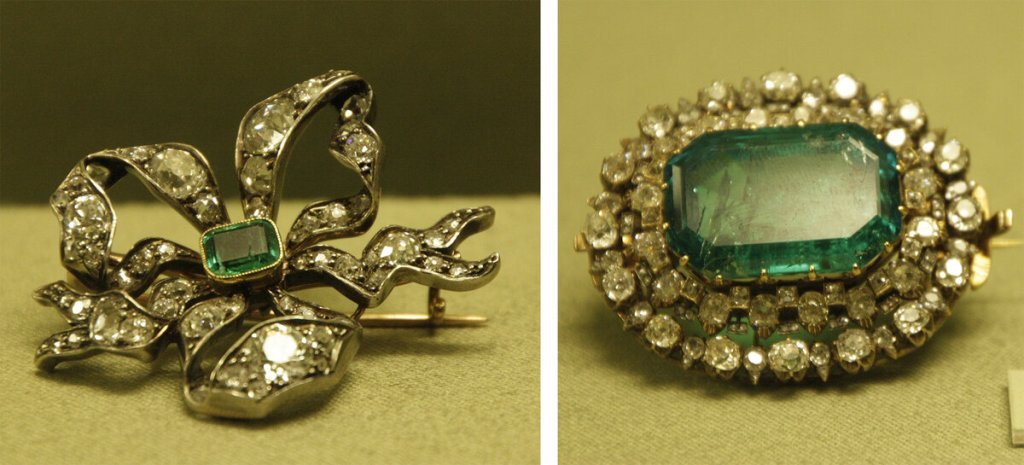
PHOTO: Yakov Sverdlov’s wife Claudia Novgorodtseva, and images
of some of the jewelry found in the “diamond fund of the Politburo”

Forgotten safe

As it turned out later, Andrei Sverdlov was wrong. Despite the fact that the “diamond fund of the Politburo” has remained one of the many mysteries of 20th century Russian history. Many historians do not doubt that it really existed, and that Yakov and Claudia Sverdlov were directly involved. One of the proofs of this statement is the contents of the fireproof safe, which was once in the office of Yakov Mikhailovich. According to Yevgeny Guslyarov, the author of the publication “Lenin in Life“, in 1919, when Sverdlov died, the safe could not be opened: the key was somehow lost. For 16 long years, the safe was gathering dust in one of the Kremlin warehouses.

In 1935, during the next inventory, the mysterious cabinet aroused keen interest among the Kremlin employees. This time, specialists were called in to open the safe. The wealth of Yakov Sverdlov is known today thanks to the surviving note of the People’s Commissar of Internal Affairs Genrikh Yagoda addressed to Joseph Stalin dated 27th July 1935. The text of it was published in a book by Nikolai Zenkovich “Leaders and Associates“. According to the note, “gold coins of tsarist mintage in the amount of 108,525 rubles, 705 pieces of jewelry, credit notes for 750 thousand rubles, as well as blank forms of tsarist-era passports and several passports under various names (including the name of Sverdlov himself)” were found in Sverdlov’s safe.

The Origin of Wealth

In the event of a collapse of the Bolshevik state, it is clear that Yakov Sverdlov and his relatives might need passports to escape. As mentioned above, in 1919 the position of the Soviet government was not yet stable. There is also no need to guess about the purpose of coins and jewelry, but their origin still raises more questions than answers. According to one version, the jewelry and other valuables belonged to members of the Russian nobility, as well as the Imperial Family, who were murdered on 17th July 1918, by the Bolsheviks in Ekaterinburg. Some of these jewels were appropriated by Yakov Sverdlov. In the “Collection of Documents Relating to the Murder of Emperor Nicholas II and His Family” there is information that the regicides Yakov Yurovsky and Grigory Petrovich Nikulin came to Moscow with a report on the liquidation of the Romanovs to Lenin and Sverdlov. They brought with them not only documents and letters, but the Imperial Family jewels, which included a bag of diamonds.

Author Alexander Sever writes in his book “How to Defeat Corruption“, that the jewelry could have been confiscated by Yakov Sverdlov from the relatives of those who ended up in the dungeons of the Cheka. In addition, there is information which claims that the jewels were bribes made to Sverdlov by members of the Cheka. According to Sever, further adds, that it is also possible that Yakov Mikhailovich received the valuables legally, but he did not return them to the State. Be that as it may, he never had a chance to use all this wealth.

FURTHER READING:

The Bolshevik sale of the Romanov jewels + PHOTOS

The fate of the regicides who murdered Nicholas II and his family + PHOTOS

95 years ago, Ekaterinburg was renamed Sverdlovsk

New revelations on Lenin’s order to murder the Tsar

Russian sculptor proposes removal of monuments to Bolsheviks in Ekaterinburg

© Paul Gilbert. 12 February 2025

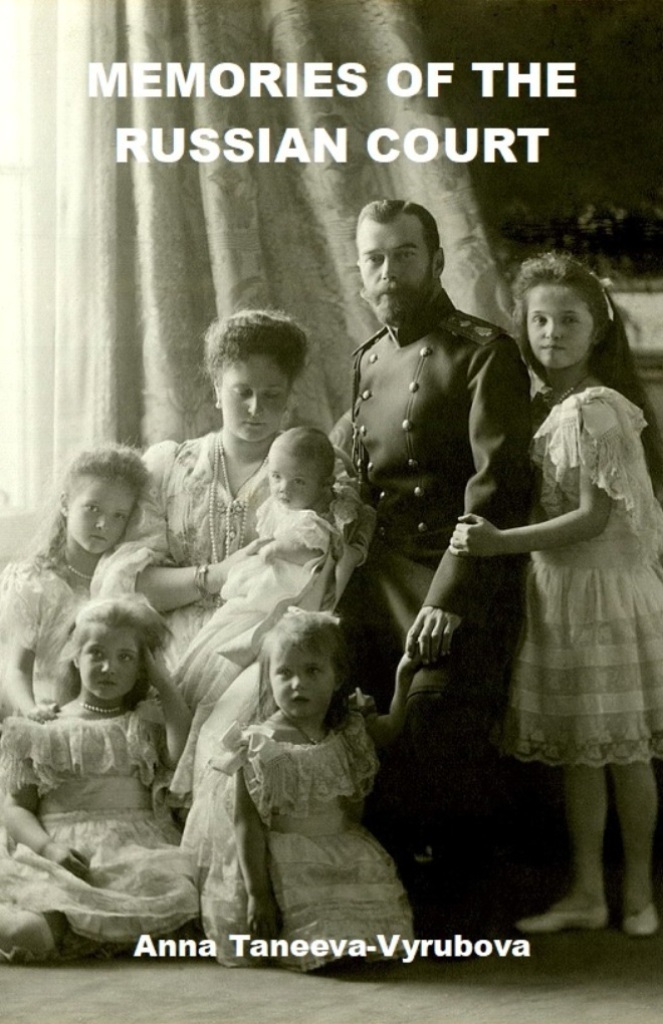
NEW BOOK: Memories of the Russian Court

*You can order this title from most AMAZON outlets worldwide,
Including the United States, Canada, United Kingdom and Australia.
*Note: prices are quoted in local currencies

CLICK HERE TO ORDER THE HARD COVER EDITION @ $25.00 USD

CLICK HERE TO ORDER THE PAPERBACK EDITION @ $20.00 USD

CLICK HERE TO ORDER THE eBOOK/KINDLE EDITION @ $15.00 USD

Language: English. 312 pagess

The return of an old favourite . . . the first English language edition of this book was published in 1923. This new edition is available in hard cover, paperback and eBook/Kindle editions. This popular classic is available in hard cover for the first time in more than 30 years!

Due to her privileged position at the Court of the last Russian Tsar, and her close association to the Imperial Family, Anna Vyrubova’s memoirs are a must read for those who share a special interest in Emperor Nicholas II and his family.

From the summer of 1905 on, Anna Vyrubova centered her life on the Empress Alexandra and became a part of the Tsar’s family. In order to be closer to the family, Anna moved into a summer home at Tsarskoye Selo, a short walk from the Alexander Palace, her telephone was connected directly to the palace switchboard.

Her memories provide a rare look into the private world of the Imperial Family, sharing many intimate details and personal impressions of the Russian Imperial Court. Anna shared their holidays, and sailed with them on the Imperial Yacht ‘Standart‘ to the Finnish islands and Livadia in Crimea.

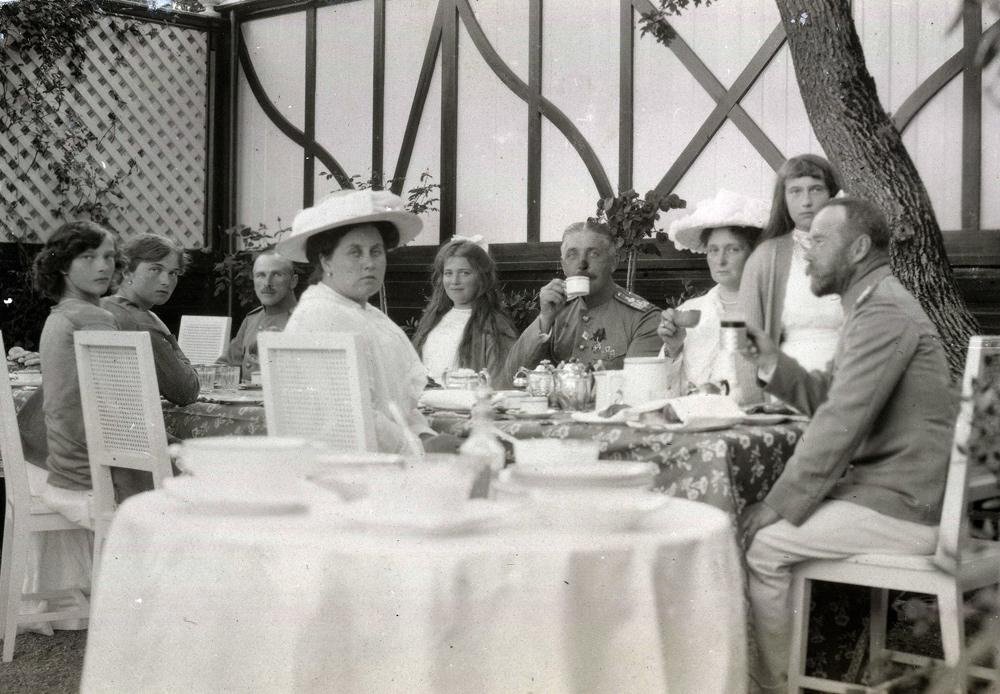
PHOTO: in happier times . . . Anna enjoying a cup of tea/coffee with
the Imperial Family, outside the Tennis House at Livadia, Crimea. 1914

Anna also tells about her relationship with Grigorii Rasputin, her arrest and imprisonment in the notorious Trubetskoy Bastion Prison, situated in the Peter and Paul Fortress in Petrograd, her interrogation and subsequent escape from certain death by the Bolsheviks.

In 1920 Anna fled to Finland with her mother and lived quietly in Vyborg. There she wrote these remarkable memoirs which offer a unique eyewitness testimony of the life and character of Empress Alexandra, Emperor Nicholas II and their five children. Vyrubova describes a diverse array of incidents in the life of the Imperial family which collectively attest to the sincere and loving nature of the often misunderstood Empress.

Anna took vows as a Russian Orthodox nun but was permitted to live in a private home because of her physical disabilities. She died in 1964 at the age of 80, in Helsinki, where her grave is located in the Orthodox section of Hietaniemi cemetery.

© Paul Gilbert. 11 February 2025

First General Census of the Population of the Russian Empire (1897)

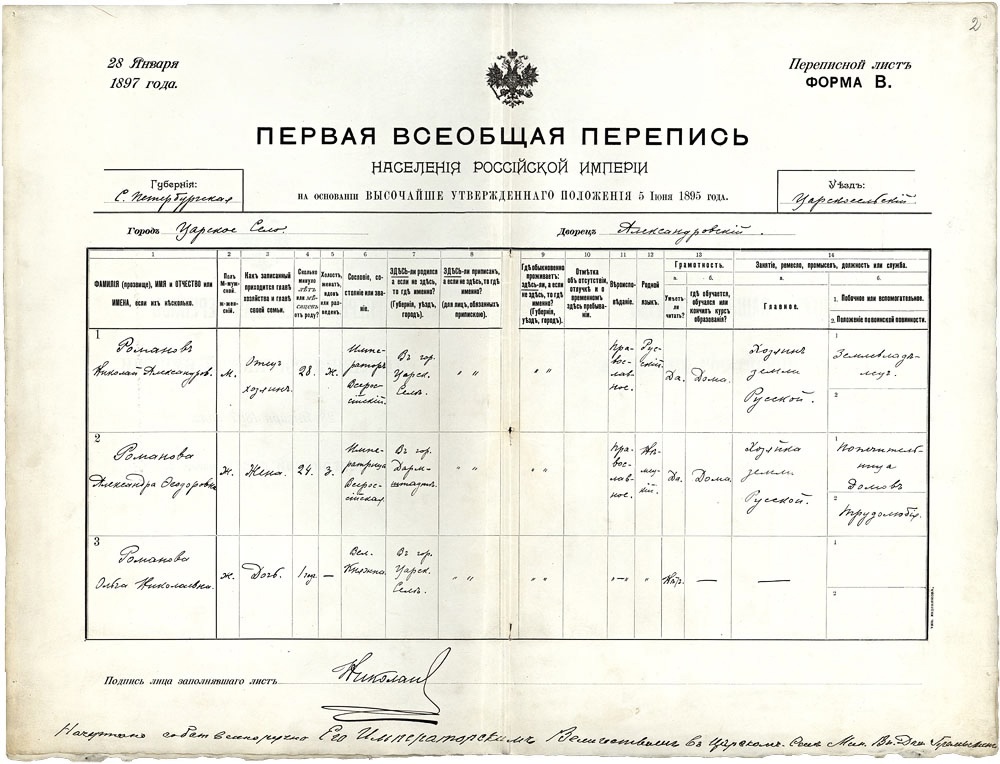
On this day – 10th February (O.S. 28th January) 1897 – the First General Census of the Population of the Russian Empire took place.

Emperor Nicholas II took part in the First General Census of the Population of the Russian Empire (1897). He personally filled in the form, under name he wrote “Nicholas II Alexandrovich Romanov”. In the column “Occupation, position or trade” he wrote “Master of the Russian land.”

This important historical document [seen in the photo above], has been preserved to this day in a velvet cover. It is now in the funds of the State Archive of the Russian Federation (GARF) in Moscow.

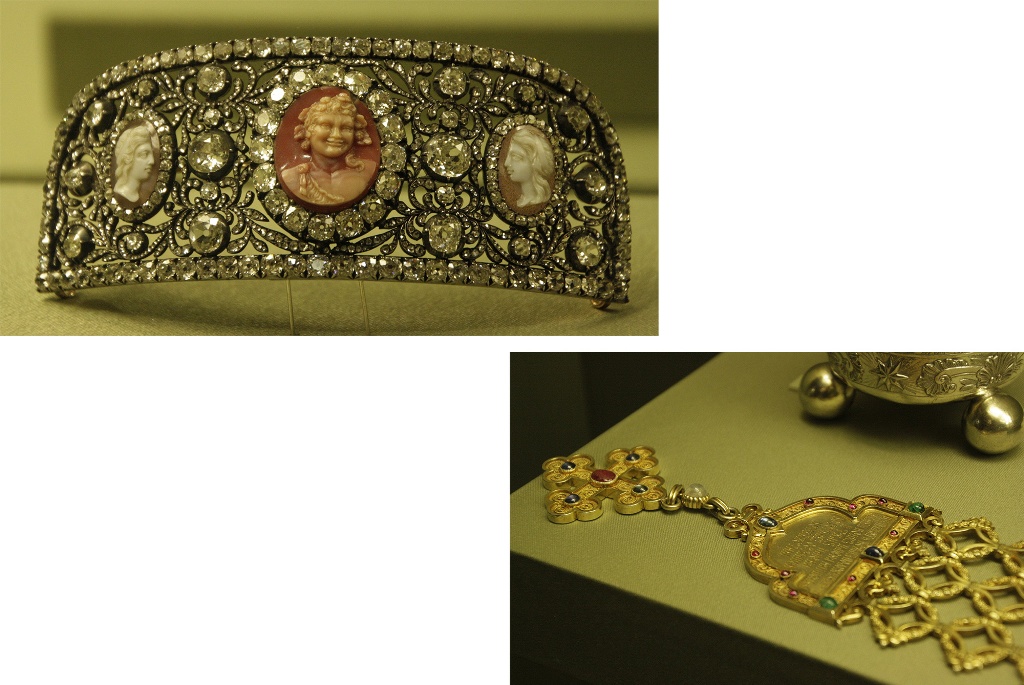
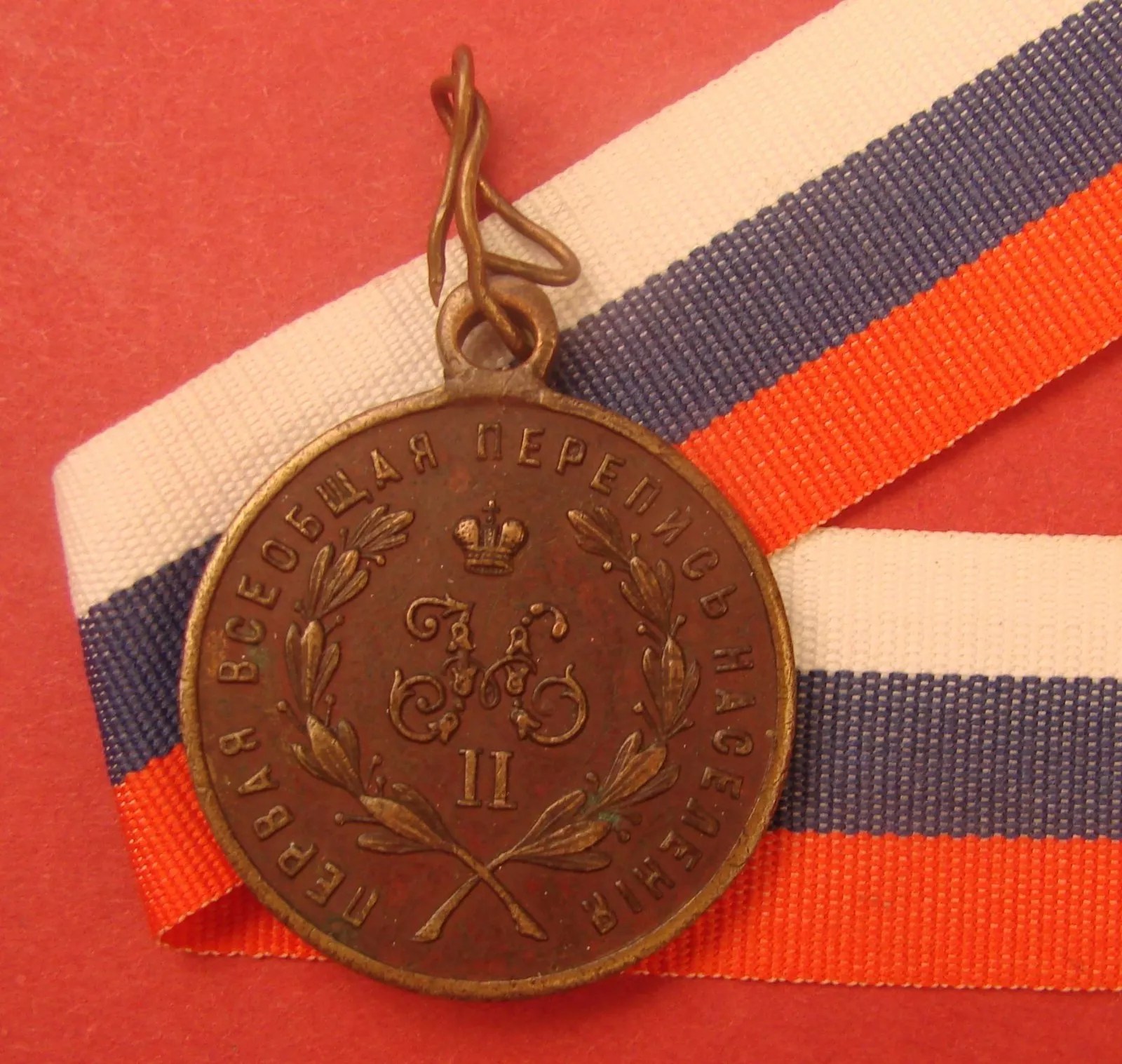
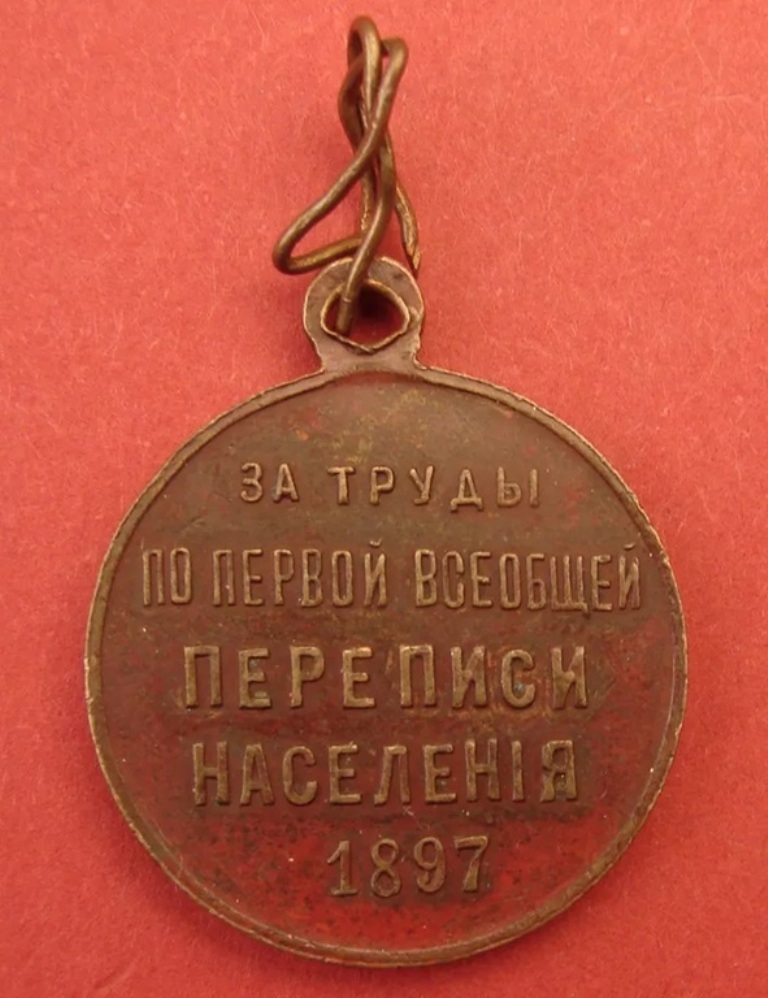
Enumerators and organizers of the first general population census of the Russian Empire in 1897, who volunteered their time were awarded this bronze medal (29 mm). It was established on 3rd December (O.S. 21st November) 1896 by decree of Emperor Nicholas II.

The obverse of the medal [above] depicts the monogram of Nicholas II crowned with the Russian Imperial Crown in the center. Around the monogram there is a laurel wreath of two branches. Between the laurel wreath and the border, from the edge of the medal is an inscription along the circumference: “FIRST GENERAL CENSUS OF THE POPULATION”.

On the reverse side [seen above] there is a horizontal inscription in five lines:

ЗА ТРУДЫ
ПО ПЕРВОЙ ВСЕОБЩЕЙ
ПЕРЕПИСИ
НАСЕЛЕНІЯ
1897

FOR WORK
ACCORDING TO THE FIRST GENERAL
CENSUS
POPULATION
1897

The medal had to be worn on the chest. The ribbon of the medal is white-blue-red, in the colours of the flag of the Russian Empire.

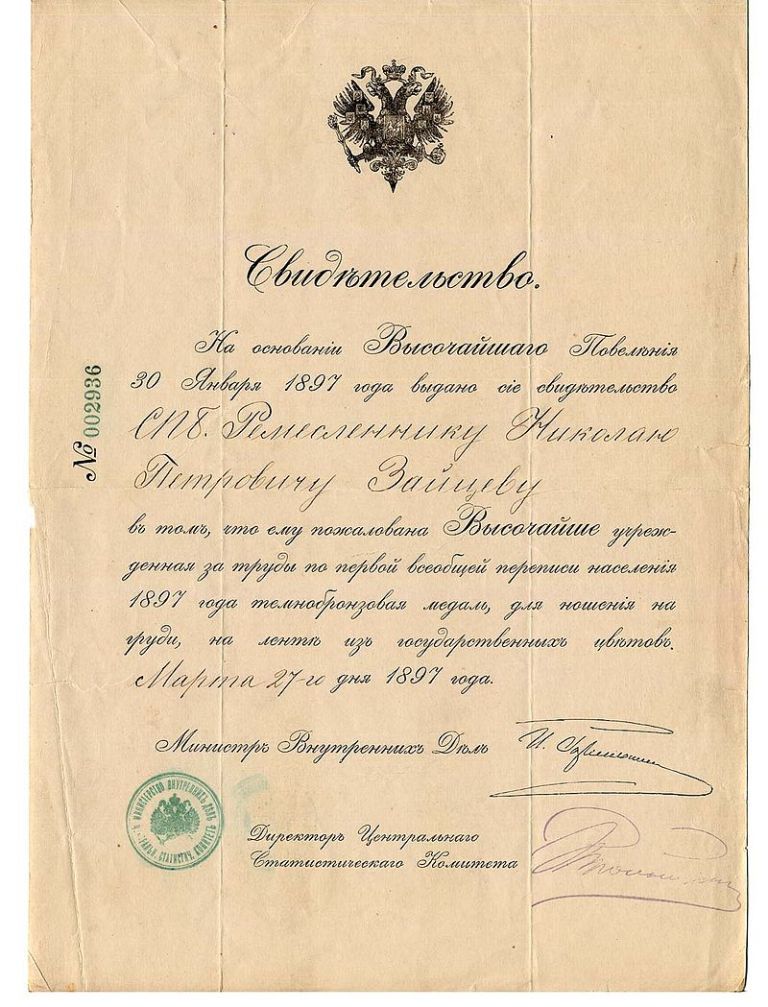
The Minister of Internal Affairs, Ivan Logginovich Goremykin (1839-1917), was given the authority to determine the right of individuals to wear the medal. The awardees were issued a certificate for the right to wear the medal.

© Paul Gilbert. 10 February 2025

Film Review: Nicholas and Alexandra

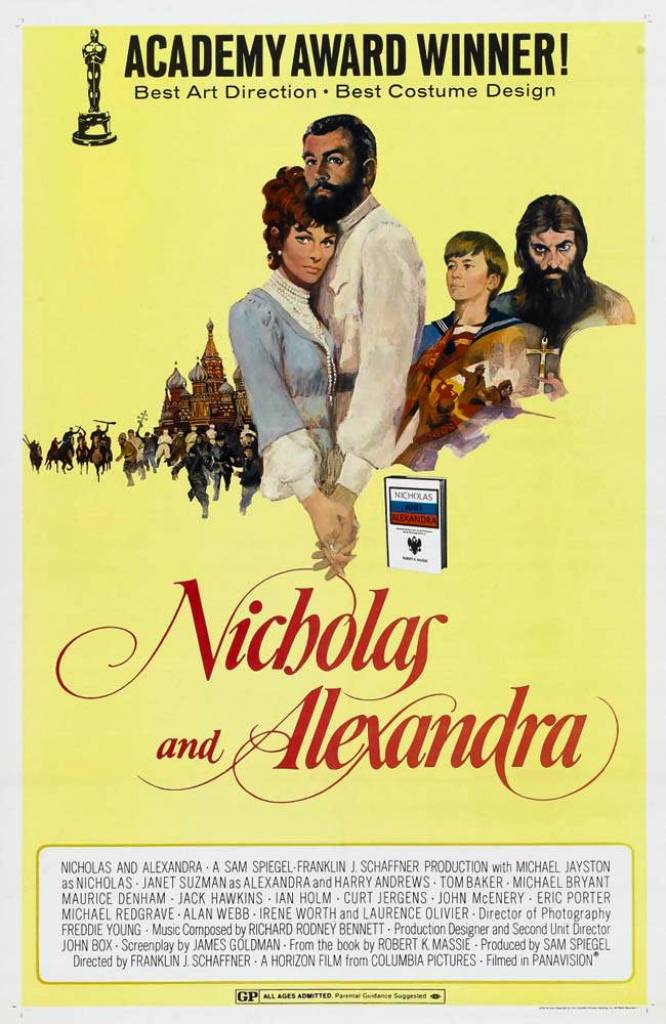
The year 2021 marked the 50th anniversary of the release of the film adaptation of Robert K. Massie’s (1929-2019) classic book Nicholas and Alexandra. Published in 1967, it remained on the New York Times Bestseller List for 46 weeks, and has never gone out of print! Selling more than 4.5 million copies, it is regarded as one of the most popular historical studies ever published. Praised in The New York Times as a “long-needed and balanced account” of the last tsar and his family. In Massie’s study, Nicholas comes across not as the “stupid, weak or bloodthirsty” monarch, as he is often been portrayed by his Western counterparts.

The film version was released on 13th December 1971, and nominated for numerous awards. At the 44th Academy Awards (1972), Nicholas and Alexandra won two awards of six nominations; at the 25th British Academy Film Awards (1972), Nicholas and Alexandra received three nominations; at the 29th Golden Globe Awards (1972), Nicholas and Alexandra received three nominations; and at the 15th Annual Grammy Awards (1973), Richard Rodney Bennett was nominated for Best Original Score Written for a Motion Picture or a Television Special.
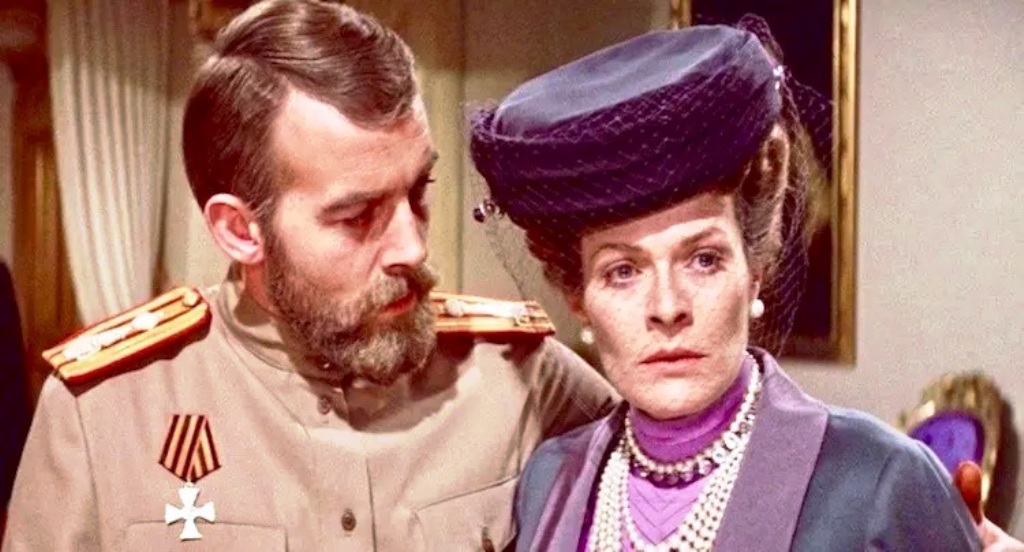
PHOTO: Michael Jayston as Nicholas II and Janet Suzman as Alexandra Feodorovna

The film featured a star-studded cast of notable British actors and actresses: Michael Jayston (1935-2024) as Nicholas II; Janet Suzman [b. 1939] as Alexandra Feodorovna; Irene Worth [1916-2022] as the Dowager Empress Maria Feodorovna; Tom Baker [b. 1934] as Grigori Rasputin; Jack Hawkins [1910-1973] as Count Vladimir Frederiks, the Minister of the Imperial Court; Timothy West [1934-2024] as Dr. Botkin, the court physician; Jean-Claude Drouot [b. 1938] as Pierre Gilliard, the children’s Swiss tutor; Laurence Olivier [1907-1989] as Count Witte, the Prime Minister; Michael Redgrave [1908-1985] as Sazonov, the Foreign Minister; Eric Porter [1928-1995] as Pyotr Stolypin, the Prime Minister after Witte; John McEnery [1943-2019] as Kerensky, leader of the Russian Provisional Government; Michael Bryant [1928-2002] as Lenin; Martin Potter [b. 1944] as Prince Felix Yusupov; Richard Warwick [1945-1997] as Grand Duke Dmitri Pavlovich; among many others.

Personally, I greatly disliked this film for a number of reasons. It is due to the popularity and cult-like status of this film which compelled me to address some of the many factual errors of this film, and that it will serve as a resource for those who have viewed it for the first time. 

 Aside from some terrible acting, such as Janet Suzman’s appalling portrayal of Empress Alexandra Feodorovnam the film is rife with historical inaccuracies. For instance, not a single scene was filmed in Russia. This of course is due to the fact that in 1971 Russia was still the Soviet Union, and the discussion or promotion of the last Tsar was still taboo. Instead, the film was shot entirely in Spain and Yugoslavia.

While I personally acknowledge that both Massie’s book and film inspired many people to learn more about Russia’s last Tsar, sadly, there are those who will actually base their own assessment of Nicholas II on this film, and that in itself sets a very damaging scenario.

While I acknowledge that while this is merely a film and not a documentary, I cannot overlook the fact that the producers have blurred the lines between historical accuracy and crude sensationalism. 

Below, are just four of the more notable historical inaccuracies, which I spotted in the film – I documented many others in my notes while watching the film:
na

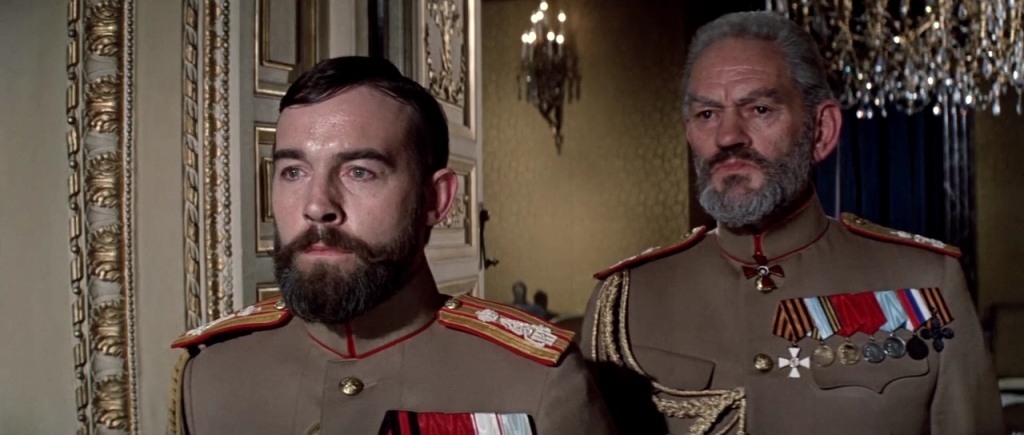
PHOTO: Michael Jayston as Nicholas II and Harry Andrews as Grand Duke Nikolai Nikolaevich

[1] In an early scene, Nicholas II addresses Grand Duke Nikolai “Nikolasha” Nikolaevich – played by Harry Andrews [1911-1989] – as “uncle”, however, this is incorrect. Grand Duke Nikolai was a first cousin once removed of Emperor Nicholas II..
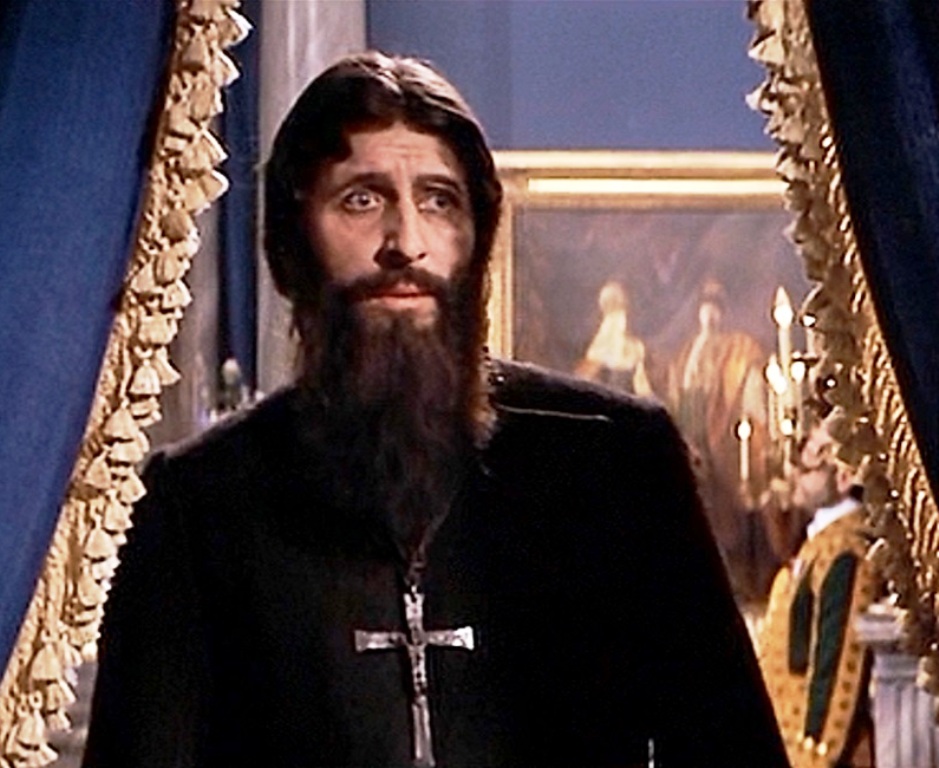
PHOTO: Tom Baker as Grigori Rasputin

[2] When Rasputin returns from Siberia, he enters a room where the Empress is waiting. He approaches her, she looks into his eyes adoringly, lifts the cross hanging around his neck and proceeds to kiss it.

Later in the film, upon being transferred from Tobolsk to Ekaterinburg, the entire family are seen leaving the  “House of Freedom” together. This scene is certainly not based on fact. It is well known that Nicholas, Alexandra and Maria left Tobolsk on 26th (O.S. 13th) April 1918, while Olga, Tatiana, Anastasia and Alexei left Tobolsk the following month.

Upon arrival at the Ipatiev House in Ekaterinburg, the Imperial Family are greeted at the door by Yakov Yurovsky, played by English actor Alan Webb [1906-1982]. This scene is historically inaccurate, as Yurovsky was not appointed to the Ipatiev House until 4th July 1918 – 13 days before the Imperial Family were murdered. I would like to add, that in July 1918, Yurovsky was only 40, whereas in the film, he is depicted as an elderly man. At the time of the making of the film, Webb was already 65. 
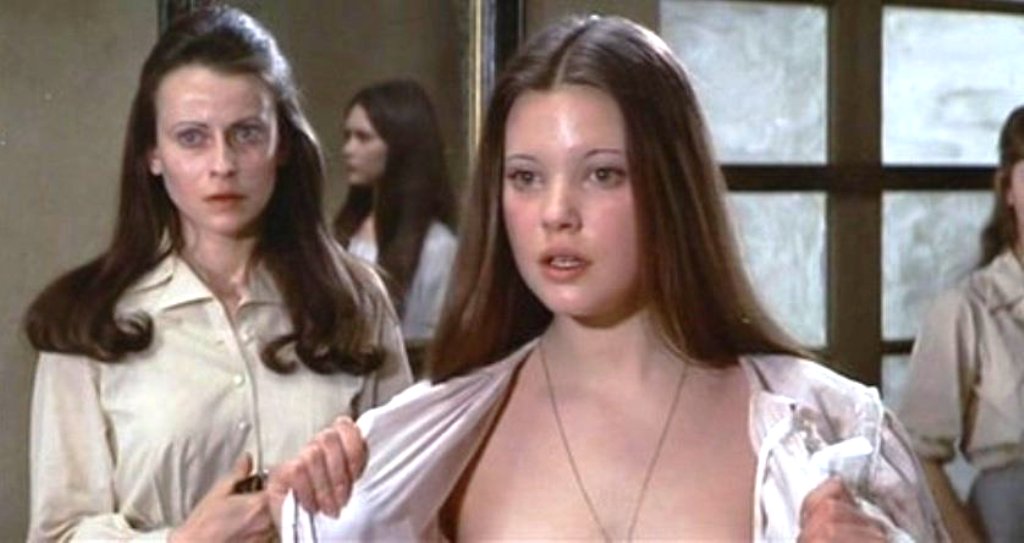
PHOTO: scene whereby the grand duchess allegedly exposes herself to a guard

[3] During their house arrest in Ekaterinburg, a guard enters the room of the grand duchesses where they are getting dressed for bed. One of the daughters (Tatiana) asks what he wants, and then opens her dressing gown to expose her naked body. The grand duchess cries that she is only 21 and desires to be wanted. 

What nonsense! The daughters of Nicholas II and Alexandra Feodorovna were all raised as decent Orthodox Christians. None of these pious and respectful young women would never have exposed themselves to such vulgar thugs! This would not be the first time that such a claim would be made . . . 

In their book The Fate of the Romanovs, American co-authors Greg King and Penny Wilson alleged that Grand Duchess Maria Nikolaevna had a “private moment” with Ivan Skorokhodov, one of the guards at the Ipatiev House. They continued in their claim that Maria slipped away with Skorokhodov for a private moment and they were discovered together in a compromising position. They further allege that both the Empress and her older sister Olga appeared angry with Maria in the days following the incident and that Olga avoided her company.

Sadly, British author Helen Rappaport also entertained this nonsense between Maria and Skorokhodov on page 30 of her book ‘Ekaterinburg. The Last Days of the Romanovs‘. King and Wilson’s claim has been widely dismissed as a myth based on “absolutely no first-hand evidence.”
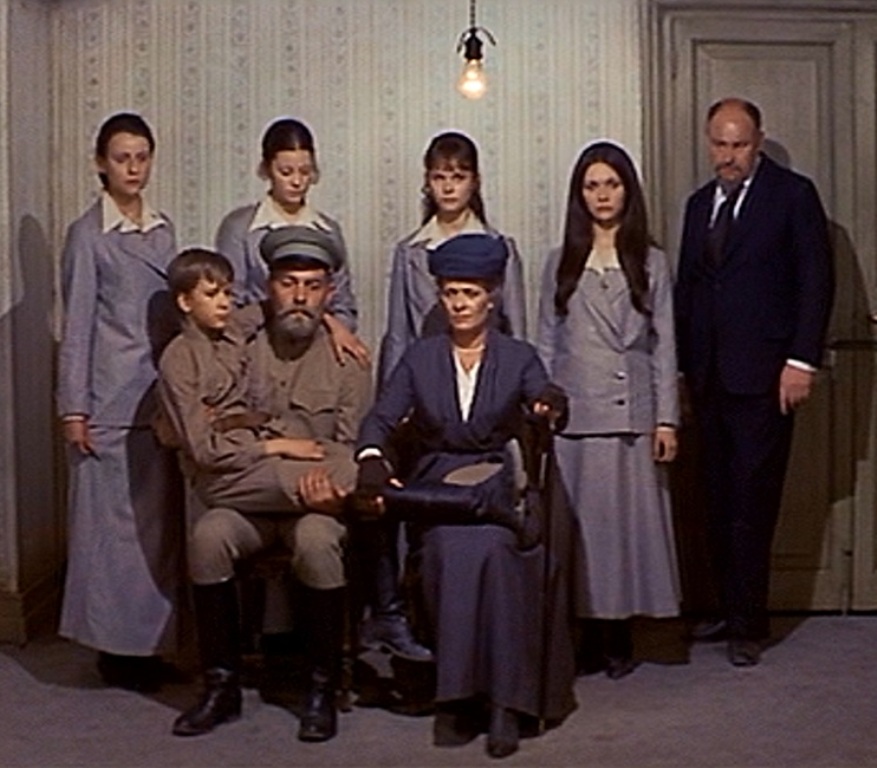
PHOTO: the final scene in the murder room is missing three people

[4] On the night of 16/17 July 1918, the family enter the murder room where two chairs are depicted against the wall. This is incorrect, the room was empty, and it was the Empress who requested the chairs: one for herself, the other for Alexei. The most blatant error in this scene, however, is that only nine persons are in the room: the Imperial Family and Dr. Botkin. There were in fact eleven persons in the room on that fateful night! Missing are Alexei Trupp, footman; Ivan Kharitonov, cook; and Anna Demidova, Alexandra’s maid. In fact, the latter three are not to be seen in the entire film!

As new generations of film buffs discover Nicholas and Alexandra, I can only hope that they will watch it with both an open mind and heart. That in this day and age of masses of information at their fingertips, that the film will inspire them to embark on their own personal quest for the truth.

I hope that they will read Massie’s book, but also other books, articles and documentaries. It must be noted that when Massie was researching for his bestselling book in the 1960s, his resources were very limited, his “facts” based on the information available to him at the time. Massie did not have access to the invaluable Romanov Archives in Moscow. Recall that it was Stalin who had these archives sealed, they were even forbidden to Soviet historians, with the exception of course, for propaganda purposes. The archives were only unsealed in the 1990s, at which time Massie completed his sequel The Romanovs: The Final Chapter, published in 1996. 

The remaking of classic films seems to be all the rage these days, so perhaps a new film adaptation, one which will be worthy of Massie’s classic work. If so, the writers must refrain from adding fictitious nonsense to the script, relying on Massie’s research. And for authenticity, it must be filmed on location in Russia: in St. Petersburg, Tsarskoye Selo, Livadia, Tobolsk and Ekaterinburg.

© Paul Gilbert. 7 February 2025