In recognition of these historic dates, I am reaching out to friends and supporters for donations to help support my research on the life and reign of Nicholas II, and in aid of my personal mission to clear the name of Russia’s much slandered Tsar.
There are many web sites, blogs and Facebook pages dedicated to the Romanovs, however, I work very hard searching Russian archival and media sources to bring something new to the table every day, including articles and news stories – from Russian archival and media sources – on Nicholas II and his family, the Romanov dynasty, their palaces, exhibitions + photos, videos and more.
Every dollar collected goes toward the acquisition and translation of documents, letters and diaries from Russian archival sources. In addition are the first English translations of articles researched by a new generation of Russian historians, which challenge the popular negative assessment of Nicholas II, which prevails to this day.
Your donation also helps offset the cost of maintenance of my blog: Nicholas II. Emperor. Tsar. Saint, and the organization and promotion of Romanov themed events, such as the 2nd International Nicholas II Conference and other events.
If you enjoy all the articles, news, photos, and videos, please help support my work in the coming year ahead by making a donation.
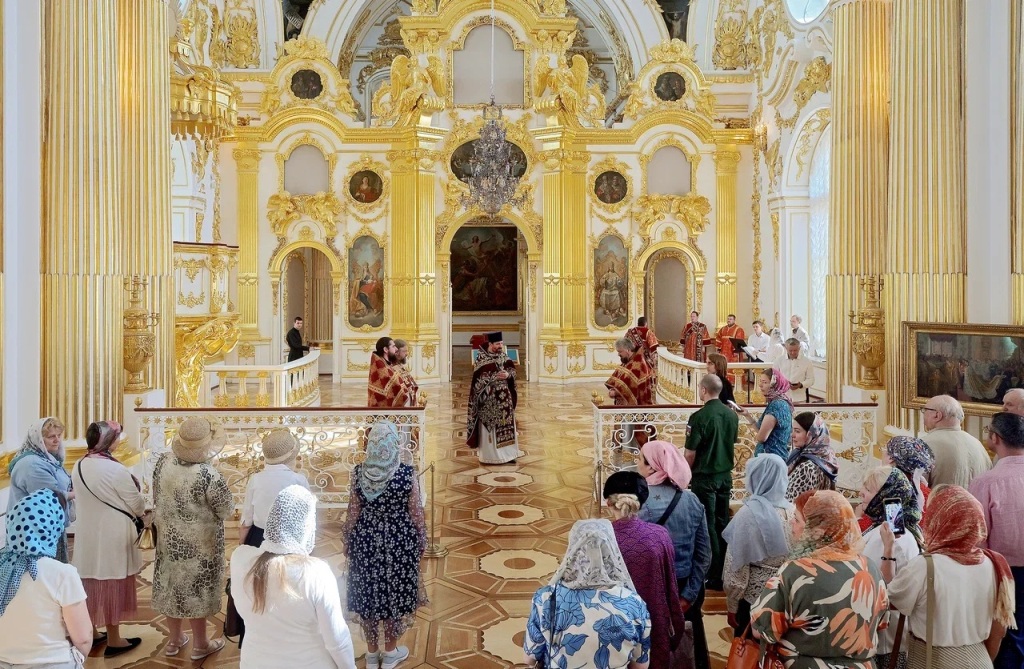
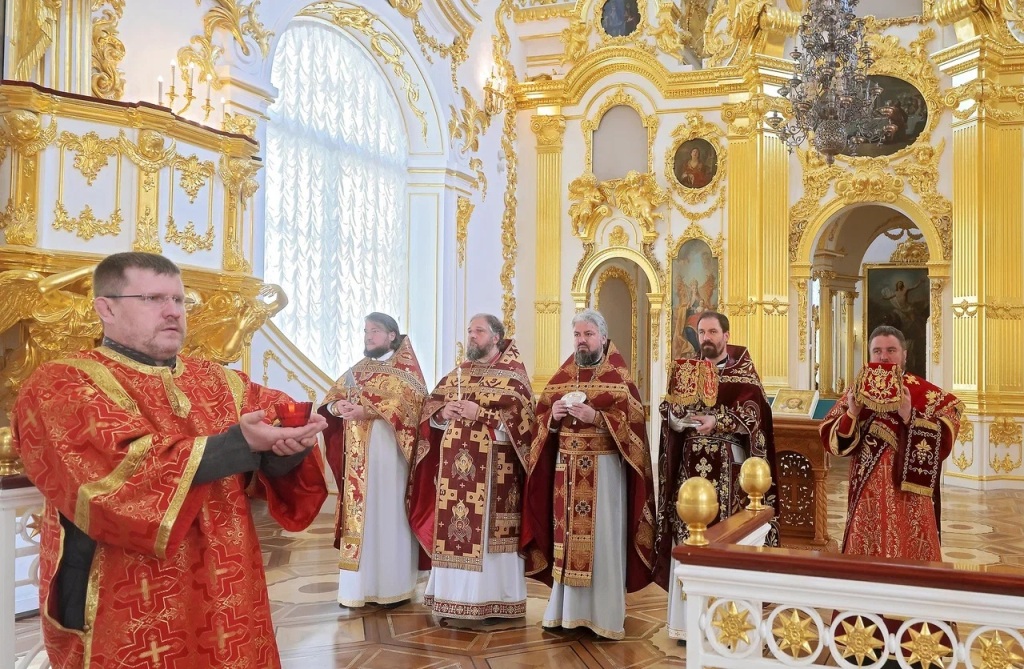
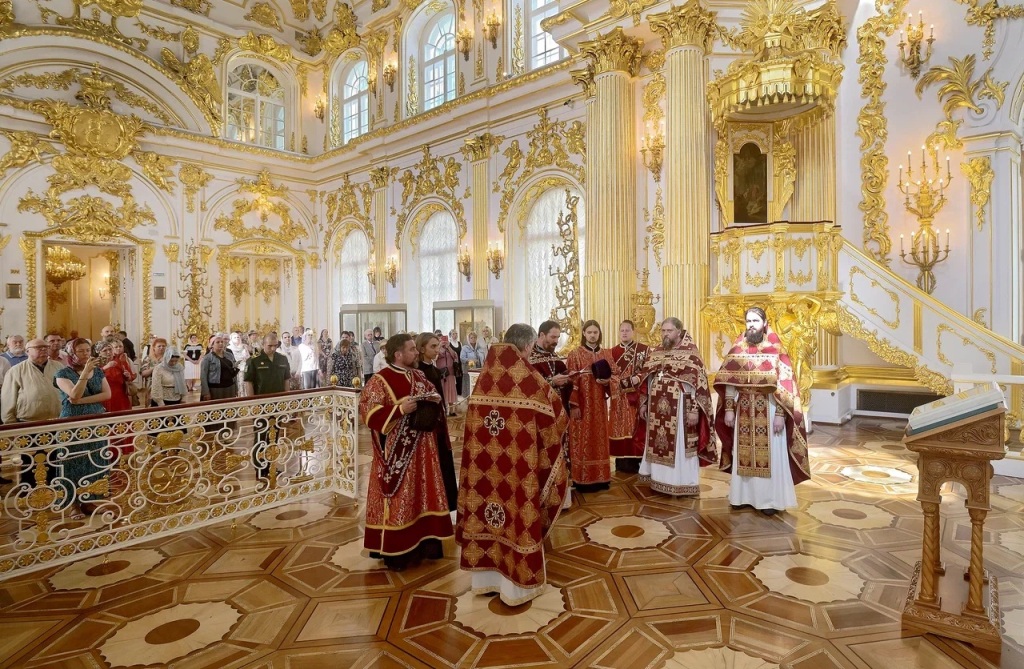
On 17th July 2025, Archpriest Nikita Zverev, the dean of the palace churches, performed the Divine Liturgy in the Church of the Saviour of the Image Not Made by Hands [aka the Great Church of the Winter Palace], situated in the State Hermitage Museum in St. Petersburg.
The service marked the 107th anniversary of the death and martyrdom of Russia’s much slandered Tsar, his family, and their four faithful retainers, all of whom were brutally murdered in Ekaterinburg by members of the Ural Soviet in July 1918.
Archpriest Nikita was co-served by Rector Hieromonk Mark (Svyatogorov), Hieromonk Tikhon (Voronov), Archpriest Maxim Kvasov, Priest Artemy Naumov, and Hierodeacon Ilya (Vasiliev). They were joined by the combined choir of singers of the St. Petersburg diocese.
Among the worshippers were the Director of the State Hermitage Museum in St. Petersburg, Mikhail Borisovich Piotrovsky, and museum staff.
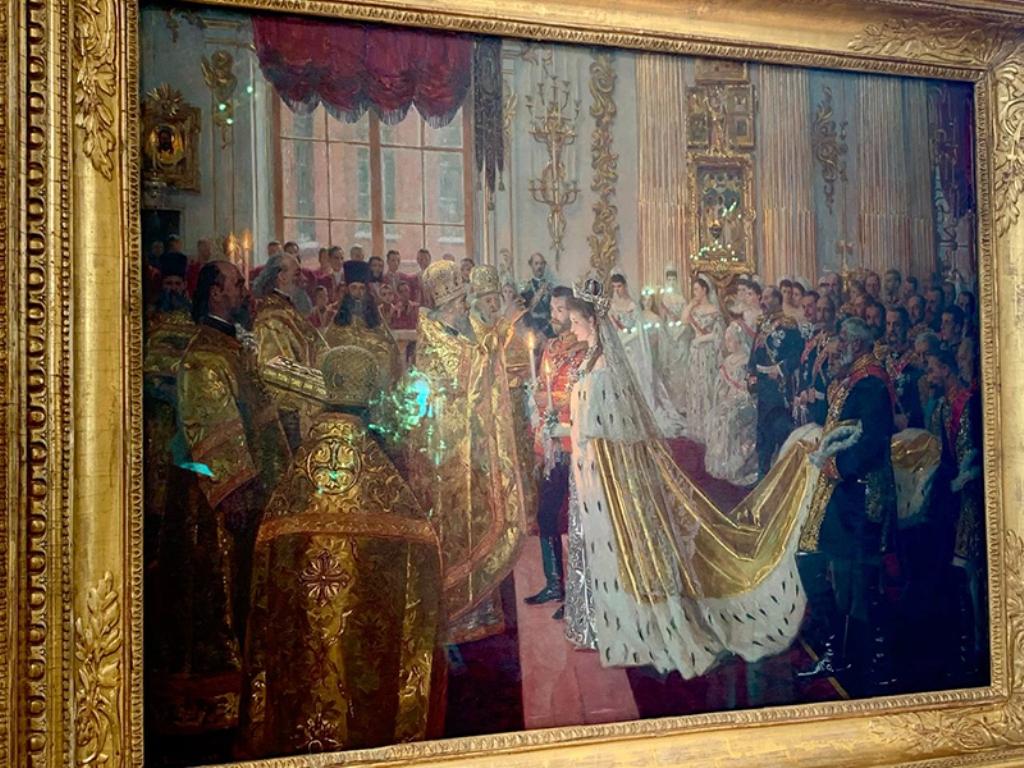
“Passing by the Winter Palace, it is a great happiness to see the dome of this church and to know that prayers are heard here again,” said Father Nikita. – “The history of Russia’s last Tsar and his family began with this church. Everyone who comes here sees on the right a picture depicting the wedding of Nicholas II and Alexandra Feodorovna [see below]. The sacraments were performed in this very church, . . . and now, many years later, we can stand and pray where they once prayed. This temple is of great historic importance, one which is associated with the fate of the Fatherland. I thank the museum staff who have preserved all this to this day. If we do not know our history, remember the tragedy that happened, there can be no happy future for Russia. Let us appreciate what we have, both sorrows and joys, and remember that the Lord will never leave us.”
Recall that the last Russian Emperor, Nicholas II, and his family were shot on the night of 16/17 July 1918, in the basement of the Ipatiev House in Ekaterinburg. On 1st November 1981, they were canonized as new martyrs by the Russian Orthodox Church Outside Russia (ROCOR), and on 20th August 2000, as passion bearers by the Moscow Patriarchate of the Russian Orthodox Church.
And let us not forget the four faithful retainers, who remained with the Imperial family during their house arrest in Tobolsk and Ekaterinburg, and who followed them to their deaths in the Ipatiev House, on 17th July 1918: the valet Aloysius Trupp (1856-1918); the maid Anna Demidova (1878-1918); the cook Ivan Kharitonov (1872-1918); and Dr. Eugene Botkin (1865-1918), canonized in 2016.
PHOTO: Wedding of Nicholas II and Alexandra Feodorovna Painted in 1895 by the Danish artist Laurits Tuxen (1853-1927) From the collection of the State Hermitage Museum, St. Petersburg
The Great Church of the Winter Palace was consecrated on 25th July 1763 by Archbishop Gabriel in the name of the image of the Saviour (painted by Theodot Ukhtomsky, 1693), which was located in the prayer room at the altar. After the 1839 renovation, it was consecrated again by Metropolitan Philaret. The Maltese shrines presented to Emperor Paul I were kept here, and every year they were transferred to the Pavlovsk Cathedral [the Cathedral of the Holy Apostle Paul] in Gatchina for a month.
In October 1917, the church was damaged during the storming of the Winter Palace by the Bolsheviks and was closed in 1918. On 9th December 2014, the Great Church of the Winter Palace was opened to visitors after restoration, and on 25th December of the same year, the first Divine Liturgy in 96 years was served.
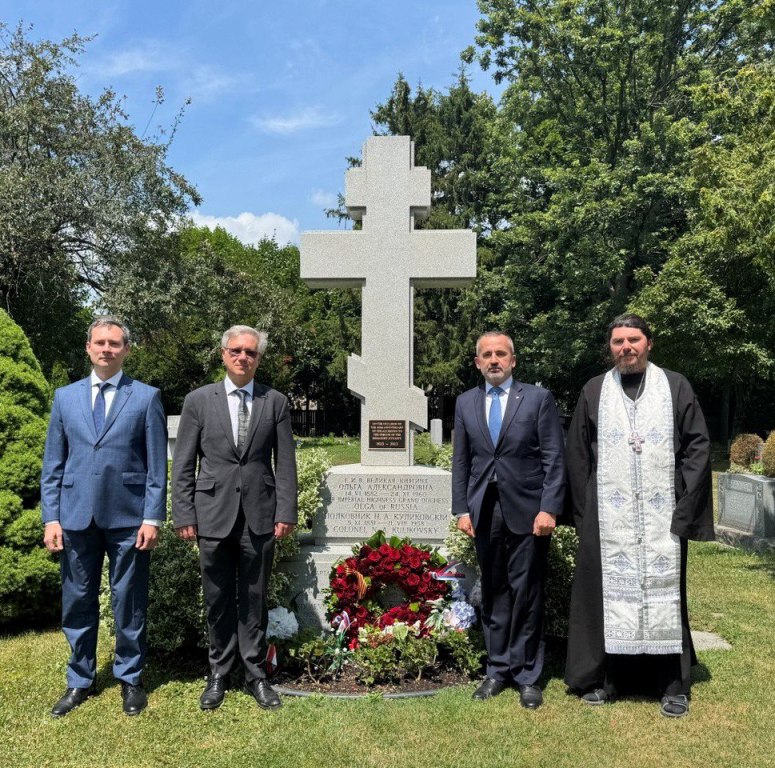
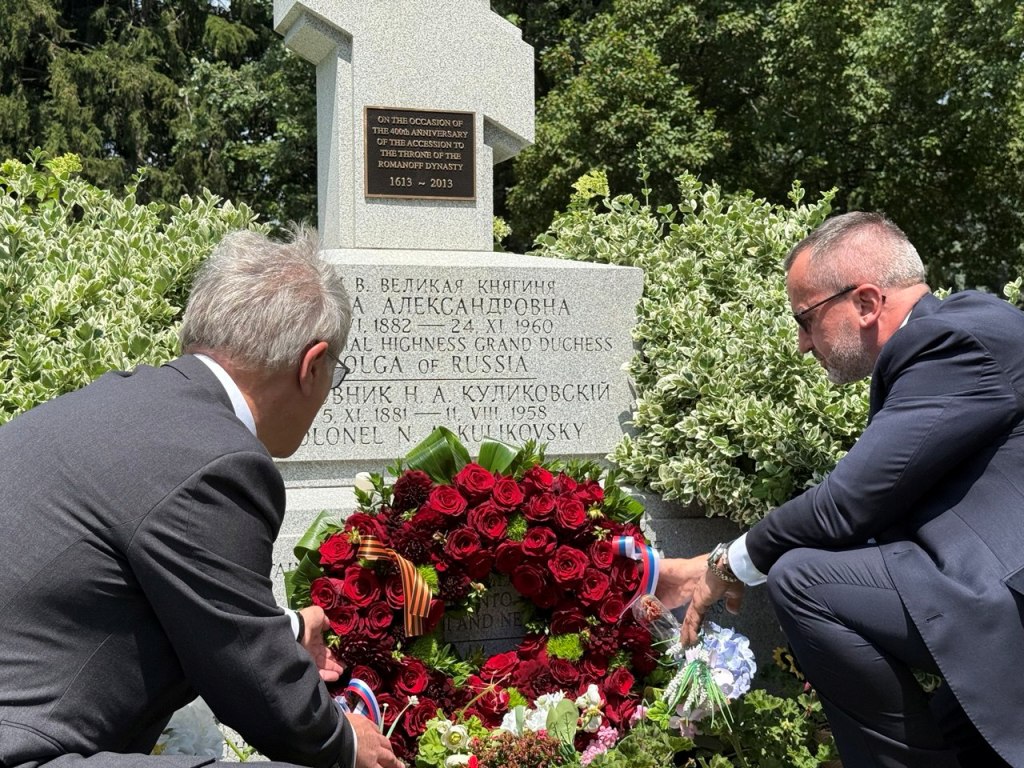
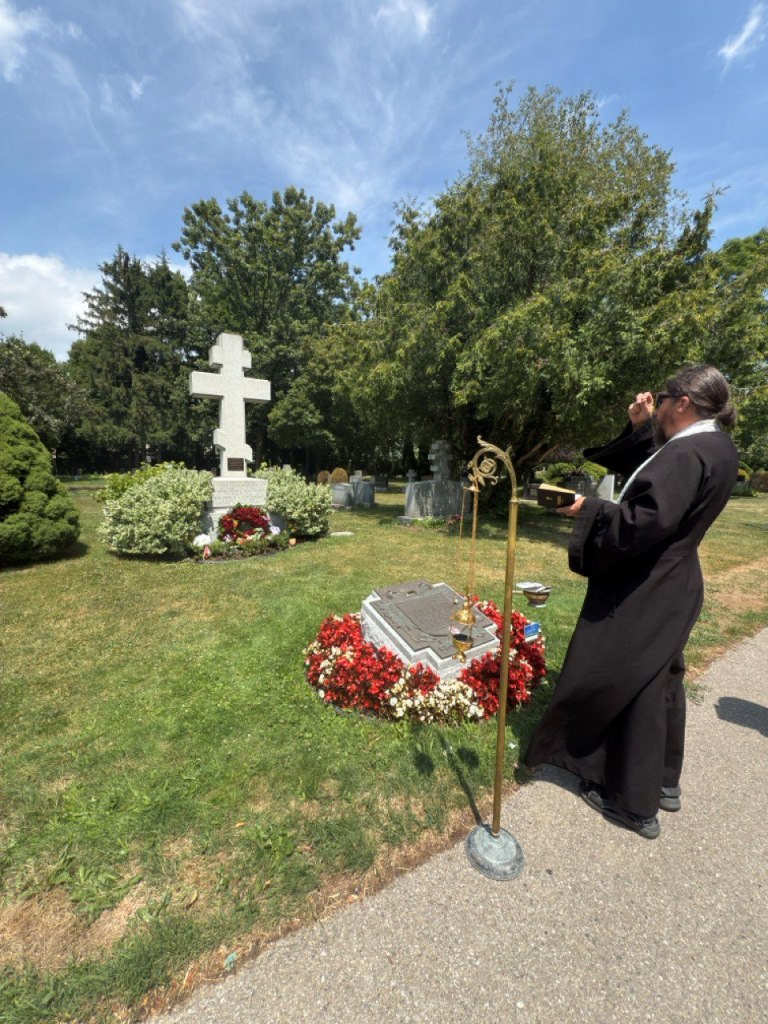
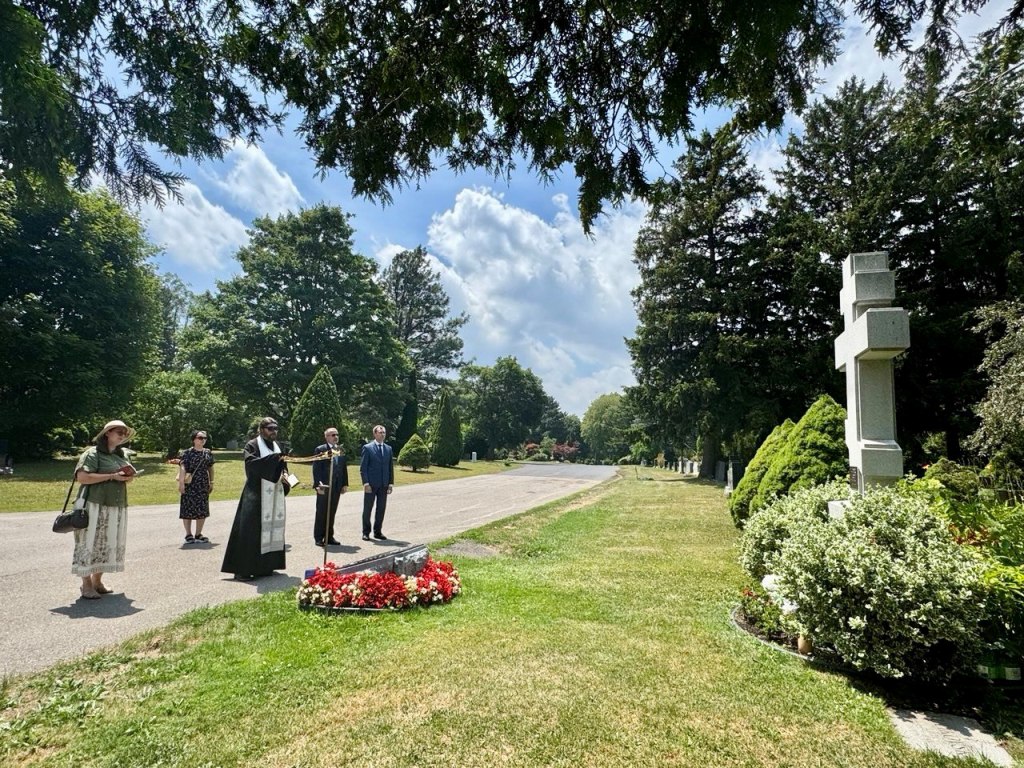
On 24th July 2025, a pannikhida was conducted at York Cemetery in Toronto for Grand Duchess Olga Alexandrovna, with the participation of Russian Ambassador to Canada Oleg Stepanov. The pannikhida took place on on the feast day of the Holy Equal-to-the-Apostles Princess Olga.
The liturgical solemn service for the repose of the departed was performed by the rector of the Church of the Smolensk Icon of the Mother of God, Father Maxim (Abroskin). The church is located in Jackson Point, Ontario, which is 86 km north of Toronto.
The memorial service was also attended by the Consul General of Russia in Toronto, Vladlen Epifanov, and other employees of the Russian diplomatic mission in Canada. Flowers were laid at the grave of Grand Duchess Olga Alexandrovna (1882-1960), the younger sister of Emperor Nicholas II, who is buried in York Cemetery.
“On the name day of Olga Alexandrovna, we pay tribute to the memory and respect of the daughter of Emperor Alexander III, who is very much revered in our country,” Stepanov said during an interview. “Despite her forced emigration and life in a foreign land, Olga Alexandrovna loved her homeland, and she remained Russian until her last day. Today and always, our common duty is to preserve the connection of times, to maintain the unity of the Russian world and Orthodoxy,” the ambassador stressed.
The younger sister of Nicholas II was one of the last members of the Imperial Family to leave Russia. In 1920, she and her family fled from Crimea first to Yugoslavia, and then moved to Denmark to live with her mother, the Dowager Empress Maria Feodorovna. In 1948, Olga and her family emigrated to Canada, where she lived out the last 12 years of her life. She died in Toronto on 24th November 1960.
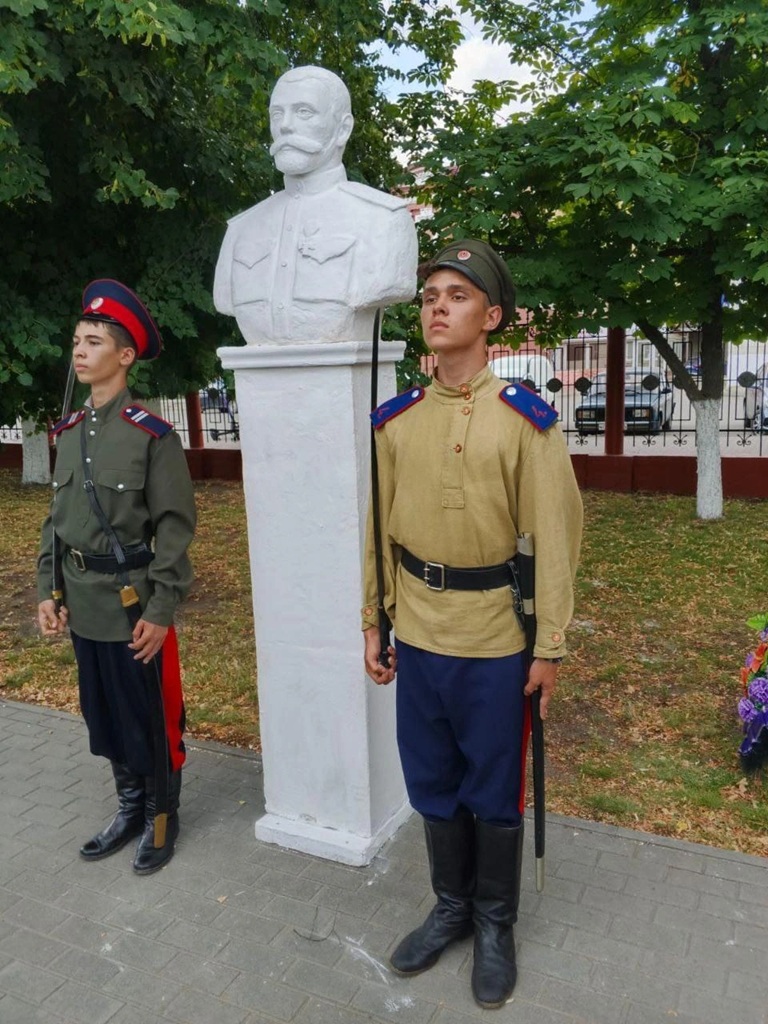
On 17th July 2025, busts of Emperor Nicholas II and Tsesarevich Alexei Nikolaevich (sorry, no photo available) were temporarily installed in the Russian town of Uryupinsk (Volgograd region), during a commemorative event marking the 107th anniversary of the death and martyrdom of Russia’s last Tsar and his family.
Plaster busts on pedestals were installed on the Square of the Fallen Heroes by members of the Union of Cossacks of Russia. Representatives of several Cossack organizations and the clergy of the local diocese held a prayer service and laid flowers.
After the ceremony, the busts were dismantled. According to the ataman of the local Cossack society in Uryupinsk, Dmitry Popolitov, a search is currently underway for a permanent place to install bronze busts of Nicholas II and Alexei Nikolaevich.
The event was organized by the Union of Cossacks of Russia, members of the 4th Don Cossack Regiment named after Count Platov, with the support of the Khoper Cossack District and the Uryupinsk Diocese.
It is interesting to note, that the plaster busts and pedestals were placed on the exact spot, where a monument to Soviet dictator Joseph Stalin stood during the Soviet period.
Recall that the monument to Joseph Stalin was erected in the Uryupinsk square of the Komsomol in 1948. Later, the square was renamed after Stalin. With the coming to power of Nikita Khrushchev in 1953, the monument to Stalin disappeared without a trace and was considered lost.
In 2000, a local resident, who wished to remain anonymous, told the authorities where the monument was buried. The monument of Joseph Stalin was found covered with earth on the territory of the former Khoper district prison. It was excavated and placed in the Uryupinsk Museum of Local Lore in an exposition dedicated to the defeat of Nazi troops near Stalingrad.
According to the Union of Cossacks of Russia, events such as this are important for preserving historical memory and preventing the recurrence of tragic events of the past.
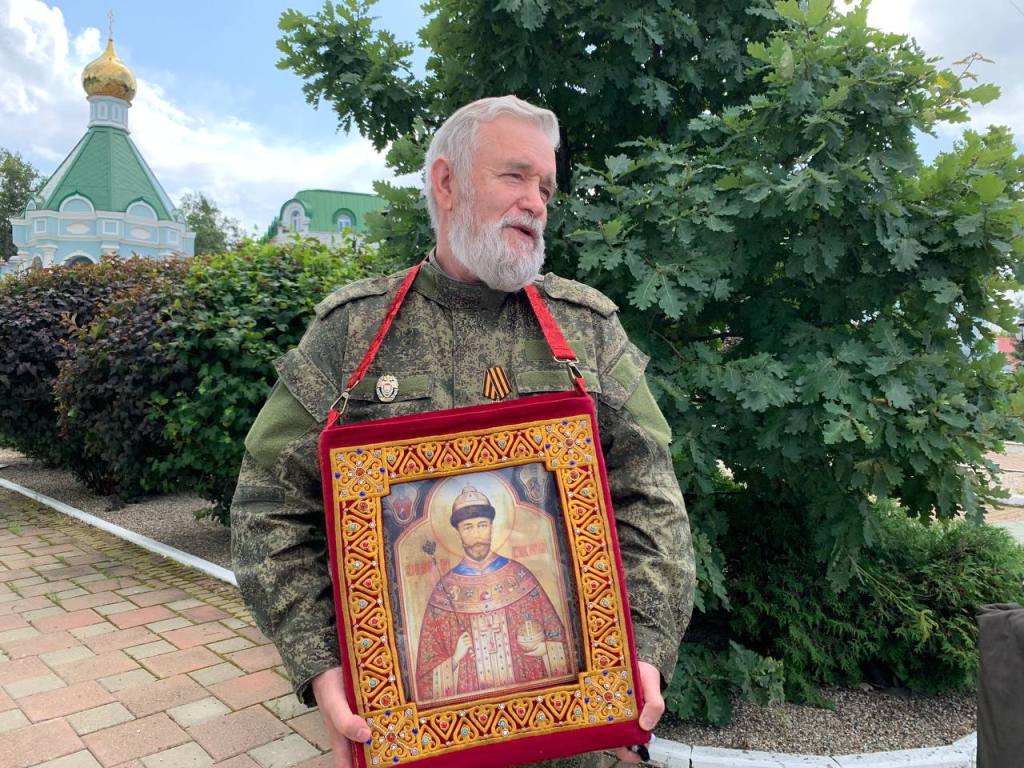
PHOTO: Alexander Feodorovich Chernavsky holding the myrrh-streaming icon of the Tsar-Martyr Nicholas II
On 13th July 2025, the myrrh-streaming icon of the Tsar-Martyr Nicholas II arrived at the Church on the Blood in Ekaterinburg. The icon was brought from Moscow, by the head of the Orthodox Military Mission, Alexander Feodorovich Chernavsky.
According to Chernavsky, the icon has been streaming myrrh since 1998, and again, during this year’s Tsar’s Days in the Ural capital, drops of myrrh appeared in the shape of “diamonds” on the icon itself and on the frame.
“It smells fragrant, it streams myrrh and inspires faithful Orthodox Christians with the fact that the Tsar is alive, he sees all our labours, hears our prayers, reacts to the impulses of our hearts, to our feelings, he believes in the future of Russia. The Imperial Family and other New Martyrs pray for us.”
Chernavsky brings the icon to the Ural city every year for events marking Tsar’s Days, namely the Divine Liturgy held on the night of 16/17 July, followed by a Cross Procession to the Monastery of the Holy Royal Martyrs in Ganina Yama.
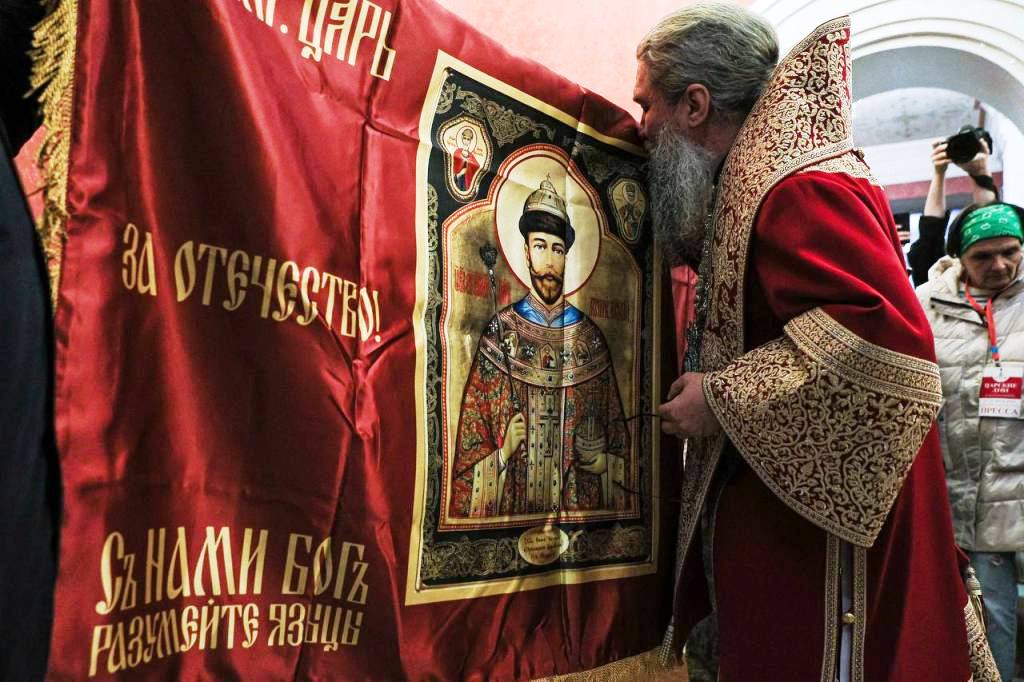
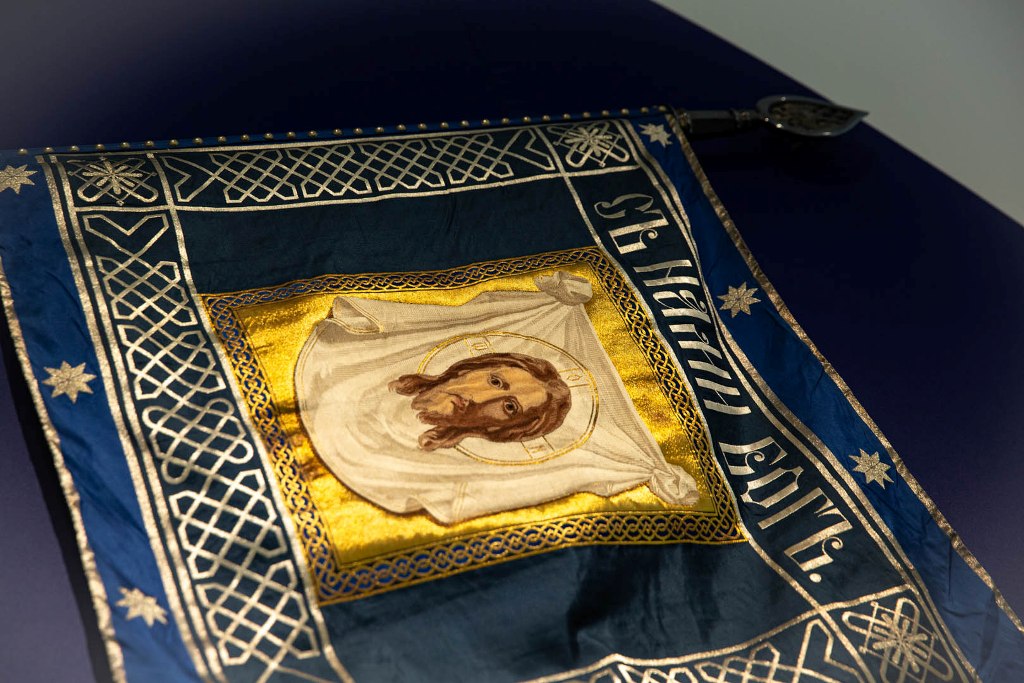
PHOTO: detail of the banner depicting the image of Tsar-Martyr Nicholas II
On 16th July 2025, Chernavsky presented Metropolitan Evgeny of Yekaterinburg and Verkhoturye with a banner depicting the image of Tsar Nicholas II. Such banners bearing the face of the Holy Royal Passion-Bearers are sent to Russian soldiers to inspire them by the feat of the Emperor, to embrace the Orthodox faith and become churchgoers.
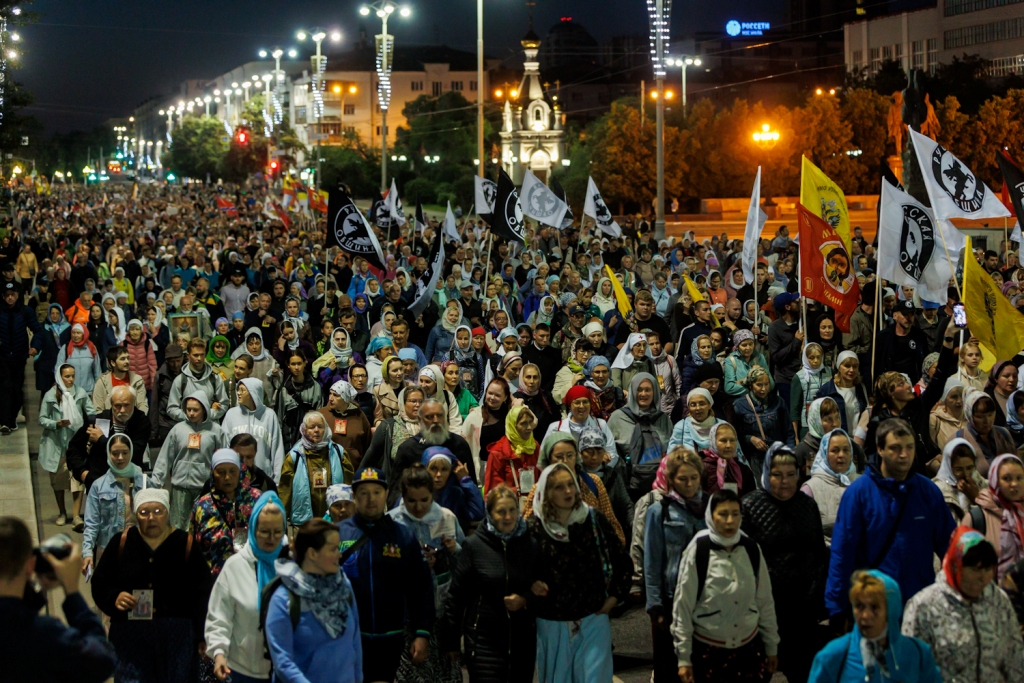
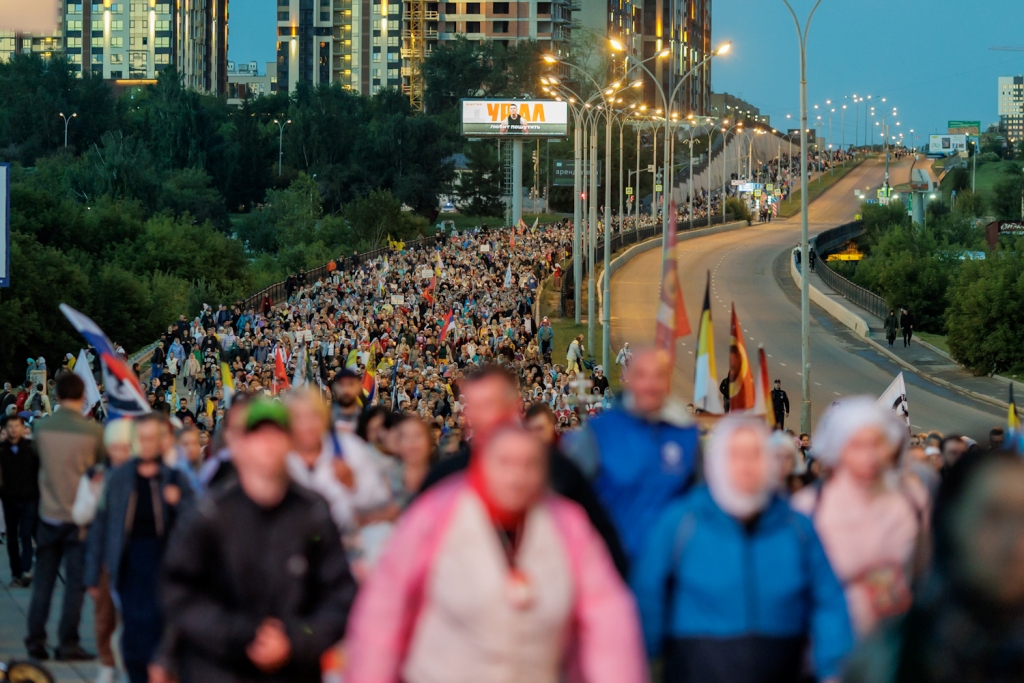
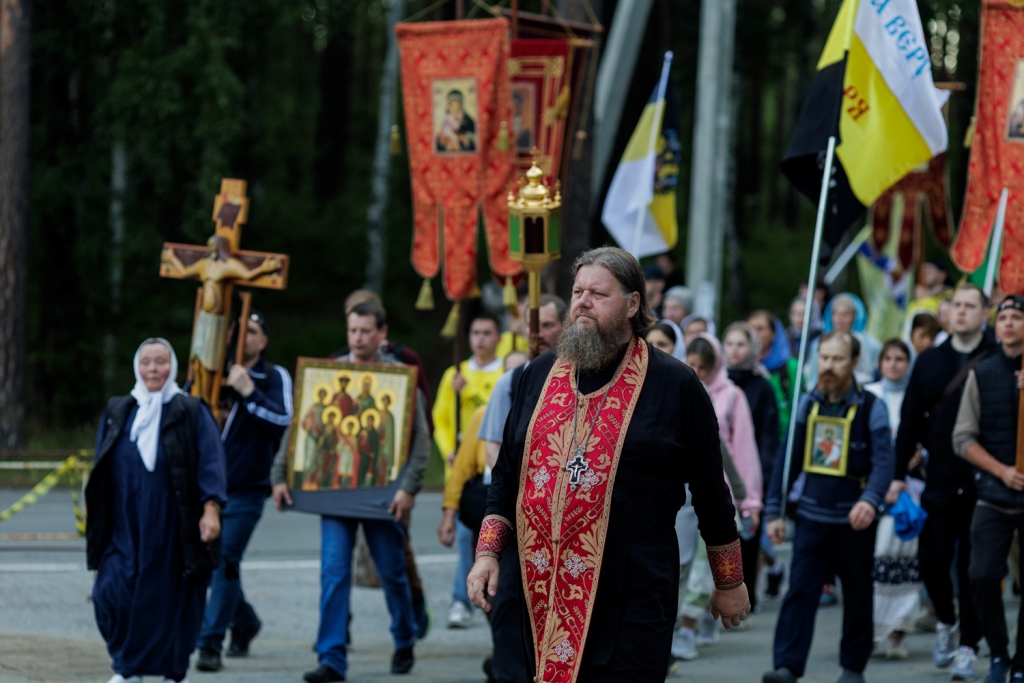
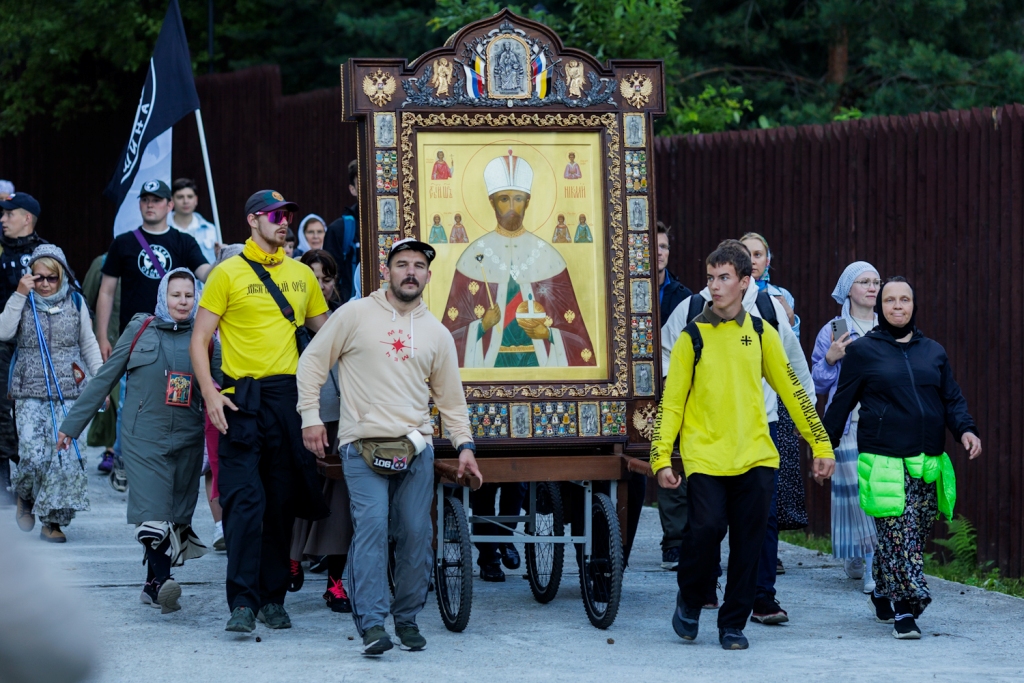
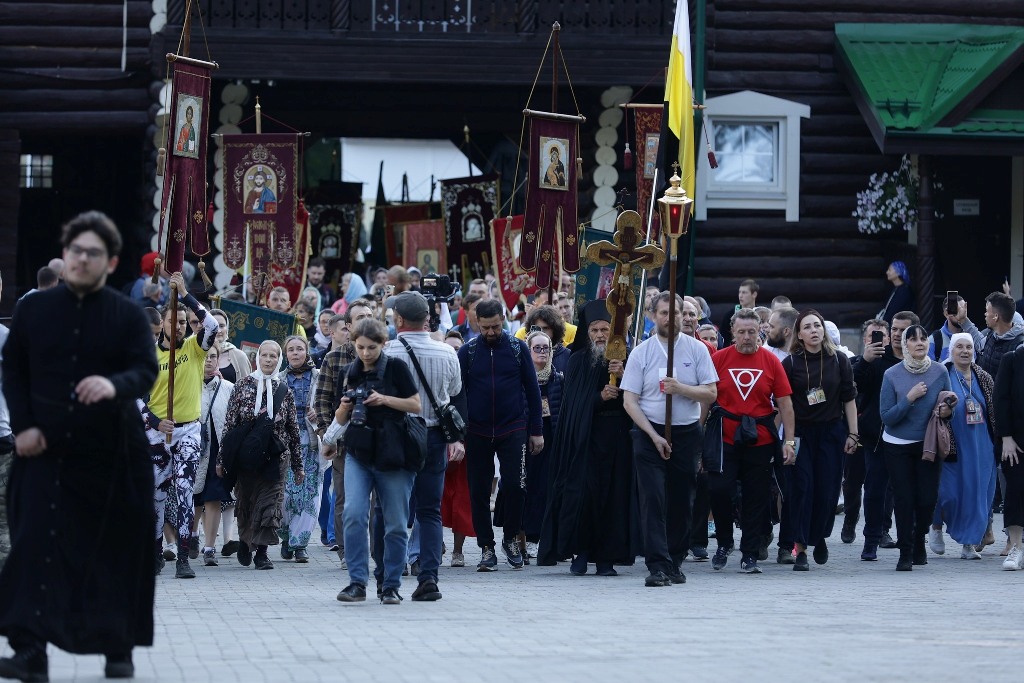
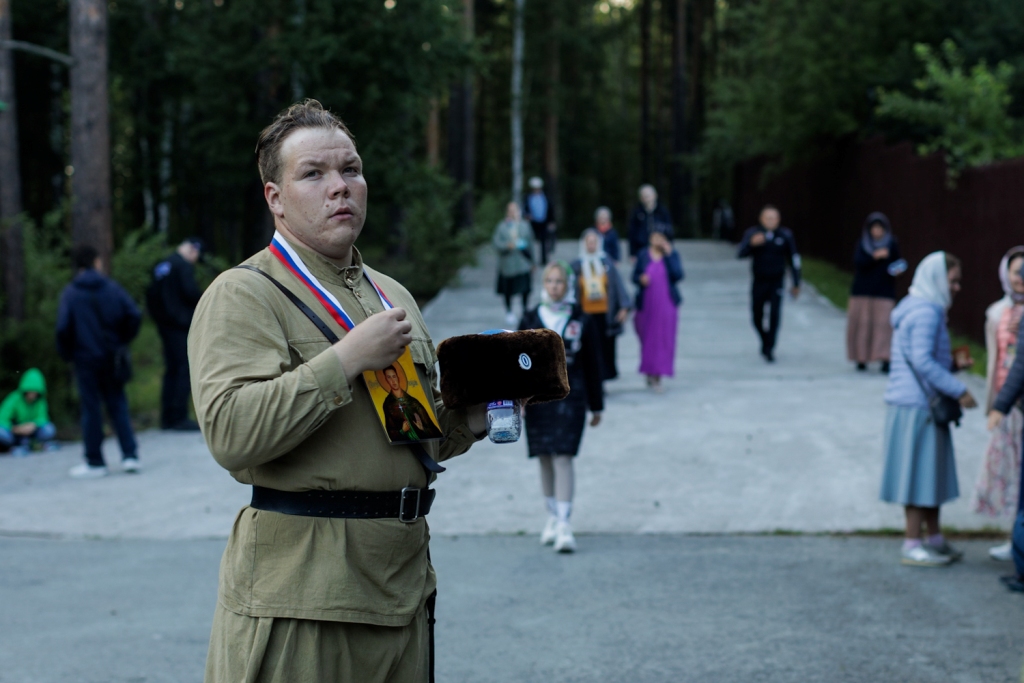
In the early morning hours of 17th July, Chernavsky – carrying the icon of the Tsar-Martyr Nicholas II – joined tens of thousands of pilgrims, clergy and believers in the annual Cross Procession from the Church on the Blood to the Monastery of the Holy Royal Martyrs at Ganina Yama – a journey of 21-km (13 mile) on foot.
Chernavsky noted that during this year’s Cross Procession, he noticed many young people with banners and flags, which he believes “speaks of the affirmation of the Orthodox faith and the unity of the Russian people.”
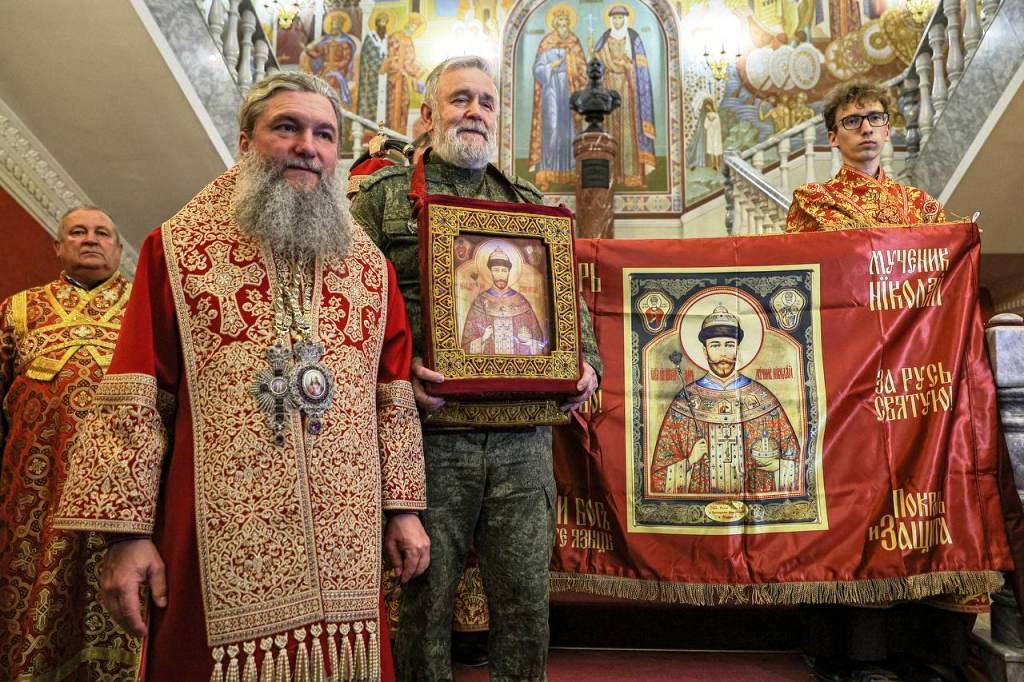
PHOTO: Metropolitan Evgeny of Ekaterinburg and Verkhotursky (left) with Alexander Chernavsky holding the myrrh-streaming icon of the Tsar-Martyr Nicholas II, in the Patriarchal Compound of the Church on the Blood. At the top of the stairs behind, you can see a bust-monument to Nicholas II
At the end of 1997, colour lithographs of this icon were brought to Russia. In the St. Nicholas almshouse in the city of Ryazan, where the Church of the Tsar-Martyr Nicholas II is being built, a colour copy was made and placed in an icon case under glass.
On 7th November 1998, the icon began to stream myrrh. Since then, the icon has been traveling around Russia and around the world. But most importantly, the icons streams myrrh on the anniversary of the Tsar’s death and martyrdom, among other days associated with the memory of Russia’s much slandered Tsar.
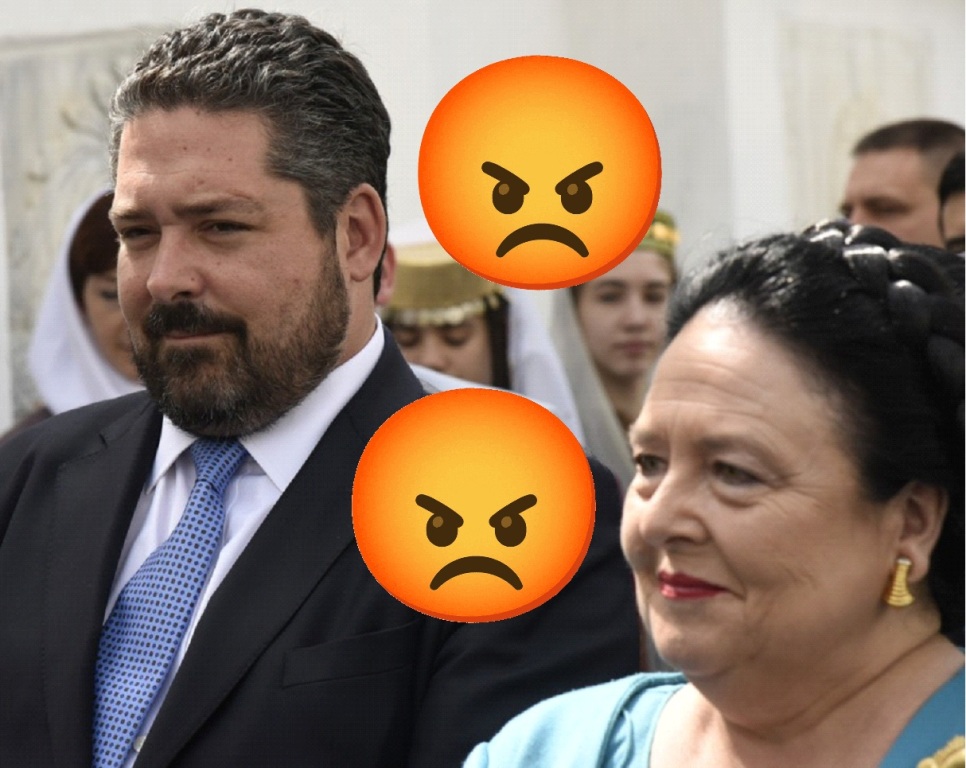
PHOTO: Prince George mikhailovich and his mother Princess Maria Vladimirovna
Of the more than 40,000 pilgrims, clergy and believers who came to Ekaterinburg from all over Russia and abroad, not a single descendant of the Romanov dynasty attended this year’s Tsar’s Days events. On the night of 16/17 July, an outdoor Divine Liturgy is performed at the Church on the Blood, marking the death and martyrdom of Emperor Nicholas II and his family.
Notably absent (again) this year, were Princess Maria “Masha” Vladimirovna and her son Prince George “Gosha” Mikhailovich (Hohenzollern), the self-proclaimed “heads” of the “Russian Imperial House”. It is interesting to note, that up until her death in 2020, Olga Kulikovsky-Romanova, the widow of Tikhon Kulikovsky- Romanov, was the ONLY Romanov family member who attended the event on a regular basis.
One would simply assume, that if any one among the Romanov descendants who should be in the Ural capital to honour Russia’s last Tsar and his family, it should be the “Head” of the Russian Imperial Family, surely?! Not so.
According to Alexander Zakatov, who serves as Masha’s senior mouth piece and head of her “chancellery” in Moscow, the allegations against Kirill were all part of a smear campaign, while others shamefully and falsely put the blame on the Empress Alexandra Feodorovna. Poor Alix, she has been blamed for so many of the trials and tribulations which befell Nicholas, the monarchy and downfall of the Russian Empire.
Why is it relevant for a Romanov family member to attend?
Masha styles herself as the Head of the Russian Imperial House, a “grand duchess” and “only” legitimate claimant to the now, non-existent Russian throne. She is none of the above! Likewise, her son, George “Gosha” is the self-styled “Heir Tsesarevich”, he “heir” to nothing!
The Russian Imperial House ended with the murder of Emperor Nicholas II on 17th July 1918. While some members escaped Bolshevik Russia, the House and it’s legal status as such during the Russian Empire ceased to exist. The titles of “Your Imperial Highness Grand Duke” and “Grand Duchess of Russia” were no longer acknowledged among in Europe, and most certainly in the Soviet Union. Their titles no longer opened doors for them, and invitations to royal events in Europe were seldom extended.
Maria “Masha” Vladimirovna is not a Grand Duchess, she is a Princess [and even this title is questioned among some historians]. The last Grand Duchess of Russia was Nicholas II’s youngest sister, Grand Duchess Olga Alexandrovna, who died on 24th November 1960.
Should the monarchy ever be restored in Russia, Masha has no rights, whatsoever, to the throne. Her supporters [mostly a group of American social media zealots] style her as “Empress de Jure”. They hold a make believe Court, addressing her as “Your Imperial Highness”, kiss her hand, bow and curtsey, like she is some “golden cow” – no pun intended!
Western sanctions and the war in Ukraine cannot be used as excuses by either Masha or Gosha’s for not attending Tsar’s Days in Ekaterinburg. While travelling to Russia is indeed difficult since the sanctions were imposed, it is not impossible. While most foreign airlines have ceased flying into Russia, it is still possible to reach St. Petersburg, Moscow and even Ekaterinburg from Europe via 3 foreign carriers.
It is interesting to note that Princess Maria Vladimirova recently arrived in Moscow in early July 2025, to attend the baptism of her granddaughter Kira. This, by the way, is Masha’s third or fourth visit to Russia since the outbreak of the Russia-Ukraine war.
Gosha who resides in Moscow, is the only Romanov descendant currently living in Russia, so one can only speculate his absence this year?
On 1st October 2021, Gosha married Rebecca Bettarini, the daughter of an Italian diplomat. She converted to Russian Orthodoxy, and Masha decreed the title of “Princess” on Bettarini, with the predicate “Her Serene Highness” and the right to use the surname Romanov.
It is important to emphasize, that Maria Vladimirovna never had, nor does she have any authority to hand out titles or awards as she is not and never has been a ruling monarch. Despite this, Maria actively, distributes orders, medals and even titles of the Russian Empire. While many orders and awards of the Russian Empire have been officially restored in the modern Russian Federation, Masha is an ordinary civilian, and not a representative of the state, therefore, has no right to distribute the same order in appearance and name to her supporters on behalf of the “Imperial House”.
Gosha and Rebecca have two children: Alexander and Kira. As this was a morganatic marriage, should the monarchy be restored in Russia, neither Gosha or his children would have any rights of succession.
Masha and Gosha do not recognize the Ekaterinburg Remains
In addition, neither Masha nor Gosha, have visited the Romanov Memorial at Porosenkov Log, situated on the Old Koptyaki Road near Ekaterinburg. Recall that it was here, where the remains of Emperor Nicholas II and his family were discovered in two separate graves in 1991 and 2007 respectively.
So, why does Maria Vladimirovna refuse to acknowledge the authenticity of the Ekaterinburg Remains? “We neither affirm nor deny the authenticity of the remains but are waiting for the Church’s Council to determine. Once this has been done, the Imperial House will welcome it with joy,” says Zakatov.
It appears that Maria Vladimirovna cannot think for herself on this issue. She would never dare speak out against either the Church or Putin. If she challenged or criticized the former, she would no doubt face the wrath of the Church. Likewise, if she challenged or criticized the latter, she would most likely be made persona non grata in Russia.
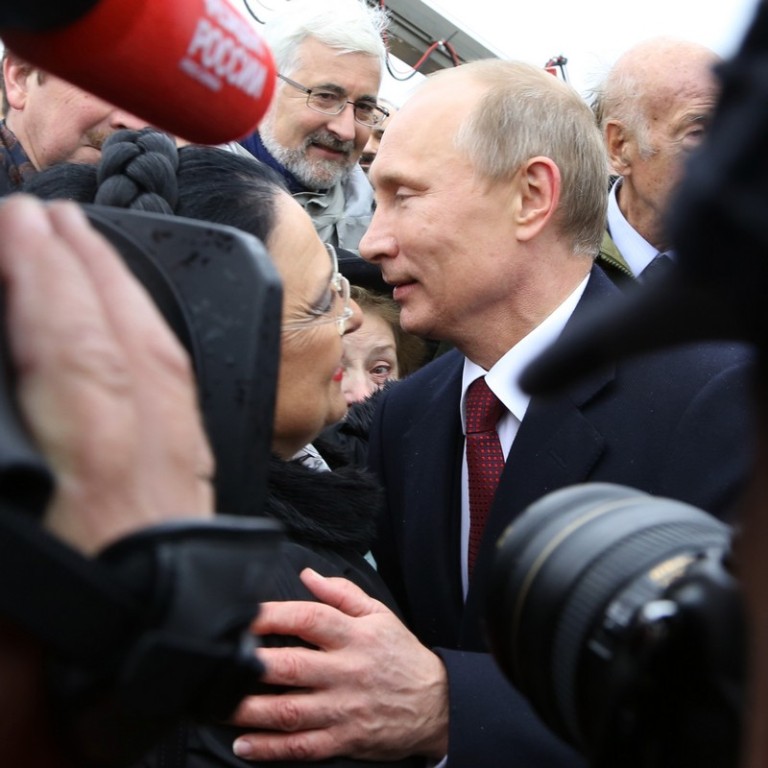
PHOTO: Masha warmly greeting Russian president Vladimir Putin
Friends in the Kremlin
For some people, Masha and Gosha’s support of Russia’s invasion of Ukraine in February 2022, continues to be a major bone of contention. As previously noted, Masha arrived in Moscow in early July, her third or fourth visit to Russia since the outbreak of the war.
Recall that in 2014, Masha “awarded” the Imperial Order of St. Anastasia to State Duma deputy Natalya Poklonskaya, for her efforts in the reunification of Crimea with Russia.
On 30th November 2017, Poklonskaya returned the Order and nobility title, because Maria Vladimirovna refused to support Poklonskaya’s efforts on outlawing the controversial film Matilda for its allegedly blasphemous portrayal of the affair between Nicholas II and the ballerina Matilda Kshesinskaya.
Both Masha and Gosha continue to “maintain good relations with Vladimir Putin”. In recent years, however, her supporters have tried to distance Masha from Putin. A series of photos taken some years back, paint another story. They depict the two meeting in Moscow, warmly greeting one another like old friends.
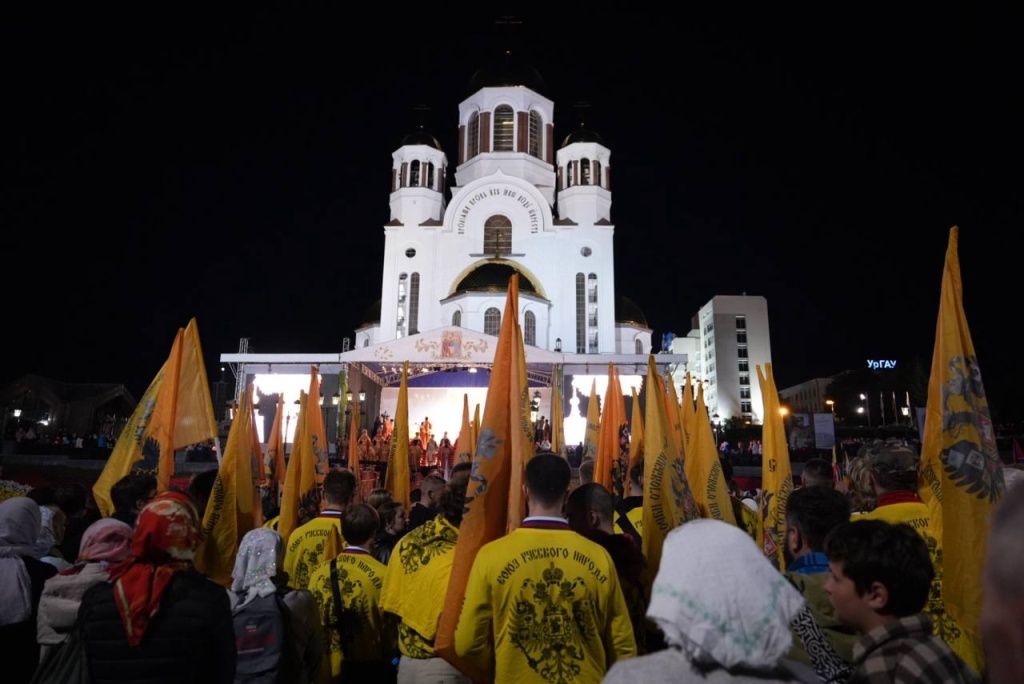
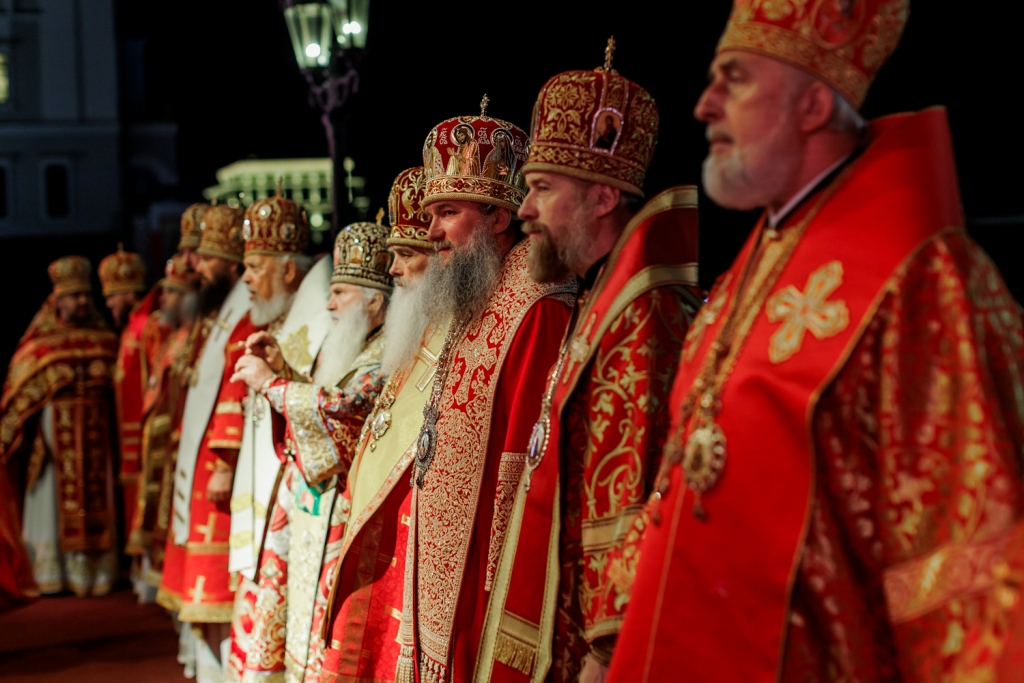
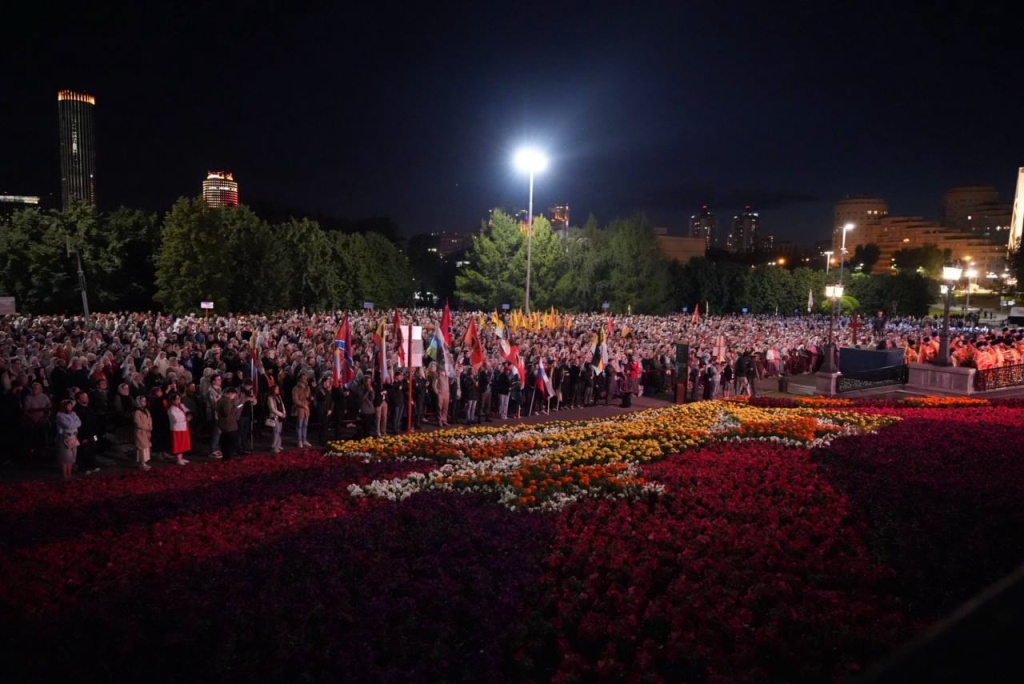
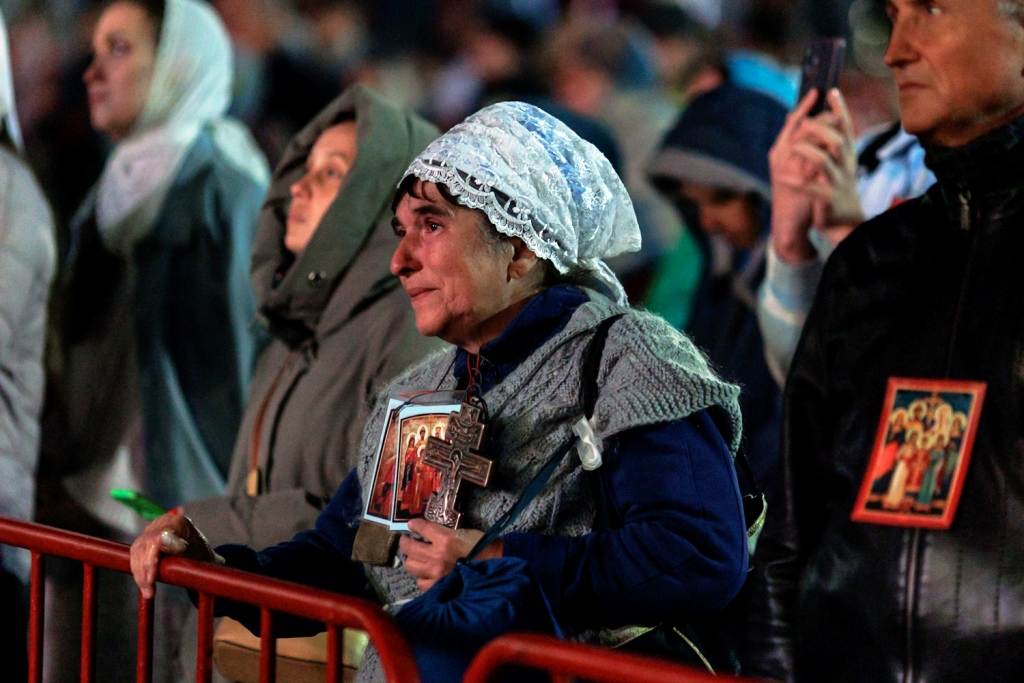
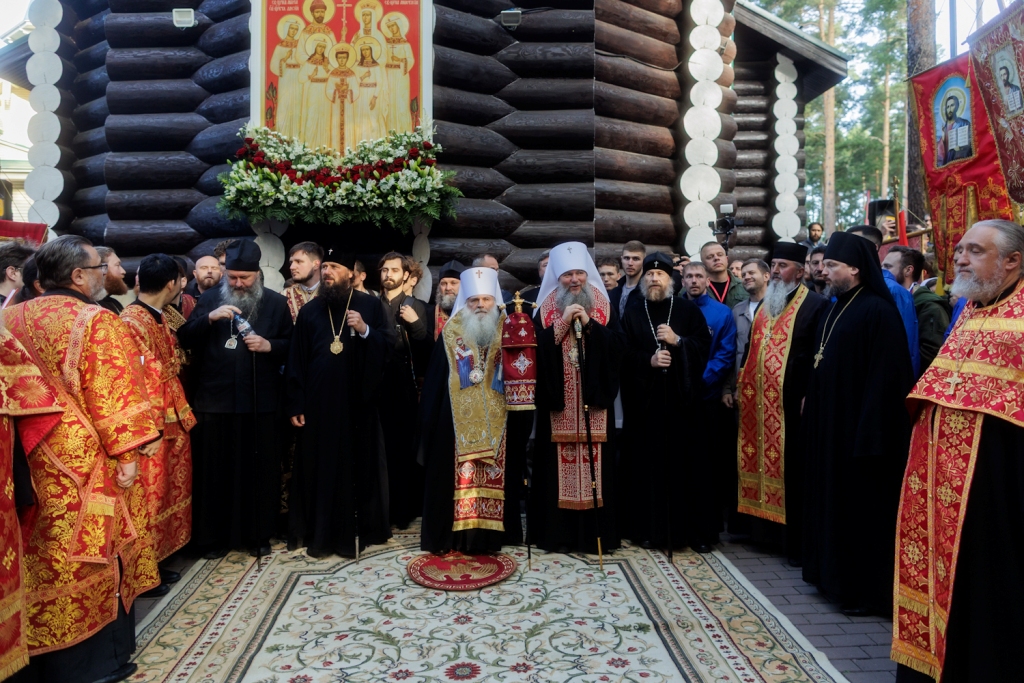
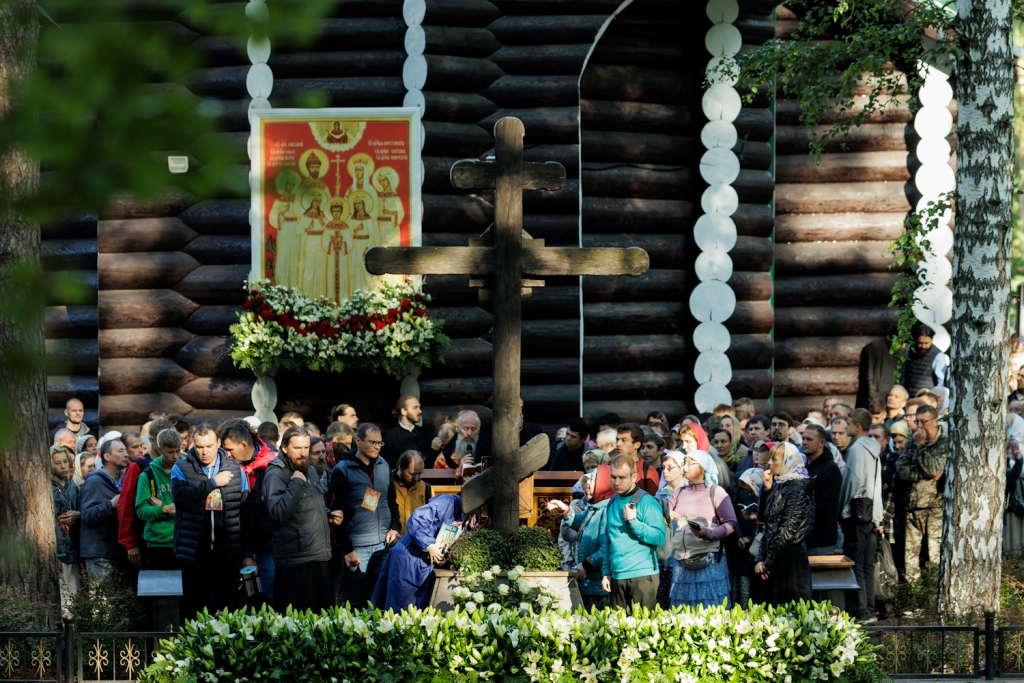
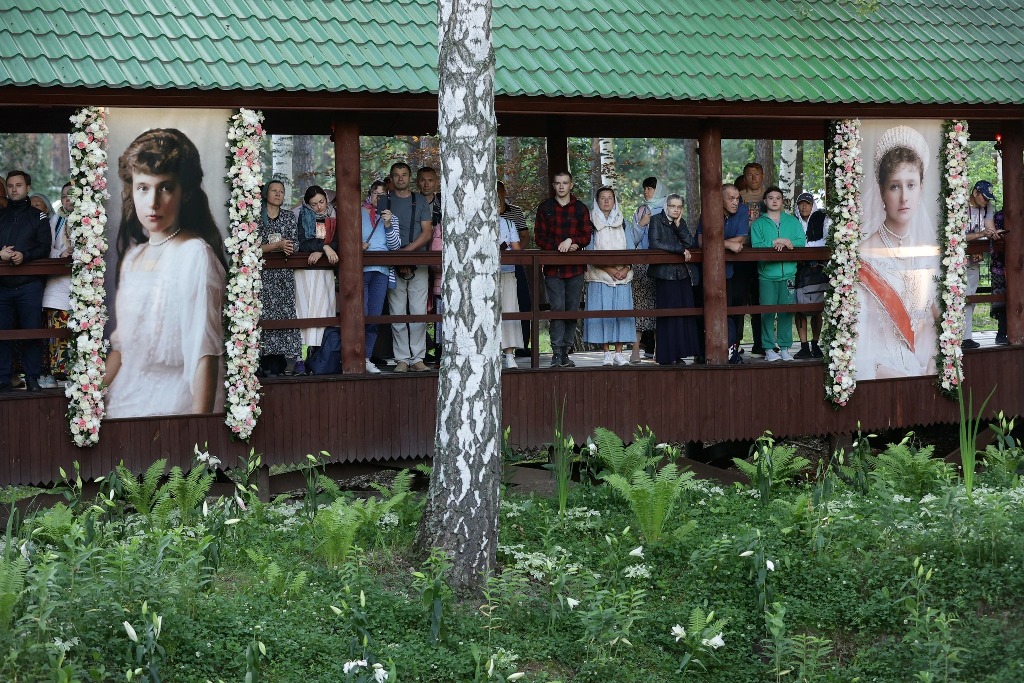
On the night of 16/17 July 2025, tens of thousands of pilgrims, clergy and believers from across the Russian Federation and abroad, took part in the Divine Liturgy on the square in front of the Church on the Blood in Honour of All Saints Resplendent in the Russian Land in Ekaterinburg.
This year marks the 107th anniversary of the death and martyrdom of Emperor Nicholas II, his wife, their five children, and four faithful retainers, who were all brutally murdered in the Ipatiev House in the early morning hours of 17th July 1918.
According to the press service of the Ekaterinburg Diocese, this year’s Tsar’s Days was attended by residents of Ekaterinburg and the Sverdlovsk region, but also residents of different regions of Russia. In addition, were pilgrims from the Czech Republic, Uzbekistan, Serbia, Italy and other countries.
This year’s Divine Liturgy was led by 12 bishops of the Russian Orthodox Church, headed by Metropolitan Evgeny of Ekaterinburg and Verkhotursky. Communion of the Holy Mysteries of Christ was performed from 100 Chalices. The service was broadcast live by the First Orthodox TV channel “Soyuz” on YouTube, and Rutube-channels.
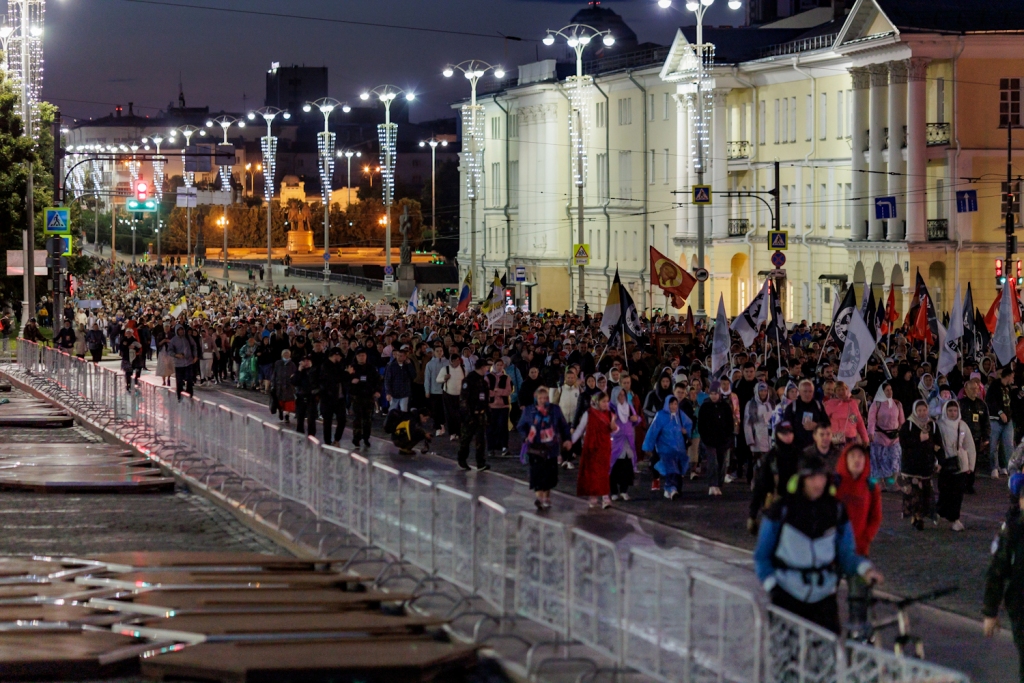
This was followed by a 21-km (13 mile) Cross Procession from the Church on the Blood to the Monastery of the Holy Royal Martyrs at Ganina Yama, in which 40,000 people took part. The procession, which began in the early morning hours of 17th July, took about 4 hours to complete on foot.
“There is no such religious procession, peaceful Christian movement in either Russia, or any where else in the world,” proclaimed Doctor of Historical Sciences Pyotr Multatuli, a noted historian and author, who is considered Russia’s foremost authority on the life and reign of Nicholas II.
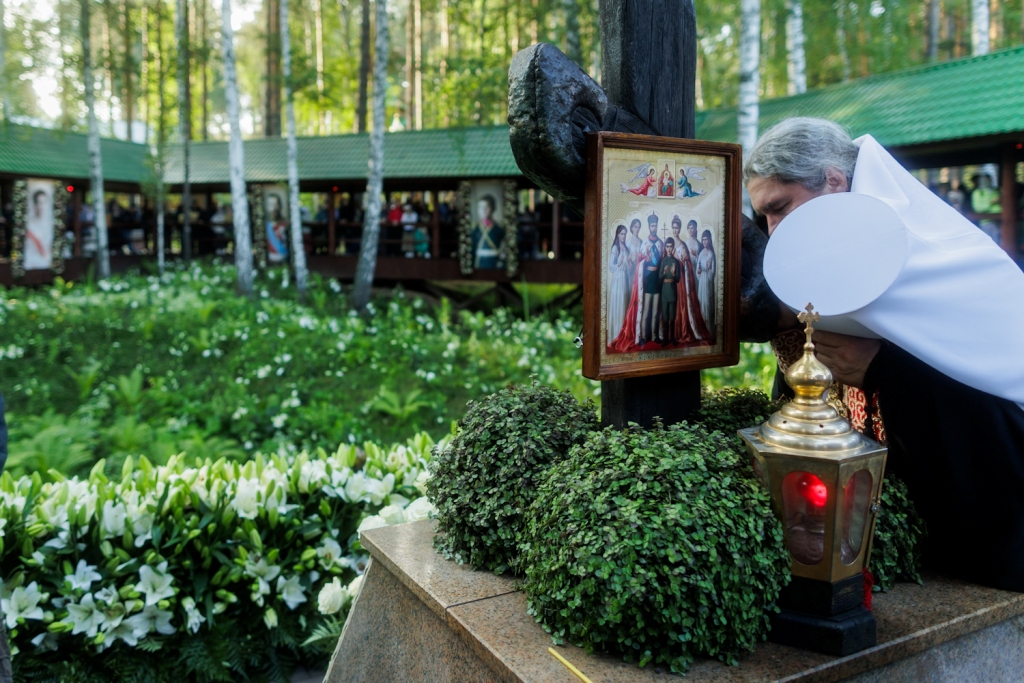
The Cross Procession concluded with a moleben [a liturgical service of supplication or thanksgiving] to the Holy Royal Passion-Bearers at Mine No. 7, which is now sacred ground of the Monastery of the Holy Royal Passion-bearers at Ganina Yama.
Tsar’s Days are traditionally held with the support of the Sverdlovsk regional government, the Ekaterinburg city administration and the St. Catherine’s Foundation, which helps in organizing the celebration and supporting pilgrims with water, food, and transport.
Divine Liturgy – Church on the Blood, Ekaterinburg
21-km (13 mile) Cross Procession to Ganina Yama
Monastery of the Holy Royal Passion-Bearers, Ganina Yama
Tsar’s Days
Recall that the first Cross Procession in memory of the Holy Royal Martyrs, headed by Metropolitan of Ekaterinburg and Verkhoturye Kirill, took place in 2002, in which more than 2 thousand pilgrims and about 100 clerics participated. It has been held annually in the Ural capital ever since.
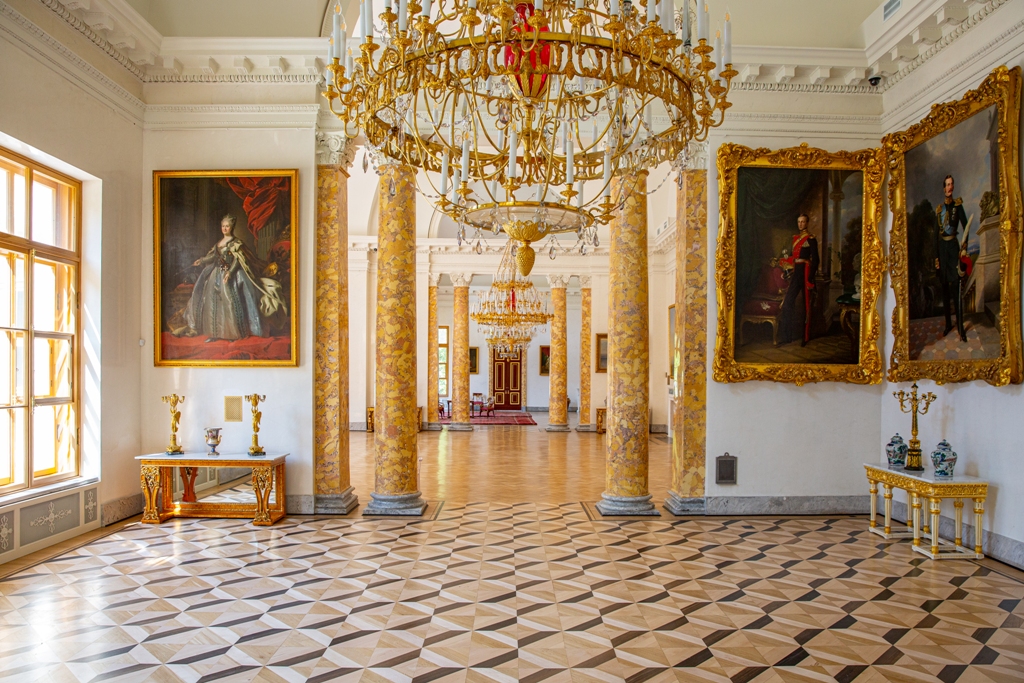
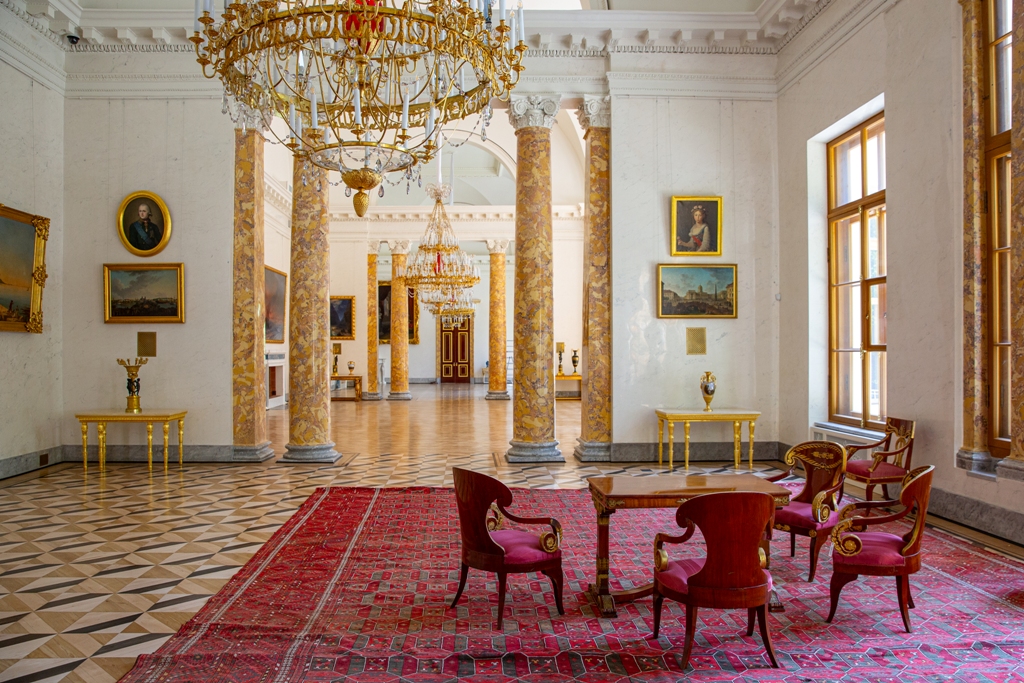
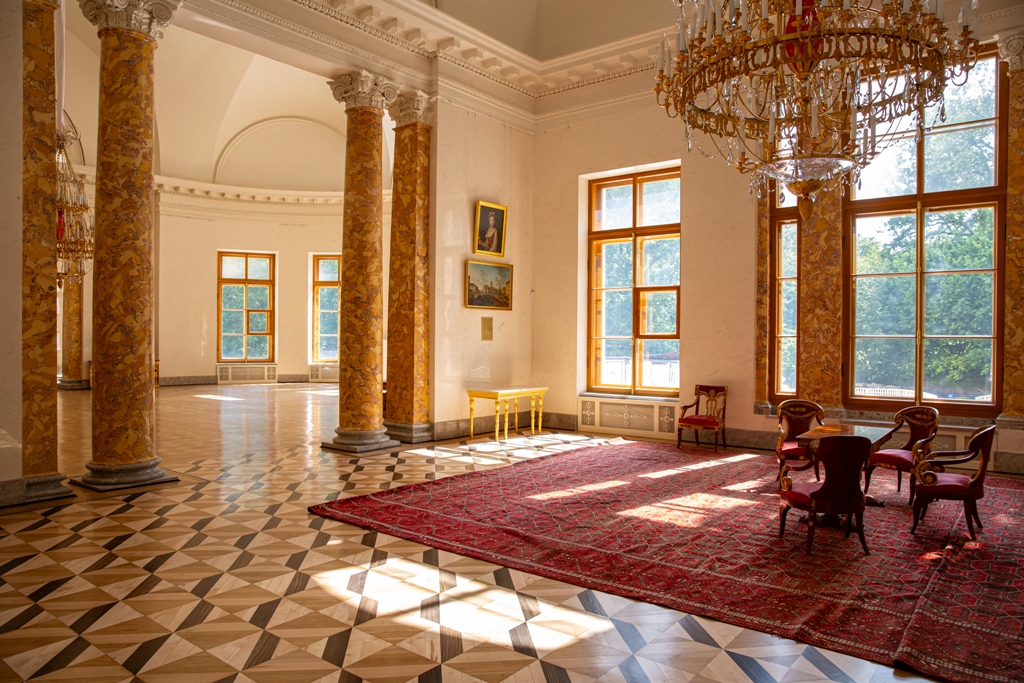
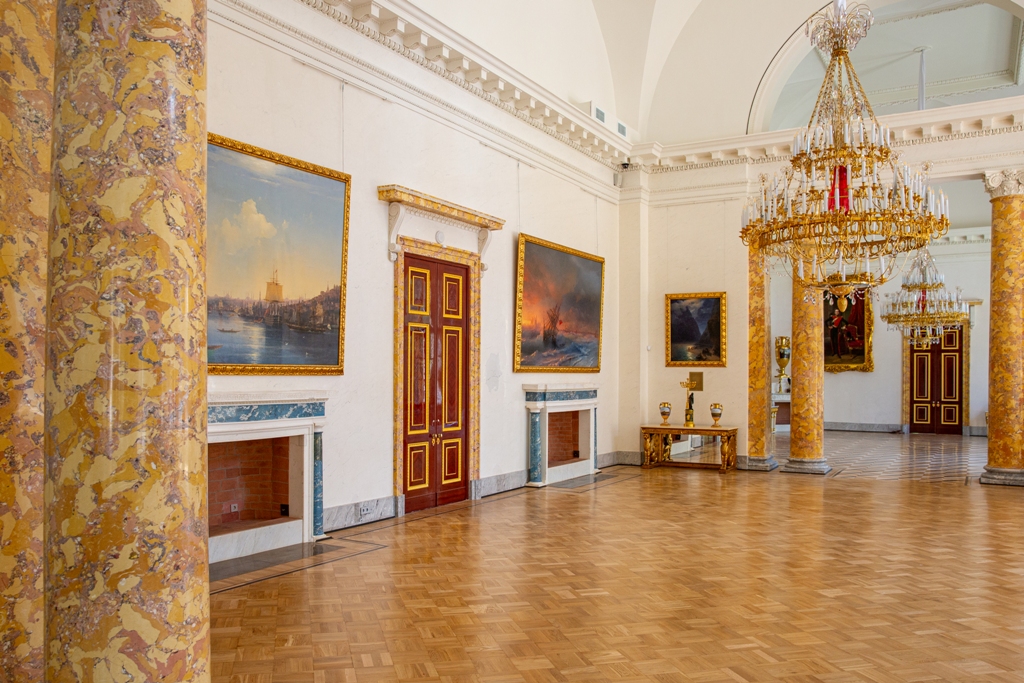
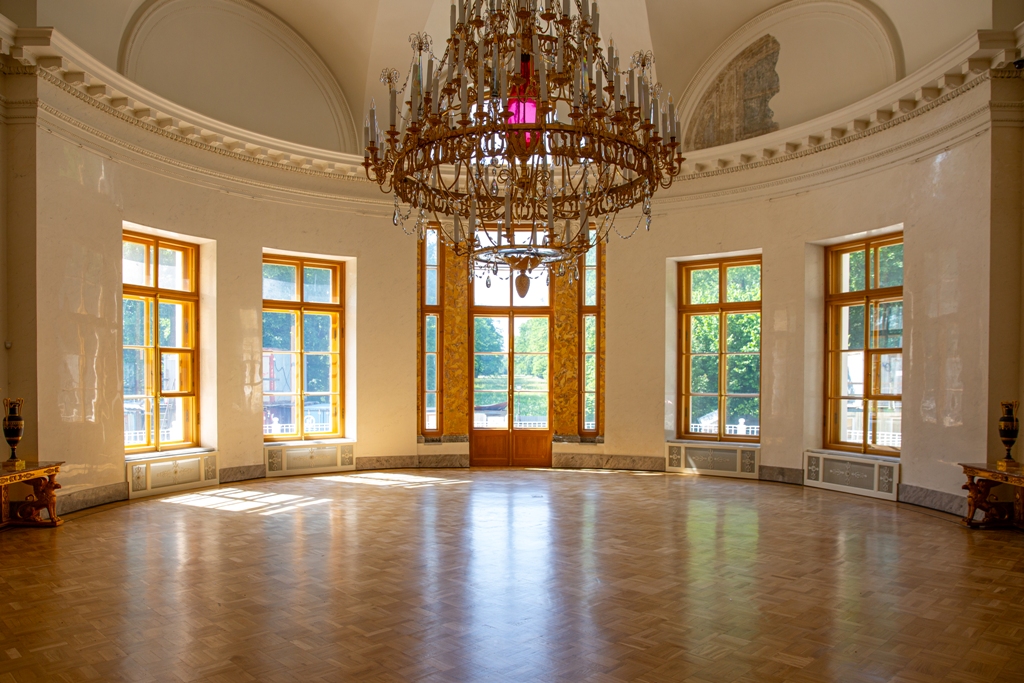
The restoration of the Alexander Palace at Tsarskoye Selo continues . . . on 19th July 2025, the Tsarskoye Selo Museum-Reserve opened three ceremonial halls of the Alexander Palace, after additional restoration work was carried out.
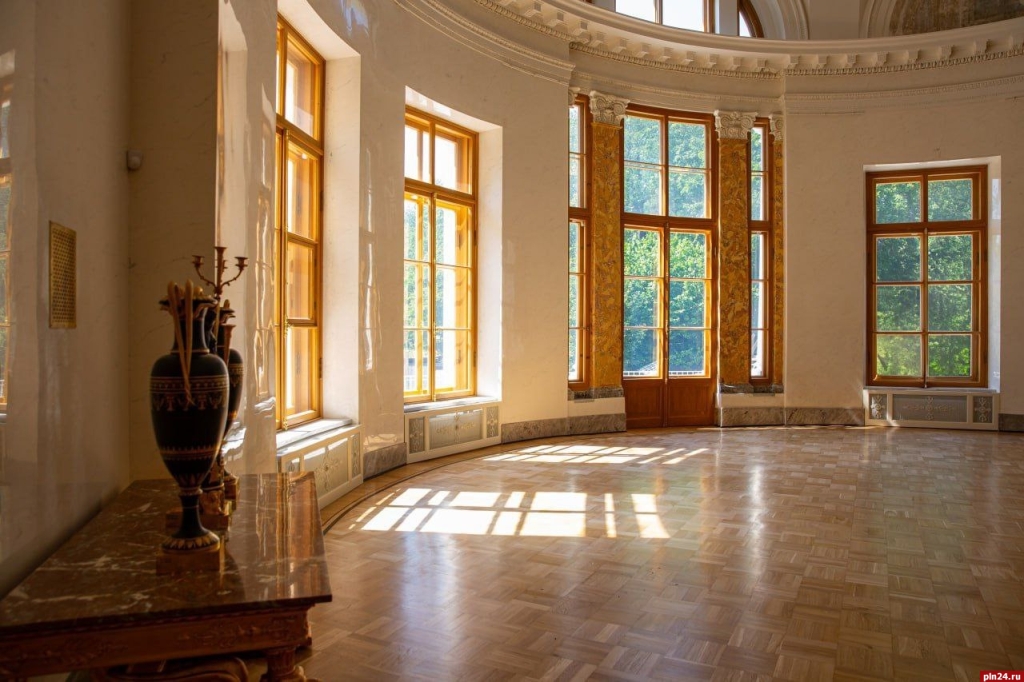
The Semi-circular, Portrait Hall and Marble Drawing Room are once again open to visitors and guided tours. The visitor route through the Alexander Palace now includes 17 interiors, which include the private apartments of Emperor Nicholas II and Empress Alexandra Feodorovna, as well as the interiors of the State Enfilade.
NOTE:the photos show the interiors as they looked following the recent restoration. They lack many of the decorative and applied art pieces, which have now since been returned to their original places– PG
Recall that in 2012, “cosmetic repairs” were carried out in the Portrait Hall, the Semi-Circular Hall and the Marble Drawing (the former Billiard) Room. In June 2010, the State Halls, which are situated in the central part of the palace – between the east and west wings – were solemnly opened to visitors, as part of events marking the 300th anniversary of Tsarskoye Selo.
However, despite the best efforts of curators, limited funds for restoration, and dispersed collections, meant that the presentations were somewhat sparse and of varying quality. The State Halls were closed again in the Autumn of 2015 for additional restoration work. The State Enfilade reopened in 2021.
The State Halls were closed yet again in 2023, and during the next year+, craftsmen carried out additional restoration work in the interiors. During this time, engineering and technical support systems (heat and power supplies, exposure lighting, ventilation, air conditioning) and low-current systems (security and alarm systems, video surveillance systems, warning and evacuation control, automatic fire alarms) were completely updated.
Specialists carried out large-scale restoration work which included repairs on the parquet floors, ceilings and window fittings. In addition, the mahogany doors with gilded bronze décor were also restored.
About 70 original works of paintings and decorative and applied art are showcased in the State Halls, including two portraits transferred “on loan“ from the Pavlovsk State Museum: the first, of Empress Alexandra Feodorovna (wife of Emperor Nicholas I) and the second, of Queen Victoria of Great Britain. The works were returned to their historical places in the Marble Drawing Room [not to be confused with the Marble (Mountain) Hall.
Visitors can also see three 18th-century chandeliers, created according to drawings by the architect Giacomo Quarenghi (1744-1817). They are made of bronze, glass and crystal and impress with their size: 3.5 meters high, each weighing more than 240 kilograms. The chandeliers were restored in March 2025.
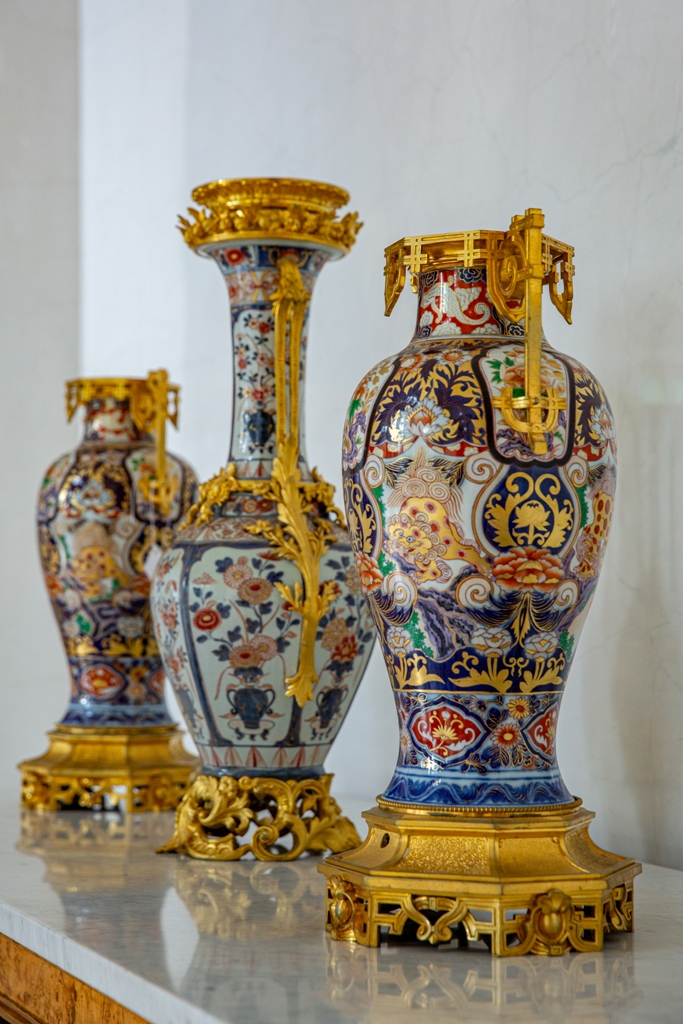
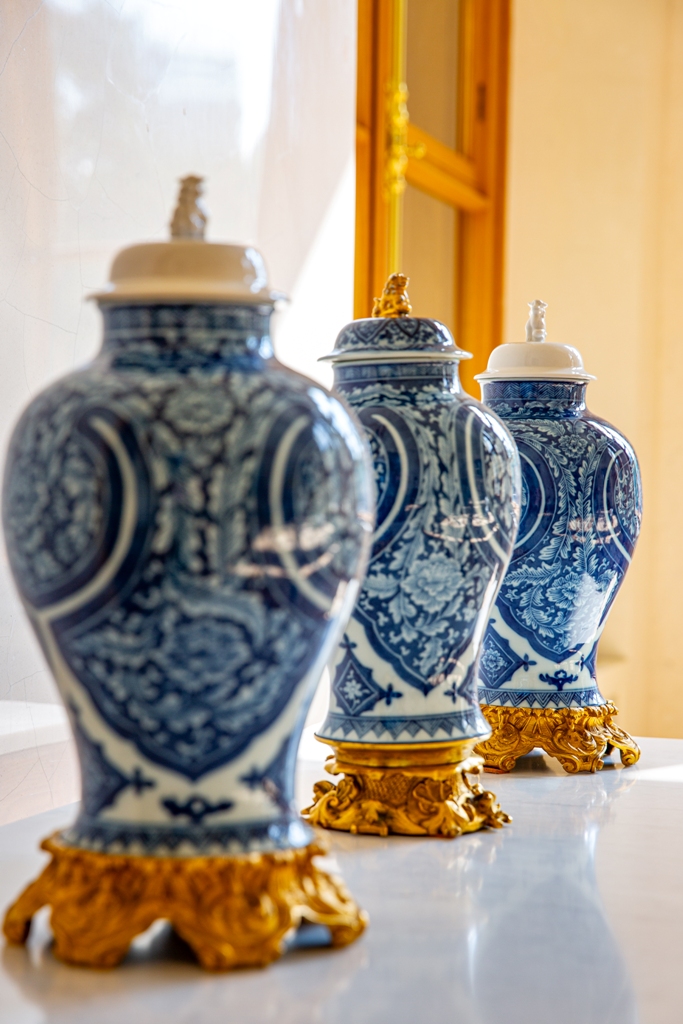
Complementing the halls are four marble fireplaces, two of which are decorated with large vases created at the Imperial Porcelain Factory in the second quarter of the 19th century. On eleven consoles there are vases and candelabra. On the walls there are portraits of emperors and members of their families by artists Alexander Roslin, Franz Krüger, Timofey Neff, as well as urban and seascapes by Ivan Aivazovsky, Fyodor Alexeev, Maxim Vorobyov and Franz Ludwig Katel. In addition, are two large floor vases made of cloisonné enamel on copper, which were presented to Emperor Nicholas II in 1916 by Prince Kotohito on behalf of Emperor Yoshihito of Japan.
The Semi-Circular Hall (pictured above) is associated with an important event in early 20th century Russian history. It was from this hall, on the night of 31st July / 1st August 1917, that Emperor Nicholas II, along with his family and an enormous retinue left the Alexander Palace and went into exile to Tobolsk, Siberia. They passed through the doors (seen in the photo above), and never saw their beloved home again. From 1905, the Alexander Palace had been the preferred Imperial residence of Nicholas and his family.
At the time of this writing, the restoration of the Alexander Palace continues, funded by the Ministry of Culture of the Russian Federation, and philanthropists, and the Tsarskoye Selo State Museum. The restoration of the Western Wing of the palace is expected to be completed by the end of 2025. Work is now underway to recreate the famous Crimson [aka Raspberry] Drawing Room. The work is planned to be completed in 2027.
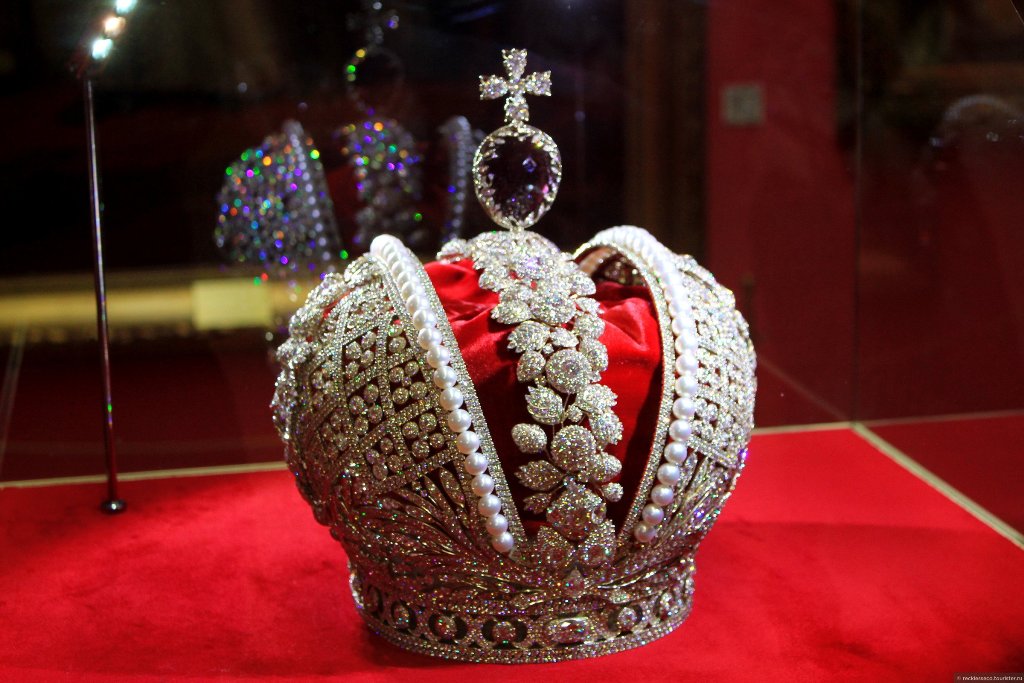
PHOTO: the Great Imperial Crown of the Russian Empire is in the Collection of the Diamond Fund of the Russian Federation in the Moscow Kremlin
The Great Imperial Crown of the Russian Empire was made for the coronation of Empress Catherine II in 1762. The last Russian monarch who wore the Imperial Crown was Emperor Nicholas II, on the day of his Holy Coronation in Moscow, on 27th May (O.S. 14th May) 1896.
The Imperial Crown is a joint creation of a large number of craftsmen, but the main creators were two jewelers – the Frenchman Jérémie Pauzié (1716-1779) and the Swiss Georg Friedrich Eckart. The coronation of Catherine II was scheduled for 22nd September 1762, so there were only two and a half months for it’s preparation.
According to the surviving reports of the Diamond Workshop, it was Eckart who was given 3.96 pounds of gold and 20 pounds of silver for the manufacture of the crown and orb. A request, however, was made to Pauzié to draw a sketch of the proposed crown. The Frenchman’s version strongly resembled the crown of Empress Anna Ioannovna (1730) and looked like “an Orthodox church with its side gables and a raised central part crowned with an onion dome.” The diameter of the lower rim and the upper part of the hemispheres was almost the same, which gave the crown a bulky cylindrical shape. The arc connecting the hemispheres ended with a cross, on which a giant spinel was attached with the wide side down.
When Eckart saw the sketch, he “tore it up in anger.” The Swiss wrote a petition to Catherine with a complaint that the Frenchman’s drawing did not agree with the image of an Imperial Crown at all and was too reminiscent of a church in shape. Eckart created his own sketch of the crown, more elegant and harmonious: “the ellipsoidal hemispheres are strongly curved at the base and spread apart, making the crown look more compact. The dividing arc recessed between the hemispheres carried a cross and a giant spinel, turned wide side up. Due to the fact that Eckart made the frame openwork slotted, the finished crown turned out to be quite light in weight.”
When the frame was finished and it was time to inlay the stones, this work was entrusted to Pauzié. In preparation for the inlay, Pauzié used his original method: he made a wax model of Eckart’s slotted frame and tried different options for the arrangement of stones on it. Such a study made it possible to place each diamond in the most advantageous way, hide defects and emphasize the advantages. Pauzié was assisted in his work by six jewelers from Austria and one from France. Also involved in the creation of the crown were three Russian masters: Ivan Estifeev, Ivan Lipman and apprentice Ivan Nikiforov.
The crown was completed on time. All the masters received cash bonuses in addition to their salaries, Eckart was paid 700 rubles. Pauzié personally placed the finished crown on the head of the Empress, for fitting. Catherine II was “very pleased with it” and said she was confident that she would “somehow be able to hold the crown’s weight” on her head during the four hour coronation ceremony.
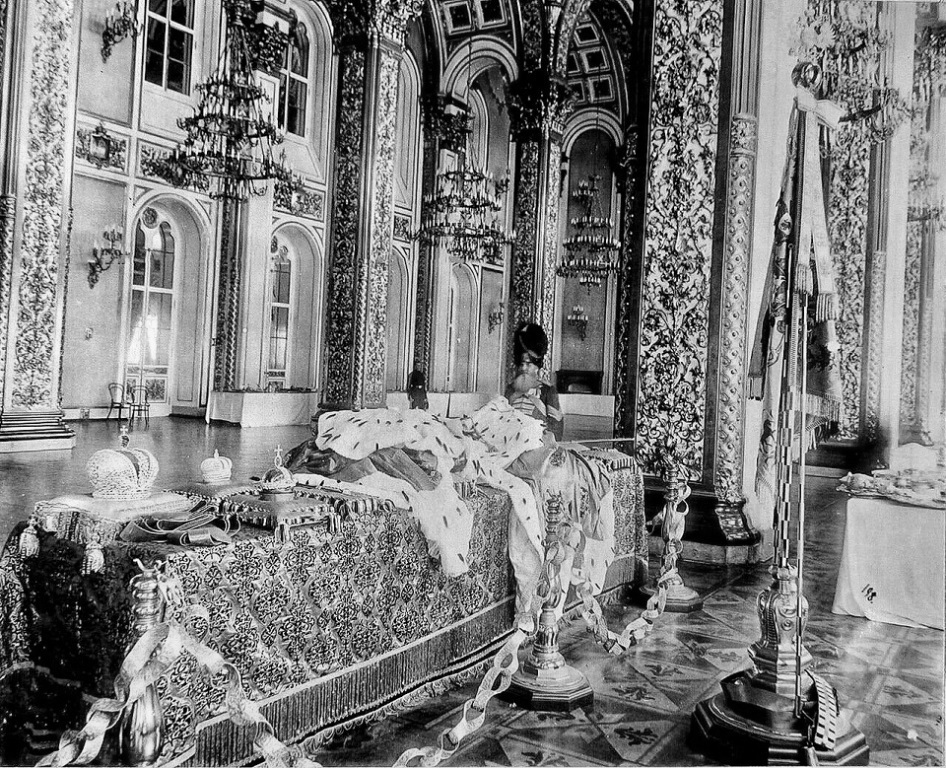
PHOTO: the Great Imperial Crown of the Russian Empire (left), among the Imperial Regalia is laid out on a table in the Grand Kremlin Palace, in preparation for the Holy Coronation of Emperor Nicholas II in May 1896
Designof the Imperial Crown
The image of the Imperial Crown is inspired by Byzantine symbolism, each element of the decoration has a certain meaning. The two hemispheres embody the connection of East and West. At the bottom, the grid of the hemispheres is encircled by laurel branches, a symbol of power and glory, and in the garland drawing, oak leaves and acorns are placed between the hemispheres as an image of the inviolability of the monarchy.
The Great Imperial Crown reflects the change of stylistic eras: it is decorated in the spirit of early Classicism, but also bears traces of the Baroque that preceded it. During the reign of Empress Elizabeth Petrovna (1741-1762), massive Baroque jewelry with large precious stones of bright colors was in fashion. To give the diamonds a certain shade, a thin layer of colored foil was placed under them. From the 1760s, under Catherine II, court jewelry fashion began to change – the natural beauty of the stone began to be valued more highly, jewelry was made in more concise and restrained forms.
“I selected the most suitable materials, and since the Empress wanted not to change the crown after the ceremony, I preferred the largest stones, which were no longer in fashion, and so I created one of the most expensive jewels that ever existed in Europe. Despite the difficult task of making the crown as light as possible, using only the most necessary materials to secure the stones, it still weighed five pounds.”
– Jérémie Pauzié
A total of 5012 stones were used to decorate the crown: 75 pearls weighing 763 carats and 4936 diamonds, their total weight is 2858 carats. The height of the crown with the cross was 27.5 cm, the length of the lower circumference was 64 cm. The total weight of the jewelry is 1993.80 grams. In addition to materials from melted down jewelry from the Imperial Treasury, the work required an additional pound of gold and twenty pounds of silver for a total of 86 thousand rubles. The cost of the finished crown at the time of manufacture was estimated at 2 million rubles!
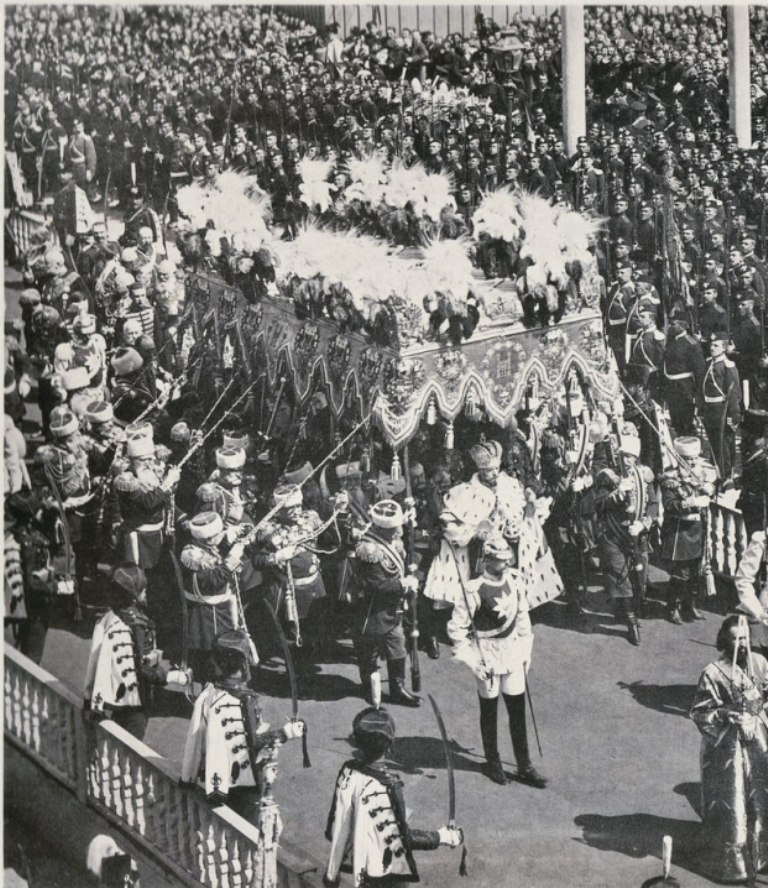
PHOTO: Emperor Nicholas II, wearing the Great Crown of the Russian Empire on the day of his Holy Coronation in Moscow, on 27th May (O.S. 14th May) 1896
After Catherine
The new crown became the main part of the Russian Imperial Regalia and the main symbol of power, it was worn only on the most solemn occasions, and the image was used on all heraldic signs. Following the established ceremony, the Great Imperial Crown was placed on the heads of all subsequent rulers of Russia, from Emperor Paul I (1797) to Nicholas II (1896). For each of the monarchs, the crown was adjusted to personal standards, this work was entrusted only to outstanding jewelry masters. The Great Imperial Crown was an integral attribute of imperial power and was used in solemn ceremonies – holidays, receptions, even funeral processions. The last time the Great Imperial Crown was worn by Nicholas II, was in 1906, during the opening ceremony of the first State Duma on 10th May (O.S. 27th April) 1906.
After the 1917 Revolution
In 1914, the Imperial Regalia, including the Great Imperial Crown, were evacuated from Petrograd [St. Petersburg] to the Armoury Chamber of the Moscow Kremlin. Because of the 1917 Revolution and the ensuing Civil War, the jewels were temporarily forgotten. Only in 1920 was the Gokhran, which collected jewels from the Romanovs, the Armoury, the Russian Orthodox Church, as well as valuables confiscated from private individuals. Many of these items were later sold abroad. In 1921, an official decision was made to use the “jewelry potential” for the benefit of the Communist Party, although the first secret deals date back to 1919.Between 1922 and 1938, the Soviet government auctioned off most of the jewelry that was not recognized as “valuable” to mostly British and American buyers.
It is interesting to note that in 1920, the estimated value of the Great Imperial Crown of the Russian Empire was a staggering$52 million USD!
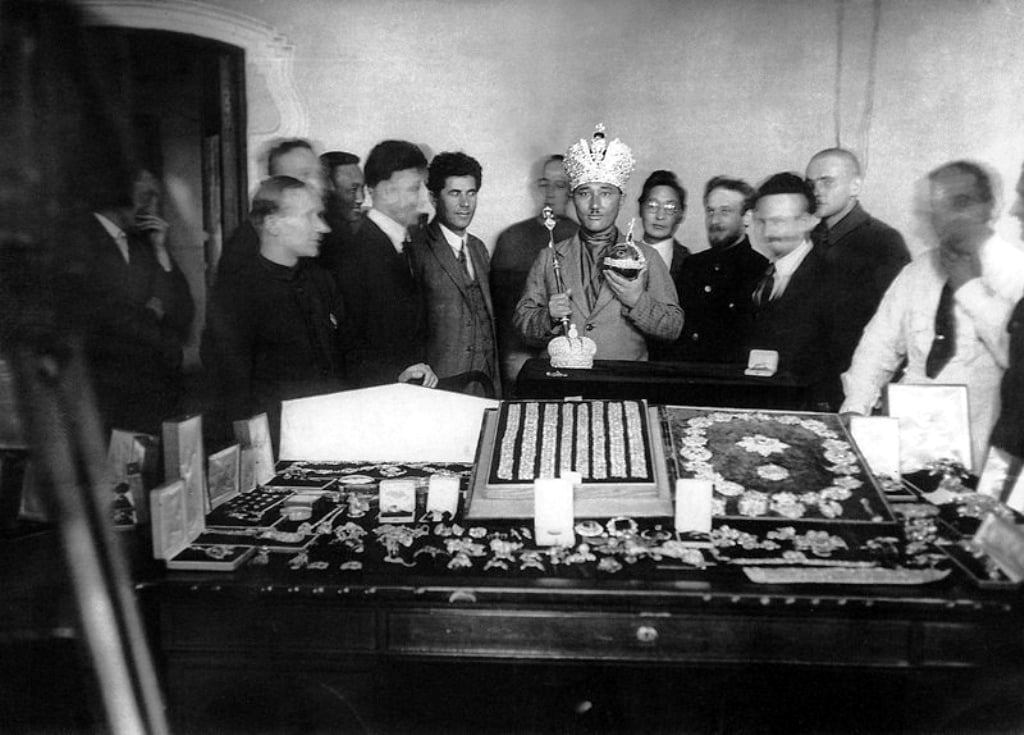
Secret attempts to sell the Great Imperial Crown have been reliably confirmed, when, under the leadership of the Chekist Yakov Yurovsky (1878-1938), the Imperial Regalia and the main treasures of the Romanovs were taken from Moscow to Chita in 1923. The accidental publicity of the future deal created headlines in the international press and served as an impetus to stop the sale of crown jewels. It was this incident, which prompted Josef Stalin to issue a personal decree in 1934, ordering that the “tsar’s trinkets” were no longer to be sold and exported abroad, so as not to harm the reputation of the Communist Party.
PHOTO: “Comrade” Robert Yanovich Karklin (1892-1938) wearing the Great Imperial Crown of the Russian Empire, Chita. 1923
In the photo above, Bolshevik thugs amuse themselves, as “Comrade” Robert Yanovich Karklin (1892-1938) – an authorized representative of the People’s Commissariat of Finance of the RSFSR under the Far Eastern Revolutionary Committee – poses with the Imperial Regalia. Karkin is seen wearing the Great Imperial Crown of the Russian Empire, while holding the Imperial Orb and Sceptre.
Up until a few years ago, this photograph, taken in 1923 in Chita, had never been published, it was kept by Karklin’s daughter Victoria, in the family’s private archive.
Today, the Great Imperial Crown of the Russian Empire is in the Collection of the Diamond Fund of the Russian Federation in the Moscow Kremlin. According to Article No 7 of Federal Law No 41-F3 of 26th March 1998, it is part of an indivisible collection of unique jewelry in federal ownership and is not subject to alienation in any form. The Ministry of Finance of Russia is responsible for the safety of the fund, exclusion from the fund is possible only by personal decree of the president. All exhibits can only be used for exhibition and scientific activities exclusively on the territory of the Moscow Kremlin. The current value of the Great Imperial Crown of the Russian Empire is too great to be calculated or estimated.
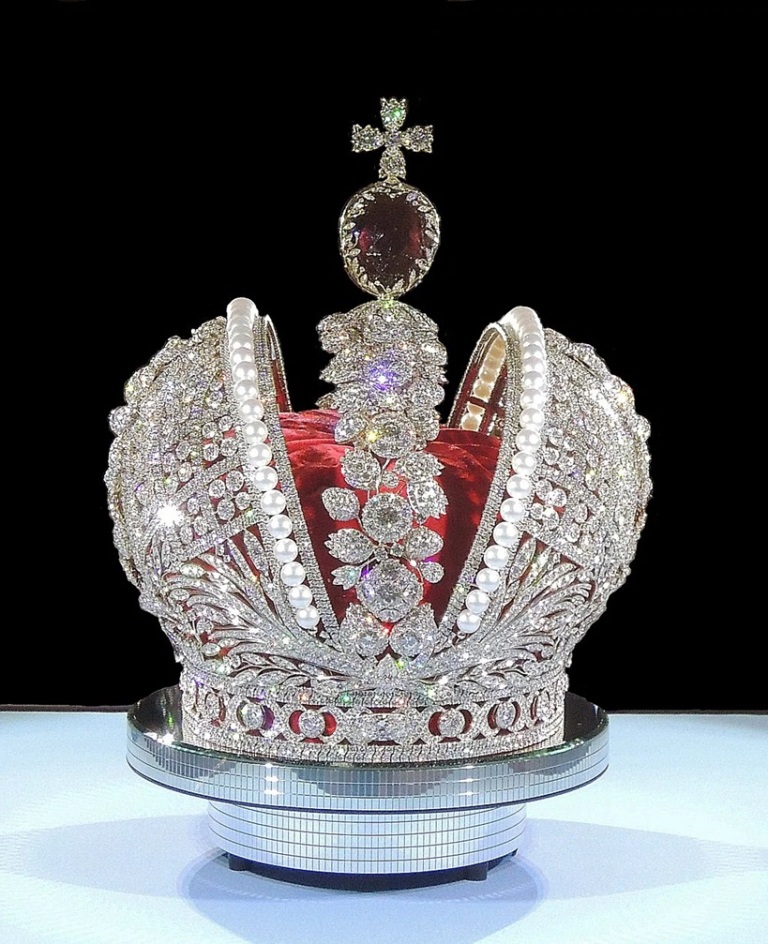
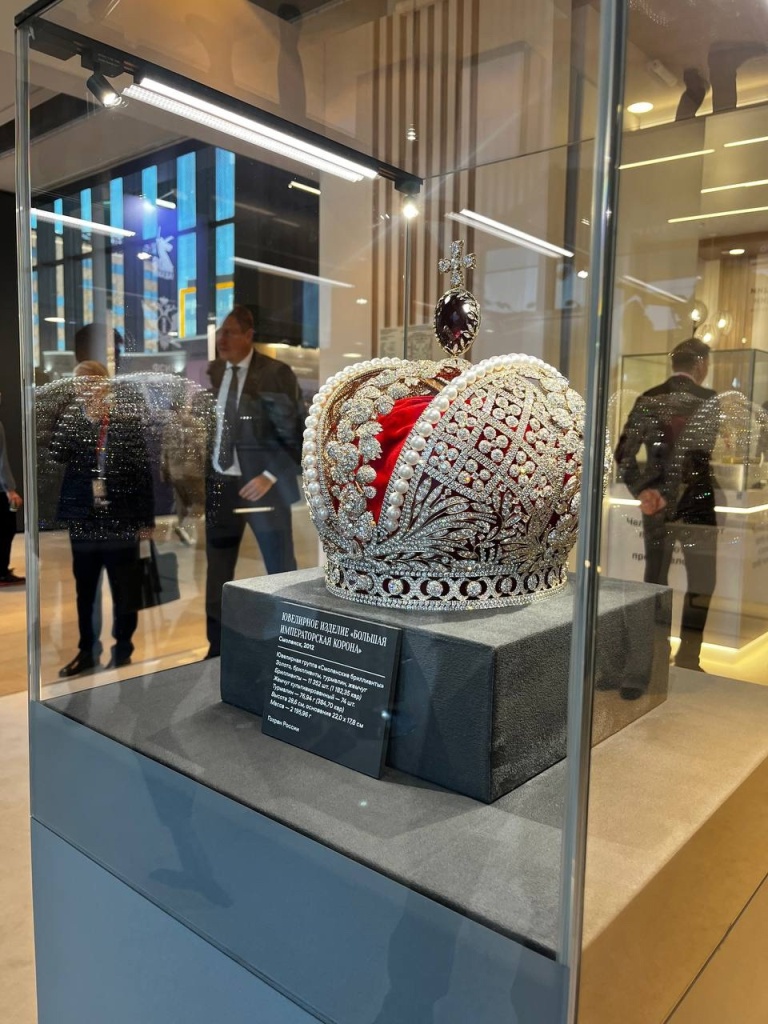
PHOTO: replica of the Great Imperial Crown of the Russian Empire, recreated in 2012
Replica of the Great Imperial Crown
The idea of creating a modern interpretation of the Great Imperial Crown of the Russian Empire, belongs to Kristall-Smolensk – an enterprise with a world reputation, and leader of diamond processing in Russia. In tandem with its subsidiary, the Smolensk Diamonds Jewellery Group, famous for the perfect cut and impeccable setting of its jewellery.
The replica of the Russian Imperial Crown was made in 2012, to commemorate the 400th anniversary of the Romanov dynasty and the 250th anniversary of the original crown.
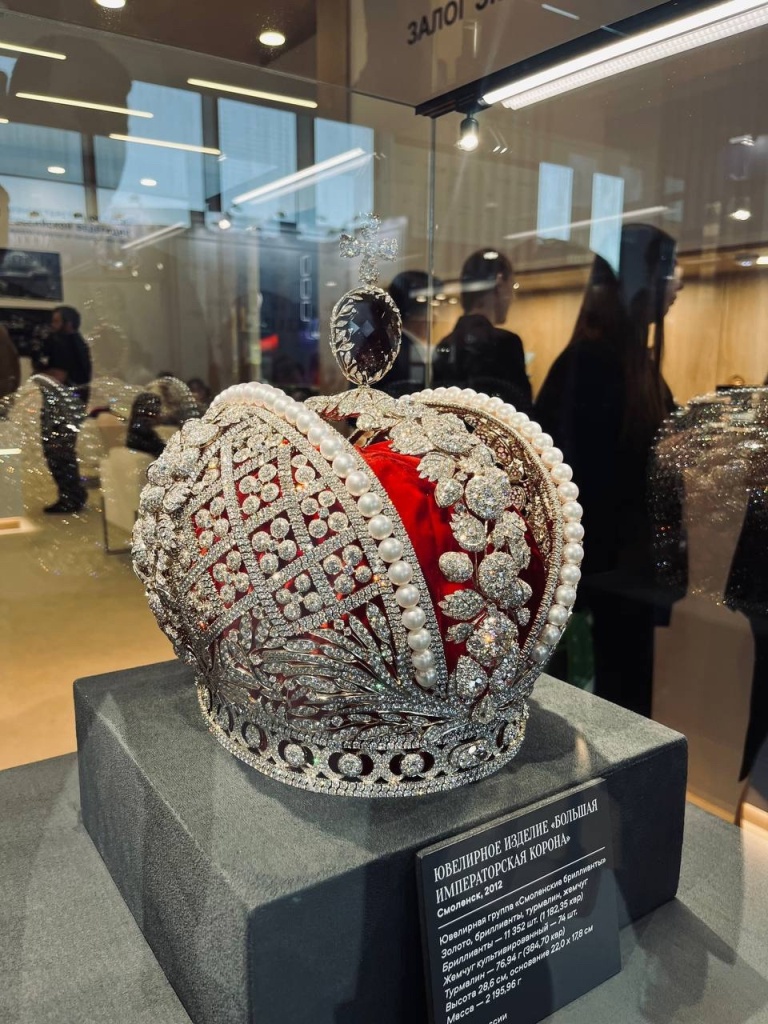
PHOTOS: two views of the replica of the Great Imperial Crown of the Russian Empire, recreated in 2012
More than 60 Smolensk craftsmen worked on the creation of a replica of the Great Imperial Crown for six months. It is made of white gold, encrusted with more than 11,000 diamonds of perfect cut and the highest quality. The sparkle of diamonds is accentuated by the matte brilliance of 74 natural large white sea pearls. Instead of spinel, the product contains a unique natural rubellite weighing almost 384 carats.
The creation and presentation of the Great Imperial Crown in a modern interpretation is a great opportunity to demonstrate the leading world position of the jewellery art of Russia. And two memorable historical dates were excellent occasions – 250 years since the coronation of Empress Catherine the Great (1762) and the four hundredth anniversary of the Romanov dynasty (1613).
CLICK on the image above to watch a short 2-minute VIDEO
This author has viewed both the original Great Imperial Crown of the Russian Empire in the Diamond Fund of the Moscow Kremlin, and the replica, which was on display in The Mint, located in the SS Peter and Paul Fortress, St. Petersburg. Both are exquisite works of jewellery art in their right.
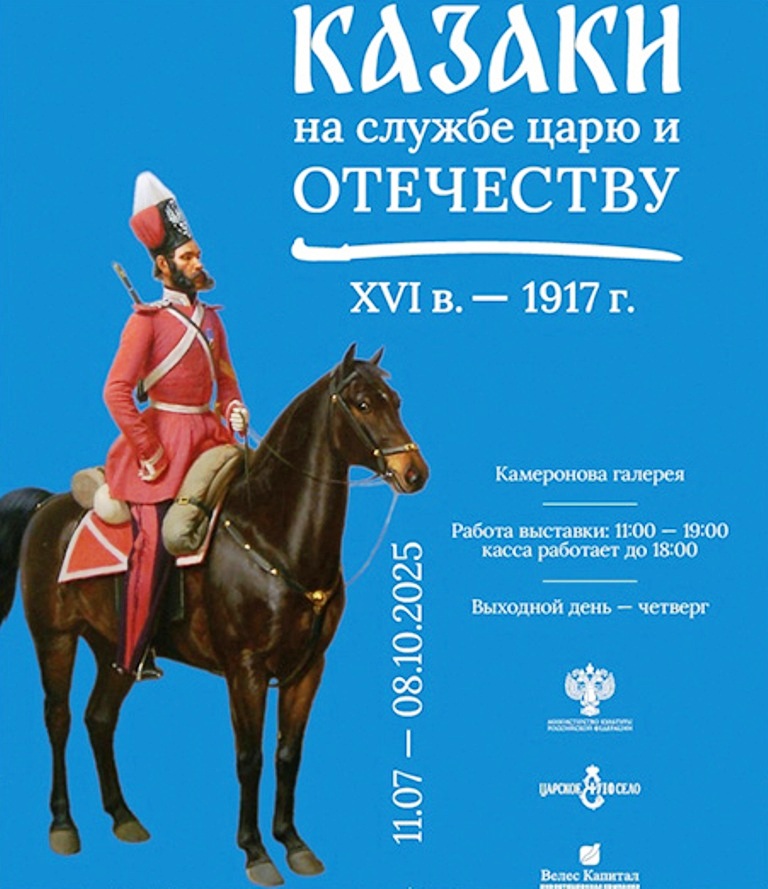
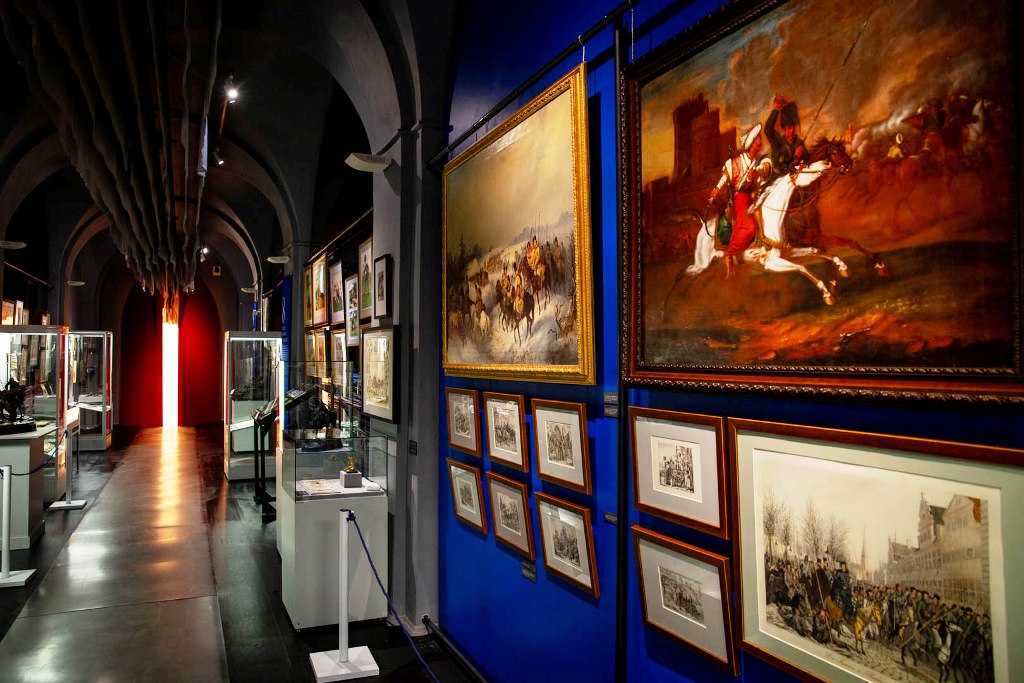
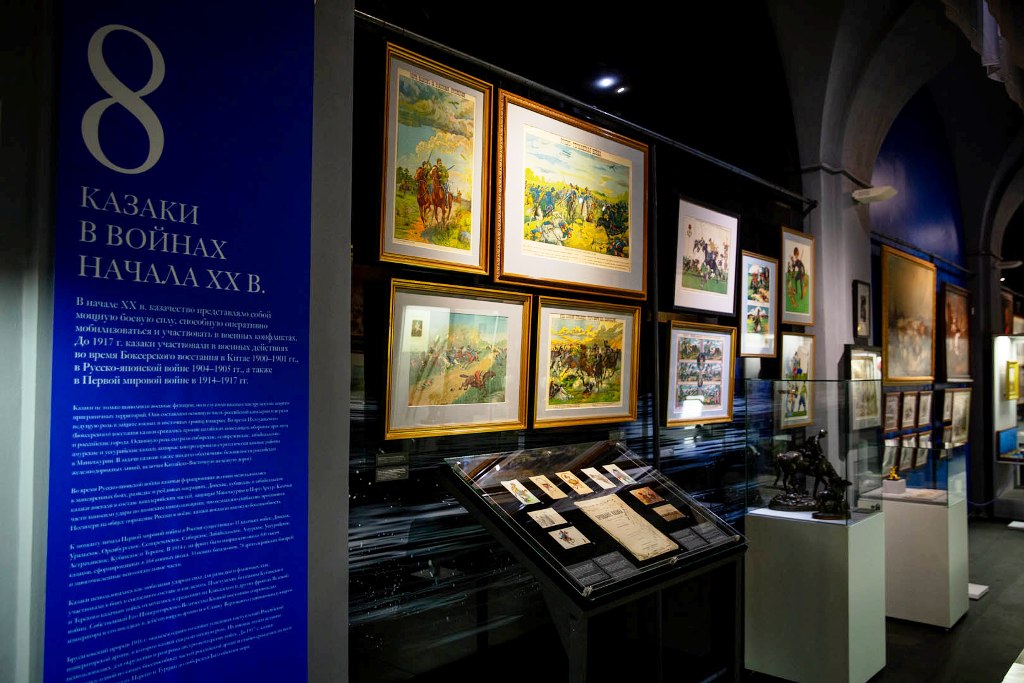
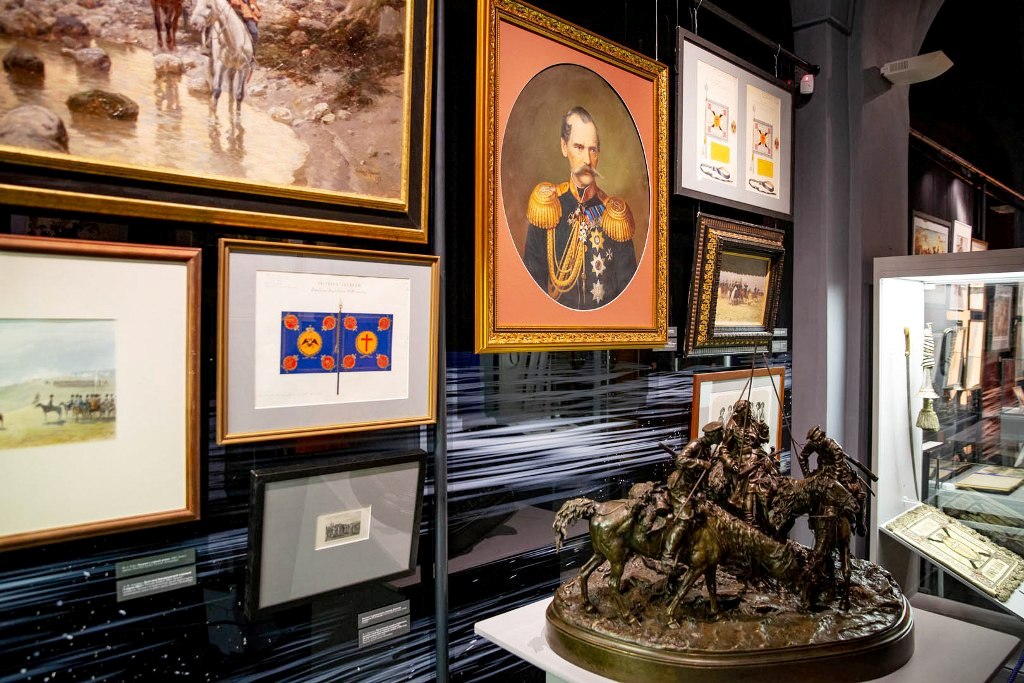
On 11th July 2025, the exhibition “Cossacks in the Service of the Tsar and the Fatherland. 16th Century – 1917” opened in the Cameron Gallery, which is adjacent to the Catherine Palace at Tsarskoye Selo.
The large-scale exhibition brings together more than 800 items from the collections of 13 museums and archives, as well as six private collections. Their geography covers almost all of Russia: Moscow, St. Petersburg, Gatchina, Novocherkassk, Ekaterinburg, Orenburg, Khabarovsk. Cossack troops and their units were stationed here for hundreds of years. Many of the items featured are being exhibited for the very first time.
Visitors will learn about the origin of the life of the Cossacks during peacetime, their uniforms, equipment, the weapons and regalia of the Cossack troops, the Cossack guards, the august atamans and military leaders, the Cossacks at the Imperial Court, as well as the participation of the Cossacks during the wars of the 18th – early 20th centuries.
“We have been preparing this exhibition for more than two years. It is symbolic that it opens in the year of the 250th anniversary of the formation of the Don and Chuguev court convoy Cossacks, who were stationed in Tsarskoye Selo, served the Empress Catherine II and became the basis for the creation of the Life Guards Cossack Regiment, which guarded the Imperial Family until 1917,” said Dmitry Klochkov, head of the military-historical department of the Tsarskoye Selo State Museum.
“The history of the Cossacks is a separate, unique world, inextricably linked with the fate of Russia. The service of the Cossacks covers several centuries, and at all times they stood on the most dangerous borders of the country. We hope that the exhibition will become not only a cultural, but also an educational event that will awaken interest in the history and exploits of the defenders of the Fatherland,” said Alexei Gnedovsky, CEO of VELES Capital, philanthropist.
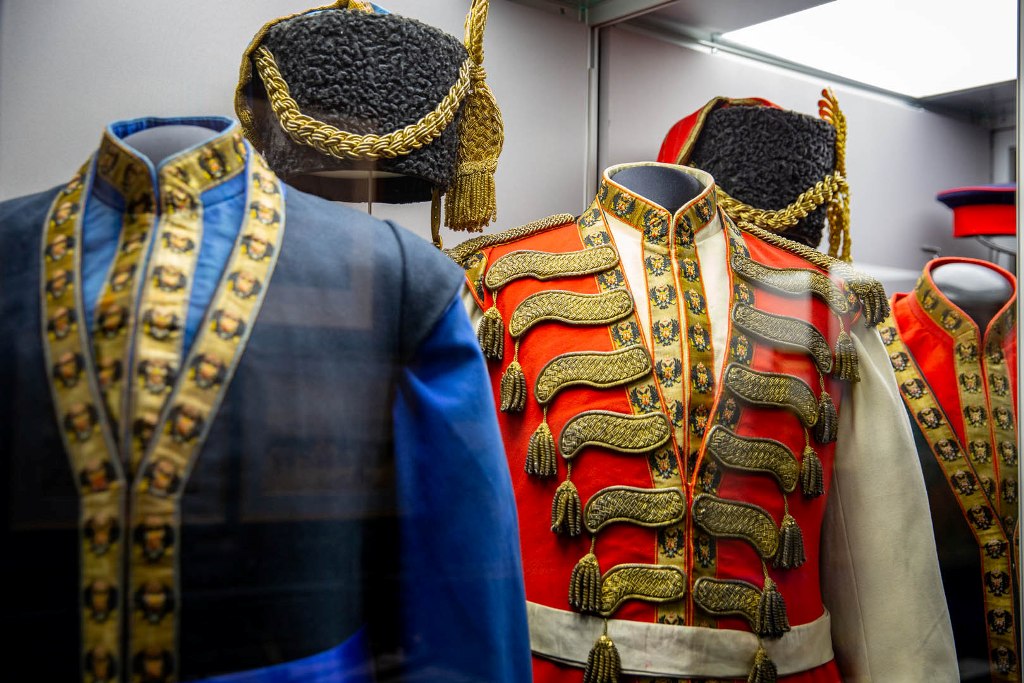
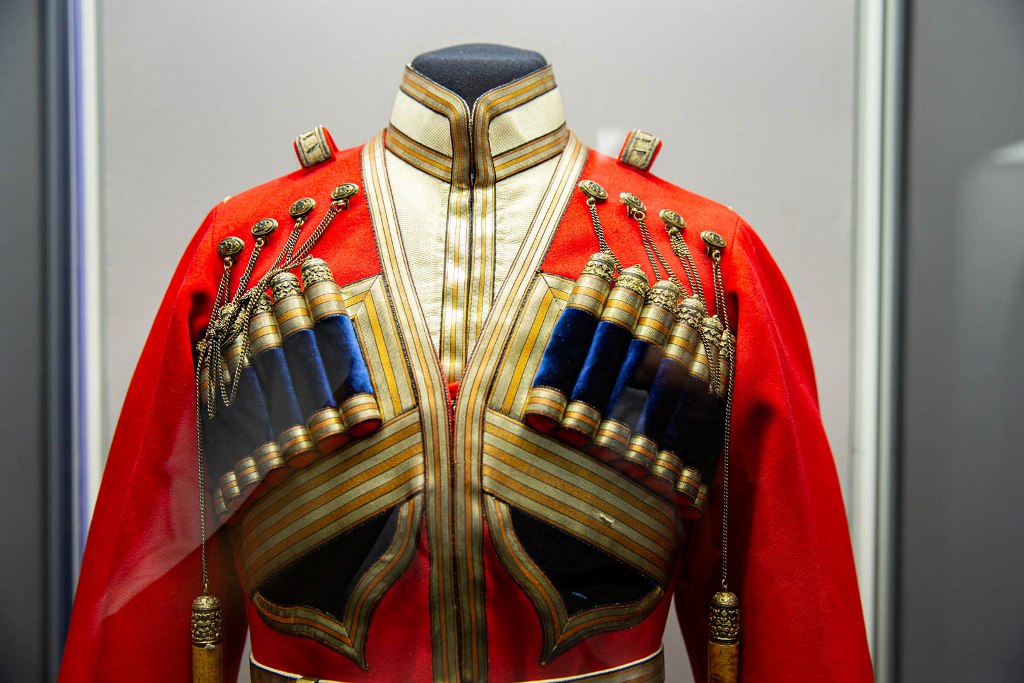
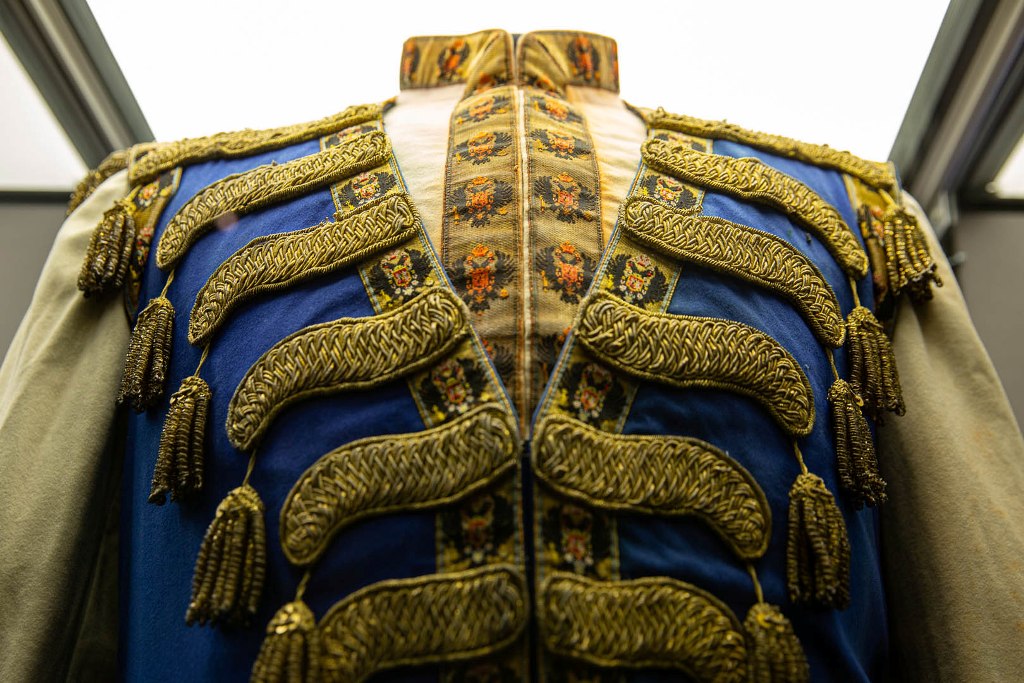
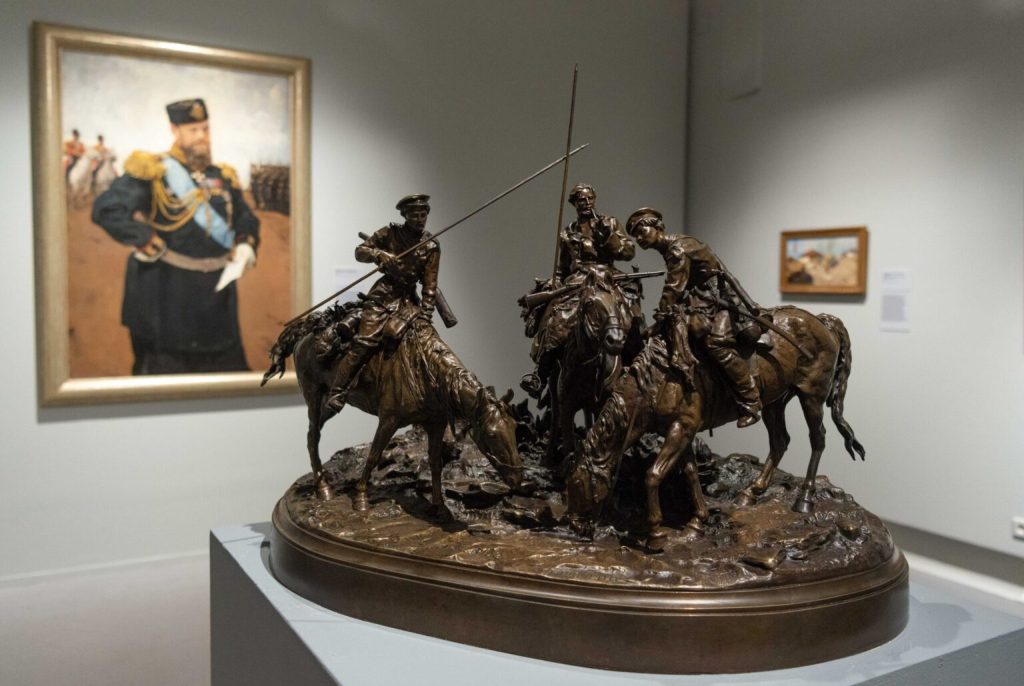
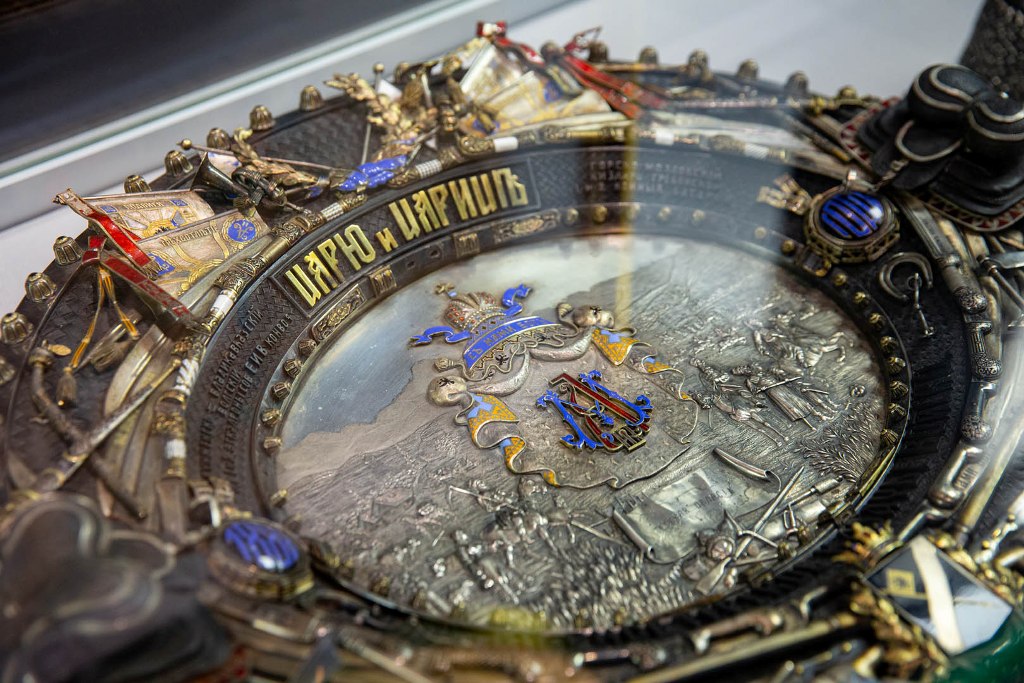
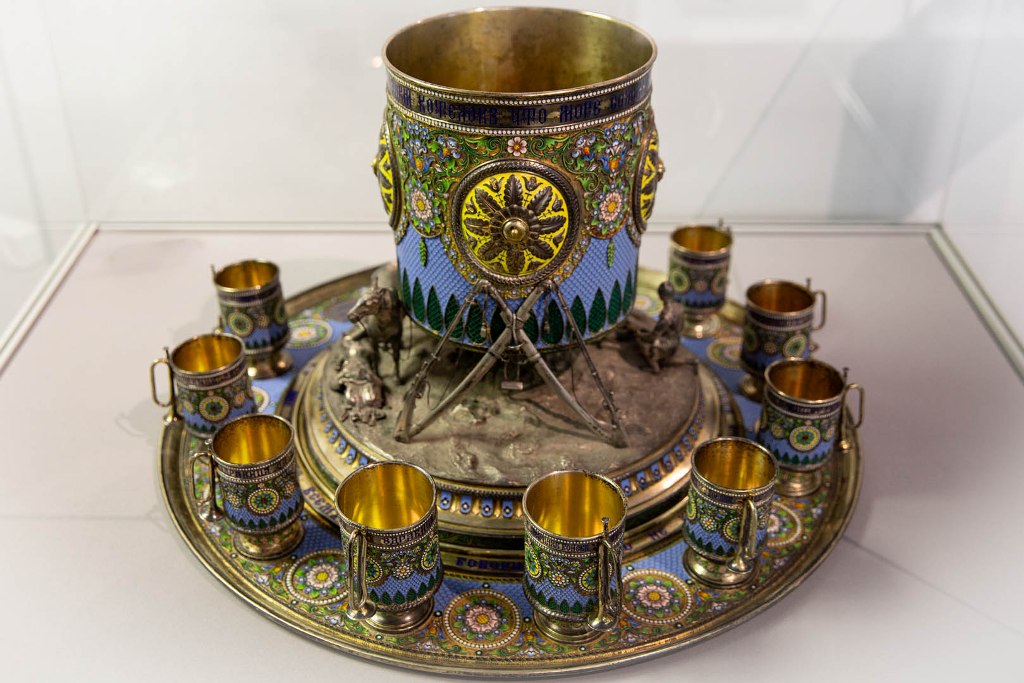
Among the exhibits are Cossack weapons (sabers, daggers, pikes and even cannons), exquisite uniforms, equipment, regalia (badges, banners, and maces, St. George trumpets, award weapons, bratins, prize cups), household items and costumes of Cossack wives, sculptures, paintings, drawings, engravings, lithographs, printed graphics, personal belongings and rare photographs. The events of the First World War on the Caucasian front are demonstrated by a large model-diorama “Plastuns in the Trebizond Operation in the Spring of 1916” specially created for the exhibition.
The exhibition tells about the participation of the Cossacks in the annexation of Siberia. This subject is widely known thanks to Vasily Surikov’s 1895 painting “The Conquest of Siberia by Yermak” – sketches for the famous canvas from the collection of the State Russian Museum (St. Petersburg) are featured in the exhibition.
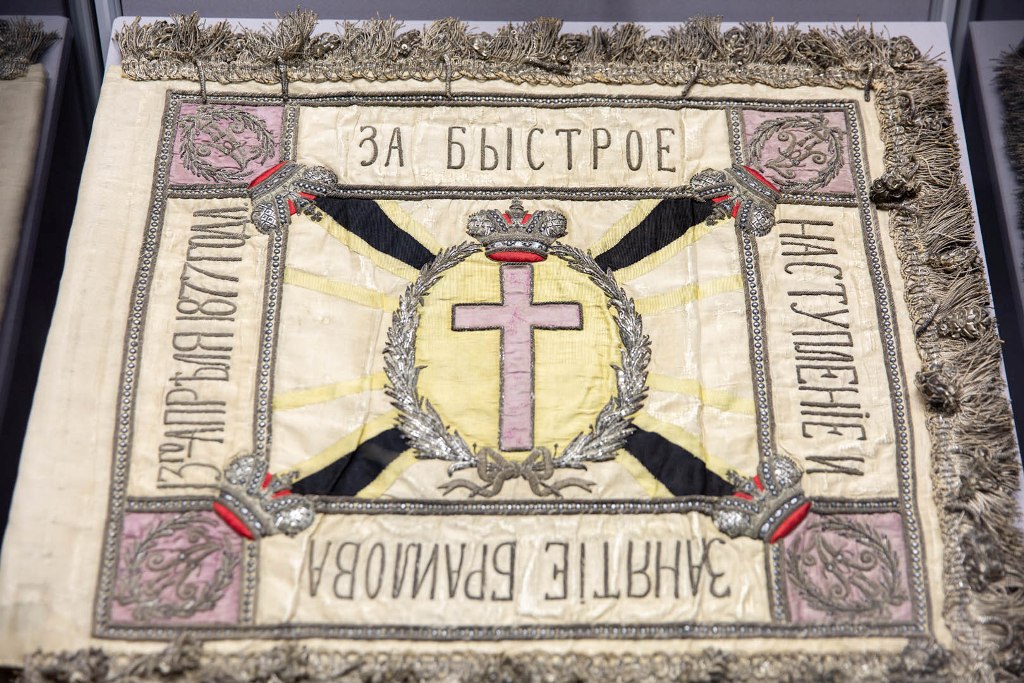
Among the rare exhibits are a rifle that belonged to the ataman of the Azov Cossack Army Osip (Yosip) Mikhailovich Gladky (c. 1789-1866) from the collection of the Military Historical Museum of Artillery, Engineers and Signal Corps (St. Petersburg); granted kovshs (ladles) of the 18th century for Cossack atamans and noble Cossacks, sabers granted from emperors and empresses from the collection of the State Historical Museum (Moscow); children’s Cossack toys from the collection of the Russian Museum of Ethnography (St. Petersburg); uniforms of the last ataman of all Cossack troops, Tsesarevich Alexei Nikolaevich, from the collection of the Tsarskoye Selo State Museum. One of the priceless relics is the jubilee banner with the Alexander ribbon of the 7th Orenburg Cossack Regiment from the collection of the State Hermitage Museum (St. Petersburg).
The exhibition “Cossacks in the Service of the Tsar and the Fatherland. 16th Century – 1917” runs until 8th October 2025 in the Cameron Gallery, which is adjacent to the Cather Palace at Tsarskoye Selo.

 Nicholas II
You must be logged in to post a comment.