Restoration of interiors of the Imperial Railway Pavilion at Tsarskoye Selo

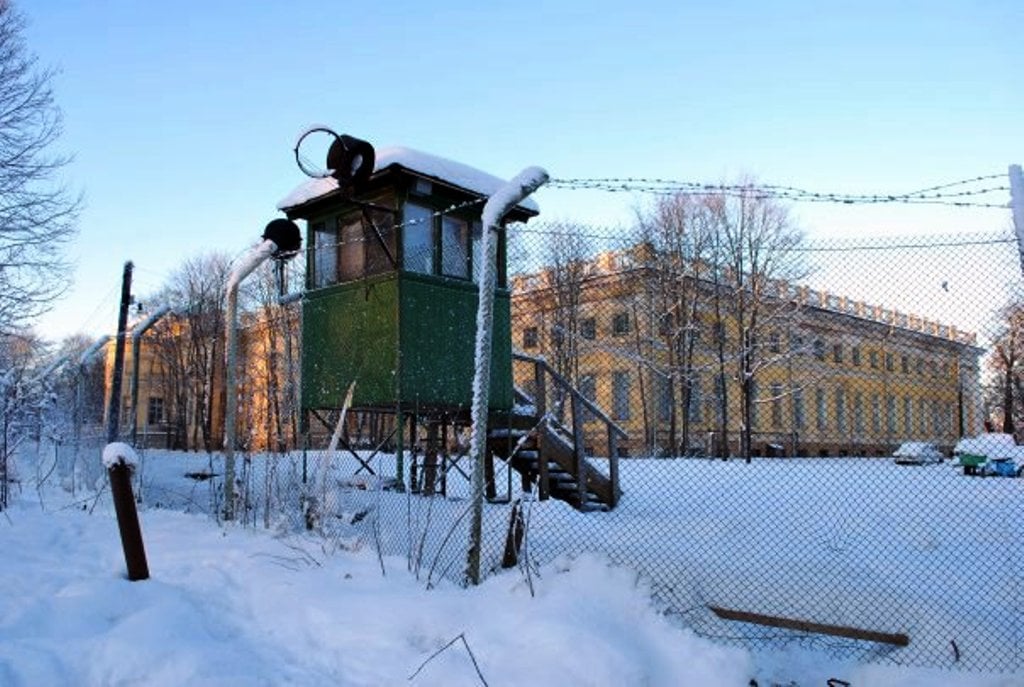
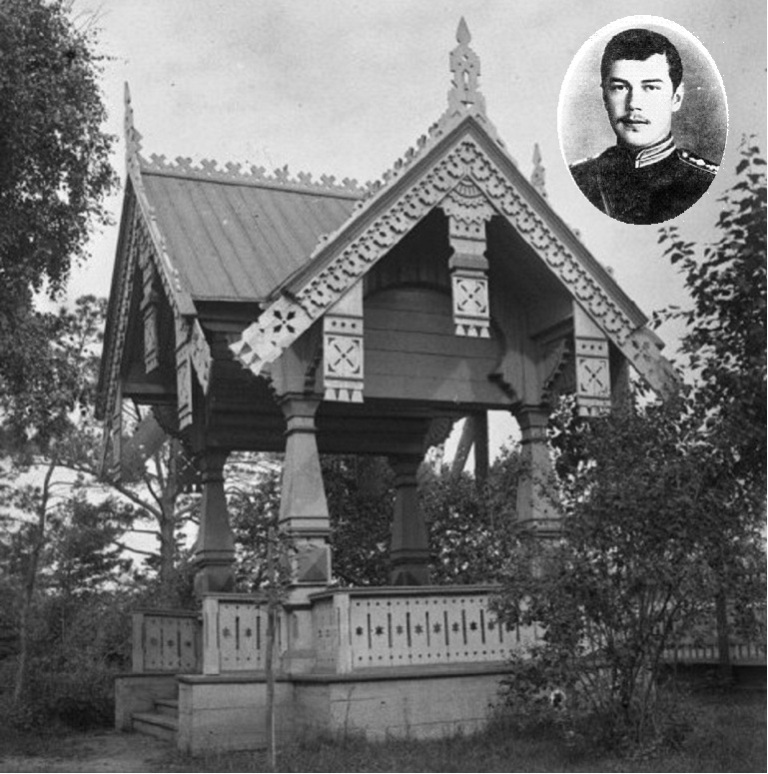
PHOTO: the Imperial Railway Pavilion is currently covered with a false building cover

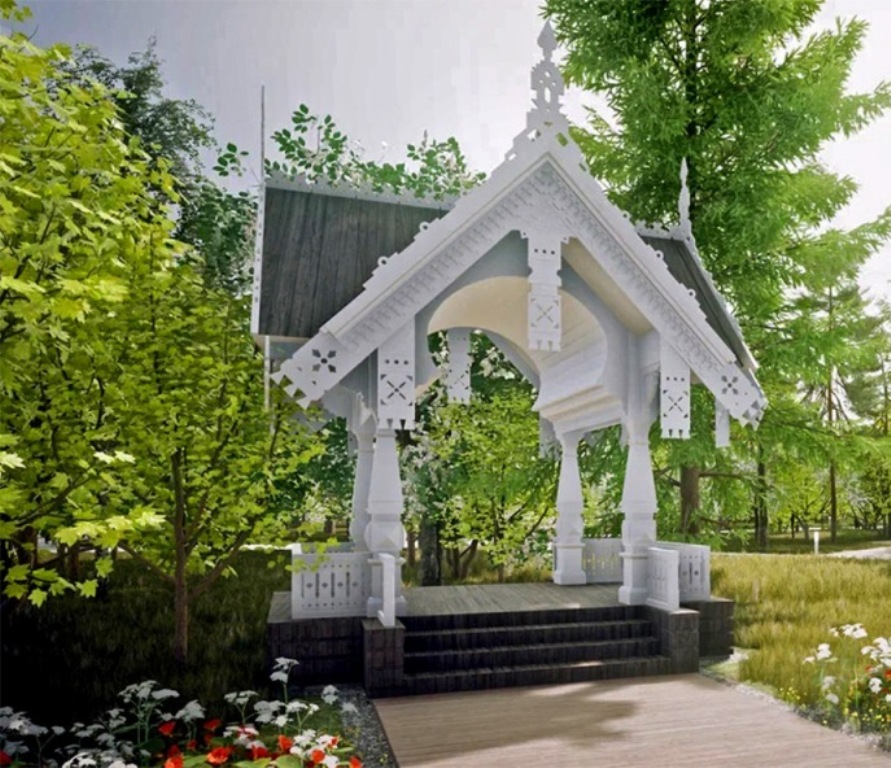
The Imperial Railway Pavilion at Tsarskoye Selo is currently covered with a temporary false building cover, but inside, great progress is being made on the restoration of the building’s interiors to their historic original.

Recall that in the summer of 2023, work began on the restoration of the Imperial Railway Pavilion to it’s historic original, under the direction of  the Tsarskoye Selo Station Foundation.

Earlier this year the Contractor, Heritage-Project Restoration Workshop LLC, received permission from the Committee on State Use and Protection of Historical and Cultural Monuments of St. Petersburg to carry out work at the Imperial Train Pavilion’s interiors.

The richly decorated interiors were originally stylized as chambers with heavy stone vaults. The decoration of the facades and interiors corresponded to the grand presentation of the station, being an example of a synthesis of architecture, monumental painting and decorative art, which successfully combined the forms of ancient Russian architecture of the 17th century. The imperial chambers of the pavilion were painted by the artist M. I. Kurilko, reflecting the chambers of the beloved suburban palace of Tsar Alexei Mikhailovich.

According to restorers, many of the building’s original details have surprisingly been well preserved. The historical painting of the dome of the main entrance to the Tsar’s Station has been miraculously preserved – a photograph shows an area which had been cleaned, revealing the colourful painting underneath. Early 20th century watercolours, drawings and photographs of the interiors – which have been preserved in archives – will be of great assistance to artists in their efforts to restore the once beautiful interiors to their historic original.

Once the restoration is completed, the building were serve as a mutli-purpose museum. There are plans to use the Imperial Pavilion for other purposes, including a Wedding Palace. In addition, the façade of the building, it’s rich interiors and painted vaults will be offered as an ideal place for celebrations and photo shoots.

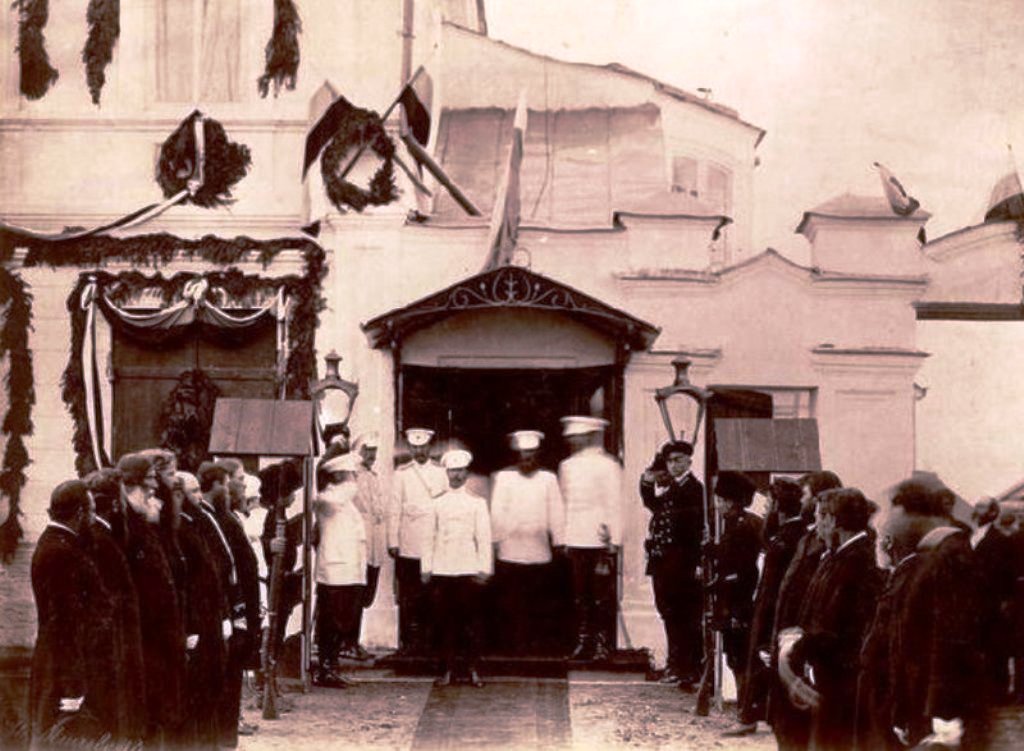
As you can see from the photos below, great orogress is being made on the restoration of the interiors, the goal being to restore them to their historic appearance.

PHOTOS © Tsarskoye Selo Station Foundation

PHOTOS © Tsarskoye Selo Station Foundation

PHOTOS © Tsarskoye Selo Station Foundation

FURTHER READING:

This author has been closely following the progress of this project since August 2023. Below are my articles which provide details on the restoration of this historic building, the Imperial Train of the last Russian Emperor, among others . . . .

Reconstruction of the Imperial Pavilion in Tsarskoye Selo – features 9 photos

Imperial Railway Pavilion in Tsarskoye Selo is being restored – features 13 photos of the initial restoration work

Update on the restoration of the Imperial Railway Pavilion at Tsarskoye Selo

Artist concept of Imperial Railway Pavilion restoration project at Tsarskoye Selo – features VIDEO

The sad state of the Imperial Railway Pavilion at Tsarskoye Selo – features 20 photos!

Imperial Railway Pavilions during the reign of Nicholas II

The fate of Nicholas II’s Imperial Train – features 8 historic photos

© Paul Gilbert. 5 November 2025

Carpet from Governor’s Mansion in Tobolsk preserved in the United States

PHOTO: view of the Drawing Room in the Governor’s Mansion in Tobolsk, where the carpet can be seen in the lower left-hand corner of the photo. 1917-18

The Museum of Russian Culture in San Francisco, has a valuable historic relic related to the Tobolsk exile of Nicholas II and his family, from August 1917 to April 1918.

In October 1973, doctor Anatoly Pavlovich Timofievich (1886-1975), who was living at the Novo-Diveevo Monastery in New York at the time, wrote to the Museum that, with the blessing of Archbishop Andrei (Rymarenko), he would like to donate for preservation a large carpet from the Governor’s Mansion in Tobolsk.

The carpet was in the Drawing Room, where a chapel was recreated, consisting of of a folding iconostasis and an altar. It was in this room, that the Imperial Family prayed during their house arrest in Tobolsk. The carpet was given to Timofievich by the sister of Nicholas II – Grand Duchess Xenia Alexandrovna (1875-1960), but how the carpet came into Xenia’s possession remains a mystery.

Timofievich sent a photograph of the Drawing Room in the Governor’s House, in which part of this carpet is visible. The photo was taken in 1917-18 by Pierre Gilliard, French tutor of the heir to Tsesarevich Alexei, and published in his memoirs Thirteen Years at the Russian Court in 1921.

PHOTO: carpet from Tobolsk on display Museum of Russian Culture in San Francisco

Another photo of the carpet in Tobolsk was a great stroke of luck – from a book by Charles Sydney Gibbes, the August children’s English tutor. This photo shows the Christmas service in the house chapel in the Drawing Room of the Governor’s Mansion. In the lower left, part of the carpet can be seen – see photo above. It is known that the service was conducted by the rector of the Church of the Annunciation in Tobolsk, Archpriest Alexei Pavlovich Vasiliev (1865-1929), Christmas, December 1917.

On 8th November 1973, the carpet was sent to Nikolai Aleksandrovich Slobodchikov (1911-1991), chairman of the Museum of Russian Culture in San Francisco.

It was not until 2015, that the carpet was discovered in the museum’s vast archive. The carpet was identified, restored and put on display in the Museum of Russian Culture in San Francisco.

In 2018 – the year marking the 100th anniversary of the death and martyrdom of Russia’s last Tsar and his family – the Museum of the Family of Emperor Nicholas II opened in the former Governor’s Mansion in Tobolsk.

In July of the same year, employees of the Museum of Russian Culture in San Francisco and employees of the Museum of the Royal Family took place in Tobolsk.

NOTE: if you have any additional facts or information about this relic, please contact me by e-mail: royalrussia@yahoo.com

© Paul Gilbert. 4 November 2025

Buy / Sell paintings by Grand Duchess Olga Alexandrovna

Grand Duchess Olga Alexandrovna (1882-1960) is famous for her lovely still life and landscapes in water-colours. During her lifetime, she produced over 2,000 paintings. The sale of these paintings provided a source of income for her and her family during their years in exile, in Denmark and later Canada.

Her works are now in the private collections of HM Queen Elizabeth II, HRH the Duke of Edinburgh, HM King Harald of Norway, the Ballerup Museum, Denmark, as well as private collections in the United States, Canada, and Europe. Today, her paintings are highly sought after by private collectors, each one fetching a handsome sum at auction – averaging any where from $3,000 to $5,000 USD and more.

PHOTOS: These are just two examples of Grand Duchess Olga’s
paintings, which I have found buyers in recent years

Over the years, I have been approached on numerous occasions by people, who owned one of Olga’s paintings – each one with an interesting provenance – that they were interested in selling. I was able to find these sellers a buyer, through the thousands of people who have followed and supported my research all these many years.

I currently have buyers who are actively seeking Grand Duchess Olga’s paintings. All sales are private, all seller/buyer information is confidential + there are no outrageous commissions paid out to dealers – some of whom charge 20 to 35% or more!

Please note that if you have a painting to sell, I do charge a finders fee, paid by the seller. Payment for the painting is processed between the buyer and seller. The seller is responsible for packing and shipping the painting on each painting. The buyer is responsible for shipping charges, insurance, as well as any taxes, customs duties, and tariffs.

If you own a painting by Grand Duchess Olga, and are seeking a buyer, please contact me at the following e-mail address with details and photos of the painting:

PAUL GILBERT – royalrussia@yahoo.com

© Paul Gilbert. 2 November 2025

Emperor Nicholas II on Facebook

CLICK HERE to be redirected to my Nicholas II Facebook page

In April 2016, I launched a Facebook page dedicated to the life and reign of Emperor Nicholas II, which do not appear on this blog. In addition are posts about his family, the Romanov Dynasty and the history of Imperial Russia.

Each day, I create up to a dozen new posts, featuring news – translated into English from Russian archival and media sources – plus, contemporary and vintage photos – to date, there are more than 5,000 colour and black & white photos on my Nicholas II Facebook page!

In addition are videos and newsreels, as well as new book announcements, new monuments, portraits, and exhibitions in Russia, which are not covered in English social media and news outlets.

I currently have 5,000 Facebook friends – the maximum that FB will allow – plus, an additional 4,500+ followers, from all over the world. Friends are allowed to comment on posts and engage in discussions with others. My FB page has become a perfect “watering hole” for those of us who share an interest in Russia’s last Tsar, his family, the Romanov dynasty, and the history of Imperial Russia.

Please note, that as I have already reached the maximum number of friends that Facebook will allow me, you can still become a “FOLLOWER” of my FB page.

Simply CLICK on the LINK above, which will redirect you to my FB page, whereupon you CLICK on the FOLLOW button. This will ensure that you receive instant updates on all new posts, however, you will not be able to comment on them. You always have the option to send a FRIEND REQUEST at a later date.

Please join me today, in celecrating the life, reign and
era of Russia’s last Emperor and Tsar! remains concise

CLICK HERE to be redirected to my Nicholas II Facebook page

© Paul Gilbert. 1 November 2025

Grand Duke Mikhail Alexandrovich – the Perm Period (1918)

PHOTO: poster for the exhibition Grand Duke Mikhail Alexandrovich. The Perm Period

After years of planning, a permanent historical and archival exhibition dedicated to the fate of Grand Duke Mikhail Alexandrovich, his faithful secretary Nicholas Johnson[1] and the tragic events of June 1918[2], has opened in the building of the former Korolev Rooms Hotel in Perm.

The first of the Romanovs to fall at the hands of the Bolsheviks was Grand Duke Mikhail Alexandrovich, the younger brother of Emperor Nicholas II. His fate is inextricably linked with Perm, where he spent the last months of his life – from March to June 1918 – and subsequently murdered[2].

The historical and archival exhibition Grand Duke Mikhail Alexandrovich: The Perm Period is designed to shed light on this episode in early 20th century Russian history. This exhibition is not just a collection of documents and photographs, but instead, takes a hard look into the drama of a man who finds himself in the epicenter of a historical hurricane.

The exhibition is unique in its reliance on authentic archival documents, many of which are exhibited for the first time. It debunks myths and restores a chronology of events based on documented facts. Visitors have the opportunity to learn, not only about the fate of the Grand Duke, but also to understand the atmosphere of that time, the motives of the characters and the fatal chain of events that led to his murder. For Perm, this exhibition is of particular importance, as it reveals one of the darkest and most significant pages in the history of the city.

The choice of the place for the exhibition was selected not accidental – the venue is situatedd in the building of the former Korolev Rooms Hotel[3], where the Grand Duke passed the last few weeks of his life.

PHOTO: view of one of the halls showcasing the exhibition Grand Duke Mikhail Alexandrovich. The Perm Period

The creation of the permanent exhibition is the first step towards a museum dedicated to Grand Duke Mikhail Alexandrovich. The project is a monumental effort which has united historians, archivists, local historians, museum workers, members of the Russian Orthodox Church, public figures and supported by local and regional government authorities.

For the first time, visitors to the exhibition will have the opportunity to gain access to the former Korolev Rooms Hotel, where they can view a large number of unique documents and photographs, and see a replica of the military uniform worn by the Grand Duke during his service as Commander in the Caucasian Native Cavalry Division.

Visitors can also watch a unique archival newsreel depicting Grand Duke Mikhail Alexandrovich, see 3D models of the signs of charitable societies of which he was a trustee, as well as hear audio recordings of the memories of participants and eyewitnesses of the events of June 1918.

The exhibition is a joint project of the Foundation for the Revival of the Elisabeth-Sergius Educational Society Foundation (ESPO), the Perm State Archive of Social and Political History, the Perm Museum of Local Lore, and the Central Exhibition Hall of Perm.

PHOTO: entrance to the exhibition in the former Korolev Rooms Hotel, where from May 1918, Grand Duke Mikhail Alexandrovich and his faithful secretary Nicholas Johnson, were held under house arrest.

The historical and archival exhibition Grand Duke Mikhail Alexandrovich: Perm Period is much more than a collection of old papers and photographs. This is a powerful and poignant reminder of the human tragedy that unfolded against the backdrop of global historical cataclysms. It allows visitors to not only learn the facts about the final days of Grand Duke Mikhail Alexandrovich, but to feel and to breathe the era, its cruelty and uncertainty.

NOTES:

[1] Despite his British-sounding first and last names, Nicholas Nikolaevich Johnson (1878-1918) was actually Russian, he was born in St. Petersburg and baptized in the Russian Orthodox faith. He served as Grand Duke Mikhail Alexandrovich’s private secretary from December 1912.

[2] On the night of 12/13 June 1918, Grand Duke Mikhail Alexandrovich, together with his secretary Nikolai Johnson, were taken to a forest outside Perm, and murdered by the leader of the local secret police, Gavril Myasnikov, with the connivance of other local Bolsheviks. Their remains have never been found. In 1981, Grand Duke Michael and Nicholas Johnson were canonized as New-Martyrs of Russia by the Russian Orthodox Church Outside Russia (ROCOR).

[3] In 1998, a memorial plaque to Grand Duke Mikhail Alexandrovich was installed on the façade of the former Korolev Rooms Hotel in Perm.

FURTHER READING:

Search for Grand Duke Mikhail Alexandrovich’s remains resumes near Perm + PHOTOS

The myth that Grand Duke Mikhail Alexandrovich was Russia’s last Tsar

© Paul Gilbert. 31 October 2025

***

MISHA: GRAND DUKE MICHAEL ALEXANDROVICH
Compiled and Edited by Paul Gilbert

Paperback edition. 136 pages + 50 black & white photographs

CLICK HERE TO ORDER PAPERBACK EDITION

Grand Duke Michael Alexandrovich (1878-1918) was the youngest son of Emperor Alexander III and Empress Maria Feodorovna, and the younger brother of Russia’s last emperor Nicholas II.

This book explores the milestones in the life of Grand Duke Michael in a series of essays by four distinct authors, and complemented with 50 black and white photographs.

Among them are the memories of Princess Olga Pavlovna Putyatina, who in February 1917, offered refuge to the grand duke at her flat on Millionnaya Street in Petrograd.

Independent researcher Paul Gilbert offers two fascinating essays: the first reviews an album of some 200 photographs taken by Grand Duke Michael, during his stay at Knebworth House in Hertfordshire. England, 1913-1914 . The album sold at auction for more than 2 million rubles ($34,000 USD).

The final essay examines the myth that Michael was the last Tsar of Russia, he was not. Nicholas II remained Emperor and Tsar of Russia until the day of his death and martyrdom on 17th July 1918.

Grand Duke Mikhail Alexandrovich and his Secretary Nikolai Nikolaevich Johnson, were both murdered by the Bolsheviks near Perm on 13 June 1918. Their remains have never been found.

Imperial Family photo-exhibition opens in Vyselki

NOTE: click on the above image to enlarge and see in greater detail

On 22nd October 2025, the photo-exhibition ‘The Tsar’s Family. Love and Mercy‘, opened in the Church of St. Nicholas the Wonderworker in the village of Vyselki, Krasnodar Territory.

The exhibition is showcased in the central alley of the Church, where large photographs of Emperor Nicholas II and his family are displayed on the walls. The exhibition is FREE to all.

The exhibit tells the story of the Nicholas II’s family, who unselfishly served others during the First World War and the traditions of nursing in Russia at the turn of the 19th – early 20th centuries.

Recall that when World War I broke out, Empress Alexandra Feodorovna and her two eldest daughters Grand Duchesses Olga and Tatiana became Red Cross nurses. Together, from 1914 to 1917, they cared for wounded soldiers in a private hospital on the grounds of Tsarskoye Selo, until the family were placed under house arrest, following the Tsar’s abdication 15th March (O.S. 2nd March) 1917.

PHOTO: 3rd grade students of school No. 2 in Vyselki together with their teacher visit the photo-exhibition ‘The Tsar’s Family. Love and Mercy’

The exhibition has already been visited by 3rd grade students of school No. 2 in Vyselki together with their teacher Irina Fostenko.

The children listened with interest to the story told by Father Alexander about the service of the Imperial Family to the Fatherland, and about Nicholas II’s family, helping soldiers, the poor and the sick during the war years.

The photo project The Tsar’s Family: Love and Mercy was created in 2016 by the Sretensky Monastery in Moscow. The travelling exhibition has already been presented in Serbia, Germany, Italy, Canada, Argentina, New Zealand, South Africa, Romania, Croatia, Montenegro, Bosnia and Herzegovina, Macedonia, and the Czech Republic.

***

*As I have noted in previous posts, I support any initiative – big or small – to help keep the memory of Nicholas II and his family alive in 21st century Russia – PG

© Paul Gilbert. 30 October 2025

Empress Alexandra Feodorovna’s photo album sells for 13 million rubles at auction

On 15th October 2025, I reported that a rare photo album belonging to Empress Alexandra Feodorovna (1872-1918) was being auctioned on 23rd October 2025, at the Literary Fund Auction House (Litfond) in St. Petersburg.

The opening bid for the album was 10 million rubles [$125,600 USD], but collectors bidding against one another, managed to drive the price even higher. The photo album sold for 13 million rubles [$163,000 USD], to an unknown Russian bidder.

The lilac-coloured album includes 12 pages with 26 photographs of the Imperial Family taken by the Empress herself, using her Kodak Brownie Box camera. The photos were taken in 1913-1914 in the Crimea and Tsarskoye Selo.  The size of the album is 24.5×20 cm, the photographs are from 8.5×5.3 to 11.8×9.3 cm. All the photos were personally pasted into the album by Alexandra Feodorovna and Emperor Nicholas II.

This album is one of only two of the Imperial Family’s photo albums, known to the author of this article, that was not included in the state archival funds. The other photo album belonging to Emperor Nicholas II in the Museum of Local Lore in Zlatoust, which is situated 270 kilometers (168 mi) south of Ekaterinburg. 

On a personal note, I am happy that the photo album was purchased by a Russian buyer, rather than sold abroad to a foreign collector. Let us hope, that the album will be gifted to a museum – preferably the Alexander Palace, from where it was taken in August 1917, when the Imperial Family were sent into exile.

FURTHER READING:

Photo album belonging to Russia’s last Empress to be auctioned in St. Petersburg + PHOTOS

© Paul Gilbert. 29 October 2025

Why are so few Russian language books on the Romanovs not available in English?

Earlier this month, a new book Персидский дневник. 1917–1918 / Persian Diary. 1917–1918, was published in Russia. The 688-page, Russian language title presents the diaries of Grand Duke Dmitri Pavlovich (1891-1942), who was exiled to Persia as punishment for his involvement in the murder of Grigorii Rasputin in November 1916. Ironically, the Tsar’s punishment, actually saved Dmitri from sharing the same fate as that of many of his relatives.

The publication of Grand Duke Dmitri Pavlovich’s Persian diaries, is just the latest in a plethora of books about Nicholas II, the Romanovs and Imperial Russia, which Russian publishers have issued over the past 30+ years. These titles are prominently displayed in bookshops, such as Dom Knigi (House of Books) in Mosocw and St. Petersburg. Sadly, none of these books will ever be translated into English.

These include biographies and studies, collections of letters, diaries, exhibition catalogues and high-quality coffee table books, many of them richly illustrated with vintage black and white or full colour photographs.

Since the fall of the Soviet Union in 1991, the publication of books on the Romanovs by Russian publishers has resulted in hundreds of new titles. These books are based primarily on research made by a new generation of Russian historian, who now have access to the Romanov Archives, which were sealed during the Soviet years.

But, why are none of these books translated into English? Well, there are currently two main reasons, that I will address in this post . . . .

Foreign rights and translation costs

First, and probably most importantly, are the translation and production costs, but also a limited readership in the West. Despite the success of Robert K. Massie‘s classic bestseller Nicholas and Alexandra in 1967, books on the Romanov’s has a very limited audience in the West, particularly with books on the more obscure members of the Imperial Family.

In the first few decades after the murder of Russia’s last Tsar in 1918, Western publishers were anxious to publish the first English-lanaguage translations, written by members of the Imperial Family, their retinue, and others, who escaped Bolshevik Russia. These days, however, are long gone, I am afraid.

The publishing world has changed dramatically over the past few decades. Having worked in the publishing industry in both Canada and the UK, for many years, I have been witness to these changes, and the interest and demand for books on the Romanov’s and Imperial Russia. During my years in the industry, I have seen many of the old traditional publishing houses fold, or swallowed up by competitors.

Academic publishing houses, i.e. university presses, publish new titles on the Romanov’s and Imperial Russia, especially historical, social and political studies during the era of Emperor Nicholas II, during the late 19th to early 20th centuries. These titles, usually have limited print runs of several hundred or several thousand copies, which is one of the reasons why, they are so expensive to purchase.

If we are to see any of the books (seen on this page) ever published in English, it is going to take one of the larger, more established publishing houses, such as Weidenfeld & Nicolson (UK) – who translated and published A Lifelong Passion (1996), to step up to the plate, and take the risk of offering the small, but demanding readership, who are hungry for anything new on the subject’s.

Probably the number one reason is simply the translation costs involved, the diaries and letters in particular. First of all, the author would have to receive an advance, then legal fees would have to be dispensed, then the actual translation itself – we are talking thousands of dollars. All these combined, make such projects economically prohibitive.

Given the current economic sanctions imposed by the West against Russia, there could be no financial transactions, such as royalties to the author, etc., whatsoever.

Western economic and cultural sanctions

Secondly, following Russia’s invasion of neighbouring Ukraine in February 2022, Russia was hit with sweeping sanctions from the European Union, Great Britain, the United States, Canada, Australia, among other countries. While these sanctions have had little impact on Russia’s economy, they have dealt a heavy blow to the exchange of cultural events.

These sanctions have had a devastating effect on cultural events, which we have enjoyed over the years, including ballet, opera, symphonies, exhibitions, films and even the publishing industry. At the present moment, no Western publisher would dare enter into negotiation with a Russian publisher for foreign rights and translation of a book, written by a Russian author.

In addition, the cost to import books from Russia has become more expensive, this in part is due to former President Joe Biden, who in June 2022, imposed a 35% U.S. tariff rate on certain Russian imports, which include book.

© Paul Gilbert. 20 October 2025

Vintage train from Ekaterinburg, tells the story of Nicholas II’s last days

PHOTO: a pin – depicting the image of Nicholas II
– worn by conductors on the vintage train from Ekaterinburg.

In December 2022, a vintage train journey was initiated from Ekaterinburg, which tells passengers, the story of the last days of Nicholas II and his family in the Urals. The train runs from Ekaterinburg to the Shuvakish station and back, on Friday evenings, and also on Saturday and Sunday mornings.

The locomotive (see photo below) is not from the Imperial times, but a 1963 steam engine, made in Czechoslovakia. The interiors, however, have been remodeled to resemble that of an early 20th century Russian train.

Passengers travelling on the vintage train are greeted on the platform by hospitable conductors wearing uniforms of early 20th century Imperial Russia-style, and white gloves (see photo below).

The train has four wagons: First Class, Economy Class, a dining car (see photo below) and a sightseeing car, which operates during the summer months. One compartment is decorated with framed photographs of the Imperial Family.

During the 3-hour train journey, passengers can sit back, relax and enjoy the view, while listening to an audio-guide, which tells the story of the last days of Russia’s last Tsar, his family and their four faithful retainers.

The audio begins with the Imperial Family’s train journey from Tsarskoye Selo to Tyumen, then by boat to Tobolsk, where they were held under house arrest in the former Governor’s House, from August 1917 to March 1918.

The story continues, with the transfer of the Imperial Family to Ekaterinburg, where they were held under house arrest in the Ipatiev House, from March to July 1918. The audio-guide further tells of their fate, their burial at what is today known as Ganina Yama, and the discovery of their remains, almost 100 years later on the Old Koptyaki Road.

Tea is served to passengers from a traditional samovar. Conductors bring the tea in beautiful faceted glasses in iron cup holders, on which the Double-Headed Eagle of the Russian Empire is depicted.

The train stops at Shuvakish Station (Zheleznodorozhny district), where passengers are free to disembark the train to a wooden platform, decorated with benches, a bell and a manual semaphore signal. The stop lasts a little more than an hour.

Inside the wooden pavilion, passengers can enjoy music, which includes a variety of waltzes and melodies from the repertoire of Alexander Serov.

Passengers can also try on the uniforms of the White Guards, take photos, and enjoy a cup of hot tea, bagels and local berries.

PHOTO: tea is served at Shuvakish Station

***

*As I have noted in previous posts, I support any initiative – big or small – to help keep the memory of Nicholas II and his family alive in 21st century Russia – PG

© Paul Gilbert. 19 October 2025

State visit by Elizabeth II to Russia, 17-20 October 1994

PHOTO: Queen Elizabeth II being warmly greeted by Muscovites,
during her visit to Moscow in October 1994

On 17th October 1994, Her Majesty Queen Elizabeth II of the United Kingdom of Great Britain and Northern Ireland, her husband Prince Philip, Duke of Edinburgh arrived in Moscow, marking the first and so far only visit by a reigning British monarch on Russian soil.

The only previous visit by a British monarch to Russia was made by King Edward VII in 1908. The King never stepped ashore, and met Nicholas II on royal yachts off the Baltic port of what is now Tallinn, Estonia

Queen Elizabeth II’s four-day visit to Russia, from 17th to 20th October 1994, hosted by the President of Russia, Boris Yeltsin (1931-2007), is considered one of the most important foreign trips of the Queen’s 70-yeaar reign.

PHOTO: Emperor Nicholas II and Queen Elizabeth II

Queen Elizabeth II and Tsar Nicholas II of Russia are related through their shared ancestry. Her Majesty is a first cousin twice removed to Nicholas II. This connection is a result of their marriages to each other’s relatives, with Princess Alix of Hesse and by Rhine, the future Empress Alexandra Fedorovna, Nicholas II’s wife, being the granddaughter of Queen Victoria.

The brutal murders of Emperor Nicholas II and his family in 1918, prevented royal trips from being made to Russia and the former Soviet Union. In 1967, when Prince Philip was asked if he would go to Moscow to help ease Cold War tensions, he said:

“I’d very much like to go to Russia – although the bastards murdered half my family”.

In September 1973, Prince Philip attended the European Eventing Championships in Kiev as president of the International Equestrian Federation with his daughter, Princess Anne. They became the first British royal family members to visit the Soviet Union since Nicholas II’s murder.

PHOTO: Boris Yeltsin and Queen Elizabeth II touring the Kremlin Museums in Moscow

In 1989, Mikhail Gorbachev made an official visit to the United Kingdom in which he met Queen Elizabeth II. The Queen and Gorbachev met again in July 1991 at the 17th G7 summit in London. Despite this the Queen declined an invitation by Gorbachev to visit the Soviet Union. Following the dissolution of the Soviet Union in 1991, Prince Charles visited St Petersburg in May 1994 and the Queen accepted an invitation by President Boris Yeltsin to visit the country in October 1994.

During her visit to Russia, Russian media focused on the Queen and her popularity in the United Kingdom with newspaper and television coverage of the visit continuing for several days. It was during and after her visit, that the subject of restoring the monarchy in Russia was openly discussed, Some polls showing 18% of Russians favoured a return to monarchy. In a similar poll, taken in 2019, more than 27% of Russians support the restoration of the monarchy. Following the visit, a Russian monarchist party announced that it had amassed 800,000 signatures in support of a referendum on whether a constitutional monarchy should be established in Russia.

Prince Philip said monarchy had thrived in Britain due to it being apolitical while the Tsar “was, by constitution, the autocrat.” Philip was not convinced that people in Russia would want to return to monarchy, despite the presence of monarchist parties.

It is interesting to note, that in 1998, President Boris Yeltsin had considered restoring the monarchy in Russia, but was later dissuaded from the idea.

FURTHER READING: Russia after Putin – would he restore the monarchy?

In the photo above, President Boris Yeltsin makes the official presentation of a copy of The Romanovs, Love, Power & Tragedy to Her Majesty Queen Elizabeth II in Moscow.

PHOTO: Queen Elizabeth II and Prince Philip arrive at
Vnukovo International Airport in Moscow on 17th October 1994

EVENTS

Queen Elizabeth II was greeted at Vnukovo International Airport in Moscow by First Deputy Prime Minister Oleg Soskovets and a guard of honour. Yeltsin and his wife, Naina, formally welcomed the royal couple at St. George’s Hall in the Grand Kremlin Palace, in Moscow. The royal couple stayed in the Grand Kremlin Palace – the former Moscow residence of Emperor Nicholas II – as Yeltsin’s guests. The Queen attended a performance of Giselle at the Bolshoi Ballet, sitting in the Tsar’s Box underneath the State Emblem of the Soviet Union [this has since been replaced by the Russian Double-Headed Eagle]. Her Majesty wore a tiara she had acquired herself instead of one of her tiaras she had acquired elsewhere such as the Grand Duchess Vladimir Tiara to not cause offence.

PHOTO: Queen Elizabeth II and President Boris Yeltsin in
the Tsar’s Box at the Bolshoi Theatre in Moscow

The following day, the Queen toured the Kremlin Museums and Red Square and laid a wreath at the Tomb of the Unknown Soldier near the Kremlin Wall commemorating World War II casualties. Elizabeth II met the mayor of Moscow Yury Luzhkov (1936-2019) outside of St Basil’s Cathedral and she also met His Holiness Patriarch Alexi II (1929-2008), the primate of the Russian Orthodox Church.

PHOTO: Patriarch Alexei II and Queen Elizabeth II. Moscow, 18th October 1994

Later that everning, the royal couple attended a state banquet hosted by President Boris Yeltsin. At the banquet, the Queen addressed Yeltsin and said:

You and I have spent most of our lives believing that this evening could never happen. I hope that you are as delighted as I am to be proved wrong“.

Boris Yeltsin said the visit was to Russia was the “utmost recognition that our country is on the road to democracy” and his chief spokesman Vyacheslav Kostikov said the Queen’s visit was evidence of Russia’s break with its totalitarian past. Kostikov added they were aware that the British queen would never have visited a Communist country. 

The Queen flew to St Petersburg on 19th October, where she visited the Peter and Paul Fortress and the State Hermitage Museum.

PHOTO: Queen Elizabeth II admires the gilded Coronation carriage of Empress Catherine the Great in the State Hermitage Museum, St Petersburg

Queen Elizabeth II and Prince Philip, departed Russia aboard the royal yacht, HMY Britannia on 20th October 1994.[11] Before returning to the United Kingdom, she made an official visit to Finland.

PHOTO: the royal yacht, HMY Britannia, docked
on the Neva in St Petersburg

In her 1994 Christmas Message, the Queen reflected on how times had changed, noting she “never thought it would be possible in [her] lifetime” to attend a service in St Basil’s Cathedral in Moscow Prince Philip made a solo visit to Russia in July 1995 as president of the World Wildlife Fund. In 2003, the Queen hosted President Vladimir Putin’s state visit to the United Kingdom and in 2014 they both met again during an event commemorating D-Day in France.

© Paul Gilbert. 17 October 2025