New museum dedicated to Imperial Family to open next year in Pskov region

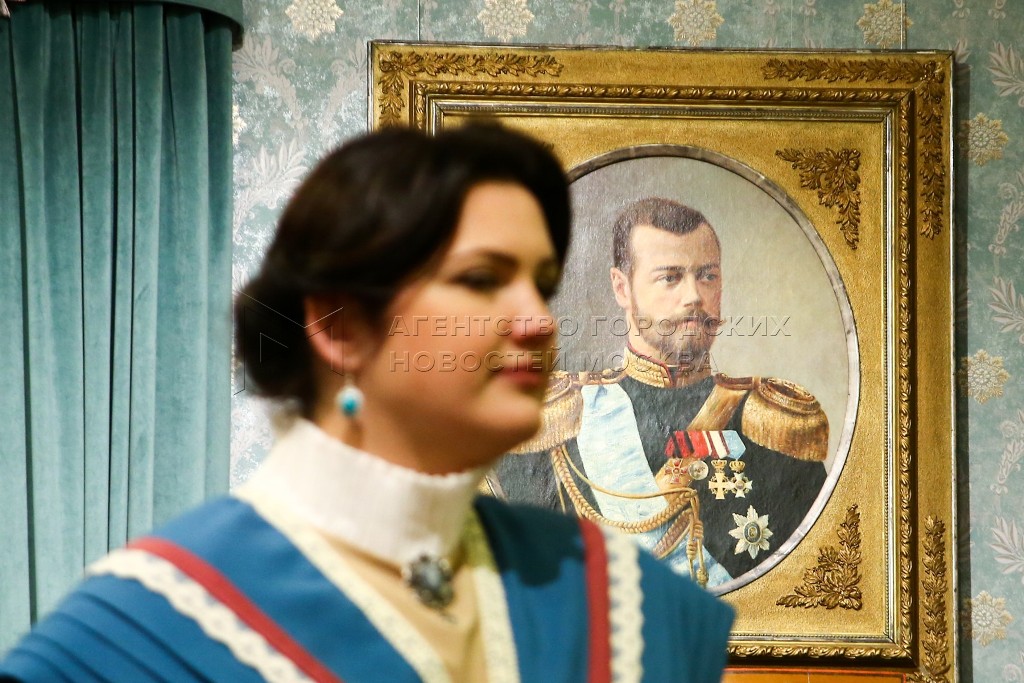
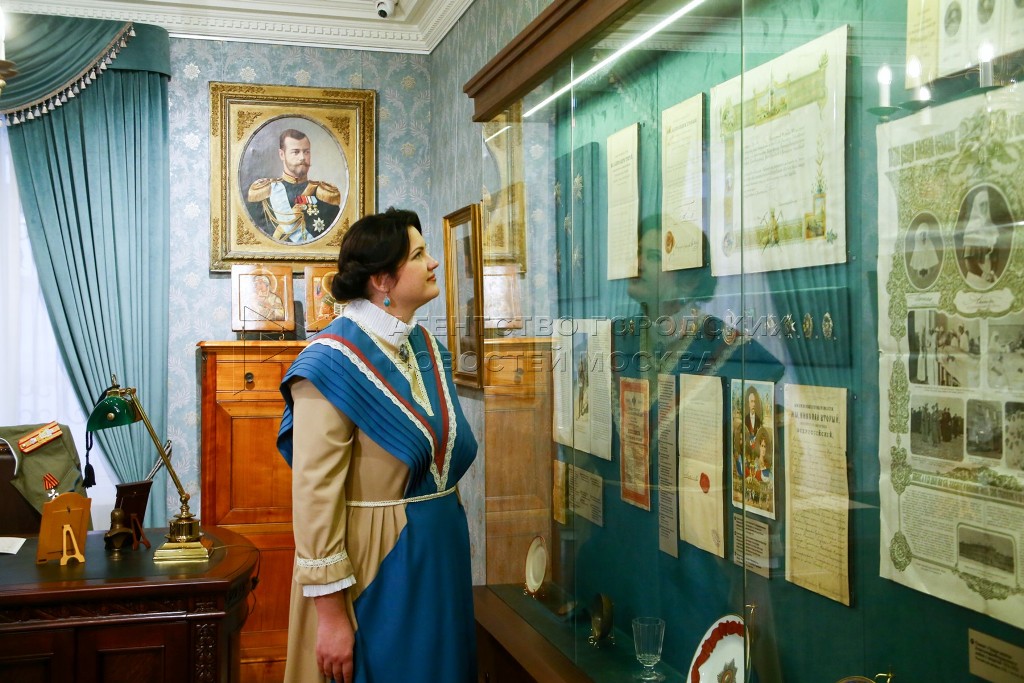
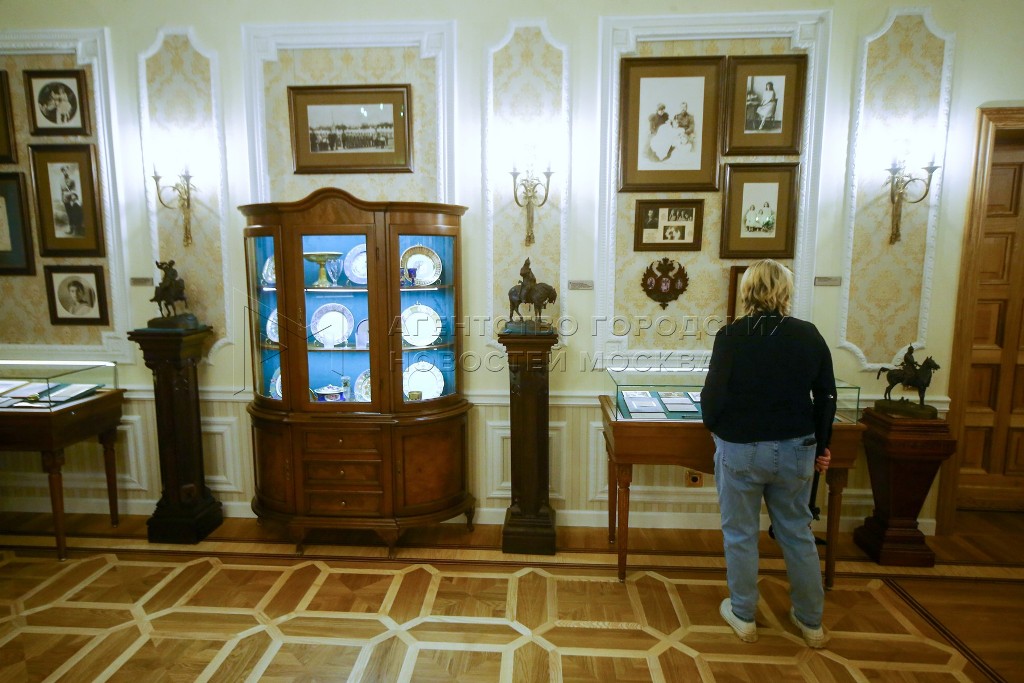
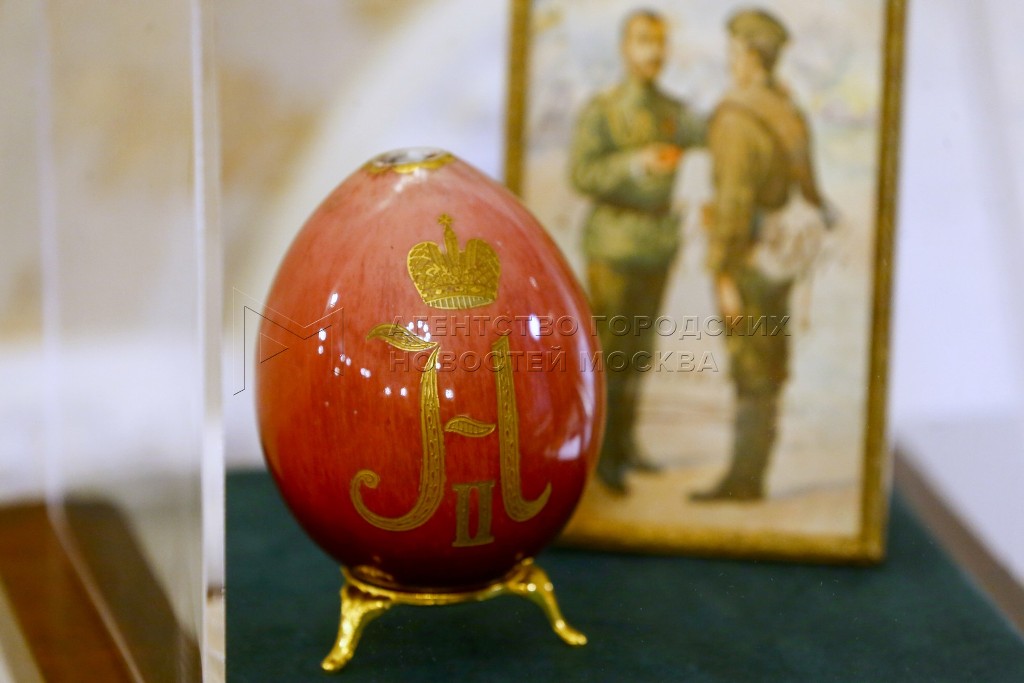
In 2024, a memorial museum dedicated to the Russian Imperial Family will open in the Church of the Holy Royal Passion-Bearers, located in the city of Dno, in the Pskov region.

Pskov has a very close connection to Russia’s last Tsar. It was in Pskov, on 15th March 1917 (O.S. 2nd March) 1917, that Emperor Nicholas II was forced to sign his abdication during an illegal coup.

The Tsar noted in his diary that the Imperial Train was forced to stop at Dno, before proceeding to Pskov. It is near this station, that the Church of the Holy Royal Passion-Bearers is being constructed. The laying of the foundation stone of the Church took place in March 2017, on the day marking the 100th anniversary when the Tsar’s train was stopped here in March 1917.

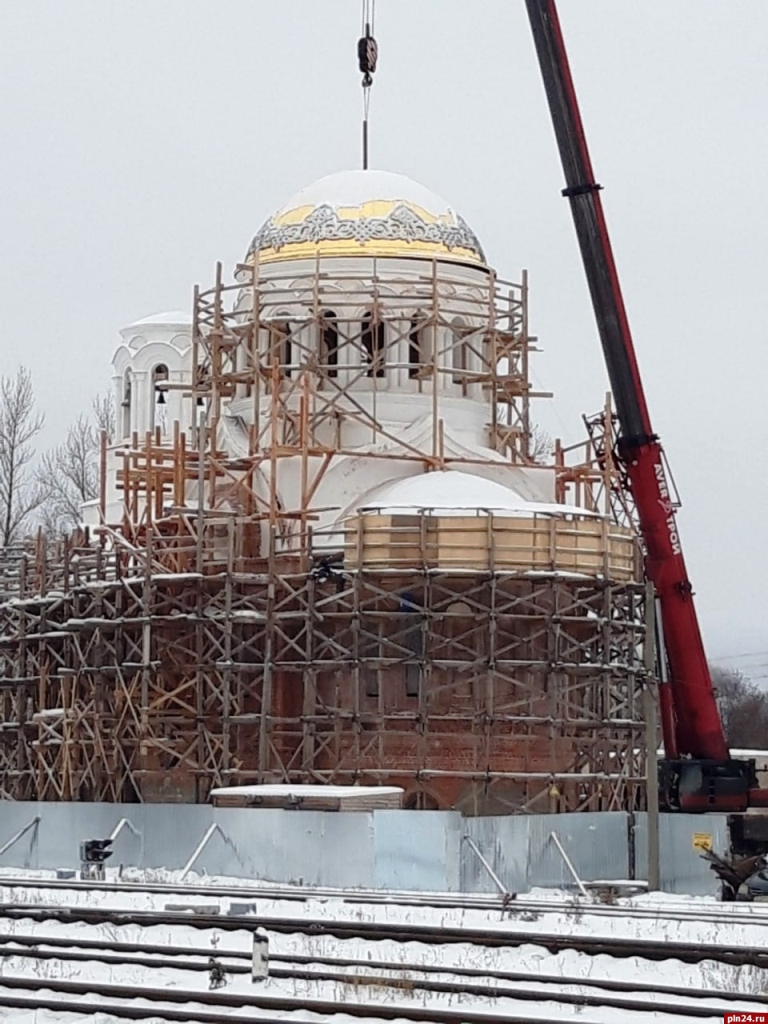
The construction of the Church of the Holy Royal Passion-Bearers began six years ago. The Imperial Family memorial museum will will be on the ground floor of the building. Glass showcases are already being decorated with exhibits.

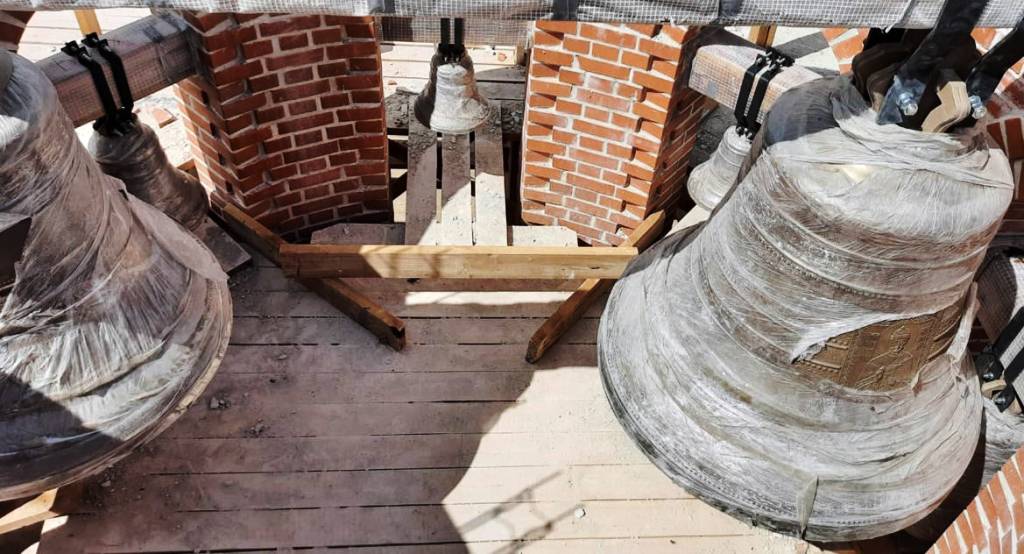
PHOTO: 10 bells were cast for the Church of the Holy Royal Passion-Bearers

On 14th July 2022, bells were raised to the bell tower of the church. They are dedicated to Emperor Nicholas II, his family and their four faithful retainers, all of whom were brutally murdered by the Ural Soviet (Bolsheviks) on the night of 16/17 July 1918.

A total of 10 bells for the Church were cast in the Urals. The largest of them weighs 1,140 kg and is dedicated to Tsar Nicholas II. On this bell there are iconographic images of the Sovereign and the Savior Almighty.

A second bell weighing 660 kg, is dedicated to Empress Alexandra Feodorovna. In addition to the image of the Empress herself, there is an image of the Reigning Icon of the Mother of God.

A third bell weighing 326 kg is dedicated to Tsesarevich Alexei Nikolaevich and his four sisters: Grand . Duchesses Olga, Tatiana, Maria and Anastasia Nikolaevna. This bell is decorated with icons depicting the Tsesarevich and the Imperial Family.

The fourth bell weighing 156 kg, dedicated to the four faithful retainers of Imperial Family: the valet Aloysius Trupp (1856-1918); the maid Anna Demidova (1878-1918); the cook Ivan Kharitonov (1872-1918); and Dr. Eugene Botkin (1865-1918).The bell includes an icon of the Righteous Passion-Bearer, Dr. Eugene Botkin.

PHOTO: Work continues on the Church of the Holy Royal Passion-Bearers

On 23rd November 2022, the consecration and installation of domes and crosses took place. With the blessing of Metropolitan Tikhon of Porkhov and Pskov, the rite of consecration was performed by Archpriest Serge Andreev, rector of the Church of the Archangel Michael in Dno. Work on the interiors of the Church continue.

The construction of the white-stone church in the city of Dno began in 2017 with the blessing of the Pskov Metropolitanate. It was timed to coincide with the 100th anniversary of the death and martyrdom of the Imperial Family.

© Paul Gilbert. 17 November 2023

The fate of Nicholas II’s elephants at Tsarskoye Selo

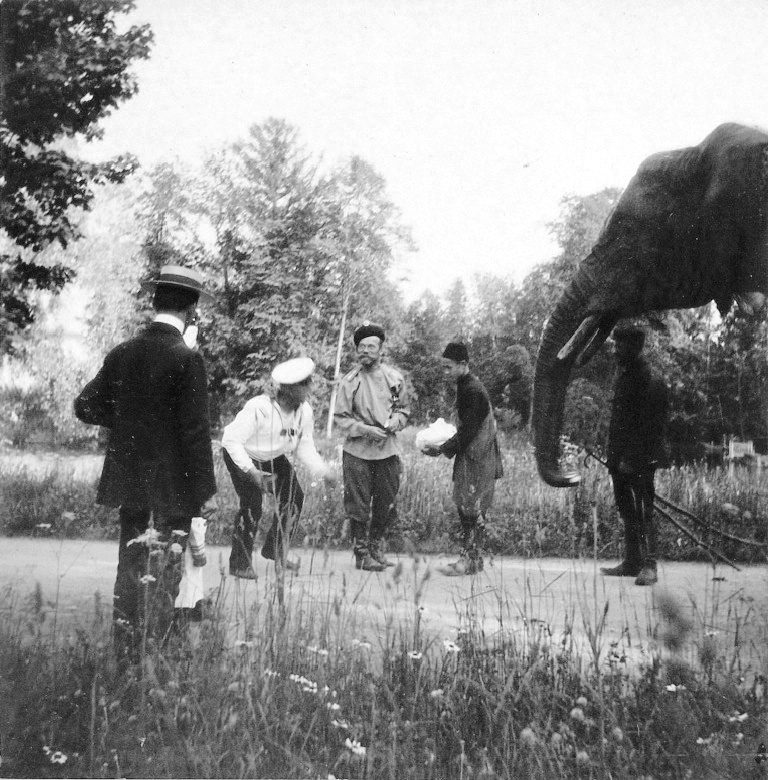
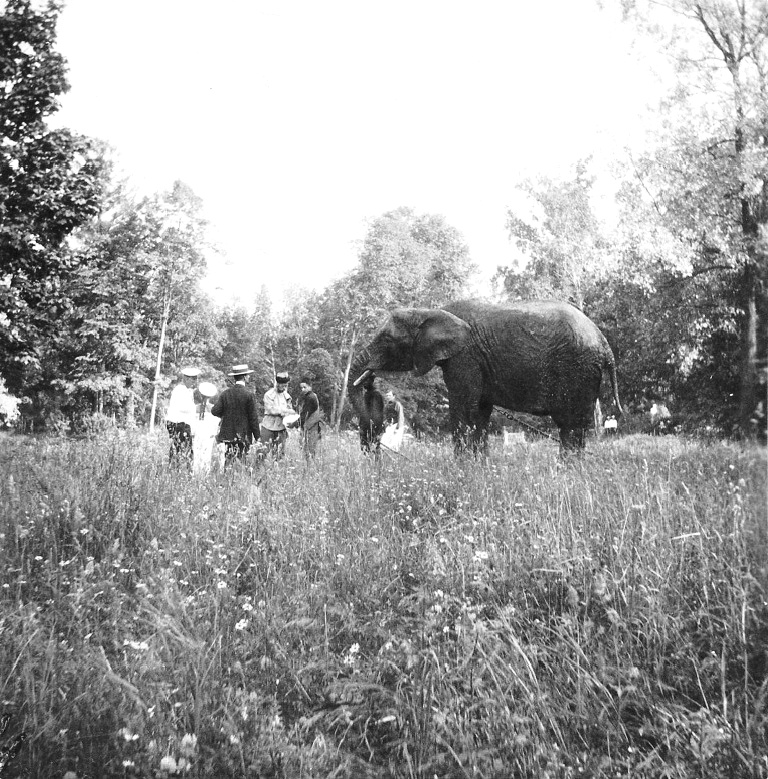
PHOTO: Emperor Nicholas II feeding his “pet” African elephant in the Alexander Park. 1914

One of the favourite pastimes of European monarchs and wealthy aristocrats were menageries, filled with exotic creatures from the four corners of the world. Among the most popular were rhinos, hippos and elephants.

Elephants in Russia during the 19th century

The first elephant was brought to Russia in 1832, and in 1839, the Emir of Bukhara presented Emperor Nicholas I (1796-1855) with another elephant and two camels, which walked from Bukhara to St. Petersburg – a journey which tookr almost a year.

The elephant was taken for a walk daily by an attendant, who noted that the elephant was a “kind and clever animal”. The Tsar’s children fed the elephant with apples and sugar, and together with the caretaker they walked him in the yard of the Elephant Pavilion. 

The elephants became a favorite animal among the Tsar’s children. Visits to see the elephants was part of the educational program for the grand dukes. The children came to feed the old elephant, and the teachers asked them to examine the animal’s teeth and feet, as part of their studies. The grand dukes fed the elephant with apples and sugar cubes and, together with the caretaker, walked it around the courtyard.

The Elephant Pavilion

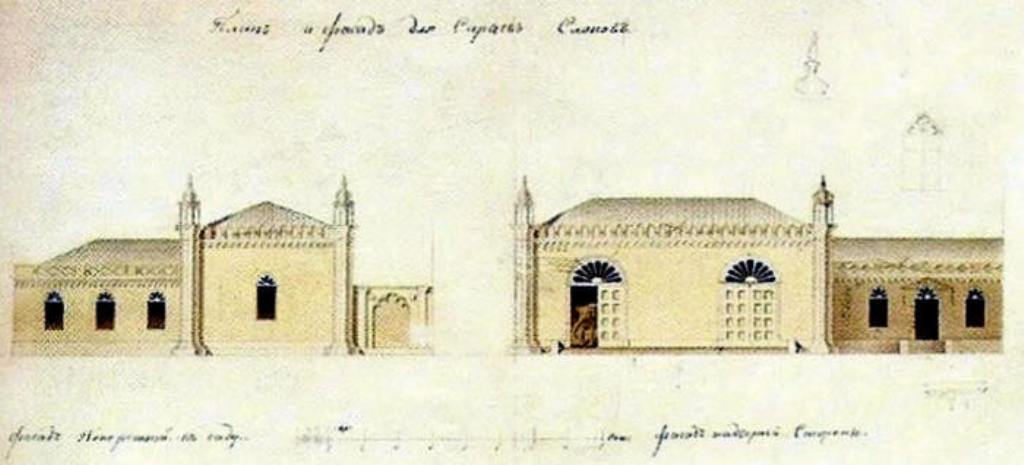
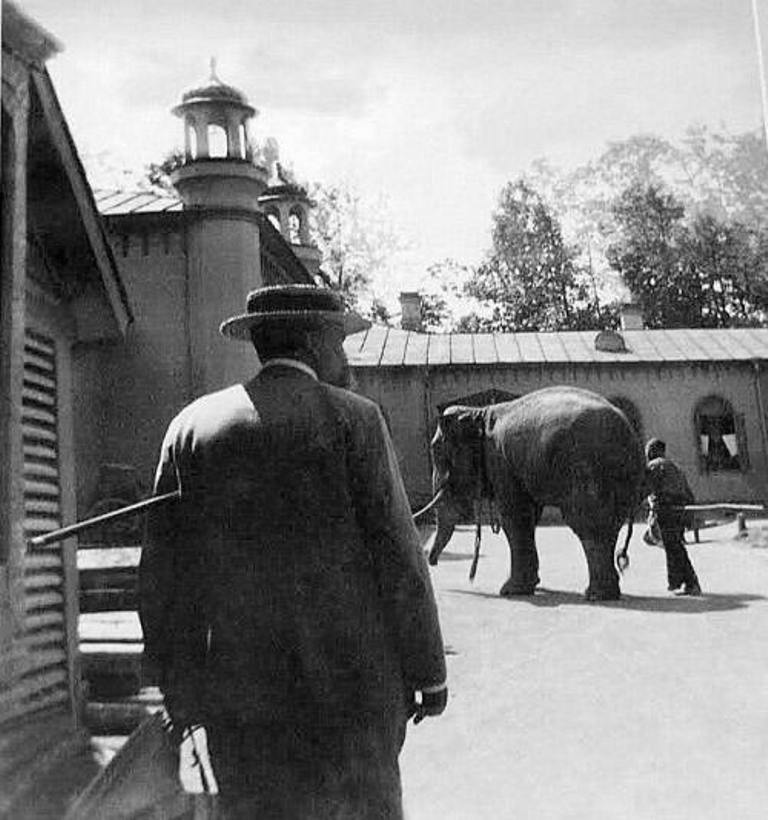
The elephants were housed in a specially made Elephant Pavilion, constructed during the reign of Emperor Nicholas I, in the far end of the Alexander Park at Tsarskoye Selo.  The wooden pavilion was constructed in 1828 in the Indian style by the Scottish architect Adam Menelaws (1753-1831). The pavilion included small intricate turrets, a large quadrangular courtyard, surrounded by a metal fence, with service buildings and sheds.

According to the caretaker, the male elephants “eats 2 pounds of tortillas fried in butter, 6 pound of hay, sugar cubes and 2 tubs of water, per day.”

In winter, the building was heated, and covered with large felt blankets, so that the elephants lived in warmth during the cold Russian winters. In the summer, they walked in the park and bathed daily in the local pond.

From 1870 to 1872, another elephant from the Emir of Bukhara was brought to Tsarskoye Selo, however, it was transferred to the St. Petersburg Zoological Garden.

PHOTO: architect’s rendering of the facade of the Elephant Pavilion. 1828 (above; early 20th century view of the courtyard of the pavilion (below)

The last Russian tsar Nicholas II kept elephants

In his 1911 study of Tsarskoye Selo, Sergei Nikolaevich Vilchkovsky (1871-1928), notes that a young elephant lived in Tsarskoye Selo in July 1891.

During his journey to the Far East in 1891-92, Nicholas Alexandrovich, while still a grand duke and tsesarevich, returned to Russia with his first Indian elephant. Five years later – in August 1896 – another elephant arrived from Abyssinia (Ethiopia).

Sadly, the Indian elephant did not live long. The harsh Russian winters and lack of proper care led to the poor animals demise in 1902. The African elephant, faired much better, he lived until 1917.

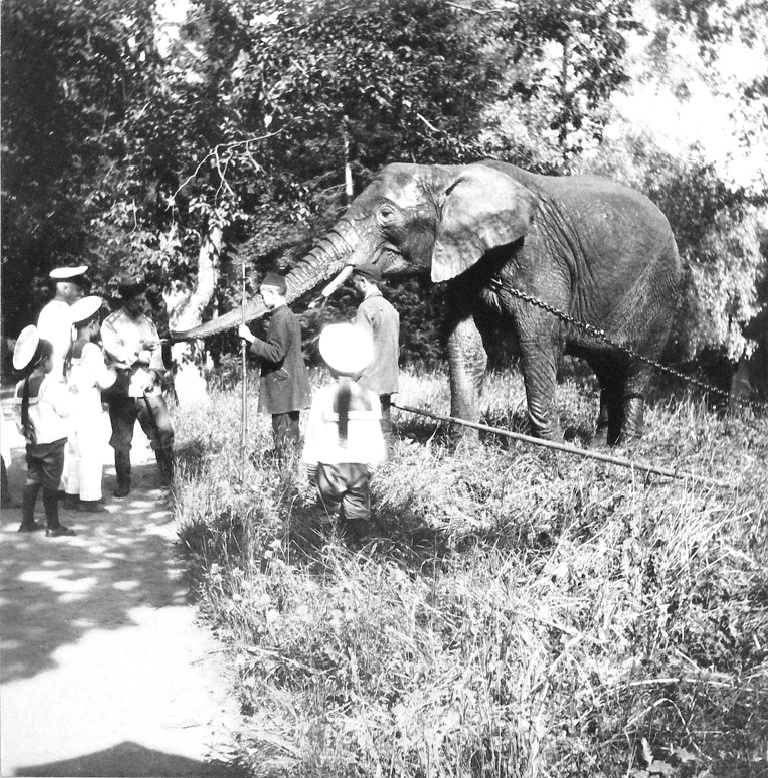
PHOTO: Tsesarevich Alexei (left) and his friends, watch as Tsar Nicholas II preparing to feed the elephant in the Alexander Park. Pierre Gilliard can be seen standing to the right. 1914

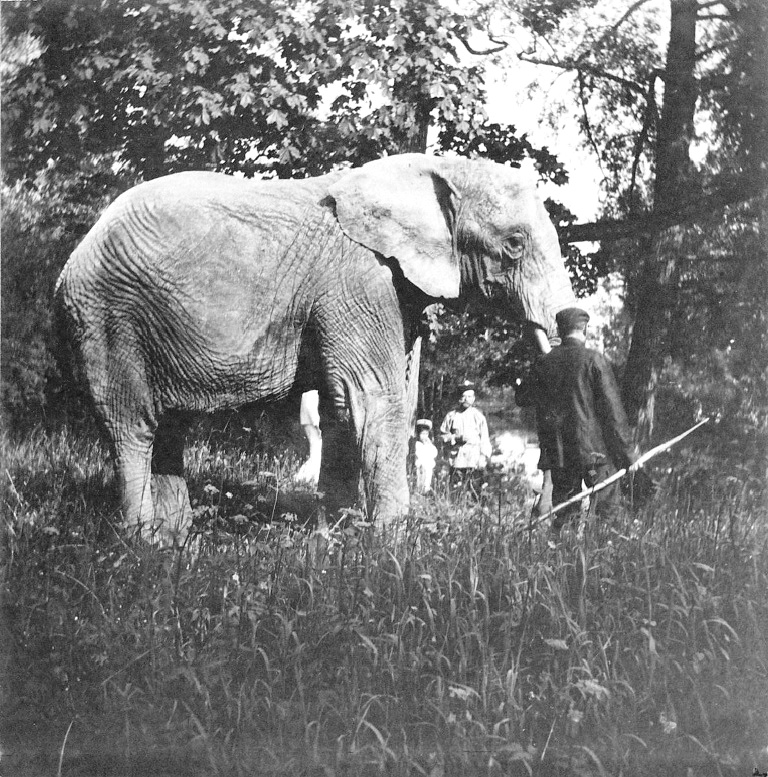
PHOTO: this photo allows us to appreciate the height of this magnificent animal. Nicholas II and his children can be seen standing in the background. 1914

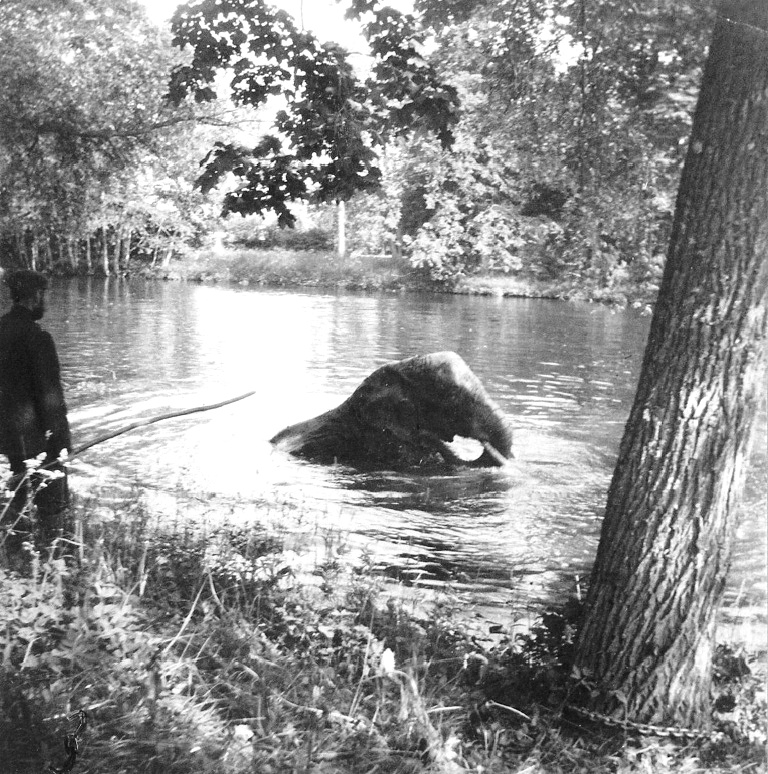
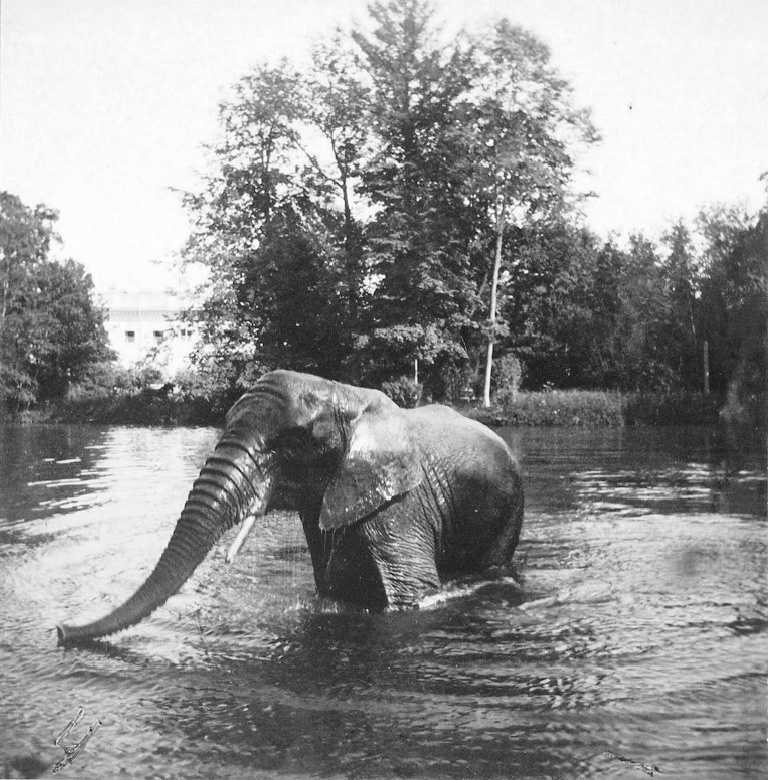
The African elephant was under the care of a Tartar – ironically called Alexei – who always wore a red fez, noted that the elephant was “good-natured and very obedient”. Every day during the summer, the Tatar walked the animal in the Alexander Park, where it was taken to a tiny lake, which was appropriately named “Elephant pond”. The elephant happily plunged into the water, taking water in his trunk, and dousing itself.

It is interesting to note that the animal was never given a name, it was simply called “Elephant”.

The Tsar and his family loved to spend time with the elephant, often bringing their friends and relatives. Nicholas II repeatedly made entries in his diary that he and his son and heir went to watch the elephant bathe. On 9th June 1914, Nicholas made the following entry in his diary: “Alexei and I brought an elephant to our pond and amused ourselves with its bathing.” Being fond of photography, the Tsar took several pictures of his elephant.

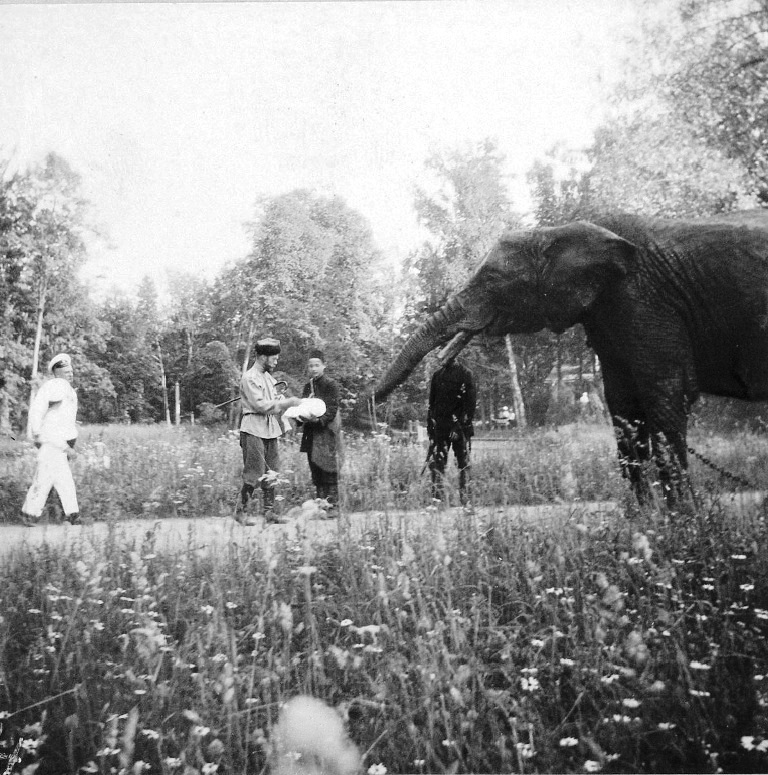
PHOTO: Emperor Nicholas II feeding his “pet” elephant in the Alexander Park. 1914

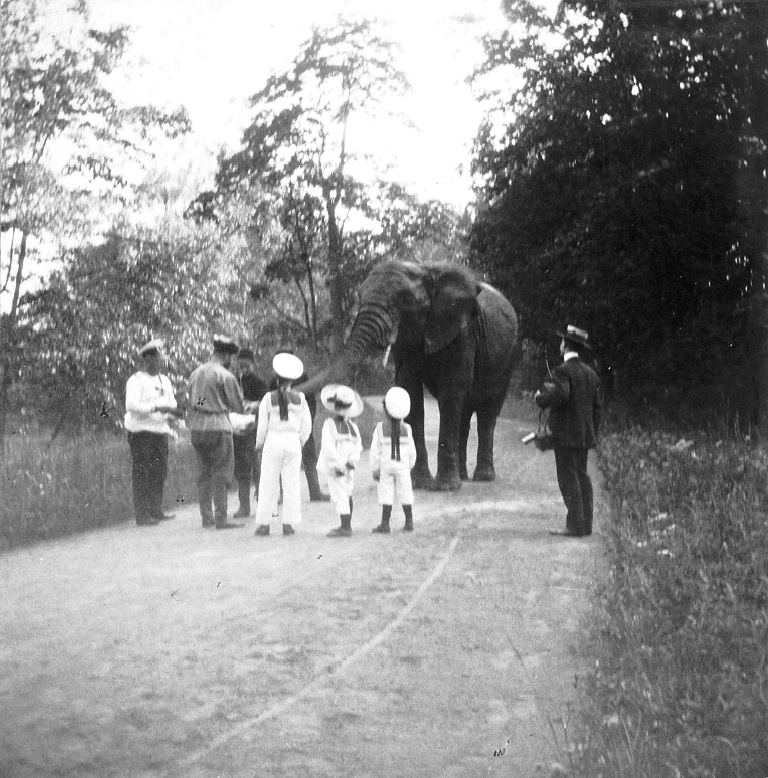
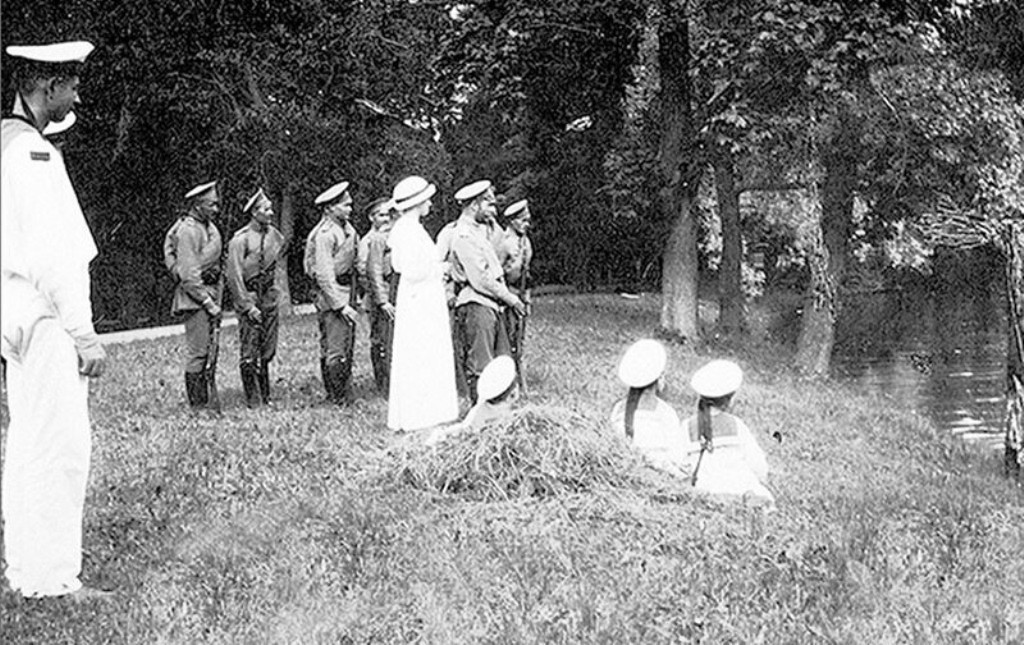
PHOTO: the Emperor distributes treats to his children, all of whom are anxious to feed the elephant. 1914

PHOTO: It is interesting to note that the animal was never given a name, it was simply called “Elephant”. 1914

When the Tatar saw the Tsar approach, he bowed low to him and hurried away to bring out the elephant with it’s long, sprawling ears, tiny eyes with long eye lashes, and always moving about. The Tsar was always accompanied by his children among other guests, anxious to watch the animal do tricks.

Alexei [the Tatar] spoke to the elephant in a foreign language, at which the animal obeyed. A number of tree stumps were scattered in the courtyard, and upon command, the elephant began to move them one by one. The elephant then stood on all fours, on the largest. He then lifted his trunk, making a loud trumpet sound, as if greeting us. After each performance, the Tatar gave the elephant a sugar cube, which the elephant put into its mouth. At the end of the visit, the Tatar brought out a large basket of French rolls and offered them to the guests, give to the elephant, who readily took each one with his trunk, and placing them in his mouth. The guests were always charmed by the animal’s gentleness.

When the Tatar tapped the elephant on its front leg, the elephant would lay on its side, at which Alexei [the Tatar] would get behind the animal’s ear and cover himself like a blanket. Then, the elephant stood up, took Alexei with his trunk and sat him on his neck. On Sundays, a saddle was placed on the elephant, which had side seats.

PHOTOS: on warm summer days, the elephant was taken to the “Elephant Pond”, which was located in the Alexander Park at Tsarskoye Selo

The elephant knelt down again, and the children and adults would climb into the side chairs of the saddle and take for a ride around the coutryard. After riding the elephant, the passengers got out, and others sat in their place. As a reward, the elephant received sweet buns, which he loved very much. When the animal went for a swim in the pond, an entire procession of guests was formed. Alexei [the Tatar] seated on the animal’s neck, led the procession of children and adults, who followed behind to the “Elephant Pond”

The care and maintenance of keeping such an exotic pet did not come cheap: 18 thousand rubles from the treasury were allocated each year. The elephant was fed mostly hay, supplemented with tortillas fried in butter, sugar cubes, apples and other treats.

PHOTO: the elephant never failed to charm the Tsar, his children and other visitors, as it swam and splashed about in the pond in the Alexander Park.

The fate of the Tsar’s elephant and the elephant pavilion

Following the 1917 Revolution, Nicholas II was forced to abdicate, whereupon he and his family were forced to live under house arrest in the Alexander Palace. So what happened to the elephant?

There is a widespread myth that during the revolution, that the elephant was shot by sailors. Allegedly, the revolutionaries perceived the elephant as a symbol of autocracy and the luxurious life led by the imperial family.

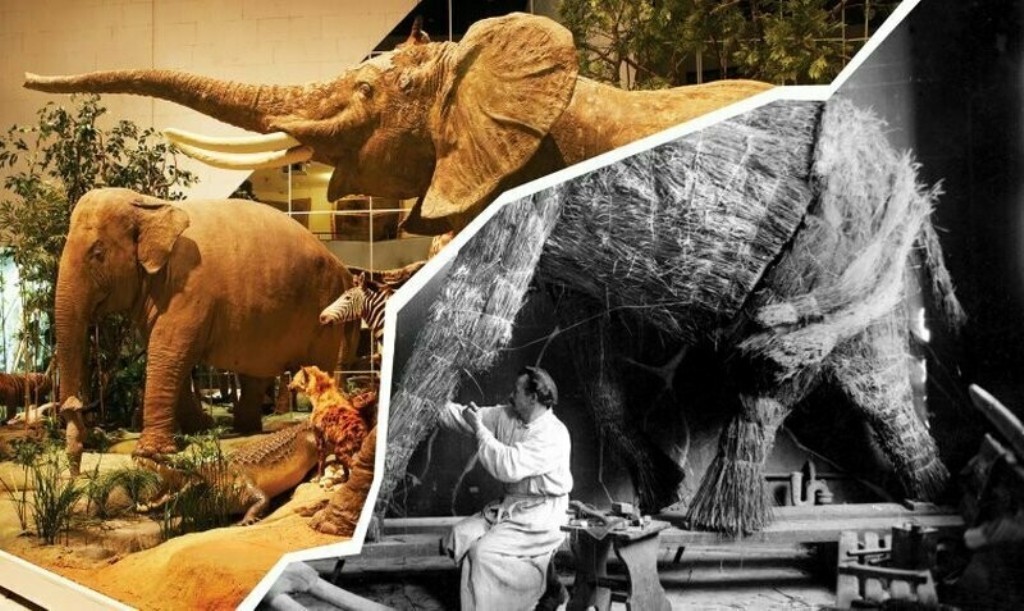
PHOTO: Nicholas II’s African elephant has been preserved to this day, in the Darwin Museum in Moscow

But in reality, they tried to transport the elephant to Moscow, where it would be placed in the city’s zoological gardens. Alas, the animal did not survive the long journey, got sick and died in 1917. However, the elephant was still taken to Moscow, where it was sent to a taxidermist, and into a museum exhibit. It took about ten years: the best taxidermists of the capital worked on the body. So the African pet of Nicholas II can still be seen in the Darwin Museum to this day.

During the Patriotic War of 1941-1944, the Elephant Pavilion in the Alexander Park was severely damaged during the Nazi occupation of Tsarskoye Selo. The only thing which was preserved were the chimneys – everything else was destroyed. There are no plans to reconstruct the Elephant Pavilion at the present time.

© Paul Gilbert. 14 November 2023

***

Paul Gilbert’s Romanov Bookshop on AMAZON

I have published nearly 50 titles to date through AMAZON – featuring one of the largest selections of books on Nicholas II, the Romanov dynasty and the history of Imperial Russia.

Please CLICK on the BANNER or LINK above to review my current selection of titles in hardcover, paperback and ebook editions. Listings provide a full description for each title, pricing and a Look inside feature.
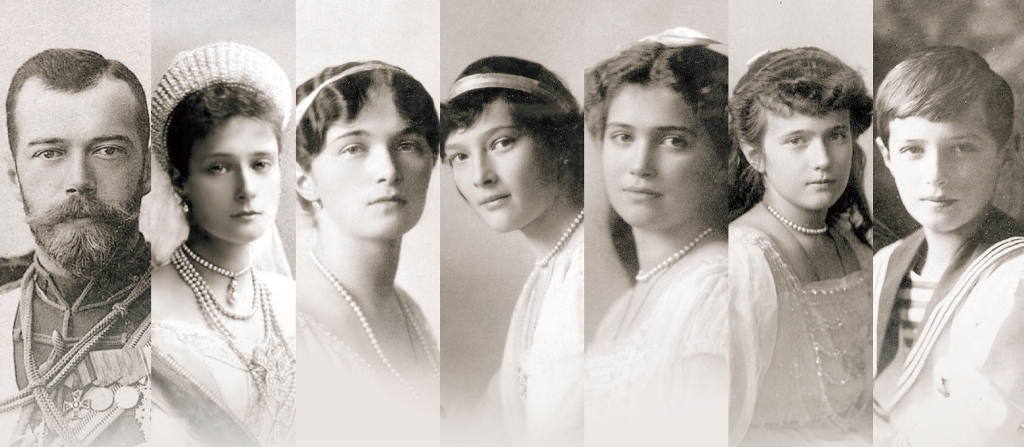
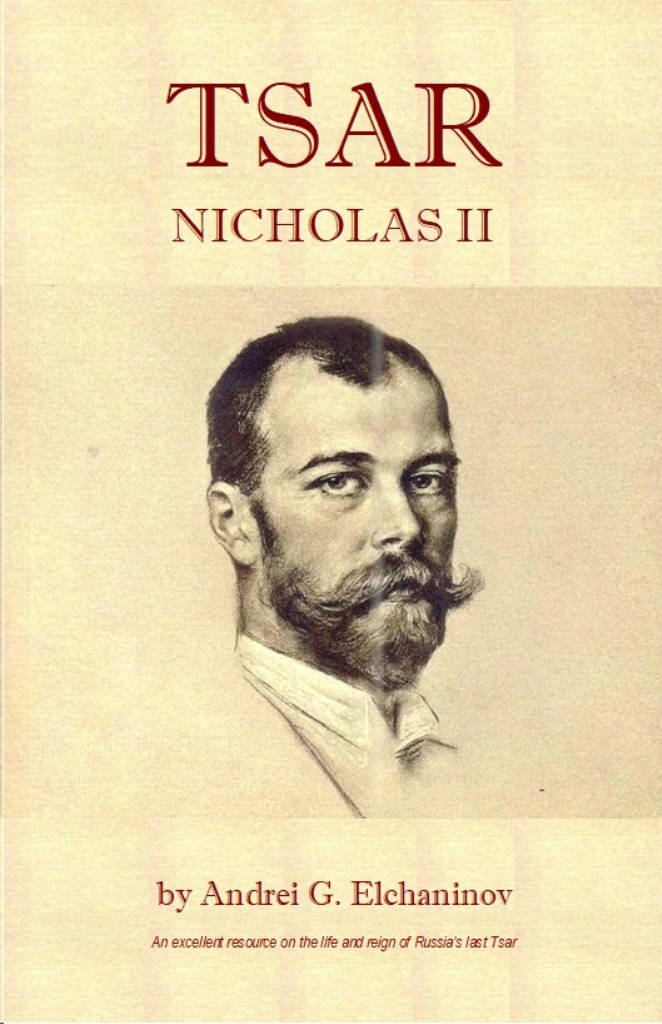
NEW BOOK – Tsar Nicholas II by Alexei G. Elchaninov

*You can order this title from most AMAZON outlets, including
the United States, United Kingdom, Canada, Australia,
France, Germany, Spain, Italy, Netherlands, Poland, Sweden and Japan
*Note: prices are quoted in local currencies

CLICK HERE TO ORDER THE PAPERBACK EDITION @ $14.99 USD

English. 5-1/2″ x 8-1/2″ format. 194 pages with 25 photos

This authorized account of Emperor Nicholas II by Major-General Andrei Georgievich Elchaninov (1868-1918), is an unprecedented biography of a living tsar. It was originally published in 1913, to coincide with the 300th anniversary of the Romanov dynasty. The author served as a professor of military art in the General Staff Academy in St. Petersburg, he later served in the suite of Tsar Nicholas II.

Nicholas II reviewed and corrected the proofs himself in January 1913. He made changes to the text, and requested the removal of sentences describing the Tsesarevich Alexei’s illness.

Elchaninov gathered considerable material for the twelve chapters about Nicholas II’s personal life based on observations and impressions. The first chapters describe Russia’s last Tsar as a caring, devoted and loving husband and father. The remaining chapters focus on his relationship with his government, the church, the army, the Russian people, and the policies which he pursued during the first 18 years of his reign.

Written before the First World War and the 1917 Revolution. Elchaninov writes in glowing patriotic language portraying Nicholas II as an indefatigable “Imperial worker” in the service of Russia’s best interests and the “Sovereign father” of the Russian people.

In addition to Elchaninov’s biography on the Tsar, this new edition features an expanded introduction by independent researcher Paul Gilbert, 25 black and white photographs, and three comprehensive appendices: a chronology of events during the reign of Nicholas II (1894-1917); 100 facts about Nicholas II and the many reforms he made during his reign, and a bibliography of more than 100 English language books written over the past century on Russia’s last Tsar.

This book is an excellent resource tool for any one interested in Russia’s last Tsar!

© Paul Gilbert. 13 November 2023

Romanov “Heir” poses for photo in front of “symbol of Bolshevik Revolution”

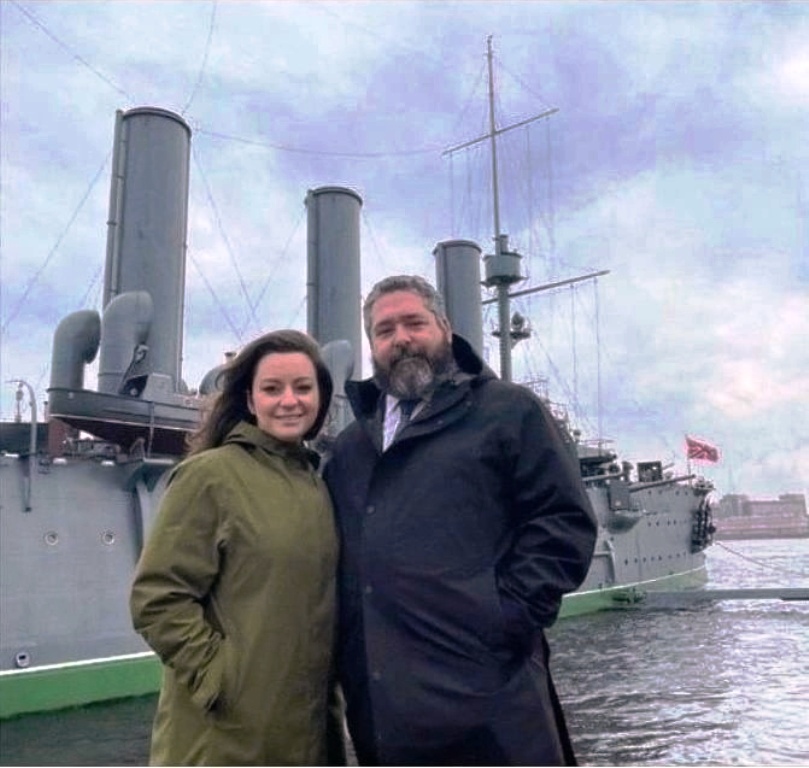
PHOTO: Prince George Mikhailovich and his wife pose in front of the cruiser Aurora, in St. Petersburg

On 7th November 2023 – the day marking the anniversary of the October 1917 Revolution – Prince George “Gosha” Mikhailovich and his wife, arrived in St. Petersburg, where the couple stopped for a photo-op in front of the cruiser ‘Aurora‘, the main symbol of the Bolshevik Revolution.

What were they thinking?

As Russia’s most legendary warship, the Aurora is primarily associated with the October 1917 Revolution. On 7th November (25 October, O.S.) 1917, the warship fired a blank shot, which was a signal for revolutionary soldiers and sailors to launch an assault onn the Winter Palace in Petrograd, where the Provisional Government had its headquarters.

The Aurora has since been celebrated as one of the main Soviet symbols, and continues to attract modern-day Communists, while serving as a watering hole for their rallies and other events.

For any descendant of the Romanov dynasty to pose for a photo in front of this symbol of the Bolshevik Revolution, is in bad taste, they might as well visit Lenin’s mausoleum in Moscow, as well!

Any symbol of Lenin and the Bolsheviks belittles the loss of the Russian Empire, the monarchy, the murder of the Imperial Family, the destruction of churches and monasteries, the persecution, imprisonment and murder of thousands of priests, monks and nuns, etc., must be condemned at all costs. The very fact that this couple chose November 7th – the date marking the anniversary of the Bolshevik Revolution, is even more insulting!

Given the number of beautiful palaces and other buildings with a connection to Tsarist Russia found in and around St. Petersburg, which reflect the former capital of the Russian Empire, one can only ask oneself: “What were they thinking?”

Gosha is heir to nothing!

Prince George “Gosha” Mikhailovich was born in Madrid, Spain on 13th March 1981, he is the only child of Princess Maria Vladimirovna and Prince Franz Wilhelm of Prussia. He is the great-grandson of one of the most despised members of the Russian Imperial Family: Grand Duke Kirill Vladimirovich (1876-1938) .

George spent the first years of his life in France before moving to Spain. There he and his mother lived, along with his maternal grandmother Princess Leonida Georgievna Bagration-Mukhrani (1914-2010), in the home of his maternal aunt, Helen Kirby, living off the wealth of the latter, who inherited a significant fortune from her father, Sumner Moore Kirby. (1895-1945), who was also Leonida’s first husband.

Upon his birth, Gosha was awarded the title of “Grand Duke” by his grandfather Prince Vladimir Kirillovich (1917-1992). It is important to emphasize, that Prince Vladimir Kirillovich never had any authority to hand out titles or awards, as he was not a ruling monarch. Despite this, Vladimir actively, and completely illegally distributed orders, medals and even titles of the Russian Empire, which no longer existed.

The announcement that George Mikhailovich would be known as a Russian Grand Duke prompted Prince Vasili Alexandrovich (1907-1989), then president of the Romanov Family Association, to respond in writing that “The Romanov Family Association hereby declares that the joyful event in the Prussian Royal House does not concern the Romanov Family Association since the newborn prince is not a member of either the Russian Imperial House or of the Romanov family”

As the son of a cadet member of the branch of the House of Hohenzollern which formerly ruled the German Empire and Kingdom of Prussia, Gosha is legitimately a German prince, and has much more rights to the German throne than that of Russia. His father, who stopped using his Russian title after his separation, has said of his son, “I have his German passport right here; I always carry it with me. It says he is Prince George of Prussia”.

Today, Gosha continues to style himself as a “Grand Duke,” however, this is incorrect. The last grand duke of Russia was Grand Duke Andrei Vladimirovich, who died on 30th October 1956, in Paris, France. His mother attributes to him the title of Tsesarevich: heir apparent or presumptive in the Russian Empire, a title which no longer exists. 

In 2013, Gosha established the Russian Imperial Foundation, whose director he later married. In 2019, George moved to Moscow, where he is a successful and wealthy businessman. He is currently the only Romanov descendant currently living in Russia.

***

Under no pretext can we admit to the throne those whose ancestors belonged to parties involved in the 1917 revolution in one way or another. Nor can we admit those whose ancestors, who betrayed Tsar Nicholas II. Nor can we ignore those whose ancestors openly supported the Nazis. Thus, without any reservations, the right to the succession to the throne of the Kirillovich branch should be excluded!

Any person who supports this branch of the Romanov dynasty, dishonours the memory of the murdered Holy Tsar Martyr Nicholas II.

© Paul Gilbert. 13 November 2023

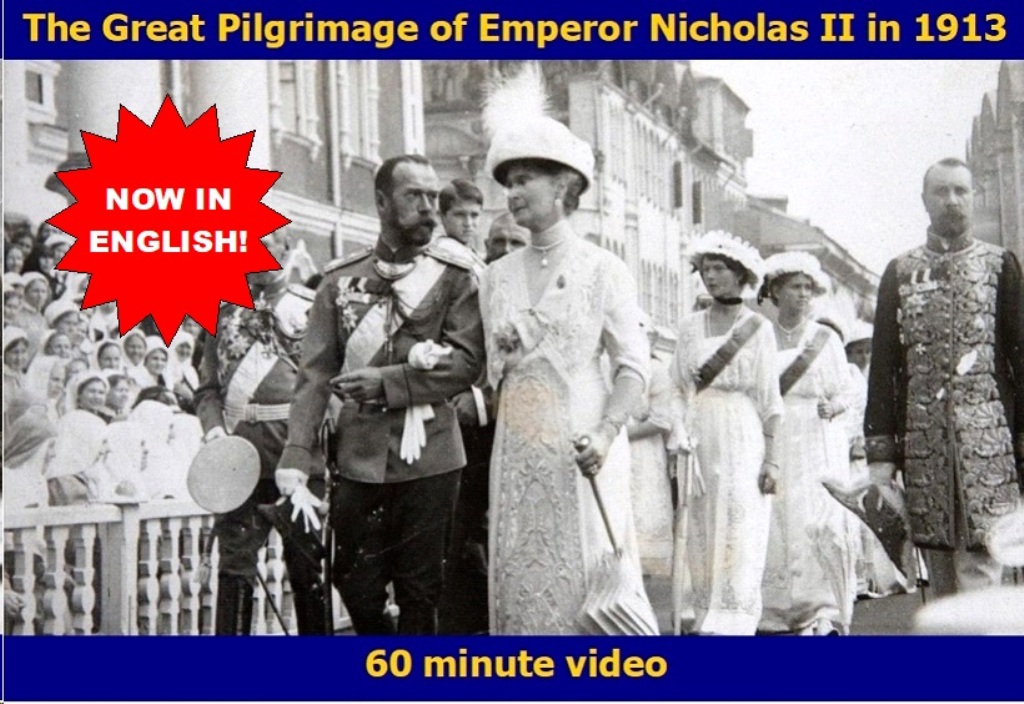
The Great Pilgrimage of Emperor Nicholas II in 1913

NOTE: this page was updated on 9th November 2023, with an ENGLISH-language version – PG

The Museum of Emperor Nicholas II in Moscow have produced a new documentary to mark the 110th anniversary of the pilgrimage ofEmperor Nicholas II to ancient Russian cities during the Romanov Tercentenary in 1913.

The Great Pilgrimage of Emperor Nicholas II” is a one-hour documentary – featuring seven vintage newsreels filmed filmed between 15th to 28th May 1913, when Nicholas II and his family visited 12 ancient Russian cities, which included Vladimir – Suzdal – Bogolyubovo – Nizhny Novgorod – Kostroma – Yaroslavl – Rostov – Petrovsk – Troitskaya Sloboda – Pereslavl-Zalessky – Sergiev Posad – Moscow. * Watch the video located at the bottom of this post. CLICK on the [cc] for ENGLISH subtitles.

The film is based on the materials of the Russian State Archive of Film and Photo Documents (RGAKFD), the Russian State Historical Archive (RGIA), the State Archive of the Russian Federation (GARF) and the Library of Congress of the United States.

During the Soviet years, a significant part of the pre-revolutionary newsreels of the Imperial Family were destroyed, leaving only small fragments of most of the films. After the fall of the Soviet Union in 1991, the Russian State Archives of Film and Photo Documents carried out painstaking work to restore many of these. This was possible that some of newsreel fragments had been stored on different reels, making it possible to restore and edit many of these historic newsreels. In total, some 300 fragments were restored to their original.

The documentary is complemented by musical accompaniment recorded in in the early 20th century, including “God, Save the Tsar!”. The music for the documentary was taken from old gramophone records and wax rollers. They include segments of marches, hymns, waltzes, operas, folk songs, balalaika, bell ringing and church chants.

If you listen closely to the audio you will hear the voice of Nicholas II at [9:35] thanking the regiment as they march past him in Nizhny Novgorod.

Many detractors of Russia’s much slandered Tsar continue to spread the myth that Nicholas II was not popular with the Russian people. This nonsense is quickly debunked by the newsreel footage which shows thousands of people flocking to get a glimpse of the Tsar in each city visited. You can see them cheering and making the sign of the cross as the Tsar passes by.

CLICK on the image above to watch this video.
Duration: 60 minutes. Language: English

***

Numerous scenes depicts the Sovereign being greeted with the traditional bread and salt, meeting local dignitaries, kissing icons, visiting churches and monasteries, reviewing his troops, and much more.
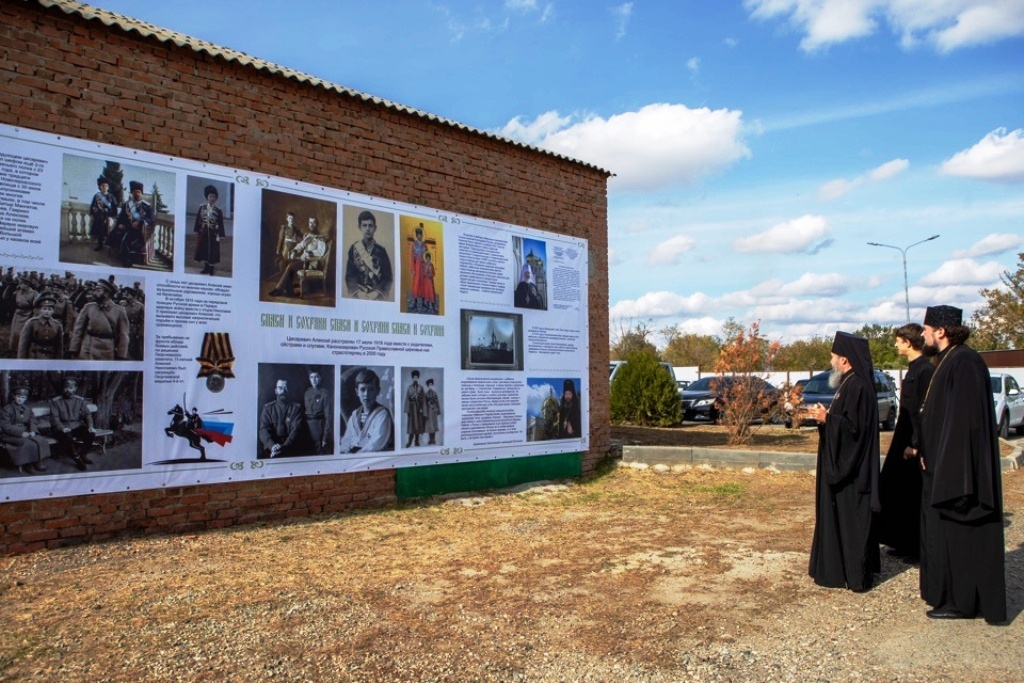
NOTE: the numbers in the brackets [ ] below, correspond to their exact location in the newsreels – PG

The church seen in the opening of the film at [0:46] is Nicholas II’s favourite church at Tsarskoye Selo: the Feodorovsky Sovereign Cathedral .

16 May: Vladimir, Suzdal and and Bogolyubovo [1:12] – in this newsreel, is a splendid view of the Imperial Train.

17 May: Nizhny Novgorod [6:34] – at [7;57] we see the Tsar and his family taking part in a religious procession – at [9:35] if you listen closely to the audio you will hear the voice of Nicholas II thanking the regiment as they march past him.

19 & 20 May: Kostroma [10:51] – in this newsreel, we see the Ipatiev Monastery – the birthplace of the Romanov Dynasty – at [12:10] the Imperial Family arrive in Kostroma on the steamship “Mezhen“, where they see the riverbank lined with people, all of whom have come to get a glimpse of their Batushka Tsar. Many can be seen bowing and making the sign of the cross, some of them even wading into the river – at [15:32] the Imperial Family take part in a religious procession at the Ipatiev Monastery – at [15:46] Emperor Nicholas II and Empress Alexandra Feodorovna descend the staircase of the Trinity Cathedral – at [17:13] the Tsar leaves the Romanov boyar palace – at [17:38] Tsesarevich Alexei is carried in the arms of the Cossack Alexei Petrovich Pilipenko (1887-1972) .

21 May: Yaroslavl [25:41] – at [26:51 the Imperial Family arrive by boat at a specially made pier and pavilion at Yaroslavl.

22 May. Rostov [32:01] – at [35:22] once again, we see Alexei being carried in the arms of the Cossack Alexei Petrovich Pilipenko. He helps the Tsesareich into the awaiting carriage, and you can clearly see that he has trouble walking, and instead hops on one leg to seat himself – the Tsar sits next to him.

23 & 24 May. Petrovsk – Pereslavl-Zalessky – Troitskaya Sloboda – Sergiev Posad [38:33] – at [42:28] Empress Alexandra Feodorovna, Emperor Nicholas II, Tsesarevich Alexei, and one of his sisters get into a waiting carriage at the Trinity Lavra of St. Sergius – the spiritual center of the Russian Orthodox Church – in Sergiev Posad – at [42:57] the other three grand duchesses are joined by their aunt Grand Duchess Elizabeth Feodorovna in the second carriage.
24 to 27 May. Moscow [43:12] – at [43:46] Nicholas II enters Moscow on horseback through the Triumphal Arch – the same gate he entered the city for his coronation in 1896 – at [45:01] “God, Save the Tsar!” is performed – at [47:48] the Tsar and his family stop to pray at the Iverskaya Chapel at the Resurrection Gate, which leads into Red Square. Again, we see Alexei being carried in the arms of the Cossack Alexei Petrovich Pilipenko – at [48:27] Emperor Nicholas II crosses Red Square on horseback – he is greeted by thousands of Muscovites – at [49:26] the Tsar walks past St. Basil’s Cathedral, and enters the Kremlin on foot – at [50:09] is the famous procession seen in many English-language documentaries, of the Imperial Family, their relatives and entourage walking towards the Assumption Cathedral, where Nicholas II was crowned in 1896 – at 51:28] the Imperial procession walks past the Chudov Monastery – at [53:01] the Imperial Family visit the Chambers of the Romanov Boyars – at [55:05] the Imperial Family arrive at the Novospassky Monastery, taking part in a religious procession at [56:25] – Grand Duchess Elizabeth Feodorovna and Grand Duke Kirill Vladimirovich can be seen at [56:45].
© Paul Gilbert. 26 October 2023

Second Nicholas II museum opens in Moscow

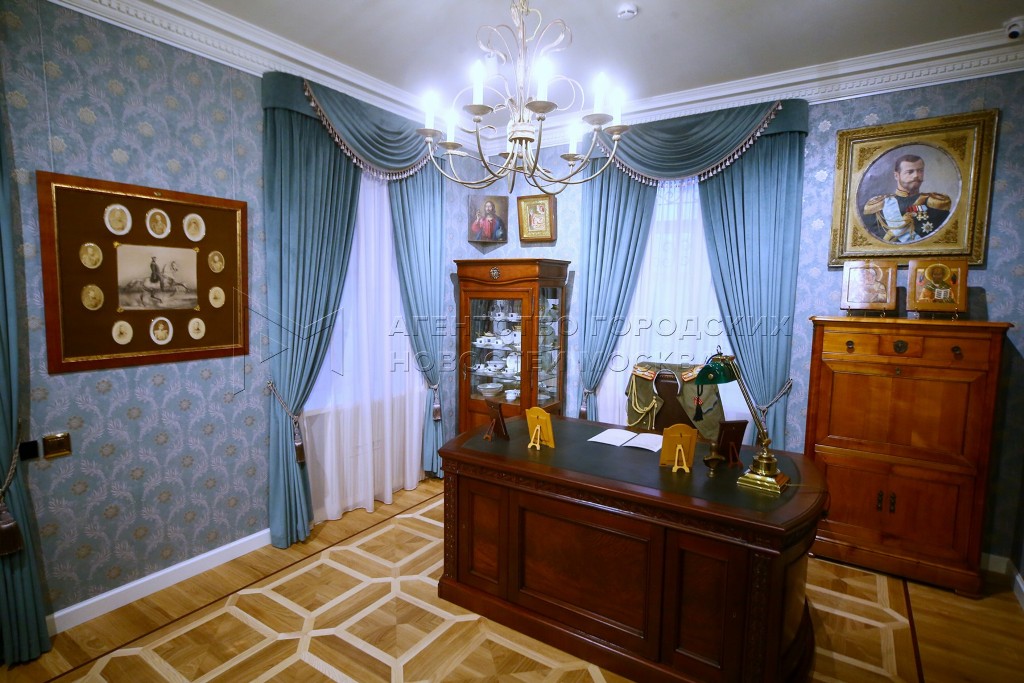
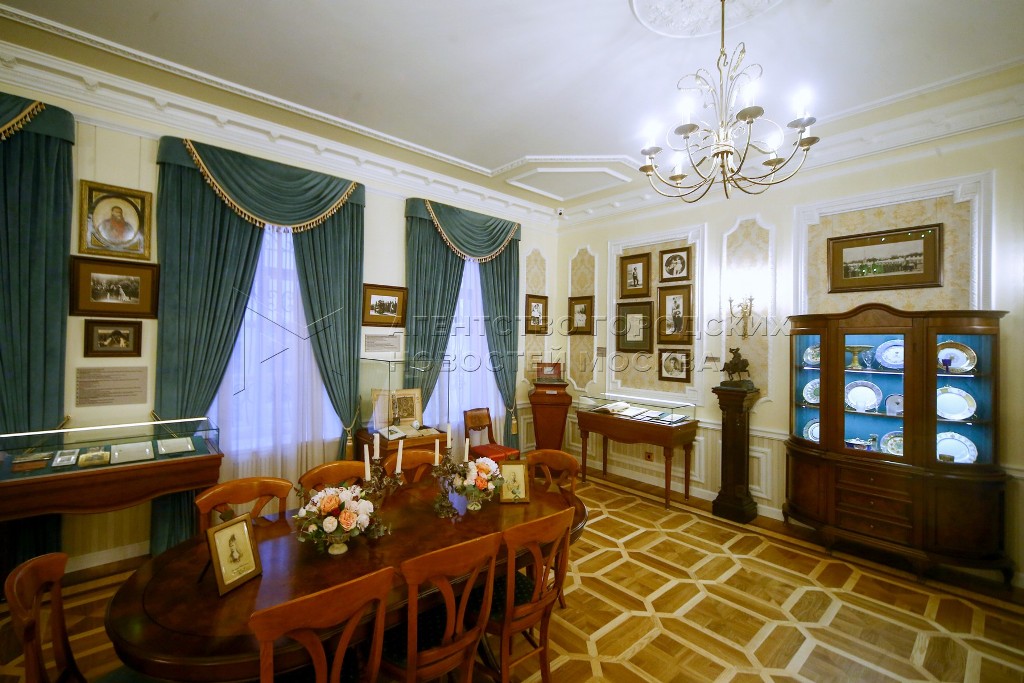
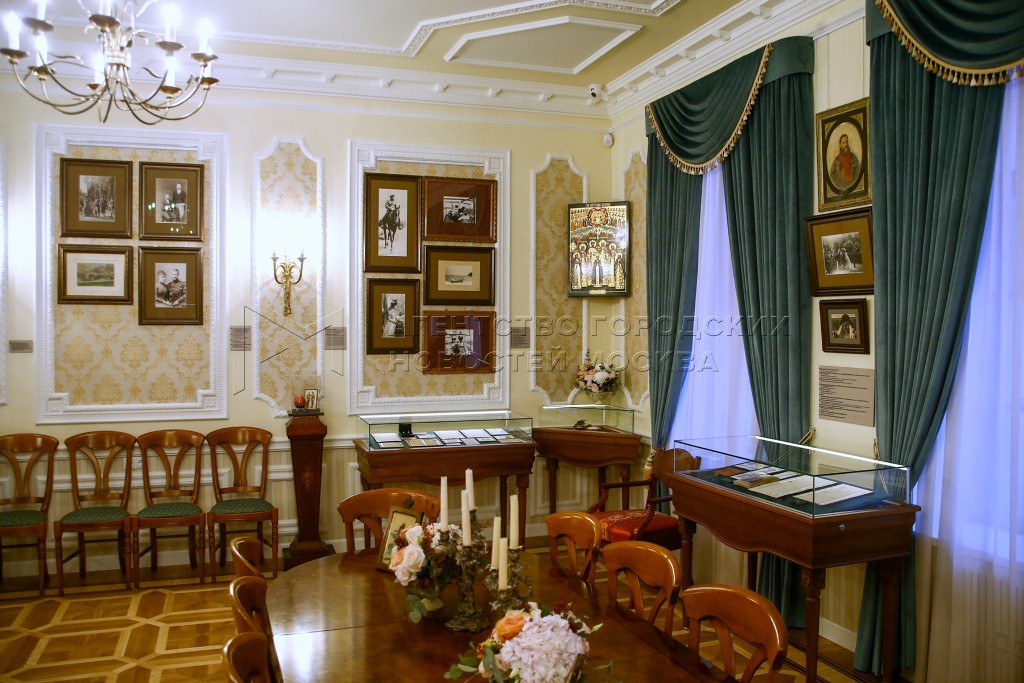
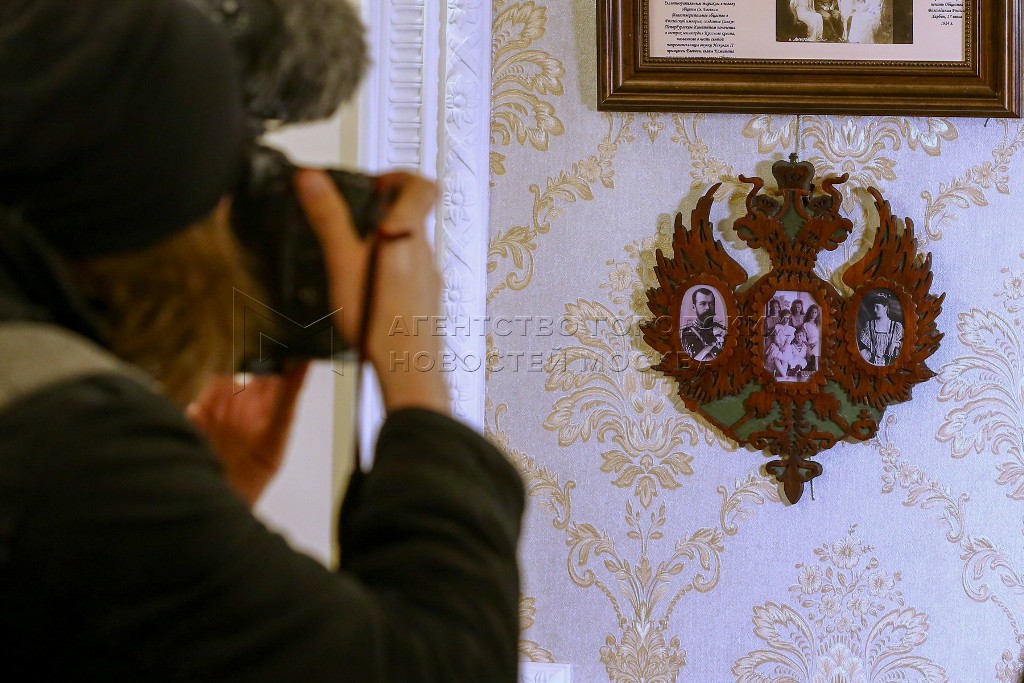
PHOTO: interior view of the new Museum in Memory of Emperor Nicholas II and His Family, situated in the Belaya Dacha in Moscow.

On 5th November 2023, the Museum in Memory of Emperor Nicholas II and His Family opened at the newly restored Belaya Dacha estate in the city of Kotelniki of the Moscow district. It is the second dedicated to Emperor Nicholas II to be opened in Moscow – the first being the Museum of Emperor Nicholas II.

The permanent exhibition, which is located on the first floor of the museum, feature about 300 unique exhibits, including many personal items belongings to the Imperial Family. Among them is a piano belonging to Nicholas II’s mother Dowager Empress Maria Feodorovna. Also on display, are the letters of Tsesarevich and Grand Duke Nicholas Alexandrovich [the future Emperor Nicholas II] to Alexandra Feodorovna, written between 1890-91, during a trip to Japan, where an attempt was made on his life.

In addition, a letter from Empress Maria Feodorovna to Emperor Wilhelm II, received by him two days before Germany declared war on Russia, vintage photographs of the last Tsar and his family and other unique exhibits are also displayed.

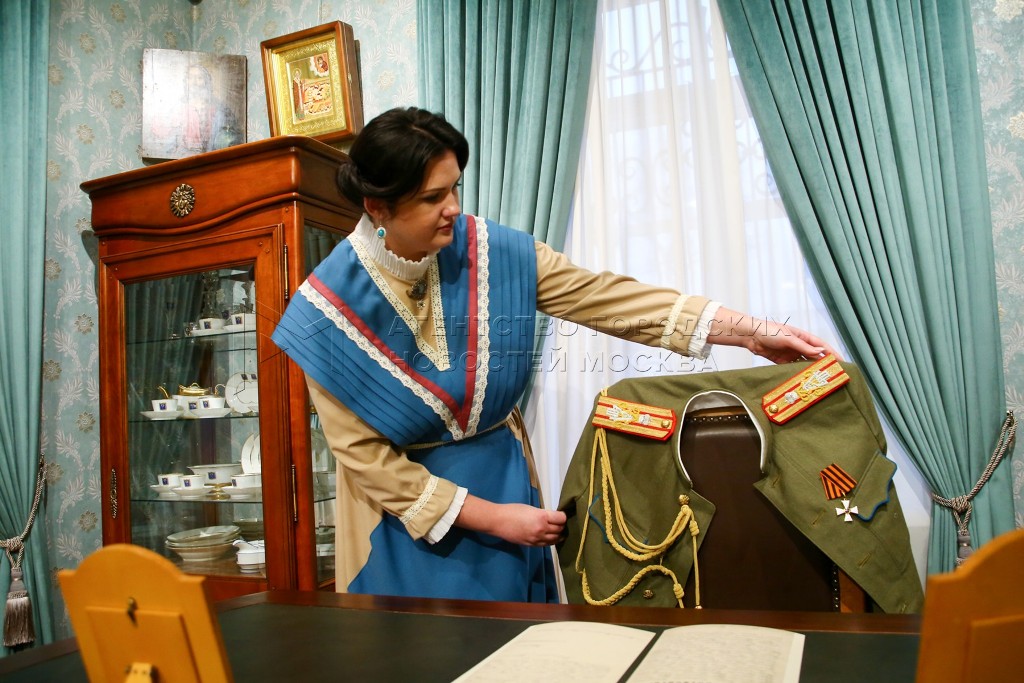
Draped over a chair in the recreated study of the Tsar, is an exact copy of a uniform of Nicholas II. It looks very simple, as it reflects how the Emperor dressed when he went out to greet his soldiers, thus demonstrating respect for his army.

“Exhibits for the museum have been collected over the last three years, from private collections and auctionsall over the world,” said Lyudmila Grosarchuk, curator of the museum.

“We are bringing back to our country, to our home, what was scattered so carelessly following the 1917 Revolution,” added Viktor Semyonov, Chairman of the Museum Supervisory Board.

At the opening of the museum, the first visitors were given a tour of the exhibition and the and museum. A performances by the State “Berezka” Dance Ensemble, Russian opera star Hibla Gerzmava, and People’s Artist of Russia Sergey Migitsko.

As a symbol of the unity of Russian museums, an oak from Tsarskoye Selo was planted on the grounds of estate.

***

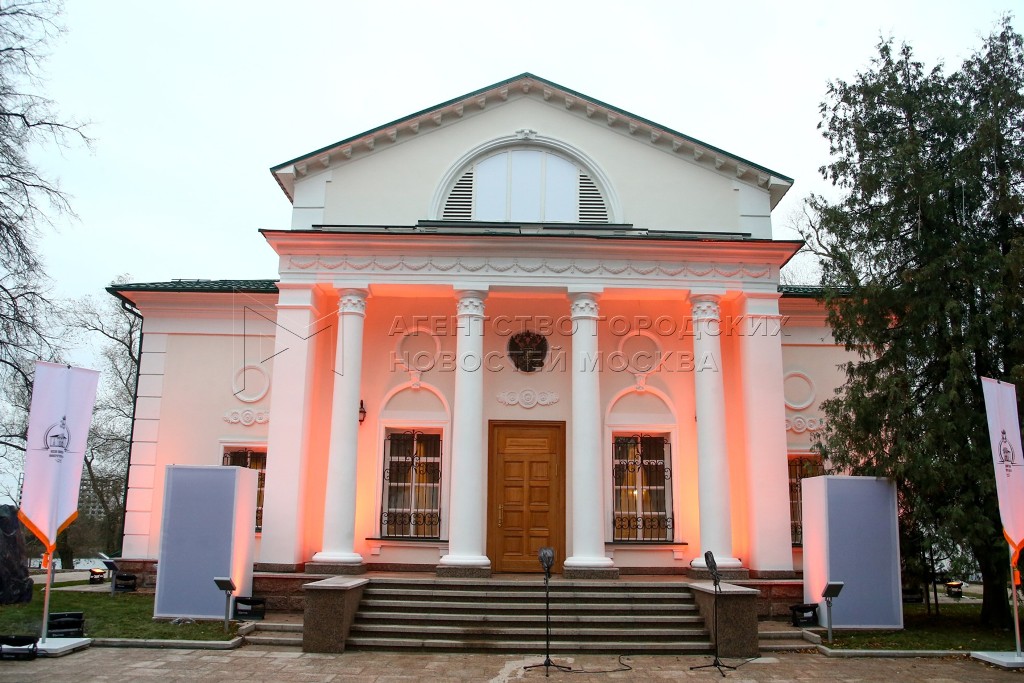
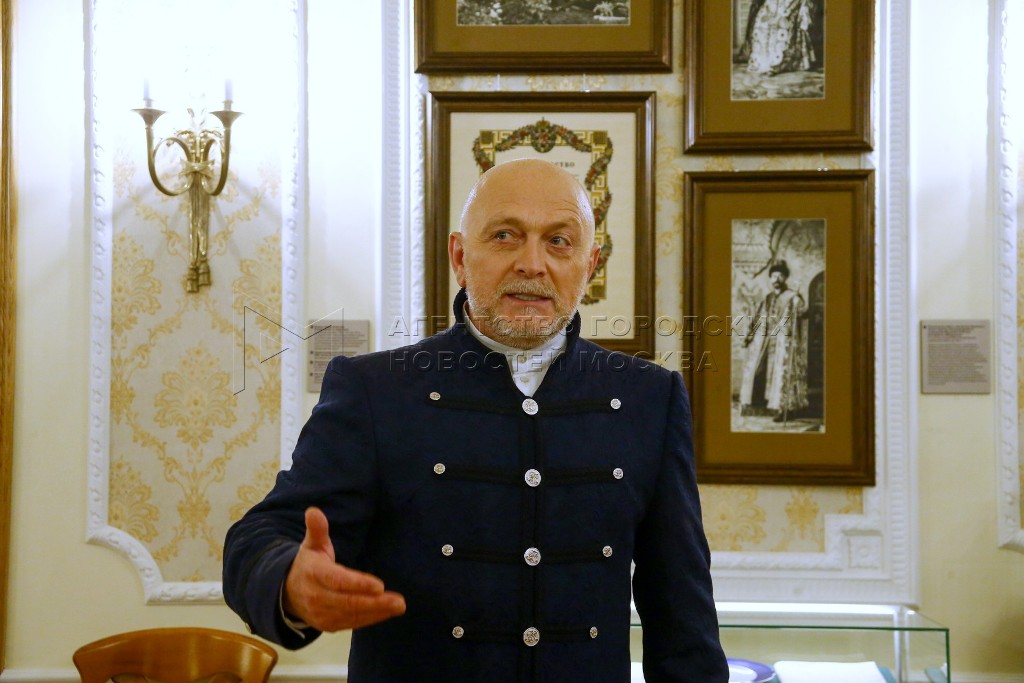
PHOTO: the Belaya Dacha estate mansion (above), now home of the private museum of the family of the last Russian Emperor Nicholas II in Moscow. Viktor Semenov (below), Chairman of the Board of Trustees of the The Museum in Memory of Emperor Nicholas II and His Family.

© Paul Gilbert. 6 November 2023

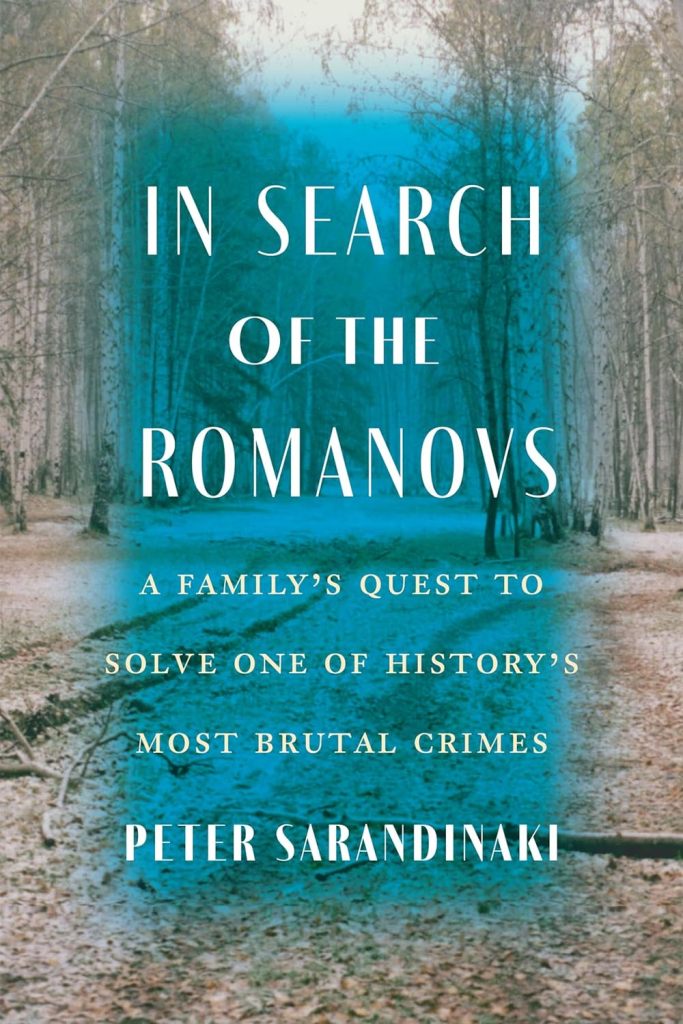
In Search of the Romanovs: A Family’s Quest to Solve One of History’s Most Brutal Crimes

On 1st July 2024, a new book by the President and founder of the SEARCH Foundation Peter Sarandinaki will be published. Sarandinaki is best known as one of the participants who discovered the remains of Tsesarevich Alexei Nikolaevich and Grand Duchess Maria Nikolaevna in 2007. He has spent many years searching for the remains of Grand Duke Mikhail Alexandrovich and his secretary Nikolai Johnson.

His new book In Search of the Romanovs: A Family’s Quest to Solve One of History’s Most Brutal Crimes will no doubt become one of the most highly anticipated books for Romanovophiles to be published in many years!

***

In 1918 a famed general of the Russian White Army battled through the Red Army to save Emperor Nicholas II—but he arrived too late. The Romanovs had already been murdered.

In this thrilling true-life detective story, we follow Anna, the general’s courageous young daughter, who fled across the continent and boarded a ship with her husband to escape the bloodshed. Beneath her bunk was a box, and in this box lay grisly evidence of what had become of Russia’s royal family, the Romanovs. Generations later, Anna’s grandson Peter Sarandinaki set out to finish his great-grandfather’s mission to find the Romanovs’ remains, enlisting searchers and scientists to finally piece together the answers to some of history’s most perplexing questions: What really happened to Tsar Nicholas, Empress Alexandra, and their children? And what about the tsar’s brother, Michael, who simply disappeared?

Set against the disparate backdrops of the Russian Revolution and the twenty-first century’s leading DNA laboratories, In Search of the Romanovs weaves together historical records, forensic science, and the diaries, recollections, and experiences of Sarandinaki’s own family. Follow Sarandinaki as he fits together the final fragments of the mystery: a piece of topaz jewelry, a blood-stained shirt once worn by Tsar Nicholas II, the fabled Solokov box, and his team finding clandestine initials carved into a tree. A riveting and deeply personal story, In Search of the Romanovs reveals hidden truths in the legends about the murder and disappearance of Russia’s most famous royal family.

© Paul Gilbert. 31 October 2023

New monument to Tsesarevich Alexei installed in Kalmykia

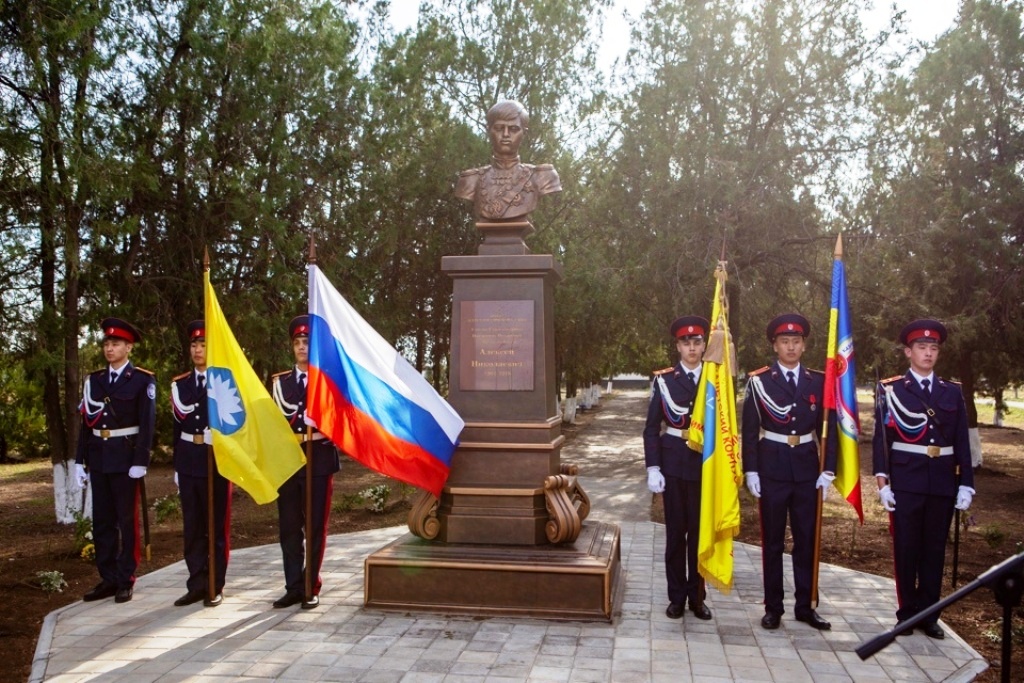
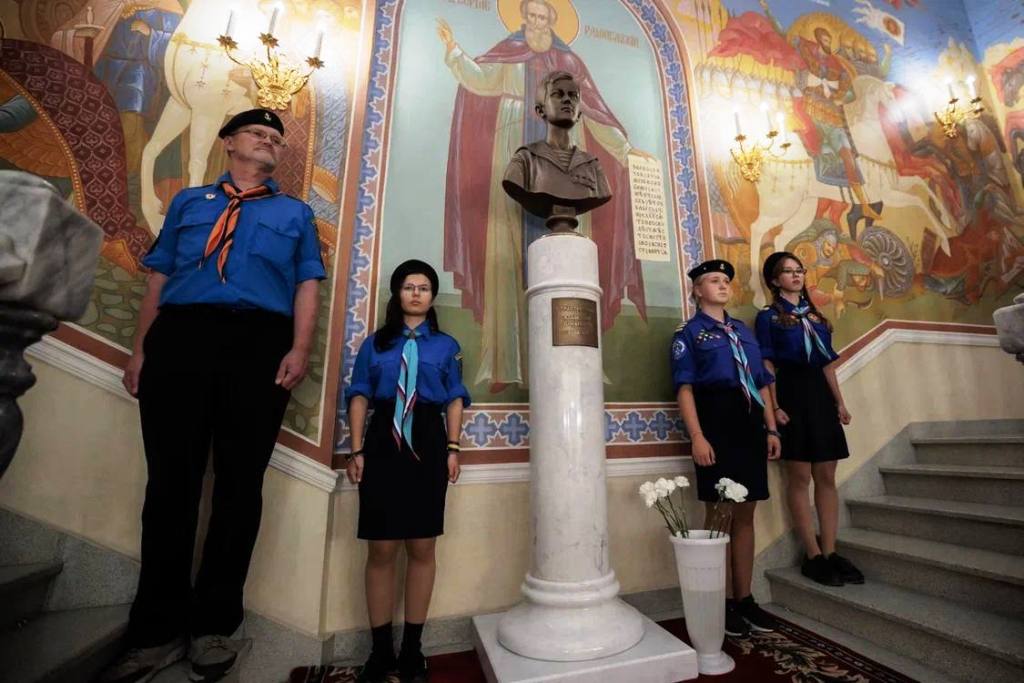
PHOTO: Cossack youth stand at attention beside the bust-monument to Tsesarevich Alexei Nikolaevich

On 18th October 2023, a new bust-monument to Tsesarevich Alexei Nikolaevich was unveiled on the grounds of the O.I. Gorodovikov Cossack Cadet Corps Institution, situated in the city of Gorodovikovsk in Kalmykia – located in the North Caucasus region of Southern Russia. .

The installation and consecration of the bust-monument was timed to coincide with the name day[1] of the only son and heir of Emperor Nicholas II. The last official heir to the Russian throne is considered the patron saint of the Union of Cossack Youth of Russia. From the day of his birth – 12th (O.S. 30th July) August 1904 – Alexei became the August ataman of all the Cossack troops.

The unveiling of the monument was attended by Archbishop Justinian of Elista and Kalmyk, Ataman of the Kalmyk Cossack District of the Great Don Army Chimid Dzhangaev, Rector of the Gorodovikovsky Khurul Gelyung Gem Yamphi, Deputy Chairman of the Krasnodar Branch of the Imperial Orthodox Palestine Society, Secretary of the Krasnodar Branch of the World Russian People’s Council in the Krasnodar Territory, Rector of the Church of the Holy Martyrs John Kovsharov and Yuri Novitsky in Krasnodar Priest Vyacheslav Klimenko, Director of the O.I. Gorodovikov Cossack Cadet Corps Valery Abushinov.

PHOTO: detail of the bronze bust to Tsesarevich Alexei Nikolaevich

The ceremony was attended by cadets and teachers of the Cossack Corps, representatives of the parent community, clergymen of the Elista and Kalmyk diocese and Cossacks of the Kalmyk Cossack District of the Great Don Army.

Greeting the participants of the ceremony, Archbishop Justinian of Elista and Kalmyk stressed the importance of honoring the memory of the Holy Passion-Bearer Alexei, who during his earthly life was the chief of all the Cossack troops of the Russian Empire, and today is revered as the heavenly patron of Cossack youth.

He further noted: “A Cossack is not so much a blood belonging as a special disposition of mind and soul. A Cossack is free-willed, brave, preserves the faith and traditions of his ancestors, loves his Motherland, tries to protect the weak and defenseless. And God grant that the youth of the pupils of the Cossack Cadet Corps may pass under the patronage of the Holy Tsesarevich Alexei, so that they may prayerfully turn to him with their worries and sorrows, because he will understand their youth and help them!”

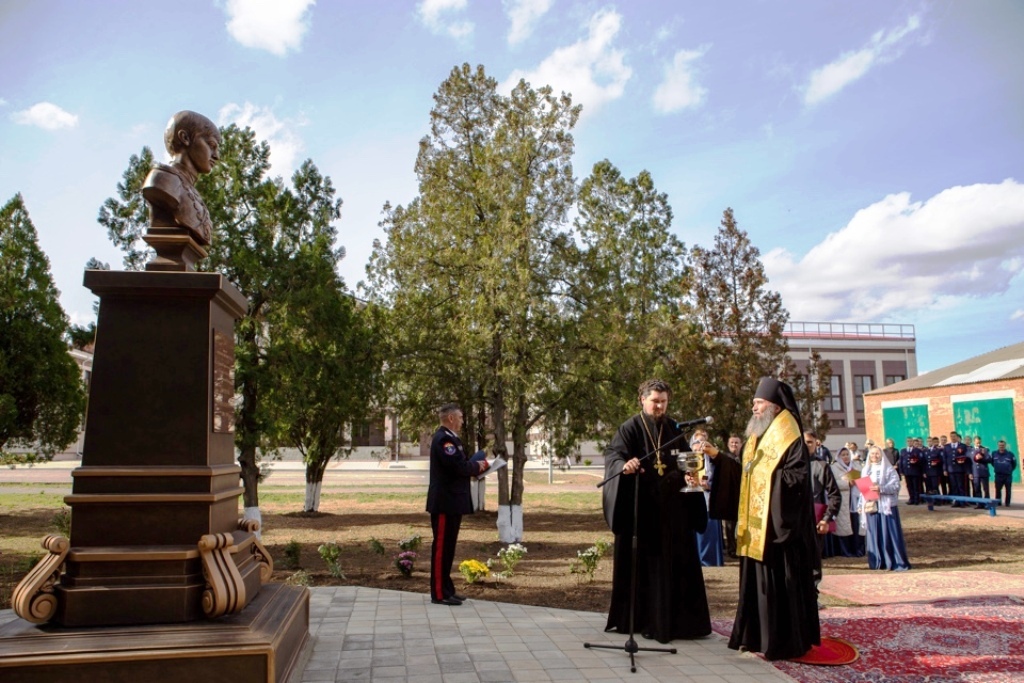
PHOTO: Archbishop Justinian of Elista and Kalmyk (right) performs the consecration ceremony

His Eminence expressed his gratitude to the abbot of the Nizhny Novgorod Ascension Monastery of the Caves, Archimandrite Tikhon (Zatyokin), for donating to Kalmykia a monument to Tsesarevich Alexei, created at the expense of the monastery.

His Eminence Justinian read a prayer and sprinkled the monument with holy water. Then the anthem of the Russian Federation, the anthem of the Republic of Kalmykia and “Glory” from the opera “Ivan Susanin” by M.I. Glinka were played.

This was followed by a concert and lecture in the assembly hall of the Cossack Corps. Local historians talked about the historical basis of the veneration of St. Tsesarevich Alexei Nikolaevich in Kalmykia.

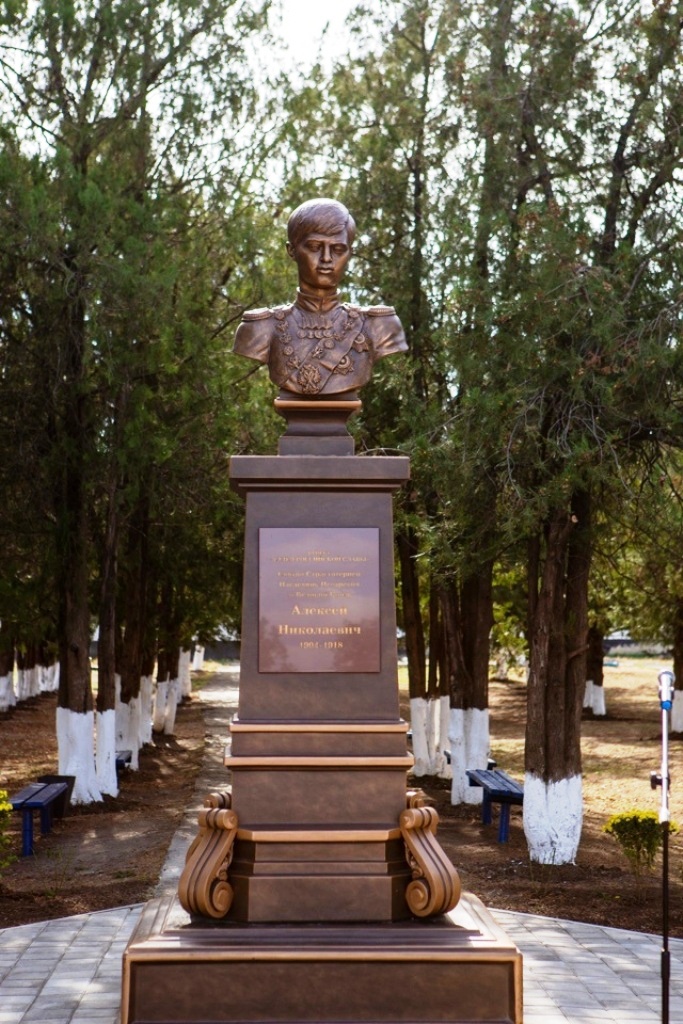
PHOTO: full view of the bronze bust and pedestal to Tsesarevich Alexei Nikolaevich

People’s Artist of the Republic of Kalmykia, and Director of the Children’s Art School No. 2 in Elista, Arslan Shavgurov, recalled St. Tsesarevich Alexei’s passion for playing the balalaika and performed several works on this folk instrument in his memory.

Tsesarevich Alexei Nikolayevich was the August Chief of the Life Guards Ataman Regiment, in which more than 20 Kalmyks served at the beginning of the twentieth century. Subsequently, the heir was appointed chief of the 2nd Don Cossack Regiment, in which more than 30 Kalmyks served, and the Novocherkassk Cossack School from 1915, whose graduates were many Kalmyk officers.

PHOTO: a permanent outdoor display tells about the life of the Tsesarevich and his position as chief of all the Cossack troops of the Russian Empire

In 1907, a khurul[2] was opened in the Kalmyk steppe in honor of Tsesarevich Alexei. In 1914, a church was consecrated in Gorodovikovsk in honour of the heavenly patron Heir of St. Alexis of Moscow.

At present, St. Alexis Church has been restored and consecrated in honor of the Holy Passion-Bearer Tsesarevich Alexis and St. Alexius, Metropolitan of Kiev, Moscow and All Russia[3].

NOTES:

[1] Russians celebrate name days separately from birthdays. Celebrations range from the gifting of cards and flowers to full-blown celebrations similar to birthday parties. Such a celebration begins with attendance at the divine services marking that day (in the Russian tradition, the All-Night Vigil and Divine Liturgy), and usually with a festive party thereafter. The Russian Imperial family followed a tradition of giving name-day gifts.

Before the October Revolution of 1917, Russians regarded name days as important as, or more important than, the celebration of birthdays, based on the rationale that one’s baptism is the event by which people become “born anew” in Christ.

[2]khurul is a Buddhist monastery.

[3] It was Robert K. Massie (among others), who have led us to believe that the only son of Emperor Nicholas II and Empress Alexandra Feodorovna, was named after Tsar Alexei Mikhailovich (1629-1676) . . . this is incorrect. This is incorrect. The long-awaited son and heir to the Russian throne was named Alexei, in honour of St. Alexius of Moscow.

Saint Alexius (1296–1378) was Metropolitan of Kiev and all Russia (from 1354). He was canonized by the Russian Orthodox Church in 1448 and is revered as one of the patron saints of Moscow.

© Paul Gilbert. 26 October 2023

18th October marks name day of Tsesarevich Alexei Nikolaevich

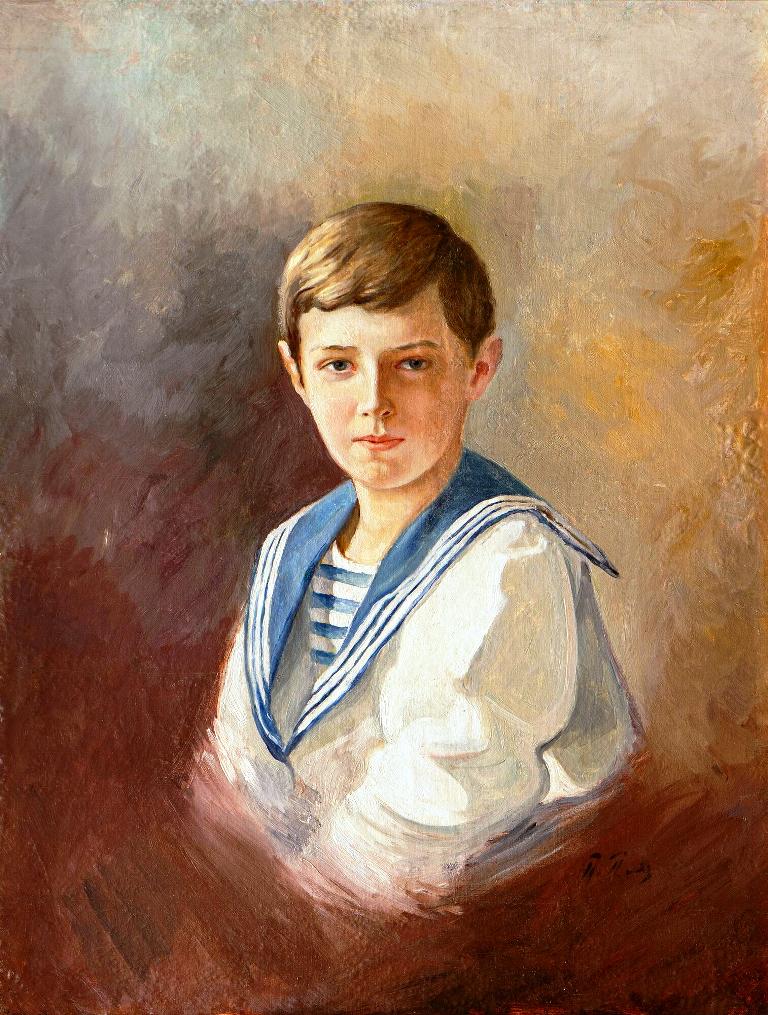
PHOTO: portrait of Tsesarevich Alexei Nikolaevich
Artist: Pyotr Petrovich Pershin (1877-1956)
From the Collection of the Tsarskoye Selo State Museum

Today – 18th October – marks the Name Day[1] of Tsesarevich Alexei Nikolaevich (1904-1918). The heir to the throne was born in the Lower Dacha at Peterhof on 12th August (O.S. 30th July) 1904. He was named in honour of St. Alexius of Moscow[2] (1296–1378).

On a historical note, the Name Day of the Tsesarevich was celebrated on this day at Livadia, Crimea, in 1909, 1911 and 1913 respectively.

In 1913, Nicholas II wrote in his diary: “In the morning, Alexei received gifts in our bedroom . . . At 11 o’clock, the Yalta garrison held a parade in front of the house. After the solemn event, the guests were invited for breakfast in the Main Dining Room, where about 160 people were present. In the evening, the Black Sea squadron held beautiful illuminations.”

Divine services will be held in churches across Russia today, in honour of Tsesarevich Alexei Nikolaevich’s Name Day. White flowers were placed at the pedestal holding a bust of Tsesarevich Alexei Nikolaevich (above), which was installed and consecrated in the Tsarsky Center, located in the Patriarchal Compound, across from the Church on the Blood in Ekaterinburg, in July.

NOTES:

[1] Russians celebrate name days separately from birthdays. Celebrations range from the gifting of cards and flowers to full-blown celebrations similar to birthday parties. Such a celebration begins with attendance at the divine services marking that day (in the Russian tradition, the All-Night Vigil and Divine Liturgy), and usually with a festive party thereafter. The Russian Imperial family followed a tradition of giving name-day gifts.

Before the October Revolution of 1917, Russians regarded name days as important as, or more important than, the celebration of birthdays, based on the rationale that one’s baptism is the event by which people become “born anew” in Christ.

[2] It was Robert K. Massie (among others), who have led us to believe that the only son of Emperor Nicholas II and Empress Alexandra Feodorovna, was named after Tsar Alexei Mikhailovich (1629-1676) . . . this is incorrect. This is incorrect.

The long-awaited son and heir to the Russian throne was named Alexei, in honour of St. Alexius of Moscow.

Saint Alexius (1296–1378) was Metropolitan of Kiev and all Russia (from 1354). He was canonized by the Russian Orthodox Church in 1448 and is revered as one of the patron saints of Moscow.

© Paul Gilbert. 18 October 2023

October 12th marks the birth and death of a Romanov traitor

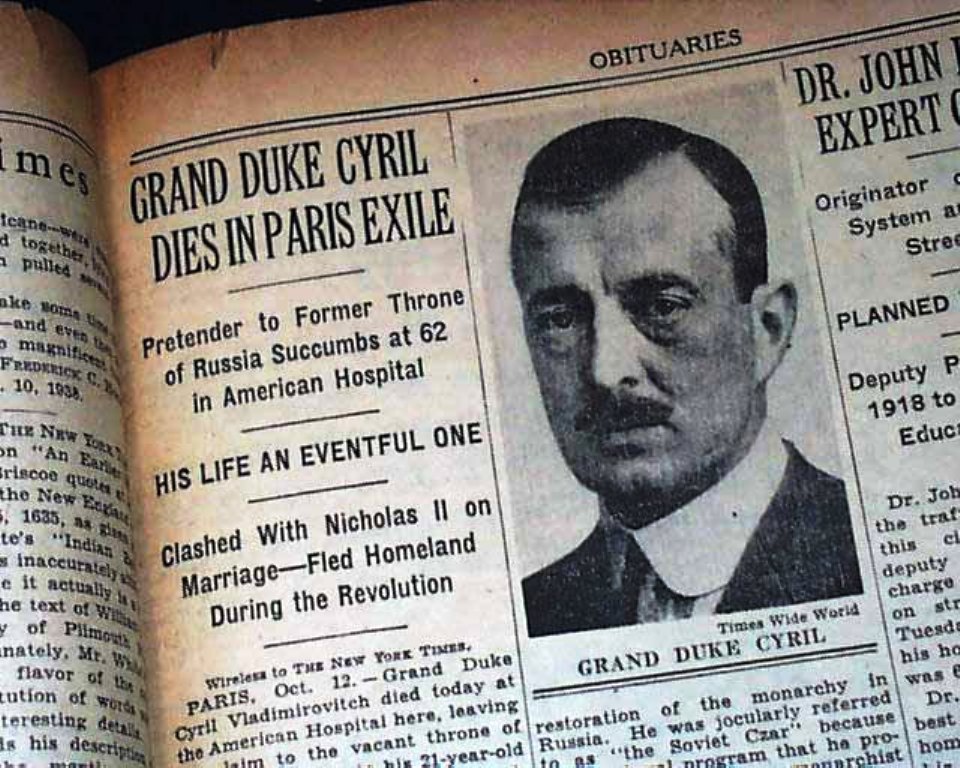
PHOTO: obituary notice on the death of Grand Duke Kirill Vladimirovich (1876-1938)

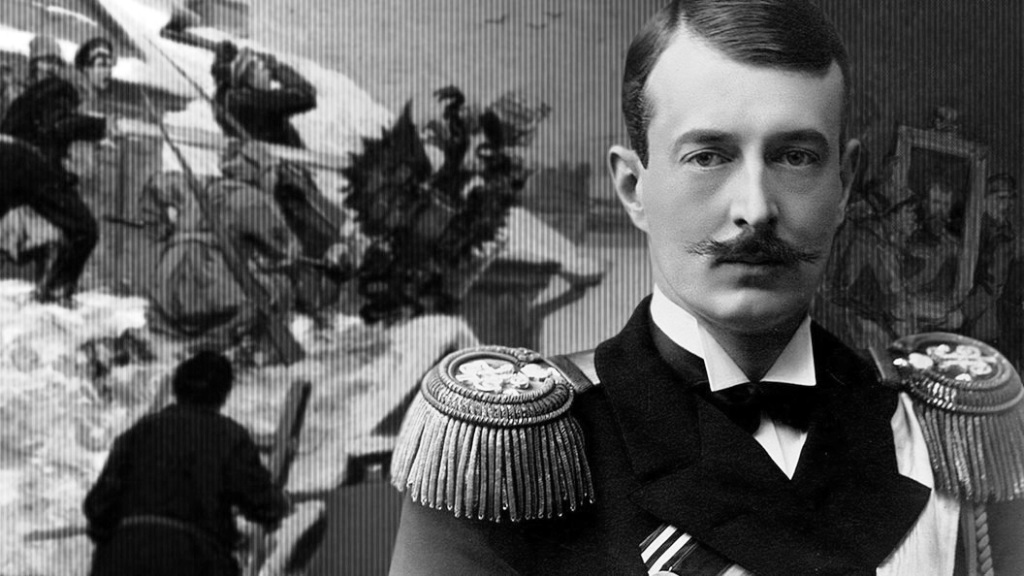
October 12th marks both the birth (1876) and death (1938) of one of the most despised members of the Russian Imperial Family: Grand Duke Kirill Vladimirovich.

Kirill was born on 12th October [O.S. 30th September] 1876, at the Vladimir Villa, the country residence of his parents at Tsarskoye Selo. He was the second of five children born to Grand Duke Vladimir Alexandrovich (1847-1909) and his wife Grand Duchess Maria Pavlovna (1854-1920), born Duchess Marie of Mecklenburg-Schwerin.

Kirill was a grandson of Emperor Alexander II (1818-1881) and a first cousin of Emperor Nicholas II. He was also the uncle of Princess Marina of Greece and Denmark (1906-1968) and great-uncle of Prince Michael of Kent (born 1942).

In the service of the Fatherland

After graduating from the Sea Cadet Corps and Nikolaev Naval Academy, in January 1904, Kirill was promoted to Chief of Staff to the Pacific Fleet in the Imperial Russian Navy. With the start of the Russo-Japanese War, he was assigned to serve as First Officer on the battleship Petropavlovsk, but the ship was blown up by a Japanese mine at Port Arthur in April 1904. Kirill barely escaped with his life, and was invalided out of the service suffering from burns, back injuries and shell shock.

From 1909–1912, Kirill served on the cruiser Oleg and was its captain in 1912. In 1913, he joined the Maritime Division of the Imperial Guard and was made Commander of the Naval Guards in 1915. He achieved the rank of rear admiral in the Imperial Navy in 1916, a position which he later abandoned.

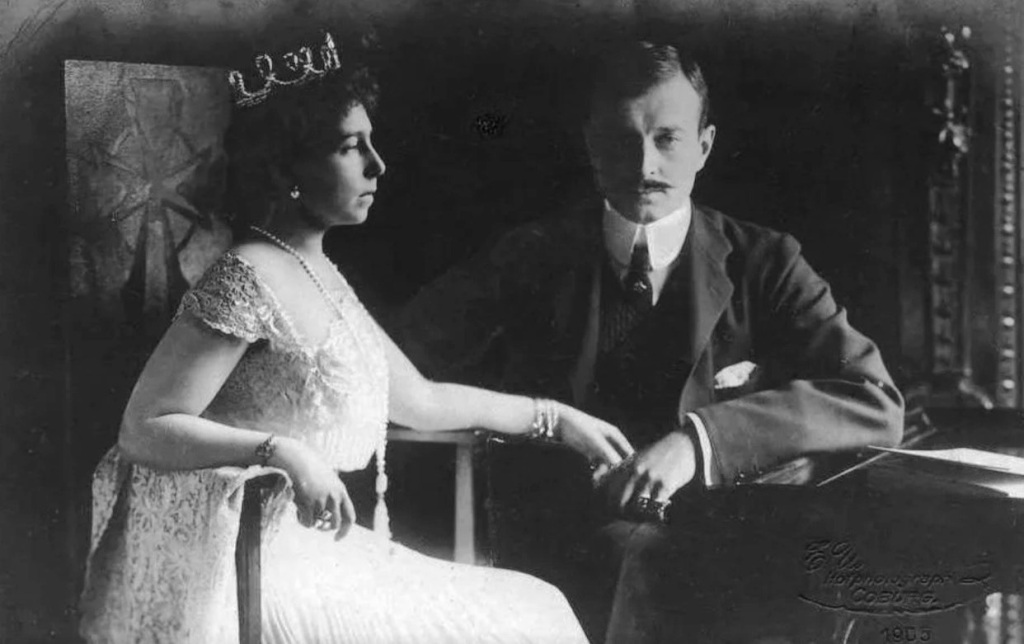
PHOTO: Grand Duke Kirill Vladimirovich and Grand Duchess Victoria Feodorovna

An unholy alliance

During the festivities marking the Coronation of Emperor Nicholas II, held in Moscow in May 1896, Kirill fell in love with his paternal first cousin, Princess Victoria Melita of Saxe-Coburg and Gotha (1876-1936). They flirted with each other at the balls and celebrations, but Victoria Melita was already married to Ernest Louis, Grand Duke of Hesse (1868-1937), the only brother of Empress Alexandra Feodorovna.

Victoria’s father was Alfred, Duke of Saxe-Coburg and Gotha (1844-1900), the second eldest son of Queen Victoria. Victoria’s mother was Grand Duchess Maria Alexandrovna (1853-1920), a daughter of Emperor Alexander II and Kirill’s paternal aunt. Victoria Melita scandalized the royal families of Europe when she divorced her husband in 1901.

On 8th October 1905, Kirill entered into an incestuous marriage [forbidden by the Russian Orthodox Church] with the divorced Victoria Melita. The marriage caused a scandal within the Russian Imperial Family, as well as in the Royal Courts of Europe and Great Britain.

The couple wed without the formal approval of Britain’s King Edward VII (as the Royal Marriages Act 1772 would have required), and in defiance of Emperor Nicholas II by not obtaining his consent. Grand Duchess Maria Alexandrovna wrote that she felt “responsible for having arranged the marriage of Ducky and Kirill,” a decision she regretted.

Nicholas II punished Kirill, by stripping him of his offices and honours, also initially banishing the couple from Russia. Together with their two daughters, the family settled in Paris before they were allowed to visit Russia. In 1910, they returned to Russia, whereupon the Emperor recognized Victoria Melita as Grand Duchess Victoria Feodorovna.

Despite the family reconciliation, the strained relationship which had already existed for many years between Nicholas and Alexandra with Kirill and Victoria, would remain strained and even hostile.

Revolution and betrayal

Even before Emperor Nicholas II’s abdication, Grand Duke Kirill Vladimirovich was one of the first Russian officers to commit an act of betrayal to his oath of loyalty to the Sovereign and to his dynastic duty.

While commanding the Marine of the Guard, which was responsible for guarding the Empress Alexandra and her children at Tsarskoye Selo, Grand Duke Kirill Vladimirovich with his tsarist monogram on his epaulettes and a red ribbon on his shoulders, under which the Marine of the Guard followed their commander, appeared on 1st March, at the State Duma, where he reported to Duma Chairman M.V. Rodzianko. “I have the honour of appearing before Your Excellency, I am at your disposal, as is the entire nation. I wish Russia only good.” Then he stated that the Marine of the Guard was at the complete disposal of the State Duma. Kirill then authorized the flying of a red flag over his palace on Glinka Street in Petrograd.

Prior to that, the Grand Duke sent notes to the chiefs of the military units at Tsarskoye Selo, with a proposal “to join the new government”, following his own example.

In June 1917, Grand Duke Kirill was the first Romanov to flee Russia, along with his pregnant wife and their two children. Not only was his desertion “illegal”, Kirill, who was serving as a rear admiral in active military service in a country at war, had thus abandoned his honour and dignity. It is interesting to add, that the Kirillovich were the only branch of the Imperial Family who managed to escape the Bolsheviks, without losing any family members.

In exile, on 8th August 8, 1922, Kirill declared himself “guardian of the Russian throne”. On 13th September 1924, he proclaimed himself “Emperor of All Russia” to the now non-existent Russian throne under the name of “Kirill I”. He became known as the “Soviet Tsar” because in the event of a restoration of the monarchy, he intended to keep some of the features of the Soviet regime.

In addition, is Kirill’s shameful infidelity—an affair which involved his behaviour or relationship far more sensational and unorthodox than a simple casual affair with another woman—a possible homosexual liaison perhaps?

Not only was Grand Duke Kirill a coward, he was clearly a man who lacked a moral compass and a traitor to his Sovereign and to Russia. His acts of treason and desertion, and later his support of Adolf Hitler and the Nazis during his years in exile, thus deprived his descendants any rights to the Russian throne.

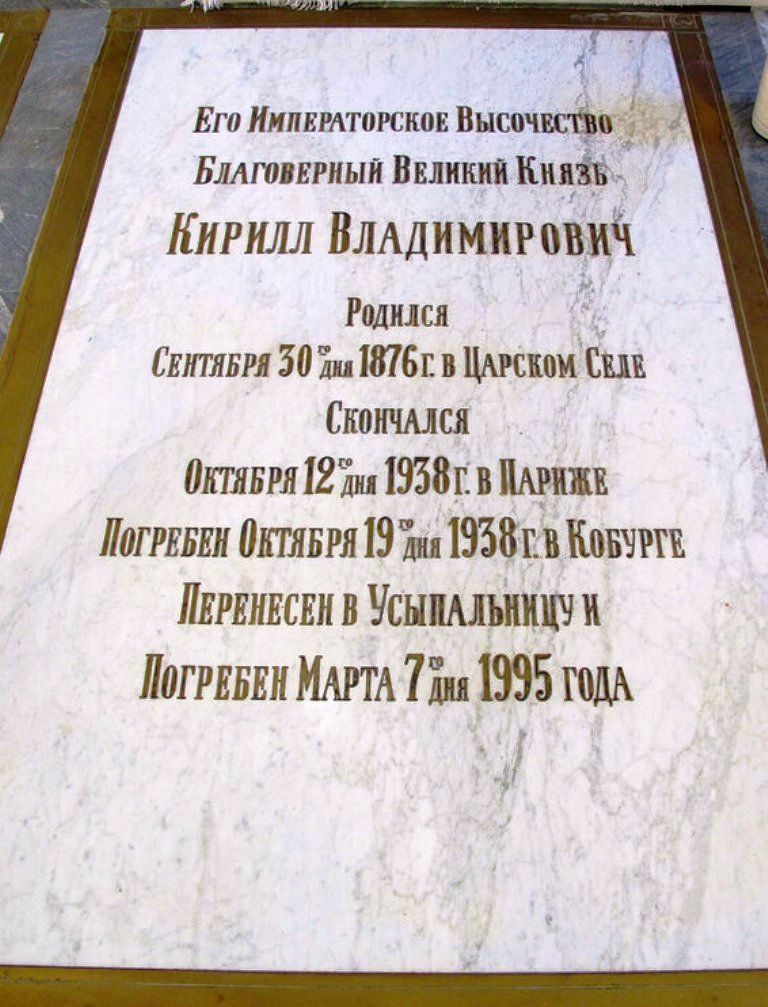
PHOTO: the tomb of Grand Duke Kirill Vladimirovich, in the Grand Ducal Mausoleum of the Peter and Paul Fortress in St. Petersburg

Legacy

Grand Duke Kirill was initially buried at the ducal mausoleum at Friedhof am Glockenberg, Coburg.  Following the fall of the Soviet Union in 1991, the remains of Kirill and Victoria were transferred from Coburg to the Grand Ducal Mausoleum of the Peter and Paul Fortress in St. Petersburg on 7 March 1995 after negotiations and great expense, thanks to the efforts of his Spanish-born granddaughter Princess Maria Vladimirovna.

85 years after his death, Grand Duke Kirill Vladimirovich remains one of the most despised members of the Russian Imperial Family. While some believe that he was a beacon for a restoration of the monarchy in Russia, his record of treason simply cannot be overlooked or swept under the rug, by those who work so diligently to whitewash his legacy.

During the 1920s until his death in 1938, his only adherants, were known as the Kirillists. Today, they are known as Legitimists – a small group of zealots – most of whom are American, and have no say whatsoever in the monarchist debate in modern day Russia. They work tirelessly to keep Kirill from falling from the pedestal, which this insignificant group of nutters has placed him on.

Despite what the Legitimists claim on their blog and social media, neither Kirill, nor his descendants Maria Vladimirovna and her pompous arrogant son George Mikhailovich, are very popular in post-Soviet Russia. Most Russians – including monarchists – dismiss their claims as “pretenders” to the non-existent Russian throne. Their activities in Russia attract a lot of media attention, in particular the wedding of George Mikhailovich to Rebecca Bettarini in St. Petersburg on 1st October 2021.

Under no pretext can we admit to the throne those whose ancestors belonged to parties involved in the 1917 revolution in one way or another. Nor can we admit those whose ancestors betrayed Tsar Nicholas II. Nor can we ignore those who ancestors openly supported the Nazis. Thus, without any reservations, the right to the succession to the throne of the Kirillovich branch should be excluded!

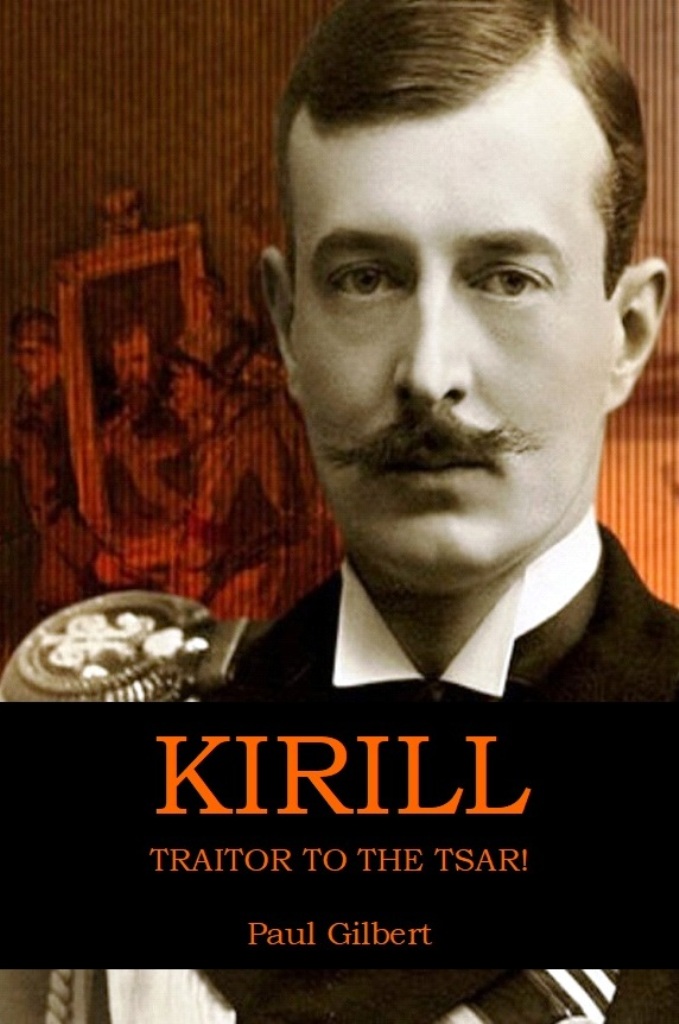
Grand Duke Kirill Vladimirovich is the subject of my forthcoming book ‘Kirill: Traitor to the Tsar!‘, the first comprehensive study to examine the relationship between Grand Duke Kirill and his first cousin Tsar Nicholas II. It is based primarily on documents and letters retrieved from Russian archival and media sources, many of which will be new to the English reader.

My book is scheduled for publication in late 2025. Watch for my ads in both Majesty and Russian Life magazines!

© Paul Gilbert. 12 October 2023