Imperial Yacht Standart: Nicholas II’s Palace on the Seas

Elegant style yachts were once the norm among many of the world’s most important rulers. The British, the Royal Houses of Europe, and even the Americans have all at one time or another provided their leaders with beautifully appointed yachts that served for both recreational as well as official purposes. But few of these highly specialized ships can compare with the Imperial Yacht Standart, reserved exclusively for the use of Russia’s last emperor Nicholas II.

This handsome “ship of state” was a graceful seagoing vessel and was considered the most perfect ship of her type in the world. She was named after the famous frigate of Peter the Great, launched in 1703. Built to the Tsar’s own specifications, she was constructed in Copenhagen in 1895 by the Danish firm Burmeister-Wain. The shipyard still maintains a thriving existence but the plans no longer exist for the Standart due to the destruction of the shipyard brought on by two world wars.

Across the North Sea, however, a copy of the plans for the former Imperial Yacht are held in the archives of the National Maritime Museum in Greenwich, England. After a visit to Cowes, the future King Edward VII asked for the plans of the Standart. The plans had been preserved in 1895 by the Admiralty Office when plans for a new British royal yacht were under construction.

PHOTO: plans for the Imperial Yacht Standart

The Standart was a superb, black-hulled 5557-ton yacht measuring 401 feet in length and 50 feet wide, making it the largest private ship in the world. She was much larger and faster than that of the other Imperial Yacht’s, the Alexandria and the Polar Star reaching speeds of up to 21.18 knots. Anchored in a Baltic cove or tied up at Yalta, the Standart was as big as a small cruiser. She had been designed with the graceful majesty of a great sailing ship. She combined elegance and comfort and met all the requirements of a floating palace. A large gilded bowsprit in the shape of a double-headed eagle, lunged forward from her bow and three tall masts towered above her two white funnels. White canvas awnings stretched over smooth decks shielding the passengers from the sun, while informal wicker furniture on the main deck invited relaxation. Also on the main deck was a large dining saloon that could seat up to seventy-two guests at one long table for luncheon or dinner.

PHOTO: the Imperial Yacht Standart at Yalta (above), and Sebastopol (below)

Below deck was found a formal reception salon and drawing rooms panelled in mahogany, polished floors, brass and elegantly hung crystal chandeliers and velvet drapes. The Imperial Yacht even had its own chapel for the private use of the Imperial Family.

The Tsar’s Private Study was furnished in dark leather and simple wooden furniture. The Tsarina’s drawing room and boudoir were done in her favourite English chintz. On the walls could be found the indispensible icons or “windows to heaven” along with many photographs of her relatives and family.

Today there are hundreds of photographs in existence of the Standart taken by the Tsar and his family, their relatives and aides, whom at the time were making the most of the latest craze of Russia’s upper classes–photography.

PHOTO: a large bowsprit, covered with gold leaf, lunged forward from her bow

PHOTO: view of the deck of the Imperial Yacht Standart

Many of these photographs were family photos and never meant for public viewing. They were stuck neatly in old family albums and memory books. Since the fall of the Soviet Union in 1991, hundreds of these “windows on the past” have been published in handsome coffee-table books. To date, the most luxurious of these books has to be Русские императорские яхты каталог 17-20 век (Russian Imperial Yachts: 17th-20th Century) containing nearly 400 photographs [published in 1997, this Russian language book is now out of print].

Among these “pioneer” photographers was General Count Alexander Grabbe, who was often asked to accompany the Imperial Family when they sailed on the Standart to the Crimea and the islands of the Finnish archipelago. A selection of his photographs of the Imperial Yacht were published in 1984 by his son Paul Grabbe in The Private World of the Last Tsar: The Photographs and Notes of General Count Alexander Grabbe. A keen photographer, Grabbe’s photographs show the Tsar and his family onboard the Standart as a happy and carefree family, relaxing, playing games, dining with royalty, roller-skating and dancing.

Just before sailing and prior to the arrival of the Imperial Family, the ship was polished and cleaned from top to bottom. Sailors busied themselves above and below deck, checking the lifeboats and adjusting the awnings on the main deck. Officers and crew assembled on deck, all of whom saluted the Tsar as he came on board.

PHOTO: Nicholas II’s study (above) and chapel (below)

On the Standart, Tsar Nicholas II followed a daily routine. Early each morning he came on deck to check the weather. He also liked to make the rounds of the ship’s company as well as greet the Imperial Yacht’s warrant officers. It was not uncommon to see the young Tsesarevich Alexis, wearing a sailor’s uniform, accompany his father during these rounds. The Tsar was interested in navigation and he liked to discuss this subject with his Flag Captain, Admiral Nikov or as well as checking the yacht’s course with Captain Zelenetsky. The Tsar worked for two days each week while at sea, receiving and sending dispatches by the courier boats that arrived daily from the mainland.

When the Standart sailed, she was a glorious and spirited vessel and she attracted attention wherever she went. When the Tsar and his family were on board, a large household staff of footmen, stewards, butlers and cooks attended to their every need, in total she carried a crew of 275. The yacht was manned by a crew from the Russian Imperial Navy. Also on board was a platoon of marines as well as a brass band and a balalaika orchestra. In order to communicate with the mainland and other ships of the Russian Imperal Navy, the Standart was also equipped with radio, a novelty in 1912.

“This relationship of the Imperial Family to its entourage was very friendly and informal,” Count Grabbe recalls. “They were especially cordial with the officers of the Standart. These young men were exemplary–charming, modest, possessed of a great deal of dignity and tact, and incapable of intrigue.”

PHOTO: Nicholas II and Alexandra Feodorovna relaxing on the deck of the ‘Standart

PHOTO: the Imperial Family in the dining room of the Imperial Yacht ‘Standart

The yacht was commanded by Rear-Admiral Lomen, who was responsible for the safety of the Tsar from the moment Nicholas II set foot on board any vessel, whether a yacht, a dreadnought or a launch. “The whole of the naval administration stood in mortal fear of the Admiral,” recalls A.A. Mossolov. “It is true that he asked a great deal, and if he was annoyed he could be extremely rude. He claimed that onboard the yacht the Tsar himself was under his orders! Off duty he was pleasant and sociable.”

The actual Commanding Officer of the Standart was Captain Tchaguin, and the second in command, Commander Nikolai Sablin. Both had the satisfaction of being thought of very highly by Their Majesties. In the letters which she wrote to the Tsar when he was at General Headquarters, the Tsarina frequently mentions Sablin.

Life at sea seemed to bring the best out in all the members of the Imperial Family. A.A. Mossolov recalls in his memoirs, “The Empress herself grew gay and communicative onboard the Standart. She joined in the children’s games, and had long talks with the officers.”

PHOTO: Empress Alexandra with her four daughters on the deck of the ‘Standart

PHOTO: Minister of the Imperial Court (1897-1917) Count Vladimir Frederiks with
Tsesarevich Alexei Nikolaevich, on the deck of the Imperial Yacht ‘Standart’. 1911

The officers were certainly in an exceptional situation. Almost daily, the Tsar invited these officers to dinner and after the meal liked to play billiards with them or enjoy a game of dominoes. In return the Imperial Family accepted invitations to tea in the mess. On such occasions the Empress usually sat nearby, sewing, the Tsesarevich ran about with his playmates, while the Grand Duchesses, surrounded by all the young men, scattered throughout the yacht. “We form a united family,” the Empress used to remark on these memorable and happy voyages.”

The family vacations to the Crimea and their cruises on the Standart were a welcome change for the children in particular.

When the Imperial Family went onboard the Standart, each of the five children was assigned a diadka, a sailor charged to watch over the the child’s personal safety. The children played with these diadkas, played tricks on the them and teased them. Gradually the young officers of the Standart joined in the children’s games. As the Grand Duchesses grew older, the games changed into a series of flirtations, all very innocent of course. “I do not, of course, use the word ‘flirtation’ quite in the ordinary sense of the term,” remarks Mossolov, “the young officers could better be compared with the pages or squires of dames of the Middle Ages. Many a time the whole of the young people dashed past me, but I never heard the slightest word suggestive of the modern flirtation.” Moreover, the whole of these officers were polished to perfection by one of their superiors, who was regarded as the Empress’s squire of dames. As for the Grand Duchesses, even when the two eldest had grown up into real women, one might hear them taking like little girls of ten and twelve.

PHOTO: Nicholas II relaxing on the deck of the Imperial Yacht ‘Standart

“The girls loved the sea,” Count Grabbe comments, “and I well remember their joyful anticipation of these cruises on the Standart, which opened broader horizons for them, brought them new contacts, and permitted an intimacy that was other wise impossible. To be at sea with their father–that was what constituted their happiness.”

The Tsesarevich Alexis also loved the excursions on the Standart as well. He enjoyed accompanying the Tsar while he carried out his duties on board the Imperial Yacht. He loved to play games such as shuffleboard. On sunny afternoons it was not uncommon to find an exhausted Alexis stretched out and fast asleep under one of the many lifeboats on the main deck. At times, his haemophilia restricted his movements severely and photographs show the young Tsesarevich walking with the aid of a cane. Due to his illness, a favourite sailor was assigned to watch over Alexis. At first it was the sailor Andrei Derevenko who for some time was patient and conscientious in watching over his Imperial charge; his behaviour toward Alexis, however, became excessively mean after the Revolution. Fortunately, the Tsesarevich also had another sailor-attendant–the loyal Klimenty Nagorny. This sailor was later killed by the revolutionary army that overran Russia after World War I.

PHOTO: view of the Imperial Yacht Standart

PHOTO: the Imperial Yacht Standart on the Neva, St. Petersburg

So it was, that when the warm months of the summer rolled around that the Tsar and his family set sail on the Standart for their vacation off the coast of southern Finland. For the Tsar, there was no greater relaxation than these restful, seaborne excursions on his beloved Standart. Here his family and found a secluded bay surrounded by small islands where they could relax and enjoy their time together away from the palaces and rigid rules that governed the Russian court. This charming spot was such a favourite of Nicholas II and his family, that they returned to it every year and the children even nicknamed it the “Bay of Standart.”

While anchored in the bay, the Imperial Family lived on board the Standart but every day they would get into small launches and head for their chosen island. The island was uninhabited, which offered them complete freedom to picnic, relax, and enjoy the out-of-doors without fear of being observed by prying eyes. It was also on this little island that a tennis court was built for the Imperial Family, tennis being a favourite of the entire Imperial household.

PHOTO: “the wreck of the Standart“, 1907

In 1907, an unfortunate incident took place that was later known as “the wreck of the Standart.” The incident occurred on a fine day in the Finnish fjords when all of a sudden the Imperial yacht was shaken by a jolt at a moment when there was not the slightest reason for expecting anything of the sort. Immediately afterwards the yacht was heeled over. It was impossible to tell what might be coming next. The Empress rushed over to her children. She found them all expect the Tsesarevich, who was nowhere to be seen. The anguish of the two parents may only be imagined; they were both beside themselves. It proved impossible to move the yacht. Motor-boats started off towards her from every direction.

The Emperor hurried up and down the yacht, and gave the order for everybody to go in search of the Tsesarevich. It was only after some time that he was discovered safe and sound. At the first alarm his diadka, Derevenko, took him in his arms and very sensibly rushed to the “hawse-pipes,” since they offered the best chance of saving the boy if the vessel should be a total loss.

The panic subsided, and all onboard descended into the boats. An inquiry followed. The whole responsibility fell on the pilot, an old Finnish sea-dog, who was in charge of the navigation of the vessel at the moment of the disaster. Charts were hurriedly consulted and showed beyond any possible question that the rock on which the yacht had grounded was entirely uncharted.

There remained His Majesty’s Flag Captain, who was responsible in principle for the safety of the Imperial Family. At the time of the accident the post was held by Admiral Nilov, the only master, under God, of the fate of the yacht.

He was in such a state of mind after the accident that the Tsar felt bound to go to him in his cabin. Entering without knocking, the Tsar saw the Admiral bending over a chart, with a revolver in his hand. The Emperor tried to calm him. He reminded the Admiral that under naval regulations he would have to go before a court of inquiry, but, the Tsar added, there could be not a shadow of doubt that he would be acquitted, for the accident was entirely unforeseeable. The Tsar carried away the Admiral’s revolver.

“There was an immediate conspiracy of silence at Court about the wreck of the Standart, recalls Mossolov. “Everybody knew that the slightest criticism of the officers of the yacht would have brought down punishment on the head of anyone who ventured to utter it.”

“The officers were chosen for special gifts; their task was to create an atmosphere of a fairytale, a charming idyll. It may be that in technical knowledge they were not absolutely up-to-date.”

Many a royal personage was made welcome on board the Standart, including Queen Alexandra, sister of the Dowager Empress Marie, accompanied by her husband, King Edward VII, King Gustav of Sweden and Kaiser Wilhelm II of Germany.

Despite the relaxed atmosphere of the excursions on the Standart, the safety and protection of the Imperial Family was still a top priority. The Tsar was so fearful of assassination that he had several cruisers accompany the yachts at all times. A warning, published in a Finnish newspaper in 1911, reads as follows;

“Notice to all mariners concerning seafaring regulations when the Russian Imperial Yacht is in Finnish waters: Fire will be opened on all commercial shipping and all yachts–whether motor, sail or steam-that approach the line of guard ships. All ships wishing to put to sea must seek permission not less than six hours in advance. Between sundown and sunrise, all ships underway may expect to be fired upon.”

Early in June 1914, as usual at this time of the year, the Tsar and his family went on a voyage to the Finnish fjords. The weather was hot, and stifling heat was interspersed with pouring rain. This year, Tsar Nicholas II was not to enjoy the picturesque landscape and relax with the serene joys of family life; since the end of June one piece of bad news had followed another. The assassination of the Austrian Archduke Francis Ferdinand–whom Nicholas and Alexandra had known very well–and the attempt on the life of Rasputin, disrupted the mental equilibrium of the Imperial couple. Within weeks, war was declared and the Standart, by order of the Tsar was placed in dry-dock, and he never again returned to the tranquility of the Finnish or Crimean coastline’s.

After the Revolution, the former Imperial Yacht was destined to be stripped of all its former elegance. In 1917, the Standart was renamed Vosemnadtsate Martza. In 1932, she was renamed Marti. Between then and December 1936, she was refitted as a drab, grey minelayer at the Marti Yard in Leningrad for service in the Soviet Navy. The heavy gun armament was fitted, as were mine rails. There were 4 rails on the mine deck, and 2 more on the upper deck. The mine deck could carry 580 mines, and 200 could be accommodated on the upper deck.

With the German invasion of Russia, the Marti laid some 3159 mines, and bombarded shore positions near Leningrad. On 23rd September 1941, Marti was damaged in an air attack at Kronstadt, but was quickly repaired to resume action on the 26th of the same month. In autumn 1941, some of her guns were used ashore at Leningrad.

After the war, Marti was refitted and converted to a training ship, renamed Oka. During the refit, the steam engines were replaced by diesels. She was scrapped at Tallinn in Estonia in 1963.

sea1

PHOTO: Nicholas II looking out to sea from the deck of the Imperial Yacht ‘Standart

FURTHER READING + additional photos and videos:

The Soviet Navy’s use of the Imperial Yacht “Standart” during WWII

The Fates of the Russian Imperial Yachts ‘Standart’ and ‘Polar Star’

125th anniversary of the first voyage of the Imperial Yacht “Standart”

© Paul Gilbert. 28 February 2023

Faithful to the End: Aleksei Andreyevich Volkov (1859-1929)

On this day – 27th February 1929 – Aleksei Andreyevich Volkov died in exile

Born in 1859, Volkov served as valet at the court of Emperor Nicholas II. He escaped a death march at Perm in September 1918 and survived.

As a young adult, Volkov entered the Russian Imperial Army and rose through the ranks. He was on guard and witnessed the assassination of Emperor Alexander II (1818-1881) in 1881. He later served as a military instructor to the future Emperor Nicholas II.
From 1886, he was in the service Grand Duke Paul Alexandrovich (1860-1919). In 1910, he became a valet at the court of Nicholas II. He served as the Empress Alexandra’s personal servant and often pushed her wheelchair.

In 1917, Volkov followed Nicholas II and his family into internal exile to Tobolsk, but was separated from them at Ekaterinburg and imprisoned at Perm. It was in Perm, that he learned that the Tsar had been murdered by the Bolsheviks, though he was unaware that the Tsarina and their children had also been shot.

On 4th September 1918, Volkov was taken from his prison cell in the middle of the night and led to the prison office, where he saw lady-in-waiting Anastasia Hendrikova (1887-1918) and the elderly tutor Catherine Schneider (1856-1918).

The group were walked all the way to the edge of town, when Volkov realized they were being taken into the woods to be shot. He broke from the group and ran for his life at the first opportunity. A bullet whizzed past his ear. Behind him he heard gunshots as the other prisoners in the group were shot and killed, including Henrikova and Schneider.

Volkov eventually joined other refugees at the White Army headquarters in Omsk and made his escape from Russia through Vladivostok and the Far East. In 1922, he settled in Estonia. He later lived in Denmark, where he was highly respected in the Russian émigré community because of his lifelong loyalty to the Imperial Family.

During his years in exile, he wrote his memoirs about his time at court and his escape. Volkov also discusses his eye-witness account of the Khodynka Tragedy in May 1896.

Alexey Andreevich Volkov died in Estonia on 27th February 1929, in Yuriev (Tartu). He was buried at the Assumption Cemetery.

Memory Eternal! Вечная Память!

FURTHER READING:

Ekaterinburg: the Survivors + PHOTOS

Regicide in Ekaterinburg

© Paul Gilbert. 27 February 2023

ROC hierarchs to discuss Ekaterinburg Remains this summer

On 19th July 2023, a bishops’ conference of hierarchs – not to be confused with the Bishops Council – will be held at the Christ the Saviour Cathedral in Moscow on 19th July 2023. Among the topics for discussion will be the Ekaterinburg Remains.

According to the permanent member of the Holy Synod of the Russian Orthodox Church, and head of the Central Asian Metropolitan District, Metropolitan Vincent (Morari) of Tashkent and Uzbekistan, bishops from across Russia and other countries (who will be able to arrive in the Russian Federation) will meet to discuss further the authenticity of the Ekaterinburg Remains. Metropolitan Vincent emphasized, however, that the final decision on the official recognition of the Ekaterinburg Remains by the ROC will be made by the Bishops Council at a later date.

The Bishops’ Council was originally scheduled to meet in Moscow from 15th to 18th November 2021, however, this was delayed “due to the difficult COVID-19 situation.” The meeting was thus rescheduled for 26th to 29th May 2022, but this to was postponed due to Russia’s invasion of Ukraine. Finally, on 25th August 2022, the Holy Synod announced that the Bishops’ Council meeting had been postponed “indefinitely”, citing the “current situation in the world”.

Recall that the Chairman of the Investigative Committee of Russia Alexander Bastrykin reported that the Investigative Committee on the criminal case on the murder of the Imperial Family, which resumed in 2015 conducted 40 new examinations to eliminate any possible gaps and doubts about the remains found near Ekaterinburg. For the first time, the investigation studied materials located in archival funds which had been previously closed to investigators.

New DNA tests were conducted on a hair of Empress Alexandra Feodorovna and the maternal grandmother of Nicholas II, Queen of Denmark Louise of Hesse-Kassel, found by a collector abroad, the results of the examinations became known in January of last year.

In addition, a comparison by geneticists of the remains of Nicholas II and samples from the tomb of his father Emperor Alexander III in the Saints Peter and Paul Cathedral in St. Petersburg by 99.99% showed the probability of their family relationship as that of a son and father. As Bastrykin confirmed, DNA examinations and other studies established that the remains belonged to Emperor Nicholas II and his family.

In January 2022, the head of the Synodal Department for External Church Relations, Metropolitan Hilarion, stated that “Nothing prevents the ROC from recognizing the authenticity of the Ekaterinburg Remains”.

As previously noted, it is only after members of the Bishops’ Council have reviewed the findings of the Investigative Commission, that they will deliver their verdict on the authenticity of the Ekaterinburg Remains.

Sadly, whatever decision the Bishops’ Council makes, it is sure to cause a schism among Believers who are divided on the authenticity of the remains. Many still adhere to Nikolai Alekseevich Sokolov’s (1882-1924) theory that the bodies of the Imperial Family were completely destroyed with fire and acid at the Four Brothers Mine.

***

BONES OF CONTENTION (Revised Edition)
The Russian Orthodox Church and the Ekaterinburg Remains
by Paul Gilbert

CLICK HERE TO ORDER FROM AMAZON

Full-colour covers, 206 pages + 90 black & white photographs

Originally published in 2020, this NEW REVISED & EXPANDED 2021 EDITION features an additional 40+pages, new chapters and 90 black and white photos. It is the most up-to-date source on the highly contentious issue of the Russian Orthodox Church and their position on the Ekaterinburg Remains.

The world awaits a decision by the Bishops’ Council of the Russian Orthodox Church, who will meet in Moscow at some point, during which they will review the findings of the Investigative Commission and deliver their verdict on the authenticity of the Ekaterinburg Remains.

The reopening of the investigation into the death of Nicholas II and his family in 2015, caused a wave of indignation against the Russian Orthodox Church. This book presents the position of both the Moscow Patriarchate and the Investigation Committee.

This is the first English language title to explore the position of the Orthodox Church in Russia with regard to the Ekaterinburg remains. The author’s research for this book is based exclusively on documents from Russian media and archival sources.

This unique title features an expanded introduction by the author, and eight chapters, on such topics as the grounds for the canonization of Nicholas II and his family by the Moscow Patriarchate in 2000; comparative details of the Sokolov investigation in 1919, and the investigations carried out in the 1990s to the present; reluctance of the Moscow Patriarchate to officially recognize the remains as authentic; interesting findings of Russian journalist, producer and screenwriter Elena Chavchavadze in her documentary Regicide. A Century of Investigation; and the author’s own attempt to provide some answers to this ongoing and long drawn-out investigation for example: “Will Alexei and Maria be buried with the rest of their family?” and “Will the Imperial Family remains be reinterred in a new cathedral in Ekaterinburg?”.

This new revised and expanded edition also includes two NEW chapters!

Interviews with Vladimir Soloviev, Chief Major Crimes Investigator for the Central Investigate Department of the Public Prosecution Office of the Russian Federation and Archpriest Oleg Mitrov, a member of the Synodal Commission for the Canonization of Saints – BOTH key players in the Ekaterinburg remains case, reveal the political undertones of this to this ongoing and long drawn-out investigation.

ABOUT THE AUTHOR

Independent researcher Paul Gilbert has spent more than 25+ years researching and writing about the Russian Imperial Family. His primary research is focused on the life, reign and era of Nicholas II. On 17th July 1998, he attended the tsar’s interment ceremony at the SS Peter and Paul Cathedral in St. Petersburg. Twenty years later, he attended the Patriarchal Liturgy on the night of 16/17 July 2018, held at the Church on the Blood in Ekaterinburg. Since his first visit to the Urals in 2012, he has brought prayers and flowers to both Ganina Yama and Porosenkov Log on numerous occasions.

© Paul Gilbert. 5 February 2023

Marble (Mountain) Hall opens in the Alexander Palace

PHOTO: the restored interior of the Marble [aka Mountain] Hall in the Alexander Palace. © Tsarskoye Selo State Museum

Sixteen months after it’s official reopening in August 2021, the restoration of the interiors of the Alexander Palace continues. On 2nd February 2023, the Marble Hall – which is part of the ceremonial enfilade – officially opened it’s doors to visitors for the first time in 80 years.

Visitors can now see the Marble Hall as it looked in the 1930s when the Alexander Palace was a museum before the outbreak of the Great Patriotic War in 1941. The opening of the Marble Hall is the fourteenth interior restored or reconstructed in the Alexander Palace since the large-scale restoration began in 2012.

The restoration work on the Marble [nicknamed the Mountain Hall by Emperor Nicholas I, 1796-1855] included the restoration and cleaning of the artificial marble walls and fireplaces. The highlight of the interior, however, is the recreation of the wooden slide, thanks to financial support of the Transsoyuz Charitable Foundation.

The Marble (Mountain) Hall which connects the Large Library with the Portraits Hall, is now included in the Alexander Palace tour.

PHOTO: the recreated slide in the Marble [aka Mountain] Hall
© Tsarskoye Selo State Museum

The restoration of the Marble Hall interior was developed by specialists of the Studio 44 Architectural Bureau in St. Petersburg, while the actual restoration of the interior and the reconstruction of the slide was carried out by the specialists of PSB ZhilStroy.

The interior, like other halls of the ceremonial enfilade, have retained some elements of their original decoration. During the process of work, the artificial marble walls of light gray and lilac shades, the parquet flooring and a fireplace were cleaned and restored. In addition, historical photographs helped experts recreate a picturesque frieze imitating artificial marble, as well as oak door and window fillings.

During the work on a lunette – situated above the mountain slide – an authentic oil painting on canvas imitating a window was discovered and restored. During the restoration of the ceiling, the metal rosette in its center, was dismantled, restored and reinstalled.

PHOTO: view of the restored interior of the Marble [aka Mountain] Hall
© Tsarskoye Selo State Museum

The project for the recreation of a chandelier was developed by specialists of the Tsarskoye Selo Amber Workshop according to the historical model; the painstaking work on creating a copy of the 40 candle chandelier was carried out by Studio Yuzhakova.

The restored interior has been further complemented with furniture from the museum’s collection; bronze items and porcelain vases, and a fireplace screen, the original from this interior; a bronze clock and candelabra with figures of Orpheus and Eurydice.

PHOTO: the Marble (Mountain) Hall as it looked before the Second World War

The mountain slide was ordered in 1833 by Empress Alexandra Feodorovna [wife of Emperor Nicholas I] for the New Palace [Alexander Palace] at Tsarskoye Selo.

Following the completion of the parquet and other finishing works of the Marble Hall’s interior in 1843, the question of replacing the “mountain slide”, which had fallen into disrepair was discussed. In the report dated 18th March 1843, the architect I.Ye. Efimov notes that the existing foundation of the old hill, “was all split, the surface chipped in several places, out of which nails were dangerously exposed and thus beyond repair.”

Efimov announced that the cost to replace the wooden slide would be 500 rubles [a significant fee in the mid-19th century].

The Mountain Hall and its slide were enjoyed by the future Emperors Nicholas I, Alexander II and Alexander III, all of whom played on the hill as children. The Emperors, even after they became adults, periodically slid down the mountain along with other members of their family. For example, the educator of the future Alexander III S.A. Yuryevich wrote to his parents in 1847, after moving at the end of August from Peterhof to Tsarskoye Selo, anticipating “noisy games in the Mountain Hall”.

A member of the aristocracy noted in her memoirs how Emperor Alexander II invited her to the Alexander Palace as a child and invited her to play on the wooden mountain. She noted that Alexander II who was then 50 years old at the time “himself, slid down with his grandson in his arms.” It is worth noting that this particular grandson was the future Emperor Nicholas II.

The four daughters of Nicholas II and their brother Tsesarevich Alexei were the last of the Imperial Children who played in the Mountain Hall. As in previous years, adults also entertained themselves on the slide with equal pleasure. In 1908, Lili Dehn, recalls riding with the Grand Duchesses “on the mountain slide, installed in one of the premises of the palace. We had fun for hours, getting great pleasure from the ride. I completely forgot that I was a married woman who was going to become a mother in a few months. ”

PHOTO: In the 1930s. the ceremonial dresses of Empress Alexandra Feodorovna, the wife of Emperor Nicholas I, were exhibited in the Marble (Mountain) Hall

During the Great Patriotic War (1941-45), the Marble (Mountain) Hall was damaged during the Nazi occupation of Tsarskoye Selo.

Following the war, the Director of the Alexander Palace Anatoly Mikhailovich Kuchumov (1912-1993), describes the destruction of the Hall: “We go to the Hall with a slide … the amazing color of the marble is still pleasing , which is especially evident now that all the curtains have been removed. There is not even a trace of the hill, the mirrors have been ripped out, the marble fireplace is broken – the caryatids have all been stolen. The massive gilded frame from the picture hanging above the hill seems to have miraculously survived. The vault of the hall in one second has been damaged by dampness, since the roof over this hall was torn apart by a shell ”

VIDEO of the recently restored Marble (Mountain) Hall in the Alexander Palace

Note: the audio is in Russian, however, do not let that deter you from watching this 2-minute newsclip, which allows us to see the more intricate details and elements of the interior and mountain slide.

© Paul Gilbert. 2 February 2023

New books on the Romanovs scheduled for 2023
In response to the numerous queries I have been receiving over the past few months with regards to the new book projects which I have been working on over the past year, I decided to provide the following update . . .

Many of you may recall that 2022 was not a good year for me due to health reasons. In April, I was diagnosed with Stage-2 cancer; in May, I had surgery to remove the tumour; in June, I was at home recovering; followed by six months of chemotherapy, which left me both weak and tired. Never, in my life have I ever felt so sick. As a result, my research and writing suffered, delaying publication of the titles pictured above by months.

My chemo ended on 11th January, however, I continue to endure side effects. According to my oncologist, it could take up to two months for my body to flush all the toxins, and any where from six to twelves months before I start to feel my old self again.

Despite that, I am now looking forward to returning to my two favourite passions in life: researching and writing about the life, reign and era of Russia’s much slandered tsar Nicholas II.

Below, is a short summary of each of the titles scheduled for publication this year:

Nicholas II. Photographs – will be my most ambitious publishing project to date, with 200+ pages and richly illustrated with more than 200 high-quality black and white photos of Nicholas II – most of them full-page!

My book will be divided into 12 parts + an interesting foreword on the many albums and individual photos held in archives and private collections; Nicholas’s own interest in photography; efforts to preserve and restore images currently held in Russian archives; and much more.

This beautiful album is a labour of love, and my personal tribute to the memory of Russia’s last emperor and tsar. I am so proud of this book, and trust that this book will one day become a much coveted and sought after collectors title.

The Lost World of Imperial Russia. Volume II – the second volume of my recently published book, which will feature MORE photographs of the the Russian Empire during the reign of Emperor Nicholas II, from 1894 to 1917.

The cover will feature a photo of Andrei Alexeevich Kudinov (1852–1915), who served as bodyguard to Grand Duke Alexander Alexandrovich (later Alexander III). In December 1878, he was assigned to Grand Duchess Maria Feodorovna; he stayed at this post when she became Empress in 1881 and continued until his death.

Volume II will be issued in hard cover and paperback editions, 240 pages, richly illustrated with more than 400 vintage black and white photos!

Sovereign No. 12 – After an absence of nearly four years, I am pleased to announce that my semi-annual periodical ‘Sovereign: The Life and Reign of Emperor Nicholas II’ will resume publication next year. The next issue – the No. 12 issue – will be published in January 2023.

This new issue will feature the following full-length articles – among others, that have yet to be announced:

[1] Mikhail Rodzianko: Gravedigger of the Russian Empire by Andrei Ivanov

[2] Nikolai Sokolov’s Report to Dowager Empress Maria Feodorovna on the Investigation into the Deaths of Emperor Nicholas II and his Family

[3] Memorial Museums to Nicholas II in Post-Soviet Russia by Paul Gilbert

[4] They Were the Last to Help the Tsar’s Family in Ekaterinburg by Abbess Dominica (Korobeinikova)

[5] Loyal to Their Sovereign: Generals Who Did Not Betray Nicholas II in 1917 by Paul Gilbert

[6] Family Disloyalty: Nicholas II and the Vladimirovichi by Paul Gilbert

Olga: Grand Duchess Olga Alexandrovna – this book is a tribute to one of the most beloved and respected members of the Russian Imperial Family: Grand Duchess Olga Alexandrovna (1882-1960).

The first part explores her Russian, Danish and Canadian years respectively; the second part explores her love of painting – Olga painted more than 2,000 in her life; the third is about her work and dedication as a nurse during WWI; the fourth is an interview with her daughter-in-law Olga Kulikovsky-Romanoff (1926-2020), who shares her husband Tikhon’s anecdotes and details about his mother: the Grand Duchess of Russia.

Richly illustrated with more than 100 black and white photos. 

Anna: Anna Alexandrovna Taneeva-Vyrubova – Anna Alexandrovna Vyrubova (née Taneyeva), was born on 16th July 1884. She is most famous as the lady-in-waiting, the best friend and confidante of Empress Alexandra Feodorovna.

This new book features 7 chapters, including a synopsis of Vyrubova’s memoirs – published in the 1920s; her home in Tsarskoye Selo; an interview with Anna in 1917; her life in exile in Finland; efforts to have her canonized, among others.

Vyrubova died in exile on 20th July 1964, at the age of 80. She was buried in the Orthodox section of Hietaniemi cemetery in Helsinki.

Illustrated with more than 60 black and white photographs

The Imperial Train of Emperor Nicholas II – the first English language book about the Imperial Train will explore the Tsar’s luxurious mode of transport on rails. It will feature detailed descriptions – including vintage photos and floorplans – of the train’s interiors. It also tells about the fate of the Imperial Train, the Imperial Railway Pavilions constructed solely for the use of the Imperial Train, and much more.

Traitor to the Tsar! Grand Duke Kirill Vladimirovich and Nicholas II – is the first comprehensive study to thoroughly examine the relationship between Grand Duke Kirill Vladimirovich and his first cousin Tsar Nicholas II. It is based primarily on documents and letters retrieved from Russian archival and media sources, many of which will be new to the English reader.

Grand Duke Kirill, was clearly a man who lacked a moral compass. In this book I discuss his entering into an incestuous marriage with his paternal first cousin and a divorcee, Princess Victoria Melita of Saxe-Coburg and Gotha in 1905, defying both Nicholas II by not obtaining his consent prior, and the Russian Orthodox Church.

Kirill’s act of treason during the February Revolution of 1917, is well known and for which he is most vilified. It was in Petrograd, that Kirill marched to the Tauride Palace at the head of the Garde Equipage (Marine Guard) to swear allegiance to the Russian Provisional Government, wearing a red band on his uniform. He then authorized the flying of a red flag over his palace on Glinka Street in Petrograd.

In June 1917, Grand Duke Kirill was the first Romanov to flee Russia. His departure was “illegal”, as Kirill was still in active duty as a rear admiral in active military service in a country at war, he had abandoned his honour and dignity in the process.

In 1922, Kirill declared himself “the guardian of the throne”, and in 1924, pompously proclaimed himself “Emperor-in-Exile”, creating a schism in monarchist circles of the Russian emigration.

I further explore Kirill and Victoria’s alleged Nazi affiliations during their years in exile, as well as Kirill’s shameful infidelity, of which his wife would never forgive him.

* * *

Please NOTE that I do not have publication dates, bindings (on some titles), page counts, and prices at this time. In addition, the book covers and titles shown are subject to change without notice. ALL of these titles will be made available on AMAZON. Each new publication will be announced here on my blog, my Facebook page and also via my bi-weekly news updates.

© Paul Gilbert. 1 February 2023
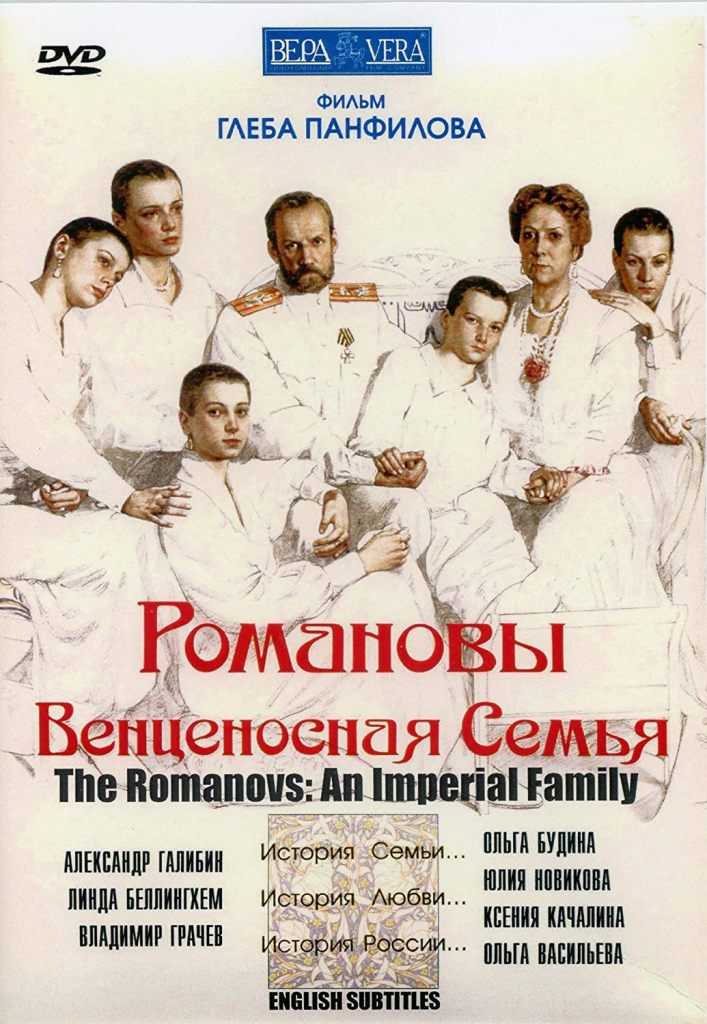
New monument of Imperial Family to be installed at Murmansk airport

PHOTO: artist concept of new monument to the Imperial Family at the Nicholas II-Murmansk Airport (above); and the monument of Emperor Nicholas II and his family by the Russian sculptor Semyon Platonov (below)

In June 2019, Russian President Vladimir Putin announced that the airport in the Russian arctic city of Murmansk would be renamed in honour of Emperor Nicholas II. Murmansk, Russia’s first ice free port was founded in 1916 by Nicholas II and named Romanov-on-Murman.

In the autumn of 2018 a nationwide online poll was held in which the Russian people could cast votes to rename 42 major airports across Russia. More than 5.5 million people took part in the ‘Great Names of Russia’ poll. More than 140,000 people in the Murmansk region took part in the poll on the renaming of Murmansk Airport. The names of Ivan Papanin and Boris Safonov were among the candidates, however. Russia’s last Tsar received 68,260 votes or 48% of the total votes tallied.

In December 2019, the head of the Kola District Administration announced plans to expand and modernize the Nicholas II-Murmansk Airport, which includes construction of a second terminal for flights within Russia began in 2021. The name of Nicholas II will be placed on the facades of each of the two terminals.

In addition is the reconstruction of the square in front of the main air terminal, of which several projects were considered. Initially, a bust-monument of Nicholas II was proposed, however, this idea has now been shelved.

In November 2020, a permanent photo exhibition dedicated to Emperor Nicholas II has opened in the terminal building of Murmansk Airport.

PHOTO: artist concept of the square in memory of Emperor Nicholas II at Murmansk Airport (above); and view of the of new monument to the Imperial Family to be installed in the center of the square (below)

On 26th January 2023, the architecture and landscaping firm Хмель in St Petersburg, published an artist’s concept by architect Marina Khmel of the new square in front of the Nicholas II-Murmansk Airport, the highlight of which will be a major sculptural composition of the last Russian Imperial Family.

The square in memory of Emperor Nicholas II will feature landscaped gardens with flowerbeds and trees, as well a place for holding events, information stands and temporary outdoor exhibitions. The square will also include a quiet space for travelers to rest, and a platform for boarding and disembarking from buses and cars.

In the center of the park will be a monument of Emperor Nicholas II and his family by the Russian sculptor Semyon Platonov. The sculptural composition is based on a famous photograph from 1913, which depicts Nicholas II and Alexandra Feodorovna surrounded by their five children – Olga, Tatiana, Maria, Anastasia and Alexei.

© Paul Gilbert. 28 January 2023

Lost Orthodox Churches of Imperial Russia

PHOTO: On 5 December 1931, the Cathedral of Christ the Saviour in Moscow was dynamited and reduced to rubble

Unlike many of his predecessors, Emperor Nicholas was devoted to the Russian Orthodox Church. It was upon his ascension to the throne in 1894, that his devotion to the Holy Orthodox Church showed his greatest strength. It was during the reign of Russia’s last Tsar – 1894 to 1917 – that the Russian Orthodox Church reached her fullest development and power.

In 1914, the Russian Orthodox Church consisted of 68 dioceses, 54,923 churches, 953 monasteries, 4 theological academies, 185 religious schools, 40,530 schools and 278 periodicals. The clergy consisted of 157 bishops, 68,928 priests, 48 ​​987 clerics, 21,330 monks in monasteries and 73,229 nuns in convents.

The construction of new churches had the full support of the Emperor, who approved funding for the construction of over 7576 new churches and chapels, and the opening of 211 new monasteries. By the end of Nicholas II’s reign there were 57,000 churches in the Russian Empire.

PHOTO: the desecration and looting of Russian Orthodox Churches by Bolshevik thugs and criminals after the 1917 Revolution

Lost Orthodox Churches of Imperial Russia

The Decree on the Separation of Church and State was proclaimed by the Bolsheviks in January 1918. It declared all Church property to be the property of the state. Sanctioned by this licence, Bolshevik squads went round the country desecrating and looting churches and monasteries, mocking religion and religious people unmercifully, even murdering priests, monks, nuns and believers by the thousands.

During the Soviet years, three Anti-religious campaigns were carried out by the Bolsheviks and later the Soviets: 1917–1921; 1921–1928 and 1928-1941, which resulted in the destruction of thousands of cathedrals and churches. Many others were converted to secular use, whereby church buildings were transformed into warehouses, state institutions, cinemas, ice rinks and prisons

Between 1927 and 1940, the number of Orthodox churches in the Russian Republic fell from 29,584 to fewer than 500. In 1987, only 6,893 Orthodox churches and 15 monasteries remained in the USSR.

In this post, I have researched the fate of five randomly picked cathedrals and churches which were destroyed during the Soviet years. It is part of an important large-scale historic project which I have planned for 2023-24 and one, which goes hand-in-hand with my own personal journey to Orthodoxy.

No. 1 – Church of the Transfiguration of the Lord (Bezhitsa)

PHOTO: early 20th century view of the Church of the Transfiguration of the Lord

The Church of the Transfiguration of the Lord was built in 1880-1884 in Bezhitsa (now the region of Bryansk), according to the project of the Russian architect Alexander Groener. Construction was paid for by the workers of the Bryansk rail-rolling, iron-making and mechanical plant.

The church was five-domed and cruciform in plan. Its frame had been welded from iron rails and sheathed inside and outside with oak planks. The central part was crowned with a massive illuminated octagon under a tent with a dome. The interior decoration was distinguished by its magnificent splendour.

PHOTO: interior of the Church of the Transfiguration of the Lord in Bezhitsa, 1895.

In 1894, a parish school was built. In 1897 and 1909, two chapels were added.

On 20th April (old style) 1915, the church was visited by Emperor Nicholas II.

In 1929, the church was closed by the Bolsheviks and converted into a circus and later a cinema. In 1933-1935 it was destroyed.

In 1937, the former rector of the church, priest Athanasius Preobrazhensky and priest Simeon Krasovsky, were shot by the Bolsheviks. The former site of the Church of the Transfiguration of the Lord is now a wasteland. Only the building of the almshouse has been partially preserved to this day.

No. 2 – Church of Praise of the Most Holy Theotokos (Moscow)

PHOTO: the Cathedral of Christ the Saviour (left), the Church of Praise of the Most Holy Theotokos (right) and a monument to Emperor Alexander III (also left). Moscow, 1912.

The magnificent monument to Emperor Alexander III was created by the outstanding Russian sculptor Alexander Mikhailovich Opekushin (1838-1923) and opened in 1912 near the Cathedral of Christ the Saviour in Moscow.

Opekushin’s creation was to become one of the first victims of Bolshevik vandalism. The monument to the “Tsar-Peacemaker” was destroyed in 1918.

The fate of the Cathedral of Christ the Saviour in Moscow is well known. When Napoleon Bonaparte retreated from Moscow in 1812, Emperor Alexander I signed a manifesto declaring his intention to build a cathedral in honour of Christ the Saviour “to signify Our gratitude to Divine Providence for saving Russia from the doom that overshadowed Her” and as a memorial to the sacrifices of the Russian people. It was destroyed in 1931 on the order of Soviet leader Joseph Stalin.

PHOTO: early 20th century view of the Church of Praise of the Most Holy Theotokos

The Church of Praise of the Most Holy Theotokos is lesser known. Originally constructed in the 15th century, it was rebuilt several times. In 1705, the Russian nobleman Dementiy Bashmakov rebuilt a stone church at his own expense. The church was rebuilt with the same external and internal appearance: high, five-domed cupolas, a baroque decor and a rare six-tier iconostasis. The church featured a miraculous icon of St. Nicholas the Wonderworker, to which many pilgrims came to venerate.

The Church of Praise of the Most Holy Theotokos existed until 1932, when it to was demolished.

The demolition of both houses of worship was supposed to make way for a colossal Palace of the Soviets to house the country’s legislature, the Supreme Soviet of the USSR. Construction started in 1937 but was halted in 1941 when Germany invaded the Soviet Union during World War II. Its steel frame was disassembled the following year, and the Palace was never built. In 1960, an enormous outdoor swimming pool was built at the foundation site, which existed until 1994.

Following the dissolution of the Soviet Union, the Cathedral of Christ the Saviour was rebuilt on the site between 1995 and 2000. There are no plans to reconstruct either the Church of Praise of the Most Holy Theotokos or the monument to Emperor Alexander III.

No. 3 – Alexander Nevsky Cathedral (Vyatka)

PHOTO: the Alexander Nevsky Cathedral in Vyatka

The Alexander Nevsky Cathedral in Vyatka [renamed Kirov in 1934], was founded on 30th August 1839 in memory of the visit to the city by Emperor Alexander I (1777-1825) in 1824.

The construction of the cathedral was funded by voluntary donations in the amount of 120 thousand rubles, collected over 40 years. Work was carried out by the Russian architect of Swedish origin Alexander Lavrentievich Vitberg (1787-1855).

Completed and consecrated on 8th October 1864, the cathedral combined features of different styles: Romanesque of the Middle Ages, elements of Gothic, and the interior in the Old Russian and late Empire styles.

PHOTO: the main iconostasis of the Alexander Nevsky Cathedral in Vyatka

The construction of the main iconostasis was completed in 1858, the carving in 1859. The committee contracted Academician Gorbunov and artist Vasilyev from St. Petersburg to make the icons for the main iconostasis. The icons were brought to Vyatka in 1863, and the following year, in 1864, the main iconostasis was gilded.

In 1895, a large public garden was built around the cathedral, surrounded by a cast-iron lattice fence. Four gates to the cardinal points were named after four Russian emperors – Nicholas I, Alexander II, Alexander III and Nicholas II. In 1896, a bronze bust of Emperor Alexander III (1845-1894), cast in St. Petersburg, and mounted on a tall marble pedestal was installed in the northern part of the garden. In 1905, electric lighting was installed in the cathedral.

In June 1937, at the insistence of the Presidium of the City Council and the Regional Executive Committee, and permission of the All-Russian Central Executive Committee, the Alexander Nevsky Cathedral was removed from the list of architecture protected by the state and was blown up.

For thirty years the square of the cathedral sat empty, and it was only in the 1960s, that the Kirov Regional Philharmonic was constructed on the site of the once magnificent Alexander Nevsky Cathedral.

PHOTO: the Alexander Nevsky Cathedral in Warsaw

No. 4 – Alexander Nevsky Cathedral (Warsaw)

The Alexander Nevsky Cathedral in Warsaw was built on Saxon Square (later renamed Pilsudski Square) in the Kingdom of Poland (then part of the Russian Empire). The cathedral, designed by the distinguished Russian architect Leon Benois (1856-1928), was built between 1894 and 1912. Upon completion, the bell tower of the cathedral reached a height of 70 m [230 ft.], making it the tallest building in Warsaw at the time.

The idea of building a large Orthodox cathedral in Warsaw was expressed in a letter from the Governor General of Poland, Joseph Vladimirovich Gourko, to Emperor Alexander III (1845-1894). He indicated that the Orthodox churches in Warsaw at that time were able to accommodate less than one tenth of the city’s 42,000 Orthodox residents, who urgently needed a new place of worship.

Alexander III gave his approval to fund the cathedral, a significant part of the funds needed were raised by personal donations from almost every corner of the Russian Empire.

PHOTO: aerial view of Saxon Square in Warsaw and the Alexander Nevsky Cathedral

Work on the interior of the cathedral, designed by Nikolay Pokrovsky (1848-1917), continued for another 12 years. The frescoes were painted by Viktor Vasnetsov (1848-1926). The cathedral was decorated with 16 mosaic panels designed by Vasnetsov and Andrei Ryabushkin (1861-1904). The decorations of the cathedral used precious and semi-precious stones extensively, marble, and granite. The altar was decorated with jasper columns, donated by Emperor Nicholas II. The largest of the 14 bells was the fifth-largest in the Russian Empire.

The main chapel of the cathedral was solemnly consecrated on 20th May 1912, by the Metropolitan of Kiev and Galich Flavian (Gorodetsky) in the name of St. Prince Alexander Nevsky.

At the beginning of 1915, during the First World War, the Russian population was evacuated from the city along with the Orthodox clergy. The iconostasis and the most valuable details of the interior decoration were removed from the Alexander Nevsky Cathedral.

PHOTO: view of the Alexander Nevsky Cathedral after its demolition in the 1920s

The Alexander Nevsky Cathedral was demolished in 1924–1926 – along with all but two Orthodox churches in Warsaw – by the Polish authorities less than 15 years after its construction. The demolition itself was complex, and required almost 15,000 controlled explosions.

The negative connotations in Poland associated with Russian imperial policy towards Poland, was cited as the major motive for its demolition. The cathedral shared the fate of many Orthodox churches demolished after Poland regained its independence from Russia.

No. 5 – Alexander Nevsky Cathedral (Moscow)

PHOTO: architect’s drawing of the Alexander Nevsky Cathedral, 1904

The Alexander Nevsky Cathedral in Moscow was the largest of a series of cathedrals erected in Imperial Russia in commemoration of Alexander Nevsky, the patron saint of Emperors Alexander II and Alexander III.

The creation of the project was entrusted to the architect Alexander Nikonorovich Pomerantsev (1849-1918), who executed it in the Old Russian style according to the sketches of the artist Viktor Mikhailovich Vasnetsov (1848-1926), as a 70-metre-tall memorial to Alexander II’s Emancipation reform [the liberation of peasants from serfdom] in 1861.

In 1894, Emperor Nicholas II approved a plan to place the Alexander Nevsky Cathedral on Miusskaya Square on a site donated to him by the city authorities. The foundation stone of the votive church was laid in 1911, on the 50th anniversary of the Emancipation Manifesto, in the presence of Grand Duchess Elizabeth Feodorovna. Construction did not start until 1913, and the First World War impeded further progress.

The first chapel was dedicated to St. Tikhon of Voronezh in 1915, Divine Liturgies were performed here until 1920.

PHOTO: the abandoned Alexander Nevsky Cathedral as it looked in 1921

After the Russian Revolution, the huge 17-domed church [one unconfirmed source cites 21 domes] capable of accommodating more than 4,000 persons stood unfinished, while the Soviets debated whether to have it reconstructed into a crematorium or a radio centre. The building were used as a warehouse for storing the rolled up 115-meter canvas of the Borodino Panorama and parts of the dismantled Triumphal Arch.

The cathedral stood abandoned on Miusskaya Square for many years. The dilapidated concrete shell was eventually torn down in 1952. A Pioneers Palace was constructed – now the Palace of Creativity of Children and Youth – on the old foundation in 1960.

© Paul Gilbert. 26 January 2023

Bloody Sunday 1905: who is to blame?

On this day – 22nd (O.S. 9th) January 1905 – a peaceful procession of workers through the streets of St Petersburg would go down in history as Bloody Sunday.

“In 1905, workers marched to the Winter Palace with a peaceful petition demanding broader rights. Instead, they were met with gunfire, which completely destroyed Nicholas’s reputation and sent the Russian monarchy hurtling toward its eventual demise,” writes Oleg Yegorov in the July 15th 2019 edition of ‘Russia Beyond’

– Click HERE to read the article How Russia’s own Bloody Sunday turned Nicholas II into a public enemy. My personal comments are below – PG

***

There is no question, that “Bloody Sunday” was a tragic event, which sadly resulted in the deaths and injuries of innocent men, women and children. It is a tragedy which continues to haunt the legacy of Russia’s last tsar to this very day. Russian President Vladimir Putin has on more than one occasion, publicly referred to Nicholas II as “Nicholas the Bloody.” 

There are a couple of interesting facts which I would like to add to Oleg Yegorov’s article, on the events of Sunday, 22 January [O.S. 9 January] 1905, which are often overlooked or simply ignored by many academically lazy Western historians.

Despite the fact that the Winter Palace was the Tsar’s official residence, even during the early years of Nicholas II’s reign, the palace became little more than an administrative office block and a place of rare official entertaining. As Yegorov rightly points out, the Tsar was neither in residence nor was he present in St Petersburg on the day of the demonstration, which was organized by Father Georgy Gapon (see below).

Many modern-day historians and “experts” continue to falsely accuse Nicholas II of ordering his troops to open fire on the workers, however, there is no truth to support this theory.

This particular theory is the result of provocative rumours spread by the Bolsheviks and later the Soviets, who claimed that “Tsarist troops shot workers on the orders of Nicholas II” (which for obvious reasons later became the official point of view in Soviet historiography, and was never researched or even discussed by Soviet historians). Even more outrageous, was the claim that the Tsar “personally participated in the shootings, allegedly shooting at the demonstrators with a machine gun”.

In addition it is important to add, that upon finding out about the idea of ​​submitting the petition to the Tsar, members of three revolutionary party organizations: the Social Democrats (Mensheviks ), the Social Democrats ( Bolsheviks ), and the Social Revolutionaries, decided to swell the ranks of the “peaceful demonstrators,” on that fateful day. According to new documents discovered in the Russian Archives, it was these revolutionaries – who were both armed and dangerous – that agitated the situation by opening fire on the troops.

PHOTO: Commander-in-Chief of the Guards and the St. Petersburg Military District Grand Duke Vladimir Alexandrovich (center), talking with Grand Duke Dmitri Konstantinovich (left) and officers, before the parade of the Pavlovsky Life Guard Regiment, on the Field of Mars, St. Petersburg. 30th August 1904

It was St Petersburg Governor General Ivan Aleksandrovich Fullon (1844-1920), who provided comprehensive support to the “Assembly of Russian Factory Workers of St. Petersburg”, with the priest Georgy Gapon leading the way. 

However, it was Guards Commander Prince Sergei Illarionovych Vasilchikov (1849-1926) who developed a plan of action for the police and troops to prevent the procession from even taking place.

It is interesting to note that Prince Vasilchikov was under the command of the Tsar’s uncle Grand Duke Vladimir Alexandrovich (1847-1909), who served as Commander-in-Chief of the Guards and the St. Petersburg Military District. 

On the eve of of the procession 21st (O.S. 8th) January, Grand Duke Vladimir Alexandrovich ordered his subordinate to use military force to prevent the procession from taking place. Vasilchikov obeyed his superior, and the following day when a large group of workers reached Winter Palace Square, troops acting on direct orders from Vasilchikov opened fire upon the demonstrators. 

Although Grand Duke Vladimir claimed no direct responsibility for the tragedy, since he was also away from the city, his reputation was tarnished. General Fullon was discharged after the events of Bloody Sunday.

The number of victims is greatly exaggerated by many historians. According to the Tsar’s official records: 130 dead and 299 injured; while anti-government sources claimed any where from 1,000 to 4,000 dead.

That evening, the events in St. Petersburg were reported to Nicholas II. The emperor was distressed and wrote in his diary:

“A terrible day! There were serious disturbance in Petersburg as a result of the workers wishing to reach the Winter Palace. The troops were forced to open fire in several parts of the town, there were many killed and wounded. Lord, how painful and how sad!” 

Photos: Father Georgy Gapon (1870-1906) ; the house in Ozerki, where Gapon was killed

Father Georgy Gapon (1870-1906) – the organizer of the procession – was a charismatic speaker and effective organizer who took an interest in the working and lower classes of the Russian cities. However, Fr. Gapon also had a hidden dark side, which has been proven by post-Soviet scholars – the priest was a police informant. 

After Bloody Sunday, Gapon fled to Europe, but returned by the end of 1905, and resumed contact with the Okhrana. On 26 March 1906, Gapon arrived for a meeting at a rented cottage outside St. Petersburg. A month later, his body was found hanged. Gapon had been murdered by three members of the Socialist Revolutionary Party, after they had discovered that Gapon was a police informant.

* * *

FURTHER READING:

Click HERE to read Bloody Sunday 1905. What is the truth? [includes VIDEO in English] originally published on 21st October 2020

© Paul Gilbert. 22 January 2023

Unique icon of the Holy Royal Martyrs consecrated in the Urals

PHOTO: the new icon of the Holy Royal Martyrs in the Holy Trinity Cathedral on 6th January 2023

On 6th January 2023, Metropolitan Daniel of Kurgan and Belozersky visited the Holy Trinity Cathedral[1] in the Ural city of Kurgan[2], where he performed a Divine Liturgy followed by the rite of consecration of a new icon of the Holy Royal Martyrs.

What is unique about this particular icon is that it features a small antique icon of Our Saviour mounted into the larger icon. This icon belonged to Tsesarevich Alexei Nikolaevich, and accompanied Emperor Nicholas II and his family when they were sent into exile in August 1917. The icon was discovered among the items not pilfered or destroyed by the Bolsheviks in the Ipatiev House in Ekaterinburg after the family’s murders in July 1918.

PHOTO: Tsesarevich Alexei’s small icon of Our Saviour (above) has now been mounted into Alexei’s hands in the larger icon of the Holy Royal Martyrs (below)

Metropolitan Daniel thanked the family of Russian Senator, member of the Federation Council Committee on Defense and Security Sergei Nikolaevich Muratov, through whose efforts and generosity that the Holy Trinity Cathedral was rebuilt in Kurgan[1], and this new icon of the Holy Royal Martyrs was presented to the cathedral.

“I am sure that the faithful will come from near and far to venerate this small icon of Our Savior, mounted in the larger icon of the Holy Royal Martyrs. They will come to pray to receive help, because each member of the Imperial Family held the icon in their hands and prayed in front of it,” Vladyka Daniel said at the end of the ceremony.

Russian Senator Sergey Muratov told the story of how he managed to acquire this miraculously preserved icon, how he showed the image to the former Head of the Kurgan Metropolis, Metropolitan Joseph: “It was five years ago that Vladyka Joseph wisely proposed that the icon not be sold to a private collector or museum, but to be made public so that Orthodox Christians could come to the church and pray before it. He noted that this icon with such a significant provenance should be venerated according to the traditions of Russian icon painting. He suggested that the icon of the Holy Royal Martyrs should depict Tsesarevich Alexei holding the icon of Our Savior in his hands. “

PHOTO: full view of the icon of the Holy Royal Martyrs shows an empty box giving the impression that Tsesarevich Alexei is holding the icon of Our Saviour in his hands

Metropolitan Joseph’s wishes were honoured. As time passed, and already with the blessing of Metropolitan Daniel, the large icon of the Holy Royal Martyrs was created, in which Tsesarevich Alexei’s icon of Our Saviour was mounted into it. As planned, the work was completed by the feast of the Nativity of Christ, which is observed on 19th (O.S. 6th) January.

NOTES:

[1] The original Holy Trinity Cathedral was built on Trinity Square in Kurgan. Construction began on 16th (O.S. 5th) June 1763, the central altar was consecrated in 1805. On the night of 17/18 (O.S. 5/6) 1837, the heir to the throne Tsesarevich and Grand Duke Alexander Nikolaevich – the future Emperor Alexander II – attended a Divine Liturgy in the new cathedral. 

During the Soviet years, the cathedral was closed on 25th May 1937. Some twenty years later on 25th May 1957, the cathedral was blown up.

On 26th August 2017, construction began on a new Holy Trinity Cathedral just south of the original cathedral, on the bank of the Tobol River. The patron of the construction of the new cathedral was Russian Senator Sergey Nikolaevich Muratov. On 27th November 2021, Metropolitan Daniel performed the rite of consecration of the Holy Trinity Cathedral.

[2] Kurgan is situated 370 km [229 miles] southeast of Ekaterinburg

© Paul Gilbert. 21 January 2023

The fate of the Kornilov House in Tobolsk

PHOTO: early 20th century view of the Governor’s House (left) where the Imperial Family were held under house arrest from August 1917 to April 1918, and the Kornilov House (right) where their servants and retainers were housed in Tobolsk

When Emperor Nicholas II and his family were sent into exile from Tsarskoye Selo on the morning of 14th August (O.S. 1st) 1917, they were not alone. They were accompanied by an enormous entourage of servants and retainers, all of whom followed the Imperial Family voluntarily into an unknown future.

The two trains[1] carrying the Imperial Family, their entourage of nearly 40 servants and retainers[2], plus trunks, suitcases and other personal belongings – all under the watchful eyes of Colonel Eugene Kobylinsky[3] and 330 soldiers – arrived four days later in Tyumen, where they boarded the steamer Rus, which transported them a further 200 miles northeast, a two day journey on the Tura and Tobol rivers arriving in the historic capital of Siberia: Tobolsk.

According to the diary of Nicholas II, after a delay of several days, the Imperial Family were moved into the former Governor’s Mansion[4] on 13th August (O.S.). The family occupied the second floor of the building, the first floor included a dining room and rooms for servants. According to Russian historian Peter Multatuli, the following servants also lived in the Governor’s Mansion: Terentiy Chemodurov, Anna Demidova, Alexandra Tegleva, Elizaveta Ersberg and Maria Tutelberg. Despite being the largest residence in Tobolsk, it was not large enough to house the Imperial Family’s entourage.

The former house of a merchant named Ivan Nikolaevich Kornilov, situated on the opposite side of the square, housed the remaining retainers of the Imperial Family, as well as some of the Guards. Each day the servants and retainers walked across the road to perform their services to the Imperial Family. No one was allowed to enter the Kornilov House without a special permit. 

Persons accompanying the Imperial Family – source: Russian historian Pyotr Multatuli:

1 – Adjutant General Count Ilya Tatishchev
2 – Marshal of the Imperial Court Prince Vasily Dolgorukov
3 – Lady in Waiting Countess Anastasia Hendrikova
4 – Court physician Dr. Evgeny Botkin
5 – French language tutor Pierre Gilliard
6 – Russian language tutor Catherine Schneider
7 – Tutor of Countess Hendrikova Victoria Nikolaeva
8 – Nursemaid Alexandra Tegleva
9 – Assistant to A. Tegleva Elizaveta Ersberg
10 – Kamer-Jungfer[5] Maria Tutelberg
11 – Lady in Waiting Anna Demidova
12 – Nicholas II’s valet Terentiy Chemodurov
13 – Chemodurov’s assistant Stepan Makarov
14 – Valet Alexei Volkov
15 – Footman of the Tsesarevich Sergey Ivanov
16 – Children’s footman Ivan Sednev
17 – Sailor-nanny of the Tsesarevich Klimenty Nagorny
18 – Valet Aloysius Troup
19 – Footman Tyutin
20 – Footman Dormidon
21 – Footman Kiselev
22 – Footman Ermolai Gusev
23 – Waiter Franz Zhuravsky
24 – Senior Cook Ivan Kharitonov
25 – Assistant cook Kokichev
26 – Assistant cook Ivan Vereshchagin
27 – Assistant cook Leonid Sednev
28 – Minister Mikhail Karpov
29 – Kitchen attendant Sergey Mikhailov
30 – Kitchen attendant Franz Purkovsky
31 – Kitchen attendant Terekhov
32 – Servant Smirnov
33 – Clerk Alexander Kirpichnikov
34 – Hairdresser Alexey Dmitriev
35 – Wardrobe Stupel
36 – Head of the Wine Cellar Rozhkov
37 – Servant of Countess Hendrikova Paulina Mezhants
38 – Servant of Catherine Schneider Ekaterina Zhivaya
39 – Servant of Catherine Schneider Maria

Later arrivals included source: Russian historian Pyotr Multatuli:

40 – English language tutor Charles Sydney Gibbs
41 – Doctor of Medicine Vladimir Derevenko
42 – Lady-in-waiting Baroness Sophie Buxhoeveden
43 – Kamer-Jungfer[5] Magdalene Zanotti
44 – Room girl Anna Utkina
45 – Room girl Anna Romanova

Sophie Buxhoeveden: “Though I was allowed to stay at the Kornilov house with the other members of the Household for some weeks, I had ultimately to lodge in the town, though I could see the members of the suite every day; and while I lived in the Kornilov house, I was never once allowed to go out for a walk.”

On 26th (O.S. 13th) April 1918, Emperor Nicholas II, Empress Alexandra Feodorovna, Grand Duchess Maria Nikolaevna, Dr. Eugene Botkin were transferred from Tobolsk to Ekaterinburg. The following month, on 20th May, the four remaining children: Grand Duchesses Olga, Tatiana and Anastasia, along with Tsesarevich Alexei Nikolaevich joined their parents and sister in the Ipatiev House in Ekaterinburg.

The Imperial Family and four faithful retainers were held under house arrest in the Ipatiev House, where they were subsequently murdered by the Ural Soviet on the night of 16/17 July 1918.

PHOTO: main façade of the Kornilov House as it looks today

PHOTO: side view of the façade of the Kornilov House as it looks today

PHOTO: rear view of the façade and entrance to the courtyard of the Kornilov House as it looks today

Following the transfer of the Imperial Family to Ekaterinburg, the remaining servants and retainers in the Kornilov House were free to leave. Many of them returned to their homes or started new lives in Tobolsk or elsewhere. A number of them, however, wanted to make the journey to Ekaterinburg with the hope of reuniting with the Tsar and his family. Their captives warned them that any one who went with the four Romanov children to Ekaterinburg would remain at liberty, at worse, they would not even be permitted to live in the same house with the Imperial Family but tossed in the local jail.

Despite the warning, a few of them made the journey to the Ural capital, and, sure enough were imprisoned and later murdered by the Bolsheviks. Among them were Prince Vasily Dolgorukov, Ilya Tatishchev, Ekaterina Schneider, Anastasia Hendrikova, Klimenty Nagorny and Ivan Sednev. 

As foreign nationals, Pierre Giliard and Sydney Gibbes were both set free. So were a number of others with no explanation and amid rumours that they had abandoned the Imperial Family, sold a few secrets and begged for their lives.

Baroness Sophie Buxhoeveden attributed her unexpected release by the Bolsheviks to her “foreign” surname – it was Danish by origin – however, the even more foreign name of “Catherine Schneider” did not prevent the poor woman from being shot.

During the Russian Civil War, the Kornilov House became the headquarters of Vasily Blyukher’s 51st Division. Later, the building housed the State Bank. In 1993, the Center for Russian Culture occupied the former mansion. In November 2010, the Kornilov House underwent an extensive restoration, and today houses the justices of the peace and the Museum of the History of the Judicial System of Western Siberia.

PHOTO: a portrait of Emperor Nicholas II today hangs in the History of the Judicial System of Western Siberia Museum, housed in the former Kornilov House

NOTES:

[1] The trains in which the Imperial Family and their entourage travelled were disguised for security purposes as a Red Cross Train and flew a Japanese flag. The train made regular stops which allowed the August prisoners to roam the woods in search of flowers and berries, always taking their two dogs with them. As the train approached stations and large towns, the curtains of their private wagon were always drawn shut.

The train were considered a “luxurious vehicle for transporting prisoners”. The first train carrying the Tsar and his family was a comfortable wagon-lits of the International Sleeping Car, and including a restaurant car stocked with wines from the Alexander Palace’s wine cellar.

[2] Some sources claim that 45 servants and retainers went into exile with the Imperial Family, however, this author could only identify 39 persons. If we include the 6 persons who later joined them after their arrival in Tobolsk, then this number is correct.

[3] Eugene Stepanovich Kobylinsky (1875-1927) was born into a noble family in Kiev. In 1909 he became a lieutenant in the St. Petersburg Imperial Guard regiment. After Nicholas II abdicated the throne in February 1917, Kobylinsky became an employee of the Provisional Government. On 14th March [O.S. 1st March] 1917, he was appointed commandant of the Alexander Palace, where the Tsar and his family were being held under house arrest at Tsarskoye Selo.

[4] The Governor’s Mansion was an extensive two-storey house built in the Empire Style facing Platzparadnaya Square. It was one of the first houses in Tobolsk to have electricity and fresh water supply installed. The last governor who lived in the house was Nikolai Alexandrovich Ordovsky (1863-1950), who held the post from November 1915 until the October 1917 Revolution. 

Not only was Ordovsky a devout Orthodox Christian, he was also a monarchist who was dedicated to Nicholas II. Following the Tsar’s abdication he refused to accept it nor the new Provisional Government. Upon leaving the city for Petrograd, he said to one of his escorts: “I will not go to any of the members of the Provisional Government, because I served the Emperor, I fulfilled his will. I will not serve any other government” 

In 1918 he was arrested and imprisoned in the Peter and Paul Fortress. As a former officer, he was included in the “Officer’s List” of those to be executed. Despite his poor health, he managed to escape both the prison and Petrograd. How he managed his miraculous escape remains unclear.

At the end of 1918 he managed to emigrate to Europe. In 1923, in Germany, he was ordained a priest and received a parish in Hamburg; later, having disagreed on some issues with the leadership of the Russian Orthodox Church Abroad, he came under the jurisdiction of the Serbian Patriarchate. Already in Germany he was tonsured a monk with the name Nikon, then in Serbia he received the rank of hegumen and archimandrite. In 1945, he cared for Orthodox believers in displaced persons’ camps and was tonsured by Metropolitan Seraphim in the great schema with the name Nicodemus.

In 1948, while in Germany, he began to write voluminous memoirs about his life in pre-revolutionary Russia. Life in exile was full of wanderings, deprivations, loneliness. Nikolai Alexandrovich Ordovsky died in a hospital in Bavaria in 1950.

NOTE: The former Governor’s Mansion has survived to the present time and today houses the Museum of the Family of Emperor Nicholas II, which opened on 26th April 2018.

[5] In two cases – Nos. 10 and 43 – I have been unable to find the correct English translation of the positions of Kamer-Jungfer, therefore, I have left it in the original in italics.

© Paul Gilbert. 20 January 2023