Those Who Served the Tsar: General Count Alexander Nikolaevich Grabbe (1864-1947)
0264a

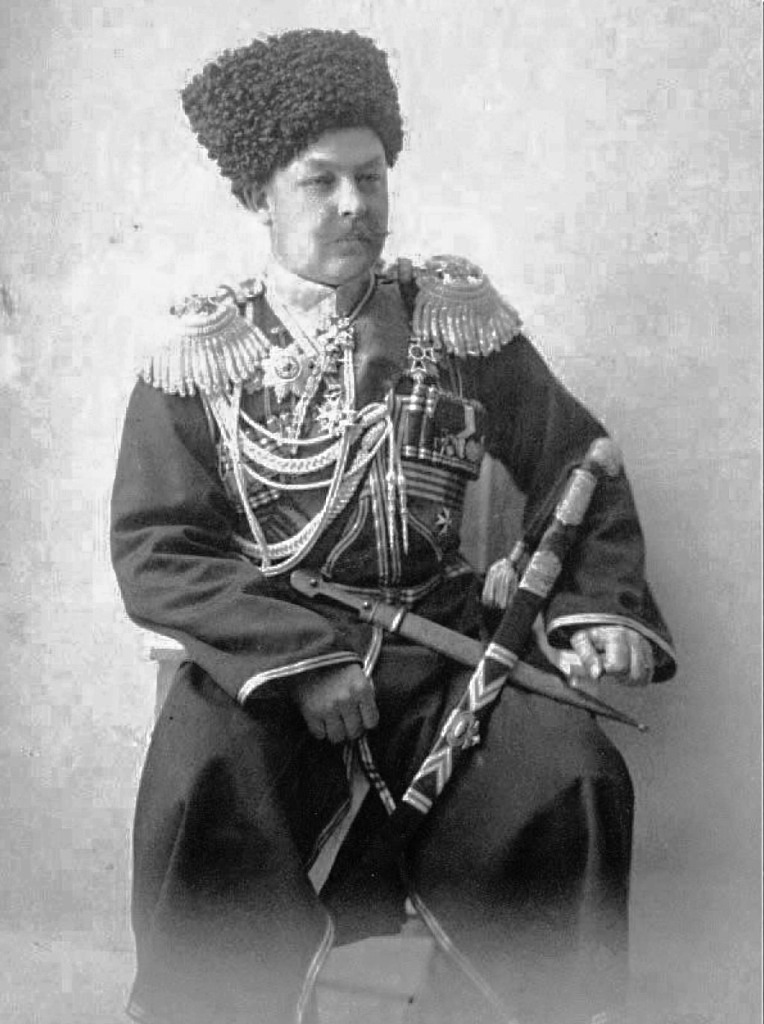
General Count Alexander Grabbe, Commander of His Imperial Majesty’s Own Convoy,
in parade uniform (1917)

General Count Alexander Grabbe (1864-1947), served as Major-General of His Imperial Majesty’s Own Convoy from 1914 to 1917

Alexander Nikolaevich Grabbe was born in the Caucasus on 12th February 1864. The son of Count Nikolai Pavlovich Grabbe (1832-1896) and Countess Alexandra Feodorovna Orlova-Denisova (1837-1892).

In 1901, he was allowed to add the name of his grandmother Elisaveta Alekseevna Nikitina (1817-1898), who was the only daughter of the cavalry general Alexei Petrovich Nikitin, to his last name and became known as Count Alexander Nikolaevich Grabbe-Nikitin.

Like many other members of his family, he attended the prestigious military academy, the Corps des Pages, quartered in the Vorontsov Palace in St. Petersburg, where he graduated in 1887. It was the custom to select outstanding students in their final year to serves as pages to members of the Imperial Family on state occasions, of whom Grabbe was among those chosen. 

Grabbe had wanted to study engineering, but his wealthy grandmother, the Countess Elizabeth Orlov-Denisov, insisted that he join her husband’s Cossack regiment. As he had no means of his own, he had no choice.

Between 1889-1891, Grabbe served as an adjutant to the Grand Dukes Alexander (1866-1933) and Sergei Mikhailovich (1869-1918). They embarked on a world cruise, where Grabbe met Tsesarevich Nicholas Alexandrovich (future Nicholas II) in Ceylon. From June 1897 to 1910 he served as adjutant to Grand Duke Mikhail Nikolaevich (1832-1909).
0264f

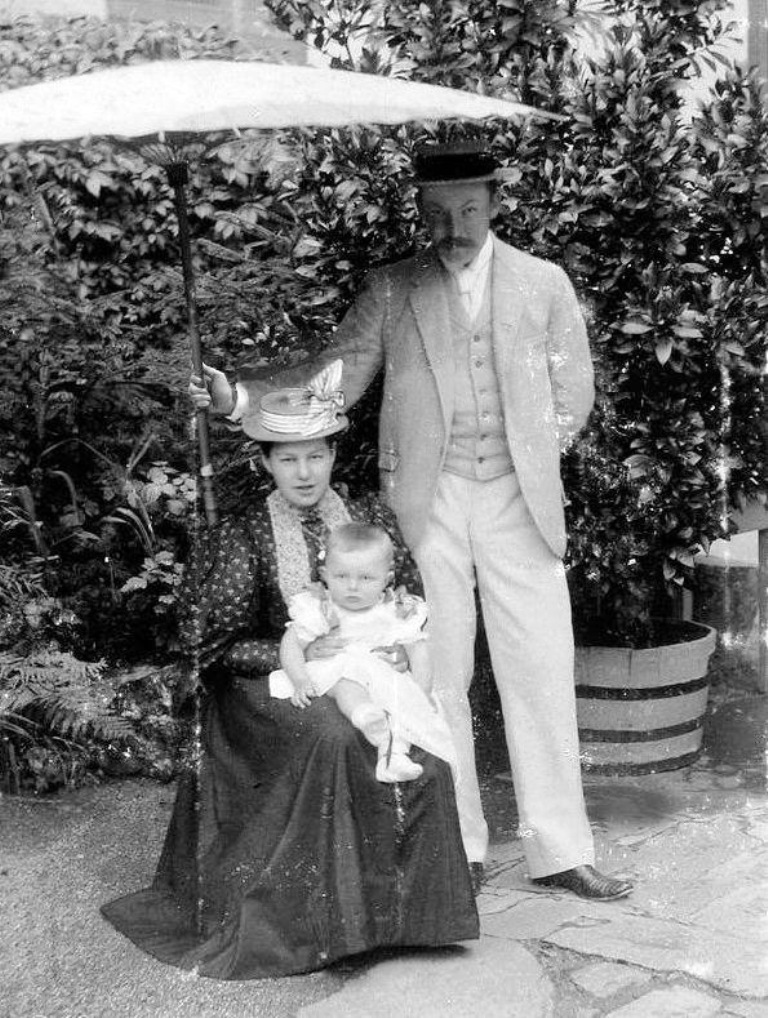
Alexander with his wife Maria and their son George

In 1893 he married Maria Nikolaevna Bezak (1864-1951), a lady-in-waiting to the Empress, and daughter of a cabinet minister of Tsar Alexander III. The couple had three sons: George (1895), Nicholas (1897) and Paul (1902).

In 1911, following the death of the grand duke, he was promoted aide-de-camp to Tsar Nicholas II with the rank of colonel. During the following years he was invited to accompany the Imperial Family to the Crimea and cruised with them on the Imperial yacht Standart in the Finnish Skerries.

On 2 January 1914, he was promoted to Major General, appointed commander of His Imperial Majesty’s Own Convoy – the Cossack unit which served as the Tsar’s elite guard. He served the Emperor until the Tsar’s abdication on 15 March 1917.

According to Romanov historian Margarita Nelipa, Grabbe abandoned Nicholas II immediately after the abdication to wait for Grand Duke Nicholas Nikolaevich (1856-1929) to return as Supreme Commander.

During the February Revolution, fearing arrest, Grabbe left for the Caucasus. On 22 March 1917, he was dismissed from service due to illness with a uniform and pension. He went into exile, eventually immigrating to the United States in 1940.

General Count Alexander Grabbe who served as the last Commander of His Imperial Majesty’s Own Convoy, died on 5th July 1947 in the United States. He was buried at the Congregational Church Cemetery, in Kent, Litchfield County, Connecticut.
264b

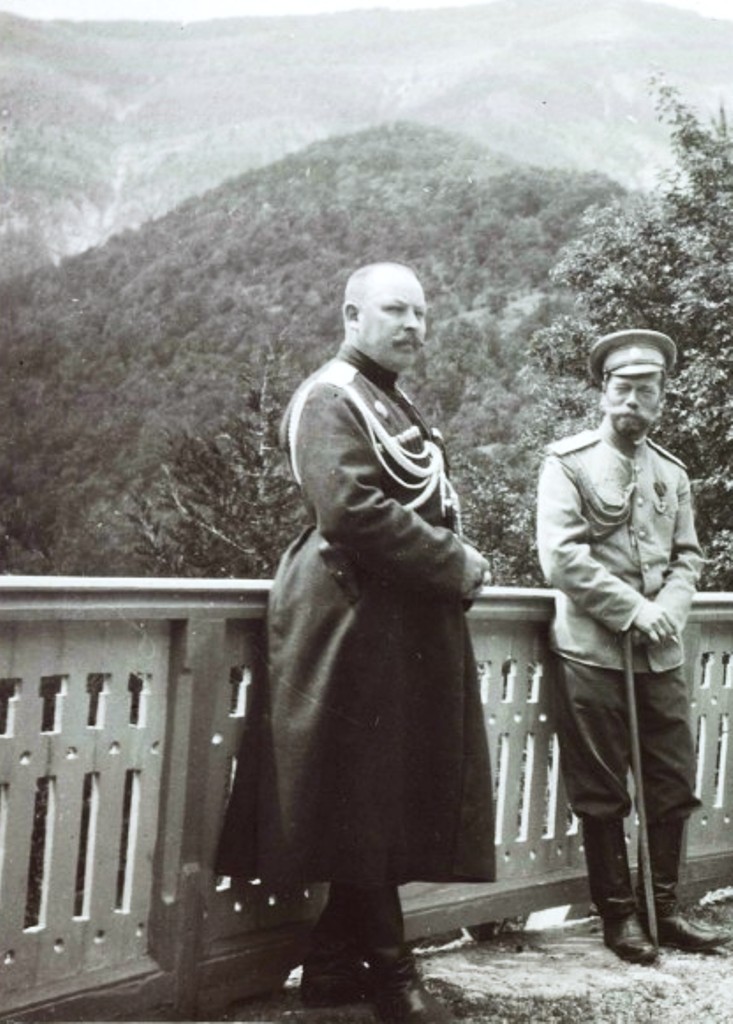
Alexander Grabbe with Nicholas II at Kozmodemyansk in Crimea. 1914

Paul Alexandrovich Grabbe (1902-1999) writes about his father: “Father lasted as long as he did at an intrigue-ridden court because the Tsar appreciated his abilities as a raconteur and his tact. Significantly, he never proffered advice. My brother Nicholas, four years older than I, was aware of some of the difficulties our father encountered, and told me about them: a growing coolness in Father’s relations with the Empress Alexandra, his disapproval of the governments’ use of Cossack troops to quell disorders and to repress minorities. Father’s greatest difficulty was remaining neutral in a politically charged atmosphere. He served the Tsar until his abdication on March 15, 1917.”

Protopresbyter Georgy Ivanovich Shavelsky (1871-1951) shares a very different impression of Grabbe in his memoirs: Воспоминания последнего протопресвитера Русской армии и флота (Memoirs of the last Protopresbyter of the Russian Army and Navy), published in 1954:

“From his appearance, Convoy commander Count Alexander Grabbe betrayed himself. A face swollen with fat, small, cunning disagreeable eyes; a smile that almost never left his face; with a special manner of speaking – as if in a whisper. Everyone knew that Grabbe liked to eat and drink, and he was not at all platonic. I heard that his favorite readings were self-effusive novels, and I personally watched how he, at any convenient and inconvenient occasion, translated the words into spicy conversations. The Sovereign was his favorite partner in the game of dice. Of course, he could entertain the Tsar. But he could hardly have turned out to be a good adviser in serious matters, for this he had neither the necessary intelligence, nor experience, nor interest in state affairs. In addition to a narrow personal life and meeting the needs of the “flesh,” his attention was always riveted on his Smolensk estates, the management of which he gave a lot of care.”

0264d

In 1984, his youngest son Paul and his wife Beatrice Grabbe published ‘The Private World of the Last Tsar’ – a stunning pictorial, based on the private photographs and notes of Paul’s father.

The book is an extraordinary collection of some 200 never-before-published photographs of Tsar Nicholas II and his family during the last years of the Russian monarchy. It is the only collection of pictures taken by a single individual. General Count Alexander Grabbe was one of Imperial Russia’s early amateur photographers. His candid photographs – taken with a Kodak Brownie box camera –  together with pertinent notes from his journal add dimensions to a period important to us even today.

A brief historical introduction sets the stage,. We then see the Tsar and his family in those informal settings that only a very few intimates of the Imperial Family were privileged to observe: relaxing in the Crimea, sailing on the Imperial yacht, vacationing off the Finnish coast. We see the last years of the Romanov dynasty through the eyes of Count Grabbe as he travels with Nicholas II to the Eastern Front and to Army Headquarters at Mogliev, where he was present for the dramatic days leading up to the abdication. This is a poignant, fascinating, and human glimpse of Nicholas, Alexandra, and their children during the last years of their lives.

Identification of persons, places and dates derives from Count Grabbe’s notes accompanying the negatives. His own eyewitness comments were recorded in his diary and later in his journal. Captions and historical background have been added by the editors. It is interesting to note that Count Grabbe was able to include himself in many of the photos by using a rubber tube that worked the camera shutter. 

Nearly 40 years after its publication The Private World of the Last Tsar remains one of the finest pictorials published to date on the Imperial Family. Prior to the year 2018, the year marking the 150th anniversary of Nicholas II, I approached the original publisher Little, Brown & Company with the idea of issuing a reprint of the book. Sadly, however, they showed no interest. The book has been out of print for decades, but second-hand copies are easy to find on eBay, Amazon, Alibris, Bookfinder, etc. – PG

Paul Grabbe is also the author of Windows on the River Neva, published in 1977.

0264e

General Count Alexander Grabbe (1864-1947)

© Paul Gilbert. 24 May 2020
The myth that Nicholas II was a drunkard

0263b

1917 caricature depicting Nicholas II as a drunk

During the latter years of Nicholas II’s reign, myths and lies about his private life filled the parlour rooms of St. Petersburg, and fueled the propaganda of revolutionaries. Among the most outrageous lies, were that the Tsar was a drunkard and even took drugs.

When censorship was abolished, the Tsar’s enemies wasted little time in their vicious attacks. Forbidden topics, such as writing about Nicholas II, were now fair game. Slanderous criticisms and demeaning caricatures poured into the Russian press, and quickly became “hype”. They were believed not only be readers, but also by the journalists themselves. Anti-monarchist themes were the most popular. They were published by humorous journals, the yellow press, and even respected publications.

In particular, people discussed the betrayal of Russia by Nicholas II, due to his alleged alcoholism. Numerous publications published insulting caricatures depicting the Tsar in an inebriated state. Of course, none of this was true, as can be attested by the reliable eyewitness accounts of two persons who observed the Tsar on a regular basis.

General Alexandré Spiridovitch (1873-1952) who served as personal security chief to Nicholas II from 1906-1916 noted in his memoirs:

“As for wines, he [Nicholas II] only drank port at table. Since the Japanese war, the Tsar had given up spirits; it was only when he traveled by sea that he would take (and very rarely at that) one or two small glasses before dinner.”

He further noted: “The Emperor was seated in the place of honour. Before him was a bottle of a special Port, the gift of the King of England, and a small, golden goblet. He never drank more than one goblet of this wine, and never tasted any other.”

In his memoirs, Semyon Fabritsky, an Aide-de-Camp to Nicholas II, further addressed the stubborn gossip which persisted about the Tsar’s alleged drunkenness:

“I personally can attest to the fact that these tales were both false and malicious” he wrote. “At most, the Emperor would sometimes drink one or two shots of vodka before dinner and a glass of his favorite port during the meal (or one goblet of champagne at gala dinners).”

Even at regimental dinners, Fabritsky notes, “When the Emperor attended such dinners, he did not change his custom of drinking very little. He would sit there all evening — and once in awhile all night — nursing a single glass of champagne, delighting in the joyful faces of the young officers whom he adored, and in whom he had so much faith.”

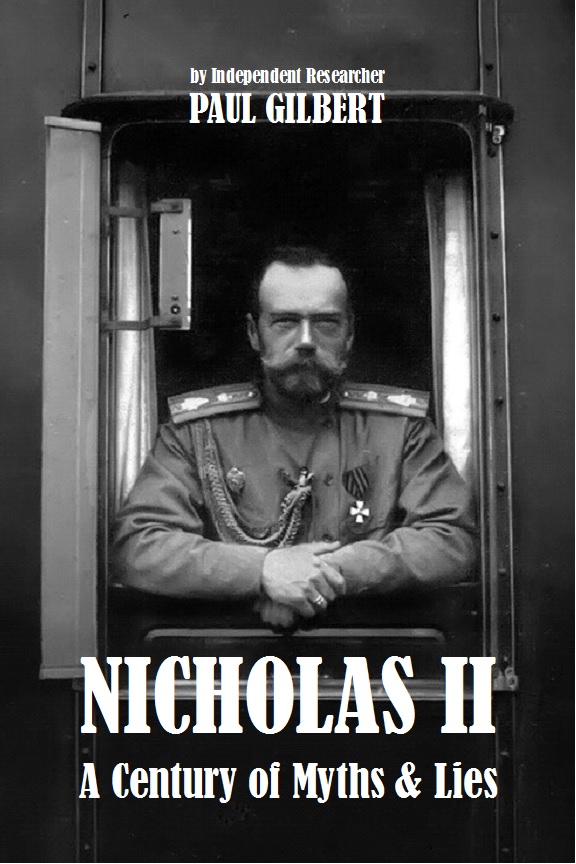
This post is an abridged excerpt from my forthcoming book Nicholas II: A Century of Myths and Lies – scheduled for publication sometime in 2021

0273b

© Paul Gilbert. 22 May 2020

Frozen in Time: 5 Iconic Photos of Nicholas II

258

On this day 19 May (O.S. 6 May) 1868, Tsesarevich and Grand Duke Nicholas Alexandrovich was born in the Blue Boudoir of his mother Grand Duchess Maria Feodorovna (the future Empress Maria Feodorovna) in the Alexander Palace at Tsarskoye Selo. 

The following 5 images of His Imperial Majesty Sovereign Emperor Nicholas II, are among my personal favourites. As if frozen in time, the photographer has captured a moment in his 22+ year reign as Emperor and Tsar of All the Russias.

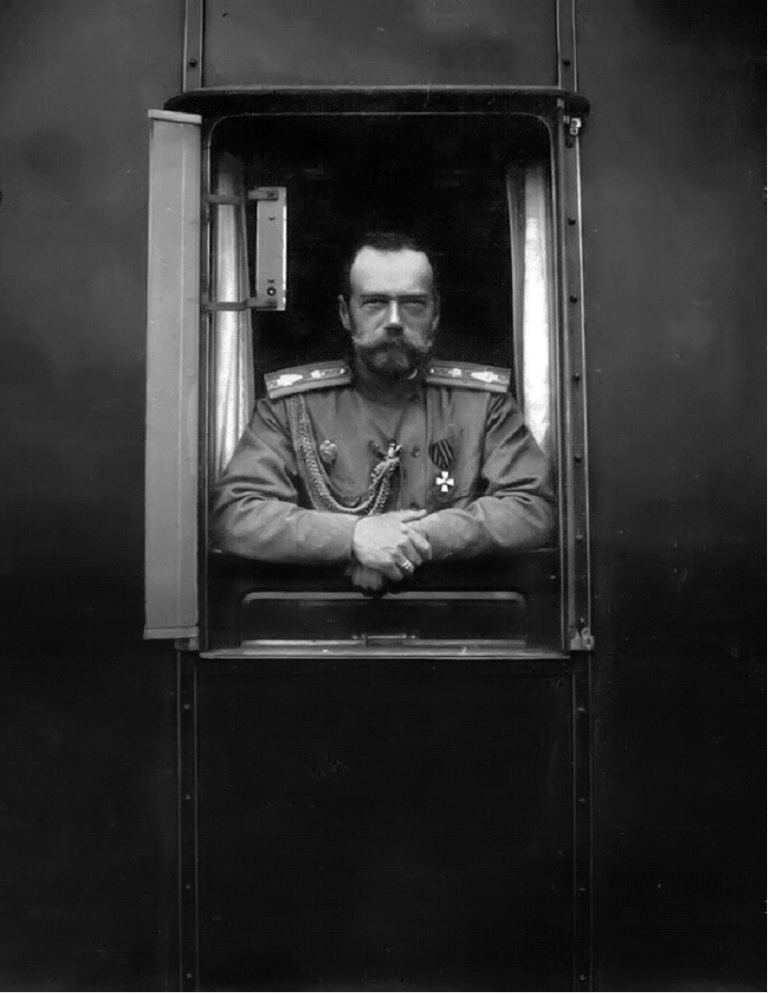
PHOTO No. 1 (below)

This photograph of Nicholas II, standing at the window of the Imperial train is one of the most popular images of Russia’s last sovereign. It has been published in countless books and web pages, but is quite often misidentified at Pskov, after signing his abdication in “1917”. This is incorrect.

The photograph, is one of a series taken at the Stavka military headquarters at Mogilev in 1915, by one of his daughters. It does not depict a man who has just signed over his throne, but that of a very well-composed Emperor and Tsar.

258b

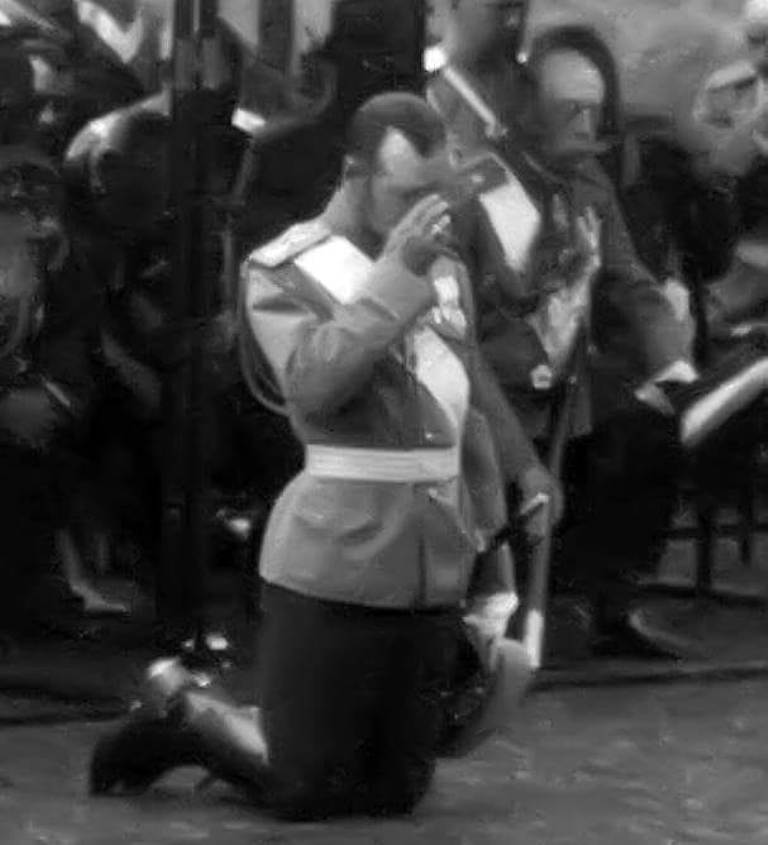
PHOTO No. 2 (below)

Unlike many of his predecessors, Emperor Nicholas II was devoted to the Russian Orthodox Church and considered himself a Christian monarch, one who regarded his political activity as a religious duty. He strove to live and to rule in accordance with the Orthodox faith. To the end of his days, Nicholas II believed himself to be anointed by God, selected to be more than an Orthodox ruler, and more than a Russian emperor.

His official biographer, Major-General Andrei Georgievich Elchaninov wrote “not one day, not one act is started by him without turning with prayer to God.”

Nicholas prayed several times per day, often with his wife and children in the mornings and evenings. Nicholas used this time to ponder his role within the country as well as seek religious guidance from God. Additionally, Nicholas spent time daily studying the Bible and its teachings. The tumultuous events of his 22 year reign did not weaken his faith, but rather, made him more devout. 

258d

PHOTO No. 3 (below)

In 1905, twelve years before Emperor Nicholas II’s abdication and three years from his own repose, St. John of Kronstadt (1829-1909), spoke these prophetic words:

“We have a Tsar of righteous and pious life. God has sent a heavy cross of sufferings to him as to His chosen one and beloved child, as the seer of the destinies of God said: ‘Whom I love, those I reproach and punish’ (Rev. 3.19). If there is no repentance in the Russian people, the end of the world is near. God will remove from it the pious Tsar and send a whip in the person of impure, cruel, self-called rulers, who will drench the whole land in blood and tears.”

Nicholas himself made a similar observation about his fate when speaking to his Prime Minister Pyotr Stolypin (1862-1911). In his diary, Stolypin noted with some degree of incredulity that Nicholas spoke these words without any hint of alarm or distress.

“I have a premonition. I have the certainty that I am destined for terrible trials, but I will not receive a reward for them in this world… Perhaps there must be a victim in expiation in order to save Russia. I will be this victim. May God’s will be done!”

258a

PHOTO No. 4 (below)

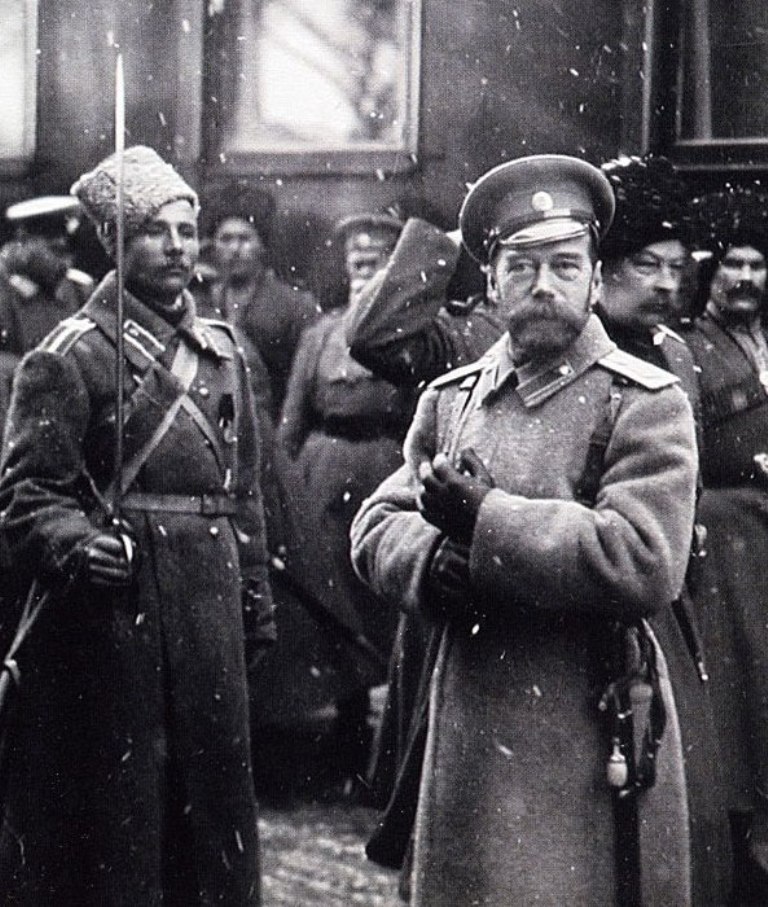
As Emperor Nicholas II steps off the Imperial Train at the station of Dvinsk, near the Northwestern Front, he is caught off guard by a waiting photographer. 30th January 1916.

Standing over the Tsar left shoulder is General Count Alexander Grabbe (1864-1947), who served as Major-General of His Imperial Majesty’s Own Convoy – the Cossack unit which served as the Tsar’s elite guard – from 1914 to 1917.

In 1984, his son Paul Grabbe produced ‘The Private World of the Last Tsar’ – a stunning pictorial, based on the private photographs and notes of his father.

Photo: Central State Archive of Film and St. Petersburg (Санкт-Петербурга (ЦГАКФФД СПб)

258e

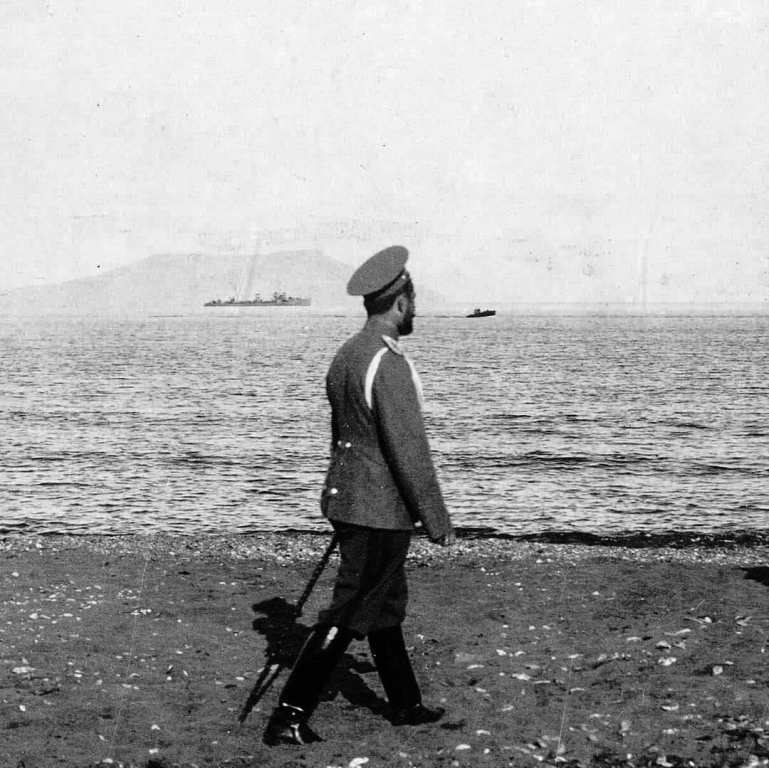
PHOTO No. 5 (below)

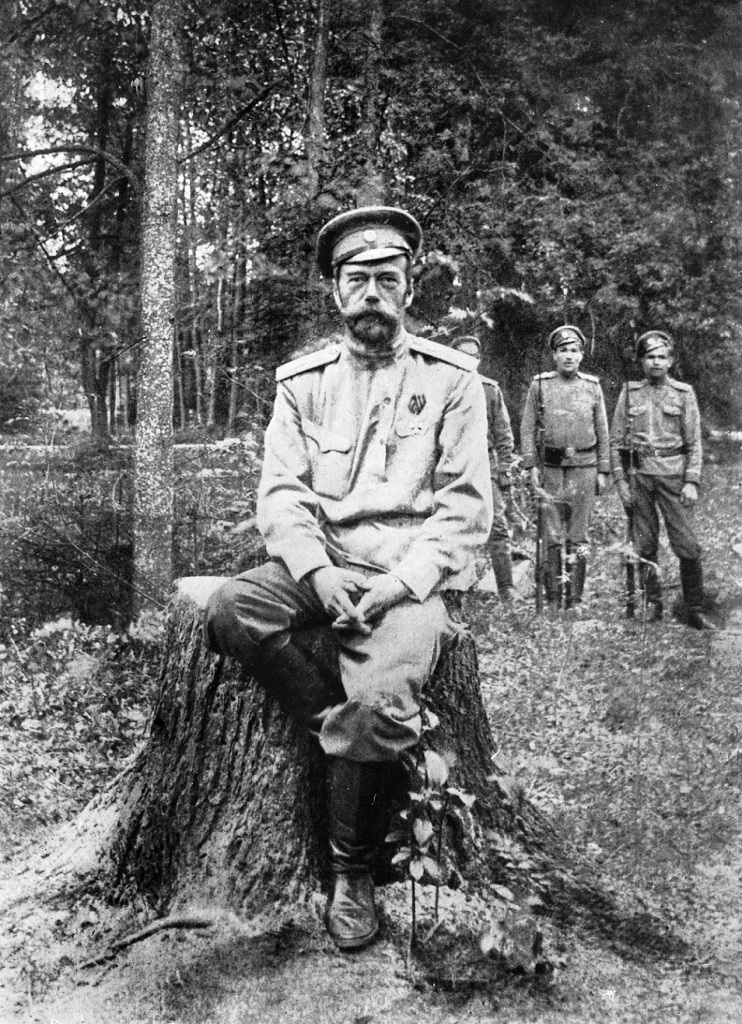
On 15th March (O.S. 2nd March) 1917 – Russia’s last emperor abdicated, bringing an end to more than 300 years of the Romanov dynasty and the monarchy in Russia.

The Emperor abdicated in the heartfelt belief that his abdication would save the honour of the army, prevent civil war and keep Russia in the war against Germany.

Sadly, it did not. In his diary, Nicholas wrote: “I am surrounded by betrayal, cowardice, and deceit.”

Nicholas II was an anointed Tsar, sealed by the grace of the Holy Spirit during the Sacrament of his Coronation in the Dormition (aka Assumption) Cathedral of the Moscow Kremlin, on 26 May (O.S. 14 May) 1896.

As God’s Anointed, Nicholas II could not be displaced during his lifetime. Since the will of God was nowhere manifest, neither in the naming of his brother Grand Duke Michael to the throne, nor in the Tsar’s signing of the instrument of abdication, his status as Tsar remained inviolate and unassailable.

What God performs cannot be undone; therefore, Nicholas II remained the anointed Tsar to his martyr’s death in the Ipatiev House in Ekaterinburg on 17 July 1918.

258c

© Paul Gilbert. 19 May 2020

Moscow Sculptor Captures Last Tsar’s Likeness in New Bust

n2b

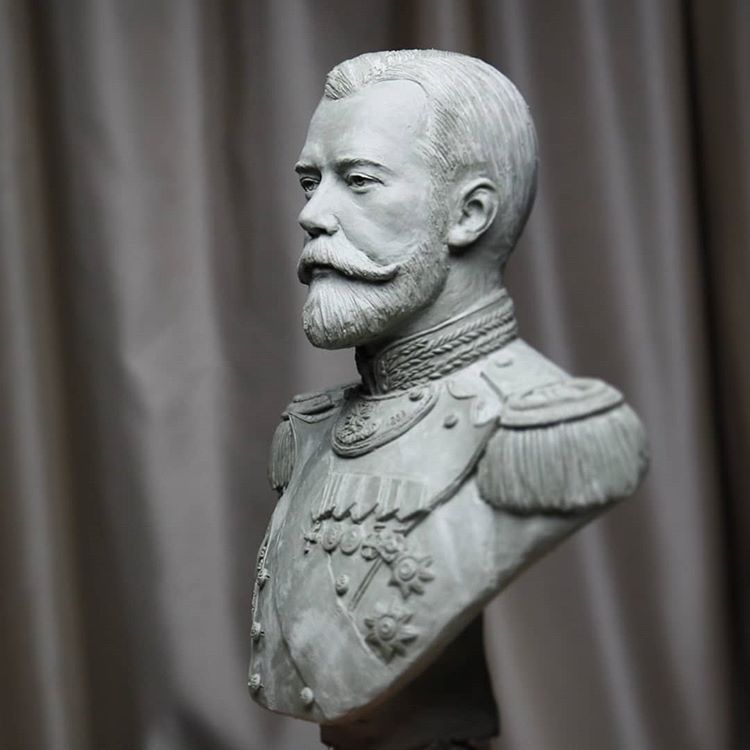
Photo © Victoria Alexandrovna Tishchenko

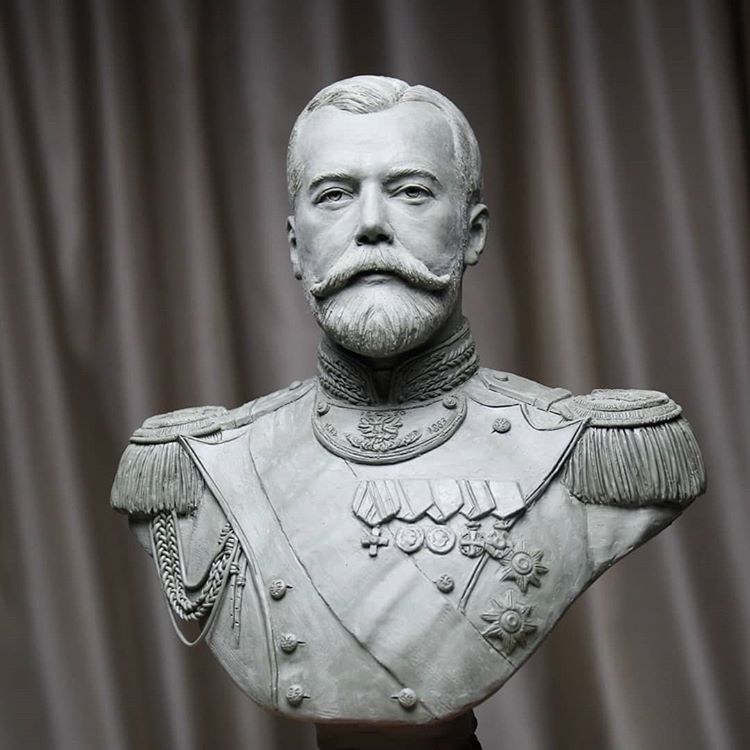
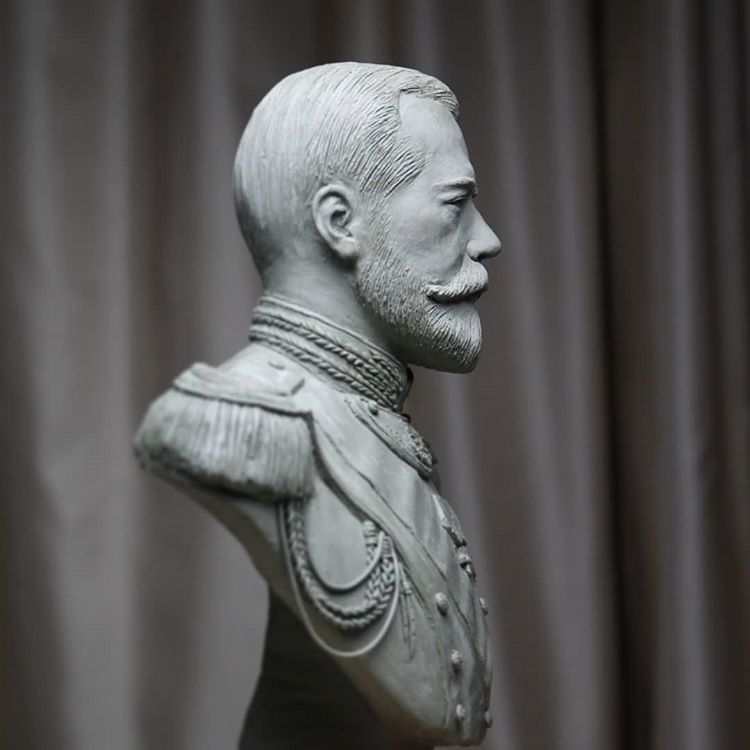
This bust of Emperor Nicholas II, by contemporary Russian sculptor Victoria Alexandrovna Tishchenko, has truly captured the tsar’s likeness.

Photo © Victoria Alexandrovna Tishchenko

Born on 26 May 1986 in Moscow, Tishchenko graduated from the Institute of Management and Fashion Industry of MGUTU with a degree in economics and enterprise management. In 2012 she graduated from the Ilya Glazunov Russian Academy of Painting, Sculpture and Architecture, specializing in art and sculpture. In 2015, she graduated from the graduate school of RAZHViZ majoring in art history. She is Member of the Moscow Union of Artists and the Moscow Association of Sculptors.

n2c

Photo © Victoria Alexandrovna Tishchenko

n2d

Photo © Victoria Alexandrovna Tishchenko

Her other works include a bust of General Count Fyodor Arturovich Keller (1857-1918), one of only two Tsarist generals, who remained loyal to the Russian Orthodox emperor and refused to swear allegiance to the Provisional Government.

© Paul Gilbert. 18 May 2020

‘Royal Russia’ – the return of an old favourite

front

CLICK HERE TO ORDER

Full-colour covers, 122 pages + 99 black & white photos. Price: $25 + postage

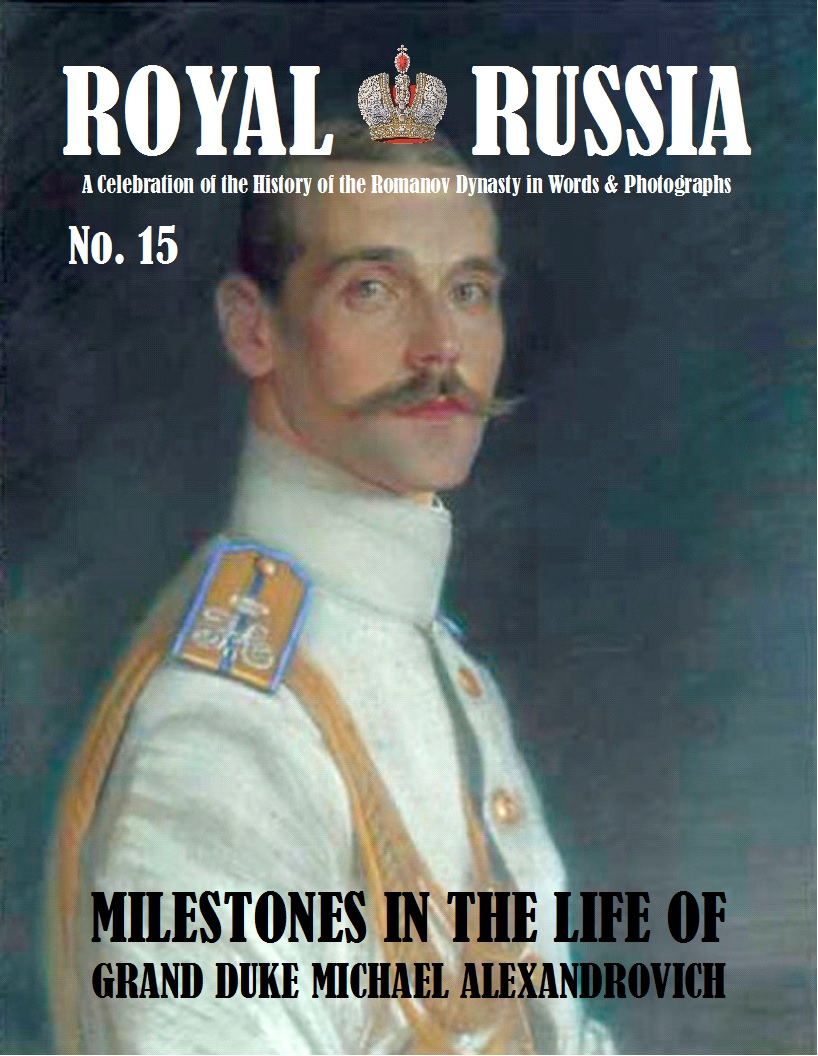
I am pleased to announce that the No. 15 issue of Royal Russia is now available for purchase from my online bookshop. This is the first issue to be published in more than a year!

The past year has allowed me to rethink the future of this popular journal, and during that time, I have made several changes to the publication.

Aside from a new font and page numbering, I have also made a slight change in the wording of the subtitle of Royal Russia, which now reads A Celebration of the History of the Romanov Dynasty in Words and Photographs.

The No. 15 issue, and all future issues will only feature full-length articles on the history of the Romanov dynasty: biographies, events in their respective lives, their residences among other like-minded topics.

I have eliminated all advertising and Royal Russia News, thus devoting more space to more full-length articles, many of which will be first English translations of works by Russian historians, providing readers with fresh, new facts and information from a variety of Russian media and archival sources.

I am also pleased to note that each new issue will contain more photographs of the Russian Imperial Family, their residences, as well as those of life in Pre-Revolutionary Russia.

I am making great efforts to find and publish photos which are rare or never seen before to the majority of readers. Don’t let any one convince you that there are “no new photos of the Romanovs” – there are many!

I must apologize for the quality of some of the photographs published in Royal Russia, however, this is something which I have no control over. Photos have been chosen for their visual impact, but historical accuracy has made it vital to include a number of photographs whose quality is poor, but whose value as historical documents is considerable. Sadly, during the Soviet years, many photographs of the Imperial family were stored under poor conditions and their standard is low

Please note that while I will make every effort to publish two issues per year, I can no longer guarantee such. Each new issue will be published only when I have enough full-length articles. Translations are both time consuming and costly, but I will work very hard to bring readers something fresh, new and interesting with each successive issue.

I must also stress, that when an issue has sold out, no further reprints will be issued. I can confirm that 5 of the 15 issues of Royal Russia published to date, are now out of print.

I trust that you will like the changes made to Royal Russia, that you will enjoy all the articles and photos, and that you will continue to be a dedicated reader in the years ahead.

Below, is a list of the 6 full-length articles and their respective authors, featured in Royal Russia No. 15:

MILESTONES IN THE LIFE OF GRAND DUKE MIKHAIL ALEXANDROVICH
by Yuri Alexandrovich Zhuk & Vladimir Mikhailovich Khrustalev – 1st English Translation

TIMOFEJ YASHCHIK: The Fate of Maria Feodorovna’s Bodyguard
by Andrei Razumov – 1st English Translation

QUEEN VICTORIA AND THE ROMANOVS
by Coryne Hall

THE BOLSHOI THEATRE AND THE ROMANOVS
by Alexander Anatolyevich Vaskin – 1st English Translation

PRINCESS TATIANA KONSTANTINOVNA: The Little Known Romanov
by Coryne Hall

ANNA VYRUBOVA: The Finnish Years in Exile
by Ludmila Khuktiniemi – 1st English Translation

plus, two collections of vintage photographs:

FROZEN IN TIME
Photographic Memories of the Russian Imperial Family

THE LOST WORLD OF IMPERIAL RUSSIA
Vintage Photographs of Russia Before the Revolution

Royal Russia No. 15 can be purchased from my online bookshop – thank you for your interest in my publications! 

© Paul Gilbert. 7 May 2020

78 nightly Divine Liturgies in the Church on the Blood for the Holy Royal Martyrs

257

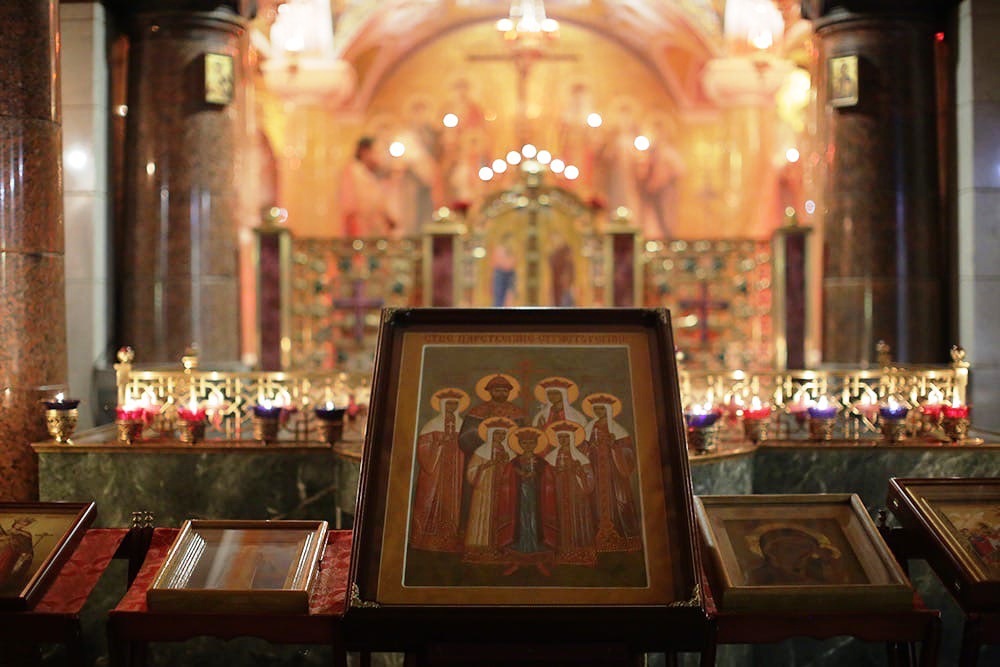
An icon of the Holy Royal Martyrs set against the backdrop of the entrance to the so-called
Royal (aka Imperial) Room, in the lower church of the Church on the Blood in Ekaterinburg

On 30th April, an evening Divine Liturgy was served in memory of the Holy Royal Martyrs in the Church on the Blood in Ekaterinburg. A Divine Liturgy will be held every night from 30th April to 17th July – marking the 78 days in which Emperor Nicholas II along with his family and faithful retainers were held under arrest in the Ipatiev House.

Night liturgies are traditionally held in the so-called Royal (aka Imperial) Room, situated in the lower church of the Church on the Blood. An altar was erected on the site of the murder of the Imperial family in the early morning hours of 17th July 1918. In 2018 the room and the altar were decorated with the blessing of the Metropolitan of Ekaterinburg and Verkhotursky Cyril to the 100th anniversary of the death and martyrdom of the Imperial family.

The tradition of holding 78 nightly Divine Liturgies in the Church on the Blood from 30th April to 17th July was established with the blessing of the ruling bishop in 2018.

Святы Царственные мученики, молите Бога о нас!
Holy Royal Martyrs, pray to God for us!

Click HERE to read my article The Imperial Room in the Church on the Blood, Ekaterinburg + 17 PHOTOS and 2 VIDEOS

© Paul Gilbert. 5 May 2020

OBITUARY – Olga Nikolaevna Kulikovsky-Romanov (1926-2020)

256

Olga Nikolaevna Kulikovsky-Romanov (1926-2020)

It is with a deep sense of sadness for me to announce that Mrs. Olga Kulikovsky-Romanov died on1st May 2020, at the age of 94.

In 1986 she married Tikhon Nikolaevich Kulikovsky (1917-1993) – the eldest son of Grand Duchess Olga Alexandrovna (1882-1960) and Colonel N.A. Kulikovsky (1881-1958).

Olga Kulikovsky (née Pupynina) was born into a family of Russian immigrants on 20th September 1926, in Valjevo, Yugoslavia (Serbia). Her father, Nikolai Nikolaevich Pupynin was a hereditary nobleman of the Tambov province, a military Cossack officer of the Imperial and White armies, and participant in the famous Ice Campaign (Spring 1918).

Her mother, Nina Konradovna Kopernitskaya was an artist and sculptor, educated in Warsaw and Munich. From 1920, the family was in exile: first in Yugoslavia, after World War II in Venezuela.

Olga Kulikovsky graduated from the Mariinsky Don Institute of Noble Maidens (Smolny branch), who were evacuated from Novocherkassk during the Civil War to Bela Tserkva [Bela Crkva (Serbian)]. During the Second World War, she was interned in Germany (Stuttgart), where she worked in a factory and survived the barbaric bombing of civilians by British and American aircraft. Subsequently, she moved to South America, received a medical, commercial, architectural education, and learned seven languages. After moving to Canada, she worked as a translator in government agencies.

256b

PHOTO: Olga Nikolaevna Kulikovsky-Romanov praying at Monastery of the Holy Royal Martyrs at Ganina Yama in July 2018

Over the years Olga Kulikovsky participated in public activities in Russia, where she transferred to the Russian Orthodox Church some shrines preserved in the Kulikovsky family in Canada. Among these was the Icon of the Mother of God, “Of the Three Hands” belonged to Nicholas II and his family. She may, however, be best known for her tireless efforts to popularize the artistic work of Grand Duchess Olga Alexandrovna.

Mrs. Kulikovsky was the founder and chairman of the HIH Grand Duchess Olga Alexandrovna Memorial Fund since its foundation in 1991. With her passing, a new chapter begins for the charitable organization.

Undoubtedly, the Fund in the name of Grand Duchess Olga Alexandrovna will continue to serve Russia, whose activities will become a worthy testimony to the memory of the Grand Duchess and her daughter-in-law.

In recent years, Mrs. Kulikovsky had been working on a new book, “A Quarter Century of Russia’s Service.” This monumental work is dedicated to her 25 years of active and often difficult work of the Fund in Russia and abroad. Unfortunately, she never managed to see this publication come to fruition. [Her book is published in Russian/English, and is only available in Russia.]

It is important to add, that despite her age, she worked tirelessly to help clear the name of Russia’s much slandered Tsar and his family.

Olga Kulikovsky did not recognize the dynastic claims of the Kirillovich branch of the Romanov dynasty: the Spanish born Princess Maria Vladimirovna and her son Prince George Mikhailovich Hohenzollern


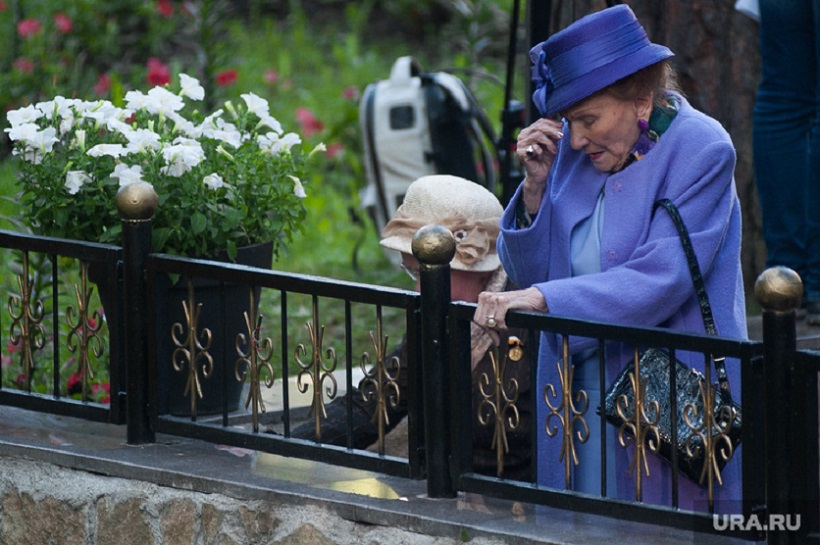
PHOTO: the grave containing the remains of Grand Duchess Olga Kulikovsky, Nikolai and Tikhon Kulikovsky and Olga Kulikovsky, situated in the Orthodox section of York Cemetery, Toronto

She was found dead at her home in Balashikha, Moscow Region, where she lived. 

Her body was returned to Canada, where her funeral was held in Toronto on 16th May 2020. According to her last will and testament, Olga Nikolaevna Kulikovsky was buried in York Cemetery in Toronto, next to her husband Tikhon Nikolayevich Kulikovsky (1917-1993)..

On the white marble cross, established by Mrs. Kulikovsky in 1993, after her husband’s death, her name was inscribed with the last date open. Olga Nikolaevna died on 1st May 2020.

The Kulikovskys are buried along with Grand Duchess Olga Alexandrovna (1882-1960) and her second husband Nikolai Alexandrovich Kulikovsky (1881-1958).

Olga Nikolaevna Kulikovsky-Romanov (1926-2020)
Memory Eternal! Вечная Память!

© Paul Gilbert. 2 May 2020

The myth of hunger during the reign of Nicholas II

253

For many years, Soviet historiography was dominated by the notion of “eternal” famine in Imperial Russia. With this lie, the Bolsheviks tried to justify the monstrous famines of the 1920s, 30s and 40s, as well as the constant shortage of food during the Soviet years.

In fact, there were many poor harvests leading to food shortages in Russia before 1912. The largest of them was in 1891, during the reign of Emperor Alexander III (1845-1894). This was the result of a global agrarian crisis in the 1880s, which also affected England, France, Germany, and parts of the United States. The terrible famine in Ireland between 1845-1850, claimed the lives of 1.5 million people. By the beginning of the twentieth century, the consequences of this famine reduced the Irish population by more than 30%.

The crop failure of 1891-92, was caused by severe drought. It affected 25 provinces in the Russian Empire. Between 1891-92, some 30 million people were starving. In 1897, another crop failure in 18 provinces was again caused by drought, worsened by an unfavorable winter, and an invasion of insect pests. Between 1897-98, 27 million people were starving.

In the summer of 1905, there was a subsidence in the Chernozem, Volga, Trans-Volga, and eastern provinces. The crop failures mainly affected traditionally agricultural areas, which, according to official data from the Ministry of Internal Affairs, occupied up to 43% of all arable land in Russia. The last “royal” crop failure occurred in 1911 – it was a reflection of a serious pan-European crop failure due to drought. The crop failure covered a vast territory: all the districts of the Astrakhan, Orenburg, Samara, Saratov, Simbirsk and Ufa provinces, as well as many districts of the Vyatka, Kazan, Nizhny Novgorod, Penza, Perm provinces and the Don Army Region, affecting more than 20 million people in one way or another. In the affected areas, only 1/3 of the grain harvest was harvested against the annual average.

However, it should be noted that crop failures and malnutrition in Imperial Russia did not lead to mass mortality. All the Bolshevik allegations that up to 4 million people a year allegedly starved to death in Russia are an outright lie, which is based on false “annual reports of the College of the Life Chancellery.” It is worth noting that such a body did not even exist in the Russian Empire.

253b

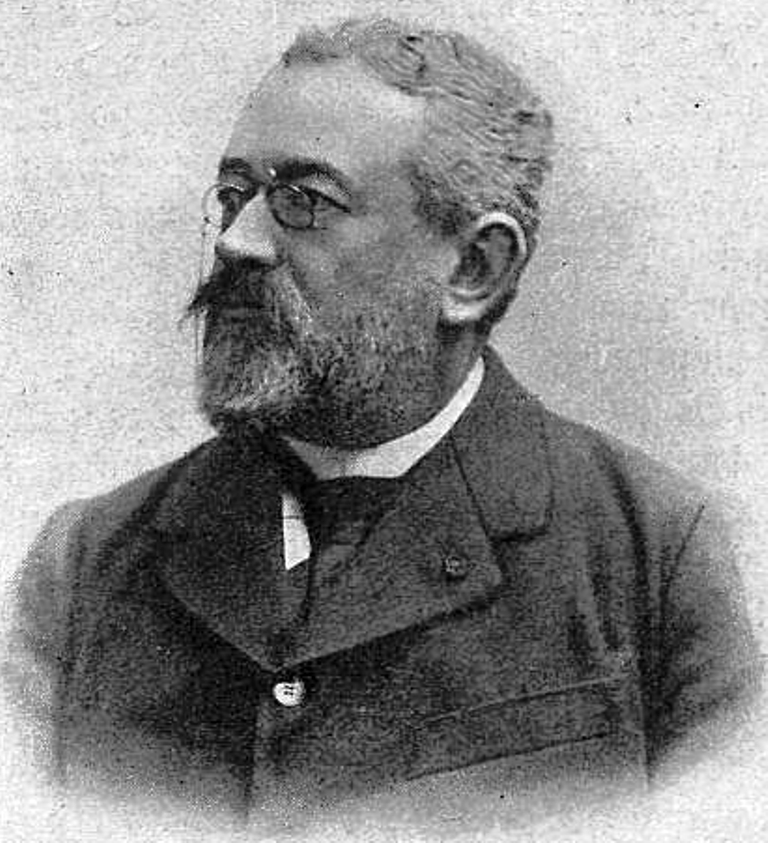
Minister of Agriculture and State Property Aleksei Sergeevich Ermolov (1847-1917)

Between 1892-1905, Minister of Agriculture and State Property Aleksei Sergeevich Ermolov (1847-1917), then the head of the Central Committee for the provision of medical and food assistance to the population, wrote that “not a single death from starvation, or from the complete absence of any food, not to mention the cases of suicides or murders of children due to hunger, were not recorded any where.” Ermolov noted that the population growth in 1906-07 in some provinces (Oryol, Tambov, Ufa) surpassed that of the previous year.

There is no data on deaths due to starvation among Soviet and Russian demographers. In his studies, Russian demographer Adolf Grigorievich Rashin (1888-1960) argued that in the period from 1890-1913 mortality steadily decreased: from 36.7 deaths per 1000 population in 1890 to 27.4 per 1000 population in 1913.

The multi volume work Население России в ХХ веке (The Population of Russia in the 20th Century) unequivocally states that “by 1913 all regions of European Russia reported a significant increase in population”. The Chernozem region and the Volga region, experienced one of the highest rates of population growth in the Empire.

In 1907 a very high natural population growth was recorded (18.1%), 1911 (17%) and 1912 (16.9%). The lowest increase in the first 15 years of the twentieth century was recorded during the troubled year of 1905 (13.9%).

During the alleged “great famine” of 1911-1912, the population grew by more than 3 million people. You can compare this to data on the years of the Soviet famines (1921-22, 1931-33, 1946-48): which resulted in complete cessation of the country’s population growth, and a sharp decline in life expectancy.

253c

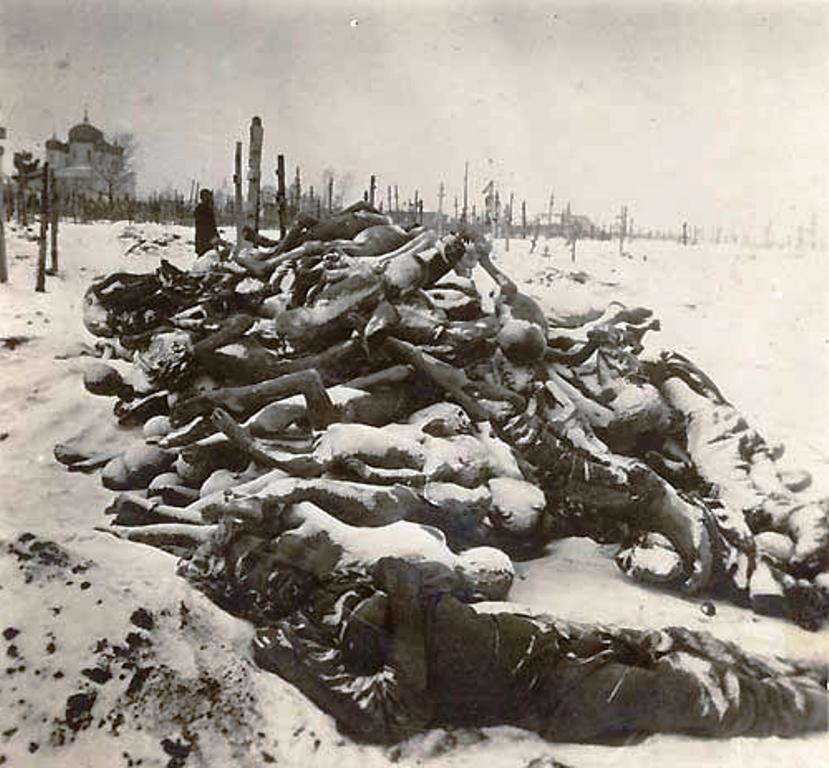
Hundreds of corpses piled up at the local cemetery, during the 1921 Famine in Russia

Thus, the only conclusion that can be made: after the famine of 1891-92, which was accompanied by an acute epidemic of cholera, the Russian Empire did not entail any “starvation deaths”.

It should be noted that the Imperial Government made great effort to combat the effects of crop failures.

In 1897, loans amounting to 5.4 million rubles were granted from the All-Empire capital, in 1898 – 35.2 million (34.4 million poods were purchased for the foodstuffs of the population – bread, and support of cattle breeding by peasants), public works were organized, in particular, the transportation by peasants of grain purchased by the government to provide bread for the hungry.

The death of horses caused by the lack of fodder was compensated by the purchase of horses from the steppe inhabitants of the local breeds and their delivery on favorable terms by the beginning of field work. The supply of feed to needy households was carried out on a “loan basis” (with payment over 3-5 years), in 1898 7 million rubles were spent on these needs.

In the canteens opened by the Red Cross, up to 1.5 million people were fed, mainly women, children, old people and the weak, but in exceptional cases, able-bodied men (in the absence of earnings), more than 2 million received rations.

253d

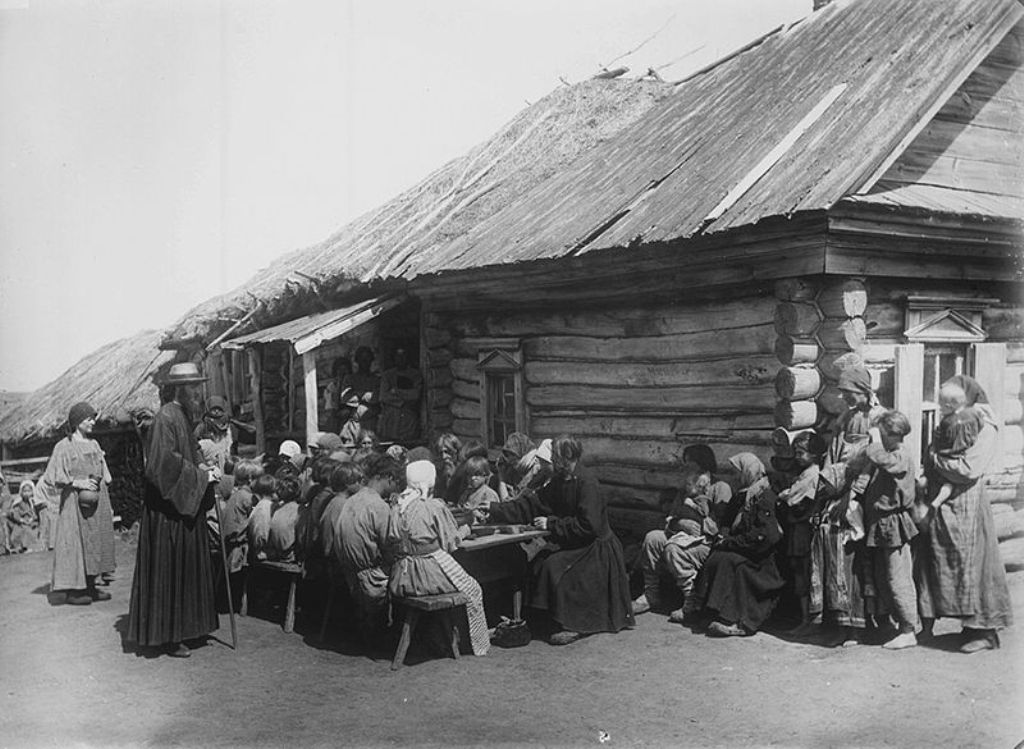
Canteen to feed the hungry in Nizhni Novgorod province, during the famine of 1891-1892

The Guardianship of Diligence and Workers’ Houses, created at the initiative of Empress Alexandra Feodorovna, began to take effect. Among the private philanthropists, the Bessarabian landowner Purishkevich was especially distinguished – thanks to his ebullient activity, some 20 canteens were opened, financed with donations and thereby saving hundreds of people from starvation. His efforts were noticed and greatly appreciated in St. Petersburg.

Everywhere where hunger arose, food centers were opened for children, women, and those incapable of work, each of which fed up to 1000 people.

According to observers, “the food campaign of 1906-1907. was carried out by the Food Department of the Ministry of Internal Affairs with much success.

At the same time, charitable organizations actively supported the hungry. One branch of the Red Cross, with the assistance of local authorities, opened free canteens and food outlets, which issued 270 million meals and rations during the famine. The Holy Synod introduced a gathering for the hungry on all Sundays and twelve feasts.

Private charity played an increasingly significant role. Numerous private trusteeships, local societies, unions, and committees were established. The assistance offered by  “private owners” turned out to be of great help to the state, whose stocks were greatly depleted as early as 1905.

For the supply of feed during the crop failure of 1911-12, the government spent 9-12 million rubles, issued loans for food (for example, in Siberia they issued 300 rubles per cow allowance), 16 thousand horses were distributed on favorable terms. Public work for peasants as an experiment decided this time to make the main form of assistance. 42 million rubles were allocated for their implementation, with 84% of the amount spent on wages. The hungry were provided with 222 million meals, under the guidance of priests and teachers in the Volga region alone, more than 7 thousand canteens were opened in schools, where 24 million lunches were provided to children. In general, the campaign was carried out at on a gargantuan level – and it is interesting to note that the state, who were in full control over the situation in both 1901 and 1911, managed to prevent starvation.

Thus, it can be seen that by the beginning of the twentieth century, the state had formed an integrated system of redistribution of food resources, which functioned effectively during periods of crop failure and with the depletion of bread in peasant farms. In addition, measures were constantly taken to support residents of the territories affected by crop failure. The Russian public actively participated in helping the victims, which caused widespread development of charity, and the formation of effective structures for providing assistance to the population. After 1892, deaths from starvation were avoided even under the most unfavorable conditions (such as the “revolutionary situation” of the mid-1900s).

Source: Petr Multatuli

© Paul Gilbert. 27 April 2020

VIDEO: French President Raymond Poincare’s State Visit to Russia

I am delighted to share this vintage newsreel depicting French President Raymond Poincare’s State Visit to Russia. Pomcare visited Tsar Nicholas II in St. Petersburg on two occasions in 1912 and 1914.

Pomcare visited Tsar Nicholas II in August 1912, to bolster France’s military alliance with the Tsarist state.

In his book July 1914: Countdown to War (published in 2014) Russian historian Sean McMeekin claims that Poincaré won election as President of the Republic in 1913, his electoral victory aided by some two million francs in Russian bribes to the French press.

In 1913, it had been announced that Poincaré would visit St. Petersburg in July 1914 to meet Tsar Nicholas II. Accompanied by Premier René Viviani, Poincaré returned to Russia for the second time (but for the first time as president) to reinforce the Franco-Russian Alliance and giving France’s support for Russian military mobilization during the July Crisis of 1914.

In this newsreel we see Emperor Nicholas II with President Raymond Poincare of France at Krasnoye Selo, the summer military capital of the Russian Empire. We see Empress Alexandra Feodorovna and her daughters getting into some of the fine automobiles which the Emperor was so fond of.

This is followed by a parade of grand dukes and generals on horseback. Empress Alexandra Feodorovna is then seen riding in an open carriage with President Raymond Poincare, the Emperor on horseback riding along side.

Members of the Imperial Family join Poincare in a tent, positioned on a slight hill, where they can witness manoeuvres in honour of the French president’s state visit. Towards the end of the footage, the Empress is seen nodding as soldiers file past the tent and its guests.

Duration 4 mins., 19 sec. Very impressive!

© Paul Gilbert. 17 April 2020

VIDEO: Visit of Emperor Nicholas II to Riga, July 1910

This vintage newsreel captures events of the historic visit to Riga in the summer of 1910 by Emperor Nicholas II.

At the beginning of the newsreel we see the Imperial Yacht Standart sailing into the harbour. It is one thing to admire the Standart in photographs, however, it is only when one views it in a moving image, that one can put into perspective the sheer size of this magnificent “floating palace” – 128 m (420 feet) in length and 5557 tons standard in weight. It was the envy of all the royal houses of Europe and Great Britain.

Nicholas II’s visited Riga with his family for three days – from 3 to 5 July 1910. The Imperial Family arrived for the celebration marking the 200th anniversary of the capture of Riga from Sweden by Russian troops, making it part of the Russian Empire.

The highlight of the visit was the grand opening and consecration of the monument to Emperor Peter I on the Alexander Boulevard in Riga, which is also featured in this video.

Alexandre Spiridovitch writes about the tsar’s 1910 visit to Riga in his memoirs Last Years of the Court at Tsarskoe Selo Volume II (1910-1914) – first English language edition published in 2017 [now out of print].

© Paul Gilbert. 8 April 2020