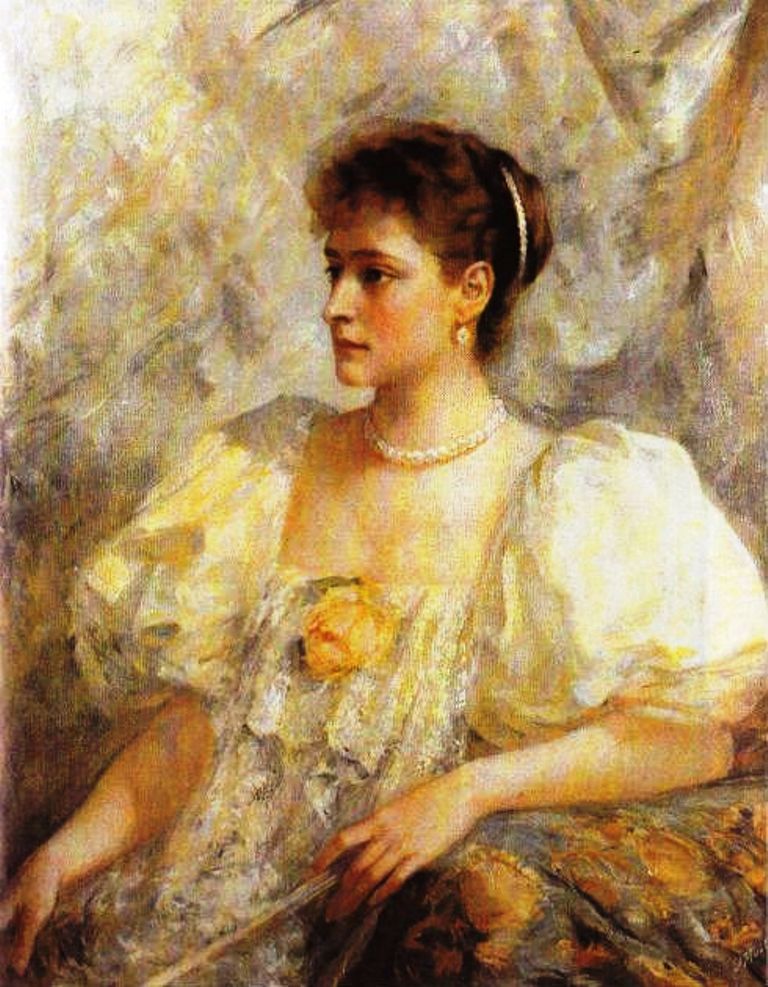
Portrait of Empress Alexandra Feodorovna. Artist: A. Muller-Norden. Canvas, oil. 1896
This lovely portrait of the Empress Alexandra Fedorovna is among my favourites. It reflects the Empress’s youth and beauty, years before the burdens of Court life and her son’s illness took their toll on her health.
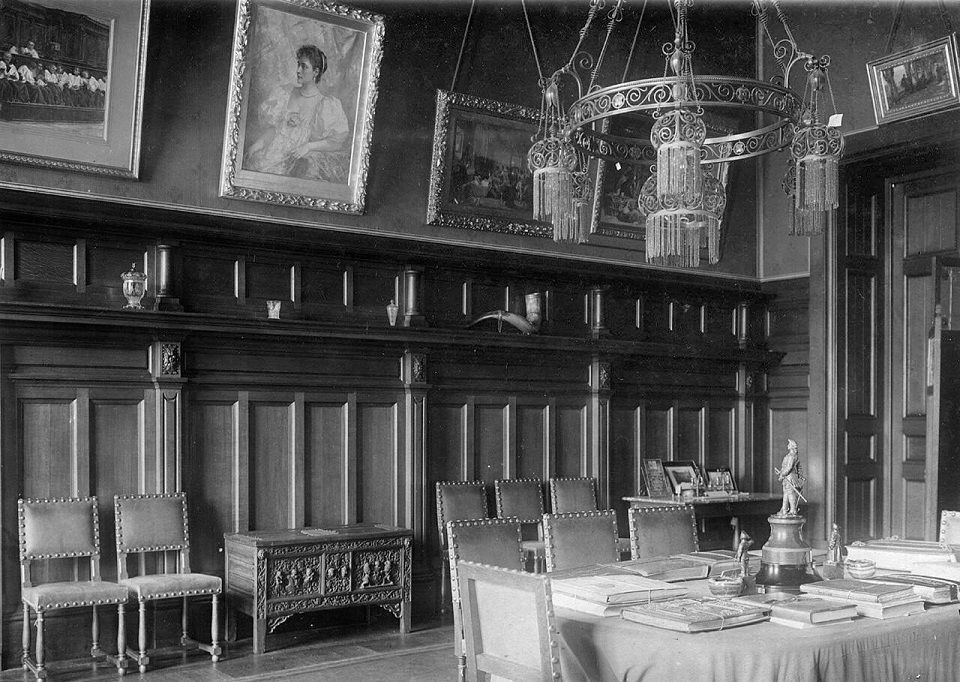
Before the 1917 Revolution, the portrait hung in the Tsar’s Reception Room in the Alexander Palace at Tsarskoye Selo. It is currently in the collection of the Pavlovsk State Museum.
Muller-Norden originally hung in the tsar’s Reception Room in the Alexander Palace
Given that neither Nicholas II and Alexandra Feodorovna lived at Pavlovsk, how did this portrait end up the palace-museum collection?
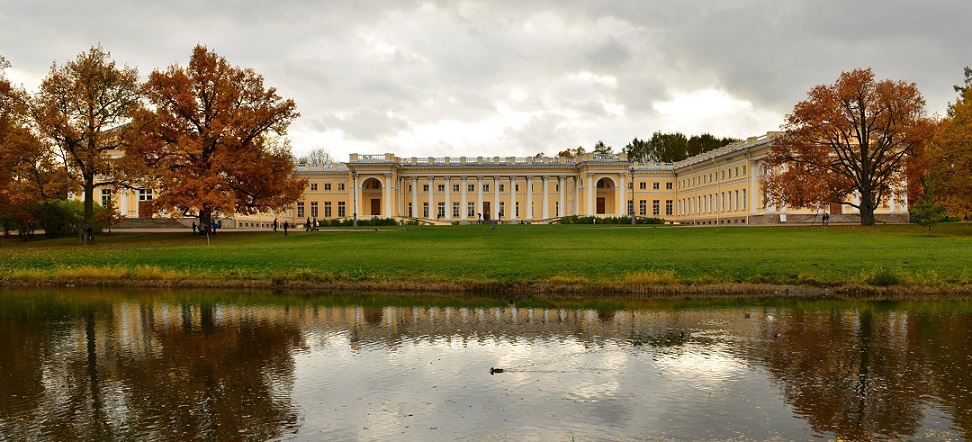
‘In 1951 a government decision handed the Alexander Palace to the Ministry of Defense. The Naval Department used the building as a top-secret, submarine tracking research institute of the Baltic Fleet. As a result, the former palace would be strictly off-limits to visitors for the next 45 years.
‘The palace’s stocks that were among the evacuated items in the Central Repository of Museum Stocks from the Suburban Palace-Museums passed to the Pavlovsk Palace Museum. A total of 5,615 items were moved from the palace to Pavlovsk. Of these, nearly 200 pieces were originally from the Alexander Palaces’ three ceremonial halls: the Portrait, Semi-Circular and Marble Halls. These include 39 pieces of porcelain, 41 paintings, 73 decorative bronze pieces, and 28 pieces of furniture.’
Source: ‘My Russia. The Rebirth of the Alexander Palace’ by Paul Gilbert. Published in ‘Royal Russia No. 3 (2013), pgs. 1-11
Since the fall of the Soviet Union in 1991, and in particular since the restoration of the Alexander Palace, the return of these objects has been a bone of contention between the two palace-museums. During a visit to Pavlovsk several years ago, I raised the subject with one of the Directors at Pavlovsk. “If we return these exhibits to the Alexander Palace, then we [Pavlovsk] will have nothing,” he declared.
Personally, I believe that Pavlovsk have a moral responsibility to return all of the items transferred there in 1951. Their history belongs to the Alexander Palace. It seems that the Minister of Culture of the Russian Federation Vladimir Medinsky will have the final say. Let us hope that he does the right thing, and order the return of these items to the Alexander Palace, where they can be put on display in the rooms from which they originated.
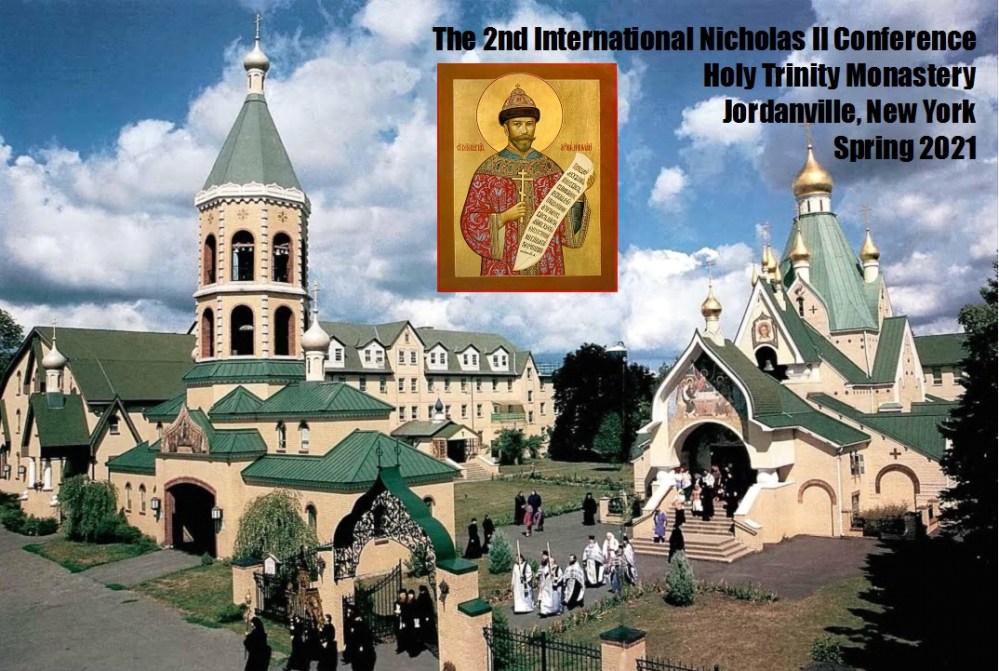
Today, I have received the blessing of His Grace Bishop Luke of Syracuse, Abbot of Holy Trinity Monastery, to host the 2nd International Nicholas II Conference at the Holy Trinity Monastery in Jordanville, New York in the Spring of 2021.
A number of historians and writers have already expressed interest in speaking at the Conference. I hope to confirm the actual date within the next few weeks.
Truly, my prayers have been answered. I am so pleased that we can now honour Tsar-Martyr Nicholas II at the Holy Trinity Monastery in Jordanville.
While the event is still more than a year away, I wanted to share this wonderful news with all of you! I will continue to keep you posted of any new developments.
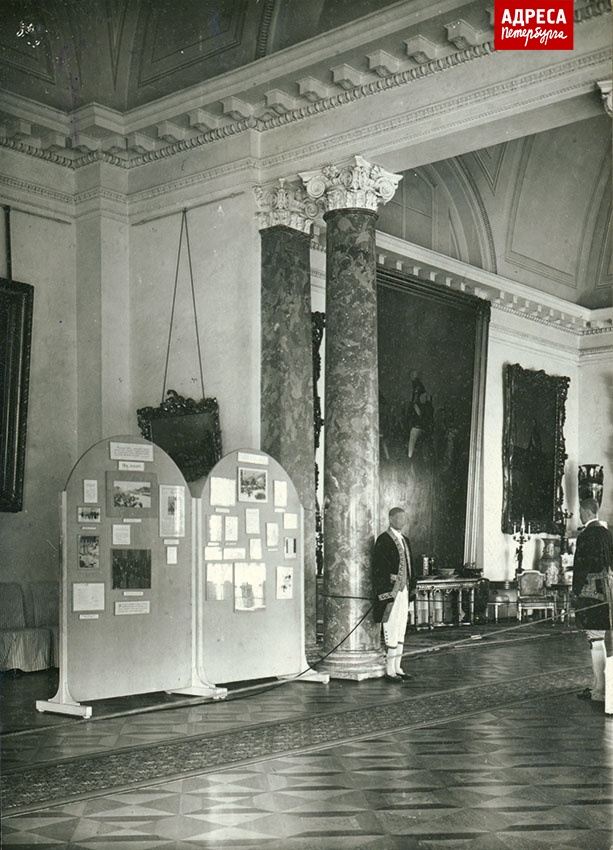
During the Soviet years, the Alexander Palace was established as a museum. This video shows a group walking through the former rooms of Nicholas II and his family. The year of 1918 is noted in the video, however, this is incorrect – PG
In 1918 the former residence of Tsar Nicholas II and his family was established as a museum and open to the public. The exhibit included the historical interiors in the central part of the building and the private apartments of the last tsar and his family located in the east wing of the palace.
In 1919, the west wing was turned into a rest home for staff of the People’s commissariat for Internal Affairs (NKVD), while on the second floor of the east wing the former rooms of Nicholas II’s children became an orphanage named after the “Young Communards”.
Enfilade of ceremonial halls of the Alexander Palace. 1920s
The Soviet regime were hostile towards the ‘Romanov Museum,’ and made constant threats throughout the 1930s to close the museum and sell off its treasures. Luckily, the museum staff managed to dissuade the government from this step and the museum operated up until the beginning of the Second World War.
In the first months after the Nazi invasion chandeliers, carpets, some items of furniture, eighteenth-century marble and porcelain articles were evacuated from the Alexander Palace. Most of the palace furnishings remained in the halls.
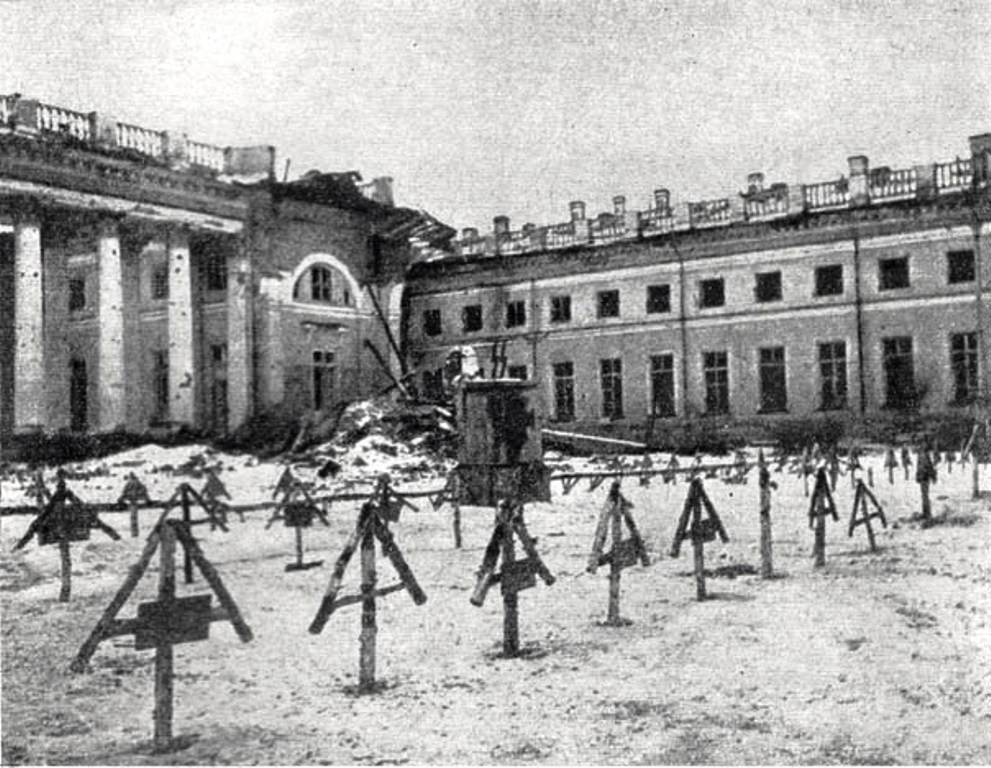
A cemetery for members of the SS was established in front of the Alexander Palace
During the occupation of Pushkin the palace housed the German army staff and the Gestapo. The cellars became a prison and the square in front of the palace a cemetery for members of the SS.
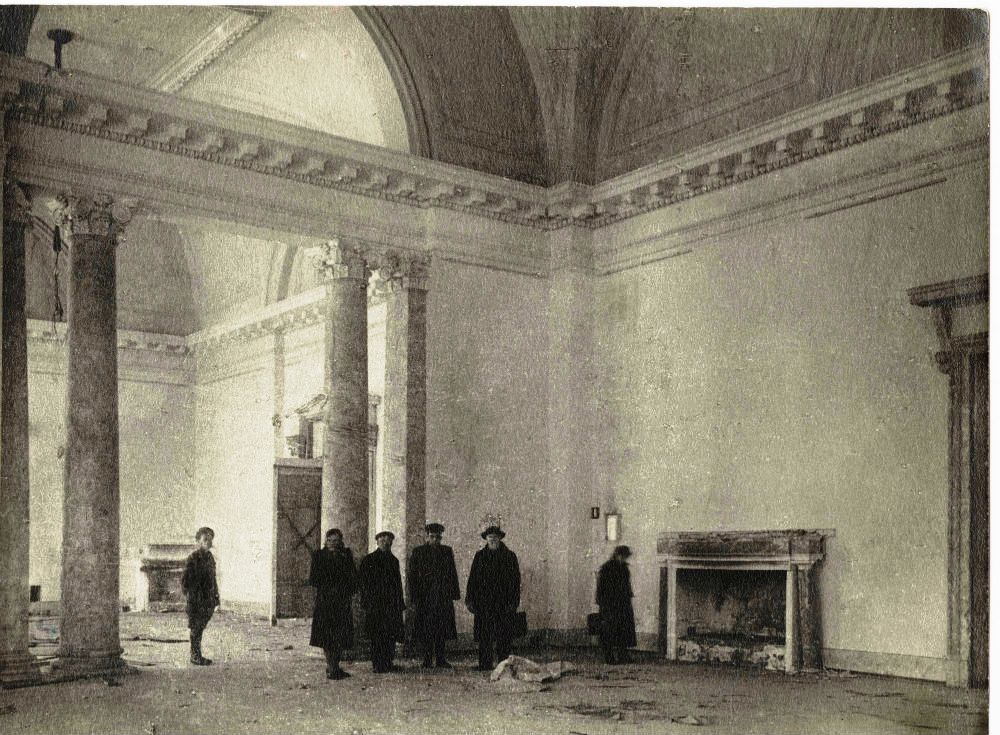
The palace survived World War II with minor damage, according to military records—unlike the Catherine Palace, the Palace of Pavlovsk and the Grand Palace of Peterhof, which were almost completely destroyed during the German occupation. Although the exterior was damaged, the majority of the interiors were reported as unharmed, with the exception of some rooms which received moderate to serious shell damage.
The palace had been looted by the retreating Nazi’s which resulted in many of the palaces works of art, furniture and other items being stolen. According to the Ministry of Cultural Affairs of the Russian Federation, registered inventory for the Alexander Palace had—30,382 items, of which 22,628 items were recorded as lost or stolen at the end of World War II.
Representatives of the State Emergency Commission and museum workers examine the destruction of the large central hall of the Alexander Palace. Photo by S. G. Gasilov. May 1944.
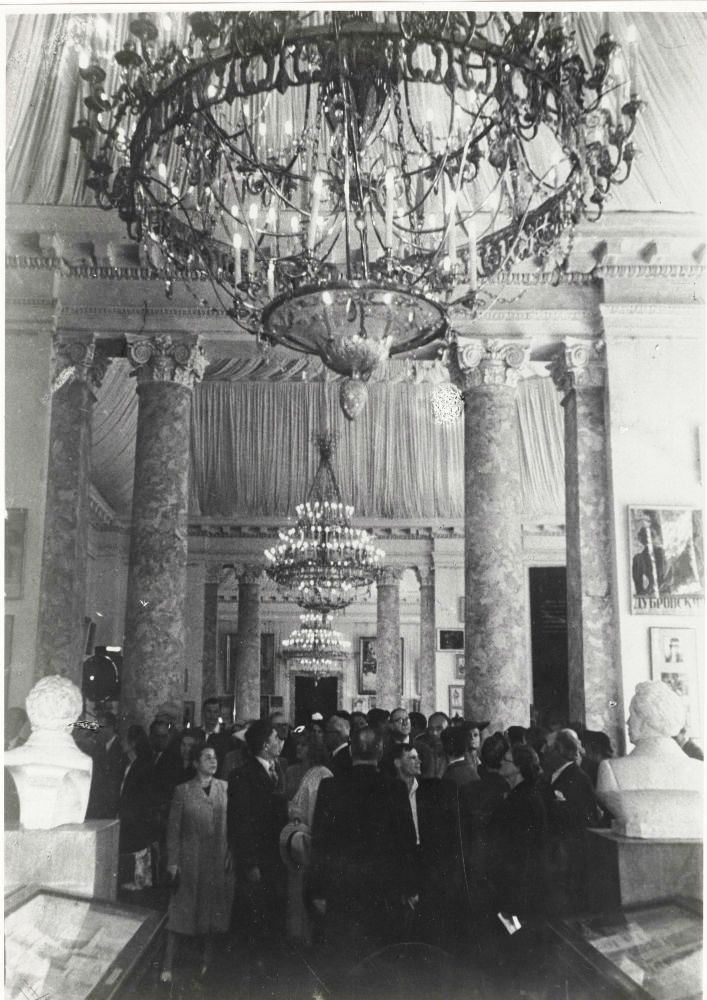
At the end of the war the Alexander Palace was mothballed. Conservation work was carried out in the palace and in 1946 it was handed over to the USSR Academy of Sciences for the storage of the collections of its Institute of Russian Literature and to house a display of the All-Union Pushkin Museum. As a consequence in 1947-51 refurbishment began in the palace, in the course of which it was intended to restore the surviving Quarenghi interiors and extant fragments of décor and also to recreate the interiors from the time of Nicholas I and Nicholas II. However, during the work many elements in the décor of Empress Alexandra Feodorovna’s Maple and Palisander Drawing-Rooms, as well as Nicholas II’s (Moresque) Dressing-Room were actually destroyed. These rooms of the palace were recreated to a project by the architect L.M. Bezverkhny (1908–1963) “in accordance with the architectural norms of the time of Quarenghi and Pushkin”.
Opening day of the All-Union Museum of A. S. Pushkin (Alexander Palace), on 10th June 1949
In 1951 a government decision handed the Alexander Palace to the Ministry of Defense. The Naval Department used the building as a top-secret, submarine tracking research institute of the Baltic Fleet. As a result, the former palace would be strictly off-limits to visitors for the next 45 years.
The palace’s stocks that were among the evacuated items in the Central Repository of Museum Stocks from the Suburban Palace-Museums passed to the Pavlovsk Palace Museum. A total of 5,615 items were moved from the palace to Pavlovsk. Of these, nearly 200 pieces were originally from the Alexander Palaces’ three ceremonial halls: the Portrait, Semi-Circular and Marble Halls. These include 39 pieces of porcelain, 41 paintings, 73 decorative bronze pieces, and 28 pieces of furniture.
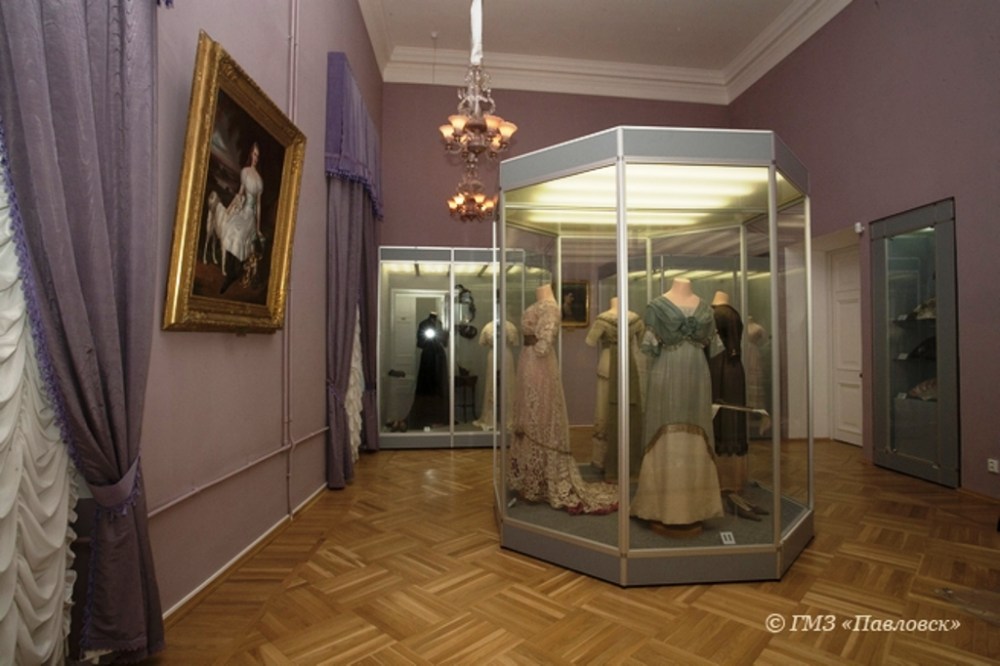
Pavlovsk’s collection today includes Imperial gowns originally from the Alexander Palace
It is also interesting to note that the Pavlovsk Palace Museum also have a large number of elegant evening gowns, dresses, shoes, hats, umbrellas, gloves, handbags, fans among other personal items of the Dowager Empress Maria Feodorovna and the Empress Alexandra Feodorovna, neither of whom ever resided in Pavlovsk. They are from the Alexander Palace, however, they are now on permanent display in the Museum of the Emperor’s Dress, which is located on the ground floor, of the northern semicircular wing of Pavlovsk Palace, the ground floor.
NOTE: this text has been excerpted from ’My Russia. The Rebirth of the Alexander Palace,’ published in Royal Russia No. 3 (2013), pgs. 1-11.
The Museum of the Russian Imperial Family in the Alexander Palace is expected to reopen at the end of 2019, or early 2020. Under restoration since August 2015, the new multi-museum complex will feature a number of reconstructed historic interiors of Nicholas II and Alexandra Feodorovna.
One year ago today – 7th August 2018 – my interview The Conspiracy Against Nicholas II, aired on YouTube, which to date has been viewed by nearly 20,000 people.
My seven-minute interview was one of a special six-part video series commemorating the Romanovs Martyrdom Centennial in 2018, prepared by the Monastery of St John the Forerunner Mesa Potamos in Cyprus.
During my interview I speak about the Tsar’s abdication in 1917, and the only two generals who remained faithful to their Sovereign. I go on to discuss the main plots which aimed to overthrow Nicholas II from his throne, and the betrayal by his ministers, generals, and even members of his own family.
Among the members of the Imperial family who were plotting against Nicholas II, were the Grand Dukes Nicholas Nicholaevich (1856-1929) and Nicholas Mikhailovich (1859-1919), and the Vladimirovich branch of the family, led by the power hungry Grand Duchess Maria Pavlovna (1854-1920), the widow of Grand Duke Vladimir Alexandrovich.
I also talk about some of the myths and lies regarding Nicholas’ II, such as his alleged weakness as a ruler, and the popular myth that his death at the hands of the Bolsheviks was met by indifference by the Russian people.
The video features beautiful colourized pictures of the Romanovs and other historical figures, by acclaimed Russian colourist Olga Shirnina, from the forthcoming book The Romanov Royal Martyrs, due to be published in September 2019.
The Church on the Blood, built on the site of the Ipatiev House in Ekaterinburg
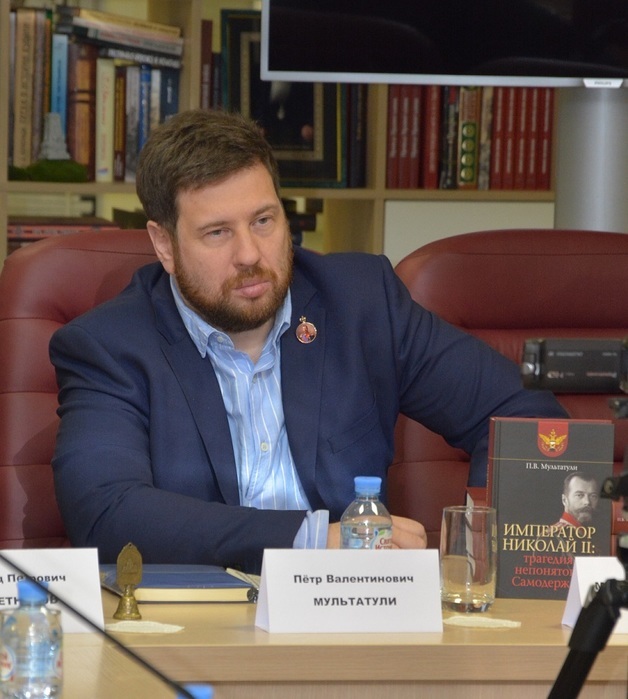
The Ural city of Ekaterinburg occupies an important place in the modern spiritual life of Russia. This conclusion was reached by Russian historian *Peter Multatuli following the results of the International Festival of Orthodox Culture Tsar’s Days 2019.
“On a spiritual level, Ekaterinburg is the last capital of the Russian Empire, because the residence of the Sovereign was always considered the capital in Russia. Peter the Great never officially transferred the capital from Moscow to St. Petersburg, but since he lived there, it was the capital,” said Multatuli.
He noted that in 1918, for 78 days, Emperor Nicholas II and his family lived in Ekaterinburg, and that is why the Ural capital can be considered the last capital of the Russian Empire.
[It is important to note that many historians – myself included – firmly believe that the Tsar’s signing of the instrument of abdication, his status as Tsar remained inviolate and unassailable – PG]
“Petrograd and Moscow to one degree or another welcomed his overthrow, and they bear a greater responsibility in this than any other Russian city. No matter what anyone says, it was Ekaterinburg that served as the last Imperial residence, which, according to God’s special plan, became the Royal Golgotha,” added Peter Multatuli.
According to him, in the near future, Ekaterinburg will play a great role in the history of Russia, because “the city named after St. Catherine and becoming the Royal Golgotha will be the city of Russian resurrection.”
[Once a bastion of Bolshevism, Ekaterinburg has slowly shed its status as the “capital of atheism”. Since the fall of the Soviet Union in 1991, the Urals has experienced a revival of faith, with Ekaterinburg at the into the center of Orthodox Russia in the Urals. Ekaterinburg has done more to honour Nicholas II and his family than any other city in Russia. Thanks to my visits to Ekaterinburg in 2012, 2016 and 2018, it is a city which I have grown to admire and love – PG]
Peter Valentinovich Multatuli
*Peter Valentinovich Multatuli was born in Leningrad on 17 November 1969. He is a Russian journalist, historian and biographer. Multatuli is the author of numerous books and articles about the reign of Emperor Nicholas II. He is the great-grandson of Ivan Kharitonov (1872-1918), who served as the Head Cook of the Imperial family. He followed the tsar and his family into exile, and was murdered along with them in the Ipatiev House on 17th July 1918.
Multatuli’s comprehensive Russian language studies of the life and reign of Emperor Nicholas II are often overlooked or simply ignored by his Western counterparts.
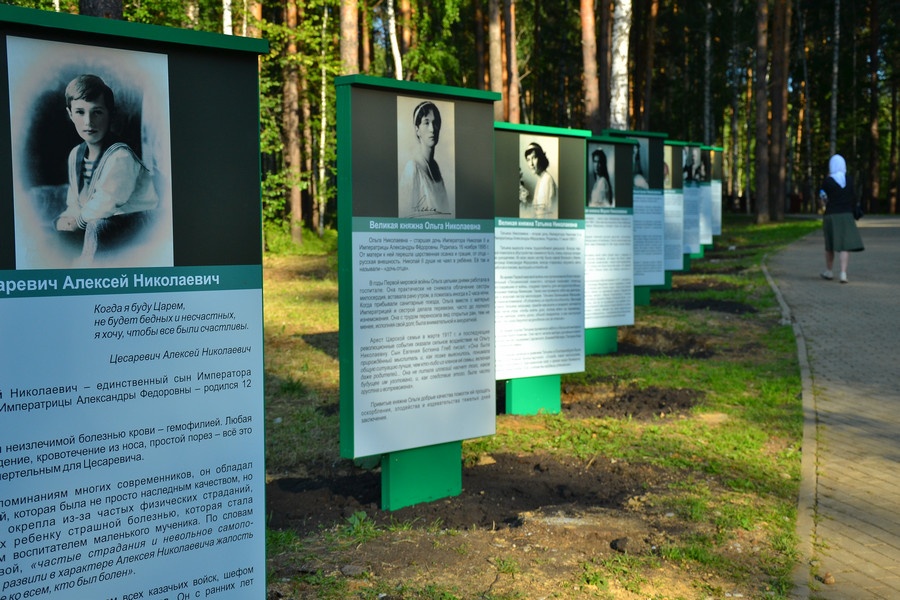
New permanent outdoor exhibit on the grounds of the Monastery of the Holy Royal Martyrs
A photo exhibition “We” presents the work of Ekaterinburg photographer Yaroslav Kulakov, opened this week in the Museum and Exhibition Center of the Monastery of the Holy Royal Martyrs in Ganina Yama. The exhibit features photos of the participants of the Tsar’s Days and the Cross Procession over a 20-year period from 1998 to 2018.
“The Lord has not created anything more beautiful than a spiritual and joyful human face,” said Yaroslav Kulakov. Many of his photographs have become historical. The photographs include the first designer of the monastery, Tatiana Alekseevna Petkevich, icon painter Tatiana Fedorovna Vodicheva, the confessor of the monasteryAbel (Odintsev) among many others.
New permanent outdoor exhibit on the grounds of the Monastery of the Holy Royal Martyrs
A second exhibit, a permanent outdoor exhibition dedicated to the Imperial Family and their faithful companions who perished with them on the night of 16/17 July 1918, also opened on the grounds of the monastery.
The exhibition which is located near the monument to Emperor Nicholas II, includes 12 stands featuring a photo and biography of members of the Imperial family and their faithful retainers.
This brief, yet information excursion into Russian history will help those who are just starting to get acquainted with the history of the Holy Royal Family.
The photo exhibition “We” will run until 13th September 2019, in the Museum and Exhibition Center of the Monastery of the Holy Royal Martyrs in Ganina Yama, from 10:30 to 16:30 daily, except Monday.
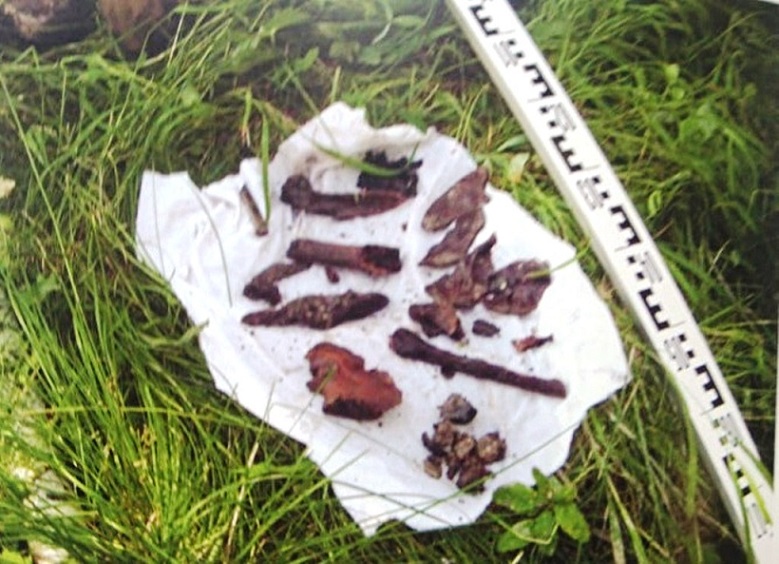
The search for additional remains of two of Emperor Nicholas II’s five children, Tsesarevich Alexei and Grand Duchess Maria, should continue until all their remains have been found, said Peter Sarandinaki, president of the SEARCH Foundation.
It is important to note that Sarandinaki is not the first to call for a new search for more remains of the Alexei and Maria. In 2016: “the search for the remains of Tsesarevich Alexei and Grand Duchess Maria should continue in and around the Koptyaki Road area near Ekaterinburg,” said Archpriest Oleg Mitrov at a 2016 conference. Mitrov, who is a member of the Synodal Commission for the Canonization of Saints, is also engaged in the study of the issues surrounding the murders of the Imperial family.
On 17th July 1918, the Bolsheviks murdered the Russian Imperial family and secretly buried their bodies at an enormous site Porosenkov Log, near Ekaterinburg. The grave of Alexei and Maria was discovered in 2007, and an Investigative Committee of Russia’s Public Prosecutor’s Office confirmed the authenticity of the discovery.
“We have to search for more remains of Alexei and Maria,” Sarandinaki said, adding that only 44 pieces of their bones had been found at the site. “The rest of the area of that forest glade will need to be further searched to make sure that all their remains, if they are there, are found.”
Only 44 pieces of Alexei and Maria’s bones have been found at Porosenkov Log, near Ekaterinburg
Sarandinaki – a native of Argentina, but a citizen and resident of the United States – has been engaged for many years in the search for the remains of the Russian Imperial family.
For the past few years, he has led a team of US and Russian experts who are searching for the remains of Tsar Nicholas II’s brother, Grand Duke Michael Alexandrovich. The Grand Duke along with his secretary Nicholas Johnson were murdered by the Bolsheviks on 13th June 1918 near the city of Perm.
Three years prior to the discovery of the area where the Romanovs were buried, Sarandinaki explored the area and stood at the exact place where some of Alexei’s and Maria’s remains were later discovered.
Sarandinaki emphasized that it is up to the Russian Orthodox Church and the local authorities to make a final decision with respect to continuing the search for Alexei’s and Maria’s remains.
“I think once the Russian Orthodox Church comes to a conclusion [to proceed], a thorough search would need to be done there,” Sarandinaki said.
Members of the State Duma for the first time observed a minute of silence in memory of the last Russian emperor Nicholas II, and all those killed in the Civil War (1917-1922)
Today – 17th July 2019 – Russia’s State Duma for the first time observed a minute of silence in memory of the last Russian emperor Nicholas II and all those killed in the Civil War. (1917-1922)
According to Duma Speaker Vyacheslav Volodin,”reconciliation begins when we all understand that this cannot be repeated and this is unacceptable.”
“Today we are making a proposal to honour the memory of the last Russian tsar, to honour the memory of the innocent victims – all those who died in the crucible of the Civil War,” the speaker addressed his colleagues, who after these words, rose from their seats.
It should come as no surprise that members of the Communist Party of the Russian Federation, did not comply with the moment of silence.
Step to national consolidation
The first deputy head of United Russia’s Duma Andrei Isaev noted that representatives of all political parties, regardless of their ideological positions, honoured the memory of victims of the Civil War by standing, calling it “a very important step towards national consolidation and reconciliation.”
“This means that all political forces represented in Russia’s parliament are against civil confrontation, for settling disputes and conflicts arising through a peaceful democratic process,”
In conclusion, Isaev added, “many deputies are in favour of making 17th July, a memorial day, in memory of the deaths of the Imperial family, and to also honour the memory of all those who died as a result of the Civil War in Russia.”
This is the first time in the history of Russia’s State Duma, that they honored the memory of Nicholas II – truly unprecedented!
The following article is just one of many, which reflect my personal interest in Nicholas II. Since the fall of the Soviet Union in 1991, Russia’s reassessment of his life and reign have shifted significantly. The establishment and distribution of orders and medals in his name is just one indication of the positive direction this reassessment is heading, while at the same acknowledging the enormous contribution he made during his 22+ year (1894-1917) reign.
I have known of two of the three orders for some years now, however, it has been an arduous task to find any documents about any of them. Information provided by a phaleristics group in Russia recently, has now allowed me to complete this article.
I would like to point out that I am not an expert on orders and awards, therefore, I am appealing to readers, who may be able to provide me with additional information. I would also appreciate any errors be brought to my attention at the following email: royalrussia@yahoo.com – PG
***
POSTSCRIPT: shortly after I published this article in 2019, I received a letter from one of Princess Maria Vladimirovna’s goons Stanislav Dumin, who criticized my article, noting that these “so-called orders were nothing but mere trinkets”, and that they had no importance. He further noted that it was only “HIH Grand Duchess Maria Vladimirovna” has the authority to approve of any new Russian Orders . This is absolute nonsense!
For the record, Maria Vladimirovna is a Princess, not a Grand Duchess. The last grand duchess of Russia was Nicholas II’s younger sister Olga Alexandrovna, who died on 24th November 1960, in Toronto, Canada.
Further, it is important to emphasize, that Maria Vladimirovna never had or has any authority to hand out titles or awards as she is not and never has been a ruling monarch. Despite this, Maria actively, and completely illegally distributes orders, medals and even titles of the Russian Empire. While many orders and awards of the Russian Empire have been officially restored in the modern Russian Federation, an ordinary civilian, and not a representative of the state, distributes the same order in appearance and name to her supporters on behalf of the “Imperial House”. – PG (23 July 2023)
* * *
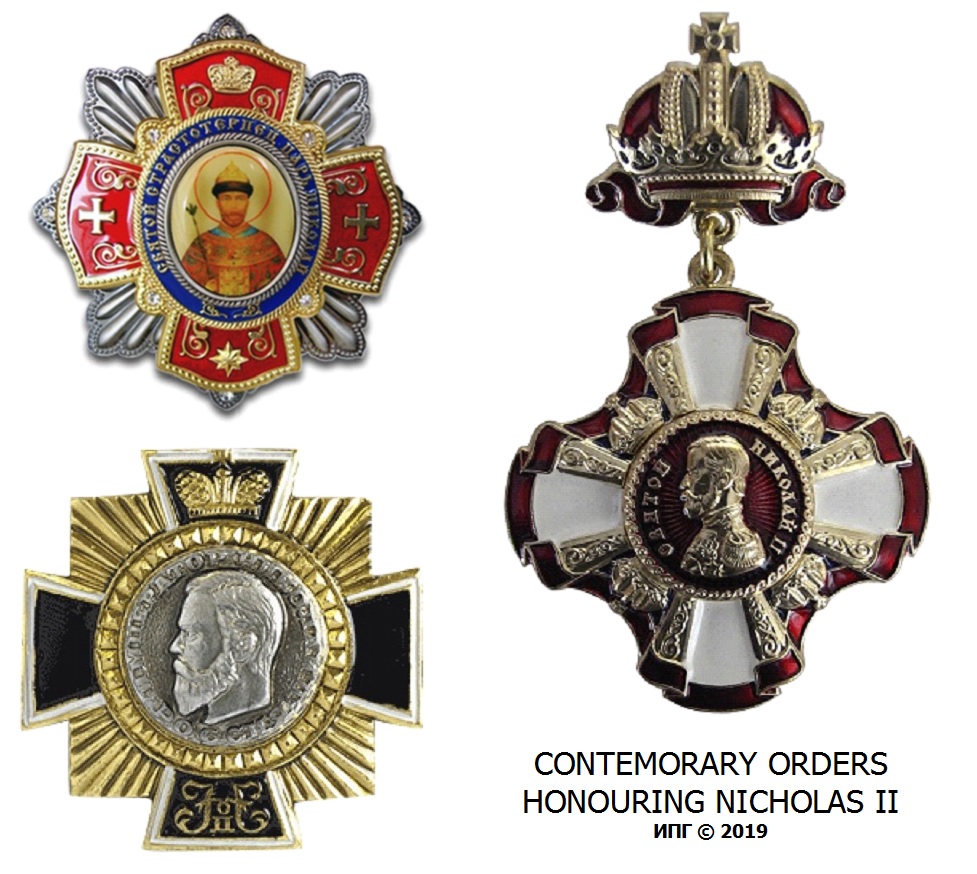
After the canonization of the the Sovereign Emperor Nicholas II and his family by the Russian Orthodox Church Outside of Russia (ROCOR) in 1981, two new orders were established simultaneously: “Order of Saint Nicholas II” and “Order of The Holy Passion-bearer Tsar Nicholas”. Both awards are awarded for merits in the revival and advancement of the finest Russian traditions which contribute to the prosperity of the state. Holders of the order include individuals, politicians, scientists, athletes, artists, among others.
Order of Saint Nicholas II / Святой Николай II
The highest international public award was established in 1988 by the descendants of the Romanov dynasty and the noble family of Dmitrievs, the founders of the Imperial Society of Russia (IOR) charity foundation. The order was was established to mark the 70th anniversary of the murders of the Imperial family in Ekaterinburg. The order is issued on the means and donations of the Board of Trustees. Nominees are approved by the Expert Council of the IOR. Presentation of the laureates is carried out both by state authorities of different levels and by public or business associations. The Order of Saint Nicholas II is presented in a solemn atmosphere, with the involvement of the media and the general public. A number of orders have been issued posthumously. The unique insignia remains in the possession of the recipient for life and can be inherited.
Description
The Order has three degrees, for which the insignia are:
Ist Class: gold, diamonds, white enamel on the rays of the cross, red enamel framing
2nd Class: silver, sapphires or aquamarines, blue enamel on the rays of the cross, red framing
3rd Class: Alloy of non-ferrous metals with gilding, rubies or tourmalines, red enamel on the rays of the cross, blue framing
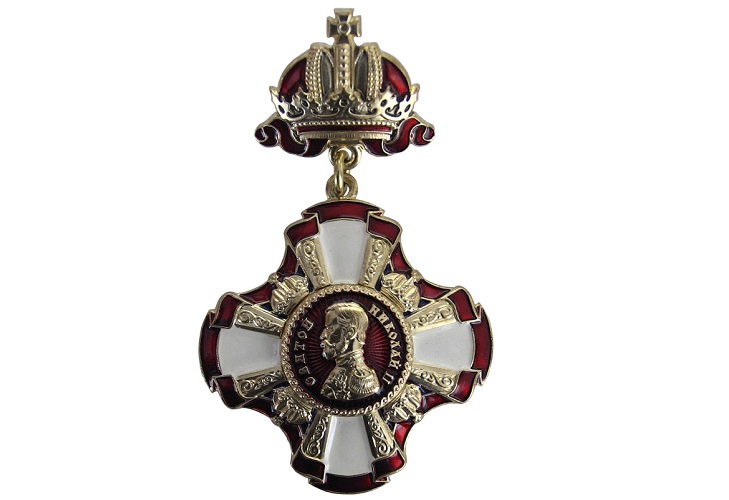
The founder of the Imperial Society of Russia (IOR), hereditary nobleman Valery Dmitriev, the developer and manufacturer of the Heroldmeister Kiev non-state enterprise designed the order. All three Classes represent the so-called Templar Cross, each ray of which is made in the form of three symmetrical folds. The central is covered with enamel, the side ones are made of base metal and decorated with a relief pattern. Between the rays are large imperial crowns inlaid with precious stones. The whole composition is framed with an enamelled ribbon, the color of which depends on the degree of the award.
In the center – a medallion, also trimmed with precious stones along the rim. Inside on an enamel background is a profile portrait of the last Russian tsar and the inscription in a circle: “Saint Nicholas II.” The reverse contains the date of establishment – 1988, the lower beam of the cross is stamped with the serial number of the mark. The pad is a bas-relief image of the imperial crown. The Order is attached to it with the aid of the ear and ring. The size of the cross at the extreme points is 45 mm, the total height of the product is 75 mm.
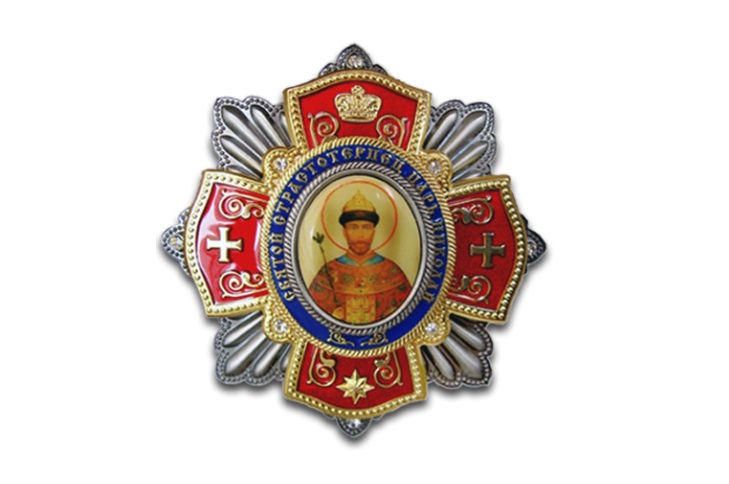
Order of The Holy Passion-bearer Tsar Nicholas Святой страстотерпец царь Николай
On 19th May 2008, at the initiative of the Russian Orthodox Church Abroad (ROCOR), another order was established, similar to Saint Nicholas II. It received the status of an international religious public award and is awarded to both civilians and the military. The direct founders: the organization Orthodox Mission for the Revival of the Spiritual Values of the Russian People; Orthodox Troop Mission; and the International Award Committee of “Glory to Russia”. The statute of the award states that nominees may be persons whose activities “are aimed at strengthening Russia, the spiritual development of the people, and the protection and preservation of Orthodox values.” Candidates can be nominated to members of the Award Committee, representatives of monarchical organizations in Russia, clergymen of the Russian Orthodox Church Abroad and holders of the Order.
Description
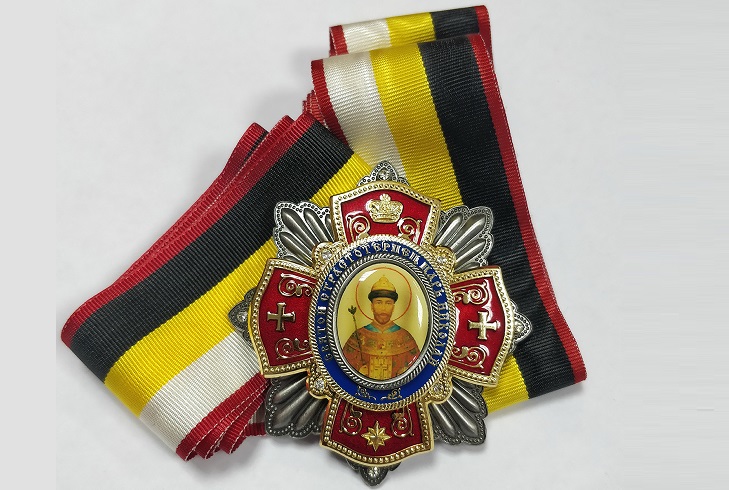
The Order is an eight-pointed silver-plated star, on which is laid a cross, covered with red enamel. On its upper beam is depicted the imperial crown, on the lower is Heaven’s rose, one of the symbols of the Virgin Mary. The right and left sides are decorated with heraldic crosses. In the central part there is an oval medallion trimmed with enamel, inside it there is an image of the Emperor’s canonized face. The inscription on the blue enamel bezel: “Holy Martyr Tsar Nicholas.” The reverse contains the number of the award and the year of establishment “2008”. Medal mount – screw with clip. Holders wear the order on the right side of the chest, below the state awards of the Russian Federation, or around the neck on a ribbon.
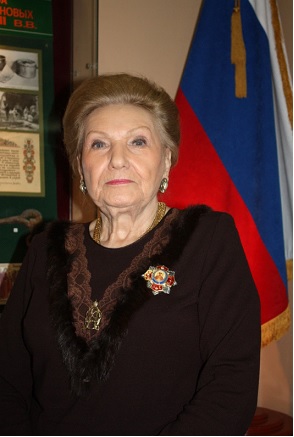
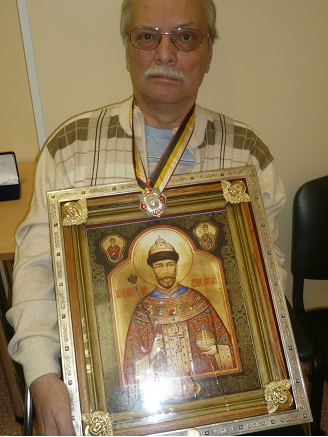
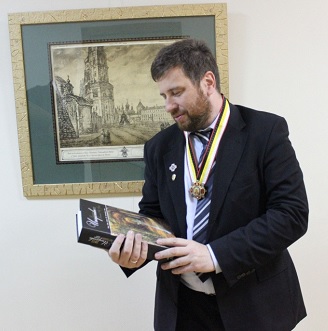
Recipients of the Order of The Holy Passion-bearer Tsar Nicholas include:
Chairman of the Grand Duchess Olga Alexandrovna Charitable Foundation Mrs. Olga Kulikovsky (top)
Russian historian and author Alexander Bokhanov, 1944-2019 (bottom left);
Russian historian and author Pyotr Multatuli (bottom right)
Bokhanov and Multatuli are recognized as Russia’s leading experts on the life and reign of the Sovereign Emperor Nicholas II.
All three recipients have devoted years of research, writing and public speaking to help clear the name of Russia’s much slandered tsar.
Chairman of the Grand Duchess Olga Alexandrovna Charitable Foundation Mrs. Olga Kulikovsky Russian historian and author Alexander Bokhanov, 1944-2019 Russian historian and author Pyotr Multatuli
Holy Royal Passion-bearer Nicholas / Святой страстотерпец царь Николай
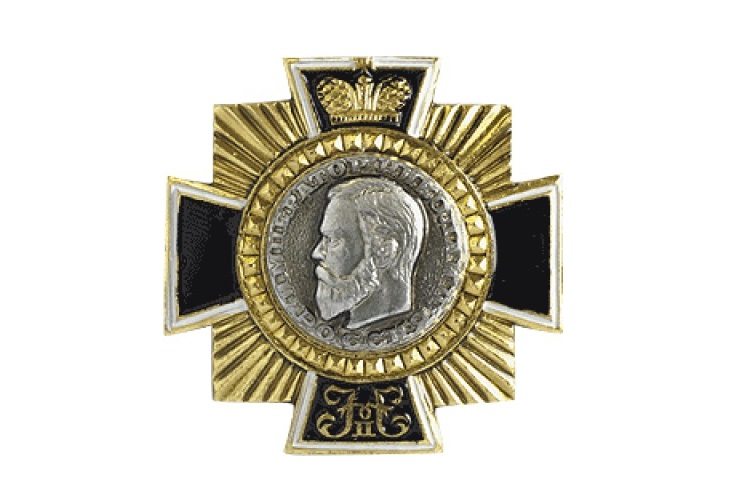
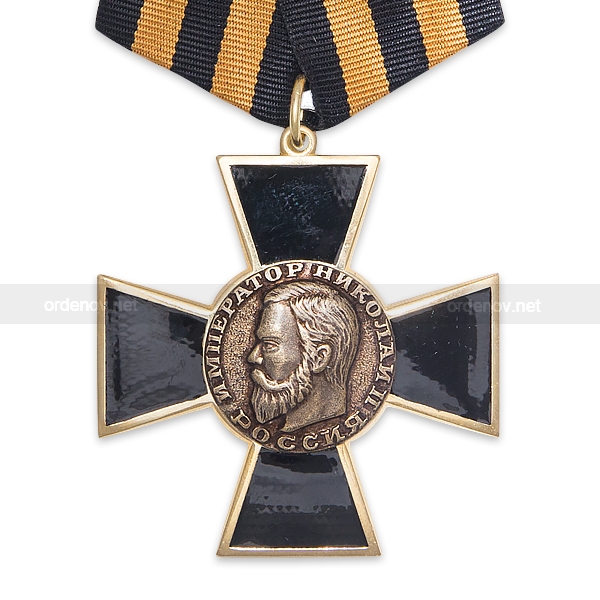
In addition to public awards, there is also a badge honouring the Sovereign Emperor Nicholas II. It is carried out in the form of the St. George Cross, either in form identical to the prototype, or against the background of a four-pointed star. In the center there is a medallion with bearing the tsar’s profile and a circular inscription: “EMPEROR NIKOLAI II RUSSIA”.
The mark is made of brass, the rays of the cross are covered with black enamel. It can be attached to the pentagonal strap with St. George ribbon. In the version with a star, the imperial crown is depicted on the upper beam of the cross, on the lower one – the personal monogram of Nicholas II. In addition to brass, nickel silver alloy is also used.
The order badge was issued twice in a limited edition by order of the St. Petersburg public organization Cossack Convoy in Memory of the Emperor Nicholas II: in 2017 to the 100th anniversary of the death of the Russian Empire; in 2018, to the 100th anniversary of the murder of the Imperial family and at the same time the 150th anniversary of the birth of Nicholas II. A total of 1,200 copies of the jubilee mark were made. In catalogs it is sometimes called an order, but even the price of 400 rubles indicates that this is a mistake.
The Icon of the Mother of God, “Of the Three Hands” belonged to Nicholas II and his family
On 11th July 2019, on the feast day of the Icon of the Mother of God, “Of the Three Hands”, Mrs. Olga Nikolaevna Kulikovsky, chairman of the Grand Duchess Olga Alexandrovna Charitable Foundation, attended a Divine Liturgy in the Church on the Blood in Ekaterinburg.
The Divine Liturgy was led by Metropolitan Kirill of Ekaterinburg, in front of the Icon of the Mother of God, “Of the Three Hands.” The icon belonged to the Imperial Family, who venerated the icon, during their imprisonment in the Ipatiev House in 1918. The icon was found in the basement of the house after the murder of the Tsar and his family on the night of 16/17 July 1918. In the early 1920s, through the efforts of officers loyal to the Sovereign, the icon was smuggled out of Bolshevik Russia to Denmark, and presented to Nicholas II’s mother – the Dowager Empress Maria Fedorovna. After her death in 1928, the icon was bequeathed to her youngest daughter Grand Duchess Olga Alexandrovna, who took it with her when she emigrated to Canada in 1948.
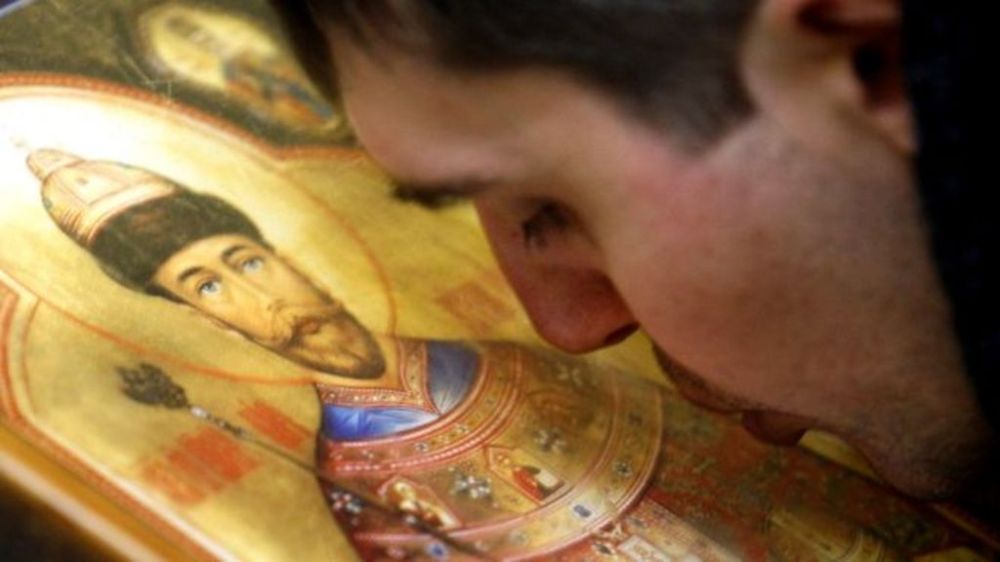
Metropolitan Kirill of Ekaterinburg, kisses the Icon of the Mother of God, “Of the Three Hands”
In 1991, when Tikhon Nikolaevich Kulikovsky, the eldest son of Grand Duchess Olga Alexandrovna, learned that Russia was discussing the construction of a Memorial Church on the site of the Ipatiev House in Ekaterinburg, he addressed a letter to His Holiness Patriarch Alexy II of Moscow and All Russia, in which he noted that upon completion of construction, he intended to transfer the icon to the newly established church. However, Tikhon Nikolayevich was not able to fulfill his wish during his lifetime – he died on 8th April 1993. His widow Olga Nikolaevna Kulikovsky, however, carried out her husbands wish, and presented the Mother of God, “Of the Three Hands” during the solemn consecration of the Church on the Blood in 2003.
After the service, Metropolitan Kirill congratulated everyone on the holiday and the beginning of the Tsar’s Days, noting that this day marks the beginning of “Passion Week” dedicated to the memory of the Holy Royal Martyrs. His Eminence thanked Olga Nikolaevna, to whom the Church on the Blood and the Ekaterinburg Diocese acquired “a special significant icon – the image of God’s blessing on the Holy Tsar’s Family.”
Today, the icon is kept in the Upper Church of the Church on the Blood in Ekaterinburg.
Mrs. Olga Kulikovsky
It should be noted, that Mrs. Olga Kulikovsky (now 93 years old), has dedicated many years to charitable activities in the name of her mother-in-law Grand Duchess Olga Alexandrovna. Despite her age, she continues to work actively to help clear the name of Russia’s much slandered Tsar and his family. She travels to Ekaterinburg each year to take part in the Tsars Days events, culminating with the Divine Liturgy at the Church on the Blood on the night of 16/17 July, and in Ganina Yama.







 Nicholas II
You must be logged in to post a comment.