Unique catalog of Nicholas II’s uniforms has been published

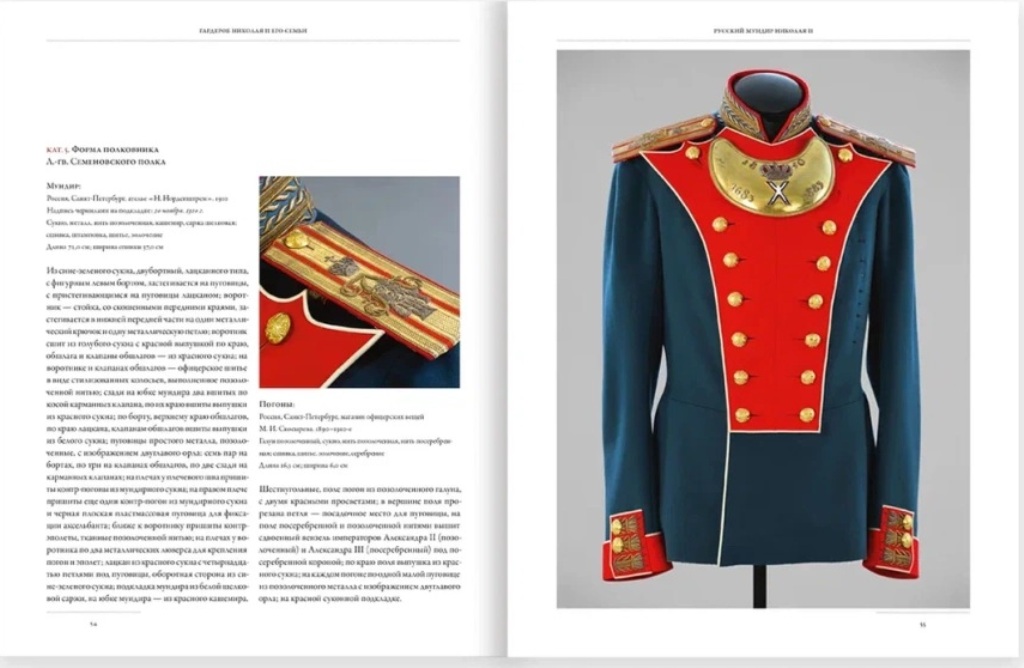
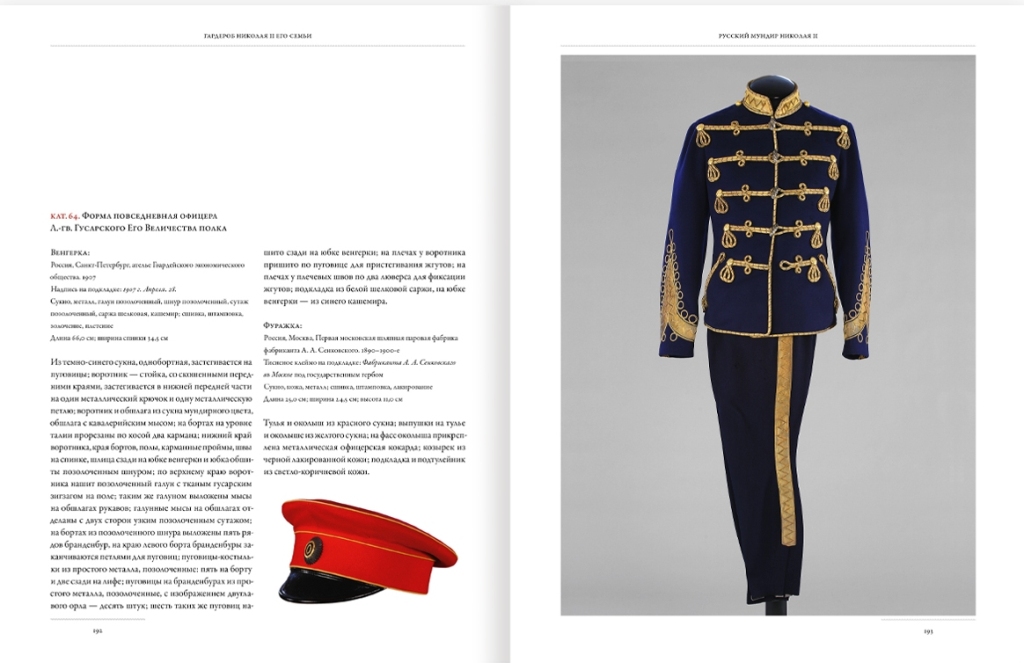
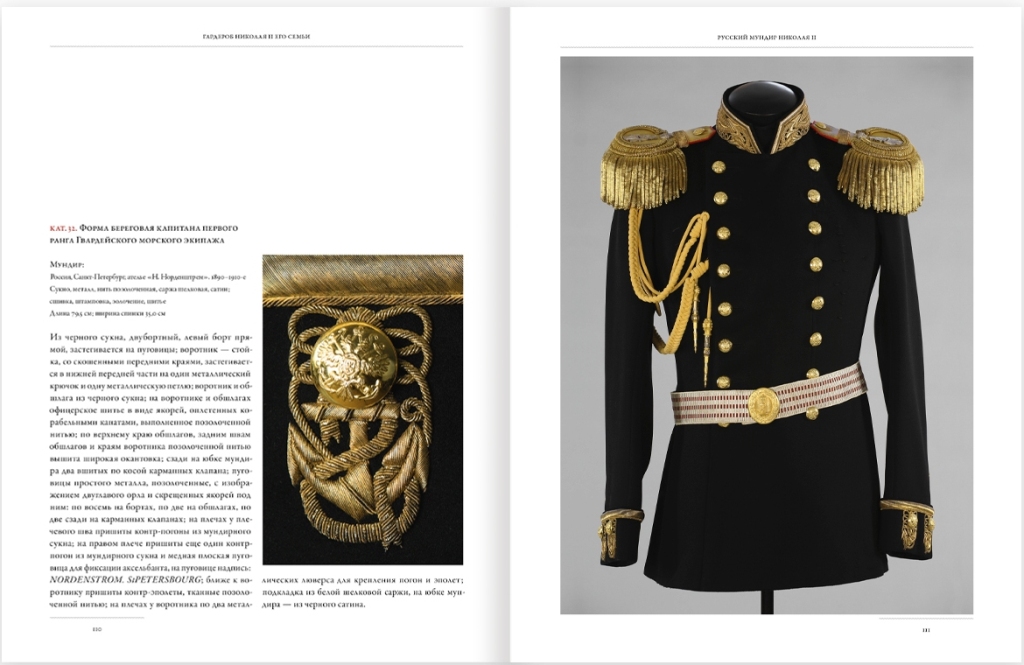
The Tsarskoye Selo State Museum has published the first volume of a unique catalog of the wardrobe of Emperor Nicholas II and his family. The first volume is dedicated to the uniforms of Nicholas II.

The Tsarskoye Selo State museum houses the world’s largest collection of uniforms of the last Russian Tsar and clothes of members of his family – more than 800 items. The collection comes from the Alexander Palace, the last and favorite residence of Nicholas II.

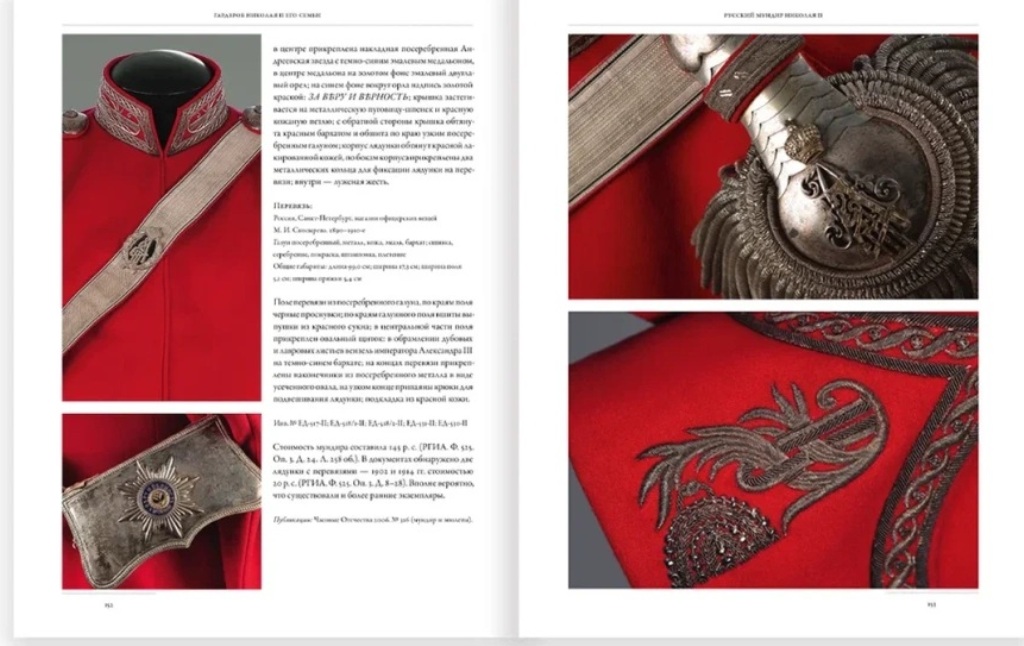
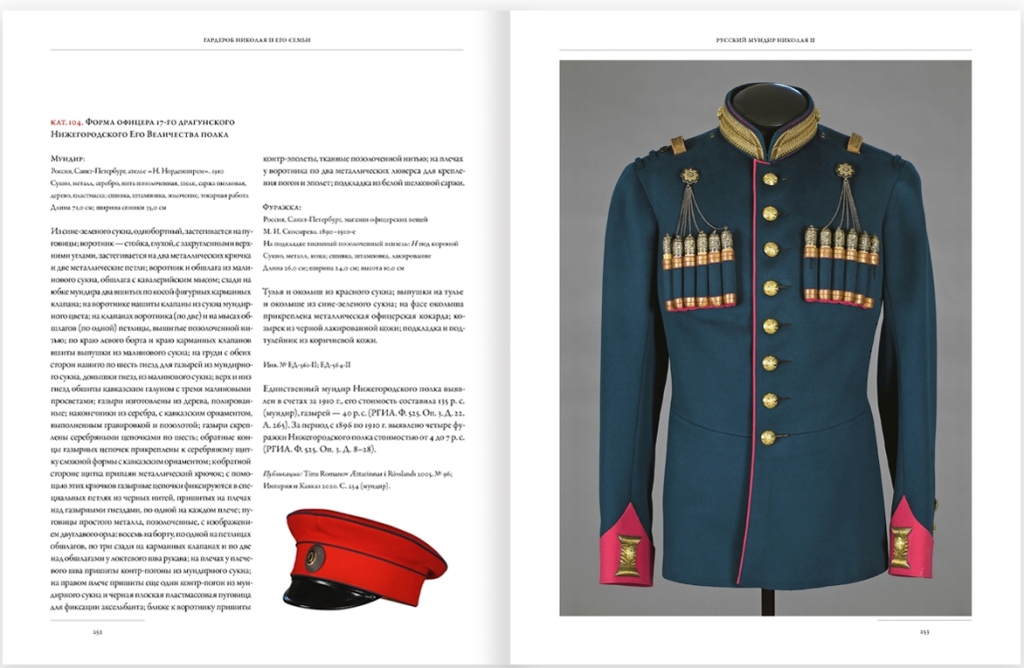
The catalog contains photographs and descriptions of more than 350 items. The author of the catalog is the curator of the Men’s Costume Collection, senior researcher at the Tsarskoye Selo State Museum-Reserve, Alexei Rogatnev. [Note: the link features a 10-minute video of Rognatnev talking about the Alecander Palace’s collection of Nicholas II’s uniforms]

“During the reign of Nicholas I, there was a rule without exceptions: the Emperor was an officer of the Russian Empire. Therefore, he was obliged to wear a military uniform, and only on trips abroad could he wear civilian dress. Even when he was not engaged in affairs related to the management of a huge empire, Nicholas II wore a uniform: in photographs from the Romanov family albums, we see him playing tennis in the summer jacket of a naval officer and shoveling snow near the Alexander Palace in the uniform of a colonel of the 4th Imperial Family Life Guards Rifle Regiment,” he notes.

“In the last few decades of the 19th century, thanks to the passion of Alexander III and Nicholas II for hunting, the rule was somewhat relaxed – when hunting, members of the Imperial Family wore comfortable, specially tailored suits. Thus, most of the wardrobe of both the emperor and the grand dukes was a collection of uniforms of the various units of the regiments of the Russian Empire and European countries,” Rogatnev added.

PHOTOS: pages from the 296-page catalog of Nicholas II’s uniforms
© Tsarskoye Selo State Museum

PHOTOS: pages from the 296-page catalog of Nicholas II’s uniforms
© Tsarskoye Selo State Museum

PHOTOS: pages from the 296-page catalog of Nicholas II’s uniforms
© Tsarskoye Selo State Museum

PHOTOS: pages from the 296-page catalog of Nicholas II’s uniforms
© Tsarskoye Selo State Museum

The catalog is based on documents from the museum collection, the most valuable are from the inventory lists of the Alexander Palace Museum, which were compiled in 1938-1939. They contain a complete list of the wardrobe of the Imperial Family as of 22nd June 1941, and make it possible to recreate the composition of the pre-war collection, the method and place of evacuation, and to identify lost items.

Among the numerous sources that were used in researching for the catalog, the wardrobe records of Nicholas II, in particular, which uniform he wore. Entries in these books were made only on the days the Emperor participated at official events held in St. Petersburg and mirrored those of the Chamber Fourier journal. They do not contain records of the Emperor’s foreign travels, while traveling on the Imperial Train, and under other similar circumstances. These records also contain factual inaccuracies that can be identified by cross-referencing several sources.

Thanks to the study of the annual reports, which are stored in the Russian State Historical Archive, we can see the expenditures for the manufacture of most of the uniforms of Nicholas II, Alexandra Feodorovna, Tsesarevich Alexei and the Grand Duchesses. These accounts make it possible to determine the amount spent on uniforms by year, to systematize the internal structure of the wardrobe by military units, to determine the main and secondary suppliers of uniforms, military accessories, and shoes.

Emperor Nicholas II and his family made the Alexander Palace their permanent residence rom 1905. Personal items, including their respective wardrobes, were not tied to a certain place, but accompanied them, wherever they stayed, be it the Winter Palace, Peterhof, Livadia, Spala, Moscow or abroad. But most of the Emperor’s wardrobe invariably remained in the Alexander Palace at Tsarskoye Selo.

The catalog of Nicholas II’s uniforms will be of interest to historians, specialists in Russian military costume, art historians, museum employees and everyone who is interested in the reign of Russia’s last Tsar.

The catalog is currently only available in the Tsarskoye Selo museum shops in the Catherine and Alexander Palaces, in the Russia in the Great War Museum (located in the Sovereign Military Chamber), as well as book kiosks found in the Catherine Park.

NOTE: this catalog is ONLY available in Russian, there is NO English language edition available, nor does the museum have any plans on issuing such. 296 pages, richly illustrated throughout.

FURTHER READING

Nicholas II’ s uniforms on display in Tula from the Collection of the Tsarskoye Selo State Museum + 21 COLOUR PHOTOS

Wardrobe of Emperor Nicholas II in the Alexander Palace + PHOTOS and VIDEO

1896 Coronation uniform of Emperor Nicholas II + PHOTOS

© Paul Gilbert. 1 January 2026

Christmas tree installed in the Alexander Palace of Tsarskoye Selo

The tree was installed in the Semi-Circular Hall
Photo © Tsarskoye Selo Museum-Reserve

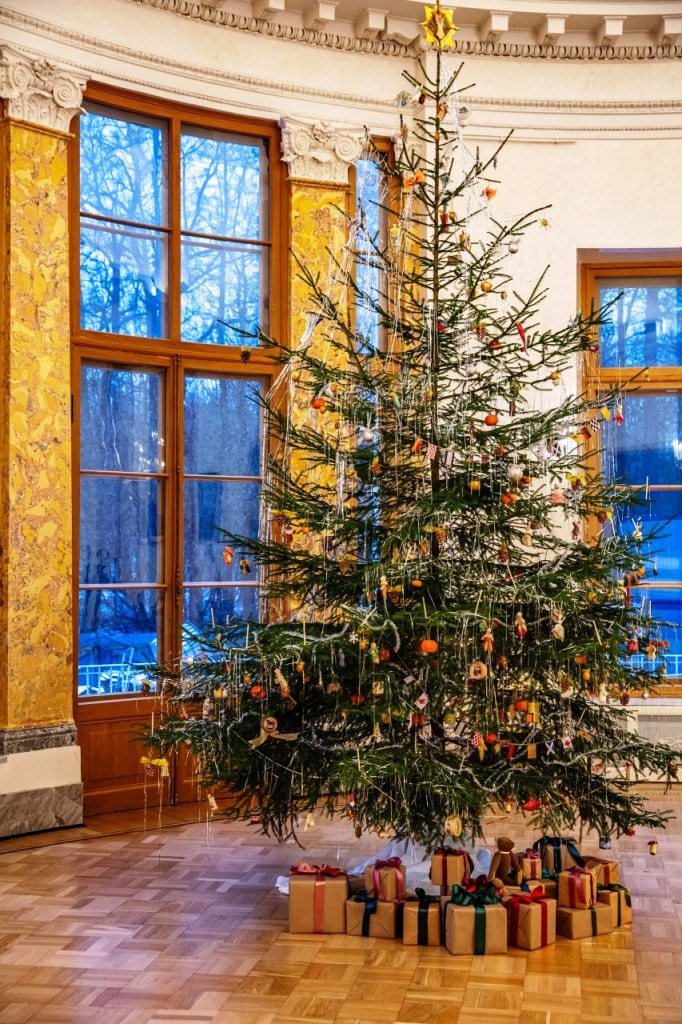
A live fir tree has been installed in the Semi-Circular Hall[1] of the Alexander Palace at Tsarskoye Selo. This is the fifth year in a row (since 2021) that the tradition of Emperor Nicholas II and his family has been revived.

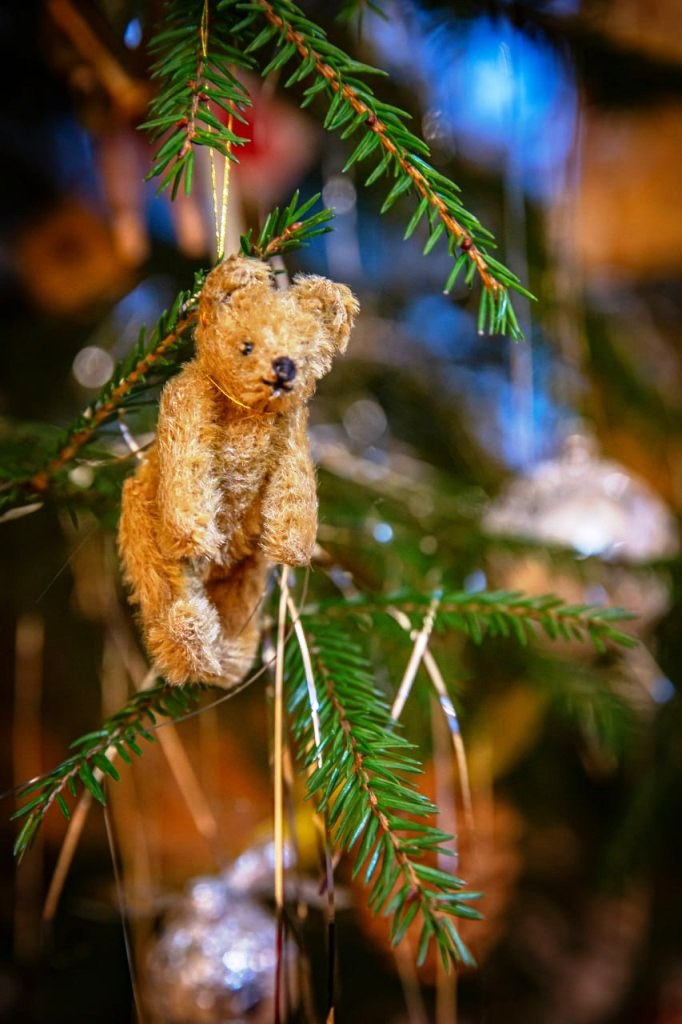
The tree has been decorated with antique toys from the museum’s collection. The Christmas tree will stand until the end of the New Year holidays.

From 1905 to 1917, the Alexander Palace was the preferred residence of Nicholas II, Alexandra Feodorovna and their children. All members of the Imperial Family and their entourage took part in the preparations for Christmas[2]. A Christmas tree for the children was placed on the second floor, while the main family tree was on the first (ground) floor.

The tree was decorated with antique toys from the museum’s collection
Photo © Tsarskoye Selo Museum-Reserve

Several other Christmas trees for servants and guards stood in the ceremonial halls, and a Christmas tree for the Emperor and the Empress was placed in the private rooms of Alexandra Feodorovna. The last time a Christmas tree was decorated in the Alexander Palace was in December 1916.

The Ceremonial or State Halls of the Alexander Palace reopened in July of this year. The Semi-circular and Portrait Halls, as well as the Marble Drawing Room, are now part of the excursion route through the palace, which now includes 17 interiors.

Visitors were reminded that the Alexander Palace is open from 26th December to 30th December 2025 and from 2nd January to 11th January 2026. The museum’s opening hours are from 10:00 to 18:00.

NOTES:

H[1] It was from the Semi-Circular hall, that the Imperial Family went into exile to Siberia on 14th (O.S. st) August 1917.

[2] As Orthodox Christians, Nicholas II and his family celebrated Christmas according to the Old Style Julian Calendar on 7th January

FURTHER READING

Christmas returns to the Alexander Palace

The Imperial Family’s last Christmas in 1917

© Paul Gilbert. 26 December 2025

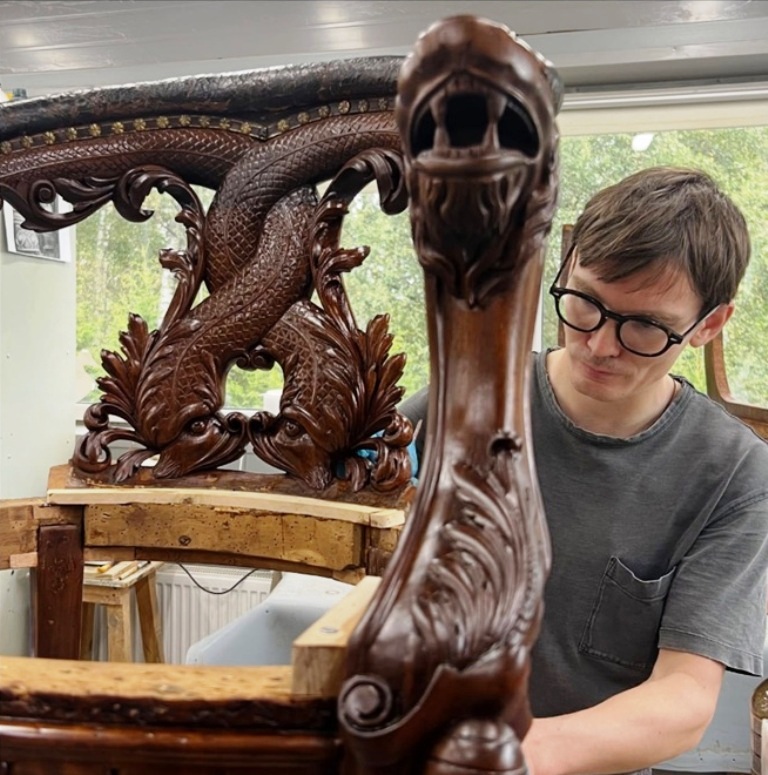
Armchair recreated for Nicholas II’s Working Study

Photo © Tsarskoye Selo Restoration Workshop

The Tsarskoye Selo State Museum continue to recreate items lost from the Alexander Palace during the Second World War . . . the Tsarskoye Selo Restoration Workshop are currently recreating the armchair for the large desk in the Working Study of Emperor Nicholas II.

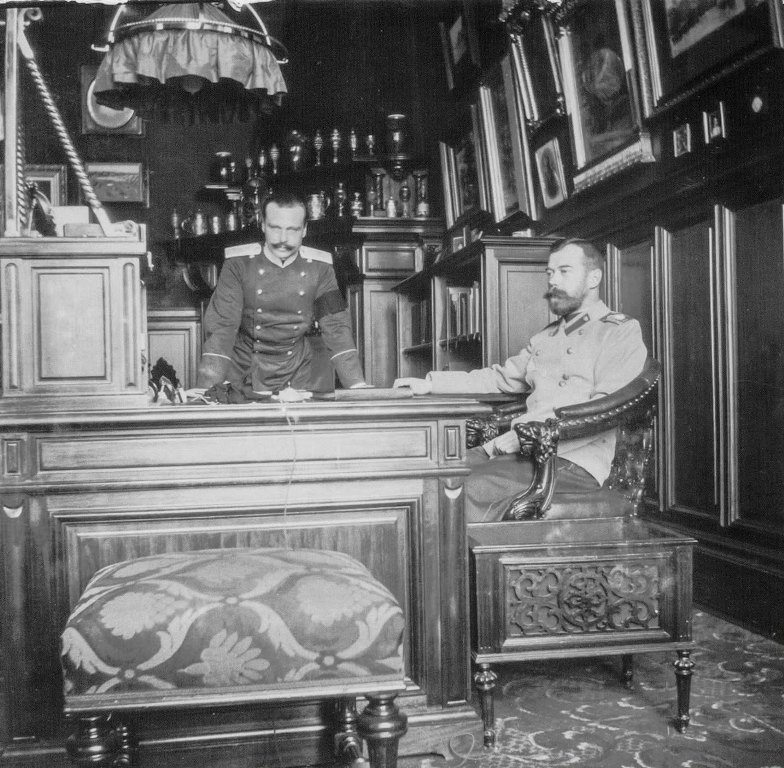
The chair is being recreated from a vintage 1917 photograph by masters of the Tsarskoye Selo Restoration Workshop, who during the past few years recreated other items of furniture for this interior, as well as other interiors in the recreated Private Apartments of Emperor Nicholas II and Empress Alexandra Feodorovna, located in the Eastern Wing of the Alexander Palace.

Furniture items which have been recreated for the Working Study of Emperor Nicholas II include a large table with a lamp; in June 2023, a beautiful Ottoman and a large Persian Farahan carpet was recreated to upholster the Large Ottoman sofa; in December 2024, a table and chair, among other pieces. Upon completion, each piece was returned to it’s original historic place in the Study.

PHOTO: Nicholas II seated in the armchair (currently being recreated) in 1901

Recall that the Alexander Palace closed in the Autumn of 2015 for an extensive restoration, which saw the reconstruction of the Private Apartments of Emperor Nicholas II and Empress Alexandra Feodorovna, situated in the Eastern Wing of the palace. Work on the project took 6 years to complete. The Alexander Palace reopened it’s doors to visitors in August 2021.

According to the TASS News Agency, the Western Wing of the Alexander Palace at Tsarskoye Selo is now scheduled to open to the public in late 2025.

© Paul Gilbert. 23 September 2025

Three ceremonial halls of the Alexander Palace reopened after restoration

Photo © Tsarskoye Selo State Museum

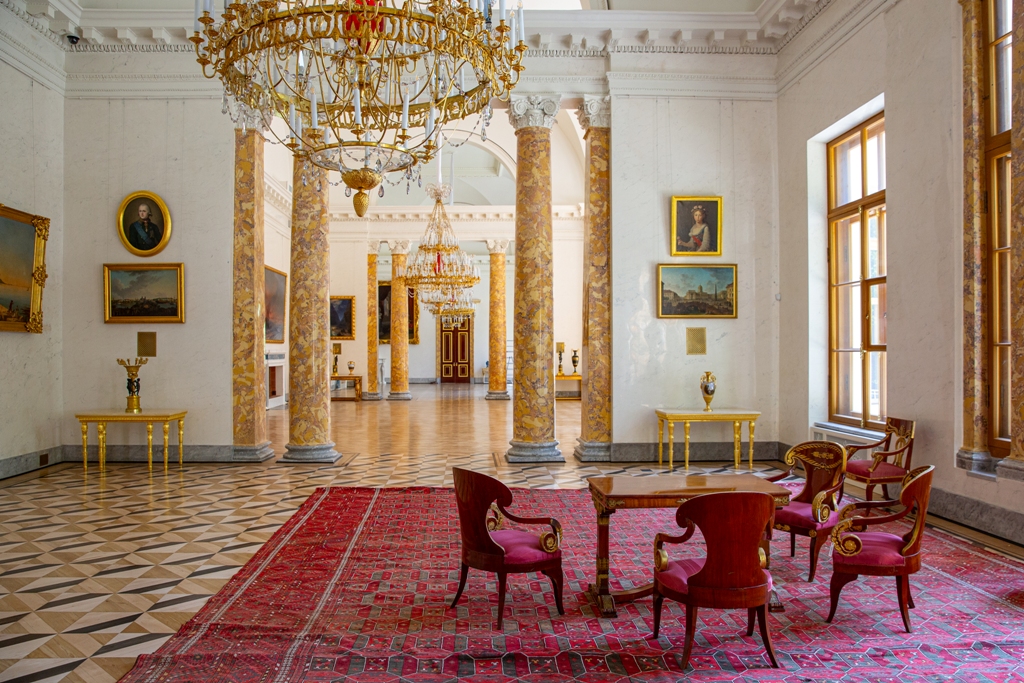
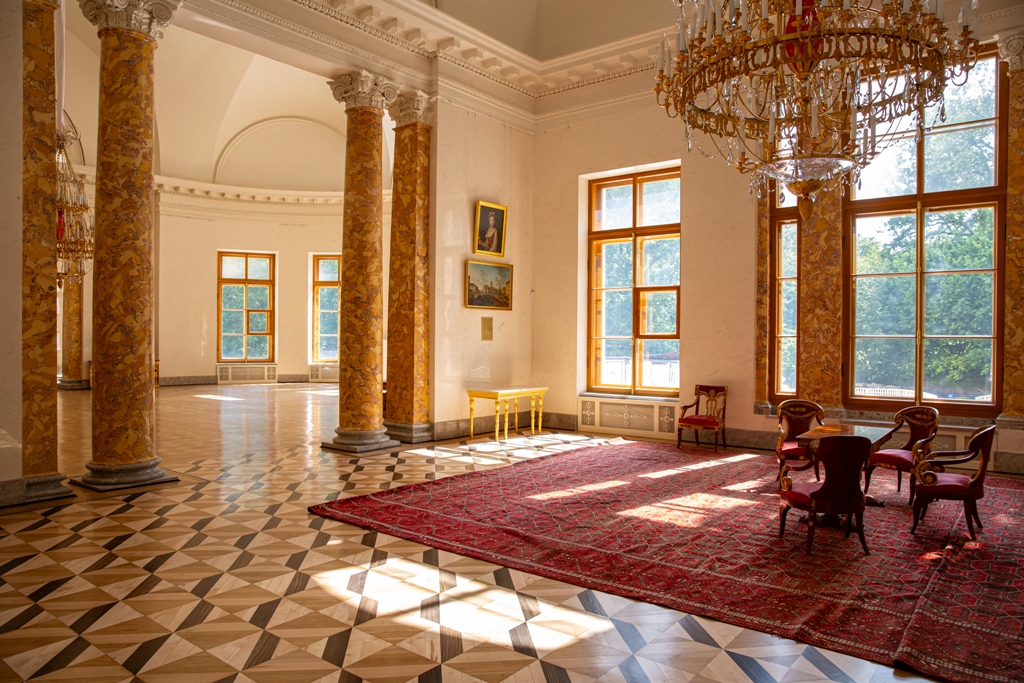
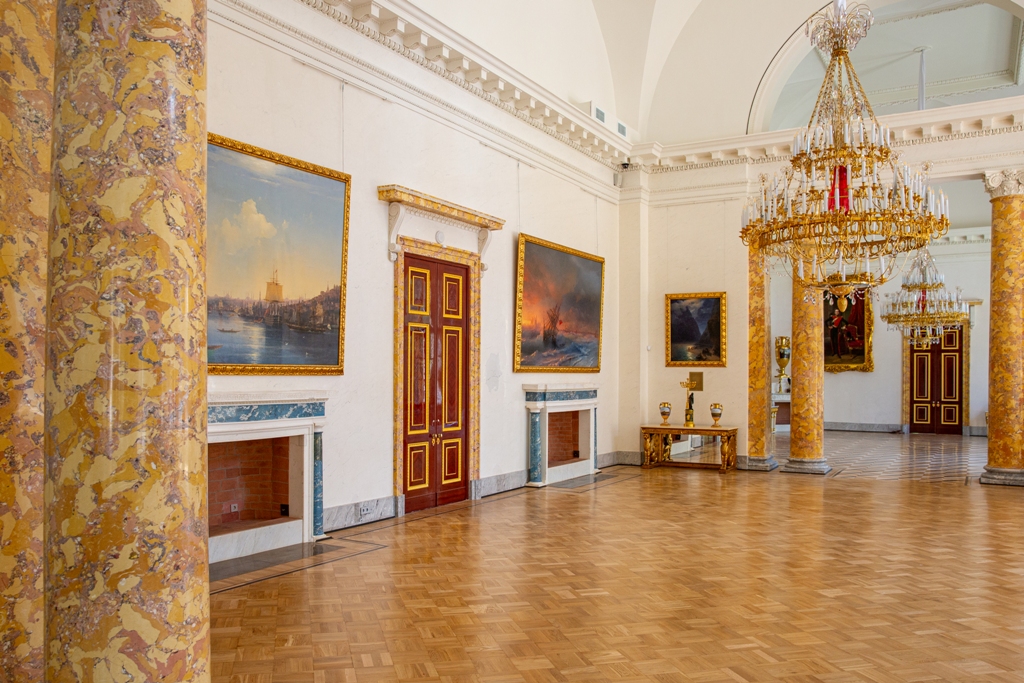
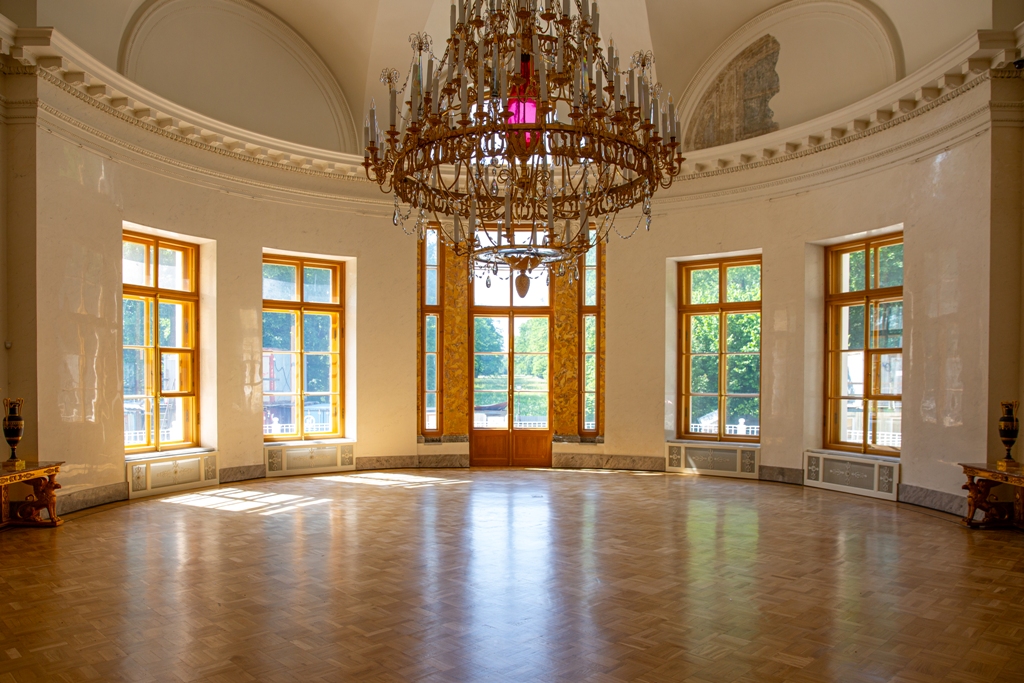
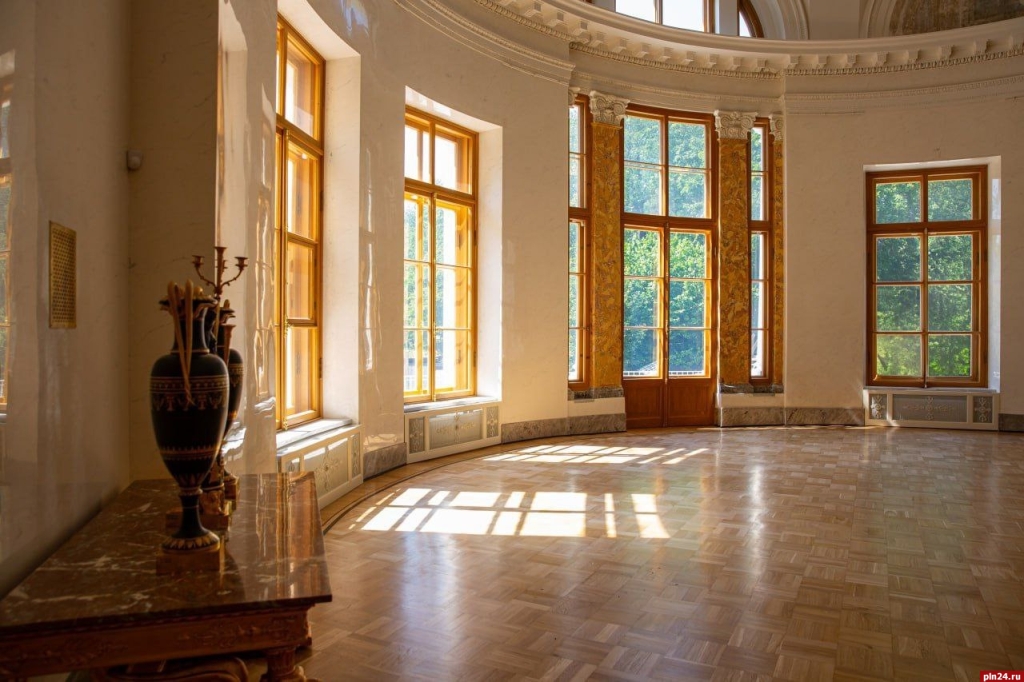
The restoration of the Alexander Palace at Tsarskoye Selo continues . . . on 19th July 2025, the Tsarskoye Selo Museum-Reserve opened three ceremonial halls of the Alexander Palace, after additional restoration work was carried out.

The Semi-circular, Portrait Hall and Marble Drawing Room are once again open to visitors and guided tours. The visitor route through the Alexander Palace now includes 17 interiors, which include the private apartments of Emperor Nicholas II and Empress Alexandra Feodorovna, as well as the interiors of the State Enfilade.

NOTE: the photos show the interiors as they looked following the recent restoration. They lack many of the decorative and applied art pieces, which have now since been returned to their original places – PG

Recall that in 2012, “cosmetic repairs” were carried out in the Portrait Hall, the Semi-Circular Hall and the Marble Drawing (the former Billiard) Room. In June 2010, the State Halls, which are situated in the central part of the palace – between the east and west wings – were solemnly opened to visitors, as part of events marking the 300th anniversary of Tsarskoye Selo.

However, despite the best efforts of curators, limited funds for restoration, and dispersed collections, meant that the presentations were somewhat sparse and of varying quality. The State Halls were closed again in the Autumn of 2015 for additional restoration work. The State Enfilade reopened in 2021.

Photo © Tsarskoye Selo State Museum

Photo © Tsarskoye Selo State Museum

The State Halls were closed yet again in 2023, and during the next year+, craftsmen carried out additional restoration work in the interiors. During this time, engineering and technical support systems (heat and power supplies, exposure lighting, ventilation, air conditioning) and low-current systems (security and alarm systems, video surveillance systems, warning and evacuation control, automatic fire alarms) were completely updated.

Specialists carried out large-scale restoration work which included repairs on the parquet floors, ceilings and window fittings. In addition, the mahogany doors with gilded bronze décor were also restored.

About 70 original works of paintings and decorative and applied art are showcased in the State Halls, including two portraits transferred on loan from the Pavlovsk State Museum: the first, of Empress Alexandra Feodorovna (wife of Emperor Nicholas I) and the second, of Queen Victoria of Great Britain. The works were returned to their historical places in the Marble Drawing Room [not to be confused with the Marble (Mountain) Hall.

Note: in 1951, thousands of items from the Alexander Palace were transferred to Pavlovsk. To date, they have not been returned – PG.

© Tsarskoye Selo State Museum

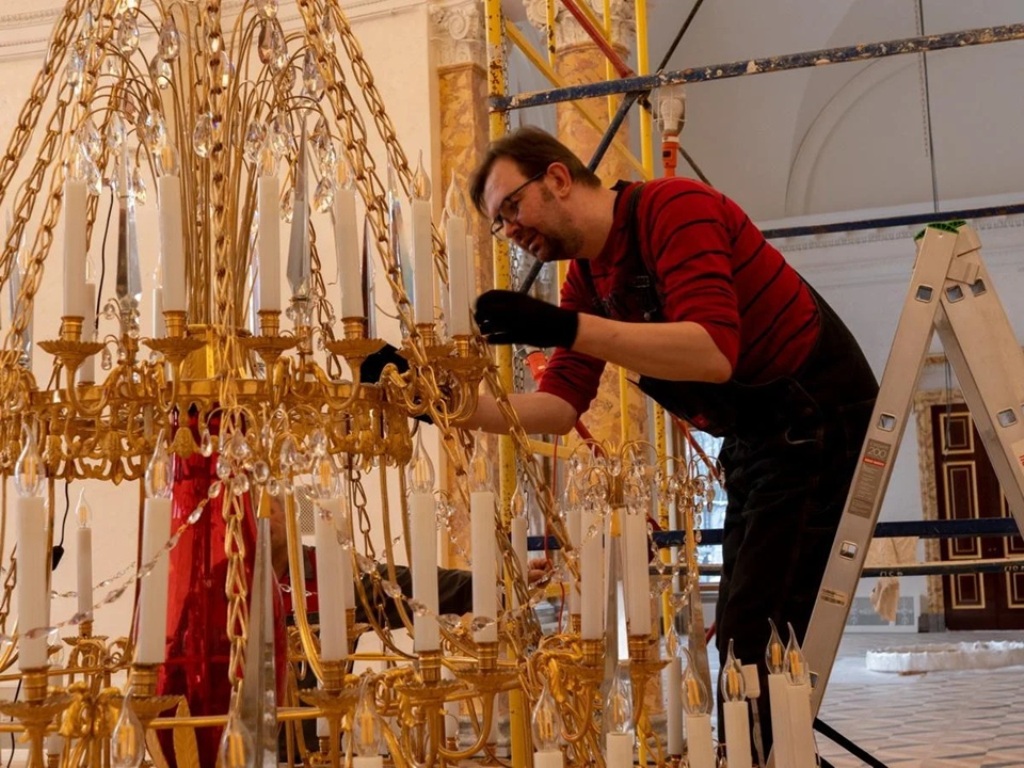
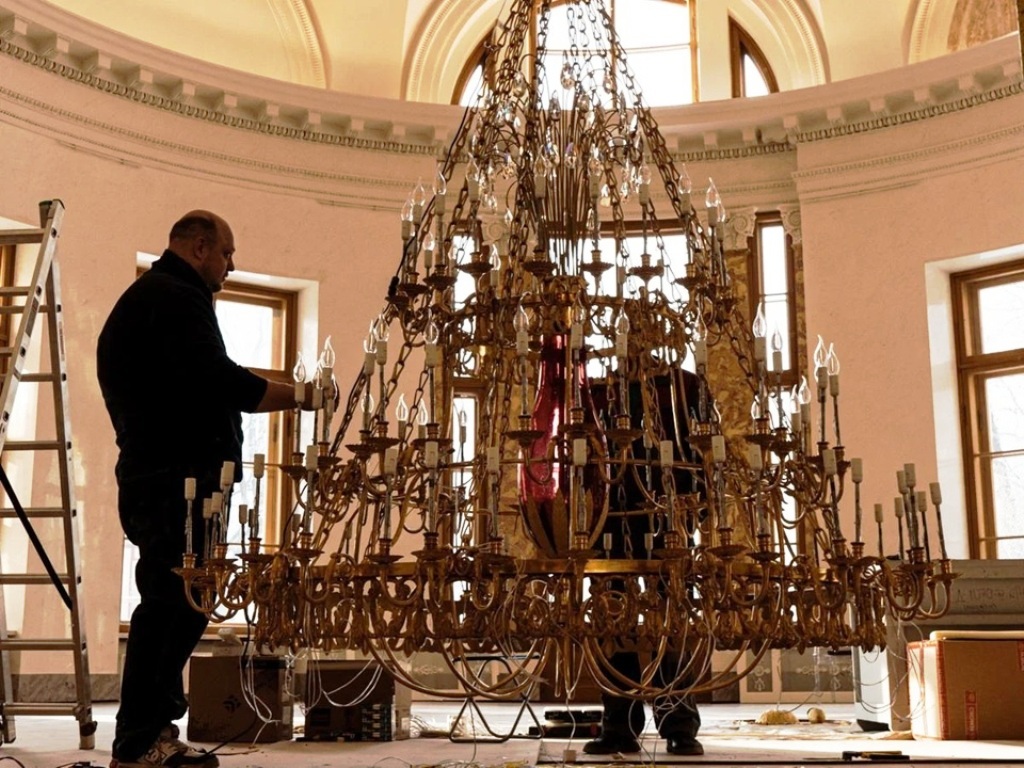
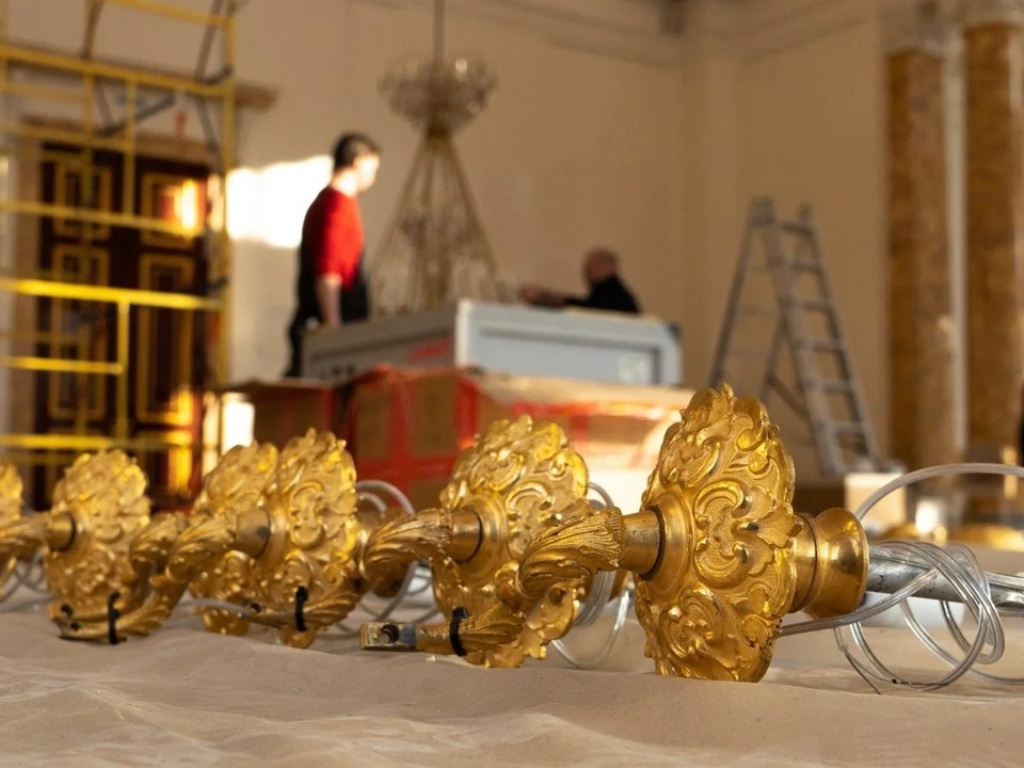
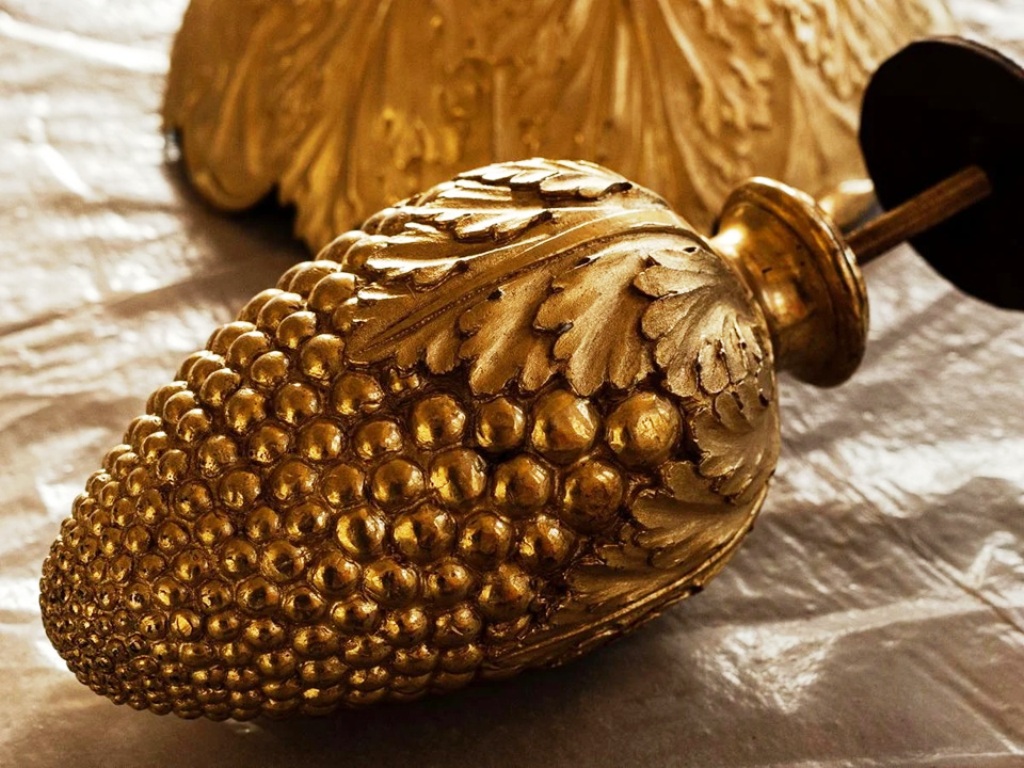
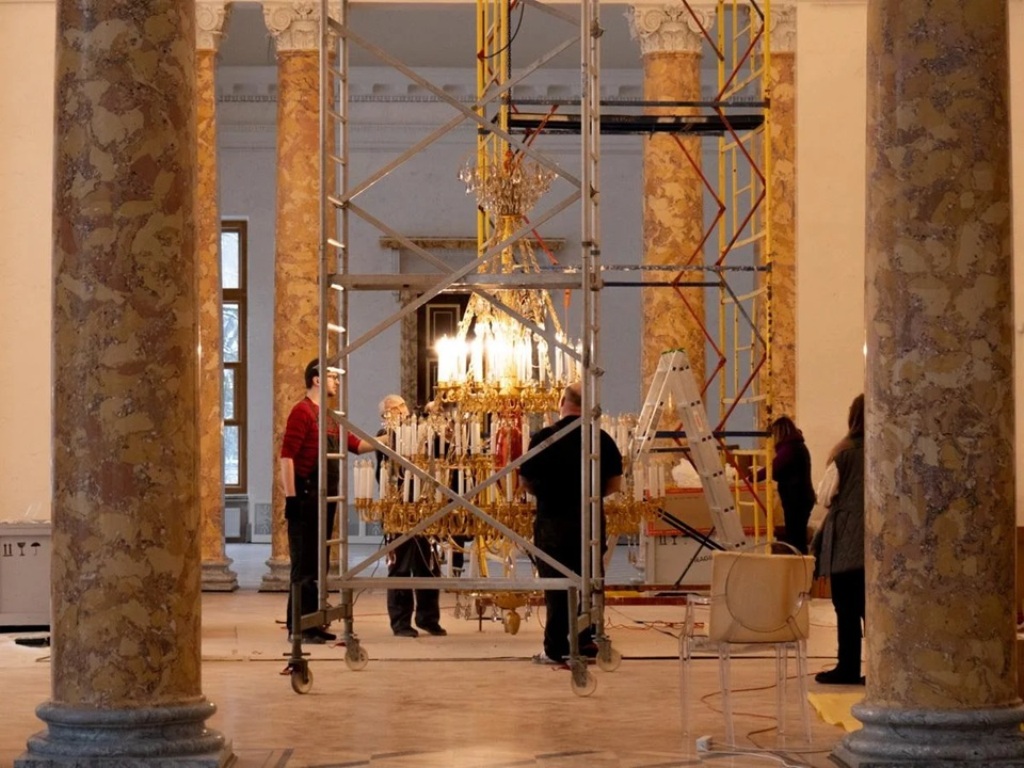
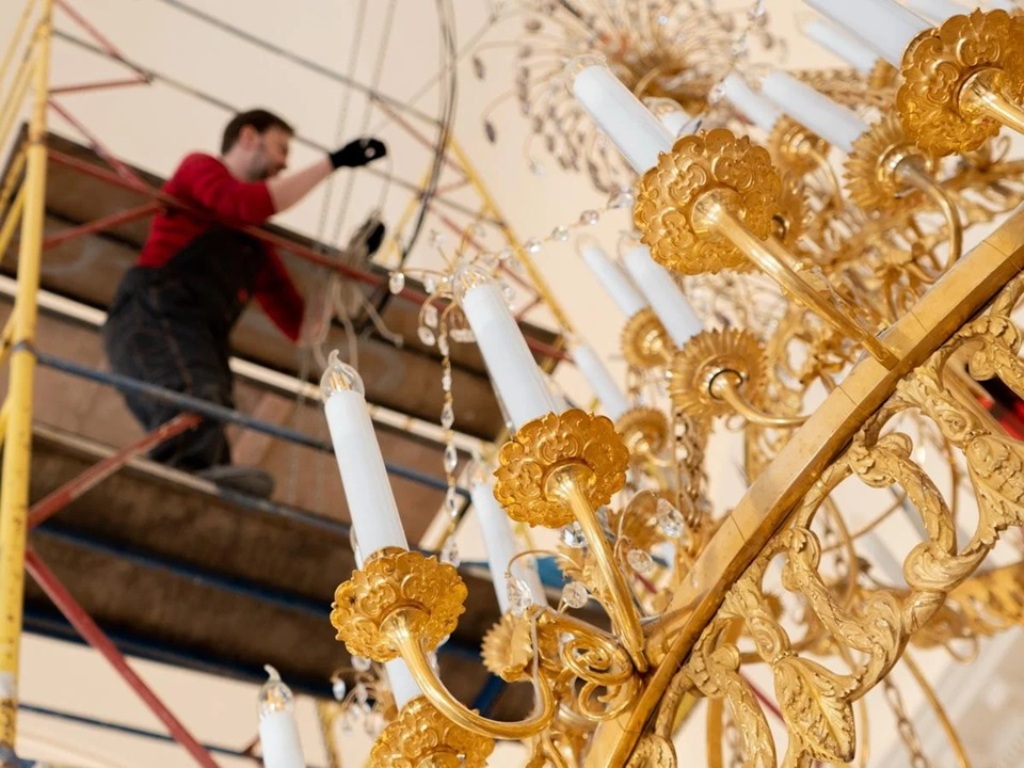
Visitors can also see three 18th-century chandeliers, created according to drawings by the architect Giacomo Quarenghi (1744-1817). They are made of bronze, glass and crystal and impress with their size: 3.5 meters high, each weighing more than 240 kilograms. The chandeliers were restored in March 2025.

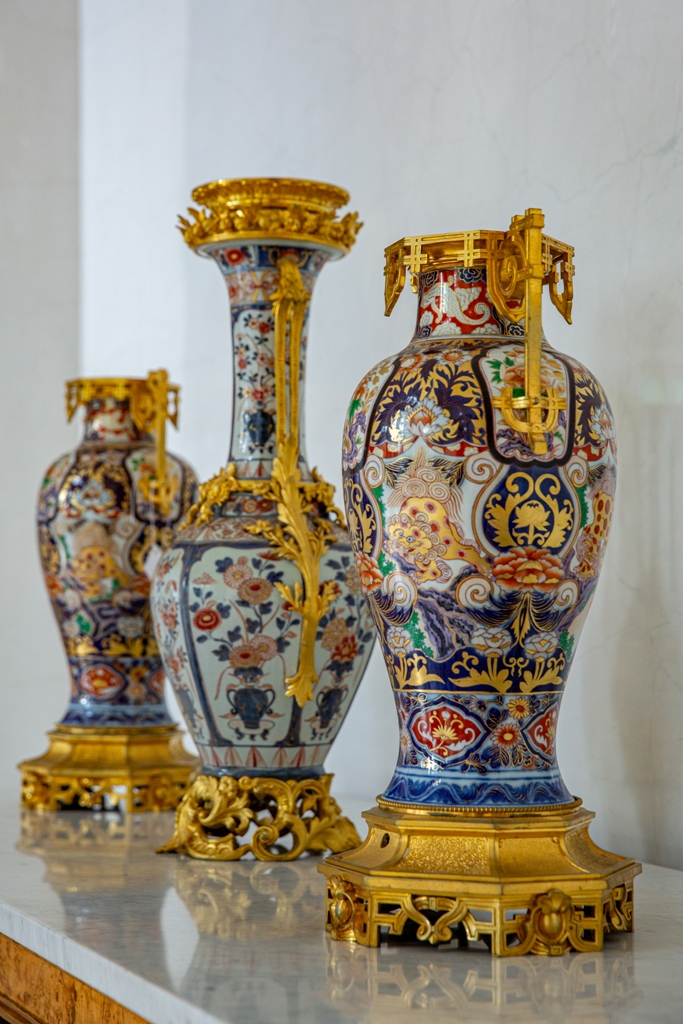
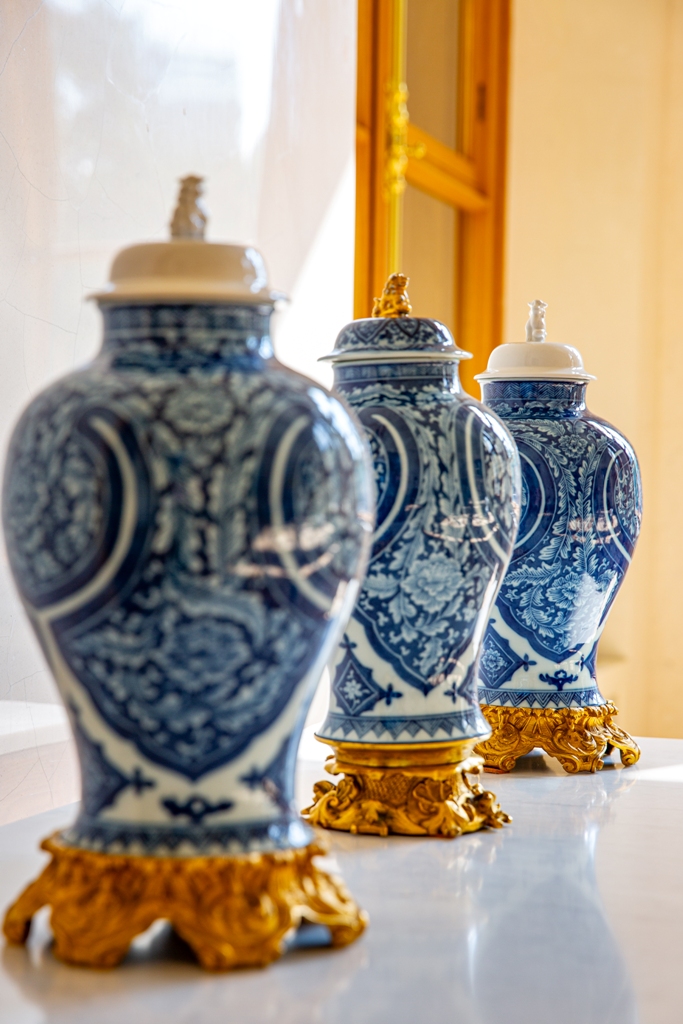
Complementing the halls are four marble fireplaces, two of which are decorated with large vases created at the Imperial Porcelain Factory in the second quarter of the 19th century. On eleven consoles there are vases and candelabra. On the walls there are portraits of emperors and members of their families by artists Alexander Roslin, Franz Krüger, Timofey Neff, as well as urban and seascapes by Ivan Aivazovsky, Fyodor Alexeev, Maxim Vorobyov and Franz Ludwig Katel. In addition, are two large floor vases made of cloisonné enamel on copper, which were presented to Emperor Nicholas II in 1916 by Prince Kotohito on behalf of Emperor Yoshihito of Japan.

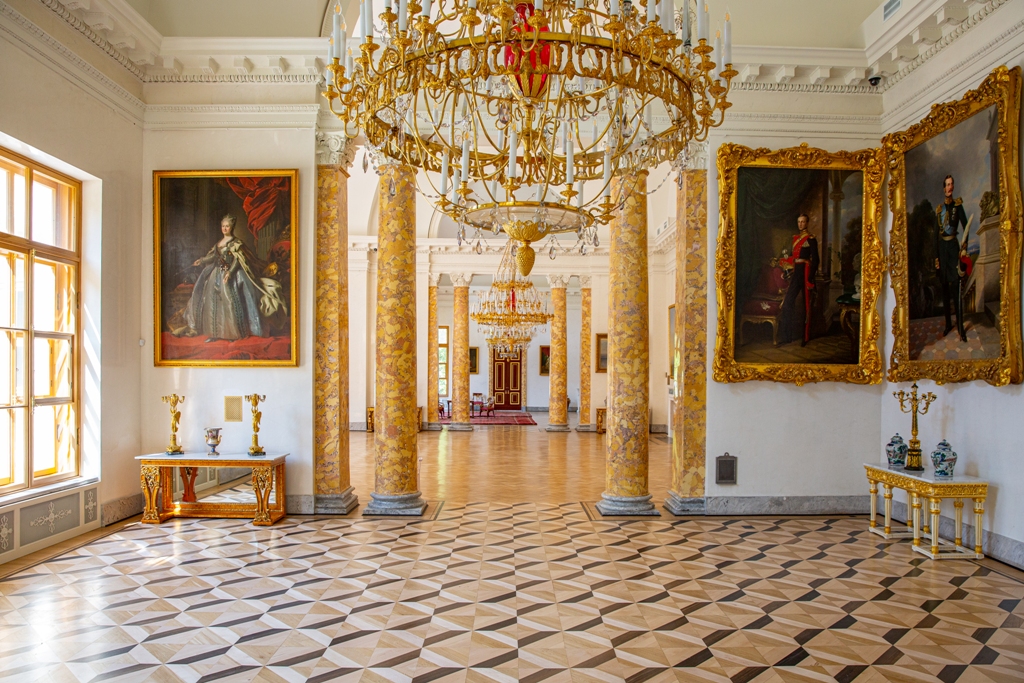
The Semi-circular Hall (see below). Photo © Tsarskoye Selo State Museum

The Semi-Circular Hall (pictured above) is associated with an important event in early 20th century Russian history. It was from this hall, on the night of 31st July / 1st August 1917, that Emperor Nicholas II, along with his family and an enormous retinue left the Alexander Palace and went into exile to Tobolsk, Siberia. They passed through the doors (seen in the photo above), and never saw their beloved home again. From 1905, the Alexander Palace had been the preferred Imperial residence of Nicholas and his family.

Photos © Tsarskoye Selo State Museum

At the time of this writing, the restoration of the Alexander Palace continues, funded by the Ministry of Culture of the Russian Federation, and philanthropists, and the Tsarskoye Selo State Museum. The restoration of the Western Wing of the palace is expected to be completed by the end of 2025. Work is now underway to recreate the famous Crimson [aka Raspberry] Drawing Room. The work is planned to be completed in 2027.

© Paul Gilbert. 18 July 2025

Nicholas II’s menu: culinary preferences of Russia’s last Tsar

NOTE: the dishes highlighted in red below feature a link to a dozen recipes, and while they may not be the exact recipe enjoyed by the Tsar, it will give you an idea of his favourite dishes. If you know of a more authentic traditional Russian recipe for any of the dishes noted below, please email me at royalrussia@yahoo.com – PG

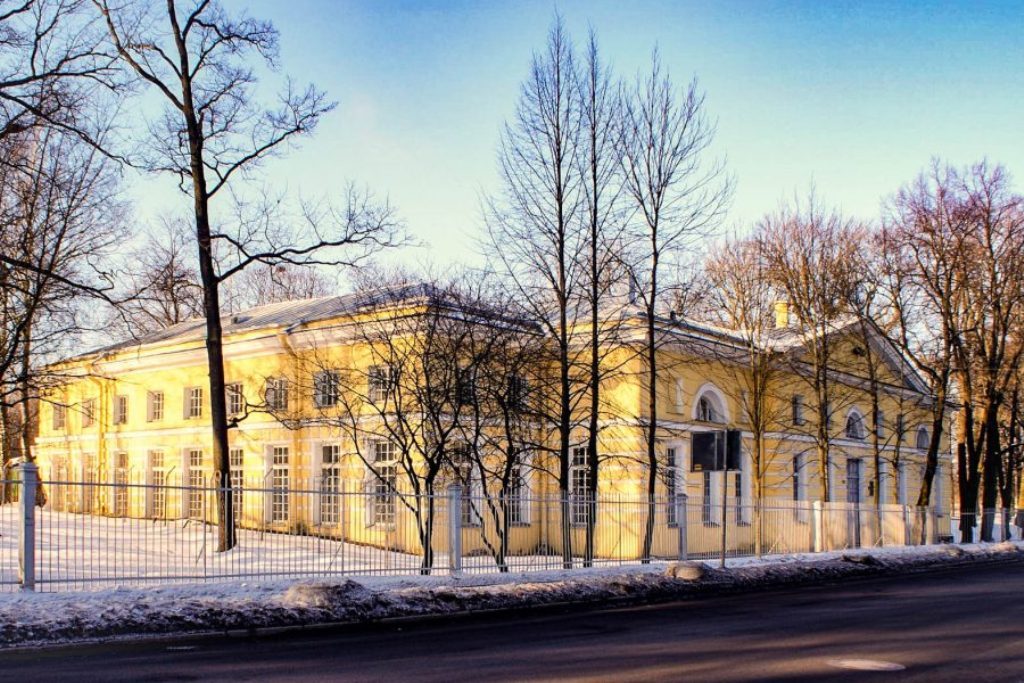
The kitchens for the Alexander Palace were located in a separate building, situated a few hundred feet away from the palace, on Dvortsovaya [Palace] Street. Meals were prepared in this building, and taken to the palace through an underground tunnel, built in 1902 – see original plan.

The kitchen building itself was a two-story, U-shaped structure with distinct architectural features on each floor. This building contained numerous rooms, including kitchens, linen room, a copper pantry, and a rooms for the cooks.

The purpose of having the kitchens in a separate building was likely due to fire safety and sanitation concerns, as was common practice for Russian palaces.

PHOTO: The former Kitchen Building of the Alexander Palace at Tsarskoye Selo, as it looks today

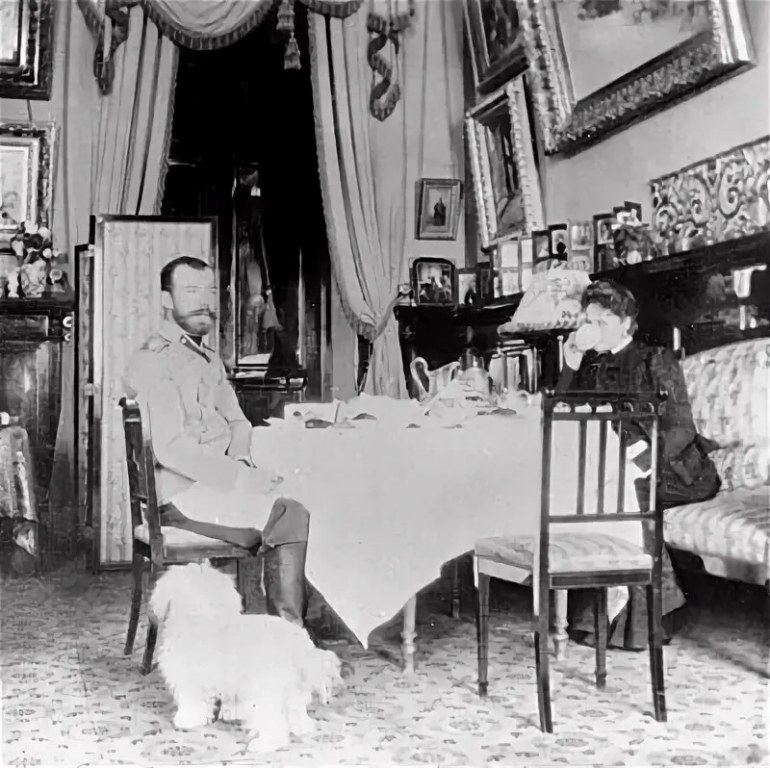
Meals were brought to the palace via a tunnel and served in one of the rooms, usually the Semi-Circular Hall. When Nicholas and Alexandra dined alone, they dined in a more intimate setting, such as the Pallisander [aka Rosewood] Drawing Room [see photo below] or in the Empress’s Corner Reception Room.

The Palisander Drawing Room, was a cozy space with rosewood paneling and a fireplace. It was the room where Nicholas II and Alexandra Feodorovna spent time with their children and enjoyed family dinners. 

The Imperial family often invited close family members, trusted courtiers, and sometimes foreign dignitaries to dine with them. The Imperial children usually dined separately from their parents in their own dining room, situated on the second floor of the eastern wing of the palace.

For larger gatherings, the Semi-Circular Hall was the preferred space. It was in this interior, that a long table in the shape of a squared off U was used on more formal occasions. It was described as a room with a glittering chandelier, where guests could dine at round tables while listening to music.

While the Alexander Palace did not have a dedicated dining room, these two spaces served as the primary locations for meals, both casual and more formal. 

PHOTO: Emperor Nicholas II and Empress Alexandra Feodorovna, taking tea in the Pallisander [aka the Rosewood] Drawing Room, in the Alexander Palace

***

Royalty is often associated with luxurious living and dining. Throughout history the early Russian tsars, tsarinas, emperors and empresses dined lavishly. One has only to visit the elegant Baroque Style Hermitage Pavilion at Tsarskoye Selo for evidence of the grand scale in which the Empresses Elizabeth and Catherine the Great dined and entertained their guests.

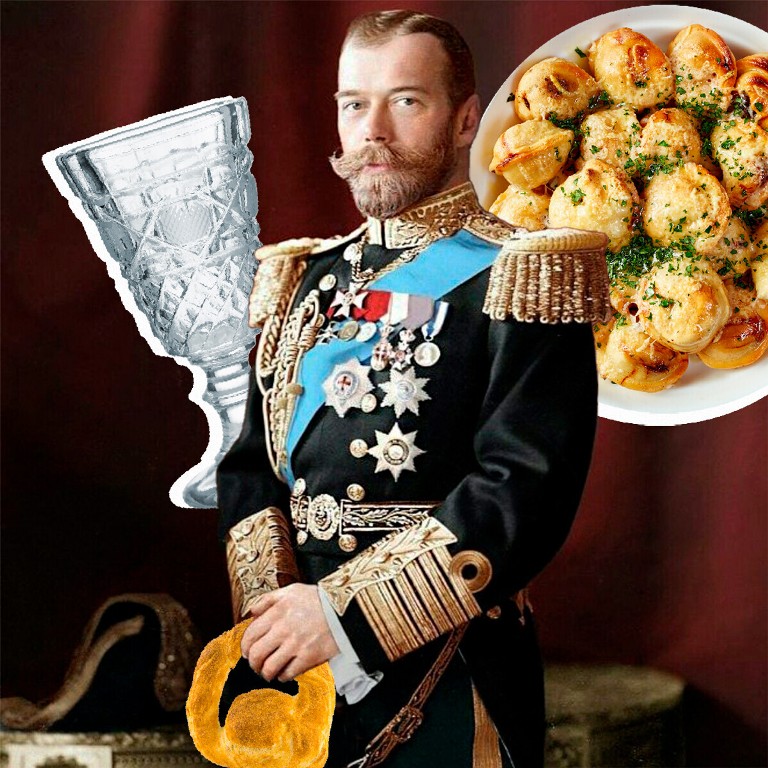
Despite the opulent surroundings of the Russian Imperial Court, Emperor Nicholas II was known for his love of simple, traditional Russian food, and unlike his ancestors and some of Europe’s royal family’s, avoided excessive luxury in food. He preferred a straightforward approach to dining, even when elaborate menus were prepared. Evidence of Nicholas II’s culinary preferences are indeed, often found in the surviving menus of that time.

Nicholas II started the day with rye bread with butter, boiled eggs and some sort of sliced meat, such as ham or bacon. 

Among his favorite breakfast dishes was Dragomirovskaya porridge – named after the Russian military general Mikhail Ivanovich Dragomirov (1830-1905). Historian of Russian cuisine Pavel Syutkin explains that “Dragomirov porridge is… Buckwheat with mushrooms! However, there are a few secrets in the recipe. First, cook porridge by adding cream. Secondly, it is served in layers, like a pie. And thirdly, an indispensable addition to porridge is wild mushroom sauce.”

Lunch was the main meal of the day, and began with soup, such as solyanka [a thick and sour soup], ukha [fish soup] or shchi [cabbage soup]. Nicholas also had a fondness for cold Russian soups, like Botvinya, made with kvass, spinach, sorrel, and beetroot leaves. Soup was served with small vol-au-vents [small round pastry shells filled with a creamy mixture of meat or fish], rasstegai [small pies with fish or meat] or small croutons with cheese. 

Nicholas also enjoyed pelmeni [meat dumplings] and vareniki [types of dumplings]. On the Imperial Yacht Shtandart, he often ate pan-fried dumplings.

Then came fish [pike perch or trout], roast [wild game or chicken], vegetables, Other favorites were Yalta-style Roasted Suckling Pig served with buckwheat stuffing and horseradish on the side, Mikhailovsky cutlets [later known as chicken Kiev] or Skobelev meatballs [Swedish meatballs], served with white sauce.

It is known that Nicholas II loved potatoes. Once in Crimea, he saw one of the officials carrying a sack of new potatoes from the market, and asked to sell him his purchase. In his youth, Nicholas II baked potatoes with his brothers and sisters in the Anichkov Palace park in St. Petersburg, and later with his son Tsesarevich Alexei in the Alexander Park.

It is interesting to note, that unlike many Russians, Nicholas did not like caviar. The officers of the Imperial Yacht Shtandart noted that “the Tsar was very fond of appetizers, except for caviar, salmon and salted fish.” There was a simple explanation for this – once while returning from the East in 1891, Nicholas was traveling along the Siberian route. At the stations, he was greeted with the traditional bread and salt, salted fish and caviar. The excessive summer heat coupled with all the salt, made him all the more thirsty. Needless to say, he developed a dislike for salted fish and caviar.

Dessert consisted of fruits, sweets, ice cream, jam, honey, as well as dishes such as pears in sherry or pie with rice porridge and lingonberries could be served. Lunch as a rule ended with delicious coffee.

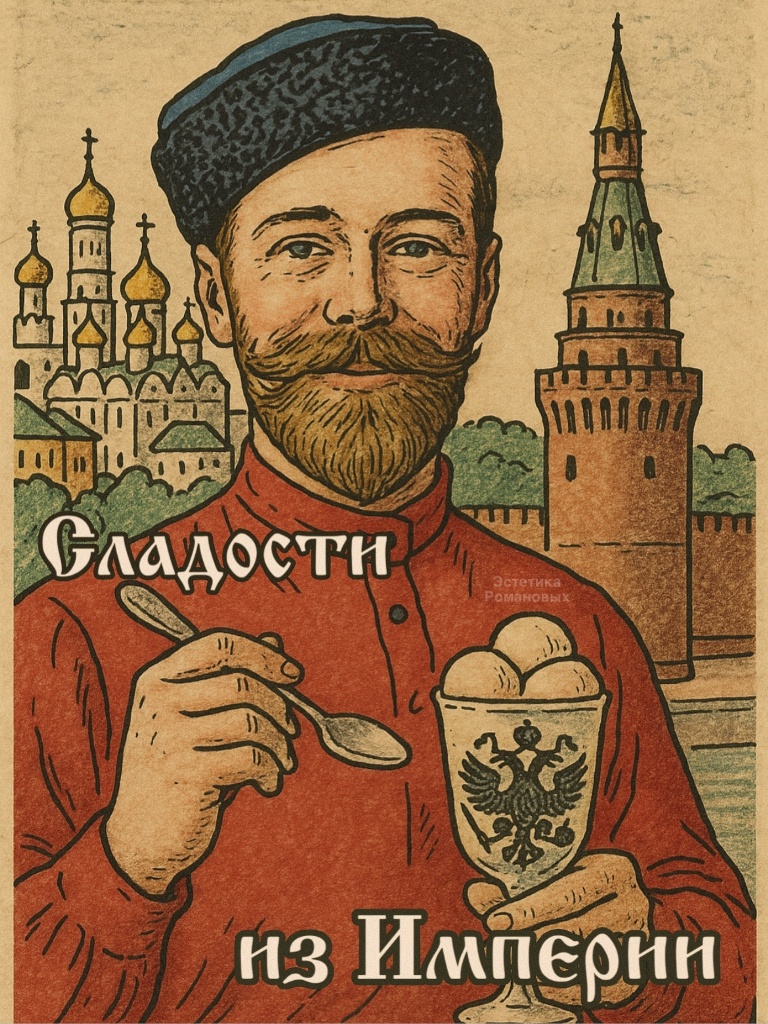
PHOTO: сладости из империи / Sweets from the Empire

Nicholas II’s love of ice cream deserves special note in this article. Ice cream was especially popular at table of the last Emperor and his family. The recipe for “Romanov ice cream”, which was invented specifically for Nicholas II, has been preserved to this day. It included sugar, 10 egg yolks, heavy cream, whipping cream and vanilla. “I remember ice cream, the like of which I have never eaten anywhere else,” wrote the daughter of Grigorii Rasputin, Maria (1898-1977).

As far as alcohol, Nicholas was known as a teetotaler, despite the false allegations that he was a drunkard. As for wines, he only drank port at table. At first, the Emperor had his port brought from Portugal, but after he tried Crimean port wine, he switched. He rarely drank vodka and champagne.

At the same time, wines were served at the ceremonial dinners hosted in the palace, including Madeira, sherry, Bordeaux and Chablis wines, as well as Crimean wines, all from the well stocked cellars of the Alexander Palace.

FURTHER READING:

Imperial Dining – History of Court Dining: Dining with the Tsars

An Imperial Lunch in the Crimea

© Paul Gilbert. 7 July 2025

***

Paul Gilbert’s Romanov Bookshop on AMAZON

Please CLICK on the BANNER or LINK above to review my current selection of titles in hardcover, paperback and ebook editions. Listings provide a full description for each title, pricing and a Look inside feature.

18th century Chandeliers returned to the Alexander Palace State Halls

PHOTO © Tsarskoye Selo State Museum-Reserve

The restoration of the interiors of the Alexander Palace at Tsarskoye Selo continues . . . On 5th March 2025, three 18th century chandeliers were restored and returned to the palace’s beautiful ceremonial halls.

Recall that in 2012, “cosmetic repairs” were carried out in the Portrait Hall, the Semi-Circular Hall and the Marble (Billiard) Room. In June 2010, the State Halls, which are situated in the central part of the palace – between the east and west wings – were solemnly opened to visitors, as part of events marking the 300th anniversary of Tsarskoye Selo. However, despite the best efforts of curators, limited restoration funds, and dispersed collections, meant that the presentations were somewhat sparse and of varying quality. The State Halls were closed again in the Autumn of 2015 for additional restoration work, and reopened in 2021.

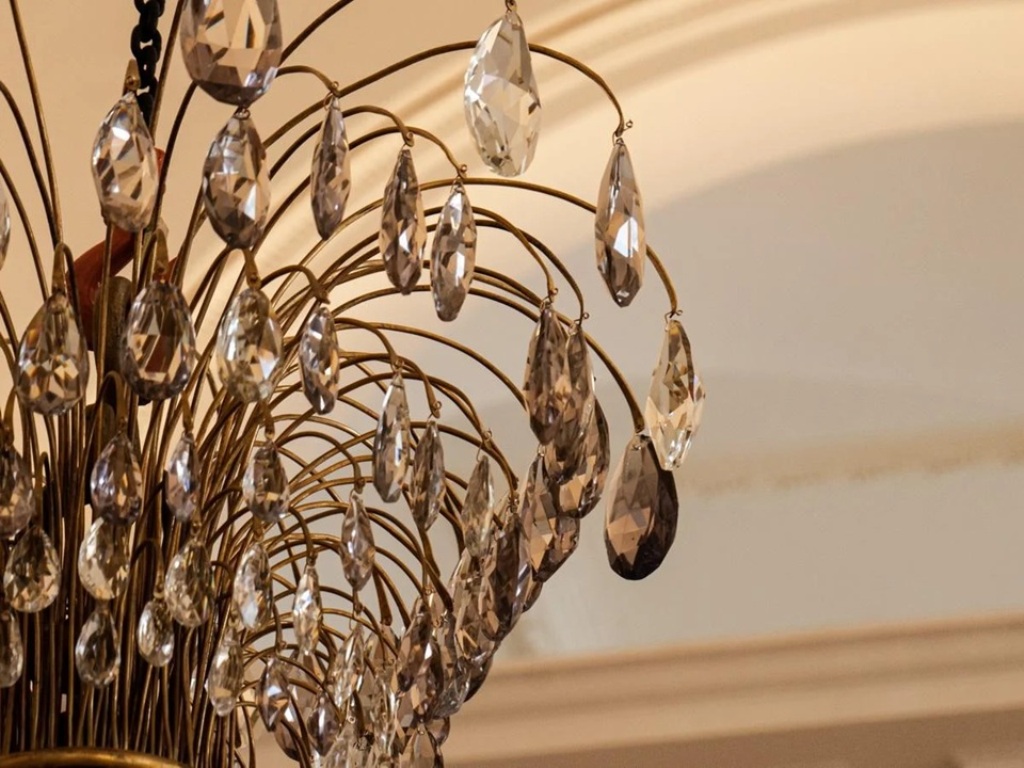
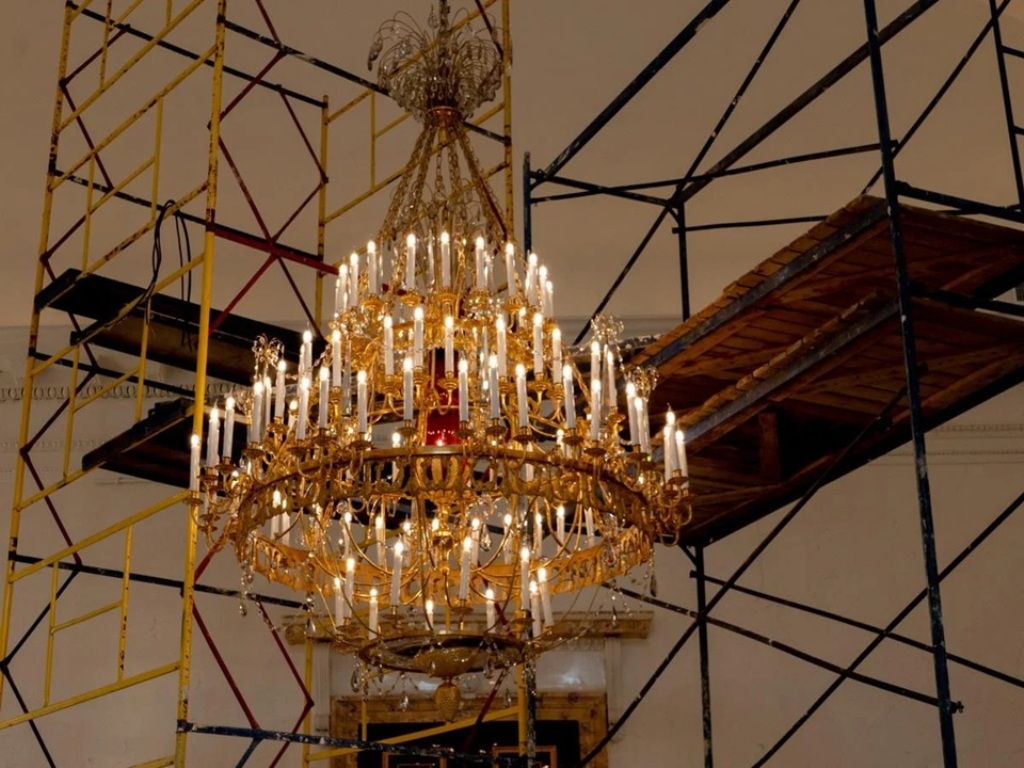
The three restored chandeliers were created according to a drawing by the famous Italian architect Giacomo Quarenghi (1744-1817), who constructed the Alexander Palace between 1792–96. The chandeliers were made of made of bronze, glass and crystal, and designed to hold 100 candles each. They are the largest and heaviest chandeliers in the museum’s collection and designed for such a large number of candles. Each chandelier stands 3.5 meters [11.5 ft.] high, and weighs more than 240 kilograms [530 lbs.]. The restoration work was carried out by specialists from the Yuzhakova Studio workshop in St. Petersburg.

PHOTOS © Tsarskoye Selo State Museum-Reserve

“In the process of work, the chandeliers were dismantled into parts and cleaned and polished. The restorers repaired bronze tears, cracks, caverns and filled in the areas of lost gilding. The missing parts were recreated according to existing analogues. If you look at these chandeliers, you will see that their crystal headdress is extremely rich and diverse – they are generously decorated with numerous garlands, pendants, obelisks of different sizes and faceted rosettes. The craftsmen also restored the chips and made up for the losses on the central bulb of ruby glass. Working with such a fragile material, especially in such a volume, requires the utmost delicacy and skill,” said Ekaterina Stadler, curator of the Museum Metal Collection.

The restorers also replaced the old electrical wiring, the final touch was the manufacture of milk glass tubes imitating candles.

Initially, the chandeliers were created for the St. George Hall of the Winter Palace, but they were not installed at the time. The initial order called for eight chandeliers, however, only three were made by the Johann Zech bronze foundry in St. Petersburg. At the time, the chandeliers were made to hold 50 candles each. After the death of Empress Catherine II, her son Emperor Paul I ordered the chandeliers to be installed in the halls of his new residence – the Mikhailovsky [aka Engineers] Castle in St. Petersburg. Following the death Emperor Paul, the chandeliers were returned to the Winter Palace.

PHOTOS © Tsarskoye Selo State Museum-Reserve

PHOTOS © Tsarskoye Selo State Museum-Reserve

The chandeliers were transferred to Tsarskoye Selo in 1830. Russia’s first Minister of the Imperial Court, Pyotr Mikhailovich Volkonsky (1776-1852), wrote: “His Majesty the Emperor [Nicholas I] deigned to repair the four large chandeliers that were in the Concert Hall of the Winter Palace, and then send three of them to Tsarskoye Selo to Lieutenant General Zakharzhevsky <… > where they should be hung in a large drawing room or a large hall.”

The compositional basis of the chandeliers is a massive openwork rim with a glass tray at the bottom and a central stem with ruby glass balusters. The entire structure is attached on chains converging to a socket with a bump topped with a “fountain” with pendants. The combination of gilded bronze and the glare of crystal, especially when candles were lit, created an unusually decorative visual effect.

PHOTOS © Tsarskoye Selo State Museum-Reserve

PHOTOS © Tsarskoye Selo State Museum-Reserve

The chandeliers were placed in three halls of the ceremonial enfilade of the New (Alexander) Palace – the Semicircular and Portrait Halls and the Marble Drawing Room. In 1848, by order of Empress Alexandra Feodorovna, born Princess Charlotte of Prussia (1798-1860), 50 candle horns on two newly made thin hoops were added, bringing a total of 100 candles to each chandelier for better lighting. In the early 1900s – during the reign of Emperor Nicholas II – the chandeliers were electrified. During the Great Patriotic War [1941-45], the chandeliers were evacuated: one chandelier to Novosibirsk, two to Sarapul.

Recall that the first 13 interiors of the Alexander Palace – the personal apartments of Emperor Nicholas II and his wife Alexandra Feodorovna – opened to visitors in August 2021. In February 2023, work was completed in the Marble Hall with a slide. The restoration of the palace and its adaptation to modern use continues. In 2025, the Western wing of the palace is scheduled to open to the public.

© Paul Gilbert. 6 March 2025

Thousands of items at Pavlovsk have not been returned to the Alexander Palace
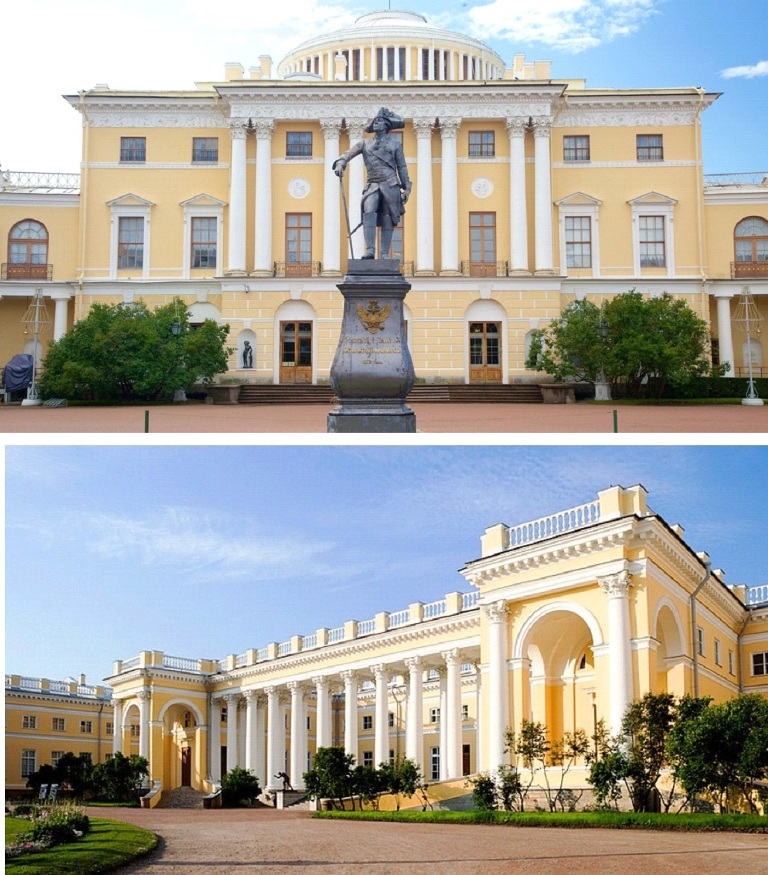
In 1951, by a government decree, the Alexander Palace was transferred to the Ministry of Defense of the USSR. The Naval Department used the building as a top-secret, submarine tracking research institute of the Baltic Fleet.

Any hope of the Alexander Palace being reopened as a museum – as it was before the Great Patriotic War (1941-45) – were now lost. The palace’s collection, which consisted of thousands of items, and which had been part of the evacuated items held in the Central Depository of Museum Collections of Suburban Palaces-Museums, were at this point transferred to the Pavlovsk Palace State Museum.

From 1951, the Alexander Palace would remain strictly off-limits to visitors for the next 45 years. When it appeared that the Soviet Navy intended to vacate the complex, the Alexander Palace was included in the 1996 World Monuments Watch by the World Monuments Fund (WMF).

In the summer of 1997, a permanent exhibition dedicated to Emperor Nicholas II and his family was opened in the Eastern Wing of the palace. It was at this time that my annual Romanov Tour became the first group from the West to visit the interiors of the Alexander Palace.

Despite the exhibition, the rest of the palace remained under the administration of the Naval Department, who continued to occupy the Western Wing. It is due to their occupancy in this section of the palace, that very few of the original interiors and their elements survived.
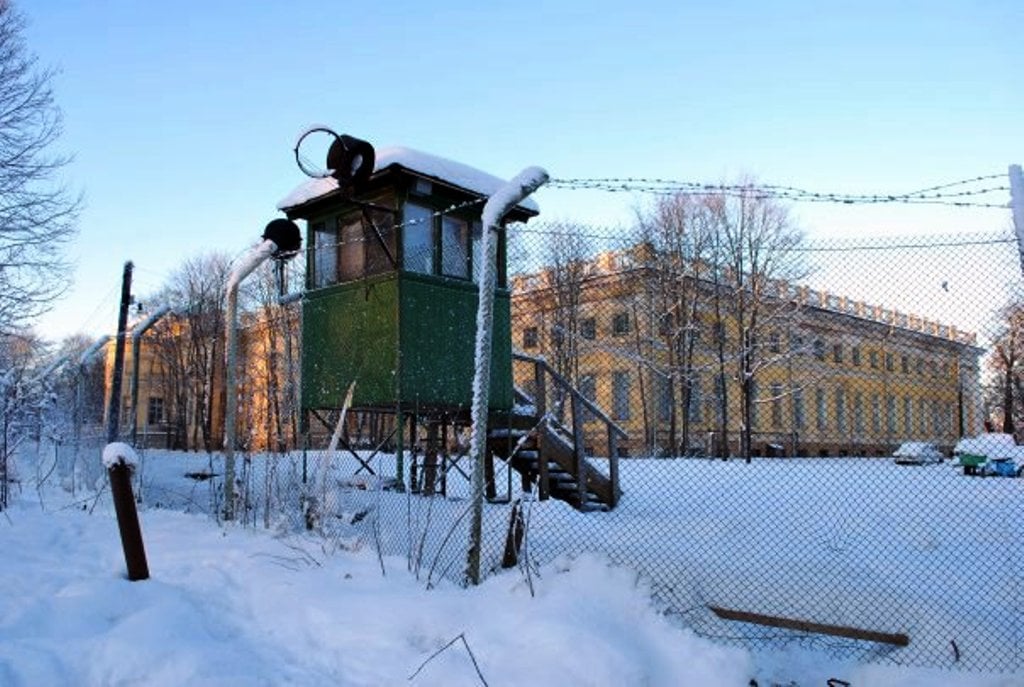
PHOTO: he Alexander Palace at Tsarskoye Selo, as it looked in the 1990s, when the palace was still surrounded by a security fence and watchtower.

It was not until October 2009, according to the order of the Federal Property Management Agency, that the Alexander Palace was placed under the administration of the Tsarskoye Selo State Museum Reserve.

After an extensive restoration project which began in the autumn of 2015, the private apartments of Emperor Nicholas II and Empress Alexandra Feodorovna opened to public on 13th August 2021.

Visitors to the Alexander Palace can now visit the New Study of Nicholas II, Moorish Bathroom of Nicholas II, Working Study of Nicholas II, Reception Room of Nicholas II, the Valet’s Room, PLUS the Maple Drawing Room, Pallisander (Rosewood) Living Room, Mauve (Lilac) Boudoir, Alexandra’s Corner Reception Room, the Imperial Bedroom, the Small and Large Libraries and the Marble/Mountain Hall.

Today, more than 6 thousand items from the funds of the Tsarskoye Selo State Museum-Reserve are displayed in the recreated interiors of the Alexander Palace.

In a recent interview with Art Newspaper Russia, the Director of the Tsarskoye Selo State Museum-Reserve Olga Taratynova talked about the restoration of the Alexander Palace and the reconstruction of the Private Apartments of Emperor Nicholas II and Empress Alexandra Feodorovna.

“The Alexander Palace suffered much less than the Catherine Palace,” said Taratynova. “Unlike the Catherine Palace, it was not destroyed by fire [as a result of shelling by the Nazis]. Instead, it endured a different fate. The Alexander Palace served as the residence of the family of the last Emperor, and it is a miracle that anything survived at all,” she added.

“For Alexander] Pushkin’s anniversary in 1949, an exhibition dedicated to him was opened in the palace, and for this purpose, a number of interiors were lost. Soviet dogma of the time believed that Art Nouveau was a decadent style, citing no need to preserve it. And then the building was transferred to the Ministry of War. In 2009, when the Alexander Palace was transferred to us [the Tsarskoye Selo State Museum-Reserve], we quickly carried out “cosmetic repairs” in three of the State Halls and opened them to the public. But all the things were in Pavlovsk. They were transferred there in 1951, and have remained there ever since, Taratynova continued”
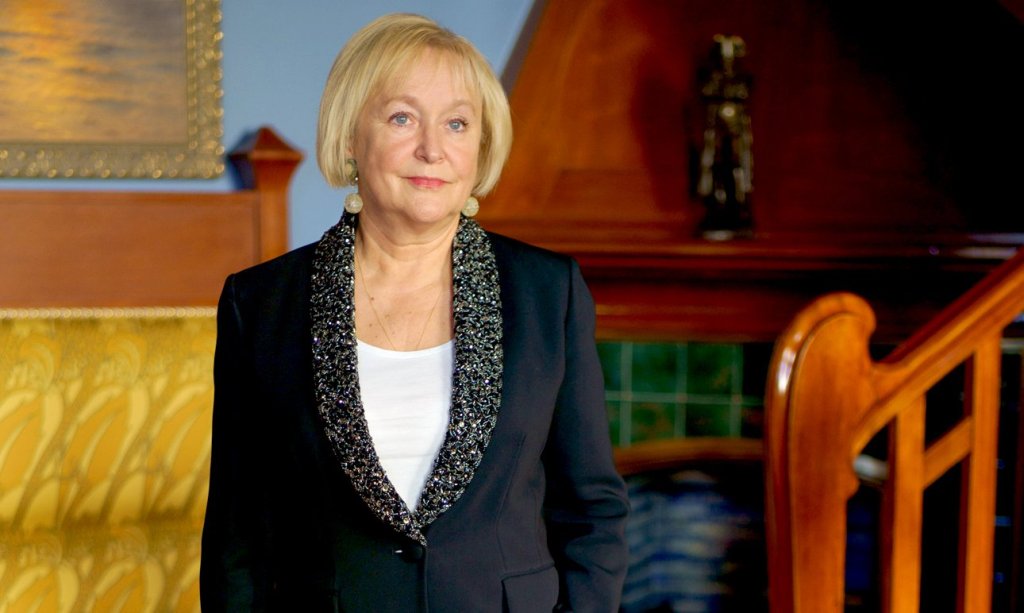
PHOTO: Director of the Tsarskoye Selo State Museum-Reserve Olga Taratynova

“In preparation for the reopening of the Private Apartments of Nicholas II and Alexandra Feodorovan in 2021, they [Pavlovsk State Museum] gave us about 200 items from their collection for “temporary use”. We knew from inventories and photographs, that these items originated in the Alexander Palace], and knew exactly where they were historically located. So I can’t complain, Pavlovsk assisted us. But they did not return everything, of course, because many of the items have been on display in Pavlovsk Palace for many years now.” [On the third floor of the latter palace is dedicated to the history of Russian furniture, many items from the Alexander Palace are on display here – PG].

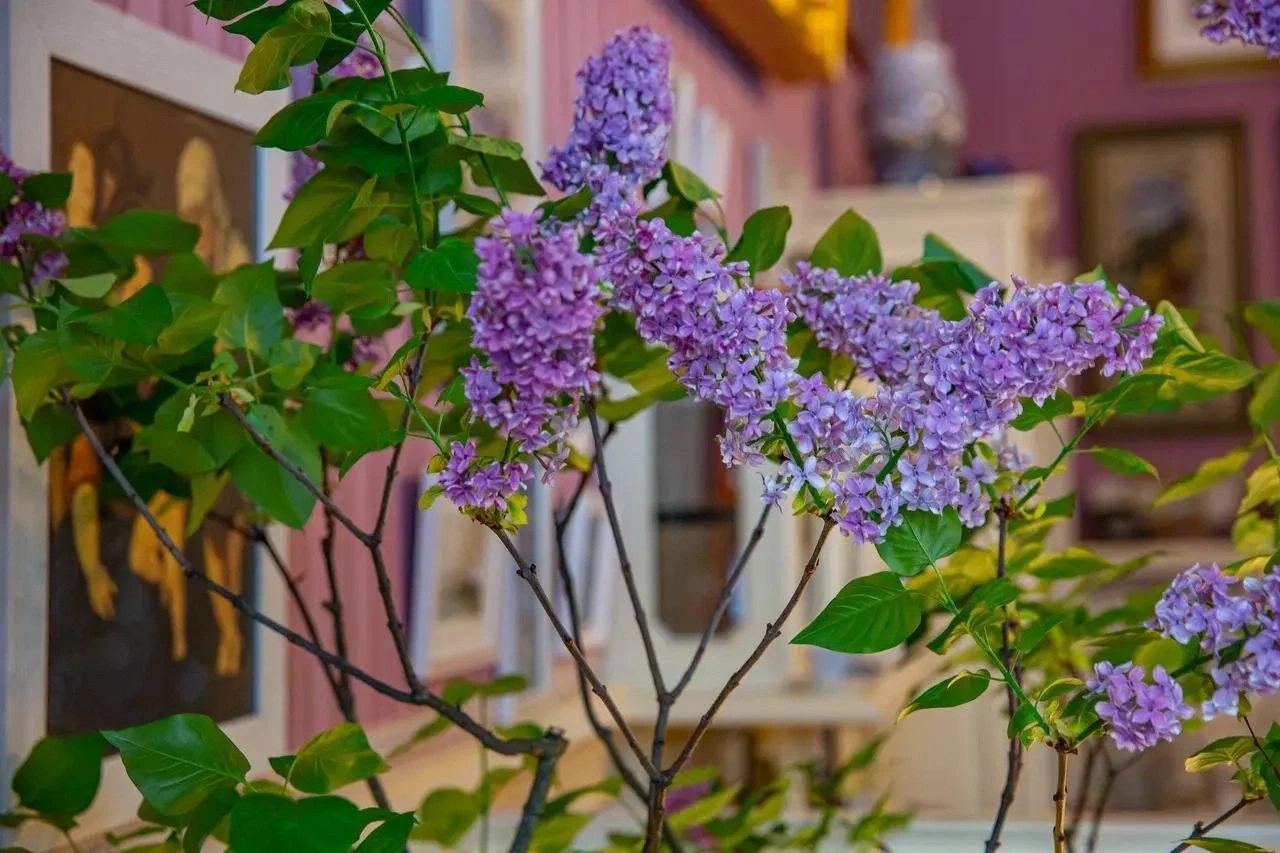
“Now in the Alexander Palace, we have tried to create the atmosphere of a beloved home. This was really the case – a closed space, where Nicholas II invited only a small circle of close friends and trusted associates. And in the apartments of Alexandra Feodorovna and the children, only extended family members and devoted servants were allowed. We tried to focus on the atmosphere, we even added sound: in some rooms, for example, you can hear, the sounds of billiard balls, in others – a distant piano playing. There are also smells – first of all, the scent of lilacs, because Alexandra Feodorovna loved them very much, they now bloom in her rooms. We revived this tradition two years ago, our gardeners have been growing lilacs even in winter,” Olga Taratynova concluded.

***
Prior to the outbreak of the Great Patriotic War in 1941, the Alexander Palace housed more than 52.5 thousand items, of which more than 44.8 thousand items were lost [destroyed or stolen] between 1941 to 1945. From the 7.7 thousand items which survived, a significant part of the items are now in the collection of other museums in Russia. Among these were 5,615 items, which were moved from the Alexander Palace to the Pavlovsk State Museum Reserve in 1951. Of these, nearly 200 pieces were originally from the Alexander Palaces’ three ceremonial halls: the Portrait, Semi-Circular and Marble Halls. These include 39 pieces of porcelain, 41 paintings, 73 decorative bronze pieces, and 28 pieces of furniture.
Since the fall of the Soviet Union in 1991, and in particular since the restoration of the Alexander Palace, the return of these objects has been a bone of contention between the two palace-museums. During a visit to Pavlovsk several years ago, I raised the subject with one of the Directors [who shall remain anonymous] at Pavlovsk. “If we return these exhibits to the Alexander Palace, then we [Pavlovsk] will have nothing,” he declared.

Personally, this author believes that Pavlovsk have a moral responsibility to return all of the items transferred there in 1951. The history of these items is connected to the Alexander Palace, not Pavlovsk Palace. It seems that the current Minister of Culture of the Russian Federation Olga Lyubimova, should step in to right this historic wrong. Let us hope that she does the right thing, and order the return of the 5,615 items to the Alexander Palace, where they can be put on display in the rooms from which they originated.
© Paul Gilbert. 18 February 2025

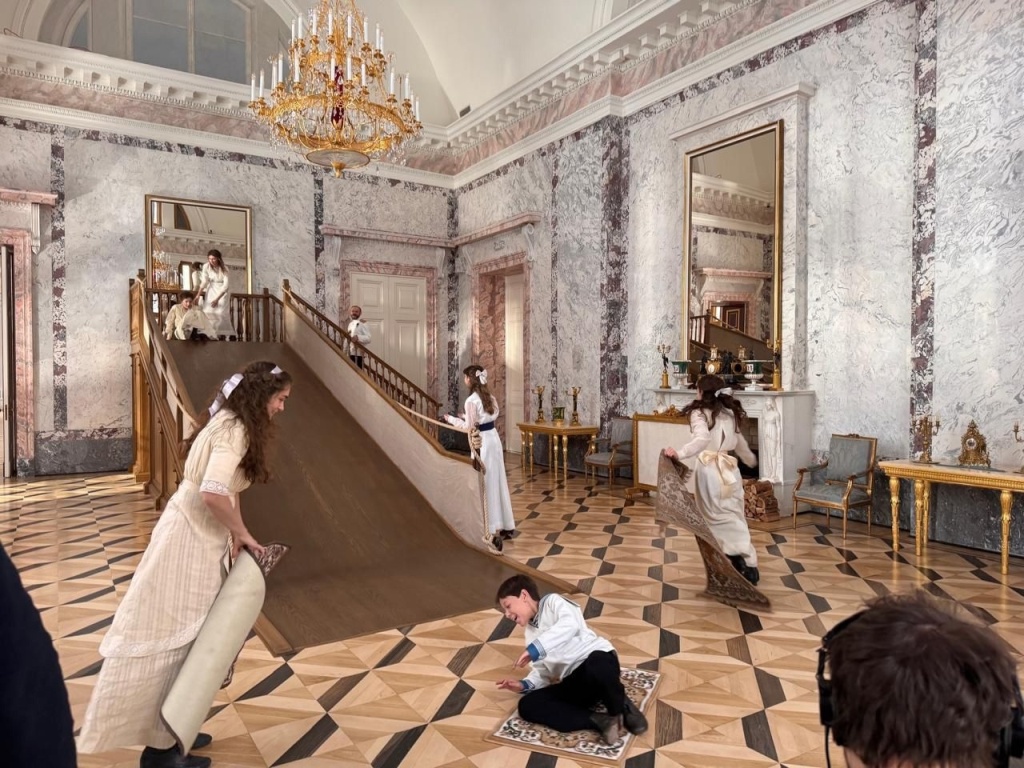
Final scenes for ‘The Romanovs. Devotion and Betrayal ‘ shot in the Alexander Palace

PHOTO: a scene from the film, with actors portraying the Imperial Children playing on the slide in the Marble [aka Mountain] Hall in the Alexander Palace

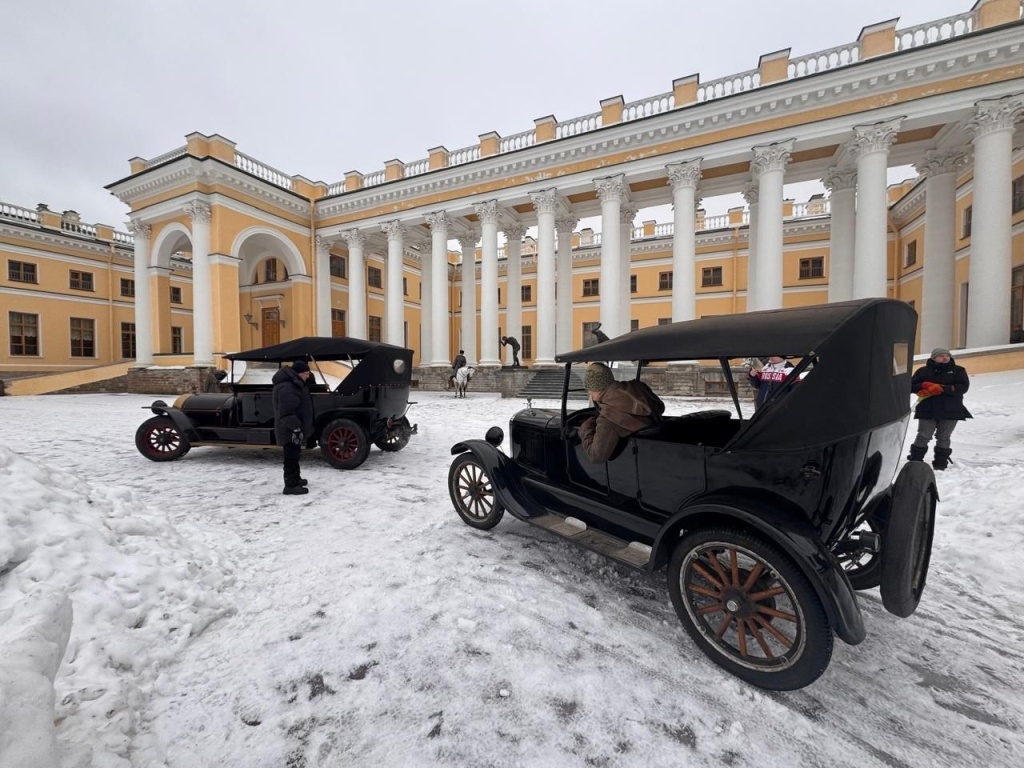
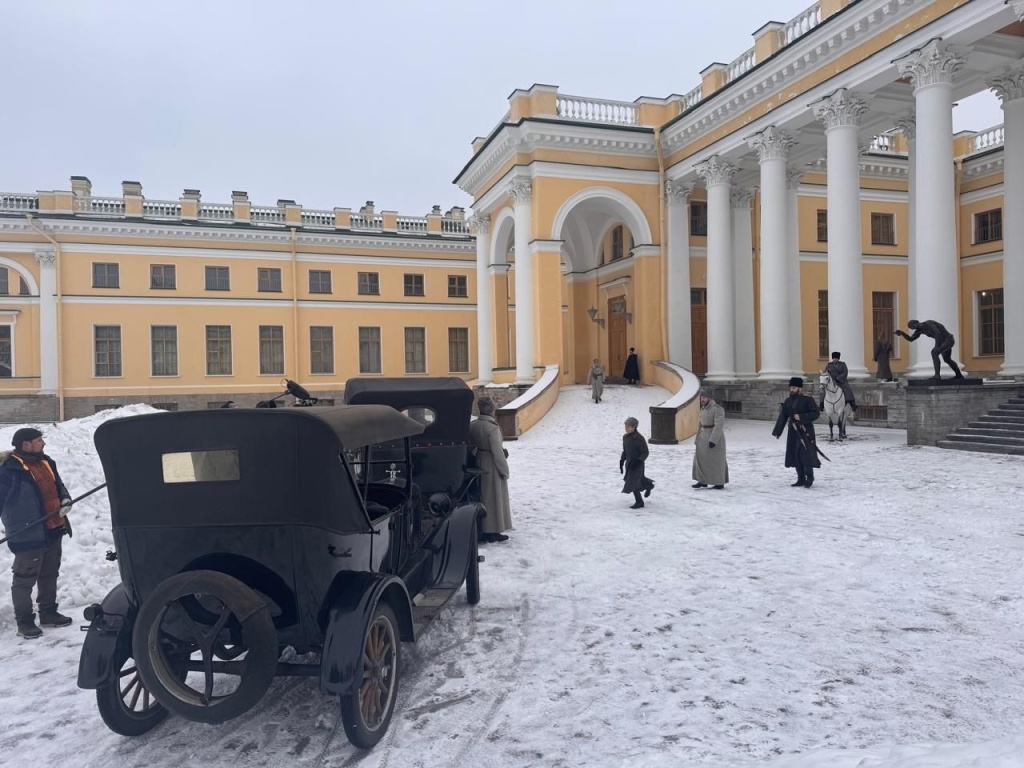
On 24th January 2025, the final scenes for the upcoming Russian-language film Романовы: Преданность и предательство / The Romanovs. Devotion and Betrayal were filmed in the Alexander Palace and Park at Tsarskoye Selo. The film is based on the book of the same name by the Tyumen writer Sergey Kozlov.

The filming of the 12-part series began in Tobolsk in March 2024, and has since been filmed in places associated with Nicholas II and his family, including St. Petersburg, Perm and Tsarskoye Selo. Copies of Rasputin’s house and the Ipatiev House in Ekaterinburg were recreated for the film.

Crews began a 5-day shooting of the final scenes for the film in the Alexander Palace and Park on 24th January. Scenes were filmed in various rooms and halls of the palace.

According to the film’s director Vasily Chiginsky, editing and post-production are already underway, with the film expected to be complete by the end of the year.

PHOTO: early 20th century motorcars parked outside the Alexander Palace that were used during the filming of ‘The Romanovs. Devotion and Betrayal

NOTE: I have been following the progress of this large-scale historical project since it began filming in March of last year. I will continue to share any new developments, including more videos, as they become available – PG

© Paul Gilbert. 29 January 2025

Alexander Palace filled with the scent of lilacs

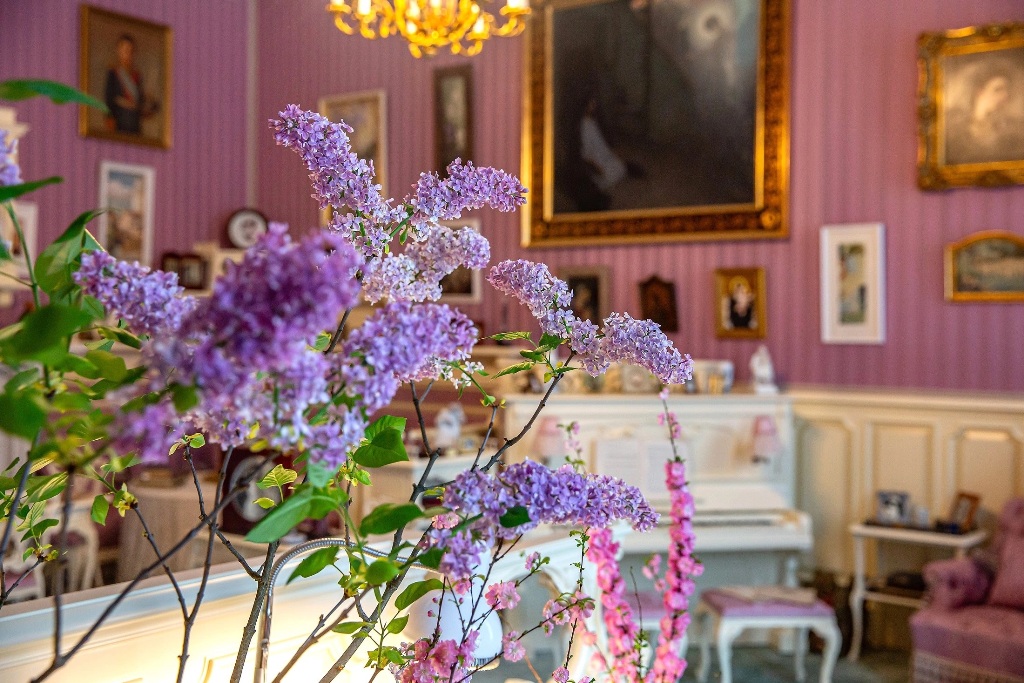
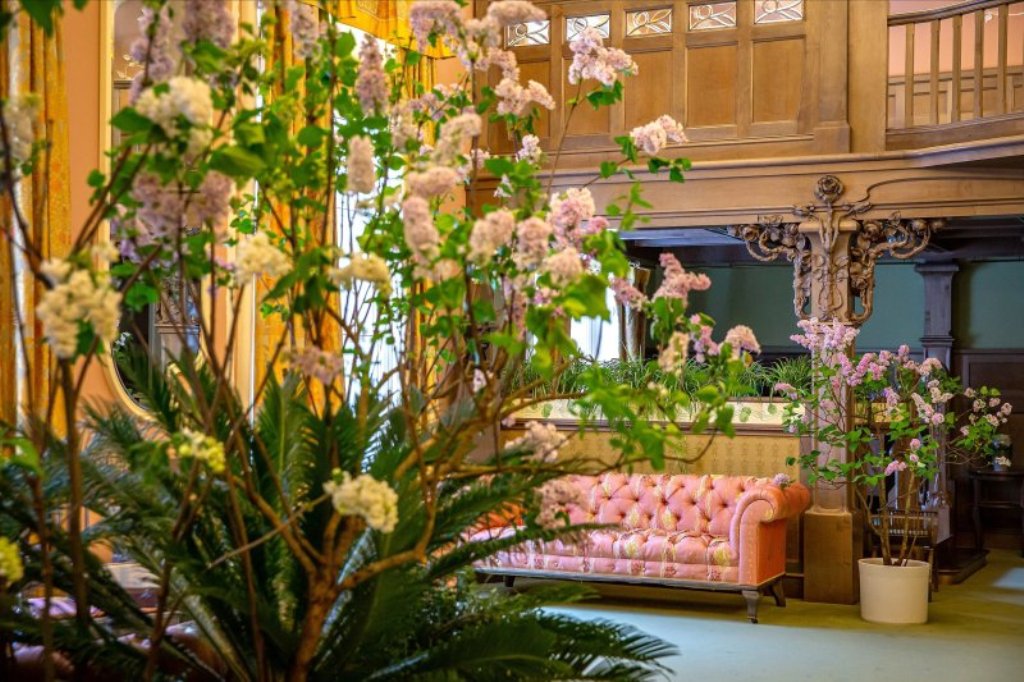
Lilacs in the Maple Drawing Room of the Alexander Palace
Photo © Tsarskoye Selo State Museum

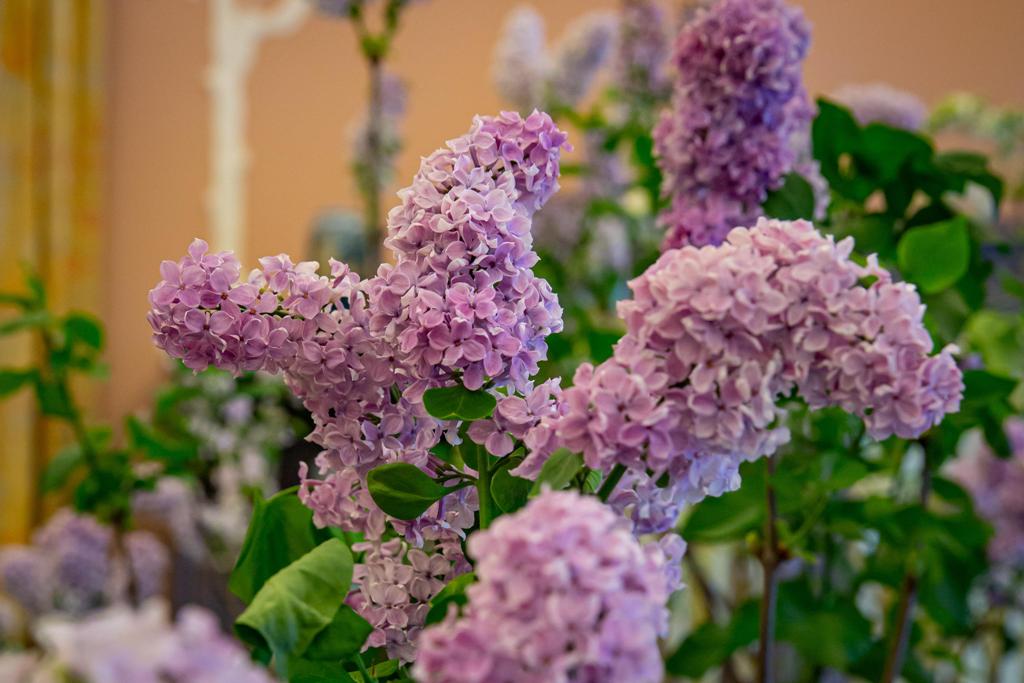
In the middle of winter, the Alexander Palace at Tsarskoye Selo is again decorated with blooming lilacs. Their fragrant aroma fill the former interiors of Empress Alexandra Feodorovna, a beautiful reminder of the Imperial Family and their favourite Imperial Residence.

On 23rd January 2025, of the 16 lilac bushes in the greenhouses near the Alexander Palace, six were moved to the palace halls, the rest will be moved from the greenhouses in stages, as they bloom. The tradition of placing lilacs in the former rooms of the last Russian Empress began in 2022, the first time the aroma of her favourite flowers filled the interiors of the palace in more than 100 years.

Lilacs of the historical varieties, such as “Memories of Ludwig Späth” and “Sensation” are exhibited in the Mauve Boudoir and Corner Drawing Rooms. Five bushes form a luxurious “lilac cloud” with delicate pink and purple flowers. Lilacs were exposed at the peak of flowering, this year so their distinctive aroma is especially noticeable. Visitors can admire lilacs in the interiors of the Alexander Palace until April.

Lilacs in the Maple Drawing Room of the Alexander Palace
Photo © Tsarskoye Selo State Museum

“Documents have been preserved indicating that the Tsarskoye Selo greenhouses diligently carried out the task of creating a spring atmosphere during the gloomy winter months. In 1898, by order of the gardener Zort, lilacs, double-cherries, hydrangeas and lilies of the valley arrived in Tsarskoye Selo for the winter decoration of the palace. So flowers in the Alexander Palace are an integral part of the interior, and we are talking not only about the rich floral decoration of the walls – roses, orchids, dandelions, but also about the blooming flowers as well,” said Olga Filippova, the chief curator of the parks of the Tsarskoye Selo State Museum-Reserve.

Lilacs in the Mauve Boudoir of the Alexander Palace
Photo © Tsarskoye Selo State Museum

The process of preparing lilacs for “premature” flowering begins in the fall. In accordance with the methods from gardening books of the 19th century, the employees of the greenhouse complex plant bushes in special boxes, and in December they set the plants up for awakening. The care process is extremely painstaking: every forty minutes during the working day, staff need to perform the necessary manipulation. One of the main conditions is strict compliance with the temperature and humidity.

Lilacs in the Maple Drawing Room of the Alexander Palace
Photo © Tsarskoye Selo State Museum

Empress Alexandra Feodorovna loved flowers – the rooms in her private half were decorated with fresh flowers all year round. Floral themes were also present in the upholstery of the walls, furniture, as well as the stucco reliefs on the walls and ceilings. The Empress was especially fond of lilacs. It is no coincidence that in her Mauve Boudoir [aka Lilac Study] the furniture and walls were decorated with silk of lilac shades, Alexandra Feodorovna also preferred lilac tones in her clothes, and perfume with the aroma of lilac.

Recall that the first 13 interiors of the Alexander Palace – the private rooms of Nicholas II and Alexandra Feodorovna – opened to the public after restoration in August 2021, in February 2023 the restoration of the Marble Hall with a slide was completed. The interiors of the palace-museum are complemented all year round with decorative indoor plants and cut flowers.

© Paul Gilbert. 23 January 2025

Two new pieces of furniture recreated for the Alexander Palace

Photo © Tsarskoye Selo Restoration Workshop

The Tsarskoye Selo State Museum continue to recreate items lost from the Alexander Palace during the Second World War . . . the latest additions are a table and chair, recreated for the Working Study of Emperor Nicholas II.

The two pieces of furniture were recreated from a vintage 1917 photograph by the Tsarskoye Selo Restoration Workshop. The items can be seen at the end of the Ottoman sofa in the Tsar’s Working Study – see photo at the bottom of this post.

Photo © Tsarskoye Selo Restoration Workshop

Recall that the Alexander Palace closed in the Autumn of 2015 for an extensive restoration, which saw the reconstruction of the Private Apartments of Emperor Nicholas II and Empress Alexandra Feodorovna, situated in the Eastern Wing of the palace. Work on the project took 6 years to complete. The Alexander Palace reopened it’s doors to visitors in August 2021.

Since that time, a number of pieces of furniture have been recreated for the interiors of the Imperial Apartments. For instance, in May 2023 a large stand for palm trees and other large plants were recreated for the Maple Drawing Room; as well as an L-shaped desk and ottoman (stool) for the Working Study of Emperor Nicholas II.

In June 2023, a beautiful large Persian Farahan carpet was recreated to upholster the Large Ottoman sofa, which stretched the length of one wall in the Working Study of Emperor Nicholas II.

PHOTO: The Working Study of Emperor Nicholas II in the Alexander Palace

The Working Study of Emperor Nicholas II was decorated in 1896-1897 in the English Style by Roman Meltzer (1860-1943) and furniture master Karl Grinberg. It was in this room that the Emperor read papers, including numerous correspondence, received foreign ministers and dignitaries and listened to reports from his ministers, who travelled from St. Petersburg.

© Paul Gilbert. 24 December 2024