Second volume of the ‘Crime of the Century. Investigation Materials’, published in Russia

Click HERE to read the second volume [in Russian only]

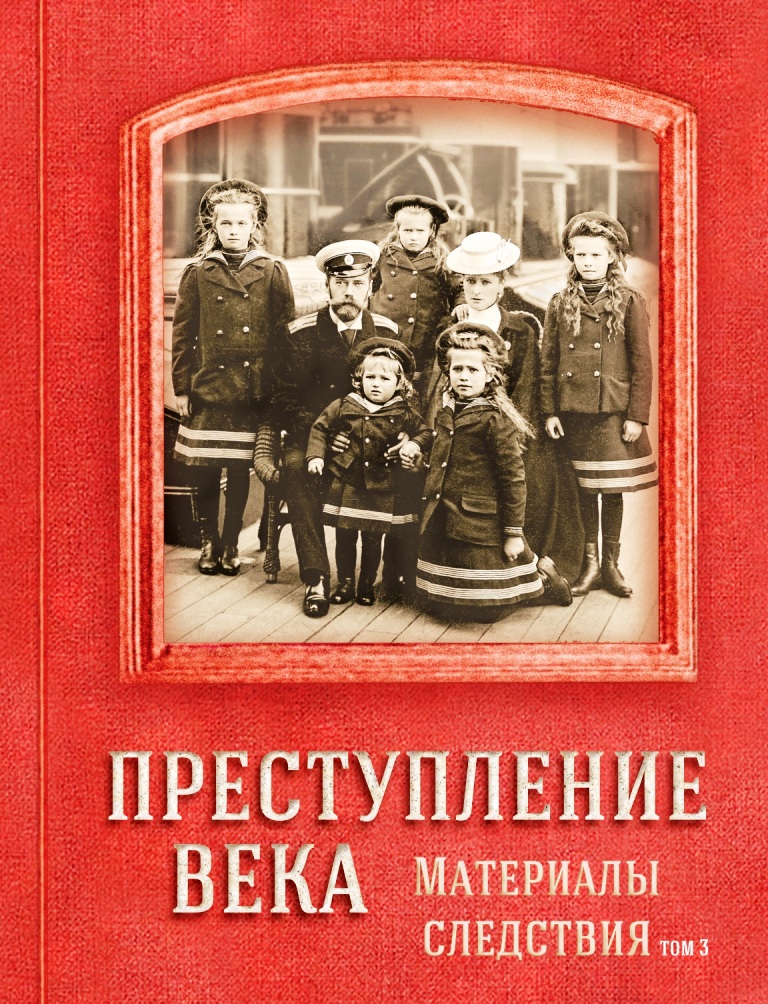
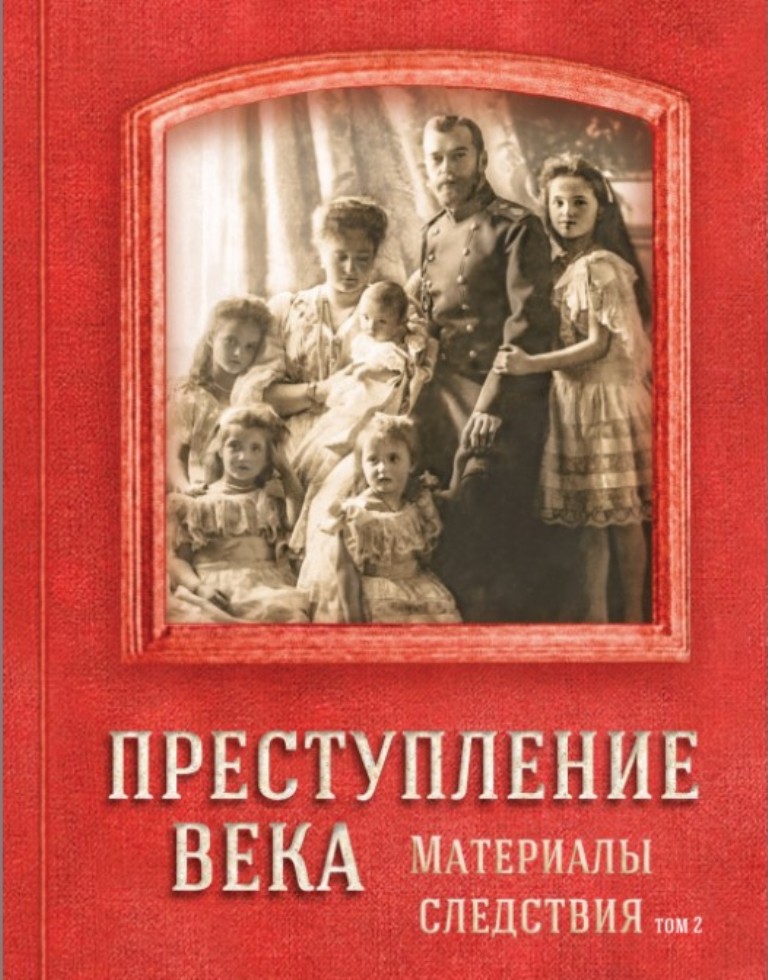
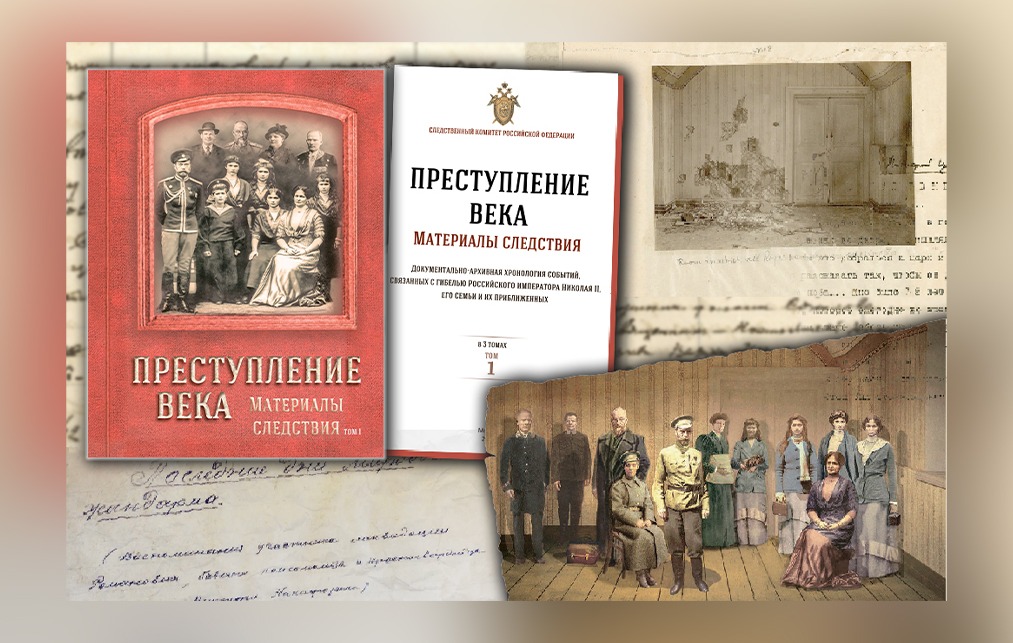
On 12th October, the second volume of the book Преступление века. Материалы следствия [Crime of the Century. Investigation Materials], about the investigation into the murder of Emperor Nicholas II and his family was published [in Russian] on the website of the Investigative Committee of the Russian Federation.

The second volume describes the various stages of the investigation into the murder of the Imperial Family, which is based on scientific facts, historical and archival documents, reflecting on modern research, including recreated 3D models of the Ipatiev House.

The book consists of three volumes and is based on photographs, diaries, memoirs, audio recordings and archival sources, including previously unpublished material.

The first volume was published in September this year. The book discusses the decision to liquidate Emperor Nicholas II and his family, as well as the preparation of the murder.

Thanks to the painstaking work carried out using modern technologies, the Investigative Committee added that results of the investigation leave no doubts about the version of the death and the identity of the Ekaterinburg Remains. “The results of the investigation of this crime are recognized at the international level,” a spokesperson added.

This publishing project is the result of a joint effort of investigators of the Investigative Committee of the Russian Federation, which includes scientists, researchers, and other experts. It remains the most complete and up-to-date study into the investigation of a century-old crime, which remains one of the darkest pages in the history of 20th century Russia.

This book will be of great help to all those interested in establishing the truth in this matter. Copies of the second volume will be sent to various government agencies and representatives of the Russian Orthodox Church.

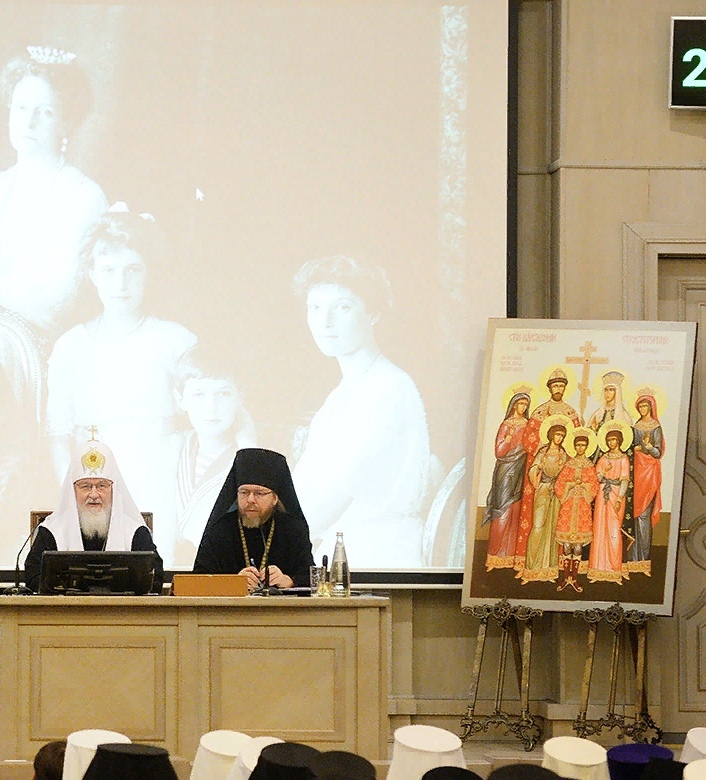
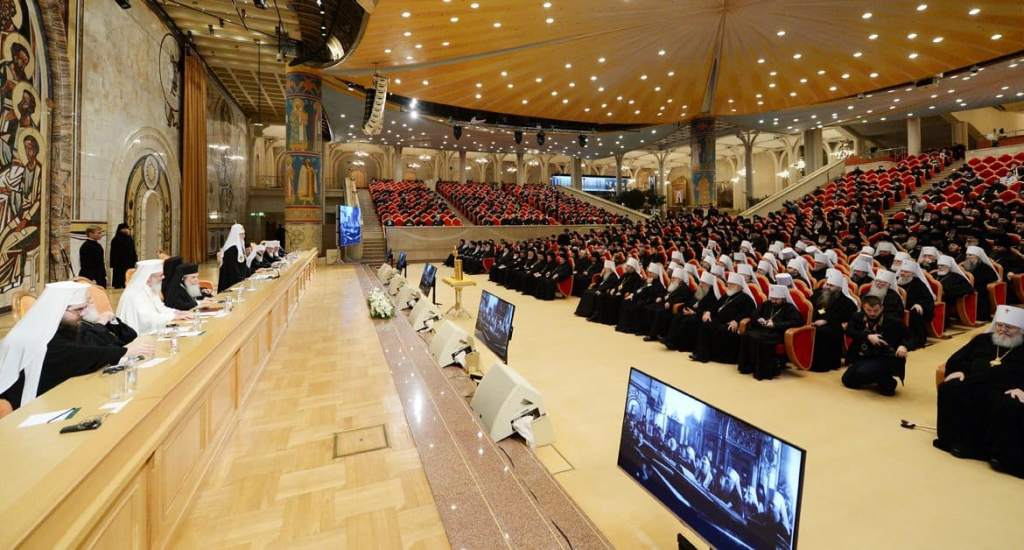
It is important to note, that it is the contents of the this book, which the Bishops’ Council of the Russian Orthodox Church (ROC), will review when they meet in Moscow from 15th to 18th November 2021, during which they will review the findings of the Investigative Commission and deliver their verdict on the authenticity of the Ekaterinburg Remains.

© Paul Gilbert. 13 October 2021

What awaits Ganina Yama, after the ROC recognizes the Ekaterinburg Remains?

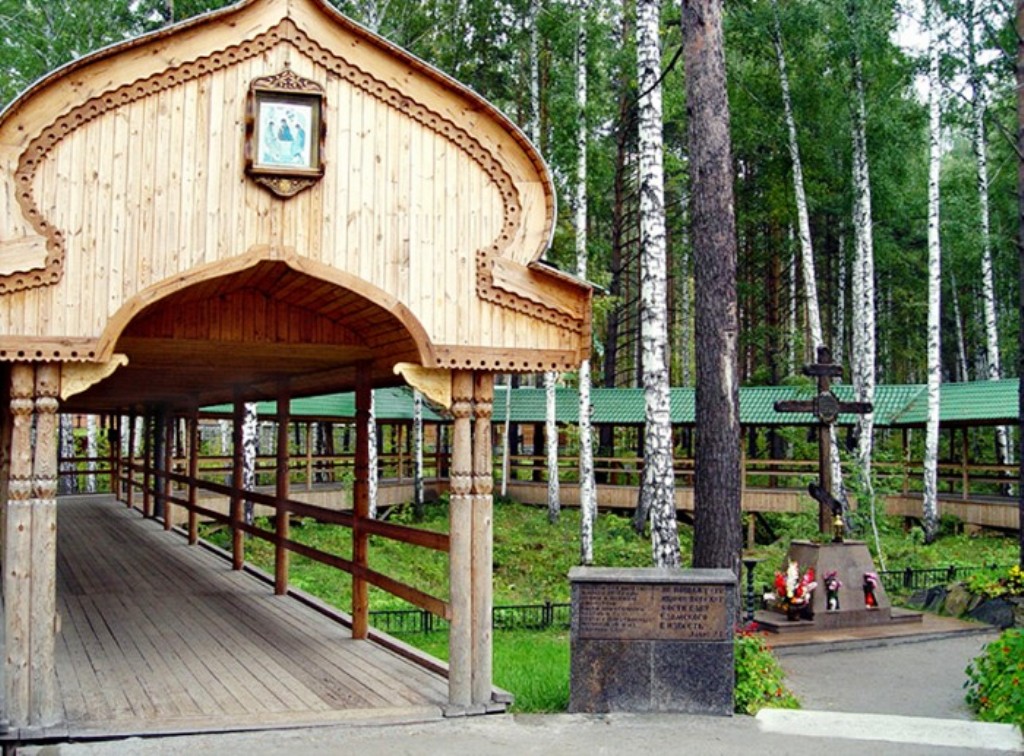
PHOTO: The Monastery of the Holy Royal Martyrs at Ganina Yama. A wooden causeway surrounds the abandoned mine shaft – visible as a depression in the ground – where the remains of Nicholas II and his family were first discarded after their brutal murder at the Ipatiev House in Ekaterinburg

Thirty years after the discovery of the burial site of the Imperial Family in Porosenkov Log, the Russian Orthodox Church (ROC) is apparently now ready to accept the findings of numerous genetic examinations and admit that the remains of the bodies found there really belong to Emperor Nicholas II and his family.

It is not yet clear whether a new monastery will be built on the site, in memory of the Holy Royal Martyrs, but the church has already requested that Porosenkov Log be transferred to the Ekaterinburg Diocese “for the purpose of carrying out religious activities.” And, will most likely, receive it.

It is speculated, that next month, the Bishops’ Council of the Russian Orthodox Church (ROC) will formally recognize the results of examinations which prove the authenticity of the remains of the Imperial Family, exhumed in the summer of 1991 in the area of ​​Porosenkov Log on the Old Koptyakovskaya Road.

“The examinations that have been carried out convincingly show that the remains found near Ekaterinburg are indeed the remains of the Imperial Family. But for the church to recognize this, it is necessary that all bishops study the results of these examinations. I think as soon as this happens – probably at the bishops’ council in November – the authenticity of the “Ekaterinburg remains” will be recognized by the church,” said Metropolitan Hilarion of Volokolamsk (Alfeyev), chairman of the Department for External Church Relations of the Moscow Patriarchate in September 2021.

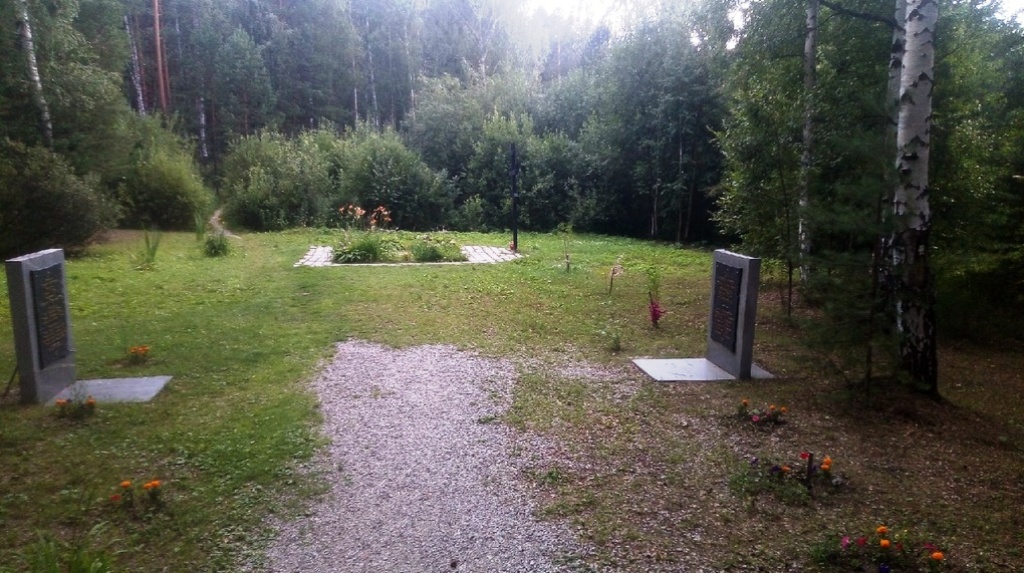
PHOTO: Porosenkov Log, situated 3.8 km from Ganina Yama. The main grave is seen in the center of the photo, a small path (seen in the upper left) leads to the second grave, where the remains of Tsesarevich Alexei and his sister Grand Duchess Maria were discovered in 2007

The discovery of the remains of the Imperial Family in Porosenkov Log

The family of Nicholas II were shot in the Ipatiev House in Ekaterinburg on the night of 16/17 July 1918. The bodies were then taken out of the city to an area of ​​old mines in the Ganina Yama tract, where their killers attempted to destroy the remains using fire and acid.

For many years the Russian Orthodox Church insisted that the bodies of members of the Imperial Family had been destroyed. According to the inhabitants of the Monastery of the Holy Royal Martyrs at Ganina Yama, the monastery stands on the ground, where the ashes from the burnt remains were scattered.

However, historians believe that Ganina Yama is the site of the first attempt of burying the remains, however, the killers returned the following day, exhumed the remains and transported them 3.8 km, and reburied them near the Old Koptyakovskaya Road, which led from Ekaterinburg to Lake Isetskoye.

The remains of the Imperial Family were originally found in 1978 by a group of enthusiasts led by the Ural geologist Alexander Avdonin, who worked under the patronage of film director Geliy Ryabov. Due to the political situation in the Soviet Union at the time, no exhumation of the remains was carried out. It was not until 1991, after the victory of Boris Yeltsin in the presidential elections of the RSFSR, that Avdonin decided that it was time to make the discovery public.

Meanwhile, the search for the remains of Tsesarevich Alexei and Grand Duchess Maria continued, and discovered in 2007 at Porosenkov Log, in a second grave [only 44 pieces of their bones had been discovered at the site] just meters from the main burial site.

Since that time, the authenticity of the bones of Nicholas II and his family has been confirmed three times. In January 1998, the Commission of the Republican Center for Forensic Medicine of the Ministry of Health of Russia concluded: “The remains found in Ekaterinburg are the remains of Nicholas II, members of his family and his retainers.” In 2008, the authenticity of the remains was also confirmed by a genetic analysis carried out by experts from Russia and the United States. In the summer of 2018, the official representative of the Investigative Committee of Russia (TFR) Svetlana Petrenko said that repeated commissions of molecular genetic examinations confirmed the authenticity of the remains of Emperor Nicholas II and his family.

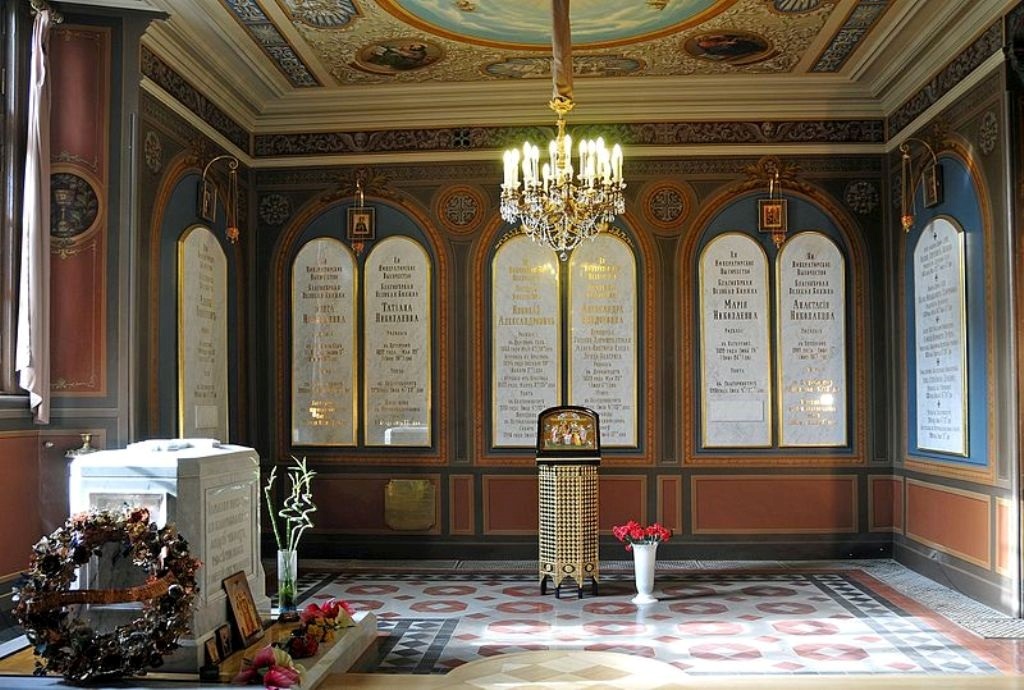
PHOTO: The tomb of the Imperial Family in the St. Catherine Chapel of the SS Peter and Paul Cathedral, St. Petersburg

Why has the Russian Orthodox Church not recognized the authenticity of the remains for 30 years?

Despite these numerous extensive scientific studies and examinations, the Russian Orthodox Church has still not officially recognized the remains discovered at Porosenkov Log. There are several reasons for this:

First, the recognition somewhat discredits the Monastery of the Holy Royal Martyrs at Ganina Yama. If the remains of the Imperial Family are nevertheless recognized as genuine, it will turn out that the monastery has to be rebuilt in another place. At the same time, Ganina Yama is the main place of pilgrimage for Orthodox Christians, where traditionally all religious processions in memory of the Holy Royal Martyrs end.

Secondly, as the historian and local historian Nikolai Neuymin explains, there will be confusion in the minds of believers, since “there will be several graves: at Ganina Yama, Porosenkov Log and the Peter and Paul Fortress [St. Petersburg].”

Thirdly, the recognition of the remains threatens a split among Orthodox Believers, some of whom will not believe the results of the genetic examination.

Fourth, the Russian Orthodox Church will be forced to publicly admit that for more than 100 years, they were wrong.

Click HERE to read my article The Fate of the Ekaterinburg Remains, published on 18th June 2021

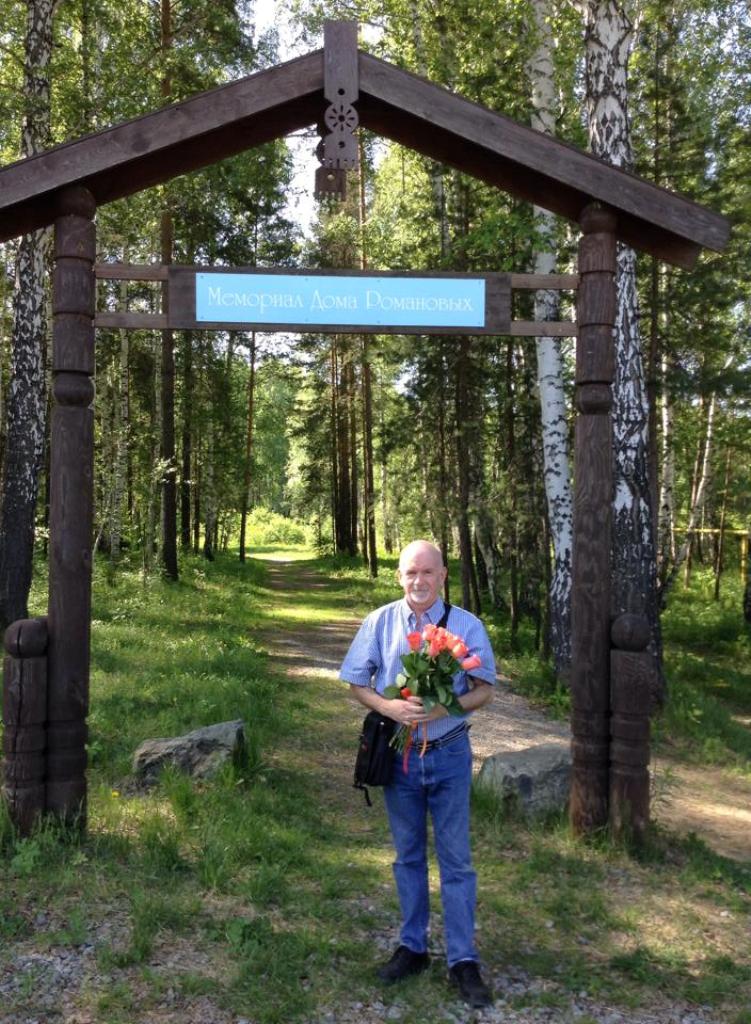
PHOTO: Independent researcher Paul Gilbert, standing at the entrance to the Romanov Memorial at Porosenkov Log. 2nd June 2016

What will happen to Porosenkov Log and Ganina Yama?

If the Russian Orthodox Church does recognize the remains, then, most likely, it will most likely construct a new monastery, church or just a chapel for pilgrims. It is difficult, however, to say at this time.

In March 2016, the Ministry of Culture of the Sverdlovsk Region reported that if the ROC requests the transfer of the territory in and around Porosyonkov Log (added to the cultural heritage list in 2014), would be designated as sacred land and transferred to the ROC, where a memorial and monastery, similar to that at Ganina Yama would be constructed. This in itself suggests that perhaps the ROC has already come to a decision on the authenticity of the remains, and were making preparations?

Porosenkov Log is currently under the administration of the Sverdlovsk Museum of Local Lore, who have plans to build a museum complex on this territory. As a result, Governor Evgeny Kuyvashev suspended the process of land allocation for an indefinite period.

It should also be added, that if the ROC recognize the remains of the Imperial Family as Holy Relics, they cannot be returned to their tomb in St. Catherine’s Chapel [SS Peter and Paul Cathedral in St. Petersburg], as relics cannot be returned to the earth. They must be placed in reliquaries above ground which allows the faithful to venerate them. This would be one very important reason why their remains would be interred in a new cathedral named in their honour.

Even if a new monastery is constructed at Porosenkov Log, it will not take away the significance and historic importance of the Monastery of the Holy Royal Martyrs at Ganina Yama, because the burial of the Imperial Family took place at each in the summer of 1918.

In conclusion, perhaps, after the recognition of the remains by the church, the annual Cross Procession in memory of the Holy Royal Martyrs, will end not end at Ganina Yama, but at that of Porosenkov Log.

© Paul Gilbert. 3 October 2021

First volume of the ‘Crime of the Century. Investigation Materials’, published in Russia

Click HERE to read the first volume [in Russian only]

On 30th September, the first volume of the book Преступление века. Материалы следствия [Crime of the Century. Investigation Materials], about the investigation into the murder of Emperor Nicholas II and his family was published [in Russian] on the website of the Investigative Committee of the Russian Federation.

The murder of the Imperial Family on 17th July 1918, remains one of the most mysterious and controversial crimes of the 20th century. The events of more than a century ago are now presented for the first time in a three-volume Russian language edition based strictly on documentary evidence and reliable archival sources. In chronological order, episode by episode, the book describes the tragic events associated with the murder of the Imperial Family and the Bolshevik and Soviet attempts to conceal their remains.

The three volumes will explore the investigative work done in the years 1918 to 1924, the early 1990s, to the present day. The final volume explores the current results of the investigation in the criminal case, resumed by the Investigative Committee of the Russian Federation in 2015, which managed to recreate an objective picture of those distant days and fill in the previously existing gaps.

According to the Chairman of the Investigative Committee of the Russian Federation A.I. Bastrykin: “modern 21st century science and expert research have allowed us to delve much deeper into the essence of the tragic events of 1917 in more detail, permitting us to draw impartial and well-grounded conclusions.”

“Scientific and technological progress has made it possible to conduct unique forensic examinations, including medico-forensic (anthropological). An important role was played by the work of cartographers, thanks to which 3D models of the murder room in the Ipatiev House. In addition, the schemes of the Koptyakovskaya road were recreated. Photos, archives, diaries, memoirs, audio recordings – all helped to form the basis of this unique publishing project”, he added.

This 3-volume book is the result of a joint effort of investigators of the Investigative Committee of the Russian Federation, which includes scientists, researchers, and other experts. It remains the most complete and up-to-date study into the investigation of a century-old crime, which remains one of the darkest pages in the history of 20th century Russia.

The Bishops’ Council of the Russian Orthodox Church (ROC) is scheduled to meet in Moscow from 15th to 18th November 2021, where they will review the findings of the Investigative Commission and deliver their verdict on the authenticity of the Ekaterinburg Remains.

© Paul Gilbert. 30 September 2021

Will the Bishops Council’s decision on the Ekaterinburg Remains cause a schism within the ROC?

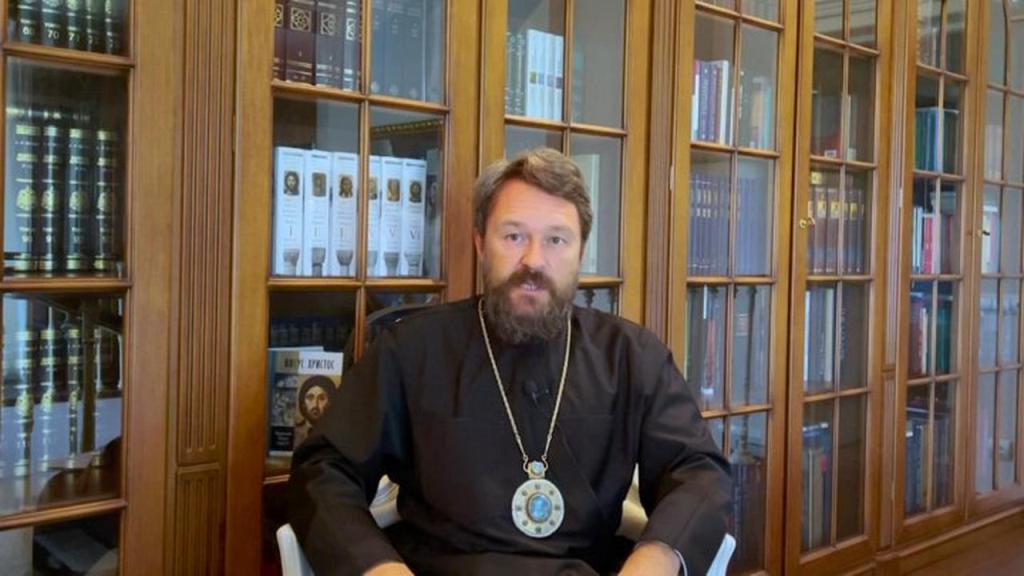
PHOTO: Metropolitan Hilarion (Alfeyev),

We are now just weeks away before the Russian Orthodox Church delivers its verdict on the authenticity of the Ekaterinburg Remains.

The Bishops’ Council of the Russian Orthodox Church (ROC) is scheduled to meet in Moscow from 15th to 18th November [now delayed until 26th to 29th May 2022], where they will review the findings of the multitude of examinations – requested by the ROC’s Investigative Committee – and carried out in different laboratories around the world. These included various examinations (molecular-genetic, physical-chemical, trace evidence, ballistic, handwriting, historical-archival, soil science, forensic, anthropological studies, and more).

Some members of the Moscow Patriarchate have expressed optimism, such as Metropolitan Hilarion (Alfeyev), the head of the Synodal Department for External Church Relations, who believes that the “Ekaterinburg remains will be recognized as genuine”.

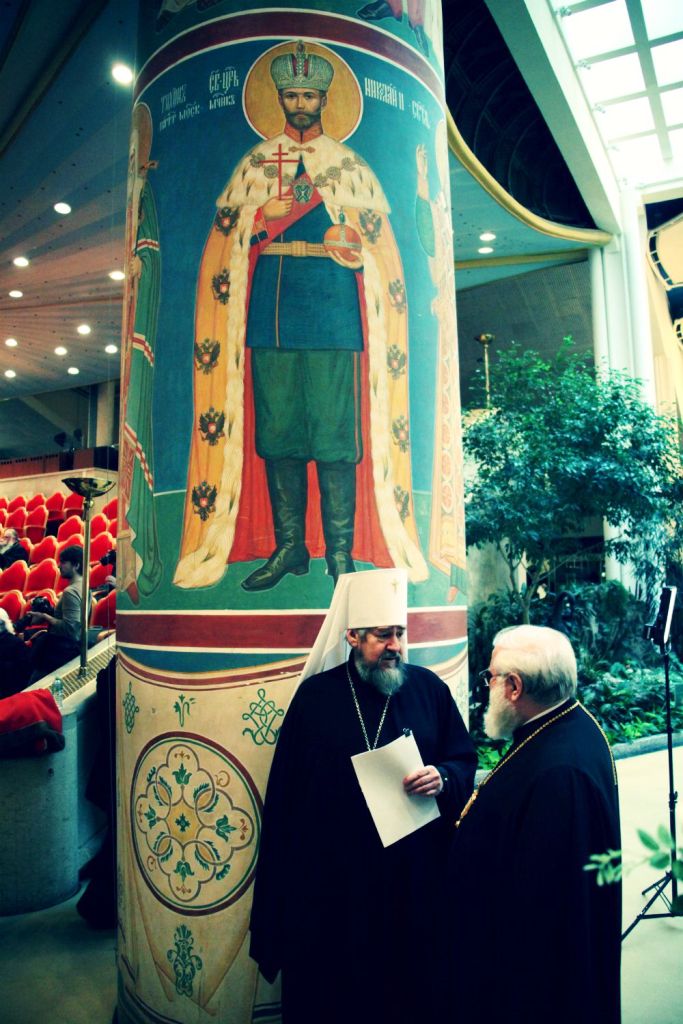
PHOTO: Image of Tsar Martyr Nicholas II in the Hall of Church Cathedrals of the Cathedral of Christ the Savior in Moscow. It is here that the Bishops’ Council of the Russian Orthodox Church will meet in November, to (hopefully) confirm the authenticity of the Ekaterinburg remains.

“The examinations that have been carried out prove that the remains found near Ekaterinburg are indeed the remains of the Tsar and his family. But for the Church to recognize such, it is necessary that all bishops familiarize themselves with the results of the examinations,” he said.

The Metropolitan urged believers not to rush and not to anticipate events. “Bishops should have complete freedom to review to the information they receive,” emphasized. Hilarion. According to him, at the moment the members of the Holy Synod of the Russian Orthodox Church have familiarized themselves with the results of the examinations, it is then that a final decision on the recognition of their authenticity of the remains rests with the Bishops’ Council of the church as the supreme governing body.

Whatever decision the Bishops’ Council makes, it is sure to cause a schism among Believers who are divided on the authenticity of the remains. Many still adhere to Nikolai Alekseevich Sokolov’s (1882-1924) theory that the bodies of the Imperial Family were completely destroyed with fire and acid at the Four Brothers Mine.

© Paul Gilbert. 20 September 2021

“Until the Ekaterinburg remains are recognized, I will not go to church”, says Russian forensic expert

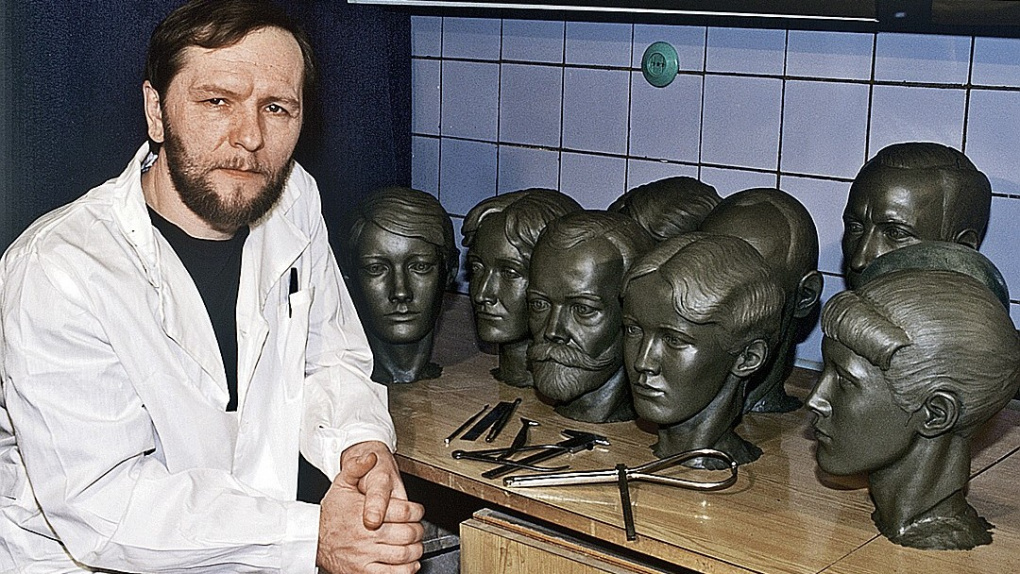
PHOTO: Sergei Alekseevich Nikitin reconstructed sculptural portraits of Emperor Nicholas II and his family

On the eve of the 103rd anniversary of the murders of Tsar Nicholas II and his family, the Ekaterinburg media outlet 66.RU published an interview with Sergei Alekseevich Nikitin, a highly respected Soviet and Russian expert of the Bureau of Forensic Medical Examination in Moscow.

Nikitin is a world-renowned forensic expert, known for his work on the reconstruction and identification of faces and heads of many historical figures, using plastic reconstruction according to the Gerasimov method. His projects have reconstructed the faces and skulls of Ilya Muromets, the mother of Ivan the Terrible Elina Glinskaya and Adolf Hitler.

He is perhaps best known, however, for the main work of his life with the remains exhumed in 1991 from the Porosenkov Log tract near Ekaterinburg. It was Nikitin who first identified the skull of Nicholas II, and then recreated the sculptural portraits of the Emperor and his family.

66.RU: How did it come to be that in 1991 you became involved in identifying the remains of the Imperial family?

SAN: Initially, this work was carried out by the Sverdlovsk forensic medical experts and the Research Institute of Forensic Medicine of the USSR Ministry of Health, but this ministry supported the Emergency Committee, and it was necessary to transfer the research to the Bureau of the Main Forensic Medical Expertise of the RSFSR Ministry of Health. I was included in the expert group as a specialist in the fields of both identification and anthropological reconstruction.

66.RU: Several years ago, in one of your interviews, you said that you immediately “identified” Nicholas II even before you began using the Gerasimov method, at the Verkh-Isetsky District Department of Internal Affairs in Ekaterinburg. Moreover, it turned out to be not skull number 1 at all, as everyone had thought at the time, but skull number 4 (and subsequent studies confirmed your guess). How did this happen?

SAN: There is nothing surprising in this: by August 1991, I already had 19 years of experience in recreating a sculptural portrait from a skull. It was not at first sight that I recognized the emperor, since skull No. 4 had endured some rather serious losses. It wasn’t until the third day that the imperial frontal tubercles on this skull provided me with a clue.

66.RU: Another proof of the authenticity of the remains of the emperor must be considered a scar made by a sabre – a during an assassination attempt on Nicholas II in his youth during a visit to Japan, when he was hit on the head with a sabre by a Japanese policeman. Where did you find this hole on the skull of Nicholas II? Where and when did you manage to examine the hat worn by the heir to the throne at the time of the assassination attempt?

SAN: It was in 2006, after I reviewed details of the wounds inflicted on the heir that I made the discovery. The description is very detailed, with measurements of both the damage to the skull and the distance between the marks. Then I took a profile photograph of the skull No. 4 (I had already photographed it in 1994 with a scale ruler), superimposed it on the profile photograph of the emperor, and it turned out that the “fronto-parietal” wound exactly coincided with the through-damage to the skull! It was from this wound that on 12th May 1891, doctors removed a fragment of the outer bone plate, exposing the spongy layer. It was here that sulfuric acid administered by the killers, which subsequently “ate” through the skull.

It was in 2008, during an examination in the State Hermitage Museum in St. Petersburg, that I was able to compare the tear on the bowler hat of Nicholas Alexandrovich to the damage to the skull. Any doubt to this mystery was thus solved!

66.RU: Do you, as an expert having handled the skulls of Nicholas II and members of his family, have any doubts about the authenticity of the Ekaterinburg remains?

SAN: Neither I nor other experts had any such doubts even back in August 1991.

66.RU: The renewed investigation of the ROC Investigative Committee has been going on for six years, experts have repeatedly presented their research and conclusions to the ROC commission, but the church is still in no hurry to recognize the tsar’s remains. What do you think of all this?

SAN: I think this is a classic example of absurdity.

66.RU: Why do you think the Russian Orthodox Church, despite the many examinations and the obviousness of the conclusions, does not recognize the Ekaterinburg remains? When do you think common sense will prevail?

SAN: One of the canons of the sanctity of the remains is their miraculous acquisition, which was not the case with the Ekaterinburg remains. We must not forget that at the time of their acquisition in 1979 (partial) and in 1991 (complete) they were not relics, since neither Nicholas II nor his family members were then canonized by the Moscow Patriarchate of the Russian Orthodox Church. Common sense and faith are different concepts.

66.RU: Is it true that at some point you became disillusioned with the church and even stopped going to it?

SAN: I was not disillusioned, but I did make a vow to myself: that until the Ekaterinburg remains are recognized, I will not go to church!

NOTE: a final decision on the Ekaterinburg remains will be resolved by the Bishops’ Council of the Russian Orthodox Church (ROC), when they meet in November of this year.

© Paul Gilbert. 16 July 2021

Icon belonging to the Imperial Family now in the Church on the Blood, Ekaterinburg

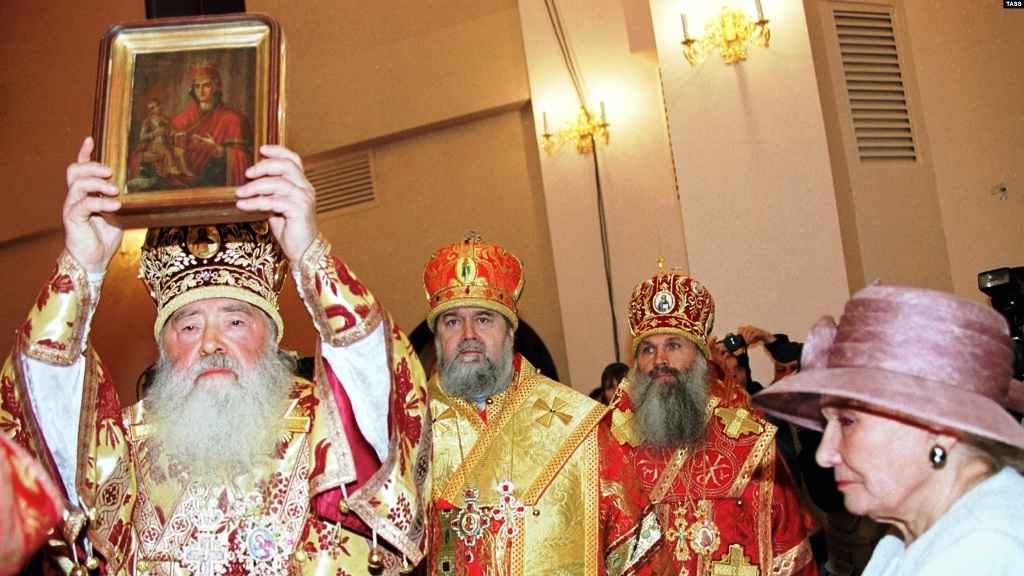
PHOTO: Olga Nikolaevna Kulikovskaya-Romanova (right), solemnly handed over the Icon of the Most Holy Theotokos “Three-handed” to the Church on Blood in Ekaterinburg on 10th July 2003

Today – 11th July – the feast of the Icon of the Most Holy Theotokos “Three-handed” – a miraculous icon revered in the Orthodox Church – is being celebrated in the Church on the Blood in Ekaterinburg.

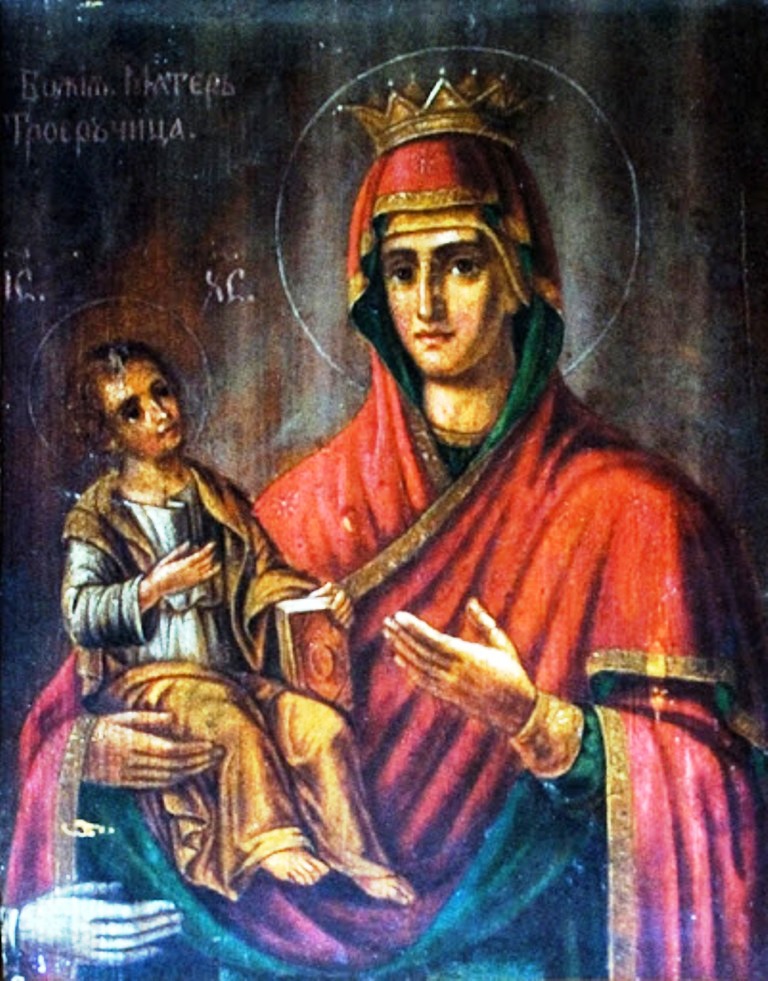
During their house arrest in the Ipatiev House from April to July 1918, the Imperial Family had an Icon of the Most Holy Theotokos “Three-handed”, before which they prayed daily, until their death and martyrdom on 17th July 1918.

The Imperial Family’s icon was discovered following the regicide in the Ipatiev House by a Guards officer who personally knew Grand Duchess Olga Alexandrovna (1882-1960) and her husband Nikolai Kuikovsky (1881-1958). Later, the icon traveled with Admiral Alexander Kolchak’s (1874-1920) army and Russian emigrants, through China to the United States and Canada. In the early 1920s, through the efforts of officers devoted to Emperor Nicholas II, it was taken to Denmark and presented to the Dowager Empress Maria Feodorovna (1847-1928). Passing from generation to generation, the icon remained in the Romanov family until 2003: upon the Dowager Empress’s death in 1928, the icon passed to her youngest daughter Grand Duchess Olga Alexandrovna , then passing to her eldest son Tikhon in 1960.

In the year marking the 85th anniversary of the death and martyrdom of the Imperial Family, Olga Nikolaevna Kulikovskaya-Romanova (1926-2020) took part in the consecration of the Church on the Blood in Ekaterinburg, erected on the site of the Ipatiev House, demolished in 1977. In addition and according to the last will and testament of her husband and nephew of Nicholas II Tikhon Nikolaevich Kulikovsky, Olga Nikolaevna brought from Canada the Icon of the Most Holy Theotokos “Three-handed”.

PHOTO: the Icon of the Most Holy Theotokos “Three-handed” of which the Imperial Family prayed to daily, during their house arrest in Ekaterinburg from April to July 1918

By the Providence of God, on the night of 10th July 2003, Olga Nikolaevna Kulikovskaya-Romanova, solemnly handed over the Icon of the Most Holy Theotokos “Three-handed” to the Church on Blood in Ekaterinburg, built on the site of the demolished Ipatiev House, where the Holy Royal Martyrs met their deaths and martyrdom. Thus, the dying wish of Tikhon Nikolaevich Kulikovsky – the last owner of the family icon – had been fulfilled.

In her solemn speech to the pilgrims Olga Nikolaevna said: “I am happy that the Lord deigned me to fulfill the will of my husband Tikhon Nikolaevich Kulikovsky-Romanov … This icon in the Ipatiev House was a spiritual witness to the sufferings of the Holy Royal Martyrs. Everything has come full circle. After many years of wanderings, the Icon of the Most Holy Theotokos “Three-handed” has returned to its proper place in Ekaterinburg. “

According to tradition, the feast of the Icon of the Most Holy Theotokos “Three-handed”, marks the beginning of Tsar’s Days within the Ekaterinburg archdiocese. In July 2019, during the Divine Liturgy in the Church on the Blood, Metropolitan Kirill, now – the head of the Tatarstan archdiocese, said “from this day, begins Passion Week, dedicated to the memory of the Holy Royal Martyrs. Starting from today, and every day of Passion Week, the earthly life and the last moments of the Holy Royal Martyrs will be honoured.”

A Divine Liturgy will be held on the night of 16/17 July in the Church on the Blood. Earlier this week, the Governor of the Sverdlovsk Region cancelled the annual Cross Procession from the Church to the Holy Royal Monastery at Ganina Yama. Despite this, Metropolitan Evgeny of Ekaterinburg and Verkhotursky insists that he will still take part in the sacred procession.

© Paul Gilbert. 11 July 2021

30th anniversary of the exhumation of the remains of Nicholas II and his family

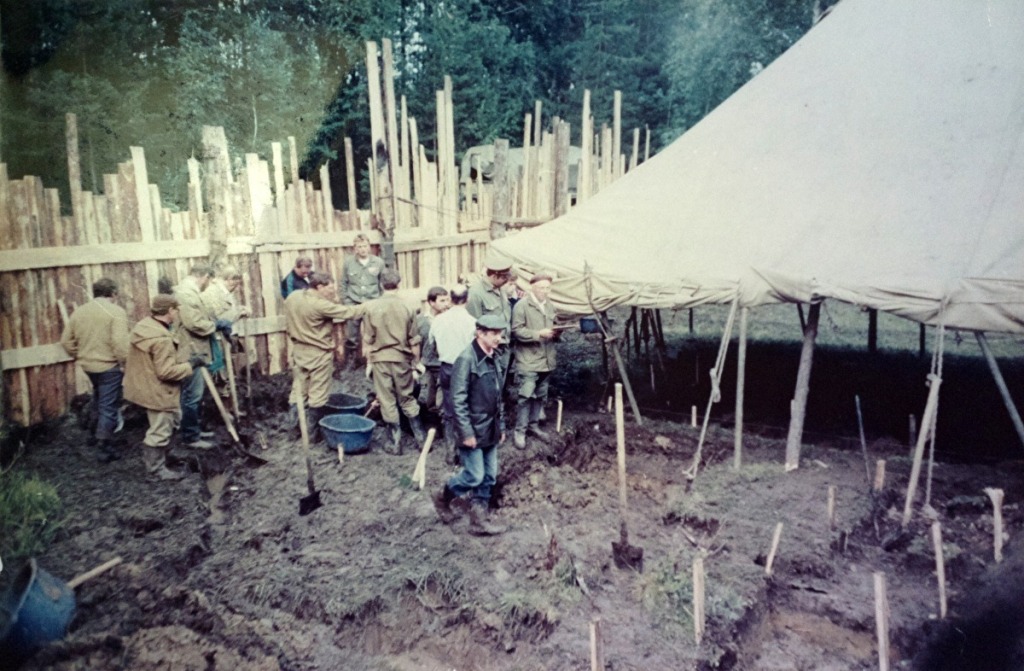
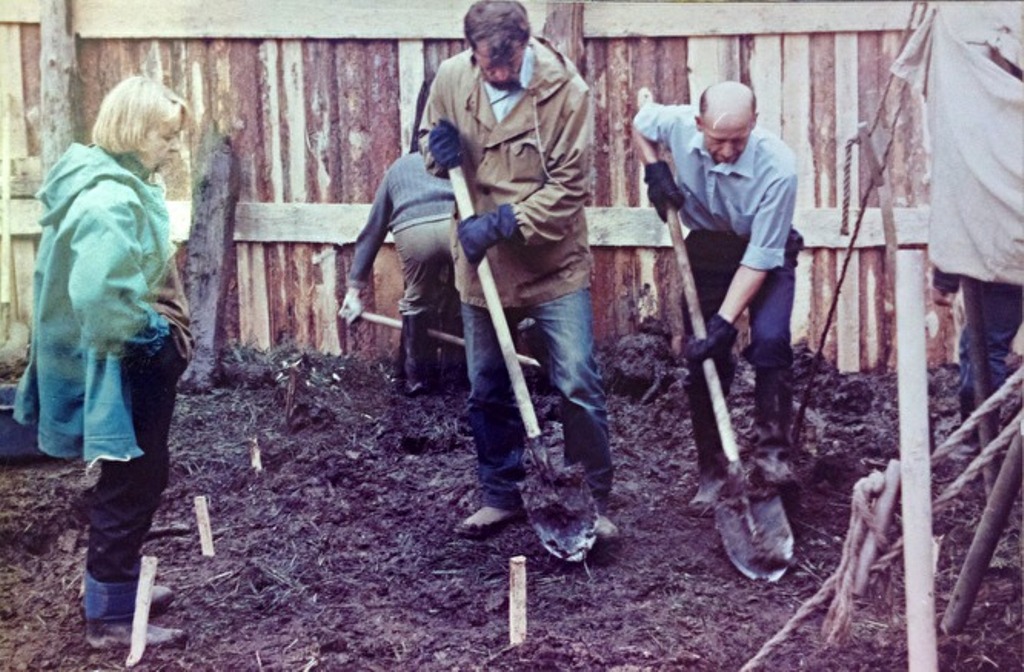
PHOTO: Avdonin and his team excavate the burial site at Porosenkov Log in 1991

WARNING: please be aware that this post includes graphic images which some readers may find disturbing.

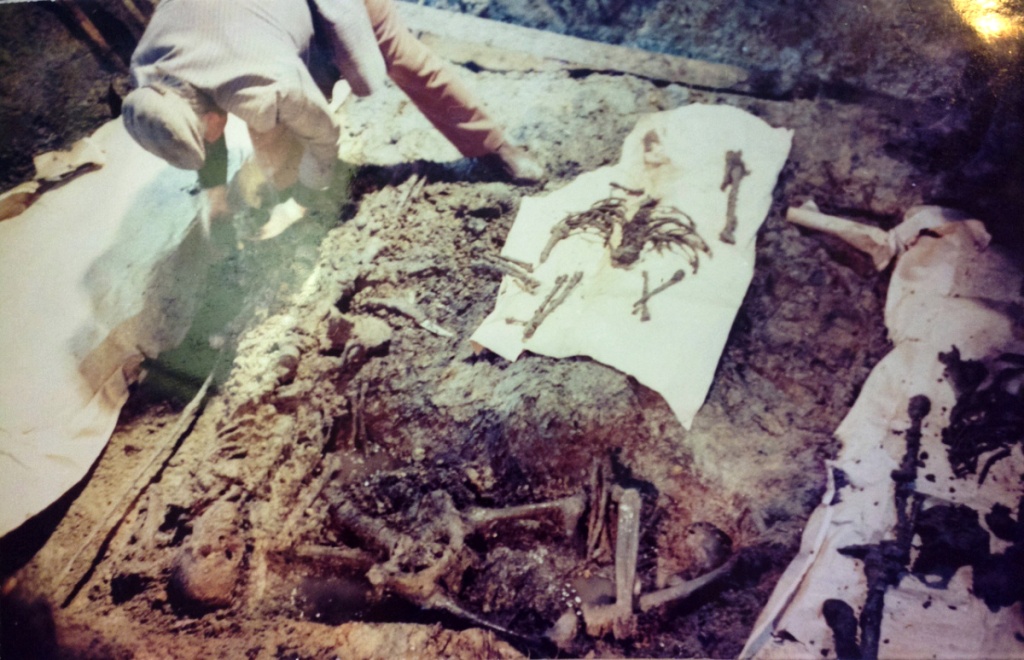
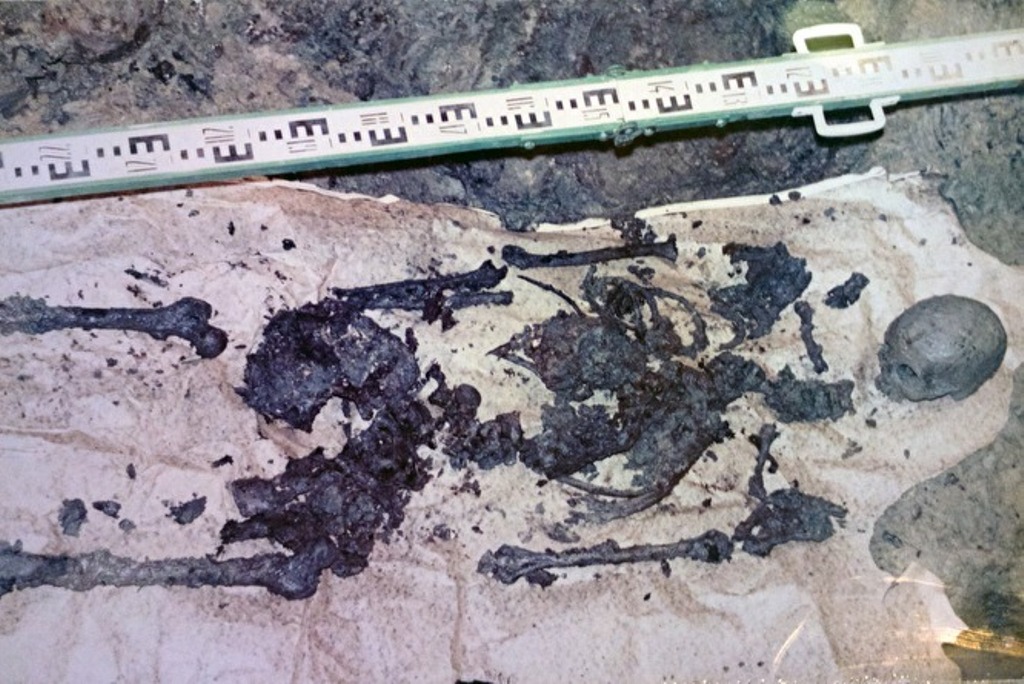
This month marks the 30th anniversary of the exhumation of the remains of Emperor Nicholas II and members of his family, discovered at Porosenkov Log in 1979. The Sverdlovsk Regional Museum of Local Lore in Ekaterinburg have published archival photos of the excavations, which were not carried out until 1991.

The photos show the excavations, which were initiated in the Porosenkov Log area on the Old Koptyaki Road on 11th July 1991. Geologist Alexander Nikolaevich Avdonin and curator from the Institute of History and Archaeology of the Ural Branch of the Russian Academy of Sciences, Lyudmila Koryakova and their team experts, all participated in the exhumation of the skeletons, which, were later established as the remains of Emperor Nicholas II, Empress Alexandra Feodorovna, their three daughters Grand Duchesses Olga, Tatiana, Anastasia and their four faithful retainers.

PHOTO: Avdonin and his team excavate the burial site at Porosenkov Log in 1991

According to the museum “1991 was a turning point for Russia” and “the country’s political future was uncertain.” On 12th June 1991, the presidential elections of the Russian Soviet Federative Socialist Republic (RSFSR) were held, which was won by Boris Yeltsin – Russia’s first president. It was at this point that “more than 70 years of the Communist Party of the Soviet Union was coming to an end.” This is what prompted Avdonin to initiate excavations.

It was in 1979, that Avdonin and Gely Trofimovich Ryabov (1932-2015) discovered the unmarked grave containing the skeletons of the Romanovs in the north-western outskirts of Sverdlovsk. At first Avdonin believed that the time was not yet right to announce their discovery, however, Yeltsin’s victory convinced him that it was high time. On 10th July 1991, he turned to Governor Eduard Rossel and said that he knew where the remains of the Imperial Family were buried.

PHOTO: remains of the Imperial Family exhumed from the burial site at Porosenkov Log in 1991

Despite the fact that the political situation in Russia seemed extremely unstable, Rossel decided to exhume the remains. On 11th July 1991, Avdonin and Rossel assembled a team of local archaeologists, who began the excavation of the grave at Porosenkov Log. Upon the discovery of the remains, the Prosecutor General’s Office of the Russian Federation opened a criminal case. The outcome of the investigation divided many Russian Orthodox Christians – some of whom recognized the authenticity of the remains, while many others did not. The investigations and examinations are still ongoing, however a final decision on the authenticity of the Ekaterinburg remains will be made by the Bishops’ Council of the Russian Orthodox Church (ROC), which will take place in November of this year.

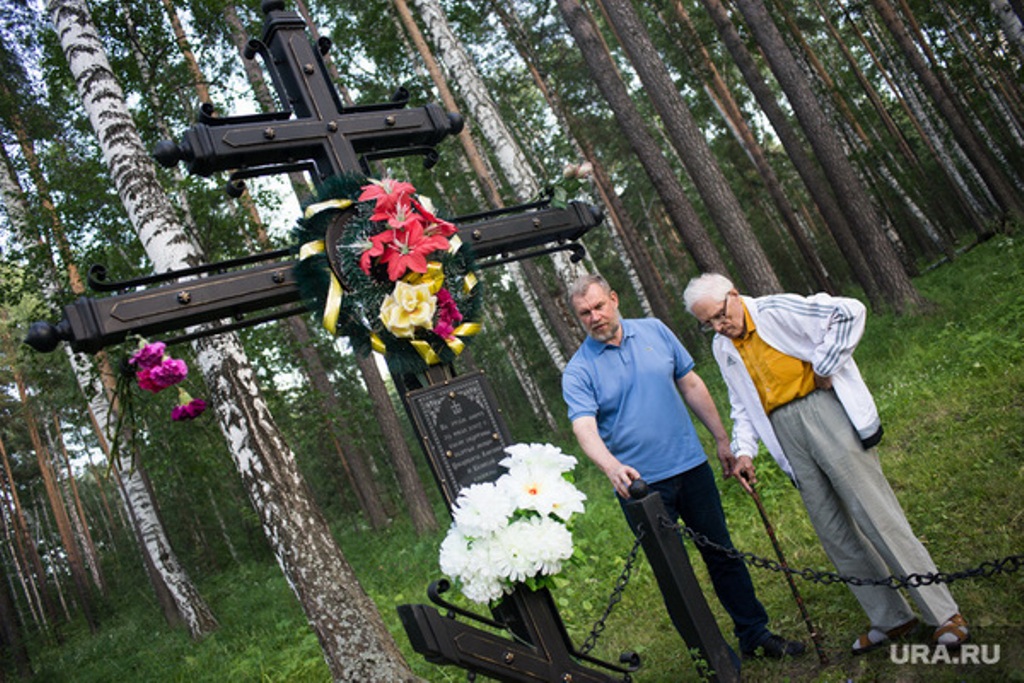
PHOTO: Alexander Avdonin (right) with Nikolai Borisovich Neuymin, director of the Romanov Memorial Hall in Ekaterinburg, standing at the burial site at Porosenkov Log

Emperor Nicholas II and his family were all shot in the Ipatiev House in Ekaterinburg on the night of 16/17 July 1918. The bodies were taken out of the city, where their murderers attempted to destroy the remains with fire and acid in the area of ​​old mines in the Ganina Yama tract. Their horrific mission failed, after which the remains were transported 3.8 km and buried near the Old Koptyaki Road [Porosenkov Log]. The grave remained a secret until 1979, when the remains were found by a team of enthusiasts led by the Ural geologist Alexander Avdonin, who worked under the patronage of Geliy Ryabov, at that time assistant to the head of the USSR Ministry of Internal Affairs.

It was not possible to extract and study the remains at that time. Avdonin’s team, together with archaeologists, did this in 1991, only to discover that two skeletons were missing. It was not until 2007, that the remains of Tsesarevich Alexei and Grand Duchess Maria, were discovered in a second grave just meters from the main burial site.

© Paul Gilbert. 7 July 2021

Orthodox Christians still divided on authenticity of Ekaterinburg Remains

During an interview held earlier this week on the Echo of Moscow, the First Vice-President of the Center for the Political Technologies Dr. Alexei Makarkin, talked about the Ekaterinburg Remains:

On 17th June 2021, the Holy Synod reviewed a report from Metropolitan Tikhon on the genetic examinations of the Ekaterinburg remains, and with the information provided by the Investigative Committee of Russia regarding various examinations as part of the investigation of the criminal case on the murder of members of the Imperial Family. It was decided to publish information on the results of the examinations and submit them for consideration by the Bishops’ Council of the Russian Orthodox Church (ROC), which will take place in the fall.

“Prior to this, the issue of the remains of the Imperial Family (the ROC officially refer to them as the “Ekaterinburg remains”) was discussed at the Bishops’ Council in 2016 and 2017 respectively. In 2017, it was expected that the remains of Tsesarevich Alexei and Grand Duchess Maria found in 2007 would take place on the centenary of the murder of the Imperial Family in 2018, however, this did not happen. Despite numerous exhaustive scientific tests carried out on the remains by experts, a significant number of Orthodox Christians in Russia still do not believe in the authenticity of the remains, nor do they want to recognize them as holy relics. It is psychologically impossible for them to imagine that both the Moscow Patriarchate and numerous pious believers were wrong, instead believing that the relics were destroyed with fire and acid in 1918, and that Boris Yeltsin and Boris Nemtsov, on whose initiative established the authenticity of the remains back in the 1990s, were right.

“The issue remains controversial to this day, but the position of the opponents of the recognition of the Ekaterinburg remains were weakened earlier this year following the scandalous story with the now former schema-abbot Sergius (Romanov), one of the main opponents of the recognition of the authenticity of the remains. There was concern that he, along with the priests and nuns loyal to him, would go into schism, protesting against the recognition of the Ekaterinburg remains, instead, Sergius was excommunicated by the Moscow Patriarchate. The problem of delimitation among believers still remains – but, as far as can be seen, the state authorities continue to show interest in the symbolic act of burying the last Tsar and members of his family. In order for this to take place, a decision by the Moscow Patriarchate is needed – so that the departed can be glorified as saints and their relics venerated by the faithful.

“So there will be internal church differences, and Patriarch Kirill and Metropolitan Tikhon will have to resolve them. Unfortunately, there is no ideal solution as there will most certainly be protests, regardless of the Church’s final verdict on the remains. But here’s what is interesting – a couple of decades ago, the topic of the authenticity of the remains was socially significant, it was actively discussed in circles far outside the Church. Sadly, most Russians have today lost interest, especially those who are not practicing believers. Interest in history (and, in particular, in the monarchy) has diminished, they are tired from all the arguments about the country’s past and, instead, desire to understand what the future holds for Russia and her people.”

© Paul Gilbert. 22 June 2021

Metropolitan Hilarion hopeful ROC will recognize authenticity of Ekaterinburg remains

PHOTO: Metropolitan Hilarion

The head of the Synodal Department for External Church Relations, Metropolitan Hilarion, expressed the hope that the question of the authenticity of the Ekaterinburg remains will be resolved in November by the Bishops’ Council of the Russian Orthodox Church (ROC).

He recalled that last Thursday the Holy Synod discussed the identification of the remains of Emperor Nicholas II and his family members during an interview on Church and Peace, a program on the Russia-24 TV channel .

According to him, the reports of the Metropolitan of Pskov Tikhon (Shevkunov) and the representative of the Investigative Committee of the Russian Federation were heard, which included results of the multitude of examinations – requested by the Investigative Committee – and carried out in different laboratories around the world. Members of the Holy Synod, were presented with a “very clear and unambiguous” picture, and now have a better understanding of the question on the authenticity of the Ekaterinburg remains, Metropolitan Hilarion said.

“We listened to this report with great attention for a very long time, and we passed the final decision on this issue to the discretion of the Council of Bishops, which will be held in November of this year. I think that the Council of Bishops will put an end to this epic, which has lasted almost a quarter of a century,” noted Metropolitan Hilarion.

When asked what the Council’s verdict would be, the Metropolitan clarified: “I hope that it will be a positive decision.”

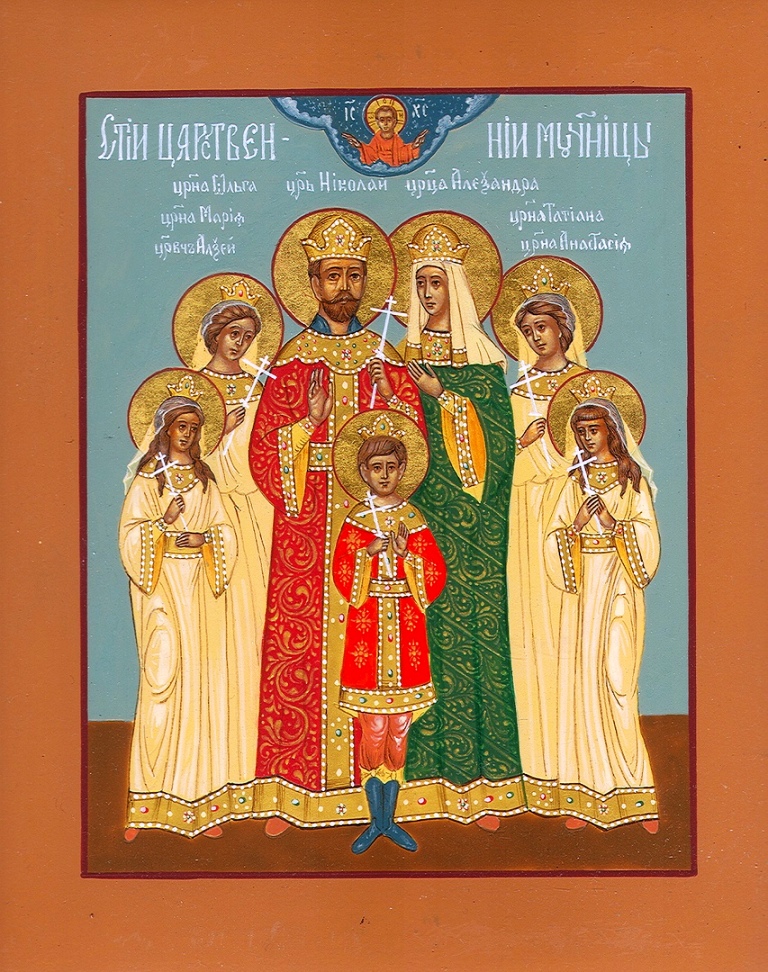
PHOTO: icon of the Holy Royal Martyrs at Ganina Yama, near Ekaterinburg

Recall that in July 1991, on the Old Koptyakovskaya Road near Ekaterinburg, a burial site was opened, which contained the remains of nine people. They, according to a subsequent investigation, belonged to members of the Russian Imperial Family – Emperor Nicholas II, his wife Empress Alexandra Feodorovna, three of their four daughters – Grand Duchesses Olga, Tatiana, Anastasia, as well as four faithful servants. Following the exhumation and examination of the remains, their remains were buried in St. Catherine’s Chapel, a side chapel in the SS Peter and Paul Cathedral in St. Petersburg on 17th July 1998.

On 29th July 2007, during an archaeological excavation near the first burial site, the remains of two more people were found. Numerous examinations identified the remains as those of Nicholas II’s other two children – Tsesarevich Alexei and his sister Grand Duchess Maria.

On the eve of centenary marking the regicide in Ekaterinburg, the official representative of the Investigative Committee of the Russian Federation, Svetlana Petrenko, stated that a second comprehensive study confirmed the authenticity of the remains of Emperor Nicholas II and his family, who were shot 100 years ago in Ekaterinburg.

Click HERE to read my article The Fate of the Ekaterinburg Remains, originally published in 2016, and updated on 18th June 2021.

© Paul Gilbert. 20 June 2021

The Fate of the Ekaterinburg Remains

222a

NOTE: This article was originally published on 17th March 2016, it was updated twice since, on 4th January 2017 and 7th March 2020. It has been expanded and further updated on 18th June 2021, based on new information from Russian media sources. Please note that the opinions expressed in this article are my own based on my own research and do not reflect those of the Russian Orthodox Church.

For the record, regarding my personal position on the Ekaterinburg remains, I have now and always believed the remains discovered near Ekaterinburg in 1991 and 2007 respectively, are those of Emperor Nicholas II, his wife, their five children, and four faithful retainers. Further, not only did I attend their interment on 17th July 1998 in St. Petersburg, I have visited both Ganina Yama and Porosenkov Log on several occasions, where I have offered prayers and left flowers. Memory Eternal! Вечная Память! – PG

Bones of Contention

On 17th July 1998, the remains of Emperor Nicholas II, Empress Alexandra Feodorovna, three of their five children: Grand Duchesses Olga, Tatiana, Anastasia, and their four faithful retainers Dr. Eugene Botkin, Ivan Kharitonov, Alexei Trupp and Anna Demidova were interred in the Saint Catherine Chapel of the SS Peter and Paul Cathedral in St. Petersburg.

Not only was I both privileged and honoured to attend this historic event, I was also hopeful that the burial would bring some closure to what is considered one of the greatest tragedies of 20th century Russian history. Sadly, this was not to be.

The questions raised about the murders of the Russian Imperial family in 1918, the discovery of their remains in the vicinity of Ekaterinburg in 1991 and later those of Tsesarevich Alexei Nikolaevich and Grand Duchess Maria Nikolaevna in  2007, as well as the recognition or non-recognition of their authenticity, have been unsettling both Russian and Western society ever since.

As a result, many people looked to the Russian Orthodox Church (ROC) for its verdict on the Ekaterinburg remains. But expressing an objective view required the Church to conduct a thorough examination of their own, of the historical records as well as the investigation materials and the results of scientific inquiries.

Over the course of the last few years, I have published nearly 100 news stories and articles on the subject, which included many first English translations from Russian media sources. Since that time, I have received numerous emails and telephone calls from readers frustrated by the ROC’s position on the Ekaterinburg remains. I cannot stress enough, that I do not represent the Russian Orthodox Church or His Holiness Patriarch Kirill. I do, however, hope that the contents of this article will help provide some answers.

222b

His Holiness Patriarch Kirill and Bishop Tikhon of Yegoryevsk

New Investigation

In September of 2015, I published an article on my Royal Russia News blog announcing that the investigation into the Ekaterinburg remains had been reopened by the Russian Orthodox Church. The investigation would include a new series of genetic studies, and a comprehensive review of the evidence accumulated since 1918 into the murders of the last Russian Imperial family. With the blessing of His Holiness Patriarch Kirill and at his request to the Investigative Committee a new team of experts was formed. A complex examination would be carried out for the first time – a historical, anthropological and genetic one – one in which the ROC would be involved in all aspects of the investigation.

It is important to note, that had the ROC been invited to participate in the original investigation and forensic tests carried out by Western experts in the early 1990s, that this new investigation might not have been necessary.

Many viewed the 1991 investigation as a propaganda tool by then president Boris Yeltsin (1931-2007), who was anxious to bring closure to the century-long mystery, thus gaining favour with Western nations.

More than 50 descendants of the Romanov dynasty arrived in Russia for the interment in the SS Peter and Paul Cathedral in St. Petersburg. The only descendants absent were Leonida Georgievna (1914-2010), her daughter Maria Vladimirovna (b. 1953) and her son George Mikhailovich (b. 1981), all of whom did not recognize the authenticity of the remains and declined to attend the reburial ceremony. 

In the face of skepticism, the late Patriarch Alexei II (1929-2008) was obliged to profess agnosticism over the identity of the bodies, as a way to avoid massive internal rifts within the church. 

Many Westerners believed that the ROC were obligated to accept the findings of the original Western led investigation, however, the Moscow Patriarchate were under no obligation to accept their findings, which they believe left a number of unanswered questions and concerns about the Ekaterinburg remains. The ROC wanted to confirm 100% that the remains were authentic, in order for them to be recognized as Holy Relics.

As Archpriest Oleg Mitrov points out in his essay The Investigation Into the Deaths of the Russian Royal Family and Persons of Their Entourage (first English translation published in Sovereign No. 2 Winter 2016, pg. 7-29), in the early 1990s, the Moscow Patriarchate had suggested “a temporary burial, then completing the investigation which, once it produced indisputable results, could stop all discord that this question created in society.” Their request fell on deaf ears, “the voice of our church wasn’t heard at the time,” added Mitrov.

More than 20 years of scientific testing, extensive theological debates, and the enormous public outcry for resolution on the issue failed to deter the Moscow Patriarchate’s decision to resolve the issue. In early January 2016, Bishop Tikhon of Yegoryevsk noted that the “examination of the Ekaterinburg remains may take several years.” This statement was later confirmed during the bishops’ council of the Russian Orthodox Church, when Patriarch Kirill of Moscow and All Russia announced at the opening ceremony that “the inquiry will last as long as is necessary in order to establish the truth”.

222c

Members of the new ROC investigation inspect the Ekaterinburg remains

Non Orthodox Christians must understand the position of the ROC on the matter of both relics and canonization. The Russian Legitimist web site correctly notes: “Any remains of the murdered Imperial Family are ipso facto religious relics, and therefore the internal procedures of the Russian Orthodox Church in completely satisfying itself of their genuineness must be followed. The Russian Orthodox Church wants to address any remaining doubts about the remains, given the fact that, once accepted by the Church as the remains of Emperor Nicholas II and his family, they will become relics venerated by the faithful.” 

It was hoped, that given the weight of evidence accumulated by experts in their respective fields since the early 1990s, that the Moscow Patriarchate would not dispute the remains recovered from the two burial sites in Ekaterinburg between 1979 and 2007 for much longer. A number of statements made in the Russian media offered some hope that they are moving in that direction:

“The re-examination of the criminal case is not an attempt to reconsider the evidence received earlier and established facts, but rather represents the necessity of additionally investigating the new facts, which was requested by the Russian Orthodox Church,” Russian Investigative Committee spokesman Vladimir Markin told the TASS News Agency (24 September, 2015).

Markin went on to say, “an interdepartmental working group for the study and burial of the remains of Tsesarevich Alexei and Grand Duchess Maria (discovered in 2007) gave its consent to conducting additional identification studies of the objects previously inaccessible for investigators.” To this end, the investigators exhumed the remains of Emperor Nicholas II and Empress Alexandra Feodorovna in the SS Peter and Paul Cathedral in St. Petersburg. Blood samples of Emperor Alexander II, Nicholas II’s grandfather who died in a terrorist act in 1881 and whose blood stains are found on his full-dress uniform, kept in the State Hermitage Museum, have also been taken. Additional DNA samples were extracted from Emperor Alexander III in November 2015, in a bid to conclusively answer questions about the fates of Nicholas II and his family.

Markin’s statements would suggest that the Moscow Patriarchate had already accepted the Ekaterinburg remains as authentic, although no official statement had been issued by the Church.

The Russian Orthodox Church also believed that it was necessary to continue the search for the remains of Nicholas II’s children. Only a small part of the remains of Tsesarevich Alexei and Grand Duchess Maria had been found [44 pieces of their bones had been discovered at the site], therefore, the search must be continued, said a spokesman for the Russian Orthodox Church. Some experts, however, believe that such a search would be in vain, and that given that any remaining bones would have been dug up and carried off by animals.

The investigation into the criminal case of the murder of the Imperial Family also included an examination of the remains found by Nikolai Sokolov in the 1920s and later transferred to St. Job’s Church in Brussels.

On 27th November 2017, the Sretensky Monastery and Seminary in Moscow hosted the conference “On the Murder of the Royal Family: New Evaluations and Materials. Discussion,” devoted to studying the results of the study of the Ekaterinburg remains.

In early 2018, the Russian media announced that Patriarch Kirill would be participating in the commemorative events marking the 100th anniversary of the Holy Royal Martyrs in Ekaterinburg in 2018. Many believed that Kirill’s attendance was significant, and fueled speculation that the Moscow Patriarchate was on the verge of officially recognizing the Ekaterinburg remains. Once again, this was not to be!

On the eve of the anniversary marking the regicide, the Investigation Committee announced that the remains were “authentic”. Despite the announcement, the ROC remained silent. The commemoration could have been a great and solemn moment of truth, a time to reflect on the passage from one era of Russia’s tragic history to another. Many (myself included) were hopeful that both the examination and investigation would conclude before the 2018 centenary.

Sadly, the 100th anniversary of the Romanovs’ deaths passed with little notice in Russia. The Russian government ignored the anniversary, as it surprisingly did the year before, when Russia marked the 100th anniversary of the 1917 October Revolution. None of the prominent state museums or venues hosted events to mark the anniversary. The few exhibitions and other events organized were tellingly modest.

The most significant event, took place on the night of 16/17 July 2018, when more than 100,000 people from across Russia, and around the world gathered at the Church on the Blood in Ekaterinburg for the Patriarchal Liturgy, followed by a Cross Procession to the Monastery of the Holy Royal Martyrs at Ganina Yama, a journey of 21 km. Porosenkov Log, where the Imperial Family’s remains were discovered was not included in the Cross Procession.

222d

The tomb of the Imperial Family in the St. Catherine Chapel of the SS Peter and Paul Cathedral

The Fate of the Ekaterinburg Remains

In the summer of 2000, the Moscow Patriarchate canonized Nicholas II, his wife, and five children as Royal Passion-Bearers. [Nicholas II, his wife, and five children were canonized as martyrs by the Russian Orthodox Church Outside Russia (ROCOR) in 1981] The ROC’s official recognition of the Ekaterinburg remains would result in an elaborate glorification ceremony headed by His Holiness Patriarch Kirill of Moscow and all Russia.

Many people continue to ask when the remains of Tsesarevich Alexei and his sister, Grand Duchess Maria will be interred with those of the rest of their family in the Saint Catherine Chapel of the Saints Peter and Paul Cathedral. The ROC’s recognition of the Ekaterinburg remains would make this highly unlikely for a number of reasons.

Both the Saint Catherine Chapel and the SS Peter and Paul Cathedral are currently museums under the administration of the State Museum of the History of St. Petersburg, in which visitors must pay an admission fee to gain entry to view the Romanov tombs as a tourist attraction. This is something that the ROC would vehemently oppose, and rightly so!

It seems highly likely that the remains of Emperor Nicholas II, Empress Alexandra, Grand Duchesses Olga, Tatiana, Maria, Anastasia, Tsesarevich Alexei, and their four faithful retainers would be reinterred in another church. It is quite possible that a new church would be constructed in their honour, one which would allow Orthodox Christians to enter freely to venerate the Holy relics. During the past few years, there has been some speculation in the Russian media that such a church would be constructed in Ekaterinburg – possibly Porosenkov Log, where their remains were originally discovered in 1991 and 2007 respectively.

It is interesting to add, that one unconfirmed report claims that the remains of the last Imperial Family are no longer entombed in the St. Catherine Chapel of the SS Peter and Paul Cathedral. According to the report when their remains were exhumed for further testing by the new ROC commission a few years back, they were never returned to the tomb. It is believed that the Ekaterinburg remains are now in the possession of the ROC, in the Novospassky Monastery in Moscow, where the remains of Tsesarevich Alexei and Grand Duchess Maria have been since 2015.

If there is any truth to this rumour, it only adds further speculation that the ROC have no plans to rebury the entire Imperial Family in the St. Catherine Chapel.

Should the ROC recognize the remains of the Imperial Family as Holy Relics, they cannot be returned to their tomb in St. Catherine’s Chapel, as relics cannot be returned to the earth. They must be placed in reliquaries above ground which allows the faithful to venerate them. This would be one very important reason why their remains would be interred in a new cathedral named in their honour.

It is important to add that by accepting the remains as authentic, the ROC will be forced to acknowledge that for more than 100 years, they were wrong. This in itself may be perceived by many as a great embarrassment and humiliation to the church.

222g

Ganina Yama

Will the Imperial Family be reinterred in Ekaterinburg?

A number of rumours have circulated in the Russian media over the past few years that once the ROC have officially recognized the remains, that all of the members of the Imperial Family will be interred in an existing or a new cathedral in or near Ekaterinburg.

For some, one option would be the Church on the Blood, built on the site of the former Ipatiev House, where the Imperial Family met their martyrdom. For others, another possible option would be a new cathedral constructed at Porosenkov Log, where the Imperial Family’s remains were discovered by two amateur archaeologists in 1978.

It is interesting to note that in March 2016, the Ministry of Culture of the Sverdlovsk Region reported that if the ROC requests the transfer of the territory in and around Porosyonkov Log (added to the cultural heritage list in 2014), would be designated as sacred land and transferred to the ROC, where a memorial and monastery, similar to that at Ganina Yama would be constructed. This in itself suggests that perhaps the ROC has already come to a decision on the authenticity of the remains, and were making preparations.

There is also the possibility that the reconstruction of St. Catherine’s Cathedral (timed to coincide with the 300th anniversary of the founding of Ekaterinburg in 2023) is being considered?

While some may scoff at the idea of interring the remains of the Imperial Family in Ekaterinburg, it seems only logical that their remains should be interred in the place in which they met their death and martyrdom on 17th July 1918 or the final resting place where their remains were recovered.

Once a bastion of Bolshevism, Ekaterinburg has slowly shed its status as the “capital of atheism”. Since the fall of the Soviet Union in 1991, the Urals have experienced a revival of faith, with Ekaterinburg at the the center of Orthodox Russia in the Urals. It should also be noted, that Ekaterinburg has done more to honour Nicholas II and his family than any other city in Russia.

222j

Aerial view of Ekaterinburg

“Ekaterinburg was the last capital of the Russian Empire”

The Ural city of Ekaterinburg occupies an important place in the modern spiritual life of Russia. This conclusion was reached by Russian historian Peter Multatuli following the results of the International Festival of Orthodox Culture Tsar’s Days 2019. The historian is recognized as one of Russia’s leading authorities on the life and reign of Nicholas II, having published numerous books, articles, and a popular public speaker.

“On a spiritual level, Ekaterinburg is the last capital of the Russian Empire, because the residence of the Sovereign was always considered the capital in Russia. Peter the Great never officially transferred the capital from Moscow to St. Petersburg, but since he lived there, it was the capital,” said Multatuli.

He noted that in 1918, for 78 days, Emperor Nicholas II and his family lived in Ekaterinburg, and that is why the Ural capital can be considered the last capital of the Russian Empire. [It is important to note that many historians – myself included – firmly believe that the Tsar’s signing of the instrument of abdication, his status as Tsar remained inviolate and unassailable – PG]

“Petrograd and Moscow to one degree or another welcomed his overthrow, and they bear a greater responsibility in this than any other Russian city. No matter what anyone says, it was Ekaterinburg that served as the last Imperial residence, which, according to God’s special plan, became the Royal Golgotha,” added Multatuli.

According to him, in the near future, Ekaterinburg will play a great role in the history of Russia, because “the city named after St. Catherine and becoming the Royal Golgotha ​​will be the city of Russian resurrection.”

222f

Святы Царственные мученики, молите Бога о нас! / Holy Royal Martyrs, pray to God for us!

The world awaits closure by the ROC

On 17th June 2021, the Holy Synod of the Russian Orthodox Church met at Danilov Monastery in Moscow under the chairmanship of His Holiness Patriarch Kirill. Among the many decisions made by the Synod, it was resolved to refer the results of the extensive examinations carried out on the remains in recent years to the upcoming Bishops’ Council of the Russian Orthodox Church, which will meet in Moscow in November of this year.

The Synod examined the report from His Eminence Metropolitan Tikhon of Pskov and Porkhov on the genetic examinations of the remains, as well as the information provided by the Investigative Committee of Russia on the various examinations (molecular-genetic, physical-chemical, trace evidence, ballistic, handwriting, historical-archival, soil science, forensic, anthropological studies, and more) appointed as part of the investigation of the criminal case of the murder of the Royal Family.

The experts have announced on more than one occasion that their examinations definitively prove that the remains belong to the Royal Martyrs. In an interview last July, senior investigator Marina Molodtsova repeated that the examinations have verified the authenticity of the remains, though investigations were continuing in order to “eliminate the slightest doubt.”

In accordance with the instructions of the Bishops’ Councils of 2016 and 2017, the Synod decided to publish information on the results of the examinations after their completion and to submit the results of the examinations for consideration by the next Bishops’ Council.

For more information about the this highly contentious issue, please refer to my book Bones of Contention: The Russian Orthodox Church and the Ekaterinburg Remains, published in 2020

© Paul Gilbert. 18 June 2021