‘The Tragic Omen’ exhibition opens in St. Petersburg
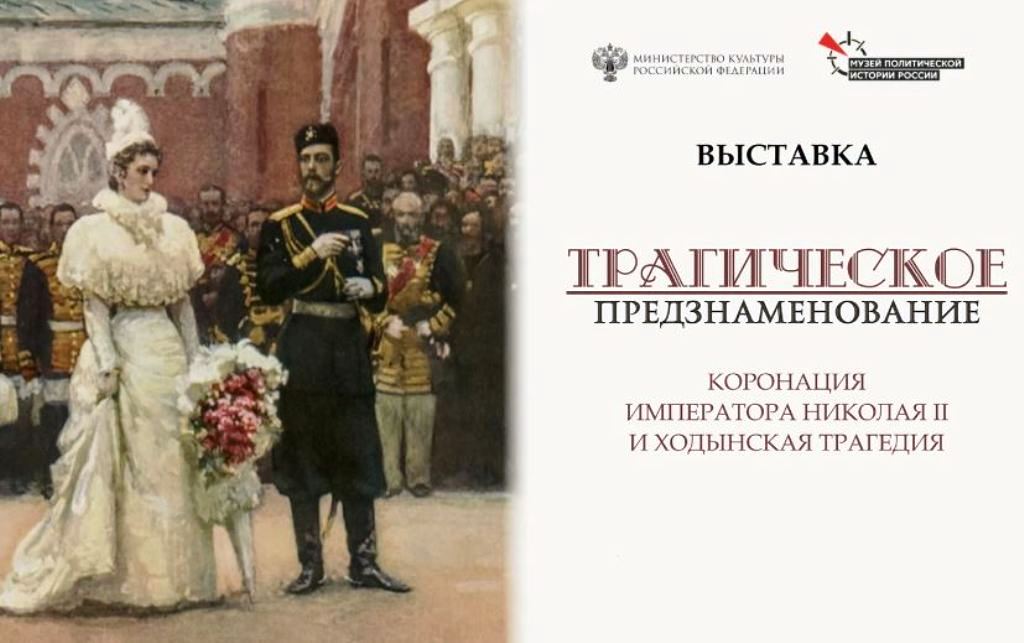
On 1st May 2026, the exhibition “Tragic Omen“ opened at the Museum of Political History in St. Petersburg. The exhibition is timed to the 130th anniversary of the Holy Coronation of Emperor Nicholas II on 27 May (O.S. 14 May) 1896 and the tragic events on the Khodynka Field on 31st (O.S. 18th) May 1896.
The art nouveau mansion which today houses the museum itself was originally built for Mathilde Kshesinskaya (1872-1971), the famous prima ballerina at the Mariinskiy before the Revolution, and Nicholas II’s mistress before he became Emperor. Designed by Alexander von Gogen and completed in 1906, the residence combines an enfilade of reception rooms with a winter garden and rotunda.
In 1917, the building was seized by the Bolsheviks and turned into their headquarters in the city. It became the centre of their revolutionary activities, and Lenin made a historic speech from one of the balconies after his arrival in the city. It was later passed through a number of organizations, before eventually becoming the Museum of the Revolution in 1957. At the beginning of the 1990’s, the museum was renamed the Museum of Political History
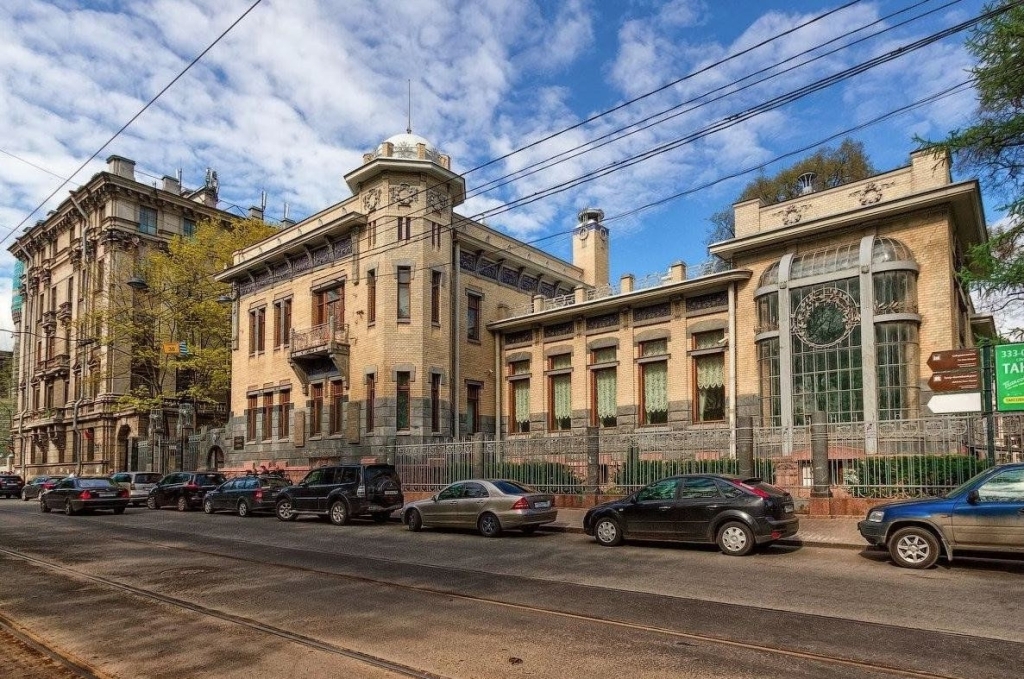
PHOTO: view of the Museum of Political History, which is housed in the former mansion of the Russian prima ballerina Mathilde Kshesinskaya in St. Petersburg
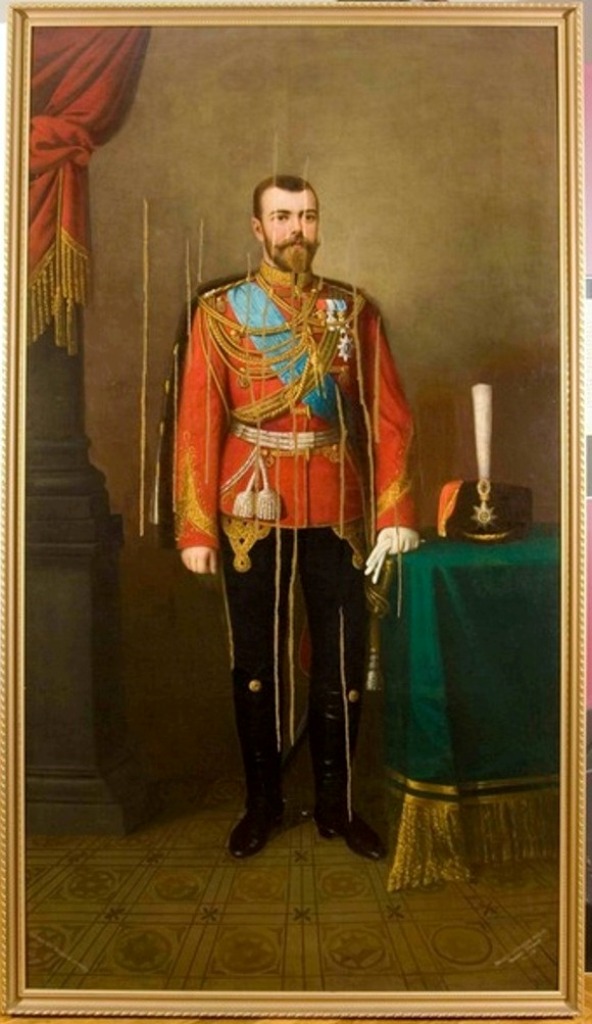
The exhibition features a little-known portrait of Emperor Nicholas II, painted in 1896 for the coronation celebrations by one of the nuns of the Novo-Tikhvin Convent in Ekaterinburg and hung in one of the rooms of the Winter Palace until October 1917. When revolutionary Red Guards and sailors stormed the imperial residence, they attacked the portrait with bayonets.
The exhibition presents a collection of very interesting items from the Holy Coronation of Emperor Nicholas II. Amon them are menus of the gala lunches and dinners served to the newly crowned Tsar and his guests on the days of the coronation. Each is colorfully decorated by eminent artists Viktor Vasnetsov (1848-1926), Alexander Benois (1870-1960) and Ernst Liphart (1847-1932).
In addition are uniforms, coronation mugs, a scarf, photographs, invitations to the ceremony, foreign magazines and la copy of the two-volume Coronation Album – published in 1899.
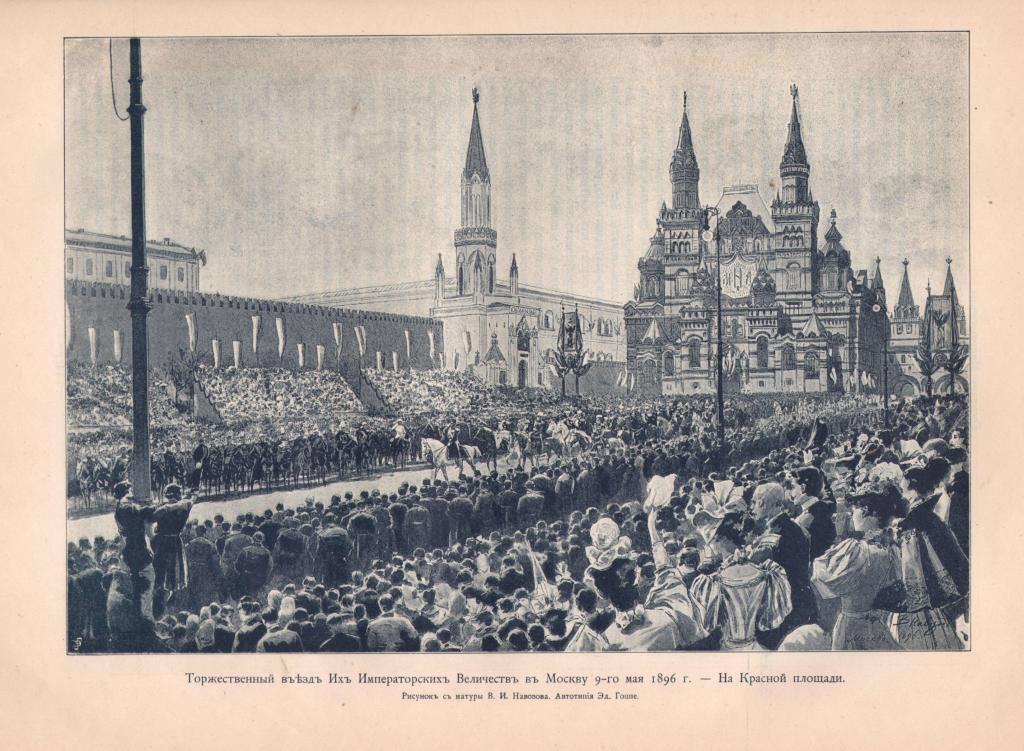
PHOTO: late 19th century lithograph depicts Emperor Nicholas II’s official entry to Moscow, on 9th May 1896. The event marked the beginning of his Holy Coronation – the ceremonies and festivities lasted three weeks
Books published underground (illegally) and abroad, satirical postcards brought from Europe to Russia show the origin and cultivation of the myth of “Bloody Nicholas”.
Visitors can also acquaint themselves with the testimonies of eyewitnesses of the Khodynka tragedy and hear the assessments of people of different social backgrounds and political beliefs. The “voices” of eyewitnesses reflect the polyphony of opinions: who is to blame for the tragedy – the police and the Moscow authorities, who failed to ensure the security of the event, or the excitement of the uncontrollable crowd, greedy for Tsarist gifts?
The project will tell how after the Khodynka tragedy, the liberal and revolutionary intelligentsia began to systematically undermine the authority of Nicholas II and the entire Russian monarchy. This happened despite the fact that the Emperor personally took responsibility for what happened.
This section of the exhibition is complemented by “At the Vagankovo Cemetery. Funeral of the Victims of Khodynka” by the Russian artist Viktor Makovsky (1846-1920) and sketches for “Khodynka”, conveying the emotional perception of the tragedy – depicted in detail the tragic events that he witnessed.
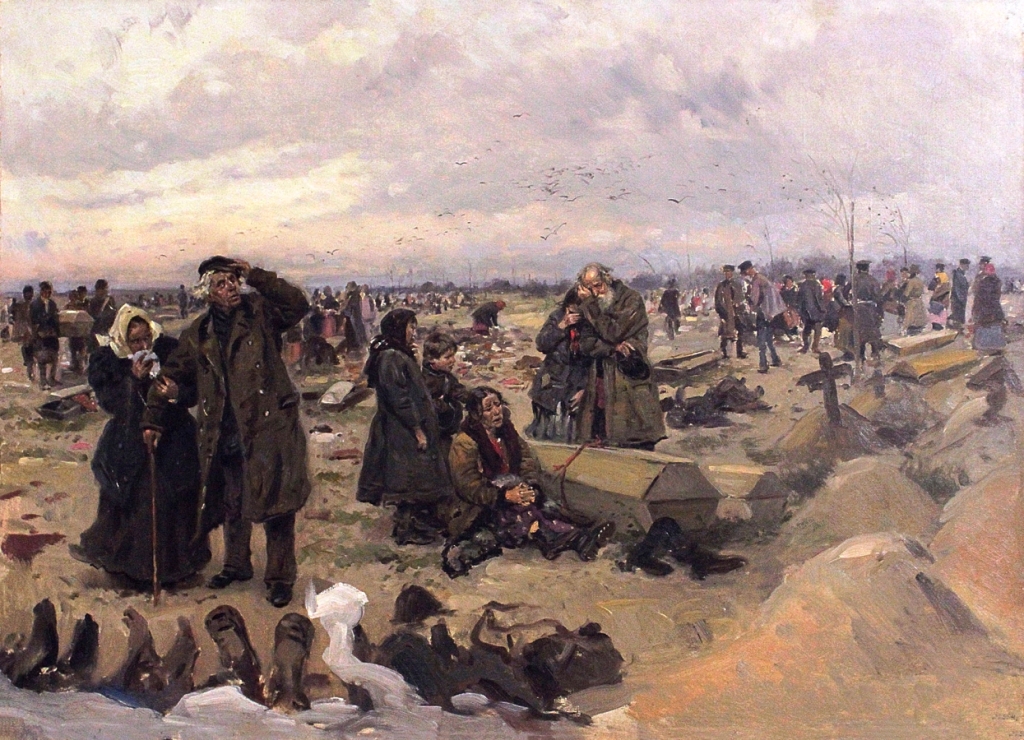
PHOTO: At the Vagankovo Cemetery. Funeral of the Victims of Khodynka (1901) by Vladimir Makovsky. From the Collection of the Museum of Political History, St. Petersburg
In May 1896, Makovsky was invited by the government to illustrate the coronation exhibition, but unexpectedly encountered the gloomy side of the festivitiies. Going to Moscow from St. Petersburg, he intended to record the festive atmosphere, folk festivities and fireworks that accompanied the coronation celebrations.
A huge crowd of people came for the promised gifts, and the situation quickly got out of control. Crowds amounting to tens of thousands of confused people pushed, fell and screamed, turning the grandiose spectacle into a nightmarish scene of suffering, pain and death.
Returning to St. Petersburg, Makovsky spent the next five years creating a painting depicting the events of the Khodynka Field. The work showed the reality of the incident, in which 1,389 people were trampled to death, and an additional 1300 injured. The painting turned out to be so emotionally rich and realistic that the artist was forced to hide it from the public at the request of official bodies – the censors.
Vladimir Makovsky’s painting “At the Vagankovo Cemetery. Funeral of the Victims of Khodynka” as an exampled of unspeakable tragedy and the wrath of censorship.
When the painting was finally exhibited in 1901 at the Peredvizhniki Exhibition, it caused an instant reaction from the authorities. The canvas was immediately seized by order of the censorship department, and the Moscow governor Grand Duke Sergei A;exandrovich (1857-1905) sent a laconic review to the artist: “The painting is not yet timed, it is salt sprinkled on a fresh wound.” It was not possible to show the painting to the Russian audience, but the audience in London saw the canvas in 1910, and out of reach pf the Russian censors. Makovsky himself did not seek active agitation or participation in the revolutionary movement of the time. He memrey attempted to honestly depict what he saw, but it turned out that honesty and objectivity in art can be much more dangerous than any propaganda slogan.
In total, the exhibition presents more than 100 exhibits from the Collection of the Museum of Political History in St. Petersburg. This collection will be presented for the first time, offereing visitors a modern historical interpretation.
© Paul Gilbert. 1 May 2026


You must be logged in to post a comment.