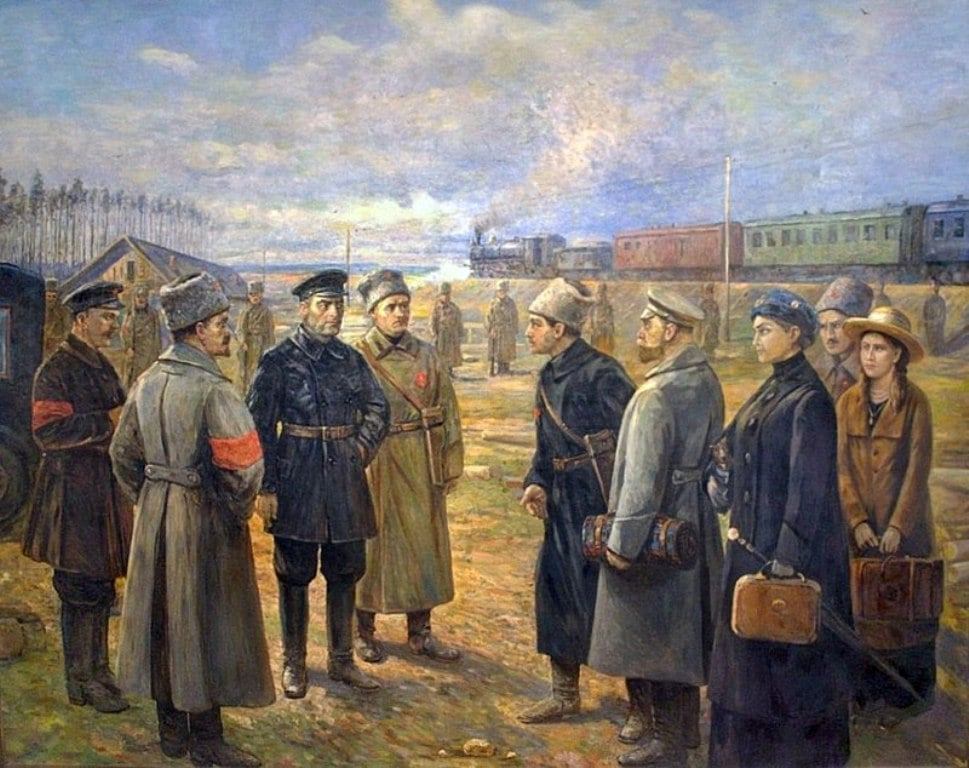
PHOTO: “Transfer of the Romanov family to the Ural Soviet” (1927)
Artist: Vladimir Nikolayevich Pchelin (1869-1941)
On this day – 30th April (O.S. 17th April) 1918, Emperor Nicholas II, Empress Alexandra Feodorovna and Grand Duchess Maria were handed over to the Ural Soviet in Ekaterinburg. It was at this point, that their fate was sealed.
Recall that on 26th (O.S. 13th) April 1918, Emperor Nicholas II, Empress Alexandra Feodorovna, their daughter Grand Duchess Maria Nikolaevna were brought from Tobolsk to Ekaterinburg. They arrived in Ekaterinburg on 30th April 1918, whereupon they were handed over the Ural Soviet.
They were accompanied by five faithful retainers: Dr. Eugene Botkin Botkin, Prince Vasily Dolgorukov, maid Anna Demidova, valet Terenty Chemodurov, sailor Ivan Sednev, all of whom voluntarily accompanied the Imperial Family. The only one who survived the regicide was Chemodurov.
Nicholas II wrote the following in his diary:
“At 8.40 we arrived in Ekaterinburg. We stood for three hours in one station. There was a heated dispute between the local commissars and our own. In the end, the first prevailed and the train was moved to another goods terminal. After standing there for an hour and a half, we got off the train. Yakovlev handed us over to the local regional commissar, with whom we drove by motor through empty streets to the accommodation which has been prepared for us—the Ipatiev house. Slowly our people and our things began to arrive, but they would not let Valia through.
“The home is pleasant and clean. We have been given four large rooms. We were not able to unpack our things for a long time, as the commissar, the commandant and the guards captain had not had time to inspect our trunks. Then the inspection was like a customs search, just as strict, right down to the last capsule in Alix’s travelling medicine kit. This annoyed me so much that I expressed my opinion sharply to the commissar. By 9 o’clock we had at last settled in.
“This is how we installed ourselves: Alix, Maria and I together in the bedroom, sharing the dressing room, Demidova in the dining room, Botkin, Chemodurov and Sednev in the hall. The duty officer’s room is by the entrance. In order to go to the bathroom of W.C., it was necessary to go past the sentry at the door of the duty office. There is a very high wooden pallisade built all around the house, about two sajens from the windows, all along there was a line of sentries, in the little garden also.”
Grand Duchesses Olga, Tatiana, Anastasia and Tsesarevich Alexei joined their parents the following month. They were accompanied by more retainers, including valet Aloysius Trupp, the cook Ivan Kharitonov, Ivan Sednev’s nephew Leonid Sednev and Klimenty Nagorny, among others.
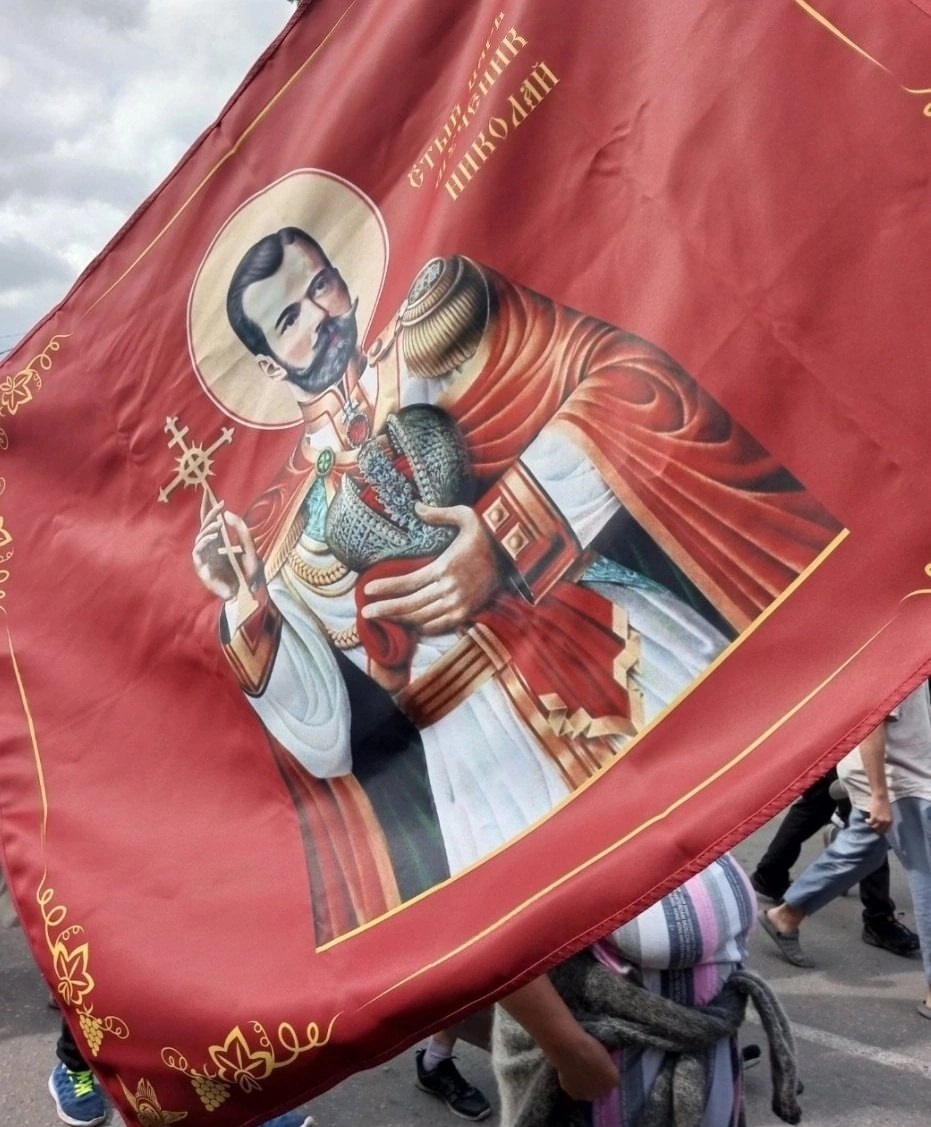
To mark this solemn anniversary, the Ekaterinburg Diocese prayerfully celebrates the memory of the Holy Royal Passion-Bearers. Orthodox Christians will fill churches today, offering prayers to the Tsar and his family Many Ekaterinburg residents will also honour the memory of the Holy Royal Passion-Bearers, by taking part in a Cross Procession along the so-called “Path of Sorrow”, which passes through the places associated with the final days of Russia’s last Tsar and his family in the Ural capital.
The Path of Sorrows begin with the place where Emperor Nicholas II, Empress Alexandra Feodorovna, Grand Duchess Maria Nikolaevna and their five faithful retainers disembarked from the train on 30th April 1918. Here, near the Shartash-Yekaterinburg-II Railway Station, a Memorial Cross and a foundation stone were installed. There are plans to build a church in honour of the Valaam Icon of the Mother of God on this site – one of the three miraculous icons that appeared during the reign of Nicholas II.
Then the Path of Sorrow follows Vostochnaya Street, where the Church of the Icon of the Mother of God “Port Arthur” was built at the intersection with Shevchenko Street. In 2008, during the Cross Procession, a memorial stone was laid at this place, and in 2017, the construction of the church was completed. Here, according to historical records, on 23rd May (new style), 1918, Tsesarevich Alexei Nikolaevich, abd the Grand Duchesses Olga, Tatiana and Anastasia Nikolaevna arrived by train. They too, were subsequently placed under arrest, and then taken to the Ipatiev House.
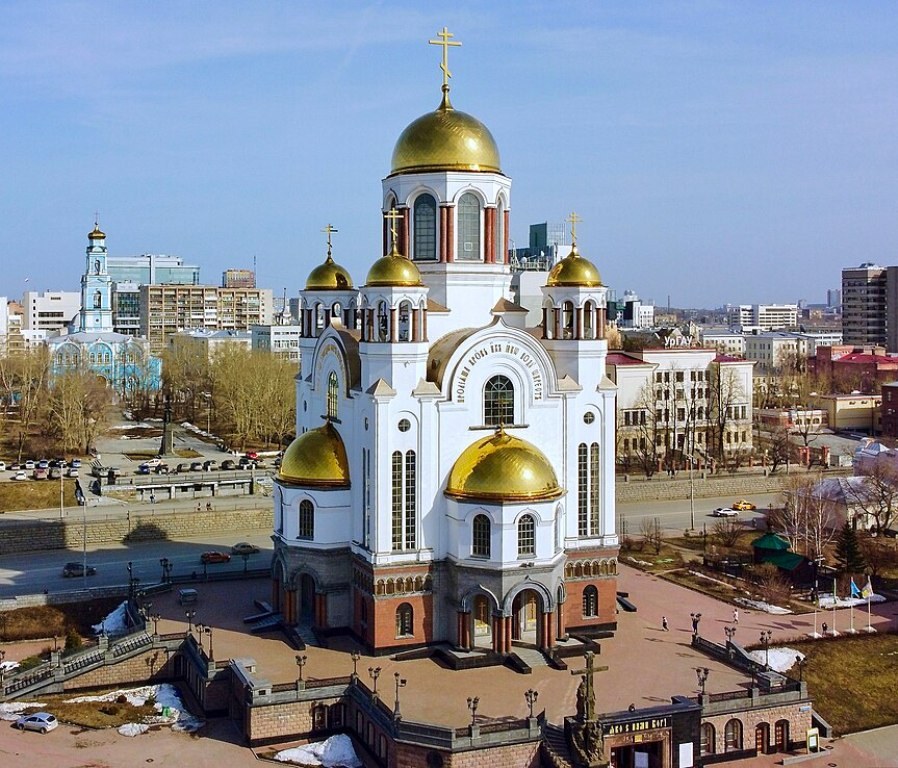
PHOTO: the Church on Blood in Honour of All Saints Resplendent in the Russian Land
Not far from the railway station, in Nevyansky Lane, there is an Orthodox church in honour of the Reigning Icon of the Mother of God. It was consecrated in 2011 by Metropolitan Kirill of Yekaterinburg and Verkhoturye. In 1918, the Yekaterinburg-I Railway Station was located here, where on 30th April (new style), 1918, the train carrying Nicholas II, his family members and their five retainers stood for several hours, before proceeding to the the Shartash-Yekaterinburg-II Railway Station, where they disembarked.
The last point of the Path of Sorrow is the Church on Blood in Honour of All Saints Resplendent in the Russian Land on Tsarskaya Street. It was here on this site, that Emperor Nicholas II, his family and four faithful retainers met their death and martyrdom. The church was erected on the site of the Ipatiev House, where the regicide took place on the night of 16/17 July 1918.
In the Lower Church sanctified in honour of the Holy Royal Passion-Bearers, there is the “Imperial Room” – a side-chapel of which the altar allegedly rests on the site of the murder room in the basement of the Ipatiev House. The decoration of the room received the blessing of the Metropolitan of Ekaterinburg and Verkhoturye Kirill. It was timed to coincide with the events marking the 100th anniversary of the death and martyrdom in July 2018, in which more than 100,000 attended.
© Paul Gilbert. 30 April 2026
***
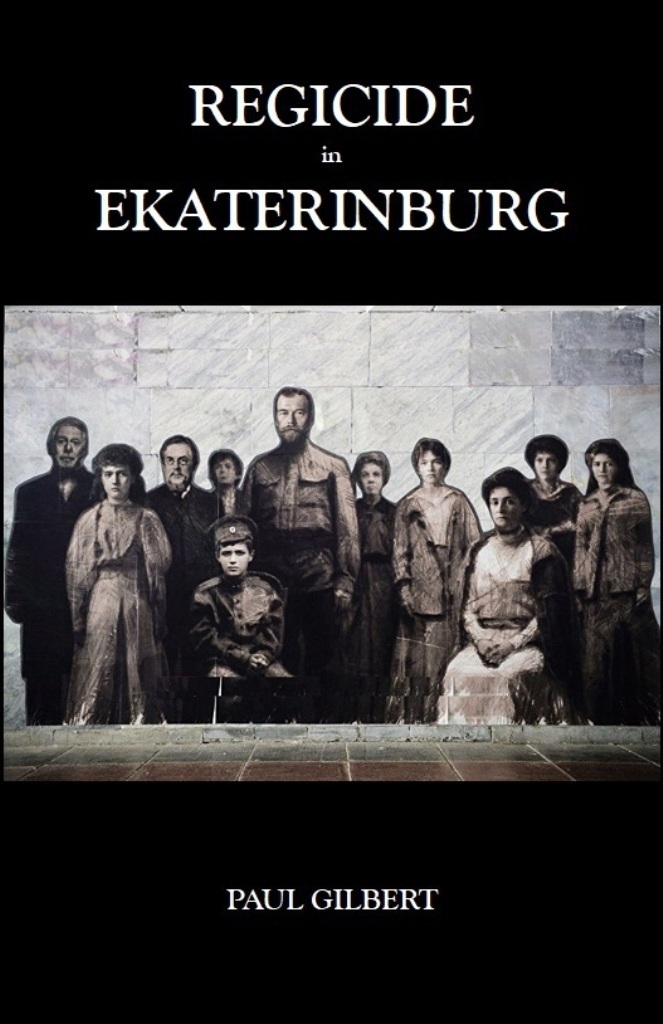
The following NEW title was compiled and edited by independent researchers and Romanov historian Paul Gilbert was published in August 2024.
This fascinating new study features 14 chapters on this tragic event, which include the memoirs of a British intelligence officer and journalist, and two First-English translations. In addition, 11 chapters were written by Paul Gilbert, based on new documents sourced from Russian archival and media sources over the past decade.
Please refer to the link provided for further details about the content of this new title . . .


You must be logged in to post a comment.