Sir Thomas Preston recalls Ekaterinburg, 1918

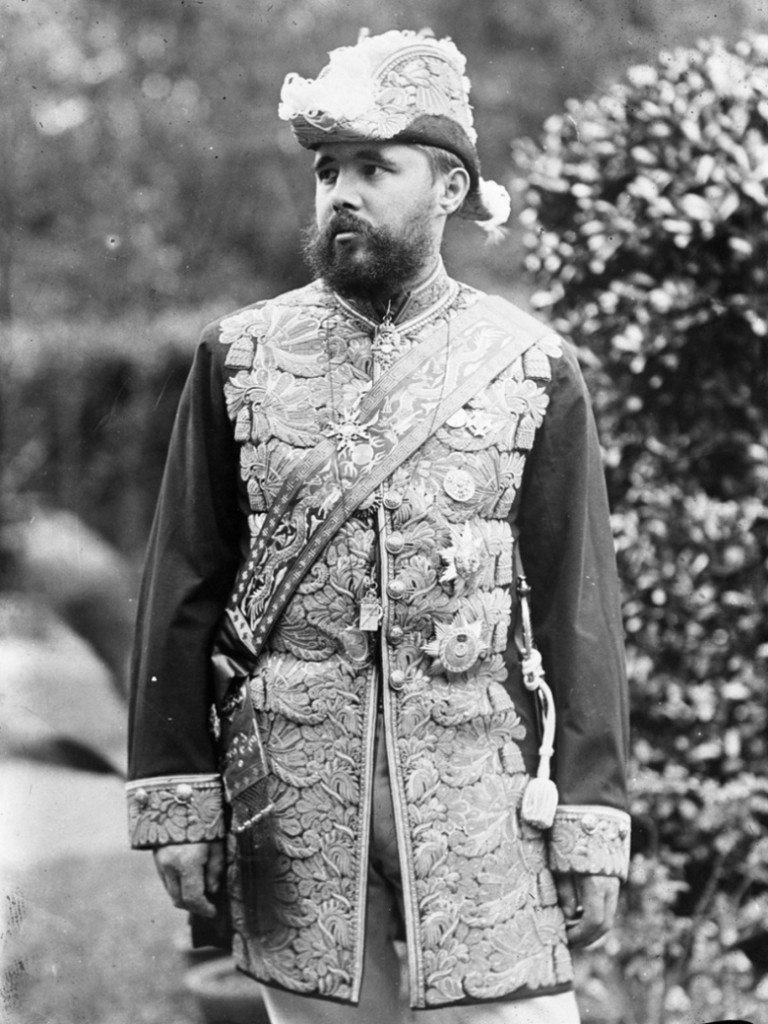
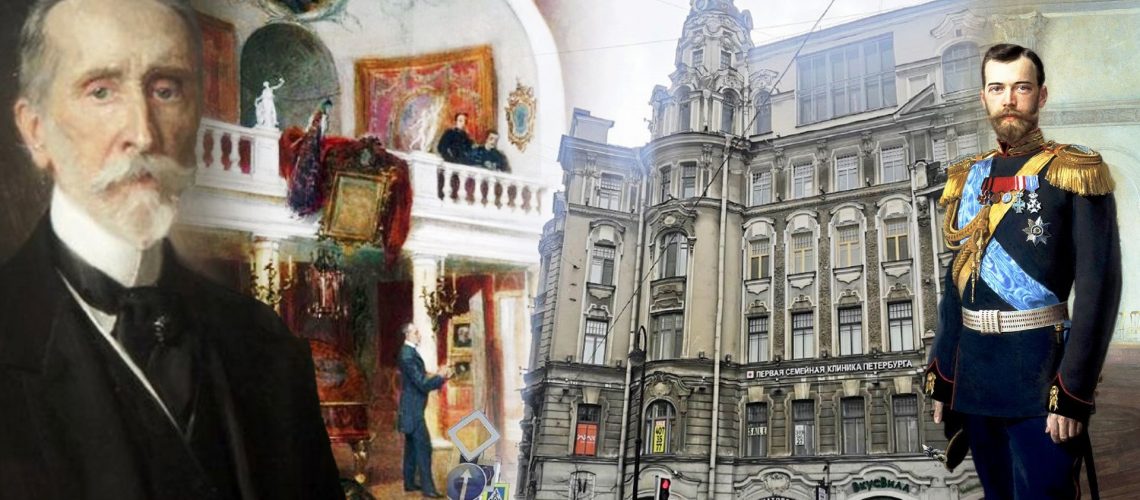
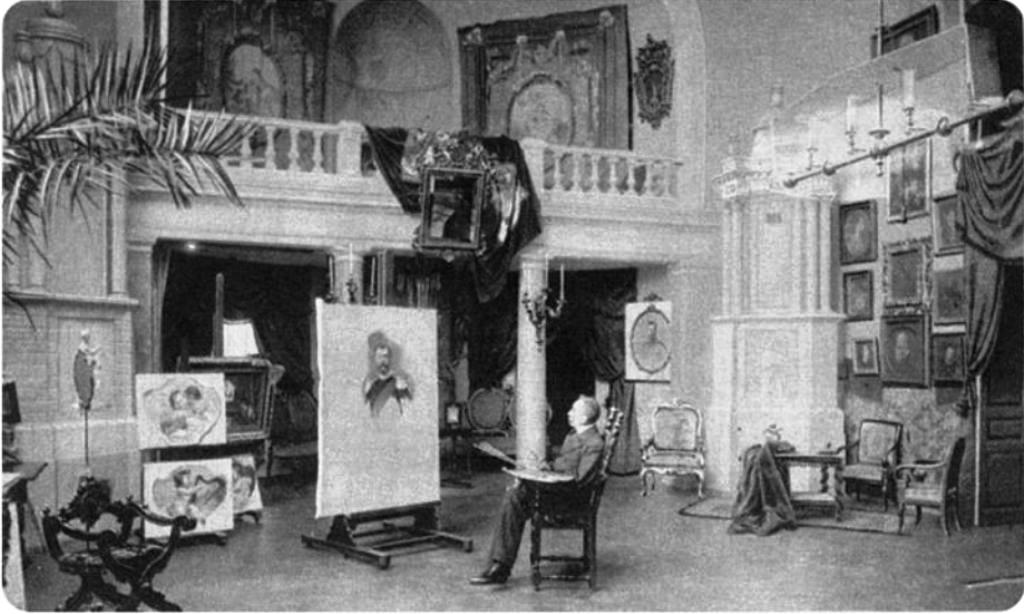
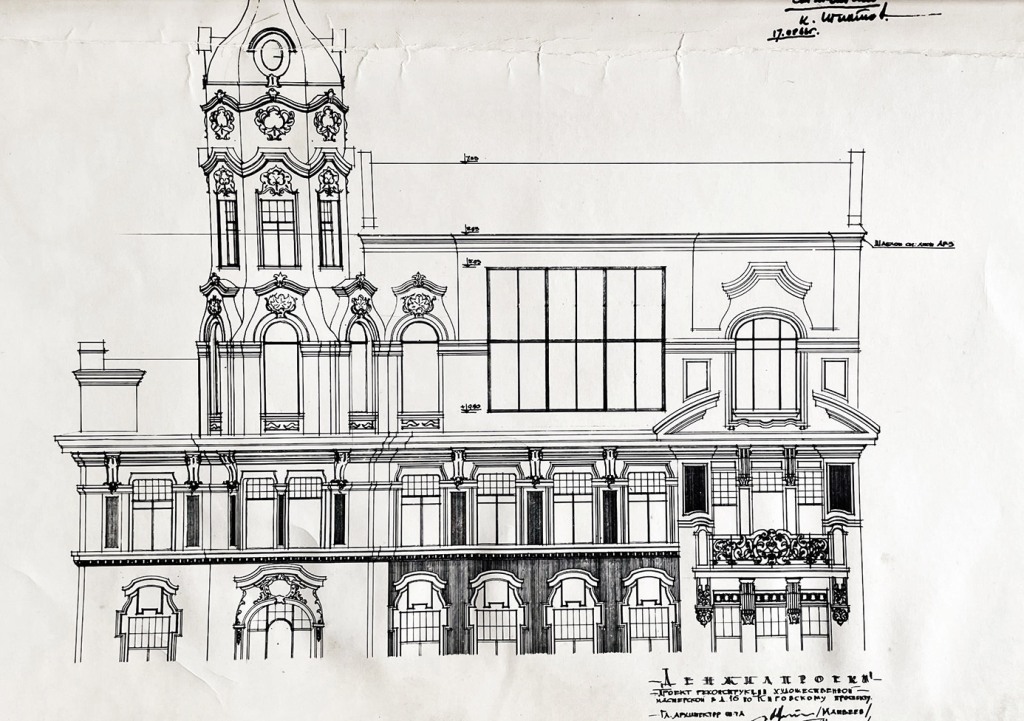
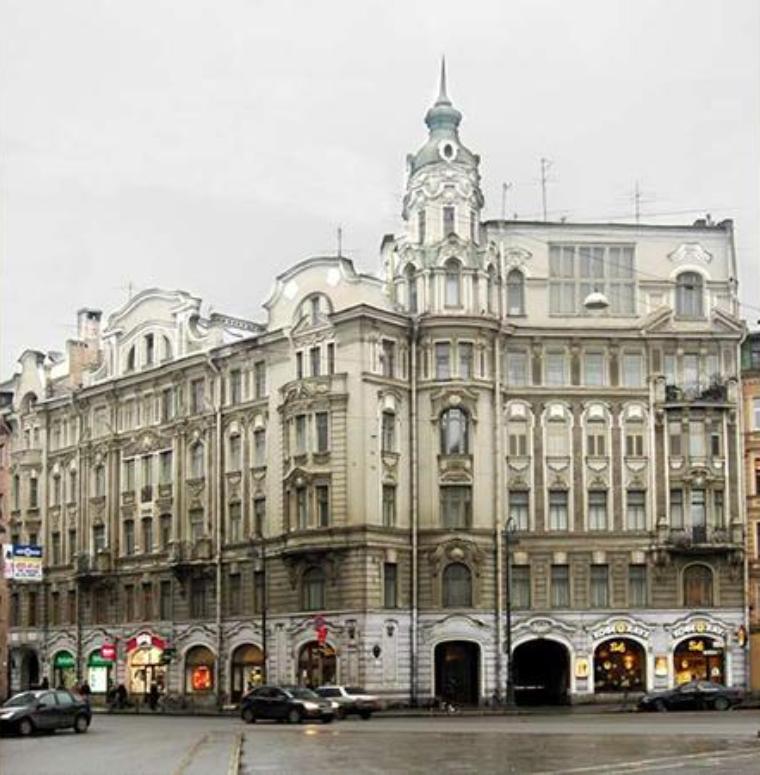
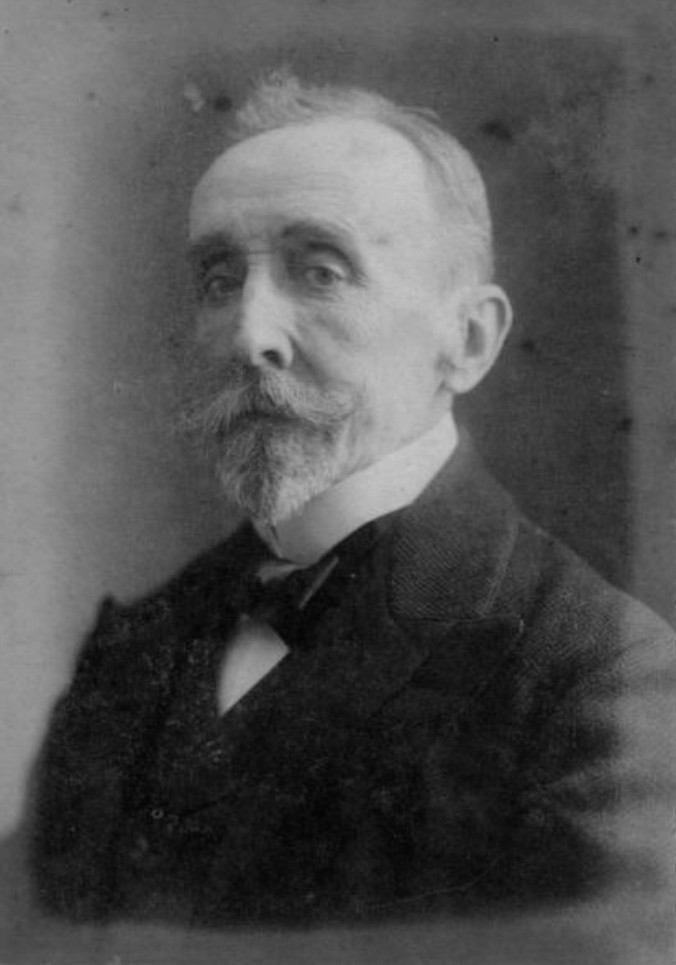
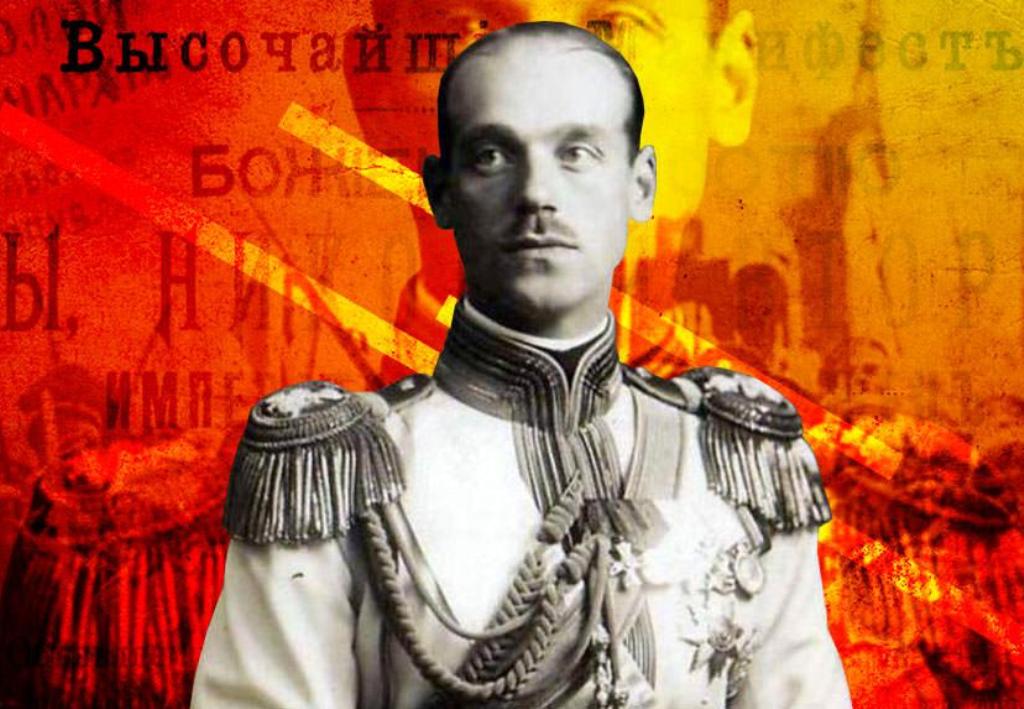
PHOTO: Sir Thomas Hildebrand Preston (1886-1976); the Ipatiev House;
Emperor Nicholas II, his family and four faithful retainers

Sir Thomas Hildebrand Preston, 6th Baronet (1886-1976), was a British diplomat who joined the United Kingdom Diplomatic Service around 1910. In 1916 he served as Consul in Perm. On 23rd May 1913, he was appointed British Vice-Consul in Ekaterinburg, and later British Consul in the Ural city.

Preston’s position in Ekaterinburg during 1917 and 1918 was extremely difficult. Operating during the final stages of World War I and the ensuing Russian Civil War, Preston faced immense difficulties. The local Bolshevik authorities in Ekaterinburg refused to recognize his diplomatic status, and his life was frequently threatened.

He was in Ekaterinburg in July 1918 at the time of the murder of Emperor Nicholas II and his family. He made efforts to make representations to the government regarding their situation, but his ability to act was severely limited by the chaos and the Bolsheviks’ hostility.  Preston was haunted later by the idea that he might have been able to save the Imperial Family.

At a telegraph office on 18th July, he attempted to send a message to the British Foreign Secretary Arthur Balfour in London, which read: “The Tsar Nicholas the Second was shot last night”. The telegram was intercepted by Bolshevik military commissar Philip Goloshchekin, who struck out Preston’s text, rewriting: “The hangman Tsar Nicholas was shot last night – a fate he richly deserved.”

***

Below is a letter written by Preston and published in the weekly British political and cultural news magazine The Spectator, on 11th Marc h 1972. It is a poignant account of his experiences during the Bolshevik coup d’état. He attended a soiree at Ekaterinburg just before the coup, where he witnessed the last bourgeois evening party in Russia. Preston was later awakened by his servant to the fact that the Bolsheviks had seized the town the following morning. He was accompanied by several Consular colleagues to make contact with the new government and learn what was happening. Preston’s recollection is a testament to his bravery and dedication to his role as a diplomat during a tumultuous period in Russian history.

Sir: I have read with great interest the report published in The Spectator on February 5, 1972, by Tibor Szamuely (page 193) dealing with the television programme The File on the Tsar, which was transmitted on BBC-1 on Sunday, January 23, 1972.

With reference to Mr Szamuely’s remarks about the role I played in this tragedy, I kept a diary of the development of events which was embodied in my book entitled Before the Curtain, published by John Murray, London.

In July, 1917, just before the Bolshevik coup d’etat, I attended a soiree, given at Ekaterinburg, by the representative a of the Provisional Government. It was a gathering not easily forgotten. It was, in fact, the last occasion in Russia that I was to see Russian officers in Tsarist uniform, officials in their civilian uniforms and all civilians in evening dress. Whilst the Governor’s guests were revelling in dancing, card playing, music and champagne, the railway workers at Ekaterinburg were preparing the coup d’6tat which was to take place the following morning. Pessimism, however, was the predominant feature of this last bourgeois evening party. Many of my Russian friends were strong in their condemnation of the behaviour of the Government officials at Petrograd, amongst whom bribery and corruption were rife, which was, to a large degree, responsible for the defeat of the armies in the field.

The following morning I was awakened by my servant who told me that the Bolsheviks had seized the town (Ekaterinburg) during the night and were actually holding a meeting at the railway station. After a scanty breakfast I proceeded, accompanied by several of my Consular colleagues, to the station in order to make contact with what was presumably to be our future Government as well as to learn what was happening. On arrival at the station we found a local Soviet in session in the stationmaster’s room. This was my first acquaintance with the Bolsheviks and a more awe-inspiring and cut-throat crowd it would be hard to imagine . . . The Soviet consisted mostly of youths of between nineteen and twenty-five, attired in leather jackets (the usual dress of the GPU). All were armed to the teeth. Hand-grenades were on the writing-table; in the corner of the room was a bundle of rifles to which people kept on coming in and helping themselves.

I informed the Soviet that we had come to present ourselves and requested information as to what had occurred. Comrade Tchoutskaeff, the leader of the Soviet, with whom I was to have frequent interviews during the eleven months I was under their regime, replied that the Bolshevik party was in power. On learning that I was the British Consul he added: your comrade Ambassador (Buchanan) has left Russia and you have no official status or protection. In fact we don’t know whether to treat with you or to shoot you. At any rate if you and your compatriots don’t behave yourselves you will find yourselves in gaol if not worse.”

In view of the rapid advance of the Czechs and the White Army, the Ural Soviet asked Yakov Sverdlov (Secretary of the Moscow Soviet) what they should do. The reply came “Act as you consider necessary “; whereupon the Ural Soviet passed a resolution to do away with the Tsar and his family.

PHOTO: The British consulate (the building on the right) in Ekaterinburg in 1918 was located on Voznesensky Prospekt. © From the Private Postcard Collection of Paul Gilbert

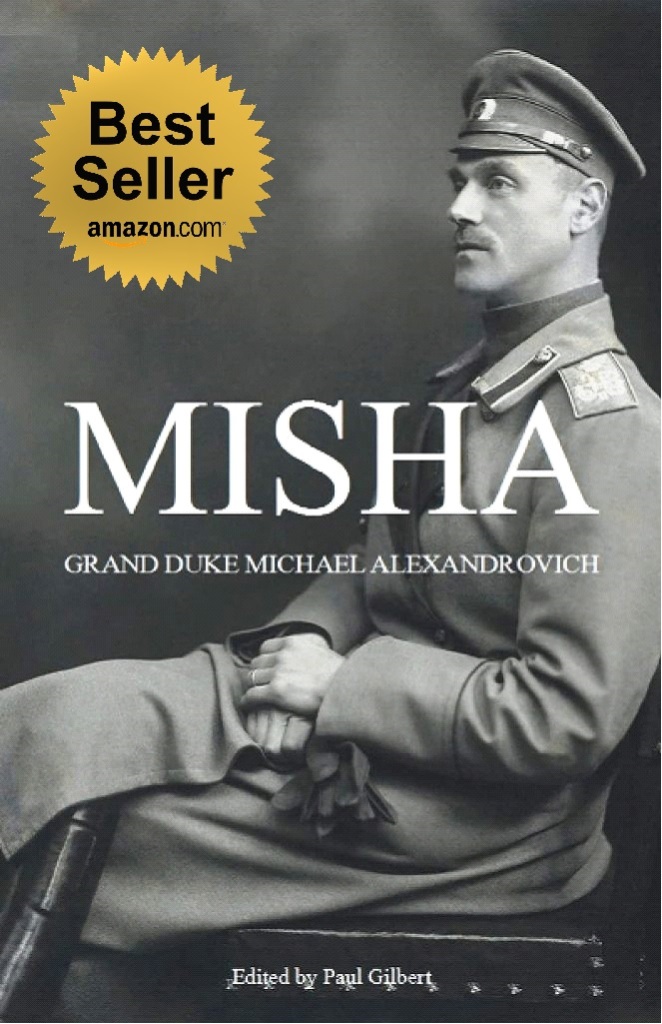
From the window of my Consulate, I saw the Tsar being driven in a car from the station to the House Epatiev, which was the scene of the assassination. It was the boast of the Ural Soviet that they would exterminate the whole of the Romanov family, and twenty-four hours after the murder of the Royal Family at Ekaterinburg they murdered at Alapaevsk (some thirty miles from Ekaterinburg) by throwing them in a mining shaft and throwing rocks and boulders on top of them, Prince Igor, husband of the Crown Princess Helene of Serbia, the Grand Duke Serge Mihailovitch, the Grand Duchess Elizabeth, Prince John and Count Paley. The Ural Soviet also murdered the Grand Duke Michael (brother of the ex-Tsar) and his English Secretary, Mr Johnstone.

Ever since then I have been haunted by the idea that had I been able to argue with the Ural Soviet for a longer period I might have been able to save the Russian Royal Family.

Incidentally, I was told by Dr Fisher, the Swiss Consul, that I had been condemned to death by the Ural Soviet for my representations on behalf of the Russian Royal Family. Dr Fisher suggested that I should hide in the forest outside Ekaterinburg until the Czechs and the White Army came in. I decided, however, to stay at my house and wait. Sometime later a huge crowd gathered outside the house and said they were coming in to search it. I said that they could not do this as the Consulate enjoyed diplomatic immunity. They replied “come out yourself,” and this I did armed with several tins of Virginian cigarettes (which they had not seen for months) and engaged them in conversation—I hoped to carry on the conversation until the Czechs and the White Army came in. (I was in contact by messenger with the Czechs and the Siberian Army.) This conversation lasted for some time when one of the crowd said that the Czechs and Siberian Army were on the outskirts of the town and the crowd dispersed.

Actually, the Czechs and the Siberian Army only occupied the town on July 26, 1918. The Ural Soviet, many of whom were killed by the Czechs and the Siberian Army, left in panic, but before doing so they sent a telegram (a copy of which was found in the Ekaterinburg Telegraph Office) stating that “All the members of the Royal Family had suffered the same fate as the Tsar.” A copy of this telegram is to be found in the British Museum.

I have just received a letter from an old friend of mine, Trefor Evans, who was my colleague in Cairo and is now a Professor at the University College of Wales, and he quotes from his old chief’s (Lord Killearn) Diary as follows: “In the general talk which followed I discovered that Roberts (Brigadier) had been with the White Russians (General Denikin) when I was in Siberia in 1919. We exchanged notes regarding incidents at that time and he was particularly interested and I told him that it had fallen to my lot to bring out from Siberia all that was left of the mortal remains of the unfortunate Imperial Family!”

Incidentally, these remains reached Buckingham Palace. When I was received in audience by HM King George V in February, 1921, we discussed the matter and His Majesty said that the relics were in such a state that they had to be fumigated before they could be touched.

Thomas Preston
The Hall, Beeston St. Lawrence,
Neatishead, Norfolk.

***

Before the Curtain by Thomas Hildebrand Preston, 6th Baronet (1886-1976), was published by John Murray (London) in 1950. Hard cover, 313 pages.

Preston’s memoirs record the period in which Nicholas II and his family were held under house arrest between April-July 1918.

The book includes some interesting tidbits of information, for instance: ” . . . the Alexander Palace contained a life-sized portrait of Queen Victoria . . .”, I wonder what happened to it?

It has been out of print for many years now, with secondhand copies still being highly sought after by collectors.

© Paul Gilbert. 16 December 2025

What would have happened to Russia if Nicholas II had remained on the throne?

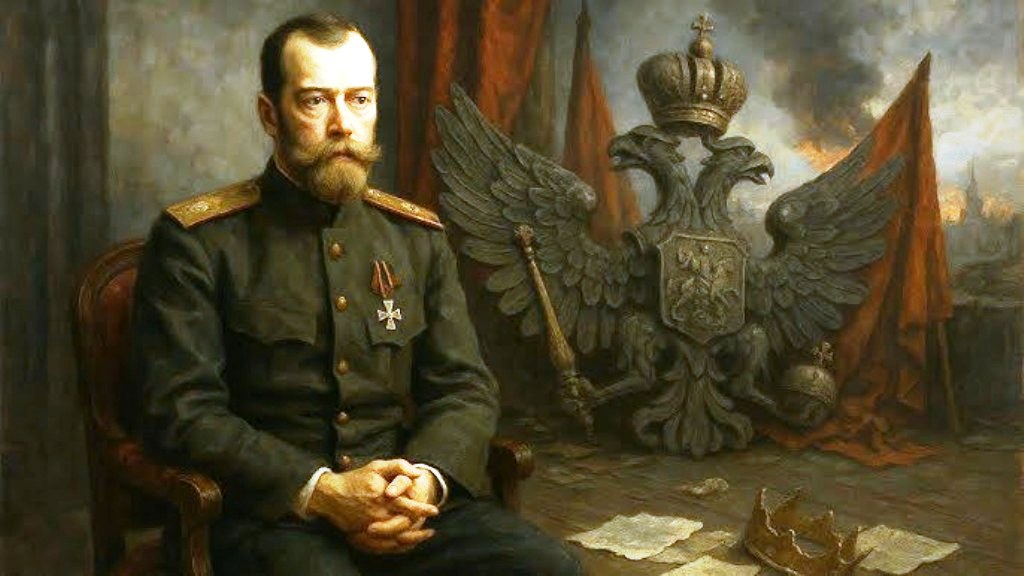
PHOTO: Emperor Nicholas II set against the backdrop of symbols of the Russian Empire and monarchy: the regalia, the throne and the double-headed eagle

Any one who shares an interest in the life and reign of Russia’s last Tsar, has more than likely asked themselves, “what if there was no revolution?”, “what if Russia had won the war against Germany?”, and more importantly, “what if Nicholas II remained on the throne?”. What would have happened to Russia?

This article shares the opinions of three prominent Russians: a journalist, a highly respected historian, and a publicist. Below, they share very different opinions about the successes and failures of Nicholas II and speculate what would have happened to Russia if he had remained on the throne, after the Great War ended – war which Russia was on the verge of victory.

***

More than a century after his tragic death, the last Emperor of Russia, continues to fascinate historians and the general public alike. Historians and writers in particular, tend to focus and debate Nicholas II’s failures as a ruler, while often ignoring his many achievements.

Academically lazy historians and writers overlook (or ignore) the fact that the reign of Nicholas II witnessed a vivacious and in some cases, unprecedented bourgeoning of political, social, economic and cultural activity whose diversity and richness are today being uncovered by specialized post-Soviet studies of the period. It is a credit to the diverse achievements of Nicholas II which resulted the advances of Imperial Russia in industry, agriculture, education, labour, and the creation of responsible, educated citizens who were gradually becoming constructive contributors to the government’s political activity.

Nicholas II was associated with several epithets reflecting the wide range of opinions about his reign, from extremely negative to revered. These labels were primarily used by his political adversaries and critics, particularly during and after the Russian Revolution. 

Critical epithets, such as “Nicholas the Bloody” or “Bloody Nicholas”, were the most common and enduring negative epithets. They arose after the Khodynka Tragedy at his coronation festivities in May 1896 and, more significantly, after the Bloody Sunday massacre in 1905.

To this day, Nicholas II’s detractors describe him as an “indecisive, weak-willed, and out-of-touch ruler”. Russian President Vladimir Putin described Nicholas II as an “erroneous and absurd ruler”, while Metropolitan Tikhon (1865-1925) remembered Nicholas as “one of the most successful and yet most tragic leaders of the Russian state”.

PHOTO: journalist and politician Maxim Shevchenko

During a recent Russian-language interview, journalist and politician[1] Maxim Shevchenko [b. 1966] referred to Nicholas II as “the worst ruler in the history of the country”. According to Shevchenko, for decades, a “lulling mythology” has been created around the Russian Empire: the film Адмиралъ / Admiral (2008) about Alexander Kolchak, the transfer of Anton Denikin’s ashes to the Donskoy Monastery in Moscow (2005), and the opening of a memorial plaque to Carl Gustaf Mannerheim in St. Petersburg (2016), as examples. The journalist believes that all these are nothing more than “beautiful fairy tales” about persons “allegedly close to Emperor Nicholas II. Each of whom was actually defeated,” rants Shevchenko, and they were swept away with hatred by their own people.”

In Shevchenko’s opinion, the last Russian Tsar was not worthy of canonization by the Moscow Patriachate in 2000. The journalist called Nicholas II “a criminal” for the fact that on his order a peaceful demonstration was brutally suppressed on 9th January 1905. He further accuses NIcholas II of the disaster of the Russian fleet near Tsushima and in general of the defeat of Russia in the war with Japan (1904-05). According to Shevchenko, the Romanov dynasty “drowned Russia in blood, the revolution and civil war are the consequences of the inept management of Russia by Nicholas II.”

PHOTO: historian and author Pyotr (Peter) Multatuli

Russian Historian and author Pyotr Multatuli [b. 1969] fundamentally disagrees with Shevchenko. In his opinion, Nicholas II is a holy Tsar-martyr and a great reformer. According to Multatuli, more reforms were carried out under Russia’s last Tsar than under any of his predecessors. Under the last Emperor, 80% of the railways were laid, including the Trans-Siberian Railway. The historian believes that if this railway had not existed at that time, the consequences of the Russo-Japanese War would have been completely catastrophic, the Japanese could easily have reached Krasnoyarsk.

*CLICK on the following link, to read more about the reforms and accomplishments made during the 22+ year reign of Nicholas II – 70 facts about Emperor Nicholas II and his reign

PHOTO: politician and publicist Yegor Kholmogorov

Russian politician and publicist Yegor Kholmogorov [b. 1975] drew attention to just two of the merits of Nicholas II. First were Nicholas II’s efforts and reforms to end hunger. Under Nicholas II, not a single crop failure led to the deaths of millions, as compared, for example to the famine in the Volga region in the first years of Soviet power.

Secondly, the industrialization of the country. Stalinist propaganda hushed up this undoubted merit of Alexander III and Nicholas II. Bolshevik and Western propaganda painted pre-revolutionary Russia as a backward agrarian country. The truth is that Russia at that time was pursuing a path of industrialization at an unprecedented pace, ahead of almost all developing nations, with the possible exception of the United States.

According to Kholmogorov, if the Emperor had remained on the throne, “Russia would have experienced significant prosperity”. Without revolutions and social upheavals, the country would experience an economic boom. Kholmogorov also believes that Nicholas II was not at all a weak and mediocre Tsar, as he is often presented. He was a smart ruler who understood the tasks of the country and knew how to bet on outstanding politicians, such as Pyotr Stolypin (1862-1911).

According to Kholmogorov, World War II could have been avoided, since in 1918 Germany would have been finally defeated. World War II is a consequence of the chain of events launched by the February 1917 Revolution and the overthrow of Nicholas II. That is, “all the victims of the first half of the 20th century are on the conscience of those who started and who carried out this revolution”, he concluded.

NOTES:

[1] Maxim Shevchenko s a Russian journalist, politician, public figure, publicist, human rights activist, radio host, TV presenter, and video blogger. He has served as leader of the Russian Party of Freedom and Justice since March 2021.

The Russian Party of Freedom and Justice (RPSS) is a Russian center-left political party. It was created as the Communist Party of Social Justice (CPSU) at the founding congress on April 8, 2012 and officially registered on May 28, 2012. According to the party charter, it declared the construction of a socialist state.

© Paul Gilbert. 15 December 2025

***

While my research is dedicated to clearing the name of Russia’s much slandered Tsar, I am also actively looking for articles and news stories on the Romanovs, from Russian archival and media sources, which may be of interest to my readers.

In exchange for this 18-page booklet, please consider making a small $5 or $10 donation in aid of my research. These donations are of great assistance in helping me offset the cost of obtaining and translating documents from Russian archival sources, which are often paid for out of my own pocket. It is these documents which help present new facts and information on the life and reign of Nicholas II. In addition, my research continues to debunking many of the myths and lies which exist more than a century after his death and martyrdom.

Please note, that there is NO obligation, thank you for your consideration!

CLICK HERE TO MAKE A DONATION

NEW BOOK – Sovereign No. 16 (Winter 2026)

*You can order this title from most AMAZON outlets, including
the United States, United Kingdom, Ireland, Canada, Australia,
France, Germany, Spain, Italy, Netherlands, Belgium, Poland, Sweden,
Brazil, Mexico and Japan
*Note: prices are quoted in local currencies

CLICK HERE TO ORDER THE PAPERBACK EDITION @ $20.00 USD

English. Large format 8-1/2″ x 11-1/2″. 132 pages. 124 Black & White photos

The No. 16 Winter 2026 issue of SOVEREIGN features 28 articles about Russia’s last Tsar, his family, the Romanov dynasty and the history of Imperial Russia. These articles have been researched and written by independent historian and author Paul Gilbert. His works are based on new research from Russian archival and media sources.
Please note, that this issue features 3 articles researched and written by Russian historians (see list below). These articles have been translated and published and published in English for the first time.

In an effort to preserve his 30+ years of research, the author has reproduced a selection of the more than 950 articles he has written for his blog. They are made available in a printed format for the first time. The author has updated many of the articles in this issue with additional information and photos. In addition, this issue features one new First English translation.

The No. 15 issue features the following 28 articles:

[1] Nicholas II’s visits to the Marfo-Mariinsky Convent in Moscow – 1912, 1913 and 1914

[2] 25th anniversary of the canonization of Nicholas II by the Moscow Patriarchate

[3] Empress Alexandra Feodorovna’s photo album sells at St. Petersburg auction

[4] Lord Mountbatten’s letter regarding Anna Anderson

[5] Monument to Nicholas II and his family to be installed in Mogilev

[6] New monument to Nicholas II installed in Krasnodar

[7] The fate of the kokshniks presented to OTMA in Kostroma (1913)

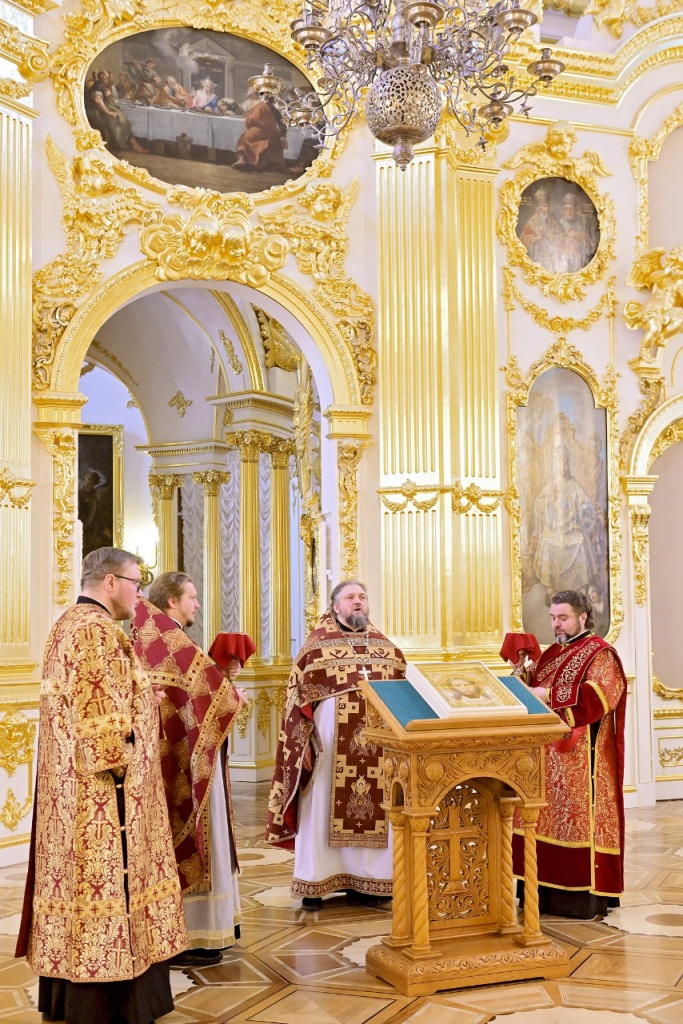
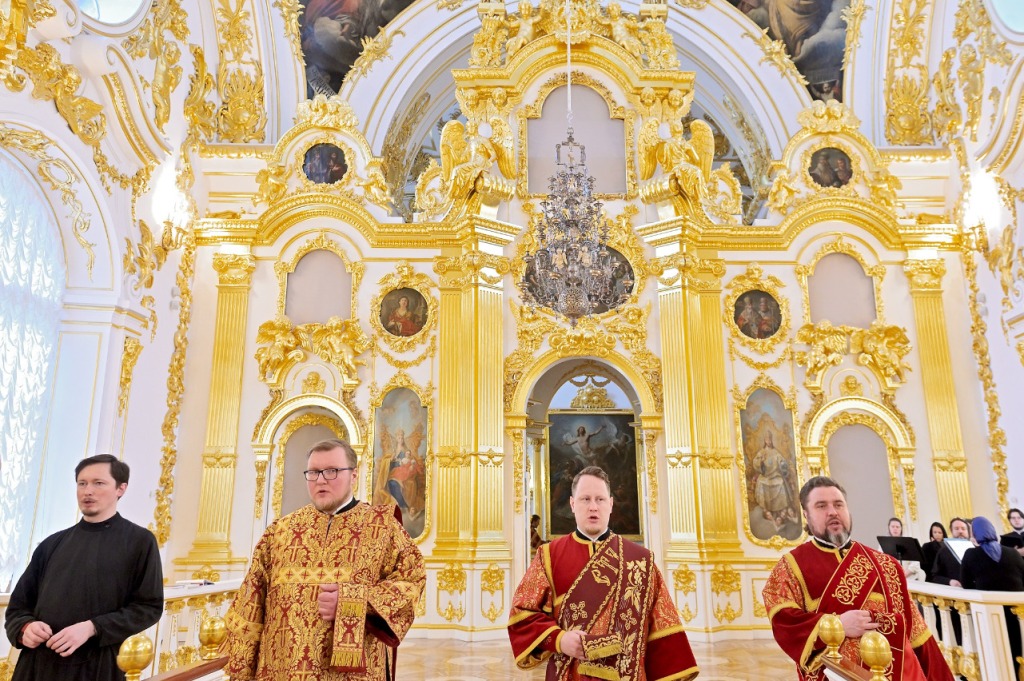
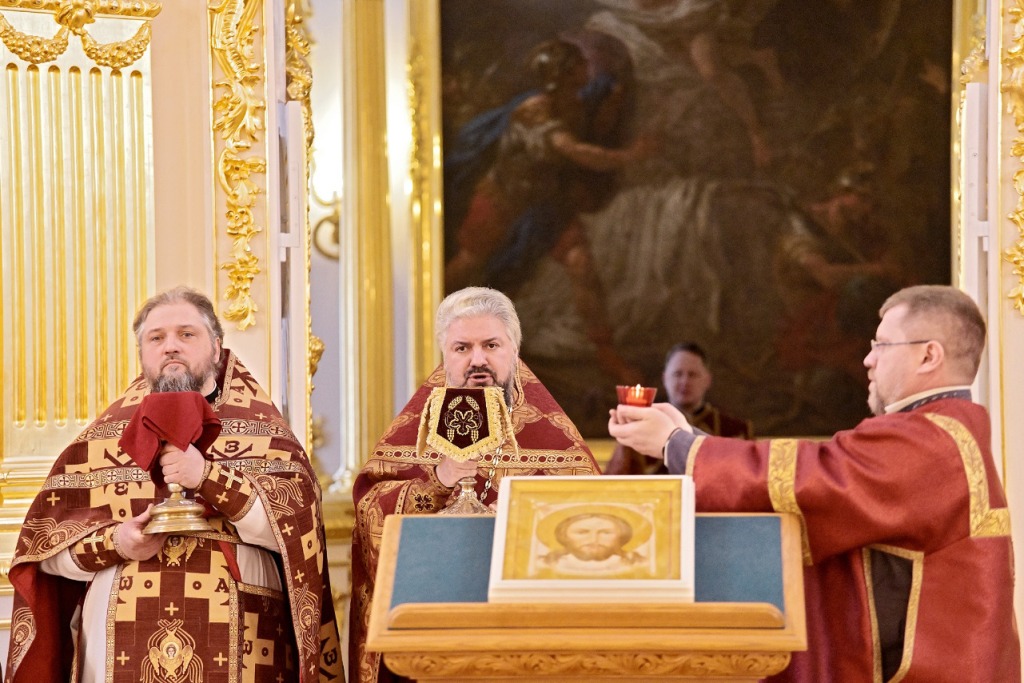
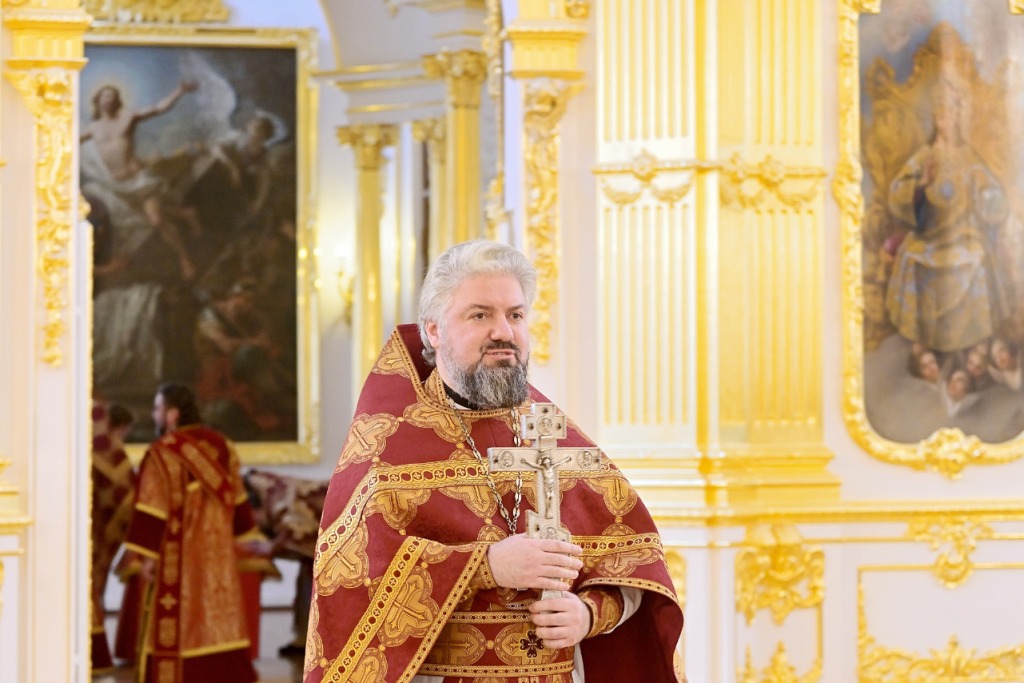
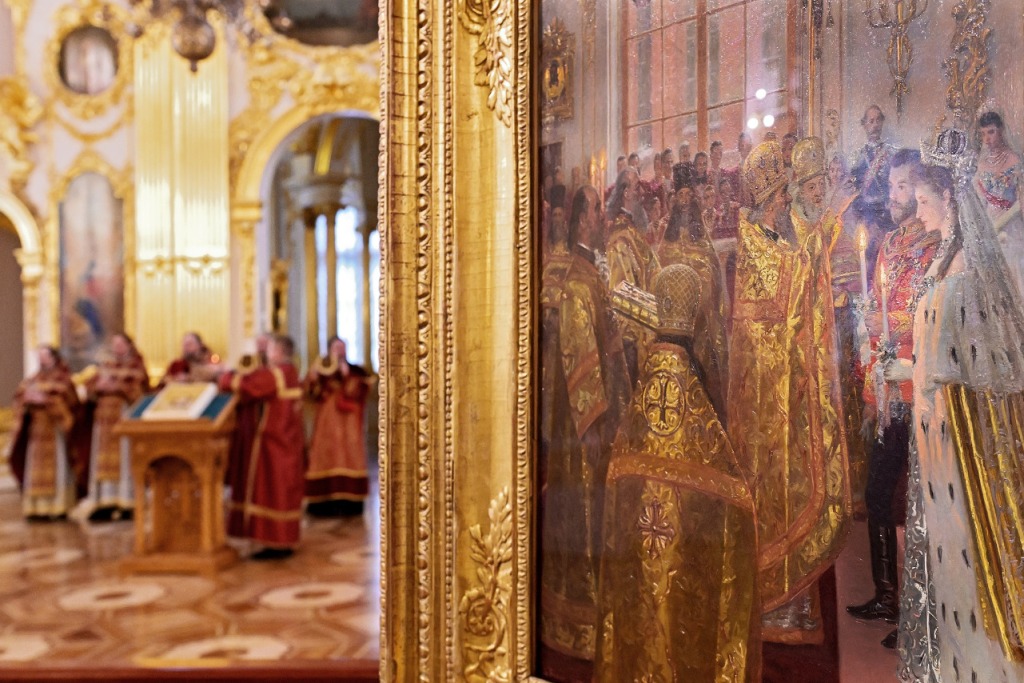
[8] Divine Liturgy for the Imperial Family performed in the Winter Palace

[9] Thousands of items at Pavlovsk, have not been return to the Alexander Palace

[10] Faithful to the End: Prince Vasily Alexandrovich Dolgorukov

[11] The Great Imperial Crown Of the Russian Empire

[12] The Imperial Legacy of Carl Fabergé (1846-1920)

[13] In 2007, General Wrangel’s grandson decrid Bolshevism, Lenin and Stalin

[14] Nicholas II wanted reforms, Lenin wanted recolutions: who was right?

[15] Obituary: Maria Dmitrievna Ivanova-Tatishcheva (1930-2025)

[16] Tsar’s Days in Ekaterinburg 16/17 July 2025

[17] Chinese Theater at Tsarskoye Selo to be restored

[18] State Halls in the Alexander Palace reopened after restoration

[19] The marriage that shocked The Russian Empire

[20] The fate of four faithful retainers of the Imperial Family

[21] Nicholas II visits the Iverskaya Chapel in Moscow

[22] “They did not betray their oath” —The fate of the generals who reamained loyal to Nicholas II

[23] Nicholas II’s menu: culinary preferences of Russia’s last Tsar

[24] Carpet from Governor’s House in Tobolsk preserved in United States ,museum

[25] Russia honours the Romanovs

SPECIAL TO THIS ISSUE OF SOVEREIGN

[26] Confession of a regicide Pyotr Ermakov’s deathbed confession 1952

[27] Trotsky’s version of the murder of the Imperial Family

[28] Attempts at Church Reform bythe Holy Emperor Nicholas IIAL TO THIS ISSUE OF

***

Back issues of SOVEREIGN

No. 15 Summer 2025

No. 14 Winter 2025

No. 13 Summer 2024

No. 12 Winter 2024

NOTE: back issues of Nos. 1 to 12 are now out of print.
Second-hand copies are available on AMAZON and eBay
.

© Paul Gilbert. 1 December 2025

Icon of Nicholas II consecrated in the Spassky Cathedra in Penza

PHOTO: Metropolitan Seraphim of Penza and Nizhnelomovsk, the icon
of the Holy Royal Passion-Bearer Nicholas II, Spassky Cathedral, Penza

On the evening of 29th November 2025, Metropolitan Seraphim of Penza and Nizhnelomovsk, performed the rite of consecration of the icon of the Holy Royal Passion-Bearer Nicholas II, at the Spassky Cathedral, located in the city of Penza.

At the base of this icon is a memorial plaque, with a very interesting provenance from the early 20th century, and it’s connection to Emperor Nicholas II’s visit to the city in 1904.

PHOTO: Metropolitan Seraphim of Penza and Nizhnelomovsk
performs the rite of consecration

After the consecration of the icon, Metropolitan Seraphim told the parishioners the story of how the memorial plaque ended up in its place:

On 19th June 2022, a memorial plaque that was installed at the beginning of the twentieth century on one of the columns of the Spassky Cathedral in memory of Emperor Nicholas II’s visit to Penza in 1904, was donated to the Penza Diocese. During his visit, the Tsar reviewed the troops going to the Russo-Japanese War, and attended the Divine Liturgy in the Penza Spassky Cathedral.

PHOTOS icon of the Holy Royal Passion-Bearer Nicholas II (above),
and the memorial plaque (below)

This memorial plaque, installed by the Penza City Duma, became the first memorial plaque in the Penza region. The inscription on it reads: “His Imperial Majesty Emperor Nicholas Alexandrovich and His Imperial Highness the Grand Duke Mikhail Alexandrovich deigned to visit the Penza Cathedral and prayed at this place in 1904, on June 28 at 11 o’clock in the afternoon.”

The text on the memorial plaque turned out to be prophetic: the Tsar prayed “in this place.” The cathedral, which the emperor visited, was destroyed by the Soviets in 1934, but the First church to be recreated in the city in 2011-16″.

PHOTO: Orthodox Believers venerate the icon
of the Holy Royal Passion-Bearer Nicholas II

For a long time it was believed that the memorial plaque was lost. The residents of Penza remembered that in February 1918 armed men (Bolsheviks) who came to the cathedral smashed the plaque with their rifle butts. But, as it it turned out, the plaque miraculously survived, only a corner broke off. The parishioners hid it from the Bolsheviks, burying it in the ground near the church.

About twenty years ago, information began to circulate, that the memorial plaque was intact. Local historians conducted a lengthy search, as a result of which the relic ended up in the hands of the famous Penza collector Igor Sergeevich Shishkin, who returned it to the Spassky Cathedral.

The transfer of the memorial plaque took place before the great consecration of the Spassky Cathedral, which was performed on 19th June 2022, by Patriarch Kirill of Moscow and All Russia during his primatial visit to the Penza Metropolia.”

PHOTO: ‘Nicholas II in Penza 1904’
by the contemporary Russian artist Denis Santalov.

In his painting, Santalov has captured the arrival of the Russian emperor who visited Penza on 28th June 1904. He is depicted in the Spassky Cathedral (blown up in 1934), where he is blessed by the Bishop of Penza and Saransk Hieromartyr Tikhon (Nikanorov). On that memorable day, the sovereign visited conducted a review of his troops, who were on their way to the Russo-Japanese War. From the collection of the Penza Regional Art Gallery

© Paul Gilbert. 30 November 2025

Is the myrrh-streaming icon of Nicholas II predicting a terrible omen for Russia?

Whether you are a believer or not, the following is just one of many miracles reported since the regicide in Ekaterinburg in July 1918 . . .

Last week, a case of myrrh streaming[1] from the icon of the Tsar-Passion-Bearer Nicholas II was recorded in the Church of the Nine Martyrs of Kizichesky in Moscow. The Orthodox community is now discussing the event which many believers and clergy interpret as an alarming omen.

Archpriest Anthony Serov commented on the event, “fragrant oil, myrrh, appeared on the surface of the icon, which is in a special, hermetically sealed case.” According to him, the design of the kiot[2] completely excludes any possibility of external influence or forgery. The myrrh-streaming of the icon has been confirmed by Life.ru[3].

“The icon is placed in a protected case, which excludes any outside interference,” Archpriest Anthony Serov emphasized. “Nevertheless, we have witnessed myrrh streaming from the icon. This, in my opinion, is of great spiritual importance.”

In the Orthodox tradition, the streaming of myrrh from icons is considered a miracle and a special sign of grace. However, myrhh streaming from the face of the saint [Nicholas II] which is enclosed in a protective case, is another matter.

Archpriest Serov regards the incident as a warning addressed not only to Orthodox believers, but to Russian society as a whole. He drew parallels with historical events when such phenomena preceded significant changes and upheavals, such as the 1917 Revolution and the First World War.

“The history of our country [Russia] has experienced examples of the streaming of myrrh from icons became a harbinger of revolutionary events, military conflicts and other difficult trials and tribulations,” the rector of the church explained. “It is necessary to comprehend what happened and learn from them.”

Over the centuries, such cases have been repeatedly recorded in Orthodox monasteries and churches in Russia. As a rule, believers see this as a call to repentance and prayer, especially when the images of the Royal Passion-Bearers “weep”.

Earlier, journalists turned to religious scholar Konstantin Mikhailov for comment of the recent myrrh-streaming incident near Moscow. The confessor said that such events are not uncommon and in most cases have a natural explanation. According to the expert, scientists have always found logical reasons for the appearance of moisture on icons.

In the meantime, parishioners and believers from all over Moscow are coming to the Church of the Nine Martyrs of Kizichesky to personally see the myrrh-streaming icon and pray.

NOTES:

[1] In the Orthodox tradition, myrrh-streaming is one of the most mysterious and controversial phenomena. On the one hand, the Church recognizes the fact of the outflow of fragrant myrrh from icons, relics and crosses as one of the manifestations of God’s grace. On the other hand, each such case is carefully checked by church commissions in order to exclude any possibility of forgery or natural causes.

[2] A kiot is a decorated case or frame used in Orthodox Christianity to protect and display religious icons. It serves to safeguard the icon from environmental factors such as temperature fluctuations, dust, and humidity, ensuring the icon’s preservation over time.

[3] A prominent Russian information portal and news agency.

FURTHER READING:

Myrrh-streaming icon of Tsar Nicholas II brought to Ekaterinburg for Tsar’s Days’ + PHOTOS and VIDEO

My [Paul Gilbert’s] cancer journey and prayers for the intercession of Tsar-Martyr Nicholas II

© Paul Gilbert. 23 November 2025

Chapel dedicated to Nicholas II to be opened at Murmansk airport

NOTE: the above photo will be replaced, when the chapel opens in two weeks – PG

On 20th November 2025, the new domestic terminal at Murmansk Airport welcomed its first flight. The walls of the terminal building are decorated with paintings of landscapes of the Kola Arctic.

In addition, work is being carried on the decoration of the interior of a chapel dedicated to Emperor Nicholas II. The small chapel will be located in the second hall of the terminal, immediately after the check-in counters.

According to Archpriest Vladimir Semenov of the Murmansk Diocese: “The chapel is expected to be completed in two weeks. The date of the it’s consecration has yet to be announced.”

Recall that on 31st May 2019, Russian President Vladimir Putin issued a decree naming Murmansk Airport after the founder of the city, Nicholas II.

Murmansk was the last city founded in the Russian Empire. Russia’s first ice free port was founded here in 1916 by Nicholas II and named Romanov-on-Murman. It was officially named Murmansk during the Soviet years.
Prior to that, residents of the Russian Arctic city had voted in favour of naming the airport in honour of Russia’s last Tsar, who received 68,260 votes (48%).

More than 5.5 million people took part in the ‘Great Names of Russia’, a national competition in which the Russian people could cast votes to rename 42 of the country’s major airports.

***

Since 2019, great efforts have been made to draw attention to Murmansk residents and visitors of Nicholas II’s connection to the Arctic city . . .

Exhibition dedicated to Nicholas II opens at Murmansk Airport

In November 2020, a permanent photo exhibition dedicated to Emperor Nicholas II opened in the main terminal building of Murmansk Airport – [the link above features 12 photos]

There have been proposals for the square in front of the airport terminal, however, whether these plans come to fruition remains to be seen . . .

New monument of the Imperial Family to be installed at Murmansk Airport

On 26th January 2023, a St Petersburg architecture and landscaping firm, published an artist’s concept of the new square in front of the Nicholas II-Murmansk Airport, the highlight of which will be a major sculptural composition depicting the last Russian Imperial Family.

© Paul Gilbert. 21 November 2025

The church where Nicholas II and his family worshiped in Tobolsk

PHOTO: Church of the Annunciation of the Blessed Virgin, Tobolsk. 1910

During their eight month stay in Tobolsk [August 1917-April 1918], Nicholas II and his family were held under house arrest in the former Governor’s Mansion [renamed the “House of Freedom” by the Bolsheviks]. Their movements were restricted, as they had been at Tsarskoye Selo from March 1917 to the end of July 1917. Several weeks after their arrival in Tobolsk, they were permitted to worship in the nearby Church of the Annunciation of the Blessed Virgin up until January 1918, after which services were restricted to the confines of the “House of Freedom”.

The brick church was built between 1735-1758. A two-story quadrangle, completed with an octagon, on which five decorative domes were placed, with a two-aisled refectory and a three-tiered bell tower. The refectory included the chapels of Procopius and Ioann of Ustyug and the Great Martyr Catherine.

For more than three centuries, the Church of the Annunciation of the Blessed Virgin served as a spiritual center of life for hundreds of parishioners. The church featured a library, an almshouse, and a parochial school.

Pierre Gilliard recalls: “Finally, on September 21st, the festival of the Nativity of the Virgin, the prisoners were allowed for the first time to go to the church. This pleased them greatly, but the consolation was only to be repeated very rarely. On these occasions we rose very early and, when everyone had collected in the yard, went out through a little gate leading on to the public garden; which we crossed between two lines of soldiers. We always attended the first Mass of the morning, and were almost alone in the church, which was dimly lighted by a few candles; the public was rigorously excluded. While going and returning I have often seen people cross themselves or fall on their knees as Their Majesties passed. On the whole, the inhabitants of Tobolsk were still very attached to the Imperial family, and our guards had repeatedly to intervene to prevent them standing under the windows or removing their hats and crossing themselves as they passed the house.”

Empress Alexandra Feodorovna wrote in her diary: “During the services, officers, the commandant and the commissar stand beside us so that we do not dare to speak”.

PHOTO: drawings of the Church of the Annunciation of the Blessed Virgin, Tobolsk

On 8th September 1917, the Empress wrote in her diary: “We went to the service in the Cathedral of the Annunciation on foot, I was in my [wheel]chair, through the city garden, the soldiers were stationed all the way, the crowd stood where we had to cross the street. It is very unpleasant, but, nevertheless, I am grateful for being in a real church for [for the first time] in 6 months ”.

Commissar Vasily Pankratov described this event as follows: “Nicholas Alexandrovich was informed that tomorrow a Liturgy would be performed in the church, and that it was necessary to be ready by 8 o’clock in the morning. The prisoners were so pleased with this news that they got up very early and were ready by 7 o’clock. When I arrived at 7:30, they were already waiting. About 20 minutes later, the duty officer informed me that everything was ready. It turned out that Alexandra Feodorovna decided not to walk, but to ride in a chair, as her legs hurt. Her personal valet quickly wheeled the chair out to the porch. The whole family went out, accompanied by their retinue and servants, and we proceeded to the church. Nicholas II and his children, walking in the garden, looked around in all directions and talked in French about the weather, about the garden, as if they had never seen it. In fact, this garden was located just opposite their balcony, from where they could observe it every day. But it is one thing to see an object from a distance and, as it were, from behind a lattice, and another to walk through it freely. Every tree, every twig, bush, bench acquires charm … From the expressions on their faces, from their movements, one could assume that they were experiencing some special euphoria. As she was walking through the garden and not watching where she was going, Anastasia even fell. Her sisters laughed, even Nicholas himself was amused with this awkwardness of his daughter. Alexandra Feodorovna’s face remained motionless. She sat majestically in her chair and was silent. On leaving the garden, she got up from the chair, from where we crossed the street to enter the church. Outside stood a double line of soldiers, [a chain of riflemen was also placed in the garden along the entire route] and behind them stood curious onlookers. Upon entering the church, Nicholas and his family took their place on the right, their retinue closer to the middle. Alexandra Feodorovna knelt down, Nicholas and the four grand duchesses followed her example. After the service, the whole family received a prosphora [a small loaf of leavened bread used in Orthodox liturgies], which for some reason they always passed to their servants”.

The prisoners were allowed to visit the church again – on 14th September, the feast of the Exaltation of the Cross. On 18th September, Grand Duchess Tatiana Nikolaevna wrote to her aunt Grand Duchess Xenia Alexandrovna: “We were twice in church. You can imagine what a joy it was for us after 6 months, because do you remember how uncomfortable our camp church in Tsarskoye Selo was? The church here is good. One large summer room in the middle, where they serve for the parish, and two winter ones on the sides [referring to the side-chapels]. The right side-chapel is reserved for us”.

PHOTO: View of Tobolsk and the Church of the Annunciation of the Blessed Virgin

The family managed to visit the church for a third time on 1st October – on the feast of the Protection of the Most Holy Theotokos. Then again on 22nd October, the day marking the anniversary of the accession of Nicholas II to the throne and the feast of the Kazan Icon of the Mother of God. The entire family received communion on this day of the Holy Mysteries of Christ. “What a spiritual consolation in the time we are going through!” – the Emperor wrote in his diary that day. In addition, the Imperial family were allowed to attend church on 26th November, 3rd and 10th December, and 19th January.

Pierre Gilliard again writes: “The next day, Christmas Day, we went to church. By the orders of the priest the deacon [Fr Vasiliev] intoned the Mnogoletie [the prayer for the long life of the Imperial family] This was an imprudence which was bound to bring reprisals. The soldiers, with threats of death, demanded that the prayer should be revoked. This incident marred the pleasant memories which this day should have left in our minds. It also brought us fresh annoyances and the supervision became still stricter.”

Following the incident involving Fr Vasiliev, the Imperial family were no longer permitted to attend church. Instead, an improvised chapel was set up in the ballroom of the mansion, which consisted of a folding iconostasis and an altar, decorated with the Empress’s bed-spread, which served as an altar cloth. The local priest was invited to perform services for the Imperial family and their retinue up until April 1918, when they were transferred to the Ipatiev House [renamed the “House of Special Purpose”] in  Ekaterinburg, where they were subsequently murdered by members of the Ural Soviet on 17th July.

The Church of the Annunciation of the Blessed Virgin was closed by the Soviets in 1930, the building demolished in 1956 – the same year that the author of this article was born.

On 8th November [Siberia Day] 2025, a 1.4 m [4 ft. 6 in.] bronze 3D model of the Church of the Annunciation of the Blessed Virgin, was installed in its historical place – at the intersection of Ulitsas Mira and Ershov.

More information about the history of the church can be found on the audio guide using the QR code found on the information plate of the model.

The outdoor 3D model is part of the ‘Lost Churches of Tobolsk’ project, designed to remind residents and visitors to Tobolsk of the city’s rich spiritual history. It is a shame, that the church was not reconstructed.

NOTES:

[1] Siberia Day was established by Emperor Alexander III, on 8th November 1881, marking the 300th anniversary of the annexation of Siberia to the Russian State. Siberia Day honours the history and cultural significance. The holiday was abolished during the Soviet period, and revived in the 1990s.

© Paul Gilbert. 8 January 2021 – UPDATED on 9 November 2025

Russia’s ambassador to Britain laid flowers at the monument to Nicholas II on the Isle of Wight

PHOTO: Russia’s Ambassador to the UK Andrei Kelin
at the monument to Nicholas II on the Isle of Wight

On 4th November 2025 – on the occasion of National Unity Day – Russia’s Ambassador to the UK Andrei Kelin laid flowers at the monument to Nicholas II and his family on the Isle of Wight.

The granite monument with bronze relief portraits of the Imperial Family, was unveiled on 7th July 2018, by the Grand Duchess Elizabeth Romanov Society. The monumetn stands in Jubilee Green in East Cowes, close to Queen Victoria’s residence, Osborne House on the Isle of Wight, which is situated just off the southern coast of England.

The monument marking the 100th anniversary of the death and martyrdom of Emperor Nicholas II and his family was created by the renowned Moscow sculptor Elena Bezborodova. At its base there is a capsule with soil from the site, where the Imperial Family’s remains were found near Ekaterinburg.

“The Isle of Wight has a special connection with Russian history: Empress Alexandra Feodorovna and her sister Elizabeth Feodorovna spent time here as children with their grandmother, Queen Victoria. Nicholas II first visited the island in 1884 and visited it again in 1909, staying at the Barton estate,” said the Russian ambassador.

National Unity Day has been celebrated in Russia annually, on 4th November since 2005. The holiday commemorates the popular uprising which ended the Polish-Lithuanian occupation of Moscow in November 1612, and more generally the end of the Time of Troubles and turning point of the Polish intervention in Russia.

FURTHER READING:

Britain’s first memorial to the Russian Imperial Family + PHOTOS

© Paul Gilbert. 5 November 2025

Emperor Nicholas II on Facebook

CLICK HERE to be redirected to my Nicholas II Facebook page

In April 2016, I launched a Facebook page dedicated to the life and reign of Emperor Nicholas II, which do not appear on this blog. In addition are posts about his family, the Romanov Dynasty and the history of Imperial Russia.

Each day, I create up to a dozen new posts, featuring news – translated into English from Russian archival and media sources – plus, contemporary and vintage photos – to date, there are more than 5,000 colour and black & white photos on my Nicholas II Facebook page!

In addition are videos and newsreels, as well as new book announcements, new monuments, portraits, and exhibitions in Russia, which are not covered in English social media and news outlets.

I currently have 5,000 Facebook friends – the maximum that FB will allow – plus, an additional 4,500+ followers, from all over the world. Friends are allowed to comment on posts and engage in discussions with others. My FB page has become a perfect “watering hole” for those of us who share an interest in Russia’s last Tsar, his family, the Romanov dynasty, and the history of Imperial Russia.

Please note, that as I have already reached the maximum number of friends that Facebook will allow me, you can still become a “FOLLOWER” of my FB page.

Simply CLICK on the LINK above, which will redirect you to my FB page, whereupon you CLICK on the FOLLOW button. This will ensure that you receive instant updates on all new posts, however, you will not be able to comment on them. You always have the option to send a FRIEND REQUEST at a later date.

Please join me today, in celecrating the life, reign and
era of Russia’s last Emperor and Tsar! remains concise

CLICK HERE to be redirected to my Nicholas II Facebook page

© Paul Gilbert. 1 November 2025

Imperial Family photo-exhibition opens in Vyselki

NOTE: click on the above image to enlarge and see in greater detail

On 22nd October 2025, the photo-exhibition ‘The Tsar’s Family. Love and Mercy‘, opened in the Church of St. Nicholas the Wonderworker in the village of Vyselki, Krasnodar Territory.

The exhibition is showcased in the central alley of the Church, where large photographs of Emperor Nicholas II and his family are displayed on the walls. The exhibition is FREE to all.

The exhibit tells the story of the Nicholas II’s family, who unselfishly served others during the First World War and the traditions of nursing in Russia at the turn of the 19th – early 20th centuries.

Recall that when World War I broke out, Empress Alexandra Feodorovna and her two eldest daughters Grand Duchesses Olga and Tatiana became Red Cross nurses. Together, from 1914 to 1917, they cared for wounded soldiers in a private hospital on the grounds of Tsarskoye Selo, until the family were placed under house arrest, following the Tsar’s abdication 15th March (O.S. 2nd March) 1917.

PHOTO: 3rd grade students of school No. 2 in Vyselki together with their teacher visit the photo-exhibition ‘The Tsar’s Family. Love and Mercy’

The exhibition has already been visited by 3rd grade students of school No. 2 in Vyselki together with their teacher Irina Fostenko.

The children listened with interest to the story told by Father Alexander about the service of the Imperial Family to the Fatherland, and about Nicholas II’s family, helping soldiers, the poor and the sick during the war years.

The photo project The Tsar’s Family: Love and Mercy was created in 2016 by the Sretensky Monastery in Moscow. The travelling exhibition has already been presented in Serbia, Germany, Italy, Canada, Argentina, New Zealand, South Africa, Romania, Croatia, Montenegro, Bosnia and Herzegovina, Macedonia, and the Czech Republic.

***

*As I have noted in previous posts, I support any initiative – big or small – to help keep the memory of Nicholas II and his family alive in 21st century Russia – PG

© Paul Gilbert. 30 October 2025