Those Who Served the Tsar: Vladimir Nikolaevich Voeikov (1868-1947)

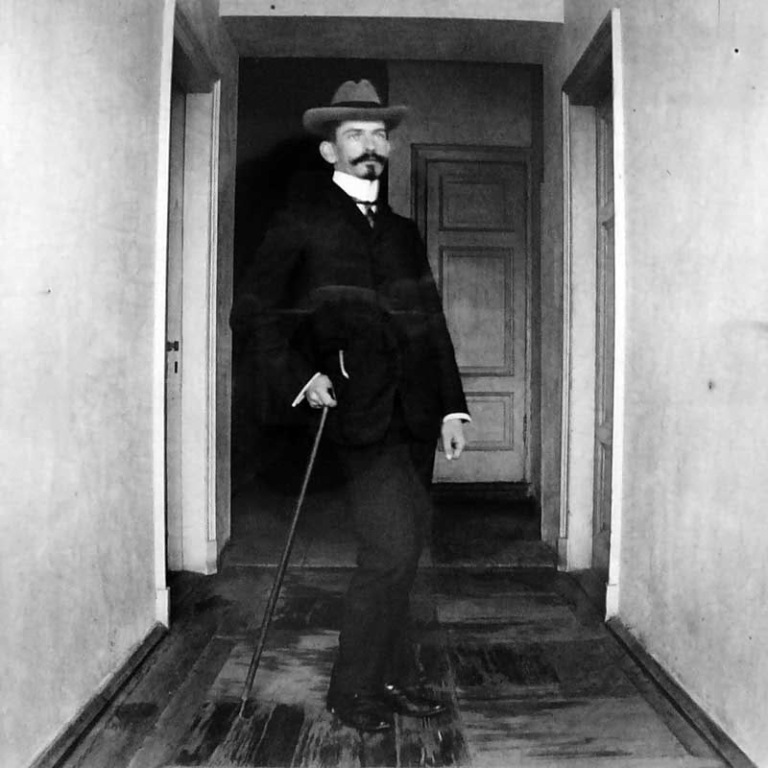
Portrait of Major General Vladimir Nikolaevich Voeikov (1913-14)
Artist: unknown. Private Collection.

Vladimir Nikolaevich Voeikov (1868-1947) was a member of His Imperial Majesty’s Retinue, and served as Palace Commandant from 1913 to 1917. He was one of the most trusted associates of Emperor Nicholas II.

Vladimir was born in Tsarskoye Selo on 15th (O.S. 2nd) August 1868, to the family of cavalry general Nikolai Vasilievich Voeikov (1832-1898) and Princess Varvara Vladimirovna Dolgorukova (1840-1909), daughter of the Moscow Governor-General Vladimir Andreevich Dolgorukov (1810-1891).

He was educated in the Corps of Pages, after which, on 7th August 1887, he was released as a cornet in the Chevalier Guard Regiment.

In 1894, he married Eugenia Vladimirovna Frederiks (1867-1950), a maid of honour at the Russian Imperial Court (1890); and the eldest daughter of the Minister of the Imperial Court Vladimir Fredericks (1838-1927). In society, everyone called her Nina. The couple had no children.

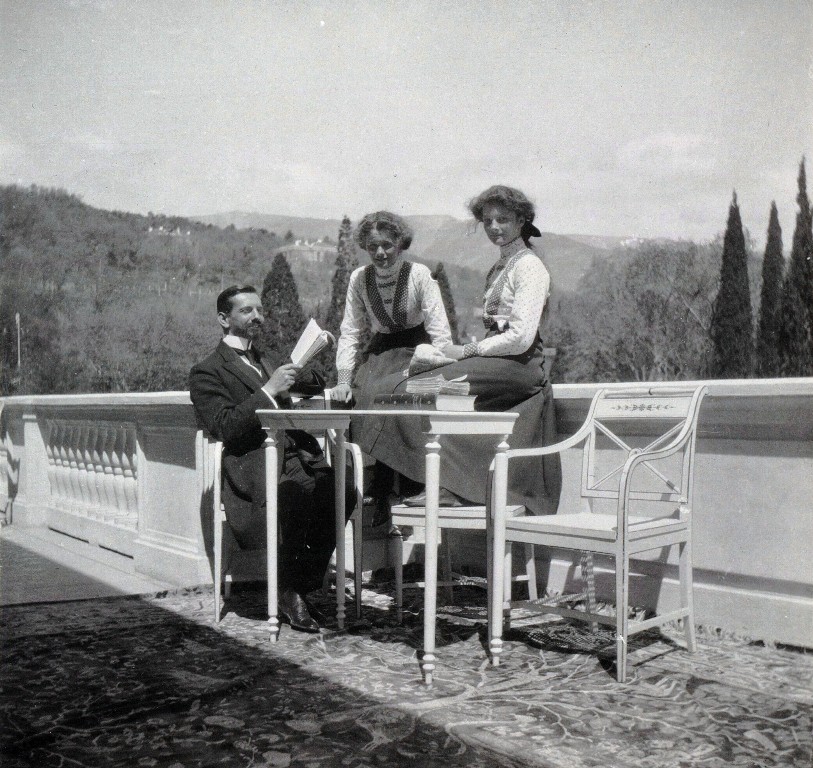
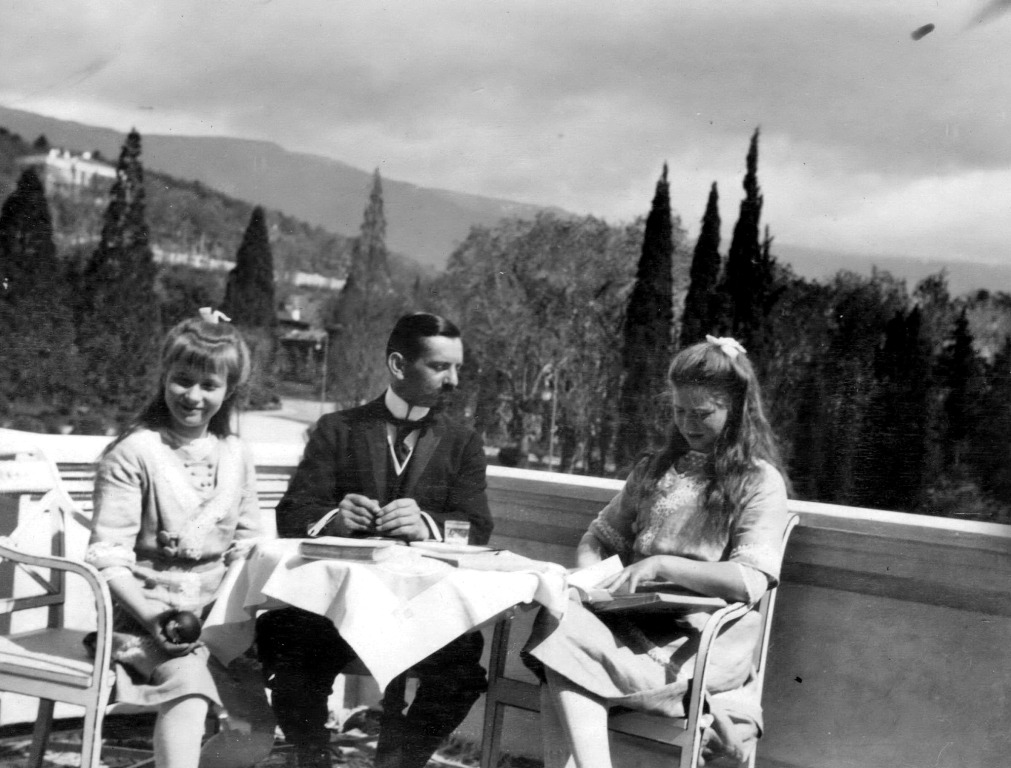
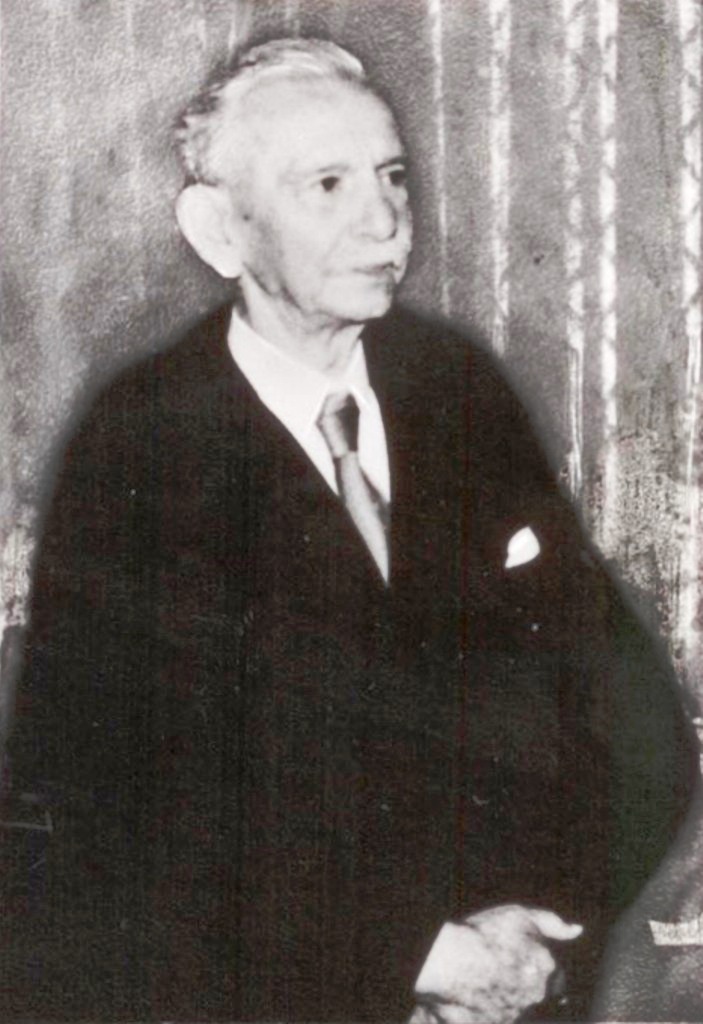
PHOTO: Minister of the Imperial Court Vladimir Fredericks (left), with his son-in-law Vladimir Voeikov (right), Livadia 1914

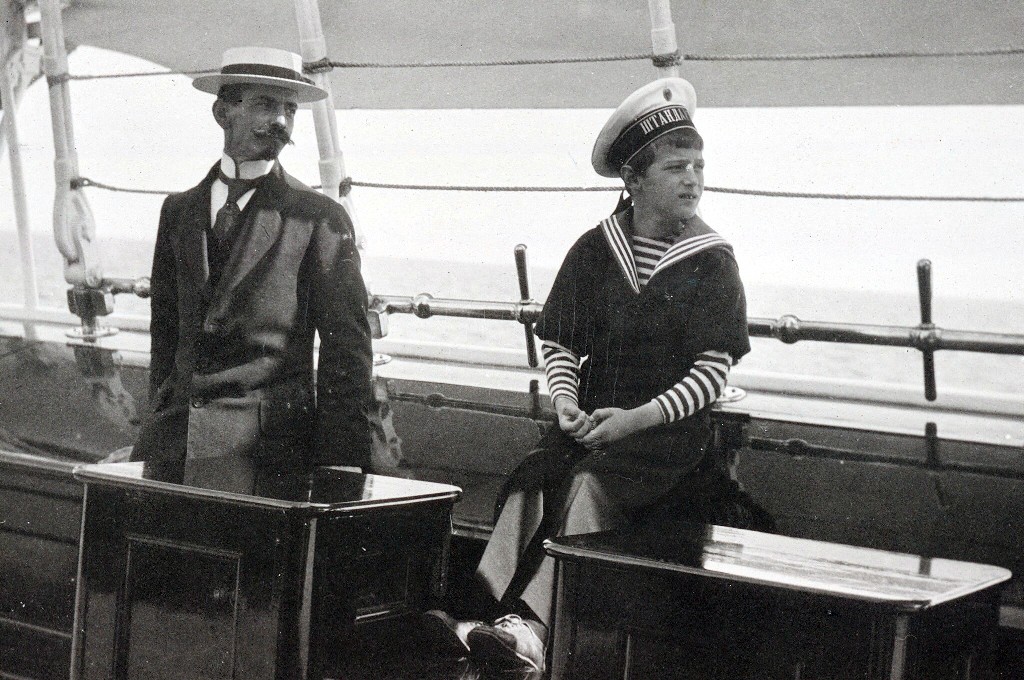
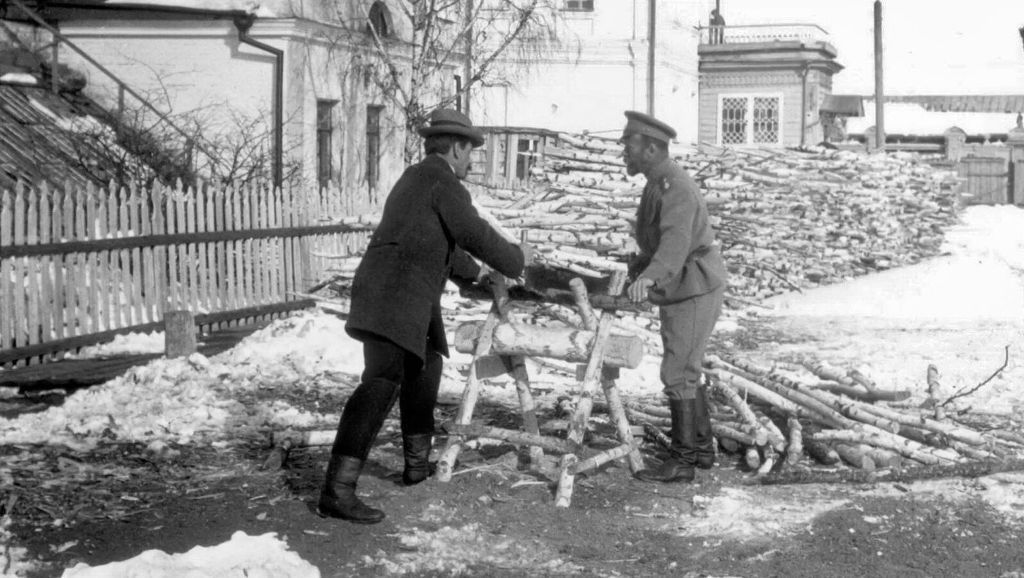
PHOTO: Emperor Nicholas II with Vladimir Voeikov. Livadia 1914

Vladimir Voeikov enjoyed a successful and prestigious career, in which he received numerous promotions. In August 1891, he was appointed lieutenant, from April 1898 as headquarters captain and from May 1901 he was promoted to the rank of captain. He served as squadron commander for 5 years and 1 month, then as head of the education school for 5 years and 6 months.

From November 1905, he served as assistant commander of the Chevalier Guard Regiment, and in December 1905, he was promoted to colonel. In 1906 he was appointed adjutant wing to His Imperial Majesty.

From August 1907, Vladimir served as Commander of His Majesty’s Life Guards Hussar Regiment. In December 1909, Emperor Nicholas II promoted him to the position of major general and enrollment in His Imperial Majesty’s retinue.

Upon the birth of the Tsesarevich Alexei Nikolaevich (1904-1918), Voeikov was named godfather to the Emperor’s only son and heir. In 1910 Vladimir began the construction of a summer residence for his godson, located on his estate, located in the Penza region.

PHOTO: after decades of neglect by its Soviet caretakers, Vladimir Voeikov’s unfinished palace for his godson Tsesarevich Alexei Nikolaevich, today lies in ruins

The general plan of the estate initially consisted of three buildings (palace, a secondary building, and stables). The palace was designed in the style of an Italian villa, which included a park with rare trees and fountains. The palace consisted of two stories high, made in the neoclassical style, with a rotunda, surrounded by a balustrade and sloping stairs which led to the front entrance.

In 1917, the still unfinished palace was nationalized and placed at the disposal of the local Soviets, who used the building for a variety of purposes up until the fall of the Soviet Union in 1991. The building has survived to the present day, however, it is in a terrible state of disrepair, despite the fact that the palace is recognized as a monument of history and culture of regional significance.

After the formation of the Russian Olympic Committee in 1912, Vladimir Voikov was elected its honorary chairmanm on 24th December 1913.

In 1913, Voeikov founded a mineral water bottling plant on his Kuvaka estate in the Penza region, with an annual production of 100 thousand bottles of water. The Voeikov estate was located on the territory of the modern city of Kamenka (Penza region) . During the war, Vladimir won a contract for the supply of his mineral water to the front and to hospitals.

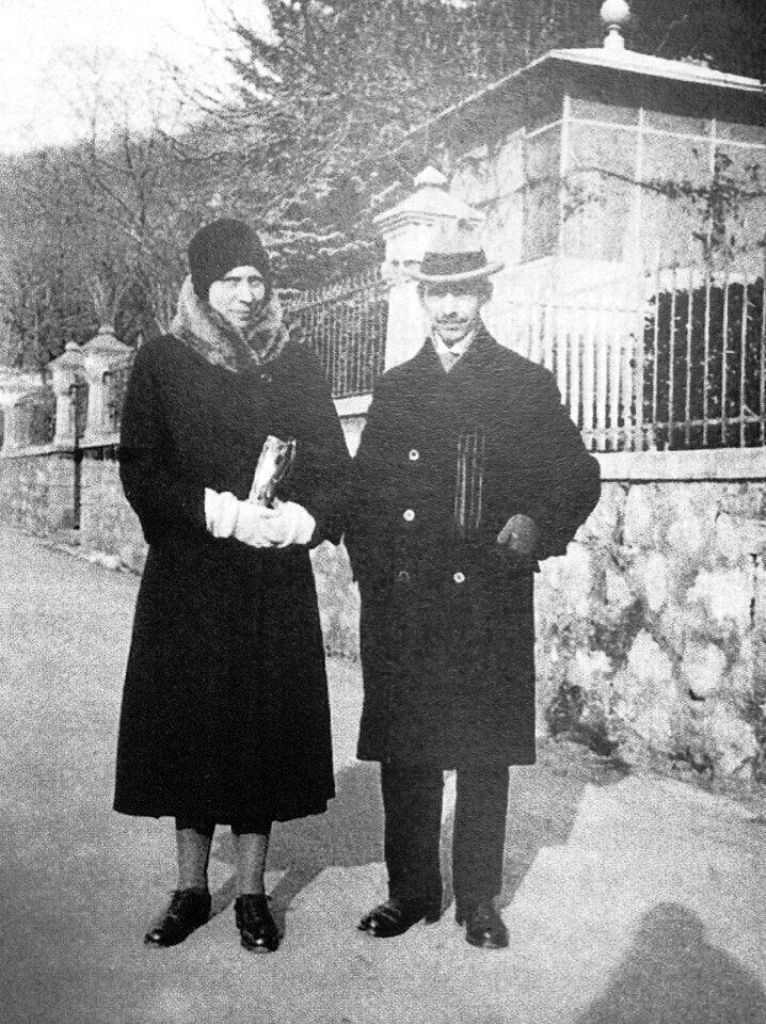
PHOTO: in happier times, Vladimir and his wife Eugenia, wearing 17th century dress for the Costume Ball, held in February 1903, at the Winter Palace, St. Petersburg

During the February Revolution, Vladimir was arrested, and held under arrest, first in the Tauride Palace, then in the Peter and Paul Fortress in Petrograd, where he was interrogated by the Extraordinary Investigative Commission of the Provisional Government. He was subsequently released, but in the summer of 1918, under the threat of arrest by the Bolsheviks, he hid in the hospital of St. Panteleimon for the mentally ill, from where he kept in touch with his relatives.

In September 1918, having learned about the arrest of his wife, he fled to the Crimea , from where he went into exile, first to Romania, and then to Finland, where he lived at Dr. Botkin’s dacha in Terijoki (Terijoki), now Zelenogorsk. After leaving Finland, Voeikov moved to Sweden. During his years in exile, Voeikov wrote his memoirs С царем и без царя / With the Tsar and Without the Tsar [see below], published in in Helsinki in Russian in 1936.

In June 1919, during the offensive of General N. N. Yudenich on Petrograd, Vladimir’s wife Eugenia was arrested and transported to Moscow. She was held in a concentration camp in the Ivanovsky Monastery. [situated in central Moscow, inside the Boulevard Ring, to the west of Kitai-gorod]. In 1925 she received permission to leave the USSR, whereupon she moved to Finland with her father and sister. From 1939 she lived with her husband in Helsinki. In 1946 they moved to Sweden and settled in Danderyd.

Vladimir Voeikov died on 8th October 1947, and was buried in a local cemetery in the town of Djursholm, situated in the suburbs of Stockholm. Eugenia died in 1950 and was buried next to her husband. Later, their remains were reburied at the Kauniainen City Cemetery, in the same grave of Count Vladimir Fredericks – who died in 1927.

PHOTO: the proposed cover of the English translation, features this photo of Emperor Nicholas II and Vladimir Voeikov at the Stavka, the headquarters of the Russian Imperial Army, in Mogilev. 1915-1916

I am currently in the process of having WITH THE TSAR AND WITHOUT THE TSAR by Major General Vladimir Nikolaevich Voeikov (1868-1947), translated from Russian to English.

Originally published in Russian in 1936, this will be the first English translation of the sad but captivating story, about the man who, from 1913-1917, served as the last palace commandant to Emperor Nicholas II. Voeikov was the son-in-law of the Minister of the Imperial Court Vladimir Borisovich Frederiks (1838-1927). He was one of the few men at Court, who remained faithful to the Tsar.

His memoirs describe the events the February and October 1917 revolutions and their consequences for the Russian Empire and the Tsar; foreign policy intrigues and the chain of events that led to the First World War and Russia’s participation in it; Court vanity and envy; the private lives of the Tsar and his family at Peterhof, Tsarskoye Selo and Livadia; and Voeikov’s ordeals as he fled Bolshevik Russia.

Translations are very costly – this book is 330 pages – which is why I am reaching out to those who share an interest in the life and reign of Nicholas II.

Please consider making a donation to help fund the translation of Voeikov’s memoirs, a very important historical record on the life and reign of Russia’s much slandered Tsar.

CLICK HERE TO MAKE A DONATION

Thank you for your consideration

© Paul Gilbert. 4 April 2024 (Updated 4 April 2025)

Konstantin Pobedonostsev: symbol of Russian monarchal absolutism

Konstantin Petrovich Pobedonostsev was born in Moscow on 30th (O.S. 18th) November 1827. He remains one of the most interesting, yet controversial persons from the life and reign of Emperor Nicholas II.

Pobedonostsev was a Russian jurist, statesman, and adviser to three Tsars: Alexander II, Alexander III and Nicholas II. Nicknamed the “Grand Inquisitor,” he came to be the symbol of Russian monarchal absolutism.

Pobedonostsev and Tsesarevich Alexander Alexandrovich [future Emperor Alexander III] remained very close for almost thirty years, through Alexander’s ascension as Tsar in 1881 and until his death in 1894.

During the reign of Alexander III he was one of the most influential men in the Russian Empire. He was the mastermind of Alexander III’s Manifesto of 29th April 1881, written about two months after the assassination of his father, Alexander II. ‘The Manifesto on Unshakeable Autocracy’ proclaimed that the absolute power of the Tsar was unshakable thus putting an end to Loris-Melikov’s endeavours to establish a representative body in the empire. The manifesto rejected the more liberal reforms of Alexander II (and some of his father’s ministers) in favor of “unshakable autocracy” which had been given to the tsars as a sacred duty from God. The document summed up Alexander’s counter reform policies, which were strongly influenced by Pobedonostsev.

PHOTO: Konstantin Pobedonostsev drinking tea in the garden of the Cottage Palace, the Peterhof residence of Dowager Empress Maria Feodorovna, July 1898

Pobedonostsev was the chief spokesman for reactionary positions. He was the “éminence grise” of imperial politics during the reign of Alexander III, holding the distinguished position of Chief Procurator of the Most Holy Synod, the non-clerical Russian official who supervised the Russian Orthodox Church [from 1880 to 1905].

In 1883, Emperor Alexander III appointed Konstantin Pobedonostsev, as chief tutor to his son and heir Nicholas Alexandrodovich [future Emperor Nicholas II].

Nicholas received a thorough training under the direction of the best teachers in Russia. Among his teachers, the one who exerted the greatest influence on him was undoubtedly the ultra-conservative Russian academic Konstantin Pobedonostsev, who was highly intelligent, widely read and very hardworking. Pobedonstsev believed that only the power and symbolism of an autocratic monarchy, advised by an elite of rational expert officials, could run the country effectively.

Pobedonostsev’s guidance and influence imbibed the principles of absolutism, dynasty, military greatness and the official religious tradition on the future Tsar. He constantly reminded Nicholas Alexandrovich that the Tsar was anointed by God and was a divinely inspired source of wisdom and order.

PHOTO: Emperor Nicholas II with Konstantin Pobedonostsev (far right). Empress Alexandra Feodorovna and Grand Duchess Olga Alexandrovna, both dressed in white (center) standing next to the Tsar. This photo was taken on the steps of the Cottage Palace, the Peterhof residence of Dowager Empress Maria Feodorovna, July 1898

Following the death of Alexander III on 1st November [O.S. 20 October] 1894, Pobedonostev remained an aide to Nicholas II, although he lost much of his influence. While the new Tsar adhered to his father’s Russification policy and even extending it to Finland, he generally disliked the idea of systematic religious persecution, and was not wholly averse to the partial emancipation of the Church from civil control.

In 1901, Nikolai Lagovski, a socialist, tried to assassinate Pobedonostsev, shooting through the window of Pobedonostsev’s office, but missing. Lagovski was sentenced to 6 years.

It was Pobedonostsev who ordered the excommunication of the great Russian writer Leo Tolstoy in 1901.

As the Chief Prosecutor of the Holy Synod – a position he held until 1905 – Pobedonostsev opposed the canonization of the Monk Seraphim of Sarov in 1903. Standing firm in his beliefs, Emperor Nicholas II ordered the canonization of Seraphim of Sarov.

PHOTO: Konstantin Pobedonostsev’s grave, St. Vladimir Church in St. Petersburg

Konstatnin Pobedonostsev died in St. Petersburg on 23rd March (O.S. 10th March) 1907. He was survived by his wife Ekaterina Alexandrovna, née Engelhardt (1848-1932), and their adopted daughter Martha (1897-1964).

Pobedonostsev’s funeral took place on 26th March (O.S. 13th March) 1907 at the Novo-Devichsky Convent; members of the Imperial Family were not present. He was buried at St. Vladimir Church in St. Petersburg. The church has not survived, however, the grave has survived to the present day.

© Paul Gilbert. 14 December 2022 (Revised on 25th March 2025)

Nicholas II visiting Queen Victoria in 1896 + VIDEO

CLICK on the IMAGE above to watch the film-clip

The only known film-clip of Emperor Nicholas II and Empress Alexandra Feodorovna visiting Queen Victoria is available to view on YouTube. It is the earliest known film of the Tsar and Queen Victoria at Balmoral. The recording lasts only 1 minute and 10 seconds, but is of great historical value.

The film-clip featuring members of the British Royal Family and the Russian Imperial Family was shot on 3rd October 1896 at Balmoral Castle, a favourite residence of Queen Victoria in the Scottish Highlands. It was filmed by William Edward Downey (1829-1915) of W. & D. Downey Studios (London).

In the recording, Queen Victoria can be seen in an open carriage pulled by a pony. In her arms, the Queen holds her favorite Pomeranian “Turi”. The Queen is accompanied by numerous family members and relatives, including her granddaughter, Empress Alexandra Feodorovna [daughter of Princess Alice of Great Britain, later Grand Duchess if Hesse and by Rhine (1843-1878)], and her granddaughter’s husband, Emperor Nicholas II, dressed in a casual three-piece suit and a Homberg felt hat. The procession is completed by the Queen’s favorite, Abdul Karim (1863-1909), who served Her Majesty during the final fourteen years of her reign, gaining her maternal affection over that time.

William Downey showed the film to Queen Victoria at Windsor Castle on 23rd November 1896. For more than a century, the recording had been gathering dust in the archives, it was discovered and shown to the general public in 2013.

Pages from Princess Alexandra’s Photo Albums (1896)
CLICK on each image to enlarge and see photos in greater detail

The Royal Foundation of Great Britain also published several pages from the album of Princess Alexandra of Wales [Alexandra of Denmark, 1844-1925] – the daughter-in-law of Queen Victoria and the maternal aunt of Nicholas II. Alexandra was fond of photography and made a detailed album on her nephew’s stay at Balmoral. The photos are round – this was the format produced by the first Kodak cameras.

In the pictures, we see the happy newlyweds and their newborn daughter Olga, about whom the queen said: “A beautiful child, and so big!”

Photos from Princess Alexandra’s Photo Albums (1896)
CLICK on each image to enlarge and see photos in greater detail

The Queen talked a lot with Nicholas II about politics, in particular, about the crisis in Turkey, where mass crimes against Armenians had taken place. Over a cup of tea, Nicholas II and Queen Victoria decided the fate of the Ottoman Sultan. And Alexandra Feodorovna told Granny Victoria about her new life in St. Petersburg and her worries about motherhood.

The Queen enjoyed watching the bathing of Olga, whom she described as “a cute fat baby, cheerful and full of life.” Newlyweds Nicholas and Alix walked with their dogs in Balmoral Park – without retinue and without worries. Another photo (see below) depicts Nicholas II in the uniform of Colonel-in-Chief of the 2nd Dragoons (Royal Scots Grays), bestowed upon him by Queen Victoria.

Photos from Princess Alexandra’s Photo Albums (1896)
CLICK on each image to enlarge and see photos in greater detail

They took photographs of each other in the courtyard of the castle. Alexandra Feodorovna also had her own camera, but her photos have not been preserved. But we can leaf through the diary of Nicholas II for their visit to Balmoral, in which the Tsar mainly describes his hunting excursions:

“At 9 1/2 we went on a round-up of the famous grouse [hazel grouse] in the mountains near Birkhall and Glenmuick. I killed only two of them, because shooting at these birds is very difficult. We had breakfast in the tent provided by the generosity of Lord Glenesk, where we drank tea in a large company after the hunt. We returned home at 7 1/2. I’m pretty tired of climbing mountains and standing for a long time on NoNo [numbers, i.e. designated positions] inside earthen towers!”

The day of 3rd October (O.S. 21st September) according to Nicholas’s diary was marked not only by a “whirling shooting”, but also by an important symbolic event. Nicholas and Alexander planted a pine tree each in Balmoral Park.

PHOTO: the Garden Cottage at Balmoral (1913)

The Emperor dug a hole with his own hands, covered the roots of the tree with earth and watered the pine tree. Since Balmoral has been carefully maintained and preserved over the years, it is safe to say that the pines more than likely have survived to the present day. There are no special plaques on the trunks, but the Queen wrote in her diary that Nicholas and Alexandra planted pine trees “not far from the Garden Cottage.”

© Paul Gilbert. 24 March 2025

Nicholas II memorial plaque unveiled in Sestroretsk

PHOTO: memorial plaque installed on the wall of the Chapel of St. Nicholas the Wonderworker in Sestroretsk, dedicated to Nicholas II, founder of the Russian submarine fleet

On 19th March 2025, on the day marking ‘The Day of the Submariner’ in the Russian Federation, two memorial plaques were installed on the walls of the Chapel of St. Nicholas the Wonderworker in Sestroretsk. The first IS a portrait depicting the Holy Emperor Nicholas II, the founder of the Russian submarine fleet.

The second features a text about the event of 19th March (O.S. 6th March) 1906, when by decree of Emperor Nicholas II, a new class of warship was created in the Imperial Russian Navy – a submarine fleet, which consisted of 10 submarines.

The chapel is located on the grounds of the Church of the Holy Apostles Peter and Paul. Situated on the shore of Lake Razliv, near St. Petersburg it is the birthplace of the submarine in Imperial Russia. It was here, in the presence of Emperor Peter I, that the first test of the “secret vessel” of the inventor of Russia’s first submarine Efim Prokopyevich Nikonov took place. Since 2001, it has been recognized as the spiritual and historical ensemble in honour of the Russian submarine fleet.

PHOTO: the Chapel of St. Nicholas the Wonderworker in Sestroretsk

The dean of the Kurortny District, the rector of the church, Archpriest Mikhail Petropavlovsky, served a Divine Liturgy in honour of all generations of submariners. Bells rang in memory of the Russian sailors who died while serving on submarines. A panikhida [prayer for the dead] was then served at the wall of memory inscribed with the names of all the sunken submarines and the names of the submarine heroes.

“As long as the Lord grants us life, we must lift up prayers of thanksgiving for the living and pray for those who died at sea – many of them have no graves, no relatives are alive, some are completely forgotten, but with God everyone is alive,” said Father Michael.

PHOTO: modern-day icon painted in St. Petersburg, by order of modern day submariners of the Russian Federation

The plaque installed on the wall of the Chapel of St. Nicholas the Wonderworker in Sestroretsk is based on the icon depicted in the above photo. It was painted in St. Petersburg, by order of modern day submariners of the Russian Federation.

Up until the October Revolution of 1917, ‘The Day of the Submariner’ was celebrated in Russia as a professional holiday, but abolished during the Soviet years. The holiday was revived almost eight decades later, in 1996, by order of the Commander-in-Chief of the Navy, Admiral of the Fleet Felix Gromov. Since then ‘The Day of the Submariner’ is once again celebrated on 19th March, by military personnel, veterans and civilian personnel of the submarine forces of the Navy of the Russian Federation.

© Paul Gilbert. 23 March 2025

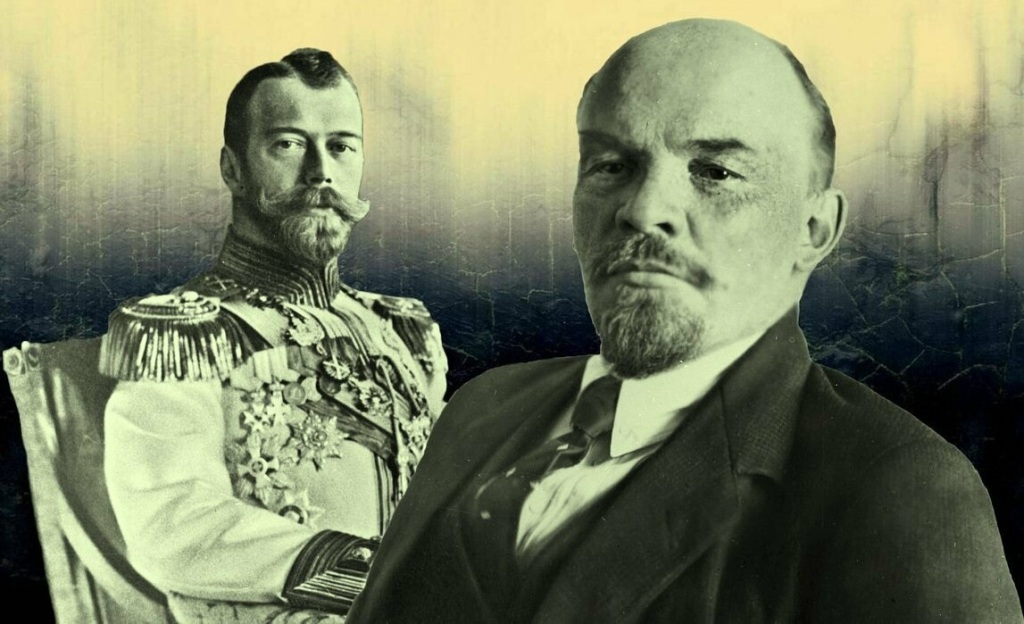
A joint monument to Nicholas II, Lenin and Yeltsin to be erected in Russia

PHOTO: Emperor Nicholas II, Bolshevik leader Vladimir Lenin
and Russian president Boris Yeltsin

This year – 2025 – marks the 155th anniversary of the birth of Vladimir Lenin, the 35th anniversary of the election of Boris Yeltsin as Chairman of the Supreme Soviet of the RSFSR and the 25th anniversary of the glorification of Tsar Nicholas II as a saint. In recognition of these three historical figures a joint monument entitled “The Great Three” will be erected in St. Petersburg.

The sculptors will create a bronze monument depicting the life-size figures of Nicholas II, Lenin and Yeltsin, which will be installed on the coast of the Gulf of Finland, opposite the flags of the Russian Empire, the USSR and the Russian Federation. They will be depicted holding each other by the shoulders and proudly looking towards the state symbols of the three eras.

The installation of the monument is supported by the Ministry of Culture, the Communist Party of the Russian Federation, the Russian Orthodox Church and the Yeltsin Center in Ekaterinburg. It is their hope that the monument will contribute to reconciliation in society and will become a symbol of the continuity of Russia’s national history.

Reconciliation is a noble ideal but Lenin’s hand on the last Tsar’s shoulder is somewhat disturbing. One simply cannot “reconcile” with the man who ordered the murder of Nicholas II and his family. The very idea of a monument depicting the Bolshevik leader standing next to the Tsar, with his hand on the Tsar’s shoulder is simply wrong!

The date and location of the installation of “The Great Three” monument has yet to be announced.

© Paul Gilbert. 20 March 2025

The favourite tunes of Nicholas II and his Family – Part 3

This third video features another tune, which was apparently a favourite of Emperor Nicholas II and his Family. Click on the image above to listen to Осенний сон / Autumn Dream, a waltz. [Duration: 3 minutes, 27 seconds].

The music of the waltz “Autumn Dream” was written by the English pianist and composer Archibald Joyce (1873-1963) in 1908, who wrote a whole series of waltzes loved by listeners and even received the unspoken title of “King of Waltzes”.

In 1909, he came to Russia where he performed concerts, after which “Autumn Dream” immediately gained popularity. A few years later, records were released in huge editions, and “Autumn Dream”, along with other popular works by Joyce, began to be referred to as “old Russian waltzes”.

Several attempts were made to write lyrics to this music. The first to do this was Prince Feodor Nikolaevich Kasatkin-Rostovsky (1875-1940), who dedicated poems to Baroness Olga Nikolaevna Taube. But they did not receive recognition among the public. In the pre-war years, other poets tried to write lyrics to this opera, but the most popular was the version of Vasily Ivanovich Lebedev-Kumach (1898-1949).

NOTE: the translation is not perfect, but it will give you the gist of the lyrics – ENJOY!

The autumn wind blows off the leaves,
All nature is full of sadness.
Only hope does not die —
The heart knows: spring will come.

And sorrows, and bad weather —
Everything will pass like autumn rain.
There will be joy, there will be happiness,
And the warm sun will rise!

You have had enough of crying, maples, birches,
You can’t collect old leaves.
It’s enough to shed big tears for you,
The spring day will come again.

Soon the autumn of separation will pass,
The green leaf will grow again,
Dear hands will embrace us again,
There will be joy, love will come.

Set against the background of this opera are a number of images (some of which have been photoshopped) depicting Emperor Nicholas II and Empress Alexandra Feodorovna set against the autumn colours of the Alexander Park at Tsarskoye Selo. In addition are vintage newsreels and photos of the Imperial Family.

The vocals of this waltz is performed by the famous Russian soloist Irina Krutova, who perform Russian romances and classical music, accompanied by soloists of the State Academic Russian Concert Orchestra. The video was created by Irina Koroteeva (Moscow).

NOTE: Stay tuned for additional videos, featuring more favourite tunes of Nicholas II and his family.

More favourite tunes of Nicholas II and his family:

Part 2 – Я ехала домой / I was on my way home

Part 1 – Утро туманное (Misty Morning)

© Paul Gilbert. 4 March 2025

Nicholas II’s porcelain project presented in St. Petersburg

Earlier this week, a new exhibition opened in St. Petersburg, featuring items from the Imperial Porcelain Factory. The exhibition was organized by the Russian State Historical Archive (RGIA) in St. Petersburg and the Imperial Porcelain Factory [established in 1744].

The highlight of the exhibition is a unique porcelain series “Peoples of Russia”, which represents the peoples of the former Russian Empire. The series was and remains the largest project in the history of the Imperial Porcelain Factory, created by the personal order of Emperor Nicholas II.

In addition, are more than 200 archival documents dedicated to the history of the Imperial Porcelain Factory and the author of the “Peoples of Russia” series, sculptor Pavel Pavlovich Kamensky (1858-1922). The documents include Kamensky’s personal files, letters, and documents on the procedure for making the porcelain series. Many of these documents are exhibited for the first time.

The “Peoples of Russia” series of porcelain figurines was created between 1907-1917 by order of Emperor Nicholas II. The series was created to mark the celebration of the 300th anniversary of the Romanov Dynasty in 1913. The series represents the 73 nationalities of the Russian Empire, according to the results of the first General Population Census of 1897.

Kamensky managed to create over 150 figures, depicted in their respective national costumes. The sculptor relied on a wide range of historical, ethnographic and anthropological materials from the collections of the Kunstkamera and the Museum of Alexander III [State Russian Museum].  He was assisted by a team of molders and painters – Anatoly Lukin, Pavel Shmakov, Ivan Zotov, Andrei Dietrich, Lyudmila Midina and others.

Nicholas II personally evaluated the new statuettes of the series. Every year before the Christmas holiday from 1907 to 1914, several new figures were brought to the Alexander Palace at Tsarskoye Selo, and shown to the Emperor.

The majority of the original “Peoples of Russia” figurines are today in Collection the Porcelain Museum of the State Hermitage in St. Petersburg. In addition, there are 47 figurines in the collection of the Russian Museum of Ethnography in St. Petersburg.

Copies of these beautiful figurines are still manufactured at the Imperial Porcelain Factory in St. Petersburg, and available to purchase by collectors.

© Paul Gilbert. 28 February 2025

Recommended reading: books on the life and reign of Nicholas II

One of the questions I am asked most is “can you recommend a good book on Nicholas II?”

Putting aside the numerous beautiful pictorials which have been published over the years, I have compiled the following *list of 6 books, which for the most part, present an honest assessment on the life and reign of Russia’s last Emperor and Tsar.

In addition, are the following honourable mentions: Nicholas and Alexandra by Robert K. Massie (1967); Last Years of the Court at Tsarskoe Selo Volume I (2010) and Volume II (2017) by General Alexandre Spiridovitch; Thirteen Years at the Russian Court (1921) by Pierre Gilliard; At the Court of the Last Tsar (1935) by A.A. Mossolov; and The Coronation of Tsar Nicholas II (2012)

*NOTE: all of the books listed here are in English and listed in order of the year they were published. With the exception of Oldenburg’s 4-volume study, all the remaining titles are available from your favourite bookseller. Second hand copies can also be found on eBay, aLibris, Biblio, etc.

The True Story of the Romanov Family
Published in 2024 by the Diaconești Monastery (Moldavia)
68 pages, richly illustrated

A new graphic novel, featuring exceptional illustrations and content that evoke the true story of the last Russian Imperial Family. This books is a labour of love by the nuns of the Diaconești Monastery in Moldavia, motivated by their deep reverence for the Holy Tsar Nicholas II and his family.

Drawing from numerous historical sources—studies, memoirs, and diaries—the nuns have meticulously reconstructed key moments in the life of the Imperial Family and presented them in a visually captivating format suitable for readers of all ages.

From the love story between Nicholas and Alix to the children’s education in the Alexander Palace at Tsarskoye Selo, from the tragedy of the Otsu Incident to the prophetic meeting with the Blessed Pasha Ivanovna of Diveevo, all are captured in exceptional illustrations, crowned with artistic refinement by the eleven Fabergé Imperial Easter Eggs—famous jewels from the Romanov collection—depicted on the book’s title page.

This graphic novel aims not only to captivate Romanov history enthusiasts but also to offer a model of family, faith, and dignity in a world where these values are increasingly under threat. This book is a must read for all dedicated ‘Romanovphiles’.

***

The Last of the Tsars: Nicholas II and the Russian Revolution
Author: Robert Service
Published in 2017 by Pan Macmillan (UK)
382 pages, illustrated

The Last of the Tsars was published just before the 150th anniversary of the birth of Emperor Nicholas II in 1868, and the 100th anniversary of his murder in 1918. I have to say that I was reluctant at first to read this book, however, once I got into it, I couldn’t put it down!

This book was researched and written by the well known British historian and Sovietologist Robert Service. Wile the author is clearly not one of Nicholas II’s adherents – he rehashes the negative Bolshevik assessment of the Tsar – this book is still worth a read.

Service’s meticulous research offers some very interesting new details about the last eighteen months of Nicholas II’s life. What sets Service’s book a cut above those previously written, is that he avoids the details of the murder and burial of the Tsar and his family, and instead, explains in intricate detail the events between the Tsar’s abdication in February 1917 and his death in July 1918.

Drawing on Nicholas II’s own diaries and other hitherto unexamined contemporary documents, The Last of the Tsars reveals a compelling account of the social, economic and political foment in Russia in the aftermath of Alexander Kerensky’s February Revolution, the Bolshevik seizure of power in October 1917 and the beginnings of Lenin’s Soviet republic.

***

The Romanov Royal Martyrs: What Silence Could Not Conceal
Published in 2019 by Mesa Potamos Publications (Cyprus)
508 pages, illustrated

The Romanov Royal Martyrs: What Silence Could Not Conceal draws on letters, testimonies, diaries, memoirs, and other texts never before published in English to present a unique biography of Tsar Nicholas II and his family. A lively portrait of the Imperial Family emerges from their own personal writings and in the writings of those who lived very close to them. Based strictly on primary sources, the book also brings to light a multitude of unknown and unrevealed facts, which evince that many truths in regard to the life and martyrdom of the Royal Martyrs remain silenced or distorted to this day. The result is a psychographic biography that explores the essential character of the royal family in a deeper and inspiring way.

This voluminous book includes nearly 200 black and white photographs, and also features a 56-page photo insert, of more than 80 high-quality images of the tsar and his family, all of which have been colourised by the acclaimed Russian artist Olga Shirnina (aka Klimbim), and appear here in print for the first time.

The Romanov Royal Martyrs: What Silence Could Not Conceal was my personal choice for Romanov Book of the Year in 2019. Click HERE to read my review, published on 18th November 2019.

***

The Court of the Last Tsar: Pomp, Power and Pageantry in the Reign of Nicholas II
Author: Greg King
Published in 2006 by John Wiley & Sons, Inc. (US)
559 pages, illustrated

While a massive body of work has been devoted to the last of the Romanovs, The Court of the Last Tsar is the first book to examine the people, mysteries, traditions, scandals, rivalries, and riches that were part of everyday life during 22+ year reign of Nicholas II.

This richly illustrated volume includes 24-pages of colour photographs; more than 80 black-and-white photos; floor plans of the Winter Palace (St. Petersburg), the Alexander Palace (Tsarskoye Selo), the Grand Kremlin Palace (Moscow), among others.

King’s study draws on hundreds of previously unpublished primary sources, including memoirs, personal letters, diary entries, and official documents. His research invites you to experience dozens of extravagant ceremonies and entertainments attended by members of the Imperial Court, which numbered more than fifteen thousand individuals.

Chief among these, of course, was Nicholas II, Emperor and Tsar who ruled an empire that stretched over one-sixth of the earth’s land surface. His marriage to Princess Alix of Hesse in 1894 and their Coronation in 1896 are two of the most spectacular ceremonies described in this lavish volume.

The Court of the Last Tsar brings the people, places, and events of this doomed but unforgettable wonderland to vivid and sparkling life.

***

A Lifelong Passion: Nicholas and Alexandra, Their Own Story
Authors: Sergei Mironenko and Andrei Maylenas
Published in 1997 by Doubleday (US); Weidenfeld & Nicolson Ltd (UK)
559 pages, illustrated.

These letters, most of which are published here for the first time, offer an intimate look at some of the most momentous events of the early 1900s, including Russia’s participation in World War I and the fall of the Romanov dynasty in the October 1917 Bolshevik Revolution. Among the correspondents are Alexandra’s beloved but domineering grandmother, Queen Victoria of Great Britain, and Nicholas’ cousin, Kaiser Wilhelm II of Germany. Most poignant, though, are the letters and diaries of the last Tsar and Tsarina, which stand as eloquent expressions of one of the great love affairs of the late 19th and early 20th centuries.

A Lifelong Passion begins in 1884 with the couple’s first childhood meeting and chronicles their intense courtship and first joyful years of marriage. Their happiness, however, was not to last, as they were quickly overtaken by the forces of war and revolution. The discovery that their only son and heir Alexei was stricken with hemophilia opened the family to the formidable and perhaps malign influence of the monk Rasputin, whose gory death is here recounted by one of the murderers. Though unshaken in their love for one another, Nicholas and Alexandra could not hold their country together, and their story ends with a chilling account of their murder by the Bolshevik revolutionaries.

***

Nicholas II: Twilight of the Empire
Author: Dominic Lieven
Published in 1993 by St. Martin’s Press (US); Pimlico (UK)
292 pages, illustrated

What is there new to say about Russia’s last monarch? Almost everything. Previous biographies have told of the shy family man, the father of the hemophiliac heir, the victim of the infamous murder at Ekaterinburg in 1918. This book provides new insights into those parts of the story, but it looks above all at Nicholas as political leader and emperor, as it portrays the Old Regime’s collapse and the origins of Bolshevik Russia in a way that will surprise readers.

Nicholas II was not stupid. Nor was he weak as is commonly thought. The dilemmas of ruling Russia were vast and contradictory, and it was an illusion to think that simply by agreeing to become a constitutional monarch Nicholas could have preserved his dynasty and empire. Drawing many eerie parallels to events unfolding in Russia today, Lieven shows that social and technological change had far outstripped the existing political and executive structures. Lieven argues that the inability of the Tsar and his government to recognize these growing anachronisms and to devise new systems constructively helped lead to the devastating chaos out of which the new order arose.

Drawing on his fifteen-year study of Imperial Russia and using archival material and other sources all over the world, Cambridge Research Professor Dominic Lieven shows that the downfall of both the Imperial and Soviet Regimes fit into a pattern of ongoing Russian history, one that bears close scrutiny if we are to understand the turmoil of the post-Cold War period. 

***

OUT OF PRINT, BUT A HIGHLY RECOMMENDED READ! 

Last Tsar: Nicholas II, His Reign and His Russia – 4 Volumes
Author: Sergei S. Oldenburg
Published in 1975 by Academic International Press (US)
228 pages (Vol. I), 315 pages (Vol. 2), 224 pages (Vol. 3), 356 pages (Vol. 4)

The 4-volume Last Tsar. Nicholas II, His Reign & His Russia by the noted Russian historian and journalist Sergei Sergeiivich Oldenburg (1888-1940), remains the most comprehensive English language study of Nicholas II to date. Originally published in 1939 in Russian, the first English edition was not published until 1975. 

It is a major document in modern Russian historiography. The final contribution of a Russian nationalist historian, it provides uniquely sensitive insights into the character, personality, and policies of Russia’s last tsar. It has no rival as a political biography of Nicholas II and is without peer as a comprehensive history of his reign.

Click HERE to read my article about this highly sought after set and its’ author Sergei Sergeiivich Oldenburg

© Paul Gilbert. 16 February 2025

First General Census of the Population of the Russian Empire (1897)

On this day – 10th February (O.S. 28th January) 1897 – the First General Census of the Population of the Russian Empire took place.

Emperor Nicholas II took part in the First General Census of the Population of the Russian Empire (1897). He personally filled in the form, under name he wrote “Nicholas II Alexandrovich Romanov”. In the column “Occupation, position or trade” he wrote “Master of the Russian land.”

This important historical document [seen in the photo above], has been preserved to this day in a velvet cover. It is now in the funds of the State Archive of the Russian Federation (GARF) in Moscow.

Enumerators and organizers of the first general population census of the Russian Empire in 1897, who volunteered their time were awarded this bronze medal (29 mm). It was established on 3rd December (O.S. 21st November) 1896 by decree of Emperor Nicholas II.

The obverse of the medal [above] depicts the monogram of Nicholas II crowned with the Russian Imperial Crown in the center. Around the monogram there is a laurel wreath of two branches. Between the laurel wreath and the border, from the edge of the medal is an inscription along the circumference: “FIRST GENERAL CENSUS OF THE POPULATION”.

On the reverse side [seen above] there is a horizontal inscription in five lines:

ЗА ТРУДЫ
ПО ПЕРВОЙ ВСЕОБЩЕЙ
ПЕРЕПИСИ
НАСЕЛЕНІЯ
1897

FOR WORK
ACCORDING TO THE FIRST GENERAL
CENSUS
POPULATION
1897

The medal had to be worn on the chest. The ribbon of the medal is white-blue-red, in the colours of the flag of the Russian Empire.

The Minister of Internal Affairs, Ivan Logginovich Goremykin (1839-1917), was given the authority to determine the right of individuals to wear the medal. The awardees were issued a certificate for the right to wear the medal.

© Paul Gilbert. 10 February 2025

Film Review: Nicholas and Alexandra

The year 2021 marked the 50th anniversary of the release of the film adaptation of Robert K. Massie’s (1929-2019) classic book Nicholas and Alexandra. Published in 1967, it remained on the New York Times Bestseller List for 46 weeks, and has never gone out of print! Selling more than 4.5 million copies, it is regarded as one of the most popular historical studies ever published. Praised in The New York Times as a “long-needed and balanced account” of the last tsar and his family. In Massie’s study, Nicholas comes across not as the “stupid, weak or bloodthirsty” monarch, as he is often been portrayed by his Western counterparts.

The film version was released on 13th December 1971, and nominated for numerous awards. At the 44th Academy Awards (1972), Nicholas and Alexandra won two awards of six nominations; at the 25th British Academy Film Awards (1972), Nicholas and Alexandra received three nominations; at the 29th Golden Globe Awards (1972), Nicholas and Alexandra received three nominations; and at the 15th Annual Grammy Awards (1973), Richard Rodney Bennett was nominated for Best Original Score Written for a Motion Picture or a Television Special.

PHOTO: Michael Jayston as Nicholas II and Janet Suzman as Alexandra Feodorovna

The film featured a star-studded cast of notable British actors and actresses: Michael Jayston (1935-2024) as Nicholas II; Janet Suzman [b. 1939] as Alexandra Feodorovna; Irene Worth [1916-2022] as the Dowager Empress Maria Feodorovna; Tom Baker [b. 1934] as Grigori Rasputin; Jack Hawkins [1910-1973] as Count Vladimir Frederiks, the Minister of the Imperial Court; Timothy West [1934-2024] as Dr. Botkin, the court physician; Jean-Claude Drouot [b. 1938] as Pierre Gilliard, the children’s Swiss tutor; Laurence Olivier [1907-1989] as Count Witte, the Prime Minister; Michael Redgrave [1908-1985] as Sazonov, the Foreign Minister; Eric Porter [1928-1995] as Pyotr Stolypin, the Prime Minister after Witte; John McEnery [1943-2019] as Kerensky, leader of the Russian Provisional Government; Michael Bryant [1928-2002] as Lenin; Martin Potter [b. 1944] as Prince Felix Yusupov; Richard Warwick [1945-1997] as Grand Duke Dmitri Pavlovich; among many others.

Personally, I greatly disliked this film for a number of reasons. It is due to the popularity and cult-like status of this film which compelled me to address some of the many factual errors of this film, and that it will serve as a resource for those who have viewed it for the first time. 

 Aside from some terrible acting, such as Janet Suzman’s appalling portrayal of Empress Alexandra Feodorovnam the film is rife with historical inaccuracies. For instance, not a single scene was filmed in Russia. This of course is due to the fact that in 1971 Russia was still the Soviet Union, and the discussion or promotion of the last Tsar was still taboo. Instead, the film was shot entirely in Spain and Yugoslavia.

While I personally acknowledge that both Massie’s book and film inspired many people to learn more about Russia’s last Tsar, sadly, there are those who will actually base their own assessment of Nicholas II on this film, and that in itself sets a very damaging scenario.

While I acknowledge that while this is merely a film and not a documentary, I cannot overlook the fact that the producers have blurred the lines between historical accuracy and crude sensationalism. 

Below, are just four of the more notable historical inaccuracies, which I spotted in the film – I documented many others in my notes while watching the film:

na

PHOTO: Michael Jayston as Nicholas II and Harry Andrews as Grand Duke Nikolai Nikolaevich

[1] In an early scene, Nicholas II addresses Grand Duke Nikolai “Nikolasha” Nikolaevich – played by Harry Andrews [1911-1989] – as “uncle”, however, this is incorrect. Grand Duke Nikolai was a first cousin once removed of Emperor Nicholas II..

PHOTO: Tom Baker as Grigori Rasputin

[2] When Rasputin returns from Siberia, he enters a room where the Empress is waiting. He approaches her, she looks into his eyes adoringly, lifts the cross hanging around his neck and proceeds to kiss it.

Later in the film, upon being transferred from Tobolsk to Ekaterinburg, the entire family are seen leaving the  “House of Freedom” together. This scene is certainly not based on fact. It is well known that Nicholas, Alexandra and Maria left Tobolsk on 26th (O.S. 13th) April 1918, while Olga, Tatiana, Anastasia and Alexei left Tobolsk the following month.

Upon arrival at the Ipatiev House in Ekaterinburg, the Imperial Family are greeted at the door by Yakov Yurovsky, played by English actor Alan Webb [1906-1982]. This scene is historically inaccurate, as Yurovsky was not appointed to the Ipatiev House until 4th July 1918 – 13 days before the Imperial Family were murdered. I would like to add, that in July 1918, Yurovsky was only 40, whereas in the film, he is depicted as an elderly man. At the time of the making of the film, Webb was already 65. 

PHOTO: scene whereby the grand duchess allegedly exposes herself to a guard

[3] During their house arrest in Ekaterinburg, a guard enters the room of the grand duchesses where they are getting dressed for bed. One of the daughters (Tatiana) asks what he wants, and then opens her dressing gown to expose her naked body. The grand duchess cries that she is only 21 and desires to be wanted. 

What nonsense! The daughters of Nicholas II and Alexandra Feodorovna were all raised as decent Orthodox Christians. None of these pious and respectful young women would never have exposed themselves to such vulgar thugs! This would not be the first time that such a claim would be made . . . 

In their book The Fate of the Romanovs, American co-authors Greg King and Penny Wilson alleged that Grand Duchess Maria Nikolaevna had a “private moment” with Ivan Skorokhodov, one of the guards at the Ipatiev House. They continued in their claim that Maria slipped away with Skorokhodov for a private moment and they were discovered together in a compromising position. They further allege that both the Empress and her older sister Olga appeared angry with Maria in the days following the incident and that Olga avoided her company.

Sadly, British author Helen Rappaport also entertained this nonsense between Maria and Skorokhodov on page 30 of her book ‘Ekaterinburg. The Last Days of the Romanovs‘. King and Wilson’s claim has been widely dismissed as a myth based on “absolutely no first-hand evidence.”

PHOTO: the final scene in the murder room is missing three people

[4] On the night of 16/17 July 1918, the family enter the murder room where two chairs are depicted against the wall. This is incorrect, the room was empty, and it was the Empress who requested the chairs: one for herself, the other for Alexei. The most blatant error in this scene, however, is that only nine persons are in the room: the Imperial Family and Dr. Botkin. There were in fact eleven persons in the room on that fateful night! Missing are Alexei Trupp, footman; Ivan Kharitonov, cook; and Anna Demidova, Alexandra’s maid. In fact, the latter three are not to be seen in the entire film!

As new generations of film buffs discover Nicholas and Alexandra, I can only hope that they will watch it with both an open mind and heart. That in this day and age of masses of information at their fingertips, that the film will inspire them to embark on their own personal quest for the truth.

I hope that they will read Massie’s book, but also other books, articles and documentaries. It must be noted that when Massie was researching for his bestselling book in the 1960s, his resources were very limited, his “facts” based on the information available to him at the time. Massie did not have access to the invaluable Romanov Archives in Moscow. Recall that it was Stalin who had these archives sealed, they were even forbidden to Soviet historians, with the exception of course, for propaganda purposes. The archives were only unsealed in the 1990s, at which time Massie completed his sequel The Romanovs: The Final Chapter, published in 1996. 

The remaking of classic films seems to be all the rage these days, so perhaps a new film adaptation, one which will be worthy of Massie’s classic work. If so, the writers must refrain from adding fictitious nonsense to the script, relying on Massie’s research. And for authenticity, it must be filmed on location in Russia: in St. Petersburg, Tsarskoye Selo, Livadia, Tobolsk and Ekaterinburg.

© Paul Gilbert. 7 February 2025