New Book – Thirteen Years at the Russian Court

*This title is available from AMAZON in the USA, UK, Canada, Australia,
France, Germany, Spain, Italy, Netherlands, Poland, Sweden and Japan

CLICK HERE TO ORDER THE HARD COVER EDITION @ $25.00 USD

CLICK HERE TO ORDER THE PAPERBACK EDITION @ $20.00 USD

Available in Hard cover and Paperback edtions.
294 pages. With photographs and Notes

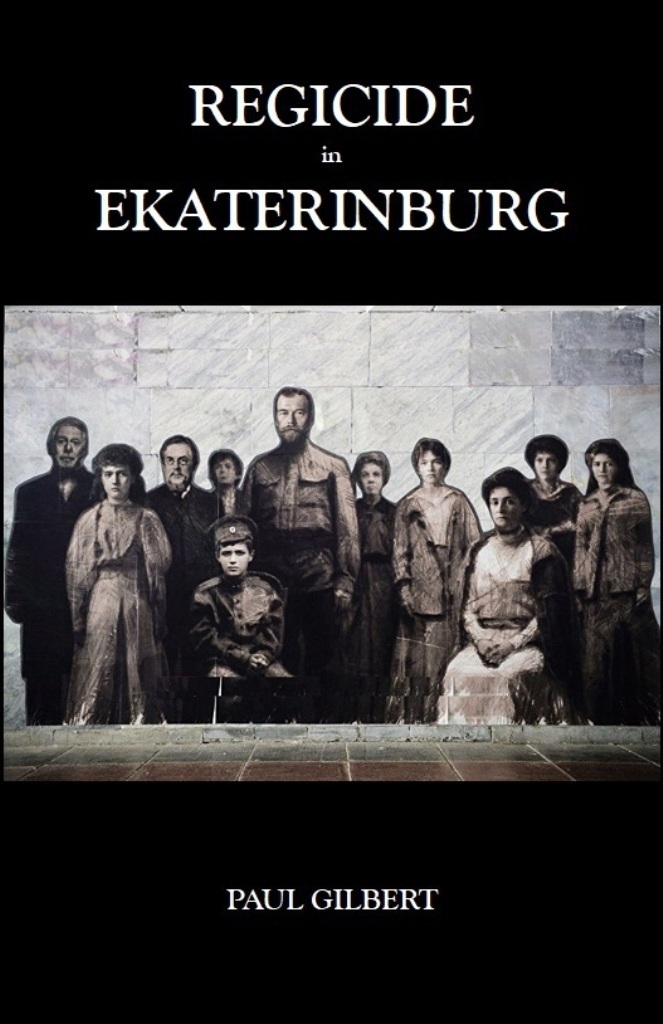
Originally published in 1921, this new edition of ‘Thirteen Years at the Russian Court’, features a new 32-page introduction by Romanov historian Paul Gilbert

A Personal Record of the Last Years and Death
of the Emperor Nicholas II. and his Family

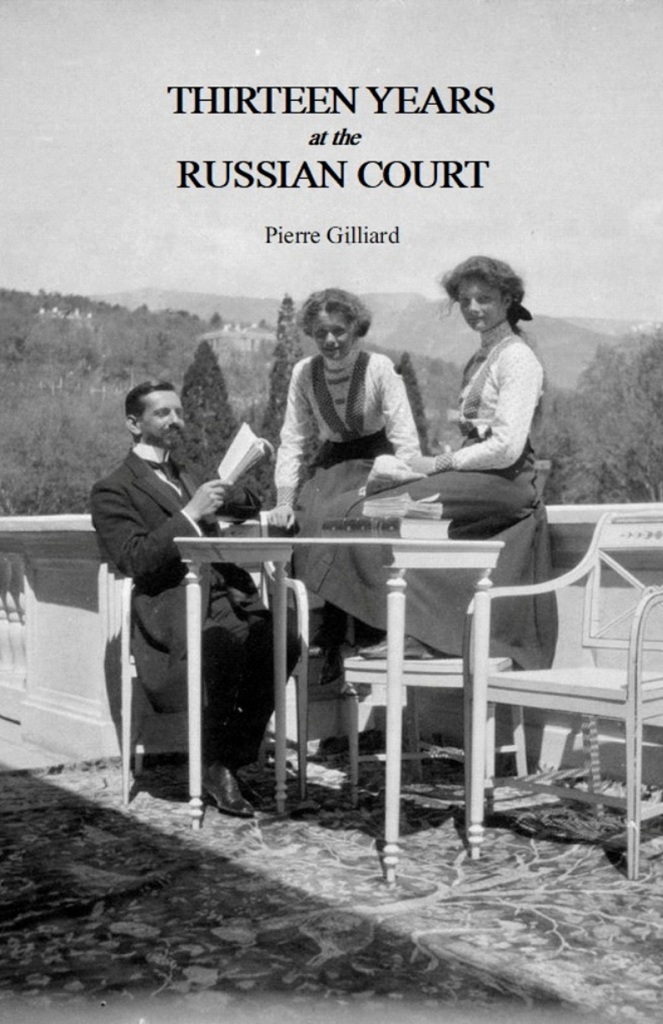
Thirteen Years at the Russian Court is a personal record by Pierre Gilliard, a Swiss author and academic who served as the French language tutor to Russian Emperor Nicholas II’s five children.

The book, first published in 1921, offers a unique perspective on the final years of the Romanov dynasty through Gilliard’s personal experiences as a tutor to the August children of Russia’s last Tsar.

The memoir blends historical narrative with personal eye-witness anecdotes, providing an intimate look into the opulence and decline of Imperial Russia. Gilliard’s recollections are not merely memoirs but vital historical documents that bridge the gap between the glamour of Court life and the impending doom of a centuries-old regime.

Gilliard’s memoir serves as an invaluable resource for anyone interested in Russia’s last Tsar, Russian history, monarchy, or the complexities of life at the Russian Imperial Court during the early 20th century.

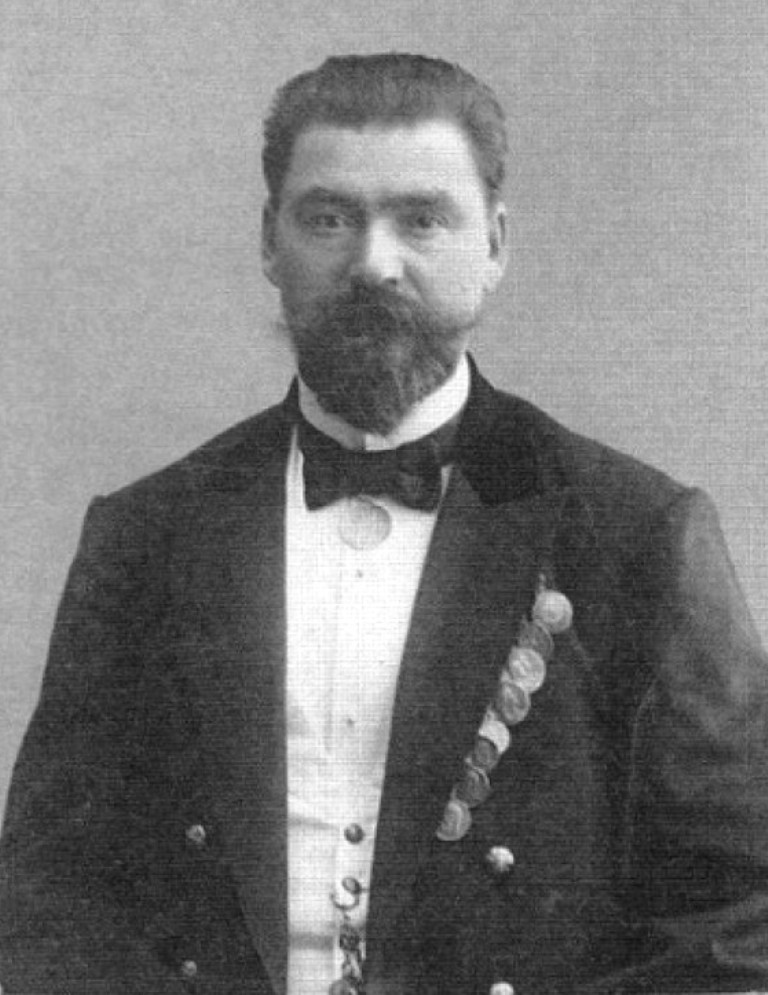
PIERRE GILLIARD (1879-1962)

Pierre Gilliard was a Swiss academic and author, best known as the French language tutor to the five children of Emperor Nicholas II of Russia from 1905 to 1918. In 1920, he returned to his native Switzerland, where he wrote his memoirs, Thirteen Years at the Russian Court, about his time with the Russian Imperial Family.

© Paul Gilbert. 29 September 2025

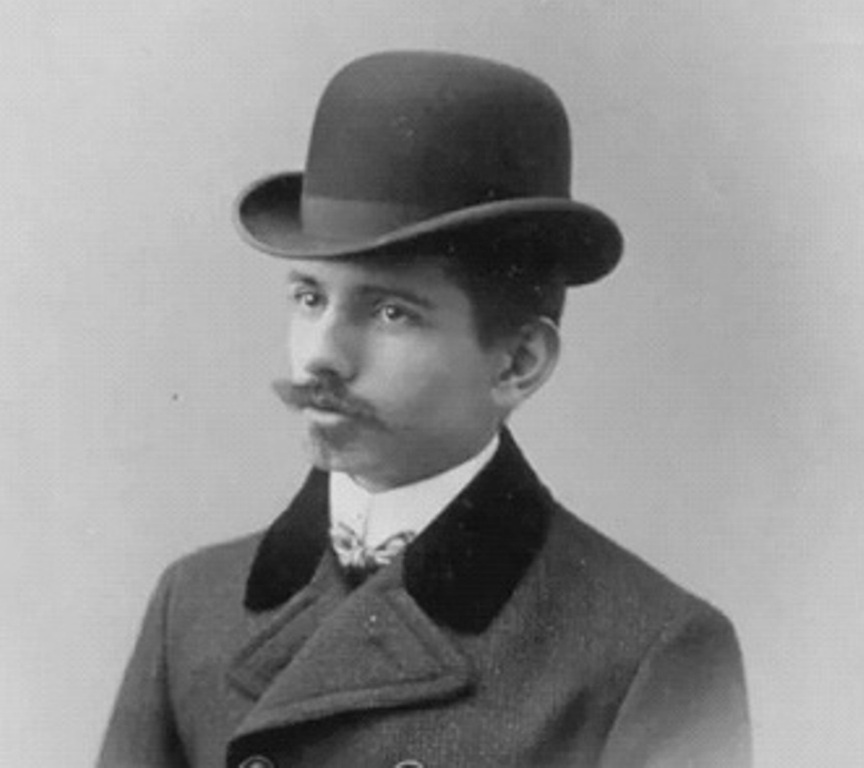
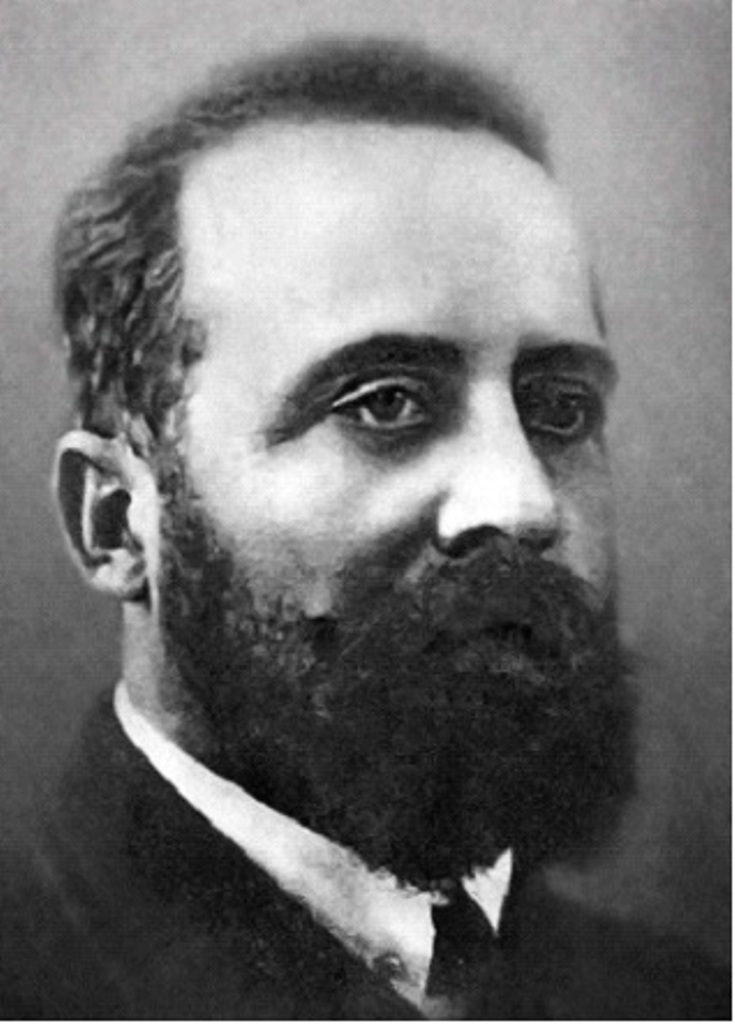
Faithful to the Tsar and his family: Pierre Gilliard (1879-1962)

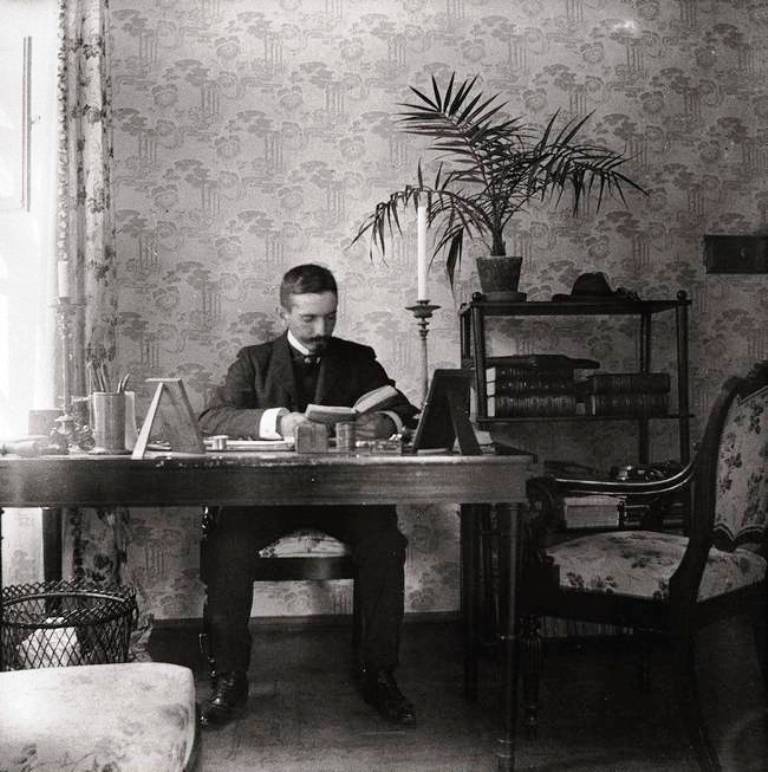
PHOTO: Pierre Gilliard (1879-1962)

Pierre Gilliard was born near Lausanne, Switzerland on 16th May 1879. He was one eight children born to the landowner-winemaker Edmond André David Gilliard and Marie Gilliard-Malherbe (1848-1911). In total, there were six sons and two daughters, but it was Pierre who is most famous for entering the inner circle of the Russian Imperial Family, and sharing many happy years as tutor to the August children of Emperor Nicholas II and Empress Alexandra Feodorovna.

After graduating from the University of Lausanne in 1904, he was invited to Russia to teach French to the children of Prince Sergei Georgievich Romanowsky, 8th Duke of Leuchtenberg (1890-1974). The young teacher had established himself, not only as an excellent tutor, but also as a modest, decent and noble person.

In September 1905, he was invited to teach French to Grand Duchesses Olga and Tatiana Nikolaevna – the eldest daughters of the Russian tsar. The two elder sisters were later joined by the two younger daughters: Maria and Anastasia, and Tsesarevich Alexei. This is how Pierre Gilliard, who was affectionately called “Zhilik” in the family, described his students:

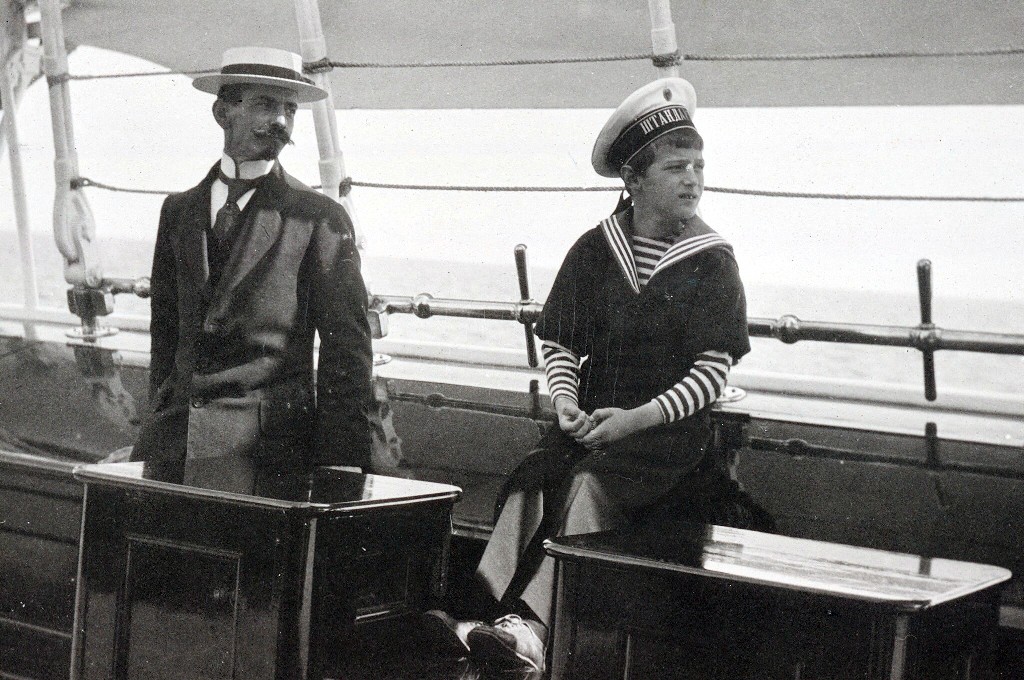
PHOTO: Pierre Gilliard with Tsesarevich Alexei Nikolaevich, on the deck of the Imperial Yacht ‘Standart‘. 1914

“Alexei Nikolayevich was the centre of this united family, the focus of all its hopes and affections. His sisters worshipped him and he was his parents’ pride and joy. When he was well the palace was, as it were, transformed. Everyone and everything seemed bathed in sunshine. Endowed with a naturally happy disposition, he would have developed quite regularly and successfully had he not been kept back by his infirmity.. <… >

” He was rather tall for his age. He had a long, finely chiselled face, delicate features, auburn hair with a coppery glint in it, and large blue-grey eyes like his mother’s. He thoroughly enjoyed life – when it let him – and was a happy, romping boy. Very simple in his tastes, he extracted no false satisfaction from the fact that he was the Heir – there was nothing he thought about less <… >

“The Grand-Duchesses were charming – the picture of freshness and health. It would have been difficult to find four sisters with characters more dissimilar and yet so perfectly blended in an affection which did not exclude personal independence, and, in spite of contrasting temperaments, kept them a most united family. With the initials of their Christian names they had formed a composite Christian name, Otma, and under this common signature they frequently gave their presents or sent letters written by one of them on behalf of all.

“In short, the whole charm, difficult though it was to define, of these four sisters was their extreme simplicity, candour, freshness, and instinctive kindness of heart.”

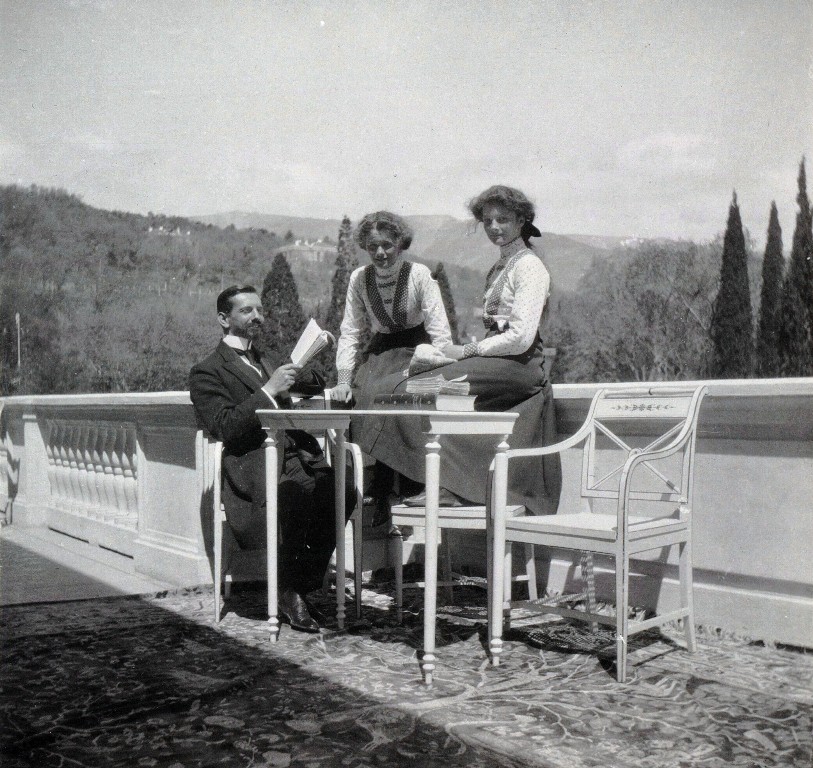
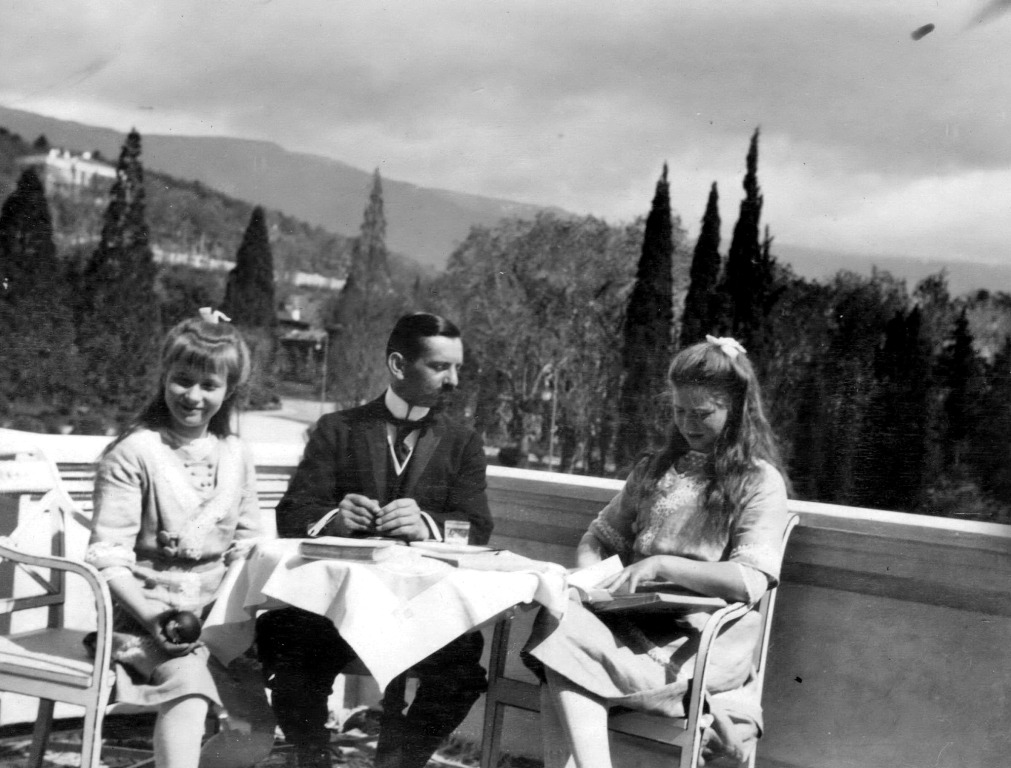
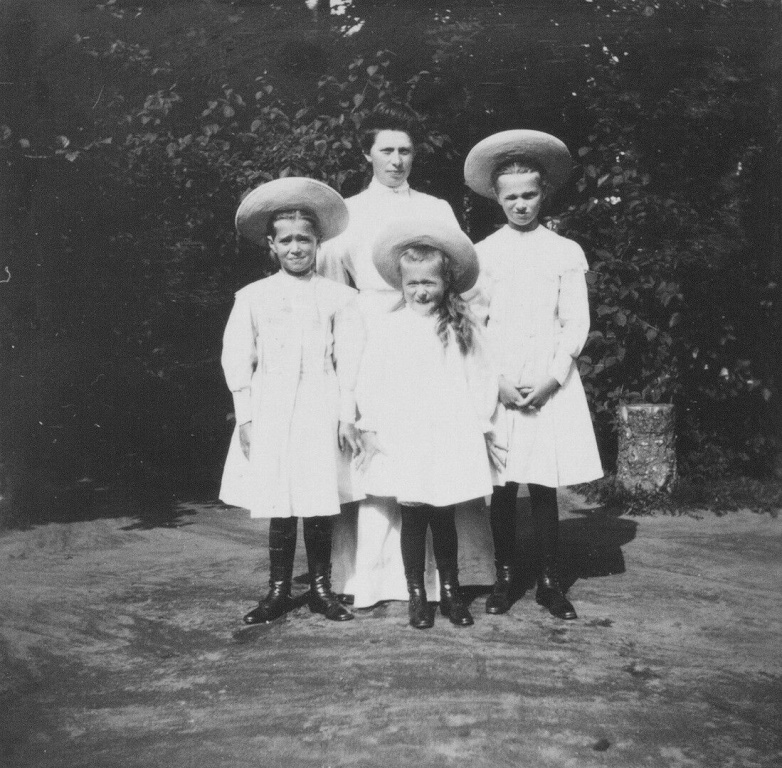
PHOTO: (above) Pierre Gilliard with Grand Duchesses Olga (left) and Tatiana (right) Nikolaevna, on the balcony of the Livadia Palace, Crimea. 1911; (below) Gilliard with Grand Duchesses Anastasia (left) and Maria (right) Nikolaevna, on the balcony of the Livadia Palace, Crimea. 1912.

From 1905 to 1918, Pierre Gilliard served not just as a tutor for the August Children, but also as a friend and mentor. He became a part of the Imperial Family’s inner circle, and was invited to join them on their journeys onboard the Imperial Yacht ‘Standart‘ to Crimea, where they stayed at their white limestone palace of Livadia. Gilliard shares his impressions of Crimea:

“In the spring of 1914 the Imperial Family went to the Crimea, as in preceding years. We arrived at Livadia on April 13th, a bright, sunny day. In fact, we were almost dazzled by the sunshine, which bathed the high, steep cliffs, the little Tartar villages half buried in the bare sides of the mountains, and the staring white mosques which stood out sharply against the old cypresses in the cemeteries. The contrast with the landscapes we had just left was so striking that, although this new country was familiar, it seemed quite fairylike and unreal in its wondrous beauty under this halo of sunshine.

“These spring days in the Crimea were a delicious relief after the interminable St. Petersburg winter, and we looked forward to them months before they came.”

In the autumn of 1914, the First World War broke out, which resulted in the death of millions of people, revolutions and the overthrow of monarchies in Germany, Austria-Hungary and Russia. After the February Revolution of 1917, Emperor Nicholas II was forced to abdicate.

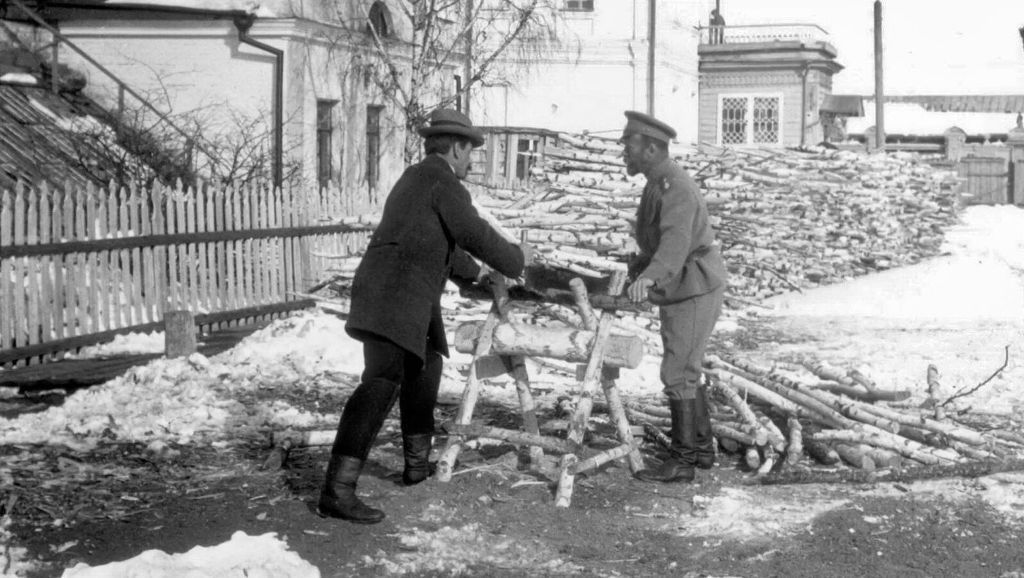
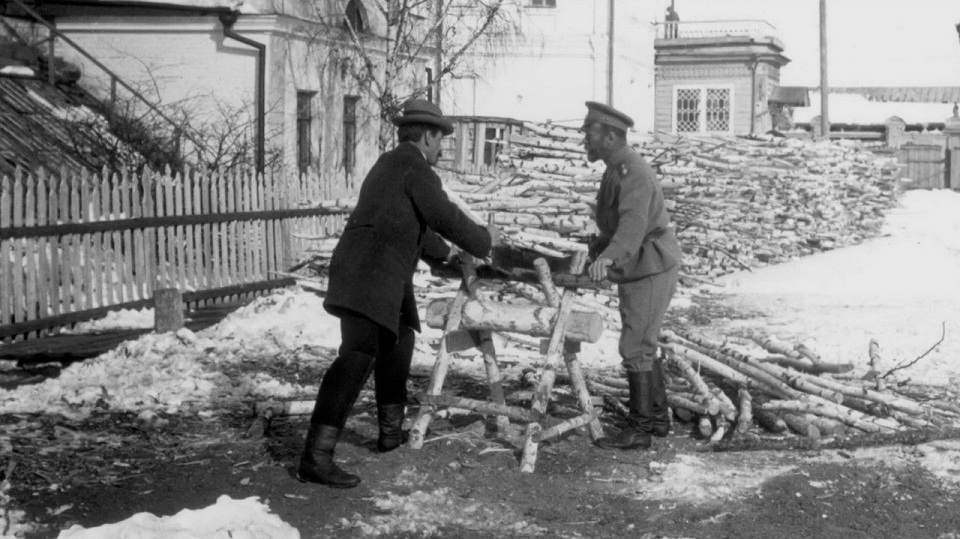
PHOTO: Pierre Gilliard and Nicholas II saw wood during their house arrest in Tobolsk. Winter 1917-18

During the fiery whirlwind of historical events which unfolded, Pierre Gilliard did not abandon the Imperial Family. To the best of his ability, trying to preserve the same daily routine, he continued to teach French to the August Children. In August 1917, he voluntarily went into exile with the Imperial Family to Tobolsk, where they were held under house arrest from August 1917 to April 1918. Gilliard endured the same hardships as those of the Tsar and his family, he supported the prisoners, still continuing with his lessons.

Gilliard was prevented from living in the Ipatiev House and was forbidden to visit the Imperial Family. He left Ekaterinburg some time later for Tyumen, where he was arrested on his arrival, but was released shortly afterwards.

It was only his foreign citizenship which saved him from sharing the same horrible death in the basement of the Ipatiev House in Ekaterinburg on the morning of 17th July 1918.

On 20th July 1918, the Czechs captured Tyumen. Gilliard then came out of hiding and discovered an official communiqué plastered on the walls around the city: “The death sentence against the ex-Emperor Nicholas Romanov was carried out on the night of 16/17 July, the Empress and the children were evacuated and transferred to a safe place.” Gilliard hurried to Ekaterinburg to find the Imperial Children whom everyone at the time believed to still be alive. His efforts were in vain.

On his arrival in Ekaterinburg in August 1918 – where he offered his assistance to the investigator Nikolai Sokolov – Gilliard visited the Ipatiev House, and recalls his impressions:

“I entered the room in which perhaps–I was still in doubt–they had met their death. Its appearance was sinister beyond expression. The only light filtered through a barred window at the height of a man’s head. The walls and floor showed numerous traces of bullets and bayonet scars. The first glance showed that an odious crime had been perpetrated there and that several people had been done to death. But who? How?

“I became convinced that the Tsar had perished and, granting that, I could not believe that the Tsarina had survived him. At Tobolsk, when Commissary Yakovlev had come to take away the Tsar, I had seen her throw herself in where the danger seemed to her greatest. I had seen her, broken-hearted after hours of mental torture, torn desperately between her feelings as a wife and a mother, abandon her sick boy to follow the husband whose life seemed in danger. Yes, it was possible they might have died together, the victims of these brutes. But the children? They too massacred? I could not believe it. My whole being revolted at the idea.” <… >

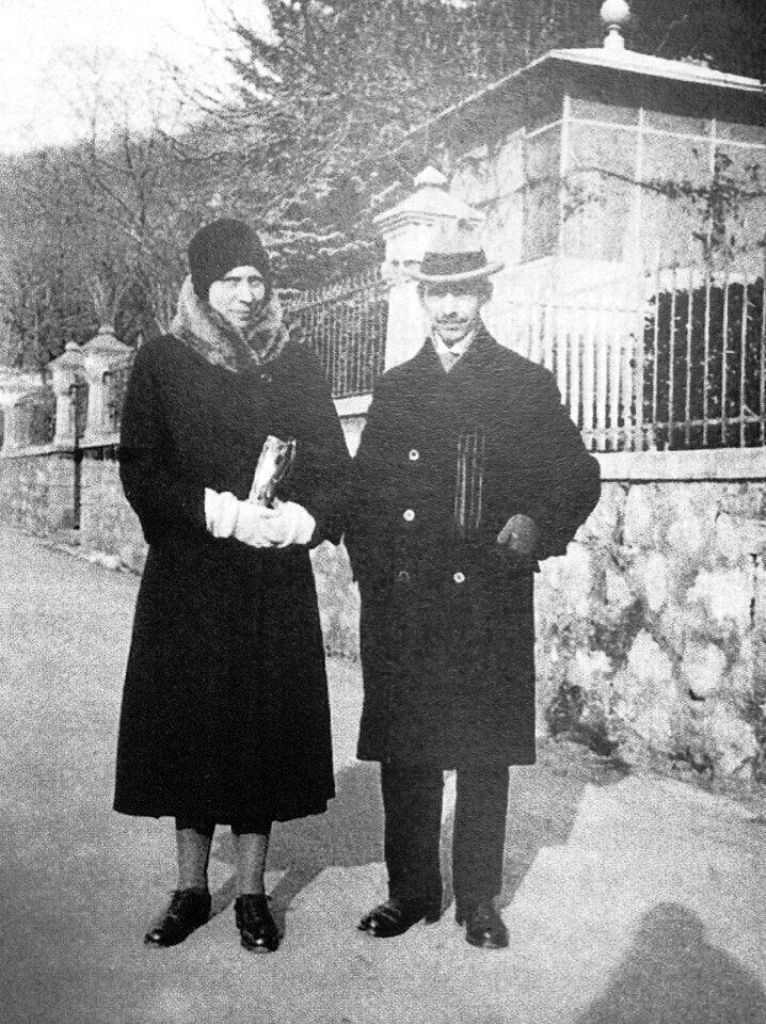
PHOTO: Pierre Gilliard and Alexandra Tegleva. Switzerland, 1922

In 1919, Gilliard married Alexandra Tegleva and in November of the same year, along with thousands of other people, including ministers and government officials of the old regime, they fled Siberia and headed east on the Trans-Siberian Railway. In April 1920, after a six-month journey, they arrived in Vladivostok. They then sailed on an American ship to San Francisco, and from there traveled by boat along the Pacific coast, through the Panama Canal, across the Atlantic Ocean and the Mediterranean Sea to Trieste. In August 1920, they returned to his parents’ home in Switzerland, which he had left some sixteen years earlier

Upon his return to his native Switzerland, Pierre Gilliard resumed his studies, which he had interrupted in 1904. In 1925, he obtained a degree in literature in Lausanne and from 1926, he taught French at the School of Modern French of the Faculty of Arts of the University of Lausanne, which he then became it’s director until 1949, and finally honourary professor in 1950.

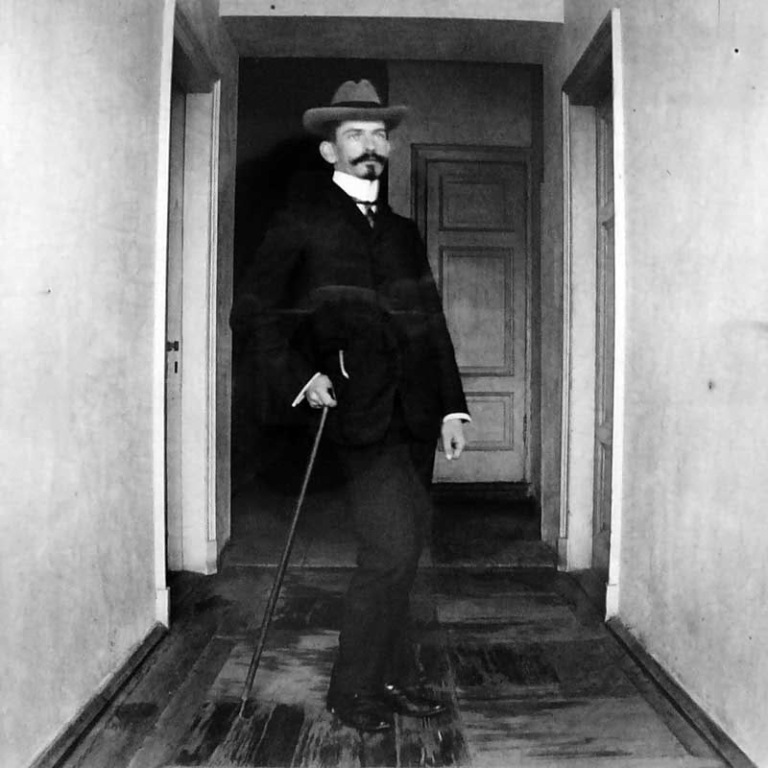
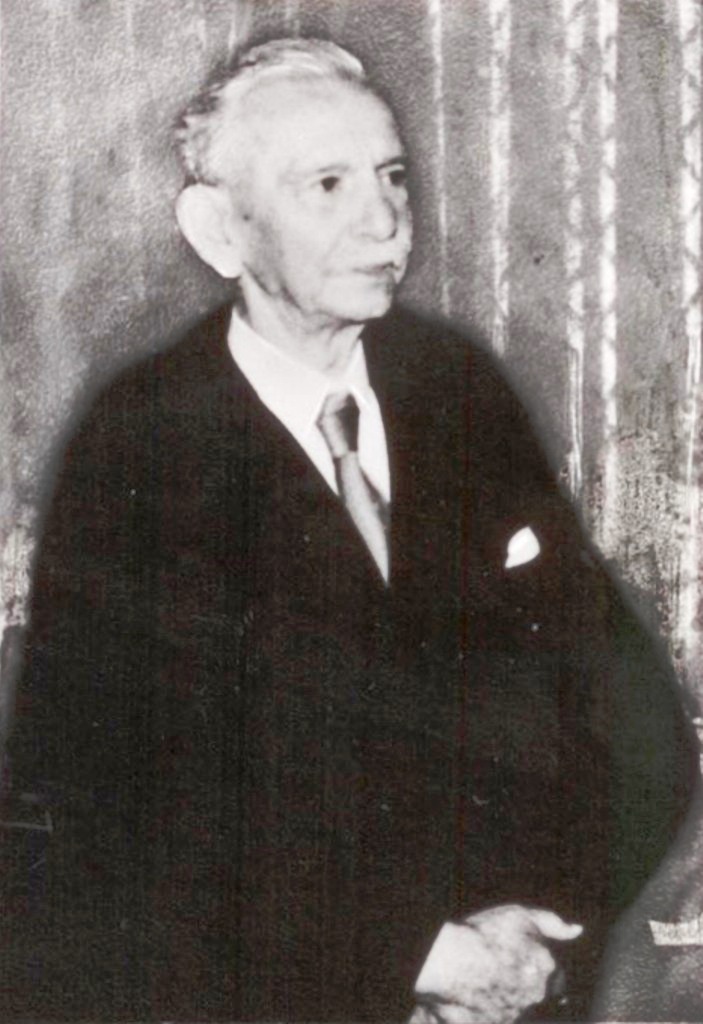
PHOTO: Pierre Gilliard. taken shortly before his death in 1962

In 1921, Gilliard published in Paris, Le tragique destin de Nicolas II et de sa famille, and in 1929 his second work, La Fausse Anastasie, histoire d’une alleged Grand-Duchesse de Russie. He was made a Knight of the Legion of Honour and winner of the Marcelin-Guérin Prize for his book on Nicholas II.

His book Thirteen Years at the Russian Court: A Personal Record of the Last Years and Death of the Czar Nicholas II and his Family was first published in English i 1921. It was initially published by Hutchinson & Co in London. The book was translated by F.A. Holt. 

Alexandra Alexandrovna Tegleva died in Switzerland on 21st March 1955. In 1958, Pierre Gilliard was severely injured in a car accident in Lausanne. He never fully recovered and died four years later on 30th May 1962, at the age of 83. His remains were cremated in the privacy of his family at the Bois-de-Vaux Cemetery in Lausanne. According to the burial service of the city of Lausanne there is no grave or burial in his name. His ashes were probably scattered elsewhere.‎

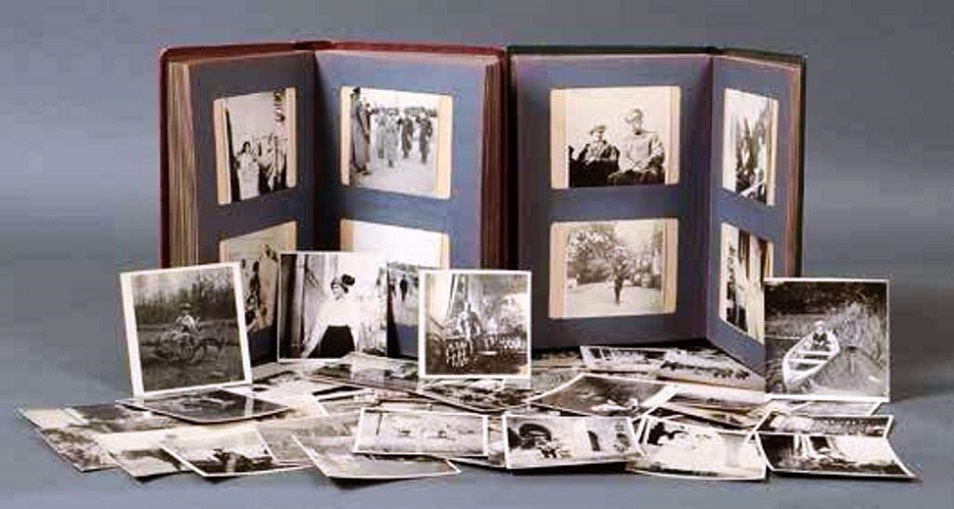
Gilliard was a keen photographer and he took hundreds of images while in Russia, including many informal photographs of the Imperial Family. These are now held by the Musée de l’Élysée, a photography museum in Lausanne. In 2005 Daniel Girardin, an art historian who worked at the Musee de l’Elysee as a curator until 2017, published a pictorial biography of Gilliard’s time in Russia based on his works in the museum’s collection. It is titled Précepteur des Romanov – Le destin russe de Pierre Gilliard [Tutor of the Romanovs: The Russian Destiny of Pierre Gilliard].

He lived a long life, was eyewitness to events which changed Russia dramatically and violently, and his name will forever remain inscribed in the pages of history next to the names of the Imperial Family, for whose sake he put his life in danger and whom he loved so much.

FURTHER READING:

Ekaterinburg: the Survivors

St. Petersburg hosts one-day exhibit of Pierre Gilliard’s photographs of the Tsar’s family

Documentary: the Return of Pierre Gilliard

© Paul Gilbert. 16 May 2025

Ekaterinburg: the Survivors

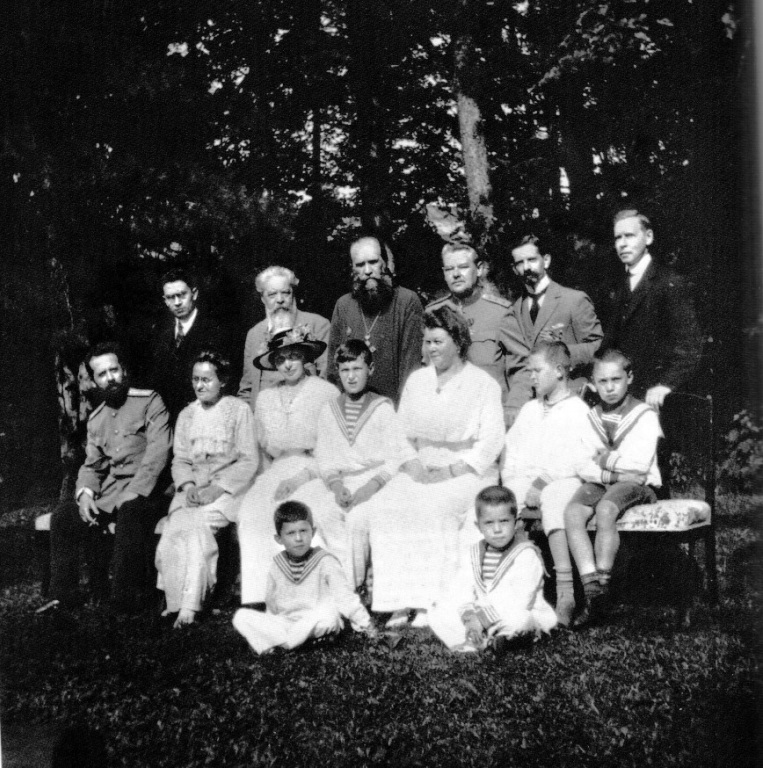
PHOTO: a number of those who survived the Ekaterinburg massacre are depicted in this photo taken at Tsarskoye Selo in 1916, including Terentiy Chemodurov (2nd from left, back row); Pierre Gilliard (2nd from right, back row: Charles Sydney Gibbes (far right, back row); and Alexandra Tegleva (3rd from left, front row and seated next to Tsesarevich Alexei Nikolaevich)

Following the transfer of the Imperial Family to Ekaterinburg in the Spring of 1918, the remaining servants and retainers living in the Kornilov House in Tobolsk were free to leave. A number of them, however, wanted to make the journey to Ekaterinburg with the hope of reuniting with the Tsar and his family. Their captives warned them that any one who went with the former Tsar and his family to Ekaterinburg would remain at liberty, at worse, they would not even be permitted to live in the same house with the Imperial Family but tossed in the local jail.

Despite the warning, a number of faithful retainers made the journey to the Ural capital, and, sure enough were imprisoned and later murdered by the Bolsheviks. Among them were Prince Vasily Dolgorukov, Ilya Tatishchev, Ekaterina Schneider, Anastasia Hendrikova, Klimenty Nagorny and Ivan Sednev

In addition, let us not forget the four faithful retainers, who remained with the Imperial family who followed the Imperial Family to their deaths in the Ipatiev House, on 17th July 1918: Dr. Eugene Botkin (1865-1918), the maid Anna Demidova (1878-1918), the cook Ivan Kharitonov (1872-1918), and the valet Aloysius Trupp (1856-1918).

As foreign nationals, the Swiss tutor Pierre Gilliard, along with his Russian born wife and nursemaid to the Tsar’s children Alexandra Tegleva and the English language tutor Sydney Gibbes were set free. So were a number of others with no explanation and amid rumours that they had abandoned the Imperial Family, sold a few secrets and begged for their lives.

The Empress’s Lady-in-Waiting Baroness Sophie Buxhoeveden attributed her unexpected release by the Bolsheviks to her “foreign” surname – it was Danish by origin – however, the even more foreign name of “Catherine Schneider” did not prevent the poor woman from being shot.

It was nothing short of a miracle that Nicholas II’s valet Terentiy Ivanovich Chemodurov; Assistant cook Leonid Ivanovich Sednev – not to be confused with his uncle with his uncle Ivan Dmitrievich Sednev – and the valet Alexei Andreyevich Volkov managed to escape from being shot by the Bolsheviks.

These men and women must never be forgotten for remaining faithful to Emperor Nicholas II and his family. Below, is a brief summary of each of them, and their respective fates following the regicide in Ekaterinburg:

Pierre Gilliard (1879-1962)

Pierre Gilliard was a Swiss academic who initially came to Russia in 1904 as a French tutor to the family of Duke George of Leuchtenberg, a cousin of the Romanov family. From 1905 to 1918 he served as the French language tutor to the children of Emperor Nicholas II.

He grew fond of the Tsar and family and followed them into exile to Tobolsk, Siberia, following the October 1917 Revolution. The Bolsheviks prevented Gilliard from joining his pupils when they were moved to the Ipatiev House in Ekaterinburg in May 1918.

Gilliard remained in Siberia after the murders of the family, for a time assisting White Movement investigator Nicholas Sokolov. In 1919, he married Alexandra Alexandrovna Tegleva, who had served as a nursemaid to the Tsar’s children.

Gilliard and Tegleva fled Bolshevik Russia in early November 1919, arriving in Vladivostok in early April 1920. They then travelled on an American ship to San Francisco, and from there travelled by ship along the Pacific coast, through the Panama Canal, across the Atlantic Ocean and the Mediterranean Sea to Trieste. From here, they travelled through Italy to Switzerland, and in August 1920 they reached his parents’ home in Fiez, which Gilliard had left 16 years before.

He became a French professor at the University of Lausanne and was awarded the French Legion of Honour. In 1921, he published a book entitled Thirteen Years at the Russian Court, which described the last days of the Tsar and his family, and the subsequent investigation into their deaths.

In 1958, Gilliard was severely injured in a car accident in Lausanne. He never fully recovered and died four years later on 30 May 1962.

Alexandra Alexandrovna Tegleva (1884-1955)

Alexandra Alexandrovna Tegleva was a Russian noblewoman who was educated at the Smolny Institute of Noble Maidens in St Petersburg. Tegleva served as a nursemaid and governess to Grand Duchesses Olga, Tatiana, Maria and Anastasia Nikolaevna, and Tsesarevich Alexei Nikolaevich. While many of the attendants in the service of the Empress spoke English, Tegleva was instructed to speak Russian with the children.

Following the Imperial Family’s house arrest in 1917, she lived with the family in the Alexander Palace at Tsarskoye Selo. In August of that year, she followed them into exile in Tobolsk, but was ultimately prevented from staying with them during their house arrest in Ekaterinburg. Tegleva was detained with Pierre Gilliard, Charles Sydney Gibbes, and Baroness Sophie Buxhoeveden in a separate residence from the imperial family in Yekaterinburg. She was almost killed by the Bolsheviks in Tyumen but was freed by the White Army.

In exile in Switzerland, Tegleva worked with her husband to investigate and debunk the claims made by Anna Anderson, a Romanov impostor who pretended to be Grand Duchess Anastasia Nikolaevna. Following two personal meetings with Anderson, Tegleva and her husband believed Anderson to be a fraud.

Alexandra Alexandrovna Tegleva died in Switzerland on 21 March 1955.

Charles Sydney Gibbes (1876-1963)

In 1901 Charles Sydney Gibbes travelled from England to St Petersburg, as tutor to the Shidlovsky family and then the Soukanoff family. By 1907 he was qualified as vice-president and committee member of the St Petersburg Guild of English Teachers. He came to the attention of Empress Alexandra Feodorovna and in 1908 was invited as a tutor to improve the English accents of the Grand Duchesses Olga and Tatiana; and subsequently Maria and Anastasia. In 1913 he became tutor to Tsesarevich Alexei.

Gibbes voluntarily followed the Imperial Family into exle, arriving in Tobolsk in October 1917, shortly before the Provisional Government fell to the Bolsheviks. In May 1918 the Imperial family was moved to the Ipatiev House in Ekaterinburg, and neither Gibbes, nor most other servants were allowed to enter. A number of servants stayed in the railway carriage which had brought them to the city.

After the fall of Ekaterinburg to the White Army on 25th July. Gibbes and Gilliard were early visitors to the scene of the regicide at the Ipatiev House and were both involved in the subsequent enquiries carried out by Ivan Alexandrovich Sergeiev and later by Nicholas Alexievich Sokolov.

In January 1919, he retreated eastwards as Siberia was captured by the Red Army. In Harbin, China on 25th April 1934 he was received into the Orthodox church by Archbishop Nestor (Anisimov) of Kamchatka and Petropavlovsk who was there in exile. Gibbes took the baptismal name of Alexei in honour of the former Tsesarevich. He was tonsured a monk on 15th December, ordained deacon on 19th December and priest on 23rd December, taking the name Nicholas in honour of the former Tsar. In March 1935 he became an Abbot. He again returned to England in 1937 and was established in a parish in London.

At the time of the Blitz he moved to Oxford where in 1941 he established an Orthodox chapel in Bartlemas. In 1949 he bought a house at 4 Marston Street, subsequently known as the Saint Nicholas House.

Gibbes died at St Pancras Hospital, London, on 24 March 1963. His open coffin was displayed in the cellar (or crypt) of Saint Nicholas House before his funeral. He is buried in Headington cemetery, Oxford, Oxfordshire, England.

Terenty Ivanovich Chemodurov (1849-1919)

From 1891 to 1908, Terenty Ivanovich Chemodurov served in the Guards Crew. On 14th (O.S. 1st) December 1908, he was appointed personal valet to Emperor Nicholas II. He resided in the Alexander Palace at Tsarskoye Selo, where he received an annual salary of 360 rubles, as well as room and board.

In August 1917 he voluntarily followed the Imperial Family into exile, first to Tobolsk and then to Ekaterinburg. He lived in the Ipatiev House until 24th May (O.S. 11th) 1918, from where he was removed due to illness and transferred to a prison hospital in Ekaterinburg. He was replaced by the footman Alexei Troupe. Nicholas II wrote in his diary that day: “I decided to let my old man Chemadurov go for a rest and take on Troupe during his absence.”

Despite the fact that the Tsar released Chemodurov from service, the local Soviet authorities arrested him. As it turned out, the person in the next cell turned out to be another servant – Alexei Andreevich Volkov – the valet of Empress Alexandra Feodorovna.

It is believed while that in prison he was forgotten by the Chekists and on 25th July 1918, he was released by the Czechoslovaks who occupied Ekaterinburg. In 1919, he was involved as a witness in the case of the murder of the Imperial Family.

Chemodurov himself explained his salvation from execution by a miracle – according to him, a list of persons to be shot was sent to the prison. The list was large and did not fit on one page, which is why Chemodurov’s surname was written on the back of the sheet. Due to the negligence of the prison authorities, who failed to check the additional inscriptions on the back of the page, Chemodurov was not summoned from his cell to be shot. He was subsequently rescued from prison by the Czechs, who liberated Ekaterinburg from the Red Army.

In exile, Chemodurov spoke of the Emperor in the following way: “During my almost 10-year service under the Sovereign, I had opportunity to study his habits and inclinations in his private life, and in good conscience I can say that the Tsar was an excellent family man.” With regard to the last days of the Imperial Family, Chemodurov said: “He [the Tsar] seemed to be petrified but did not betray his fears, the Empress, however, suffered and prayed fervently”.

Leonid Ivanovich Sednev (1903-1941)

Leonid Ivanovich Sednev was a chef’s assistant who, together with his uncle Ivan Dmitriyevich Sednev, served Emperor Nicholas II and his family during their exile in Tobolsk and Ekaterinburg from 1917 to 1918.

Six hours before the Imperial family and their four retainers were murdered in the cellar of the Ipatiev House on the night of 16/17 July 1918, Sednev was taken to a neighboring house, where he was held until 20th July. Officials from the Ural Regional Soviet then shipped him off to live with relatives in Kaluga.

In her final diary entry on 16th July 1918, Empress Alexandra Fedorovna noted: “… Suddenly Lenka [Leonid’s nackname] Sednev was fetched to go and see his uncle and flew off – wonder whether it’s true and we shall see the boy back again! …”

There are conflicting accounts of his ultimate fate; according to one report, he was shot in 1929 in Yaroslavl on charges of participating in a counter-revolutionary conspiracy, while other evidence suggests that he was killed during the Battle of Moscow in 1941; however, according to the obd-memorial.ru (CAMO) web site, he was executed on the verdict of the tribunal of the Bryansk Front for an unspecified crime on 17 July 1942, exactly 24 years to the day the Tsar and his family were murdered.

In 2004, author Robert Alexander wrote The Kitchen Boy, an historical novel which recreates the final days of the Tsar and his family as seen through the eyes of Leonid Sednev.

Alexei Andreyevich Volkov (1859-1929)

As a young man, Alexei Andreyevich Volkov entered the Russian Imperial Army and rose through the ranks. He was on guard and witnessed the assassination of Emperor Alexander II in 1881. Later he served as a military instructor to the future emperor Nicholas II. From 1886, he was in service to Grand Duke Paul Alexandrovich. In 1910 he was appointed valet at the court of Nicholas II. In addition, he was Empress Alexandra Feodorovna’s personal servant and often pushed her wheelchair.

In August 1917, Volkov followed the Tsar and his family into exile to Tobolsk, but was later separated from them at Ekaterinburg and imprisoned at Perm. There, he heard that the Emperor had been murdered by the Bolsheviks, though he was unaware that the Empress and their children had also been shot.

On 4th September 1918, he was taken from his prison cell in the middle of the night and led to the prison office, where he saw lady-in-waiting Anastasia Hendrikova and the elderly tutor Catherine Schneider. They were joined by eight other prisoners, and an escort of twenty-two guards.

Volkov asked a guard where they were being taken and was told they were being taken “to the house of arrest.” Hendrikova, who had been in the washroom, asked a guard the same question when she came out. She was told they were being taken “to the central prison.” Hendrikova asked him, “and from there?” The guard replied, “Well! to Moscow.” Hendrikova repeated this conversation to her fellow prisoners and made the sign of the cross with her fingers. Volkov took her gesture to mean “they will not shoot us.”

The prisoners were lined up in the street in rows of two, the men in front and the women in back. The group walked all the way to the edge of town and onto the Simbirsk road. Volkov asked another prisoner where the central prison was and was told they had long passed it. Volkov realized they were being taken into the woods to be shot. He broke from the group and ran for his life at the first opportunity. A bullet whizzed past his ear. Behind him he heard gunshots as the other prisoners in the group were shot and killed.

Volkov eventually joined other refugees at the White Army headquarters in Omsk and made his escape from Russia through Vladivostok and the Far East. In 1922, he settled in Estonia. He later lived in Denmark, where he was highly respected in the émigré community because of his lifelong loyalty to the Tsar and his family.

During his years in exile, he wrote his memoirs about his time at the Court of Nicholas II and his escape. These include his experience of events such as the Khodynka Tragedy.

Alexei Andreevich Volkov died on 27th February 1929, in Yuryev (Tartu), Estonia.

Baroness Sophie Buxhoeveden (1883-1956)

Sophie Freiin von Buxhoeveden, also known as Baroness Sophie Buxdoeveden, was the daughter of Baron Karlos Matthias Konstantin Ludwig Otto von Buxhoeveden (1856-1935), the Russian minister in Copenhagen, Denmark during World War I.

In her youth, Sophie was a part of the social life of St. Petersburg. In 1904, she was chosen as an honorary Lady in Waiting to Empress Alexandra Feodorovna, and became an official Lady in Waiting in 1913. She often accompanied the Empress and her four daughters to official duties.

She followed the Imperial Family into exile to Tobolsk. After being refused permission to join the Imperial family in the Ipatiev house, Sophie, along with the foreign tutors, tried to find a way to help the family.

Sophie spent many months on the run across Siberia, with other members of the Imperial household. She was only allowed safe passage out of Russia when she made it to Omsk, with the help of the British military, namely General Alfred Knox, who got her safe passage on a military train.

In exile, Buxhoeveden lived first in Copenhagen with her father, then at Hemmelmark in northern Germany, before finally settling in England, where she faithfully served as lady-in-waiting to Empress Alexandra Feodorovna’s older sister Victoria, Marchioness of Milford Haven.

During her years in exile, the Baroness wrote three books that are considered to give one of the best accounts of the Romanov family’s life and final days. They were Life and Tragedy of Alexandra Feodorovna (1928); Left Behind: Fourteen Months in Siberia During the Revolution (1929); and Before the Storm (1938).

Baroness Sophie Buxhoeveden died in England on 26 November 1956, in grace and favor rooms granted to her by th the Queen.

Dr. Vladimir Nikolaevich Derevenko (1879-1936)

Vladimir Derevenko was born on 28th (O.S. 15th) July 1879, into the family of the Russian nobleman Nikolai Dmitrievich Derevenko and his wife Varvara Ivanovna Badimo. After graduating from the 1st Chisinau Gymnasium in 1899, he entered the Imperial Military Medical Academy. In 1904, he completed his studies, earning a doctor’s diploma with honours.

In 1904-05 he was called up for active military service during the Russo-Japanese War, of which he served as junior doctor of the Kerch Fortress Artillery and head of the eye and venereological departments of the Kerch Infirmary. He also participated in hostilities at the Front, providing assistance to the wounded.

In October 1912, Derevenko was summoned to Spala to assist with Tsesarevich Alexei’s near fatal injury, as a result of his haemophilia. It was following the heir’s recovery that Dr. Derevenko was appointed Alexei’s personal physician. His son Kolya, became Alexei’s playmate.

During the First World War, Derevenko participated in the daily work of the infirmaries which had been founded by the Empress Alexandra Feodorovna in Tsarskoye Selo.

After the February 1917 Revolution, and the Tsar’s abdication, the Imperial Family were held under house arrest in the Alexander Palace at Tsarskoye Selo. The Provisional Government issued an order to the family’s servants and retinue to choose between staying with the prisoners or leaving them. Both physicians, V. N. Derevenko and E. S. Botkin, opted to stay with the Imperial Family.

Derevenko and his family followed the Imperial Family into exile to Tobolsk, where they settled in the Kornilov House, situated opposite the Governor’ House, where the Tsar and his family were held under house arrest. Derevenko was permitted access to the latter to administer any necessary medical treatment.

When the Bolsheviks came to power in October 1917, the situation for the captives changed. In April 1918, the Bolshevik commissar Yakovlev arrived in Tobolsk, and took charge. The Imperial Family and their faithful retainers were transported to Ekaterinburg in two groups. Dr. Derevenko remained with the second group in Tobolsk to attend to Alexei who was ill. Following the heir’s recovery in May 1918, they were sent Ekaterinburg to be reunited with the rest of the family.

During the Ekaterinburg period of Derevenko’s life, he was admitted to the Ipatiev House, but only to provide medical treatment to Alexei, whose health was deteriorating. During such visits, the doctor was forbidden to speak with any member of the Imperial Family.

Derevenko was fortunate to have survived the massacre in the Ipatiev House. In December 1918, the doctor and his family moved to Perm, which was occupied at the time by the Whites. It was here that he began to work in the surgical clinic of Perm University. When the Red Army units approached Perm in July 1919, together with some of the teachers, staff and students of Perm University, Derevenko was evacuated to Tomsk, where he worked as a surgeon in the Tomsk military hospital, where he continued working after the establishment of Soviet power in the region in December 1919.

In 1920, he returned to Perm and headed the Department of the Surgical Clinic of Perm University. In 1923, he was elected professor and head of the General Surgery Clinic of the Ekaterinoslav University.

Derevenko later moved to Dnepropetrovsk, where in January 1931, he was arrested on charges of attempting to overthrow the Soviet government by armed force and participating in the secret counter-revolutionary organization Union for the Liberation of Russia. He pleaded guilty, for which he was sentenced to 5 years of “restriction of liberty”, but was not subjected to imprisonment. After serving his sentence, he was exiled to Lugansk, where he worked as a doctor.

In 2003, shortly before his death, in his only interview, Derevenko’s son Nikolai said that his father died in the spring of 1936 in Dnepropetrovsk (now Ukraine) and was buried at the Sevastopol Cemetery.

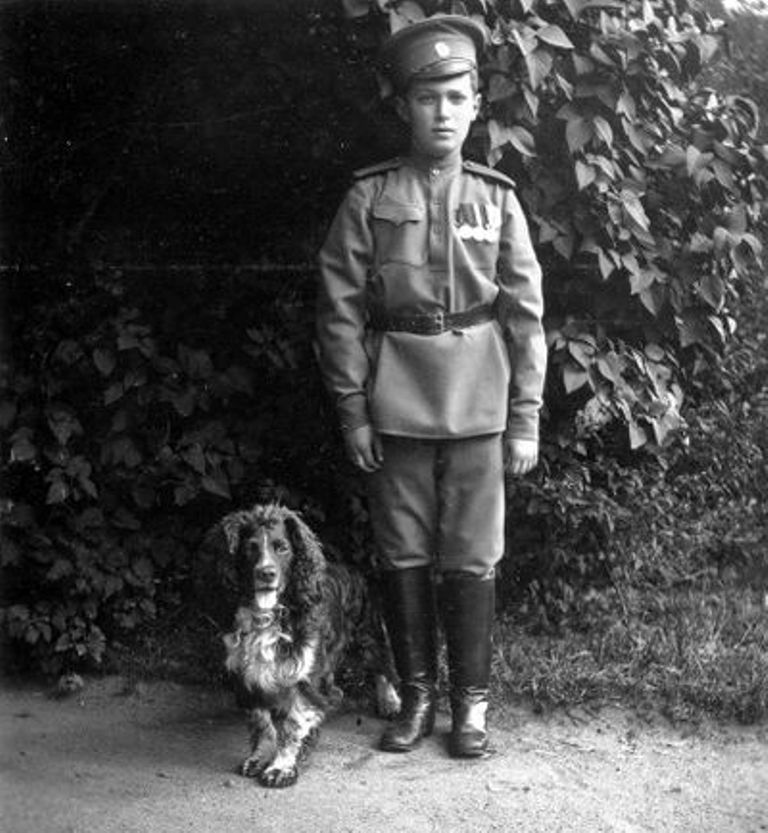
JoyTsesarevich Alexei’s spaniel

The faithful canine companion to Tsesarevich Alexei Nikolaevich was the only member of the Imperial Family who survived the massacre which took place in the Ipatiev House on the night of 16/17 July 1918.

“The Czechs [Czechoslovak Corps in the Russian Army], seizing Ekaterinburg, found a poor little animal, half-starved, running around the yard of the Ipatiev House. The dog seemed to be looking for his master all the time and his absence made him so sad and depressed that he barely touched his food, even when he was affectionately cared for,” wrote Baroness Sophie Buxhoeveden in her memoirs.

Alexei’s beloved King Charles spaniel Joy was taken by General Mikhail Dieterikhs, head of the White Army investigation into the death of the Tsar and his family. Joy was eventually homed with Colonel Pavel (Paul) Rodzianko, who was serving with the British Expeditionary Force in Siberia.

The British were expelled from Russia by the Bolsheviks and Rodzianko had grown so fond of Joy that he took him back to England.

Joy died at Windsor, however not at the royal court, but at Colonel Rodzianko’s small estate of Sefton Lawn, whose park adjoined the royal park.

“Every time I walk past my garden at Windsor, I think of the little dog’s grave in the bushes with the ironic inscription ‘Here rests Joy’. For me, this little stone marks the end of the empire and way of life,” Pavel Rodzianko wrote in Tattered Banners.

Sadly, both the garden and Joy’s modest grave is now believed to have been concreted over as a car park. 

© Paul Gilbert. 14 June 2023

***

The following NEW title was compiled and edited by independent researchers and Romanov historian Paul Gilbert was published in August 2024. 

This fascinating new study features 14 chapters on this tragic event, which include the memoirs of a British intelligence officer and journalist, and two First-English translations. In addition, 11 chapters were written by Paul Gilbert, based on new documents sourced from Russian archival and media sources over the past decade.

Please refer to the link provided for further details about the content of this new title . . .

CLICK HERE TO READ MORE ABOUT THIS TITLE
St. Petersburg Hosts One Day Exhibit of Pierre Gilliard’s Photographs of the Tsar’s family

242

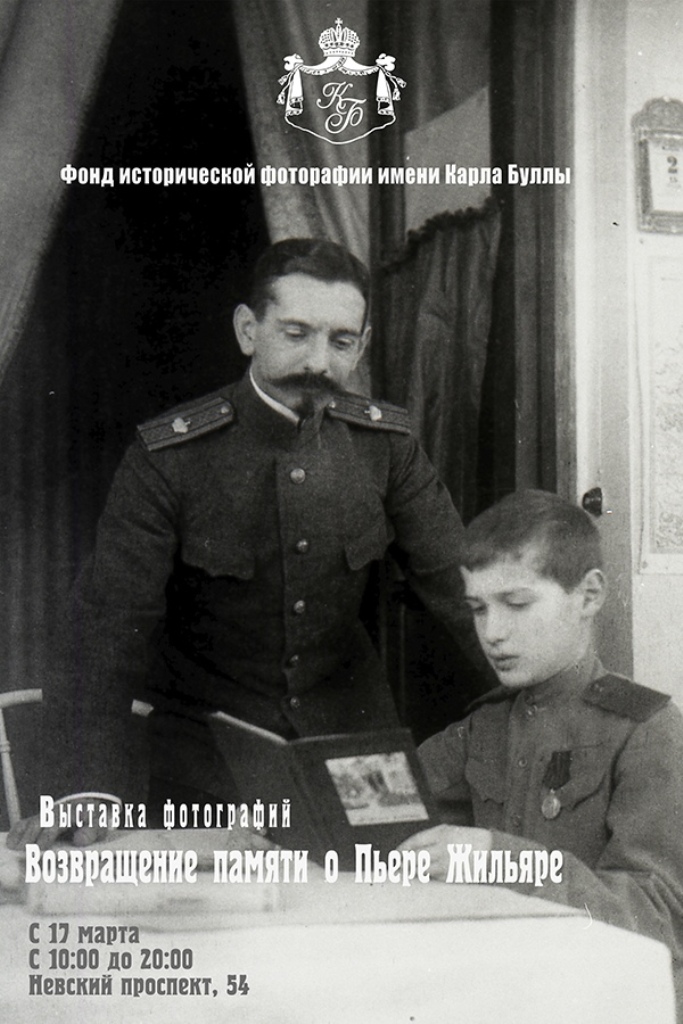
An exhibition of photographs depicting the life of Emperor Nicholas II and his family, from the collection of Pierre Gilliard, opened 17th March at the Karl Bulla Fund for Historical Photography, situated at No. 54 Nevsky Prospekt in St. Petersburg.

The one day exposition was timed to coincide with the release of the Russian translation of Gilliard’s book Трагическая судьба Николая II и его семьи (The Tragic Fate of Nicholas II and His Family), published in 1929 in Paris by Payot.

From 1905 Swiss citizen Pierre Gilliard (1879-1962) taught the French language to the children of Nicholas II. From 1913 he was appointed tutor to the Heir Tsesarevich Alexei Nikolaevich. Gilliard accompanied the Imperial Family into exile to Tobolsk, but upon arrival in Ekaterinburg he was separated from the family. Gilliard was a keen photographer, and returned to Switzerland with a large number of photographs. In exile he wrote his memoirs of his life in Russia and his impressions of the daily life of Nicholas II and his family.

Today, Gilliard’s archives are stored in the Lausanne Museum of Photography, including 384 black and white photos. More than 70 photos from Pierre Gilliard’s archive, most of which never been exhibited in Russia are presented in the exhibition.

“In essence, this is the return of the memory of Pierre Gilliard, who, by the will of fate, witnessed one of the most tragic events in the history of Russia,” said the President of the Karla Bulla Foundation for Historical Photography Valentine Elbek.

He added that the photo exhibition will open at Livadia Palace in Yalta in May 2020, to coincide with the international scientific conference Russia. The Romanovs. More than a dozen photographs brought from Gilliard’s collection depict the Imperial Family during their visits to Livadia.

It is interesting to note that the idea of ​​publishing a photo album based on Pierre Gilliard’s collection is being worked out. “Our partners in Lausanne expressed a desire to host our exhibition, which will probably be shown in various European capitals,” added Valentin Elbek.

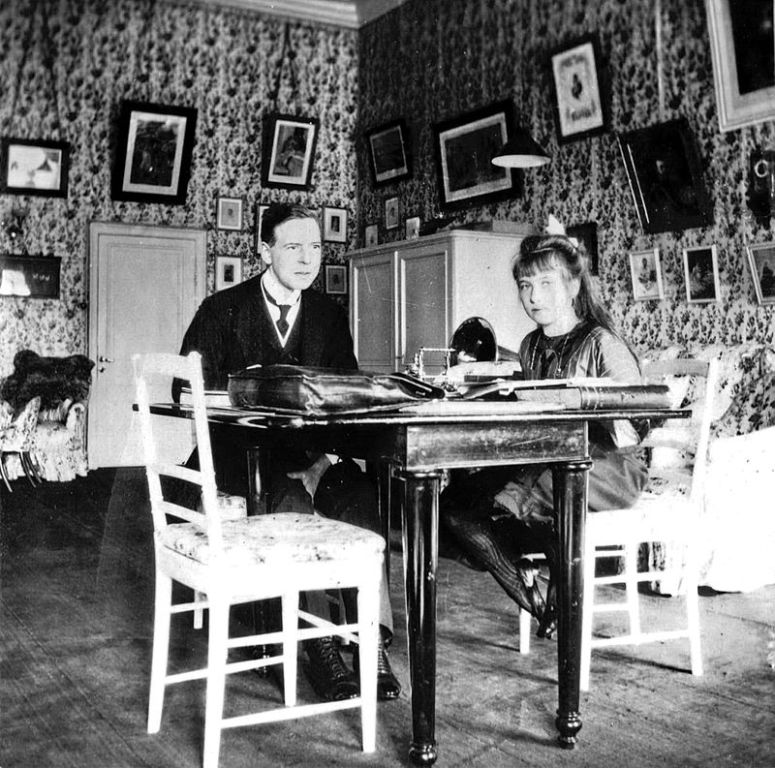
The St. Petersburg exhibition was implemented in partnership with the Ludwig Nobel Foundation. The Tsarskoye Selo Museum Reserve has shown interest in this initiative, where Gilliard’s working room is being restored in the Alexander Palace, and his heirs donated part of his belongings to the museum as a gift.

© Paul Gilbert. 20 March 2020

The woman who photographed the Imperial Family in Tobolsk

232a

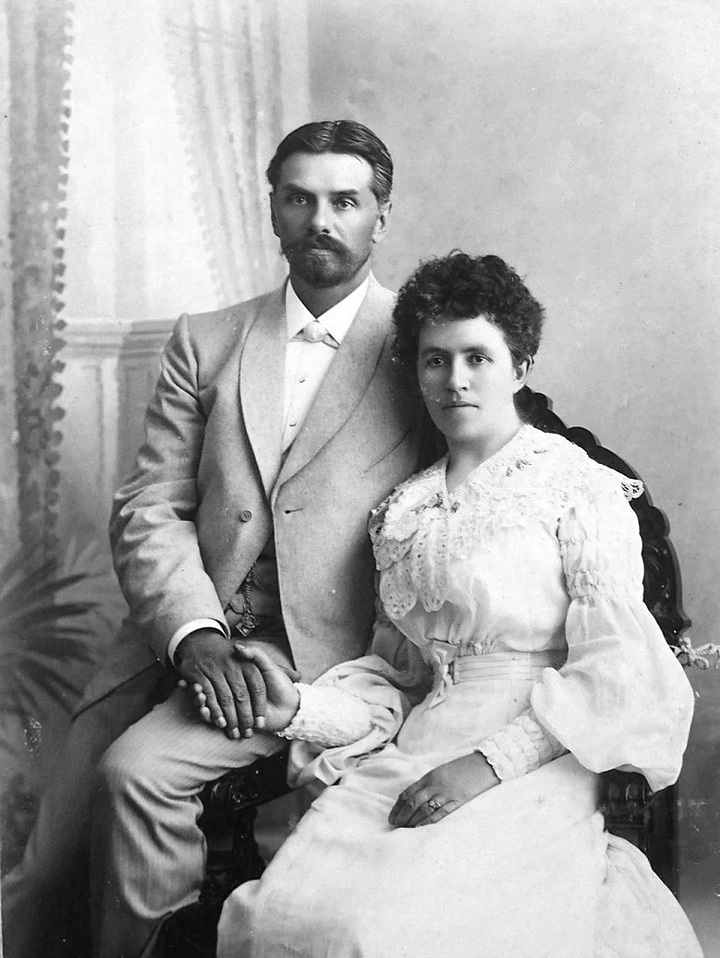
Maria Ussakovskaya, nee Petukhova with her husband Ivan Konstantinovich Ussakovsky

Few historians know about Maria Ussakovskaya the first woman photographer in Tobolsk. Through the lens of her camera, she photographed life in the provincial capital during one of the most dramatic periods of Russia’s history, leaving for posterity a noticeable mark in the biography of this Siberian city.

Incredible progress

Maria Mikhailovna Ussakovskaya, nee Petukhova, was born on 28th December 1871 (Old Style) in the family of a Tobolak native, state adviser M.M. Petukhov. She graduated from the Tobolsk girl’s school and, in 1893, married the official Ivan Konstantinovich Ussakovsky.

Ivan was also a great lover of photography – a hobby that was fashionable and modern in Russia at the time. On the basis of her husband’s home laboratory, as well as money received in a dowry from her father, Maria opened a photo salon, which quickly gained popularity among the townspeople. It should be noted that in 1897 in Tobolsk, with a population of 20 thousand people, there were no less than nine photo shops! 

Maria kept up with all the new developments in photography. She ordered expensive Bristol cardboard for passe-partout, used interchangeable backs with different scenes, offered costume shots, and even performed photo montages. This was incredible progress for Siberia at that time.

Photographs by Ussakovskaya were distinguished by their artistic taste and original composition. These were real photo portraits, which is especially significant, because photography at that time was essentially a step into eternity to become a memory for years to come.

Unlike other female owned photo salons, Ussakovskaya perfectly mastered the techniques of photography herself. Her photo salon also began to publish postcards, which were in great demand. It is known that the famous Russian chemist and inventor Dmitry Mendeleev (1834-1907), during his stay in Tobolsk in the summer of 1899, bought a collection of art postcards with views of his native city from Ussakovskaya’s salon.

Maria continued to work after the revolution, but the portraits of young ladies in silk dresses were replaced with photographing labor collectives, fur farms, bone carving masters and ordinary workers. At the same time, the house was formally confiscated by the local Soviet, leaving Maria to rent her own photo workshop from a local farm in Tobolsk. In 1929, Ussakovskaya was deprived of suffrage. The photo salon had to be closed. In 1938, the Ussakovskys left Tobolsk for Moscow for fear of reprisals. Maria Mikhailovna died in 1947 and is buried in the Don Cemetery.

232b

Photograph of Rasputin taken at Maria’s salon in Tobolsk

Witness of events

Maria was a witness to many historical events. Of particular interest in her biography are family traditions associated with the names of prominent people of that era and carefully preserved by subsequent generations of Ussakovsky. One of them is based on the visit by the famous strannik Grigori Rasputin.

The photograph of Grigory Rasputin made by Maria Ussakovskaya is today widely known. Moreover, the famous holy man, who was hunted by Russia’s finest photographers, presented himself at Maria’s salon. Maria’s great-grandson of Vadim Borisovich Khoziev, continues to tell the story of Rasputin’s visit to his great-grandmother’s salon in Tobolsk, as told to him by his grandmother Maria Ivanovna Ussakovskaya.

232e

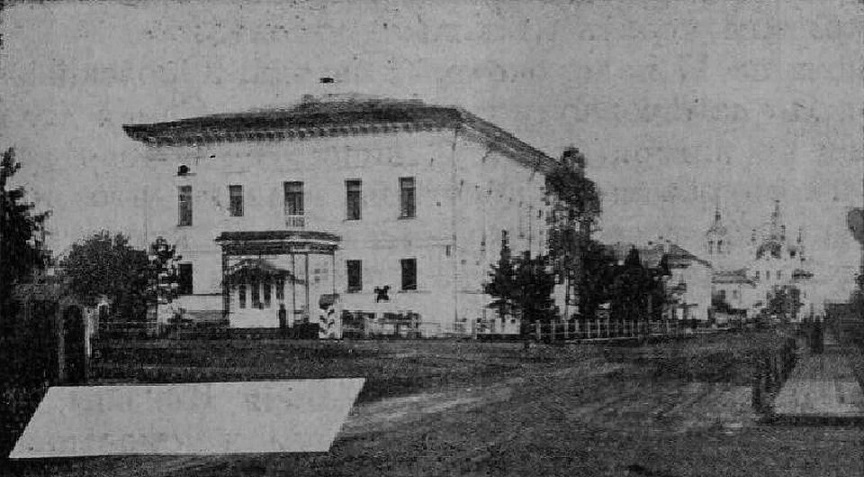
One of Maria’s photos of the Governors House, where the Imperial Family lived under house arrest

Photographer of the Romanov family?

It is also of great interest,  that according to the Ussakovsky family, Maria repeatedly photographed the family of Tsar Nicholas II during their house arrest in the former Governor’s Mansion in Tobolsk. Sadly, however, in 1938, her daughter Nina, fearing arrest, destroyed all the photographic plates. One can only speculate, as to what these lost plates depicted? How close did Maria get to the Imperial Family? What were they doing when she photographed them? How many photographs did she take, and later destroyed? Sadly, we will never know.

Only photos of the faithful servants of the Imperial Family have been preserved to this day. The original of this photo is now in the collection of the Tsarskoye Selo State Museum in Pushkin, a copy of which can be seen in the Museum of the Family of Emperor Nicholas II (opened in June 2018) in Tobolsk. It is interesting to add that members of their suite who enjoyed freedom to go about Tobolsk, made purchases of  postcards with views of Tobolsk, on behalf of the Imperial Family from Maria’s salon.

The fact that the Imperial Family used the services of the Ussakovskaya Salon was documented. In the financial report of Colonel Kobylinsky, security chief of the Romanovs, in addition to a few mentions of invoices for purchasing postcards, information is also provided on the account “for correcting negatives”. So Maria’s photos of the Imperial Family did in fact exist!.

The Imperial Family described their stay in Tobolsk in great detail in both their respective diaries and letters, however, there is no mention of an invitation of Maria Ussakovskaya nor the photographer in general. A visit by a female photographer would hardly go unnoticed. It is also not clear why the Romanovs would need to invite a photographer: they, as well as the tutor to Tsesarevich Alexei Pierre Gilliard, had their own cameras. Many photographs of the Imperial Family have been preserved, taken in Tobolsk by the Romanovs themselves or by members of their retinue.

Pierre Gilliard notes in his diary on 17th September 1917 that the Imperial Family were forced to have “ID cards with numbers, equipped with photographs.” Empress Alexandra Feodorovna made a similar note in her diary on 30th September 1917. Their respective entries may explain the photographer from the Ussakovskaya Salon, who was most likely Maria’s husband Ivan Konstantinovich Ussakovsky, who was invited for this compulsory photography for certificates. An invoice was issued by the salon.

Several passes to the “Freedom House” with photographs have been preserved, for example, the passes with a photograph of Dr. E. S. Botkin and maid A. S. Demidova. Their copies are also on display in the Museum of the Family of Emperor Nicholas II in Tobolsk.

232c

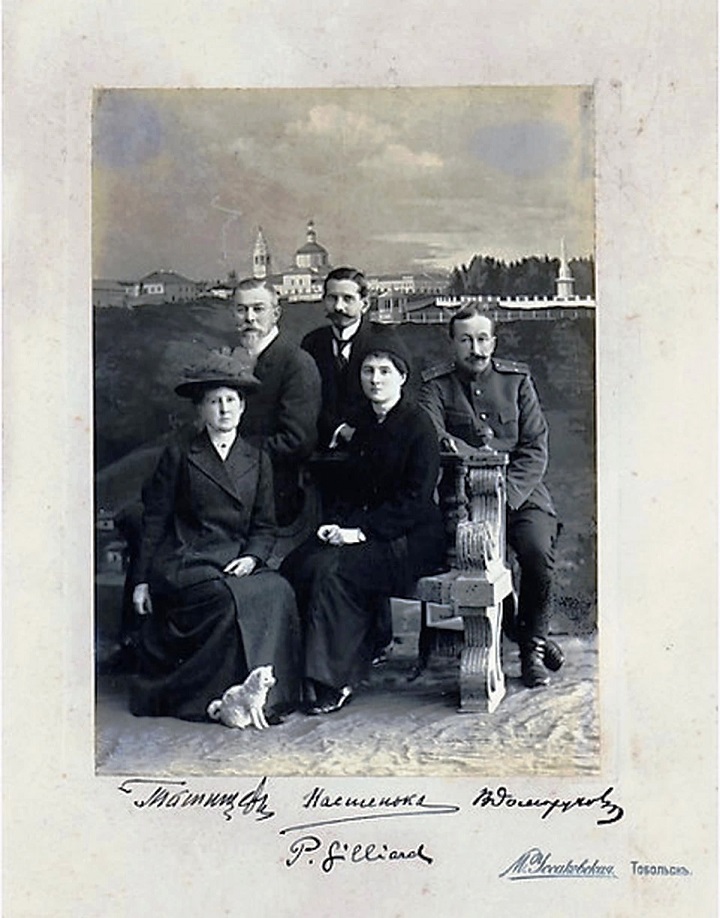
Photograph of the Imperial Family’s faithful servants taken at Maria’s salon in Tobolsk

“Faithful servants”

A wonderful photograph depicting *five faithful servants of the Imperial Family has been preserved to this day. The original of this photo is now in the collection of the Tsarskoye Selo State Museum in Pushkin, a copy of which can be seen in the Museum of the Family of Emperor Nicholas II (opened in June 2018) in Tobolsk.

The faithful servants of the Imperial Family, who had not lodged in the Governor’s House, but in the Kornilov House, located on the opposite side of the street and, obviously, enjoyed greater freedom of movement, could visit the Ussakovskaya Salon, which was located nearby. The famous photograph, called “Faithful Servants”, was clearly taken in the salon. Five members of the imperial retinue pose against a backdrop with a view of Tobolsk, printed or painted on canvas, This background can be seen in other photos from the Ussakovskaya Photo Salon.

*NOTE: the photo above depicts – the gentlemen: Count Ilya Tatishchev, Pierre Gilliard, Prince Vasily Dolgorukov; the ladies, Catherine Schneider, Anastasia Hendrikova. With the exception of Pierre Gilliard, the other four faithful retainers of the Imperial Family were murdered by the Bolsheviks in 1918.

232d

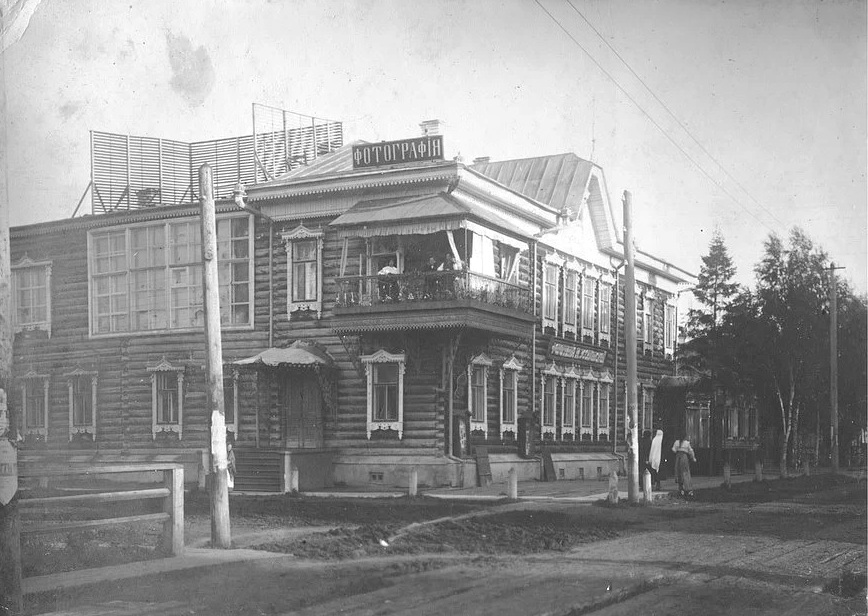
The home and salon of Maria Mikhailovna and Ivan Ussakovsky in Tobolsk

The home and salon of Maria Mikhailovna and Ivan Ussakovsky which was located at No. 19 Ulitsa Mira, was illegally demolished in 2006. Requests to local authorities by a group of local historians to restore the building has fallen on deaf ears in Tobolsk. 

© Paul Gilbert. 24 February 2020

Documentary: The Return of Pierre Gilliard

035

Pierre Gilliard and Nicholas II sawing wood during their house arrest in Tobolsk

«Возвращение Пьера Жильяра» (The Return of Pierre Gilliard) is the name of a new Russian language documentary film dedicated to the the French language tutor to the five children of Emperor Nicholas II of Russia from 1905 to 1918.

Work on on the documentary began in 2018, and was recently completed at the “NATAKAM” film studio; the script was written and directed by Lyudmila Shakht and Konstantin Kozlov. The premiere was held earlier this month in the House of Cinema, with additional viewings scheduled on 20th March at the Knowledge of Russia Society, and on 24th April at the Boris Yeltsin Presidential Library in St. Petersburg. Gilliards’ grand-nephews – writer Pierre-Frederic Gilliard and doctor Jacques Moser talk about the life and fate of Pierre Gilliard (1879-1962). The film is based on family memories, diaries, letters and photographs, on their famous uncle, a true friend of the Imperial family.

After returning from Russia to Switzerland, he wrote and published the book Le tragique destin de Nicolas II et de sa famille (1921). An English language edition Thirteen Years in the Russian Court was published in 1927. 

The Swiss-born Pierre Gilliard first gave French lessons to Grand Duchesses Olga and Tatiana, then to Maria and Anastasia. He first began to teach French to the Tsesarevich and Heir Alexei in 1913. Gilliard grew fond of the family and following the Russian Revolution of 1917, he followed them into internal exile to Tobolsk, Siberia. The Bolsheviks prevented Gilliard from joining his pupils when they were moved to the Ipatiev House in Ekaterinburg in May 1918.

Gilliard remained in Siberia after the murders of the Imperial family, assisting White Russian investigator Nicholas Sokolov. In 1919, he married Alexandra Tegleva (1894-1955), who had been a nurse to Grand Duchess Anastasia. In 1920, he returned to Switzerland through Vladivostok, along with wife. He managed to save his archive – diaries, letters, memorabilia, photographs. In 1958, Gilliard was severely injured in a car accident in Lausanne, Switzerland. He never fully recovered and died four years later on 30 May 1962

035b

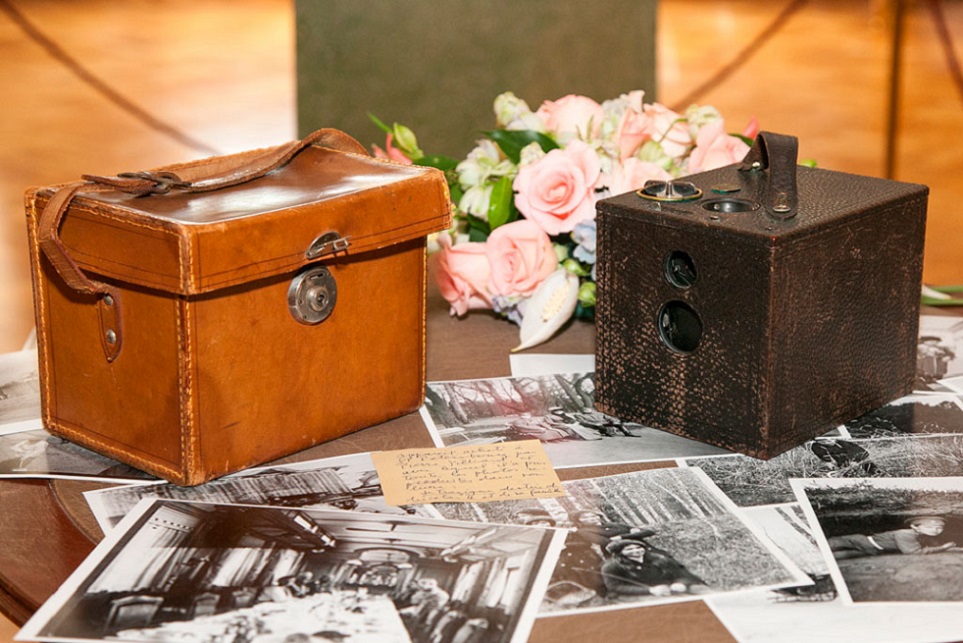
Pierre Gilliard’s  Eastman Kodak Bulls Eye camera

It is important to note that in recent years Pierre Gilliard descendants have donated several memorial items to the Tsarskoye Selo State Museum. Among these are the *Eastman Kodak Bulls Eye camera (above)  from which he photographed the Imperial family in Tsarskoye Selo and later in exile in Tobolsk. According to Mr. Moser, his mother, the goddaughter of Gilliard, inherited this camera and explained that “Uncle Pierre” took all the photos at the Russian Court, and that “the emperor himself actually held the camera in his hands.” She showed pictures – in particular the one in which Gilliard and the Tsar sawed wood in Tobolsk (above). The photos which are featured in the documentary film illustrate the dramatic fate of the last Russian emperor and his family. The museum also received a tea set and a set of tableware, a gift to Gilliard from Grand Duchess Anastasia Nikolaevna, as well as a Faberge brooch and a Paul Bure golden pocket watch gifted by Empress Alexandra to Gilliard’s wife Alexandra Tegleva.

*Pierre Gilliard’s Eastman Kodak Bulls Eye camera was recently displayed in The Last Tsar: Blood and Revolution Exhibition, at the Science Museum in London, England

035c

In recent years photos taken by Gilliard of the Imperial family were sold at auction

© Paul Gilbert. 17 March 2019