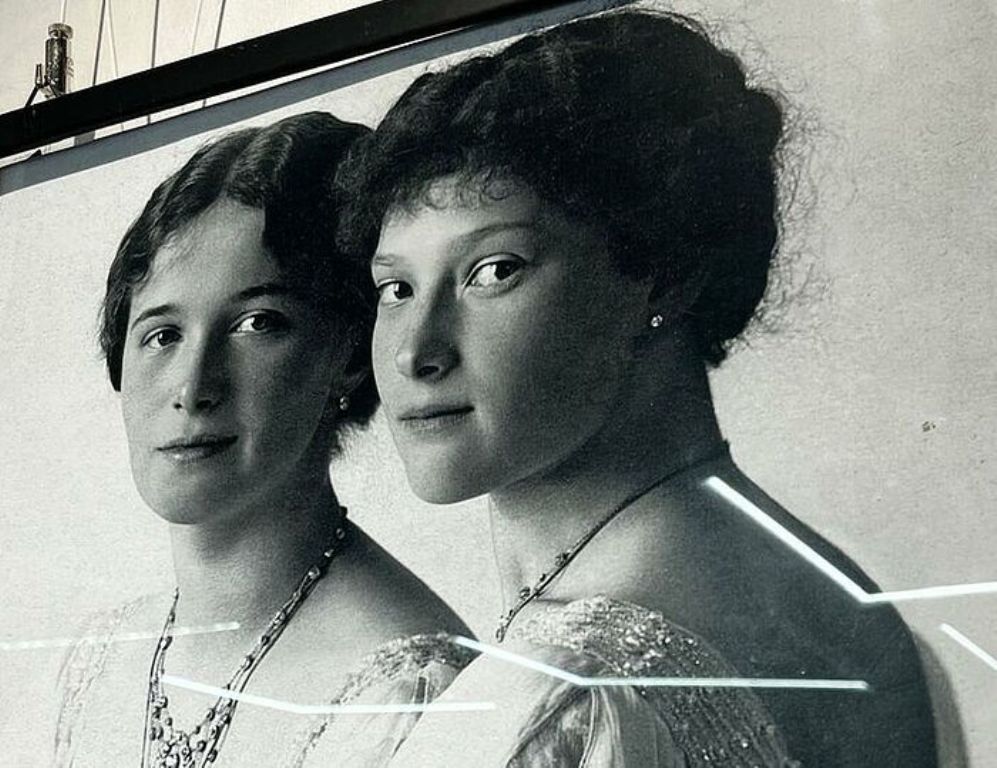
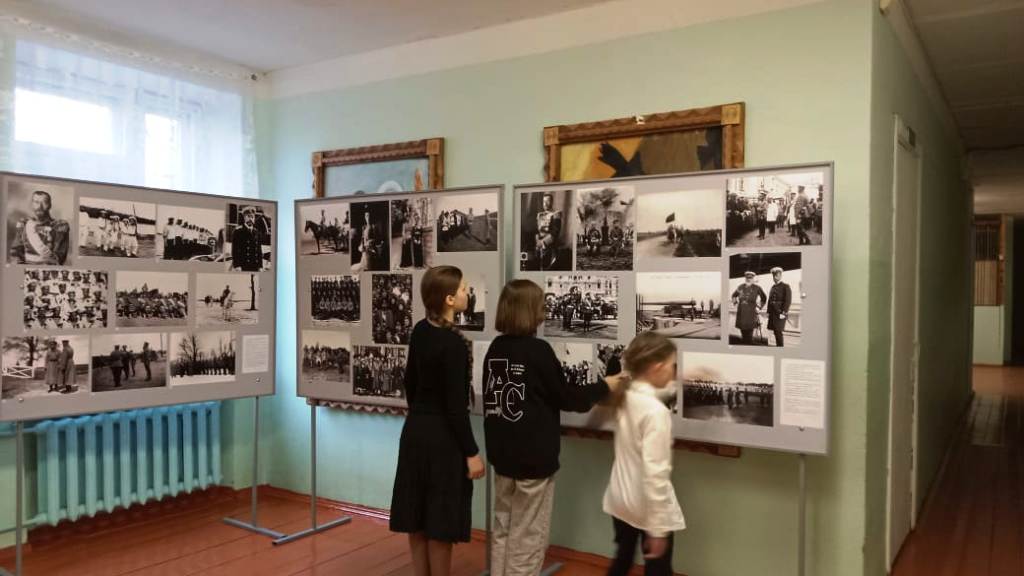
Photo-exhibition dedicated to the Imperial Family open’s in the Volokolamsk Kremlin

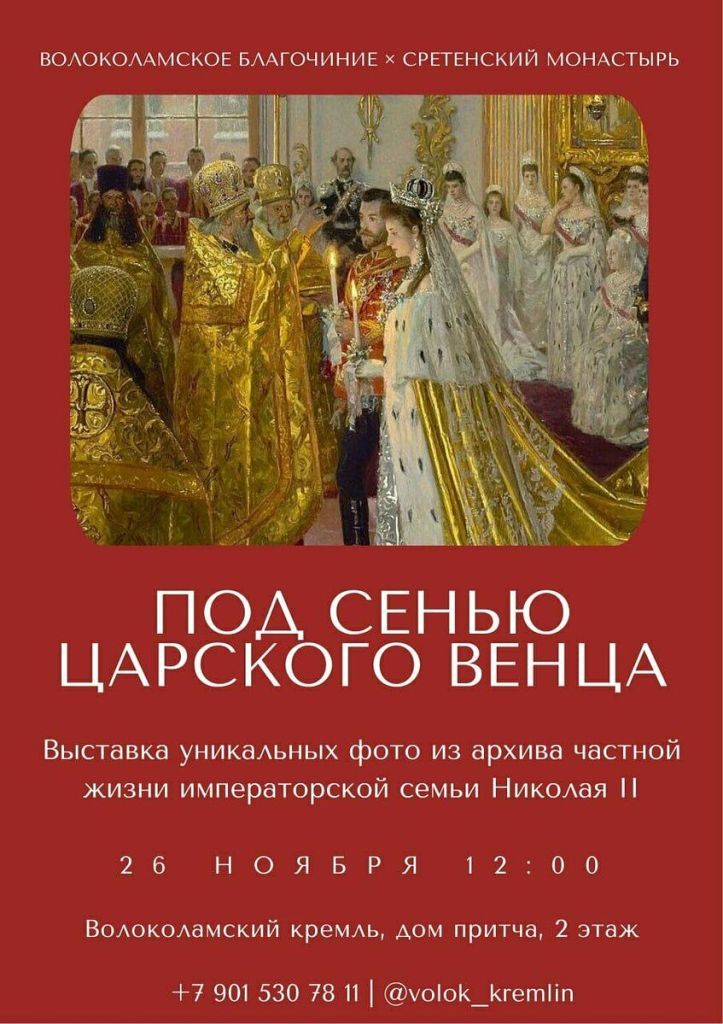
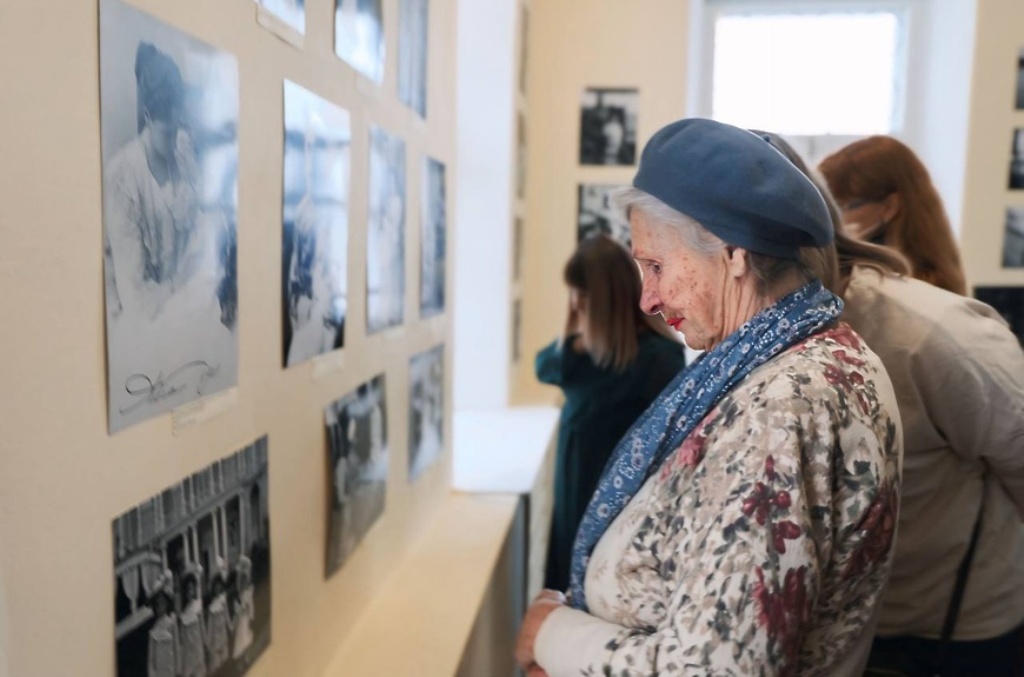
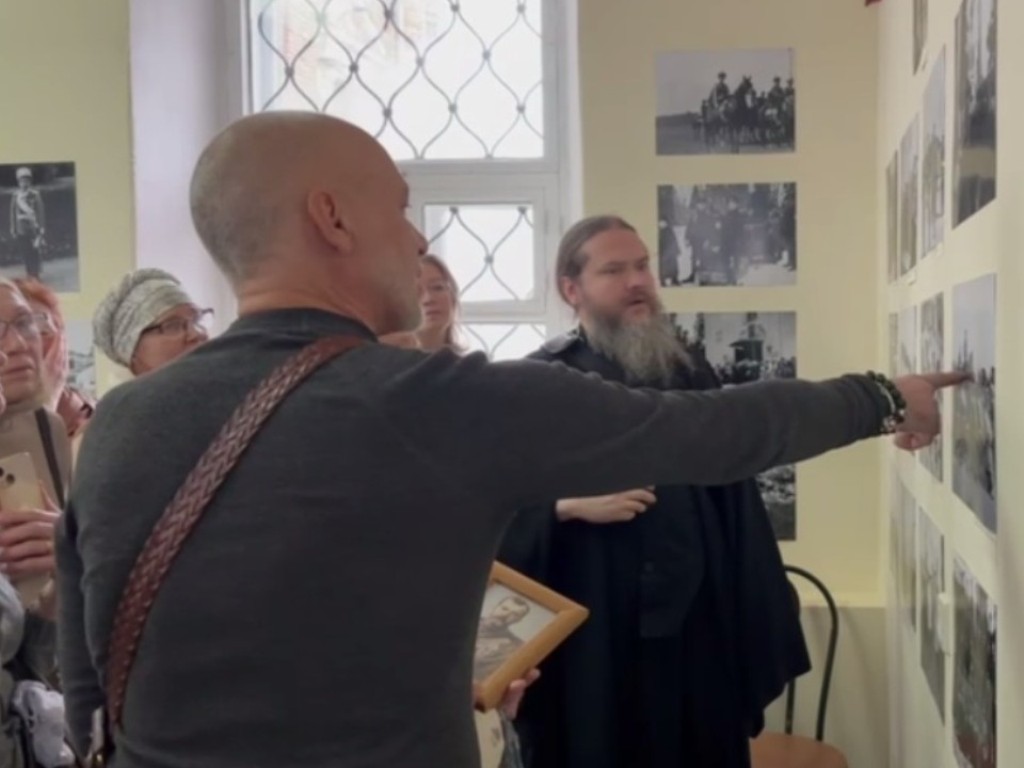
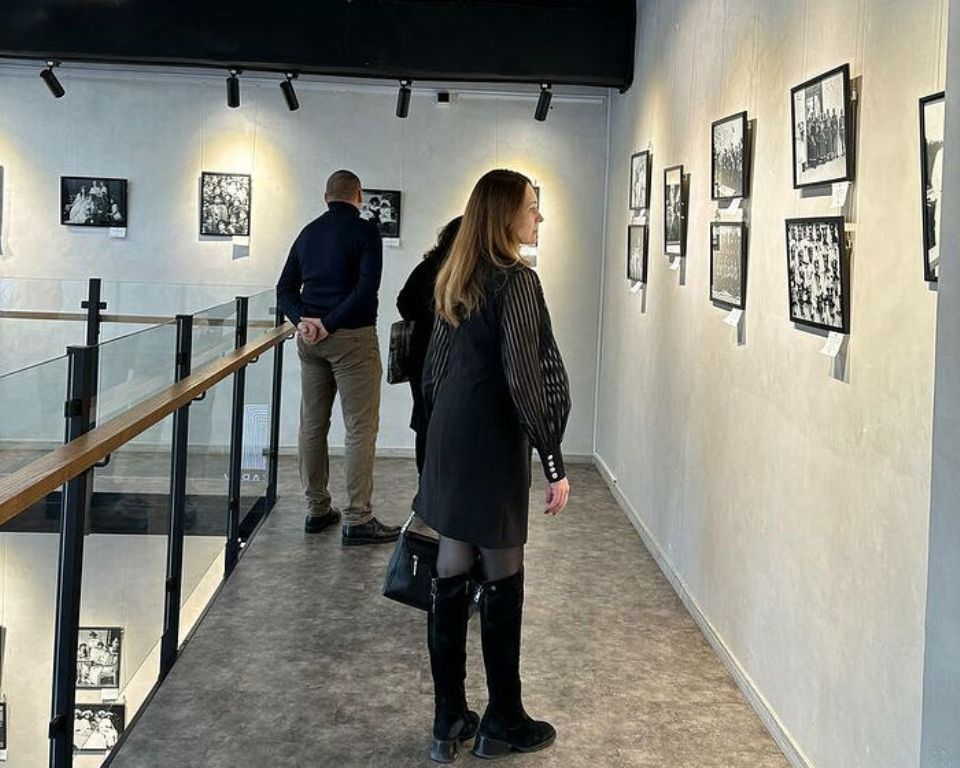
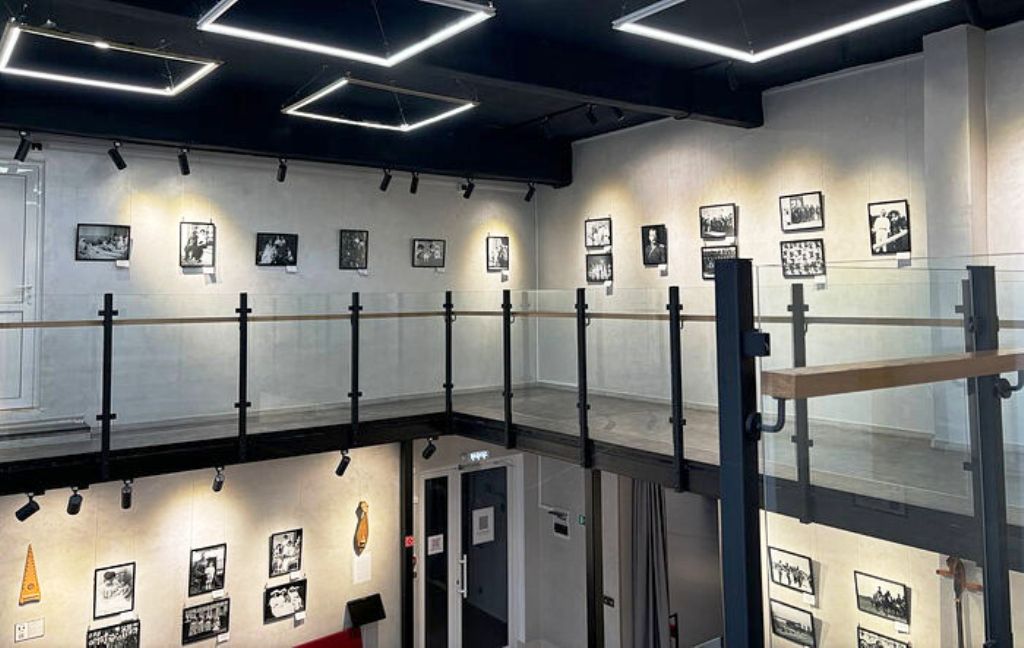
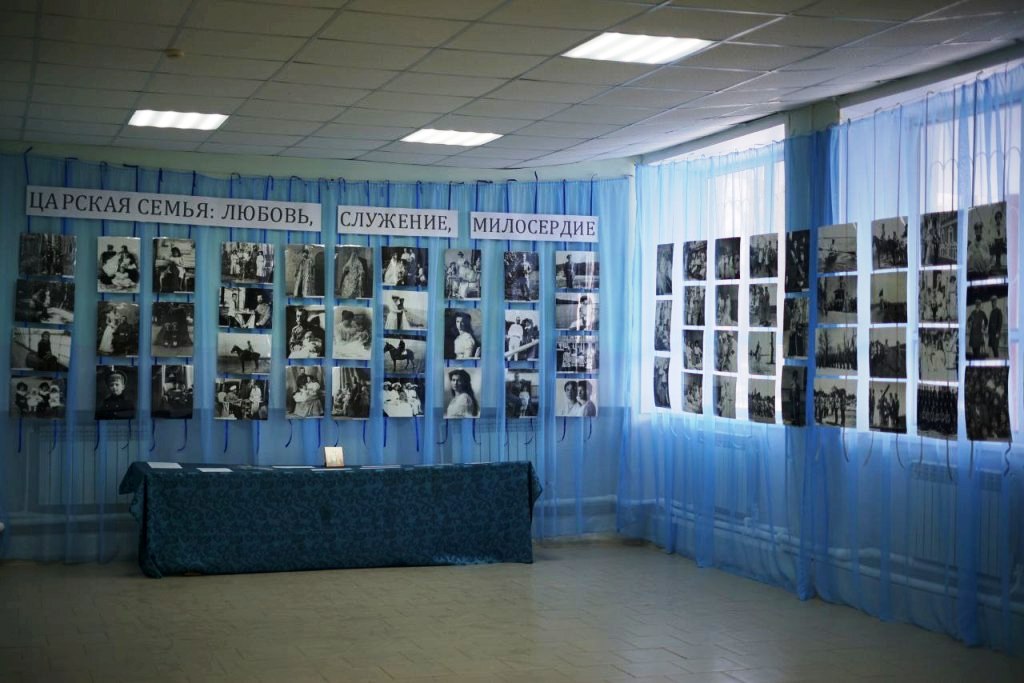
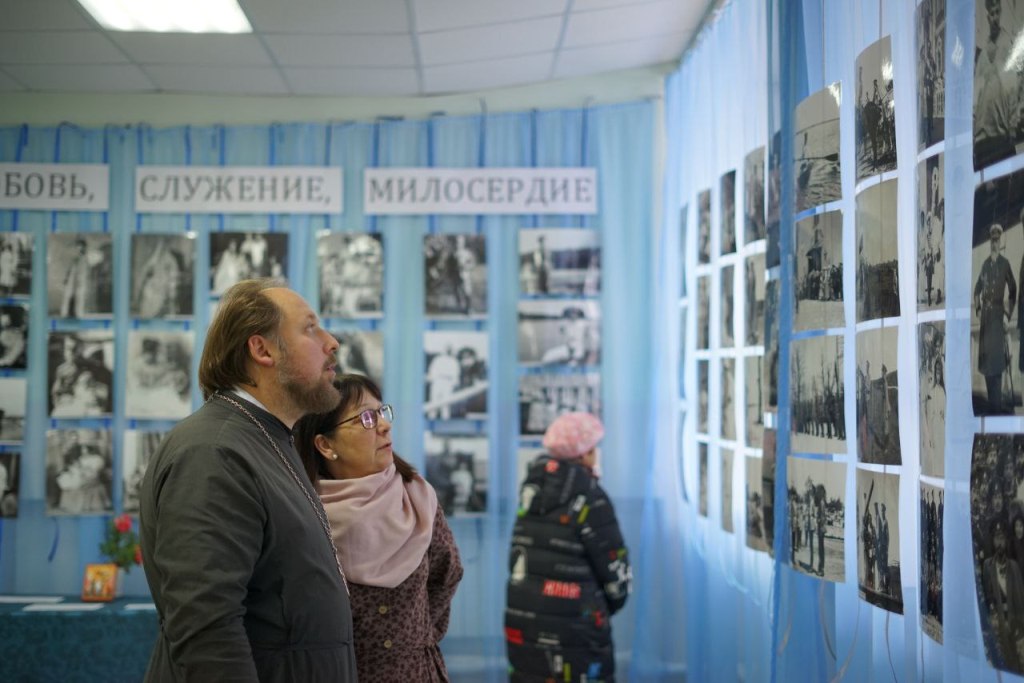
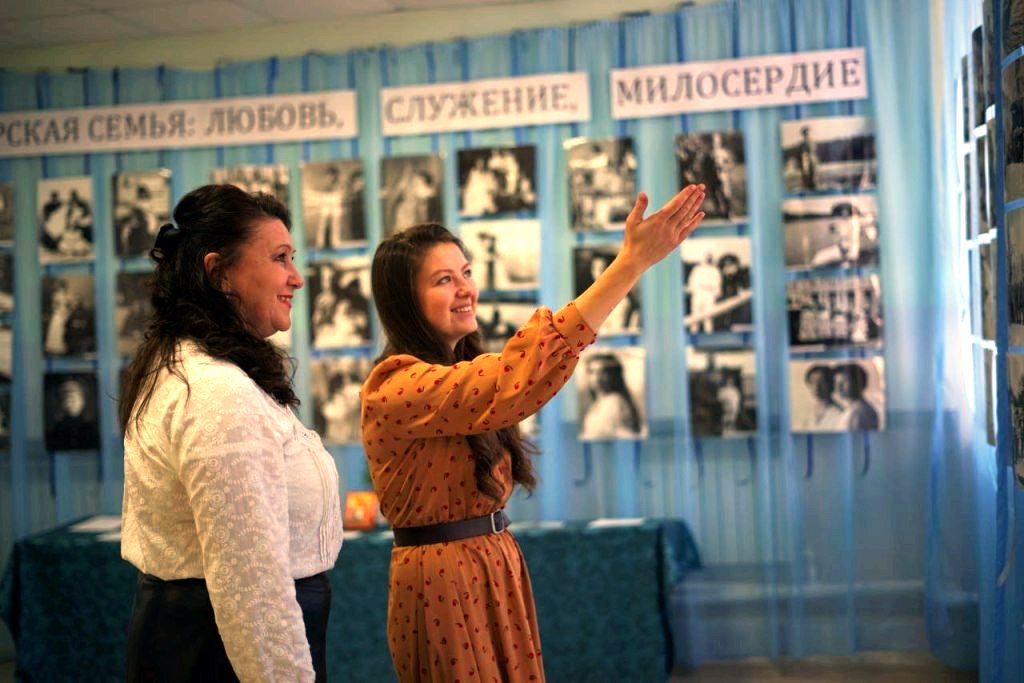
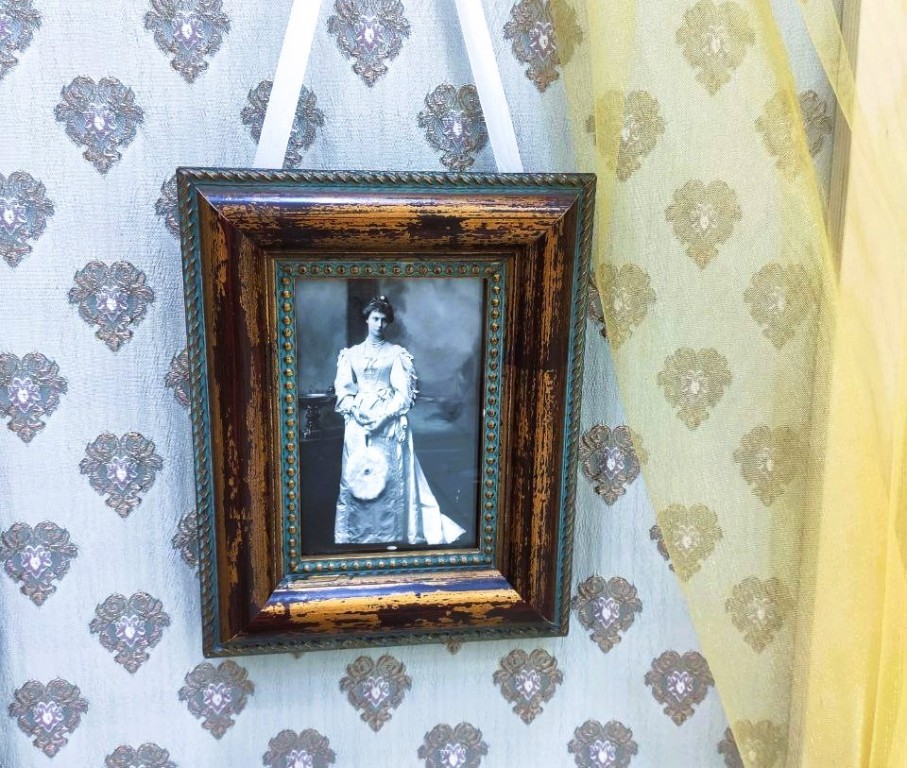
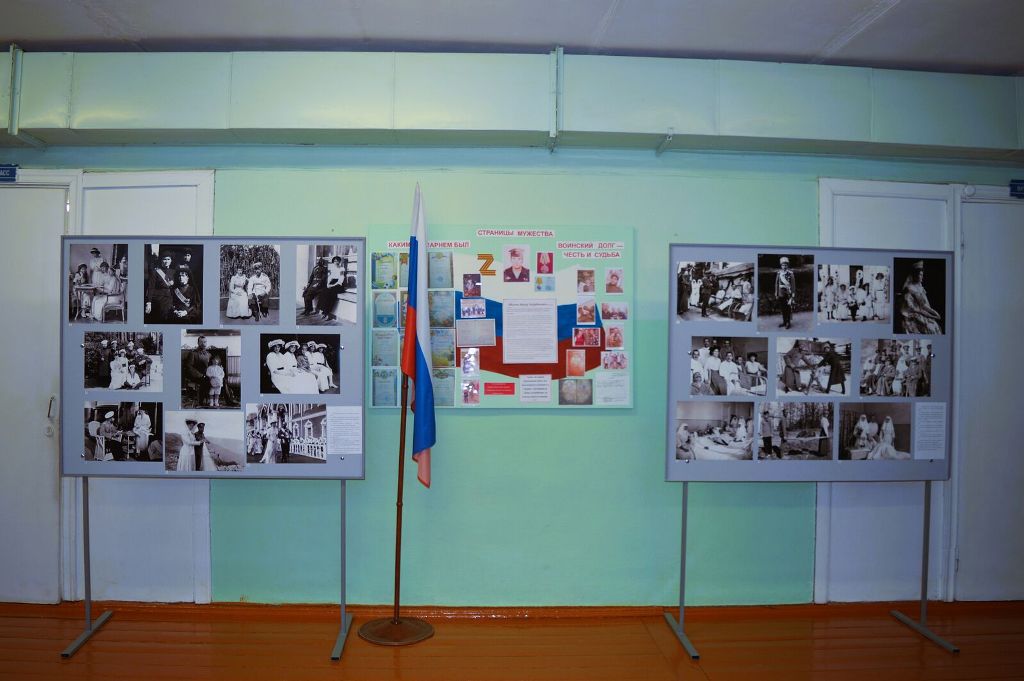
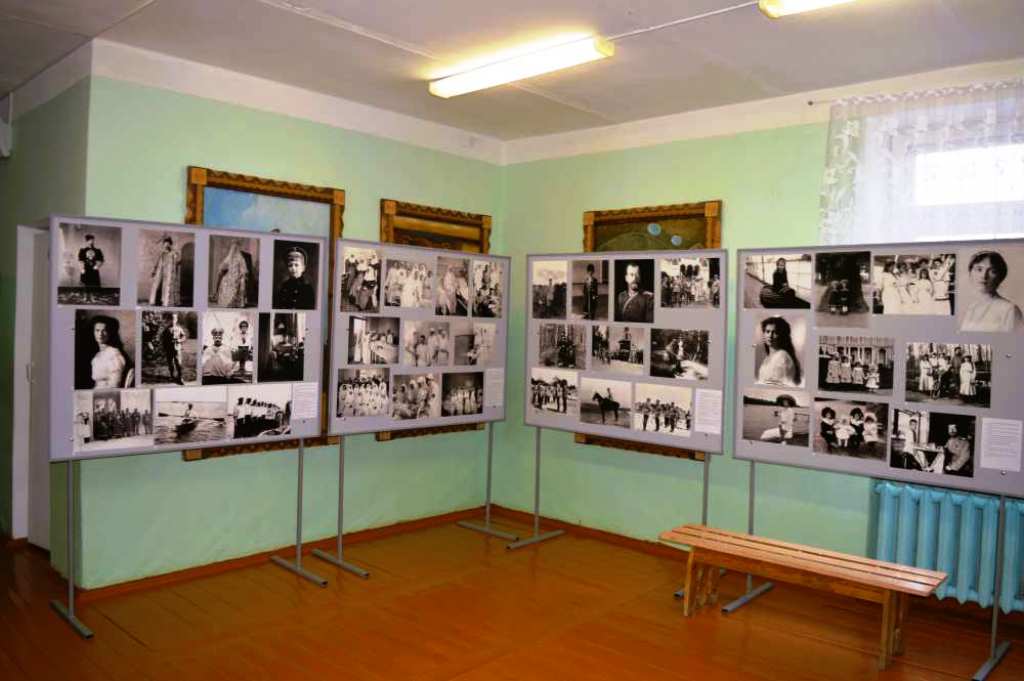
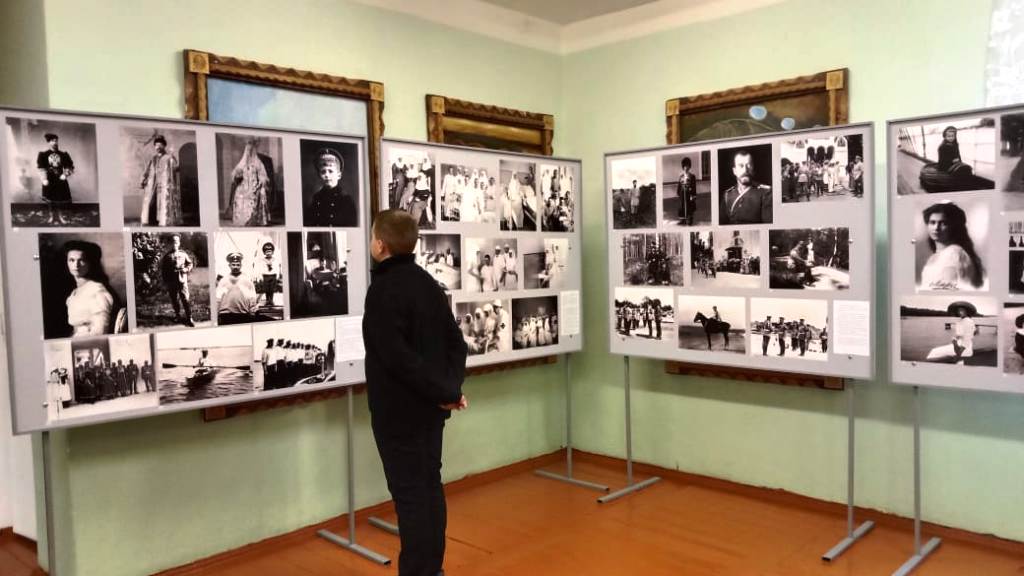
On 26th November 2025, a photo-exhibition dedicated to Russia’s last Tsar and his family opened in the building of the Clergy House, located in the heart of the Volokolamsk Kremlin, situated 129 kilometers (80 mi) northwest of Moscow. The exhibition presents more than 100 photographs from the private albums of the Imperial Family.

The photo-exhibition Under the Shadow of the Tsar’s Crown is a joint project of the Volokolamsk Kremlin, the Moscow Sretensky Monastery and the Volokolamsk Deanery of the Odintsovo Diocese.

The exhibition is divided into three thematic parts:  family life, service to the Fatherland and mercy. The family of Nicholas II, is an example of a true Christian family, which is very important today, when the whole world is experiencing a crisis of family values.

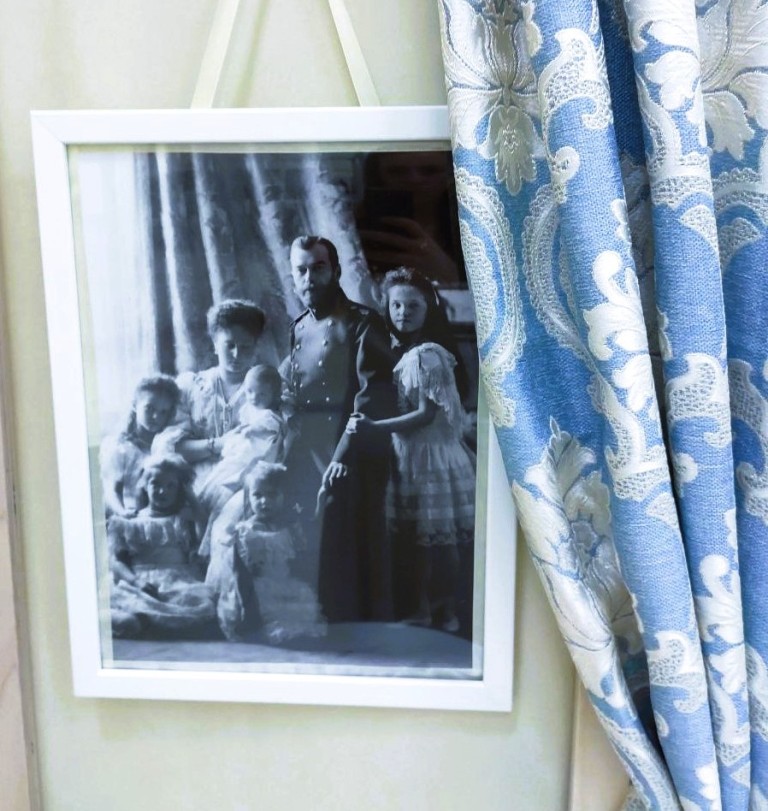
The first part of the exhibit is dedicated to family relationships. Here are photographs depicting private home life, the attention of Nicholas and Alexandra towards their children and the close relationships shared with each other.

The second part reflects service to the Fatherland. The photos show Nicholas II’s participation in military reviews and his visits to Russian troops at the Front, during the First World War.

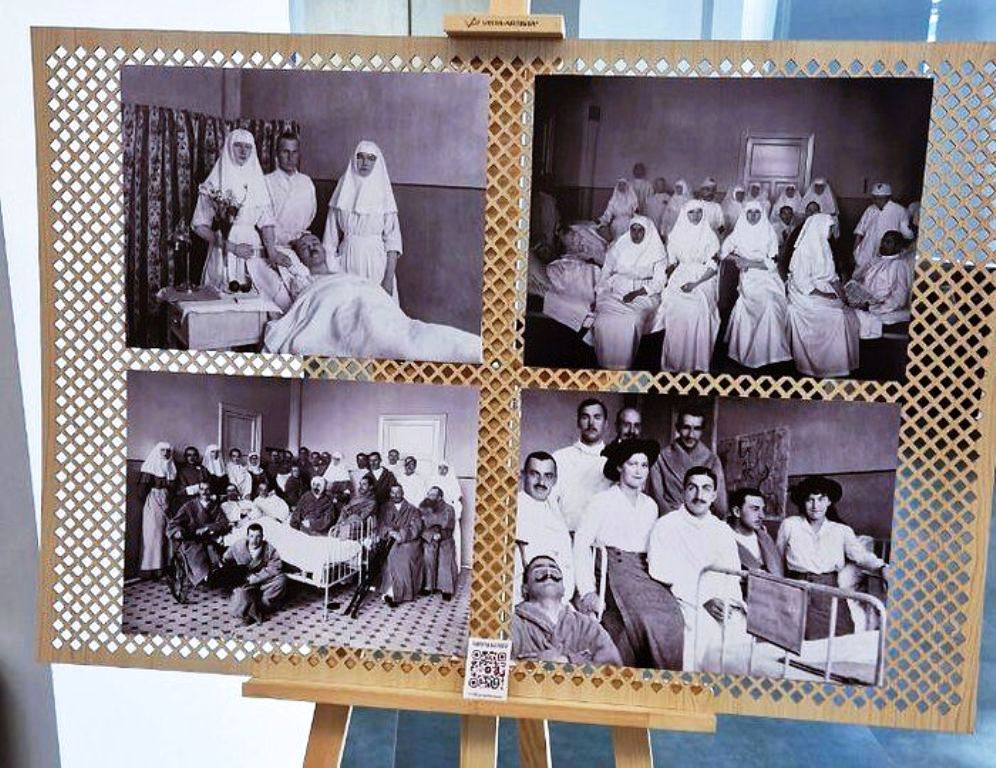
The third, the largest part of the exposition, is dedicated to the mercy and charity of the Imperial Family. A special place is dedicated to photographs in which the Empress and her daughters are depicted working in hospitals, assisting doctors during operations and providing care to soldiers, who were recovering at the hospital in Tsarskoye Selo, where the Empress and her daughters worked as Red Cross nurses.

The curator of the exhibition, Hieromonk Ignaty (Shestakov), noted the importance of the photographs presented:

“Among all the photographs, I would single out the picture where the Emperor visits wounded soldiers in a hospital during the First World War. We obtained this original image from our archive when preparing the exhibition . It turned out that this photo had not been published anywhere before. We were one of the first to present it publicly.”

The photo-exhibition Under the Shadow of the Tsar’s Crown runs until the end of February 2026, in the building of the Clergy House, located in the heart of the Volokolamsk Kremlin. The exhibit is open to visitors every Saturday and Sunday from 12:00 to 18:00 and on public holidays. Admission is FREE!

The exhibition Under the Shadow of the Tsar’s Crown has been held (although under different names) in various formats and in many Russian cities: Moscow, Voronezh, Kursk, Ryazan, Penza, Krasnodar, Belgorod, Velikiye Luki, Yalta, Livadia, Sevastopol, Novosibirsk, Lesosibirsk, Perm, Sayansk, Severomorsk, Pskov, Pavlovsk, Livadia, etc.

The photo project Under the Shadow of the Tsar’s Crown was created in 2016 by the Sretensky Monastery in Moscow. The travelling exhibition has already been presented in Serbia, Germany, Italy, Canada, Argentina, New Zealand, South Africa, Romania, Croatia, Montenegro, Bosnia and Herzegovina, Macedonia, and the Czech Republic.

***

*As I have noted in previous posts, I support any initiative – big or small – to help keep the memory of Nicholas II and his family alive in 21st century Russia – PG

© Paul Gilbert. 27 November 2025

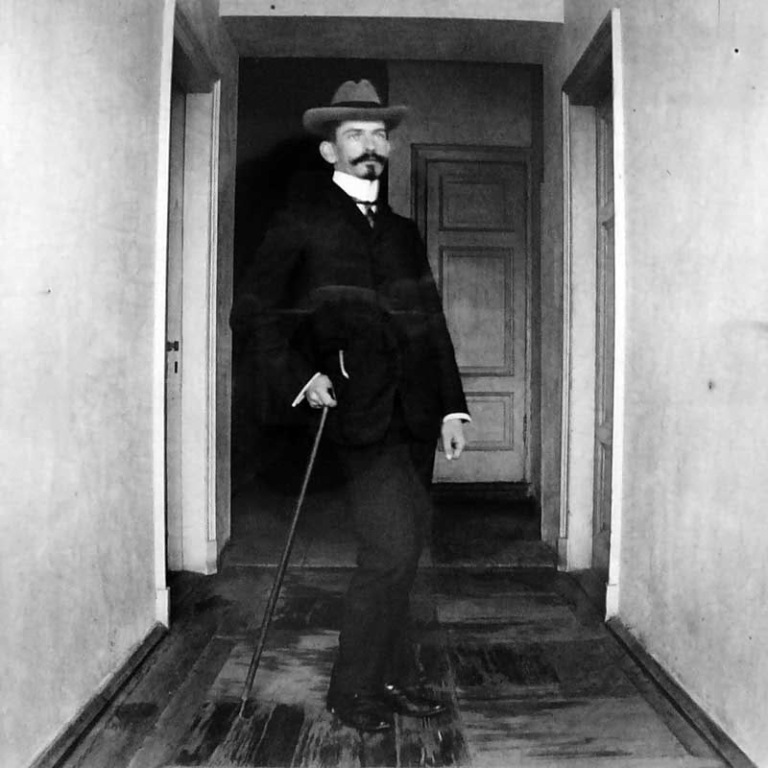
Faithful to the Tsar and his family: Pierre Gilliard (1879-1962)

PHOTO: Pierre Gilliard (1879-1962)

Pierre Gilliard was born near Lausanne, Switzerland on 16th May 1879. He was one eight children born to the landowner-winemaker Edmond André David Gilliard and Marie Gilliard-Malherbe (1848-1911). In total, there were six sons and two daughters, but it was Pierre who is most famous for entering the inner circle of the Russian Imperial Family, and sharing many happy years as tutor to the August children of Emperor Nicholas II and Empress Alexandra Feodorovna.

After graduating from the University of Lausanne in 1904, he was invited to Russia to teach French to the children of Prince Sergei Georgievich Romanowsky, 8th Duke of Leuchtenberg (1890-1974). The young teacher had established himself, not only as an excellent tutor, but also as a modest, decent and noble person.

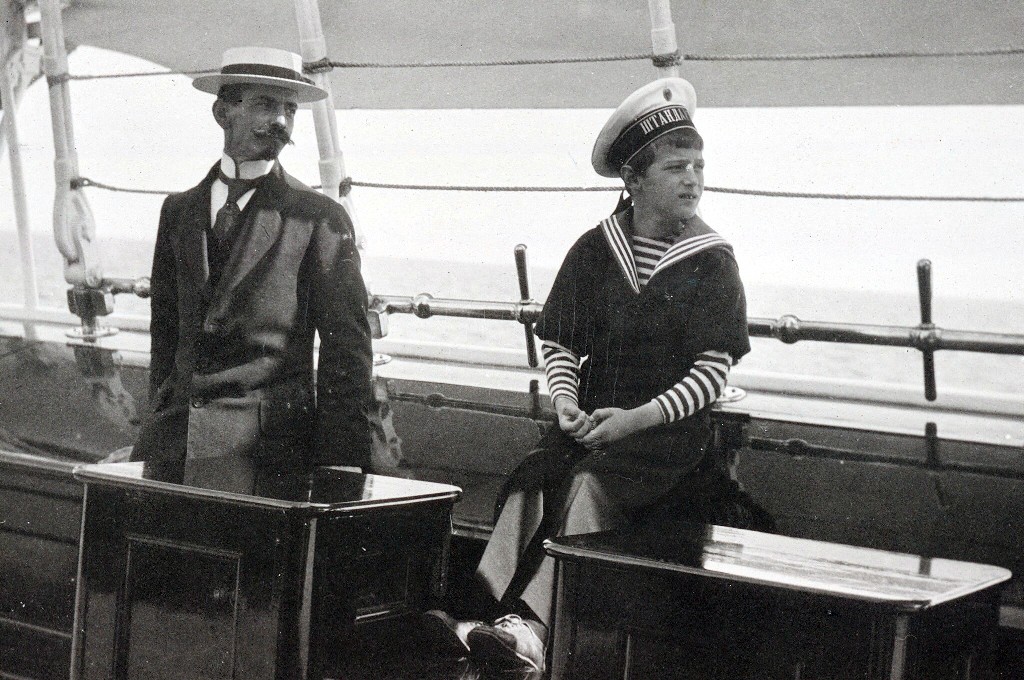
In September 1905, he was invited to teach French to Grand Duchesses Olga and Tatiana Nikolaevna – the eldest daughters of the Russian tsar. The two elder sisters were later joined by the two younger daughters: Maria and Anastasia, and Tsesarevich Alexei. This is how Pierre Gilliard, who was affectionately called “Zhilik” in the family, described his students:

PHOTO: Pierre Gilliard with Tsesarevich Alexei Nikolaevich, on the deck of the Imperial Yacht ‘Standart‘. 1914

“Alexei Nikolayevich was the centre of this united family, the focus of all its hopes and affections. His sisters worshipped him and he was his parents’ pride and joy. When he was well the palace was, as it were, transformed. Everyone and everything seemed bathed in sunshine. Endowed with a naturally happy disposition, he would have developed quite regularly and successfully had he not been kept back by his infirmity.. <… >

” He was rather tall for his age. He had a long, finely chiselled face, delicate features, auburn hair with a coppery glint in it, and large blue-grey eyes like his mother’s. He thoroughly enjoyed life – when it let him – and was a happy, romping boy. Very simple in his tastes, he extracted no false satisfaction from the fact that he was the Heir – there was nothing he thought about less <… >

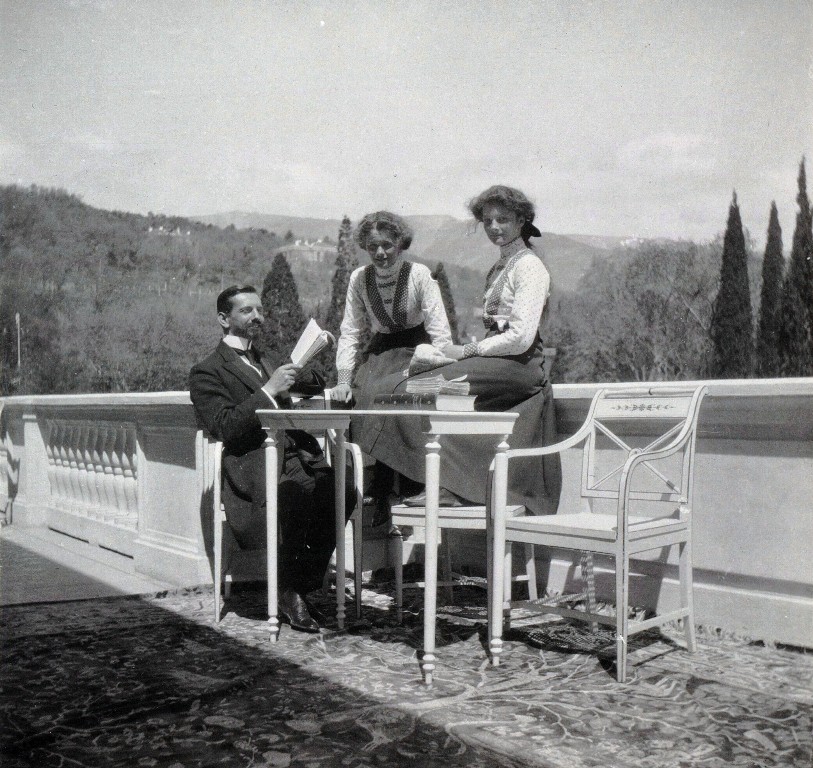
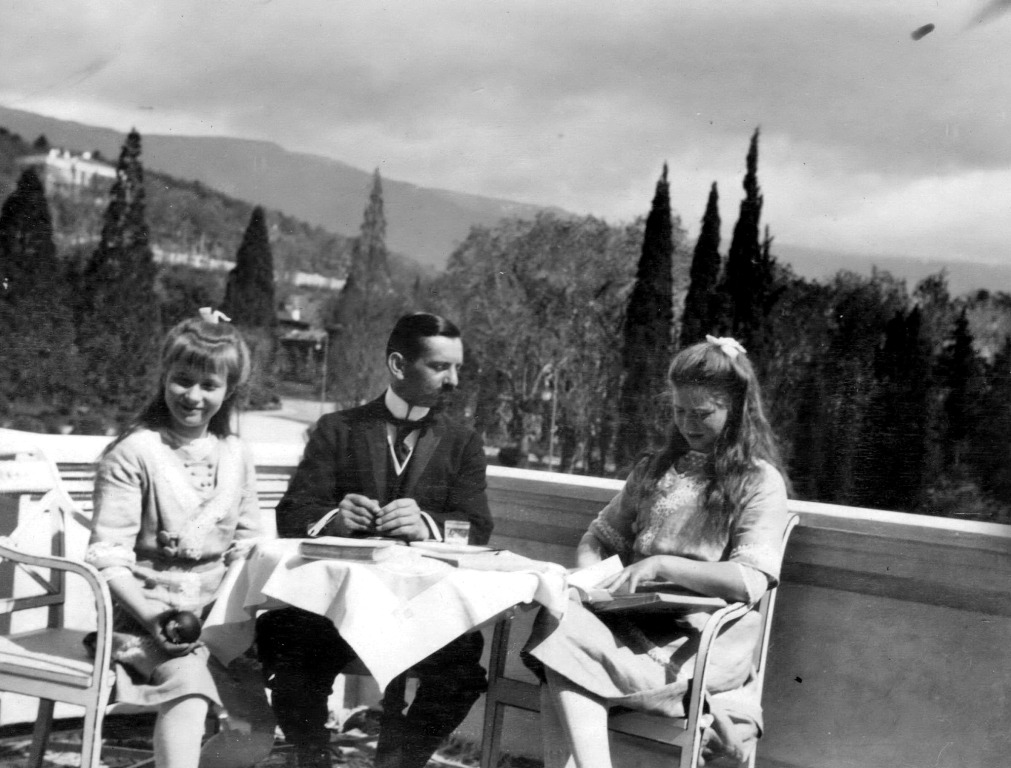
“The Grand-Duchesses were charming – the picture of freshness and health. It would have been difficult to find four sisters with characters more dissimilar and yet so perfectly blended in an affection which did not exclude personal independence, and, in spite of contrasting temperaments, kept them a most united family. With the initials of their Christian names they had formed a composite Christian name, Otma, and under this common signature they frequently gave their presents or sent letters written by one of them on behalf of all.

“In short, the whole charm, difficult though it was to define, of these four sisters was their extreme simplicity, candour, freshness, and instinctive kindness of heart.”

PHOTO: (above) Pierre Gilliard with Grand Duchesses Olga (left) and Tatiana (right) Nikolaevna, on the balcony of the Livadia Palace, Crimea. 1911; (below) Gilliard with Grand Duchesses Anastasia (left) and Maria (right) Nikolaevna, on the balcony of the Livadia Palace, Crimea. 1912.

From 1905 to 1918, Pierre Gilliard served not just as a tutor for the August Children, but also as a friend and mentor. He became a part of the Imperial Family’s inner circle, and was invited to join them on their journeys onboard the Imperial Yacht ‘Standart‘ to Crimea, where they stayed at their white limestone palace of Livadia. Gilliard shares his impressions of Crimea:

“In the spring of 1914 the Imperial Family went to the Crimea, as in preceding years. We arrived at Livadia on April 13th, a bright, sunny day. In fact, we were almost dazzled by the sunshine, which bathed the high, steep cliffs, the little Tartar villages half buried in the bare sides of the mountains, and the staring white mosques which stood out sharply against the old cypresses in the cemeteries. The contrast with the landscapes we had just left was so striking that, although this new country was familiar, it seemed quite fairylike and unreal in its wondrous beauty under this halo of sunshine.

“These spring days in the Crimea were a delicious relief after the interminable St. Petersburg winter, and we looked forward to them months before they came.”

In the autumn of 1914, the First World War broke out, which resulted in the death of millions of people, revolutions and the overthrow of monarchies in Germany, Austria-Hungary and Russia. After the February Revolution of 1917, Emperor Nicholas II was forced to abdicate.

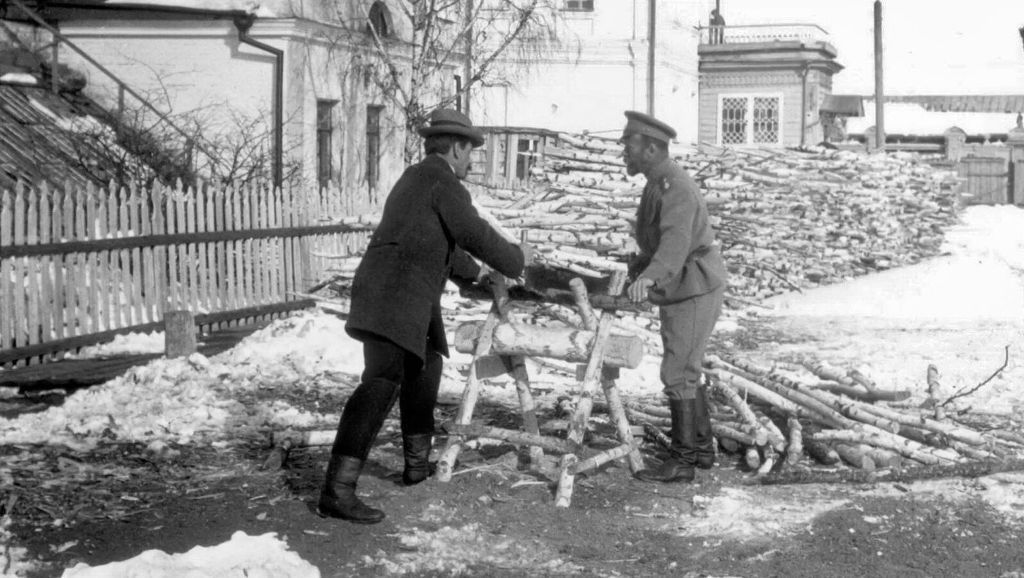
PHOTO: Pierre Gilliard and Nicholas II saw wood during their house arrest in Tobolsk. Winter 1917-18

During the fiery whirlwind of historical events which unfolded, Pierre Gilliard did not abandon the Imperial Family. To the best of his ability, trying to preserve the same daily routine, he continued to teach French to the August Children. In August 1917, he voluntarily went into exile with the Imperial Family to Tobolsk, where they were held under house arrest from August 1917 to April 1918. Gilliard endured the same hardships as those of the Tsar and his family, he supported the prisoners, still continuing with his lessons.

Gilliard was prevented from living in the Ipatiev House and was forbidden to visit the Imperial Family. He left Ekaterinburg some time later for Tyumen, where he was arrested on his arrival, but was released shortly afterwards.

It was only his foreign citizenship which saved him from sharing the same horrible death in the basement of the Ipatiev House in Ekaterinburg on the morning of 17th July 1918.

On 20th July 1918, the Czechs captured Tyumen. Gilliard then came out of hiding and discovered an official communiqué plastered on the walls around the city: “The death sentence against the ex-Emperor Nicholas Romanov was carried out on the night of 16/17 July, the Empress and the children were evacuated and transferred to a safe place.” Gilliard hurried to Ekaterinburg to find the Imperial Children whom everyone at the time believed to still be alive. His efforts were in vain.

On his arrival in Ekaterinburg in August 1918 – where he offered his assistance to the investigator Nikolai Sokolov – Gilliard visited the Ipatiev House, and recalls his impressions:

“I entered the room in which perhaps–I was still in doubt–they had met their death. Its appearance was sinister beyond expression. The only light filtered through a barred window at the height of a man’s head. The walls and floor showed numerous traces of bullets and bayonet scars. The first glance showed that an odious crime had been perpetrated there and that several people had been done to death. But who? How?

“I became convinced that the Tsar had perished and, granting that, I could not believe that the Tsarina had survived him. At Tobolsk, when Commissary Yakovlev had come to take away the Tsar, I had seen her throw herself in where the danger seemed to her greatest. I had seen her, broken-hearted after hours of mental torture, torn desperately between her feelings as a wife and a mother, abandon her sick boy to follow the husband whose life seemed in danger. Yes, it was possible they might have died together, the victims of these brutes. But the children? They too massacred? I could not believe it. My whole being revolted at the idea.” <… >

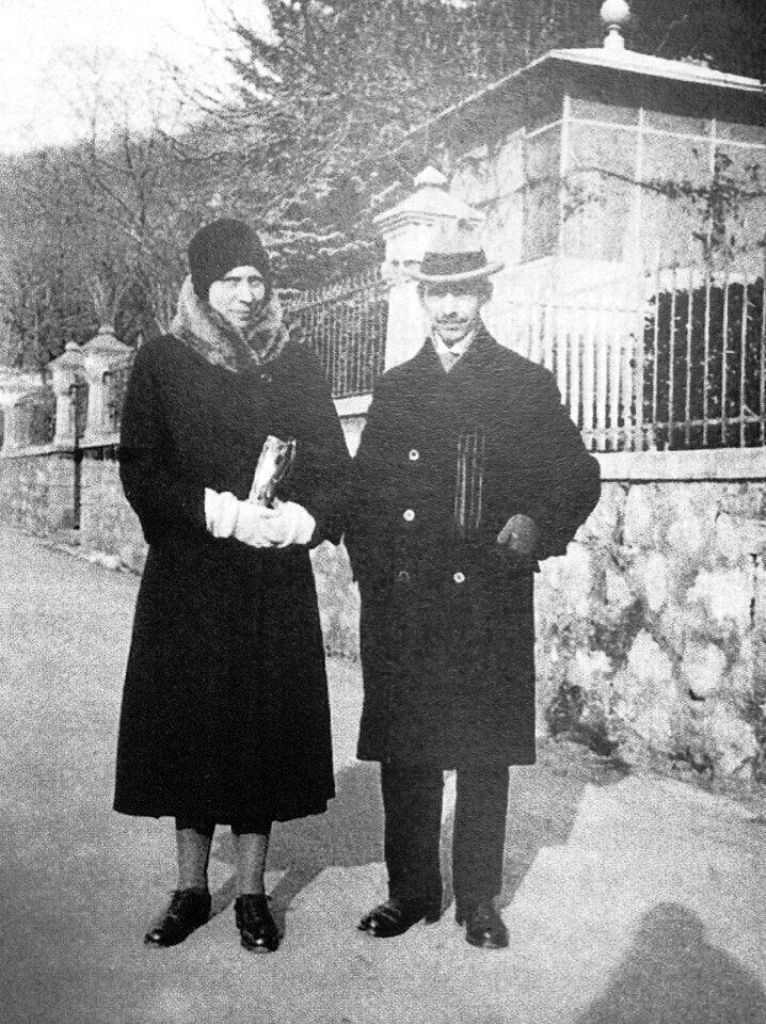
PHOTO: Pierre Gilliard and Alexandra Tegleva. Switzerland, 1922

In 1919, Gilliard married Alexandra Tegleva and in November of the same year, along with thousands of other people, including ministers and government officials of the old regime, they fled Siberia and headed east on the Trans-Siberian Railway. In April 1920, after a six-month journey, they arrived in Vladivostok. They then sailed on an American ship to San Francisco, and from there traveled by boat along the Pacific coast, through the Panama Canal, across the Atlantic Ocean and the Mediterranean Sea to Trieste. In August 1920, they returned to his parents’ home in Switzerland, which he had left some sixteen years earlier

Upon his return to his native Switzerland, Pierre Gilliard resumed his studies, which he had interrupted in 1904. In 1925, he obtained a degree in literature in Lausanne and from 1926, he taught French at the School of Modern French of the Faculty of Arts of the University of Lausanne, which he then became it’s director until 1949, and finally honourary professor in 1950.

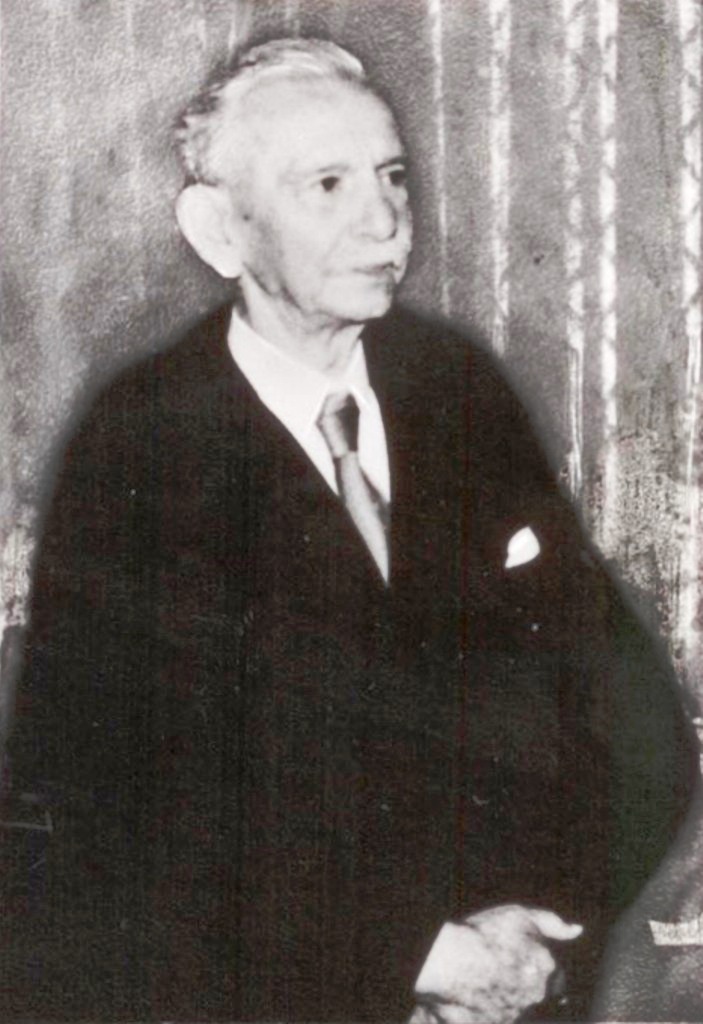
PHOTO: Pierre Gilliard. taken shortly before his death in 1962

In 1921, Gilliard published in Paris, Le tragique destin de Nicolas II et de sa famille, and in 1929 his second work, La Fausse Anastasie, histoire d’une alleged Grand-Duchesse de Russie. He was made a Knight of the Legion of Honour and winner of the Marcelin-Guérin Prize for his book on Nicholas II.

His book Thirteen Years at the Russian Court: A Personal Record of the Last Years and Death of the Czar Nicholas II and his Family was first published in English i 1921. It was initially published by Hutchinson & Co in London. The book was translated by F.A. Holt. 

Alexandra Alexandrovna Tegleva died in Switzerland on 21st March 1955. In 1958, Pierre Gilliard was severely injured in a car accident in Lausanne. He never fully recovered and died four years later on 30th May 1962, at the age of 83. His remains were cremated in the privacy of his family at the Bois-de-Vaux Cemetery in Lausanne. According to the burial service of the city of Lausanne there is no grave or burial in his name. His ashes were probably scattered elsewhere.‎

Gilliard was a keen photographer and he took hundreds of images while in Russia, including many informal photographs of the Imperial Family. These are now held by the Musée de l’Élysée, a photography museum in Lausanne. In 2005 Daniel Girardin, an art historian who worked at the Musee de l’Elysee as a curator until 2017, published a pictorial biography of Gilliard’s time in Russia based on his works in the museum’s collection. It is titled Précepteur des Romanov – Le destin russe de Pierre Gilliard [Tutor of the Romanovs: The Russian Destiny of Pierre Gilliard].

He lived a long life, was eyewitness to events which changed Russia dramatically and violently, and his name will forever remain inscribed in the pages of history next to the names of the Imperial Family, for whose sake he put his life in danger and whom he loved so much.

FURTHER READING:

Ekaterinburg: the Survivors

St. Petersburg hosts one-day exhibit of Pierre Gilliard’s photographs of the Tsar’s family

Documentary: the Return of Pierre Gilliard

© Paul Gilbert. 16 May 2025

Auction: Tatiana Botkin Collection – 15 May 2025

VIEW CATALOGUE – 29 pages. 79 lots.

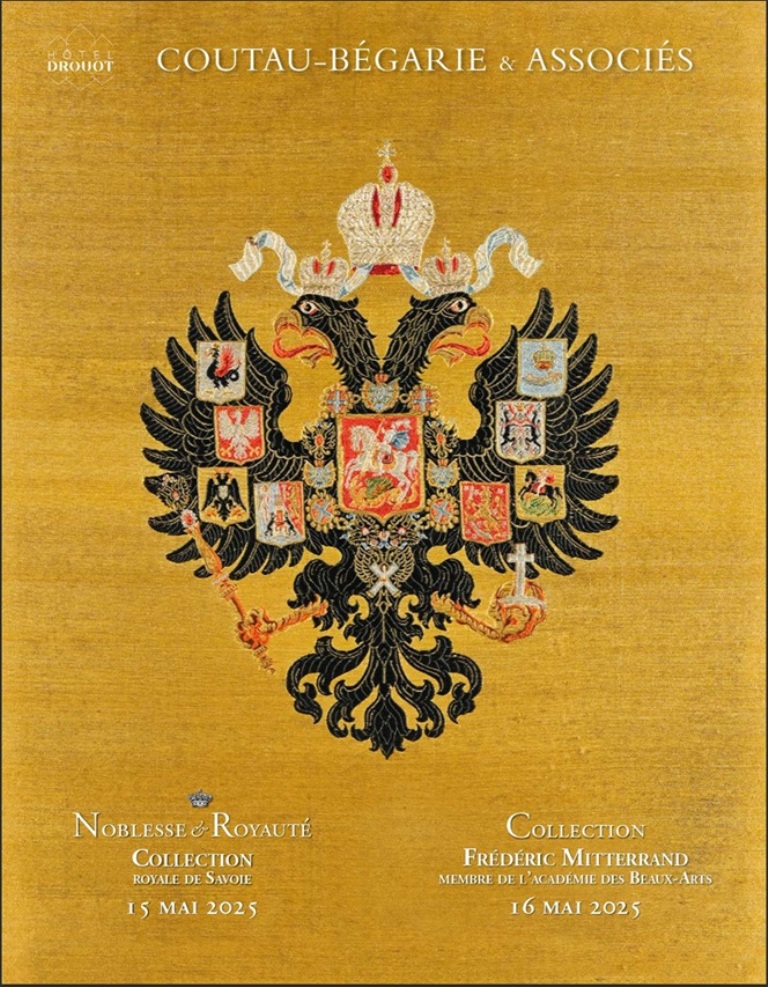
On 15th May 2025, the Coutau-Bégarie Auction House (Paris) will hold one of the most interesting Romanov auctions in recent memory: the Tatiana Botkin Collection (1898-1986). The auction will feature valuable historical memories of the Russian Imperial Family during their captivity in Tobolsk, preserved by the daughter of the Tsar’s private physician, Dr. Eugene Sergeyevich Botkin (1865-1918).

The auction offers 79 lots, including photographs of the Botkin family and the family of Emperor Nicholas II; correspondence of Tatiana Botkina; transcripts from Tatiana’s book of reminiscences of the Tsar’s family and their life before and after the Revolution; personal items of the Botkin family, including beautiful objets d’art; icons; Gleb Botkin’s watercolours and more!

The catalogue is published in French only, the Tatiana Botkin Collection consists of 29 pages. It can be viewed – as a PDF document only – by clicking on the link above.

***

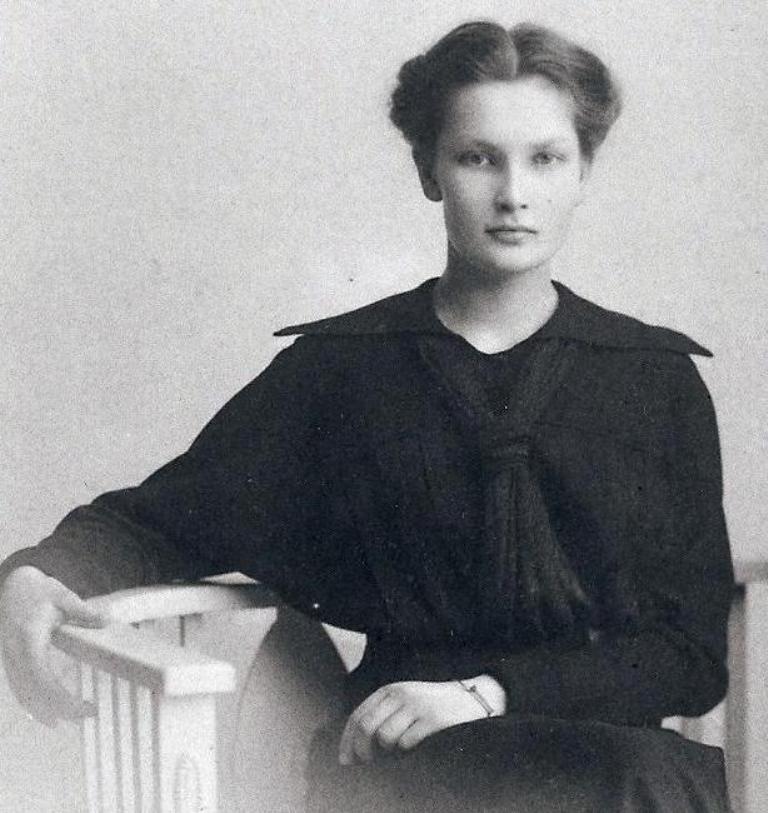
Tatiana Evgenievna Botkina (1898-1986)

Tatiana Evgenievna Botkina was born in Vladivostock on 28th August 1898, she was the fourth child and only daughter of Dr. Eugene Sergeyevich Botkin and his wife Olga Vladimirovna Botkina (1872-1945). She had four brothers Sergei (1892-1893), Dmitri (1894-1914), Yuri (1895-1941), and Gleb (1900-1969). Her parents divorced in 1910 under the strain of her father’s devotion to the Imperial Family and the long hours he spent at court and her mother’s affair with a German tutor. Eugene Botkin retained custody of the children following the divorce. Tatiana’s older brother Dmitri was killed in action during World War I.

Tatiana and her brothers spent their early childhood in St. Petersburg. After their father’s appointment as a court physician, they moved to Tsarskoye Selo, first to the Catherine Palace and then to Sadovaya Street, very close to the Alexander Palace Park. She received a good education and spoke four languages fluently: English, French, German and Russian.

The Botkin children were sometimes received at the Alexander Palace, where they became playmates of the imperial children, of whom they were the same age.  They first met the imperial children in 1911 and, thereafter, sometimes played with them when they were on vacation in the Crimea. 

Following the outbreak of the First World War in August 1914, Tatiana’s father supervised the hospitals that the Empress had opened at Tsarskoye Selo to treat the seriously wounded. In addition, he transformed his house into a hospital for convalescents, where Tatiana served as a nurse. 

In August 1917, Dr. Botkin followed the Imperial Family into exile to Tobolsk in Siberia. Tatiana and her brother Gleb later joined their father, moving into the Kornilov House, situated opposite the Governor’s House where the Imperial Family where being held under house arrest. They were not allowed to visit the Imperial Family, so instead Tatiana wrote notes, which her father smuggled to the grand duchesses in his overcoat.

When the Imperial Family was transferred from Tobolsk to Ekaterinburg in April 1918, the Botkin children were not permitted to accompany their father. As a result, the Botkin children decided to remain behind in Tobolsk. Tatiana regretted this decision all her life.

On 17th July 1918, the Tsar and his family, along with Dr. Botkin and three other faithful retainers were murdered by members of the Ural Soviet in the basement of the Ipatiev House in Ekaterinburg. Several years later, when Tatiana heard the conclusion of the Sokolov Report, that the Tsar, his family and their servants had been killed, her sole consolation was the fact that her father had died trying to shield the Tsar.

The murder of her father and the Imperial Family caused her inconsolable pain. In 1941, her brother Yuri was imprisoned by the Nazis and then executed. Her mother died of malnutrition in Berlin in 1945.

In the fall of 1918, Tatiana married Konstantin Semenovitch Melnik (1893 – 1977), an officer of the 5th Siberian Rifle Regiment, who was wounded in battle and was treated in the Tsarskoye Selo infirmary, where he met the Botkins. The couple had three children: Elena (1921-2005), Konstantin (1927-2014) and Evgeny (year of birth and death unknown).

In 1919, during the retreat of the Eastern Front, Melnik took Tatyana and her brother Gleb to Vladivostok. From here, they escaped Russia, settling first in Dubrovnik, Yugoslavia. In 1920, they moved to France, where they settled in Rives, a town near Grenoble. Tatiana divorced her husband and moved to Nice, where she raised her children alone.

In later years, Tatiana, along with her brother Gleb, were staunch supporters of Anna Anderson’s claim that she was the surviving Grand Duchess Anastasia Nikolaevna, the youngest daughter of Tsar Nicholas II.

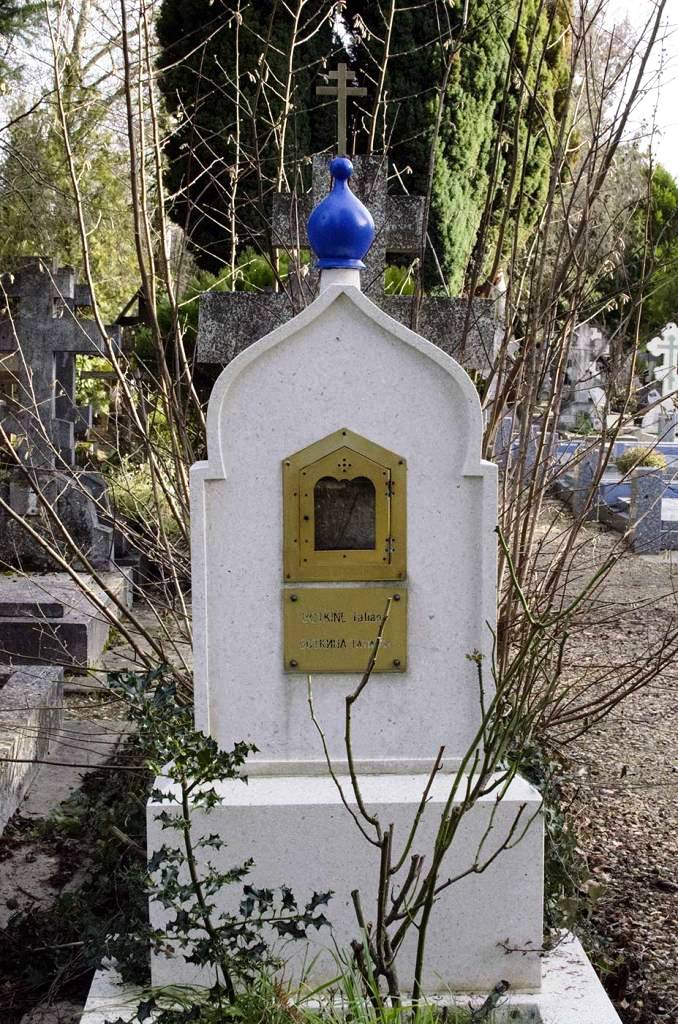
PHOTO: Tatiana Botkina’s grave in the Russian Orthodox cemetery, in Sainte-Geneviève-des-Bois

Tatiana eventually settled near Paris, where she lived the rest of her life. A few years before her death, with the help of her granddaughter Catherine Melnick-Duhamel, she wrote her memoirs entitled Au temps des Tsars (1980), followed by a second: Anastasie retrouvée (1985).

She died on 1st April 1986, at the age of 88. She was buried at the Russian Orthodox cemetery, in Sainte-Geneviève-des-Bois, situated in the southern suburbs of Paris, France.

© Paul Gilbert. 14 May 2025

***

CLICK TO VIEW CURRENT CATALOGUE

Blagoveshchensk hosts photo-exhibit dedicated to the Imperial Family

On 24th February 2025, The Tsar’s Family. Love and Mercy photo-exhibition, dedicated to Emperor Nicholas II and his family opened in the city of Blagoveshchensk, situated in the Amur region of Siberia, near the Chinese border. The exhibition runs until 6th April 2025 at the Pushkarev Art Gallery.

The exhibition presents more than 100 vintage photographs which tell about the close relationship within the family of the last Russian emperor. The photographs reflect many aspects of the life of the Tsar’s family during the late 19th and early 20th centuries, including the upbringing of the children, and the warm and loving relationship, which they shared with both their parents and each other.

In addition, the photo exhibition also shows the Tsar’s Family’s dedication to acts of charity and their service to the Fatherland, and a wonderful example of Russian family traditions and unshakable piety and spiritual values.

The exhibition has been held in various formats and in many Russian cities: Moscow, Voronezh, Kursk, Ryazan, Penza, Krasnodar, Belgorod, Velikiye Luki, Yalta, Livadia, Sevastopol, Novosibirsk, Lesosibirsk, Perm, Sayansk, Severomorsk, Pskov, Pavlovsk, Livadia, etc.

The photo project The Tsar’s Family: Love and Mercy was created in 2016 by the Sretensky Monastery in Moscow. The travelling exhibition has already been presented in Serbia, Germany, Italy, Canada, Argentina, New Zealand, South Africa, Romania, Croatia, Montenegro, Bosnia and Herzegovina, Macedonia, and the Czech Republic.

The Tsar’s Family. Love and Mercy photo-exhibition, runs until 6th April 2025 at the Pushkarev Art Gallery, Blagoveshchensk.

***

*As I have noted in previous posts, I support any initiative – big or small – to help keep the memory of Nicholas II and his family alive in 21st century Russia – PG

© Paul Gilbert. 13 March 2025

Louis Mountbatten on his Romanov relatives

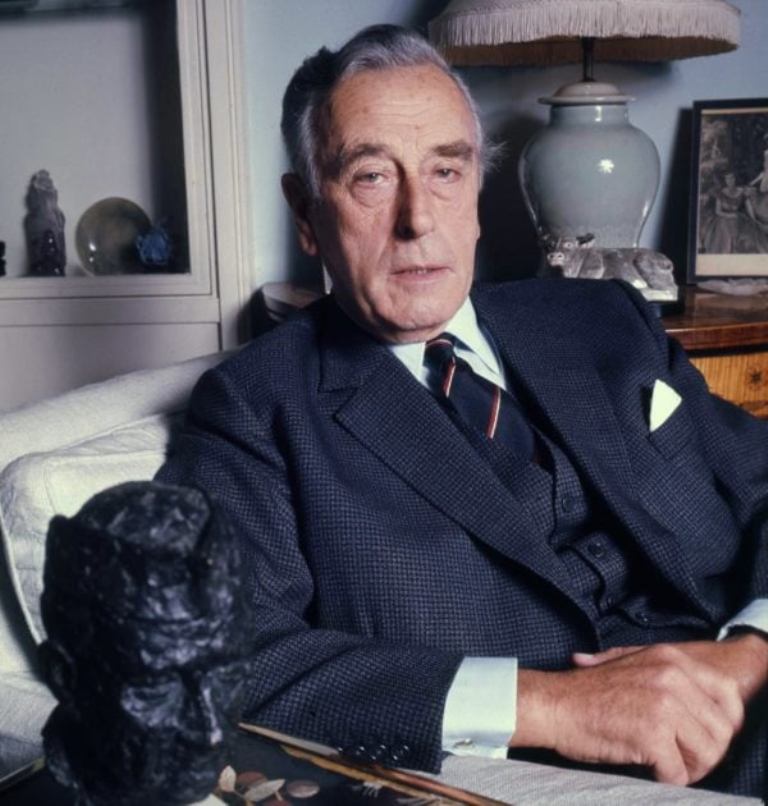
Louis Francis Albert Victor Nicholas Mountbatten, 1st Earl Mountbatten of Burma (born Prince Louis of Battenberg (1900-1979), reflects on his Romanov relatives . . . [Note: Emperor Nicholas II was his maternal uncle through marriage and paternal second cousin]: 

“The Tsar was my father’s first cousin…and the Tsarina was my aunt on my mother’s side. Another aunt, Elizabeth, had married the Grand Duke Serge. So our Russian connections were very close. We used to see each other quite often either in Germany, or in Russia. I loved my Russian family and I loved Russia too.

These old family photograph albums bring back memories of all the happy times we had together in that almost unbelievable world before the Revolution. In this photo with my cousins I was just ten…my little cousin the Tsesarevich Alexei is in the carriage. He was heir to the Russian throne and was younger than me by about four years and in very poor health sometimes… he was a haemophiliac, which was a great worry to us all.

…Olga, Marie, Anastasia and Tatiana were all very beautiful. I remember I had always secretly hoped to marry Marie.

Russia was an autocracy at that time, the Tsar had absolute power and was answerable only to God. Yet anyone less like an autocrat than my uncle Nicky would be hard to imagine…he was a very, very kind-hearted simple charming man. But at the same time he was rather weak and indecisive.

He was never happier than when he was outside playing with his children. I remember he would purchase us all chocolate-ices, and after, settle down with a long book to read quietly in peace

And now, all that was finished. All the happy memories were things of the past…

My uncle had lost his throne – he, my aunt, and all my cousins were under arrest. We were shocked and dismayed but we didn’t dream of the terrible things which were yet to come… I don’t think anyone could of.

We had very little news of the family after the Bolsheviks took over. We all hoped they would be safe but we feared the worse. It was a very long time before we heard of all the details…which were quite….horrible… They were all shot together. Alexei and one of his sisters did not die immediately…Even their doctor and their helpers were murdered with them. Soon after, my aunt Elizabeth who had loved children and orphans and nursing people back to health so much, was also murdered by being flung down a mineshaft and buried alive.

These sad deeds cast a shadow over the whole of our family, for a very, very long time…”

© Paul Gilbert. 21 February 2025

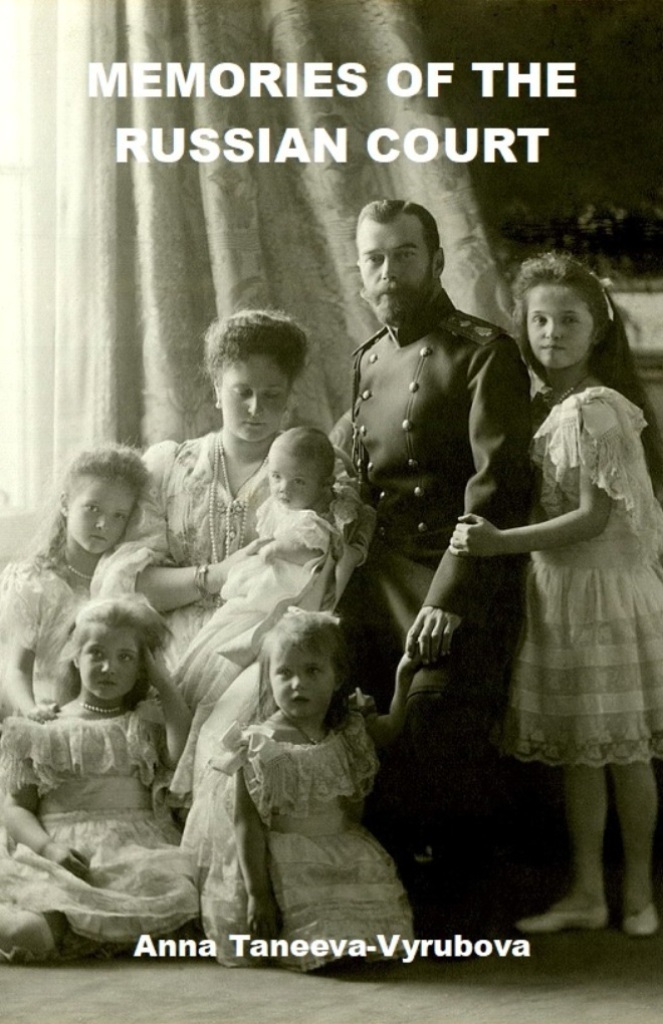
NEW BOOK: Memories of the Russian Court

*You can order this title from most AMAZON outlets worldwide,
Including the United States, Canada, United Kingdom and Australia.
*Note: prices are quoted in local currencies

CLICK HERE TO ORDER THE HARD COVER EDITION @ $25.00 USD

CLICK HERE TO ORDER THE PAPERBACK EDITION @ $20.00 USD

CLICK HERE TO ORDER THE eBOOK/KINDLE EDITION @ $15.00 USD

Language: English. 312 pagess

The return of an old favourite . . . the first English language edition of this book was published in 1923. This new edition is available in hard cover, paperback and eBook/Kindle editions. This popular classic is available in hard cover for the first time in more than 30 years!

Due to her privileged position at the Court of the last Russian Tsar, and her close association to the Imperial Family, Anna Vyrubova’s memoirs are a must read for those who share a special interest in Emperor Nicholas II and his family.

From the summer of 1905 on, Anna Vyrubova centered her life on the Empress Alexandra and became a part of the Tsar’s family. In order to be closer to the family, Anna moved into a summer home at Tsarskoye Selo, a short walk from the Alexander Palace, her telephone was connected directly to the palace switchboard.

Her memories provide a rare look into the private world of the Imperial Family, sharing many intimate details and personal impressions of the Russian Imperial Court. Anna shared their holidays, and sailed with them on the Imperial Yacht ‘Standart‘ to the Finnish islands and Livadia in Crimea.

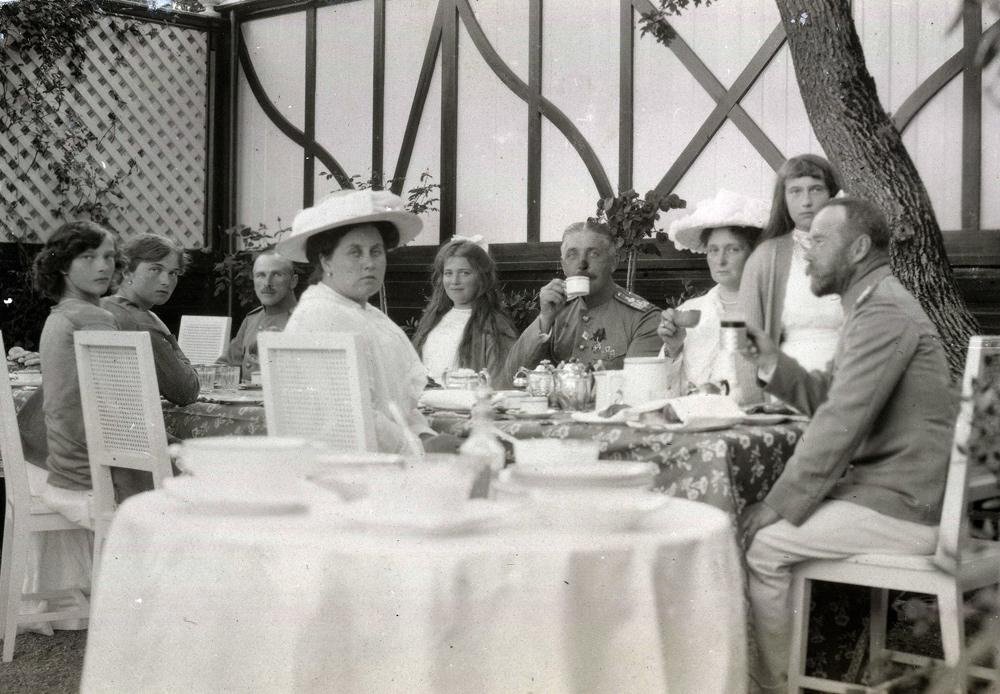
PHOTO: in happier times . . . Anna enjoying a cup of tea/coffee with
the Imperial Family, outside the Tennis House at Livadia, Crimea. 1914

Anna also tells about her relationship with Grigorii Rasputin, her arrest and imprisonment in the notorious Trubetskoy Bastion Prison, situated in the Peter and Paul Fortress in Petrograd, her interrogation and subsequent escape from certain death by the Bolsheviks.

In 1920 Anna fled to Finland with her mother and lived quietly in Vyborg. There she wrote these remarkable memoirs which offer a unique eyewitness testimony of the life and character of Empress Alexandra, Emperor Nicholas II and their five children. Vyrubova describes a diverse array of incidents in the life of the Imperial family which collectively attest to the sincere and loving nature of the often misunderstood Empress.

Anna took vows as a Russian Orthodox nun but was permitted to live in a private home because of her physical disabilities. She died in 1964 at the age of 80, in Helsinki, where her grave is located in the Orthodox section of Hietaniemi cemetery.

© Paul Gilbert. 11 February 2025

‘The Tsar’s Family: Service, Love, Mercy’ photo exhibition opens in Kostroma

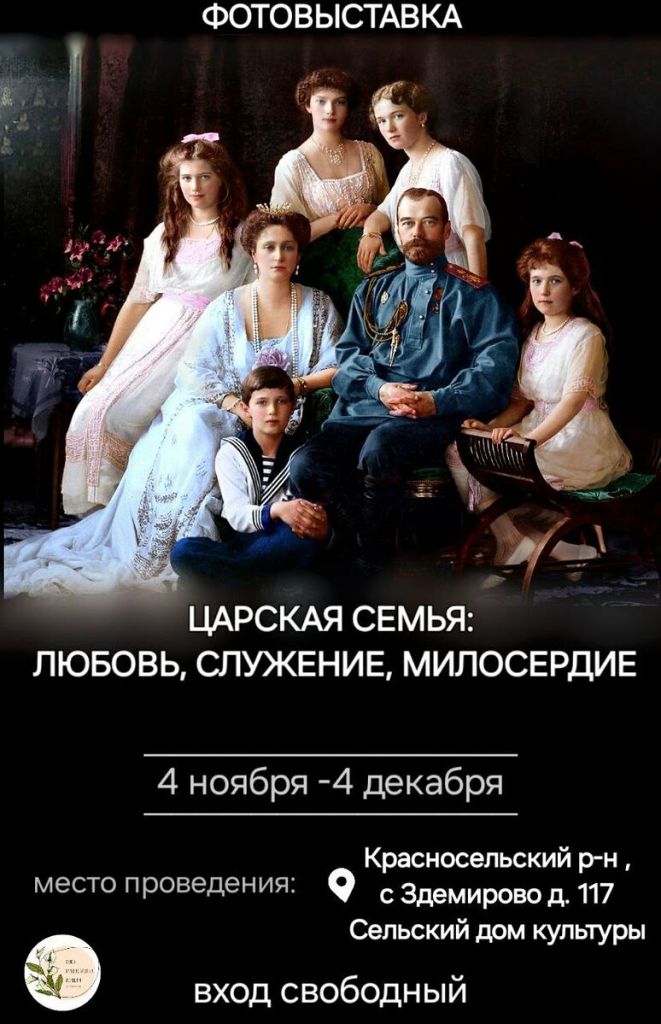
On 1st November 2024, the photo-exhibition The Tsar’s Family: Service, Love, Mercy opened in the Zdemirov Rural House of Culture, situated in the village Zdemirovo of the Kostroma region. The exhibition was organized by the Union of Orthodox Women of the Kostroma Region, with the assistance of the clergy and parishioners of the local Church of the Prophet Elijah.

Photographs for the exhibition were provided by the brethren of Sretensky Stauropegial Monastery in Moscow. The photographs reflect the warmth and love the Imperial Family shared with one another.

What is a true Christian family? In the eyes of the Russian Orthodox Church, that example was set by the family of Emperor Nicholas II.

How selflessly they helped people, their fellow citizens of the Russian Empire. Despite their August positions in life, they worked on an equal basis with others, they worked as nurses, bandaged the wounded and participated in operations. In spite of of everything, they remained a strong family, always supporting each other. They were aN example of true service to God, the Motherland and people.

The photo-exhibition is timed to the 130th anniversary of the ascension of Russia’s last Emperor and Tsar to the throne, on 2nd November (O.S. 20th October) 1894.

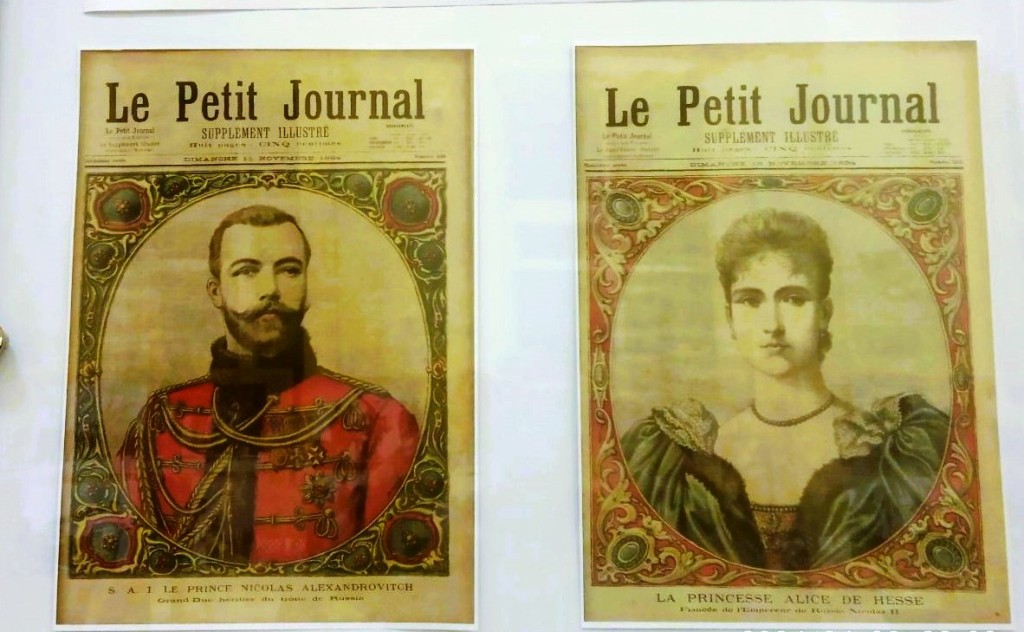
Tsesarevich and Grand Duke Nicholas Alexandrovich was 26 years old at that time. He was to stand at the head of the Russian Empire for more than 22 years, he marrued his fiancée, the Princess Alix of Hesse-Darmstadt, the future Empress Alexandra Feodorovna.

On 27th (O.S. 14th) November 1894, on the birthday of Dowager Empress Maria Feodorovna, the wedding of Emperor Nicholas Alexandrovich with Grand Duchess Alexandra Feodorovna took place in the Grand Church of the Winter Palace. The couple were blessed with 5 beautiful children: four daughters and a son.

The The Tsar’s Family: Service, Love, Mercy photo-exhibition runs until 4th December 2024. Admission is FREE!

***

As I have noted in similiar posts, I support any initiative – big or small – to help keep the memory of Nicholas II and his family alive in post-Soviet Russia – PG

© Paul Gilbert. 6 November 2024

‘The Tsar’s Family: Love and Mercy’ exhibit opens at Faculty of Humanities, Moscow

s

On 11th April 2024, the exhibition ‘The Tsar’s Family: Love and Mercy’ opened at the Higher School of Economics, Faculty of Humanities in Moscow.

The participants of the opening of the exhibit enjoyed a performance by the choir of the Sretensky Theological Academy, followed by a guided tour of the exhibition, by one of the curators of the project, Mikhail Googe.

The exhibition presents more than 200 historical photographs depicting the life and service of Emperor Nicholas II and his family. The exhibition is divided into three themes:

• Love and family: the love shared by Emperor Nicholas II and Empress Alexandra Feodorovna, which was extended to their five children.

• State service of Nicholas II: the patriotic duties of the last Russian emperor, his economic reforms and the welfare of his subjects.

• Works of mercy: charitable and patronage activities of the Imperial Family.

***

The photo project The Tsar’s Family: Love and Mercy was created in 2016 by the Sretensky Monastery in Moscow. The travelling exhibition has already been presented in Serbia, Germany, Italy, Canada, Argentina, New Zealand, South Africa, Romania, Croatia, Montenegro, Bosnia and Herzegovina, Macedonia, and the Czech Republic. The exhibition has also been presented in many cities of Russia: Moscow, Voronezh, Kursk, Ryazan, Penza, Krasnodar, Belgorod, Velikiye Luki, etc.

*As I have noted in similiar posts, I support any initiative – big or small – to help keep the memory of Nicholas II and his family alive in post-Soviet Russia – PG

© Paul Gilbert. 12 April 2024

Photo-exhibition teaches Russian schoolchildren about Nicholas II and his family

On the day of the Reigning Icon of the Mother of God, 15th March, the monks of the Nikandrova Hermitage opened the photo-exhibition The Tsar’s Family. Love and Mercy, in the secondary school of the village of Dubrovno, Porkhov District, Pskov Region.

The exhibition presents more than 100 vintage photographs that tell about the close relationship within the family of the last Russian emperor Nicholas II. The photographs reflect many aspects of the life of the Tsar’s family during the late 19th and early 20th centuries, including the upbringing of the children, and the warm and loving relationship, which they shared with both their parents and each other.

The brethren of the Nikandrova Hermitage made stands for the exhibition, on which the photographs were displayed. The photographs were provided by the Sretensky Monastery in Moscow.

Hierodeacon Spyridon (Drygailo), a resident of the Nikandrova Hermitage, conducted a special lesson with the schoolchildren and teachers dedicated to the Imperial Family.

The exhibition was open to all residents of the village of Dubrovno, admission was free.

The photo project The Tsar’s Family: Love and Mercy was created in 2016 by the Sretensky Monastery in Moscow. The travelling exhibition has already been presented in Serbia, Germany, Italy, Canada, Argentina, New Zealand, South Africa, Romania, Croatia, Montenegro, Bosnia and Herzegovina, Macedonia, and the Czech Republic. The exhibition has also been presented in many cities of Russia: Moscow, Voronezh, Kursk, Ryazan, Penza, Krasnodar, Belgorod, Velikiye Luki, etc.

*As I have noted in similiar posts, I support any initiative – big or small – to help keep the memory of Nicholas II and his family alive in post-Soviet Russia – PG

© Paul Gilbert. 5 April 2024

Photo-exhibit dedicated to the family of Nicholas II opens in Sayansk

On 26th January 2024, a photo-exhibition The Tsar’s Family. Love and Mercy. opened in the Siberian city of Sayansk. The exhibition features photographs reflecting the life and work of the last Russian Emperor and his family. The photos are provided by the Sretensky Monastery in Moscow and are part of a nationwide project that has been successfully implemented in many cities across Russia and abroad.

Father Volodymyr Danilko, head of the diocesan department of religious education, delivered an opening speech at the opening of the exhibit. Art historian Svetlana Panina spoke about Christian virtues and relationships within the family of Nicholas II.

The exhibition runs until 2nd March 2024, at the Art Gallery in Sayansk.

The importance of these photo-exhibitions

On 30th January 2024, I read a particularly disturbing article in one of the online Russian media outlets, which told about two schoolchildren fighting over Nicholas II. One boy spoke negatively about the Tsar, referring to him as “a weak ruler” and “Nicholas the Bloody”, while the second boy defended the Tsar. An argyment ensued, followed by a physical altercation, leaving one boy with a broken nose. The fight took place in the school yard of the Petrovskaya School, one of the top 30 private educational institutions in Moscow.

It is very sad that school children are still being taught the same negative Bolshevik myths and lies, which have endured for more than a century, by either their parents or educators, who still embrace the Bolshevik assessment of Russia’s much slandered Tsar. This is one reason WHY, these photo-exhibitions are so important in 21st century Russia. They provide children with a more honest and truthful assessment of the life and reign of Nicholas II.

*As I have noted in previous posts, I support any initiative – big or small – to help keep the memory of Nicholas II and his family alive in 21st century Russia – PG

© Paul Gilbert. 9 February 2024