Is the myrrh-streaming icon of Nicholas II predicting a terrible omen for Russia?

Whether you are a believer or not, the following is just one of many miracles reported since the regicide in Ekaterinburg in July 1918 . . .

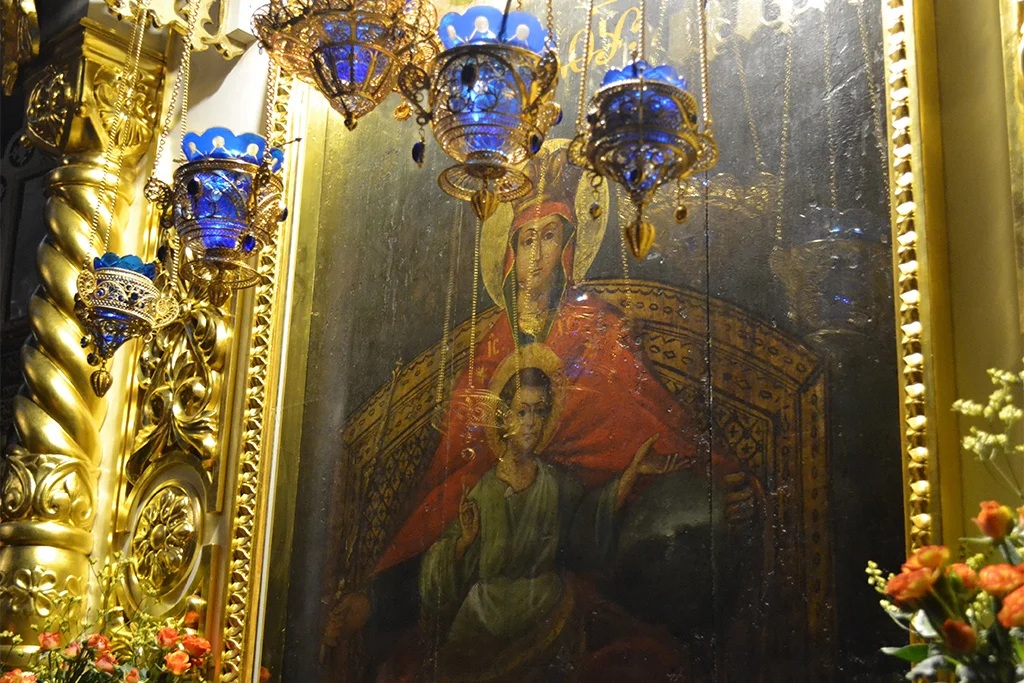
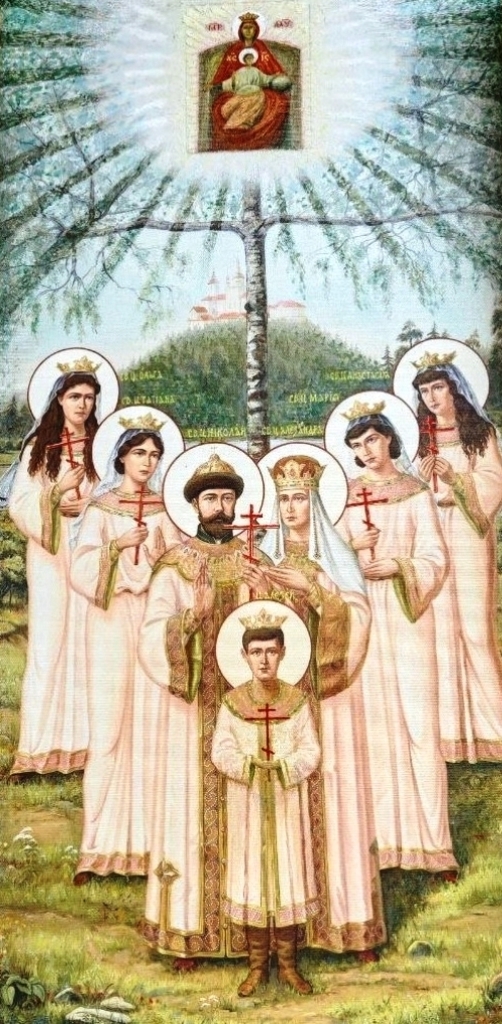
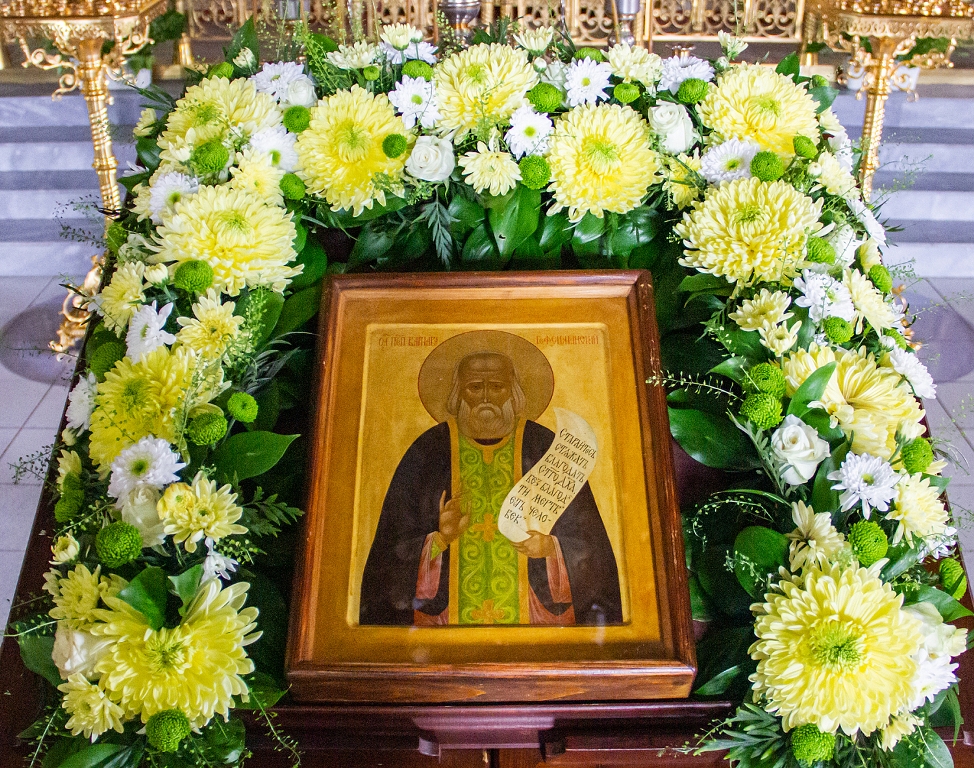
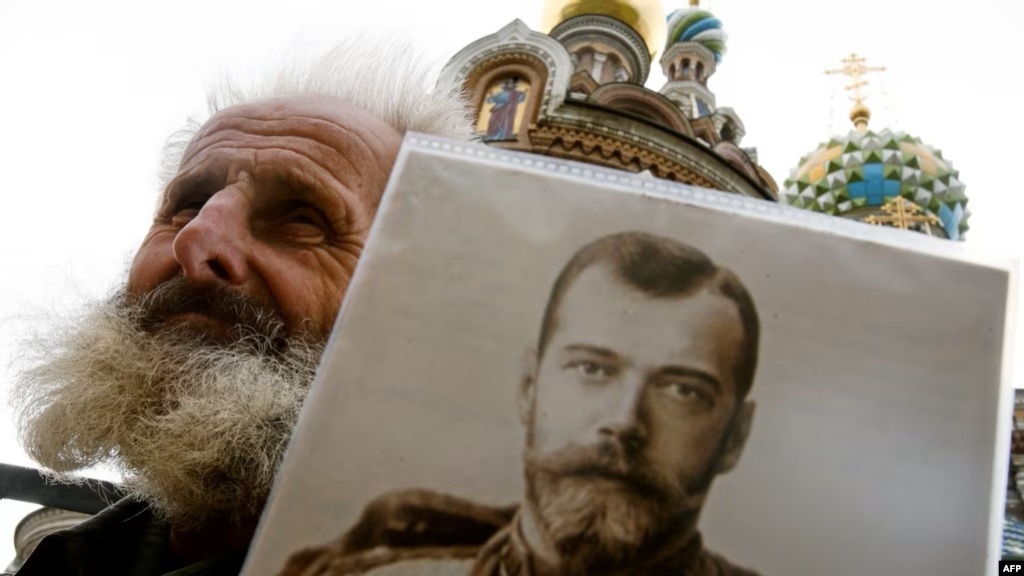
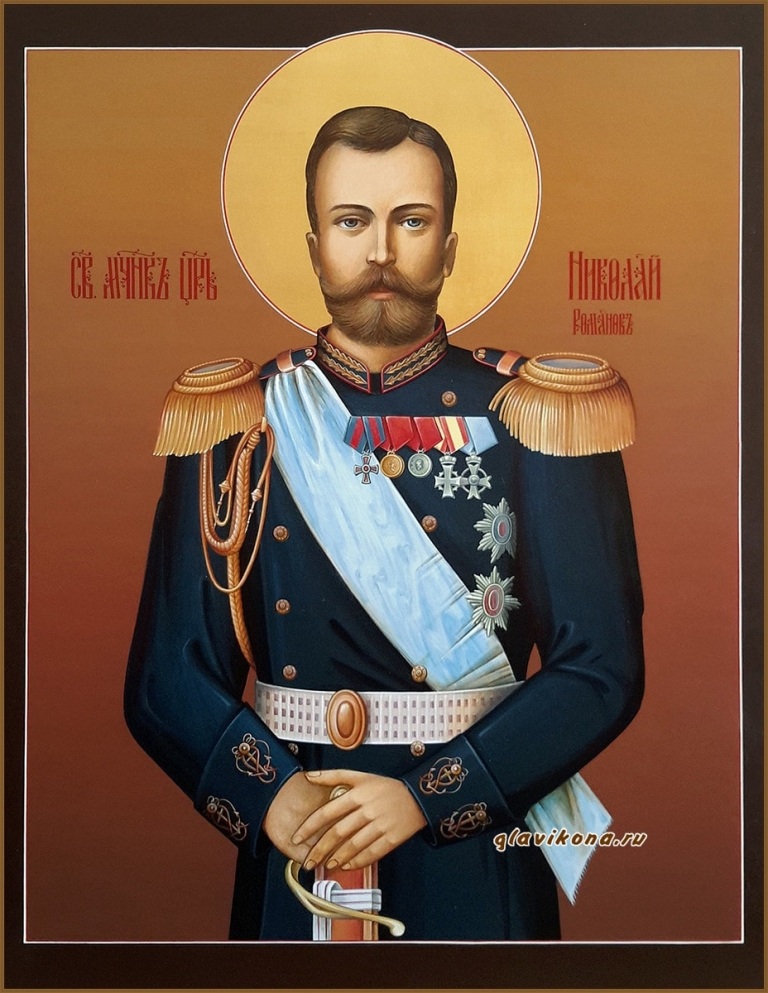
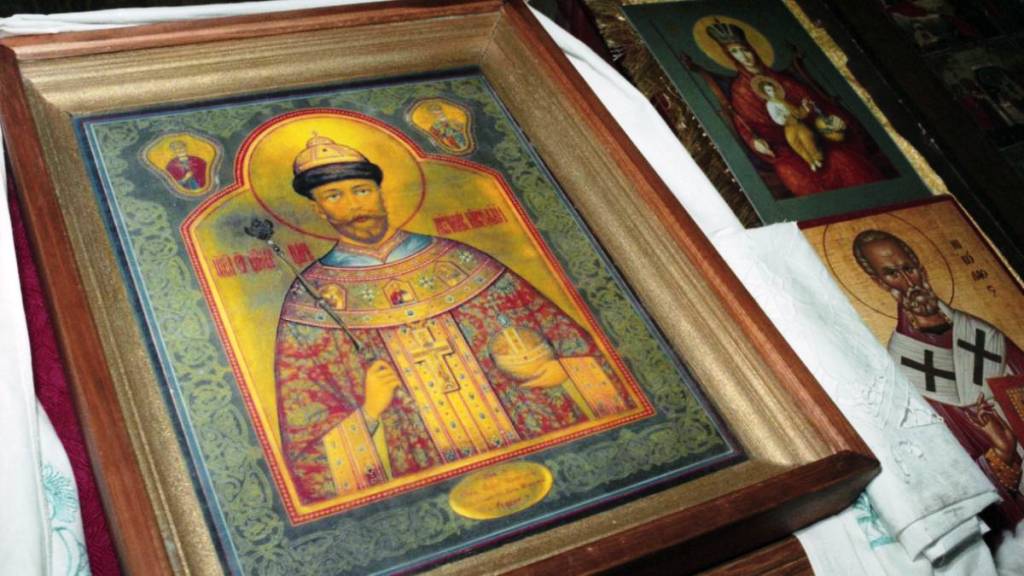
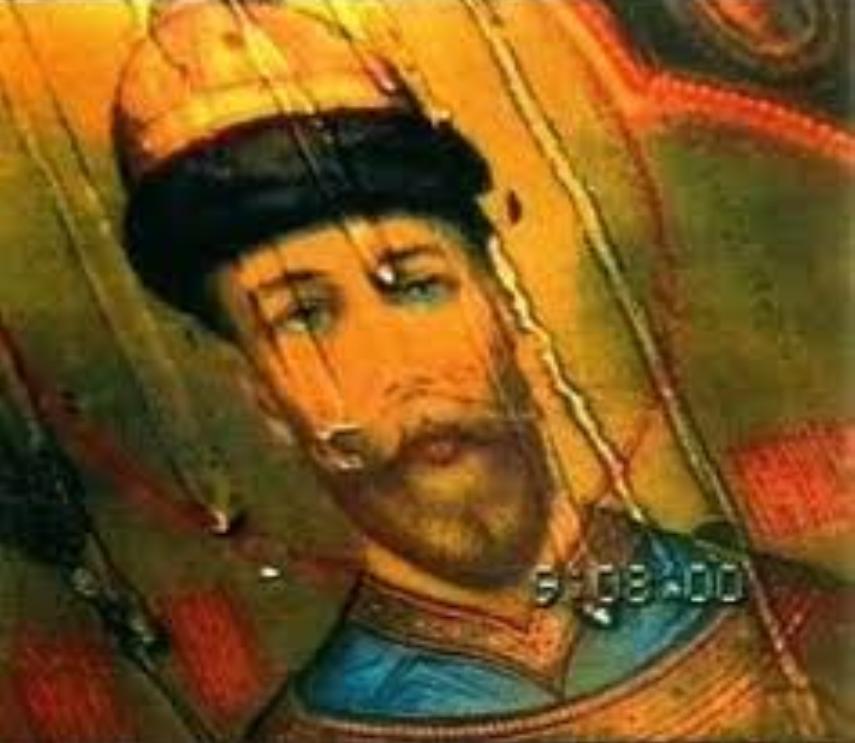
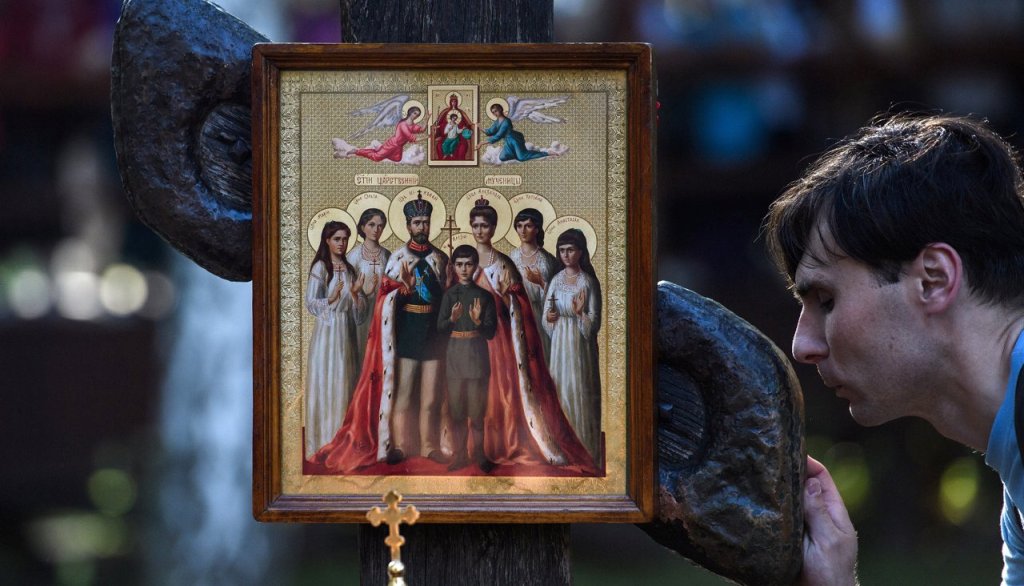
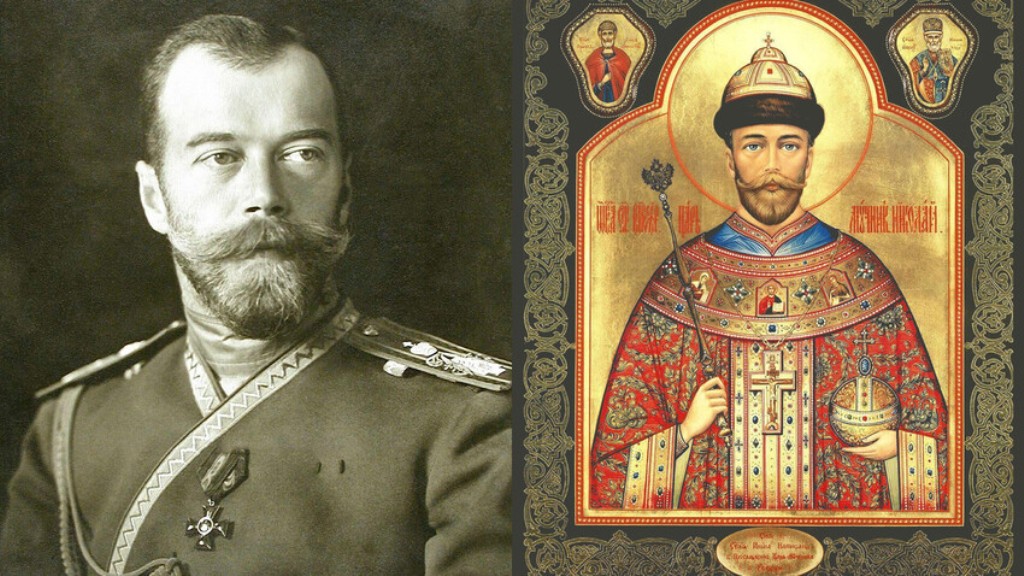
Last week, a case of myrrh streaming[1] from the icon of the Tsar-Passion-Bearer Nicholas II was recorded in the Church of the Nine Martyrs of Kizichesky in Moscow. The Orthodox community is now discussing the event which many believers and clergy interpret as an alarming omen.

Archpriest Anthony Serov commented on the event, “fragrant oil, myrrh, appeared on the surface of the icon, which is in a special, hermetically sealed case.” According to him, the design of the kiot[2] completely excludes any possibility of external influence or forgery. The myrrh-streaming of the icon has been confirmed by Life.ru[3].

“The icon is placed in a protected case, which excludes any outside interference,” Archpriest Anthony Serov emphasized. “Nevertheless, we have witnessed myrrh streaming from the icon. This, in my opinion, is of great spiritual importance.”

In the Orthodox tradition, the streaming of myrrh from icons is considered a miracle and a special sign of grace. However, myrhh streaming from the face of the saint [Nicholas II] which is enclosed in a protective case, is another matter.

Archpriest Serov regards the incident as a warning addressed not only to Orthodox believers, but to Russian society as a whole. He drew parallels with historical events when such phenomena preceded significant changes and upheavals, such as the 1917 Revolution and the First World War.

“The history of our country [Russia] has experienced examples of the streaming of myrrh from icons became a harbinger of revolutionary events, military conflicts and other difficult trials and tribulations,” the rector of the church explained. “It is necessary to comprehend what happened and learn from them.”

Over the centuries, such cases have been repeatedly recorded in Orthodox monasteries and churches in Russia. As a rule, believers see this as a call to repentance and prayer, especially when the images of the Royal Passion-Bearers “weep”.

Earlier, journalists turned to religious scholar Konstantin Mikhailov for comment of the recent myrrh-streaming incident near Moscow. The confessor said that such events are not uncommon and in most cases have a natural explanation. According to the expert, scientists have always found logical reasons for the appearance of moisture on icons.

In the meantime, parishioners and believers from all over Moscow are coming to the Church of the Nine Martyrs of Kizichesky to personally see the myrrh-streaming icon and pray.

NOTES:

[1] In the Orthodox tradition, myrrh-streaming is one of the most mysterious and controversial phenomena. On the one hand, the Church recognizes the fact of the outflow of fragrant myrrh from icons, relics and crosses as one of the manifestations of God’s grace. On the other hand, each such case is carefully checked by church commissions in order to exclude any possibility of forgery or natural causes.

[2] A kiot is a decorated case or frame used in Orthodox Christianity to protect and display religious icons. It serves to safeguard the icon from environmental factors such as temperature fluctuations, dust, and humidity, ensuring the icon’s preservation over time.

[3] A prominent Russian information portal and news agency.

FURTHER READING:

Myrrh-streaming icon of Tsar Nicholas II brought to Ekaterinburg for Tsar’s Days’ + PHOTOS and VIDEO

My [Paul Gilbert’s] cancer journey and prayers for the intercession of Tsar-Martyr Nicholas II

© Paul Gilbert. 23 November 2025

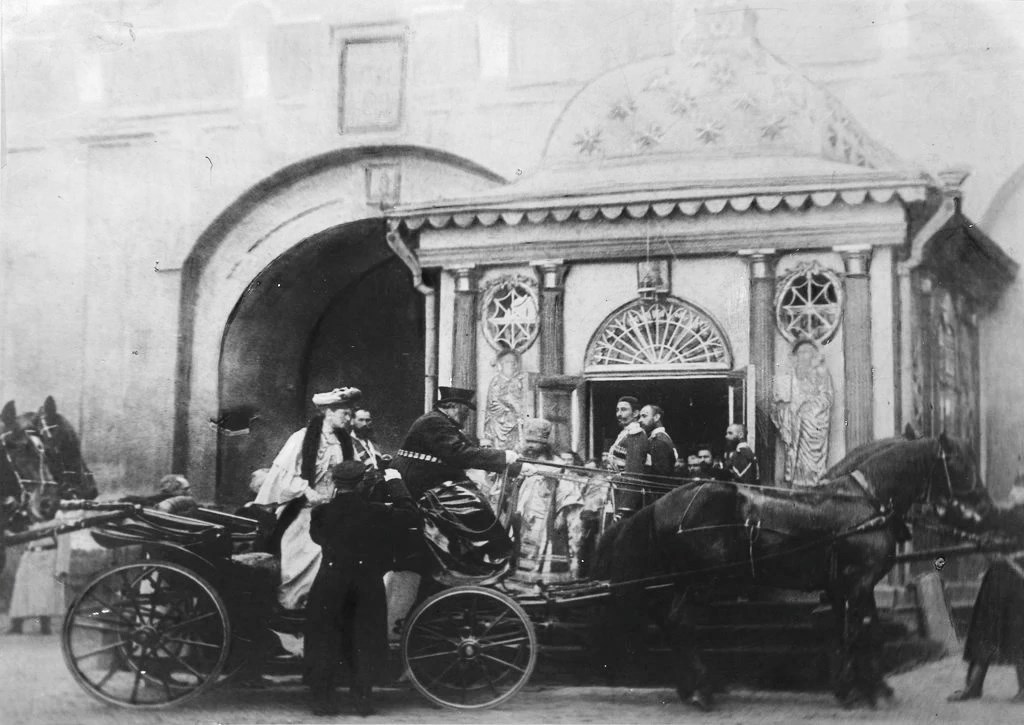
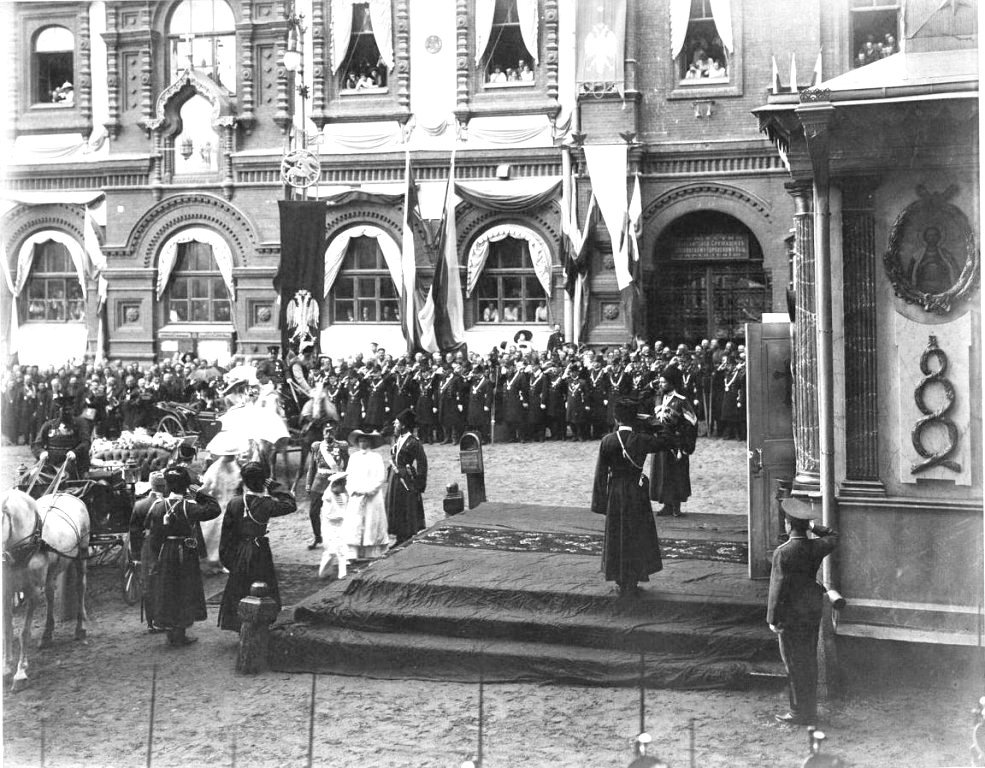
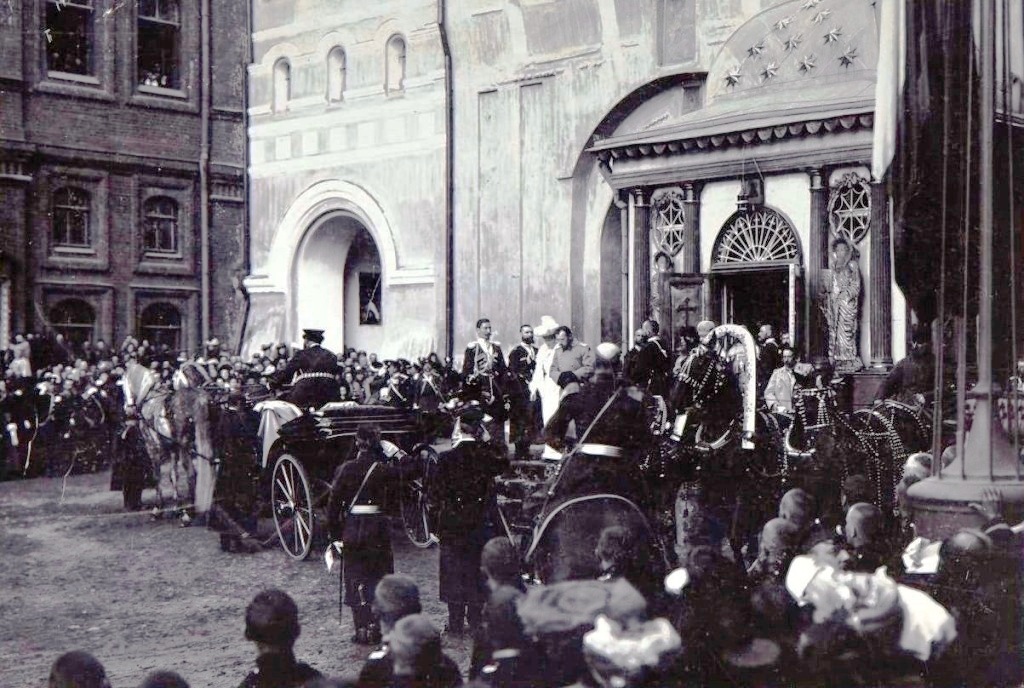
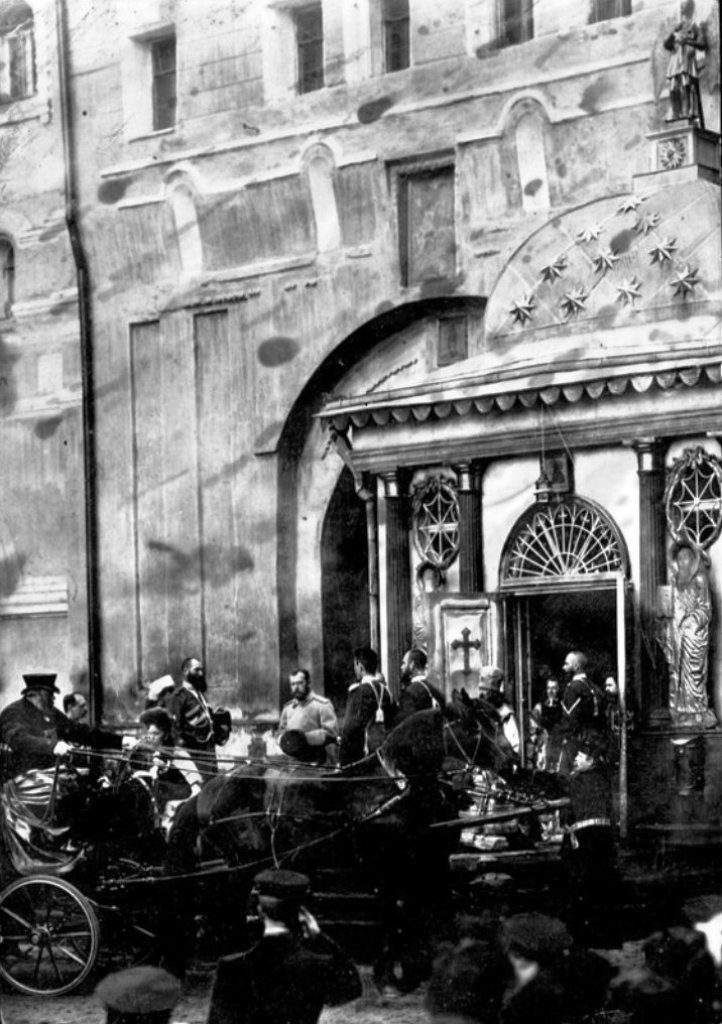
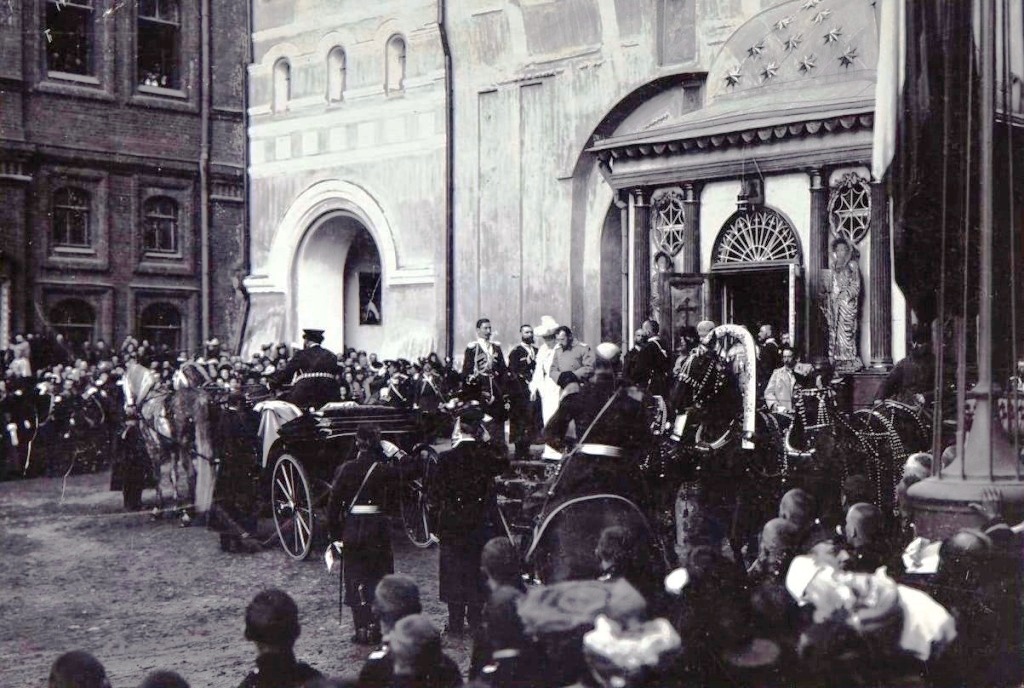
Nicholas II visits the Iverskaya Chapel in Moscow

VIDEO: Vintage newsreel of the Great Pilgrimage of Emperor Nicholas II to Moscow, on May 24-27, 1913. In this video you will hear a unique audio recording of Orthodox hymns for the Transfiguration of the Lord, performed by the Moscow Chudov Choir in 1908. Duration: 3 minutes, 5 seconds

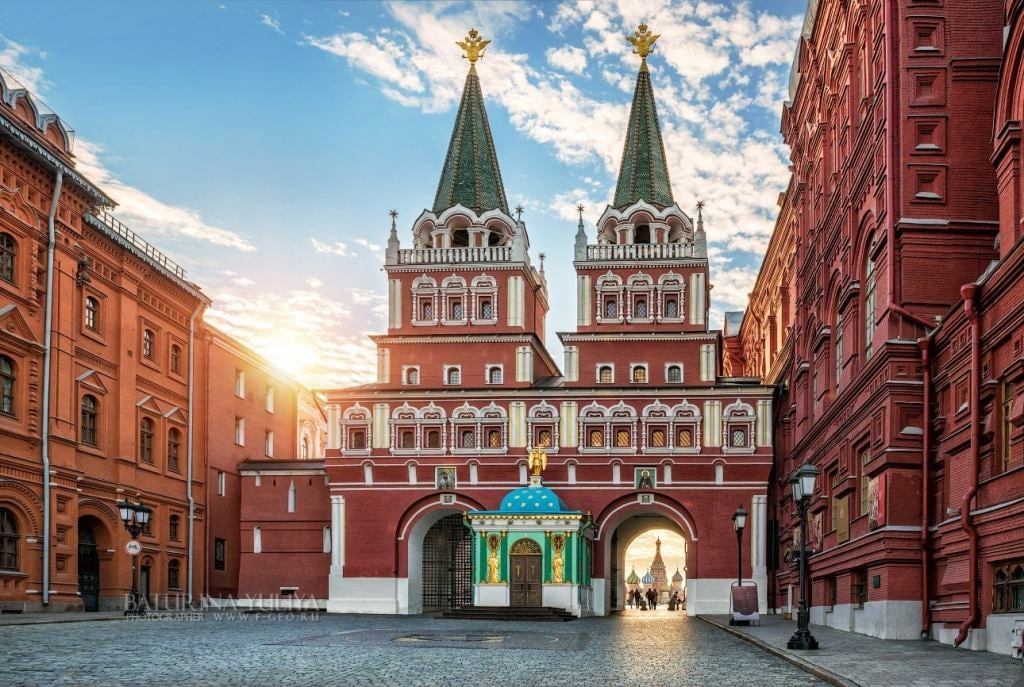
The Iberian or Resurrection Gate is the only remaining gate of the Kitai-gorod[1] in Moscow. It connects the north-western end of Red Square with Manege Square and gives its name to nearby Voskresenskaya Square [Resurrection Square, renamed Revolution Square in 1918].

The gate adjoins the ornate building of the old Moscow Duma [City Hall] to the east and the State Historical Museum to the west.

The first stone gate leading to Red Square was erected in 1535, when the Kitai-gorod wall was being reconstructed in brick. When the structure was rebuilt in 1680, the double passage was surmounted with two-storey chambers crowned by two octagonal hipped roofs similar to the Kremlin towers. An Icon of the Resurrection was placed on the gate facing towards Red Square, from which the gate derives its name.

The Iverskaya Chapel

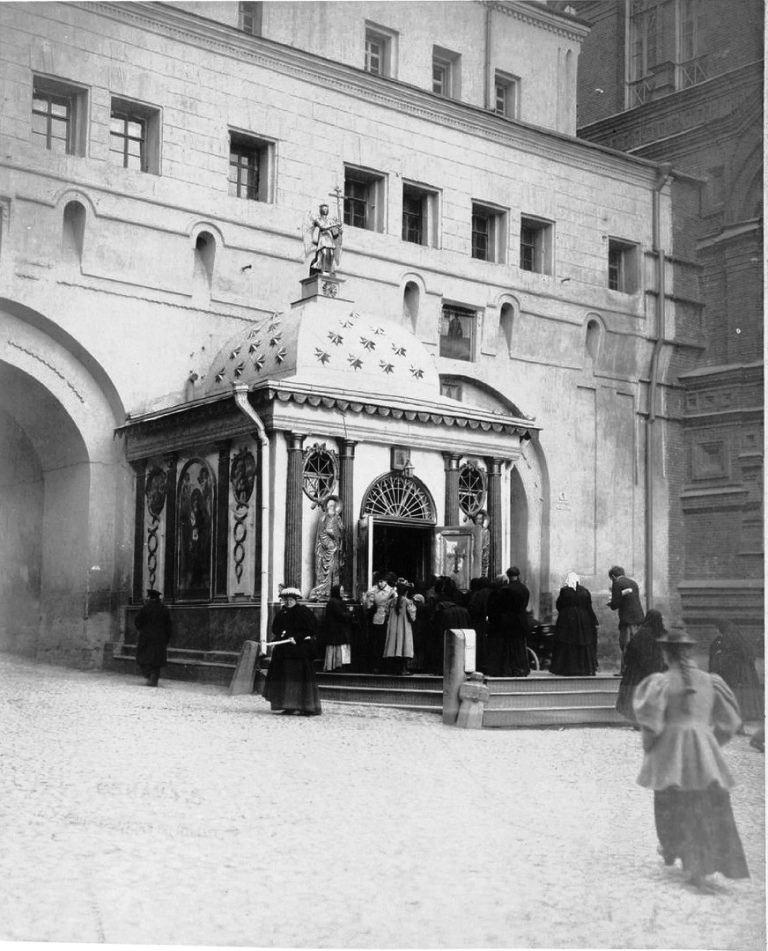
Since 1669, the wooden chapel in front of the gate (facing away from Red Square) has housed a replica of the miracle-working icon of Panaghia Portaitissa (“keeper of the gate”), the prototype of which is preserved in the Georgian Iveron Monastery on Mount Athos. Hence, the name Iversky (Iberian) that stuck both to the chapel and the gate. In 1781, the Nikolo-Perervinsky Monastery constructed a new brick chapel on the spot. The star-splattered cupola of the structure was topped with a statue of an angel bearing a cross.

According to a popular custom, everyone heading for Red Square or the Kremlin visited the chapel to pay homage at the shrine, before entering through the gate. Beggars and outlaws would pray there next to the highest persons, including the Tsar himself. It was here that the rebel Emelyan Pugachev asked the Russian people for forgiveness a few hours before his execution. The tiny ever-overcrowded chapel, with candles burning day and night, figures in works by Leo Tolstoy, Ivan Bunin, Marina Tsvetayeva, and H.G. Wells, to name only a few.

PHOTO: the Iverskaya Chapel. c. 1890s

Nicholas II, like his father preferred Moscow to St. Petersburg. According to French historian Marc Ferro: “Nicholas II preferred Moscow to St. Petersburg because the old city embodied the past, whereas St. Petersburg represented modernity, the Enlightenment and atheism.”

Three of the most notable visits to the Chapel were made on 26th (O.S. 14th) May 1896, on his way to his Coronation; on 25th-26th August 1912 during the celebrations dedicated to the 100th anniversary of the Battle of Borodino; and in May 1913 for celebrations marking the Romanov Tercentennary (1913).

On 5th April 1900, Nicholas wrote to his mother about reaching a landmark in his private spiritual life. A letter to his mother, reveals his strong religious feeling:

“What a joy it is to us, dear Mama, to prepare for Holy Communion here in the Kremlin, with all its various churches and chapels . . . This feeling is now much stronger than it was in 1896, which is only natural. I am so calm and happy now, and everything here makes for prayer and peace of spirit . . . “.

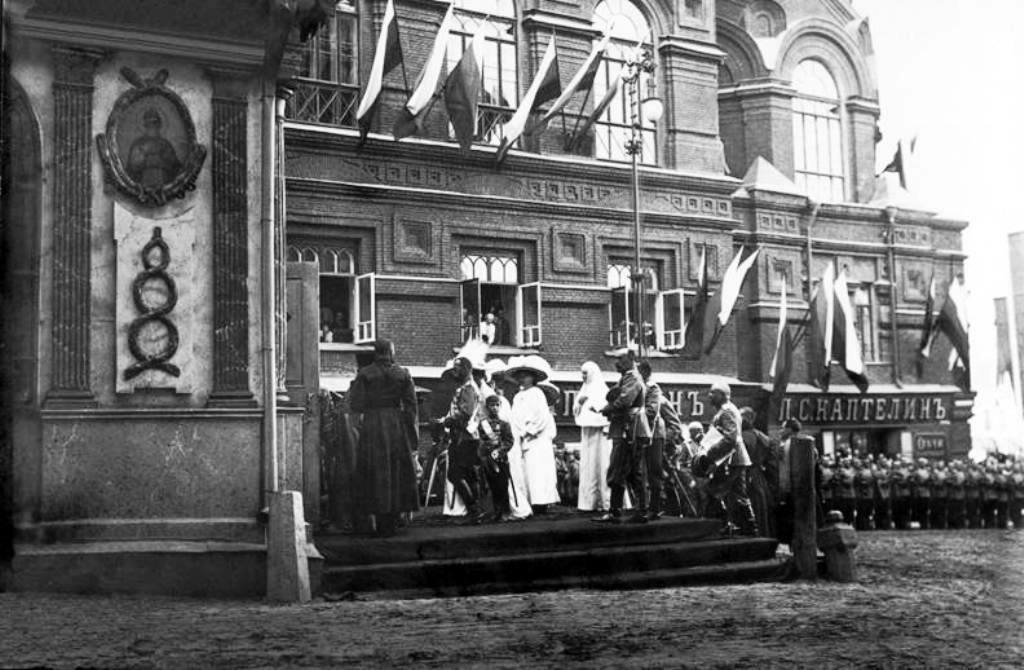
During his reign, Nicholas made numerous visits to the former Russian capital, where he always stopped to pray at the Iverskaya Chapel before crossing Red Square into the Kremlin, where he took up residence in the Grand Kremlin Palace. Moscow’s fervent greeting to their Tsar on each of his visits confirmed his feeling for the city.

Three of the most notable visits to the Iverskaya Chapel were made on 26th (O.S. 14th) May 1896, on his way to his Coronation; on 25th-26th August 1912 during the celebrations dedicated to the 100th anniversary of the Battle of Borodino; and in May 1913 for celebrations marking the Romanov Tercentennary (1913).

PHOTO: Emperor Nicholas II along with members of his family arrive at the Iverskaya Chapel in Moscow, 1912. Note the curious people watching from the windows of the State Historical Museum in the background. The Tsar is accompanied by his daughters the Grand Duchesses Olga, Tatiana, Maria, Anastasia (all wearing white hats), and his son Tsesarevich Alexei Nikolaevich, as well as the Grand Duchess Elizabeth Feodorovna (wearing a nuns’ habit).

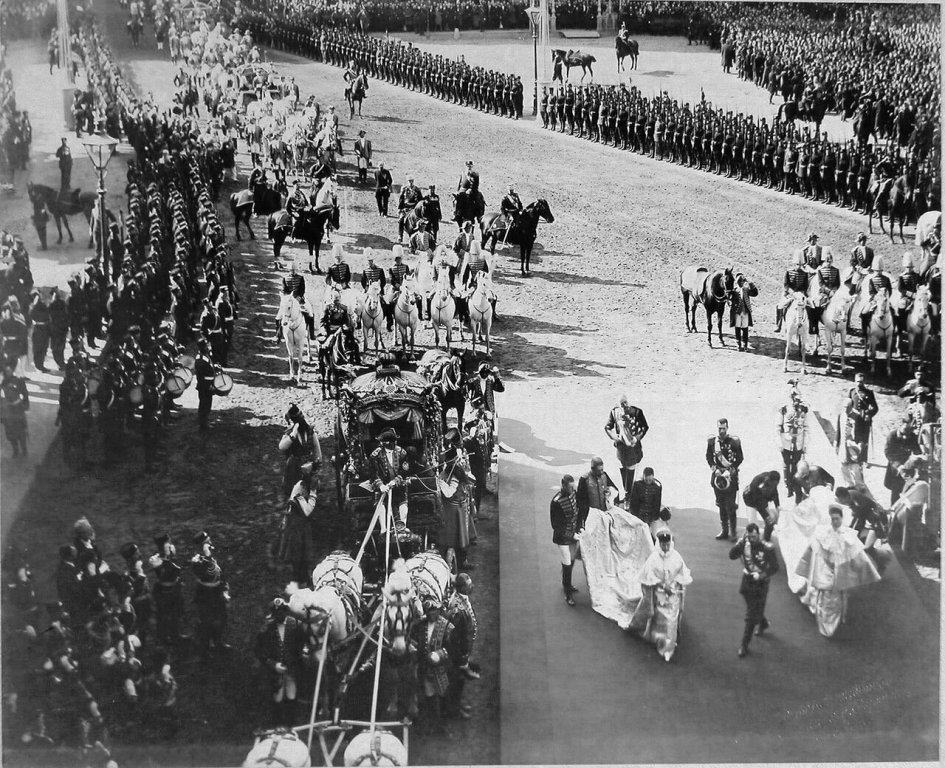
In the above photo, Emperor Nicholas II, Empresses Alexandra Feodorovna and Maria Feodorovna are walking towards the Iverskaya Chapel of the Iberian Mother of God before the crowning of Russia’s last Tsar in the Assumption (Dormition) Cathedral in the Kremlin on 26th (O.S. 14th) May 1896.

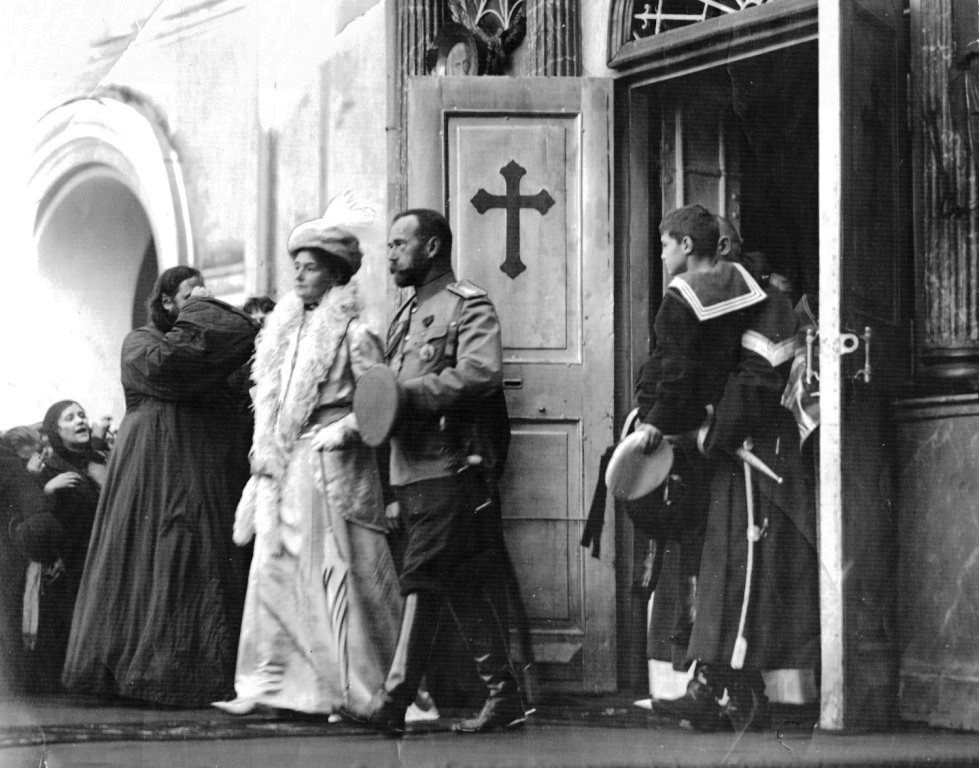
The photos below depict Emperor Nicholas II, Empress Alexandra Feodorovna and their children visiting the Iverskaya Chapel to pray in 1912 and 1913:

PHOTO: Nicholas II, Empress Alexandra Feodorovna and Tsesarevich Alexei Nikolaevich (being carried by the Cossack Alexei Petrovich Pilipenko (1887-1972) leaving the Iverskaya Chapel in Moscow

***

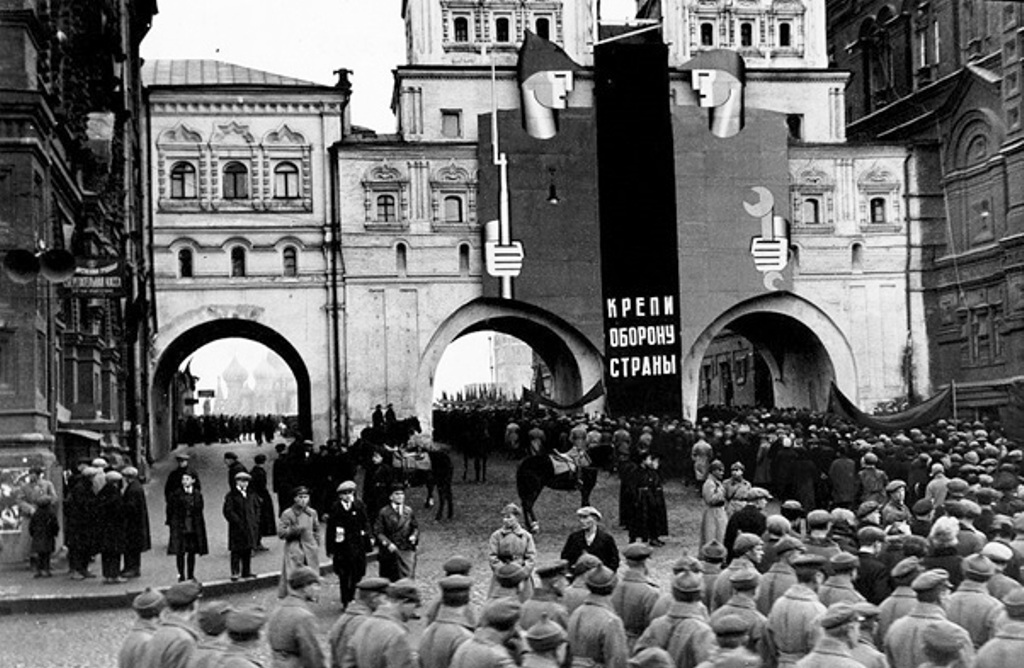
In 1929 the Iverskaya Chapel was demolished, and in 1931 the Resurrection Gate was demolished by order of Soviet leader Joseph Stalin in order to make room for heavy military vehicles driving through Red Square during military parades. Following the dissolution of the Soviet Union, both structures were rebuilt under Moscow mayor Yuri Luzhkov’s[2] leadership, on the site between 1994 and 1995. A new icon of the Iveron Theotokos was painted on Mount Athos to replace the original.

On 4th November 1994, Patriarch Alexi II (1929-2008) consecrated the foundation of both the Iverskaya Chapel and the Resurrection Gate. The Iverskaya Chapel reopened to worshippers on 25th October 1995. Every day, every two hours from eight o’clock in the morning to eight in the evening, prayers are performed in the chapel with the reading of the akathist to the Most Holy Theotokos. 

PHOTO: view of the Resurrection Gate in 1931, the Iverskaya Chapel was demolished in 1929

PHOTO: a stunning view of the Iverskaya Chapel and Resurrection Gate – the latter of which leads into Red Square, reconstructed between 1994-95.

NOTES:

[1] The Kitay-gorod was a cultural and historical area, built during the 16th and 17th centuries within the central part of Moscow. During the 1920s and 1930s Stalin ordered Kitay-gorod to be demolished. This wanton act of destruction included 10 chapels, the Cathedral of the Nikolo-Greek Monastery, and two monastery bell towers. The last pre-war victim of Kitay-gorod was the *Cathedral of Our Lady of Kazan, demolished in 1936, which stood on the corner of Nikolskaya Street and the Red Square. *Reconstructed between 1990-1993.

[2] Yuri Mikhailovich Luzhkov (1936-2019) was a Russian politician who served as the Mayor of Moscow from 1992 to 2010. Under Luzhkov’s leadership, the Cathedral of Christ the Saviour, the Cathedral of Our Lady of Kazan, the Resurrection Gate and Iverskaya Chapel were all rebuilt, as well as the construction of Catherine II’s unfinished palace in Tsaritsyno and the reconstruction of the Kolomenskoye Palace of Tsar Alexis (demolished as early as the 18th century).

© Paul Gilbert. 13 August 2023

25th anniversary of the canonization of Nicholas II by the Moscow Patriarchate

On this day – 20th August 2000 – after eight years of debate, and at times threatening to split the Russian Orthodox Church, the Council of Bishops unanimously approved the canonization of Emperor Nicholas II and his family as passion-bearers[1]. The rite of canonization took place in Moscow’s newly reconstructed Cathedral of Christ the Saviour.

Patriarch Alexei II of Moscow and All Russia (1929-2008), and nearly 150 bishops debated, once and for all, the issue of the Tsar’s spiritual life and qualifications for sainthood. Supporters of this action had long insisted that Nicholas II was anointed by God[2] and was incapable of stopping the communist takeover of Russia. Those who opposed the Tsar’s canonization insisted that he was weak, indulged in excesses and had little concern for the suffering of his people.

“In the last Orthodox monarch of Russia and in the members of his Family we see people who sincerely sought to live by the commandments of the Gospel. In the suffering endured in captivity by the Imperial Family with humbleness, patience and meekness, in their martyrs’ death during the night of 17th (O.S. 4th) July 1918, the evil-defeating light of the faith of Christ was revealed,” the Bishop’s Council concluded.

The Moscow Patriarchate canonized the family as passion-bearers: people who face death with resignation, in a Christ-like manner, as distinguished from martyrs, the latter historically killed for their faith. Proponents cited the piety of the family and reports that the Tsarina and her eldest daughter Olga prayed and attempted to make the sign of the cross immediately before they died.

The term “passion-bearer” is used in relation to those Russian saints who, “imitating Christ, endured with patience physical, moral suffering and death at the hands of political opponents. In the history of the Russian Church, such passion-bearers were the holy noble princes Boris and Gleb (1015), Igor of Chernigov (+ 1147), Andrei Bogolyubsky (+ 1174), Mikhail of Tverskoy (+ 1318), Tsarevich Dimitri (+ 1591). All of them, by their feat of passion-bearers, showed a high example of Christian morality and patience.

Despite their official designation as “passion-bearers” by the August 2000 Council, Nicholas II and his family are referred to as “martyrs” in Church publications, icons, and in popular veneration by the people.

The four faithful retainers who had been killed along with the Imperial family were also canonized as new martyrs by the ROCOR in 1981 The canonized servants were Dr. Eugene Botkin, court physician; Alexei Trupp, footman; Ivan Kharitonov, cook; and Anna Demidova, Alexandra’s maid. Also canonized were two servants killed in September 1918, lady in waiting Anastasia Hendrikova and tutor Catherine Adolphovna Schneider. All were canonized as victims of oppression by the Bolsheviks.

On 3rd February 2016, the Bishop’s Council of the Russian Orthodox Church (Moscow Patriarchate) canonized Dr. Botkin as a righteous passion bearer. They did not canonize the servants, two of whom were not Russian Orthodox: Trupp was Roman Catholic, and Schneider was Lutheran.

Since the late 20th century, believers have attributed healing from illnesses or conversion to the Orthodox Church to their prayers to Maria and Alexei, as well as to the rest of the family.

On 20th August 2025 – the day marking the 25th anniversary of the canonization of the Holy Tsar’s Family, a moleben[3] was performed at the Church on the Blood (Ekaterinburg), built on the site of the Ipatiev House, where Nicholas II and his family were murdered on 17th July 1918.

NOTES:

[1] Emperor Nicholas II and his family were canonized as “new martyrs” by the Russian Orthodox Church Outside of Russia (ROCOR) in 1981. The term “new martyrs” refers to those who were killed for their faith in the 20th century, especially during the persecution of Christians in the Soviet era. 

[2] “As God’s Anointed, Nicholas II could not be displaced during his lifetime. Since the will of God was nowhere manifest, neither in the naming of his brother Grand Duke Michael to the throne, nor in the Tsar’s signing of the instrument of abdication, his status as Tsar remained inviolate and unassailable.”

by Evgeni Vernigora. ‘A Personal Reflection on the Abdication of the Tsar-Martyr Nicholas II
Published in ‘Orthodox Life,’ 13th June 2018

[3] a liturgical service of supplication or thanksgiving

FURTHER READING:

The Canonization of Nicholas II + 12 PHOTOS

ROC Report on the Canonization of Nicholas II and his family

Obituary: His Holiness Patriarch Alexei II of Moscow and All Russia (1929-2008)

© Paul Gilbert. 20 August 2025

***

NICHOLAS II: RUSSIA’S LAST ORTHODOX CHRISTIAN MONARCH

CLICK ON THE LINK BELOW TO ORDER FROM AMAZON

PAPERBACK EDITION – PRICE $10.99

E-BOOK EDITION – PRICE $9.99

BOOK DESCRIPTION

This book is not only for Orthodox and non-Orthodox persons, but for any one who shares an interest in the life, death, and martyrdom of the Holy Tsar-Martyr Nicholas II.

An illustrated Introduction by independent researcher Paul Gilbert explores the piety of Nicholas II, and his devotion to the Russian Orthodox Church, which reached its fullest development and power, during his 22-year reign.

This book further examines the trials and tribulations the Tsar endured, which later led to his canonization by the Russian Orthodox Church.

Paperback edition, with 134 pages + 23 black & white photographs


BONES OF CONTENTION:
The Russian Orthodox Church & the Ekaterinburg Remains

by Paul Gilbert

CLICK ON THE LINK BELOW TO ORDER FROM AMAZON

PAPERBACK EDITION – PRICE $13.99

BOOK DESCRIPTION

Originally published in 2020, this NEW REVISED & EXPANDED EDITION features an additional 40 pages, new chapters and 90 black and white photos.

In May 2022, the Bishops’ Council of the Russian Orthodox Church, will convene in Moscow during which they will review the findings of the Investigative Commission and deliver their verdict on the authenticity of the Ekaterinburg Remains.

This is the first English language title to explore the position the highly contentious issue of the Russian Orthodox Church’s position on the Ekaterinburg remains. The author’s research for this book is based exclusively on documents from the office of the Moscow Patriarchate, as well as Russian media and archival sources.

Paperback edition. 206 pages. + 90 black & white photographs

MOST PIOUS TSAR
Icons, Frescoes and Holy Images of Tsar-Martyr Nicholas II

CLICK HERE TO ORDER THE HARD COVER @ $50.00 USD

CLICK HERE TO ORDER THE PAPERBACK EDITION @ $40.00 USD

In 1938, Russia’s last tsar Nicholas II was canonized by the Serbian Orthodox Church. On 1st November 1981, he was canonized as a new martyr by the Russian Orthodox Church Outside Russia (ROCOR). On 20th August 2000, after 8 years of study, he was canonized as a passion bearer by the Moscow Patriarchate, although the people had already been venerating him as a saint for a long time, and this canonization was simply a confirmation of a fact that already existed by itself.

Since these historic dates, icons of Russia’s last Tsar have been installed in Orthodox churches across Russia and around the world. In addition home icons have been mass produced and sold for veneration by Orthodox Christians.

This book will not only appeal to Orthodox and non-Orthodox persons, but for any one who shares an interest in icons and iconography. This book also includes a Prayer and Akathist to the Holy Martyred Tsar. The highlight of this book, however, are the 130+ colour photographs of icons, frescoes and holy images depicting the Holy Royal Martyr Nicholas II.

English. Large 7″ x 10″ format. 162 pages with 132 photos in FULL COLOUR!

First Moscow church is being built in honour of the Tsar-Passion-Bearer Nicholas II

The first Moscow church in honour of the Tsar-Passion-Bearer Nicholas II is now being built in the capital’s Annino district, said Vladimir Resin, deputy of the State Duma of Russia, Patriarchal Adviser and curator of the Program for the Construction of New Churches in Moscow.

Vladimir Resin clarified that there are currently 22 churches and chapels in Russia, dedicated to the Tsar-Passion-Bearer, however, this will be the first such church to be constructed in Moscow. These do not include churches and chapels dedicated to the Holy Royal Passion-Bearers, which have been constructed across the Russian Federation, following the Imperial Family’s canonization by the Moscow Patriarchate in August 2000.

“Thanks to the support of His Holiness the Patriarch, donations from parishioners and a targeted patriarchal subsidy, we are confidently moving forward. I note that the project of this large church for 800 people was developed in the style of Russian Art Nouveau. The area of the prayer hall without an altar and a solea is over 400 square meters,” said the Patriarchal Adviser.

Artist concept of church in honour of the Tsar-Passion-Bearer Nicholas II, Moscow

The church complex is being built according to the project of the architect Fyodor Ivanovich Afuksenidi (b. 1961, Krasnaya Polyana), the author of more than 50 Orthodox churches and chapels, who died in 2019. For the creation of churches, he was awarded the Order of Sergius of Radonezh III Degree.

It is noted that thanks to the manufacturer, 20 tons of reinforcement bars were delivered to the construction site in June, and on June 7, the parish youth began to inscribe the names of the donors on the brick walls of the future church.

“By the end of the year, the builders intend to erect the frame of the building along with the installation of drums under the domes. The entire complex is expected to be complete in 2028,” added Vladimir Resin.

© Paul Gilbert. 19 August 2025

Divine Liturgy for the Imperial Family performed in the Great Church of the Winter Palace

On 17th July 2025, Archpriest Nikita Zverev, the dean of the palace churches, performed the Divine Liturgy in the Church of the Saviour of the Image Not Made by Hands [aka the Great Church of the Winter Palace], situated in the State Hermitage Museum in St. Petersburg.

The service marked the 107th anniversary of the death and martyrdom of Russia’s much slandered Tsar, his family, and their four faithful retainers, all of whom were brutally murdered in Ekaterinburg by members of the Ural Soviet in July 1918.

Archpriest Nikita was co-served by Rector Hieromonk Mark (Svyatogorov), Hieromonk Tikhon (Voronov), Archpriest Maxim Kvasov, Priest Artemy Naumov, and Hierodeacon Ilya (Vasiliev). They were joined by the combined choir of singers of the St. Petersburg diocese.

Among the worshippers were the Director of the State Hermitage Museum in St. Petersburg, Mikhail Borisovich Piotrovsky, and museum staff.

“Passing by the Winter Palace, it is a great happiness to see the dome of this church and to know that prayers are heard here again,” said Father Nikita. – “The history of Russia’s last Tsar and his family began with this church. Everyone who comes here sees on the right a picture depicting the wedding of Nicholas II and Alexandra Feodorovna [see below]. The sacraments were performed in this very church, . . . and now, many years later, we can stand and pray where they once prayed. This temple is of great historic importance, one which is associated with the fate of the Fatherland. I thank the museum staff who have preserved all this to this day. If we do not know our history, remember the tragedy that happened, there can be no happy future for Russia. Let us appreciate what we have, both sorrows and joys, and remember that the Lord will never leave us.”

Recall that the last Russian Emperor, Nicholas II, and his family were shot on the night of 16/17 July 1918, in the basement of the Ipatiev House in Ekaterinburg. On 1st November 1981, they were canonized as new martyrs by the Russian Orthodox Church Outside Russia (ROCOR), and on 20th August 2000, as passion bearers by the Moscow Patriarchate of the Russian Orthodox Church.

And let us not forget the four faithful retainers, who remained with the Imperial family during their house arrest in Tobolsk and Ekaterinburg, and who followed them to their deaths in the Ipatiev House, on 17th July 1918: the valet Aloysius Trupp (1856-1918); the maid Anna Demidova (1878-1918); the cook Ivan Kharitonov (1872-1918); and Dr. Eugene Botkin (1865-1918), canonized in 2016.

PHOTO: Wedding of Nicholas II and Alexandra Feodorovna
Painted in 1895 by the Danish artist Laurits Tuxen (1853-1927)
From the collection of the State Hermitage Museum, St. Petersburg

The Great Church of the Winter Palace was consecrated on 25th July 1763 by Archbishop Gabriel in the name of the image of the Saviour (painted by Theodot Ukhtomsky, 1693), which was located in the prayer room at the altar. After the 1839 renovation, it was consecrated again by Metropolitan Philaret. The Maltese shrines presented to Emperor Paul I were kept here, and every year they were transferred to the Pavlovsk Cathedral [the Cathedral of the Holy Apostle Paul] in Gatchina for a month.

In October 1917, the church was damaged during the storming of the Winter Palace by the Bolsheviks and was closed in 1918. On 9th December 2014, the Great Church of the Winter Palace was opened to visitors after restoration, and on 25th December of the same year, the first Divine Liturgy in 96 years was served.

© Paul Gilbert. 28 July 2025

Myrrh streams from icon of Nicholas II in Ekaterinburg

PHOTO: Alexander Feodorovich Chernavsky holding the
myrrh-streaming icon of the Tsar-Martyr Nicholas II

On 13th July 2025, the myrrh-streaming icon of the Tsar-Martyr Nicholas II arrived at the Church on the Blood in Ekaterinburg. The icon was brought from Moscow, by the head of the Orthodox Military Mission, Alexander Feodorovich Chernavsky.

According to Chernavsky, the icon has been streaming myrrh since 1998, and again, during this year’s Tsar’s Days in the Ural capital, drops of myrrh appeared in the shape of “diamonds” on the icon itself and on the frame.

It smells fragrant, it streams myrrh and inspires faithful Orthodox Christians with the fact that the Tsar is alive, he sees all our labours, hears our prayers, reacts to the impulses of our hearts, to our feelings, he believes in the future of Russia. The Imperial Family and other New Martyrs pray for us.”

Chernavsky brings the icon to the Ural city every year for events marking Tsar’s Days, namely the Divine Liturgy held on the night of 16/17 July, followed by a Cross Procession to the Monastery of the Holy Royal Martyrs in Ganina Yama.

PHOTO: detail of the banner depicting the image of Tsar-Martyr Nicholas II

On 16th July 2025, Chernavsky presented Metropolitan Evgeny of Yekaterinburg and Verkhoturye with a banner depicting the image of Tsar Nicholas II. Such banners bearing the face of the Holy Royal Passion-Bearers are sent to Russian soldiers to inspire them by the feat of the Emperor, to embrace the Orthodox faith and become churchgoers.

In the early morning hours of 17th July, Chernavsky – carrying the icon of the Tsar-Martyr Nicholas II – joined tens of thousands of pilgrims, clergy and believers in the annual Cross Procession from the Church on the Blood to the Monastery of the Holy Royal Martyrs at Ganina Yama – a journey of 21-km (13 mile) on foot.

Chernavsky noted that during this year’s Cross Procession, he noticed many young people with banners and flags, which he believes “speaks of the affirmation of the Orthodox faith and the unity of the Russian people.”

PHOTO: Metropolitan Evgeny of Ekaterinburg and Verkhotursky (left) with Alexander Chernavsky holding the myrrh-streaming icon of the Tsar-Martyr Nicholas II, in the Patriarchal Compound of the Church on the Blood. At the top of the stairs behind, you can see a bust-monument to Nicholas II

Recall that the icon of the Tsar-Martyr Nicholas II was painted in the United States even before the glorification of the Tsar by the Moscow Patriarchate of the Russian Orthodox Church on 20th August 2000, after the Russian émigré Iya Dmitrievna Schmit[1], had a dream in which she saw an icon depicting the Tsar Martyr Nicholas II in 17th century grand ducal attire. She asked the iconographer Pavel Nikolaevich Tikhomirov, who lives in California, to paint the icon she had dreamt about.

At the end of 1997, colour lithographs of this icon were brought to Russia. In the St. Nicholas almshouse in the city of Ryazan, where the Church of the Tsar-Martyr Nicholas II is being built, a colour copy was made and placed in an icon case under glass.

On 7th November 1998, the icon began to stream myrrh. Since then, the icon has been traveling around Russia and around the world. But most importantly, the icons streams myrrh on the anniversary of the Tsar’s death and martyrdom, among other days associated with the memory of Russia’s much slandered Tsar.

NOTES:

[1] In 2000, Ija Schmit (1936-2018) gifted a copy of this icon to the author of this article.

© Paul Gilbert. 23 July 2025

Divine Liturgies celebrated on the anniversary of the birth of the Holy Emperor Nicholas II

On 19th May 2025, the Russian Orthodox Church marked the anniversary of the birth of Tsesarevich and Grand Duke Nicholas Alexandrovich – the future Emperor Nicholas II – who was born on 19th (O.S. 6th) May 1868 – the day when St. Job of the Long Suffering was born..

In connection with this historic date, Orthodox churches throughout Russia and abroad performed Divine Liturgies in memory of Russia’s much slandered Tsar.

From the very beginning of his reign, Nicholas II treated the duties as Emperor and Tsar of the Russian Empire as a sacred duty. As God’s Anointed, he strongly believed that for the hundred million Russian people the Tsar’s power was and remained sacred.

The family of Emperor Nicholas II was imbued with the spirit of the Orthodox faith. They lived in accordance with the traditions of Orthodox piety. Obligatory attendance at divine services on Sundays and feast days, observing fasts were an integral part of their lives. The August couple not only visited churches and monasteries during their numerous trips, venerated miraculous icons and relics of saints, but also made pilgrimages, as was the case in 1903 during the glorification of St. Seraphim of Sarov.

The Emperor paid great attention to the needs of the Orthodox Church throughout his reign. Like all Russian emperors, Nicholas II generously donated from his own funds for the construction of new churches, including those outside Russia. During the 22+ years of his reign, the number of parish churches in Russia increased by more than 10 thousand, and more than 250 new monasteries were opened. The Emperor himself participated in the laying of new churches and other church celebrations.

The personal piety of the Tsar was also manifested in the fact that during the years of his reign more saints were canonized than in the two previous centuries, when only 5 saints were glorified. During Nicholas II’s reign, the following saints were glorified: St. Theodosius of Chernigov (1896), St. Seraphim of Sarov (1903), St. Joasaph of Belgorod (1911), St. Ermogen of Moscow (1913), St. Pitirim of Tambov (1914), St. John of Tobolsk (1916) were canonized, and the veneration of St. Princess Anna of Kashin was renewed (1909).

The Holy Emperor Nicholas II said: “If you see me calm, it is because I have the firm, the absolute conviction that the fate of Russia, my own fate, and that of my family is in the hands of God, Who has placed me where I am. Whatever happens, I will bow to His will, conscious of never having had a thought other than that of serving the country that He confided to me.”

VIDEO: Nicholas II: The Last Orthodox Tsar of Russia
with Paul Gilbert (in English)

In 2020, the Holy Monastery of St. John the Forerunner of Mesa Potamos in Cyprus invited me to research, write and narrate this 20-minute English-language VIDEO, within the framework of the project for the book “The Romanov Royal Martyrs: What Silence Could Not Conceal“, of which I was a project colleague. The VIDEO has been watched by more than 134,000 people to date!

CLICK on the LINK to watch the VIDEO: Nicholas II: The Last Orthodox Tsar of Russia

VIDEO: Piety of His Imperial Majesty Sovereign Emperor Nicholas II
Duration: 11 minutes, 24 seconds

A wonderful collection of vintage newsreels from the Russian State Documentary Film & Photo Archive at Krasnogorsk (RGAKFD).

This newsreel has preserved for posterity those moments when Emperor Nicholas II together with his Family attend the divine services, kisses reverently the cross and the icons, blesses his troops, makes the sign of the cross, participates in the sacred processions and converses with the religious leaders.

Soundtrack: 1) Song «Tsar Nicholas» (written and composed by Gennady Ponomarev; sung by the famous Russian singer Zhanna Bichevskaya in 1999); 2) Fragment of the national anthem of the Russian Empire «God Save the Tsar» (another name: «The Prayer of Russians»; written by Vasily Zhukovsky in 1814, sung by Zhanna Bichevskaya).

CLICK on the LINK to watch the VIDEO: Piety of His Imperial Majesty Sovereign Emperor Nicholas II

© Paul Gilbert. 21 May 2025

***

NICHOLAS II: RUSSIA’S LAST ORTHODOX CHRISTIAN MONARCH

CLICK ON THE LINK BELOW TO ORDER FROM AMAZON

PAPERBACK EDITION – PRICE $10.99

E-BOOK EDITION – PRICE $9.99

BOOK DESCRIPTION

This book is not only for Orthodox and non-Orthodox persons, but for any one who shares an interest in the life, death, and martyrdom of the Holy Tsar-Martyr Nicholas II.

An illustrated Introduction by independent researcher Paul Gilbert explores the piety of Nicholas II, and his devotion to the Russian Orthodox Church, which reached its fullest development and power, during his 22-year reign.

This book further examines the trials and tribulations the Tsar endured, which later led to his canonization by the Russian Orthodox Church.

Paperback edition, with 134 pages + 23 black & white photographs

New monument to Nicholas II to be installed in the Urals

PHOTO: the Cathedral of St. Nicholas the Wonderworker in Verkhneuralsk

A new equestrian monument to Emperor Nicholas II will be installed and consecrated later this year, in the Ural city of Verkhneuralsk. The city is located on the left bank of the Ural River, 230 km south of Chelyabinsk and 450 km south of Ekaterinburg.

The monument will be installed in front of the Cathedral of St. Nicholas the Wonderworker – the only Orthodox church in Verkhneuralsk which survived the years of Soviet power. The grounds around the church are currently being developed. The monument will be installed and consecrated here upon completion of the landscaping and gardens.

PHOTO: a plaque marks the visit of Tsesarevich and Grand Duke Nicholas Alexandrovich [future Emperor Nicholas II] to the Cathedral of St. Nicholas the Wonderworker in Verkhneuralsk, on 4th August (O.S. 23rd July) 1891.

The monument is in memory of Nicholas II’s visit to Verkhneuralsk on 4th August (O.S. 23rd July) 1891, during a trip across the Russian Empire following his Eastern Journey. The Eastern Journey (1890-1891) of Tsesearvich Nicholas Alexandrovich took him to Egypt, India, Ceylon, Siam, China, and Japan – where an assassination attempt was made on his life. The total length of the journey exceeded 51,000 kilometres, including 15,000 km of railway and 22,000 km of sea routes.

The Cathedral of St. Nicholas the Wonderworker was built in the Russian-Byzantine Style in 1870, and consecrated on 5th May 1875. The money for it’s construction was allocated by a local merchant Nikolai Petrovich Rytov (1818-1879), cost 6100 rubles. The church was erected according to the project of the famous Russian architect Konstantin Ton (1794-1881), who challenged classicism and established the Russian Style, which included outstanding palace and church architecture.

PHOTO: the grounds around the Cathedral of St. Nicholas the Wonderworker are currently being developed. The monument to Nicholas II, will be installed and consecrated here upon completion of the landscaping and gardens.

The northern altar of this cathedral – in the name of the Intercession of the Most Holy Theotokos – was built on benevolent donations in memory of the salvation of Tsesarevich Nicholas Alexandrovich, following an assassination attempt on his life in Otsu, Japan. The altar was consecrated on 18th November 1897.

In the 1930s, the church was closed and used as a grain warehouse, reopened in 1942. In the early 20th century, there were 7 Orthodox churches in Verkhneuralsk, however the Cathedral of St. Nicholas the Wonderworker, is the only one to have survived the years of Soviet power, the rest were destroyed.

It is interesting to note that in 1904, Emperor Nicholas II visited a number of Ural cities including Verkhneuralsk. He was accompanied by his brother Grand Duke Mikhail Alexandrovich.

© Paul Gilbert. 7 May 2025

Father Vasiliev: Confessor to the Imperial Family

PHOTO: Tsesarevich Alexei Nikolaevich and
Archpriest Alexander Petrovich Vasiliev. Livadia, 1912

Alexander Petrovich Vasiliev (1868-1918), was an archpriest, tutor to the children of Tsar Nicholas II, confessor of the Imperial Family, and monarchist.

He was born into a peasant family in the village of Shepotovo, Smolensk Province. He was orphaned at an early age. He studied at the school of the famous pedagogue Sergei Aleksandrovich Rachinsky (1833-1902).

After graduating from school, Rachinsky facilitated Vasiliev’s admission to the Belsk Theological School, after which Alexander Petrovich entered the Bethany Theological Seminary, and then the St. Petersburg Theological Academy. In 1893, he graduated with the degree of Candidate of Theology.

While studying at the Academy, he married Olga Ivanovna. The couple had seven children.

On 19th July 1892, he was ordained to the priesthood and sent to St. Nicholas Church, where he served as rector, in the village of Yam-Izhora, Tsarskoye Selo District.

While studying at the Academy, and following the example of his first teacher S.A. Rachinsky, Vasiliev founded a temperance society. The first sermons on sobriety were delivered in the Church of the Righteous Prince Alexander Nevsky at the famous Vargunin paper mill in Maly Rybatskoye, a village located on the southeastern outskirts of St. Petersburg. Alexander Vasiliev’s sermons inspired the Vargunin workers to create a temperance society at the church. The first meeting was attended by 60 people, the second attracted 146 people.

PHOTO: Tsesarevich Alexei Nikolaevich with his tutors among others . . . from left to right: Assistant Chief of the Palace Police, Colonel N.P. Shepel; Alexei’s “sailor-nanny” A.E. Derevenko; French tutor Pierre Gilliard; Tsesarevich Alexei Nikolaevich; Russian language and literature tutor Pyotr Petrov and Archpriest Alexander Vasiliev. Spala 1912

In May 1894, he was transferred to the Church of the Presentation of the Lord in Polyustrovo, and from 7th September of the same year he combined his service in Sretensky Church with the rectorship of the Church of the Exaltation of the Holy Cross at the Holy Cross Community of Sisters of Mercy.

In 1910, Father Alexander was appointed spiritual father and tutor to the children of Emperor Nicholas II and Empress Alexandra Feodorovna.

According to eyewitnesses, members of the Imperial Family were very fond of the divine services performed by Father Alexander Vasiliev.

In his memoirs, Protopresbyter Georgy Ivanovich Shavelsky (1871-1951) reflected on Fr. Alexander Vasiliev: “Before his appointment to the Imperial Court, he enjoyed fame in St. Petersburg as an excellent public preacher, a practical teacher of law, and a beloved spiritual father. His excellent spiritual qualities, kindness, sympathy, simplicity, honesty, zeal for carrying out God’s work, and affability endeared him to both his disciples and his flock. …”

PHOTO: unidentified man (left), Archpriest Alexander Vasiliev (center) and Russian language and literature tutor Pyotr Petrov (right). Livadia Palace, Crimea. 1913

In 1913, he became an archpriest and first rector of the Feodorovsky Sovereign Cathedral in Tsarskoye Selo. In 1914, he was appointed as confessor to the Imperial Family.

He took an active part in the right-wing monarchist movement; in 1910 he was elected a member of the Russian People’s Union of the Archangel Michael (RNSMA). He attended the opening of the Conference of Monarchists, held in Petrograd on 21-23 November 1915.

In 1915, through the efforts of Father Alexander, a wooden church was built at the Tsarkoselskoye Brethren Cemetery, where soldiers of the Tsarskoye Selo garrison and soldiers who died in the hospitals of Tsarskoye Selo were buried.

On 7th September 1916, his son Sergei Alexandrovich, an officer of the Pavlovsk Regiment, died at the Front. Out of sympathy for her spiritual father’s grief, Empress Alexandra Feodorovna offered to transfer his other sons from combat units to the rear, but he refused, but his son’s death undermined his health.

PHOTO: Archpriest Alexander Vasiliev in
Fedorovsky Gorodok in Tsarskoye Selo. 1916

Following the February 1917 Revolution and the abdication of Emperor Nicholas II, the head of the new Provisional Government Alexander Kerensky (1881-1970) decided to send the Imperial Family into exile to Siberia.

On the evening before their departure, Archpriest Alexander Vasiliev served a parting moleben before the Znamensky Icon of the Mother of God. With the departure of the Imperial Family to Tobolsk, the priest’s health began to deteriorate noticeably, and he began to experience severe pain in the heart.

In early 1918, he was appointed rector of the Church of St. Catherine the Great Martyr in Yekateringof. The monumental 5-domed church featured an altar and two side-chapels: the northern one dedicated to the Martyr Alexandra and the southern one to St. Nicholas the Wonderworker. The iconostasis was made by the Novgorod iconographer Chistyakov. The bell tower was built according to the project of the architect Vasily Dorogulin in 1871-1873. The church was destroyed by the Soviets in 1929.

On 29th August 1918, Father Alexander Vasiliev was arrested by the Cheka in Petrograd. On 5th September – the first day of the Red Terror – Archpriest Alexander Vasiliev was shot by a Bolshevik firing squad, along with the clergy of St. Catherine’s Church. Like so many victims of Lenin’s Red Terror, Vasiliev’s remains were most likely thrown into an unmarked mass grave and forgotten.

Memory Eternal! Вечная Память! 

© Paul Gilbert. 29 April 2024 [updated 29 April 2025]

“I would have personally shot Nicholas II!” – Yuri Vyazemsky

During a recent interview, the popular Russian journalist Yuri Vyazemsky[1], a member of the Patriarchal Council for Culture[2], recipient of numerous church and state awards[3], said that he would have personally shot the Holy Tsar-Martyr Nicholas II.

Vyazemsky, made the shocking statement during an interview on Умницы и умники [Smart Girls and Smart Guys], the television program which Vyazemsky has hosted since 1992.

“The Anointed of God was shot. But I would have shot him myself!” he raged. “Of course, I would not touch his family, but the Tsar deserved to be shot. He destroyed the Fatherland. He was a terrible ruler. He took over a prosperous country and was responsible for the terrible revolution, and a terrible war. Nicholas II made a lot of mistakes,” Vyazemsky vented during the program.

Archimandrite Raphael (Karelin), a hesychast[4], theologian, spiritual writer, reacted angrily to Vyazemsky’s words.

“These spiritual successors of the executioner [Yakov] Yurovsky[5] and those who turned monasteries into prisons and gulags, desecrated the altars of churches, made public toilets out of altars, now want to desecrate with their own dirt – the Tsar and his family,” Raphael wrote about Vyazemsky and his supporters. “They spit in the soul of the people, being confident in their impunity, and considered themselves the new masters of the land. They did not ask the people what they wanted and instead dictated their will and forced their evil plans upon them, and they ignored the indignation and protests . . .”

Vyazemsky’s comments have outraged many Orthodox Christians and monarchists, who are demanding that Vyazemsky’s membership in the Patriarchal Council for Culture be revoked, and that he be stripped of his numerous church and state awards.

NOTES:

[1] Yuri Pavlovich Vyazemsky, born 5th June 1951 in Leningrad, is a Soviet and Russian writer, philosopher, and TV presenter. Candidate of Historical Sciences, Professor, Head of the Department of World Literature and Culture of the Faculty of International Journalism of the Moscow State Institute of International Relations (MGIMO) of the Ministry of Foreign Affairs of the Russian Federation. Honored Worker of Culture of the Russian Federation. 

[2] The Patriarchal Council for Culture is one of the synodal institutions of the Moscow Patriarchate of the Russian Orthodox Church. Founded in March 2010, the tasks of the Council include dialogue and interaction with state cultural institutions, creative unions, public associations of citizens working in the field of culture, and other similar organizations in the countries of the canonical space of the Moscow Patriarchate.

[3] On 5th June 2021, Vyazemsky was awarded the Order of Alexander Nevsky, a prestigious State Award of the Russian Federation “for his great contribution to the development of the media and many years of fruitful activity“.

[4] a member of a movement dedicated to contemplation, originating among the Orthodox monks of Mount Athos in the 14th century.

[5] The regicide and chief executioner of the Imperial Family Yakov Mikhailovich Yurovsky (real name and patronymic Yankel Khaimovich, 1878-1938).

© Paul Gilbert. 17 April 2025