Nicholas II attends consecration of Naval Cathedral in Kronstadt in 1913
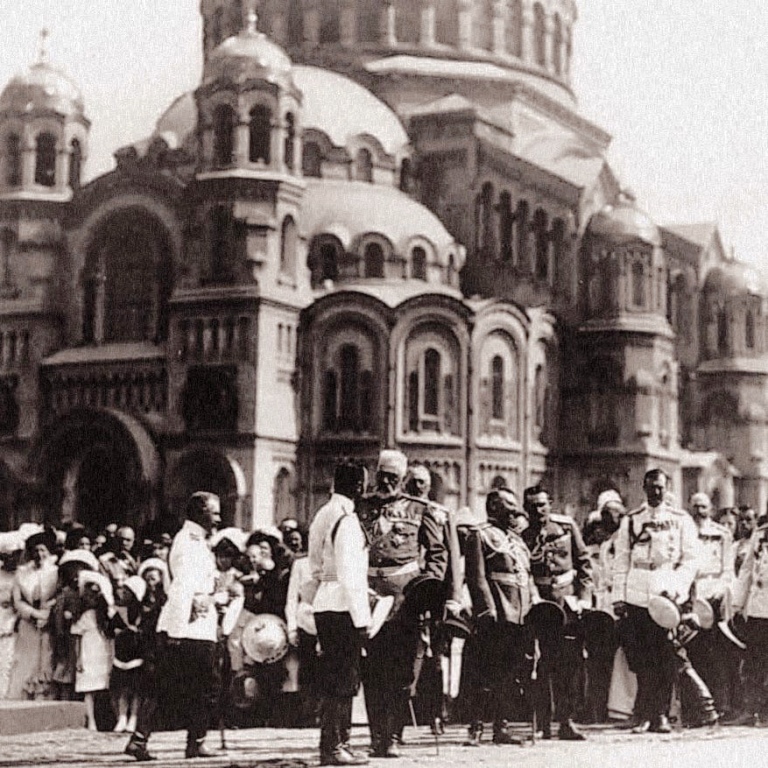
PHOTO: Emperor Nicholas II speaking with an officer in front of the Naval Cathedral

One of the most iconic cathedrals constructed during the Tsarist era, one which has survived to the present day has to be the magnificent 20th-century Byzantine-style Naval Cathedral of St. Nicholas the Wonderworker, situated on Anchor Square in Kronstadt, a town and naval base on Kotlin Island, just west of St. Petersburg.

Kronstadt has been a place of pilgrimage for Orthodox Christians for more than 100 years due to the memory of Saint John of Kronstadt (1829-1909), one of the most venerated Russian saints, served there as priest from 1855 to 1908.

The Naval Cathedral of Saint Nicholas the Wonderworker in Kronstadt is a Russian Orthodox cathedral built between 1903–1913 as the main church of the Russian Imperial Navy and dedicated to all fallen seamen.
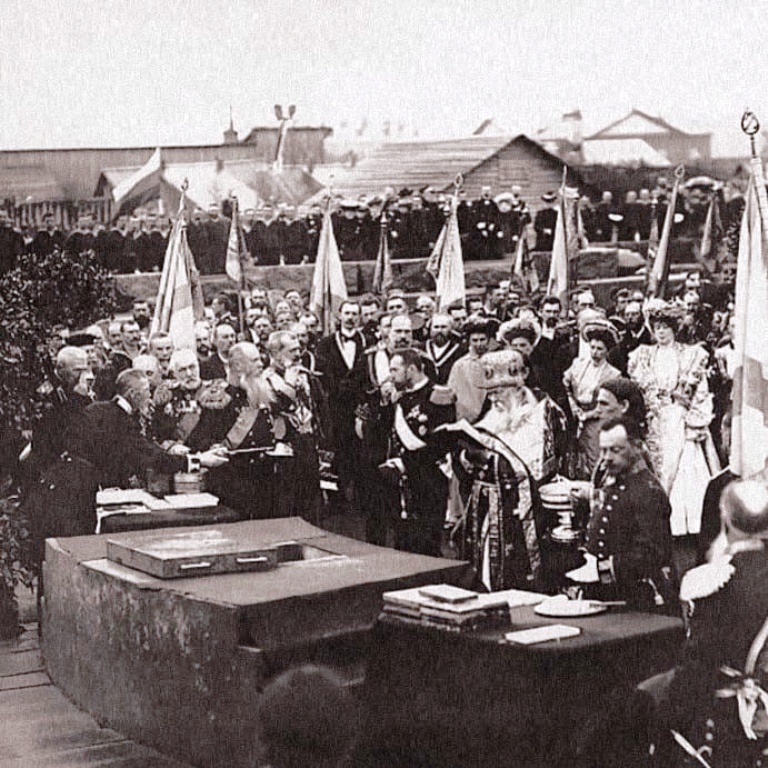
PHOTO: Emperor Nicholas II attends the ceremony for the laying of the foundation stone for the Naval Cathedral of St. Nicholas the Wonderworkder, Kronstadt, 21st (O.S. 8th) 1903

Father John of Kronstadt, who was then justly regarded the major figure in the ecclesiastical guidance of the Russian Imperial Navy, prayed for many years: “Let the house of God be created for naval ranks in Kronstadt, not hurriedly but steadily and befitting the glorious fleet. Let the blessing of the Almighty spread from it on the entire naval force.” In 1898 he urged: “You must hurry to build the Church, in the same way as you hurry to build ships. The Church is also the ship led by God Himself with the Father and the Holy Spirit, and it can protect not only the Navy, but the entire army and Russia as a whole, too.”
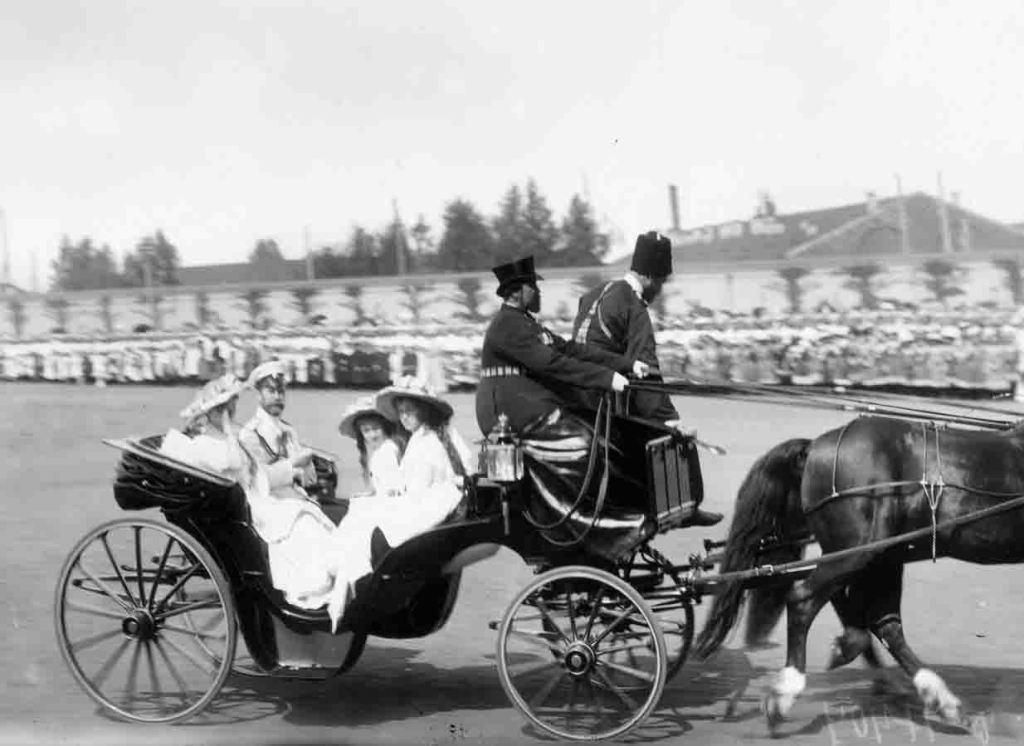
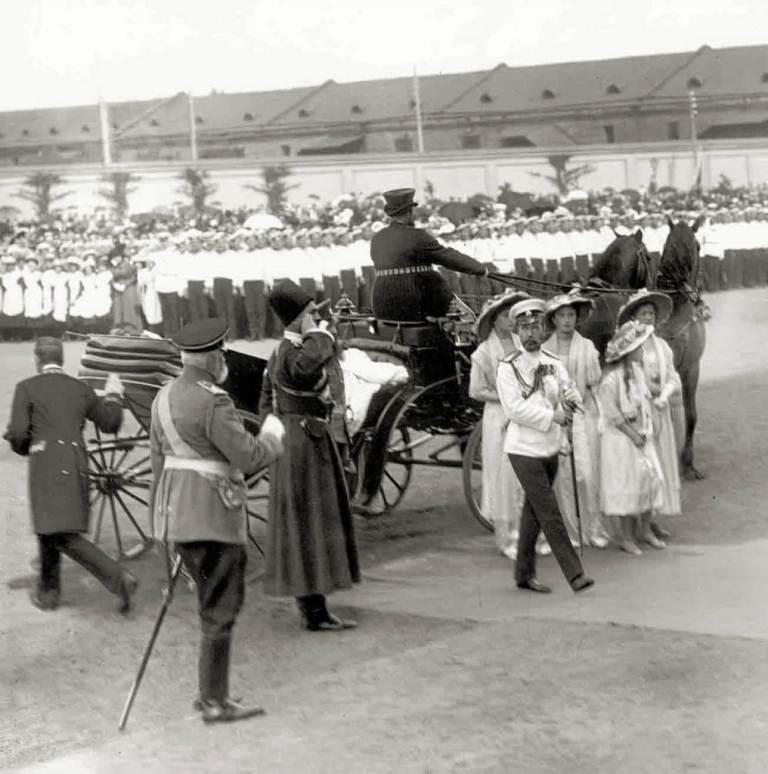
PHOTOS: the Imperial Family arriving at the Naval Cathedral of St. Nicholas the Wonderworker for the consecration ceremony, 23rd (O.S. 10th) June 1913
If Father John of Kronstadt regarded the Naval Cathedral as an implemented prayer, for Emperor Nicholas II, who energetically supported the idea of building the memorial naval cathedral, it became his dearest creation. On 7th March 1897 the Tsar opened a subscription for the construction of a stone cathedral in Kronstadt and allotted for its building a large sum of money together with the Imperial family. Moreover, Nicholas II ordered to provide timber, cannon bronze and copper kept in the Kronstadt Port for the construction of the new cathedral. In the same year the Committee for Collecting Donations was established, on behalf of which its chairman, Vice-Admiral Nikolay Kaznakov, appealed for a feasible financial help “to all classes of Russian society”. Father John of Kronstadt, who actively participated in the creation of the church, supported him – he was a member of the Council of Trustees responsible for the construction of the cathedral and donated a large sum of money for this purpose. Father John addressed his compatriots with the following words: “Beloved brothers-sailors and all Orthodox Russians! Living in Kronstadt for forty-two years and seeing all this time how small, poor and ramshackle it is, I’ve felt deep concern about it and a desire of a vast, durable and splendid church, and now I’ve made a donation of 700 roubles for the construction of such a church. And you, too, show good will that is within your powers to provide help for its construction.” A large contribution to this common cause was made by major commanders of the Kronstadt Port – Admirals Nikolay Kaznakov, Stepan Makarov, Alexey Birilov and Konstantin Nikonov, Minister of the Navy Ivan Grigorovich, and Admiral Robert Viren. All the ranks of the Navy took a decision to remit 0.25 per cent of their salaries without indemnity for the construction of the cathedral. Ship crews donated to the future church their articles of worship and icons without compensation. In total Russian sailors collected 280,000 roubles.
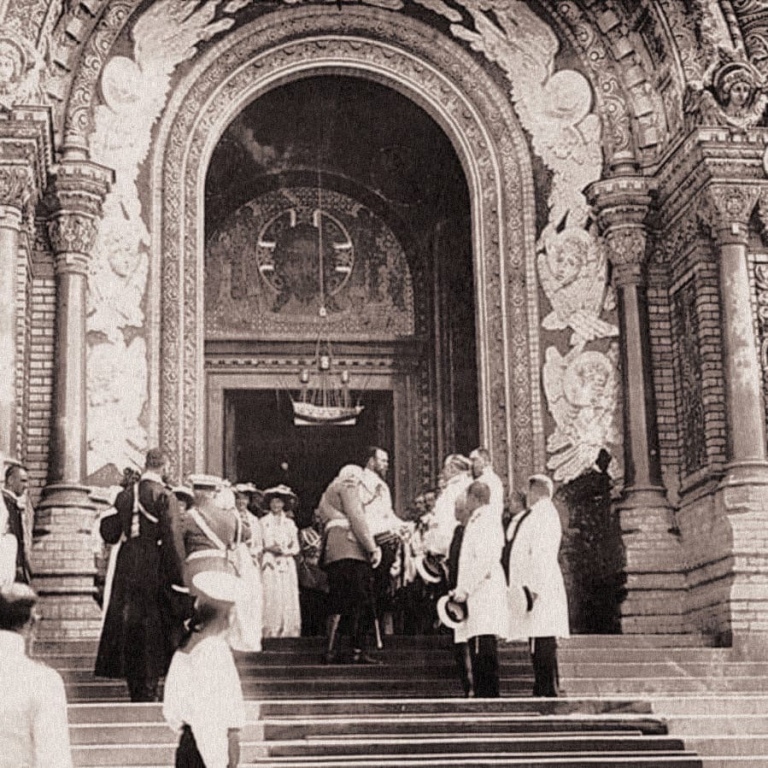
PHOTOS: the Imperial Family leaving the Naval Cathedral following the consecration
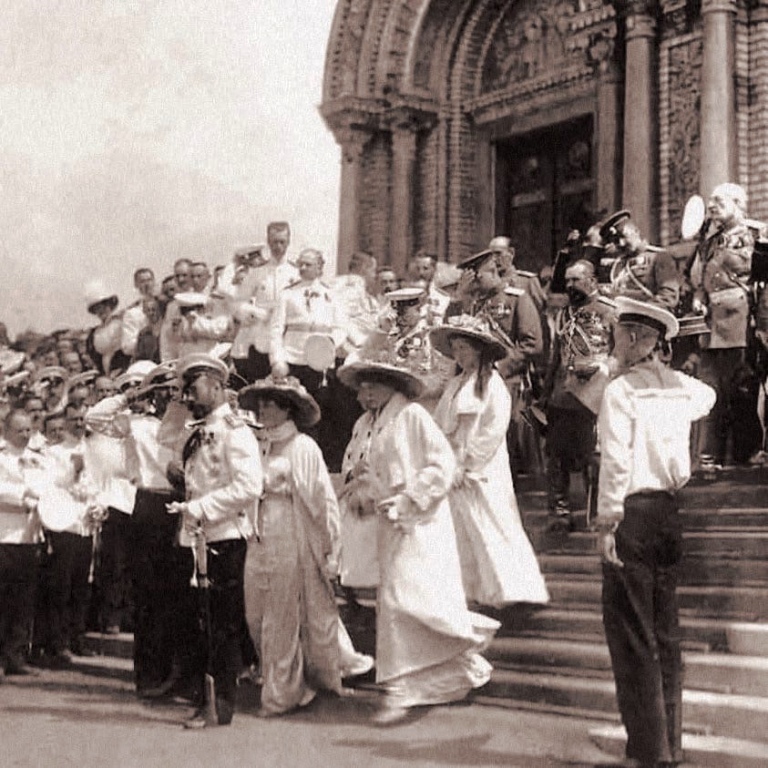
All Russia made voluntary contributions for the construction of the cathedral, but it was largely funded by the state – the general cost of the building at the time of its consecration was 1,995,000 roubles, of which 1,675,000 roubles were provided by the government.

Yakornaya (Anchor) Square in the centre of Kronstadt, between the old (Peter’s) and the new Admiralty, was chosen as a site for the construction of the cathedral. For many years it served as a warehouse of anchors, hence its name. The area was so vast that it became possible to arrange a park behind the cathedral and create a square for religious processions near the building. Besides it was decided to locate the cathedral building so that there would remain enough space for military parades.

After several competitions on 3rd June (O.S. 21st May) 1901 the project of the cathedral building designed by Vasily Kosiakov, Professor of the Institute of Civil Engineers, was approved by the Tsar. In March 1902 the Committee for the Collection of Donations was transformed into the Construction Committee supervised by Vice-Admiral Stepan Makarov. On 14th (O.S. 1st) September 1902, Archpriest St John of Kronstadt held a prayer service for the beginning of the work on cleaning the territory and preparing the foundation. On 21st May (O.S. 8th May) 1903, in the presence of the Emperor, Empresses Alexandra Feodorovna and Maria Feodorovna, Grand Duke Mikhail, son of Alexander III, and Grand Dukes Alexey and Vladimir, sons of Alexander II, a ceremony of the foundation of the cathedral’s brick walls was held. After the end of the service a 31-gun salute was made from the fortress and from ships on the Kronstadt roadway. On the same day Nicholas II and members of his suite planted 32 one-year-old oak trees in the garden around the cathedral. In 1907, the building’s construction was complete, and work on the interiors began.
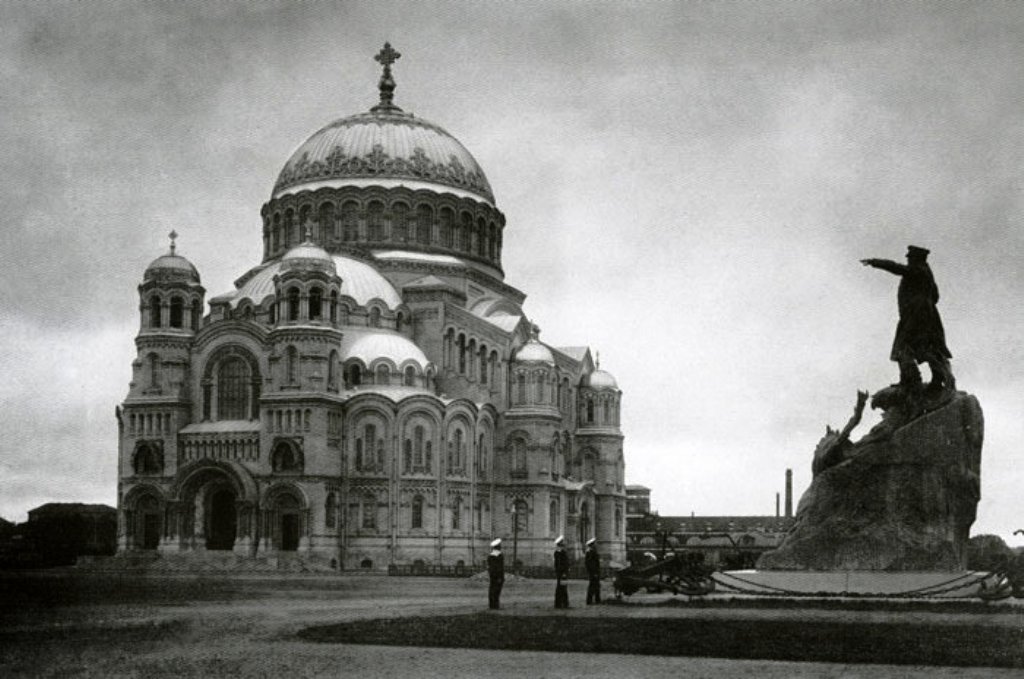
PHOTO: early 20th century view of the Naval cathedral of Saint Nicholas the Wonderworker in Kronstadt

On 23rd (O.S. 10th) June 1913, which marked the 300th anniversary of the Romanov dynasty, there was a great festive event in Kronstadt – the consecration of the naval cathedral. Father Georgy Shavelsky, the Proto-Presbyter of the military and naval clergy, consecrated the cathedral in the presence of Emperor Nicholas II and members of the Imperial family, thousands of Orthodox Christians and members of the naval ranks. The service was concelebrated by the mitred Archpriest Alexey Starovsky, Senior Priest of the Cathedral of St Spyridon of Trimithoundos at the Main Admiralty, and the entire Kronstadt clergy. Father John of Kronstadt, who had prophesied that “when the Cathedral will be roofed”, he would be dead, but that moment had already left this transitory life in December 1908.

The cathedral was closed in 1929, first converted to a cinema, then a House of Officers (1939) and a museum of the Navy (1980).

The Russian Orthodox Church attempted to repossess the cathedral in the 1990s, however, it took many years for the transfer to take place.

In 2002, the Russian Orthodox Church reinstalled the cross on the main dome and (for the first time since 1929) served the Divine Liturgy in the cathedral in 2005. In 2013, Patriarch Kirill of Russia, with Prime Minister Dmitriy Medvedev and his spouse attending, conducted the ceremony of grand reconsecration in the now fully restored cathedral.

© Paul Gilbert. 14 April 2022
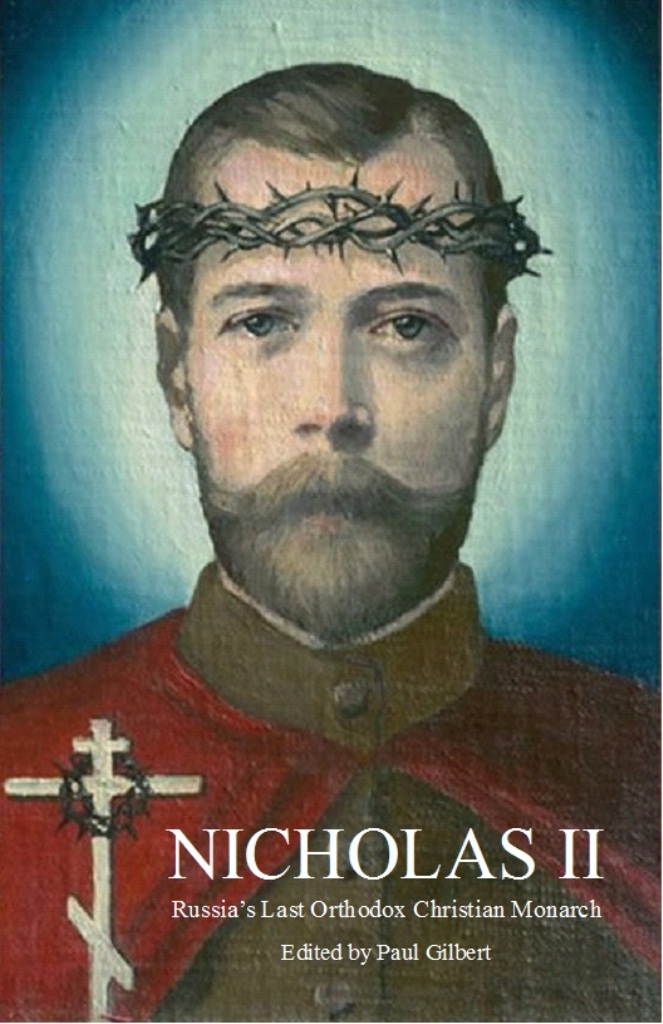
Nicholas II; Russia’s Last Orthodox Christian Monarch

*This title is available from AMAZON in the USA, UK,
Canada, Australia, France, Germany, Spain, Italy and Japan

CLICK HERE TO ORDER THE PAPERBACK EDITION @ $9.99 USD

BOOK DESCRIPTION

Paperback edition. 134 pages + 23 black & white photos

This book is not only for Orthodox and non-Orthodox persons, but for any one who shares an interest in the life, death, and martyrdom of the Holy Tsar-Martyr Nicholas II.

An illustrated Introduction by independent researcher Paul Gilbert explores the piety of Nicholas II, and his devotion to the Russian Orthodox Church, which reached its fullest development and power, during his 22-year reign.

This book further examines the trials and tribulations the Tsar endured, which later led to his canonization by the Russian Orthodox Church.

This unique collection of writings helps dispel many of the negative myths which persist to this very day, a must read for any one who seeks to learn the truth about Nicholas II.

Gilbert has compiled this collection of writings as part of his mission to clear the name of Russia’s much slandered Tsar, and my own personal journey to Orthodoxy.

Holy Tsar Martyr Nicholas II, Pray to God for Us! 🙏

Святой Царь Мученик Николай, Моли Бога о Нас! 🙏

© Paul Gilbert. 21 February 2022

The fate of Porosenkov Log and Ganina Yama

CLICK on the image above to watch a 2-minute video tour of the Romanov Memorial at Porosenkov Log

In May, the Council of Bishops of the Russian Orthodox Church (ROC) will convene in Moscow, to discuss the results of examinations carried out between 2015-2018, by the Investigate Committee of the Russian Federation. It is widely believed that the Council will recognize the authenticity of the remains of the Imperial Family. So, what effect will this have on both Porosenkov Log and Ganina Yama?

Representatives of the Romanov Memorial Charitable Foundation in Ekaterinburg, now fear that the diocese could destroy the original appearance of Porosenkov Log, the spot were the remains of Emperor Nicholas II, his wife, three children and four retainers were discovered in 1991. The remains of Tsesarevich Alexei and his sister Maria were discovered in a nearby separate grave in 2007.

According to Ilya Korovin, Director of the Romanov Memorial Charitable Foundation , Porosenkov Log is the only place in Ekaterinburg connected with the Imperial Family’s final days, which has survived to this day unchanged. “In Ganina Yama, unlike the Porosenkov Log, visitors cannot see the territory as it looked in 1918. Of course, with the recognition of the remains, the question of the future fate of the memorial will arise,” he said during a recent press conference.

As an argument, representatives of the fund cite the fact that in March 2016 the Ekaterinburg Diocese asked for a plot of land at Porosenkov Log, made a request to the Ministry of Culture of the Sverdlovsk Region for the transfer of the territory in and around Porosyonkov Log (added to the cultural heritage list in 2014), transferred to the ROC, to be designated as sacred land and where a memorial and monastery, similar to that at Ganina Yama would be constructed.

The Governor of Sveredlovsk Yevgeny Kuyvashev suspended the process of allocating land for an indefinite period. “Knowing the methods of preserving and developing memorial sites by the Russian Orthodox Church, one can come to the disappointing conclusion that Porosenkov Log will undergo catastrophic changes,” Korovin said. Korovin also noted that the territory of the Railway Forest Park, where the Romanov Memorial is located, is also subject to future development.

Representatives of the Romanov Memorial also added that, previously in 2007-2010 the Russian Orthodox Church planned to seize the territory in the area of ​​the Old Koptyakovskaya Road, partially cut down the forest, in order to build a cemetery and an Orthodox church. Again, the Sverdlovsk authorities were forced to intervene in order to end the conflict.

Sergei Chapnin, a member and expert of the Romanov Memorial Charitable Foundation, believes that Porosenkov Log is a civil memorial and this section of the old Koptyakovskaya Road must be kept intact.

Local Ekaterinburg historian Nikolai Neuimin notes, “if the Bishops Council recognizes that the remains of the Nicholas II and his family are authentic, then it turns out that the Monastery of the Holy Royal Martyrs should not have been built at Ganina Yama, the place where the regicides tried to bury the bodies for the first time. The bones lay there for only a day and a half, while the remains were reburied 3.5 km away in two separate graves in what is today known as Porosenkov Log. As Ganina Yama is the main place of pilgrimage for Orthodox Christians, no one will demolish or move the seven churches, even if it turns out that the remains in the Porosenkov Log are indeed genuine,” he added.

Chapnin, among others, believe that the recognition by the ROC of the Ekaterinburg will most certainly create a schism within the church. The ROC will be forced to acknowledge that for more than 100 years, they were wrong. This in itself may be perceived by many as a great embarrassment and humiliation to the church.

“Not every one in the church is ready to recognize the authenticity of the remains. Accepting the new reality will be quite difficult,” he added.

© Paul Gilbert. 14 February 2022

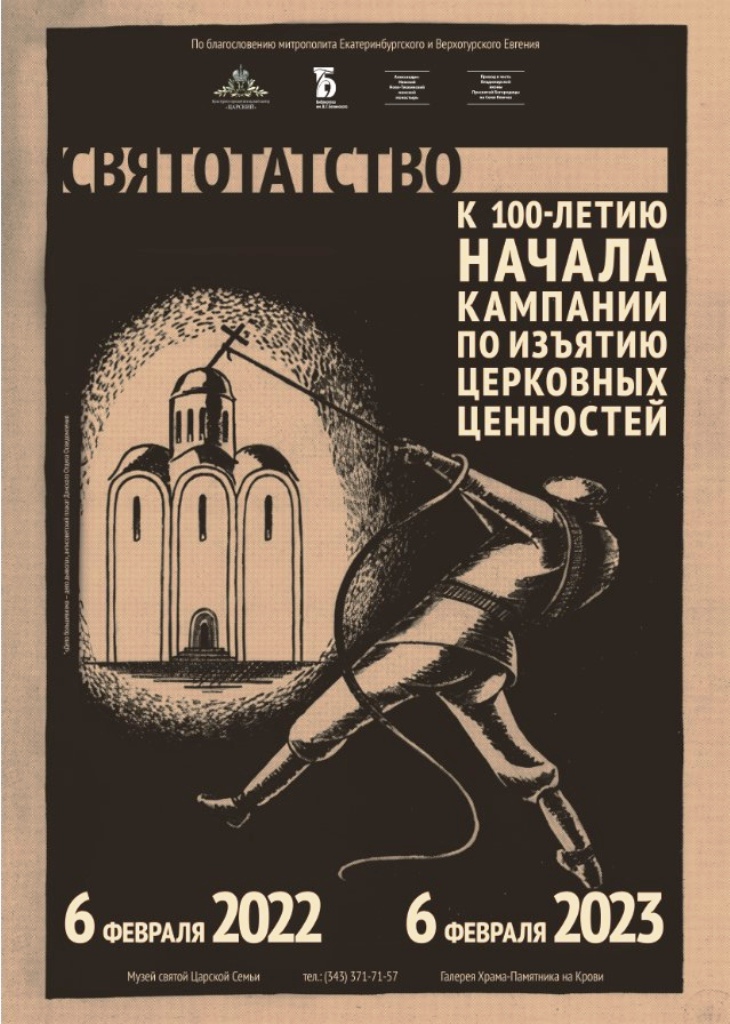
New exhibition explores Bolshevik campaign to confiscate church valuables in 1918

PHOTO: exhibition poster

On 6th February 2022, a new exhibition: Sacrilege: on the 100th Anniversary of the Beginning of the Campaign to Confiscate Church Valuables, opened in Ekaterinburg. The exhibition is timed to the 104th anniversary of the 1918 Decree on the Separation of Church and State in Bolshevik Russia.

The venue for the exhibition is the Museum of the Holy Royal Family, situated in the Patriarchal Compound, and runs until 6th February 2023.

The exhibition explores the Bolshevik campaign to confiscate church valuables in 1918. Resistance by the faithful was met with arrests, mock trials of the clergy, as a result of which many priests and nuns were shot.

The exhibition presents liturgical items damaged during the years of Soviet power, damaged icons, liturgical and religious literature, secretly hidden during the years of Soviet power between the covers of Soviet books, and other items related to the history of the Church in the atheistic years. A collection of photographs provide evidence of the churches and monasteries destroyed and desecrated during the Bolshevik and later Soviet years.

***

According to Nathaniel Davis’s A Long Walk to Church: A Contemporary History of Russian Orthodoxy, the ROC had only about 200-300 active parishes in the Soviet Union by 1939; before the revolution there had been roughly 50,000.

The Decree on the Separation of Church and State was an act adopted by the Council of People’s Commissars of the Russian Soviet Federative Socialist Republic on 3rd February [O.S. 20th January]. The edict was signed by Vladimir Lenin, and came into force four days later on 6th February [O.S. 23rd January] 1918.

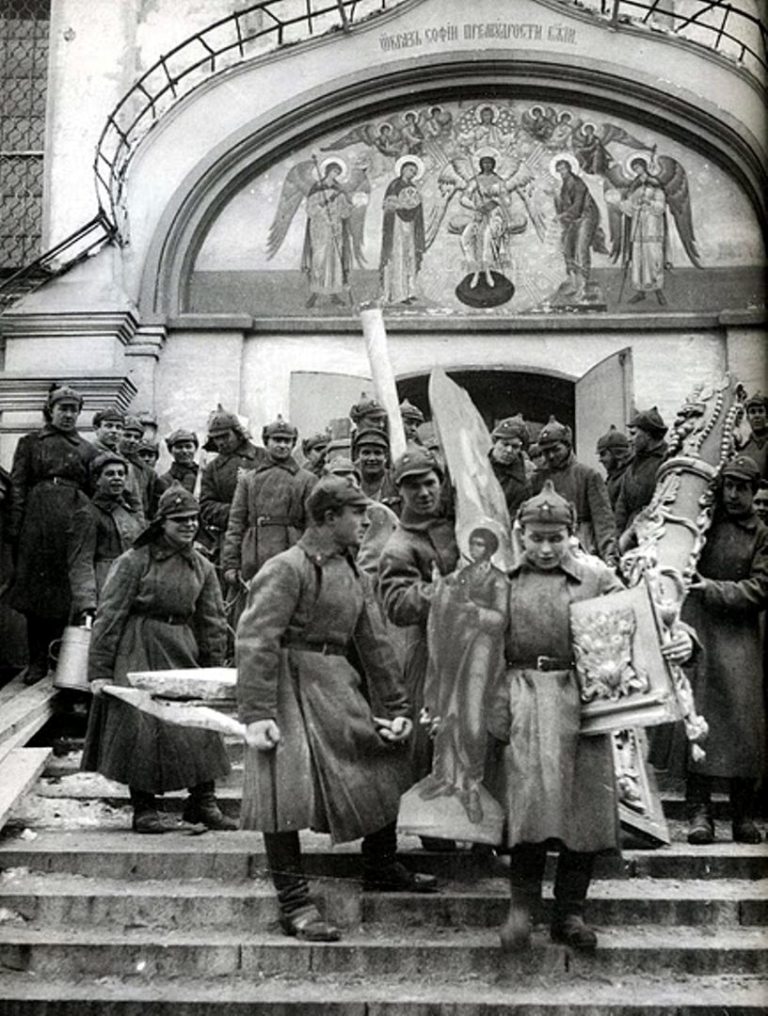
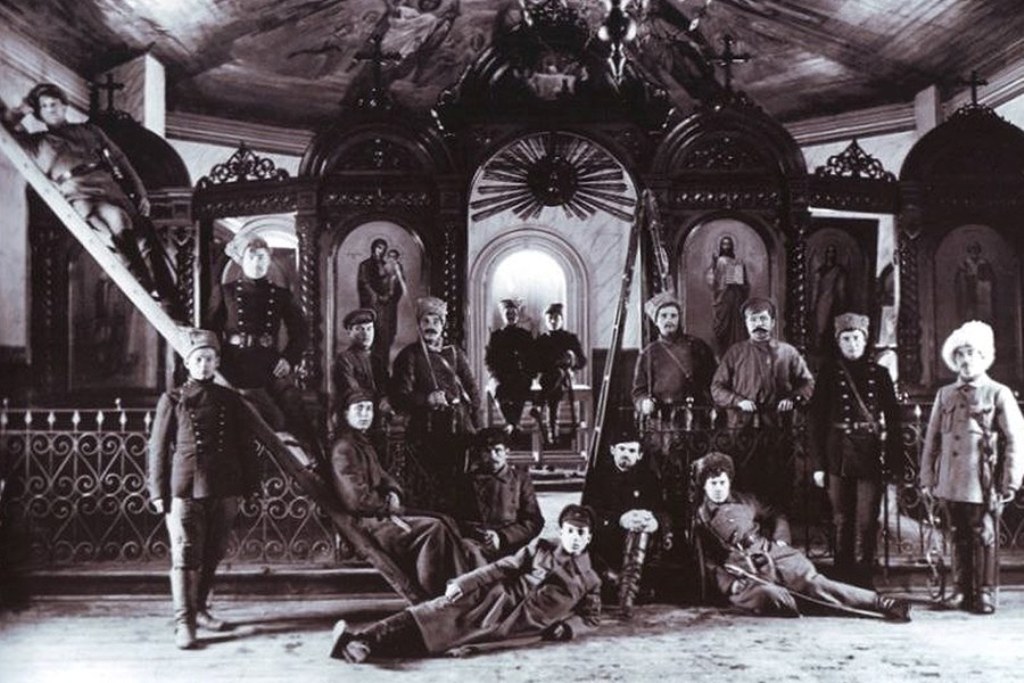
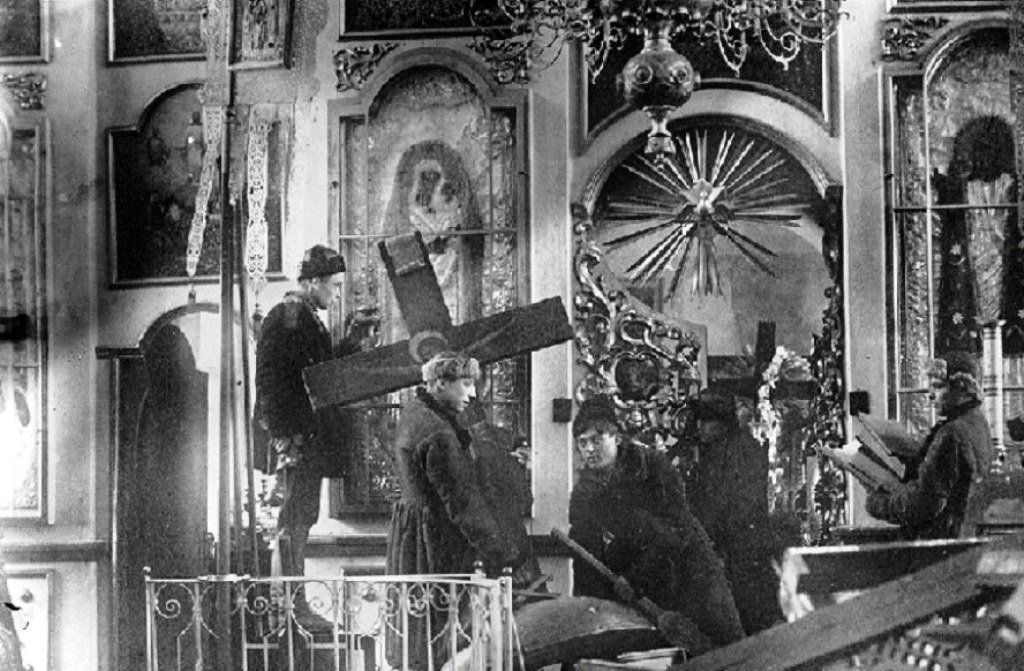
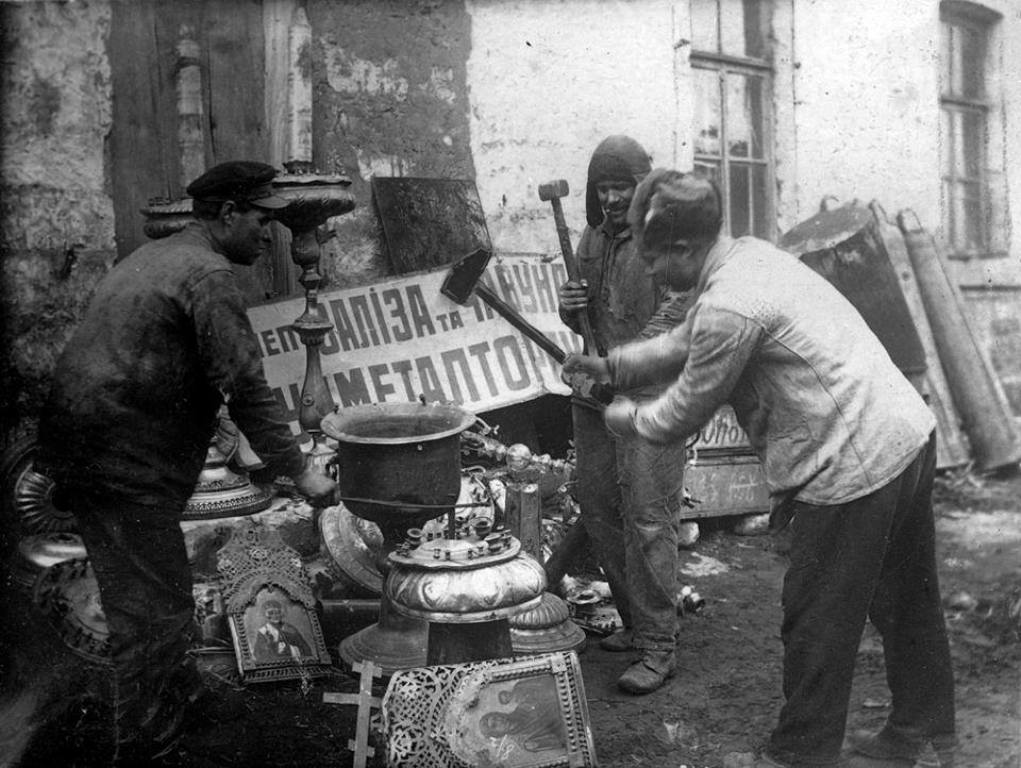
The Decree declared all Church property to be the property of the state. Sanctioned by this licence, Bolshevik squads went around the country desecrating and looting churches and monasteries, mocking religion and religious people unmercifully, even murdering priests, monks and other believers by the thousands.

It installed the secular nature of the state power, proclaimed the freedom of conscience and religion; religious organizations were deprived of any property rights and the rights of a legal entity. It laid the foundation for the deployment of atheistic propaganda and atheistic education

The following images depict atheist Bolsheviks thugs desecrating and looting Russia’s churches:

© Paul Gilbert. 6 February 2022

“Nothing prevents the ROC from recognizing the authenticity of the Ekaterinburg Remains” – Metropolitan Hilarion

The Russian Orthodox Church has no doubts about the authenticity of the remains of Emperor Nicholas II and his family, found near Ekaterinburg. Nothing prevents the recognition of their authenticity, Metropolitan Hilarion emphasized during an interview held today, on the program Church and World on the Russia 24 TV channel.

The head of the Synodal Department for External Church Relations of the Russian Orthodox Church added: “In my opinion, nothing today prevents the recognition of the authenticity of the Ekaterinburg Remains, but in order for them to be recognized as authentic, a conciliar decision of the Church is needed.”

This decision must be made by the highest leadership of the Church, and the highest leadership is the Council of Bishops of the Russian Orthodox Church, he explained. Metropolitan Hilarion emphasized that following the report of the Investigative Committee in June 2021 at a meeting of the Holy Synod, none of the bishops should have had any further doubts about the authenticity of the remains after the examinations.

The Bishops’ Council was scheduled to meet in Moscow 15th to 18th November 2021, however, this was postponed due to the COVID-19 situation in Russia. The Bishops’ Council will now convene from 26th to 29th May 2022.

“If the arguments in favour of the authenticity of the Ekaterinburg Remains prevail, then a final decision will be made,” Metropolitan Hilarion noted. He explained why a decision by the Holy Synod of the Russian Orthodox Church is important in this case. “If the Synod recognize the Ekaterinburg Remains as the remains of the Imperial Family, it means they are holy relics, it means they need to be venerated appropriately”.

Metropolitan Hilarion also said that the Council of Bishops will determine the final resting place of the Imperial family’s remains. It should be noted, that as Holy Relics, they cannot be returned to their tomb in St. Catherine’s Chapel [SS Peter and Paul Cathedral in St. Petersburg], as relics cannot be returned to the earth. They must be placed in reliquaries above ground which allows the faithful to venerate them.

In July 2020, the historical and archival examination, which was carried out as part of the investigation into the murder of the Imperial Family, confirmed the authenticity of the Ekaterinburg remains. Associate professor of the Historical Archive Institute of the Russian State Humanitarian University Evgeny Vladimirovich Pchelov, explained, genetics were involved in the identification of the remains. In addition, researchers analyzed over 2,000 historical documents: written sources, photographs, and audio recordings. The documents were collected from more than 15 Russian and foreign archives.

Vladimir Nikolaevich Soloviev, retired senior investigator and forensic expert at the Main Department of Criminalistics (Forensic Center) of the Investigative Committee of the Russian Federation, who from 1991 to 2015 led the investigation into the deaths of the Imperial Family, fully supports the decision of the Russian Church to recognize the Ekaterinburg Remains as authentic, considers it indisputable.

“I fully support this statement. I categorically say that these are the remains of the Imperial Family, geneticists told us with 100% accuracy,” Solovyov told Interfax on Saturday, commenting on the Russian Orthodox Church’s statement that there are no obstacles to recognizing the authenticity of the remains.

© Paul Gilbert. 22 January 2022

Why didn’t the “right” defend the monarchy in 1917?

PHOTO: Demonstration of the Black Hundreds in Odessa shortly after the announcement of the Manifesto on 17th October 1905[1]

The crisis of the Russian monarchy lasted more than a dozen years. It began during the Revolution of 1905-1907, which forced Nicholas II to make concessions, and ended in 1917, when he was forced to abdicate.

The February 1917 Revolution did not meet any organized resistance at all, neither from the Black Hundreds[2], nor from the military elite, nor from officials or the “moderate right”. Few of Russia’s military elite stood by Nicholas II, including Count Fyodor Arturovich Keller[3] (1857-1918); Alexander Pavlovich Kutepov[4] (1882-1930) and Commander of the Guard Cavalry Corps Huseyn Khan Nakhchivanski[5] (1863-1919) defended both their Emperor and the monarchy. In 1917, the conservative forces in Russia either left the political scene or were forced to “play by new rules.”

It is clear that by 1917 the Black Hundreds had greatly thinned out, were split and even in the Duma itself no longer had any particularly influence in the state of affairs. It is clear that the military could not leave the front and storm the insurgent Petrograd. It is clear that representatives of the military elite, industrialists, “moderate rightists”, even some monarchists like Vasily Vitalyevich Shulgin[6] (1878-1976) took an active part in the revolution itself.

Nevertheless, a number of features of “February” made the resistance of the pro-monarchist elements complicated and senseless. How so?

Circumstances led to a situation in which the Russian monarchists had to become “greater royalists than the Tsar himself.”

It was their belief, that as Nicholas II himself had abdicated the throne, it meant that he freed the rest of his supporters from any obligations to the monarch. Researcher A.A. Ivanov notes an important difference between the Revolution of 1917 and the Revolution of 1905:

“Taking into account past mistakes, the leaders of the liberal opposition managed to play the patriotic card, depriving the right of their main trump card – the monopoly on patriotism. Patriotic rhetoric allowed the liberal opposition (in contrast to the times of the first Russian revolution) to establish close contact with the highest ranks of the army and attract them to their side … thus, leading to the rapid defeat of the right in 1917.”

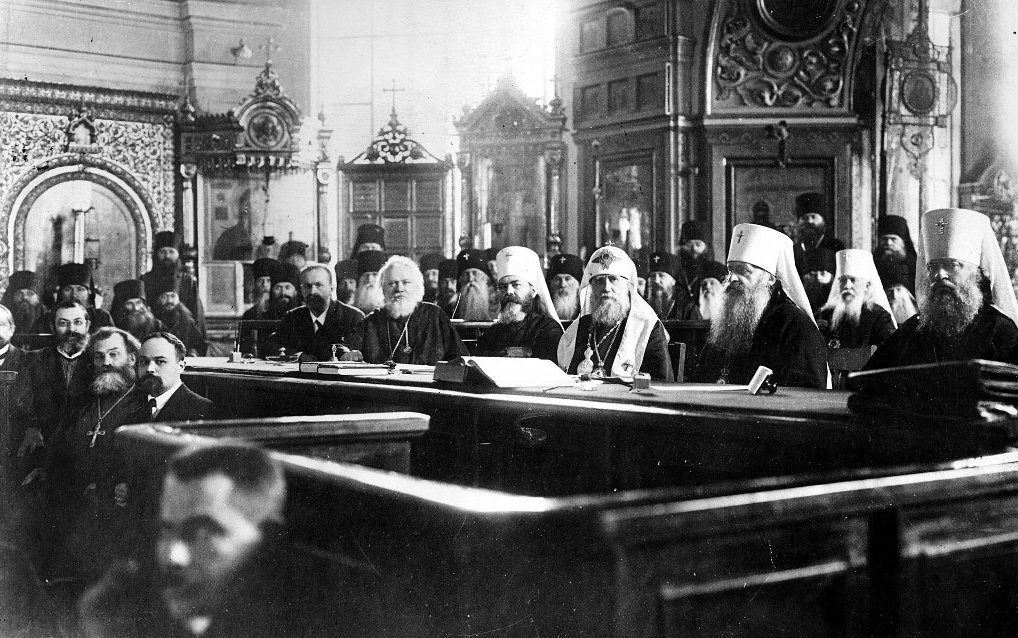
PHOTO: Meeting of the Local Council of the Orthodox Church in the Moscow Diocesan House, which existed from August 1917 to September 1918 (!). The Patriarch was elected in November 1917, already de facto under the Bolsheviks.

Following the example of the liberal opposition, the Bolsheviks also began using patriotic rhetoric to further their cause. Lenin would scream out slogans, such as “The Socialist Fatherland is in danger”, etc. Patriotism is a powerful tool, especially when used correctly and the right words are chosen.

Many future White generals in their memoirs write about the mistakes of the Provisional Government. And they themselves sometimes answer the question of why they didn’t intervene: they would have intervened, “had it not been for the war against the Germans, it’s impossible to turn it into a Civil War, and the Tsar had abdicated”.

Patriotic rhetoric and the formal “voluntary” abdication of the Emperor turned the hypothetical attempts of the right to change the situation into a rebellion against the will of the monarch, in a situation of war with an external enemy.

“The weakness and fragmentation of the monarchist forces, the self-elimination of the government, the “voluntary” abdication of the Tsar and the national character of the revolution, which met with the widest support in all strata of Russian society, deprived the political struggle for the restoration of autocracy … ” added A. A. Ivanov.

A few words must be said here about the Church[7]. After all, de facto, these are the main “pillars” of any monarchy – military power and religion. Russia has never been an exception in this regard. In 1917, the Holy Synod of the Russian Orthodox Church promptly changed the texts of oaths (ordination to the clergy) and prayers (“now we pray for the Provisional Government”), their actions thus recognizing the new shift in power. Those who disagreed were dismissed (as in the army). They even recommended that monarchical literature be removed from the parishes.

There is also a point of view according to which the church was interested in February, since the fall of the monarchy allowed it to free itself from the “excessive tutelage of the state” (which will also later play against them, as in the case of the liberal opposition).

In any case, in 1917, both the military and civilian “right”, simply had nothing to rely on. Foreign policy, the balance of power, brute force, ideology – everything now worked against them …

NOTES:

[1] The Manifesto was issued by Nicholas II, under the influence of Sergei Witte (1849–1915), on 30 October [O.S. 17 October] 1905 as a response to the Russian Revolution of 1905. Nicholas strenuously resisted these ideas, but gave in after his first choice to head a military dictatorship, his first cousin once removed Grand Duke Nicholas Nikolaevich (1856-1929), threatened to shoot himself in the head if the Tsar did not accept Witte’s suggestion. Nicholas reluctantly agreed, and issued what became known as the October Manifesto, promising basic civil rights and an elected parliament called the Duma, without whose approval no laws were to be enacted in Russia in the future.

[2] The Black Hundreds, was a reactionary, monarchist and ultra-nationalist movement in Russia in the early 20th century. It was a staunch supporter of the House of Romanov and opposed any retreat from the autocracy of the reigning monarch.

The Black Hundreds were founded on a devotion to Tsar, church and motherland, and lived by the motto: “Orthodoxy, Autocracy, and Nationality”. Despite certain program differences, all of the Black Hundreds organizations had one goal in common, namely their struggle against the revolutionary movement.

[3] Keller was military leader of the Russian Imperial Army and cavalry general. He was one of the leaders of the White movement in the South of Russia in 1918, a monarchist. He remained loyal to Nicholas II until the end of his life.

On 6th March 1917, Keller sent a telegram addressed to Nicholas II, in which he expressed indignation on behalf of the corps and himself against the troops that had joined the rebels, and also asked the Tsar not to leave the Throne.

The intercepted telegram came to the attention of General Mannerheim, who made an attempt to persuade Keller to submit to the Provisional Government, or, at least, to persuade him to refuse to influence his subordinates in this regard. However, the count did not make concessions, refused to swear allegiance to the Provisional Government, saying:

I’m a Christian and I think it’s a sin to change my oath.”

[4] Kutepov was a Russian military leader, general from infantry (1920), pioneer, active participant in the White movement, and a devout monarchist. Between 1928-1930, he served as Chairman of the Russian General Military Union (ROVS).

During the February Revolution, Colonel Kutepov, who was on a short vacation in Petrograd , was the only senior officer who tried to organize effective resistance to the insurgents.

On 26th January 1930, Kutepov was kidnapped in Paris by Soviet intelligence agents. Documents about the circumstances, place and time of his death are still secret and inaccessible to historians.

[5] A Muslim by religion, Khan Nakhchivanski remained loyal to the Russian Orthodox emperor and refused to swear allegiance to the Provisional Government.

When in the winter of 1917 the February Revolution began in Petrograd, he sent a telegram to the headquarters of the Supreme Commander-in-Chief to offer Nicholas II the use of his corps for suppression of the revolt, but Nicholas II never received this telegram.

It is presumed by a number of historians that Khan Nakhchivanski was executed in February 1919 together with four Romanov Grand Dukes in the Peter and Paul Fortress. However the exact circumstances of Khan Nakhchivanski’s death and his burial place still remain unknown.

[6] Shulgin was a Russian conservative monarchist, politician and member of the White movement. Shulgin opposed the revolution, but he was opposed to the idea of an absolute monarchy in Russia. Together with Alexander Guchkov (1862-1936) he persuaded Nicholas II to abdicate the throne since he believed that a constitutional monarchy with Grand Duke Michael Alexandrovich (1878-1918) being the monarch was possible, and that this or even a republic, if a strong government was established, would be a remedy for Russia. For the same reason he supported the Provisional Government and Kornilov’s coup. When all hope was lost he moved to Kiev where he participated in the White movement.

[7] Click HERE to read my article How the Orthodox Church supported the overthrow of the monarchy, published on 8th March 2020

© Paul Gilbert. 14 December 2021

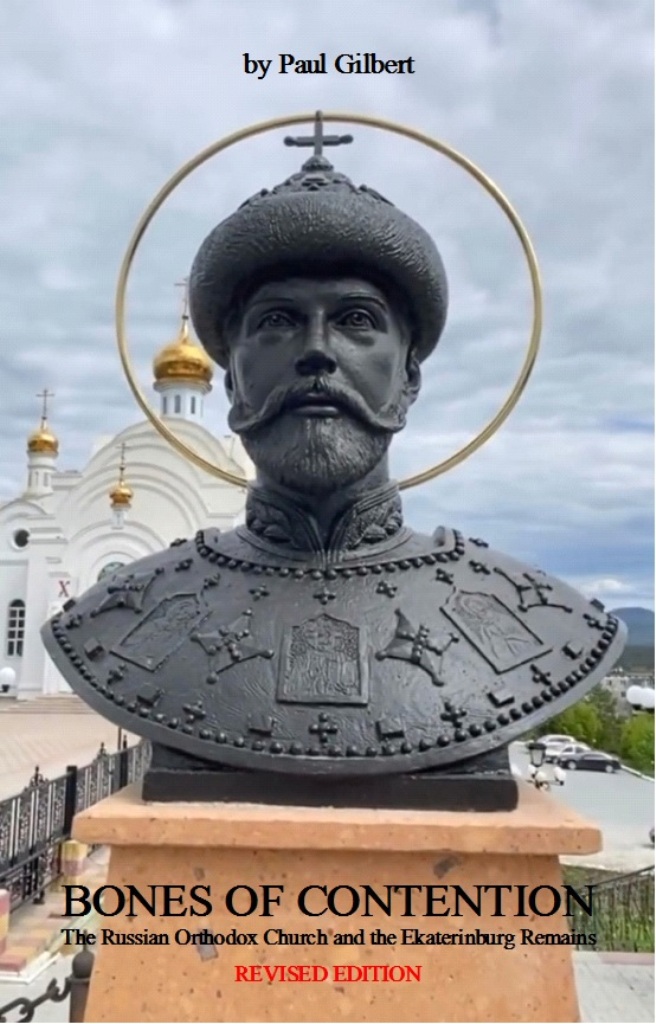
Bones of Contention: The Russian Orthodox Church and the Ekaterinburg Remains

CLICK HERE TO ORDER FROM AMAZON

Full-colour covers, 206 pages + 90 black & white photographs

Originally published in 2020, this NEW REVISED & EXPANDED 2021 EDITION features an additional 40+pages, new chapters and 90 black and white photos. It is the most up-to-date source on the highly contentious issue of the Russian Orthodox Church and their position on the Ekaterinburg Remains.

In May 2022, the Bishops’ Council of the Russian Orthodox Church, will meet in Moscow during which they will review the findings of the Investigative Commission and deliver their verdict on the authenticity of the Ekaterinburg Remains.

The reopening of the investigation into the death of Nicholas II and his family in 2015, caused a wave of indignation against the Russian Orthodox Church. This book presents the position of both the Moscow Patriarchate and the Investigation Committee.

This is the first English language title to explore the position of the Orthodox Church in Russia with regard to the Ekaterinburg remains. The author’s research for this book is based exclusively on documents from Russian media and archival sources.

This unique title features an expanded introduction by the author, and eight chapters, on such topics as the grounds for the canonization of Nicholas II and his family by the Moscow Patriarchate in 2000; comparative details of the Sokolov investigation in 1919, and the investigations carried out in the 1990s to the present; reluctance of the Moscow Patriarchate to officially recognize the remains as authentic; interesting findings of Russian journalist, producer and screenwriter Elena Chavchavadze in her documentary Regicide. A Century of Investigation; and the author’s own attempt to provide some answers to this ongoing and long drawn-out investigation for example: “Will Alexei and Maria be buried with the rest of their family?” and “Will the Imperial Family remains be reinterred in a new cathedral in Ekaterinburg?”.

This new revised and expanded edition also includes two NEW chapters!

Interviews with Vladimir Soloviev, Chief Major Crimes Investigator for the Central Investigate Department of the Public Prosecution Office of the Russian Federation and Archpriest Oleg Mitrov, a member of the Synodal Commission for the Canonization of Saints – BOTH key players in the Ekaterinburg remains case, reveal the political undertones of this to this ongoing and long drawn-out investigation.

ABOUT THE AUTHOR

Independent researcher Paul Gilbert has spent more than 25+ years researching and writing about the Russian Imperial Family. His primary research is focused on the life, reign and era of Nicholas II. On 17th July 1998, he attended the tsar’s interment ceremony at the SS Peter and Paul Cathedral in St. Petersburg. Twenty years later, he attended the Patriarchal Liturgy on the night of 16/17 July 2018, held at the Church on the Blood in Ekaterinburg. Since his first visit to the Urals in 2012, he has brought prayers and flowers to both Ganina Yama and Porosenkov Log on numerous occasions.

© Paul Gilbert. 23 November 2021

Prominent Orthodox Bishop discusses the Bishops Council and the Ekaterinburg Remains

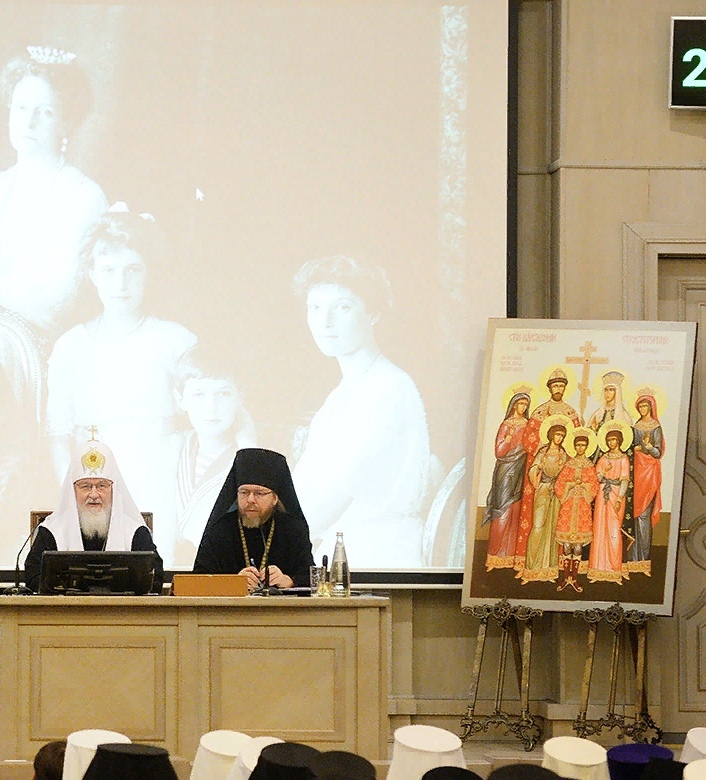
PHOTO: His Holiness Patriarch Kirill and Metropolitan Tikhon

The founder of the Russian online media outlet Daily Storm, Anastasia Kashevarova, recently interviewed Metropolitan of Pskov and Porkhov Tikhon (Shevkunov), who was asked about upcoming Bishops Council in May 2022 and the Ekaterinburg Remains.

Metropolitan Tikhon is a Bishop of the Moscow Patriarchate, and has been closely involved with the investigation into the deaths of Nicholas II and his family, which was initiated by the Russian Orthodox Church in 2015.

Tikhon is now the second prominent Bishop [known to this author] to hint that the Ekaterinburg Remains, are indeed those of Emperor Nicholas II and his family. See my article Metropolitan Hilarion hopeful ROC will recognize authenticity of Ekaterinburg remains, published on 20th June 2021.

AK: At the Bishops’ Council, which has now been postponed to the spring of 2022, will the issue of recognizing the remains of the Imperial Family be resolved?

MT: During the past five years, together with the Investigative Committee, we have collected all the documents and materials. In 2015, there was a new investigation, it was very interesting. We do not prejudge the outcome, of course, of the Council of Bishops, but we have provided them with all the documents that have been worked out by the investigation, the historical commission and our church commission. At the request of His Holiness Patriarch Kirill, we carried out genetic research. The remains of Nicholas II’s father, Alexander III were exhumed, genetic samples were taken and compared with the Ekaterinburg Remains. Everything coincided there. His Holiness Patriarch Kirill spoke about this, however, it will be the Council of Bishops who will make the final judgement.

AK: But do you have all the expertise?

MT: We have all the expertise. They quite satisfy me, because I observed them all very closely. However, the controversy continues.

AK: If the Council of Bishops makes a positive decision and recognizes that these are the remains of the Imperial Family, do they then become Holy Relics?

MT: Yes, we will then recognize them as the relics of saints. Some people will agree, some will not – I do not know how it will be, although for me it is quite obvious, I am not even going to be a hypocrite here. We have just published all three volumes of the case, and they are posted on the website of the Investigative Committee; anyone can read these documents in their entirety. Not only were there genetic examinations, there were about fifty different examinations carried out. Anyone can read them with an open mind. I did not trust the investigation that was conducted in the 1990s. There were many reasons for this, including procedural reasons – that is, they took samples from the remains of Nicholas II’s brother Grand Duke George Alexandrovich, compared them with the remains found near Ekaterinburg, but procedurally this was not properly formalized; and aroused mistrust. [Alexander Ivanovich] Bastrykin spoke about this in his report, even before being appointed head of the Investigative Committee.

AK: What has changed since the 1990s investigation?

MT: Yes, there were difficulties. All these bugs have now been fixed; procedurally everything is perfect; research carried out at the highest level. Professor Popov, one of Russia’s leading forensic experts, who, as a specialist, did not recognize these remains, based on these errors. As the heir, Nicholas Alexandrovich was in Japan, where an assassination attempt was carried out on his life: a Japanese policeman struck him on the head with a saber and seriously wounded him. In the1990s, tomography failed to show this injury. Thanks to modern-day tomography, however, Professor Popov, after analyzing this skull [skull No. 4, which, presumably, belonged to Nicholas II], found traces of an injury that coincide with the hat worn by Nicholas II during the incident and is now kept in the Hermitage. The blood-stained shirt of the last Russian tsar was also compared to the blood of his grandfather Alexander II, who was killed in 1881 by terrorists. The latter’s blood-stained shirt has also been preserved. The blood-stained shirts of Alexander II and Nicholas II are also kept in the Hermitage. We have provided every opportunity for every literate person to study the expertise. When we became experts, we signed a document stating that in the event of a knowingly false examination, we are subject to criminal liability with a sentence of up to five years.

AK: And if in the future the answer of the Council is positive, where will the relics be kept?

MT: This will be a joint decision made by His Holiness Patriarch Kirill and the Council of Bishops. Possibly in the Peter and Paul Fortress – in the same place where almost all members of the Romanov family are buried.

© Paul Gilbert. 3 November 2021

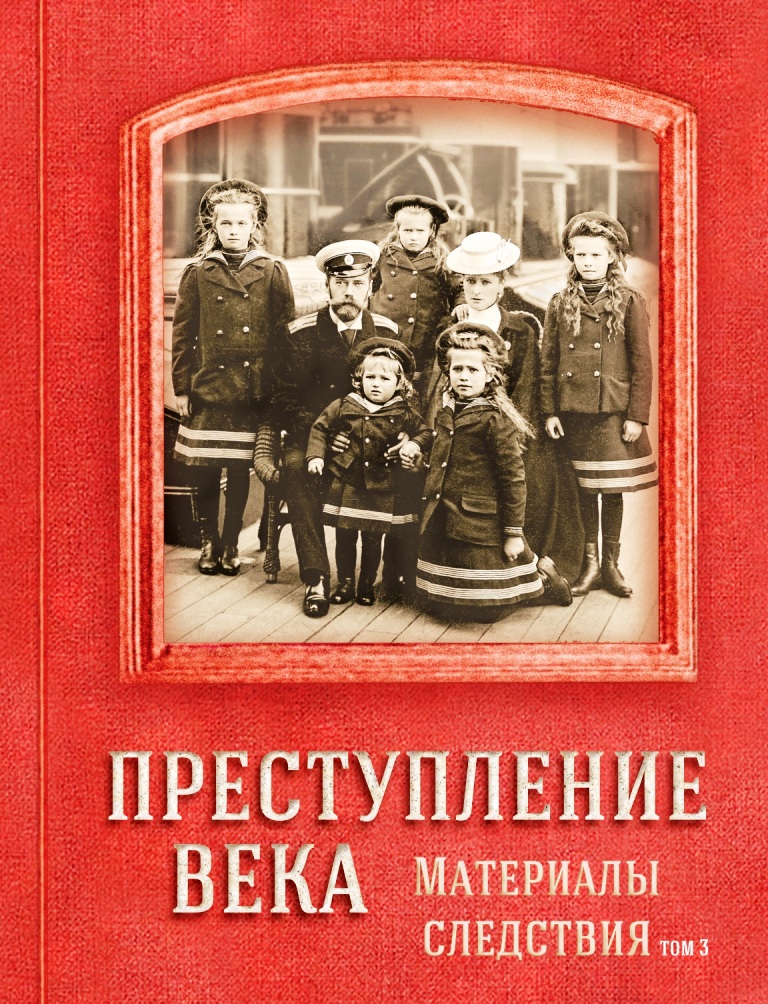
Third volume of the ‘Crime of the Century. Investigation Materials’, published in Russia

Click HERE to read the third volume [in Russian only]

On 18th October, the third volume of the book Преступление века. Материалы следствия [Crime of the Century. Investigation Materials], about the investigation into the murder of Emperor Nicholas II and his family was published [in Russian] on the website of the Investigative Committee of the Russian Federation.

The first volume was published in September of this year, the second volume was published earlier this month.

The third and final volume of the three-volume edition is a complete collection of materials from the investigation and historical documents related to the death of Emperor Nicholas II, his family and their four faithful retainers.

The book is based on documentary evidence, photographs, diaries, memoirs, audio recordings and reliable archival sources, including new, previously unpublished documents. The second and third volumes are devoted to investigative work almost a century ago (1918-1924), the beginning of the 1990s, when this fact was re-examined, as well as investigation at the present stage.

The book is the joint work of investigators, forensic scientists, archivists, historians, representatives of civil society, among others. It is the most accurate and complete source of information that has been published to date, based on the ROC investigation, which began in the autumn of 2015.

This book will be of great help to all those interested in establishing the truth on what many people consider the “crime of the century” and one of the darkest pages in 20th century Russian history. As with the previous two volumes, copies of the third volume will be sent to various government agencies and representatives of the Russian Orthodox Church.

It is important to note, that it is the contents of the this three-volume edition, which the Bishops’ Council of the Russian Orthodox Church, will review when they meet in Moscow from 26th to 29th May 2022 [postponed from 15th to 18th November 2021], during which they will review the findings of the Investigative Commission and deliver their verdict on the authenticity of the Ekaterinburg Remains.

© Paul Gilbert. 18 October 2021

ROC postpones Bishops Council to May 2022

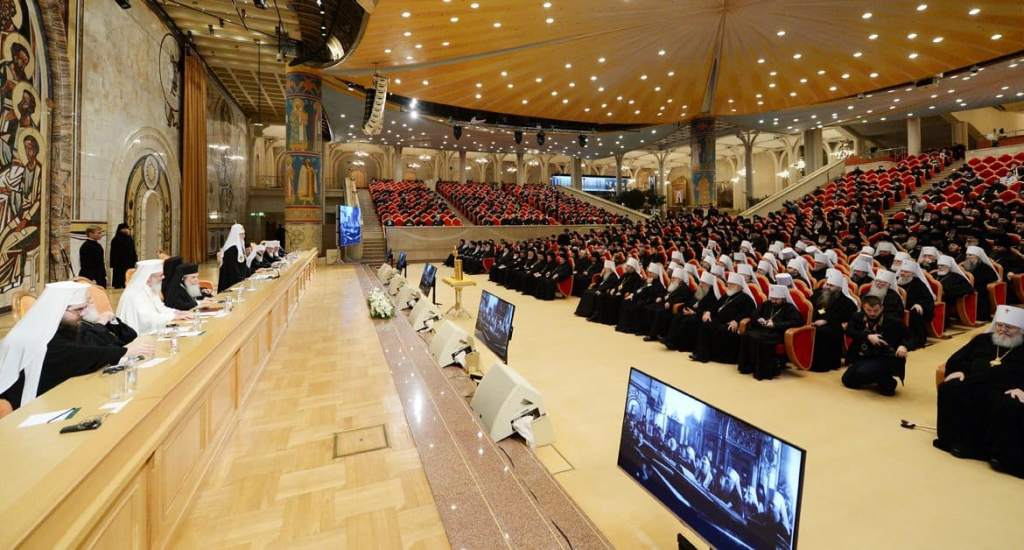
PHOTO: Meeting of Bishops’ Council of the Russian Orthodox Church in 2017

The Holy Synod of the Russian Orthodox Church (ROC) have announced that the Bishops’ Council, which was scheduled to meet in Moscow next month, has been postponed until the Spring of 2022.

According to the Press Service of the Patriarch of Moscow and All Russia, the Bishops; Council will now meet 26th to 29th May, “due to the difficult COVID-19 situation.” The Bishops’ Council was scheduled to meet in Moscow 15th to 18th November.

The Press Service further added, that “the festive events on the occasion of the 75th anniversary of the birth of Patriarch Kirill of Moscow and All Russia will also be postponed”.

In September, the chairman of the Moscow Patriarchate’s Department for External Church Relations (DECR), Metropolitan Hilarion of Volokolamsk, announced that when the Bishops’ Council meet, they will review the findings of the Investigative Commission and deliver their verdict on the authenticity of the Ekaterinburg Remains.

The Bishops’ Council is the supreme governing body of the ROC. Only bishops can take part in it. According to the charter of the Russian Orthodox Church, the council is convened at least once every four years, as well as in “exceptional cases.” The previous Council of Bishops took place on 29th November – 2nd December 2017.

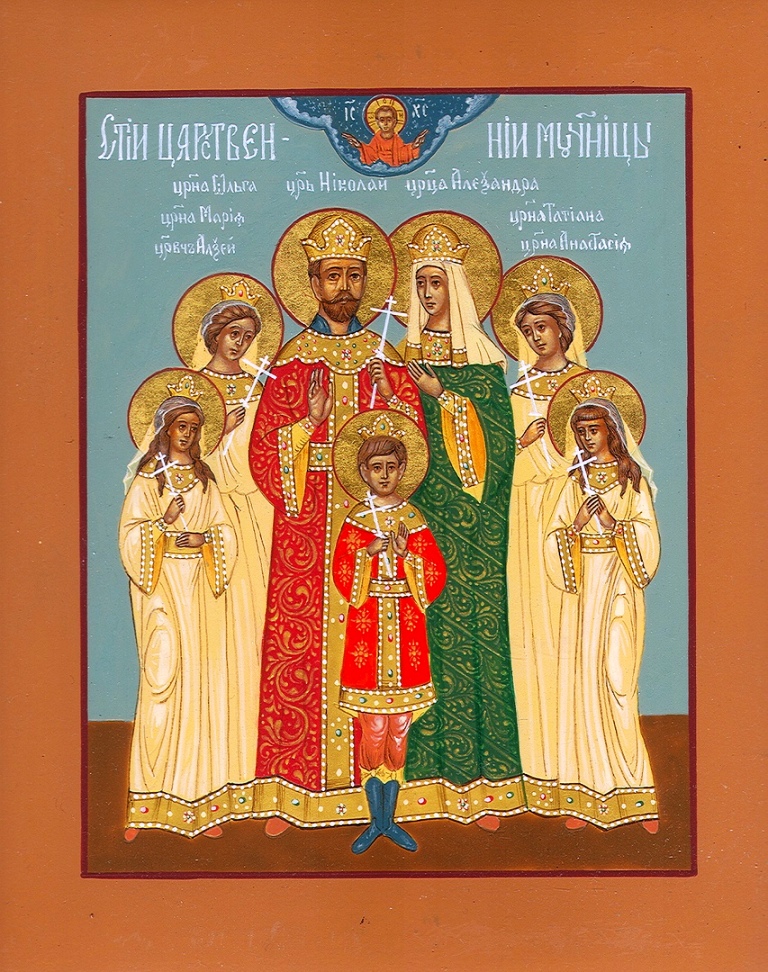
Holy Royal Martyrs, pray to God for us!
Святы Царственные мученики, молите Бога о нас!

© Paul Gilbert. 15 October 2021