The Tsesarevich’s Mentor. The Story of Charles Sydney Gibbes

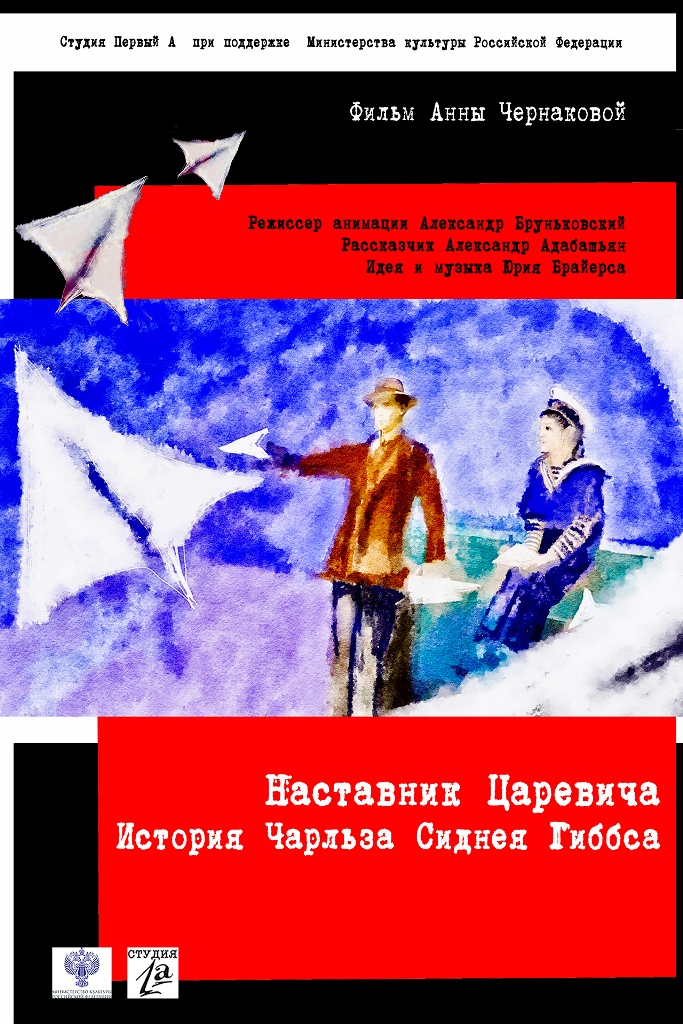
On 29th May 2025, the premiere of a new Russian-language documentary-film entitled The Tsesarevich’s Mentor. The Story of Sydney Gibbes, will be shown in the Courtyard of the Sovereign Military Chamber, situated near the Alexander Palace at Tsarskoye Selo.

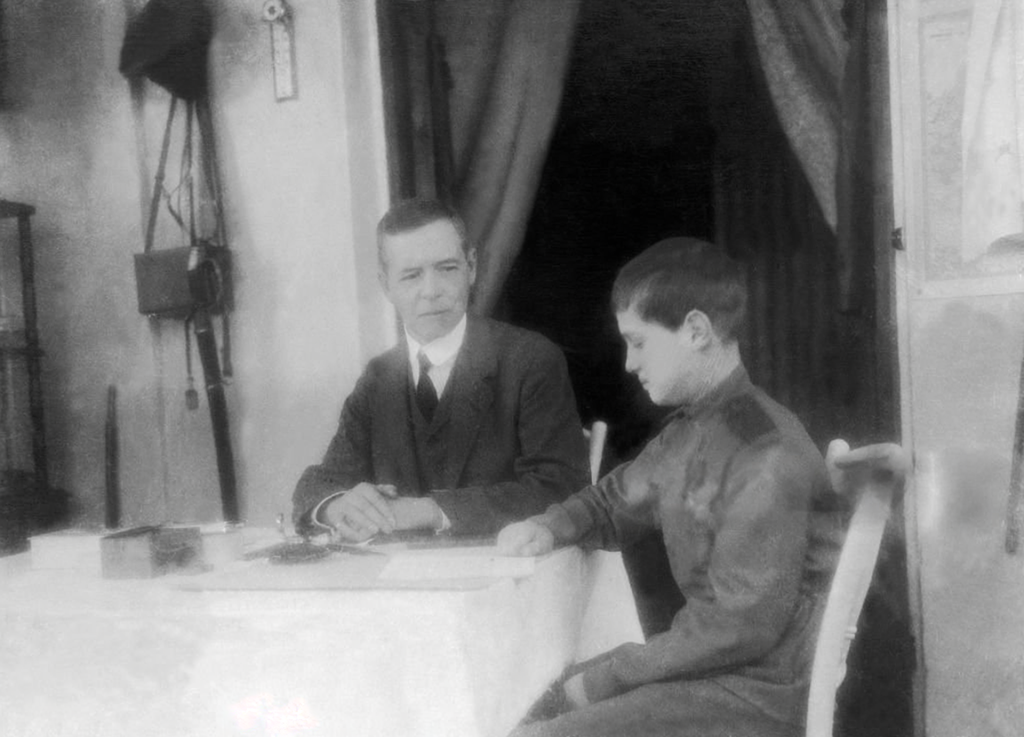
The film tells the story of Englishman Charles Sydney Gibbes (1876-1963), a Cambridge graduate who arrived in Russia in 1901. Gibbes lived and worked in St. Petersburg, and from 1908 he served as an English teacher for the children of Emperor Nicholas II – first for the Grand Duchesses, and later for Tsesarevich Alexei.

In August 1917, Gibbes voluntarily followed the Imperial Family into exile to Tobolsk. And after their tragic death in July 1918, he left Russia and returned to England, where he converted to Orthodoxy several years later. Gibbes was later ordained a priest, becoming Father Nikolai, and founded an Orthodox parish in Oxford, which still exists today.

PHOTO: Charles Sydney Gibbes and Tsesarevich Alexei Nikolaevich (circa 1914-16)

The documentary-film The Tsesarevich’s Mentor. The Story of Charles Sydney Gibbes was filmed by Studio First A with the support of the Ministry of Culture of the Russian Federation. Director-producer Anna Chernakova, animation director Alexander Brunkovsky, script by Alexander Adabashyan and Yuri Bryers, composer Yuri Bryers.

The film uses documentary materials from Russian and British archival sources, with additional film segments filmed in the UK.

On a personal note, a documentary about Charles Sydney Gibbes is long overdue, and while I commend and support this Russian-language documentary about his life and service to the Imperial Family, it also begs the question . . . WHY has there never been a British-made documentary about Gibbes? – PG

© Paul Gilbert. 23 May 2025

18th century Chandeliers returned to the Alexander Palace State Halls

PHOTO © Tsarskoye Selo State Museum-Reserve

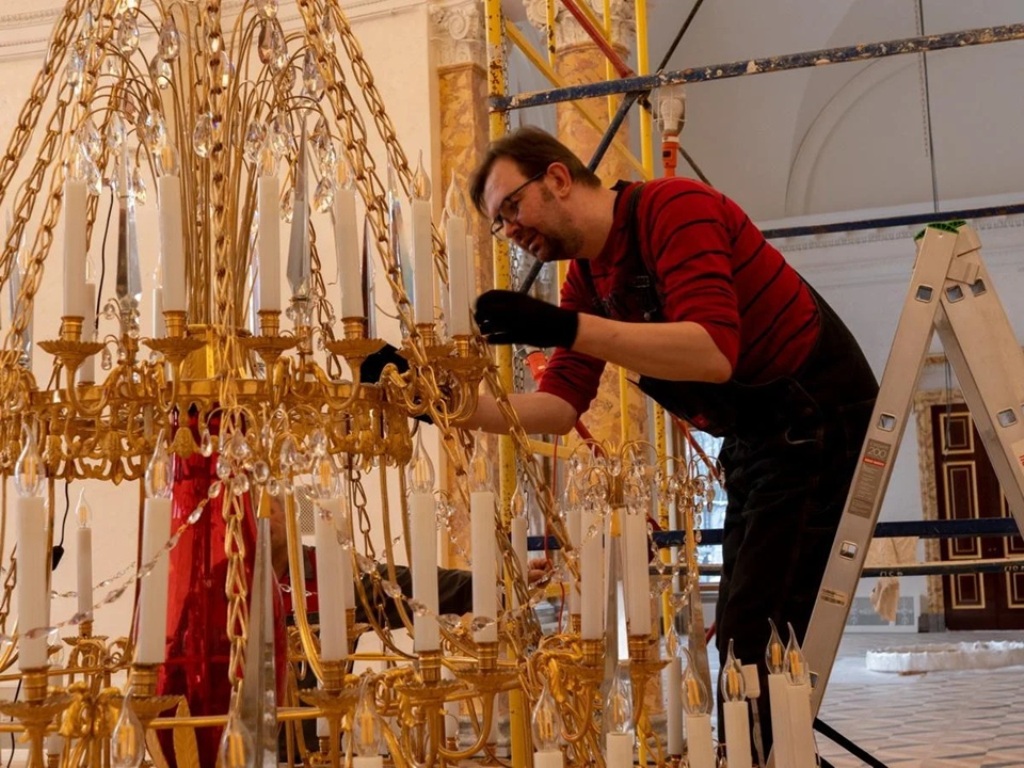
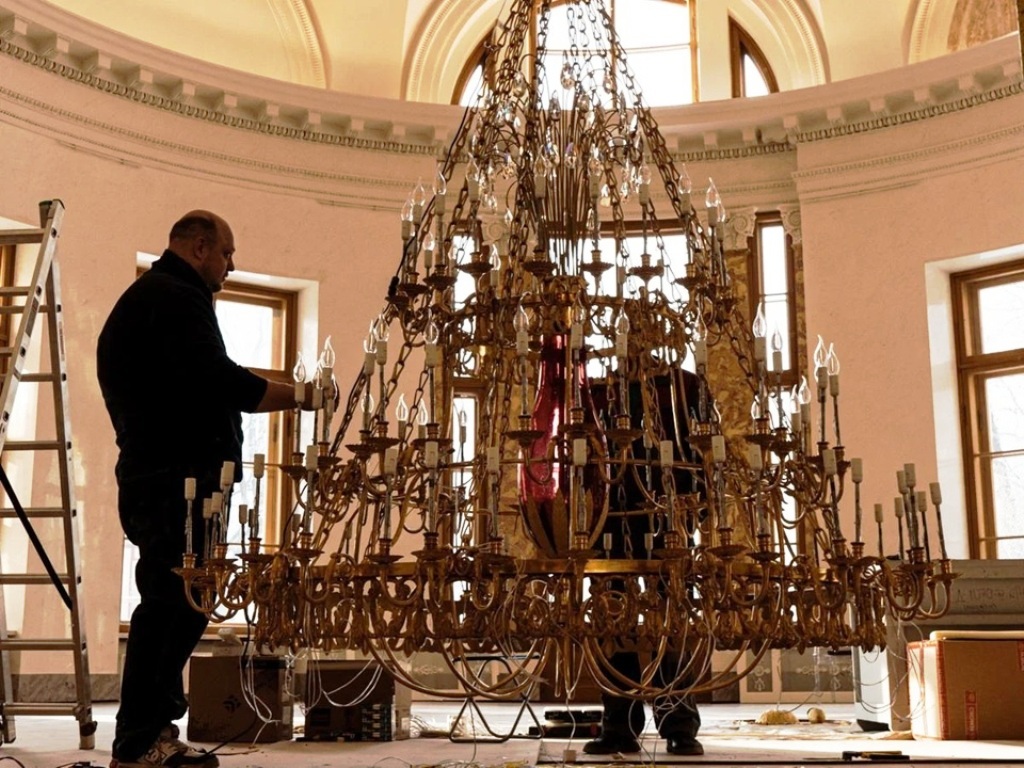
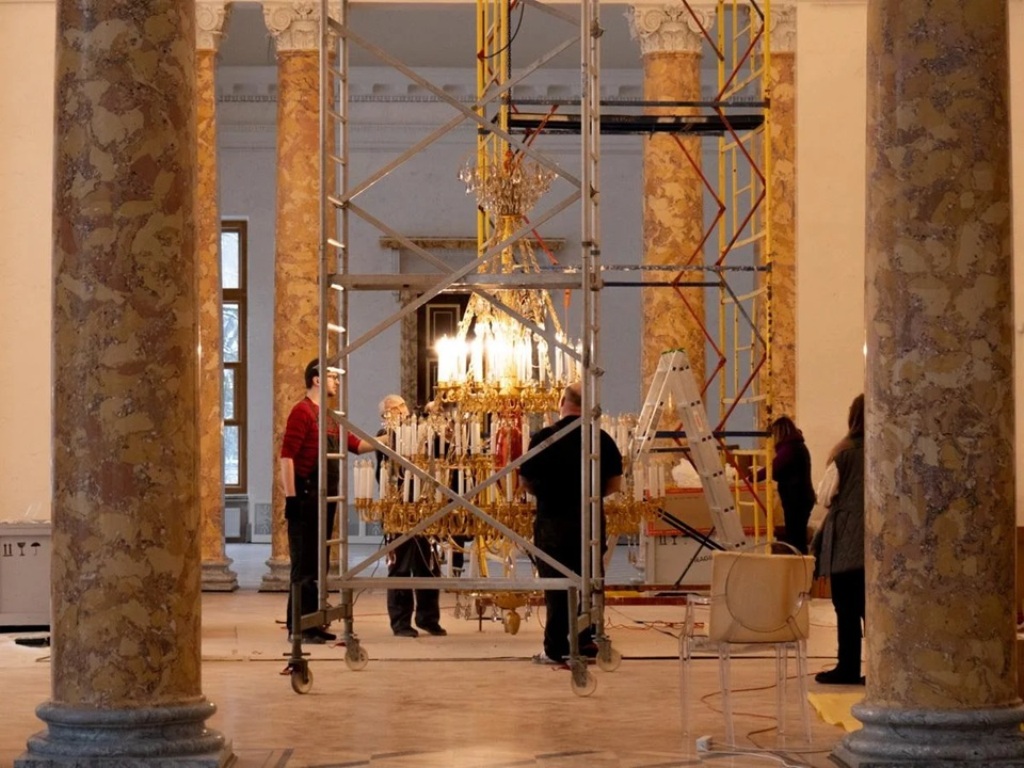
The restoration of the interiors of the Alexander Palace at Tsarskoye Selo continues . . . On 5th March 2025, three 18th century chandeliers were restored and returned to the palace’s beautiful ceremonial halls.

Recall that in 2012, “cosmetic repairs” were carried out in the Portrait Hall, the Semi-Circular Hall and the Marble (Billiard) Room. In June 2010, the State Halls, which are situated in the central part of the palace – between the east and west wings – were solemnly opened to visitors, as part of events marking the 300th anniversary of Tsarskoye Selo. However, despite the best efforts of curators, limited restoration funds, and dispersed collections, meant that the presentations were somewhat sparse and of varying quality. The State Halls were closed again in the Autumn of 2015 for additional restoration work, and reopened in 2021.

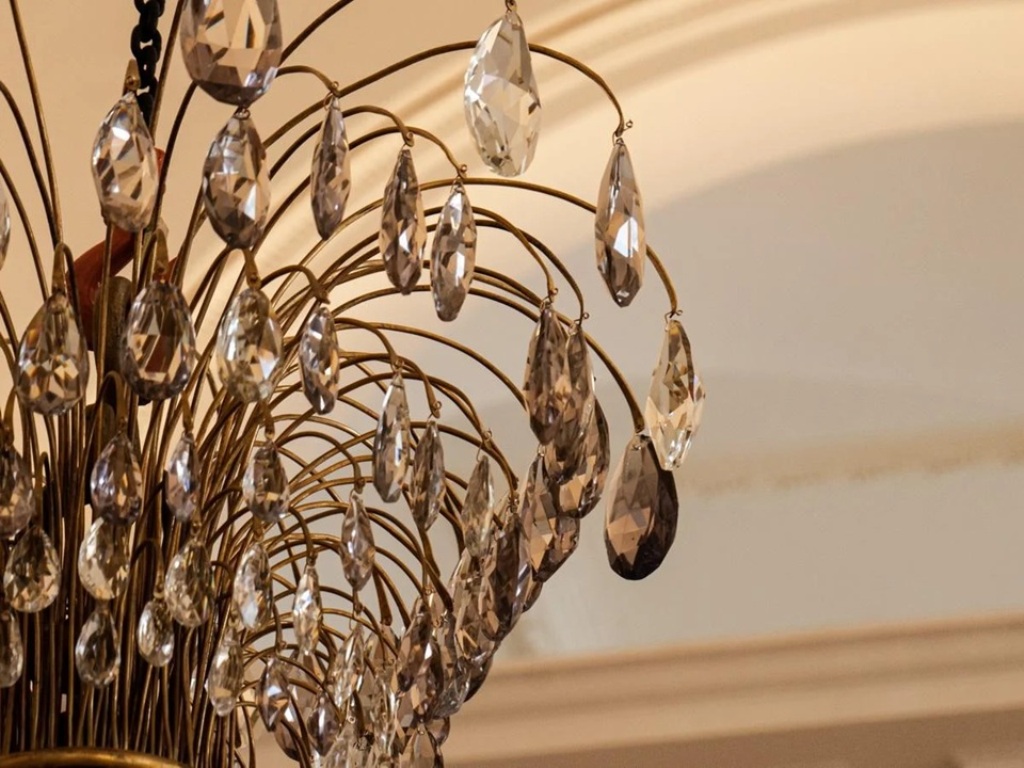
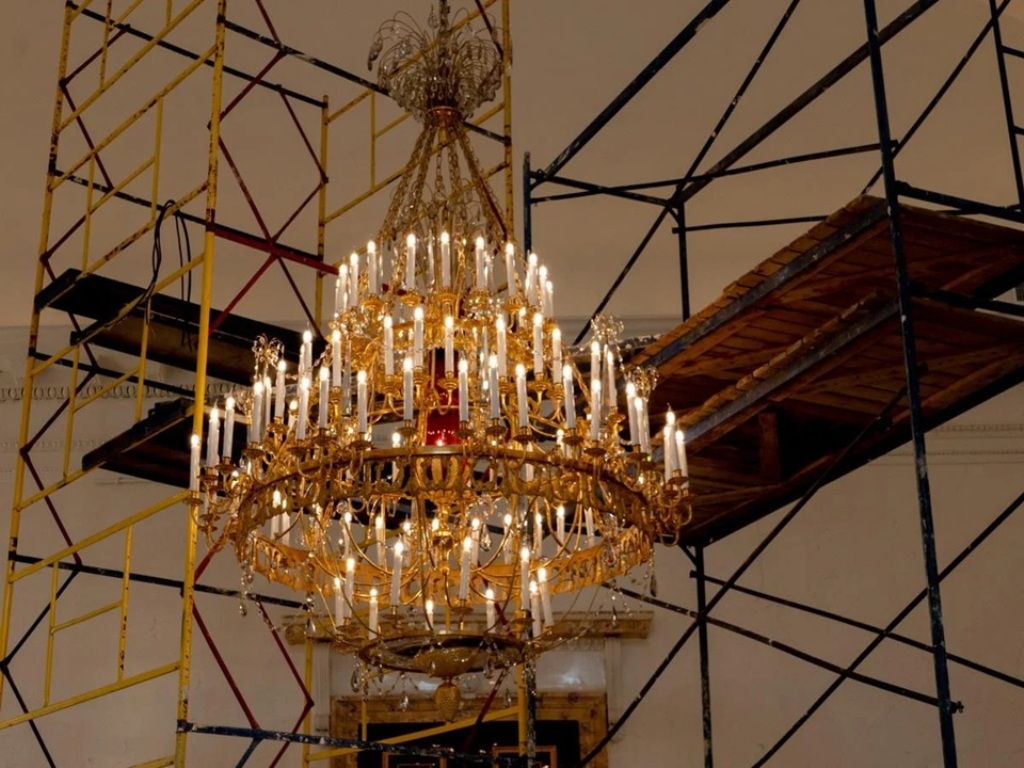
The three restored chandeliers were created according to a drawing by the famous Italian architect Giacomo Quarenghi (1744-1817), who constructed the Alexander Palace between 1792–96. The chandeliers were made of made of bronze, glass and crystal, and designed to hold 100 candles each. They are the largest and heaviest chandeliers in the museum’s collection and designed for such a large number of candles. Each chandelier stands 3.5 meters [11.5 ft.] high, and weighs more than 240 kilograms [530 lbs.]. The restoration work was carried out by specialists from the Yuzhakova Studio workshop in St. Petersburg.

PHOTOS © Tsarskoye Selo State Museum-Reserve

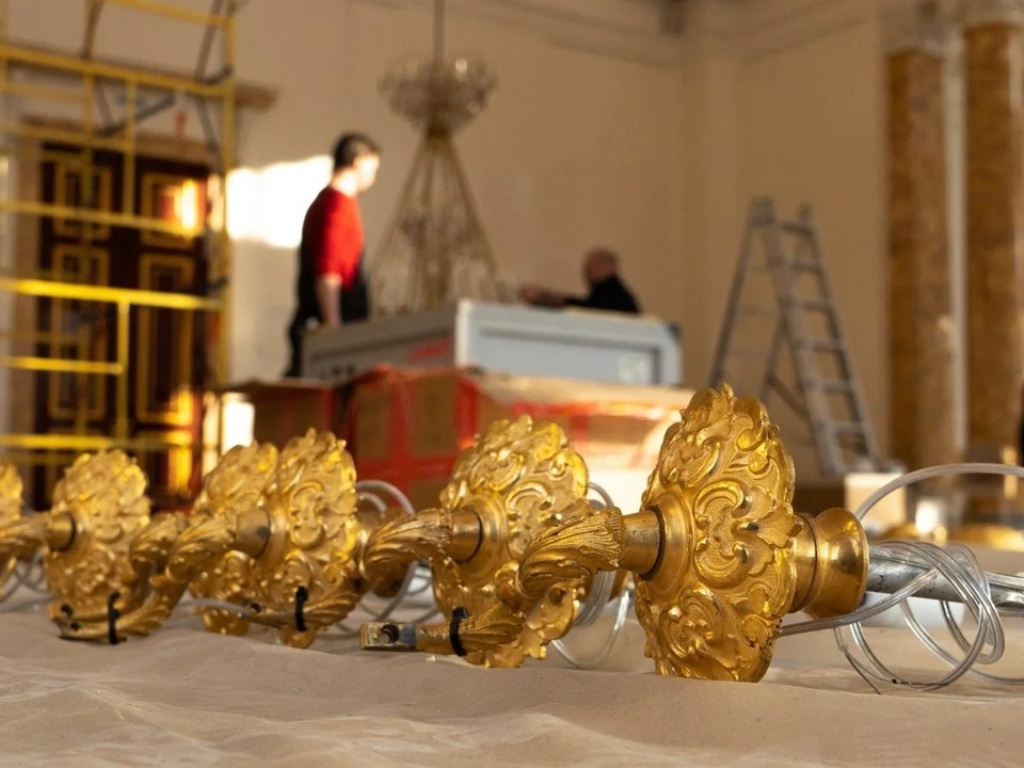
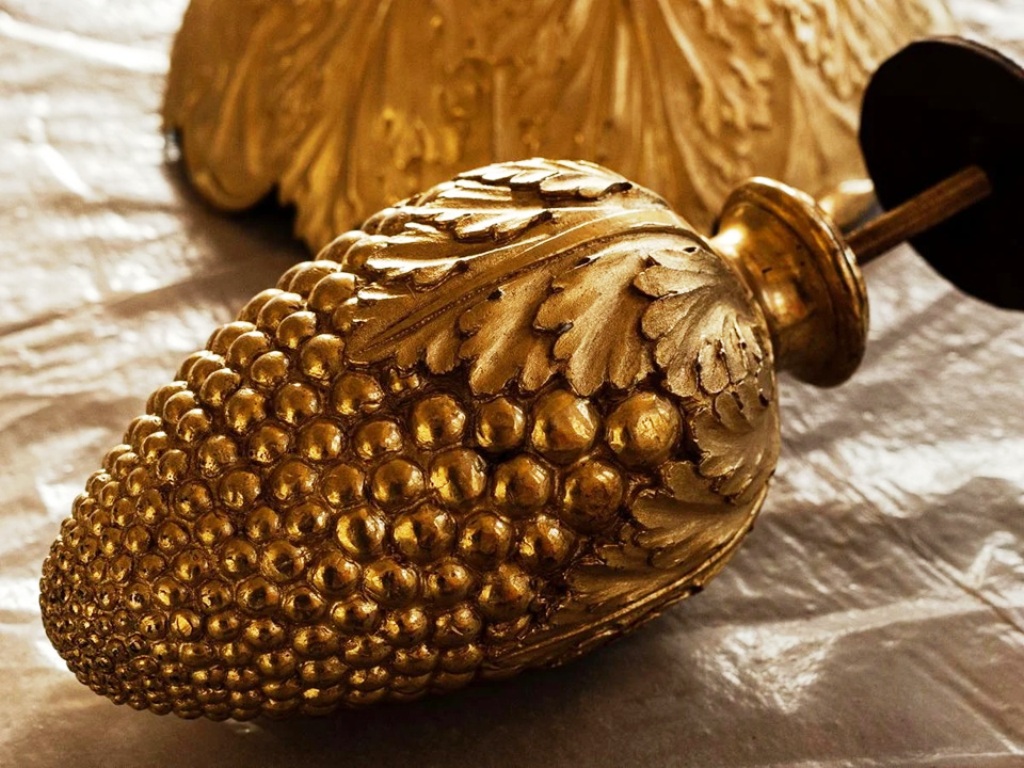
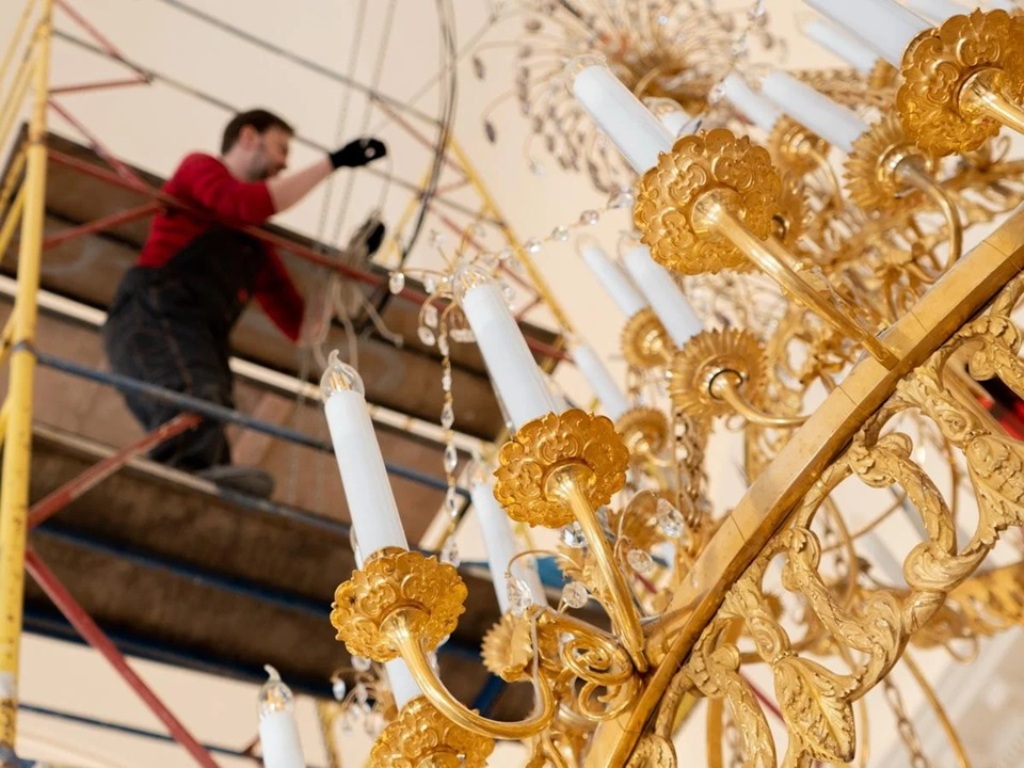
“In the process of work, the chandeliers were dismantled into parts and cleaned and polished. The restorers repaired bronze tears, cracks, caverns and filled in the areas of lost gilding. The missing parts were recreated according to existing analogues. If you look at these chandeliers, you will see that their crystal headdress is extremely rich and diverse – they are generously decorated with numerous garlands, pendants, obelisks of different sizes and faceted rosettes. The craftsmen also restored the chips and made up for the losses on the central bulb of ruby glass. Working with such a fragile material, especially in such a volume, requires the utmost delicacy and skill,” said Ekaterina Stadler, curator of the Museum Metal Collection.

The restorers also replaced the old electrical wiring, the final touch was the manufacture of milk glass tubes imitating candles.

Initially, the chandeliers were created for the St. George Hall of the Winter Palace, but they were not installed at the time. The initial order called for eight chandeliers, however, only three were made by the Johann Zech bronze foundry in St. Petersburg. At the time, the chandeliers were made to hold 50 candles each. After the death of Empress Catherine II, her son Emperor Paul I ordered the chandeliers to be installed in the halls of his new residence – the Mikhailovsky [aka Engineers] Castle in St. Petersburg. Following the death Emperor Paul, the chandeliers were returned to the Winter Palace.

PHOTOS © Tsarskoye Selo State Museum-Reserve

PHOTOS © Tsarskoye Selo State Museum-Reserve

The chandeliers were transferred to Tsarskoye Selo in 1830. Russia’s first Minister of the Imperial Court, Pyotr Mikhailovich Volkonsky (1776-1852), wrote: “His Majesty the Emperor [Nicholas I] deigned to repair the four large chandeliers that were in the Concert Hall of the Winter Palace, and then send three of them to Tsarskoye Selo to Lieutenant General Zakharzhevsky <… > where they should be hung in a large drawing room or a large hall.”

The compositional basis of the chandeliers is a massive openwork rim with a glass tray at the bottom and a central stem with ruby glass balusters. The entire structure is attached on chains converging to a socket with a bump topped with a “fountain” with pendants. The combination of gilded bronze and the glare of crystal, especially when candles were lit, created an unusually decorative visual effect.

PHOTOS © Tsarskoye Selo State Museum-Reserve

PHOTOS © Tsarskoye Selo State Museum-Reserve

The chandeliers were placed in three halls of the ceremonial enfilade of the New (Alexander) Palace – the Semicircular and Portrait Halls and the Marble Drawing Room. In 1848, by order of Empress Alexandra Feodorovna, born Princess Charlotte of Prussia (1798-1860), 50 candle horns on two newly made thin hoops were added, bringing a total of 100 candles to each chandelier for better lighting. In the early 1900s – during the reign of Emperor Nicholas II – the chandeliers were electrified. During the Great Patriotic War [1941-45], the chandeliers were evacuated: one chandelier to Novosibirsk, two to Sarapul.

Recall that the first 13 interiors of the Alexander Palace – the personal apartments of Emperor Nicholas II and his wife Alexandra Feodorovna – opened to visitors in August 2021. In February 2023, work was completed in the Marble Hall with a slide. The restoration of the palace and its adaptation to modern use continues. In 2025, the Western wing of the palace is scheduled to open to the public.

© Paul Gilbert. 6 March 2025

Reconstruction of the Imperial Pavilion in Tsarskoye Selo

PHOTO: historical look of the Imperial Railway Pavilion at Tsarskoye Selo

The Imperial Railway Pavilion in Tsarskoye Selo was built according to the project of the architect Vladimir Aleksandrovich Pokrovsky (1871-1931). It was constructed in the Neo-Russian style, beloved by Nicholas II. The station became the main terminus for the Imperial Train.

The building was located on the third branch of the Imperial Railway, which connected the Vitebsky Railway Station in St. Petersburg with Tsarskoye Selo. This special branch was built for the purpose of transporting the Emperor, members of the Imperial Family, government ministers and foreign delegations to and from the capital. During the First World War, the Imperial Train transported Nicholas II to the headquarters of the Russian Imperial Army, in Mogilev.

Many historians note that it was from the Imperial Railway Station at Tsarskoye Selo, that the Imperial Family departed for their last journey to Tobolsk in August 1917. This is incorrect. The Imperial Family were sent into exile from the Alexandrovskaya Station – Tsarskoye Selo’s third railway station on 14th (O.S. 1st) August 1917.

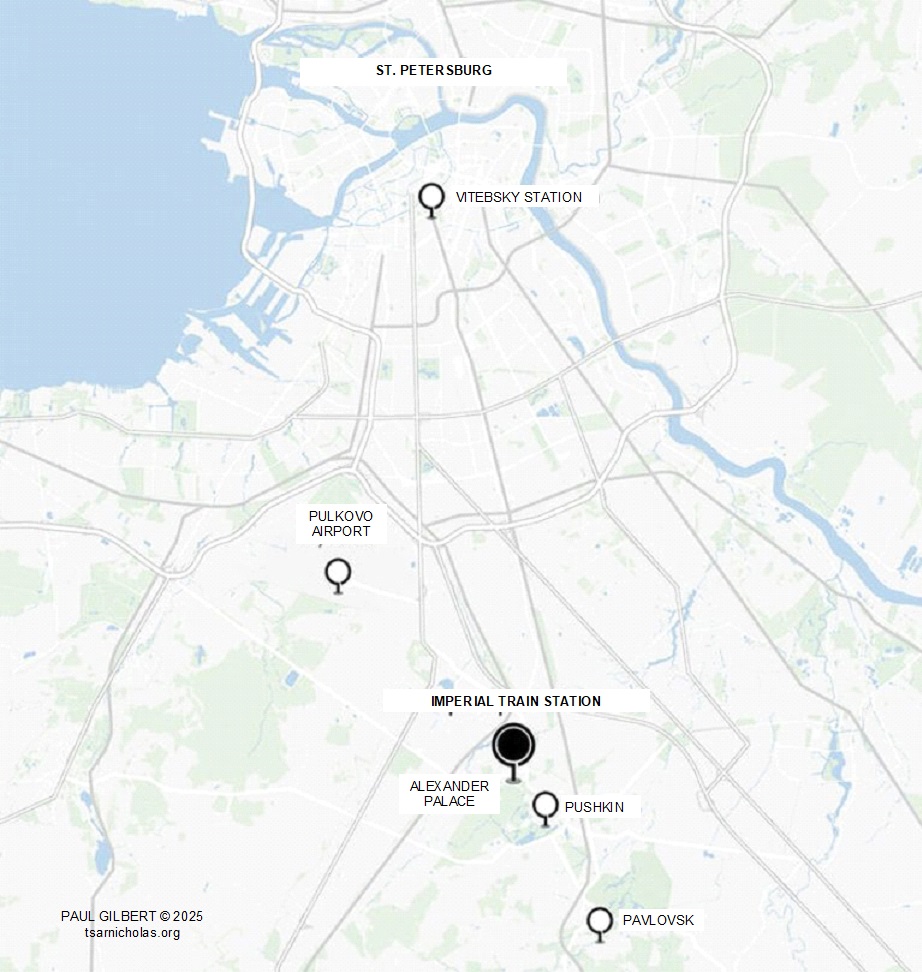
PHOTO: contemporary map showing the location of the Imperial Train Station and it’s proximity to the Alexander Palace in Tsarskoye Selo.

On 25th January 1911, the original wooden pavilion was lost as a result of a fire, only the platform and part of the canopy survived. On the site of the lost pavilion, a new stone building, according to Pokrovsky’s plan was erected in 1912. A special road – which has survived to this day – was laid through the Fermsky [Farm] Park leading to the Alexander Palace. 

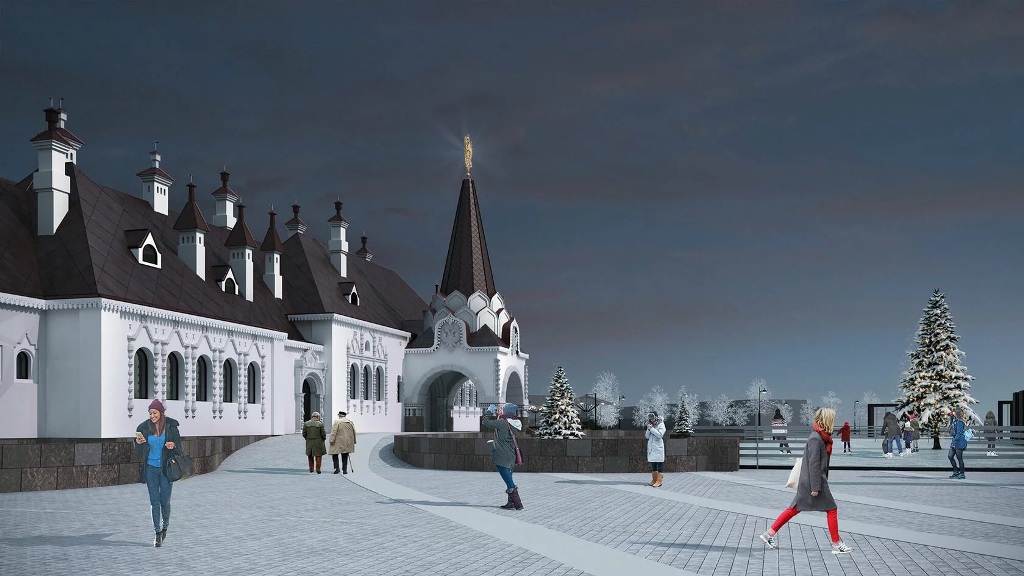
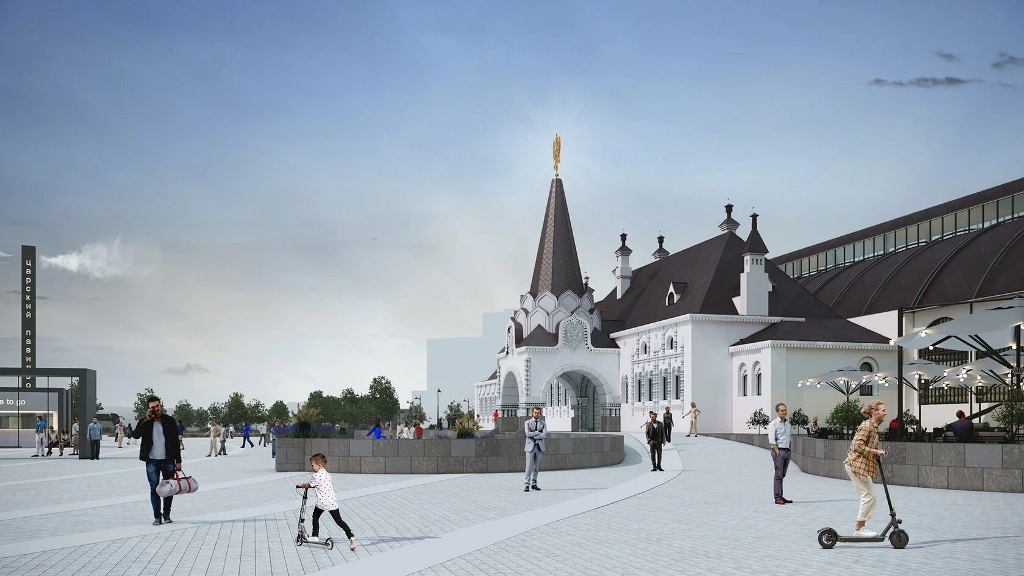
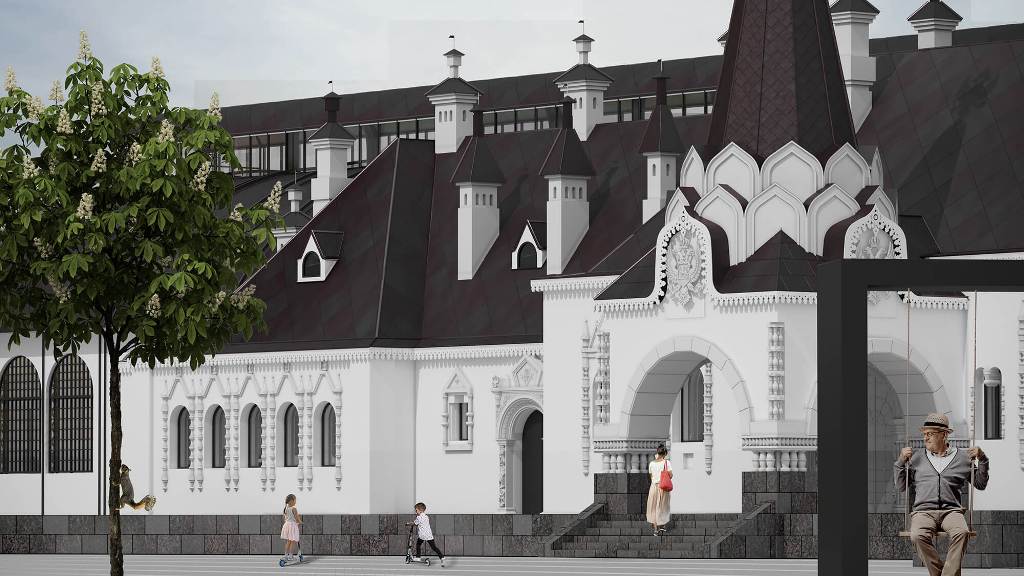
The architectural style of the Imperial Pavilion – asymmetry, window design, “checkerboard” roof with steep slopes, tented porch) makes it akin to the buildings of the nearby Feodorovsky Gorodok [Town], the Feodorovsky Sovereign Cathedral, the Sovereign Military Chamber and the barracks of His Imperial Majesty’s Own Convoy. Together, they formed an architectural ensemble in which motifs of ancient Russian architecture were widely used. The original red-brick façade was plastered and painted white by order of the Emperor. It was decorated with relief white-stone double-headed eagles above the arches and on the façade walls, ornamental carvings are made at the portals, figured columns are made on the outer corners of the porch. 

The main part of the building included three halls: in the center there was a square vestibule with a front porch, the halls on the sides of the vestibule were intended for the Emperor and his retinue: on the south side was the Tsar’s Hall, on the north – the Retinue’s Hall. A metal canopy above the platforms and tracks, adjacent to the eastern façade of the pavilion, served to receive trains. A ramp was added to the main entrance, allowing motorcars and carriages to drive directly under the arched opening of the front porch.

The paintings on the walls and ceilings in the halls are made in the tempera-glue technique on plaster. Polychrome ornamental painting is a stylized borrowing of elements of the pictorial décor of the interior design of the palace of Tsar Alexei Mikhailovich (1629-1676) in Kolomenskoye, near Moscow. The unique painting, which has partially survived to this day, is an integral part of Pokrovsky’s design. The vaults of the inner chambers were painted by the artist Mikhail Ivanovich Kurilko (1880-1969).

During the First World War of 1914-1917, the Imperial Railway Station served to transport wounded Russian soldiers to the hospital set up in Feodorovsky Gorodok.

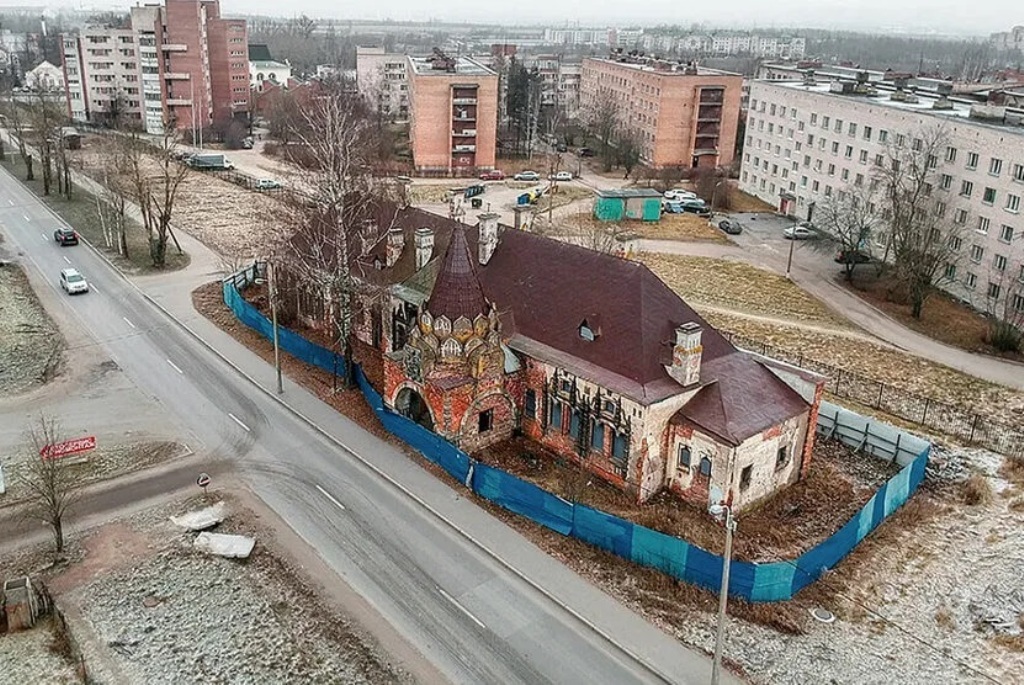
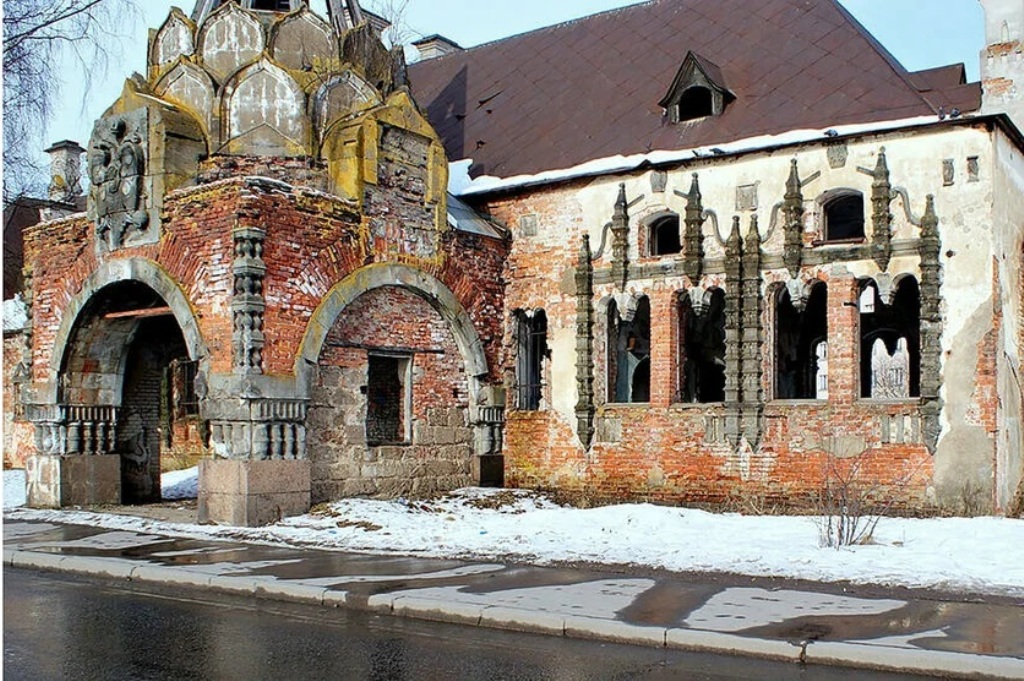
PHOTOS: for decades, the Imperial Railway Pavilion at Tsarskoye Selo
has been left in a shocking state of neglect and disrepair 

In 1918, the station was renamed the Uritsky Pavilion [after Moisey Solomonovich Uritsky (1873-1918), a prominent Bolshevik and chairman of the Petrograd Extraordinary Commission]. Initially, it was used as a dormitory for workers of the Track Repair Mechanical Plant. The Tsarist emblems were removed from the tent above the wing, the ceremonial halls were divided by makeshift walls, the porch was adapted for use as a kitchen. The Imperial Pavilion’s furniture, lamps, objects of decorative and applied art were all lost. The hundred-meter landing stage was dismantled in the 1930s.

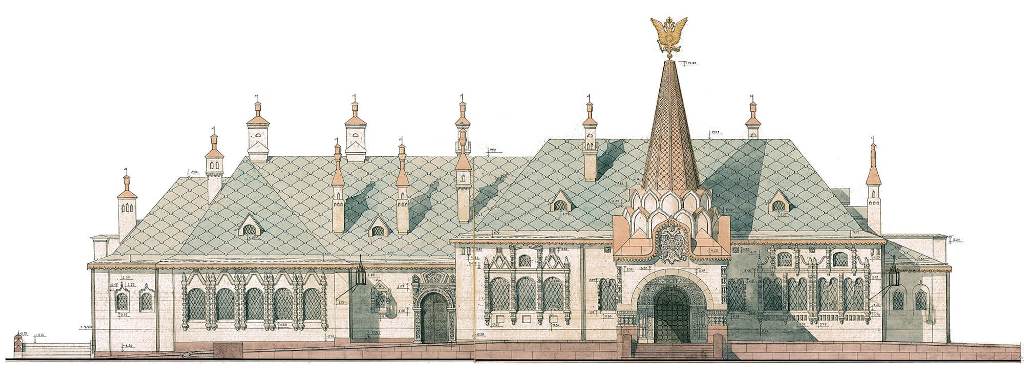
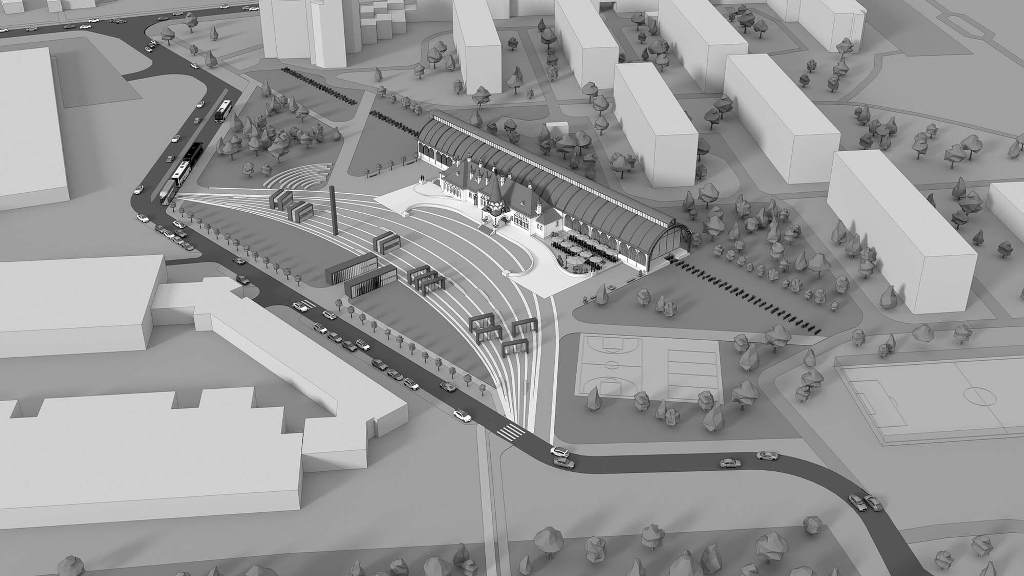
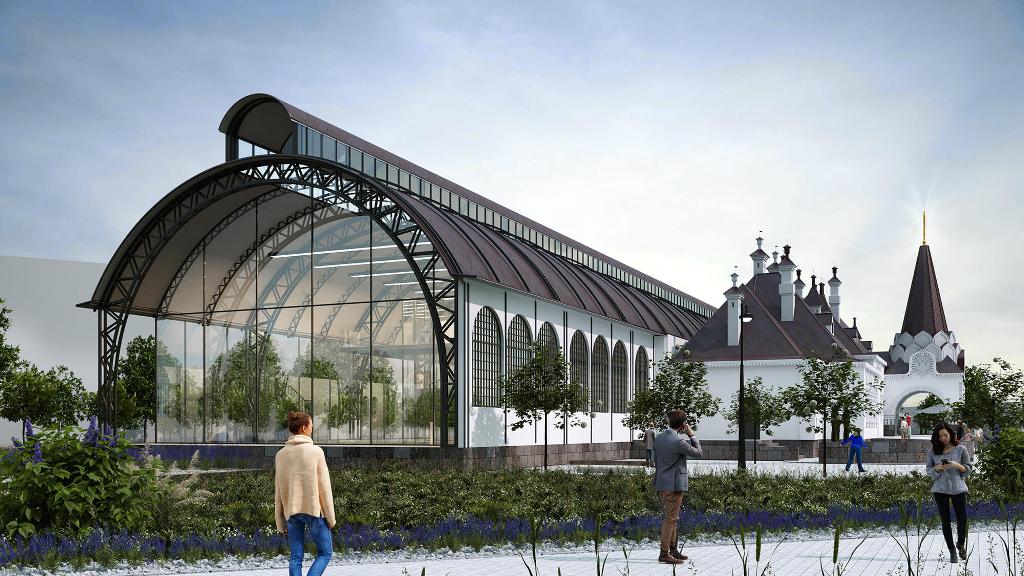
In the summer of 2023, work began on on the restoration of the Imperial Railway Pavilion to it’s historic original, under the direction of  the Tsarskoye Selo Station Foundation. Below are the artist concepts of what the Imperial Railway Pavilion will look like following it’s restoration:

© 2024 First Design Institute

© 2024 First Design Institute

© 2024 First Design Institute

© 2024 First Design Institute

© 2024 First Design Institute

Aside from being a museum, there are plans to use the restored Imperial Pavilion for other purposes, including a Wedding Palace. In addition, the façade of the building, it’s rich interiors and painted vaults will be offered as an ideal place for celebrations and photo shoots.

FURTHER READING:

This author has been closely following the progress of this project since August 2023. Below are my articles which provide details on the restoration of this historic building, among others on the Imperial Train of the last Russian Emperor . . . .

Imperial Railway Pavilion in Tsarskoye Selo is being restored – features 13 photos of the initial restoration work

Update on the restoration of the Imperial Railway Pavilion at Tsarskoye Selo

Artist concept of Imperial Railway Pavilion restoration project at Tsarskoye Selo – features VIDEO

The sad state of the Imperial Railway Pavilion at Tsarskoye Selo – features 20 photos!

Imperial Railway Pavilions during the reign of Nicholas II

The fate of Nicholas II’s Imperial Train – features 8 historic photos

© Paul Gilbert. 19 February 2025

Thousands of items at Pavlovsk have not been returned to the Alexander Palace

In 1951, by a government decree, the Alexander Palace was transferred to the Ministry of Defense of the USSR. The Naval Department used the building as a top-secret, submarine tracking research institute of the Baltic Fleet.

Any hope of the Alexander Palace being reopened as a museum – as it was before the Great Patriotic War (1941-45) – were now lost. The palace’s collection, which consisted of thousands of items, and which had been part of the evacuated items held in the Central Depository of Museum Collections of Suburban Palaces-Museums, were at this point transferred to the Pavlovsk Palace State Museum.

From 1951, the Alexander Palace would remain strictly off-limits to visitors for the next 45 years. When it appeared that the Soviet Navy intended to vacate the complex, the Alexander Palace was included in the 1996 World Monuments Watch by the World Monuments Fund (WMF).

In the summer of 1997, a permanent exhibition dedicated to Emperor Nicholas II and his family was opened in the Eastern Wing of the palace. It was at this time that my annual Romanov Tour became the first group from the West to visit the interiors of the Alexander Palace.

Despite the exhibition, the rest of the palace remained under the administration of the Naval Department, who continued to occupy the Western Wing. It is due to their occupancy in this section of the palace, that very few of the original interiors and their elements survived.

PHOTO: he Alexander Palace at Tsarskoye Selo, as it looked in the 1990s, when the palace was still surrounded by a security fence and watchtower.

It was not until October 2009, according to the order of the Federal Property Management Agency, that the Alexander Palace was placed under the administration of the Tsarskoye Selo State Museum Reserve.

After an extensive restoration project which began in the autumn of 2015, the private apartments of Emperor Nicholas II and Empress Alexandra Feodorovna opened to public on 13th August 2021.

Visitors to the Alexander Palace can now visit the New Study of Nicholas II, Moorish Bathroom of Nicholas II, Working Study of Nicholas II, Reception Room of Nicholas II, the Valet’s Room, PLUS the Maple Drawing Room, Pallisander (Rosewood) Living Room, Mauve (Lilac) Boudoir, Alexandra’s Corner Reception Room, the Imperial Bedroom, the Small and Large Libraries and the Marble/Mountain Hall.

Today, more than 6 thousand items from the funds of the Tsarskoye Selo State Museum-Reserve are displayed in the recreated interiors of the Alexander Palace.

In a recent interview with Art Newspaper Russia, the Director of the Tsarskoye Selo State Museum-Reserve Olga Taratynova talked about the restoration of the Alexander Palace and the reconstruction of the Private Apartments of Emperor Nicholas II and Empress Alexandra Feodorovna.

“The Alexander Palace suffered much less than the Catherine Palace,” said Taratynova. “Unlike the Catherine Palace, it was not destroyed by fire [as a result of shelling by the Nazis]. Instead, it endured a different fate. The Alexander Palace served as the residence of the family of the last Emperor, and it is a miracle that anything survived at all,” she added.

“For Alexander] Pushkin’s anniversary in 1949, an exhibition dedicated to him was opened in the palace, and for this purpose, a number of interiors were lost. Soviet dogma of the time believed that Art Nouveau was a decadent style, citing no need to preserve it. And then the building was transferred to the Ministry of War. In 2009, when the Alexander Palace was transferred to us [the Tsarskoye Selo State Museum-Reserve], we quickly carried out “cosmetic repairs” in three of the State Halls and opened them to the public. But all the things were in Pavlovsk. They were transferred there in 1951, and have remained there ever since, Taratynova continued”

PHOTO: Director of the Tsarskoye Selo State Museum-Reserve Olga Taratynova

“In preparation for the reopening of the Private Apartments of Nicholas II and Alexandra Feodorovan in 2021, they [Pavlovsk State Museum] gave us about 200 items from their collection for “temporary use”. We knew from inventories and photographs, that these items originated in the Alexander Palace], and knew exactly where they were historically located. So I can’t complain, Pavlovsk assisted us. But they did not return everything, of course, because many of the items have been on display in Pavlovsk Palace for many years now.” [On the third floor of the latter palace is dedicated to the history of Russian furniture, many items from the Alexander Palace are on display here – PG].

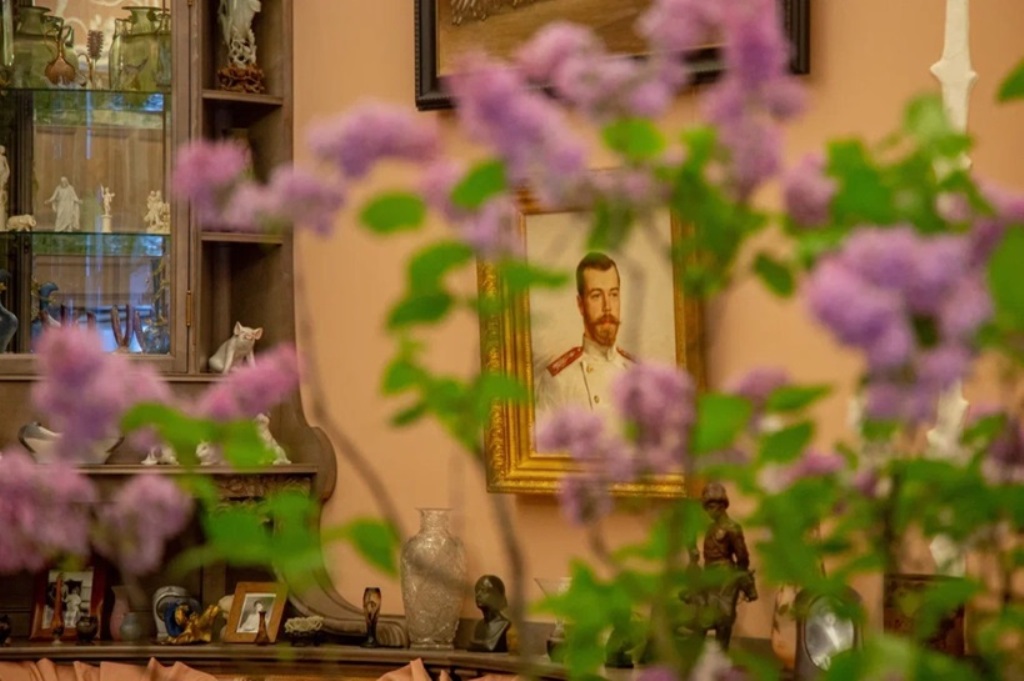
“Now in the Alexander Palace, we have tried to create the atmosphere of a beloved home. This was really the case – a closed space, where Nicholas II invited only a small circle of close friends and trusted associates. And in the apartments of Alexandra Feodorovna and the children, only extended family members and devoted servants were allowed. We tried to focus on the atmosphere, we even added sound: in some rooms, for example, you can hear, the sounds of billiard balls, in others – a distant piano playing. There are also smells – first of all, the scent of lilacs, because Alexandra Feodorovna loved them very much, they now bloom in her rooms. We revived this tradition two years ago, our gardeners have been growing lilacs even in winter,” Olga Taratynova concluded.

***

Prior to the outbreak of the Great Patriotic War in 1941, the Alexander Palace housed more than 52.5 thousand items, of which more than 44.8 thousand items were lost [destroyed or stolen] between 1941 to 1945. From the 7.7 thousand items which survived, a significant part of the items are now in the collection of other museums in Russia. Among these were 5,615 items, which were moved from the Alexander Palace to the Pavlovsk State Museum Reserve in 1951. Of these, nearly 200 pieces were originally from the Alexander Palaces’ three ceremonial halls: the Portrait, Semi-Circular and Marble Halls. These include 39 pieces of porcelain, 41 paintings, 73 decorative bronze pieces, and 28 pieces of furniture.

Since the fall of the Soviet Union in 1991, and in particular since the restoration of the Alexander Palace, the return of these objects has been a bone of contention between the two palace-museums. During a visit to Pavlovsk several years ago, I raised the subject with one of the Directors [who shall remain anonymous] at Pavlovsk. “If we return these exhibits to the Alexander Palace, then we [Pavlovsk] will have nothing,” he declared.

Personally, this author believes that Pavlovsk have a moral responsibility to return all of the items transferred there in 1951. The history of these items is connected to the Alexander Palace, not Pavlovsk Palace. It seems that the current Minister of Culture of the Russian Federation Olga Lyubimova, should step in to right this historic wrong. Let us hope that she does the right thing, and order the return of the 5,615 items to the Alexander Palace, where they can be put on display in the rooms from which they originated.

© Paul Gilbert. 18 February 2025

Final scenes for ‘The Romanovs. Devotion and Betrayal ‘ shot in the Alexander Palace

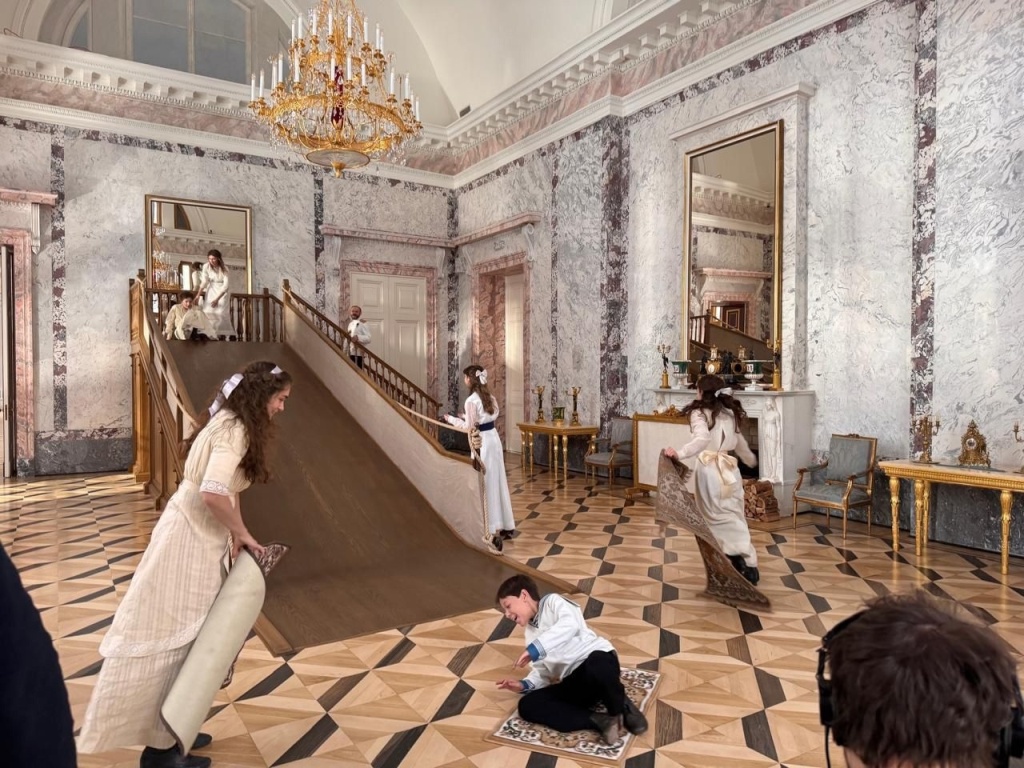
PHOTO: a scene from the film, with actors portraying the Imperial Children playing on the slide in the Marble [aka Mountain] Hall in the Alexander Palace

On 24th January 2025, the final scenes for the upcoming Russian-language film Романовы: Преданность и предательство / The Romanovs. Devotion and Betrayal were filmed in the Alexander Palace and Park at Tsarskoye Selo. The film is based on the book of the same name by the Tyumen writer Sergey Kozlov.

The filming of the 12-part series began in Tobolsk in March 2024, and has since been filmed in places associated with Nicholas II and his family, including St. Petersburg, Perm and Tsarskoye Selo. Copies of Rasputin’s house and the Ipatiev House in Ekaterinburg were recreated for the film.

Crews began a 5-day shooting of the final scenes for the film in the Alexander Palace and Park on 24th January. Scenes were filmed in various rooms and halls of the palace.

According to the film’s director Vasily Chiginsky, editing and post-production are already underway, with the film expected to be complete by the end of the year.

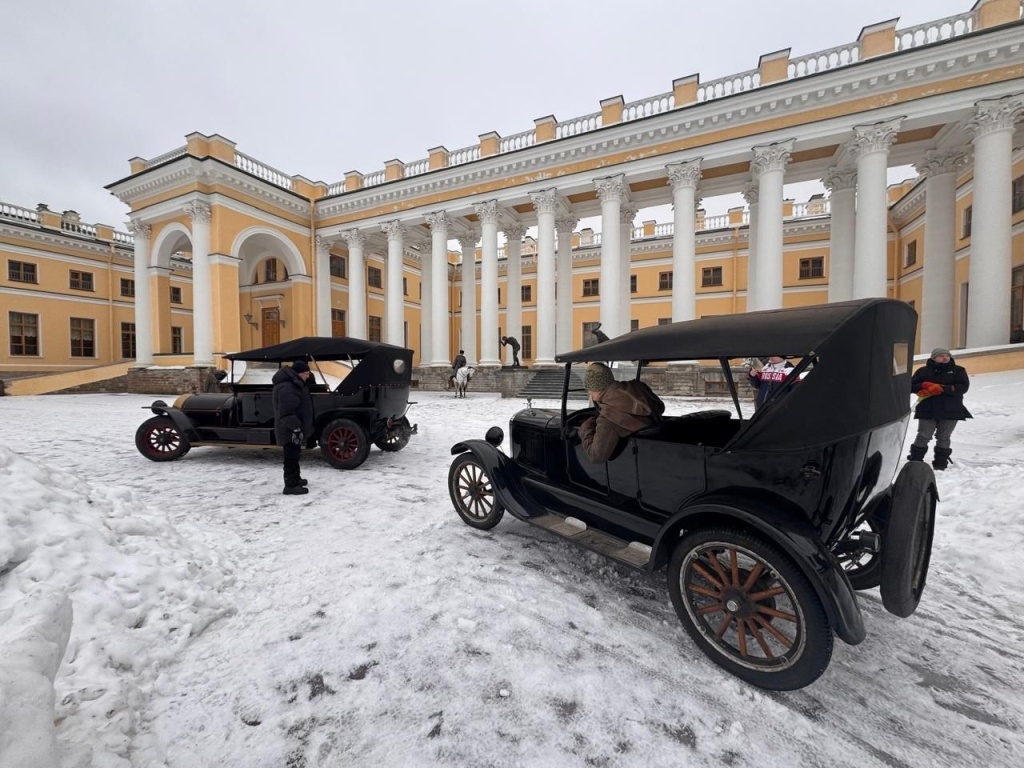
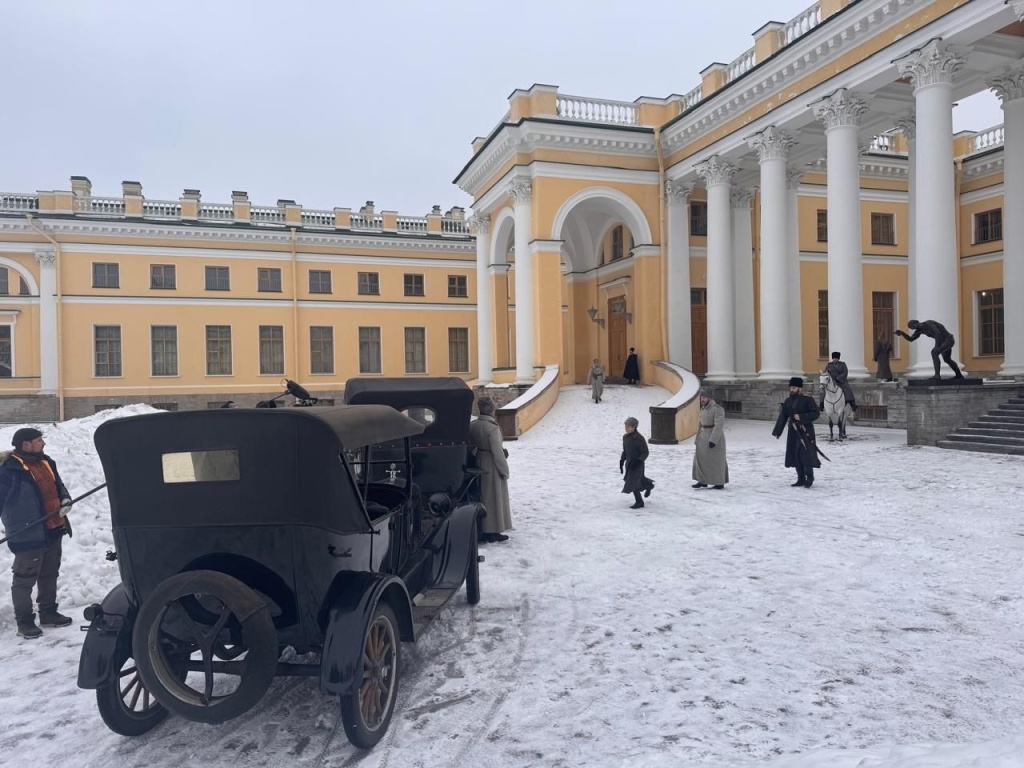
PHOTO: early 20th century motorcars parked outside the Alexander Palace that were used during the filming of ‘The Romanovs. Devotion and Betrayal

NOTE: I have been following the progress of this large-scale historical project since it began filming in March of last year. I will continue to share any new developments, including more videos, as they become available – PG

© Paul Gilbert. 29 January 2025

Alexander Palace filled with the scent of lilacs

Lilacs in the Maple Drawing Room of the Alexander Palace
Photo © Tsarskoye Selo State Museum

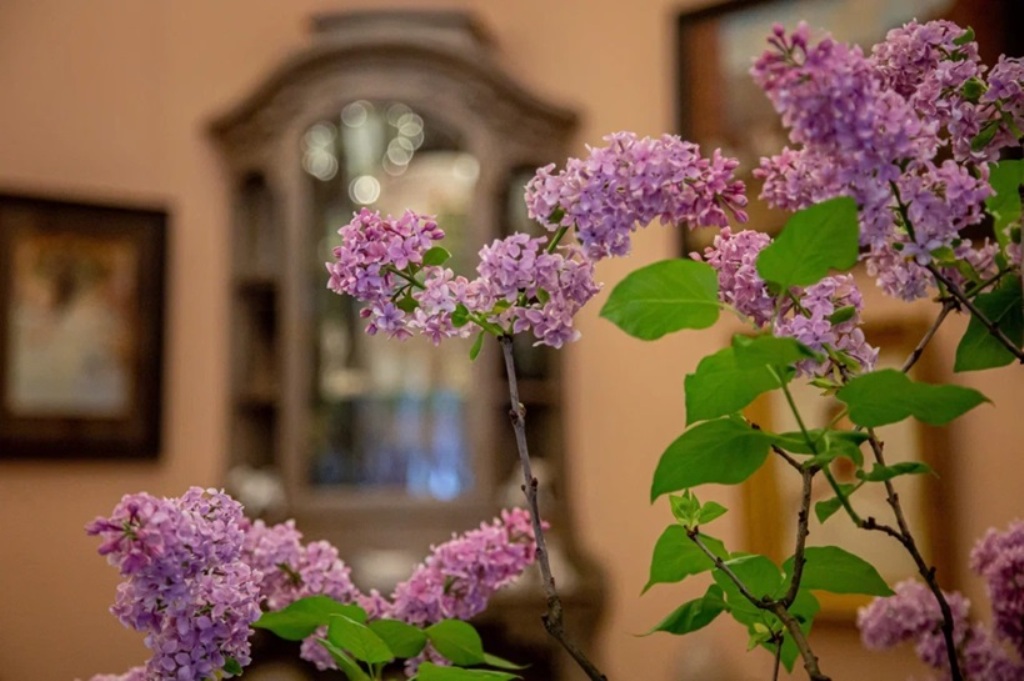
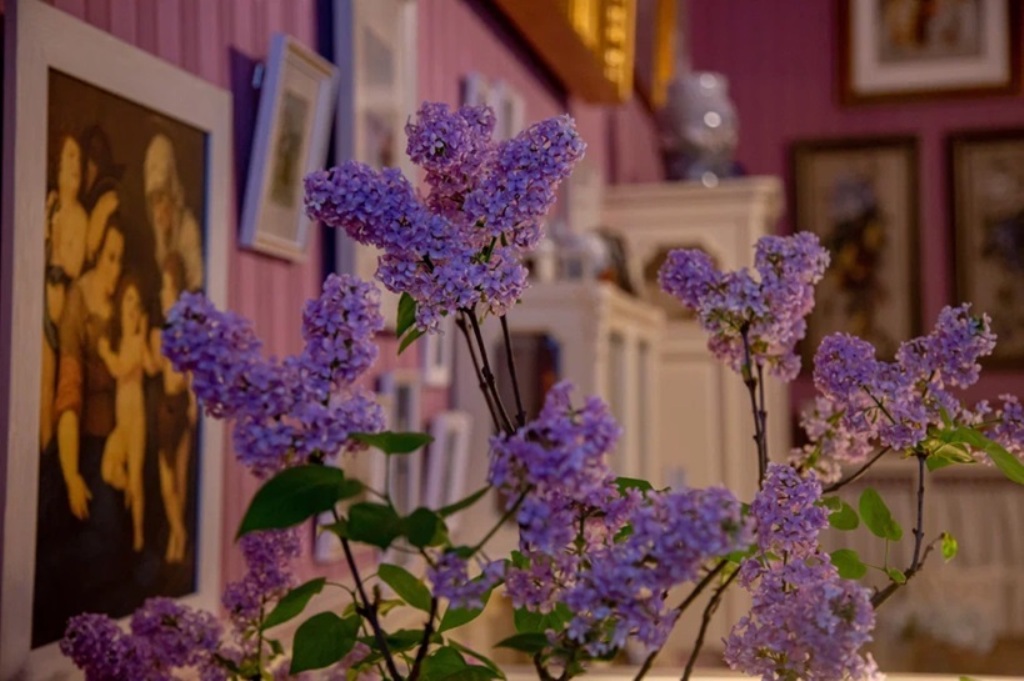
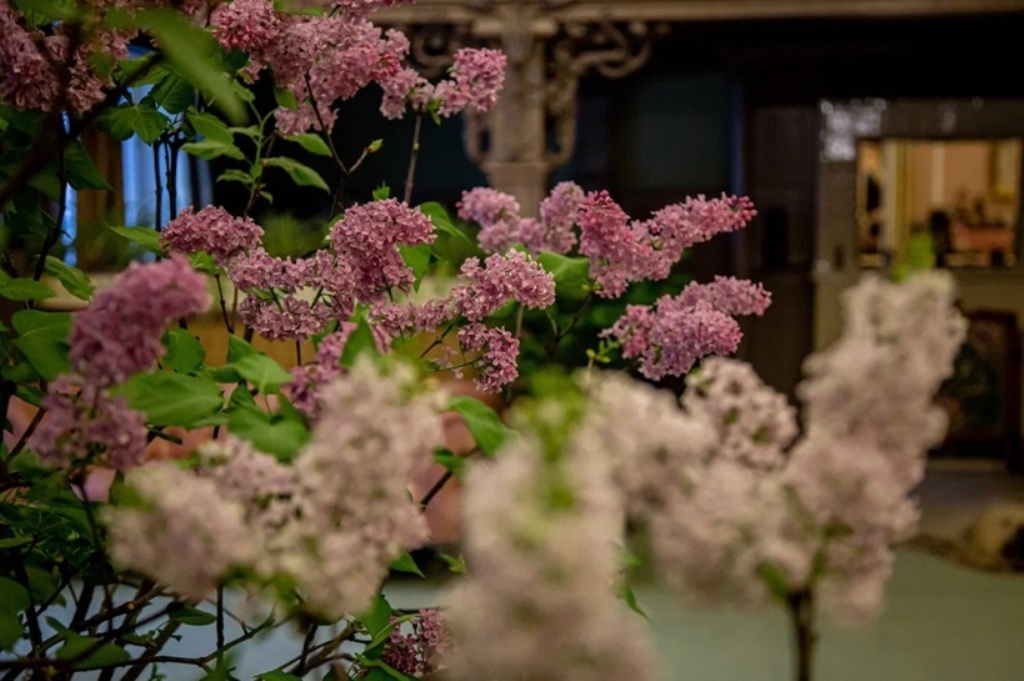
In the middle of winter, the Alexander Palace at Tsarskoye Selo is again decorated with blooming lilacs. Their fragrant aroma fill the former interiors of Empress Alexandra Feodorovna, a beautiful reminder of the Imperial Family and their favourite Imperial Residence.

On 23rd January 2025, of the 16 lilac bushes in the greenhouses near the Alexander Palace, six were moved to the palace halls, the rest will be moved from the greenhouses in stages, as they bloom. The tradition of placing lilacs in the former rooms of the last Russian Empress began in 2022, the first time the aroma of her favourite flowers filled the interiors of the palace in more than 100 years.

Lilacs of the historical varieties, such as “Memories of Ludwig Späth” and “Sensation” are exhibited in the Mauve Boudoir and Corner Drawing Rooms. Five bushes form a luxurious “lilac cloud” with delicate pink and purple flowers. Lilacs were exposed at the peak of flowering, this year so their distinctive aroma is especially noticeable. Visitors can admire lilacs in the interiors of the Alexander Palace until April.

Lilacs in the Maple Drawing Room of the Alexander Palace
Photo © Tsarskoye Selo State Museum

“Documents have been preserved indicating that the Tsarskoye Selo greenhouses diligently carried out the task of creating a spring atmosphere during the gloomy winter months. In 1898, by order of the gardener Zort, lilacs, double-cherries, hydrangeas and lilies of the valley arrived in Tsarskoye Selo for the winter decoration of the palace. So flowers in the Alexander Palace are an integral part of the interior, and we are talking not only about the rich floral decoration of the walls – roses, orchids, dandelions, but also about the blooming flowers as well,” said Olga Filippova, the chief curator of the parks of the Tsarskoye Selo State Museum-Reserve.

Lilacs in the Mauve Boudoir of the Alexander Palace
Photo © Tsarskoye Selo State Museum

The process of preparing lilacs for “premature” flowering begins in the fall. In accordance with the methods from gardening books of the 19th century, the employees of the greenhouse complex plant bushes in special boxes, and in December they set the plants up for awakening. The care process is extremely painstaking: every forty minutes during the working day, staff need to perform the necessary manipulation. One of the main conditions is strict compliance with the temperature and humidity.

Lilacs in the Maple Drawing Room of the Alexander Palace
Photo © Tsarskoye Selo State Museum

Empress Alexandra Feodorovna loved flowers – the rooms in her private half were decorated with fresh flowers all year round. Floral themes were also present in the upholstery of the walls, furniture, as well as the stucco reliefs on the walls and ceilings. The Empress was especially fond of lilacs. It is no coincidence that in her Mauve Boudoir [aka Lilac Study] the furniture and walls were decorated with silk of lilac shades, Alexandra Feodorovna also preferred lilac tones in her clothes, and perfume with the aroma of lilac.

Recall that the first 13 interiors of the Alexander Palace – the private rooms of Nicholas II and Alexandra Feodorovna – opened to the public after restoration in August 2021, in February 2023 the restoration of the Marble Hall with a slide was completed. The interiors of the palace-museum are complemented all year round with decorative indoor plants and cut flowers.

© Paul Gilbert. 23 January 2025

Two new pieces of furniture recreated for the Alexander Palace

Photo © Tsarskoye Selo Restoration Workshop

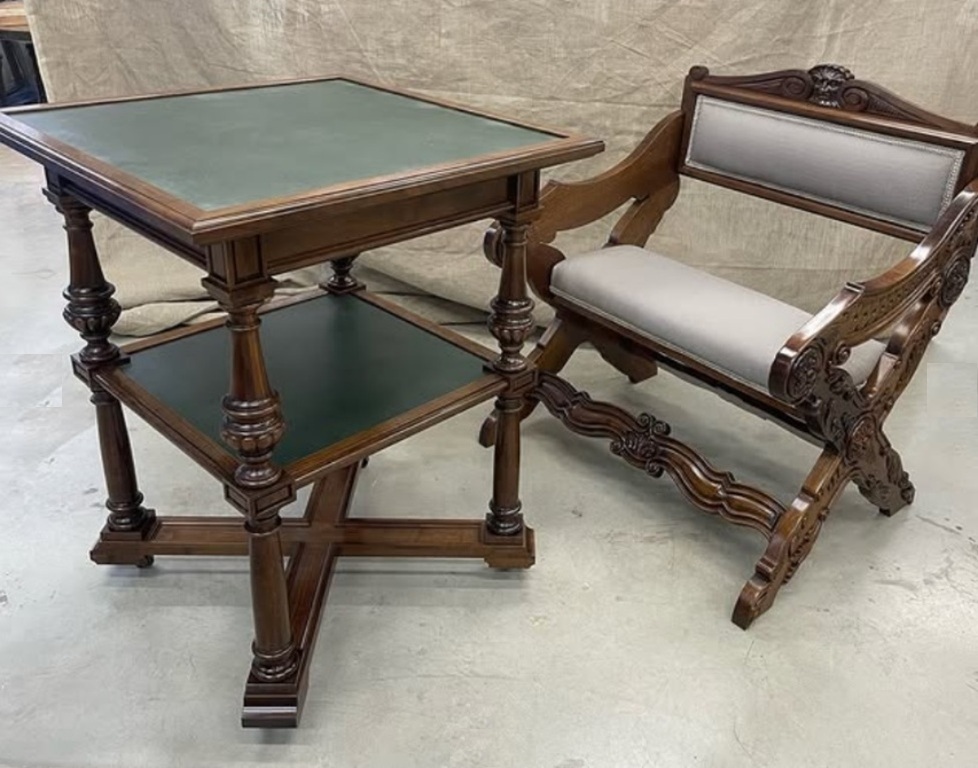
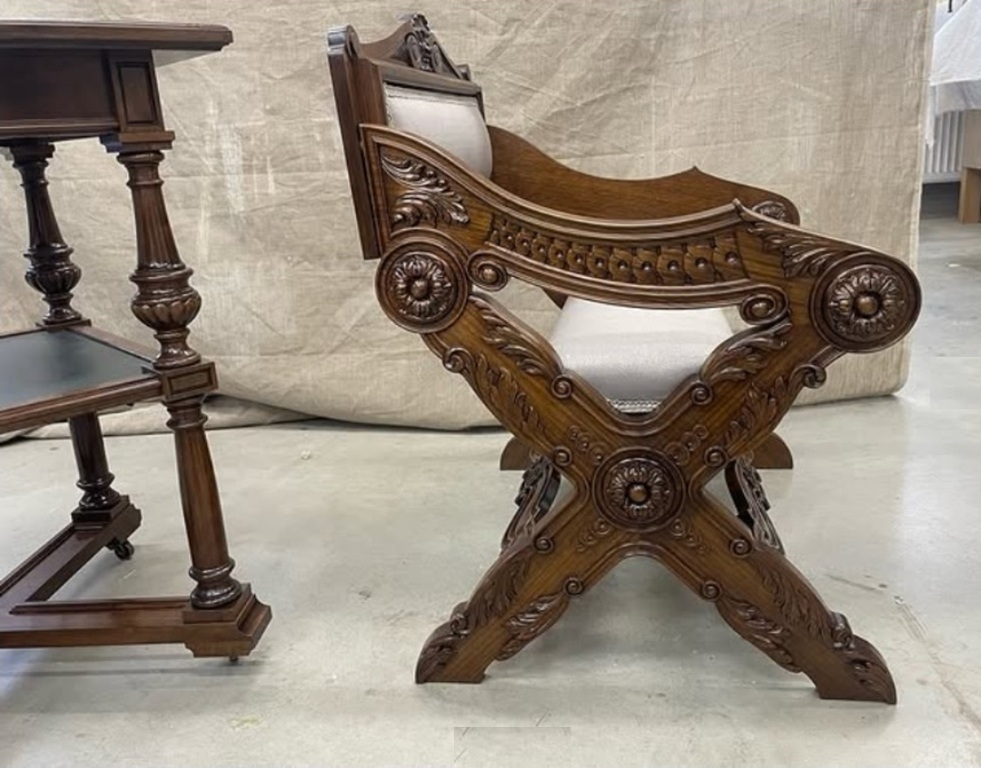
The Tsarskoye Selo State Museum continue to recreate items lost from the Alexander Palace during the Second World War . . . the latest additions are a table and chair, recreated for the Working Study of Emperor Nicholas II.

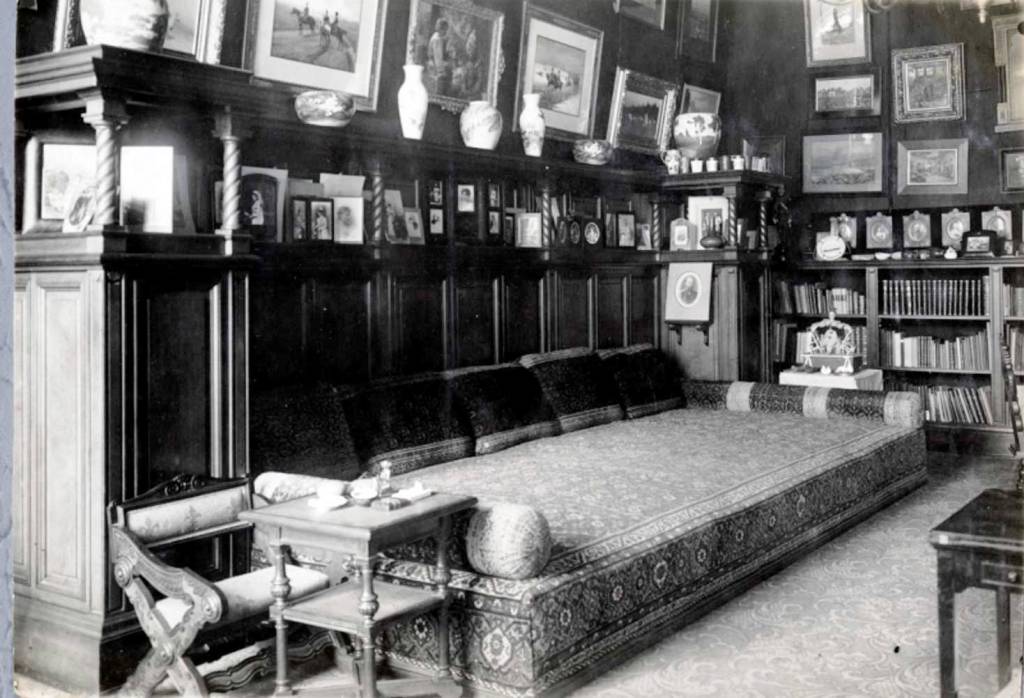
The two pieces of furniture were recreated from a vintage 1917 photograph by the Tsarskoye Selo Restoration Workshop. The items can be seen at the end of the Ottoman sofa in the Tsar’s Working Study – see photo at the bottom of this post.

Photo © Tsarskoye Selo Restoration Workshop

Recall that the Alexander Palace closed in the Autumn of 2015 for an extensive restoration, which saw the reconstruction of the Private Apartments of Emperor Nicholas II and Empress Alexandra Feodorovna, situated in the Eastern Wing of the palace. Work on the project took 6 years to complete. The Alexander Palace reopened it’s doors to visitors in August 2021.

Since that time, a number of pieces of furniture have been recreated for the interiors of the Imperial Apartments. For instance, in May 2023 a large stand for palm trees and other large plants were recreated for the Maple Drawing Room; as well as an L-shaped desk and ottoman (stool) for the Working Study of Emperor Nicholas II.

In June 2023, a beautiful large Persian Farahan carpet was recreated to upholster the Large Ottoman sofa, which stretched the length of one wall in the Working Study of Emperor Nicholas II.

PHOTO: The Working Study of Emperor Nicholas II in the Alexander Palace

The Working Study of Emperor Nicholas II was decorated in 1896-1897 in the English Style by Roman Meltzer (1860-1943) and furniture master Karl Grinberg. It was in this room that the Emperor read papers, including numerous correspondence, received foreign ministers and dignitaries and listened to reports from his ministers, who travelled from St. Petersburg.

© Paul Gilbert. 24 December 2024

Private Garden of the Alexander Palace to be restored

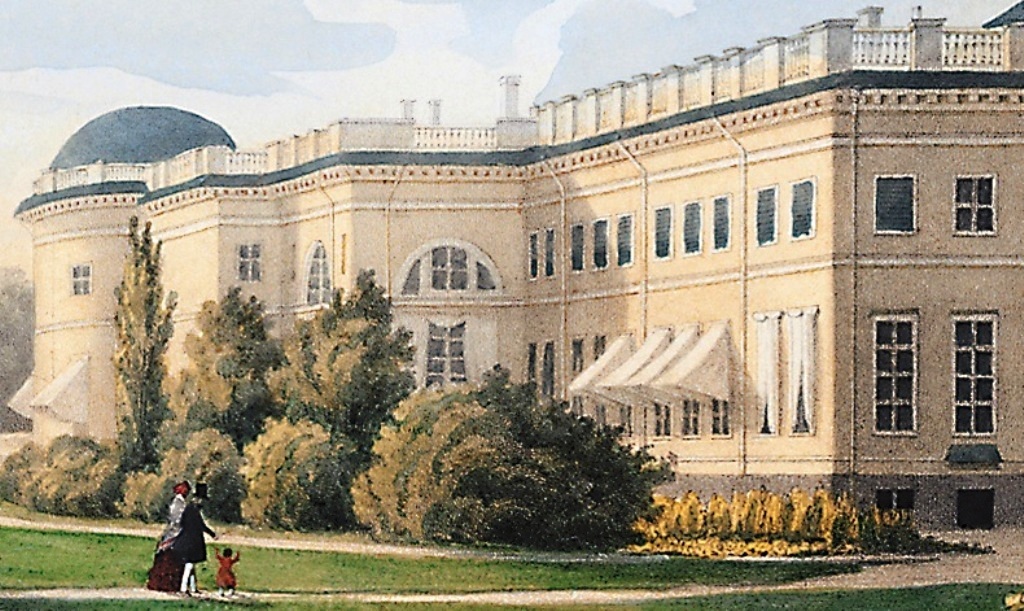
PHOTO: detail of the Alexander Palace and the Private Garden, from a lithograph (1845) by Johann Jacob Meyer. From the Collection of the Tsarskoye Selo State Museum

The restoration of the Alexander Palace at Tsarskoye Selo continues. Aside from the planned opening of the western wing of the palace next year, new projects include the restoration of the 18th century style Private Garden.

Experts who are now working on the recreation of the Private Garden fence, are reaching out to the public for help. The museum is appealing for photographs, preserved in home archives or im private collections of the fence and gates of the palace’s Private Garden, taken during the 1900s-1930s. The museum is especially interested in photos which show the lattice work of the fence.

The former Private Garden was situated on the corner of the eastern wing of the Alexander Palace. The Private Garden began with the creation of a small flower garden, which was fenced with a cast-iron fence with gates and wickets created according to a drawing by Giacomo Quarenghi (1744-1817), the famous Italian architect, who designed the Alexander Palace. In 1845-1846, the fence was replaced with a new one by Sebastian Cerfolio, whose original drawing of this lattice, among other documents on the manufacture of the fence, have been preserved in the archives of the Tsarskoye Selo State Museum.

In addition, several cast-iron elements of the lattice in the form of pine-cones have also been preserved in the archives. They are identical to those depicted in the drawing by Cerfolio. Photographs taken before the Great Patriotic War (1941-45) provide the most complete picture of what the fence looked like, and will allow experts to determine whether the fence underwent any changes since the middle of the 19th century.

If you have any photographs of the iron grille fence and gate of the Private Garden, taken during the 1900s-1930s, please send them by e-mail to the Tsarskoye Selo State Museum at the following email address: referent@tzar.ru

***

PHOTO: late 19th century postcard of the Alexander Palace
and the Empress’s balcony

During the reign of Emperor Nicholas II, the eastern wing of the Alexander Palace housed the Private Apartments of the Imperial Family. In 1895, the Emperor had the famous L-shaped iron grille balcony installed here for his wife Empress Alexandra Feodorovna, which was accessed via the Maple Drawing Room.

When completed, it wrapped around the corner of the palace, the same corner which is depicted in the colour lithograph above. Sadly, the balcony did not survive to the present day, it was was dismantled between 1947-49, by order of the palace’s new Soviet “caretakers”.

Despite the extensive restoration work on recreating the private apartments of Nicholas II and Alexandra Feodorovna, as they looked in the late 19th to early 20th centuries, the museum have no plans to recreate the Empress’s balcony, the reason being is that they want to preserve the palace’s original 18th century Neoclassical look – which many hail as “Quarenghi’s masterpiece”.

© Paul Gilbert. 9 September 2024

Artist concept of Imperial Railway Pavilion restoration project at Tsarskoye Selo

CLICK on the above image to watch the VIDEO
Duration: 1 minute

The Tsarskoye Selo Railway Station Charitable Foundation has released a stunning video which presents the Foundation’s concept for the restoration of the Imperial Railway Pavilion at Tsarskoye Selo [now part of the town of Pushkin], which began in the summer of 2023.

According to the concept being developed, it is planned to restore the Pavilion building with the restoration of its historical appearance based on the surviving photographs, documents and research by specialists. During the restoration of the facades, it is planned to restore the plaster layer and decorative elements. Inside the Pavilion, it is planned to restore wall and ceiling paintings to their original colours, floor coverings and stucco, and restore lost stoves.

After the completion of the restoration, a museum space with access to the ceremonial rooms will be developed inside the station building. The reconstruction of the Tsar’s Station involves the construction of the lost metal frame of the landing stage (covered railway platform) – as seen in the artist’s drawings (below) and video.

Inside the openwork riveted trusses, it is planned to construct a building in the form of a railway passenger car. Work is also planned to develope the area surrounding the station building.

The former Imperial Railway Pavilion is located a short distance from the Alexander Palace, the Feodorovsky Sovereign Cathedral and the Feodorovsky Gorodok.

Tsarskoye Selo Railway Station Charitable Foundation © 2024

FURTHER READING:

Imperial Railway Pavilion in Tsarskoye Selo is being restored – published on 18th August 2023 – includes 13 colour photos

Update on the restoration of the Imperial Railway Pavilion at Tsarskoye Selo – published on 16th April 2024

The sad state of the Imperial Railway Pavilion in Tsarskoye Selo includes 20 PHOTOS! – originally published on 29th December 2019

Imperial Railway Pavilions During the Reign of Nicholas II – originally published on 23rd October 2019

© Paul Gilbert. 6 August 2024

***

COMING SOON!
Publication date to be announced

My book on the Imperial Train was scheduled to be published last year, however, I delayed it, and for good reason. Given that the Imperial Railway Station at Tsarskoye Selo was the main terminus for the Imperial Train, it only stood to reason, that I should devote a chapter to this historic building.

My forthcoming book is the first English language title to explore the history of the Tsar’s luxurious mode of transport on rails. It will include detailed descriptions – including vintage photos and floorplans – of the train’s interiors. My book also tells about the fate of the Imperial Train, the Imperial Railway Pavilions constructed solely for the use of the Imperial Train in Tsarskoye Selo, St. Petersburg and Moscow, and much more.

‘The Imperial Train of Emperor Nicholas II’ will be published in paperback edition, 150 pages, and richly illustrated throughout. It will be available on Amazon shortly after the completion of the restoration of the Imperial Railway Pavilion at Tsarskoye Selo has been completed – PG

Tsarskoye Selo Museum creates scale model of the Alexander Palace

Photo © Tsarskoye Selo State Museum

The Tsarskoye Selo State Museum has created a large 3-dimensional scale model of the Alexander Palace. Visitors can see the model, which is on display in the palace’s vestibule.

The 1:140 model of Giacomo Quarenghi’s 18th-century architectural masterpiece was painstakingly created by specialists of the Studio 22 Model Workshop in St. Petersburg. Each exterior detail has been recreated in miniature.

The model is reflects the favourite residence of Emperor Nicholas II and his family, with it’s elegant Neo-Classical Style yellow edifice and green roof. The majestic central colonnade, the protruding wings, the elegant sculpting of the columns. The model is flanked by copies of two sculptures flanking the palace colonnade, A Youth Playing Svaika by Alexander Loganovsky and A Youth Playing Knucklebones by Nikolay Pimenov. Everything is copied in detail and carefully conveyed in miniature.

Photo © Tsarskoye Selo State Museum
Photo © Tsarskoye Selo State Museum
Photo © Tsarskoye Selo State Museum
Photo © Tsarskoye Selo State Museum
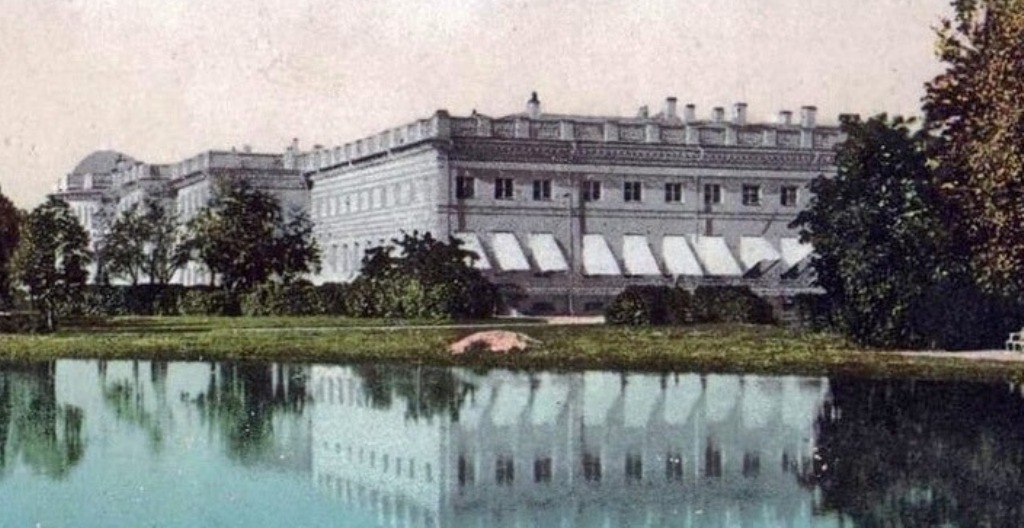
The above photo depicts the Eastern wing of the Alexander Palace, where the private apartments of the Imperial Family are located. The rooms of Emperor Nicholas II and Empress Alexandra Feodorovna are located on the main or first floor, while the rooms of their five children were located on the second floor.

© Tsarskoye Selo State Museum / Paul Gilbert. 24 May 2024