Captured on Film by U.S. Cameramen – The Romanov Murder Scene (1918)

NOTE: All of the articles pertaining to Nicholas II and his family which were originally published in my Royal Russia News blog, have been moved to this Nicholas II blog. This article was originally posted on the First World War in Film web site by Ron van Dooperen. It was reposted on 12 September 2018 in my Royal Russia News blog – PG

In December 1918, a photographic team of the U.S. Signal Corps led by Captain Howard Kingsmore arrived in Yekaterinburg, Russia, where they filmed inside the house where Tsar Nicholas II and his family was brutally murdered. Against all odds, we recently found Kingsmore’s personal story on this photographic assignment, as well as part of these historic films.

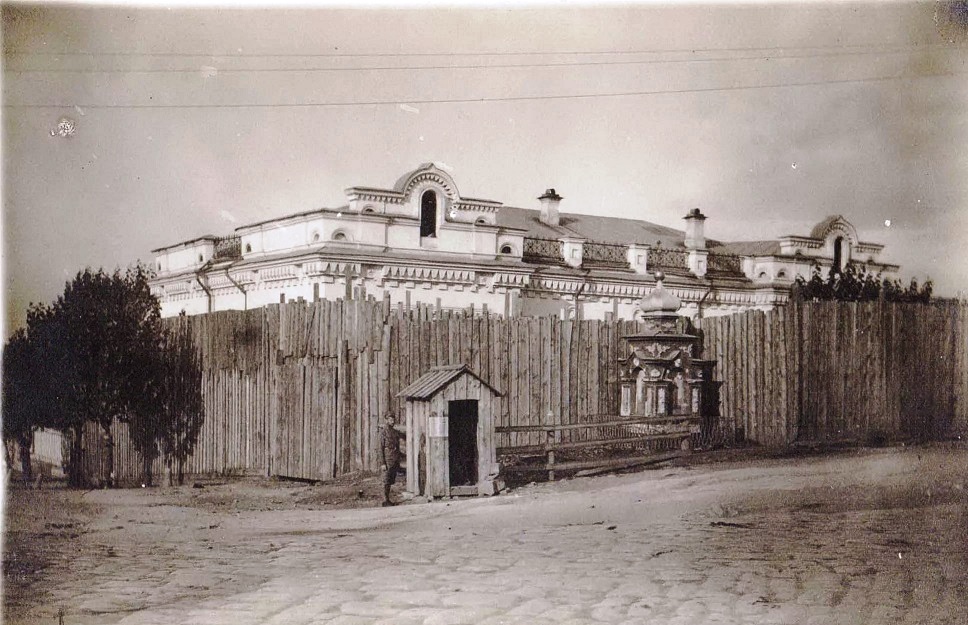
The execution of the last Russian Tsar and his family hardly needs an introduction. After the Bolsheviks had taken over power the Romanov family was moved to a so-called ‘House of Special Purpose’ in Yekaterinburg. The Imperial family was kept in strict isolation within the walls of a sinister heavily guarded building that was surrounded by a palisade. The Bolsheviks initially wanted to put the Tsar on trial, but in the summer of 1918 anti-Communist forces were at the gates of Yekaterinburg, and the Reds feared their captives would fall into enemy hands. As a result, death to the Romanovs was declared. Tsar Nicholas II, his wife Tsarina Alexandra and their five children Olga, Tatiana, Maria, Anastasia, and Alexei were shot, bayoneted and clubbed to death on the night of 16-17 July 1918. Their bodies were disposed of in a most gruesome manner.

The Cameramen

Howard P. Kingsmore was the photographic officer of a U.S. Signal Corps camera team that recorded the operations of the American Expeditionary Army in Siberia. Born in 1886, Kingsmore started his photographic work for the Philadelphia Inquirer, covering the burial of President McKinley, the coal strikes of 1901-1902 and the 50th anniversary of the Civil War battle of Gettysburg. Around 1907 Kingsmore became chief photographer for the Philadelphia Evening Ledger. For this newspaper he covered the civil war in Mexico, as well as the Punitive Expedition by General Pershing into that country in 1916. When the United States entered World War I he applied for a commission in the U.S. Signal Corps as a photographic officer. He was commissioned as a Lieutenant in September 1917, appears to have made mostly training pictures while he was in America and in Augustus 1918 was promoted to Captain, when a photographic section was set up for the Siberian Expedition. After the First World War Kingsmore became a cameraman for Fox News.
150a

The Ipatiev House in Ekaterinburg. 1918

Interview with Kevin Brownlow

Judging from the production file of the films that were made by Kingsmore and his camera team, they filmed across Siberia between November 1918 and February 1919, covering various operations by the Expeditionary Force that was trying to push the Red Army out of Russia. We have described this Signal Corps footage from Russia in more detail in a previous weblog. Five men were selected for this photographic team, including two movie camera operators. One of Kingsmore’s men, Philip Tannura, was interviewed by Kevin Brownlow for his book The War, the West and the Wilderness. Tannura was among Kingsmore’s cinematographers and in the interview with Brownlow Tannura mentioned how he accompanied Kingsmore while they visited the place where the Tsar and his family were executed. “We couldn’t find out whether they had actually been killed or not”, Tannura said. “We photographed all the rooms.”

Kingsmore said he boarded a Red Cross freight train in Vladivostok in November 1918. The trip across Siberia took about nine weeks. The accommodation on the train was of a most primitive nature. The American cameramen traveled in box cars that were originally built for cattle. Arriving in Yekaterinburg, the cameramen found the city controlled by Czech forces. These had taken Yekaterinburg shortly after the Tsar and his family were murdered. Kingsmore was told the Romanovs were subjected to many indignities by the Communist soldiers who guarded them. It should be noted here that at the moment when Kingsmore and Tannura arrived in Yekaterinburg an official investigation was still being carried out on the mysterious disappearance of the Imperial family. As far as the Kremlin was concerned, they had simply vanished into thin air and the Communists denied any allegation they had killed the Romanovs.

Photographic Evidence of the Romanov Execution

Kingsmore’s and Tannura’s pictures indicate this was a fabricated lie. One of their still photographs shows the cellar where the Romanovs were executed. Bullets were dug out of the wall by the Bolsheviks to destroy evidence of the crime, but the holes still remained and were clearly visible. Their pictures also demonstrate how the Tsar’s children had to sleep on the floor, as well as the search by the investigating committee for further proofs of the execution. Kingsmore also appears to have talked with eye witnesses. One told him the Romanovs were on their knees begging for mercy while they were executed in the basement of the house.

Part of the footage that was shot at Yekaterinburg has been retrieved and identified by the authors in the film collection of the National Archives in Washington, D.C. These scenes were probably taken by Tannura and show an exterior of the Czech military headquarters, the house the Romanovs lived in, as well as shots of the Czarina’s room and the room that was occupied by the Tsar’s daughters. We edited these historic scenes into a short clip that has been posted on our YouTube channel.

Click HERE to read the newspaper article In the House Where Romanoffs Were Put to Death, published in the Grand Forks Herald on 6 June 1919

© Ron van Dopperen. 3 December 2019
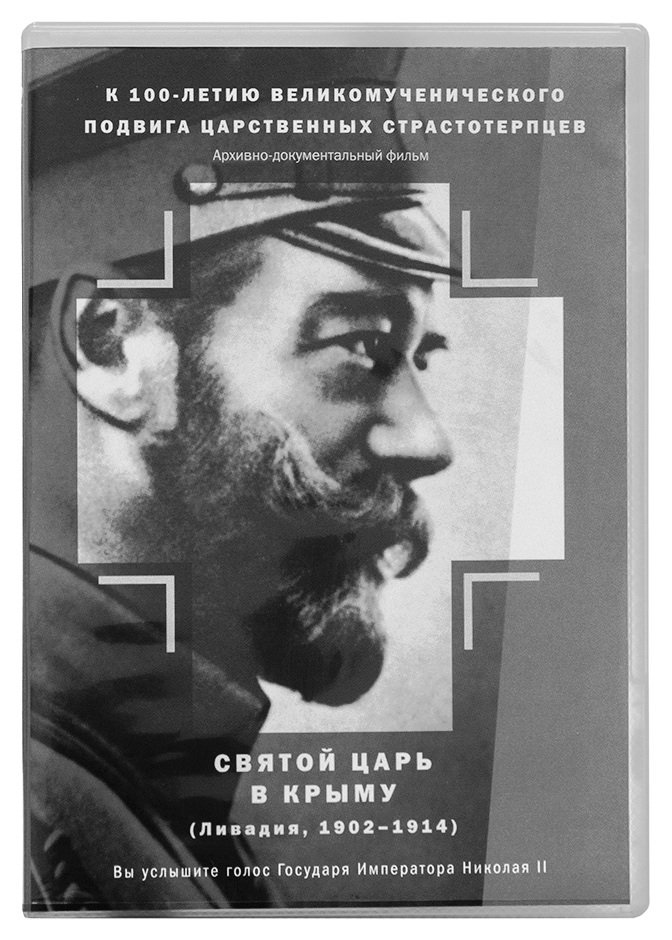
‘The Holy Tsar in Crimea’ – vintage newsreels from Livadia, 1902-1914

117

In 2018, a DVD entitled ‘Святой Царь в Крыму (Ливадия, 1902-1914)’ / Tr. ‘The Holy Tsar in Russia. Livadia, 1902-1914)’ was issued in Russia. The release of the DVD was timed to the 100th anniversary of the death of Emperor Nicholas II, on 17th July 1918.

The 36-minute DVD is a compilation of 24 newsreels, all filmed at Livadia, the Imperial estate and residence of the last Tsar and his family. All 24 newsreels are accompanied by pre-revolutionary marches and waltzes.

We see vintage newsreel footage of Emperor Nicholas II, Empress Alexandra Feodorovna, and their five children, set against the backdrop of the old wooden palaces in Livadia, and after 1911, set against the backdrop of Nikolai Krasnov’s elegant white Crimea granite palace Neo-Renaissance-style, which has survived to this day.

The vintage newsreels feature a variety of events at Livadia, including the celebration of the birthday of Empress Alexandra Fedorovna and Holy Easter, White Flower Day, parades and receptions. They are surrounded by officers, Court officials, and members of their extended family, including the Grand Dukes and Grand Duchesses, Count Frederiks, Anna Vyrubova, among many others.

The last time the family of Nicholas II visited in Livadia, was in the spring of 1914. They were due to return in the autumn, however, the outbreak of the First World War on 1st August put an end to this visit. 

‘The Holy Tsar in Russia. Livadia, 1902-1914)’ – Part I (duration 18 minutes

‘The Holy Tsar in Russia. Livadia, 1902-1914)’ – Part II (duration 18 minutes

© Paul Gilbert. 27 October 2019

Consecration of monument to Alexander II in the presence of Emperor Nicholas II in Kiev 1911

VIDEO: The consecration of monument to Alexander II in the presence of Emperor Nicholas II, Kiev 30th August 1911. Duration: 11 minutes, 17 seconds. Music.

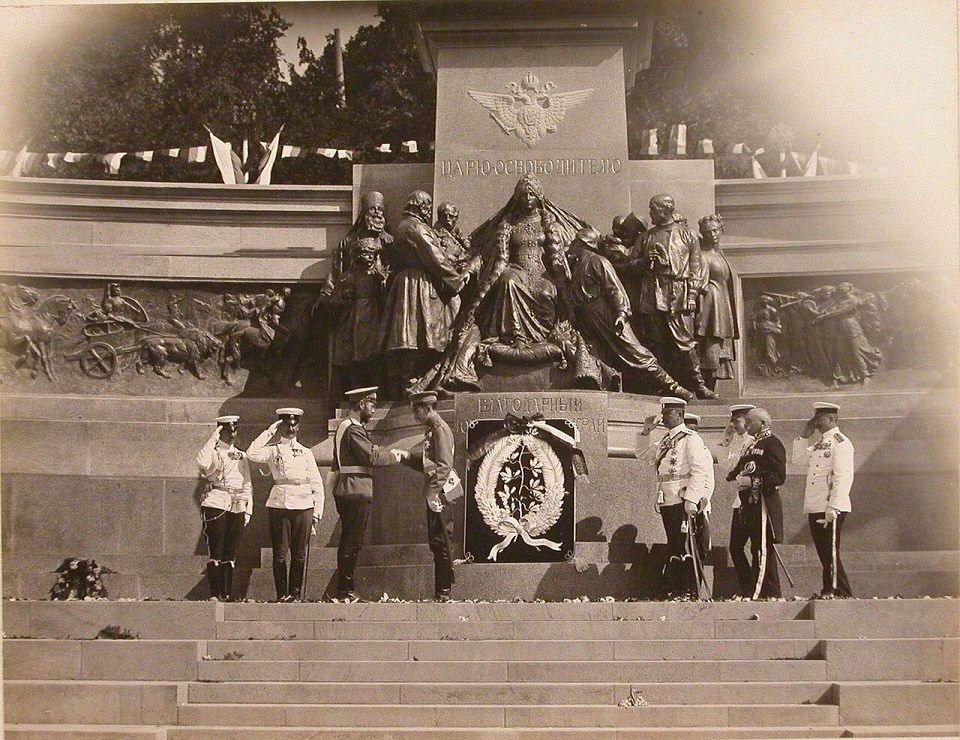
In 1911, a monument to Emperor Alexander II by the sculptor Ettore Ximenes and architect Hippolyte Nikolaev, was established in Kiev. The monument was established in connection with the 50th anniversary of the abolition of serfdom and was the largest monument to Alexander II in the Russian Empire.

097a

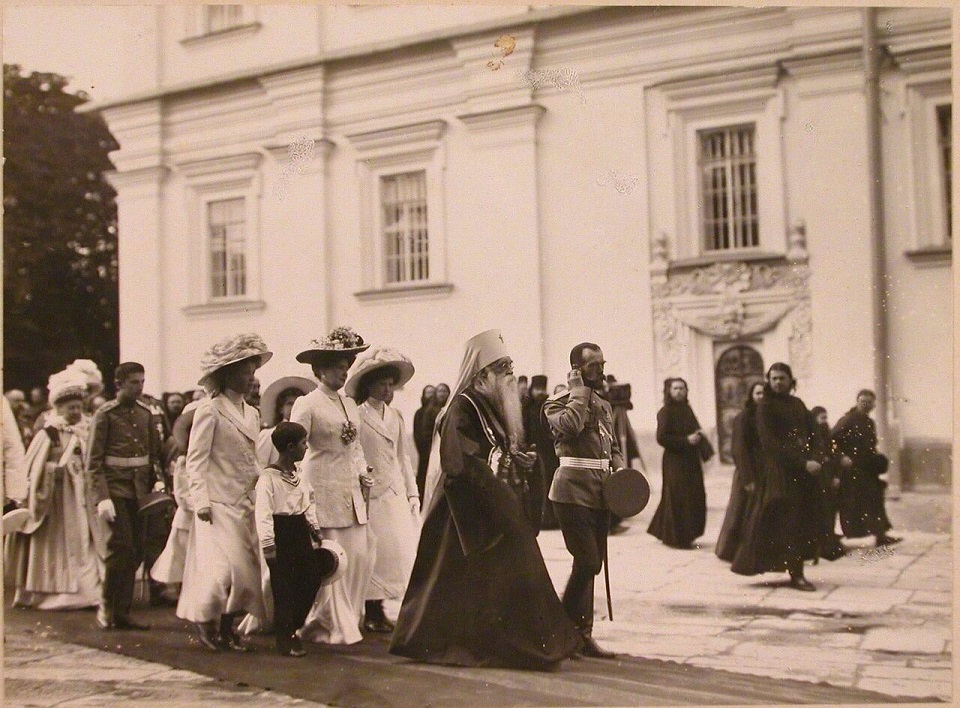
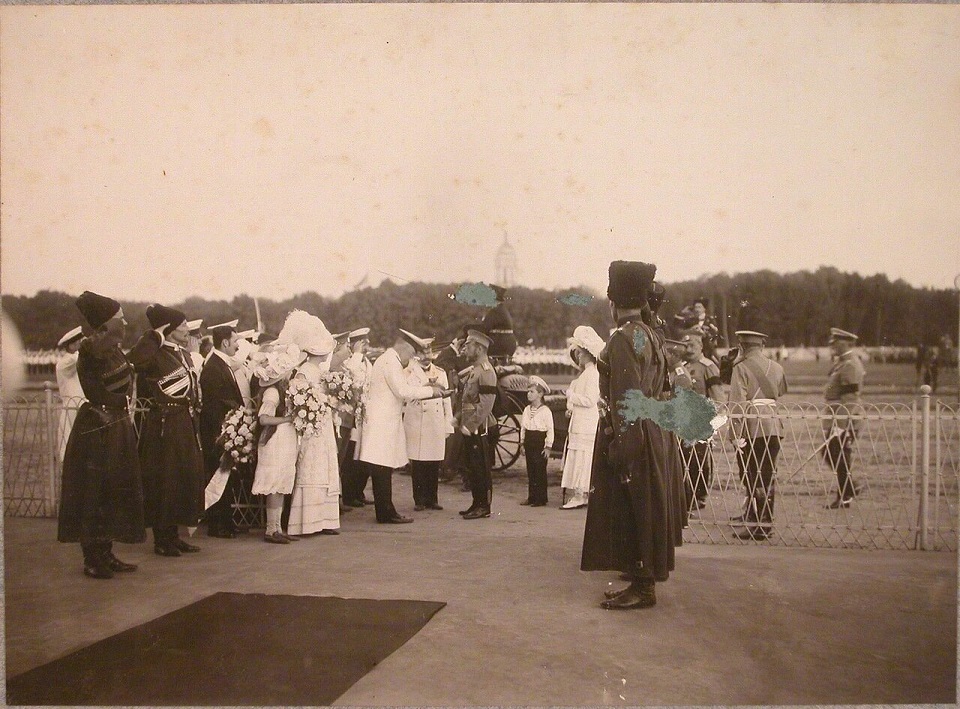
Photo: Emperor Nicholas II, Metropolitan of Kiev, members of the imperial family including Empress Alexandra Feodorovna and her five children, and Crown Prince Boris of Bulgaria

097b

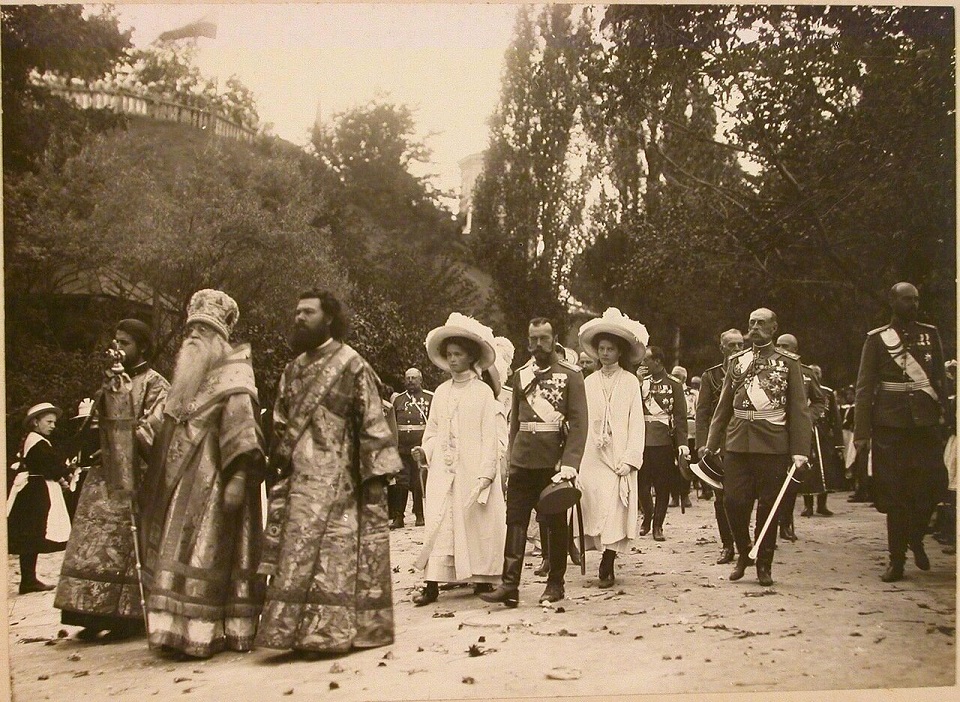
Photo: Members of the Clergy, Emperor Nicholas II, Grand Duchesses Olga (left) and Tatiana (right), Minister of the Imperial Court Count V. B. Frederiks (second right), and Grand Duke Sergei Mikhailovich (far right)

097c

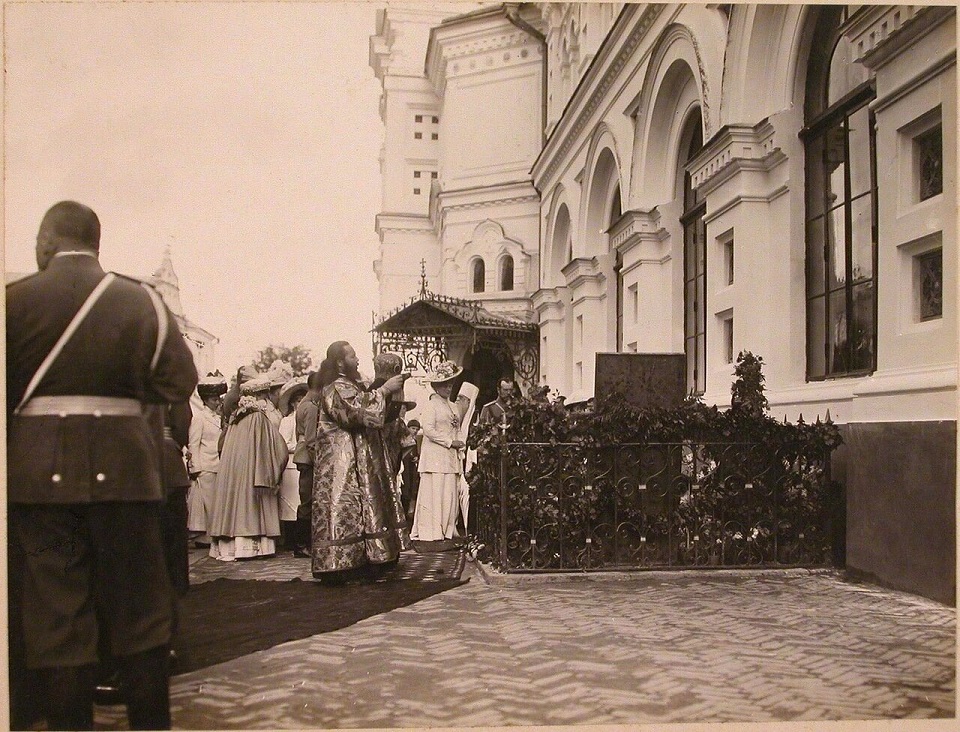
Photo: Emperor Nicholas II, Empress Alexandra Feodorovna, Grand Duchesses, members of the Clergy at the tomb of Iskra and Kochubey, in the Kiev Pechersk Lavra

Description

The monument to Alexander II was located in the central part of Kiev, on Tsarskaya Square at the entrance to the Merchants Garden.

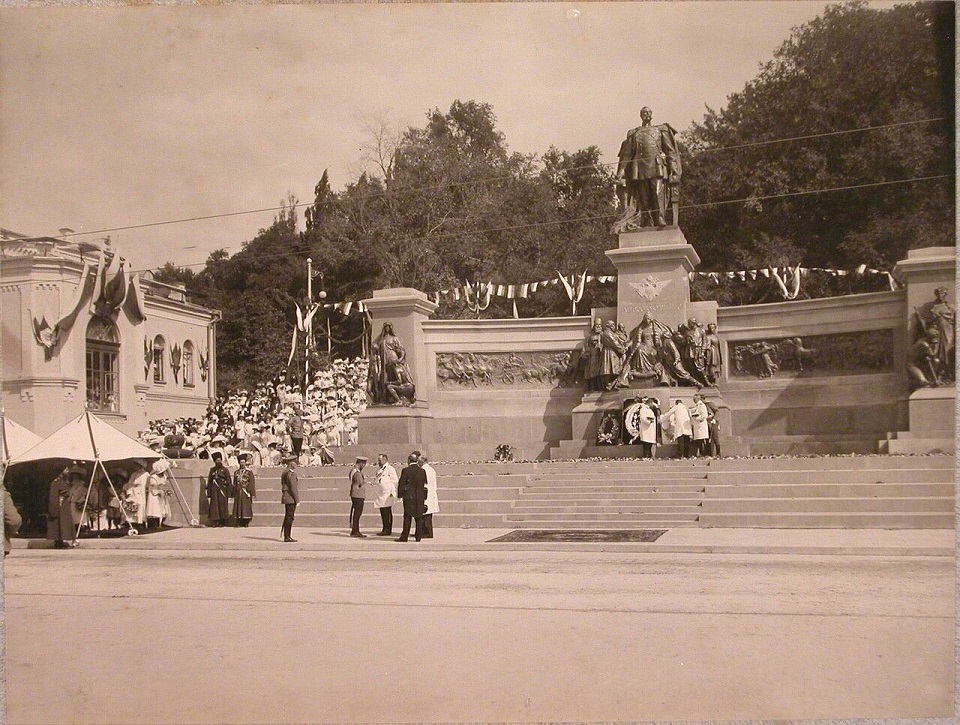
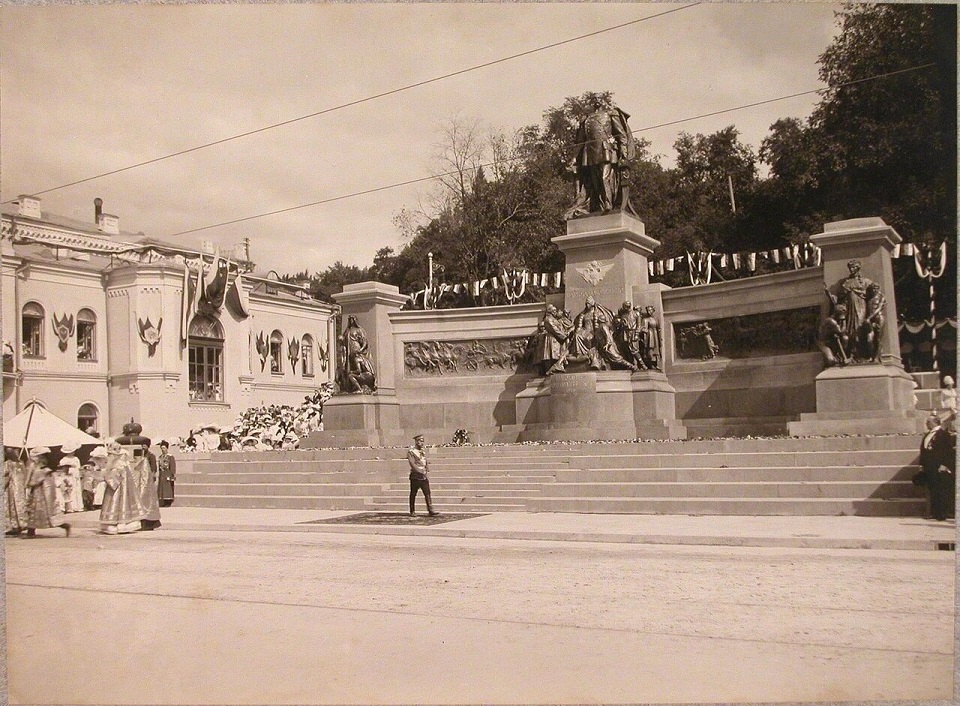
The monument consisted of three pedestals. On the central tower stood a bronze statue of the emperor. He was depicted in full height in a uniform and a mantle thrown over his shoulders, in his right hand he held the Manifesto on the abolition of serfdom, his other hand resting on the arm of his throne. Around the monument on the lower pedestal was a bas-relief depicting peasants – representatives of the peoples of the empire in national costumes, among which stood out the figure of a woman in traditional Russian costume symbolizing Russia.

The central pedestal was decorated with the emblem of the Russian Empire – a two-headed eagle – and the inscription: “The South-Western Territory is grateful to the Tsar-Liberator. 1911″. In front of the flank pedestals, sculptural compositions of Mercy and Justice were installed. All three pedestals were united by a wide pediment with bas-reliefs depicting individual moments of the emperor’s life and work. The pedestal was made of pink granite, the steps of grey granite. Imperial bronze crowns were installed on the side ledges of the steps

097d

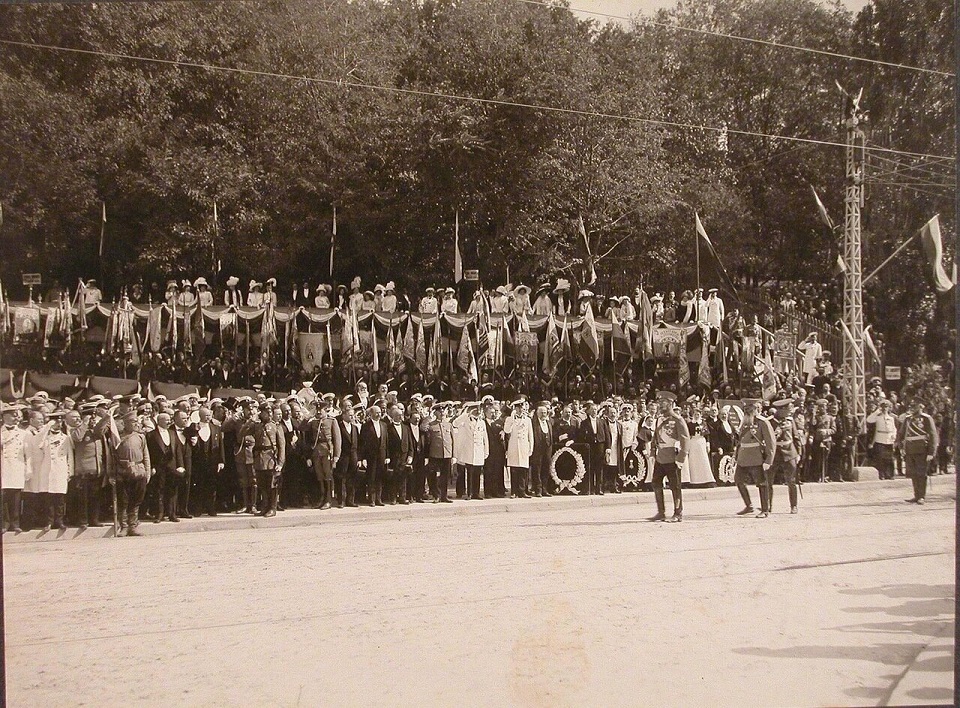
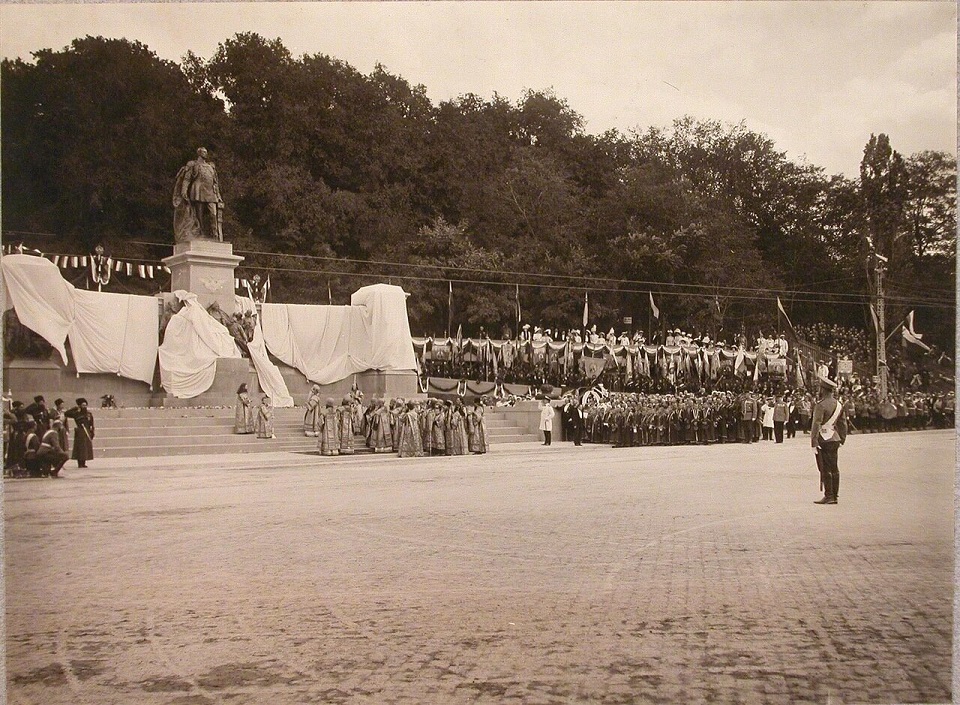
Photo: Participants at the opening ceremony of the monument before the parade

097e

Photo: The mayor of Kiev brings the traditional bread and salt to Emperor Nicholas II

097f

Photo: A moleben is performed at the monument to Emperor Alexander II

Consecration

A visit to Kiev by Emperor Nicholas II with his family and members of the Imperial Court was scheduled for August 1911. The delegations prepared a special program of events during their stay in Kiev, including solemn prayers, theatre visits, troop reviews, a walk along the Dnieper to Chernigov among other events. The main event of the program and the main purpose of the tsar’s visit to Kiev was the opening of the monument to Alexander II on Tsarskaya Square.

The construction of the monument to Alexander II was completed. Triumphal arches were built. The streets and the facades of buildings were richly decorated with flags, wreaths and buntings. Troops of the Russian Imperial Army arrived in the city to participate in manoeuvres.

Nicholas II arrived to open the monument to his grandfather in late August 1911. The ceremony itself took place on 12th September (O.S. 30th August) 1911), the day of memory of the Holy Prince Alexander Nevsky, in whose honour his emperor grandfather Alexander Nikolaevich was named. The monument was opened in the presence of Emperor Nicholas II and members of his family, Prime Minister Pyotr Stolypin , Chief Prosecutor of the Holy Synod Vladimir Sabler , chief of the gendarmes Kurlov, Minister of Education Kasso, son and heir of Tsar Ferdinand I of Bulgaria, government and Court officials, representatives of the Austro-Swedish and Swiss consulates. During the festivities, citizens received postcards with photographic reproductions of the monument.

Sadly, the celebration on the occasion of the unveiling of the monument in Kiev was overshadowed by the assassination of Prime Minister Peter Stolypin, whom the terrorist Social Revolutionary Dmitry Bogrov shot dead on 14 (O.S 1 September 1911.

Work on the improvement of the monument continued after its opening. In particular, in July 1914, elegant bronze grates were installed, decorated with state emblems, and a parterre lawn was built around the monument. The monument was illuminated by four lamps.

097g

Photo: Emperor Nicholas II and members of the City Duma at the monument to Emperor Alexander II

097h

Photo: Priests and Emperor Nicholas II at the monument to Emperor Alexander II

097k

Photo: Emperor Nicholas II greets Crown Prince Boris Of Bulgaria at the monument to Emperor Alexander II

Destruction by the Soviets

The monument as part of the city’s history was a short one, ending nine years after its consecration. In April 1919, the Bolshevik city newspaper raised the question of liquidating the monument to Alexander II by 14 (O.S. 1 May), but the plan failed, and the monument was covered with a large black drape. The tsar’s figure was removed from the pedestal in November 1920, while all the metal parts were dismantled and sent to the Arsenal smelting plant.

The preserved pedestal of the monument has long been used by the Bolsheviks as a propaganda tool. In particular, in place of the tsar, an eight-meter figure of a Red Army soldier made of plywood in a Budenovka coat, overcoat and a rifle in his hands was installed. This work was called the “Monument to the Red Army – Defender of the Masses.” There were plans to replace the Monument to the Red Army, and replace it with a monument to the October Revolution on this site, however, the project never came to fruition.

In 1932, the city authorities decided to dismantle the pedestal, which had previously been designed as a decoration for the entrance of the Proletarian Garden. At the end of the 1930s, a cascade of fountains was built here and a statue of Joseph Stalin was installed. After the liberation of Kiev from Nazi troops, the statue of Joseph Stalin was restored; while the square itself was renamed in honour of Stalin (on the eve of his 65th birthday in December 1944). But this lasted only until the decisions of the XX Congress of the CPSU in 1956. Since that time, no monuments stood in the park. Now where the monument to Alexander II stood, the entrance to Khreshchaty Park is located, there are pedestrian sidewalks, a small amount of green space, an entrance to the underpass, advertising signs.

© Paul Gilbert. 29 August 2019

The Conspiracy Against Nicholas II, an interview with Paul Gilbert

CLICK ON THE IMAGE ABOVE TO WATCH MY INTERVIEW

One year ago today – 7th August 2018 – my interview The Conspiracy Against Nicholas II, aired on YouTube, which to date has been viewed by nearly 20,000 people.

My seven-minute interview was one of a special six-part video series commemorating the Romanovs Martyrdom Centennial in 2018, prepared by the Monastery of St John the Forerunner Mesa Potamos in Cyprus.

During my interview I speak about the Tsar’s abdication in 1917, and the only two generals who remained faithful to their Sovereign. I go on to discuss the main plots which aimed to overthrow Nicholas II from his throne, and the betrayal by his ministers, generals, and even members of his own family.

Among the members of the Imperial family who were plotting against Nicholas II, were the Grand Dukes Nicholas Nicholaevich (1856-1929) and Nicholas Mikhailovich (1859-1919), and the Vladimirovich branch of the family, led by the power hungry Grand Duchess Maria Pavlovna (1854-1920), the widow of Grand Duke Vladimir Alexandrovich.

I also talk about some of the myths and lies regarding Nicholas’ II, such as his alleged weakness as a ruler, and the popular myth that his death at the hands of the Bolsheviks was met by indifference by the Russian people.

The video features beautiful colourized pictures of the Romanovs and other historical figures, by acclaimed Russian colourist Olga Shirnina, from the forthcoming book The Romanov Royal Martyrs, due to be published in September 2019.

© Paul Gilbert. 7 August 2019

Multimedia Exhibition Dedicated to Nicholas II Opens in Novosibirsk

The inauguration of the multimedia exhibition Living Pictures: Nicholas II of Novo-Nikolaevsk to Novosibirsk, was held today – 16th April – in the Officers’ Club in the Siberian city of Novosibirsk.

Novo-Nikolaevsk was the only city in Imperial Russia, Soviet Russia, and the Soviet Union that for nearly 30 years bore the name of the last Russian emperor Nicholas II, before it was renamed Novosibirsk in 1926.

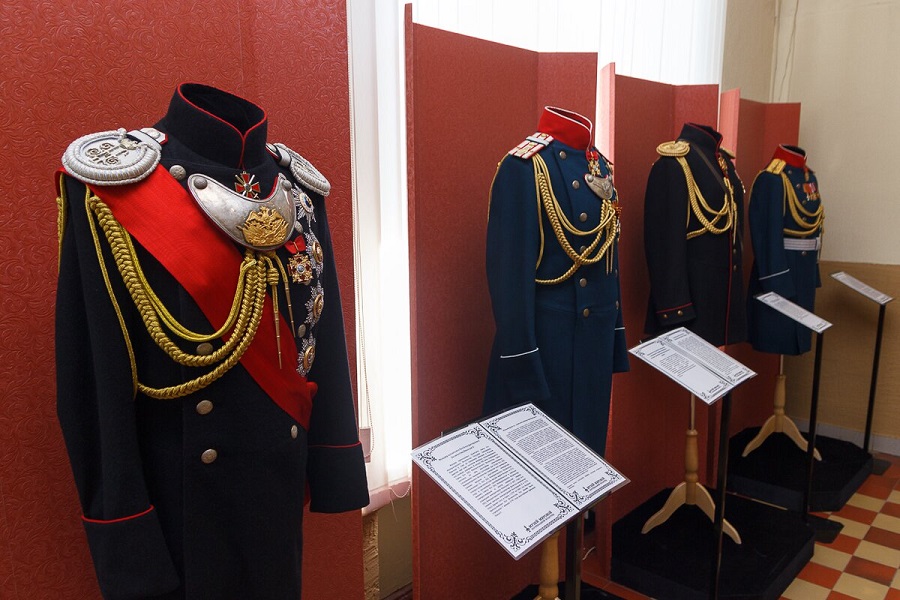
056b

PHOTO: Uniforms of Nicholas II on display in Novosibirsk

Earlier this week, the multimedia exhibition was previewed in a unique marketing campaign on the streets of Novosibirsk – see video above.

The first part of the exhibit focuses on the fate of the Imperial Family, while the second part focuses on the historic connection that the Romanov dynasty and Tsar Nicholas II has with pre-Revolutionary Novo-Nikolaevsk and modern-day Novosibirsk.

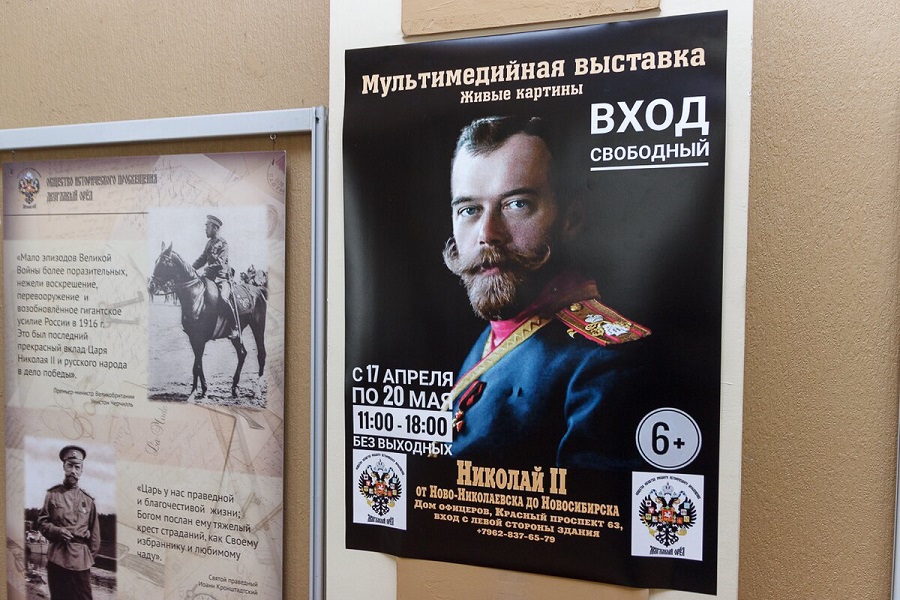
056

PHOTO: Poster for the multimedia exhibition in Novosibirsk

The exhibition was organized by the Double-Headed Eagle Society, and runs from 17th April to 20th May 2019, in the Officers’ Club, Novosibirsk. Admission is Free.

The exhibit is timely, as it coincides with the first English translation of Novo-Nikolayevsk: Born of the People’s Ambition and the Tsar’s Beneficence, an article about Emperor Nicholas II and the City of Novosibirsk: Parallels Between Past and Present by the Russian historian E. Tsybizov, to be published in the Sovereign No. 10 Spring 2019 issue, available in May 2019.

© Paul Gilbert. 16 April 2019

Romania Hosts Nicholas II Exhibition

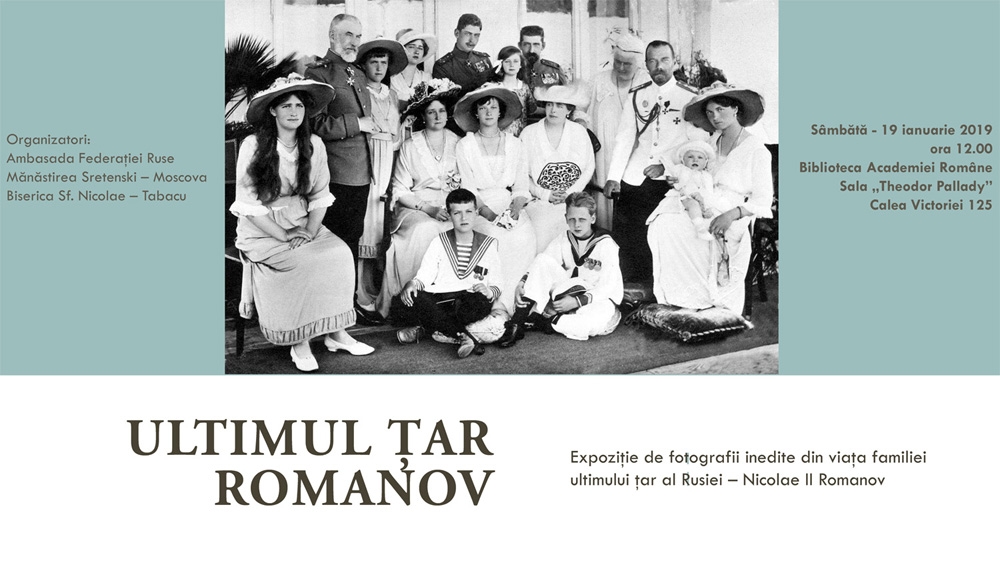
044a

Poster promoting the Bucharest exhibit held in January 2019

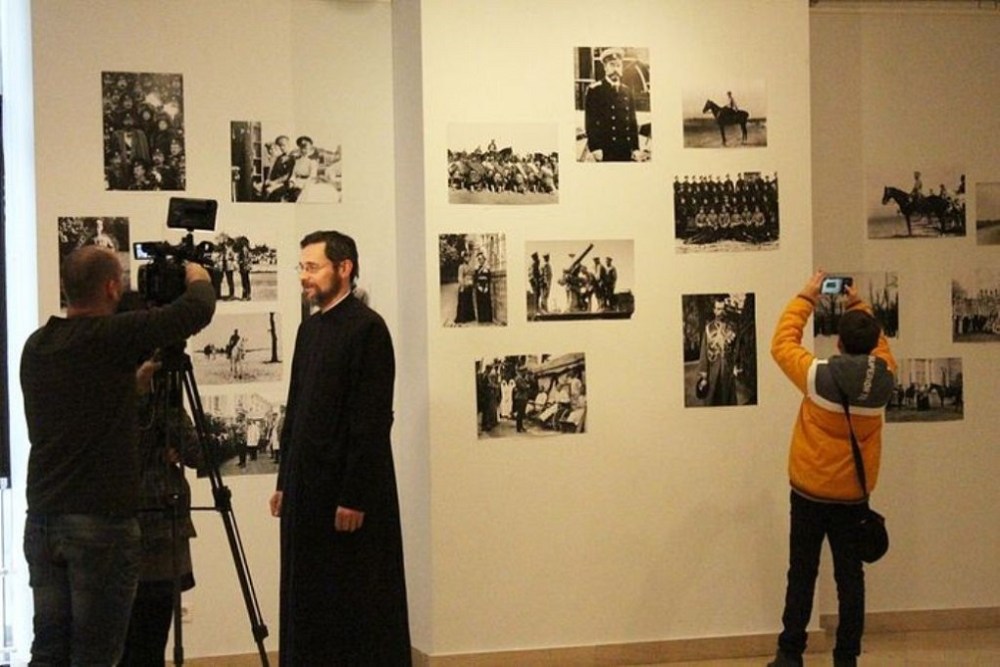
On 14th March 2019, a photo exhibition dedicated to Tsar Nicholas II and his family opened in the Museum of Icons in the Romanian city of Alba Iulia. The exhibition The Last Emperor – the Most Beautiful Memories of the Romanovs is timed to the centenary of the martyrdom of the Tsar’s family in 2018. 

Situated in the west-central part of Romania, Alba Iulia is best known to monarchists for the Orthodox Unification Cathedral (built between 1921-1923). It was here that the first monarchs of the Unified Romania, King Ferdinand I (1865-1927) and Queen Marie (1875-1938) were crowned on 15 October 1922.  In commemoration of the event, busts of the king and queen were placed on the grounds in 2008.

044b

View of the Alba Iulia exhibit

The exposition presents more than 100 photographs of the Royal Passion-Bearers, which reflect their lives, family relationships, charitable activities, and the diplomatic activities of Nicholas II

The exhibition was prepared on the initiative of the Romanian Association “Tradition” with the support of the Moscow Sretensky Monastery.

A similar photo-exhibition opened on 19th January 2019,  in the library of the Romanian Academy of Sciences in Bucharest – see video above.

The event was organized by the Embassy of the Russian Federation in Bucharest, the Sretensky Monastery (Moscow) and the parish of the Church of St. Nicholas Tabaka. 

The exhibition was opened by Ambassador Extraordinary and Plenipotentiary of the Russian Federation to Romania V.I. Kuzmin. “The historical ties between the Russian and Romanian dynasties share very interesting relations between the two countries,” the Russian ambassador noted. “The culmination of these ties was the visit of the Imperial family to Constanza on the eve of the First World War. It was during this visit that the Russian and Romanian royal families discussed the possible engagement between Grand Duchess Olga Nikolaevna (1895-1918) and Crown Prince Carol (1893-1953), who later became King Carol II.” The ambassador also noted that Nicholas II was a martyr who kept the faith, despite the sufferings he was subjected to by his captors.

044c

View of the Bucharest exhibit

Hieromonk Ignatius (Shestakov) spoke about the history of the exhibition and its spiritual and moral importance. In this exhibition, which has already been held in more than a hundred locations in both Russia and abroad, it focuses on three main topics – family life, service to the Fatherland and mercy. The family of Nicholas II, according to the priest, is an example of a true Christian family, which is very important today, when the whole world is experiencing a crisis of family values.

© Paul Gilbert. 24 March 2019

Repin’s ‘Ceremonial Meeting Of The State Council 1901’ to be Displayed in Moscow

The staff of the State Russian Museum in St. Petersburg, have began packing up 78 paintings by Ilya Repin (1844-1930) to participate in an upcoming Ilya Repin exhibition at the Tretyakov Gallery in Moscow.

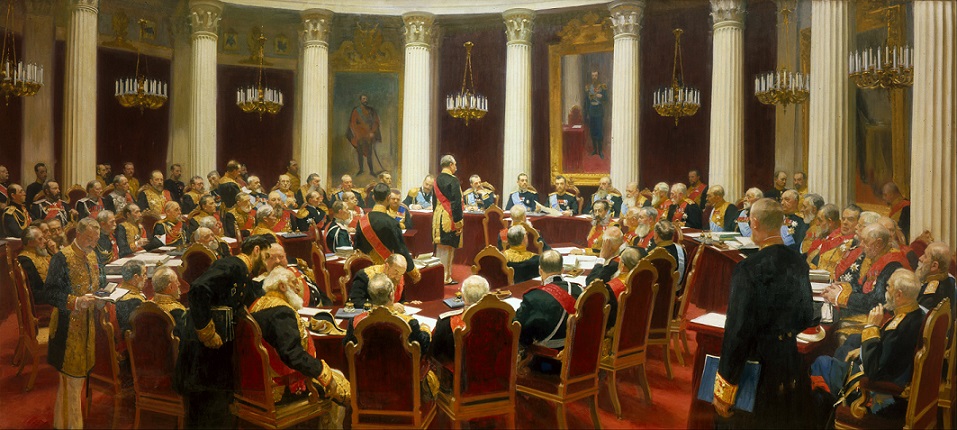
The most prominent of the paintings in the exhibition is one of the most significant and largest paintings from the collection of the State Russian Museum: the large-format canvas “Ceremonial Meeting Of The State Council 7 May 1901 …,” measuring 4 by 8 meters.

“The Ceremonial Meeting Of The State Council 7 May 1901” – a collective portrait with 81 figures, was painted one hundred and sixteen years ago (1903), in which Repin was paid a large fee. The customer of the canvas, Emperor Nicholas II, was pleased with the result.

The century-old frame of the picture will be left in St. Petersburg – it was decided not to expose it to the dangers of transportation. Only the canvas itself will be carefully packed and transported to Moscow in a special temperature and humidity controlled truck. Then, after careful preparation of the exhibition hall, the painting will be set in a new frame for the exhibit.

019b

The Ceremonial Meeting Of The State Council 7 May 1901. Artist: Ilya Repin, 1903

Founded by Tsar Alexander I (1801-1825), the State Council celebrated its centenary with a ceremonial sitting in the Round Room of the Mariinsky Palace in St. Petersburg on 7 May 1901. All the members of the State Council and the State Chancellery attended in full-dress uniform. Tsar Nicholas II (1894-1917) and senior members of the Imperial family are flanked by their ministers. Repin painted the scene from behind the chairs on the right (next to the columns).

He rapidly sketched the original modello on a canvas on which the perspective of the hall had already been marked out, working from a previously selected point. The artist later turned this study into a large picture with the help of two students from the Imperial Academy of Arts Boris Kustodiev (1878-1927) and Ivan Kulikov (1875-1941). Every member of the State Council is depicted in natural and diverse poses, with strong physical resemblances.

The Ilya Repin exhibition will include works from 26 museums in Russia and abroad, as well as from a number of private collections. The exhibit opens in the New Tretyakov Gallery in Moscow on 16 March, and runs till 18 August 2019.

© Paul Gilbert. 12 February 2019

Nicholas II Last Russian Emperor (Episode 59) – Orthodox Christian Podcast

Take a few minutes to listen to Fr. Artemy, an English-speaking Russian Orthodox priest from the Moscow Theological Academy, who presents this beautifully written podcast about the life and martyrdom of Russia’s last emperor and tsar, as well as the miracles of the Tsar Martyr. This Orthodox Christian Podcast series produced by Voice of Russia Radio Network, is currently owned by Sputnik News.

Intro – “Beloved brothers and sisters! This time we will tell you the story of the Holy Martyr, last Russian Emperor Nicholas II. It is quite significant that long before Nicholas II’s ascension to the throne a monk at the Glinsk monastery in Russia, Iliador, chanced to have an enigmatic vision at end of the 19th century.”

Duration: 26 minutes (ENGLISH). The beautiful Russian sacred background music is from the Anthology of Russian Sacred Music album (2009), produced by Melodia.

Click on the CC button located at the bottom of the video to initiate the closed captioning option.

© Voice of Russia Radio Network. 22 January 2019