Update on the proposed Nicholas II museum complex in Mogliev
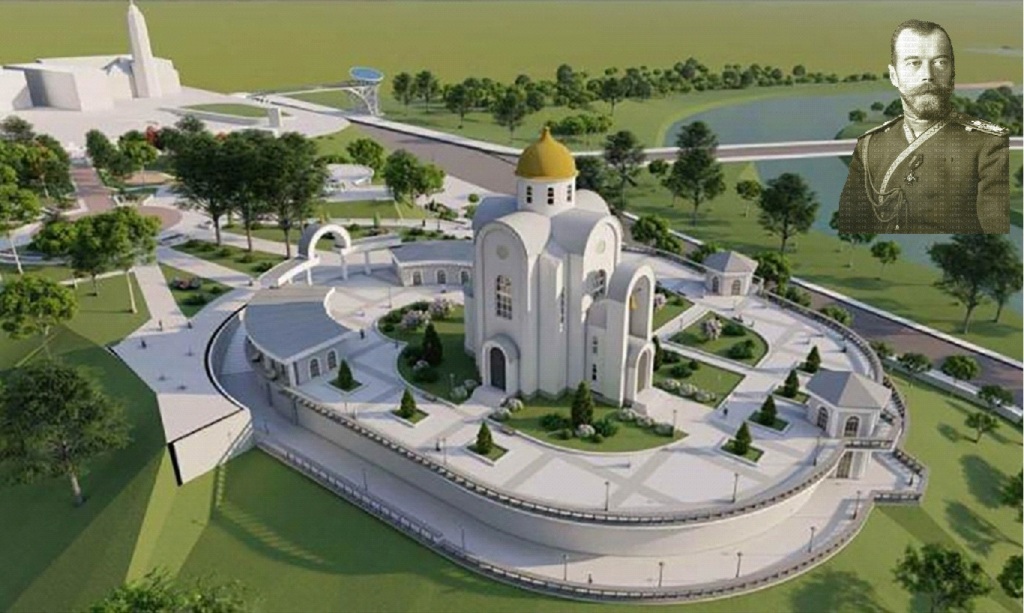
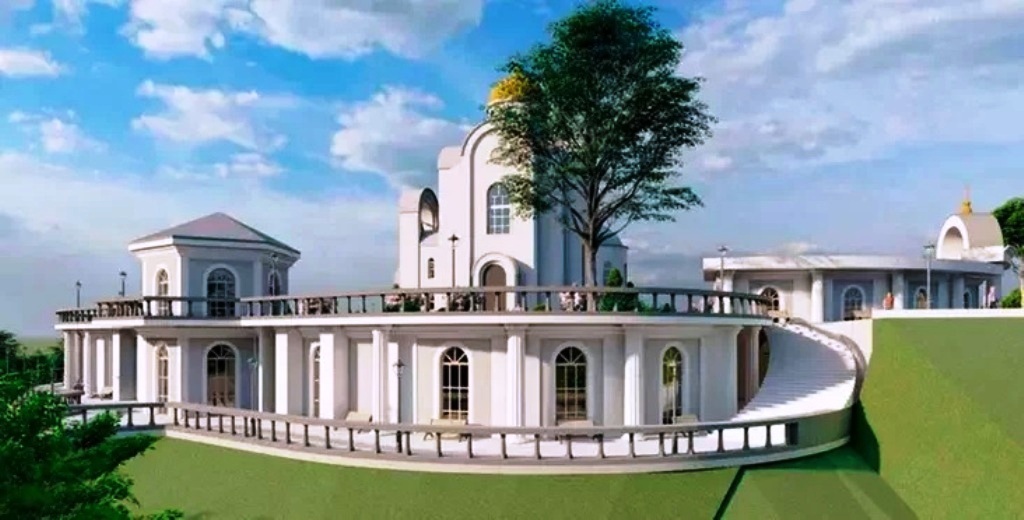
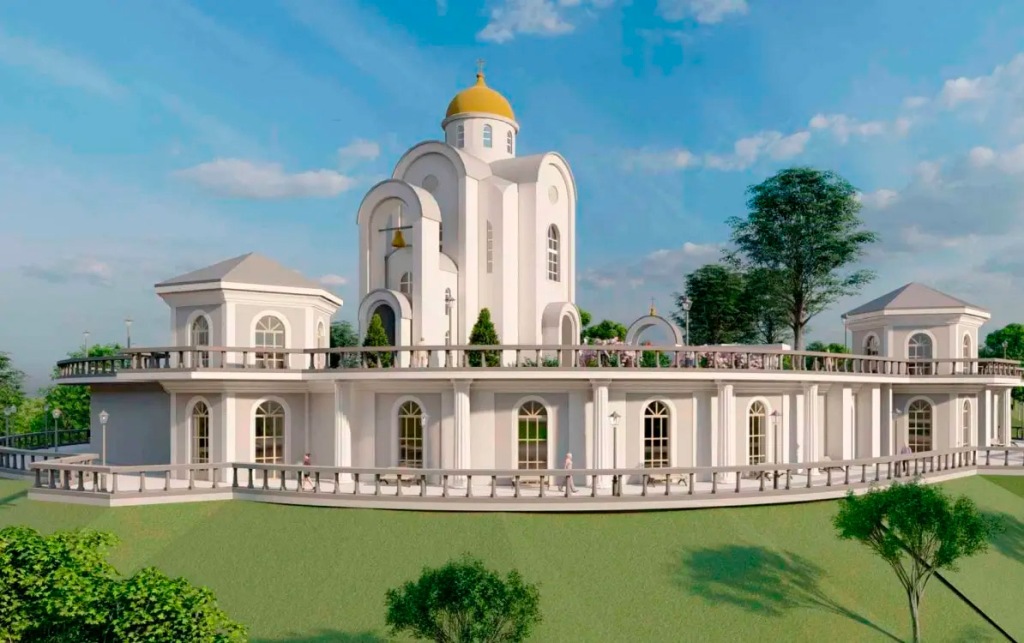
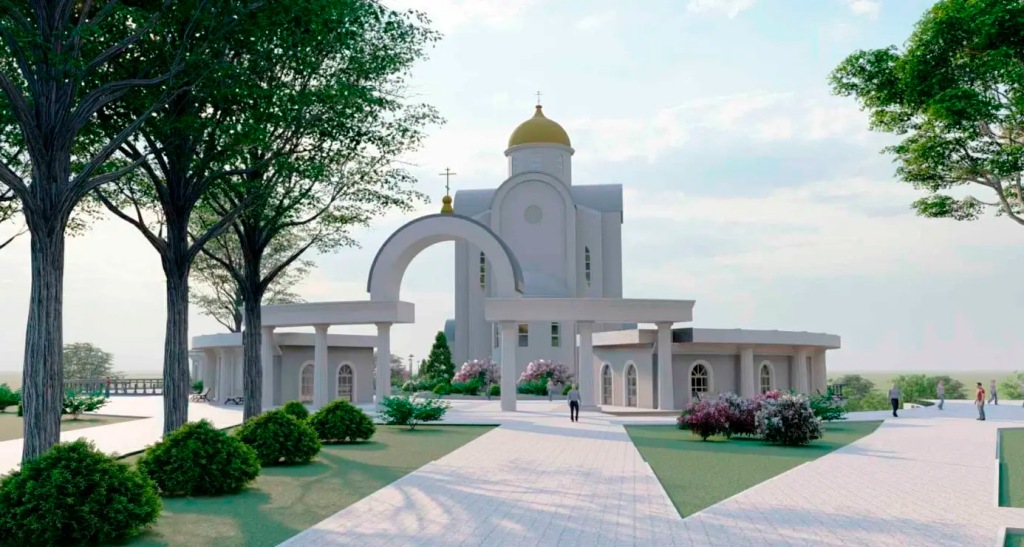
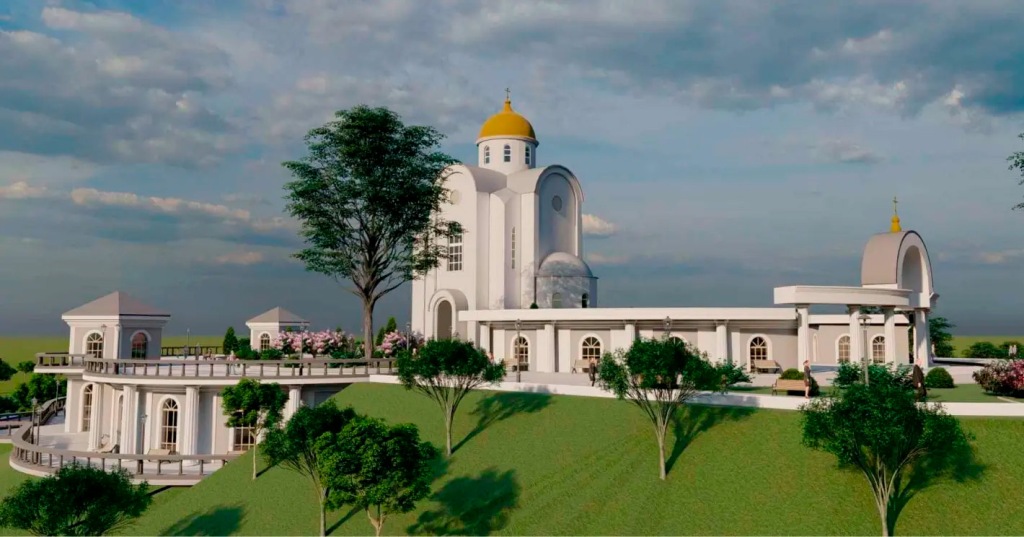
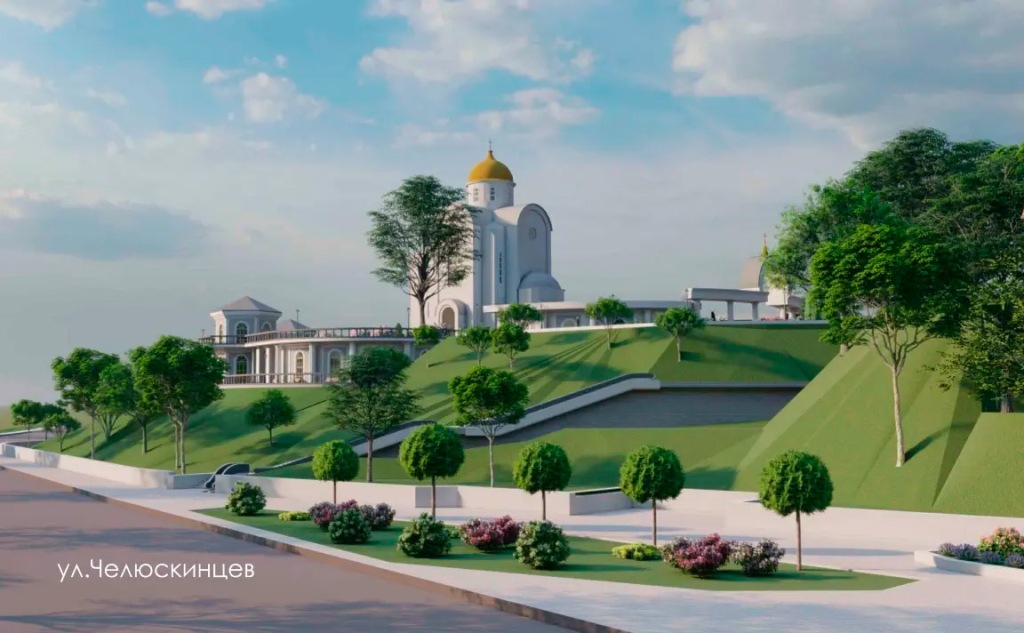
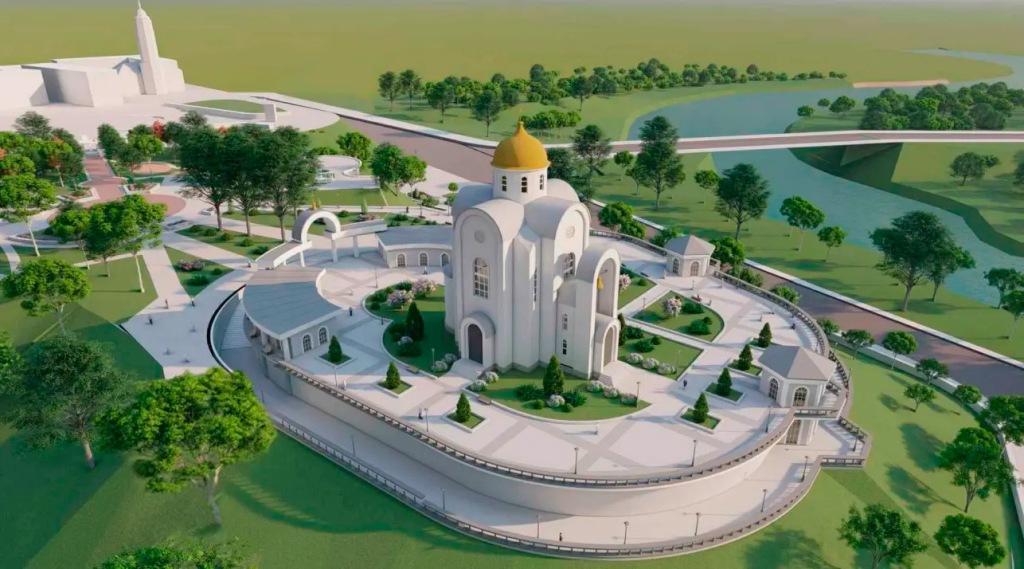
PHOTO: artist’s concept for the Emperor Nicholas II
museum complex proposed for Mogliev

On 3rd July 2024, I reported that a new museum complex dedicated to Emperor Nicholas II was being planned for Mogliev in Belarus. The complex was to be constructed on a hill in Gorky Park, next to the Church of the Holy Royal Passion-Bearers. Unfortunately, the proposal was met with protests from locals, who were opposed to the demolition of a 16th-century castle to make way for the new museum complex.

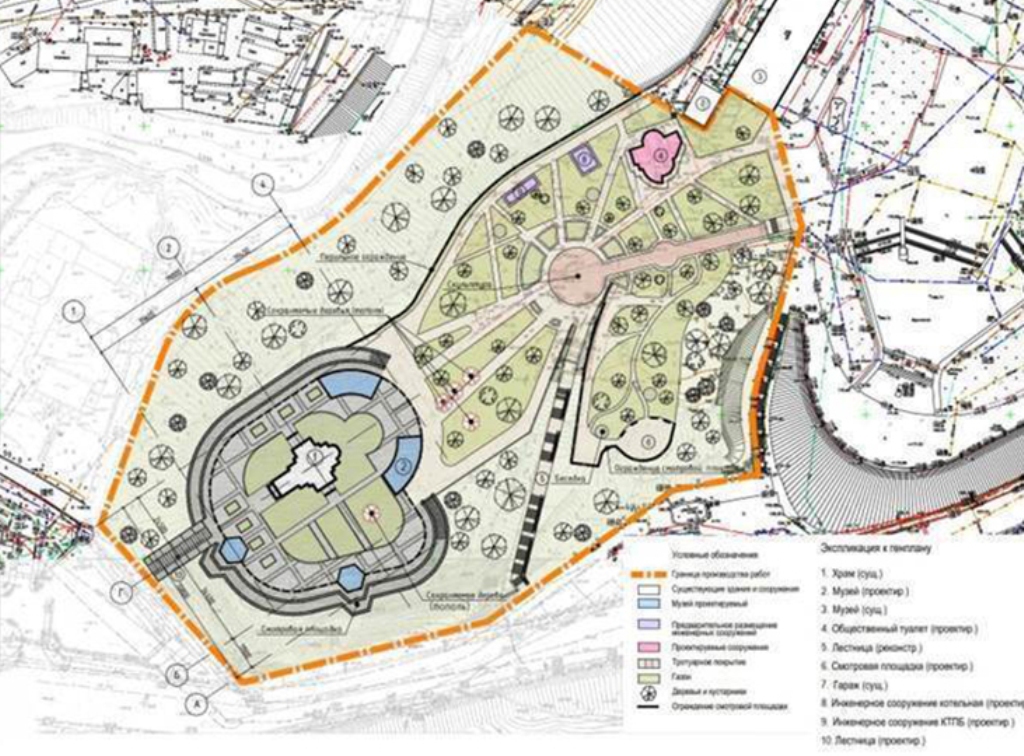
A new place for the museum complex was chosen in the historical heart of Mogliev. As specified in the OJSC “Institute “Mogilevgrazhdanproekt”, the museum complex will be located on the Square of Glory[1], on the site of the former building of the General Headquarters of Emperor Nicholas II, situated in the southwestern part of the adjacent Gorky Park. The museum complex will form a single architectural ensemble within the framework of the Church of the Holy Royal Passion-Bearers.
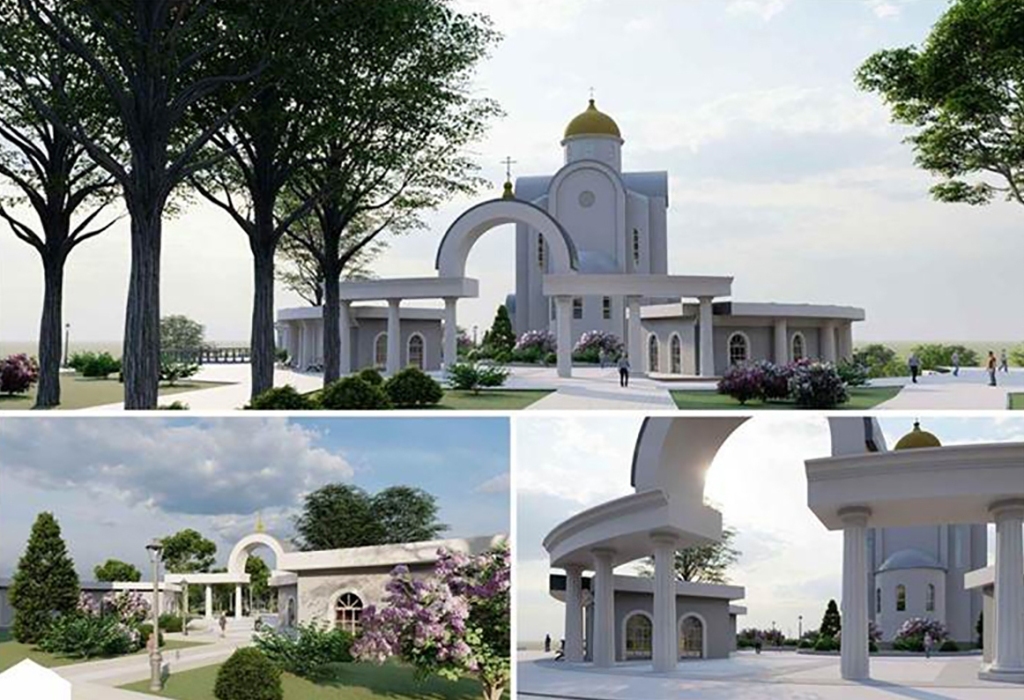
PHOTO: artists concept for the proposed Emperor Nicholas II museum complex in Mogliev (above), and map showing it’s location in the in the southwestern part of the adjacent Gorky Park
The new museum will be dedicated to the events of the early 20th century: the First World War, the Headquarters of the Supreme Commander-in-Chief of the Russian Imperial Army, the stay of of Emperor Nicholas II in Mogliev, the Knights of St. George, and the February Revolution of 1917.

Walking paths will stretch throughout the park, observation decks, sculptural compositions, small architectural follies, and beautifully landscaped flower beds. The concept of the project provides for the improvement of Gorky Park from the central entrance group of the museum complex to the existing Regional Museum of Local Lore.

The realization of the proposed Nicholas II museum complex is of course is pending approval. Town hall meetings will be held in Mogliev, in which citizens will have an opportunity to have their say.

***
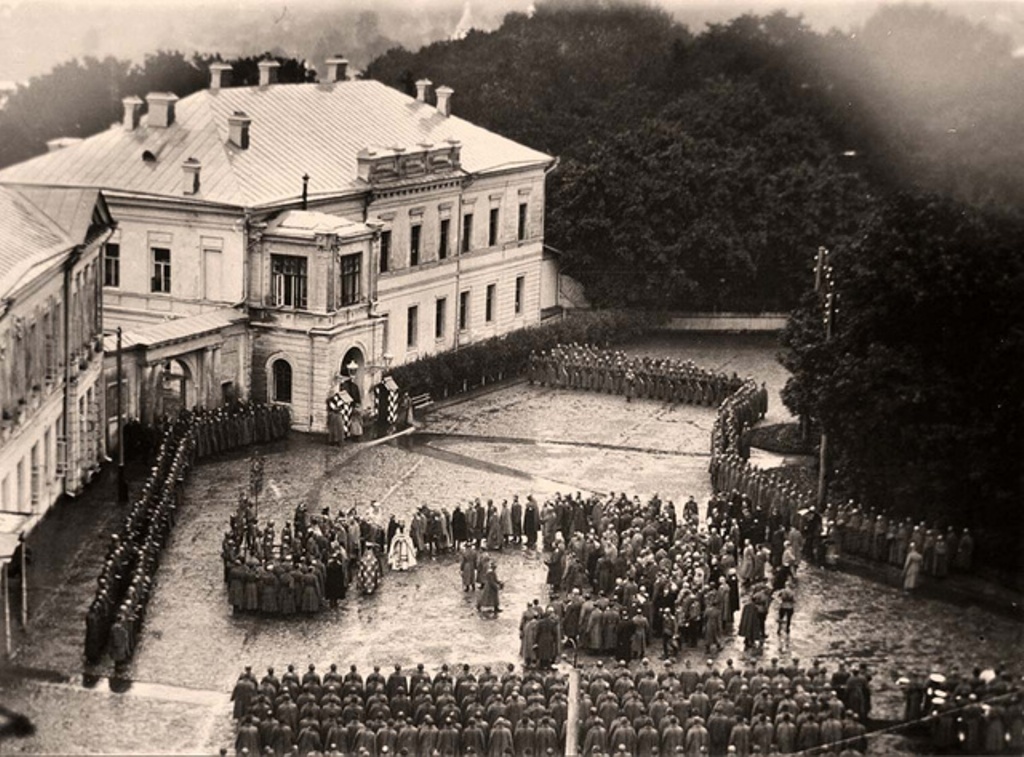
PHOTO: the former Governor’s House and
later General Headquarters in Mogilev. 1915

On 8th August 1915, the Headquarters (Stavka)  of the Supreme Commander-in-Chief of the Armed Forces of the Russian Empire was transferred from Baranovichi to Mogilev. From August 1915 to March 1917, Emperor Nicholas II, served as Commander-in-Chief[2], and the city assumed the role of Military Capital of the Russian Empire.

The Tsar travelled back and forth on the Imperial Train, from Tsarskoye Selo to Mogilev, where he settled in the Governor’s House, situated on Governor’s Square. He was often accompanied by his son and heir Tsesarevich Alexei Nikolaevich.  

The official historiographer in the retinue of Nicholas II, Dmitry Dubensky, describes the Emperor’s quarters as follows:

“The Emperor’s rooms were located on the 2nd floor of the Governor’s House. His Majesty’s office had two windows overlooking the square. It was decorated modestly furnished with simple provincial furniture, a sofa and a small desk, which the Tsar kept some of his papers. Adjacent to this room was the bedroom of His Majesty and Heir with iron camp beds, a washbasin, a dressing table, and several chairs. On the walls over the beds, there were many Orthodox crosses, many of which were gifts from family members.

“From the hall to the left is a dining room, quite large, decorated with simple ordinary furniture. There are two additional rooms for the Minister of the Imperial Court Count Vladimir Borisovich Frederiks (1838-1927) and one for Major-GeneralVladimir Nikolaevich Voeikov (1868-1947).

“In addition, there were small rooms for five or six servants, the Tsar’s valet, cooks, and others.”

Sadly, the former Governor’s House, which housed the General Headquarters was destroyed during the Nazi invasion of 1941-45. In the years following the Great Patriotic War, the Soviets showed no interest in reconstructing the historic building. The only building which survived to the present is the former District Court House, which today houses the Mogilev Regional Museum of Local Lore, which features permanent exhibition rooms dedicated to the stay of Nicholas II in Mogilev, from 1915 to 1917.

NOTES:

[1]  The 16th century square, originally named as Torgovaya Square, was situated on a high hill at the confluence of the Dubrovenka and Dnieper rivers. After the annexation of Mogilev to Russia in 1772, Torgovaya Square was named Governor’s Square. In 1919, the square was named Sovetskaya, and in 2014, the year marking the 70th anniversary of the liberation of Belarus from the Nazi invaders, it was renamed Square of Glory.

[2] On 5th September (O.S. 23rd August) 1915, Emperor Nicholas II assumed personal command of the Russian Imperial Army, after dismissing his cousin, Grand Duke Nicholas Nikolaevich (1856-1929) from the post.

© Paul Gilbert. 14 September 2025
Nicholas II’s uniforms on display in Tula

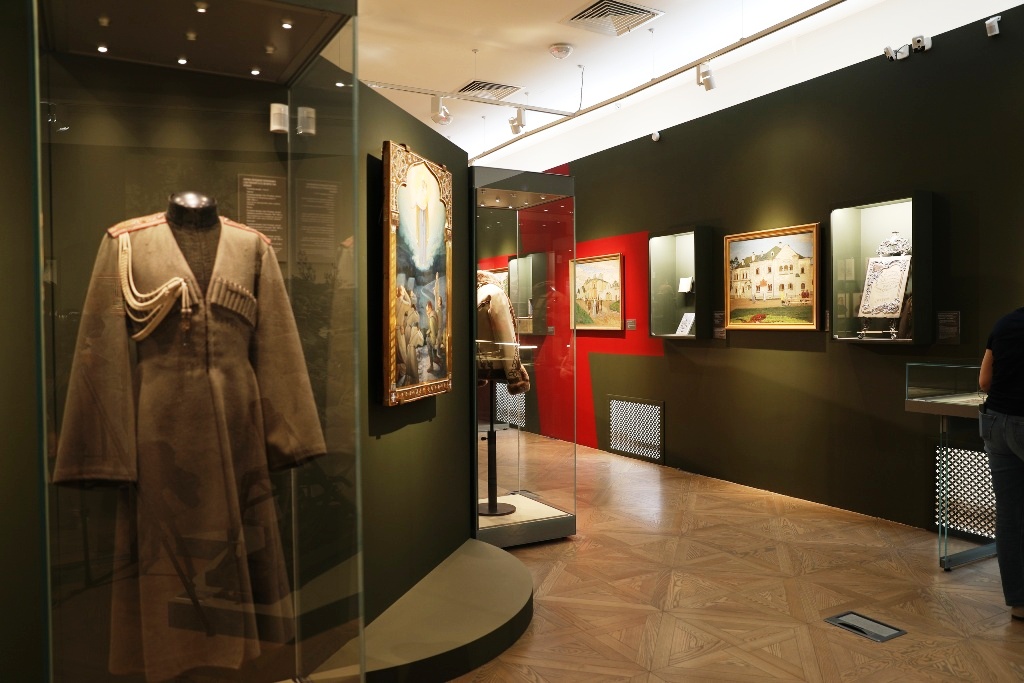
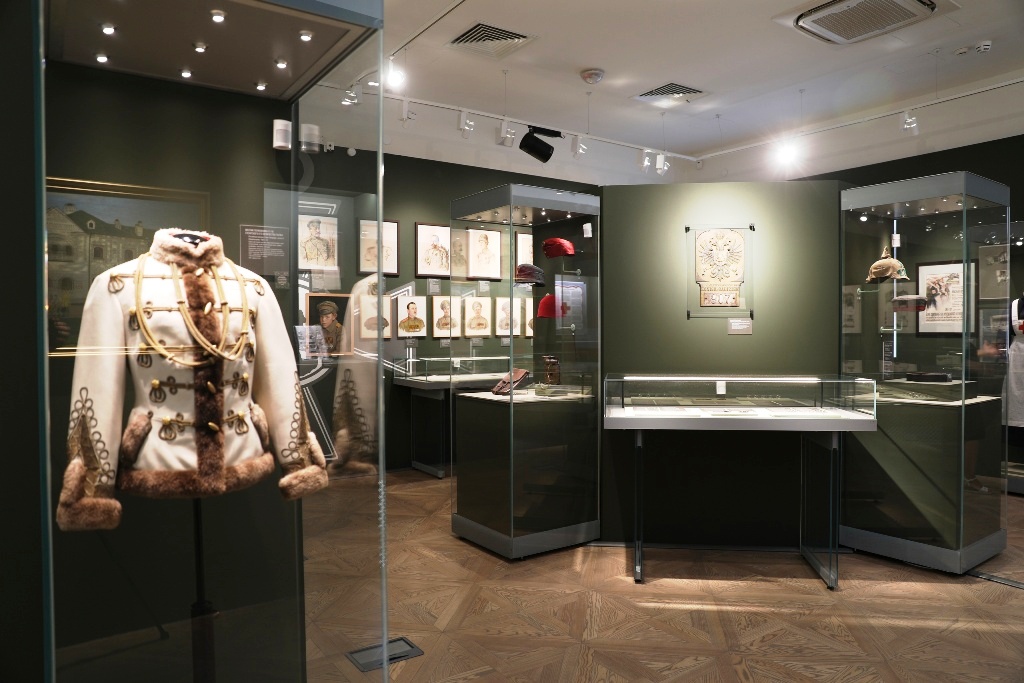
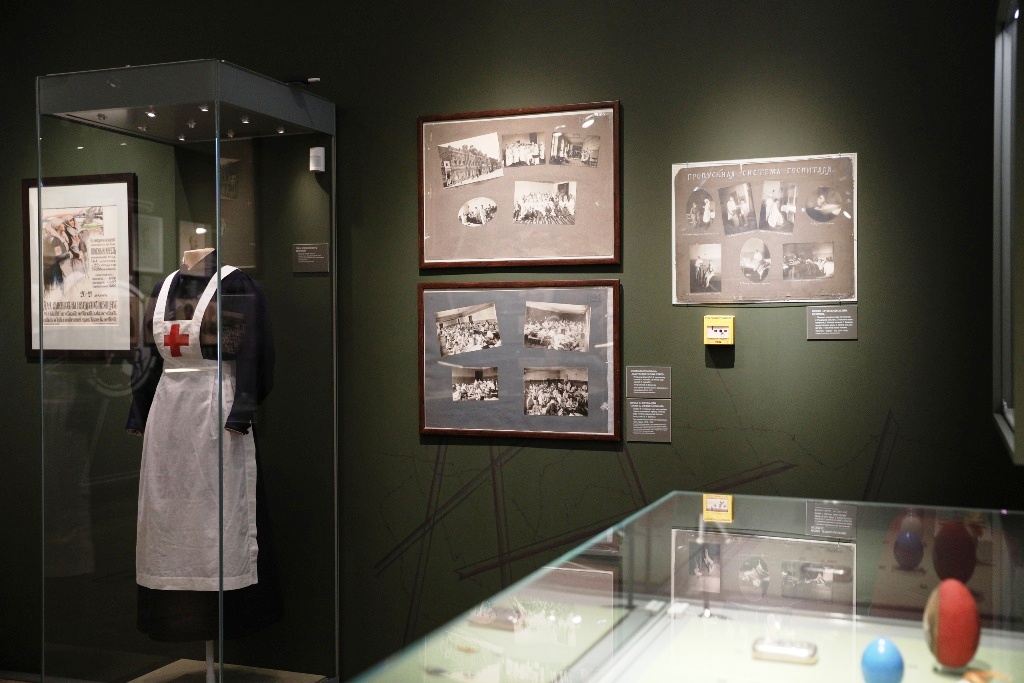
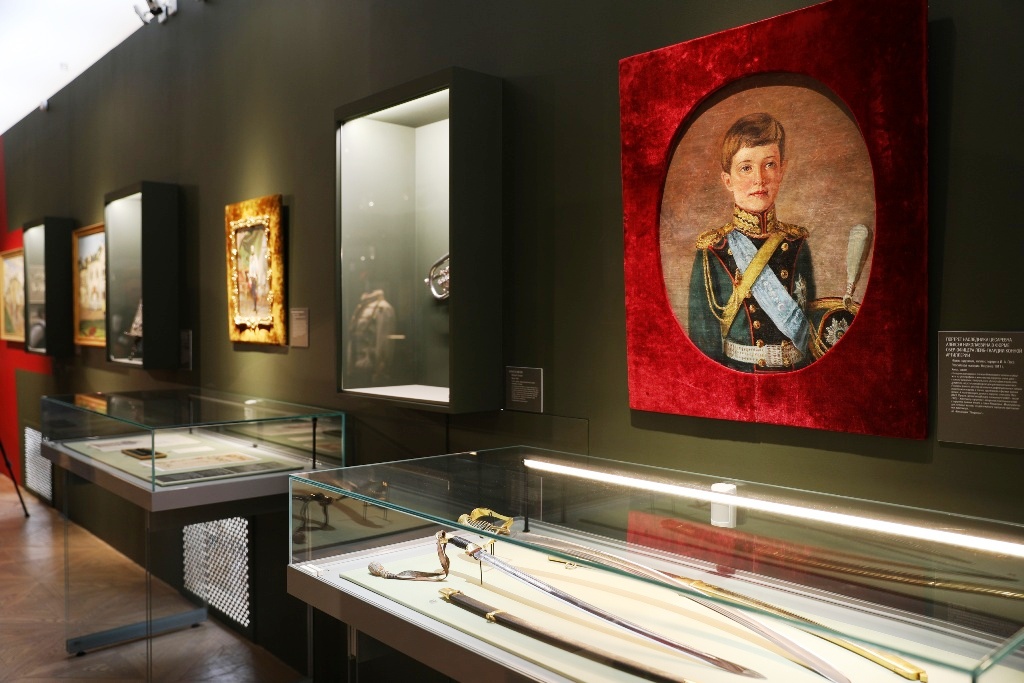
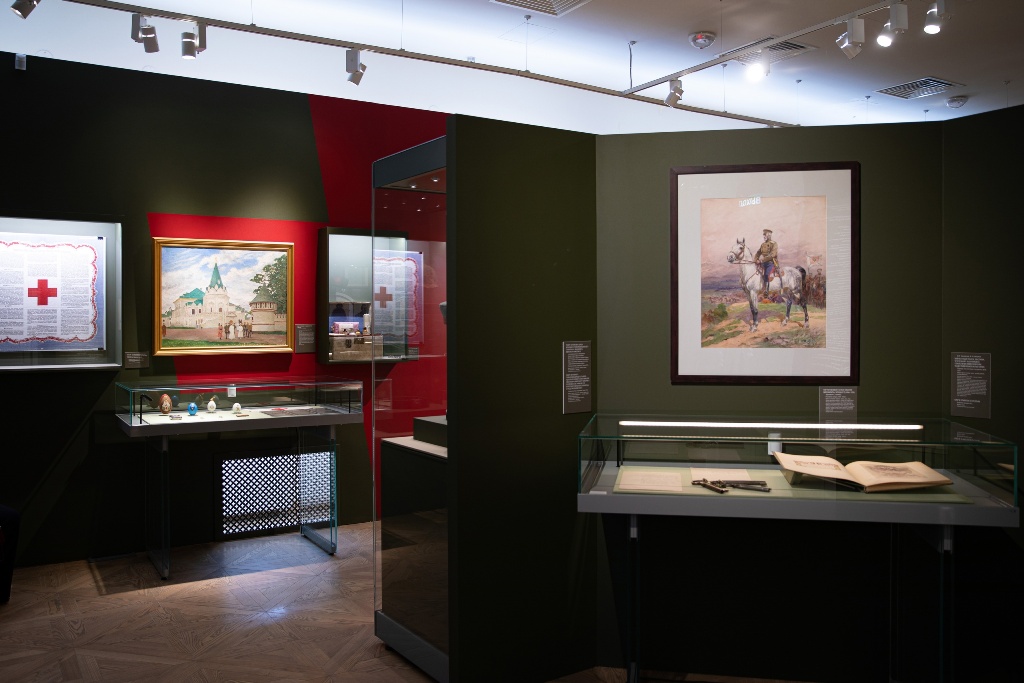
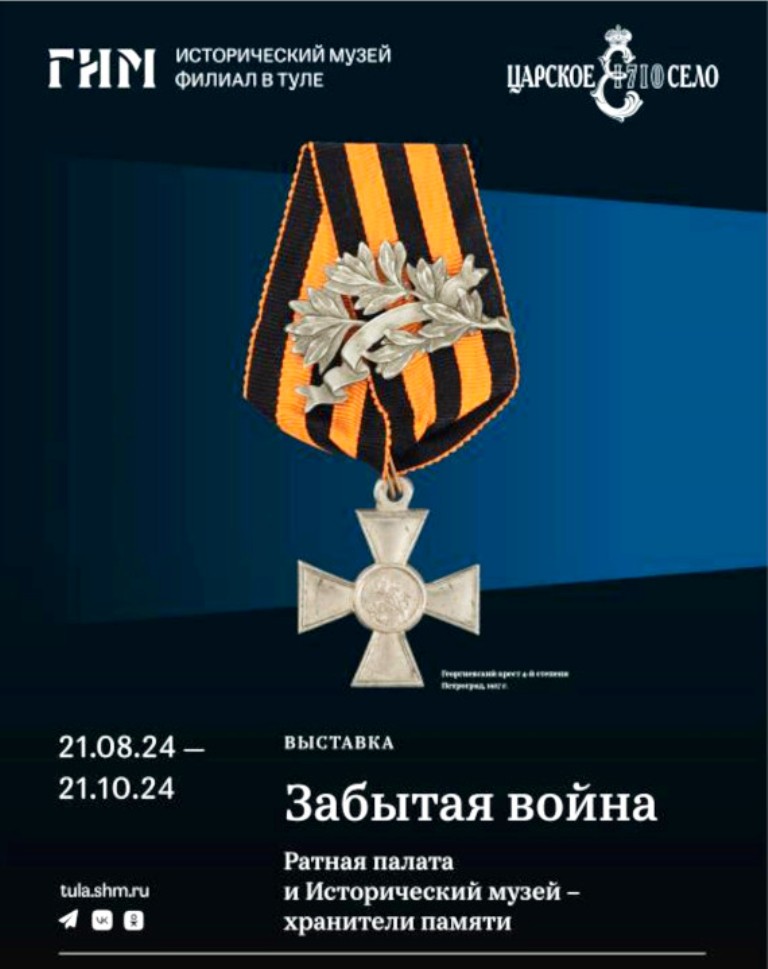
On 21st August 2024, a new exhibition The Forgotten War opened in Tula. The exhibition is dedicated to the 110th anniversary of the beginning of the First World War. The venue for the exhibit is the Tula branch of the State Historical Museum,

The exhibition is a joint project of the Tsarskoye Selo State Museum in Pushkin and the State Historical Museum in Moscow, showcasing about 200 items from the collections of the two museums.

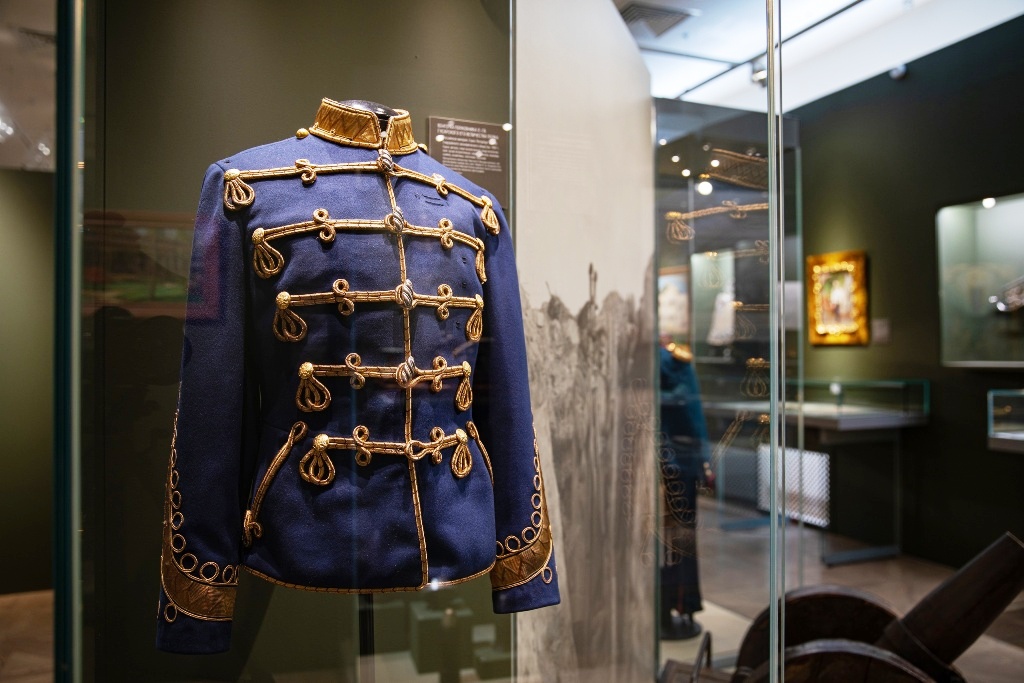
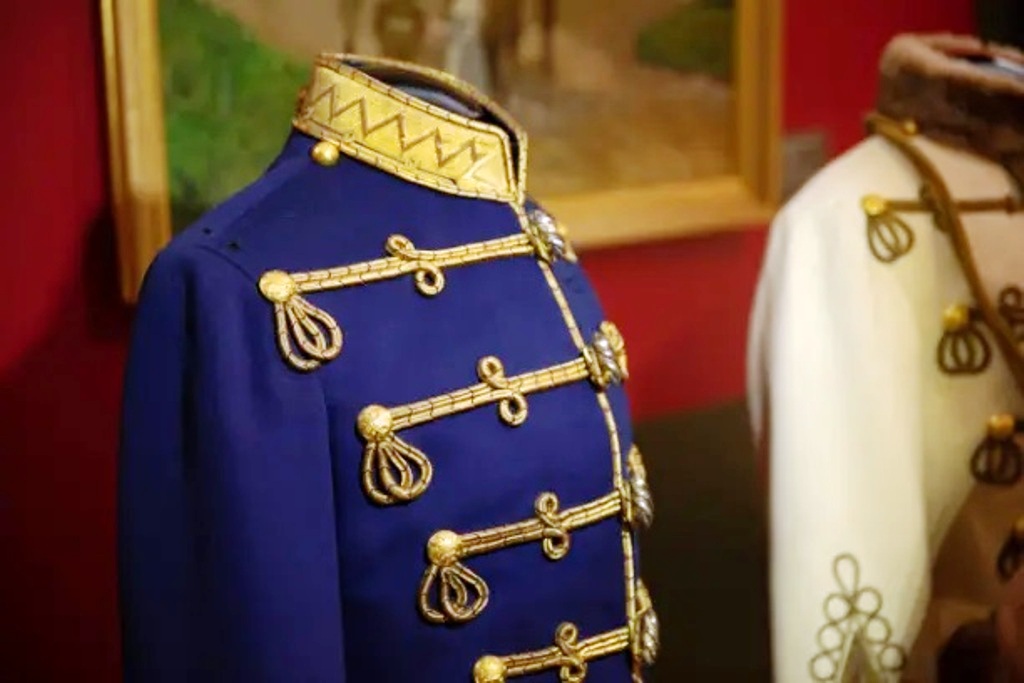
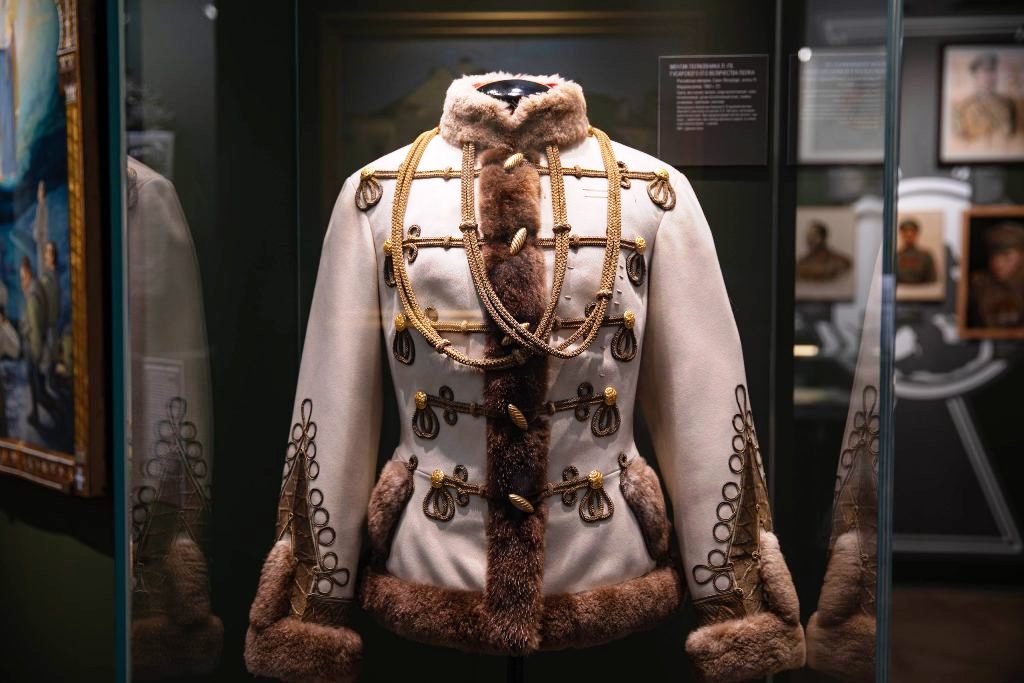
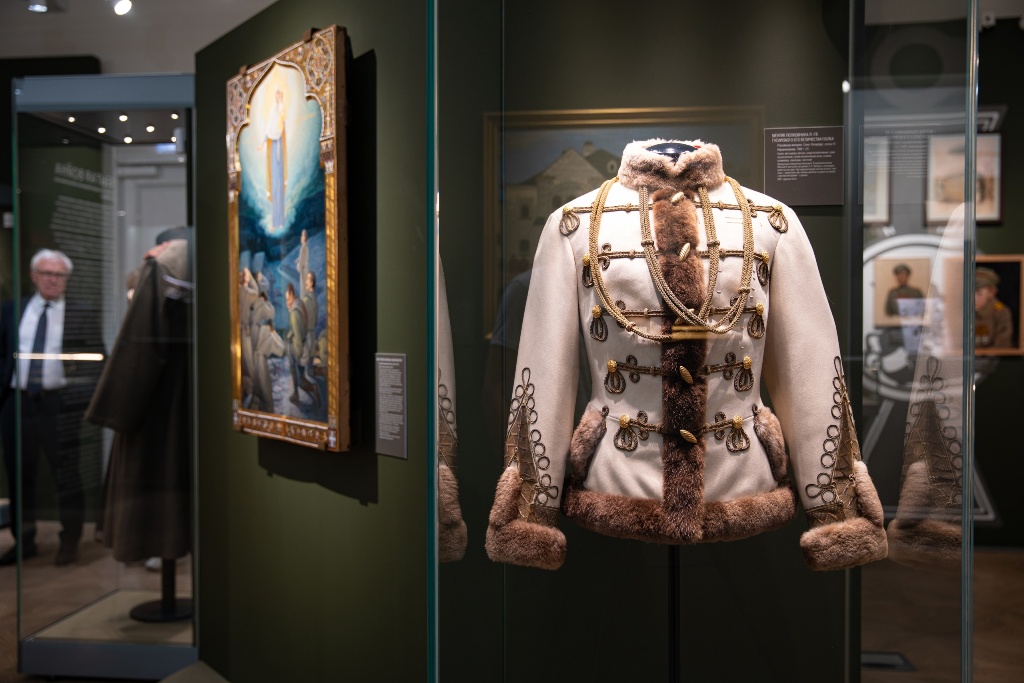
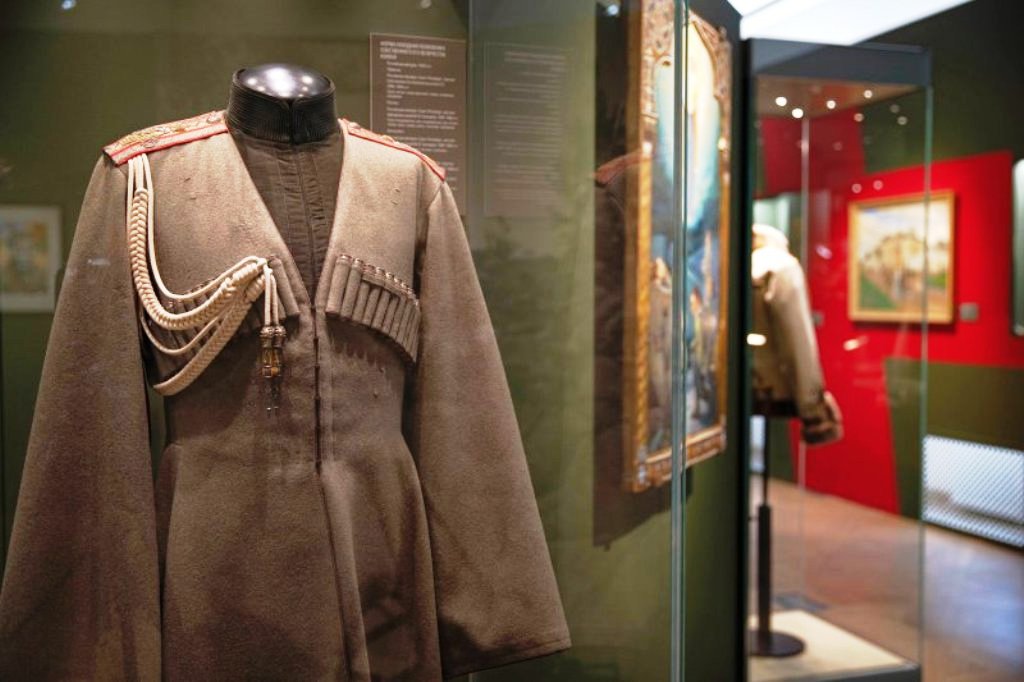
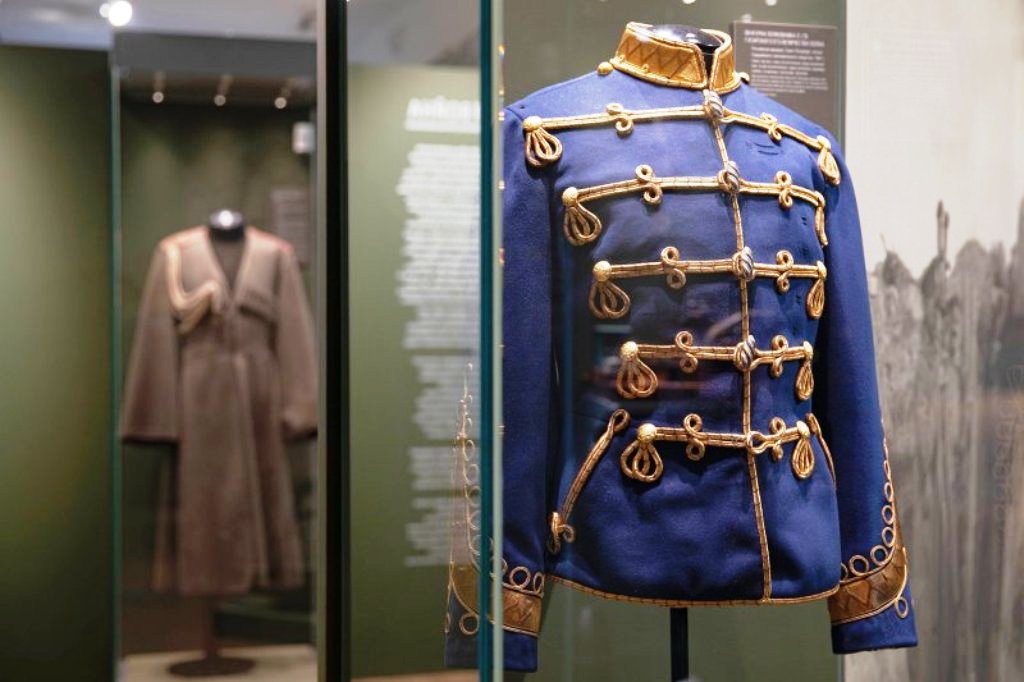
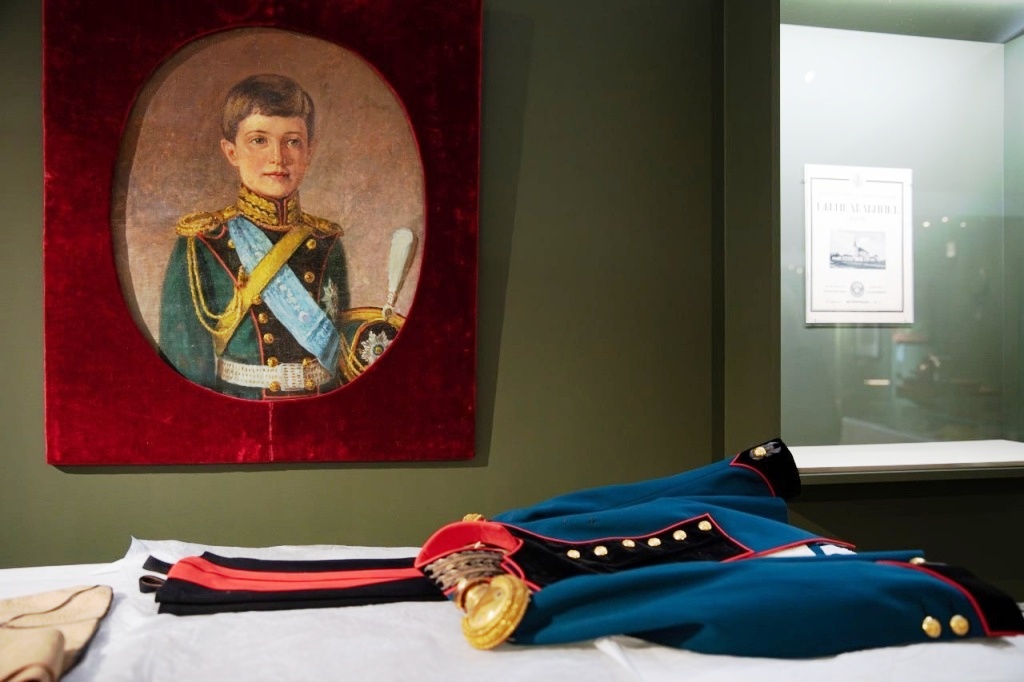
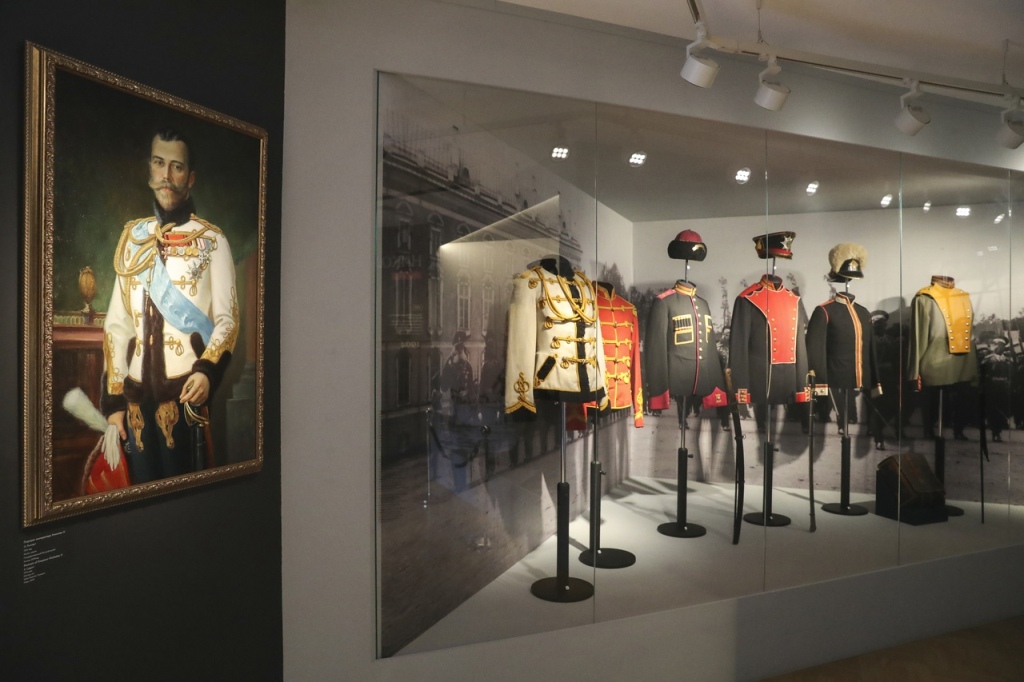
Of particular interest to visitors will be uniforms and portraits of Emperor Nicholas II and his son Tsesarevich Alexei Nikolaevich, on loan from the Sovereign’s Military [aka Military] Chamber in Tsarskoye Selo. Among the uniforms of Nicholas II is the Tsar’s cherkeska and beshmet of His Imperial Majesty’s Own Escort and pelisse of His Majestey’s Life-Guards Hussar Regiment. Other items on display include WWI vintage news reels, weapons, documents, photographs, awards and a tactile model of the Military Chamber.

The exhibition is divided into four sections: The War Image, The History of the Sovereign’s Military Chamber, The Imperial Family during WWI, and The St George’s Chevaliers Portraits.

The exhibition is designed to draw attention to the preservation of the historical memory of the military conflict, which for Russia has long been the “Forgotten War”. Recall that during the Soviet years, Russia’s contribution and sacrifices made during the First World War were neither discussed or commemorated. In destroying the tsars, the Bolshevik revolutionaries denounced the Great War as “imperialist”, thus robbing it of its potential for a popular legacy. It was not until 1st August 2013 that Russia marked Russian Soldiers’ World War I Remembrance Day for the first time.

The collections of the Sovereign’s Military Chamber – which includes the State Historical Museum on the First World War – are both part of the Tsarskoye Selo State Museum. The Sovereign’s Military Chamber was founded in May 1913.

Following the outbreak of hostilities in August 1914, it was decided to create a war museum, which included a gallery of portraits of the Knights of St. George among other exhibits. Some of the museum’s employees were sent to the Front. Subsequently, they returned with “trophies” which were added to the museum’s funds. Additional items were transferred from other museums and private collections, as well as items donated by the families of those who particpated in the Great War.

The dedicated employees of the Sovereign’s Military Chamber and the Historical Museum carefully preserved their collections even during the Soviet years. It is thanks to their efforts that this priceless collection of Russian World War One artifacts has been preserved to the present day.

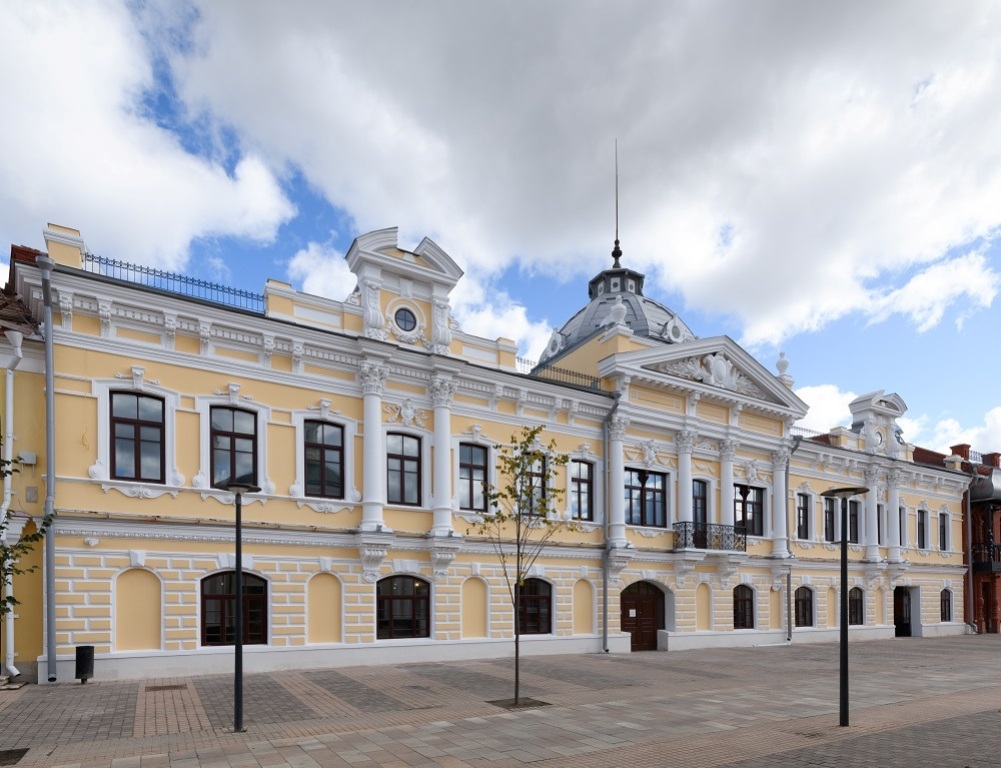
The exhibition The Forgotten War. The Military Chamber and the Historical Museum: Keepers of Memory runs until 21st October 2024, at the Historical Museum, which is housed in the the former mansion (above photo) of the merchant Belolipetsky family in Tula, located 193 kilometers (120 mi) south of Moscow.

***

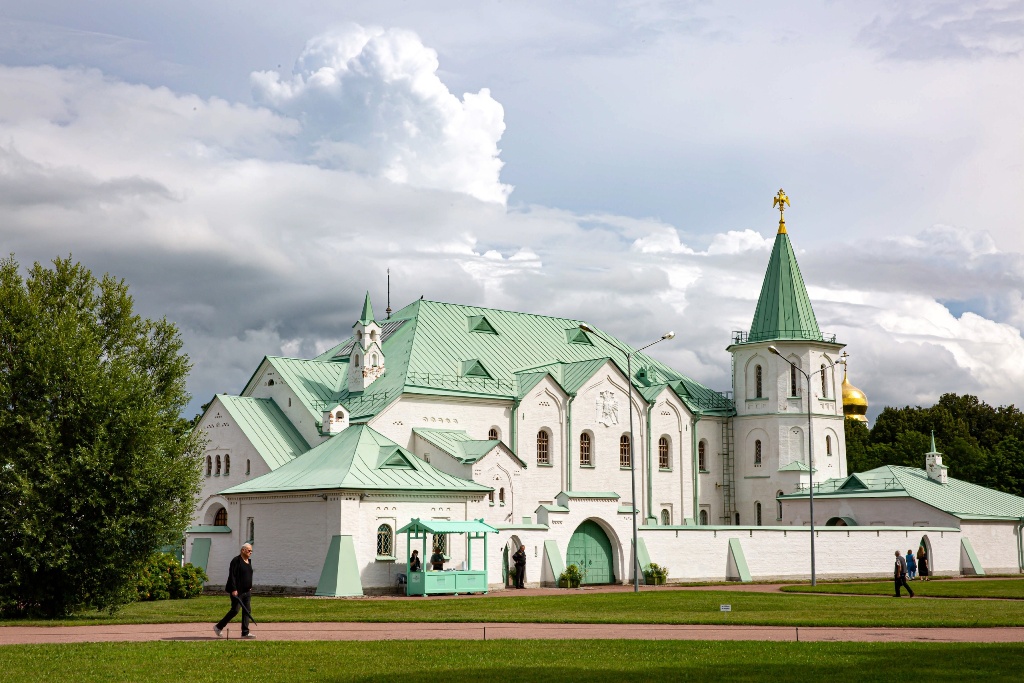
PHOTO: the Sovereign’s Military Chamber – which includes the State Historical Museum on the First World War – are both part of the Tsarskoye Selo Museum

PHOTO: Emperor Nicholas II’s uniforms on display in the Sovereign’s Military [aka Military] Chamber in Tsarskoye Selo. The uniforms were previously on display in the Alexander Palace, before the private apartments of Emperor Nicholas II and Empress Alexandra Feodorovna were recreated in the eastern wing of the palace between 2015 and 2021.
© Paul Gilbert. 21 August 2024

New museum dedicated to Nicholas II to be built in Mogilev

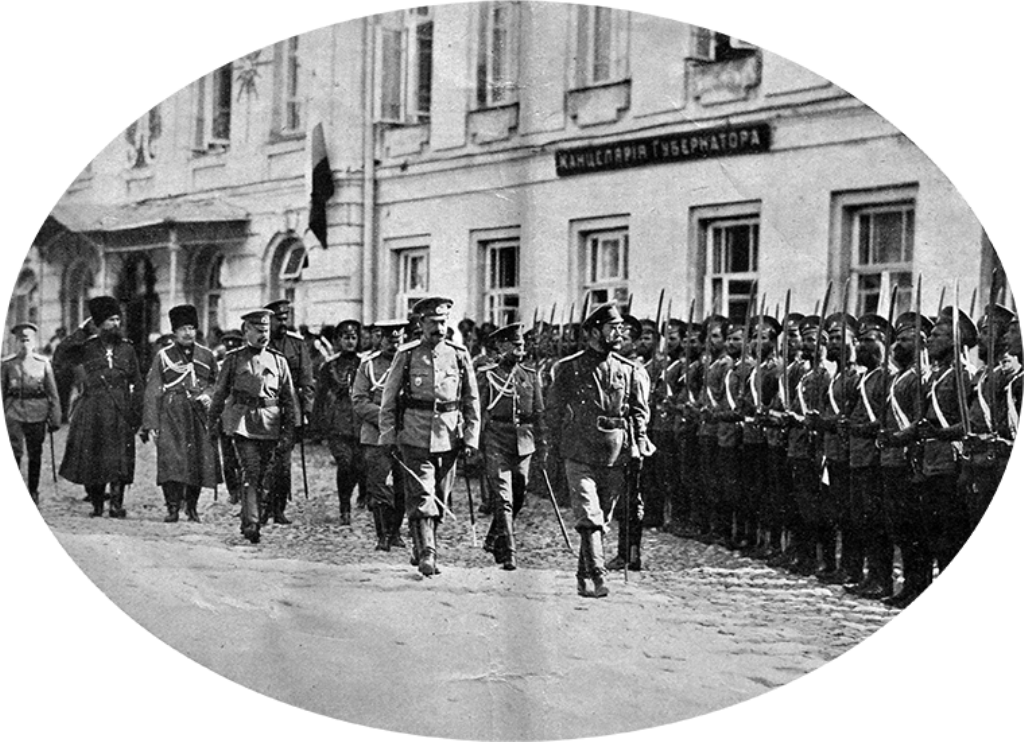
PHOTO: Emperor Nicholas II reviews his troops on the square in front
of General Headquarters in Mogliev during the First World War

A new museum complex is to be constructed in Mogliev, situated in eastern Belarus, about 76 kilometres (47 miles) from the Russian border. The complex will be built on a hill in Gorky Park, next to the Church of the Holy Royal Passion-Bearers – the family of the last Russian Emperor Nicholas II, who were canonized as saints in 1981 by the Russian Orthodox Church Outside Russia (ROCOR), and in 2000 as passion-bearers by the Moscow Patriachate.

On 8th August 1915, the Headquarters (Stavka)  of the Supreme Commander-in-Chief of the Armed Forces of the Russian Empire was transferred from Baranovichi to Mogilev. From August 1915 to March 1917, Emperor Nicholas II, served as Commander-in-Chief[1].

The Tsar travelled back and forth on the Imperial Train, from Tsarskoye Selo to Mogilev, where he settled in the Governor’s House, situated on Gubernatorskaya Square. He was often accompanied by his son and heir Tsesarevich Alexei Nikolaevich.  

The new museum will be dedicated to the events of the early 20th century: the First World War, the Headquarters of the Supreme Commander-in-Chief of the Russian Army, the stay of of Emperor Nicholas II in Mogliev, the Knights of St. George, and the February Revolution of 1917.

The timing of the project has yet to be announced, however, the following architectural drawings gives us a first glimpse of the museum complex. As you can see, the building complements that of the adjoining Church of the Holy Royal Passion-Bearers:

NOTES:

[1] On 5th September (O.S. 23rd August) 1915, Emperor Nicholas II assumed personal command of the Russian Imperial Army, after dismissing his cousin, Grand Duke Nicholas Nikolaevich (1856-1929) from the post.

© Paul Gilbert. 3 July 2024

Nicholas II assumes command of the Russian Imperial Army, 1915

On this day – 5th September (O.S. 23rd August) 1915 – Emperor Nicholas II assumed the position as Commander-in-Chief of the Russian Imperial Armed Forces.

After the great retreat of the Russian army in the summer of 1915, the Tsar removed his cousin Grand Duke Nicholas “Nikolasha” Nikolaevich (1856-1929) of the position on 21st August 1915.

In the order, the Tsar wrote with his own hand: “With firm faith in God’s mercy and with unshakable confidence in the final victory, we will fulfill our sacred duty of defending the Motherland to the end and will not disgrace the Russian land. Nicholas”.

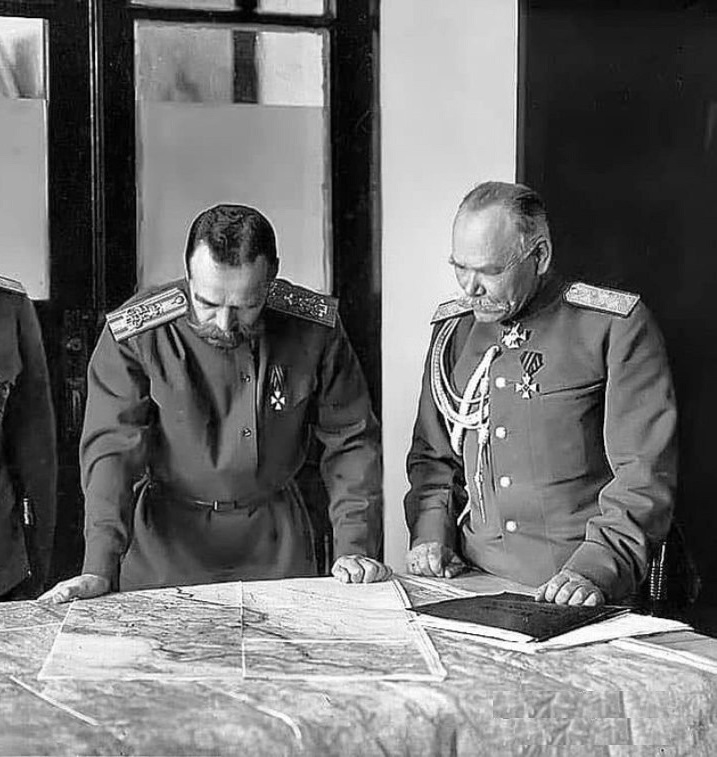
Some historians have wrongly suggested that Nicholas II’s decision was disastrous, citing that the move was largely symbolic. It was at this stage of his reign that the Tsar’s patriotism reached its zenith. He travelled up and down the Eastern Front on the Imperial Train, in his motorcars and even on horseback to show himself to his troops, boasting morale, reviewing troops, inspecting field hospitals and preside over meetings with his chief-of-staff General Mikhail Vasilyevich Alekseyev (1857-1918).

PHOTO: Nicholas II with his chief-of-staff General Mikhail Vasilyevich Alekseyev

When Nicholas II assumed command of the Russian armed forces, he appointed Alekseyev as Chief of Staff of the General Headquarters and placed in charge of all military operations. He served in this capacity from August 1915 to March 1917.

According to Russian historian George Mikhailovich Katkov (1903-1985): “Alexeev was a modest and reserved man, an educated general, to whom the Tsar treated extremely attentively . . . . Every morning the Tsar and Alexeev discussed the affairs of the front for several hours. They apparently understood each other well, and there is no indication that the Emperor tried to impose any strategic or tactical ideas on his Chief of Staff. In fact, Alexeev was the commander-in-chief, and each of his undertakings was supported by the Sovereign.”

History has now proved that Russia made great gains under Nicholas II’s command. For instance, shortly after he assumed command of the armed forces, the Russian Imperial Army carried out at least 15 major victorious operations, not counting the Brusilov Breakthrough. Russia’s military historians now believe that had the revolution not interfered, Russia was bound to have won the war.

On 1st September (O.S. 19th August) 1916, he wrote the following in a letter to Empress Alexandra Feodorovna:

“Thank God, the news is good – on the first day of our offensive we captured 300 officers and more than 15,000 Austrian and German soldiers…”

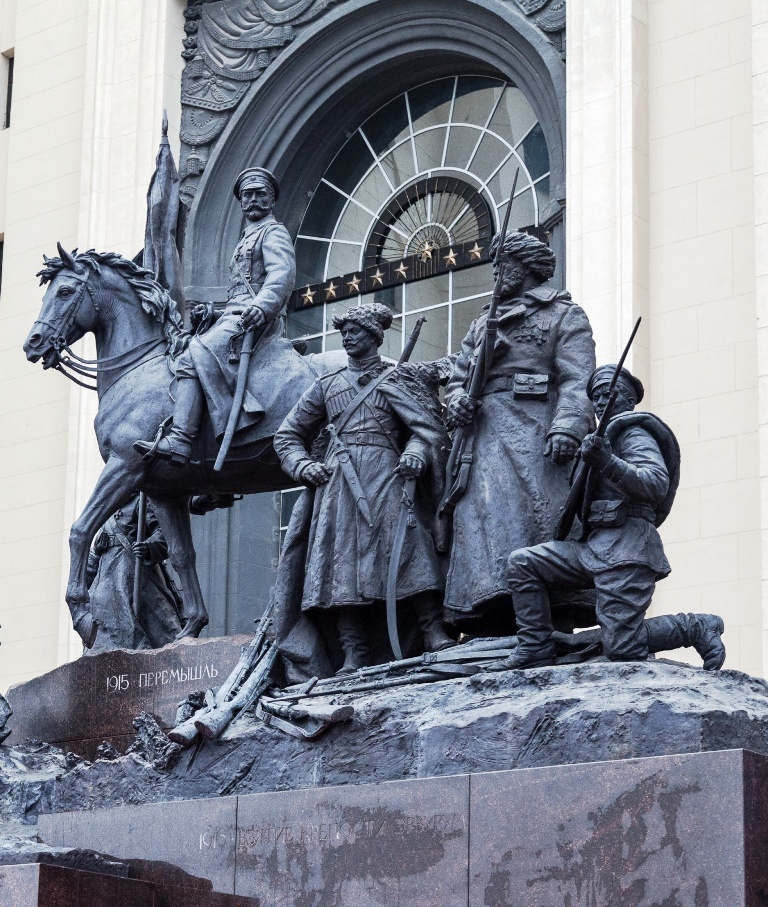
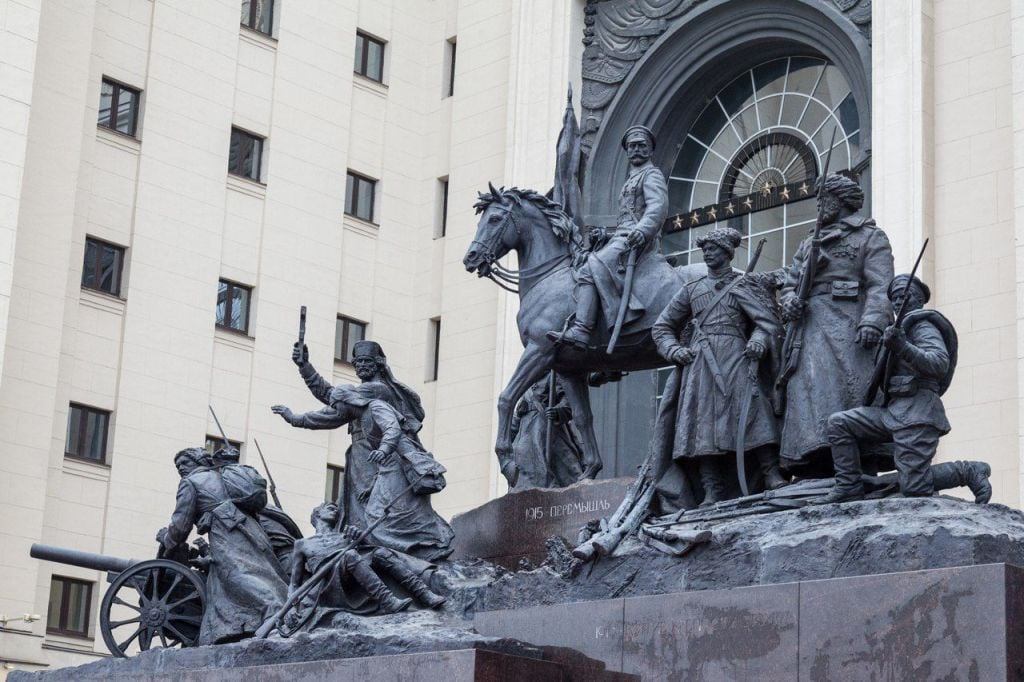
On 16th December 2013, Russia’s Defense Minister Sergei Shoigu opened a sculptural composition dedicated to the heroes of World Wars I and II on the grounds of the National Defense Control Center (NDCC) building – situated on Frunze Embankment in Moscow. The WWI monument (above) features Nicholas II on horseback, recognizing and honouring his efforts during the Great War.

FURTHER READING:

“They did not betray their oath” – the fate of the generals who remained loyal to Nicholas II + PHOTOS

© Paul Gilbert. 5 September 2023

Photo album belonging to Tsesarevich Alexei Nikolaevich returned to Alexander Palace

Photo © Tsarskoye Selo State Museum

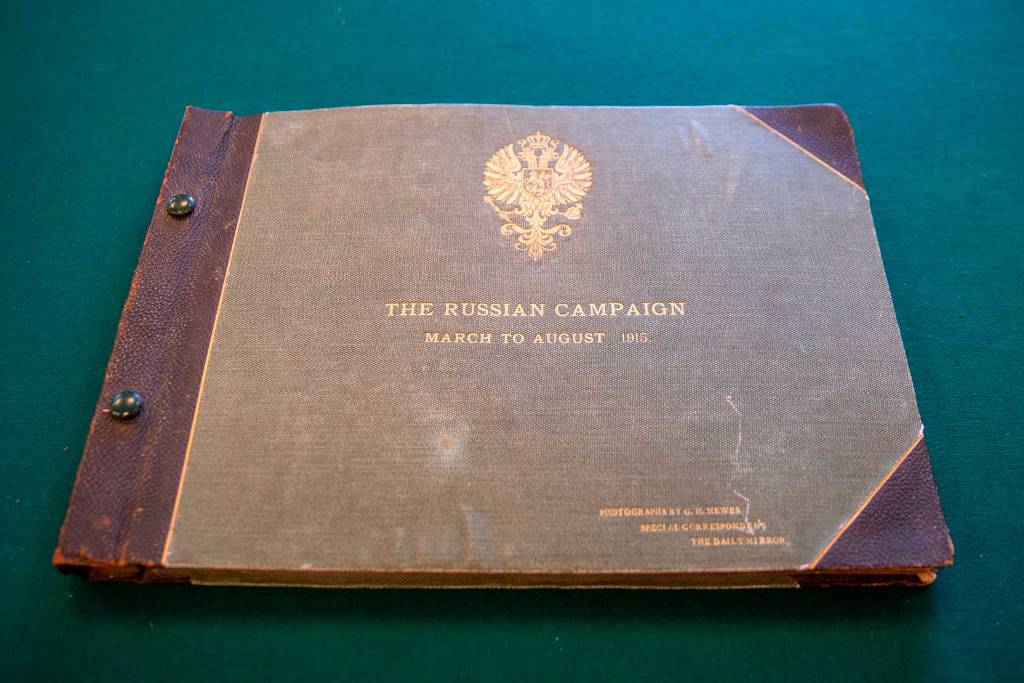
A rare photo album “The Russian Campaign. March to August 1915”, which belonged to Tsesarevich Alexei Nikolaevich and was kept in the Alexander Palace, has been returned to the Tsarskoye Selo State Museum.

The album was one of several rarities purchased at foreign auctions and donated to the museum by the philanthropist and long-term friend of the museum, Mikhail Karisalov. The other items include two paintings by Karl Friedrich Schultz, and a plate from the famous Raphael service, manufactured in 1903 at the Imperial Porcelain Factory. The paintings and plate were originally from the Catherine Palace.

In total, the museum’s collection now includes 226 items donated by Mikhail Karisalov or acquired with his financial support. It is thanks to the kindness and generosity of this man, that the museum has been able to recoup many of its treasures which were lost or stolen during the Nazi occupation of Pushkin [Tsarskoye Selo] in 1941-44. 

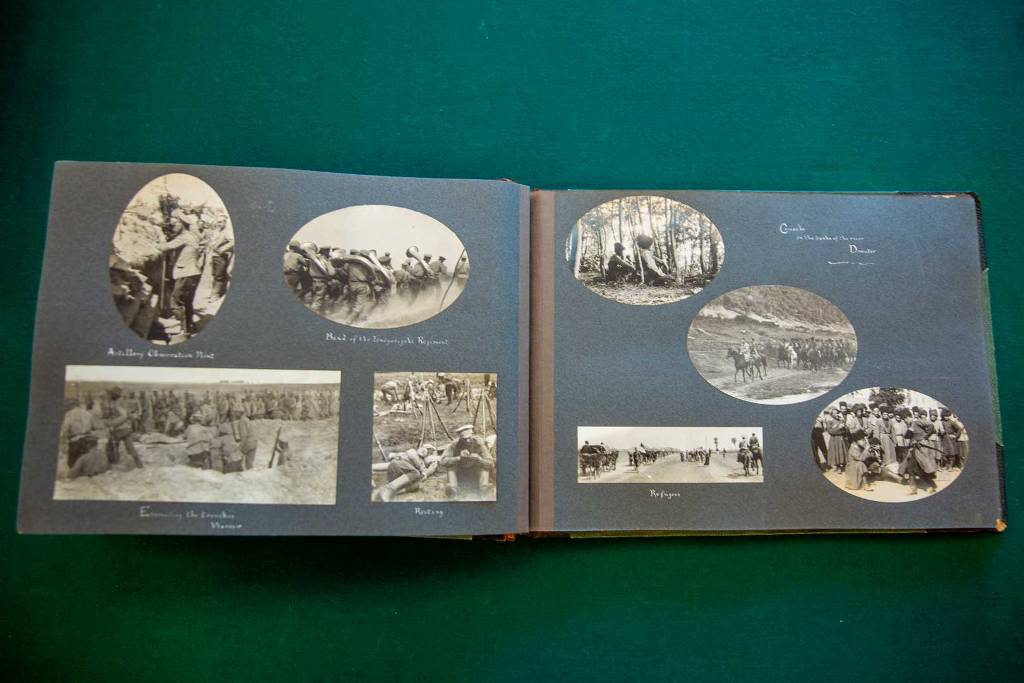
The photo album “The Russian Campaign. March to August 1915” consists of 168 photographs taken during the Russian campaign of the First World War – from March to August 1915. The photographs were taken by British photographer George H. Mewes, who was appointed official photographer to the Russian Imperial Army. Hewes took photographs for a number of prominent British newspapers and magazines, including The Daily Mirror, The Times History of the War, Field Notes from the Russian Front and The Russian Campaign.

Similar albums about the military campaigns of the Russian Imperial Army during the First World War were presented as gifts to Tsesarevich Alexei Nikolaevich, the son and heir of Emperor Nicholas II. Museum researchers believe that the albums were kept in the Tsesarevich’s Classroom, which was located on the second floor of the Eastern Wing of the Alexander Palace. “We can only assume that “The Russian Campaign. March to August 1915″ album, among many other items, was seized from the Alexander Palace during the 1930s or 1940s,” says Victoria Plaude, curator of the museum’s photograph fund.

On the flyleaf of the album is a museum label. The inscription in ink reads: “Alexander./palace/floor. nasl-ka/class/No. 683”. This clearly indicates that the photo album was in the Alexander Palace in Alexei’s Classroom. The label found on the album is identical to those on other items from the Alexander Palace, and now in the Collection of the Tsarskoye Selo State Museum.

Photo © Tsarskoye Selo State Museum

The photo album was made in London by Jonson & Sons. Photos of different sizes are pasted on sheets of gray cardboard. On the top cover of the album is an embossed gold inscription: “Photographs by G. H. Mewes, special correspondent of the Daily Mirror”.

The pictures are accompanied by captions in English. On the flyleaf of the album there is an inscription: “It has been the aim of the correspondent to illustrate for the British public the heroic part performed by their Russian Allies in the Great War”.

The photographs are only a small selection of about two thousand photographs taken by Mewes for the Russian Imperial Army, which were reproduced in illustrated magazines around the world.

British photographer George Mewes and American journalist Stanley Washburn were on the Russian front in 1914-1915. In addition to periodicals, these photographs were later featured in Washburn’s book “The Russian Campaign. April to August, 1915”.

© Paul Gilbert. 13 July 2023

Memorial plaque to Empress Alexandra Feodorovna installed in Istra

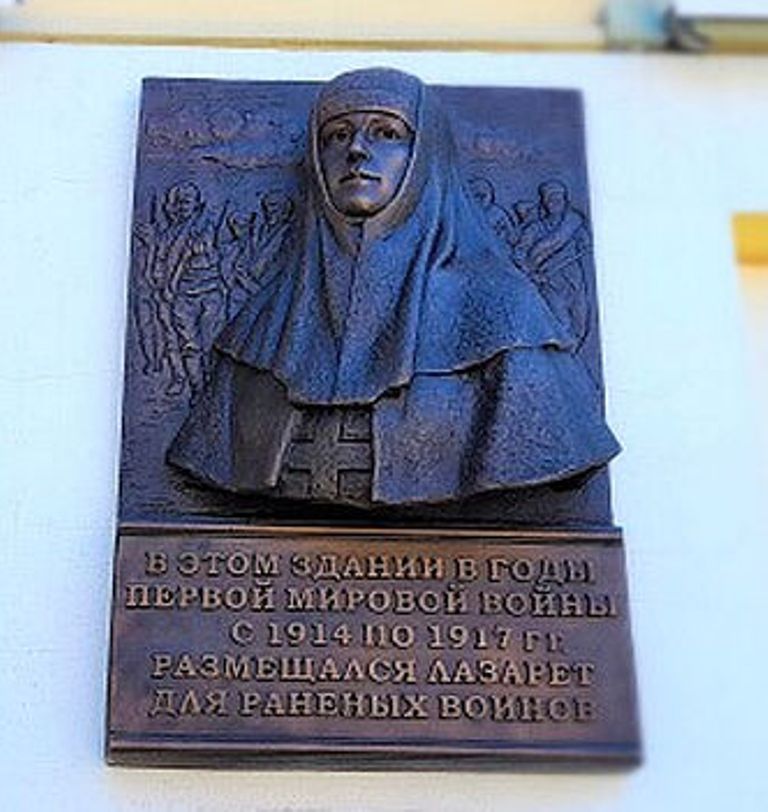
PHOTO: view of the bronze memorial bas-relief of Empress Alexandra Feodorovna

On 25th May 2023, a bas-relief plaque depicting Empress Alexandra Feodorovna was installed on the façade of the Drama Theatre, in Istra, situated 40 km northwest of Moscow.

During the First World War, the building served as an infirmary for wounded Russian soldiers, from September 1914 to the end of 1917.

The bronze bas-relief was made by Moscow sculptor Philip Trushin, and financed by the academician and philanthropist Vladimir Yatsuk.

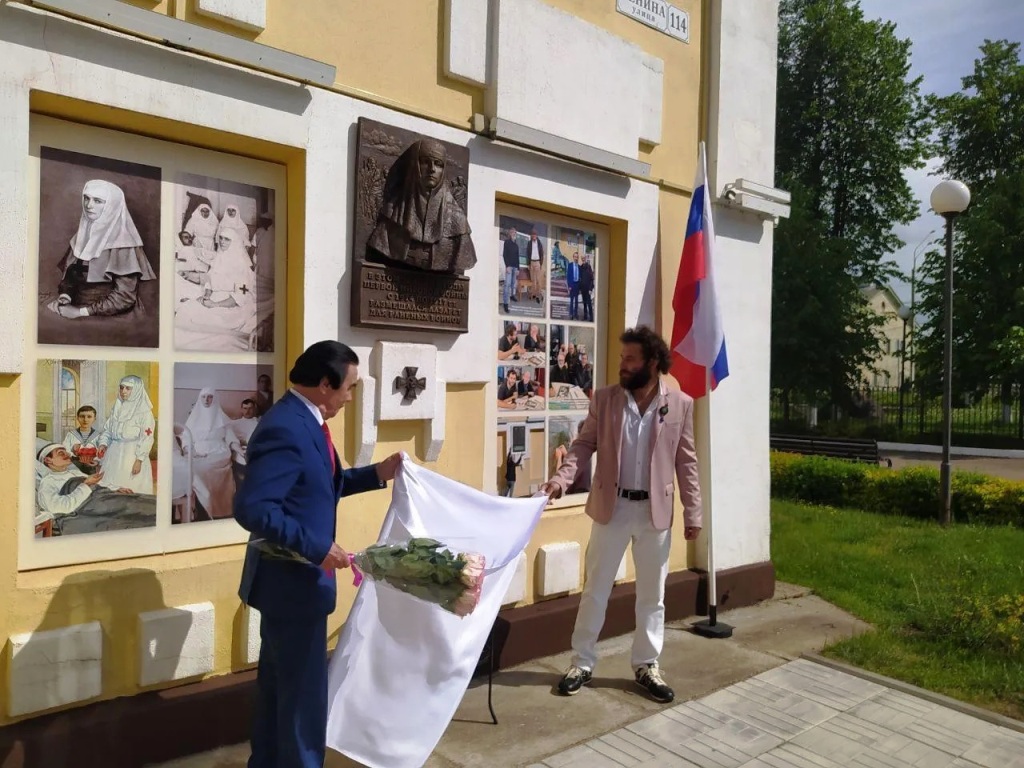
PHOTO: Moscow sculptor Philip Trushin (right) unveils his bas-relief of Empress Alexandra Feodorovna

The rite of consecration of the memorial plaque was performed by the clergyman of the Resurrection New Jerusalem Stavropegic Monastery, Father Paisius.

The memorial plaque, depicts Empress Alexandra Feodorovna, dressed in the uniform of a sister of mercy, set against the background of soldiers of the Russian Imperial Army.

During the First World War, Alexandra Feodorovna organized a whole network of infirmaries, which included 85 institutions for wounded soldiers in Tsarskoye Selo, Pavlovsk, Peterhof, Sablin and other places. Many of the infirmaries were built at the Empress’s own expense.

PHOTO: view of the former infirmary for wounded Russian soldiers in Istra

© Paul Gilbert. 12 June 2023

Honouring Imperial Russia’s WWI soldiers

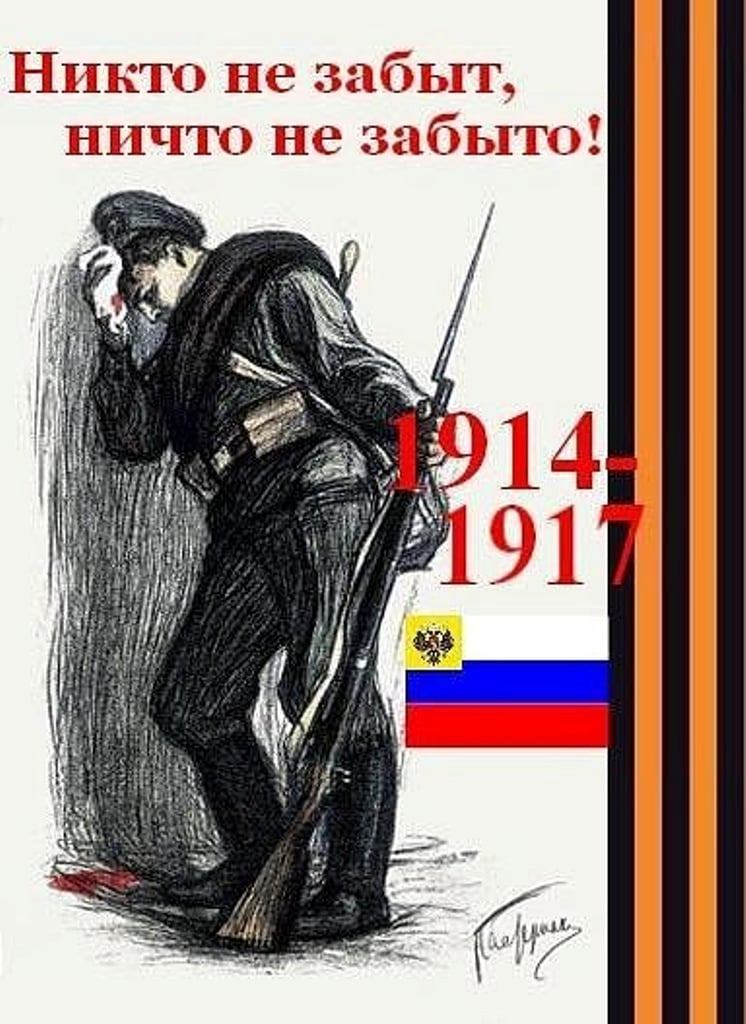
Никто не забыт, ничто не забыто!
No one is forgotten, nothing is forgotten!

Russia’s entry into World War One in August 1914, was based on Russia’s commitment to defending Orthodox Serbia, its pan-Slavic roles, its treaty obligations with France, its concerns over German or Austro-Hungarian dominance in the Balkan region, and its concern for protecting its status as a great power.

1st August – marks the official Day of Remembrance of Imperial Russian soldiers who died in the First World War of 1914-1918. The commemoration day was officially introduced by Russian President Vladimir Putin in 2012. It is on this day, which officials lay wreaths to World War I memorials, Russian cities organize exhibitions dedicated to the war and military units hold solemn assemblies.

During the Soviet years, the First World War and those brave Russian soldiers who gave their lives for the Fatherland, was virtually ignored and forgotten. Soviet dogma dictated that the Great War was a clash of imperialist powers.

How many Russian soldiers laid down their lives “For Faith, Tsar and Fatherland!”? How many fathers, husbands, sons never returned home? According to some estimates, the number exceeds 1,600,000 people, the largest number of casualties among the soldiers and officers of the countries participating in the First World War. The estimate does not include civilian casualties.

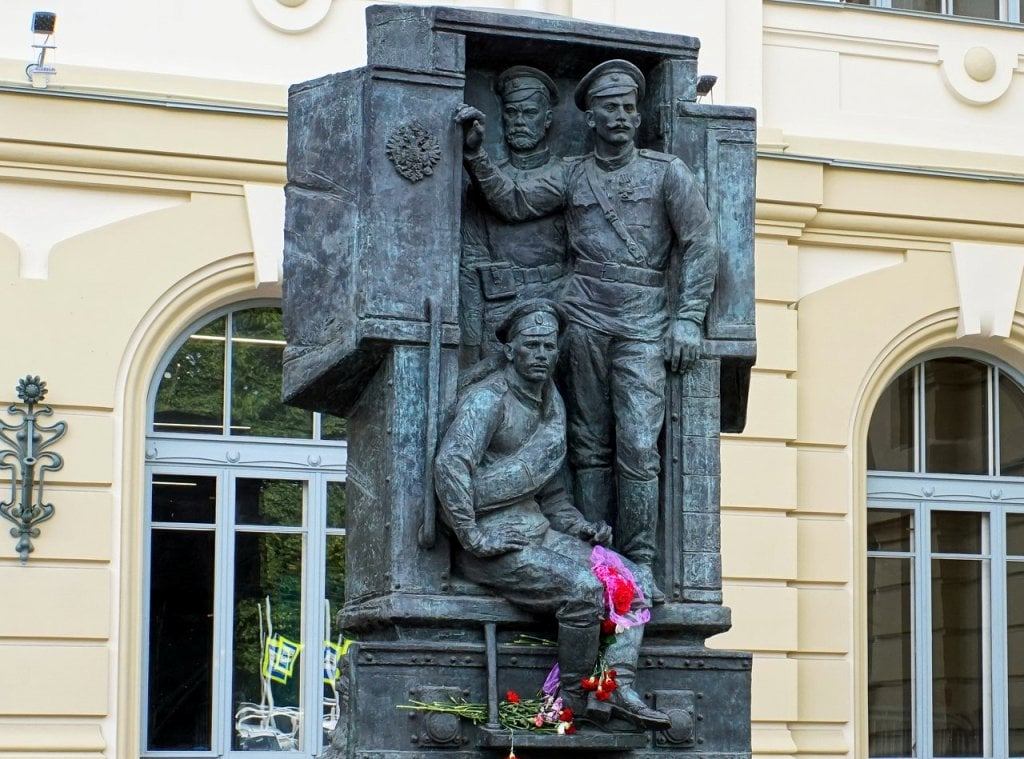
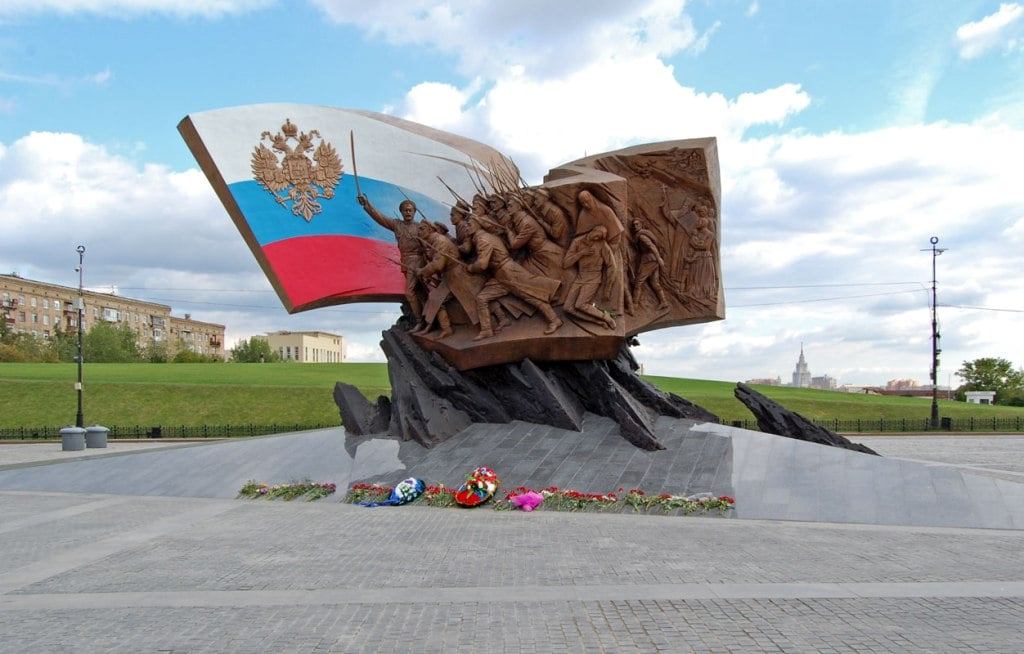
Dozens of monuments to soldiers of the Russian Imperial Army, who fought and died during World War One, have since been erected in major cities across Russia. Below, are just three of the finest:

On 16th December 2014, Russia’s Defense Minister Sergei Shoigu opened a sculptural composition dedicated to the heroes of World Wars I and II on the grounds of the Ministry of Defence on the Frunze Embankment in Moscow.

The WWI monument features Emperor Nicholas II on horseback, recognizing and honouring his efforts during the Great War.

Monument to the Heroes of the First World War on Poklonnaya Hill in Moscow, opened on 1st August 2014. Grand Duchess Elizabeth Feodorovna is depicted in this monument, providing aid to a wounded soldier.

Monument to the Heroes of the First World War in St. Petersburg, installed at the Vitebsk Railway Station on 1st August 2014. It was from this station, that Emperor Nicholas II travelled on the Imperial Train along a specially built line to Tsarskoye Selo.

Никто не забыт, ничто не забыто!
No one is forgotten, nothing is forgotten!

© Paul Gilbert. 1 August 2022

Nicholas II orders uniforms for Victory Parade 1917

There is a common myth that during World War One, Russia’s only breakthrough was the Brusilov Offensive in September 1916. There were allegedly no other successful campaigns. This myth is absolutely incorrect. Shortly after Nicholas II assumed command of the armed forces in 1915, the Russian Imperial Army carried out at least 15 major victorious operations, not counting the Brusilov Breakthrough.

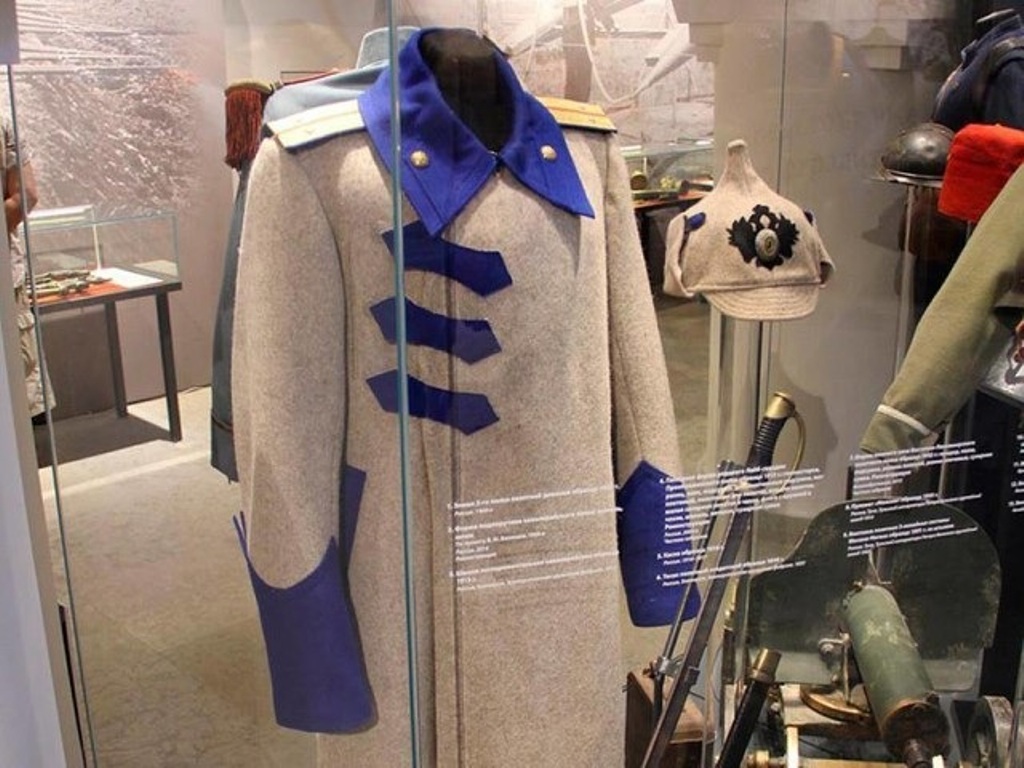
PHOTO: Victory Parade uniform on display in the Russia in the Great War Museum,
Sovereign Marshall Chamber, Tsarskoye Selo

Nicholas II was so confident of Russia’s victory against Germany and Austria during the First World War, that in 1916, he ordered a new uniform be designed for the Victory Parade he planned to hold in Berlin, and then in Constantinople in 1917.

The new uniform was designed by Viktor Mikhaylovich Vasnetsov (1848-1926), a Russian artist who specialized in mythological and historical subjects. The uniforms were sewn in Siberian factories and stored in army warehouses in Petrograd.

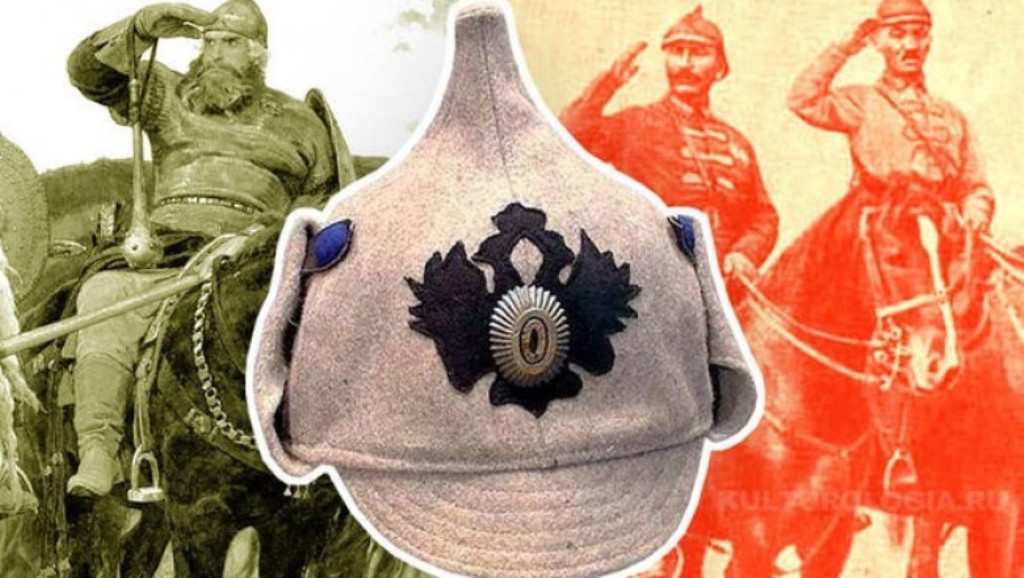
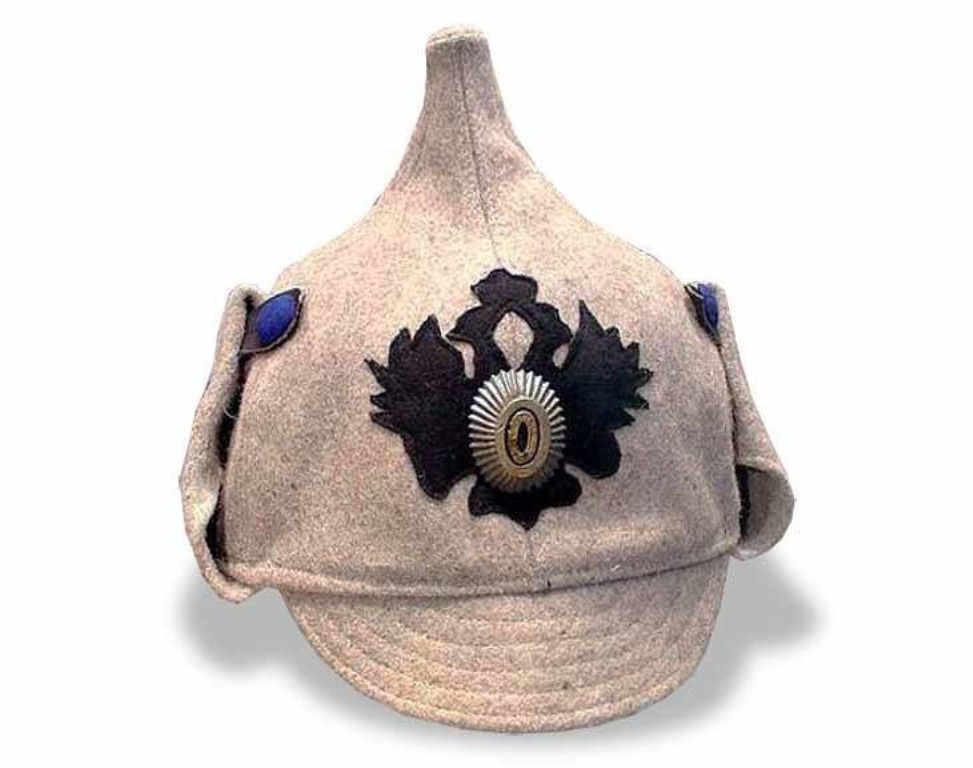
PHOTO: The khaki cloth  “bogatyrka” cap

The uniform consisted of a long-brimmed overcoat, with a leather jacket and trousers, leggings and and a cap designed for troops of the army and air force, as well as the crews of armoured car, armoured trains and scooters. The khaki cloth cap was called a “bogatyrka” – because of the similarity with the ancient helmets of Russian heroes.

Following the 1917 Revolution, this uniform was redesigned for use by the Cheka – the Bolshevik secret police.

© Paul Gilbert. 5 March 2021

The October Revolution 1917 in the International Context. Interview with Professor Dominic Lieven

CLICK on the IMAGE above to watch VIDEO in English. Duration: 24 minutes.

A remarkable interview with Cambridge Research Professor D. Lieven (born 19 January 1952) about the reasons for and the outcomes of the 1917 October Revolution, as well as his family’s personal experience with it. He also speaks about Russia’s involvement in WW1, the Russian-German relationships, and gives an extraordinarily objective evaluation of Tsar Nicholas II’s abilities as a ruler, and comments on the most important decisions during his reign. Dominic Lieven is a research professor at Cambridge University (Senior Research Fellow, Trinity College) and a Fellow of the British Academy and of Trinity College, Cambridge.

Professor Lieven is the third child, of five children, of Alexander Lieven, of the Baltic German princely family, tracing ancestry to Liv chieftain Kaupo. He is the elder brother of Anatol Lieven, British author, Orwell Prize-winning journalist, and policy analyst, and he is distantly related to Christopher Lieven (1774–1839), who was Ambassador to the Court of St James from Imperial Russia over the period 1812 to 1834, and whose wife was Dorothea von Benckendorff, later Princess Lieven (1785–1857), a notable society hostess in Saint Petersburg and influential figure among many of the diplomatic, political, and social circles of 19th-century Europe. Lieven is a great-grandson of the Lord Chamberlain of the Imperial Court of Russia.

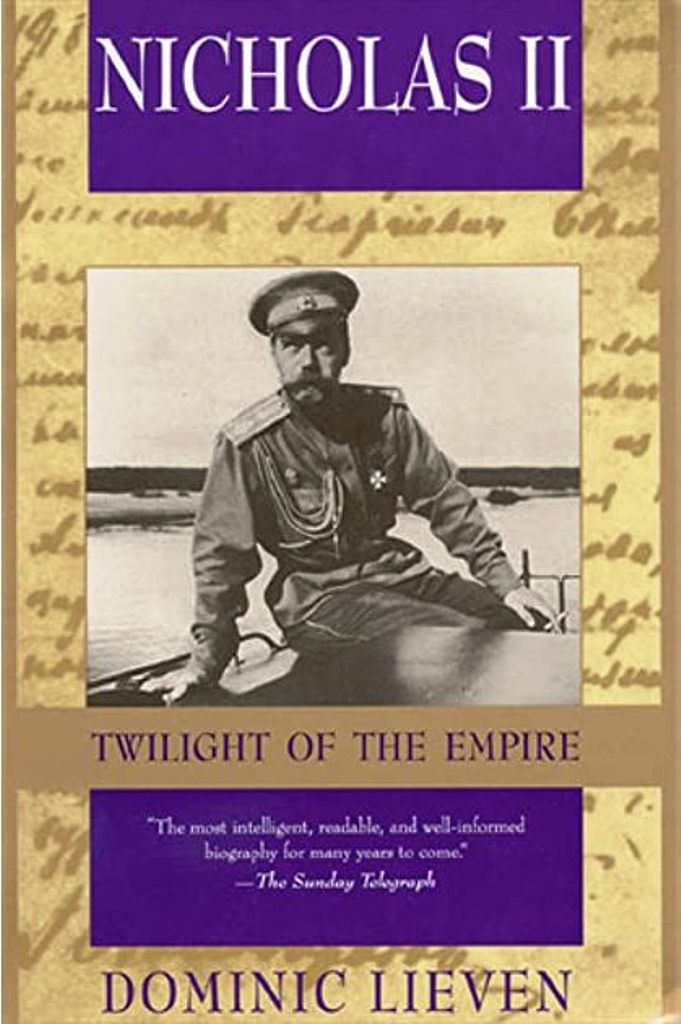
He is the author of numerous books on on Russian history, on empires and emperors, on the Napoleonic era and the First World War, and on European aristocracy, including: Russia’s Rulers Under the Old Regime, Yale University Press (1989); The Aristocracy in Europe 1815/1914, Macmillan/Columbia University Press (1992); Nicholas II: Emperor of all the Russias, John Murray/St Martin’s Press/Pimlico (1993); and The End of Tsarist Russia: The March to World War I and Revolution, Penguin Random House (2015).

***

This video is produced as part of the project for the book The Romanov Royal Martyrs, which is an impressive 512-page book, featuring nearly 200 black & white photographs, and a 56-page photo insert of more than 80 high-quality images, colorized by the acclaimed Russian artist Olga Shirnina (Klimbim) and appearing here in print for the first time. EXPLORE the book / ORDER the book.

© Mesa Potamos Monastery. 30 October 2020

Nicholas II and the Armenian Genocide

120

Although the Russians began World War I by losing terribly to the Germans, their battles against the Turks went much better. After several serious defeats, it seemed that Russia was on the cusp of freeing the Armenian people from the Turkish yoke. However, that’s not what happened. Seeing how badly they were losing, the Turks vented their frustration on the Armenian population. The genocide began.

Because of the failures on the Western Front, many troops were siphoned off from the war with Turkey. Despite this reduction, the Russians continued to advance on the Turks through 1914 and 1915. However, the reduced number of soldiers made it impossible for the Russians to prevent the genocide. It began on 24th April 1915.

As soon as the killings began, Emperor Nicholas II ordered his army to do everything possible to save the remaining Armenians. Of the roughly 1.65 million Armenians living in Turkey, 375,000 escaped into Russia. That’s almost 25% percent of the entire population.

According to G. Ter-Markarian’s seminal work on the Armenian Genocide, this is how Nicholas II managed to rescue so many Armenians:

‘In the beginning of the disaster of 1915, the Russian-Turkish border was opened by order of the Russian Tsar. Massive crowds of refugees entered the Russian Empire. I heard eye-witness accounts of the extreme joy and tears of gratitude of the sufferers. They fell on Russian soil and kissed it. I heard that the stern, bearded Russian soldiers had to hide their own tears. They shared their food with Armenian children. Armenian mothers kissed the boots of Russian Cossacks who took two, sometimes three Armenian boys on their own saddles. Armenian priests blessed the Russian soldiers with crosses in their hands.

120c

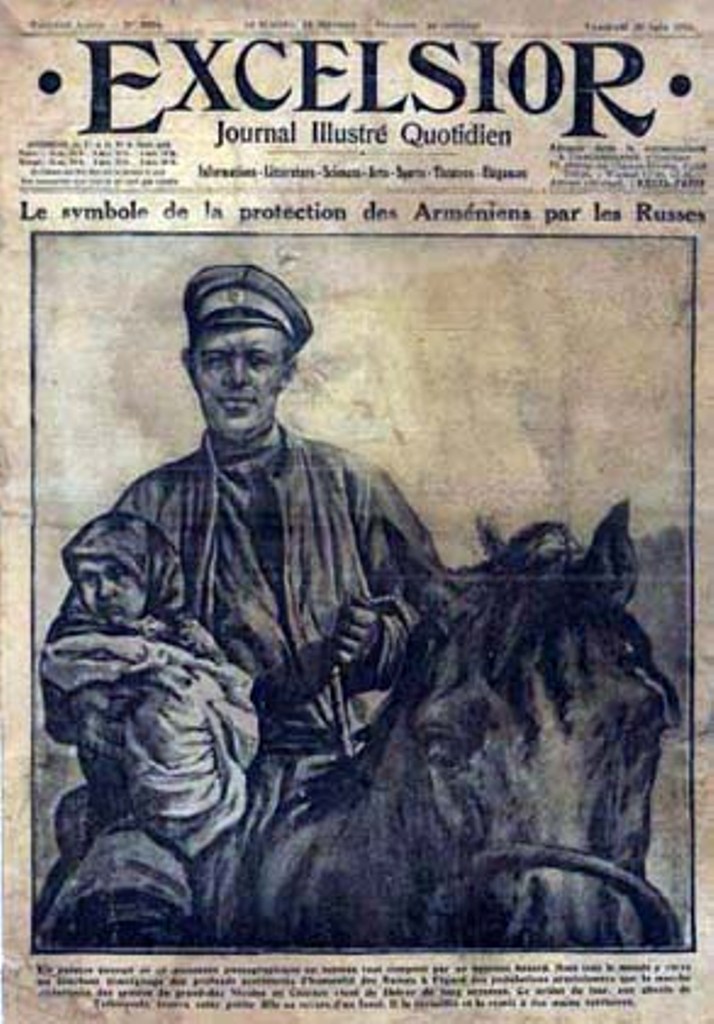
PHOTO: Cover of the June 30, 2016 issue of ‘Excelsior’ carried an illustration of a Russian soldier on horseback with a refugee child in his arms. The picture was captioned, ‘The Symbol of Protection of the Armenians by Russians.’

‘At the border, many tables were set up. Russian government workers accepted the Armenians without any papers. They gave each member of a family a single ruble and a special document that allowed them to travel anywhere in the entire Russian Empire for a year. The document even gave them free public transportation! Soup kitchens were set up nearby as well.

‘Russian doctors and nurses handed out free medicine. They were present to offer emergency services to the sick, wounded, and pregnant.’

A number of committees and organizations were engaged in the Armenian refugee relief effort, among them the Committee of Her Highness Grand Duchess Tatiana Nikolaevna. The Tatiana Committee, established on Sept. 14, 1914, was a major initiative. Among the committee’s main responsibilities were providing one-time financial support for refugees; assisting in repatriation or resettlement, as well as refugee registration; responding to inquiries from relatives; and arranging employment and housing assistance.

The state treasury supported the activities of the Tatiana Committee, and donations from various institutions, committees, and individual donors offered significant sums. The committee also deployed the power of the press and placed appeals in newspapers to raise money. As a result, by April 20, 1915, it had raised 299,792 rubles and 57 kopeks (about $150,000). Acknowledging the potential of artistic events in promoting fundraising, the Tatiana Committee hosted charity concerts, auctions, performances, and exhibitions. A.I. Goremykina, the wife of the prime minister, organized an arts night in Marinskii Palace on March 29, 1915, which was a great financial success. An auction of paintings by famous Russian artists brought the Tatiana Committee 25,000 rubles from that one event alone.

120b

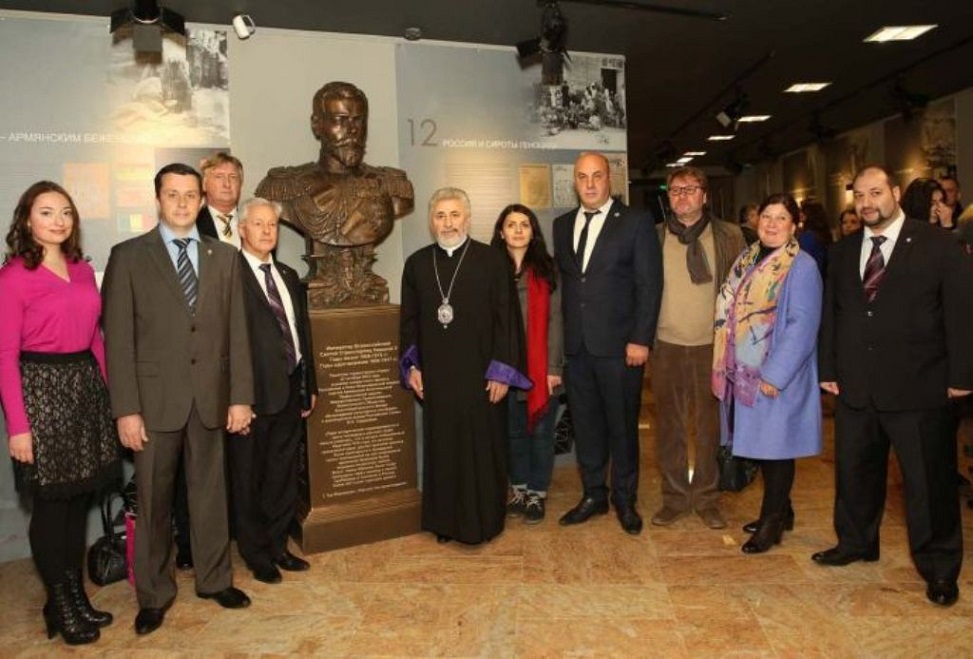
PHOTO: On 24th October 2015, a bust-monument to Emperor Nicholas II was unveiled in the Armenian Museum in Moscow

As a result of the 375 thousand Armenians saved, that is, the Russian Sovereign Emperor Nicholas II saved 23% of the entire Armenian population of Turkey. As historian Paul Paganutstsi wrote: “For one thing it is his [Nicholas II’s] salvation for which he can be counted among the saints.”

At the insistence of Nicholas II, a declaration of allied countries was adopted on 24th May 1915, in which the genocide of the Armenian population was recognized as a crime against humanity.

On 24th October 2015, a bust-monument to Emperor Nicholas II was unveiled in the Armenian Museum in Moscow. It is regrettable, however, that in Armenia itself there is still no monument to Emperor Nicholas II, and in Armenian publishers books of falsifiers and Russophobes are coming out, which are trying to slander the great emancipating mission of the Russian Empire. But the memory of the Armenian nation Russia will always be a liberator.

© Paul Gilbert. 2 November 2019