State visit by Elizabeth II to Russia, 17-20 October 1994

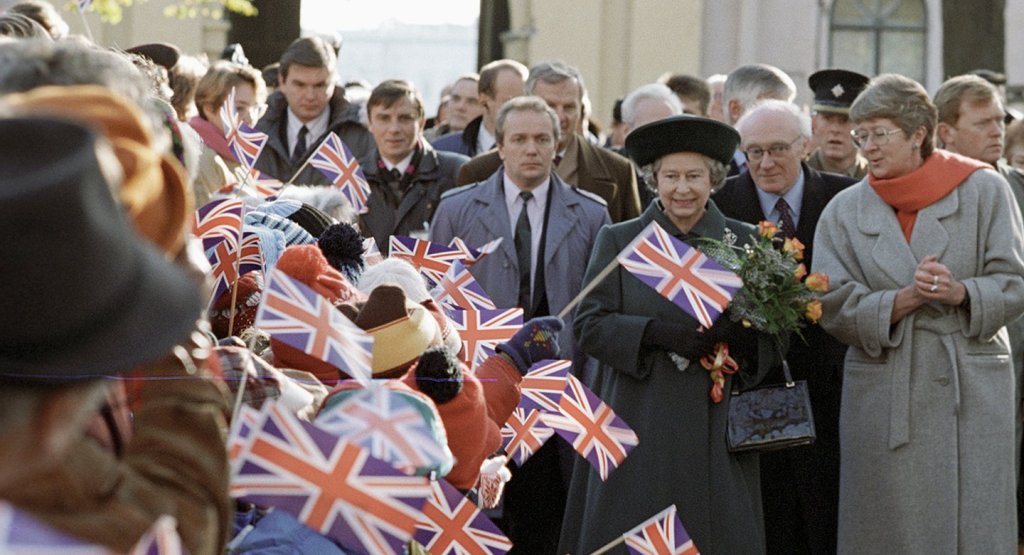
PHOTO: Queen Elizabeth II being warmly greeted by Muscovites,
during her visit to Moscow in October 1994

On 17th October 1994, Her Majesty Queen Elizabeth II of the United Kingdom of Great Britain and Northern Ireland, her husband Prince Philip, Duke of Edinburgh arrived in Moscow, marking the first and so far only visit by a reigning British monarch on Russian soil.

The only previous visit by a British monarch to Russia was made by King Edward VII in 1908. The King never stepped ashore, and met Nicholas II on royal yachts off the Baltic port of what is now Tallinn, Estonia

Queen Elizabeth II’s four-day visit to Russia, from 17th to 20th October 1994, hosted by the President of Russia, Boris Yeltsin (1931-2007), is considered one of the most important foreign trips of the Queen’s 70-yeaar reign.

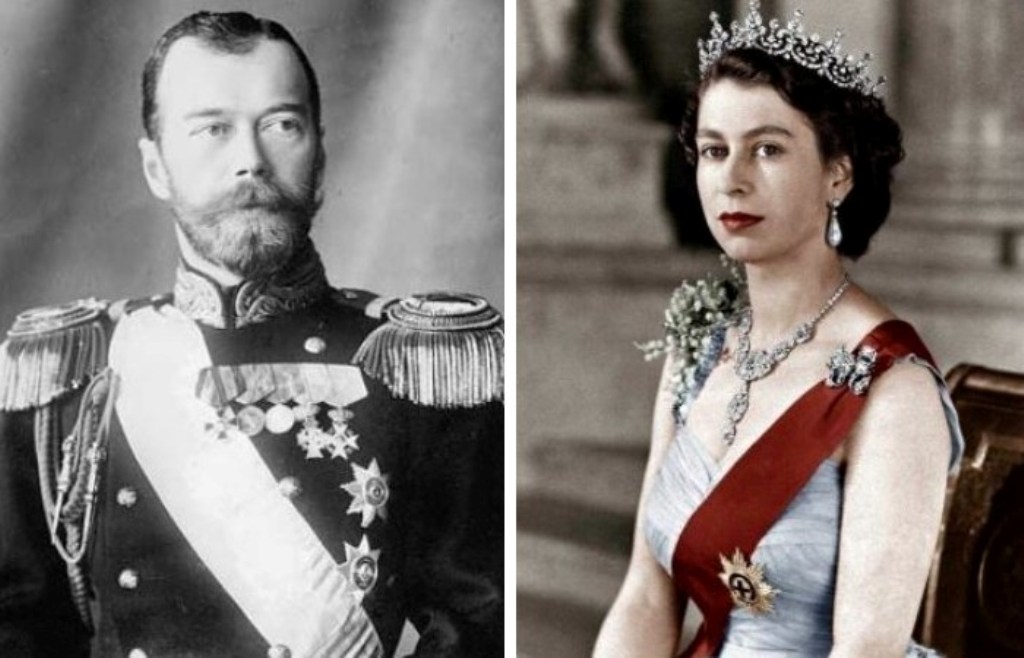
PHOTO: Emperor Nicholas II and Queen Elizabeth II

Queen Elizabeth II and Tsar Nicholas II of Russia are related through their shared ancestry. Her Majesty is a first cousin twice removed to Nicholas II. This connection is a result of their marriages to each other’s relatives, with Princess Alix of Hesse and by Rhine, the future Empress Alexandra Fedorovna, Nicholas II’s wife, being the granddaughter of Queen Victoria.

The brutal murders of Emperor Nicholas II and his family in 1918, prevented royal trips from being made to Russia and the former Soviet Union. In 1967, when Prince Philip was asked if he would go to Moscow to help ease Cold War tensions, he said:

“I’d very much like to go to Russia – although the bastards murdered half my family”.

In September 1973, Prince Philip attended the European Eventing Championships in Kiev as president of the International Equestrian Federation with his daughter, Princess Anne. They became the first British royal family members to visit the Soviet Union since Nicholas II’s murder.

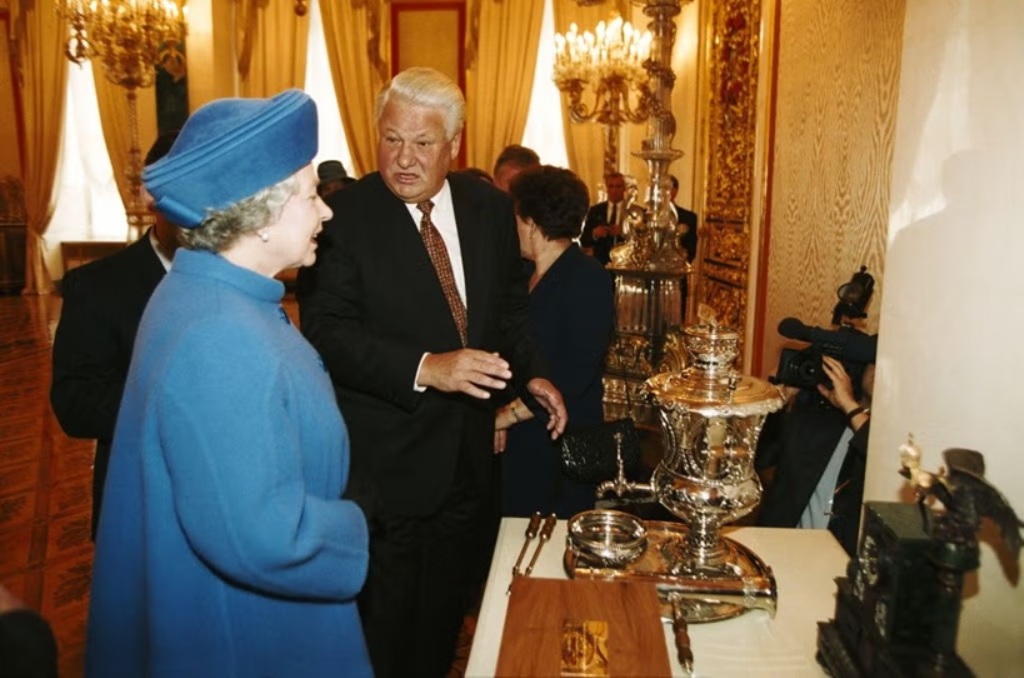
PHOTO: Boris Yeltsin and Queen Elizabeth II touring the Kremlin Museums in Moscow

In 1989, Mikhail Gorbachev made an official visit to the United Kingdom in which he met Queen Elizabeth II. The Queen and Gorbachev met again in July 1991 at the 17th G7 summit in London. Despite this the Queen declined an invitation by Gorbachev to visit the Soviet Union. Following the dissolution of the Soviet Union in 1991, Prince Charles visited St Petersburg in May 1994 and the Queen accepted an invitation by President Boris Yeltsin to visit the country in October 1994.

During her visit to Russia, Russian media focused on the Queen and her popularity in the United Kingdom with newspaper and television coverage of the visit continuing for several days. It was during and after her visit, that the subject of restoring the monarchy in Russia was openly discussed, Some polls showing 18% of Russians favoured a return to monarchy. In a similar poll, taken in 2019, more than 27% of Russians support the restoration of the monarchy. Following the visit, a Russian monarchist party announced that it had amassed 800,000 signatures in support of a referendum on whether a constitutional monarchy should be established in Russia.

Prince Philip said monarchy had thrived in Britain due to it being apolitical while the Tsar “was, by constitution, the autocrat.” Philip was not convinced that people in Russia would want to return to monarchy, despite the presence of monarchist parties.

It is interesting to note, that in 1998, President Boris Yeltsin had considered restoring the monarchy in Russia, but was later dissuaded from the idea.

FURTHER READING: Russia after Putin – would he restore the monarchy?

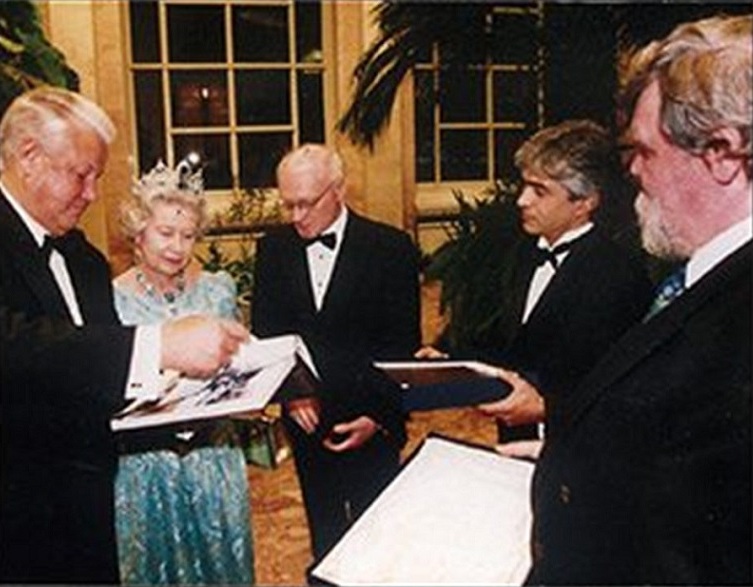
In the photo above, President Boris Yeltsin makes the official presentation of a copy of The Romanovs, Love, Power & Tragedy to Her Majesty Queen Elizabeth II in Moscow.

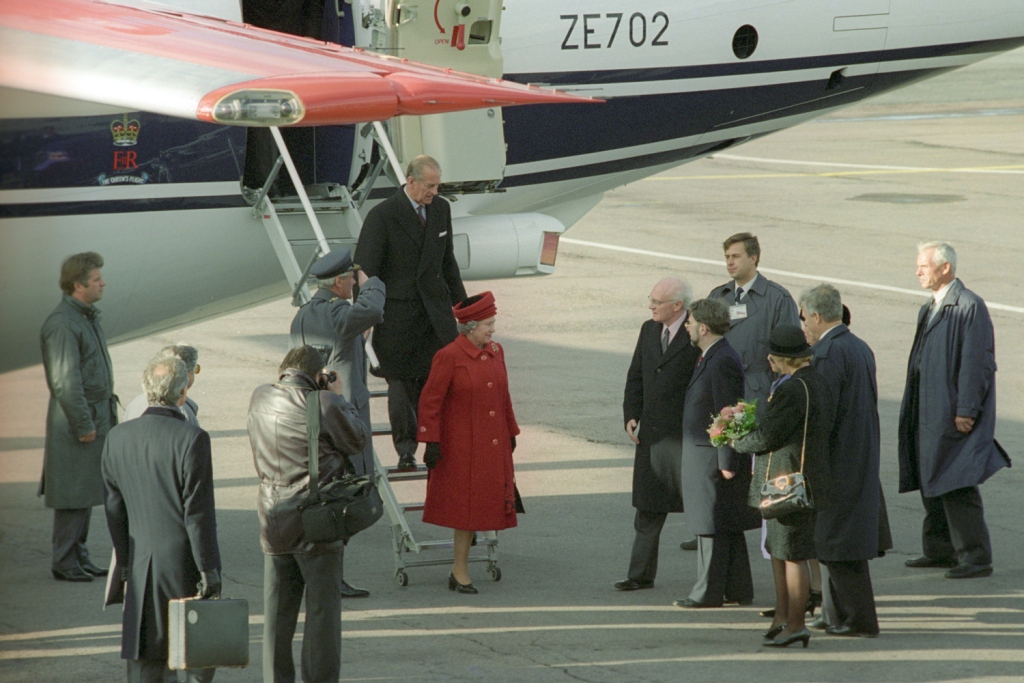
PHOTO: Queen Elizabeth II and Prince Philip arrive at
Vnukovo International Airport in Moscow on 17th October 1994

EVENTS

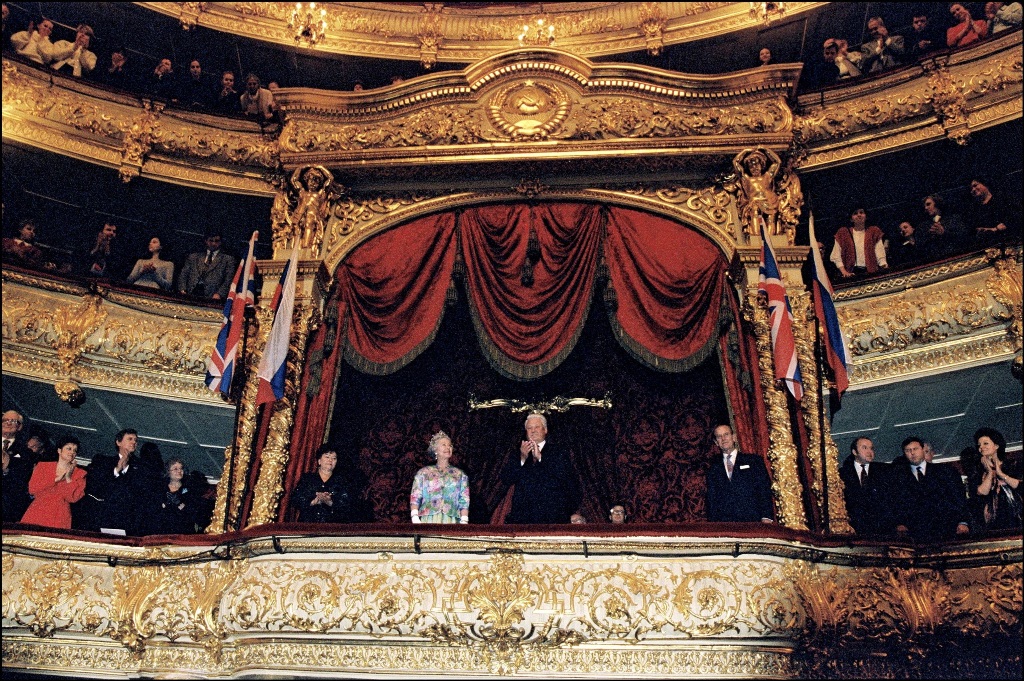
Queen Elizabeth II was greeted at Vnukovo International Airport in Moscow by First Deputy Prime Minister Oleg Soskovets and a guard of honour. Yeltsin and his wife, Naina, formally welcomed the royal couple at St. George’s Hall in the Grand Kremlin Palace, in Moscow. The royal couple stayed in the Grand Kremlin Palace – the former Moscow residence of Emperor Nicholas II – as Yeltsin’s guests. The Queen attended a performance of Giselle at the Bolshoi Ballet, sitting in the Tsar’s Box underneath the State Emblem of the Soviet Union [this has since been replaced by the Russian Double-Headed Eagle]. Her Majesty wore a tiara she had acquired herself instead of one of her tiaras she had acquired elsewhere such as the Grand Duchess Vladimir Tiara to not cause offence.

PHOTO: Queen Elizabeth II and President Boris Yeltsin in
the Tsar’s Box at the Bolshoi Theatre in Moscow

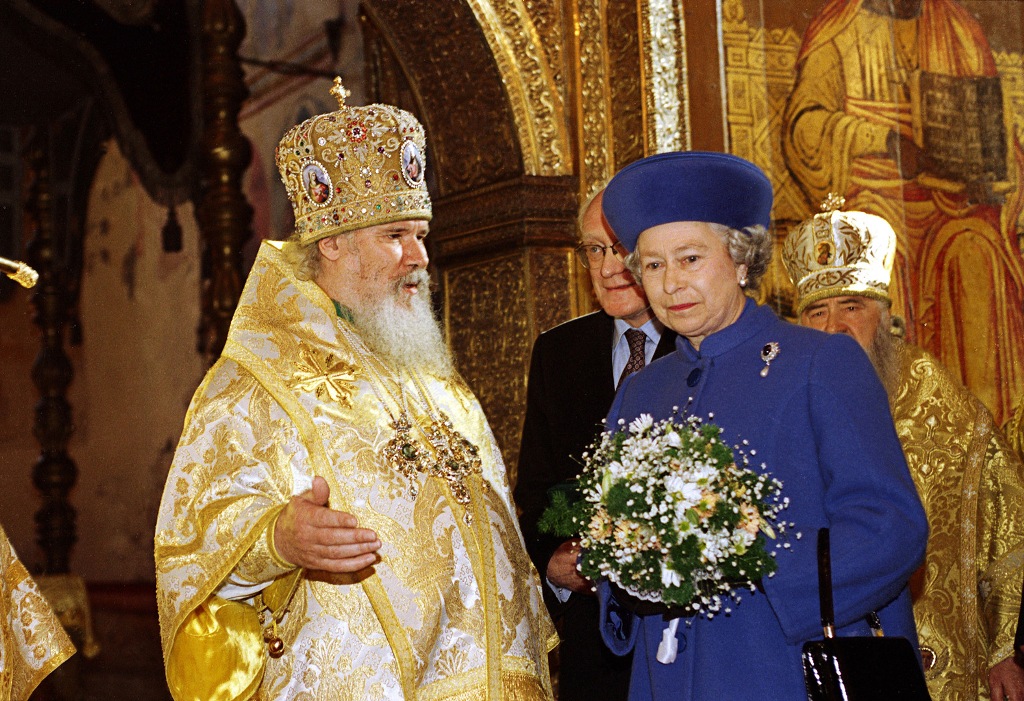
The following day, the Queen toured the Kremlin Museums and Red Square and laid a wreath at the Tomb of the Unknown Soldier near the Kremlin Wall commemorating World War II casualties. Elizabeth II met the mayor of Moscow Yury Luzhkov (1936-2019) outside of St Basil’s Cathedral and she also met His Holiness Patriarch Alexi II (1929-2008), the primate of the Russian Orthodox Church.

PHOTO: Patriarch Alexei II and Queen Elizabeth II. Moscow, 18th October 1994

Later that everning, the royal couple attended a state banquet hosted by President Boris Yeltsin. At the banquet, the Queen addressed Yeltsin and said:

You and I have spent most of our lives believing that this evening could never happen. I hope that you are as delighted as I am to be proved wrong“.

Boris Yeltsin said the visit was to Russia was the “utmost recognition that our country is on the road to democracy” and his chief spokesman Vyacheslav Kostikov said the Queen’s visit was evidence of Russia’s break with its totalitarian past. Kostikov added they were aware that the British queen would never have visited a Communist country. 

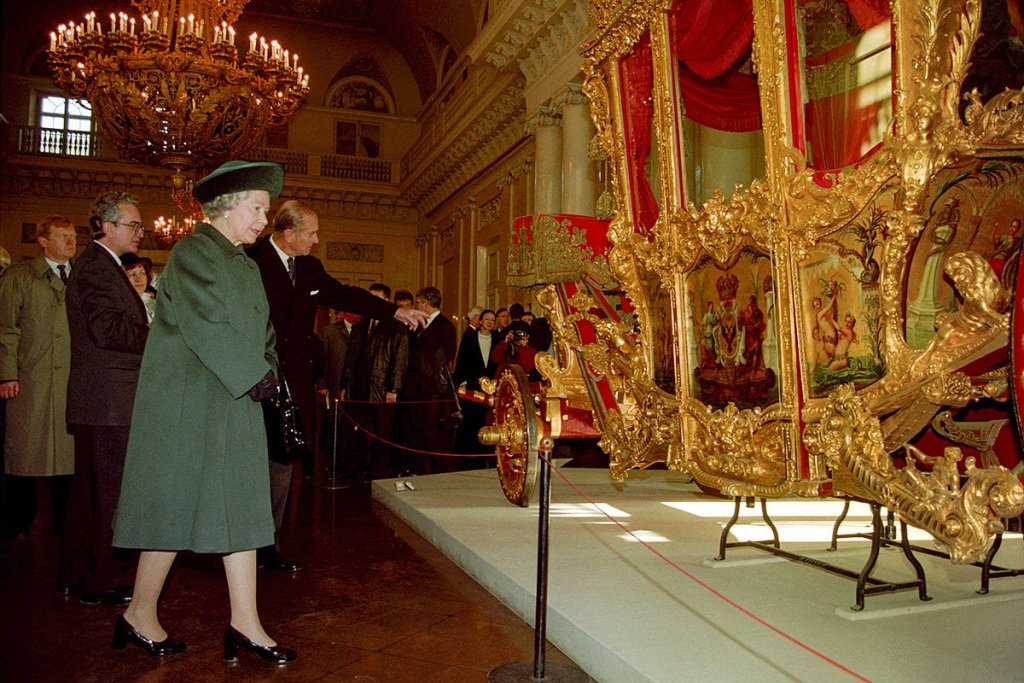
The Queen flew to St Petersburg on 19th October, where she visited the Peter and Paul Fortress and the State Hermitage Museum.

PHOTO: Queen Elizabeth II admires the gilded Coronation carriage of Empress Catherine the Great in the State Hermitage Museum, St Petersburg

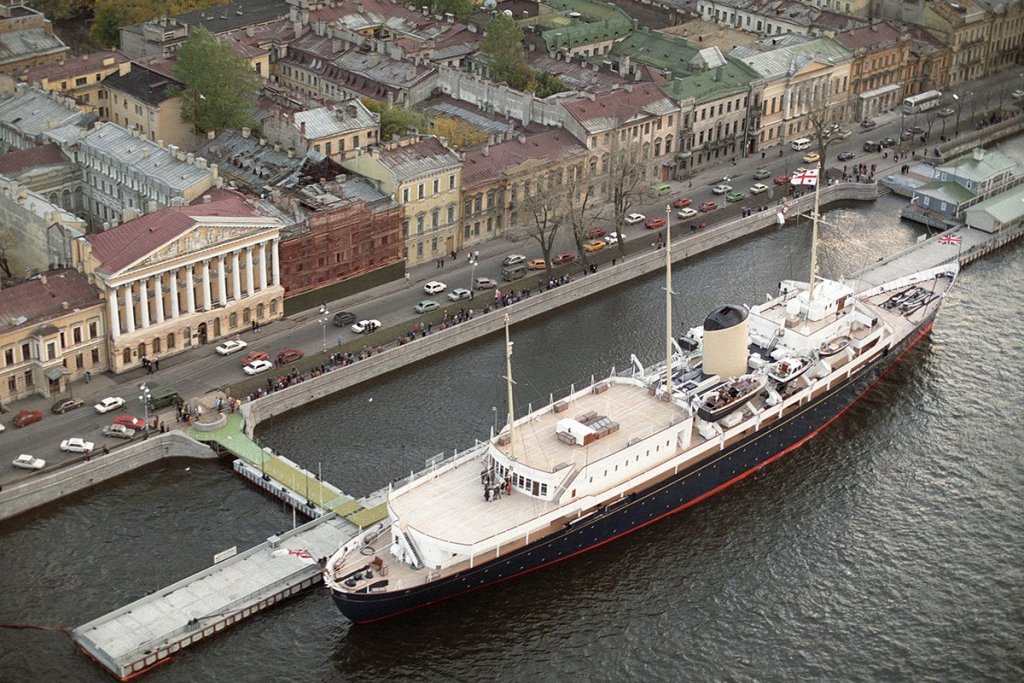
Queen Elizabeth II and Prince Philip, departed Russia aboard the royal yacht, HMY Britannia on 20th October 1994.[11] Before returning to the United Kingdom, she made an official visit to Finland.

PHOTO: the royal yacht, HMY Britannia, docked
on the Neva in St Petersburg

In her 1994 Christmas Message, the Queen reflected on how times had changed, noting she “never thought it would be possible in [her] lifetime” to attend a service in St Basil’s Cathedral in Moscow Prince Philip made a solo visit to Russia in July 1995 as president of the World Wildlife Fund. In 2003, the Queen hosted President Vladimir Putin’s state visit to the United Kingdom and in 2014 they both met again during an event commemorating D-Day in France.

© Paul Gilbert. 17 October 2025

A joint monument to Nicholas II, Lenin and Yeltsin to be erected in Russia

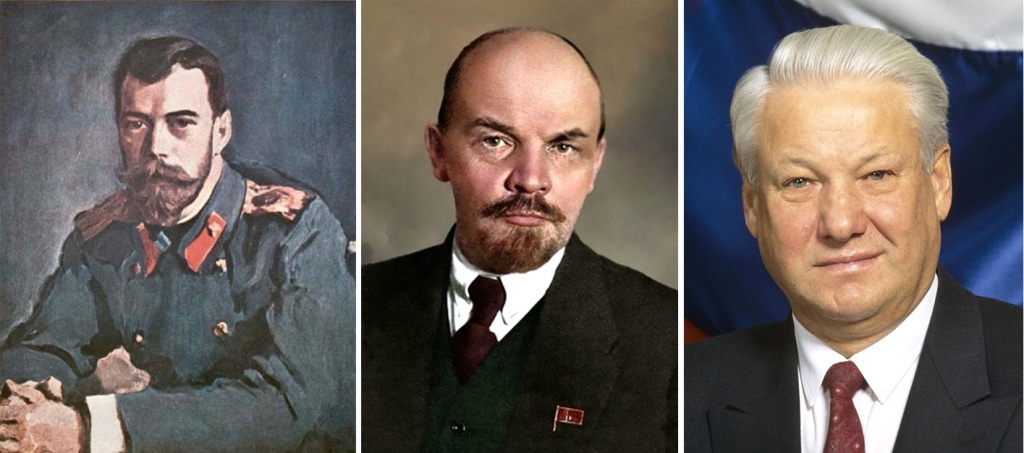
PHOTO: Emperor Nicholas II, Bolshevik leader Vladimir Lenin
and Russian president Boris Yeltsin

This year – 2025 – marks the 155th anniversary of the birth of Vladimir Lenin, the 35th anniversary of the election of Boris Yeltsin as Chairman of the Supreme Soviet of the RSFSR and the 25th anniversary of the glorification of Tsar Nicholas II as a saint. In recognition of these three historical figures a joint monument entitled “The Great Three” will be erected in St. Petersburg.

The sculptors will create a bronze monument depicting the life-size figures of Nicholas II, Lenin and Yeltsin, which will be installed on the coast of the Gulf of Finland, opposite the flags of the Russian Empire, the USSR and the Russian Federation. They will be depicted holding each other by the shoulders and proudly looking towards the state symbols of the three eras.

The installation of the monument is supported by the Ministry of Culture, the Communist Party of the Russian Federation, the Russian Orthodox Church and the Yeltsin Center in Ekaterinburg. It is their hope that the monument will contribute to reconciliation in society and will become a symbol of the continuity of Russia’s national history.

Reconciliation is a noble ideal but Lenin’s hand on the last Tsar’s shoulder is somewhat disturbing. One simply cannot “reconcile” with the man who ordered the murder of Nicholas II and his family. The very idea of a monument depicting the Bolshevik leader standing next to the Tsar, with his hand on the Tsar’s shoulder is simply wrong!

The date and location of the installation of “The Great Three” monument has yet to be announced.

© Paul Gilbert. 20 March 2025

Boris Yeltsin Had Plans to Demolish Lenin’sMausoleum and Restore Monarchy

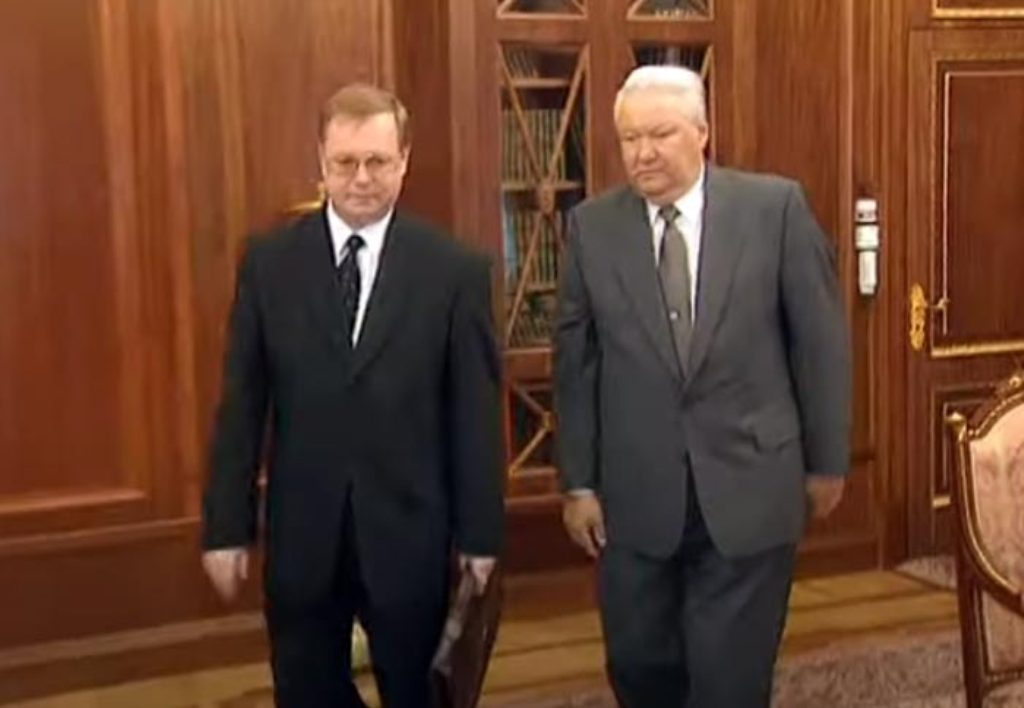
PHOTO: Sergei Stepashin (left) and Boris Yeltsin (right)

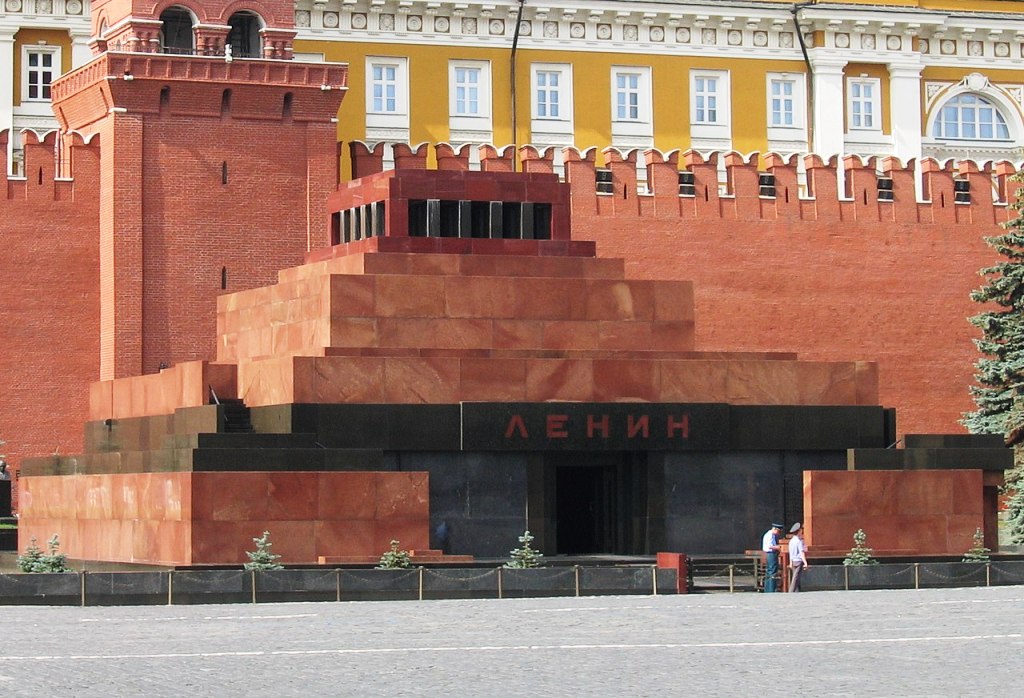
During an interview with Istorik magazine in April 2017, former Russian prime minister Sergei Vadimovich Stepashin, claims that in 1998 acting Russian president Boris Yeltsin gave him an order to demolish Lenin’s mausoleum in Moscow’s Red Square.

Stepashin chaired the Ministry of Interior from March 1998 to May 1999, and it was during his term in office that he made an official visit to England.

“When I came back, I went to his office and Yeltsin said:

“Sergei Vadimovich, I made a decision to demolish the mausoleum.” I told him: “Well, but how does it relate to the Ministry of Interior?” “The Ministry of Interior should secure order,” he answers.

“Well,” I said, “I am a minister and should fulfill orders of the Chief Commander, the only thing I can’t secure, Boris Nikolayevich, is that will you still be the president and will I still be a minister after such a decision?” – Stepashin recalled.

PHOTO: Lenin’s mausoleum on Red Square, Moscow

According to him, he started persuading Yeltsin not to demolish the mausoleum.

“If you trust me, then please listen to me, I tell you honestly, it is not the right time. From the Christian point of view, Lenin’s body should not be put on view. It is a sin. But it is not the right time to demolish the mausoleum. Don’t do it! Doesn’t it incommode you?”

Yeltsin grumbled, but listened to my arguments,” Stepashin said.

Since 2007 Stepashin is the head of the revived Imperial Orthodox Palestine Society (IOPS).

Yeltsin’s sympathetic interest in a restoration of the monarchy

In 1994, unconfirmed reports in the media suggested that Yeltsin also had plans to restore the monarchy in Russia. According to economist and strategist Vladimir Lvovich Kvint events would have taken the following turn: Parliament would vote for the restoration of the monarchy, or Yeltsin would organize a referendum, and the people, tired of the fighting among political leaders would agree. Yeltsin was not in favour of an absolute monarch, but a constitutional monarchy with more power than that of those in Britain and Europe. Once again, Yeltsin was persuaded not to pursue the idea any further.

© Paul Gilbert. 17 May 2023


How Yeltsin justified the demolition of the Ipatiev House

226a

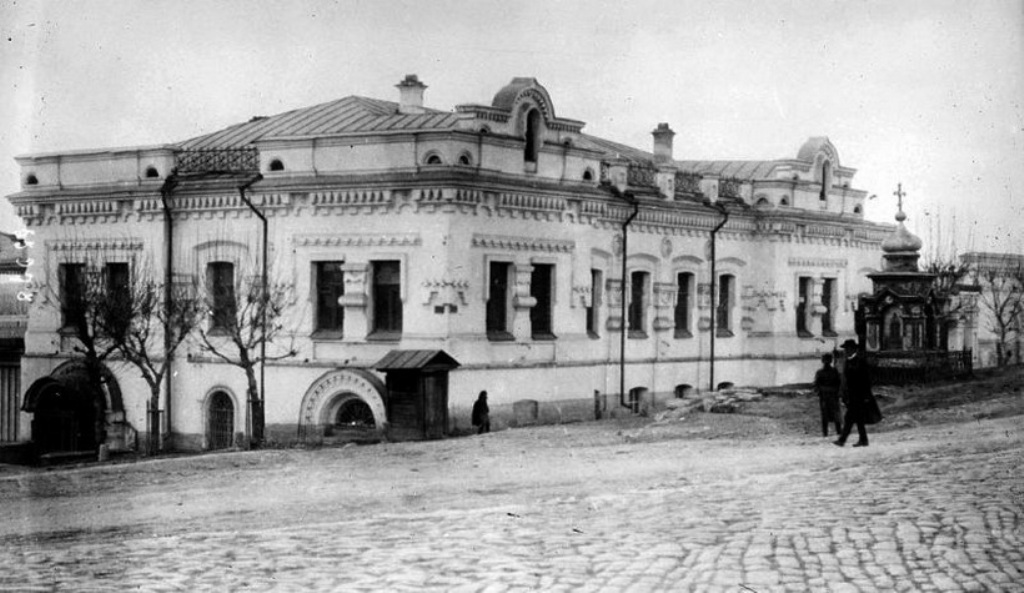
The Ipatiev House before 1917

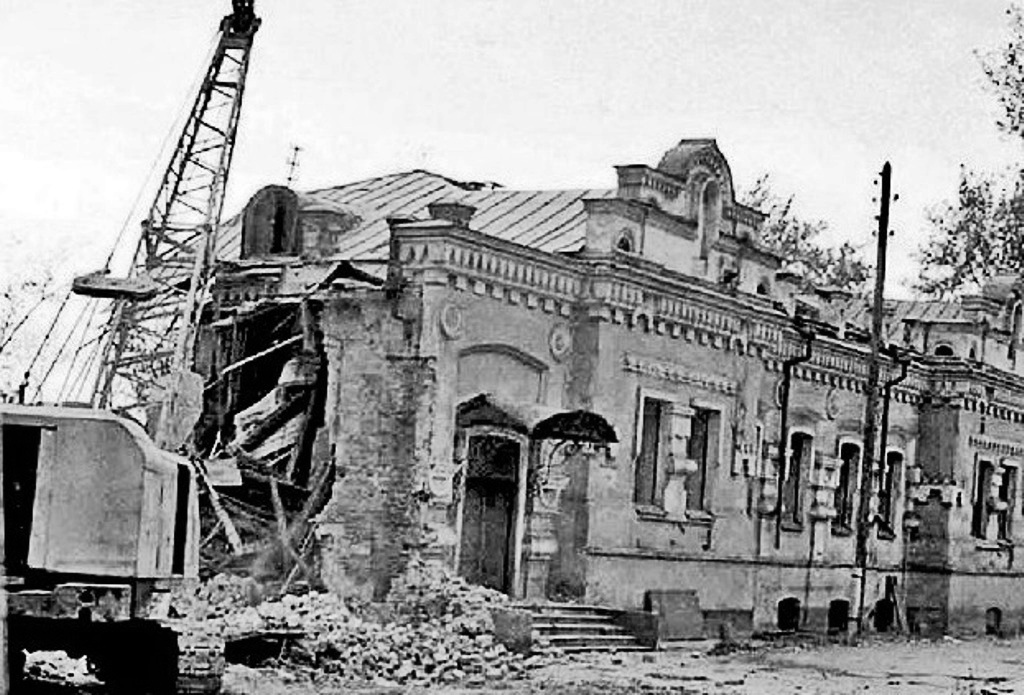
On 22-23 September 1977, the Ipatiev House in Ekaterinburg where the Russian Imperial Family were held under house arrest for 78 days before being murdered, was razed to the ground. The decision of the Soviet authorities was perceived rather ambiguously, but what was the reason behind the destruction of this historic building, and could it have been saved?

226e

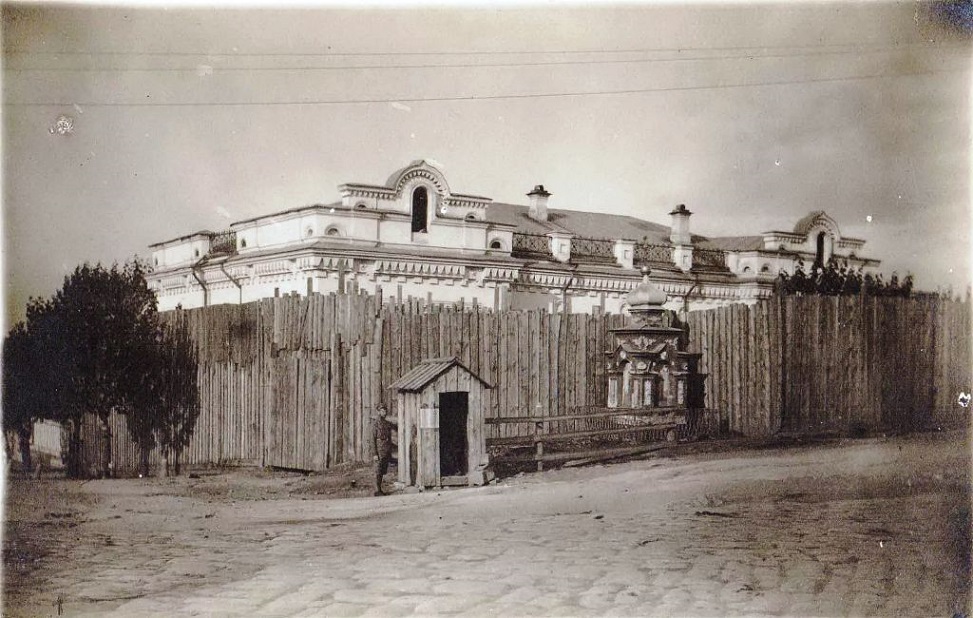
The Ipatiev House in 1918

A house with a tragic fate

The two-storey stone Ipatiev House was built in the 1880s by state adviser I.I. Redikortsev, on the western slope of the Ascension Hill – a notable hill in Ekaterinburg. It was located at No. 49/9 on the corner of Voznesensky Prospekt and Voznesensky Lane (renamed Karl Libnecht and Klara Zetkin respectively, after 1917). The eastern facade (facing Voznesensky Prospekt) was one-story, and the western (facing the garden) had two floors.

Redikortsev did not remain the owner of the house for long, he was accused of corruption, and in order to improve his shaky financial condition in 1898 he sold the house to the gold miner I. G. Sharaviev.

In 1908, the Ipatiev House was purchased by military civil engineer Nikolai Nikolaevich Ipatiev, who paid 6,000 rubles to the former owner. The Ipatiev family lived in the upper floor, while the the lower floor was used as Ipatiev’s office. The house had running water and sewer, electricity and telephone. The interiors were richly decorated with cast iron, stucco mouldings, and artistically painted ceilings.

On 27th April 1918, the Bolsheviks ordered Ipatiev to vacate the mansion within two days, for the maintenance of the Imperial family, who were to be transferred from Tobolsk. Due to the fact that Ipatiev was away, his personal belongings were locked in a basement pantry next to the room in which the Imperial family were later shot. Subsequently, the basement was sealed in the presence of the owner. It is believed that the choice of the house was due to the fact that Ipatiev was well acquainted with the members of the Ural Council and, in particular, Yakov Yurovsky who served as a prominent representative of the cadet party, and who, after the February Revolution, was appointed a member of the local public security committee.

Machine guns were installed in the attics of neighbouring buildings, the house itself was surrounded by a high wooden double fence, the height of which was higher than the windows of the second floor of the Ipatiev House, with a single wicket gate, which was  constantly guarded, two security posts were located inside, eight outside, thus completely prepared for the arrival of “Citizen Romanov” Nicholas II, his wife and their daughter Maria.

Immediately after the murder of the Romanovs, which occurred on the night of 16/17 July 1918, the house was returned to Ipatiev. Five days later, White Army units entered the city. Nikolai decided to emigrate, and sold the mansion to representatives of the White Army, and for a short time the mansion served as the headquarters of the Siberian Army, and representatives of the Russian government.  Their stay in the Ural capital was cut short, after the city was recaptured by the Bolsheviks.

From 1922, the Ipatiev House housed a dormitory for university students and apartments for Soviet employees. For some time there was even a kindergarten, and in the basement, where the Imperial family were murdered, a children’s shower was installed.

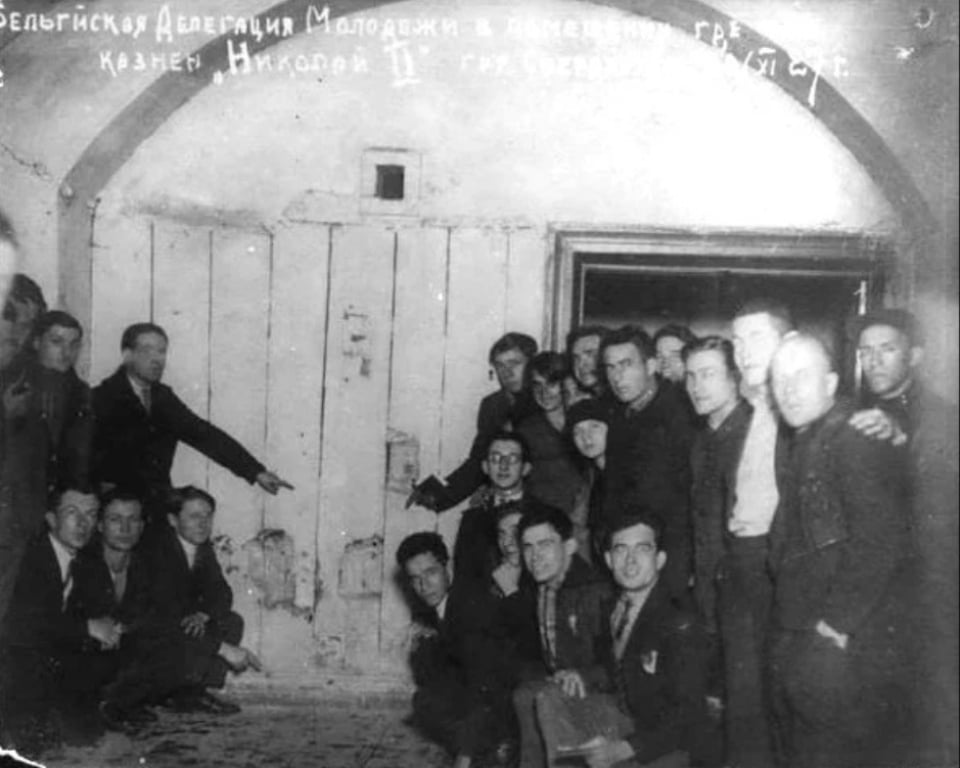
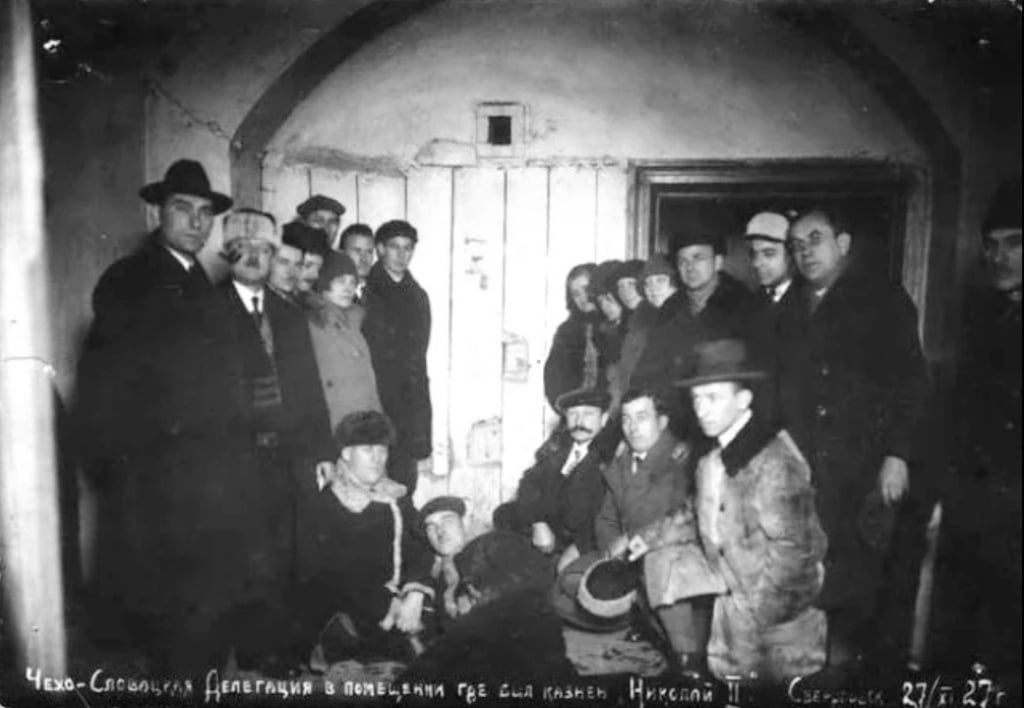
In 1927, it was decided to open the Museum of the Revolution in the building. The Museum of the Revolution was open daily except Monday and Thursday from 12 noon to 6 pm, the cost of tickets was 5 kopecks for tourists, 10 kopecks. for union members and 25 kopecks for every one else. The tour of the museum included a visit to the basement and the room where the Imperial Family were shot. To complete the exhibit, a decision was made to restore the bullet riddled wall in the murder room, since the retreating White Guards had  disassembled the genuine one and took it with them. [N.B. if there is any truth to this, the fate of the original wall from the “killing room” remains yet another mystery – PG] 

In 1938, the former mansion housed expositions of the Anti-Religious and Cultural-Educational Museum, as well as offices of various departments. If turning the Ipatiev House into an “Anti-Religious” Museum was not enough, in 1923, the Bolsheviks imposed one further indignity on the murdered tsar and his family, by issuing postcards of the house surrounded by the wooden fence, bearing the insulting and disrespectful caption “the last palace of the last tsar”.

From the beginning of the 1970s, a branch of the Chelyabinsk Institute of Culture was moved here: in the basement, students even staged performances, as evidenced by preserved photographs.

226f

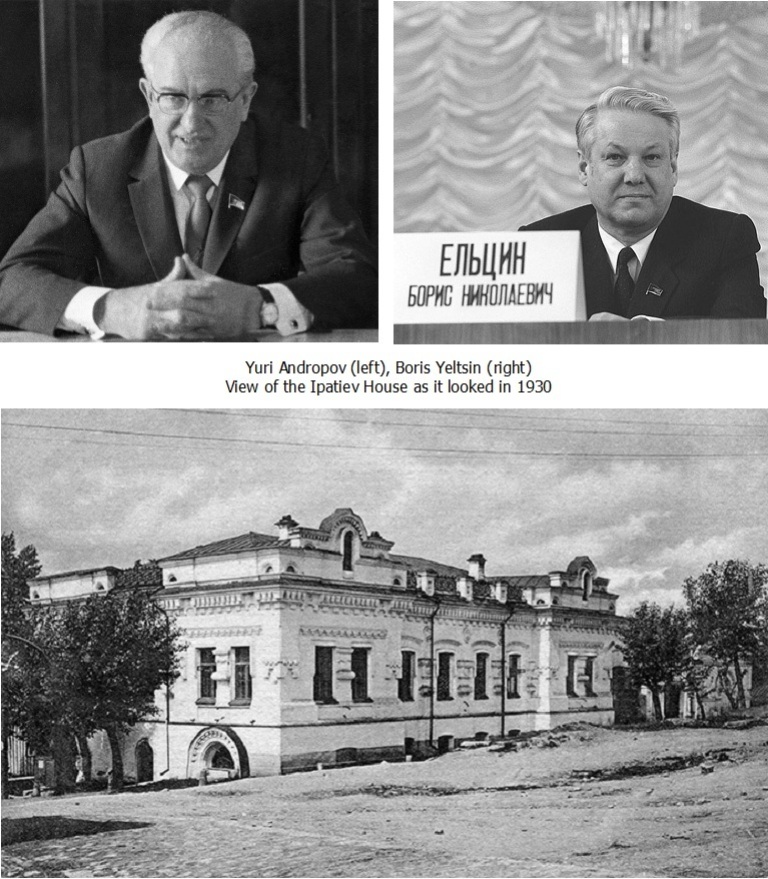
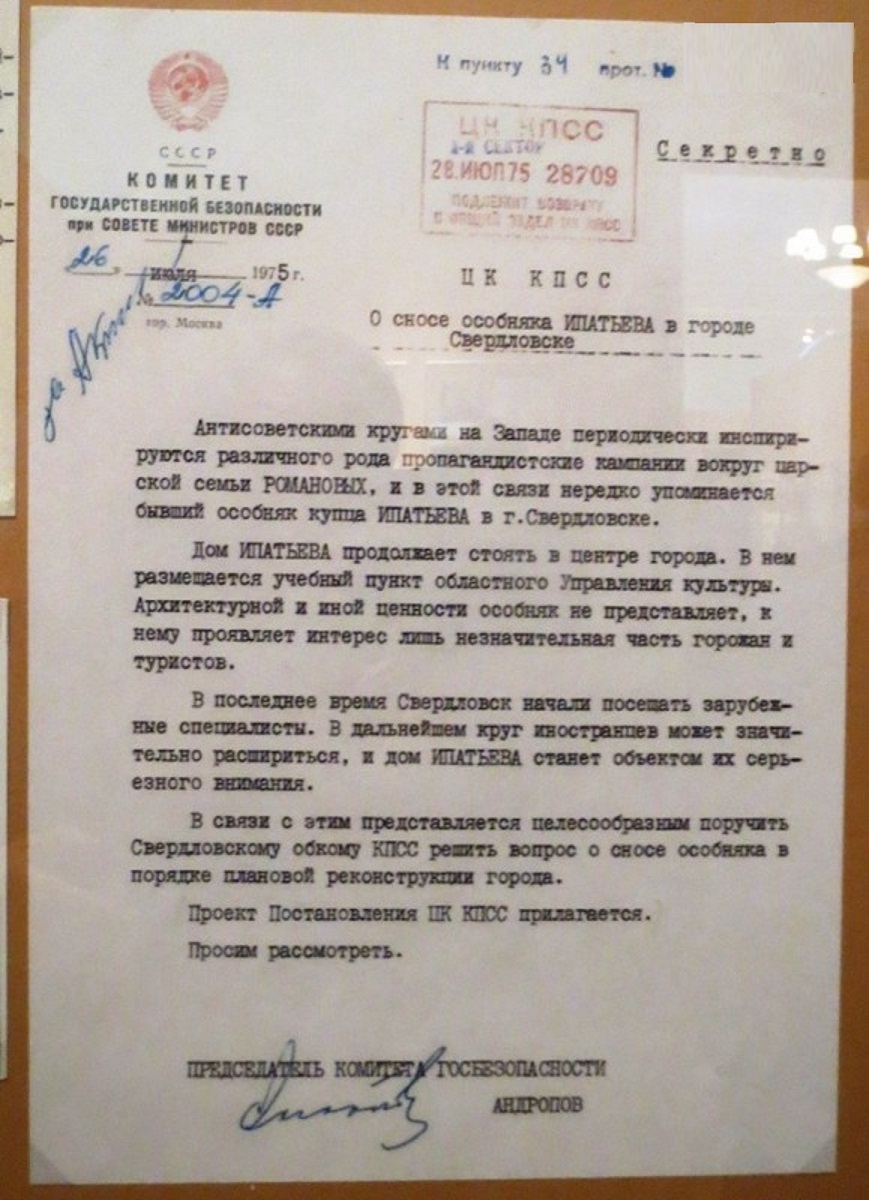
Andropov’s “secret note No. 2004-A” on the Ipatiev House

The KGB and Politburo take action

The day of 26th July 1975 was a turning point in the fate of the Ipatiev House. On this day, a secret note No. 2004-A was issued.

“On the demolition of the Ipatiev mansion in the city of Sverdlovsk” was sent from the KGB to the Politburo of the Central Committee of the Communist Party of the Soviet Union (CPSU). The text of the document read:

“Anti-Soviet circles in the West periodically inspire various kinds of propaganda campaigns around the Romanov royal family, whereby the former mansion of the merchant Ipatiev in Sverdlovsk is often mentioned. Ipatiev’s house continues to stand in the center of the city. It houses the training center of the regional Department of Culture.

“The mansion is of no architectural or historic importance; only a small number of the townspeople and tourists are interested in it. Recently, foreigners began to visit Sverdlovsk. In the future, the number of foreigners is expected to increase significantly, and Ipatiev’s house will no doubt become an object of their curiosity and interest. In this regard, it seems appropriate to entrust the Sverdlovsk Regional Committee of the CPSU to resolve the issue of demolishing the mansion in the order of the planned reconstruction of the city. The draft resolution of the Central Committee of the CPSU is attached. Please consider.”

The document was signed by the chairman of the State Security Committee, *Yuri Andropov (1914-1984). * Andropov later served as third General Secretary of the Communist Party of the Soviet Union, from November 1982 until his death in February 1984.

In the 1990s, Vladimir Solovyov, an investigator from the Prosecutor General’s Office, who investigated the murder of the tsar’s family, stated that the KGB had received information about how, every year, on the anniversary of the death of the Imperial Family, people came to the Ipatiev House, to light candles and offer prayers. The authorities referred to these annual visits “of painful interest” while declaring them as “anti-Soviet activity.” The Party bosses could not allow these pilgrimages to continue.

On 30th July 1975, Andropov’s proposal was unanimously adopted by the Politburo. Upon learning of the impending demolition of the Ipatiev House, the director of the museum, gave the order to save everything that could be carried away.

226i

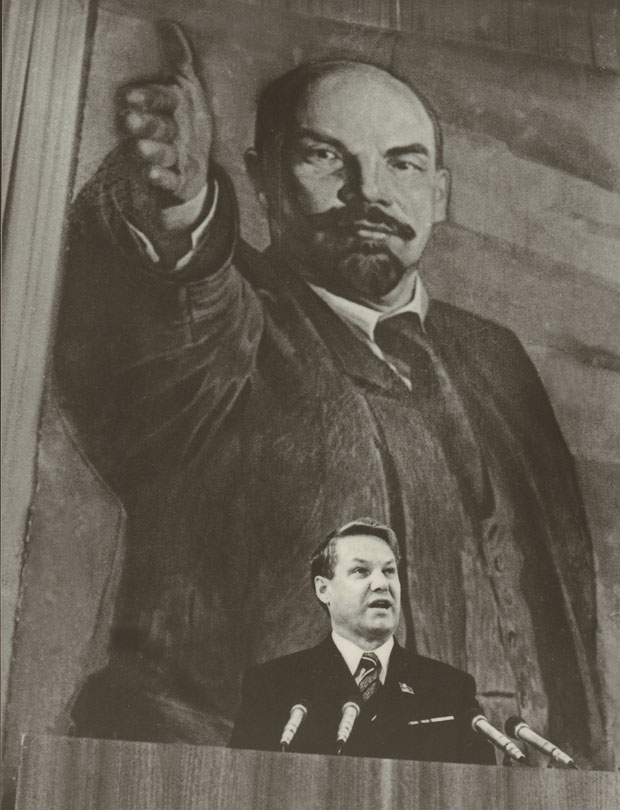
Boris Yeltsin. First Secretary of the Sverdlovsk Regional Committee of the CPSU 1977

“It was impossible to resist”

The elimination of the Ipatiev House was entrusted to local authorities. The order was executed by Boris Yeltsin, First Secretary of the Sverdlovsk Regional Committee of the CPSU . “It was impossible to resist, not to fulfill the Politburo Resolution,” Yeltsin would later note in his memoirs. “They assembled the equipment and demolished it in one night. If I had refused, I would have been left without work, and the new secretary of the regional committee would have complied with the order anyway,” he concluded.

The unofficial reason behind the demolition of the Ipatiev House was the need for reconstruction of the entire block – therefore, according to the “reconstruction” plans, all houses located in the entire block were to be demolished. The fact that the houses and merchant buildings located in the quarter were of architectural and historical value of late 19th-early 20th century Ekaterinburg, was of no interest to the authorities.

Experts noted that having destroyed the entire block, the authorities made it difficult to find the exact place where the Ipatiev House was located.

After the construction of the Church on the Blood, some people claimed that the Imperial Room – built on the site of the basement room of the Ipatiev House, where the family were all murdered – located in the Lower Church of the Church on the Blood is inaccurate. Each year on the anniversary of the regicide, a small group of people gather and create a square on one of the marble stones on the territory of the Church on the Blood. Here, they lay flowers, light candles and offer up prayers. It is ironic that given that the experts could not determine the exact spot, that a group of amateurs could?! 

Prior to the demolition of the Ipatiev House, local historians removed many valuable interior elements, including a fireplace, door handles, tiles, stucco molding from walls, iron bars from windows, etc. These items can be seen today in local museums in Ekaterinburg and Ganina Yama. It is interesting to note, when opening the floor in the grand duchesses bedroom, a golden bracelet with precious stones and the monogram ‘T’ was found hidden under the baseboard and wrapped in a newspaper. The whereabouts of this bracelet is unknown to the author.

226h

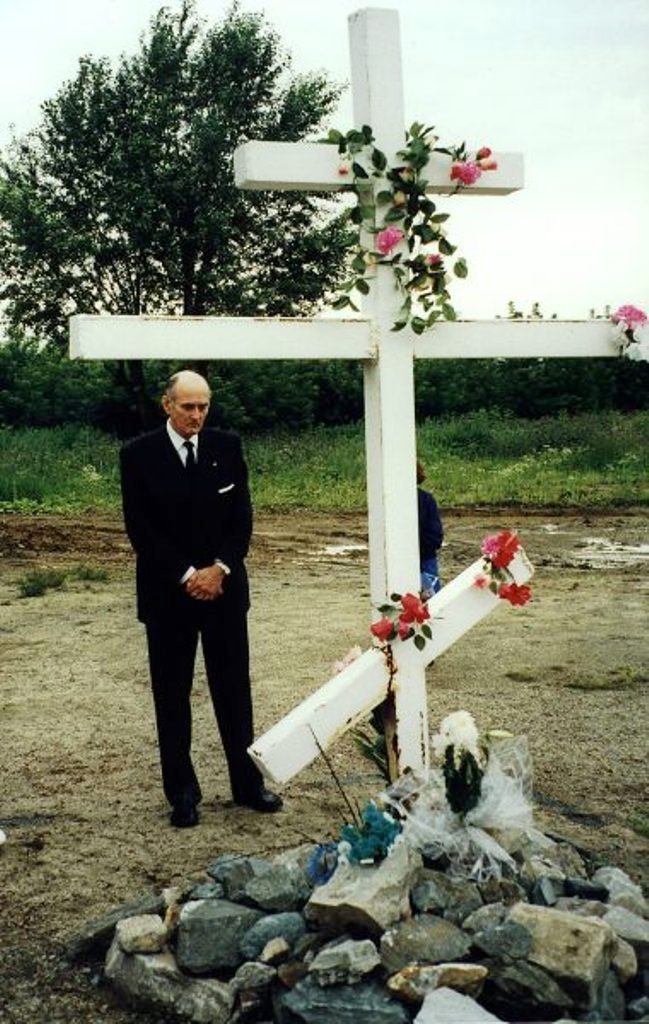
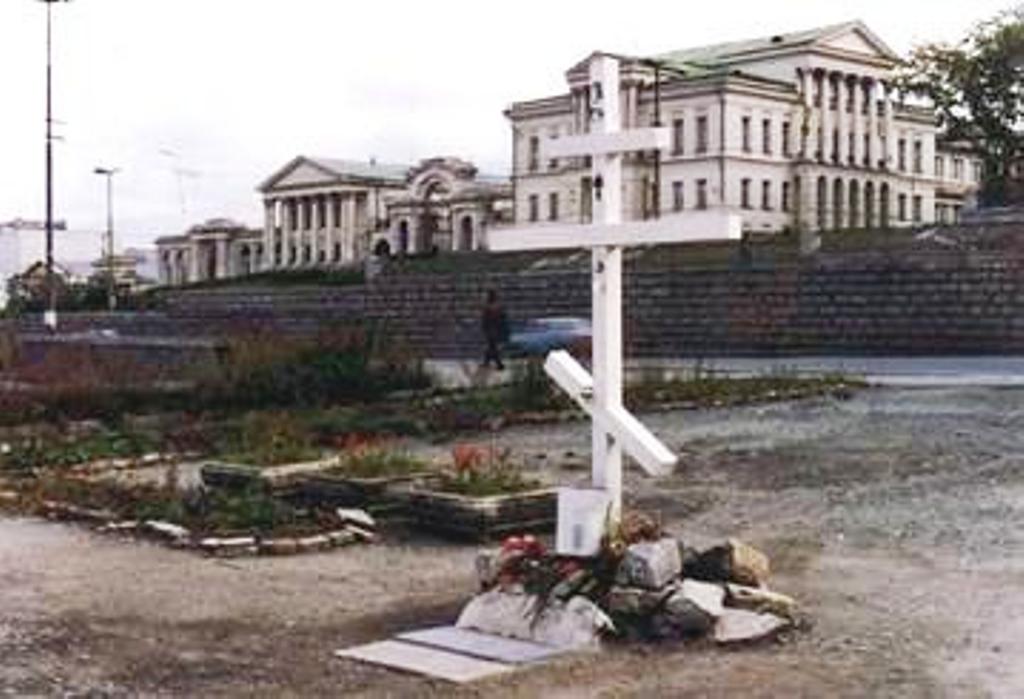
A simple wooden cross marked the spot of the Ipatiev House after its demolition

Could the Ipatiev House have been saved?

As previously noted in his memoirs, Yeltsin claimed that the house was destroyed in one night, but in reality it took two days to raze the building to the ground. Perhaps he just forgot. Here’s what else is remarkable. The destruction of the mansion began on 22nd September 1977, that is, more than two years after the decision of the Politburo. 

The thing is that in 1975 the First Secretary of the Sverdlovsk Regional Party Committee was Yakov Petrovich Ryabov – Yeltsin replaced him in this post only on 2nd November  1976. Journalists later asked Ryabov why he was in no hurry to comply with the highest order? “And why should I be in a hurry? The house stood in a lowland, it was not bothering anyone,” the former head of Sverdlovsk replied. According to Ryabov, he told his subordinates that when the reconstruction plan for the entire micro-district was ready, then a demolition decision would be made. Rumor had it that Ryabov wanted to keep the house and that even Brezhnev had taken an interest in it. In any case, it is known that the demolition of the house was opposed by representatives of the All-Union Society for the Protection of Monuments of History and Culture, and Ryabov helped them in every way. Many communists who were not members of the Politburo did not agree with the destruction of the historical building.

Perhaps such a confrontation contributed to the postponement of the demolition? It is also possible that those in Moscow would eventually have forgotten about their decision, however, the new secretary of the Sverdlovsk regional committee, Yeltsin, took the initiative and brought it to an end. Most historians agree that Boris Yeltsin was keen to improving his political position by transferring to Moscow and took advantage of an opportunity given to him.

* * *

In August 2000, Nicholas II and his family were canonized by the Moscow Patriarchate as Royal Martyrs. In 2000-2003, the Church on Blood in Honour of All Saints Resplendent in the Russian Land was built on the site of the former Ipatiev House. On the night of 16/17 July 2018, His Holiness Patriarch Kirill delivered a Divine Liturgy here. This was followed by a cross procession by an estimated 100,000 people from the Church on the Blood in Ekaterinburg to the Monastery of the Holy Royal Martyrs at Ganina Yama (21 km).

On 16 June 2003, 85 years after the murders of the former imperial family, the main church was consecrated by Metropolitan bishop Yuvenaly, delegated by Patriarch Alexy II who was too ill at the time to travel to Ekaterinburg, assisted by Russian Orthodox clergy from all over the Russian Federation.

Click HERE to read my article Doomed to Resurrection: Is it Possible to Reconstruct the Ipatiev House?, published on 2nd July 2018 and my article “What if” the Ipatiev House was reconstructed?, published on 29th November 2019

© Paul Gilbert. 25 February 2020