Monument to Nicholas II and his family to be installed in Mogilev

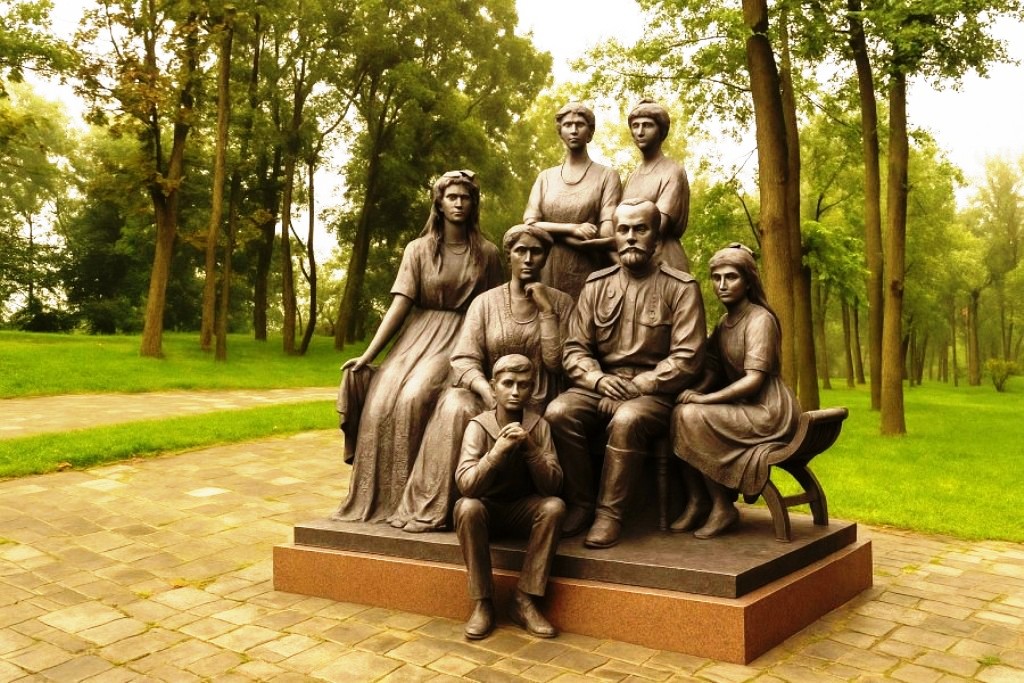
PHOTO: artist’s concept of the proposed monument, to be installed in Mogilev

A monument to Emperor Nicholas II and his family is to be installed in Mogilev, Belarus. The sculptural composition – seen in the above photo – will be installed in Gorky Park [not to be confused with the famous Gorky Park in Moscow], situated next to the Square of Glory.

Nicholas II in Mogilev

Recall that from August 1915 to March 1917, Mogilev served as the military capital of the Russian Empire. It served as the headquarters of Emperor Nicholas II, who assumed the position of the Supreme Commander-in-Chief of the Russian Armed Forces, from 5th September (O.S. 23rd August) 1915. He settled in the Governor’s House, situated on Gubernatorskaya Square [now Square of Glory].

The headquarters were located in the buildings that stood in a semicircle on Gubernatorskaya Square. The Tsar occupied several rooms of the Governor’s House, and was often accompanied by his son and heir, Tsesarevich Alexei Nikolaevich. The headquarters was located in the building of the Provincial Government, while the building of the district court, was placed at the disposal of the General on duty of the Headquarters.

Empress Alexandra Feodorovna and her four daughters often came to Mogilev to visit Nicholas and Alexei. The Empress and the grand duchesses lived onboard the Imperial Train during their stays.

To this day, the old-timers of Podnikolye retell the stories of their grandfathers, of when they saw the Tsar and his family riding on a boat along the Dnieper, walking in Gubernskaya Square (now Glory Square) and stopping to chat with ordinary citizens.

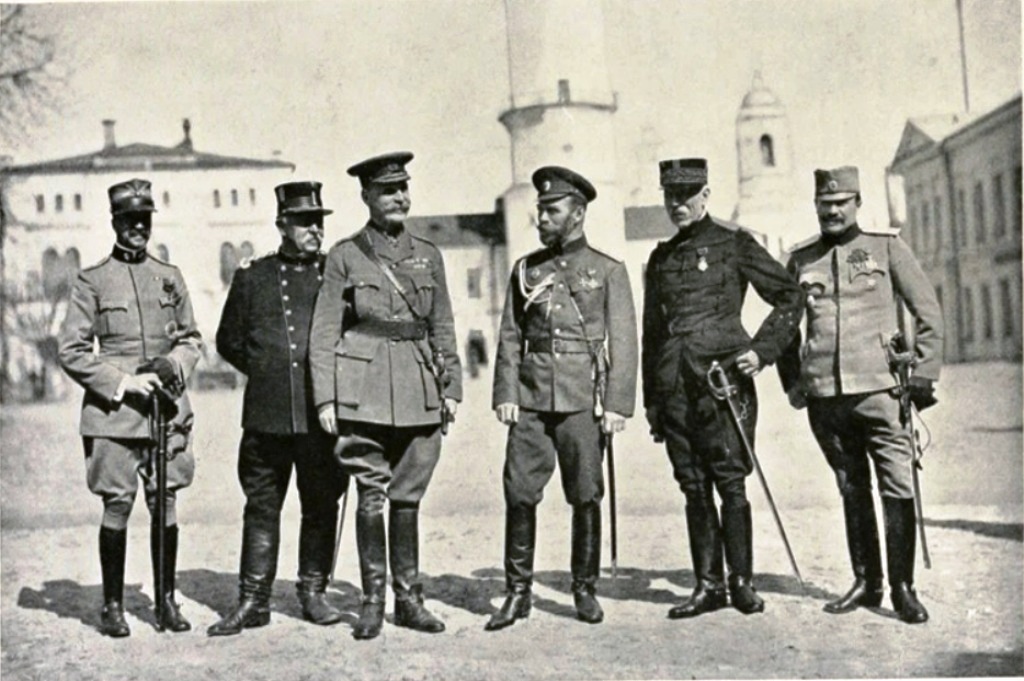
PHOTO: the Emperor (third from left) with Chiefs of Allied
Military Missions on Gubernatorskaya Square, Mogilev. 1916

Both the Governor’s House, where Nicholas II lived with his son, and the building of the Provincial Government, were demolished in Soviet times. As a result, nothing has survived to the present day of the Tsar’s stay in Mogilev.

The building of the District Court, today houses the Mogilev Regional Museum of Local Lore. It was in this building, that Emperor Nicholas II said goodbye to the ranks of the headquarters and departments in March 1917. There is a display marking the farewell in one of the rooms located on the second floor of the museum.

Why Gorky Park?

In 1872, a city garden was laid in Mogilev, called Dembovetsky’s Garden. The initiative to lay the foundation belonged to the famous Mogilev governor Alexander Dembovetsky (1840-1920). During the reign of Russia’s last Tsar, it was renamed the Nikolaevsky Garden-Park.

Nicholas often walked here with Alexei and members of his retinue. The paths, which were lined with trees, converged in the central square, dominated with a beautiful fountain. The garden-park featured three observation gazebos, a wooden theater, elegant benches and round flower beds.

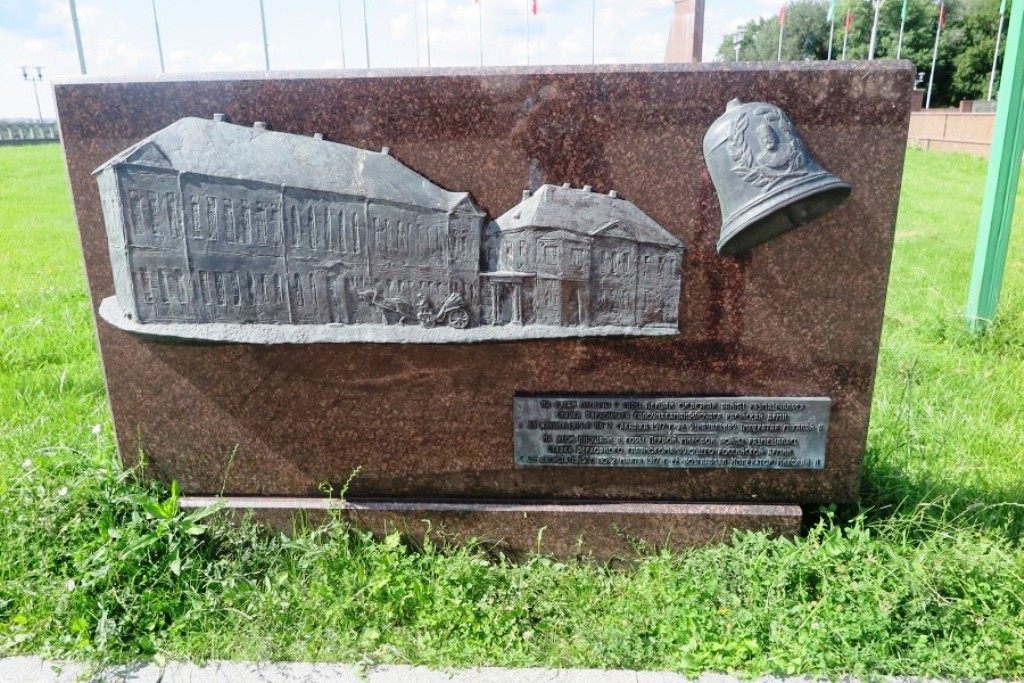
PHOTO: a marble plaque is today, the only reminder that this was where the headquarters of Emperor Nicholas II, stood from August 1915 to March 1917

Many years later, in 2014, the Church of the Holy Royal Martyrs was erected in Gorky Park in memory of the Imperial Family.

The monument to Emperor Nicholas II and his family will be installed near the church, although no time frame has yet been established for the completion of the project.

FURTHER READING

New museum dedicated to Nicholas II to be built in Mogilev + PHOTOS

Nicholas II’s motorcars and the Imperial Garage in Mogilev, 1915-17 + PHOTOS

© Paul Gilbert. 5 August 2025

Pakistani delegation honour the memory of Nicholas II and his family

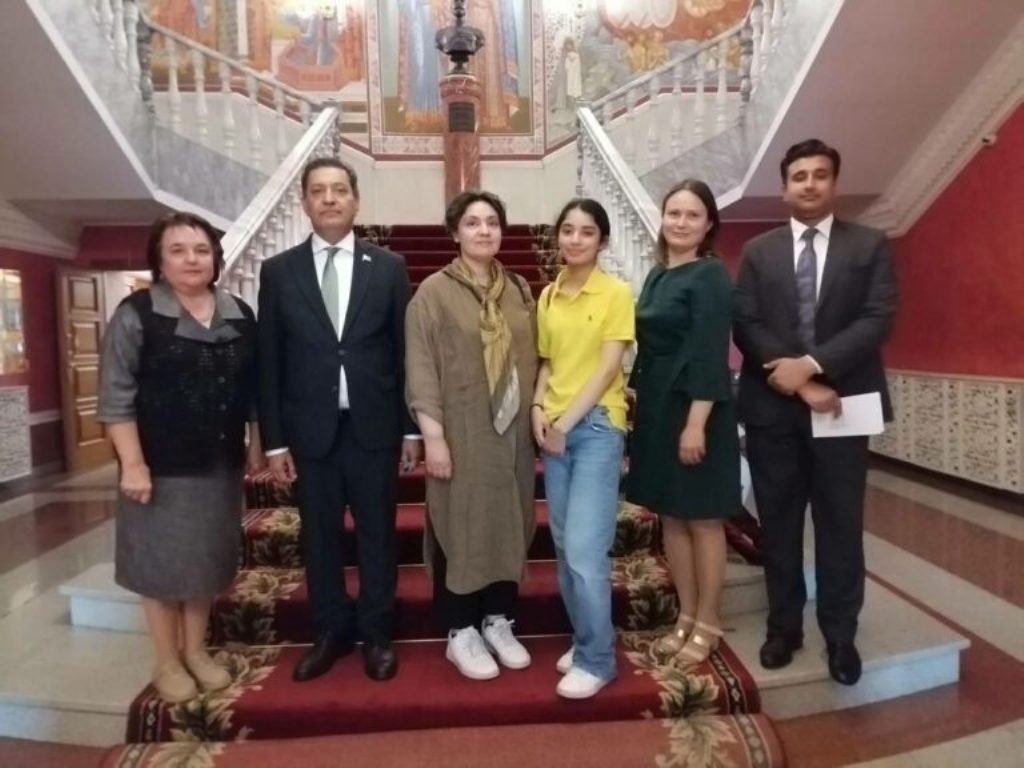
PHOTO: Pakistani Ambassador Muhammad Khalid Jamali and members of his delegation, in the Patriarchal Compound of the Church on the Blood. Note the bust of Nicholas II on a pedestal at the top of the stairs

On 31st July 2025, a delegation headed by the Ambassador of the Islamic Republic of Pakistan to the Russian Federation Muhammad Khalid Jamali visited the Church on the Blood and the Museum of the Holy Royal Family in Ekaterinburg.

Representatives of the delegation were given a tour of the museum, which is situated in the Patriarchal Compound of the Church on the Blood. While being shown exhibits, they were told about the life and work of Emperor Nicholas II, Empress Alexandra Feodorovna, Tsesarevich Alexei Nikolaevich and the Grand Duchesses Olga, Tatiana, Maria and Anastasia.

“Particular attention was paid to the last period of their lives, during which the Imperial Family were being held under house arrest in Tsarskoye Selo, Tobolsk and Ekaterinburg, where they subsequently met their death and martyrdom in the Ipatiev House, on 17th July 1918.” said the head of the Museum of the Holy Royal Family, Victoria Mikhailovna Kalmykova.

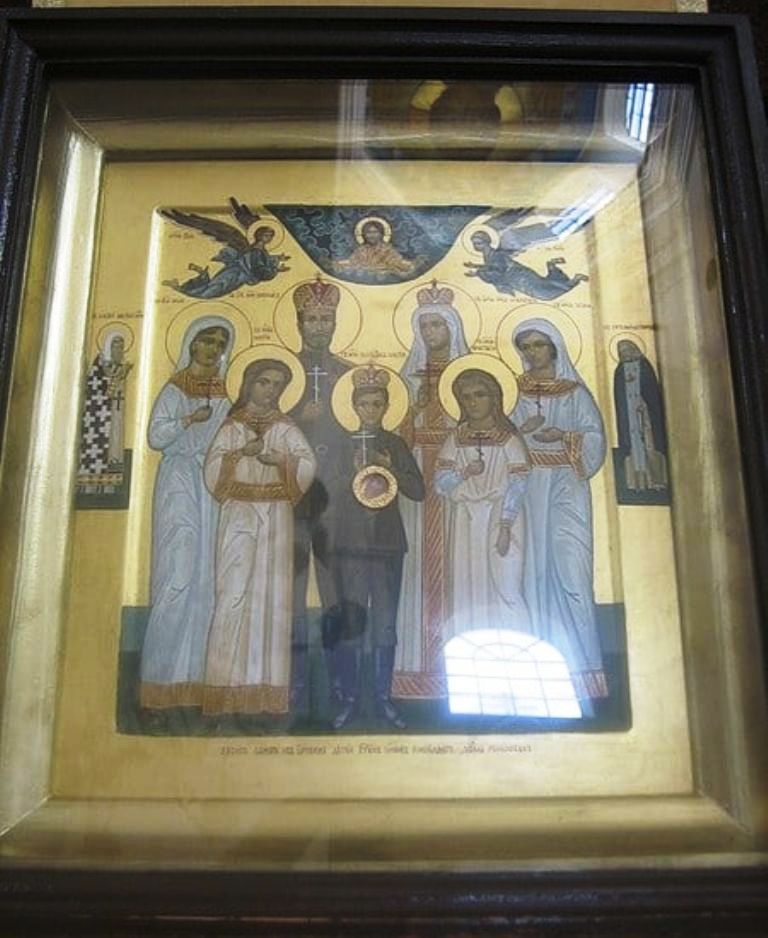
PHOTO: the icon of the Holy Royal Passion-Bearers. A capsule on the Heir’s chest contains a baby tooth of Tsesarevich Alexei Nikolaevich, preserved by his Swiss tutor Pierre Gilliard

According to the head of the museum, the members of the delegation reacted with great respect to the shrines of the Church-on-the-Blood – the icon of the Mother of God “Three-handed”, which belonged to the Imperial Family and was with them in the Ipatiev House, the icon of the Holy Royal Passion-Bearers containing a tooth of Tsesarevich Alexei, to the reliquary containing the relics of St. Seraphim of Sarov, glorified during the reign of His Majesty Emperor Nicholas II, were previously kept.

The members of the delegation were very interested in the personal items belonging to members of the Imperial Family: a fragment of a children’s blanket made by the Grand Duchesses for the birth of Tsesarevich Alexei Nikolaevich in 1904; a children’s summer openwork glove that belonged to the Grand Duchess Tatiana Nikolaevna; a dinner napkin of Emperor Nicholas II, among other items belonging to His Majesty of that time.

At the end of the visit, the members of the delegation expressed gratitude for getting acquainted with the shrines of the Church on the Blood, and for the memorable and interesting tour of the museum.

© Paul Gilbert. 1 August 2025

The truth about Russia’s much slandered Tsar

This year marks the 157th anniversary of the birth of Emperor Nicholas II on 19th May [O.S. 6th May] 1868 and the107th anniversary of his death and martyrdom on 17th July 1918.

In recognition of these historic dates, I am reaching out to friends and supporters for donations to help support my research on the life and reign of Nicholas II, and in aid of my personal mission to clear the name of Russia’s much slandered Tsar.

There are many web sites, blogs and Facebook pages dedicated to the Romanovs, however, I work very hard searching Russian archival and media sources to bring something new to the table every day, including articles and news stories – from Russian archival and media sources – on Nicholas II and his family, the Romanov dynasty, their palaces, exhibitions + photos, videos and more.

Every dollar collected goes toward the acquisition and translation of documents, letters and diaries from Russian archival sources. In addition are the first English translations of articles researched by a new generation of Russian historians, which challenge the popular negative assessment of Nicholas II, which prevails to this day.

Your donation also helps offset the cost of maintenance of my blog: Nicholas II. Emperor. Tsar. Saint, and the organization and promotion of Romanov themed events, such as the 2nd International Nicholas II Conference and other events.

If you enjoy all the articles, news, photos, and videos, please help support my work in the coming year ahead by making a donation.

CLICK HERE TO MAKE A DONATION IN US DOLLARS

CREDIT CARDS and PAYPAL ACCEPTED
Donations as little as $5 are much appreciated, and there is NO obligation!

Thank you for your consideration

© Paul Gilbert. 31 July 2025

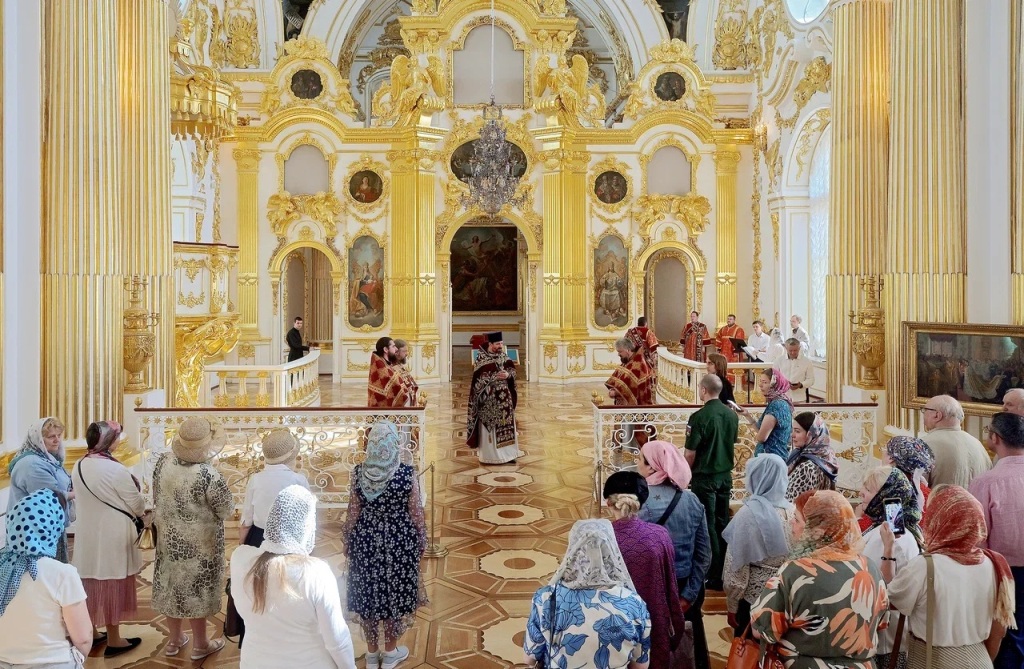
Divine Liturgy for the Imperial Family performed in the Great Church of the Winter Palace

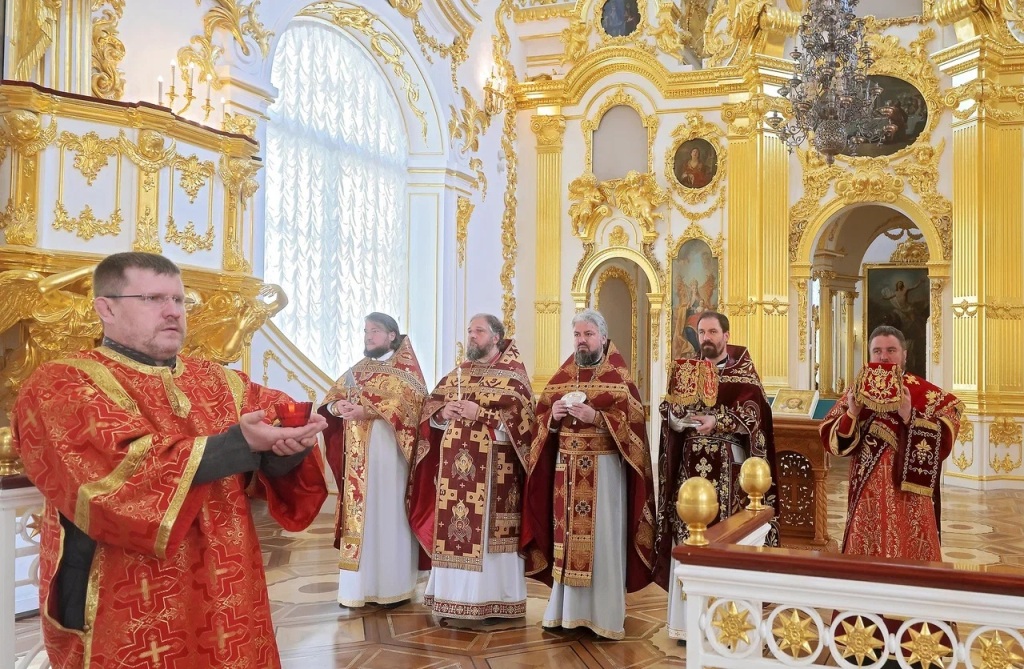
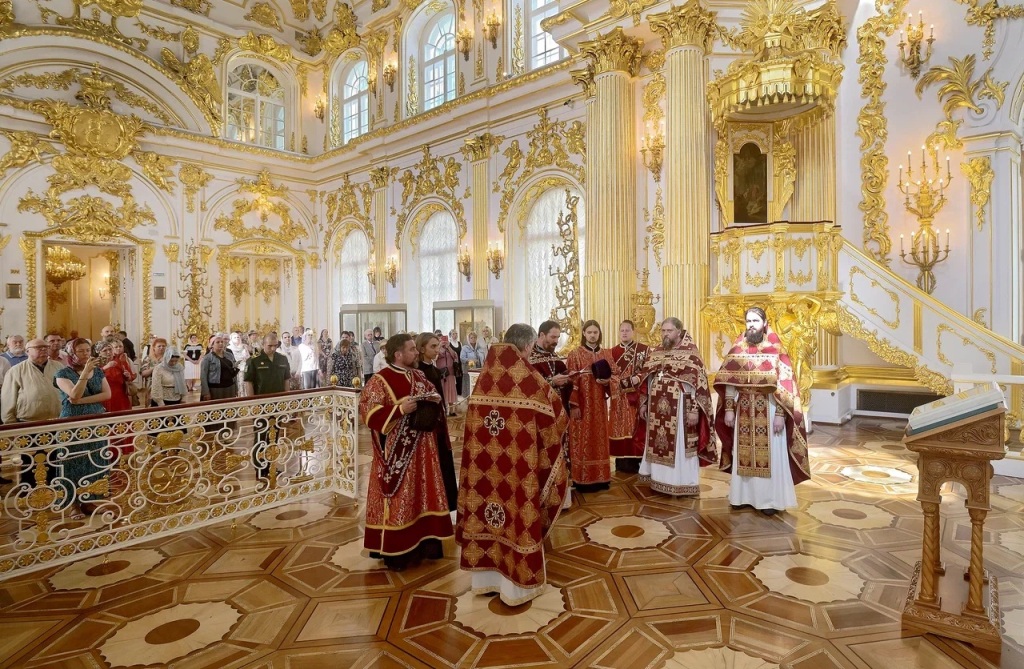
On 17th July 2025, Archpriest Nikita Zverev, the dean of the palace churches, performed the Divine Liturgy in the Church of the Saviour of the Image Not Made by Hands [aka the Great Church of the Winter Palace], situated in the State Hermitage Museum in St. Petersburg.

The service marked the 107th anniversary of the death and martyrdom of Russia’s much slandered Tsar, his family, and their four faithful retainers, all of whom were brutally murdered in Ekaterinburg by members of the Ural Soviet in July 1918.

Archpriest Nikita was co-served by Rector Hieromonk Mark (Svyatogorov), Hieromonk Tikhon (Voronov), Archpriest Maxim Kvasov, Priest Artemy Naumov, and Hierodeacon Ilya (Vasiliev). They were joined by the combined choir of singers of the St. Petersburg diocese.

Among the worshippers were the Director of the State Hermitage Museum in St. Petersburg, Mikhail Borisovich Piotrovsky, and museum staff.

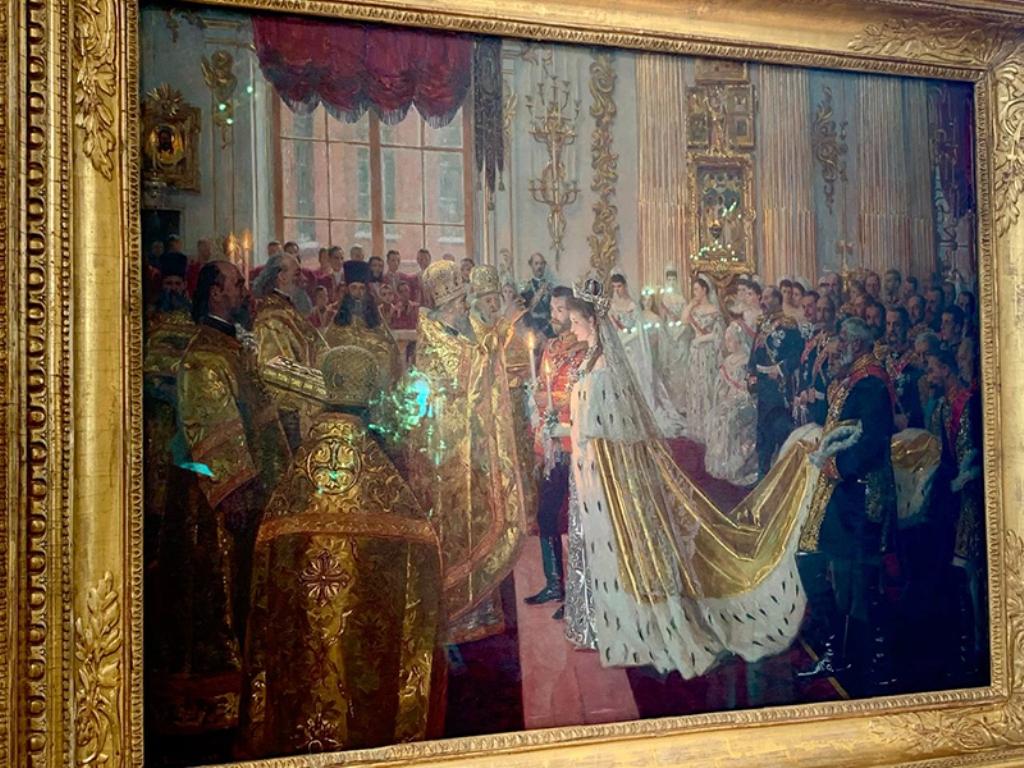
“Passing by the Winter Palace, it is a great happiness to see the dome of this church and to know that prayers are heard here again,” said Father Nikita. – “The history of Russia’s last Tsar and his family began with this church. Everyone who comes here sees on the right a picture depicting the wedding of Nicholas II and Alexandra Feodorovna [see below]. The sacraments were performed in this very church, . . . and now, many years later, we can stand and pray where they once prayed. This temple is of great historic importance, one which is associated with the fate of the Fatherland. I thank the museum staff who have preserved all this to this day. If we do not know our history, remember the tragedy that happened, there can be no happy future for Russia. Let us appreciate what we have, both sorrows and joys, and remember that the Lord will never leave us.”

Recall that the last Russian Emperor, Nicholas II, and his family were shot on the night of 16/17 July 1918, in the basement of the Ipatiev House in Ekaterinburg. On 1st November 1981, they were canonized as new martyrs by the Russian Orthodox Church Outside Russia (ROCOR), and on 20th August 2000, as passion bearers by the Moscow Patriarchate of the Russian Orthodox Church.

And let us not forget the four faithful retainers, who remained with the Imperial family during their house arrest in Tobolsk and Ekaterinburg, and who followed them to their deaths in the Ipatiev House, on 17th July 1918: the valet Aloysius Trupp (1856-1918); the maid Anna Demidova (1878-1918); the cook Ivan Kharitonov (1872-1918); and Dr. Eugene Botkin (1865-1918), canonized in 2016.

PHOTO: Wedding of Nicholas II and Alexandra Feodorovna
Painted in 1895 by the Danish artist Laurits Tuxen (1853-1927)
From the collection of the State Hermitage Museum, St. Petersburg

The Great Church of the Winter Palace was consecrated on 25th July 1763 by Archbishop Gabriel in the name of the image of the Saviour (painted by Theodot Ukhtomsky, 1693), which was located in the prayer room at the altar. After the 1839 renovation, it was consecrated again by Metropolitan Philaret. The Maltese shrines presented to Emperor Paul I were kept here, and every year they were transferred to the Pavlovsk Cathedral [the Cathedral of the Holy Apostle Paul] in Gatchina for a month.

In October 1917, the church was damaged during the storming of the Winter Palace by the Bolsheviks and was closed in 1918. On 9th December 2014, the Great Church of the Winter Palace was opened to visitors after restoration, and on 25th December of the same year, the first Divine Liturgy in 96 years was served.

© Paul Gilbert. 28 July 2025

Memorial service for Grand Duchess Olga Alexandrovna held in Toronto

Photo © Embassy of the Russian Federation, Ottawa, Canada

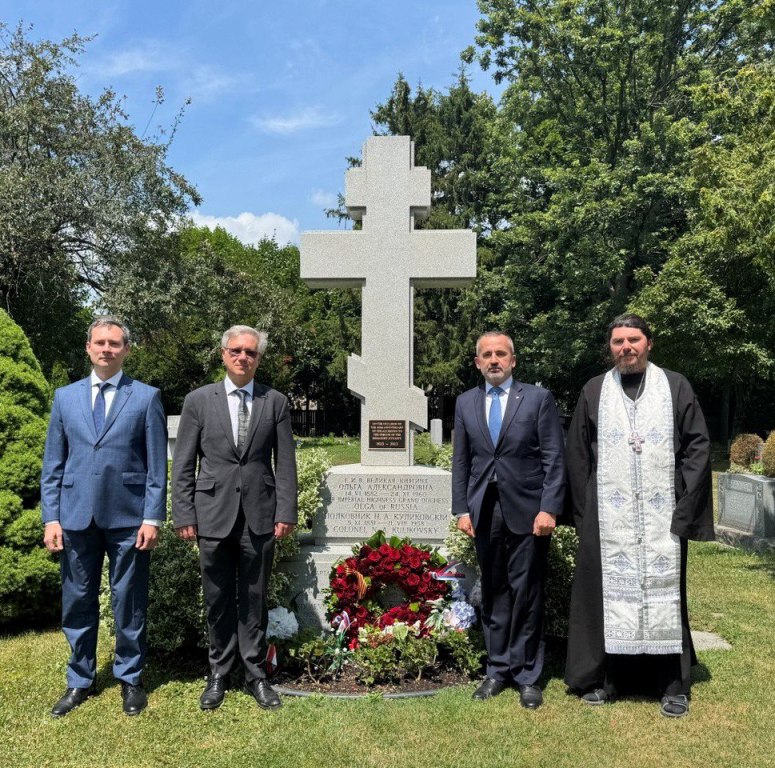
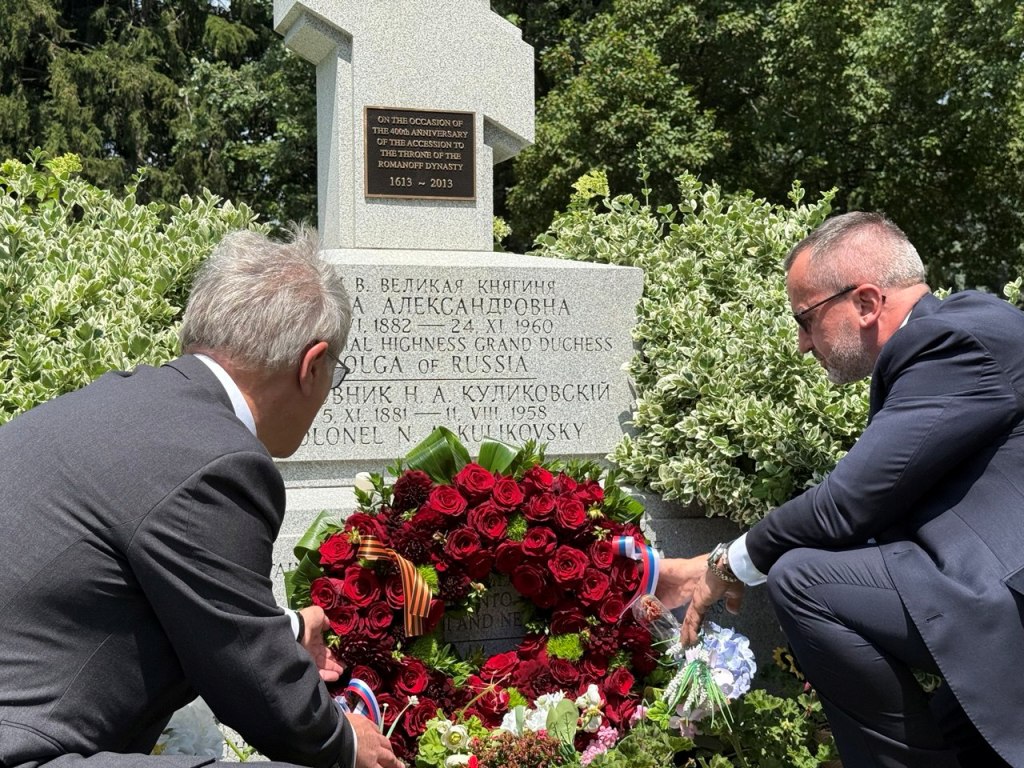
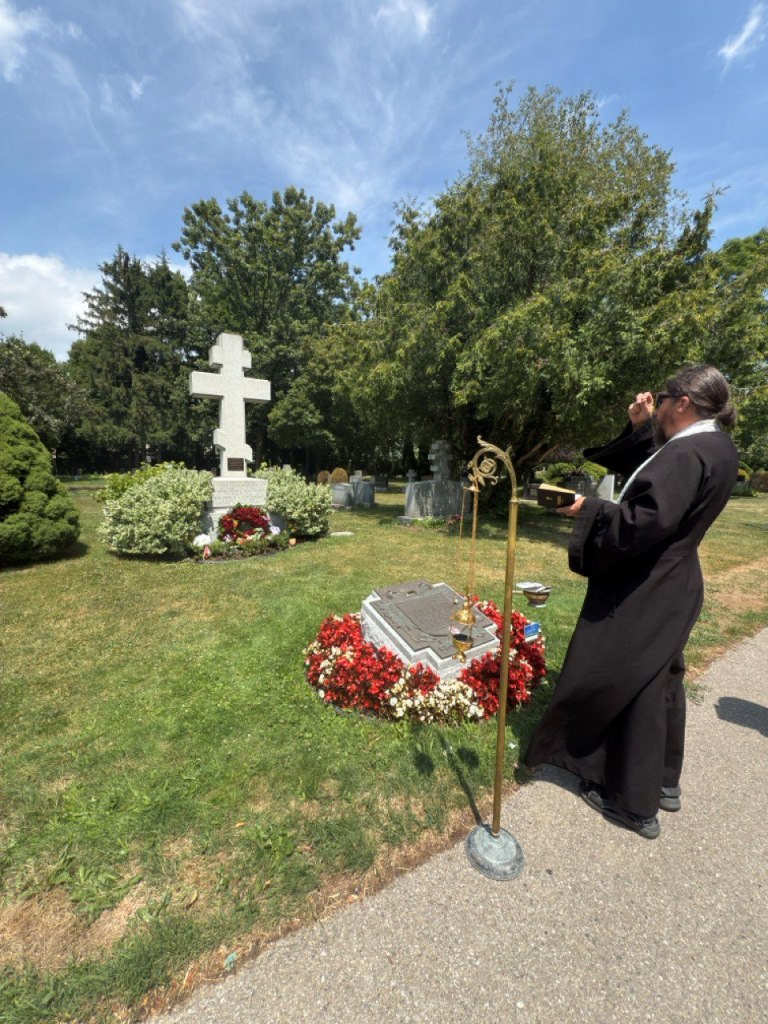
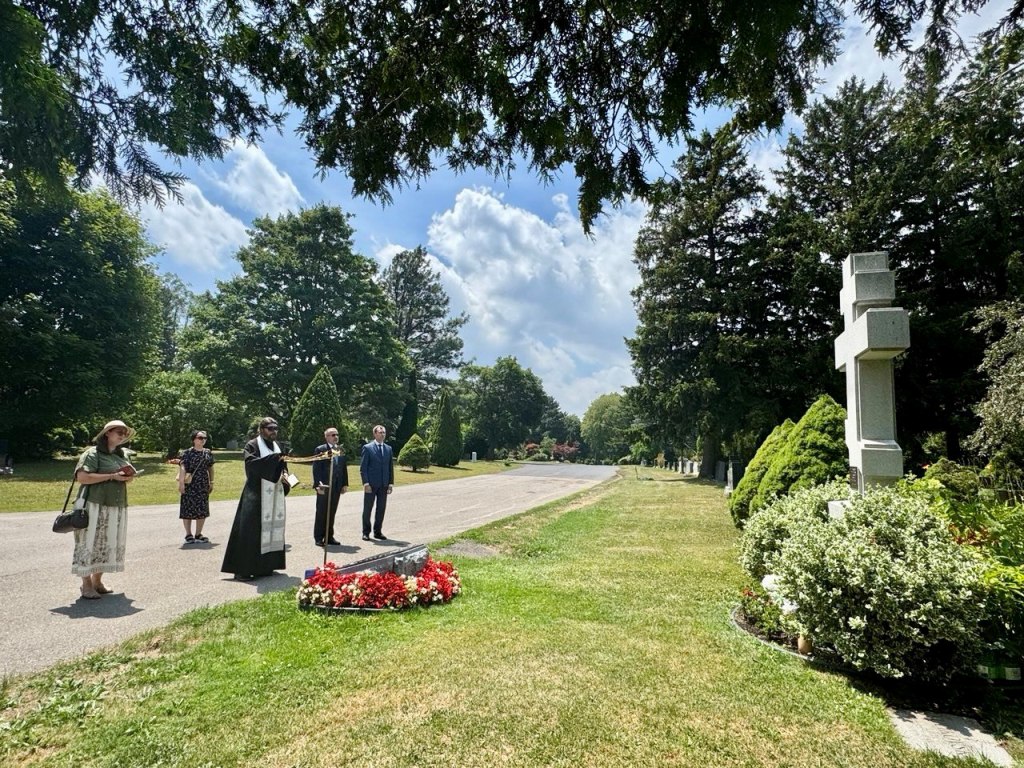
On 24th July 2025, a pannikhida was conducted at York Cemetery in Toronto for Grand Duchess Olga Alexandrovna, with the participation of Russian Ambassador to Canada Oleg Stepanov. The pannikhida took place on on the feast day of the Holy Equal-to-the-Apostles Princess Olga.

The liturgical solemn service for the repose of the departed was performed by the rector of the Church of the Smolensk Icon of the Mother of God, Father Maxim (Abroskin). The church is located in Jackson Point, Ontario, which is 86 km north of Toronto.

The memorial service was also attended by the Consul General of Russia in Toronto, Vladlen Epifanov, and other employees of the Russian diplomatic mission in Canada. Flowers were laid at the grave of Grand Duchess Olga Alexandrovna (1882-1960), the younger sister of Emperor Nicholas II, who is buried in York Cemetery.

Photo © Embassy of the Russian Federation, Ottawa, Canada

Photo © Embassy of the Russian Federation, Ottawa, Canada

Photo © Embassy of the Russian Federation, Ottawa, Canada

“On the name day of Olga Alexandrovna, we pay tribute to the memory and respect of the daughter of Emperor Alexander III, who is very much revered in our country,” Stepanov said during an interview. “Despite her forced emigration and life in a foreign land, Olga Alexandrovna loved her homeland, and she remained Russian until her last day. Today and always, our common duty is to preserve the connection of times, to maintain the unity of the Russian world and Orthodoxy,” the ambassador stressed.

The younger sister of Nicholas II was one of the last members of the Imperial Family to leave Russia. In 1920, she and her family fled from Crimea first to Yugoslavia, and then moved to Denmark to live with her mother, the Dowager Empress Maria Feodorovna. In 1948, Olga and her family emigrated to Canada, where she lived out the last 12 years of her life. She died in Toronto on 24th November 1960.

Memory Eternal! Вечная Память!

© Paul Gilbert. 25 July 2025

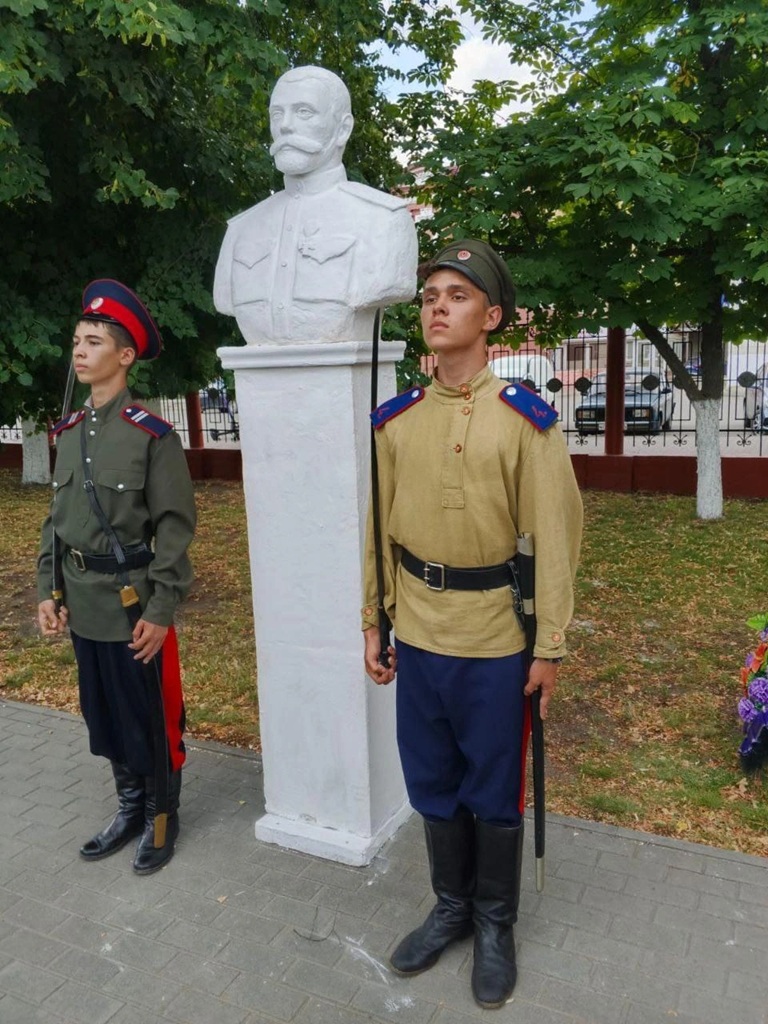
Bust of Nicholas II (temporarily) installed in Uryupinsk

On 17th July 2025, busts of Emperor Nicholas II and Tsesarevich Alexei Nikolaevich (sorry, no photo available) were temporarily installed in the Russian town of Uryupinsk (Volgograd region), during a commemorative event marking the 107th anniversary of the death and martyrdom of Russia’s last Tsar and his family.

Plaster busts on pedestals were installed on the Square of the Fallen Heroes by members of the Union of Cossacks of Russia. Representatives of several Cossack organizations and the clergy of the local diocese held a prayer service and laid flowers.

After the ceremony, the busts were dismantled. According to the ataman of the local Cossack society in Uryupinsk, Dmitry Popolitov, a search is currently underway for a permanent place to install bronze busts of Nicholas II and Alexei Nikolaevich.

The event was organized by the Union of Cossacks of Russia, members of the 4th Don Cossack Regiment named after Count Platov, with the support of the Khoper Cossack District and the Uryupinsk Diocese.

It is interesting to note, that the plaster busts and pedestals were placed on the exact spot, where a monument to Soviet dictator Joseph Stalin stood during the Soviet period.

Recall that the monument to Joseph Stalin was erected in the Uryupinsk square of the Komsomol in 1948. Later, the square was renamed after Stalin. With the coming to power of Nikita Khrushchev in 1953, the monument to Stalin disappeared without a trace and was considered lost.

In 2000, a local resident, who wished to remain anonymous, told the authorities where the monument was buried. The monument of Joseph Stalin was found covered with earth on the territory of the former Khoper district prison. It was excavated and placed in the Uryupinsk Museum of Local Lore in an exposition dedicated to the defeat of Nazi troops near Stalingrad.

According to the Union of Cossacks of Russia, events such as this are important for preserving historical memory and preventing the recurrence of tragic events of the past.

© Paul Gilbert. 24 July 2025

Myrrh streams from icon of Nicholas II in Ekaterinburg

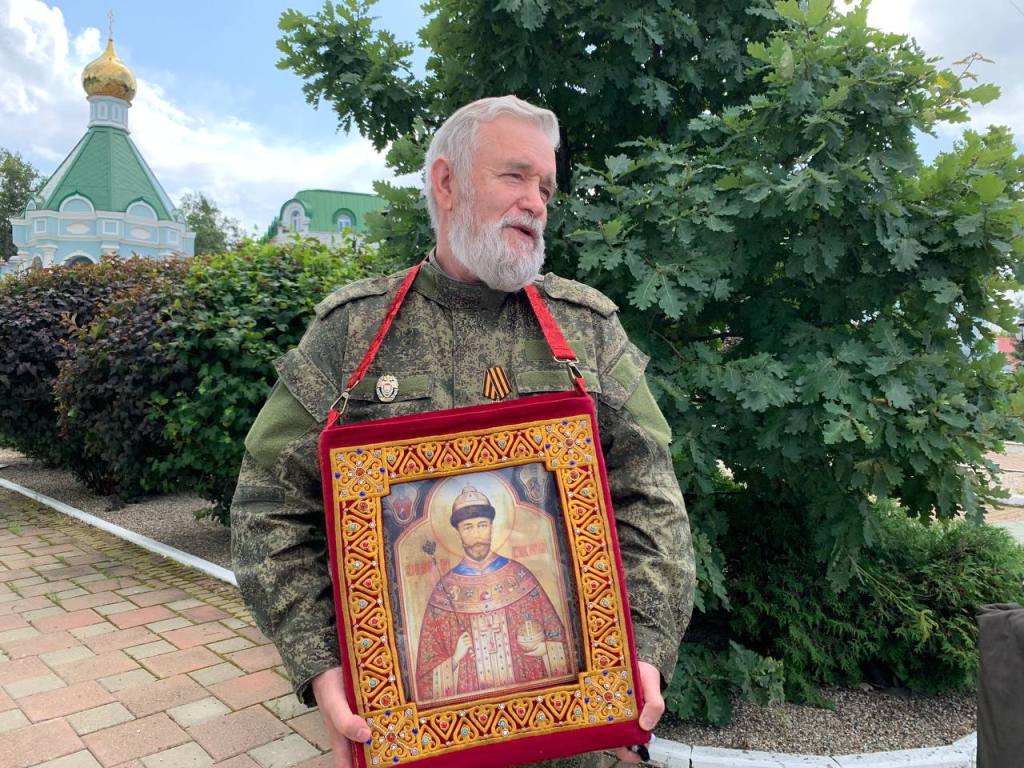
PHOTO: Alexander Feodorovich Chernavsky holding the
myrrh-streaming icon of the Tsar-Martyr Nicholas II

On 13th July 2025, the myrrh-streaming icon of the Tsar-Martyr Nicholas II arrived at the Church on the Blood in Ekaterinburg. The icon was brought from Moscow, by the head of the Orthodox Military Mission, Alexander Feodorovich Chernavsky.

According to Chernavsky, the icon has been streaming myrrh since 1998, and again, during this year’s Tsar’s Days in the Ural capital, drops of myrrh appeared in the shape of “diamonds” on the icon itself and on the frame.

It smells fragrant, it streams myrrh and inspires faithful Orthodox Christians with the fact that the Tsar is alive, he sees all our labours, hears our prayers, reacts to the impulses of our hearts, to our feelings, he believes in the future of Russia. The Imperial Family and other New Martyrs pray for us.”

Chernavsky brings the icon to the Ural city every year for events marking Tsar’s Days, namely the Divine Liturgy held on the night of 16/17 July, followed by a Cross Procession to the Monastery of the Holy Royal Martyrs in Ganina Yama.

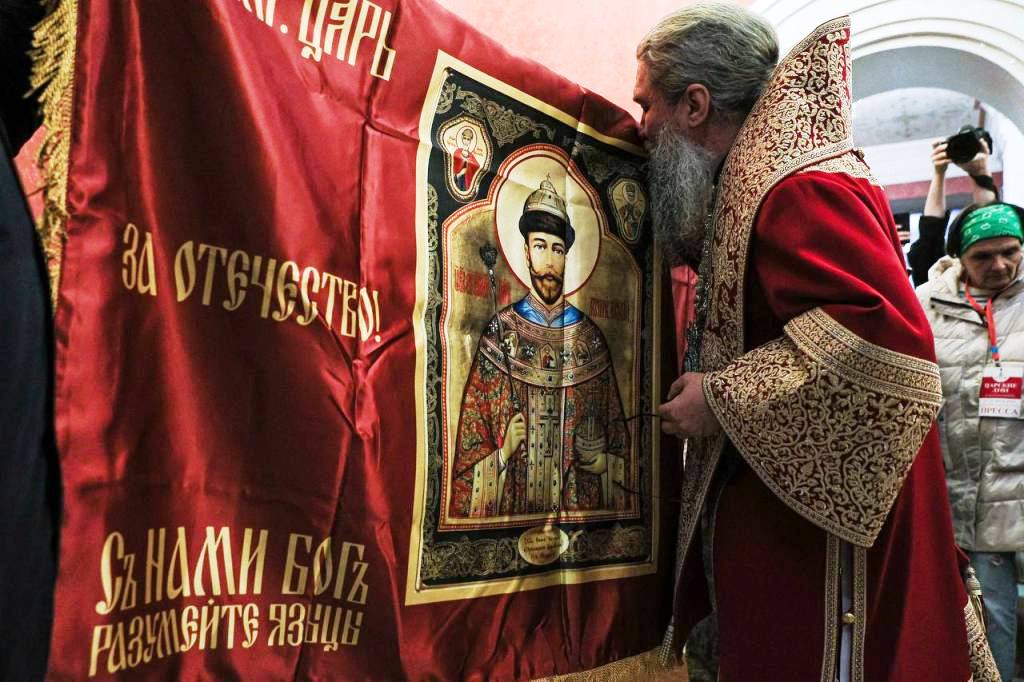
PHOTO: detail of the banner depicting the image of Tsar-Martyr Nicholas II

On 16th July 2025, Chernavsky presented Metropolitan Evgeny of Yekaterinburg and Verkhoturye with a banner depicting the image of Tsar Nicholas II. Such banners bearing the face of the Holy Royal Passion-Bearers are sent to Russian soldiers to inspire them by the feat of the Emperor, to embrace the Orthodox faith and become churchgoers.

In the early morning hours of 17th July, Chernavsky – carrying the icon of the Tsar-Martyr Nicholas II – joined tens of thousands of pilgrims, clergy and believers in the annual Cross Procession from the Church on the Blood to the Monastery of the Holy Royal Martyrs at Ganina Yama – a journey of 21-km (13 mile) on foot.

Chernavsky noted that during this year’s Cross Procession, he noticed many young people with banners and flags, which he believes “speaks of the affirmation of the Orthodox faith and the unity of the Russian people.”

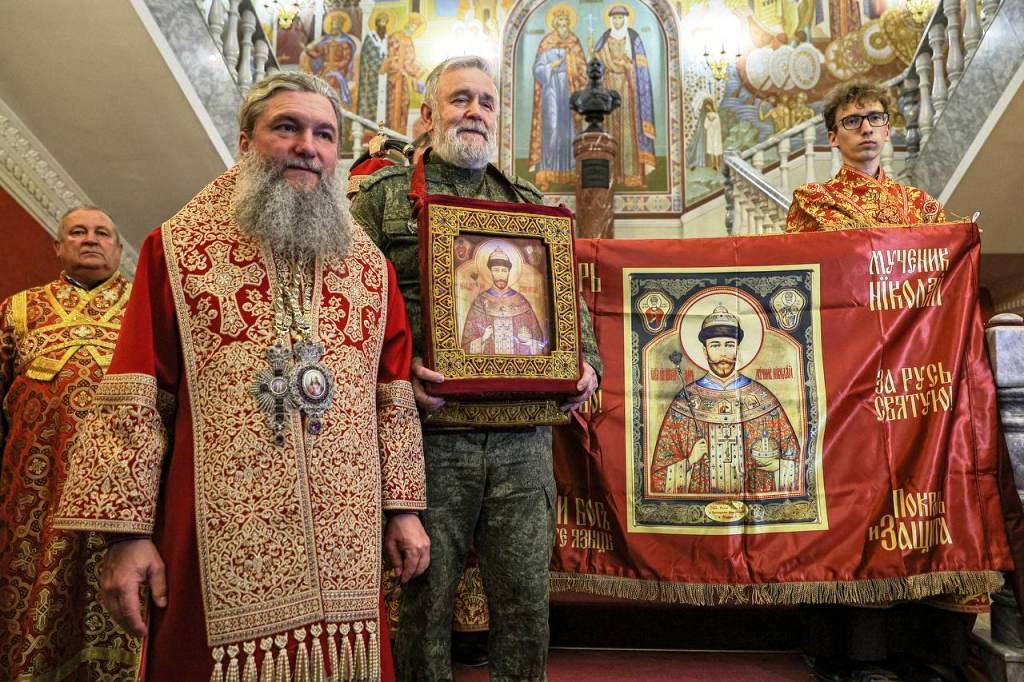
PHOTO: Metropolitan Evgeny of Ekaterinburg and Verkhotursky (left) with Alexander Chernavsky holding the myrrh-streaming icon of the Tsar-Martyr Nicholas II, in the Patriarchal Compound of the Church on the Blood. At the top of the stairs behind, you can see a bust-monument to Nicholas II

Recall that the icon of the Tsar-Martyr Nicholas II was painted in the United States even before the glorification of the Tsar by the Moscow Patriarchate of the Russian Orthodox Church on 20th August 2000, after the Russian émigré Iya Dmitrievna Schmit[1], had a dream in which she saw an icon depicting the Tsar Martyr Nicholas II in 17th century grand ducal attire. She asked the iconographer Pavel Nikolaevich Tikhomirov, who lives in California, to paint the icon she had dreamt about.

At the end of 1997, colour lithographs of this icon were brought to Russia. In the St. Nicholas almshouse in the city of Ryazan, where the Church of the Tsar-Martyr Nicholas II is being built, a colour copy was made and placed in an icon case under glass.

On 7th November 1998, the icon began to stream myrrh. Since then, the icon has been traveling around Russia and around the world. But most importantly, the icons streams myrrh on the anniversary of the Tsar’s death and martyrdom, among other days associated with the memory of Russia’s much slandered Tsar.

NOTES:

[1] In 2000, Ija Schmit (1936-2018) gifted a copy of this icon to the author of this article.

© Paul Gilbert. 23 July 2025

Masha and Gosha “No shows” at Tsar’s Days in Ekaterinburg

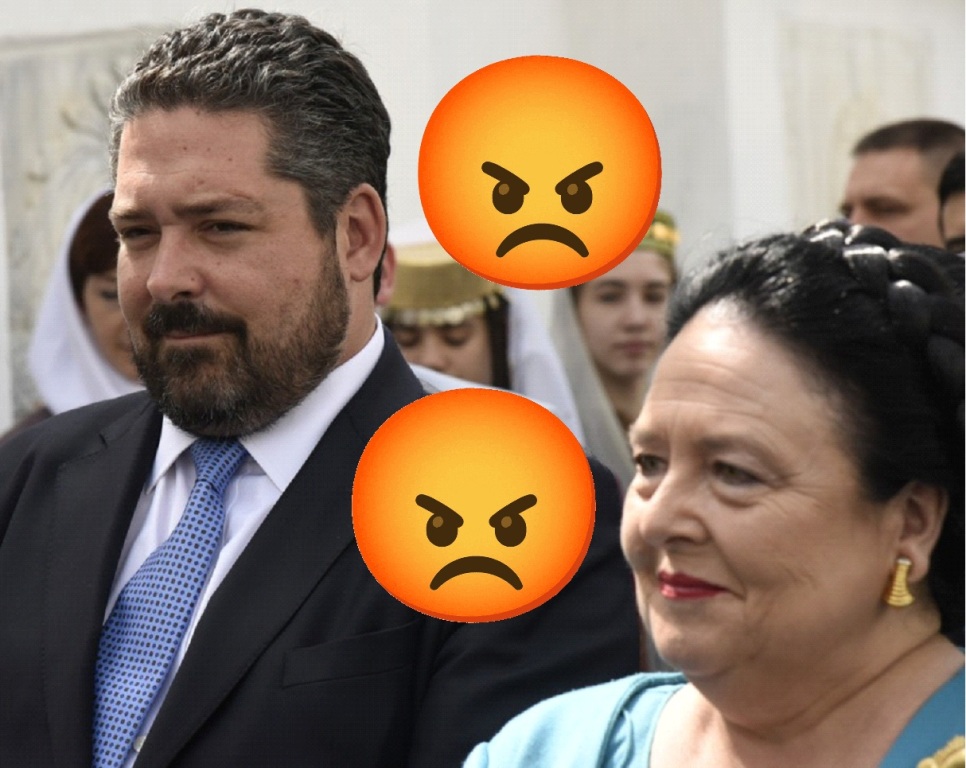
PHOTO: Prince George mikhailovich and his mother Princess Maria Vladimirovna

Of the more than 40,000 pilgrims, clergy and believers who came to Ekaterinburg from all over Russia and abroad, not a single descendant of the Romanov dynasty attended this year’s Tsar’s Days events. On the night of 16/17 July, an outdoor Divine Liturgy is performed at the Church on the Blood, marking the death and martyrdom of Emperor Nicholas II and his family.

Notably absent (again) this year, were Princess Maria “Masha” Vladimirovna and her son Prince George “Gosha” Mikhailovich (Hohenzollern), the self-proclaimed “heads” of the “Russian Imperial House”. It is interesting to note, that up until her death in 2020, Olga Kulikovsky-Romanova, the widow of Tikhon Kulikovsky- Romanov, was the ONLY Romanov family member who attended the event on a regular basis.

One would simply assume, that if any one among the Romanov descendants who should be in the Ural capital to honour Russia’s last Tsar and his family, it should be the “Head” of the Russian Imperial Family, surely?! Not so.

Let us not forget that it was Masha’s great-grandmother Grand Duchess Maria Pavlovna, who was openly hostile towards both the last Emperor and Empress. In addition, Masha’s grandfather and Gosha’s great-grandfather Grand Duke Kirill was a traitor to Russia’s last Tsar.

According to Alexander Zakatov, who serves as Masha’s senior mouth piece and head of her “chancellery” in Moscow, the allegations against Kirill were all part of a smear campaign, while others shamefully and falsely put the blame on the Empress Alexandra Feodorovna. Poor Alix, she has been blamed for so many of the trials and tribulations which befell Nicholas, the monarchy and downfall of the Russian Empire.

Why is it relevant for a Romanov family member to attend?

Masha styles herself as the Head of the Russian Imperial House, a “grand duchess” and “only” legitimate claimant to the now, non-existent Russian throne. She is none of the above! Likewise, her son, George “Gosha” is the self-styled “Heir Tsesarevich”, he “heir” to nothing!

The Russian Imperial House ended with the murder of Emperor Nicholas II on 17th July 1918. While some members escaped Bolshevik Russia, the House and it’s legal status as such during the Russian Empire ceased to exist. The titles of “Your Imperial Highness Grand Duke” and “Grand Duchess of Russia” were no longer acknowledged among in Europe, and most certainly in the Soviet Union. Their titles no longer opened doors for them, and invitations to royal events in Europe were seldom extended.

Maria “Masha” Vladimirovna is not a Grand Duchess, she is a Princess [and even this title is questioned among some historians]. The last Grand Duchess of Russia was Nicholas II’s youngest sister, Grand Duchess Olga Alexandrovna, who died on 24th November 1960.

Should the monarchy ever be restored in Russia, Masha has no rights, whatsoever, to the throne. Her supporters [mostly a group of American social media zealots] style her as “Empress de Jure”. They hold a make believe Court, addressing her as “Your Imperial Highness”, kiss her hand, bow and curtsey, like she is some “golden cow” – no pun intended!

Western sanctions and the war in Ukraine cannot be used as excuses by either Masha or Gosha’s for not attending Tsar’s Days in Ekaterinburg. While travelling to Russia is indeed difficult since the sanctions were imposed, it is not impossible. While most foreign airlines have ceased flying into Russia, it is still possible to reach St. Petersburg, Moscow and even Ekaterinburg from Europe via 3 foreign carriers.

It is interesting to note that Princess Maria Vladimirova recently arrived in Moscow in early July 2025, to attend the baptism of her granddaughter Kira. This, by the way, is Masha’s third or fourth visit to Russia since the outbreak of the Russia-Ukraine war.

Gosha who resides in Moscow, is the only Romanov descendant currently living in Russia, so one can only speculate his absence this year?

On 1st October 2021, Gosha married Rebecca Bettarini, the daughter of an Italian diplomat. She converted to Russian Orthodoxy, and Masha decreed the title of “Princess” on Bettarini, with the predicate “Her Serene Highness” and the right to use the surname Romanov.

It is important to emphasize, that Maria Vladimirovna never had, nor does she have any authority to hand out titles or awards as she is not and never has been a ruling monarch. Despite this, Maria actively, distributes orders, medals and even titles of the Russian Empire. While many orders and awards of the Russian Empire have been officially restored in the modern Russian Federation, Masha is an ordinary civilian, and not a representative of the state, therefore, has no right to distribute the same order in appearance and name to her supporters on behalf of the “Imperial House”.

Gosha and Rebecca have two children: Alexander and Kira. As this was a morganatic marriage, should the monarchy be restored in Russia, neither Gosha or his children would have any rights of succession.

Masha and Gosha do not recognize the Ekaterinburg Remains

To this day, despite an investigation which has lasted more than a century, Masha and Gosha, still DO NOT recognize the Ekaterinburg Remains as those of Emperor Nicholas II and his family; nor did either one of them attended the Tsar’s interment in St Petersburg on 17th July 1998.

In addition, neither Masha nor Gosha, have visited the Romanov Memorial at Porosenkov Log, situated on the Old Koptyaki Road near Ekaterinburg. Recall that it was here, where the remains of Emperor Nicholas II and his family were discovered in two separate graves in 1991 and 2007 respectively.

So, why does Maria Vladimirovna refuse to acknowledge the authenticity of the Ekaterinburg Remains? “We neither affirm nor deny the authenticity of the remains but are waiting for the Church’s Council to determine. Once this has been done, the Imperial House will welcome it with joy,” says Zakatov.

It appears that Maria Vladimirovna cannot think for herself on this issue. She would never dare speak out against either the Church or Putin. If she challenged or criticized the former, she would no doubt face the wrath of the Church. Likewise, if she challenged or criticized the latter, she would most likely be made persona non grata in Russia.

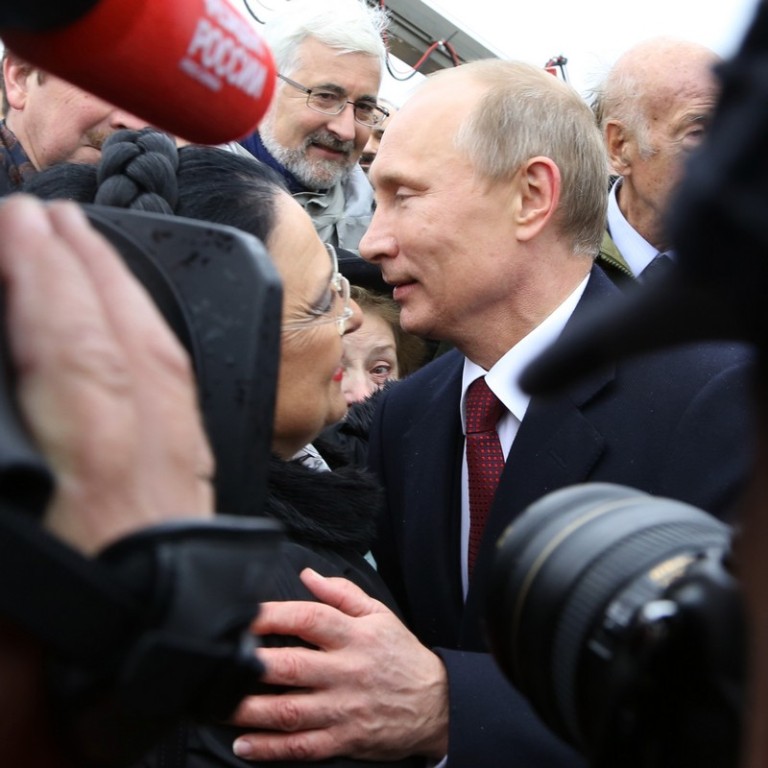
PHOTO: Masha warmly greeting Russian president Vladimir Putin

Friends in the Kremlin

For some people, Masha and Gosha’s support of Russia’s invasion of Ukraine in February 2022, continues to be a major bone of contention. As previously noted, Masha arrived in Moscow in early July, her third or fourth visit to Russia since the outbreak of the war.

Recall that in 2014, Masha “awarded” the Imperial Order of St. Anastasia to State Duma deputy Natalya Poklonskaya, for her efforts in the reunification of Crimea with Russia.

On 30th November 2017, Poklonskaya returned the Order and nobility title, because Maria Vladimirovna refused to support Poklonskaya’s efforts on outlawing the controversial film Matilda for its allegedly blasphemous portrayal of the affair between Nicholas II and the ballerina Matilda Kshesinskaya.

Both Masha and Gosha continue to “maintain good relations with Vladimir Putin”. In recent years, however, her supporters have tried to distance Masha from Putin. A series of photos taken some years back, paint another story. They depict the two meeting in Moscow, warmly greeting one another like old friends.

© Paul Gilbert. 22 July 2025
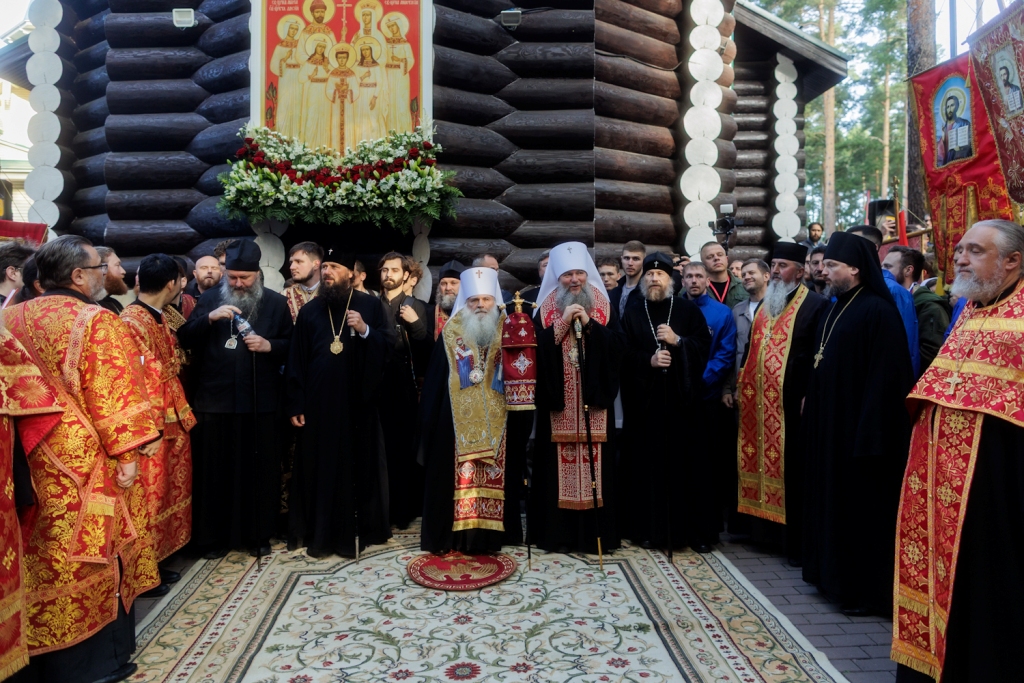
Tsar’s Days in Ekaterinburg – 16/17 July 2025
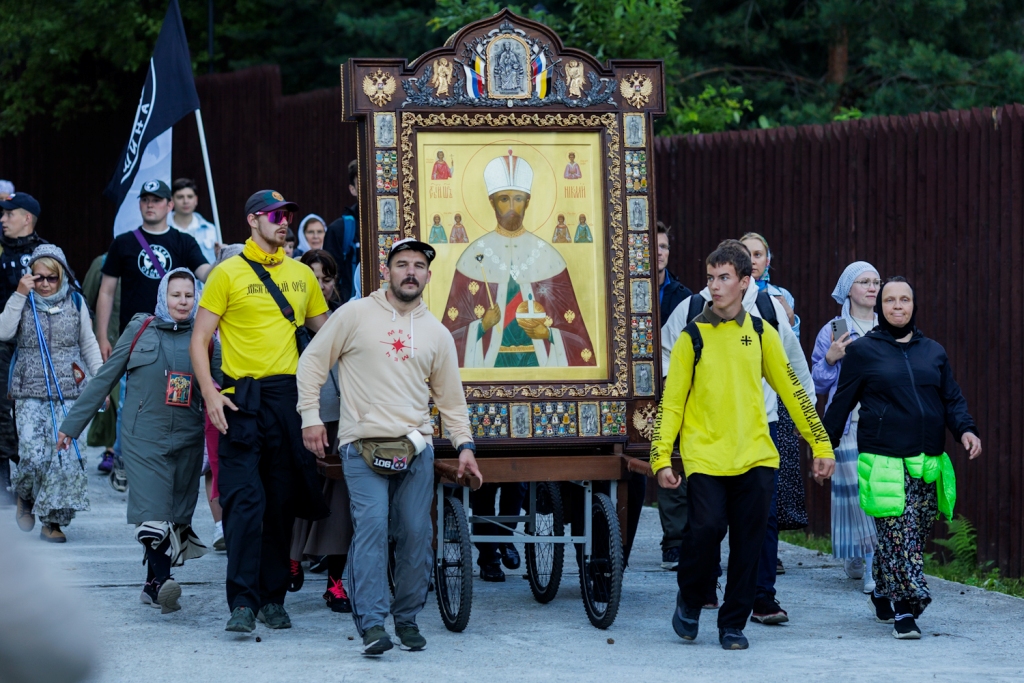
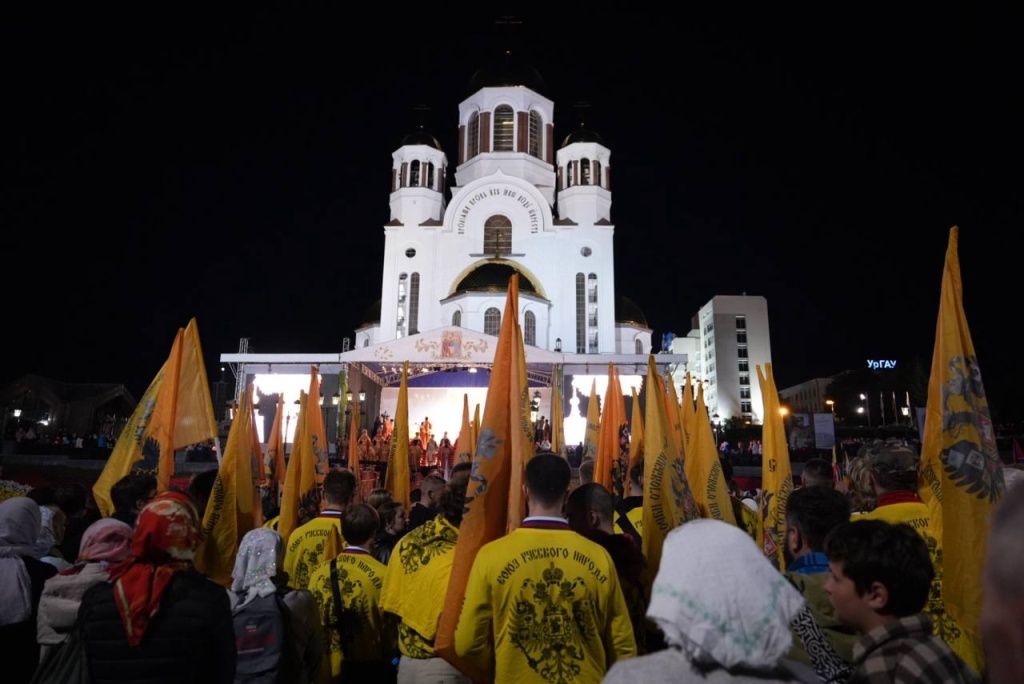
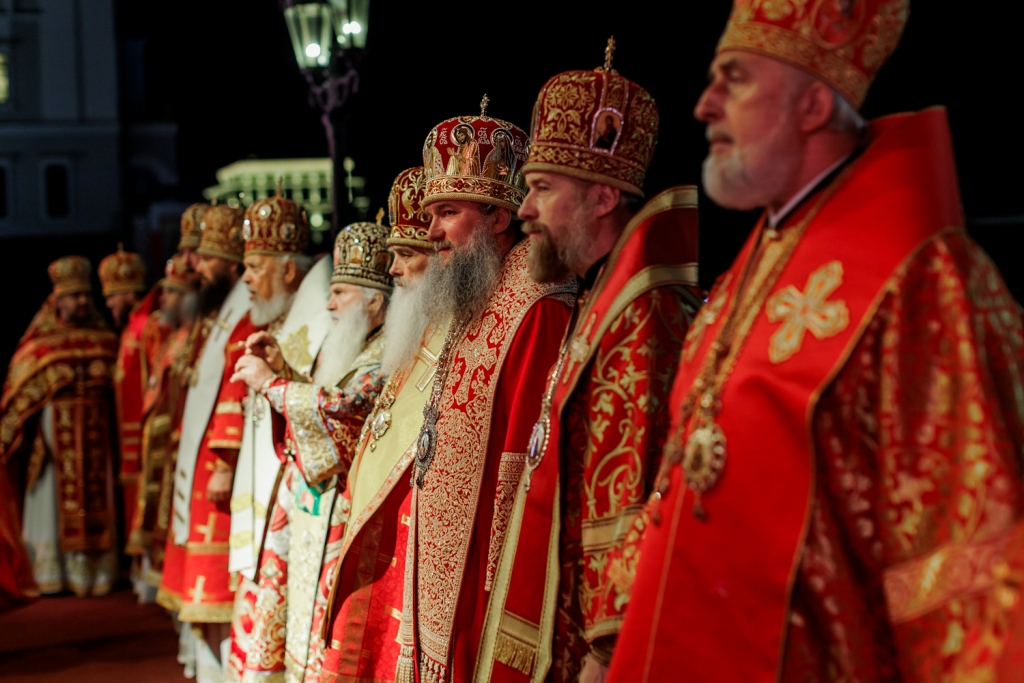
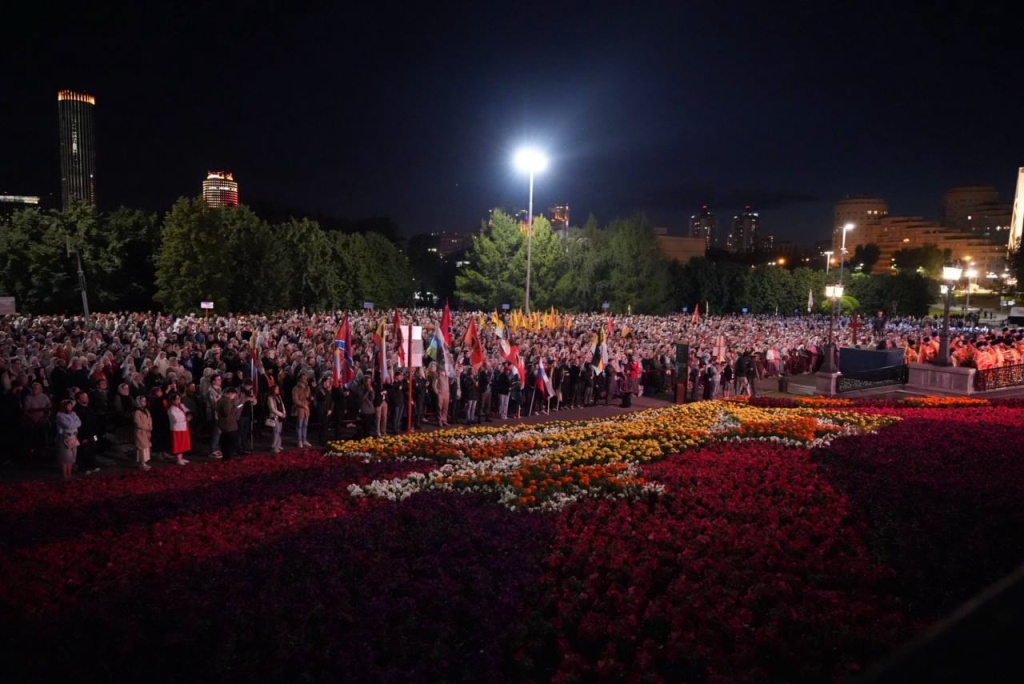
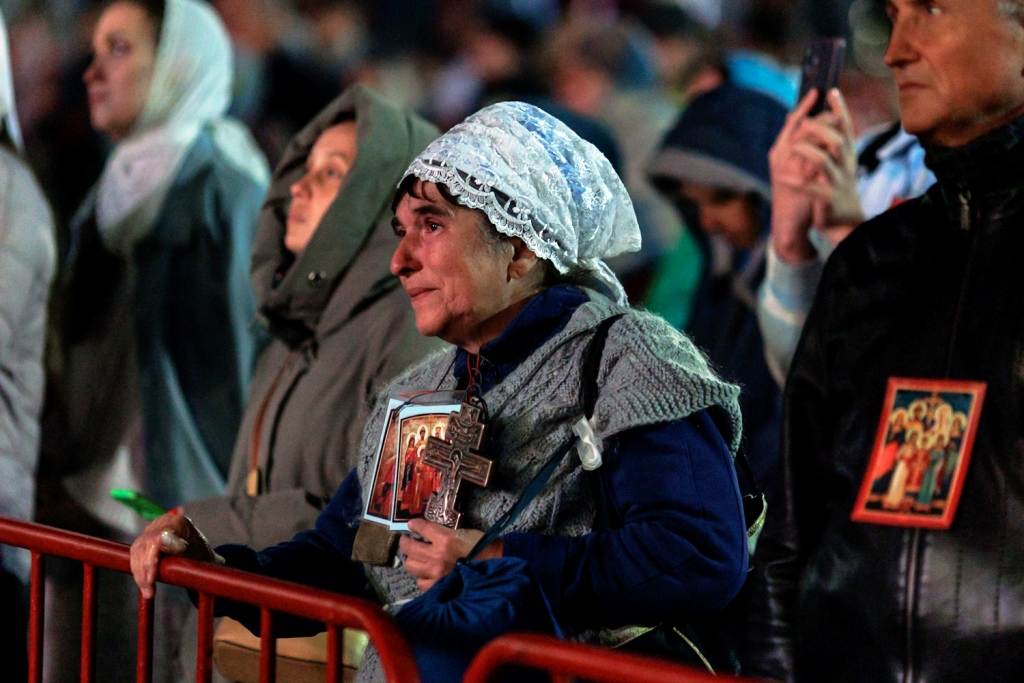
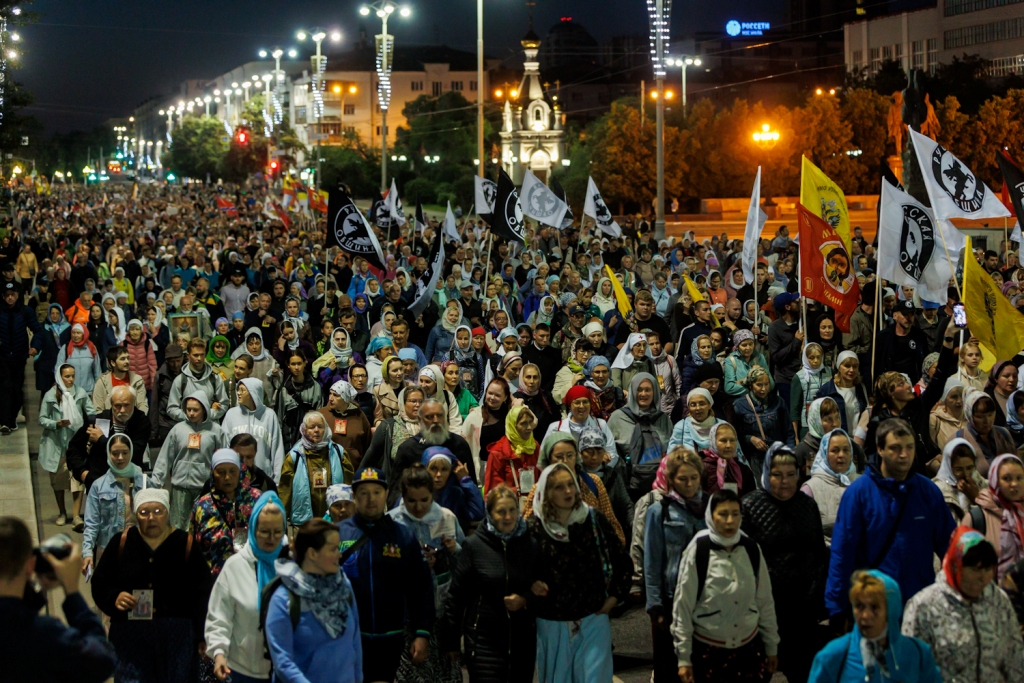
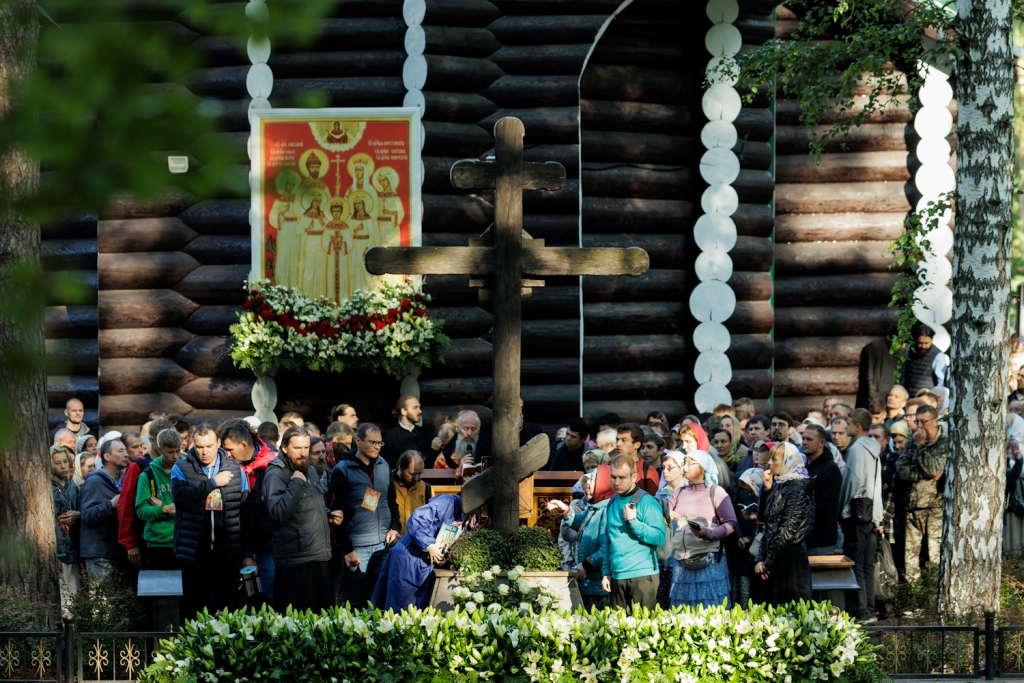
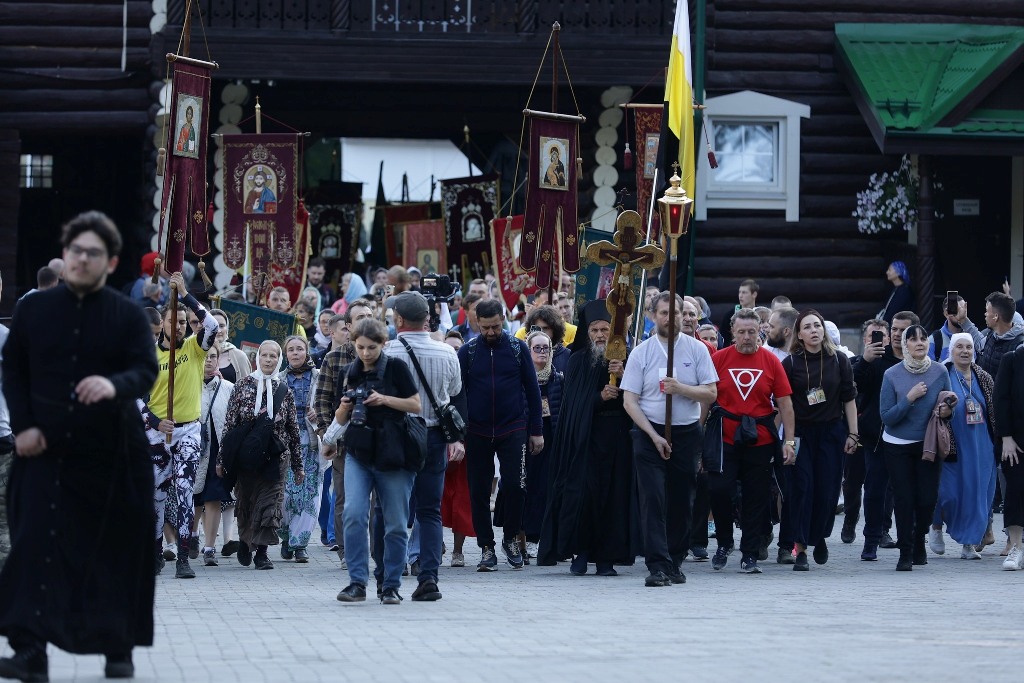
On the night of 16/17 July 2025, tens of thousands of pilgrims, clergy and believers from across the Russian Federation and abroad, took part in the Divine Liturgy on the square in front of the Church on the Blood in Honour of All Saints Resplendent in the Russian Land in Ekaterinburg.

This year marks the 107th anniversary of the death and martyrdom of Emperor Nicholas II, his wife, their five children, and four faithful retainers, who were all brutally murdered in the Ipatiev House in the early morning hours of 17th July 1918.

According to the press service of the Ekaterinburg Diocese, this year’s Tsar’s Days was attended by residents of Ekaterinburg and the Sverdlovsk region, but also residents of different regions of Russia. In addition, were pilgrims from the Czech Republic, Uzbekistan, Serbia, Italy and other countries.

This year’s Divine Liturgy was led by 12 bishops of the Russian Orthodox Church, headed by Metropolitan Evgeny of Ekaterinburg and Verkhotursky. Communion of the Holy Mysteries of Christ was performed from 100 Chalices. The service was broadcast live by the First Orthodox TV channel “Soyuz” on YouTube, and Rutube-channels. 

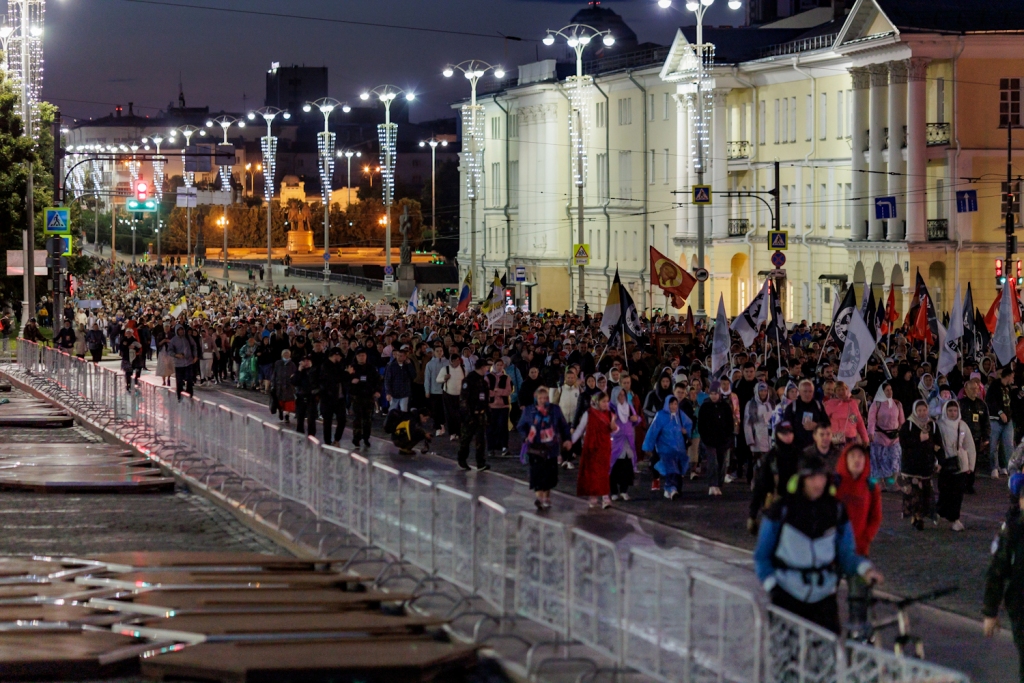
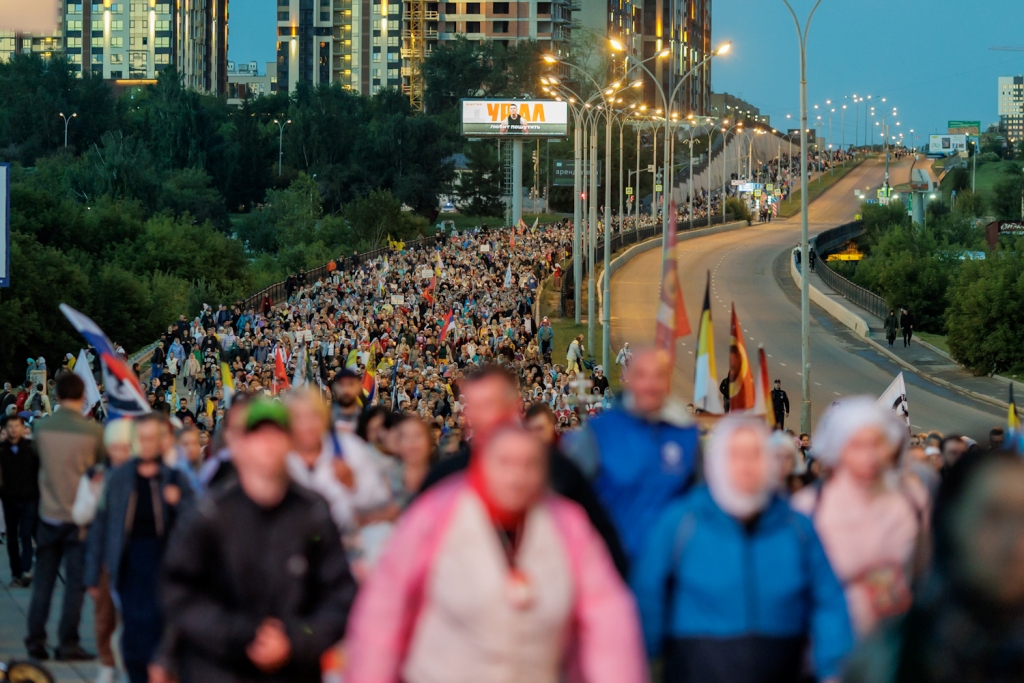
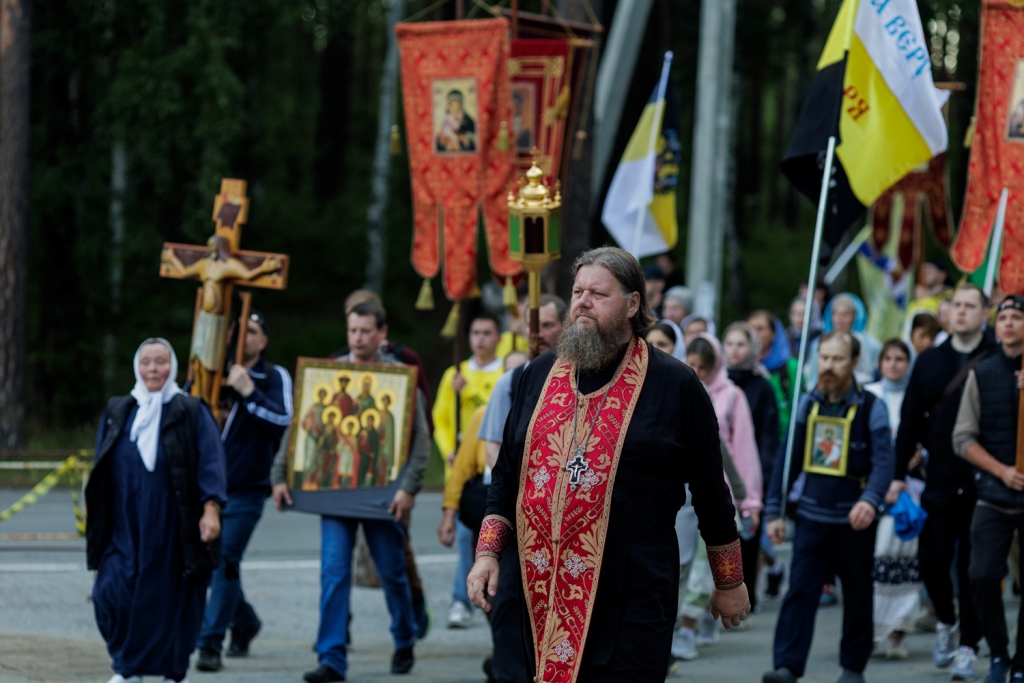
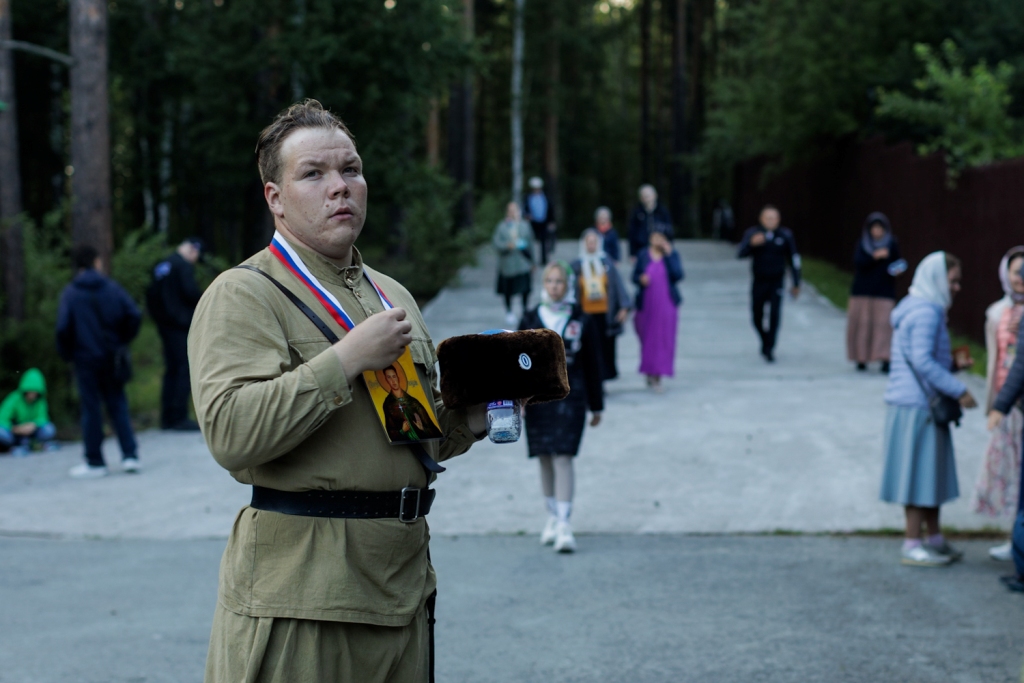
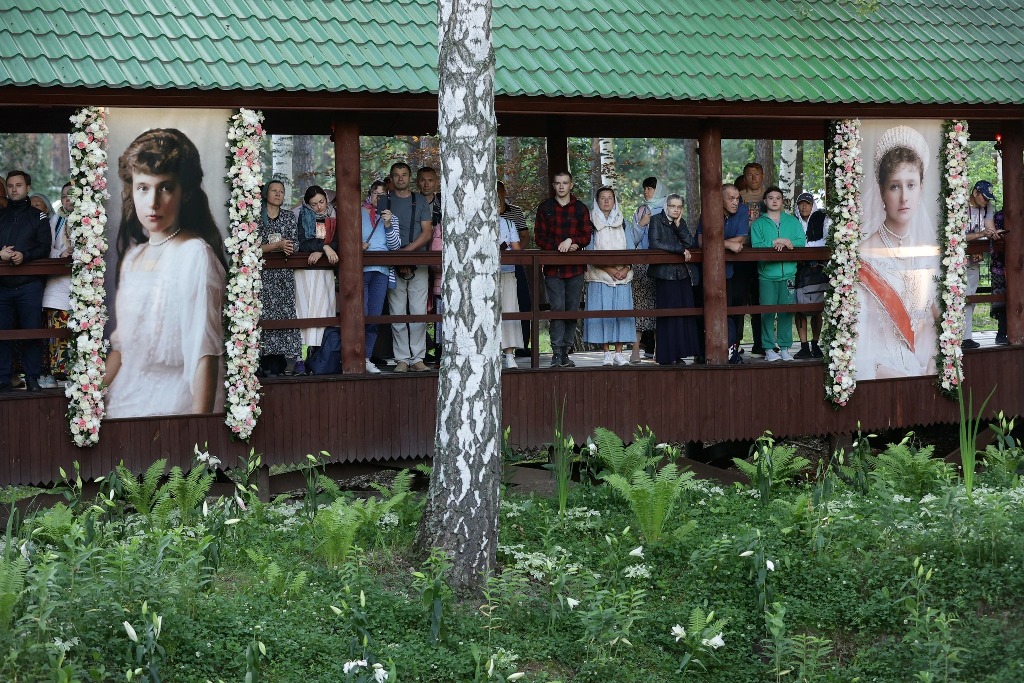
This was followed by a 21-km (13 mile) Cross Procession from the Church on the Blood to the Monastery of the Holy Royal Martyrs at Ganina Yama, in which 40,000 people took part. The procession, which began in the early morning hours of 17th July, took about 4 hours to complete on foot.

“There is no such religious procession, peaceful Christian movement in either Russia, or any where else in the world,” proclaimed Doctor of Historical Sciences Pyotr Multatuli, a noted historian and author, who is considered Russia’s foremost authority on the life and reign of Nicholas II.

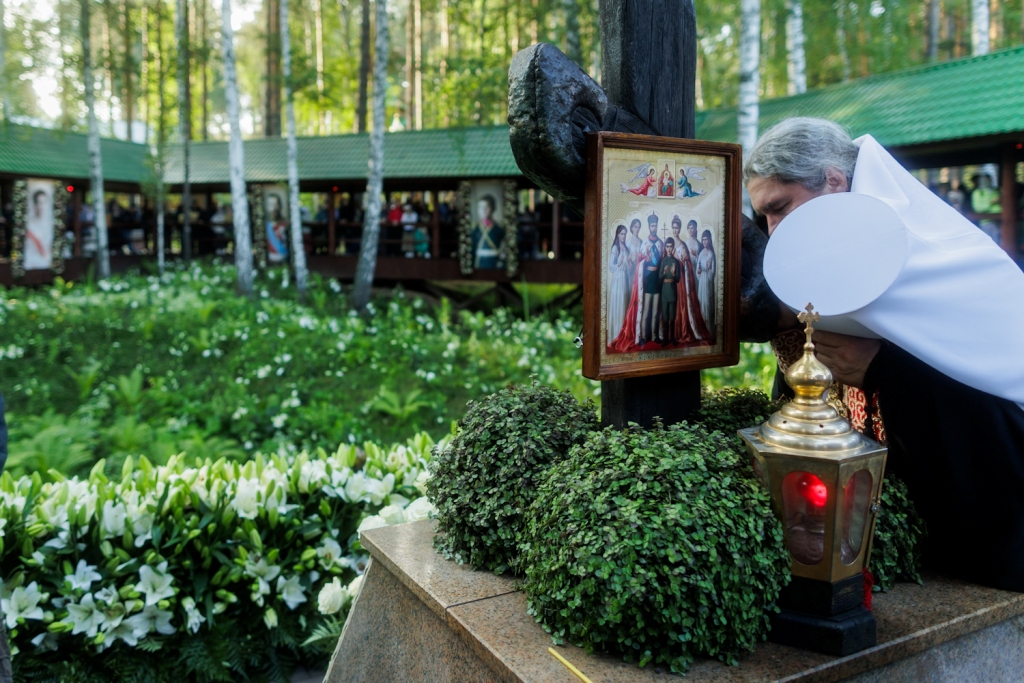
The Cross Procession concluded with a moleben [a liturgical service of supplication or thanksgiving] to the Holy Royal Passion-Bearers at Mine No. 7, which is now sacred ground of the Monastery of the Holy Royal Passion-bearers at Ganina Yama.

Tsar’s Days are traditionally held with the support of the Sverdlovsk regional government, the Ekaterinburg city administration and the St. Catherine’s Foundation, which helps in organizing the celebration and supporting pilgrims with water, food, and transport.

Divine Liturgy – Church on the Blood, Ekaterinburg

21-km (13 mile) Cross Procession to Ganina Yama

Monastery of the Holy Royal Passion-Bearers, Ganina Yama

Tsar’s Days

Recall that the first Cross Procession in memory of the Holy Royal Martyrs, headed by Metropolitan of Ekaterinburg and Verkhoturye Kirill, took place in 2002, in which more than 2 thousand pilgrims and about 100 clerics participated. It has been held annually in the Ural capital ever since.

In 2018, the year marking the 100th anniversary of the death and martyrdom of the Imperial Family, more than 100, 000 people from across Russia and around the world attended the historic event, including the author of this article, who travelled from Canada to take part.

© Paul Gilbert. 20 July 2025
Three ceremonial halls of the Alexander Palace reopened after restoration

Photo © Tsarskoye Selo State Museum

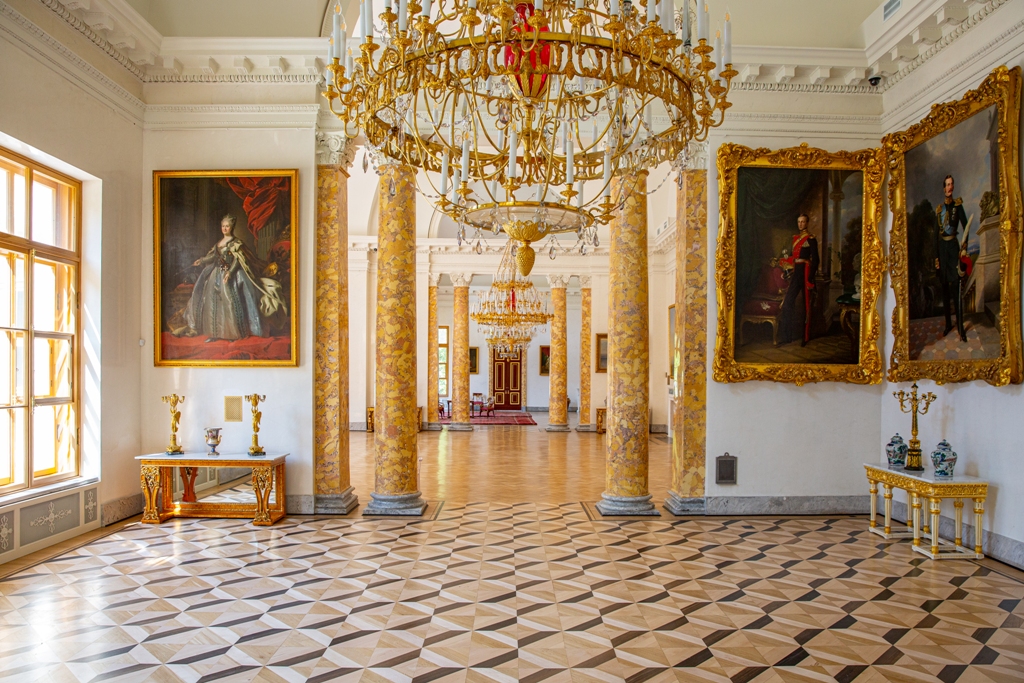
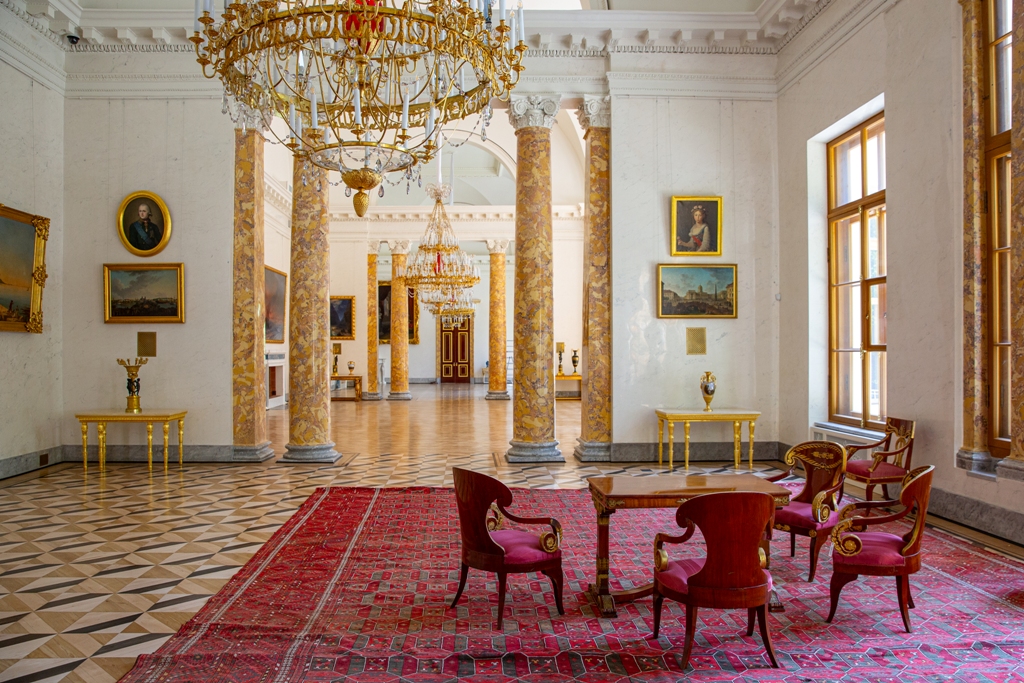
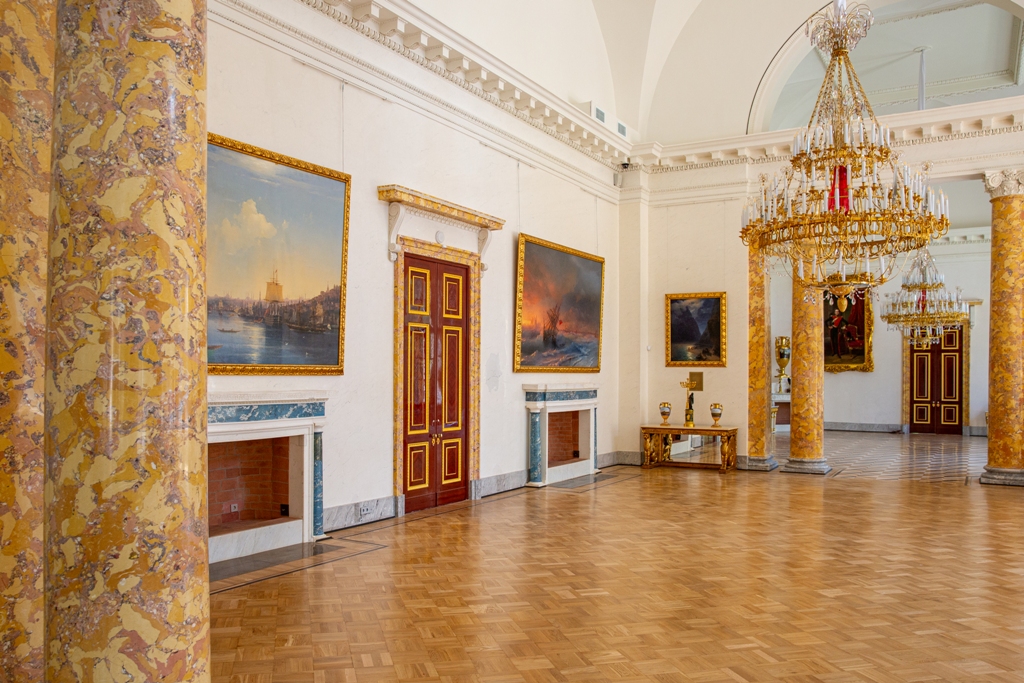
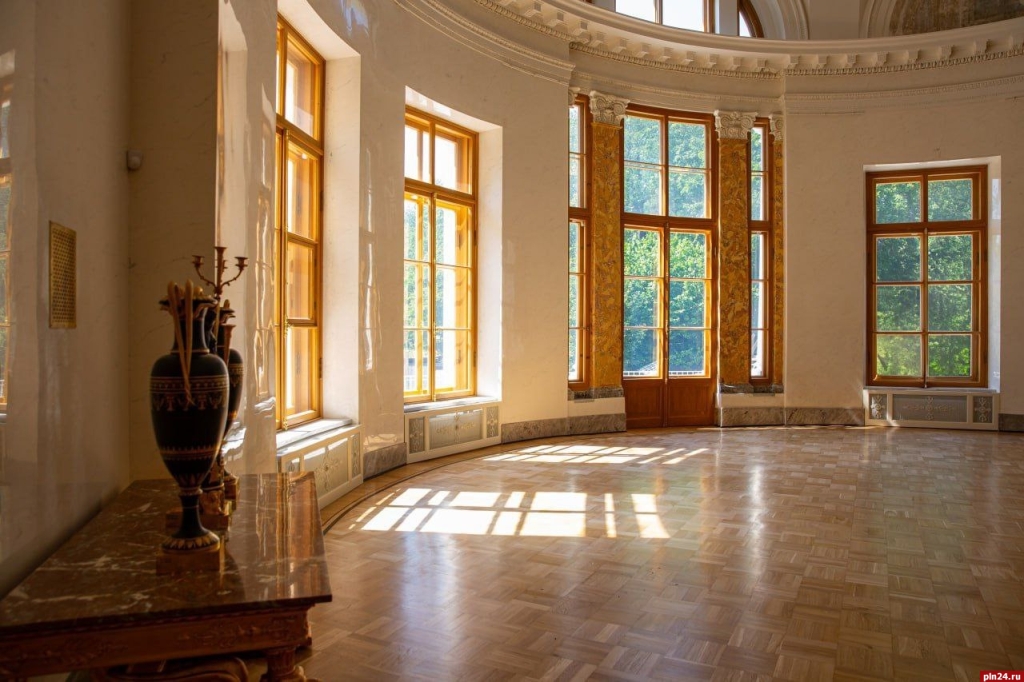
The restoration of the Alexander Palace at Tsarskoye Selo continues . . . on 19th July 2025, the Tsarskoye Selo Museum-Reserve opened three ceremonial halls of the Alexander Palace, after additional restoration work was carried out.

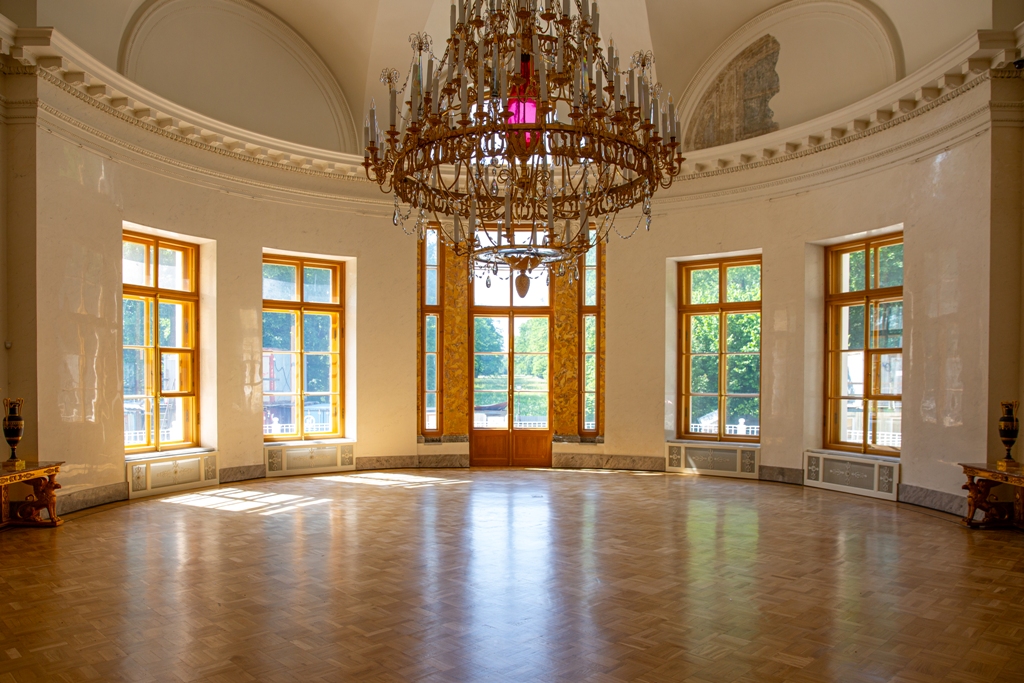
The Semi-circular, Portrait Hall and Marble Drawing Room are once again open to visitors and guided tours. The visitor route through the Alexander Palace now includes 17 interiors, which include the private apartments of Emperor Nicholas II and Empress Alexandra Feodorovna, as well as the interiors of the State Enfilade.

NOTE: the photos show the interiors as they looked following the recent restoration. They lack many of the decorative and applied art pieces, which have now since been returned to their original places – PG

Recall that in 2012, “cosmetic repairs” were carried out in the Portrait Hall, the Semi-Circular Hall and the Marble Drawing (the former Billiard) Room. In June 2010, the State Halls, which are situated in the central part of the palace – between the east and west wings – were solemnly opened to visitors, as part of events marking the 300th anniversary of Tsarskoye Selo.

However, despite the best efforts of curators, limited funds for restoration, and dispersed collections, meant that the presentations were somewhat sparse and of varying quality. The State Halls were closed again in the Autumn of 2015 for additional restoration work. The State Enfilade reopened in 2021.
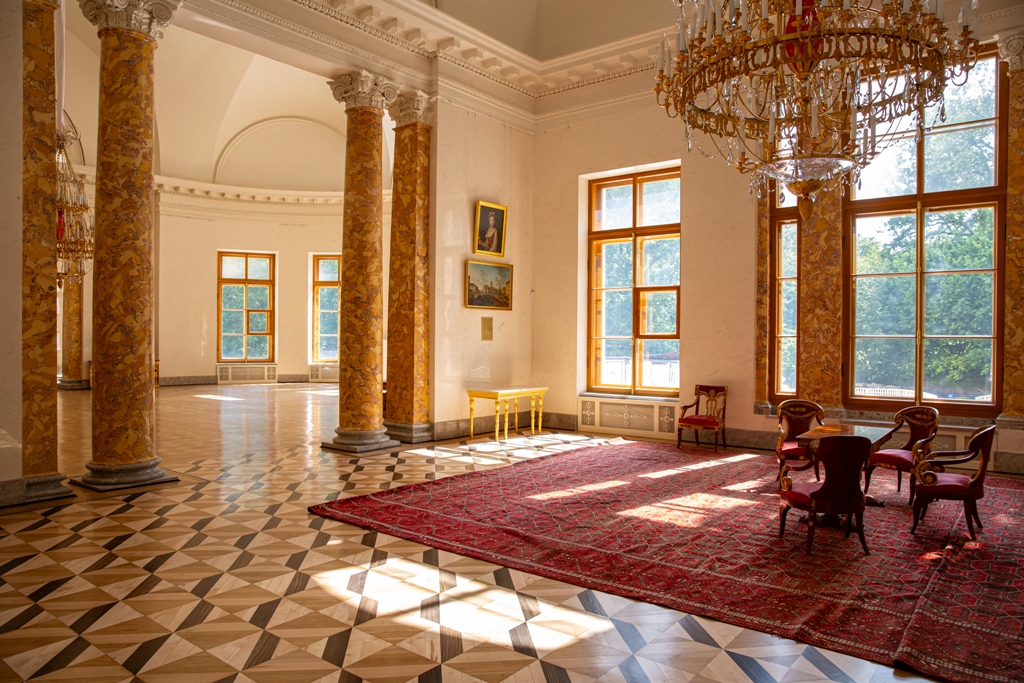
Photo © Tsarskoye Selo State Museum

Photo © Tsarskoye Selo State Museum

The State Halls were closed yet again in 2023, and during the next year+, craftsmen carried out additional restoration work in the interiors. During this time, engineering and technical support systems (heat and power supplies, exposure lighting, ventilation, air conditioning) and low-current systems (security and alarm systems, video surveillance systems, warning and evacuation control, automatic fire alarms) were completely updated.

Specialists carried out large-scale restoration work which included repairs on the parquet floors, ceilings and window fittings. In addition, the mahogany doors with gilded bronze décor were also restored.

About 70 original works of paintings and decorative and applied art are showcased in the State Halls, including two portraits transferred on loan from the Pavlovsk State Museum: the first, of Empress Alexandra Feodorovna (wife of Emperor Nicholas I) and the second, of Queen Victoria of Great Britain. The works were returned to their historical places in the Marble Drawing Room [not to be confused with the Marble (Mountain) Hall.

Note: in 1951, thousands of items from the Alexander Palace were transferred to Pavlovsk. To date, they have not been returned – PG.

© Tsarskoye Selo State Museum

Visitors can also see three 18th-century chandeliers, created according to drawings by the architect Giacomo Quarenghi (1744-1817). They are made of bronze, glass and crystal and impress with their size: 3.5 meters high, each weighing more than 240 kilograms. The chandeliers were restored in March 2025.

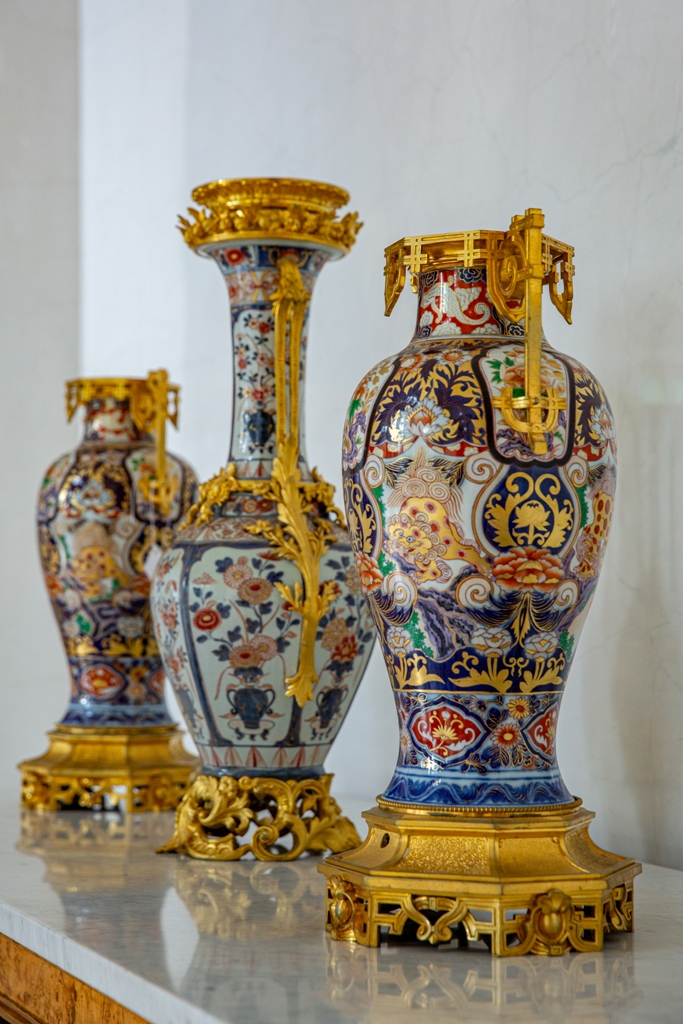
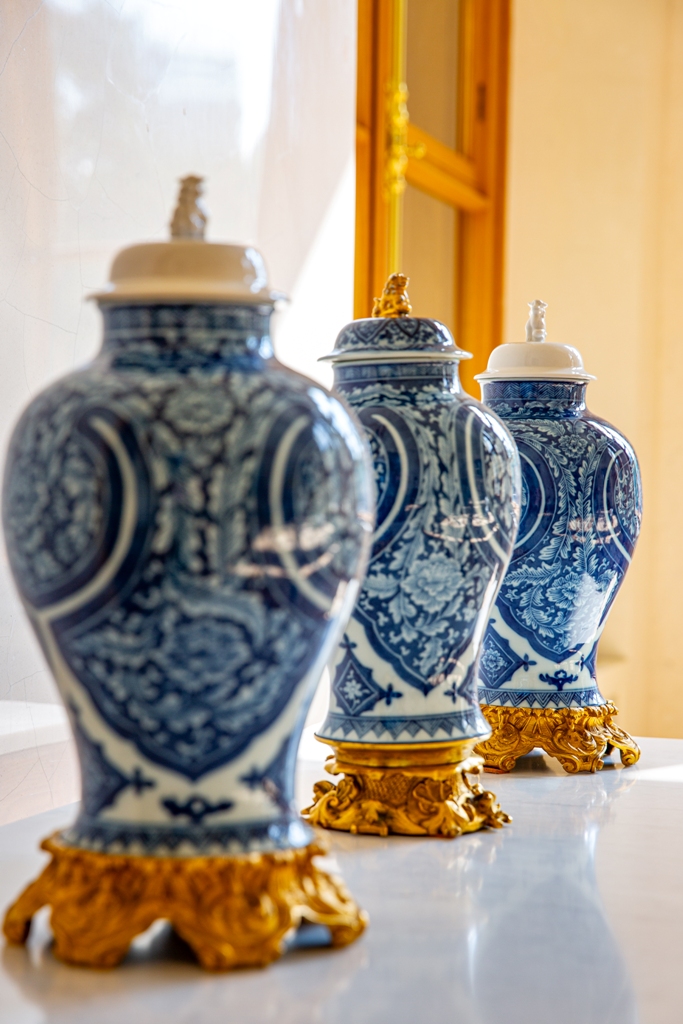
Complementing the halls are four marble fireplaces, two of which are decorated with large vases created at the Imperial Porcelain Factory in the second quarter of the 19th century. On eleven consoles there are vases and candelabra. On the walls there are portraits of emperors and members of their families by artists Alexander Roslin, Franz Krüger, Timofey Neff, as well as urban and seascapes by Ivan Aivazovsky, Fyodor Alexeev, Maxim Vorobyov and Franz Ludwig Katel. In addition, are two large floor vases made of cloisonné enamel on copper, which were presented to Emperor Nicholas II in 1916 by Prince Kotohito on behalf of Emperor Yoshihito of Japan.

The Semi-circular Hall (see below). Photo © Tsarskoye Selo State Museum

The Semi-Circular Hall (pictured above) is associated with an important event in early 20th century Russian history. It was from this hall, on the night of 31st July / 1st August 1917, that Emperor Nicholas II, along with his family and an enormous retinue left the Alexander Palace and went into exile to Tobolsk, Siberia. They passed through the doors (seen in the photo above), and never saw their beloved home again. From 1905, the Alexander Palace had been the preferred Imperial residence of Nicholas and his family.

Photos © Tsarskoye Selo State Museum

At the time of this writing, the restoration of the Alexander Palace continues, funded by the Ministry of Culture of the Russian Federation, and philanthropists, and the Tsarskoye Selo State Museum. The restoration of the Western Wing of the palace is expected to be completed by the end of 2025. Work is now underway to recreate the famous Crimson [aka Raspberry] Drawing Room. The work is planned to be completed in 2027.

© Paul Gilbert. 18 July 2025