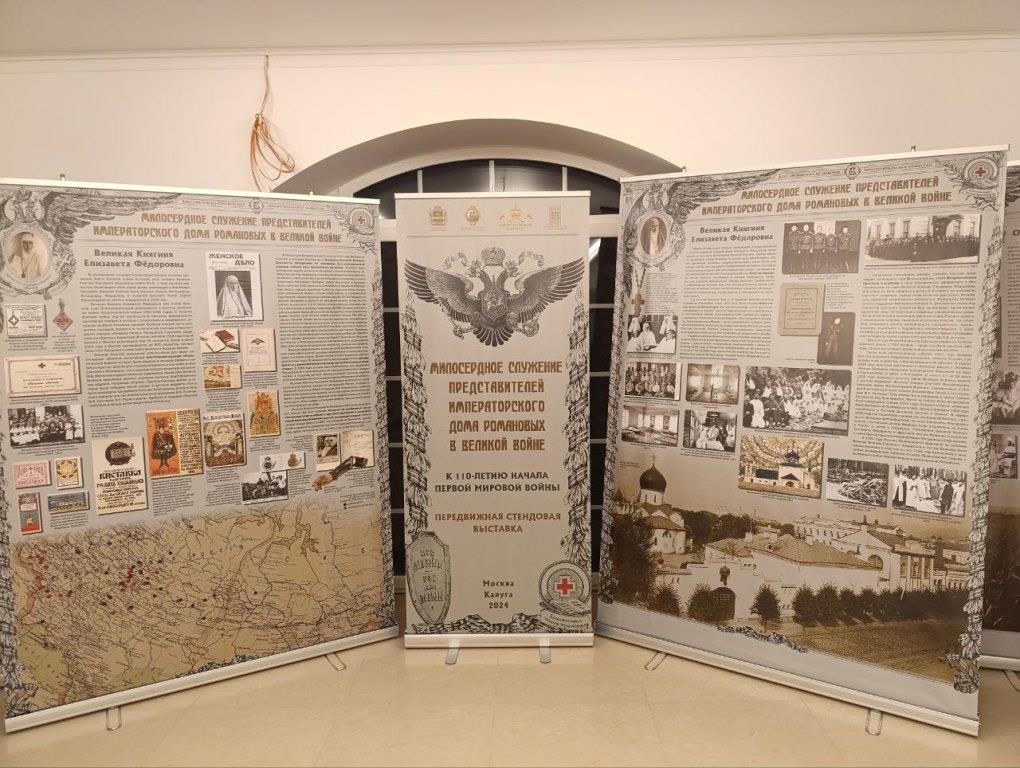
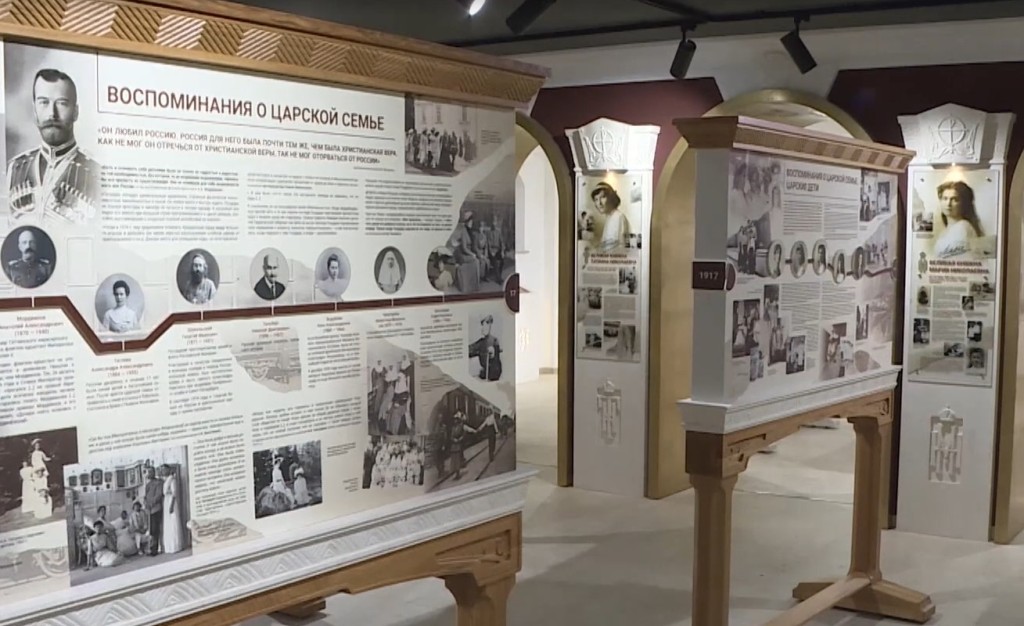
On 23 December 2024, a new exhibition dedicated to the merciful service of members of the Russian Imperial Family during the Great War (1914-1918), opened at the Kazan Monastery in Kaluga.
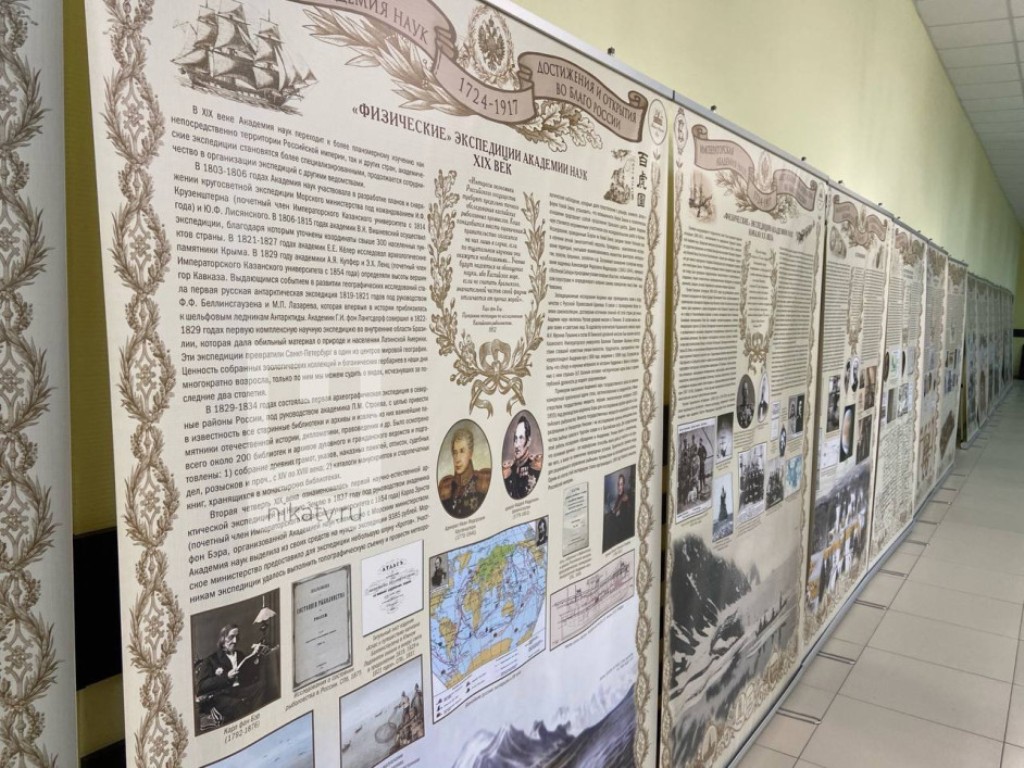
The mobile exhibition features 24 poster-stands which present unique photographs and interesting facts which acquaint visitors with the story of the great love, compassion and self-sacrifice of the family and relatives of Emperor Nicholas II, for the Russian people during the First World War.
During the First World War, Empress Alexandra Feodorovna, her daughters, the Emperor’s sister Grand Duchess Olga Alexandrovna, Grand Duchess Elizabeth Feodorovna and many others became ordinary nurses. Some went to hospitals at the front line, while others attended to wounded Russian soldiers at Tsarskoye Selo and Petrograd, together they worked on an equal basis with other nurses.
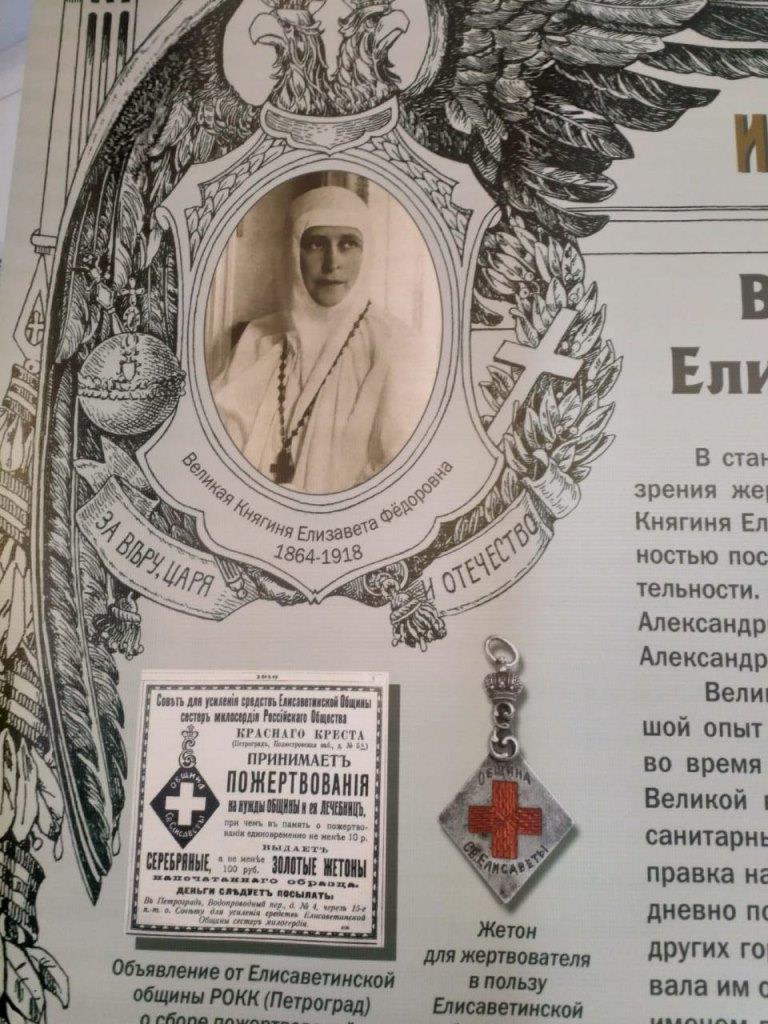
Visitors to the exhibition can learn about the work of the Russian Red Cross, the Imperial Orthodox Palestine Society (IOPS), and the “Olginsky”[1] and Tatianinsky”[1] Committees. The central part of the exhibition is dedicated to Grand Duchess Elizabeth Feodorovna, whose 160th birthday was celebrated in 2024.
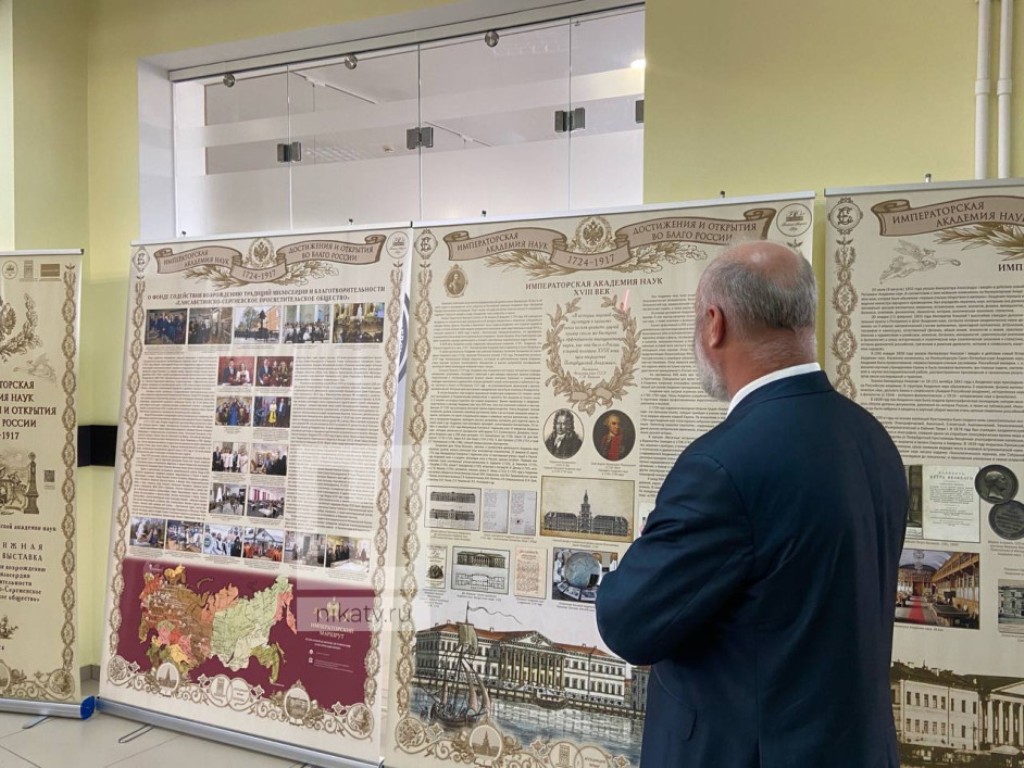
The exhibition was organized by the Elizabeth-Sergius Educational Society Foundation (ESPO) in Moscow. Preserving historical memory of the Russian Imperial Family is the most important task of the Foundation and especially with the younger generation. Schoolchildren and students of the Kaluga region will be invited to the exhibition, “because it is important to teach them from childhood and adolescence about the history of Russia and the life of the last Tsar, his family and relatives”.
The travelling exhibition was created in 2022, the year marking the 150th anniversary of the birth of Empress Alexandra Feodorovna. For the past two years, the exhibition has been presented in cities and towns across Russia.
*As I have noted in previous posts, I support any initiative – big or small – to help keep the memory of Nicholas II and his family alive in 21st century Russia – PG
NOTES:
[1] To help the civilian population affected during the First World War, Emperor Nicholas II established the Supreme Council chaired by Empress Alexandra Feodorovna. The Empress created committees to help refugees and families whose breadwinners are called to war. She assigned responsibility for the work in these committees to her two eldest daughters: Grand Duchesses Olga and Tatiana Nikolaevna. The “Tatianinsky” and “Olginsky” committees had branches in many cities throughout the Russian Empire and were very popular.
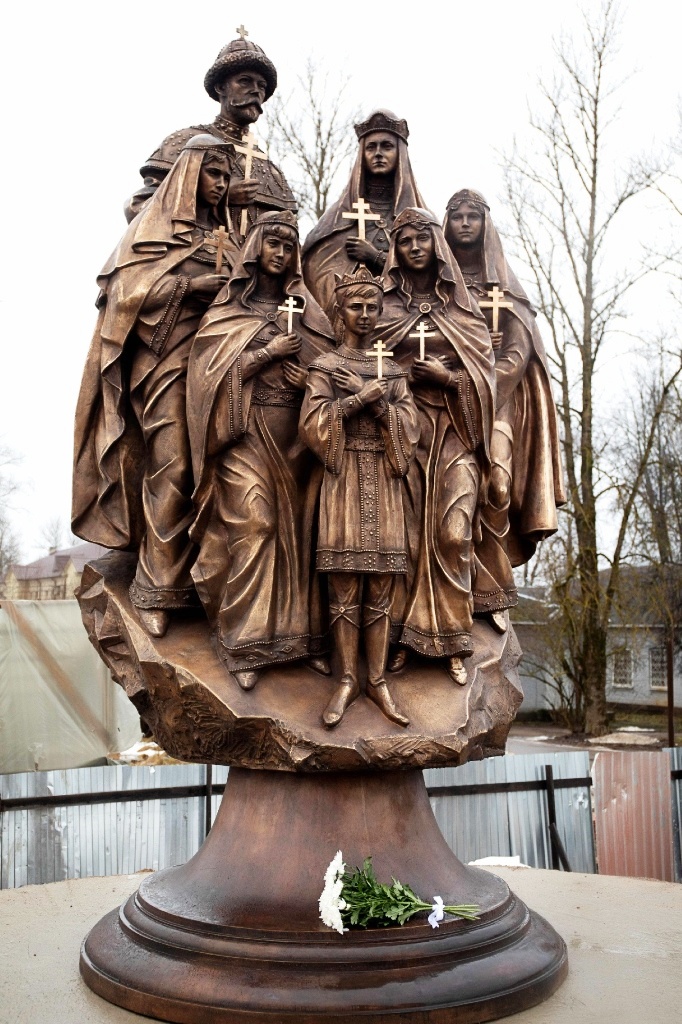
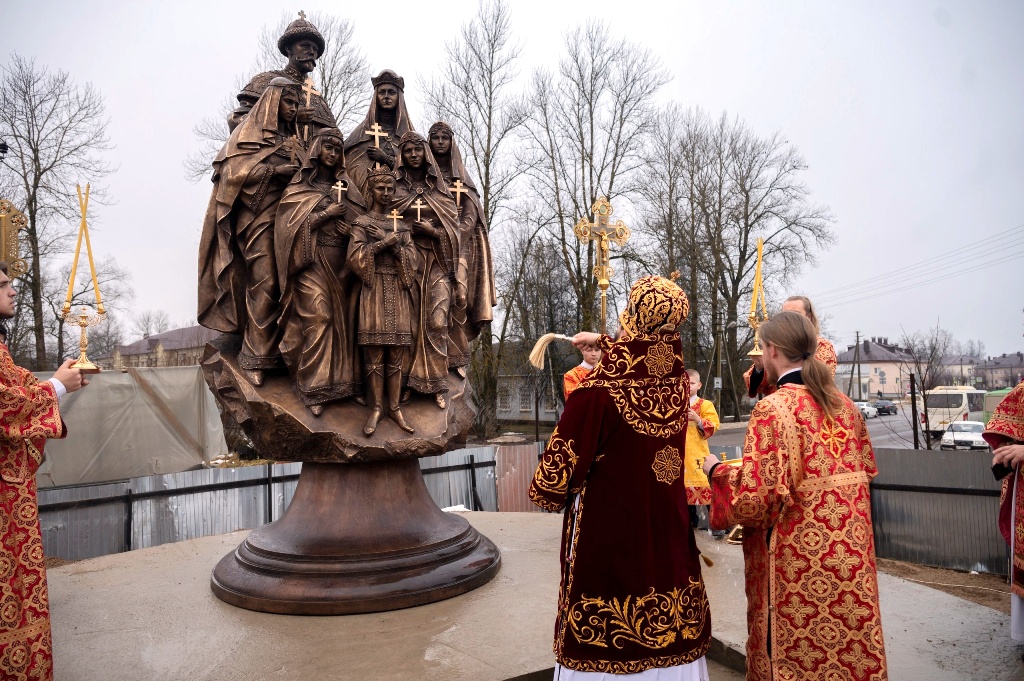
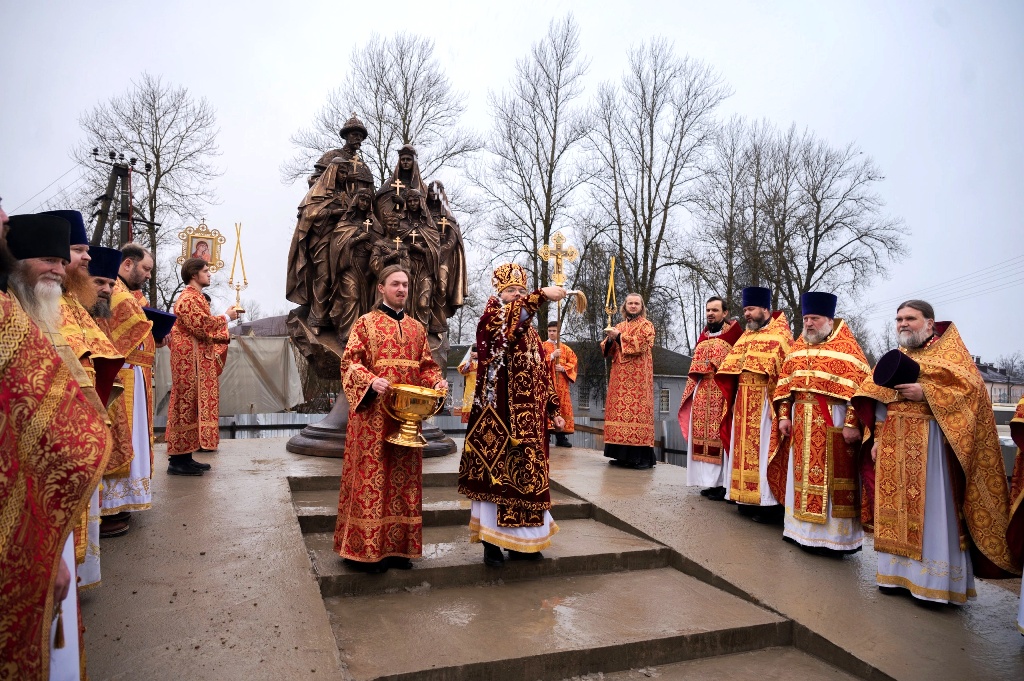
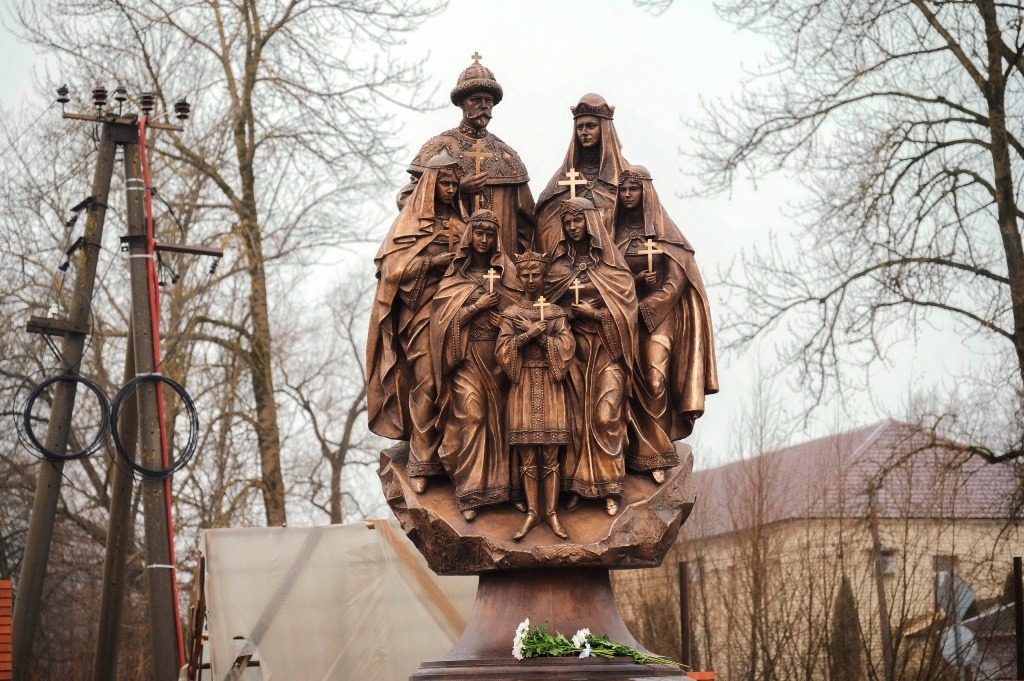
On 26th December 2024, a new monument to Emperor Nicholas II and his family was installed and consecrated on the grounds of the Church of the Holy Royal Passion-Bearers in the Russian city of Dno, situated 114 km from Pskov. In addition, a museum dedicated to the Imperial Family was officially opened and consecrated.
A Divine Liturgy was conducted in the new Church of the Holy Royal Passion-Bearers (constructed in 2023) by Metropolitan Matthew of Pskov and Porkhov.
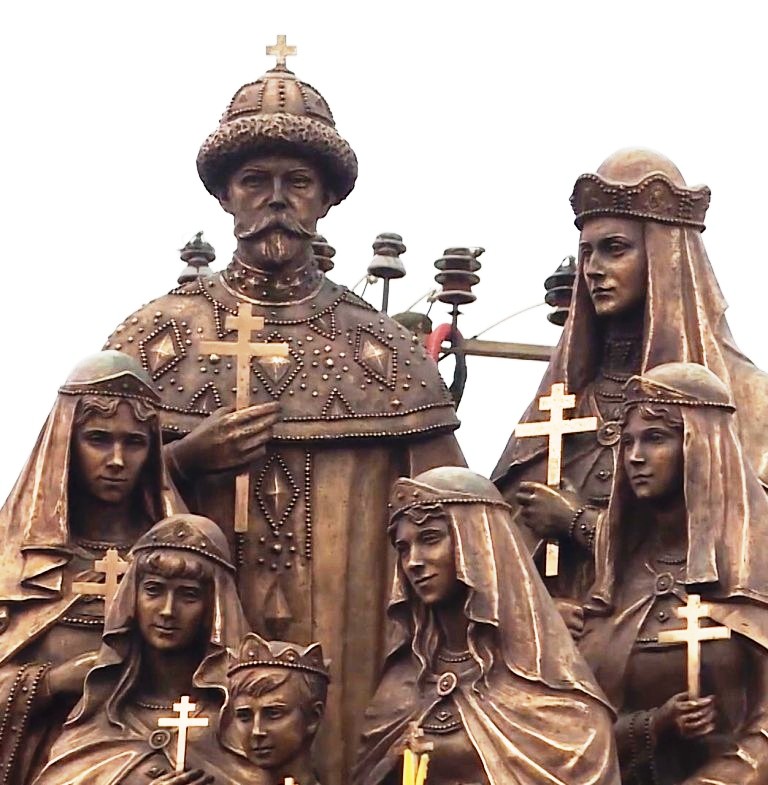
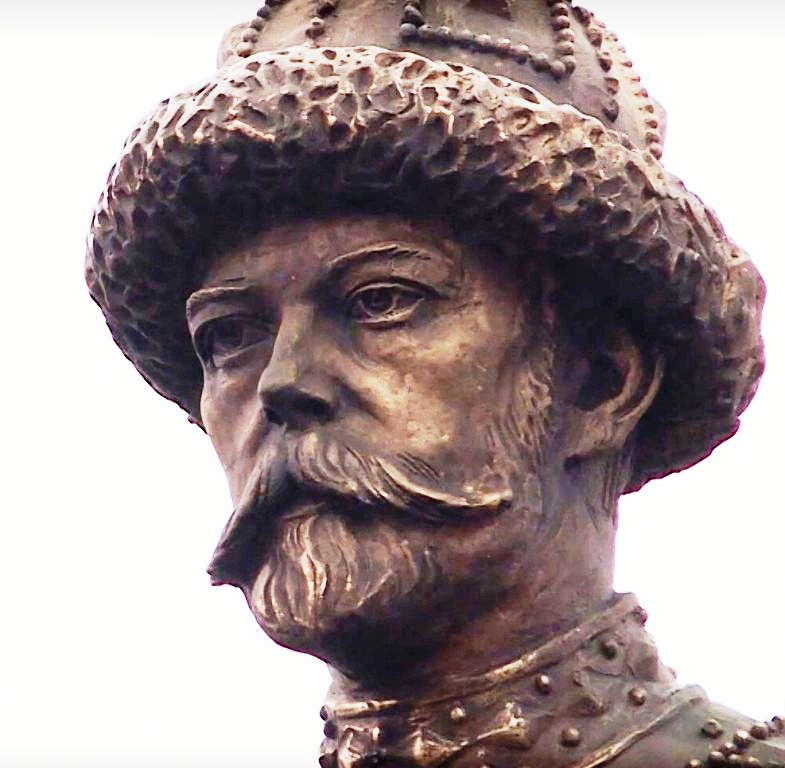
The sculptural composition was made by Moscow sculptor Vladimir Gennadievich Ivanov [b. 1983], and took one year to complete. According to him, the bronze monument weighs three and a half tons, and stands almost four and a half meters [almost 15 feet] in height. Each of the seven members of the Imperial Family is depicted holding a cross.
Recall that the Dno railway station became the penultimate point of the Imperial Train, which was transporting the Tsar to Petrograd on 14th (O.S. 1st) March 1917. From here, Nicholas II was forced to Pskov, where the following day, he signed his abdication from the throne. As Bishop Matthew noted during the opening of the museum in the basement of the church, “these events became a turning point in the history of the country”.
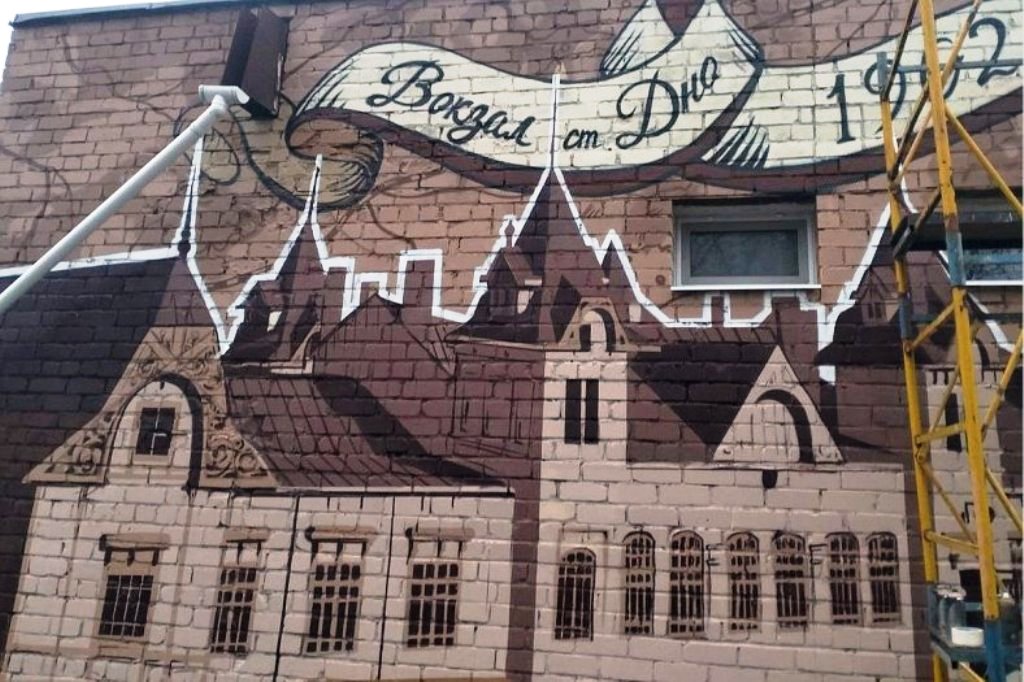
Recall that earlier this month a mural of the pre-war railway station at Dno was recreated on the building of the museum and exhibition center in Dno. The mural was created In memory of Emperor Nicholas II’s historic stop at Dno in March 1917, the day before he abdicated the throne.
I have published nearly 50 titles to date through AMAZON – featuring one of the largest selections of books on Nicholas II, the Romanov dynasty and the history of Imperial Russia.
Please CLICK on the BANNER or LINK above to review my current selection of titles in hardcover, paperback and ebook editions. Listings provide a full description for each title, pricing and a Look inside feature.
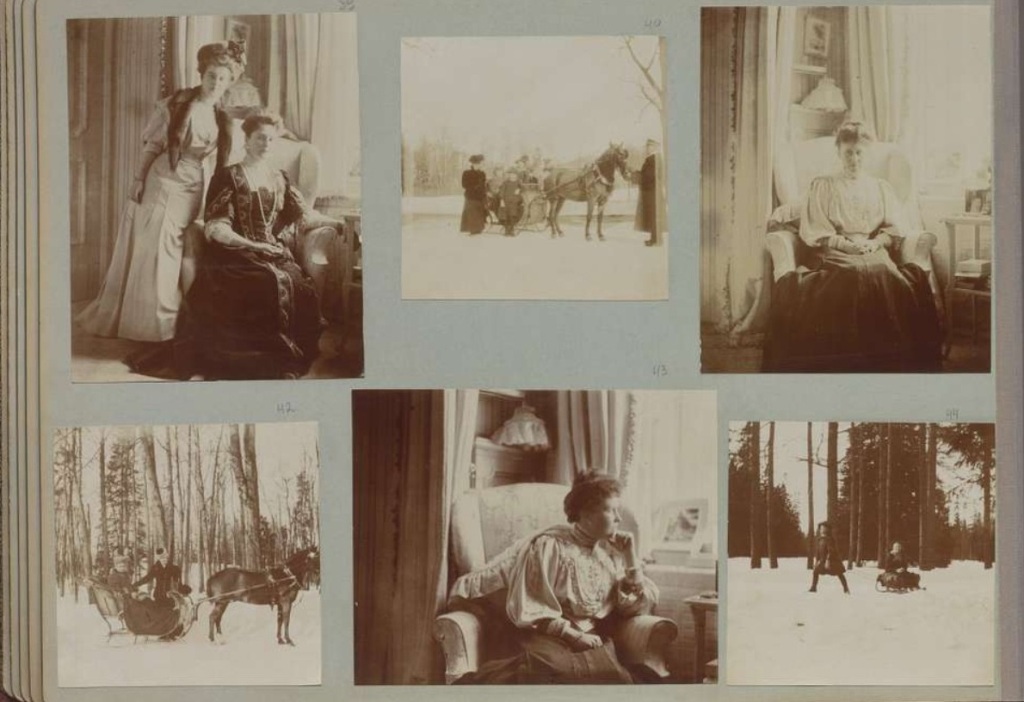
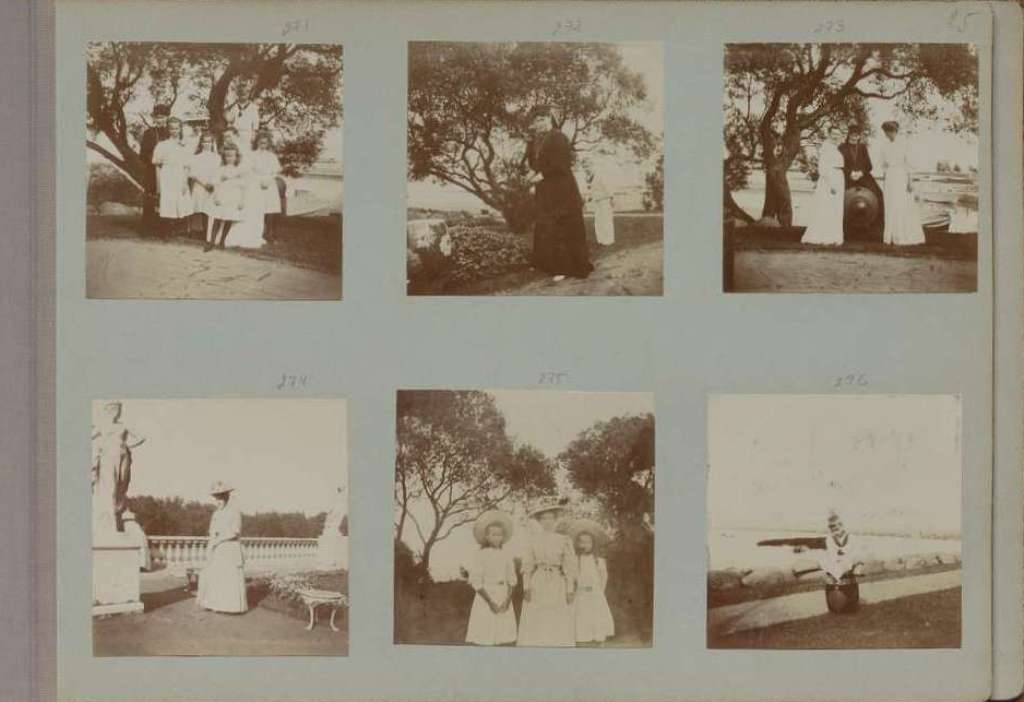
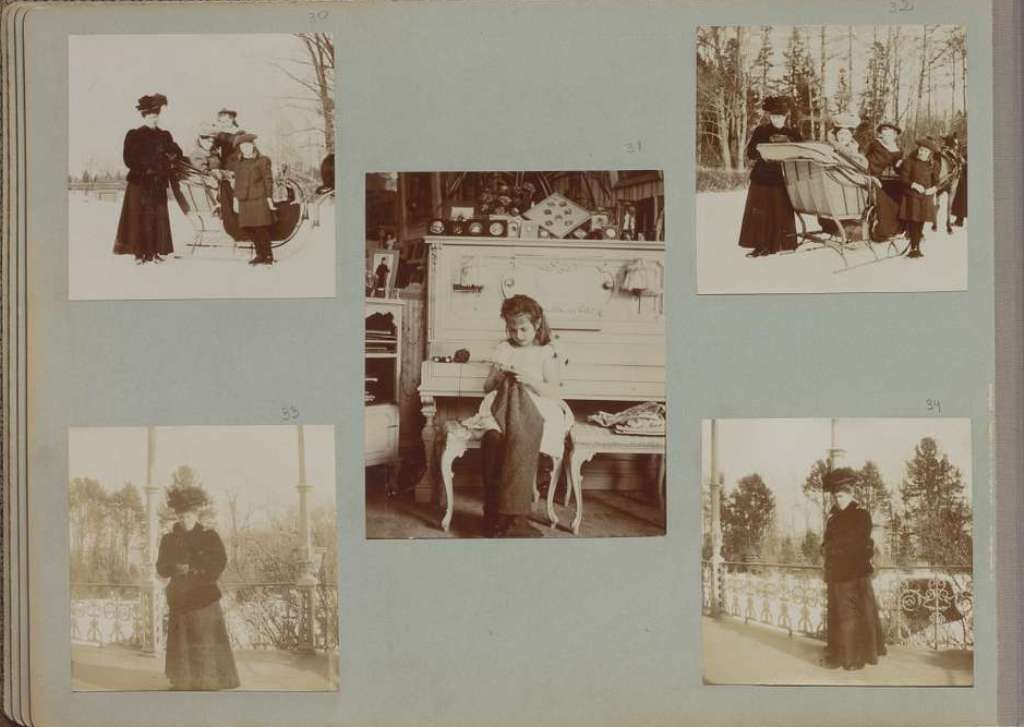
A photograph album belonging to the Grand Duchess Olga Nikolaevna (1895-1918) from the collection of the State Archives of the Russian Federation (Moscow) is currently on display at the Boris Yeltsin Presidential Library in St. Petersburg.
The photographs are dated 1907-1908. The cover of the album is decorated with the Imperial Crown, and in the upper right corner is Olga’s monogram O. N.
In total, the album contains 294 photographs, of the Romanov family during the early 20th century. The pictures depict the day to day life of the Imperial Family: Olga and her siblings playing games, picnics, snowball fights and walks in the Alexander Park at Tsarskoye Selo, sailing on the Imperial Yacht Shtandart, New Year’s celebrations, and the Romanov family at home.
It also depicts photos of the Imperial Family: Empress Alexandra Feodorovna at Tsarskoye Selo with her children, with maids of honour, Emperor Nicholas II with his family and entourage.
Olga was the eldest daughter of Emperor Nicholas II and Empress Alexandra Feodorovna. She was the favorite of her father, and was considered the most gifted of the August children. Olga had a philosophical mind, loved to read and wrote poetry. According to Anna Vyrubova, Olga was ‘extremely pretty, with brilliant blue eyes and a lovely complexion, and resembled her father in the fineness of her features, especially in her delicate, slightly tipped nose’.
All the photos in the album are cheerful and serene. During the First World War, Grand Duchesses Olga and her sister Tatiana, together with their mother, completed Red Cross training, passed an exam, and swapped their Imperial dress for nurses uniforms and began to help wounded soldiers in a special hospital set up not far from the Alexander Palace at Tsarskoye Selo.
Next year, will mark the 130th anniversary of the birth of the Grand Duchess, on 16th (O.S. 3rd) November 2025.
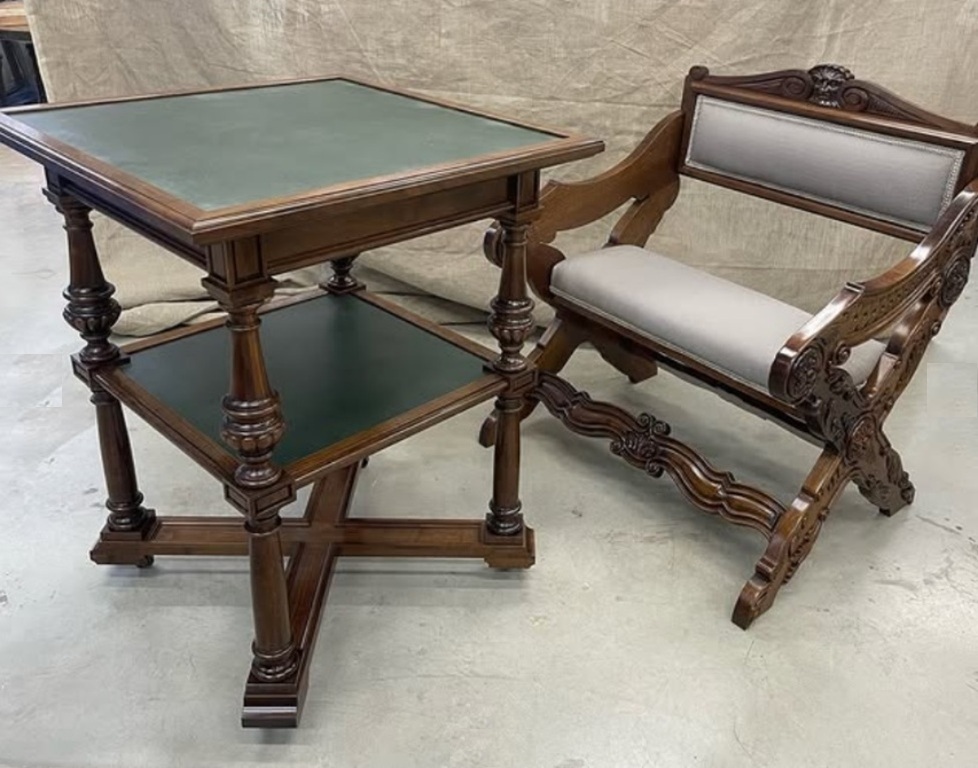
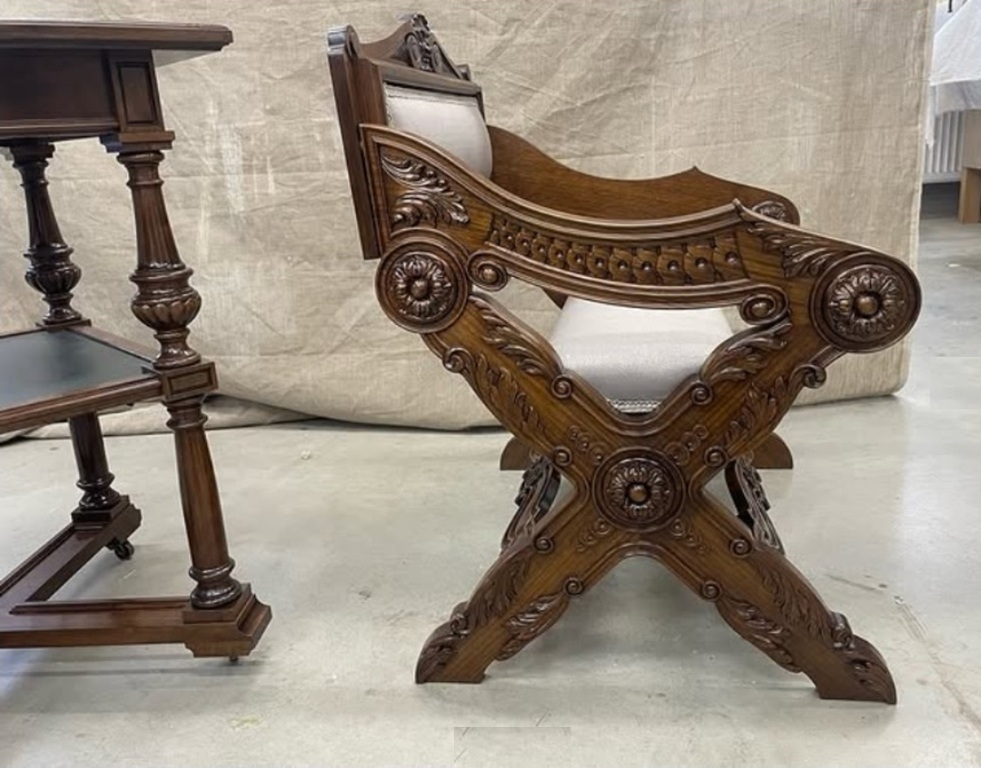
The Tsarskoye Selo State Museum continue to recreate items lost from the Alexander Palace during the Second World War . . . the latest additions are a table and chair, recreated for the Working Study of Emperor Nicholas II.
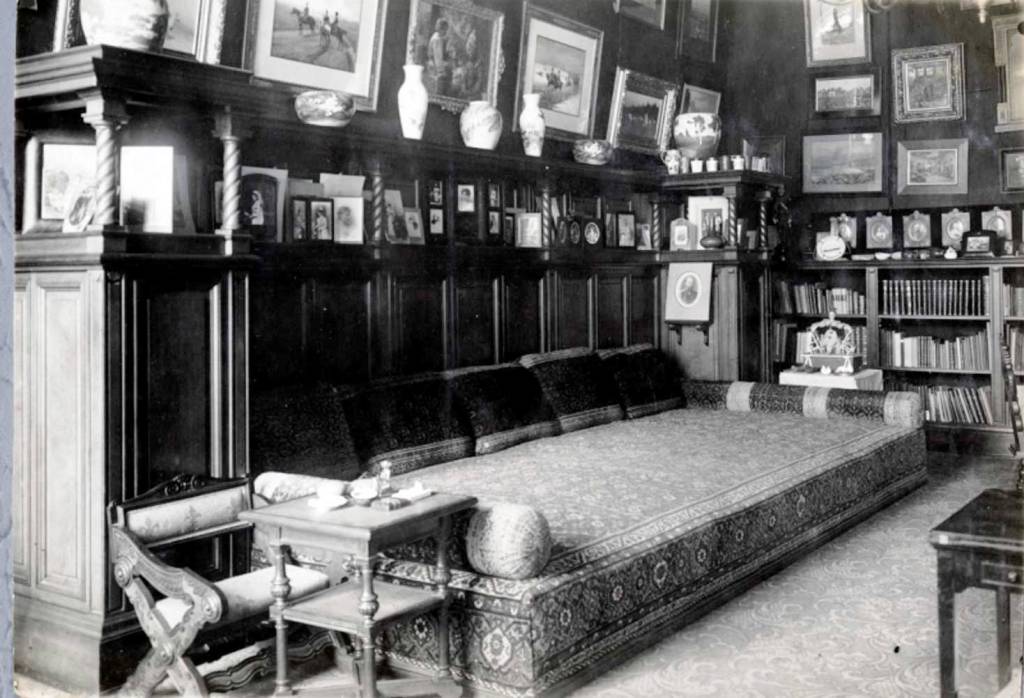
The two pieces of furniture were recreated from a vintage 1917 photograph by the Tsarskoye Selo Restoration Workshop. The items can be seen at the end of the Ottoman sofa in the Tsar’s Working Study – see photo at the bottom of this post.
Recall that the Alexander Palace closed in the Autumn of 2015 for an extensive restoration, which saw the reconstruction of the Private Apartments of Emperor Nicholas II and Empress Alexandra Feodorovna, situated in the Eastern Wing of the palace. Work on the project took 6 years to complete. The Alexander Palace reopened it’s doors to visitors in August 2021.
PHOTO: The Working Study of Emperor Nicholas II in the Alexander Palace
The Working Study of Emperor Nicholas II was decorated in 1896-1897 in the English Style by Roman Meltzer (1860-1943) and furniture master Karl Grinberg. It was in this room that the Emperor read papers, including numerous correspondence, received foreign ministers and dignitaries and listened to reports from his ministers, who travelled from St. Petersburg.
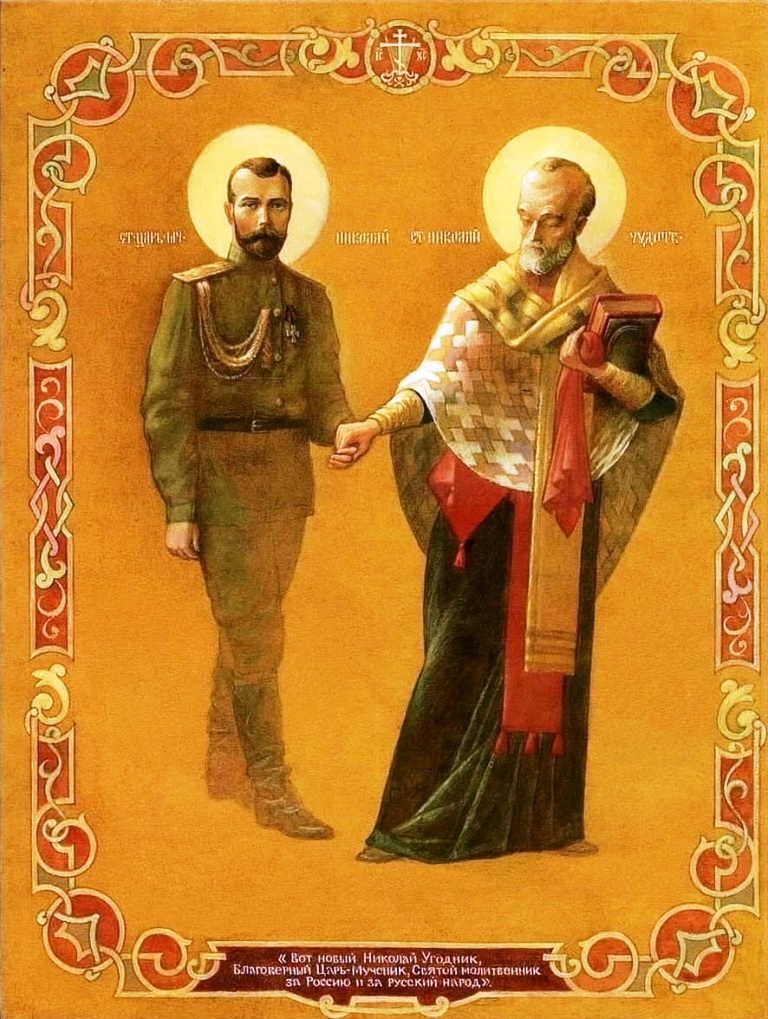
PHOTO: contemporary icon depicting the Holy Tsar-Martyr Nicholas II and Saint Nicholas of Myra – aka Nicholas the Wonderworker (born 270- died 343 A.D.)
Today – 19th (O.S. 6th) December – the Russian Orthodox Church celebrates the name day of Emperor Nicholas II. The Tsar’s patron saint is Saint Nicholas of Myra – aka Nicholas the Wonderworker (born 270- died 343 A.D.).
Upon his birth on 19th (O.S. 6th) May 1896, the future Emperor and Tsar of Russia received the traditional Romanov name – “Nikolai” (Nicholas). His name can be attributed to “naming a male after an uncle” (a custom which dates from the Rurik dynasty), in which Nicholas was named in memory of his father’s elder brother and mother’s fiancé, Tsesarevich Nikolai Alexandrovich (1843-1865), who died at the age of 21. The names, patronymics, and namesake saints of the Tsesareviches themselves (Nicholas of Myra) and their fathers (Alexander Nevsky) coincided. The Holy Tsar-martyr Nicholas II’s name day is marked on 6th December according to the Old Style Julian calendar, the day on which St. Nicholas the Wonderworker died.
Nicholas the Wonderworker was a Christian saint, Archbishop of Myra in Lycia (Byzantium). He is revered as a miracle worker, considered the patron saint of sailors, merchants and children.
A patron saint is a person who has special meaning, and is often represented in pictures, icons, or statues. Most Orthodox Christians have a patron saint, and they usually receive this saint on the day of their baptism.
Russians celebrate name days separately from birthdays. Celebrations range from the gifting of cards and flowers to full-blown celebrations similar to birthday parties. Such a celebration begins with attendance at the divine services marking that day (in the Russian tradition, the All-Night Vigil and Divine Liturgy), and usually with a festive party thereafter. The Russian Imperial Family followed the tradition of giving name day gifts.
Before the October Revolution of 1917, Russians regarded name days as important as, or more important than, the celebration of birthdays, based on the rationale that one’s baptism is the event by which people become “born anew” in Christ.
Nicholas II took particular joy in celebrating his name day, and recorded his memories in his diary . . .
From the diary of Emperor Nicholas II of 19th (O.S. 6th) December 1915:
“Sunday. It was strange and pleasant to spend my name day at home! We attended mass. The whole family arrived for breakfast; We sat in the small library at three tables. Then we went to Alexei and sat with him…”
From the diary of Emperor Nicholas II of 19th (O.S. 6th) December 1916:
“We got up early and in the morning the congratulations began. Walking back from the church, I greeted the units that celebrate their holidays today. The report, under Shuvaev, was short. A lot of people were eating breakfast. I received gifts from Alix and the children…”
From the diary of Emperor Nicholas II of 19th (O.S. 6th) December 1917:
“My name day was spent calmly and not following the example of previous years. A moleben [prayer service] was served at 12 o’clock. The soldiers of the 4th regiment in the garden, who were on guard, all congratulated me, and I congratulated them on their regimental holiday. I received three pies and sent one of them to the guard.” [The Imperial Family were living under house arrest in Tobolsk at the time, it would be Nicholas’s last name day – Ed.]
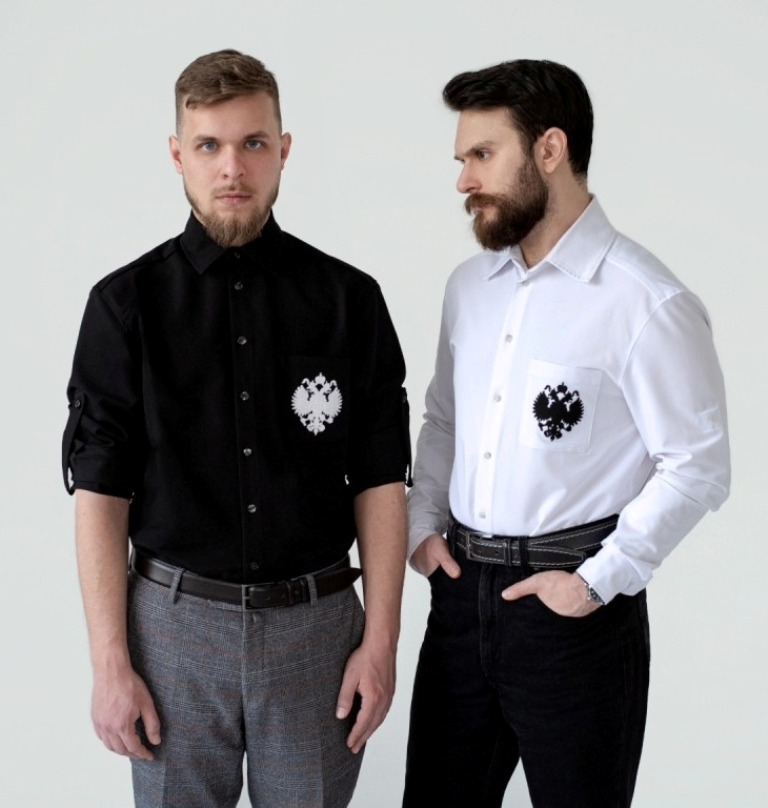
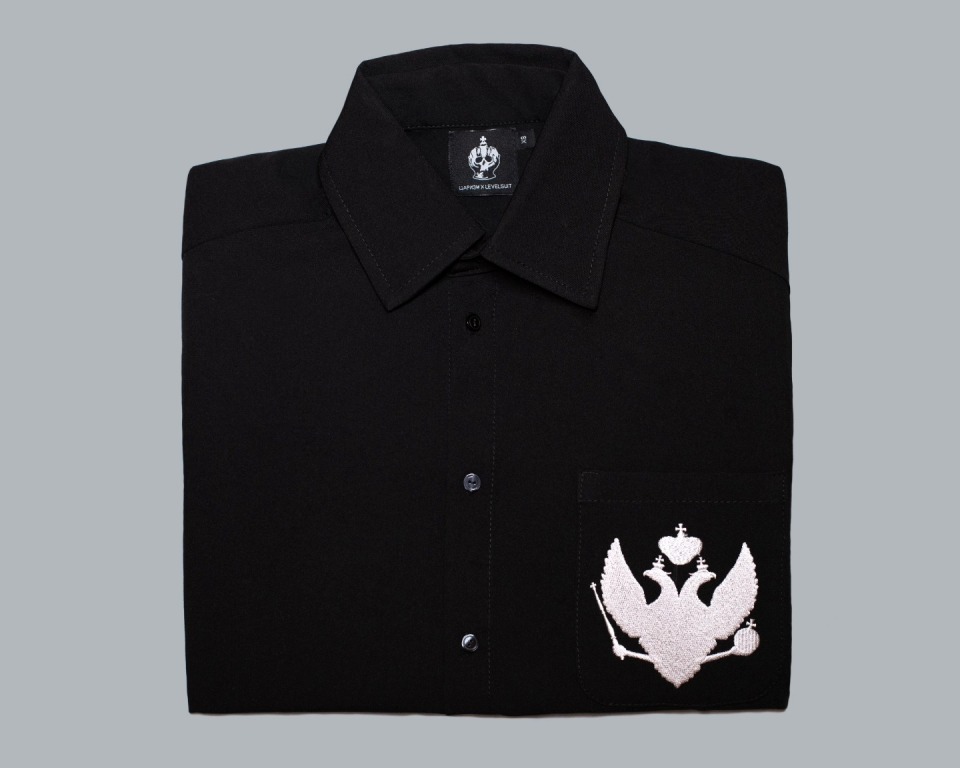
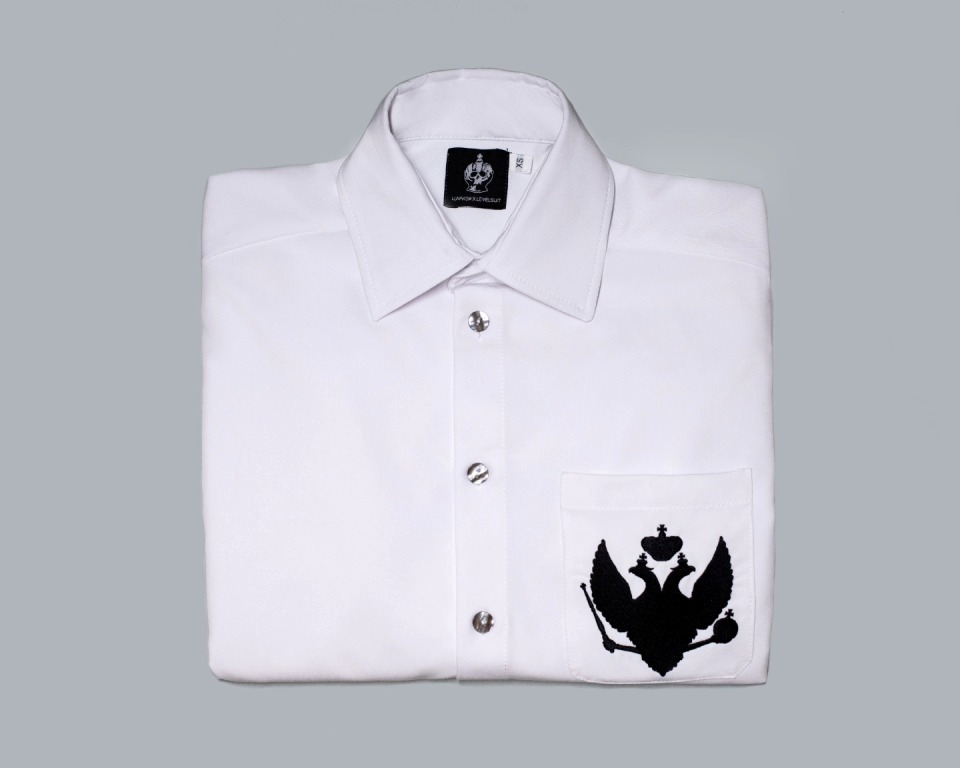
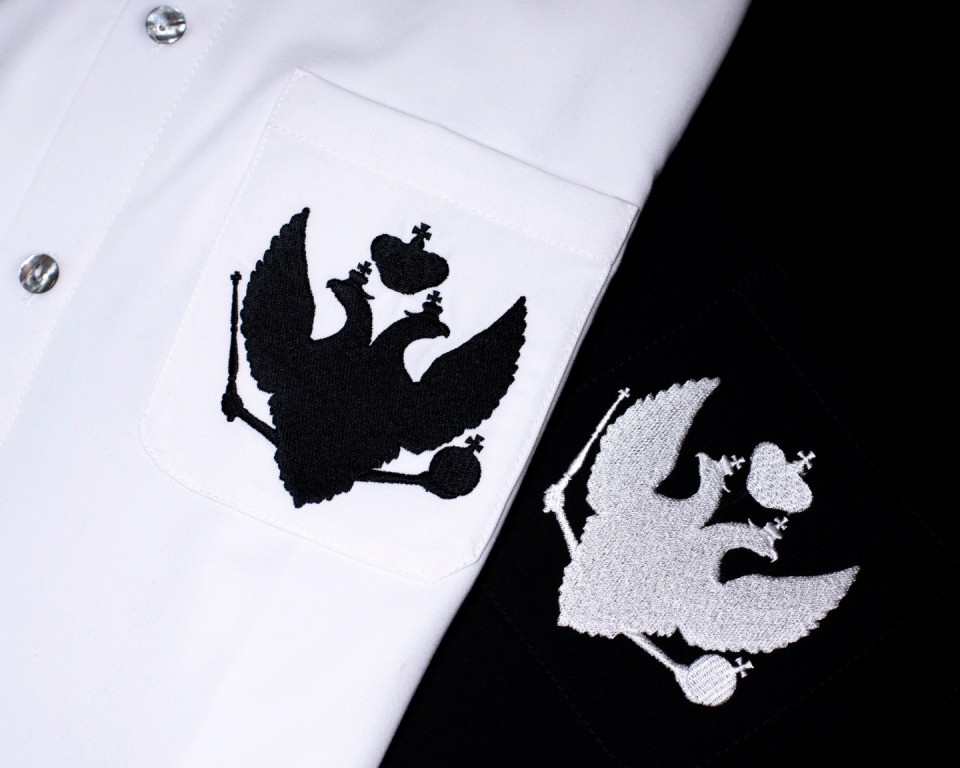
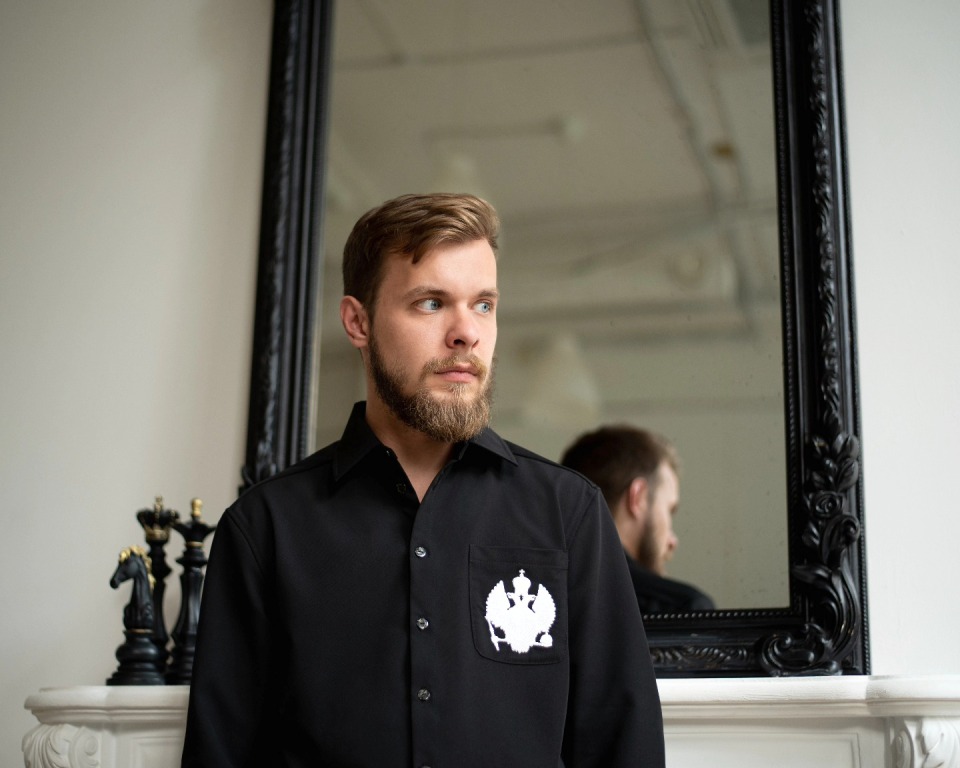
A famous Moscow atelier has recreated an iconic shirt initiated by Emperor Nicholas II in 1913. The shirt designed by Levelsuit, feature the Imperial Russian Coat-of-Arms embroidered on the left pocket. The white shirt is almost identical to the one worn by the Tsar in early 20th century photographs.
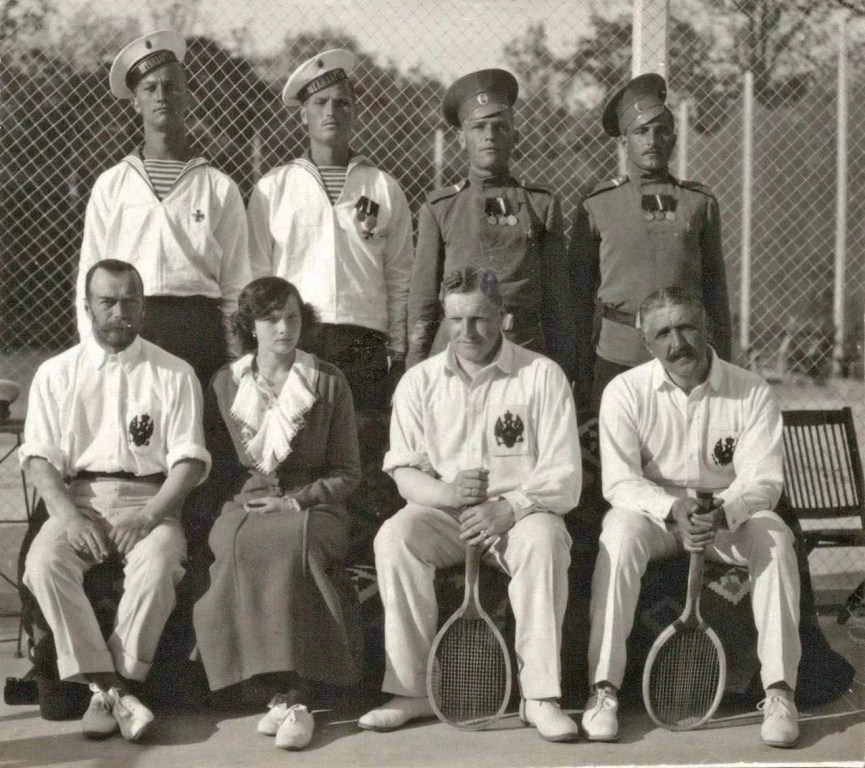
In 1913, on the initiative of Emperor Nicholas II, a sports uniform for the Russian Imperial Army was created. The idea was thoroughly researched, in which designs were developed for different sports: gymnastics, fencing, athletics, yachting, cross-country skiing and tennis.
PHOTO: Emperor Nicholas II (with his daughter Grand Duchess Tatiana Nikolaevna), wearing the shirt during a tennis match at Livadia, in the Spring of 1914
It was the imperial uniform for tennis players that served as the prototype for Levelsuit’s new shirt.
This consisted of a white tennis shirt made of thin linen, soft cuffs and small, flat mother-of-pearl buttons. In the middle of the chest there is a slit with a bow fold and three pleats on the sides. The embroidered coat of arms was similar to that of yachtsmen’s shirts, on the left side of the chest. The shirt was worn with white flannel or cloth trousers, and a tricolor belt. The uniform turned out to be so comfortable and stylish, that it was regularly worn by the Emperor himself, who was an excellent and enthusiastic tennis player.
Levelsuit’s new design is almost an exact copy of the shirt worn by the Imperial Tennis Team and by the Tsar. The shirts, which are available in white or black, are currently only available in Russia.
Unfortunately, for those of us in the West, it is currently not possible to order one of these shirts, due to the economic sanctions against the Russian Federation. Both MasterCard and Visa have suspended operations in Russia, making it impossible to order any goods online for the foreseeable future.
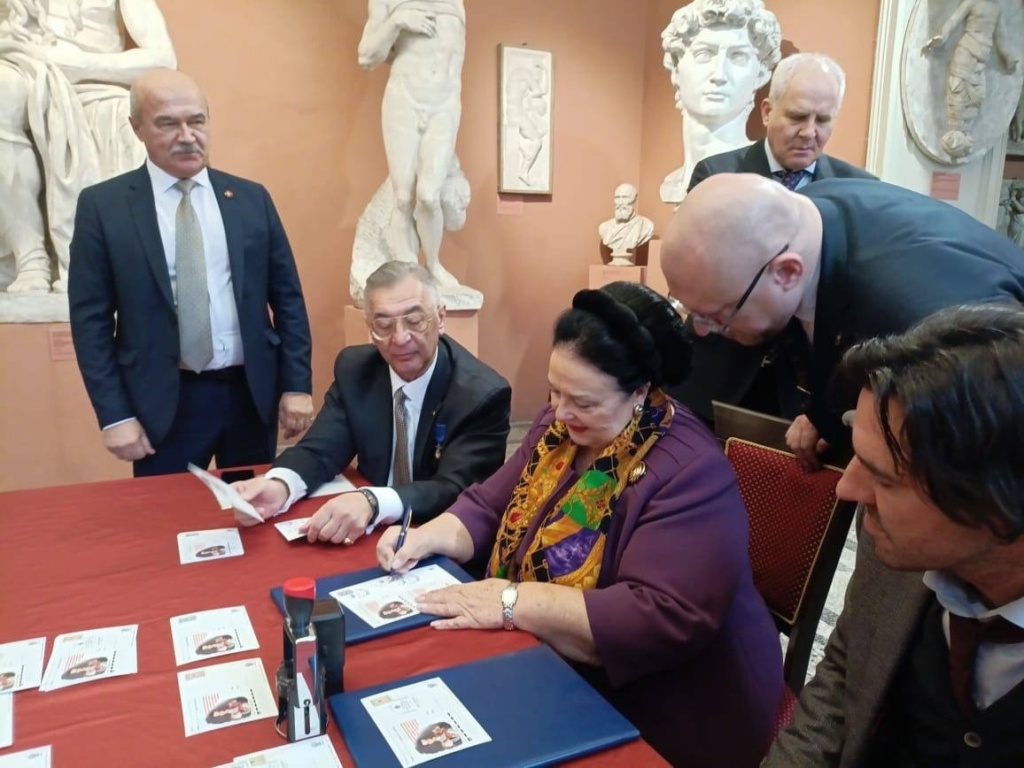
PHOTO: Maria Romanova during a ceremony of cancelling postcards, held in the Russian Academy of Arts, St. Petersburg on 7th December
NOTE: text highlighted in red below, are links to other articles – PG
It is wonderful to celebrate and honour one’s ancestors, however, when a person memorializes a man, who betrayed Russia’s last Tsar, and even supported his arrest, is surely reason enough to ask “WHY?!”.
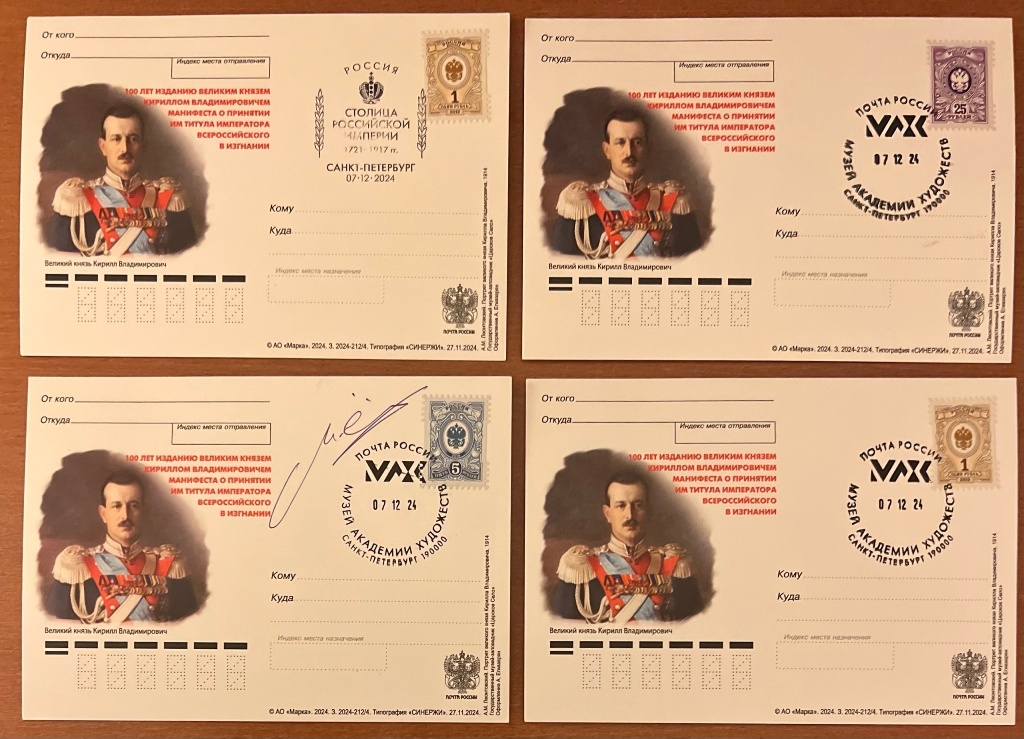
On 7th December 2024, Masha took part in a ceremony of canceling postcards[2], with Russian postage stamps, which took place at the Russian Academy of Arts in St. Petersburg. The event marked the 100th anniversary of her traitor grandfather Grand Duke Kirill Vladimirovich awarding himself the title of “Emperor in Exile”. Up until his death in 1938, Kirill created a make-believe kingdom from which he reigned over the Russian diaspora in Europe. Both he and his wife “Ducky” – and later their son Vladimir – supported Adolf Hitler and the Nazis.
Masha is once again visiting Russia (her third or fourth visit since the outbreak of hostilities between Russia and Ukraine), on yet another of her attention seeking tours. Her appearances garnered little interest by either the Russian media or the public.
PHOTO: postcard depicting Grand Duke Kirill Vladimirovich
The ceremony was prepared by the Cavalier Duma of the Imperial Order of St. Vladimir, Equal-to-the-Apostles. The ceremony was attended by Director of the Russian Academy of Arts Alexei Yuryevich Mudrov. Following the cancellation ceremony, Mr. Mudrov presented Masha with a medal marking the 180th anniversary of the birth of the famous Russian artist Ilya Efimovich Repin (1844-1930). In the afternoon, a ceremonial dinner was given in Maria’s honour by the Chevalier Duma of the Imperial Order of St. Vladimir, Equal-to-the-Apostles.
***
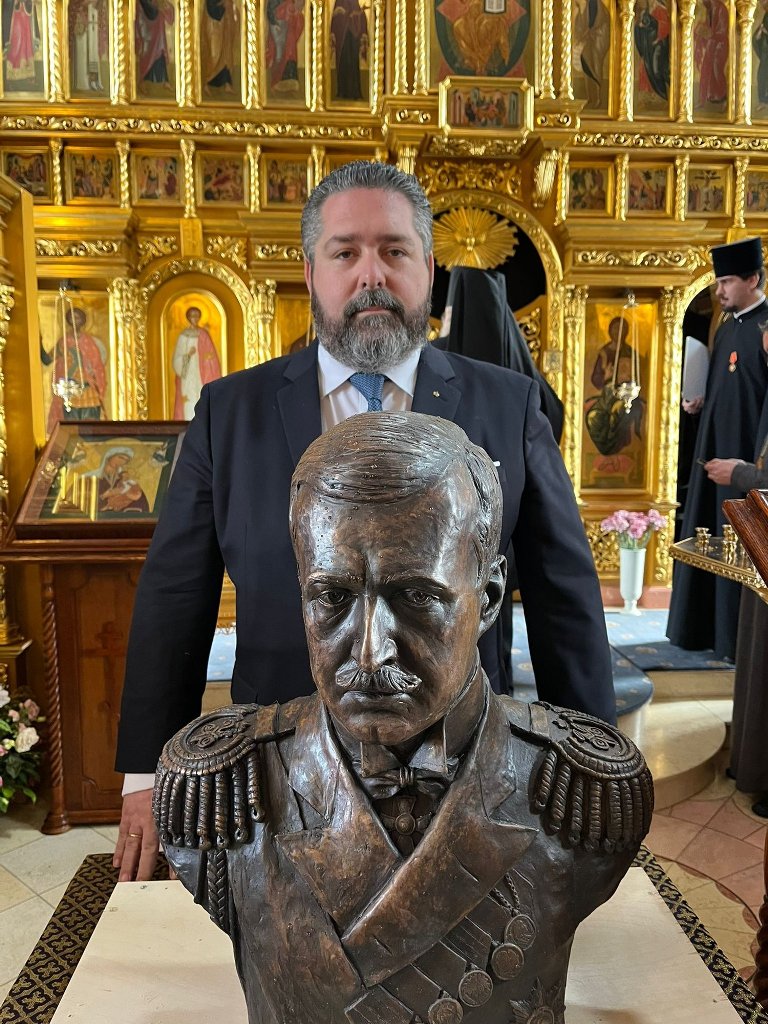
PHOTO: George Hohenzollern posing with a bust of his traitor great-grandfather Grand Duke Kirill Vladimirovich in the the Smolensk Zosimova Pustyn Monastery
On 14th March 2023, a new bust of Grand Duke Kirill Vladimirovich was unveiled at the Alexandrovsky district of the Vladimir region, in the presence of the grand dukes great-grandson George Hohenzollern. A prayer service and blessing of the bust, was performed by Hieromonk Nikon (Belyavenets), Abbot of the Smolensk Zosimova Pustyn Monastery.
Given Kirill’s lack of a moral compass, perhaps an exorcism should have been performed?
The bust was then transferred to St. Petersburg, where it was installed in the Vladimir Palace, situated on the on the Palace Embankment, opposite the Peter and Paul Fortress. Since the revolution, the former residence of Grand Duke Vladimir Alexandrovich (1847-1909) and Grand Duchess Maria Pavlovna (1854-1920), has housed the prestigious House of Scientists.
Under no pretext can we admit to the throne those whose ancestors belonged to parties involved in the 1917 revolution in one way or another. Nor can we admit those whose ancestors, who betrayed Tsar Nicholas II. Nor can we ignore those whose ancestors openly supported the Nazis. Thus, without any reservations, the right to the succession to the throne of the Kirillovich branch should be excluded!
Any person who supports this branch of the Romanov dynasty, dishonours the memory of the murdered Holy Tsar Martyr Nicholas II.
NOTES:
[1] Maria is not and never has been a ruling monarch, and never had or has any authority to hand out titles or awards. Despite this, she actively, and completely illegally distributes orders, medals and even titles of the Russian Empire. While many orders and awards of the Russian Empire have been officially restored in the post-Soviet Russian Federation, an ordinary civilian. i.e. Maria Romanova, and not a representative of the state, distributes the same order in appearance and name to her supporters on behalf of the “Russian Imperial House“.
[2] The ceremony of canceling postcards involves addressing the envelope to the “Postmaster” with the full name and address of the post office that offers the cancel. The cancelled envelope or cover is then received by return mail1. Pictorial cancels are available from respective post offices across Canada2. Some of the best copies of duplex cancels appear on post cards3. Cancels are used to prevent the reuse of stamps.
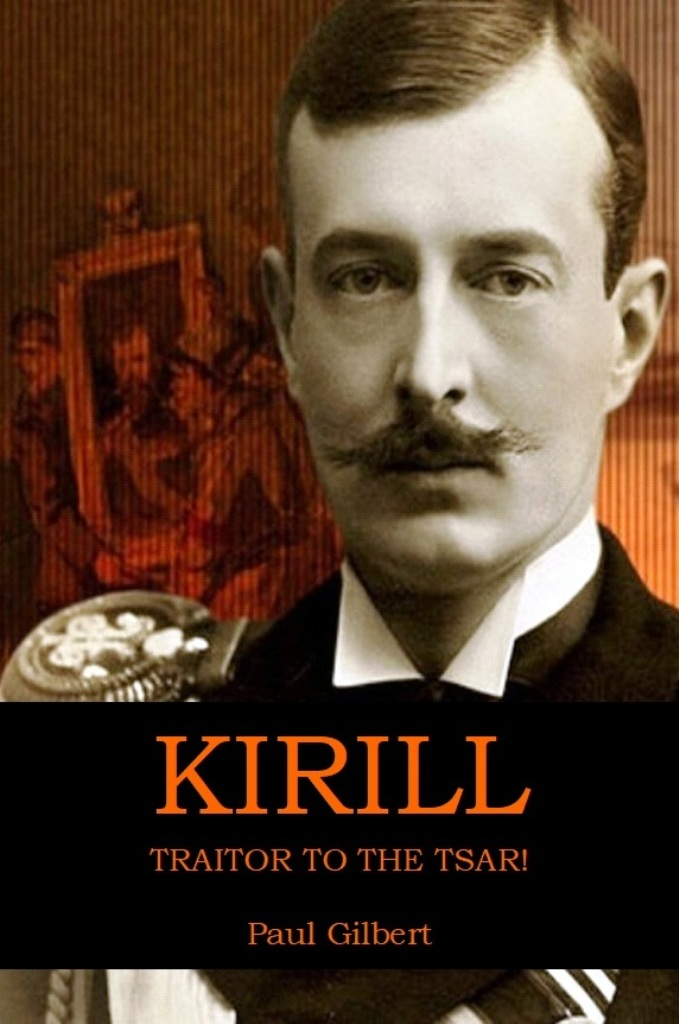
Grand Duke Kirill Vladimirovich is the subject of my forthcoming book ‘Kirill: Traitor to the Tsar!‘, the first comprehensive study to examine the relationship between Grand Duke Kirill and his first cousin Tsar Nicholas II. My research for this book is based primarily on documents and letters retrieved from Russian archival and media sources, many of which will be new to the English reader.
My book is scheduled for publication in late 2025. Watch for my ads in both Majesty and Russian Life magazines!
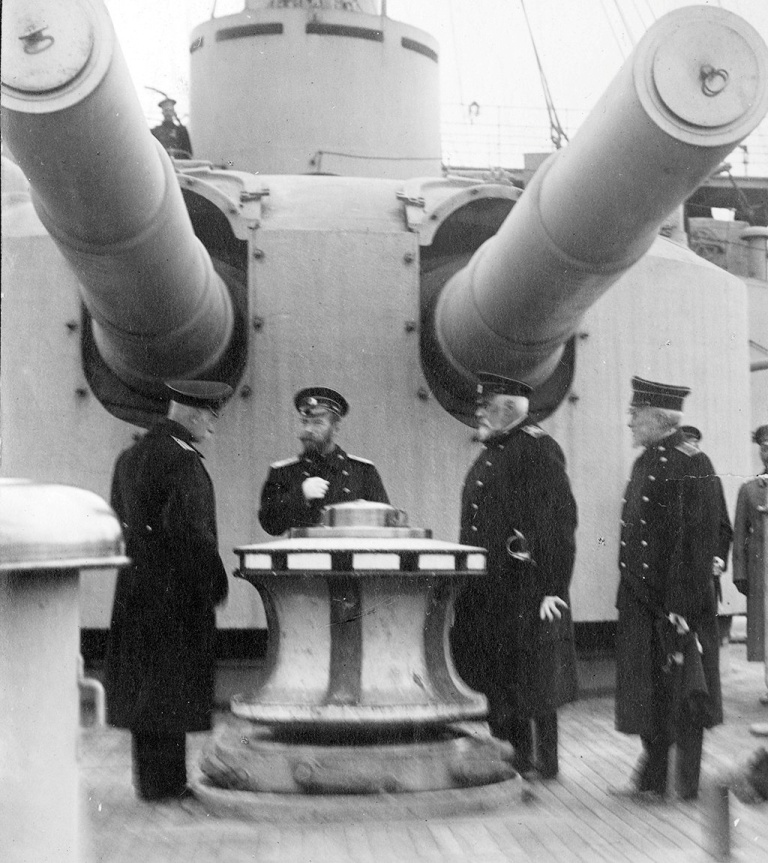
PHOTO: Emperor Nicholas II on the deck of the Imperial Russian Navy cruiser “Россия / Russia“. 15th Jamuary 1915. Standing to the Emperor’s right is the commander of the Baltic Fleet, Nikolai Ottovich von Essen (1860-1915).
The Chief of Staff of the Guards Troops and Petersburg Military District Lieutenant General Baron A.P. von den Brinken (1859 – 1917) wrote about Nicholas II’s affection for the navy and sailors: “The Tsar, always so kind and gentle, at anyone’s attempt to say something negative against the navy becomes literally furious, thumps his fist on the table, and stops listening”.
Formally established in 1696 under Emperor Peter I (1672-1725), the Imperial Russian Navy served as the navy of the Russian Empire until 1917. It was expanded in the second half of the 18th century and by the early part of the 19th century, it reached its peak strength, behind only the British and French fleets in terms of size.
The navy then went into a period of decline in the first half of the 19th century, due to Russia’s slow technical and economic development. It had a revival in the latter part of the century during the reign of Emperor Nicholas II (1894-1917), but lost most of its Pacific Fleet along with the Baltic Fleet, both of which were sent to the Far East and subsequently destroyed in the disastrous conflict of 1904. The second phase of Nicholas II’s military life was marked by his participation in the reorganization of the navy after the catastrophic Russo-Japanese War.
The Imperial Russian Navy had mixed experiences during the First World War, with Germany generally gaining the upper hand in the Baltic Sea, while Russia established its absolute dominance on the Black Sea. The February Revolution of 1917 marked the end of the Imperial Russian Navy; its officers had mostly aligned with the Tsar, and the sailors split to fight on either side. The surviving ships were taken over by the Soviet Navy when it was established in 1918.
***
VIDEO: vintage newsreels of Nicholas II and the Imperial Russian Navy Duration: 12 minutes with music
The above video presents a collection of vintage newsreels from the Russian State Documentary Film & Photo Archive at Krasnogorsk (RGAKFD), which show Emperor Nicholas II with the Imperial Russian Navy as he reviews the squadrons, talks to the Russian sailors, officers and admirals, and participates in the other naval events.
During the reign of Emperor Nicholas II the Imperial Russian Navy continued to expand in the later part of the 19th century, regaining its position as the third largest fleet in the world after Britain and France. The expansion was notably accelerated under Nicholas II who had been influenced by the American naval theoretician Alfred Thayer Mahan. Russian industry, although growing in capacity, was not able to meet the demands of the burgeoning Imperial Navy and some ships were ordered from Britain, France, Germany, USA, and Denmark. French naval architects in particular had a considerable influence on Russian designs.
At the end of the Russo-Japanese War in 1905, Russia had fallen from being the third greatest naval power to sixth place. It was then that the focus of Russian naval activities shifted back from the Far East to the Baltic. The task of the Baltic Fleet was to defend the Baltic Sea and St Petersburg from Imperial Germany.
On 19th March 1906, by decree of Emperor Nicholas II, the Maritime General Staff was organized with the Main Naval Staff, which assumed the functions of the operational body of the Imperial Navy. At first, attention was directed to the creation of mine-laying and a submarine fleet. In the same year, a new program for naval shipbuilding, the Russian Armed Forces Development and Reform Program, known as the “Small Shipbuilding Program”, which was approved by Emperor Nicholas II on 6th June 1907, began to be developed and actively discussed, but later the amount of appropriations was reduced, and the program itself was renamed the “Distribution of Allocations for Shipbuilding” (before 1911 it was planned to finish the ships already started for the Baltic Fleet – 4 battleships and 3 submarines, as well as a new naval base, and for the Black Sea Fleet – 14 destroyers and 3 submarines) and was partially approved by the State Duma in the spring of 1908.
VIDEO: ships of the Russian Imperial Fleet 1894-1917 Duration: 3 minutes with music
The Bosnian Crisis in 1909 again raised the issue of the expansion of the fleet and new battleships , cruisers, and destroyers were ordered for the Baltic Fleet. It is worth noting that, on the personal orders of Emperor Nicholas II, new battleships were laid, which had previously rejected by the State Duma.
A worsening of relations with Turkey meant that new ships including the Imperatritsa Mariya-class battleships were also ordered for the Black Sea Fleet. The total Russian naval expenditure from 1906-1913 was $519 million, in fifth place behind Britain, Germany, the United States and France.
From 1909, active preparation and discussion of a new shipbuilding program took place. The “Ten Year Shipbuilding Program (1910-1920)” – the so-called “Great Shipbuilding Program”, which in its final version envisaged the construction for the Baltic Fleet: 8 battleships, 4-linear cruisers, 18 destroyers and 12 submarines; for the Black Sea Fleet – 9 Novik type destroyers and 6 submarines; ships for the Pacific Fleet, as well as the rearmament and modernization of several battleships – Tri Sviatitelia, Dvenadsat Apostolov, and Georgii Pobedonosets. The program was approved on 25th March 1910, by Emperor Nicholas II, but was not reviewed by the State Duma until 1911.
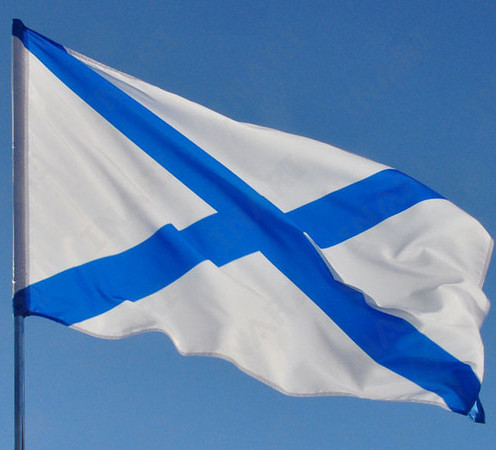
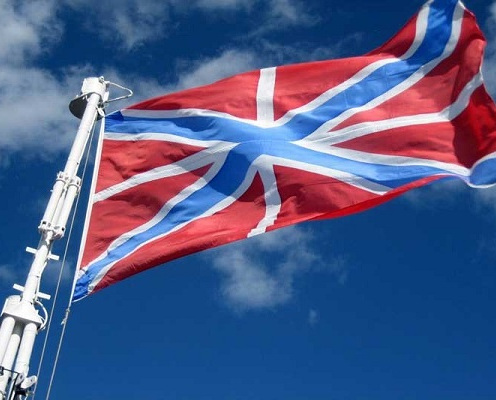
PHOTO: the white and blue ensign or Andreyevsky flag, and the red, blue and white naval jack of the Imperial Russian Navy
The re-armament program included a significant element of foreign participation with several ships (including the cruiser Rurik) and machinery ordered from foreign firms. After the outbreak of World War I, ships and equipment being built in Germany were confiscated. Equipment from Britain was slow in reaching Russia or was diverted to the Western Allies’ own war effort.
By March 1918, the Russian Revolution and the Treaty of Brest-Litovsk made the Germans masters of the Baltic Sea and German fleets transferred troops to support newly independent Finland and to occupy much of Russia, halting only when defeated in the West. The Russians evacuated the Baltic Fleet from Helsinki and Reval to Kronstadt during the Ice Campaign of the Baltic Fleet in March 1918.
The Black Sea was the domain of the Russians and the Ottoman Empire but it was here that the Imperial Russian Navy established its absolute dominance. It possessed a large fleet based in Sevastopol and it was led by two skilled commanders: Admiral Eberhart (1856-1919) and Admiral Kolchak (1874-1920) (who took over in 1916).
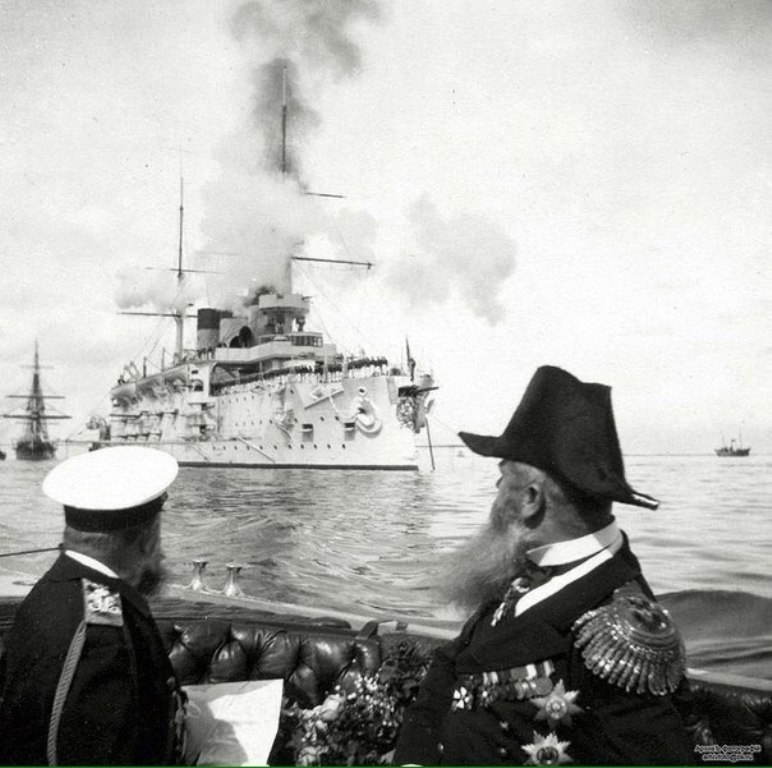
PHOTO: Grand Duke Alexei Alexandrovich and Admiral S.O. Makarov watch the newly constructed battleship Oslyabya, during maneuvers on the Baltic Sea, 1899
After Admiral Kolchak took command (August 1916), the Imperial Russian fleet mined the exit from the Bosporus, preventing nearly all Ottoman ships from entering the Black Sea. Later that year, the naval approaches to Varna were also mined. The greatest loss suffered by the Russian Black Sea fleet was the destruction of the modern dreadnought Imperatritsa Mariya, which blew up in port on 7th October 1916, just one year after it was commissioned. The sinking of the Imperatritsa Mariya was never fully explained; it could have been sabotage or a terrible accident.
The Revolution and subsequent Civil War devastated the Russian Navy. Only the Baltic fleet based at Petrograd remained largely intact, although it was attacked by the British Royal Navy in 1919. Foreign Interventionists occupied the Pacific, Black Sea and Arctic coasts. Most of the surviving Black Sea Fleet warships, with crews loyal to the White Russian movement, became part of Wrangel’s fleet under the control of commander Pyotr Nikolayevich Wrangel (1878-1928) and after evacuating White forces and civilians from the Crimea were eventually interned in Bizerta, Tunisia. Russian sailors fought on both sides in this bloody conflict. The sailors of the Baltic fleet rebelled against harsh treatment by the Soviet authorities in the Kronstadt Rebellion of 1921.
The surviving ships formed the core of the Soviet Navy on its 1918 establishment, though the remnants of Wrangel’s fleet never returned to Russia.
PHOTO: View of the “Боярин / Boyarin” a second-rank protected cruiser built for the Imperial Russian Navy by Burmeister & Wain in Copenhagen, Denmark. Laundced in 1901, the hull featured a magnificent double-headed eagle bearing the monogram of Emperor Nicholas II. She served in the Russian Pacific Fleet and was sunk by a Russian naval mine near the entrance to Port Arthur, Manchuria, just after the start of the Russo-Japanese War.
***
FURTHER READING
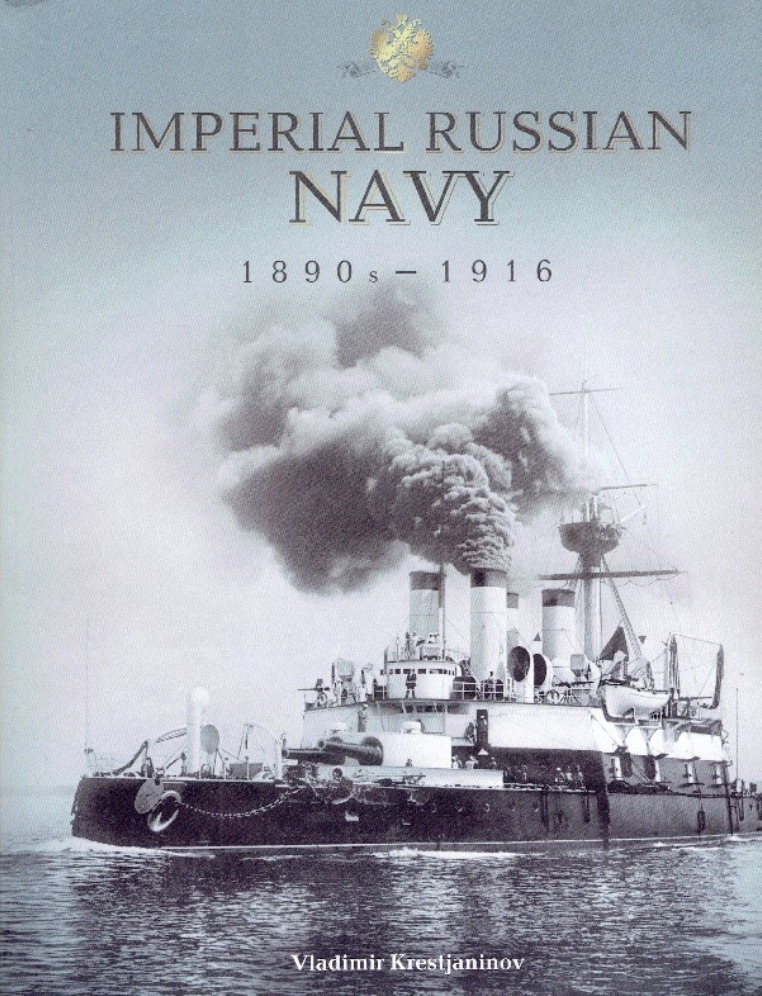
One of my many interests is the Russian Imperial Navy, during the reign of Nicholas II. In 2013, Uniform Press published an excellent book ‘The Imperial Russian Navy 1890s-1916’ by Vladimir Krestjaninov. I highly recommend this title to any one else who shares an interest in this subject.
“Russia has only two true allies,” said Emperor Alexander III, “its army and navy.”
This unique look at the Russian Imperial Navy in photographs from the late 19th and early 20th centuries, features 430 black and white images from archives, museums and private collections. It explores how the Russian Navy’s construction and activities were shaped largely by the interests, opinions and policies of Russia’s last tsar Nicholas II.
It includes a foreword by the author, and chapters such as ‘The Imperial Family and the Navy,’ and eleven other topics. It is interesting to note that the Imperial yachts were under the administration of the Naval Guards Corps.
Large soft cover format with 262 pages. Published by Uniform Press in 2013
PHOTO: modern-day murual depicting the train stain in Dno
On 14th (O.S. 1st) March 1917, at 15:00, Emperor Nicholas II arrived at Dno on the Imperial Train, where an urgent telegram from State Duma Chairman Mikhail Rodzianko[1] awaited him:
“Dno station. To His Imperial Majesty. I am now leaving for Dno Station by emergency train to report to you, Sire, on the state of affairs and the necessary measures to save Russia. I earnestly ask you to wait for my arrival, for every minute counts.“
Without waiting for Rodzianko, the Tsar ordered the Imperial Train[2] to proceed on to Pskov, where he would meet up with Rodzianko, however, the chairman never arrived. On the night of 1st/2nd March, during a conversation with General Ruzsky[3] Rodzianko explained his “non-arrival” by the impossibility of leaving Petrograd in a situation where the revolutionary events in the capital threatened to develop into anarchy.
Emperor Nicholas II abdicated the following day, on 15th March (O.S. 2nd) March 1917, bringing an end to more than 300 years of the Romanov dynasty and the monarchy in Russia.
The Sovereign abdicated in the heartfelt belief that his abdication would save the honour of the army, prevent civil war and keep Russia in the war against Germany.
Sadly, it did not. In his diary, Nicholas wrote: “I am surrounded by betrayal, cowardice, and deceit.”
In memory of Emperor Nicholas II’s historic stop at Dno in March 1917, a mural of the pre-war railway station has been recreated, on the building of the museum and exhibition center in Dno. The artists of the mural are Ivan and Nikita Trakhov, both of whom are residents of Pskov.
“The mural will remind everyone of our history, the station, which Nicholas II saw from the window of his train,” said Mikhail Shaurkin, who serves as the head of the Dnovsky district .
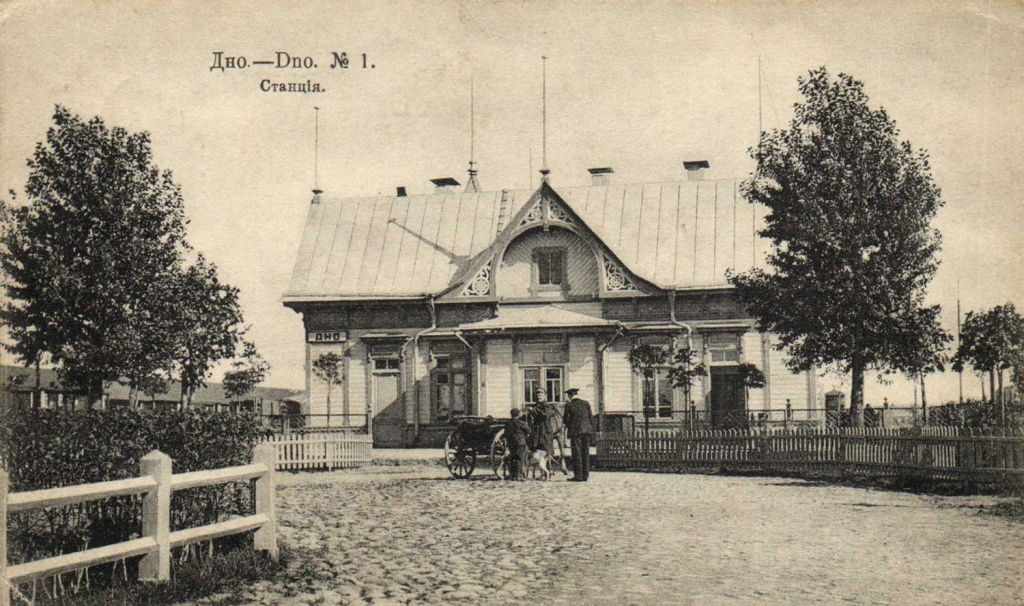
The idea for the mural was conceived by the head of the museum Sergey Egorov. He wanted to recreate the historic look of the station as it looked more than a century ago. According to him, “many tourists, as well as residents of the city, are surprised to learn that there was a railway station in Dno before the Great Patriotic War.”
PHOTO: early 20th century postcard depicting the old wooden station at Dno
The original train station at Dno was constructed of wood in the Art Nouveau style. During the Great Patriotic War (1941-45) the building was destroyed by fire. After the war, a new station was built, which stands to this day.
NOTES:
[1] In an open act of treason against the Emperor, Grand Duke Kirill Vladimirovich wearing a red ribbon on his shoulders, under which the Marine of the Guard followed their commander, marched to Petrograd, where he presented himself at the State Duma, where he reported to Duma Chairman Mikhail Rodzianko. “I have the honour of appearing before Your Excellency,” said the Grand Duke . . . “I am at your disposal, as is the entire nation. I wish Russia only good.”
[2] With the outbreak of World War I, the Imperial Train became both a travelling residence for the Emperor, as well as a military field office, equipped with telephone and telegraph communications. A telephone network was installed for communication between all cars, each carriage having it’s own telephone.
[3] Nikolai Vladimirovich Ruzsky (1854-1918) was a Russian general, member of the state and military councils, best known for his role in World War I and the abdication of Tsar Nicholas II. He was shot by the Bolsheviks on 18th October 1918.
NOTE: the English language edition of this book is now available in both hard cover and paperback editions. You can now order this book direct from the following suppliers in the United States:
In addition, you can order this book directly from the publisher in Romania. Books are shipped by mail or courier (DHL). I had NO problem ordering a copy, and received it promptly.
HOW TO ORDER FROM THE PUBLISHER:the order page is a bit confusing, because the actual order instructions located at the bottom of the page are in Romanian. Simply use Google (or similar) to translate, the rest is simply.
Click HERE to order your copy. Scroll down to the bottom of the page. Select ‘COVER TYPE’ – hard cover or paperback. To the left of the ‘ADD TO CART’ button, you must select how many copies you want. Click on ‘VIEW CART’ and ‘CONTINUE TO CHECKOUT’. payment is in Euros, credit cards accepted – PG
***
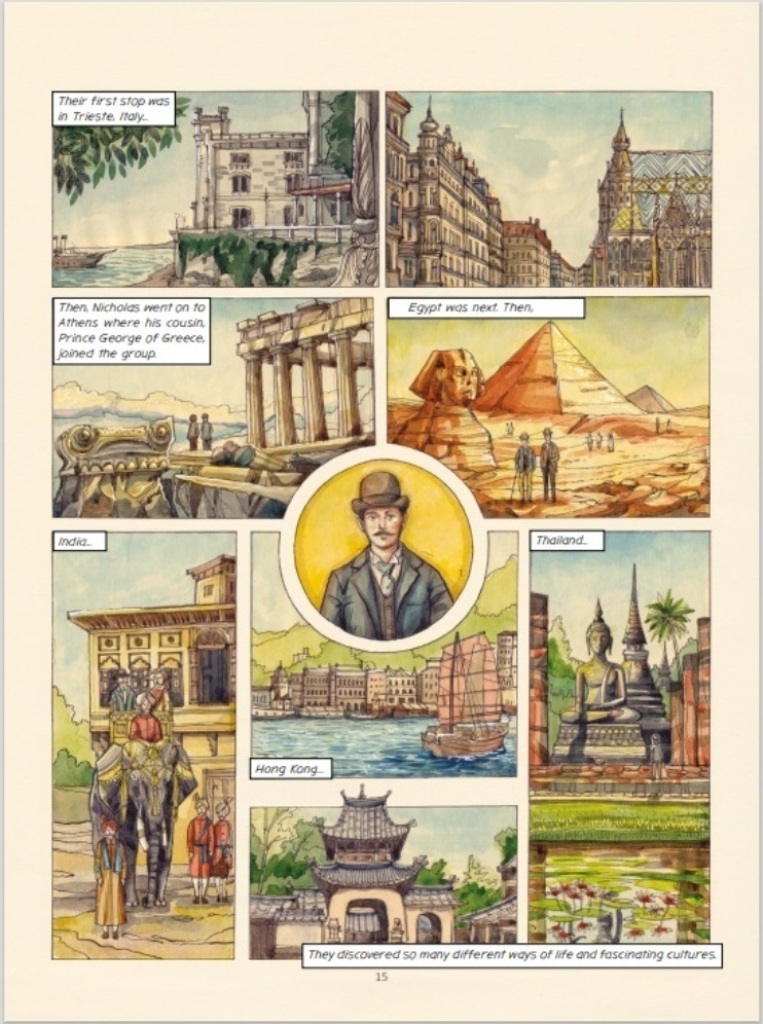
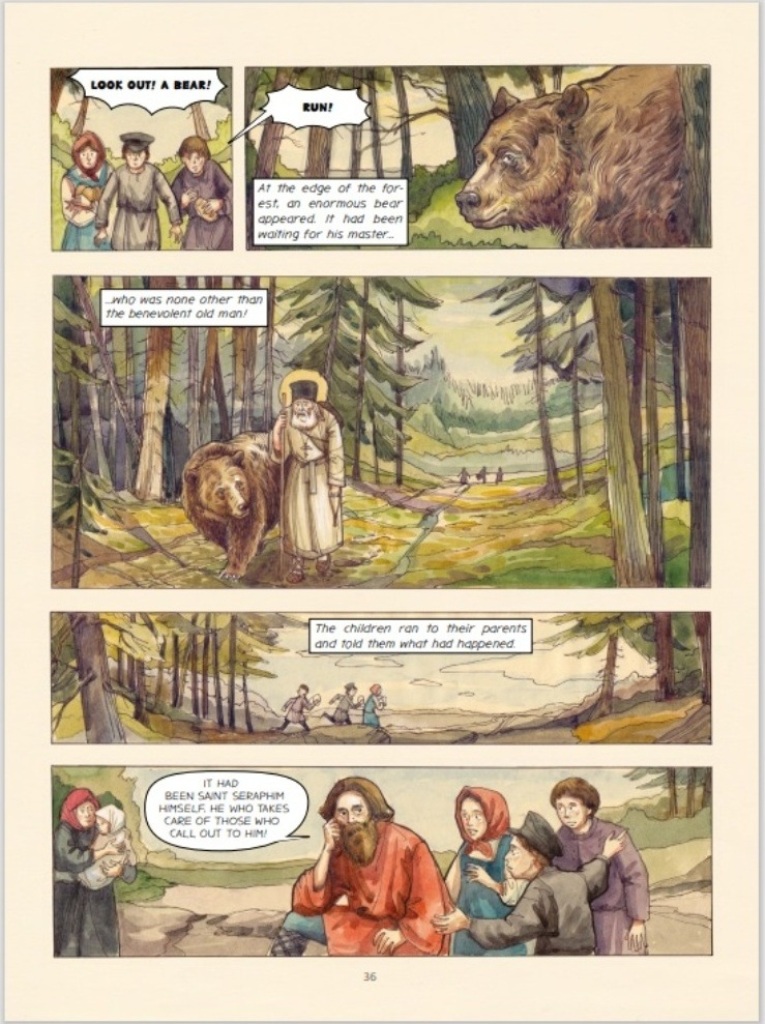
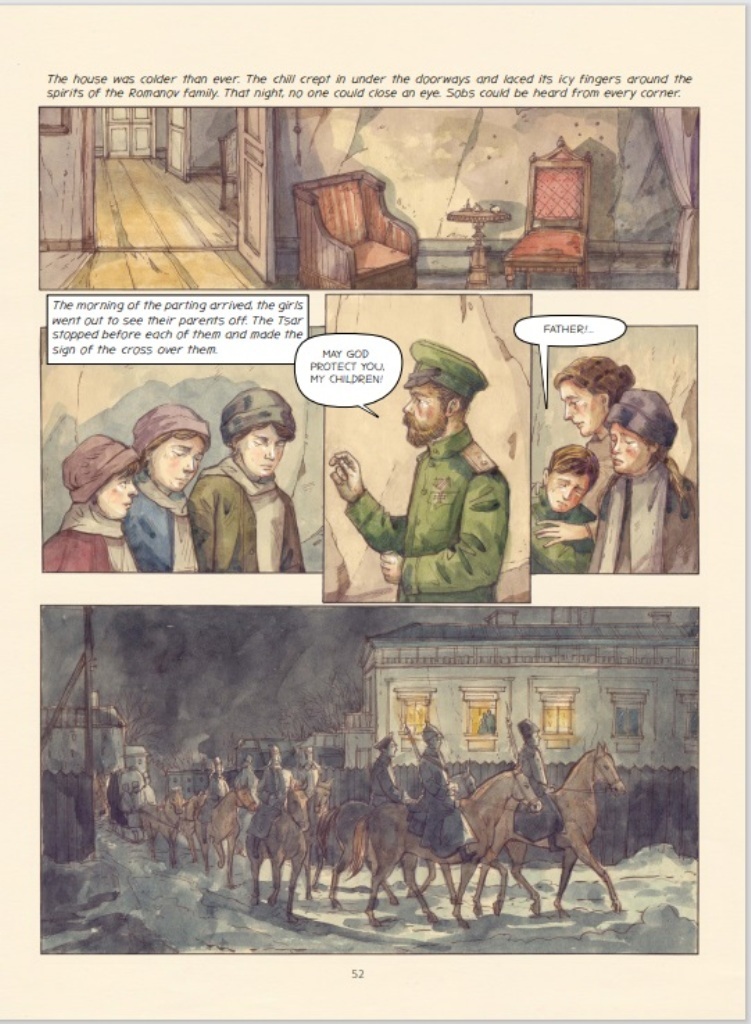
The publishing division of the Diaconești Monastery in Moldavia, Romania, have published an exiting new title: The True Story of the Romanov Family.
Although an abundance of books have been written about the Imperial Family, the present work is an unparalleled graphic study. Drawing from a wealth of historical sources, including memoirs, diaries, letters and scholarly works on the Imperial Family, the publisher has painstakingly recreated key moments in their private and public lives. In addition, eleven Faberge eggs, meticulously painted by Romanian artist Ovidiu Gliga are prominently featured in the book.
The text of the book is complimented by Ovidiu Gliga’s artwork. Over the past four years, the publisher has collaborated closely with this exceptional artist, whose artwork helps envelope the reader. His work for this book is showcased in the video found at the end of this summary. This book has been issued in both English and Romanian editions, in both hard cover and paperback formats.
CLICK on each image below, to enlarge and view page in greater detail
According to the publisher, “this project has been a labour of love, driven by our admiration for these revered saints and our desire to present their lives in a visually engaging format suitable for readers of all ages. We believe it fills a significant void in the literature about the Imperial Family, offering a detailed exploration of their lives and the enduring impact on Russia’s history.”
It is interesting to note, that the monastery’s inspiration for this project was profoundly influence by the popular book The Romanov Royal Martyrs: What Silence Could Not Conceal, published in 2019 by the Mesa Potamos Monastery in Cyprus, which the nuns of the Diaconești Monastery translated into Romanian.
The Romanian-based publisher has prepared a 2-minute English language video, which will give readers a sample of this unique publishing project, including a glimpse of it’s content and Ovidiu Gliga’s beautiful colour illustrations.
CLICK on the red arrow below to start the VIDEO . . .






 Nicholas II
You must be logged in to post a comment.