The myth that Nicholas II’s death was met with indifference by the Russian people

PHOTO: Revolutionaries burning the Tsar’s portrait in 1917. Artist: Ivan Alekseevich Vladimirov (1869-1947)

NOTE: this article was last updated on 24th July 2024 – PG

Contemporary historians have led us to believe that news of Nicholas II’s death was met with indifference among the Russian people. Rather than conduct their own research on the matter, they choose instead to rehash the popular Bolshevik version of events – this is in itself is not the sign of a good historian.

Recall that following the abdication of Nicholas II in February 1917 and the October 1917 Revolution, which resulted in a Bolshevok coup, it was clear that a return of the monarchy in Russia was hardly possible. But no one in Russia expected the brutal murder of the Tsar and his family. Earlier, the Bolsheviks had planned to hold an open trial of Nicholas II – in order to draw a symbolic line under the era of Tsarism in Russia. In particular, Trotsky advocated such a trial. Lenin, in turn, feared that the Romanovs were still loved by the people, and therefore the trial might not bring the fruits that the Bolsheviks would have wanted. Lenin considered that based on the events of the Civil War it would be more expedient to secretly kill the entire Imperial Family and remain silent about it as long as possible.

While the elation exhibited by the revolutionaries is indeed true, it did not reflect the heartfelt sentiments of millions of Orthodox Christians, monarchists and others in the former Russian Empire.

Patriarch Tikhon (1865-1925), openly defended the Imperial family, by condemning the Bolsheviks for committing regicide.

When the tragic news of the murder of the Tsar and his family came, the Patriarch immediately served a memorial service at a meeting of the Local Council of the Russian Orthodox Church; then served the funeral Liturgy, saying that no matter how how the Sovereign was judged by his enemies, his murder after he abdicated was an unjustified crime, and those who committed him should be branded as executioners.

During his sermon at the Kazan Cathedral in Moscow, Patriarch Tikhon said:

“… a terrible thing has happened: the former Tsar Nikolai Alexandrovich was shot, by decision of the Ural Regional Soviet of Workers’ and Soldiers’ Deputies, and our highest government, the Executive Committee, not only approved it but deemed it as legitimate. But our Christian conscience, guided by the Word of God, cannot agree with this. We must, in obedience to the teaching of the Word of God, condemn this act, otherwise the Tsar’s blood will fall not just on those who committed it, but on all of us.

“We will not evaluate and judge the deeds of the former Sovereign: an impartial trial of him belongs to history, and now he faces the impartial judgment of God, but we know that he, abdicating the throne, did so with the good of Russia in mind and out of love for the Motherland. He could, after his abdication, have found security and a comparatively quiet life abroad, but he did not do so, choosing to stand with Russia. He did nothing to improve his situation, instead he meekly submitted to fate,

“… and suddenly he is sentenced to death somewhere in the depths of Russia, by a small handful of people, not for any guilt, but only for the fact that someone allegedly wanted to kidnap him [the Bolsheviks claimed that the Tsar’s family and supporters were attempting to rescue him]…

“Our conscience cannot be reconciled to this, and we must declare it loudly, as Christians, as sons of the church. Let them call us counter-revolutionaries for this, let them imprison us, let them shoot us. We are ready to endure this in the hope that the words of the Savior will be attributed to us: “Blessed are those who hear the Word of God and keep it.”

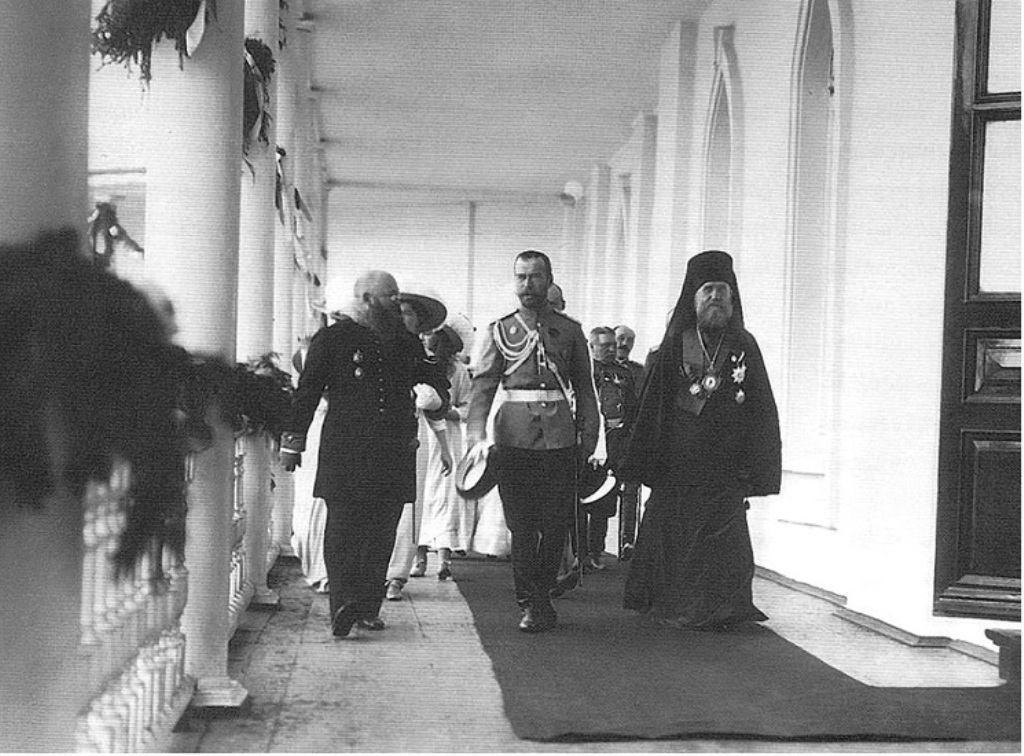
PHOTO: Emperor Nicholas II with Archbishop (future Patriarch) Tikhon
at the Transfiguration Monastery. Yaroslavl, 21 May 1913

And others condemned the regicide . . .

Eugenie Fraser, born and raised in Russia writes about her years in Petrograd and news of the tsar’s death: “In August, filtered through from Siberia, came the news of the slaughter of the Royal family by the sadistic thugs of the Bolshevik party. Horror and revulsion touched every decent thinking citizen in the town. To execute the Tsar and his wife in this barbaric fashion was bad enough, but to butcher the four young girls and the helpless boy was the work of mindless criminals. In churches people went down on their knees and openly wept as they prayed for the souls of the Tsar and his family.”

“Even in all this turmoil and confusion, and even among those with little sympathy for the abdicated tsar, the brief five-line announcement in July 1918 of the execution of Nicholas II and his family in Ekaterinburg caused a terrible shock,” writes Serge Schmemann. He further notes “Prince Sergei Golitsyn recalled in his diary how people of all levels of society wept and prayed, and how he himself, as a nine year old boy, cried night after night in his pillow.”

Major-General Sir Alfred Knox further noted in his memoirs: “An old soldier . . . breathed into my ear that the Emperor was a good man, and fond of his people, but was surrounded by traitors.”

It is important to recall that it was in the summer of 1918, when Lenin unleashed the first Red Terror. People lived in fear of punishment from the thugs and criminals of the new order, for showing any sympathy for the murdered tsar. Many hid their framed portraits of the tsar, and kept their grief and monarchist sentiments to themselves.

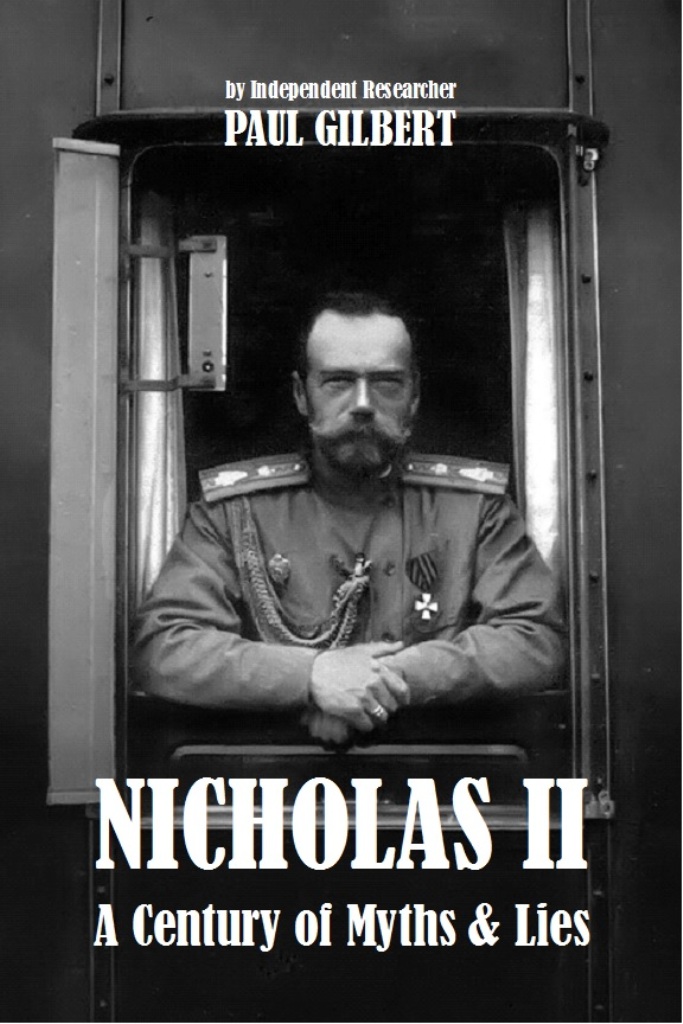
NOTE: This article has been excerpted from my forthcoming book Nicholas II: A Century of Myths and Lies [publication date yet to be announced]

© Paul Gilbert. 24 July 2024

“There are still many conjectures surrounding the death of Grand Duchess Elizabeth Feodorovna”

0300b

The Alapaevsk Martyrs painted in 1997 by the contemporary Russian artist Vera Glazunova

The above painting include: Grand Duchess Elizabeth Feodorovna, Grand Duke Sergei Mikhailovich, Princes of the Imperial Blood Ioann, Konstantin and Igor Konstantinovich, Prince Vladimir Paley (son of Grand Duke Paul Alexandrovich), and two faithful servants: sister of the Marfo-Mariinsky Convent Varvara Alekseevna (Yakovleva), and Fyodor Semyonovich (Mikhailovich) Remez, secretary of the Grand Duke Sergei Mikhailovich – PG

***

WARNING: please be aware that this post includes graphic images of the dead bodies of the Alapaevsk victims, which some readers may find disturbing.

On this day – 18th July 1918 – Grand Duchess Elizabeth Feodorovna was murdered by the Bolsheviks in Alapaevsk. According to Russian historian and author Ludmila Kulikova, there are still many conjectures surrounding her death.

In 2019,  a new book titled «Крестный путь преподобномученицы Великой княгини Елисаветы Феодоровны на Алапаевскую Голгофу / The Way of the Cross of the Holy Martyr Grand Duchess Elisabeth Feodorovna to the Alapaevsk Golgotha» was published in Russia.

The Russian language book by Ludmila Kulikova, features 728 pages!, with photographs, and copies of original documents. It presents a new account of the life and death of the Grand Duchess, revealing many new details.

Kulikova challenges the findings presented by Lubov Miller in her book Grand Duchess Elizabeth of Russia: New Martyr of the Communist Yoke, published in 2009. The Russian author disputes Miller’s popular held belief, that the Grand Duchess and the other Alapaevsk victims were thrown into the mine alive. Kulikova also disputes Millers’ claims that the victims could be heard singing an Orthodox hymn from the mine shaft, that Elizabeth Feodorovna bandaged the head wound of Prince Ioann Konstantinovich in the dark, and more. According to Kulikova: “they are all myths!”

Kulikova points out that the findings of Lubov Miller are not confirmed by any documents of the original investigation and forensic medical examination. In order that readers can see for themselves, she decided to publish all the documents of the preliminary investigation on the murder of the Grand Duchess and members of the House of Romanov, which was conducted in 1918, by the investigator Nikolai Alekseevich Sokolov (1882-1924)..

There are a lot of documents in the file: protocols of the inspection of the mine, the bodies and personal items found, the results of the forensic medical examination, the interrogation of witnesses. These materials have not been published in full in Russia, only excerpts.

0300c

Receipt signed by Grand Duchess Elizabeth and other members of the Imperial family
with regard to their transfer from Ekaterinburg to Alapaevsk, dated 19th May 1918

There was no singing of an Orthodox hymn from the mine

– With regard to the belief that after being pushed into the mine, the victims began to sing an Orthodox hymn, they are referring to the testimony of one of the witnesses, a local resident Alexander Samsonov. Samsonov brewed moonshine in the forest not far from Alapaevsk, but still far from the mine where the murder took place.

Acquaintances came to to warn him that he had been denounced for making moonshine (it was against the law). Samsonov hid the bottles and the still and returned home in the evening. The murder of the Alapaevsk martyrs was committed that night.

The version could also have come from the memories of one of the participants in the murder –  Vasily Ryabov (his memoirs were written later, but Kulikova gives an excerpt from them in my book). Ryabov tells how Elizabeth Feodorovna was first pushed into the mine, then Varvara, and suddenly everyone heard them floundering in the water, trying to save each other.

It was in these “memories” that he mentions the victims singing an Orthodox hymn “Save Lord, Your people” from the bottom of the mine. But none of this is supported by facts: the water was at the very bottom of the mine, but had been filled with debris. None of the bodies made it to the water. 

0300l

The bodies of the Alapaevsk Martyrs were brought to the morgue in the
cemetery of the Church of St. Catherine. Alapaevsk. October 1918

First they were killed, then thrown into the mine

– After Alapaevsk was liberated from the Bolsheviks in September 1918 and occupied by the Siberian government troops, the search for the bodies of the members of the Imperial family began. The bodies were recovered and buried on 18th October, but the crypt was opened on 26th October, to exhume the bodies.

Materials of the forensic medical examination and autopsy show that all eight Alapaevsk martyrs were first inflicted with fatal blows, and then the bodies were thrown into the mine. The grenades the killers threw into the mine did not explode. More precisely, only one exploded, at the very top.

The conclusion of the examination and autopsy of the bodies was as follows: the death of seven of the *eight victims was due to blows with a blunt object on the head (one of them was also hit in the region of the heart) or as a result of falling into a mine. (* Only Grand Duke Sergei Mikhailovich showed a bullet hole in the crown of his head.)

The modern forensic experts to whom I passed the case file say that if these injuries were the result of falling into the mine, they would not be the same for all the victims.

The specialists with whom I spoke, consider the traces of injuries to be the result of a strong blow, and the murder weapon, presumably, could have been an ax with a wide blade and a short hatchet – exactly what they found in the mine. The killers most likely hit their victims with the side of the ax, resulting in cerebral edema and death.

Perhaps it was a method of murder that had already been repeatedly tested: the trauma left little (if any) chance of survival. 

Only one of the victims of the massacre was still alive after the blow – Fyodor Semyonovich Remez, secretary of the Grand Duke Sergei Mikhailovich. Fyodor Remez. Having gathered his last strength, he managed to crawl along the track which transported the coal to the engine room. This is where his body was found.

Perhaps, for a short time, a glimmer of life still glowed in Varvara Alekseevna Yakovleva,  judging by the fact that her fingers were “set in the formation of the blessing of the Cross”, as recorded in the file.

I believe that this was the fate of Remez and Varvara, because the killers treated the servants differently: they struck a blow, and pushed their bodies into the mine shaft. The main goal of the murderers was to kill the Romanovs.

The fact that Elizabeth Feodorovna was already dead when she fell into the mine is indicated by the position in which her body was found. Her body lay vertical, her arms folded over her body. If a living person falls down a depth of 15 metres (50 ft.), it would be impossible to fold ones arms so evenly.

It should also be noted that both hands of Elizabeth Feodorovna were tightly clenched, fingers bent, her nails sunk into the skin – this happens when a person is in severe pain.

In one hand, she clutched two laced bags containing some small items. Her head, eyes and nose were tied with a handkerchief folded in four layers. So, even if she remained alive in the mine, her position and the scarf on her face and head, from which she did not free herself, do not correspond to the version about bandaging the wounded grand duke.

All this speculation came about because Lubov Miller, who lived in Australia, came to Russia to work in the archives, but many archives were still closed at that time. The first edition of her book was published in 1988, therefore, she had no way of checking all the facts.

0300m

Malshikov and his team at the mine where the Alapaevsk Martyrs bodies were thrown

Facts show that there was no monastic tonsure

– There is a version that Elizabeth Feodorovna also took monastic vows with the name Alexia – in honor of Saint Alexei of Moscow, whom she especially venerated.

There are no documents confirming the tonsure of the martyrs, but that is not the point, because the tonsure would be secret. Proof of this absence, Kulikova cites the following:

The materials of the investigation describe in detail all the clothes in which the Grand Duchess and sister Varvara wore at the time of their death. Everything! And nowhere is the obligatory part of the monastic vestment mentioned – the paraman, which is worn under the clothes mentioned. Neither on Elizabeth Feodorovna or Varvara Alekseevna.

Monks wear Paraman constantly as a sign of their accepted vows. The Alapaevsk prisoners lived in anticipation of death, so it is difficult to imagine that Elizabeth Feodorovna and Varvara Alekseevna, for some reason, removed them. Icons, crosses, a belt were found on the Alapaevsk martyrs, as well as small personal items, including documents and some money. But there was no paraman.

Of course, those who described the items removed from the murdered victims might not have known the correct term for this item – after all, the commission was secular, civil. But a description of some sort would have been noted in the documents anyway, along with the descriptions in which they note a cape (for Elizabeth Feodorovna ), and a hood (for Varvara Alekseevna) .

Based on this, it can be assumed that Elizabeth Feodorovna did not receive monastic tonsure. And it is wrong to call Varvara Alekseevna a *nun, she was a *sister. [*Nuns take solemn vows and are cloistered, that is, they reside, pray and work within the confines of a monastery. Sisters take simple vows and live a life governed by the particular mission, vision, and charism – PG.]

Kulikova notes that her book contains a rare photograph in which we see Varvara Alekseevna Yakovleva. This photograph is from the English archives, from the Collection of Princess Victoria. The photograph, taken in 1914, shows the Grand Duchess among the wounded soldiers in the hospital at the Martha-Mariinsky Convent. Next to her are two sisters, and one of whom is Varvara Alekseevna. Kulikova adds that she is completely different from the photos we have seen to date, which leads the author to suspect that perhaps we have been looking at photos of another person for the past century?

0300n

The Holy Protection Cathedral on the grounds of the Marfo-Mariinski Convent in Moscow

Where did the Grand Duchess bequeath to be buried?

– Grand Duchess Elizabeth Feodorovna and sister Varvara were buried in the Church of Mary Magdalene at Gethsemane in Jerusalem. Many historians write that she bequeathed to be buried there. In fact, she mentioned this when in 1888 she visited Jerusalem with her husband and was at the consecration of the church, noting “how good it was here” and how she would “like to be buried here”. But let us not forget that she was then only 23 years old!

In her last spiritual will and testament, written in 1914, Grand Duchess Elizabeth Feodorovna specifically expressed:

“I ask you to bury me in a crypt under the church I have now built in the name of the Protection of the Most Holy Theotokos in my possession on Bolshaya Ordynka in Moscow at my *convent of mercy. <…>

If I am tonsured, live in a skete and die there, then I will still be buried in my *convent in Moscow, at the place indicated above <…>. If I die abroad or outside Moscow, I ask you to put it in a coffin, close it completely, transport it to Moscow and bury (without opening the coffin) where I have indicated above.”

[The convent in Moscow which she is referring to in her last spiritual will and testament is of course the Marfo-Mariinsky (Martha and Mary) Convent, which has survived to this day – PG]

It is clear that in 1921, when the bodies of Elizabeth Feodorovna and Varvara Alekseevna were taken out of China, it was easier to transport them to the Holy Land than anywhere else: Jerusalem was under the British mandate, and Elizabeth Feodorovna ‘s sister , Princess Victoria, turned to the government with a request for assistance.

But even then Princess Victoria wrote to her brother Ernst: “I hope that I will find a crypt there under the church where they can stay until they can be taken to Moscow.”

This did not happen, but now times have changed. The Martha-Mariinsky Convent was revived, the tomb, which Elizabeth Feodorovna arranged for herself and painted by Pavel Korin, has been restored. We will pray that the testament of the Holy Martyr Elizabeth will be fulfilled and that she will finally return to her native home.
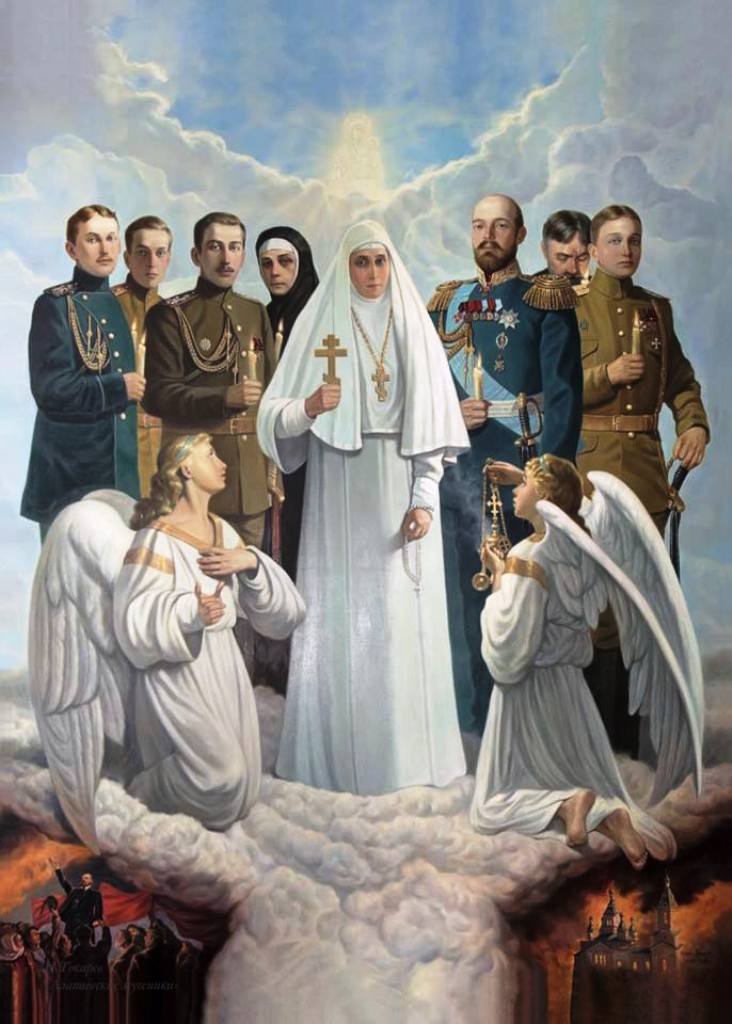
0300a

Martyrs of Alapaevsk, painted in 2018 by contemporary Russian artist I. Tokarev

***

0300o

About Ludmila Kulikova:

Lyudmila Kulikova is a member of the Imperial Orthodox Palestine Society, and laureate of the Grand Duchess Elizabeth Feodorovna Prize. She specializes in research of the history of the Russian Orthodox Church, and materials for the glorification of her fellow countryman.

She is currently writing a book about the life of Valentina Sergeevna Gordeeva (1863-1931), who originally served as a maid of honour at the Russian Court. After the arrest of the Grand Duchess in 1917, she became the abbess of the Marfo-Mariinski Convent until its closure in the first half of the 20th century. She died in 1931 in exile in Turkestan (Kyrgyzstan).

***

NEW BOOK: Ella. Grand Duchess Elizabeth. Saint Elizabeth the New Martyr
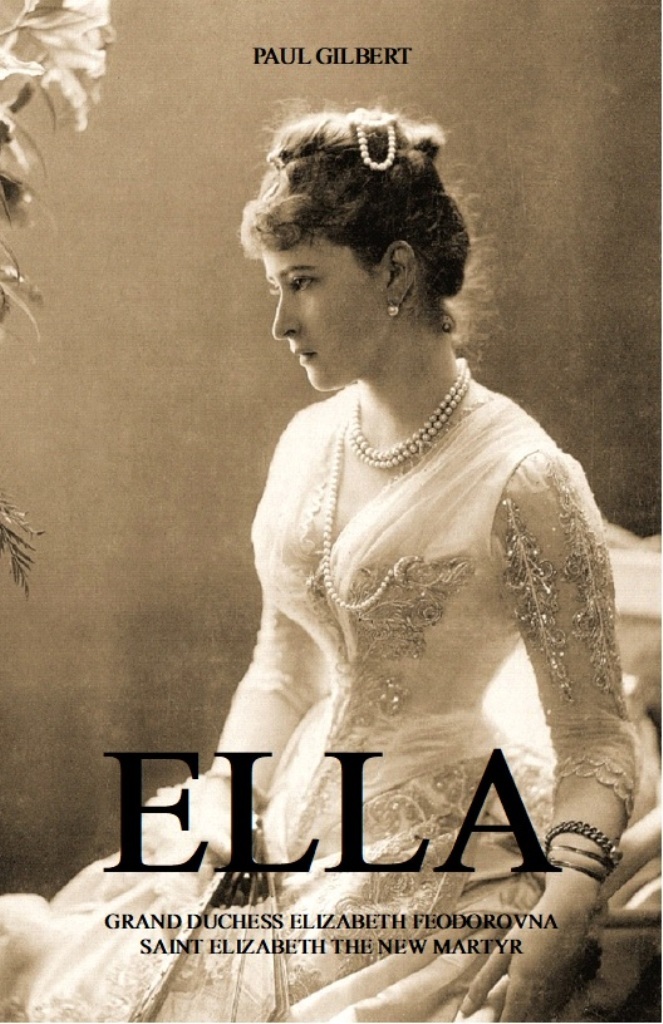
ella-cover

CLICK HERE TO ORDER THE PAPERBACK EDITION @ $13.99 USD

English. 160 pages with 48 black & white photos

More than a century after her death and martyrdom, Grand Duchess Elizabeth Feodorovna (1864-1918) remains of one of the most beloved and respected members of the Russian Imperial Family. Affectionately known as Ella, she became famous in Russian society for her dignified beauty and charm, and later for her piety and acts of charity among the poor.

This new book features 7 essays – including 2 researched and written by Paul Gilbert. Read about Ella’s Hessian family; her relationship with her British grandmother Queen Victoria and her sister Alexandra, the last Russian Empress; her life in Imperial Russia; her years a a nun and abbess of her own convent of mercy in Moscow; her arrest, imprisonment and brutal murder; her burial in the Holy Land; her canonization; and how she is commemorated today in post-Soviet Russia.

Learn about her marriage and often misunderstood relationship to Sergei, a Russian grand duke and son of Emperor Alexander II, who from 1891 and 1905 served as Moscow’s Governor-General. Learn why the couple had no children and rumours that Sergei was homosexual. After her husband’s assassination in 1905, Ella departed the Imperial Court and became a nun, founding the Marfo-Mariinsky Convent dedicated to helping the downtrodden of Moscow.

In 1918, Ella was arrested and subsequently murdered by the Bolsheviks near Alapaevsk. In 1981, she was canonized by the Russian Orthodox Church Outside Russia, and in 1992 by the Moscow Patriarchate.

© Paul Gilbert. 18 July 2024

Mobile exhibit dedicated to Empress Alexandra Feodorovna opens in Ekaterinburg

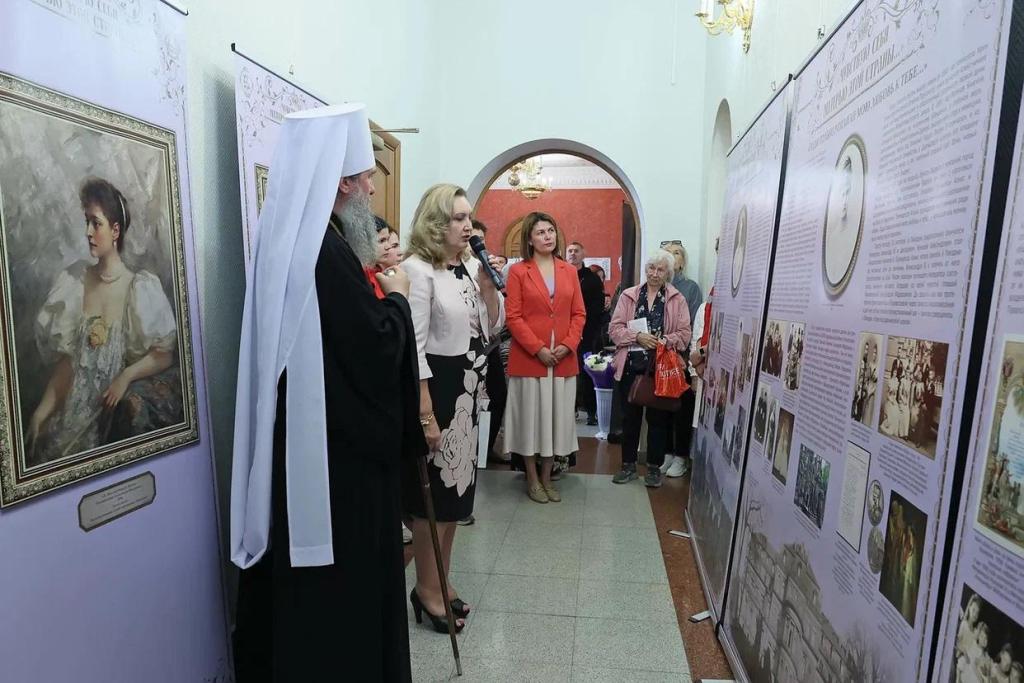
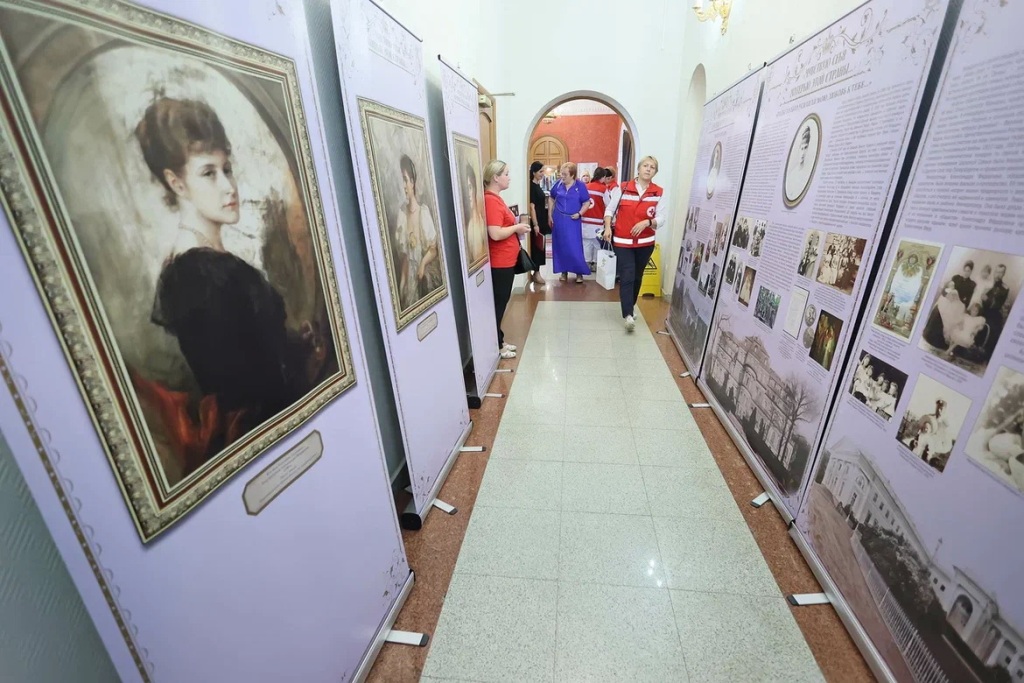
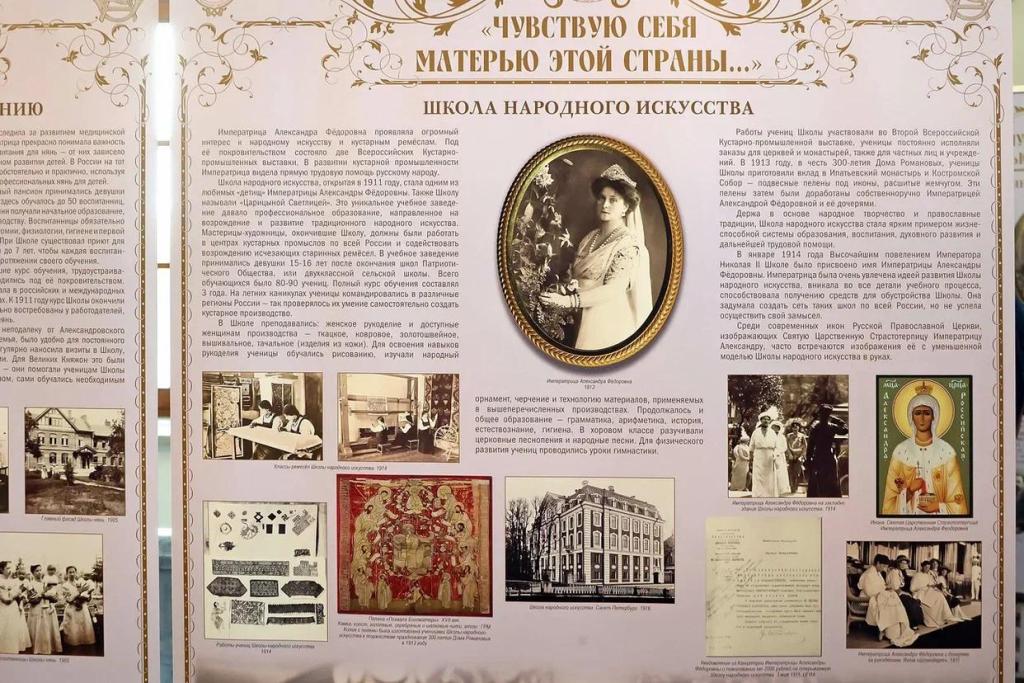
On 15th July 2024, a mobile exhibition dedicated to Empress Alexandra Feodorovna opened at the Tsarsky Cultural and Educational Center, which is situated in the Patriarchal Compound of the Church on the Blood in Ekaterinburg.

The exhibit titled “I feel like the mother of this country…” The Christian Feat of the Holy Royal Passion-Bearer Empress Alexandra Feodorovna, was organized by the Elizabeth-Sergius Educational Society Foundation (ESPO), in cooperation with the Institute of World History of the Russian Academy of Sciences.

For the first time, the exhibit gives a detailed story about the large-scale charitable activities of Empress Alexandra Feodorovna, which include her participation in the establishment and work of the Guardianship of the Houses of Industry; the School of Nannies in Tsarskoye Selo; the development of medical institutions specializing in pediatric medicine, orthopedics, surgery and women’s health; as well as her feat of mercy during the First World War; her patronage of science, medicine; and the education of her children.

The opening ceremony of the exhibition in Ekaterinburg was attended by Deputy Governor of the Sverdlovsk Region Pavel Krekov, Chairman of the Elizabeth-Sergius Educational Society Foundation (ESPO) Anna Gromova and Metropolitan of Yekaterinburg and Verkhoturye Evgeny.

The travelling exhibition was created in 2022, the year marking the 150th anniversary of the birth of Empress Alexandra Feodorovna. For the past two years, the exhibition has been presented in cities and towns across Russia.

In an interview with journalists, Anna Gromova, Head of the ESPO Foundation, said that while the exhibition had been traveling around Russia, that it arouses great interest, since the theme of the exhibition reveals unknown facets of the charitable and selfless activities of Empress Alexandra Feodorovna. Pavel Krekov, Deputy Governor of the Sverdlovsk Region, emphasized the extreme relevance of the exhibition, especially during this years Tsar’s Days events in the Ural capital.

Already on the first day of its work, the exhibition of the ESPO Foundation “I Feel Like the Mother of This Country…” The Christian Feat of the Holy Royal Passion-Bearer Empress Alexandra Feodorovna” was met with great interest by the residents and visitors, who arrived in the Ural capital for Tsar’s Days. Specialists of the ESPO Foundation have prepared a leaflet and a guide to the exhibition.

© Paul Gilbert. 18 July 2024

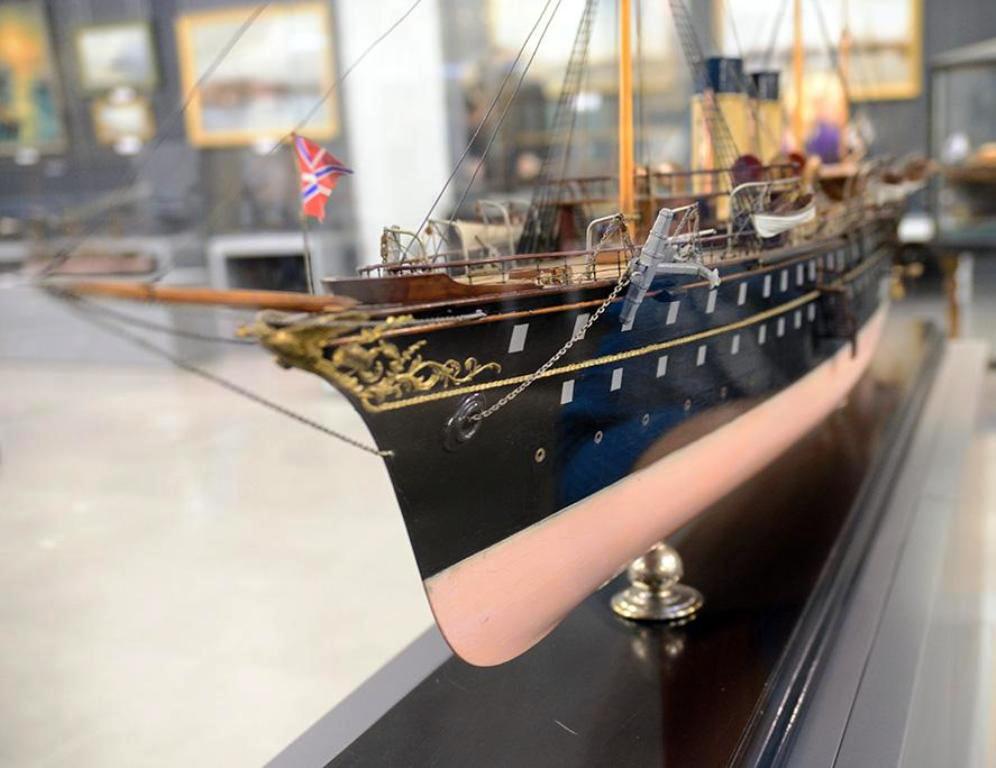
Furniture from the Imperial Yacht ‘Polar Star’ gifted to State Hermitage Museum

PHOTO: Model of the Imperial Yachts Polar Star «Полярная звезда»
From the Collection of the Central Naval Museum, St. Petersburg

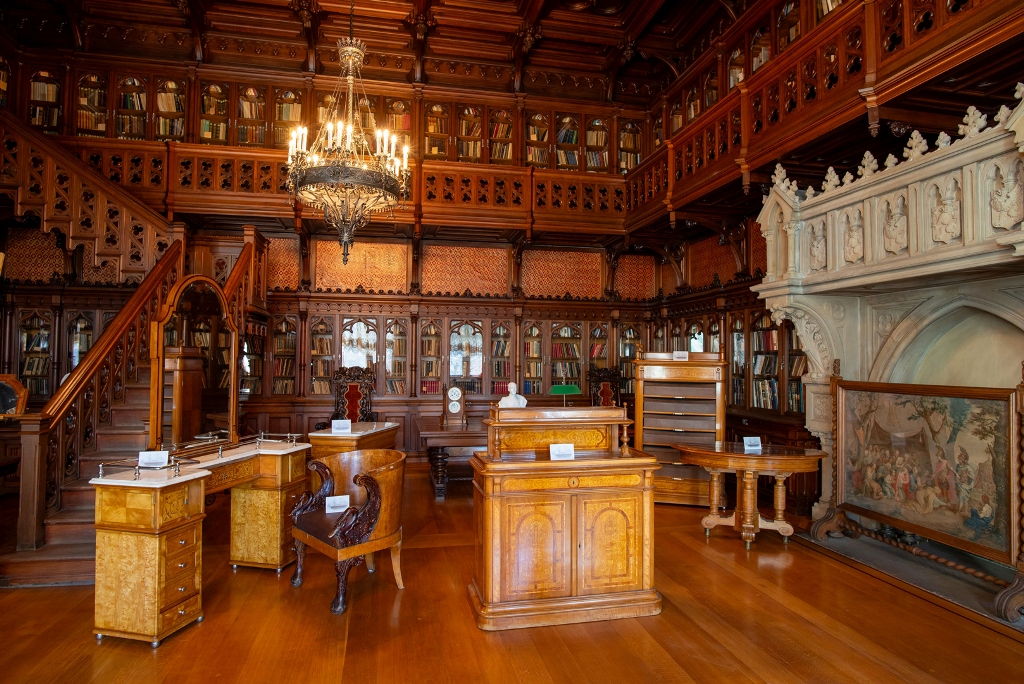
On 29th June 2024, an exhibition of furniture from Emperor Alexander III’s yacht Polar Star «Полярная звезда» opened in the Gothic Library of Emperor Nicholas II situated in the Winter Palace (State Hermitage Museum) in St. Petersburg. The pieces have been donated to the Hermitage by Mikhail Yuryevich Karisalov, a Russian industrialist, art patron and hereditary collector.

The set is made up of ten items: two tables, an armchair, two low cupboards, a dressing mirror, a cartonniere (filing cabinet), two doors and a mirror from a cupboard. They were all made at Nikolai Feodorovich Svirsky’s (1851-after 1915) factory to designs by the architect Nikolai Vasilyevich Nabokov (1838-after 1907) -who also designed the furniture for the Gothic Library.

Svirsky’s factory specialized in producing pieces decorated with marquetry using “our own method”. The distinctive feature of the craftsmen’s signature was extremely intricate, literally jeweller-like, detail work in the inlaid designs, making it possible to convey the subtlest nuances of colour.

In 1889 Svirsky put his creations on show at the 1889 Paris Exposition, where he was awarded the Grand Prix and a gold medal. In 1894 the Svirsky Factory was granted the honorary title of Supplier to the Imperial Court, and two years later his products were awarded a gold medal at the All-Russian exhibition in Nizhny Novgorod.

The manufacture of the furnishings for all the cabins aboard the Imperial Yacht Polar Star that was built for the Imperial amily’s long-distant voyages would be one of Svirsky’s most significant commissions. The correspondent of the Pravitelstvenny Vestnik (Government Messenger] newspaper wrote: “Regarding the interior finishing of the yacht, it must be said that this is something wholly exceptional and perfect in its elegance; there is not gaudy, eye-catching splendour here, but there is artistic splendour… On the right, from the Imperial Dining-Room, a door leads into Her Majesty the Empress’s [Maria Feodorovna] boudoir; there the walls and furniture are upholstered with English waxed cretonne; the cupboard, toilet table, writing desk and doors are covered with superb inlay work…”

PHOTO: 10 pieces of furniture from the Imperial Yacht Polar Star, on display in the Gothic Library of Emperor Nicholas II in the State Hermitage Museum, St. Petersburg

The exhibition includes two items that the journalist mentioned – the Empress’s “toilet table” and a low cupboard inlaid with Maria Feodorovna’s monogram МФ (MF).

Emperor Alexander III and Empress Maria Feodorovna are known to have sailed all around Europe on the Polar Star. On arrival in different countries, they would happily show off the exquisite interiors of their floating home. Following the death of A;exander III in 1894, the Polar Star became the personal yacht of the Dowager Empress, which she used for her visits to Denmark and Great Britain.

After the October Revolution, the yacht became the headquarters of the Bolsheviks’ Central Committee of the Baltic Fleet (Tsentrobalt), then in the 1930s it was refitted to serve as a floating base for submarines. Later, a cable was run from the yacht, which was moored on the Neva River in front of the Hermitage, to provide electricity to the museum halls. Click HERE to learn about the fate of the Imperial Yacht Polar Star.

For the Hermitage, the items of furniture from the Polar Star are of especial value – from artistic, historical and memorial points of view. After the temporary exhibition in the Gothic Library, the set will find a place within the display devoted to the Art Nouveau era in the General Staff Building, where a separate room showcasing Svirsky’s works will be go on permanent display.

The exhibition curator is Natalia Yuryevna Guseva, Candidate of Art Studies, Deputy Head of the State Hermitage’s Department of the History of Russian Culture, keeper of the Russian furniture collection.

© State Hermitage Museum / Paul Gilbert. 15 July 2024

The last divine service for the Imperial Family in Ekaterinburg

On this day – 14th July (O.S. 1st July) 1918 – Archpriest Ioann Storozhev performed the last divine service for the Imperial Family in Ekaterinburg.

In October 1918 – three months after the death and martyrdom of Emperor Nicholas II and his family, Fr. John Storozhev, recalled the devine service he performed in the Ipatiev House on 14th July (O.S. 1st July) :

“… Taking up our [Fr. John Storozhev and Deacon Vasily Buimirov] places, the deacon and I began the reader’s service [similar to a liturgy, but much shorter since it does not include the Eucharist]. At a certain moment in the service, it is required to read the prayer “With the Saints Give Rest”. For some reason, on this particular occasion, the deacon, instead of reading, sang the prayer, and I, too, began to sing, somewhat disconcerted by this departure from the customary practice. But we had scarcely begun when I heard the members of the Romanov family, standing behind us, fell to their knees, and here I suddenly felt the sublime spiritual comfort that comes from shared prayer.

“This experience was even stronger when, at the end of the service, I read a prayer to the Mother of God, which, in highly poetic and moving words, expressed the plea of the afflicted person to be supported in his sorrows and receive the strength to bear his cross worthily.

“In addition, the deacon recited the Ectenia [often called by the better known English word litany], and I sang. Two of the grand duchesses sang along with me, and sometimes Nicholas Aleksandrovich sang in a low bass (for instance, he sang the “Our Father” and some other things). The service was uplifting and good, and the family prayed fervently.

PHOTO: Archpriest Ioann Vladimirovich Storozhev (1878-1927)

“The Tsar was clad in a khaki tunic and trousers with tall boots. On his chest he wore a St. George’s Cross. He had no shoulder boards [epaulettes]. He impressed me with his firm gait, his calmness. and especially his manner of looking steadfastly and firmly into one’s eyes. I didn’t notice any fatigue or traces of low spirits in him. It seemed to me that he had barely visible gray hair in his beard. His beard had been longer and wider when I saw him the first time. It seemed to me now to be trimmed.

“After the service, everyone approached the cross and the deacon handed prosphora [a small loaf of leavened bread used in Orthodox liturgies] to Nicholas Alexandrovich and Alexandra Feodorovna. Upon departing, I walked very close to the former grand duchesses, and heard a whispered “Thank you”. I don’t think it was just my imagination

“The deacon and I were silent until we reached the Art School building, and here, suddenly, he said to me: “You know, father, something’s changed there. Something’s happened”. His words struck a chord with me, and I stopped and asked why he he had gotten that impression. “Well, they were all different somehow. And also nobody sang.” And I have to say that, truly, this service of 14/1 July was the only one at which none of the Romanov’s sang with us (and the deacon had been present at all five services at the Ipatiev House).”

Source: The Last Sacred Service Observed by the Imperial Family in Yekaterinburg. The Testimony of Archpriest Ioann Vladimirovich Storozhev. First English translation published in Regicide in Ekaterinburg, compiled and edited by Paul Gilbert.

© Paul Gilbert. 14 July 2024

***

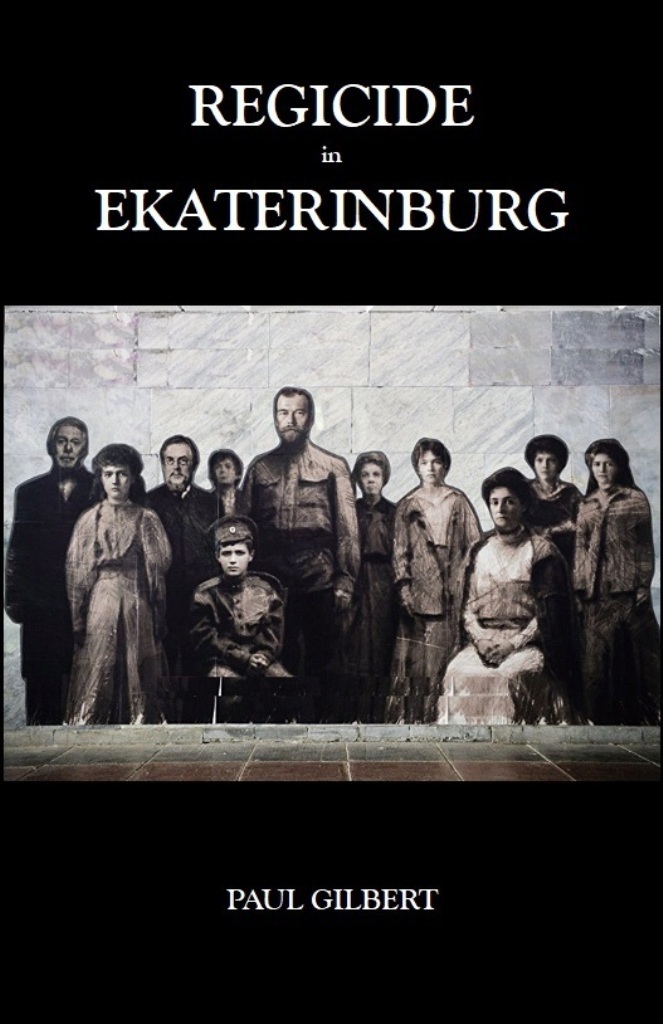
The following NEW title was compiled and edited by independent researchers and Romanov historian Paul Gilbert was published in August 2024. 

This fascinating new study features 14 chapters on this tragic event, which include the memoirs of a British intelligence officer and journalist, and two First-English translations. In addition, 11 chapters were written by Paul Gilbert, based on new documents sourced from Russian archival and media sources over the past decade.

Please refer to the link provided for further details about the content of this new title . . .

CLICK HERE TO READ MORE ABOUT THIS TITLE

Prince Ivan Ratiev: the man who saved the Imperial Regalia in 1917

PHOTO: Prince Ivan Dmitrievich Ratiev (1868-1958)

Prince Ivan Dmitrievich Ratiev (1868-1958) was a Georgian prince and a prominent officer of the Imperial Russian Army. He later served as a high-ranking official at the Winter Palace in St. Petersburg.

Ratiev was born in Oryol on 17th July 1868, into a branch of the Georgian princely house of Ratishvili, which had emigrated to the Russian Empire in 1724. He graduated from the Oryol Cadet Corps and then from the Nicholas Cavalry College. In 1890 he joined the 44th Nizhegorod Dragoon Regiment, deployed in Georgia. 

In 1896, he married Ekaterina Irakliyevna, née Princess Gruzinskaya (1872–1917), a great-granddaughter of King Heraclius II of Georgia (1720-1798) and a lady-in-waiting of Empress Alexandra Feodorovna (1872-1918). The couple had two children: Dmitri (1899-1926), and Olga (1902-1987).

PHOTO: Prince Ivan Dmitrievich Ratiev with his wife
Ekaterina and their two children Dmitri and Olga

Ratiev retired from army service due to a trauma sustained in a horse race at Tbilisi in 1907. He then studied at Academy of Fine Arts in Paris and, after his return to Russia, worked for the Ministry of the Imperial Court in St. Petersburg. He was assigned to an army cavalry unit of the Winter Palace with the rank of rittmeister [riding master]. By the Imperial Order of 6th December 1913, he was made a lieutenant-colonel of the Imperial Guard cavalry and an acting Police Master of the Winter Palace. Promoted to the rank of colonel in 1916, Prince Ratiev was appointed as a deputy commandant of the Winter Palace in April 1917, two months after the February Revolution overthrew the tsar Nicholas I

It was during the storming of the Winter Palace in October 1917, for which Ratiev is best known. Thanks to his heroic efforts, he managed to save the Imperial Regalia[1] from being looted or destroyed by revolutionary thugs.

On 7th November (O.S. 25th October) 1917, Ratiev did not flee his post like so many others during these turbulent time, instead he ordered his guards to transfer the Imperial Regalia to safer parts of the Palace. The prince sent his 16-year-old son Dmitri and two of his most trusted grenadiers to guard the secret depository, which, among other precious objects, which included the Russian Imperial Crown adorned with 4936 diamonds, the Orb and the Sceptre incorporating the Orlov diamond.

Upon confronting the revolutionaries, Ratiev negotiated with the Bolshevik leader Vladimir Alexandrovich Antonov-Ovseenko (1883-1938), who oversaw the armed assault of the Palace, which led to successful negotiations to preserve the Imperial Regalia.

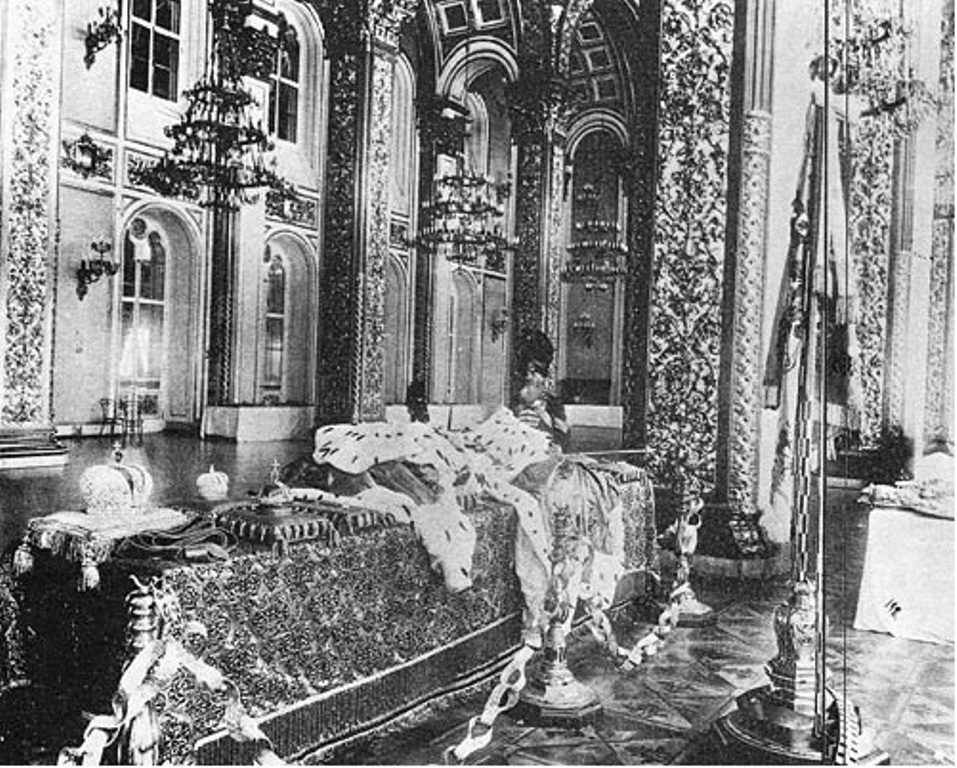
PHOTO: The Imperial Regalia: crowns, orb, and sceptre laid out in preparation for the historic crowning of Russia’s last tsar Nicholas II in Moscow on 27th May (O.S. 14th May) 1896

The Soviet leadership publicly expressed their gratitude to Prince Ratiev in the 5th November 1917 edition of Izvestia[2] for his “self-sacrificing efforts to protect and preserve the people’s treasures” and appointed him the chief commandant of the Winter Palace and of all state museums and palaces in the Petrograd district.

In March 1919, Ratiev escorted the “golden echelon”, a train carrying Russia’s gold reserve, following the transfer of the Russian government from Petrograd to Moscow. During the journey, however, Ratiev was pressured into surrendering the train and even being fired upon at Tver. Ratiev retired from the state service shortly thereafter and worked as a translator for various organizations of Moscow for several years. 

His subsequent life was marred by the loss of his wife and son, the latter who drowned while swimming in the Moscow River. In March 1924, Ivan Ratiev, his daughter Olga and sister Sophia were arrested on charges of belonging to a “counter-revolutionary monarchist organization.”

Initially, Ratiev was sentenced to five years in the Gulag, however, due to his service in 1917, the sentence was commuted to exile to Ekaterinburg, where the family spent 3 years.

In 1931, Ratiev moved to the Georgian capital of Tbilisi, where he lived as a “state pensioner”. He died on 28th April 1958, at the age of 89.

NOTES:

[1] Before the 1917 Revolution, the Imperial Regalia, which included the Imperial Crown, orb and sceptre, were stored in the Diamond Chamber of the Winter Palace in St. Petersburg. In May 1896. the Imperial Regalia were transported by train and under heavy guard to Moscow, for the Holy Coronation of Emperor Nicholas II. During the First World War, the Imperial Regalia was moved to Moscow and stored in the Armory Chamber of the Kremlin. In 1922, the Soviet Diamond Fund was established. Today, the Imperial Regalia is stored in the Diamond Fund vault (opened in 1967).

[2] Izvestia (“The News”) is a daily broadsheet newspaper founded in February 1917, Izvestia, which covered foreign relations, was the organ of the Supreme Soviet of the Soviet Union, disseminating official state propaganda. It is now described as a “national newspaper” of Russia.

© Paul Gilbert. 11 July 2024

The sakkos from the coronation of Nicholas II on display in Russia for the first time

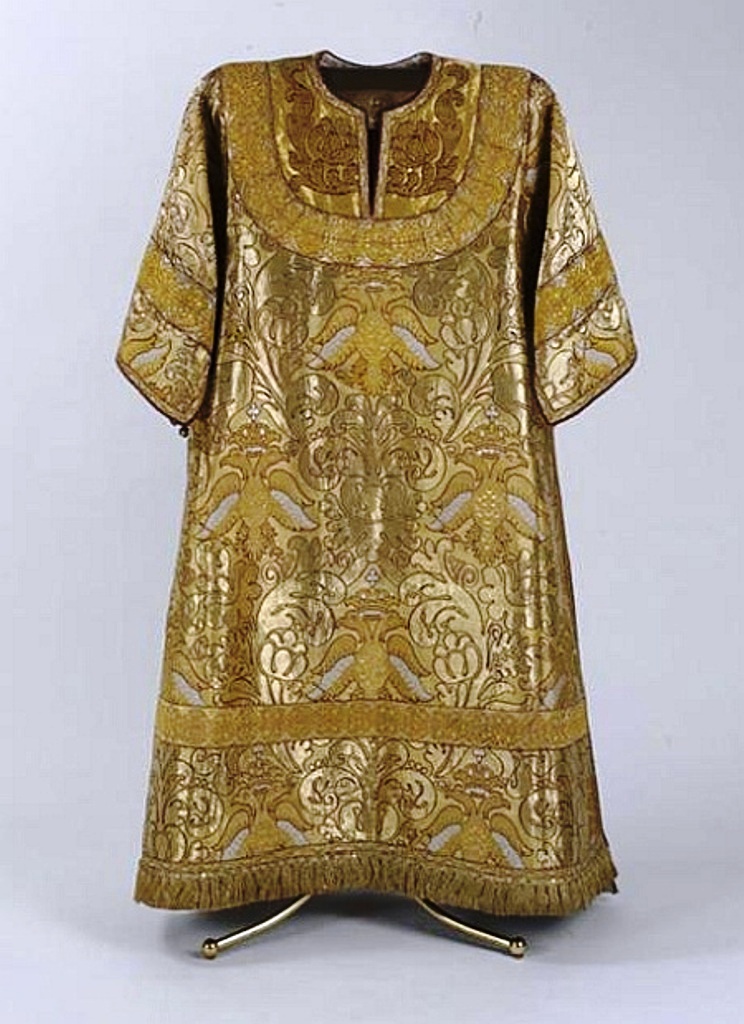
A new exhibition Russian Masters. Artistic Traditions and Ideals has opened at the State Museum of the History of Religion in St. Petersburg. The exhibition presents objects of the Orthodox liturgy and reveals their symbolic meaning, including vestments, censers, lampadas, crosses, icons in luxurious casings, and items of Russian silversmithing of the 19th-early 20th centuries.

Among the 100 items on display is an episcopal liturgical vestment – sakkos – which was made for the Orthodox clergy who participated in the Holy Coronation of Emperor Nicholas II, held in Moscow on 27th May (O.S. 14th) May 1896. It is made of a rich brocade fabric and intricately decorated with traditional Russian eagles. The sakkos is being exhibited for the very first time.

The exhibition Russian Masters. Artistic Traditions and Ideals runs until 25th January 2025.

***

The sakkos is a vestment worn by Orthodox bishops instead of the priest’s phelonion. The bishop wears the sakkos when he celebrates the Divine Liturgy and other services when called out by the rubrics.

© Paul Gilbert. 10 July 2024

Efforts to locate the remains of Nicholas II and his family during the Brezhnev era

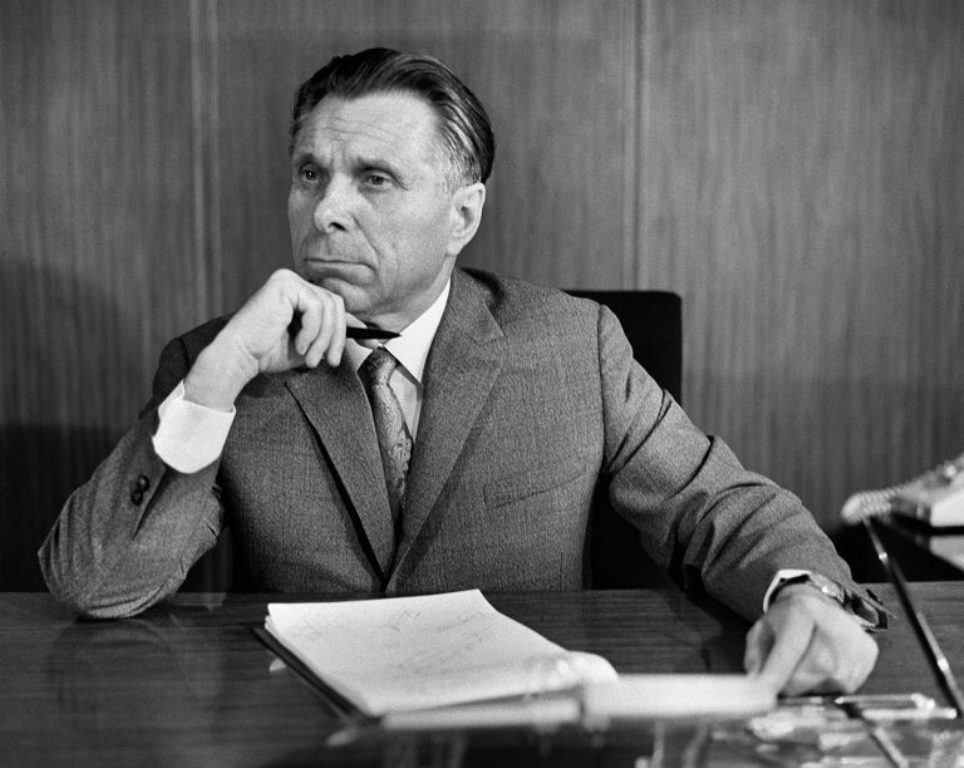
PHOTO: Nikolai Anisimovich Shchelokov (1910-1984)

Nikolai Anisimovich Shchelokov (1910-1984) was a Soviet statesman. From 1966 to 1982 he served as Minister of Internal Affairs of the USSR. He was a member of the Communist Party of the Soviet Union (CPSU) from 1931 to 1984, and member of the Central Committee of the CPSU from 1968 to 1983.

Shchelokov was the first person who began the search for the remains of Emperor Nicholas II and his family. When asked about the initiative, Shchelokov told the film director, screenwriter, acclaimed author Geliy Trofimovich Ryabov (1932-2015): “We, as Russian people, must fulfill our duty and find the remains of the Tsar”. Shchelokov ordered the head of the Sverdlovsk Internal Affairs Directorate for their full cooperation in the search.

What made the representative of the highest echelon of Soviet power, who had been building communism all his life, deviate so radically from the general line of the party and make every effort to resurrect one of the darkest pages of early 20th century Russian history?

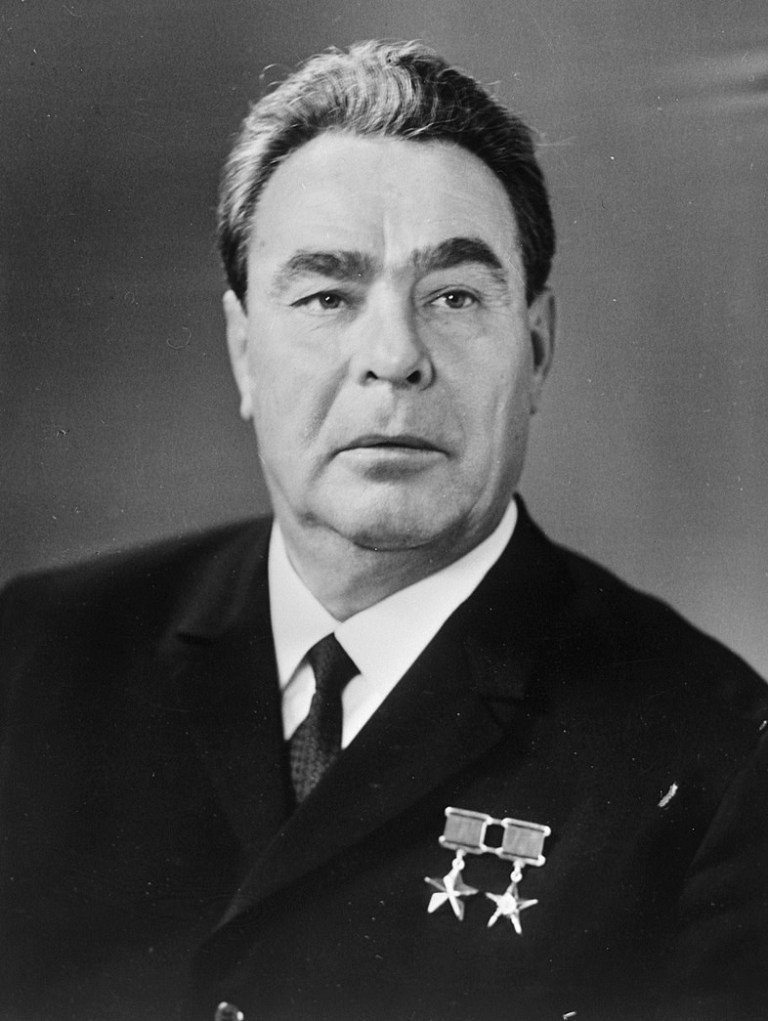
PHOTO: Leonid Ilyich Brezhnev (1906-1982)

Acquaintance with Leonid Brezhnev

Born on 13th November 1910 in the family of a metallurgist, Nikolay Shchelokov got his first job as a horseman in a mine at the age of 16, and at the same time received a higher education at the Dnepropetrovsk Metallurgical Institute.

After spending a year at the Dnepropetrovsk Metallurgical Plant, Nikolay Shchelokov was elected 1st Secretary of the Krasnogvardeysky District Committee of the Communist Party (Bolsheviks) of Ukraine in Dnepropetrovsk. It was during the years 1938-39 that he first met with Leonid Ilyich Brezhnev (1906-1982), who later took the post of General Secretary of the Central Committee of the CPSU, and persuaded his old acquaintance to move to Moscow and head the Ministry of Internal Affairs.

Nikolai Anisimovich received this offer in 1966, and before that he managed to become a participant in the Great Patriotic War (1941-45), after which he was appointed to the post of executive secretary of the party commission at the political department of the Carpathian Military District, where Leonid Brezhnev served as the head.

From August 1946, Shchelokov held a position in the Ministry of Industry of the Ukrainian ASSR, worked in the apparatus of the Communist Party of the same republic, and in 1951 he was sent to the Moldavian ASSR, where he rose to the post of second secretary of the Central Committee of the Communist Party.

In Moscow

Having lured the energetic leader to Moscow, Brezhnev set him the task of reviving the Ministry of Internal Affairs abolished in 1960 by Nikita Sergeyevich Khrushchev (1894-1971).

His mandate was to restore the fallen authority of the police in Soviet society To do this, among other things, he used the power of art. It was during this period that many detective stories appeared in bookshelves, where law enforcement officers where depicted to the reader in a positive light, and films about the daily exploits of ordinary employees of the Ministry of Internal Affairs were released on cinema screens.

Shchelokov coped with the duties assigned to him brilliantly, for which he was awarded the title of Hero of Socialist Labor of the USSR.

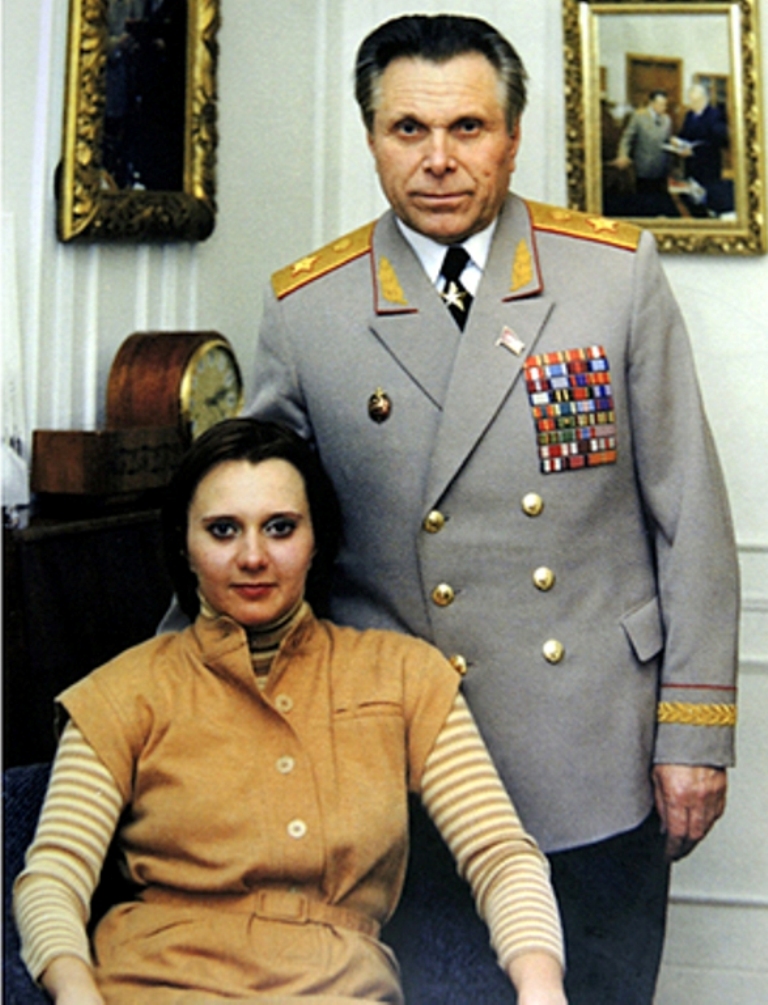
PHOTO: Nikolai Shchelokov with his daughter Irina Shchelokova

Friendship with dissidents

An interesting fact about Nikolai Anisimovich was his open friendship with dissidents who had liberal and monarchist views.

Among the disgraced personalities with whom he had warm relations were the musician Mstislav Rostropovich, the singer Galina Vishnevskaya, the writer Alexander Solzhenitsyn, the artist Ilya Glazunov, and Archbishop Pimen of Saratov and Volsk.

Perhaps it was after communicating with them that Shchelokov had the idea to find the remains of the murdered Imperial Family and bury them according to the Christian rite.

According to the memoirs of Irina Shchelokova (d. 2021), the daughter of the Minister of Internal Affairs, her father could not be convicted of dissent. She explained his interest in the last Tsar and his family by his high level of erudition, a keen sense of justice, as well as the fact that her father got hold of materials -which were classified at the time – regarding the investigation of the circumstances of the death of Nicholas II and his family.

At the same time, Boris Konstantinovich Golikov, an assistant to Shchelokov, believed that his boss became obsessed with the idea of finding the remains of the Romanovs after a meeting with a former NKVD officer, a certain “Snegov”. The latter was taken into custody in the 1930s and sat in the same cell with a prisoner who participated in the burial of the bodies of the Imperial Family in July 1918. Subsequently, this man was shot, but he managed to tell “Snegov” about the burial place of the remains, which the latter later told Shchelokov, and even handed him a hand-drawn map.

PHOTO: Geliy Trofimovich Ryabov (1932-2015)

Help for filmmakers

To implement his plan to find the remains of the Romanovs, Nikolai Anisimovich sought the help of Geliy Ryabov, co-author of the book “Born by the Revolution”.

According to Ryabov’s memoirs, who held the position of consultant of the Ministry of Internal Affairs on cultural issues, in 1976, he was supposed to visit Sverdlovsk (now Ekaterinburg) on a working trip. Before embarking on his journey, he was summoned by Shchelokov and casually told that not so long ago he had visited the Ipatiev House, where the Imperial Family had been murdered by the Ural Soviet (Bolsheviks) on 17th July 1918. He communicated this information to Ryabov in the hope of getting him interested in the case and was not mistaken.

The writer, having arrived in the capital of the Urals, also wanted to visit the site where the Tsar and his family had been murdered, and somehow without any problems received the appropriate permission. After making a tour of the house, Ryabov was inspired by the idea of finding the remains of Nicholas II and his family.

Returning to Moscow, Ryabov turned to Shchelokov with a request for assistance in this dangerous assignment. The delighted Minister of Internal Affairs contacted Leonid Brezhnev and asked him to provide Ryabov with access to the “Tsar’s Archive”.

A month later, the Secretary General gave his go-ahead, and Ryabov plunged headlong into the study of classified documents, trying to find at least some clue.

As a result, his efforts were crowned with success aftern he discovered the “Yurovsky Note” – written by the commandant of the Ipatiev House and chief executioner of the the Imperial Family, which contained the coordinates of the burial place of the bodies of the Tsar and his family.

Having provided Ryabov with accurate topographic maps of the area, and having organized his protection and unhindered work, Shchelokov began to wait for news of the investigation. On 1st June 1979, Geliy Trofimovich and geologist Alexander Avdonin, who helped him in the search, found the sought-after remains.

However, Shchelokov did not manage to organize a dignified reburial of the Imperial Family’s remains, he was forced to abandon his search by a discrediting campaign that began against him.

Alternate versions

At was at this time, that several more interpretations of why the Minister of Internal Affairs abandoned the search for the remains of the Imperial Family.

Some researchers argued that he did not act on his own, but carried out the order of higher authorities who wanted to find and destroy the bones of the murdered Imperial Family.

Other theories included an outrageous claim insisting that Shchelokov wanted a royal burial in order to find and remove any jewelry from the gravesite.

Even more ridiculous was from Igor Bunich’s work of fiction “The Tale of Lawlessness, or the Syndrome of Nicholas II” a hypothesis is put forward that Shchelokov launched a search for the remains of the Romanovs in order to secretly sell them to the West. The buyer was allegedly a certain monarchical structure associated with the British Royal Family. For the deal, the Home Secretary was allegedly offered £200,000, of which £30,000 was given to him as an advance and spent by him on the organization of the search operations.

It was not until 1991, that the remains of Emperor Nicholas II and his family were exhumed and later buried in the SS Peter and Paul Cathedral in St. Petersburg on 17th July 1998.

© Paul Gilbert. 9 July 2024

Caucasian sword belonging to Nicholas II to be auctioned in London

Despite Western sanctions against Russia, which include the cancelation of all cultural exchanges [i.e. exhibitions, auctions, etc.], works of Imperial Russian art continue to break records at British, American and French auctions. Paintings by Aivazovsky, Vereshchagin and Repin, luxurious pieces of jewelry made by Fabergé, find their new buyers. Despite the political chaos, the antique market continues to thrive.

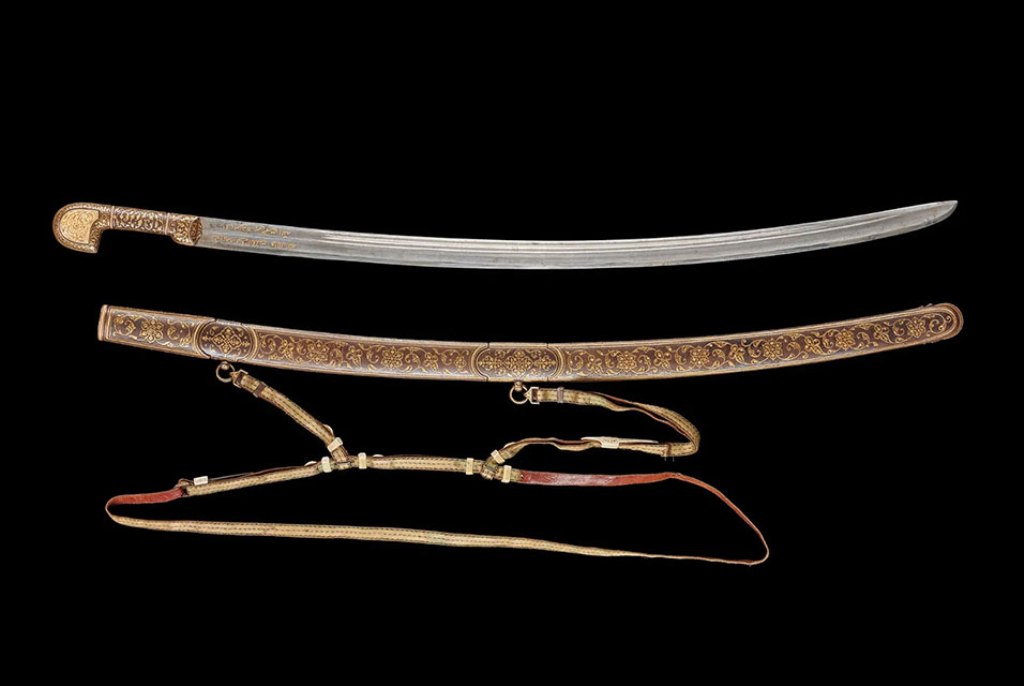
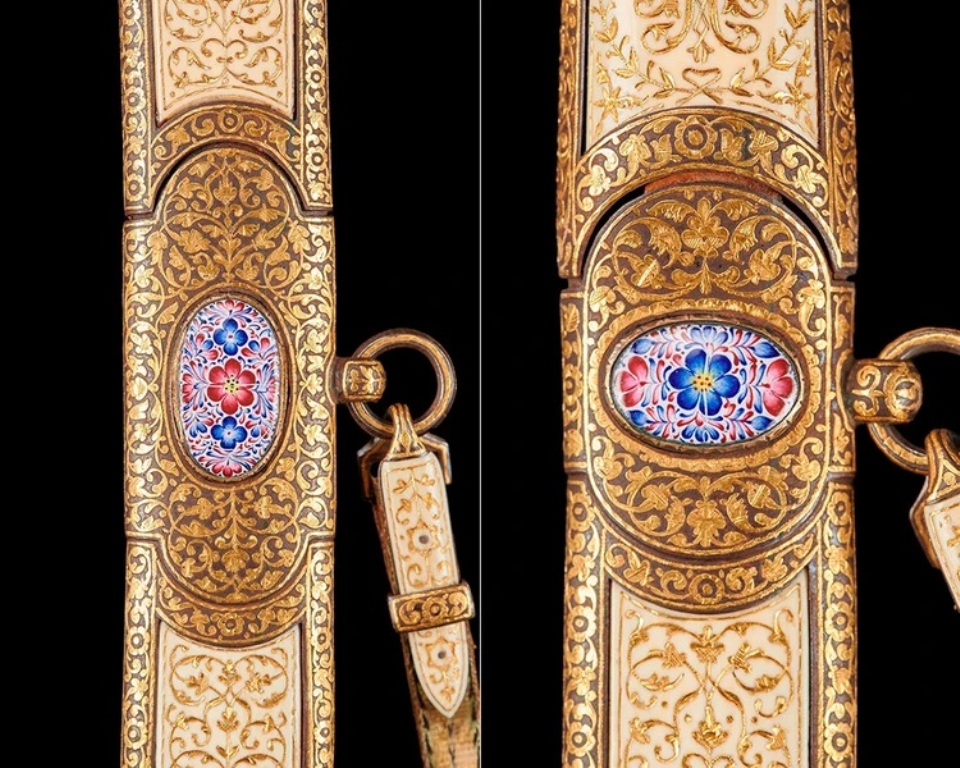
On 13th July 2024, a unique Caucasian shashka, which, according to researchers belonged to Emperor Nicholas II, will be sold at the Apollo Art Auctions in London,

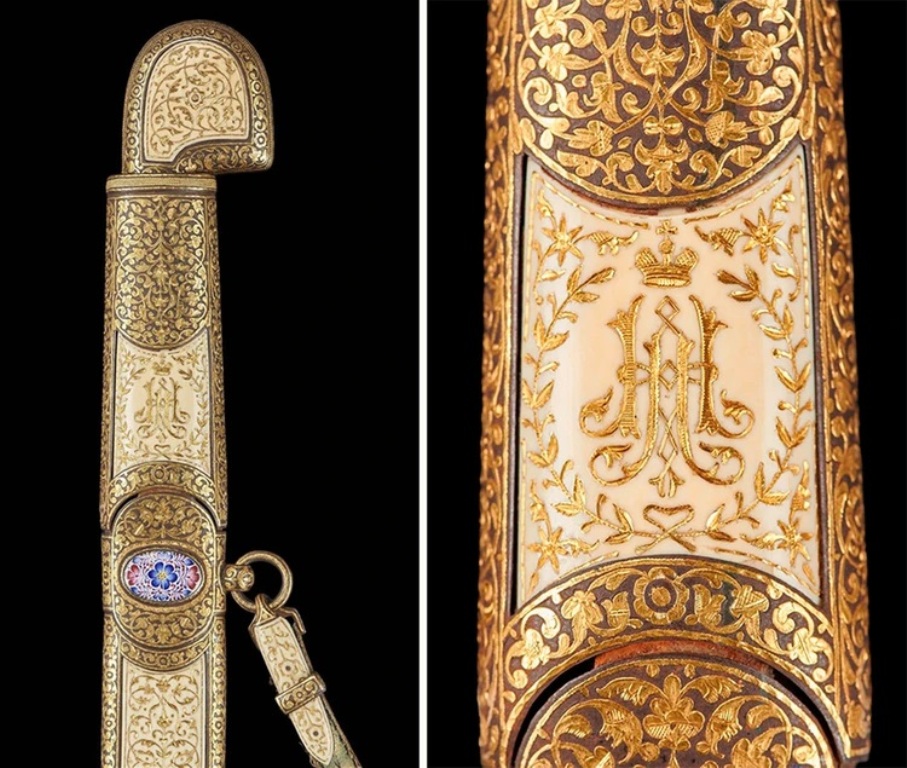
The extremely fine-quality Caucasian shashka given to Nicholas II, when he was Tsesarevich (heir apparent). Research suggests the saber was presented to Nicholas during a tour of the Caucasus with his father Emperor Alexander III, in 1888. An Arabic inscription in gold on the blade translates to: (M)ay the dominance of the owner of this sword grow, and his life, and his greatness, and may Allah bless his family, and he will achieve his goal.

It is also monogrammed with the Cyrillic letters “HA” – “NA” in English – (for Nicholas Alexandrovich), surrounded by a golden laurel and surmounted by the Imperial Russian Crown. Its wonderfully-decorated scabbard bears a calligraphic Arabic inscription that would be the equivalent of a European maker’s mark. Translated, it says “Abdullah worked.”

Held in consecutive European private collections, including the Eugene Mollo collection (Switzerland), it is the first royal sword ever to be offered for public sale. It requires an opening bid of £1,200,000 ($1,516,300 USD).

Photos provided in this post are courtesy of the Apollo Art Auctions

© Paul Gilbert. 8 July 2024

New museum dedicated to Nicholas II to be built in Mogilev

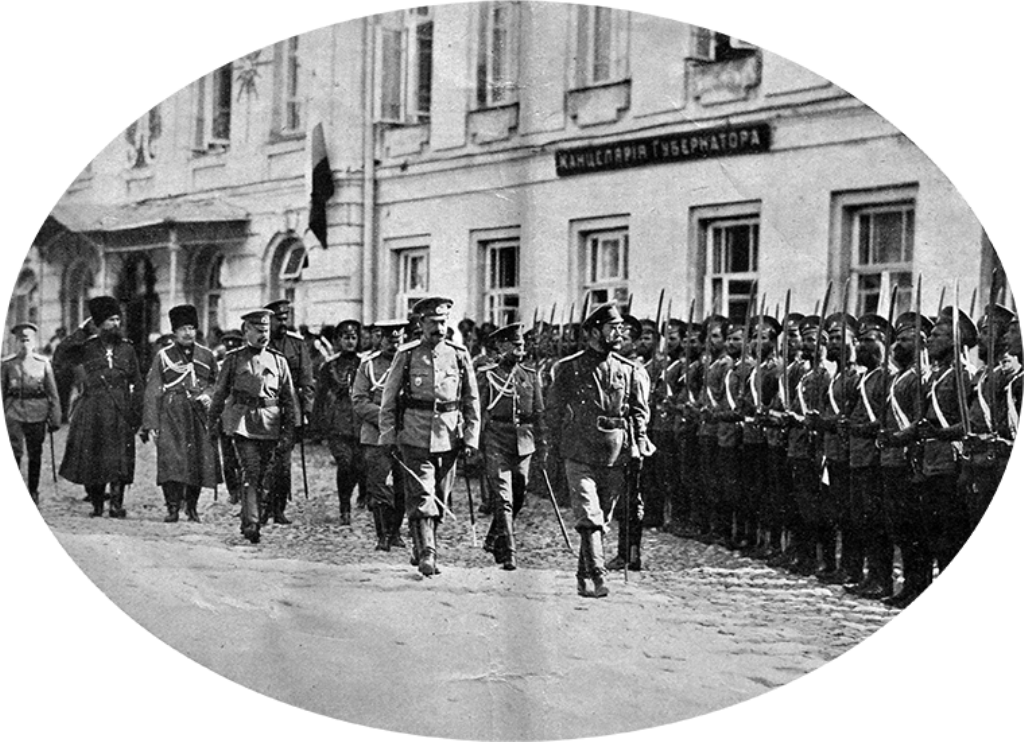
PHOTO: Emperor Nicholas II reviews his troops on the square in front
of General Headquarters in Mogliev during the First World War

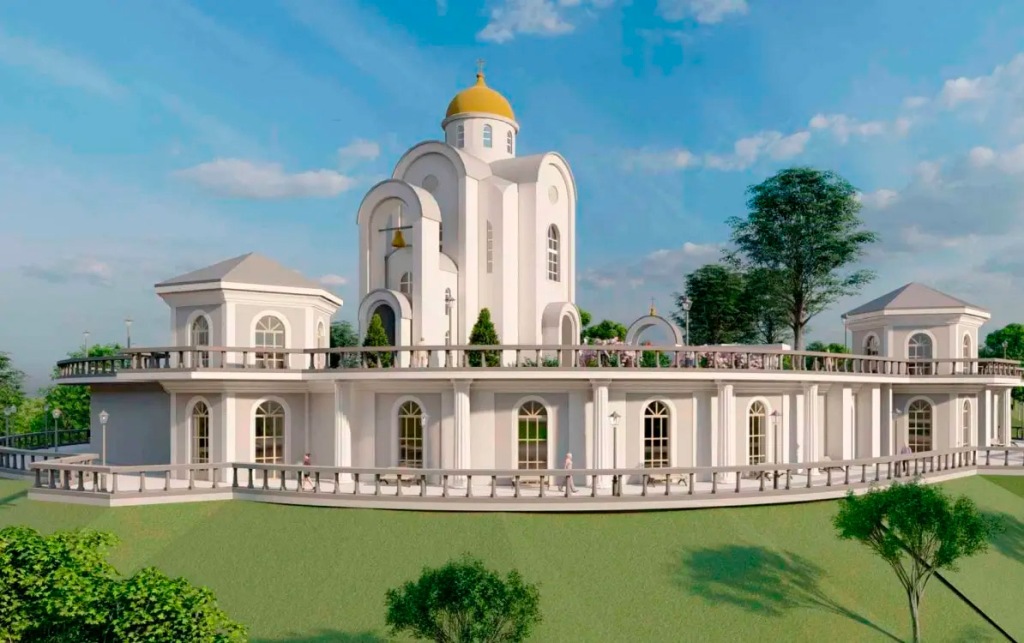
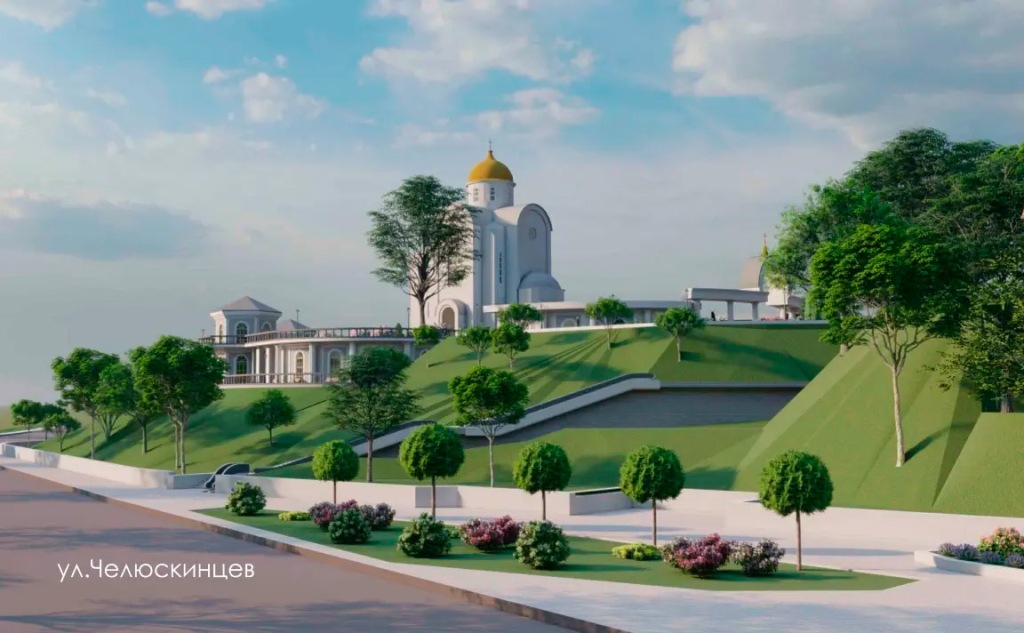
A new museum complex is to be constructed in Mogliev, situated in eastern Belarus, about 76 kilometres (47 miles) from the Russian border. The complex will be built on a hill in Gorky Park, next to the Church of the Holy Royal Passion-Bearers – the family of the last Russian Emperor Nicholas II, who were canonized as saints in 1981 by the Russian Orthodox Church Outside Russia (ROCOR), and in 2000 as passion-bearers by the Moscow Patriachate.

On 8th August 1915, the Headquarters (Stavka)  of the Supreme Commander-in-Chief of the Armed Forces of the Russian Empire was transferred from Baranovichi to Mogilev. From August 1915 to March 1917, Emperor Nicholas II, served as Commander-in-Chief[1].

The Tsar travelled back and forth on the Imperial Train, from Tsarskoye Selo to Mogilev, where he settled in the Governor’s House, situated on Gubernatorskaya Square. He was often accompanied by his son and heir Tsesarevich Alexei Nikolaevich.  

The new museum will be dedicated to the events of the early 20th century: the First World War, the Headquarters of the Supreme Commander-in-Chief of the Russian Army, the stay of of Emperor Nicholas II in Mogliev, the Knights of St. George, and the February Revolution of 1917.

The timing of the project has yet to be announced, however, the following architectural drawings gives us a first glimpse of the museum complex. As you can see, the building complements that of the adjoining Church of the Holy Royal Passion-Bearers:

NOTES:

[1] On 5th September (O.S. 23rd August) 1915, Emperor Nicholas II assumed personal command of the Russian Imperial Army, after dismissing his cousin, Grand Duke Nicholas Nikolaevich (1856-1929) from the post.

© Paul Gilbert. 3 July 2024