Two popular myths about Tsesarevich Alexei Nikolaevich

#

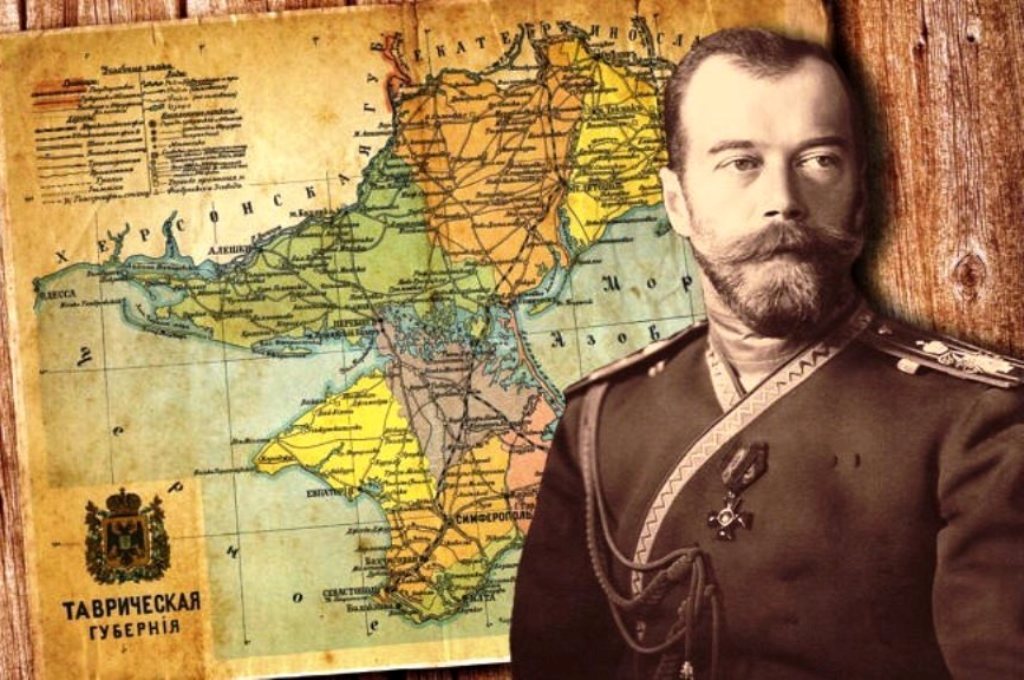
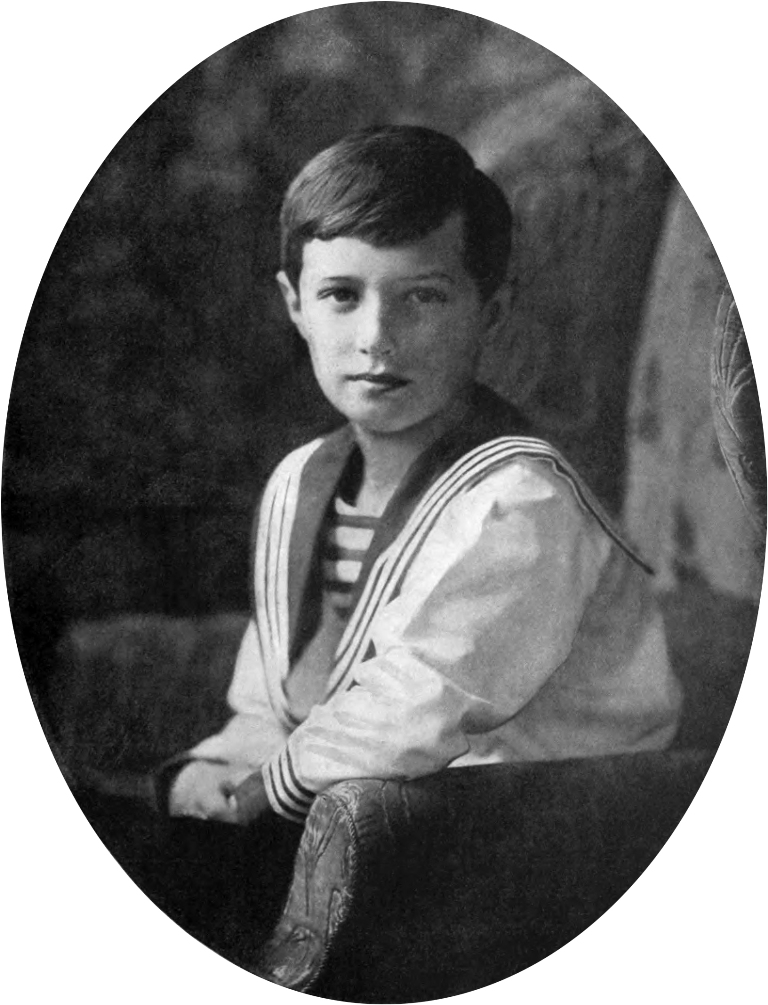
PHOTO: Tsesarevich Alexei Nikolaevich. 1913

In this article, I would like to address two popular held myths about the Tsesarevich Alexei Nikolaevich (1904-1918).

First, it was Robert K. Massie (among others), who have led us to believe that the only son of Emperor Nicholas II and Empress Alexandra Feodorovna, was named after Tsar Alexei Mikhailovich (1629-1676) . . . this is incorrect.

The long-awaited son and heir to the Russian throne was named Alexei, in honour of St. Alexei of Moscow.

Saint Alexius (1296–1378) was Metropolitan of Kiev and all Russia (from 1354). He was canonized by the Russian Orthodox Church in 1448 and is revered as one of the patron saints of Moscow.

Source: ‘Alexei. Russia’s Last Imperial Heir: A Chronicle of Tragedy’ by Margarita Nelipa. Published in 2015

Second, it has generally been accepted that Alexei began bleeding from his navel at the age of six weeks . . . this is also incorrect.

Two noted Romanov historians Margarita Nelipa and Helen Rappaport both tell us otherwise, that Alexei’s bleeding was noted the day following his birth. Their claim is based on two separate, yet reliable sources.

“One day after Alexei’s birth, Grand Duke Peter Nikolaevich (1854-1931) came to congratulate the Sovereign and stayed for lunch. Upon his departure, the Sovereign mentioned the presence of “blood on the diapers”. Returning to his Znamenka estate (in Alexandria), he repeated this detail to his wife [Grand Duchess Militza Nikolaevna (1866-1951)]who telephoned Nikolai II (before visiting Alix later that evening). During their conversation, he said that the doctors had confirmed that the atypical bleeding was indeed due to haemophilia.”

Source: ‘Alexei. Russia’s Last Imperial Heir: A Chronicle of Tragedy’ by Margarita Nelipa. Published in 2015

Grand Duke Peter Nikolaevich and his wife Grand Duchess Militza Nikolaevna (1866-1951) had driven over to the Lower Dacha the day Alexei was born . . . as their son Prince Roman Petrovich (1896-1978) later recalled in his memoirs [published in Danish].

“When they returned in the evening to Znamenka, my father remembered that . . . the Tsar had told him . . . That the doctors were concerned about the frequent splatters of blood in his swaddling clothes. . . .”

Grand Duke Peter telephoned the palace, “When the Tsar answered that they had hoped that the bleeding would soon stop, my mother took the receiver and asked if the doctors could explain the cause of the bleeding. When the Tsar could not give her a clear answer, she asked him with the calmest of voices she could manage: ‘I beg you, ask them if there is any sign of haemophilia’ . . . The Tsar fell silent on the phone for a long time and then started to question my mother and ended by quietly repeating the word that had staggered him: haemophilia.”

Source: ‘Four Sisters. The Lost Lives of the Romanov Grand Duchesses’ by Helen Rappaport. Published in 2014.

© Paul Gilbert. 14 August 2024

Update on the next Nicholas II Conference

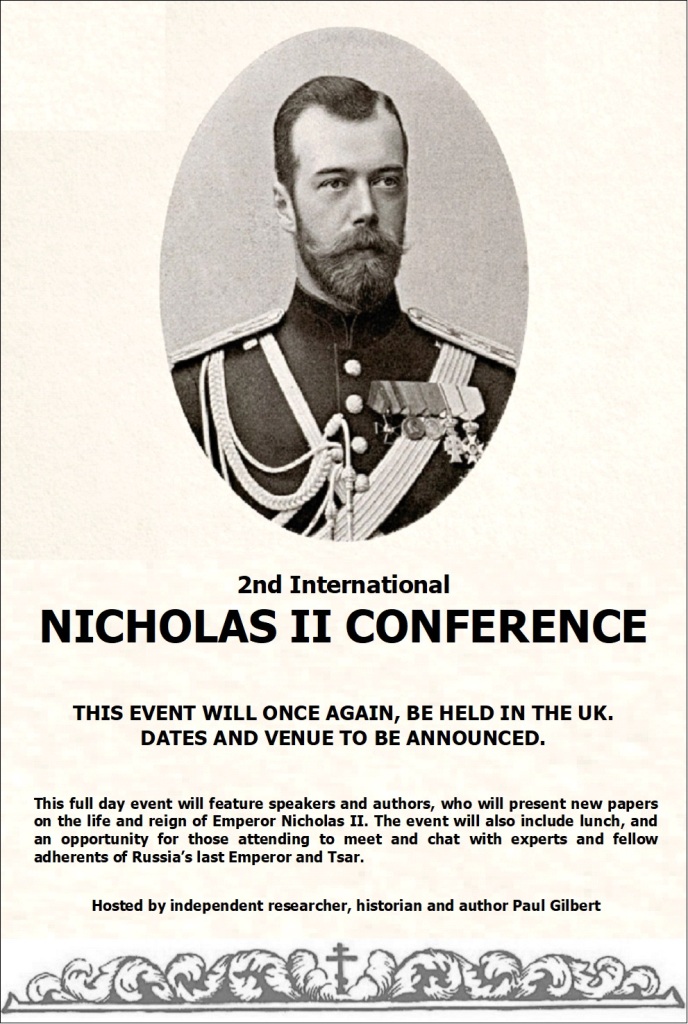
I continue to receive emails and messages from people enquiring about another Nicholas II Conference. First of all, I would like to say how grateful I am for the interest and support shown for this event. In answer to all these queries, I can say that YES!, I am intend planning on organizing and hosting a second conference. I can also confirm that several discussions on the proposed event have already taken place.

Once this dreadful war is over, I have every intention of hosting a 2nd International Nicholas II Conference, which will most likely be held in the UK.

As some of you may recall, my initial plan to host the conference in May 2021 at the Holy Trinity Monastery in Jordanville, NY, was cancelled due to the COVID pandemic.

My second attempt to host the conference in September 2023 at St. John’s Orthodox Church in Colchester, England was also cancelled, due to the outbreak of hostilities between Russia and Ukraine.

So, will I have better luck the third time?

The number of people who have followed my work, since the 1st conference in October 2018, has grown substantially, especially in the UK, therefore, I am anticipating an even larger number of attendees at the next conference.

Stay tuned for further updates on dates, venue, speakers, topics, and much more.

PHOTO: this is the first of two 6-ft. banners, that I have
designed for the 2nd International Nicholas II Conference

***

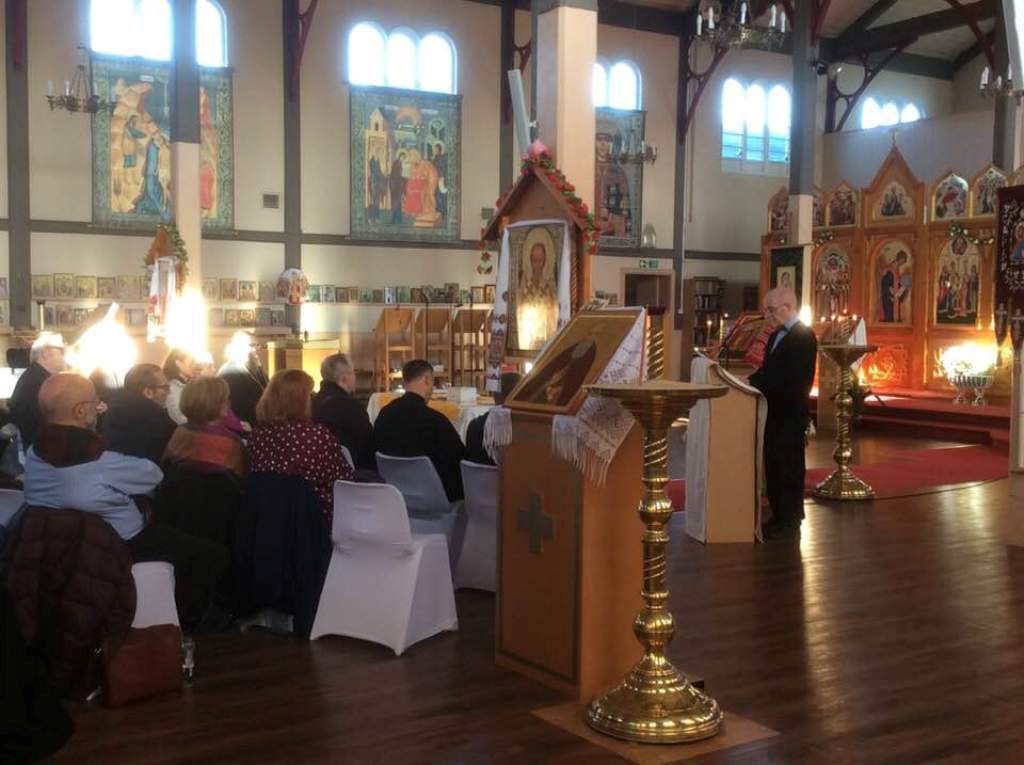
1st International Nicholas II Conference
St. John’s Orthodox Church, Colchcester, England
27th October 2018

PHOTO: researcher and author Paul Gilbert presenting one of his two lectures on Nicholas II, at St. John’s Orthodox Church in Colchester, England. 27th October 2018

The 1st International Nicholas II Conference was timed to the 150th anniversary of the birth of Emperor Nicholas II in 1868, and the 100th anniversary of his death and martyrdom in 1918.

More than 100 people from nearly a dozen countries attended the event, which featured 5 speakers, who presented 7 lectures on the life and reign of Russia’s last Tsar, including Paul Gilbert, Archpriest Andrew Philips (ROCOR), Nikolai Krasnov, authors Frances Welch and Marilyn Swezey presented seven papers on Nicholas II.

In addition, the Grand Duchess Elizabeth Romanov Society UK provided a small exhibit, which generated much interest among those attending. Two stalls were set up during the conference, which offer an interesting selection of new book titles for sale. A light lunch was provided for those attending.

Click HERE to read more about the 1st International Nicholas II Conference in Colchester, England, which includes photos from the event.

© Paul Gilbert. 8 August 2024

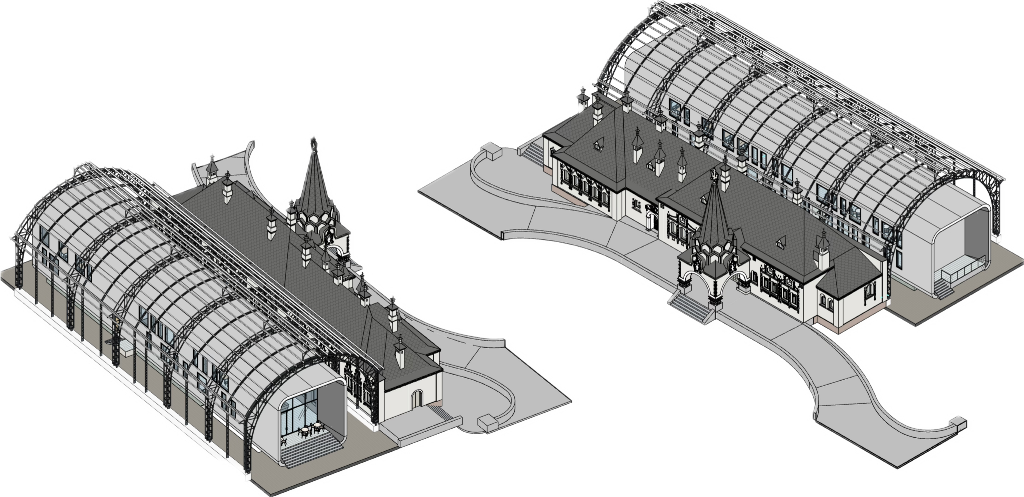
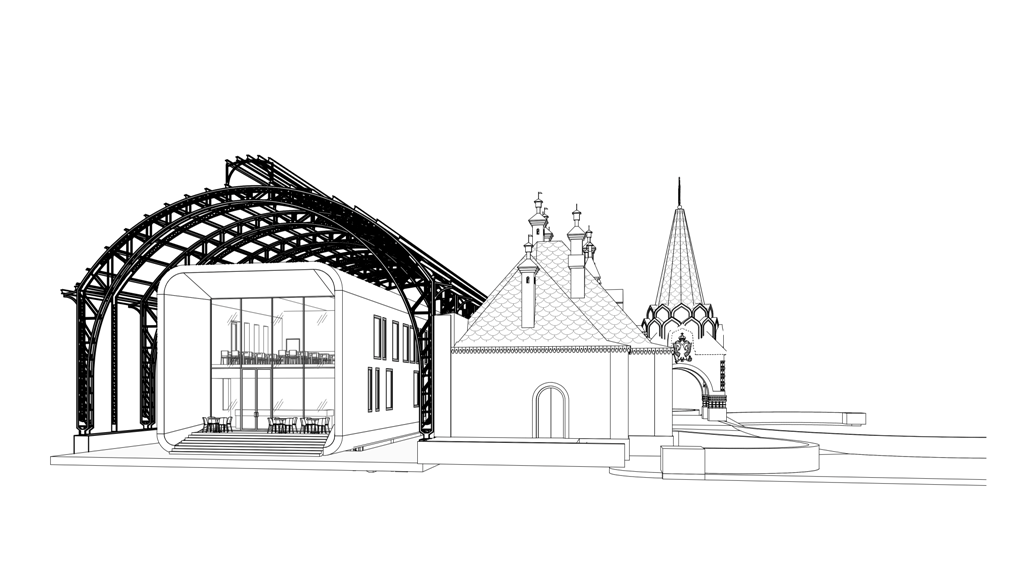
Artist concept of Imperial Railway Pavilion restoration project at Tsarskoye Selo

CLICK on the above image to watch the VIDEO
Duration: 1 minute

The Tsarskoye Selo Railway Station Charitable Foundation has released a stunning video which presents the Foundation’s concept for the restoration of the Imperial Railway Pavilion at Tsarskoye Selo [now part of the town of Pushkin], which began in the summer of 2023.

According to the concept being developed, it is planned to restore the Pavilion building with the restoration of its historical appearance based on the surviving photographs, documents and research by specialists. During the restoration of the facades, it is planned to restore the plaster layer and decorative elements. Inside the Pavilion, it is planned to restore wall and ceiling paintings to their original colours, floor coverings and stucco, and restore lost stoves.

After the completion of the restoration, a museum space with access to the ceremonial rooms will be developed inside the station building. The reconstruction of the Tsar’s Station involves the construction of the lost metal frame of the landing stage (covered railway platform) – as seen in the artist’s drawings (below) and video.

Inside the openwork riveted trusses, it is planned to construct a building in the form of a railway passenger car. Work is also planned to develope the area surrounding the station building.

The former Imperial Railway Pavilion is located a short distance from the Alexander Palace, the Feodorovsky Sovereign Cathedral and the Feodorovsky Gorodok.

Tsarskoye Selo Railway Station Charitable Foundation © 2024

FURTHER READING:

Imperial Railway Pavilion in Tsarskoye Selo is being restored – published on 18th August 2023 – includes 13 colour photos

Update on the restoration of the Imperial Railway Pavilion at Tsarskoye Selo – published on 16th April 2024

The sad state of the Imperial Railway Pavilion in Tsarskoye Selo includes 20 PHOTOS! – originally published on 29th December 2019

Imperial Railway Pavilions During the Reign of Nicholas II – originally published on 23rd October 2019

© Paul Gilbert. 6 August 2024

***

COMING SOON!
Publication date to be announced

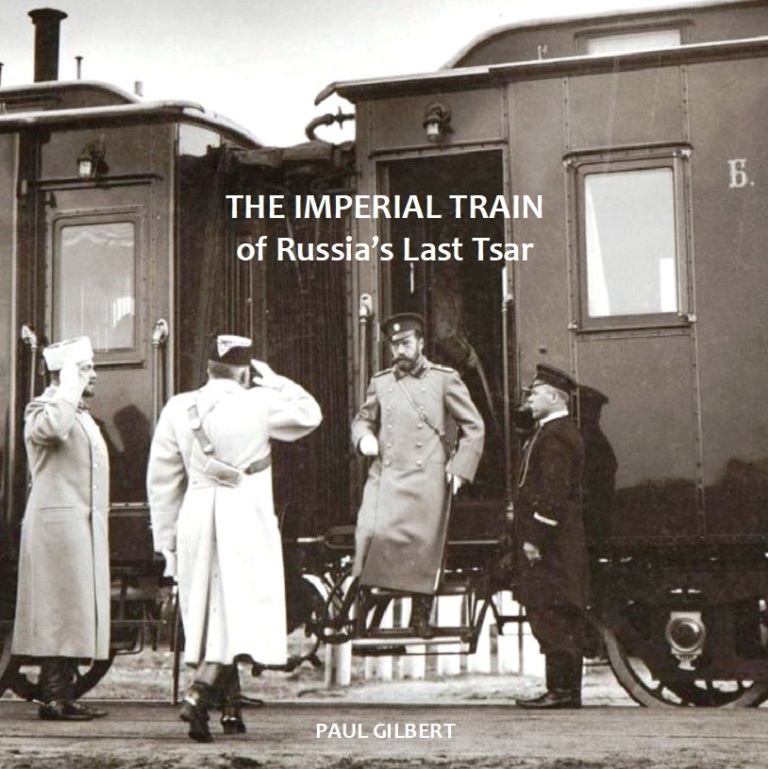
My book on the Imperial Train was scheduled to be published last year, however, I delayed it, and for good reason. Given that the Imperial Railway Station at Tsarskoye Selo was the main terminus for the Imperial Train, it only stood to reason, that I should devote a chapter to this historic building.

My forthcoming book is the first English language title to explore the history of the Tsar’s luxurious mode of transport on rails. It will include detailed descriptions – including vintage photos and floorplans – of the train’s interiors. My book also tells about the fate of the Imperial Train, the Imperial Railway Pavilions constructed solely for the use of the Imperial Train in Tsarskoye Selo, St. Petersburg and Moscow, and much more.

‘The Imperial Train of Emperor Nicholas II’ will be published in paperback edition, 150 pages, and richly illustrated throughout. It will be available on Amazon shortly after the completion of the restoration of the Imperial Railway Pavilion at Tsarskoye Selo has been completed – PG

‘Nicholas II: The Last Orthodox Tsar of Russia’ with Paul Gilbert

CLICK on the above image to watch the VIDEO
Researched, written and narrated by Paul Gilbert
Duration: 20 minutes. Language: English

Emperor Nicholas II reigned for 22+ years – from November 1894 to February 1917. With his murder, the last Orthodox Christian monarch, along with the thousand-year history of thrones and crowns in Russia, ended, ushering in an era of lawlessness, apostasy, and terror, one which would sweep Holy Orthodox Russia into an abyss which would last more than 70 years.

This new video production is based on the research of project colleague and independent researcher Paul Gilbert, who also narrates this video.

In the first 24 hours of it’s release on YouTube, some 3,000 people had watched the video! Since it’s release in July 2020, it has been viewed by more than 134.000 people.

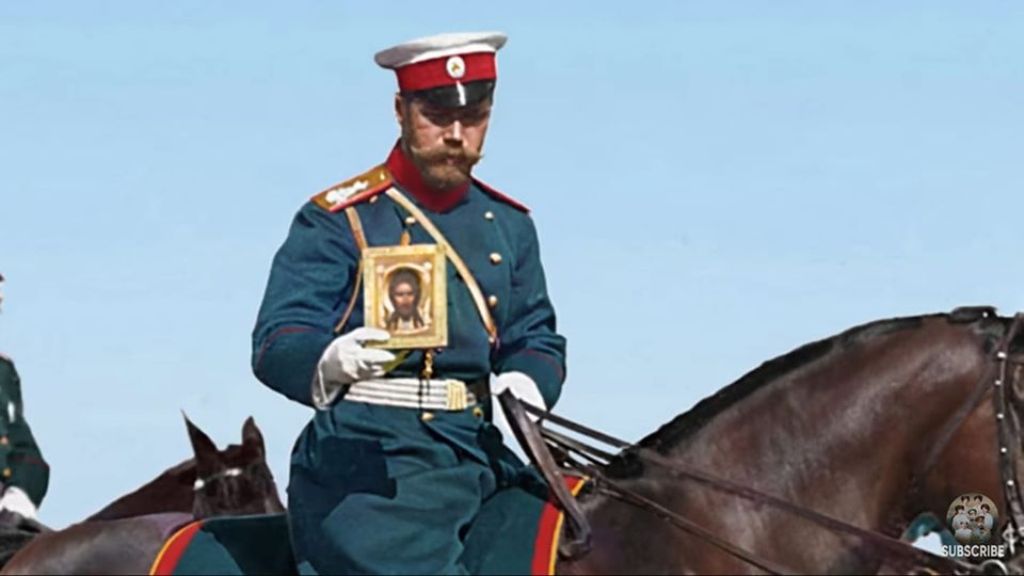
The creators have done a remarkable job of incorporating a wonderful collection of photos – both vintage B&W and colourized by Olga Shirnina (aka KLIMBIM) – historical newsreel film footage and music.

282

Vintage B&W photo of Nicholas II colourized by Olga Shirnina (aka KLIMBIM)

One viewer noted on social media: “Only 20 minutes long, this is the BEST portrayal of the last Tsar’s Orthodox faith I have ever seen. Very well-made, historical and moving.”

The crowning moment of this video is near the end, which shows film footage of the actual canonization ceremony of Emperor Nicholas II and his family, performed on 20th August 2000 by Patriarch Alexei II (1929-2008) in the Christ the Saviour Cathedral in Moscow. You can hear His Holiness calling out each of the names of the Imperial Family. The footage is extremely moving to watch.

This 20-minute video is presented in the framework of the production of the book The Romanov Royal Martyrs: What Silence Could Not Conceal published by Mesa Potamos Publications in 2019.

126b

The Romanov Royal Martyrs is an impressive 512-page book, featuring nearly 200 black & white photographs, and a 56-page photo insert of more than 80 high-quality images, colourized by the acclaimed Russian artist Olga Shirnina (Klimbim), and appearing here in print for the first time.

Click HERE to read my review Romanov Book of the Year: The Romanov Royal Martyrs

Click HERE to explore the book. Click HERE to order the book

***

I am truly honoured to be a research colleague of this important publishing project. I am most grateful to Father Prodromos Nikolaou and the Holy Monastery of St. John the Forerunner of Mesa Potamos in Cyprus for giving me the opportunity to be a part of this new video which tells the story about Russia’s last Orthodox Christian monarch.

NOTE: my name is now inscribed as a project colleague in the 2nd edition of this book, which also includes several corrections, which I suggested to the publisher after reading the 1st edition – PG

Below, is my second video produced within the framework of the production of the book The Romanov Royal Martyrs: What Silence Could Not Conceal published by Mesa Potamos Publications in 2019. My first video The Conspiracy Against Nicholas II was released in 2018 with more than 32,000 views to date:

CLICK on the above image to watch the VIDEO
Researched, written and narrated by Paul Gilbert
Duration: 7 min. 36 sec. Language: English

© Paul Gilbert / Holy Monastery of St. John the Forerunner of Mesa Potamos. 4 August 2024 (Originally published on 9 July 2020)

Tsesarevich Alexei Nikolaevich Exhibition opens in Livadia Palace

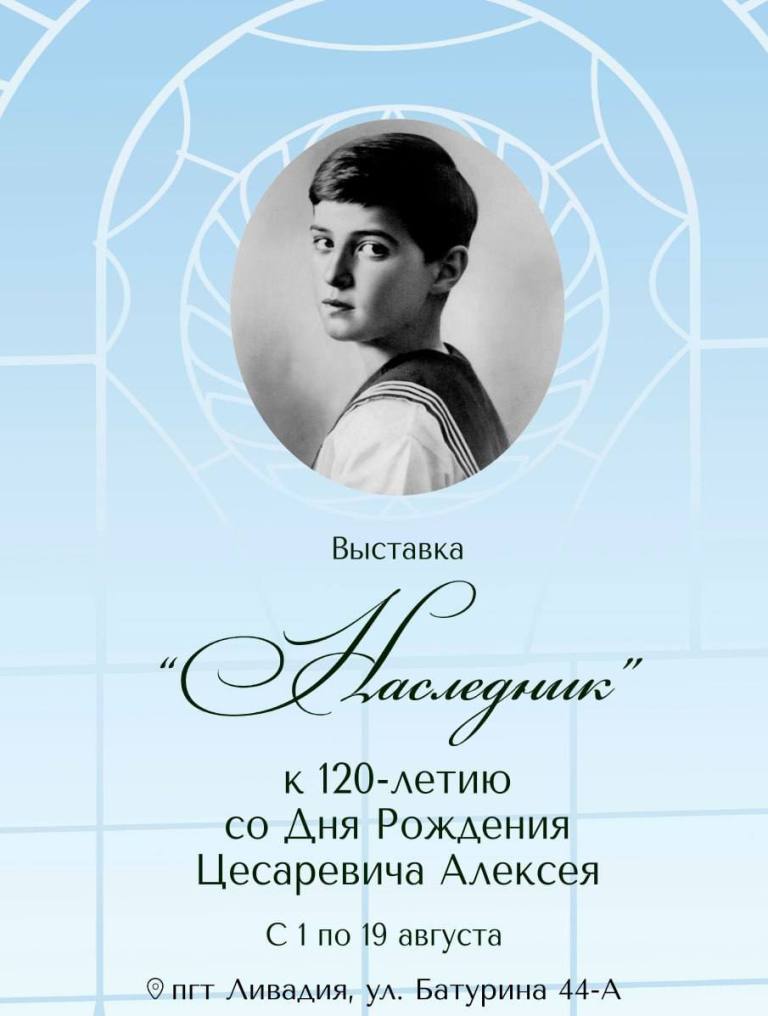
On 1st August 2024, a new exhibition dedicated to Tsesarevich Alexei Nikolaevich (1904-1918) opened at Livadia Palace in Crimea. The exhibition simply titled “Наследник / Heir” is timed to the 120th anniversary of the birth of Tsesarevich Alexei Nikolaevich, who was born on 12th (O.S. 30th July) August 1904.

The grand opening of the exhibition on 1st August was attended by those who received invitions and to members of the press. The exhibit opened to visitors the following day, in the Music Room, located on the second floor of the palace.

Visitors to the exhbition will see authentic items from Tsesarevich Alexei’s rooms, and which are now in the collection of the Livadia State Palace-Museum. Among these items are religious paintings and sketches, including a sketch entitled “Bayan” by the famous Russian artist Viktor Mikhaylovich Vasnetsov (one of Nicholas II’s favourite artists), and “The Tsar’s Family in Livadia” a watercolour by Elena Samokish-Sudkovskaya, as well as pieces of furniture, photographs, etc.

The exhibition explores Alexei’s short life [he was murdered just weeks before his 14th birthday], the long-awaited heir to the Russian throne, and beloved son of Emperor Nicholas II and Empress Alexandra Feodorovna. The exhibition looks at his hobbies, the close ties he shared with his parents, sisters and tutors, the piety of the family, and the happy times Alexei spent in Livadia. In addition, the exhibit looks at the First World War and Alexei’s visits and stays with the Tsar at Mogilev. In the last part of the exhibition, visitors will see rare artifacts associated with the tragic death of the Imperial Family in Ekaterinburg in July 1918.

The exhibition will be complemented by authentic items from the collection of the Yalta Historical and Literary Museum, the archive of the Livadia Church of the Exaltation of the Holy Cross as well as from private collections.

The exhibition “Наследник / Heir” is open to visitors in the Music Room of the Livadia Palace, from 2nd August to 19th August 2024.

CLICK on the IMAGE above to watch the VIDEO. Duration: 2 mins., 47 secs.

NOTE: the video is in Russian only, however, you can watch an English language version by
clicking on the Closed Captioning [CC] button and adjusting Google Translate to English. ENJOY!

© Paul Gilbert. 3 August 2024

Visitors to the museum will see authentic items from the museum’s funds, once located in the rooms of the Tsarevich and other living rooms of the palace. Among them are engravings on religious subjects, the engraving “Bayan” from the painting by Viktor Vasnetsov, Elena Samokish-Sudkovskaya’s watercolor “The Royal Family in Livadia”, pieces of furniture, etc.

The exhibition will show the short life of the heir to the Russian throne, the most long-awaited child in the family of the last emperor – his hobbies, close ties with loved ones, the spiritual world of the family, happy times spent in Livadia. One of the topics will be the difficult period of the First World War and staying with the Tsar at headquarters. Also, visitors to the museum will see the rarest artifacts associated with the tragic death of the royal family in Yekaterinburg in 1918.

The exhibition will be complemented by authentic items from the collection of the Yalta Historical and Literary Museum, the archive of the Livadia Church of the Exaltation of the Holy Cross and private collections.

The opening of the exhibition “The Heir” will take place on August 1 at 12:00 in the Music Salon of the Livadia Palace. Admission by invitation.

The exhibition will be available to visitors from August 2 to August 19, 2024.

Is it true that Nicholas II wanted to move the Russian capital to Crimea?

Emperor Nicholas II was all very fond of his residence in Livadia, a magnificent white limestone palace perched on a ledge overlooking the Black Sea on the southern coast of Crimea.

The old Large wooden palace[1] was demolished to make way for the new Imperial Residence. Construction on the new palace began on 21st January 1910, and after only 17 months, was inaugurated on 11th September 1911. The Tsar spent about 4 million gold rubles – from his own funds – to finance it’s construction. The palace had 116 rooms, with interiors furnished in different styles, and surrounded by beautifully landscaped gardens.

The Imperial Family stayed in the new Livadia Palace in the autumn of 1911 and 1913 and in the spring of 1912 and 1914, their visits lasting months at a time.

But, is it true that Nicholas II wanted to move the capital of the Russian Empire to Yalta?

PHOTO: Northern facade of the Livadia Palace
Watercolour by Nikolay Petrovich Krasnov (1864-1939)

A diplomat, a Russian general, Alexander Mossolov[2], wrote in his diary, noting a conversation he had had with the Emperor, who told him about his idea of ​​transferring the capital from rainy St. Petersburg to sunny Crimea.

According to Mossolov, while returning from Uchan-Su[3] along a path high above the highway with a beautiful view of Yalta, the Emperor noted that he was tied to the southern coast of Crimea and did not want to leave. And when Mossolov inquired whether the Emperor would have liked to transfer the capital to Yalta, Nicholas II replied: “This idea has flashed through my mind more than once.”

True, after a few minutes the Emperor admitted that it was impossible to do this.

“And if it were the capital, I probably would have stopped loving this place.” Some dreams, the diplomat quoted the emperor.

***

Any one who has ever visited Livadia, and stood at the windows on the balconies admiring the magnificent views of both the mountains behind and the Black Sea in front, can appreciate why this place was so loved by the Imperial Family.

Following the Tsar’s abdication in February 1917, the Imperial Family were held under house arrest in the Alexander Palace at Tsarskoye Selo, until the end of July. It was the decision of the Head of the new Provisional Goverment Alexander Kerensky who decided to send the Imperial Family into exile. Nicholas hoped that they would be allowed to settle in Livadia, where they would be far removed from the capital, however, Kerensky had other plans – he sent them to Tobolsk in Siberia.

Sadly, the Imperial Family’s “peace” would have been short lived. During the First World War, Crimea was occupied by German forces. On 30th April 1918, German troops entered Livadia, and immediately began to plunder the palace, many of its artefacts lost forever. The Imperial Family would have been forced to flee or be captured by the enemy.

NOTES:

[1] The Large or Grand Imperial Palace was constructed between 1862-66 by the famous Russian architect Ippolit Antonovich Monighetti (1819-1878) for Emperor Alexaander II, his wife Empress Maria Alexandrovna and their children. Emperor Nicholas II and his family resided in the nearby Small or Maly Palace (where Nicholas’s father Emperor Alexander III died on 2nd November (O.S. 20th October) 1894). from 1894 until 1911. The

[2] Lieutenant-General Alexander Alexandrovich Mossolov (1854-1939) served as Head of the Office of the Ministry of the Imperial Court. He was one of the few people of who remained faithful to Nicholas II. Mossolov is the author of ‘At the Court of the Last Tsar.’ The English language edition was published in 1935, the content of which is somewhat different from the Russian version.

[3] Uchan-Su is the highest (98 metres /322 ft) waterfall in Crimea, situated 7 km from Yalta, on the southern slopes of the Crimean Mountains.

© Paul Gilbert. 3 August 2024

Obituary: Prince Michael of Greece (1939-2024)

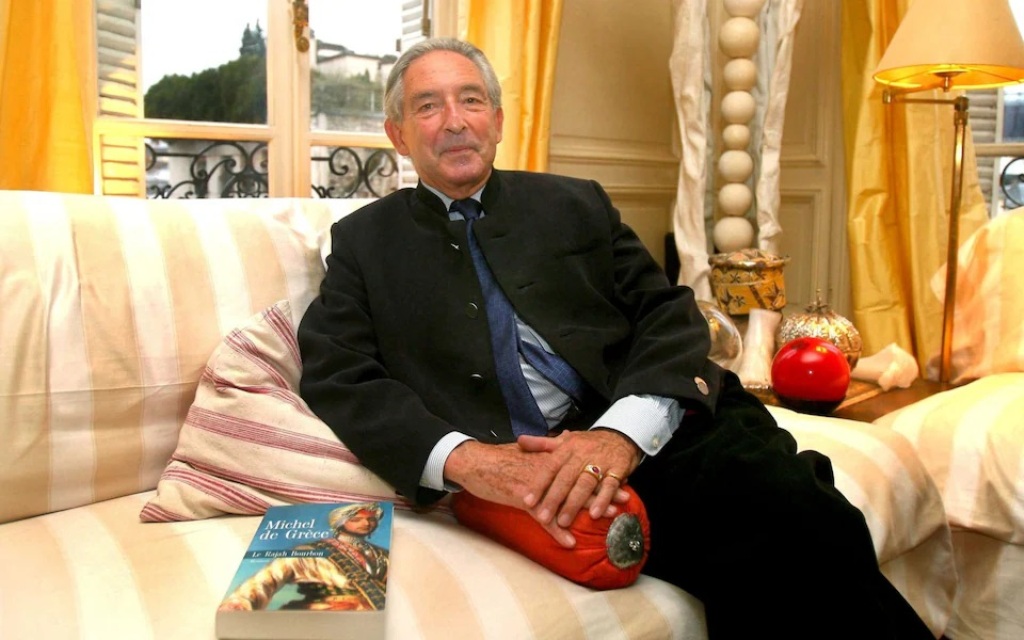
PHOTO: Prince Michael of Greece and Denmark (1939-2024)

On 28th July 2024, Prince Michael of Greece and Denmark died in Athens, Greece, at the age of 85. He was the last surviving grandchild of King George I of Greece (1845-1913) with a lineage to the House of Bourbon through his mother’s side of the family and the last surviving great-grandchild of King Christian IX of Denmark (1818-1906). In addition, he was a first cousin of numerous royals, including King Charles III of Great Britain.

Prince Michael was born on 7th January 1939, in Rome to Prince Christopher of Greece and Denmark (1888-1940) and his second wife, Princess Françoise d’Orléans (1902-1953). His godparents were his two first cousins Queen Helen, Queen Mother of Romania (1896-1982) and King George II of Greece (1890-1947).

Sadly, he had a very traumatic childhood, his father died a year after his birth and his mother died in 1953. Before she passed away, Francoise d’Oreleans settled her son in Spanish Morocco, alongside her brother, the Orleanist claimant to the French throne, Henri of Orléans, (1908-1999) and his wife Princess Isabelle Murat and their family of 11 children. Prince Michael would live with his uncle Henri after the death of his mother, returning to Paris once the royal banishment laws had been overturned, and moving into the Manoir du Cœur Volant estate near Versailles.

Spending his young adulthood in Paris, he studied political science and then re-patriated to Greece for military duty, serving a term in the Hellenic Coast Guard, discharged with the rank of Sub-lieutenant.

Prince Michael inherited from his mother a half-interest in the domain of the Nouvion-en-Thiérache, once the seat of the Dukes of Guise, from whom the Bourbon-Orléans inherited the vast property, which included a grand château and a petit château, in Aisne. The Comte de Paris owned the other half of the Nouvion. He and Michael sold the grand château in 1980, while the petit château was sold in 1986.

Prince Michael grew up to become a  a renowned writer and historian under the pseudonym Michel De Grece. He penned several biographies about members of ruling dynasties, those about contemporaries often including accounts and anecdotes attributed to his royal relatives. 

He also authored novels about historical royalty, distinguished for meticulous detail. He was also the author of several richly illustrated pictorials, including The royal house of Greece (1988), Imperial Palaces of Russia (1992), Nicholas and Alexandra: The Family Albums (1992), and Jewels of the Tsars (2006).

His book on Emperor Nicholas II and Empress Alexandra Feodorovna, was one of the first large format pictorials to be published on the last Tsar and his family. Featuring nearly 300 black and white photos from the State Archives of the Ryssuab Federaion (GARF), it remains a favourite among Romanophiles, and is highly sought after by collectors.

Michael married Marina Karella (born 17 July 1940) on 7th February 1965 in Athens. The marriage was held at the Royal Palace in Athens. This was a non-dynastic marriage, which obtained the legally required authorisation of King Constantine II (1940-2023) only after Michael renounced all rights of succession to the Greek throne for himself and his descendants. The couple had two daughters: Alexandra (b. 1968) and Olga (b. 1971).

Prince Michael died at a hospital in Athens, on 28th July 2024, at the age of 85. His funeral is to be held on 1st August 2024 at the Church of Saint Theodores in the First Cemetery of Athens, followed by burial in the Tatoi Royal Cemetery.

MEMORY ETERNAL

© Paul Gilbert. 31 July 2024

Fabergé items added to the funds of the Nicholas II museum in Kotelniki

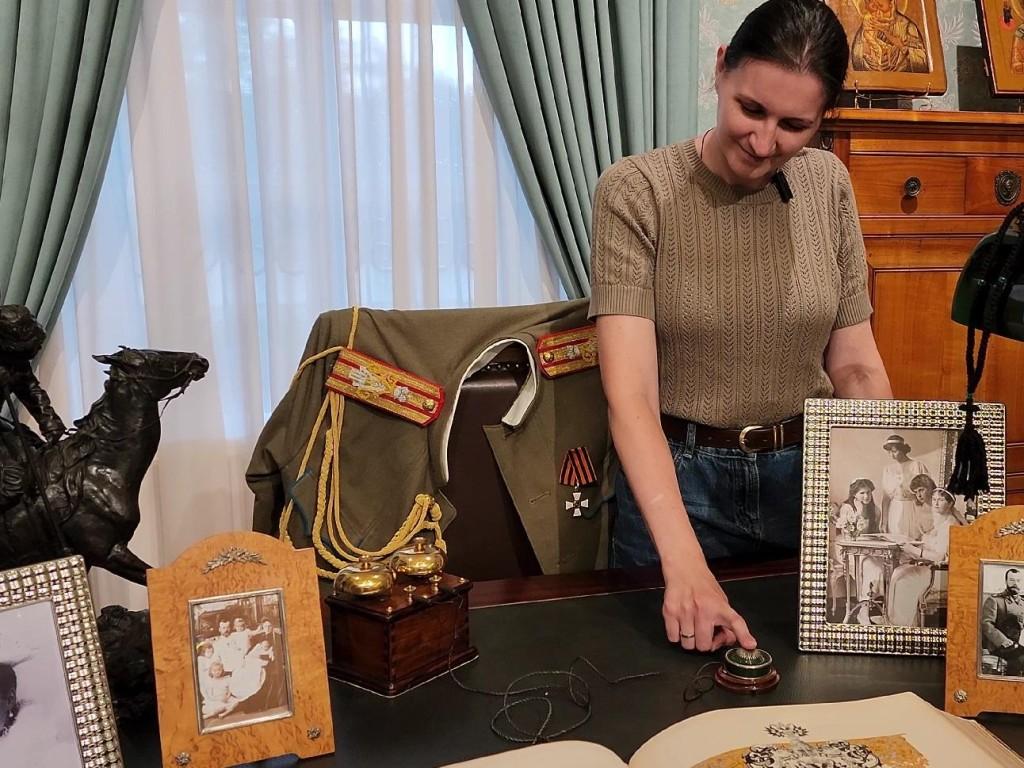
Lyudmila Grosarchuk, curator of the museum Museum in Memory of
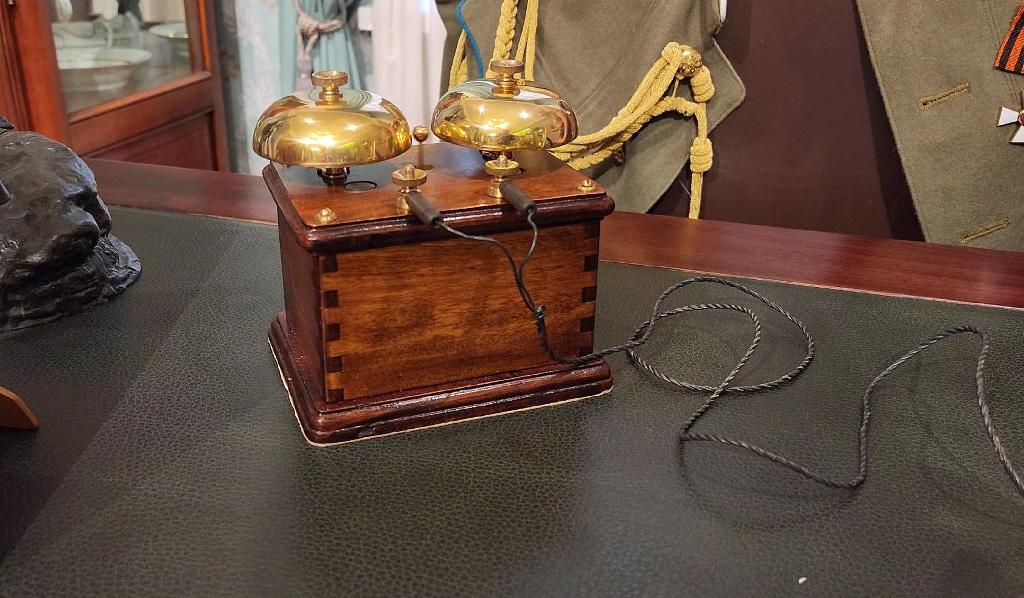
Emperor Nicholas II and his Family presents a valet bell by Carl Fabergé.
Photo © Olga Feldfebeleva

On 29th July 2024, the Museum in Memory of Emperor Nicholas II and his Family in Kotelniki (near Moscow), held a press conference, in which they presented a number of beautiful Fabergé items, which the museum recently added to their collection.

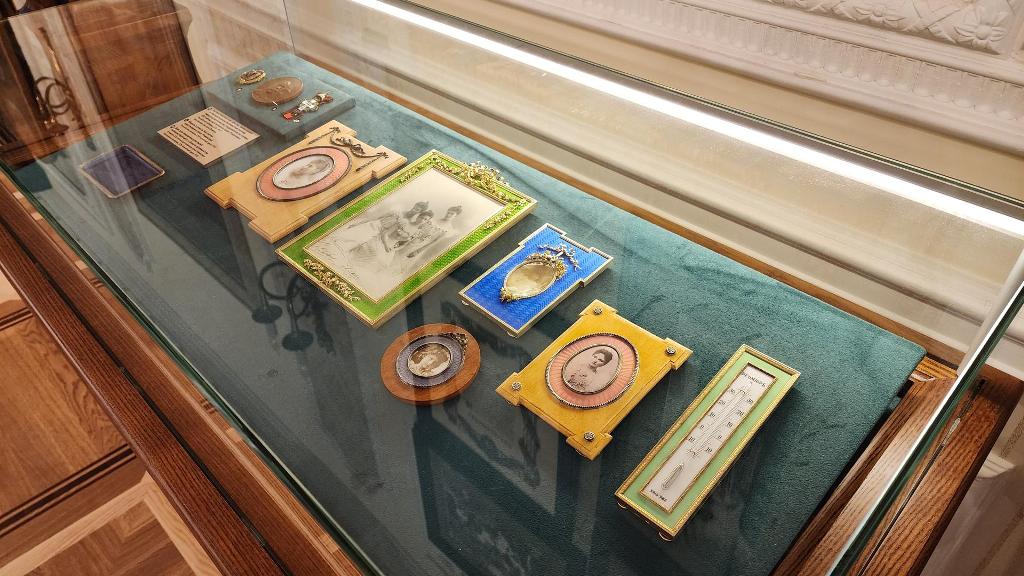
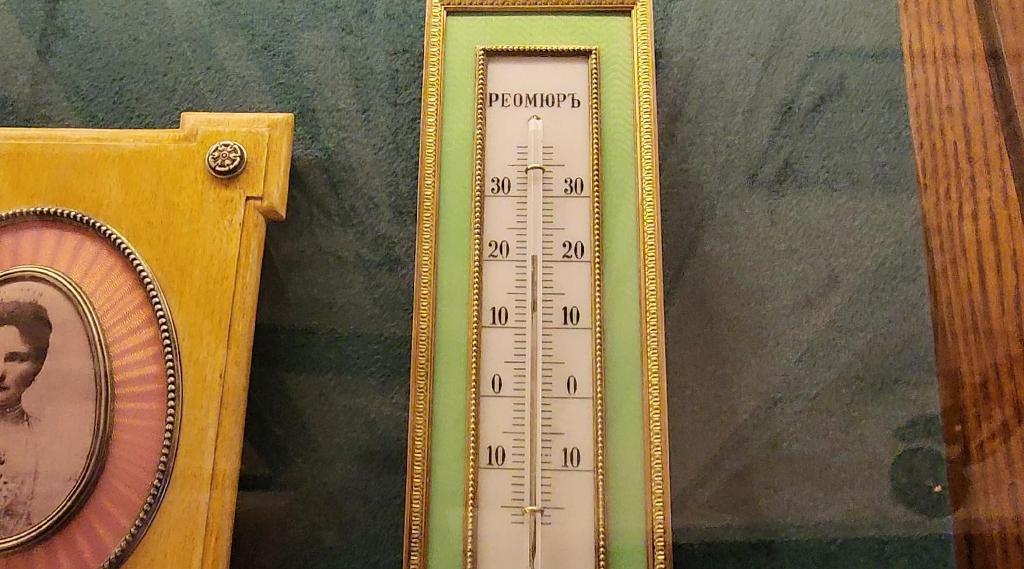
“Each item has its own unique story,” said Lyudmila Grosarchuk, curator of the museum. “While the famous jeweler Carl Fabergé is well known for his magnificent Imperial Easter Egg creations, he is less known for many household items for the Imperial Family. For example, a thermometer and a valet bell from his factory are now part of our collection. New additions also include several Fabergé photo frames. By the way, the Fabergé company still exists, it is located in France. And in our collection there are copies of his famous Imperial Easter Eggs[1], made at a modern factory in France,” she added.

Fabergé frames and thermometer.
Photo © Olga Feldfebeleva

Detail of a thermometer by Fabergé.
Photo © Olga Feldfebeleva

Empress Alexandra Feodorovna loved modern things that made life easier for her servants in the Imperial residences: the Winter Palace in St. Petersburg, the Alexander Palace in Tsarskoye Selo, the Lower Dacha in Peterhof, and Livadia Palace in Crimea. One of these items turned out to be a room thermometer.

“Thermometers were made by the famous jeweler and were located in almost every room of the Imperial Family’s private apartments in the Winter Palace. Another interesting new item in our collection is an electric valet bell, which was a rarity at the beginning of the 20th century, it served to call a personal attendant to the Tsar or Tsarina. The bell came to our museum in bad condition, however, it has now been restore it to working order,” said Lyudmila Grosarchuk.

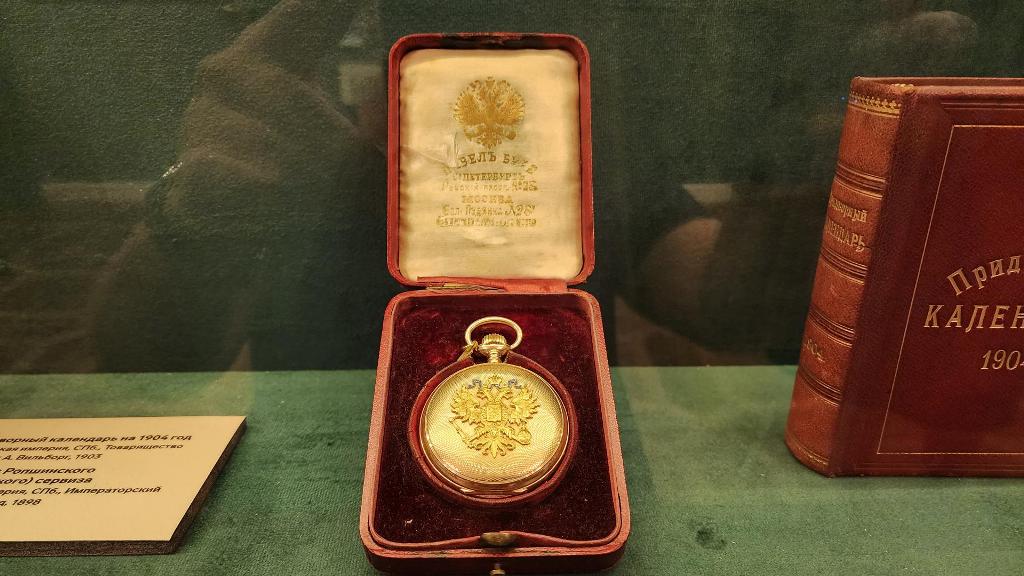
Pocket gold watch by Fabergé.
Photo © Olga Feldfebeleva

The receiving end of the valet bell by Fabergé.
Photo © Olga Feldfebeleva

The museum also has two truly unique exhibits. The first is an altar cross with an icon of the Most Holy Theotokos of Akhtyrka, painted by Grand Duchess Olga Alexandrovna, sister of Nicholas II. The second exhibit is directly related to the last Emperor. This is a gold watch (see photo above) that Nicholas II presented to the best handicraftsman at the All-Russian Industrial and Art Exhibition of 1896, held in Nizhny Novgorod. The Emperor was so impressed by the skill of the handicraftsman, so he awarded him with a personalized gold watch.

“The museum is actively looking for more rarities to add to their funds, as well as the scientific study by the museum to establish the authenticity of each object which is acquired for their collection. The museum’s growing collection is the merit of our trustee Viktor Semyonov, who wants to show visitors something interesting, expanding their knowledge of the Imperial Family and opening the pages of our history with new facts,” Lyudmila Grosarchuk concluded.

NOTES:

[1] The Fabergé Museum in St. Petersburg, currently holds 9 Imperial Easter Eggs, while the Armoury Museum in Moscow has 10 Imperial Easter Eggs in it’s collection.

***

The Museum in Memory of Emperor Nicholas II and His Family

CLICK on the VIDEO above for a tour of the Museum in Memory of Emperor Nicholas II and his Family. Note the wonderful framed portraits of the Tsar hanging in the rooms of the museum. The VIDEO is in Russian only, however, do not allow that to stop you from enjoying what this unique museum has to offer visitors. Duration: 1 minute, 47 seconds.

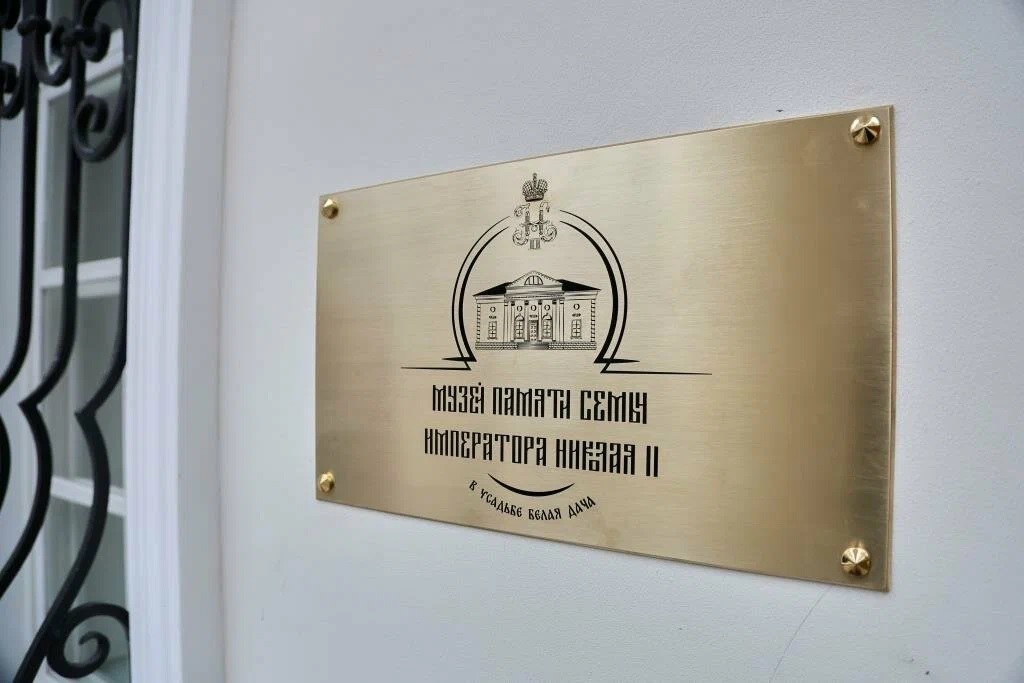
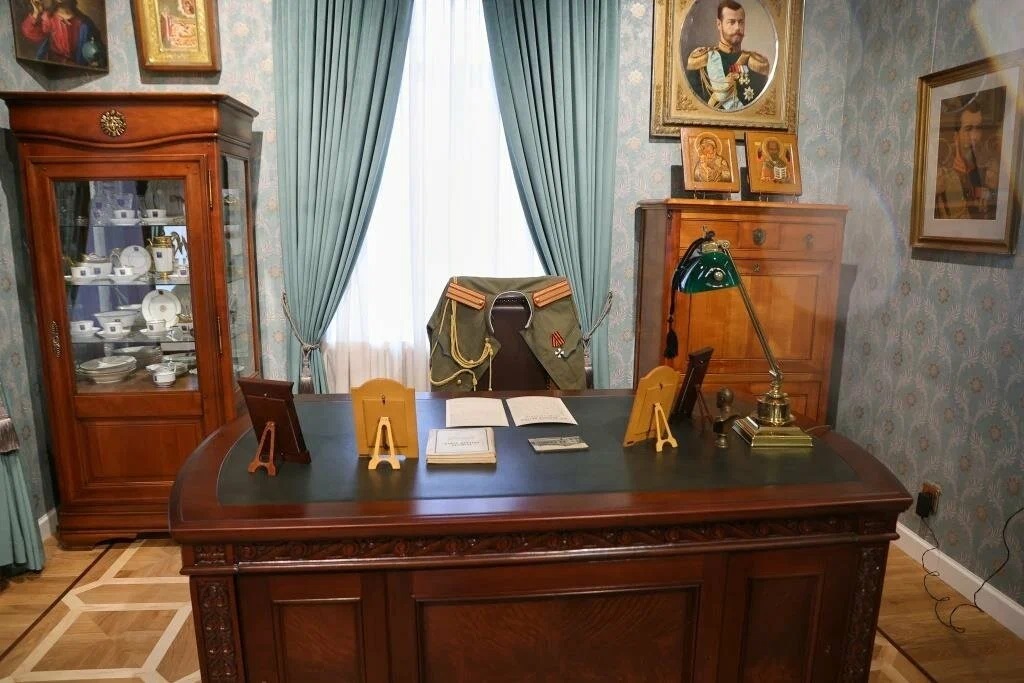
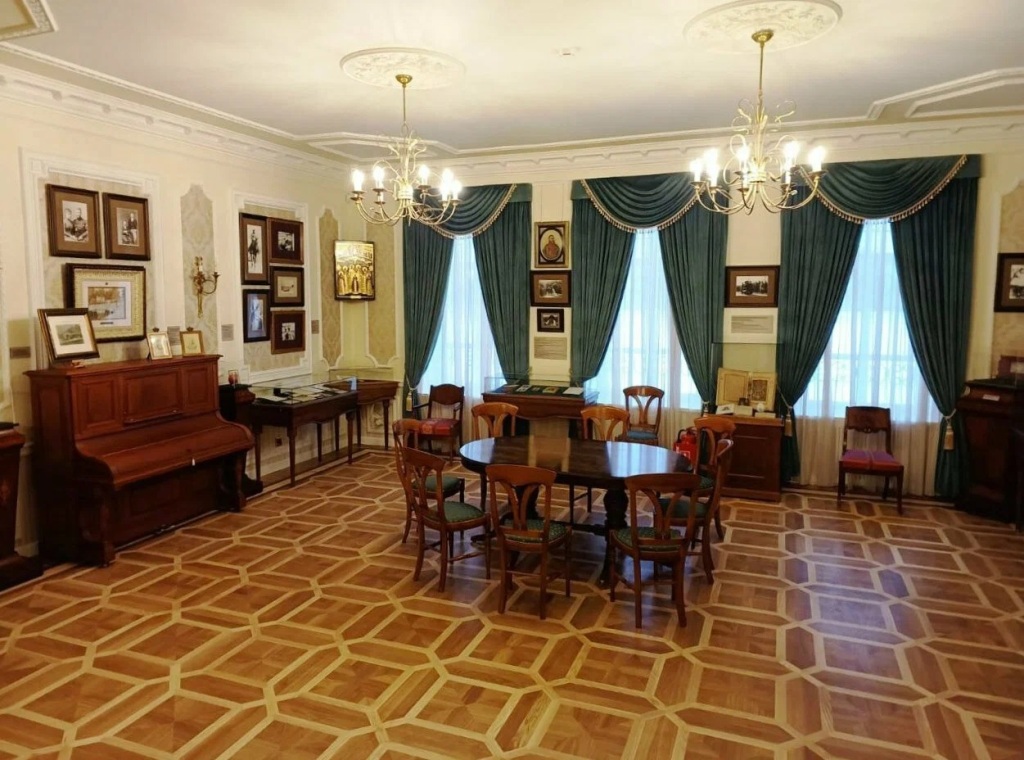
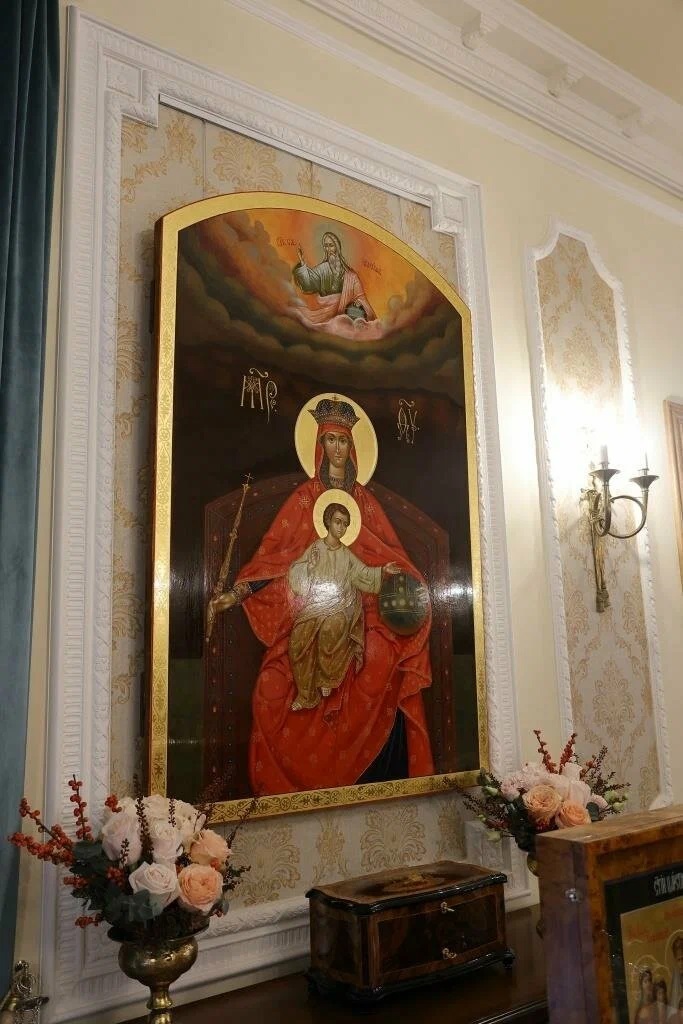
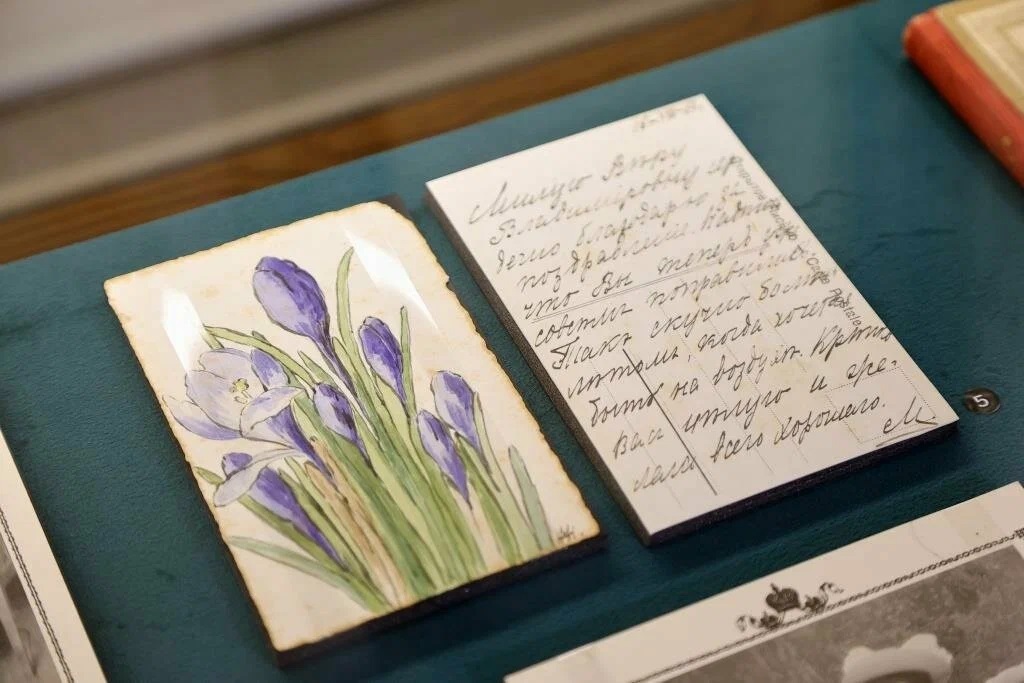
The little-known Museum in Memory of Emperor Nicholas II and His Family was established in November 2023, in the Belaya (White) Dacha Estate, which is located the former village of Kotelniki, now part of the Moscow region. It is the latest in a several museums dedicated to the last Tsar and his family to be established in recent years in the Russian Federation.

Below, are a selection of photographs which showcase some of the interiors of the museum, although the VIDEO above, shows them in greater detail, as well as the personal items and memorabiliar associated with Emperor Nicholas II and his family:

© Paul Gilbert. 30 July 2024

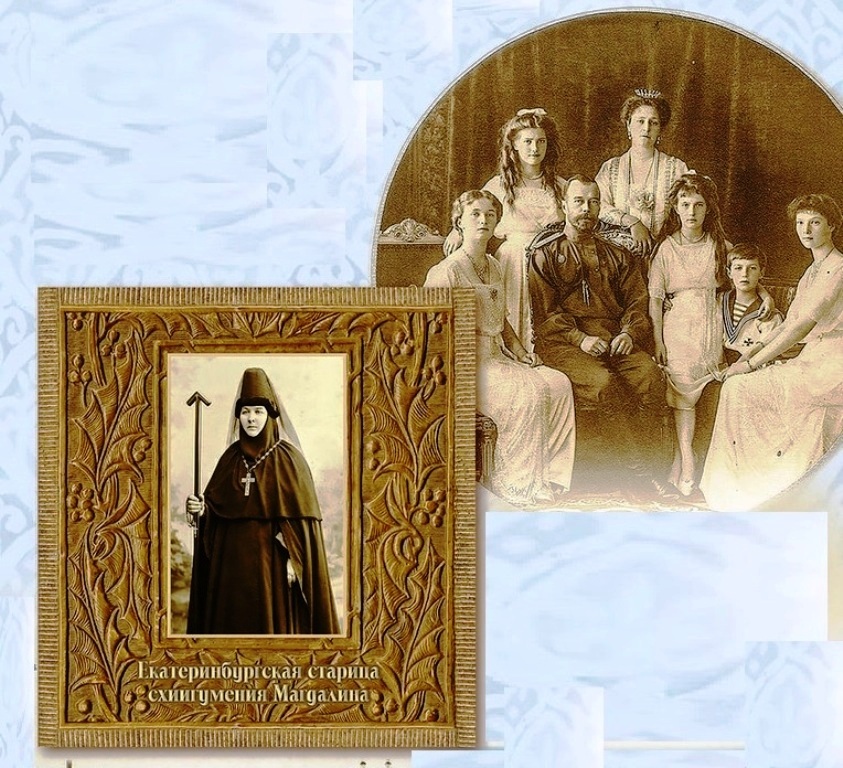
The abbess who came to the aid of the Imperial Family in Ekaterinbburg in 1918

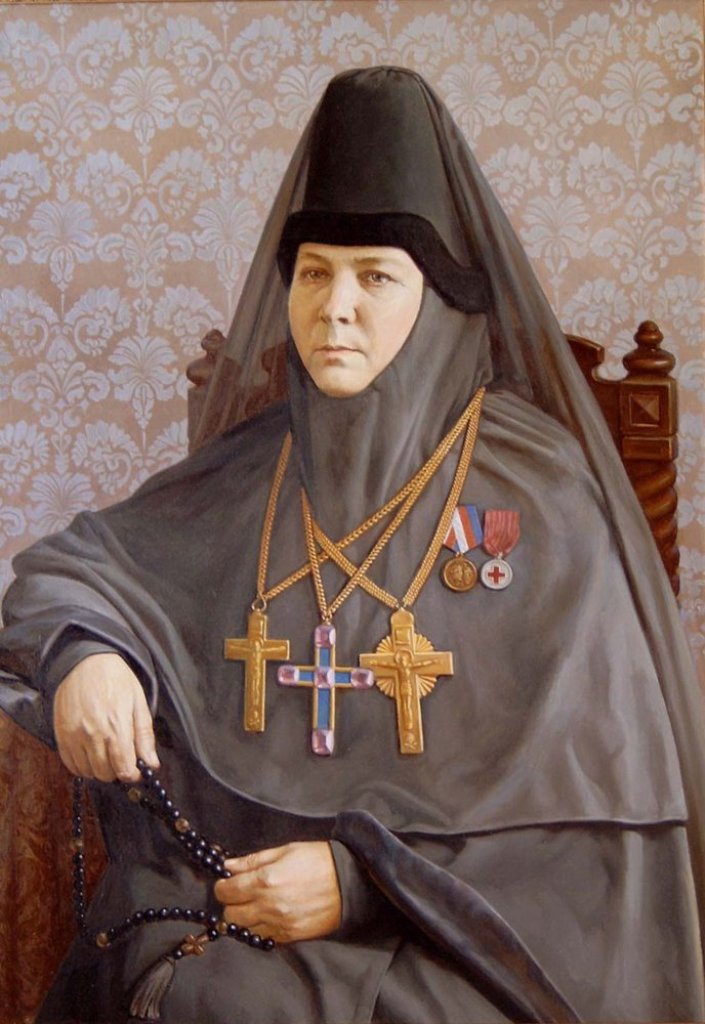
Today – 29th July 2024 – marks the 90th anniversary of the death of Schema Magdalena (Dosmanova), the last abbess of the Novo-Tikhvinsky Convent[1] in Ekaterinburg before the October 1917 Revolution.

An early calling

Pelagia Stefanovna Dosmanova (future mother Magdalena) was born in 1847 into a merchant family in the city of Irbit, Perm province. In 1859, her pious parents brought their 12-year-old daughter to the Novo-Tikhvinsky Monastery[2] in Ekaterinburg.

For her first obedience, the young novice helped in the convent candle factory, then in the rector’s cells. Over the years, she was entrusted with more and more complex and responsible obediences, and Sister Pelagia performed every task with zeal. All the sisters loved her, sensing in her a special spiritual strength, which was combined with a soft, loving attitude towards every person.

In 1893, Pelagia Dosmanova was tonsured and became the nun Magdalena, and just two years later the sisters unanimously elected her abbess “in the conviction that she was of a pious life, of a meek disposition,” as they wrote in the act of election.

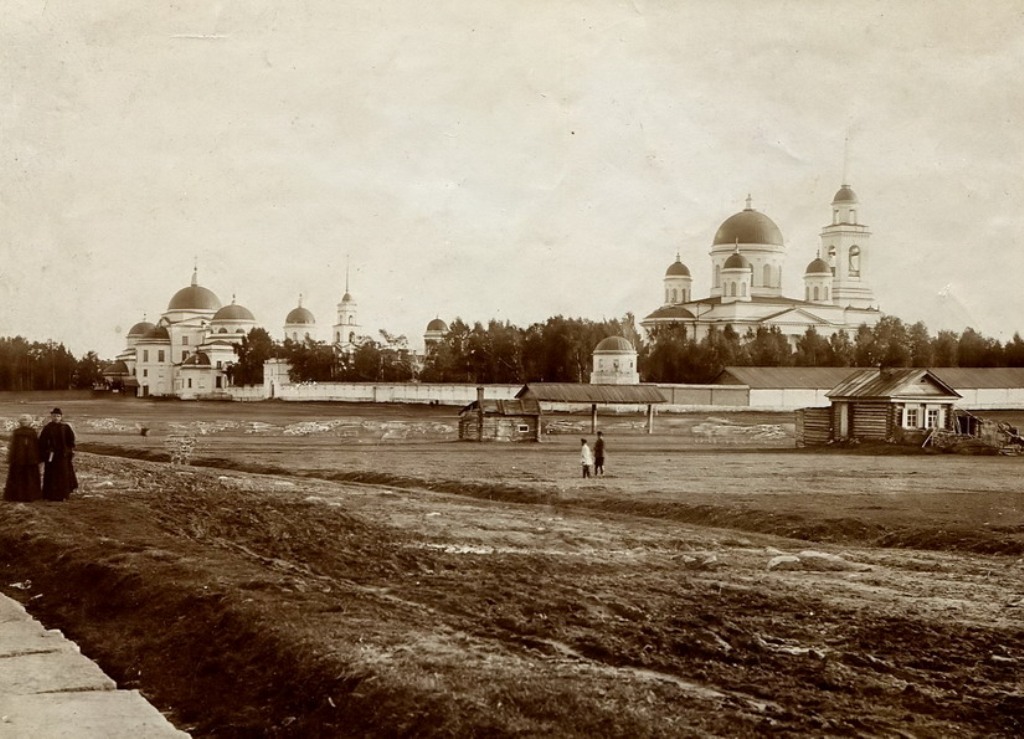
PHOTO: the Novo-Tikhvinsky Convent [Monastery] [2] in Ekaterinburg

Mother Magdalena

Having become abbess, Mother Magdalena worked tirelessly: she decorated the churches, equipped the cells of the sisters, ensuring that the monastery was in perfect order – she wanted the monastery to look like “paradise on earth”.

Matushka Magdalena taught the sisters to pray, and introduced them to reading books on which many generations of monastics were brought up from ancient times. She also took care of the spiritual needs of the faithful who lived near the monastery. Parents often came to visit the monastery, on one occasion a novice took them to the icon-painting workshop, Suddenly, unexpectedly for the parents, all the sisters who were there, as one, stood up and bowed low, with deep reverence. The parents were moved to tears.

Many girls came to the monastery to lead a monastic life under the wise guidance of Mother Magdalena. By 1917, the number of sisters had increased to almost a thousand.

During the First World War, Mother Magdalena, according to the commandment of the Lord, tried to ease the sorrows of her countrymen, the monastery donated money and valuables for the needs of Russia’s soldiers at the front; while an infirmary for wounded soldiers was arranged at the monastery.

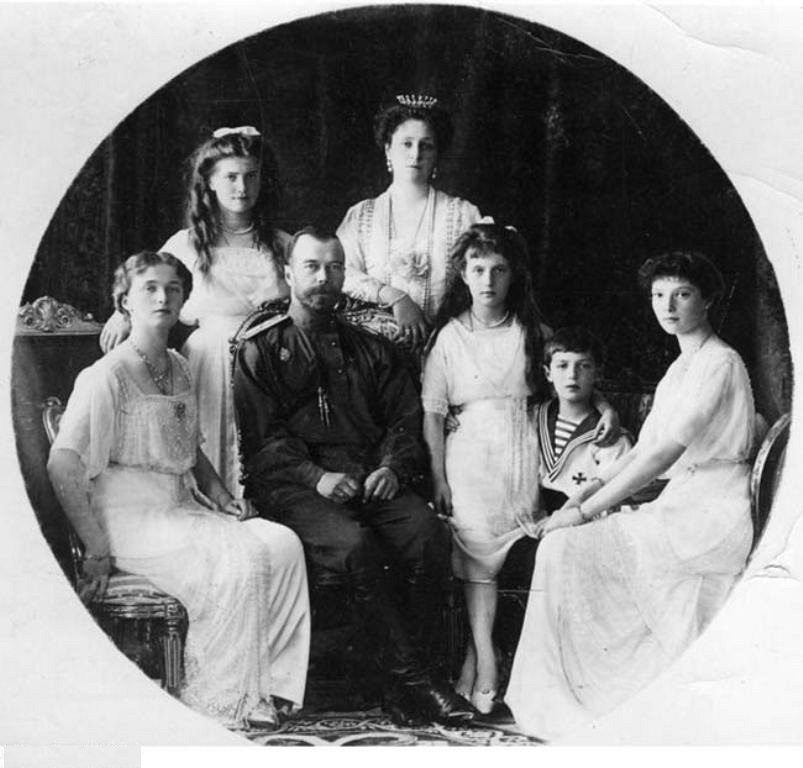
PHOTO: Emperor Nicholas II and his family. 1913.

Comes to the aid of the Imperial Family in the Ipatiev House

In 1918, Ekaterinburg became a place of exile for many people who were deemed objectionable to the new Bolshevik order, which included bishops, priests and members of the Imperial Family. Mother Magdalena’s heart ached for every innocent prisoner.

From April to July, when Nicholas II and his family were kept under arrest in the Ipatiev House, the nuns of the Novo-Tikhvinsky Convent were praying for them, asking God to relieve their sufferings, and to give them the strength to bear everything with Christian humility.

The sisters’ help came not only through prayer but also through deeds. Often disregarding their own safety, they supported the Tsar and his family, by bringing various foods to them through the guards.

Matushka Magdalena gave her blessing to the sisters to carry food to the Ipatiev House for the imprisoned Emperor and his family: milk for Tsesarevich Alexei, cream, eggs, butter, bread, pastries, vegetables, and meat.

On 18th June 1918, a month before their murder, Empress Alexandra Feodorvna acknowledged the kindness shown them by the nuns, and made the following entry in her diary: “The kind nuns are now sending milk and eggs for Alexei and for us, as well as cream.”

The sisters carried food every day until the last day – 16th July – the eve of which the Imperial Family and their four faithful retainers were all shot to death in the basement of the Ipatiev House.

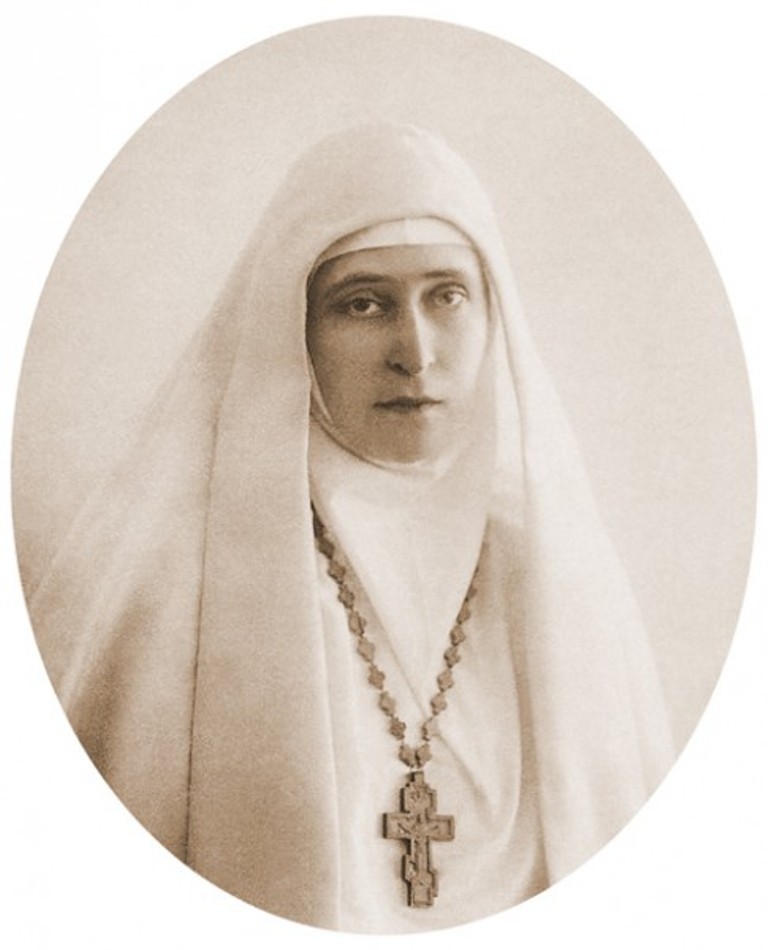
PHOTO: Grand Duchess Elizabeth Feodorovna

In May 1918, when the Grand Duchess Elizabeth Feodorovna arrived in Ekaterinburg, she was placed under house arrest, along with other members of the Romanov family], and two faithful retainers. They were all held in the Atamanovskie Rooms Hotel [the building has survived to the present day].

The sisters petitioned the Bolsheviks for the Grand Duchess to be allowed to live in the monastery. However, their request was rejected. Two months later, they were sent to the city of Alapaevsk, where they too were murdered.

The sisters also came to the aid of Bishop Germogen (Dolganev) of Tobolsk, also imprisoned in a local jail. The nuns delivered dinner to Vladyka from the monastery, Mother Magdalena visited him, and one day, at her request, Vladyka was allowed to serve a mass in prison, at which many prisoners took communion.

Matushka Magdalena and the sisters of the the Novo-Tikhvinsky Convent performed a confessional feat, by openly helping the Imperial Family and other prisoners. Indeed, at that time people were afraid not only to help political prisoners, but even simply to express sympathy for them, knowing that their punishment could lead to imprisonment or execution.

PHOTO: Bolsheviks seize and confiscate valuables
from the Novo-Tikhvinsky Monastery, 1920s

“Monastery” on the Third Zagorodnaya

Sadly, the Novo-Tikhvinsky Monastery did not escape the fate suffered by most Orthodox churches and monasteries. In 1920, the monastery was closed, all the sisters were evicted. Over the gates of the monastery, the Bolsheviks hung a large banner: “Long live the World Communist Revolution!“. Mother Magdalene and the sisters looked at this slogan with heartache, often coming to pray at the walls of their native monastery. The monastery, which they had been landscaping for years, was now a pitiful sight, ravaged and defaced with communist inscriptions.

Mother Magdalena settled not far from the monastery, in a private house on Tretya Zagorodnaya Street (now Schmidt Street). Eighteen sisters came to live with her, while the others often came to her for prayer, advice and spiritual edification. During this mournful period, the virtues of Mother Magdalena and her spiritual experience acquired over many years were fully manifested. Having lost her pastoral position and her native monastery, she did not lose heart nor faith. Despite the hardships and persecutions under the Bolshevik and later the Soviet regimes, Matushka Magdalena remained true to her Orthodox faith.

In the house on Tretya Zagorodnaya, the sisters lived as they did in the monastery – every night they read the akathist in front of the Tikhvin Icon of the Mother of God; during the day they worked, read the scriptures, and went to church together. Mother Magdalena combined prudent indulgence with moderate severity. She instructed the sisters to begin and end each day with the Jesus Prayer[3].

PORTRAIT: portrait of Schema Magdalena (Dosmanova). Artist unknown

Blessed Old Woman

The monastery had been closed for many years, yet despite this, new sisters still came to Mother Magdalena, who wanted to devote themselves to God.

In the 1920s, the Bolsheviks ordered the closure of churches and monasteries, and the arrest of priests, clergy, nuns and monks. The arrests carried out by the atheistic authorities did not bypass Mother Magdalena, but during interrogations she acted as a fool, which led the Chekists astray. She was arrested 8 times, and imprisoned for three months.

Three days before her death, Mother Magdalena predicted that she would die in three days. During the remaining three days of her life, she received daily communion of the Holy Mysteries of Christ. As Matushka Magdalena lay on her deathbed, many believers came to say goodbye to her. She blessed each of them with the icon of Christ the Redeemer, and the icon of St. Nicholas the Wonderworker.

On 29th (O.S. 16th) July 1934, surrounded by her “children”, Mother Magdalena calmly surrendered her spirit to the Lord. Just before her death, she overshadowed everyone with the Tikhvin Icon and said: “I hand you over to the Mother of God …”.

PHOTO: Mother Magdalena’s final resting place, on the
grounds of the Novo-Tikhvinsky Convent in Ekaterinburg

Mother Magdalena was buried at the Ivanovo Cemetery, located in the city center of Ekaterinburg. A wooden cross was placed on the grave, and on the tablet the spiritual daughters wrote with reverence and love: “Pray to God for us, dear Matushka!”.

On 5th February 2021, Mother Magdalena’s earthly remains were exhumed from her grave in the Ivanovo Cemetery, and reburied in a new resting place at the Novo-Tikhvinsky Convent.

Memory Eternal! Вечная Память!

NOTES:

[1] The Novo-Tikhvinsy Convent is a community of female monastics. It was founded in the late 18th century, growing out of an alms-house at the cemetery church in Ekaterinburg. It is the home of the icon of the Tikhvin Mother of God. During the Tsarist period, the convent grew to consist of six churches, numerous cells, a hospital, and an almshouse. The dominant building on the monastery grounds is the cathedral dedicated to St. Alexander Nevsky.

[2] In English usage since about the 19th century the term “convent” almost invariably refers to a community of women, while “monastery” refers to a community of men. In historical usage they are often interchangeable.

[3] “Lord Jesus Christ, Son of God, have mercy on me.

© Paul Gilbert. 29 July 2024

***

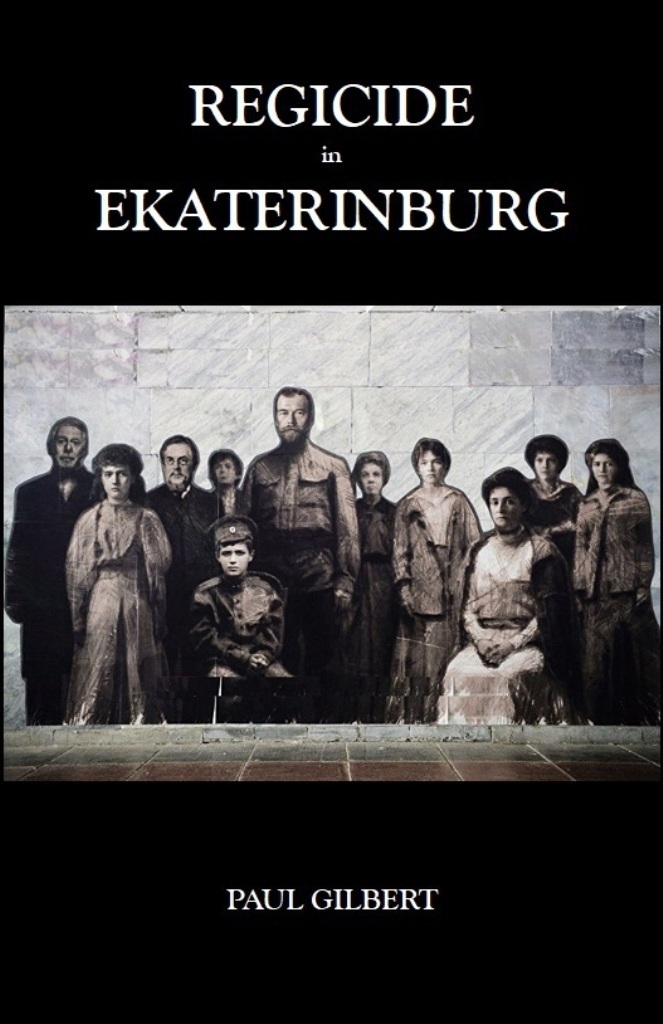
The following NEW title was compiled and edited by independent researchers and Romanov historian Paul Gilbert was published in August 2024. 

This fascinating new study features 14 chapters on this tragic event, which include the memoirs of a British intelligence officer and journalist, and two First-English translations. In addition, 11 chapters were written by Paul Gilbert, based on new documents sourced from Russian archival and media sources over the past decade.

Please refer to the link provided for further details about the content of this new title . . .

CLICK HERE TO READ MORE ABOUT THIS TITLE
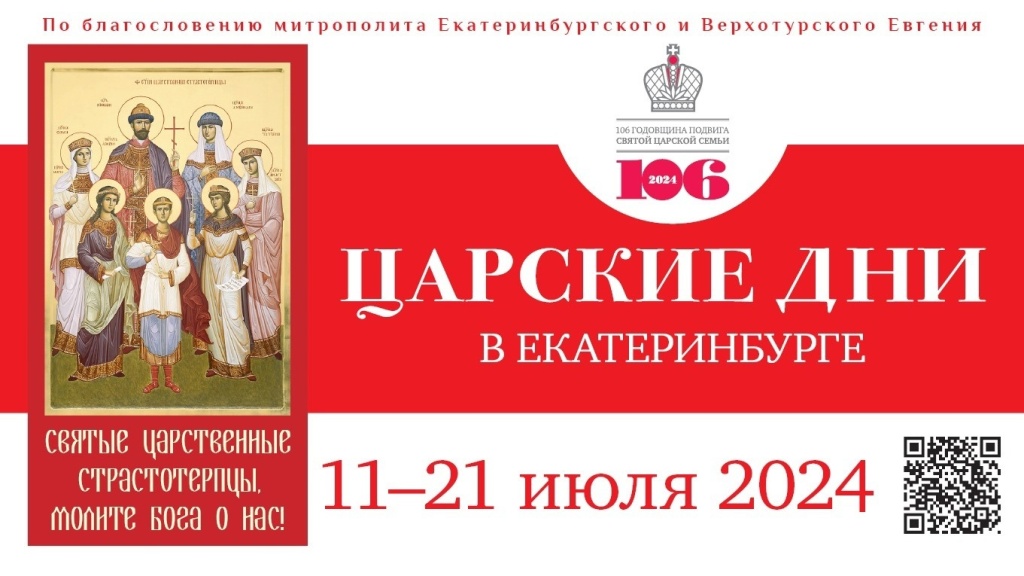
Tsar’s Days in Ekaterinburg 2024

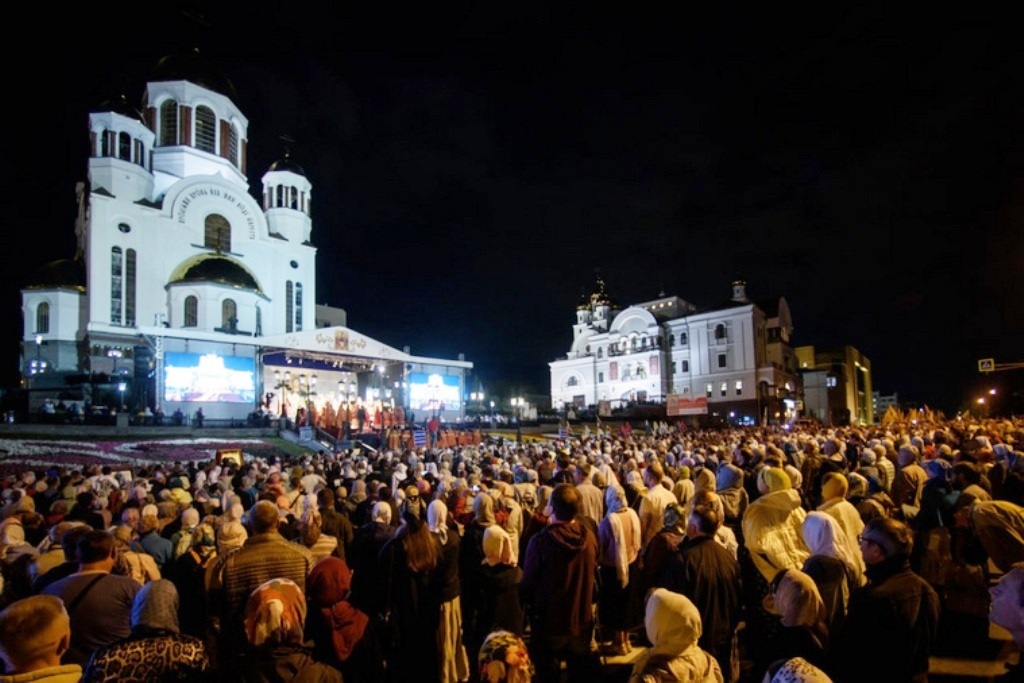
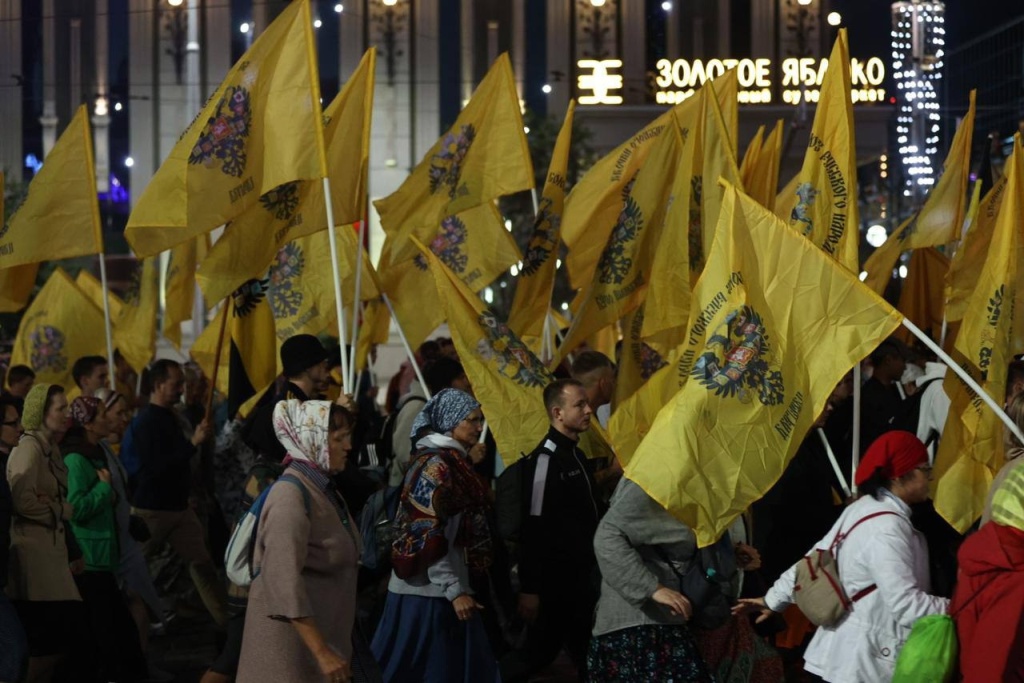
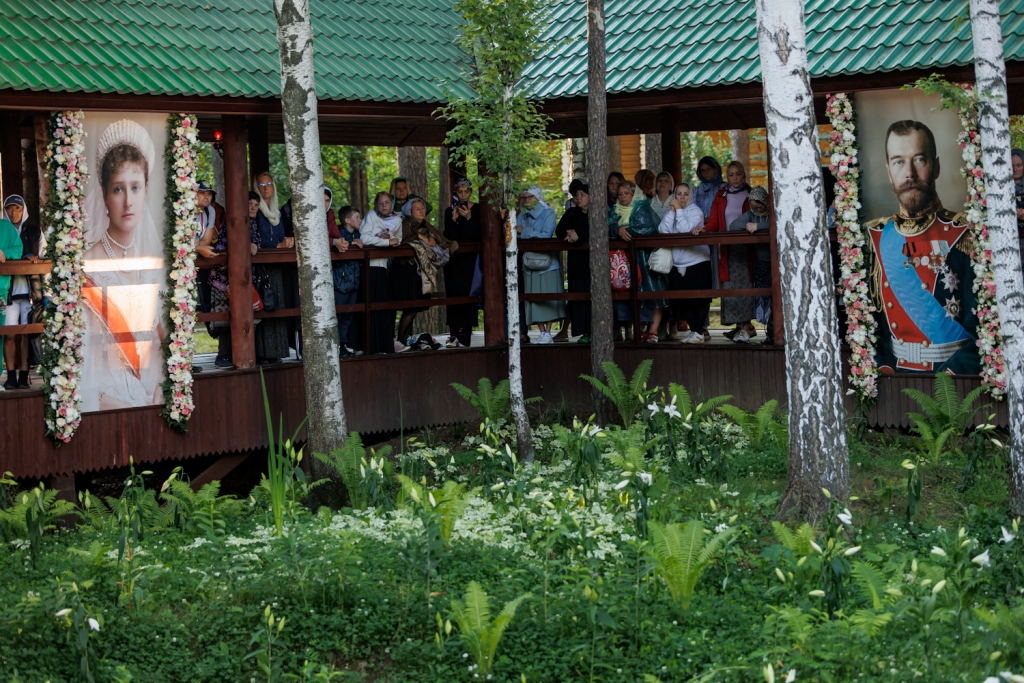
On the night of 16/17 July 2024, on the eve of the Feast Day of the Holy Royal Martyrs[1], the Hierarchal Divine Liturgy was celebrated at the Church on the Blood in Ekaterinburg. This year marks the 106th anniversary of the murder of Emperor Nicholas II, his wife, their five children, and four faithful retainers.

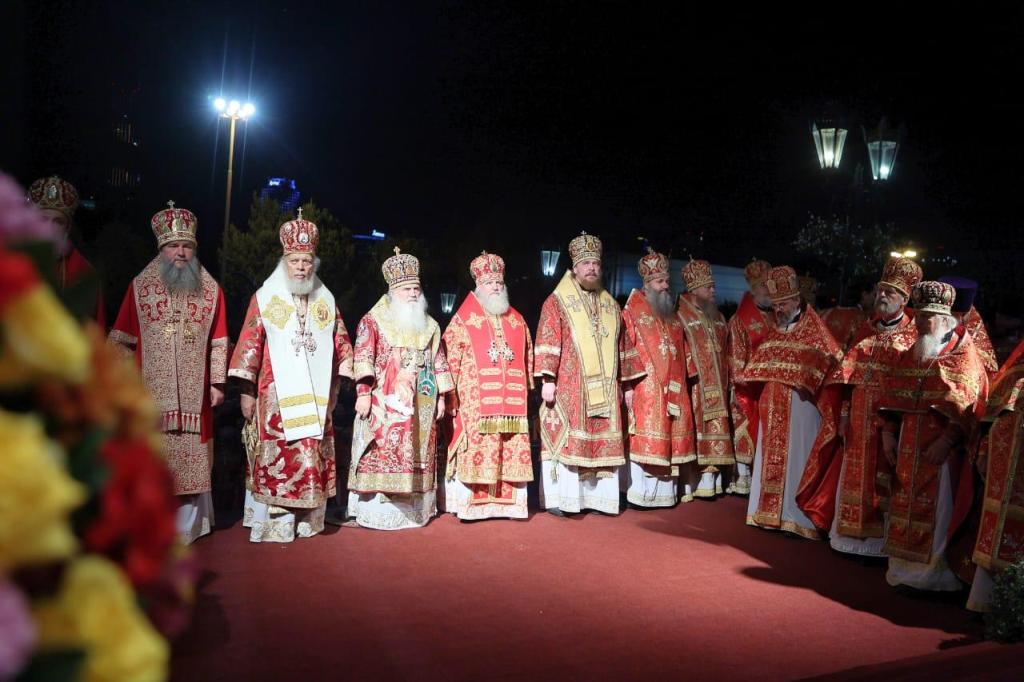
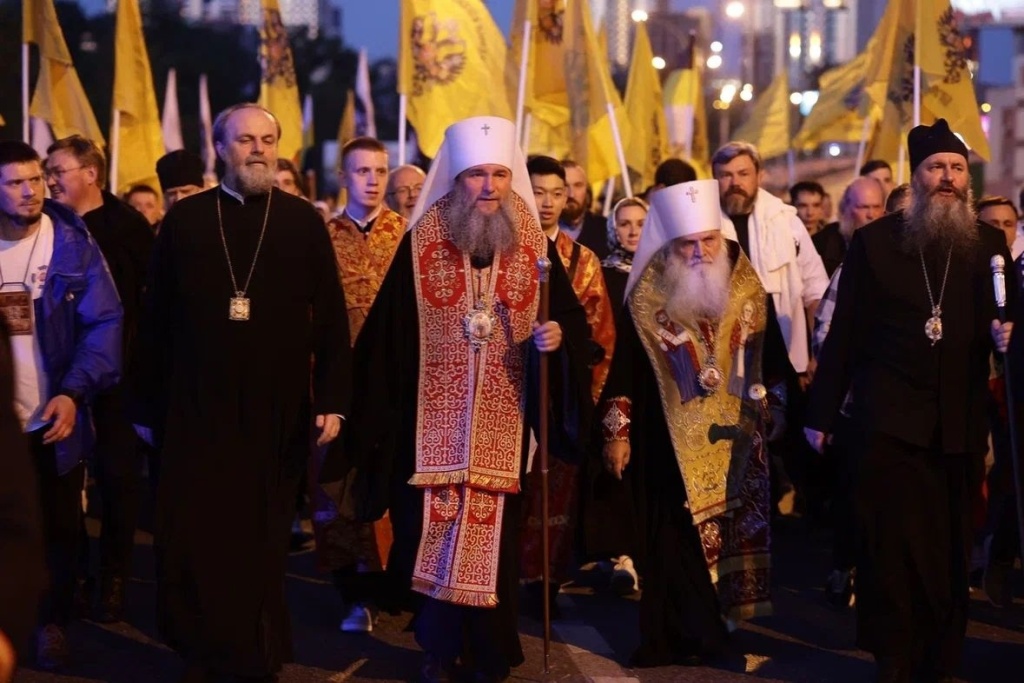
Divine services were held in the Imperial Room[2], were led by the bishops who had arrived in the Ural capitol for Tsar’s Days: Bishop Roman of Rubtsovsk and Aleysk, and Bishop Leonty of Syzran and Shigon.

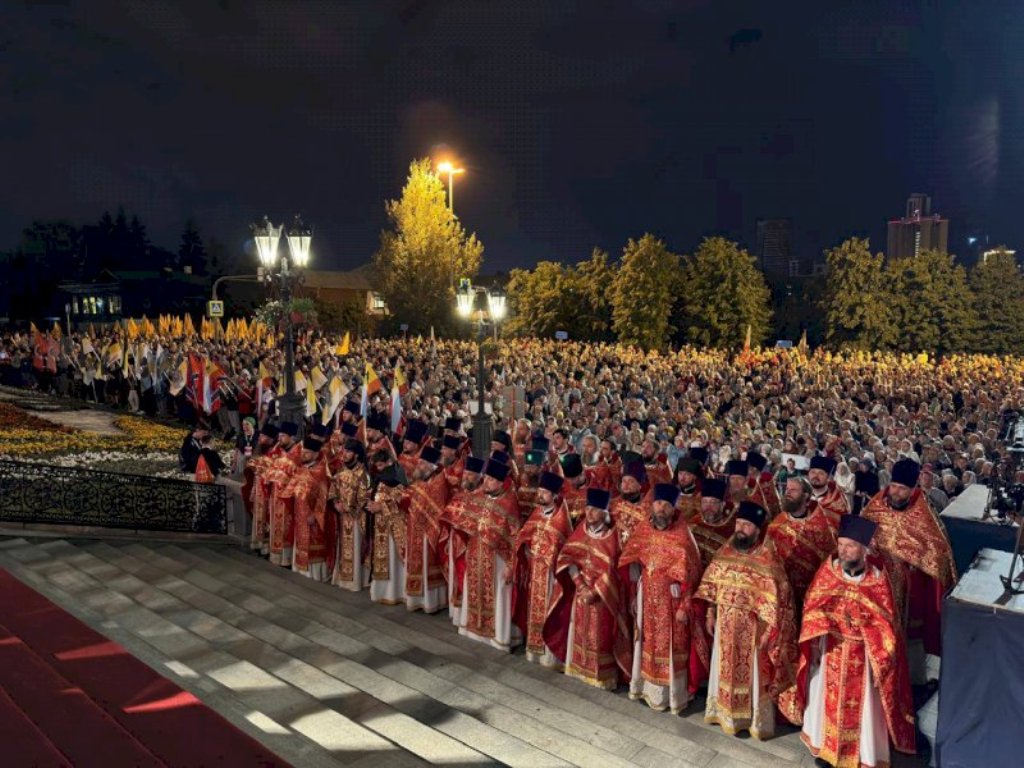
Concelebrating with the bishops were Archpriest Nikolai Tarantin, head of the protocol service of the Ekaterinburg Diocese, Archpriest Maxim Minyailo, chairman of the diocesan department for Church relations with society and the media, senior priest of the Church on the Blood, and Priest Daniel Ryabinin, head of the diocesan missionary department; Priest Pavel Starkov, head of the Youth Department, spiritual father of St. Simeon’s Orthodox Gymnasium (School); Rector of the Ekaterinburg Theological Seminary, Hieromonk Korniliy Zaitsev, Chief of Staff of the Synodal Diocese of the Ekaterinburg Diocese, Hieromonk Simeon (Seregin), and other clergymen of the Ekaterinburg Diocese.

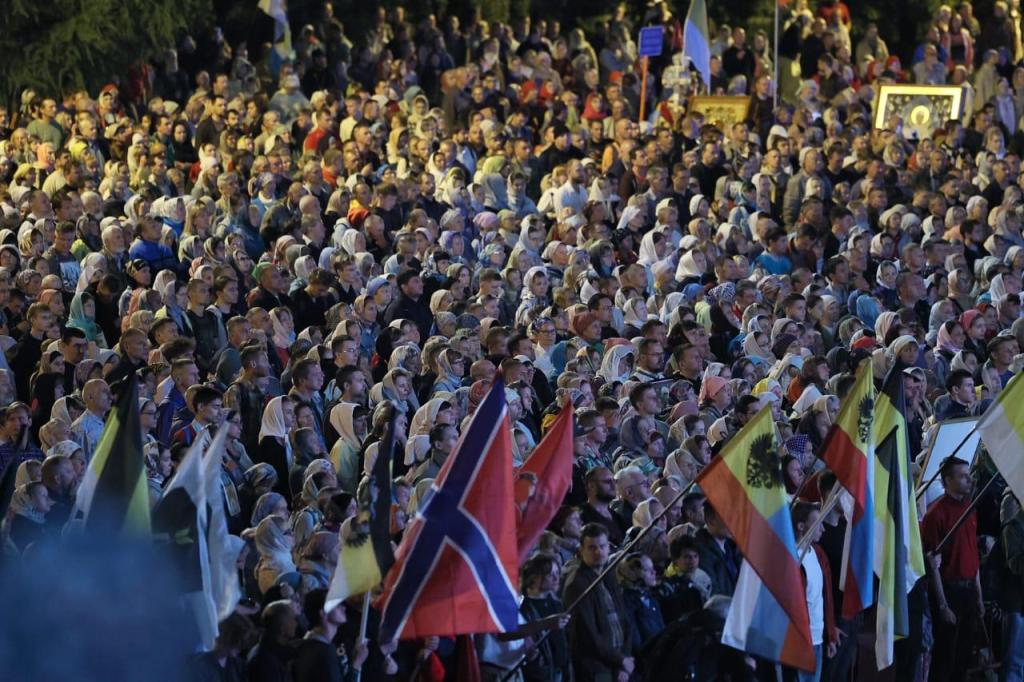
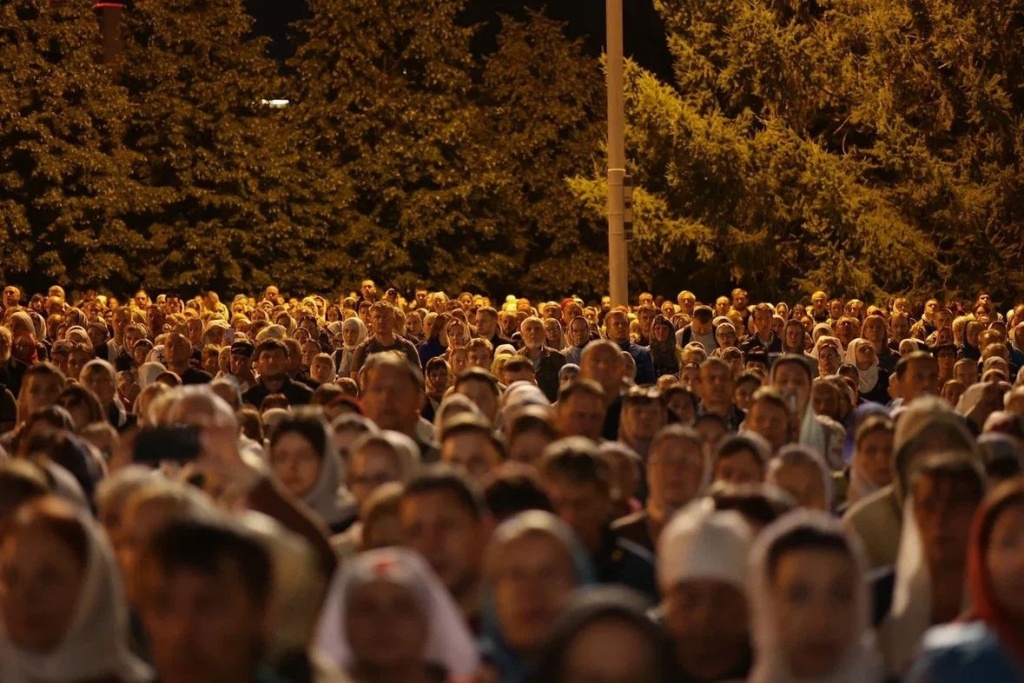
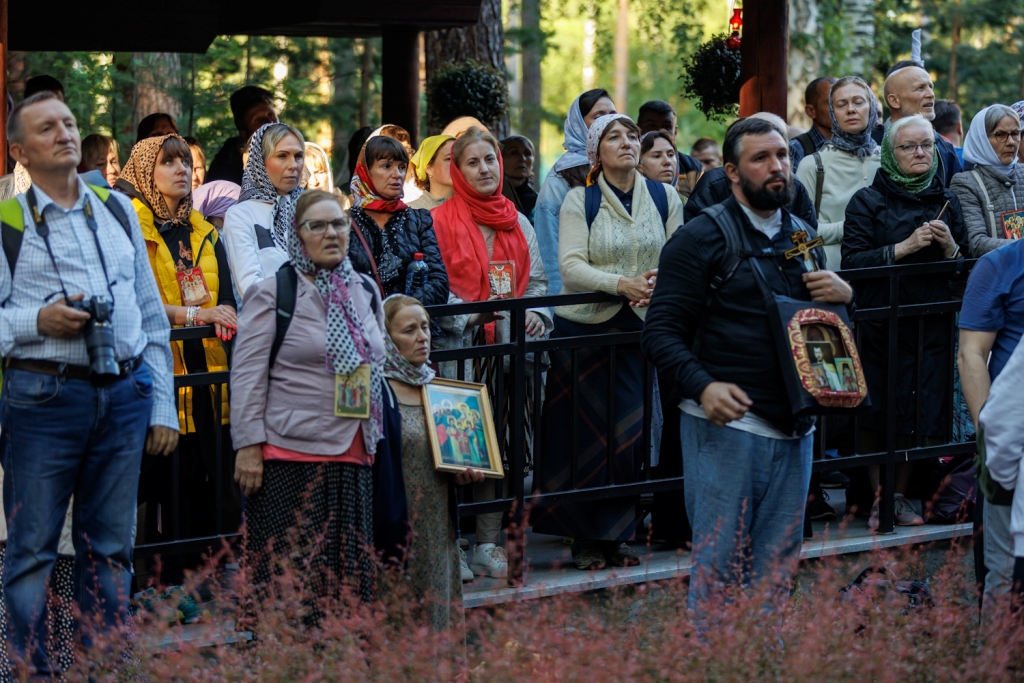
Traditionally, the Divine Liturgy on the night of 16th July is celebrated with a large crowd of faithful – hundreds of believers prayed in the church.

The hymns of the service were sung by the choir of the Ekaterinburg Theological Seminary under the direction of Anastasia Mukhlynina, a graduate of the seminary’s choir director’s department.

Archpriest Sergiy Alexeev, a cleric of the Holy Trinity Cathedral in Ekaterinburg, addressed the faithful present with a sermon on the pre-communion verse.

Communion on this day was performed from five chalices – many pilgrims arrived in Ekaterinburg to pray at the main services of the Tsar’s Days and honour the memory of the Holy Royal Family.

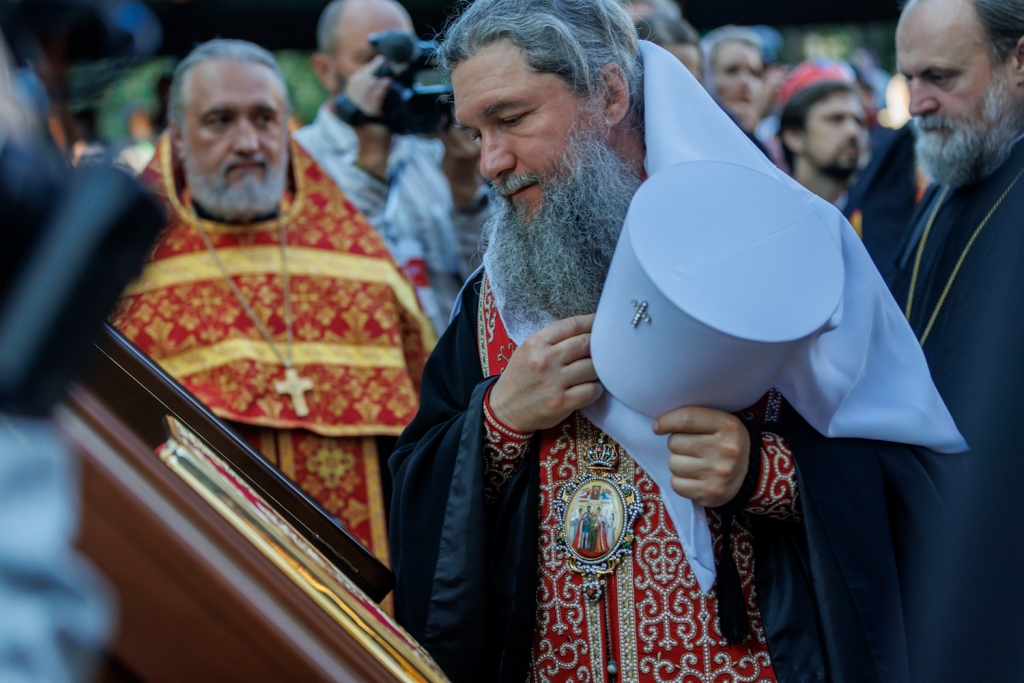
At the end of the service, Metropolitan Evgeny of Ekaterinburg and Verkhoturye greeted the bishops, clergy and pilgrims who had arrived from across Russia and other countries for the Tsar’s Days.

Metropolitan Evgeny asked everyone to preserve the memory of the Holy Royal Passion-Bearers and to imitate wisdom and strength in the love they showed. At 3:00 p.m., Little Vespers with an akathist to the Holy Royal Passion-Bearers was served in the Church-on-the-Blood, then at 4:30 p.m., the All-Night Vigil began on the square in front of the church, which was led by the Eminent Archpastors. The main service of the Tsar’s Days – the Divine Liturgy – began at midnight, followed by the Royal Cross Procession.

Procession of the Cross to Ganina Yama

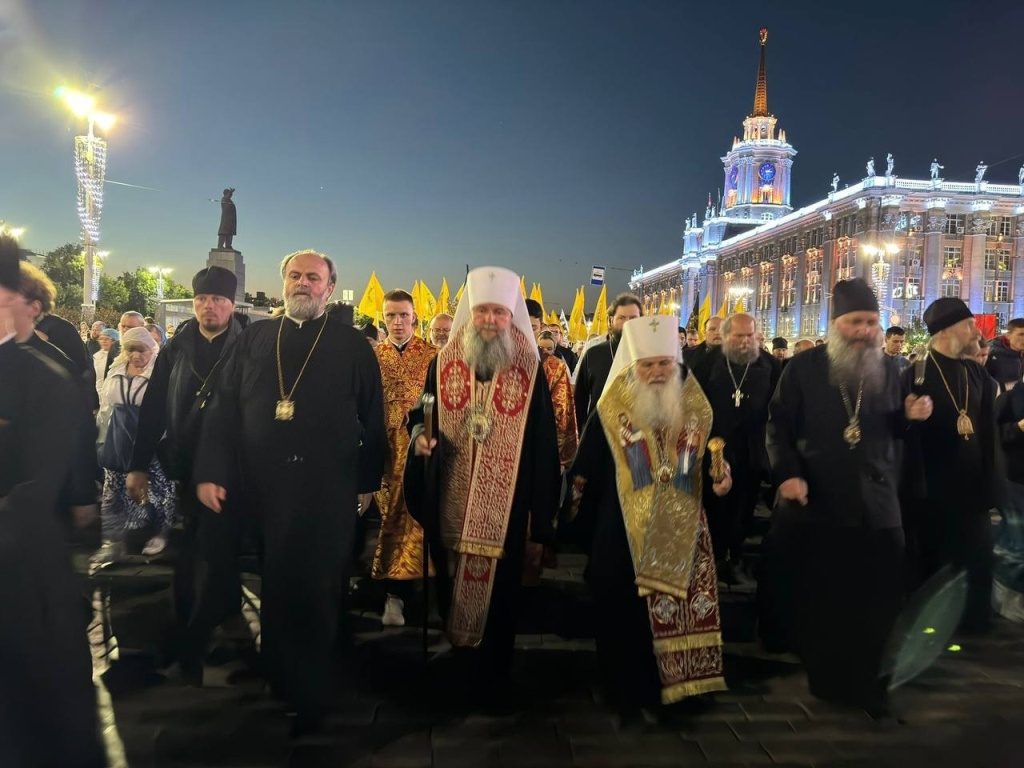
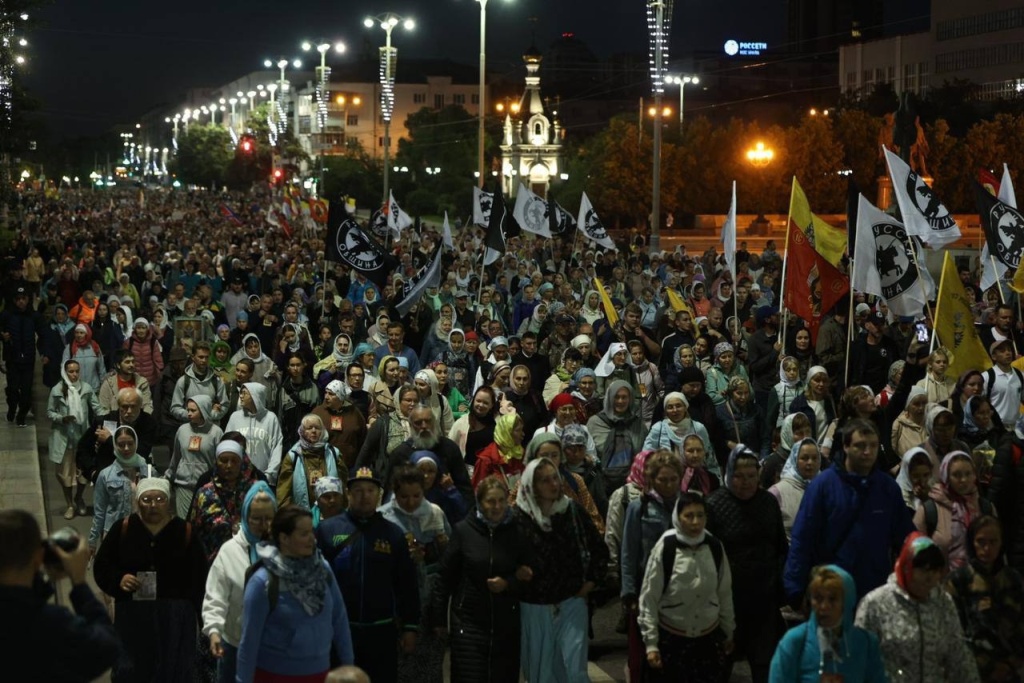
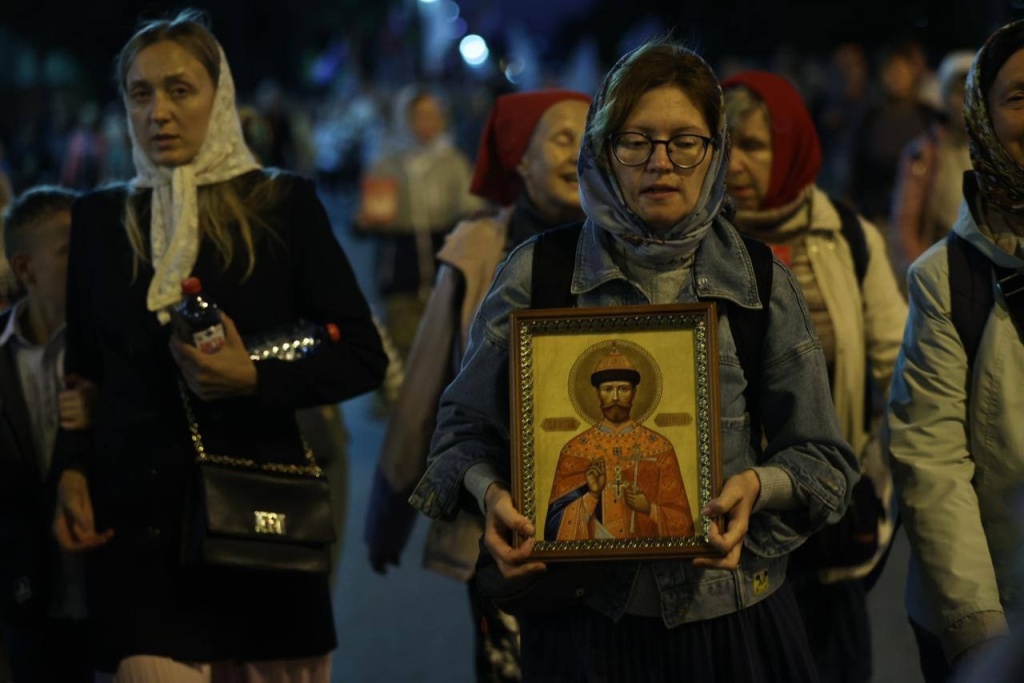
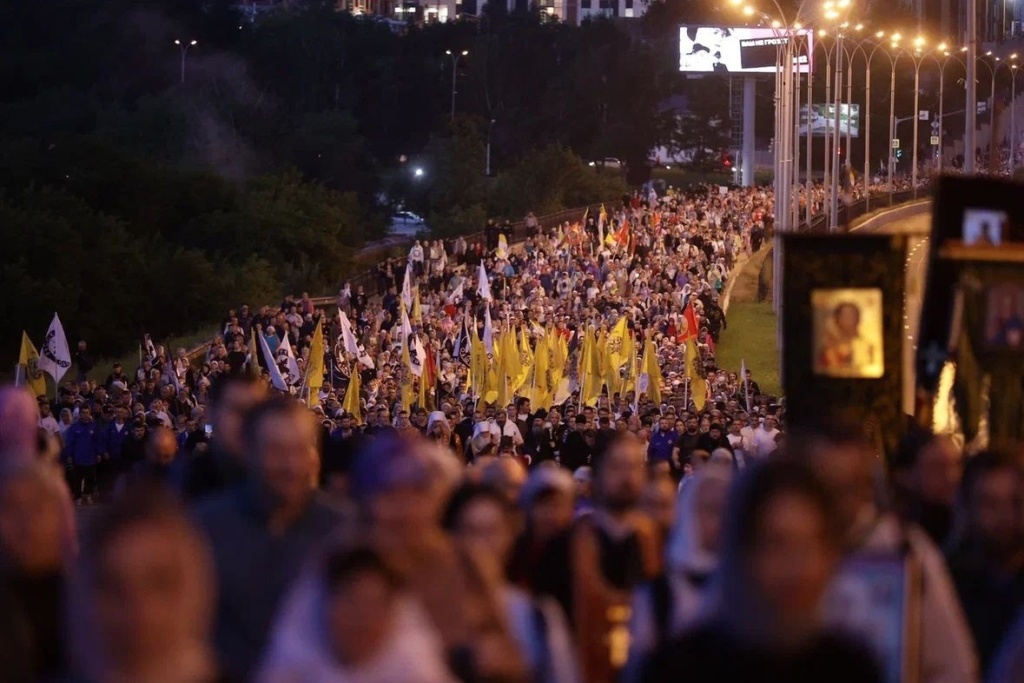
In the early morning hours of 17th July 2024, the traditional Royal Cross Procession was held from the Church on the Blood in Ekaterinburg to the Monastery of the Holy Royal Passion-Bearers at Ganina Yama – a 21 km.  [13 miles]  journey on foot[3]. The Cross Procession was preceded by a Divine Liturgy on the square in front of the church, which was headed by 13 bishops of the Russian Orthodox Church.

An estimated 45,000 faithful took part in this year’s Cross Procession, together with the head of the Ekaterinburg Metropolia, was led by Metropolitan Vikenty of Tashkent and Uzbekistan, head of the Central Asian Metropolitan District, and other archpastors.

Under the repentant Jesus Prayer: “Lord, Jesus Christ, Son of God, have mercy on us!” – the multi-thousand column of believers, clergy and laity from across Russia – covered the distance in about four to five hours. Those who took part in the procession came from every corner of the Russian Federation – from Stavropol to Novosibirsk, from Astrakhan to Arkhangelsk, as well as abroad.

The procession was accompanied by 10 mobile aid groups of the Orthodox Mercy Service and volunteers of the Tsar’s Days.

In the Cross Procession, two Reliquaries were carried, the first Reliquary containing a part of the Belt of the Most Holy Theotokos, which was donated to the Ekaterinburg Diocese, the second Reliquary containing the relics of 14 saints of the Ekaterinburg Metropolia: the Venerable Martyr Grand Duchess Elizabeth Feodorovna, the Venerable Martyr nun Varvara (Barbara) Yakovleva, the Venerable Basilisk of Siberia, the Righteous Simeon of Verkhoturye, the Blessed Cosmas of Verkhoturye, the Venerable Elijah Chebotarev, the Hieromartyr Alexander Malinovsky, the Hieromartyr Arkady Gariaev, Hieromartyr Konstantin Bogoyavlensky, Hieromartyr Lev Ershov, Venerable Arefa Katargin, Hieromartyr Alexis Budrin, Venerable Confessor John (Chevroletin) and Hieromartyr Alexander Adrianov.

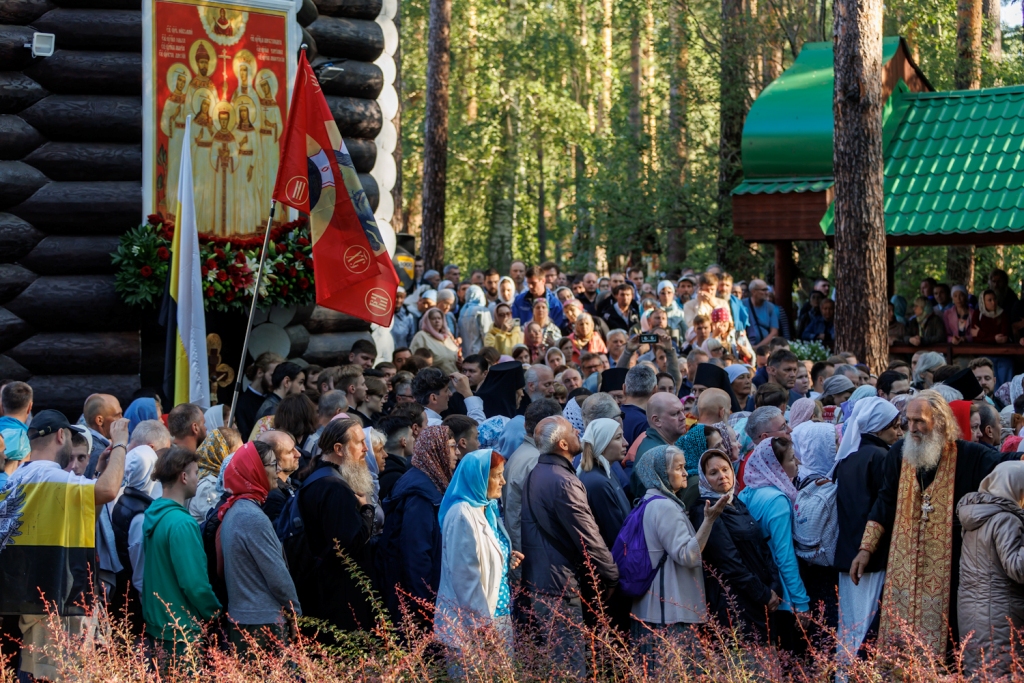
The Royal Cross Procession concluded with a moleben to the Holy Royal Passion-Bearers at the Monastery of the Holy Royal Martyrs at Ganina Yama.

The Most Reverend Archpastors, Bishop Evgeny and Bishop Vikenty, thanked the thousands of faithuful who took part in the Royal Cross Procession for their spiritual feat.

Divine Liturgies were celebrated in the seven churches of the monastery, the churches are dedicated to each of the seven members of the Imperial Family. As the day progresssed, more and more pilgrims arrived at the monastery for prayer and reflection.

Holy Royal Passion-Bearers, pray to God for us!
Святые Царственные страстотерпцы, молите Бога о нас!

NOTES:

[1] On 1st November 1981, the Imperial Family were canonized as new martyrs by the Russian Orthodox Church Outside Russia (ROCOR).

On 20th August 2000, the the Imperial Family were canonized as passion-bearers by the Moscow Patriarchate.

Passion-bearers are people who face death with resignation, in a Christ-like manner, as distinguished from martyrs, the latter historically killed for their faith. Proponents cited the piety of the Tsar and his family and reports that the Tsarina and her eldest daughter Olga prayed and attempted to make the sign of the cross immediately before they died.

Despite their official designation as “passion-bearers” by the Moscow Patriarchate, they are nevertheless spoken of as “saints” in Orthodox publications, icons, and in popular veneration by the people.

[2] The Imperial Room is situated in the lower church sanctified in honor of the Holy Royal Martyrs. It was established on the site of the room located in the basement of the Ipatiev House, where Emperor Nicholas II, his family, and four retainers were all brutally murdered on the night of 16/17 July 1918.

[3] Once again, Porosenkov Log was not included in this year’s Cross Procession. Porosenkov Log is where the remains of the Imperial Family were exhumed in two separate graves in 1991 and 2007 respectively. Due to the fact that the Moscow Patriachate does not yet recognize the Ekaterinburg Remains as those of the Imperial Family. Their official recognition rests with the Bishops’ Council of the Russian Orthodox Church.

© Paul Gilbert. 25 July 2024