PHOTO: portrait of Tsesarevich Alexei Nikolaevich Artist: Pyotr Petrovich Pershin (1877-1956) From the Collection of the Tsarskoye Selo State Museum
Today – 18th October – marks the Name Day[1] of Tsesarevich Alexei Nikolaevich (1904-1918). The heir to the throne was born in the Lower Dacha at Peterhof on 12th August (O.S. 30th July) 1904. He was named in honour of St. Alexius of Moscow[2] (1296–1378).
On a historical note, the Name Day of the Tsesarevich was celebrated on this day at Livadia, Crimea, in 1909, 1911 and 1913 respectively.
In 1913, Nicholas II wrote in his diary: “In the morning, Alexei received gifts in our bedroom . . . At 11 o’clock, the Yalta garrison held a parade in front of the house. After the solemn event, the guests were invited for breakfast in the Main Dining Room, where about 160 people were present. In the evening, the Black Sea squadron held beautiful illuminations.”
Divine services will be held in churches across Russia today, in honour of Tsesarevich Alexei Nikolaevich’s Name Day. White flowers were placed at the pedestal holding a bust of Tsesarevich Alexei Nikolaevich (above), which was installed and consecrated in the Tsarsky Center, located in the Patriarchal Compound, across from the Church on the Blood in Ekaterinburg, in July.
NOTES:
[1] Russians celebrate name days separately from birthdays. Celebrations range from the gifting of cards and flowers to full-blown celebrations similar to birthday parties. Such a celebration begins with attendance at the divine services marking that day (in the Russian tradition, the All-Night Vigil and Divine Liturgy), and usually with a festive party thereafter. The Russian Imperial family followed a tradition of giving name-day gifts.
Before the October Revolution of 1917, Russians regarded name days as important as, or more important than, the celebration of birthdays, based on the rationale that one’s baptism is the event by which people become “born anew” in Christ.
[2] It was Robert K. Massie (among others), who have led us to believe that the only son of Emperor Nicholas II and Empress Alexandra Feodorovna, was named after Tsar Alexei Mikhailovich (1629-1676) . . . this is incorrect. This is incorrect.
The long-awaited son and heir to the Russian throne was named Alexei, in honour of St. Alexius of Moscow.
Saint Alexius (1296–1378) was Metropolitan of Kiev and all Russia (from 1354). He was canonized by the Russian Orthodox Church in 1448 and is revered as one of the patron saints of Moscow.
PHOTO: obituary notice on the death of Grand Duke Kirill Vladimirovich (1876-1938)
October 12th marks both the birth (1876) and death (1938) of one of the most despised members of the Russian Imperial Family: Grand Duke Kirill Vladimirovich.
Kirill was born on 12th October [O.S. 30th September] 1876, at the Vladimir Villa, the country residence of his parents at Tsarskoye Selo. He was the second of five children born to Grand Duke Vladimir Alexandrovich (1847-1909) and his wife Grand Duchess Maria Pavlovna (1854-1920), born Duchess Marie of Mecklenburg-Schwerin.
Kirill was a grandson of Emperor Alexander II (1818-1881) and a first cousin of Emperor Nicholas II. He was also the uncle of Princess Marina of Greece and Denmark (1906-1968) and great-uncle of Prince Michael of Kent (born 1942).
In the service of the Fatherland
After graduating from the Sea Cadet Corps and Nikolaev Naval Academy, in January 1904, Kirill was promoted to Chief of Staff to the Pacific Fleet in the Imperial Russian Navy. With the start of the Russo-Japanese War, he was assigned to serve as First Officer on the battleship Petropavlovsk, but the ship was blown up by a Japanese mine at Port Arthur in April 1904. Kirill barely escaped with his life, and was invalided out of the service suffering from burns, back injuries and shell shock.
From 1909–1912, Kirill served on the cruiser Oleg and was its captain in 1912. In 1913, he joined the Maritime Division of the Imperial Guard and was made Commander of the Naval Guards in 1915. He achieved the rank of rear admiral in the Imperial Navy in 1916, a position which he later abandoned.
PHOTO: Grand Duke Kirill Vladimirovich and Grand Duchess Victoria Feodorovna
An unholy alliance
During the festivities marking the Coronation of Emperor Nicholas II, held in Moscow in May 1896, Kirill fell in love with his paternal first cousin, Princess Victoria Melita of Saxe-Coburg and Gotha (1876-1936). They flirted with each other at the balls and celebrations, but Victoria Melita was already married to Ernest Louis, Grand Duke of Hesse (1868-1937), the only brother of Empress Alexandra Feodorovna.
Victoria’s father was Alfred, Duke of Saxe-Coburg and Gotha (1844-1900), the second eldest son of Queen Victoria. Victoria’s mother was Grand Duchess Maria Alexandrovna (1853-1920), a daughter of Emperor Alexander II and Kirill’s paternal aunt. Victoria Melita scandalized the royal families of Europe when she divorced her husband in 1901.
On 8th October 1905, Kirill entered into an incestuous marriage [forbidden by the Russian Orthodox Church] with the divorced Victoria Melita. The marriage caused a scandal within the Russian Imperial Family, as well as in the Royal Courts of Europe and Great Britain.
The couple wed without the formal approval of Britain’s King Edward VII (as the Royal Marriages Act 1772 would have required), and in defiance of Emperor Nicholas II by not obtaining his consent. Grand Duchess Maria Alexandrovna wrote that she felt “responsible for having arranged the marriage of Ducky and Kirill,” a decision she regretted.
Nicholas II punished Kirill, by stripping him of his offices and honours, also initially banishing the couple from Russia. Together with their two daughters, the family settled in Paris before they were allowed to visit Russia. In 1910, they returned to Russia, whereupon the Emperor recognized Victoria Melita as Grand Duchess Victoria Feodorovna.
Despite the family reconciliation, the strained relationship which had already existed for many years between Nicholas and Alexandra with Kirill and Victoria, would remain strained and even hostile.
While commanding the Marine of the Guard, which was responsible for guarding the Empress Alexandra and her children at Tsarskoye Selo, Grand Duke Kirill Vladimirovich with his tsarist monogram on his epaulettes and a red ribbon on his shoulders, under which the Marine of the Guard followed their commander, appeared on 1st March, at the State Duma, where he reported to Duma Chairman M.V. Rodzianko. “I have the honour of appearing before Your Excellency, I am at your disposal, as is the entire nation. I wish Russia only good.” Then he stated that the Marine of the Guard was at the complete disposal of the State Duma. Kirill then authorized the flying of a red flag over his palace on Glinka Street in Petrograd.
Prior to that, the Grand Duke sent notes to the chiefs of the military units at Tsarskoye Selo, with a proposal “to join the new government”, following his own example.
In June 1917, Grand Duke Kirill was the first Romanov to flee Russia, along with his pregnant wife and their two children. Not only was his desertion “illegal”, Kirill, who was serving as a rear admiral in active military service in a country at war, had thus abandoned his honour and dignity. It is interesting to add, that the Kirillovich were the only branch of the Imperial Family who managed to escape the Bolsheviks, without losing any family members.
In exile, on 8th August 8, 1922, Kirill declared himself “guardian of the Russian throne”. On 13th September 1924, he proclaimed himself “Emperor of All Russia” to the now non-existent Russian throne under the name of “Kirill I”. He became known as the “Soviet Tsar” because in the event of a restoration of the monarchy, he intended to keep some of the features of the Soviet regime.
In addition, is Kirill’s shameful infidelity—an affair which involved his behaviour or relationship far more sensational and unorthodox than a simple casual affair with another woman—a possible homosexual liaison perhaps?
Not only was Grand Duke Kirill a coward, he was clearly a man who lacked a moral compass and a traitor to his Sovereign and to Russia. His acts of treason and desertion, and later his support of Adolf Hitler and the Nazis during his years in exile, thus deprived his descendants any rights to the Russian throne.
PHOTO: the tomb of Grand Duke Kirill Vladimirovich, in the Grand Ducal Mausoleum of the Peter and Paul Fortress in St. Petersburg
Legacy
Grand Duke Kirill was initially buried at the ducal mausoleum at Friedhof am Glockenberg, Coburg. Following the fall of the Soviet Union in 1991, the remains of Kirill and Victoria were transferred from Coburg to the Grand Ducal Mausoleum of the Peter and Paul Fortress in St. Petersburg on 7 March 1995 after negotiations and great expense, thanks to the efforts of his Spanish-born granddaughter Princess Maria Vladimirovna.
85 years after his death, Grand Duke Kirill Vladimirovich remains one of the most despised members of the Russian Imperial Family. While some believe that he was a beacon for a restoration of the monarchy in Russia, his record of treason simply cannot be overlooked or swept under the rug, by those who work so diligently to whitewash his legacy.
During the 1920s until his death in 1938, his only adherants, were known as the Kirillists. Today, they are known as Legitimists – a small group of zealots – most of whom are American, and have no say whatsoever in the monarchist debate in modern day Russia. They work tirelessly to keep Kirill from falling from the pedestal, which this insignificant group of nutters has placed him on.
Despite what the Legitimists claim on their blog and social media, neither Kirill, nor his descendants Maria Vladimirovna and her pompous arrogant son George Mikhailovich, are very popular in post-Soviet Russia. Most Russians – including monarchists – dismiss their claims as “pretenders” to the non-existent Russian throne. Their activities in Russia attract a lot of media attention, in particular the wedding of George Mikhailovich to Rebecca Bettarini in St. Petersburg on 1st October 2021.
Under no pretext can we admit to the throne those whose ancestors belonged to parties involved in the 1917 revolution in one way or another. Nor can we admit those whose ancestors betrayed Tsar Nicholas II. Nor can we ignore those who ancestors openly supported the Nazis. Thus, without any reservations, the right to the succession to the throne of the Kirillovich branch should be excluded!
Grand Duke Kirill Vladimirovich is the subject of my forthcoming book ‘Kirill: Traitor to the Tsar!‘, the first comprehensive study to examine the relationship between Grand Duke Kirill and his first cousin Tsar Nicholas II. It is based primarily on documents and letters retrieved from Russian archival and media sources, many of which will be new to the English reader.
My book is scheduled for publication in late 2025. Watch for my ads in both Majesty and Russian Life magazines!
On 8th October 2022, the Russian premiere of the ballet “Rasputin” took place at the Oktyabrsky Concert Hall in St. Petersburg. During the past year, it has been staged in numerous cities across Russia, including Moscow, Yaroslavl, Penza, Nizhny Novgorod, Volgograd, Ekaterinburg, Perm, Rostov-on-Don, Kazan, Ufa, Chelyabinsk, Tyumen, Tomsk, Novosibirsk, among other cities.
The ballet was created by free-lance choreographer Yuka Oishi. The dance drama explores the dark psychological depths of one of the most controversial figures in Russian history – Grigori Yefimovich Rasputin (1869-1916).
The world premiere of the ballet took place at the Palladium Theater in London, England in October 2019.
The role of Rasputin is performed by Sergei Vladimirovich Polunin (b. 1989). In addition, Xenia Ryzhova (Empress Alexandra), Alexei Lyubimov (Nicholas II), John Cook (Prince Felix Yusupov), and Platon Alekhine (Tsesarevich Alexei) among others. All costumes for the show were designed by the famous and scandalous fashion designer Ulyana Sergeenko.
CLICK on the IMAGE above to watch a short VIDEO clip of Sergei Polunin perform in the London premiere of “Rasputin” at The London Palladium on 15th October 2019. Duration: 6 minutes, 15 seconds
PHOTO: the Alexander Palace set against the backdrop of autumn colours
The first day of autumn officially arrives in Russia on 1st September. It seems only fitting that we celebrate one of the loveliest seasons of the year with these beautiful photos of the Alexander Palace and Park at Tsarskoye Selo.
Autumn is my favourite time of year to visit Russia. During a visit to St. Petersburg in October 2007, I decided to spend an entire week in Pushkin [Tsarskoye Selo].
Staying in Tsarskoye Selo was a refreshing change from the hustle and bustle of St. Petersburg. I stayed at the Hotel Natali which is situated in the city’s historical district, with nice rooms, and a hearty breakfast included. The main reason I chose this hotel was that the Alexander Palace is literally at the top of the street!
The hotel’s location was ideal for visiting the Alexander and Catherine Palaces, but also the Alexander Park daily on foot at my own leisure. One day, I actually walked to Pavlovsk Palace, a distance of 7.3 km. [4.5 miles]!
The Alexander Park offers pathways leading to the parks numerous pavilions, as well as ponds and canals, which were often used during the summer months by Nicholas II and his children for boating.
PHOTO: autumn view of the Alexander Palace from the pond
The paths throughout the Alexander Park are now blanketed in beautiful red, yellow, gold leaves that crunch under your footsteps. Cool autumn breeze gently flow through the trees spiriting loose leaves from their branches, allowing each one to dance in the air before falling gently to the ground, adding yet another element to the sprawling carpet of autumn colours. The setting is truly magical.
In addition, I had a wonderful opportunity to explore the town itself. While much of Pushkin was destroyed by the Nazis during the Great Patriotic War (1941-45), it still retains some beautiful architectural gems from the Tsarist period, including a number of palaces and churches – the Feodorovsky Sovereign Cathedral is a must!
Numerous restaurants and cafes are within walking distance of the hotel, as well as a burgeoning souvenir market, where you can buy beautiful hand painted lacquer boxes, lace, and other items made by locals.
For any one planning a future visit to St. Petersburg, I highly recommend Tsarskoye Selo as an alternative place to stay. My autumn 2007 visit remains one of my most memorable visits to Russia, and it was the the season itself which enhanced the beauty of the Alexander Palace and the surrounding park.
PHOTO: the Alexander Palace set against the backdrop of autumn colours
NOTE: the first 15 interiors of the private apartments of Emperor Nicholas II and Empress Alexandra Feodorovna, situated in the eastern wing of the Alexander Palace, opened to the public on 14th August 2021. During the first few weeks of opening, nearly 17,000 people visited the palace.
Over the course of the past decade, numerous pavilions have been beautifully restored, including the Sovereign’s Martial Chamber, the Arsenal, the Chapelle, and the White Tower. The next restoration project in the Alexander Park will that of the Chinese Theatre.
PHOTO: the Alexander Palace as it looked before the 2015-2021 restoration
PHOTO: view of the western wing of the Alexander Palace
PHOTO: one of the many paths in the Alexander Park carpeted with autumn leaves
PHOTO: memorial to the Russian Imperial Family, erected in the Alexander Park in 2007
PHOTO: the Children’s Island and House situated in the park near the Alexander Palace
PHOTO: the Feodorovsky Sovereign Cathedral is a short walk through the Alexander Park
PHOTO: Russia’s first monument to Nicholas II was established in 1993, on the grounds of the Feodorovsky Sovereign Cathedral
On 1st October 2008, the Presidium of the Supreme Court of the Russian Federation granted the judicial rehabilitation of Emperor Nicholas II and his family. Ninety years after a Bolshevik execution squad gunned down the last Tsar and his family, the country’s supreme court declared the Imperial family as “victims of political repression.” The regicide was condemned, and that the false accusations against the Tsar, that he was an enemy of the people…were at long last proven to be false.
By finding the Tsar a victim of political terror, the court has completed the remarkable transformation of the discredited man who died with his family in the cellar of the Ipatiev House in the early hours of 17th July, 1918 on the orders of the Ural Soviet.
Throughout the years of the Soviet Union, government propaganda vilified the last Tsar, giving him the derogatory nickname “Bloody Nicholas” and accusing him and his family of a litany of crimes.
It is important to note, that the Supreme Court’s decision overturned a ruling by the same court in November 2007 that the killings did not qualify as political repression, but premeditated murder. The Prosecutor General’s Office of the Russian Federation, stated in court that “the requirements for rehabilitation do not comply with the provisions of the law due to the fact that these persons were not arrested for political reasons, and no court decision on execution was made.”
Four weeks later, on 30th October 2008, it was reported that the Prosecutor General’s Office of the Russian Federation ruled to rehabilitate 52 people from the entourage of Emperor Nicholas II and his family.
Some readers will argue that the Court’s judicial rehabilitation was unnecessary because the Tsar had not committed any crime, which of course is true! For the sake of historical justice, however, it was the responsibility of a post-Soviet Court to overturn the Bolshevik’s decision to condemn and justify the murder of Russia’s last Tsar. In addition, his rehabilitation defeats the myths and lies of both the Bolshevik and Soviet regimes.
Up until the Supreme Court’s ruling, Nicholas II remained falsely accused of crimes in which he did not commit. According to the existing code of laws, the Russian Federation is the lawful successor of Soviet Russia and of the Union of Soviet Socialist Republics [USSR]. From the purely juridical standpoint, all the criminal charges, incriminations and verdicts of repression pronounced since 7th November 1917 continue to carry legal authority until the government officially rehabilitates the victims. A paradoxical situation thus occurred, where the head of the Russian government has offered up repentance for the bloody violence carried out by representatives of the government on members of the Imperial House and their servants, relatives and friends; where the immediate members of the family of Emperor Nicholas II along with Grand-Duchess Elizabeth Feodorovna have been recognized as saints by the Russian Orthodox Church; yet where, from the judicial point of view, they can legally be considered “criminals,” since they were executed as “enemies” of the government.
Russia’s Supreme Court ruled that Nicholas II, was unlawfully killed by Bolshevik authorities. The ruling negates the Bolshevik claims used to instigate the 1917 revolution, and the murder of the Tsar and his family the following year. His rehabilitation reinstates the good name of Nicholas Alexandrovich Romanov, and to legally declare that he was innocent and had suffered unjustly.
Georgy Ryabykh, a spokesman for the Russian Orthodox Church said the “decision can only be welcomed. It strengthens the rule of law, restores historical continuity and 1,000 years of state tradition”.
Ivan Artsishevsky (1950-2021), Director of the Romanov Family Association also praised the ruling: “the fact that the Russian state took responsibility for that murder is a step towards repentance … and the rehabilitation of all innocent (Bolshevik) victims.”
It should come as no surprise that the rehabilitation was denounced by the Communists, who said it was “cynical” and would “sooner or later be corrected.” In response, Russian lawyer German Lukyanov (1961-2022) noted that the ruling was “a final decision that cannot be challenged.”
“Rehabilitation is necessary for the modern state, so that the image of Russia throughout the world is associated not with basements covered in blood, but with the image of a civilized state that has renounced the Soviet past and condemned it,” he added.
The Tsarskoye Selo State Museum has launched a very innovative new project: “Blooming Palace”, to be held in the Alexander Palace over the next 12 months. Once a month, flower arrangements created by modern designers and florists will be displayed in different interiors of the Alexander Palace, the favourite Imperial residence of Nicholas II and his family.
Arrangements will include hydrangea, chrysanthemum, forsythia, camellia, lilacs and other flowers and plants. The flower marathon will last a year, ending in August 2024. The museum is implementing this project in partnership with representatives of various creative industries in St. Petersburg.
“We set ourselves the most important task – to create an atmosphere of family warmth in the private rooms of Emperor Nicholas II and Empress Alexandra Feodorovna, said Olga Taratynova, director of the Tsarskoye Selo State Museum.
“At the beginning of the last century, there were fresh flowers all year round, the floral theme was also present in the upholstery of the walls, furniture, stucco reliefs on the walls and ceilings. We supplemented the recreated interiors with freshly cut flowers and decorative plants. In addition, more than a hundred years later, the Empress’s tradition of decorating her rooms with lilacs was revived – their fragrant aroma fills the interiors from late January to March, “she added.
The first compositions were created in September, for the Maple and Rosewood Drawing Rooms, located in Alexandra Feodorovna’s rooms. The main flower was hydrangea – in total, florists used more than 80 luxurious flowers of white, pink, blue and green blooms. The idea was initiated by a colour autochrome of the interior, taken in 1917 by Andrei Zeest. The photographer took this photo with hydrangea in a vase in the Rosewood Drawing Room just a few hours after the Imperial Family were sent into exile to Tobolsk on 1st August 1917. In addition to hydrangea, designers used autumn flowers and plants, including live branches with paradise apples, rose hips and various types of grain plants.
In total, the “Blooming Palace” project involves the creation of 12 compositions under the guidance of designer, florist, designer Maxim Languev. Each of them will be in one way or another be connected with the history of the Alexander Palace as an Imperial residence, and the personal tastes of the family of the last Russian emperor. Sources of inspiration includes – historical facts (i.e., the eastern journey of the heir, engagement, wedding, the stay of the Imperial Family in Livadia); floral motifs in the decoration of interiors (symbolism of lilies in the decoration of the palace); items of the museum collection (vases in the technique of cloisonné enamel, Venetian glass, incense burners); documentary evidence – photographs, autochromes, paintings.
The “Blooming Palace” project is a joint prohect with the Higher School of Economics, the museum will hold a creative competition among students to create souvenirs based on the Blooming Palace. Interest in the project and readiness to support it was expressed by the organizers of the federal competition “Young Design”.
The project “Blooming Palace” is the winner of the “Creative Museum” competition of the Vladimir Potanin Charitable Foundation. The information partner of the project is the magazine “Interior + Design”.
On 21st September 2023, a new exhibition ‘Imperial Visits to the Crimea: 1900, 1902, 1909‘ opened in the Alexander Palace at Tsarskoye Selo.
NOTE: during their visits to Crimea, Nicholas II and his family stayed in the Small (Maly) Palace, until 1911, when the iconic white stone palace was constructed on the site of the Large (Bolshoi) Palace, by the Russian architect Nikolai Krasnov (1864-1939).
The Small Palace survived until the Great Patriotic War (1941-45). While there is no exact information about the destruction of the palace, some say it was the work of the Nazis, while others cite evidence from local eyewitnesses that it was the Soviets who set fire to the historic wooden palace – PG
PHOTO: early 20th century postcards depicting palaces along the Black Sea coast, including the wooden palaces at Livadia – the Large (Bolshoi) and Small (Maly) Palaces are depicted above the photo of the Rotunda at Oreanda (bottom)
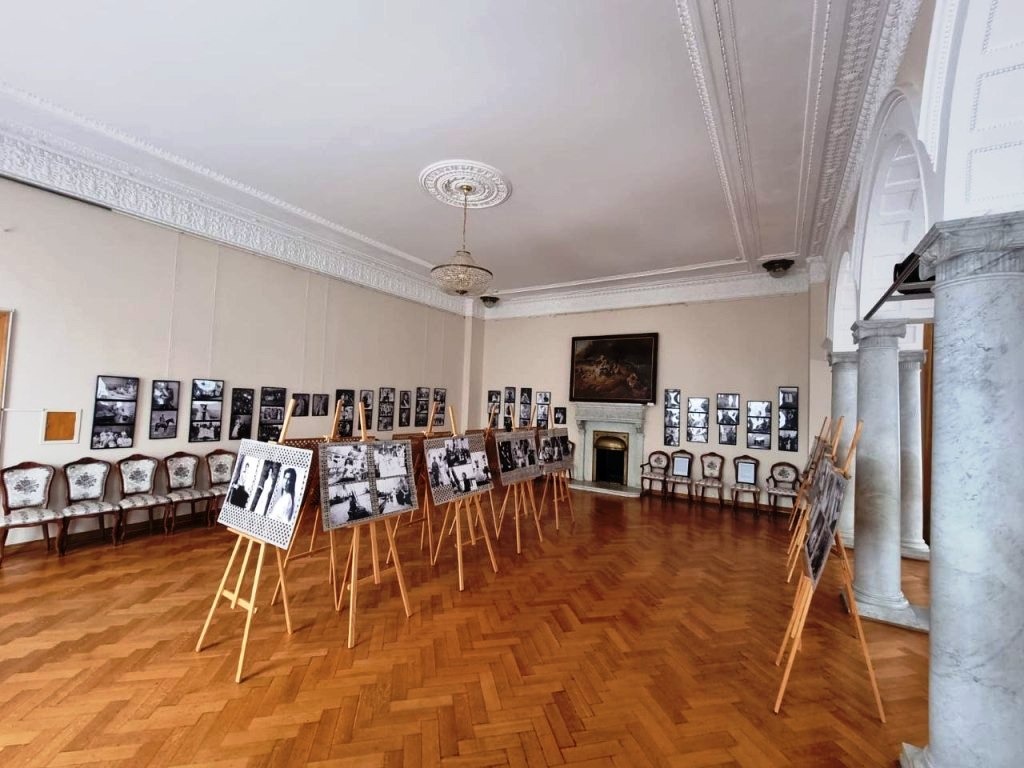
The exhibit is a joint project of the Tsarskoye Selo State Museum and the Alupka Palace Museum (Crimea), which showcases photographs from the private albums of Emperor Nicholas II and his family, as well as imperial memorabilia from the Tsarskoe Selo collection.
The albums with photographs capturing Emperor Nicholas II and his family during their visits to the Crimea in 1900-1909 were made for the Romanovs by K.E. von Gan & Co., a famous photography atelier in the town of Tsarskoye Selo, who were licensed to photograph the imperial family.
Their photographer and cinematographer Alexander Karlovich Yagelsky (1861-1916) used a then-innovative approach by printing still frames from film reels and thus getting more real, ‘live’ photos instead of stiff, staged shots.
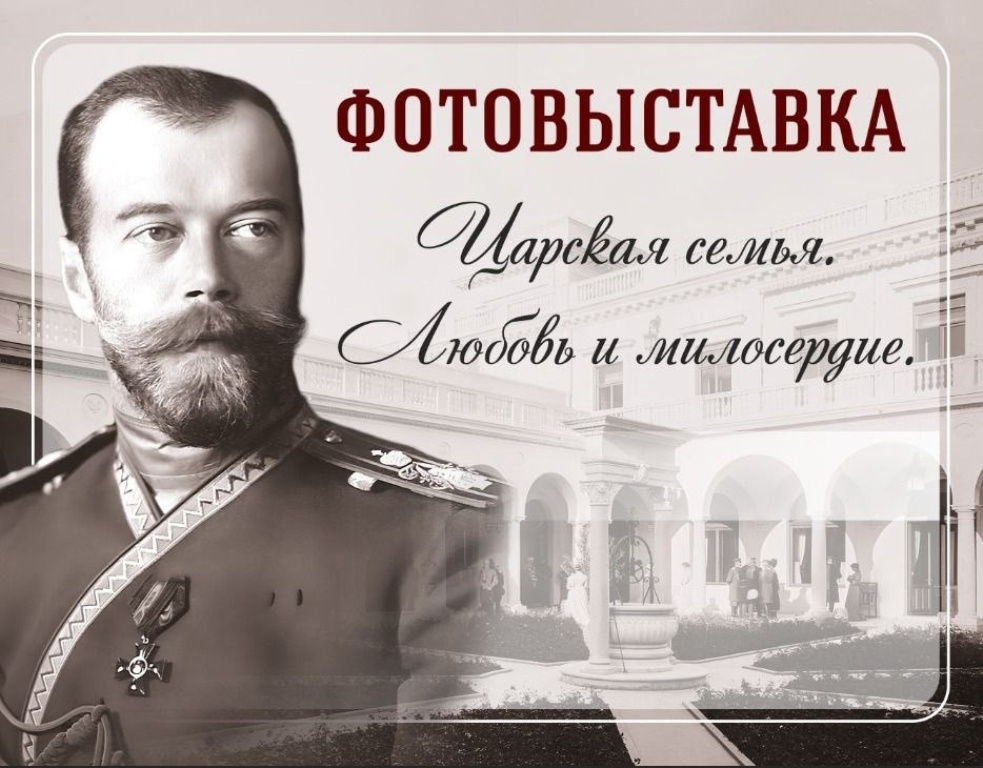
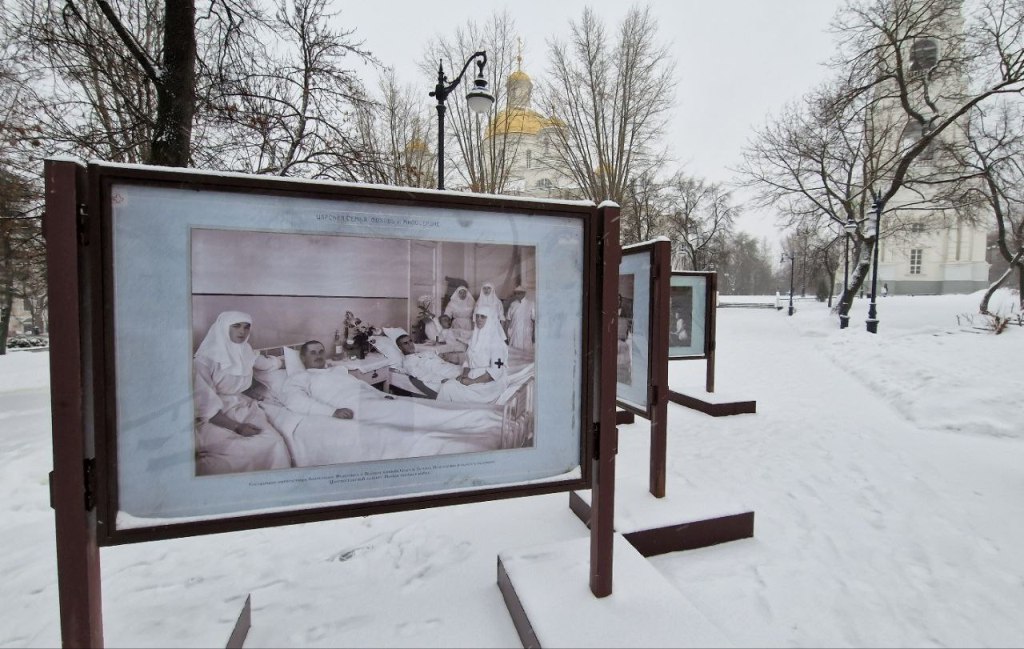
The photographs on display show the Imperial Family in Livadia, Yalta, Oreanda and Sebastopol, visiting infirmaries, regimental celebrations, the ship Rostislav and cruiser Pamiat’ Merkuria (Memory of Mercury), meeting with veterans and sisters of mercy of the Crimean War, as well as walking around or playing ball and lawn tennis.
“This is not just a series of photographs from beautifully designed albums with impeccable artistic taste. Before us are documents of the era that allow us to look into the past and see the people and events of the early 20th century through the eyes of the last Tsar and his family,” said Iraida Bott, Deputy Director for Research at the Tsarskoye Selo State Museum-Reserve.
An interactive touch table at the exhibition gives access to other over 130 digitized photos from the imperial albums.
Among the items of imperial memorabilia on display are Tsesarevich Alexei’s hat of a lower-rank officer from the imperial yacht Standart, Emperor Nicholas II’s jacket of a Naval Captain 1st rank, Empress Alexandra Fiodorovna’s dress, worn during their visits to Crimea in the early 20th century.
The exhibition runs until 20th November 2023.
***
In 2013, the photographs from this exhibition were published in a large 240-page hardcover album – *Августейшие визиты в Крым. 1900, 1902, 1909 (Imperial Visits to Crimea.1900, 1902, 1909). Only 1000 copies were printed.
*I regret that I do not know how to obtain copies, or where copies can be obtained. Current financial sanctions imposed on Russia by the West, it is impossible to order from Russian booksellers in the Russian Federation – PG
*You can order this title from most AMAZON outlets, including the United States, United Kingdom, Canada, Australia, France, Germany, Spain, Italy, Netherlands, Poland, Sweden and Japan *Note: prices are quoted in local currencies
English. Large 7″ x 10″ format. 162 pages with 132 photos in FULL COLOUR
In 1938, Russia’s last tsar Nicholas II was canonized by the Serbian Orthodox Church. On 1st November 1981, he was canonized as a new martyr by the Russian Orthodox Church Outside Russia (ROCOR). On 20th August 2000, after 8 years of study, he was canonized as a passion bearer by the Moscow Patriarchate, although the people had already been venerating him as a saint for a long time, and this canonization was simply a confirmation of a fact that already existed by itself.
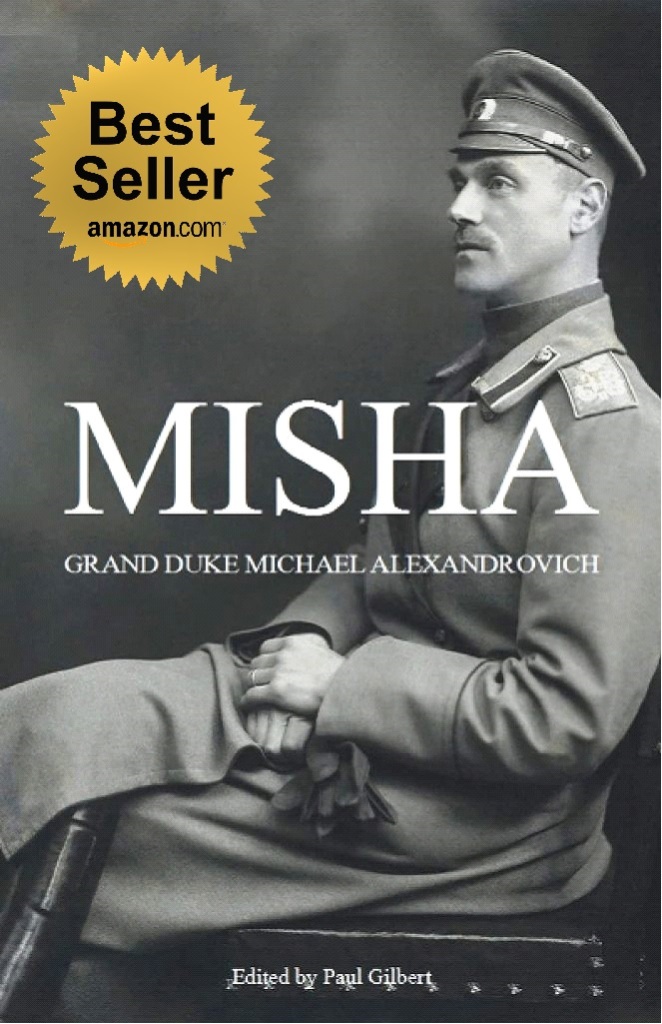
Since these historic dates, icons of Russia’s last Tsar have been installed in Orthodox churches across Russia and around the world. In addition home icons have been mass produced and sold for veneration by Orthodox Christians. This book features more than 130 of these icons in full colour.
Inside, are a series of articles, plus an introduction, in which the author explains iconography, Nicholas II as a martyr or passion bearer, the veneration of icons, intercession, miracles, non-canonical icons, frescoes, and more.
This book also includes a Prayer and Akathist to the Holy Martyred Tsar.
This book will not only appeal to Orthodox and non-Orthodox persons, but for any one who shares an interest in icons and iconography, as well as adherants to the Holy Royal Martyr Nicholas II.
On this day – 5th September (O.S. 23rd August) 1915 – Emperor Nicholas II assumed the position as Commander-in-Chief of the Russian Imperial Armed Forces.
After the great retreat of the Russian army in the summer of 1915, the Tsar removed his cousin Grand Duke Nicholas “Nikolasha” Nikolaevich (1856-1929) of the position on 21st August 1915.
In the order, the Tsar wrote with his own hand: “With firm faith in God’s mercy and with unshakable confidence in the final victory, we will fulfill our sacred duty of defending the Motherland to the end and will not disgrace the Russian land. Nicholas”.
Some historians have wrongly suggested that Nicholas II’s decision was disastrous, citing that the move was largely symbolic. It was at this stage of his reign that the Tsar’s patriotism reached its zenith. He travelled up and down the Eastern Front on the Imperial Train, in his motorcars and even on horseback to show himself to his troops, boasting morale, reviewing troops, inspecting field hospitals and preside over meetings with his chief-of-staff General Mikhail Vasilyevich Alekseyev (1857-1918).
PHOTO: Nicholas II with his chief-of-staff General Mikhail Vasilyevich Alekseyev
When Nicholas II assumed command of the Russian armed forces, he appointed Alekseyev as Chief of Staff of the General Headquarters and placed in charge of all military operations. He served in this capacity from August 1915 to March 1917.
According to Russian historian George Mikhailovich Katkov (1903-1985): “Alexeev was a modest and reserved man, an educated general, to whom the Tsar treated extremely attentively . . . . Every morning the Tsar and Alexeev discussed the affairs of the front for several hours. They apparently understood each other well, and there is no indication that the Emperor tried to impose any strategic or tactical ideas on his Chief of Staff. In fact, Alexeev was the commander-in-chief, and each of his undertakings was supported by the Sovereign.”
History has now proved that Russia made great gains under Nicholas II’s command. For instance, shortly after he assumed command of the armed forces, the Russian Imperial Army carried out at least 15 major victorious operations, not counting the Brusilov Breakthrough. Russia’s military historians now believe that had the revolution not interfered, Russia was bound to have won the war.
On 1st September (O.S. 19th August) 1916, he wrote the following in a letter to Empress Alexandra Feodorovna:
“Thank God, the news is good – on the first day of our offensive we captured 300 officers and more than 15,000 Austrian and German soldiers…”
On 16th December 2013, Russia’s Defense Minister Sergei Shoigu opened a sculptural composition dedicated to the heroes of World Wars I and II on the grounds of the National Defense Control Center (NDCC) building – situated on Frunze Embankment in Moscow. The WWI monument (above) features Nicholas II on horseback, recognizing and honouring his efforts during the Great War.
On 22nd August 2023, a life-sized brass image of Tsar-Martyr Nicholas II was removed from the doors of St. Nicholas Cathedral, situated at the *Pokrovsky [Holy Intercession] Convent in Kiev, Ukraine.
*The convent was founded in 1889 and developed in the last decade of the 19th century by the Grand Duchess Alexandra Petrovna (1838–1900), the estranged wife and later widow of Grand Duke Nicholas Nikolaevich, Sr. (1831-1891). The laying of the St. Nicholas Cathedral took place on 21st August (O.S.) 1896. The first stone in the foundation of the cathedral was laid by Emperor Nicholas II. Grand Duchess Alexandra Petrovna died on 25th (O.S. 12th) April 1891, and was buried in the convent, according to her wishes.
PHOTO: a beautiful autumn view of St. Nicholas Cathedral, situated at the Pokrovsky [Holy Intercession] Convent in Kiev, Ukraine
On 15th August, Ukrainian People’s Deputy Rostislav Pavlenko published a post on social media, in which he pointed out that “despite the war with the Russian Federation, an image of the last Russian tsar can be seen on the doors of the Kiev convent”. Pavlenko was responding to complaints from local residents, who demanded the removal of the image.
He then filed a deputy appeal to the Security Service of Ukraine (SBU), regarding “the inadmissibility of the image of Nicholas II the bloody on the doors of St. Nicholas Cathedral in Kiev”. Two weeks later, the SBU, in response to the deputy’s appeal, reported that on 22nd August, at the direction of the administrator of the Kiev Diocese of the Ukrainian Orthodox Church, the doors with the image of the Russian tsar were dismantled. Pavelenko personally went to the convent to confirm that the doors of St. Nicholas Cathedral with the image of Nicholas II was no longer in place.
PHOTOS: before (above) and after (below) views of the life-sized brass image of Tsar-Martyr Nicholas II, depicted on the doors leading into St. Nicholas Cathedral
***
On 3rd April 2023, Ukrainian nationalists hung a large black banner denouncing the Moscow Patriarchate, across the facade of the Chapel in Honour of the Miraculous Image of the Lord Jesus Christ in Odessa. In addition, two icons including one depicting the Holy Tsar-Martyr Nicholas II were dismantled.
In July 2022 Ukrainian nationalists destroyed a bust-monument to Emperor Alexander III in the village of Pershotravneve, located in the Kharkiv region of Ukraine. The bust of the “Tsar-Peacemaker” was knocked to the ground, while the plaque, which included Putin’s name was also removed from the front of the pedestal.
The bust-monument was erected in 2013 on the occasion of the 400th anniversary of the Romanov dynasty and the 125th anniversary of the BorkiTrain Disaster on 29th October 1888, when the Imperial Train carrying Alexander III and his family from Crimea to St Petersburg derailed at high speed at Borki.
You must be logged in to post a comment.