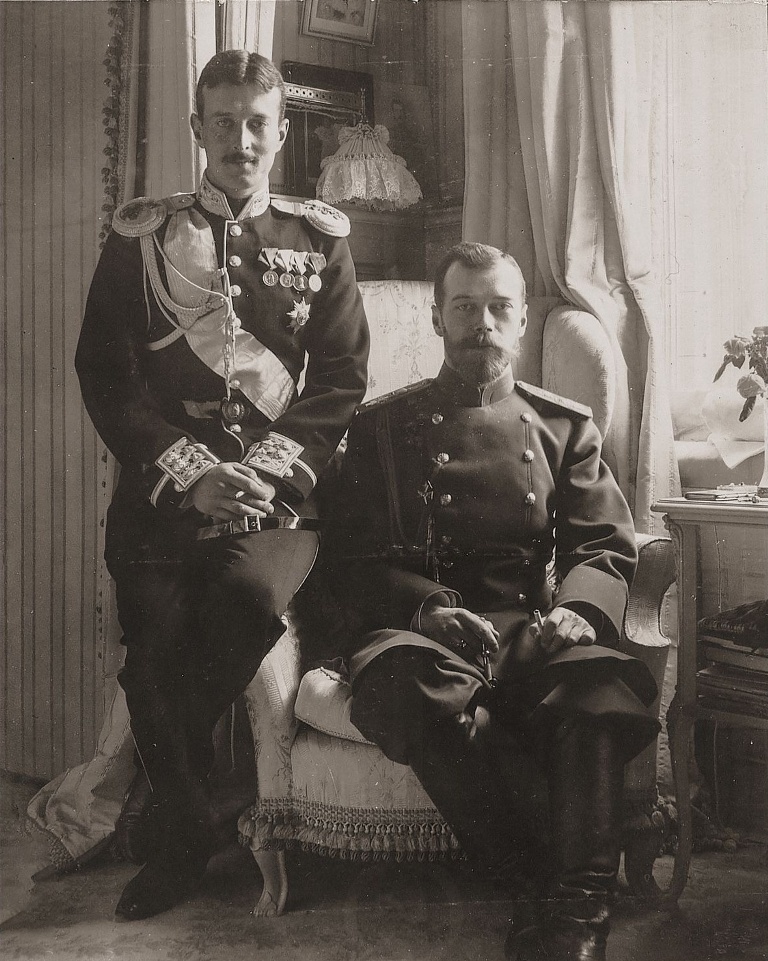
PHOTO: Grand Duke Kirill Vladimirovich and Emperor Nicholas II.
Mauve Boudoir in the Alexander Palace, Tsarskoye Selo. 1899
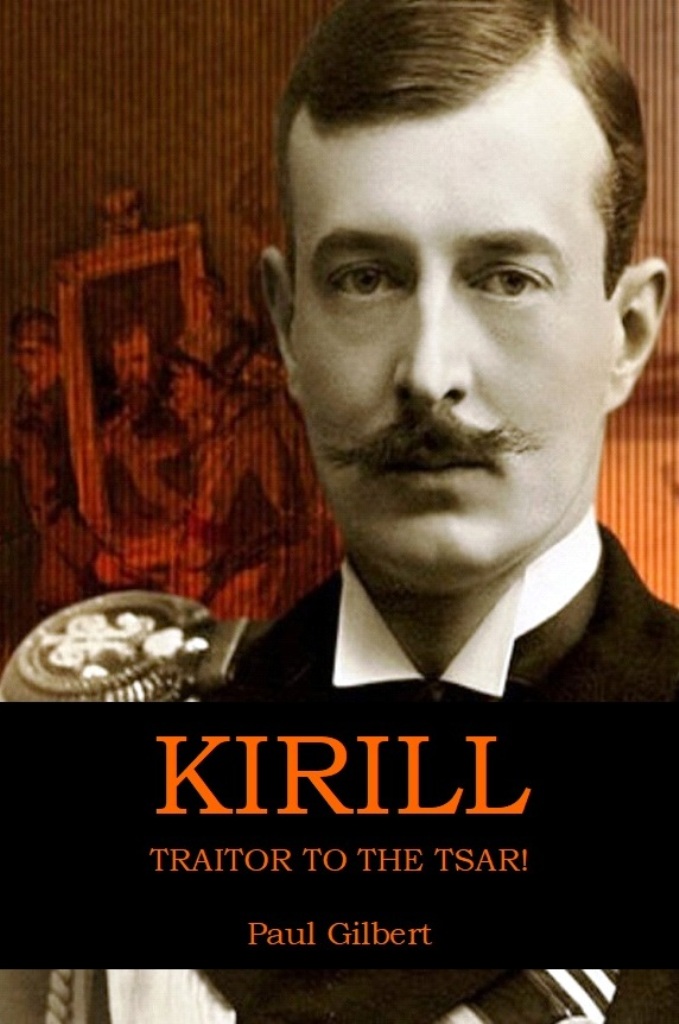
Please NOTE that parts of this article have been excerpted from my forthcoming book KIRILL: TRAITOR TO THE TSAR!, scheduled for publication in October 2025. Further details about this book can be found at the end of this article – PG.
***
The “treachery, cowardice and deceit” of Grand Duke Kirill Vladimirovich against Emperor Nicholas II knew no bounds. During my research of new documents from Russian archival and media sources, I came across evidence that shows the “Traitor Kirill” acknowledged in writing, his support of placing the Tsar under house arrest following the Tsar’s abdication in March 1917.
Who was Kirill Vladimirovich
During the reign of Russia’s last tsar, Kirill was one of several insignificant grand dukes. In the early 20th century, he was best known for barely surviving the sinking of the Russian battleship Petropavlovsk, during the Russo-Japanese War near Port Arthur in April 1904. Following his return to Russia, he was invalided out of the service suffering from burns, back injuries and shell shock.
Despite his injuries, in 1915 he was appointed Commander of the Naval Guards, and achieved the rank of rear admiral in the Russian Imperial Navy the following year.
Kirill Vladimirovich was a first cousin to Emperor Nicholas II, his father Grand Duke Vladimir Alexandrovich (1847-1909) was the younger brother of Nicholas’s father Emperor Alexander III (1845-1894), and the senior Grand Duke during the reign of his nephew, Emperor Nicholas II.
Kirill had two brothers: the Grand Dukes Boris and Andrei, and one sister the beautiful Grand Duchess Elena Pavlovna, who married Prince Nicholas of Greece and Denmark. Their third daughter Princess Marina of Greece is the mother of Prince Michael of Kent.
The Grand Duke stood third in line to the throne after Tsesarevich Alexei Nikolaevich and Grand Duke Mikhail Alexandrovich. Kirill Vladimirovich’s power hungry mother the Grand Duchess Maria Pavlovna, was well aware that her eldest son stood only a few heartbeats from becoming tsar.
“Emperor in exile”
Following the Tsar’s abdication in March1917 and the subsequent murder of the Imperial Family in July 1918, the monarchy in Russia ceased to exist. In June 1917, Grand Duke Kirill fled Russia with his pregnant wife and their two daughters to Finland. It is interesting to note that the Kirillovich were the only branch of the Imperial Family who managed to escape Bolshevik Russia, without losing any family members.
Although the Russian monarchy no longer existed after 1917, that did not deter Kirill from creating his very own “make believe Court” in exile, an action which his son Vladimir (1917-1992) carried on and again in 1992 by his granddaughter Maria (b. 1953), who today holds her own “make believe Court” from her luxurious Madrid apartment.
In 1922, Kirill proclaimed himself the “Guardian of the Russian throne”, and in 1924 – the “Emperor of All Russia”. Both ridiculous edicts were made despite the fact that neither the Russian Empire nor the monarchy no longer existed.
Given that Nicholas II, his son Alexei and the tsar’s brother Mikhail were all dead, had the Russian Empire endured, Kirill would now be next in line to the throne. But as the Laws of Succession to the Russian throne no longer held any legal validity in the new Bolshevik controlled Russia, any claims to the Russian throne in exile were now up for grabs.
Kirill’s only contender was his cousin the former Commander in Chief of the Russian Imperial Army Grand Duke Nikolai “Nikolasha” Nikolaevich, Jr., who was immensely popular, not only with Russian emigres, who never forgave Kirill for his unseemly behavior during the revolution, his premature recognition of the Provisional Government and for his act of treason against Emperor Nicholas II.
In addition, Kirill refused to recognize that the Dowager Empress Maria Feodorovna rightly held the position as the senior surviving member of the Imperial Family, and as such the Head of the Imperial Family in Exile. His utter disrespect for the mother of God’s Anointed was beyond reproach. Both the Dowager Empress and her daughters, the Grand Duchesses Xenia and Olga Alexandrovna vehemently opposed Kirill’s claims, as did other members of the Romanov family.
Maria Feodorovna’s opinion, perhaps, was best explained by the fact that until the end of her life she refused that her son and grandchildren were dead, and even forbade serving pannikhidas [Orthodox memorial service for the dead] for them. But other Russian exiles could have had more compelling reasons not to recognize Kirill Vladimirovich’s right to the Russian throne.
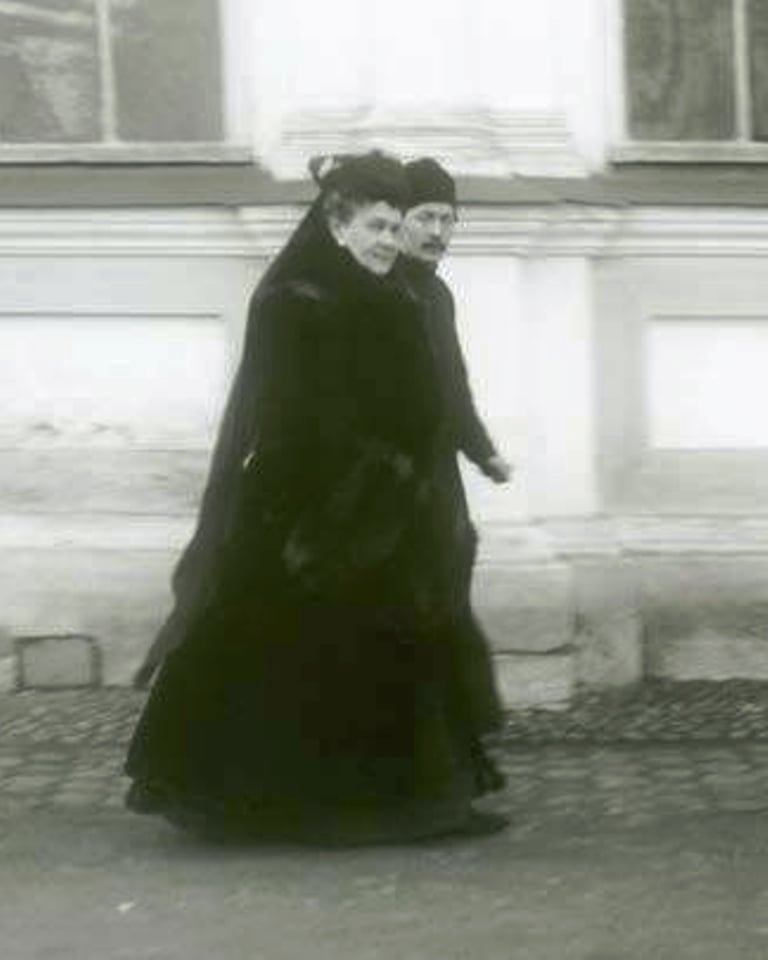
PHOTO: Grand Duchess Maria Pavlovna with Fyodor Morozov, St. Petersburg. 16th March 1910. Maria is dressed in black, still mourning the loss of her husband and Kirill’s father Vladimir the year before.
The apple doesn’t fall far from the tree
The German-born Grand Duchess Maria Pavlovna (née Duchess Marie Alexandrine Elisabeth Eleonore of Mecklenburg-Schwerin) was a large manly-looking woman with a hard cold face. According to the memoirs of her contemporaries, “Maria was a decisive, active and intelligent”. She stylized herself as the “First lady of St. Petersburg”. In the early 20th century, it was around her, and not around the Empress, that the social life of St. Petersburg revolved.
She held her own “Imperial Court” at her palace on the Palace Embankment overlooking the Neva River. Her receptions and balls became a watering hole for the capital’s liberal and left-wing thinking society, attracting such personalities as Grand Duke Nikolai Mikhailovich, an equally disagreeable figure as as his hostess.
The Grand Duchess did not hide her hostility to Alexandra Feodorovna nor Maria Feodorovna and actually opposed herself to the Imperial Family. It was thanks to Maria Pavlovna’s vicious instigation that the Emperor’s uncles and cousins: the grand dukes began, although not explicitly, to oppose the Emperor.
What Maria Pavlovna was thinking about when she entered into a confrontation with the Imperial Family is not known for certain. However, some Russian historians have specualated that Maria Pavlovna found out the truth about Alexei’s haemophilia, and that he could die at any time. She was also led to believe the Emperor’s brother, Grand Duke Mikhail Alexandrovich, was not eager to occupy the Russian throne. Therefore, opposing Alexandra Feodorovna and Nicholas II, Maria Pavlovna could well keep her son Kirill and his right to the Russian throne in mind.
The grand dukes bad relations with Nicholas II, became one of the most serious reasons for the fall of the monarchy in Russia. By creating a fronde and the grand dukes growing hostilities towards the Emperor, Maria Pavlovna, in fact, severed the Kirillovich branch from the rest of the Imperial Family. After the 1917 Revolution, the Grand Duchess stubbornly refused to leave Russia, still hoping to make her eldest son Kirill Vladimirovich the Tsar. It was not until February 1920, that Maria finally fled Russia and the approaching Bolsheviks, taking her jewels with her. She was the last Romanov to leave Russia, and the first to die in exile. She had made her way to France, however, unable to withstand the emotional turmoil, Maria Pavlovna died in September of the same year.
The betrayal of Kirill Vladimirovich
Perhaps Maria Pavlovna did not have such far-reaching plans for her son, but Kirill, however, did not show his best side.
During the February Revolution, the Grand Duke, betrayed not only Nicholas II, but also the monarchy itself. Putting on a red bow, Kirill led his Naval Guards to the State Duma in Petrograd, where he swore allegiance with the new Provisional Government, an action which many regarded as treason.
When in March 1917 the Provisional Government decided to put Emperor Nicholas II and his family under arrest, Kirill Vladimirovich fully supported this decision. The Grand Duke stated the following:
“Exceptional circumstances require exceptional measures. That is why the imprisonment of Nikolai and his wife is justified by the events taking place in Russia. Finally, the government apparently had enough reasons to decide on this measure. Be that as it may, it seems to me that none of us belonging to the family of the former Emperor should now remain in their posts.”
As is known, during the Revolution, many members of the Romanov dynasty were shot. Kirill Vladimirovich, thanks to his loyalty to the Provisional Government, managed to escape. The new authorities gave him permission to leave Russia for Finland.
Under no pretext can we admit to the throne those whose ancestors belonged to parties involved in the 1917 revolution in one way or another. Nor can we admit those whose ancestors, who betrayed Tsar Nicholas II. Nor can we ignore those whose ancestors openly supported the Nazis. Thus, without any reservations, the right to the succession to the throne of the Kirillovich branch should be excluded!
Any person who supports this branch of the Romanov dynasty, dishonours the memory of the murdered Holy Tsar Martyr Nicholas II.
© Paul Gilbert. 27 August 2024
***
Below, is the cover of my forthcoming book Kirill: Traitor to the Tsar, now scheduled for publication in Autumn 2025 . . . more than 200 pages, it will be available in hard cover, paperback and ebook editions! Watch for my ads in both Majesty and Russian Life magazines!
recapping on his track record
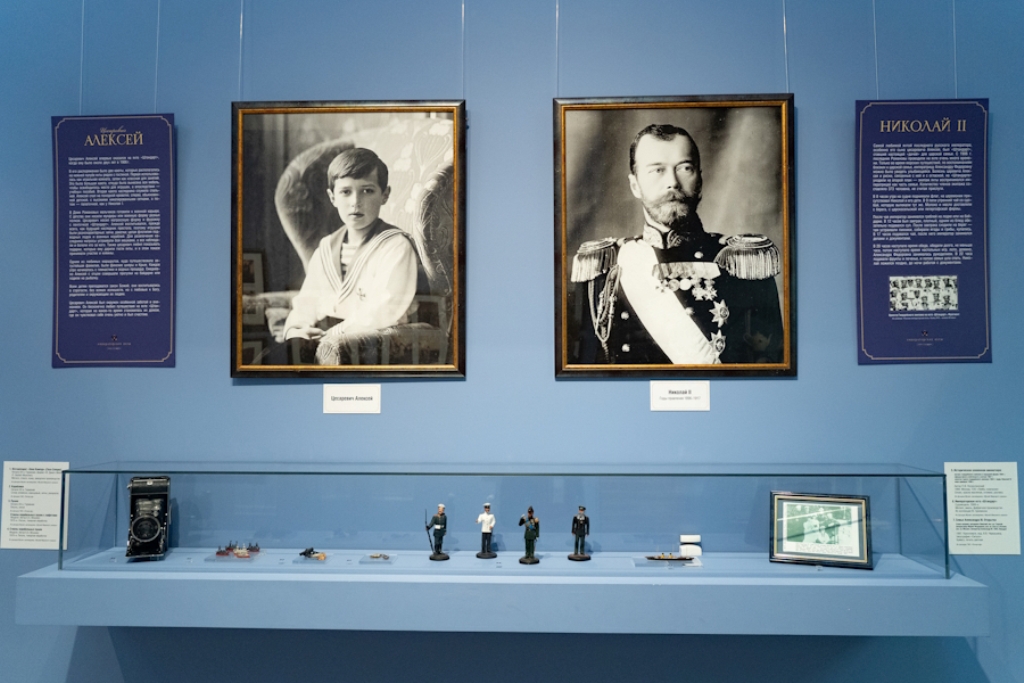



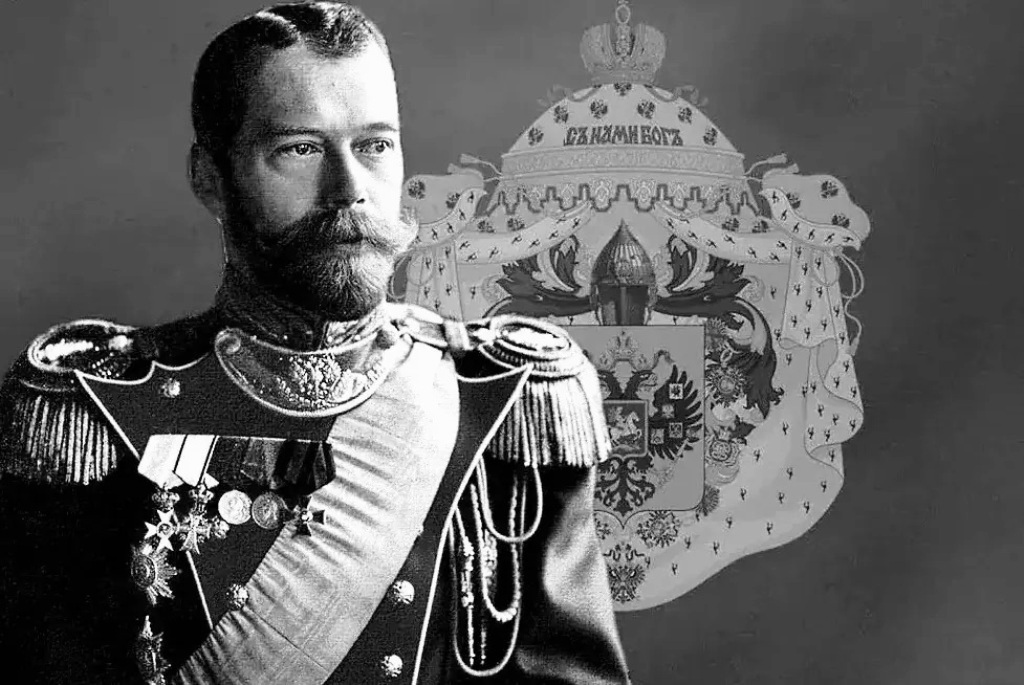
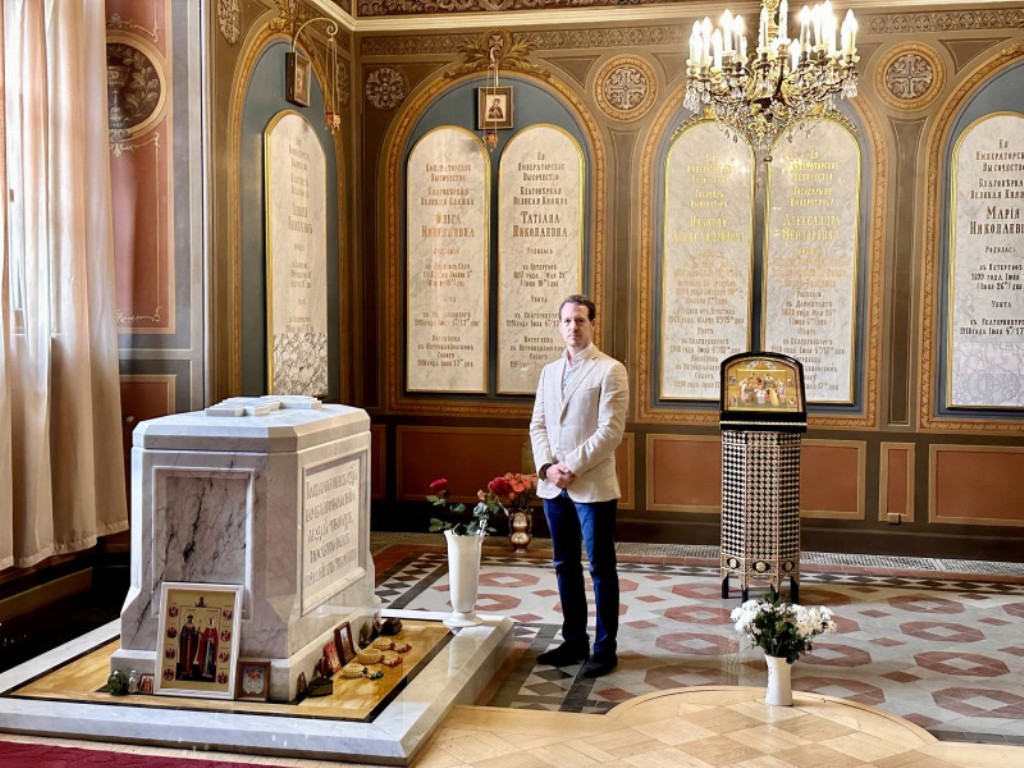
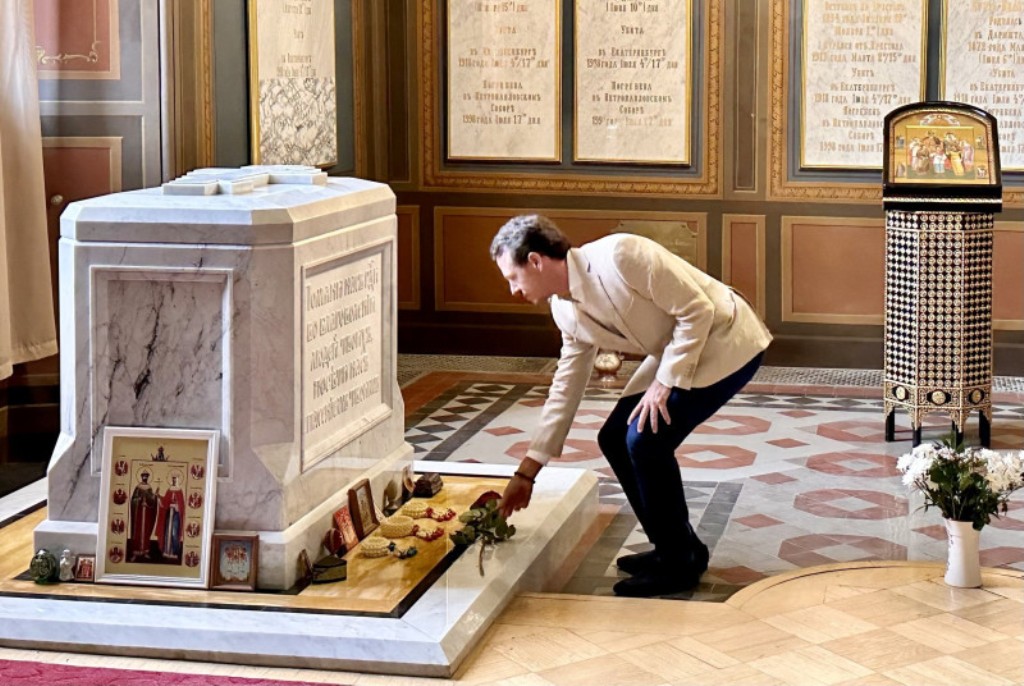
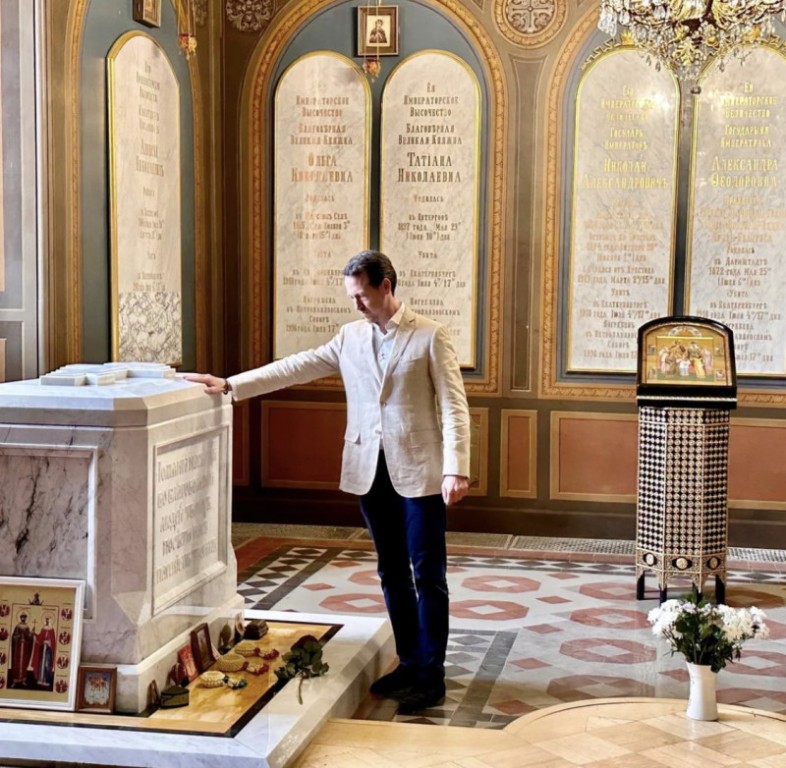

 Nicholas II
You must be logged in to post a comment.