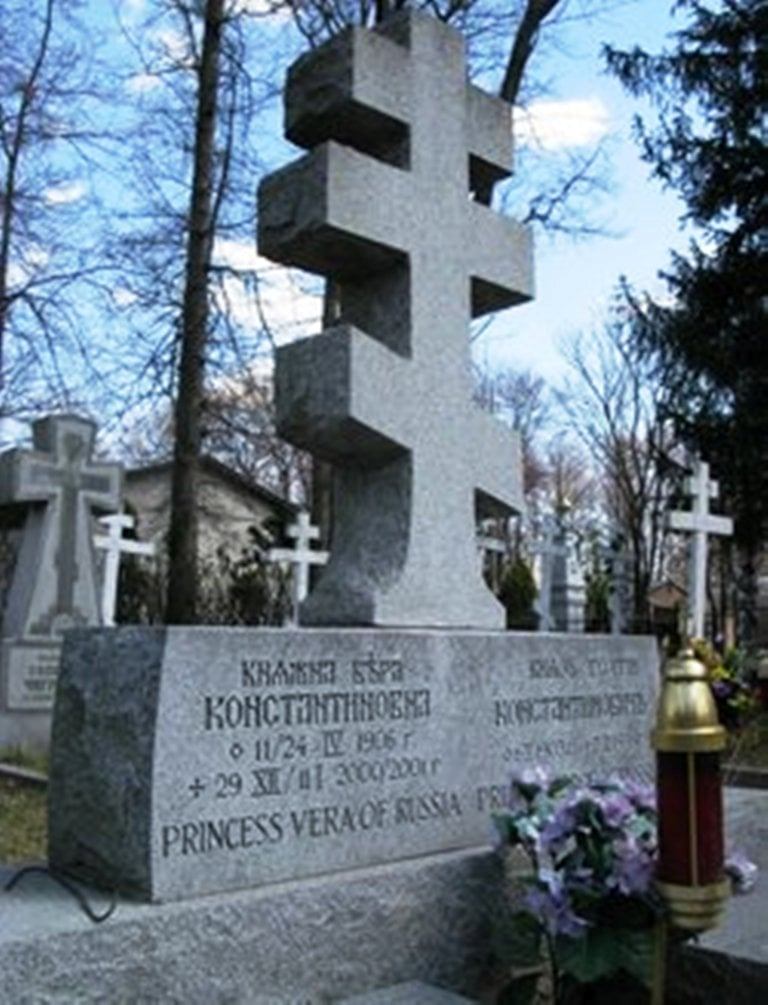
Lost Orthodox Churches of Imperial Russia – Cathedral of Christ the Saviour (Borki)
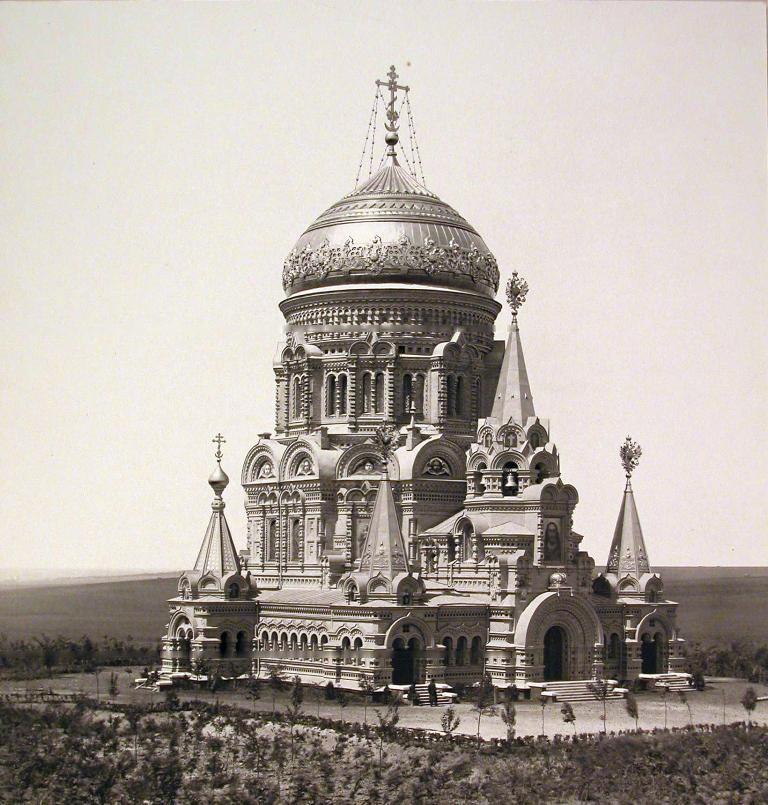
PHOTO: view of the Cathedral of Christ the Saviour at Borki. 1916

During the Bolshevik and later the Soviet war against the Russian Orthodox Church (1920-1980s), thousands of Orthodox churches, cathedrals and monasteries of the Russian Empire were destroyed. Many of these architectural monuments were blown up, their materials were used to construct new buildings. For instance. the marble salvaged from the demolished Cathedral of Christ the Saviour in Moscow in 1931, was used to decorate some of the city’s elaborate Metro stations.

One of the greatest architectural losses of both the Russian Empire and the Russian Orthodox Church is that of the Cathedral of Christ the Savior in Borki, Kharkov Oblast (today, part of eastern Ukraine).

The cathedral was built in 1891-1894 in the village of Borki, on the site of the crash of the Imperial Train on 17th October 1888, in memory of the dead and in honour of the miraculous salvation of the Emperor Alexander III and his family. The majestic cathedral, was designed in the Russian-Byzantine style, by the Russian architect Robert Robertovich Marfeld (1852-1921).
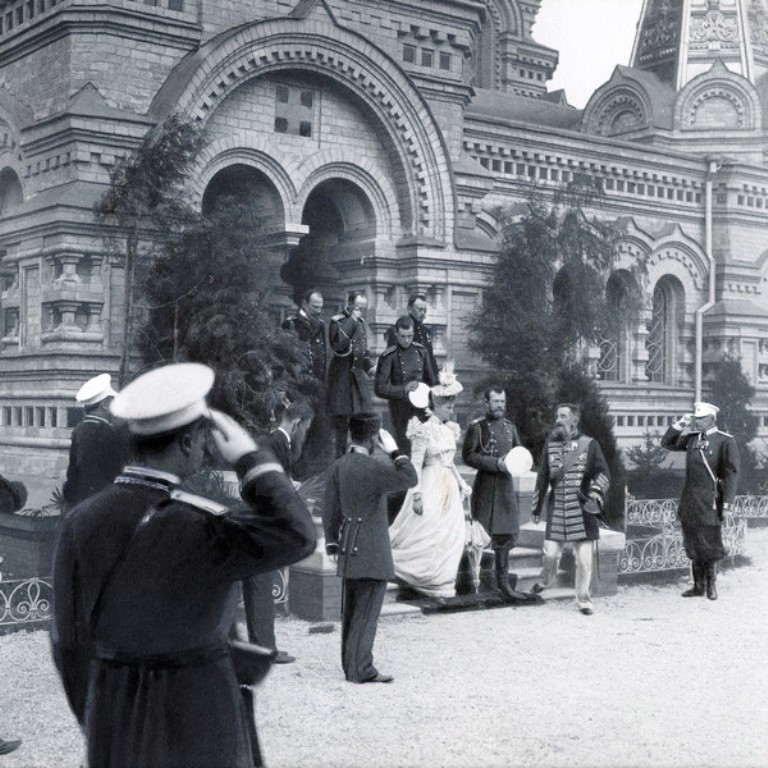
PHOTO: Emperor Nicholas II and Empress Alexandra Feodorovna leaving the Cathedral of Christ the Saviour on 20th August 1898, the day marking the 10th anniversary of the Borki train disaster

History

On 27th April 1889, on the initiative of the Kharkov governor Alexander Ivanovich Petrov (1838/1841—1915), a committee was created to erect a memorial at the site of the crash of the tsar’s train. On 30th May, the committee decided to construct a cathedral in the center of the architectural ensemble, and to erect a chapel on the site of the disaster itself. On the same day, the landowner Apollon Mikhailovich Mernenkov donated the land near the site of the disaster for the construction of the cathedral.

At the time, the crash site of the Imperial Train attracted a lot of people who came to pray at the site, but expressed dissatisfaction with the fact that there was no room for offering thanksgiving prayers for the salvation of the Tsar and his family, Archbishop Ambrose (Klyucharev) of Kharkov and Akhtyrka (1820-1901) and the Venerable Herman of Svyatogorsk (Gregory Ivanovich Klitsa (1816–1890) organized the construction of a wooden church and skete.

In addition, buildings for visitors to the skete, buildings for monastic cells and refectory, and a summer shelter for pilgrims were erected on the land donated by the peasants of the village of Sokolovo, Trees used for the construction of the Old Russian style church came from a pine forest in Moscow, and transported by rail. On 20th August 1889, the opening of the skete and the consecration of a church in honour of the Image of Christ the Saviour Not-Made-by-Hands took place.
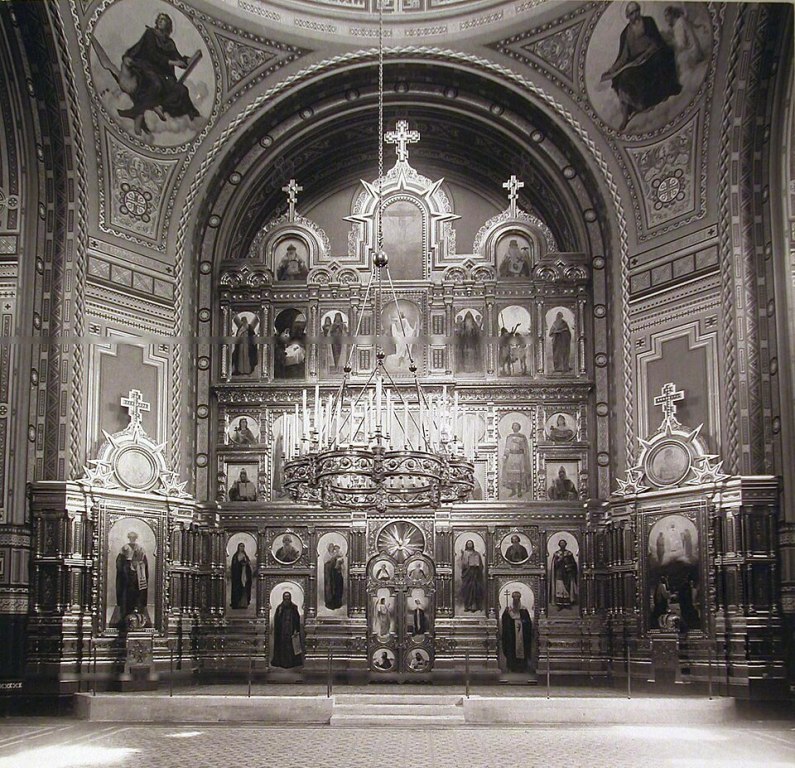
PHOTO: view of the iconostasis of Christ the Saviour at Borki. 1908
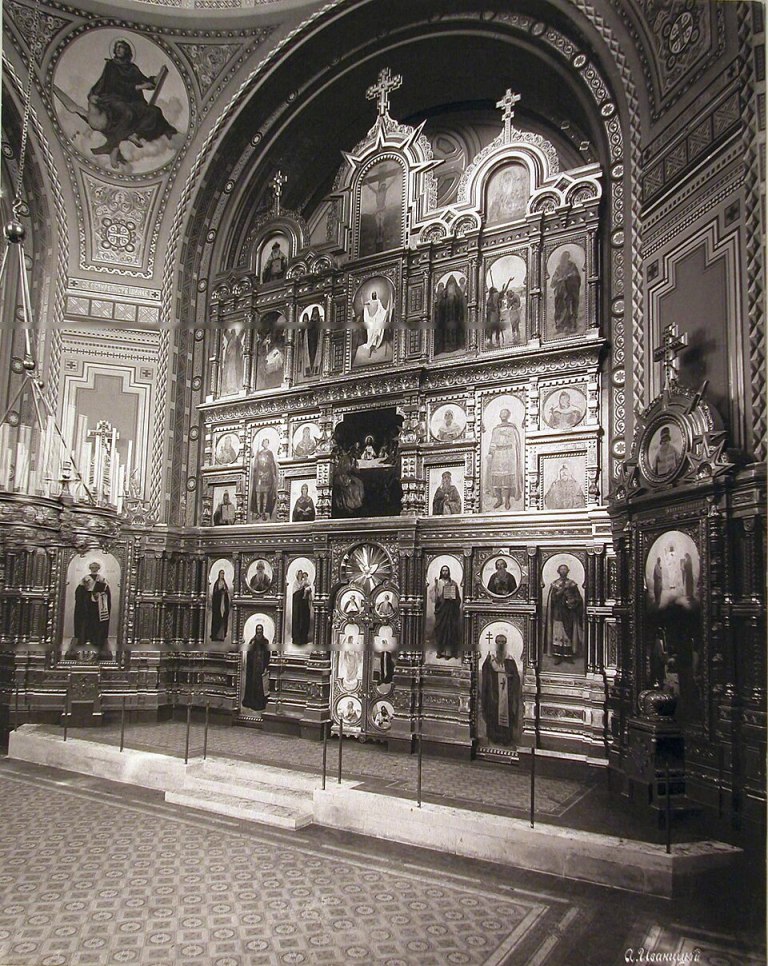
PHOTO: view of the iconostasis of Christ the Saviour at Borki. 1908
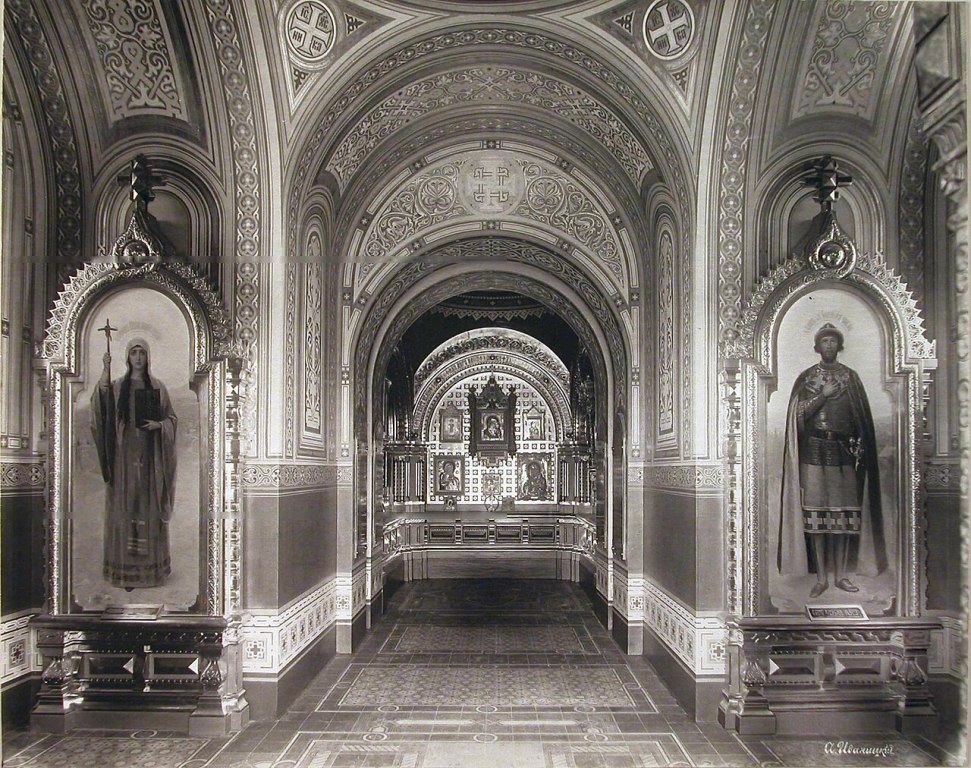
PHOTO: view of the two side chapels of Christ the Saviour at Borki. 1908

The project of the stone Cathedral of Christ the Saviour was developed by Robert Robertovich Marfeld (1852-1921), construction was carried out at the expense of the local manufacturer I. Voronin and numerous donors.

On 21st May 1891, the foundation was laid, the ceremony was attended by Empress Maria Feodorovna, Tsesarevich and Grand Duke Nikolai Alexandrovich [future Emperor Nicholas II] and other members of the Imperial Family.

The cathedral was designed to hold 1400 worshippers. It was a majestic structure, surrounded on three sides by a covered gallery and crowned with a huge golden dome. All the exterior gilding of the cathedral and chapel were made of gold leaf.

The interior of the cathedral was distinguished by simplicity and at the same time elegance. On the right side of the Holy Doors was placed the Image of the Saviour Not-Made-by-Hands, in honour of which the cathedral was erected, and on the left side was an icon of the Mother of God. The Holy Doors were carved from linden wood. On three sides of the church there were extensive choirs.

On 17th October 1891, a chapel was laid at the place where the Imperial Family miraculously came out from under the wreckage of the train. At first, its underground section was erected in the railway embankment, then aboveground, in the form of a tetrahedral tower with a golden dome. The Ministry of Railways at its own expense built two majestic staircases on the slope of the embankment and a platform opposite the cathedral itself.

On 14th July 1894, in the presence of Emperor Alexander III and members of his family, the solemn consecration of the cathedral in the name of Christ the Saviour took place.

A landscaped park was laid out in front of the cathedral, and outdoor lighting was installed. At the place where the Empress tended to the wounded victims of the train crash, a gazebo made of stones and metal was erected.

In 1900, the cathedral complex was transferred to the jurisdiction of the Ministry of Railways. With the money raised by the railway and voluntary donations, a hospital and a home for elderly railway workers were built at the cathedral complex, a parochial school and a public library were opened, as well as a museum dedicated to the events of 17th October 1888.

On 20th August 1898, Emperor Nicholas II, Empress Alexandra Feodorovna along with other members of the Imperial Family visited the Cathedral of Christ the Saviour, on the day marking the 10th anniversary of the Borki train disaster.

In 1908, a monument to Emperor Alexander III was erected next to the cathedral.
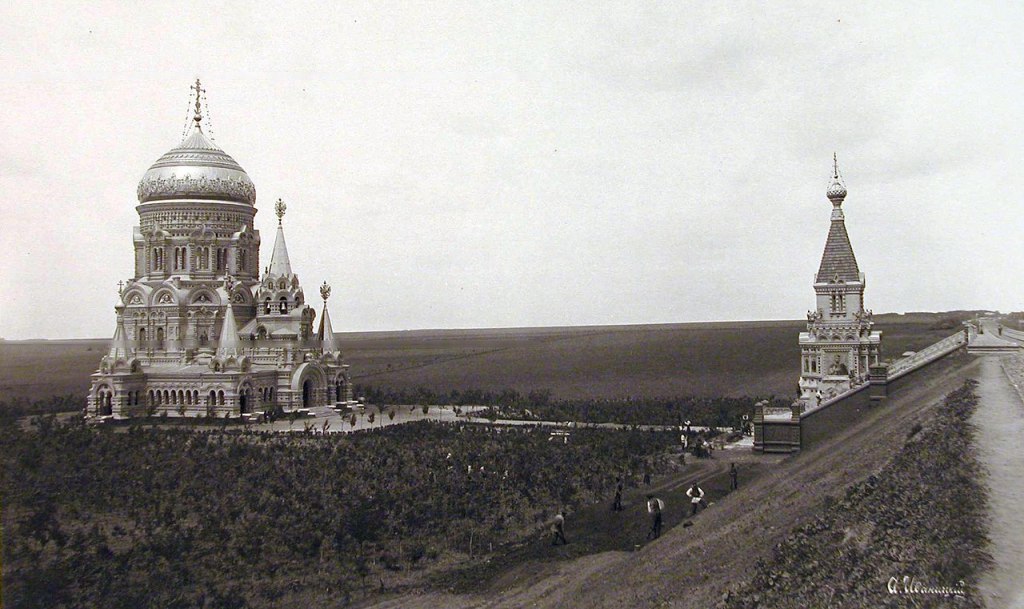
PHOTO: view of the Cathedral of Christ the Saviour at Borki. Only the Chapel of the Saviour (right) has surived to the present day


 Destruction

During the Great Patriotic War (1941-45), the cathedral complex was completely destroyed. The Cathedral of Christ the Saviour caught fire, the golden dome collapsed. On 7th September 1943, the cathedral was blown up during the offensive of Soviet troops. It is not known whether it was the Soviets or the Nazis who shelled it. After the war, the ruins of the cathedral were blown up.

Miraculously, only the Chapel of the Saviour, situated some 60 meters from the cathedral survived, although it to was badly damaged during the war. In 1992-1993, the chapel was restored, funded by conations raised by local residents and the Southern Railway. On 27th April 2003, the chapel was consecrated by Bishop Onufriy.
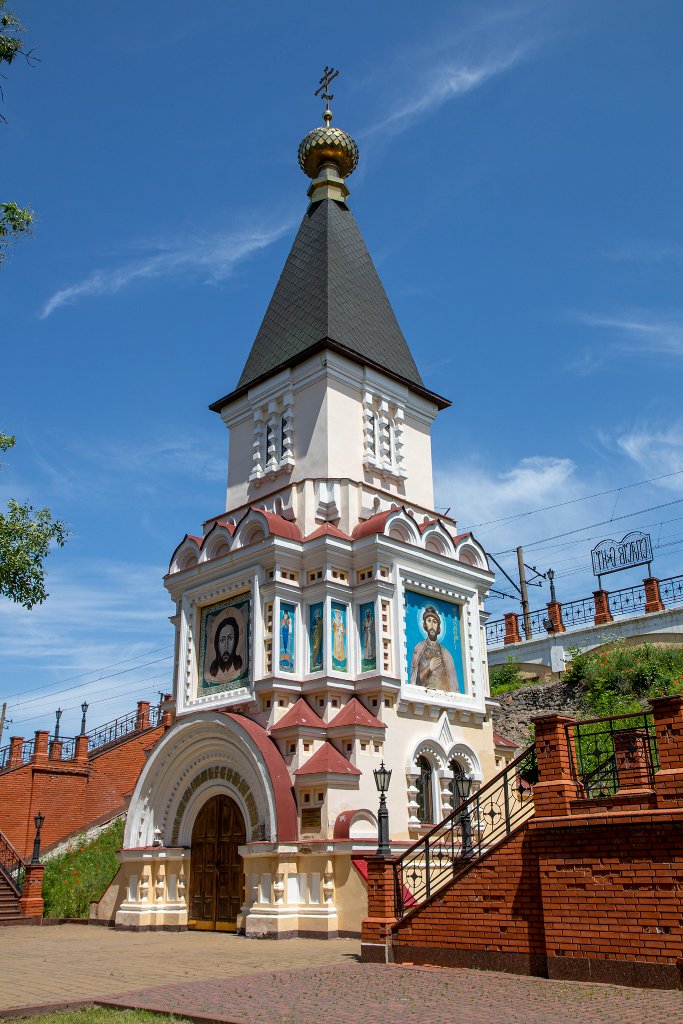
PHOTO:  the Chapel of the Saviour at Borki as it looks today

FURTHER READING

Lost Orthodox Churches of Imperial Russia – Part I + 13 PHOTOS

Lost architectural monuments of the Moscow Kremlin + 13 PHOTOS

© Paul Gilbert. 30 January 2026
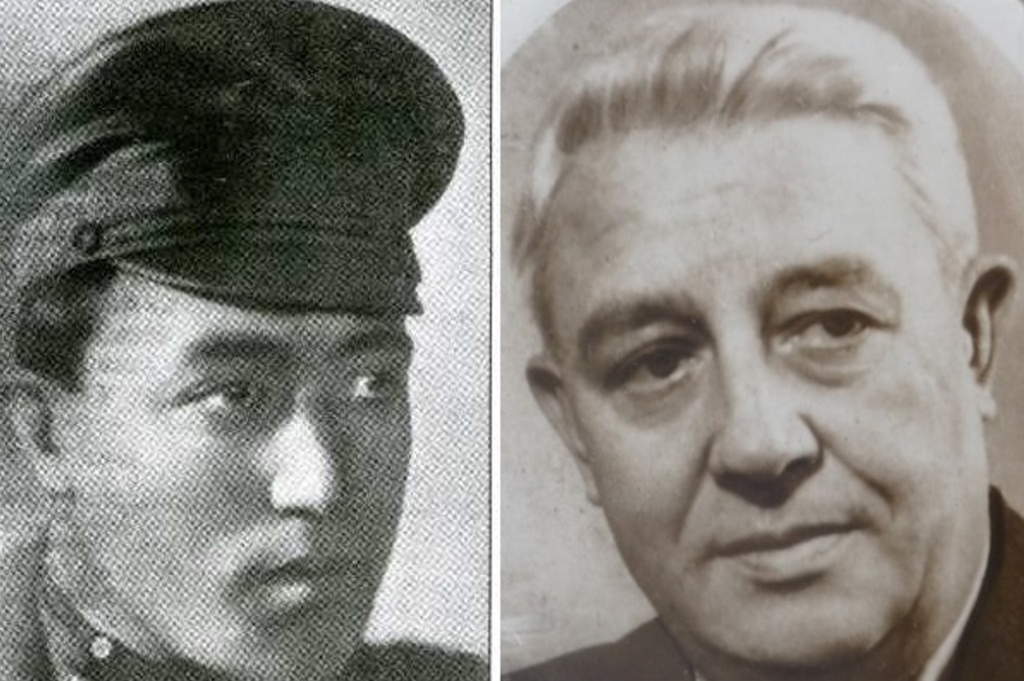
Confession of a regicide – Grigory Nikulin (1894-1965)

PHOTO: Grigory Petrovich Nikulin as he looked in 1918 and 1950

July 17th 1918, is the date that forever divided Russian history into “before” and “after”. That night, in the basement of the Ipatiev House in Ekaterinburg, the last Russian Emperor Nicholas II and his family were brutally murdered.

From loser to Chekist: the path of the regicide

Grigory Petrovich Nikulin, the future executioner was born in 1894 near Kiev into a poor lower-class family. Life did not work out well for Grigory, as a youth: he did not graduate from school or college, and he was already working hard by the age of 14. Fleeing from his alcoholic and abusive father, he ran away from home and quickly fell under the influence of revolutionary ideas. By 1916, he was already an experienced underground worker at a dynamite factory near Ekaterinburg.

After the February 1917 Revolution, Nikulin came out of the shadows, joined the Russian Social Democratic Labour Party (RSDLP) and became part of the  All-Russian Extraordinary Commission (the Cheka). Here he made the acquaintance of Yakov Yurovsky, the future commandant of the Ipatiev House. Cold-blooded and loyal, Nikulin was ideally suited for the role of a guard, and then an executioner.

Nikulin proved his ruthlessness by shooting Prince Vassily Alexandrovich Dolgorukov (1868-1918), who had faithfully followed the Tsar and his family into exile. He was also involved in death of Bishop Hermogenes (Dolganyov) of Tobolsk and Siberia (1858-1918), who was drowned in the Tura River by the Bolsheviks.

A sentence that was waiting in the wings

In the spring of 1964, already being a pensioner and former head of the Moscow Criminal Investigation Department, Nikulin agreed to a radio interview. His story is a chilling protocol of a state sponsored murder.

According to him, the question of the fate of the Tsar was decided at the very top. The Chekist and fellow regicide Filipp Goloshchyokin went to Moscow twice to coordinate with Vladimir Lenin and Yakov Sverdlov. Initially, a public trial was planned, but the approach of the White Army on Ekaterinburg made it necessary to alter their plan. The final decision was made by the Ural Executive Committee of the Regional Council.

On 16th July, Yurovsky, returning from a meeting of the executive committee, announced that the execution would take place that night. Various options were discussed: to kill the prisoners in their sleep or to throw grenades into their rooms. They settled on a firing squad. Under the pretext of the danger of an attack on the house, the Tsar, his family and four faithful retainers were led down to the basement, where they would all be shot. There were to be no survivors.

At about 11 p.m., Botkin was woken up. “Would you be so kind as to awake the family and lead them downstairs.” Meanwhile the regicides assembled in the Ipatiev House to carry out the murders – Medvedev, Yermakov, Yurovsky, Pavel Medvedev and Kabanov – a total of eight people.

It took the family two hours to get ready. When they went down to the basement, they had to carry chairs – for the Empress and the Tsesarevich, who was dreadfully ill and could not stand.

” Alexandra Fedorovna and the heir sat down. Then Comrade Yurovsky, uttered: your friends are advancing on Ekaterinburg and therefore you are sentenced to death. They didn’t even get it, they had no time to react, because Nikolai yelled: “Ah!” and at that time there was a volley! One! Two! Three!”

Following all that, the innocent girl, Princess Anastasia, Demidova, who protected herself from fright with a pillow, and a sick teenager [Alexei] who, according to Nikulin, “tossed and turned for a long time.” They were both shot dead.

The regicide was “finished” in half an hour. The bodies were wrapped in blankets and thrown into the back of a waiting truck parked in the yard. The noise of the engine was supposed to drown out the shots and screams of the women.

“Baltasar was killed . . .”

According to the investigator Nikolai Alekseevich Sokolov (1882-1924), the bodies of the Imperial Family were taken to the forest, where they were desecrated and subsequently destroyed. The regicides themselves were shocked by what they had done. One of them said: “No one will ever find them…”

Nikulin himself sincerely believed that “humanity was shown on our part” and said that “he would be happy” if the Whites did the same to him. Obviously, he understood what a crime he had committed, and what kind of reprisal the embittered officers could have committed against him.

It is interesting to note, that on 20th July 1918, Nikulin accompanied two wagons of the Tsar’s family belongings from Ekaterinburg. They were first delivered to Perm, and after sorting, part of the valuables (silver, gold) along with four thousand poods of gold collected in the banks of the Ural cities were delivered to Moscow by a special train No 3-bis and handed over to the State Depository, the commandant of the train was Yakov Yurovsky, Nikulin was his assistant.

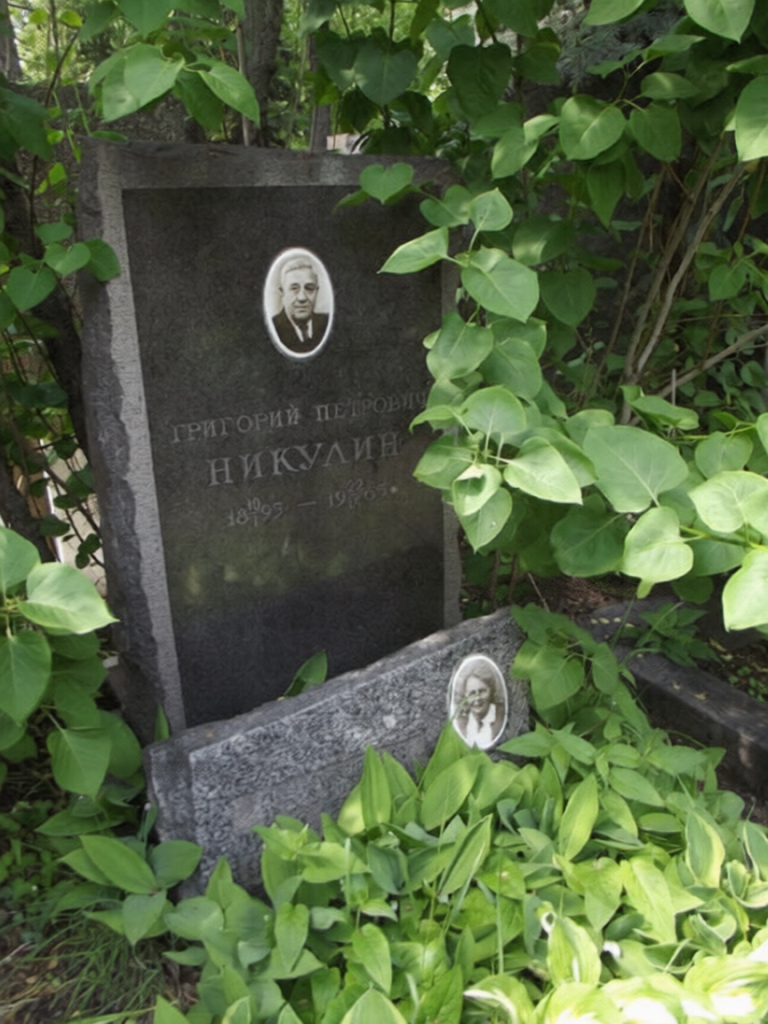
PHOTO: Nikulin’s grave in the Old Bolshevik section
of the Novodevichy Cemetery, Moscow

Grigory Petrovich Nikulin died on 22nd September 1965, at the age of 71. He was buried in the Old Bolshevik section of the Novodevichy Cemetery in Moscow.

Across from Nikulin’s grave is the grave of Boris Yeltsin (1931-2007), President of the Russian Federation from 1991 to 1999. The Ipatiev House was demolished by order of Boris Yeltsin in 1977 while he was leader of the Sverdlovsk Executive Committee.

The Politburo had declared the house not to be of “sufficient historical significance”, however, the real reason was that the Ipatiev House was becoming a shrine for a growing number of faithful, who left candles, made the sign of the Cross and offered prayers to the murdered Tsar and his family.

Given his participation in the regicide, it is nothing short of a miracle that Nikulin’s grave has not been vandalized by those faithful to the memory of Emperor Nicholas II and his family. In recent years, the graves of Pyotr Yermakov in Ekaterinburg and Yakov Yurovsky in Moscow have been vandalized repeatedly.

© Paul Gilbert. 29 January 2026
Equestrian monument of Nicholas II to be installed in in the Chelyabinsk region

Further to my article New monument to Nicholas II to be installed in the Urals, published on 7th May 2025, I am pleased to provide an update on this new monument to Emperor Nicholas II.

A new equestrian monument of Emperor Nicholas II is to be installed in the Ural city of Verkhneuralsk, which is located about 230 km south of Chelyabinsk and 450 km south of Ekaterinburg.

The monument is in memory of Tsesarevich Grand Duke Nicholas Alexandrovich [future Emperor Nicholas II] visit to Verkhneuralsk on 3-4 August (O.S. 22-23 July) 1891, during a trip across the Russian Empire following his Eastern Journey (1890-91).

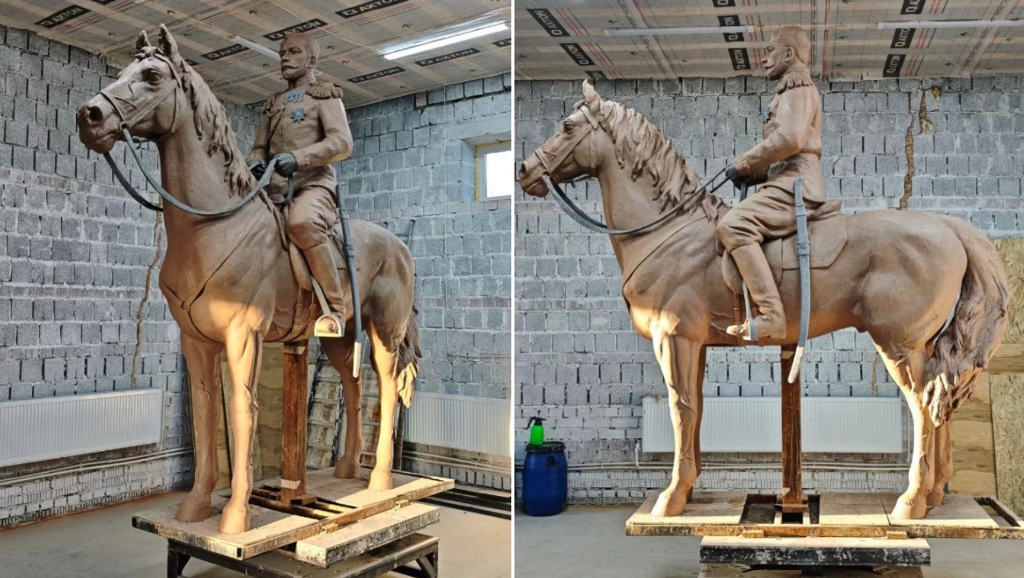
The model [seen in photos above] is already ready. It was made by the Chelyabinsk artist and sculptor Anna Shumakova.

“The composition is dynamic and symbolic: the young Tsesarevich frozen in a tense, restrained pose, and his horse seems to be keenly listening to the road,” the Verkhneuralsk administration notes.

The weight of the life-size bronze sculpture featuring the Tsar on horseback is 3 tons, not including the pedestal.

The sculptor has paid particular attention to historical accuracy. On the uniform of the Tsesarevich, are details of the highest state awards, including the Order of St. Andrew the Apostle the First-Called and the Imperial Order of St. Prince Vladimir of the 4th degree.

The monument is to be installed on the grounds of Cathedral of the St. Nicholas the Wonderworker [built in 1870] in Verkhneuralsk. The monument will be installed and consecrated upon completion of the landscaping and gardens. The grand opening of the monument is tentatively scheduled for the 19th (O.S. 6th) May [Nicholas II’s birthday]

© Paul Gilbert. 28 January 2026

Nicholas II: defender of the Orthodox faith

Nicholas II, Russia’s last emperor, is revered by the Russian Orthodox Church Outside Russia (ROCOR), the Moscow Patriarchate of the Russian Orthodox Church (ROC) and the Serbia Orthodox Church as a saint for his deep piety, unwavering defense of Orthodoxy, embodying the traditional role of the Tsar as God’s anointed Defender of the Faith.

A symbol of Steadfastness. Nicholas II serves as an inspiration for Orthodox Christians, representing the ideal of a ruler and believer who remained true to God amidst immense trials and tribulations.

Nicholas II saw himself as the Supreme Defender of the Orthodox faith, fostering church growth, promoting canonizations, and upholding traditional values, while the ROC honours him as an example of steadfast faith and a symbol for believers against modern evils.

As God’s Anointed, Nicholas II could not be displaced during his lifetime. Since the will of God was nowhere manifest, neither in the naming of his brother Grand Duke Mikhail to the throne, nor in the Tsar’s signing of the instrument of abdication, his status as Emperor and Tsar remained inviolate and unassailable.

The Tsar was a living incarnation of faith in the Divine Providence that works in the destinies of nations and peoples and directs Rulers faithful to God into good and useful actions
– St. John of Shanghai and San Francisco (1896-1966)

Religion and the Church Under Nicholas II

Nicholas II believed his divine duty as Supreme Guardian of the Orthodox faith and ‘Head of the Church’ in the spirit of his Byzantine imperial predecessors, and to protect the Orthodox Church and its doctrines, viewing himself as the first among believers and God’s chosen ruler.

During his reign (1894-1917), the Russian Orthodox Church expanded significantly with construction of new churches, monasteries, and schools, with the Tsar personally supporting religious publications and artifacts. He personally helped to finance from his own pocket, the construction of new churches, both within the Russian Empire and abroad.

The Russian Orthodox Church under Emperor Nicholas II flourished. In 1914, it consisted of 68 dioceses, 54,923 churches, 953 monasteries, 4 theological academies, 185 religious schools, 40,530 schools and 278 periodicals. The clergy consisted of 157 bishops, 68,928 priests, 48 ​​987 clerics, 21,330 monks in monasteries and 73,229 nuns in convents.

Nicholas II actively supported the canonization of revered figures, most notably St. Seraphim of Sarov, and other saints such as Theodosius of Uglitsk and John of Tobolsk.

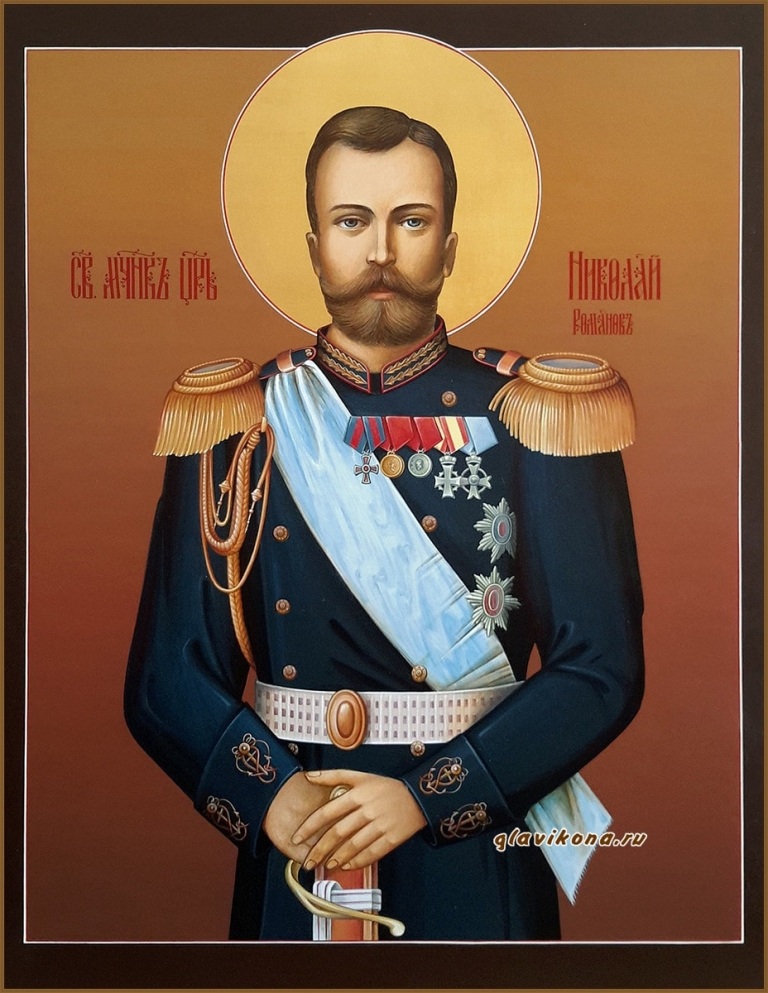
Icons of the Holy Royal Martyr Nicholas II are now found in Orthodox churches globally, and many Orthodox believers venerate him as a great saint.

His Canonization as a Saint

The canonization of Russia’s last Tsar, also known as “glorification,” was the elevation to sainthood of Nicholas II as a “new martyr” by the ROCOR on 1st November 1981 and as a “passion-bearer” by the Moscow Patriarchate on 15th August 2000, recognizing his peaceful endurance of persecution and execution by the Bolsheviks. Despite his official designation as “passion-bearers” by the Moscow Patriarchate, Nicholas II is nevertheless spoken of as “martyr” in Church publications, icons, and in popular veneration by the people.

Nicholas II was canonized by the Serbian Orthodox Church primarily for his role as a pious “passion-bearer”—a saint who faced death with Christian humility and resignation—and for his significant support of Serbia during World War I, specifically his efforts to protect Serbia and his solidarity with the Serbian people.

In essence, Nicholas II embodies the historical ideal of the Orthodox Tsar, and his life and martyrdom solidified his place as a revered saint, a defender of his people and his faith until the very end.

***

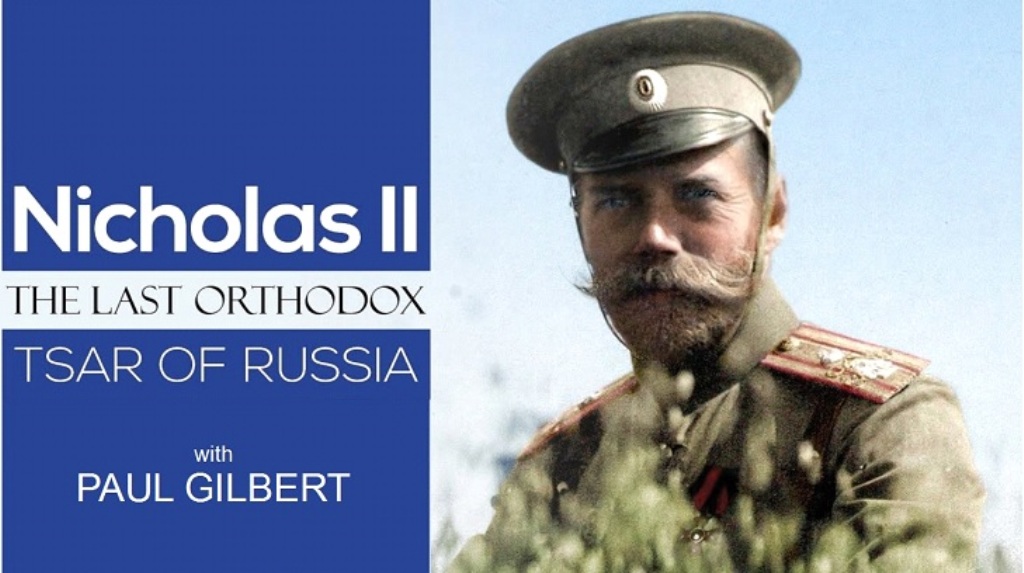
CLICK on the above image to watch the VIDEO
Researched, written and narrated by Paul Gilbert
Duration: 20 minutes. Language: English

Emperor Nicholas II reigned for 22+ years – from November 1894 to February 1917. With his murder, the last Orthodox Christian monarch, along with the thousand-year history of thrones and crowns in Russia, ended, ushering in an era of lawlessness, apostasy, and terror, one which would sweep Holy Orthodox Russia into an abyss which would last more than 70 years.

This new video production is based on the research of project colleague and independent researcher Paul Gilbert, who also narrates this video.

In the first 24 hours of it’s release on YouTube, some 3,000 people had watched the video! Since it’s release in July 2020, it has been viewed by more than 134.000 people.

The creators have done a remarkable job of incorporating a wonderful collection of photos – both vintage B&W and colourized by Olga Shirnina (aka KLIMBIM) – historical newsreel film footage and music.

One viewer noted on social media: “Only 20 minutes long, this is the BEST portrayal of the last Tsar’s Orthodox faith I have ever seen. Very well-made, historical and moving.”

The crowning moment of this video is near the end, which shows film footage of the actual canonization ceremony of Emperor Nicholas II and his family, performed on 20th August 2000 by Patriarch Alexei II (1929-2008) in the Christ the Saviour Cathedral in Moscow. You can hear His Holiness calling out each of the names of the Imperial Family. The footage is extremely moving to watch.

This 20-minute video is presented in the framework of the production of the book The Romanov Royal Martyrs: What Silence Could Not Conceal published by Mesa Potamos Publications in 2019.

© Paul Gilbert. 25 January 2026

***

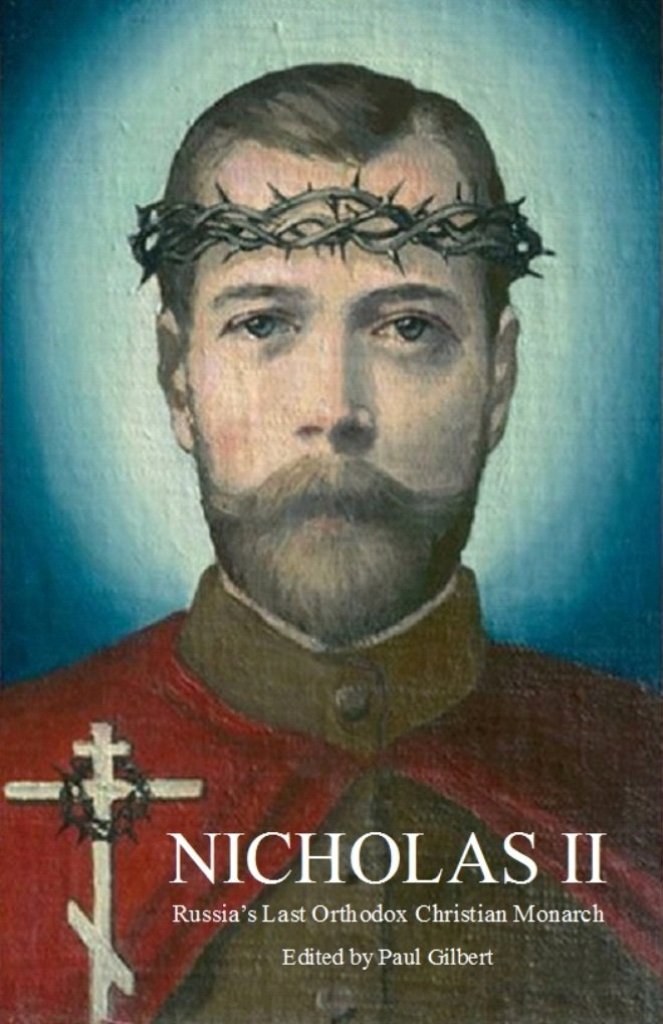
CLICK on the IMAGE below for more details and to order your copy

‘NICHOLAS II: RUSSIA’S LAST ORTHODOX CHRISTIAN MONARCH’

Compiled and Edited by Paul Gilbert

134 PAGES. ILLUSTRATED

AVAILABLE IN PAPERBACK and EBOOK EDITIONS

An illustrated 16-page Introduction by independent researcher Paul Gilbert explores the piety of Nicholas II, and his devotion to the Russian Orthodox Church, which reached its fullest development and power, during his 22-year reign.

This book further examines the trials and tribulations the Tsar endured, which later led to his canonization by the Russian Orthodox Church.

The LAST grand duke and grand duchess of Russia

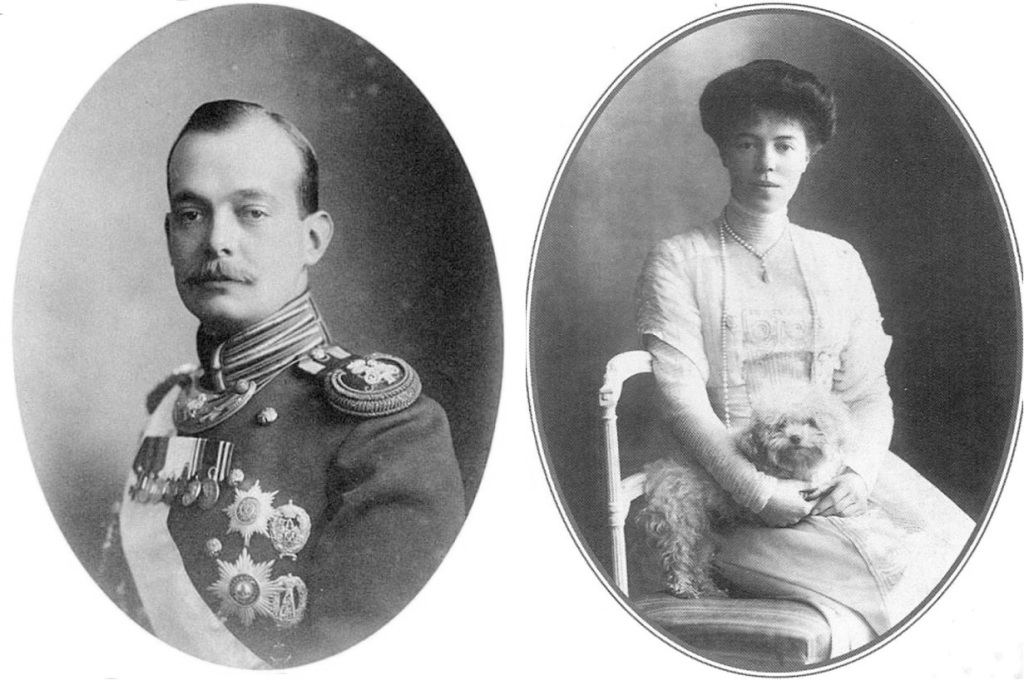
PHOTO: Grand Duke Andrei Vladimirovich and Grand Duchess Olga Alexandrovna

Upon the abdication of Emperor Nicholas II from the throne on 15th March (O.S. 2nd March) 1917, both the monarchy and the Russian Empire ceased to exist. Upon the death of Russia’s last tsar Nicholas II on 17th July 1918, the Russian Imperial Family ceased to exist. With that, the Laws of the Russian Empire and the Family Laws of the Romanov dynasty had no legal power. When the Bolsheviks came to power in October 1918, the surviving grand dukes, grand duchesses, princes and princesses of the Imperial Blood were reduced to ordinary citizens, many were executed, the lucky ones fled into exile.

For the former grand dukes and grand duchesses now living in exile in Berlin, Paris and even New York, their titles no longer guaranteed them any special rights or privileges.

The LAST Romanov grand duke and grand duchess were Grand Duke Andrei Vladimirovich (1879-1956) and Grand Duchess Olga Alexandrovna (1882-1960). Upon their respective deaths, there were to be no more grand dukes and grand duchesses of Russia.

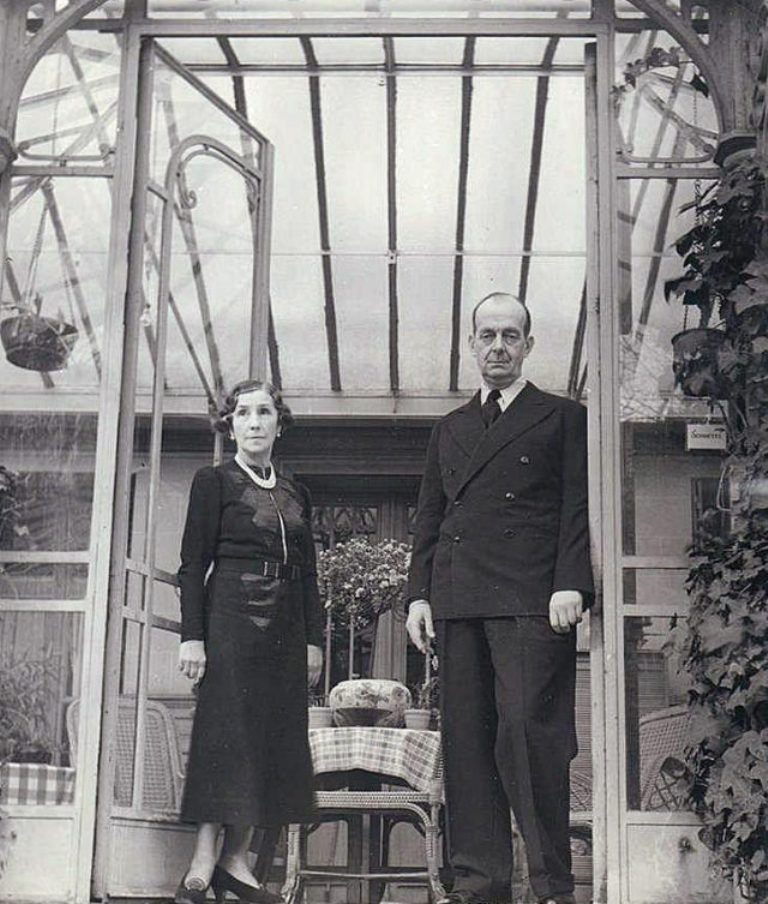
PHOTO: Grand Duke Andrei Vladimirovich with his wife Mathilde Kschessinska on the veranda of their Villa Molitor, located in the 16th arrondissement of Paris.

The last grand duke

The last grand duke of Russia was Grand Duke Andrei Vladimirovich (1879-1956)

Grand Duke Andrei Vladimirovich was born at Tsarskoye Selo on 14th (O.S. 2nd) May 1879. He was one of five children, and fourth son born to Grand Duke Vladimir Alexandrovich and Grand Duchess Maria Pavlovna (born Duchess Marie of Mecklenburg-Schwerin). He is the younger brother of the Traitor Grand Duke Kirill Vladimirovich.

Raised by British nannies, English was Andrei’s first language. He also learned Russian, French and German. Grand Duke Andrei grew up in opulence. The family’s main residence was the Vladimir Palace in St Petersburg, but as his father preferred country life, they spent the greater part of the year at the Vladimir Villa, a mansion in Tsarskoye Selo, returning to the capital during the winter months.

Following Romanov tradition, Andrei was destined to follow a military career, although he did not have much interest in his military career. Instead, he pursued a life of leisure enjoying the privileges provided by his imperial status and wealth.

In 1900, he began an affair with the famous Prima Ballerina Assoluta of the Mariinsky Theatre in St. Petersburg, Mathilde Kschessinska (1872-1971).

Mathilde certainly had a thing for handsome Romanov grand dukes, having been romantically involved with no less than three of them: Tsesarevich Nicholas Alexandrovich [future Emperor Nicholas II], Grand Duke Sergei Mikhailovich, and Grand Duke Andrei Vladimirovich.

After the October 1917 Revolution Andrei was briefly arrested along with his brother, Grand Duke Boris, but they escaped. Andrei departed revolutionary Russia in March 1920, being the last grand duke to leave for exile.

In 1921, he married his long-time mistress Mathilde Kschessinska , in a simple ceremony in the Russian Orthodox Church of St. Michael Archangel in Cannes.

In 1902, she had given birth to a son, Vladimir (known as “Vova”; 1902– 1974); he was later titled H.S.H. Prince Romanovsky-Krasinsky, but said that he never knew for sure who his father was. Nevertheless, Andrei recognized Mathilde’s son as his own.

The couple lived in the South of France until 1929 when they moved permanently to Paris, where Kschessinska opened a ballet school.

After World War II, Grand Duke Andrei’s last years were marked by increasingly frail health and straitened financial circumstances. On the morning of 30th October 1956, Andrei worked in his study. Having finished a letter on his typewriter, he felt dizzy, went to his bed to lie down and died, at age 77. He was buried wearing the uniform of the Horse Guard Artillery Brigade, which he had commanded during World War I. He was buried at the Sainte-Genevieve-des-Bois Russian Cemetery, situated 25 km south from Paris.

Mathilde Kschessinska died on 6th December 1971 at the age 99 in Paris, France, eight months short of her 100th birthday. She was also buried alongside her husband Andrei and her son Vladimir in the Sainte-Genevieve-des-Bois Russian Cemetery.

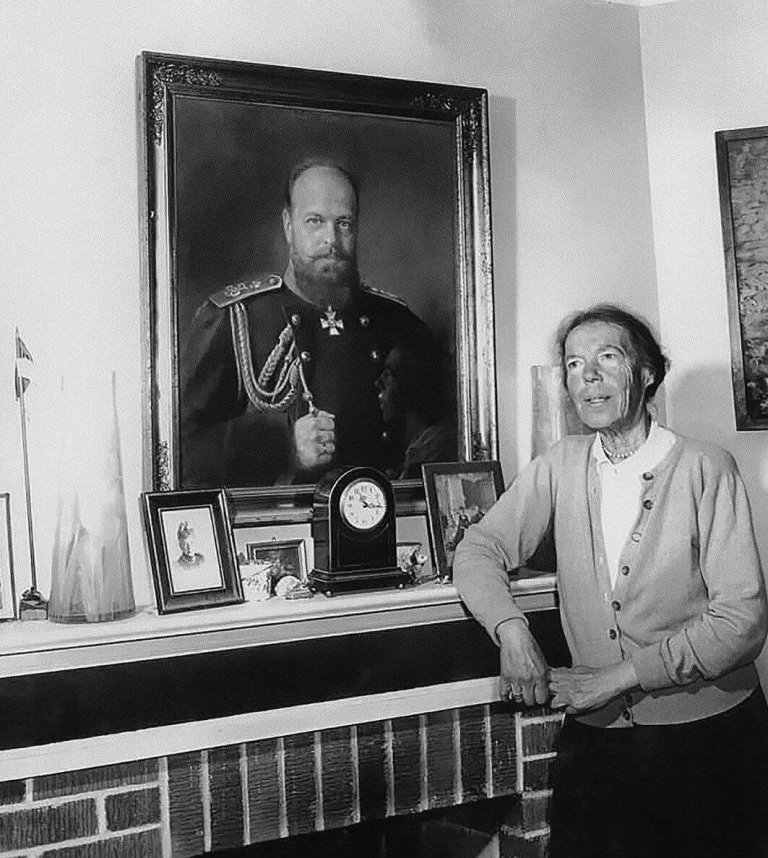
PHOTO: Grand Duchess Olga standing in front of a portrait of her father, which hung in the living room of her home in Cooksville, Ontario in the 1950s

The last grand duchess

The last grand duchess of Russia was Grand Duchess Olga Alexandrovna (1882-1960).

Grand Duchess Olga Alexandrovna was born in the Cottage Palace at Peterhof on 13th June (O.S. 1st June), 1882. She was was the youngest of six children born to Emperor Alexander III and Empress Maria Feodorovna, she was the youngest sister of Russia’s last emperor Nicholas II.

Olga married twice: on 9th August 1901, she married Duke Peter Alexandrovich of Oldenburg (1868-1924). Their marriage was not a happy one. Not only did their marriage remain unconsummated, Peter was believed by family and friends to be homosexual. In addition, Peter was an inveterate and well-known gambler, the money he coaxed out of his wife was often lost at the gambling tables of the capital.

On 16th October 1916, after living separately for two years, Emperor Nicholas II officially annulled the marriage (with ecclesiastical agreement) between Olga and Peter. When the Tsar granted the annulment, he also allowed his sister to marry Colonel Nikolai Kulikovsky.

On 17th (O.S. 4th) November 1916, she married Colonel Nikolai Alexandrovich Kulikovsky (1881-1958). in the Kievo-Vasilievskaya Church on in Kiev. The couple were married for 42 years, they had two sons: Tikhon (1918-1993) and Guri (1919-1984), both of whom were born in Russia. When Grand Duchess Olga married Nikolai Kulikovsky (a commoner) in 1916, she was forced to renounce all rights to the Russian throne as well as those of her descendants.

Olga was a prolific artist. During her lifetime, she produced over 2,000 paintings, which provided a source of income for her and her family. During the First World War, she trained to be a Red Cross Nurse.

Olga endured much loss during her life, outliving her entire family, including her beloved father Emperor Alexander III (1894); her brother George (1899); her brother Michael (1918); her brother Emperor Nicholas II and his entire family (1918); her mother Dowager Empress Maria Feodorovna (1928); her sister Xenia (April 1960); and was forced to flee Russia with her husband and two sons in 1919. She lived in Denmark until 1948, when she emigrated to Canada.

In June 1959, Queen Elizabeth II and Prince Philip, Duke of Edinburgh sailed into Toronto harbour. During their 2-day visit to the Canadian city, they invited Grand Duchess Olga Alexandrovna to a luncheon onboard the ‘HMY Britannia.

During her life in exile, Grand Duchess Olga Alexandrovna was asked about the restoration of the Russian monarchy . . .

According to Ian Vorres, in his biography ‘The Last Grand Duchess’, published in 1964, Grand Duchess Olga stated: ”I cannot think that there will ever be a Tsar in Moscow again. The changes have been too great . . . . a new age exists that has developed without us. I am convinced that to dream about a Romanov restoration is a pure waste of time today.”

Grand Duchess Olga along with many other members of the Romanov family in exile, never forgave Grand Duke Kirill Vladimirovich for his premature recognition of the Provisional Government, nor did they support his claim in 1922, when he proclaimed himself the “Guardian of the Russian Throne”, and in 1924 as the “Emperor of All Russia”, as neither carried “any dynastic validity”.

Nikolai Alexandrovich Kulikovsky died in Cooksville, Ontario on 11th August 1958, at the age of 76. His funeral was held on 13th August 1958, at the Church of Christ the Saviour in Toronto. He was buried on the same day, at the North York Cemetery in Toronto.

Grand Duchess Olga Alexandrovna died in Toronto, Canada on 24th November 1960, at the age of 78. Her funeral was held on 30th November 1960, at Christ the Saviour Cathedral in Toronto. Olga’s body was then interred next to her husband in York Cemetery, Toronto. Officers of the Akhtyrsky Hussars and the Blue Cuirassiers stood guard in the small Russian church, which overflowed with mourners.

Grand Duchess Olga Alexandrovna remains one of the most beloved members of the Russian Imperial family to this day. Her memoirs ‘The Last Grand Duchess’ were written by Ian Vorres in 1964.

Fake grand dukes and grand duchesses

There are currently several persons who have their eye on becoming Russia’s next monarch, each of whom have awarded themselves titles which no longer exist. While doing so, they overlooked the fact that none of them have any rights to the Russian throne (should it ever be restored).

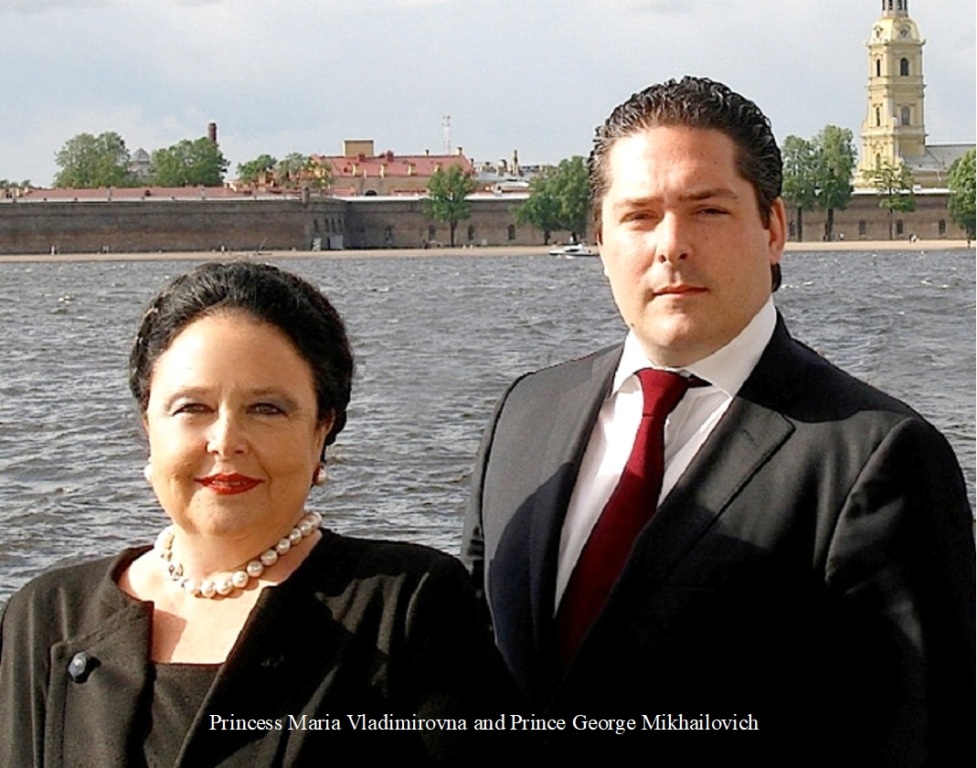
Among these pretenders are Princess Maria Vladimirovna, who styles herself as “Her Imperial Highness Grand Duchess” Maria Vladimirovna. Among her more radical fan base, she is also known as “Empress deJure . . .”. Her son, Prince George Mikhailovich, styles himself as “His Imperial Highness Tsesarevich Grand Duke”. George has even less rights to the non-existent throne than his mother. His father was Prince Franz Wilhelm of Prussia [born 1943], of the defunct House of Hohenzollern, therefore, George is more a Hohenzollern than a Romanov.

Maria is not a grand duchess, she is a princess, George is not a grand duke, he is a prince. Mother and son Romanov are not at all popular with the Russian people. Neither of their father’s was an Emperor or Empress, and therefore had no rights to bestow the title of “grand duke” or “grand duchess” on either of them. More importantly, the title of “grand duke” was reserved for the sons and male-line grandsons of a reigning Emperor, likewise for the title of “grand duchess”. Their claims are nothing more than the delusional fantasy world of which they both live.

© Paul Gilbert. 19 January 2026

***

Paul Gilbert’s Romanov Bookshop on AMAZON

Please CLICK on the BANNER or LINK above to review my current selection of titles in hardcover, paperback and ebook editions. Listings provide a full description for each title, pricing and a Look inside feature.

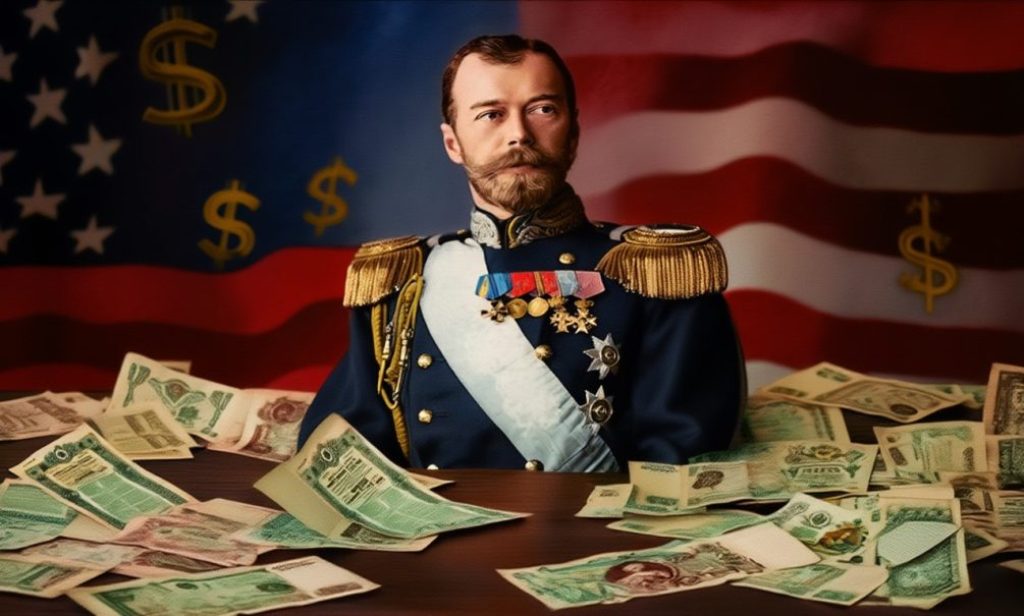
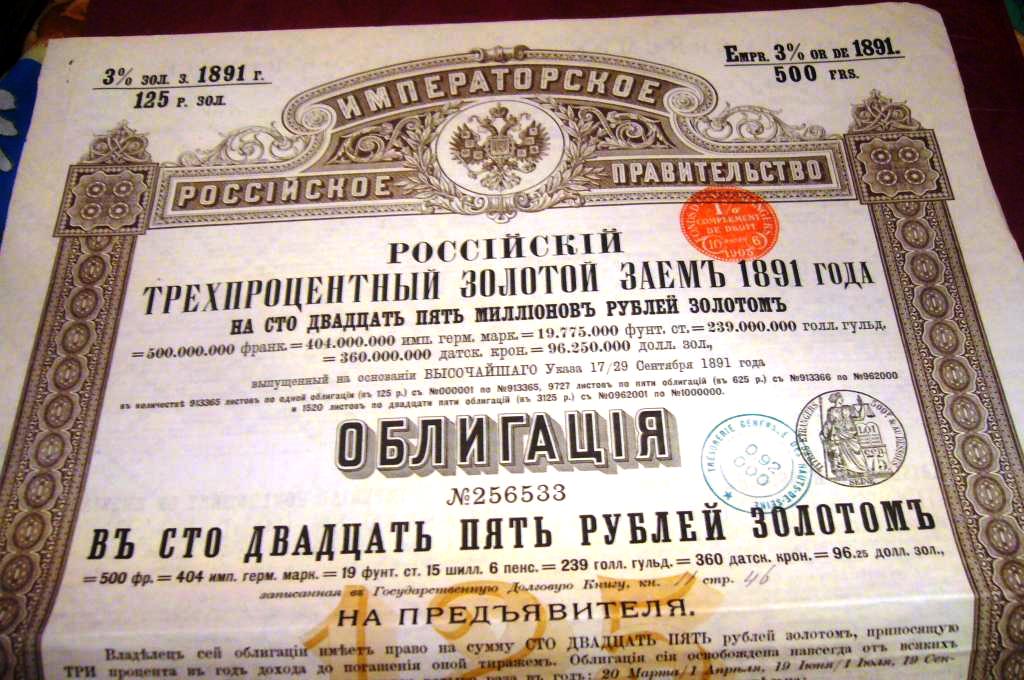
United States demands billions from Russia for Romanov-era bonds

The American investment fund Noble Capital has filed a lawsuit against Russia, demanding payment of $225.8 billion of debts on bonds from the time of the Russian Empire. The corresponding application was sent to the US Federal District Court for the District of Columbia.

The fund claims that Russia, as the successor state of the Russian Empire, allegedly refused to fulfill sovereign debt obligations issued more than a hundred years ago to American investors. Noble Capital claims to be the legal successor and owner of these bonds and demands debt repayment on this basis.

Recall that in the 19th century, the Russian Empire turned to the public capital markets and, especially, foreign markets and foreign intermediaries, to regulate and stimulate the growth of its economy, financing its ambition and its development.

In October 1918, shortly after the Bolsheviks seized power, their Council of People’s Commissars repudiated the sovereign debt and other financial obligations of the Russian Empire. This position shocked international finance and triggered unanimous worldwide condemnation. Bolshevik Russia completely fell out of the world economy as a result of this development and sealed itself up in isolation,

In addition to the Russian Federation itself, there are several government agencies among the defendants, including the Ministry of Finance of the Russian Federation, the Central Bank of the Russian Federation and the National Welfare Fund of Russia (NWF). The court made the last procedural decision in November – the Russian side was ordered to submit a response to the claim no later than 29th January 2026.

Particular attention in the lawsuit is paid to the source of possible payments. Noble Capital is seeking permission to make settlements on the required amount at the expense of frozen Russian assets. After the start of the Russia-Ukraine War in February 2022, the EU and G7 countries blocked about half of Russia’s gold and foreign exchange reserves. More than 200 billion euros, according to open data, are in the EU, mainly in the accounts of the Belgian depository Euroclear.

PHOTO: Bond of the Russian Empire

In response, Moscow introduced restrictive measures: the assets of foreign investors from “unfriendly countries” and income on them are accumulated in special type “C” accounts. Access to these accounts is possible only by decision of a government commission.

The Bank of Russia, in turn, has also filed a lawsuit against Euroclear in the amount of more than 18 trillion rubles  ($228.4 billion USD). The regulator points out that the actions of the European depository caused direct damage due to the inability to dispose of funds belonging to Russia.

Earlier, Russian President Vladimir Putin publicly stated that the ideas of seizing Russian assets are actually robbery. According to him, such steps undermine the foundations of the global financial system and can lead to serious losses for its participants.

Experts note that Noble Capital’s lawsuit fits into the general line of pressure on Russia through legal and financial mechanisms. The appeal to the debts of the pre-revolutionary era looks not so much a legal as a political attempt to legalize the seizure of frozen assets.

In fact, we are talking about creating a precedent in which Western structures are trying to gain access to Russian reserves through US courts, hiding behind historical obligations of a hundred years ago.

It is interesting to note, that this is not the first time this issue has been raised. Numerous attempts to recoup bonds issued during the Russian Empire failed, given the current state of Russian-US relations, so will this one.

CLICK on the LINK below to read a follow up of this story, published on 1st February 2026:

Russia does not intend to pay the debts of Nicholas II

© Рaul Gilbert. 16 January 2026

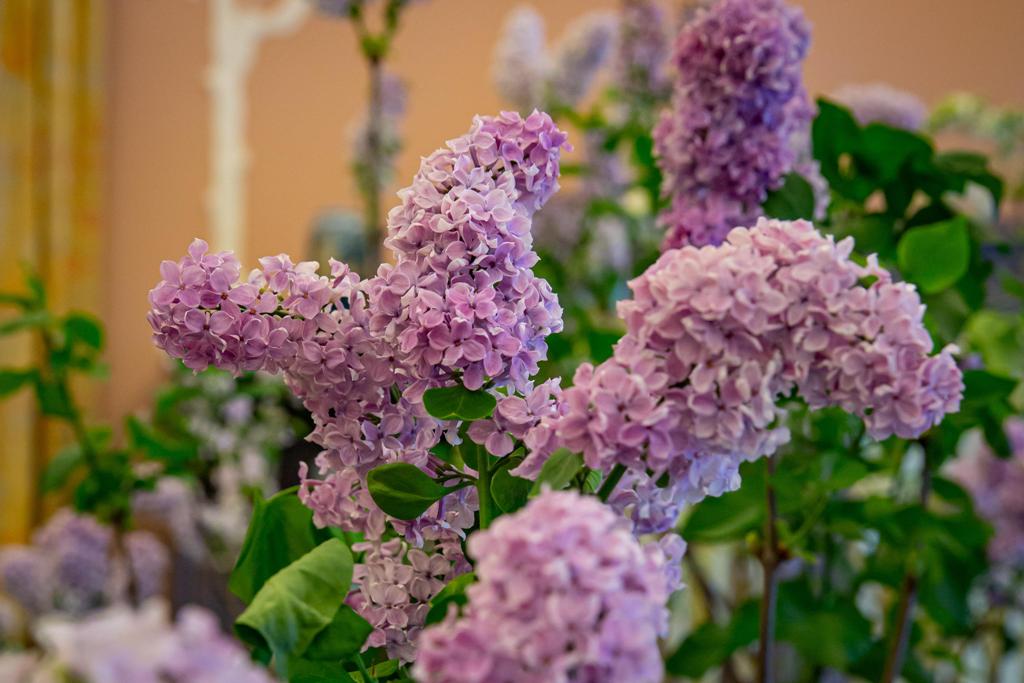
Lilacs bloom . . . again, in the Alexander Palace

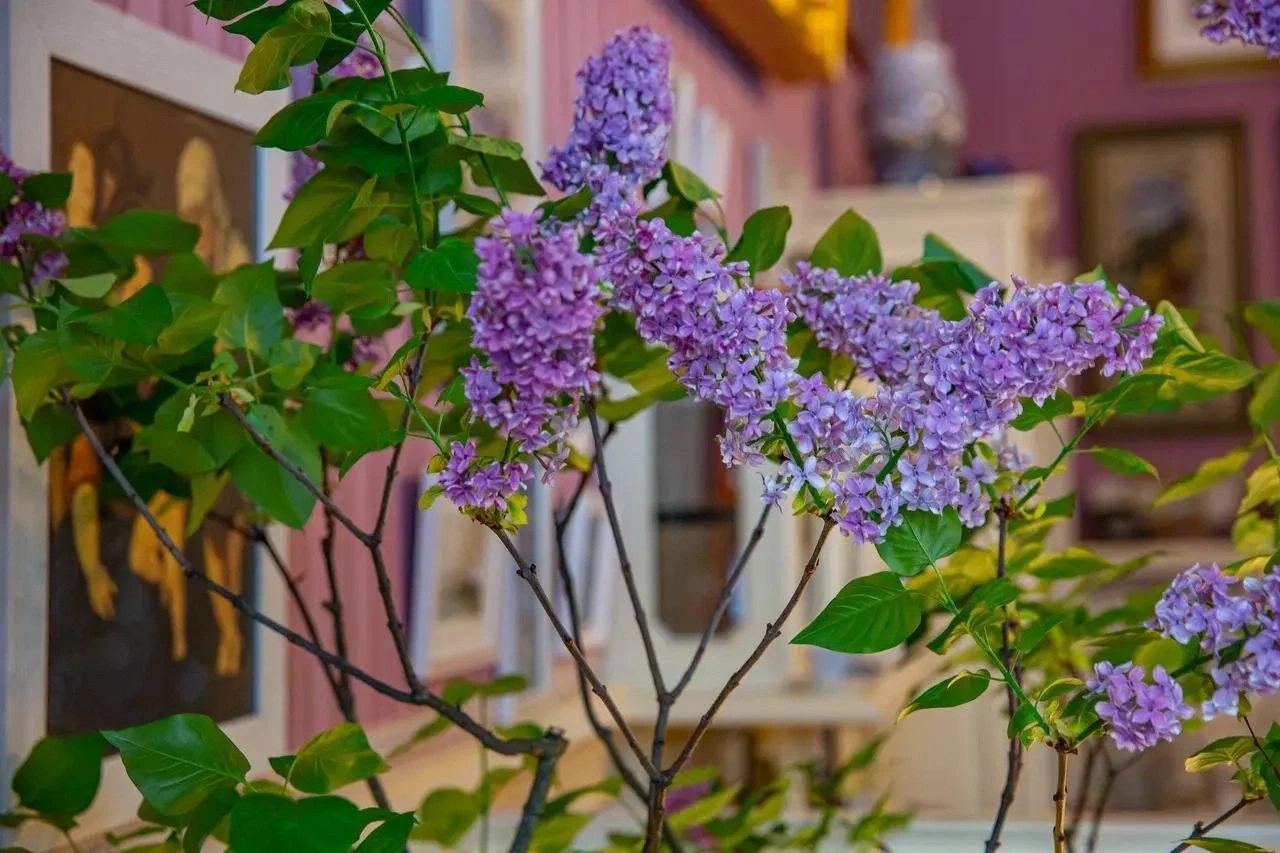
Lilacs in bloom in the Alexander Palace
Photo © Tsarskoye Selo State Museum

Despite the January frosts, lilacs and almond bushes have bloomed again in the Tsarskoye Selo greenhouses, and have now been transferred to the private apartments of Empress Alexandra Feodorovna in the Alexander Palace. This unique tradition, which was adopted by the family of Nicholas II, was revived by the museum in the winter of 2022.

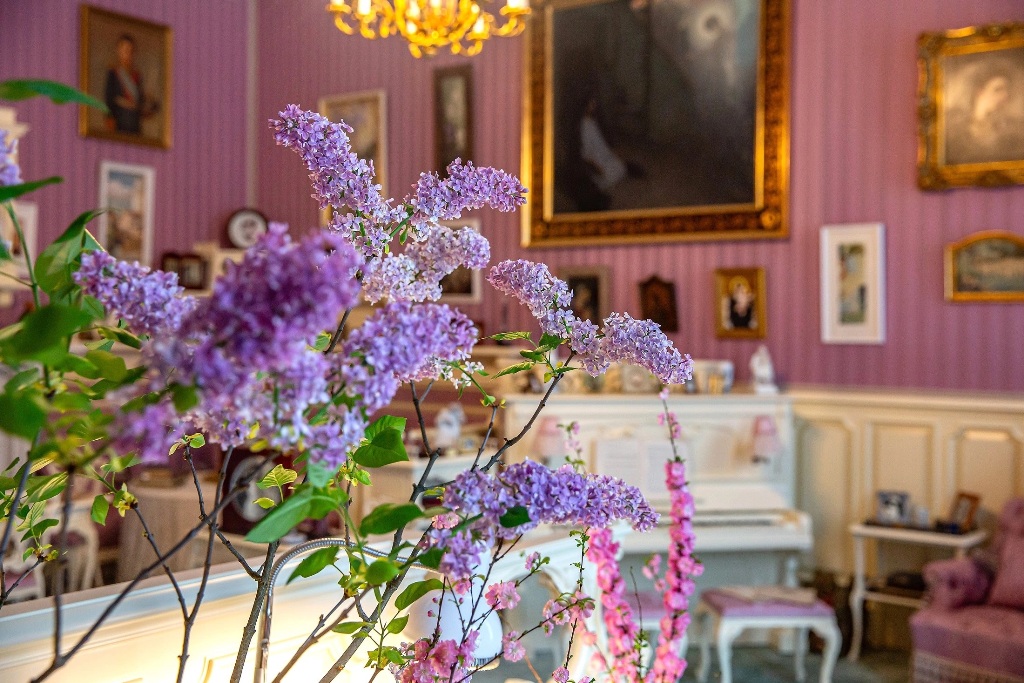
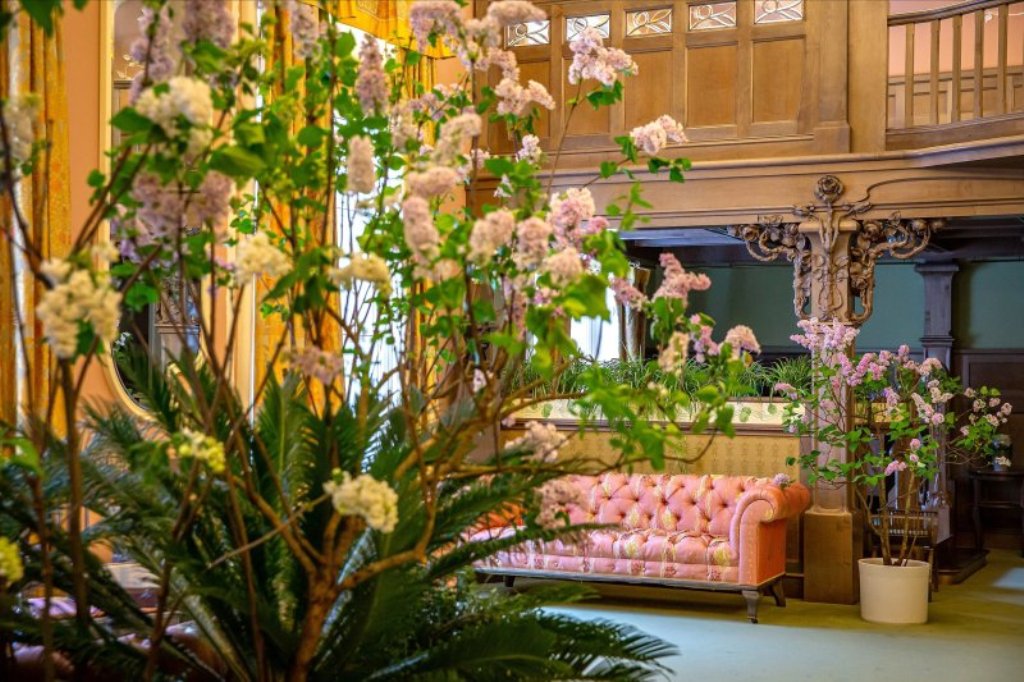
On 14th January 2025, the first six lilac bushes of historical varieties, including “Memory of Ludwig Speth” and “Madame Lemoine”, were placed in special tubs and brought into the Mauve (Lilac) and Maple Drawing Rooms. Their aroma filled the interiors of Empress Alexandra Feodorovna recreated rooms, which are situated in the Eastern Wing of the palace.

Lilacs in the Mauve Boudoir of the Alexander Palace
Photo © Tsarskoye Selo State Museum

Lilacs in the Maple Drawing Room of the Alexander Palace
Photo © Tsarskoye Selo State Museum

This year, for the first time, an almond bush of the “Tanyusha” variety with delicate pink double flowers was delivered to the Mauve (Lilac) Drawing Room. 

According to the chief curator of the museum’s parks Olga Filippova, the flower exposition is created on the basis of historical materials using the old traditional methods of the 19th century. The process takes place in three stages in the museum greenhouse complex.

This year a total of 18 lilac bushes will decorate the Mauve (Lilac) and Maple Drawing Rooms. The bushes will replace each other as they bloom, ensuring continuous flowering until April. Soon, lilies of the valley, azaleas, tulips and other plants grown in Tsarskoye Selo greenhouses will be added to the flower decoration in the Alexander Palace.

Lilacs in bloom in the Alexander Palace
Photo © Tsarskoye Selo State Museum

FURTHER READING

Lilacs return to the Alexander Palace + PHOTOS

For the first time in more than a hundred years, the fragrant scent of lilacs once again fill the interiors of the Alexander Palace during the cold winter months. The Tsarskoye Selo State Museum have revived the tradition, by placing lilacs in the Mauve (Lilac) Boudoir and the Maple Drawing Room of the Alexander Palace.

© Рaul Gilbert. 14 January 2025

Sofa from the Lower Dacha to be auctioned in St. Petersburg

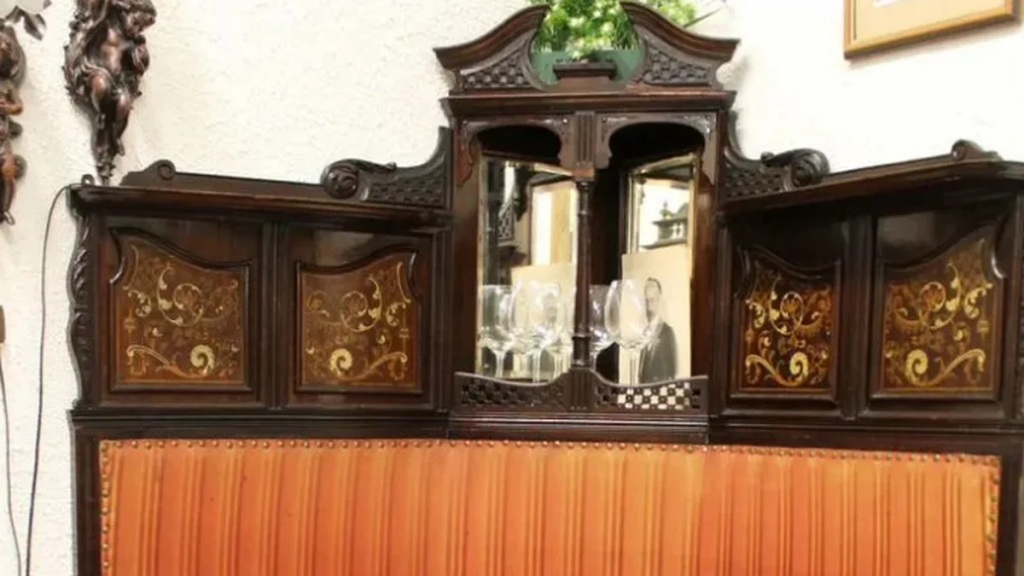
The Russian news agency Kommersant, has reported that a corner divan from the Lower Dacha at Peterhof, which belonged to Emperor Nicholas II and his family, is to be auctioned in St. Petersburg. The Imperial Family were photographed sitting on the divan in 1901.

The walnut Orekhov corner divan was made by the firm of Friedrich Meltzer (1831-1923), it measures 177 cm high, 110 cm wide, and can be disassembled into three tiers. The opening bid is set at 5 million rubles [$63,500 USD].

The Lower Dacha situated in the Alexandria Park, overlooking the Gulf of Finland, served as a summer residence of Emperor Nicholas II and his family during their stays at Peterhof. It was here, that the Tsar’s only son and heir, Alexei, was born on 12th August (O.S. 30th July) 1904. It was also at the Lower Dacha that Nicholas II signed a manifesto on Russia’s entry into the First World War.

During the Great Patriotic War (1941-45), the Nazis used the former Imperial residence as a base for its coastal defence. It was during this time that the former Imperial residence was looted by the invaders, who stole countless personal items (including pieces of furniture) of the former Tsar and his family. The building survived the war, and stood until 1961 when it was blown up by the Soviets – the Lower Dacha was left in ruins.

Please note that the Russian source failed to identify either the auction house or the date for the sale, however, I will endeavour to find out more details and update this post as they become available.

It is the opinion of this author, that this item should be returned to the Peterhof State Museum from where it was originally stolen. Perhaps the acquisition of this corner divan by the museum will give them an opportunity to rethink a reconstruction of the Lower Dacha to what it looked like in 1917?

© Рaul Gilbert. 13 January 2025

Nicholas II on Vladimir Lenin and the Bolsheviks

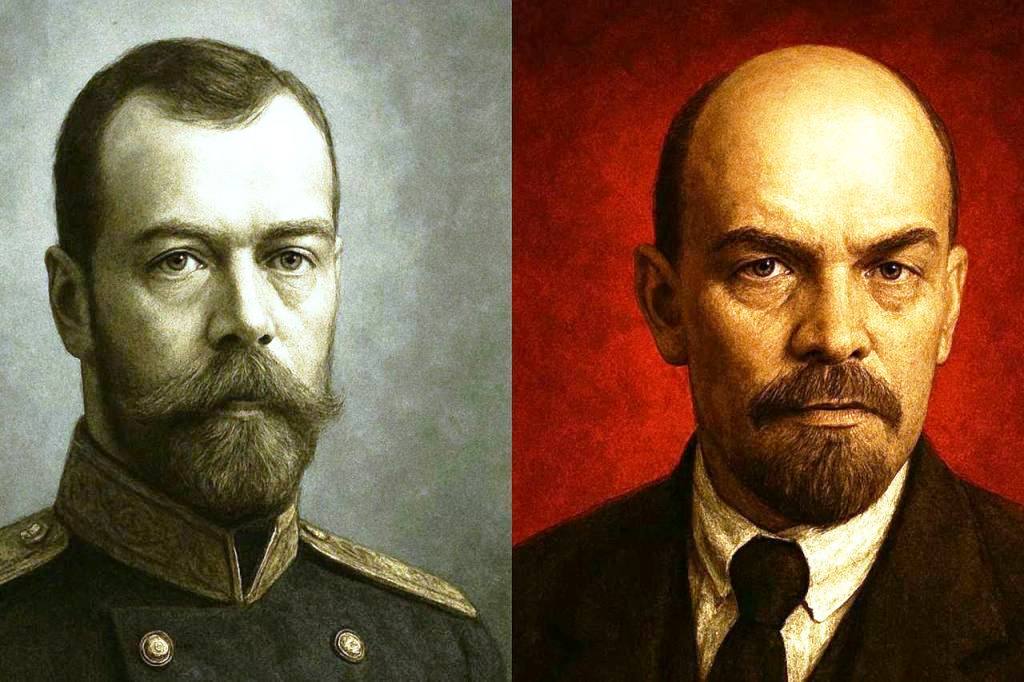
Nicholas II and Vladimir Lenin are two people whose paths crossed only in absentia, through newspapers, police reports and the historical whirlwind of 1917. They never met or even saw each other in person, nor did they exchange letters. The Tsar knew Lenin as a radical emigrant, then as a “German agent”, and in the end as the man who destroyed the Russian Empire.

Recall that while Lenin and the Bolsheviks had little if anything to do with the overthrow of the monarchy in February 1917, he is certainly responsible for the coup d’etat which overthrew the Provisional Government in October 1917, and is widely believed to have given the order to murder not only the Tsar, but his entire family as well.

Early years: just another “seditious” revolutionary

Until 1917, Lenin for Nicholas II was just a surname in police reports. The Okhrana reported on the Social Democrats, on their split into Bolsheviks and Mensheviks, and on Ulyanov [Lenin] himself, who was imprisoned in Siberia, after which he went abroad. But in the Tsar’s diaries for 1900-1916, Lenin is hardly mentioned, either by name or as a threat. Nicholas worried about the Socialist Revolutionary terrorists, about strikes, about the Duma, but an extremist [Lenin] in Switzerland seemed of little interest or concern to the monarch. Historian and scientific director of the Civil Archive of the Russian Federation Sergey Mironenko [b. 1951] notes in the preface to Nicholas II’s diaries: “the Tsar saw a “gang” in the revolutionaries, but did not single out the leaders. Lenin was nothing more than a shadow.”

April 1917: “sealed train” and the German connection

It was during Nicholas II’s house arrest in Tsarskoye Selo, that he learned about Lenin’s return from Germany. For the Tsar, this was proof that Lenin was an agent of Kaiser Wilhelm II. Empress Alexandra Feodorovna in letters and conversations (according to Pierre Gilliard) called Lenin a “German spy”. Nicholas shared few direct words on the matter in his diary, but in the entries of April-May there is contempt for the “traitors” who collaborated with the enemy during the war. The archives confirm that the family discussed the “April Theses”[1] as madness paid for with German gold.

July 1917: Riots of the “Leninists” The summer of 1917

During the summer of 1917, the Imperial Family were being held under house arrest in the Alexander Palace at Tsarskoye Selo. On 3-5 (O.S.) July, riots broke out in Petrograd [St. Petersburg] – the Bolsheviks led sailors and soldiers against the Provisional Government. On 5th (O.S.) July 1917, Nicholas wrote in his diary : “We received news of serious unrest in Petrograd [St. Petersburg] caused by the actions of the Leninists.” This is one of the first direct mentions of Lenin by name. The Tsar saw Lenin as an instigator who sowed chaos in the army and the rear. When the authorities suppressed freedom of speech, Nicholas was somewhat relieved – but he already understood that this man [Lenin] was dangerous.

Escape to Finland: “disappeared like a coward”

After the failure of the July putsch [a violent attempt to overthrow a government], Lenin fled to Razliv, then to Finland. On 8th (O.S.) July 1917, Nicholas recorded in his in his diary: “Lenin and company disappeared.” The tone is contemptuous: not a hero of the revolution, but a fugitive. Pierre Gilliard claims that the Tsar commented on this, saying “it is typical for these “seditious” people to incite others, and then hide themselves.” For Nicholas, as Emperor, as an officer and as a man of honour, such behavior was contemptable.

October coup: “seizure of power by bandits”

On 7th November (O.S. 25th October) 1917, the Bolsheviks stormed the Winter Palace in the capital. Nicholas II and his family were already in Tobolsk. They learned about the uprising through newspapers and rumours. On 26th (O.S.) October 1917, the Tsar wrote in his diary: “In the morning we received news of the coup d’état in Petrograd [St. Petersburg] carried out by the Bolsheviks under the leadership of Lenin and Trotsky.” The Tsar called it “the seizure of power by a gang of bandits.” In the following entries there is pain: “Russia is dying,” he wrote. For him, Lenin became a symbol of the end of the Russian Empire, a man who destroyed everything for which they fought and lived for.

The Brest-Litovsk Peace: “Scoundrels Lenin and Trotsky”

The final blow came in March 1918, when the Bolsheviks signed and then ratified the Brest-Litovsk Peace Treaty. Nicholas II, a patriot and former commander-in-chief of the Russian Imperial Army, declared it a national disgrace. On 3rd (O.S.) March 1918, he wrote in his diary: “Peace has been signed on incredibly difficult terms.” Then, on 9-13 (O.S.) March, the entries in his diary are full of grief – “a shameful peace”, “how hard it is for Russia”. And in one of the March entries, bluntly: “These scoundrels Lenin and Trotsky brought the country to such dishonour.” This was the harshest quote from Nicholas II’s diary – Lenin was a traitor to the Motherland for the Tsar, worse than any enemy at the front.

PHOTO: in April 2021, a bust-monument of Vladimir Lenin was vandalized in the Russian city of Murmansk. Vandals poured red paint over the monument, the colour red symbolizing the blood the Bolshevik leader spilled during his reign of terror.

NOTES:

[1] The “April Theses” were a series of directives issued by Vladimir Lenin in April 1917, upon his return to Russia from exile. They called for the immediate withdrawal of Russia from World War I, the transfer of power to the Soviets, and the implementation of radical socialist reforms. The Theses emphasized the need for revolutionaries to break decisively with the Provisional Government and demanded “all power to the Soviets”. These proposals significantly influenced the course of the Russian Revolution and contributed to the Bolshevik coup d’état in October 1917.

© Рaul Gilbert. 12 January 2025

In memory of Princess Vera Konstantinovna (1906-2001)

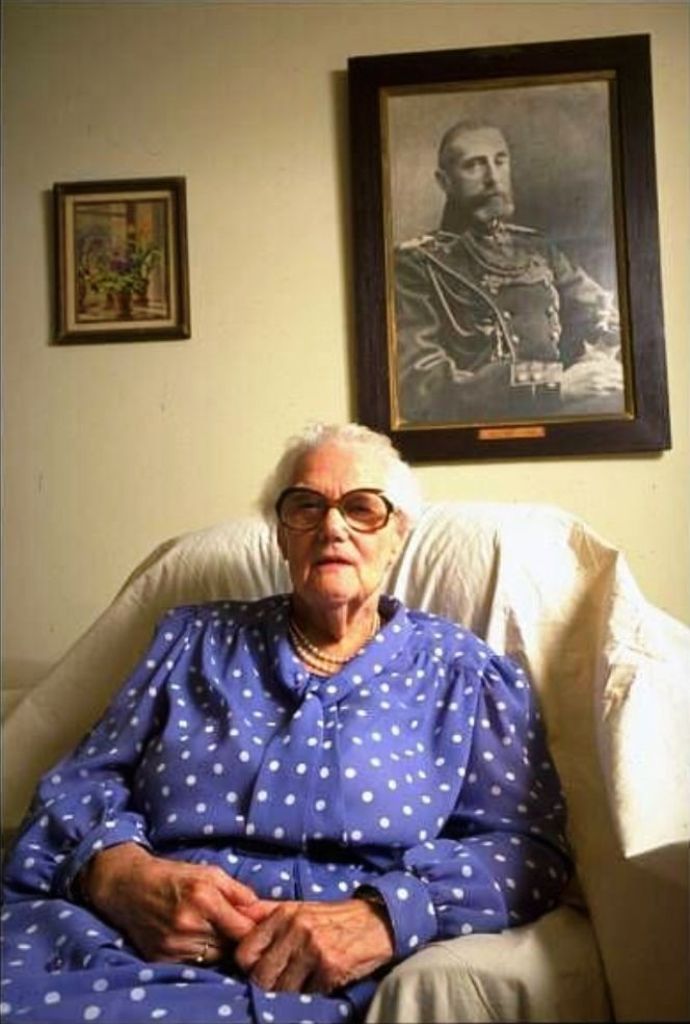
PHOTO: Princess Vera Konstantinovna seated in front of a framed portrait of her beloved father Grand Duke Konstantin Konstantinoivich (1858–1915). This photo was aken at the Tolstoy Foundation’s elderly care home in Valley Cottage, New York. 1988.

Today – 11th January 2026 – marks the 25th anniversary of the repose of Princess of the Imperial Blood Vera Konstantinovna, at the age of 94 ☦️

It was on this day – 11th January 2001 – that Princess Vera Konstantinovna died at the Tolstoy Foundation’s elderly care home in Valley Cottage, New York in the United States.

Princess Vera was born at Pavlovsk on 24th April (O.S. 11th April) 1906, the youngest of nine children born to Grand Duke Konstantin Konstantinovich (1858-1915) and his wife, Grand Duchess Elizabeth Mavrikievna (1865-1927).

In exile, Princess Vera served as honorary chairman of the Association of the Members of the House of Romanov. In addition, she was an honorary member of the Russian Imperial Union-Order, and an honorary member of the Supreme Monarchical Council.

photo: In happier times . . . Princess Vera surrounded by her dolls and toys in her playroom in Pavlovsk Palace. 1910

Vera Konstantinovna was the only surviving Romanov who remembered pre-revolutionary life and her legendary relatives. For Vera, the children of the last Tsar remained her childhood playmates, not distant figures for adoration. She was a living embodiment of the best traditions of the House of Romanov, earning great respect in the circles of the Russian emigration.

Princess Vera recalls the February 1917 Revolution in Petrograd – she was 11 years old at the time:

“In the spring of 1917, I came home from a walk and saw a red bow on the livery of my personal lackey: “Shame on you, this is against the Tsar!” I was indignant. Then the footman replied: “The Tsar is no more!” So I learned that he had abdicated”…

“On another day, I walked with my teacher across the Field of Mars. We went to the church in the Engineers Castle. A sailor was walking towards us, he had a look of horror on his face. And on his chest he wore the St. George’s Cross. He was, of course, brave. But this image of a revolutionary wearing the St. George’s cross, made such an impression on me that I remembered it all my life …” 

Princess Vera died at the Tolstoy Foundation’s elderly care home in Valley Cottage, New York, on 11th January 2001, at the age of 94.

PHOTO: rincess Vera was buried next to her brother Prince Georgy Konstantinovich (1903-1938) at the cemetery of the Russian Orthodox Monastery of Novo-Diveevo in Nanuet, New York.

Her funeral was held on 15th January 2001. She was buried next to her brother Prince Georgy Konstantinovich (1903-1938) at the cemetery of the Russian Orthodox Monastery of Novo-Diveevo in Nanuet, New York.

Memory Eternal! Вечная Память! ☦️

FURTHER READING

Princess Vera Konstantinovna of Russia: Princess, Patron, Presence + PHOTOS

The Russian History Museum has prepared this brief yet interesting tribute to a woman who was a pillar to the Russian emigration in the United States, and a founding patron of the Russian History Museum in Jordanville, NY.

© Рaul Gilbert. 11 January 2025

***

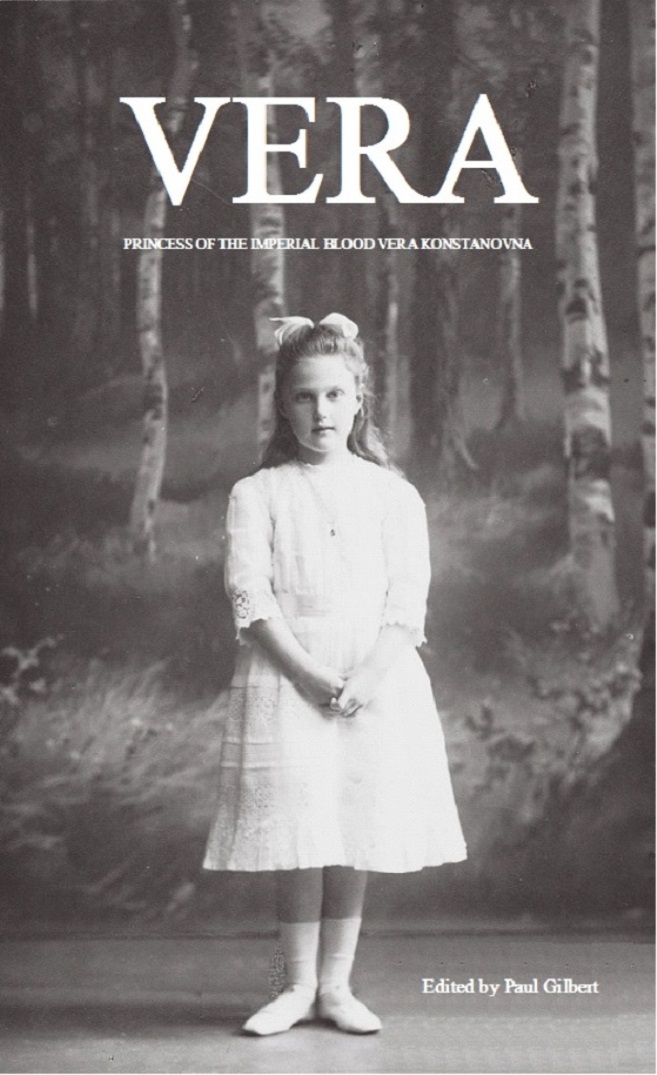
VERA: Princess of the Imperial Blood Vera Konstantinovna
Compiled and Edited by Paul Gilbert

CLICK ON THE LINK BELOW TO ORDER FROM AMAZON

PAPERBACK EDITION – PRICE $12.99

BOOK DESCRIPTION

Princess Vera (1906- 2001), was the youngest child of Grand Duke Konstantin Konstantinovich. By the time she fled Bolshevik Russia in October 1918, she had already lost half of her family. Vera was the only Romanov who remembered pre-revolutionary life and her legendary relatives, including Nicholas II and Alexandra Feodorovna [her god-mother], and was a playmate to their younger children. Princess Vera died on 11 January 2001, at the age of 95.

Paperback edition. 148 pages + 75 black & white photographs