New monument to Nicholas II installed in St. Petersburg

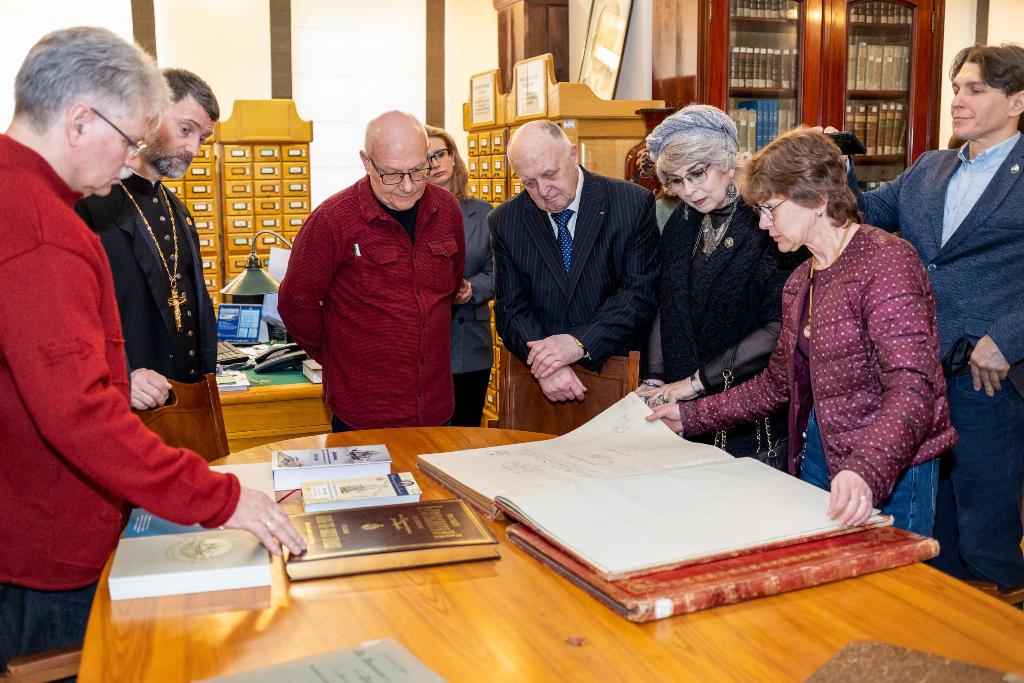
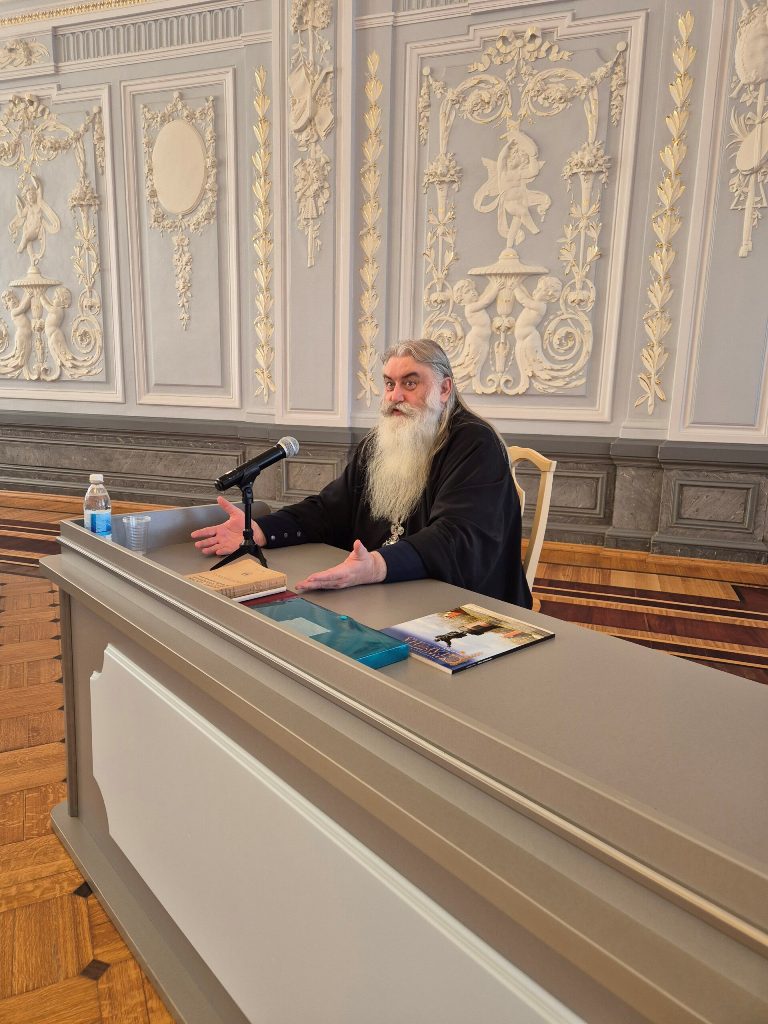
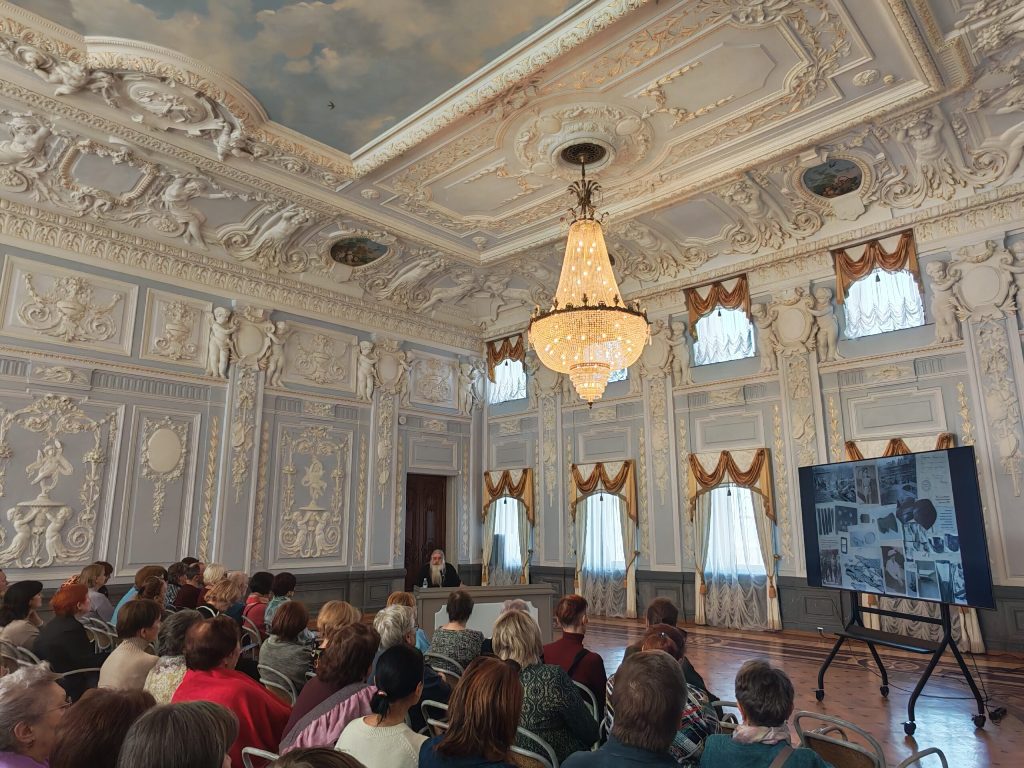
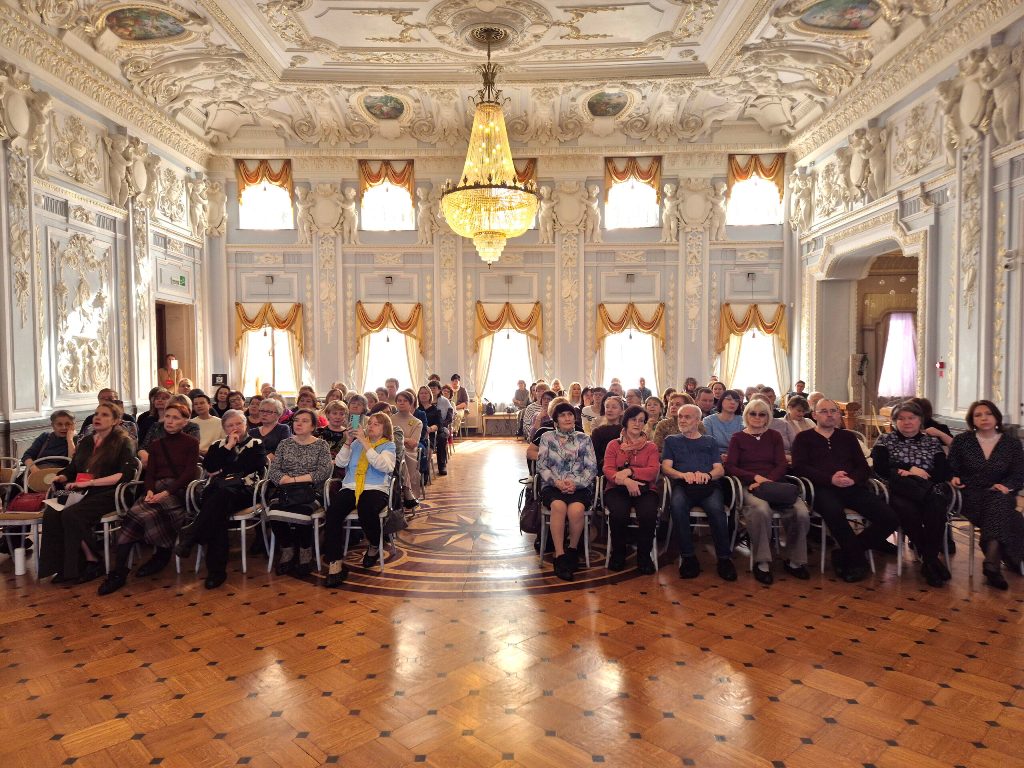
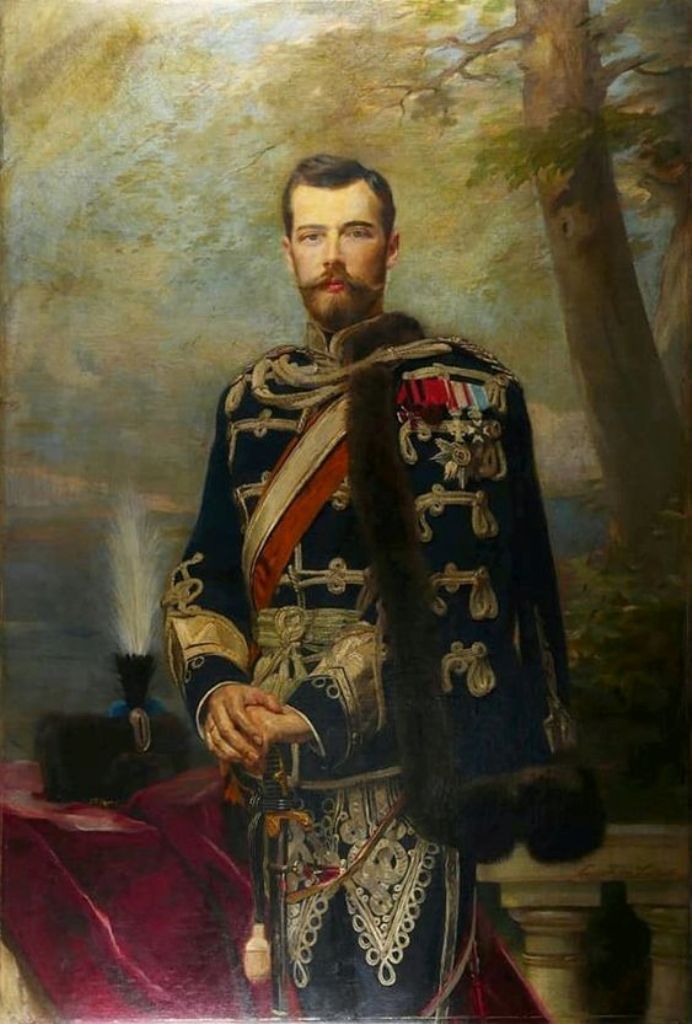
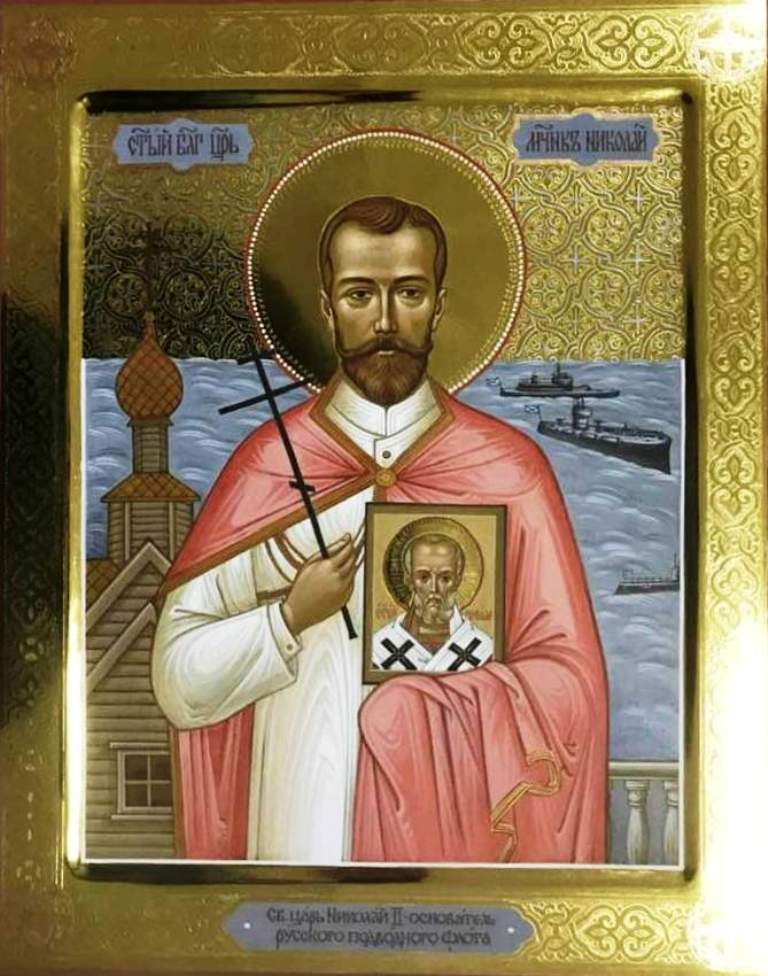
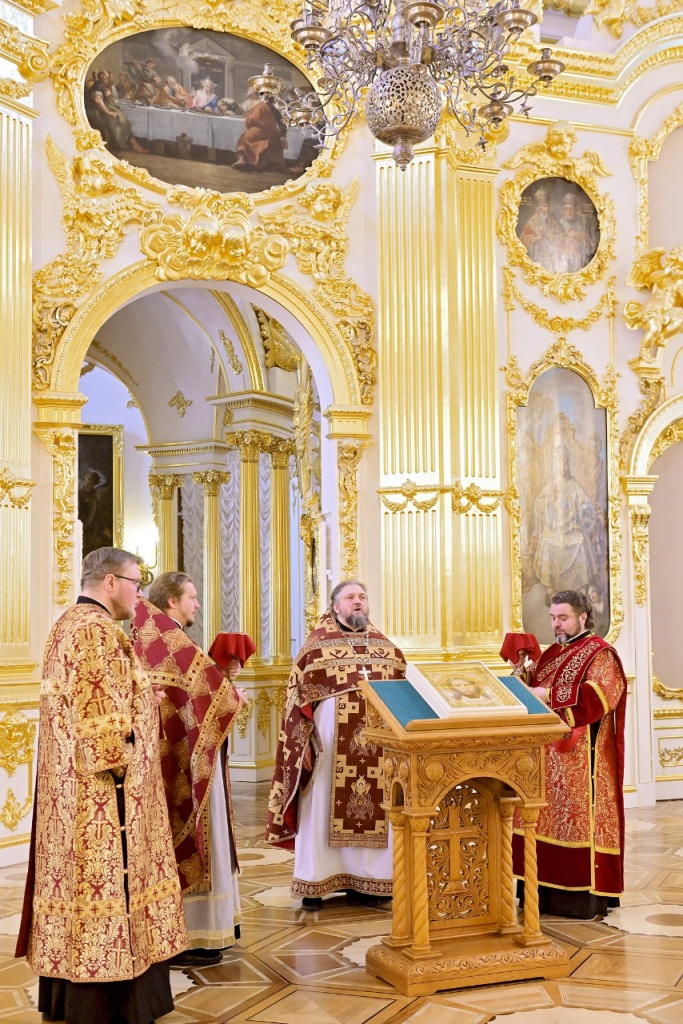
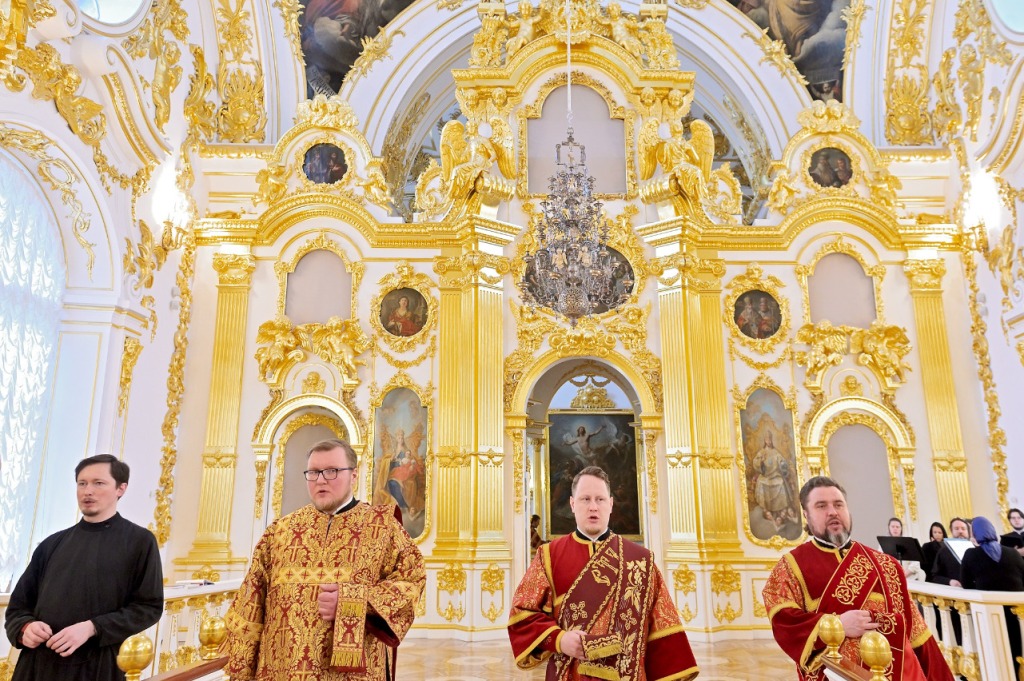
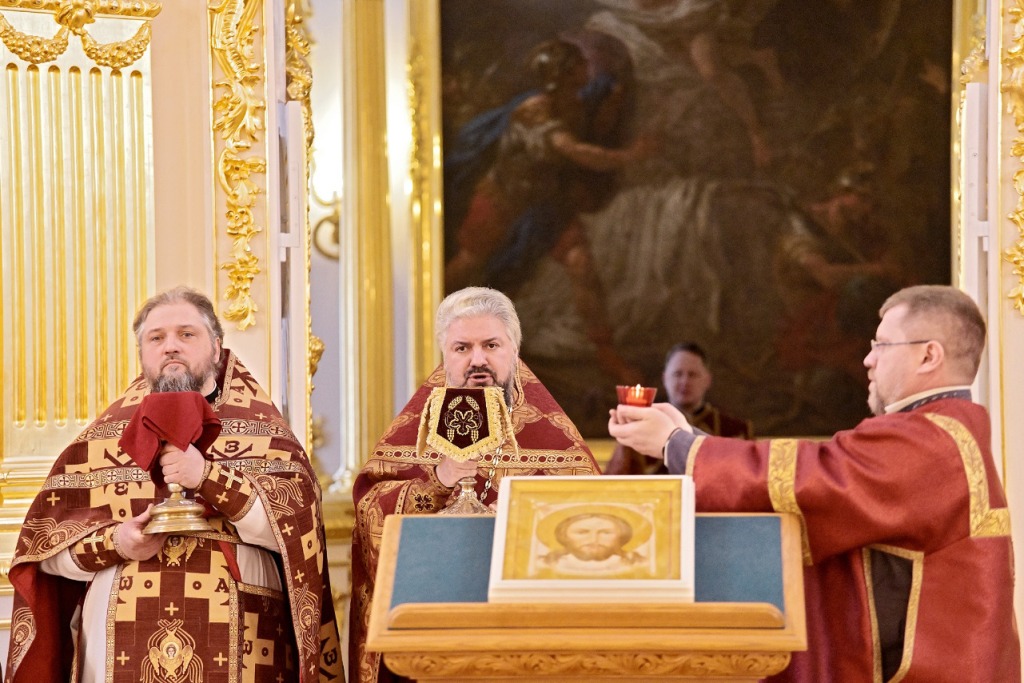
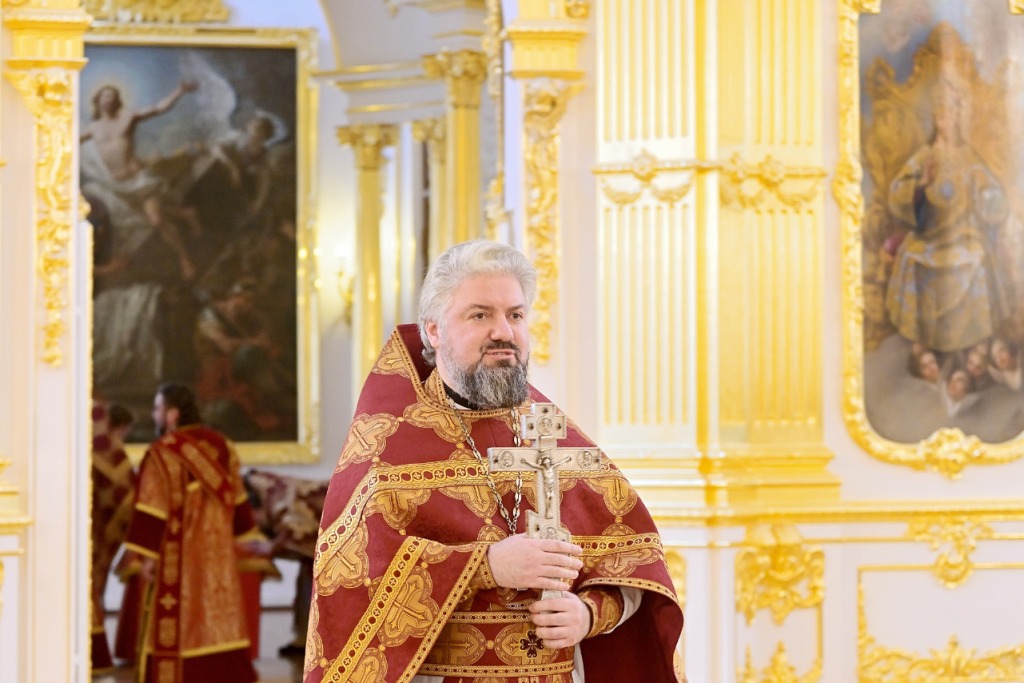
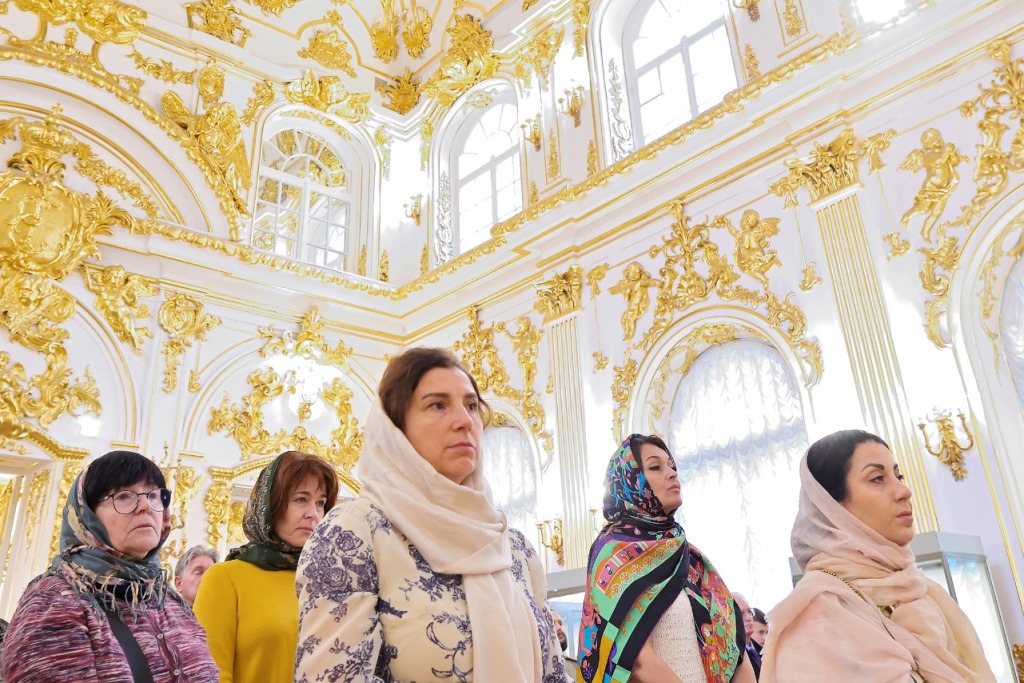
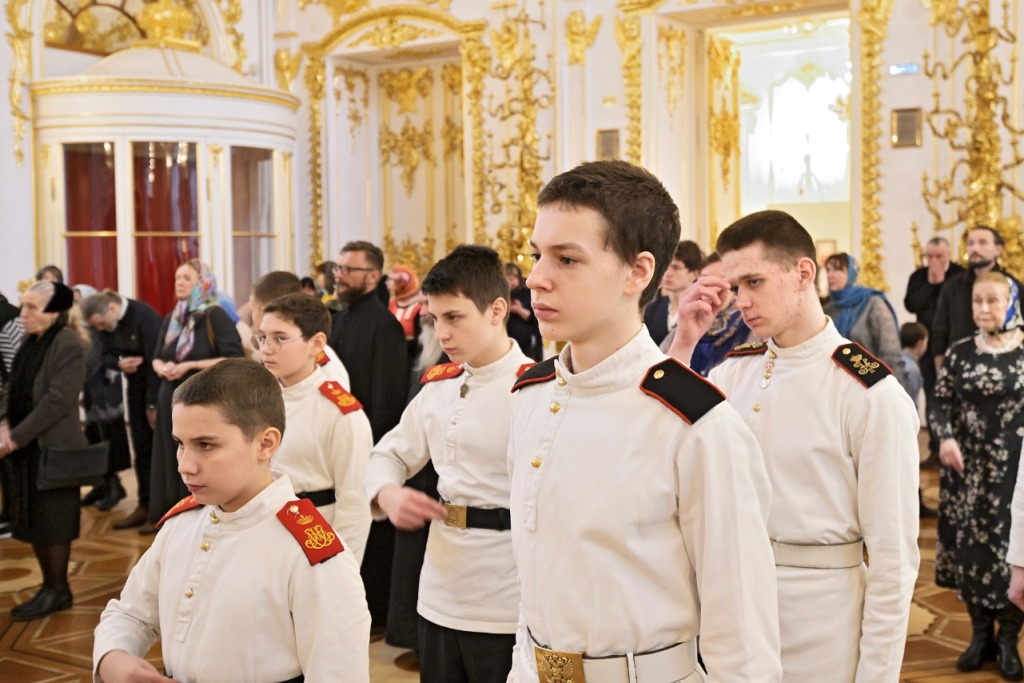
On 19th December 2025, a new monument to the Holy Royal Passion-Bearer Emperor Nicholas II, was unveiled and consecrated in the rotunda of the Khrulev Military Academy of Logistics in St. Petersburg. The event was timed to coincide with the feast day of St. Nicholas the Wonderworker.

Bishop Veniamin of Kronstadt, abbot of the Holy Trinity Alexander Nevsky Lavra, addressed the audience with a welcoming speech, in which, in particular, he drew attention to the aspect of sacrificial service for the good of the Fatherland and the contribution to the history of Russia of Russia’s last Tsar. Let this monument inspire the superiors, teachers and students of the Military Academy to imitate the Holy Emperor.

In addition, the Head of the Academy Ilgar Marish oglu Kahramanov, Deputy Head of the Administration of the Governor of St. Petersburg Olga Ivanovna Arishina and others addressed with welcoming words.

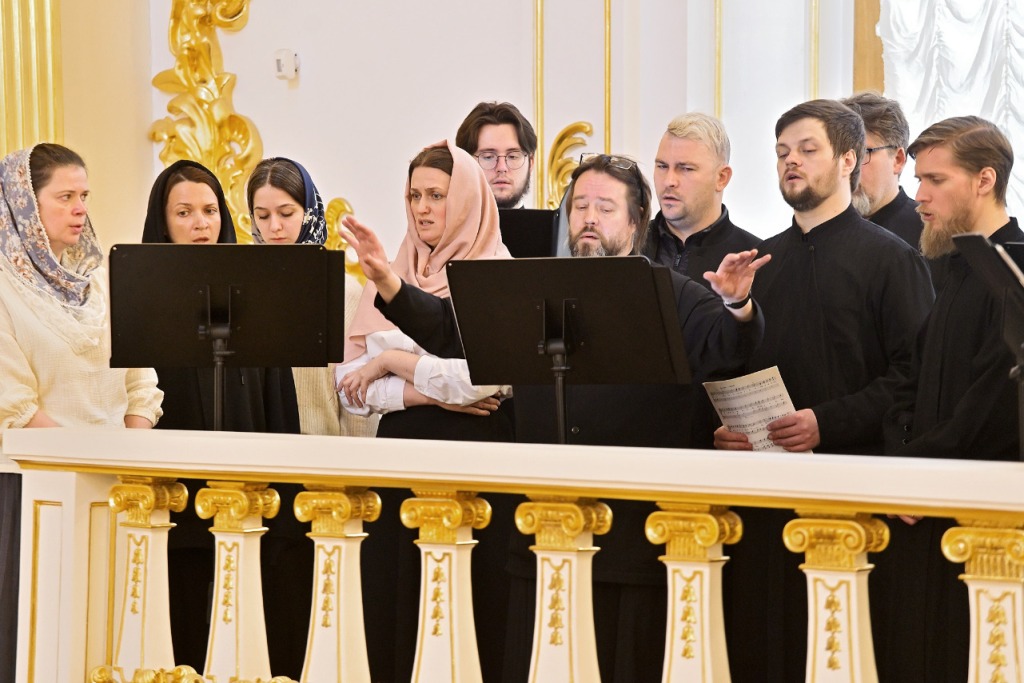
The final part of the ceremony was the rite of consecration, which was performed by Bishop Veniamin of Kronstadt. The deacon was headed by Senior Hierodeacon Elias (Vasiliev). The liturgical hymns were sung by the fraternal choir consisting of Hieromonk Tikhon (Voronov) and Hierodeacon Alexander (Urbanovich).

In 1900, the Holy Royal Passion-Bearer, Emperor Nicholas II, ordered the opening of the Quartermaster Course, which in the future was transformed into the Quartermaster Academy, the forerunner of the modern Khrulev Military Academy of Logistics.

On 17th April 1896, General of Infantry Nikolai Ivanovich Solovyov (1850-1907), was appointed the first head of the Quartermaster Course.

Since the fall of the Soviet Union in 1991, more than 100 monuments, sculptures, busts and memorial plaques to Nicholas II have been installed in cities and towns across the Russian Federation.

© Paul Gilbert. 23 December 2025

Prince Rostislav Romanov: “Nicholas II was loyal to Russia”

PHOTO: Prince Rostislav Romanov [b. 1985] © Dominique Boutin / ТАСС

On 14th March 2017, Dmitri Gorokhov of the Russian media news agency TASS, interviewed Prince Rostislav Romanov [b. 1985], great-grandson of Nicholas II’s sister, Grand Duchess Xenia Alexandrovna. His Highness answered questions on the 100th anniversary of the abdication of Russia’s last emperor.

Although this interview was recorded more than a decade ago, it remains an interesting read nonetheless. Below is the first English language translation.

– How do you, Your Highness, a descendant of the Romanovs, look at the events that took place on 15th (O.S. 2nd) March 1917?

“On this day a hundred years ago, with the abdication of Emperor Nicholas II from the throne on his own behalf and on behalf of his son, the history of the Romanov dynasty in Russia ended. And even with the passing of time, it is difficult for me to think about this dramatic event without feeling sadness.

“If we turn to the past, we see that history has always consisted of stages. Previously, they were much longer than in the new era. Events in certain countries often served as indicators of general development in the regions. If we look at the events of the early 20th century, we will see the abolition of many monarchies long before 1917.

“For many decades, there were currents that aimed at such changes. In many countries, the end of dynasties took place in different forms. But in Russia it was extraordinarily tragic, and not only for our family. The upheavals caused by it made the whole of Russia suffer.”

“The Emperor could have saved his family by moving to England. But the Romanovs did not receive such an invitation from London…

” I believe that Nicholas II would never have left Russia. He loved her, was faithful to her. Russia was also a family to him, and he could never leave it.

“Let us now return to the trends of the early twentieth century, when many monarchies faced problems. Perhaps this explains London’s instruction to the British ambassador to Russia, George Buchanan: “His Majesty’s Government will not insist on the Emperor and his family coming to England . . . ” At that moment in England, neither the royal family nor the British government could have foreseen the consequences.

“Part of the Romanov family managed to avoid reprisals and gradually started a new life in other countries. But they were never able to return to their homeland and were forced to end their lives in exile, scattered around the world.”

– What image of Nicholas II did your relatives preserve?

“The older generations of our branch of the Romanovs were very close to the Tsar. My great-grandmother, Grand Duchess Xenia Alexandrovna, was the Tsar’s sister. My great-grandfather, the creator of the Russian Air Force, Grand Duke Alexander Mikhailovich, was his brother-in-law.

“My father, Prince of the Imperial Blood Rostislav Rostislavovich (Senior), tried to raise my brother and me and our sister in the traditions of the dynasty, following its values. Nothing was more important to him than family, and in this he was very much like the late sovereign.

“One of the traits of the Tsar’s character was attention to other people. He never lost his composure, always remained steady, calm. This was a great gift.”

PHOTO: Prince Rostislav Romanov admires a portrait of Nicholas II, painted in 1900
by Valentin Alexandrovich Serov (1865-1911), in the State Tretyakov Gallery, Moscow

The eldest among the descendants of the Romanovs, Prince Dimitri Romanovich (1926-2016), did a lot to bring closer the dignified burial of Tsesarevich Alexei Nikolaevich and his sister Grand Duchess Maria. How does the family feel about these plans today?

“In January, together with other relatives, I participated in the farewell ceremony for Prince Dimitri Romanovich in Copenhagen. At the same time, we decided to continue the work to which the head of the Russian Imperial House gave so much of his strength.

“The eldest in our family, Prince of the Imperial Blood Dimitri Romanovich, believed that the Emperor’s children [Alexei and Maria] should be buried with their parents and sisters. And then the Tsar’s family will finally be able to rest in peace after so many difficult years.

“Christian duty is one of the reasons why the family calls for the burial of the Tsar’s children with their parents. Dimitri Romanovich hoped that this sad page of Russian history would be turned during his lifetime. Unfortunately, he did not live to see this moment. But we believe that he will see it from heaven.”

– You are a representative of the younger generation of the Romanovs. What does it mean to you to belong to this family?

“I often think about it, I have discussed it many times with my family. I think it is very important to preserve the legacy of the family, represented by the Romanov Family Association and the charitable Romanov Fund for Russia.

“We, the Romanovs, are proud of the contribution of our dynasty, which it left to the legacy of eternal Russia. The role of the dynasty has not been consigned to oblivion.

“That is why our association is so dear to us. It helps to maintain family ties, serves as a guide in our attitude to the roots and values of the family, which should never be forgotten. It defines our main goal at this moment, our commitment to the cause that was sacred for the late head of our family, Dimitri Romanovich: the burial in the cathedral of the Peter and Paul Fortress of Tsesarevich Alexei Nikolaevich and his sister Grand Duchess Maria Nikolaevna.

“We must always remember what trials Russia has gone through. It is also very important to help those who need it. I will always be grateful to the late Dimitri Romanovich for creating the Romanov Fund for Russia to come to the aid of those who need such support.

“At a January meeting in Copenhagen with Princess Feodora Alexeevna, who had been with Dimitri Romanovich all these years and shared his concerns, the relatives decided to continue the activities of the Romanov Family Association and the work of the Romanov Fund for Russia.”

You first visited Russia when you were twelve years old. How do you feel today in Moscow and St. Petersburg?

“Coming to both Russian capitals, I feel at home. Russia went through great trials, but retained its soul. And no matter what I do, the Russian soul leads me everywhere,” concluded His Highness.

PHOTO: Prince Dimitri Romanovich (left) and Prince Rostislav Rostislavovich.
April 2015. Cannes, France

***

Prince Rostislav Rostislavovich Romanov was born on 21st May 1985 in in Lake Forest, Illinois (USA). He is the second child and eldest son of Prince Rostislav Rostislavovich Romanov (1938–1999) and his wife, Christia Ipsen(b. 1949).

Prince Rostislav belongs to the Mihailovichi branch of the Romanov family as a male line descendant of Grand Duke Michael Nikolaevich of Russia, the youngest son of Emperor Nicholas I. He is also a descendant of Emperors Alexander II and Alexander III, being the great-grandson of Grand Duchess Xenia Alexandrovna of Russia (sister of the last Emperor Nicholas II) and her husband Grand Duke Alexander Mikhailovich of Russia. Rostislav has been a member of the Romanov Family Association since 1985 and was a committee member between 2007 and 2013.

In September 2021, Prince Rostislav married Foteini Georganta, married in the Alexander Nevsky Orthodox Cathedral in Paris.[17] The wedding reception took place in the Cercle de l’Union Interalliée, a building that briefly housed the Russian Embassy in Paris after the Napoleonic Wars. The couple have one son, Prince Rostislav (born 2013).

In 2009, Prince Rostislav became the first Romanov to move back to Russia, where he lived for two years and studied Russian. He currently splits his time between the United Kingdom and Russia.

 In March, 2023, Rostislav was elected president of the Romanov Family Association

© Paul Gilbert. 23 December 2025

Order of the Holy Tsar Nicholas II

PHOTO: Orders of the Holy Tsar Nicholas II – 1st, 2nd and 3rd Class

Tsar Nicholas II (1868-1918) was canonized by the Serbian Orthodox Church in 1938, then by the Russian Orthodox Church Outside of Russia (in 1981), and only in 2000 was he canonized by the Moscow Patriarchate of the Russian Orthodox Church.

The Order of the Holy Tsar Nicholas II is a contemporary Order. The historical prerequisites for the use of the image of Nicholas II in the Order for merits in the development of Russian-Serbian friendship and co-operation.

“In 1914, the very existence of Serbia as a state was at stake. On 11th July, Austria presented the Serbian government with an ultimatum that was completely unacceptable for an independent state.

On the same day, Emperor Nicholas II received a telegram from the Prince Regent of Serbia Alexander Karađorđević. It said: “We cannot defend ourselves. Therefore, we beg Your Majesty to help us as soon as possible… We firmly hope that this call will resonate in your Slavic and noble heart.”[1]

Three days later, the Russian Emperor sent a reply to Serbia. “As long as there is the slightest hope of avoiding bloodshed,” he wrote, “all our efforts must be directed towards this goal. If, contrary to our sincere wishes, we do not succeed in this, Your Highness can be sure that in no case will Russia remain indifferent to the fate of Serbia.”

In a reply telegram, Prince Alexander wrote: “Difficult times cannot but seal the bonds of deep affection by which Serbia is bound to Holy Slavic Russia, and the feelings of eternal gratitude for Your Majesty’s help and protection will be sacred in the hearts of all Serbs.”

On 15th July, Austria declared war on Serbia. It subjected Belgrade to artillery shelling, which killed many civilians. In response, Russia carried out a partial mobilization, a few days later – a general mobilization was carried out. Austria had to transfer most of its troops to the eastern front, and thus Serbia was saved. The Serbian people call Emperor Nicholas II their savior”.

PHOTO: Emperor Nicholas II and Prince Regent Alexander

***

The Order of the Holt Tsar Nicholas II has three classes. The highest class of the Order is the First Class. The order is made of precious metal, as well as non-ferrous metal. Diameter 52 mm.

The main colour of the Order is white, a symbol of peace, truth and goodness, divinity and sacrifice. It is no coincidence that the Order has the shape of an eight-pointed star. This form is the most common for the insignia of Orders in all European Christian states.

The eight-pointed star is, in fact, two four-pointed stars (two crossed crosses), which symbolizes the religious and spiritual community of the Serbian and Russian peoples: “Perhaps of all the peoples living on earth, the closest and dearest to us Russians is the Serbian people. We are united by a living faith in Christ, prayer for each other and a community of destinies. Remembering the tragic similarity of the history of Serbia and Russia, one begins to understand well the depth of the innermost spiritual ties that unite our brotherly peoples”.

1st Class

The badge of the Order is made of 585 yellow and white gold with diamond inserts. The Order is an octagonal star in the form of rays diverging from the center with rounded angular endings. The octagonal star is made up of two quadrangular stars, the rays of the smaller of which are decorated with diamonds.

In the center of the Order is a large circle framed by diamonds. In the center of the large circle is a small circle made of metal, which depicts a bas-relief of Tsar Nicholas II in profile. Between the large and small circles against the background of white enamel is the inscription “RUSSIAN-SERBIAN FRIENDSHIP”. “FRIENDSHIP OF PEOPLES”.

In the upper part of the Order is the Great Imperial Crown of the Russian Empire. In the lower part of the Order is the national symbol of Serbia – a double-headed eagle against the background of a shield filled with red enamel. On the reverse of the Order is its serial number, the manufacturer’s hallmark, the class (1st class) and a pin.

2nd Class

The badge of the Order is made of silver with cubic zirconia inserts. The Order is an octagonal star in the form of rays diverging from the center with rounded angular endings. The octagonal star is made up of two quadrangular stars, the rays of the smaller of them are decorated with inserts of white cubic zirconia.

In the center of the Order is a large circle framed by cubic zirconia. In the center of the large circle there is a small circle made of metal, which depicts a bas-relief of Tsar Nicholas II in profile. Between the large and small circles against the background of blue enamel is the inscription “RUSSIAN-SERBIAN FRIENDSHIP”. “FRIENDSHIP OF PEOPLES”.

In the upper part of the Order is the Great Imperial Crown of the Russian Empire. In the lower part of the Order is the national symbol of Serbia – a double-headed eagle against the background of a shield filled with red enamel. On the reverse of the Order is its serial number, the manufacturer’s mark, the class (2nd Class) and a pin (screw).

3rd Class

The badge of the Order is made of non-ferrous metal with cubic zirconia inserts. The Order is a double octagonal star in the form of rays diverging from the center with rounded angular ends. The octagonal star is made up of two quadrangular stars, the rays of the smaller of them are decorated with inserts of white cubic zirconia.

In the center of the Order is a large circle framed by cubic zirconia. In the center of the large circle there is a small circle made of metal, which depicts a bas-relief of Tsar Nicholas II in profile. Between the large and small circles against the background of red enamel is the inscription “RUSSIAN-SERBIAN FRIENDSHIP”. “FRIENDSHIP OF PEOPLES”.

In the upper part of the Order is the Great Imperial Crown of the Russian Empire. In the lower part of the Order is the national symbol of Serbia – a double-headed eagle against the background of a shield filled with red enamel. On the reverse of the Order is its serial number, the manufacturer’s hallmark, the class (3rd Class) and a pin (screw).

NOTES:

[1] Emperor Nicholas II embodied the traditional role of the Tsar as the first among believers and God’s chosen ruler. as a “Supreme Defender” and patron of the Russian Orthodox Church.

FURTHER READING

Contemporary Russian Orders honouring Nicholas II +14 colour PHOTOS

© Paul Gilbert. 20 December 2025

Sir Thomas Preston recalls Ekaterinburg, 1918

PHOTO: Sir Thomas Hildebrand Preston (1886-1976); the Ipatiev House;
Emperor Nicholas II, his family and four faithful retainers

Sir Thomas Hildebrand Preston, 6th Baronet (1886-1976), was a British diplomat who joined the United Kingdom Diplomatic Service around 1910. In 1916 he served as Consul in Perm. On 23rd May 1913, he was appointed British Vice-Consul in Ekaterinburg, and later British Consul in the Ural city.

Preston’s position in Ekaterinburg during 1917 and 1918 was extremely difficult. Operating during the final stages of World War I and the ensuing Russian Civil War, Preston faced immense difficulties. The local Bolshevik authorities in Ekaterinburg refused to recognize his diplomatic status, and his life was frequently threatened.

He was in Ekaterinburg in July 1918 at the time of the murder of Emperor Nicholas II and his family. He made efforts to make representations to the government regarding their situation, but his ability to act was severely limited by the chaos and the Bolsheviks’ hostility.  Preston was haunted later by the idea that he might have been able to save the Imperial Family.

At a telegraph office on 18th July, he attempted to send a message to the British Foreign Secretary Arthur Balfour in London, which read: “The Tsar Nicholas the Second was shot last night”. The telegram was intercepted by Bolshevik military commissar Philip Goloshchekin, who struck out Preston’s text, rewriting: “The hangman Tsar Nicholas was shot last night – a fate he richly deserved.”

***

Below is a letter written by Preston and published in the weekly British political and cultural news magazine The Spectator, on 11th Marc h 1972. It is a poignant account of his experiences during the Bolshevik coup d’état. He attended a soiree at Ekaterinburg just before the coup, where he witnessed the last bourgeois evening party in Russia. Preston was later awakened by his servant to the fact that the Bolsheviks had seized the town the following morning. He was accompanied by several Consular colleagues to make contact with the new government and learn what was happening. Preston’s recollection is a testament to his bravery and dedication to his role as a diplomat during a tumultuous period in Russian history.

Sir: I have read with great interest the report published in The Spectator on February 5, 1972, by Tibor Szamuely (page 193) dealing with the television programme The File on the Tsar, which was transmitted on BBC-1 on Sunday, January 23, 1972.

With reference to Mr Szamuely’s remarks about the role I played in this tragedy, I kept a diary of the development of events which was embodied in my book entitled Before the Curtain, published by John Murray, London.

In July, 1917, just before the Bolshevik coup d’etat, I attended a soiree, given at Ekaterinburg, by the representative a of the Provisional Government. It was a gathering not easily forgotten. It was, in fact, the last occasion in Russia that I was to see Russian officers in Tsarist uniform, officials in their civilian uniforms and all civilians in evening dress. Whilst the Governor’s guests were revelling in dancing, card playing, music and champagne, the railway workers at Ekaterinburg were preparing the coup d’6tat which was to take place the following morning. Pessimism, however, was the predominant feature of this last bourgeois evening party. Many of my Russian friends were strong in their condemnation of the behaviour of the Government officials at Petrograd, amongst whom bribery and corruption were rife, which was, to a large degree, responsible for the defeat of the armies in the field.

The following morning I was awakened by my servant who told me that the Bolsheviks had seized the town (Ekaterinburg) during the night and were actually holding a meeting at the railway station. After a scanty breakfast I proceeded, accompanied by several of my Consular colleagues, to the station in order to make contact with what was presumably to be our future Government as well as to learn what was happening. On arrival at the station we found a local Soviet in session in the stationmaster’s room. This was my first acquaintance with the Bolsheviks and a more awe-inspiring and cut-throat crowd it would be hard to imagine . . . The Soviet consisted mostly of youths of between nineteen and twenty-five, attired in leather jackets (the usual dress of the GPU). All were armed to the teeth. Hand-grenades were on the writing-table; in the corner of the room was a bundle of rifles to which people kept on coming in and helping themselves.

I informed the Soviet that we had come to present ourselves and requested information as to what had occurred. Comrade Tchoutskaeff, the leader of the Soviet, with whom I was to have frequent interviews during the eleven months I was under their regime, replied that the Bolshevik party was in power. On learning that I was the British Consul he added: your comrade Ambassador (Buchanan) has left Russia and you have no official status or protection. In fact we don’t know whether to treat with you or to shoot you. At any rate if you and your compatriots don’t behave yourselves you will find yourselves in gaol if not worse.”

In view of the rapid advance of the Czechs and the White Army, the Ural Soviet asked Yakov Sverdlov (Secretary of the Moscow Soviet) what they should do. The reply came “Act as you consider necessary “; whereupon the Ural Soviet passed a resolution to do away with the Tsar and his family.

PHOTO: The British consulate (the building on the right) in Ekaterinburg in 1918 was located on Voznesensky Prospekt. © From the Private Postcard Collection of Paul Gilbert

From the window of my Consulate, I saw the Tsar being driven in a car from the station to the House Epatiev, which was the scene of the assassination. It was the boast of the Ural Soviet that they would exterminate the whole of the Romanov family, and twenty-four hours after the murder of the Royal Family at Ekaterinburg they murdered at Alapaevsk (some thirty miles from Ekaterinburg) by throwing them in a mining shaft and throwing rocks and boulders on top of them, Prince Igor, husband of the Crown Princess Helene of Serbia, the Grand Duke Serge Mihailovitch, the Grand Duchess Elizabeth, Prince John and Count Paley. The Ural Soviet also murdered the Grand Duke Michael (brother of the ex-Tsar) and his English Secretary, Mr Johnstone.

Ever since then I have been haunted by the idea that had I been able to argue with the Ural Soviet for a longer period I might have been able to save the Russian Royal Family.

Incidentally, I was told by Dr Fisher, the Swiss Consul, that I had been condemned to death by the Ural Soviet for my representations on behalf of the Russian Royal Family. Dr Fisher suggested that I should hide in the forest outside Ekaterinburg until the Czechs and the White Army came in. I decided, however, to stay at my house and wait. Sometime later a huge crowd gathered outside the house and said they were coming in to search it. I said that they could not do this as the Consulate enjoyed diplomatic immunity. They replied “come out yourself,” and this I did armed with several tins of Virginian cigarettes (which they had not seen for months) and engaged them in conversation—I hoped to carry on the conversation until the Czechs and the White Army came in. (I was in contact by messenger with the Czechs and the Siberian Army.) This conversation lasted for some time when one of the crowd said that the Czechs and Siberian Army were on the outskirts of the town and the crowd dispersed.

Actually, the Czechs and the Siberian Army only occupied the town on July 26, 1918. The Ural Soviet, many of whom were killed by the Czechs and the Siberian Army, left in panic, but before doing so they sent a telegram (a copy of which was found in the Ekaterinburg Telegraph Office) stating that “All the members of the Royal Family had suffered the same fate as the Tsar.” A copy of this telegram is to be found in the British Museum.

I have just received a letter from an old friend of mine, Trefor Evans, who was my colleague in Cairo and is now a Professor at the University College of Wales, and he quotes from his old chief’s (Lord Killearn) Diary as follows: “In the general talk which followed I discovered that Roberts (Brigadier) had been with the White Russians (General Denikin) when I was in Siberia in 1919. We exchanged notes regarding incidents at that time and he was particularly interested and I told him that it had fallen to my lot to bring out from Siberia all that was left of the mortal remains of the unfortunate Imperial Family!”

Incidentally, these remains reached Buckingham Palace. When I was received in audience by HM King George V in February, 1921, we discussed the matter and His Majesty said that the relics were in such a state that they had to be fumigated before they could be touched.

Thomas Preston
The Hall, Beeston St. Lawrence,
Neatishead, Norfolk.

***

Before the Curtain by Thomas Hildebrand Preston, 6th Baronet (1886-1976), was published by John Murray (London) in 1950. Hard cover, 313 pages.

Preston’s memoirs record the period in which Nicholas II and his family were held under house arrest between April-July 1918.

The book includes some interesting tidbits of information, for instance: ” . . . the Alexander Palace contained a life-sized portrait of Queen Victoria . . .”, I wonder what happened to it?

It has been out of print for many years now, with secondhand copies still being highly sought after by collectors.

© Paul Gilbert. 16 December 2025

What would have happened to Russia if Nicholas II had remained on the throne?

PHOTO: Emperor Nicholas II set against the backdrop of symbols of the Russian Empire and monarchy: the regalia, the throne and the double-headed eagle

Any one who shares an interest in the life and reign of Russia’s last Tsar, has more than likely asked themselves, “what if there was no revolution?”, “what if Russia had won the war against Germany?”, and more importantly, “what if Nicholas II remained on the throne?”. What would have happened to Russia?

This article shares the opinions of three prominent Russians: a journalist, a highly respected historian, and a publicist. Below, they share very different opinions about the successes and failures of Nicholas II and speculate what would have happened to Russia if he had remained on the throne, after the Great War ended – war which Russia was on the verge of victory.

***

More than a century after his tragic death, the last Emperor of Russia, continues to fascinate historians and the general public alike. Historians and writers in particular, tend to focus and debate Nicholas II’s failures as a ruler, while often ignoring his many achievements.

Academically lazy historians and writers overlook (or ignore) the fact that the reign of Nicholas II witnessed a vivacious and in some cases, unprecedented bourgeoning of political, social, economic and cultural activity whose diversity and richness are today being uncovered by specialized post-Soviet studies of the period. It is a credit to the diverse achievements of Nicholas II which resulted the advances of Imperial Russia in industry, agriculture, education, labour, and the creation of responsible, educated citizens who were gradually becoming constructive contributors to the government’s political activity.

Nicholas II was associated with several epithets reflecting the wide range of opinions about his reign, from extremely negative to revered. These labels were primarily used by his political adversaries and critics, particularly during and after the Russian Revolution. 

Critical epithets, such as “Nicholas the Bloody” or “Bloody Nicholas”, were the most common and enduring negative epithets. They arose after the Khodynka Tragedy at his coronation festivities in May 1896 and, more significantly, after the Bloody Sunday massacre in 1905.

To this day, Nicholas II’s detractors describe him as an “indecisive, weak-willed, and out-of-touch ruler”. Russian President Vladimir Putin described Nicholas II as an “erroneous and absurd ruler”, while Metropolitan Tikhon (1865-1925) remembered Nicholas as “one of the most successful and yet most tragic leaders of the Russian state”.

PHOTO: journalist and politician Maxim Shevchenko

During a recent Russian-language interview, journalist and politician[1] Maxim Shevchenko [b. 1966] referred to Nicholas II as “the worst ruler in the history of the country”. According to Shevchenko, for decades, a “lulling mythology” has been created around the Russian Empire: the film Адмиралъ / Admiral (2008) about Alexander Kolchak, the transfer of Anton Denikin’s ashes to the Donskoy Monastery in Moscow (2005), and the opening of a memorial plaque to Carl Gustaf Mannerheim in St. Petersburg (2016), as examples. The journalist believes that all these are nothing more than “beautiful fairy tales” about persons “allegedly close to Emperor Nicholas II. Each of whom was actually defeated,” rants Shevchenko, and they were swept away with hatred by their own people.”

In Shevchenko’s opinion, the last Russian Tsar was not worthy of canonization by the Moscow Patriachate in 2000. The journalist called Nicholas II “a criminal” for the fact that on his order a peaceful demonstration was brutally suppressed on 9th January 1905. He further accuses NIcholas II of the disaster of the Russian fleet near Tsushima and in general of the defeat of Russia in the war with Japan (1904-05). According to Shevchenko, the Romanov dynasty “drowned Russia in blood, the revolution and civil war are the consequences of the inept management of Russia by Nicholas II.”

PHOTO: historian and author Pyotr (Peter) Multatuli

Russian Historian and author Pyotr Multatuli [b. 1969] fundamentally disagrees with Shevchenko. In his opinion, Nicholas II is a holy Tsar-martyr and a great reformer. According to Multatuli, more reforms were carried out under Russia’s last Tsar than under any of his predecessors. Under the last Emperor, 80% of the railways were laid, including the Trans-Siberian Railway. The historian believes that if this railway had not existed at that time, the consequences of the Russo-Japanese War would have been completely catastrophic, the Japanese could easily have reached Krasnoyarsk.

*CLICK on the following link, to read more about the reforms and accomplishments made during the 22+ year reign of Nicholas II – 70 facts about Emperor Nicholas II and his reign

PHOTO: politician and publicist Yegor Kholmogorov

Russian politician and publicist Yegor Kholmogorov [b. 1975] drew attention to just two of the merits of Nicholas II. First were Nicholas II’s efforts and reforms to end hunger. Under Nicholas II, not a single crop failure led to the deaths of millions, as compared, for example to the famine in the Volga region in the first years of Soviet power.

Secondly, the industrialization of the country. Stalinist propaganda hushed up this undoubted merit of Alexander III and Nicholas II. Bolshevik and Western propaganda painted pre-revolutionary Russia as a backward agrarian country. The truth is that Russia at that time was pursuing a path of industrialization at an unprecedented pace, ahead of almost all developing nations, with the possible exception of the United States.

According to Kholmogorov, if the Emperor had remained on the throne, “Russia would have experienced significant prosperity”. Without revolutions and social upheavals, the country would experience an economic boom. Kholmogorov also believes that Nicholas II was not at all a weak and mediocre Tsar, as he is often presented. He was a smart ruler who understood the tasks of the country and knew how to bet on outstanding politicians, such as Pyotr Stolypin (1862-1911).

According to Kholmogorov, World War II could have been avoided, since in 1918 Germany would have been finally defeated. World War II is a consequence of the chain of events launched by the February 1917 Revolution and the overthrow of Nicholas II. That is, “all the victims of the first half of the 20th century are on the conscience of those who started and who carried out this revolution”, he concluded.

NOTES:

[1] Maxim Shevchenko s a Russian journalist, politician, public figure, publicist, human rights activist, radio host, TV presenter, and video blogger. He has served as leader of the Russian Party of Freedom and Justice since March 2021.

The Russian Party of Freedom and Justice (RPSS) is a Russian center-left political party. It was created as the Communist Party of Social Justice (CPSU) at the founding congress on April 8, 2012 and officially registered on May 28, 2012. According to the party charter, it declared the construction of a socialist state.

© Paul Gilbert. 15 December 2025

***

While my research is dedicated to clearing the name of Russia’s much slandered Tsar, I am also actively looking for articles and news stories on the Romanovs, from Russian archival and media sources, which may be of interest to my readers.

In exchange for this 18-page booklet, please consider making a small $5 or $10 donation in aid of my research. These donations are of great assistance in helping me offset the cost of obtaining and translating documents from Russian archival sources, which are often paid for out of my own pocket. It is these documents which help present new facts and information on the life and reign of Nicholas II. In addition, my research continues to debunking many of the myths and lies which exist more than a century after his death and martyrdom.

Please note, that there is NO obligation, thank you for your consideration!

CLICK HERE TO MAKE A DONATION

Fabergé’s Imperial Winter Egg sells for over $30 million USD

On 2nd December 2025, Carl Fabergé’s legendary Winter Egg sold at auction for more than $30.2 million USD to an anonymous buyer. For the third time in its history, the Winter Egg is now the most valuable Fabergé item ever sold.

The Winter Egg was first sold by Christie’s in 1994 for 7.3 million Swiss francs, setting what was then a world record for a Fabergé item. Eight years later, in 2002, the egg broke its own record when it fetched $9.6 million at a Christie’s auction in New York City.

The Winter Egg was presented to the Dowager Empress Maria Feodorovna by her son, Emperor Nicholas II as an Easter gift in 1913. What makes this particular egg so rare, is that for the first time in the history of the Imperial Easter Eggs, the design was created by a woman: Alma Theresia Pihl-Klee (1888-1976), the niece of the master August Wilhelm Holmström (1829-1903), who brought this project to life.

PHOTO: Alma Theresia Pihl-Klee (1888-1976)

Margo Oganesian, Christie’s head of department for Fabergé and Russian works of art, said: “Christie’s is honoured to have been entrusted with the sale of the exquisite Winter Egg by Fabergé for the third time in our history.

“Today’s result sets a new world auction record for a work by Fabergé, reaffirming the enduring significance of this masterpiece and celebrating the rarity and brilliance of what is widely regarded as one of Fabergé’s finest creations, both technically and artistically.

“With only a handful of imperial Easter eggs remaining in private hands, this was an exceptional and historic opportunity for collectors to acquire a work of unparalleled importance.”

The author of this article believes that the Winter Egg should be returned to Russia, where it originated and where it belongs today. It would be a most kind and generous gesture on the part of the anonymous buyer to gift it to either the Fabergé Museum in St. Petersburg – which has 9 Fabergé Imperial Easter Eggs – or the Armoury of the Moscow Kremlin, which has 10 Fabergé Imperial Easter Eggs.

FURTHER READING:

The Imperial legacy of Carl Fabergé (1846-1920) + PHOTOS

Christie’s to auction Fabergé’s legendary “Winter Egg” – again!

© Paul Gilbert. 10 December 2025

NEW BOOK – Sovereign No. 16 (Winter 2026)

*You can order this title from most AMAZON outlets, including
the United States, United Kingdom, Ireland, Canada, Australia,
France, Germany, Spain, Italy, Netherlands, Belgium, Poland, Sweden,
Brazil, Mexico and Japan
*Note: prices are quoted in local currencies

CLICK HERE TO ORDER THE PAPERBACK EDITION @ $20.00 USD

English. Large format 8-1/2″ x 11-1/2″. 132 pages. 124 Black & White photos

The No. 16 Winter 2026 issue of SOVEREIGN features 28 articles about Russia’s last Tsar, his family, the Romanov dynasty and the history of Imperial Russia. These articles have been researched and written by independent historian and author Paul Gilbert. His works are based on new research from Russian archival and media sources.
Please note, that this issue features 3 articles researched and written by Russian historians (see list below). These articles have been translated and published and published in English for the first time.

In an effort to preserve his 30+ years of research, the author has reproduced a selection of the more than 950 articles he has written for his blog. They are made available in a printed format for the first time. The author has updated many of the articles in this issue with additional information and photos. In addition, this issue features one new First English translation.

The No. 15 issue features the following 28 articles:

[1] Nicholas II’s visits to the Marfo-Mariinsky Convent in Moscow – 1912, 1913 and 1914

[2] 25th anniversary of the canonization of Nicholas II by the Moscow Patriarchate

[3] Empress Alexandra Feodorovna’s photo album sells at St. Petersburg auction

[4] Lord Mountbatten’s letter regarding Anna Anderson

[5] Monument to Nicholas II and his family to be installed in Mogilev

[6] New monument to Nicholas II installed in Krasnodar

[7] The fate of the kokshniks presented to OTMA in Kostroma (1913)

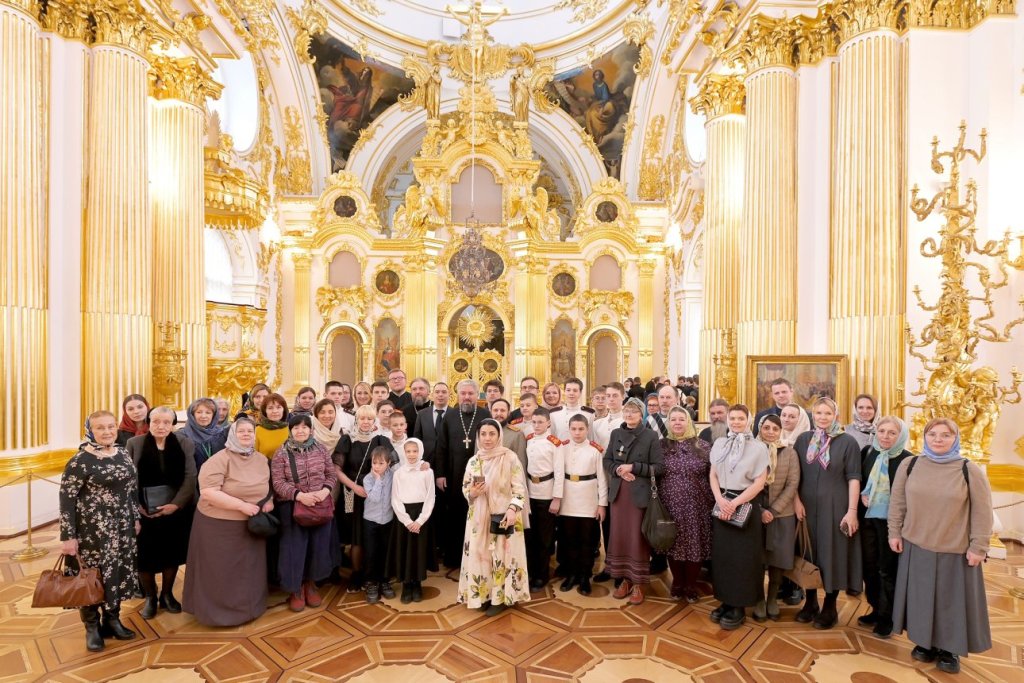
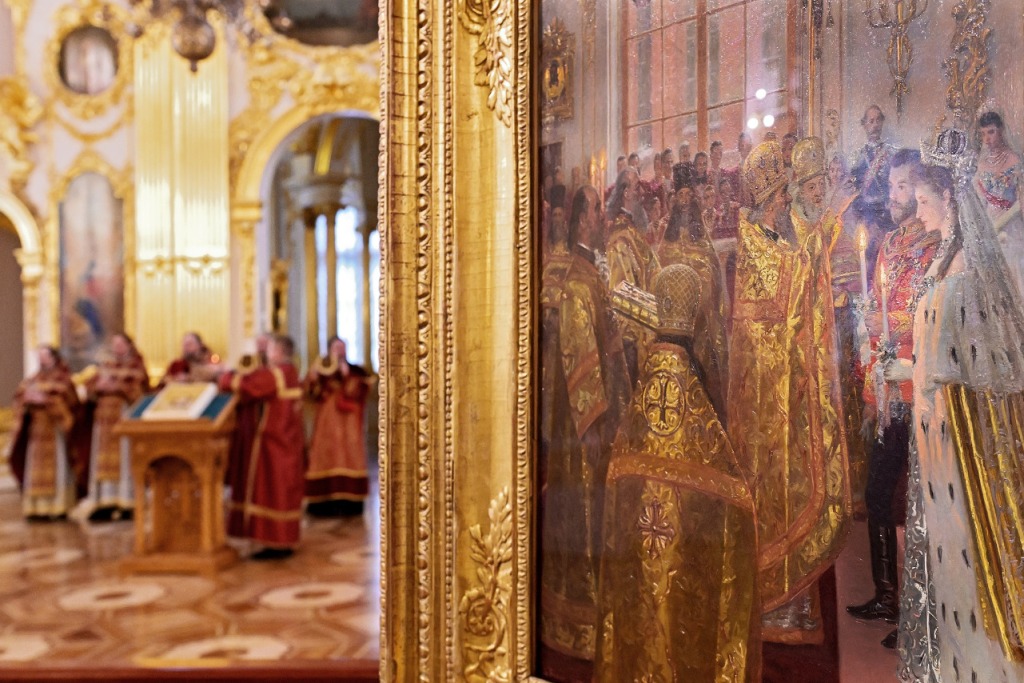
[8] Divine Liturgy for the Imperial Family performed in the Winter Palace

[9] Thousands of items at Pavlovsk, have not been return to the Alexander Palace

[10] Faithful to the End: Prince Vasily Alexandrovich Dolgorukov

[11] The Great Imperial Crown Of the Russian Empire

[12] The Imperial Legacy of Carl Fabergé (1846-1920)

[13] In 2007, General Wrangel’s grandson decrid Bolshevism, Lenin and Stalin

[14] Nicholas II wanted reforms, Lenin wanted recolutions: who was right?

[15] Obituary: Maria Dmitrievna Ivanova-Tatishcheva (1930-2025)

[16] Tsar’s Days in Ekaterinburg 16/17 July 2025

[17] Chinese Theater at Tsarskoye Selo to be restored

[18] State Halls in the Alexander Palace reopened after restoration

[19] The marriage that shocked The Russian Empire

[20] The fate of four faithful retainers of the Imperial Family

[21] Nicholas II visits the Iverskaya Chapel in Moscow

[22] “They did not betray their oath” —The fate of the generals who reamained loyal to Nicholas II

[23] Nicholas II’s menu: culinary preferences of Russia’s last Tsar

[24] Carpet from Governor’s House in Tobolsk preserved in United States ,museum

[25] Russia honours the Romanovs

SPECIAL TO THIS ISSUE OF SOVEREIGN

[26] Confession of a regicide Pyotr Ermakov’s deathbed confession 1952

[27] Trotsky’s version of the murder of the Imperial Family

[28] Attempts at Church Reform bythe Holy Emperor Nicholas IIAL TO THIS ISSUE OF

***

Back issues of SOVEREIGN

No. 15 Summer 2025

No. 14 Winter 2025

No. 13 Summer 2024

No. 12 Winter 2024

NOTE: back issues of Nos. 1 to 12 are now out of print.
Second-hand copies are available on AMAZON and eBay
.

© Paul Gilbert. 1 December 2025

Icon of Nicholas II consecrated in the Spassky Cathedra in Penza

PHOTO: Metropolitan Seraphim of Penza and Nizhnelomovsk, the icon
of the Holy Royal Passion-Bearer Nicholas II, Spassky Cathedral, Penza

On the evening of 29th November 2025, Metropolitan Seraphim of Penza and Nizhnelomovsk, performed the rite of consecration of the icon of the Holy Royal Passion-Bearer Nicholas II, at the Spassky Cathedral, located in the city of Penza.

At the base of this icon is a memorial plaque, with a very interesting provenance from the early 20th century, and it’s connection to Emperor Nicholas II’s visit to the city in 1904.

PHOTO: Metropolitan Seraphim of Penza and Nizhnelomovsk
performs the rite of consecration

After the consecration of the icon, Metropolitan Seraphim told the parishioners the story of how the memorial plaque ended up in its place:

On 19th June 2022, a memorial plaque that was installed at the beginning of the twentieth century on one of the columns of the Spassky Cathedral in memory of Emperor Nicholas II’s visit to Penza in 1904, was donated to the Penza Diocese. During his visit, the Tsar reviewed the troops going to the Russo-Japanese War, and attended the Divine Liturgy in the Penza Spassky Cathedral.

PHOTOS icon of the Holy Royal Passion-Bearer Nicholas II (above),
and the memorial plaque (below)

This memorial plaque, installed by the Penza City Duma, became the first memorial plaque in the Penza region. The inscription on it reads: “His Imperial Majesty Emperor Nicholas Alexandrovich and His Imperial Highness the Grand Duke Mikhail Alexandrovich deigned to visit the Penza Cathedral and prayed at this place in 1904, on June 28 at 11 o’clock in the afternoon.”

The text on the memorial plaque turned out to be prophetic: the Tsar prayed “in this place.” The cathedral, which the emperor visited, was destroyed by the Soviets in 1934, but the First church to be recreated in the city in 2011-16″.

PHOTO: Orthodox Believers venerate the icon
of the Holy Royal Passion-Bearer Nicholas II

For a long time it was believed that the memorial plaque was lost. The residents of Penza remembered that in February 1918 armed men (Bolsheviks) who came to the cathedral smashed the plaque with their rifle butts. But, as it it turned out, the plaque miraculously survived, only a corner broke off. The parishioners hid it from the Bolsheviks, burying it in the ground near the church.

About twenty years ago, information began to circulate, that the memorial plaque was intact. Local historians conducted a lengthy search, as a result of which the relic ended up in the hands of the famous Penza collector Igor Sergeevich Shishkin, who returned it to the Spassky Cathedral.

The transfer of the memorial plaque took place before the great consecration of the Spassky Cathedral, which was performed on 19th June 2022, by Patriarch Kirill of Moscow and All Russia during his primatial visit to the Penza Metropolia.”

PHOTO: ‘Nicholas II in Penza 1904’
by the contemporary Russian artist Denis Santalov.

In his painting, Santalov has captured the arrival of the Russian emperor who visited Penza on 28th June 1904. He is depicted in the Spassky Cathedral (blown up in 1934), where he is blessed by the Bishop of Penza and Saransk Hieromartyr Tikhon (Nikanorov). On that memorable day, the sovereign visited conducted a review of his troops, who were on their way to the Russo-Japanese War. From the collection of the Penza Regional Art Gallery

© Paul Gilbert. 30 November 2025

250th anniversary of the Life Guards of His Majesty’s Cossack Regiment

On 18th October 2025, solemn events dedicated to the 250th anniversary of the creation of the Life Guards of His Majesty’s Cossack Regiment were held in the Peter and Paul Fortress in St. Petersburg.

October 18th is the namesday of St. Tsesarevich Alexei Nikolaevich (1904-18), Sovereign Ataman[1] of All the Cossack Troops. His father, Emperor Nicholas II (1868-1918) served as Regimental-Colonel-in-Chief from 2nd November 1894 to 4th March 1917.

After a drill review on the square of the Spiritual and Educational Center at the Church of the Tikhvin Icon of the Mother of God in the city of Sestroretsk, the Cossacks of the Convoy in Memory of His Majesty Emperor Nicholas II went to St. Petersburg to the Peter and Paul Fortress to participate in the solemn events dedicated to the 250th anniversary of the creation of the Life Guards of His Majesty’s Cossack Regiment.

The commemorative ceremony brought together representatives of Cossack societies, the clergy of the Russian Orthodox Church, government officials and the military-historical community, from all across the Russian Federation.

The participants were the Life Guards Cossack Division, the Platov Hundred of the Life Guards Cossack Regiment from Novocherkassk (NPI), the Convoy in Memory of Emperor Nicholas II, the Grebenskaya Embassy Stanitsa of the 1st Cadet Corps, the Cossacks of the St. Petersburg Cossack District, the Cadet Naval Brotherhood from the 245th School of the Admiralty District of St. Petersburg, the Military Historical Society in Memory of the Life Guards Ataman Regiment and a group of drummers of the Moscow Musical Cadet Corps.

The day began with a solemn prayer service in the SS Peter and Paul Cathedral, which was led by the rector of the Church of the Holy Martyr Hierotheos at the Life Guards Cossack Units, Priest Alexei Egorov. He was concelebrated by Priest Timofey Chaikin and the clergy of the cathedral. During the service, the jubilee standard of the St. Petersburg Life Guards Cossack Division was consecrated.

Flowers were laid by the Life Guards of the Cossack Division at the tomb of the founder of the Court Cossack regiments, Empress Catherine II, in the SS Peter and Paul Cathedral. This was followed by a solemn formation of the Cossack units on the Cathedral Square.

Representatives of the Government of St. Petersburg, clergy of the Russian Orthodox Church and atamans of Cossack organizations addressed those who attended the event.

On behalf of Oleg Kapitanov, Chairman of the Committee on Interethnic Relations and Implementation of Migration Policy in St. Petersburg, Sergey Domnin, Head of the Department of Interethnic Relations and Coordination of State Programs, read out a welcoming address to the participants of the ceremony.

Executive Secretary of the Synodal Committee for Cooperation with the Cossacks, Rector of the Church of St. Priest Timofey Chaikin read out a congratulatory address from the chairman of the Synodal Committee for Cooperation with the Cossacks, Metropolitan Kirill of Stavropol and Nevinnomyssk.

Welcoming speeches were made by: Vladimir Ivanov, Representative of the Governor of St. Petersburg for Cooperation with Religious Organizations; Prince Vladimir Trubetskoy, representative of the Imperial Guard Memory Association in Russia; Chairman of the Russian All-Military Union (ROVs) Igor Ivanov; the head of the choir of St. John of Damascus at the Church of the Vladimir Icon of the Mother of God, Irina Boldysheva; and the oldest ataman of the North-West, the ataman of the “Stanitsa Nikolskaya”, a Cossack of the Convoy in Memory of His Majesty Emperor Nicholas II Vyacheslav Polyakov, the great-grandson of the last Leib, the chamberlain of the Cossack of the Russian Empire Kirill Ivanovich Polyakov.

With the blessing of the rector of the Church of the Tikhvin Icon of the Mother of God in the city of Sestroretsk, the spiritual father of the Convoy in Memory of Emperor Nicholas II, Archimandrite Gabriel (Konevichenko), the commander of the St. Petersburg Life Guards Cossack Division, Cavalry Sergeant of the Convoy, Esaul Ilya Pivnik, presented the Order of the Emperor Nicholas II[2].

The Order of the Emperor Nicholas II – seen in above photo – was awarded to:

Ataman of the Grebenskaya stanitsa O. Zakharchenko, head of the Interregional Historical and Cultural Center “Healthy Life” M.O. Osadchenko, sergeant of the Platov hundred of the Life Guards Cossack regiment from Novocherkassk (NPI) A. Kovalev.

To the sounds of the historic regimental march of the Life Guards of the Cossack Regiment (Mendelssohn’s march), the column solemnly marched to the Naryshkin Bastion of the Peter and Paul Fortress. The procession was led by a platoon of the Guard of Honor of the Leningrad Military District, accompanied by a military orchestra.

This was followed by a performance of a group of drummers of the Moscow Musical Cadet Corps under the direction of Georgy Posnov took place.

The culmination of the event was the traditional noon cannon shot, which was made by representatives of Cossack units.

At exactly 12:00 p.m., Colonel V.A. Polyakov and Esaul I.I. Pivnik fired a cannon shot from the Naryshkin Bastion of the Peter and Paul Fortress to the glory of the Life Guards of His Majesty’s Cossack Regiment.

Then there was a solemn separation of the company of the Guard of Honor of the Leningrad Military District.

NOTES:

[1] A Cossack leader.

[2] The Order of Emperor Nicholas II was made by order of the St. Petersburg public organization “Convoy in Memory of Emperor Nicholas II” for the following anniversaries:

  • 100th anniversary of the tragic death of the Russian Empire (2017)
  • -150th Anniversary of the Birth of Emperor Nicholas II Alexandrovich (2018)
  • 100th anniversary of the martyrdom of the Royal Family (2018))

It was on these dates that the “Convoy in Memory of His Majesty Emperor Nicholas II” established this award. The Order Badge “Emperor Nicholas II” is presented by co-workers and missionaries of the Spiritual and Educational Center of the city of Sestroretsk in St. Petersburg with the blessing of the spiritual father of the “Convoy in Memory of Emperor Nicholas II” Archimandrite Gabriel (Konevichenko) and signed by him for loyal feelings and love for the Tsar and His August Family.

© Paul Gilbert. 29 November 2025