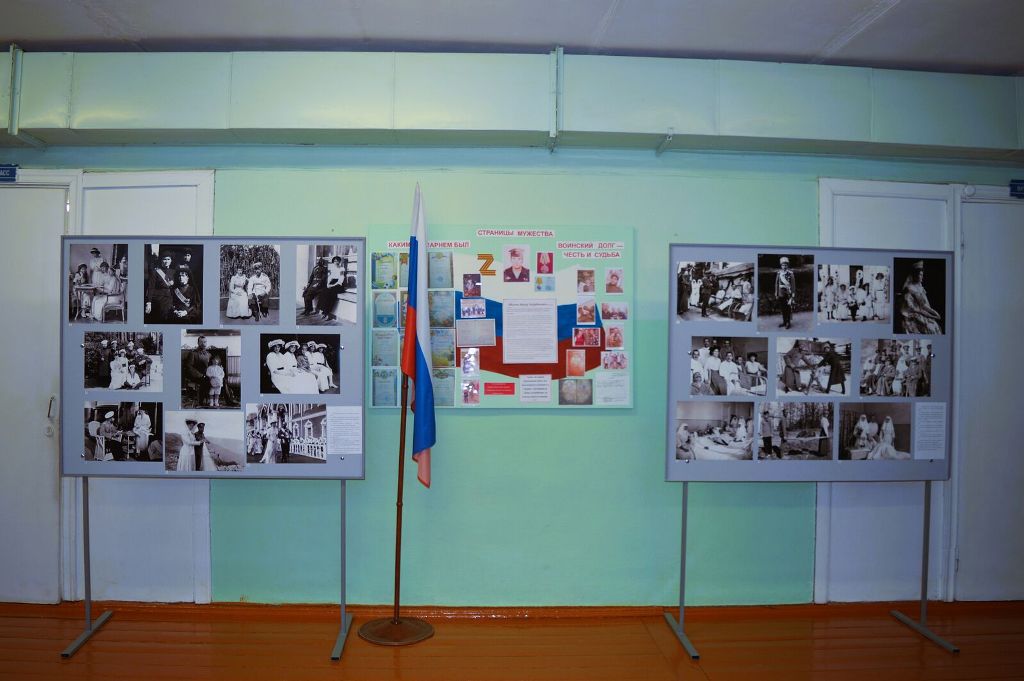
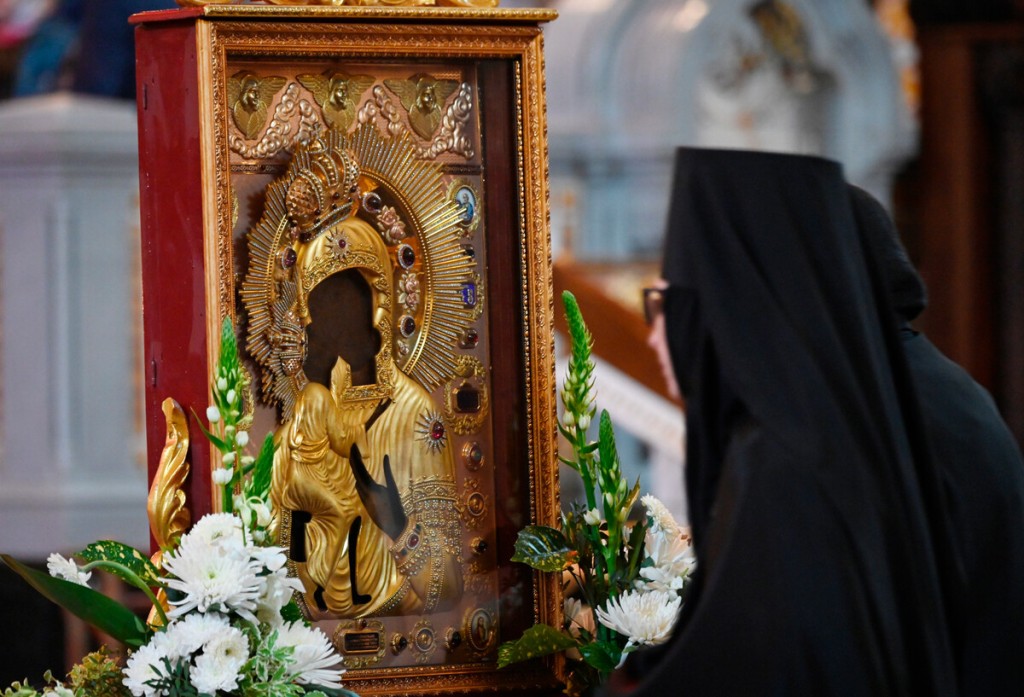
On the day of the Reigning Icon of the Mother of God, 15th March, the monks of the Nikandrova Hermitage opened the photo-exhibition The Tsar’s Family. Love and Mercy, in the secondary school of the village of Dubrovno, Porkhov District, Pskov Region.
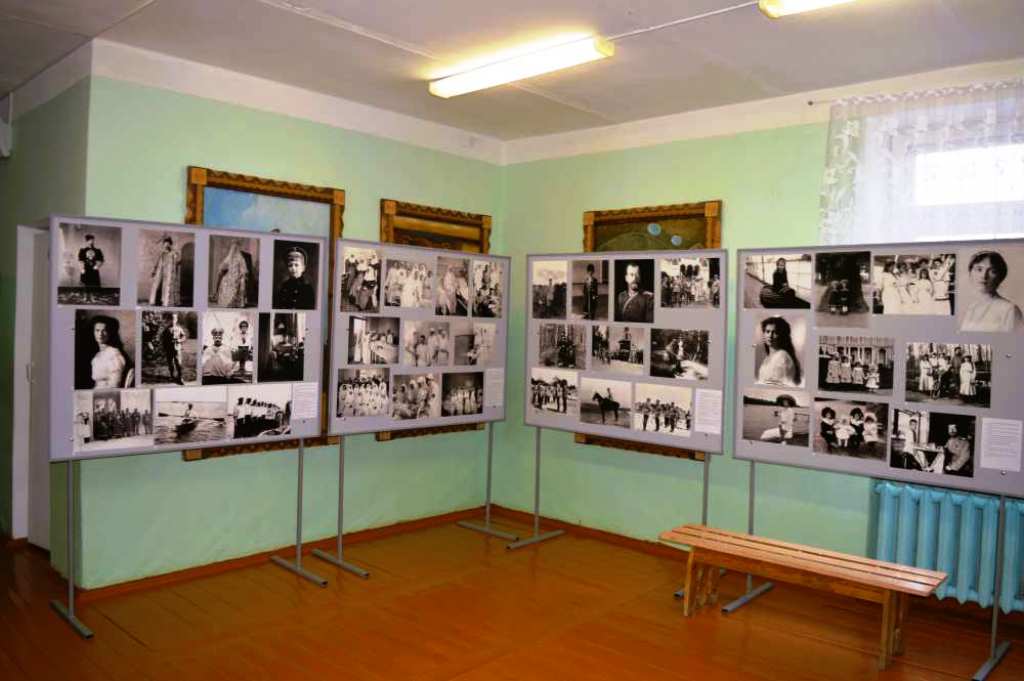
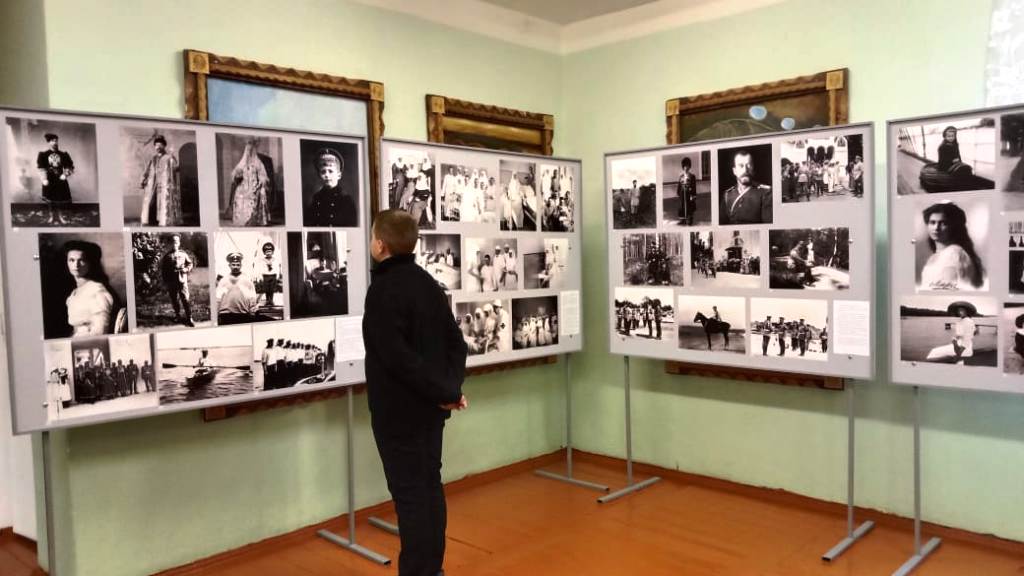
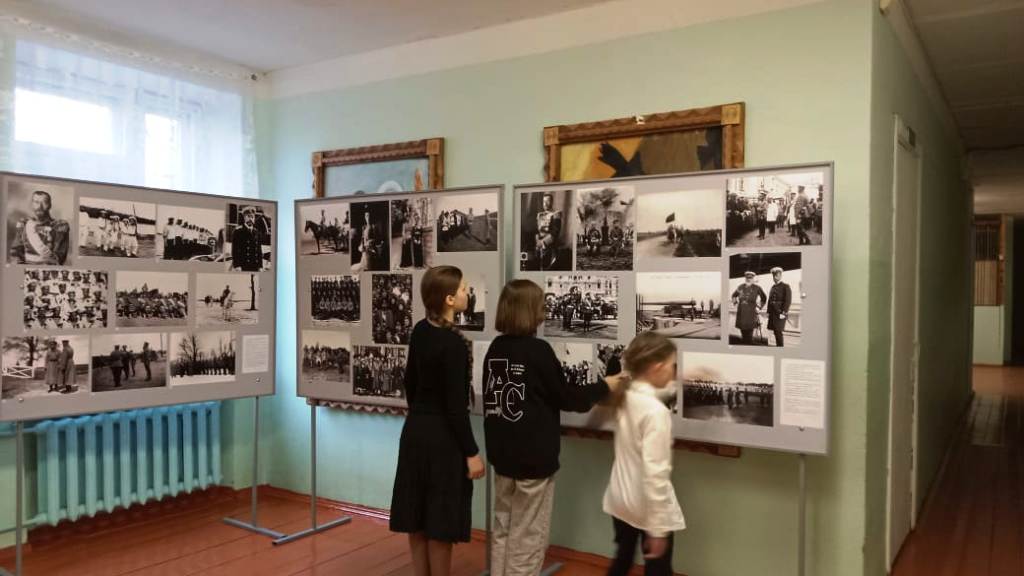
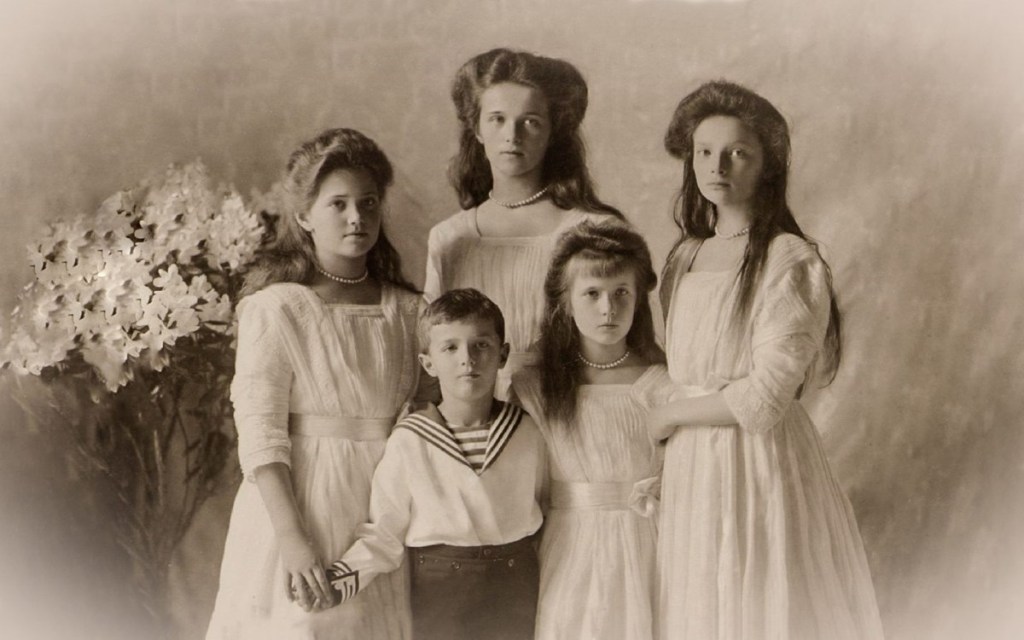
The exhibition presents more than 100 vintage photographs that tell about the close relationship within the family of the last Russian emperor Nicholas II. The photographs reflect many aspects of the life of the Tsar’s family during the late 19th and early 20th centuries, including the upbringing of the children, and the warm and loving relationship, which they shared with both their parents and each other.
The brethren of the Nikandrova Hermitage made stands for the exhibition, on which the photographs were displayed. The photographs were provided by the Sretensky Monastery in Moscow.
Hierodeacon Spyridon (Drygailo), a resident of the Nikandrova Hermitage, conducted a special lesson with the schoolchildren and teachers dedicated to the Imperial Family.
The exhibition was open to all residents of the village of Dubrovno, admission was free.
The photo project The Tsar’s Family: Love and Mercy was created in 2016 by the Sretensky Monastery in Moscow. The travelling exhibition has already been presented in Serbia, Germany, Italy, Canada, Argentina, New Zealand, South Africa, Romania, Croatia, Montenegro, Bosnia and Herzegovina, Macedonia, and the Czech Republic. The exhibition has also been presented in many cities of Russia: Moscow, Voronezh, Kursk, Ryazan, Penza, Krasnodar, Belgorod, Velikiye Luki, etc.
*As I have noted in similiar posts, I support any initiative – big or small – to help keep the memory of Nicholas II and his family alive in post-Soviet Russia – PG
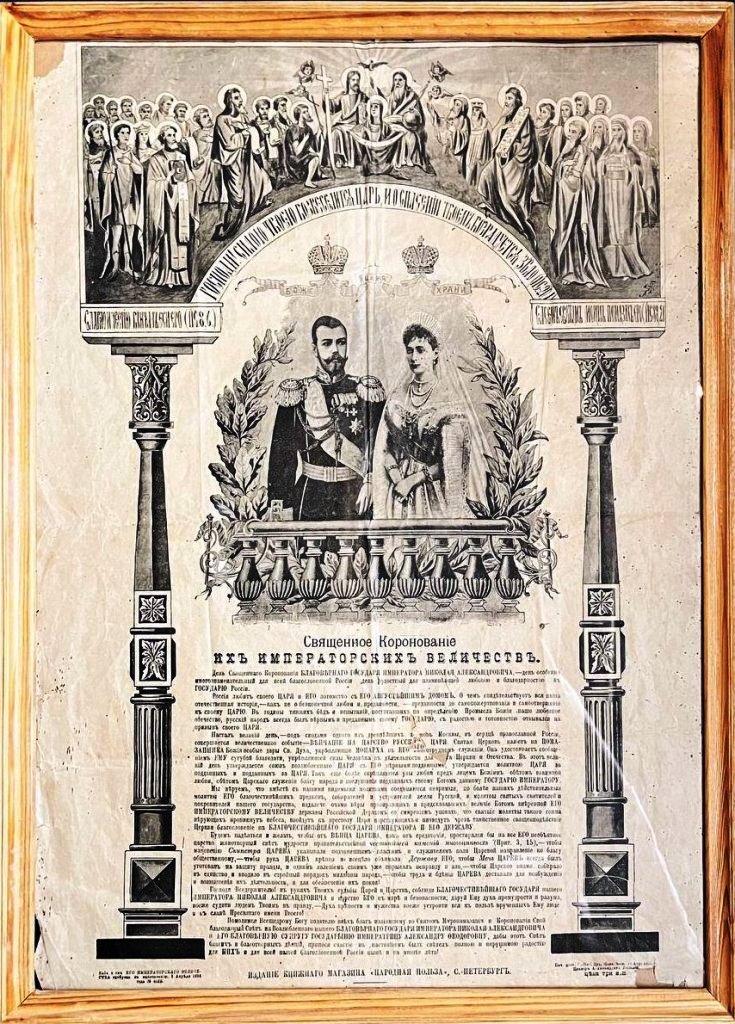
PHOTO: poster announcing the Holy Coronation of Nicholas II, 1896
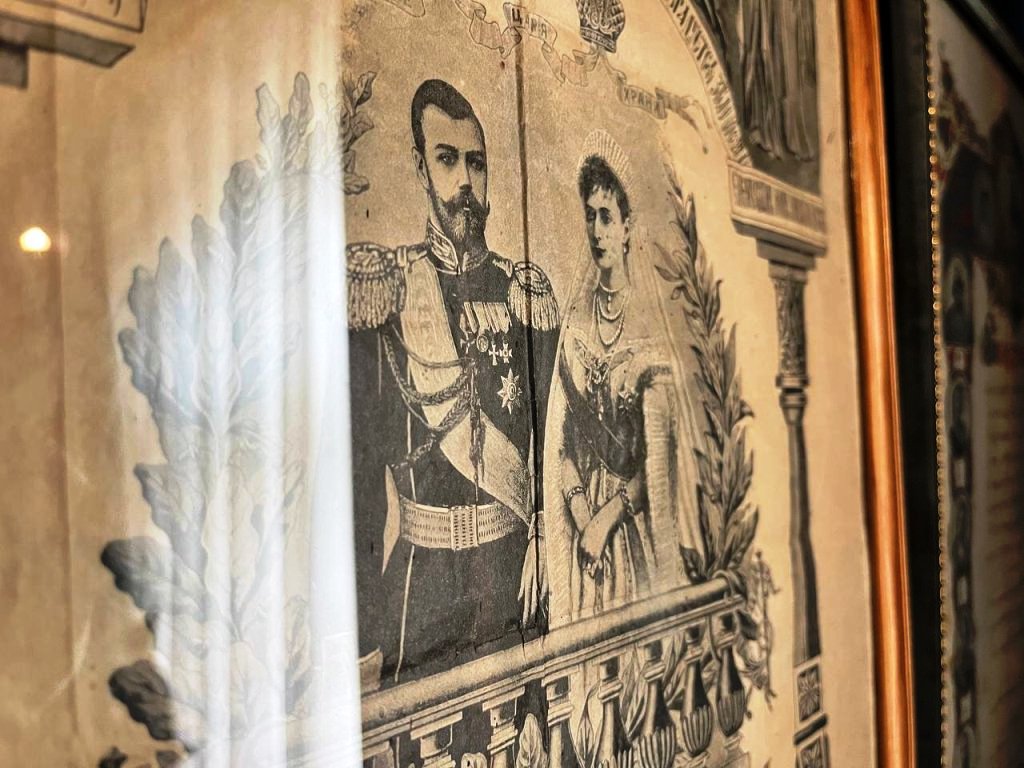
An interesting historical document – a poster announcing the Holy Coronation of Nicholas II – is currently on display in the Holy Places for Russian Culture exhibition at the Izborsk State Historical Architectural Museum in the Pskov region.
The poster was printed by the thousands and posted in cities, towns and villages in all provinces throughout the Russian Empire. The poster on display in the exhibition was discovered in the 1960s, and donated to the museum’s collection.
Emperor Nicholas II and his wife Empress Alexandra Feodorovna were solemnly crowned on 27th (O.S. 14th) May 1896, in the Assumption Cathedral [aka the Cathedral of the Dormition or Uspensky Sobor] of the Moscow Kremlin.
The coronation was preceded by a number of events. On 14th (O.S. 1st) January 1896, a manifesto “On the Forthcoming Holy Coronation of Their Imperial Majesties” was issued, according to which the ceremony was to take place in Moscow in May of the same year.
PHOTO: detial of the poster announcing the Holy Coronation of Nicholas II, 1896
The dates 7th May to 27th May 1896, were declared the coronation period. Orders for preparations for the celebrations were entrusted to the Minister of the Imperial Court, Count Illarion Ivanovich Vorontsov-Dashkov (1837-1916). A special coronation detachment consisting of 82 battalions, 36 squadrons, and 28 batteries was formed under the command of Nicholas II’s uncle Grand Duke Vladimir Alexandrovich (1847-1909).
A special telegraph station with 150 lines was set up in the Kremlin, linking all the foreign embassies.
The coronation itself, as noted by contemporaries who attended the event, surpassed all previous coronations in terms of magnificence. On the day of the coronation in St. Petersburg, Divine Liturgies and thanksgiving molebens were served in every church.
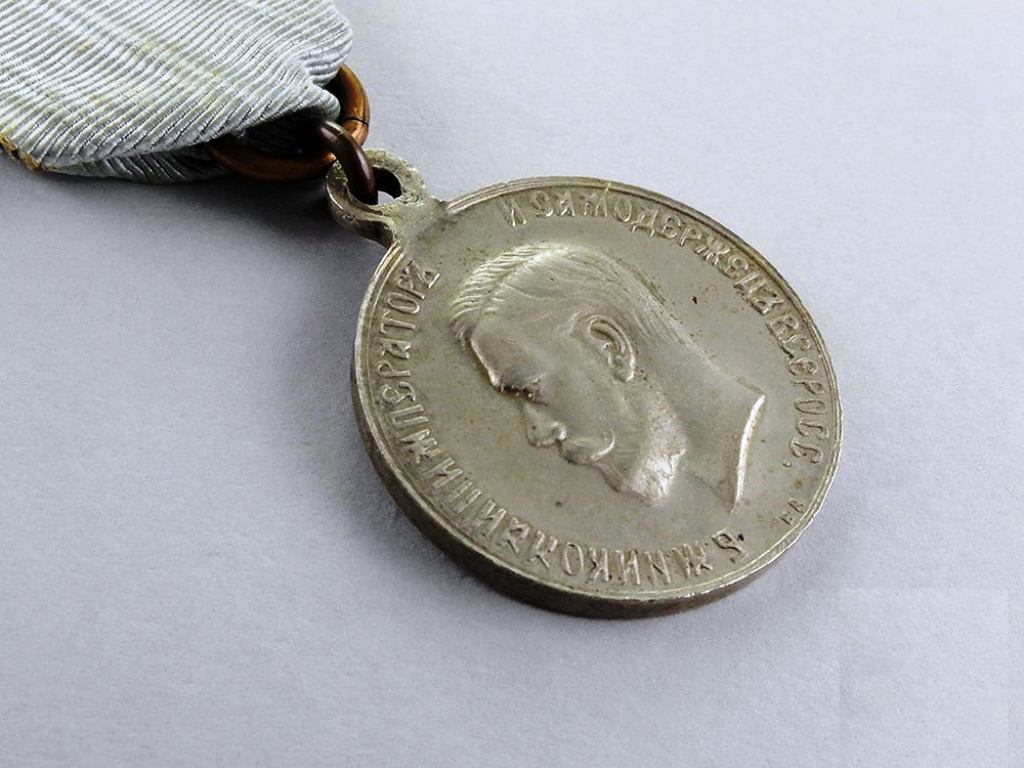
PHOTO: silver commemorative medal “In Memory of the Coronation of Emperor Nicholas II”
A commemorative medal “In Memory of the Coronation of Emperor Nicholas II” was minted. It was awarded to all civil servants, military personnel and individuals who took active part in the preparation of the ceremonies of the coronation. At a later date, the award was also bestowed upon women who had actively assisted in the preparation of the ceremony.
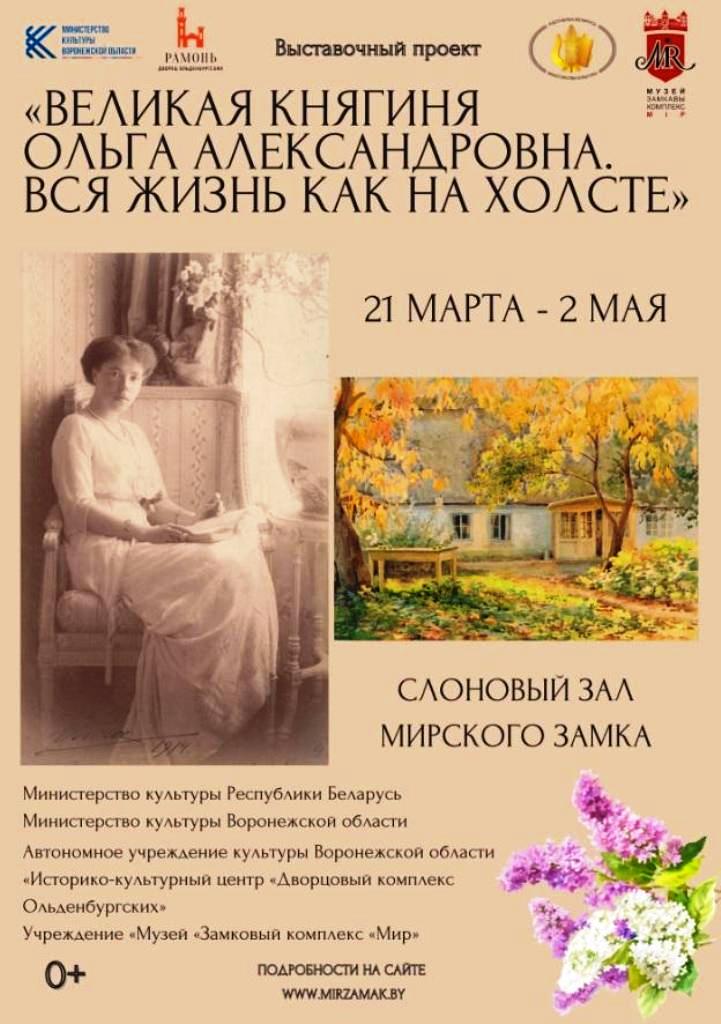
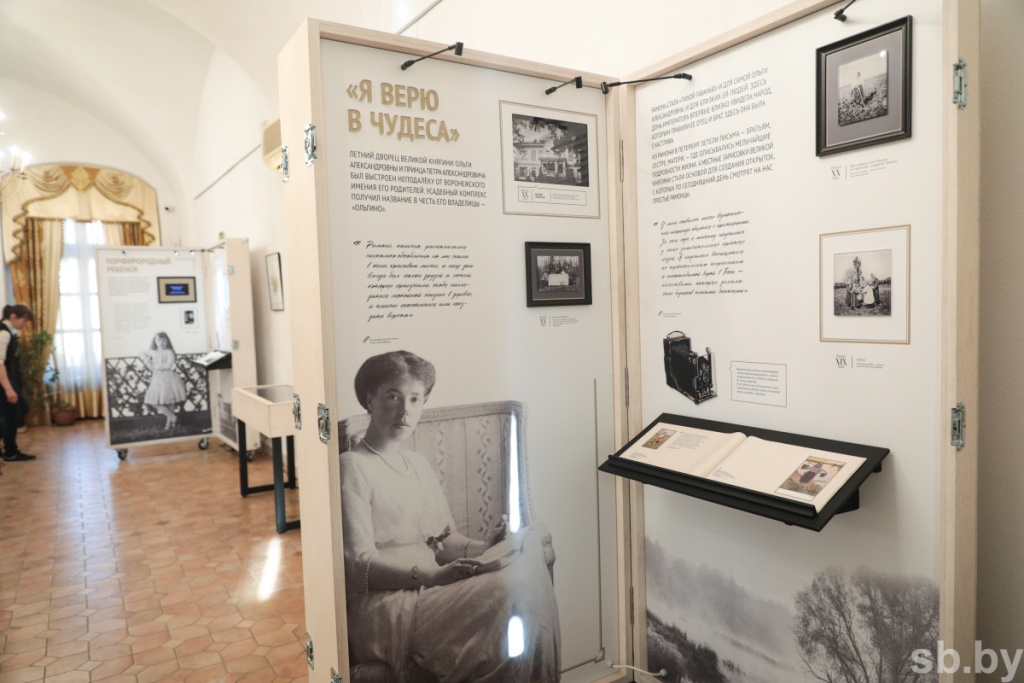
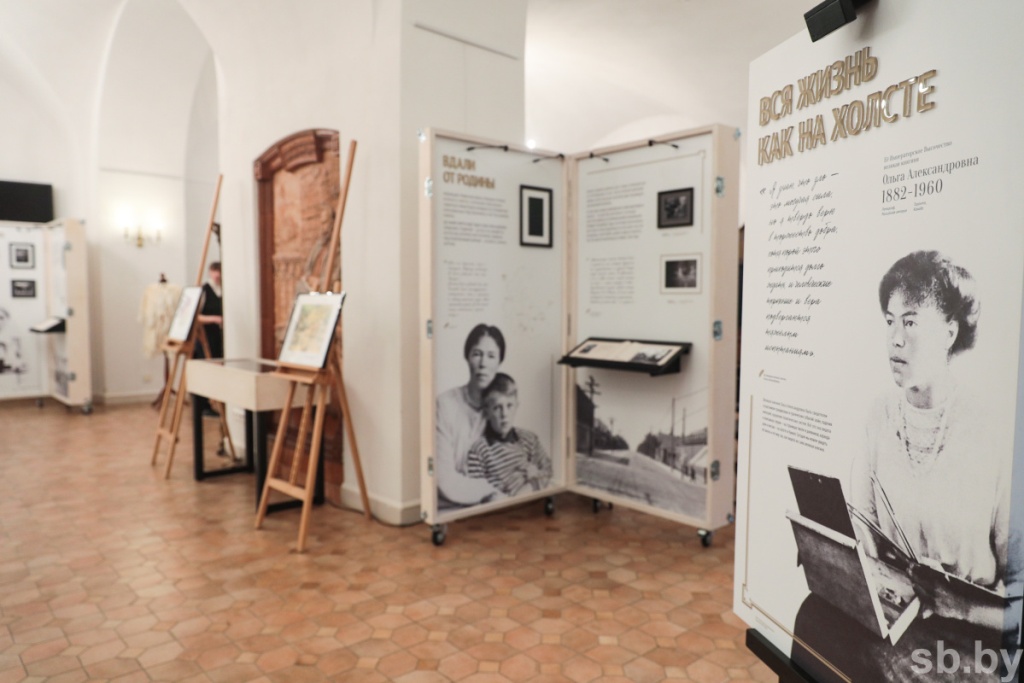
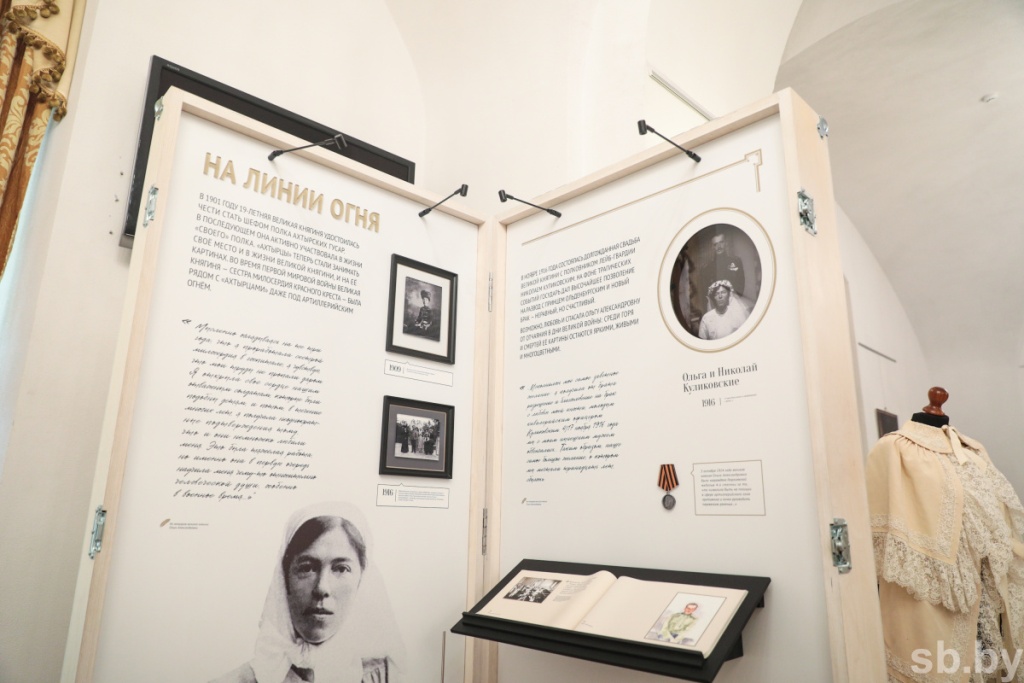
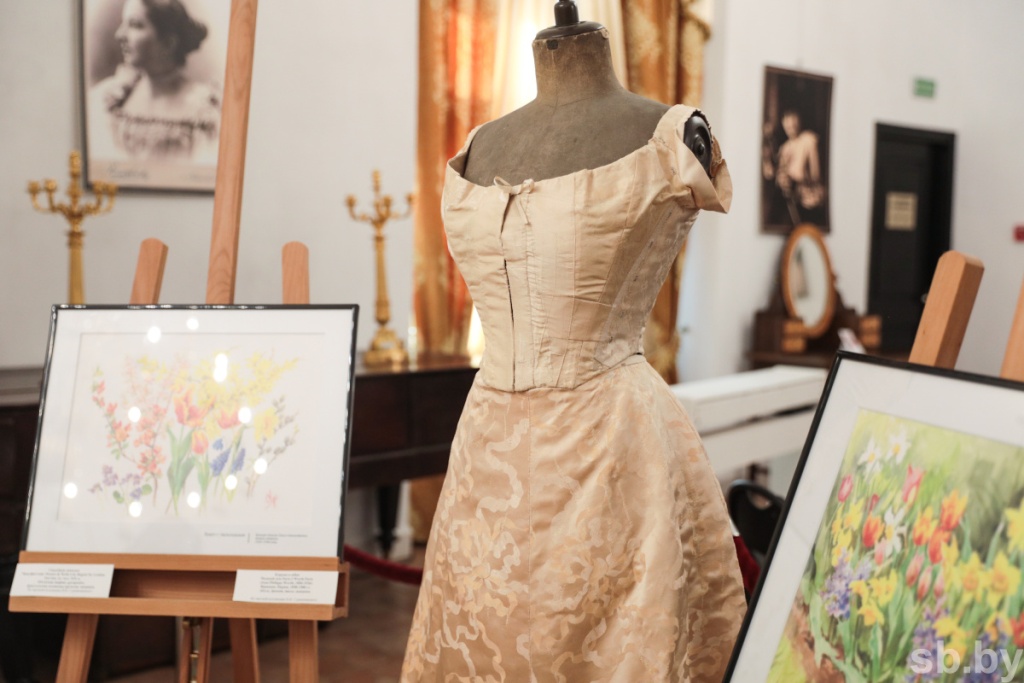
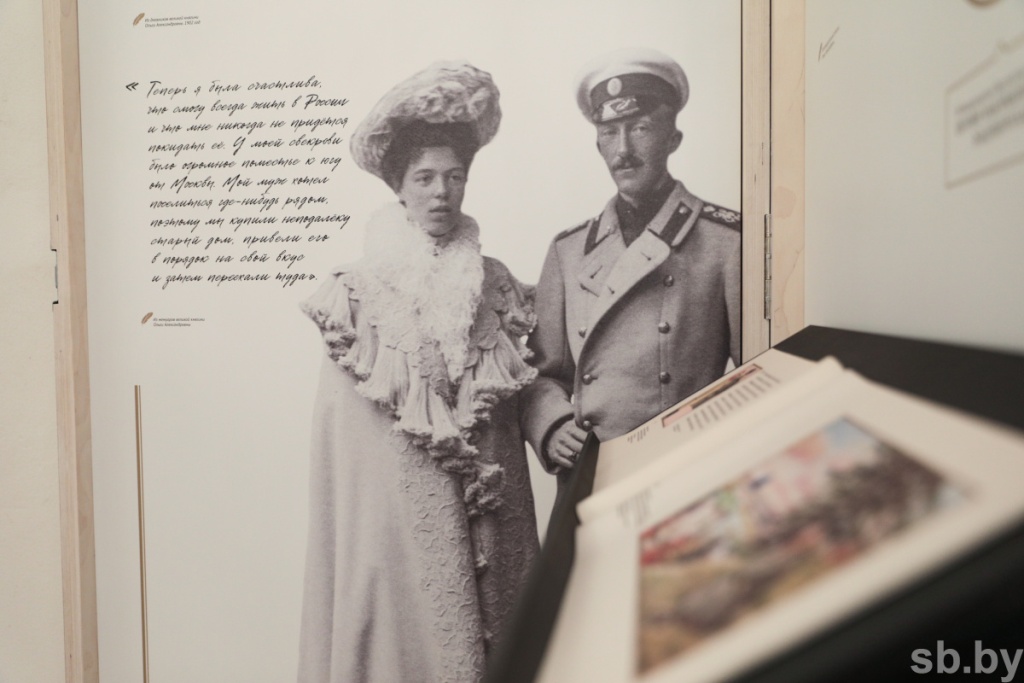
On 21st March 2024, the Grand Duchess Olga Alexandrovna. Life on a Canvas exhibition, opened in Mir Castle, situated in the village of Ramon[1], near Voronezh, Belarus.
According to the Oldenburg Palace Museum, the venue for the exhibition was chosen due to the close family ties between members of the Imperial Family and the Svyatopolk-Mirsky family, the last owners of Mir Castle. For example, the great-niece of Prince Nikolai Svyatopolk-Mirsky, was Princess Sofia Ivanovna Orbeliani (1874-1915), who served as a lady-in-waiting and close friend of Empress Alexandra Feodorovna.
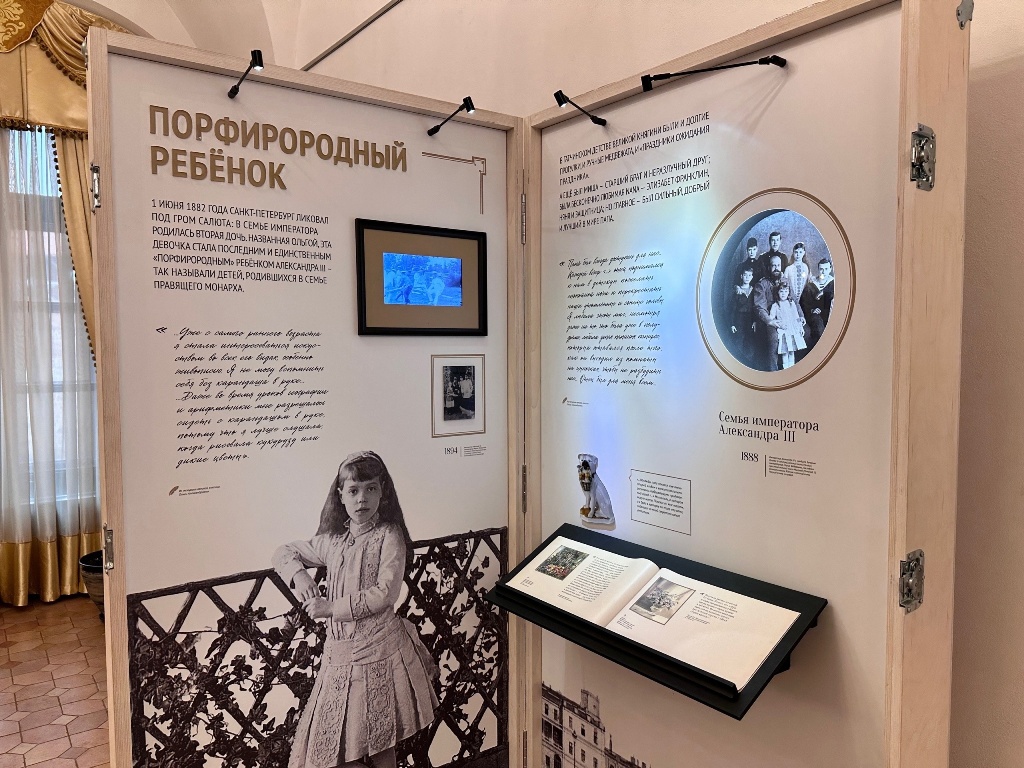
The exhibit presents the Russian years of Grand Duchess Olga Alexandrovna through letters to her brother Emperor Nicholas II, and her nieces: Grand Duchesses Olga, Tatiana, Maria and Anastasia Nikolaevna.
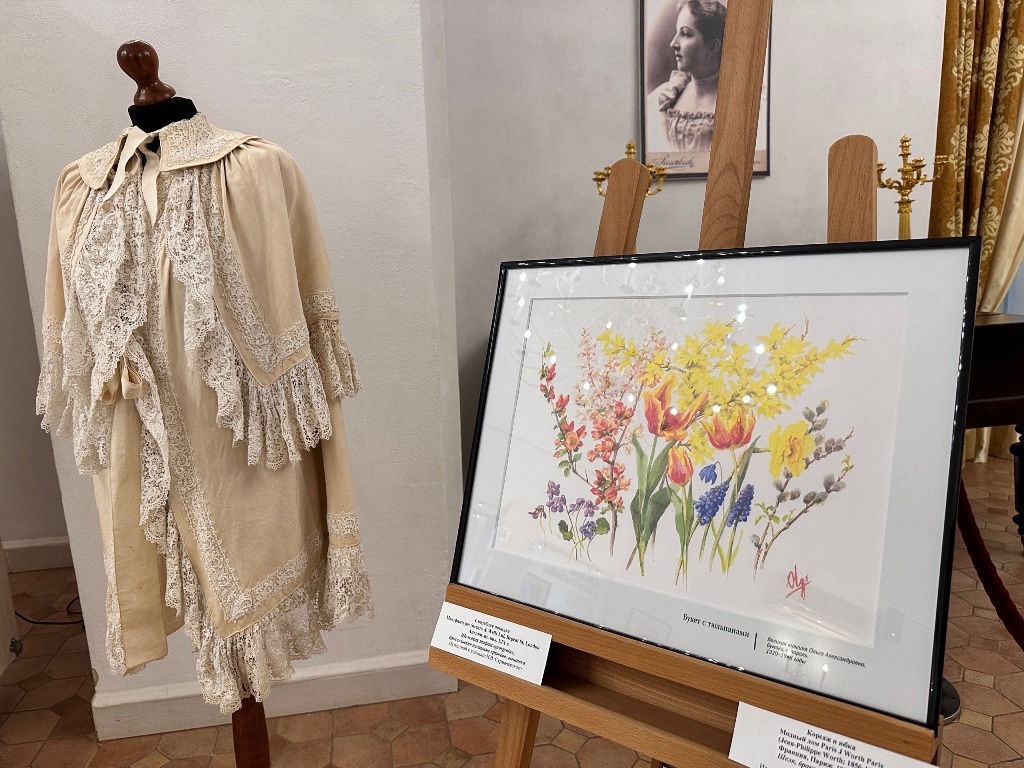
The exhibition is supplemented with items from the funds of the the personal archive of Her Imperial Highness, stored in the Oldenburg Palace: photographs from Olga’s albums, drawings and paintings created in subsequent years, entries from her private diaries, and watercolours.
These exhibits which reflect the heritage of the Grand Duchess before the 1917 Revolution, afford visitors with an opportunity to acquaint themselves with the events of her long and often difficult life.
The life of Olga Alexandrovna, the last Russian Grand Duchess, was filled with trials that rarely fall to the lot of man. But with her kindness, modesty, and courage, she managed to overcome the horrors prepared for her by the 20th century. She was a benefactor of numerous schools, hospitals, almshouses, societies, and during the First World War she became a simple Red Cross nurse.
Interested in painting from her early childhood, Olga Alexandrovna never stopped painting throughout her life. Her works are real and lively, reflecting the happy moments of happy times with family, and the beauty of landscapes, nature, and the elegance of floral compositions.
Never discouraged, Olga was able to see beauty in everything, she was grateful for every new day, simple, humble and bright – this is how she is reflected in her works. In emigration, Olga Alexandrovna’s house became a center for all those who shared the bitter fate of exile. The Grand Duchess continued her charitable activities: her watercolours were exhibited in several European capitals, and the proceeds from the sale went to help Russian emigrants who found themselves in difficult financial situations.
The more one learns about Grand Duchess Olga Alexandrovna, her kindness, her charitably work, her piety, etc., one can truly understand why she remains one of the most beloved and respected members of the Russian Imperial Family and the Romanov Dynasty.
The Grand Duchess Olga Alexandrovna. Life on a Canvas exhibition runs at the Mir Castle until 2nd May 2024.
NOTES:
[1] On 27th July 1901, Grand Duchess Olga married Duke Peter Alexandrovich of Oldenburg (1868-1924). In 1906, the couple settled into ‘Olgino’, their home situated on the Oldenburg estate, in the village of Ramon, near, Voronezh.
In 1915, the couple separated; Olga had no children from her first marriage. On 27th August 1916, Emperor Nicholas II approved the definition of the Holy Synod, which recognized her marriage to Prince of Oldenburg dissolved
PHOTO: Grand Duchess Olga Alexandrovna poses in front of some her watercolours at Gatchina, late 19th century.
On 14th April 2024, more than 40 watercolours painted by Grand Duchess Olga Alexandrovna (1882-1960), will go under the hammer at an auction in Moscow.
Olga’s watercolours continue to generate interest among professional and amateur collectors, both in Russia and abroad. The demand for her works have helped drive up list prices when any of her paintings are presented at auction. This current group of watercolours is expected to break all previous records.
The auction catalogue [in Russian only] contains a total of 43 watercolors, including landscapes still life, flowers, etc. The total estimated value of this group is 30 million rubles [$325,000 USD]. Estimates of individual lots range from 500,000 [$5,400 USD] to 1.5 million [$16,200 USD] rubles.
A total of 104 items of the Grand Duchess’s legacy will be sold, including autographs of members of the Russian Imperial Family, commemorative medals, pieces of furniture, and sculptures.
This group of watercolours and other items belonged to Olga Nikolaevna Kulikovsky-Romanov (1926-2020), the third wife of Grand Duchess Olga’s eldest son, Tikhon Nicholaevich Kulikovsky (1917-1993). Upon the grand duchess’s death in 1960, the bulk of her estate was acquisitioned by Tikhon. When Tikhon died in 1993, the collection passed to his wife Olga Kulikovsky. During the 1990s, Olga Kulikovsky travelled to Russia, taking the watercolours and other items with her. She toured the country, hosting numerous exhibits of her mother-in-laws paintings to Russians for the first time.
The youngest child and daughter of Emperor Alexander III and the youngest sister of Emperor Nicholas II, Olga was a prolific painter, producing over 2,000 paintings in her lifetime. She studied painting from various Russian masters, including Vasily Makovsky. During her early years in Russia, Olga painted for pleasure, often gifting her watercolours to relatives and friends, signing the works with her first initials.
During her years in exile – in both Denmark and Canada – Olga signed her works with “Olga”. The sale of her paintings provided a source of income for her and her family during their years in exile. This photo comes from the album of her cousin Princess Victoria of Wales.
Let us hope that this current collection of 43 watercolours are purchased as a group, and added to the collection of the State Historical Museum in St. Petersburg – PG
Russia’s last Emperor and Tsar continues to be the subject of news in Western media. I am pleased to present the following 6 full length articles and news stories published by various Russian, British and US media services, in addition to videos and articles about Nicholas II’s relatives and faithful retainers.
Below, are the articles published in January, February and March 2024. Click on the title [highlighted in red] and follow the link to read each respective article:
The Emperor was criticized for his alleged brutality in suppressing the First Russian Revolution of 1905-1907. And, at the same time, for the weakness which his enemies allege he showed by allowing the “black monk” Rasputin to almost rule the country – which of course, is utter nonsense!
Men in the Imperial Family usually had careers in the military, while women were mostly involved in charity work. But, they also had unusual hobbies that were important parts of their lives.
The following archive photos capture a country that is no more. Thanks to them, we can today see what it was like to live in the Russian Empire at the beginning of the 20th century.
Undoubtedly, the main event of the year was the beginning of World War I. On July 19, 1914, Germany declared war against the Russian Empire.
These archive photos capture a country that no longer exists. Thanks to them, we can see how the Russian Empire lived at the very beginning of the 20th century: the Russo-Japanese War, the life of the tsar and peasants, transportation, leisure activities and much more!
The Feodorovskaya Icon of the Mother of God is so ancient that its origins are unknown. It became a patron icon of the Romanov family from 1613 to 1917. Today, it remains the patron icon and protector of state power in Russia.
In his 1938 work “Their Morals and Ours,” Bolshevik revolutionary Leon Trotsky explained why murder in certain circumstances is justified, incljuding the five children of Emperor Nicholas II and Empress Alexandra Feodorovna.
Source: Foundation for Economic Education. 26 September 2018
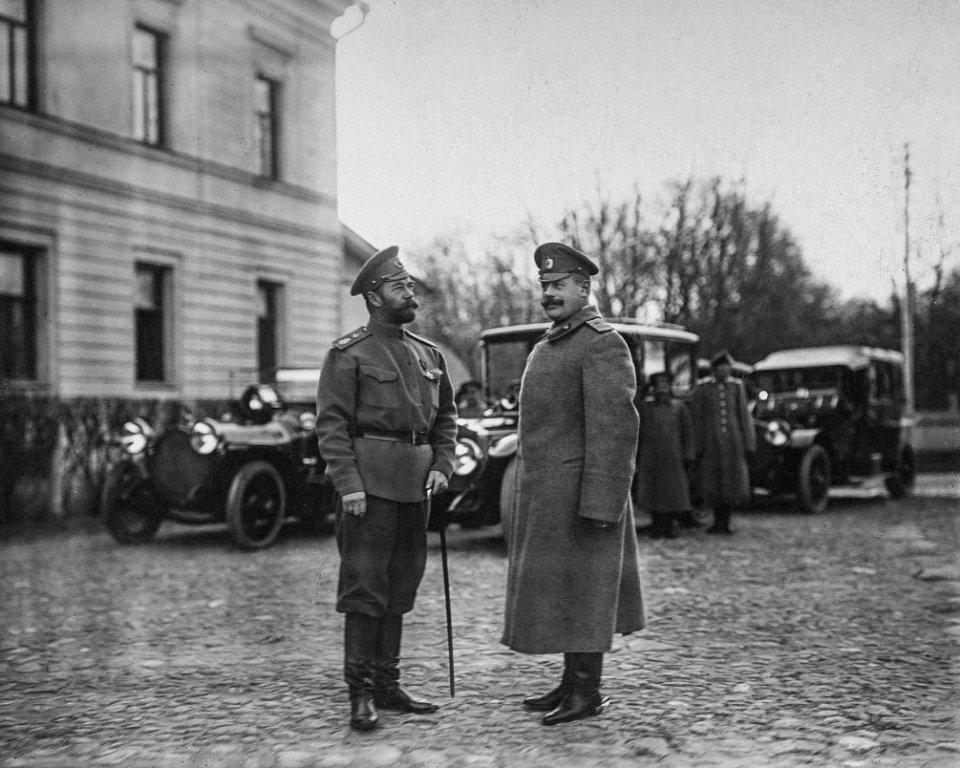
PHOTO: Emperor Nicholas II and Major-General V. Voeikov at the General Headquarters in Mogilev. 1915-1916. Several of the motorcars from the Imperial Garage can be seen in the background.
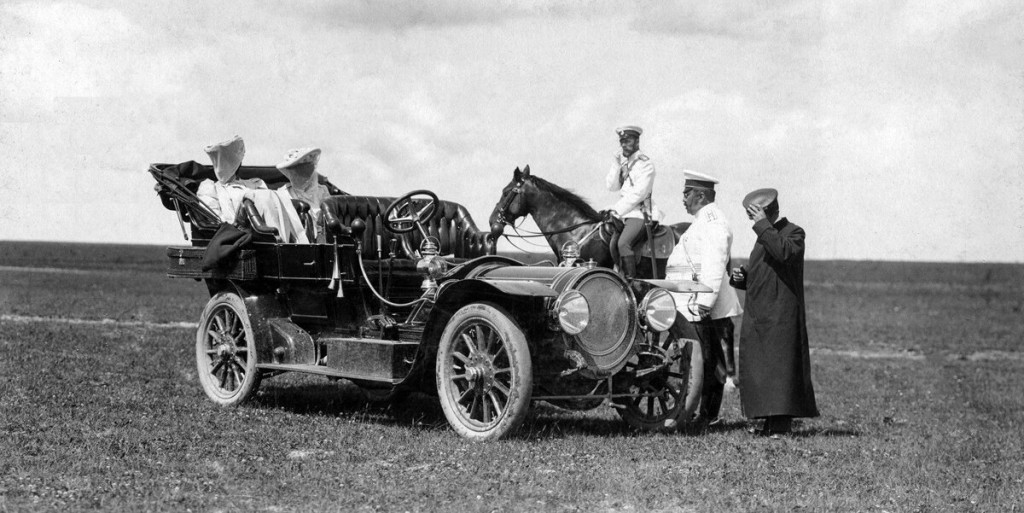
In the early 20th century, Emperor Nicholas II took a keen interest in the latest fad which was sweeping Europe: the motorcar. By the end of his reign in March 1917, he had amassed an impressive collection of 56 automobiles. None of the European monarchs could boast of such an impressive fleet of vehicles!
His Imperial Majesty’s Own Garage was created for the Emperor’s collection. Imperial Garages were built in Moscow, the Winter Palace (St. Petersburg), Tsarskoye Selo and Livadia. During the war years, an additional garage was built at Mogilev.
On 8th August 1915, the Headquarters of the Supreme Commander-in-Chief of the Armed Forces (Stavka) of the Russian Empire was transferred from Baranovichi to Mogilev. From August 1915 to March 1917, Emperor Nicholas II, served as Commander-in-Chief.
The Tsar travelled back and forth on the Imperial Train, from Tsarskoye Selo to Mogilev, where he settled in the Governor’s House, situated on Gubernatorskaya Square. He was often accompanied by his son Tsesarevich Alexei Nikolaevich.
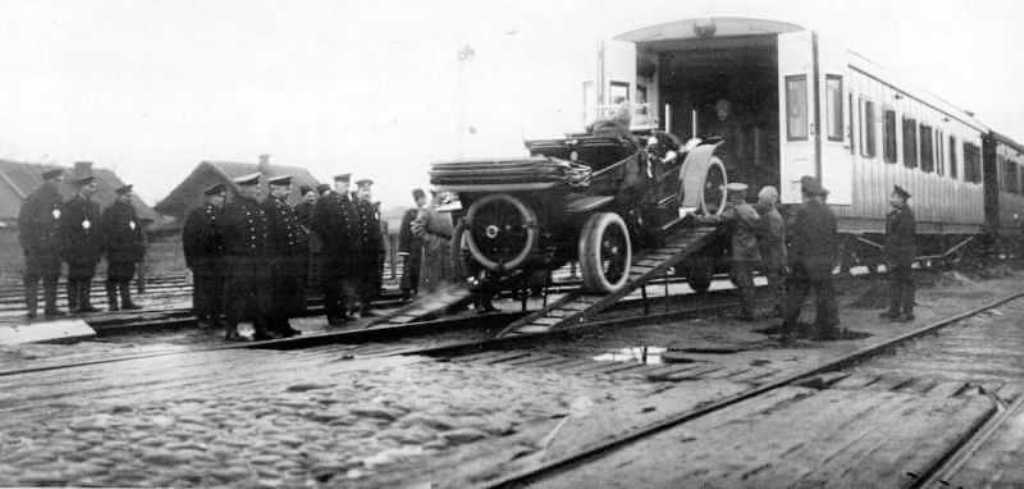
PHOTO: Nicholas II’s motorcars were transported to Mogilev by rail, a special carriage was hitched to the end of the Imperial Train, which featured a ramp to drive the cars on and off.
When Nicholas II moved to Mogilev, he brought with him some of his motorcars from the Imperial Garage in Tsarskoye Selo. According to Nicholas II’s personal security chief Major General Alexander Spiridovich, who often accompanied the Tsar on these trips, recalled:
“The last carriage of our train was the ingeniously invented by [Adolfe] Kegress. The garage car transported the imperial automobiles, and provided accommodation for the chauffeurs. The back wall of this carriage could fold up and down, the latter providing a gangway, along which the motorcars could drive on or off the carriaget. In appearance, this carriage was no different from the other carriagess of the Imperial Train.”
A special 20-meter-long Imperial Garage was installed near the Governor’s House, which could accommodate 4-5 vehicles, as well as a workshop, spare parts, gasoline and lubricants.
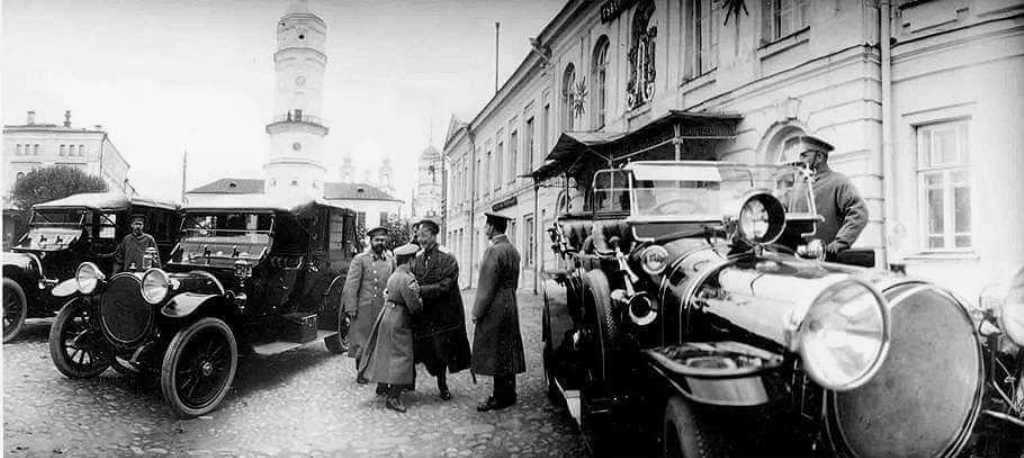
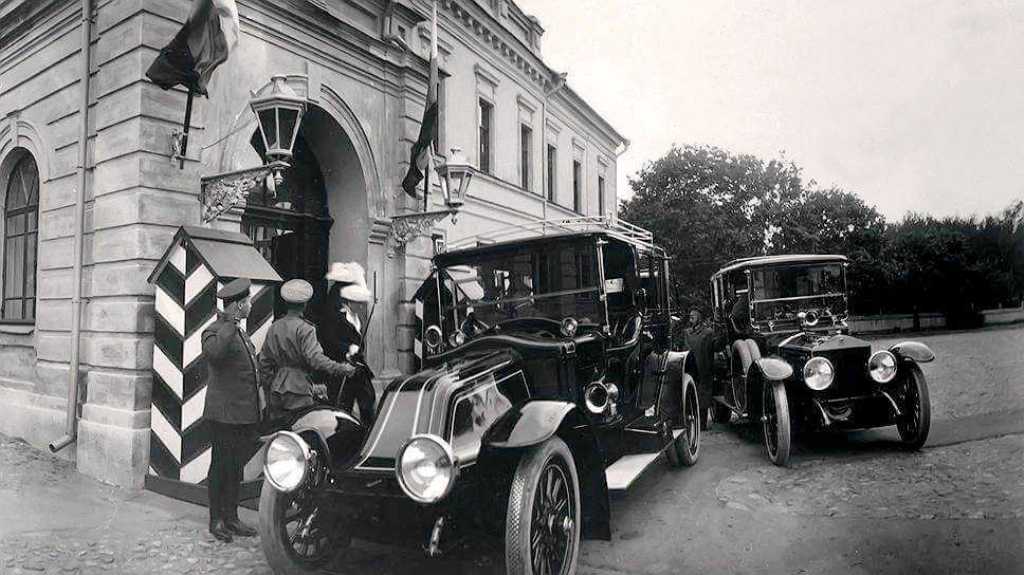
In addition to the triple phaeton, two Delaunay-Belleville 40/45 CV with a landole body and two limousines: a Roll-Royce 40/50 HP and a Renault 40 CV, were also parked in the garage. The latter vehicles were used by members of the Imperial Family and their retinue, when they visited Mogilev.
PHOTO: three of Nicholas II’s motorcars parked on Gubernatorskaya Square. On the right is Delaunay-Belleville triple-phaeton, on the left are two Delaunay-Belleville with a landole body.
PHOTO: Arrival of Empress Alexandra Feodorovna to the General Headquarters in Mogilev in the summer of 1916. The Tsarina preferred closed cars.In front is a Renault 40 CV limousine. Behind is a Rolls-Royce 40/50HP.
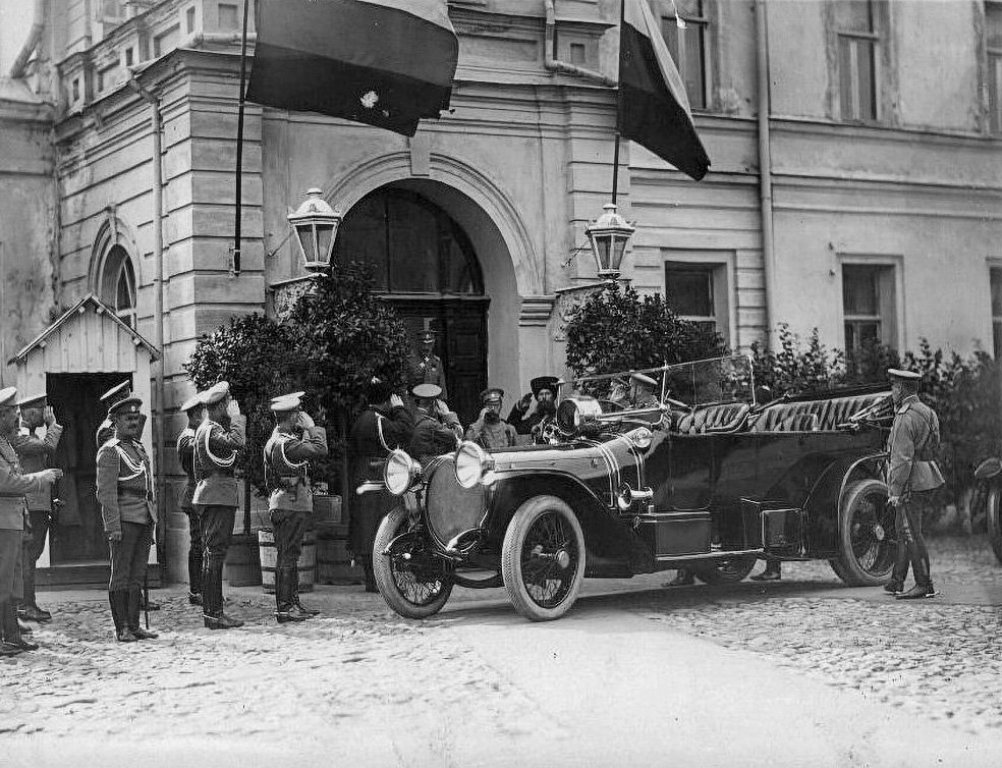
Nicholas II himself preferred to drive a Delaunay-Belleville 40/45 CV with a triple-phaeton body, a seven-seater car with three rows of seats, a convertible roof and a 45 horsepower engine. The engine provided speeds of up to 90 km per hour. In addition, unlike serial models, the imperial motorcars were equipped with double steering rods and a disc clutch instead of a conical one.
The horses in Mogilev were frightened by the noisey, speeding motorcars, so before each trip, agents of the security department and the police were posted along the entire route, and traffic along Dneprovsky Prospekt was temporarily halted.
For political reasons, Nicholas II preferred riding in open vehicles. The Tsar believed that he should be visible to the people, and although the guards repeatedly urged him to move around the city in a closed vehicle, Nicholas II, as a rule, drove in open ones.
In the city itself, the imperial motorcars had only one route: from Gubernatorskaya Square, to the military platform of the Mogilev railway station, where the Imperial Trains [there were 2] were parked. The main routes were along the Bobruisk and Orsha highways, on which, the Tsar often ordered the driver to stop, so that he could get out and go for a walk in the forest, which he so enjoyed. Nicholas II did not change this habit until his abdication, when he made his last motorcar ride on 27th February, 1917, which was when the first telegrams informing about the riots in Petrograd arrived at Stavka.
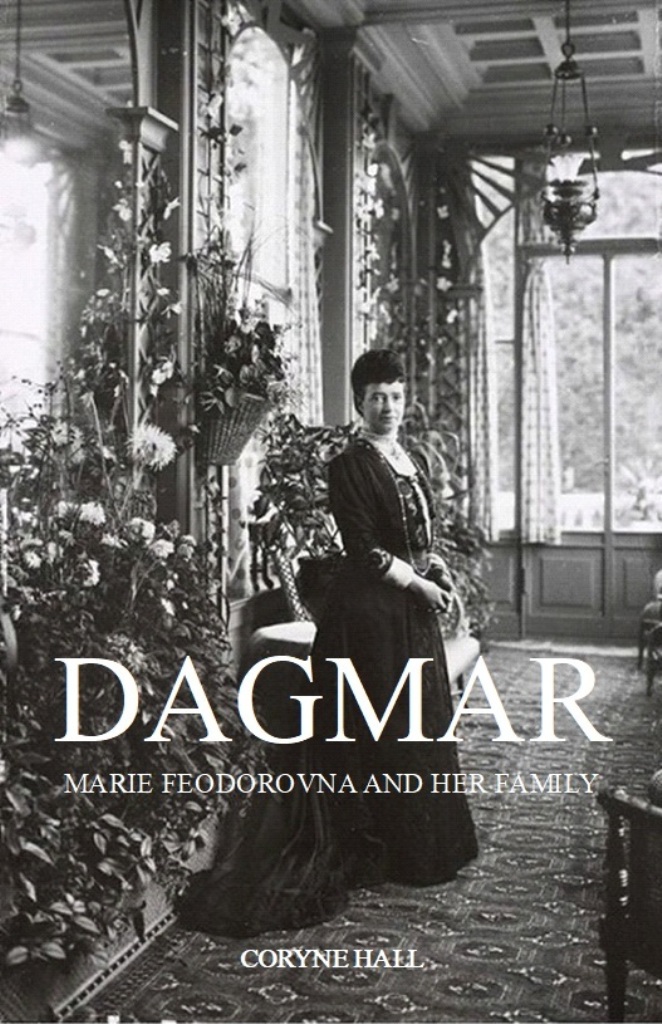
This year marks the 25th anniversary of Little Mother of Russia: A Biography of Empress Marie Feodorovna by Coryne Hall. Since it’s publication in 1999, she has written a number of new articles about Empress Marie Feodorovna and her family based on new research.
These works are presented in DAGMAR, and include chapters on Tsar Alexander III’s Imperial Fishing Lodge in Finland; the friendship of French tutor Ferdinand Thormeyer and Alexander III’s family; Marie’s relationship with her sister the British queen Alexandra; Marie’s fate following the Russian Revolution; her years of exile in Denmark; her death in 1928, and her reburial in Russia in 2006.
In addition is a chapter about her son Emperor Nicholas II’s close relationship with the Kingdom of Denmark and his Danish relatives.
Finally, Coryne Hall provides a fascinating study of Daniah efforts to help members of the Russian Imperial Family in Bolshevik Russia.
On 10th March 2024, The Tsar’s Family. Ascent exhibition, opened in the Ascension Military All-Cossack Patriarchal Cathedral in Novocherkassk, situated in the Rostov district. The cathedral serves as the main church of the Don Cossacks.
The exhibition explores the life, service and spiritual path of Emperor Nicholas II and his family.
On display, are more than 100 photographs, 23 reproductions of famous paintings and portraits, archival documents, military banners from various regiments of the Russian Imperial Army and more.
The project was organized by the press secretary of the Mogilev diocese, Ilya Sidorovich. Exhibits were collected from the funds of the State Archives of the Russian Federation (GARF), the Russian State of Film and Photo Archive (RGAKFD), museums and private collections in Moscow, Tsarskoye Selo, and Mogilev. exhibition
PHOTOS: the exhibition was attended by the Governor of the Rostov Region
The rector of the Ascension Cathedral, Archpriest Georgy Smorkalov, noted that it was no coincidence that Novocherkassk was selected to host the exhibition. Emperor Nicholas II visited Novocherkassk on several occasions and visited the Cathedral Church of the Don Army. It is interesting to note, that one of the few lifetime portraits of Emperor Nicholas II – not held in any museum fund – today, hangs in the “Royal Chambers” of the cathedral.
The travelling exhibition is currently touring Russia and Belarus, and has been held in a number of cities, including Mogilev, where from 1915 to 1917, served as the Headquarters of the Supreme Commander-in-Chief, under Emperor Nicholas II.
The grand opening of the exhibition was attended by the Governor of the Rostov Region, Vasily Golubev, the Minister of Culture of the region Anna Dmitrieva, and local government other officials.
The Tsar’s Family. Ascent exhibition runs until 5th May 2024.
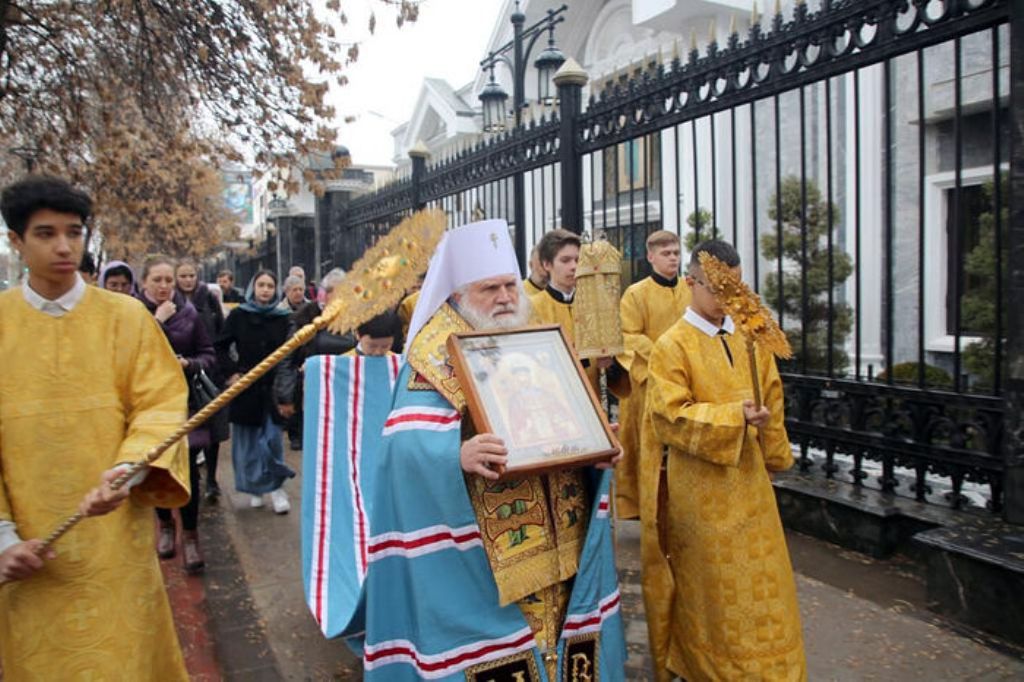
PHOTO: Metropolitan Vikenty of Tashkent and Uzbekistan solemnly carries the miraculous myrrh-streaming icon of Tsar-Martyr Nicholas II, around the Cathedral of the Dormition of the Most Holy Theotokos in Tashkent
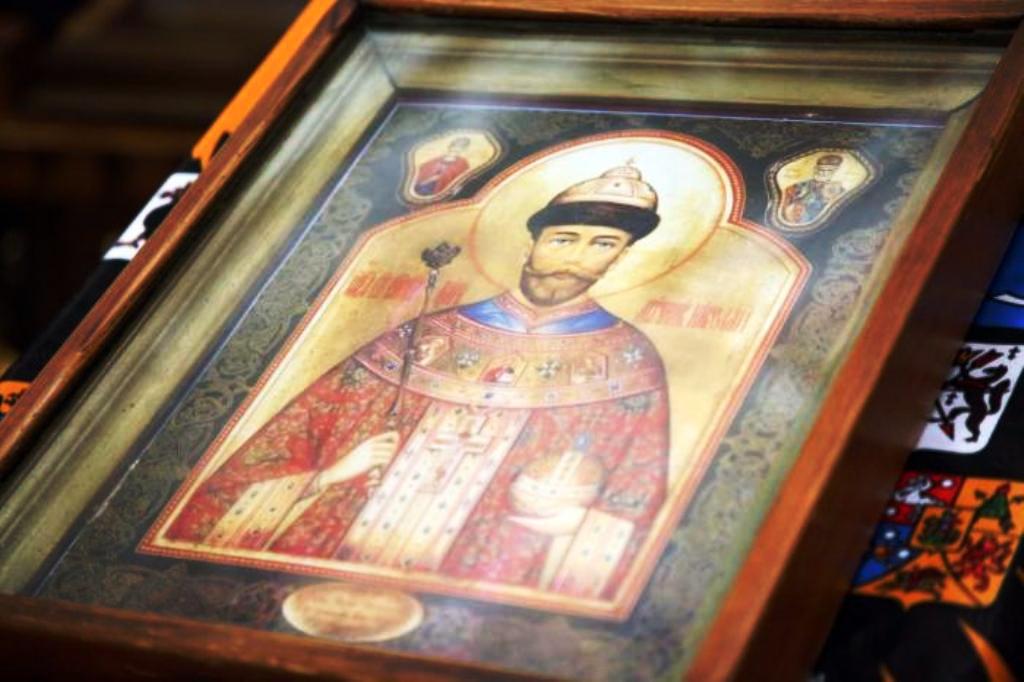
On 10th March 2024, Metropolitan Vikenty of Tashkent and Uzbekistan, celebrated a Divine Liturgy in the Cathedral of the Dormition of the Most Holy Theotokos in Tashkent. An All-Night Vigil was served the night before. Prior to the beginning of the Divine Liturgy, Metropolitan Vikenty solemnly carried the miraculous myrrh-streaming icon of Tsar-Martyr Nicholas II under the vaults of the cathedral, after which the Godenov Cross was reinstalled in the cathedral.
Upon completion of the Divine Liturgy, Metropolitan Vikenty congratulated the faithful on Sunday, reminding everyone that this week before Great Lent is called the Sunday of the Last Judgment.
PHOTO: Metropolitan Vikenty of Tashkent and Uzbekistan
In his sermon, His Eminence the Archpastor also expressed his gratitude to the custodian of the miraculous image of Tsar-Martyr Nicholas II, Alexander Chernavsky, for the opportunity for the Orthodox faithful of Uzbekistan to venerate this famous shrine.
It was noted that the myrrh-streaming icon will also be brought to the churches of the Tashkent deanery.
PHOTO: the miraculous myrrh-streaming icon of Tsar-Martyr Nicholas II




 Nicholas II
You must be logged in to post a comment.