How the Orthodox Church supported the overthrow of the monarchy

237

Early 20th century propaganda caricature depicting Emperor Nicholas II
between a member of the Holy Synod and a revolutionary

In 1917, Emperor Nicholas II abdicated the throne, and the country was proclaimed a republic. How did the hierarchs of the Orthodox Church react to this event? In response, I am pleased to present the First English translation of an interview by the Russian media outlet “MK” in St. Petersburg with Doctor of historical sciences, Professor Mikhail Babkin of the Russian State University for the Humanities (Moscow), and author of the monograph “Clergy of the Russian Orthodox Church and the overthrow of the monarchy” who discusses the topic.

– Mikhail Anatolyevich, what place did the Orthodox Church in general and the Holy Synod in particular occupy during the Russian Empire?

– The Russian Empire and the Russian Orthodox Church were a single church-state body, headed by the emperor. The supreme body of church administration in Russia was the Most Holy Governing Synod established by Peter the Great in 1721.

From 1723, the Synod had been titled as “His Holiness” and “Governing”. The first of these denominations pointed to the equality of the Synod with the Eastern patriarchs, and the second to the independence of the Synod from the Governing Senate, to which all colleges were subordinate (from 1802 they became known as ministries). That is, by its status, the Synod was not equated to the college, but to the Senate. If the Senate acted in the civil administration field, the Synod in that of the spiritual. Moreover, the buildings of the Senate and the Synod, located on Senate Square in St. Petersburg, were a single whole, connected by a triumphal arch, and surmounted by the imperial crown.

The activity of the Synod was controlled by a secular person appointed by the emperor – chief prosecutor of the Holy Synod, who was the official representative of the authority of His Majesty. The chief prosecutor was responsible for protecting state interests in the field of church administration, as well as overseeing the governing bodies of the Orthodox Church in the center and in the localities: the Synod and the spiritual consistories, respectively.

237b

The buildings of the Senate (former) and the Holy Synod, in St. Petersburg as they look today

– What was the political position of the hierarchs during the February Revolution?

– In the last days of February 1917 (I quote the dates according to the Julian calendar), in the conditions of a crisis of state power in the capital of the Russian Empire, there was an increase in the number of strikes and street demonstrations, which resulted in the treasonous defection of military units of the Petrograd garrison to the side of the Revolution. During those days, the Synod was urged to take any measures in support of the monarchy by both representatives of the public and government officials: for example, the Chief Procurator of the Holy Synod, Nikolai Pavlovich Raev (1855-1919) and his deputy (more precisely, in the terminology of those years – comrade) Prince Nikolai Davidovich Zhevakhov (1874-1946). However, the members of the Synod did not meet those motions.

On March 2, 1917, in the chambers of the Moscow Metropolitan (they were located on the courtyard of the Trinity-Sergius Lavra, at 44, Fontanka River Embankment, in the building where the Mayor’s Central City Public Library is now located), a private meeting of the Synod members was held. Six of the eleven members of the supreme body of church administration took part in it. It was decided to immediately establish contact with the Provisional Government, formed that day by the Executive Committee of the State Duma. This fact allows us to argue that the members of the Synod recognized the new government even before (!) The abdication of Emperor Nicholas II from the throne, which took place on the night of March 2–3.

– During the February Revolution, the reigning dynasty was overthrown. How did the clergy of the Orthodox Church react to this event?

– Let’s do a little historical excursion. As you know, on March 2, 1917, in Pskov, Emperor Nicholas II renounced for himself and for his son in favor of his younger brother – Grand Duke Mikhail Alexandrovich. The following day, March 3, in Petrograd, in house No. 12 on Millionnaya Street, Mikhail Alexandrovich signed a document whose official name is the “Act on the refusal of Grand Duke Mikhail Alexandrovich from the acceptance of the supreme power and his recognition of the full power for the Provisional Government  on the initiative of the State Duma ”(source: Collection of Legalizations and Decrees of the Government. Pg., 1917. No. 54. March 6. Sep. 1. Art. 345. S. 534.). However, in early March 1917 that document which was printed in the press, controlled by the Petrograd Soviet of Workers ‘and Soldiers’ Deputies, was published under the title “Abdication of Mikhail Alexandrovich.” It was from that point, that the myth spread about the abdication of the Grand Duke. At the same time, both the Petrograd Soviet, but also the Holy Synod were involved in the creation of this myth.

Let us turn to the text of the Act of March 3, 1917, in which Grand Duke Mikhail Alexandrovich said: “I made a firm decision only in that case to accept the Supreme (tsarist. – Approx. Ed.) Power, if that would be the will of our great people, which should […] establish a government in the Constituent Assembly and new basic laws of the Russian State. Therefore, […] I ask all citizens of the Russian Power to submit to the Provisional Government, […] henceforth before the […] Constituent Assembly, by its decision on the form of government, expresses the will of the people.” There are no words about any abdication in the Act. Moreover, it speaks of Mikhail Alexandrovich’s readiness to take the throne if the Constituent Assembly elects a monarchical form of government for Russia.

Thus, on March 3, 1917, Russia was at a historic crossroads: to be a monarchy or a republic, in one form or another.

We come back to your question. How did the Holy Synod behave in this situation? In short, from March 4, it had taken a whole range of measures to remove the issue of the monarchy from the agenda in the socio-political consciousness of the 100 million Orthodox flock. For example, on March 7, the supreme body of church administration issued a definition in which it was prescribed to all Russian clergy: “in all cases, instead of commemoration of the reigning house, to offer prayers “for the God-Preserving Russian and Noble Interim Government”. That is, on March 7, in the absence of the abdication of Grand Duke Mikhail Alexandrovich and before the decision of the Constituent Assembly on the form of government, the reigning House of Romanov began to be commemorated in the past tense. Thus, the members of the Synod intervened in the state system of Russia, and in this context, we can say that the members of the Synod overthrew royal power as an institution.

Thus, the thesis of the Petrosoviet about the alleged “abdication of Mikhail Alexandrovich” and, as a consequence, that the “House of Romanov abdicated” was supported by the authority of the Holy Synod, after which it was introduced into the public consciousness of the Orthodox flock, turning over time into an enduring myth. It is replicated to this day in contemporary scientific works and educational literature.

237e

Grand Duke Mikhail Alexandrovich and Emperor Nicholas II

– How did the local clergy react to the February Revolution?

– The political line for the entire clergy was determined by the Synod. Its corresponding orders in the order of church administration from Petrograd were distributed to all dioceses, monasteries, and parishes. And the clergy, in turn, brought information to their parishioners. For example, after the changes made by the supreme body of church administration in liturgical ranks, prayers of the following plan began to sound in all the churches of the Russian Orthodox Church: With such “doctrinal” texts, the Synod actually proclaimed the thesis of the divine origin of the authority of the Provisional Government.

– If, in your opinion, the members of the Synod took the side of the Revolution, what did they hope to gain from it?

– After the reform of church administration carried out by Tsar Peter I, there was no Russian patriarchate for more than two centuries. And the clergy over time (especially after 1905) began to cultivate views, but in fact – the myth that, they say, the patriarchate is the “canonical system of church administration”, and that the Russian Church, deprived of the patriarch, is “decapitated” and in a state of “enslavement”.

The actions taken by the Holy Synod in the spring of 1917 were due to motives arising from the centuries-old historical and theological problem of the “priesthood-tsardom,” the main question of which is the relationship between the tsarist and sacred hierarchical authorities, or whose authority is higher: the tsar or patriarch? 

Taking advantage of the socio-political situation prevailing during the February Revolution, members of the Holy Synod decided to “settle accounts” with tsardom. Indeed, if there is tsarist power in the state in any form, then there is the participation of the emperor, as the anointed of God, in the affairs of church administration, there is a problem of correlation of priesthood and tsardom. If in the state there is no tsar, but there is a secular republic, devoid of sacred meaning in any form, then automatically it turns out that “the priesthood is higher than tsardom.”

In other words, in the early days of March 1917, members of the Holy Synod overthrew imperial power as their “charismatic competitor.” They wanted the church in the state to exist as if under the tsar, but without the tsar: in which the clergy, as before, would enjoy special rights and privileges, that it would receive subsidies from the treasury, but that there would be no “state interference in affairs church”, so that the clergy does not have any outside supervision, control and accountability.

237f

Patriarch Tikhon of Moscow (1865-1925)

– It seems paradoxical that the restoration of the patriarchate took place in 1917 – during such a milestone in the history of Russia …

– The patriarchate was restored for the sake of the patriarchal power itself: first of all, so that it would be. Thus, the Local Council, under pressure from the “bishops’ party,” adopted the decision to restore the patriarchate on November 4, 1917, and the next day elected Metropolitan Tikhon of Moscow (Bellavin) [1] to the patriarchate. But at the same time, the powers of the first bishop and his place in the system of church administration were not delineated. Only on December 8, the Council adopted the definition “On the rights and obligations of His Holiness Patriarch of Moscow and All Russia.” Further, the power of the patriarch only increased, right up to his absolutization in the 2000-2010s.

In general, speaking in the context of the problem of the “priesthood of the tsardom”, the year 1917 was reduced to the following: in March there was no royal authority, and in November the patriarchate appeared. That is, the tsar was gone, but the patriarch appeared. Who benefits from this? The question is rhetorical.

***

[1] When Patriarch Tikhon learned of the vengeful execution of the Imperial Family in 1918, he commanded that Panikhidas (requiems) be served for Nicholas II as the slain Tsar—regardless of the fact that he abdicated the throne; regardless of the fact that under the Bolshevik terror this was dangerous for the Patriarch himself; regardless, finally, of the fact that ironically, it was the Tsarist government that had for two hundred years prevented the restoration of the Patriarchy in general, and would have prevented his becoming Patriarch in particular.

Tikhon was glorified (canonized) a saint by the Synod of Bishops of the Russian Orthodox Church Outside Russia (ROCOR) on 1 November [O.S. 19 October] 1981. He was later glorified by the Moscow Patriarchate during the Bishop’s Council of 9–11 October 1989.

© Professor Mikhail Babkin / Paul Gilbert. 8 March 2020
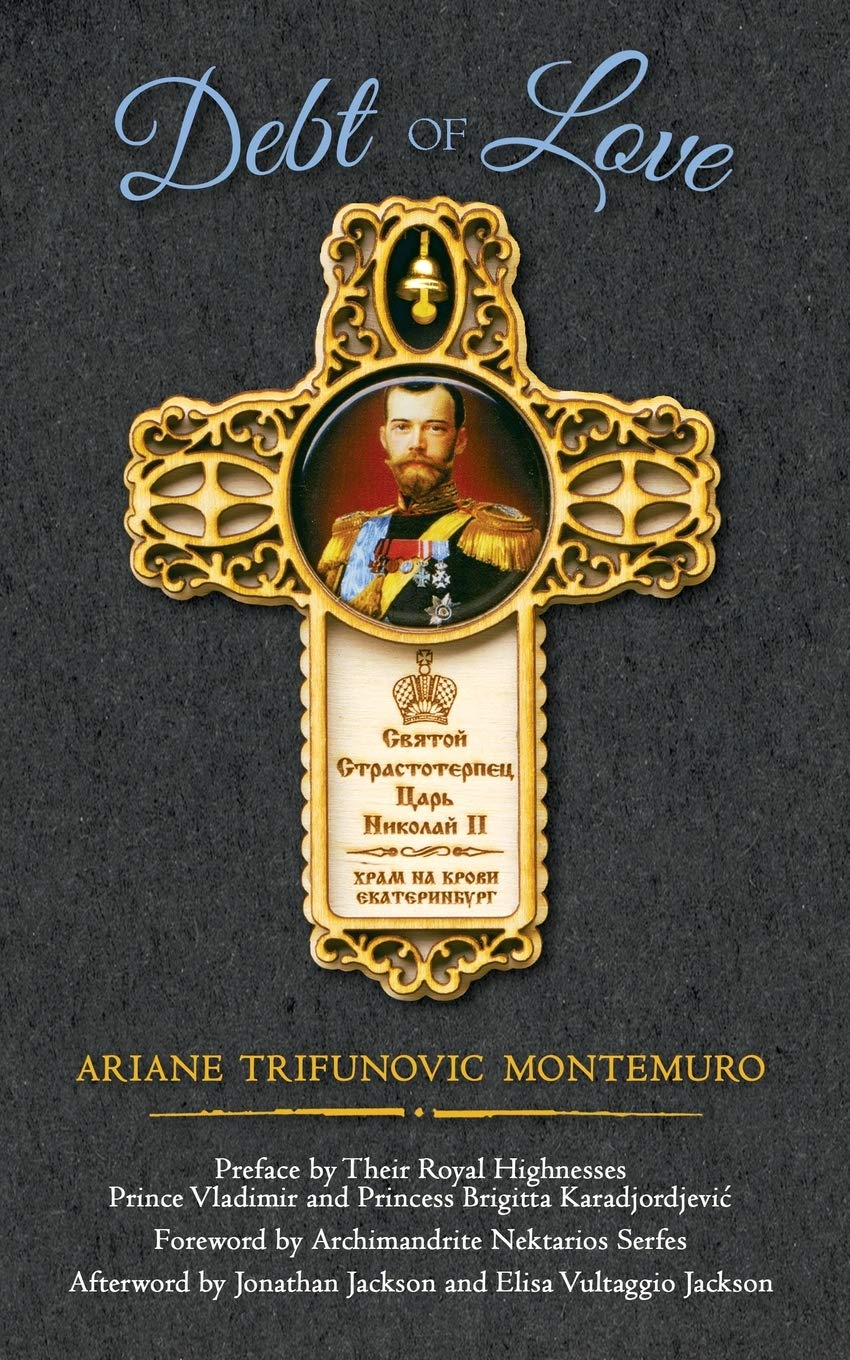
Debt of Love . . . and devotion for Tsar Martyr Nicholas II and his family

230a

Paperback. 237 pages. 132 black and white photographs. Published 2019

“In order to understand Tsar Nicholas II, you have to be Orthodox . . . You have to be consistently Orthodox, consciously Orthodox, Orthodox in your essence, culture and world view”, writes Archpriest Andrew Phillips in his excellent article The Glimmer of Light on the Road Ahead: On Tsar Nicholas II and the Restoration of the Christian Imperium, published on his Orthodox England web site.

While there may be some truth to Father Andrew’s statement, Nicholas II is admired and respected by people of all faiths, who, together share one common belief, in that he has been unfairly judged by history. I myself, am living proof that one does not need to be Orthodox to understand Nicholas II. Born and baptized within the Church of England, I have worked tirelessly over the past 25+ years to clear the name of Russia’s much slandered tsar.

Having said that, it is the Tsar-Martyr Nicholas II and his family, who are now leading me to Orthodoxy. My journey is far from complete, but after reading Debt of Love by Ariane Trifunovic Montemuro, I am now one step closer.

230b

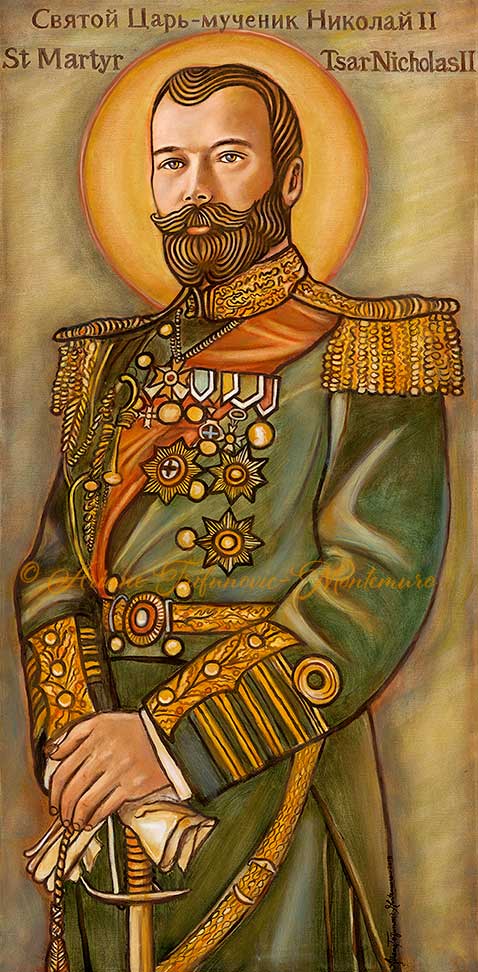
Tsar-Martyr Nicholas II by Ariane Trifunovic Montemuro

Ariane Trifunovic Montemuro is a Serbian-American artist and author, who shares her private story in a unique personal way: her declaration of love and devotion for Tsar-Martyr Nicholas II and his Royal Martyr Family. Ariane pays back a “Debt of Love” to them for their holy lives and their martyrdom on behalf of Orthodox Christians everywhere. This heartfelt book shows us all how great these Saints truly are!

Ariane presents a fresh account of the lives of Tsar Nicholas and his family, and their tragic murders in this touching, photo filled narrative. She sets the record straight by revealing the true spiritual beauty of this family. The author’s art depicting the Holy Royal Martyrs – which is represented in the book (and video below) – is not only beautiful, but adds so much to the effect of the story.

What I particularly liked about this book, is that while reading Debt of Love, I felt as if was sitting with the author, listening contently to her personal story. There are no fancy words or terms, she speaks from the depths of her soul, making it a wonderful read.

This book will appeal to Orthodox Christians, monarchists, but also the many adherents of Tsar Nicholas II and his family, who wish to pay homage to the much slandered Tsar-Martyr, regardless of their respective faith.

All the proceeds from the sales of this new devotional book go to support the Holy Trinity Seminary in Jordanville, New York.

You can purchase copies of Debt of Love by Ariane Trifunovic Montemuro, from Amazon, Book Depository or your favourite independent bookseller.

© Paul Gilbert. 4 March 2020

Nicholas II monument proposed for Tsarskoye Selo

237a

© Philipp Moskvitin

The above sketch is for a proposed monument of Tsar-Martyr Nicholas II by Russian artist Philipp Moskvitin. Note the crown of thorns that the tsar is holding in his right hand.

The artist’s idea has been presented to Tsarskoye Selo. It would be nice to see such a monument erected in the garden of the Alexander Palace, a perfect welcome to the Museum of the Russian Imperial Family, which is scheduled to officially open on 18th August 2020.

237b

© Philipp Moskvitin

237c

© Philipp Moskvitin

Click HERE to visit Philpp Moskvitin’s web site

© Philipp Moskvitin / Paul Gilbert. 28 February 2020
Tender issued for next stage of reconstruction of the Alexander Palace

236

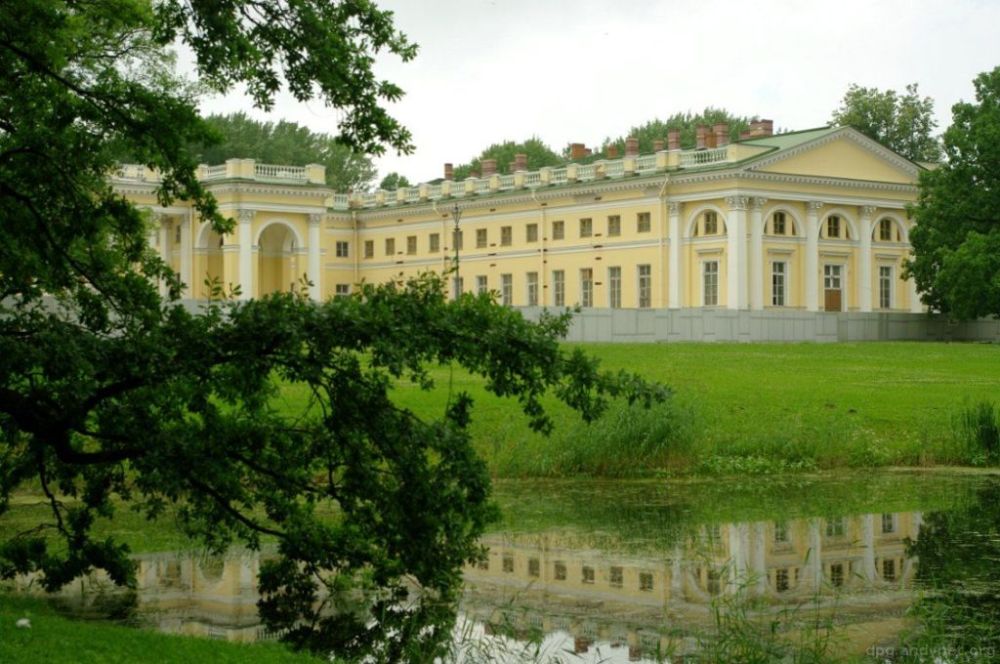
The western wing of the Alexander Palace

The Tsarskoye Selo State Museum-Reserve has issued a tender for the next stage of reconstruction of the Alexander Palace, the initial (maximum) price of the contract was announced at 778 million rubles ($11.6 million USD).

The project in two phases are envisaged for the western wing of the palace. Note: the restoration of the private apartments of Nicholas II and Alexandra Feodorovna, are located in the eastern wing of the palace.

The list of works includes, general construction work, restoration of floors, doorways and facades, installation of engineering networks, installation and commissioning of security systems and other equipment, including elevators, installation of plasterboard walls inside the building and the installation of a terrace.

The contract requires that work must be completed before 1st December 2021. The funding of 778 million rubles will come from the federal budget. Applications for participation in the tender will be accepted until 23rd March, consideration of proposals is planned for 25th March and 2nd April 2020.

The Alexander Palace was built in 1792-1796 near the Catherine Palace and was intended for the grandson of Empress Catherine II – Alexander Pavlovich (future Emperor Alexander I). It became the permanent residence of Emperor Nicholas II and his family in 1905. The restoration of the palace began in 2012, and has been closed to visitors since autumn 2015.

The first 8 of total of 14 rooms, which will be known as the Museum of the Russian Imperial Family are scheduled to open on 18th August 2020.

Upon completion of the restoration work – sometime in 2022 – the Alexander Palace will become a multi-functional museum complex, which will include exhibition halls, temporary exhibition halls, rooms for research and conferences, as well as a library and a children’s center. On the ground floor there will be a cafe, lobbies with ticket offices, a coat check, a tour desk, a museum store, as well as technical and auxiliary rooms.

© Paul Gilbert. 28 February 2020

“No one is more hated than he who speaks the truth”

2020

Independent researcher Paul Gilbert

Re-examine all you have been told. Dismiss what insults your soul
– Walt Whitman

I have devoted more than 25 years to researching and writing about the Romanov dynasty and Imperial Russia. During that period, I published dozens of books and journals.

In the 1990s, I organized special Romanov Tours to Russia, which included visits to St. Petersburg, Tsarskoye Selo, Moscow, Crimea, Livadia and Ekaterinburg. In 1997, I led the first tour group from the West on a tour of the Alexander Palace in Tsarskoye Selo, and in 2000, the first tour group from the West on a tour of the Grand Kremlin Palace in Moscow.

I also organized and hosted the 1st International Nicholas II Conference, held on 27th October 2018, in Colchester, England. The 2nd International Nicholas II Conference will be held next year, on Saturday, 19th May 2021, at the Holy Trinity Monastery in Jordanville, NY.

In my closing words at the 2018 Conference, I announced that I would be dedicating my efforts and resources to clearing the name of His Imperial Majesty Sovereign Emperor Nicholas II (1868-1918). I am now a full-time independent researcher on the life, reign and era of Russia’s last emperor and tsar.

My personal crusade to clear the name of Russia’s much slandered tsar, is to challenge the popular-held negative assessment of Nicholas II, which exists in the West to this day.

Part of that mission will revisit – and criticize, if necessary – books, newspaper articles, documentaries, etc., which present his life and reign based on these very negative myths and lies. While I have no personal interest in fighting with scholars, historians and authors, I am, however, prepared to challenge their research, based on new information and facts. 

Through the publication of new articles and book titles, researched primarily from Russian sources, my efforts to take a fresh look at the life, reign and era of Russia’s last monarch have been met with both praise and indignation.

The praise comes from monarchists, members of the Orthodox community, and adherents to Nicholas II, all of whom do not share the widely accepted negative assessment of Nicholas II.

The indignation comes from Nicholas II’s many detractors, among them are Russophobes, Communists, Leninites, anti-monarchists, historians and authors. They accuse me of “hagiography”, “romanticizing” or “whitewashing the truth”, or viewing Nicholas II through “rose tinted glasses”. So be it!

It is these same detractors, who are content to rehash the same negative assessment planted more than a century ago, and allowed to germinate over the past century. Much of it based on parlour room gossip among the aristocracy, and even worse, Bolshevik and revolutionary propaganda which poisoned the minds and hearts of so many of the tsar’s subjects.

What is especially frustrating is that it is these “historians” and “experts,” who refuse to examine new documents and research discovered in Russia’s archives by a new generation of Russian historians since the fall of the Soviet Union in 1991. These include new documents that have been declassified, diaries, letters, testimonials, among others.

Russian historian Pyotr Multatuli hit the nail on the head when he wrote:

“We combine indifference to our own history with our maximalism and categorical judgments. Thus we lose the ability to hear others. Everybody is content with his own biases without thinking that in the case of the holy passion-bearer his opinion is borrowed and that he was too lazy to form his own opinion. More than twenty-five years have passed since the collapse of the USSR, and truthful books on the Imperial Family were published since as early as perestroika. But most people don’t read them and retain the outdated stereotypical views.”

bizfb

A few months back, I created a shorter version of this post on my personal Facebook page. I was overwhelmed with the show of support which followed: 831 ‘LIKES’, 81 ‘COMMENTS’ and 43 ‘SHARES’.

Below, are just some of the encouraging words of support from people all over the world, who support me in my personal mission to help clear the name of Russia’s much slandered Tsar:

Paul, never mind what the detractors say. A fresh look at something never hurts and Nickie would be the first one to take that very approach if there was something he wanted to study or evaluate fairly and accurately. If you find positive accomplishments of his reign that amount to unassailable FACTS, able to stand on their own, then you have done scholarship in general a tremendous service. It’s only a “hagiography” if it is devoid of the foibles of human nature and willfully excludes the mistakes, the flaws, or the prejudices that we humans all have, Nicholas and Alex included, but you are out to bare the truth. What is and was, as opposed to what a preconceived ideology seeks to hide or distort. The man had character yet at least one oft-quoted Russian historian said he “lacked insides”. The man was never afraid to act, especially when he thought he was right. That’s a sure sign of character. The most reliable window into his character can be seen in his response to the months of final captivity. He trusted in events, kept his head, never wavered in fear, always displayed a controlled, patient form of quiet but impregnable courage. That’s the man you will ultimately discover. Good luck to you.” – W. Gifford

Paul, you are to be applauded and admired for your marvellous historical work. I cannot tell you how much truth-seekers appreciate you. Much rubbish was published about Tsar Nicholas II and Empress Alexandra. The truth must be told. The Imperial Sovereign and his consort must be recorded accurately and not sensationalised for any political advancement of Bolshevism or republicanism. They were good people, loving, loyal and patriotic as well as devout.” – A. Adar

Congratulations for your involvement and your great efforts to “restore” the memory of Nicholas II, our last tsar, so defamed! May God willing give you long life! God bless you!” – M. Rovanova

Thank you, Paul Gilbert, for your dedication and goal. May you be guided and rewarded by the intercessions of the Holy Martyr Nicholas II.” – B. Bennette

I support you Paul! Thank you for your hard work.” – E. Davis

Paul, be not distracted by negativism. More honor to you!” – A. von Pinoci

What a wonderful life’s work and legacy.” – R. Zisman

Keep up the good work Paul. If you are copping flak then you are definitely on target.
The honour and name of his majesty Nicholas II must be cleared, he deserves more than what he got and still gets from conformist historians.” – D. Adams

You are an example for all of us who desire the truth about Tsar Nicholas II.” – L. Young

Paul, he who strives to speak the truth is often berated. Do not be discouraged. Many support you. And your supporters fair outnumber those who wish to silence you.” – R. LeJeune

© PAUL GILBERT. 27 February 2020

Russia, here I come . . . again!

235a

The Church on the Blood, Ekaterinburg

I am very pleased to announce that I will be returning to Russia in September, where I will spend 10 days in Ekaterinburg and Tobolsk.

I have booked my flights on Aeroflot from Toronto-New York (JFK)-Moscow-Ekaterinburg, 19th – 29th September. This journey marks my 30th visit to Russia since 1986, my 4th visit to Ekaterinburg since 2012, and my 1st visit to Tobolsk!

The purpose of this journey is to complete research on my forthcoming book My Russia. Ekaterinburg. I began researching and writing this book in 2018, with plans to publish it prior to the centenary of the deaths of Nicholas II and his family. Instead, I delayed the publication, due to the fact that I attended the Tsars Days events held in Ekaterinburg in July 2018. In hindsight, I am happy that I made the decision to delay the books publication, as I was able to collect a lot of additional material for the book, as well as hundreds of photographs, many of which will be featured in my book.

I will spend 5 days in Ekaterinburg, revisiting the many places associated with the last days of the Imperial Family, including the Church on the Blood, the Novo-Tikhvin Convent, Ganina Yama, Porosenkov Log, as well as three museums dedicated to the Holy Royal Martyrs: Museum of the Holy Royal Family (Patriarchal Compound), Romanov Memorial Hall (Museum of History and Archaeology in the Urals); and Museum and Exhibition Center (Ganina Yama).

Once a bastion of Bolshevism, Ekaterinburg has slowly shed its status as the “capital of atheism”. Since the fall of the Soviet Union in 1991, the Urals has experienced a revival of faith, with Ekaterinburg at the into the center of Orthodox Russia in the Urals. Ekaterinburg has done more to honour Nicholas II and his family than any other city in Russia.

Thanks to my previous visits to Ekaterinburg in 2012, 2016 and 2018, it is a city which I have grown to admire and love.

235b

The Museum of the Family of Emperor Nicholas II, Tobolsk

From there, I will travel by train to Tobolsk – a 10-hour journey – and spend 3 days exploring this beautiful historic city and former capital of Siberia. The city is known for its 18th-century snow-white coloured Kremlin, Orthodox churches and many buildings dating from the Tsarist period, which have thankfully been preserved to this day.

My primary interest will, of course, be the former Governors Mansion, where the Imperial Family lived under house arrest from August 1917 to April 1918. Following the October Revolution, it was renamed the ‘House of Freedom’.

Today, the former Governors Mansion houses the Museum of the Family of Emperor Nicholas II. The museum was opened in 2018, the year marking the 100th anniversary of the deaths of the Imperial family. 

Thirteen rooms have been recreated in the building, many of which have preserved many historic elements and details from the time of the Imperial Family’s stay here. The museum features more than 900 artefacts, including memorial and personal items related to Nicholas II and his family.

Not only am I looking forward to meeting up with old friends and making new acquaintances in my favourite Russian city Ekaterinburg, I am also very much looking forward to exploring Tobolsk for the very first time. An added bonus to this journey, will be the opportunity to see the Urals decked out in the beautiful colours of autumn.

Upon my return from Russia, I will publish a summary of my visit in an issue of Sovereign, and put the finishing touches on my book My Russia. Ekaterinburg, adding additional text and photographs.

235c

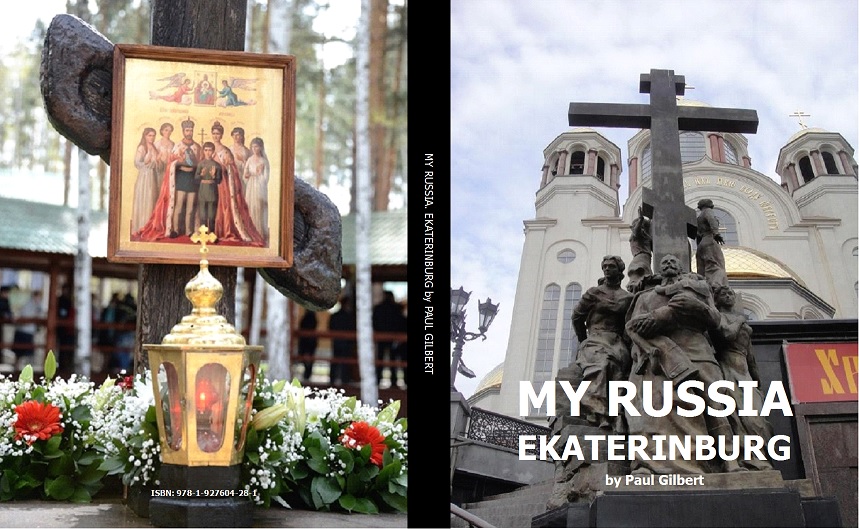
My Russia. Ekaterinburg – front and back covers

The present draft of My Russia. Ekaterinburg, already contains an Introduction, plus illustrated chapters on the Churches of Ekaterinburg; a History of the Ipatiev House; the Church on the Blood; the Patriarchal Compound and the Museum of the Holy Royal Family; the Novo-Tikhvin Convent; the Romanov Memorial Hall in the Museum of History and Archaeology in the Urals; Tsar’s Days; Ganina Yama, the Monastery of the Holy Royal Martyrs and the Museum and Exhibition Center; Porosenkov Log; Alapaevsk; Tyumen; Tobolsk and the Museum of the Family of Emperor Nicholas II; helpful Visitor Information and much more.

With 250 pages, and richly illustrated with 300 black and white photos – many taken by me during my visits to the Urals – My Russia. Ekaterinburg  will be my largest publishing project to date. God willing, my book will be available before Christmas.

© Paul Gilbert. 26 February 2020

Queen Victoria and The Romanovs: Sixty Years of Mutual Distrust

233

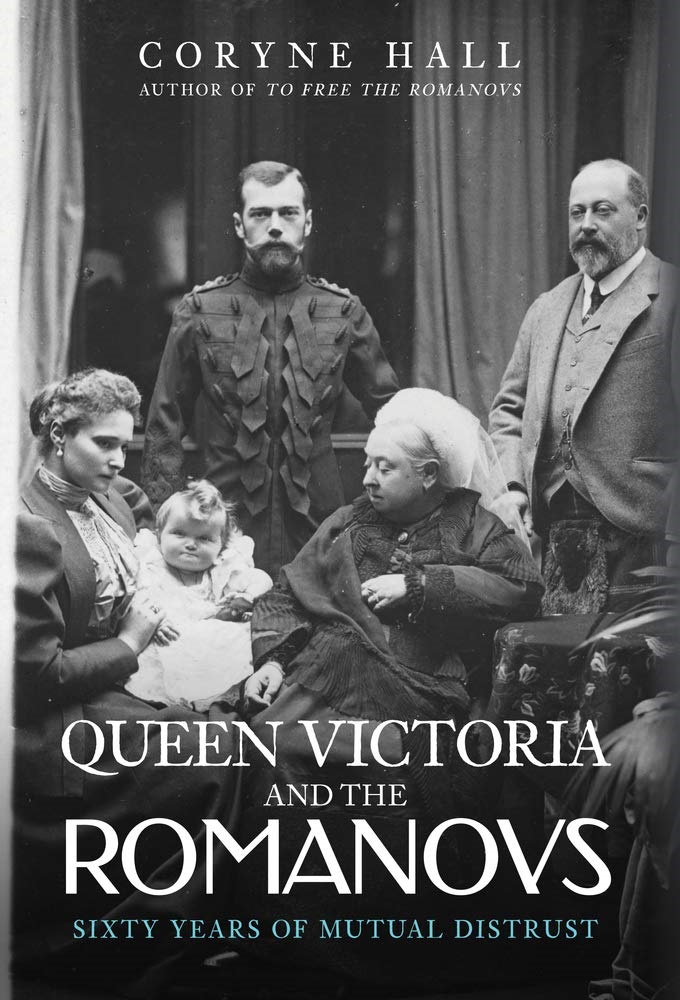
Queen Victoria and the Romanovs, a NEW book by royal historian Coryne Hall

Despite their frequent visits to England, Queen Victoria never quite trusted the Romanovs. In her letters she referred to ‘horrid Russia’ and was adamant that she did not wish her granddaughters to marry into that barbaric country. ‘Russia I could not wish for any of you,’ she said. She distrusted Tsar Nicholas I but as a young woman she was bowled over by his son, the future Alexander II, although there could be no question of a marriage. Political questions loomed large and the Crimean War did nothing to improve relations.

This distrust started with the story of the Queen’s ‘Aunt Julie’, Princess Juliane of Saxe-Coburg-Saalfeld, and her disastrous Russian marriage. Starting with this marital catastrophe, Romanov expert Coryne Hall traces sixty years of family feuding that include outright war, inter-marriages, assassination, and the Great Game in Afghanistan, when Alexander III called Victoria ‘a pampered, sentimental, selfish old woman’. In the fateful year of 1894, Victoria must come to terms with the fact that her granddaughter has become Nicholas II’s wife, the Empress Alexandra Feodorovna. Eventually, distrust of the German Kaiser brings Victoria and the Tsar closer together.

Permission has kindly been granted by the Royal Archives at Windsor to use extracts from Queen Victoria’s journals to tell this fascinating story of family relations played out on the world stage.

Hard cover. 287 pages, illustrated
Book Depository in the UK offer FREE DELIVERY WORLDWIDE!

* * *

Coryne Hall is an historian, broadcaster and consultant specialising in the Romanovs and British and European royalty. She was born in Ealing, West London and developed a fascination for Imperial Russia in childhood when she learnt that her great-grandmother was born in St Petersburg, an almost exact contemporary of Nicholas II. The author of many books, she is a regular contributor to Majesty Magazine, The European Royal History Journal, Royal Russia, Sovereign and Royalty Digest Quarterly. She acted as consultant on the Danish television documentaries “A Royal Family” and “The Royal Jewels.”

Coryne has lectured at royalty conferences in England, Denmark, Russia and America. Her media appearances include Woman’s Hour, BBC South Today, the documentaries “Russia’s Lost Princesses” and “13 Moments of Fate”, live coverage of Charles and Camilla’s wedding for Canadian television and co-hosting live coverage of Prince William’s wedding alongside John Moore for Newstalk 1010, Canada. She was also the last person to have a private audience with Queen Elizabeth The Queen Mother. She lives in Hampshire.

© Coryne Hall / Amberley Publishing (UK). 25 February 2020

How Yeltsin justified the demolition of the Ipatiev House

226a
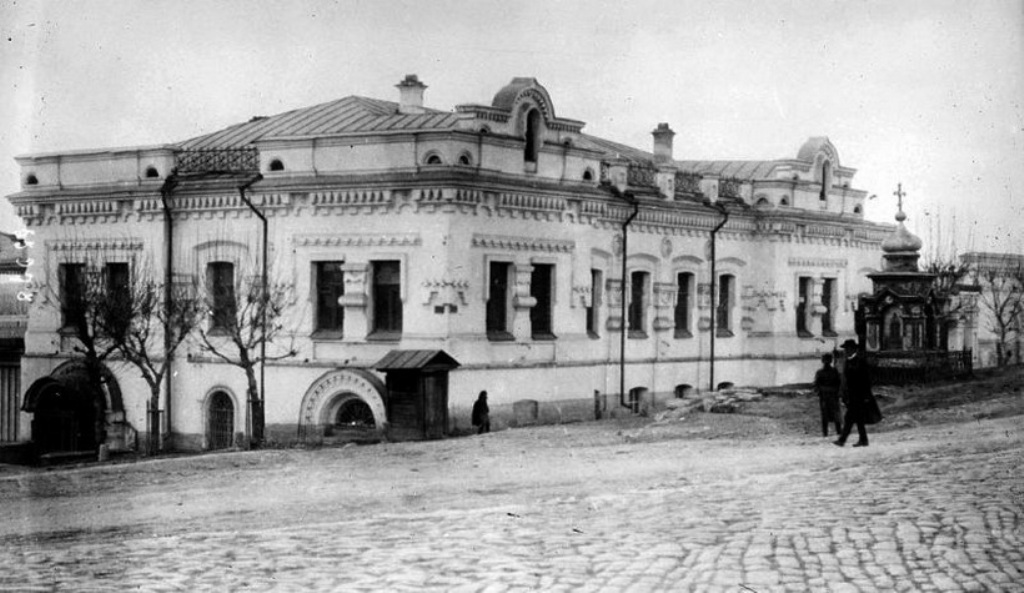
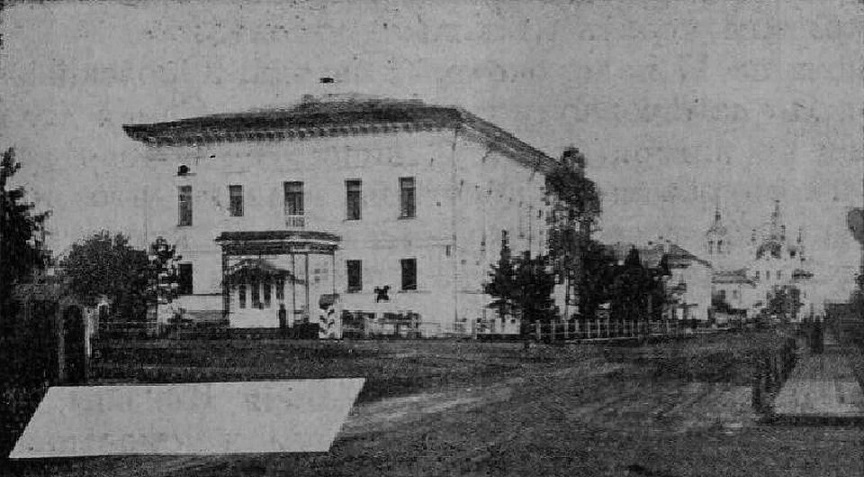
The Ipatiev House before 1917

On 22-23 September 1977, the Ipatiev House in Ekaterinburg where the Russian Imperial Family were held under house arrest for 78 days before being murdered, was razed to the ground. The decision of the Soviet authorities was perceived rather ambiguously, but what was the reason behind the destruction of this historic building, and could it have been saved?

226e
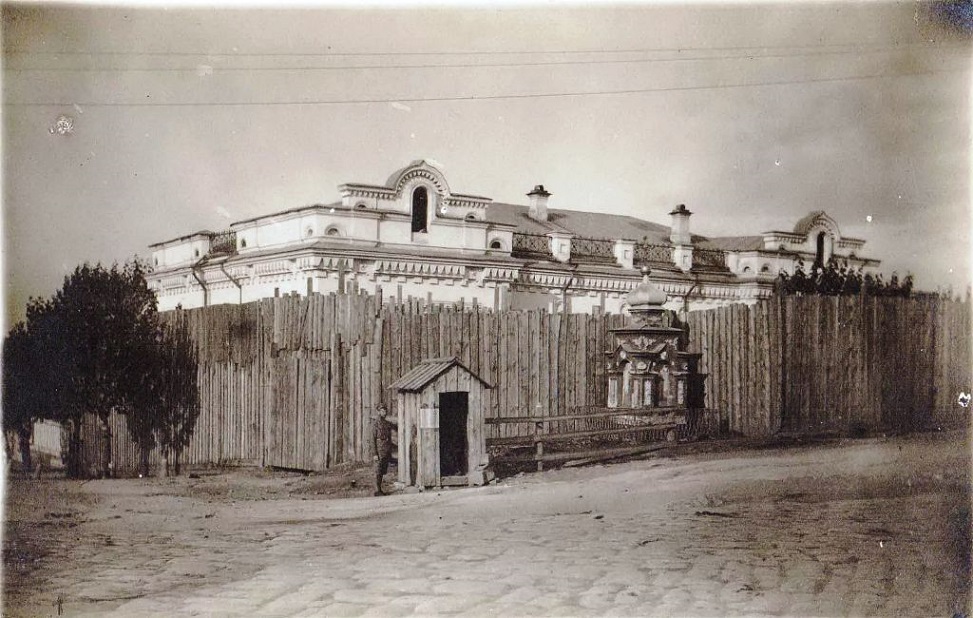
The Ipatiev House in 1918

A house with a tragic fate

The two-storey stone Ipatiev House was built in the 1880s by state adviser I.I. Redikortsev, on the western slope of the Ascension Hill – a notable hill in Ekaterinburg. It was located at No. 49/9 on the corner of Voznesensky Prospekt and Voznesensky Lane (renamed Karl Libnecht and Klara Zetkin respectively, after 1917). The eastern facade (facing Voznesensky Prospekt) was one-story, and the western (facing the garden) had two floors.

Redikortsev did not remain the owner of the house for long, he was accused of corruption, and in order to improve his shaky financial condition in 1898 he sold the house to the gold miner I. G. Sharaviev.

In 1908, the Ipatiev House was purchased by military civil engineer Nikolai Nikolaevich Ipatiev, who paid 6,000 rubles to the former owner. The Ipatiev family lived in the upper floor, while the the lower floor was used as Ipatiev’s office. The house had running water and sewer, electricity and telephone. The interiors were richly decorated with cast iron, stucco mouldings, and artistically painted ceilings.

On 27th April 1918, the Bolsheviks ordered Ipatiev to vacate the mansion within two days, for the maintenance of the Imperial family, who were to be transferred from Tobolsk. Due to the fact that Ipatiev was away, his personal belongings were locked in a basement pantry next to the room in which the Imperial family were later shot. Subsequently, the basement was sealed in the presence of the owner. It is believed that the choice of the house was due to the fact that Ipatiev was well acquainted with the members of the Ural Council and, in particular, Yakov Yurovsky who served as a prominent representative of the cadet party, and who, after the February Revolution, was appointed a member of the local public security committee.

Machine guns were installed in the attics of neighbouring buildings, the house itself was surrounded by a high wooden double fence, the height of which was higher than the windows of the second floor of the Ipatiev House, with a single wicket gate, which was  constantly guarded, two security posts were located inside, eight outside, thus completely prepared for the arrival of “Citizen Romanov” Nicholas II, his wife and their daughter Maria.

Immediately after the murder of the Romanovs, which occurred on the night of 16/17 July 1918, the house was returned to Ipatiev. Five days later, White Army units entered the city. Nikolai decided to emigrate, and sold the mansion to representatives of the White Army, and for a short time the mansion served as the headquarters of the Siberian Army, and representatives of the Russian government.  Their stay in the Ural capital was cut short, after the city was recaptured by the Bolsheviks.

From 1922, the Ipatiev House housed a dormitory for university students and apartments for Soviet employees. For some time there was even a kindergarten, and in the basement, where the Imperial family were murdered, a children’s shower was installed.

In 1927, it was decided to open the Museum of the Revolution in the building. The Museum of the Revolution was open daily except Monday and Thursday from 12 noon to 6 pm, the cost of tickets was 5 kopecks for tourists, 10 kopecks. for union members and 25 kopecks for every one else. The tour of the museum included a visit to the basement and the room where the Imperial Family were shot. To complete the exhibit, a decision was made to restore the bullet riddled wall in the murder room, since the retreating White Guards had  disassembled the genuine one and took it with them. [N.B. if there is any truth to this, the fate of the original wall from the “killing room” remains yet another mystery – PG] 

In 1938, the former mansion housed expositions of the Anti-Religious and Cultural-Educational Museum, as well as offices of various departments. If turning the Ipatiev House into an “Anti-Religious” Museum was not enough, in 1923, the Bolsheviks imposed one further indignity on the murdered tsar and his family, by issuing postcards of the house surrounded by the wooden fence, bearing the insulting and disrespectful caption “the last palace of the last tsar”.

From the beginning of the 1970s, a branch of the Chelyabinsk Institute of Culture was moved here: in the basement, students even staged performances, as evidenced by preserved photographs.

226f
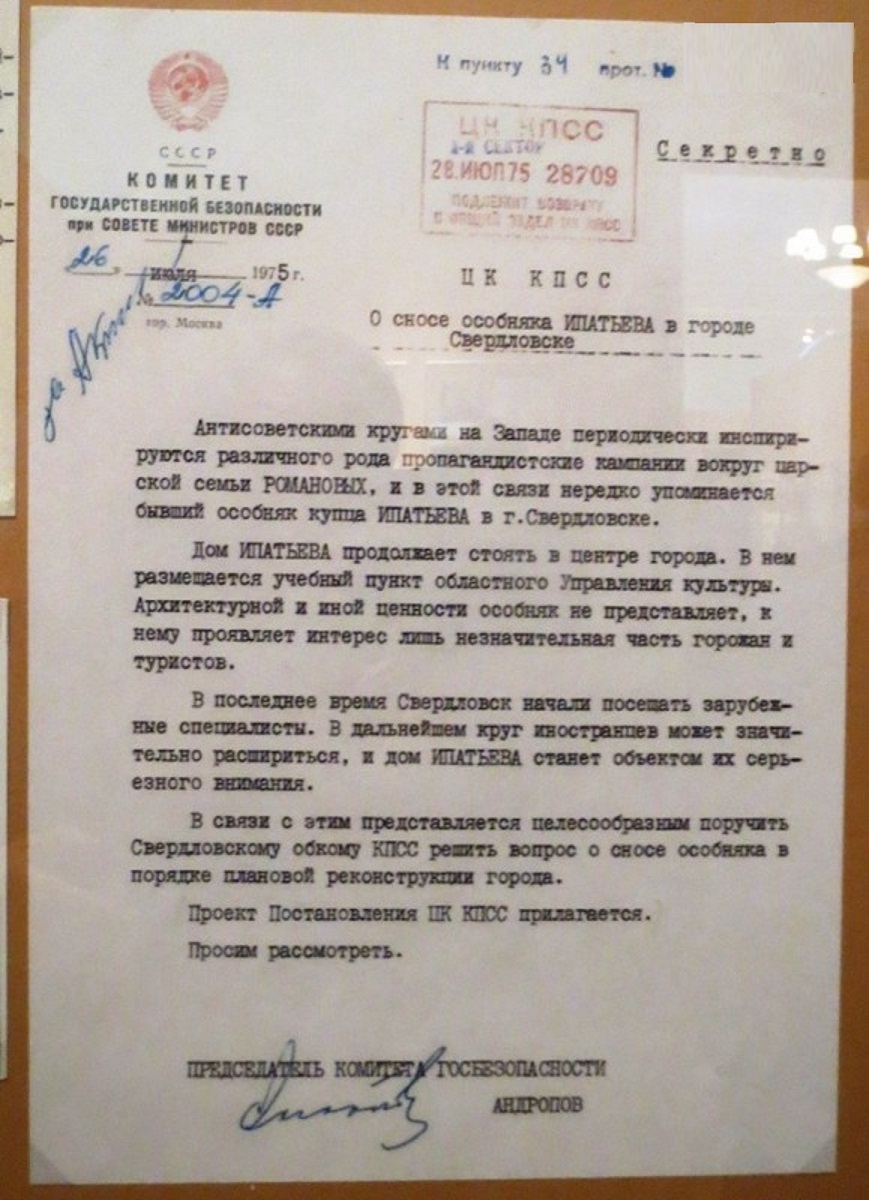
Andropov’s “secret note No. 2004-A” on the Ipatiev House

The KGB and Politburo take action

The day of 26th July 1975 was a turning point in the fate of the Ipatiev House. On this day, a secret note No. 2004-A was issued.

“On the demolition of the Ipatiev mansion in the city of Sverdlovsk” was sent from the KGB to the Politburo of the Central Committee of the Communist Party of the Soviet Union (CPSU). The text of the document read:

“Anti-Soviet circles in the West periodically inspire various kinds of propaganda campaigns around the Romanov royal family, whereby the former mansion of the merchant Ipatiev in Sverdlovsk is often mentioned. Ipatiev’s house continues to stand in the center of the city. It houses the training center of the regional Department of Culture.

“The mansion is of no architectural or historic importance; only a small number of the townspeople and tourists are interested in it. Recently, foreigners began to visit Sverdlovsk. In the future, the number of foreigners is expected to increase significantly, and Ipatiev’s house will no doubt become an object of their curiosity and interest. In this regard, it seems appropriate to entrust the Sverdlovsk Regional Committee of the CPSU to resolve the issue of demolishing the mansion in the order of the planned reconstruction of the city. The draft resolution of the Central Committee of the CPSU is attached. Please consider.”

The document was signed by the chairman of the State Security Committee, *Yuri Andropov (1914-1984). * Andropov later served as third General Secretary of the Communist Party of the Soviet Union, from November 1982 until his death in February 1984.

In the 1990s, Vladimir Solovyov, an investigator from the Prosecutor General’s Office, who investigated the murder of the tsar’s family, stated that the KGB had received information about how, every year, on the anniversary of the death of the Imperial Family, people came to the Ipatiev House, to light candles and offer prayers. The authorities referred to these annual visits “of painful interest” while declaring them as “anti-Soviet activity.” The Party bosses could not allow these pilgrimages to continue.

On 30th July 1975, Andropov’s proposal was unanimously adopted by the Politburo. Upon learning of the impending demolition of the Ipatiev House, the director of the museum, gave the order to save everything that could be carried away.

226i
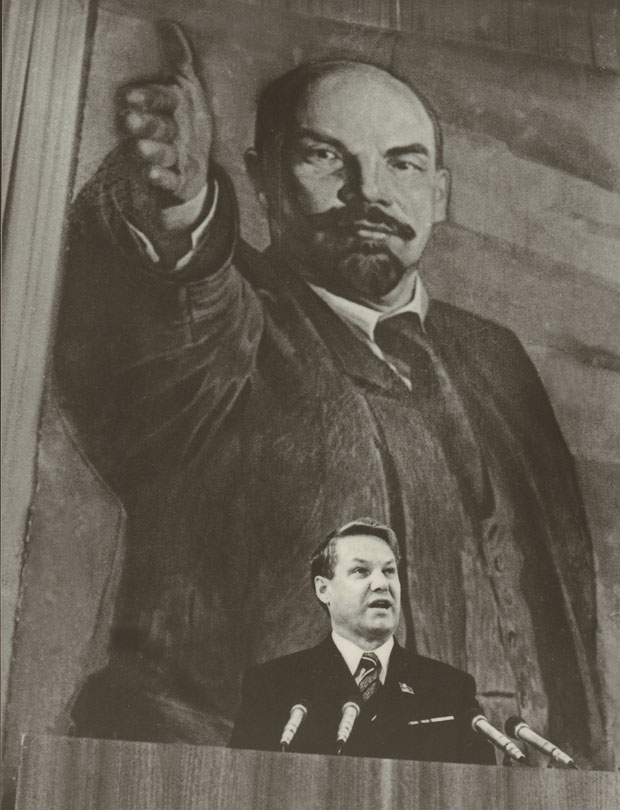
Boris Yeltsin. First Secretary of the Sverdlovsk Regional Committee of the CPSU 1977

“It was impossible to resist”

The elimination of the Ipatiev House was entrusted to local authorities. The order was executed by Boris Yeltsin, First Secretary of the Sverdlovsk Regional Committee of the CPSU . “It was impossible to resist, not to fulfill the Politburo Resolution,” Yeltsin would later note in his memoirs. “They assembled the equipment and demolished it in one night. If I had refused, I would have been left without work, and the new secretary of the regional committee would have complied with the order anyway,” he concluded.

The unofficial reason behind the demolition of the Ipatiev House was the need for reconstruction of the entire block – therefore, according to the “reconstruction” plans, all houses located in the entire block were to be demolished. The fact that the houses and merchant buildings located in the quarter were of architectural and historical value of late 19th-early 20th century Ekaterinburg, was of no interest to the authorities.

Experts noted that having destroyed the entire block, the authorities made it difficult to find the exact place where the Ipatiev House was located.

After the construction of the Church on the Blood, some people claimed that the Imperial Room – built on the site of the basement room of the Ipatiev House, where the family were all murdered – located in the Lower Church of the Church on the Blood is inaccurate. Each year on the anniversary of the regicide, a small group of people gather and create a square on one of the marble stones on the territory of the Church on the Blood. Here, they lay flowers, light candles and offer up prayers. It is ironic that given that the experts could not determine the exact spot, that a group of amateurs could?! 

Prior to the demolition of the Ipatiev House, local historians removed many valuable interior elements, including a fireplace, door handles, tiles, stucco molding from walls, iron bars from windows, etc. These items can be seen today in local museums in Ekaterinburg and Ganina Yama. It is interesting to note, when opening the floor in the grand duchesses bedroom, a golden bracelet with precious stones and the monogram ‘T’ was found hidden under the baseboard and wrapped in a newspaper. The whereabouts of this bracelet is unknown to the author.

226h
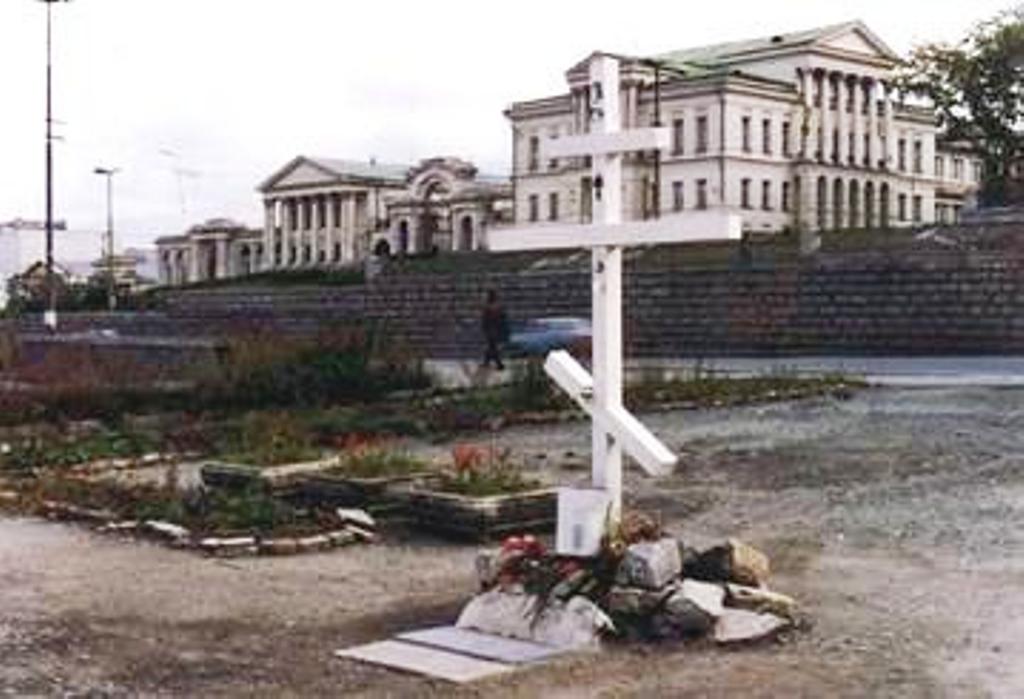
A simple wooden cross marked the spot of the Ipatiev House after its demolition

Could the Ipatiev House have been saved?

As previously noted in his memoirs, Yeltsin claimed that the house was destroyed in one night, but in reality it took two days to raze the building to the ground. Perhaps he just forgot. Here’s what else is remarkable. The destruction of the mansion began on 22nd September 1977, that is, more than two years after the decision of the Politburo. 

The thing is that in 1975 the First Secretary of the Sverdlovsk Regional Party Committee was Yakov Petrovich Ryabov – Yeltsin replaced him in this post only on 2nd November  1976. Journalists later asked Ryabov why he was in no hurry to comply with the highest order? “And why should I be in a hurry? The house stood in a lowland, it was not bothering anyone,” the former head of Sverdlovsk replied. According to Ryabov, he told his subordinates that when the reconstruction plan for the entire micro-district was ready, then a demolition decision would be made. Rumor had it that Ryabov wanted to keep the house and that even Brezhnev had taken an interest in it. In any case, it is known that the demolition of the house was opposed by representatives of the All-Union Society for the Protection of Monuments of History and Culture, and Ryabov helped them in every way. Many communists who were not members of the Politburo did not agree with the destruction of the historical building.

Perhaps such a confrontation contributed to the postponement of the demolition? It is also possible that those in Moscow would eventually have forgotten about their decision, however, the new secretary of the Sverdlovsk regional committee, Yeltsin, took the initiative and brought it to an end. Most historians agree that Boris Yeltsin was keen to improving his political position by transferring to Moscow and took advantage of an opportunity given to him.

* * *

In August 2000, Nicholas II and his family were canonized by the Moscow Patriarchate as Royal Martyrs. In 2000-2003, the Church on Blood in Honour of All Saints Resplendent in the Russian Land was built on the site of the former Ipatiev House. On the night of 16/17 July 2018, His Holiness Patriarch Kirill delivered a Divine Liturgy here. This was followed by a cross procession by an estimated 100,000 people from the Church on the Blood in Ekaterinburg to the Monastery of the Holy Royal Martyrs at Ganina Yama (21 km).

On 16 June 2003, 85 years after the murders of the former imperial family, the main church was consecrated by Metropolitan bishop Yuvenaly, delegated by Patriarch Alexy II who was too ill at the time to travel to Ekaterinburg, assisted by Russian Orthodox clergy from all over the Russian Federation.

Click HERE to read my article Doomed to Resurrection: Is it Possible to Reconstruct the Ipatiev House?, published on 2nd July 2018 and my article “What if” the Ipatiev House was reconstructed?, published on 29th November 2019

© Paul Gilbert. 25 February 2020

***

The following NEW title was compiled and edited by independent researchers and Romanov historian Paul Gilbert was published in August 2024. 

This fascinating new study features 14 chapters on this tragic event, which include the memoirs of a British intelligence officer and journalist, and two First-English translations. In addition, 11 chapters were written by Paul Gilbert, based on new documents sourced from Russian archival and media sources over the past decade.

Please refer to the link provided for further details about the content of this new title . . .

CLICK HERE TO READ MORE ABOUT THIS TITLE


The woman who photographed the Imperial Family in Tobolsk

232a

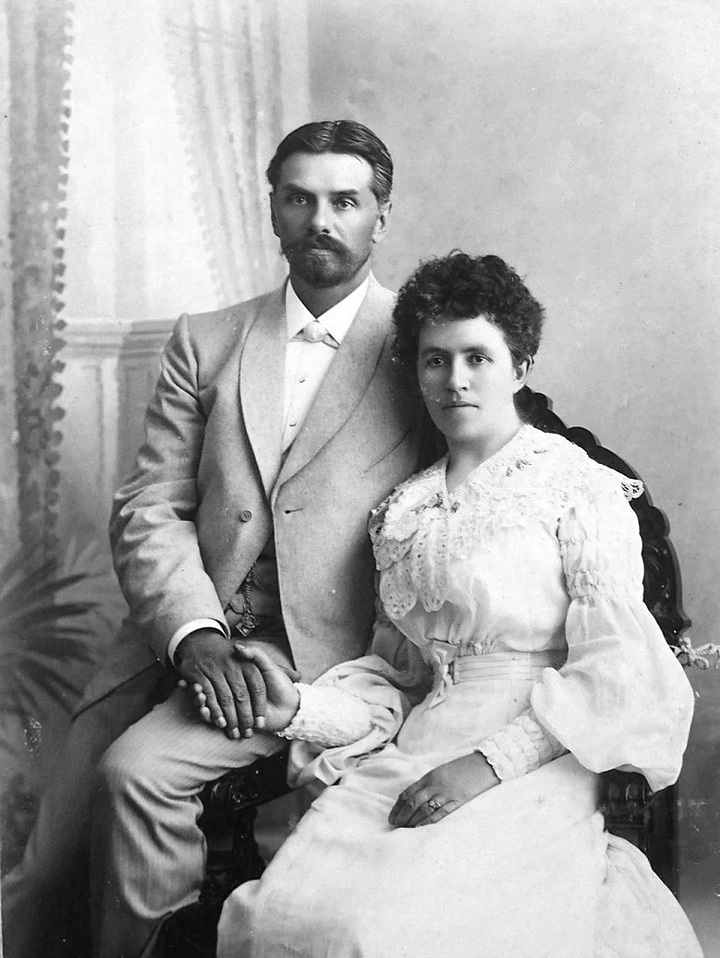
Maria Ussakovskaya, nee Petukhova with her husband Ivan Konstantinovich Ussakovsky

Few historians know about Maria Ussakovskaya the first woman photographer in Tobolsk. Through the lens of her camera, she photographed life in the provincial capital during one of the most dramatic periods of Russia’s history, leaving for posterity a noticeable mark in the biography of this Siberian city.

Incredible progress

Maria Mikhailovna Ussakovskaya, nee Petukhova, was born on 28th December 1871 (Old Style) in the family of a Tobolak native, state adviser M.M. Petukhov. She graduated from the Tobolsk girl’s school and, in 1893, married the official Ivan Konstantinovich Ussakovsky.

Ivan was also a great lover of photography – a hobby that was fashionable and modern in Russia at the time. On the basis of her husband’s home laboratory, as well as money received in a dowry from her father, Maria opened a photo salon, which quickly gained popularity among the townspeople. It should be noted that in 1897 in Tobolsk, with a population of 20 thousand people, there were no less than nine photo shops! 

Maria kept up with all the new developments in photography. She ordered expensive Bristol cardboard for passe-partout, used interchangeable backs with different scenes, offered costume shots, and even performed photo montages. This was incredible progress for Siberia at that time.

Photographs by Ussakovskaya were distinguished by their artistic taste and original composition. These were real photo portraits, which is especially significant, because photography at that time was essentially a step into eternity to become a memory for years to come.

Unlike other female owned photo salons, Ussakovskaya perfectly mastered the techniques of photography herself. Her photo salon also began to publish postcards, which were in great demand. It is known that the famous Russian chemist and inventor Dmitry Mendeleev (1834-1907), during his stay in Tobolsk in the summer of 1899, bought a collection of art postcards with views of his native city from Ussakovskaya’s salon.

Maria continued to work after the revolution, but the portraits of young ladies in silk dresses were replaced with photographing labor collectives, fur farms, bone carving masters and ordinary workers. At the same time, the house was formally confiscated by the local Soviet, leaving Maria to rent her own photo workshop from a local farm in Tobolsk. In 1929, Ussakovskaya was deprived of suffrage. The photo salon had to be closed. In 1938, the Ussakovskys left Tobolsk for Moscow for fear of reprisals. Maria Mikhailovna died in 1947 and is buried in the Don Cemetery.

232b

Photograph of Rasputin taken at Maria’s salon in Tobolsk

Witness of events

Maria was a witness to many historical events. Of particular interest in her biography are family traditions associated with the names of prominent people of that era and carefully preserved by subsequent generations of Ussakovsky. One of them is based on the visit by the famous strannik Grigori Rasputin.

The photograph of Grigory Rasputin made by Maria Ussakovskaya is today widely known. Moreover, the famous holy man, who was hunted by Russia’s finest photographers, presented himself at Maria’s salon. Maria’s great-grandson of Vadim Borisovich Khoziev, continues to tell the story of Rasputin’s visit to his great-grandmother’s salon in Tobolsk, as told to him by his grandmother Maria Ivanovna Ussakovskaya.

232e

One of Maria’s photos of the Governors House, where the Imperial Family lived under house arrest

Photographer of the Romanov family?

It is also of great interest,  that according to the Ussakovsky family, Maria repeatedly photographed the family of Tsar Nicholas II during their house arrest in the former Governor’s Mansion in Tobolsk. Sadly, however, in 1938, her daughter Nina, fearing arrest, destroyed all the photographic plates. One can only speculate, as to what these lost plates depicted? How close did Maria get to the Imperial Family? What were they doing when she photographed them? How many photographs did she take, and later destroyed? Sadly, we will never know.

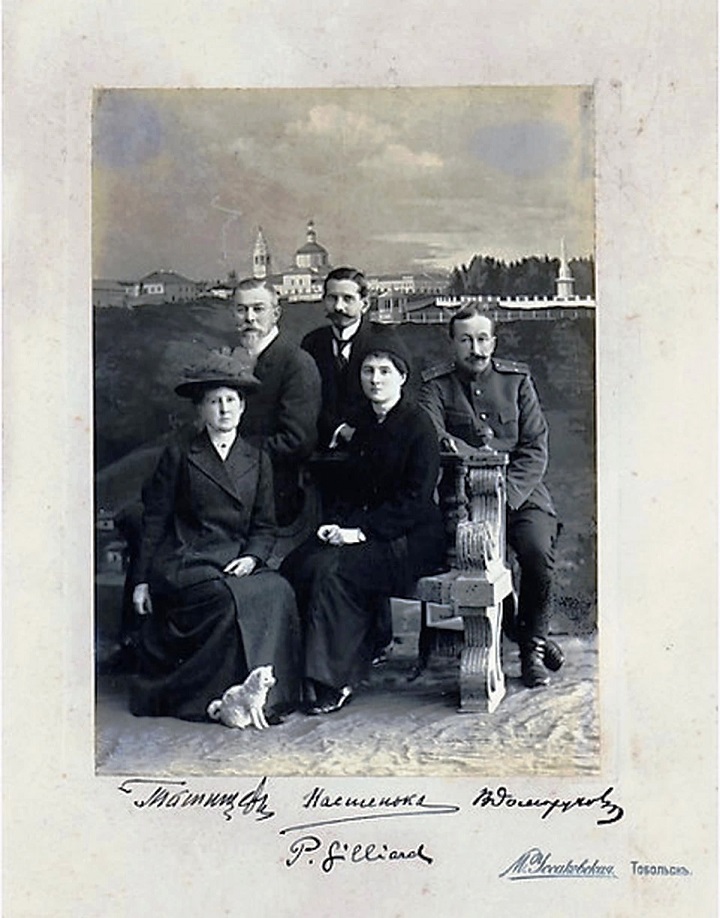
Only photos of the faithful servants of the Imperial Family have been preserved to this day. The original of this photo is now in the collection of the Tsarskoye Selo State Museum in Pushkin, a copy of which can be seen in the Museum of the Family of Emperor Nicholas II (opened in June 2018) in Tobolsk. It is interesting to add that members of their suite who enjoyed freedom to go about Tobolsk, made purchases of  postcards with views of Tobolsk, on behalf of the Imperial Family from Maria’s salon.

The fact that the Imperial Family used the services of the Ussakovskaya Salon was documented. In the financial report of Colonel Kobylinsky, security chief of the Romanovs, in addition to a few mentions of invoices for purchasing postcards, information is also provided on the account “for correcting negatives”. So Maria’s photos of the Imperial Family did in fact exist!.

The Imperial Family described their stay in Tobolsk in great detail in both their respective diaries and letters, however, there is no mention of an invitation of Maria Ussakovskaya nor the photographer in general. A visit by a female photographer would hardly go unnoticed. It is also not clear why the Romanovs would need to invite a photographer: they, as well as the tutor to Tsesarevich Alexei Pierre Gilliard, had their own cameras. Many photographs of the Imperial Family have been preserved, taken in Tobolsk by the Romanovs themselves or by members of their retinue.

Pierre Gilliard notes in his diary on 17th September 1917 that the Imperial Family were forced to have “ID cards with numbers, equipped with photographs.” Empress Alexandra Feodorovna made a similar note in her diary on 30th September 1917. Their respective entries may explain the photographer from the Ussakovskaya Salon, who was most likely Maria’s husband Ivan Konstantinovich Ussakovsky, who was invited for this compulsory photography for certificates. An invoice was issued by the salon.

Several passes to the “Freedom House” with photographs have been preserved, for example, the passes with a photograph of Dr. E. S. Botkin and maid A. S. Demidova. Their copies are also on display in the Museum of the Family of Emperor Nicholas II in Tobolsk.

232c

Photograph of the Imperial Family’s faithful servants taken at Maria’s salon in Tobolsk

“Faithful servants”

A wonderful photograph depicting *five faithful servants of the Imperial Family has been preserved to this day. The original of this photo is now in the collection of the Tsarskoye Selo State Museum in Pushkin, a copy of which can be seen in the Museum of the Family of Emperor Nicholas II (opened in June 2018) in Tobolsk.

The faithful servants of the Imperial Family, who had not lodged in the Governor’s House, but in the Kornilov House, located on the opposite side of the street and, obviously, enjoyed greater freedom of movement, could visit the Ussakovskaya Salon, which was located nearby. The famous photograph, called “Faithful Servants”, was clearly taken in the salon. Five members of the imperial retinue pose against a backdrop with a view of Tobolsk, printed or painted on canvas, This background can be seen in other photos from the Ussakovskaya Photo Salon.

*NOTE: the photo above depicts – the gentlemen: Count Ilya Tatishchev, Pierre Gilliard, Prince Vasily Dolgorukov; the ladies, Catherine Schneider, Anastasia Hendrikova. With the exception of Pierre Gilliard, the other four faithful retainers of the Imperial Family were murdered by the Bolsheviks in 1918.

232d

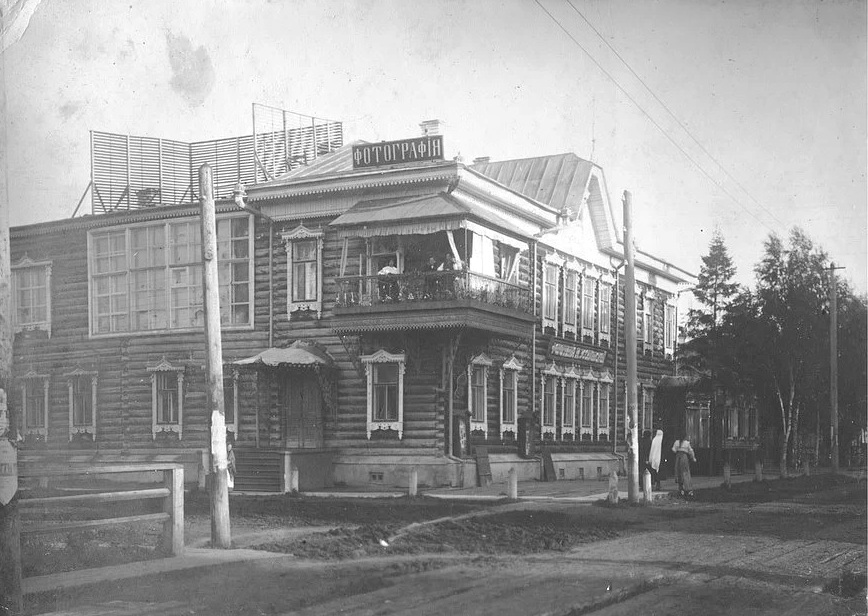
The home and salon of Maria Mikhailovna and Ivan Ussakovsky in Tobolsk

The home and salon of Maria Mikhailovna and Ivan Ussakovsky which was located at No. 19 Ulitsa Mira, was illegally demolished in 2006. Requests to local authorities by a group of local historians to restore the building has fallen on deaf ears in Tobolsk. 

© Paul Gilbert. 24 February 2020

Nicholas II. The Tsarist Feat

book1

Illustration © V. Volynets

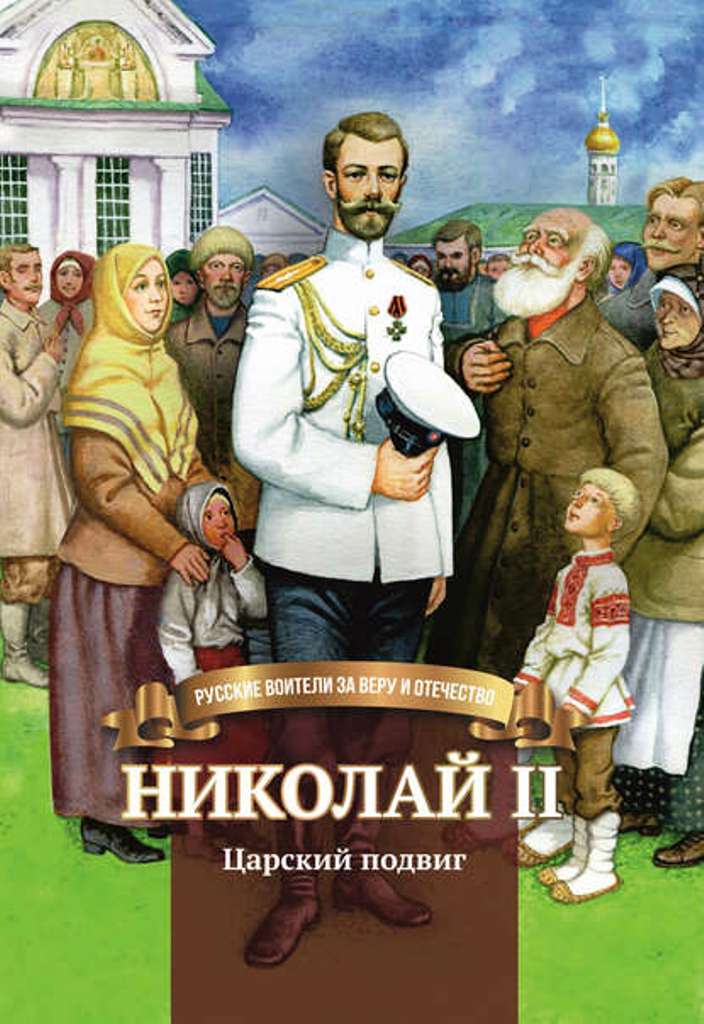
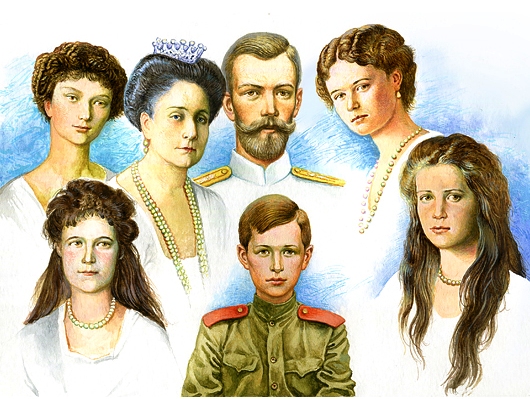
Николай II. Царский подвиг. Автор: Наталья Иртенина / Nicholas II. The Tsarist Feat. Author: Natalya Irtenina, with illustration by V. Volynets is a new book for children age 6+, published in Russia in February 2020. 60 pg. Illustrated. Available in Russian ONLY!

The book tells children about the life of the last Russian emperor, whose fate is inextricably linked with the tragic events which affected Russia.

For many people, Nicholas II was and remains a mystery. Some people still consider him weak-willed and heartless, a traitor to the Motherland, while other see him as a selfless and merciful ruler who hated bloodshed and did much to improve the life of his people.

This book tells in a lively, fascinating way what kind of person the emperor was. What he loved, how he passed his childhood, proving an exemplary father to his children, how he carried out his duties to both his subjects and to Russia, how he endured the trials that his whole family suffered, and what kind of feats, both royal and Christian, he accomplished in his life.

It is so important that children learn the truth about Nicholas II. This tiny book is yet one more in a growing list of titles aimed at children. This is a book in which the entire family can read together. The colourful illustrations by V. Volynets will no doubt arouse the curiosity of children, prompting many questions about the life of the Holy Royal Martyr Nicholas II and his family.

book13

Illustration © V. Volynets

© Paul Gilbert. 23 February 2022