Ekaterinburg: the Survivors
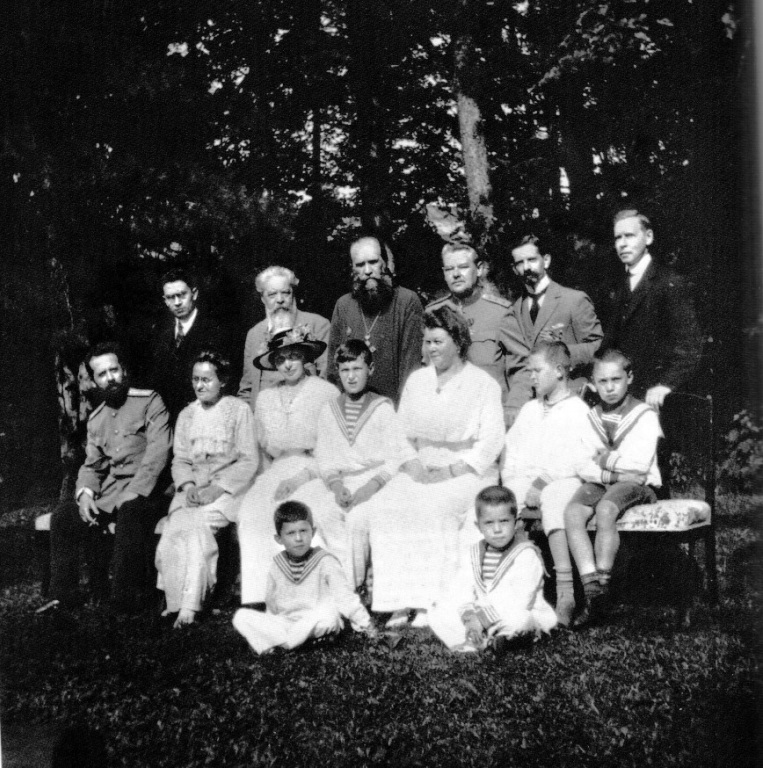
PHOTO: a number of those who survived the Ekaterinburg massacre are depicted in this photo taken at Tsarskoye Selo in 1916, including Terentiy Chemodurov (2nd from left, back row); Pierre Gilliard (2nd from right, back row: Charles Sydney Gibbes (far right, back row); and Alexandra Tegleva (3rd from left, front row and seated next to Tsesarevich Alexei Nikolaevich)

Following the transfer of the Imperial Family to Ekaterinburg in the Spring of 1918, the remaining servants and retainers living in the Kornilov House in Tobolsk were free to leave. A number of them, however, wanted to make the journey to Ekaterinburg with the hope of reuniting with the Tsar and his family. Their captives warned them that any one who went with the former Tsar and his family to Ekaterinburg would remain at liberty, at worse, they would not even be permitted to live in the same house with the Imperial Family but tossed in the local jail.

Despite the warning, a number of faithful retainers made the journey to the Ural capital, and, sure enough were imprisoned and later murdered by the Bolsheviks. Among them were Prince Vasily Dolgorukov, Ilya Tatishchev, Ekaterina Schneider, Anastasia Hendrikova, Klimenty Nagorny and Ivan Sednev

In addition, let us not forget the four faithful retainers, who remained with the Imperial family who followed the Imperial Family to their deaths in the Ipatiev House, on 17th July 1918: Dr. Eugene Botkin (1865-1918), the maid Anna Demidova (1878-1918), the cook Ivan Kharitonov (1872-1918), and the valet Aloysius Trupp (1856-1918).

As foreign nationals, the Swiss tutor Pierre Gilliard, along with his Russian born wife and nursemaid to the Tsar’s children Alexandra Tegleva and the English language tutor Sydney Gibbes were set free. So were a number of others with no explanation and amid rumours that they had abandoned the Imperial Family, sold a few secrets and begged for their lives.

The Empress’s Lady-in-Waiting Baroness Sophie Buxhoeveden attributed her unexpected release by the Bolsheviks to her “foreign” surname – it was Danish by origin – however, the even more foreign name of “Catherine Schneider” did not prevent the poor woman from being shot.

It was nothing short of a miracle that Nicholas II’s valet Terentiy Ivanovich Chemodurov; Assistant cook Leonid Ivanovich Sednev – not to be confused with his uncle with his uncle Ivan Dmitrievich Sednev – and the valet Alexei Andreyevich Volkov managed to escape from being shot by the Bolsheviks.

These men and women must never be forgotten for remaining faithful to Emperor Nicholas II and his family. Below, is a brief summary of each of them, and their respective fates following the regicide in Ekaterinburg:

Pierre Gilliard (1879-1962)
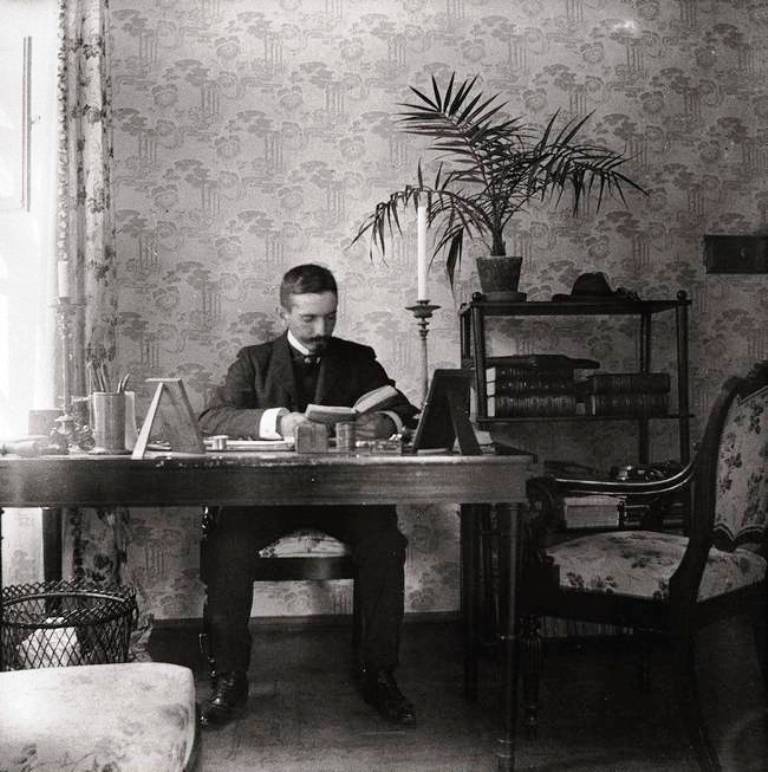
Pierre Gilliard was a Swiss academic who initially came to Russia in 1904 as a French tutor to the family of Duke George of Leuchtenberg, a cousin of the Romanov family. From 1905 to 1918 he served as the French language tutor to the children of Emperor Nicholas II.

He grew fond of the Tsar and family and followed them into exile to Tobolsk, Siberia, following the October 1917 Revolution. The Bolsheviks prevented Gilliard from joining his pupils when they were moved to the Ipatiev House in Ekaterinburg in May 1918.

Gilliard remained in Siberia after the murders of the family, for a time assisting White Movement investigator Nicholas Sokolov. In 1919, he married Alexandra Alexandrovna Tegleva, who had served as a nursemaid to the Tsar’s children.

Gilliard and Tegleva fled Bolshevik Russia in early November 1919, arriving in Vladivostok in early April 1920. They then travelled on an American ship to San Francisco, and from there travelled by ship along the Pacific coast, through the Panama Canal, across the Atlantic Ocean and the Mediterranean Sea to Trieste. From here, they travelled through Italy to Switzerland, and in August 1920 they reached his parents’ home in Fiez, which Gilliard had left 16 years before.

He became a French professor at the University of Lausanne and was awarded the French Legion of Honour. In 1921, he published a book entitled Thirteen Years at the Russian Court, which described the last days of the Tsar and his family, and the subsequent investigation into their deaths.

In 1958, Gilliard was severely injured in a car accident in Lausanne. He never fully recovered and died four years later on 30 May 1962.

Alexandra Alexandrovna Tegleva (1884-1955)
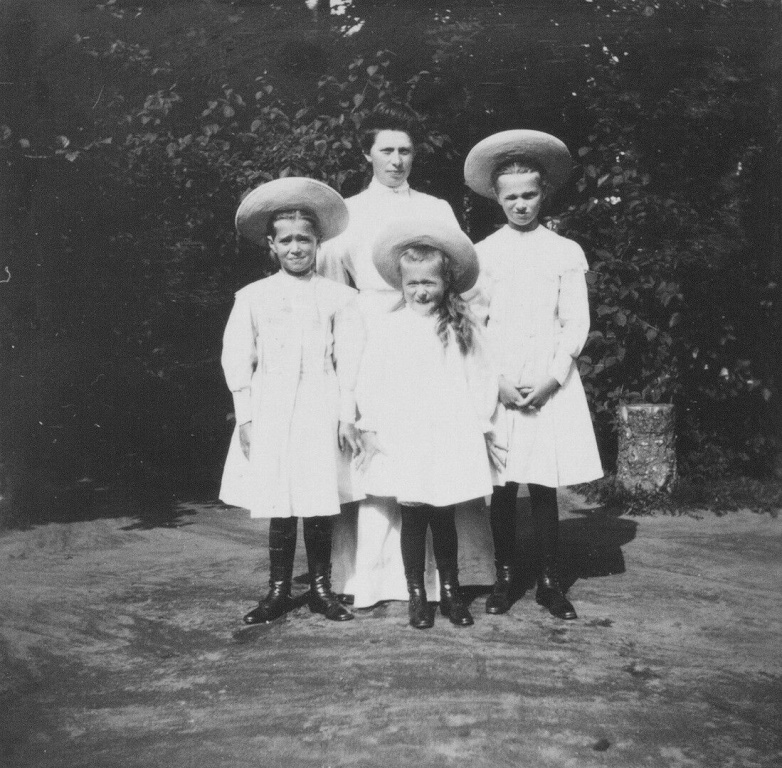
Alexandra Alexandrovna Tegleva was a Russian noblewoman who was educated at the Smolny Institute of Noble Maidens in St Petersburg. Tegleva served as a nursemaid and governess to Grand Duchesses Olga, Tatiana, Maria and Anastasia Nikolaevna, and Tsesarevich Alexei Nikolaevich. While many of the attendants in the service of the Empress spoke English, Tegleva was instructed to speak Russian with the children.

Following the Imperial Family’s house arrest in 1917, she lived with the family in the Alexander Palace at Tsarskoye Selo. In August of that year, she followed them into exile in Tobolsk, but was ultimately prevented from staying with them during their house arrest in Ekaterinburg. Tegleva was detained with Pierre Gilliard, Charles Sydney Gibbes, and Baroness Sophie Buxhoeveden in a separate residence from the imperial family in Yekaterinburg. She was almost killed by the Bolsheviks in Tyumen but was freed by the White Army.

In exile in Switzerland, Tegleva worked with her husband to investigate and debunk the claims made by Anna Anderson, a Romanov impostor who pretended to be Grand Duchess Anastasia Nikolaevna. Following two personal meetings with Anderson, Tegleva and her husband believed Anderson to be a fraud.

Alexandra Alexandrovna Tegleva died in Switzerland on 21 March 1955.

Charles Sydney Gibbes (1876-1963)
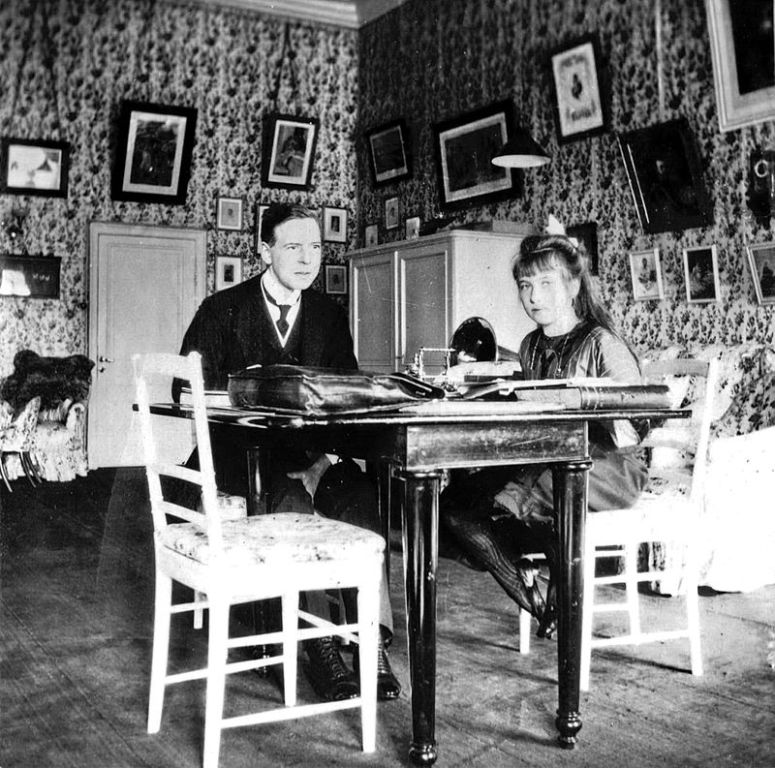
In 1901 Charles Sydney Gibbes travelled from England to St Petersburg, as tutor to the Shidlovsky family and then the Soukanoff family. By 1907 he was qualified as vice-president and committee member of the St Petersburg Guild of English Teachers. He came to the attention of Empress Alexandra Feodorovna and in 1908 was invited as a tutor to improve the English accents of the Grand Duchesses Olga and Tatiana; and subsequently Maria and Anastasia. In 1913 he became tutor to Tsesarevich Alexei.

Gibbes voluntarily followed the Imperial Family into exle, arriving in Tobolsk in October 1917, shortly before the Provisional Government fell to the Bolsheviks. In May 1918 the Imperial family was moved to the Ipatiev House in Ekaterinburg, and neither Gibbes, nor most other servants were allowed to enter. A number of servants stayed in the railway carriage which had brought them to the city.

After the fall of Ekaterinburg to the White Army on 25th July. Gibbes and Gilliard were early visitors to the scene of the regicide at the Ipatiev House and were both involved in the subsequent enquiries carried out by Ivan Alexandrovich Sergeiev and later by Nicholas Alexievich Sokolov.

In January 1919, he retreated eastwards as Siberia was captured by the Red Army. In Harbin, China on 25th April 1934 he was received into the Orthodox church by Archbishop Nestor (Anisimov) of Kamchatka and Petropavlovsk who was there in exile. Gibbes took the baptismal name of Alexei in honour of the former Tsesarevich. He was tonsured a monk on 15th December, ordained deacon on 19th December and priest on 23rd December, taking the name Nicholas in honour of the former Tsar. In March 1935 he became an Abbot. He again returned to England in 1937 and was established in a parish in London.

At the time of the Blitz he moved to Oxford where in 1941 he established an Orthodox chapel in Bartlemas. In 1949 he bought a house at 4 Marston Street, subsequently known as the Saint Nicholas House.

Gibbes died at St Pancras Hospital, London, on 24 March 1963. His open coffin was displayed in the cellar (or crypt) of Saint Nicholas House before his funeral. He is buried in Headington cemetery, Oxford, Oxfordshire, England.

Terenty Ivanovich Chemodurov (1849-1919)
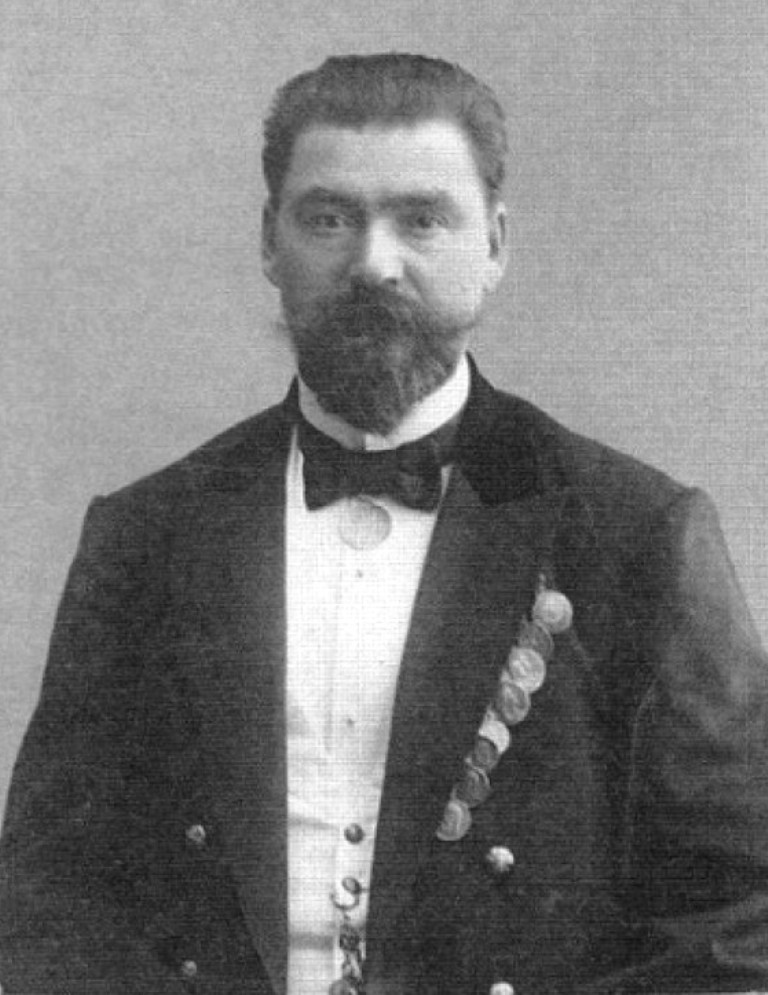
From 1891 to 1908, Terenty Ivanovich Chemodurov served in the Guards Crew. On 14th (O.S. 1st) December 1908, he was appointed personal valet to Emperor Nicholas II. He resided in the Alexander Palace at Tsarskoye Selo, where he received an annual salary of 360 rubles, as well as room and board.

In August 1917 he voluntarily followed the Imperial Family into exile, first to Tobolsk and then to Ekaterinburg. He lived in the Ipatiev House until 24th May (O.S. 11th) 1918, from where he was removed due to illness and transferred to a prison hospital in Ekaterinburg. He was replaced by the footman Alexei Troupe. Nicholas II wrote in his diary that day: “I decided to let my old man Chemadurov go for a rest and take on Troupe during his absence.”

Despite the fact that the Tsar released Chemodurov from service, the local Soviet authorities arrested him. As it turned out, the person in the next cell turned out to be another servant – Alexei Andreevich Volkov – the valet of Empress Alexandra Feodorovna.

It is believed while that in prison he was forgotten by the Chekists and on 25th July 1918, he was released by the Czechoslovaks who occupied Ekaterinburg. In 1919, he was involved as a witness in the case of the murder of the Imperial Family.

Chemodurov himself explained his salvation from execution by a miracle – according to him, a list of persons to be shot was sent to the prison. The list was large and did not fit on one page, which is why Chemodurov’s surname was written on the back of the sheet. Due to the negligence of the prison authorities, who failed to check the additional inscriptions on the back of the page, Chemodurov was not summoned from his cell to be shot. He was subsequently rescued from prison by the Czechs, who liberated Ekaterinburg from the Red Army.

In exile, Chemodurov spoke of the Emperor in the following way: “During my almost 10-year service under the Sovereign, I had opportunity to study his habits and inclinations in his private life, and in good conscience I can say that the Tsar was an excellent family man.” With regard to the last days of the Imperial Family, Chemodurov said: “He [the Tsar] seemed to be petrified but did not betray his fears, the Empress, however, suffered and prayed fervently”.

Leonid Ivanovich Sednev (1903-1941)
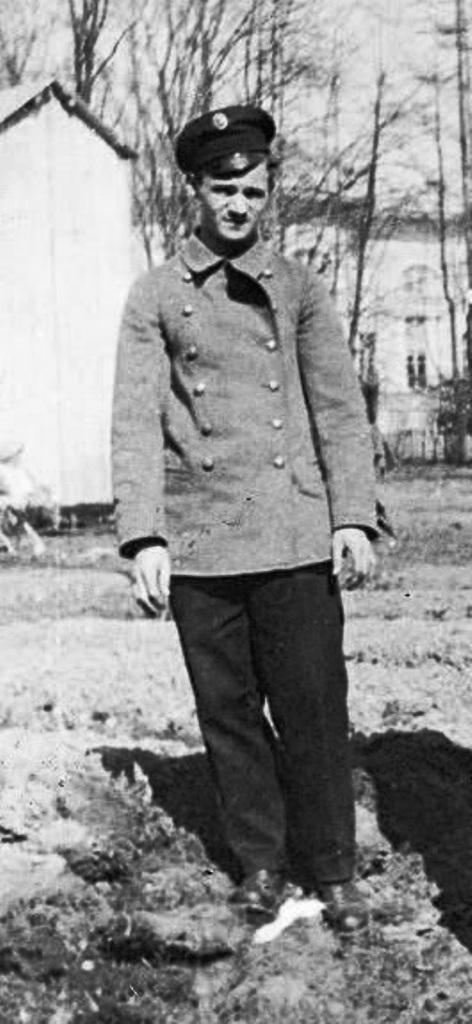
Leonid Ivanovich Sednev was a chef’s assistant who, together with his uncle Ivan Dmitriyevich Sednev, served Emperor Nicholas II and his family during their exile in Tobolsk and Ekaterinburg from 1917 to 1918.

Six hours before the Imperial family and their four retainers were murdered in the cellar of the Ipatiev House on the night of 16/17 July 1918, Sednev was taken to a neighboring house, where he was held until 20th July. Officials from the Ural Regional Soviet then shipped him off to live with relatives in Kaluga.

In her final diary entry on 16th July 1918, Empress Alexandra Fedorovna noted: “… Suddenly Lenka [Leonid’s nackname] Sednev was fetched to go and see his uncle and flew off – wonder whether it’s true and we shall see the boy back again! …”

There are conflicting accounts of his ultimate fate; according to one report, he was shot in 1929 in Yaroslavl on charges of participating in a counter-revolutionary conspiracy, while other evidence suggests that he was killed during the Battle of Moscow in 1941; however, according to the obd-memorial.ru (CAMO) web site, he was executed on the verdict of the tribunal of the Bryansk Front for an unspecified crime on 17 July 1942, exactly 24 years to the day the Tsar and his family were murdered.

In 2004, author Robert Alexander wrote The Kitchen Boy, an historical novel which recreates the final days of the Tsar and his family as seen through the eyes of Leonid Sednev.

Alexei Andreyevich Volkov (1859-1929)
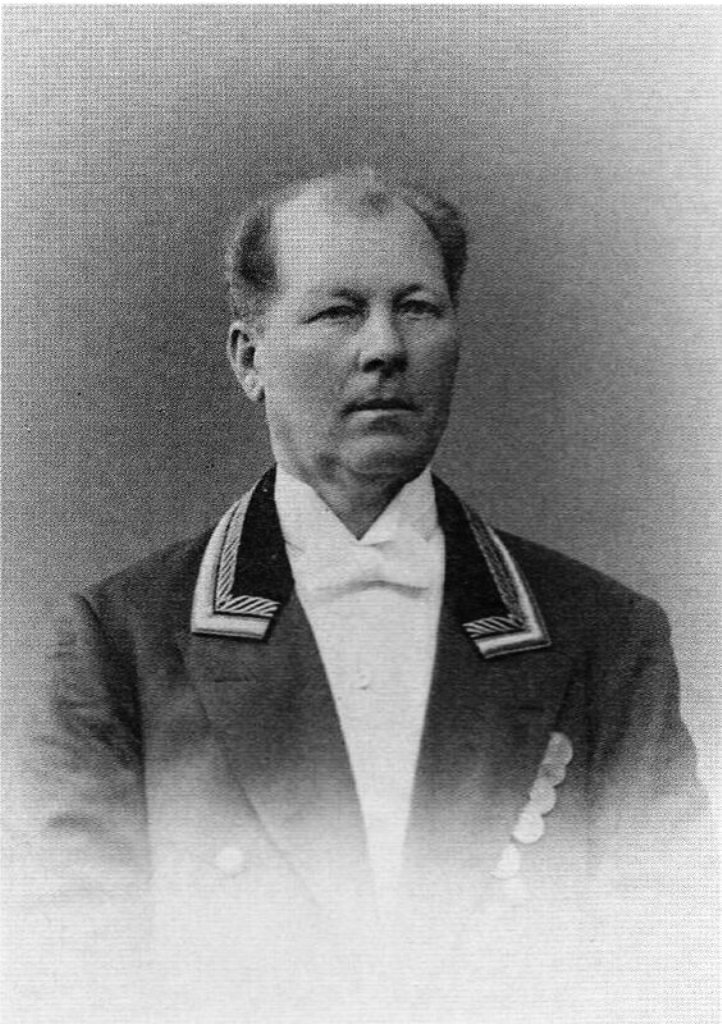
As a young man, Alexei Andreyevich Volkov entered the Russian Imperial Army and rose through the ranks. He was on guard and witnessed the assassination of Emperor Alexander II in 1881. Later he served as a military instructor to the future emperor Nicholas II. From 1886, he was in service to Grand Duke Paul Alexandrovich. In 1910 he was appointed valet at the court of Nicholas II. In addition, he was Empress Alexandra Feodorovna’s personal servant and often pushed her wheelchair.

In August 1917, Volkov followed the Tsar and his family into exile to Tobolsk, but was later separated from them at Ekaterinburg and imprisoned at Perm. There, he heard that the Emperor had been murdered by the Bolsheviks, though he was unaware that the Empress and their children had also been shot.

On 4th September 1918, he was taken from his prison cell in the middle of the night and led to the prison office, where he saw lady-in-waiting Anastasia Hendrikova and the elderly tutor Catherine Schneider. They were joined by eight other prisoners, and an escort of twenty-two guards.

Volkov asked a guard where they were being taken and was told they were being taken “to the house of arrest.” Hendrikova, who had been in the washroom, asked a guard the same question when she came out. She was told they were being taken “to the central prison.” Hendrikova asked him, “and from there?” The guard replied, “Well! to Moscow.” Hendrikova repeated this conversation to her fellow prisoners and made the sign of the cross with her fingers. Volkov took her gesture to mean “they will not shoot us.”

The prisoners were lined up in the street in rows of two, the men in front and the women in back. The group walked all the way to the edge of town and onto the Simbirsk road. Volkov asked another prisoner where the central prison was and was told they had long passed it. Volkov realized they were being taken into the woods to be shot. He broke from the group and ran for his life at the first opportunity. A bullet whizzed past his ear. Behind him he heard gunshots as the other prisoners in the group were shot and killed.

Volkov eventually joined other refugees at the White Army headquarters in Omsk and made his escape from Russia through Vladivostok and the Far East. In 1922, he settled in Estonia. He later lived in Denmark, where he was highly respected in the émigré community because of his lifelong loyalty to the Tsar and his family.

During his years in exile, he wrote his memoirs about his time at the Court of Nicholas II and his escape. These include his experience of events such as the Khodynka Tragedy.

Alexei Andreevich Volkov died on 27th February 1929, in Yuryev (Tartu), Estonia.

Baroness Sophie Buxhoeveden (1883-1956)
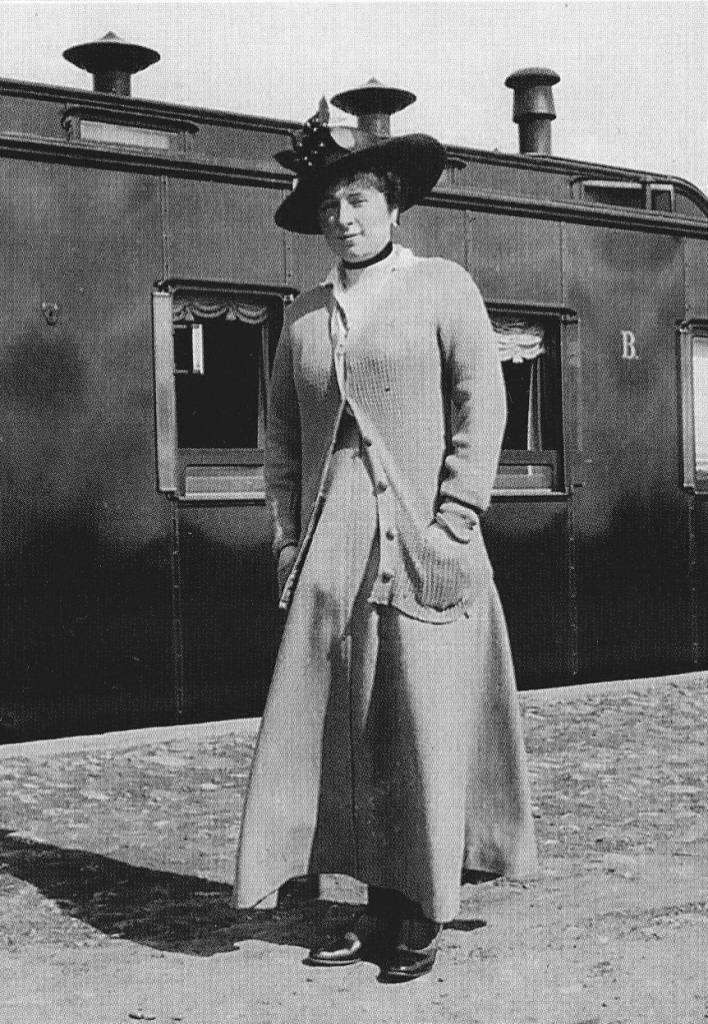
Sophie Freiin von Buxhoeveden, also known as Baroness Sophie Buxdoeveden, was the daughter of Baron Karlos Matthias Konstantin Ludwig Otto von Buxhoeveden (1856-1935), the Russian minister in Copenhagen, Denmark during World War I.

In her youth, Sophie was a part of the social life of St. Petersburg. In 1904, she was chosen as an honorary Lady in Waiting to Empress Alexandra Feodorovna, and became an official Lady in Waiting in 1913. She often accompanied the Empress and her four daughters to official duties.

She followed the Imperial Family into exile to Tobolsk. After being refused permission to join the Imperial family in the Ipatiev house, Sophie, along with the foreign tutors, tried to find a way to help the family.

Sophie spent many months on the run across Siberia, with other members of the Imperial household. She was only allowed safe passage out of Russia when she made it to Omsk, with the help of the British military, namely General Alfred Knox, who got her safe passage on a military train.

In exile, Buxhoeveden lived first in Copenhagen with her father, then at Hemmelmark in northern Germany, before finally settling in England, where she faithfully served as lady-in-waiting to Empress Alexandra Feodorovna’s older sister Victoria, Marchioness of Milford Haven.

During her years in exile, the Baroness wrote three books that are considered to give one of the best accounts of the Romanov family’s life and final days. They were Life and Tragedy of Alexandra Feodorovna (1928); Left Behind: Fourteen Months in Siberia During the Revolution (1929); and Before the Storm (1938).

Baroness Sophie Buxhoeveden died in England on 26 November 1956, in grace and favor rooms granted to her by th the Queen.

Dr. Vladimir Nikolaevich Derevenko (1879-1936)
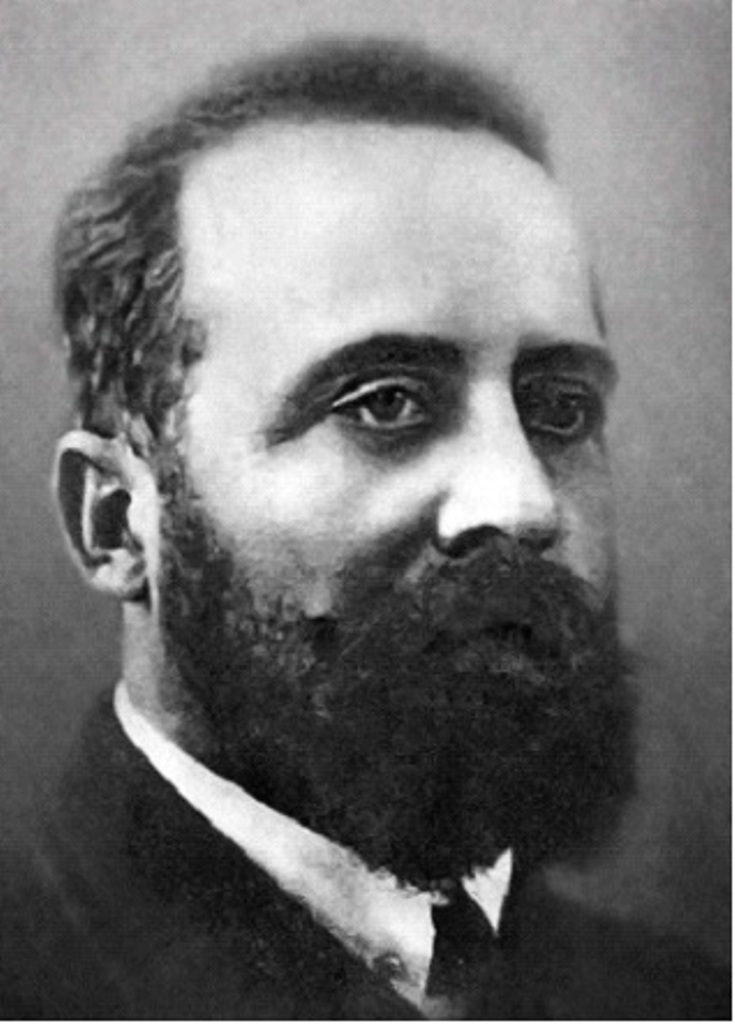
Vladimir Derevenko was born on 28th (O.S. 15th) July 1879, into the family of the Russian nobleman Nikolai Dmitrievich Derevenko and his wife Varvara Ivanovna Badimo. After graduating from the 1st Chisinau Gymnasium in 1899, he entered the Imperial Military Medical Academy. In 1904, he completed his studies, earning a doctor’s diploma with honours.

In 1904-05 he was called up for active military service during the Russo-Japanese War, of which he served as junior doctor of the Kerch Fortress Artillery and head of the eye and venereological departments of the Kerch Infirmary. He also participated in hostilities at the Front, providing assistance to the wounded.

In October 1912, Derevenko was summoned to Spala to assist with Tsesarevich Alexei’s near fatal injury, as a result of his haemophilia. It was following the heir’s recovery that Dr. Derevenko was appointed Alexei’s personal physician. His son Kolya, became Alexei’s playmate.

During the First World War, Derevenko participated in the daily work of the infirmaries which had been founded by the Empress Alexandra Feodorovna in Tsarskoye Selo.

After the February 1917 Revolution, and the Tsar’s abdication, the Imperial Family were held under house arrest in the Alexander Palace at Tsarskoye Selo. The Provisional Government issued an order to the family’s servants and retinue to choose between staying with the prisoners or leaving them. Both physicians, V. N. Derevenko and E. S. Botkin, opted to stay with the Imperial Family.

Derevenko and his family followed the Imperial Family into exile to Tobolsk, where they settled in the Kornilov House, situated opposite the Governor’ House, where the Tsar and his family were held under house arrest. Derevenko was permitted access to the latter to administer any necessary medical treatment.

When the Bolsheviks came to power in October 1917, the situation for the captives changed. In April 1918, the Bolshevik commissar Yakovlev arrived in Tobolsk, and took charge. The Imperial Family and their faithful retainers were transported to Ekaterinburg in two groups. Dr. Derevenko remained with the second group in Tobolsk to attend to Alexei who was ill. Following the heir’s recovery in May 1918, they were sent Ekaterinburg to be reunited with the rest of the family.

During the Ekaterinburg period of Derevenko’s life, he was admitted to the Ipatiev House, but only to provide medical treatment to Alexei, whose health was deteriorating. During such visits, the doctor was forbidden to speak with any member of the Imperial Family.

Derevenko was fortunate to have survived the massacre in the Ipatiev House. In December 1918, the doctor and his family moved to Perm, which was occupied at the time by the Whites. It was here that he began to work in the surgical clinic of Perm University. When the Red Army units approached Perm in July 1919, together with some of the teachers, staff and students of Perm University, Derevenko was evacuated to Tomsk, where he worked as a surgeon in the Tomsk military hospital, where he continued working after the establishment of Soviet power in the region in December 1919.

In 1920, he returned to Perm and headed the Department of the Surgical Clinic of Perm University. In 1923, he was elected professor and head of the General Surgery Clinic of the Ekaterinoslav University.

Derevenko later moved to Dnepropetrovsk, where in January 1931, he was arrested on charges of attempting to overthrow the Soviet government by armed force and participating in the secret counter-revolutionary organization Union for the Liberation of Russia. He pleaded guilty, for which he was sentenced to 5 years of “restriction of liberty”, but was not subjected to imprisonment. After serving his sentence, he was exiled to Lugansk, where he worked as a doctor.

In 2003, shortly before his death, in his only interview, Derevenko’s son Nikolai said that his father died in the spring of 1936 in Dnepropetrovsk (now Ukraine) and was buried at the Sevastopol Cemetery.

JoyTsesarevich Alexei’s spaniel

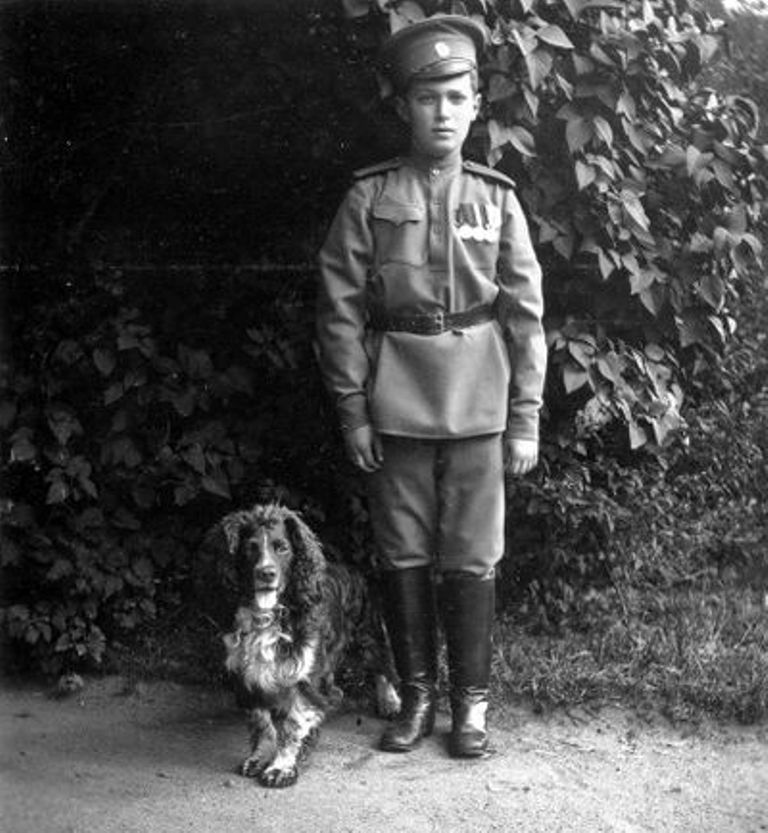
The faithful canine companion to Tsesarevich Alexei Nikolaevich was the only member of the Imperial Family who survived the massacre which took place in the Ipatiev House on the night of 16/17 July 1918.

“The Czechs [Czechoslovak Corps in the Russian Army], seizing Ekaterinburg, found a poor little animal, half-starved, running around the yard of the Ipatiev House. The dog seemed to be looking for his master all the time and his absence made him so sad and depressed that he barely touched his food, even when he was affectionately cared for,” wrote Baroness Sophie Buxhoeveden in her memoirs.

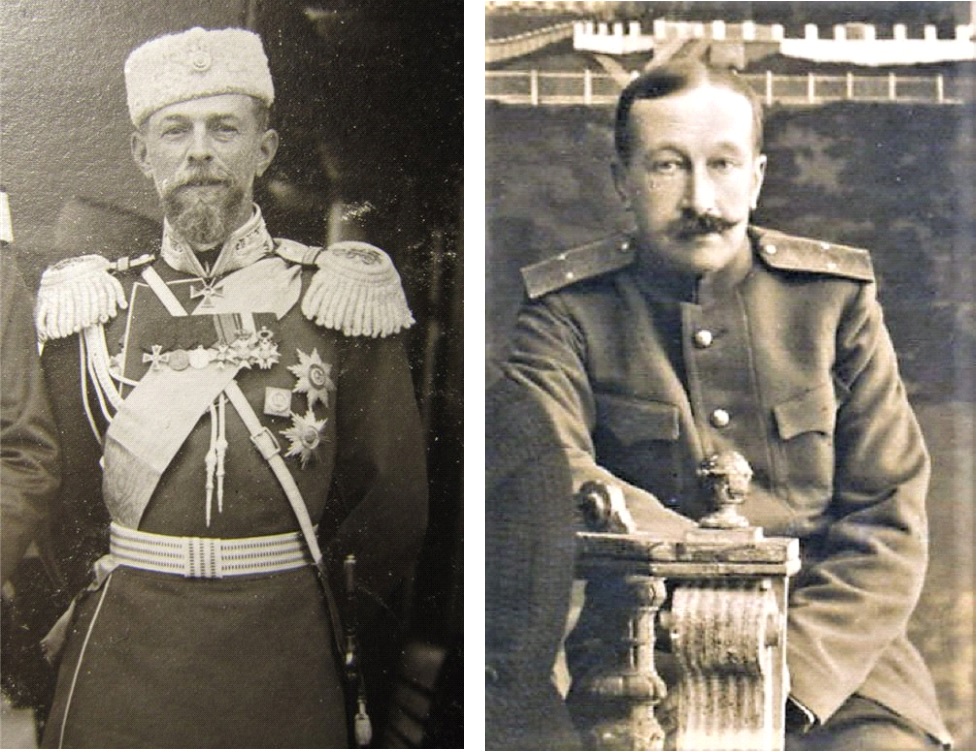
Alexei’s beloved King Charles spaniel Joy was taken by General Mikhail Dieterikhs, head of the White Army investigation into the death of the Tsar and his family. Joy was eventually homed with Colonel Pavel (Paul) Rodzianko, who was serving with the British Expeditionary Force in Siberia.

The British were expelled from Russia by the Bolsheviks and Rodzianko had grown so fond of Joy that he took him back to England.

Joy died at Windsor, however not at the royal court, but at Colonel Rodzianko’s small estate of Sefton Lawn, whose park adjoined the royal park.

“Every time I walk past my garden at Windsor, I think of the little dog’s grave in the bushes with the ironic inscription ‘Here rests Joy’. For me, this little stone marks the end of the empire and way of life,” Pavel Rodzianko wrote in Tattered Banners.

Sadly, both the garden and Joy’s modest grave is now believed to have been concreted over as a car park. 

© Paul Gilbert. 14 June 2023

***

The following NEW title was compiled and edited by independent researchers and Romanov historian Paul Gilbert was published in August 2024. 

This fascinating new study features 14 chapters on this tragic event, which include the memoirs of a British intelligence officer and journalist, and two First-English translations. In addition, 11 chapters were written by Paul Gilbert, based on new documents sourced from Russian archival and media sources over the past decade.

Please refer to the link provided for further details about the content of this new title . . .
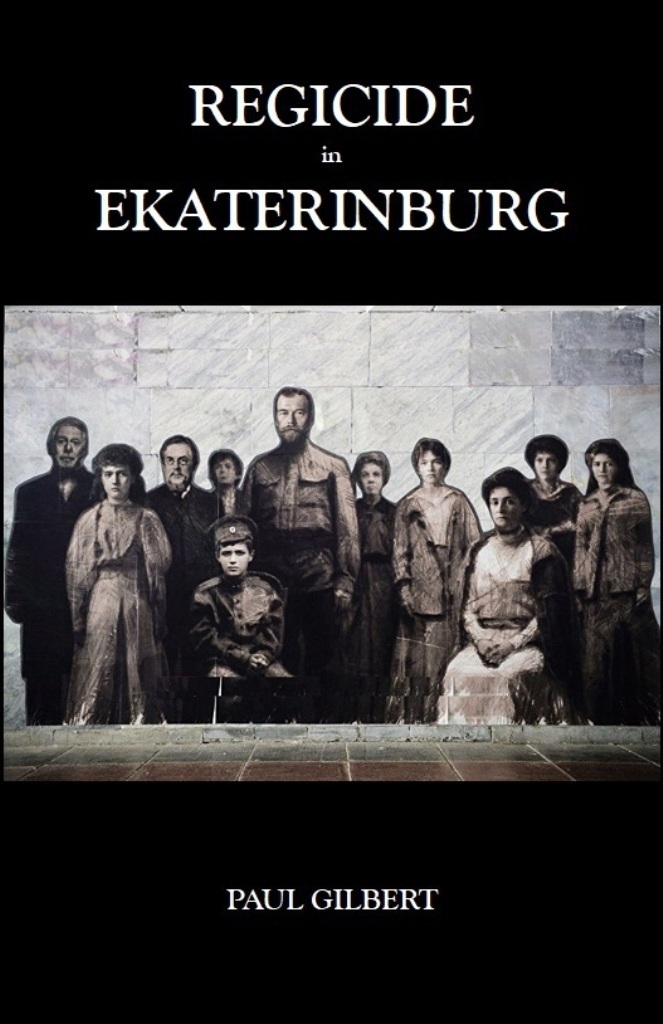
CLICK HERE TO READ MORE ABOUT THIS TITLE

Loyal to the Tsar: General Tatishchev and Prince Dolgorukov

PHOTO: From left to right: Catherine Schneider, Ilya Tatishchev, Pierre Gilliard, Anastasia Hendrikova and Vasily Dolgorukov

On this day – 10th June 1918 – two faithful servants to Emperor Nicholas II – General Ilya Leonidovich Tatishchev and Prince Vasili Alexandrovich Dolgorukov – were murdered by the Bolsheviks.

General Tatishchev and Prince Dolgorukov, faithfully and selflessly served Emperor Nicholas II, for many years. With Christian courage and nobility, they remained faithful to the sovereign, voluntarily followed the Emperor and his family to Tobolsk, and then to Ekaterinburg.

It was on 10th June 1918, that they together took a martyr’s death at the hands of the Bolsheviks and were buried in the cemetery of the Novo-Tikhvin Convent.

Memory Eternal! Вечная Память!

PHOTO: General Ilya Leonidovich Tatishchev and Prince Vasili Alexandrovich Dolgorukov

Ilya Leonidovich Tatishchev (1859 – 1918) – Adjutant-General of Emperor Nicholas II. The son of General Leonid Aleksandrovich Tatishchev (1827-1881) and Catherine Ilinishna (1835-1915), Ilya Tatishchev is one of the descendants of the founder of Ekaterinburg. He graduated from the Corps des Pages in St Petersburg, and later entered the service of the His Majesty’s Life Guard Hussar Regiment. He later served as adjutant to the Grand Duke Vladimir Alexandrovich (1847-1909). On 6th December 1895, he was promoted to colonel. From 1905 he served as Major-General of the Retinue of His Imperial Majesty. In 1910 he was promoted to Adjutant General. He was a member of the Holy Prince Vladimir Brotherhood. He faithfully followed Emperor Nicholas II and his family into exile. He was murdered by the Bolsheviks on 10th June1918. Ilya Tatishchev is buried in the cemetery (*lost during the Soviet years) of the Novo Tikhvinsky Convent in Ekaterinburg.

Prince Vasily Alexandrovich Dolgorukov ( 1868 – 1918) – Major-General, marshal of the Ministry of the Imperial Court and lands. The son of Prince Alexander Vasilyevich Dolgorukov (1839-1876) and Princess Mary Sergeyevna (1846-1936). He graduated from the Corps des Pages in St Petersburg, and then entered the service of the Life-Guards Horse-Grenadier Regiment. In 1907, he was promoted adjutant to His Imperial Majesty Emperor Nicholas II. From 1912-1914, he served as Regimental Commander of the Life-Guards Horse-Grenadier Regiment. During the First World War, he served at General Headquaters in Mogilev. Dolgorukov faithfully and selflessly served Emperor Nicholas II for 22 years. In March 1917, he voluntarily stayed with the Emperor during his house arrest in the Alexander Palace at Tsarskoye Selo. In August 1917, he then followed the Emperor and his family into exile to Tobolsk.

After his arrival in Ekaterinburg on 30th April 1918, Prince Dolgorukov was arrested “in order to protect public safety.” He was placed in the political department of the Ekaterinburg prison. The Chekists tried to accuse him of planning the escape of the Imperial family. Historians call these accusations groundless. On 10th June 1918, he was shot in a wooded area near the city’s Ivanovskoe Cemetery,. His body was later discovered by a unit of the White Army, and buried in the autumn of 1918 in the cemetery (*lost during the Soviet years) of the Novo-Tikhvinsky Convent in Ekaterinburg.

Tatishchev and Dolgorukov were canonized by the Russian Orthodox Church Outside Russia (ROCOR) in October 1981.

© Paul Gilbert. 10 June 2022

Ekaterinburg Diocese celebrates the 155th anniversary of the birth of Emperor Nicholas II

The anniversary of the birth of Russia’s last Tsar has been celebrated in the Ural capital of Ekaterinburg for many years.

On 19th May 2023, with the blessing of Metropolitan Evgeny of Yekaterinburg and Verkhoturye, a series of events will be held dedicated to the memory of the last Russian emperor, the Holy Tsar-Martyr Nicholas II.

On the morning of 19th May, a Divine Liturgy will be celebrated at 8:00 a.m., in the Church on the Blood, built on the site of the Ipatiev House, where the Imperial Family and their four faithful retainers met their deaths and martyrdom.

A liturgy will also be celebrated at the Monastery of the Holy Royal Martyrs in Ganina Yama, followed by a Cross Procession  celebrating the patronal feast day in the name of the Righteous Job the Long-Suffering [on whose feast day Nicholas was born].

In addition, Divine services in memory of the last Russian emperor will be held in many churches of the Ekaterinburg diocese, including the Cathedral of St. Alexander Nevsky at the Novo-Tikhvin Convent, whose history is closely connected with the last Tsar and his family.

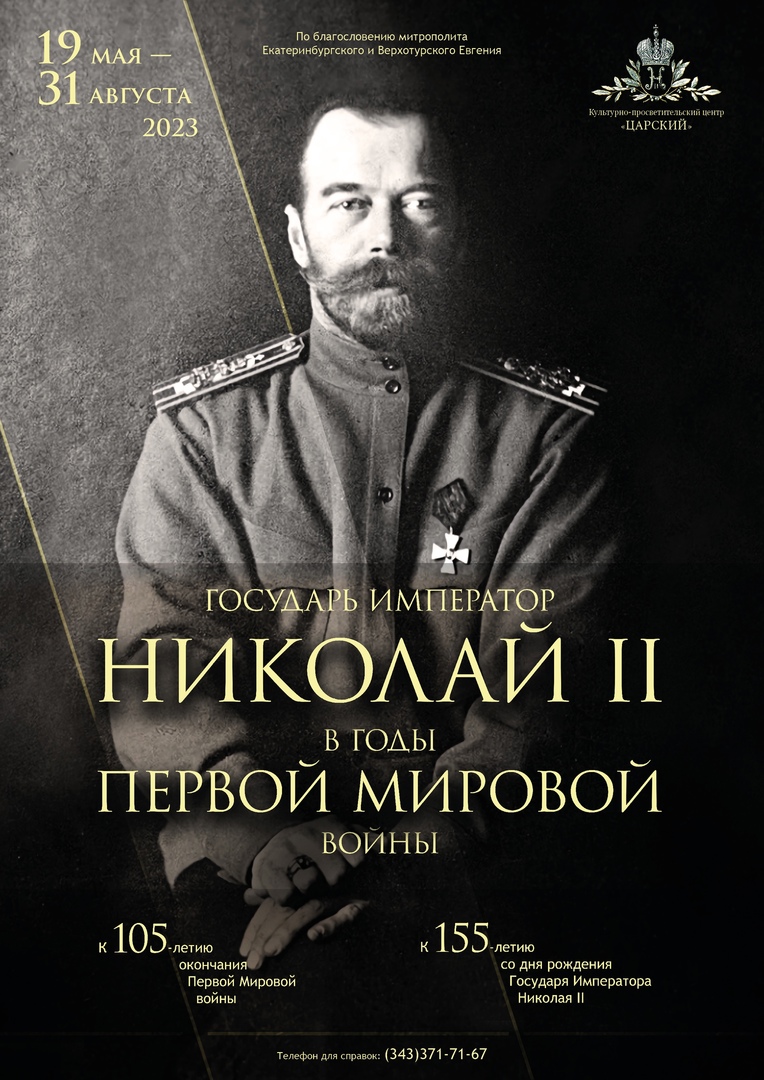
At 12:00 p.m., the Tsarsky Cultural and Educational Center [situated across the square from the Church on the Blood] will host the opening of Emperor Nicholas II During the First World War, an exhibition timed to coincide with the 155th anniversary of the birth of Nicholas II and the 105th anniversary of the end of the First World War. The exhibition runs until 31st August 2023.

At 1:30 p.m., a Liturgy will be performed in the Church of St. Nicholas the Wonderworker at the Ural State Mining University of Emperor Nicholas II, followed by a festive concert at 14:00 in the Tsar’s Hall of the USMU.

In addition, the Blue Line of Ekaterinburg will be launched. The route connects a dozen sights of the city, each of them, in one way or another are associated with the final days Nicholas II and his family during their house arrest in the Ural city, from April to July 1918.

© Paul Gilbert. 19 May 2023

Blue Line route marks places associated with Imperial Family in Ekaterinburg

The city of Ekaterinburg is already making preparations for ‘Tsar’s Days‘, the annual event held in July, marking the deaths and martyrdom of Emperor Nicholas II and his family.

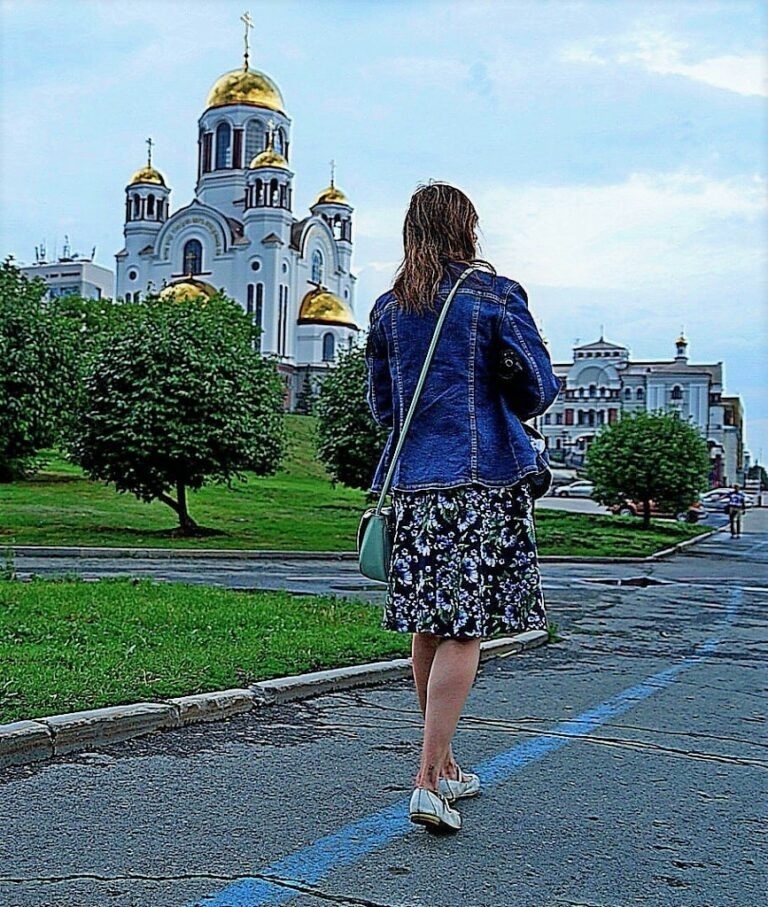
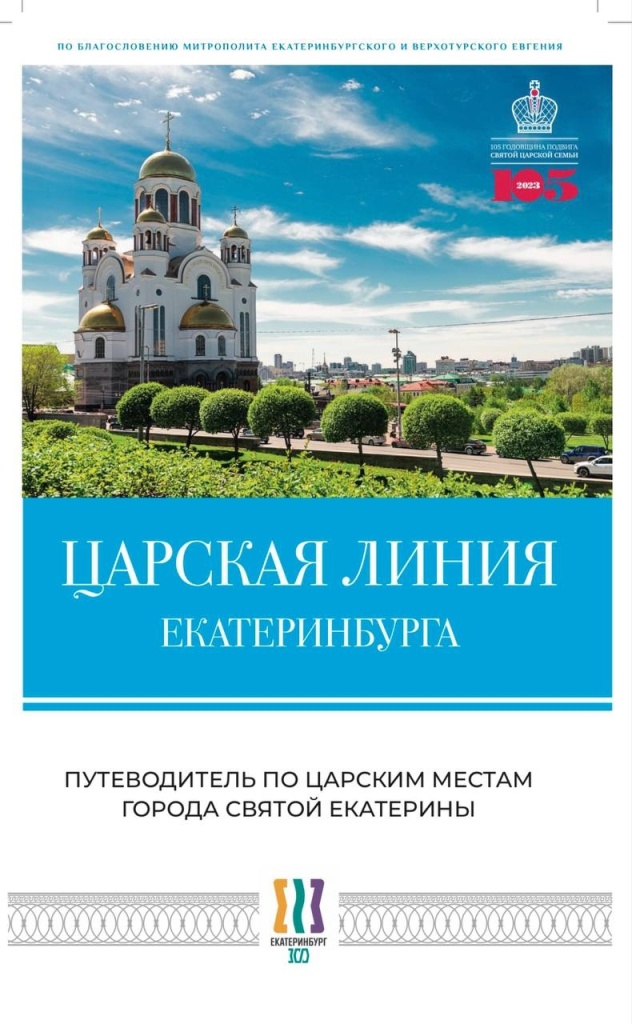
Over the past few years, a blue line has been painted on the streets in Ekaterinburg. The blue line is a 6.3 km pedestrian route for pilgrims and tourists, which connects a dozen places associated with the final days Nicholas II and his family in the Ural city.

This year participants can make use of a printed guidebook or download a special app to their mobile phone, both of which provide details about the Holy Royal Martyrs, and the places highlighted along the Holy Route.

Five of the places on the route are churches and cathedrals – such as the Church on the Blood (built on the site of the Ipatiev House) seen in the photo above.

The idea was implemented jointly with the Ekaterinburg diocese and the city administration in 2018. It is a wonderful idea, and I found it very helpful during my visit to the city in July 2018.

This year (2023) marks the 300th anniversary of the founding of Ekaterinburg in 1723; the 155th anniversary of the birth of Emperor Nicholas II in 1868; and and the 105th anniversary of the death and martyrdom of the Imperial Family in 1918.

Organizers have issued a small but handy guidebook “The Tsar’s Line of Ekaterinburg”. Copies will be distributed FREE at the Tsarsky Center – located in the Patriarchal Compound – and the Church on the Blood.

© Paul Gilbert. 27 April 2023

‘You reap what you sow’ – Monarchists take revenge on the regicide Peter Ermakov

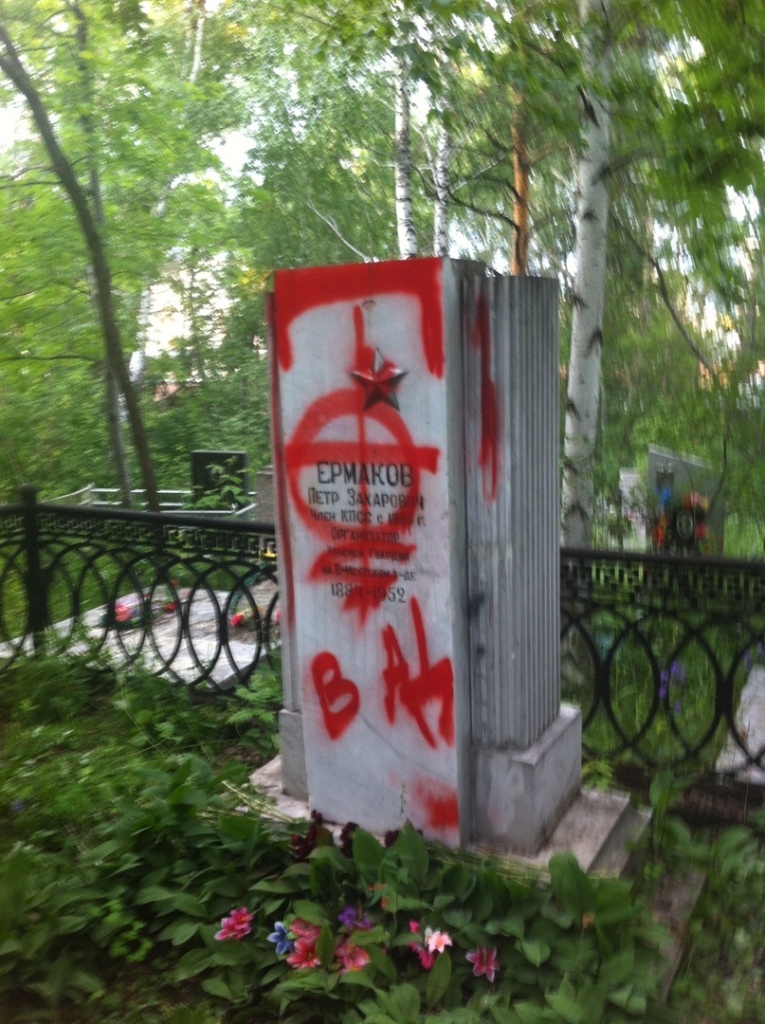
PHOTO: the desecrated grave of the regicide Peter Ermakov in Ivanovo Cemetery in Ekaterinburg

Every year on 17th July – the day marking the anniversary of the murder of Emperor Nicholas II and his family – the grave of the Bolshevik revolutionary Peter Ermakov, has been vandalized by local monarchists, who douse his gravestone with red paint.

This annual protest began shortly after the fall of the Soviet Union in the early 1990s. The red paint symbolizes the blood which this evil man spilled, and his involvement in the regicide.

Pyotr (Peter) Zakharovich Ermakov (1884–1952), was one of several men responsible for the murder of Emperor Nicholas II, his wife, their five children, and their four faithful retainers in the basement of the Ipatiev House in Ekaterinburg.

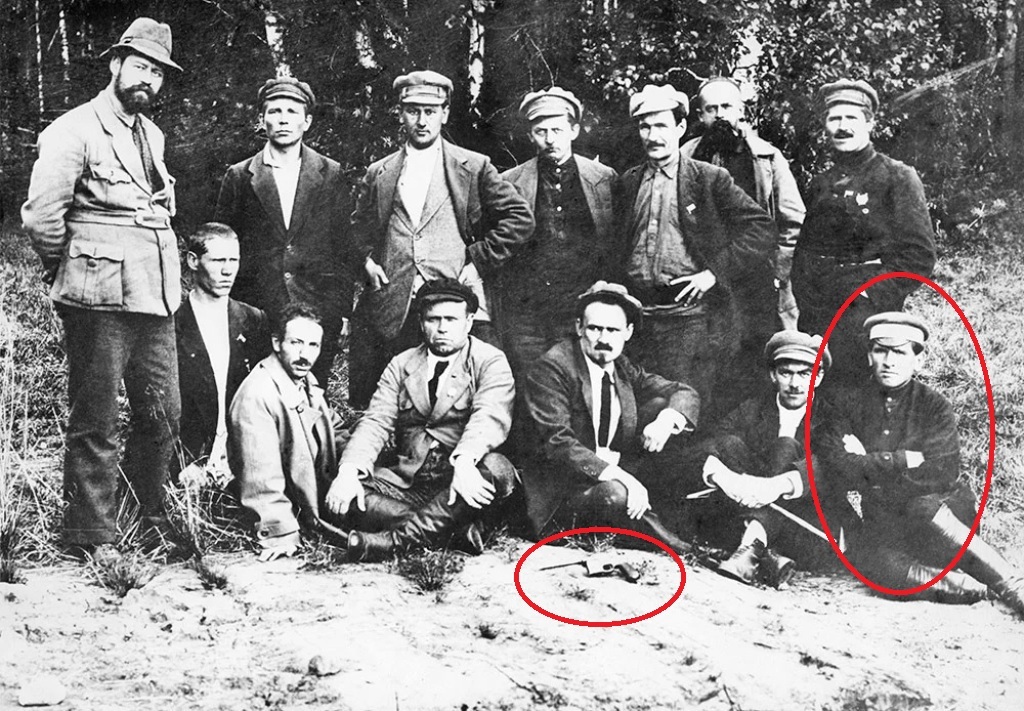
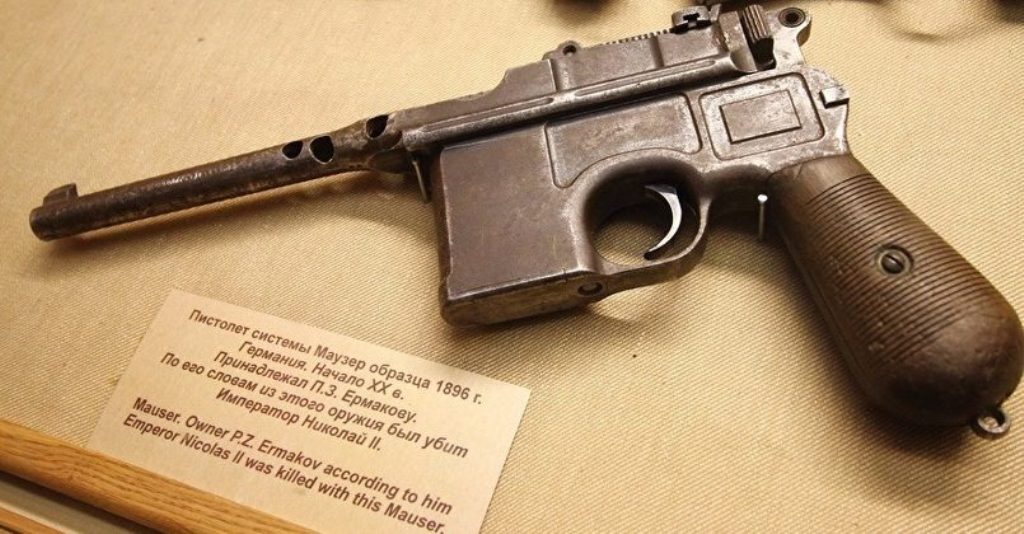
He was also among the men in the firing squad, and considered to be the most bloodthirsty of the executioners. His Mauser revolver, which he alleges fired the fatal shot which ended the life of the Tsar is preserved today in the permanent exhibition The Romanovs in the Urals opened at the Poklevsky-Kozell House Museum in Ekaterinburg.

According to his own recollections, it was he who also murdered the Empress Alexandra Feodorovna, the cook Ivan Kharitonov and the doctor Eugene Botkin. He often boasted of his crime, without feeling any sense of remorse: “I shot the Tsarina who was seated only six feet away, I could not miss. My bullet hit her right in the mouth, two seconds later she was dead. Then I shot Dr. Botkin. He threw up his hands and half turned away. The bullet hit him in the neck. He fell backwards. Yurovsky’s shot knocked the Tsesarevich to the floor, where he lay and groaned. The cook Kharitonov was huddled over in the corner. I shot him first in the torso and then in the head. The footman Troupe also fell, I don’t know who shot him … ”

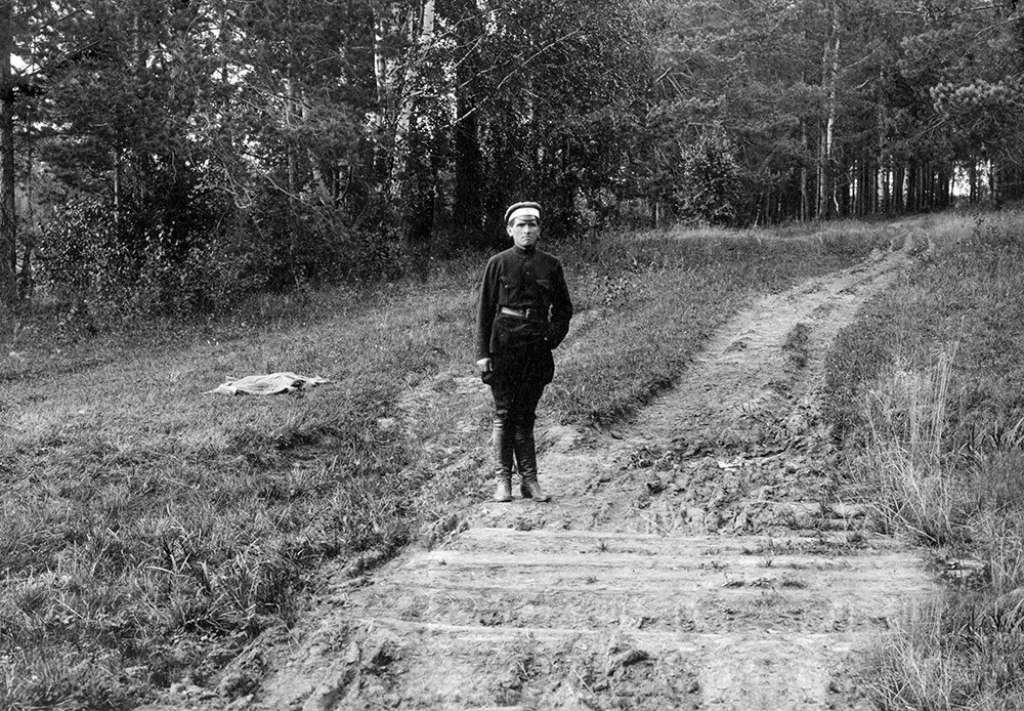
PHOTOS: (above) Ermakov standing on the grave of members of the Imperial Family and their retainers at Porosenkov Log in the 1920s; (below) Ermakov (far right) posing with a group of prominent Ural Bolsheviks on the Tsar’s grave, his Mauser pistol can be seen in the foreground in front of P.M. Bykov, author of The Last Days of Tsardom (1934)

In the 1920s, Yermakov returned to Porosenkov Log where he had his photograph taken standing on the railway ties which concealed the second grave of the Imperial Family. On the reverse of this photo, he wrote: “I am standing on the grave of the Tsar”.

In 1951, at a reception, which gathered all the local Party elite in Sverdlovsk [Ekaterinburg], Peter Ermakov approached Soviet Red Army General Georgy Zhukov (1896-1974) and held out his hand. Frowning in disgust Zhukov looked Ermakov in the eye, and muttered, “I do not shake the hands of the murderers.”

Ermakov died in Sverdlovsk on 22 May 1952 from cancer at the age of 67, he was buried in Ivanovo Cemetery in Ekaterinburg.

In January 2022, the famous Russian sculptor Konstantin Vasilievich Grunberg has proposed replacing monuments of the Bolshevik leaders Vladimir Ulyanov (Lenin) and Yakov Sverdlov in Ekaterinburg.

Grunberg also called for debunking the image of the revolutionary “hero” Pyotr Yermakov. “People still bring flowers to his grave. We need to destroy this regicide’s grave!” the sculptor said.

PHOTO: Ermakov’s Mauser revolver, which he alleges fired the fatal shot which ended the life of Russia’s last Tsar is preserved today in the new permanent exhibition The Romanovs in the Urals opened at the Poklevsky-Kozell House Museum  in Ekaterinburg

Click HERE to read my article Yakov Yurovskys’ ashes remain hidden from vandals in Moscow, originally published on 23rd November 2019

Click HERE to read my article The fate of the regicides who murdered Nicholas II and his family, originally published on 28th October 2020

© Paul Gilbert. 17 January 2023

***

The following NEW title was compiled and edited by independent researchers and Romanov historian Paul Gilbert was published in August 2024. 

This fascinating new study features 14 chapters on this tragic event, which include the memoirs of a British intelligence officer and journalist, and two First-English translations. In addition, 11 chapters were written by Paul Gilbert, based on new documents sourced from Russian archival and media sources over the past decade.

Please refer to the link provided for further details about the content of this new title . . .
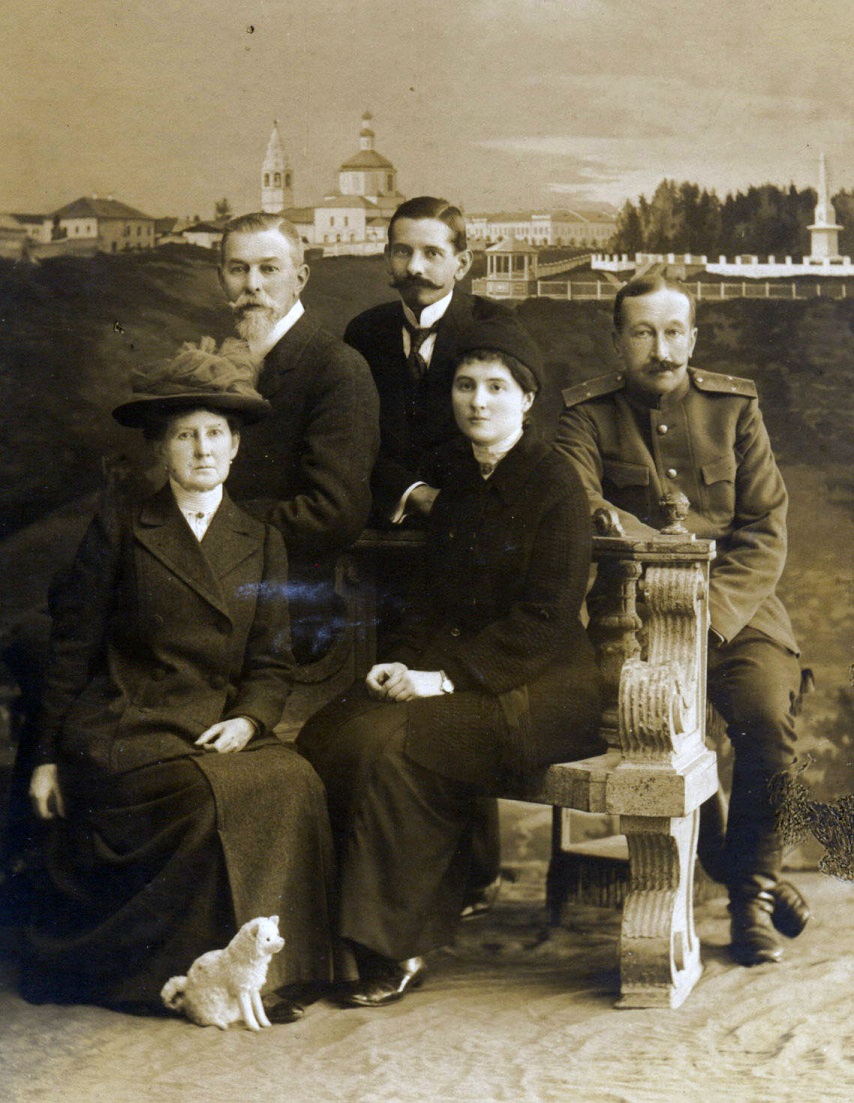
CLICK HERE TO READ MORE ABOUT THIS TITLE

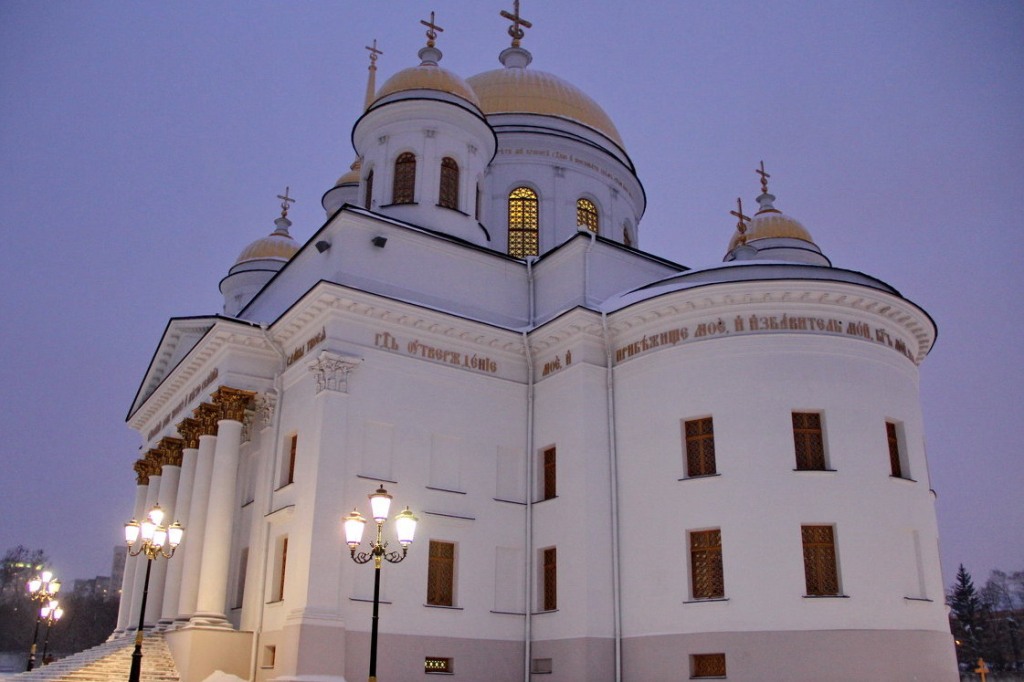
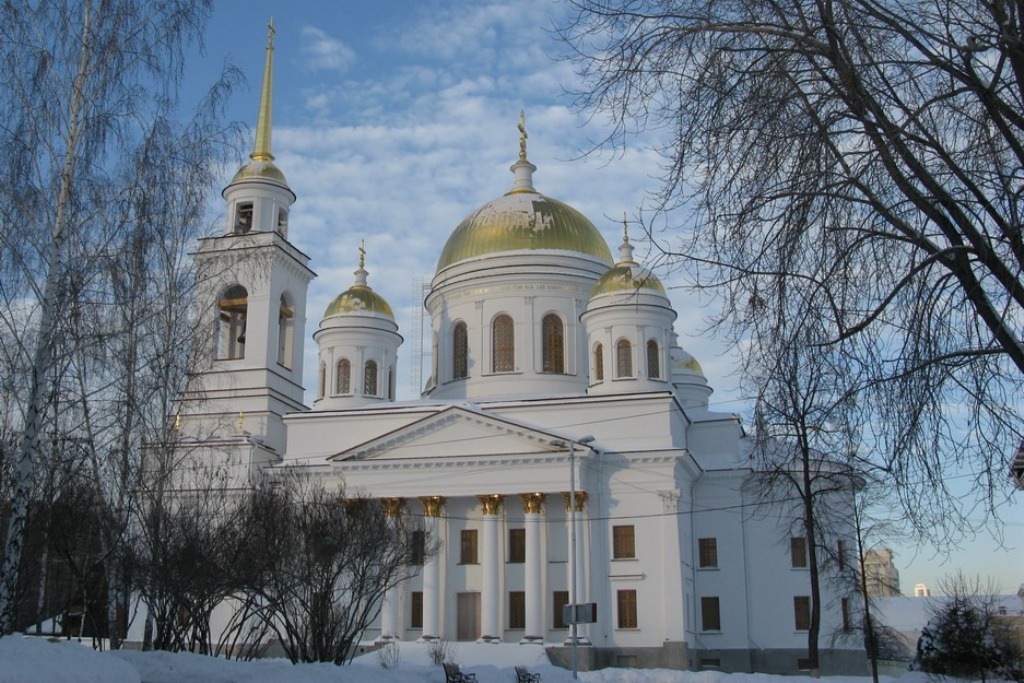
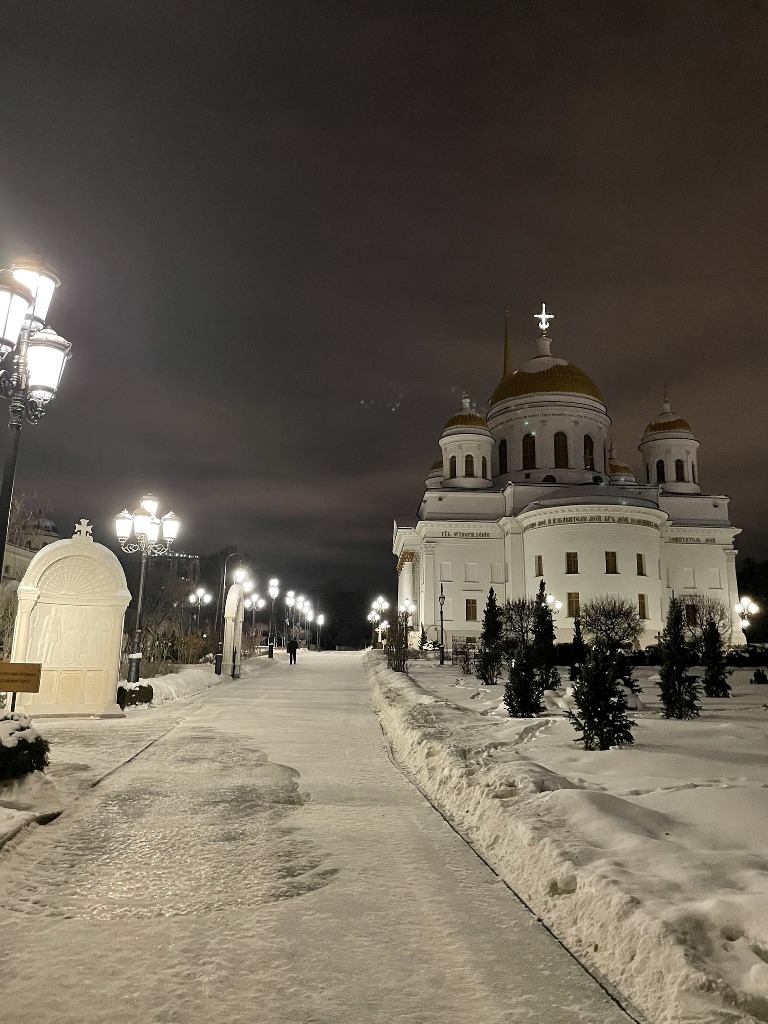
Beautiful winter views of the Novo-Tikvinsky Convent, Ekaterinburg

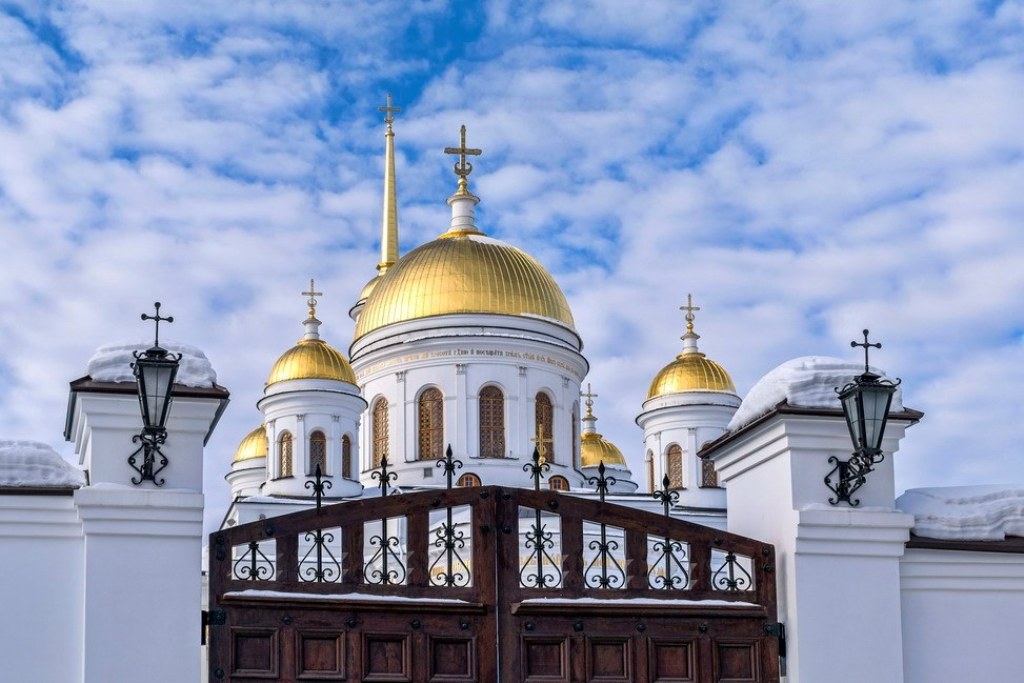
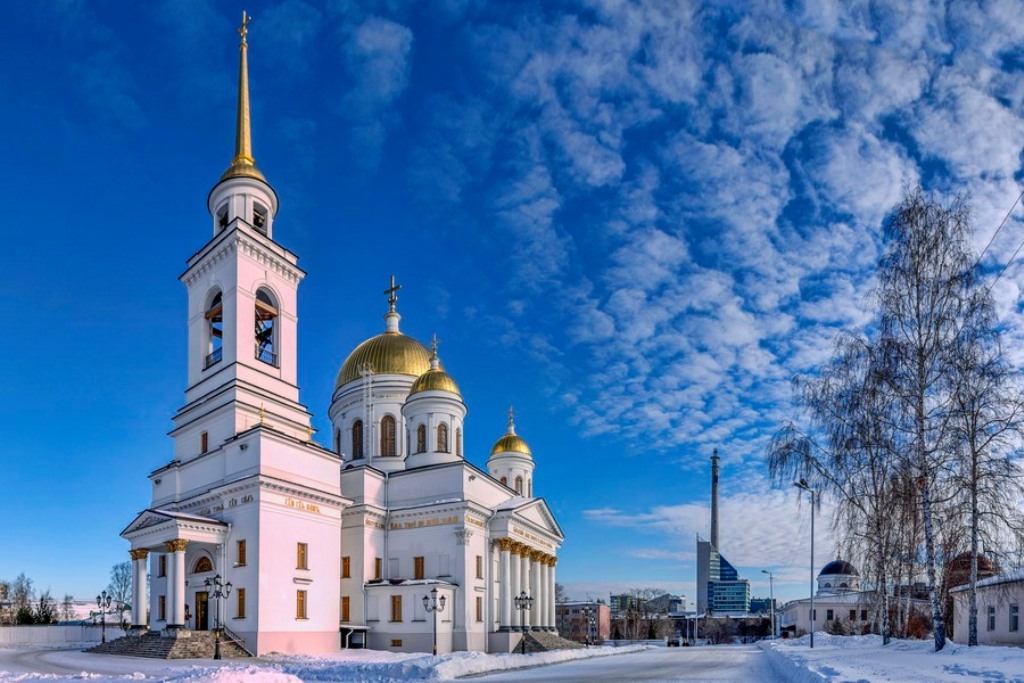
PHOTO: the Cathedral of St. Alexander Nevsky in the Novo-Tikvinsky Convent
© Ново-Тихвинский женский монастырь

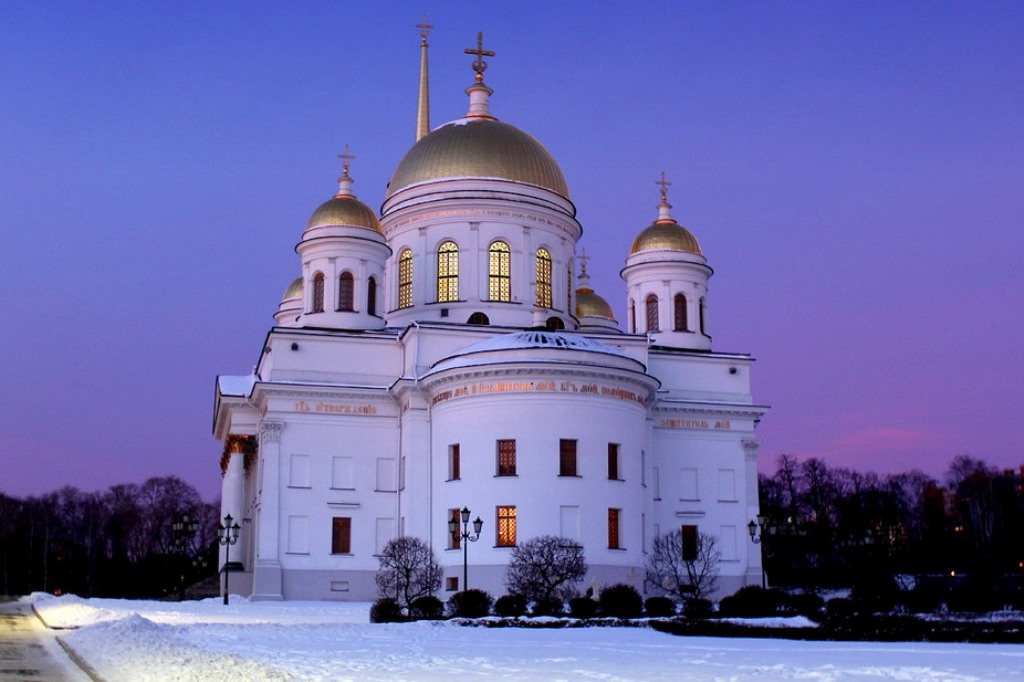
Snow-covered paths, trees covered in hoarfrost, early evening twilight reflect the silent beauty of winter which surrounds the Cathedral of St. Alexander Nevsky, depicted in these beautiful photos.

The Novo-Tikhvin Monastery is a community of female monastics. It was founded in the late 18th century, growing out of an alms-house at the cemetery church in Ekaterinburg. It is the home of the icon of the Tikhvin Mother of God. Closed in 1920 by the Bolsheviks, monastic life at the monastery was restored in 1994.

In 1918, when Nicholas II and his family were being held under arrest in the Ipatiev House, the nuns of the Novo-Tikhvinsky Convent were praying for them, asking God to relieve their sufferings,and to give them the strength to bear everything with Christian humility.

The sisters’ help came not only through prayer but also through deeds: disregarding their own safety, they supported the Tsar and his family by bringing various foods to them through the guards. On 18th June 1918, a month before their murder, Empress Alexandra Feodorvna made the following entry in her diary: “The kind nuns are now sending milk and eggs for Alexei and for us, as well as cream.”

I have spent many hours praying in the Cathedral of St. Alexander Nevsky, during my visits to the Ural city in 2012, 2016 and 2018 respectively. It was during my visit to Ekaterinburg in the summer of 2016, that my hotel was situated behind the convent, and I had a clear view of the cathedral from my window. I went every morning to the cathedral to pray, and every afternoon in the beautifully landscaped gardens which surround the Cathedral.

Click HERE to read why Ekaterinburg is my favourite Russian city.

PHOTO: the Cathedral of St. Alexander Nevsky in the Novo-Tikvinsky Convent
© Ново-Тихвинский женский монастырь

PHOTO: the Cathedral of St. Alexander Nevsky in the Novo-Tikvinsky Convent
© Ново-Тихвинский женский монастырь

PHOTO: the Cathedral of St. Alexander Nevsky in the Novo-Tikvinsky Convent
© Ново-Тихвинский женский монастырь

PHOTO: the Cathedral of St. Alexander Nevsky in the Novo-Tikvinsky Convent
© Ново-Тихвинский женский монастырь

PHOTO: the Cathedral of St. Alexander Nevsky in the Novo-Tikvinsky Convent
© Ново-Тихвинский женский монастырь

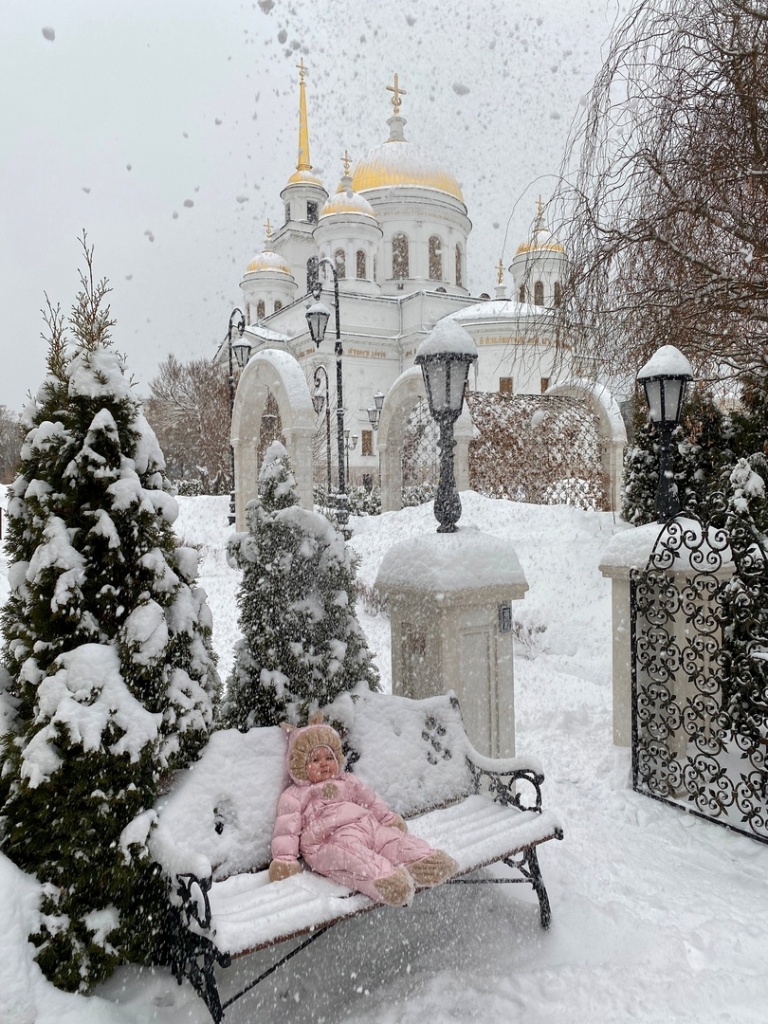
PHOTO: I simply could not resist sharing this photo . . . A mother takes a photo of her little one [who looks like a little angel] sitting on a bench in the garden of the Novo-Tikhvinsky Convent in Ekaterinburg. The magnificent Cathedral of St. Alexander Nevsky can be seen in the background. The snow simply enhances the beauty of this photo. © Ново-Тихвинский женский монастырь
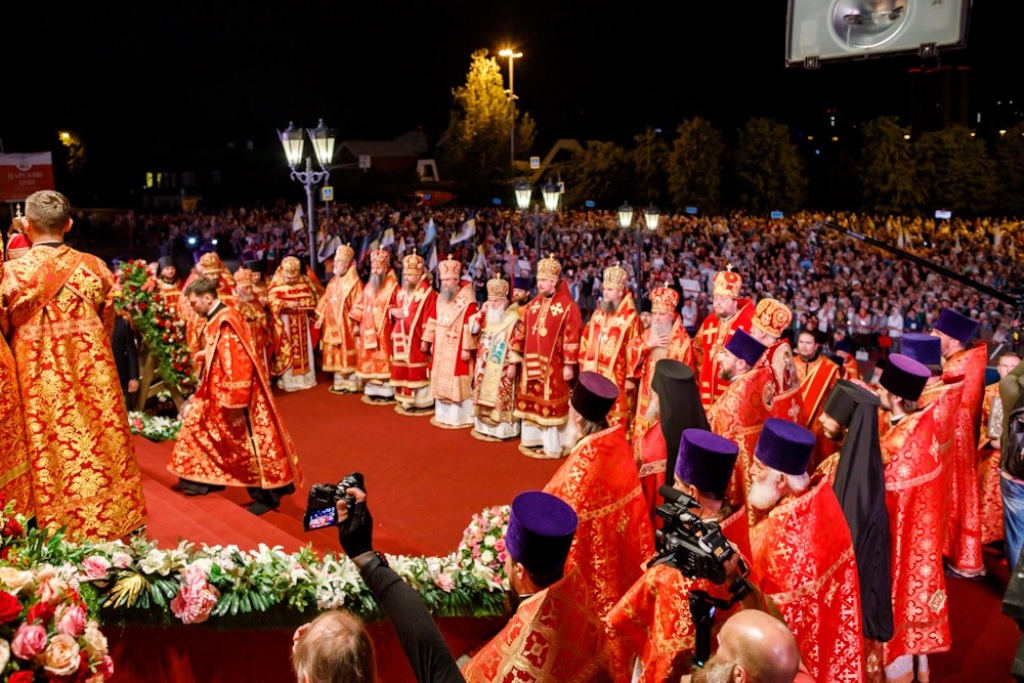
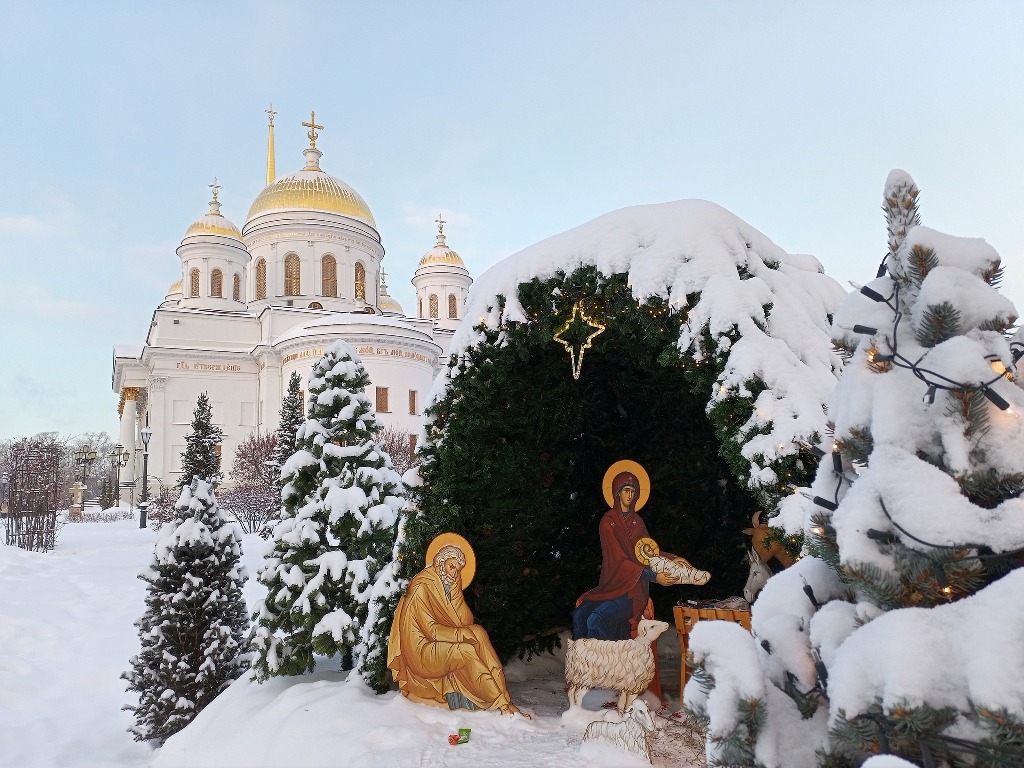
PHOTO: the Nativity set against the backdrop of the Cathedral of St. Alexander Nevsky at the Novo-Tikvinsky Convent, Ekaterinburg. © Ново-Тихвинский женский монастырь

PHOTO: A lovely winters night view of St. Alexander Nevsky Cathedral at the Novo-Tikhvinsky Convent in Ekaterinburg. On the left, you can see the new monument to four faithful servants of Emperor Nicholas II, which was installed and consecrated this past summer, on the grounds of the Convent. © Ново-Тихвинский женский монастырь

© Paul Gilbert. 9 January 2023

The fate of Anna Kuzminykh, a servant in the Ipatiev House

PHOTO: Anna (right) with her mother and son Ivan in 1916

NOTE: the publication of this article has been met with both great interest and some skepticism. As Anna “Anyuta” Vasilievna Kuzminykh (1890-1954), did not leave any paper trail, which documented her brief period in the Ipatiev House, there is much to her story which allows for speculation, therefore, her story – as told through her niece and historian many years later, should be taken with a cautionary view – PG

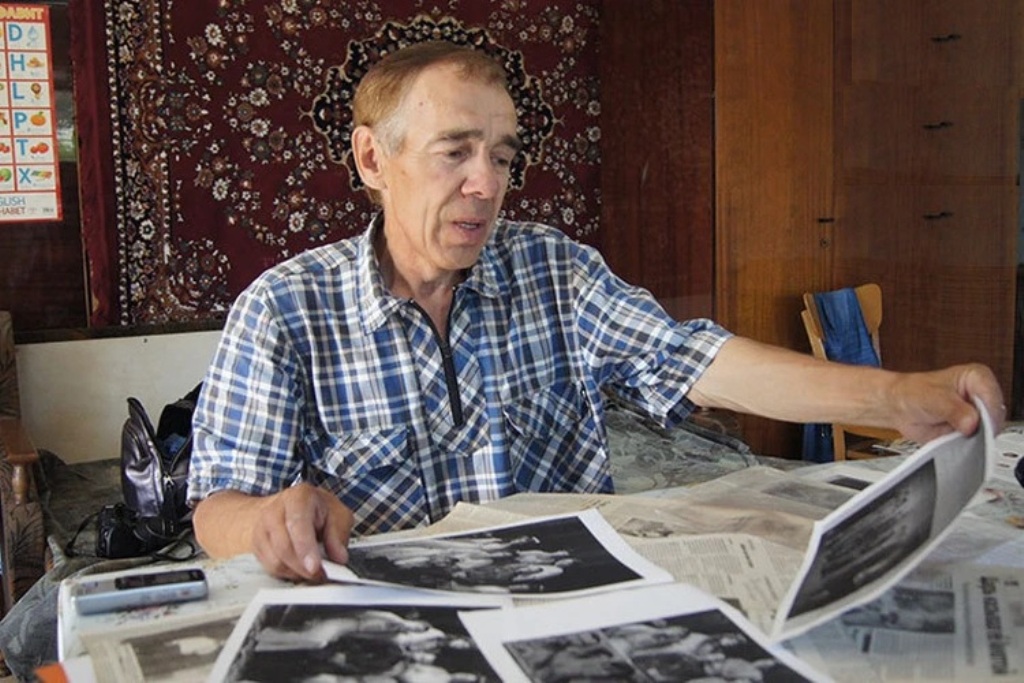
Thanks to the research of a Russian historian, we now have a better understanding of the fate of Anna Vasilievna Kuzminykh (1890-1954), one of the lesser known servants in the Ipatiev House, during the summer of 1918.

According to the Kambarka (Udmurt Republic in Russia) historian and archivist Razif Mirzayanov, shortly before the murder of the Imperial Family in Ekaterinburg, the Tsar ordered Anna Kuzminykh, to leave the Ipatiev House, and thereby saved her life.

“I learned about the fate of Anna Kuzminykh in 1999, from her niece Zoya Grigoryevna Zhizhina” – says Mirzayanov. Anna herself was no longer alive by that time – she had died in 1954. The historian added, that Anna had not told anyone about her brief period as a servant in the Ipatiev House, during the summer of 1918, except for her niece Zoya Grigoryevna.

Anna was born on 9th February 1890, in the village of Kambarsky Zavod (now Kambarka), into the family of a local tailor Vasily Michkov. She married Yegor Kuzminykh, when the First World War broke out, who was ordered to the Front in 1914. Following the February 1917 Revolution, Anna left Kambarka the following year to work in Ekaterinburg, leaving behind her young son Ivan and mother. By some miracle, Anna was able to get a job at the Ipatiev House, the mansion requisitioned by the Bolsheviks and renamed the “House of Special Purpose”, where Emperor Nicholas II and his family were held under house arrest from April to July 1918. Anna was entrusted with the care of two cows, which provided milk for the prisoners.

PHOTO: in 2017, Razif Mirzayanov, Chairman of the Society of Historians and Archivists of the Kambarsky District, was awarded a medal in honour for his research on the Romanov’s

THE TSAR CALLED HER ANYUTA

One day, after having milked one of the cows, Anna went up to the house with a full bucket of milk, only to be rebuffed by the Empress herself: “Anna, once again, you milked both cows in one bucket. The milk will turn sour!” “What are you talking about,” Anna replied, “this bucket is from one cow that gives so much milk.” After straining the milk, Anna returned to the barn to milk the second cow. Then, pouring flour into a bucket for a mash to feed the cattle, she heard someone’s footsteps enter the barn.

Looking around, Anna saw Nicholas II and Alexandra Feodorovna standing before her. “Now I understand why cows are milked in buckets,” said Nicholas. One of the cows reached out to him with her muzzle, which was covered in flour, the Tsar gently stroked the animal. “Don’t you feel sorry, Anyuta, for using so much flour?” he asked the servant. “Yes, there is a lot of it, but it will be enough for a long time,” she replied briskly. From then on, the Tsar called her Anyuta.

Since there were few servants, Anna also had to work in the kitchen, helping the cook to prepare and serve meals, says Mirzayanov. She later recalled that the guards present in the dining room during lunch, often helped themselves to the food prepared for the Imperial Family.

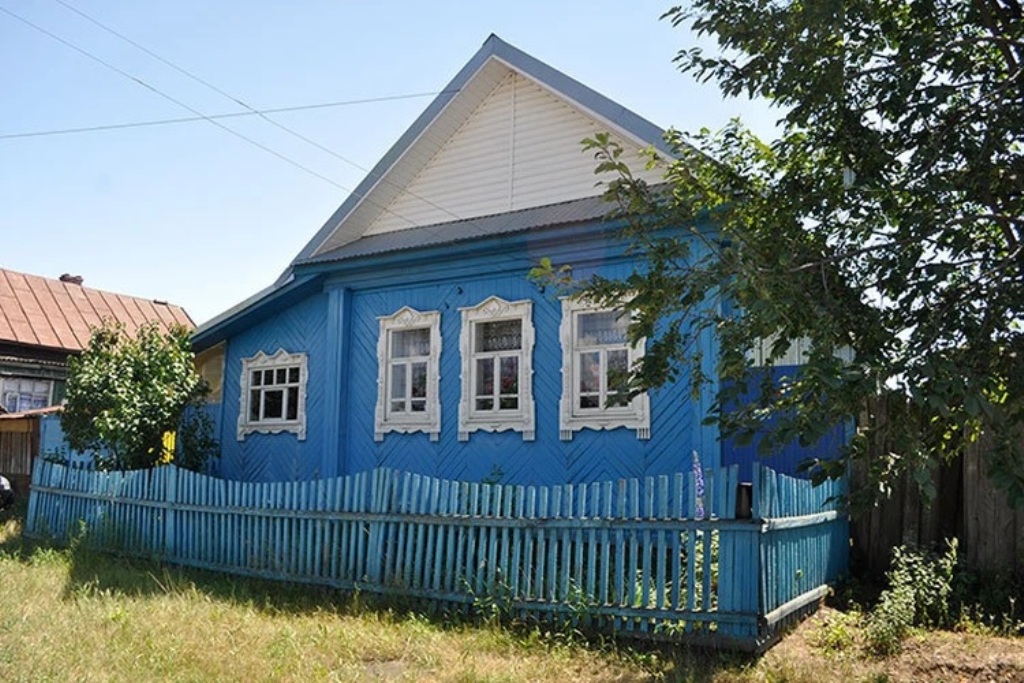
PHOTO: the house in Kambarka, where Anna lived with her family. Her descendants still live here

THANKED FOR HER WORK AND ORDERED TO LEAVE

“On a hot summer day in early July 1918, a search was conducted in the Ipatiev House,” Razif Mirzayanov continues his story. A band of Chekist thugs examined the personal belongings of the Imperial Family, even roughly leafing through books and rummaging through linens. The captives and their faithful servants stood in silence while they carried out their work. Anna stood frightened in the doorway of the room where the Tsar knelt before a kiot with icons and prayed. He never turned around or stood up while the search was going on. One of the Chekists, while turning out suitcases, cursed and swore filthy obscenities at the Tsar. In one of the suitcases, the Chekist found a long black lace shawl. Turning it in his dirty hands, he angrily threw it to Anna and shouted: “Take it, it will come in handy for you, while you are still young!”

This black lace shawl was kept for a long time in the Kuzmin family: Anna’s daughter-in-law sometimes wore it to church, and many parishioners noted it’s beautiful workmanship, none even suspecting that it had once belonged to one of the female members of the Imperial Family.

After the search, the guards in the house were completely changed – and this detail of Anna’s story is also confirmed by historians. On 4th July 1918, Yakov Yurovsky was appointed commandant of the “House of Special Purpose”, instead of Alexander Dmitrievich Avdeev (1887-1947), the first commandant of the Ipatiev House, who was considered unreliable.

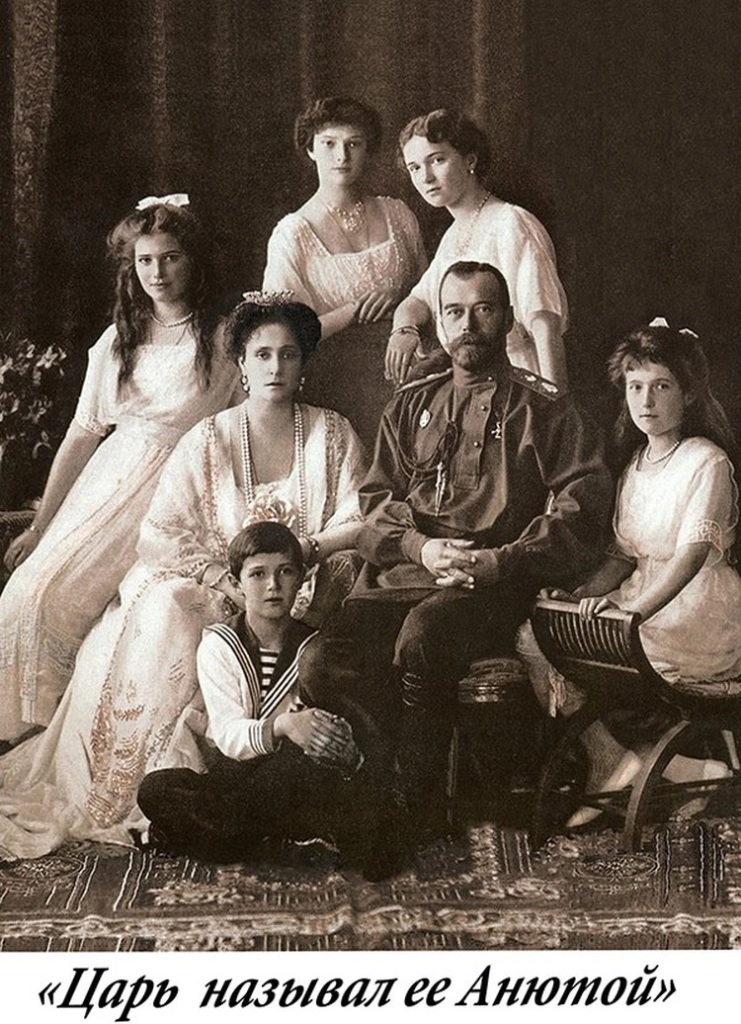
Shortly thereafter, the Tsar approached Anyuta, he thanked her for her work, and told her that his children had fallen in love with her, – says Razif Mirzayanov. He then told her to leave the Ipatiev House and never come back. He ave Anna a souvenir photo on a passe-partout, which depicted the Imperial Family, taken in 1913. With tears in her eyes, Anyuta said goodbye to the Imperial Family and left, concealing the photo and black lace shawl.

A few days later, on the night of 16/17 July, the Bolsheviks woke the Imperial Family in the middle of the night and ordered them to dress and go downstairs. The Emperor and Empress with their five children, along with four retainers: the doctor, the cook, the valet and the maid went to the basement of the house. At the request of Alexandra Fedorovna, two chairs were brought for her and her ailing son, the rest stood along the wall. Then Yurovsky brought in a firing squad, read out the verdict and gave the command to shoot every one – there were no survivors of the regicide.

PHOTO: the Emperor presented Anna with a copy of this famous photograph – taken in 1913 – as a keepsake. The Russian caption “Царь назыбал ее Анютой” translated reads “The Tsar called her Anyuta”.

COOKED “ROYAL DISHES”

There is no evidence to suggest that the Imperial Family could have guessed their captors plans to murder them in such a violent manner that fateful night, however, Anna Vasilyevna was sure that it was thanks to Nicholas II’s request that she leave the Ipatiev House that saved her life.

“After leaving the Ipatiev House, and her conversation with the Emperor, Anna went home. Her husband who had been a German prisoner of war, returned home to Russia, some 11 years after leaving for the front. Soon they had another son, Sergei, who then participated in the Great Patriotic War,” – says Razif Mirzayanov.

Subsequently, Anna Vasilievna often recalled her life in Ekaterinburg, but only her niece Zoya knew the details of her story. She didn’t keep any records, as it it was too dangerous during the Bolshevik and Soviet years. Zoya, however, remembered how Anna Vasilievna came to visit her with unusual dishes – for example, fried pike stuffed with grains and onions. “Such a dish was prepared for the Tsar’s table,” she said. The photograph of the Imperial Family – gifted by the Emperor – Anna carefully kept in a chest, but after her death, the picture was placed on a chest of drawers, and in 1970 it disappeared.

© Paul Gilbert. 9 October 2022

Myrrh-streaming icon of Tsar Nicholas II brought to Ekaterinburg for Tsar’s Days

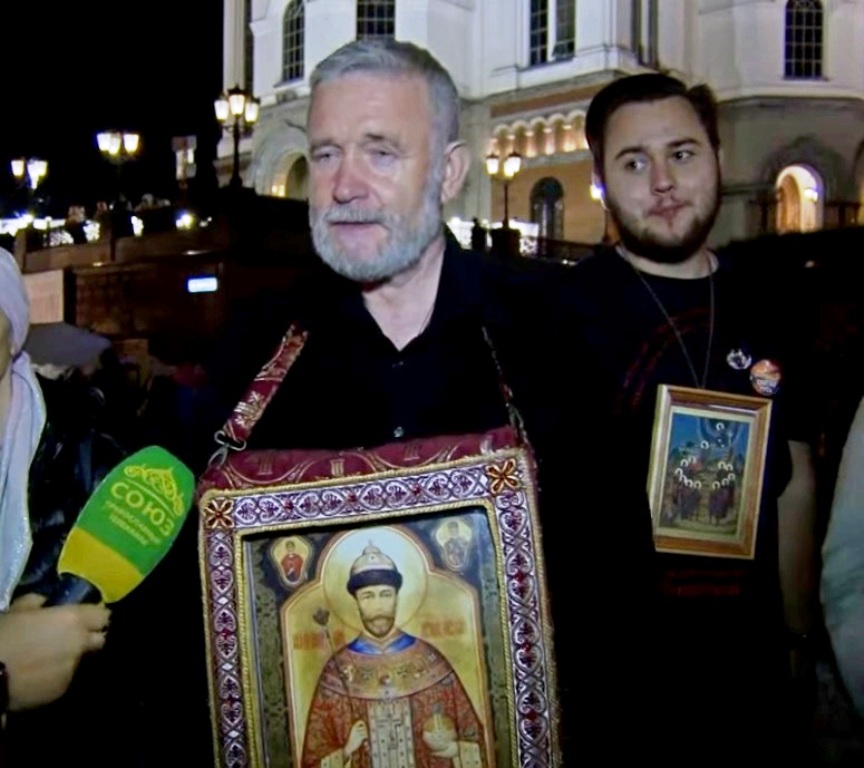
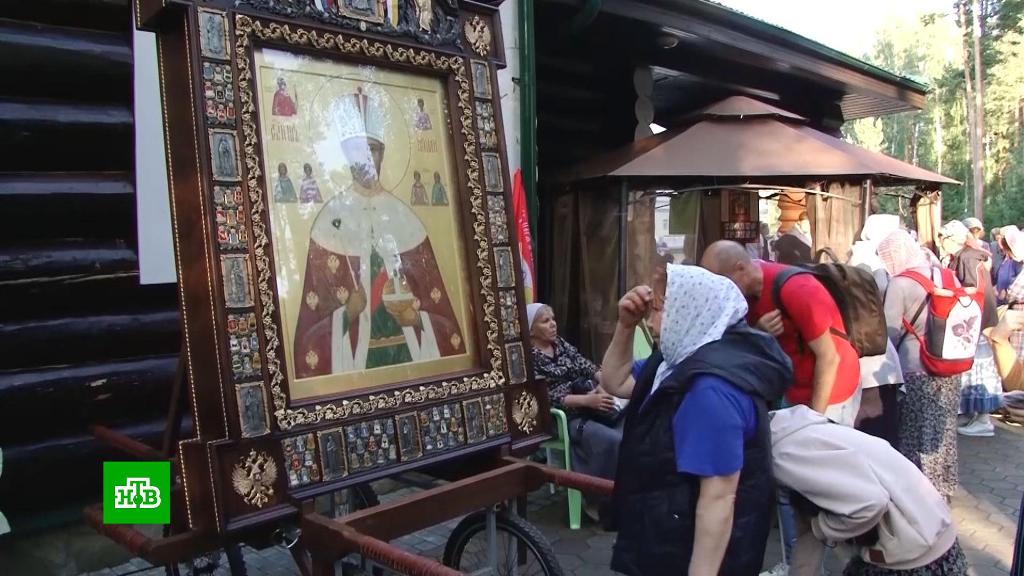
PHOTO: Alexander Chernavsky carries the miraculous Myrrh-Streaming Icon of Tsar-Martyr Nicholas II, during the 21-km Cross Procession from the Church on the Blood in Ekaterinburg to the Monastery of the Holy Royal Martyrs at Ganina Yama

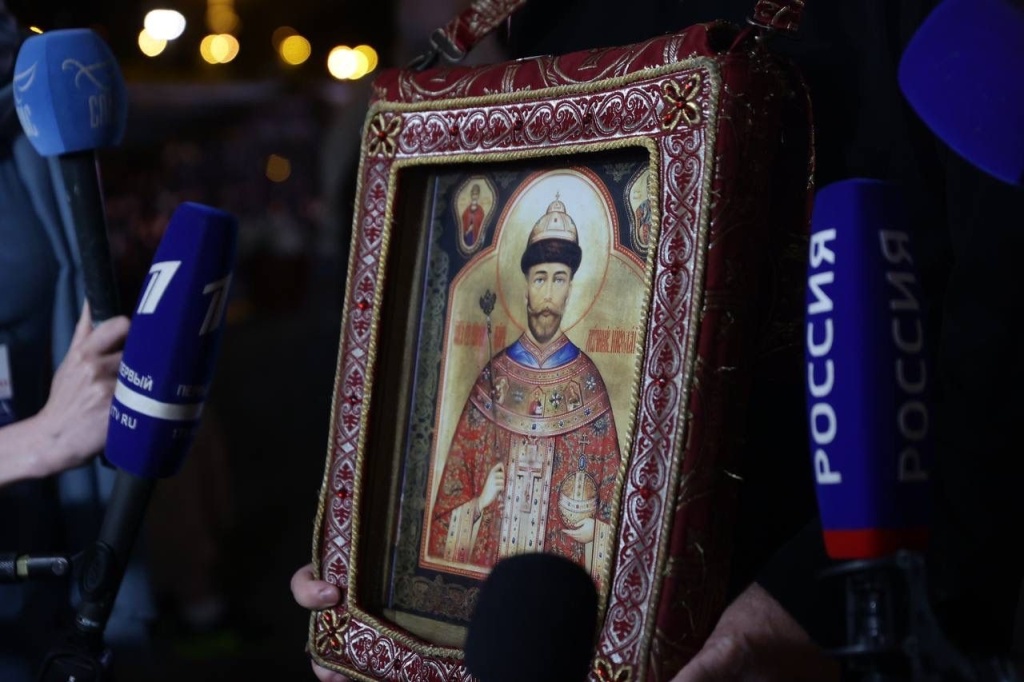
The annual Cross Procession held during Tsar’s Days in Ekaterinburg on 17th July is known for many miraculous events. It was during this year’s procession, that the miraculous Myrrh-Streaming Icon of Tsar-Martyr Nicholas II, once again began to stream myrrh. The icon was brought from Moscow, by the head of the Military Orthodox Mission, Alexander Chernavsky, and this miracle was witnessed by the film crew of the Orthodox Soyuz TV channel, headed by correspondent Svetlana Ladina.

“This is the 30th annual Cross Procession in which we are taking part. The icon of the Tsar-Martyr Nicholas II has been streaming myrrh since 1998, and today, look, droplets of myrrh on the icon itself and along the frame have appeared like “diamonds”. I think the Sovereign is happy that we are here, and these “diamonds” bless all the participants in the procession. Kiss and pray for the sovereign to open our eyes and heart,” – said Alexander Chernavsky.

The icon of the Russian Emperor Nicholas II was painted in the United States of America even before the sovereign was glorified in Russia by the Moscow Patriarchate. And this event has an amazing story . . .
VIDEO: interview with Alexander Chernavsky, and coverage of the Cross Procession from the Church on the Church on the Blood in Ekaterinburg to the Monastery of the Holy Royal Martyrs at Ganina Yama

The miraculous Myrrh-Streaming Icon of Tsar-Martyr Nicholas II

The Icon of Tsar-Martyr Nicholas was commissioned by Ija Schmit (1936-2018), a Russian émigré in the United States, who used money inherited from her mother to have the icon painted in 1996.
Paul Gilbert first met Ija in 1998, when she joined his annual Romanov Tour to Russia, which that year included Moscow and Crimea. Ija was accompanied by her husband Harvey and their daughter Nina. It was during this visit that she told me about this icon, a copy of which she later gifted me.

The icon would be dedicated to the future canonization of Tsar-Martyr Nicholas in Russia[1], and in memory of her mother. After Ija’s initial inspiration to have the icon painted, she contacted iconographer Paul Tikhomirov, himself a Russian immigrant, to see if he was interested in her project. Tikhomirov’s response was, “I will make the icon shine!” They decided to depict Nicholas II in coronation robes [1996 was the 100th anniversary of his coronation in Moscow], with St. Nicholas, his patron saint, and St. Job, on whose feast day Nicholas was born, in the upper right and left hand corners. Below the figures would be printed in Russian, “This Holy Icon is for the Canonization of the Tsar-Martyr in Russia.”

Ija received the finished icon on 12th May 1996 and then traveled to Texas, where it was blessed by Bishop Constantine (Yesensky), an old family friend, who had served as Bishop of Great Britain. The icon, however, was not intended solely for family veneration. Ija and her husband, Harvey Schmit, had already arranged to have paper copies of the icon printed to commemorate the 100th anniversary of the coronation of Tsar Nicholas II on 27th May (O.S. 14th) 1996.

Forty-four thousand copies of the icon were printed. The distribution of the icons [printed in three sizes], was handled by Ija’s own non-profit organization, the Society Honoring Russian Nobility, and income from the icons sold in the West purchased food and medicine for needy pensioners and orphans in Russia. A fourth, smaller version of the icon was printed by the thousands and given away in Russia without charge.

As word of the icon spread, Christians from Russia, Ukraine, Belarus, and even Serbia, began writing and requesting copies. The Society has met all these requests and distributed more than twenty thousand icons in Russia alone.

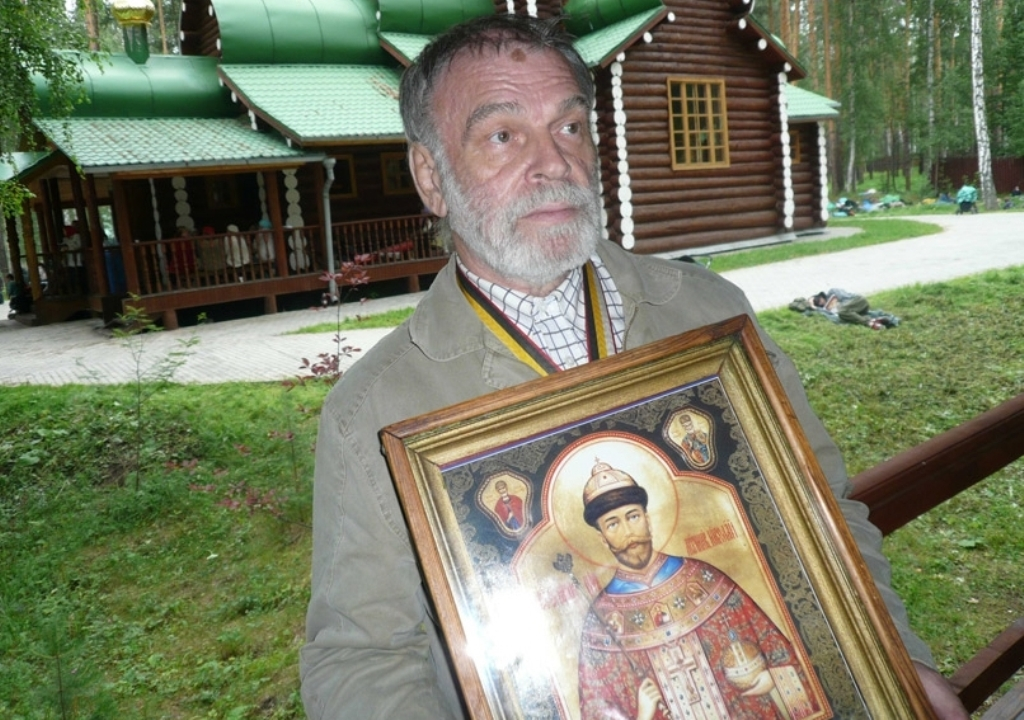
PHOTO: Alexander Chernavsky holding the miraculous Myrrh-Streaming Icon of Tsar-Martyr Nicholas II, at the Monastery of the Holy Royal Martyrs at Ganina Yama

On a visit to Russia in late 1996, Father Herman [Ija Schmit’s brother] presented a number of prints to Fr. Juvenaly, the priest at the St. Nicholas Almshouse in Ryazan. On 16th (O.S. 2nd) March 1998 (the anniversary of Tsar Nicholas II’ abdication and the miraculous appearance of the Reigning Icon of the Mother of God. Fr. Juvenaly blessed Dr. Oleg Belchenko with one of the prints, which the doctor took with him back to Moscow. The paper icon had been given to him in a glassfronted, three-dimensional wooden icon-case (a kiot) and Dr. Belchenko set it in a prominent place in his Moscow apartment. On 5th September, Dr. Belchenko noticed that a red spot had appeared over the right eyelid of the Tsar. The following day a second red spot appeared over the left eye. Dr. Belchenko first compared the icon with a smaller print to be sure that he had simply overlooked the distinctive marks. The smaller icon did not match. Dr. Belchenko then called Sretensky Monastery of the Meeting of the Lord to ask what he should do. The monks asked him to bring the icon of Tsar Nicholas to the monastery the following morning. Dr.Belchenko arrived early and stood through the liturgy holding the icon in a plastic bag at his side. At the end of the liturgy a moleben and blessing of the waters was held. The officiating priest recognized Dr. Belchenko, and knowing that he had come with the icon, had the choir sing a troparion for Tsar-Martyr Nicholas. Following the troparion, Dr. Belchenko noticed one of the parishioners staring at him. Finally, the man approached and asked, “What is that fragrance?” Dr. Belchenko replied: “You are probably smelling incense – I am sorry, I can’t smell anything myself because I have a cold.” The man persisted: “No. I tell you, the fragrance is coming from somewhere around you… the smell is much more refined than incense.” Dr. Belchenko replied impatiently, “You should be ashamed of talking such nonsense while the service is going on!” The man moved away embarrassed, but within a few moments other worshippers filtered over, curious about the fragrance and asking what was in the package. “Nothing, only an icon,” he replied. “Show it to us.” As Dr. Belchenko opened the package and took out the icon, the remarkable scent filled the church.

The icon of Tsar Nicholas II was displayed for veneration in the monastery church for three weeks. After Dr. Belchenko took it home, the fragrance continued to a lesser degree, and as word began to spread, Muscovites increasingly asked to come to his apartment to venerate the icon. Dr. Belchenko felt that his home was too small to accommodate many visitors, so he asked an Orthodox friend, Alla Dyakova, to keep the icon in her flat, where those who wished could venerate it. When asked how he was able relinquish such a treasure, Dr. Belchenko answered, “The icon is not mine. It belongs to all Russians.”

On 19th October, Alla Dyakova and Fr. Peter Vlashchenko, a married priest from the Ivanovo region, took the icon to Elder Kyril of St. Sergius Lavra, who was in Peredelkino, outside Moscow. Elder Kyril venerated the icon and blessed Fr. Peter and Alla with the words, “Go. Take the icon to whomever asks for it.”

On 1st November, the icon was brought to the Martha-Mary Convent in Moscow, founded by Grand Duchess Elizabeth Feodorovna, the sister- in-law of Tsar Nicholas II and herself a new-martyr. The day not only marked the birthday of Elizabeth, but the anniversary of Tsar Nicholas’ assuming the throne at his father’s death in 1894. The icon of Tsar Nicholas was placed on the analogion next to an icon of Grand Duchess Elizabeth. Throughout the Divine Liturgy the icon of the Tsar poured forth waves of fragrance, filling the chapel.

It is worth mentioning that the popular veneration of the Tsar-Martyr played an important role in the canonization of the Imperial Family at the Jubilee Bishops’ Council of the Russian Orthodox Church in 2000 among the Holy New Martyrs and Confessors of Russia.

In August 2000, the Russian Church met at a synod in the Christ the Saviour Cathedral, Moscow. Amongst the things discussed was the issue of canonization. The eagerly-awaited news finally escaped the cathedral’s walls to the faithful gathered outside: Tsar Nicholas II and his family were now recognized as Saints! The date of their martyrdom was now recorded in Orthodox calendars around the world as their feast day. It is certain that influential in this decision were two paper icons of the martyrs, both of which exuded sweet-smelling myrrh and so revealed those Saints to be themselves “a sweet aroma of Christ unto God” (2 Cor 2:15).

The keeper of the miraculous image, the Moscow surgeon Oleg Ivanovich Belchenko, has travelled around Russia for many years, bringing the icon to to churches and monasteries arousing veneration of the Holy Royal Martyrs wherever it went through its aromatic myrrh. Many Orthodox Christians believe that their prayers have been answered by God through the intercession of the Tsar and his family.

Lately, due to his age, Oleg has handed over this honourary mission to Alexander Fedorovich Chernavsky, a publicist, head of the Orthodox Mission for the Revival of the Spiritual Values of the Russian People. The Myrrh-Streaming Icon of Tsar Nicholas II, appears with the same unpretentious simplicity with which the late Tsar laid down his throne and bore his final months of house arrest before his death and martyrdom.

Holy Tsar Martyr Nicholas II, Pray to God for Us! 

NOTES:

[1] The desire of many Russian Orthodox Christians for the canonization of Tsar Nicholas and his family does not stem from a belief that their personal lives were blameless, although from historical accounts and the family’s own letters it is obvious that they were Christians of great integrity. The widespread desire for the family’s canonization is based on the fact that Tsar Nicholas and his family were murdered as a result of his position as the sacramentally anointed Orthodox monarch of Russia.

© Paul Gilbert. 21 July 2022

Divine Liturgy 16th July 2022, Church on the Blood, Ekaterinburg

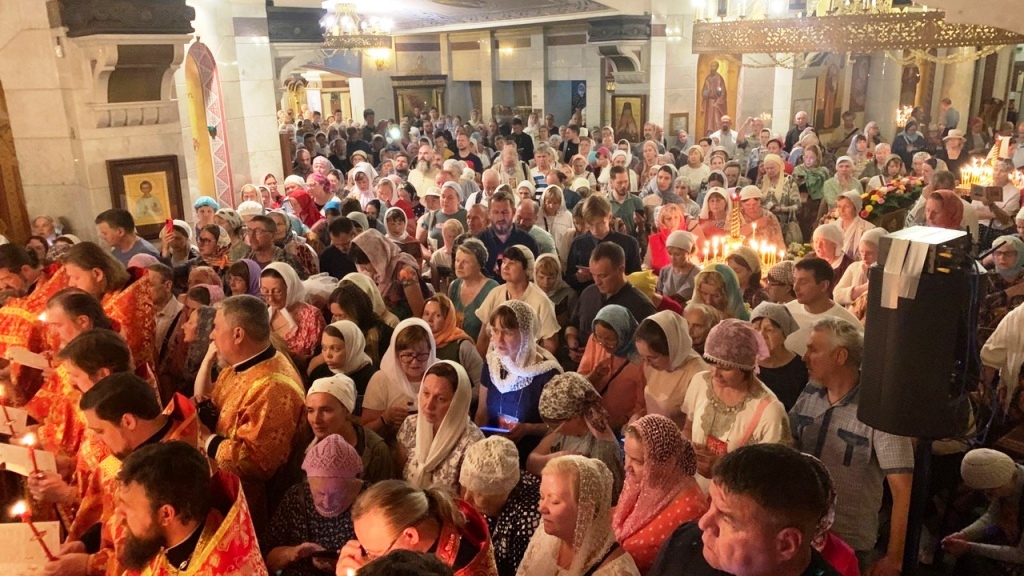
On 16/17 July – the eve marking the 104th anniversary of the death and martyrdom of Emperor Nicholas II, his family and four faithful retainers, commemorative services were held in the Ural city of Ekaterinburg and in the Monastery of the Holy Royal Martyrs at Ganina Yama.

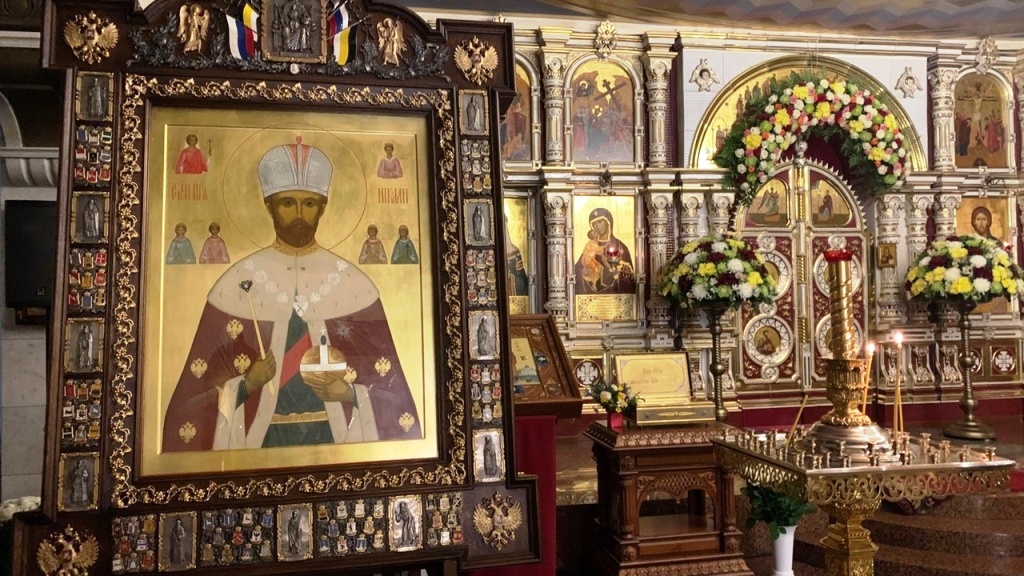
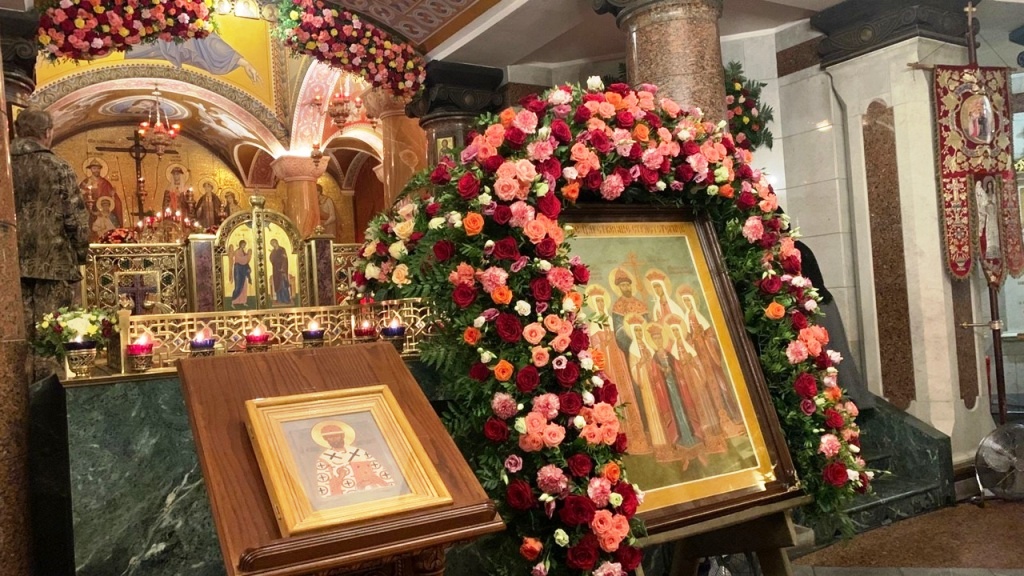
PHOTO: icon of the Holy Tsar-Martyr Nicholas II, Lower Church

PHOTO: pilgrims attend vespers in the Lower Church

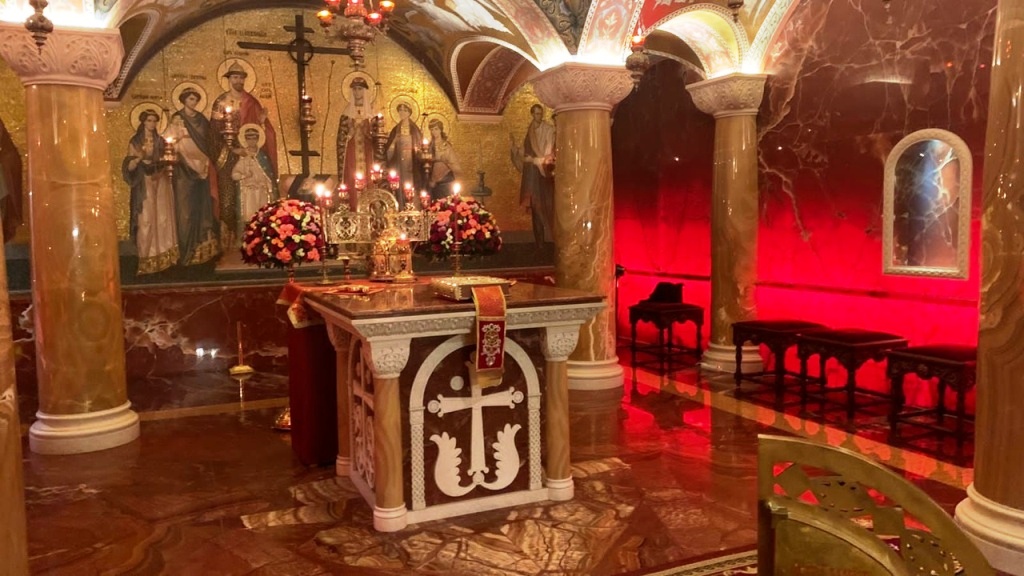
PHOTO: view of the Imperial Room (above and below), Lower Church

On the afternoon of 16th July, small vespers with an akathist to the holy Royal Passion-Bearers were performed by the archpastors of the Russian Orthodox Church, headed by Metropolitan Vincent of Tashkent and Uzbekistan, in the lower church of the Church on the Blood.

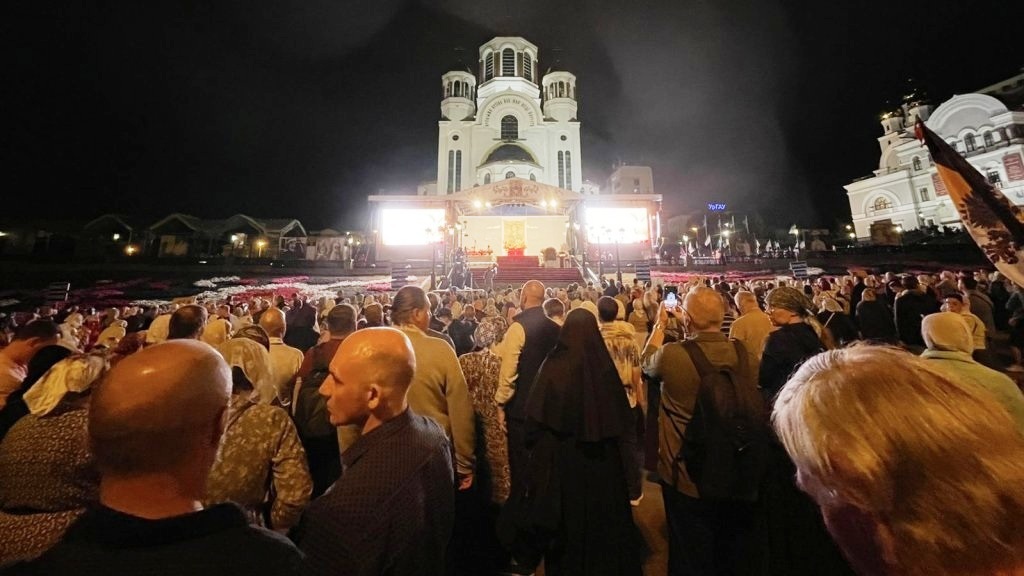
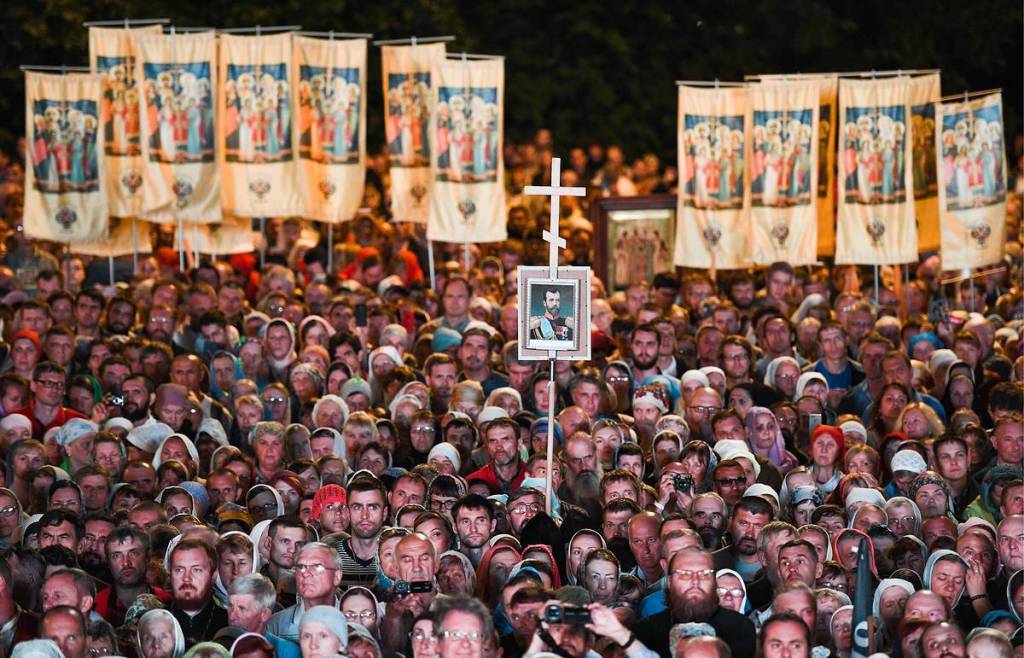
On the night of 16th July, an all night vigil was held on the square in front of the Church on the Blood. An estimated 46,000 Orthodox pilgrims took part in the Divine Liturgy, followed by a Cross Procession to the Monastery of the Holy Royal Martyrs at Ganina Yama.

The Divine Liturgy began at 23:30, and was broadcast live across Russia by the Orthodox TV channel Soyuz, and available to watch on the YouTube channel and on the website of the Soyuz TV channel.

PHOTO: pilgrims gather on the night of 16th July on the square in front of the Church on the Blood

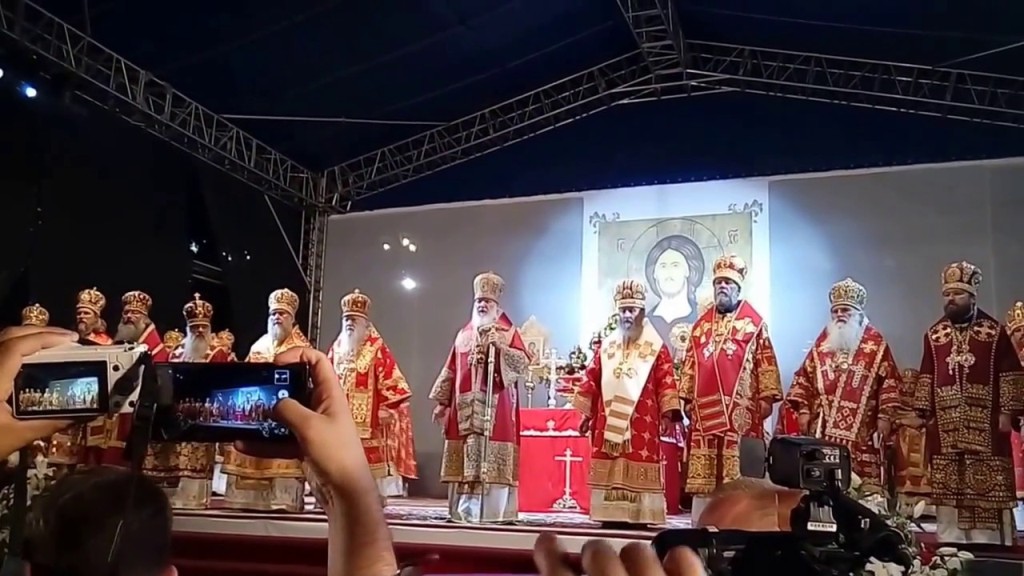
The Divine Liturgy was led by nine bishops of the Russian Orthodox Church: Metropolitan Eugene of Yekaterinburg and Verkhoturye; Metropolitan Vikenty of Tashkent and Uzbekistan; Metropolitan Alexy of Chelyabinsk and Mias; Archbishop Nikolay of Salekhard and Novo-Urengoysk; Bishop Feodosy of Isikul and Russko-Polyansk, Bishop Theodosius of Nizhny Tagil, Bishop Methodius of Kamensk and Kamyshlov, Bishop Vladimir of Shadrinsk and Dalmatov, Bishop Vikenty of Zlatoust and Satka. The archpastors were co-served by the clergy of the Yekaterinburg Diocese.

Special guests at this years’ Divine Liturgy included: governor of the Sverdlovsk region Yevgeny Vladimirovich Kuyvashev, and historian and writer Pyotr Valentinovich Multatuli, the great-grandson of Ivan Kharitonov (1872-1918), who served as the Head Cook of the Imperial family. 

“I consider the story of the murder of Emperor Nicholas II and his family in Ekaterinburg, an important part of Ural history, Ural self-consciousness – this tragic page in history will forever remain with us, many future generations will have to remember this and repent of this sin,” – said Kuyvashev.

PHOTO: the miraculous Myrrh-Streaming Icon of Tsar-Martyr Nicholas II

PHOTO: the Divine Liturgy was led by nine bishops of the Russian Orthodox Church

The expedition commander of the International Space Station, Oleg Artemiev, delivered a message of congratulation to those participanting in Tsar’s Days: “I want to convey to the parishioners and pilgrims of the Church on the Blood my warmest congratulations on the Tsar’s Days, and to all Ekaterinburg residents on the upcoming 300th anniversary of the city of St. Catherine, which, God willing, we will celebrate together in 2023″.

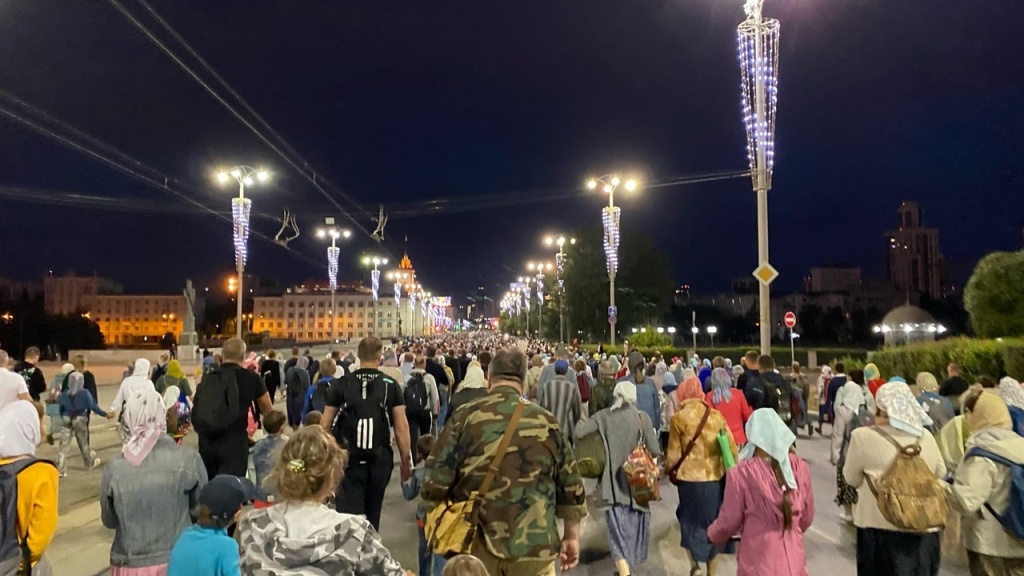
PHOTO: an estimated 46,000 pilgrims took part in this year’s 21-km Cross Procession from the Church on the Blood in Ekaterinburg to the Monastery of the Holy Royal Martytrs at Ganina Yama

PHOTO: the procession nears the Monastery of the Holy Royal Martyrs at Ganina Yama

Following the Divine Liturgy, at about three o’clock in the morning, the combined choirs of the Ekaterinburg Diocese began to sing God Save the Tsar!, they were enthusiastically joined by the tens of thousands of pilgrims on the square.

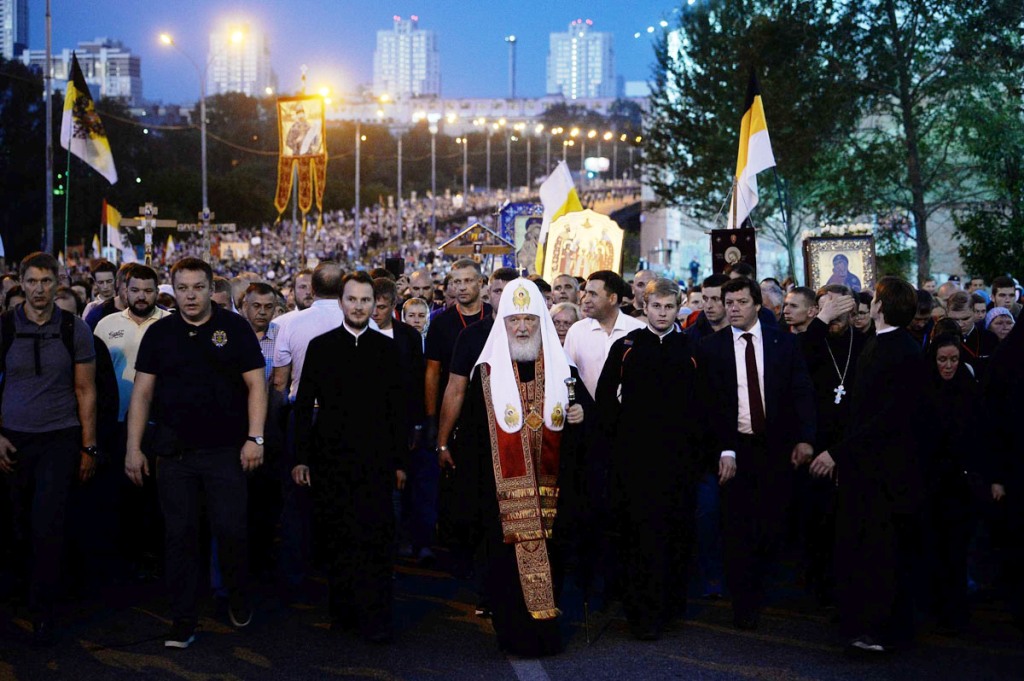
It was at this point, that the pilgrims assembled for the 21-km [13 miles] Cross Procession from the Church on the Blood to the Monastery of the Holy Royal Martyrs at Ganina Yama. The route of the this years procession remained unchanged from previous years, passing along the same route that the regicides transported the bodies of members of the Imperial family in 1918.

Foreign vistors from the USA, Germany, Serbia, Ukraine, Moldova, the Baltic countries, Uzbekistan and other countries also took part in this year’s Cross Procession. The column of pilgrims stretched along the road for kilometers. The procession was surrounded by police officers, 12 streets in the city center were closed. The pilgrims were accompanied by 10 mobile help groups of the Orthodox Mercy Service and volunteers of the Tsar’s Days.

PHOTO: pilgrims arriving at the Monastery of the Holy Royal Martyrs

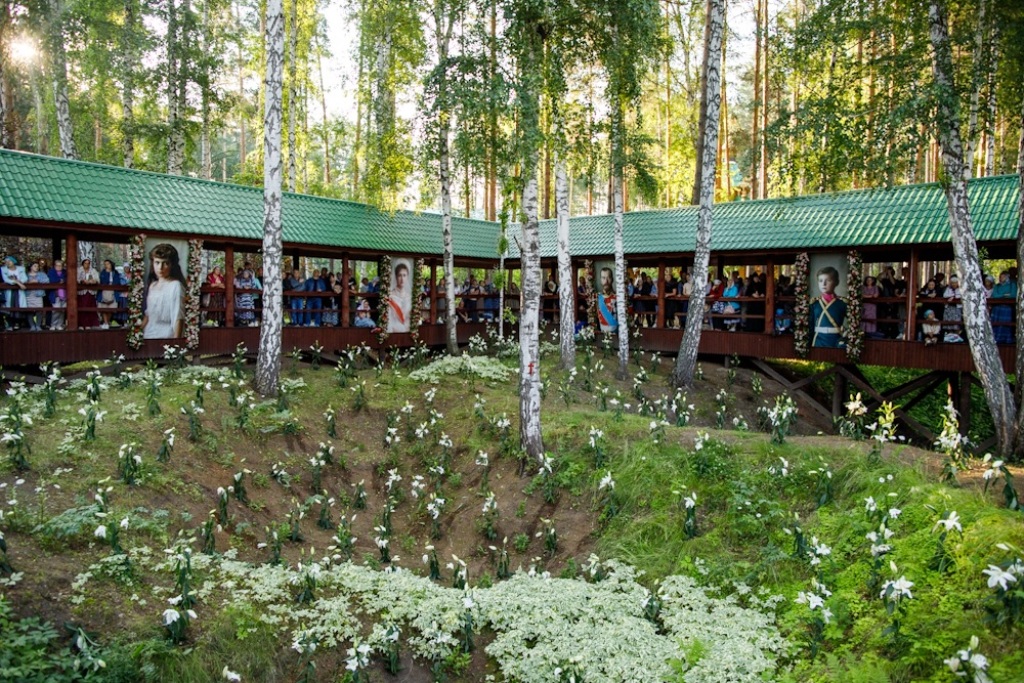
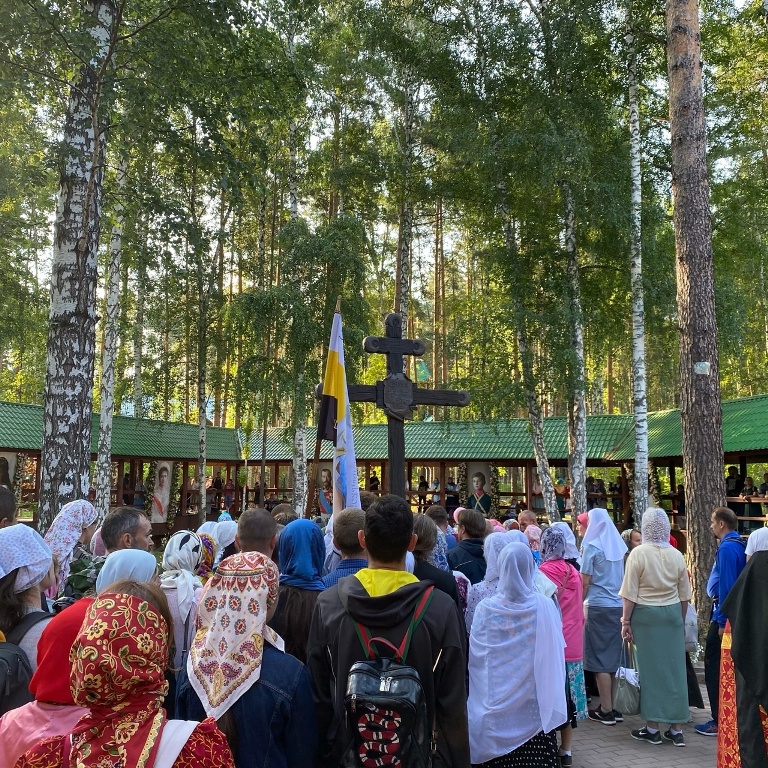
PHOTO: pilgrims line the the wooden causeway which surrounds the abandoned mine shaft at Ganina Yama, reflecting on the crime which took place here on 17th July 1918

PHOTO: pilgrims pray at a tall Orthodox cross, which marks the edge of the mine shaft, where the regicides threw the remains of Tsar Nicholas II and his family

The first pilgrims of the Cross Procession began to arrive at the Monastery of the Holy Royal Martyrs at about 7:00 a.m. The brethren of the monastery greeted the pilgrims with the ringing of bells. Upon arrival at the monastery, a Divine Liturgy was performed at the tall Orthodox cross located on the edge of Mine No. 7, where the bodies of members of the Imperial family and their faithful servants were thrown by the regicides. The Divine Liturgy was led by Metropolitan Vikenty of Tashkent, Metropolitan Eugene of Yekaterinburg, Archbishop Nicholas of Salekhard, Bishop Theodosius of Isilkul, and Bishop Theodosius of Nizhny Tagil. At the end of the service, Bishop Vincent and Bishop Eugene heartily thanked all the participants in the procession for their spiritual achievement.

After the prayer service, all the pilgrims were offered a hearty meal of buckwheat porridge, bread and tea, prepared by volunteers in the field kitchen. Drinking water was freely available for everyone, and a first-aid post was available. Many pilgrims sought rest under the shade of trees. A fleet of 17 buses provided by the UMMC and the regional Ministry of Transport, offered FREE transport for pilgrims to Ekaterinburg and Sredneuralsk.

© 19 July 2022. Paul Gilbert

***

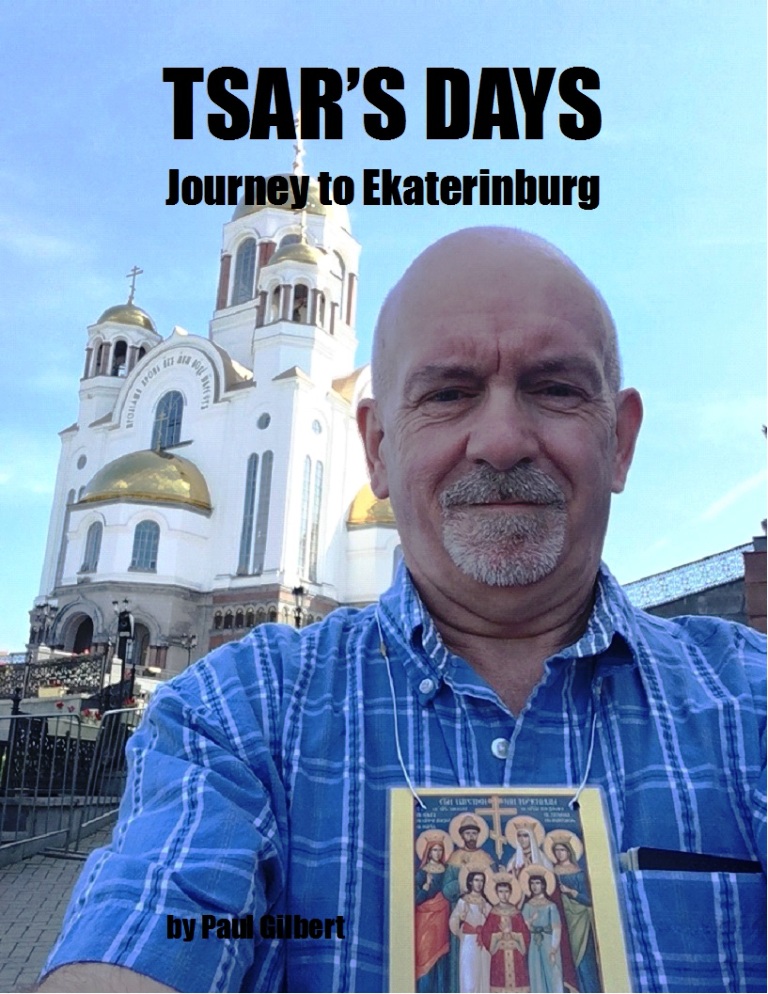
TSAR’S DAYS
Journey to Ekaterinburg
by Paul Gilbert

BOOK DESCRIPTION

Hardcover and Paperback editions. 152 pages + Richly illustrated with nearly 200 COLOUR PHOTOS, 65 of which were taken by the author

CLICK ON THE LINK BELOW TO ORDER FROM AMAZON

HARD COVER EDITION @ $40 USD

PAPERBACK EDITION @ $25 USD

Read all about my journey to Ekaterinburg – my 3rd visit to the Urals – in July 2018, to take part in the events marking the 100th anniversary of the deaths and martyrdom of Nicholas II and his family.

On 17th July 1998, independent researcher and writer Paul Gilbert travelled to St. Petersburg, for the interment of Emperor Nicholas II and his family. Twenty years later to the day, he journeyed to Ekaterinburg, to take part in the events marking the 100th anniversary of the Tsar’s death and martyrdom.

In his own words and photographs, the author shares his experiences and impressions of this historic event, which include visits to the Church on the Blood, Ganina Yama, Porosenkov Log, the Patriarchal Liturgy, exhibitions, and much more.

In addition are 24 illustrated news articles about events leading up to Tsar’s Days in the Urals, from 1st to 31st July 2018.

Gilbert’s solemn journey to the Urals allowed him to experience history in the making, and to honour the memory of the Holy Royal Martyrs, a century after their death and martyrdom.”

What is Tsar’s Days?

Tsar’s Days before the 1917 Revolution

This year marks the 30th anniversary of Tsar’s Days in Ekaterinburg. Tsar’s Days in Russia actually began during the Tsarist era, however, it was banned during the Soviet years. It was restored in Ekaterinburg in 2002, to mark the deaths and martyrdom of Nicholas II and his family on 17th July 1918.

The Tsar’s Days were divided into two groups – solemn and high solemn days.

The first group included the coronation, accession to the throne, birthdays, as well as the namesake [see below] of the emperor, empress-mother, empress-wife, and the heir to the throne. The second group included birthdays and namesakes of other members of the Imperial Family.

  • A namesake consists of celebrating a day of the year that is associated with one’s given name. The celebration is similar to a birthday. Russians celebrate name days [именины in Russian] separately from birthdays. Such a celebration begins with attendance at the divine services marking that day [in the Russian tradition, the All-Night Vigil and Divine Liturgy], and usually with a festive party thereafter. Before the October Revolution of 1917, Russians regarded name days as important as, or more important than, the celebration of birthdays, based on the rationale that one’s baptism is the event by which people become “born anew” in Christ. The Russian Imperial family followed a tradition of giving name-day gifts, such as a diamond or a pearl.

On high solemn days, special prayers were held in churches: on birthdays, a general thanksgiving service was performed, and on the day of the namesake, a prayer service to the saint of the same name [i.e. Nicholas II + Saint Nicholas of Myra]. On the day of the accession to the throne of the sovereign-emperor and his coronation, prayers were served for a special rite.

The solemn days, were postponed until the following Sunday. If the solemn day fell on the first week of Great Lent , it was postponed to the Feast of the Triumph of Orthodoxy. If it fell during Holy Week (the last week of Great Lent) or the first day of the celebration of Easter, the solemn day was postponed to Monday of Bright Week.

On 7th March 1917, the Holy Synod, in response to the February Revolution, began to call the “reigning” House of Romanov in the past tense and abolished “Tsar’s Days”. The corresponding decree of the Provisional Government appeared on 16th March of the same year.

Below, is a list of the four high solemn days celebrated for Nicholas II in 1913 [dates are noted in the Old Style Julian Calendar]:

May 6 – Birth of Sovereign Emperor Nicholas Alexandrovich ;
May 14 – Sacred Crowning of Their Imperial Majesties;
October 20 – Accession to the throne of Sovereign Emperor Nicholas Alexandrovich;
December 6 – Namesake of Sovereign Emperor Nicholas Alexandrovich.

Tsar’s Days in Post-Soviet Russia

In the 21st century, Tsar Days have taken on a whole new meaning. The annual holidays are held in mid-July in the Ekaterinburg diocese, during which divine services are held, a cross procession in memory of the death and martyrdom of Emperor Nicholas II and his family, as well as a festival of Orthodox culture, including exhibitions and other social events.

The name is taken from the pre-revolutionary Tsar’s Days, timed to coincide with the anniversaries of solemn events in the lives of members of the Romanov Dynasty. The dates of the modern Tsar’s Days are timed to the dates of 21st July 1613 – the day of the anointing of the first tsar of the Romanov dynasty, Mikhail Fedorovich, and 17th July 1918 – the day of the brutal murders of the last Emperor of Russia Nicholas II and his family, in the Ipatiev House in Ekaterinburg and 18th July – the day of the murders of Grand Duchess Elizabeth Feodorovna, Grand Duke Sergei Mikhailovich, Princes of the Imperial Blood Ioann, Konstantin and Igor Konstantinovich, Prince Vladimir Paley (son of Grand Duke Paul Alexandrovich) in Alapaevsk.

Events

As part of the Tsar’s Days, an all-night vigil is held in the Church on the Blood in Ekaterinburg, which includes a Divine Liturgy followed by a Cross Procession. The Tsar’s Days Festival celebrates Orthodox culture in the Ekaterinburg Diocese. Dozens of religious and secular public events dedicated to the tsarist theme are held, including exhibitions, concerts, conferences and other events.

Some of the city’s museums and churches become venues for exhibitions dedicated to Emperor Nicholas II, his family and other members of the Romanov dynasty, who were murdered in Ekaterinburg and Alapaevsk.

The main event, for which Orthodox pilgrims come to Ekaterinburg, is the solemn divine liturgy, which takes place on the night of the murder of the Holy Royal Murders – 16/17 July, in the Church on the Blood. At the end of the Liturgy, tens of thousands of pilgrims take part in the 21 km Cross procession from the Church on the Blood in Ekaterinburg to the Monastery of the Holy Royal Martyrs in Ganina Yama.

Pilgrims from other cities in Russia organize pilgrimages from their cities to Ekaterinburg to participate in the Tsar’s Days. A growing number of Russian cities [i.e. St. Petersburg, Kazan, etc.] are today organizing their own Tsar’s Days events, but on a much smaller scale than that of Ekaterinburg.

PHOTO: His Holiness Patriarch Kirill delivers a Divine Liturgy outside the Church on the Blood on the night of 16/17 July 2018 (above); His Holiness Patriarch Kirill leads the 21 km Cross Procession from the Church on the Blood in Ekaterinburg to the Monastery of the Holy Royal Martyrs in Ganina Yama (below)

100th anniversary of the death of members of the Romanov family

In 2018, the Tsar’s days in the Ekaterinburg Diocese were timed to coincide with the 100th anniversary of the deaths and martyrdom of members of the Romanov family in Ekaterinburg and Alapaevsk. The centenary celebrations also included the XVII Tsar’s Days Festival of Orthodox Culture, a five-day visit by the head of the Russian Orthodox Church and a meeting of the Holy Synod.

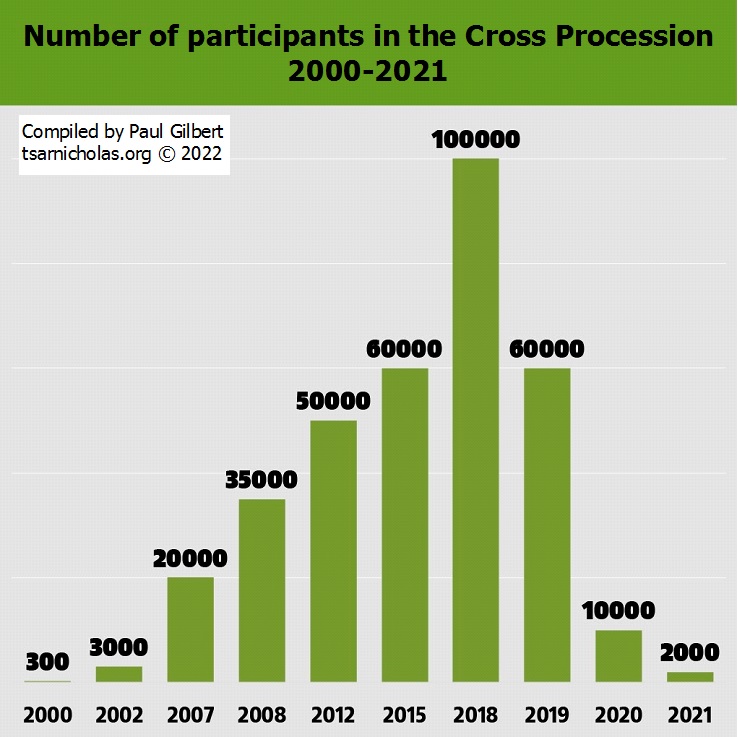
The first procession in memory of the Holy Royal Martyrs, headed by Metropolitan of Ekaterinburg and Verkhoturye Kirill, took place in 2002, in which more than 2 thousand pilgrims and about 100 clerics participated. In 2012, for the first time since the construction of the Church on the Blood in Ekaterinburg, an all-night vigil and Divine Liturgy were performed in the open air.

In 2017 they estimated crowds of up to 60,000 people. In 2019, 60 thousand participated, and in 2020, 10 thousand people [due to COVID]. In addition, up to 2 thousand people gathered an alternative religious procession of the schismatic and tsarist monk Sergius (Romanov) in the Sredneuralsky Nunnery.

In 2018, more than 100,000 Orthodox Christians, monarchists, among others from across Russia and around the world took part in the Patriarchal Liturgy and procession of the cross from the Church on the Blood to the Ganina Yama.

The events marking Tsar’s Days in 2018, fell on the tail end of the 2018 Football World Cup which was held in Ekaterinburg that year. It was estimated that as many as 200,000 people flocked to the city to commemorate the 100th anniversary of the regicide, undoubtedly the largest public demonstration yet of the growing significance of the Russia’s last emperor and tsar in the cultural, historical and spiritual life of modern-day Russia.

*NOTE: due to the fact the Moscow Patriachate does not yet recognize the Ekaterinburg remains as authentic, the Cross Procession does not stop at Porosenkov Log, where the remains of the Imperial family were unearthed in two separate graves in the late 1970s and 2007 – PG

*  *  *

On 17th July 2018, independent researcher and writer Paul Gilbert travelled to Ekaterinburg, to take part in the events marking the 100th anniversary of the Tsar’s death and martyrdom.

In his own words and photographs, the author shares his experiences and impressions of this historic event, which include visits to the Church on the Blood, Ganina Yama, Porosenkov Log, the Patriarchal Liturgy, exhibitions, and much more.

Available in both hardcover and paperback editions. 152 pages. Nearly 200 COLOUR photos – many of them taken by me, during my visit to Ekaterinburg in July 2018. Click HERE to order your copy

© Paul Gilbert. 17 July 2022