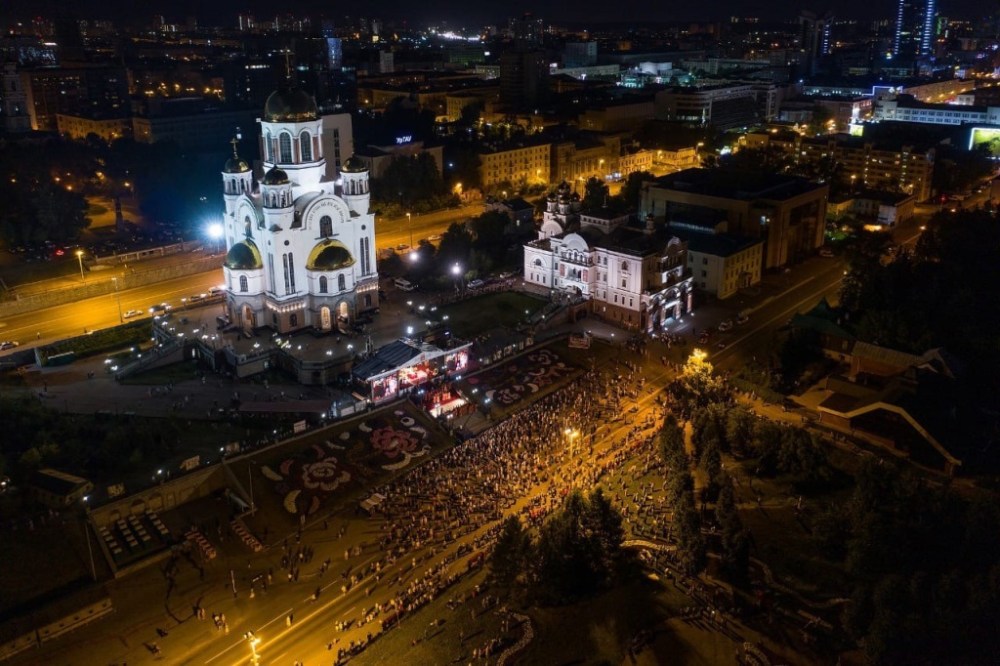
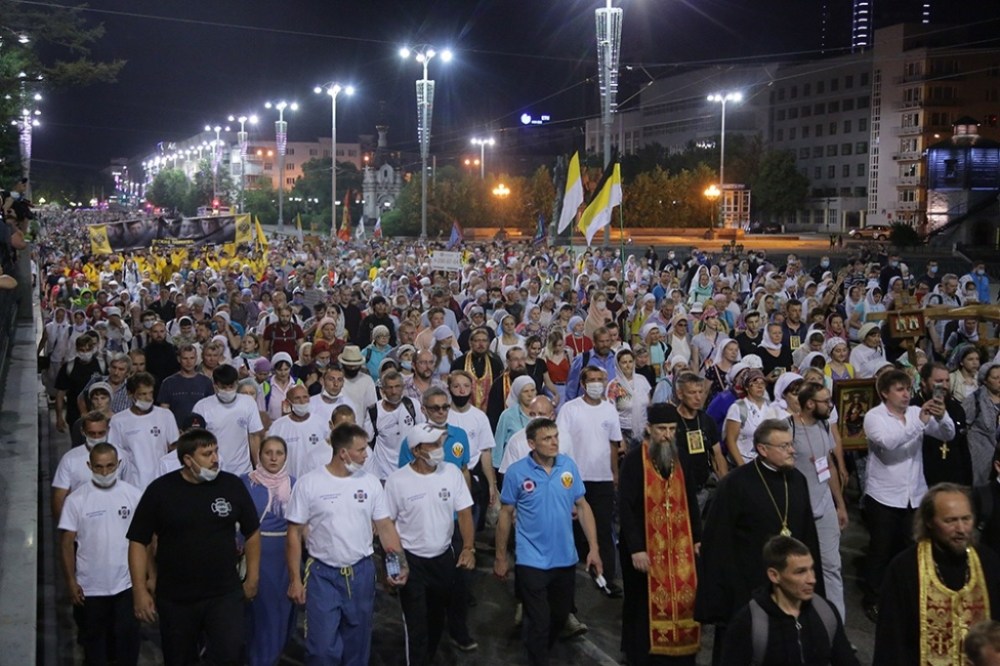
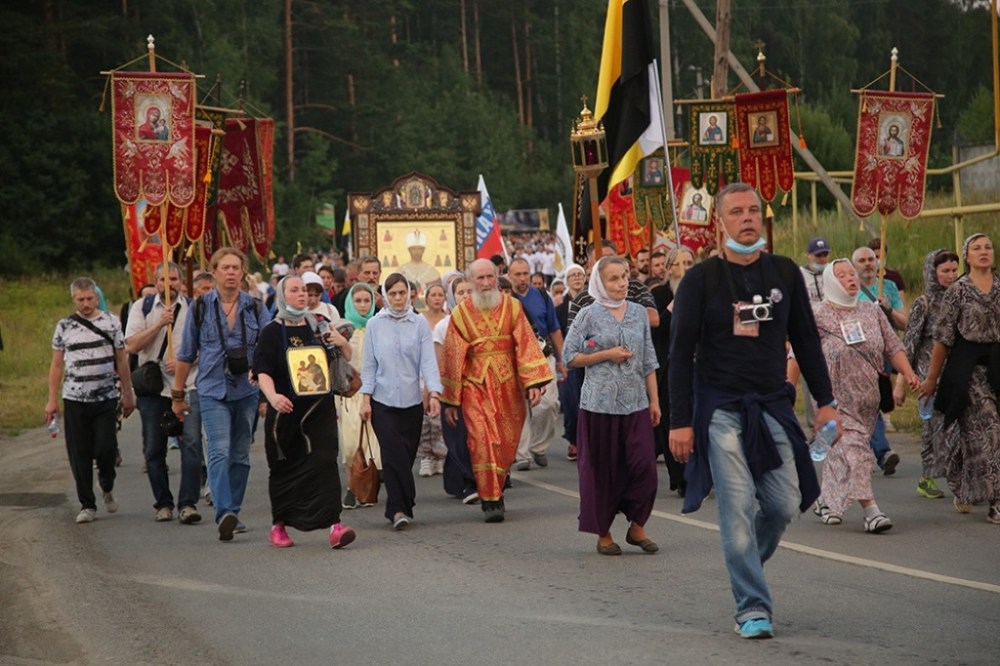
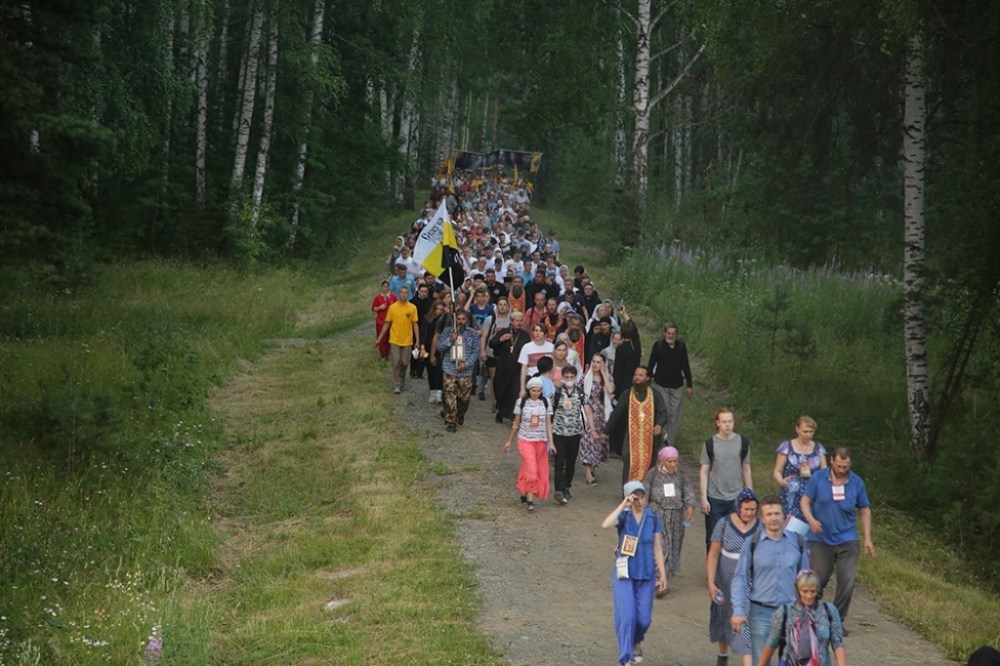
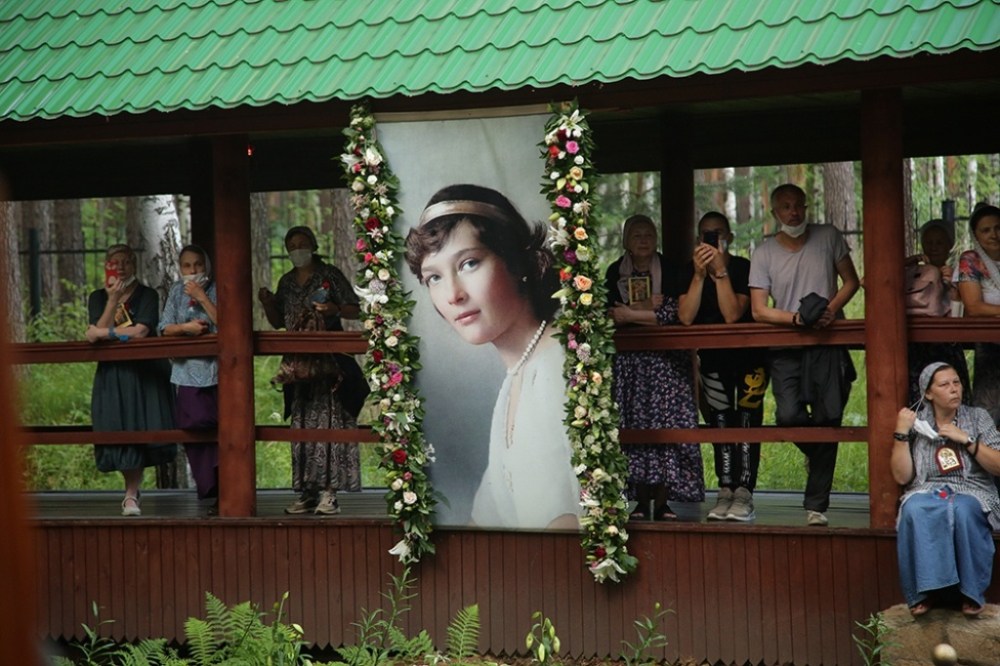
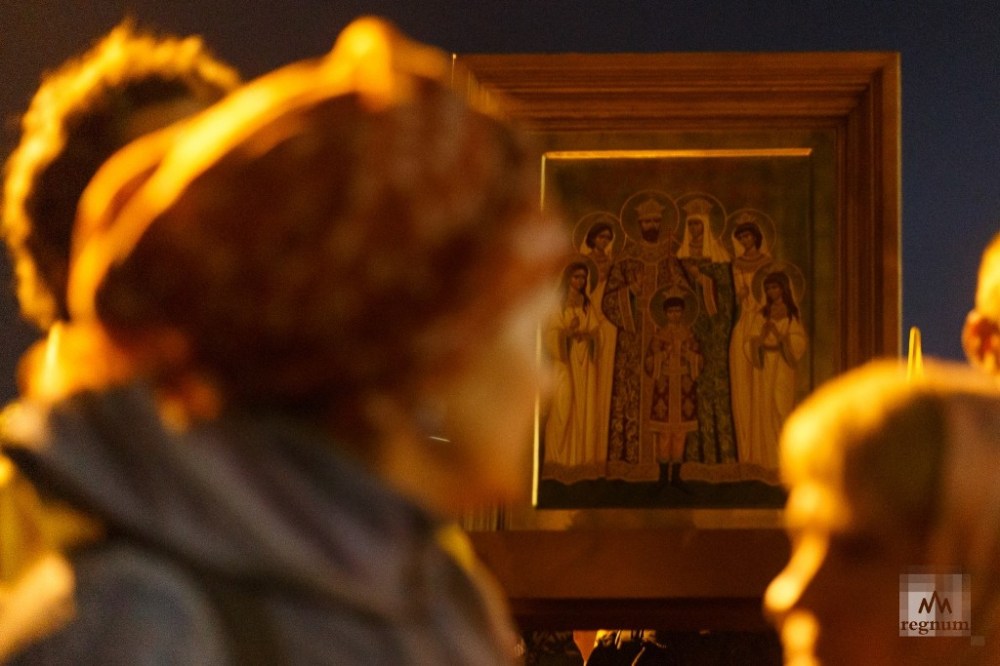
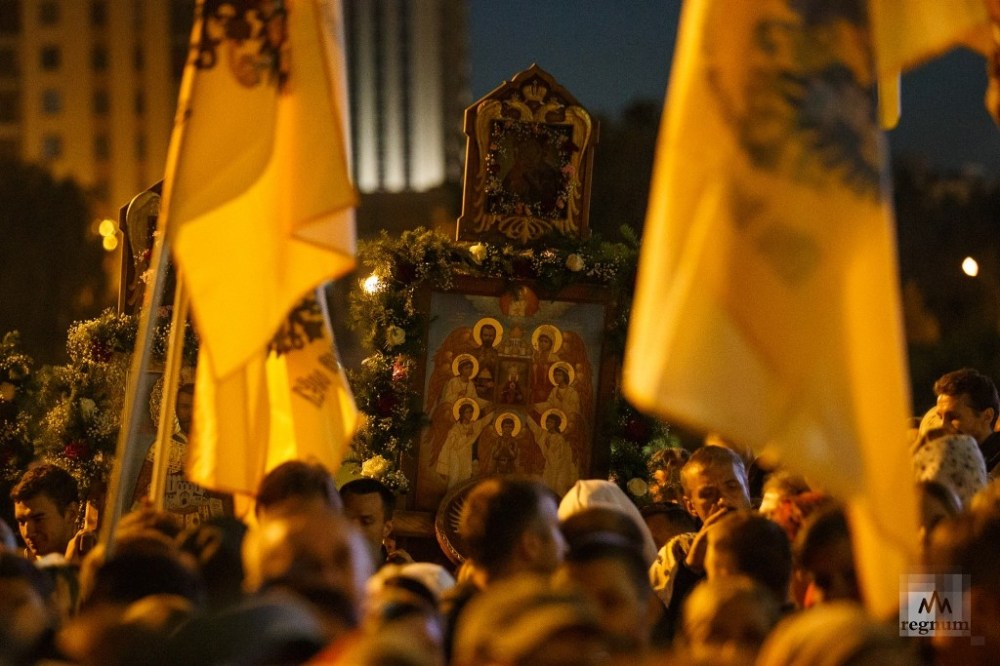
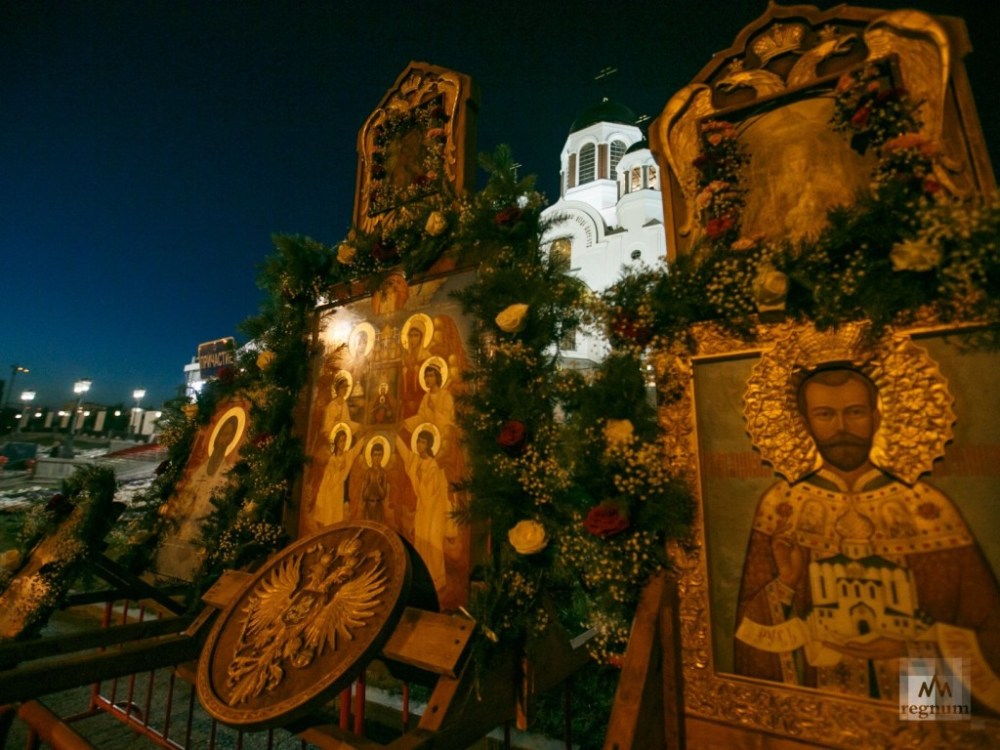
The Ekaterinburg Diocese of the Russian Orthodox Church hosted its annual Divine Liturgy and Cross Procession in honour of the Holy Royal Martyrs last night from the Church on the Blood in Ekaterinburg to the Monastery of the Holy Royal Passion-Bearers in Ganina Yama.
Some 10,000 Orthodox faithful joined in the Cross Procession this year, from the Church on the Blood to the Monastery of the Holy Royal Martyrs, built on the site where the remains of Nicholas II, his family and four retainers were first callously discarded, before they were later reburied at Porosenkov Log some 1.3 km away.
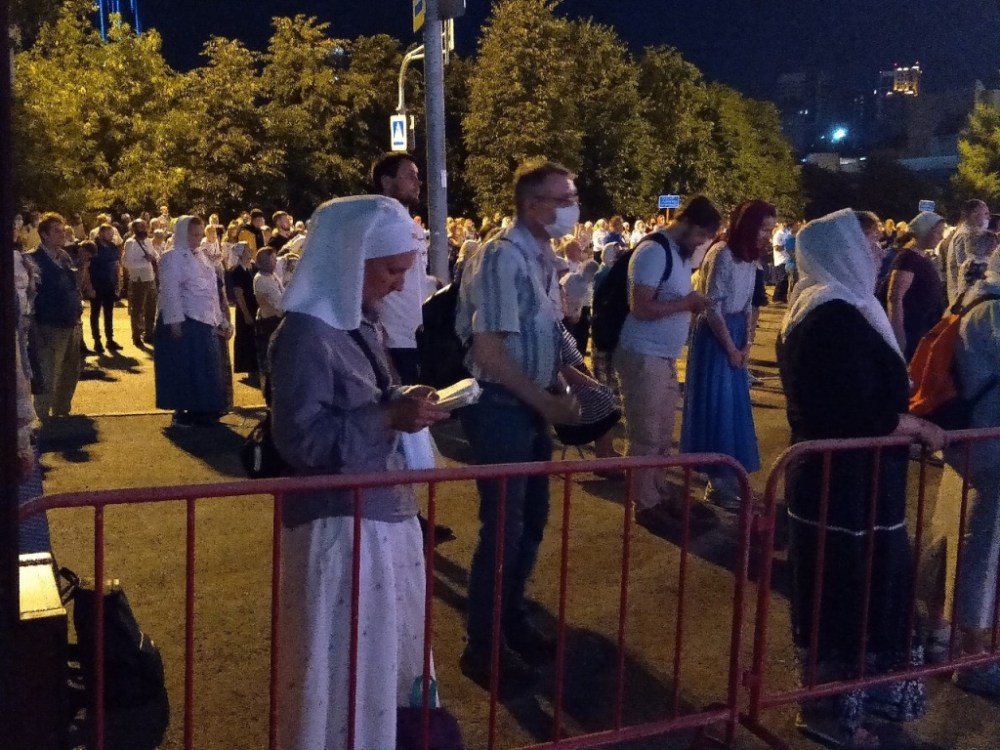
The size of the procession was significantly reduced this year due to the COVID-19 Pandemic. The local authorities had urged the faithful not to participate. In 2018, 100,000 participated in the Divine Liturgy and Cross Procession on the 100th anniversary of the Holy Royal Martyrs, and 60,000 in 2019.
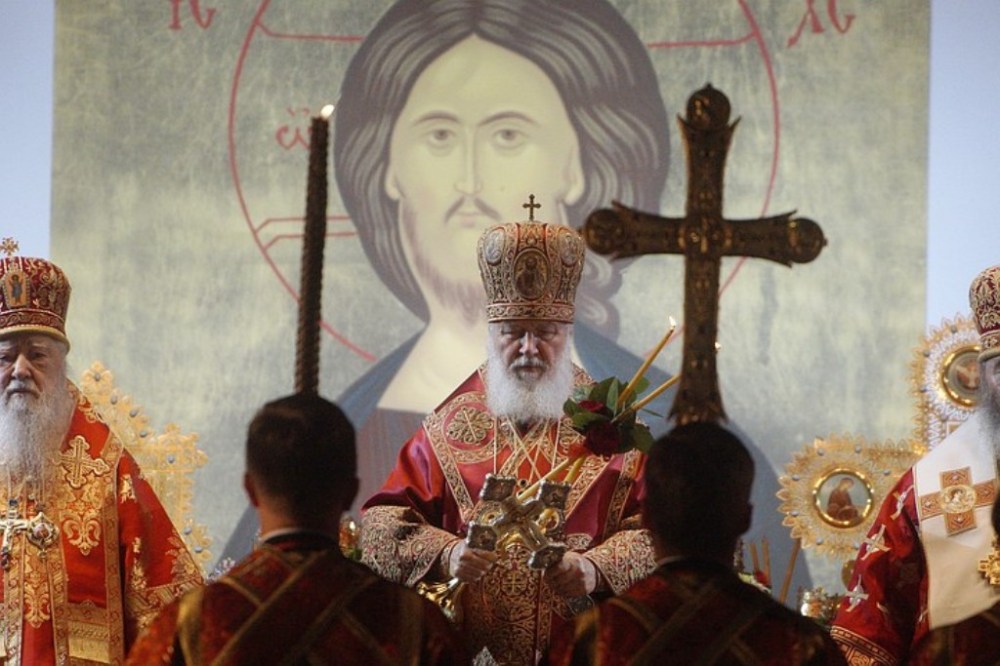
The evening began with the Divine Liturgy celebrated on the square in front of the Church on the Blood by Metropolitan Kirill of Yekaterinburg and Verkhotursky , His Grace Bishop Methody of Kamensk, His Grace Bishop Evgeny of Nizhny Tagil, His Grace Bishop Alexei of Serov, and His Grace Bishop Leonid of Argentina and South America.
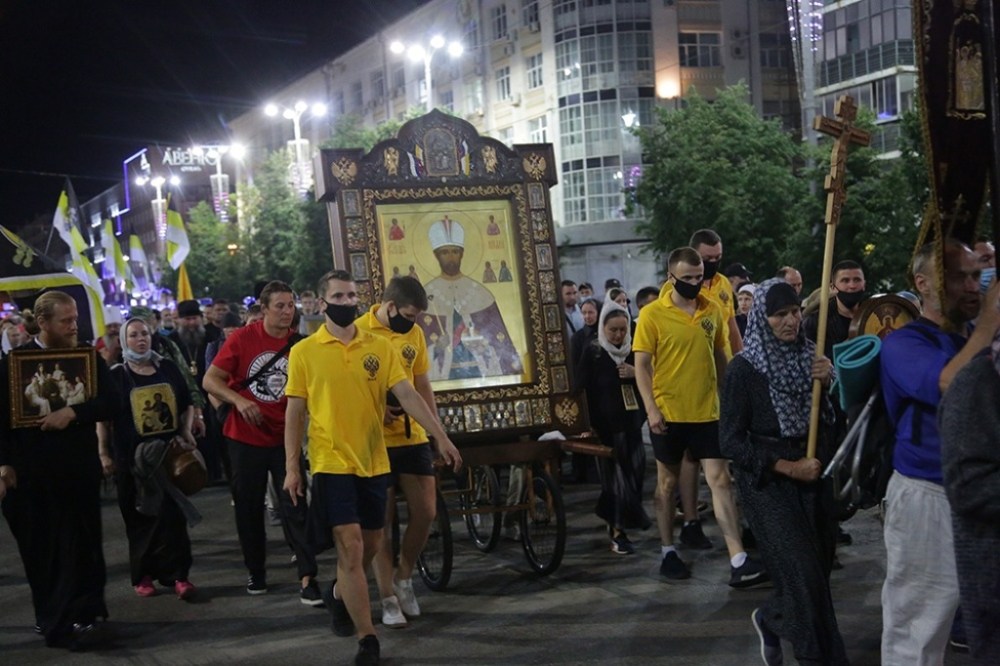
After the Divine Liturgy, the faithful began a 21-km Cross Procession, along the same route used to transport the murderers used to transport the bodies of the murdered Tsar Nicholas II and his family in 1918.
The procession was accompanied throughout by mobile groups from the Orthodox Mercy service, Tsar’s Days volunteers, representatives from the Nika charitable foundation, and Cossacks of the Orenburg Military Cossack Society, all of whom provided various means of assistance to the pilgrims.
Around 6:00 AM, the procession headed by Metropolitan Kirill of Yekaterinburg and Verkhotursky and the hierarchs and clergy reached the Monastery of the Holy Royal Martyrs, where the monks greeted the pilgrims with the ringing of the monastery bells.
Upon arrival, a moleben was served to the Holy Royal Martyrs and Metropolitan Kirill addressed the faithful:
“We pray and believe that the Lord, through the prayers of the Holy Royal Martyrs and Confessors of our Church, still preserves our land and covers it with His Heavenly covering. We hope that with God’s help we will lead an Orthodox Christian way of life and will take an example from righteous people, such as the Holy Royal Family and their faithful retainers, and all those who laid down their lives for our homeland and our Holy Church. Through their prayers, the Lord will forgive and have mercy on all of us by the prayers of the Most Holy Theotokos, the Holy Royal Martyrs, and all the saints who have pleased God from time immemorial.”
The Tsar’s Days celebrations continue tonight in Alapaevsk where the Grand Duchess Elizabeth Feodoron, the Nun Barbara, and Grand Duke Sergei Mikhailovich, the Princes of the Imperial Blood Ioann (John) Konstantinovich, Konstantin Konstantinovich, Igor Konstantinovich, and Prince Vladimir Pavlovich Paley, and Grand Duke Sergei’s secretary Fyodor Remez were martyred on July 18, 1918.
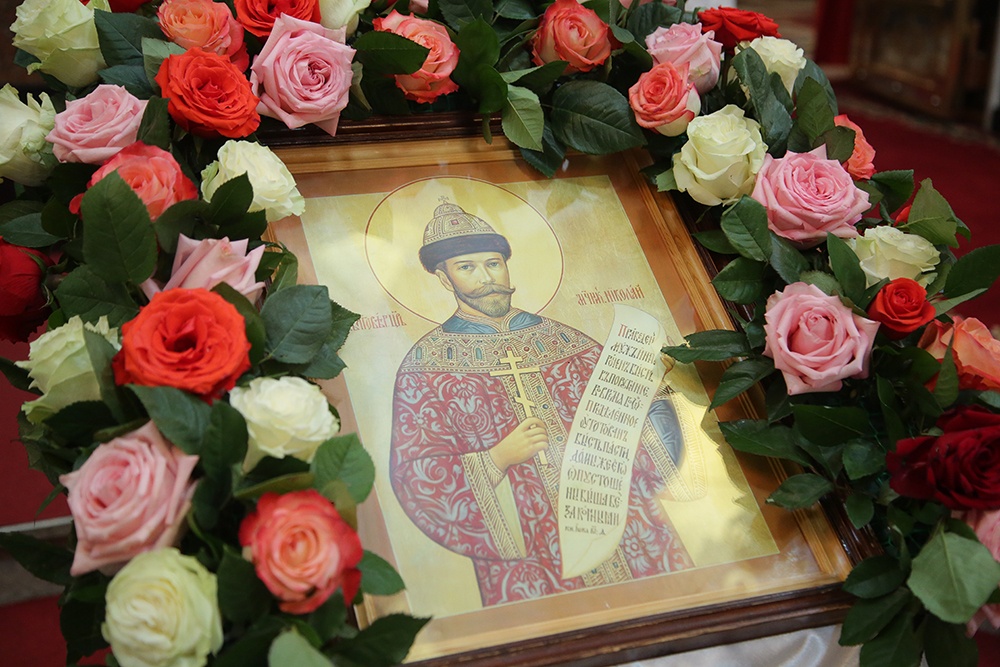
Святой Царь Мученик Николай, Моли Бога о Нас! Holy Royal Martyr Nicholas II, Pray to God for Us!
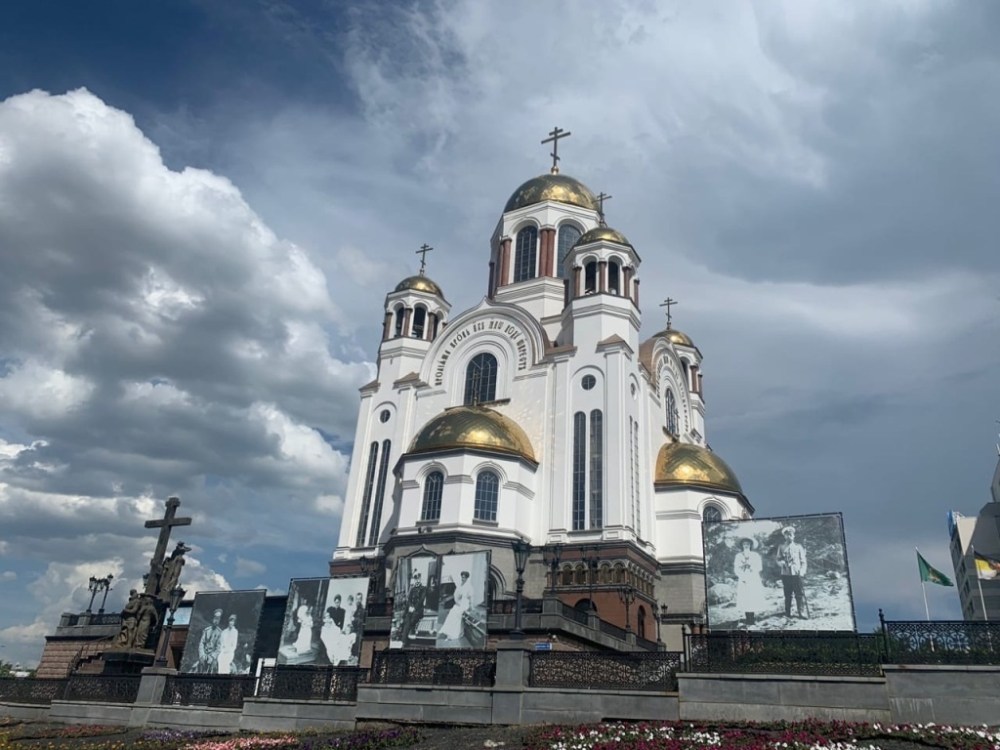
The Church on the Blood, built on the site of the Ipatiev House in Ekaterinburg
The Moscow Patriarchate and the Ekaterinburg Diocese have confirmed that the Royal Days [aka Tsar’s or Imperial Days] will be held from July 12 to 20, 2020.
A series of memorable ceremonial events symbolizing the unity of the Russian people in their understanding of the history of the Fatherland, the ongoing rehabilitation of the good names of the emperor and his family, and the unification of the Church of Christ and traditional values. In light of the COVID-19 pandemic, all events will be held in compliance with all necessary safety and sanitary measures.
The main event will be held on the night of 16/17 July, when a Divine Liturgy will be performed at the Church on the Blood, where the lives of Emperor Nicholas II along with his family and four faithful servants tragically ended. The Divine Liturgy will be followed by a 21-km Cross procession to the Monastery of the Royal Martyrs at Ganina Yama.
On July 12th, the day marking the Feast of the Apostles Peter and Paul, the XIX Royal Days Festival of Orthodox Culture will begin.
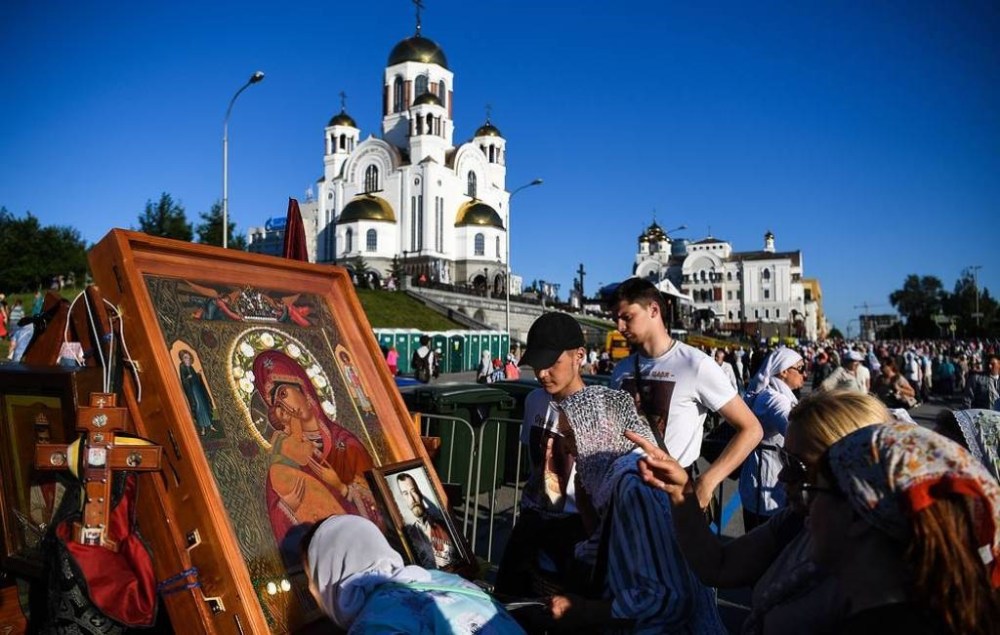
Pilgrims gather outside the Church on the Blood on 16th July 2018
XIX Royal Days Festival of Orthodox Culture
The XIX Royal Days Festival of Orthodox Culture in the Ural capital, will feature several dozen religious and secular events of various formats honouring the memory of the Holy Royal Martyrs.
A cultural program has been planned, which includes cultural, historical, musical and educational events, museum and library exhibitions, concerts, lectures and meetings with Russian historians and writers.
The festival will be held in the conference hall and the Tsarsky Spiritual and Educational Center, located in of the Patriarchal Compound on the grounds of the Church on the Blood.
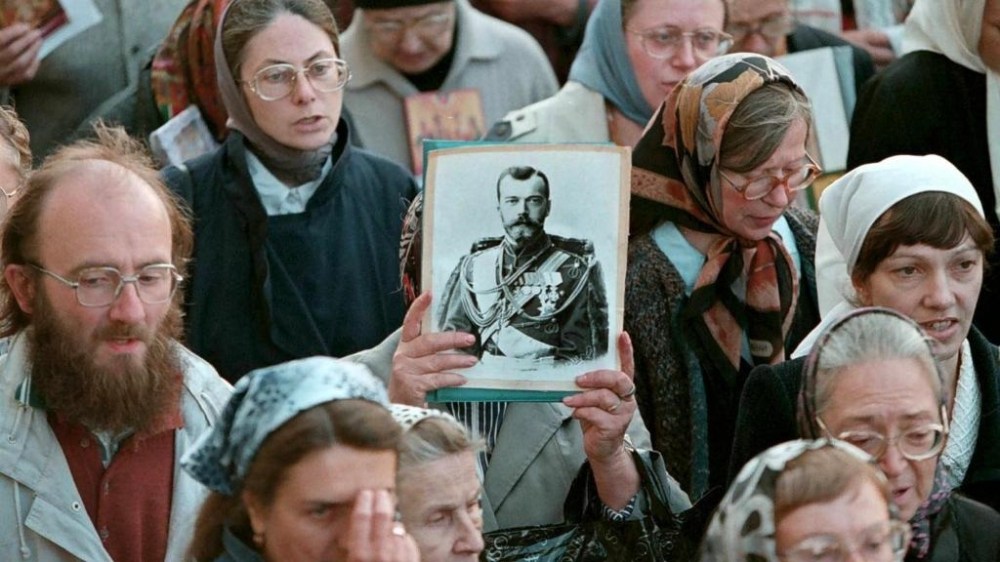
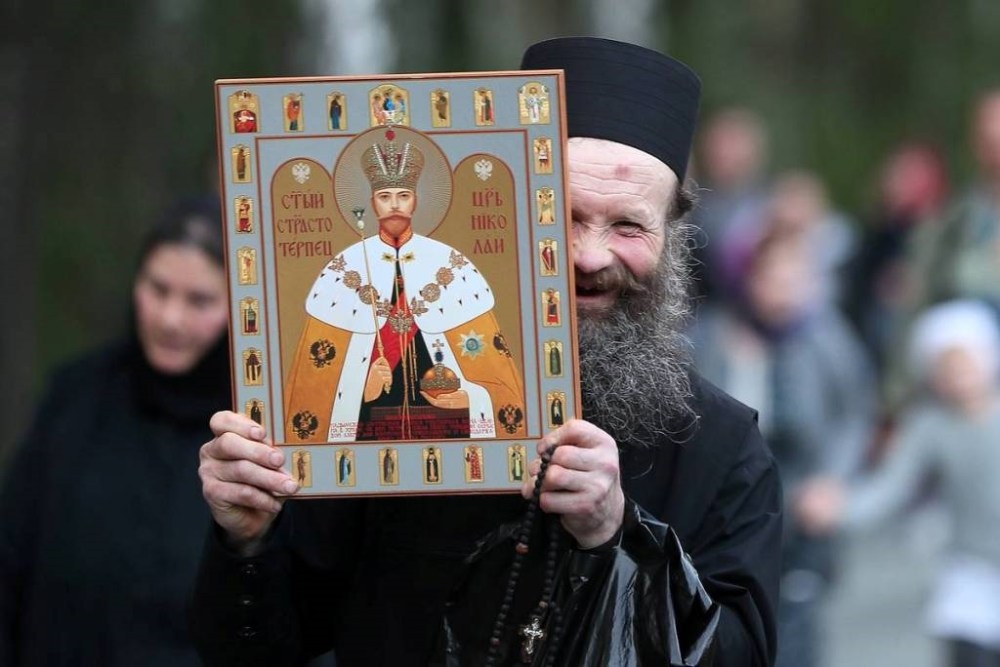
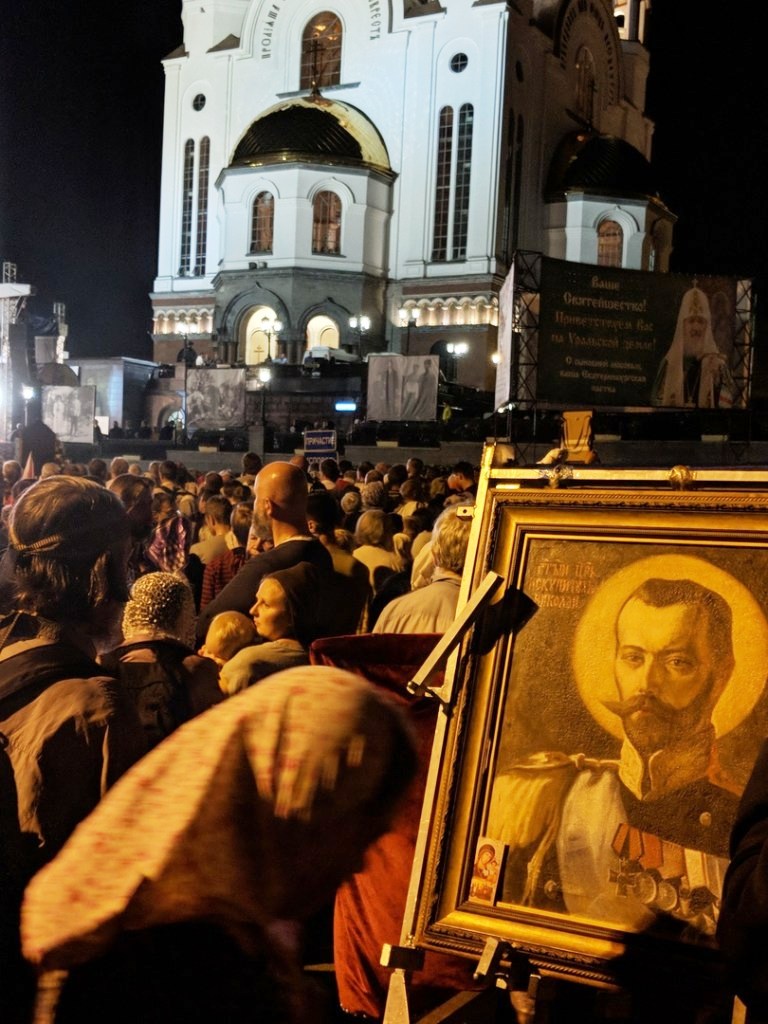
Pilgrim holds a portrait of Tsar-Martyr Nicholas II
The bell ringing festival “Evangelize, the Land of the Urals!” also opens on July 12th. A bell ringing concert will he held in the square in front of the Great Zlatoust Church, which features a magnificent bell tower. The concert will be attended by the ringer of the Ekaterinburg Metropolis, the choir of the Great Zlatoust Church; and poetry readings by priest Victor Yavich.
On the same day, July 12, an Open Gymnastics Championship will be held on the embankment of the city pond facing the Church on the Blood. The event is dedicated to Emperor Nicholas II – the founder of the Olympic movement in Russia.
Thousands gather outside the Church on the Blood on the night of 16/17 July
Thousands gather outside the Church on the Blood on the night of 16/17 July
Thousands gather outside the Church on the Blood on the night of 16/17 July
The main events of the Royal Days
The main events of the Royal Days will begin on July 15 when a Divine Liturgy will be performed in the Monastery of the Holy Royal Martyrs at Ganina Yama.
Then culminating events will be held on July 16 and 17.
On July 16, at 13:00, a small daytime procession will be held along the Ekaterinburg Way of Sorrow to mark the arrival of the Royal Martyrs in Ekaterinburg from Shartash Station (149 Kuybyshev St.) to the Church on the Blood (built on the site of the Ipatiev House) on 30th April 1918 [Nicholas II, Alexandra and their daughter Maria arrived, Olga, Tatiana, Anastasia and Alexei arrived several weeks later].
Then, at 15:00, Vespers will be held with the Akathist to the Holy Royal Martyrs in the Lower Church of the Church on the Blood,
At 16:30, an all-night vigil will begin on Ulitsa Tsarskaya, in front of the Church on the Blood.
At 17:00 there will be an all-night vigil in the Monastery of the Holy Royal Martyrs at Ganina Yama.
At 23:30 the main service of the Tsarist days – the night Divine Liturgy will commence in front of the Church on the Blood on Ulitsa Tsarskaya. The service will end in the early hours of July 17, after which at 02:30 Metropolitan Kirill of Yekaterinburg and Verkhoturye will lead the Cross Procession from the Church on the Blood to the Monastery of the Holy Royal Martyrs – a journey of 21 km. This year’s procession is expected to attract tens of thousands of pilgrims from across Russia [As Russia’s borders are currently closed to foreigners, this year’s Tsar’s Days events will only be attended by Russian citizens]. Upon the arrival of the procession at Ganina Yama, a prayer service will be held for the Holy Royal Martyrs.
The first Tsar’s Days was held in Ekaterinburg in 2001. In 2018, the year marking the 100th anniversary of the regicide in the Ural capital, attracted more than 100,000 Orthodox pilgrims, monarchists, among others from across Russia and around the world. In 2019, some 60,000 pilgrims took part.
Святы Царственные мученики, молите Бога о нас!
Royal days in Alapaevsk
The Royal Days will continue with the Remembrance Days of the Martyr Grand Duchess Elizabeth Feodorovna Romanova and the *Alapaevsk Martyrs, which will be held in Alapaevsk – 148 km northeast of Ekaterinburg.
On July 17 at 17:00 an all-night vigil will begin in the Monastery of the Holy New Martyrs and Confessors of the Russian Church in the city of Alapaevsk.
On July 18, at 00:00, the Divine Liturgy will be celebrated in the Holy Trinity Bishop’s Metochion of Alapaevsk, and at 02:30 a prayer service will be held with the singing of an Akathist to the Holy Martyrs Grand Duchess Elizabeth and Nun Varvara.
At 03:30 at the end of the Liturgy, a procession will begin from the Holy Trinity Bishop’s Compound in Alapaevsk to the School and further to the Monastery of the Holy New Martyrs and Confessors of the Russian Church, built on the site where the bodies of the *Alapaevsk Martyrs were dumped into the mine alive on the night of July 18, 1918. At 05:30 and 09:00, two Divine Liturgies will be performed there.
*The Alapaevsk victims included: Grand Duchess Elizabeth Feodorovna, Grand Duke Sergei Mikhailovich, Princes of the Imperial Blood Ioann, Konstantine and Igor Konstantinovich, Prince Vladimir Paley (son of Grand Duke Paul Alexandrovich), and two faithful servants:sister of the Marfo-Mariinsky Convent Varvara (Yakovleva), and Fyodor Semyonovich (Mikhailovich) Remez, secretary of the Grand Duke Sergei Mikhailovich.
A Divine Liturgy is held on the night of 16/17 July at the Church on the Blood
Despite the threat of the COVID-19 pandemic, the annual Tsar’s Days events will go ahead as planned in the Ural city of Ekaterinburg. Russia has been hard hit by the coronavirus, reported more than 371,000 cases to date.
A press release from the Ekaterinburg City Hall has confirmed that in 2020, Tsar’s Days will be held from 12 to 21 July. Tsar’s Days is the annual festival of Orthodox culture in Ekaterinburg and the Sverdlovsk Region, marking the deaths and martyrdom of Emperor Nicholas II and his family, who were murdered by the Bolsheviks in the Ipatiev House on 17th July 1918. The festival includes divine services, religious processions, exhibitions, concerts and other events.
The main event, for which thousands of Orthodox pilgrims come to Ekaterinburg, is the solemn liturgy, which takes place on the night of the murder of the Holy Royal Martyrs – 16/17 July, in the Church on the Blood. At the end of the Liturgy, tens of thousands of pilgrims take part in the 21 km Cross procession from the Church on the Blood in Ekaterinburg to the Monastery of the Holy Royal Martyrs in Ganina Yama.
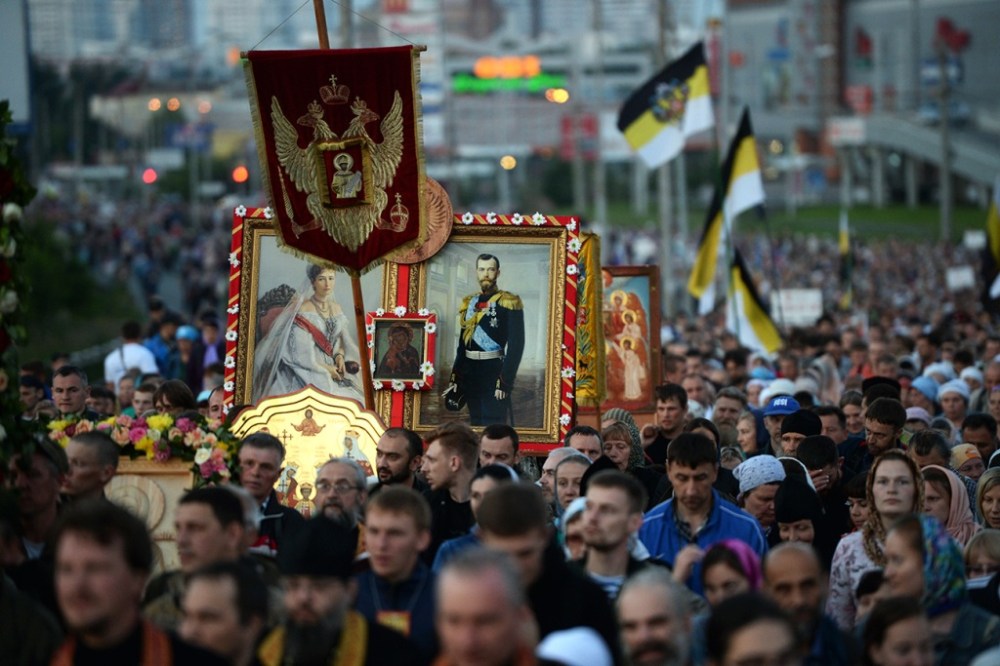
Pilgrims take part in the 21 km Cross procession from the Church on the Blood in Ekaterinburg to the Monastery of the Holy Royal Martyrs in Ganina Yama
In addition, several exhibitions will be held in Ekaterinburg, including From Repentance to the Resurrection of Russia, which will be held from 12-19 July. Representatives of the largest Orthodox churches from across Russia, Ukraine, Greece and other countries will take part.
The first Tsar’s Days was held in Ekaterinburg in 2001. In 2018, the year marking the 100th anniversary of the regicide in the Ural capital, attracted more than 100,000 Orthodox pilgrims, monarchists, among others from across Russia and around the world.
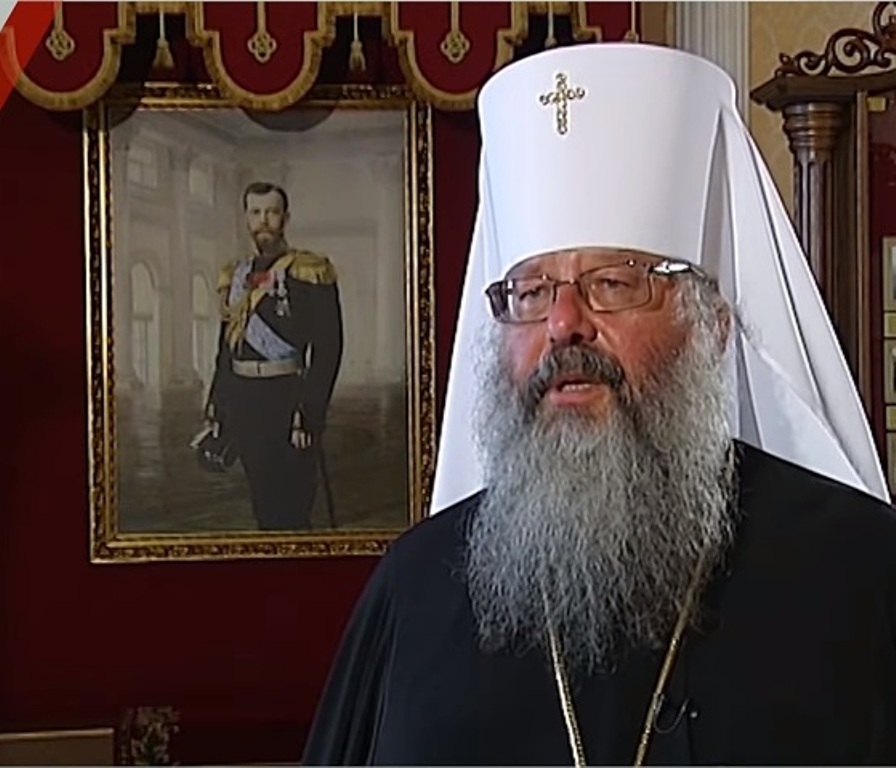
Metropolitan Kirill of Yekaterinburg and Verkhoturye
On 19th May 2020, the day marking the 152nd anniversary of the birth of Emperor Nicholas II, Metropolitan Kirill of Yekaterinburg and Verkhoturye, gave a sermon at the Church on the Blood, urging Russian society to make a fresh assessment of Russia’s much slandered Tsar.
Emperor Nicholas II was born on the day of the Righteous Job the Long-suffering, and his memory is celebrated by the Church on 6th May in the old calendar or on 19th May according to a new style.
* * *
The birthday of Saint Tsar Nicholas Alexandrovich on 19th May almost always falls during the days of Pascha, the feast of the Resurrection of our Lord Jesus Christ. In the Church on Blood in the Ural city of Ekaterinburg, on the Russian Golgotha, the memory of the Holy Tsar Martyr, born 152 years ago, on the day of memory of the Righteous Job the Long-suffering, and who was martyred 102 years ago in Ekaterinburg, who suffered for Christ, is especially celebrated. for the Orthodox faith and for Holy Russia.
In Ekaterinburg, the earthly life of a great, very kind and decent man, the anointed of God, whom we revere with love today, has ended. Today, the veneration of the Tsar-Martyr is strong among believers, however, Bolshevik myths and lies about the “weak-willed ruler Nicholas the Bloody” remain embedded in our modern-day secular society.
If we use the language of images that is inherent in modern society, whom are less and less inclined to read and think for themselves, one can weigh the enormity of the atrocity without words, it is enough to compare the photographs of the victims and the executioners. On the one hand is a photograph of the Holy Family: Tsar Nicholas, Tsarina Alexandra and their five children, and on the other is a photograph of their killers. Two very different worlds are clearly reflected In this “mirror”: light, mercy and kindness, almost heavenly beauty, on the one side, anger and black-hearted hatred, on the other.
We must understand that the people who committed the massacre of the Imperial Family and their followers for decades ruled the Russia in which we live today. The ideologists of Bolshevism needed to justify the murder of the Tsar’s family and their loyal subjects, to justify their brutal reprisals and repressions, which were committed during their reign of terror. Having launched their campaign of murder and oppression, the Bolsheviks and later the Soviets completely erased from the textbooks of history and public consciousness the large-scale achievements and great achievements of Nicholas II’s reign.
This glaring contradiction in many respects affects our contemporaries today who cannot understand and accept a Christian life and the Orthodox worldview of the Holy Tsar Nicholas. And he was truly a Christian – sincere, kind, decent, warm-hearted, pious and honourable. Therefore, for us, this date is the day of our constant and pure repentance for the atrocity committed by our ancestors …
Repentance is a change of consciousness. In relation to the Tsar’s family, this is a rethinking of the role of the Tsar Martyr in Russia’s history, a change in our attitude towards him. Yes, this activity is ongoing, but its scope is extremely modest in the absence of state ideology.
But in a world where the image of the Holy Tsar still remains slandered and distorted, and the streets, squares, and even entire regions bear the names of murderers, to this day there is no repentance. Is spiritual healing of our society possible without such a change? Is it any wonder today when among us there are those who draw the swastika, raise their hands in a Nazi salute, try to include Nazi photographs in the Immortal Regiment, putting the murderers and those killed in the memorial march? These are people brought up on the very contradictions of our public and state life.
Therefore, until sincere repentance occurs, we are doomed to suffer from the lack of spirituality of modern society, having Victory Day as the only national holiday, forgetting the Kulikovo Field, the Battle of Borodino and many other glorious victories of the Russian soldier, Russian people, sanctified by Orthodox prayer and faith. Until then, people will continue to desecrate the churches of the Fatherland, for whom there is nothing sacred in this life, because it was destroyed a century ago, when Russian history was swept into an abyss, the Russian state, including here in Ekaterinburg, where a memorial church stands today on the sight of the Ipatiev House, where on the night of 16/17 July 1918, the blood of the Holy Royal Martyrs was spilled. This seal of regicide lies today in the city where the atrocious crime took place. It’s regrettable, but much less attention is paid to preserving the memory of the Holy Tsar than the memory of their monster killers,
Therefore, today, living here, on the site of Russian Calvary, we have a great and special responsibility before God, before the Holy Church, before our Russian Motherland and before the memory of the Holy Royal Martyrs. If others around us do not repent, we must do this all the time. The memory of the Holy Tsar and the fact that the last days of his holy life passed here in Ekaterinburg, that it was here that he accepted his martyrdom – this is our personal responsibility to the Holy Church and to all those future generations of people who, hopefully, have something they can change within their own environment and our region will not bear the name of any of the men who participated in regicide.
And while we are serving the Divine Liturgy at the Tsar’s Altar, while we honour the memory of the Holy Martyr Tsar Nicholas and all the new martyrs who were killed for the Orthodox faith and for our Holy Fatherland, until then we can still hope for God’s mercy. We will pray to God and meekly, humbly – like the Holy Tsar himself – to wish salvation to everyone who lives among us, who is our compatriot, and who today does not know or does not want to know the feat of the Holy Tsar and all the new martyrs and confessors of the Russian Church – who to this day they stand for Holy Russia, they protect us and do not let everything that has been gathered in our Fatherland for centuries and that today is held by some special Divine power, preserving our people, our country on this earth in peace and prosperity .
Since the fall of the Soviet Union in 1991, great efforts by historians and the Russian Orthodox Church to research and establish a fresh and honest reassessment of the last Russian Tsar, but in the absence of a state ideology and a clear position on this issue, all this is but a small fraction.
It was in Ekaterinburg in May 2018, on the eve of the 150th anniversary of the birth of the last Russian Emperor, on the initiative of the World Russian People’s Cathedral and the Double-Headed Eagle Society, that a public forum was held to preserve the heritage of Tsar Nicholas II. Scientists and members of the public raised the issue of preserving the historical memory of the Sovereign, gathered to recognize the merits of Nicholas II on the development of the Russian state and public assessment of the murder of the Tsar’s family, committed a century ago. Today, the results of this forum require further development.
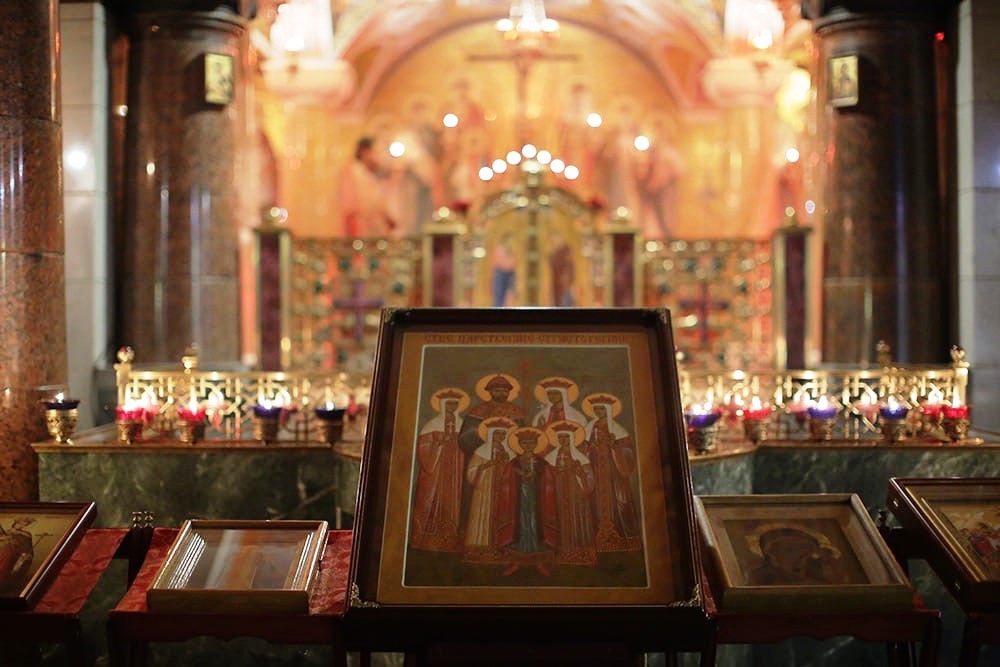
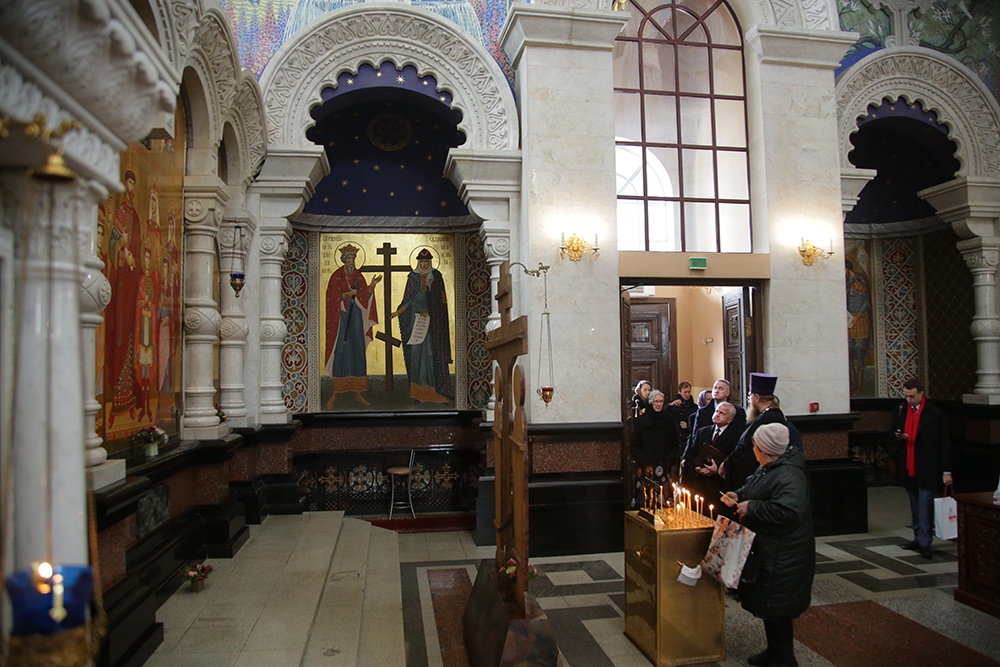
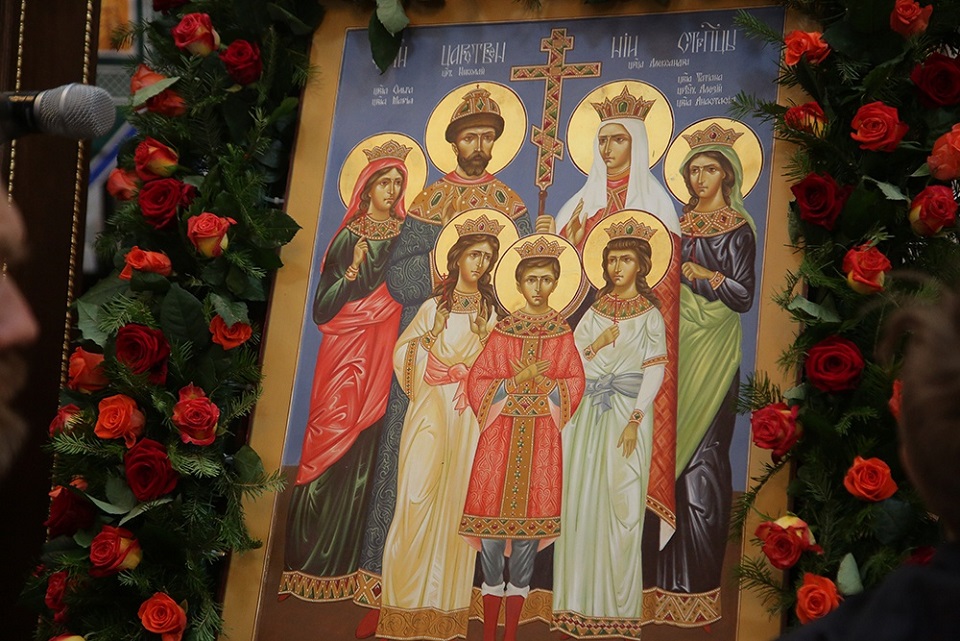
An icon of the Holy Royal Martyrs set against the backdrop of the entrance to the so-called Royal (aka Imperial) Room, in the lower church of the Church on the Blood in Ekaterinburg
On 30th April, an evening Divine Liturgy was served in memory of the Holy Royal Martyrs in the Church on the Blood in Ekaterinburg. A Divine Liturgy will be held every night from 30th April to 17th July – marking the 78 days in which Emperor Nicholas II along with his family and faithful retainers were held under arrest in the Ipatiev House.
Night liturgies are traditionally held in the so-called Royal (aka Imperial) Room, situated in the lower church of the Church on the Blood. An altar was erected on the site of the murder of the Imperial family in the early morning hours of 17th July 1918. In 2018 the room and the altar were decorated with the blessing of the Metropolitan of Ekaterinburg and Verkhotursky Cyril to the 100th anniversary of the death and martyrdom of the Imperial family.
The tradition of holding 78 nightly Divine Liturgies in the Church on the Blood from 30th April to 17th July was established with the blessing of the ruling bishop in 2018.
Святы Царственные мученики, молите Бога о нас! Holy Royal Martyrs, pray to God for us!
On 16th March 2020, Metropolitan of Ekaterinburg and Verkhotursky Kirill met with US Ambassador to the Russian Federation John J. Sullivan, US Consul in Ekaterinburg Amy Storrow, and Archpriest Daniil Andreiuk, Representative of the Orthodox Church in America under the Patriarch of Moscow and All Russia.
The visit to the Ural city by Ambassador Sullivan and his entourage took place in the Synodal Hall of the Tsarsky Cultural and Educational Center, located in the Patriarchal Compound, across from the Church on the Blood.
The US ambassador thanked Metropolitan Kirill for the meeting and noted that he plans to come again.
– “Indeed, we need to pray to God and, at the same time, we will continue to work together. This is my first visit to Ekaterinburg, and I plan to return,” the ambassador said.
Mr. Sullivan also congratulated Metropolitan Kirill on the 22nd anniversary of his Episcopal ordination. Then the archpastor presented his guest with souvenirs of his visit to Ekaterinburg.
After the meeting, Archpriest Maxim Minyailo, senior priest of the Church on the Blood conducted an excursion for their American guests around the Museum of the Holy Royal Family in the Tsarsky Center and the Church on the Blood, during which Ural shrines were presented that preserve the memory of the feat of the holy Royal Martyrs.
NOTE: The altar of the Imperial Room is situated in the lower church, sanctified in honor of the Holy Royal Martyrs. It was established on the site of the room located in the basement of the Ipatiev House, where Emperor Nicholas II, his family, and four retainers were all brutally murdered on the night of 16/17 July 1918.
In the summer of 2018, with the blessing of Metropolitan Kirill of Ekaterinburg and Verkhoturye, the altar of the Imperial Chapel of the Holy Royal Passion-Bearers – the so-called Royal Room – was redesigned and decorated for the Tsar’s Days held in Ekaterinburg. The interior of the room has completely changed: like the Cuvuclia in the Church of the Holy Sepulcher in Jerusalem.
I am very pleased to announce that I will be returning to Russia in September, where I will spend 10 days in Ekaterinburg and Tobolsk.
I have booked my flights on Aeroflot from Toronto-New York (JFK)-Moscow-Ekaterinburg, 19th – 29th September. This journey marks my 30th visit to Russia since 1986, my 4th visit to Ekaterinburg since 2012, and my 1st visit to Tobolsk!
The purpose of this journey is to complete research on my forthcoming book My Russia. Ekaterinburg. I began researching and writing this book in 2018, with plans to publish it prior to the centenary of the deaths of Nicholas II and his family. Instead, I delayed the publication, due to the fact that I attended the Tsars Days events held in Ekaterinburg in July 2018. In hindsight, I am happy that I made the decision to delay the books publication, as I was able to collect a lot of additional material for the book, as well as hundreds of photographs, many of which will be featured in my book.
I will spend 5 days in Ekaterinburg, revisiting the many places associated with the last days of the Imperial Family, including the Church on the Blood, the Novo-Tikhvin Convent, Ganina Yama, Porosenkov Log, as well as three museums dedicated to the Holy Royal Martyrs: Museum of the Holy Royal Family (Patriarchal Compound), Romanov Memorial Hall (Museum of History and Archaeology in the Urals); and Museum and Exhibition Center (Ganina Yama).
Once a bastion of Bolshevism, Ekaterinburg has slowly shed its status as the “capital of atheism”. Since the fall of the Soviet Union in 1991, the Urals has experienced a revival of faith, with Ekaterinburg at the into the center of Orthodox Russia in the Urals. Ekaterinburg has done more to honour Nicholas II and his family than any other city in Russia.
Thanks to my previous visits to Ekaterinburg in 2012, 2016 and 2018, it is a city which I have grown to admire and love.
The Museum of the Family of Emperor Nicholas II, Tobolsk
From there, I will travel by train to Tobolsk – a 10-hour journey – and spend 3 days exploring this beautiful historic city and former capital of Siberia. The city is known for its 18th-century snow-white coloured Kremlin, Orthodox churches and many buildings dating from the Tsarist period, which have thankfully been preserved to this day.
My primary interest will, of course, be the former Governors Mansion, where the Imperial Family lived under house arrest from August 1917 to April 1918. Following the October Revolution, it was renamed the ‘House of Freedom’.
Today, the former Governors Mansion houses the Museum of the Family of Emperor Nicholas II. The museum was opened in 2018, the year marking the 100th anniversary of the deaths of the Imperial family.
Thirteen rooms have been recreated in the building, many of which have preserved many historic elements and details from the time of the Imperial Family’s stay here. The museum features more than 900 artefacts, including memorial and personal items related to Nicholas II and his family.
Not only am I looking forward to meeting up with old friends and making new acquaintances in my favourite Russian city Ekaterinburg, I am also very much looking forward to exploring Tobolsk for the very first time. An added bonus to this journey, will be the opportunity to see the Urals decked out in the beautiful colours of autumn.
Upon my return from Russia, I will publish a summary of my visit in an issue of Sovereign, and put the finishing touches on my book My Russia. Ekaterinburg, adding additional text and photographs.
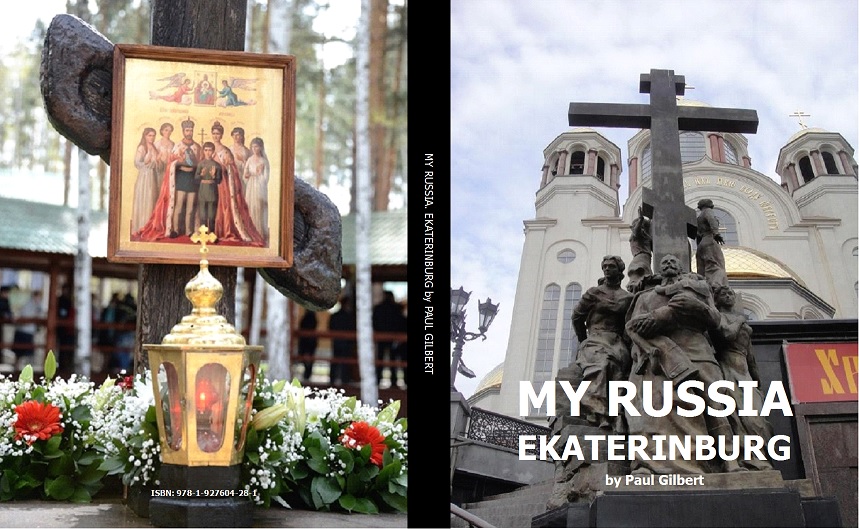
My Russia. Ekaterinburg – front and back covers
The present draft of My Russia. Ekaterinburg, already contains an Introduction, plus illustrated chapters on the Churches of Ekaterinburg; a History of the Ipatiev House; the Church on the Blood; the Patriarchal Compound and the Museum of the Holy Royal Family; the Novo-Tikhvin Convent; the Romanov Memorial Hall in the Museum of History and Archaeology in the Urals; Tsar’s Days; Ganina Yama, the Monastery of the Holy Royal Martyrs and the Museum and Exhibition Center; Porosenkov Log; Alapaevsk; Tyumen; Tobolsk and the Museum of the Family of Emperor Nicholas II; helpful Visitor Information and much more.
With 250 pages, and richly illustrated with 300 black and white photos – many taken by me during my visits to the Urals – My Russia. Ekaterinburg will be my largest publishing project to date. God willing, my book will be available before Christmas.
On 22-23 September 1977, the Ipatiev House in Ekaterinburg where the Russian Imperial Family were held under house arrest for 78 days before being murdered, was razed to the ground. The decision of the Soviet authorities was perceived rather ambiguously, but what was the reason behind the destruction of this historic building, and could it have been saved?
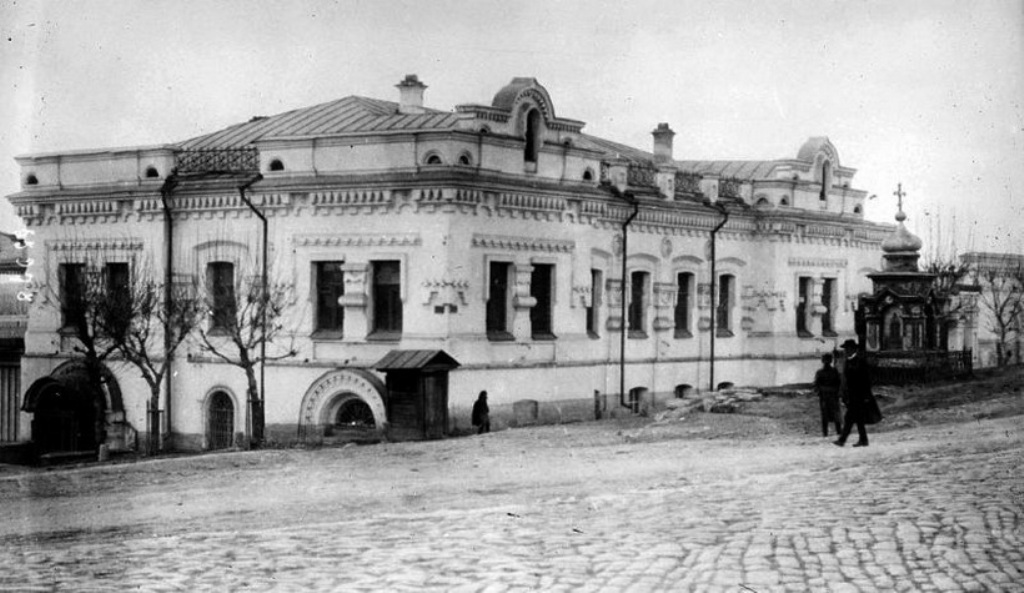
The Ipatiev House in 1918
A house with a tragic fate
The two-storey stone Ipatiev House was built in the 1880s by state adviser I.I. Redikortsev, on the western slope of the Ascension Hill – a notable hill in Ekaterinburg. It was located at No. 49/9 on the corner of Voznesensky Prospekt and Voznesensky Lane (renamed Karl Libnecht and Klara Zetkin respectively, after 1917). The eastern facade (facing Voznesensky Prospekt) was one-story, and the western (facing the garden) had two floors.
Redikortsev did not remain the owner of the house for long, he was accused of corruption, and in order to improve his shaky financial condition in 1898 he sold the house to the gold miner I. G. Sharaviev.
In 1908, the Ipatiev House was purchased by military civil engineer Nikolai Nikolaevich Ipatiev, who paid 6,000 rubles to the former owner. The Ipatiev family lived in the upper floor, while the the lower floor was used as Ipatiev’s office. The house had running water and sewer, electricity and telephone. The interiors were richly decorated with cast iron, stucco mouldings, and artistically painted ceilings.
On 27th April 1918, the Bolsheviks ordered Ipatiev to vacate the mansion within two days, for the maintenance of the Imperial family, who were to be transferred from Tobolsk. Due to the fact that Ipatiev was away, his personal belongings were locked in a basement pantry next to the room in which the Imperial family were later shot. Subsequently, the basement was sealed in the presence of the owner. It is believed that the choice of the house was due to the fact that Ipatiev was well acquainted with the members of the Ural Council and, in particular, Yakov Yurovsky who served as a prominent representative of the cadet party, and who, after the February Revolution, was appointed a member of the local public security committee.
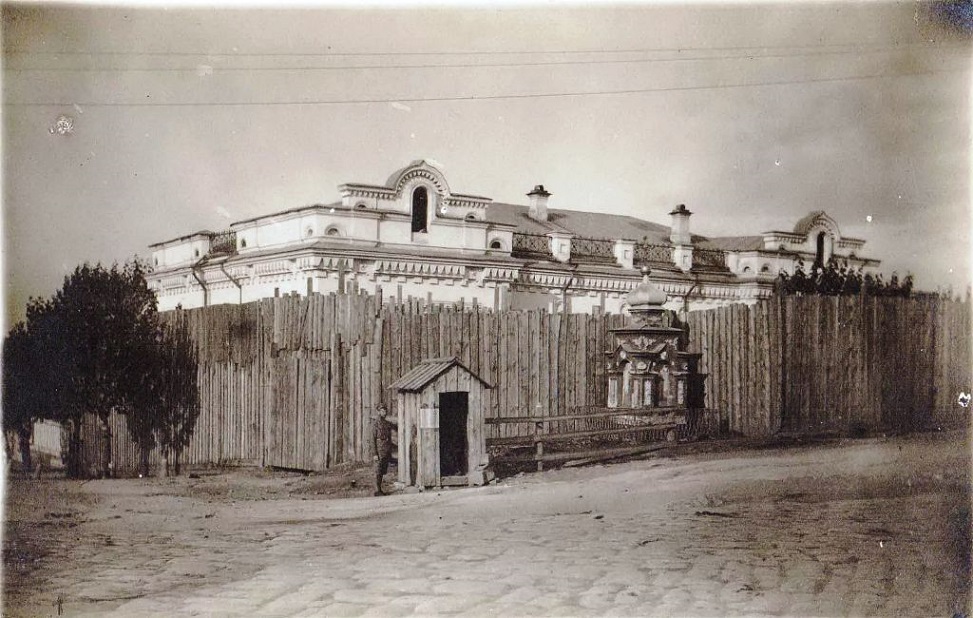
Machine guns were installed in the attics of neighbouring buildings, the house itself was surrounded by a high wooden double fence, the height of which was higher than the windows of the second floor of the Ipatiev House, with a single wicket gate, which was constantly guarded, two security posts were located inside, eight outside, thus completely prepared for the arrival of “Citizen Romanov” Nicholas II, his wife and their daughter Maria.
Immediately after the murder of the Romanovs, which occurred on the night of 16/17 July 1918, the house was returned to Ipatiev. Five days later, White Army units entered the city. Nikolai decided to emigrate, and sold the mansion to representatives of the White Army, and for a short time the mansion served as the headquarters of the Siberian Army, and representatives of the Russian government. Their stay in the Ural capital was cut short, after the city was recaptured by the Bolsheviks.
From 1922, the Ipatiev House housed a dormitory for university students and apartments for Soviet employees. For some time there was even a kindergarten, and in the basement, where the Imperial family were murdered, a children’s shower was installed.
In 1927, it was decided to open the Museum of the Revolution in the building. The Museum of the Revolution was open daily except Monday and Thursday from 12 noon to 6 pm, the cost of tickets was 5 kopecks for tourists, 10 kopecks. for union members and 25 kopecks for every one else. The tour of the museum included a visit to the basement and the room where the Imperial Family were shot. To complete the exhibit, a decision was made to restore the bullet riddled wall in the murder room, since the retreating White Guards had disassembled the genuine one and took it with them. [N.B. if there is any truth to this, the fate of the original wall from the “killing room” remains yet another mystery – PG]
In 1938, the former mansion housed expositions of the Anti-Religious and Cultural-Educational Museum, as well as offices of various departments. If turning the Ipatiev House into an “Anti-Religious” Museum was not enough, in 1923, the Bolsheviks imposed one further indignity on the murdered tsar and his family, by issuing postcards of the house surrounded by the wooden fence, bearing the insulting and disrespectful caption “the last palace of the last tsar”.
From the beginning of the 1970s, a branch of the Chelyabinsk Institute of Culture was moved here: in the basement, students even staged performances, as evidenced by preserved photographs.
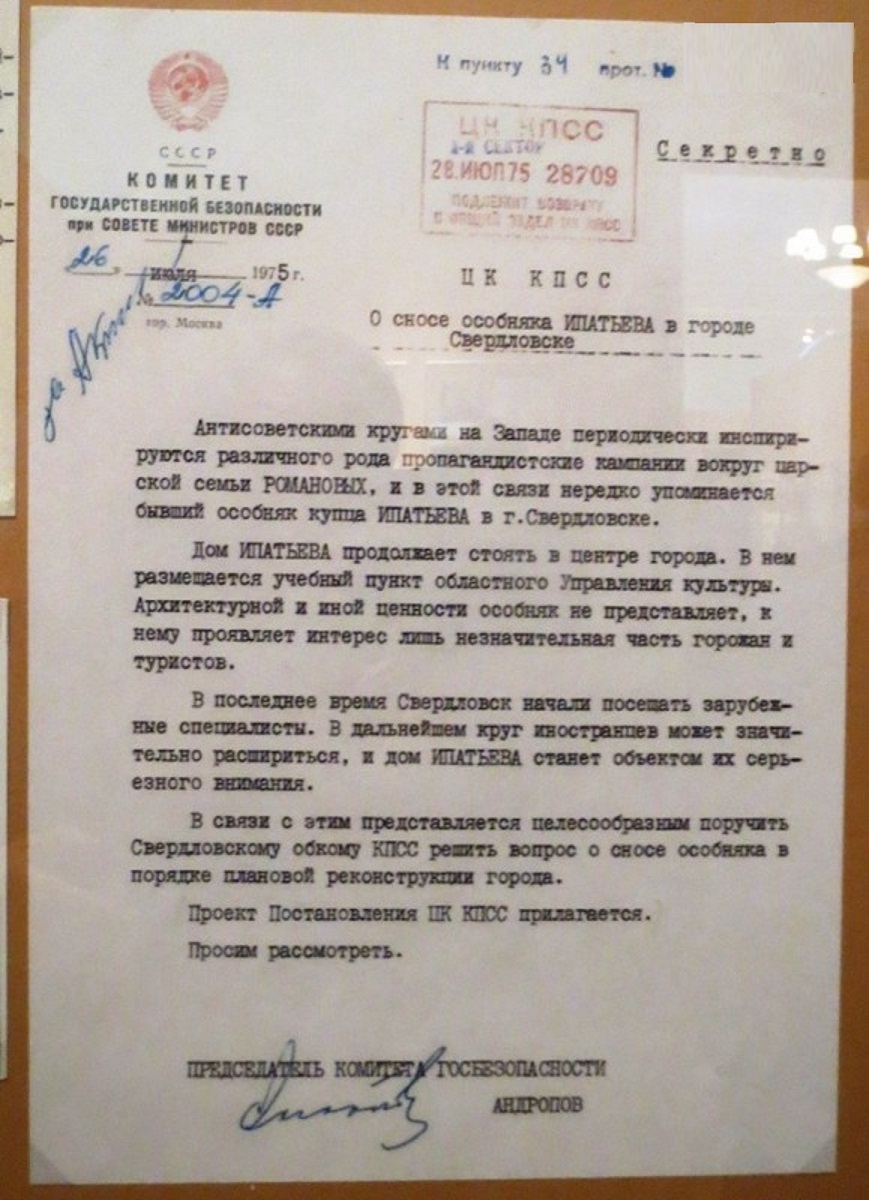
Andropov’s “secret note No. 2004-A” on the Ipatiev House
The KGB and Politburo take action
The day of 26th July 1975 was a turning point in the fate of the Ipatiev House. On this day, a secret note No. 2004-A was issued.
“On the demolition of the Ipatiev mansion in the city of Sverdlovsk” was sent from the KGB to the Politburo of the Central Committee of the Communist Party of the Soviet Union (CPSU). The text of the document read:
“Anti-Soviet circles in the West periodically inspire various kinds of propaganda campaigns around the Romanov royal family, whereby the former mansion of the merchant Ipatiev in Sverdlovsk is often mentioned. Ipatiev’s house continues to stand in the center of the city. It houses the training center of the regional Department of Culture.
“The mansion is of no architectural or historic importance; only a small number of the townspeople and tourists are interested in it. Recently, foreigners began to visit Sverdlovsk. In the future, the number of foreigners is expected to increase significantly, and Ipatiev’s house will no doubt become an object of their curiosity and interest. In this regard, it seems appropriate to entrust the Sverdlovsk Regional Committee of the CPSU to resolve the issue of demolishing the mansion in the order of the planned reconstruction of the city. The draft resolution of the Central Committee of the CPSU is attached. Please consider.”
The document was signed by the chairman of the State Security Committee, *Yuri Andropov (1914-1984). * Andropov later served as third General Secretary of the Communist Party of the Soviet Union, from November 1982 until his death in February 1984.
In the 1990s, Vladimir Solovyov, an investigator from the Prosecutor General’s Office, who investigated the murder of the tsar’s family, stated that the KGB had received information about how, every year, on the anniversary of the death of the Imperial Family, people came to the Ipatiev House, to light candles and offer prayers. The authorities referred to these annual visits “of painful interest” while declaring them as “anti-Soviet activity.” The Party bosses could not allow these pilgrimages to continue.
On 30th July 1975, Andropov’s proposal was unanimously adopted by the Politburo. Upon learning of the impending demolition of the Ipatiev House, the director of the museum, gave the order to save everything that could be carried away.
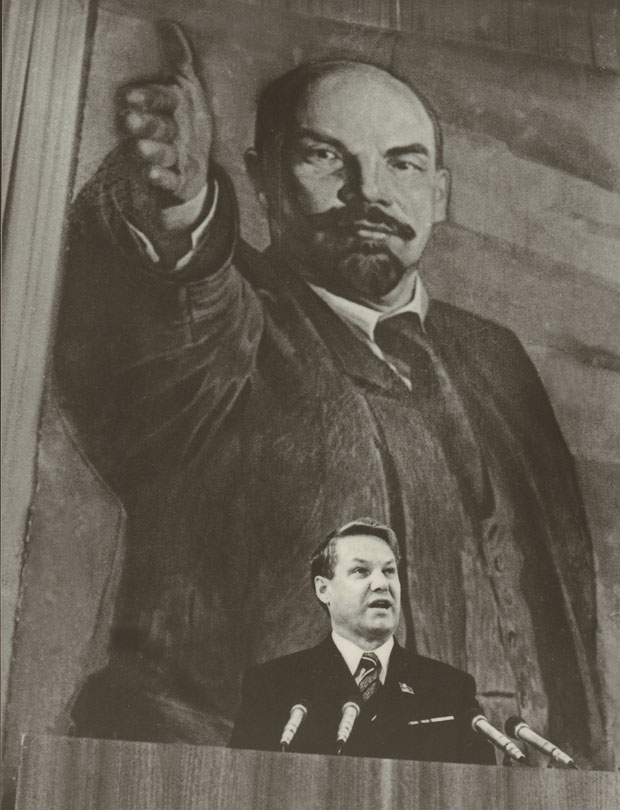
Boris Yeltsin. First Secretary of the Sverdlovsk Regional Committee of the CPSU 1977
“It was impossible to resist”
The elimination of the Ipatiev House was entrusted to local authorities. The order was executed by Boris Yeltsin, First Secretary of the Sverdlovsk Regional Committee of the CPSU . “It was impossible to resist, not to fulfill the Politburo Resolution,” Yeltsin would later note in his memoirs. “They assembled the equipment and demolished it in one night. If I had refused, I would have been left without work, and the new secretary of the regional committee would have complied with the order anyway,” he concluded.
The unofficial reason behind the demolition of the Ipatiev House was the need for reconstruction of the entire block – therefore, according to the “reconstruction” plans, all houses located in the entire block were to be demolished. The fact that the houses and merchant buildings located in the quarter were of architectural and historical value of late 19th-early 20th century Ekaterinburg, was of no interest to the authorities.
Experts noted that having destroyed the entire block, the authorities made it difficult to find the exact place where the Ipatiev House was located.
After the construction of the Church on the Blood, some people claimed that the Imperial Room – built on the site of the basement room of the Ipatiev House, where the family were all murdered – located in the Lower Church of the Church on the Blood is inaccurate. Each year on the anniversary of the regicide, a small group of people gather and create a square on one of the marble stones on the territory of the Church on the Blood. Here, they lay flowers, light candles and offer up prayers. It is ironic that given that the experts could not determine the exact spot, that a group of amateurs could?!
Prior to the demolition of the Ipatiev House, local historians removed many valuable interior elements, including a fireplace, door handles, tiles, stucco molding from walls, iron bars from windows, etc. These items can be seen today in local museums in Ekaterinburg and Ganina Yama. It is interesting to note, when opening the floor in the grand duchesses bedroom, a golden bracelet with precious stones and the monogram ‘T’ was found hidden under the baseboard and wrapped in a newspaper. The whereabouts of this bracelet is unknown to the author.
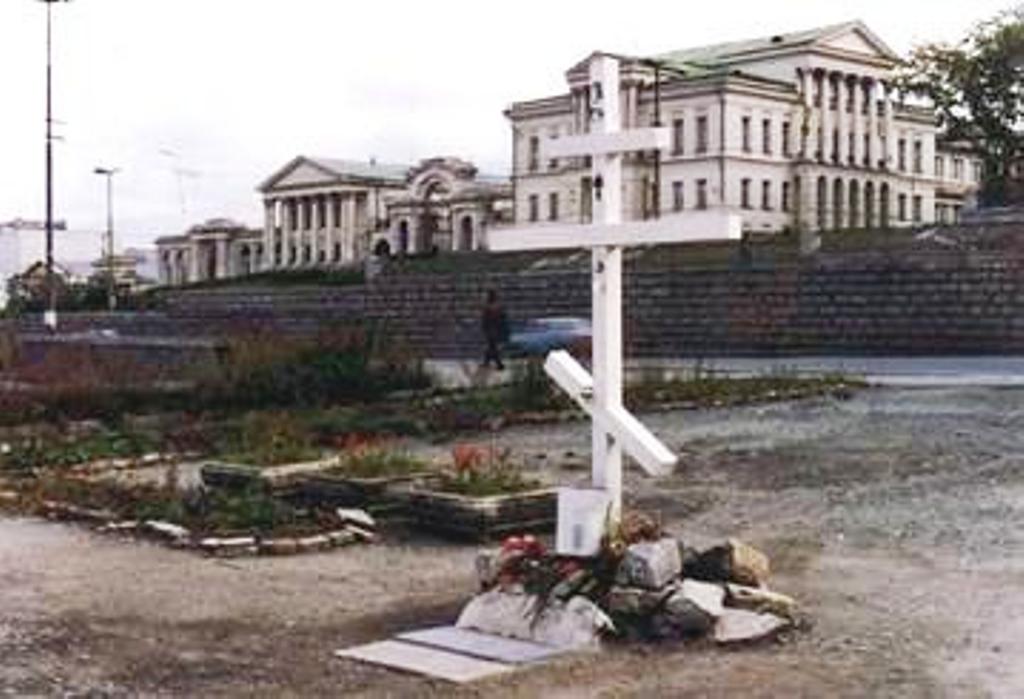
A simple wooden cross marked the spot of the Ipatiev House after its demolition
Could the Ipatiev House have been saved?
As previously noted in his memoirs, Yeltsin claimed that the house was destroyed in one night, but in reality it took two days to raze the building to the ground. Perhaps he just forgot. Here’s what else is remarkable. The destruction of the mansion began on 22nd September 1977, that is, more than two years after the decision of the Politburo.
The thing is that in 1975 the First Secretary of the Sverdlovsk Regional Party Committee was Yakov Petrovich Ryabov – Yeltsin replaced him in this post only on 2nd November 1976. Journalists later asked Ryabov why he was in no hurry to comply with the highest order? “And why should I be in a hurry? The house stood in a lowland, it was not bothering anyone,” the former head of Sverdlovsk replied. According to Ryabov, he told his subordinates that when the reconstruction plan for the entire micro-district was ready, then a demolition decision would be made. Rumor had it that Ryabov wanted to keep the house and that even Brezhnev had taken an interest in it. In any case, it is known that the demolition of the house was opposed by representatives of the All-Union Society for the Protection of Monuments of History and Culture, and Ryabov helped them in every way. Many communists who were not members of the Politburo did not agree with the destruction of the historical building.
Perhaps such a confrontation contributed to the postponement of the demolition? It is also possible that those in Moscow would eventually have forgotten about their decision, however, the new secretary of the Sverdlovsk regional committee, Yeltsin, took the initiative and brought it to an end. Most historians agree that Boris Yeltsin was keen to improving his political position by transferring to Moscow and took advantage of an opportunity given to him.
* * *
In August 2000, Nicholas II and his family were canonized by the Moscow Patriarchate as Royal Martyrs. In 2000-2003, the Church on Blood in Honour of All Saints Resplendent in the Russian Land was built on the site of the former Ipatiev House. On the night of 16/17 July 2018, His Holiness Patriarch Kirill delivered a Divine Liturgy here. This was followed by a cross procession by an estimated 100,000 people from the Church on the Blood in Ekaterinburg to the Monastery of the Holy Royal Martyrs at Ganina Yama (21 km).
On 16 June 2003, 85 years after the murders of the former imperial family, the main church was consecrated by Metropolitan bishop Yuvenaly, delegated by Patriarch Alexy II who was too ill at the time to travel to Ekaterinburg, assisted by Russian Orthodox clergy from all over the Russian Federation.
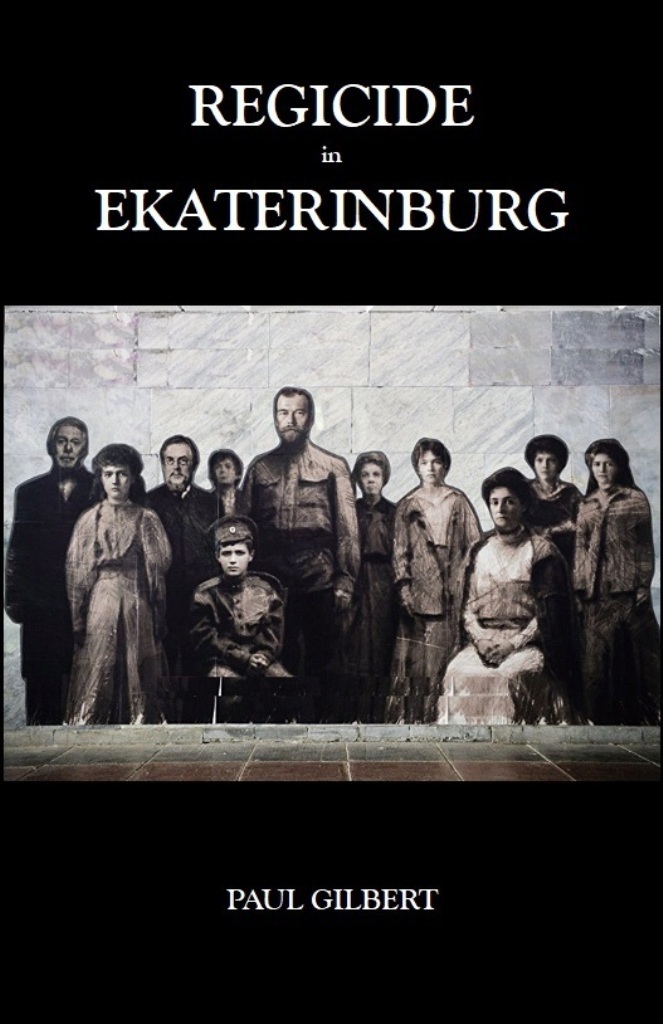
The following NEW title was compiled and edited by independent researchers and Romanov historian Paul Gilbert was published in August 2024.
This fascinating new study features 14 chapters on this tragic event, which include the memoirs of a British intelligence officer and journalist, and two First-English translations. In addition, 11 chapters were written by Paul Gilbert, based on new documents sourced from Russian archival and media sources over the past decade.
Please refer to the link provided for further details about the content of this new title . . .
NOTE: All of the articles pertaining to Nicholas II and his family which were originally published in my Royal Russia News blog, have been moved to this Nicholas II blog. This article was originally posted on 30 April 2018 in my Royal Russia News blog – PG
The above VIDEO is an announcement for the procession, which highlights the route known as the Path of Sorrow of the Holy Royal Passion-Bearers immortalized by the Russian Orthodox Church with churches in Ekaterinburg.
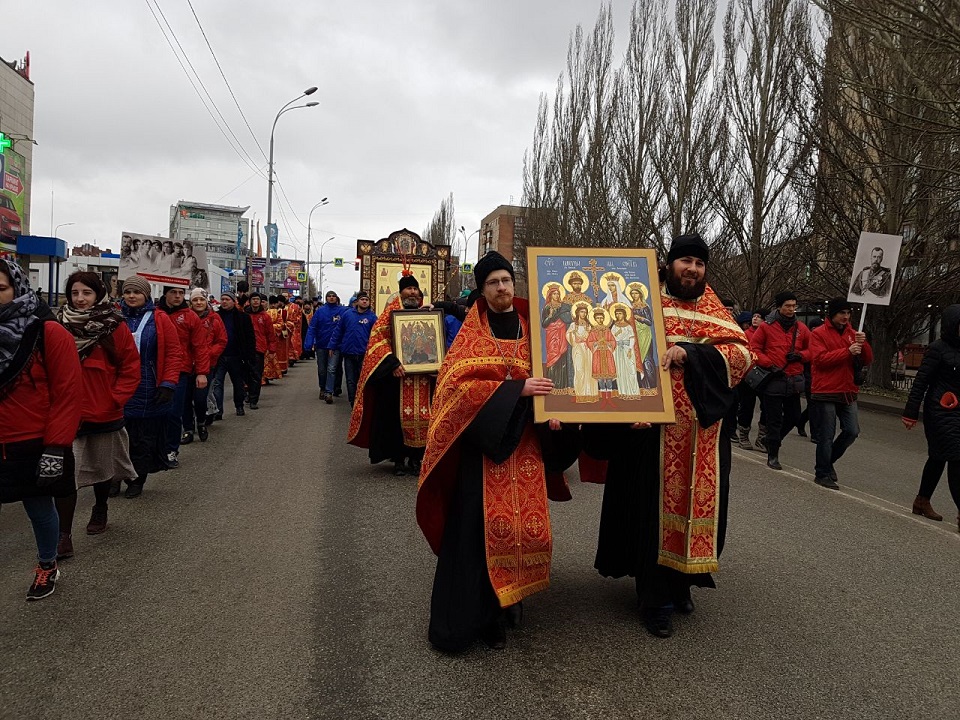
In the early morning of 30th April 2018, a religious procession took place in Ekaterinburg marking the 100th anniversary of the arrival of Nicholas II and members of his family from Tobolsk. More than 1,500 people took park in the prayer procession, which passed from the Memorial Cross in the area of the Shartash Railway Station to the Church on the Blood – built on the site of the former Ipatiev House, where Nicholas II, his consort Alexandra, their five children, and four faithful retainers were all murdered on the night of 16/17 July 1918 by members of the Ural Soviet.
Emperor Nicholas II, Empress Alexandra Feodorovna, and their daughter Grand Duchess Maria Nikolaevna were transferred from Tobolsk, and handed over to the Ural Soviet on 30th April 1918. They were accompanied by the Tsar’s aide Prince Vasily Dolgorukov, the family’s physician Dr. Eugene Botkin, and three servants. The rest of the family: Grand Duchesses Olga, Tatiana, Anastasia, and Tsesarevich Alexei were brought to Ekaterinburg in May 1918.
The procession was headed by the bishops of the Ekaterinburg Diocese: Metropolitan Kirill of Yekaterinburg and Verkhoturye, Bishop of Kamensk and Alapaevsky Methodius, Bishop of Sredneuralsky Eugene, vicar of Ekaterinburg diocese, Bishop of Serov and Krasnoturinsky Alexy.
The procession was attended by numerous clergy and monastics, Cossacks, monarchists, as well as students of the Ekaterinburg theological seminary, nurses and volunteers of the Orthodox Relief Service, representatives of Orthodox brotherhoods, employees and volunteers of the Nika Charity Fund, representatives of youth parish clubs, members of the Youth Cossack organization of the Sverdlovsk region, activists of the youth department of the diocese, as well as numerous parishioners of the churches of the Ekaterinburg diocese.
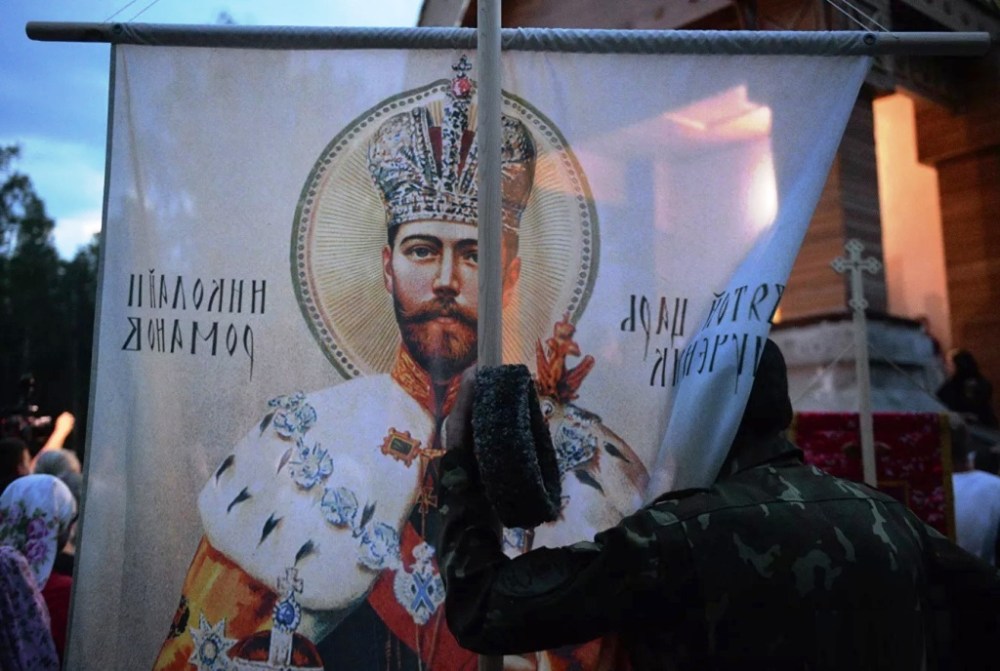
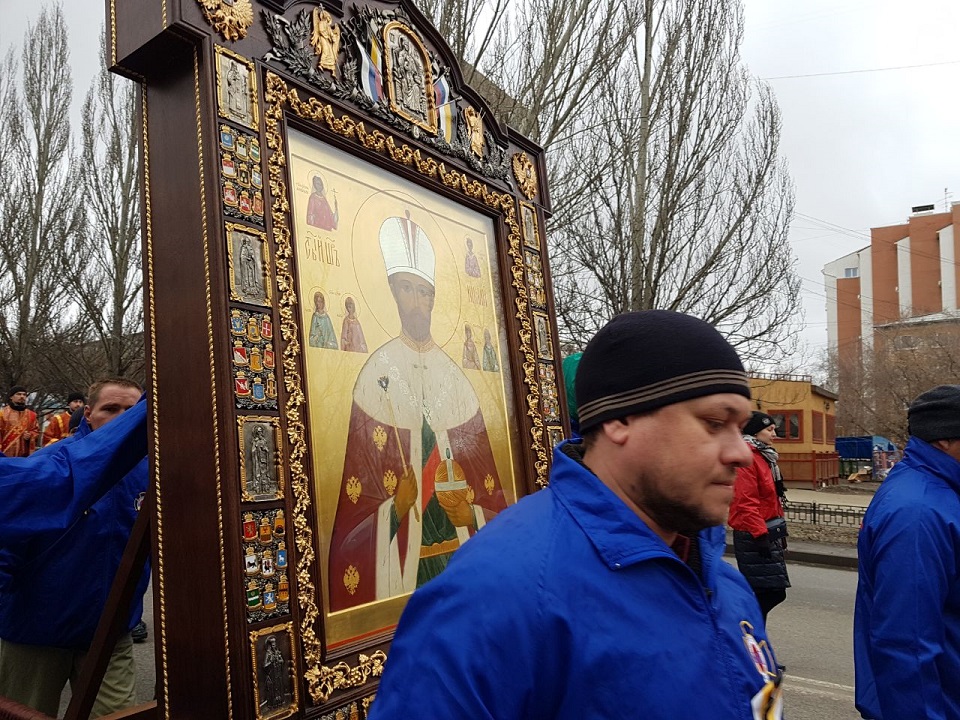
Crusaders dressed in red jackets carried banners, icons, as well as images of Emperor Nicholas II and the Holy Royal Family, thereby emphasizing the importance of the year of marking the 100th anniversary of the death and martyrdom of the Holy Royal Passion-Bearers.
The column of believers began its memorable procession, dedicated to the 100th anniversary of the arrival of Nicholas II and members of his family in Ekaterinburg from Tobolsk, from the Memorial Cross and the foundation stone, which are located near Shartash Railway Station (in 1918 – Yekaterinburg-II Station), on the future site of the Church in Honour of the Icon of the Mother of God “Valaam” – one of the three miraculous icons, revealed during the reign of Nicholas II.
The arrival and the route known as the “Path of Sorrow of the Holy Royal Passion-Bearers” are immortalized by the Russian Orthodox Church with churches in Ekaterinburg.
The procession passed through Ulitsas (streets) Kuibyshev, East, Chelyuskintsev, Sverdlov, Karl Liebknecht, Tsarskoy, stopping at the Church of the Icon of the Mother of God Port Arthur and the Church of the Icon of the Mother of God “Derzhavnaya”.
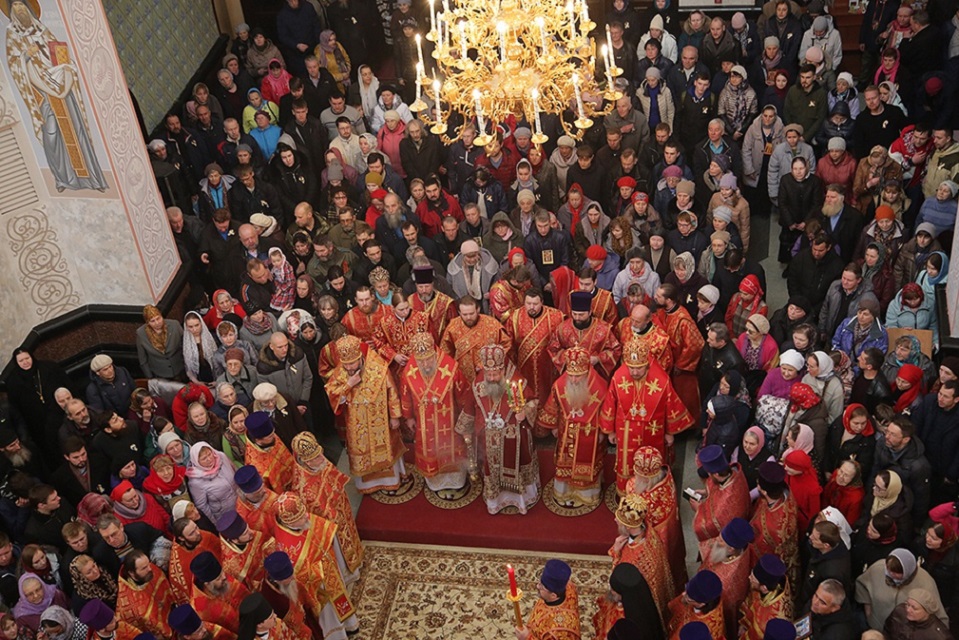
The memorial procession ended at the Church on the Blood, where Metropolitan Kirill, delivered a Divine Liturgy.
The above VIDEO shows the cross procession and the episcopal Divine Liturgy held in memory of the arrival in Ekaterinburg from Tobolsk of Nicholas II and members of his family on 30th April 1918. The Divine Liturgy was performed in the Church on the Blood, by Metropolitan Kirill of Yekaterinburg and Verkhoturye and the bishops of the Ekaterinburg Diocese.
Bishop’s gather for a Divine Liturgy in the Church on the Blood in Ekaterinburg
NOTE: All of the articles pertaining to Nicholas II and his family which were originally published in my Royal Russia News blog, have been moved to this Nicholas II blog. This article was originally posted on 19 May 2018 in my Royal Russia News blog – PG
On 19th May 2018, on the day marking the 150th anniversary of the birth of Emperor Nicholas Alexandrovich, a festive Bishop’s Divine Liturgy was held in the Church on the Blood in Ekaterinburg.
The Divine Liturgy was headed by the Metropolitan of Pereleimon (Greek Orthodox Church), Metropolitan of Pereleimon (Greek Orthodox Church), and also by the bishops of the Ekaterinburg Metropolis: Metropolitan Kirill of Yekaterinburg and Verkhoturye, Bishop Mefody of Bishop of Kamen and Alapayev, Bishop of Nizhny Tagil and Nevyansky Eugene, Bishop of Serov and Krasnoturinsky Alexis. The Most Reverend Bishops were served by numerous clergy of the Ekaterinburg Diocese.
Metropolitan Petyeleimon of Berea arrived in the Ekaterinburg Diocese from Greece, specially to celebrate the 150th anniversary of the birth of the Emperor. Prayers and hymns in Greek were heard during the service.
Hymns for worship were performed by the choir of the Sretensky Monastery, who travelled from Moscow to the Ural capital to pay tribute to the memory of the Holy Tsar-Martyr.
Participants of a public forum dedicated to Nicholas II, held in the Cosmos Theater also took part in the Divine Liturgy, including the famous historian and author Petr Valentinovich Multatuli, representative of the Russian Academy of Sciences historian Vladimir Mikhailovich Lavrov, among others.
A sacramental verse, a sermon about the holy Tsar-Passion-Bearer was read by senior priest of the Church on the Blood, Protopriest Maxim Miniyailo. Fr Maxim noted that the birthday of the sovereign, which was always a public holiday in the Russian Empire. He spoke about the personality of the sovereign himself, reminding the Faithful that Nicholas II was “our Heavenly patron and an example to each of us in faith, in service to the Lord and Fatherland , in relation to his family and neighbor, on the anniversary of the Sovereign as an occasion to think about salvation.”
The number of parishioners in attendance at the Divine Liturgy filled the Church on the Blood to capacity, with the number of faithful spilling out onto the church’s porch, and into the street.
Vladyka Metropolitan congratulated everyone on the occasion of the 150th anniversary of the birth of the Emperor, thanking those who travelled to Ekaterinburg to pay tribute to the memory of the Holy Tsar Martyr, including guests from Greece, Serbia and Bulgaria; thanked the bishop of Vera Panteleimon; thanked the Sretensky Choir for the wonderful concert that took place the day before, and for today’s participation in the Diving Liturgy.












 Nicholas II
You must be logged in to post a comment.