The Imperial Room in the Church on the Blood, Ekaterinburg
136a

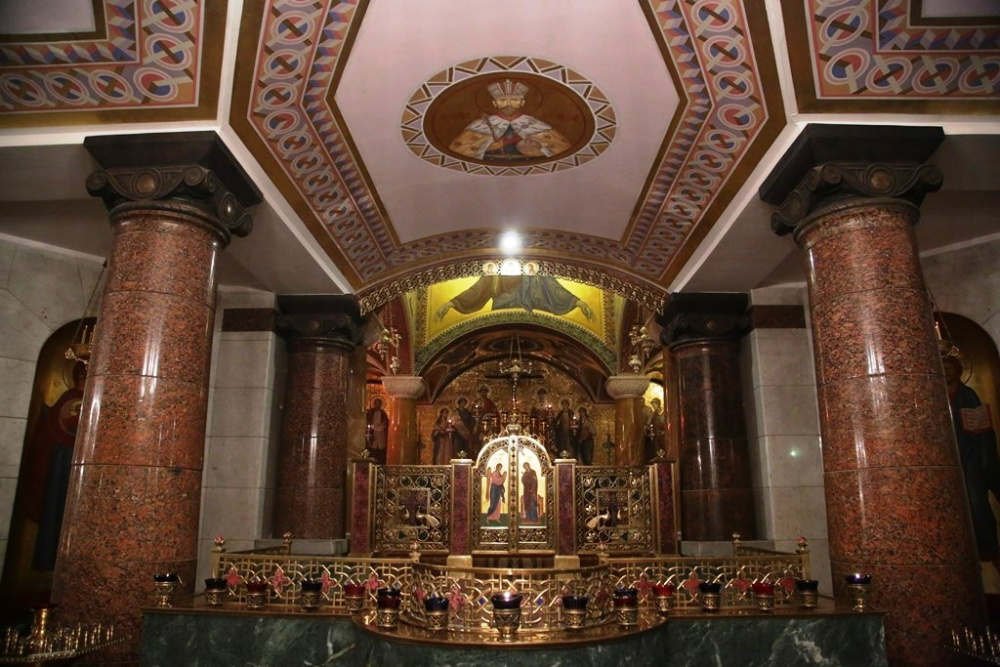
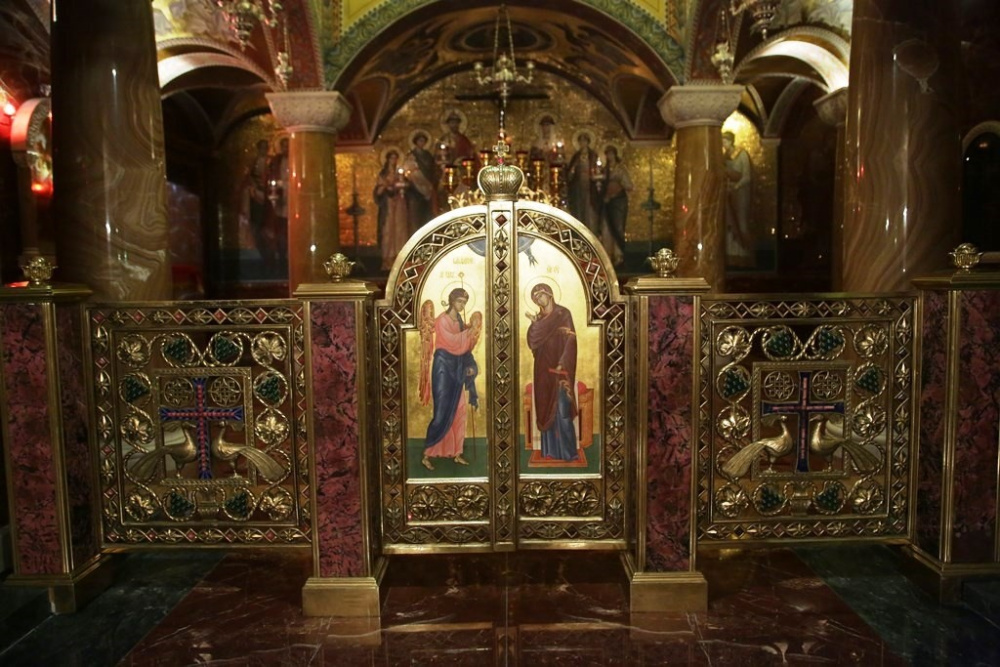
On 20th June 2018, representatives of the media were granted a first look at the Imperial Room, in the Church on the Blood in Ekaterinburg. The altar of the Imperial Room is situated in the lower church sanctified in honor of the Holy Royal Martyrs. It was established on the site of the room located in the basement of the Ipatiev House, where Emperor Nicholas II, his family, and four retainers were all brutally murdered on the night of 16/17 July 1918. The decoration of the room received the blessing of the Metropolitan of Ekaterinburg and Verkhoturye Kirill to mark the centenary of this tragic event.
136b

136c

The new design, the reconstruction of the altar, along with additional work in the Imperial Room, was carried out during the past year,the senior priest of the Church on Blood Achpriest Maxim Minailyo told journalists.

Father Maxim noted that the decoration of the Imperial Room was conducted by masters from Moscow and Belarus. Above the paintings worked talented Moscow icon painters led by Alexei Vronsky, and the mosaic was done by specialists of the mosaic workshop at the Holy Elizabethan Monastery of Minsk under the guidance of the icon painter Dmitry Kuntsevich. The work was supervised by nuns of the Novo-Tikhvin Convent in Ekaterinburg, known for their skill in restoring and decorating Orthodox churches.
136d

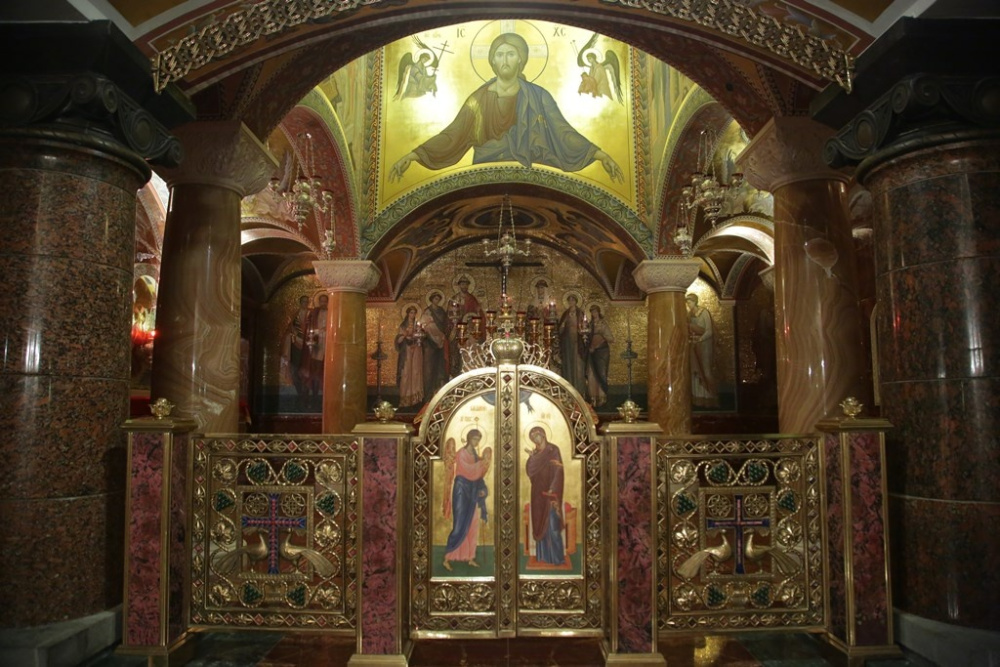
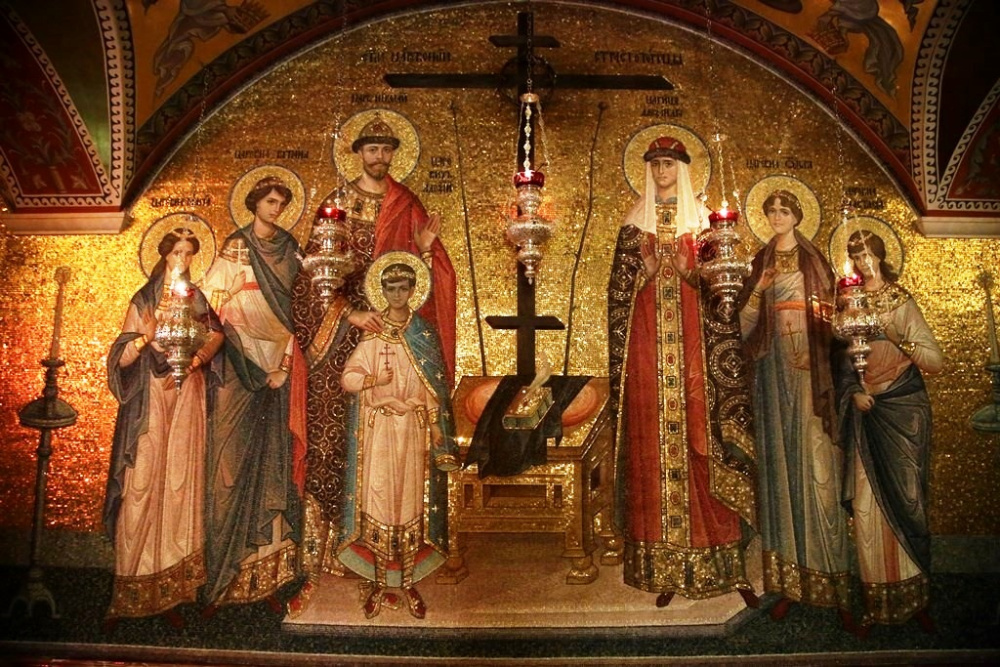
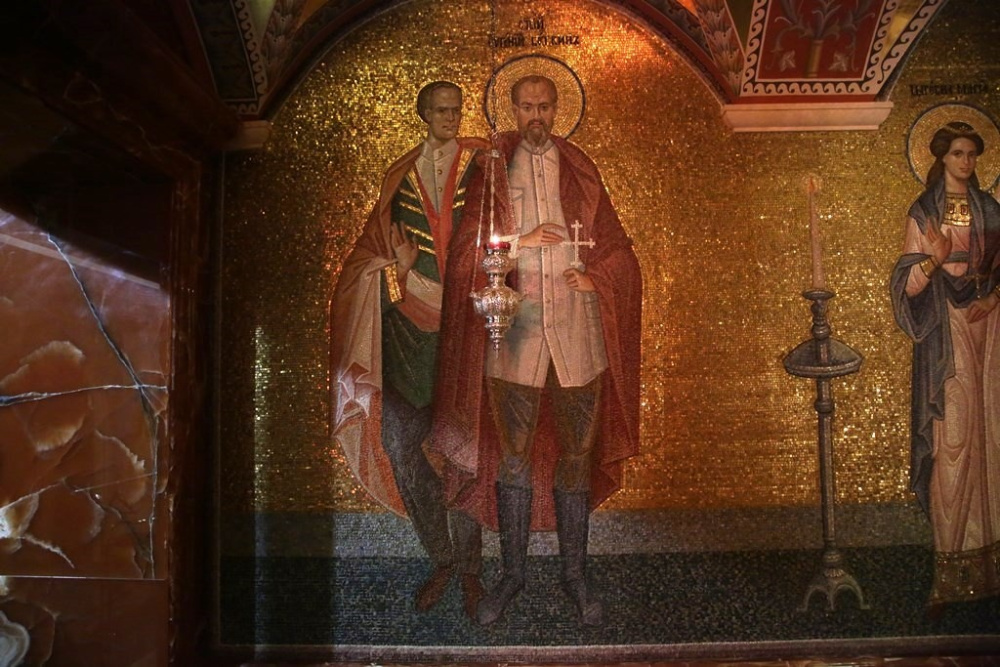
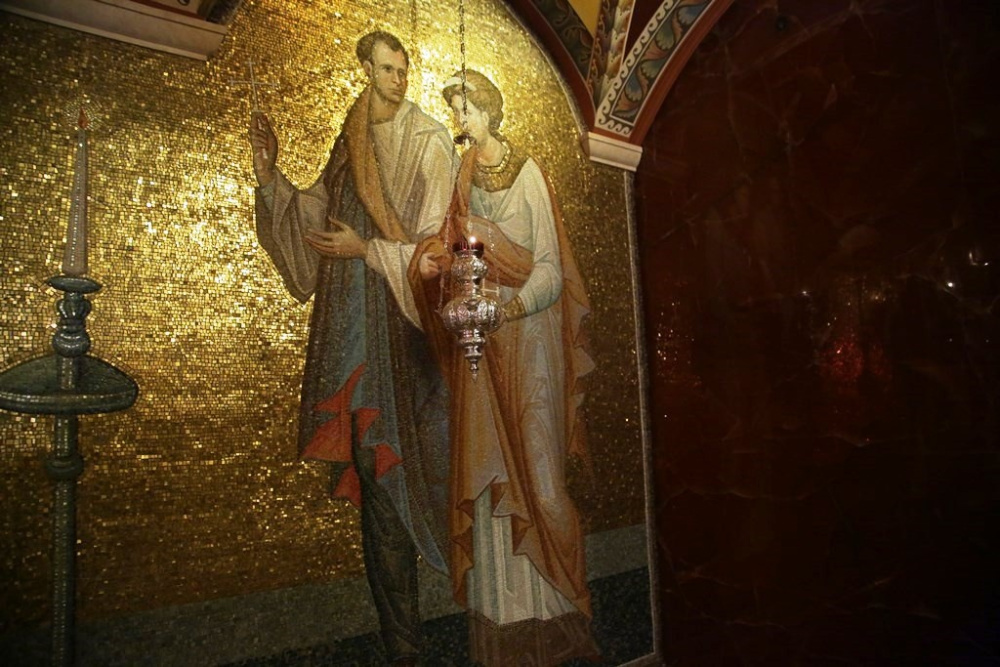
Representatives of the media saw a unique mosaic panel which occupies the central part of the altar depicting the Holy Royal Passion-Bearers and their faithful retainers who suffered with them: Emperor Nicholas Alexandrovich, Empress Alexandra Feodorovna, Tsesarevich Alexei, Grand Duchesses Olga, Tatyana, Maria, Anastasia, Saint Yevgeny Botkin, Alexey Trupp, Ivan Kharitonov and Anna Demidova.
136e

136f

As the priest said, the mosaic reflects the position of the Royal Passion-Bearers at the time of their martyrdom. They stood with their backs to the east, facing west, as it is now depicted in the altar.

Above them rises the Feodorovskaya Icon of the Mother of God, which is the heavenly patroness of the House of Romanov.

On the western vault depicts the Sovereign Icon of the Mother of God, which was revealed on the very day when the Emperor was forced to abdicate the throne, and the saints glorified during the reign of Emperor Nicholas Alexandrovich: St. Theodosius of Chernigov, St. Seraphim of Sarov, St. Princess Anna Kashinskaya, St. Joasaph Belgorod, St. Hermogen of Moscow, St. Pitirim of Tambov, and St. John of Tobolsk.

The creation of the paintings and mosaics took almost a year to complete. The creation of mosaic works was a particularly complex project, as the iconography of all the members of the Imperial Family and their faithful retainers had to be intricately created.

The walls and the floor around the altar are lined with red onyx, which is very symbolic, because the red color on one side symbolizes the martyrs blood shed by the Imperial family, and on the other hand, red is the color of the royal scarlet, porphyry, regal color. This color depicts very well the feat of the Royal Passion-bearers, who in both imperial majesty and in humiliation showed rare piety and great spiritual heights.

On the right side of the throne in a special reliquary containing fragments of the Ipatiev House: a brick and a balustrade.

At the end of the media presentation, the senior priest of the church thanked the journalists for the meeting, noting the great importance of this holy place in the church.

– “We must understand that this is the main sacred place of our city. And this room is the holy of holies in this church,” the father pointed out. – “This place today inspires us to move on and create such unique architectural and religious monuments to which our children, visitors, pilgrims will be drawn, because creating such a diverse national architecture, we lay the foundation for future generations to be proud of our country, including our cultural, religious and architectural heritage.”

CONSECRATION

NOTE: This article was originally published on 20 December 2018 in my Royal Russia News blog – PG

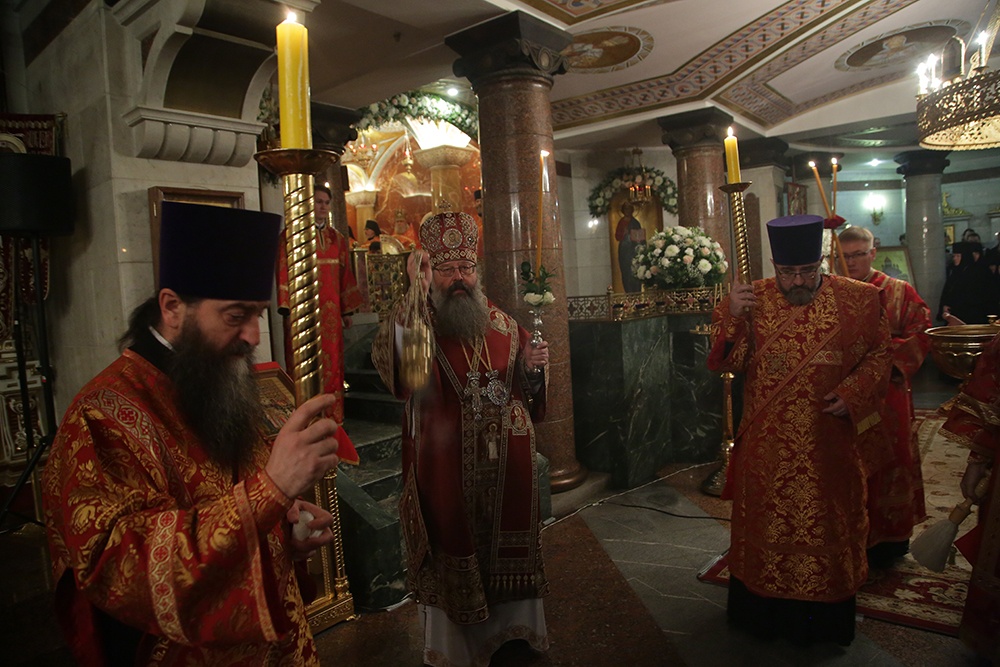
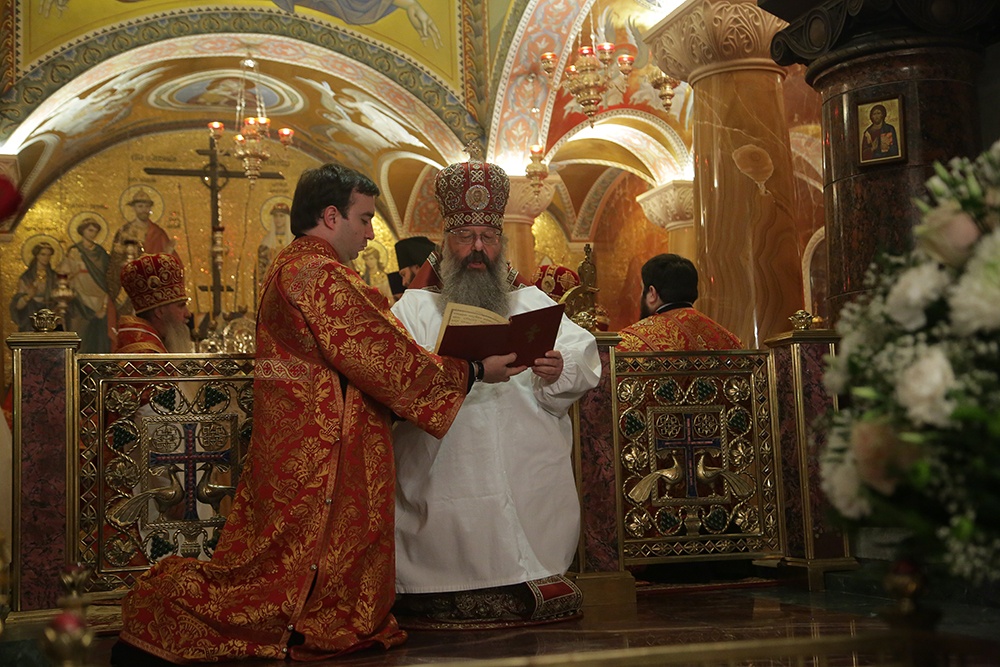
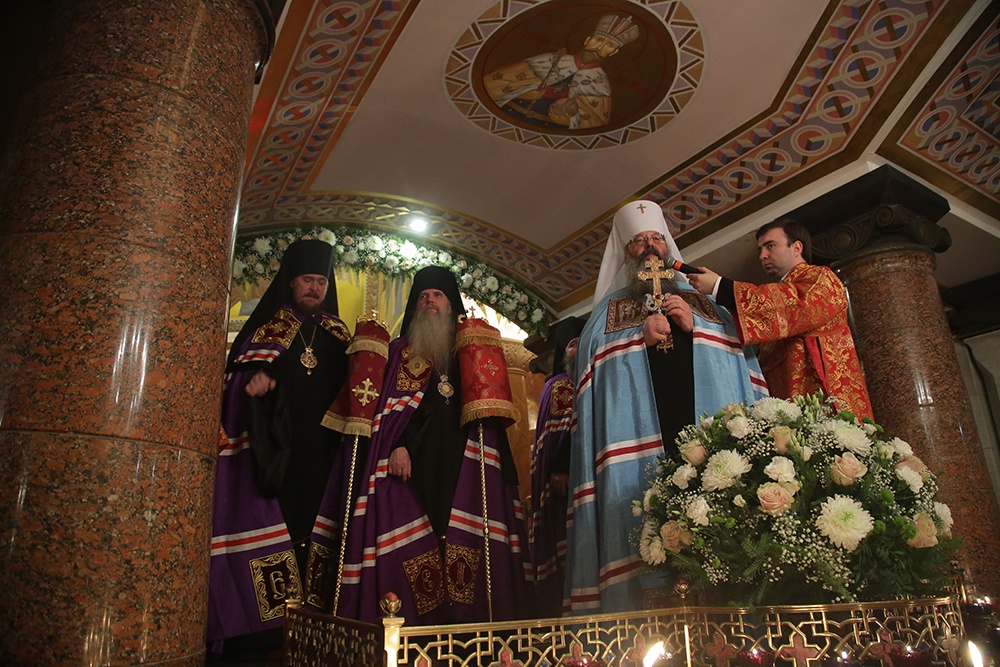
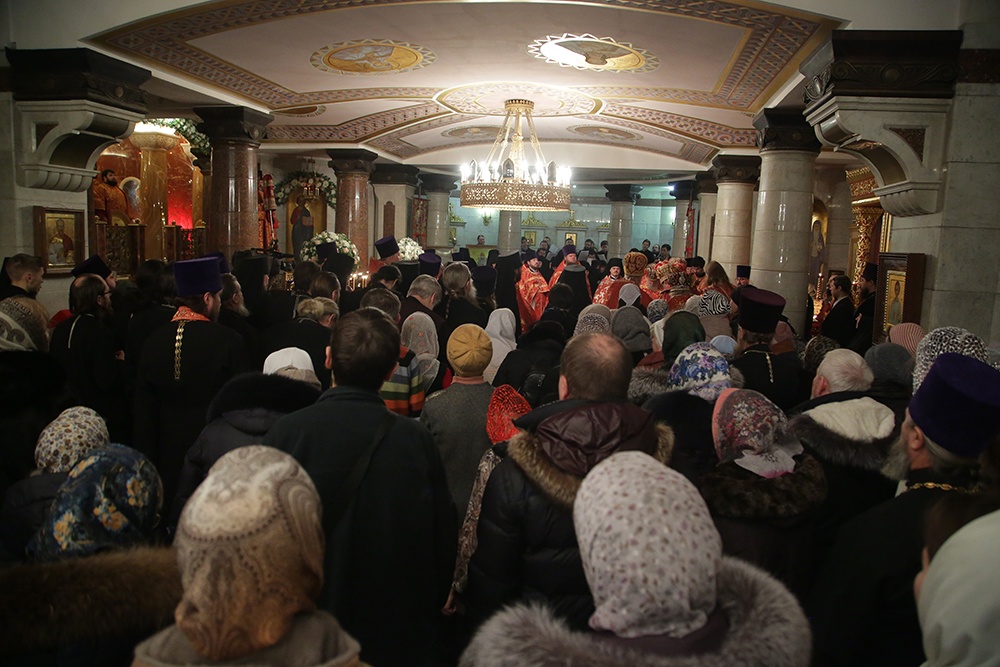
On 12th December 2018, Metropolitan Kirill of Ekaterinburg and Verkhotursk performed the rite of Great Consecration of the renovated side-chapel in the name of the Holy Royal Passion-Bearers of the Church on the Blood in Ekaterinburg. His Eminence was served by the hierarchs of the Ekaterinburg Metropolis: Bishop Method Kamensky and Alapaevsky, Bishop Evgeny of Nizhny Tagil and Nevyansky, and Bishop Serov and Krasnoturyinsky Alexy.
136l

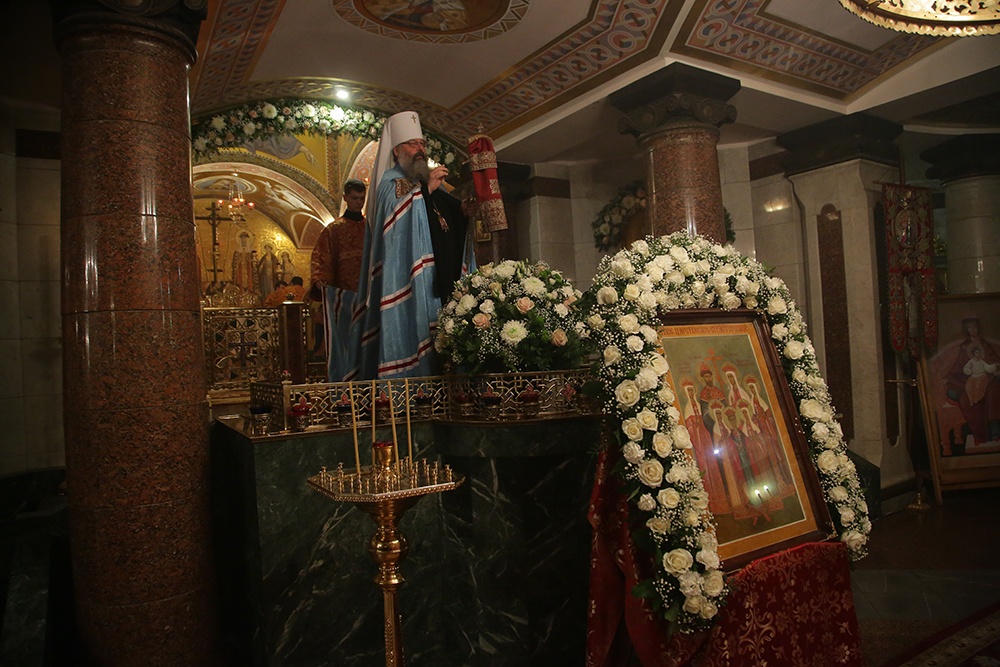
At the end of the service, Metropolitan Kirill recalled in his archpastoral talk that the year 2018 – the Imperial or Royal Year – the year marking the 100th anniversary of the deaths and martyrdom of the Imperial family, was widely celebrated in the Ural city. He recalled that on the night 16/17 July, an estimated 100,000 people participated in the Divine Liturgy at the Church on the Blood and the subsequent cross procession, both of which were headed by His Holiness Patriarch Kirill of Moscow and All Russia. According to the ruling bishop, it was truly a “nationwide prayer celebration.”
136m

And completing this year, the consecration of the renewed side-altar in the name of the Holy Royal Passion-Bearers was performed in the Church on the Blood.

Metropolitan Kirill noted that a Divine Liturgy is performed once a week, on the night of Tuesday/Wednesday, in memory of the Holy Royal Passion-Bearers, whose murder occurred on the night of Tuesday/Wednesday 16/17 July 1918. In addition, once a month, on the night of the 16/17, a night liturgy is also celebrated. Metropolitan Kirill reached out to Orthodox Christians asking them to attend the night service and pray to the Holy Royal Passion-Bearers.
136n

– “Here you have this feeling – a special reverence for the Royal Family and our martyrs, the new confessors of the Russian Church, one which will enter the soul, even if the soul is cold. All this love and achievement will melt away any callousness and any coldness. And the more we pray, the more we pay attention to the memory of the Holy Royal Martyrs, to their feat – the feat of meekness, humility, purity, the feat of absolute love for their God and for their homeland, until then our country will stand, and no evil power will be able to disturb her. Therefore, today we especially thank God for the feat of our Regal martyrs, our holy martyrs, all those who have defended our Homeland and our Church, and thanks to whom we today live on this earth,” Metropolitan Kirill said.
136o

The ruling bishop also thanked the senior priest of the Church on the Blood, Archpriest Maxim Minyaylo, for his work in this church, and also thanked Abbess Domnik (Korobeinikova) and the sisters of the Novo-Tikhvinsky Convent, who “very strongly and powerfully helped create this chapel.”
136p

The altar of the Imperial Room is situated in the lower church, sanctified in honor of the Holy Royal Martyrs. It was established on the site of the room located in the basement of the Ipatiev House, where Emperor Nicholas II, his family, and four retainers were all brutally murdered on the night of 16/17 July 1918. In the summer of 2018, with the blessing of Metropolitan Kirill of Ekaterinburg and Verkhoturye, the altar of the Imperial Chapel of the Holy Royal Passion-Bearers – the so-called Royal Room – was redesigned and decorated for the Tsar’s Days held in Ekaterinburg. The interior of the room has completely changed: like the Cuvuclia in the Church of the Holy Sepulcher in Jerusalem.
136q

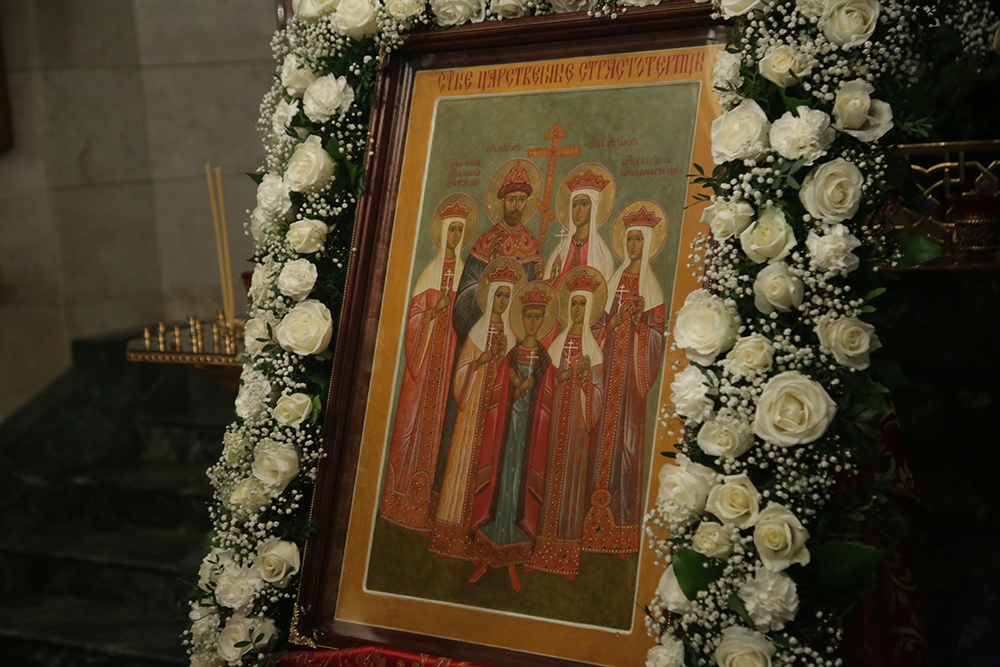
The central place is occupied by a unique mosaic panel. in the central part of the altar, depicting the Holy Royal Martyrs and their loyal subjects: Emperor Nicholas Alexandrovich, the Empress Alexandra Feodorovna, Tsesarevich Alexei, Grand Duchesses Olga, Tatiana, Maria, Anastasia, St. Eugene Botkin, Alexei Trupp, Ivan Kharitonov and Anna Demidova. The mosaic reflects the position of the Royal Passion-Bearers at the time of their martyr’s death: standing with their backs to the east, facing west, as is now depicted in the altar.

© Paul Gilbert. 30 November 2019
“What if” the Ipatiev House was reconstructed?

135a

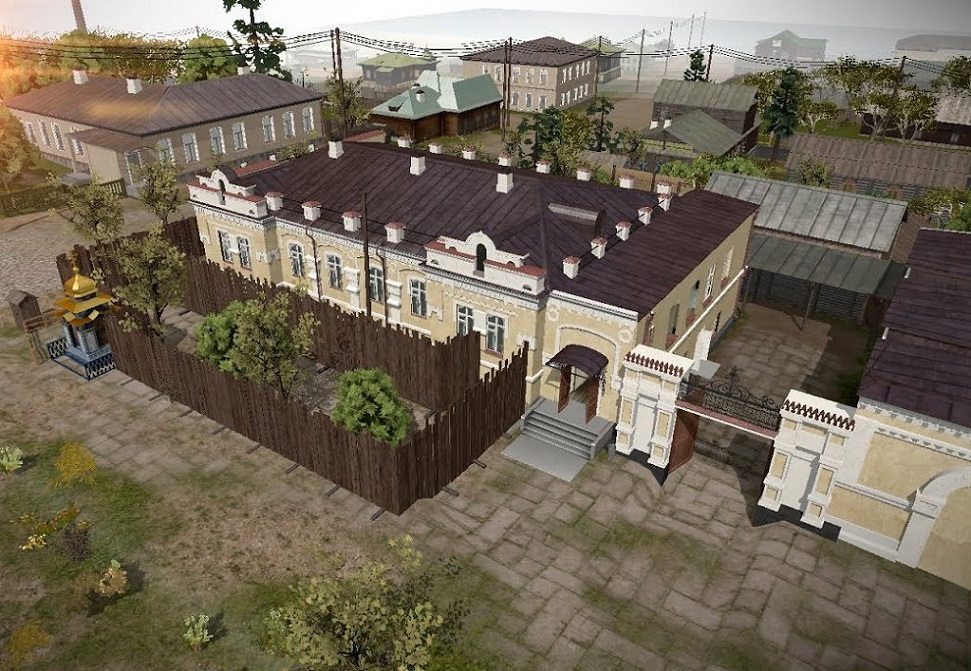
A computer generated reconstruction of the Ipatiev House

On 26th November 2019, I published my article ‘Doomed to Resurrection: Is it Possible to Reconstruct the Ipatiev House?

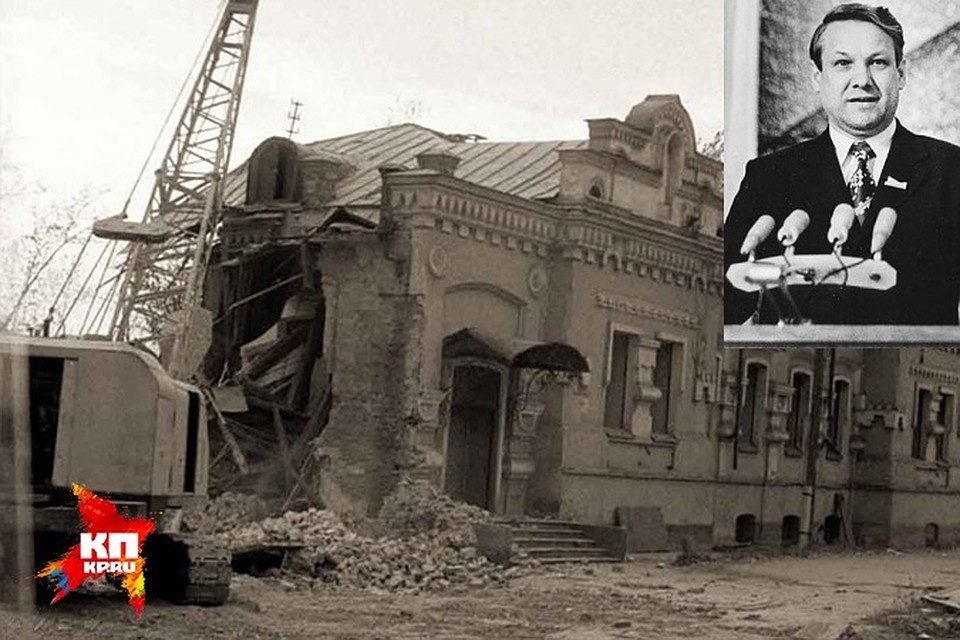
The article pertains to an interview with the head of the Department of Archives of the Sverdlovsk Region Alexander Alexandrovich Kapustin who in July 2018, proposed that the Ipatiev House (demolished in September 1977) should be reconstructed in Ekaterinburg.

Given that the Church on the Blood now stands on the site of the former ‘House of Special Purpose,’ Kapustins’ idea left a lot of people questioning both “Why reconstruct it?” and “Where to reconstruct it?”

135b

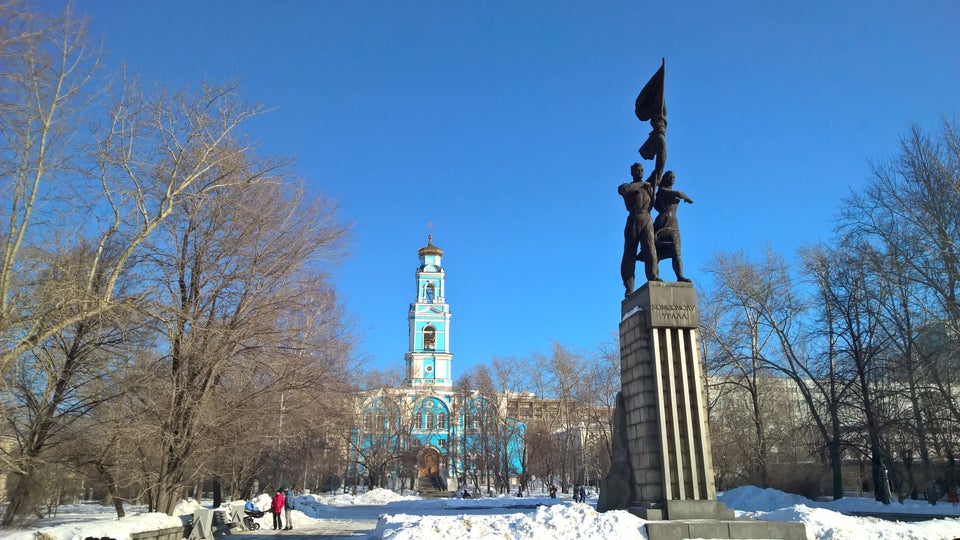
The monument to Komsomol (Young Communists League) of the Urals dominates Komsomolskaya Square, the Church of the Ascension in the background

While I personally am NOT in favour of reconstructing the Ipatiev House, I do believe I can recommend the perfect location!

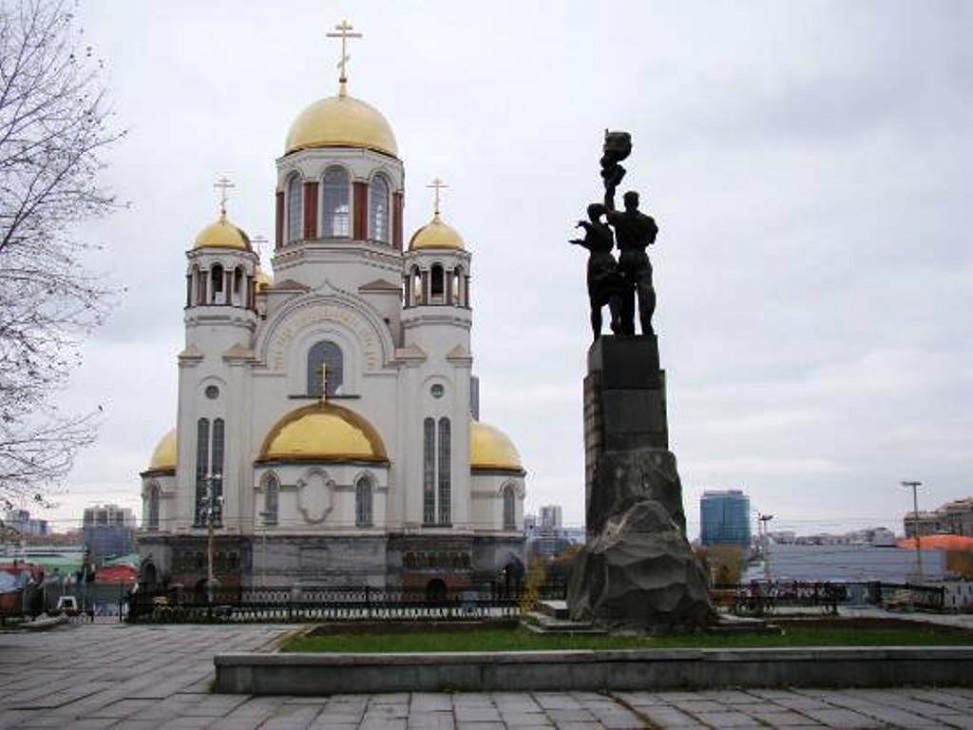
Situated at the top of Ascension Hill is Komsomolskaya Square. It is located between the Church of the Ascension and the Church on the Blood, which is situated on the opposite side of Karl Liebknecht Street.

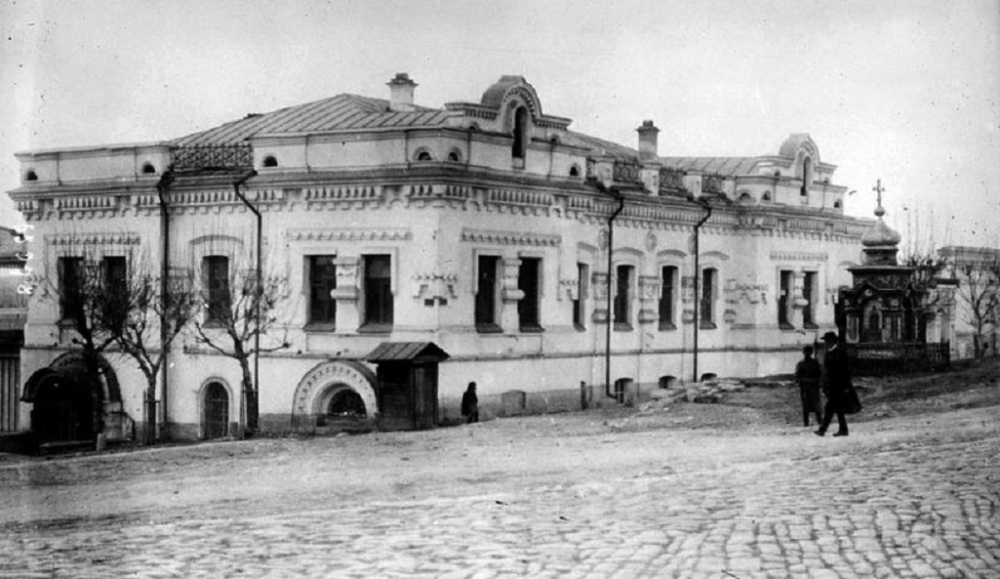
During the Imperial Family’s captivity from April to July 1918, the windows on the upper floor of the ‘House of Special Purpose’ (the Ipatiev House) were painted white. Through a crack at the top of one window, it was possible for them to see the gilded spire of the Church of the Ascension.

135c

The Church on the Blood is situated on the other side of Karl Liebknecht Street,
facing Komsomolskaya Square and the Komsomol monument

Before the Revolution, it was named Voznesenskaya (Ascension) Square after its location on Ascension Hill. In 1919, the old name was replaced by a new, rather sinister name – People’s Revenge Square. The name reflected the squares’ proximity to that of the Ipatiev House, of which its eastern façade faced the square, and the site of the regicide of 17th July 1918. In 1959, the square was renamed again as Komsomolskaya Square.

Dominating the square is the enormous monument to Komsomol (Young Communists League) of the Urals built during the Soviet years. The monument stands defiantly, almost mockingly at the Church on the Blood situated on the opposite side of the street.

135d

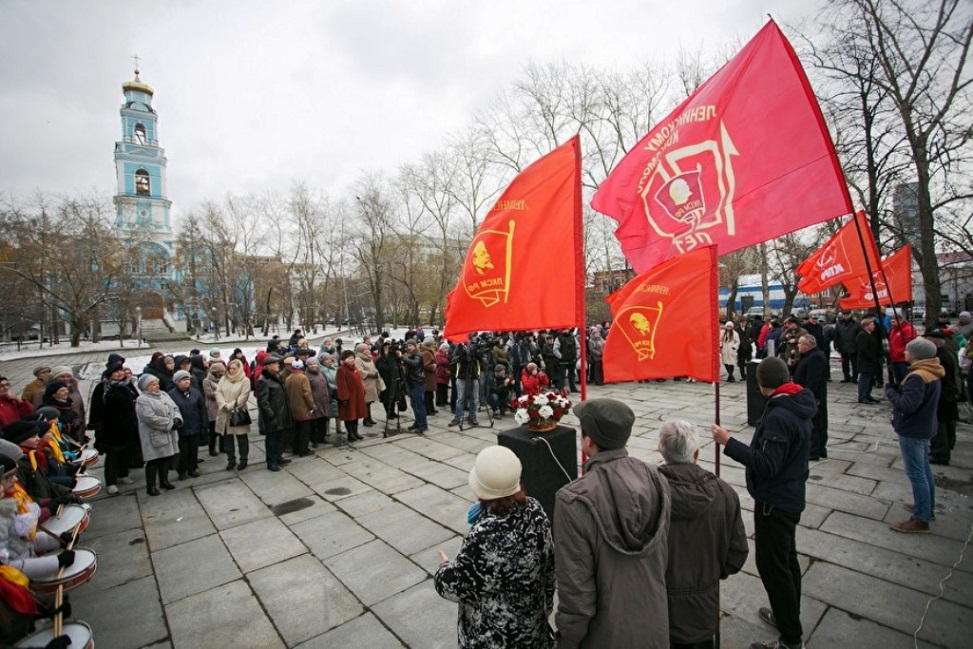
Young Communists gather on Komsomolskaya Square

Each year, beneath the shadows of the Churches of the Ascension and the Spilled Blood, young Communists continue to hold rallies on the square.

It is my understanding that the reconstruction of the Ipatiev House as a multi-functional museum has the support of the Ekaterinburg Eparchy, so “IF” the project ever gets the green light, I cannot think of a better location.

As noted above, I do not support the idea of reconstructing the House of Special Purpose in Ekaterinburg. As one reader aptly noted on my Facebook page, “the Ipatiev House to me was rebuilt. It was rebuilt as a church. A place of reflection to bring light into the darkness that fell there.”

© Paul Gilbert. 29 November 2019

Doomed to Resurrection: Is it Possible to Reconstruct the Ipatiev House?

130a

PHOTO: The Ipatiev House, also known as the House of Special Purpose was built 130 years ago

In July 2018, Russia will mark the 100th anniversary of the deaths and martyrdom of the last Russian Imperial family. On the possibility of restoring the Ipatiev House, where the Holy Royal Martyrs ended their earthly journey, AiF-Ural journalist Alexei Smirnov sat down with the head of the Department of Archives of the Sverdlovsk Region Alexander Alexandrovich Kapustin.

Alexei Smirnov: Alexander Alexandrovich, do you remember what the Ipatiev House looked like before it was demolished in 1977?

Alexander Kapustin: Yes, I remember it. From 1972 to 1977 I studied at the Ural State University and visited the Ipatiev House on a number of occasions. The first time I went alone, then I went returned several times with some of my fellow students. I remember walking up the steps to the entrance. We did not get into the “execution room”, it was boarded up. Some organization was working in the mansion at that time, the staff showed little interest in us. I did not feel any “aura” around the house, for me it was an old historic building, typical of Sverdlovsk at the time. Although, like any person interested in history, I knew perfectly well that the tsar and his family had been shot here. Of course, I did not know everything, I was only 17 years old at the time. I can not say that my visits found me shaking inside me. Do not forget that we studied at the Soviet school, so we were taught the official Soviet version of the events. We were taught that Nicholas Romanov was the not the best tsar, however, today the evidence held in our archives, proves that the Soviet version was wrong.

Alexei Smirnov: The decision to demolish the mansion was made in Moscow, was this a mistake?

Alexander Kapustin: It was a political mistake by the authorities. But Yuri Andropov, who headed the KGB at the time, was right in one thing: the Ipatiev House was steadily becoming a place of pilgrimage for those who wished to honour the memory of the imperial family.

Alexei Smirnov: Could Yeltsin disobey Andropov?

Alexander Kapustin: Yeltsin was a member of the party, the first secretary of the regional committee. He carried out the order, one which he simply could not disobey. And it was not just an order, it was the decision of the Central Committee. Another question, did Yeltsin realize the consequences of his actions? It is quite possible that he did not. Therefore we have no right to make any claims against him.

130b

PHOTO: Boris Yeltsin was ordered to demolish the Ipatiev House in September 1977

Alexei Smirnov: Is it possible to reconstruct the Ipatiev House according to surviving documents? And whether it is necessary to do this?

Alexander Kapustin: I think that there would be no technical problems with a reconstruction. We know what it looked externally, we can determine its dimensions, the height of the ceilings, etc. Preserved drawings, numerous photographs – inside and out, will greatly benefit such a project.

NOTE: In the archives of the Sverdlovsk region, more than two dozen documents concerning the Ipatiev House have survived, as well as an extensive photo-fund. Up until 1977, the building was photographed extensively. A lot of the pre-revolutionary images have also been preserved. The earliest document in the archive is a list of owners dating from 1916, including Nikolai Nikolaevich Ipatiev. In 1929, Uralstroikontrol made a detailed plan of the mansion, which is kept in the archives in a separate file.

As to your other question: if to restore, for what purpose? When the idea of ‌‌”reconstruction” of the house arose, it created a lot of excitement and discussion. The problem is that we look at those events through the eyes of people of the 21st century, and this is not always entirely correct. Try to look at them through the eyes of people of that time. It should not be forgotten that on 2nd March 1917, that the tsar abdicated from the throne. The Bolsheviks shot not the emperor, but “Citizen Romanov”! And how did Russian society react to this? The event passed almost unnoticed. And already on 3rd March 1917, the church swore an oath of allegiance to the provisional government! Yes, he was a royal martyr, he died a martyr. But at that time, atrocities were occurring throughout Russia. It is pointless to demand that everyone worship the tsar, just as it is pointless that everyone worship Lenin. Society is divided.

The point is also that the figure of Nicholas II overshadowed many other worthy people in the public eye, including members of the Romanov dynasty. Why, for example, are we not interested in the life and fate of Grand Duke Mikhail Alexandrovich, whom I have great respect for? He was a man, independent in his decisions. He fell in love with a married woman and, due to the then conventionalities, was forced to leave Russia. They had a morganatic marriage. He was expelled from the country, but on the eve of World War I he returned, went to the Front, and commanded the Caucasian Division. Under his authority, Muslim volunteers showed great courage in defending Russia against her enemies. He proposed laws which were adopted after the February Revolution, abandoned the throne, was exiled to Perm, where in 1918 he died tragically.

Alexei Smirnov: If you restore the Ipatiev House, where would it be built?

Alexander Kapustin: Well, for example, near the Church on the Blood, where there is a lot of land, and certainly enough space. But what most people to not know, is that the foundation of the Ipatiev House is actually buried under the road. Therefore, we are not talking so much about reconstruction as that of a new construction.

Alexei Smirnov: Who could undertake the reconstruction of the Ipatiev House? Sponsors? The Russian Orthodox Church? The city? What would be exhibited?

Alexander Kapustin: I think that those wishing to reconstruct the building will eventually be found, and it does not matter who it is. Personally, I see it as an object of history, culture and architecture. We already have many places of worship for the Romanov family. For the majority of people, the Ipatiev House is associated only with the murder of the tsar and his family. But the mansion had a long history before this terrible tragedy. A new Ipatiev House would house an exhibition hall, a library with a reading room, a cultural and educational complex. In addition, another beautiful mansion to the landscape of Ekaterinburg would not hurt. The house, really, was very beautiful, I really liked it.

130c

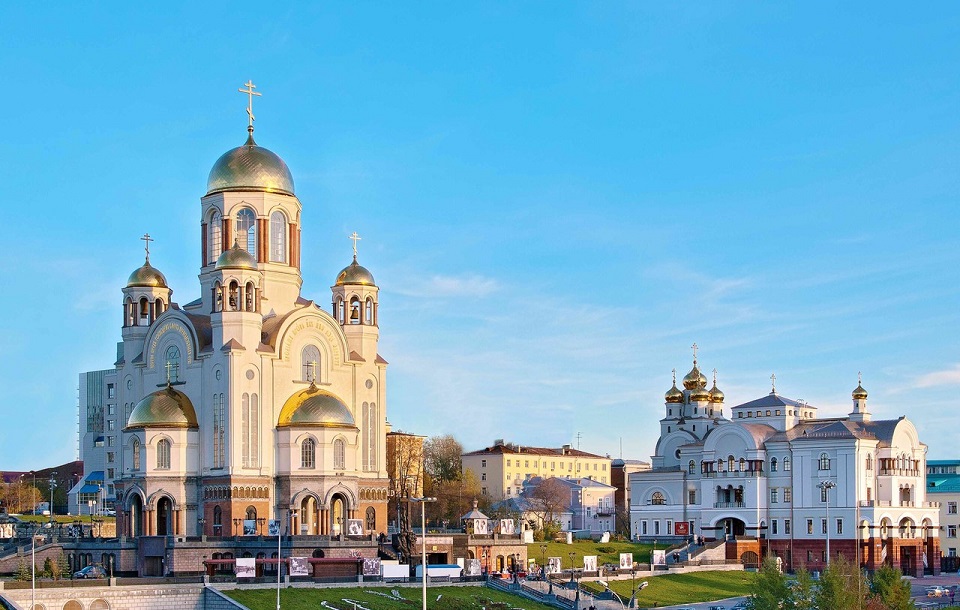
PHOTO: The Church on the Blood and the Patriarchal Compound in Ekaterinburg

Alexei Smirnov: But you understand that if the house is restored, it will automatically become a place of pilgrimage?”

Alexander Kapustin: Looking at who and for what purpose it will be restored. And there is nothing wrong with the pilgrims. They do not harm the house. And the capital of the Urals will receive an additional tourist facility. As with other historic buildings in the city, each house has its own history, it’s own individuality. The Ipatiev House is no exception, it is unique in terms of architecture and is already an important part of our history.

Alexei Smirnov: Recently an unfinished TV tower was demolished in Yekaterinburg …

Alexander Kapustin: I would not make any parallels here. The tower was a monument of mismanagement and irresponsibility. At one time, the authorities did not have enough funds for its completion and security. Yes, some people were angered by its demolition, but if it had collapsed, the consequences could have been terrible. I think that the dismantling of the tower was justified and logical, this is my point of view. Governor Evgeny Kuyvashev repeatedly tried to offer something, contests were held, but no one was willing to undertake the completion of the structure.

Alexei Smirnov: If a person or company comes forward, is the state archive ready to provide documentation on the Ipatiev House?

Alexander Kapustin: Of course! We are ready to cooperate with any organization, political party, the Russian Orthodox Church. Come, make copies of the documents, work, build!

130d

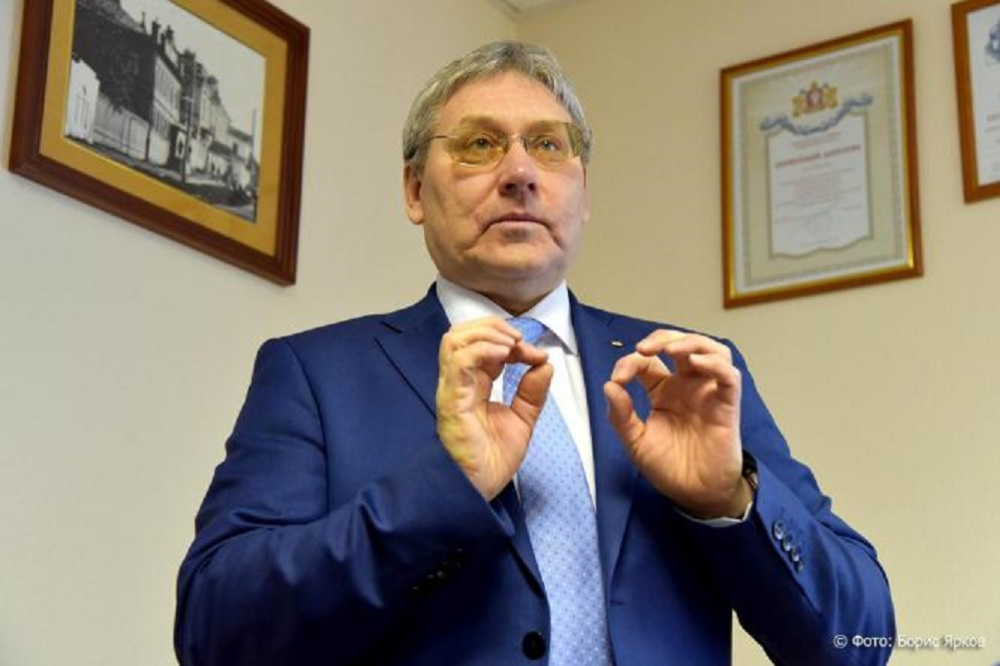
PHOTO: Head of the Department of Archives of the Sverdlovsk Region Alexander Kapustin

Alexander Alexandrovich Kapustin. Born 13 May 1955 in Nizhny Tagil. He graduated from the Faculty of History of the Ural State University. Initially, he worked as a school teacher, and then taught at a university. He is a Candidate of Historical Sciences (1986), and Head of the Department of Archives of the Sverdlovsk Region, since 1990.

© Paul Gilbert. 26 November 2019

95 years ago, Ekaterinburg was renamed Sverdlovsk

124

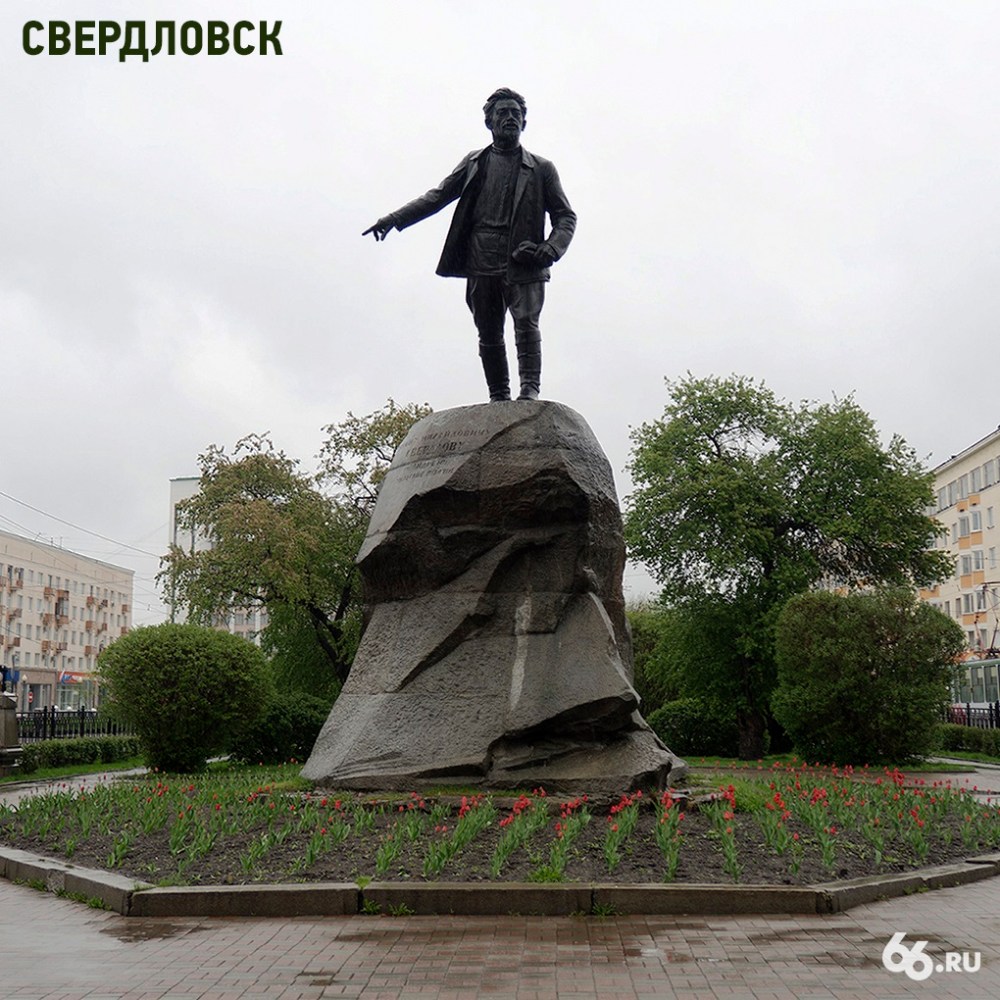
Monument to Yakov Sverdlov, established on Lenin Avenue in 1925

Almost a century ago, Ekaterinburg was renamed Sverdlovsk and lived with the Bolshevik name for 67 years, until 1991, after the fall of the Soviet Union, the city returned to its historical name. Few know that the capital of the Urals could have been called differently.

Today – 14th November – marks the 95th anniversary of the renaming of Ekaterinburg to Sverdlovsk. Ekaterinburg was founded on 18 November 1723 and named after the second wife of Peter the Great, who after his death became the Empress Catherine (Yekaterina)  I (1684-1727).  In 1924, however, Soviet newspapers condemned the Empress, and proposed alternative names for the city. So began the first renaming of Ekaterinburg.

A campaign was launched in early 1924, whereby a local newspaper came out with the headline “Rename the city of Ekaterinburg!”. Following this, propaganda was published explaining why Ekaterinburg was a bad name. The newspapers wrote derogatory comments about Empress Catherine I, referring to her as “a soldier’s wife under the Russian army”, “Menshikov’s laundress”, and an “illiterate, poor, depraved woman”.

At the same time, journalists offered alternative names. The very first option was Sverdlovsk, in honour of the revolutionary Yakov Mikhailovich Sverdlov (1885-1919), a Bolshevik party administrator and chairman of the All-Russian Central Executive Committee, and mastermind behind the murders of the Imperial Family.

The 1922 book by White Army general, Mikhail Diterikhs, ‘The Murder of the Tsar’s Family and members of the House of Romanov in the Urals’, sought to portray the murder of the Imperial Family as a Jewish plot against Russia. It referred to Sverdlov by his Jewish nickname “Yankel”. This book was based on an account by Nikolai Sokolov, special investigator for the Omsk regional court, whom Diterikhs assigned with the task of investigating the disappearance and murders of the Imperial Family while serving as regional governor under the White regime during the Russian Civil War.

Other names suggested included Red Urals, Leninburg, Uralgrad, or even Revanchburg – in honour of the execution of the last tsar, while, the newspapers also suggested Uralosverdlovsk, Andreigrad, and Krasnouralsk. But journalists in subsequent publications explained to residents why Sverdlovsk was the best name. Public discussions went on for nine months, and in October 1924 the Ekaterinburg City Council adopted a resolution on renaming the city Sverdlovsk. In mid-November, the document was signed at the CEC of the USSR, and the following year, in 1925, a monument to Yakov Sverdlov was established on Lenin Avenue.

Yakov Sverdlov was known in Ekaterinburg among the revolutionaries under the names “Comrade Mikhailovich” and “Comrade Andrei.” He spoke at lot at rallies, led the Bolsheviks, and even served a year in the Ekaterinburg Central on Repin Street. He was a member of the Central Committee of the party, chairman of the commission on the development of the first Constitution of the RSFSR. According to Yevgeny Burdenkov, a researcher at the Museum of the History of Ekaterinburg, Sverdlov transferred many of his people from the Urals to work in Moscow, and it was they who promoted the idea of ​​renaming Ekaterinburg to Sverdlovsk as a sign of gratitude.

Sverdlov is commonly believed to have died of either typhus or most likely influenza, during the 1918 flu pandemic, after a political visit to Oryol. He is buried in the Kremlin Wall Necropolis, in Moscow.

It is interesting to note that Sverdlovsk Oblast, the federal subject (an oblast) of Russia located in the Ural Federal District, in which the city of Ekaterinburg, serves as its administrative center still retains its Bolshevik name. In January 2019, Russian state deputies again raised the issue of renaming Sverdlovsk Oblast, however, the issue remains unresolved.

© Paul Gilbert. 14 November 2019

Paul Gilbert: “Yekaterinburg is my favorite Russian city”

112a

Paul Gilbert at the monument to Nicholas II, Ganina Yama

Last week, Russian journalist Olga Koshkina asked me for an interview, the article of which was published in the October 22nd 2019 issue of ‘Oblastnaya Gazeta,’ a daily newspaper published in Ekaterinburg.

Oblastnaya Gazeta’ is the official publication of state authorities of the Sverdlovsk Region, the founders of whom are the Governor and the Legislative Assembly of the Sverdlovsk Region.

112

Paul Gilbert at the Church on the Blood during Tsars Days 2018’in Ekaterinburg

Koshkina’s article ‘Пол Гилберт: «Екатеринбург – мой любимый российский город»’ – ‘Paul Gilbert: “Ekaterinburg – My Favourite Russian City,” describes my love of the Ural city, my interest in the Romanov dynasty, my efforts to clear the name of Nicholas II, and the ‘Imperial Route’ project.

NOTE: this article is only in Russian. If you use Google Translate, you can still get the gist of the article in English

© Paul Gilbert. 22 October 2019

Holy Royal Martyrs Monument Vandalized in Ekaterinburg

On the night of 31 August/1 September the monument to Emperor Nicholas II and his family, in front of the Church on the Blood in Ekaterinburg was vandalized. An unknown woman with a black marker defaced the pedestal of the monument, but she has been detained by law enforcement officials

The woman wrote several insulting inscriptions against the Russian Orthodox Church and the United Russia Party on the pedestal. The inscriptions included words such as “Masons” and “Illuminati.” A police spokesman confirmed that the vandal was arrested at the crime scene. She was a woman born in 1971, and is known to Ekaterinburg police for previous offences.

The Ekaterinburg diocese has confirmed the act of vandalism, who also added that the insulting inscriptions on the monument platform were erased that very morning.

100

The Church on the Blood was constructed on the site of the Ipatiev House, where the Imperial family and their four faithful retainers were all brutally murdered by the Bolsheviks on 17th July 1918

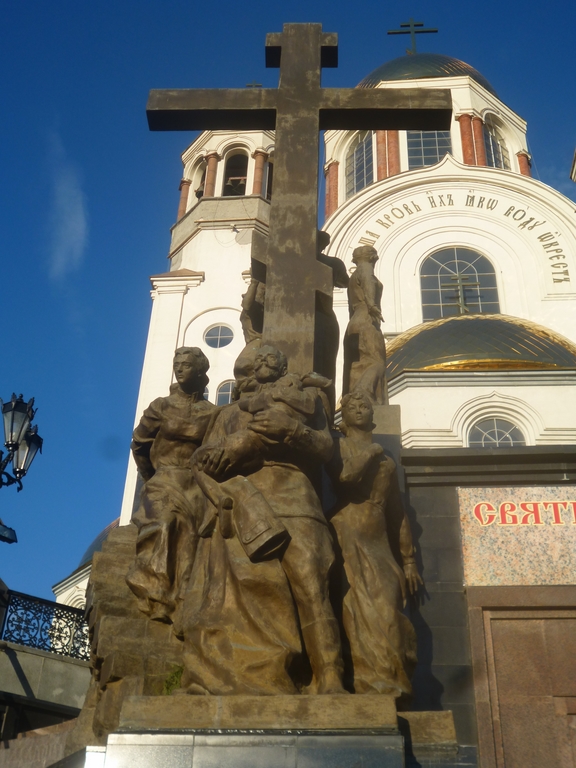
On 28th May 2003, a monument to Nicholas II, his wife and their five children was established at the entrance to the Lower Church. The seven-figure composition represents the tragic moment of the descent of Nicholas II and his family into the basement of the “House of Special Purpose” for execution.

The monument is bordered by a spiral staircase from the Upper Church to the Lower Church. According to the sculptors, the 23 granite steps of this staircase, which correspond to the 23 steps into the basement of the Ipatiev House, should remind visitors of the last journey of the emperor and his family

© Paul Gilbert. 3 September 2019

“Ekaterinburg was the last capital of the Russian Empire” – says Russian historian

086

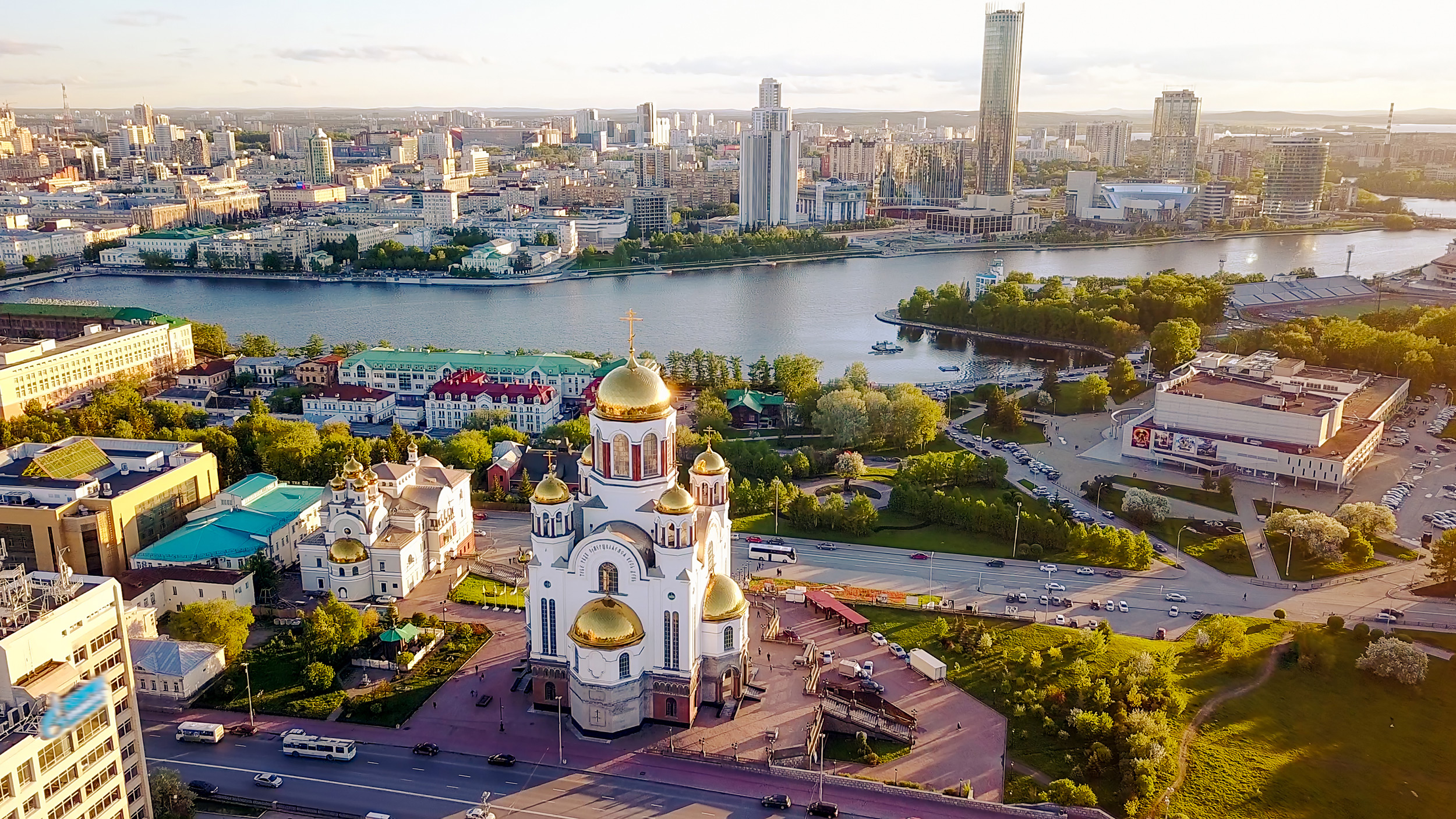
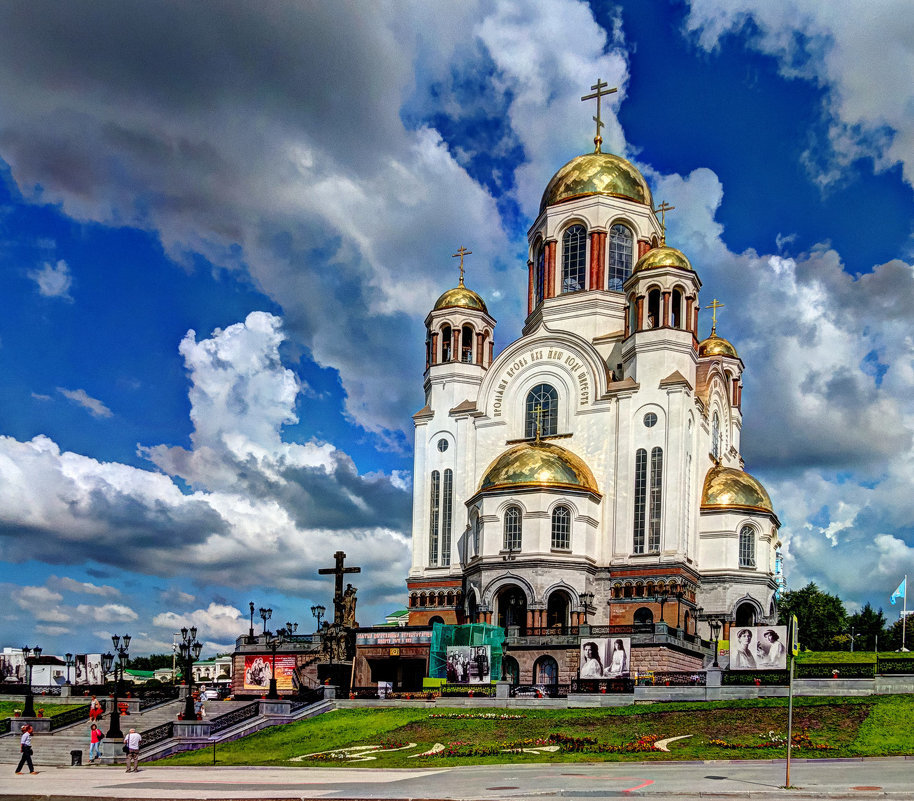
The Church on the Blood, built on the site of the Ipatiev House in Ekaterinburg

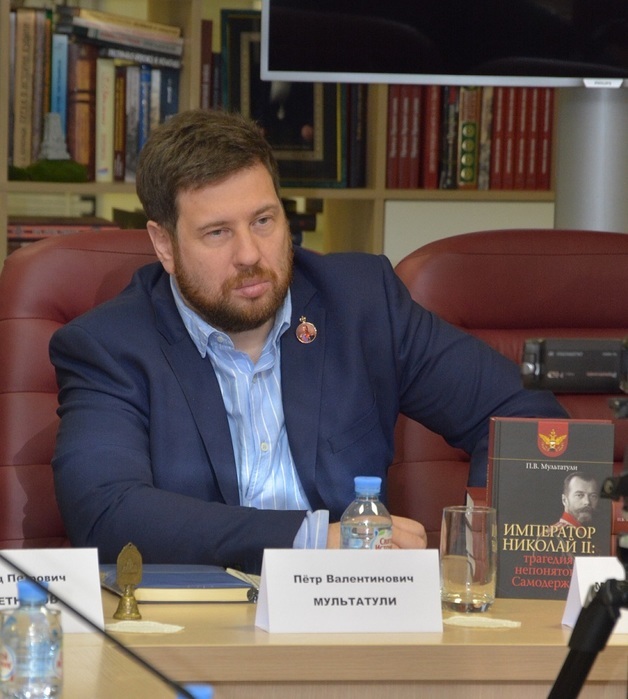
The Ural city of Ekaterinburg occupies an important place in the modern spiritual life of Russia. This conclusion was reached by Russian historian *Peter Multatuli following the results of the International Festival of Orthodox Culture Tsar’s Days 2019.

“On a spiritual level, Ekaterinburg is the last capital of the Russian Empire, because the residence of the Sovereign was always considered the capital in Russia. Peter the Great never officially transferred the capital from Moscow to St. Petersburg, but since he lived there, it was the capital,” said Multatuli.

He noted that in 1918, for 78 days, Emperor Nicholas II and his family lived in Ekaterinburg, and that is why the Ural capital can be considered the last capital of the Russian Empire.

[It is important to note that many historians – myself included – firmly believe that the Tsar’s signing of the instrument of abdication, his status as Tsar remained inviolate and unassailable – PG]

“Petrograd and Moscow to one degree or another welcomed his overthrow, and they bear a greater responsibility in this than any other Russian city. No matter what anyone says, it was Ekaterinburg that served as the last Imperial residence, which, according to God’s special plan, became the Royal Golgotha,” added Peter Multatuli.

According to him, in the near future, Ekaterinburg will play a great role in the history of Russia, because “the city named after St. Catherine and becoming the Royal Golgotha ​​will be the city of Russian resurrection.”

[Once a bastion of Bolshevism, Ekaterinburg has slowly shed its status as the “capital of atheism”. Since the fall of the Soviet Union in 1991, the Urals has experienced a revival of faith, with Ekaterinburg at the into the center of Orthodox Russia in the Urals. Ekaterinburg has done more to honour Nicholas II and his family than any other city in Russia. Thanks to my visits to Ekaterinburg in 2012, 2016 and 2018, it is a city which I have grown to admire and love – PG]

020e

Peter Valentinovich Multatuli

*Peter Valentinovich Multatuli was born in Leningrad on 17 November 1969. He is a Russian journalist, historian and biographer. Multatuli is the author of numerous books and articles about the reign of Emperor Nicholas II. He is the great-grandson of Ivan Kharitonov (1872-1918), who served as the Head Cook of the Imperial family. He followed the tsar and his family into exile, and was murdered along with them in the Ipatiev House on 17th July 1918.

Multatuli’s comprehensive Russian language studies of the life and reign of Emperor Nicholas II are often overlooked or simply ignored by his Western counterparts.

© Paul Gilbert. 26 July 2019

New Exhibits Dedicated to the Holy Royal Martyrs Open in Ganina Yama

085a

New permanent outdoor exhibit on the grounds of the Monastery of the Holy Royal Martyrs

A photo exhibition “We” presents the work of Ekaterinburg photographer Yaroslav Kulakov, opened this week in the Museum and Exhibition Center of the Monastery of the Holy Royal Martyrs in Ganina Yama. The exhibit features photos of the participants of the Tsar’s Days and the Cross Procession over a 20-year period from 1998 to 2018.

“The Lord has not created anything more beautiful than a spiritual and joyful human face,” said Yaroslav Kulakov. Many of his photographs have become historical. The photographs include the first designer of the monastery, Tatiana Alekseevna Petkevich, icon painter Tatiana Fedorovna Vodicheva, the confessor of the monasteryAbel (Odintsev) among many others.

085b

New permanent outdoor exhibit on the grounds of the Monastery of the Holy Royal Martyrs

A second exhibit, a permanent outdoor exhibition dedicated to the Imperial Family and their faithful companions who perished with them on the night of 16/17 July 1918, also opened on the grounds of the monastery.

The exhibition which is located near the monument to Emperor Nicholas II, includes 12 stands featuring a photo and biography of members of the Imperial family and their faithful retainers.

This brief, yet information excursion into Russian history will help those who are just starting to get acquainted with the history of the Holy Royal Family.

The photo exhibition “We” will run until 13th September 2019, in the Museum and Exhibition Center of the Monastery of the Holy Royal Martyrs in Ganina Yama, from 10:30 to 16:30 daily, except Monday.

© Ekaterinburg Diocese / Paul Gilbert. 26 July 2019

Icon of the Mother of God, “Of the Three Hands”

080a

The Icon of the Mother of God, “Of the Three Hands” belonged to Nicholas II and his family

On 11th July 2019, on the feast day of the Icon of the Mother of God, “Of the Three Hands”, Mrs. Olga Nikolaevna Kulikovsky, chairman of the Grand Duchess Olga Alexandrovna Charitable Foundation, attended a Divine Liturgy in the Church on the Blood in Ekaterinburg.

The Divine Liturgy was led by Metropolitan Kirill of Ekaterinburg, in front of the Icon of the Mother of God, “Of the Three Hands.” The icon belonged to the Imperial Family, who venerated the icon, during their imprisonment in the Ipatiev House in 1918. The icon was found in the basement of the house after the murder of the Tsar and his family on the night of 16/17 July 1918. In the early 1920s, through the efforts of officers loyal to the Sovereign, the icon was smuggled out of Bolshevik Russia to Denmark, and presented to Nicholas II’s mother – the Dowager Empress Maria Fedorovna. After her death in 1928, the icon was bequeathed to her youngest daughter Grand Duchess Olga Alexandrovna, who took it with her when she emigrated to Canada in 1948.

080b

Metropolitan Kirill of Ekaterinburg, kisses the Icon of the Mother of God, “Of the Three Hands”

In 1991, when Tikhon Nikolaevich Kulikovsky, the eldest son of Grand Duchess Olga Alexandrovna, learned that Russia was discussing the construction of a Memorial Church on the site of the Ipatiev House in Ekaterinburg, he addressed a letter to His Holiness Patriarch Alexy II of Moscow and All Russia, in which he noted that upon completion of construction, he intended to transfer the icon to the newly established church. However, Tikhon Nikolayevich was not able to fulfill his wish during his lifetime – he died on 8th April 1993. His widow Olga Nikolaevna Kulikovsky, however, carried out her husbands wish, and presented the Mother of God, “Of the Three Hands” during the solemn consecration of the Church on the Blood in 2003.

After the service, Metropolitan Kirill congratulated everyone on the holiday and the beginning of the Tsar’s Days, noting that this day marks the beginning of “Passion Week” dedicated to the memory of the Holy Royal Martyrs. His Eminence thanked Olga Nikolaevna, to whom the Church on the Blood and the Ekaterinburg Diocese acquired “a special significant icon – the image of God’s blessing on the Holy Tsar’s Family.”

Today, the icon is kept in the Upper Church of the Church on the Blood in Ekaterinburg.

080c

Mrs. Olga Kulikovsky

It should be noted, that Mrs. Olga Kulikovsky (now 93 years old), has dedicated many years to charitable activities in the name of her mother-in-law Grand Duchess Olga Alexandrovna. Despite her age, she continues to work actively to help clear the name of Russia’s much slandered Tsar and his family. She travels to Ekaterinburg each year to take part in the Tsars Days events, culminating with the Divine Liturgy at the Church on the Blood on the night of 16/17 July, and in Ganina Yama.

© Paul Gilbert. 12 July 2019

Exhibition dedicated to Nicholas Sokolov opens in the Urals

070a

On 8th June 2019, the Metropolitan Kirill of Ekaterinburg and Verkhoturye opened the exhibition Penza – Paris. The Way of the Tsar’s Investigator N.A. Sokolov, in the Museum and Exhibition Center in Ganina Yama.

The exhibition, is timed to the 100th anniversary of the beginning of the work of the investigator Nikolai Alekseevich Sokolov (1882-1924)  in Ekaterinburg and at the Four Brothers mine in 1919.

Metropolitan Kirill reminded guests that the name of N.A. Sokolov is inextricably linked with the Imperial family, since Sokolov was a monarchist, he loved Russia and would not accept the changes brought about by the Bolshevik Revolution in 1917. 

“Nikolai Alekseevich crossed the front line to reach the troops commanded by General Vasilyevich Kolchak (1874-1920), who was recognised as the “Supreme Leader and Commander-in-Chief of All Russian Land and Sea Forces” by the other leaders of the White movement from 1918 to 1920. Sokolov became one of the closest assistants to the Supreme Commander, who entrusted him with the investigation into the case of the regicide. This year also marks 95 years since the death of investigator Sokolov, a man who made an enormous contribution in gathering evidence about the last days of the Imperial Family in Ekaterinburg,” noted Kirill.

The ruling bishop said that it was NA Sokolov who was the first to follow the path of the cross from the Ipatiev House to Ganina Yama, and it was he who conducted most of the research at the site of the murder and burial of the Holy Royal Passion-bearers.

“We value his sincere work no less than the work of those who remained faithful to the Tsar, his family and and their faithful retainers – Dr. Botkin, cook Kharitonov, maid Demidova and the tsar’s valet Troupe, and all those who wanted to remain with them, but who were separated from the Imperial Family, at Tsarskoye Selo, Tobolsk and Ekaterinburg,” he added.

In conclusion, Metropolitan Kirill thanked the staff of the museum who preserve the memory of the Imperial family.

Visitors to the exhibit can see unique archival materials that give an idea of ​​the difficult task of the investigator. Also presented are rare family photos of N. Sokolov, which are kept by his descendants in France and in Russia. Many of them are displayed for the first time.

The exhibition will be open to visitors until the end of 2019, admission is free.

Click HERE to read Memorial Plaque to Nikolai Sokolov Unveiled in Mokshan, published on Royal Russia News 27th December 2018;

and HERE to read Nikolai Sokolov: The man who revealed the story of the Romanov killings by Alla Astanina, published on 18 April 2015 on Russia Beyond the Headlines.

© Paul Gilbert. 20 June 2019