‘The Mummy’ – a film about Lenin premieres in Moscow

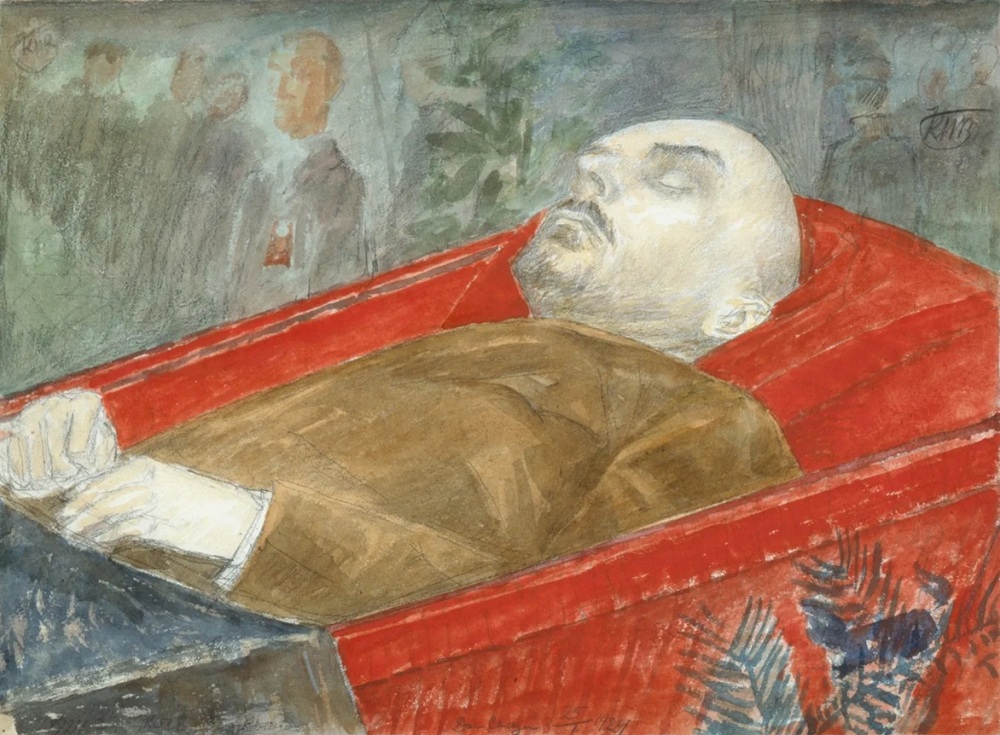
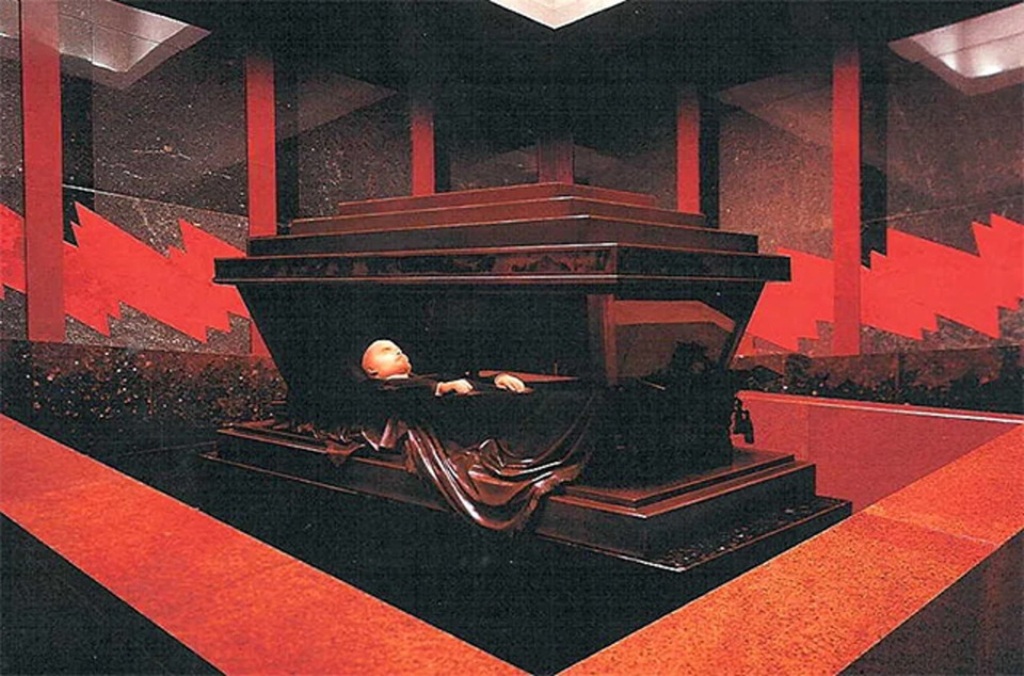
PHOTO: “V.I. Lenin in a coffin” (1924)
Artist: Kuzma Sergeyevich Petrov-Vodkin (1878-1939)

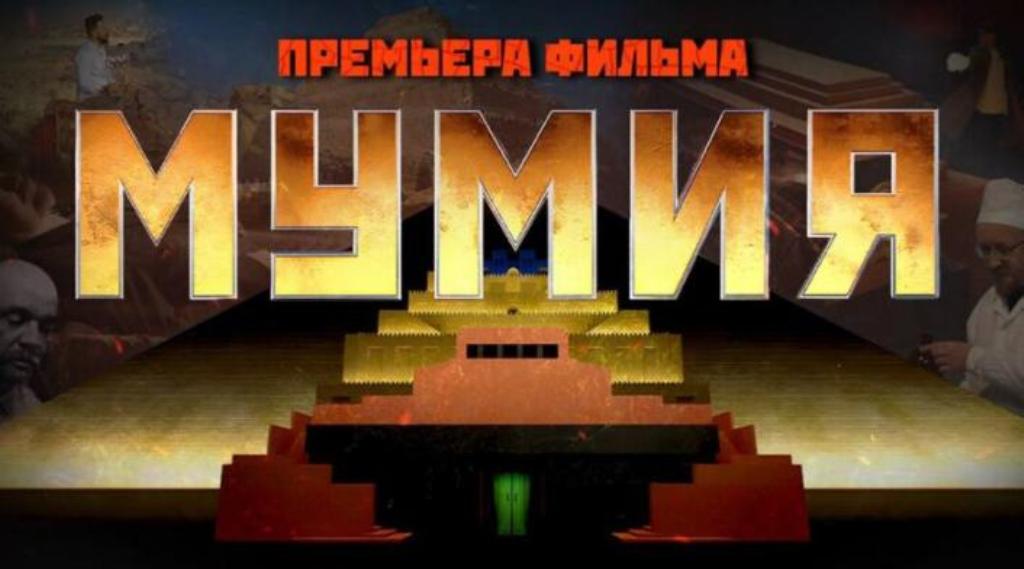
On 26th June 2025, the premiere of the documentary-film МУМИИ / The Mummy took place at the Oktyabr Cinema[1], located on Novy Arbat in Moscow. The film touches on a painful and controversial topic for modern-day Russian society: the unburied corpse of Vladimir Ilyich Ulyanov (Lenin).

Even before the premiere, the film provoked fierce protests from communists of all stripes, who accused the filmmakers of slandering the Bolshevik leader. Many people believe that it was Lenin, who ordered the murder of Nicholas II and his family, but who committed the monstrous crime of crashing the world’s most powerful nation and killing several million people.

The all-Russian premiere of the film МУМИИ / The Mummy will take place in other Russian cities from 27th to 29th June, with the support of the regional branches of the World Russian People’s Council. These screenings will be supported by a large-scale hours-long telethon live on the SPAS TV channel on Sunday, 29th June, where live broadcasts from all over the country are planned.

The famous historian, writer and TV presenter Felix Razumovsky, who was present at the Moscow premiere, shared his impressions of the film in his Telegram Channel:

МУМИИ / The Mummy premiered yesterday in Moscow at the Oktyabr Cinema. It is an important documentary about the Russian misfortune that has existed for more than a century – about the pagan temple of the communist quasi-religion standing on Red Square, the main square of Russia, the mausoleum with the mummy of Lenin.

The film is relevant, important, and necessary… For many Russians, the problem is a painful one and action on the issue is long overdue, and should have been resolved thirty years ago. The anti-Christian cult of the “eternally living” Bolshevik leader should have been dealt with and removed following the collapse of the Soviet Union in the early 1990s.

Of course, better late than never. For the revival of the country is impossible without deciding the fate of Lenin’s mummy, these “Bolshevik relics” which desecrate the Orthodox Russian pantheon of the Moscow Kremlin!

But over the past thirty years, the situation has changed, and not for the better. Today, the creators of the film МУМИИ / The Mummy go against the tide. In recent years, an active political campaign of re-Sovietization has been launched in the country. The internet and social media is filled with endless justifications for the “Lenin cause” and the obsessive idealization of “Comrade Stalin”. A disturbing plan of “monumental propaganda” is being implemented…

We are talking about the disruption of Russian awareness, about the erosion of Russian consciousness, primarily the consciousness of the Orthodox. The trend is not just dangerous, but truly suicidal for the nation.

***

МУМИИ / The Mummy producer Joseph Prigozhin announced that he is willing to provide his own personal funds for the burial of Vladimir Lenin. He considers it necessary to bury the body of the Bolshevik leader and statesman, referring to Orthodox traditions and respect for the memory of the deceased.

“I am ready to provide funds for his burial,” Prigozhin said in a recent interview. During the past thirty years, the question of the possible burial of Lenin has been raised again and again. In 1998, acting Russian president Boris Yeltsin had plans to demolish Lenin’s mausoleum, however, he was persuaded otherwise.

Proponents of the idea believe that the body should be buried in accordance with religious and ethical standards. Opponents, on the contrary, see the preservation of the mausoleum as an important part of the country’s historical and cultural heritage, whereas, more radical elements of Russian society would like to see the monument and Lenin’s mummy destroyed.

Vladimir Lenin died on 21st January 1924. His body was embalmed and placed in a mausoleum on Red Square, which has become one of the symbols of the Soviet era. At the end of May 2025, the Ministry of Culture of the Russian Federation announced the restoration of the mausoleum building, for which 20 million rubles [$250,000 USD] will be allocated from the state budget.

NOTES:

[1] On 29th October 2024, the Oktyabr Cinema in Moscow, was also the venue for the premiere of the documentary-film «Верные» / The Faithful. This 70-minute Russian language documentary explores the lives and fates of the faithful retainers who followed the Imperial Family into exile.

© Paul Gilbert. 27 June 2025

Exhibition dedicated to Nicholas II and his family opens in Istra

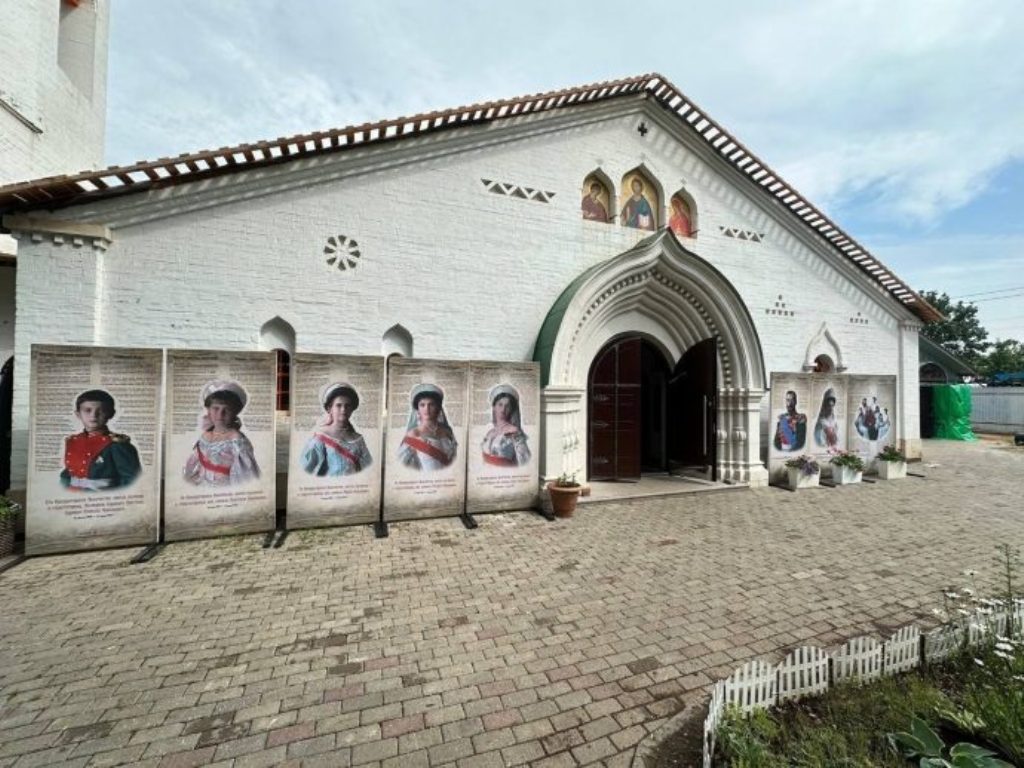
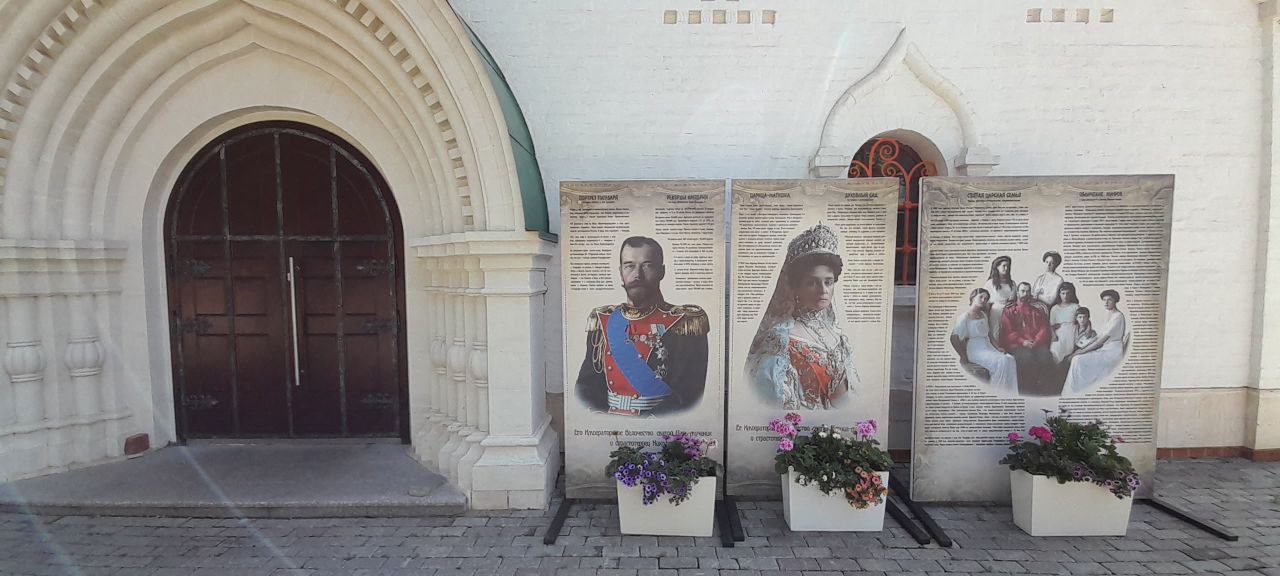
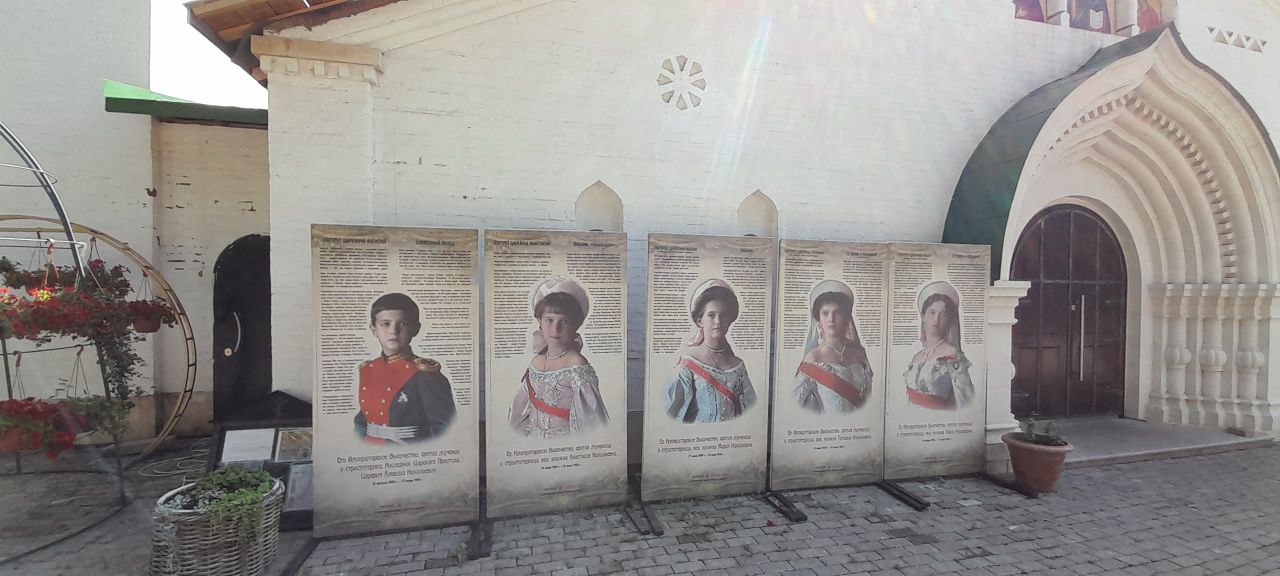
Earlier this month, a unique outdoor exhibit dedicated to Emperor Nicholas II and his family opened on the grounds of the Mironositsky Church [the Church of the Holy Myrrh-Bearing Women] in the Russian city of Istra [Moscow oblast].

The Tsar’s Crown, featured 8 posters, which provide visitors with a deeper understanding of the life of the Imperial Family during the late 19th and early 20th centuries, and their death and martyrdom.

The exhibition ran until June 15, and has now moved to the St. George Church in the city of Dedovsk.

***

*As I have noted in previous posts, I support any initiative – big or small – to help keep the memory of Nicholas II and his family alive in 21st century Russia – PG

© Paul Gilbert. 16 June 2025

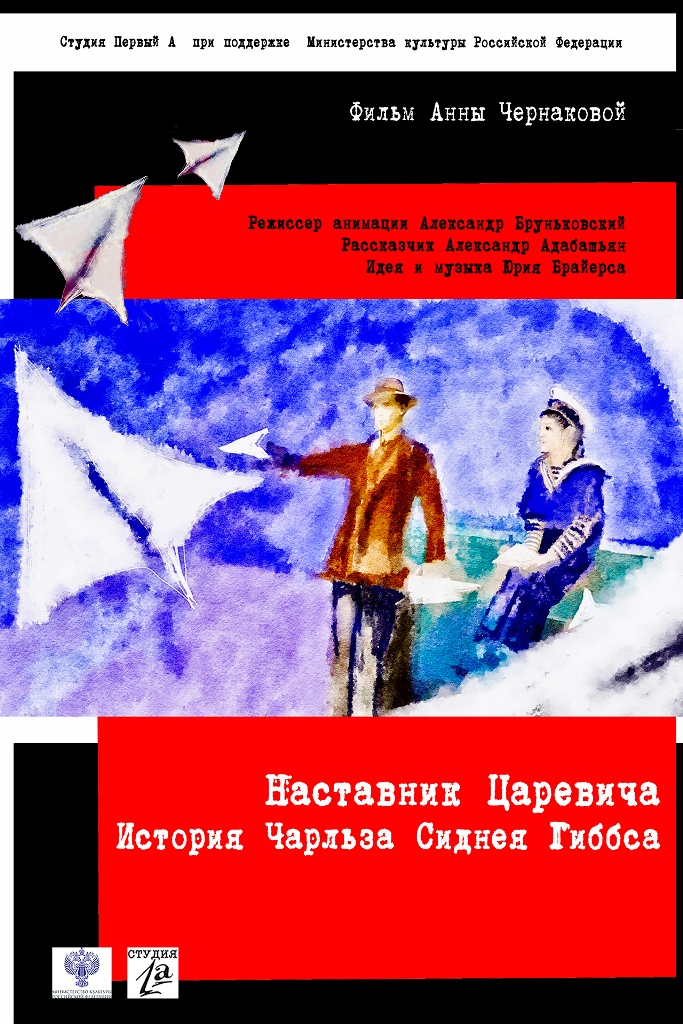
The Tsesarevich’s Mentor. The Story of Charles Sydney Gibbes

On 29th May 2025, the premiere of a new Russian-language documentary-film entitled The Tsesarevich’s Mentor. The Story of Sydney Gibbes, will be shown in the Courtyard of the Sovereign Military Chamber, situated near the Alexander Palace at Tsarskoye Selo.

The film tells the story of Englishman Charles Sydney Gibbes (1876-1963), a Cambridge graduate who arrived in Russia in 1901. Gibbes lived and worked in St. Petersburg, and from 1908 he served as an English teacher for the children of Emperor Nicholas II – first for the Grand Duchesses, and later for Tsesarevich Alexei.

In August 1917, Gibbes voluntarily followed the Imperial Family into exile to Tobolsk. And after their tragic death in July 1918, he left Russia and returned to England, where he converted to Orthodoxy several years later. Gibbes was later ordained a priest, becoming Father Nikolai, and founded an Orthodox parish in Oxford, which still exists today.

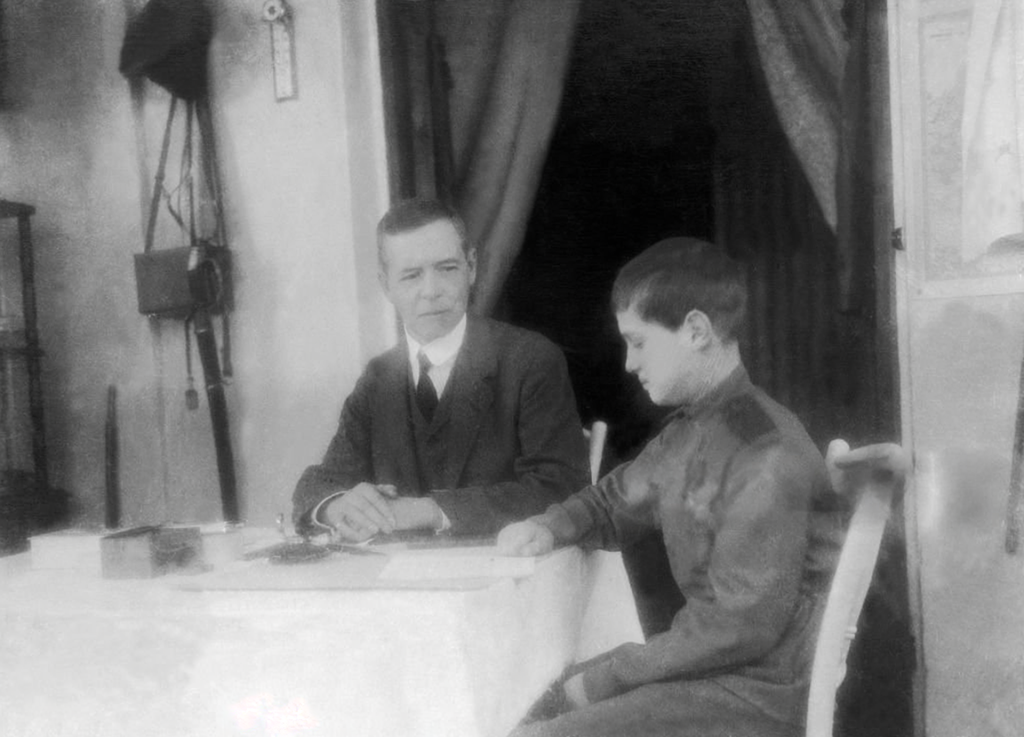
PHOTO: Charles Sydney Gibbes and Tsesarevich Alexei Nikolaevich (circa 1914-16)

The documentary-film The Tsesarevich’s Mentor. The Story of Charles Sydney Gibbes was filmed by Studio First A with the support of the Ministry of Culture of the Russian Federation. Director-producer Anna Chernakova, animation director Alexander Brunkovsky, script by Alexander Adabashyan and Yuri Bryers, composer Yuri Bryers.

The film uses documentary materials from Russian and British archival sources, with additional film segments filmed in the UK.

On a personal note, a documentary about Charles Sydney Gibbes is long overdue, and while I commend and support this Russian-language documentary about his life and service to the Imperial Family, it also begs the question . . . WHY has there never been a British-made documentary about Gibbes? – PG

© Paul Gilbert. 23 May 2025

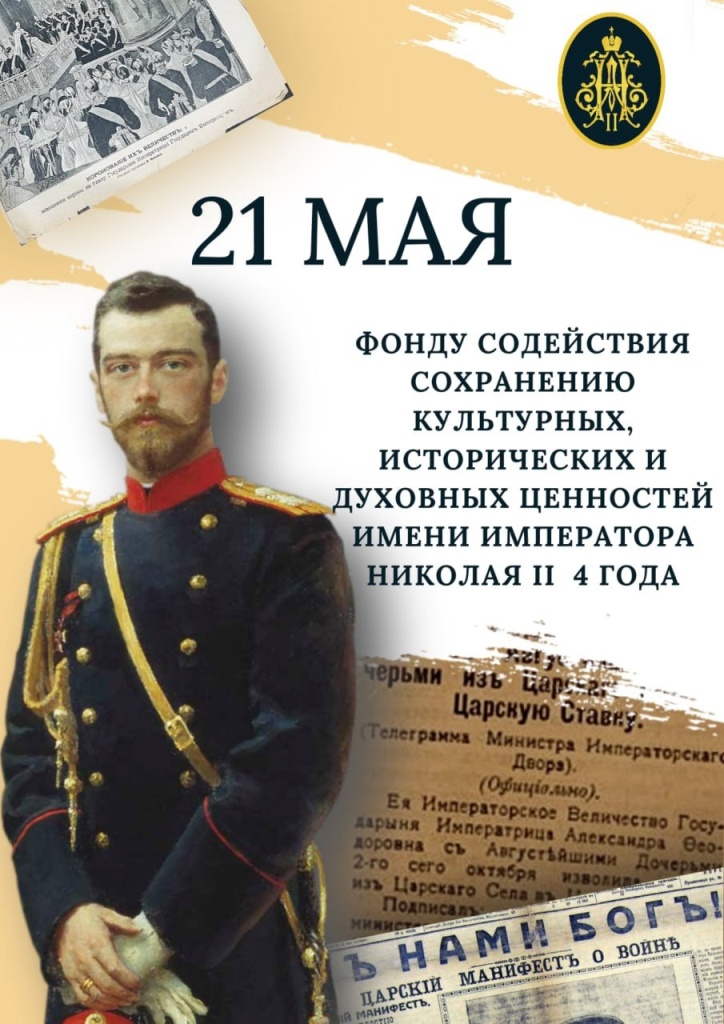
Emperor Nicholas II Foundation marks 4th anniversary

On 21st May 2025, the Emperor Nicholas II Foundation celebrated it’s 4th anniversary. The Foundation was created in 2021, to support the Museum of Emperor Nicholas II (Moscow), as well as other initiatives to help restore and disseminate the historical truth about Emperor Nicholas II and his era.

The Foundation is dedicated to the historical education of the Holy Sovereign Emperor Nicholas II and his family, and to the creation and prosperity of the Museum of Emperor Nicholas II Museum. During the last 4 years, the Foundation have hosted dozens of events, offered hundreds of museum tours, while expanding their collection with new acquisitions.

In addition, the Foundation has been involved in several Russian language publishing projects, such as Последний духовник Императора Николая II и его Семьи: тобольский протоиерей Владимир Хлынов / The last confessor of Emperor Nicholas II and his Family: Tobolsk Archpriest Vladimir Khlynov (2018).

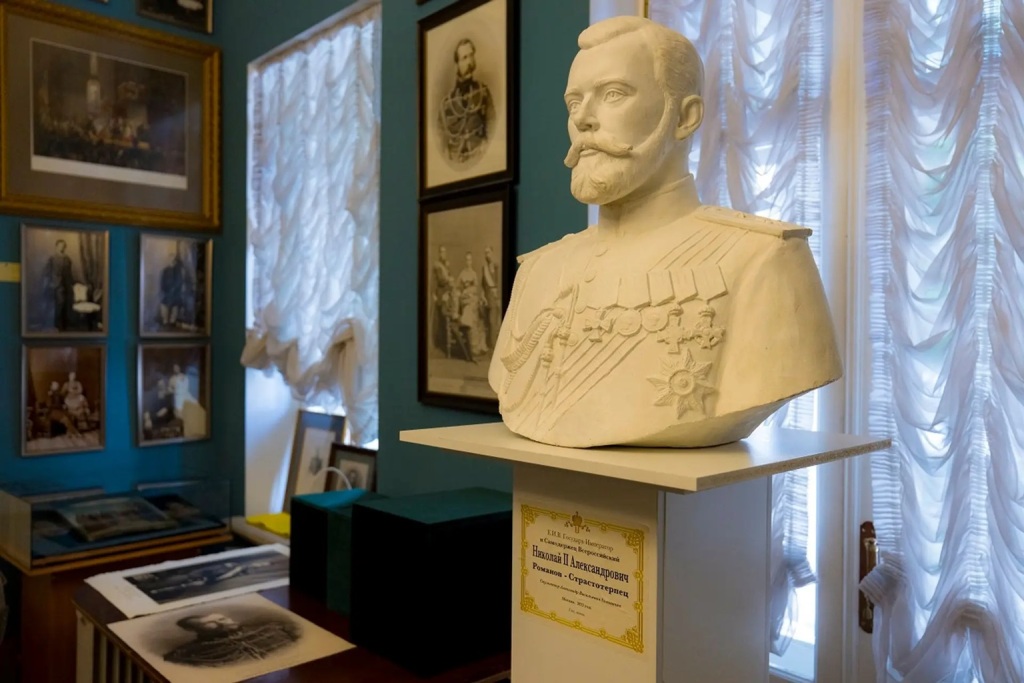
PHOTO: bust of Emperor Nicholas II on display in the Museum of Nicholas II

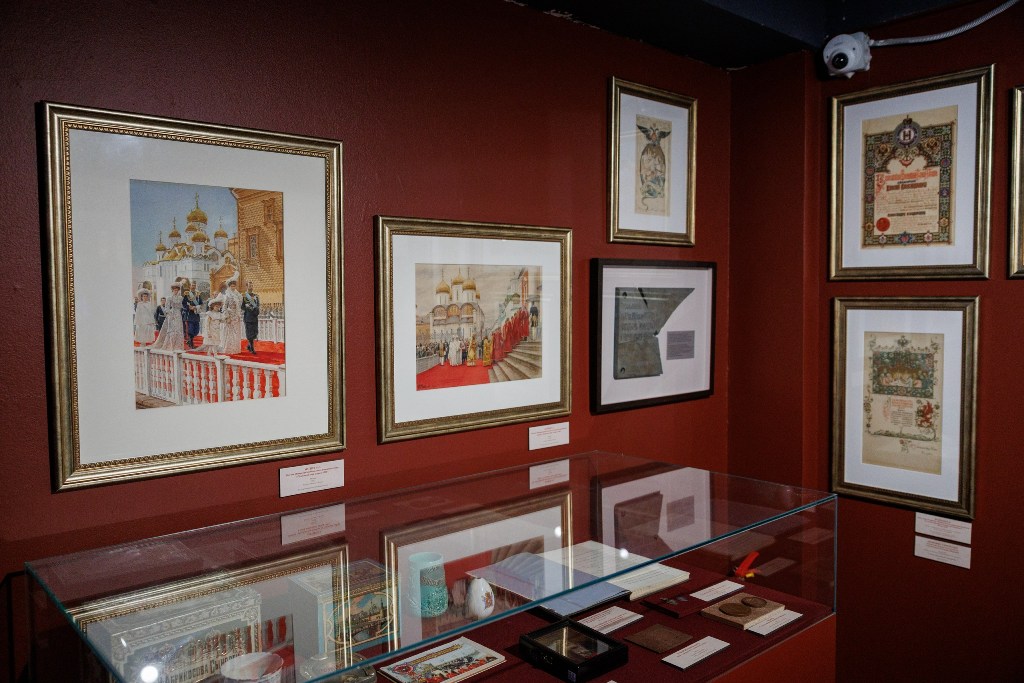
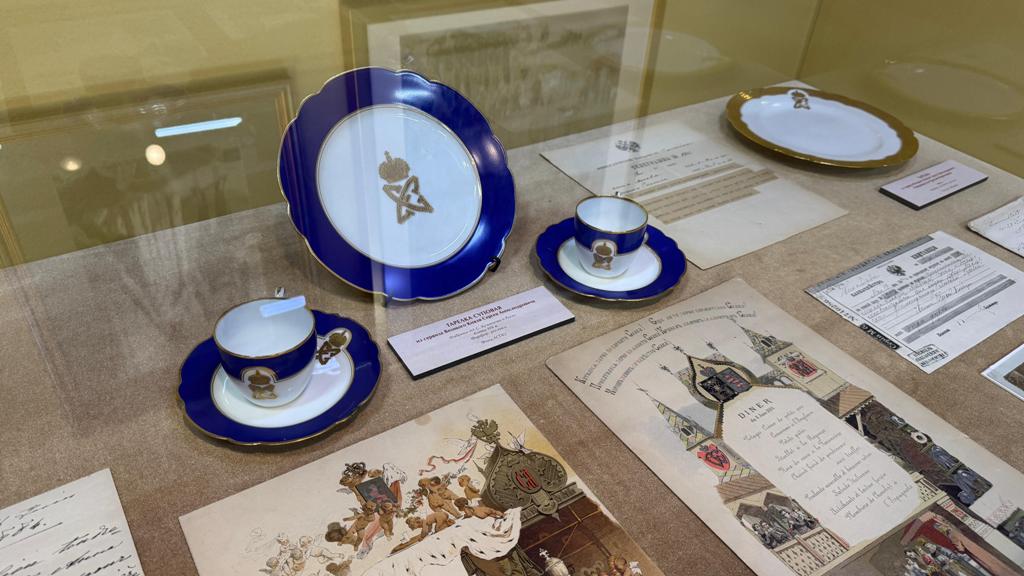
The Museum of Emperor Nicholas II is based on the unique collection of the famous Russian art historian Alexander Vasilyevich Renzhin, which was formed over the course of 35 years and contains more than three thousand authentic objects dating from 1868 to 1918, including personal items which belonged to the last Russian Emperor and his family: icons, church utensils, rare books, ceremonial portraits of Emperors Alexander II, Alexander III, Nicholas II, more than 500 original photographs, autographs, state documents, porcelain, glass and bronze, a unique collection of gifts from the 1896 Coronation, memorial items of the Romanov dynasty, a full set of state awards established by Nicholas II, postcards, chromolithography, engravings and much more.

***

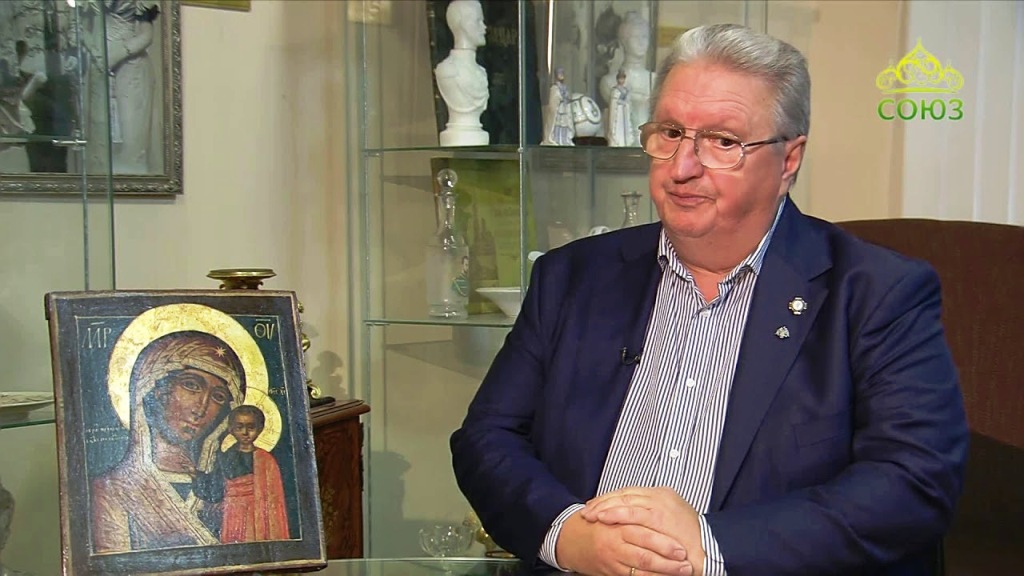
PHOTO: Alexander Vasilyevich Renzhin,
director of the Museum of Emperor Nicholas II in Moscow

The following is from an interview on 14th May 2024:

Russian art historian Alexander Vasilyevich Renzhin, and director of the Museum of Emperor Nicholas II, for many decades has been amassing a collection of personal items belonging to the last Russian Tsar and his family. Renzhin himself, could not have imagined that his collection of rare and unique items would form an exposition which reflect an important page in late 19th to early 20th century Russian history, one which would fill an entire museum.

— Alexander Vasilyevich, why did you start the museum.

“I had been living with the dream of opening a museum for many years. It so happened that I learned about the history of pre-revolutionary Russia, as they say, first-hand. Both of my grandfathers were simple peasants from the Vyatka province, they lived through the Great War, the 1917 Revolution, the Civil War, the Great Patriotic War and still, both lived to be 90 years old. And despite all the events which they experienced, they still retained the people’s love for the Sovereign, always referring to him in their memoirs as “Tsar-Father”. This absolutely respectful attitude towards the Tsar was deeply observed by the Russian people.

“Once a photograph of Emperor Nicholas II fell into my hands, which I remembered for the rest of my life. In it, the Emperor is depicted visiting a factory and talking to the workers. He does not look “official” or “superior”, but as if the workers are old acquaintances. So a completely new page in history began to open for me, which began with the memories that my two grandfathers shared with me. It was at this point in my life, that I started to collect books and objects related to the history of the Imperial Family.”

— Did you have like-minded people who helped open the museum?

“Yes, this would be Anna Vitalievna Gromova, a well-known public figure, historian and Chairman of the Elisabeth-Sergius Educational Society Foundation (ESPO). Thanks to her, we were able to acquire a building for our museum.”

— Are all the exhibits presented in the museum from your personal collection?

“Some things were given to us by people who kept them, often hidden away from even their closest friends and relatives. Our museum is direct evidence that not everything related to Nicholas II was destroyed, and that the Russian people did not forget the Tsar. During the 1920s and 30s, it was forbidden to be in possession of photographs or portraits depicting the Tsar. People who did so, risked losing everything, and even the risk of being shot. Nevertheless, people preserved these items to this day.

“They kept these items hidden in their chests and closets, hiding them from every one. One old woman who brought me a mug from the Tsar’s Coronation told me that her grandmother, when she invited them to visit her, opened a drawer, and showed this mug and said: “Look, this mug was held in the hands of the Tsar-Father.”

“She received it on the Khodynka Field from the hands of the Tsar himself (!). And now this rarity can be seen in our museum. Things related to the Tsar in one way or another were kept by these dear souls, who loved Russia, who loved their Tsar, as the most important treasure in life.

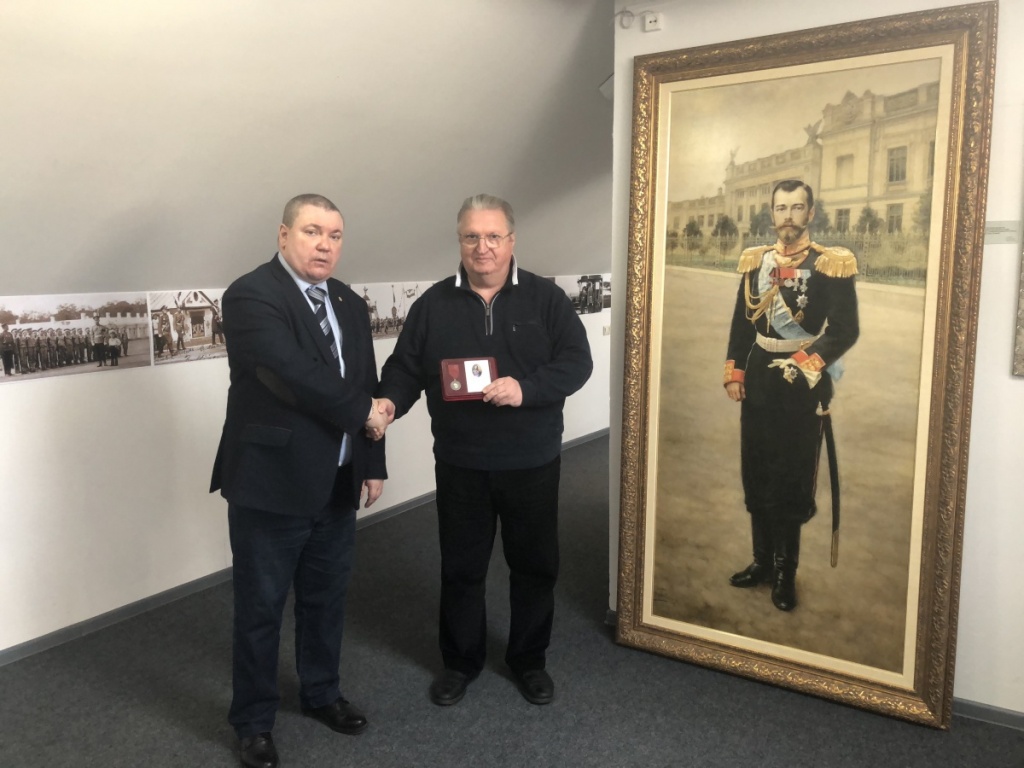
PHOTO: On 24th April 2018, the head of the Military Orthodox Mission Igor Evgenievich Smykov (left) visited the Museum of Emperor Nicholas II in Moscow. With the blessing of the First Hierarch of the Russian Orthodox Church Outside of Russia (ROCOR), Metropolitan Hilarion (1948-2022), he presented Alexander Renzhin (right) with a commemorative medal “In Memory of the Reign of St. Emperor Nicholas II Alexandrovich.”

– What kind of person, in your opinion, was Nicholas II?

“He was a creator. We see this in the fruits of his labours. He was very firm in his decision-making, that’s obvious. Each time he thought them over carefully, always trying to find an inner balance. Thanks to Nicholas II, 46,000 kilometers of railways were built during his twenty-two year reign.

“The plan for the electrification of the country was created in 1903 on his personal initiative, although the Bolsheviks later took credit for it. Some 118,000 educational institutions were opened. In 1894, only 24 percent of the population was literate, and in 1917 it was 67 percent. It was the Tsar who issued a decree on parochial schools. Even if a priest did not have the means to hire a teacher, he was obliged to teach himself. Primary education was offered at every church throughout the Russian Empire.

“Nicholas II was a man of very strong character, and no one ever saw him angry, always trying to remain calm, even during the many trials and tribulations of his reign. When in the company of officers, he could drink as much as the rest, but no one saw him drunk. His worst outburst of anger, as one of his retinue recalled, came during a conversation with an officer who had abandoned his soldiers on the front lines. The Tsar fell silent, turned his back to the officer, went to the windowsill and began to tap it with his fingers.

“Nicholas II was an exemplary father to his children and a father to his subjects. Suffice it to say that in the First General Census of the Population of the Russian Empire (1897), in the column “Occupation, position or trade” he wrote: “Master of the Russian land.”. That is, he felt like a master – an owner, responsible for everything and everyone.”

— What do you think visitors will learn during their visit to your museum?

“Judging by the reviews our visitors leave, for the majority, regardless of education or age, our museum is a discovery. Many people do not realize, that once Tsarist Russia was ruled by a just, honest man who loved our Fatherland with all his heart and gave not only his life for it, but also the lifves of his family, who, went with him to their death and martyrdom.

“Young people who come to our museum are very interested in history, their eyes shine while looking at the exhibits. This new generation is like a blank slate, and it is necessary to write on it, it is necessary to give them knowledge, genuine, real historical knowledge, on the basis of documents that have been preserved. When they see the fragments of the Russian Empire, they will understand what they should be striving for. They will understand what our ancestors cherished for a thousand years.”

© Paul Gilbert. 22 May 2025

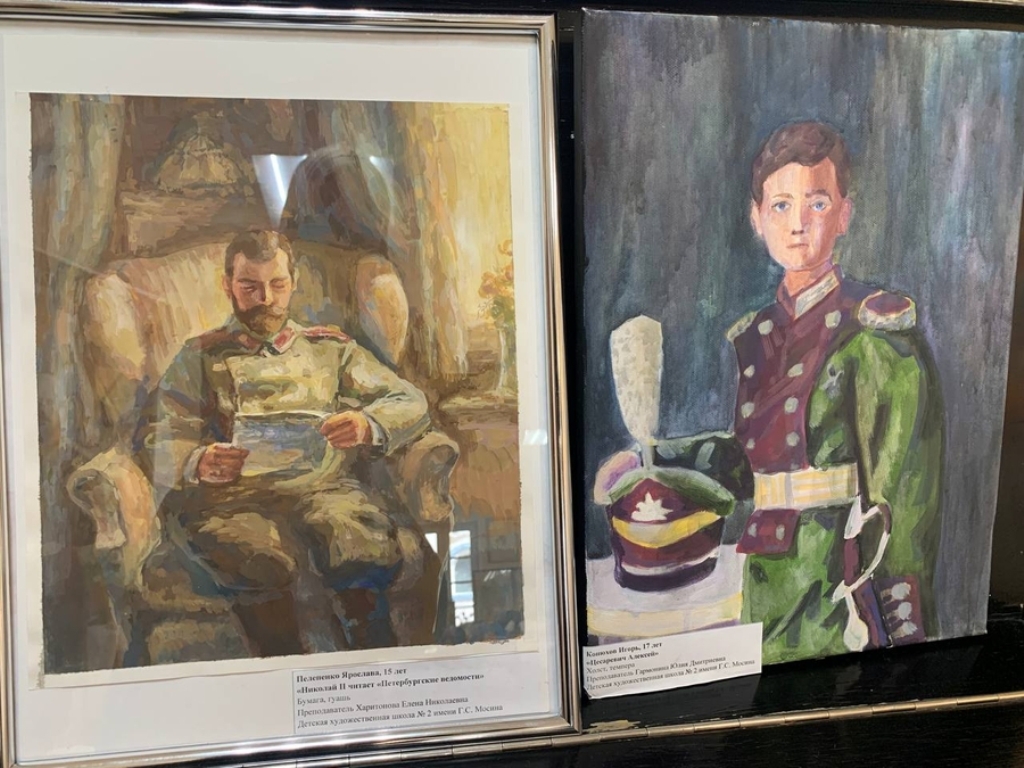
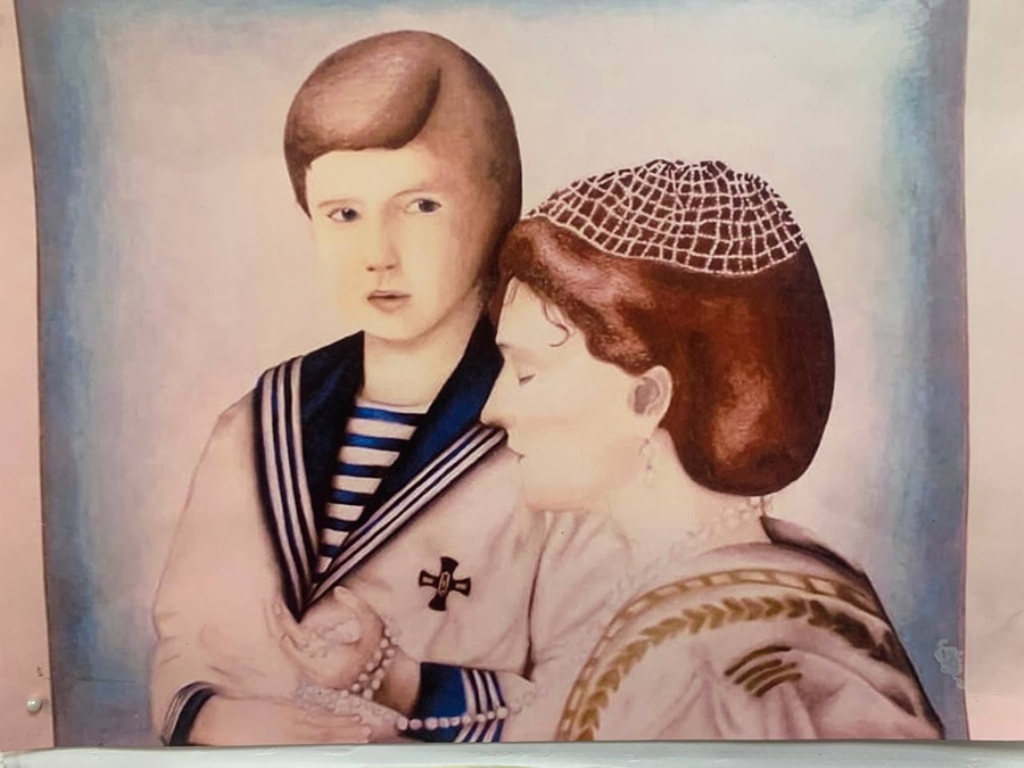
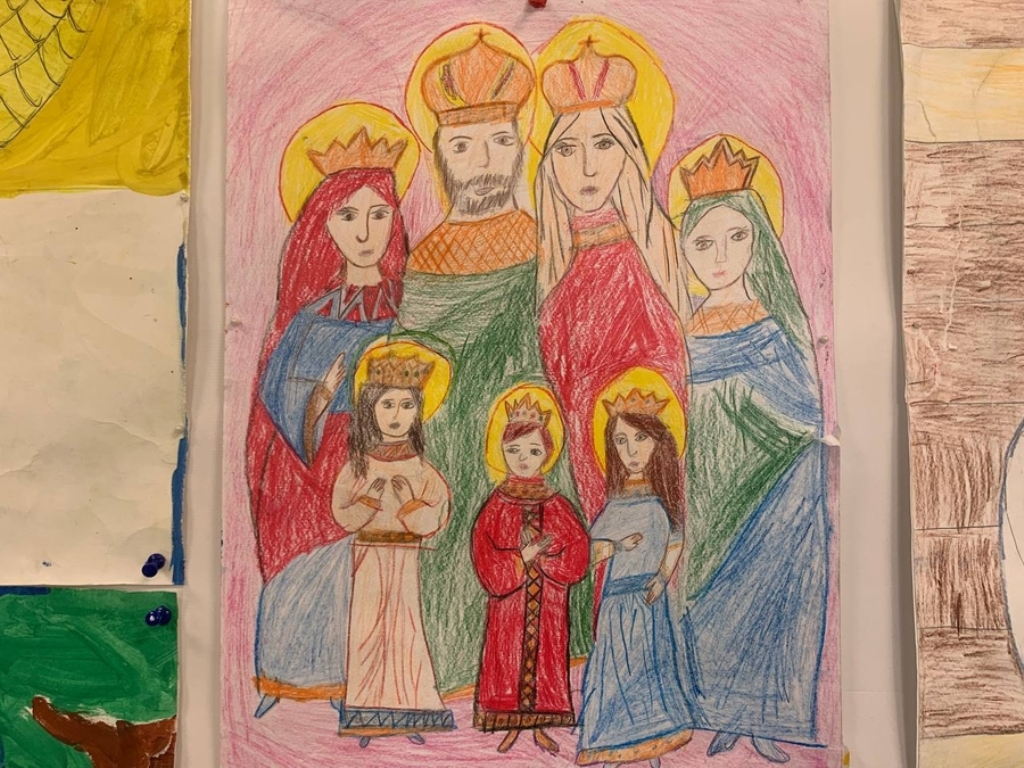
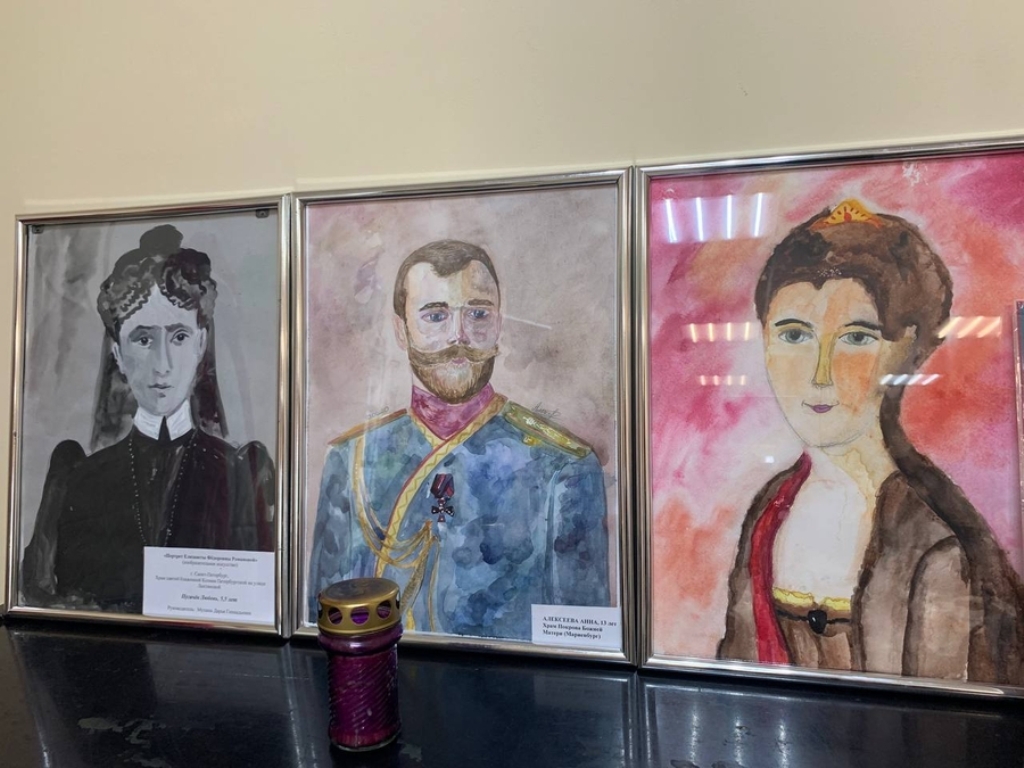
Exhibition showcases children’s drawings of Nicholas II’s family

On 19th May 2025, with the blessing of Bishop Mitrofan of Gatchina and Luga, a traveling international exhibition of children’s drawings and watercolours opened at the Spiritual and Educational Center of the Cathedral of the Intercession in Gatchina, near St. Petersburg.

The exhibition showcases drawings and watercolours of Tsesarevich Alexei Nikolaevich and the Holy Tsar’s Family, as part of a program, launched 5 years ago by the Union of Russian Communities of St. Petersburg and the Leningrad Region.

The event coincides with the day of remembrance of the Holy Righteous Job the Much-Suffering – the Heavenly patron of the Holy Emperor Nicholas II, and the 157th anniversary of the birth of the Holy Emperor Nicholas II on 19th (O.S. 6th) May, 1868.

Last year, on 12th August 2024, the day which marked the 120th anniversary of the birth of the last Heir to the Russian throne, only drawings by Italian children, were featured in the exhibition. They were presented to the parish by the Italian opera singer Elvis Fanton, who converted to Orthodoxy that same day, taking the name Alexei. The drawings and watercolours were exhibited in the Church of the Passion-Bearer Tsesarevich Alexei in Znamenka (Peterhof). Gradually, the exhibition has been supplemented with entries from St. Petersburg, Gatchina, Marienburg, Peterhof, Ryazan and Ekaterinburg.

© Paul Gilbert. 20 May 2025

Blagoveshchensk hosts photo-exhibit dedicated to the Imperial Family

On 24th February 2025, The Tsar’s Family. Love and Mercy photo-exhibition, dedicated to Emperor Nicholas II and his family opened in the city of Blagoveshchensk, situated in the Amur region of Siberia, near the Chinese border. The exhibition runs until 6th April 2025 at the Pushkarev Art Gallery.

The exhibition presents more than 100 vintage photographs which tell about the close relationship within the family of the last Russian emperor. The photographs reflect many aspects of the life of the Tsar’s family during the late 19th and early 20th centuries, including the upbringing of the children, and the warm and loving relationship, which they shared with both their parents and each other.

In addition, the photo exhibition also shows the Tsar’s Family’s dedication to acts of charity and their service to the Fatherland, and a wonderful example of Russian family traditions and unshakable piety and spiritual values.

The exhibition has been held in various formats and in many Russian cities: Moscow, Voronezh, Kursk, Ryazan, Penza, Krasnodar, Belgorod, Velikiye Luki, Yalta, Livadia, Sevastopol, Novosibirsk, Lesosibirsk, Perm, Sayansk, Severomorsk, Pskov, Pavlovsk, Livadia, etc.

The photo project The Tsar’s Family: Love and Mercy was created in 2016 by the Sretensky Monastery in Moscow. The travelling exhibition has already been presented in Serbia, Germany, Italy, Canada, Argentina, New Zealand, South Africa, Romania, Croatia, Montenegro, Bosnia and Herzegovina, Macedonia, and the Czech Republic.

The Tsar’s Family. Love and Mercy photo-exhibition, runs until 6th April 2025 at the Pushkarev Art Gallery, Blagoveshchensk.

***

*As I have noted in previous posts, I support any initiative – big or small – to help keep the memory of Nicholas II and his family alive in 21st century Russia – PG

© Paul Gilbert. 13 March 2025

Nicholas II’s porcelain project presented in St. Petersburg

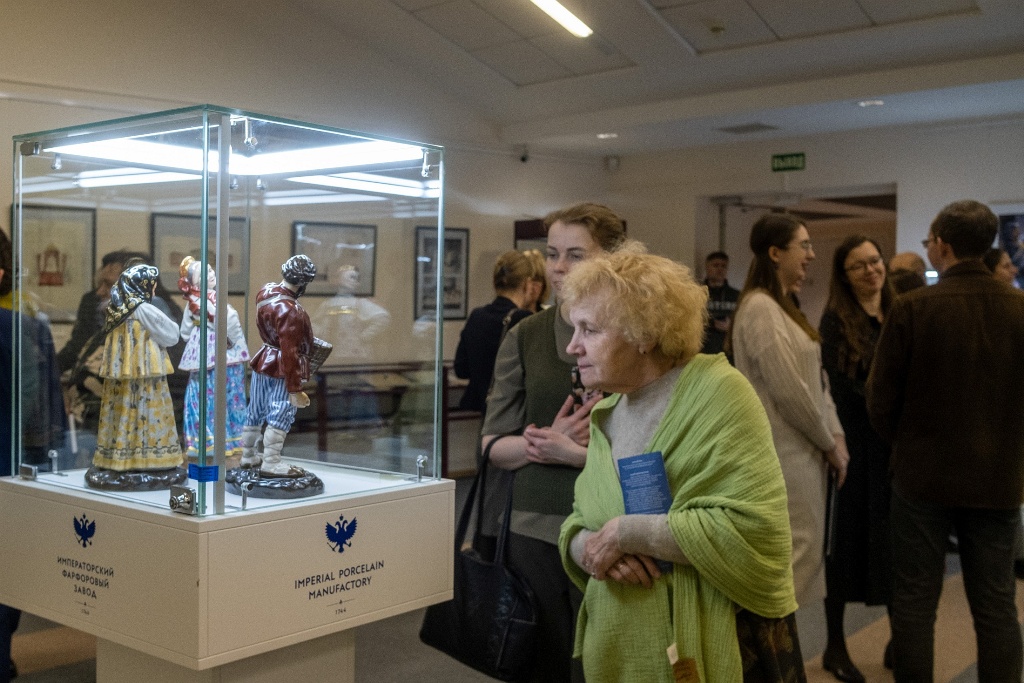
Earlier this week, a new exhibition opened in St. Petersburg, featuring items from the Imperial Porcelain Factory. The exhibition was organized by the Russian State Historical Archive (RGIA) in St. Petersburg and the Imperial Porcelain Factory [established in 1744].

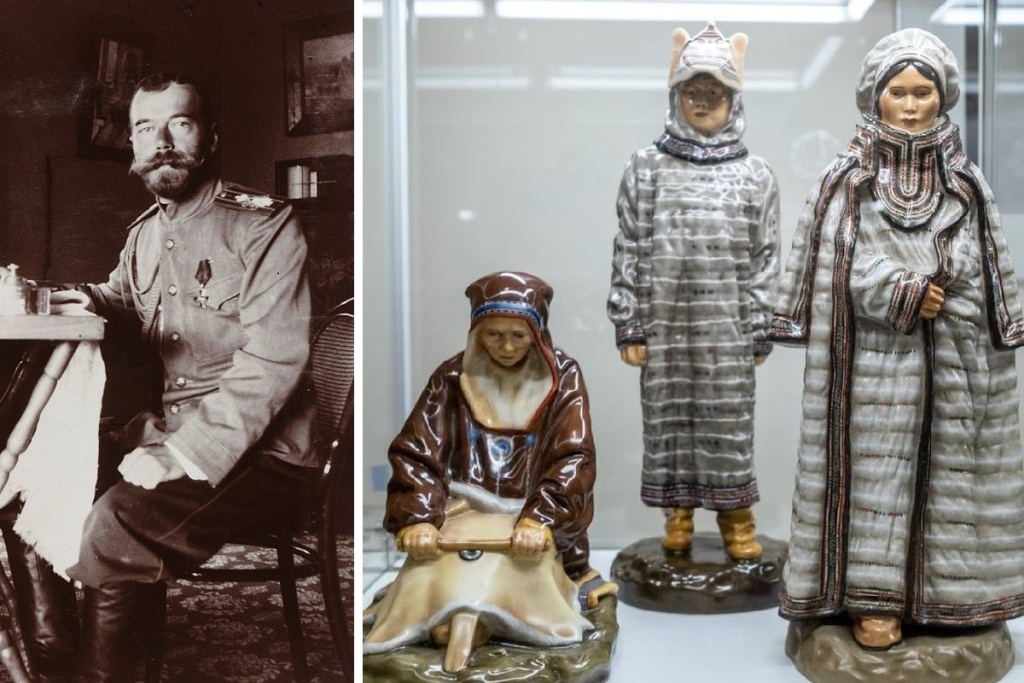
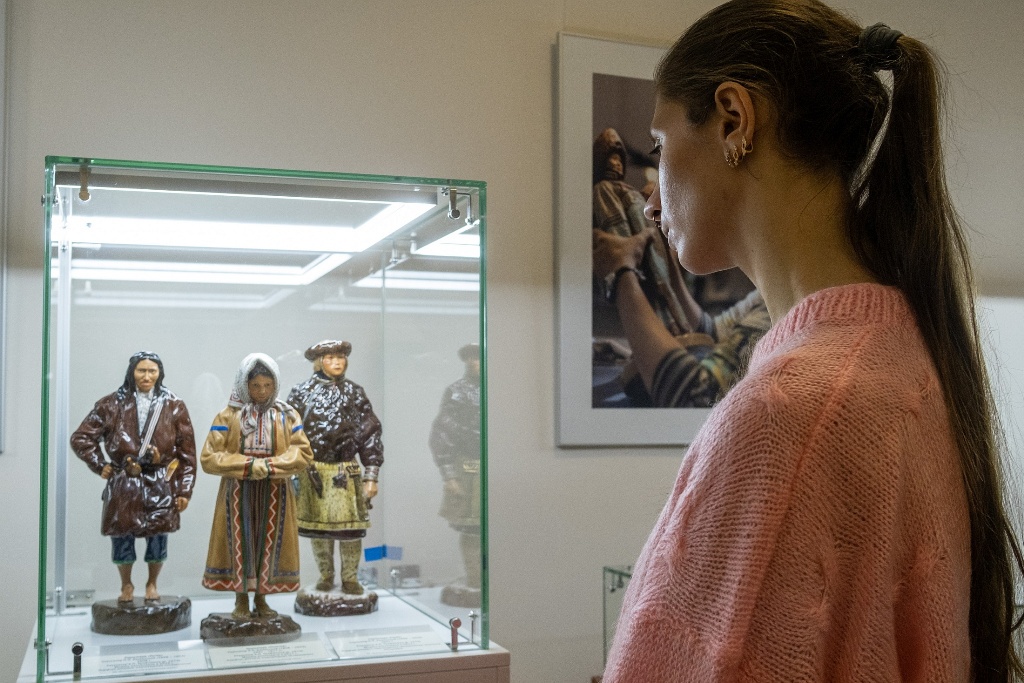
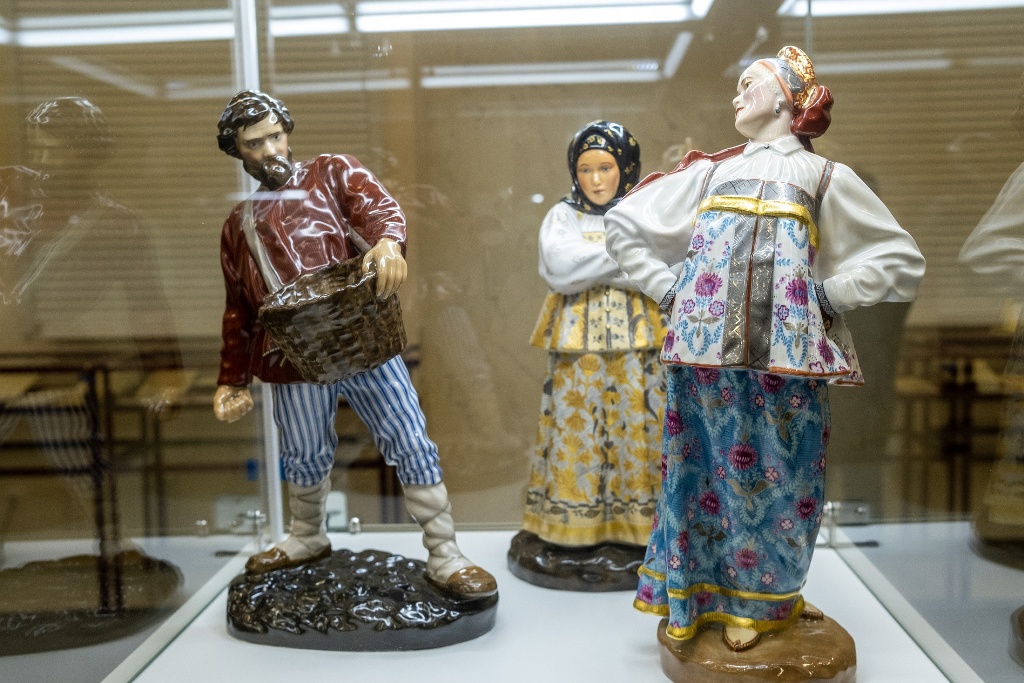
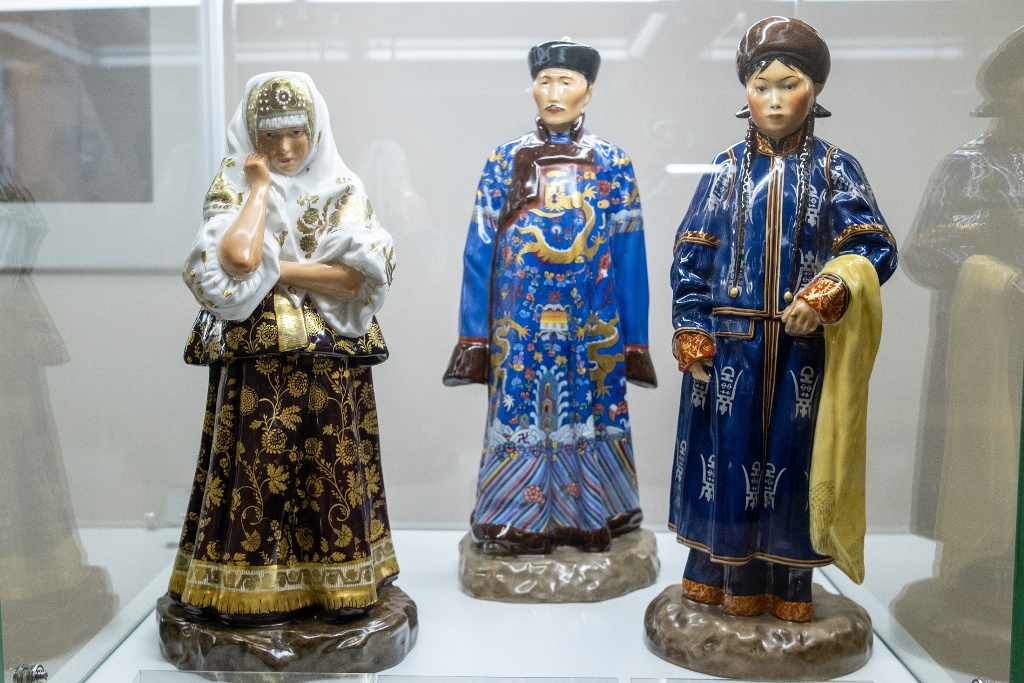
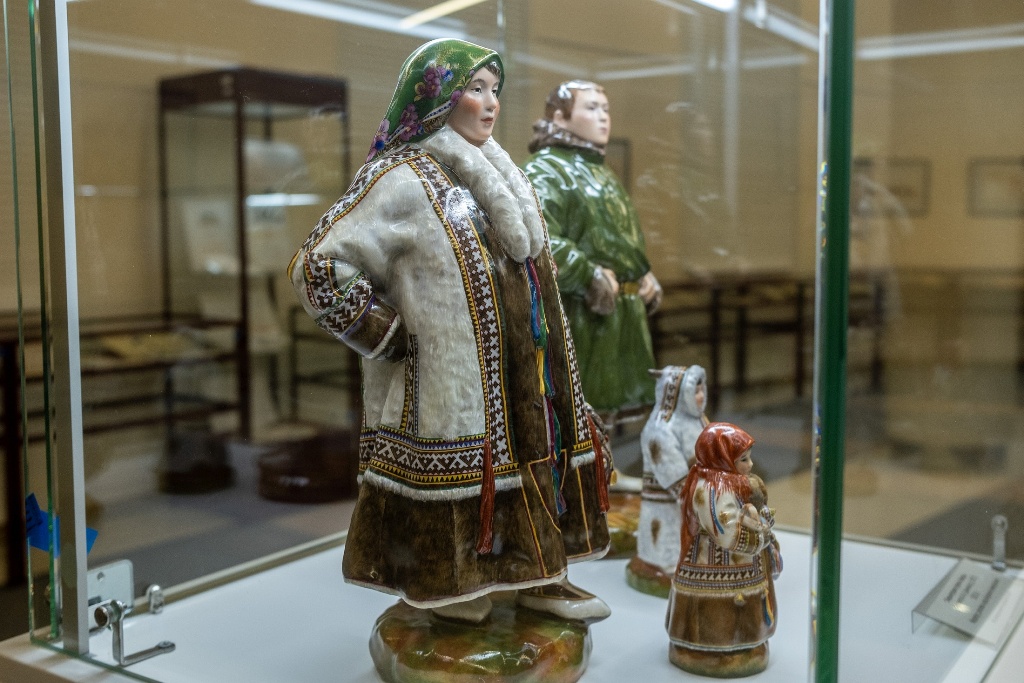
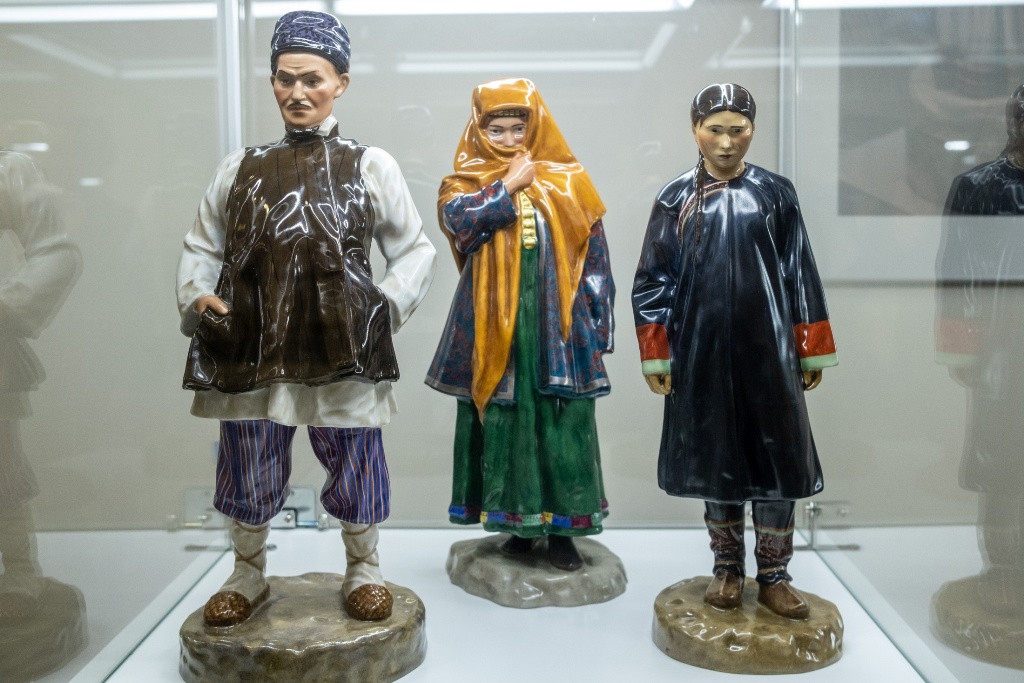
The highlight of the exhibition is a unique porcelain series “Peoples of Russia”, which represents the peoples of the former Russian Empire. The series was and remains the largest project in the history of the Imperial Porcelain Factory, created by the personal order of Emperor Nicholas II.

In addition, are more than 200 archival documents dedicated to the history of the Imperial Porcelain Factory and the author of the “Peoples of Russia” series, sculptor Pavel Pavlovich Kamensky (1858-1922). The documents include Kamensky’s personal files, letters, and documents on the procedure for making the porcelain series. Many of these documents are exhibited for the first time.

The “Peoples of Russia” series of porcelain figurines was created between 1907-1917 by order of Emperor Nicholas II. The series was created to mark the celebration of the 300th anniversary of the Romanov Dynasty in 1913. The series represents the 73 nationalities of the Russian Empire, according to the results of the first General Population Census of 1897.

Kamensky managed to create over 150 figures, depicted in their respective national costumes. The sculptor relied on a wide range of historical, ethnographic and anthropological materials from the collections of the Kunstkamera and the Museum of Alexander III [State Russian Museum].  He was assisted by a team of molders and painters – Anatoly Lukin, Pavel Shmakov, Ivan Zotov, Andrei Dietrich, Lyudmila Midina and others.

Nicholas II personally evaluated the new statuettes of the series. Every year before the Christmas holiday from 1907 to 1914, several new figures were brought to the Alexander Palace at Tsarskoye Selo, and shown to the Emperor.

The majority of the original “Peoples of Russia” figurines are today in Collection the Porcelain Museum of the State Hermitage in St. Petersburg. In addition, there are 47 figurines in the collection of the Russian Museum of Ethnography in St. Petersburg.

Copies of these beautiful figurines are still manufactured at the Imperial Porcelain Factory in St. Petersburg, and available to purchase by collectors.

© Paul Gilbert. 28 February 2025

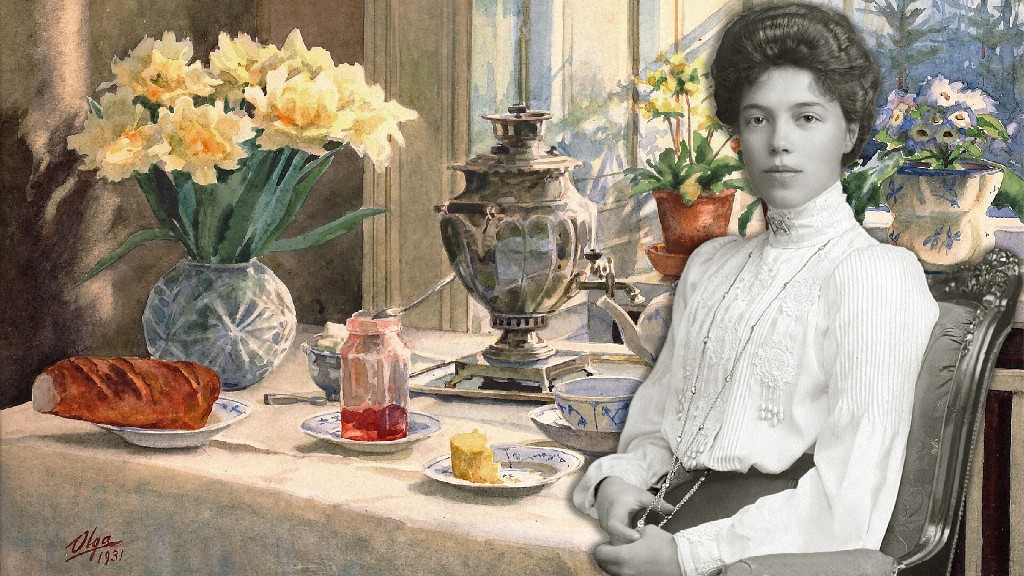
Virtual exhibition of watercolours by Grand Duchess Olga Alexandrovna

Last autumn, a one-day exhibition of watercolours by Grand Duchess Olga Alexandrovna (1882-1960) and personal items that belonged to the family of Emperor Alexander III, was held at the Beloselsky-Belozersky Palace[1] in St. Petersburg. A virtual tour of the exhibition is now available – see link below.

The exhibition includes 45 works of art and 16 memorial items from the collection, which was donated to the State Russian Museum by the St. Catherine’s Foundation with the assistance of the ESPO Foundation in 2023.

The exhibition is a joint project of the Ministry of Culture of the Russian Federation, the State Russian Museum, and the Elisabeth-Sergius Educational Society Foundation (ESPO).

In April 2023, the Russian Museum received 180 watercolours painted by the Grand Duchess in different years, and 44 memorial items from the family of Emperor Alexander III, which included Fabergé and other interesting items. The collection was formerly in the possession of Olga Nikolaevna Kulikovsky-Romanov (1926-2020), the third wife of Grand Duchess Olga’s eldest son, Tikhon Nicholaevich Kulikovsky (1917-1993)

All the children of the imperial family knew how to draw, but among the children of Emperor Alexander III and Empress Maria Feodorovna, their youngest daughter Olga stood out. From a very early age, Olga proved herself as an artist. The Grand Duchess recalled: “Even during geography and arithmetic lessons, I was allowed to sit with a pencil in my hand, because I listened better when I drew corn or wild flowers.”

Grand Duchess Olga Alexandrovna was the patroness of many charitable societies and artistic associations of the Russian Empire, the chief of the 12th Hussar Akhtyrka Regiment. During the First World War she worked as a nurse, equipping a hospital in Kiev at her own expense.

The 3D tour is complemented by audio accompaniment dedicated to the life and work of the Grand Duchess, who during her lifetime painted more than 2,000 watercolours.

CLICK HERE TO VIEW THE VIRTUAL EXHIBITION

NOTES:

[1] Before the 1917 Revolution the palace was named the Sergei Palace, a Neo-Baroque palace at the intersection of the Fontanka River and Nevsky Prospekt in the capital. The palace served as the residence of Grand Duke Sergei Alexandrovich and Grand Duchess Elizabeth Feodorovna. Following Sergei’s assassination in February 1905, the palace then became the property of his widow who became a nun in 1909. She went to live at the Marfo-Mariinsky Convent in Moscow and willed the palace to her ward Grand Duke Dmitri Pavlovich.

© Paul Gilbert. 31 January 2025

“Christmas in the circle of the Tsar’s Family” held in Penza region

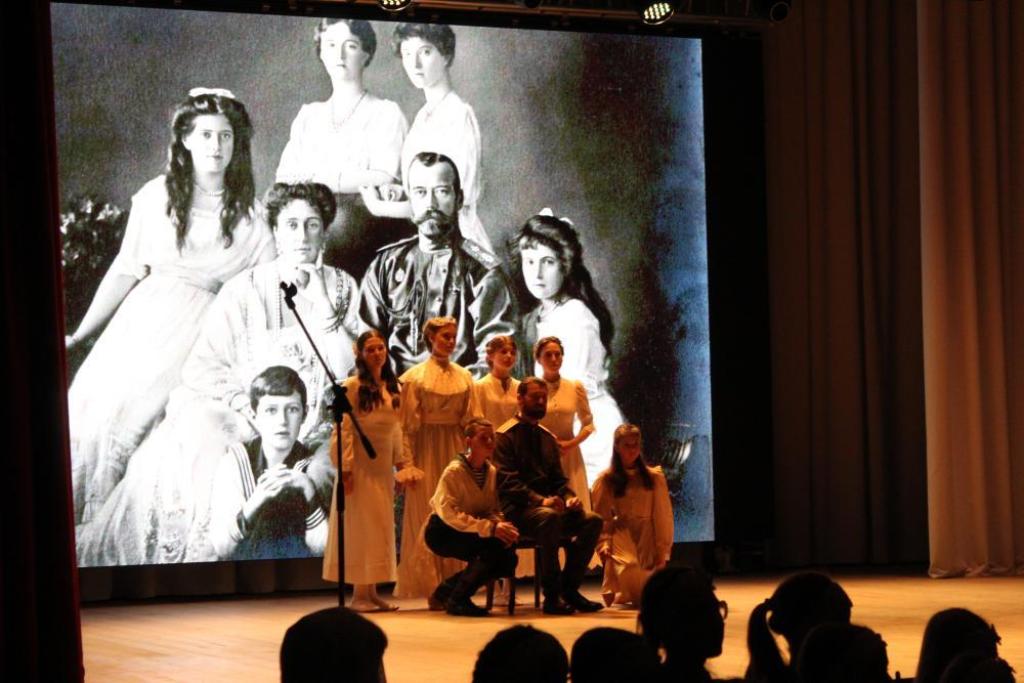
PHOTO: local actors perform the roles of the Imperial Family

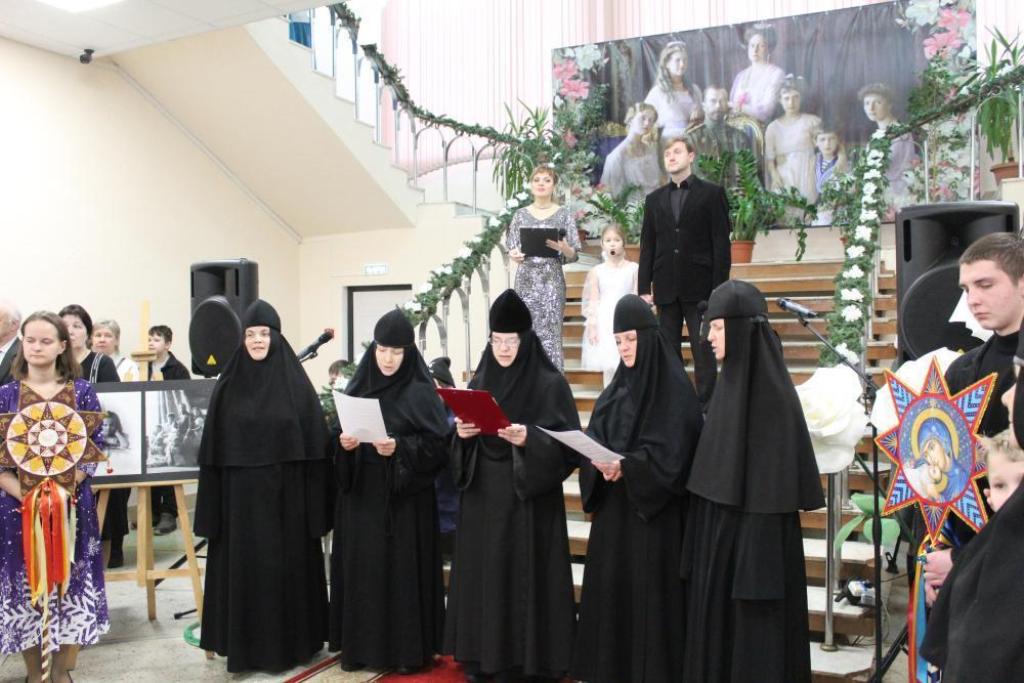
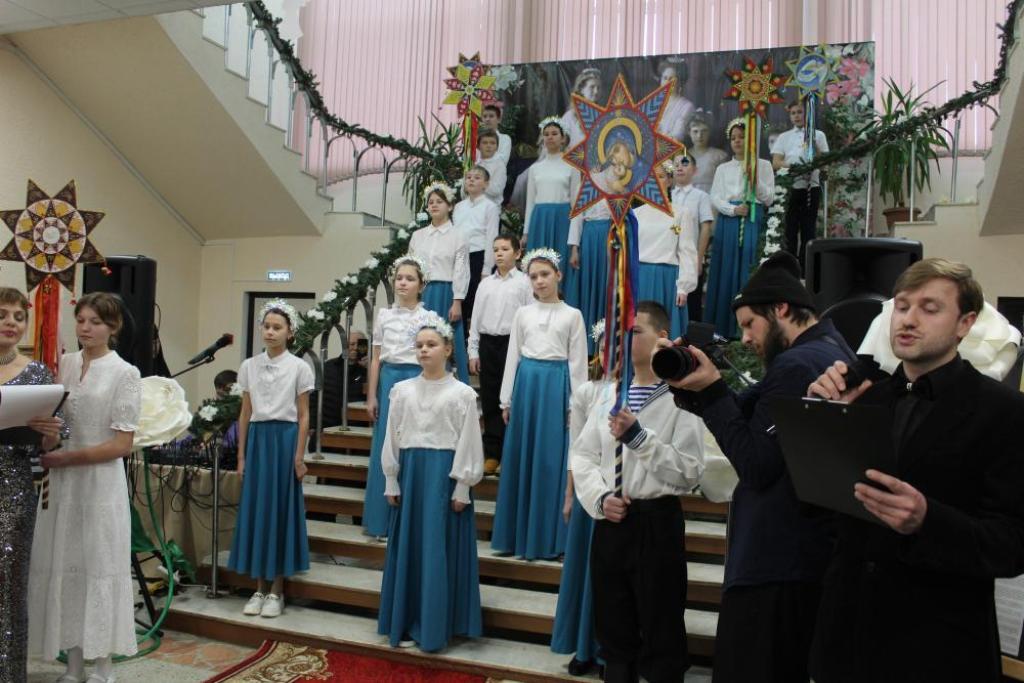
On 11th January 2025, a *Christmas event dedicated to Emperor Nicholas II and his family was held in the House of Culture in the village of Narovchat, Penza Region. Christmas in the Circle of the Tsar’s Family marked the traditions of celebrating the Nativity of Christ in the circle of the family of the Holy Royal Passion-Bearers and Imperial Russia.

* Recall that Orthodox Christians celebrate Christmas on 14th January, according to the Old Style Julian Calendar

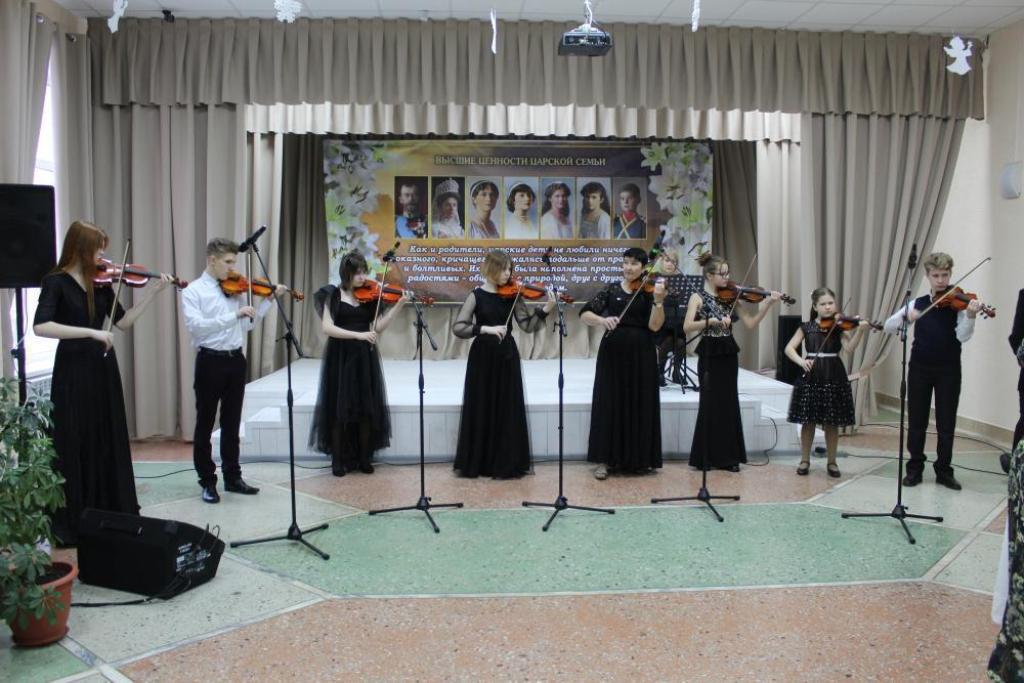
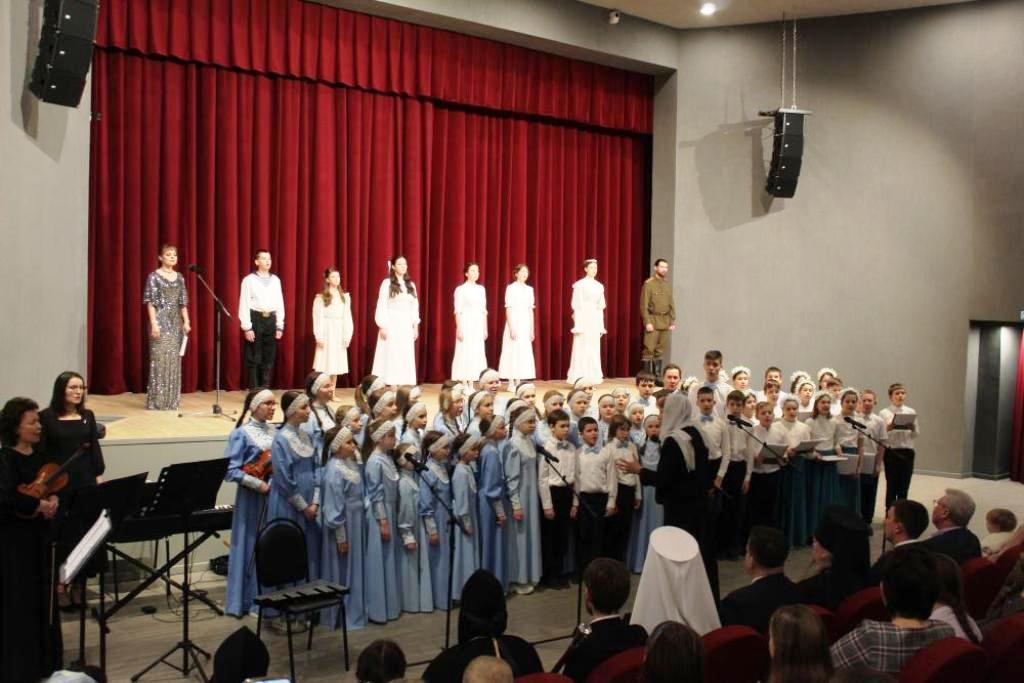
The event was organized by the nuns of the Trinity-Scanov Monastery, the pupils of the monastery Sunday School, the pupils of the Bishop’s Children’s Choir of the Penza Diocese and the staff of the Penza Museum of Local Lore.

The guests of honour included Metropolitan Seraphim of Penza and Nizhnelomovsk, Bishop Mitrofan of Serdobsk and Spassky, Minister of Culture and Tourism of the Penza Region Sergey Vyacheslavovich Bychkov, and acting head of the Narovchat district Sergey Viktorovich Skudin.

Guests were greeted in the lobby by the pupils of the Sunday school and the nuns of the Trinity-Skanov Monastery, who sang carols and praises to the newborn Christ child.

On stage the private world of the Imperial Family was revealed. Local actors read aloud the personal letters of Tsar Nicholas and Tsarina Alexandra to each other, which revealed to the audience the tender and loving image of the Imperial Family.

An Imperial Ball was held, which focused on the splendour of the Russian Imperial Court in the early 20th century. Elegantly dressed ladies and gentlemen performed waltzes and polkas to live music of the era – all of which created an inspiring atmosphere of the holiday.

At the end of the solemn event, all participants received gifts from the abbess of the Trinity-Scanov Monastery, Abbess Innocent.

Also during the event, an exhibition of photographs courtesy of the Sretensky Monastery “The Royal Family: Love and Mercy” was opened. The exhibition features photographs reflecting the life and work of the Imperial Family.

In addition, the White Flower Festival was celebrated, which offered guests many skillful crafts made by the nuns, delicious pastries and much more. The tradition of the White Flower Festival was initiated by Empress Alexandra Feodorovna and her children at the beginning of the 20th century.

© Paul Gilbert. 18 January 2025

Famous Serov portrait ot Nicholas II to be exhibited in London

PHOTO: Portrait of Emperor Nicholas II in the uniform of Colonel-in-Chief of the Royal Scots Greys (1902). Artist: Valentin Alexandrovich Serov (1865-1911)

In 2025, a portrait of Emperor Nicholas II, painted in 1902 by the Russian artist Valentin Alexandrovich Serov (1865-1911) will be shown at the National Army Museum in London at an exhibition dedicated to the art of battle during the era of Queen Victoria (1837-1901).

The National Army Museum in London will host a major exhibition Myth and Reality: Military Art in the Age of Queen Victoria, which runs from 1st July to 1st November 2026.

The exhibition will showcase over 140 works of art from the museum’s collection, including works on loan from other museums and private collections. Among these is Serov’s portrait of Nicholas II, on loan from the Royal Scots Dragoon Guards Museum in Edinburgh.

In Serov’s portrait, painted in 1902 in a lively impressionist manner, Russia’s most famous portrait artist, was able to convey the remarkable resemblance of the two Royal cousins: Nicholas II (1868-1918) and his elder cousin, the British King George V (1865-1936).

In Serov’s portrait, the young Russian Emperor is dressed in the uniform of Colonel-in-Chief of the Royal Scots Greys. This title was granted to him in 1894 by Queen Victoria on the occasion of the wedding of her granddaughter Princess Alix of Hesse and by Rhine to the future Emperor of Russia.

In 1902, the Emperor commissioned a portrait from Valentin Serov and, upon completion, presented the work to his Scottish Regiment. The portrait was taken to Edinburgh, to the castle where the headquarters of the Royal Scots Greys were located.

PHOTO: Serov’s portrait can be seen in the Royal Scots Dragoon Guards Museum,
located in the New Barracks at Edinburgh Castle in Scotland.
PHOTO © The Royal Scots Dragoon Guards Regimental Trust

In 1971, the Royal Scots Greys was reformed and changed its name to the Royal Scots Dragoon Guards. But the portrait of the honorary commander of the regiment remained in its place in the living room of the regimental castle.

In the 2010s, the Board of Trustees of the regimental fund of the Royal Scots Dragoon Guards Regiment summoned an expert in Russian painting to Edinburgh. The insurance valuation of Serov’s work was valued at £15 million ($18 million USD).

Serov’s portrait of Emperor Nicholas II (1902) is on permanent display in the Royal Scots Dragoon Guards Museum, located in the New Barracks at Edinburgh, Scotland.

In April 2017, a delegation of the Royal Scots Dragoon Guards travelled to Russia, where they presented a uniform of Colonel-in-Chief to the Tsarskoye Selo State Museum, and now on display in the Sovereign Martial Chamber’s World War I Museum.

The Myth and Reality: Military Art in the Age of Queen Victoria exhibition, runs from 1st July 2025 to 1st November 2026 at the National Army Museum in London.
© Paul Gilbert. 13 January 2025