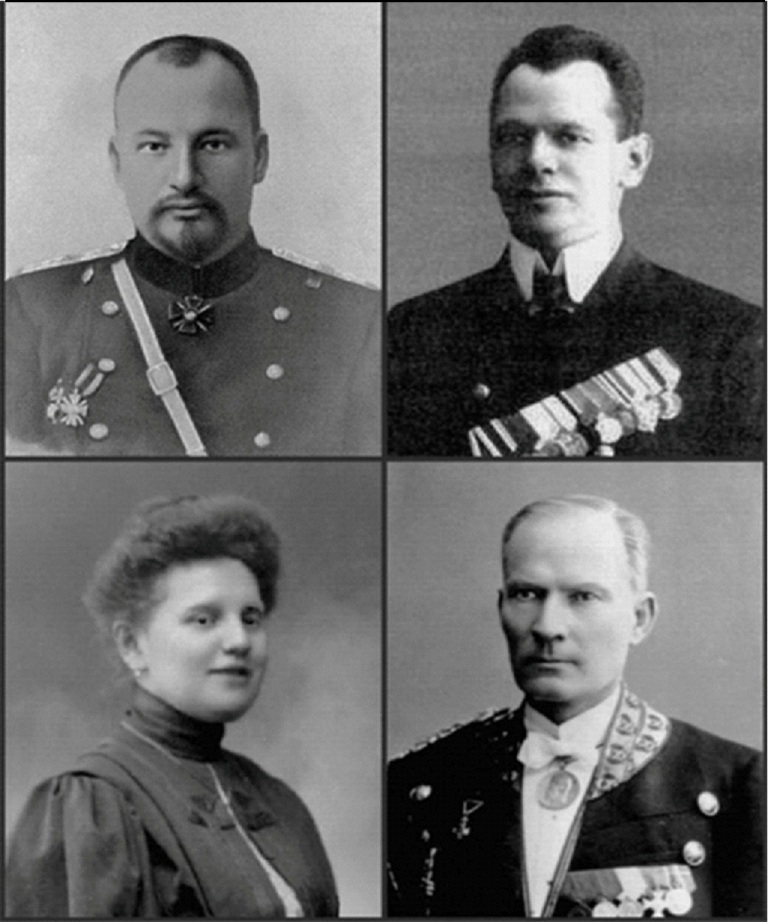
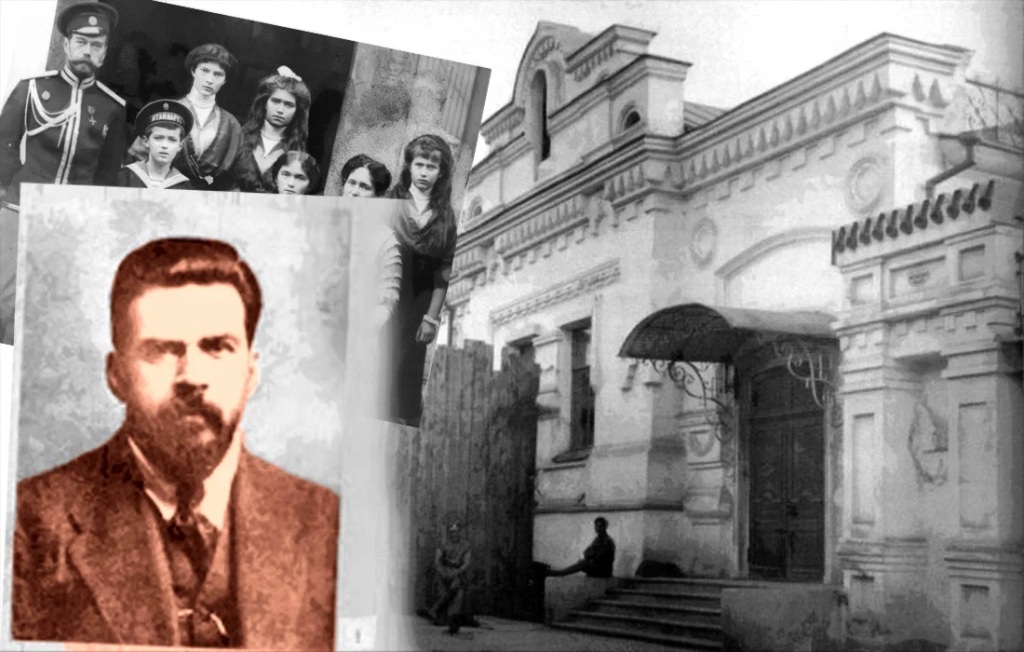
The fate of four faithful retainers of the Imperial Family

On the night of July 16/17, 1918, a tragic event took place in Ekaterinburg that marked the final fall of Russia into the hellish abyss of devastation and the ensuing Civil War. In the basement of the Ipatiev House, the last Russian Emperor Nicholas II, was shot dead by a gang of Bolshevik criminal thugs. His entire family and four faithful servants, who voluntarily followed the Imperial Family into exile and, later, shared the same fate.

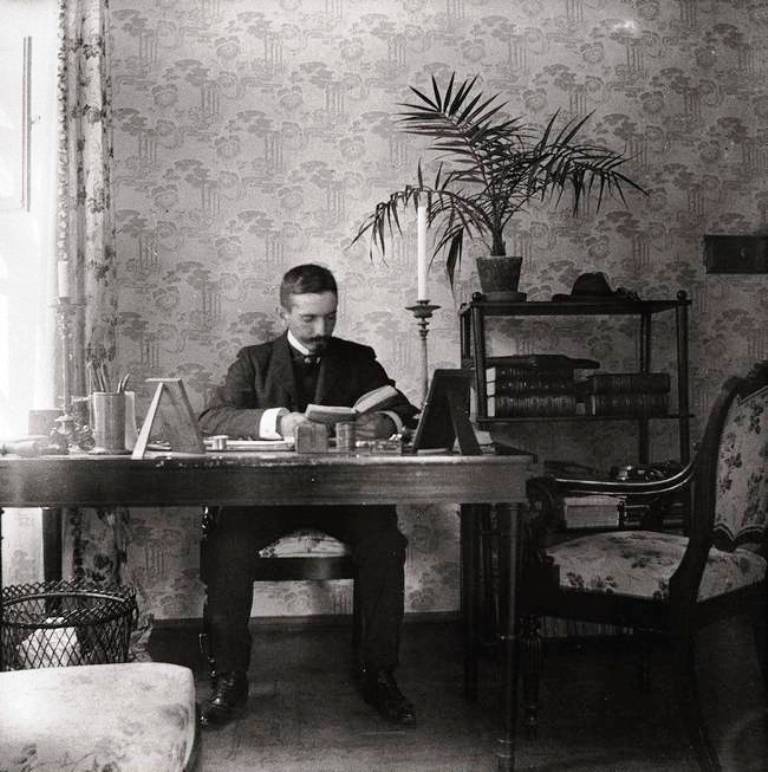
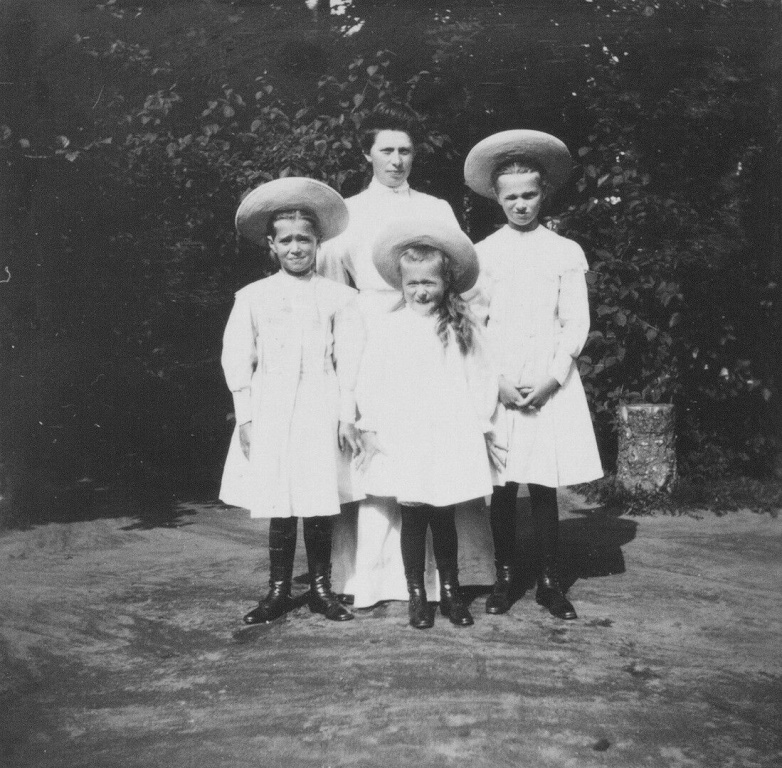
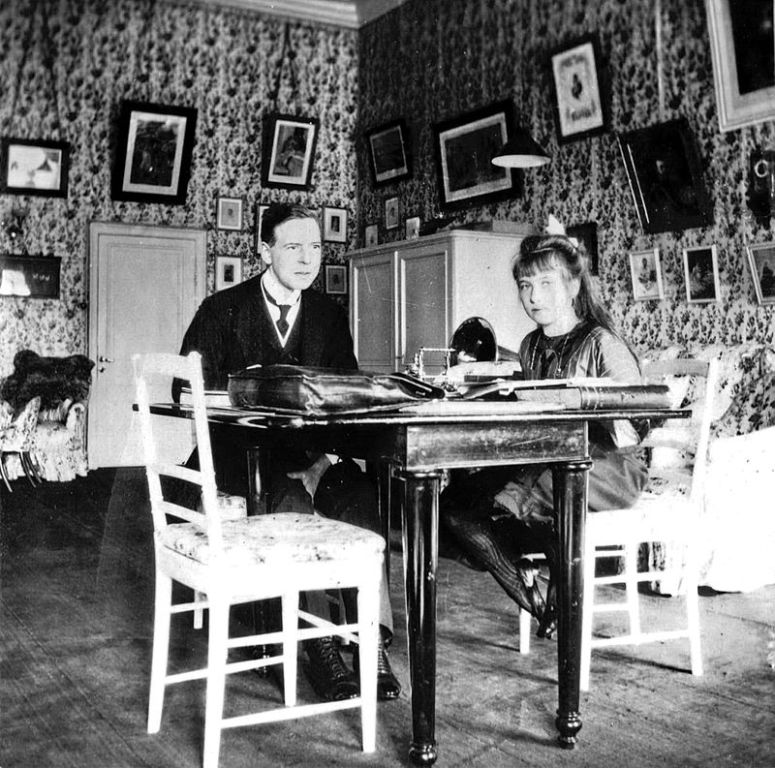
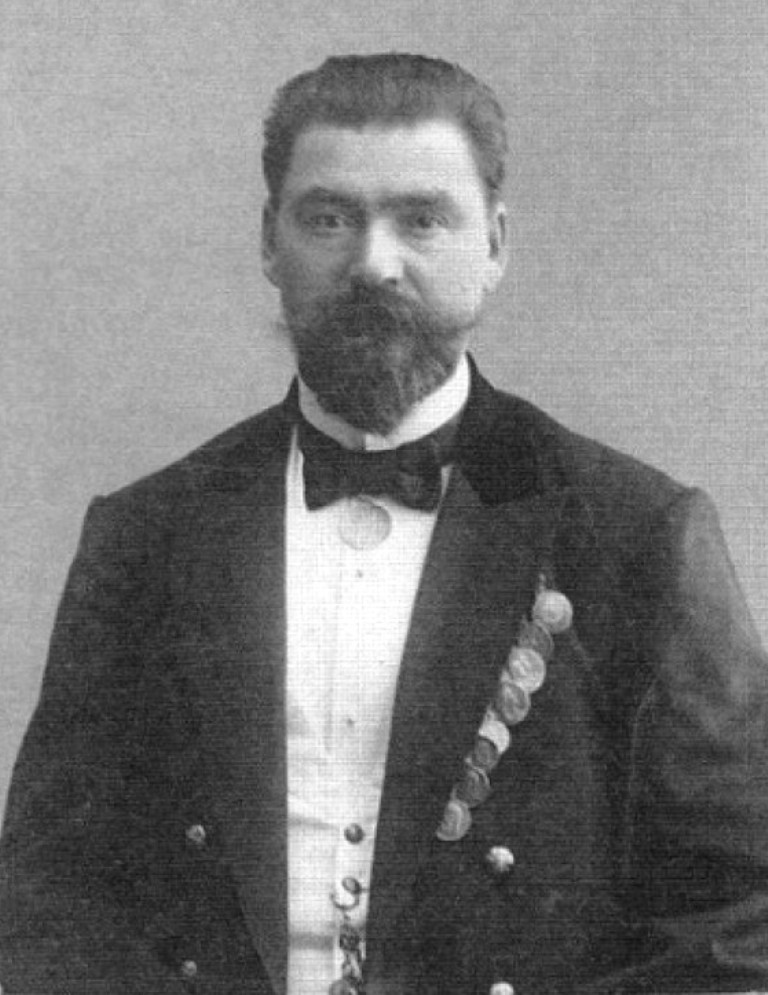
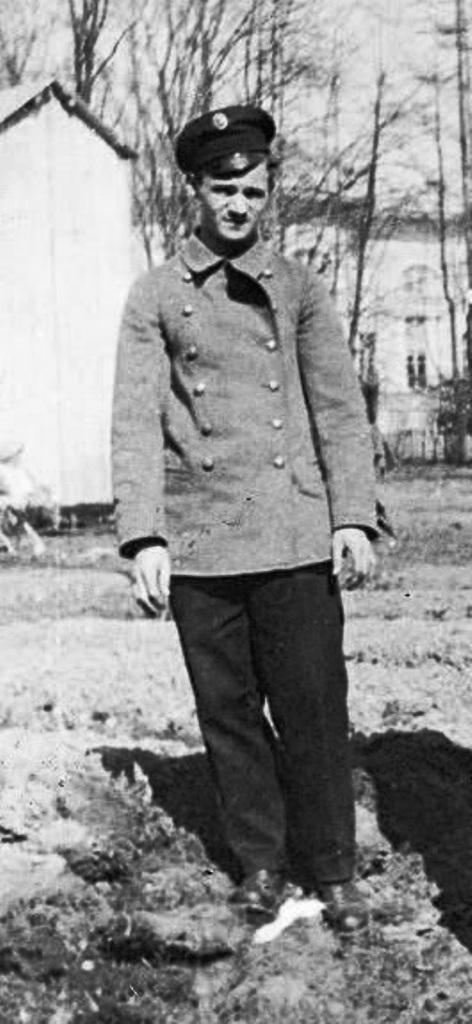
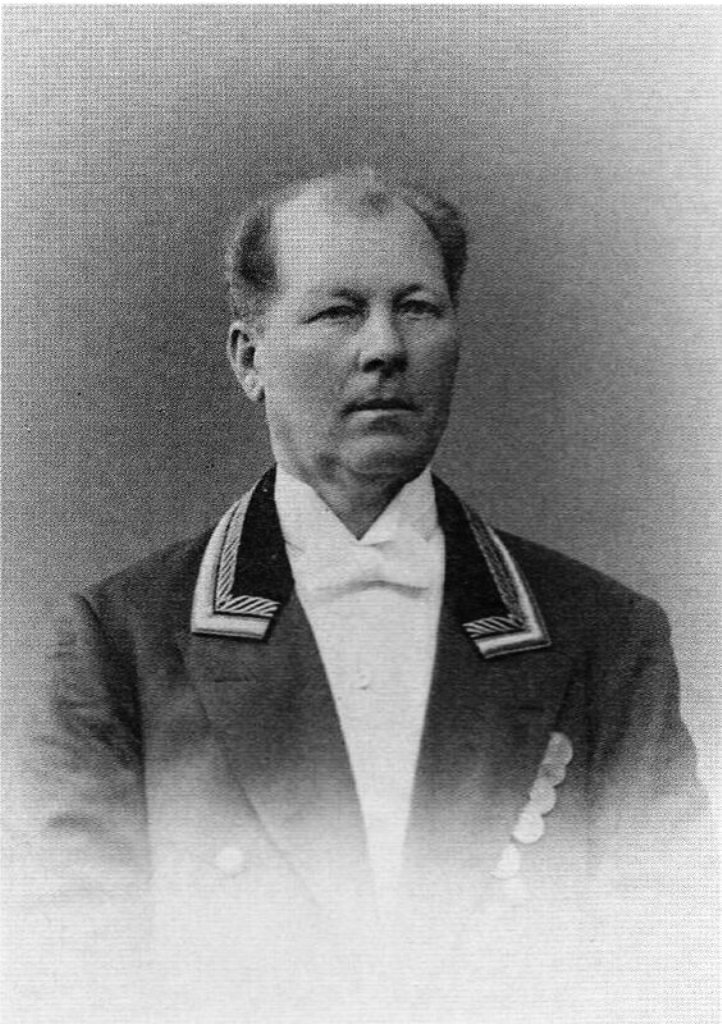
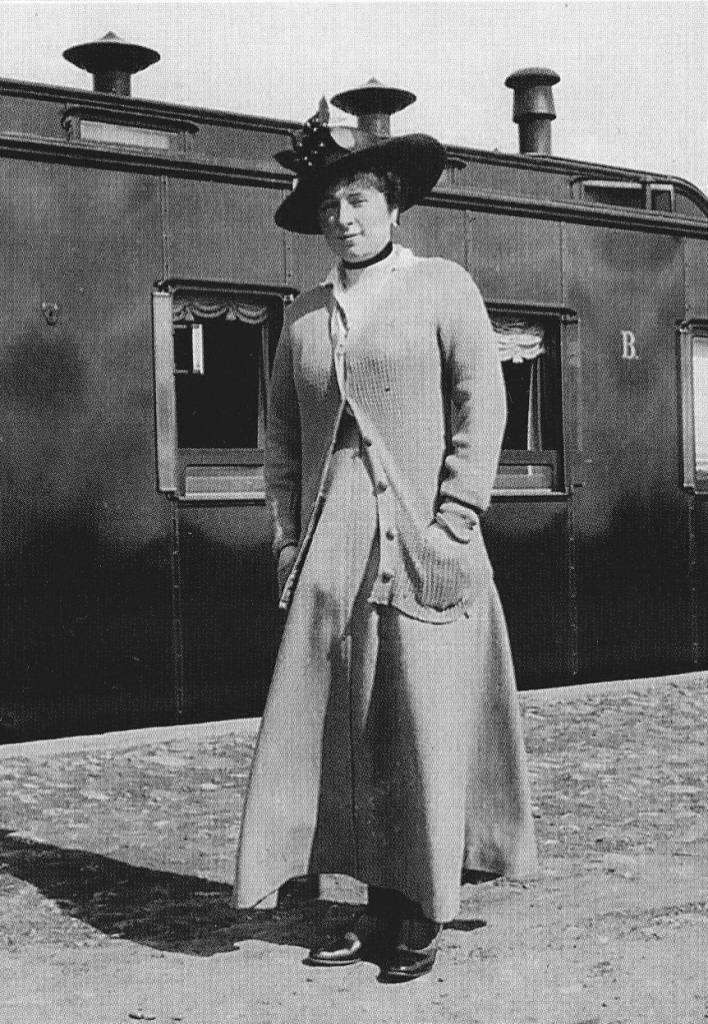
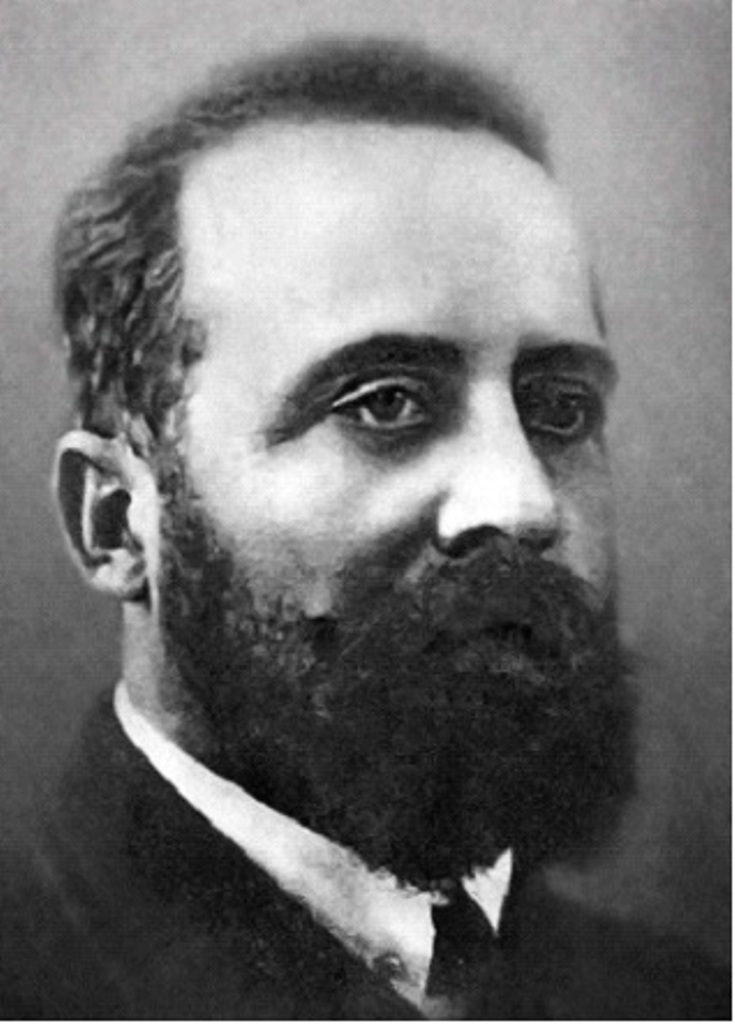
While the lives of Emperor Nicholas II, Empress Alexandra Feodorovna and their five children have been studied in detail, but that of the four faithful retainers remain in the shadows of history. This article provides brief bios of the lives of the Imperial Family’s physician Dr. Eugene Botkin (1865-1918); the maid Anna Demidova (1878-1918); the valet Aloise (Alexei) Trupp (1856-1918); and the cook Ivan Kharitonov (1872-1918).

In 1981, the four faithful retainers, along with the Imperial Family, were canonized as a New Martyr by the Russian Orthodox Church Outside of Russia (ROCOR). In 2016, the Bishop’s Council of the Russian Orthodox Church (Moscow Patriarchate) canonized Dr. Botkin as a righteous passion bearer. They did not canonize the other three servants.

The Canonization Commission, headed by Metropolitan Yuvenaly, considering the issue of the canonization of the the other three faithful servants, noted that:

“… it is not possible to make a final decision on the existence of grounds for the canonization of this group of laymen, who, in accordance with the duty of their Court service, accompanied the Imperial Family during the period of their imprisonment and accepted a violent death. … the most appropriate form of veneration for the Christian podvig[1] of the faithful servants of the Imperial Family, who shared their tragic fate, today can be the perpetuation of this feat in the lives of the Royal Martyrs.”

Святы Царственные мученики, молите Бога о нас!
Holy Royal Martyrs, pray to God for us!

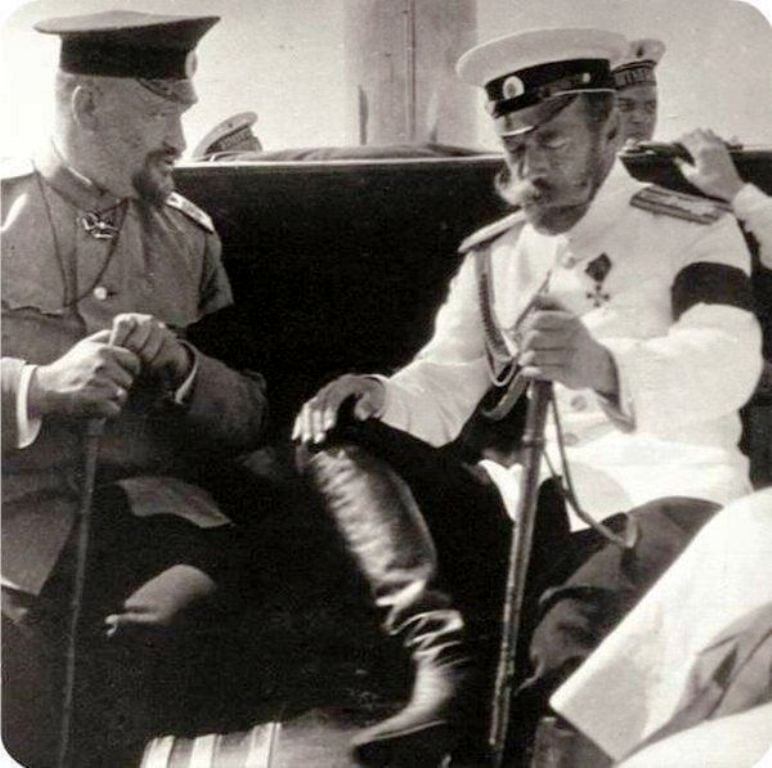
PHOTO: in happier times – Dr. Botkin with Emperor Nicholas II

Evgeny (Eugene) Botkin – Family Physician

Evgeny (Eugene) Sergeevich Botkin was the son of the famous physician Sergei Botkin (1832-1889), who served as one of the  the Court physicians for Emperors Alexander II and Alexander III. Since childhood, Evgeny followed in his father’s footsteps and pursued a career as a doctor. At the beginning of the 20th century, he worked in a hospital for the poor and at the same time lectured to students of the Imperial Military Medical Academy in St. Petersburg. Despite the fact that his dissertation was devoted to the narrow topic of blood composition, in his lectures he covered the very broad aspects of the medical profession, in particular, paying special attention to the psychological aspects of a doctor’s work, instructing future doctors that the patient should be treated with respect and dignity.

In 1904, when the Russo-Japanese War began, Botkin rushed to the Front to head the medical unit of the Russian Red Cross Society. Later he said that he could not remain indifferent to the misfortune that befell his country. Despite the fact that he went to the Front with “the most bloodthirsty feelings”, the war taught him to treat all people, even his enemies: he was equally willing to help both the Russian and Japanese wounded. Evgeny Sergeevich was a deeply religious person, his faith helped and sustained him during this period. He returned home with six military awards, and the impressions of what he saw on the fronts of the Russo-Japanese War formed the basis of a book on the subject.

It was this book that became, perhaps, the main reason that Empress Alexandra Feodorovna chose him as a personal physician for the Imperial Family. In the autumn of 1908, Botkin and his family moved to Tsarskoye Selo. The doctor’s younger children became friends with the Tsesarevich and the Grand Duchesses, and often assisted their father in his work, carrying out simple tasks.

In August 1917, when Botkin went into exile with the Imperial Family, his son Gleb and daughter Tatyana followed their father, but only reached Tobolsk – they were not allowed to go to Ekaterinburg (later both emigrated). In exile, Botkin became a kind of intermediary between the Imperial Family, the guards and the inhabitants of the city: he arranged a visit by a priest to the Governor’s House, arranged hour and a half walks for the Imperial Family, petitioned for a tutor for the Tsesarevich, taught the Russian language and biology to the Tsar’s children, while providing medical services to the residents of Ekaterinburg. Evgeny Sergeyevich never complained either about his health (which was not good) or about the conditions of detention – his letters reflect a positive or at least stoic attitude to all the trials and tribulations that fell to his lot. Only in the last letter, which was never sent, did Botkin admit that he had already “… died, but not yet buried, or buried alive.”

On the fateful night of July 16/17 1918, the guards woke up Botkin and ordered him to wake up all the inhabitants of the Ipatiev House, saying that they were allegedly being transported to another place, since the city was restless. Having gathered everyone in the basement, the executioner-commandant Yakov Yurovsky announced their execution, to which the bewildered Botkin managed to answer only with a question: “So they aren’t taking us anywhere?” The doctor’s body was burned along with the bodies of the Imperial Family. During the excavations, his artificial jaw, a broken pince-nez and a brush for his beard and mustache were found. 

Evgeny Sergeevich Botkin was the only person among the four faithful servants who was canonized by the Moscow Patriarchate of the Russian Orthodox Church. On 3rd February 2016, the Bishop’s Council of the Russian Orthodox Church canonized Botkin as Righteous Passion-Bearer Yevgeny the Physician.

On 16th October 2009, the Prosecutor General’s Office of the Russian Federation decided to rehabilitate 52 close associates of the Imperial Family who had been subjected to repression, including the four faithful servants who perished with the Imperial Family.

On 25th March 2016, on the grounds of the Moscow City Clinical Hospital No 57, Bishop Panteleimon of Orekhovo-Zuevo consecrated the first church in Russia in honor of Righteous Evgeny Botkin.

Anna Demidova – maid

Anna Stepanovna Demidova was born into a bourgeois family in Cherepovets. She learned several foreign languages, played the piano well, was well educated and erudite, but her strong point was always embroidery. In fact, this talent helped her find the main work of her life: the Empress admired Demidova’s embroidery so much that she invited her to serve in the Imperial Family as a maid. Usually, the “room girls” were mainly engaged in helping the Empress with her wardrobe and help her get dressed, but Anna’s main duty was to teach the Tsar’s daughters needlework. Anna Demidova won over the grand duchesses so much so that she became something like another nanny for them. Anastasia loved her most of all, calling her “dear Nyuta” in her letters. Demidova never had her own family and children, as the “room girls” were not supposed to get married. Once she was proposed to hand and heart, but Demidova refused, deciding to stay with the Imperial Family.

In Tobolsk, and later in Ekaterinburg, Demidova took care of the household: she repaired clothes and bed linen, sewed new things, helped the Empress to always look and dress like a lady, as much as possible in such straitened circumstances. On the night of the shooting, Demidova went down to the basement, carrying several pillows with her – everyone thought that they would really be taken somewhere, so they took the necessary things with them. These pillows, however, only prolonged Demidova’s horrific death – during the shooting, the bullets got stuck in the dense down of the pillows. Thinking that it was all over, the maid shouted, “Thank God! God saved me!” Unfortunately, her execution was just beginning. Realizing that the maid was still alive and not even wounded, the executioner Yakov Yermakov stabbed her several times in the chest with a bayonet. Demidova was one of the last to die, her final memories being witness to the violent and bloody deaths of those whom she loved most.

Aloise (Alexei) Trupp – valet

Aloise (Alexei) Trupp came from an ordinary Latvian peasant family. At the age of 18, young Aloise went to serve in the army, where the young handsome Latvian was enlisted in the Life Guards. There he rose to the rank of a non-commissioned officer and was retired on 23rd March 1883. It is believed that he was noticed by Empress Maria Feodorovna, who invited him into the service of the palace as a footman. Aloise enjoyed the trust of the Imperial Family, accompanied them on trips, and watched over the Emperor’s children as if they were his own (he never had children of his own). He also looked after the Emperor’s wardrobe and helped him get dressed. While in the service of Nicholas II, the Tsar had difficulty parting with old clothes, preferring darned to new, but he adored military uniforms – hundreds of different uniforms hung in his closets.

Trupp never forgot about his native land, always giving large sums to help the poor and those suffering from crop failures. He also donated money for the construction of a church in his homeland. While still imprisoned in Tsarskoye Selo, a drunken officer shouted to him and other servants: “You are our enemies. We are your enemies. You are all corrupt here.” In the last months of his life, the “corrupt” servant Trupp served the Emperor free of charge.

In the Ipatiev House, Trupp lived in the same room with the cook Ivan Kharitonov. Despite Trupp’s Catholic faith, he participated in Orthodox services: he sacrificialized[2], carried a candle, and lit and brought censers. One day, while among the guards of the “House of Special Purpose” was his nephew, with whom he spoke his native Latvian. Unlike some of his fellow Latvians, who took part in the execution of the Imperial Family, Trupp remained with the Master of the Russian Land until the very end. On the fateful night of 16/17 July, Trupp and Kharitonov were standing against the wall when the shooting began. “A woman’s squeals and moans… A footman leaning against the wall,” one of the killers would later say.

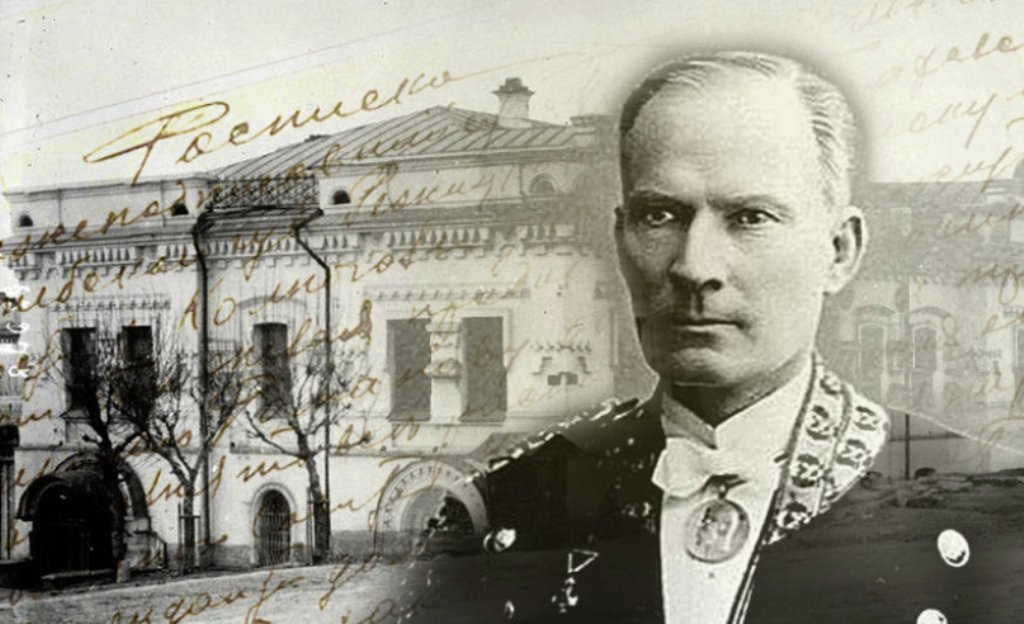
Ivan Kharitonov – cook

Ivan Mikhailovich Kharitonov was born on 14th June (O.S.) 1870 in St. Petersburg. In 1882, he was encouraged by his father to study cooking, and went to Paris in order to improve his skills, eventually becoming a soup specialist, he even invented a recipe for puree soup made from fresh cucumbers. Kharitonov knew the culinary traditions of different countries, understood Lenten cuisine, and came up with new recipes. In 1888, he was appointed to the Imperial Court as an apprentice cook, and then as a cook. In the period from 1891 to 1895, Kharitonov served in the Russian Imperial Navy. After his service ended, he returned to the Imperial Court, where he was appointed senior cook of the Imperial Kitchen. He had the title of Honourary Hereditary Citizen[3], a result of which he was awarded many orders and medals.

After the February 1917 Revolution, the head waiter Kuba left the service of the Imperial Family, he was replaced by Ivan Kharitonov. Previously, the Imperial Family loved picnics, Emperor Nicholas II would sometimes bake potatoes in ashes himself, but in exile they had to get used to simple food on a regular basis. Nevertheless, Ivan Kharitonov managed to cook exquisite dishes from affordable products, which were becoming more and more scarce. The commandant of the Ipatiev House, Yakov Yurovsky, suddenly “cut off” the supply of fresh food to the captives from sympathetic townspeople and the Ekaterinburg monasteries, saying that it was time for the Imperial Family to get used to eating like prisoners. Despite all the difficulties, Kharitonov managed to make delicious dishes from available products. Dishes such as rasstegai[4], pasta pie, potato dumplings, beetroot salad, and tangerine jelly were prepared, much “to the great joy of everyone”, as Nicholas II wrote in his diary. The last apprentice cooks for Kharitonov were the grand duchesses who helped him in the kitchen, and he taught them how to bake bread.

On the fateful night of 16/17 July, Kharitonov stood in the basement by the wall next to the valet Trupp. The cook was one of the first to die from the shots fired by the firing squad. Ivan Kharitonov was happily married and had 6 children. The family tried to follow their father into exile, but only reached Tobolsk, they were not allowed to join him in Ekaterinburg. This allowed them to survive during the Civil War and the establishment of Soviet power.

The great-grandson of Ivan Kharitonov, Candidate of Historical Sciences Pyotr Valentinovich Multatuli is recognized as one of Russia’s foremost authorities on the life and reign of Nicholas II. He has written numerous books on the subject and lectures in cities across the Russian Federation.

NOTES:

[1] Podvig is defined as an action taken not for one’s own sake, but for the sake of something greater, such as an idea or one’s homeland, often involving significant risks, including the potential for sacrifice. It is also described as a “spiritual struggle” within the context of Orthodoxy, serving as a means to draw closer to Christ on the path of salvation.

[2] In the Orthodox Christian tradition, the term “sacrificialized” refers to the concept of the Eucharist, which is often described as a “bloodless sacrifice.” This means that during the Eucharist, the bread and wine become the Body and Blood of Jesus Christ through the descent and operation of the Holy Spirit, rather than through the shedding of blood. The Eucharist is considered a propitiatory sacrifice offered on behalf of both the living and the dead, symbolizing Christ’s sacrifice for humanity. The Orthodox Church emphasizes that the Eucharist is a true sacrifice, not merely a symbol, and it represents the completion of all other sacraments and the source of all Church doctrines.

[3] The title of Honourary Hereditary Citizen in Russia was established by the Emperor Nicholas I in 1832. This title was granted to individuals who had made significant contributions to the state and society, such as merchants, professionals, and artists. The privileges associated with this title included exemption from corporal punishment, the ability to own gardens and country estates, and the right to ride in a carriage in pairs or quadruplets. The title was hereditary, and children of hereditary honoured citizens received the title from birth. The establishment of this title was part of the imperial state’s effort to create a middle class and stabilize the social structure of Russian towns.

[4] Rasstegai is a traditional Russian dish made from a pastry crust that is filled with a variety of ingredients, such as fish, meat, liver, rice, or mushrooms. The dish features a hole in the center, which is used to add broth to the filling. Rasstegai is known for its flaky pastry crust and has been a popular choice in Russian cuisine, especially during the Tsarist era.

© Paul Gilbert. 14 September 2025

***

I am committed to clearing the name of Russia’s much slandered Tsar. In exchange for this 18-page booklet, please consider making a small $5 or $10 donation in aid of my research. These donations are of great assistance in helping me offset the cost of obtaining and translating documents from Russian archival sources, which are often paid for out of my own pocket. It is these documents which help present new facts and information on the life and reign of Nicholas II. In addition, my research continues to debunking many of the myths and lies which exist more than a century after his death and martyrdom.

Please note, that there is NO obligation, thank you for your consideration!

CLICK HERE TO MAKE A DONATION

Cossack witnesses miraculous vision on the site of Ipatiev House in Ekaterinburg in 1990


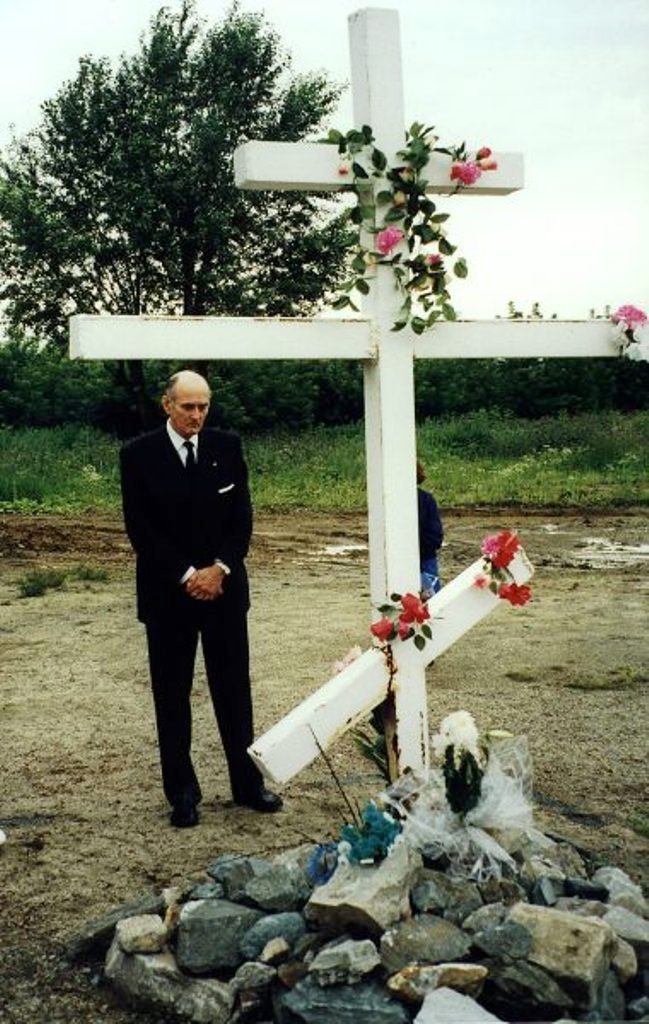
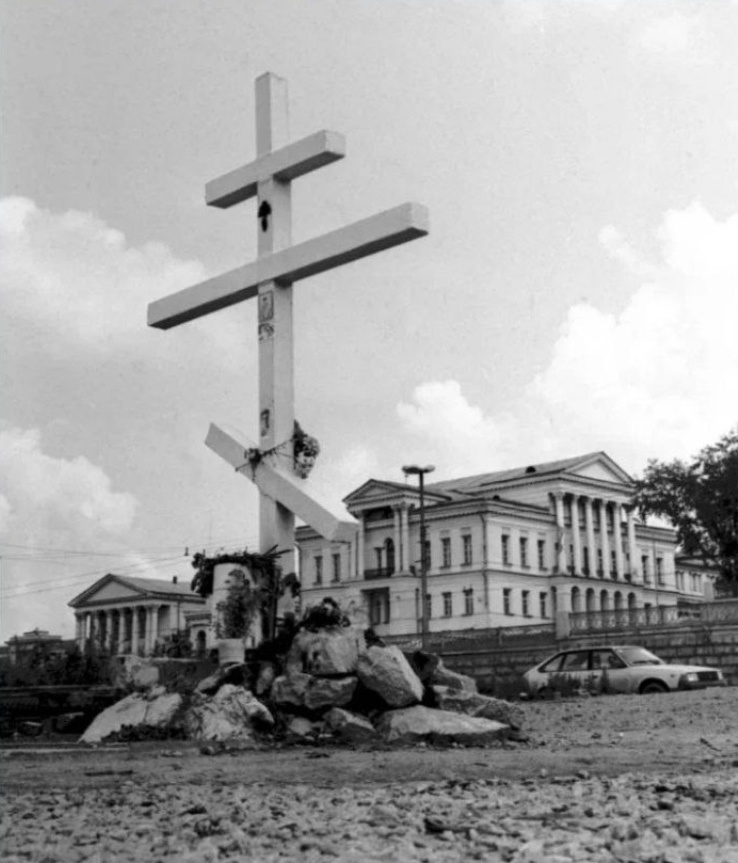
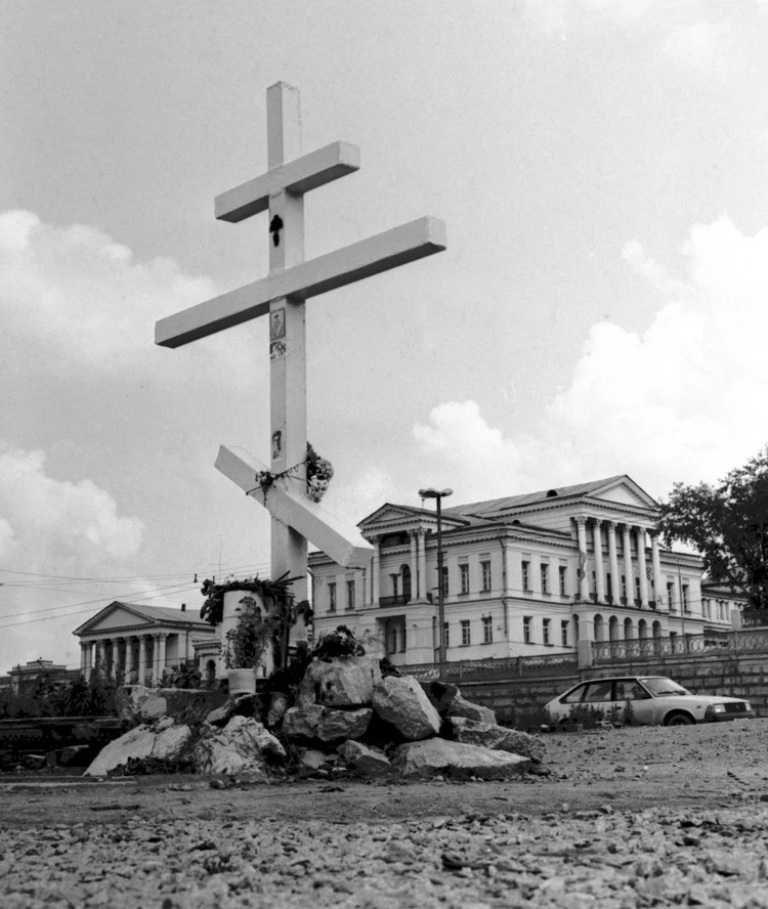
PHOTO: a large metal Orthodox cross was installed
on the site of the Ipatiev House in 1990

In the autumn of 1990, a Cossack by the name of Vladimir claims to have witnessed a miraculous vision, during the installation of a large metal Orthodox cross, on the site where the Ipatiev House once stood – demolished on 22-23 September 1977.

Whether you are a believer or not, this is just one of many miracles reported since the regicide in Ekaterinburg in July 1918.

Here is Vladimir’s testimony . . .

“I want to tell you about the appearance (sign) at the moment of the installation of the cross on the site of the Ipatiev house, where the Tsar and his family were murdered.

On 5th October 1990, at about 11-12 noon , a metal cross was brought by truck, a hole was dug in advance for its installation, and crushed stone was brought.

The weather was gloomy. The entire sky was completely covered with dark clouds and it was snowing sparsely.

The cross was removed from the truck and placed on the ground, then installed in the hole, and one of the people present, a man named Alexei, stepped forward to see how the cross was installed and whether there was any deviation.

And suddenly, Alexei ran up toward the others present and yelled: “Look up!”

We all raised our heads at first trembling, and then fear passed through our bodies: above us, that is, directly above the cross, the sky parted, and from there a ray of light fell on the cross. The sun was not visible, and the hole in the clouds rotated to the right, and on the ground, that is, around the cross within a radius of 50-100 meters there was, as it were, an illumination from heaven by this bright beam of light, and on the ground a bright circle of light; and the snow did not fall within it.

All this lasted about 30-40 minutes, the time it took to install the cross and secured with concrete, then the hole in the clouds closed. The light disappeared. At the same time, up to 30 people were present, many of whom were non-believers at that time.

When we later asked the priest about this apparition, he replied that it was obviously a sign. Those of us non-beleivers present believed in God after this miracle.”

From the memoirs of a Cossack from the village of Kamenskaya,
Vladimir.

FURTHER READING:

The face of the Tsar-Martyr Nicholas II seen July 1919

“He will help you!” Stories of miraculous help of Tsar Nicholas II

My [Paul Gilbert] cancer journey and prayers for the intercession of Tsar-Martyr Nicholas II

© Paul Gilbert. 11 September 2024

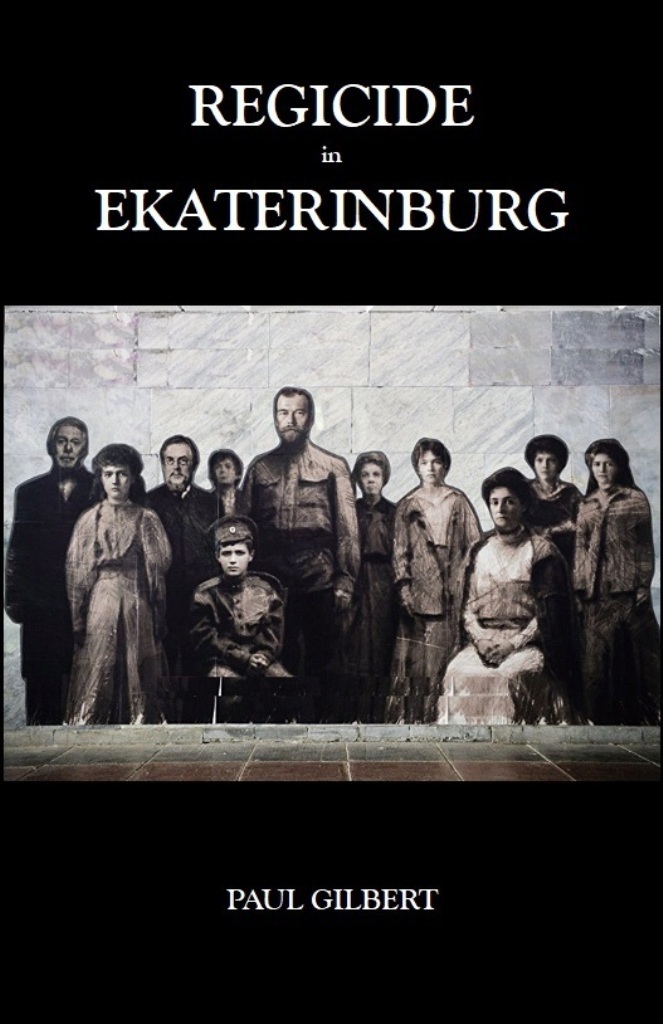
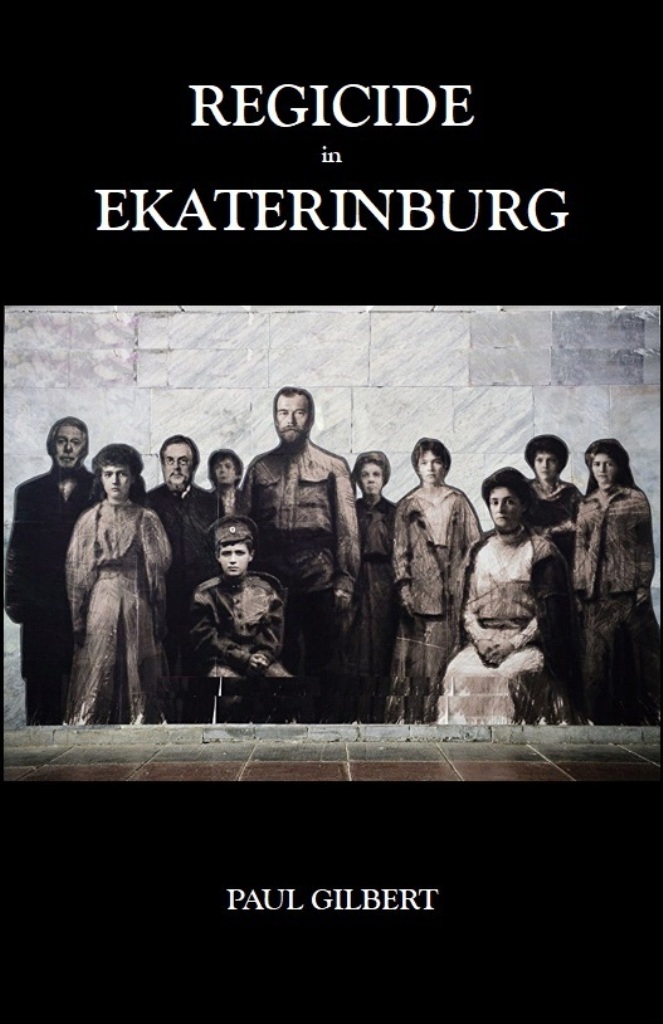
NEW BOOK – Regicide in Ekaterinburg

*You can order this title from most AMAZON outlets worldwide, including
the United States, United Kingdom, Canada, Australia,
France, Germany, Spain, Italy, Netherlands, Poland, Sweden and Japan
*Note: prices are quoted in local currencies

CLICK HERE TO ORDER THE PAPERBACK EDITION @ $20.00 USD

Language: English. 308 pages with 70 Black & White photos

regicide: the crime of killing a king or queen;
a person who is guilty of this crime

Touch not mine anointed
Psalm 105:15

This year marks the 106th anniversary of the regicide in Ekaterinburg: the execution of Russia’s last Imperial Family, a heinous crime committed on the morning of 17th July 1918. The murder of God’s anointed, his pious wife, their five precious children and their four faithful retainers, remains one of the darkest pages in 20th century Russian history.

This book presents fourteen studies on this tragic event, eleven of which are based on new documents sourced from Russian archival and media sources over the past decade.

The first part of this book features the complete and unabridged account of a British Intelligence officer and journalist, who was in Ekaterinburg in the summer of 1918. He was one of the first to investigate the regicide, even before that of Nicholas Sokolov’s famous, yet incomplete investigation in 1919. He goes on to write about meeting Yakov Yurovsky, and shares his impressions of the chief executioner of the last Tsar and his family.

The second part features two previously unpublished, first English translations. The first is about those who came to the aid of the Imperial Family during their captivity, including Princess Helen of Serbia and the nuns of the Novo-Tikhvin Monastery. In addition is the testimony of the priest, who perfumed the last sacred service for the Imperial Family, days before their murders.

The third part features eleven chapters which shed light on a number of topics, such as who were the eight faithful retainers who survived the regicide; why did Boris Yeltsin demolish the Ipatiev House in 1977; what about the executioners themselves—who were they, and what were their fates?; plus eight additional chapters.

***

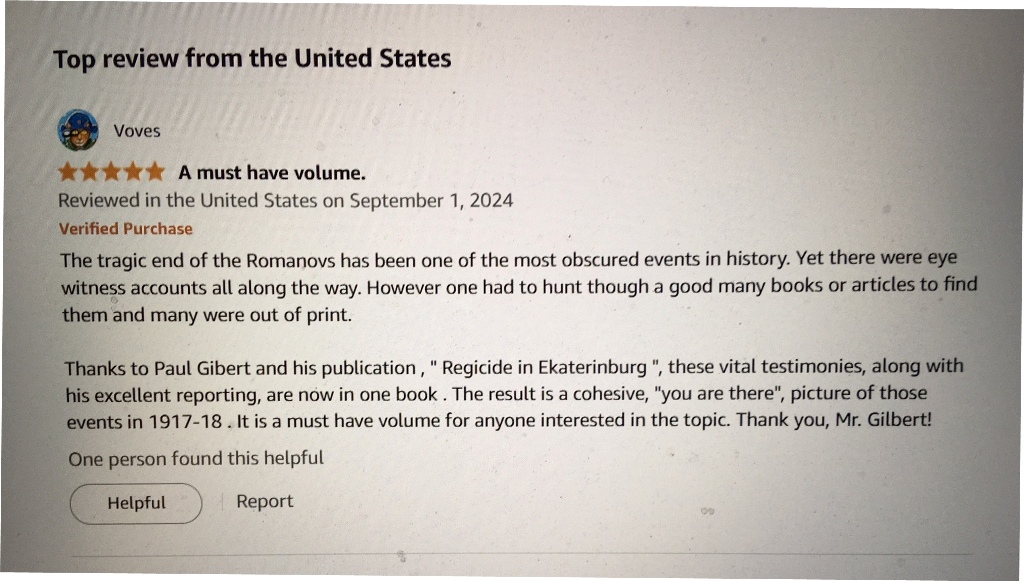
On 1st September 2024, my new book ‘Regicide in Ekaterinburg‘ received it’s first AMAZON review, from a reader in the United States who gave it a 5-star rating! Thank you 🙂

© Paul Gilbert. 26 August 202

The last divine service for the Imperial Family in Ekaterinburg

On this day – 14th July (O.S. 1st July) 1918 – Archpriest Ioann Storozhev performed the last divine service for the Imperial Family in Ekaterinburg.

In October 1918 – three months after the death and martyrdom of Emperor Nicholas II and his family, Fr. John Storozhev, recalled the devine service he performed in the Ipatiev House on 14th July (O.S. 1st July) :

“… Taking up our [Fr. John Storozhev and Deacon Vasily Buimirov] places, the deacon and I began the reader’s service [similar to a liturgy, but much shorter since it does not include the Eucharist]. At a certain moment in the service, it is required to read the prayer “With the Saints Give Rest”. For some reason, on this particular occasion, the deacon, instead of reading, sang the prayer, and I, too, began to sing, somewhat disconcerted by this departure from the customary practice. But we had scarcely begun when I heard the members of the Romanov family, standing behind us, fell to their knees, and here I suddenly felt the sublime spiritual comfort that comes from shared prayer.

“This experience was even stronger when, at the end of the service, I read a prayer to the Mother of God, which, in highly poetic and moving words, expressed the plea of the afflicted person to be supported in his sorrows and receive the strength to bear his cross worthily.

“In addition, the deacon recited the Ectenia [often called by the better known English word litany], and I sang. Two of the grand duchesses sang along with me, and sometimes Nicholas Aleksandrovich sang in a low bass (for instance, he sang the “Our Father” and some other things). The service was uplifting and good, and the family prayed fervently.

PHOTO: Archpriest Ioann Vladimirovich Storozhev (1878-1927)

“The Tsar was clad in a khaki tunic and trousers with tall boots. On his chest he wore a St. George’s Cross. He had no shoulder boards [epaulettes]. He impressed me with his firm gait, his calmness. and especially his manner of looking steadfastly and firmly into one’s eyes. I didn’t notice any fatigue or traces of low spirits in him. It seemed to me that he had barely visible gray hair in his beard. His beard had been longer and wider when I saw him the first time. It seemed to me now to be trimmed.

“After the service, everyone approached the cross and the deacon handed prosphora [a small loaf of leavened bread used in Orthodox liturgies] to Nicholas Alexandrovich and Alexandra Feodorovna. Upon departing, I walked very close to the former grand duchesses, and heard a whispered “Thank you”. I don’t think it was just my imagination

“The deacon and I were silent until we reached the Art School building, and here, suddenly, he said to me: “You know, father, something’s changed there. Something’s happened”. His words struck a chord with me, and I stopped and asked why he he had gotten that impression. “Well, they were all different somehow. And also nobody sang.” And I have to say that, truly, this service of 14/1 July was the only one at which none of the Romanov’s sang with us (and the deacon had been present at all five services at the Ipatiev House).”

Source: The Last Sacred Service Observed by the Imperial Family in Yekaterinburg. The Testimony of Archpriest Ioann Vladimirovich Storozhev. First English translation published in Regicide in Ekaterinburg, compiled and edited by Paul Gilbert.

© Paul Gilbert. 14 July 2024

***

The following NEW title was compiled and edited by independent researchers and Romanov historian Paul Gilbert was published in August 2024. 

This fascinating new study features 14 chapters on this tragic event, which include the memoirs of a British intelligence officer and journalist, and two First-English translations. In addition, 11 chapters were written by Paul Gilbert, based on new documents sourced from Russian archival and media sources over the past decade.

Please refer to the link provided for further details about the content of this new title . . .

CLICK HERE TO READ MORE ABOUT THIS TITLE
Ekaterinburg: the Survivors

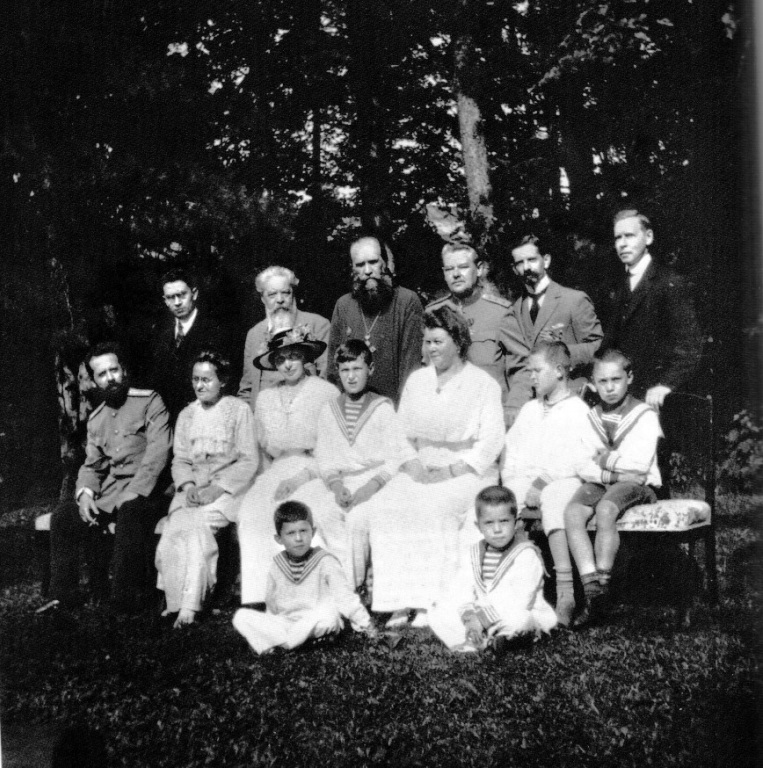
PHOTO: a number of those who survived the Ekaterinburg massacre are depicted in this photo taken at Tsarskoye Selo in 1916, including Terentiy Chemodurov (2nd from left, back row); Pierre Gilliard (2nd from right, back row: Charles Sydney Gibbes (far right, back row); and Alexandra Tegleva (3rd from left, front row and seated next to Tsesarevich Alexei Nikolaevich)

Following the transfer of the Imperial Family to Ekaterinburg in the Spring of 1918, the remaining servants and retainers living in the Kornilov House in Tobolsk were free to leave. A number of them, however, wanted to make the journey to Ekaterinburg with the hope of reuniting with the Tsar and his family. Their captives warned them that any one who went with the former Tsar and his family to Ekaterinburg would remain at liberty, at worse, they would not even be permitted to live in the same house with the Imperial Family but tossed in the local jail.

Despite the warning, a number of faithful retainers made the journey to the Ural capital, and, sure enough were imprisoned and later murdered by the Bolsheviks. Among them were Prince Vasily Dolgorukov, Ilya Tatishchev, Ekaterina Schneider, Anastasia Hendrikova, Klimenty Nagorny and Ivan Sednev

In addition, let us not forget the four faithful retainers, who remained with the Imperial family who followed the Imperial Family to their deaths in the Ipatiev House, on 17th July 1918: Dr. Eugene Botkin (1865-1918), the maid Anna Demidova (1878-1918), the cook Ivan Kharitonov (1872-1918), and the valet Aloysius Trupp (1856-1918).

As foreign nationals, the Swiss tutor Pierre Gilliard, along with his Russian born wife and nursemaid to the Tsar’s children Alexandra Tegleva and the English language tutor Sydney Gibbes were set free. So were a number of others with no explanation and amid rumours that they had abandoned the Imperial Family, sold a few secrets and begged for their lives.

The Empress’s Lady-in-Waiting Baroness Sophie Buxhoeveden attributed her unexpected release by the Bolsheviks to her “foreign” surname – it was Danish by origin – however, the even more foreign name of “Catherine Schneider” did not prevent the poor woman from being shot.

It was nothing short of a miracle that Nicholas II’s valet Terentiy Ivanovich Chemodurov; Assistant cook Leonid Ivanovich Sednev – not to be confused with his uncle with his uncle Ivan Dmitrievich Sednev – and the valet Alexei Andreyevich Volkov managed to escape from being shot by the Bolsheviks.

These men and women must never be forgotten for remaining faithful to Emperor Nicholas II and his family. Below, is a brief summary of each of them, and their respective fates following the regicide in Ekaterinburg:

Pierre Gilliard (1879-1962)

Pierre Gilliard was a Swiss academic who initially came to Russia in 1904 as a French tutor to the family of Duke George of Leuchtenberg, a cousin of the Romanov family. From 1905 to 1918 he served as the French language tutor to the children of Emperor Nicholas II.

He grew fond of the Tsar and family and followed them into exile to Tobolsk, Siberia, following the October 1917 Revolution. The Bolsheviks prevented Gilliard from joining his pupils when they were moved to the Ipatiev House in Ekaterinburg in May 1918.

Gilliard remained in Siberia after the murders of the family, for a time assisting White Movement investigator Nicholas Sokolov. In 1919, he married Alexandra Alexandrovna Tegleva, who had served as a nursemaid to the Tsar’s children.

Gilliard and Tegleva fled Bolshevik Russia in early November 1919, arriving in Vladivostok in early April 1920. They then travelled on an American ship to San Francisco, and from there travelled by ship along the Pacific coast, through the Panama Canal, across the Atlantic Ocean and the Mediterranean Sea to Trieste. From here, they travelled through Italy to Switzerland, and in August 1920 they reached his parents’ home in Fiez, which Gilliard had left 16 years before.

He became a French professor at the University of Lausanne and was awarded the French Legion of Honour. In 1921, he published a book entitled Thirteen Years at the Russian Court, which described the last days of the Tsar and his family, and the subsequent investigation into their deaths.

In 1958, Gilliard was severely injured in a car accident in Lausanne. He never fully recovered and died four years later on 30 May 1962.

Alexandra Alexandrovna Tegleva (1884-1955)

Alexandra Alexandrovna Tegleva was a Russian noblewoman who was educated at the Smolny Institute of Noble Maidens in St Petersburg. Tegleva served as a nursemaid and governess to Grand Duchesses Olga, Tatiana, Maria and Anastasia Nikolaevna, and Tsesarevich Alexei Nikolaevich. While many of the attendants in the service of the Empress spoke English, Tegleva was instructed to speak Russian with the children.

Following the Imperial Family’s house arrest in 1917, she lived with the family in the Alexander Palace at Tsarskoye Selo. In August of that year, she followed them into exile in Tobolsk, but was ultimately prevented from staying with them during their house arrest in Ekaterinburg. Tegleva was detained with Pierre Gilliard, Charles Sydney Gibbes, and Baroness Sophie Buxhoeveden in a separate residence from the imperial family in Yekaterinburg. She was almost killed by the Bolsheviks in Tyumen but was freed by the White Army.

In exile in Switzerland, Tegleva worked with her husband to investigate and debunk the claims made by Anna Anderson, a Romanov impostor who pretended to be Grand Duchess Anastasia Nikolaevna. Following two personal meetings with Anderson, Tegleva and her husband believed Anderson to be a fraud.

Alexandra Alexandrovna Tegleva died in Switzerland on 21 March 1955.

Charles Sydney Gibbes (1876-1963)

In 1901 Charles Sydney Gibbes travelled from England to St Petersburg, as tutor to the Shidlovsky family and then the Soukanoff family. By 1907 he was qualified as vice-president and committee member of the St Petersburg Guild of English Teachers. He came to the attention of Empress Alexandra Feodorovna and in 1908 was invited as a tutor to improve the English accents of the Grand Duchesses Olga and Tatiana; and subsequently Maria and Anastasia. In 1913 he became tutor to Tsesarevich Alexei.

Gibbes voluntarily followed the Imperial Family into exle, arriving in Tobolsk in October 1917, shortly before the Provisional Government fell to the Bolsheviks. In May 1918 the Imperial family was moved to the Ipatiev House in Ekaterinburg, and neither Gibbes, nor most other servants were allowed to enter. A number of servants stayed in the railway carriage which had brought them to the city.

After the fall of Ekaterinburg to the White Army on 25th July. Gibbes and Gilliard were early visitors to the scene of the regicide at the Ipatiev House and were both involved in the subsequent enquiries carried out by Ivan Alexandrovich Sergeiev and later by Nicholas Alexievich Sokolov.

In January 1919, he retreated eastwards as Siberia was captured by the Red Army. In Harbin, China on 25th April 1934 he was received into the Orthodox church by Archbishop Nestor (Anisimov) of Kamchatka and Petropavlovsk who was there in exile. Gibbes took the baptismal name of Alexei in honour of the former Tsesarevich. He was tonsured a monk on 15th December, ordained deacon on 19th December and priest on 23rd December, taking the name Nicholas in honour of the former Tsar. In March 1935 he became an Abbot. He again returned to England in 1937 and was established in a parish in London.

At the time of the Blitz he moved to Oxford where in 1941 he established an Orthodox chapel in Bartlemas. In 1949 he bought a house at 4 Marston Street, subsequently known as the Saint Nicholas House.

Gibbes died at St Pancras Hospital, London, on 24 March 1963. His open coffin was displayed in the cellar (or crypt) of Saint Nicholas House before his funeral. He is buried in Headington cemetery, Oxford, Oxfordshire, England.

Terenty Ivanovich Chemodurov (1849-1919)

From 1891 to 1908, Terenty Ivanovich Chemodurov served in the Guards Crew. On 14th (O.S. 1st) December 1908, he was appointed personal valet to Emperor Nicholas II. He resided in the Alexander Palace at Tsarskoye Selo, where he received an annual salary of 360 rubles, as well as room and board.

In August 1917 he voluntarily followed the Imperial Family into exile, first to Tobolsk and then to Ekaterinburg. He lived in the Ipatiev House until 24th May (O.S. 11th) 1918, from where he was removed due to illness and transferred to a prison hospital in Ekaterinburg. He was replaced by the footman Alexei Troupe. Nicholas II wrote in his diary that day: “I decided to let my old man Chemadurov go for a rest and take on Troupe during his absence.”

Despite the fact that the Tsar released Chemodurov from service, the local Soviet authorities arrested him. As it turned out, the person in the next cell turned out to be another servant – Alexei Andreevich Volkov – the valet of Empress Alexandra Feodorovna.

It is believed while that in prison he was forgotten by the Chekists and on 25th July 1918, he was released by the Czechoslovaks who occupied Ekaterinburg. In 1919, he was involved as a witness in the case of the murder of the Imperial Family.

Chemodurov himself explained his salvation from execution by a miracle – according to him, a list of persons to be shot was sent to the prison. The list was large and did not fit on one page, which is why Chemodurov’s surname was written on the back of the sheet. Due to the negligence of the prison authorities, who failed to check the additional inscriptions on the back of the page, Chemodurov was not summoned from his cell to be shot. He was subsequently rescued from prison by the Czechs, who liberated Ekaterinburg from the Red Army.

In exile, Chemodurov spoke of the Emperor in the following way: “During my almost 10-year service under the Sovereign, I had opportunity to study his habits and inclinations in his private life, and in good conscience I can say that the Tsar was an excellent family man.” With regard to the last days of the Imperial Family, Chemodurov said: “He [the Tsar] seemed to be petrified but did not betray his fears, the Empress, however, suffered and prayed fervently”.

Leonid Ivanovich Sednev (1903-1941)

Leonid Ivanovich Sednev was a chef’s assistant who, together with his uncle Ivan Dmitriyevich Sednev, served Emperor Nicholas II and his family during their exile in Tobolsk and Ekaterinburg from 1917 to 1918.

Six hours before the Imperial family and their four retainers were murdered in the cellar of the Ipatiev House on the night of 16/17 July 1918, Sednev was taken to a neighboring house, where he was held until 20th July. Officials from the Ural Regional Soviet then shipped him off to live with relatives in Kaluga.

In her final diary entry on 16th July 1918, Empress Alexandra Fedorovna noted: “… Suddenly Lenka [Leonid’s nackname] Sednev was fetched to go and see his uncle and flew off – wonder whether it’s true and we shall see the boy back again! …”

There are conflicting accounts of his ultimate fate; according to one report, he was shot in 1929 in Yaroslavl on charges of participating in a counter-revolutionary conspiracy, while other evidence suggests that he was killed during the Battle of Moscow in 1941; however, according to the obd-memorial.ru (CAMO) web site, he was executed on the verdict of the tribunal of the Bryansk Front for an unspecified crime on 17 July 1942, exactly 24 years to the day the Tsar and his family were murdered.

In 2004, author Robert Alexander wrote The Kitchen Boy, an historical novel which recreates the final days of the Tsar and his family as seen through the eyes of Leonid Sednev.

Alexei Andreyevich Volkov (1859-1929)

As a young man, Alexei Andreyevich Volkov entered the Russian Imperial Army and rose through the ranks. He was on guard and witnessed the assassination of Emperor Alexander II in 1881. Later he served as a military instructor to the future emperor Nicholas II. From 1886, he was in service to Grand Duke Paul Alexandrovich. In 1910 he was appointed valet at the court of Nicholas II. In addition, he was Empress Alexandra Feodorovna’s personal servant and often pushed her wheelchair.

In August 1917, Volkov followed the Tsar and his family into exile to Tobolsk, but was later separated from them at Ekaterinburg and imprisoned at Perm. There, he heard that the Emperor had been murdered by the Bolsheviks, though he was unaware that the Empress and their children had also been shot.

On 4th September 1918, he was taken from his prison cell in the middle of the night and led to the prison office, where he saw lady-in-waiting Anastasia Hendrikova and the elderly tutor Catherine Schneider. They were joined by eight other prisoners, and an escort of twenty-two guards.

Volkov asked a guard where they were being taken and was told they were being taken “to the house of arrest.” Hendrikova, who had been in the washroom, asked a guard the same question when she came out. She was told they were being taken “to the central prison.” Hendrikova asked him, “and from there?” The guard replied, “Well! to Moscow.” Hendrikova repeated this conversation to her fellow prisoners and made the sign of the cross with her fingers. Volkov took her gesture to mean “they will not shoot us.”

The prisoners were lined up in the street in rows of two, the men in front and the women in back. The group walked all the way to the edge of town and onto the Simbirsk road. Volkov asked another prisoner where the central prison was and was told they had long passed it. Volkov realized they were being taken into the woods to be shot. He broke from the group and ran for his life at the first opportunity. A bullet whizzed past his ear. Behind him he heard gunshots as the other prisoners in the group were shot and killed.

Volkov eventually joined other refugees at the White Army headquarters in Omsk and made his escape from Russia through Vladivostok and the Far East. In 1922, he settled in Estonia. He later lived in Denmark, where he was highly respected in the émigré community because of his lifelong loyalty to the Tsar and his family.

During his years in exile, he wrote his memoirs about his time at the Court of Nicholas II and his escape. These include his experience of events such as the Khodynka Tragedy.

Alexei Andreevich Volkov died on 27th February 1929, in Yuryev (Tartu), Estonia.

Baroness Sophie Buxhoeveden (1883-1956)

Sophie Freiin von Buxhoeveden, also known as Baroness Sophie Buxdoeveden, was the daughter of Baron Karlos Matthias Konstantin Ludwig Otto von Buxhoeveden (1856-1935), the Russian minister in Copenhagen, Denmark during World War I.

In her youth, Sophie was a part of the social life of St. Petersburg. In 1904, she was chosen as an honorary Lady in Waiting to Empress Alexandra Feodorovna, and became an official Lady in Waiting in 1913. She often accompanied the Empress and her four daughters to official duties.

She followed the Imperial Family into exile to Tobolsk. After being refused permission to join the Imperial family in the Ipatiev house, Sophie, along with the foreign tutors, tried to find a way to help the family.

Sophie spent many months on the run across Siberia, with other members of the Imperial household. She was only allowed safe passage out of Russia when she made it to Omsk, with the help of the British military, namely General Alfred Knox, who got her safe passage on a military train.

In exile, Buxhoeveden lived first in Copenhagen with her father, then at Hemmelmark in northern Germany, before finally settling in England, where she faithfully served as lady-in-waiting to Empress Alexandra Feodorovna’s older sister Victoria, Marchioness of Milford Haven.

During her years in exile, the Baroness wrote three books that are considered to give one of the best accounts of the Romanov family’s life and final days. They were Life and Tragedy of Alexandra Feodorovna (1928); Left Behind: Fourteen Months in Siberia During the Revolution (1929); and Before the Storm (1938).

Baroness Sophie Buxhoeveden died in England on 26 November 1956, in grace and favor rooms granted to her by th the Queen.

Dr. Vladimir Nikolaevich Derevenko (1879-1936)

Vladimir Derevenko was born on 28th (O.S. 15th) July 1879, into the family of the Russian nobleman Nikolai Dmitrievich Derevenko and his wife Varvara Ivanovna Badimo. After graduating from the 1st Chisinau Gymnasium in 1899, he entered the Imperial Military Medical Academy. In 1904, he completed his studies, earning a doctor’s diploma with honours.

In 1904-05 he was called up for active military service during the Russo-Japanese War, of which he served as junior doctor of the Kerch Fortress Artillery and head of the eye and venereological departments of the Kerch Infirmary. He also participated in hostilities at the Front, providing assistance to the wounded.

In October 1912, Derevenko was summoned to Spala to assist with Tsesarevich Alexei’s near fatal injury, as a result of his haemophilia. It was following the heir’s recovery that Dr. Derevenko was appointed Alexei’s personal physician. His son Kolya, became Alexei’s playmate.

During the First World War, Derevenko participated in the daily work of the infirmaries which had been founded by the Empress Alexandra Feodorovna in Tsarskoye Selo.

After the February 1917 Revolution, and the Tsar’s abdication, the Imperial Family were held under house arrest in the Alexander Palace at Tsarskoye Selo. The Provisional Government issued an order to the family’s servants and retinue to choose between staying with the prisoners or leaving them. Both physicians, V. N. Derevenko and E. S. Botkin, opted to stay with the Imperial Family.

Derevenko and his family followed the Imperial Family into exile to Tobolsk, where they settled in the Kornilov House, situated opposite the Governor’ House, where the Tsar and his family were held under house arrest. Derevenko was permitted access to the latter to administer any necessary medical treatment.

When the Bolsheviks came to power in October 1917, the situation for the captives changed. In April 1918, the Bolshevik commissar Yakovlev arrived in Tobolsk, and took charge. The Imperial Family and their faithful retainers were transported to Ekaterinburg in two groups. Dr. Derevenko remained with the second group in Tobolsk to attend to Alexei who was ill. Following the heir’s recovery in May 1918, they were sent Ekaterinburg to be reunited with the rest of the family.

During the Ekaterinburg period of Derevenko’s life, he was admitted to the Ipatiev House, but only to provide medical treatment to Alexei, whose health was deteriorating. During such visits, the doctor was forbidden to speak with any member of the Imperial Family.

Derevenko was fortunate to have survived the massacre in the Ipatiev House. In December 1918, the doctor and his family moved to Perm, which was occupied at the time by the Whites. It was here that he began to work in the surgical clinic of Perm University. When the Red Army units approached Perm in July 1919, together with some of the teachers, staff and students of Perm University, Derevenko was evacuated to Tomsk, where he worked as a surgeon in the Tomsk military hospital, where he continued working after the establishment of Soviet power in the region in December 1919.

In 1920, he returned to Perm and headed the Department of the Surgical Clinic of Perm University. In 1923, he was elected professor and head of the General Surgery Clinic of the Ekaterinoslav University.

Derevenko later moved to Dnepropetrovsk, where in January 1931, he was arrested on charges of attempting to overthrow the Soviet government by armed force and participating in the secret counter-revolutionary organization Union for the Liberation of Russia. He pleaded guilty, for which he was sentenced to 5 years of “restriction of liberty”, but was not subjected to imprisonment. After serving his sentence, he was exiled to Lugansk, where he worked as a doctor.

In 2003, shortly before his death, in his only interview, Derevenko’s son Nikolai said that his father died in the spring of 1936 in Dnepropetrovsk (now Ukraine) and was buried at the Sevastopol Cemetery.

JoyTsesarevich Alexei’s spaniel

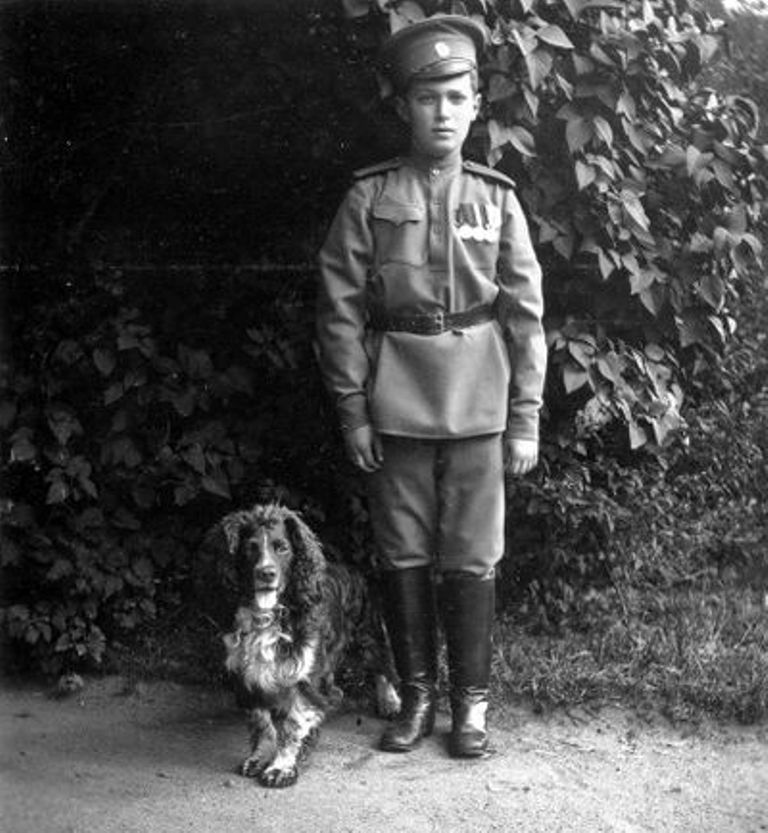
The faithful canine companion to Tsesarevich Alexei Nikolaevich was the only member of the Imperial Family who survived the massacre which took place in the Ipatiev House on the night of 16/17 July 1918.

“The Czechs [Czechoslovak Corps in the Russian Army], seizing Ekaterinburg, found a poor little animal, half-starved, running around the yard of the Ipatiev House. The dog seemed to be looking for his master all the time and his absence made him so sad and depressed that he barely touched his food, even when he was affectionately cared for,” wrote Baroness Sophie Buxhoeveden in her memoirs.

Alexei’s beloved King Charles spaniel Joy was taken by General Mikhail Dieterikhs, head of the White Army investigation into the death of the Tsar and his family. Joy was eventually homed with Colonel Pavel (Paul) Rodzianko, who was serving with the British Expeditionary Force in Siberia.

The British were expelled from Russia by the Bolsheviks and Rodzianko had grown so fond of Joy that he took him back to England.

Joy died at Windsor, however not at the royal court, but at Colonel Rodzianko’s small estate of Sefton Lawn, whose park adjoined the royal park.

“Every time I walk past my garden at Windsor, I think of the little dog’s grave in the bushes with the ironic inscription ‘Here rests Joy’. For me, this little stone marks the end of the empire and way of life,” Pavel Rodzianko wrote in Tattered Banners.

Sadly, both the garden and Joy’s modest grave is now believed to have been concreted over as a car park. 

© Paul Gilbert. 14 June 2023

***

The following NEW title was compiled and edited by independent researchers and Romanov historian Paul Gilbert was published in August 2024. 

This fascinating new study features 14 chapters on this tragic event, which include the memoirs of a British intelligence officer and journalist, and two First-English translations. In addition, 11 chapters were written by Paul Gilbert, based on new documents sourced from Russian archival and media sources over the past decade.

Please refer to the link provided for further details about the content of this new title . . .

CLICK HERE TO READ MORE ABOUT THIS TITLE
The fate of Anna Kuzminykh, a servant in the Ipatiev House

PHOTO: Anna (right) with her mother and son Ivan in 1916

NOTE: the publication of this article has been met with both great interest and some skepticism. As Anna “Anyuta” Vasilievna Kuzminykh (1890-1954), did not leave any paper trail, which documented her brief period in the Ipatiev House, there is much to her story which allows for speculation, therefore, her story – as told through her niece and historian many years later, should be taken with a cautionary view – PG

Thanks to the research of a Russian historian, we now have a better understanding of the fate of Anna Vasilievna Kuzminykh (1890-1954), one of the lesser known servants in the Ipatiev House, during the summer of 1918.

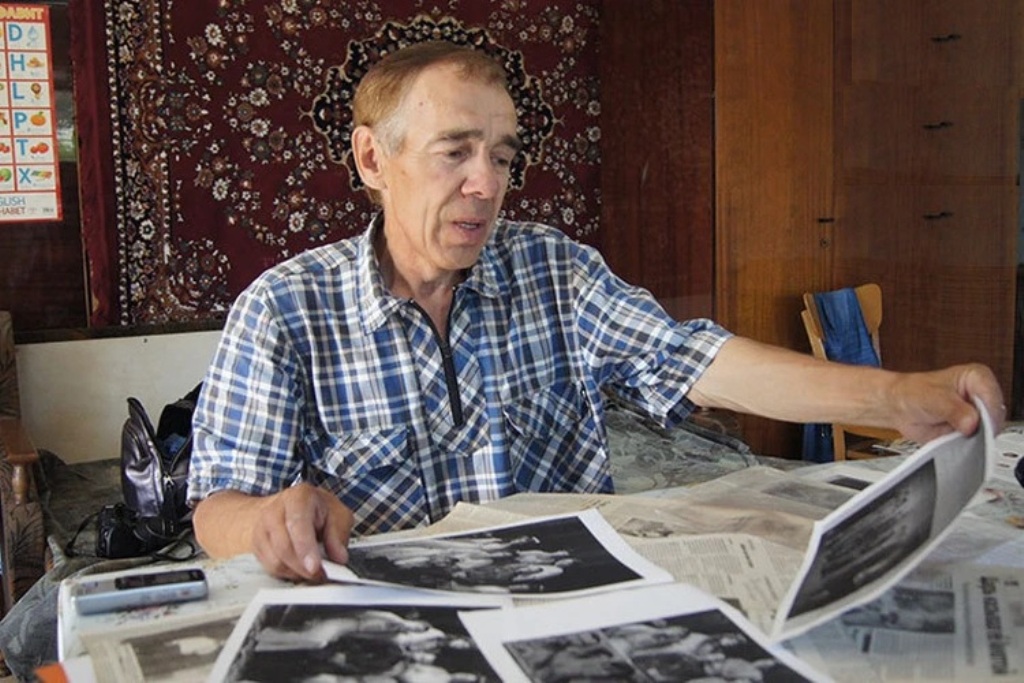
According to the Kambarka (Udmurt Republic in Russia) historian and archivist Razif Mirzayanov, shortly before the murder of the Imperial Family in Ekaterinburg, the Tsar ordered Anna Kuzminykh, to leave the Ipatiev House, and thereby saved her life.

“I learned about the fate of Anna Kuzminykh in 1999, from her niece Zoya Grigoryevna Zhizhina” – says Mirzayanov. Anna herself was no longer alive by that time – she had died in 1954. The historian added, that Anna had not told anyone about her brief period as a servant in the Ipatiev House, during the summer of 1918, except for her niece Zoya Grigoryevna.

Anna was born on 9th February 1890, in the village of Kambarsky Zavod (now Kambarka), into the family of a local tailor Vasily Michkov. She married Yegor Kuzminykh, when the First World War broke out, who was ordered to the Front in 1914. Following the February 1917 Revolution, Anna left Kambarka the following year to work in Ekaterinburg, leaving behind her young son Ivan and mother. By some miracle, Anna was able to get a job at the Ipatiev House, the mansion requisitioned by the Bolsheviks and renamed the “House of Special Purpose”, where Emperor Nicholas II and his family were held under house arrest from April to July 1918. Anna was entrusted with the care of two cows, which provided milk for the prisoners.

PHOTO: in 2017, Razif Mirzayanov, Chairman of the Society of Historians and Archivists of the Kambarsky District, was awarded a medal in honour for his research on the Romanov’s

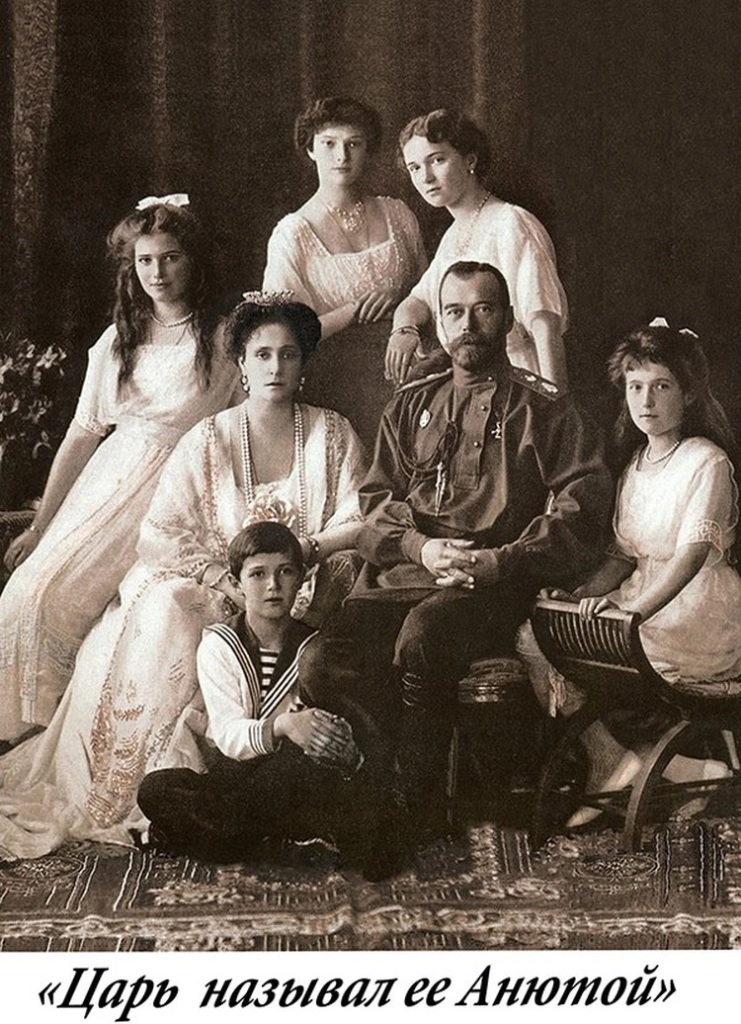
THE TSAR CALLED HER ANYUTA

One day, after having milked one of the cows, Anna went up to the house with a full bucket of milk, only to be rebuffed by the Empress herself: “Anna, once again, you milked both cows in one bucket. The milk will turn sour!” “What are you talking about,” Anna replied, “this bucket is from one cow that gives so much milk.” After straining the milk, Anna returned to the barn to milk the second cow. Then, pouring flour into a bucket for a mash to feed the cattle, she heard someone’s footsteps enter the barn.

Looking around, Anna saw Nicholas II and Alexandra Feodorovna standing before her. “Now I understand why cows are milked in buckets,” said Nicholas. One of the cows reached out to him with her muzzle, which was covered in flour, the Tsar gently stroked the animal. “Don’t you feel sorry, Anyuta, for using so much flour?” he asked the servant. “Yes, there is a lot of it, but it will be enough for a long time,” she replied briskly. From then on, the Tsar called her Anyuta.

Since there were few servants, Anna also had to work in the kitchen, helping the cook to prepare and serve meals, says Mirzayanov. She later recalled that the guards present in the dining room during lunch, often helped themselves to the food prepared for the Imperial Family.

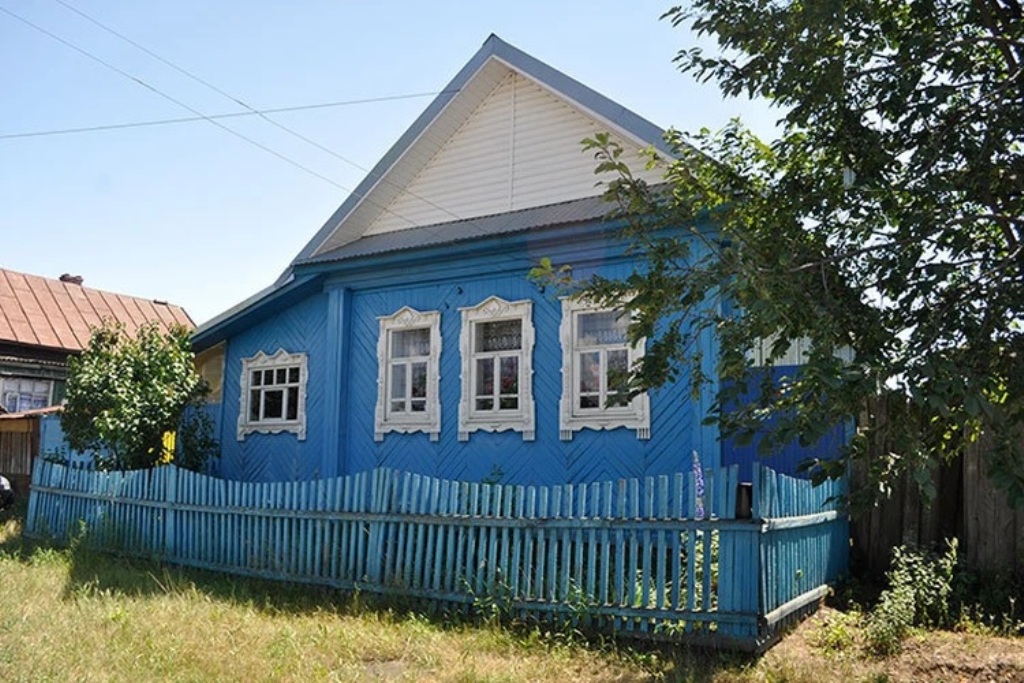
PHOTO: the house in Kambarka, where Anna lived with her family. Her descendants still live here

THANKED FOR HER WORK AND ORDERED TO LEAVE

“On a hot summer day in early July 1918, a search was conducted in the Ipatiev House,” Razif Mirzayanov continues his story. A band of Chekist thugs examined the personal belongings of the Imperial Family, even roughly leafing through books and rummaging through linens. The captives and their faithful servants stood in silence while they carried out their work. Anna stood frightened in the doorway of the room where the Tsar knelt before a kiot with icons and prayed. He never turned around or stood up while the search was going on. One of the Chekists, while turning out suitcases, cursed and swore filthy obscenities at the Tsar. In one of the suitcases, the Chekist found a long black lace shawl. Turning it in his dirty hands, he angrily threw it to Anna and shouted: “Take it, it will come in handy for you, while you are still young!”

This black lace shawl was kept for a long time in the Kuzmin family: Anna’s daughter-in-law sometimes wore it to church, and many parishioners noted it’s beautiful workmanship, none even suspecting that it had once belonged to one of the female members of the Imperial Family.

After the search, the guards in the house were completely changed – and this detail of Anna’s story is also confirmed by historians. On 4th July 1918, Yakov Yurovsky was appointed commandant of the “House of Special Purpose”, instead of Alexander Dmitrievich Avdeev (1887-1947), the first commandant of the Ipatiev House, who was considered unreliable.

Shortly thereafter, the Tsar approached Anyuta, he thanked her for her work, and told her that his children had fallen in love with her, – says Razif Mirzayanov. He then told her to leave the Ipatiev House and never come back. He ave Anna a souvenir photo on a passe-partout, which depicted the Imperial Family, taken in 1913. With tears in her eyes, Anyuta said goodbye to the Imperial Family and left, concealing the photo and black lace shawl.

A few days later, on the night of 16/17 July, the Bolsheviks woke the Imperial Family in the middle of the night and ordered them to dress and go downstairs. The Emperor and Empress with their five children, along with four retainers: the doctor, the cook, the valet and the maid went to the basement of the house. At the request of Alexandra Fedorovna, two chairs were brought for her and her ailing son, the rest stood along the wall. Then Yurovsky brought in a firing squad, read out the verdict and gave the command to shoot every one – there were no survivors of the regicide.

PHOTO: the Emperor presented Anna with a copy of this famous photograph – taken in 1913 – as a keepsake. The Russian caption “Царь назыбал ее Анютой” translated reads “The Tsar called her Anyuta”.

COOKED “ROYAL DISHES”

There is no evidence to suggest that the Imperial Family could have guessed their captors plans to murder them in such a violent manner that fateful night, however, Anna Vasilyevna was sure that it was thanks to Nicholas II’s request that she leave the Ipatiev House that saved her life.

“After leaving the Ipatiev House, and her conversation with the Emperor, Anna went home. Her husband who had been a German prisoner of war, returned home to Russia, some 11 years after leaving for the front. Soon they had another son, Sergei, who then participated in the Great Patriotic War,” – says Razif Mirzayanov.

Subsequently, Anna Vasilievna often recalled her life in Ekaterinburg, but only her niece Zoya knew the details of her story. She didn’t keep any records, as it it was too dangerous during the Bolshevik and Soviet years. Zoya, however, remembered how Anna Vasilievna came to visit her with unusual dishes – for example, fried pike stuffed with grains and onions. “Such a dish was prepared for the Tsar’s table,” she said. The photograph of the Imperial Family – gifted by the Emperor – Anna carefully kept in a chest, but after her death, the picture was placed on a chest of drawers, and in 1970 it disappeared.

© Paul Gilbert. 9 October 2022

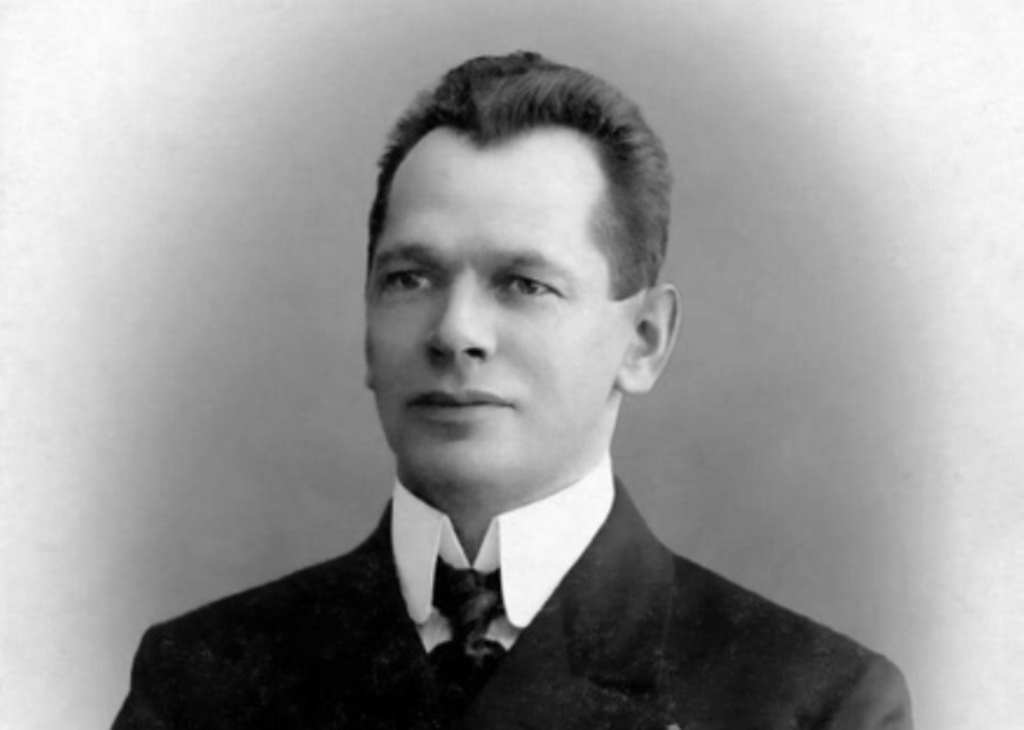
The Fate of Nikolai Nikolaevich Ipatiev, 1869-1938

While the tragic fate of Russia’s last tsar, his family and their four faithful retainers is well known, the life and fate of the owner of the notorious house in Ekaterinburg, where they were brutally murdered on 17th July 1918 – Nikolai Nikolaevich Ipatiev (1869-1938), remains less familiar.

Nikolai was born on 18th February 1869 in Moscow, to Nikolai Alekseevich Ipatiev (1839-1890) a well-known architect in Moscow, who held a prominent and influential post – one of the three official architects of the first Russian Insurance Society – the most respected in the country. His wife Anna Dmitrievna Ipatieva (nee Glika) came from a family that gave Russia many remarkable intellectuals.

In addition to Nikolai, the couple had two other children, a daughter Vera and a brother Vladimir (1867-1952), who became a famous chemist, who is considered one of the founders of petrochemistry in the United States.

Nikolai was a graduate of the 3rd Moscow Cadet Corps, the Nikolaev Engineering School in St. Petersburg and the Military Engineering Academy. In 1906, after serving in the army, he retired with the rank of engineer captain and settled in Ekaterinburg, where he began working as a civil engineer. He later opened a very successful company engaged in the laying of railroad tracks.

At first, Nikolai lived in a rented apartment, but his business was so successful, that two years later in 1908, he was able to buy a two-storey stone mansion at Voznesenskaya Gorka, 49/9 paying the former owner 6 thousand rubles. He became the third owner of the house since it’s construction in the 1880s.

Nikolai and his wife lived on the upper floor of the house, while the main floor was used for his thriving business. The interiors were richly decorated with iron castings, stucco mouldings, and the ceilings were decorated with artistic painting. The house was equipped with all the modern amenities: electricity, sewerage, a bathroom with a water heater, a wine cellar, and even a telephone.

He took part in the construction of the Ekaterinburg-Perm railway. He was active in public and local history activities. He also participated in the development of the project for the construction of the building of the Ural Mining Institute. He also served as an engineer of the Railway Troops of the Russian Armed Forces, a unit in the engineering corps of the Imperial Russian Army.

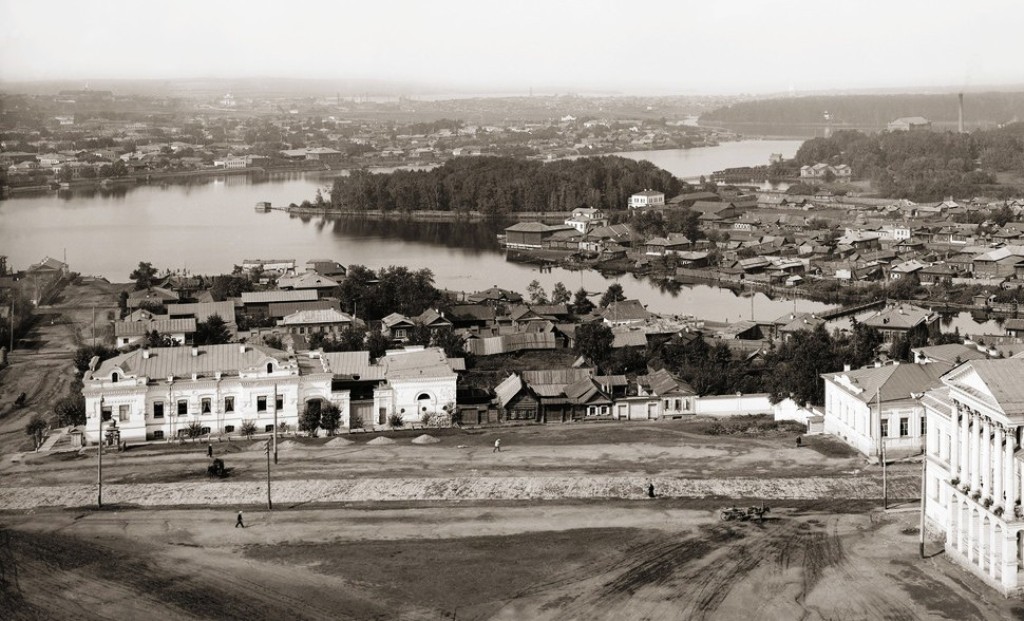
PHOTO: early 20th century view of the Ipatiev House (left) from the bell tower of the Ascension Church

THE BOLSHEVIKS EVICT THE IPATIEV’S

Nikolai Ipatiev and his wife Maria Feodorovna Ipatieva (1876-1953), led a quiet and peaceful life until April 1918, when the Bolsheviks suddenly knocked on the door of their house. Nikolai’s memories of that day are preserved in the State Archives of the Russian Federation (GARF).

“On 27th April, Commissar Zhilinsky [Alexander Nikolaevich Zhilinsky, 1884-1937] came to me and, announced that my house would be occupied for the needs of the council, and then ordered me to clean the entire house by 29th April,” writes Nikolai. “Having overheard the order, my wife asked Zhilinksy, among other things, whether the integrity of our belongings that we would leave in the house would be guaranteed to us; Zhilinsky replied to this that the people who would be living in the house would not damage anything.”

The choice and location of the Imperial family’s place of imprisonment is explained by Alexander Dmitrievich Avdeev (1887-1947), the first commandant of the Ipatiev House [renamed “House of Special Purpose” by the Bolsheviks] in his memoirs, that it was located “… almost in the very centre of the city, in such a place that its defence against an external attempt to free the former tsar was favourable in all respects … ”

Ipatiev was able to take only a small number of personal belongings from the house. He locked the cabinet with his valuable books in his office. His wife locked their dishes in the dining room. The rest of their belongings were locked in the basement pantry, a room adjacent to the one where the regicide was carried out, and then locked with a key.

“The keys to the locked rooms were left with me, while the members of the Commission sealed the rooms themselves with the Soviet seal,” said Ipatiev. “I had moved our folded kitchen and table utensils, chests with clothes and linen into the carriage house . After some time, the Chairman of the App. Committee Sergei Egorovich Chutskaev (1876-1944) demanded from me the keys to all the locked rooms in order to check what was in them and, after inspecting the rooms, he replaced seals on them.”

Until the very last moment, Ipatiev did not know who exactly the Bolsheviks were preparing his house for. Only after 29th April, when he had already moved out [Nikolai and his wife moved to the village of Kurinskoye], did his neighbour inform him that the ex-tsar Nicholas II, his wife and one of his daughters [Grand Duchess Maria] had been settled in the mansion. The rest of the family members were brought later.

A high double wooden fence exceeding the windows of the second floor in height, was built around the outer perimeter of the house, closing it off from the street. The fence had a single gate in front of which a sentry was constantly on duty, two guard posts were placed inside, eight outside. Machine guns were installed in the attics of neighbouring buildings.The Imperial family were held under house arrest in the Ipatiev House for 78 days, from 28th April to 17th July 1918.

PHOTO: Nikolai Nikolaevich Ipatiev (1869-1938)

“THE TENANT HAS LEFT”

Before leaving, Nikolai Ipatiev made an agreement with his cousin Yevgenia Poppel that she would send him a telegram with certain words if the Bolsheviks suddenly vacated his house. And such a telegram came to him on 22nd July – five days after the murder of the Imperial Family. It contained only four words: “The tenant has left,” whereupon Nikolai and his wife returned to Ekaterinburg.

An article appeared in the newspaper Ural Worker – stating that, “at the numerous requests of the workers, the blood-drinking tsar was shot.”

On the same day, Nikolai Nikolaevich was summoned to the local Cheka, who returned to him, the keys to his own house. By that time, all traces of blood had been washed away, the floors swept, the personal belongings of the dead packed and taken away. Nikolai and his wife never returned to the “bloody house” again, even leaving his belongings, which he had stored in the house.

Later, during an interview Ipatiev noted that “in all the years of the existence of the house, no one had died in it. And then, overnight, eleven people were all murdered at once … “

On 25th July, Ekaterinburg was occupied by the Czechoslovak Corps. Upon the arrival of the White Army, Admiral Alexander Vasilyevich Kolchak (1874-1920), ordered the Ipatiev House sealed, “the crime scene was to remain intact.” He ordered investigator Nikolai Alekseevich Sokolov (1882-1924), to launch an investigation into the fate of Nicholas II and his family, and the events which took place in the house of engineer Ipatiev, where bullet marks were discovered in the basement walls.

PHOTO: Nikolai Ipatiev’s grave at the Olshansky Cemetery in Prague

LIFE AND DEATH IN EXILE
On 28th July, 1919, Ekaterinburg was retaken by the Reds, Nikolai Ipatiev was now considered an “enemy of the Bolsheviks”, forcing him to flee the Urals.

Nikolai and his wife Maria evacuated from Ekaterinburg with the Whites. They travelled across Siberia to Japan, then moved to Turkey, but eventually ended up in Czechoslavakia in 1920, where they settled in Prague, teaching at the Civil Engineering Institute.

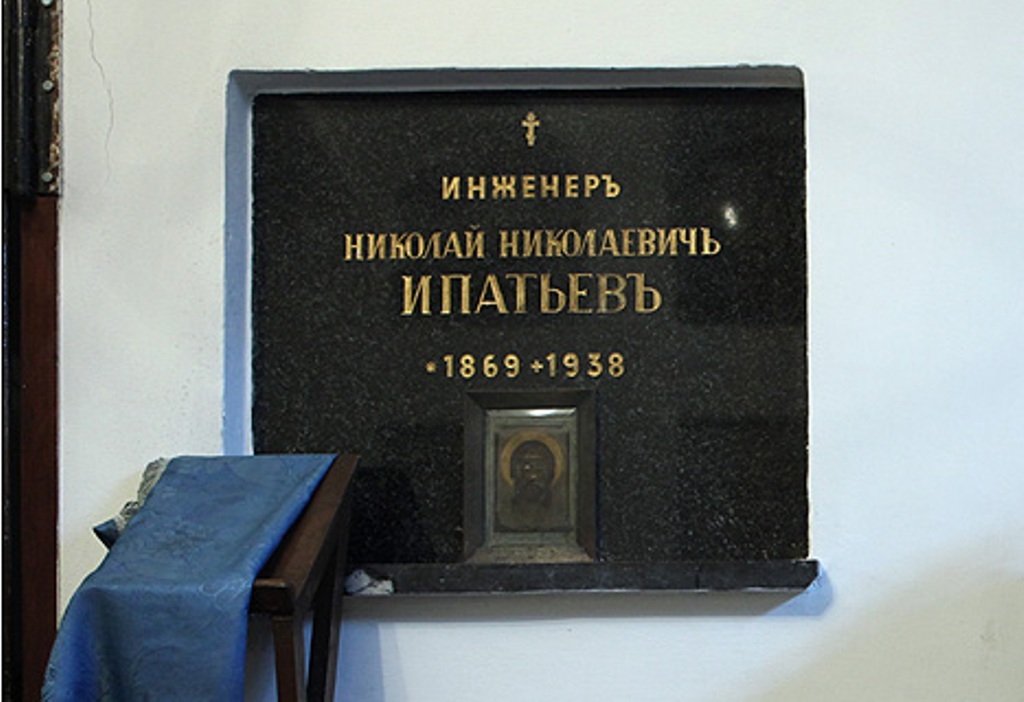
Nikolai died there on 20th April 1938, and buried in the crypt of the Assumption Church, at the Olshansky Cemetery in Prague. His burial niche is decorated with an orthodox icon of the Saviour Made Without Hands. On the church’s website, they note in one line: “N.I. Ipatiev, in whose house the last Russian Emperor and his august family were killed. Maria died in Prague in 1953, and is buried near her husband.

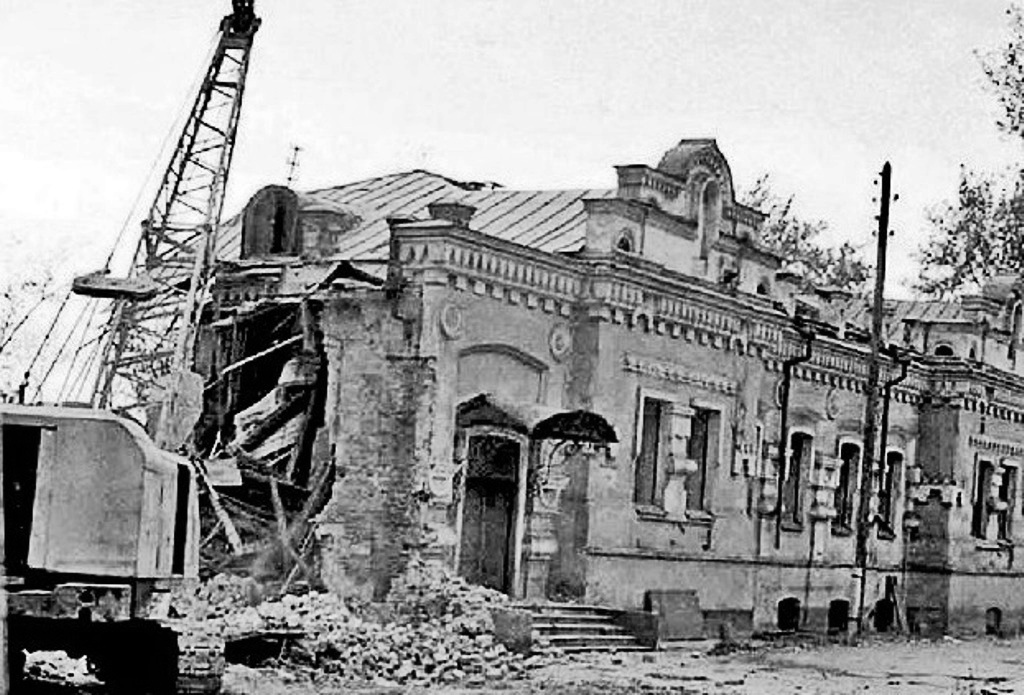
On 22-23 September 1977, the Ipatiev House in Ekaterinburg where Emperor Nicholas II and his family were held under house arrest for 78 days before being murdered, was razed to the ground. Click HERE to read my article How Yeltsin justified the demolition of the Ipatiev House, published on 25th February, 2020.

© Paul Gilbert. 14 July 2022

Blood reappeared in the Ipatiev House for years after the regicide, claimed eyewitnesses

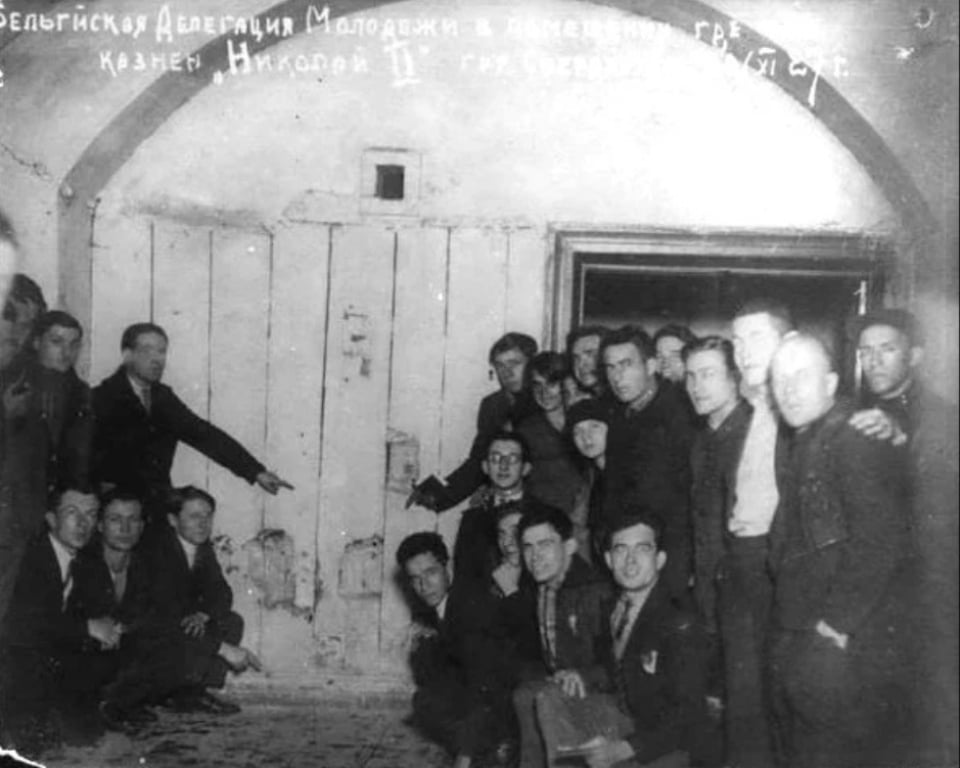
PHOTO: view of the murder room in the basement of the Ipatiev House, following the massacre of Emperor Nicholas II, his family, and four faithful retainers. The bullet holes can clearly be seen on the walls

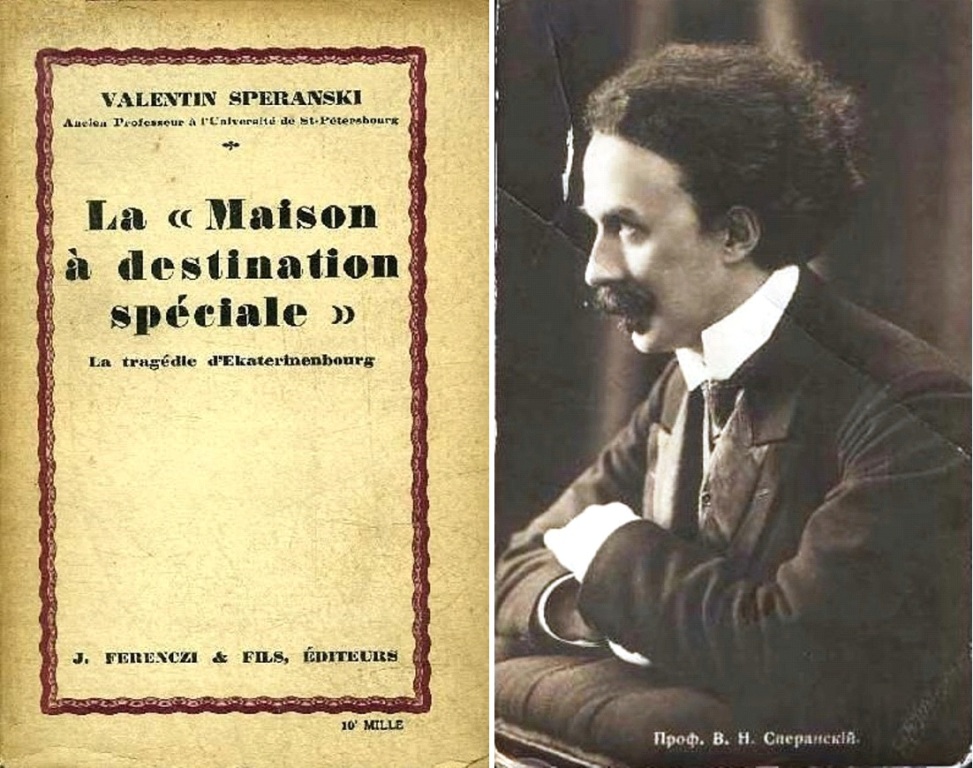
On 17th July 1918, Emperor Nicholas II and his family were brutally murdered by a Bolshevik firing squad in the basement of the Ipatiev House in Ekaterinburg. In the spring of 1924, Professor Valentin Nikolaevich Speransky (1877-1957) visited the Ipatiev House, and later published his book La maison à destination speciale la tragedie d’ekaterinenbourg in French (1929) followed by Spanish and Italian editions.

Prof. Speransky was not permitted to enter the living quarters of the Ipatiev House, but thanks to one of the council employees he saw the scene of the terrible massacre – a room of the basement floor, where the regicide was carried out.

“It resembles a cellar, not more than 50 cubic meters in volume,” he wrote. “In the damp semi-darkness the room seemed very narrow… Even after six years there were still bloodstains on the floor. There were traces of bullets on the walls … On the wallpaper one could see traces of bloody hands.”

These protruding traces of the blood of the Holy Royal Martyrs on the walls were later confirmed by numerous testimonials:

“We had a girl from Sverdlovsk [Ekaterinburg]. Her mother told us that the wall of the house where the execution of the Imperial Family had been carried out had been stained with blood for many years. The authorities believed it was the antics of hooligans, put sentries to guard the room around the clock, painted over the wall with paint, and illuminated it with floodlights. But every day, fresh drops of blood would appear on the wall before the eyes of astonished eye-witnesses.

“In the 1950s,” recalls L.N. Kasyanova from Feodosia, “I studied in Sverdlovsk in the Urals, at the Pedagogical Institute. In Sverdlovsk, we went on excursions to the Ipatiev House, leading us into the basement where the Holy Royal Martyrs were shot. They say from time to time that blood appeared on the walls, and no matter how much it was washed off, it reappeared.”

“From my childhood”, Z.S. Grebenshchikova recalls, “my mother used to show us this house. When I met the watchman Bukharkin Fyodor Ivanovich, a great admirer of the Imperial Family, in St. John’s Church in Ekaterinburg, I began to learn more about it. To the watchman one boy – Tikhomirov Alexander Dmitrievich, born in 1956 was very attached. His father was a general and his mother worked as a general practitioner. His grandmother Olga took him to church when he was three years old and he already knew the prayers.

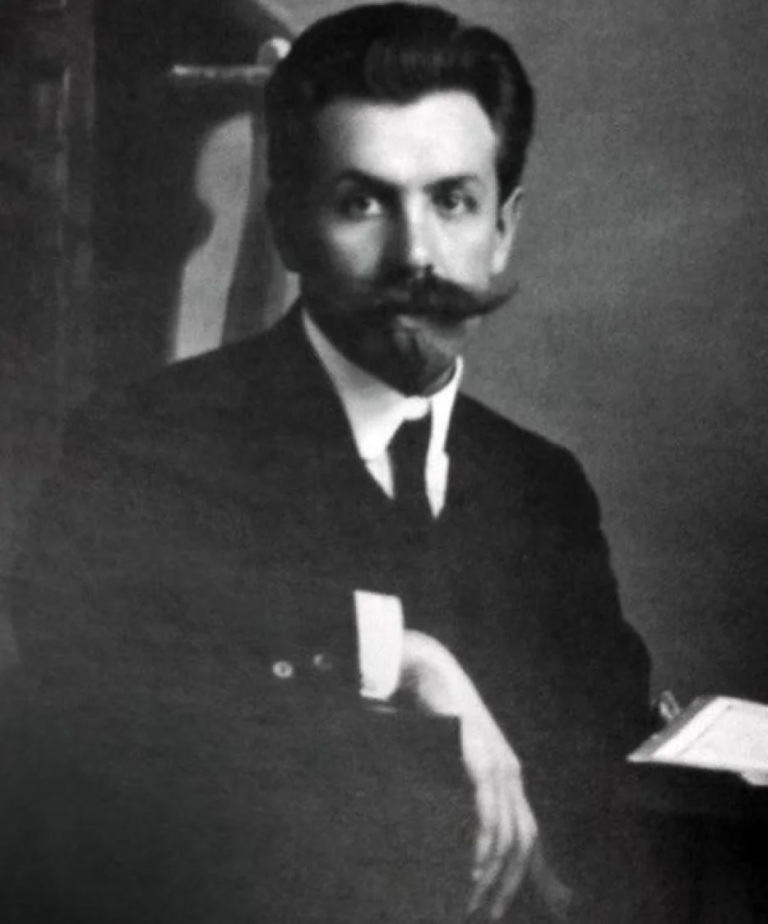
PHOTO: Valentin Nikolaevich Speransky (1877-1957), author of the book ‘La maison à destination speciale la tragedie d’ekaterinenbourg’, published in 1929

“All three of us – Fyodor Ivanovich, Sasha and I – started going to the house to pray: we also came at night before the holidays – in winter, in spring, at Easter, and on the night of 16th July [the night of the anniversary marking the death and martyrdom of the Imperial Family] and others. We took faithful old ladies with us. We took candles, placed them on the side porch, and sang ‘God rest the saints,’ ‘Eternal Memory,’ and say the names of the Holy Royal Martyrs.

“Sasha said that the wall against which the Imperial Family were shot had been whitewashed – but the blood still runs through the whitewash. They decided to paint it blue, a soft blue colour, like the sky, and again it comes out, the blood, through the holes that the bullets penetrated. . .”

Sasha’s grandmother Olga had a friend who worked as a janitor in the Ipatiev house, and she said that on the eve of holidays – before Easter and Pentecost, when she was on night duty – the sound of some angelic, very gentle singing could be heard from the basement.

One day Sasha brought a piece of plaster from that wall in his grandmother’s locket with a lid, filled with hot wax. Such a small piece in the shape of a trapezoid, and there, like a bouquet of flowers, was sprinkled – large, medium, smaller, maroon, orange, light orange droplets. Just like a bunch of flowers. I prayed and touched the shrine. I had the honour…”.

Over the years, local authorities were getting concerned that the Ipatiev House was becoming a shrine for Orthodox Christians and monarchists, who came in growing numbers, to light candles, pray and sing hymns. As a result, a decision was made to demolish the Ipatiev House, and in so doing, wipe any memory of the Holy Royal Martyrs from the Russian landscape.

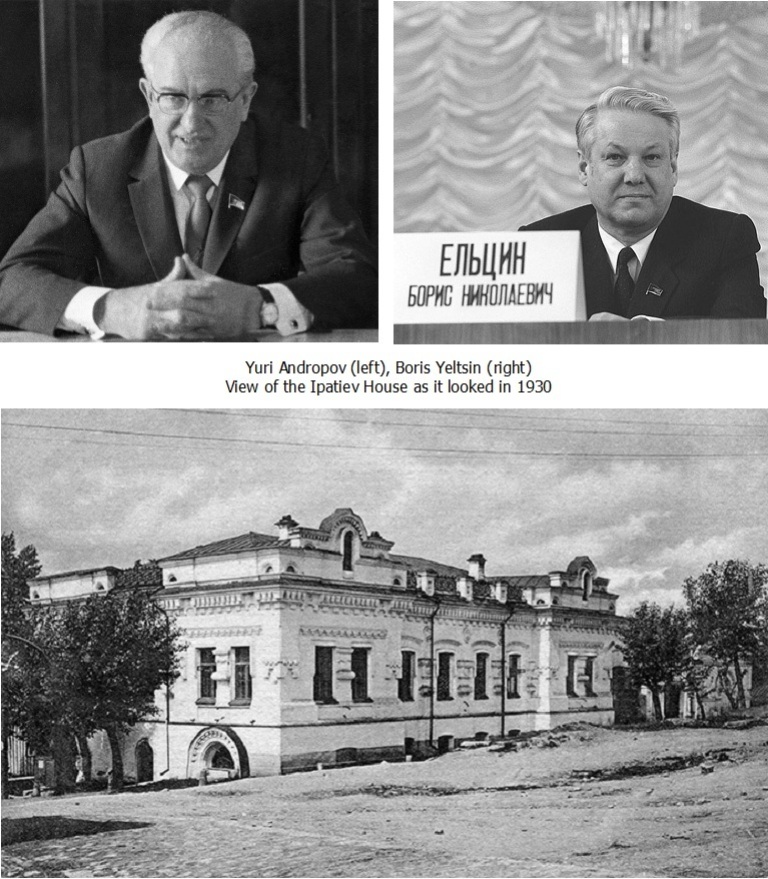
The destruction of the Ipatiev House began on 22nd September 1977, that is, more than two years after a joint decision of the chairman of the State Security Committee, Yuri Andropov (1914-1984) and the Politburo.

Today on this spot stands the Church on the Blood of the Holy Royal Martyrs. Construction began in 2000, and on 16th June  2003, 85 years after the death and martyrdom of Emperor Nicholas II and his family, the five-domed main church with a height of 60 meters, a building area of ​​966 m² and a total area of ​​3152 m², with an estimated capacity of 1910 people was consecrated.

© Paul Gilbert. 4 November 2021

Excavations at the site of the Ipatiev House in Ekaterinburg in the early 2000s

PHOTO: A simple wooden cross was installed on the site of the Ipatiev House in the 1990s

Prior to the construction of the Church on the Blood in Ekaterinburg, local archaeologists took a particular interest in the site where the 18th century mansion once stood.

An excavation of the site was organized by archaeologist Sergey Nikolaevich Pogorelov in 2000. At that time, he headed the Department for the Study of Historical Monuments in the Regional Research and Production Center.

The area where the Ipatiev House was located stood on land once owned by the Ural-Siberian Factory. In 1766-1808 the wooden Old Ascension Church stood on the site of the house, which included a small cemetery. Later, residential quarters were constructed, including the Ipatiev House in the 1880s. 

According to Pogorelov, in 2000, when the question arose about the construction of the Church on the Blood, city and regional authorities were notified that a decree issued in 1990 stipulated that no construction could take place on historic sites without historical and archaeological research being carried out first.

Excavations began in early June through September of 2000, and then continued in the summer of 2001. During that time, nearly 600 people took part in them. They made some interesting discoveries. For instance, during the excavations it turned out that the Soviet authorities had removed the remains of the basement walls of the Ipatiev House many years prior.

When archaeologists found the place where the basement execution room was located, they discovered that in its place, a concrete bunker had been built. They then referred to the city plans which were given them by the administration. As it turned out a government communication line had been laid along Klara Zetkin Street (former Voznesensky Prospekt and Voznesensky Lane, respectively), . When the cables were laid near where the Ipatiev House stood, they turned sharply 90 degrees, passing through where the execution room was located, and into the bunker, and then back to Klara Zetkin towards Voznesenskaya Gorka. Archaeologists learned that in the early 1970s, the local Soviet had set up the bunker with the intent of destroying the place where the Imperial family had been murdered.

However, an even greater discovery for archaeologists was what they found under the bunker when they began to dig deeper. Under the concrete structure was a grave, partially carved into the rock. Inside, in a coffin with forged nails, lay the remains of a woman and a baby.

Archaeologists had discovered the 18th century Orthodox cemetery, proving that the Ipatiev House was partly built on the site of the Church of the Ascension, and partly on the churchyard. The police were called in and the remains of the woman and her child were taken away.

Pogorelov noted that many graves must have been lost in the 1980s when part of the slope of the Voznesenskaya Gorka, was cut back during the reconstruction of Karl Liebknecht Street.

During their excavations, archaeologists uncovered an area of ​​more than 500 square meters at a depth of about 2 meters.

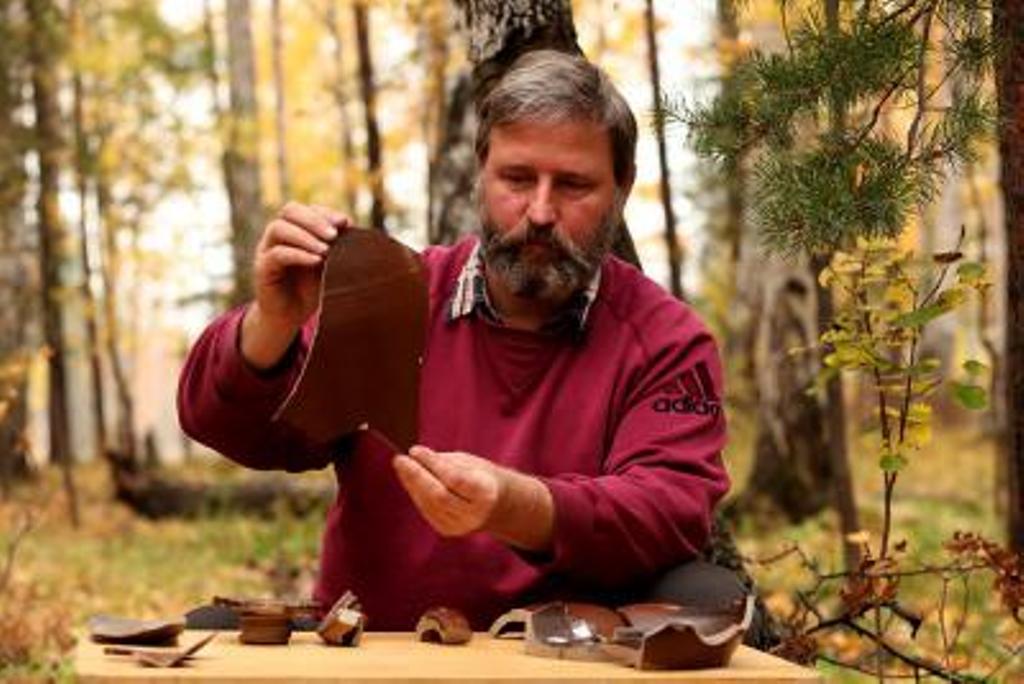
PHOTO: Archaeologist Sergey Nikolaevich Pogorelov shows fragments
of ceramic vessels found at Porosenkov Log in 2010

They found an underground stone structure with an area of ​​5 by 5 meters with granite walls in the foundation and stone granite slabs of the floor. Inside were the remains of the shelves of the party archives. It was here that the trunks belonging to the Imperial family were stored after their transfer from Tobolsk in April 1918.

On the western side of the estate grounds stood several poplars. There was some speculation that the trees had been planted during the Soviet years. Experts from the Institute of Plant and Animal Ecology conducted a dendrochronological analysis and found that they are more than 100 years old. Thus, it was determined that the trees were there when the Imperial family were living there under house arrest.

Among the trees a hole was discovered. They thought it was a cellar, but it turned out to be a well. It had been pierced into the monolithic rock of the Voznesenskaya hill using mining tools.

Archaeologists found a mention of this well in the notes of Yakov Yurovsky, who led the execution of the Imperial family. He wrote that he was repairing it at the moment when Nicholas II approached him. The well itself was filled with many artefacts, among them items belonging to the Imperial family.

The following year, when construction on the Church on the Blood was already underway, and two underground floors were planned on the site, the well suddenly filled with water. The builders wanted to fill it with concrete, however, a decision was made to preserve it. Today, the former well named “Tsarskoe” of the Ipatiev House is now located in the lower underground floors of the Church on the Blood.

As a result of the excavation of the estate, archaeologists managed to collect about 64 thousand artefacts. There were no precious items among them – only those that are of interest from a historical point of view. Fragments of dishes, buttons, metal objects … Everything that fell to the ground or tossed into the well since the 18th century. 

Pogorelov found pieces of china with the emblems of the Imperial Porcelain Factory bearing the initials of Nicholas II, from the coronation porcelain service of 1896. He later discovered that part of the service had been stolen by the Bolsheviks after the murder of the Imperial family. Their whereabouts remain unknown to this day.

It took 300 crates to pack the 64,000 artefacts, and stored in different places until 2013. According to Pogorelov “nobody provided help, nor were the legislation requirements fulfilled”. The crates were subsequently transferred to the Museum of the History of Ekaterinburg. Today, the famous Russian archaeologies does not know what happened to the collection.

The Museum of the History of Ekaterinburg would not comment on what happened to the collection further nor whether the artefacts from the excavations at the site of the Ipatiev House are still in their funds.

© Paul Gilbert. 23 October 2020

***

Dear Reader: It is always a pleasure for me to present new articles based on my own research from Russian archival sources, offering first English translations of new works from Russian media sources on my Nicholas II blog and Facebook pages. Many of these articles and topics seldom (if ever) attract the attention of the Western media. Please note that I personally translate the articles, and complement them further with additional materials, photographs, videos and links.

If you found this article interesting, then please help support my research by making a donation in US or Canadian dollars to my project The Truth About Nicholas II – please note that donations can be made by GoFundMe, PayPal, credit card, personal check or money order. Thank you for your consideration – PG

How Yeltsin justified the demolition of the Ipatiev House

226a

The Ipatiev House before 1917

On 22-23 September 1977, the Ipatiev House in Ekaterinburg where the Russian Imperial Family were held under house arrest for 78 days before being murdered, was razed to the ground. The decision of the Soviet authorities was perceived rather ambiguously, but what was the reason behind the destruction of this historic building, and could it have been saved?

226e

The Ipatiev House in 1918

A house with a tragic fate

The two-storey stone Ipatiev House was built in the 1880s by state adviser I.I. Redikortsev, on the western slope of the Ascension Hill – a notable hill in Ekaterinburg. It was located at No. 49/9 on the corner of Voznesensky Prospekt and Voznesensky Lane (renamed Karl Libnecht and Klara Zetkin respectively, after 1917). The eastern facade (facing Voznesensky Prospekt) was one-story, and the western (facing the garden) had two floors.

Redikortsev did not remain the owner of the house for long, he was accused of corruption, and in order to improve his shaky financial condition in 1898 he sold the house to the gold miner I. G. Sharaviev.

In 1908, the Ipatiev House was purchased by military civil engineer Nikolai Nikolaevich Ipatiev, who paid 6,000 rubles to the former owner. The Ipatiev family lived in the upper floor, while the the lower floor was used as Ipatiev’s office. The house had running water and sewer, electricity and telephone. The interiors were richly decorated with cast iron, stucco mouldings, and artistically painted ceilings.

On 27th April 1918, the Bolsheviks ordered Ipatiev to vacate the mansion within two days, for the maintenance of the Imperial family, who were to be transferred from Tobolsk. Due to the fact that Ipatiev was away, his personal belongings were locked in a basement pantry next to the room in which the Imperial family were later shot. Subsequently, the basement was sealed in the presence of the owner. It is believed that the choice of the house was due to the fact that Ipatiev was well acquainted with the members of the Ural Council and, in particular, Yakov Yurovsky who served as a prominent representative of the cadet party, and who, after the February Revolution, was appointed a member of the local public security committee.

Machine guns were installed in the attics of neighbouring buildings, the house itself was surrounded by a high wooden double fence, the height of which was higher than the windows of the second floor of the Ipatiev House, with a single wicket gate, which was  constantly guarded, two security posts were located inside, eight outside, thus completely prepared for the arrival of “Citizen Romanov” Nicholas II, his wife and their daughter Maria.

Immediately after the murder of the Romanovs, which occurred on the night of 16/17 July 1918, the house was returned to Ipatiev. Five days later, White Army units entered the city. Nikolai decided to emigrate, and sold the mansion to representatives of the White Army, and for a short time the mansion served as the headquarters of the Siberian Army, and representatives of the Russian government.  Their stay in the Ural capital was cut short, after the city was recaptured by the Bolsheviks.

From 1922, the Ipatiev House housed a dormitory for university students and apartments for Soviet employees. For some time there was even a kindergarten, and in the basement, where the Imperial family were murdered, a children’s shower was installed.

In 1927, it was decided to open the Museum of the Revolution in the building. The Museum of the Revolution was open daily except Monday and Thursday from 12 noon to 6 pm, the cost of tickets was 5 kopecks for tourists, 10 kopecks. for union members and 25 kopecks for every one else. The tour of the museum included a visit to the basement and the room where the Imperial Family were shot. To complete the exhibit, a decision was made to restore the bullet riddled wall in the murder room, since the retreating White Guards had  disassembled the genuine one and took it with them. [N.B. if there is any truth to this, the fate of the original wall from the “killing room” remains yet another mystery – PG] 

In 1938, the former mansion housed expositions of the Anti-Religious and Cultural-Educational Museum, as well as offices of various departments. If turning the Ipatiev House into an “Anti-Religious” Museum was not enough, in 1923, the Bolsheviks imposed one further indignity on the murdered tsar and his family, by issuing postcards of the house surrounded by the wooden fence, bearing the insulting and disrespectful caption “the last palace of the last tsar”.

From the beginning of the 1970s, a branch of the Chelyabinsk Institute of Culture was moved here: in the basement, students even staged performances, as evidenced by preserved photographs.

226f

Andropov’s “secret note No. 2004-A” on the Ipatiev House

The KGB and Politburo take action

The day of 26th July 1975 was a turning point in the fate of the Ipatiev House. On this day, a secret note No. 2004-A was issued.

“On the demolition of the Ipatiev mansion in the city of Sverdlovsk” was sent from the KGB to the Politburo of the Central Committee of the Communist Party of the Soviet Union (CPSU). The text of the document read:

“Anti-Soviet circles in the West periodically inspire various kinds of propaganda campaigns around the Romanov royal family, whereby the former mansion of the merchant Ipatiev in Sverdlovsk is often mentioned. Ipatiev’s house continues to stand in the center of the city. It houses the training center of the regional Department of Culture.

“The mansion is of no architectural or historic importance; only a small number of the townspeople and tourists are interested in it. Recently, foreigners began to visit Sverdlovsk. In the future, the number of foreigners is expected to increase significantly, and Ipatiev’s house will no doubt become an object of their curiosity and interest. In this regard, it seems appropriate to entrust the Sverdlovsk Regional Committee of the CPSU to resolve the issue of demolishing the mansion in the order of the planned reconstruction of the city. The draft resolution of the Central Committee of the CPSU is attached. Please consider.”

The document was signed by the chairman of the State Security Committee, *Yuri Andropov (1914-1984). * Andropov later served as third General Secretary of the Communist Party of the Soviet Union, from November 1982 until his death in February 1984.

In the 1990s, Vladimir Solovyov, an investigator from the Prosecutor General’s Office, who investigated the murder of the tsar’s family, stated that the KGB had received information about how, every year, on the anniversary of the death of the Imperial Family, people came to the Ipatiev House, to light candles and offer prayers. The authorities referred to these annual visits “of painful interest” while declaring them as “anti-Soviet activity.” The Party bosses could not allow these pilgrimages to continue.

On 30th July 1975, Andropov’s proposal was unanimously adopted by the Politburo. Upon learning of the impending demolition of the Ipatiev House, the director of the museum, gave the order to save everything that could be carried away.

226i

Boris Yeltsin. First Secretary of the Sverdlovsk Regional Committee of the CPSU 1977

“It was impossible to resist”

The elimination of the Ipatiev House was entrusted to local authorities. The order was executed by Boris Yeltsin, First Secretary of the Sverdlovsk Regional Committee of the CPSU . “It was impossible to resist, not to fulfill the Politburo Resolution,” Yeltsin would later note in his memoirs. “They assembled the equipment and demolished it in one night. If I had refused, I would have been left without work, and the new secretary of the regional committee would have complied with the order anyway,” he concluded.

The unofficial reason behind the demolition of the Ipatiev House was the need for reconstruction of the entire block – therefore, according to the “reconstruction” plans, all houses located in the entire block were to be demolished. The fact that the houses and merchant buildings located in the quarter were of architectural and historical value of late 19th-early 20th century Ekaterinburg, was of no interest to the authorities.

Experts noted that having destroyed the entire block, the authorities made it difficult to find the exact place where the Ipatiev House was located.

After the construction of the Church on the Blood, some people claimed that the Imperial Room – built on the site of the basement room of the Ipatiev House, where the family were all murdered – located in the Lower Church of the Church on the Blood is inaccurate. Each year on the anniversary of the regicide, a small group of people gather and create a square on one of the marble stones on the territory of the Church on the Blood. Here, they lay flowers, light candles and offer up prayers. It is ironic that given that the experts could not determine the exact spot, that a group of amateurs could?! 

Prior to the demolition of the Ipatiev House, local historians removed many valuable interior elements, including a fireplace, door handles, tiles, stucco molding from walls, iron bars from windows, etc. These items can be seen today in local museums in Ekaterinburg and Ganina Yama. It is interesting to note, when opening the floor in the grand duchesses bedroom, a golden bracelet with precious stones and the monogram ‘T’ was found hidden under the baseboard and wrapped in a newspaper. The whereabouts of this bracelet is unknown to the author.

226h

A simple wooden cross marked the spot of the Ipatiev House after its demolition

Could the Ipatiev House have been saved?

As previously noted in his memoirs, Yeltsin claimed that the house was destroyed in one night, but in reality it took two days to raze the building to the ground. Perhaps he just forgot. Here’s what else is remarkable. The destruction of the mansion began on 22nd September 1977, that is, more than two years after the decision of the Politburo. 

The thing is that in 1975 the First Secretary of the Sverdlovsk Regional Party Committee was Yakov Petrovich Ryabov – Yeltsin replaced him in this post only on 2nd November  1976. Journalists later asked Ryabov why he was in no hurry to comply with the highest order? “And why should I be in a hurry? The house stood in a lowland, it was not bothering anyone,” the former head of Sverdlovsk replied. According to Ryabov, he told his subordinates that when the reconstruction plan for the entire micro-district was ready, then a demolition decision would be made. Rumor had it that Ryabov wanted to keep the house and that even Brezhnev had taken an interest in it. In any case, it is known that the demolition of the house was opposed by representatives of the All-Union Society for the Protection of Monuments of History and Culture, and Ryabov helped them in every way. Many communists who were not members of the Politburo did not agree with the destruction of the historical building.

Perhaps such a confrontation contributed to the postponement of the demolition? It is also possible that those in Moscow would eventually have forgotten about their decision, however, the new secretary of the Sverdlovsk regional committee, Yeltsin, took the initiative and brought it to an end. Most historians agree that Boris Yeltsin was keen to improving his political position by transferring to Moscow and took advantage of an opportunity given to him.

* * *

In August 2000, Nicholas II and his family were canonized by the Moscow Patriarchate as Royal Martyrs. In 2000-2003, the Church on Blood in Honour of All Saints Resplendent in the Russian Land was built on the site of the former Ipatiev House. On the night of 16/17 July 2018, His Holiness Patriarch Kirill delivered a Divine Liturgy here. This was followed by a cross procession by an estimated 100,000 people from the Church on the Blood in Ekaterinburg to the Monastery of the Holy Royal Martyrs at Ganina Yama (21 km).

On 16 June 2003, 85 years after the murders of the former imperial family, the main church was consecrated by Metropolitan bishop Yuvenaly, delegated by Patriarch Alexy II who was too ill at the time to travel to Ekaterinburg, assisted by Russian Orthodox clergy from all over the Russian Federation.

Click HERE to read my article Doomed to Resurrection: Is it Possible to Reconstruct the Ipatiev House?, published on 2nd July 2018 and my article “What if” the Ipatiev House was reconstructed?, published on 29th November 2019

© Paul Gilbert. 25 February 2020