Taininskoye: the site of Russia’s greatest monument to Nicholas II
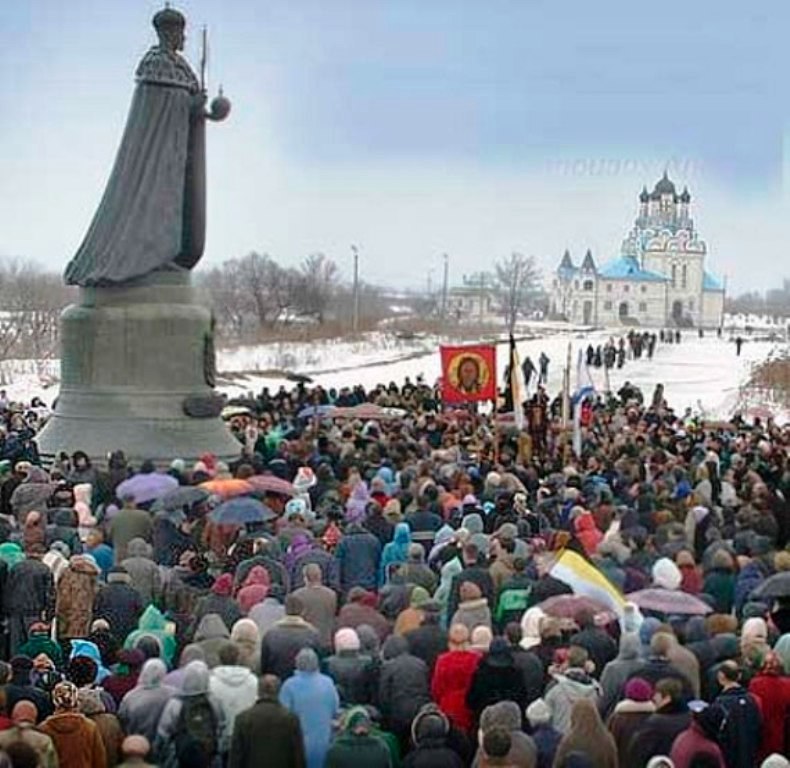
PHOTO: Klykov’s first monument to Nicholas II was consecrated 26th May 1996
in the former village of Taininskoye, situated 19 km northeast of Moscow

Like his father, Nicholas II preferred Russia’s old capital to that of Peter the Great’s new modern capital. According to French historian Marc Ferro: “Nicholas II preferred Moscow to St. Petersburg because the old city embodied the past, whereas St. Petersburg represented modernity, the Enlightenment and atheism.”

During his reign, Nicholas expressed the desire to spend Holy Week in the former Russian capital, and it was here, during the coronation festivities in 1896 and the Romanov Tercentennary in 1913, Moscow’s fervent greeting to their Tsar confirmed his feeling for the city.

Today, Moscow is home to at least a dozen monuments and busts to Russia’s last emperor and tsar. Among them are five large-scale monuments, including (1) the monument established in September 2016 at the Moscow State Transport University; (2) the monument established in October 2013 to Tsar Mikhail Feodorovich and Emperor Nicholas II in the Novospassky Monastery; (3) the monument established in 1998 on the grounds of the Church of the Royal Passion-Bearers in the Pleshcheevo estate (in Podolsk); and (4) the magnificent equestrian monument to Nicholas II, established on the grounds of the Ministry of Defense on the Frunze Embankment. In addition, are a number of bust-monuments established at various locations in and around Moscow.
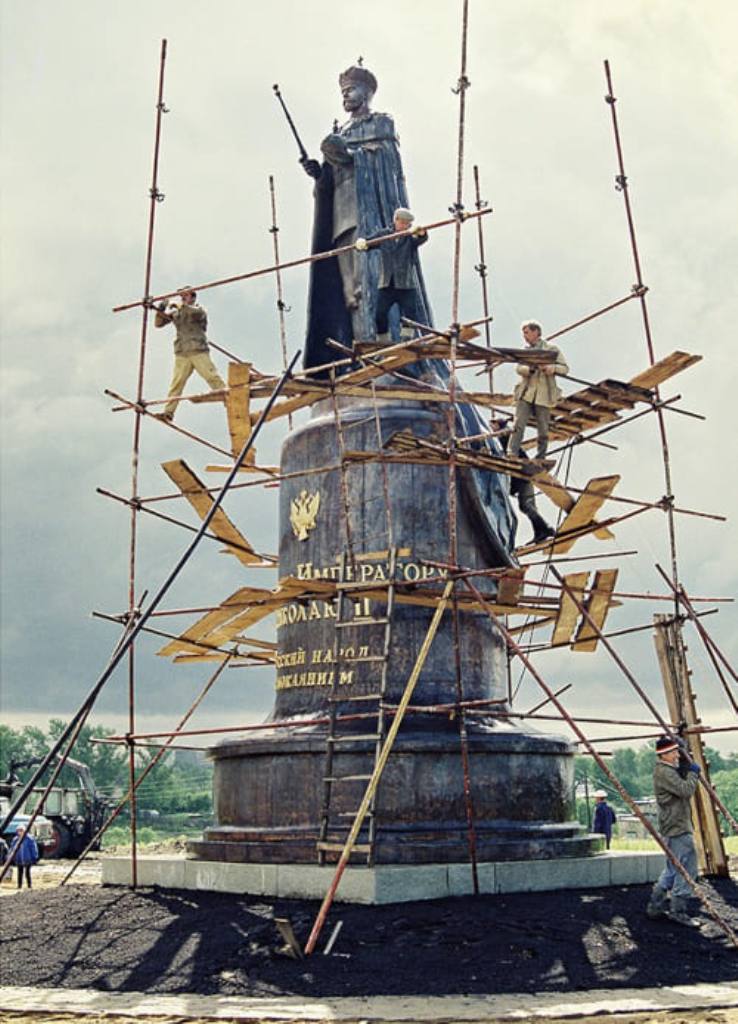
PHOTO: Klykov’s first monument to Nicholas II nearing completion in 1996

The finest and most impressive full-scale monument to Nicholas II has to be the one erected in the former village of Taininskoye [the village was incorporated in the Mytishchi district of the Moscow region in 1961], situated 19 km northeast of Moscow.

Like the fate of the Sovereign, the monument has a tragic history, having been the target of extremists in 1997. However, the monuments’ sculptor Vyacheslav Mikhailovich Klykov (1938-2006) replaced it in 2000.

According to the sculptor’s son Andrey Klykov, the monument was supposed to be erected on Borovitsky Hill in central Moscow. The project had the support of Yuri Luzhkov, who served as mayor at the time. Members of the city’s Communist party were outraged at the idea, so the project was pulled.

Klykov was offered another site in Mytishchi, near the site of a former royal traveling palace [built in 1749 for Empress Elizabeth Petrovna, it was destroyed by fire in 1823]. The site was situated near the 11th century Church of the Annunciation of the Holy Mother of God [built in 1675-1677]. As it turned out, due to the smaller number of approvals and red tape, the monument was easier to install on the church grounds, and had the support of the diocese.

PHOTO: the sculptor Vyacheslav Klykov stands in front of his monument
to Nicholas II, destroyed on 1st April 1997 by left-wing extremists

The opening of the monument was timed to coincide with the 100th anniversary of the coronation of the last Russian Tsar (held in Moscow on 26 May (O.S. 14 May) 1896.

On the morning of 1st April 1997, at 05:25 am, the monument was blown up by members of the left-wing extremist organization Revvoensovet [named after the Revolutionary Military Council of 1918]. Their reason, was their opposition to a proposal to remove Lenin’s corpse from the mausoleum in Red Square.

On 31st August 2006, The Moscow City Court found Igor Gubkin, a member of the Revvoensovet (RVS) extremist group, guilty of organizing and committing a number of explosions in Moscow, and sentenced to 19 years in prison.

After the explosion, Klykov, a staunch monarchist, donated his personal money from the fee he had been paid for the monument to General Zhukov [erected in Moscow in 1995]. When asked why, Klykov replied sternly: “If at one time the Russian people could not protect their tsar, now, believe me, we will do it!”

The monument that we see today in the village of Tayninskoye, was installed on 20th August 2000 on the site of the first monument. The erection of the second monument was timed to coincide with the canonization of the Tsar [the Moscow Patriarchate canonized Nicholas II on 20 August 2000].

Klykov forged his new monument from copper. The Emperor stands proudly, dressed in ermine robes, holding a sceptre and orb. The sculpture reflects the moment of his greatest triumph – his accession to the throne. The inscription on the monument read: “To the Emperor Nicholas II from the Russian people with repentance”.

The monument has become a popular place of pilgrimage for Russian monarchists and nationalists, who believe that only “repentance for the murder of Tsar Nicholas II will lead to the salvation of Holy Russia”

On 19th May 2018, members of the All-Russian public movement “National Idea of ​​Russia” and the Kuban Cossacks laid flowers at the monument to Emperor Nicholas II in the village of Taininskoye (Mytishchi). The event marked the 150th anniversary of the birth of Nicholas II, on 19th (O.S. 6th) May 1868, in the Alexander Palace at Tsarskoye Selo.

PHOTO: Klykov’s second monument to Nicholas II was cast
in bronze, it was opened on the same site in August 2000

Klykov was determined not to be threatened or bullied by thugs and radicals. Thanks to his efforts and determination, Orthodox Christians, monarchists and adherents to Russia’s last monarch, today have the opportunity to honour the memory of the Tsar, to offer flowers and prayers, but also to reflect on the life and reign of Russia’s much slandered Sovereign.
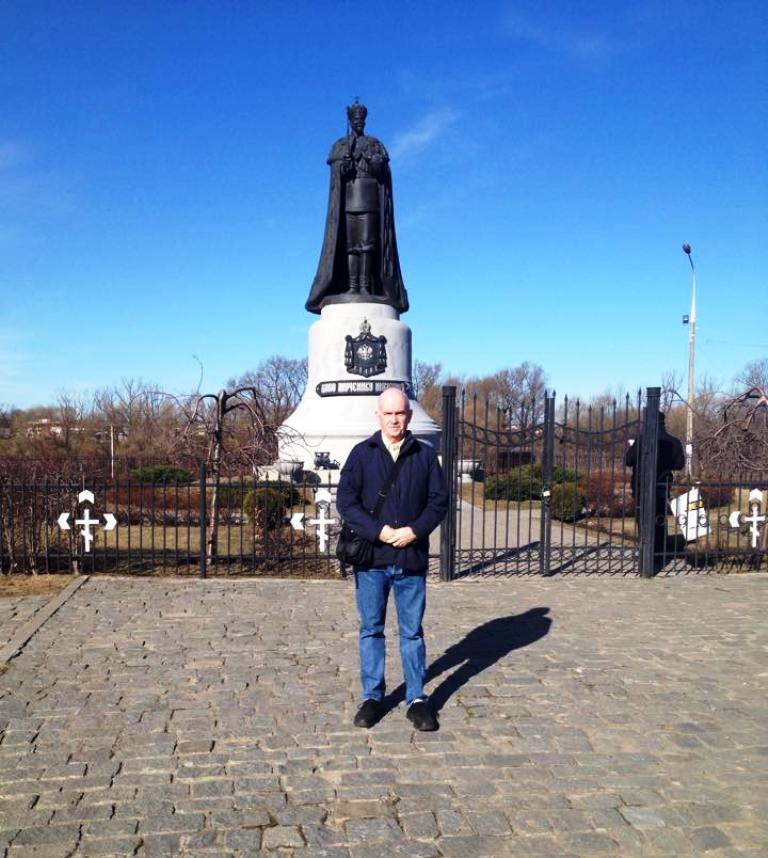
Nicholas II researcher Paul Gilbert at the monument to Nicholas II
at Taininskoye, during his visit to Moscow on 15th March 2015 

“To His Majesty Emperor Nicholas II, the Russian people with repentance”
Duration: 2 minutes with hauntingly beautiful music audio.
CLICK ON THE IMAGE ABOVE TO WATCH VIDEO

On 19th May 2018, members of the National Idea of Russia Movement and the Kuban Cossacks laid flowers at the monument to Nicholas II in the former village of Taininskoye (Mytishchi) near Moscow.

***
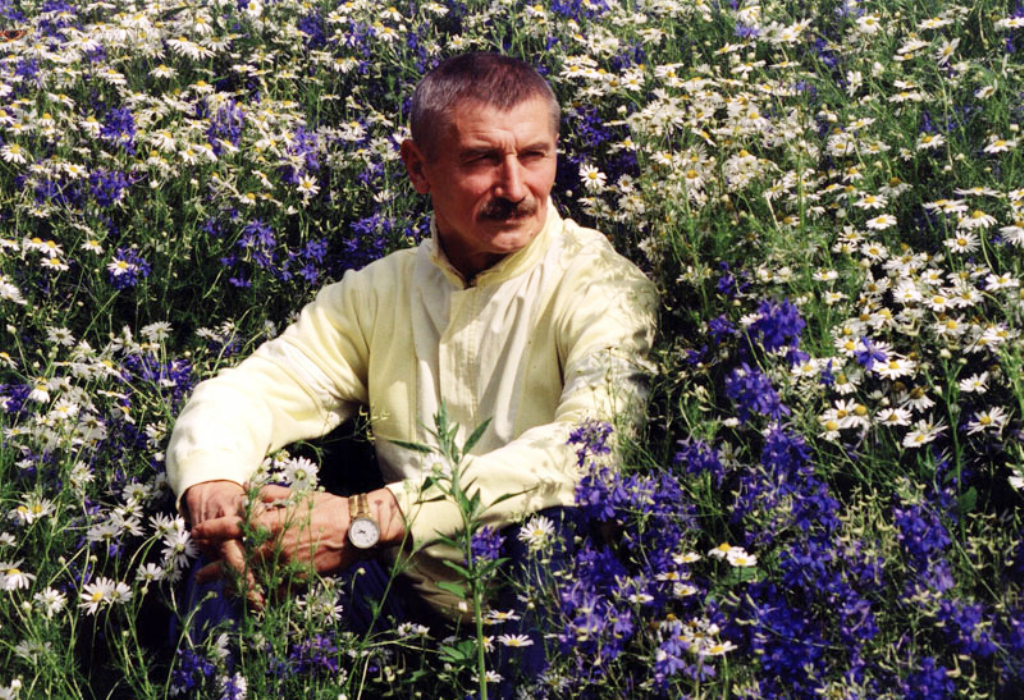
PHOTO: Vyacheslav Mikhailovich Klykov (1938-2006)

Vyacheslav Mikhailovich Klykov was born on 19th October 1939, in the village of Marmyzhi, Kursk Region.

In the second half of the 1980s, Klykov’s work focused on Orthodox-patriotic themes. During his life, he created more than two hundred monuments: memorial plaques and crosses. In addition, he created numerous works for other cities across Russia, but also in Ukraine, Greece and Italy.

One of his greatest works was a monument to St. Sergius of Radonezh, inspired by the painting by MV Nesterov “Vision to the youth Bartholomew”. The monument was installed on 29th May 1988, in the village of Gorodok (Radonezh) near the Trinity-Sergius Lavra. He also created a monument to Grand Duchess Elizabeth Feodorovna in the Martha-Mariinsky Convent in Moscow.

Vyacheslav Klykov died on 2nd June 2006 in Moscow. He was buried in his native village.

Memory Eternal! Вечная Память!

© Paul Gilbert. 13 April 2021
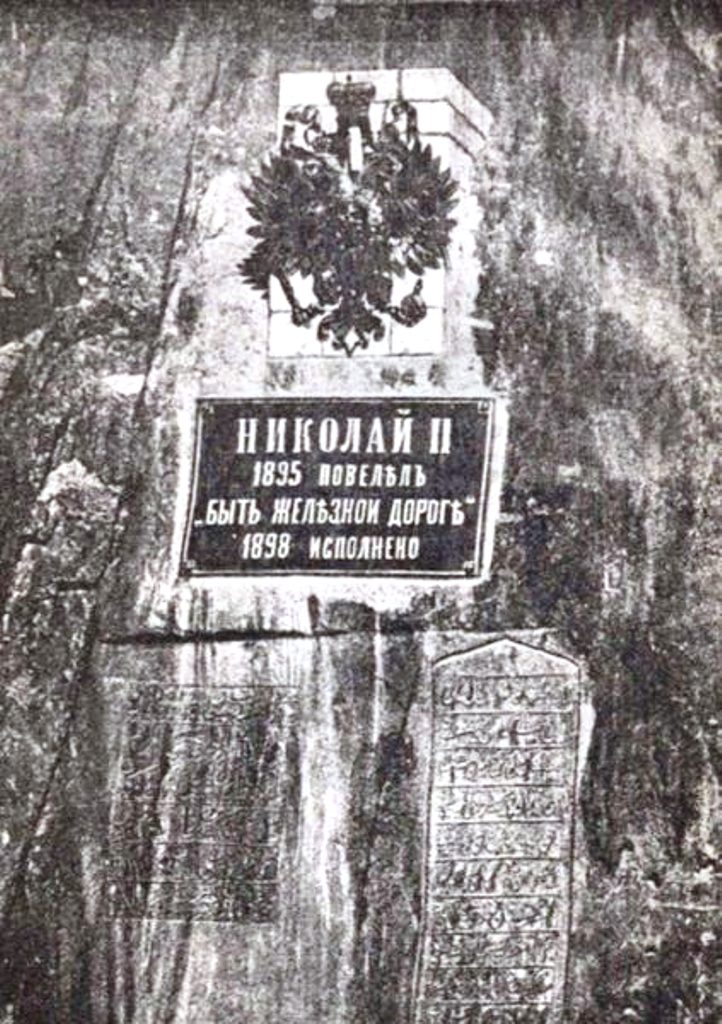
The fate of the gilded bronze plaque to Nicholas II at Tamerlane Gate

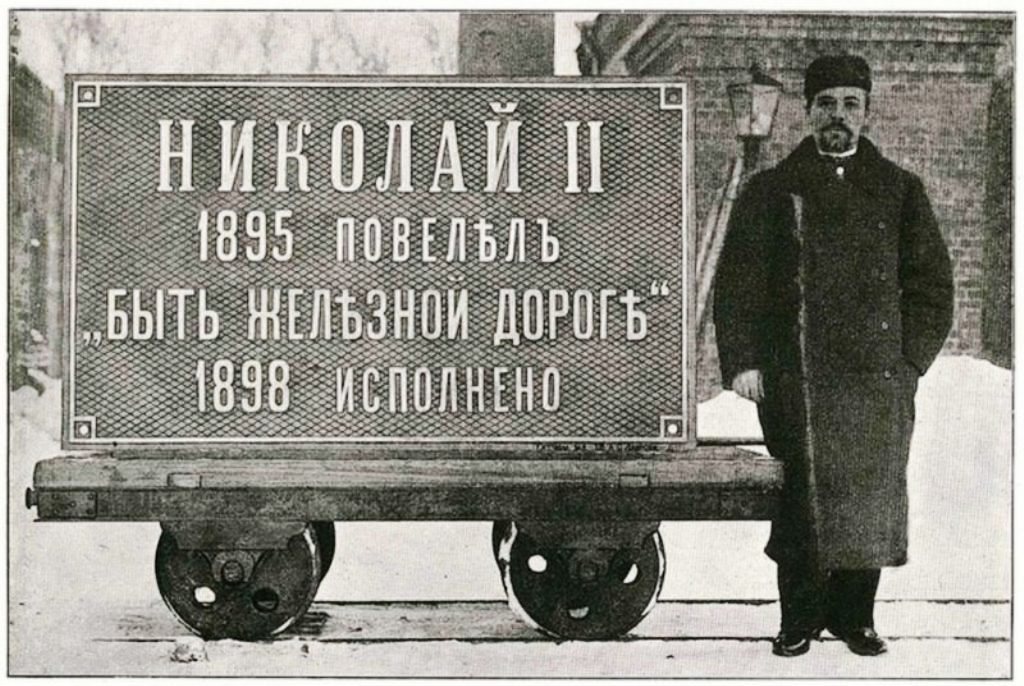
PHOTO: detail of the plaque to Nicholas II at Tamerlane Gate. 1898

The Trans-Caspian Railway follows the path of the Silk Road through much of western Central Asia. It was built by the Russian Empire during its expansion into Central Asia in the 19th century. Construction on the railway began in 1879, and originally served a military purpose of facilitating the Imperial Russian Army in actions against the local resistance to their rule.

The railway had a huge impact on the Russian economy, permitting a massive increase in the amount of cotton exported from the region. This increased from 873,092 pudy in 1888 to 3,588,025 in 1893. Also sugar, kerosene, wood, iron and construction material were imported into the area. These rising trade figures were used by Governor-General Nikolai Rozenbakh (1836-1901) to argue for the extension to Tashkent.

In 1895, Emperor Nicholas II issued an Imperial Decree, ordering that the line be extended to Tashkent and Margelan. Thus, the Tashkent Railway connecting the Tran-Caspian Military Railway with the network of other Russian and European railways was completed in 1906.

PHOTO: Alexander Ivanovich Ursati posing next to the plaque to Nicholas II. 1898

Alexander Ivanovich Ursati (1848 -1918) was appointed to the post of the head of the construction of the Samarkand-Andijan line. Ursati was a hereditary nobleman, a graduate of the St. Petersburg Institute of Railway Engineers, and outstanding engineer-tracker of pre-revolutionary Russia.

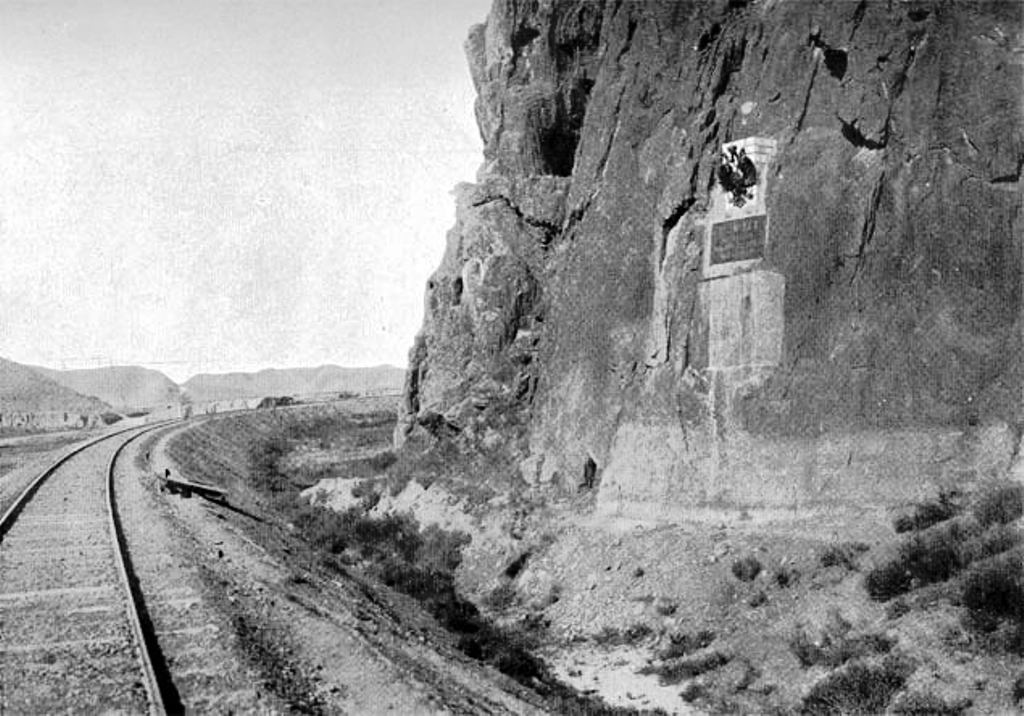
The new railway line passed along the ancient caravan route through the Nurata mountain range, along the narrow part of the Ilan-Uta gorge through the Jizzakh passage or through the so-called Tamerlane Gate.

PHOTO: plaque to Nicholas II at Tamerlane Gate. 1898

Upon completion of the construction of a highway which ran parralell to the railway track, Ursati ordered a commemorative bronze plaque and mounted with a double-headed eagle from one of the Ural factories. The inscription read: “Nicholas II in 1895 ordered construction of the railway. 1898 completed.” Both the text on the plaque and the double-headed eagle were gilded. It was installed on the steep northern slope of the Nurata rock, directly above two Arabic inscriptions carved into the rock: the first dates back to 1425, and the second to 1571.

In 1899, for the successful completion of the construction of the railway ahead of schedule, Ursati was promoted to acting state councilor. Thus, according to the Table of Ranks, he became a general.

In recognition of Alexander Ivanovich in Central Asia, one of the stations was named Ursat’evskaya (renamed Khavastsince in 1963, ). In 1899, Ursati left his mark in Tashkent, with the construction of one of the most beautiful churches of the city – the Church of the Annunciation, popularly called the Railway Church, on the station square of the city. Following the 1917 Revolution, the church was closed, and demolished in the 1920s.

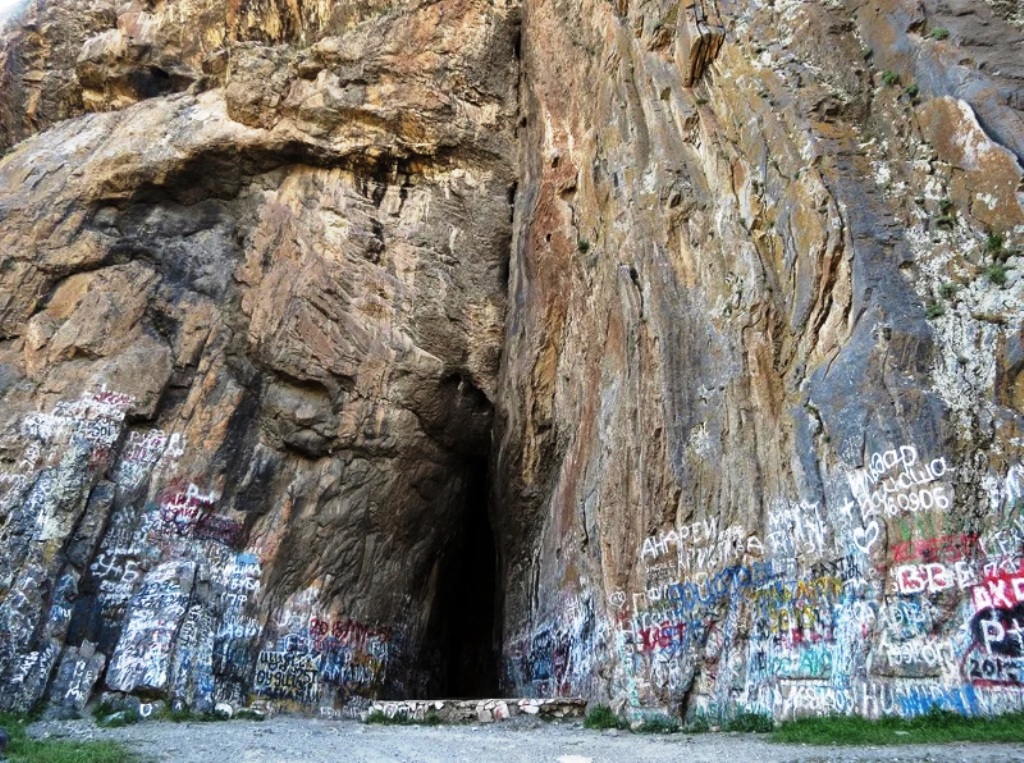
PHOTO: Tamerlane Gate as it looks today

While the two ancient Arabic inscriptions carved into the rock at Tamerlane Gate have survived to the present day, the bronze and gilded plaque to Nicholas II was destroyed by the Bolsheviks. The railway became one of the most important means of communication in the area, and the workers on the railway became key activists during the Russian revolution. Both railway and workers also played an important role in the Russian Civil War. Troops of the British Indian Army participated in some of the battles along the railway line. Tashkent was an important bastion for the Red Army.

Since the fall of the Soviet Union in 1991, vandals have repeatedly defaced the historic rock face at Tamerlane Gate with graffiti, including anti government slogans and profanity. Truly, a very sad example of the troubled times we live today.

© Paul Gilbert. 23 January 2021

New monument to Nicholas II opens in Murmansk Region

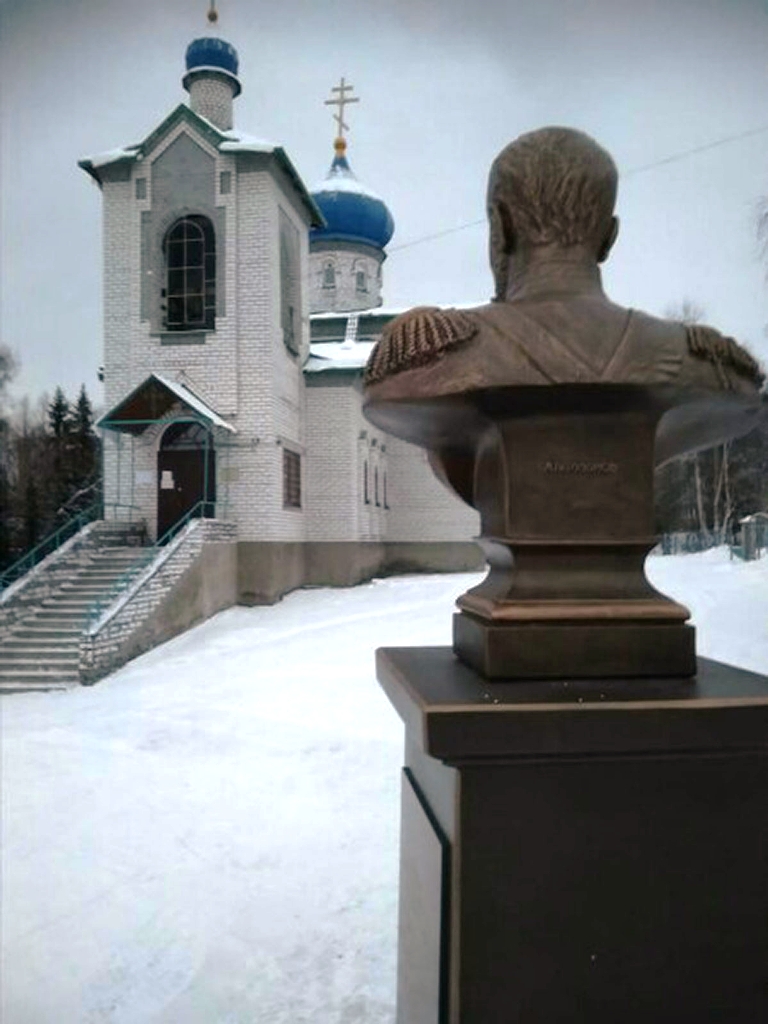
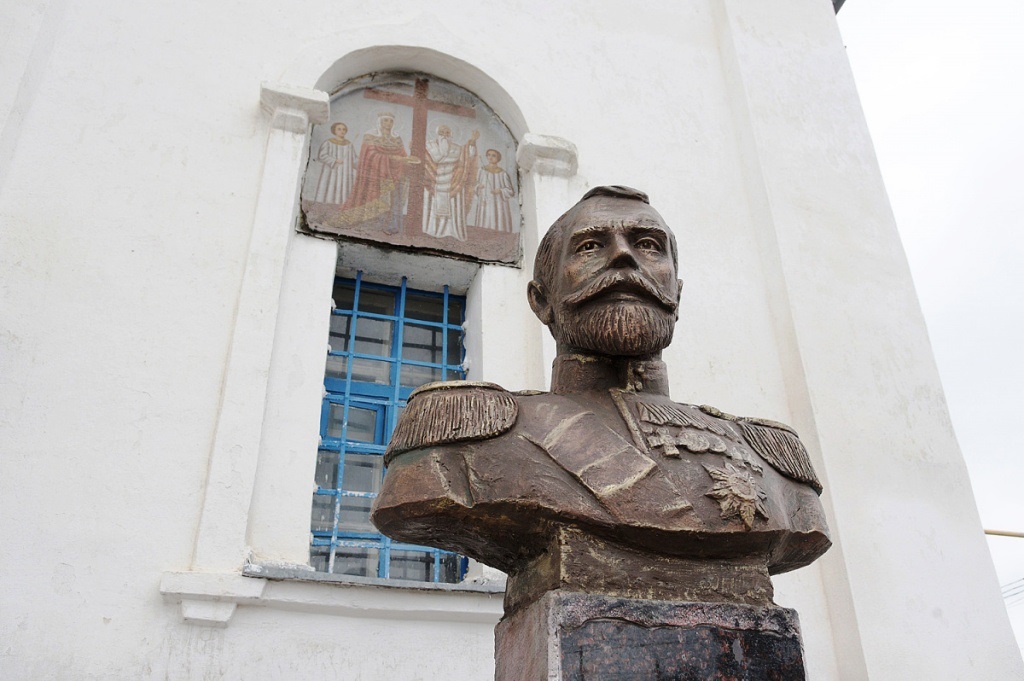
PHOTO: Monument to Nicholas II in the city of Kovdor, Murmansk Region

On 19th December 2020, a new monument-bust to Nicholas II was unveiled in the Murmansk region. The proposal to install the monument was approved only last week, after a vote by local residents with 512 participants in favour, and 38 against.

The bronze bust was established on the grounds of the Church of the Assumption of the Blessed Virgin Mary in the city of Kovdor, which is situated about 300 km south of Murmansk.

The bust weighs 300 kilograms, and the marble pedestal weighs about two tons, and is planned to be erected in early 2021.

The idea of ​​erecting the monument is that of members of the Tsar’s Cross Movement in June 2020. The local church parish raised the necessary funds for the pedestal, and the bronze bust itself was donated by the Alley of Russian Glory sculptural workshop situated in Kropotkin, Krasnodar Krai region.

The purpose of erecting the monument to the Tsar-Martyr is to emphasize the contribution of Nicholas II to the development of the Murmansk region in the early 20th century.

Nicholas II is the founder of the city of Romanov-on-Murman, which was renamed Murmansk by the Bolsheviks in April 1917. In June 2019, the local airport was renamed after the Emperor; and on 20th November 2020, a permanent photo exhibition dedicated to Nicholas II was opened in the terminal building of the airport.

PHOTO: Church of the Assumption of the Blessed Virgin Mary, Kovdor

***

Since the fall of the Soviet Union in 1991, more than 70 monuments, busts and memorials to Nicholas II have been established in more than 30 regions across Russia. Click HERE to review more than 30 of them in my Nicholas II Monuments category

© Paul Gilbert. 21 December 2020

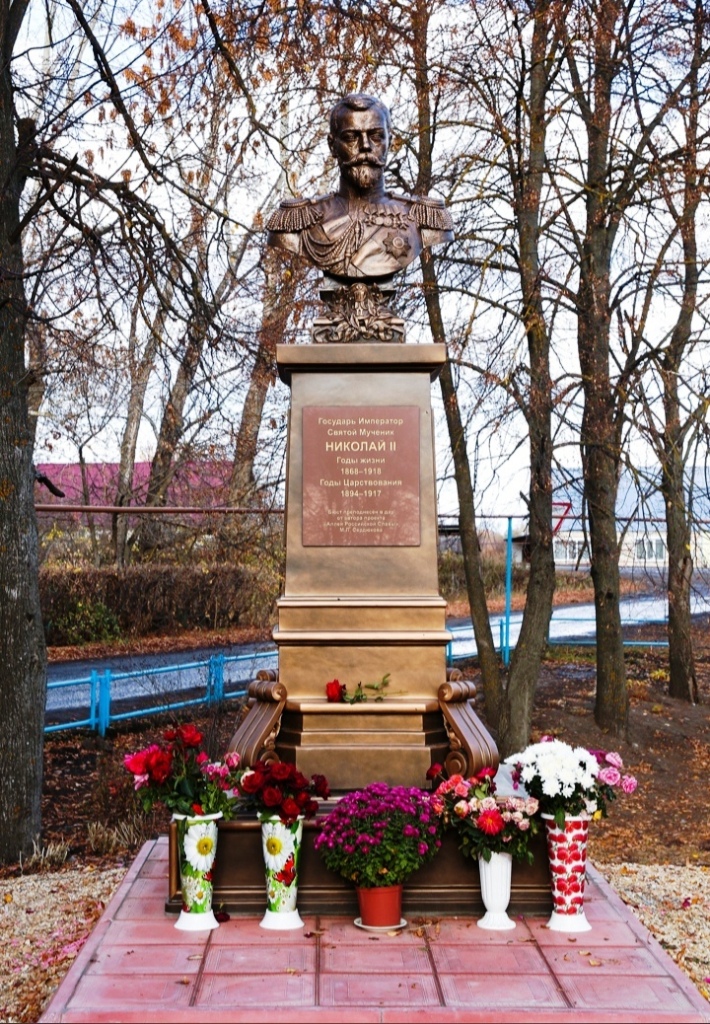
New monument to Nicholas II opens in Penza Region

On 15th October, a new monument-bust to Nicholas II was unveiled and consecrated in the Penza region.

The monument was installed on the grounds of the Church of the “Quick to Hearken” Icon of the Mother of God in the Russian village of Proletarsky Zemetchinsky.

“The money for the monument to the Tsar-Martyr was collected in the form of donations from all over Russia” said Anatoly Tashkin-Bury, one of the two initiators of the project.

According to him, the initiative received the blessing of the hierarchy of the Penza diocese. The unveiling and consecration ceremony of the monument was attended by more than 100 people.

Tashkin-Bury added that the event was also attended by a small group of local Communists, carrying posters with provocative slogans such as “Bloody Nicholas”.

© Paul Gilbert. 10 November 2020

Monument to the meeting of Nicholas II and Alexandra Feodorovna in Russia unveiled in Crimea

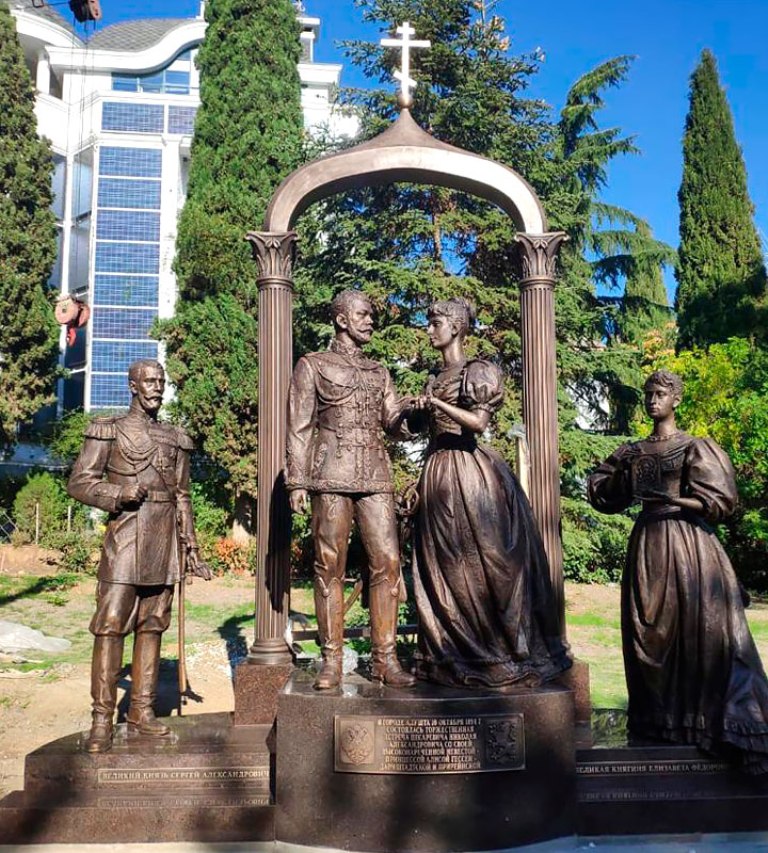
PHOTO: Grand Duke Sergei Alexandrovich, Tsesarevich Nicholas Alexandrovich,
Grand Duchess Elizabeth Feodorovna and Princess Alix of Hesse-Darmstadt and Rhine

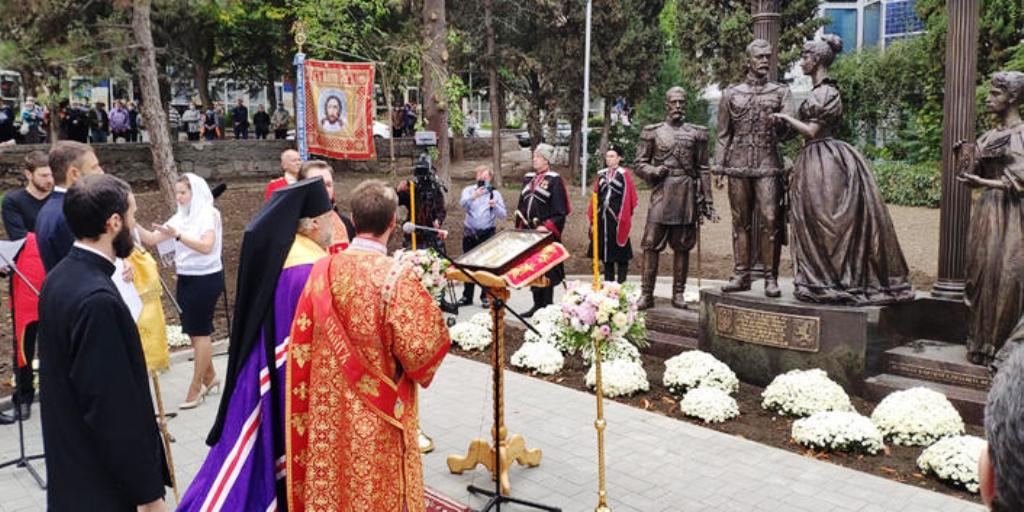
On 30th October 2020, a monument dedicated to the meeting of Tsesarevich Nicholas Alexandrovich (future Emperor Nicholas II) and his future bride Princess Alix of Hesse-Darmstadt and Rhine (future Empress Alexandra Feodorovna) – the latter’s first visit to Russia following the couple’s engagement and just prior to the death of Emperor Alexander III – was unveiled and consecrated in the courtyard of the Central Library in the Crimean city of Alushta, .

Sculptors Irina Makarova and her husband Maxim Bataev, began work on the monument in February. Together, they created a composition consisting of four bronze sculptures. each a little over two meters high, a granite pedestal and an arch.

The funds for the monument were allocated by the St. Basil the Great Charitable Foundation and the Double-Headed Eagle Society for the Development of Russian Historical Education.

“Our composition was not easy. The arch unites two loving hearts – Nicholas and Alix, and is also crowned with an Orthodox cross,” said the sculptor Irina Makarova. – “In addition, there are other persons – Nicholas’ uncle Grand Duke Sergei Alexandrovich, and his wife, the sister of the bride, Grand Duchess Elizabeth Feodorovna, who helped unite the two loving hearts. They were all together in Alushta on that day in 1894.”

PHOTO: The consecration of the monument to Nicholas and Alexandra in Alushta

“We decided to portray Nicholas Alexandrovich in a Hussar uniform – it was in this outfit that he got married,” added Irina Makarova. “In her hands Elizabeth Feodorovna is depicted holding a small icon of the Saviour as the personification of spirituality. After all, she supported her sister when Alix doubted whether to change her faith The arch is also a symbol of Orthodoxy and Holy Russia.”

“My husband and I worked together on every detail,” – said Irina Makarova. – “We argued for a long time over the likeness of the future Emperor. We took the advice of Konstantin Valerievich, slightly changing the shape of the eyes and nose so that Nicholas II would become recognizable in his youth. After that we managed to achieve maximum realism.”

According to local residents, this monument will immortalize not only the meeting of two loving hearts, but also their loyalty for one another.

“I kiss and caress you endlessly, I want to show you all the power of my love for you,” wrote Alexandra Feodorovna to her husband. “Always yours to death and beyond …”

Click HERE to read 3 additional articles (with photos) about the Monument to Nicholas and Alexandra in Alushta

© Paul Gilbert. 30 October 2020

Bust of Nicholas II established in Kalach

0305a

Bust monument to Emperor Nicholas II by local sculptor Viktor Grishchenko

On Saturday, 29th August, 2020, a new bust monument to Emperor Nicholas II was unveiled and consecrated on the grounds of the Church of the Ascension of the Lord in the town of Kalach, Voronezh region. According to local historian Pavel Popov, this is the only monument to the emperor in the region.

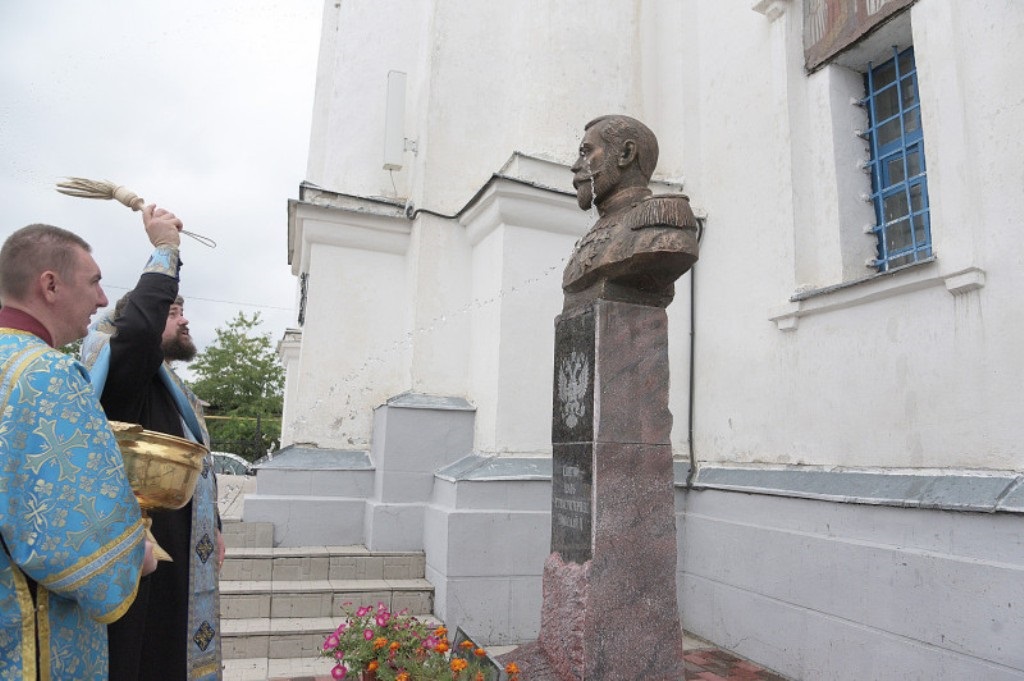
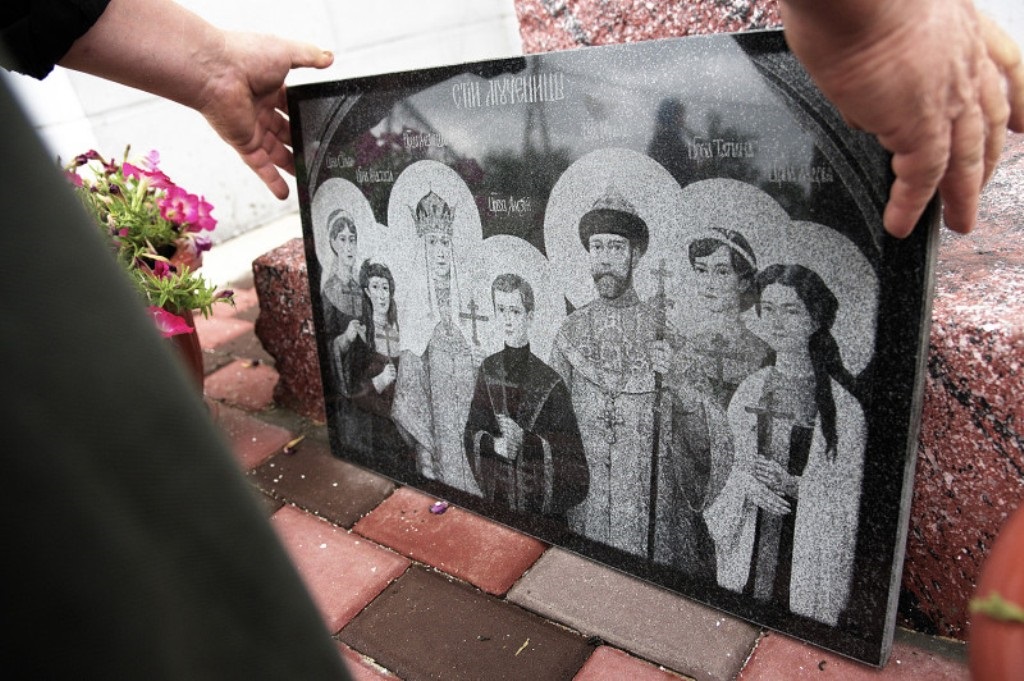
In addition to the monument made by local sculptor Viktor Grishchenko, a granite icon depicting the Holy Royal Martyrs was also consecrated, to be mounted on the monument at a later date.

0305b

Archpriest Evgeniy Bey consecrates the bust monument to Emperor Nicholas II

0305c

Granite icon depicting the Holy Royal Martyrs 

© Paul Gilbert. 2 September 2020

Fundraising for equestrian monument to Tsar-Martyr Nicholas II

0295

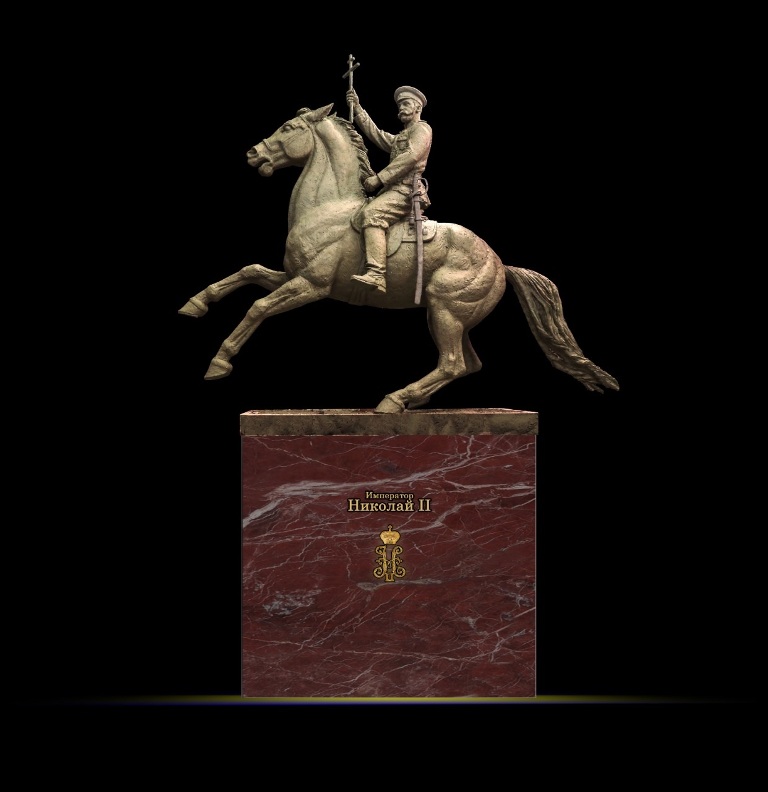
The installation of Russia’s second equestrian monument to Nicholas II has been delayed due to lack of funds.

The amount of 2.3 million rubles ($31,000 USD) has already been collected, however, a further 2.7 million rubles ($37,000 USD) is still needed. The equestrian monument to Tsar-Martyr Nicholas II has already been cast and is located at the plant in Zhukovsky.

The following video shows Russian sculptor Irina Makarova making final preparations on her equestrian monument of Nicholas II – 15th July 2020

The monument was planned to have been installed on 17th July on the grounds of the Church of the Holy Martyr Michael (Gusev), in Kulebaki, Nizhny Novgorod Region.

Click on the following links to read Nicholas II Equestrian Monument Planned for the Russian city of Kulebaki and UPDATE: Nicholas II Equestrian Monument in Kulebaki

© Paul Gilbert. 9 August 2020

Monument to the Imperial Family installed in Tyumen

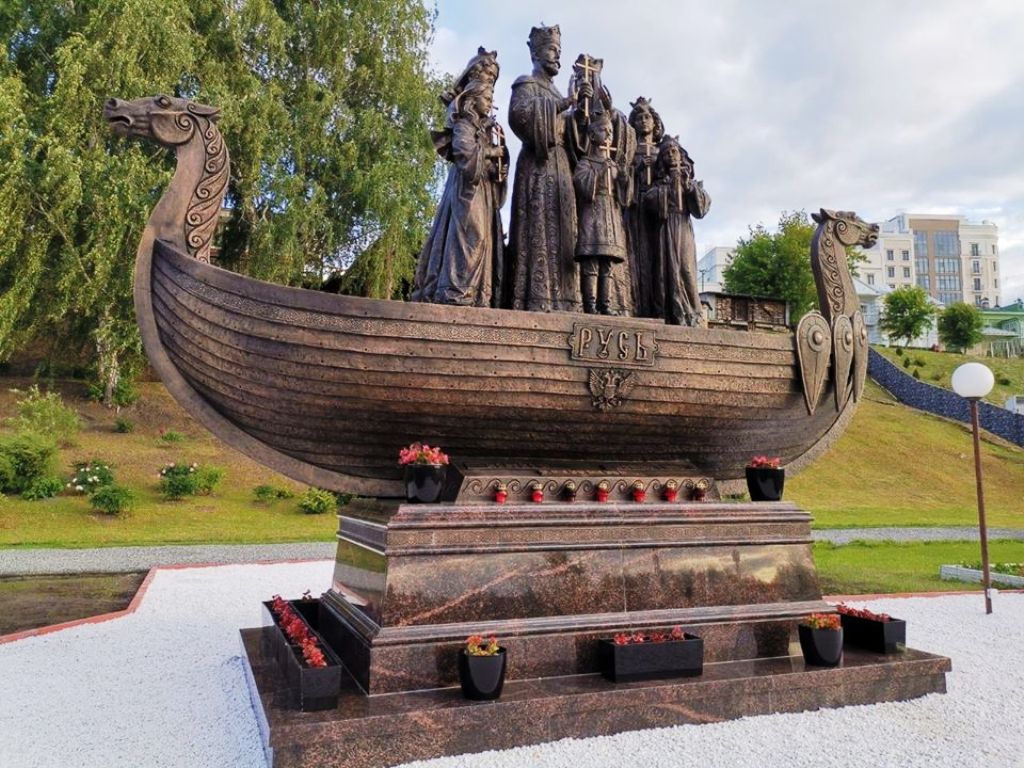
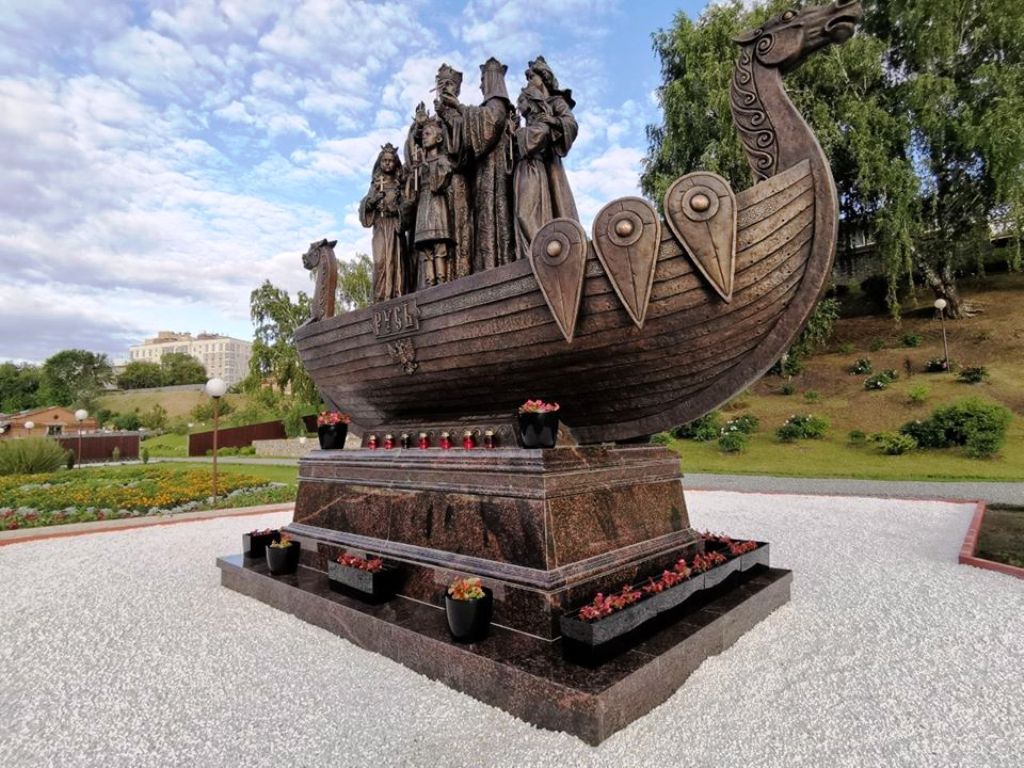
A new monument to the Holy Royal Martyrs was installed last month in the Siberian city of Tyumen. The monument depicting Emperor Nicholas II and his family was erected in the garden of the Mother of God-Nativity Convent, which is under the administration of the Tobolsk Diocese. The sculptor Irina Makarova posted a video (above) on YouTube on 31st May, which captures the process of production and installation of the monument. She noted that the Tobolsk Diocese had requested the order. The monument was made last summer in the town of Zhukovsky near Moscow.

“We took as a basis an existing monument to the Tsar’s family which was established in 2017 at the Holy Trinity-Saint Seraphim-Diveyevo Monastery. On the initiative of the head of the Tobolsk Diocese Vladyka Demetrius, an old Russian boat was added to the monument – this is a symbol of Tyumen. Inscribed on the side of the boat is “Русь“ (Rus) This is no coincidence as Nicholas II and his family were taken from Tyumen to Tobolsk  on the steamboat Rus,” said the sculptor.

0270a

0270b

According to Makarova, the monument was planned to be erected in Tobolsk, where the Romanov family were held under house arrest from August 1917 to April 1918, however “the locals were against it.” Therefore, they decided to install the monument on the grounds of the monastery, next to the former Tura railway station, where the Imperial family arrived by train from Tsarskoye Selo. The Tsar’s Pier Museum now stands next to the place from where the Imperial family were sent into exile to Tobolsk

She added that they had planned to open the monument on 8th June of this year, but because of the coronavirus pandemic, the official opening and consecration has been postponed indefinitely. The monastery notes the possibility of opening on 17th July, the day marking the death and martyrdom of Nicholas II and his familyy.

In August 1917, two trains arrived at the Tura station in Tyumen, carrying Nicholas II, his family, servants and other retainers, all of which were accompanied by Red Army soldiers. Here the last Russian emperor made a stop on his way into exile. The Imperial family did not spend long in the city, and on the morning of 5th August they set off on the steamer Rus to Tobolsk, where they lived under house arrest until April 1918. It was then that they were moved to the Ural city of Ekaterinburg. Nicholas II along with his family and four faithful retainers were shot on the night of 16/17 July 1918 in the Ipatiev House in Ekaterinburg.

© Paul Gilbert. 10 June 2020

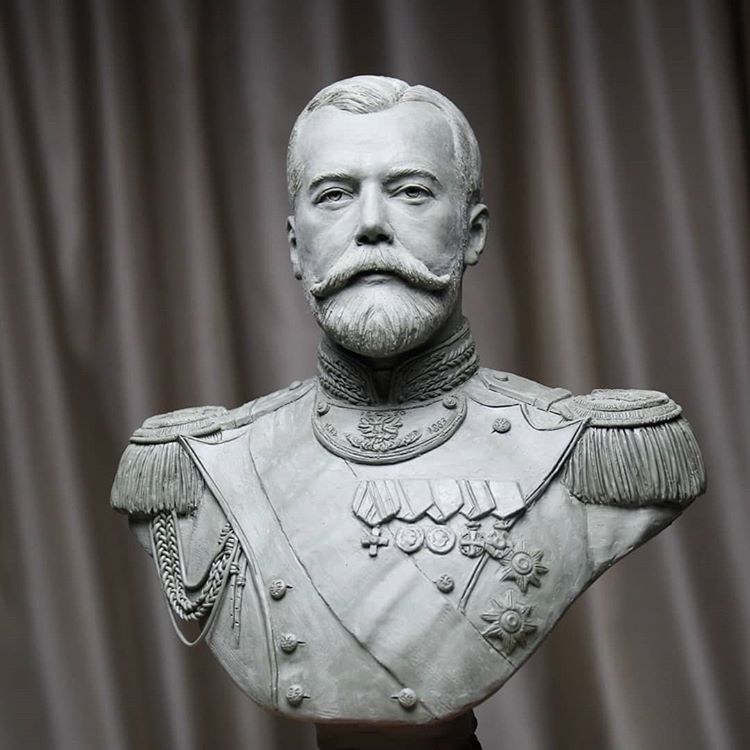
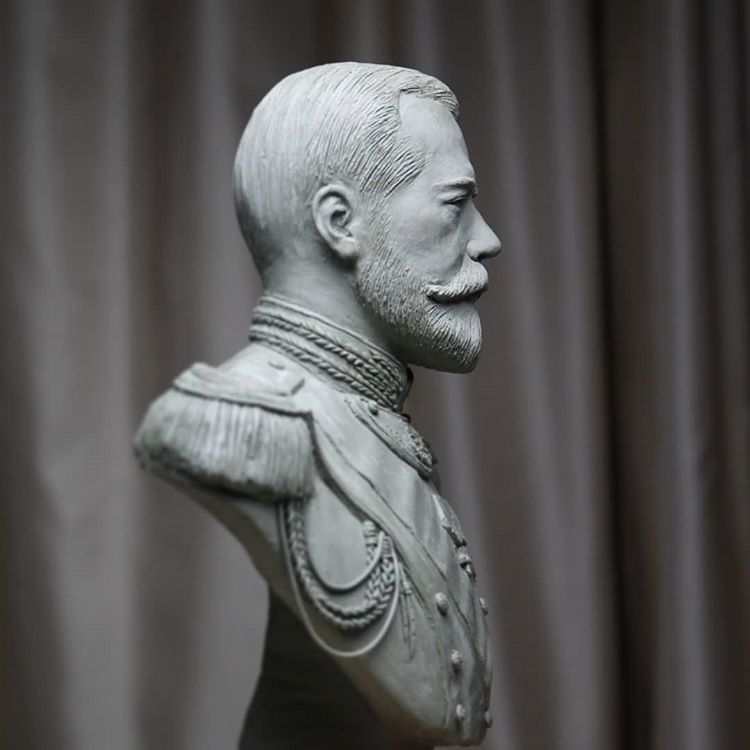
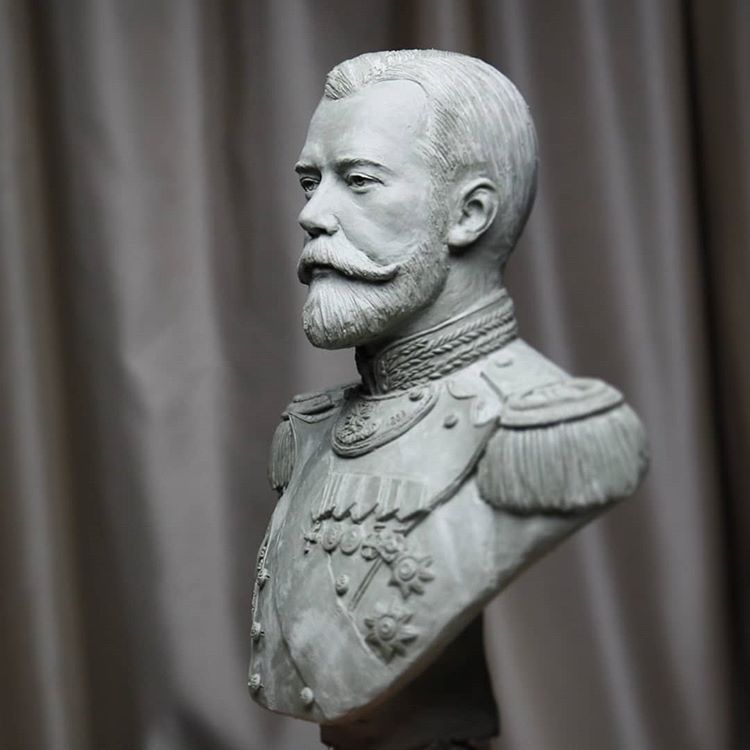
Moscow Sculptor Captures Last Tsar’s Likeness in New Bust

n2b

Photo © Victoria Alexandrovna Tishchenko

This bust of Emperor Nicholas II, by contemporary Russian sculptor Victoria Alexandrovna Tishchenko, has truly captured the tsar’s likeness.

Photo © Victoria Alexandrovna Tishchenko

Born on 26 May 1986 in Moscow, Tishchenko graduated from the Institute of Management and Fashion Industry of MGUTU with a degree in economics and enterprise management. In 2012 she graduated from the Ilya Glazunov Russian Academy of Painting, Sculpture and Architecture, specializing in art and sculpture. In 2015, she graduated from the graduate school of RAZHViZ majoring in art history. She is Member of the Moscow Union of Artists and the Moscow Association of Sculptors.

n2c

Photo © Victoria Alexandrovna Tishchenko

n2d

Photo © Victoria Alexandrovna Tishchenko

Her other works include a bust of General Count Fyodor Arturovich Keller (1857-1918), one of only two Tsarist generals, who remained loyal to the Russian Orthodox emperor and refused to swear allegiance to the Provisional Government.

© Paul Gilbert. 18 May 2020

UPDATE: Nicholas II Equestrian Monument in Kulebaki

247c

Photo © Irina Makarova

On 13th December 2019, I published an article Nicholas II Equestrian Monument Planned for the Russian city of Kulebaki (with photos) of a truly splended equestrian monument of Nicholas II by the sculptor Irina Makarova, which is to be installed in the Russian city of Kulebaki in July of this year.

I am pleased to share the following three videos by Max Bataev, which depict the process of creating this impressive equestrian of Russia’s last emperor and tsar:

***

247a

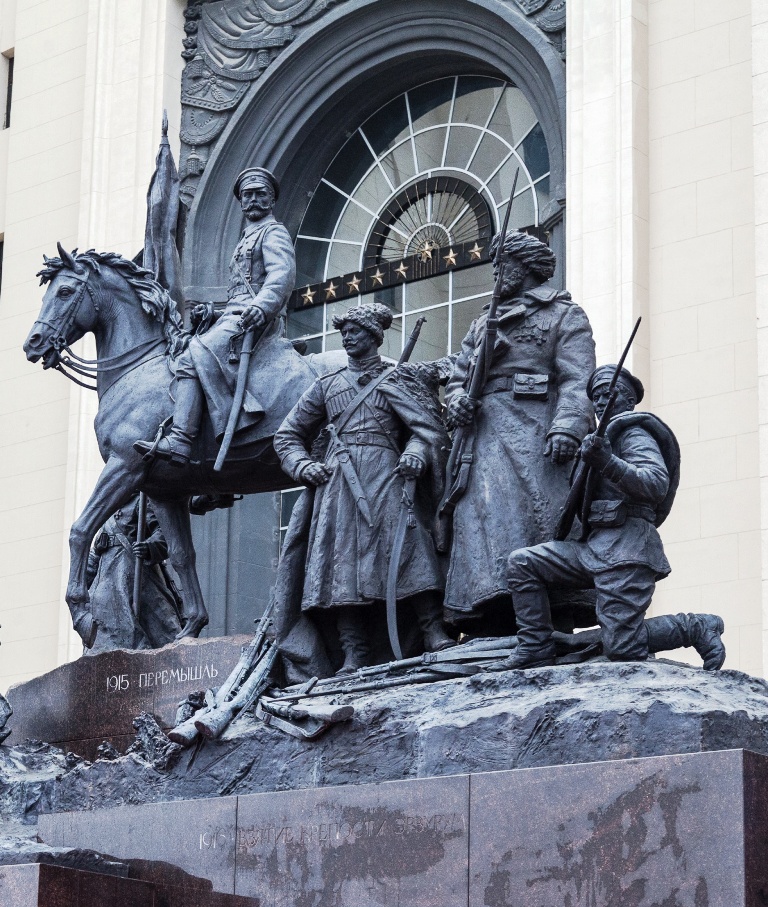
Equestrian of Nicholas II dominates the Monument to the Heroes of World War One in Moscow

Note: the Russian media refer to this monument as the first equestrian monument of Nicholas II to be established in Russia. The Kulebaki monument will be the second equestrian monument to Nicholas II in Russia, the first was established in Moscow.

247b

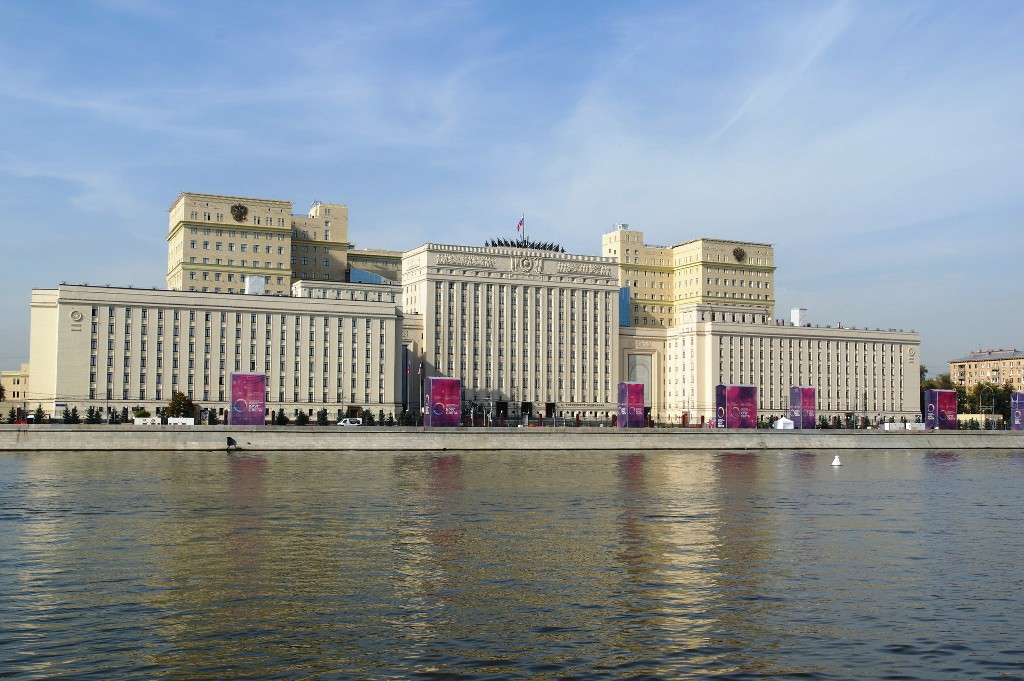
Ministry of Defense on the Frunze Embankment in Moscow

On 16 December 2014, Russia’s Defense Minister Sergei Shoigu opened a sculptural composition dedicated to the heroes of World Wars I and II on the grounds of the Ministry of Defense on the Frunze Embankment in Moscow. The WWI monument features Nicholas II on horseback, recognizing and honouring his efforts during the Great War.

© Paul Gilbert. 4 April 2020