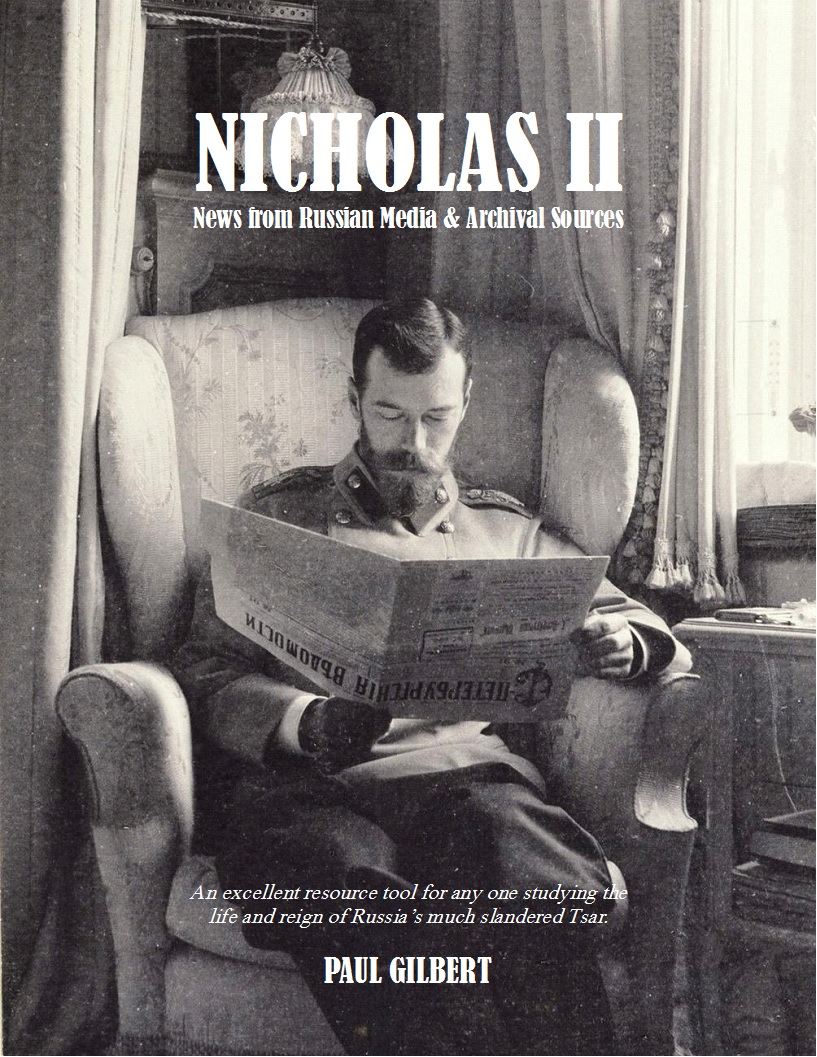
Nicholas II: News from Russian Media & Archival Sources

*This title is available from AMAZON in the USA, UK, Canada, Australia,
France, Germany, Spain, Italy, Netherlands, Poland, Sweden and Japan

CLICK HERE TO ORDER THE PAPERBACK EDITION @ $20.00 USD

English. Large 8-1/2″ x 11″ format, 256 pages, 300+ black & white photos

In this book, you will find more than 130 articles and news stories about exhibitions, new monuments, portraits, polls on Nicholas II’s popularity in post-Soviet Russia, updates on the restoration of the Alexander Palace, events marking the 150th anniversary of the birth of Nicholas II and the 100th anniversary of his death and martyrdom, the Russian Orthodox Church and the Ekaterinburg remains and much more.

These articles and news stories were originally published in Sovereign (2015-2020) and Royal Russia (2011-2020). Both of these periodicals are no longer published, the back issues out of print, therefore, I am pleased to offer these important materials in one concise volume. They are complemented with more than 300 black and white photographs, many of which have never been published in any Western newspaper, magazine or book. Each article has been sourced from Russian media and archival sources, and translated into English.

While this collection of articles and news stories, may not appeal to every one, it will prove a valuable research tool for those studying the life and reign of Nicholas II, particularly as he is perceived in modern-day Russia.

Paul Gilbert’s Romanov Bookshop on AMAZON

I have published more than 30 titles to date through AMAZON – featuring one of the largest selections of books on Nicholas II, the Romanov dynasty and the history of Imperial Russia. These include both new titles and reprints of titles which have out of print for years.

Please CLICK on the BANNER or LINK above to review my current selection of titles in hardcover, paperback and ebook editions. Listings provide a full description for each title, pricing and a Look inside feature.

© Paul Gilbert. 7 November 2022

© Paul Gilbert. 2 December 2022

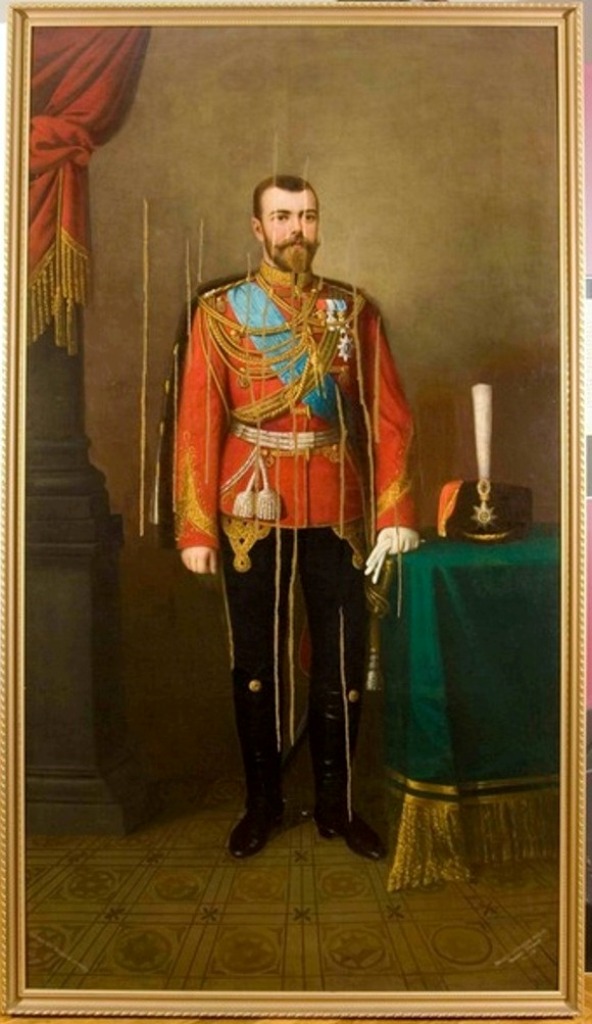
Portrait of Nicholas II still bears the cuts made by Bolshevik bayonets in 1917

PHOTO: the portrait of Emperor Nicholas II, painted by Nun Emeliana (Batalov), still bears the cuts made by Bolshevik bayonets in 1917

During his reign, Emperor Nicholas II never visited the Novo-Tikhvinsky Convent in Ekaterinburg, however, when a request was made by one of the nuns to paint his portrait came, the Emperor granted this favour. It was Nun Emeliana (Batalov), who painted the portrait of the Emperor wearing the uniform of the Life-Guards Hussar Regiment. The portrait – a gift marking the 1896 coronation – was sent to Moscow, where it was presented to the new Emperor at a reception held in the Grand Kremlin Palace. Nicholas was so pleased with the portrait, that he ordered that it be sent to St Petersburg, where it was to be hung in one of the rooms of his private apartments in the Winter Palace.

In October 1917, during the assault on the Winter Palace, the portrait was cut by the bayonets of Bolshevik thugs. For the next 12 years, the portrait sat gathering dust in the attic of the Winter Palace, until it was transferred to Museum of the October Revolution in Leningrad. During the Soviet years, the portrait hung in the museum or more than 70 years. After the fall of the Soviet Union in 1991, the portrait was restored, leaving, however, the cuts made by the bayonets as a poignant reminder of the dark days of the Bolshevik Revolution which swept Russia and the monarchy into an abyss.

Today, the portrait hangs in the Museum of Political History of Russia (located in the former mansion of Mathilde Kschessinska) in St. Petersburg.

© Paul Gilbert. 29 November 2022

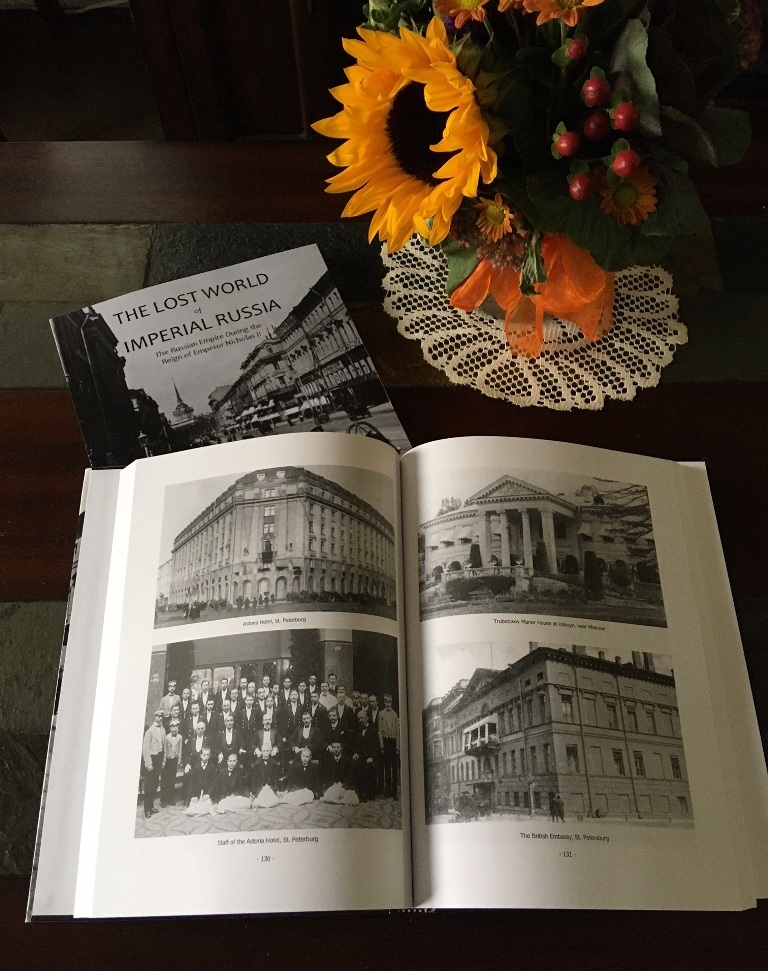
BOOK REVIEW: ‘The Lost World of Imperial Russia’

Book review by Mikhail Smirnov, published on Russian Faith

A Great Book for those Interested in Orthodox Culture

I had the opportunity to review the new book, The Lost World of Imperial Russia, by Russian historian, Paul Gilbert. This book is available at Amazon for a decent price and I do recommend it for your Orthodox library. There are indeed a number of illustrated books on Russia, but this one is from a purely Orthodox perspective, that captures key elements of the Orthodox empire of Russia. Saints such as John of Kronstadt, and many others, are displayed in the book. Many churches and ecclesial events are also displayed…pictures that are very hard to find and very helpful for those who research Russia and plan on visiting Russia. I intend to bring this book the next time I visit, primarily because, again, it is most purely Orthodox.

It’s certainly a good coffee table book, but the more I look at it the more I see it as a travel book. It’s approximately 8.5×11, so it’s not too big, and not very heavy. Most importantly it has the right stuff in it for those who really want to experience Russia in the way we believe it should be experienced.

On that note of experiencing Russia, I would like to add that what Paul reveals here is foundational for Orthodox Christians or those seeking Orthodoxy, but from my experience, the more miraculous experiences happen from how you “live and leave” these areas. Many of these places are holy sites, where saints dwelled and worked, and where angels still dwell and work. So, locating the right place, as you can find in this book, and then praying and maybe even spending time at these places will enable you to experience the grace of God when you need it in everyday life.

Get the book, not necessarily to see nice pics, but to begin your journey to Holy Russia. The war will clear soon and it will be relatively easy to travel there. Open the book, pray to God, and then go!

© Mikhail Smirnov. 16 November 2022

Serbian monastery installs memorial plaque to Nicholas II

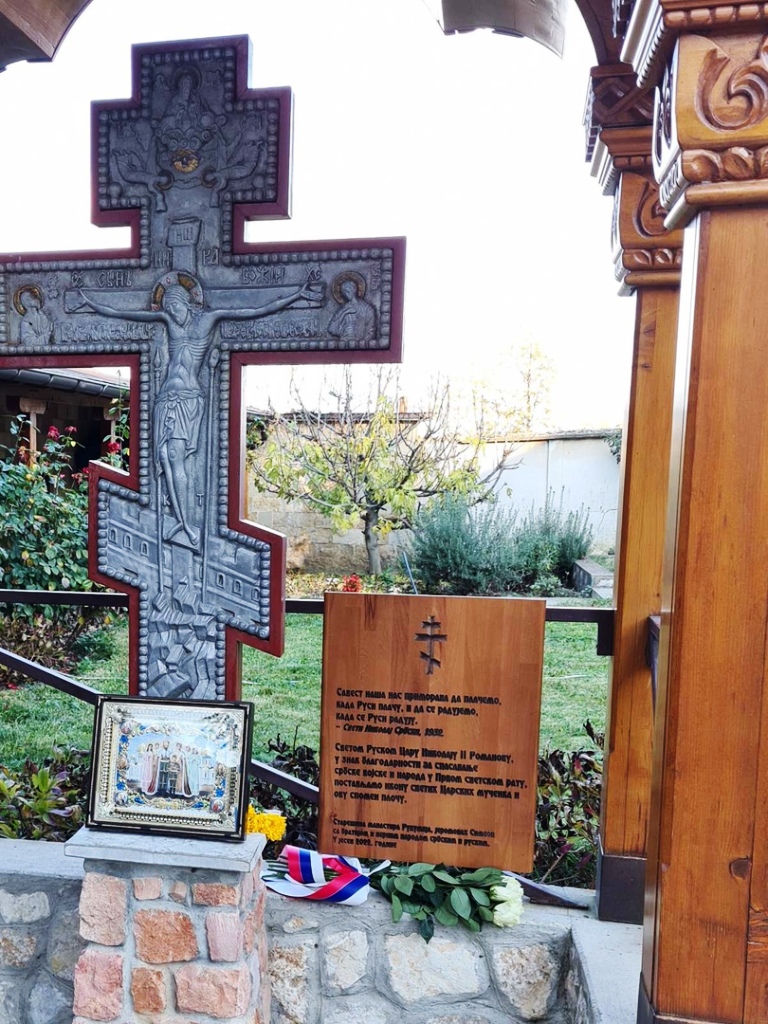
PHOTO: plaque to Emperor Nicholas II and an icon of the Holy Royal Martyrs was unveiled and consecrated on the grounds of the Rukumija Monastery

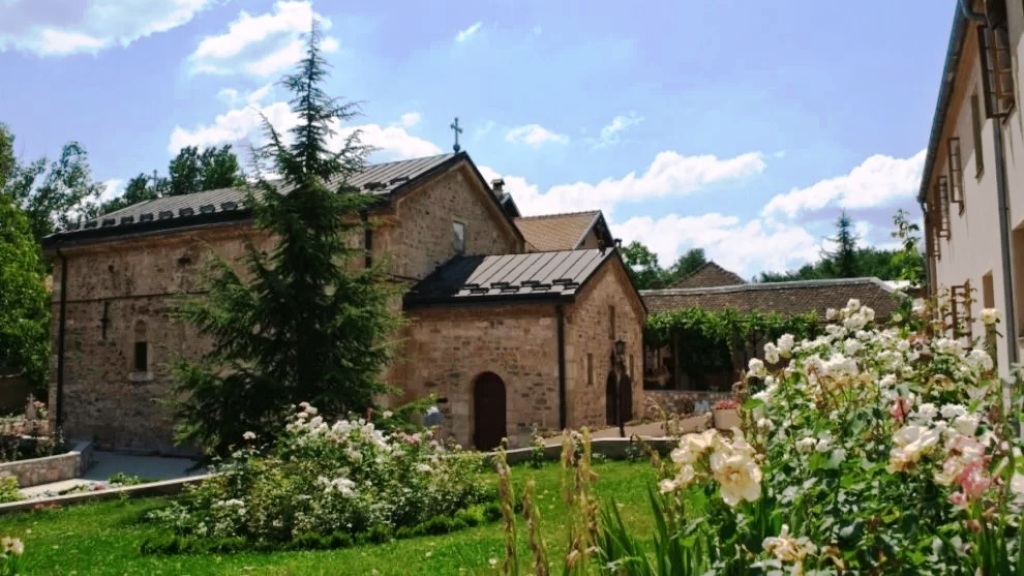
On 12th November, a simple wooden plaque to Emperor Nicholas II and an icon of the Holy Royal Martyrs was unveiled and consecrated on the grounds of the Rukumija Monastery, near the town of Pozharevac in Serbia. The installation of the plaque is in gratitude for the Russian Emperor’s efforts to come to the aid of Serbia during the First World War.

The ceremony began with the singing of the Russian and Serbian national anthems, then the choir performed the “Song to the Holy Tsar Nicholas“. This was followed by the consecration ceremony performed by the rector of the monastery Heiromonk Simeon, in the presence of parishioners and distinguished guests from the Russian Embassy in Belgrade (Vladlen Zelenin), the Russian House in Belgrade (Georgy Engelgart) and the Foundation for the Unity of Orthodox Peoples (Natalya Kotseva).

Zelenin thanked the Serbian people for honouring the memory of Tsar Nicholas II. In turn, Engelhardt noted that the gratitude and love of the Serbian people for the last Russian Tsar could serve as an example for the Russian people themselves.

PHOTO: the Rukumija Monastery, near the town of Pozharevac in Serbia

For Serbians, Emperor Nicholas II is revered both as a saint and as a statesman. For many Serbs, the image of the Russian Tsar is a symbol of loyalty, honesty and devotion to one’s word. The Serbian people remember that it was for the sake of saving Serbia that Nicholas II entered the First World War.

For more information on Serbia’s reverance for Emperor Nicholas II, please refer to the following articles, researched from Russian and Serbian sources by Paul Gilbert:

Nicholas II through Serbian eyes, published on 13th October 2020

“For us Serbs, Nicholas II will be the greatest and most revered of all saints”, published on 11th August 2022

“I consider Nicholas II a great reformer” – Serbian Ambassador to Russia, published on 13th May 2019

New outdoor portrait of Nicholas II appear’s in Serbia’s capital, published on 2nd January 2020

Icon of Tsar-Martyr Nicholas II from Serbia arrives in St. Petersburg, published on 14th May 2021

The Russian House of Emperor Nicholas II in Belgrade, Serbia, published on 12th October 2022

© 14 November 2022

Archival Documentary of the Russian Royal Family

CLICK on the above image to watch this video. ENGLISH. Duration: 43 minutes

This documentary prepared by the Museum in Memory of Emperor Nicholas II’s Family features rare footage, made from 98 fragments of film from 1896-1916 shot in Moscow, Kiev, St. Petersburg, Tsarskoye Selo, Livadia, Chisinau, Yevpatoria, Kostroma, Odessa. Yalta, Nizhny Novgorod, Borodino, Diveyevo, Rostov the Great, Tallinn, Mogilev, Oreanda, and Sevastopol. The material used in the film is from the Russian State Film and Photo Archive, the Russian State Archive of Phonodocuments, and private collections. The music is comprised of fragments from the favorite works of Emperor Nicholas II.

While many people are familiar with photographs of Nicholas II participating in solemn and gala events in cities and towns throughout the Russian Empire, this documentary features some unique vintage footage of Russia’s last Emperor and Tsar.

03:51 – Nicholas II and the grand dukes carry the coffin with the relics of St. Serephim

06:40 – the foundation of the Feodorovsky Sovereign Cathedral in Tsarskoye Selo

07:40 – the Emperor and his family visiting the St. Petersburg Mosque

09:33 – the Emperor and his family taking part in a procession at the Pechersk Lavra Caves Monastery in Kiev

15:10 – Nicholas II and his family at the Chapel of the Iveron Icon of the Mother of God in Moscow

26:08 – the Imperial Children in matching outfits, playing on the deck of the Imperial Yacht Standart

33:15 – Tsesarevich Alexei playing with his dog Joy

33:55 – Nicholas II and his family embarking on a boat ride on the Dnieper River, near Mogilev, August 1916

41:50 – Nicholas II at the celebration of His Majesty’s Imperial Guard on 4th October 1916, the last film of the Imperial Family before the Tsar’s abdication the following year

· · ─── ·•· ─── · ·

VIDEO CHAPTERS and HIGHLIGHTS

· · ─── ·•· ─── · ·

00:00 Intro

00:27 Part 1: Spiritual Life

  • this part focusts on the piety of Emperor Nicholas II, it includes film footage of the Tsar and his family attending religious ceremonies in various parts of the Russian Empire, the laying of the foundations for new Orthodox churches, visits to monasteries and churches, attending molebens, and more.

19:34 Part 2: His Majesty’s Vacationing

  • includes film footage of Nicholas II kayaking in the Finnish skerries; playing tennis at Livadia including footage of Empress Alexandra Feodorovna taking part; hunting; motoring in the Tsar’s favourite Delauney-Belleville; sailing on the Imperial Yacht Standart; the Grand Duchesses taking part in games with junior officers; Tsesarevich Alexei playing with his friends, under the watchful eye of his boatswain Derevenko; among others.

35:39 Part 3: Emotional Characteristics

  • includes an interesting examination of the facial expressions, movements and nervous habits of Nicholas II, which include his constant stroking of his moustache; smooths and adjusts his uniform, touches his cap or crumples his gloves; Empress Alexandra Feodorovna is seen constantly bowing her head low with particular respect to those around her; the Grand Duchesses smiling often and sweetly; various scenes of the Tsar receiving the tradtional bread and salt.

· · ─────── ·•· ─────── · ·

A film by Konstantin Kapkov
© Copyright of the Museum in Memory of Emperor Nicholas II’s Family.
Producer: Victor Semyonov
Screenwriter: Konstantin Kapkov
Editing: Vladimir Samorodov
Music Selection: Alexander Kosov
Sound Engineer: Galina Siver
English translation and dubbing: Aleksander Brooks
Executive editors: Archpriest Alexander Derevyanko & Nadezhda Khmeleva

· · ─────── ·•· ─────── · ·

This video is produced as part of the project for the book “The Romanov Royal Martyrs”, which is an impressive 512-page book, featuring nearly 200 black & white photographs, and a 56-page photo insert of more than 80 high-quality images, colorized by the acclaimed Russian artist Olga Shirnina (Klimbim) and appearing here in print for the first time.

Click HERE to read Romanov Book of the Year for 2019: ‘The Romanov Royal Martyrs’ by Paul Gilbert, originally published on 18th November 2019

· · ─────── ·•· ─────── · ·

Click HERE to EXPLORE the book

Click HERE to ORDER the book

© The Romanov Royal Martyrs. 12 November 2022

    On this day in 1894: Nicholas II ascended the throne

    PHOTO: Tsesarevich and Grand Duke Nicholas Alexandrovich. 1894

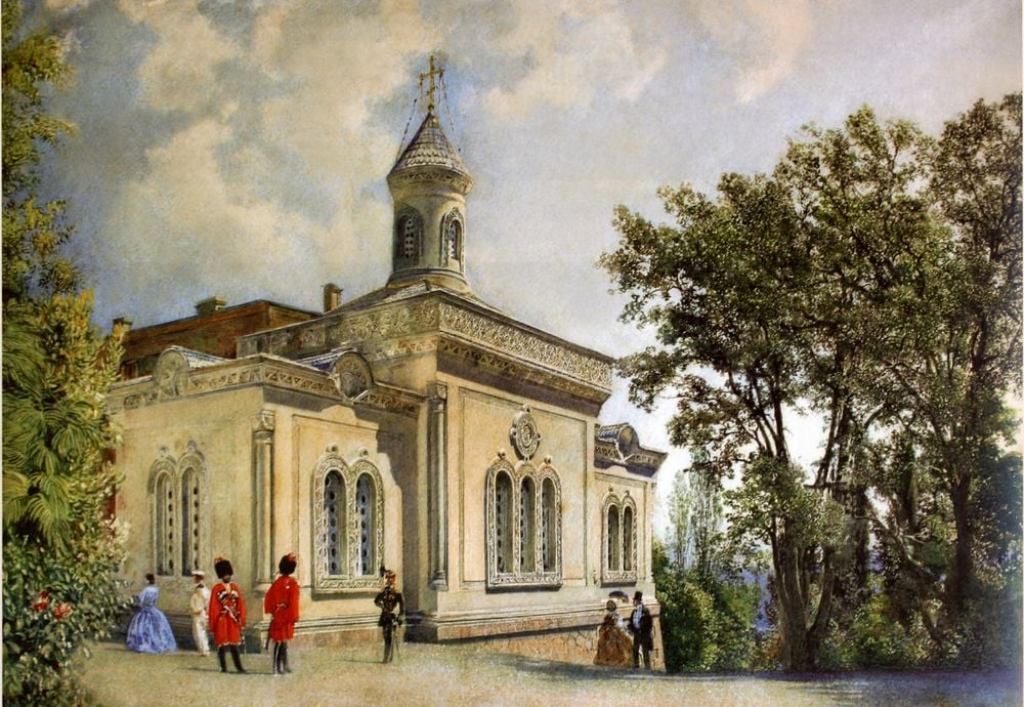
    On this day – 2nd November[1] [O.S. 20th October] 1894, Tsesarevich and Grand Duke Nicholas Alexandrovich ascended the throne as Russia’s last emperor and tsar.

    It was on this historic day, that Nicholas Alexandrovich inherited the throne from his father Alexander III (1845-1894), who ruled Russia for only 13 years. Government officials, courtiers and troops of the Imperial Russian Army, among others, all took an oath of allegiance to their new emperor.

    In the Church of the Exaltation of the Cross [adjacent to Livadia Palace], Nicholas pledged his oath of allegiance to Russia solemnly promising to protect the autocracy firmly and unswervingly, like his late father.

    It was also in the Church of the Exaltation of the Cross, that the holy righteous John of Kronstadt anointed Princess Alix of Hesse, who became the Orthodox faithful Grand Duchess and future Empress Alexandra Feodorovna.

    NOTE: The Church of the Exaltation of the Cross has survived to this day – PG

    ***

    Though Nicholas Alexandrovich was heir-apparent to the throne, his father failed to prepare him for his future role as Tsar. He attended meetings of the State Council; however, as his father was only in his forties, it was expected that it would be many years before Nicholas succeeded to the throne. Alexander’s assumptions that he would live a long life and had years to prepare Nicholas for becoming Tsar proved wrong, as by 1894, Alexander’s health was failing.

    Russia’s finance minister, Count Sergei Yulyevich Witte (1849-1915), suggested to the Tsar that Nicholas be appointed to the Siberian Railway Committee. According to Witte, Alexander argued that Nicholas was not mature enough to take on serious responsibilities. Witte stated that if Nicholas was not introduced to state affairs, he would never be ready to understand them.

    Nicholas was only 26 years old when his father died suddenly after a long and serious illness, at the age of 49.

    PHOTO: the Church of the Exaltation of the Cross [adjacent to Livadia Palace]

    On 27th (O.S. 14th) November 1894, Nicholas Alexandrovich married Grand Duchess Alexandra Feodorovna (future Empress Alexandra Fedorovna). Their nuptials fell on the birthday of the Dowager Empress Maria Feodorovna, and court mourning could be slightly relaxed. The ceremony was held in the Grand Church (the home church of the Imperial Family) of the Winter Palace in St. Petersburg.

    A respectable period of mourning was the reason his coronation was postponed for a year and a half. The Holy Coronation of Emperor Nicholas II and Empress Alexandra Feodorovna, took place on 27th (O.S. 14th) May 1896 in the Assumption Cathedral of the Moscow Kremlin. It would be the last coronation of a Romanov Tsar.

    During the reign of Nicholas II, Russia made considerable progress in all areas of life, while experiencing tremendous growth in its economy. Under his reforms, the Russian Empire reached an unprecedented level of economic development. However, this time was also marked by the growth of revolutionary sentiments.

    Click HERE to read 70 facts about Emperor Nicholas II and his reign, originally published on 13th July 2021.

    His Imperial Majesty Sovereign Emperor Nicholas II reigned over the Russian Empire for more than 22 years. He abdicated on 15th March 1917 (O.S. 2nd March) 1917.

    Some historians argue that the act of abdication was invalid for two reasons: one, because it was signed in pencil, violating all the necessary legal and procedural methods and format, and thus had no legal force; and two, because the instrument of abdication was never officially published by the Imperial Senate.

    Regardless, as God’s Anointed, Nicholas II could not be displaced during his lifetime. Since the will of God was nowhere manifest, neither in the naming of his brother Grand Duke Mikhail Alexandrovich to the throne, nor in the Tsar’s signing of the instrument of abdication, his status as Tsar remained inviolate and unassailable. He remained Emperor until the day of his death and martyrdom on 17th July 1918. Ot was on this day, that the Russian Imperial House ceased to exist.

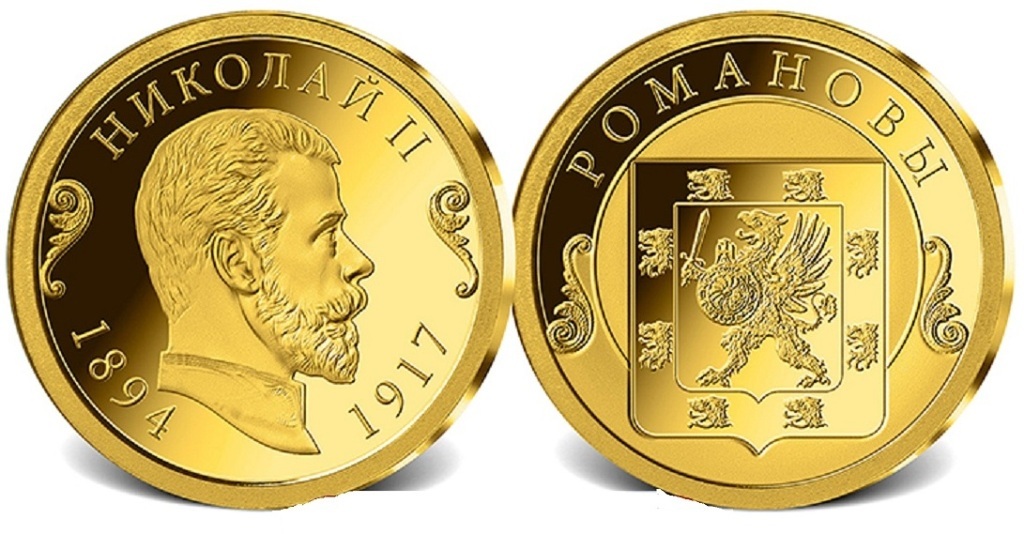
    In 2018, a commemorative medal was issued, marking the 124th anniversary of Nicholas II’s ascension to the throne in 1894. The medal was the first of The Romanovs. Golden Collection to be minted by the Imperial Mint in Moscow.

    NOTES:

    [1] In recent years there has been much confusion by non-Orthodox Christians and Westerners with regard to the correct dates of important events (births, deaths, marriages, etc.) among members of the Russian Imperial Family, according to the New Style calendar.

    As an example, is the date marking the death of Alexander III and the accession to the throne of Nicholas II. This happened on the day of Saint Artemius the Great Martyr and the righteous youth Artemiy, on 20th October (2nd November). And if this day is celebrated on 1st November or 3, then we are not commemorating the memory of these saints. Do not rely on any dates on Wikipedia which often provide the incorrect dates of the Gregorian calendar for the late 19th and early 20th centuries.

    With the passage of every leap day that is on the Julian (Old Style) Calendar but not on the Gregorian Calendar, the difference between the two calendars grows another day. Currently, the Gregorian Calendar is thirteen days ahead of the Julian Calendar. Beginning on 14th March 2100 (29th February 2100 Julian), the difference will be fourteen days.

    © Paul Gilbert. 2 November 2022

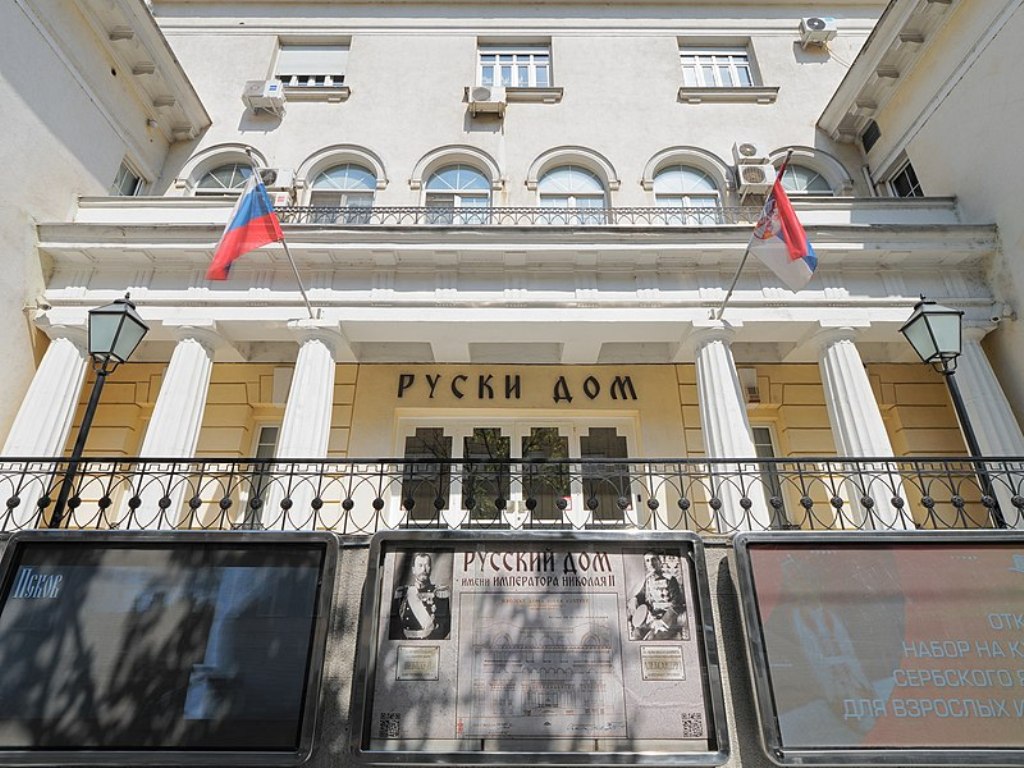
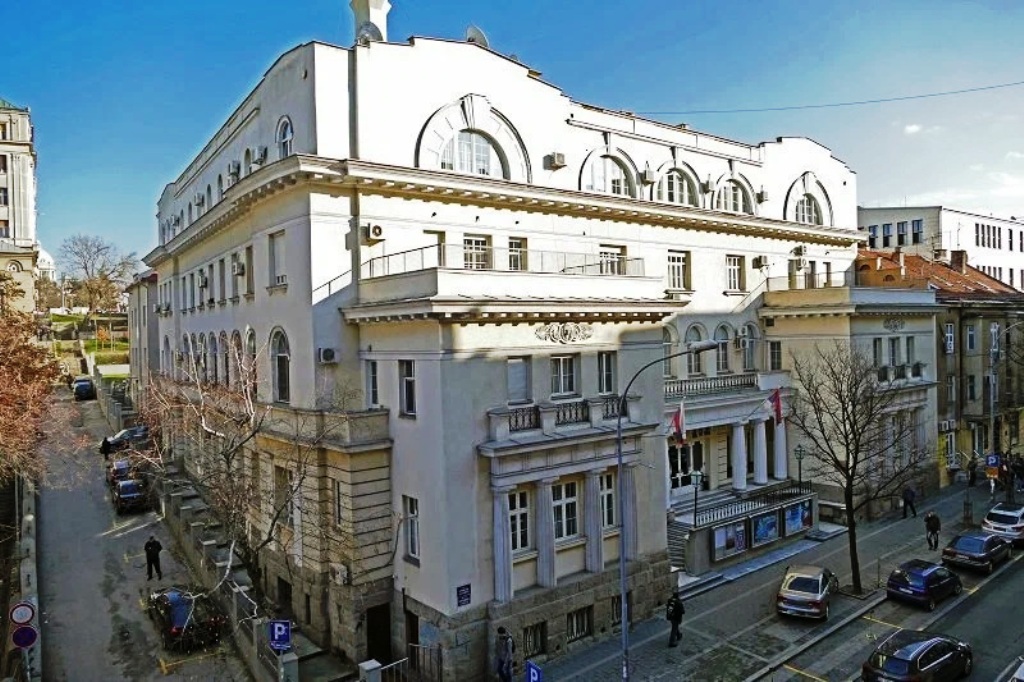
    The Russian House of Emperor Nicholas II in Belgrade, Serbia

    PHOTO: the main entrance to Russian House in Belgrade.
    Note the images of Emperor Nicholas II and King Alexander I Karageorgievich

    For nearly 90 years the Russian House, situated in the very heart of old Belgrade, has been a spiritual and cultural center aimed to promote Russian language and culture. The Neoclassical style building on Kraljice Natalije [Queen Natalia[1] Street], is regarded as one of the most beautiful locations in the Serbian capital. It is recognized as the oldest Russian cultural center in Europe, one of 44 Russian Cultural Centers worldwide.

    During the early 20th century, the October Revolution of 1917 and the subsequent Russian Civil War, each contributed to the mass resettlement of Russians in Serbia. In April 1919 and the early 1920s, the government of the Kingdom of Serbs, Croats and Slovenes [2], welcomed tens of thousands of anti-Bolshevik Russian refugees.

    The defeat of the White Russian Army under General Pyotr Nikolayevich Wrangel (1878-1928) in Crimea, resulted in a third wave of emigration (November-December 1920), of another 20,000 emigrants.

    The Kingdom extended its hospitality as gratitude to Russia for the it’s intervention on the side of Serbia at the outbreak of WWI. Thus, the Kingdom of Serbs, Croats and Slovenes, became home for 40,000 exiles from the Russian Empire of Emperor Nicholas II. The mass exodus of refugees from war-torn Bolshevik Russia, promted the founding of the State Commission for the Arrangement of Russian Refugees in Belgarde.

    Built and financed by Russian emigres

    The pain of losing their fatherland and the illusory hope of returning had always lived in the souls of those who, by the will of fate, ended up in a foreign land. And in an effort to preserve their world – the Russian world – everything that was so dear and sacred, everything which closely connected them to their homeland, the Russian community put forward the idea of ​​​​creating its own cultural center in Belgrade.

    The Serbian public warmly responded to this idea. The center was constructed mainly with the money donated and raised by the Russian community. In addition, significant funds were allocated by the Yugoslav authorities. The architect was Vasily Baumgarten (1897–1962), a military engineer, ex-chief of engineering supplies of the Denikin Volunteer Army[3].

    The idea of ​​the Russian community to establish its own cultural center in Belgrade was fervently supported by King Alexander I, Patriarch of the Serbian Orthodox Church Varnava (1880-1937), as well as many Serbian politicians and cultural workers.

    In 1928, the Russian Cultural Committee was founded in Belgrade under the auspices of academician-Slavist Aleksandar Belic (1876-1960), who graduated from the Imperial Moscow University, and who later became the president of the Serbian Royal Academy of Sciences. One of the main directions in the activity of Belic’s committee was to help in the creation of the cultural center.

    On 22nd June 1931, the foundation stone of the building was laid, less than two years later, on 9th April 1933, the Russian House named after Emperor Nicholas II was officially opened. A charter with words comemorating Russian-Serbian brotherhood and a dedication to Nicholas II, as well as words of gratitude to King Alexander I, were laid in the building’s foundation. In addition, two plaques were installed – one for the “protector of the Serbs” Nicholas II and the other for the “protector of the Russians” Alexander I.

    The opening of the Russian House of Emperor Nicholas II was attended by members of the royal family, headed by Queen Maria of Yugoslavia[4], Prime Minister Milan Srskich (1880-1937), and prominent representatives of the Yugoslav intelligentsia.

    Why was the Russian House named in honour of Russia’s last Tsar and Emperor?

    The Serbs were not only grateful to Nicholas II for the assistance he provided in their struggle for freedom and independence, but also for coming to their aid against Austro-Hungarian aggression in 1914. The idea of ​​the canonization of Nicholas Alexandrovich Romanov and the construction of a church in memory of the martyred emperor arose in Serbia in the 1920s, many years before his canonization by the Russian Orthodox Church. For many Serbs, Nicholas II is today recognized as the “greatest and most revered of all saints.”

    The memory of Emperor Nicholas II’s life and reign is today honoured and celebrated throughout modern-day Serbia. On 7th May 2019, during the opening ceremony of the photo exhibition The Romanovs: the Tsar’s Ministry, in the Serbian Embassy in Moscow, Serbia’s Ambassador to Russia Slavenko Terzic stated: “I consider Nicholas II a great reformer and a patriot of his homeland. The challenges of the revolution were very tough, to which it was necessary to react harshly, but since the Russian emperor was a deeply religious man, he sacrificed himself and his family in order to save the Russian empire. Eternal memory to Nicholas II and eternal gratitude to him from Serbia and the Serbian people,” concluded Terzic.

    Further reading: Click HERE to read my article Nicholas II through Serbian Eyes, originally published on 13th October 1920.

    The Russian House in the post-war years, and during Nazi and Soviet occupation

    During the interwar years, the Russian House became the center of cultural, scientific and religious life of the Russian emigrant community in Belgrade.

    The monarchy, which had been established in Yugoslavia since January 1929, followed by the assassination of King Alexander I in October 1934, and the period of the regency of Prince Pavel Karageorgievich only strengthened the foreign policy vector of Belgrade. Up until June 1940, royal Yugoslavia took the side of the White Russian movement, and officially ignored the existence of Soviet Russia, a brave and noble political feat for which they must be honoured.

    The situation changed, however, in March 1941 after a coup d’etat, a result of which a regency was set up under Prince Paul of Yugoslavia, also known as Paul Karađorđević (1893-1976). After Paul declared Yugoslavia’s accession to the Tripartite Pact in late March 1941, a pro-British coup d’état deposed the regent and declared Peter II (1923-1970), who would reign as the last king of Yugoslavia and the last reigning member of the Karađorđević dynasty. In response, Axis forces invaded Yugoslavia ten days later and quickly overran the country, forcing the king and his ministers into exile.

    After the capture and dismemberment of Yugoslavia by the Third Reich and its allies during the short-lived April War of 1941, Serbia came under Nazi occupation and the formal control of the puppet government of Milan Nedić (1877-1946). The occupying authorities installed the “Russian Trust Bureau” in the Russian House, to “protect the interests of the Russian diaspora”.

    According to Monarchist General Mikhail Skorodumov, “the cellars in the Russian House, were filled with hungry Russian refugees. As a result, and with great difficulty, a free canteen was created, however, this did little to alleviate the problem…” Later, Skorodumov formed the Russian Security Corps for punitive operations against local communists with the prospect of sending the latter to the Eastern Front in the ranks of the Wehrmacht.

    In 1944, the Russian House was badly damaged during fierce battles between the Red Army and the Belgrade Strategic Offensive Operation for the liberation of of the city from Nazi invaders. In addition, the Russian House library (created in 1920, and moved from the building of the Royal Academy of Sciences), lost almost all of its extensive pre-war collections: books, old newspapers and magazines from the library heated the boiler room of the Russian House during the cold months of the war.

    In the post World War II period, the Socialist-Government of Yugoslavia handed over the building to the Soviet Union, whereupon the Russian House of Emperor Nicholas II was renamed the Home of Soviet Culture. In 1994, the building was officially renamed the Russian Center of Science and Culture — The Russian House.

    In defiance of the bombing of Yugoslavia by NATO forces in 1999, the Russian House remained open daily, despite the fact that some events had to be carried out then under extreme conditions, including the building being hit by shell fragments. On 24th May, when electricity was cut off throughout Belgrade, the celebration of the Day of Slavic Literature and Culture took place by candlelight – a tradition which continues to be held annually.

    Today, the Russia House includes a theater, a 390-seat cinema and concert hall, a 2100 square foot exhibition and conference hall, a gymnasium, a sports hall, an elementary school, and even a house church named in honour of the Protection of Our Most Holy Lady Theotokos and Ever-Virgin Mary. 

    The center offers Russian language courses, a publishing center, the Matryoshka Children’s Studio of Russian Folk Dance, and the Sergei Rachmaninov School of Music. The center’s public library boasts a collection of 60,000 books, and is considered one of the largest Russian libraries in Europe. In May 2015, an electronic reading room of the Boris Yeltsin Presidential Library, located in St. Petersburg was opened in the multimedia center of the Russian House Library.

    The Russia House is also home to the Museum of Nicholas II [opened in June 1936], the Museum of the Russian Cavalry, the Society of Russian Writers, Artists and Musicians, and the Russian Scientific Institute (founded in 1928 and moved from the house of the former Embassy of the Russian Empire). The center receives over two thousand visitors a day.

    It is interesting to note, that in 2022, an estimated 30,000 to 50,000 Russians moved to Serbia, many of them opponents to the Russian invasion of Ukraine.

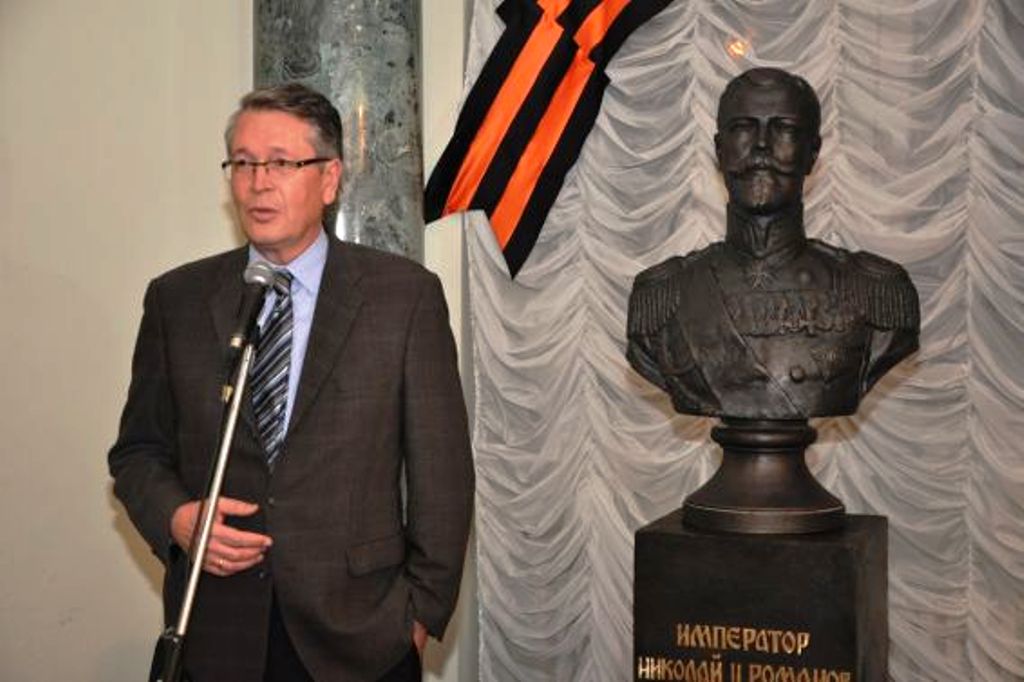
    PHOTO: Aleksandar Vasilevich Chepurin, who served as Russia’s ambassador to Serbia (from 2012-2019), at the unveiling ceremony of the bust to Nicholas II in the Russian House, Belgrade

    In addition, the Russian House has exhibition material, which includes a vast collection of films and books. It is involved in the organization of various festivals, conferences and other cultural events in Belgrade and throughout Serbia. In recent years, the Russian House in Belgrade has hosted a number of exhibitions and government sponsored events honouring Russia’s last Tsar.

    On 25th December 2013, a bronze bust of Emperor Nicholas II was unveiled in the foyer of the library in the Russian House with the participation of the International Foundation for the Unity of Orthodox Nations. The bust was the work of the eminent Russian sculptor, Vyacheslav Mikhailovich Klykov (1938-2006). The pedestal of was designed by the famous Serbian sculptor Miodrag Živković. The installation of the bust marked the 400th anniversary of the Romanov Dynasty and the 80th anniversary of the Russian House in Belgrade.

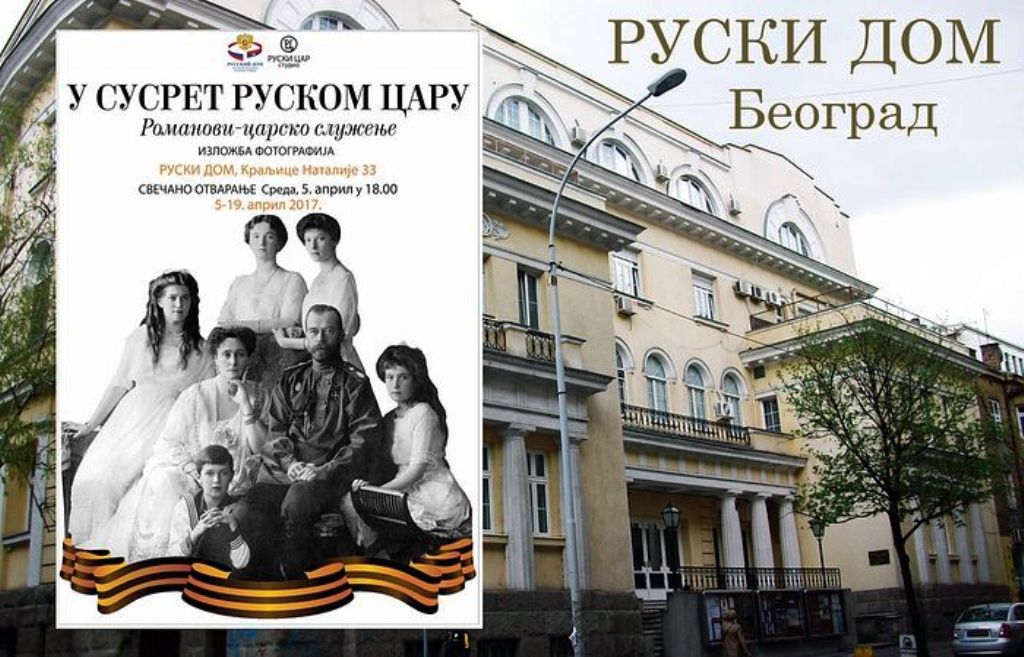
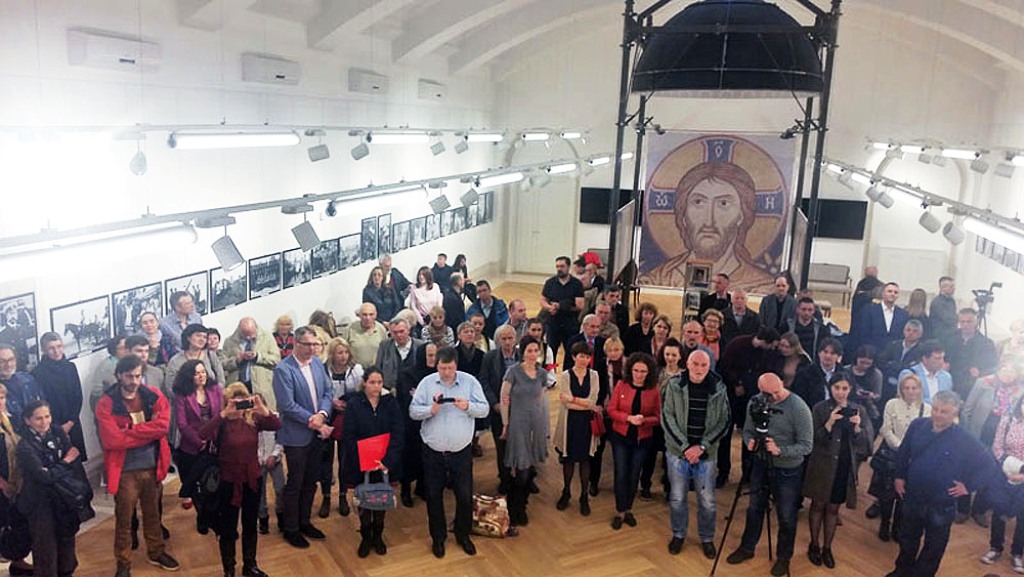
    PHOTO: poster for the photo-exhibition Meeting the Russian Emperor (above), and opening day of the exhibit at Russian House in Belgrade, on 5th April 2017 (below)

    From 5th April to 3rd May 2017, the Russian House hosted a photo-exhibition Meeting the Russian Emperor, dedicated to the life and reign of Emperor Nicholas II (1868-1918). The exhibition was a joint project prepared by the Russian Tsar Studio in Belgrade and the Sretensky Monastery in Moscow.

    The exhibition was dedicated to the 100th anniversary of the death and martyrdom of the last Russian Emperor and his family, which took place in July 2018. The travelling exhibition, which during the first six months had been held in dozens of cities in Serbia, Bosnia and Herzegovina and Montenegro. The exhibit showcased photographs to better acquaint the Serbs with the image of the Holy Royal Martyrs, and their pious and private family lives. 

    The ceremonies marking the opening of the exhibition, were crowned by the Orlic Children’s Church Choir, under the direction of Elena Pavlovich, who performed several Russian spiritual songs, and closing with the Russian Imperial Anthem “God, Save the Tsar!” [refer to Video No. 6 in the playlist]

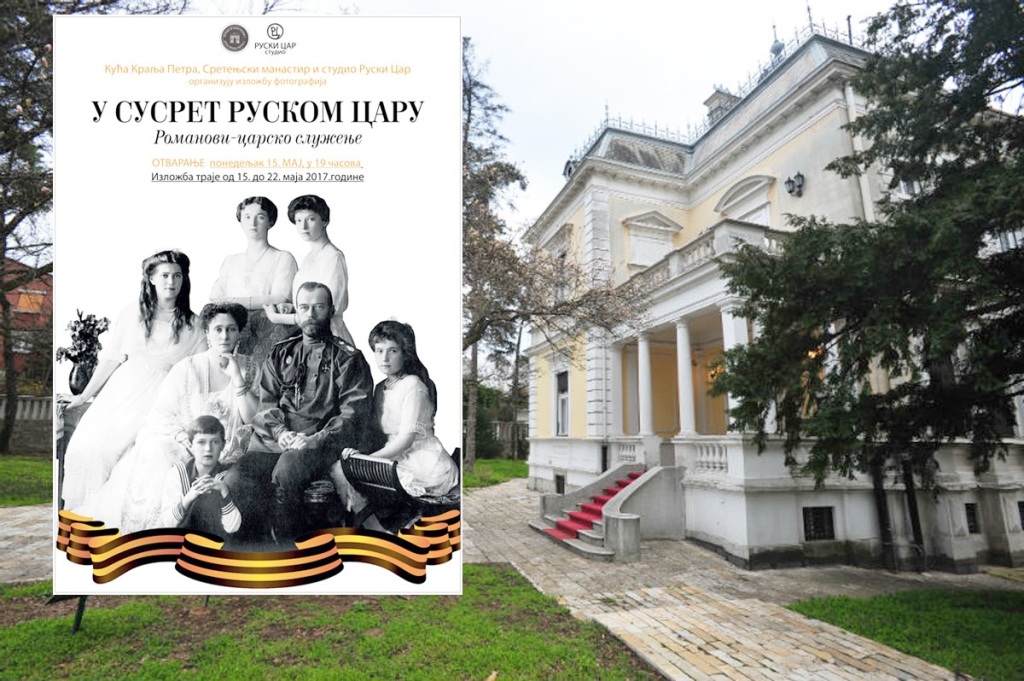
    Upon its closing, the photo-exhibition reopened at the Memorial Museum of King Peter I Karađorđević, also in Belgrade.

    PHOTO: on 15th May, the photo-exhibition reopened at the Museum of King Peter I Karađorđević

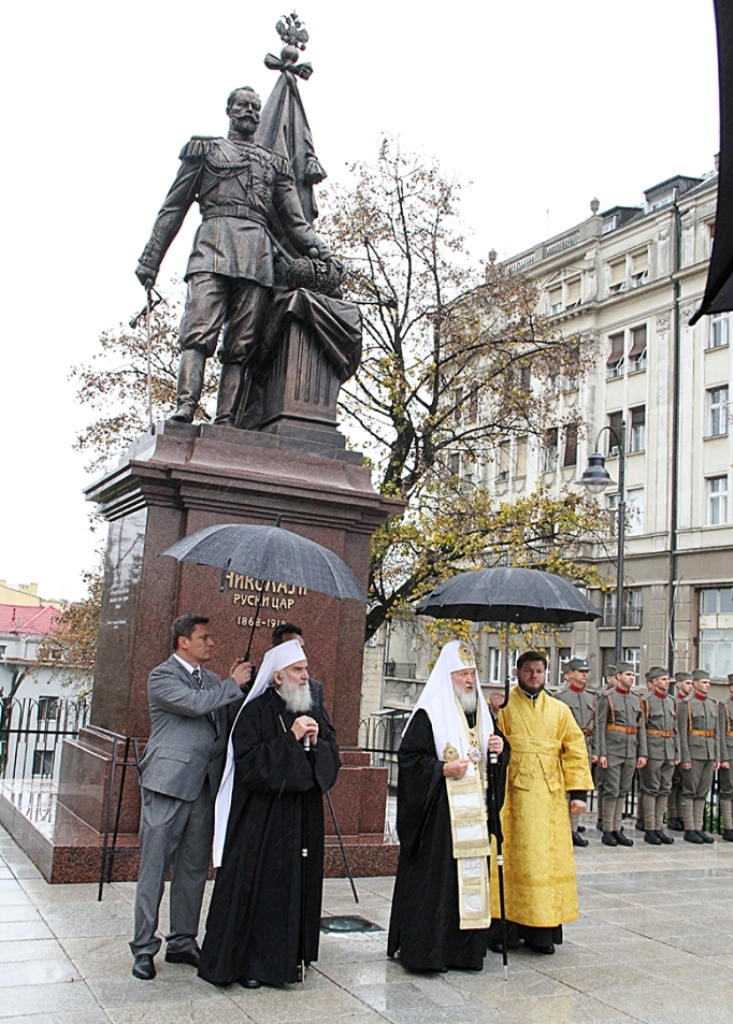
    PHOTO: Serbian Patriarch Irinej and Patriarch of Moscow and All Russia Kirill attending the unveiling and consecration of the monument to Nicholas II in Belgrade, on 16th November 2014

    The Russian House is situated near Park Aleksandrov, bounded by the streets of Kralja Milana on the east, Kosovke devojke on the north and Kraljice Natalije[1] on the west. 

    On 16th November 2014, a large monument to Emperor Nicholas II was installed in the park, on the site of the old Russian Empire[5]. The bronze monument, donated by the Russian Historical Society in Moscow, was sculpted by Andrey Kovalchuk and Gennady Pravotorov. The monument weighs 40 tons, and stands 7.5 m (25 ft) high, which includes a granite pedestal, the monument itself stands 3.5 m (11 ft).

    The monument was jointly consecrated by the Patriarch of Moscow and All Russia Kirill and the Serbian Patriarch Irinej (1930-2020), which was followed by a wreath laying ceremony. The unveiling ceremony was attended by the President of the Republic of Serbia Tomislav Nikolić,

    The inscription on the pedestal which marks the words of Emperor Nicholas II, reads: “All my efforts will be directed to preserving the dignity of Serbia and in any case, Russia will not be indifferent to the fate of Serbia”.

    His Holiness Patriarch Kirill addressed a multitude of people present with a brief homily, saying in particular:

    “We are present at an event of historical significance – the blessing of the monument to the Holy Passion-Bearer, Tsar Nicholas II. Emperor Nicholas did so much to save Serbia and the whole Europe that it cannot be described in a few words. It is remarkable that the first monument in his honour outside of Russia has been erected here, in Belgrade.

    “The Serbian people were cherishing the memory of Emperor Nicholas II even at the time when his name was forbidden to be pronounced aloud, at the time when one could only say something bad of him. However, the truth has a great power. Sometimes we see grass shooting through asphalt, life coming out in the open. The same is with the truth – it cannot be hidden under the asphalt or concrete; sooner or later it comes into life of next generations. The truth about the sacrificial heroic deed of Emperor Nicholas II has struggled through the ferroconcrete slab laid on his name.

    “I would like to thank the people and the authorities of Serbia, as well as to all the compatriots who have done much to honour the memory of this great man in this remarkable monument.”

    Serbian Patriarch Irinej pointed out that this was a great day for Belgrade, Serbia and the Serbian people in the country, in Serbian lands abroad. As he emphasized, the monument in King Milan Street was not just a monument, but also an image of a holy martyr. According to his words, one of those tragic links uniting our tow peoples was the fate of Tsar Nicholas and his family.

    PHOTO: view of the Russia House in Belgrade, the oldest Russian cultural center in Europe

    © Paul Gilbert. 12 October 2022

    NOTES:

    [1] Natalija Obrenović (1859-1941), known as Natalie of Serbia, she was Princess of Serbia from 1875 to 1882 and then Queen of Serbia from 1882 to 1889 as the wife of King Milan I of Serbia (1854-1901). A celebrated beauty during her youth, she was later regarded as one of the most beautiful queens in Europe.

    [2] The Kingdom of Yugoslavia was a state in Southeast and Central Europe that existed from 1918 until 1941. The preliminary kingdom was formed in 1918 by the merger of the provisional State of Slovenes, Croats and Serbs (itself formed from territories of the former Austria-Hungary,

    From 1918 to 1929, it was officially called the Kingdom of Serbs, Croats and Slovenes, but the term “Yugoslavia” (literally “Land of South Slavs”) was its colloquial name due to its origins.

    The state was ruled by the Serbian dynasty of Karađorđević, which previously ruled the Kingdom of Serbia under Peter I from 1903 (after the May Coup) onward. Peter I became the first king of Yugoslavia until his death in 1921. The official name of the state was changed to “Kingdom of Yugoslavia” by his successor King Alexander I on 3 October 1929.

    [3] The Volunteer Army was formed by Anton Ivanovich Denikin (1872-1947), a Russian Lieutenant General in the Imperial Russian Army (1916), who later served as the Deputy Supreme Ruler of Russia during the Russian Civil War of 1917–1922.

    His volunteers served as part of the White Army, who were active in South Russia during the Russian Civil War from 1917 to 1920. The Volunteer Army fought against Bolsheviks on the Southern Front and the Ukrainian War of Independence. In 1919 it was made part of the Armed Forces of South Russia, becoming the largest force of the White movement until it was merged with the Army of Wrangel in March 1920.

    [4] Maria of Yugoslavia (born Princess Maria of Romania: 6th January 1900 – 22nd June 1961), her parents were Princess Marie of Saxe-Coburg-Gotha and Prince Ferdinand of Hohenzollern-Sigmaringen – future Queen Marie and King Ferdinand of Roumania.

    Known in Serbian as Marija Karađorđević, was Queen of the Serbs, Croats and Slovenes, later Queen of Yugoslavia, as the wife of King Alexander I from 1922 until his assassination in 1934. She was the mother of Peter II, the last reigning Yugoslav monarch. Her citizenship was revoked, and her property was confiscated by the Yugoslav communist regime in 1947, but she was “rehabilitated” in 2014.

    [5] The old Russian Embassy was constructed in 1919. The embassy was initially used by the Russian deputy Vasiliy Nikolayevich Strandman (1873-1963), who represented the White Guard government, under the leadership of General Kolchak. In 1924, when the Russian mission was closed by the decision of the Ministry of Foreign Affairs of the Kingdom of Serbs, Croats and Slovenes, the embassy building became the headquarters of the Delegation for the Protection of the Interests of Russian Refugees, and Strandman became the head of the Delegation. Nevertheless, the state flag and coat of arms of the Russian Empire remained on the facade of the embassy building until September 1939.

    During the battle for the liberation of Belgrade in the Second World War, in October 1944, a German bomb severely damaged the embassy building. After the war, the building was completely demolished and a park built in its place.

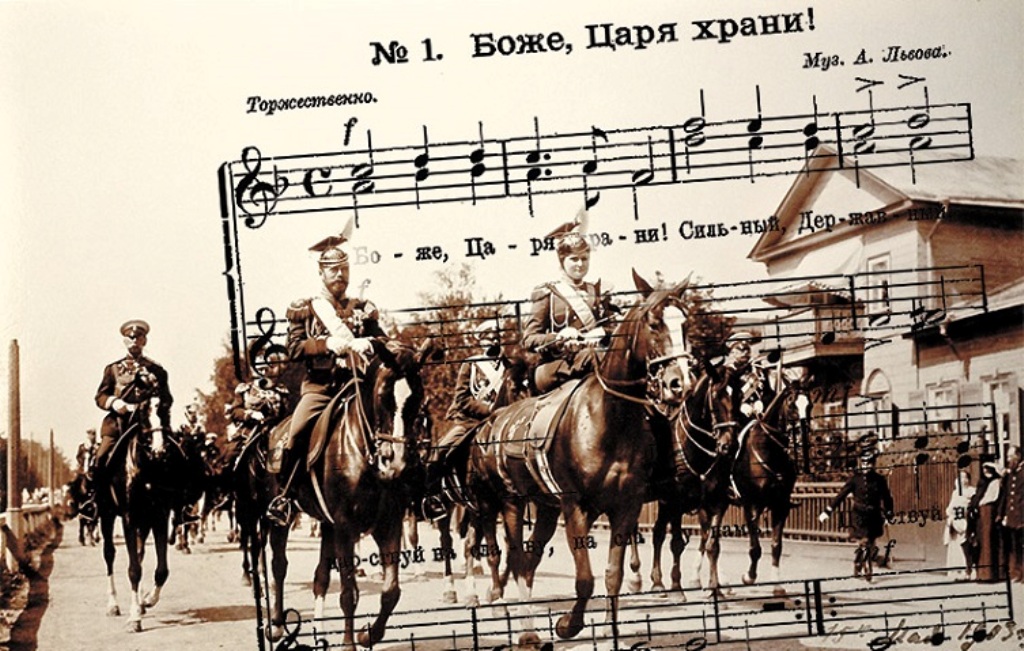
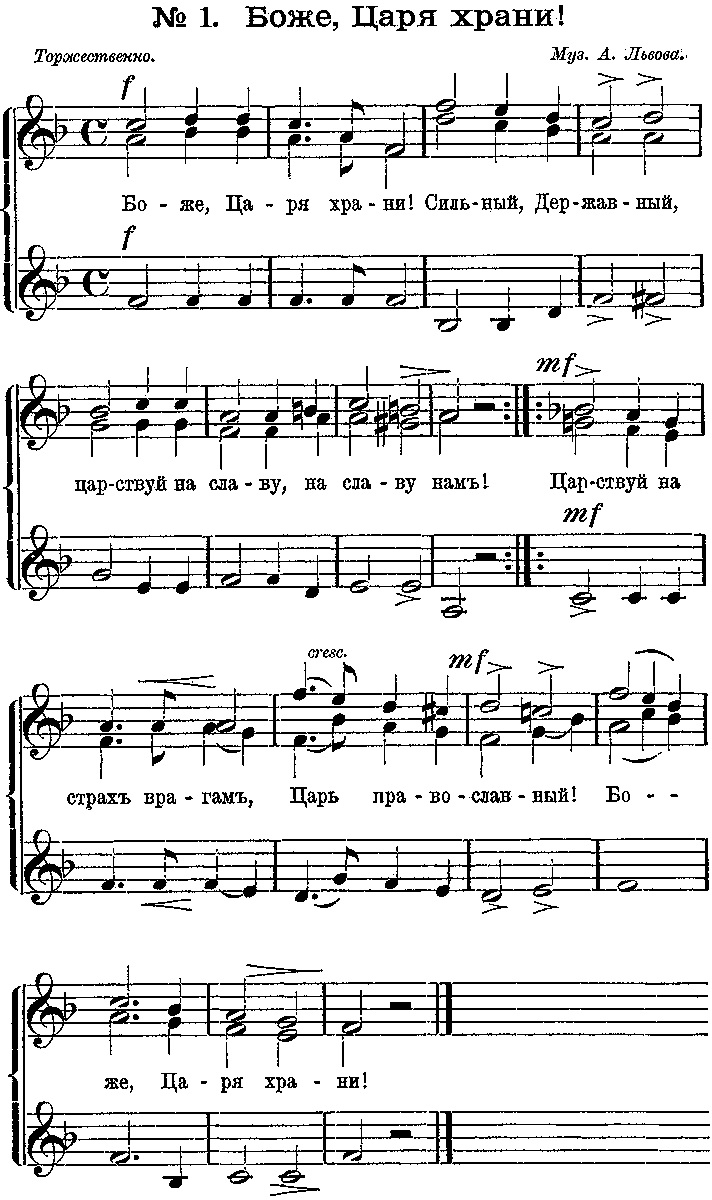
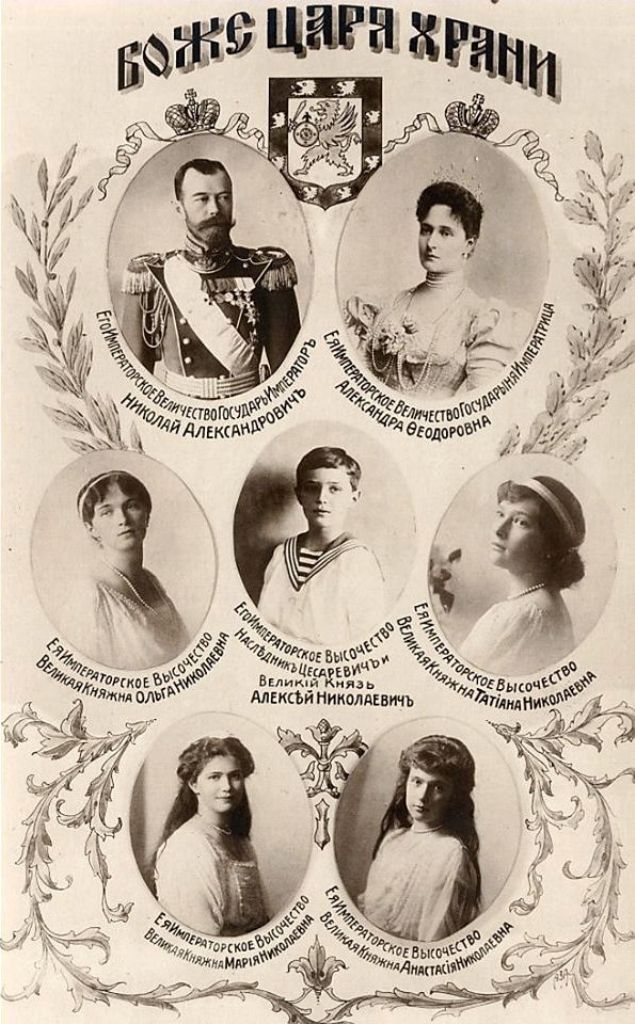
    God, Save the Tsar! Боже, Царя храни!

    SONY DSC

    Imperial Anthem of the Russian Empire

    God, Save the Tsar! (Russian: Боже, Царя храни!; transliteration: Bozhe, Tsarya khrani!) was the national anthem of the former Russian Empire. The song was chosen from a competition held in 1833 and was first performed on 6th December (O.S. 23 November) 1833. The composer was violinist Alexei Lvov, and the lyrics were by the court poet Vasily Zhukovsky. 

    In 1833, Tsar Nicholas I (1796-1855) ordered Count Alexey Fyodorovich Lvov (1799-1870), the violinist and army general who was his court composer and aide-de-camp, to compose new music to replace the air that since 1816 had served as the music for the Russian Empire’s Anthem God Save the Tsar, namely Henry Hugh Carey’s God, Save the King. The lyrics of “God Save the Tsar” (Bozhe Tsarya Khranii) date from 1815 and came from Prayers of the Russian People by Vasily Andreyevich Zhukovsky (1783-1852), an officer and poet who served as tutor to the Tsesarevich Alexander Nikolayevich, the future Tsar-Liberator Alexander II.

    After some initial creative difficulties, the melody that would serve as the anthem of the Russian Empire for the remainder of its existence came to Lvov in the course of a single night’s inspiration; he succeeded in creating a work of majesty and power that was suitable for the army, the church and the people – indeed, for the entire realm. None other than the great Alexander Pushkin himself reworked Zhukovsky’s verses to adapt them to Lvov’s new hymn. It was the first national anthem in Russian history to feature music and lyrics by Russian authors.

    Upon hearing its beautiful strains for the first time, Nicholas I ordered the work repeated several times. At the close of the final rendition, the Tsar – a stern and military-minded ruler who was to be vilified by Karl Marx and Friedrich Engels as the “Gendarme of Europe” for his crushing of the forces of revolution wherever they appeared – clasped the composer’s hand with tears in his eyes and uttered the single word: “Splendid!”

    The public premier of God, Save the Tsar took place on 6 December (O.S. 23rd November) 1833 at the Bolshoi Theater in Moscow, where it was performed by a choir of one hundred singers and two military bands. At Christmas that same year, by the Tsar’s personal order it was performed by military bands in every hall of the Winter Palace in Saint Petersburg. A week later, the Emperor issued a decree declaring the anthem a “civil prayer” to be performed at all parades and official ceremonies. As was the case with the Preobrazhensky March, the most widely-used arrangement for military band of God, Save the Tsar was created by Ferdinand Haase; it was the shortest anthem in the world at eight lines.

    During the Coronation of Tsar Alexander II in 1855, Lvov led one thousand singers and two thousand musicians in a rendition of God Save the Tsar, the first performance of the anthem at a coronation. As Lvov directed the choir and orchestra, he, by means of galvanic batteries, set off forty-nine cannons, one by one, sometimes on the beat. At the conclusion, hundreds of Roman candles and rockets soared into the sky.

    God, Save the Tsar! remained the Russian Empire’s national hymn until the February Revolution of 1917, after which the Worker’s Marseillaise was adopted as the new national anthem until the overthrow of the Russian Provisional Government in October of the same year.

    Sources: Brandenburg Historica; Scenarios of Power (Wortman, Richard S.)

    215c

    LYRICS

    Русский

    Боже, Царя храни!
    Сильный, державный,
    Царствуй на славу, на славу нам!

    Царствуй на страх врагам,
    Царь православный!
    Боже, Царя храни!

    English translation

    God, save the Tsar!
    Strong, sovereign,
    Reign for glory, For our glory!

    Reign to foes’ fear,
    Orthodox Tsar.
    God, save the Tsar!

    Below, are a selection of videos which present a variety of renditions of God, Save the Tsar! Боже, Царя храни!, performed by Russian Orthodox and professional choir ensembles – courtesy of YouTube:

    1. Beautiful rendition of God, Save the Tsar! with vintage newsreels of the Imperial family. Duration: 2 minutes, 38 seconds

    2. Performed by the Kuban Cossack Choir. Duration: 1 minute, 38 seconds

    3. Performed by the Mikhailovsky Theatre Orchestra and Choir.
    Duration: 1 minute, 46 seconds

    4. Performed by Varya Strizhak. Duration: 3 minutes, 19 seconds

    5. Performed by the Moscow Philharmonic Orchestra, and the State Academic Choir.
    Duration: 2 minutes, 33 seconds

    6. Performed by the Orlic Children’s Church Choir (Serbia).
    Duration: 1 minute, 24 seconds

    7. Performed by The Royal Scots Dragoon Guards.
    Duration: 55 seconds

    8. Performed by the Columbia Military Band in 1914.
    Duration: 3 minutes, 16 seconds

    © Paul Gilbert. 11 October 2022

    The fate of Anna Kuzminykh, a servant in the Ipatiev House

    PHOTO: Anna (right) with her mother and son Ivan in 1916

    NOTE: the publication of this article has been met with both great interest and some skepticism. As Anna “Anyuta” Vasilievna Kuzminykh (1890-1954), did not leave any paper trail, which documented her brief period in the Ipatiev House, there is much to her story which allows for speculation, therefore, her story – as told through her niece and historian many years later, should be taken with a cautionary view – PG

    Thanks to the research of a Russian historian, we now have a better understanding of the fate of Anna Vasilievna Kuzminykh (1890-1954), one of the lesser known servants in the Ipatiev House, during the summer of 1918.

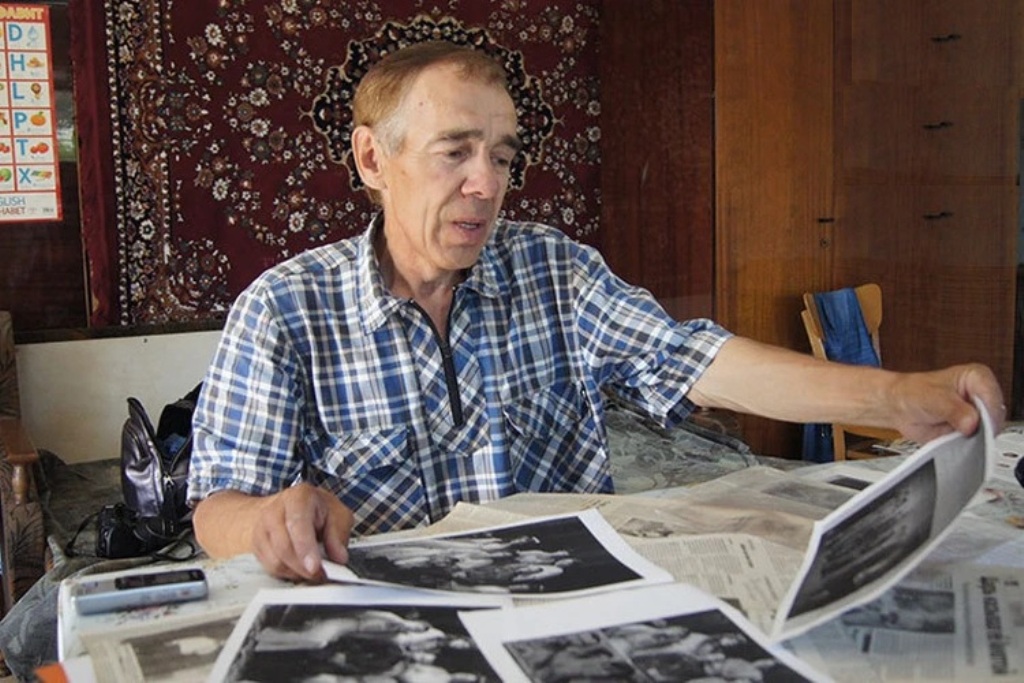
    According to the Kambarka (Udmurt Republic in Russia) historian and archivist Razif Mirzayanov, shortly before the murder of the Imperial Family in Ekaterinburg, the Tsar ordered Anna Kuzminykh, to leave the Ipatiev House, and thereby saved her life.

    “I learned about the fate of Anna Kuzminykh in 1999, from her niece Zoya Grigoryevna Zhizhina” – says Mirzayanov. Anna herself was no longer alive by that time – she had died in 1954. The historian added, that Anna had not told anyone about her brief period as a servant in the Ipatiev House, during the summer of 1918, except for her niece Zoya Grigoryevna.

    Anna was born on 9th February 1890, in the village of Kambarsky Zavod (now Kambarka), into the family of a local tailor Vasily Michkov. She married Yegor Kuzminykh, when the First World War broke out, who was ordered to the Front in 1914. Following the February 1917 Revolution, Anna left Kambarka the following year to work in Ekaterinburg, leaving behind her young son Ivan and mother. By some miracle, Anna was able to get a job at the Ipatiev House, the mansion requisitioned by the Bolsheviks and renamed the “House of Special Purpose”, where Emperor Nicholas II and his family were held under house arrest from April to July 1918. Anna was entrusted with the care of two cows, which provided milk for the prisoners.

    PHOTO: in 2017, Razif Mirzayanov, Chairman of the Society of Historians and Archivists of the Kambarsky District, was awarded a medal in honour for his research on the Romanov’s

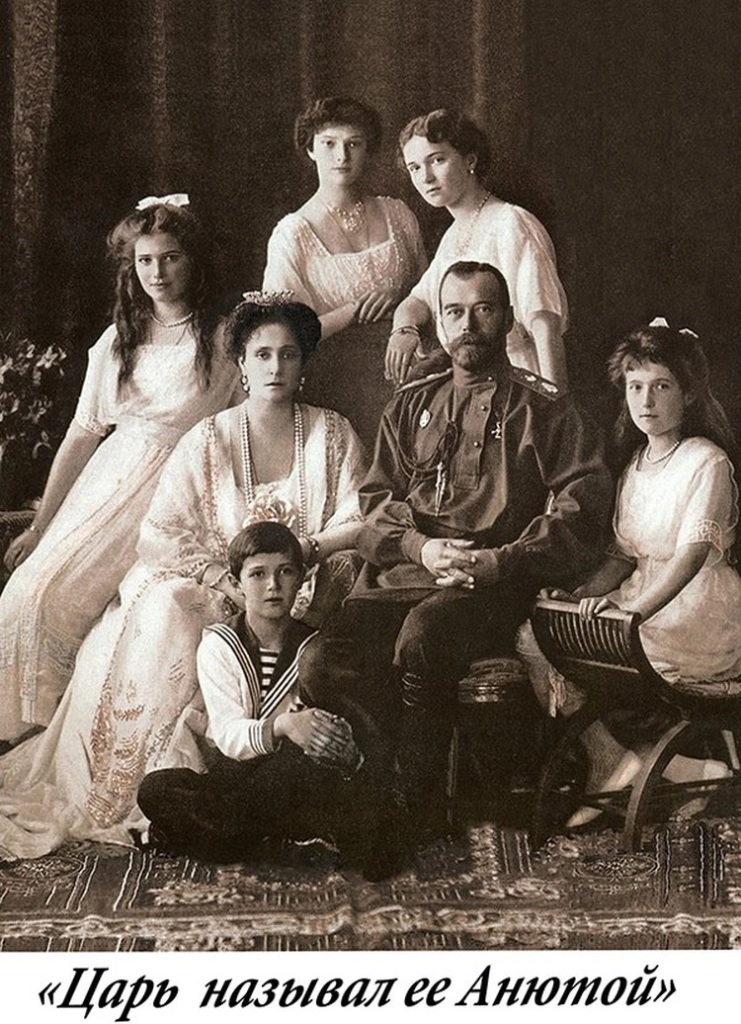
    THE TSAR CALLED HER ANYUTA

    One day, after having milked one of the cows, Anna went up to the house with a full bucket of milk, only to be rebuffed by the Empress herself: “Anna, once again, you milked both cows in one bucket. The milk will turn sour!” “What are you talking about,” Anna replied, “this bucket is from one cow that gives so much milk.” After straining the milk, Anna returned to the barn to milk the second cow. Then, pouring flour into a bucket for a mash to feed the cattle, she heard someone’s footsteps enter the barn.

    Looking around, Anna saw Nicholas II and Alexandra Feodorovna standing before her. “Now I understand why cows are milked in buckets,” said Nicholas. One of the cows reached out to him with her muzzle, which was covered in flour, the Tsar gently stroked the animal. “Don’t you feel sorry, Anyuta, for using so much flour?” he asked the servant. “Yes, there is a lot of it, but it will be enough for a long time,” she replied briskly. From then on, the Tsar called her Anyuta.

    Since there were few servants, Anna also had to work in the kitchen, helping the cook to prepare and serve meals, says Mirzayanov. She later recalled that the guards present in the dining room during lunch, often helped themselves to the food prepared for the Imperial Family.

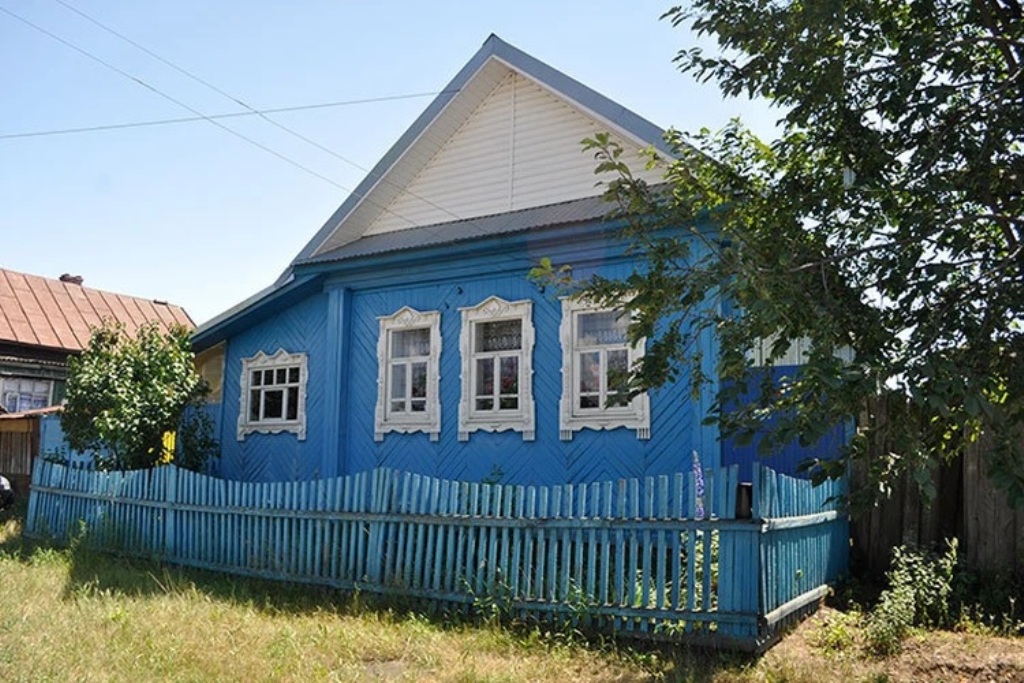
    PHOTO: the house in Kambarka, where Anna lived with her family. Her descendants still live here

    THANKED FOR HER WORK AND ORDERED TO LEAVE

    “On a hot summer day in early July 1918, a search was conducted in the Ipatiev House,” Razif Mirzayanov continues his story. A band of Chekist thugs examined the personal belongings of the Imperial Family, even roughly leafing through books and rummaging through linens. The captives and their faithful servants stood in silence while they carried out their work. Anna stood frightened in the doorway of the room where the Tsar knelt before a kiot with icons and prayed. He never turned around or stood up while the search was going on. One of the Chekists, while turning out suitcases, cursed and swore filthy obscenities at the Tsar. In one of the suitcases, the Chekist found a long black lace shawl. Turning it in his dirty hands, he angrily threw it to Anna and shouted: “Take it, it will come in handy for you, while you are still young!”

    This black lace shawl was kept for a long time in the Kuzmin family: Anna’s daughter-in-law sometimes wore it to church, and many parishioners noted it’s beautiful workmanship, none even suspecting that it had once belonged to one of the female members of the Imperial Family.

    After the search, the guards in the house were completely changed – and this detail of Anna’s story is also confirmed by historians. On 4th July 1918, Yakov Yurovsky was appointed commandant of the “House of Special Purpose”, instead of Alexander Dmitrievich Avdeev (1887-1947), the first commandant of the Ipatiev House, who was considered unreliable.

    Shortly thereafter, the Tsar approached Anyuta, he thanked her for her work, and told her that his children had fallen in love with her, – says Razif Mirzayanov. He then told her to leave the Ipatiev House and never come back. He ave Anna a souvenir photo on a passe-partout, which depicted the Imperial Family, taken in 1913. With tears in her eyes, Anyuta said goodbye to the Imperial Family and left, concealing the photo and black lace shawl.

    A few days later, on the night of 16/17 July, the Bolsheviks woke the Imperial Family in the middle of the night and ordered them to dress and go downstairs. The Emperor and Empress with their five children, along with four retainers: the doctor, the cook, the valet and the maid went to the basement of the house. At the request of Alexandra Fedorovna, two chairs were brought for her and her ailing son, the rest stood along the wall. Then Yurovsky brought in a firing squad, read out the verdict and gave the command to shoot every one – there were no survivors of the regicide.

    PHOTO: the Emperor presented Anna with a copy of this famous photograph – taken in 1913 – as a keepsake. The Russian caption “Царь назыбал ее Анютой” translated reads “The Tsar called her Anyuta”.

    COOKED “ROYAL DISHES”

    There is no evidence to suggest that the Imperial Family could have guessed their captors plans to murder them in such a violent manner that fateful night, however, Anna Vasilyevna was sure that it was thanks to Nicholas II’s request that she leave the Ipatiev House that saved her life.

    “After leaving the Ipatiev House, and her conversation with the Emperor, Anna went home. Her husband who had been a German prisoner of war, returned home to Russia, some 11 years after leaving for the front. Soon they had another son, Sergei, who then participated in the Great Patriotic War,” – says Razif Mirzayanov.

    Subsequently, Anna Vasilievna often recalled her life in Ekaterinburg, but only her niece Zoya knew the details of her story. She didn’t keep any records, as it it was too dangerous during the Bolshevik and Soviet years. Zoya, however, remembered how Anna Vasilievna came to visit her with unusual dishes – for example, fried pike stuffed with grains and onions. “Such a dish was prepared for the Tsar’s table,” she said. The photograph of the Imperial Family – gifted by the Emperor – Anna carefully kept in a chest, but after her death, the picture was placed on a chest of drawers, and in 1970 it disappeared.

    © Paul Gilbert. 9 October 2022

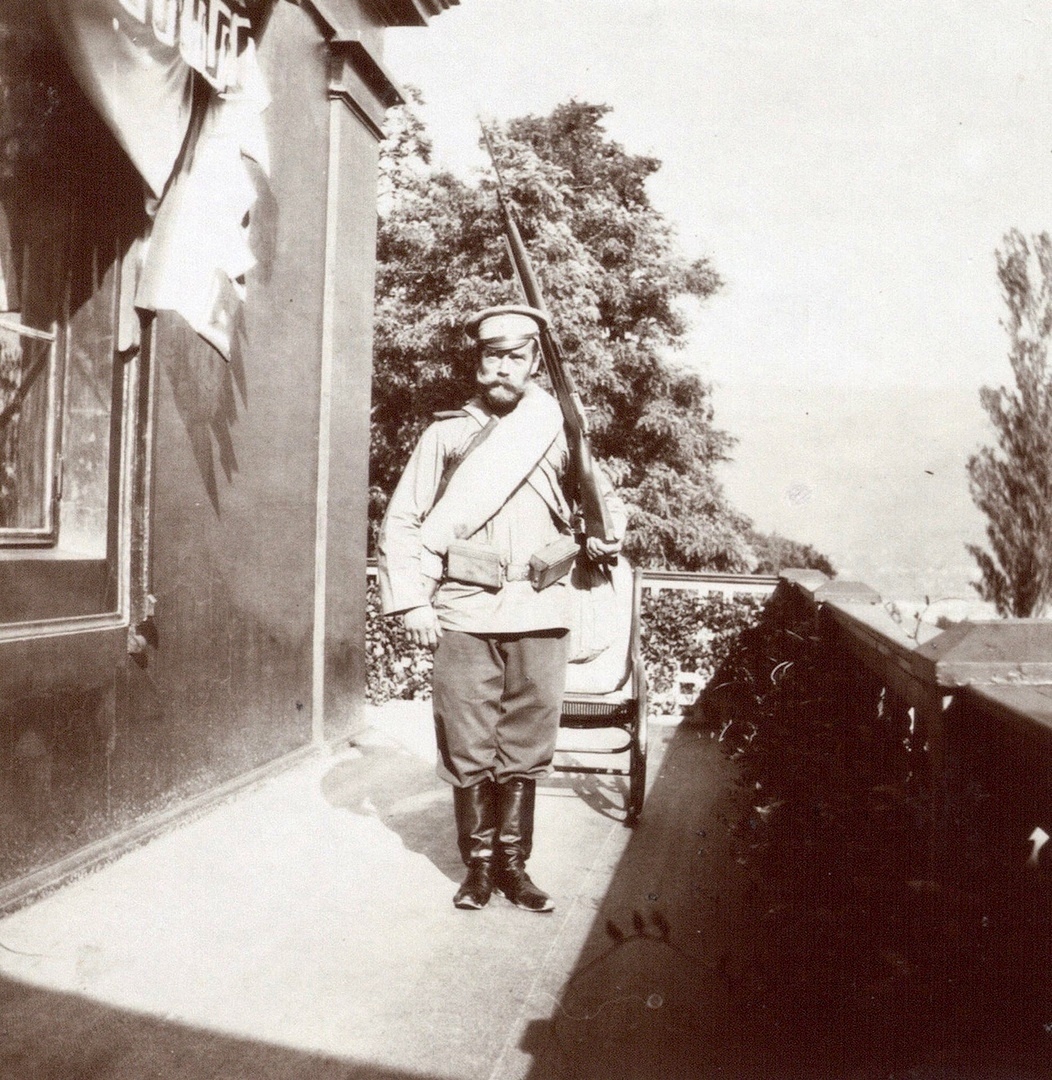
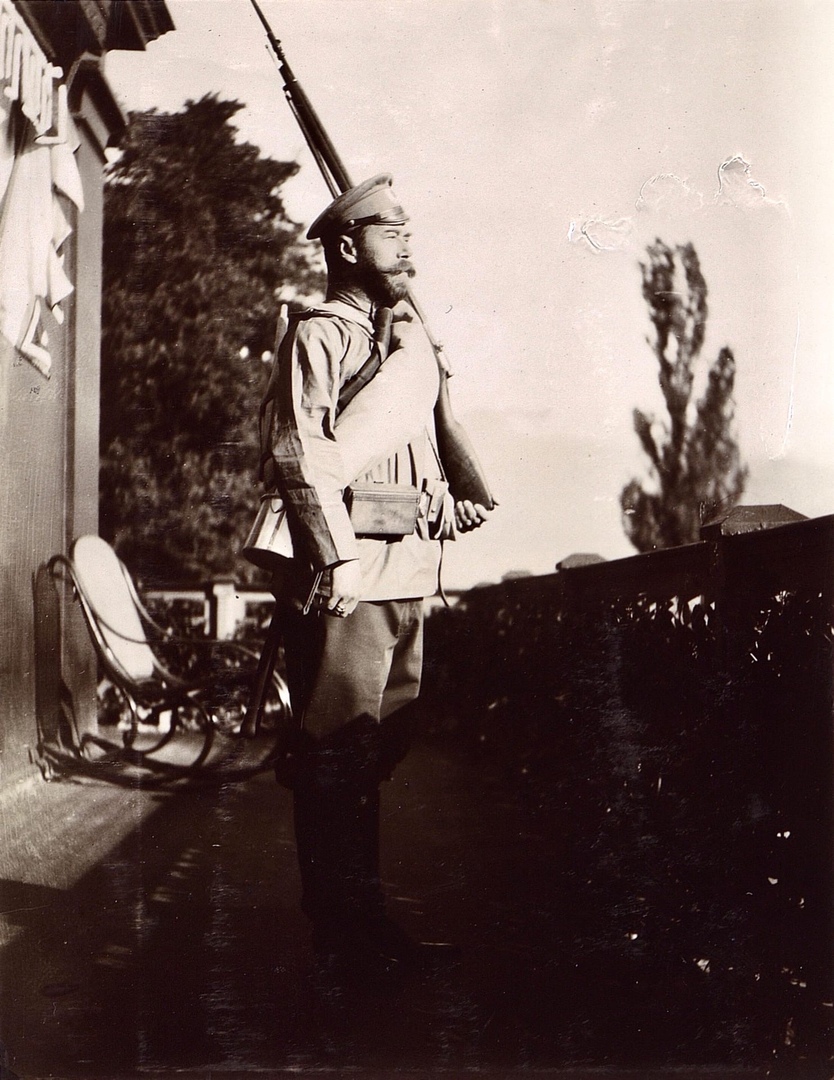
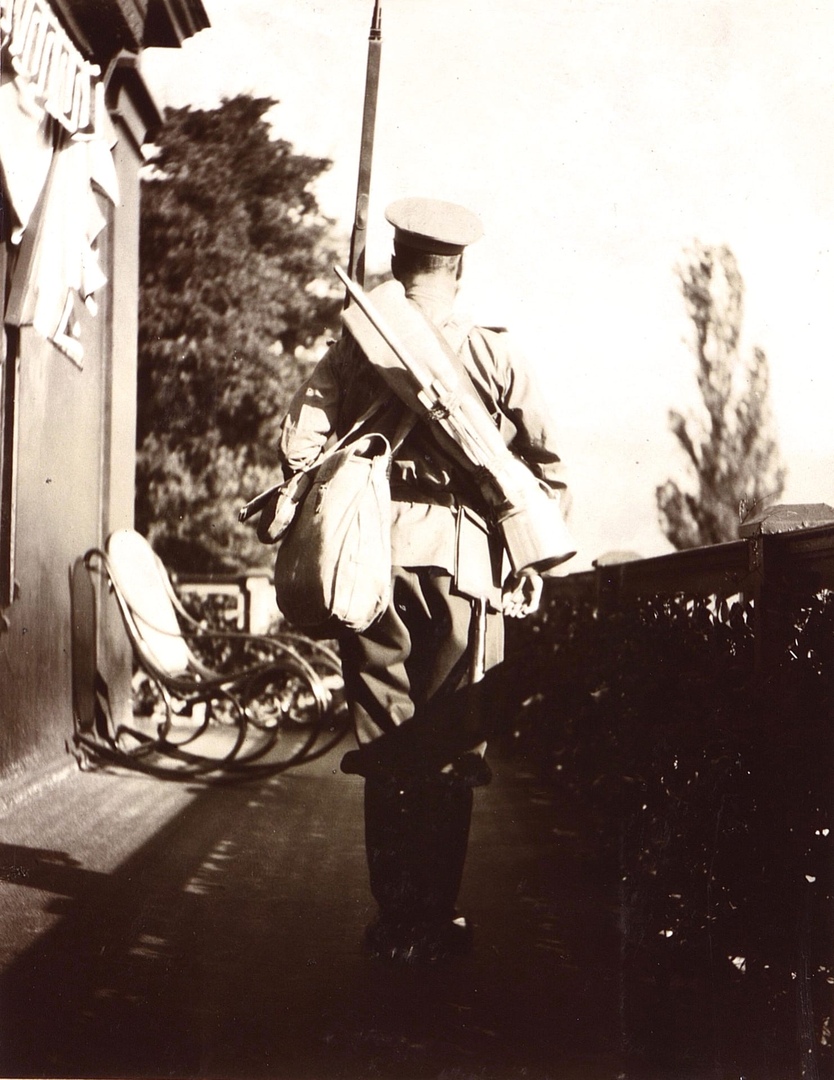
    Emperor Nicholas II tests new uniforms for the soldiers of his army in 1909

    251e

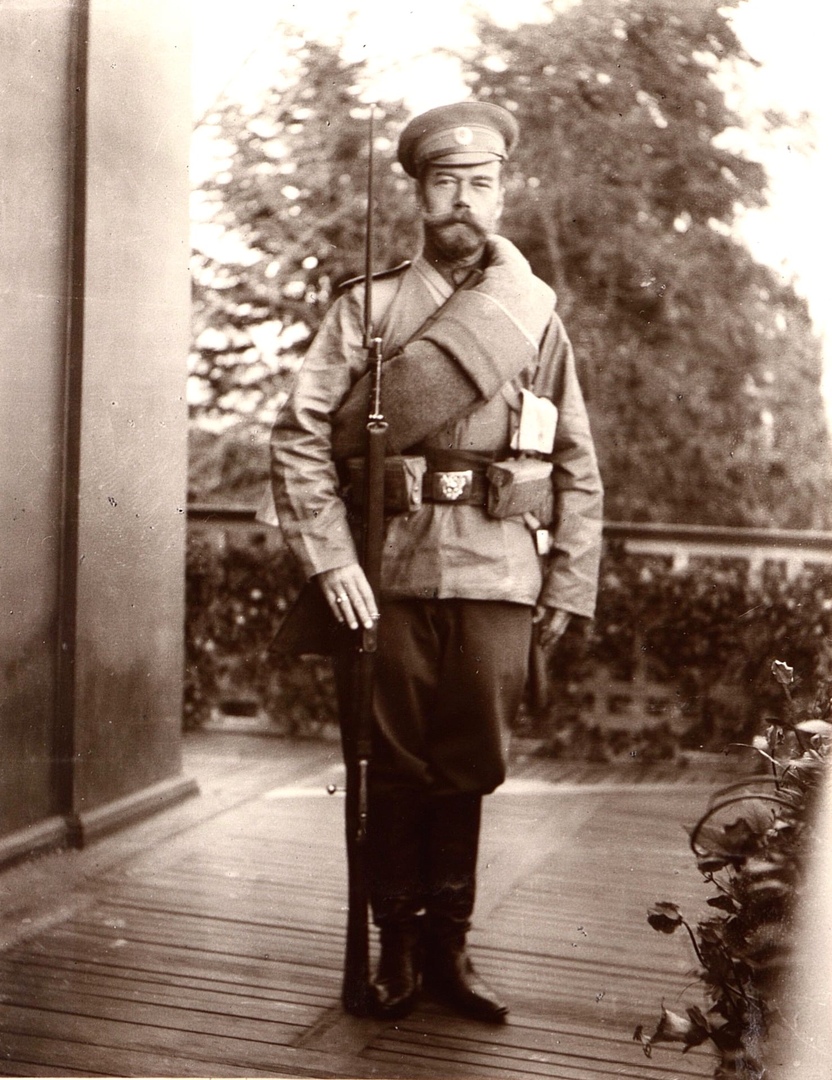
    Emperor Nicholas II tests new uniforms for the soldiers of his army. Livadia 1909
    Photo © State Archive of the Russian Federation (GARF)

    This series of photographs depict Emperor Nicholas II wearing the uniform of a private soldier in Livadia. During the autumn of 1908, the Tsar made it his duty to run tests on new uniforms for the soldiers of his army.

    251a

    Emperor Nicholas II tests new uniforms for the soldiers of his army. Livadia 1909
    Photo © State Archive of the Russian Federation (GARF)

    In 1909, Vladimir Aleksandrovich Sukhomlinov (1848-1926) the Minister of War was at work on an important reform, the determination of the type of clothing and equipment to be worn and carried in future by every Russian infantryman. When considering the modifications proposed by the Minister, the following provides a convincing proof of the extreme conscientiousness and sense of duty which inspired Nicholas II, as head of the Russian Imperial Army. The Tsar wanted full knowledge of the facts, and decided to test the proposed new equipment personally.

    251b

    Emperor Nicholas II tests new uniforms for the soldiers of his army. Livadia 1909
    Photo © State Archive of the Russian Federation (GARF)

    The Emperor told only Alexander Alexandrovich Mossolov (1854-1939), who served as Minister of the Court and the Commander of the Palace of his intention. They had the full equipment, new model, of a soldier in a regiment camping near Livadia brought to the palace. There was no falang, no making to exact measure for the Tsar; he was in the precise position of any recruit who was put into the shirt, pants, and uniform chosen for him, and given his rifle, pouch, and cartridges. The Tsar was careful also to take the regulation supply of bread and water. Thus equipped, he went off alone, covered twenty kilometres out and back on a route chosen at random, and returned to the palace. Forty kilometres — twenty-five miles — is the full length of his forced march; rarely are troops required to do more in a single day.

    251c

    Emperor Nicholas II tests new uniforms for the soldiers of his army. Livadia 1909
    Photo © State Archive of the Russian Federation (GARF)

    The Tsar returned at dusk, after eight or nine hours of marching, rest-time included. A thorough examination showed, beyond any possibility of doubt, that there was not a blister or abrasion of any part on his body. The boots had not hurt his feet. Next day the reform received the Sovereign’s approval.

    251d

    Emperor Nicholas II tests new uniforms for the soldiers of his army. Livadia 1909
    Photo © State Archive of the Russian Federation (GARF)

    The Tsar regarded himself as a soldier — the first professional soldier of the Russian Empire. In this respect he would make no compromise: his duty was to do what every soldier had to do.

    Excerpted from At the Court of the Last Tsar by A.A. Mossolov. English edition published in 1935

    1909

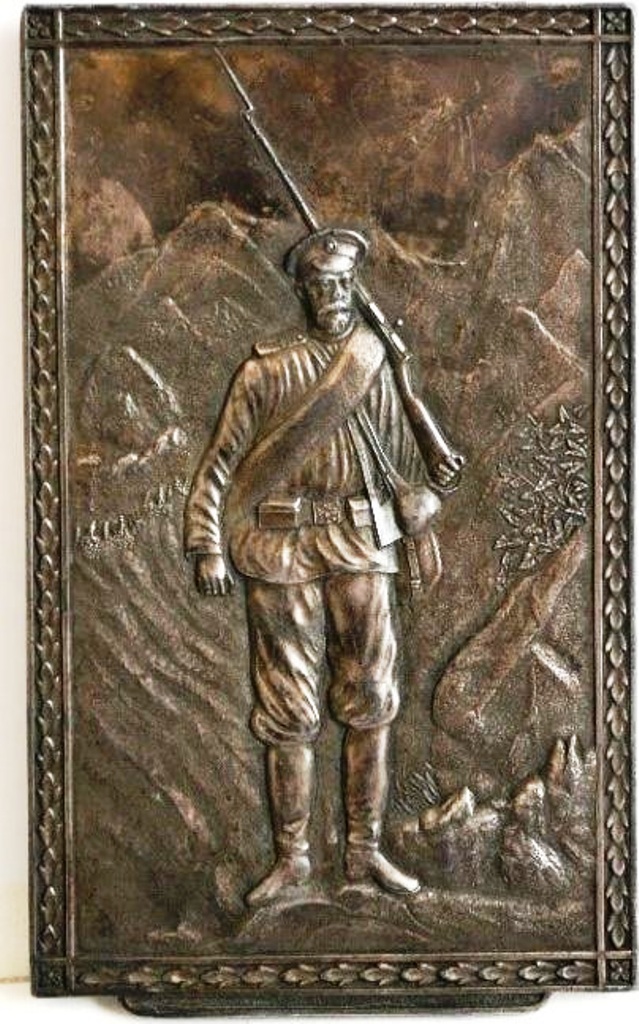
    PHOTO: bas-relief depicting Emperor Nicholas II
    testing new uniforms for the soldiers of his army

    © Paul Gilbert. 5 October 2022