Monument to Nicholas II consecrated in Bijeljina

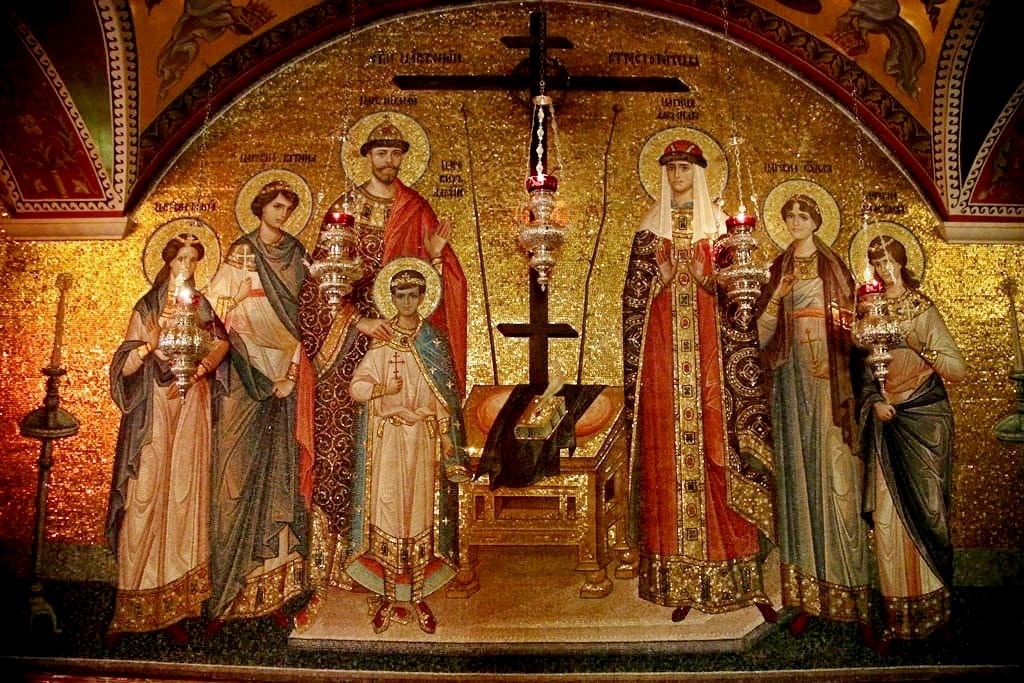
On 4th January 2023, a new monument to the Holy Royal Martyrs was installed and consecrated on the grounds of the Monastery of St. Petka in Bijeljina in Republika Srpska [one of the two entities of Bosnia and Herzegovina, the other being the Federation of Bosnia and Herzegovina].

The monument was made in bronze in the Russian style, by the Serbian sculptor from Belgrade, Milos Komad, and financed by the retired Bishop of Zvornik-Tuzla Vasilije.

The marble pedestal, and placement is the work of academician Drago Mirković, an artist, a great humanist and church benefactor. Mirkovic chose the inscriptions which appear on all four sides of the pedestal quotes by Sergei Bektayev, the Russian national poet, the texts of St. Peter of Cetinsky, Dostoevsky, Pushkin and Emperor Nicholas II’s words of support to the Serbs.

The combined height of the bronze monument and marble pedestal is almost 5 meters [16 ft.] high.

PHOTO: view of the bronze monument before it being mounted on the marble pedestal

PHOTO: full front and rear view of the Holy Royal Martyrs monument

© Paul Gilbert. 19 January 2023

Nicholas II in the news – Autumn 2022

PHOTO: Emperor Nicholas II on the deck of the Imperial Yacht Standart

Russia’s last Emperor and Tsar continues to be the subject of news in Western media. For the benefit of those who do not follow me on my Facebook page, I am pleased to present the following 7 full length articles, news stories and videos published by American and British media services, in addition, are several articles about Nicholas II’s family and faithful retainers.

Below, are the articles published in October, November and December 2022. Click on the title [highlighted in red] and follow the link to read each respective article:

The Officers’ Assembly Building in St. Petersburg – FREE Book

Download, print and read a FREE 94-page English-language copy of Officer Assembly Building by S. Kononov (2018), or the Russian-language edition Дом офицеров Санкт-Петербург.
The author has compiled a history of this magnificent building, and richly illustrated with vintage black and white photos, complimented with full colour photos of the building and its interiors, as they look today.

Source: Russia Beyond. 19 November 2022

British royal family and the last Romanovs pictured together + PHOTOS

Nicholas II was almost a “twin” of King George V, while THE two families had very close relative ties.

Source: Russia Beyond. 17 November 2022

‘The Crown’ Season 5 on Netflix: Fact and fiction in the ‘Russian episode’

A key episode in the new season of ‘The Crown’ – ‘Ipatiev House’ – dwells on the centuries-long relations between Britain and Russia. Here is one account of what is true in it and what is simply artistic invention, something the current season is particularly good at.

Source: Russia Beyond. 14 November 2022

Archival Documentary of the Russian Royal Family (VIDEO)

I am pleased to share the following NEW documentary prepared by the Museum in Memory of Emperor Nicholas II’s Family, which features rare footage, made from 98 fragments of film from 1896-1916.

Duration: 43 minutes. ENGLISH with closed captioning for the hearing impaired.

Source: The Romanov Royal Martyrs Project. 16 July 2022

Remembering the Romanov Children (VIDEO)

The Romanov children were extraordinary in their ordinariness. Despite being born in one of the highest and most enviable positions in the world, and having access to all possible worldly goods, they lived and were brought up like ordinary children. They were beautiful not only in their outward appearance, which was striking but primarily in their inner qualities. From their father, they inherited the traits of kindness, modesty, simplicity, an unshakable sense of duty, and an all-consuming love for their homeland. From their mother, they inherited deep faith, straightforwardness, self-discipline, and strength of spirit.

Duration: 37 minutes. ENGLISH with closed captioning for the hearing impaired.

Source: The Romanov Royal Martyrs Project. 27 October 2022

5 urban legends about Rasputin – the ‘wizard’ of the Romanovs

Did Rasputin really predict the death of the Romanov dynasty and the Revolution? And did he really treat the sickly tsesarevich with prayer alone, as well as act as gray eminence to the tsar? We did a fact check on the last Russian Royal Family’s notorious spiritual advisor.

Source: Russia Beyond. 7 October 2022

‘Fear God and Honor the Emperor

Some Thoughts on the Passing of HM Queen Elizabeth, of Blessed Memory’ by the Very Reverend Archpriest Michael Protopopov, the parish priest of the Church of Our Lady’s Dormition, Dandendong, Australia.

“Our beloved Queen of blessed memory, understood that royal power is a gift of God and that her subjects need to be educated before they can understand the deep implications of a government instituted by God and which is a reflection of the Divine Kingdom of God.

“The Queen was a perfect sovereign reigning within the bounds of Christian principles and not on the desire for personal power and authority; and she had the understanding that a true monarchical structure is a divine partnership in which God, the sovereign and the people all have an important role to play.”

Source: Orthodox Christianity. 5 October 2022

***

For MORE articles, please refer to the following links:

Nicholas II in the news – Summer 2022
12 articles published in July, August and September 2022

Nicholas II in the news – Spring 2022
7 articles published in April, May and June 2022

Nicholas II in the news – Winter 2022
6 articles published in January, February and March 2022

Paul Gilbert’s Romanov Bookshop on AMAZON – UPDATED with NEW titles!!

I have published more than 30 titles to date through AMAZON – featuring one of the largest selections of books on Nicholas II, the Romanov dynasty and the history of Imperial Russia.

Please CLICK on the BANNER or LINK above to review my current selection of titles in hardcover, paperback and ebook editions. Listings provide a full description for each title, pricing and a Look inside feature.

© 31 December 2022

Tula museum to host Nicholas II exhibit in 2023

Next year marks the 155th anniversary of the birth [19th (O.S. 6th) May 1868] and 105th anniversary of the death [17th July 1918] of the last Russian Emperor Nicholas II. The Tula branch of the State Historical Museum in Moscow is now preparing a unique exhibition dedicated to these anniversaries.

The exhibition will give visitors an opportunity to “look” at the life of the Russian ruler and his family through the impartial lens of the camera. The exposition is emphatically documentary: rare photographs from the collection of the State Historical Museum which depict the private life of the Russian monarch. In addition, the exhibit will feature two topics: “Nicholas II as the head of the Russian Empire” and “Nicholas II as the head of the Imperial Family”.

In addition to photographs, portraits of Nicholas II and Akexandra Feodorovna, watercolors depicting episodes from the life of the Imperial Family, drawings of Empress Alexandra Feodorovna, unique historical documents, including autographs of the last Romanovs, will be exhibited.

In addition, the exhibition will include precious orders presented to Nicholas II from the collection of the State Historical Museum. “These precious orders from European and Asian countries, stored in the collection of the numismatics department of the museum, rarely leave the walls of the fund,” said Director Alexey Levykin.

The exhibition presents Russian Orders awarded to Nicholas II[1], in addition to those given by Great Britain, Prussia, France, Austria-Hungary, Japan, Thailand and other European and Asian countries[2]. Many orders are exhibited for the first time.

“The orders were made of silver and gold and decorated with precious stones. Each exhibit outstanding craftsmanship, utilizing various jewelry techniques: gold embroidery, filigree, various types of enameling, engraving, and casting,” he added.

The Nicholas II exhibition will open in May 2023, the museum is planning a Russian-language illustrated exhibition catalogue.

The State Historical Museum in Moscow, opened the first regional branch in Tula at the end of September 2020 as part of the celebration marking the 500th anniversary of the Tula Kremlin.

NOTES:

[1] Nicholas II was the recipient of 7 national honours

[2] Nicholas II was the recipient of 51 foreign honours from 35 countries, duchies, etc

©  Paul Gilbert. 19 December 2022

Why Nicholas II Is Glorified As a Saint

by Ruslan Ward @ Russian Faith

People often ask why Tsar Nicholas II and his family were canonized by the Russian Orthodox Church. The controversy reached a new high following the release of the controversial film ‘Matilda’ in Russia in 2017. Many people still question the sainthood of Tsar Nicholas II because of their criticism of his political and personal actions. The Russian television channel Tsargrad.TV released a video explaining the canonization. This article written by Ruslan Ward is based on a translation of the arguments in the video. It also complements the video material with other sources. 


Following the social upheaval caused by the Russian film “Matilda” in 2017, the timeworn question surfaced yet again: Why did the Russian Church canonize Tsar Nicholas II as a saint?

Some people are doubtful, saying: What kind of saint was he? He rejected the throne, destroyed the country, was a weak ruler, etc.

Though many of these accusations are actually inaccurate stereotypes, whether they’re true or not is irrelevant in this instance.

Let’s review, once again, how Christians understand “sainthood” and why the Church made the decision to name Nicholas II a saint. 

A saint is NOT a person who never sinnedA saint is definitely not someone who never made mistakes.

The Bible directly states that no man has ever lived, who has not sinned – Ecclesiastes 7:20: Surely there is no righteous man on earth who does good and never sins. Indeed, there is no one on earth who is righteous, no one who does what is right and never sins. Not a single person on earth is always good and never sins.

A saint is someone who always strains towards God, becomes near to God, and, by the strength of God’s Grace, defeats evil in himself and in the surrounding world.

The Russian Orthodox Church has different categories for saints, that offer explanation what particular aspect of that person’s life made them pleasing and similar to Christ.

Here are a few examples: 

  • The Holy Martyrs are people who were faced with the choice between keeping their own lives and being faithful to Christ. They chose faith to Christ and lost their lives.
  • The Confessors are people who openly preached the faith during persecutions.
  • The Holy Unmercenaries are saints who exhibited extraordinary charity and generosity in the name of the Christian faith

In the Russian Orthodox Church, Nicholas II and his family were canonized (made saints) as Passion-bearers[1]. A Passion bearer is someone who faced his death in a Christ-like manner.

Passion-bearers die and suffer not for the explicit reason that they are Christians. They are people who were killed innocently, with no fault, but yet maintained an attitude of Christian meekness and love towards their persecutors and murderers, thus fulfilling God’s commandment.

An example of this love, of this meek approach to ones’ torturers, was given to us by Christ Himself.

Having been completely innocent on the Cross of Golgotha, Christ pronounced the words that totally changed the course history of humanity, offering a radically different approach to one’s enemies. The soldiers that had just crucified Christ were standing around the cross. They didn’t understand at all what had just happened, they didn’t understand WHO was dying on the Cross. They sat around the scene of violence and suffering, and threw lots for would take which article of Christ’s clothing home.

Yet Christ said “Lord, forgive them. They know not what they do.”

Emperor Nicholas and his entire family meekly, patiently accepted their unfair persecution, the surrounding unjust criticism and hate, the harsh treatment they received, and their violent, brutal death.

It’s well known that the Emperor was offered the chance to leave the country, to escape a horrifying end and save his own life and the life of other members of the family. But he consciously decided not to. He consciously remained in the country; he believed it was his duty. 

Nicholas II and his family have been named saints, because they accepted their sufferings and trials in a Christian manner; because they met death at the hands of those, who were moved by hatred and anger, with Christlike love and patience.

On the eve of the terrifying murder in Ipatyev house, Nicholas II’s eldest daughter, the Grand Duchess Olga wrote.

“Father asks the following message to be given to all those who have remained faithful to him, and to those on whom they may still have influence, that they should not attempt to take revenge for him, since he has forgiven everyone and prays for everyone. He wants them to remember that the evil which is now in the world will be become still stronger, but that evil will never conquer evil , but only Love…”

It was precisely for the reason of their unconquerable meekness, patience, and love, that the Tsar’s family are saints. Not for their political actions, not how saintly or “right” their lives were, but for how they met their horrible end: with Christian love and faith.

More about how they treated their trials and the people who hated and purposely tortured them from an article on Pravmir:

In Ekaterinburg they spent three hellish months of psychological torture – and yet they all retained their inward calm and state of prayer, so that not a small number of their tormentors were softened by these valiant Christian strugglers.

As Pierre Gilliard, the French tutor to the Tsarevich Alexis recalled:

“The courage of the prisoners was sustained in a remarkable way by religion. They had kept that wonderful faith which in Tobolsk had been the admiration of their entourage and which had given them such strength, such serenity in suffering.

They were already almost entirely detached from this world. The Tsaritsa and Grand Duchesses could often be heard singing religious airs, which affected their guards in spite of themselves.

Gradually these guards were humanised by contact with their prisoners.

They were astonished at their simplicity, attracted by their gentleness, subdued by their serene dignity, and soon found themselves dominated by those whom they thought they held in their power.

The drunken Avdiev found himself disarmed by such greatness of soul; he grew conscious of his own infamy. The early ferocity of these men was succeeded by profound piety.”

When this would happen, the inhuman Bolsheviks would replace the guards who had been so touched with crueller and more animalistic ones.

Seldom being allowed to go to church, they nevertheless nourished their souls with home prayers and greatly rejoiced at every opportunity to receive the Divine sacraments.

Three days before their martyrdom, in the very house in which they were imprisoned, there took place the last church service of their suffering lives.

As the officiating priest, Fr. John Storozhev, related:

“‘It appeared to me that the Emperor, and all his daughters, too, were very tired. During such a service it is customary to read a prayer for the deceased. For some reason, the Deacon began to sing it (which is usually done in memorial services for the reposed), and I joined him…As soon as we started to sing, we heard the Imperial Family behind us drop to their knees’ (as is done during funeral services)…

Thus they prepared themselves, without suspecting it, for their own death – in accepting the funeral viaticum.

Contrary to their custom none of the family sang during the service, and upon leaving the house the clergymen expressed the opinion that they ‘appeared different’ – as if something had happened to them.”

Not only the Tsar, but the whole of his blessed family, met their fate with truly Christian patience. Thus on March 13,1917, the Tsarevich Alexis wrote to his sister Anastasia:

“I will pray fervently for you and Maria. With God everything will pass. Be patient and pray.”

Shortly after the abdication the Empress said: “Our sufferings are nothing. Look at the sufferings of the Saviour, how He suffered for us. If this is necessary for Russia, we are ready to sacrifice our lives and everything.”

And again: “I love my country, with all its faults. It grows dearer and dearer to me… I feel old, oh, so old, but I am still the mother of this country, and I suffer its pains as my own child’s pains, and I love it in spite of all its sins and horrors… Since [God] sent us such trials, evidently He thinks we are sufficiently prepared for it. It is a sort of examination… One can find in everything something good and useful – whatever sufferings we go through – let it be. He will give us strength and patience and will not leave us. He is merciful. It is only necessary to bow to His will without murmur and wait – there on the other side He is preparing for all who love Him indescribable joy.

NOTES:

[1] The Moscow Patriarchate canonized the family as passion bearers: people who face death with resignation, in a Christ-like manner, as distinguished from martyrs, the latter historically killed for their faith. Proponents cited the piety of the family and reports that the Tsarina and her eldest daughter Olga prayed and attempted to make the sign of the cross immediately before they died.

The term “passion-bearer” is used in relation to those Russian saints who, “imitating Christ, endured with patience physical, moral suffering and death at the hands of political opponents. In the history of the Russian Church, such passion-bearers were the holy noble princes Boris and Gleb (1015), Igor of Chernigov (+ 1147), Andrei Bogolyubsky (+ 1174), Mikhail of Tverskoy (+ 1318), Tsarevich Dimitri (+ 1591). All of them, by their feat of passion-bearers, showed a high example of Christian morality and patience.

Despite their official designation as “passion-bearers” by the August 2000 Council, Nicholas II and his family are referred to as “martyrs” in Church publications, icons, and in popular veneration by the people.

*On 1st November 1981, Emperor Nicholas II, his wife, their five children and four faithful retainers were canonized as new martyrs by the Russian Orthodox Church Outside Russia (ROCOR),

© Ruslan Ward @ Russian Faith. 11 December 2022

Nicholas II: News from Russian Media & Archival Sources

*This title is available from AMAZON in the USA, UK, Canada, Australia,
France, Germany, Spain, Italy, Netherlands, Poland, Sweden and Japan

CLICK HERE TO ORDER THE PAPERBACK EDITION @ $20.00 USD

English. Large 8-1/2″ x 11″ format, 256 pages, 300+ black & white photos

In this book, you will find more than 130 articles and news stories about exhibitions, new monuments, portraits, polls on Nicholas II’s popularity in post-Soviet Russia, updates on the restoration of the Alexander Palace, events marking the 150th anniversary of the birth of Nicholas II and the 100th anniversary of his death and martyrdom, the Russian Orthodox Church and the Ekaterinburg remains and much more.

These articles and news stories were originally published in Sovereign (2015-2020) and Royal Russia (2011-2020). Both of these periodicals are no longer published, the back issues out of print, therefore, I am pleased to offer these important materials in one concise volume. They are complemented with more than 300 black and white photographs, many of which have never been published in any Western newspaper, magazine or book. Each article has been sourced from Russian media and archival sources, and translated into English.

While this collection of articles and news stories, may not appeal to every one, it will prove a valuable research tool for those studying the life and reign of Nicholas II, particularly as he is perceived in modern-day Russia.

Paul Gilbert’s Romanov Bookshop on AMAZON

I have published more than 30 titles to date through AMAZON – featuring one of the largest selections of books on Nicholas II, the Romanov dynasty and the history of Imperial Russia. These include both new titles and reprints of titles which have out of print for years.

Please CLICK on the BANNER or LINK above to review my current selection of titles in hardcover, paperback and ebook editions. Listings provide a full description for each title, pricing and a Look inside feature.

© Paul Gilbert. 7 November 2022

© Paul Gilbert. 2 December 2022

Portrait of Nicholas II still bears the cuts made by Bolshevik bayonets in 1917

PHOTO: the portrait of Emperor Nicholas II, painted by Nun Emeliana (Batalov), still bears the cuts made by Bolshevik bayonets in 1917

During his reign, Emperor Nicholas II never visited the Novo-Tikhvinsky Convent in Ekaterinburg, however, when a request was made by one of the nuns to paint his portrait came, the Emperor granted this favour. It was Nun Emeliana (Batalov), who painted the portrait of the Emperor wearing the uniform of the Life-Guards Hussar Regiment. The portrait – a gift marking the 1896 coronation – was sent to Moscow, where it was presented to the new Emperor at a reception held in the Grand Kremlin Palace. Nicholas was so pleased with the portrait, that he ordered that it be sent to St Petersburg, where it was to be hung in one of the rooms of his private apartments in the Winter Palace.

In October 1917, during the assault on the Winter Palace, the portrait was cut by the bayonets of Bolshevik thugs. For the next 12 years, the portrait sat gathering dust in the attic of the Winter Palace, until it was transferred to Museum of the October Revolution in Leningrad. During the Soviet years, the portrait hung in the museum or more than 70 years. After the fall of the Soviet Union in 1991, the portrait was restored, leaving, however, the cuts made by the bayonets as a poignant reminder of the dark days of the Bolshevik Revolution which swept Russia and the monarchy into an abyss.

Today, the portrait hangs in the Museum of Political History of Russia (located in the former mansion of Mathilde Kschessinska) in St. Petersburg.

© Paul Gilbert. 29 November 2022

BOOK REVIEW: ‘The Lost World of Imperial Russia’

Book review by Mikhail Smirnov, published on Russian Faith

A Great Book for those Interested in Orthodox Culture

I had the opportunity to review the new book, The Lost World of Imperial Russia, by Russian historian, Paul Gilbert. This book is available at Amazon for a decent price and I do recommend it for your Orthodox library. There are indeed a number of illustrated books on Russia, but this one is from a purely Orthodox perspective, that captures key elements of the Orthodox empire of Russia. Saints such as John of Kronstadt, and many others, are displayed in the book. Many churches and ecclesial events are also displayed…pictures that are very hard to find and very helpful for those who research Russia and plan on visiting Russia. I intend to bring this book the next time I visit, primarily because, again, it is most purely Orthodox.

It’s certainly a good coffee table book, but the more I look at it the more I see it as a travel book. It’s approximately 8.5×11, so it’s not too big, and not very heavy. Most importantly it has the right stuff in it for those who really want to experience Russia in the way we believe it should be experienced.

On that note of experiencing Russia, I would like to add that what Paul reveals here is foundational for Orthodox Christians or those seeking Orthodoxy, but from my experience, the more miraculous experiences happen from how you “live and leave” these areas. Many of these places are holy sites, where saints dwelled and worked, and where angels still dwell and work. So, locating the right place, as you can find in this book, and then praying and maybe even spending time at these places will enable you to experience the grace of God when you need it in everyday life.

Get the book, not necessarily to see nice pics, but to begin your journey to Holy Russia. The war will clear soon and it will be relatively easy to travel there. Open the book, pray to God, and then go!

© Mikhail Smirnov. 16 November 2022

Serbian monastery installs memorial plaque to Nicholas II

PHOTO: plaque to Emperor Nicholas II and an icon of the Holy Royal Martyrs was unveiled and consecrated on the grounds of the Rukumija Monastery

On 12th November, a simple wooden plaque to Emperor Nicholas II and an icon of the Holy Royal Martyrs was unveiled and consecrated on the grounds of the Rukumija Monastery, near the town of Pozharevac in Serbia. The installation of the plaque is in gratitude for the Russian Emperor’s efforts to come to the aid of Serbia during the First World War.

The ceremony began with the singing of the Russian and Serbian national anthems, then the choir performed the “Song to the Holy Tsar Nicholas“. This was followed by the consecration ceremony performed by the rector of the monastery Heiromonk Simeon, in the presence of parishioners and distinguished guests from the Russian Embassy in Belgrade (Vladlen Zelenin), the Russian House in Belgrade (Georgy Engelgart) and the Foundation for the Unity of Orthodox Peoples (Natalya Kotseva).

Zelenin thanked the Serbian people for honouring the memory of Tsar Nicholas II. In turn, Engelhardt noted that the gratitude and love of the Serbian people for the last Russian Tsar could serve as an example for the Russian people themselves.

PHOTO: the Rukumija Monastery, near the town of Pozharevac in Serbia

For Serbians, Emperor Nicholas II is revered both as a saint and as a statesman. For many Serbs, the image of the Russian Tsar is a symbol of loyalty, honesty and devotion to one’s word. The Serbian people remember that it was for the sake of saving Serbia that Nicholas II entered the First World War.

For more information on Serbia’s reverance for Emperor Nicholas II, please refer to the following articles, researched from Russian and Serbian sources by Paul Gilbert:

Nicholas II through Serbian eyes, published on 13th October 2020

“For us Serbs, Nicholas II will be the greatest and most revered of all saints”, published on 11th August 2022

“I consider Nicholas II a great reformer” – Serbian Ambassador to Russia, published on 13th May 2019

New outdoor portrait of Nicholas II appear’s in Serbia’s capital, published on 2nd January 2020

Icon of Tsar-Martyr Nicholas II from Serbia arrives in St. Petersburg, published on 14th May 2021

The Russian House of Emperor Nicholas II in Belgrade, Serbia, published on 12th October 2022

© 14 November 2022

Archival Documentary of the Russian Royal Family

CLICK on the above image to watch this video. ENGLISH. Duration: 43 minutes

This documentary prepared by the Museum in Memory of Emperor Nicholas II’s Family features rare footage, made from 98 fragments of film from 1896-1916 shot in Moscow, Kiev, St. Petersburg, Tsarskoye Selo, Livadia, Chisinau, Yevpatoria, Kostroma, Odessa. Yalta, Nizhny Novgorod, Borodino, Diveyevo, Rostov the Great, Tallinn, Mogilev, Oreanda, and Sevastopol. The material used in the film is from the Russian State Film and Photo Archive, the Russian State Archive of Phonodocuments, and private collections. The music is comprised of fragments from the favorite works of Emperor Nicholas II.

While many people are familiar with photographs of Nicholas II participating in solemn and gala events in cities and towns throughout the Russian Empire, this documentary features some unique vintage footage of Russia’s last Emperor and Tsar.

03:51 – Nicholas II and the grand dukes carry the coffin with the relics of St. Serephim

06:40 – the foundation of the Feodorovsky Sovereign Cathedral in Tsarskoye Selo

07:40 – the Emperor and his family visiting the St. Petersburg Mosque

09:33 – the Emperor and his family taking part in a procession at the Pechersk Lavra Caves Monastery in Kiev

15:10 – Nicholas II and his family at the Chapel of the Iveron Icon of the Mother of God in Moscow

26:08 – the Imperial Children in matching outfits, playing on the deck of the Imperial Yacht Standart

33:15 – Tsesarevich Alexei playing with his dog Joy

33:55 – Nicholas II and his family embarking on a boat ride on the Dnieper River, near Mogilev, August 1916

41:50 – Nicholas II at the celebration of His Majesty’s Imperial Guard on 4th October 1916, the last film of the Imperial Family before the Tsar’s abdication the following year

· · ─── ·•· ─── · ·

VIDEO CHAPTERS and HIGHLIGHTS

· · ─── ·•· ─── · ·

00:00 Intro

00:27 Part 1: Spiritual Life

  • this part focusts on the piety of Emperor Nicholas II, it includes film footage of the Tsar and his family attending religious ceremonies in various parts of the Russian Empire, the laying of the foundations for new Orthodox churches, visits to monasteries and churches, attending molebens, and more.

19:34 Part 2: His Majesty’s Vacationing

  • includes film footage of Nicholas II kayaking in the Finnish skerries; playing tennis at Livadia including footage of Empress Alexandra Feodorovna taking part; hunting; motoring in the Tsar’s favourite Delauney-Belleville; sailing on the Imperial Yacht Standart; the Grand Duchesses taking part in games with junior officers; Tsesarevich Alexei playing with his friends, under the watchful eye of his boatswain Derevenko; among others.

35:39 Part 3: Emotional Characteristics

  • includes an interesting examination of the facial expressions, movements and nervous habits of Nicholas II, which include his constant stroking of his moustache; smooths and adjusts his uniform, touches his cap or crumples his gloves; Empress Alexandra Feodorovna is seen constantly bowing her head low with particular respect to those around her; the Grand Duchesses smiling often and sweetly; various scenes of the Tsar receiving the tradtional bread and salt.

· · ─────── ·•· ─────── · ·

A film by Konstantin Kapkov
© Copyright of the Museum in Memory of Emperor Nicholas II’s Family.
Producer: Victor Semyonov
Screenwriter: Konstantin Kapkov
Editing: Vladimir Samorodov
Music Selection: Alexander Kosov
Sound Engineer: Galina Siver
English translation and dubbing: Aleksander Brooks
Executive editors: Archpriest Alexander Derevyanko & Nadezhda Khmeleva

· · ─────── ·•· ─────── · ·

This video is produced as part of the project for the book “The Romanov Royal Martyrs”, which is an impressive 512-page book, featuring nearly 200 black & white photographs, and a 56-page photo insert of more than 80 high-quality images, colorized by the acclaimed Russian artist Olga Shirnina (Klimbim) and appearing here in print for the first time.

Click HERE to read Romanov Book of the Year for 2019: ‘The Romanov Royal Martyrs’ by Paul Gilbert, originally published on 18th November 2019

· · ─────── ·•· ─────── · ·

Click HERE to EXPLORE the book

Click HERE to ORDER the book

© The Romanov Royal Martyrs. 12 November 2022

    On this day in 1894: Nicholas II ascended the throne

    PHOTO: Tsesarevich and Grand Duke Nicholas Alexandrovich. 1894

    On this day – 2nd November[1] [O.S. 20th October] 1894, Tsesarevich and Grand Duke Nicholas Alexandrovich ascended the throne as Russia’s last emperor and tsar.

    It was on this historic day, that Nicholas Alexandrovich inherited the throne from his father Alexander III (1845-1894), who ruled Russia for only 13 years. Government officials, courtiers and troops of the Imperial Russian Army, among others, all took an oath of allegiance to their new emperor.

    In the Church of the Exaltation of the Cross [adjacent to Livadia Palace], Nicholas pledged his oath of allegiance to Russia solemnly promising to protect the autocracy firmly and unswervingly, like his late father.

    It was also in the Church of the Exaltation of the Cross, that the holy righteous John of Kronstadt anointed Princess Alix of Hesse, who became the Orthodox faithful Grand Duchess and future Empress Alexandra Feodorovna.

    NOTE: The Church of the Exaltation of the Cross has survived to this day – PG

    ***

    Though Nicholas Alexandrovich was heir-apparent to the throne, his father failed to prepare him for his future role as Tsar. He attended meetings of the State Council; however, as his father was only in his forties, it was expected that it would be many years before Nicholas succeeded to the throne. Alexander’s assumptions that he would live a long life and had years to prepare Nicholas for becoming Tsar proved wrong, as by 1894, Alexander’s health was failing.

    Russia’s finance minister, Count Sergei Yulyevich Witte (1849-1915), suggested to the Tsar that Nicholas be appointed to the Siberian Railway Committee. According to Witte, Alexander argued that Nicholas was not mature enough to take on serious responsibilities. Witte stated that if Nicholas was not introduced to state affairs, he would never be ready to understand them.

    Nicholas was only 26 years old when his father died suddenly after a long and serious illness, at the age of 49.

    PHOTO: the Church of the Exaltation of the Cross [adjacent to Livadia Palace]

    On 27th (O.S. 14th) November 1894, Nicholas Alexandrovich married Grand Duchess Alexandra Feodorovna (future Empress Alexandra Fedorovna). Their nuptials fell on the birthday of the Dowager Empress Maria Feodorovna, and court mourning could be slightly relaxed. The ceremony was held in the Grand Church (the home church of the Imperial Family) of the Winter Palace in St. Petersburg.

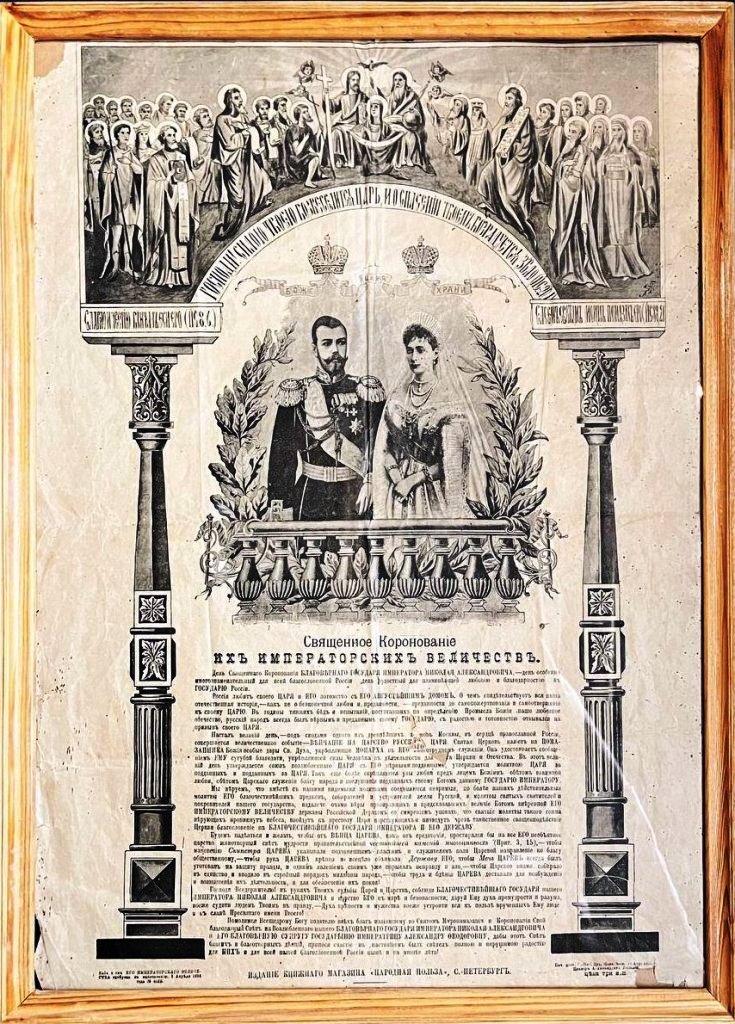
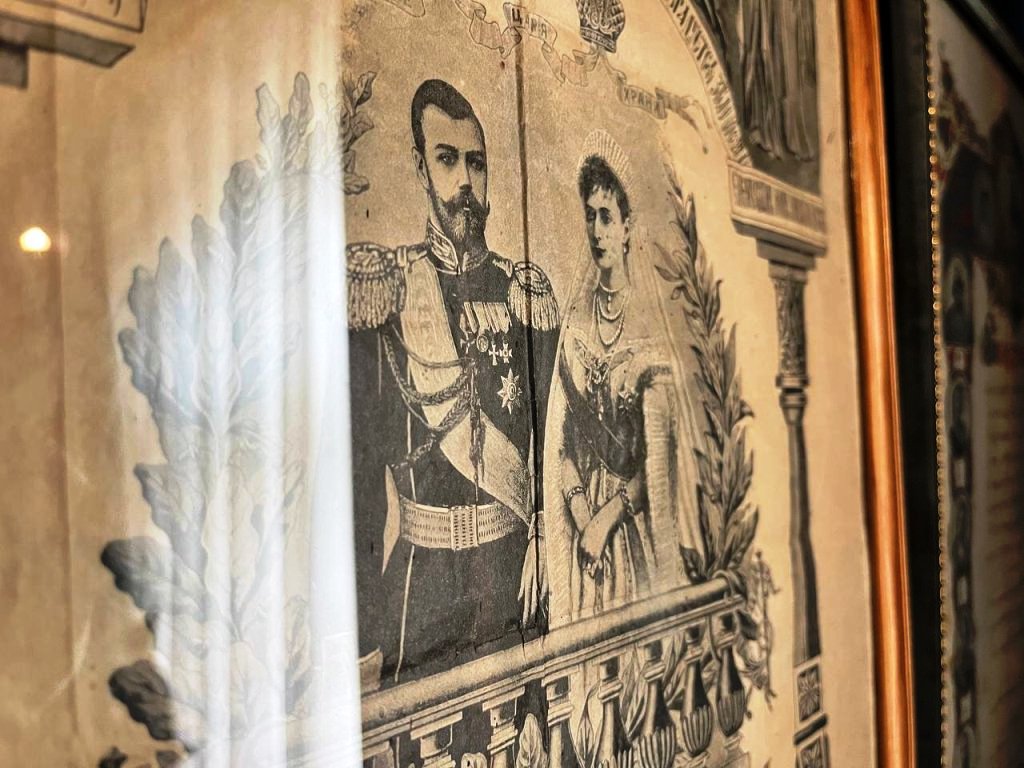
    A respectable period of mourning was the reason his coronation was postponed for a year and a half. The Holy Coronation of Emperor Nicholas II and Empress Alexandra Feodorovna, took place on 27th (O.S. 14th) May 1896 in the Assumption Cathedral of the Moscow Kremlin. It would be the last coronation of a Romanov Tsar.

    During the reign of Nicholas II, Russia made considerable progress in all areas of life, while experiencing tremendous growth in its economy. Under his reforms, the Russian Empire reached an unprecedented level of economic development. However, this time was also marked by the growth of revolutionary sentiments.

    Click HERE to read 70 facts about Emperor Nicholas II and his reign, originally published on 13th July 2021.

    His Imperial Majesty Sovereign Emperor Nicholas II reigned over the Russian Empire for more than 22 years. He abdicated on 15th March 1917 (O.S. 2nd March) 1917.

    Some historians argue that the act of abdication was invalid for two reasons: one, because it was signed in pencil, violating all the necessary legal and procedural methods and format, and thus had no legal force; and two, because the instrument of abdication was never officially published by the Imperial Senate.

    Regardless, as God’s Anointed, Nicholas II could not be displaced during his lifetime. Since the will of God was nowhere manifest, neither in the naming of his brother Grand Duke Mikhail Alexandrovich to the throne, nor in the Tsar’s signing of the instrument of abdication, his status as Tsar remained inviolate and unassailable. He remained Emperor until the day of his death and martyrdom on 17th July 1918. Ot was on this day, that the Russian Imperial House ceased to exist.

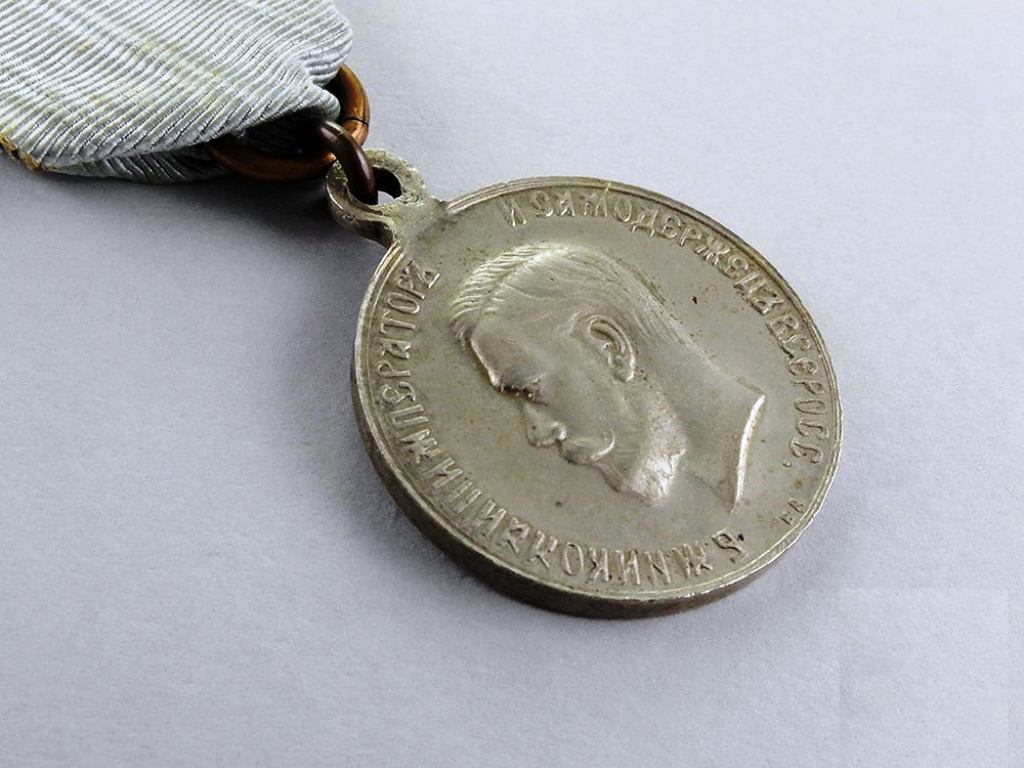
    In 2018, a commemorative medal was issued, marking the 124th anniversary of Nicholas II’s ascension to the throne in 1894. The medal was the first of The Romanovs. Golden Collection to be minted by the Imperial Mint in Moscow.

    NOTES:

    [1] In recent years there has been much confusion by non-Orthodox Christians and Westerners with regard to the correct dates of important events (births, deaths, marriages, etc.) among members of the Russian Imperial Family, according to the New Style calendar.

    As an example, is the date marking the death of Alexander III and the accession to the throne of Nicholas II. This happened on the day of Saint Artemius the Great Martyr and the righteous youth Artemiy, on 20th October (2nd November). And if this day is celebrated on 1st November or 3, then we are not commemorating the memory of these saints. Do not rely on any dates on Wikipedia which often provide the incorrect dates of the Gregorian calendar for the late 19th and early 20th centuries.

    With the passage of every leap day that is on the Julian (Old Style) Calendar but not on the Gregorian Calendar, the difference between the two calendars grows another day. Currently, the Gregorian Calendar is thirteen days ahead of the Julian Calendar. Beginning on 14th March 2100 (29th February 2100 Julian), the difference will be fourteen days.

    © Paul Gilbert. 2 November 2022