Nicholas II assumes command of the Russian Imperial Army, 1915

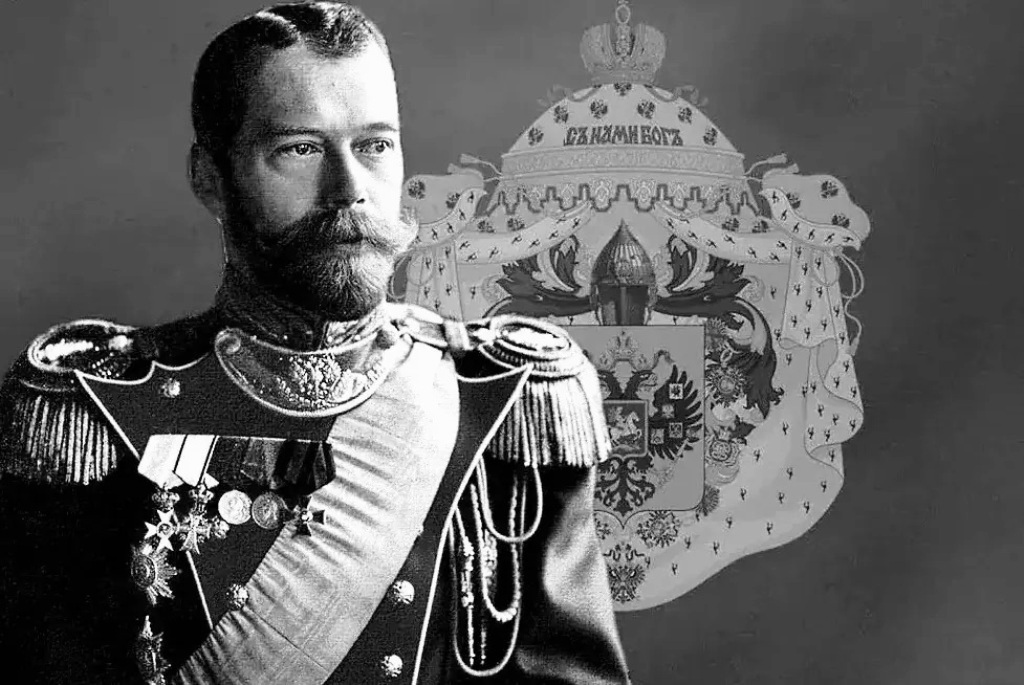
On this day – 5th September (O.S. 23rd August) 1915 – Emperor Nicholas II assumed the position as Commander-in-Chief of the Russian Imperial Armed Forces.

After the great retreat of the Russian army in the summer of 1915, the Tsar removed his cousin Grand Duke Nicholas “Nikolasha” Nikolaevich (1856-1929) of the position on 21st August 1915.

In the order, the Tsar wrote with his own hand: “With firm faith in God’s mercy and with unshakable confidence in the final victory, we will fulfill our sacred duty of defending the Motherland to the end and will not disgrace the Russian land. Nicholas”.

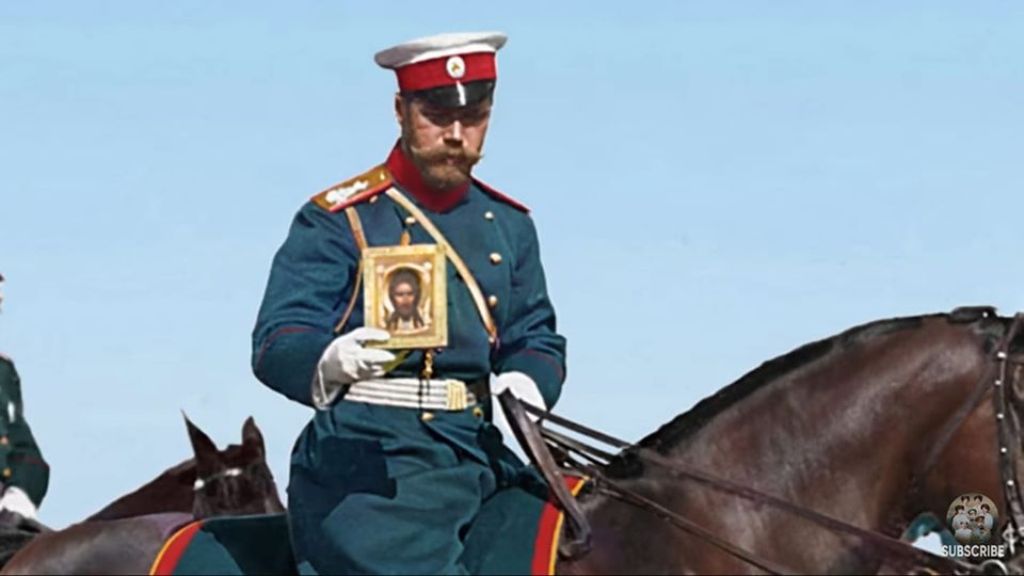
Some historians have wrongly suggested that Nicholas II’s decision was disastrous, citing that the move was largely symbolic. It was at this stage of his reign that the Tsar’s patriotism reached its zenith. He travelled up and down the Eastern Front on the Imperial Train, in his motorcars and even on horseback to show himself to his troops, boasting morale, reviewing troops, inspecting field hospitals and preside over meetings with his chief-of-staff General Mikhail Vasilyevich Alekseyev (1857-1918).

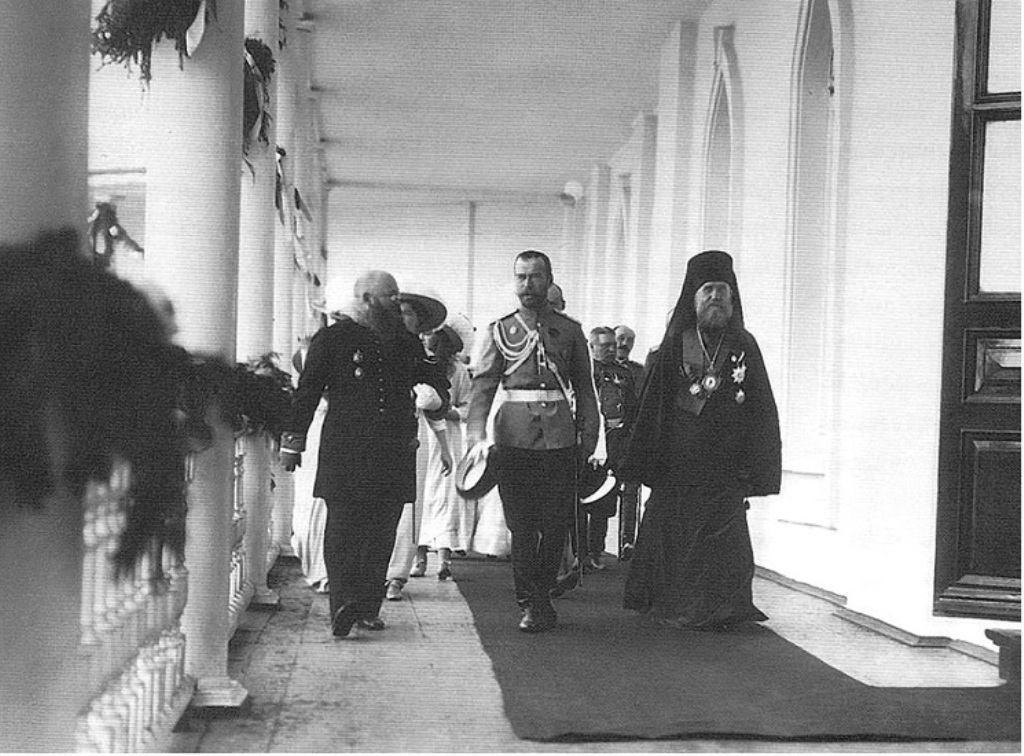
PHOTO: Nicholas II with his chief-of-staff General Mikhail Vasilyevich Alekseyev

When Nicholas II assumed command of the Russian armed forces, he appointed Alekseyev as Chief of Staff of the General Headquarters and placed in charge of all military operations. He served in this capacity from August 1915 to March 1917.

According to Russian historian George Mikhailovich Katkov (1903-1985): “Alexeev was a modest and reserved man, an educated general, to whom the Tsar treated extremely attentively . . . . Every morning the Tsar and Alexeev discussed the affairs of the front for several hours. They apparently understood each other well, and there is no indication that the Emperor tried to impose any strategic or tactical ideas on his Chief of Staff. In fact, Alexeev was the commander-in-chief, and each of his undertakings was supported by the Sovereign.”

History has now proved that Russia made great gains under Nicholas II’s command. For instance, shortly after he assumed command of the armed forces, the Russian Imperial Army carried out at least 15 major victorious operations, not counting the Brusilov Breakthrough. Russia’s military historians now believe that had the revolution not interfered, Russia was bound to have won the war.

On 1st September (O.S. 19th August) 1916, he wrote the following in a letter to Empress Alexandra Feodorovna:

“Thank God, the news is good – on the first day of our offensive we captured 300 officers and more than 15,000 Austrian and German soldiers…”

On 16th December 2013, Russia’s Defense Minister Sergei Shoigu opened a sculptural composition dedicated to the heroes of World Wars I and II on the grounds of the National Defense Control Center (NDCC) building – situated on Frunze Embankment in Moscow. The WWI monument (above) features Nicholas II on horseback, recognizing and honouring his efforts during the Great War.

FURTHER READING:

“They did not betray their oath” – the fate of the generals who remained loyal to Nicholas II + PHOTOS

© Paul Gilbert. 5 September 2023

Cathedral in memory of Nicholas II under construction in Murmansk

PHOTO: artist concept of the cathedral named in honour of Nicholas II in Murmansk

Construction has begun on a new cathedral named in honour of the Holy Royal Martyr Nicholas II in Murmansk, Russia’s first ice free port founded in 1916 by Nicholas II and named Romanov-on-Murman.

“With the blessing of His Holiness Patriarch Kirill of Moscow and All Russia, the new Russian Orthodox temple will bear the name of the Holy Transfiguration of St. Nicholas Cathedral,” stated Metropolitan Mitrofan of Murmansk and Monchegorsk.

The idea to build a church in honour of the last Tsar in Murmansk is the initiative of the Murmansk diocese. The cathedral will be erected on the site of a former amusement park on the street named after Konstantin Burkov, a veteran of the Soviet-Finnish and Great Patriotic Wars, a Pomeranian sailor who made a significant contribution to the development of the Kola Arctic and was awarded the highest state award of the USSR – the Order of Lenin. In November 2022, Metropolitan Mitrofan presented the project to Patriarch Kirill. During that meeting, the head of the Russian Orthodox Church noted that the style of the temple should correspond to the traditions of the Russian North and promised to support the project.

***

In recent years, Emperor Nicholas II has been commemorated in a number of projects in Murmansk and the surrounding region:

  • In June 2019, Murmansk Airport was reamed Nicholas II-Murmansk Airport
  • In July 2019, plans were announced for a bust-monument to Nicholas II, to be installed in front of the main terminal at Nicholas II-Murmansk Airport

© Paul Gilbert. 27 August 2023

‘The Romanovs: An Imperial Family’ a film by Gleb Panfilov

“A legacy that defied Bolshevik and Soviet attempts of erasure”

***

OBITUARY: the famous Soviet and Russian film director and screenwriter Gleb Anatolyevich Panfilov (1934–2023), died on 26th August 2023, at the age of 89. Memory Eternal! Вечная Память!

***

More than a century has passed since the murder of Emperor Nicholas II and his family brought an end to the Russian monarchy and the Russian Empire. The Soviet Union is no more. But the grandeur of pre-Soviet, Tsarist Russia continues to occupy the imagination of people across the world and the last Russian Imperial family has entered the annals of cinema in many a memorable work of moving images.

Among the cinematic works created around the Romanov family who were brutally murdered by the Ural Soviet on 17th July 1918, is the historical drama film ‘The Romanovs: An Imperial Family’. The Russian made which was released in 2000 having premiered at the 22nd Moscow Film Festival. This film is a must watch not only for ‘Romanovophiles’ but also for history buffs and movie lovers who enjoy the historical drama genre. Directed by internationally acclaimed Russian film director Gleb Anatolyevich Panfilov (1934-2023), it is a Russian language movie with Russian actor Aleksandr Galibin as Emperor Nicholas II and British actress Lynda Bellingham as Empress Alexandra Feodorovna.

The directorial craft of the movie brings to life the perceptions and perspectives of Nicholas II and his family during the last stage of their lives and shows how the imperial family perceived and responded to news of the turmoil in the country that was creating a tide of antipathy towards the monarchy. The narrative shows the humaneness of the Tsar and his family bringing to life their humanity which makes this an endearing film.

Contrary to what Soviet propaganda sought to perpetuate during the reign of communism in Russia, that the Imperial family were cold and uncaring towards the masses, Panfilov’s vision shows how the Romanovs were caring people with admirable humane qualities and talents which even their captors could not help but secretly appreciate.

The movie is quite compelling with a cast of good actors and a plot structure that drives forward the drama of events and action principally through the somewhat insular characters of the Imperial family. Galibin delivers a superb performance as His Imperial Majesty Tsar Nicholas. The character that is brought to life in Panfilov’s directorial vision is one who is much a human with his principal weakness being perhaps that he was torn between how to focus and devote himself and his efforts on being a good father while also being a good monarch and to win the love and respect of all.

The Tsar and Tsarina are shown as two loving humans who are solid in their spousal and parental love. The Imperial children are portrayed as children who feel emotions of sadness, fear, anger and love just like any other, and how they are made hapless victims of a political agenda that overawes all forms of governance and power that formed the old order of imperial Russia.

The revolution is not shown in prominence through extensive scenes of armed conflicts but as more a series of events brought to the knowledge of the Tsar and his family at various stages from February 1917 to the fated day of their massacre in Ekaterinburg on 17th July 1918. Their grasp of matters that near their unseen doom, as a gradual and coldly unnerving series of changes in their household brings to life the ‘psychological environment’ the Imperial family inhabited in their last days. The Tsar and his family are meant to endure suffering that is much more psychological than physical and thus the slow torment and torture of the Romanovs at the hands of the communist red army captors are brought to life.

The Ipatiev House, In what is called the ‘House of Special Purpose’ by the Bolsheviks, a residence located in Ekaterinburg in Western Siberia, the Imperial family is kept under guard, after the Tsar’s abdication and monarchical rule ends and the family finds themselves being political prisoners. However, the ‘House of Special Purpose’ becomes the slaughter house where the massacre of the imperial family and their remaining staff takes place past midnight on 17th July 1918. The murder carried out by the Bolsheviks brings the narrative of the Romanovs to an end. The scene which follows as the end of the film is documentary footage of the scene of canonization of the Romanov family in Russiain 2000.

The final scene is a strong message that one sees at the end of the film when reading it in context of post-Soviet Russia. The statues of Lenin who founded the Union of Soviet Socialist Republics (USSR) have been brought down with the end of the Soviet Union and his legacy now enjoys no glory among Russians. The Romanovs, however, have once again been reborn in their nation’s collective heart and soul, to remain adored in the Russian people’s memory.

The Romanovs: An Imperial Family’ is presented in this post in 13 x 10 minute videos, with ENGLISH subtitles.

This film presents the most historically accurate version of events available to an English audience to date. Unlike Massie’s ‘Nicholas and Alexandra’ (1971), Panfilov filmed entirely in Russia, with many scenes filmed inside the Alexander Palace at Tsarskoye Selo. Furniture was specially created for this film, which can be seen on display in the palace to this day. The recreation of the private apartments of the Imperial family in the Alexander Palace and the Tsar’s Imperial Train are truly remarkable.Overall, the film is visually stunning!

I invite you to make yourself a cup of tea or pour a glass of your favourite wine, sit back, relax and enjoy ‘The Romanovs: An Imperial Family’ – PG

© Dilshan Boange / Paul Gilbert. 20 September 2020

Imperial Railway Pavilion in Tsarskoye Selo is being restored

It’s official! After decades of delays and lack of funding, restoration of the Imperial Railway Pavilion to its original historic look in Pushkin (Tsarskoye Selo) is now underway. Having survived the revolution, war, vandalism and the elements, it is nothing short of a miracle that it has survived to the present day.

The project has some very high profile supporters, including the governor of St. Petersburg, Alexander Beglov and State Duma deputy Vladimir Resin. The official announcement was made during the first meeting of the Board of Trustees of the Tsarskoye Selo Station Foundation, which was held on 17th August in the Imperial Hall of the pavilion.

“We have created a special fund to restore the Imperial Railway Pavilion, the only imperial railway station in Russia. Ideas for the building’s use after the restoration has been completed are currently being developed. Funding will be provided at the expense of the city and federal budgets, as well as private and corporate donors,” Beglov said.

PHOTO: the first meeting of the Board of Trustees of the Tsarskoye Selo Station Foundation, was held on 17th August 2023, in the Imperial Hall of the pavilion

One of the finest examples of the Neo-Russian style

The construction of a special branch line from the Vitebsk Railway Station in St. Petersburg to the Alexander Palace in Tsarskoye Selo began in 1895. It was deemed a matter of security to provide safe transport links between the capital and the suburban residence for the Tsar and his family. The line was also convenient for government officials who arrived daily by train with their reports to the Tsar when he was in residence.

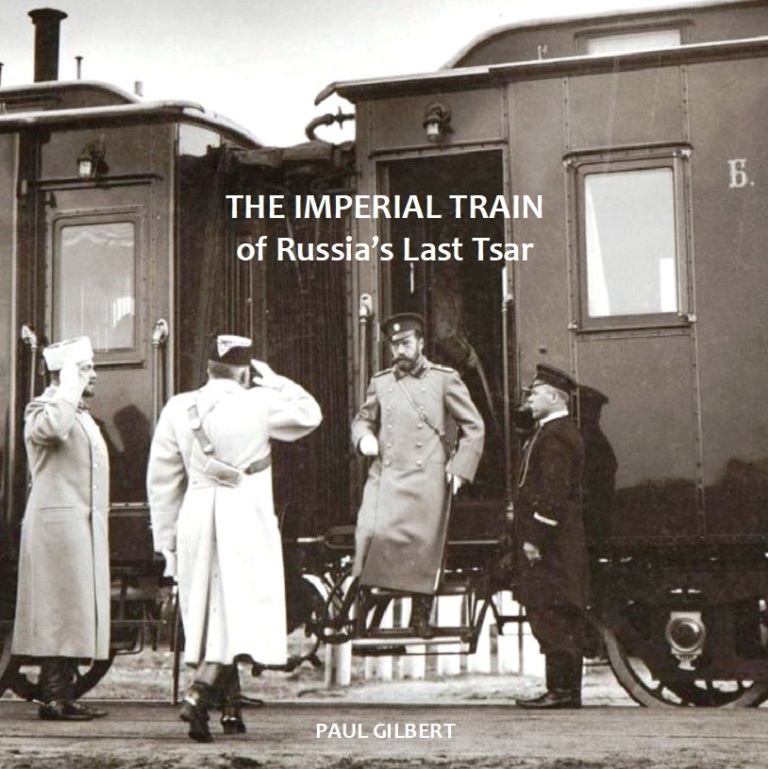
The original Imperial Pavilion was constructed of wood in 1895, however, it was destroyed by fire on 25th January 1911. A new stone pavilion designed by architect V.A. Pokrovsky, was constructed in the same Neo-Russian style as the buildings of the nearby Feodorovsky Gorodok [Town]. The Imperial Railway Pavilion served as a terminus for the Tsar’s Imperial Train. It was here that Emperor Nicholas II greeted many foreign dignitaries. A special road was laid from the station to the Alexander Palace.

The richly decorated interiors were stylized as chambers with heavy stone vaults. The decoration of the facades and interiors corresponded to the grand presentation of the station, being an example of a synthesis of architecture, monumental painting and decorative art, which successfully combined the forms of ancient Russian architecture of the 17th century. with construction technologies and materials characteristic of the modern era. The imperial chambers of the station were painted by the artist M. I. Kurilko, reflecting the chambers of the beloved suburban palace of Tsar Alexei Mikhailovich.

The fate of the Imperial Railway Pavilion during the Soviet years

In 1918, the station was renamed the Uritsky[1] Pavilion and was used as a dormitory and canteen for workers of the Track Repair of the Mechanical Plant, created on the basis of the Imperial Railway Repair Depot. The Imperial emblems were removed and the building and adapted for housing. The rails and sleepers were dismantled and used for the construction of other railway lines. The 200-meter passenger platform was dismantled in the 1930s. The pavilion was badly damaged during the Great Patriotic War (1941-45).

The dormitory was moved in the 1970s, the former station closed and has not been used since. The former Imperial Railway Pavilion was declared an object of cultural heritage of Russia of federal significance, an act which saved the building from demolition.

The rebirth of the Imperial Railway Pavilion

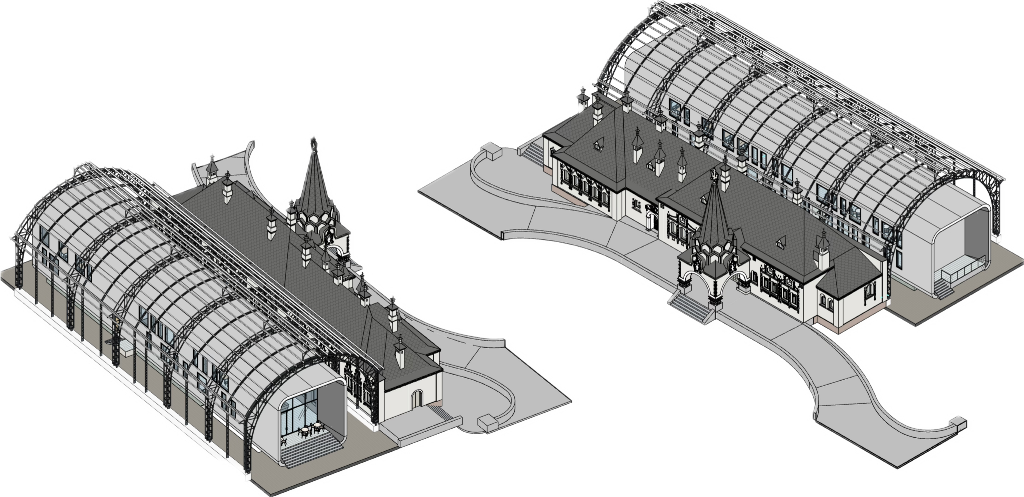
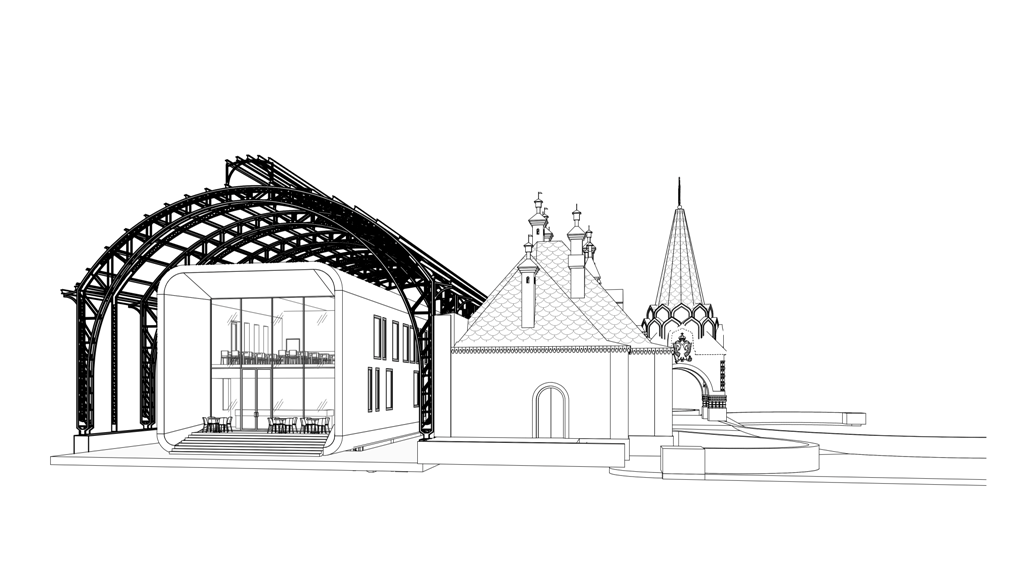
The Imperial Railway Pavilion in Tsarskoye Selo will be completely restored in its original form, including the terminal building, the platform and canopy, as well as the unique interior paintings, some of which have already been partially uncovered by restorers.

According to restorers, many of the building’s original details have surprisingly been well preserved. The historical painting of the dome of the main entrance to the Tsar’s Station has been miraculously preserved – see photos above, one of which shows an area which had been cleaned, revealing the colourful painting underneath. Early 20th century watercolours of the interiors – which have been preserved in archives – will be of great assistance to artists in their efforts to restore the once beautiful interior to its historic original.

The restoration of the Imperial Railway Pavilion will be one of the stages in the integrated development of the territory, which includes the Feodorovsky Gorodok (Town), Fermsky Park[2] and other facilities. This combined with the restoration of the Feodorovsky Sovereign Cathedral and the Alexander Palace will complete a revival of some of the most notable buildings associated with the life of Russia’s last Tsar, one which the Bolsheviks and Soviets failed to destroy.

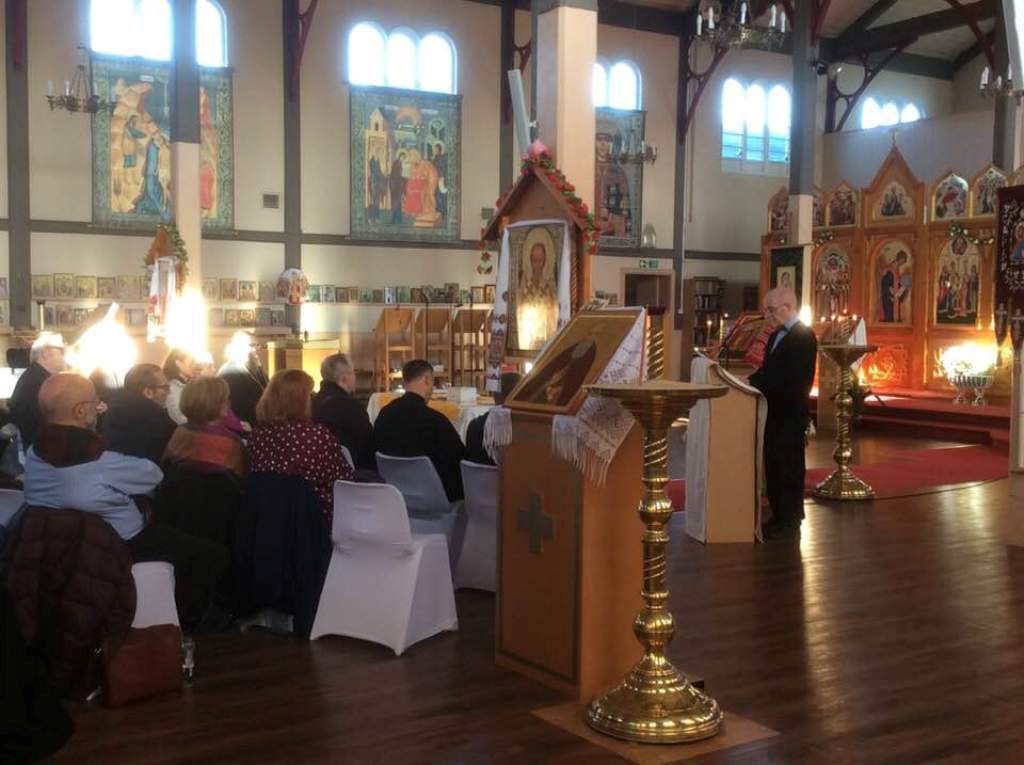
Several years ago, a wooden Orthodox cross – seen in above photo – was installed outside the Imperial Railway Pavilion at Tsarskoye Selo. The inscription on the plaque reads: “All around is betrayal and cowardice and deceit! Forgive us, sovereign” and signed: “The soul of the Russian people.”

NOTES:

[1] Moisei Solomonovich Uritsky (1873-1918) served as Chief of the Cheka of the Petrograd Soviet. After his assassination in 1918, Lenin initiated the first Red Terror on 20th September 1918.

[2] Fermsky Park is located near the Fedorovskiy Gorodok [Town] and Alexander Park. It was arranged by Adam Menelaws in 1818–1820 as a grazing area at the nearby imperial farm. A pond was dug in the park for watering.

FURTHER READING:

Update on the restoration of the Imperial Railway Pavilion at Tsarskoye Selo – published on 16th April 2024

Further to my August 2023 announcement that the Imperial Railway Pavilion at Tsarskoye Selo would be restored, I am pleased to provide the following update, which includes photos [taken in March 2024] of the progress being made on this important historic project, one which is closely connected to Emperor Nicholas II.

The sad state of the Imperial Railway Pavilion in Tsarskoye Selo includes 20 PHOTOS! – originally published on 29th December 2019

Imperial Railway Pavilions During the Reign of Nicholas II – originally published on 23rd October 2019

© Paul Gilbert. 18 August 2023

***

If you enjoyed this article, then please consider making a donation to my research, which helps me with the acquisition of documents from Russian sources and the cost of having them translated into English for the first time.

Not only do these documents give voice to the works of a new generation of Russian historian, they are of immense historic value in helping me with my efforts to clear the name of Russia’s much slandered Tsar.

Donations can be made in US dollars by credit card or PayPal.

CLICK HERE TO MAKE A DONATION

Thank you for your interest and support of my work.

PAUL GILBERT

The fate of the regicides who murdered Nicholas II and his family

PHOTO: Pyotr Ermakov, Mikhail Medvedev-Kudrin,
Pavel Medvedev, Yakov Yurovsky and Grigory Nikulin

The murders of Emperor Nicholas II, his family and four faithful retainers in Ekaterinburg on 17th July 1918, remains one of the darkest pages in 20th century Russian history. To this day, historians and investigators are not entirely sure of all those who participated in the regicide, only the names of some of them are known – those who admitted that they were a participant in the regicide, or those of whom were identified by witnesses. The fate of many of these regicides also ended tragically, their lives being overtaken by disease or an equally violent death.

It is known that the direct leader of the liquidation of the Imperial family was Yankel Khaimovich, better known as Yakov Yurovsky. He lived until 1938 and died of a duodenal ulcer. In Soviet times, they said that his son was not responsible for his father’s crime, but the apple didn’t fall far from the tree in the Yurovsky family. The eldest son Alexander, ended up in the Butyrka prison in 1952, but was released a year later. The daughter Rimma was also arrested in March 1938. She served a sentence in the Karaganda forced labour camp until 1946. Yurovsky’s grandchildren were not spared either, dying under mysterious circumstances. Two died after falling from a roof, while the other two were burned to death in a fire. It is worth recalling that the blood of Tsar Nicholas II was spilled by Yurovsky. He himself recalled: “I fired the first shot and killed Nikolai on the spot.”

The leading Russian playwright and historian Edvard Radzinsky was most intrigued by the idea that there was photographic evidence of the murdered remains of the Imperial family.

PHOTO: Yakov Yurovsky

“Yurovsky was a professional photographer,” he says. “He confiscated a camera from the Tsarina. It was impossible for him to take pictures immediately after the execution — he was a little bit crazy, they continued to be alive, they continued to kill them. But afterwards, he had three days. He had an opportunity to take a camera to the grave. It is impossible for a man who likes pictures not to take such pictures.”

Could there be any truth to his idea, or did Radzinsky give birth to yet another Romanov conspiracy theory? Radzinsky is a playwright, and perhaps his creative imagination got the better of him, but who knows? Yurovsky had already proven what he was capable of, so anything was possible! There is also the possibility that Yurovsky took such photos to take with him when he left for Moscow after the murders, as evidence to Lenin and Sverdlov that the regicide had been carried out?

“IF” such photographs ever existed, we can surely assume that they would have been destroyed. Lenin was both crafty and careful not to leave a paper trail that would implicate him in dubious affairs – murder being one of them.

Click HERE to read my article Yakov Yurovskys’ ashes remain hidden from vandals in Moscow, published on 23rd November 2019

The personality of Pyotr Ermakov was no less significant in the murders of the Imperial family. According to his own recollections, it was he who killed the Empress Alexandra Feodorovna, the cook Ivan Kharitonov and the doctor Evgeny Botkin. He often boasted of his crime, without feeling any sense of remorse: “I shot the Tsarina who was seated only six feet away, I could not miss. My bullet hit her right in the mouth, two seconds later she was dead. Then I shot Dr. Botkin. He threw up his hands and half turned away. The bullet hit him in the neck. He fell backwards. Yurovsky’s shot knocked the Tsesarevich to the floor, where he lay and groaned. The cook Kharitonov was huddled over in the corner. I shot him first in the torso and then in the head. The footman Troupe also fell, I don’t know who shot him … ” Ermakov died of cancer on 22nd May 1952.

Since the 1990s, Ermakov’s grave in the Ivanovo Cemetery in Ekaterinburg. has been repeatedly vandalized by local monarchists, who regularly douse his gravestone with red paint.

The red paint symbolizes the blood which this evil man spilled, and his involvement in the brutal murder of Nicholas II and his family on 17th July 1918.

In 1951, at a reception, which gathered all the local Party elite in Sverdlovsk, Peter Ermakov approached Soviet Red Army General Georgy Zhukov and held out his hand. Frowning in disgust Zhukov looked Ermakov in the eye, and muttered, “I do not shake the hands of murderers.”

Every year on 17th July – the day marking the anniversary of the murder of Emperor Nicholas II and his family – the grave of the Bolshevik revolutionary Peter Ermakov, has been vandalized by local monarchists, who douse his gravestone with red paint.

Click HERE to read my article ‘You reap what you sow’ – Monarchists take revenge on the regicide Peter Ermakov, published on 17th January 2023.

He left a testimony regarding another regicide: “Stepan Vaganov dealt with the grand duchesses: they lay dying in a heap on the floor and groaned … Vaganov continued to shoot at Olga and Tatiana … I don’t think any of us shot the maid Demidova. She sank to the floor, shielding herself with pillows. Vaganov, later pierced her throat with his bayonet … ” Death found Vaganov in the same ill-fated year of 1918. When Kolchak’s army took Ekaterinburg, Vaganov did not escape, instead he hid in a basement, where he was found by relatives of those killed during the raids. They did not stand on ceremony for long – they killed him on the spot. Perhaps in vain, because he could have given interesting testimony, having fallen into the hands of the investigators who were engaged in clarifying the fate of the Imperial family. But the fact remains: Vaganov did not die of natural causes.

Pavel Medvedev turned out to be not just a murderer, but also a thief. He recalled: “Walking around the rooms, I found six 10-ruble credit tickets under the book Закон Божий (God’s Law), in one of them, and appropriated this money for myself. I also took some silver rings and some other knickknacks.” Medvedev, unlike Ermakov, fell into the hands of Kolchak’s troops. He fled from Ekaterinburg, but, was captured, and he was charged with “murder by prior conspiracy with other persons and the seizure of the property of the former Emperor Nicholas II, his wife Alexandra Feodorovna, the heir to Alexei Nikolaevich and Grand Duchesses Olga, Maria , Tatyana, Anastasia, as well as the physician Dr. Botkin, the maid Anna Demidova, the cook Kharitonov and the footman Troupe. “In 1919, Medvedev died in prison from typhus, however, his widow claimed that he was killed by White Guards.

PHOTO: Philip Goloshchekin

It was no coincidence that Sergei Broido ended up in the Ipatiev House, but he also took part in the murder of the Imperial family by order. Mikhail Medvedev-Kudrin, who also took part in the murders, recalled: “It is known that Broido, along with Ermakov and Goloschekin, arrived in a car at the Ipatiev House on the eve of the murder. It is believed that due to a lack of men to carry out the execution, he was recruited at the last minute by order of Yurovsky.” On 8th March 1937, Broido was first convicted under Article 58 of the RSFSR Criminal Code, for being a Trotskyist, and subsequently shot.

The youngest regicide was Viktor Netrebin. At the time of the crime, he was only 17 years old. Netrebin disappeared in 1935. The Latvian Jan Cemles also disappeared.

But there were also those who organized the murders of the Imperial family and their retainers. Among them was Shaya Itsikovich, known as Philip Goloshchekin, who is known to be one of the organizers. It was he who came up with the idea of ​​execution, even travelling to Moscow to discuss his plans with Lenin and Sverdlov. Goloshchekin was not present himself during the murders, but he took part in the removal and destruction of the remains. On 15th October 1939, Goloshchekin was arrested for sympathizing with the Trotskyists. Another fact from his biography is particularly noteworthy. After his arrest, and during interrogation the People’s Commissar of Internal Affairs Nikolai Yezhov, claimed that he had a homosexual relationship with Goloshchekin. On 28th October 1941, Goloshchekin was shot near Samara. A colleague and another organizer of the execution of the Imperial family, Yakov Sverdlov, described Goloshchekin as follows: “I stayed with Goloshchekin for several days, things are bad with him. He has become neurasthenic and becomes a misanthrope.” An interesting fact is that Sverdlov did not die of natural causes. According to the official version, he died of the Spanish flu, which raged after the First World War, but there is a second version, according to which the workers beat Sverdlov in Oryol and he died from the injuries he sustained.

Pyotr Voikov was also an organizer and participant in the murder of Nicholas II and his family. Diplomat-defector Grigory Besedovsky, who knew Voikov personally, recalled: “As commandant of the Ipatiev House, the execution of the decree was entrusted to Yurovsky. During the execution, Voikov was supposed to be present, as a delegate to the regional party committee. He, as a scientist and chemist, was instructed to develop a plan for the complete destruction of the bodies. Voikov was also instructed to read the decree on the execution to the Imperial family, with a motivation that consisted of several lines, and learned this decree by heart in order to read it out as solemnly as possible, believing that thereby he would go down in history as one of the main participants in this tragedy”. Voikov was killed in Warsaw in June 1927 by the Russian émigré Boris Koverda. During interrogation, Koverda stated about the motives of his act: “I avenged Russia, for millions of people.” Boris Koverda spent 10 years in Polish prisons and was granted amnesty. After his release in 1937, he lived another 50 years and died in Washington at the age of 79.

Not only did these men committed regicide, they also helped to drown Russia in blood. Today, streets, squares and even metro stations of Russia’s cities are named after some of them. Is this right? No! These men will forever, have their names inscribed in the history of Russia, not as scientists or engineers, but as murderers.

Holy Royal Martyrs, pray to God for us!
Святы Царственные мученики, молите Бога о нас!

***

The following NEW title was compiled and edited by independent researchers and Romanov historian Paul Gilbert was published in August 2024. 

This fascinating new study features 14 chapters on this tragic event, which include the memoirs of a British intelligence officer and journalist, and two First-English translations. In addition, 11 chapters were written by Paul Gilbert, based on new documents sourced from Russian archival and media sources over the past decade.

Please refer to the link provided for further details about the content of this new title . . .

CLICK HERE TO READ MORE ABOUT THIS TITLE

© Paul Gilbert. Originally published on 28 October 2020, updated on 18 July 2023

NEW BOOK: A Day in the Life of Russia’s Last Tsar

*This title is available from AMAZON in the USA, UK, Canada, Australia,
France, Germany, Spain, Italy, Netherlands, Poland, Sweden and Japan
*Note: prices are quoted in local currencies

CLICK HERE TO ORDER THE PAPERBACK EDITION @ $25.00 USD

English. 242 pages with 225 black & white photos

Aside from his many duties as God’s anointed Emperor and Tsar of All the Russia’s, Nicholas II took on many other roles from one day to the next: a dutiful husband and loving father, a devoted son and brother, a friend, a sportsman, a diplomat, an ambassador, a dedicated military leader, a devout Orthodox Christian, among others.

This richly illustrated pictorial explores the day-to-day duties of Russia’s last monarch. It is divided into six sections: the Tsar and His Family; Sports, Leisure and Holidays; the Tsar and the Church; the Tsar and Russia; the War Years; and the Tsar Under House Arrest. Each section features full-size historic images which reflect his day to day duties and activities. In total, this unique album includes more than 200 photographs from the author’s private collection.

The publication of this album is timed to coincide with the 155th anniversary of the birth of Emperor Nicholas II on 19th May [O.S. 6th May] 1868 and the 105th anniversary of the death and martyrdom [17th July 1918].

About the author

Paul Gilbert is a British born researcher and writer, specializing in the study of the life and reign of Emperor Nicholas II.

He has travelled extensively in Russia since 1986, visiting archives and historic sites associated with Russia’s last Tsar.

In 1998, he attended the Tsar’s funeral in St. Petersburg, and in 2018, he took part in the events marking the 100th anniversary of his death and martyrdom in Ekaterinburg.

©  Paul Gilbert. 14 July 2023

Nicholas II’s love of bicycles and cycling

PHOTO: Nicholas II riding his American-made bicycle, purchased in July 1895, from the Pobeda Trading Company in St. Petersburg

One of the many physical pastimes of Russia’s last Tsar was cycling, an exercise which he enjoyed with all of his children. Even his son Alexei partook in this activity, on a specially made three wheel bicycle.

In the late 19th century members of the Russian Imperial Family showed great interest in two-wheeled vehicles and bicycles, including Russia’s last Tsar, who began to ride a bicycle while still a teenager. Vintage photographs show Nicholas II riding bicycles with his Danish and Greek relatives, and later on the grounds of the Alexander Palace at Tsarskoye Selo.

The first shop to offer bicycles in the Russian capital was the Pobeda Trading House, which was situated at 81 Morskaya Ulitsa (Street). In 1895, it received the status of a Supplier to the Imperial Court. It was here, in July 1895 that Nicholas II purchased for his own use a high-quality bicycle made by the American company Dayfon, at a cost of 253 rubles, a considerable sum at that time. The bicycle was equipped with a special seat, a lamp, a bell, and an air tube.

Surviving records of the Pobeda Trading House include invoices signed and paid by Nicholas II, which include delivery, cleaning and adjustment of his bicycle, as well as it’s upkeep and maintenance, in order to keep it in perfect order.

One invoice for 24 rubles, included: cleaning the bicycle, adjustments and delivery (10 rubles), a bicycle cover (8 rubles), a bicycle stand (5 rubles) and engine oil (1 rub.).

The following month, in August 1895, another invoice records that the Tsar paid for a new shift for changing gears for 10 rubles, a bicycle chain for 12 rubles and additional maintenance work for 5 rubles.

The shops accounts also indicate that the Tsar paid for a special weather-proof cover and storage for his bicycle stored during the winter months were also paid.

PHOTOS: view of the Pobeda Trading House at Morskaya Ulitsa (Street), 81 in St. Petersburg

PHOTOS: view of the Pobeda Trading House – Supplier to the Imperial Court

On 31st December of that year, the Tsar decided to have his bicycle fully enamelled for 15 rubles, and the “full nickel plating of the bike” for an additional 30 rubles. Additional maintenance on the bicycle including “turning the hulls, checking the wheels, cleaning and assembly” for 8 rubles, the purchase of spare “pneumatic tires” for 45 rubles, another bicycle cover for 8 rubles. and a bicycle pump for 2 rubles. 50 kopecks.

Thus, by the end of 1895, Nicholas II had spent 381 rubles on his bicycle and spare parts. All these purchases, as well as after-sales service, were carried out in the Pobeda Trading House. The storage conditions for the Tsar’s expensive toy is also noteworthy – at the “end of the season”, the Tsar’s bicycle was packed by specialists in special covers and moved to the shop for repair and storage until the new season began in the spring.

In later years, Nicholas II ordered other models of bicycles for his wife and children, complete with special enameling and nickel plating. Among them was a two-seater, which he shared with his wife – this bicycle has survived to the present day, and is now in the Collection of the Peterhof State Museum.

The last bicycle bill was signed by “Citizen Romanov” – during his house arrest at the Alexander Palace – on 10th May 1917, when he bought rubber glue and “bicycle valves” for a modest 4 rubles 80 kopecks.

PHOTO: Nicholas II riding his bicycle on the grounds of the Alexander Palace, 1914

PHOTO: Nicholas II riding his bicycle on the grounds of the Alexander Palace, 1914

PHOTO: Nicholas II and his son Alexei riding their bicycles in the Alexander Park, 1914

The Tsar’s passion for bicycles and cycling was shared by his children. Each of them had their own bicycle, all of which were serviced by specialists of the Pobeda Trading House. The grand duchesses had girls bicycles of the same model, only different sizes, based according to their age and height. The grand duchesses bicycles had a special protector on the chain, which prevented the hems of their skirts from getting caught in the bike’s chain as they peddled.

Due to his illness [haemophila], Alexei had a special three-wheel bicycle made, which afforded him protection from falling and hurting himself, as any injury could prove fatal. His doctors also maintained the cycling would be a good exercise for his sore leg.

In 2004, the Peterhof Museum-Reserve opened an Imperial Bicycle Museum, which presents 12 rare bicycles, including those which belonged to the last three emperors: Alexander II, Alexander III and Nicholas II.

In 2013 Nicholas II’s bicycle was presented at an exhibition marking the 2014 Olympic Games in Sochi.

© Paul Gilbert. 12 July 2023

Romanov Memorial Hall to be moved to new location in Ekaterinburg

PHOTO: view of the Romanov Memorial Hall in the Museum of History and Archaeology of the Urals, a branch of the Sverdlovsk Regional Museum of Local Lore in Ekaterinburg

In the days leading up to this years Tsar’s Days events the Romanov Memorial Hall – which is currently located in the Museum of History and Archaeology of the Urals – will be moved to the Sverdlovsk Regional Museum of Local Lore in Ekaterinburg.

On 14th July 2023, the museum will present a new permanent exhibition “The Romanovs in the Urals” dedicated to the stay of Emperor Nicholas II and his family during their house arrest in the Ural city from April to July 1918.

According to the head of the public relations department of the museum Tatyana Mosunova, items from the museum’s funds, one way or another connected with the Imperial Family, will be exhibited. Among them is a unique sculpture of Alexander III by Kasli Foundries, the last time this figure was exhibited was more than a hundred years ago.

PHOTO: the former Poklevsky-Kozell mansion will be the new venue for the Romanov Memorial Hall in Ekaterinburg

According to Mosunova, the exhibition will be transferred to the 19th century Poklevsky-Kozell mansion on Malyshev Street. Local historians will help in creating an exhibition space, an agreement with the Ural State University based on the consultations of experts from the Museum of History and Archaeology of the Urals.

The General Director of the museum Alexander Emelyanov explained that the new exhibition will be extensive and will occupy five halls. The museum believes that the organization of the permanent exhibition will help both locals and visitors to the city to have a better understanding of the final days of Russia’s last Imperial Family in the Ural capital.

***

My Visit to the Romanov Memorial Hall in June 2016

PHOTO: a miniature copy of Zurab Tsereteli’s sculpture, “Night at the Ipatiev House” greets visitors to the Romanov Memorial Hall

Situated at Ulitsa Lenina 69/10 is the Museum of History and Archaeology of the Urals, a branch of the Sverdlovsk Regional Museum. From the street, the museum resembles one of the hideous buildings from the Soviet era – but if you blink, you may miss it! Admission is 200 rubles, an additional fee is charged if you want to take photographs. One must climb a steep circular staircase to reach the Romanov Memorial Hall on the 4th floor. The ascent is definitely worth it!

A miniature copy of Zurab Tsereteli’s sculpture, “Night at the Ipatiev House” greets visitors at the entrance to the hall.

The Romanov Memorial Hall was opened in 2006. The exposition tells of the Romanov dynasty during the reign of Emperor Nicholas II (1894-1917), the tragic events of 17 July 1918 and secret burial of the remains of the royal family.

This is a very interesting museum, as it contains personal items of Nicholas II, his family and their retainers, discovered in the Ipatiev House by the White Army. It also contains many elements of decor, decoration and fittings salvaged from the Ipatiev House before its demolition in September 1977, notably the cast iron fireplace from the dining room, and the iron grille from the window of the murder room.

PHOTO: scale model of the Ipatiev House -renamed House of Special Purpose by the Bolsheviks – on permanent display in the ‘Romanov Memorial Hall’

Aside from the items from the Ipatiev House, are many additional exhibits of interest, including a scale model of the Ipatiev House; the reconstructed model of Nicholas II’s head by Russian forensic expert Dr. Sergei Nikitin; the Mauser pistol which belonged to the murderer Pyotr Ermakov; a portrait of Princess Louise of Hesse-Kassel (the future Queen of Denmark), maternal grandmother of Nicholas II, which formerly hung in the study of Emperor Alexander III in the Anichkov Palace in St. Petersburg.

The exposition further explores the history of the investigation of the murder case of the last of the Romanovs in the Urals, which lasted more than 100 years.

It is interesting to note that the hundreds of exhibits on display in the glass display cases in the Romanov Memorial Hall include descriptions in both Russian and English – a rarity in Russian museums.

A small adjacent room contains a photo exhibit dedicated to Grand Duke Mikhail Alexandrovich and his secretary Brian Johnston. Efforts to locate their remains near Perm are ongoing by the S.E.A.R.C.H. Foundation.

© Paul Gilbert. 11 July 2023

Of Bygone Days: The Memoirs of an Aide-de-Camp to the Emperor Nicholas II

*This title is available from AMAZON in the USA, UK, Canada, Australia,
France, Germany, Spain, Italy, Netherlands, Poland, Sweden and Japan
*Note: prices are quoted in local currencies

CLICK HERE TO ORDER THE PAPERBACK EDITION @ $20.00 USD

English. 214 pages, 10 black & white photos

First English translation with introduction and notes by William Lee

NOTE: The first Russian-lanaguage edition of Fabritsky’s memories was published in Berlin in 1926. The first English-language edition of Fabritsky’s memoirs was published in Canada in 2016. This title has been out of print for many years, so I am delighted to offer this new edition.

The time I spent with Their Majesties – over the course of many years and under varied circumstances – will always be the source of my most precious memories, and I am very happy to be able to share those memories now with a wide public. I hope at least to give an absolutely truthful account of what I saw and heard” – Semyon S. Fabritsky. 1926

Semyon Semyonovich Fabritsky (1874-1941) had a fascinating career during the twilight years of Imperial Russia. He began his naval career in the very first days of the reign of Emperor Nicholas II.

In 1909, Fabritsky was personally appointed Aide-de-Camp by the Emperor himself, a position he served with immense pride and devotion.

During his service to Nicholas II, Fabritsky earned both the trust and friendship of the Emperor. Through his often uninterrupted contact with Russia’s last sovereign and observing him at all hours and under a variety of conditions, Fabritsky was able to form a clear picture of Nicholas II and his family, through his own personal eye-witness observations.

He also served aboard the Imperial yachts, partaking in holidays with the Emperor and his family to the Crimea and the Finnish skerries. He shares interesting details and anecdotes about the Alexandria, Polar Star, and Standart.

This book will also be of great interest to any one with an interest to the Russian Imperial Yachts and the Russian Imperial Navy.

Fabritsky provides great insight to the treachery, cowardice, and deceit which prevailed every where. He acknowledges ministers and generals who were either unworthy of their posts or unfit for them. Sadly, it was these men who surrounded Nicholas II during his 22+ year reign, who contributed to the downfall of monarchy and the destruction of the Russian Empire in 1917.

©  Paul Gilbert. 4 July 2023

Zhanna Bichevskaya marks her 81st birthday

074

Cover of Zhanna Bichevskaya;s CD Царь Николай (Tsar Nikolai)

A very happy 81st birthday to Russian folk singer Zhanna Vladimirovna Bichevskaya, who was born in Moscow on 17th June 1944.

Известной певице Жанне Владимiровне Бичевской исполнилось 79 лет!!! Мы сердечно поздравляем её с Днём рождения!!!

074b

Zhanna graduated as a classical guitarist from a Moscow music school. She was a teacher of music in Zagorsk (Sergiev Posad). In the 1970s, Zhanna started to perform Russian folk songs and romances.

Zhanna refers to her bard-style singing as “Russian country-folk”. Her repertoire includes several hundred works – songs of spiritual and social content, Russian folk songs, romances, as well as songs based on poems of Russian poets of the Silver Age. Her records have sold millions of copies in more than 40 countries around the world. She has performed to sell out crowds at the prestigious Olympia Hall in Paris, on eight occasions. 

In the late 1980s and early 1990s, Zhanna Bichevskaya’s songs began to have more political, nationalist and spiritual themes, she is a staunch defender of the Holy Emperor Nicholas II and his family.

In 1999, Zhanna also became the host of her own show on Voice of Russia radio station. She was awarded People’s Artist of the RSFSR

CLICK on the links below to listen to two of her most haunting melodies:

[1] Царь Николай / Tsar Nikolai [Duration: 9 mins], which features vintage film footage of Russia’s last tsar:

[2] Святым Царственным мученикам / To the Holy Royal Martyrs [Duration: 7 mins., 34 sec.], which is much more a prayer than a song:

© Paul Gilbert. 17 June 2025