What kind of ice cream was served to Nicholas II?

Ice cream in its modern version first appeared in Russia, in the 18th century, its recipe, published in Новейшая и полная поваренная книга / The Newest and Complete Cookbook (1791) by Nikolai Maksimovich Yatsenkov.

Mention of ice cream was not only recorded in the memoirs of members of the Imperial Court, but also in the works of poets and writers. The great Russian Romantic writer, poet and painter Mikhail Lermontov (1814-1841), obliged his home cook to serve ice cream daily. Another Russian writer Thaddeus Bulgarin (1789-1859) writes about Venetian ice cream in his novel Ivan Vyzhigin (1829). The poet Gavriil Derzhavin (1743-1816), in honor of his name day, every year arranged a gala dinner, at the end of which ice cream was served in the form of an ancient temple or castle.

One of the scenes that struck the French aristocrat and writer Marquis de Custine (1790-1857) in the summer of 1839, was Muscovites eating ice cream in the Alexander Garden.

“Muscovites: shaved, curled, in tailcoats and white pantaloons, in yellow gloves, sit at ease in front of brightly lit cafes, eat sweet ice cream and listen to music? In the summer this can now be observed in Moscow every evening,” he wrote.

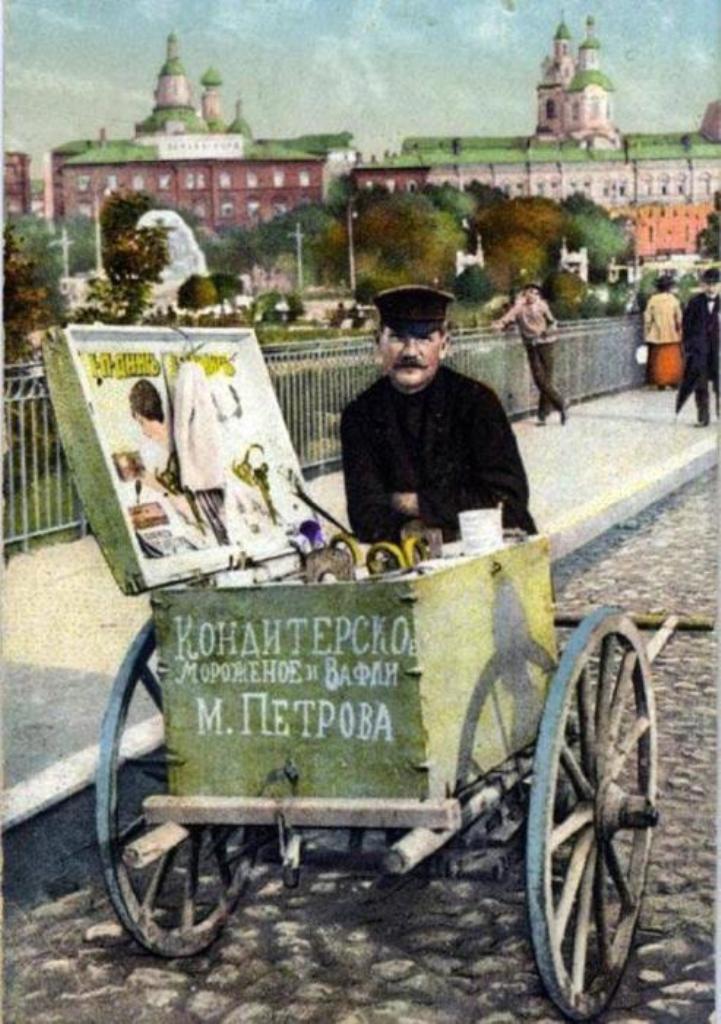
PHOTO: early 20th century Russian ice cream vendor

Expensive pleasure

In the late 18th and early 19th centuries, Russian people were content with traaditional folk dishes: cheesecakes and pancakes, syrniki [sweet cheese pancakes], topped with delicious sour cream and jam. Meanwhile, ice cream had acquired the status of a popular, fashionable and incredibly expensive dessert among Russia’s nobility. The new-fashioned cold treat was present at every social event, ball, and lavish feast.

At the time, sugar was in very short supply and was very expensive, which is why the old ice cream recipes, were considered an expensive pleasure, one which was only available to the very rich. Nevertheless, ice cream was already gaining popularity at Russian tables. By the end of the 18th century, they began to complete dinner with this cold treat more and more often.

The Court cooks slowly and masterfully coped with the whimsical melting product, creating new cold desserts, which included “Vesuvius on the Mont Blanc” – ice cream set on a platter, doused with rum or cognac and set aflame.

The production of ice cream by hand was a time-consuming and small-volume business. The amount of product directly depended on refrigeration equipment, which helped with the process of creating and preserving these cold delicacies.

The full-fledged and well-established production of ice cream in Russia began in the 1830s, when a shop was opened at a Moscow dairy plant, equipped with all the necessary equipment.

By the beginning of the 19th century, ice cream continued to gain popularity and more widely available, including fairs. Writer Pavel Efebovsky wrote in his essay Petersburg Peddlers: “Ice cream is sold by a Russian peasant in a huge tub filled with ice. This tub alone weighs at least three pounds . . . Only it’s expensive: a glass in three sips costs as much as two silver kopecks”.

Up until the middle of the 19th century, ice cream in Russia was prepared exclusively by hand. It was only in 1845, the Swiss-born restaurateur and confectioner Johann-Lucius Isler (1810-1877) patented a machine that made it possible to produce this delicacy mechanically. Isler opened one of the most popular St. Petersburg cafes on Nevsky Prospekt, where they served ice cream with unusual ingredients for that time: fruit liqueur, ground coffee, infusion of orange flowers, pistachios, walnuts. At the same time, three main varieties of cold desserts appeared: sorbetto (or sherbet) – a heavily chilled fruit drink; granito made from frozen fruit juice and ice cream – a dense mass of milk or cream with sugar and various ingredients, similar to modern ice cream.

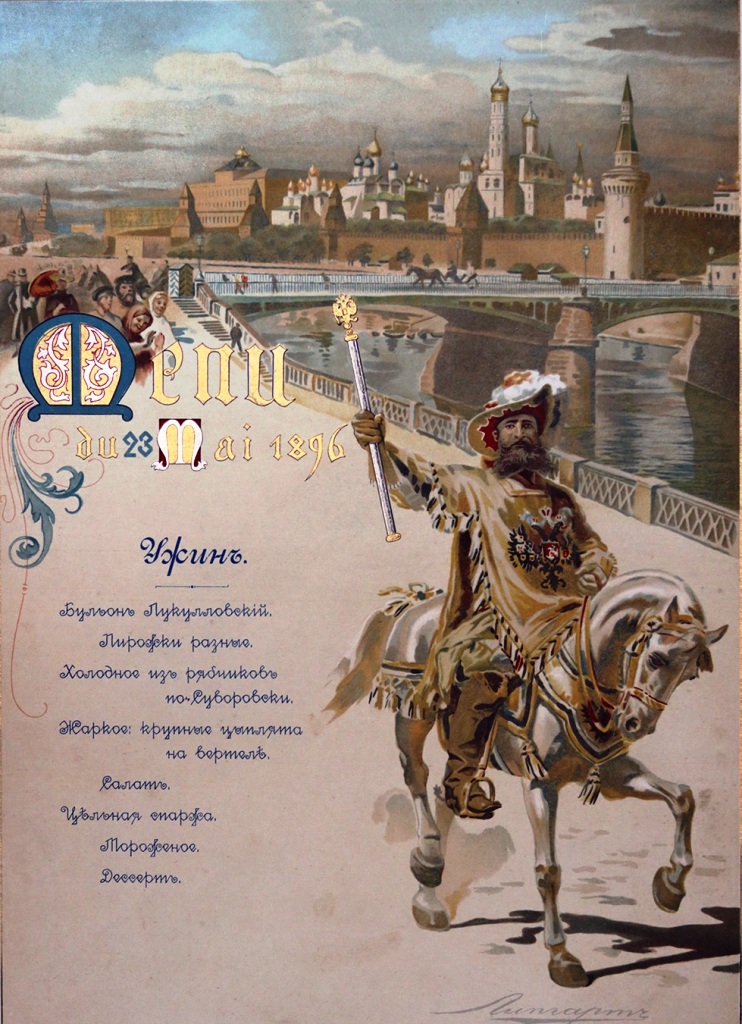
PHOTO: this richly decorated Coronation menu indicates that ice cream was served at the Gala dinner in the Alexander Hall of the Great Kremlin Palace, Moscow, dated 23rd May 1896

Ice cream at the Imperial Court

During the reign of Empress Catherine II, when various overseas amusements and dishes were very fashionable in Russia, recipes for ice cream made from cream and egg whites, included such ingredients as chocolate, lemon, currants, cranberries, raspberries, cherries and oranges.

During the reigns of her successors, ice cream continued to be popular at the Imperial Court. Emperor Alexander I had a French chef named Carem, who invented new types of this dessert to surprise the monarch. Emperor Nicholas I, on the other hand, refused ice cream: based on his solidarity with his brother Michael, who was on a strict diet on the advice of doctors. But the emperor’s wife Empress Alexandra Fedorovna ordered two portions of ice cream from the pastry shop every day for the amount of 1 ruble 72 kopecks.

Richly decorated menus confirm that Мороженое [ice cream] was served to guests at elaborate State Banquets. In particular, ice cream was served to members of the Imperial Family, Russian nobles and visiting foreign delegations, at the Gala dinners held over a three-week period in the Great Kremlin Palace in Moscow, during the festivities marking the Coronation of Emperor Nicholas II in May 1896.

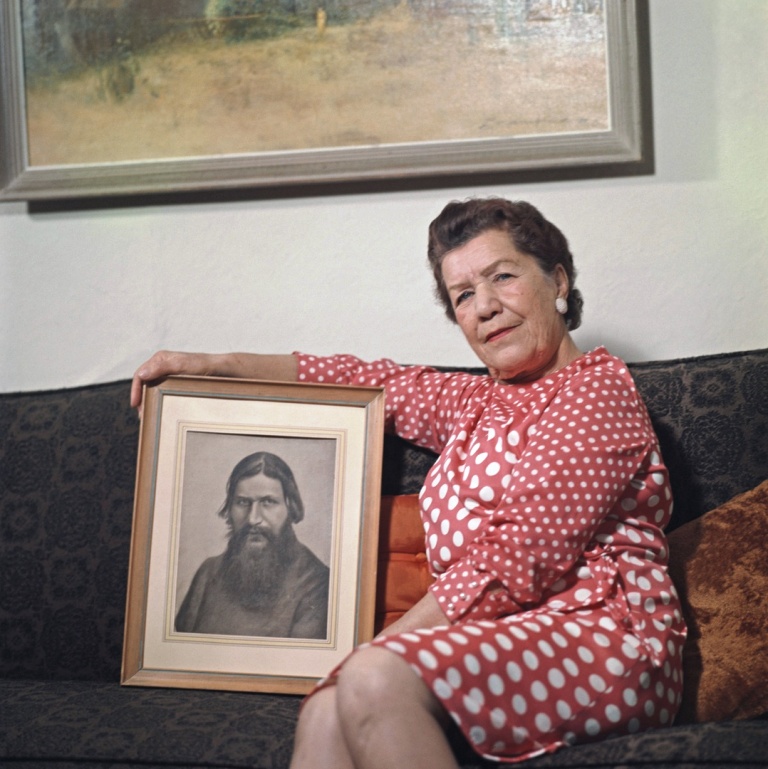
PHOTO: Maria Grigorievna Rasputina with a portrait of her father Grigorii Rasputin, in exile, 1972

Ice cream was especially popular at table of the last Emperor and his family. The recipe for “Romanov ice cream”, which was invented specifically for Nicholas II, has been preserved to this day. It included sugar, 10 egg yolks, heavy cream, whipping cream and vanilla. “I remember ice cream, the like of which I have never eaten anywhere else,” wrote the daughter of Grigorii Rasputin, Maria (1898-1977).

FURTHER READING:

Nicholas II’s menu: culinary preferences of Russia’s last Tsar + PHOTOS

© Paul Gilbert. 2 August 2022

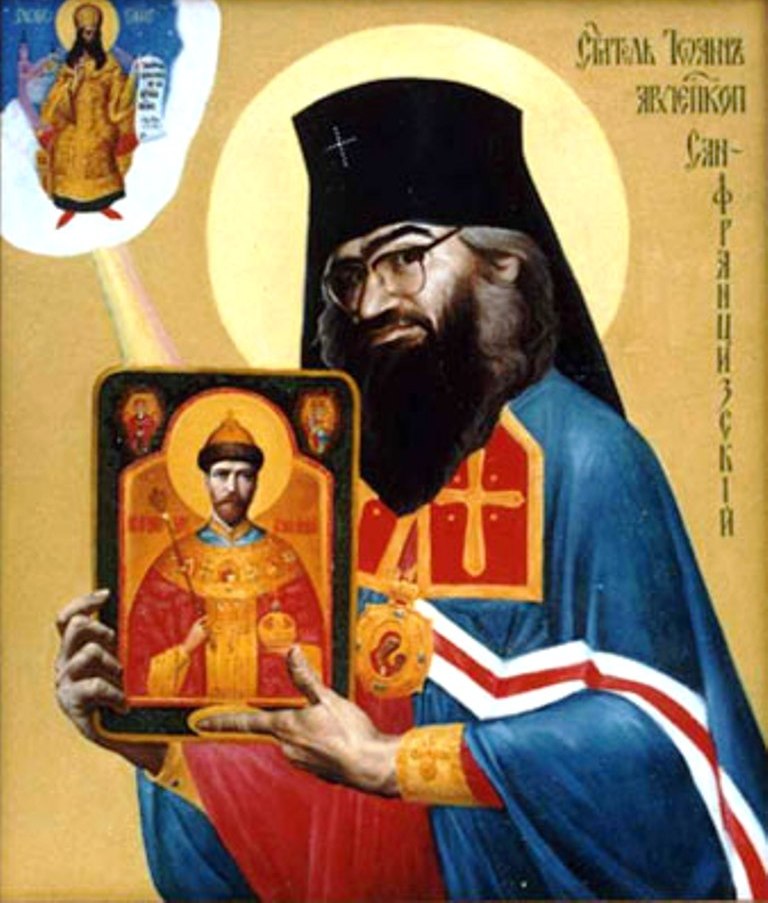
Saint John (Maximovich) of Shanghai and San Francisco, 1896-1966

On this day – 2nd July 1966 – St. John (Maximovich) of Shanghai and San Francisco died in the United States. During his life, he honoured the memory of the Holy Royal-Martyr Nicholas II and his family, believing that “the Russian people were entirely guilty for the death of the tsar.” On 2nd July 1994, St. John was solemnly canonized by the Russian Orthodox Church Outside of Russia (ROCOR).

Mikhail Borisovich Maximovitch (his secular name) was born on 17th (O.S. 4th) June 1896, in the village of Adamovka of the Izyumsky Uyezd of the Kharkov Governorate of the Russian Empire (in present-day eastern Ukraine).

Maximovitch was a patriot of his fatherland and was profoundly disappointed by what he saw as human weakness and impermanence during the tragic events of the 1917 Revolution. As a result he made the decision to dedicate his life to serving God. His family sought refuge in Yugoslavia and brought him to Belgrade in 1921, where in 1925 he graduated from Belgrade University with a degree in theology.

In 1926 he was tonsured a monk and ordained a hierodeacon by Russian Metropolitan Anthony (Khrapovitsky), who gave him the name of St. John after his saintly relative. Later that same year, he was ordained to the priesthood by Russian Bishop Gabriel (Chepur) of Chelyabinsk. Once ordained St. John would no longer sleep in a bed. He would nap in a chair or kneeling down in front of the icons, praying fervently and eating only once a day.

St.John earned the respect and devotion at the seminary where he taught. His reputation grew as he started visiting hospitals, caring for patients with prayer and communion. In 1934 he was ordained a bishop of the Russian Orthodox Church Outside Russia by Metropolitan Anthony and assigned to the diocese of Shanghai.

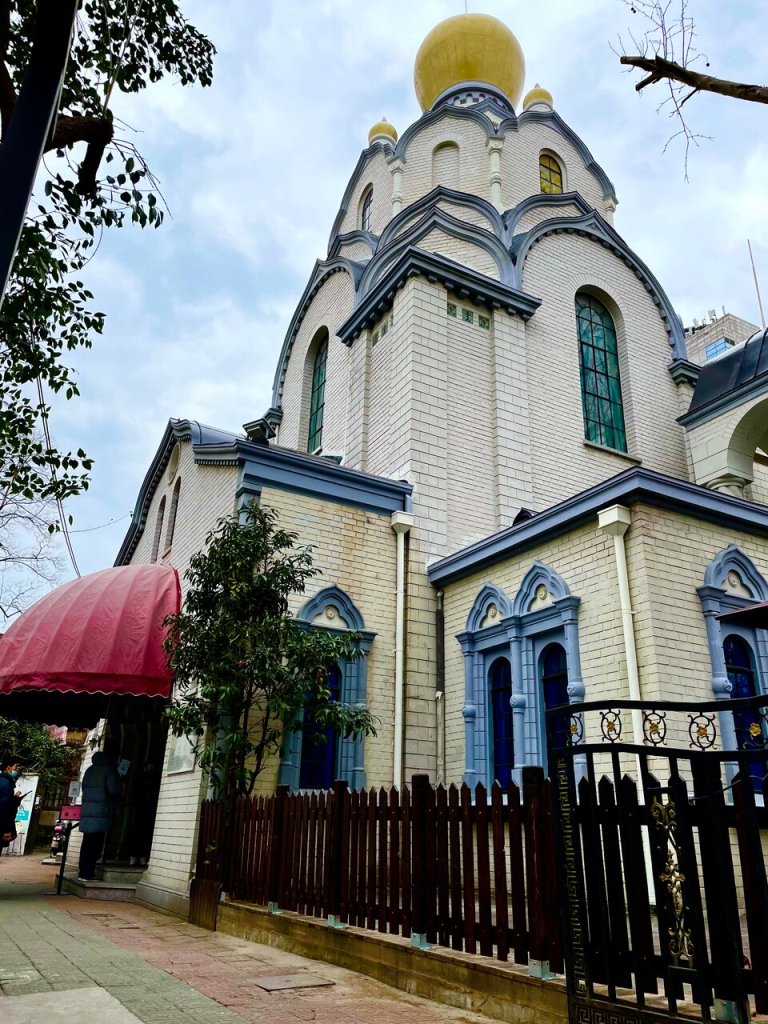
PHOTO: St. Nicholas Church in Shanghai, built in 1935, dedicated to Tsar-Martyr Nicholas II

Shanghai, China

In Shanghai, Holy Bishop St. John found an uncompleted cathedral and an Orthodox community deeply divided along ethnic lines. Making contact with all the various groups, he quickly involved himself in the existing charitable institutions and personally founded an orphanage and home for the children of indigents. Under Holy Bishop St. John, the construction of St. Nicholas Church (1935) was completed, a memorial church dedicated to Tsar-Martyr Nicholas II.

He also set about restoring church unity, establishing ties with local Orthodox Serbs, Greeks and Ukrainians. Here he first became known for miracles attributed to his prayer. As a public figure it was impossible for him to completely conceal his ascetic way of life. Despite his actions during the Japanese occupation, even when he routinely ignored the curfew in pursuit of his pastoral activities, the Japanese authorities never harassed him. As the only Russian hierarch in China who refused to submit to the authority of the Soviet-dominated Russian Orthodox Church, he was elevated to Archbishop of China by the Holy Synod of ROCOR in 1946.

When the Communists took power in China, the Russian colony was forced to flee, first to a refugee camp on the island of Tubabao in the Philippines and then mainly to the United States and Australia. Archbishop St. John personally traveled to Washington, D.C. to ensure that his people would be allowed to enter the country.

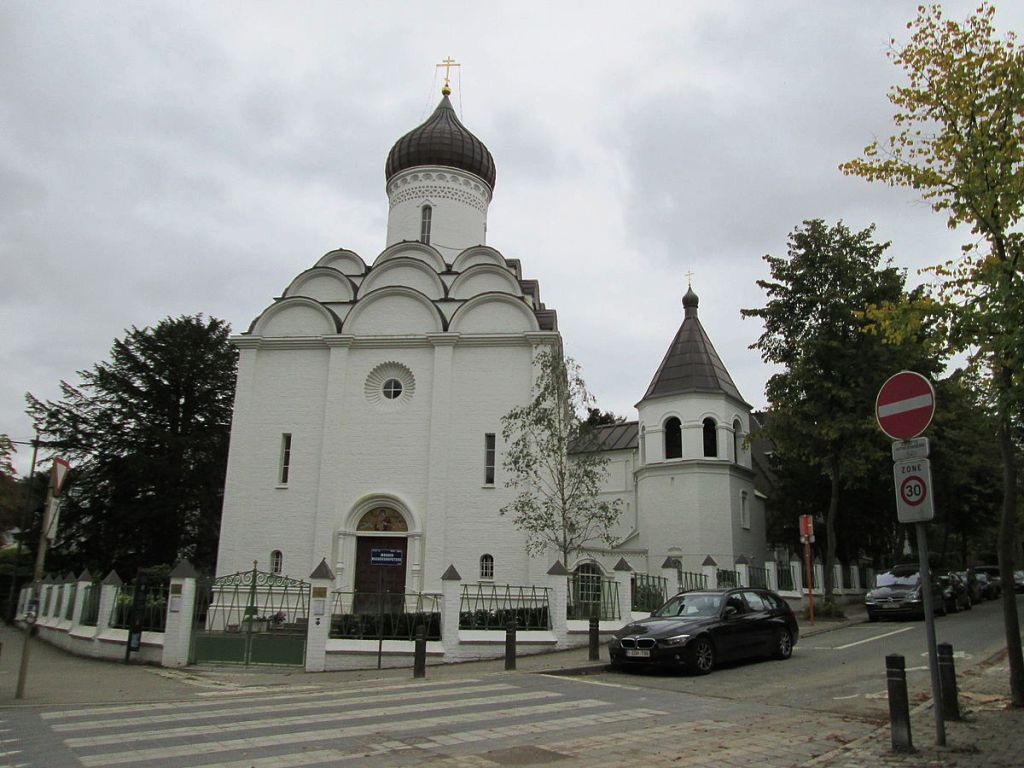
PHOTO: the Church of St. Job the Long Suffering in Brussels, consecrated in 1950, dedicated to Tsar-Martyr Nicholas II

Western Europe

In 1951, St. John was assigned to the archdiocese of Western Europe with his see first in Paris, then in Brussels, which was considered the official residence of Archbishop John of Brussels and Western Europe. The center of the vigorous activity of Archbishop John was the Church of St. Job the Long-suffering in Brussels, constructed between 1936-1950, as a memorial church dedicated to Tsar Nicholas II.

Thanks to his work in collecting lives of saints, a great many pre-Schism Western saints became known in Orthodoxy and continue to be venerated to this day. His charitable and pastoral work continued as it had in Shanghai, even among a much more widely scattered flock.

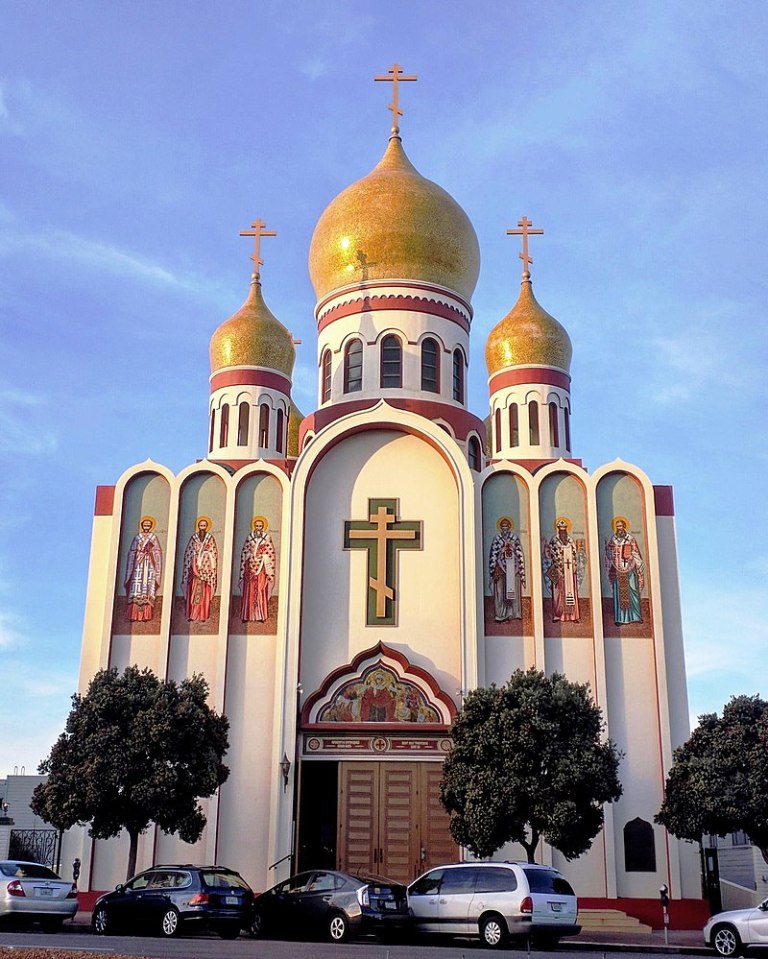
PHOTO: the Holy Virgin Cathedral, San Francisco, consecrated in1977

San Francisco, United States

In 1962 St. John was once again reassigned by the Holy Synod to the see of San Francisco. Here too, he found a divided community and a cathedral in an unfinished state. Although he completed the building of the Holy Virgin Cathedral and brought some measure of peace to the community he became the target of slander from those who became his political enemies, who went so far as to file a lawsuit against him for alleged mishandling of finances related to construction of the cathedral. He was exonerated, but this was a great cause of sorrow to him in his later life.

The current cathedral was founded by St. John of Shanghai and San Francisco. Groundbreaking took place on 25th June 1961, construction was completed in 1965, a year before the death of The cathedral was consecrated on 31st January 1977.

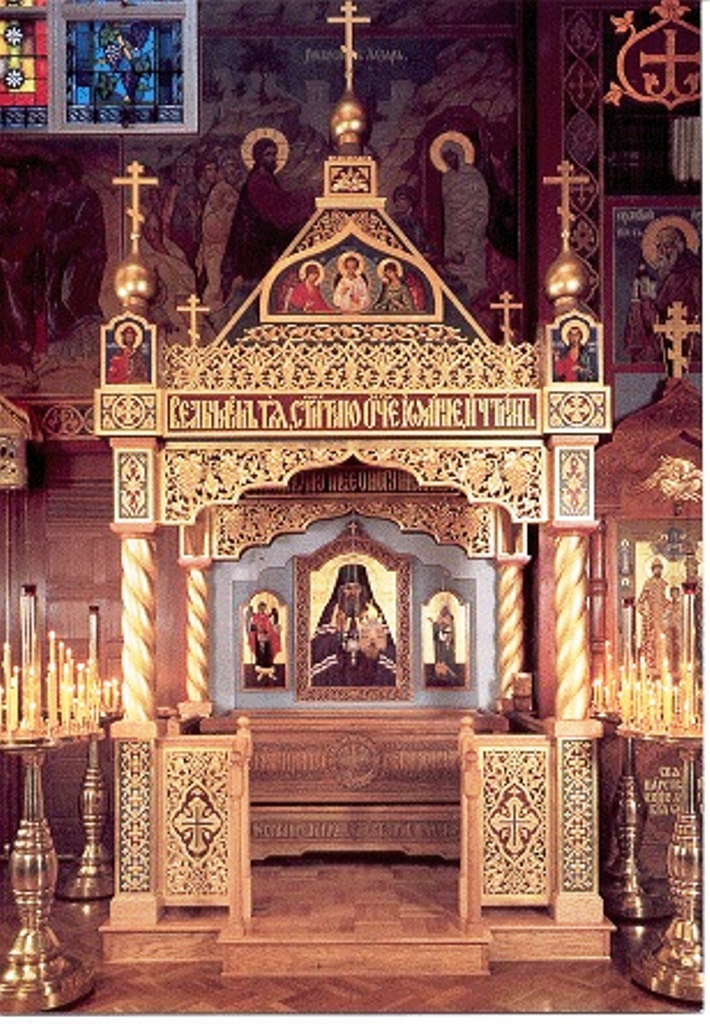
PHOTO: the sepulchre of St. John in the Holy Virgin Cathedral, San Francisco

Death and Veneration

On 2nd July 1966 (O.S. 19th June), St. John died while visiting Seattle at a time and place he was said to have foretold. He was entombed in a sepulchre beneath the altar of the Holy Virgin Cathedral he had built in San Francisco dedicated to the Theotokos, Joy of All Who Sorrow, on Geary Boulevard in the Richmond district.

On 2nd July 1994, St. John was solemnly canonized by the Russian Orthodox Church Outside of Russia (ROCOR), the day marking the 28th anniversary of his death. His unembalmed, incorrupt relics now occupy a shrine in the cathedral’s nave.

His feast day is celebrated each year on the Saturday nearest to 2nd July. He is beloved and celebrated worldwide, with portions of his relics located in Serbia, Russia, Mount Athos, Greece (Church of Saint Anna in Katerini), South Korea, Bulgaria, Romania, United States (St. John Maximovitch Church, Eugene, Oregon), Canada (Holy Trinity Serbian Orthodox Church, Kitchener), England (Dormition Cathedral of the Russian Orthodox Church, London) and other countries of the world.

Memory Eternal! Вечная Память!

On Tsar-Marytr Nicholas II

IN MEMORY OF THE ROYAL MARTYRS

Sermon given in 1934 by His Eminence John, Bishop of Shanghai,during the memorial service for Tsar Nicholas II and those slain with him

In the name of the Father and of the Son and of the Holy Spirit.

On July 17 (July 4 Old Style) the Holy Church praises Saint Andrew, the Bishop of Crete, the author of the Great Canon of Repentance, and at the same time we gather here to pray for the souls of the Tsar-Martyr and those assassinated with him. Likewise, people in Russia used to gather in churches on the day of the other Saint Andrew of Crete (Oct.17), not the writer of the Great Canon whose day is celebrated tomorrow, but the Martyr Andrew, martyred for confession of Christ and His Truth. On the day of Martyr Andrew, people in Russia thanked God for the miraculous delivery of Emperor Alexander III from the train wreck at Borki on Octo ber 17, 1888. In the terrible derailment which occurred during his journey, all the carriages of the train were wrecked, except the one carrying the Tsar and his Family.

On the day of the Martyr Andrew of Crete, martyred by enemies of Christ and His Church, the Heir to the throne and subsequent tsar, Nicholas Alexandrovich, was saved, and on the day of Saint Andrew of Crete the Canonist, who reposed in peace, the Tsar was assassinated by atheists and traitors. On the day of Martyr Andrew, Russia also celebrated the day of the Prophet Hosea, who foretold Christ’s Resurrection. Churches were built in honor of these saints wherever Russian people thanked God for the delivery of their Sovereign. Thirty years later, on the day of Saint Andrew the Canonist, who taught repentance, the Sovereign was assassinated before the eyes of the whole nation, that did nothing to save him. It is especially dreadful and incomprehensible since the Sovereign, Nicholas Alexandrovich, incarnated the best virtues of those Tsars whom the Russian people knew, loved, and esteemed.

Most of all the Tsar-Martyr resembled Tsar Alexis Michailovich Tishayshiy (the Most Meek, 1645-76) excelling in unshakable meekness. Russia knew Alexander II(1855-81) as Liberator, but Tsar Nicholas II liberated even more nations of the fraternal Slavic tribe. Russia knew Alexander III (1881-94) as Peacemaker but Sovereign Nicholas II did not limit himself to care for peace in his own days but made a significant step towards establishing peace in Europe and in all the world so that all nations should solve their controversies peacefully. To that purpose, by his dispassionate and noble initiative, the Hague Conferences were called. Russia admired Alexander I(1801-25) and called him the Blessed One because he liberated Europe from the alien rule of a tyrant, Napoleon. Sovereign Nicholas II under much more difficult circumstances rose against another ruler’s attempt, Kaiser Wilhelm II, to enslave Slavic nations, and in the defense of that nation showed a determination that was devoid of compromises. Russia knew the Great Reformer Peter I but if we recall all the reforms of Nicholas II, we would be uncertain whom to give preference and the latter’s reforms were conducted more carefully, more thoughtfully, and without abruptness. John Kalita (1328-40) and John III (1449 – 1505), Grand Princes of Moscow, were known for uniting the Russian people, but their cause was finally accomplished only by Sovereign Nicholas when in 1915 he returned to Russia all her sons, though only for a short time. Sovereign of All Russia, Nicholas II was the first Pan-Russian Tsar. His inner, spiritual, moral image was so beautiful that even the Bolsheviks in their desire to blacken him could blame him only for his piety.

It is known for certain that he always began and ended the day with prayer. He always received Communion on the days of the Church’s great holidays and often went to receive the Great Sacrament in a crowd of commoners, as for instance during the opening of the relics of Saint Seraphim of Sarov. He was an example of marital fidelity and the head of an exemplary Orthodox family, bringing up his children to be ready to serve the Russian people and strictly preparing them for the future labors and feats of that calling. He was deeply considerate towards his subjects’ needs and always wanted to ascertain clearly and acutely their labor and service. Everyone knows that he once marched alone many miles in soldier’s full equipment in order to better understand the conditions of a soldier’s service. He walked alone, which refutes the slanderers who say that he was afraid for his life. Peter I said: “know about Peter, that life is not precious for him, but may Russia live” and Sovereign Nicholas II indeed fulfilled his words. Some people say that he was credulous. But the great father of the Church, Saint Gregory the Great, says that the more pure the heart, the more credulous it is.

What did Russia render to her pure-hearted Sovereign, who loved her more than life? She returned love with slander. He was of great morality, but people began to talk about his viciousness. He loved Russia, but people began to talk about his treason. Even the people close to the Sovereign repeated the slander, passing on to each other rumors and gossip. Because of the ill intention of some and the lack of discipline of others, rumors spread and love for the Tsar began to grow cool. They started to talk of the danger to Russia and discuss means of avoiding that non-existent danger, they started to say that to save Russia it would be necessary to dismiss the Sovereign. Calculated evil did its work: it separated Russia from her Tsar and in the dread moment at Pskov he was alone; no one near to him. Those faithful to him were not admitted to his presence. The dreadful loneliness of the Tsar… But he did not abandon Russia, Russia abandoned him, the one who loved Russia more than life. Thus, in the hope that his self-belittling would still the raging passions of the people, the Sovereign abdicated. But passion never stills. Having achieved what it desires it only inflames more. There was an exultation among those who desired the fall of the Sovereign. The others were silent. They succeeded in arresting the Sovereign; succeeded, and further events were almost inevitable. If someone is left in a beast’s cage he will be torn to pieces sooner or later. The Sovereign was killed, and Russia remained silent. There was no indignation, no protest when that dread, evil deed happened, and this silence is the great sin of the Russian people, and it happened on the day of Saint Andrew, the writer of the Great Canon of Repentance, which is read in churches during Great Lent.

In the vaults of a basement in Ekaterinburg the Ruler of Russia was killed, deprived by the peoples’ insidiousness of the tsar’s crown, but not deprived of God’s Sacred Anointment. Hitherto, all the cases of regicide in the history of Russia were committed by cliques, not by the people. When Paul I was killed, people knew nothing about it and when it became known, for many years they brought to his grave compassion and prayers. The assassination of Alexander II produced in Russia a storm of indignation that healed the people’s morality and assisted the reign of Alexander III. The people remained innocent of the blood of the Tsar-Liberator, Alexander II. But in the case of Nicholas lI the entire nation is guilty of shedding the blood of its tsar. The assassins did the terrible deed, their masters approved the murder, sharing the same sin, the people did not prevent it. All are guilty and indeed we must say: “His blood is on us and on our children.” The garland with which the Russian people crowned their Tsar was made of treason, treachery, the breaking of the oath of allegiance to Tsar Michael Theodorovich, the first Tsar of the Romanov dynasty and his heirs, passivity, hardness of heart, and insensitivity.

Today is a day of sorrow and repentance. Why – we could ask – did the Lord save the Tsar [previously] on the day of Martyr Andrew and not save him on the day of the other Saint Andrew, the teacher of repentance? With deep grief we answer: the Lord could have saved him, but the Russian people did not deserve it.

The Sovereign received a martyr’s crown, but this neither justifies us, nor reduces our guilt, as the Resurrection of Christ does not justify, but condemns Judas, Pilate, and Caiphas and those who demanded from Pilate the murder of Christ.

It is a great sin to lift up a hand against the God-Anointed Sovereign. When the news of the murder of Saul was brought to King David, he ordered the execution of the messenger, although he knew that the messenger did not participate in the murder but only hurried to bring that news, and he ascribed the murder to him. Even the slightest participation in such a sin is not without retribution.

In sorrow we say, “his blood is on us and our children.”

Let us remember that this evil deed of the whole nation was committed on the day of Saint Andrew of Crete, who calls us to deep repentance. Let us remember also, that there is no sin which cannot be washed away by repentance. But our repentance has to be full, without self-justification, without reserve, condemning ourselves and the evil deed from the very beginning.

After the deliverance of the Royal Family at Borki the icon depicting the patron saints of the family was painted. Perhaps the day will come when not just the patrons but also the Royal Martyrs themselves will be depicted on icons in remembrance of the event we recollect today. But now let us pray for their souls and ask God for deep humble repentance and forgiveness for us and for all Russian people.

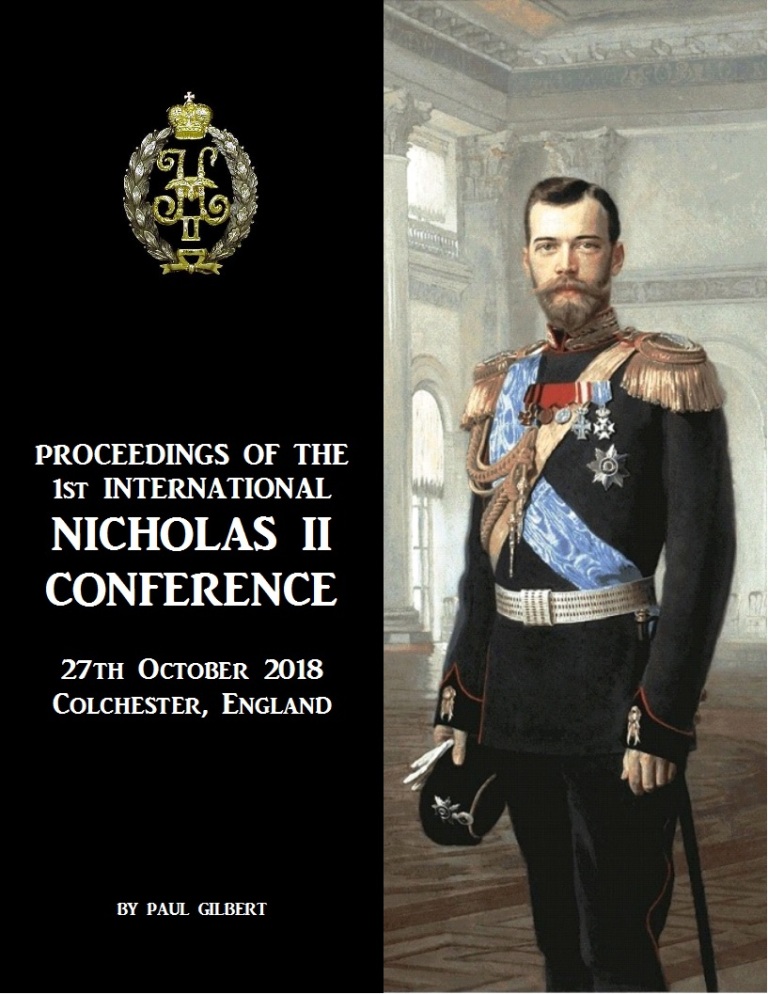
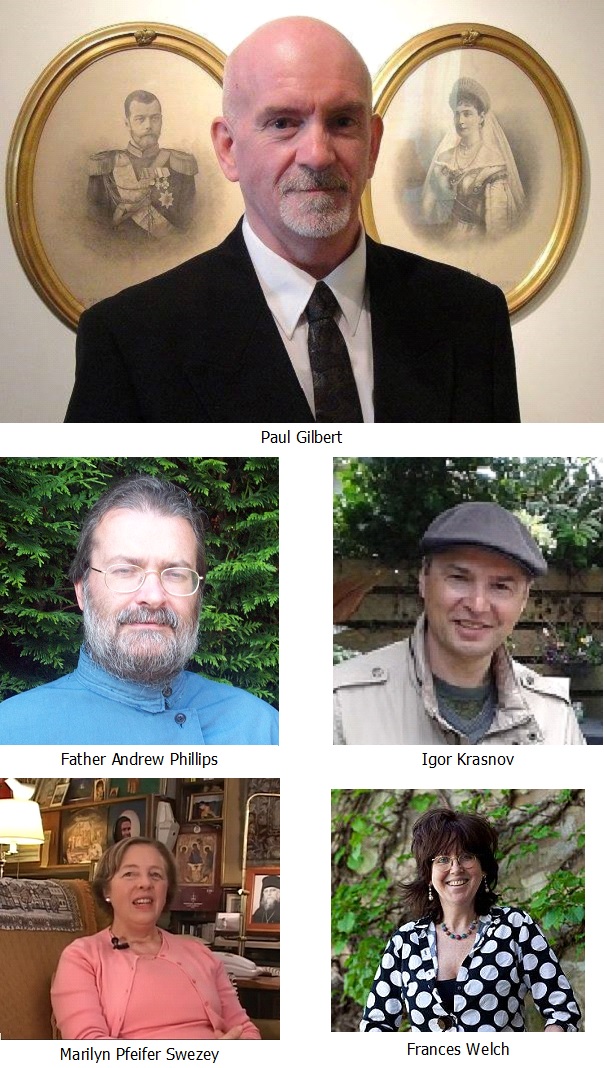
On 27th October 2018, I hosted the 1st International Nicholas II Conference at St. John of Shanghai Orthodox Church in Colchester, England, with the blessing of the church rector Andrew Phillips, Arch Priest of the Russian Orthodox Church (ROCOR).

© Paul Gilbert. 2 July 2022
Nicholas II in the news – Spring 2022

PHOTO: mosaic portrait of Emperor Nicholas II

Russia’s last Emperor and Tsar continues to be the subject of news in Western media. For the benefit of those who do not follow me on my Facebook page, I am pleased to present the full length articles and news stories published by American and British media services.

Below, are the articles published in April, May and June 2022. Click on the title [highlighted in red, located under each of the photos below] and follow the link to read each respective article:

Why on earth did Russia’s last emperor have DRAGON tattooed on his forearm?

Nicholas II, the last ruling offspring of the Romanov dynasty, got this unusual tattoo when he was traveling in Japan.

Source: Russia Beyond. 23 June 2022

Now in color: PHOTOS of Nicholas II & his children + 50 PHOTOS

Russian artist Olga Shirnina, known on the Internet under the username ‘Klimbim’ has given black-and-white photos of the Russian Imperial Family vivid colour and now the grand duchesses and the tsesarevich look incredibly alive.

Source: Russia Beyond. 31 May 2022
How Nicholas II’s favorite singer became a Soviet spy + 11 PHOTOS

Nadezhda Plevitskaya had dreamed of making music all her life. But the 1917 revolution changed her plans.

Source: Russia Beyond. 26 May 2022
How did Tsar Nicholas II become a saint? + PHOTOS

The canonization of the last Russian Tsar and his family was not an easy decision for the Russian Orthodox Church. So why did it make such a controversial move?

Source: Russia Beyond. 18 May 2022
Nicholas II’s awesome car collection + 13 PHOTOS

Despite being a bit reluctant about cars at first, Emperor Nicholas II quickly developed a strong liking for motor vehicles – and squandered copious amounts of money to get the best cars.

Source: Russia Beyond. 11 May 2022
Nicholas II’s family yachts + 15 PHOTOS

The Romanovs didn’t just build yachts with crystal chandeliers, churches and cowsheds onboard. These were massive cruisers, capable of going into battle, if the situation demanded it.

Source: Russia Beyond. 15 April 2022
Nicholas II through the eyes of Russian and foreign artists + 25 PHOTOS

Russia’s last tsar was keen on photography and we have lots of pictures taken of him and by him. But what about his image in fine art heritage?

Source: Russia Beyond. 12 April 2022
Paul Gilbert’s Romanov Bookshop on AMAZON – UPDATED with NEW titles!!

I have published nearly 30 titles to date through AMAZON – featuring one of the largest selections of books on Nicholas II, the Romanov dynasty and the history of Imperial Russia.

Please CLICK on the BANNER or LINK above to review my current selection of titles in hardcover, paperback and ebook editions. Listings provide a full description for each title, pricing and a Look inside feature.

© Paul Gilbert. 30 June 2022

‘Nicholas II: The Last Orthodox Tsar of Russia’ with Paul Gilbert achieves 100,000 views!

CLICK HERE or ON THE IMAGE ABOVE TO WATCH VIDEO
Duration: 19 min., 40 sec. English with Closed Captioning

On 28th June 2022, the video ‘Nicholas II: The Last Orthodox Tsar of Russia’ surpassed more than 100,000 views on YouTube! The video was produced in July 2020, by the Holy Monastery of St. John the Forerunner of Mesa Potamos in Cyprus.

“This video production is based on the research of project colleague and independent researcher Paul Gilbert, who also presents this video.”

I am truly honoured to be a research colleague of this important publishing project. I am most grateful to Father Prodromos Nikolaou and the Holy Monastery of St. John the Forerunner of Mesa Potamos in Cyprus for giving me the opportunity to be a part of this new video which tells the story about Russia’s last Orthodox Christian monarch.

Emperor Nicholas II reigned for 22 years. With his murder, the last Orthodox Christian monarch, along with the thousand-year history of thrones and crowns in Russia, ended, ushering in an era of lawlessness, apostasy, and confusion, one which would sweep Holy Orthodox Russia into an abyss which would last more than 70 years.

The creators have done a remarkable job of incorporating a wonderful collection of photos – both vintage B&W and colourized by Olga Shirnina (aka KLIMBIM) – vintage newsreel film footage and music.

One viewer noted on my Facebook page: “Only 20 minutes long, this is the BEST portrayal of the last Tsar’s Orthodox faith I have ever seen. Very well-made, historical and moving.”

The crowning moment of the video is near the end, which shows film footage of the actual canonization ceremony performed on 20th August 2000 by Patriarch Alexei II (1929-2008) in the Christ the Saviour Cathedral in Moscow. You can hear His Holiness calling out each of the names of the Imperial Family. The footage is extremely moving to watch.

This 20-minute video is presented in the framework of the production of the book The Romanov Royal Martyrs: What Silence Could Not Conceal published by Mesa Potamos Publications in 2019.

***

READ THE BOOK . . .

*This title is available from AMAZON in the USA, UK, Canada,
Australia, France, Germany, Spain, Italy, Netherlands and Japan

CLICK HERE TO ORDER THE PAPERBACK EDITION @ $9.99 USD

BOOK DESCRIPTION

Paperback edition. 134 pages + 23 black & white photos

This book is not only for Orthodox and non-Orthodox persons, but for any one who shares an interest in the life, death, and martyrdom of the Holy Tsar-Martyr Nicholas II.

An illustrated Introduction by independent researcher Paul Gilbert explores the piety of Nicholas II, and his devotion to the Russian Orthodox Church, which reached its fullest development and power, during his 22-year reign.

This book further examines the trials and tribulations the Tsar endured, which later led to his canonization by the Russian Orthodox Church.

This unique collection of writings helps dispel many of the negative myths which persist to this very day, a must read for any one who seeks to learn the truth about Nicholas II.

Gilbert has compiled this collection of writings as part of his mission to clear the name of Russia’s much slandered Tsar, and my own personal journey to Orthodoxy.

Holy Tsar Martyr Nicholas II, Pray to God for Us! 🙏

Святой Царь Мученик Николай, Моли Бога о Нас! 🙏

© Paul Gilbert. 28 June 2022

Exhibits from the Museum of the Family of Emperor Nicholas II in Tobolsk

PHOTO: recreation of the dining room in the former Governors Mansion, Tobolsk

Between August 1917 and April 1918 Emperor Nicholas II and his family were held under house arrest in the the former governor’s mansion [renamed “House of Freedom” by the Bolsheviks] in Tobolsk, Siberia.

In the beginning, the Imperial family were allowed to walk to the nearby Church of the Annunciation for worship, however, this was halted due to “concerns for their safety”. Despite this, the security regime in Tobolsk was more relaxed than in Tsarskoye Selo, allowing the family to lead a fairly calm life.

On 26th April 2018, the Museum of the Family of Emperor Nicholas II opened in the former Governor’s Mansion, following an extensive restoration. The museum is the first museum in Russia, dedicated entirely to Emperor Nicholas II and his family. Many original elements from the time that the Imperial Family lived here have been preserved. The interiors have been partially restored, each room featuring unique exhibits from their daily life. The chapel, which was set up in the ballroom of the mansion was also recreated, and consists of a folding iconostasis and an altar.

In addition, the museum features many unique personal items belonging to the Imperial family: Imperial porcelain, napkins with monograms, silver appliances, etc. One of the most precious exhibits is Empress Alexandra Feodorovna’s silk shawl. The Empress gave the shawl to the wife of the doctor in gratitude, who had treated the Tsesarevich Alexei.

Below, is a selection of five exhibits from the Museum of the Family of Emperor Nicholas II in Tobolsk:

Balalaika of Tsesarevich Alexei Nikolaevich [updated on 22 June 2022]

Empress Alexandra Feodorovna, a German by birth, enjoyed the sound of a three-stringed balalaika. She first heard the tunes of the Cossack-balalaika players when she first arrived in Russia. Initially, Alexandra Feodorovna wanted her daughters to take up playing a folk instrument, but in the end, it was her son Tsesarevich Alexei Nikolaevich who became interested in the instrument. Judging by a photograph [seen below] taken on the Imperial yacht Standart in 1907, Alexei had already picked up the balalaika at the age of three.

When the Tsesarevich grew up, he was appointed a music tutor, Alexander Alekseevich Resin (1857-1933). But Resin was dedicated to commanding the tsarist guard, so instead Alexei was offered a replacement – the Court adviser Alexander Nikolaevich Zarubin.

Zarubin played in an amateur orchestra of Russian folk instruments, which became the first such group in Russia. Zarubin conducted 12 balalaika lessons with Alexei Nikolaevich. For these lessons, the Tsesarevich bought one professional instrument for himself and presented two more to his fellow cadets – Vasily Ageev and Evgeny Makarov.

Alexei’s balalaika was made by the famous craftsman Semyon Ivanovich Nalimov (1857-1916), who from 1895 to 1917, produced more than 300 models of musical instruments. The soundboard of the instrument was decorated with inlay – a small stylized image of a house, which is assembled from separate pieces of wood of different shades. The body of the balalaika was carefully polished and varnished.

PHOTO: Tsesarevich Alexei Nikolaevich with his balalaika, 1907

Empress Alexandra Feodorovna encouraged her son’s passion. From 1917, she included mandatory balalaika lessons in his schedule of classes, which were supposed to take place twice a week. Sadly, however, these lessons never began: after the February Revolution of 1917, Nicholas II abdicated the throne, and in August of that year, the Imperial family were sent into exile to Tobolsk.

Alexei Nikolaevich took the instrument with him to Tobolsk, although there was no one to teach him in Siberia. In April 1918, when the Imperial family were transferred to Ekaterinburg, Alexei still held on to his passion for the balalaika.

Following their murders in July 1918, and the liberation of Ekaterinburg by the White Army, among the items found in the Ipatiev House, were two musical instruments, including a three-stringed balalaika. In addition, was a book Правила игры на балалайке [Rules of Playing the Balalaika], embossed with a crown and Alexei’s monogram on the cover.

Alexei’s balalaika was transferred to the collection of the Tobolsk Historical and Architectural Museum, where it remained until 2018, when the well-known St. Petersburg collector Valery Bruntsev transferred the instrument to the collection of the Museum of the Family of Emperor Nicholas II.

“Travels in the East of Nicholas II, Emperor of Russia When Tsesarevich” by Esper Ukhtomsky

On 5th November (O.S. 23rd October) 1890, Tsesarevich Nicholas Alexandrovich (future Emperor Nicholas II) embarked on a seven-month journey around the greater part of the Eurasian continent.

The total length of the journey exceeded 51,000 kilometres, including 15,000 km of railway and 22,000 km of sea routes, aboard the cruiser Pamyat Azov. The Tsesearvich’s journey took him to Greece, Egypt, India, Ceylon, Siam, Singapore, French Indochina, China, and Japan.

Nicholas Alexandrovich was accompanied on the journey by a close confidant Prince Esper Esperovich Ukhtomsky (1861-1921), a diplomat, publisher and Oriental enthusiast. He later published an account of this expedition: Travels in the East of Nicholas II, Emperor of Russia When Tsesarevich. Illustrations for the publication were made by the Russian artist Nicholas Nikolaevich Karazin (1842-1908).

The book was written in close consultation with Nicholas II, who personally approved each chapter. It took six years to complete, and was published in three volumes between 1893 and 1897 by Brockhaus, in Leipzig. Despite being expensive at 35 roubles, it still ran to four editions. Empress Alexandra Feodorovna bought several thousand copies for various government ministries and departments, and a cheaper edition was subsequently printed. The work was translated into English, French, German and Chinese, with a copy being presented to the Chinese Emperor and Empress in 1899 by the Russian envoy

Manila shawl of Empress Alexandra Feodorovna

This white natural silk shawl belonged to Empress Alexandra Fedorovna. The Empress’s wardrobe included several Manila shawls, which were popular in the early 20th century.

The name of the product was derived from the capital of the Philippines [a former Spanish colony] – Manila. In the 16th century, Spanish galleons arrived in the harbour, their holds full of china, precious stones, spices and fabrics including silk capes, from China. The shawls eventually found their way to Spain where they became a popular commodity. By the 18th century, they were already an important accessory of Spanish fashionistas and over time acquired the status of a luxury accessory. Not only were Manila shawls worn thrown over the shoulders: they were also used to decorate sofas, pianos and even walls. They became an important accessory for flamenco dancers.

The first silk shawls were decorated with hand-made embroidery with traditional Chinese motifs: dragons, bamboo, pagodas. Later, they were replaced by flowers and birds more familiar to Europeans, and brushes with special weaving appeared along the edges. The most common colours for Manila shawls were black, white, ivory and shades of red.

Perfume Coty of the Grand Duchess Tatiana Nikolaevna

In 1904, the French perfumer François Coty (1874-1934), created a perfume brand under his own name. The design of the bottle for his first fragrance was developed by the French company “Baccarat”. At first, few people were interested in the perfumes of an unknown perfumer, but once Francois Coty broke a bottle with them in a Parisian store, his luck changed. The scent filled the room and immediately attracted buyers. A few weeks later, Coty’s perfume was already on sale in department stores, boutiques and hairdressers throughout Paris.

François Coty became one of the most popular perfumers of the time. Before him, perfume was a luxury item available only to wealthy people. Coty created a line of fragrances in which the cost depended on the size and type of bottle. He said, “Give a woman the best product you can create, wrap it in simple but elegant packaging, set a reasonable price, and you have a business of a scale the world has never seen.”

The collection of the Museum of the Family of Emperor Nicholas II contains a glass bottle of perfume “Corsican Jasmine”, which was used by Grand Duchess Tatiana Nikolaevna. This fragrance was created by François Coty in 1906 and named after his homeland – the island of Corsica. The scent of “Corsican Jasmine” was also loved by the famous Russian poet Marina Tsvetaeva (1892-1941).

Nicholas II and Chess

Emperor Nicholas II had many interests and hobbies. He traveled around Russia by train, sailed with his family on the Imperial Yacht Standart, cycled, rowed, hiked and played tennis. The monarch was also fond of hunting, cinematography and photography, he loved to drive a car and patronized the Imperial Russian Automobile Society.

Nicholas II did much to popularize chess in Russia. For example, the big tournament in memory of the famous Russian chess player Mikhail Chigorin (1850-1908) in 1909, was partially financed by the Emperor, who donated a thousand rubles. The Emperor personally attended the tournament and awarded the finalists with the title of grandmaster, the winners received vases made by the prestigious Imperial Porcelain Factory.

In 1914, the Emperor supported the creation of the All-Russian Chess Union. With his approval, chess tournaments, international congresses and chess competitions were held in Russia.

While in exile in Tobolsk, the Emperor spent his days usually engaged in physical activities, such as sawing wood, working in the garden, or shovelling snow in the winter. In the evenings, members of the Imperial Family whiled away the time books, embroidery and playing chess.

The chess set in the collection of the Museum of the Family of Emperor Nicholas II was made at the Kasli plant in the first half of the 19th century. Kasli casting was highly valued not only in Russia, but also in Europe, for its excellent quality and attention to detail.

***

Click on the IMAGE below to watch a VIDEO tour [in Russian] of the the Museum of the Family of Emperor Nicholas II in Tobolsk, which includes the interiors and many exhibits. Duration: 19 minutes, 32 seconds

© Paul Gilbert. 22 June 2022

Memorial plaque in memory of Nicholas II’s 1904 visit to Penza returned

PHOTO: memorial plaque in memory of Emperor Nicholas II’s visit to Penza in 1904

On 19th June 2022, a memorial plaque installed at the beginning of the 20th century on one of the columns of the Cathedral of the Saviour [aka Spassky Cathedral] in memory of Emperor Nicholas II’s visit to Penza in 1904 was returned to the Penza Diocese. During his visit, the sovereign held a review of Russian troops who were being sent to the Russo-Japanese War, followed by a liturgy held in the Cathedral of the Saviour.

This memorial plaque, installed by the Penza City Duma, became the first memorial plaque in the Penza region. The inscription on it reads: “His Imperial Majesty the Sovereign Emperor Nikolai Alexandrovich and His Imperial Highness the Sovereign Heir Grand Duke Mikhail Alexandrovich deigned to visit the Penza Cathedral and prayed at this place on June 28, 1904 at 11 ½ o’clock in the afternoon.”

The words on the commemorative plaque turned out to be prophetic. The cathedral, located on the Cathedral Square of the city was blown up by the Bolsheviks in 1934. In 2010, reconstruction of the cathedral began, and took 12 years to complete.

PHOTO: Igor Sergeevich Shishkin (right) holds the historic memorial plaque, during the handing over ceremony at the Cathedral of the Saviour, on 19th June 2022

On 19th June 2022, His Holiness Patriarch Kirill of Moscow and All Russia performed the rite of the Great Consecration of the Cathedral of the Saviour in Penza, concelebrated by the clergy of the Penza diocese, and read out a decree on conferring the status of a cathedral.

For decades it was believed that the memorial plaque had been lost or destroyed. This was based on the recollections of Penza residents, who recalled that in February 1918, armed Bolsheviks came to the cathedral and smashed the plaque with their rifle butt. But as it turned out, the plaque miraculously survived. The parishioners hid it by burying it in the ground not far from the cathedral.

About twenty years ago, rumours surfaced that the memorial plaque had survived and was mostly intact [only a corner was broken off]. Local historians carried out a search of the former grounds, as a result of which the plaque ended up in the hands of the famous Penza collector Igor Sergeevich Shishkin, who today returned the memorial plaque to its rightful place.

The handover ceremony of the memorial plaque took place before the great consecration of the Cathedral of the Saviour, which was performed by His Holiness Patriarch Kirill of Moscow and All Russia during his primatial visit to the Penza Diocese.

© Paul Gilbert. 20 June 2022

My cancer journey and prayers for the intercession of Tsar-Martyr Nicholas II

PHOTO: the miraculous Myrrh-Streaming Icon of Tsar-Martyr Nicholas II and the Order of the Holy Tsar-Martyr Nicholas II

On 22nd April, I was diagnosed with Stage 2 Colon Cancer. No one ever wants to hear their doctor utter the words “tumour” or “cancer” – each word inflicting both shock and fear into a person – I was no exception. I recall that the first thing that popped into my head at that moment, was whether the cancer had spread? I would not know for sure until a C-Scan was performed, for which I had to wait another 3+ weeks. Until then, the waiting and uncertainty only fanned the flames of my fears.

In the days leading up to my C-Scan and surgery, I filled my time with the “best medicine”: prayers, positive thoughts, and laughter. I reached out to my family, friends, and to the many people who follow me on my blog and Facebook pages. I was simply overwhelmed by the love and support I received from thousands of people – many of them from people whom I have never met – from all over the world.

In addition, prayers were being said for me by Orthodox and non-Orthodox clergy in the United States, Canada, Australia, Britain and Russia.

One of the most inspiring messages I received, one which had a very profound effect on me, was the following, sent by a friend:

“You must remember that you have your work on Nicholas II to complete and it is YOU who have been chosen from above by His Majesty. May God be with you, dear Paul!”

On 14th May, I had my C-Scan, and 3 days later, the doctor called me with the results. I was so relieved to learn that the cancer had not spread to any of my vital organs or my bones. Glory to God for all things!

PHOTO: Paul Gilbert poses in front of his lithograph copy of the original miraculous Myrrh-Streaming Icon of Tsar-Martyr Nicholas II, gifted by Ija Schmit(1936-2018) in 1996

The intercession of Tsar-Martyr Nicholas II

Just two days before my admission to hospital, I was doing some spring cleaning – simply to keep my mind occupied – when I discovered a large firm envelope hidden behind some boxes in the back of my closet. I discovered that the envelope contained a large 12″ x 15″ colour lithograph copy of the miraculous Myrrh-Streaming Icon of Tsar-Martyr Nicholas II (seen in photo above).

This icon had been gifted to me back in 2000 by a friend in California. I could not believe that it lay hidden and forgotten alI these years! I was quite overcome with emotion, because I knew that this was an exact lithograph copy of the miraculous Myrrh-Streaming Icon of Tsar-Martyr Nicholas II, the same miracle-working icon which has been venerated by Orthodox Christians for more than two decades.

I placed the icon in a frame and hung it on a wall in my home. I then began to pray to God through the intercession of Tsar-Martyr Nicholas II, to help me get through my surgery and healing. I prayed for strength and courage, and I prayed for good health. Not only do I want to live to a ripe old age, I want to return to my beloved Russia, and I also want to continue my work in clearing the name of Russia’s much slandered Emperor and Tsar.

As some of you may already be aware, I have been considering entering the Russian Orthodox Church for several years now, and during that time have spent many hours in prayer and solitude in Orthodox churches, praying to God and venerating icons of Orthodox saints. In my home, I have icons of the Holy Royal Martyrs and Russian saints, which I venerate on a daily basis.

On the morning of Friday, 20th May, I arrived at Oshawa General Hospital for my surgery. My blood pressure and blood sugars went through the roof! Prior to surgery, my blood pressure exceeded 200!!, that is how stressed I was. When I was taken into the operating room, I repeatedly made the sign of the Orthodox Cross over myself, recited the Lord’s Prayer, the Jesus Prayer, and Psalm 23. Just before the anaesthesiologist administered the medication, I was filled with calm and peace . . .  

The next thing I knew, I was coming out of the anesthetic in the hospital recovery room. The following morning, the surgeon came to see me and informed me that “the surgery went very well”, that the tumour had been successfully removed. “Lord my God, I called to you for help, and you healed me.” (Psalm 30:2).

I have nothing but praise for the doctors and nurses at the hospital, all of whom went over and above the call of duty to ensure that I received the best possible care. After spending a few days in Oshawa General, I was sent home. I spent much of my recovery in bed sleeping or resting in my favourite armchair with a cup of tea and a good book. I still have some minor pain, and limited mobilty, however, my health continues to improve with each new day.

My post-surgery care now requires me to have regular blood work done and a C-Scan every six months plus an annual colonoscopy over the next two years. In addition, and despite the fact that the surgeon had successfully removed the tumour, the oncologist informed me that due to the fact that the cancer had penetrated the wall of my colon, that I undergo chemotherapy for a period of 6 months, which I agreed to.

While my cancer was not life-threatening, it could have been. The surgeon informed me that he had also removed three pre-cancerous [changes to cells that make them more likely to develop into cancer] polyps, noting that if I had I left it another year, that my situation would be much worse. I was one of the lucky ones, as the cancer was detected in its early stages.

I am the first to admit that my cancer journey pales in comparison to those of many others, it was a journey which nevertheless has had a profound impact on me, one which God willing, will add many more years to my life, and lead me to fulfill my heartfelt aspiration to enter the Russian Orthodox Church.

© Paul Gilbert. 14 June 2022

New monument to Nicholas II installed in Vladimir

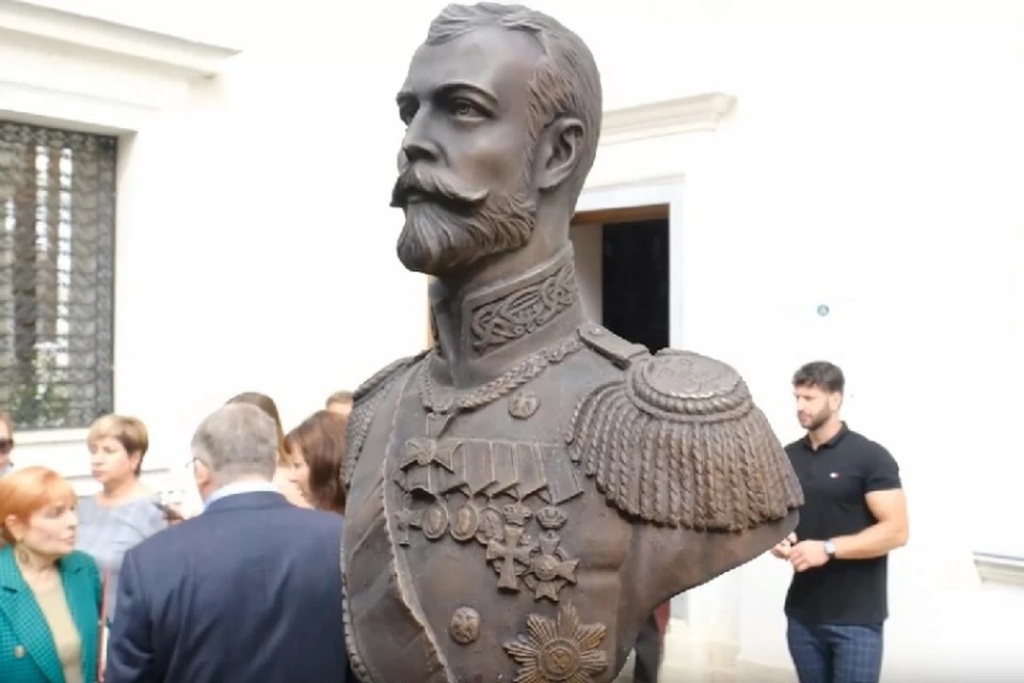
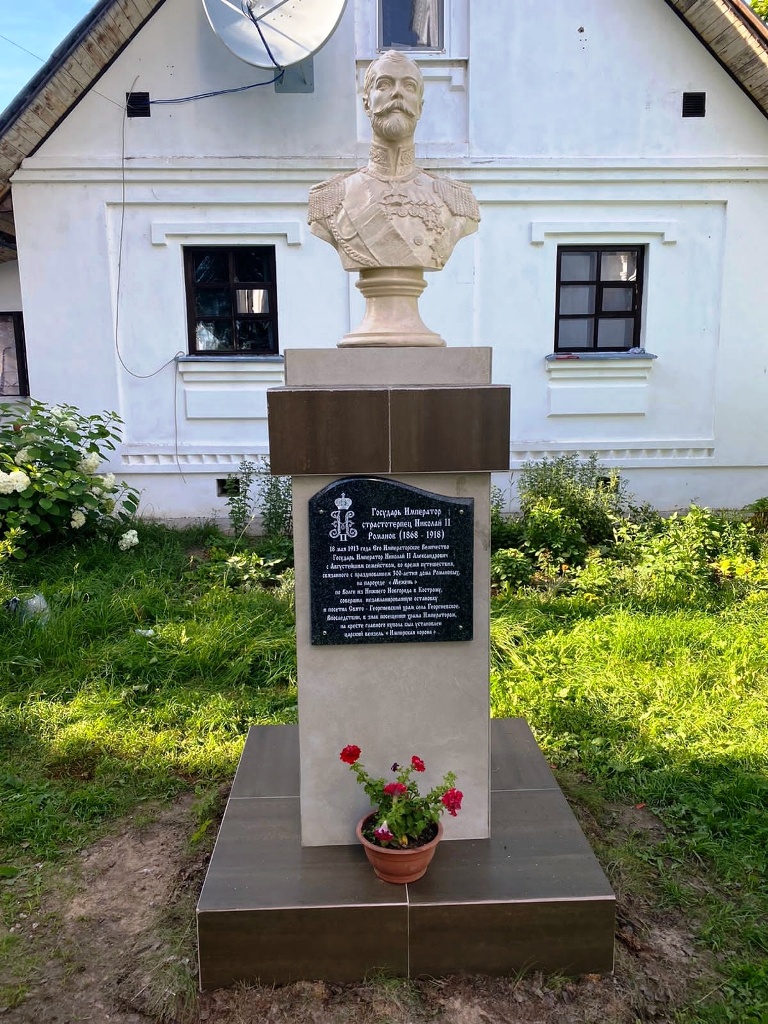
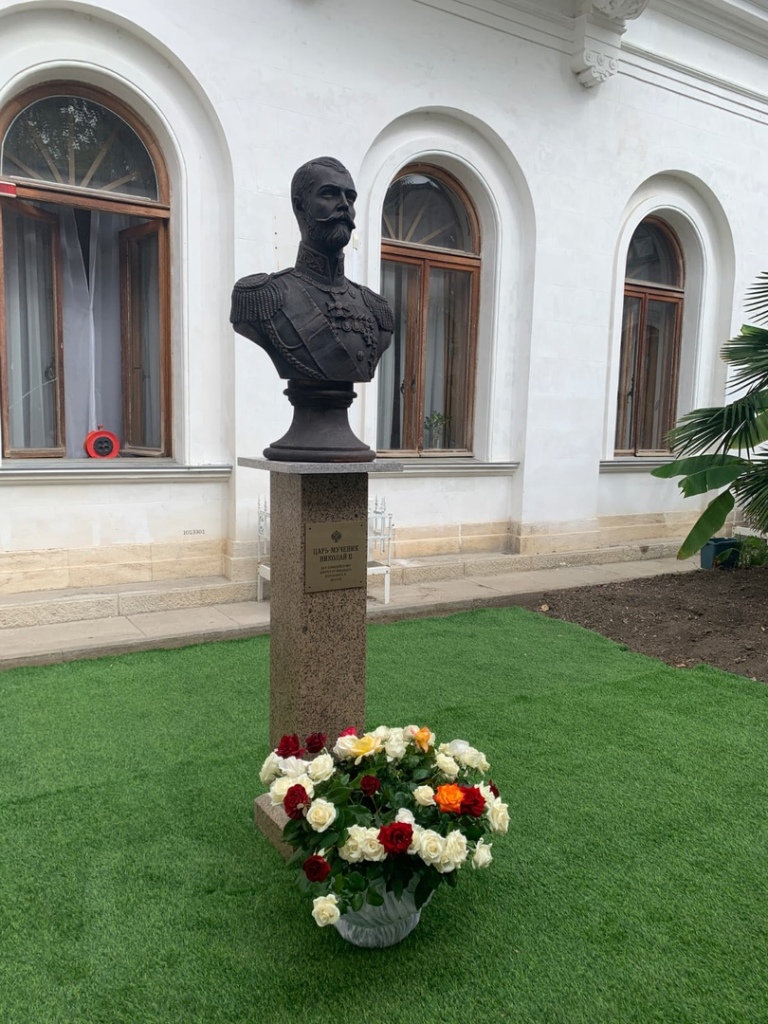
On Saturday 11th June – the eve of Russia Day and the feast of the Holy Trinity – a new monument to Emperor Nicholas II was unveiled on the grounds of the Church of the Life-Giving Trinity, located on Muzeynaya Street in Vladimir, Russia. The flags of the Russian Federation and the Russian Empire were placed on either side of the monument.

The bronze monument was created by the famous Vladimir sculptor Ilya Shanin. The pedestal was created by Nikolai Andrianov, and the memorial plaques by Yuri Tumarkin and artist Olga Rozanova.

  • Readers may recall that I reported on this new monument back in late 2021. Click HERE to read this article – PG

The initiative to install the monument came from the rector of the Holy Trinity Church, Father Evgeny Borovskikh, and Ilya Shanin. A fundraiser was announced in November 2021, the cost of casting and installation of the monument amounted to 1.5 million rubles [$20,000 USD], the entire amount of which was raised by private donors.

In January 2022, sculptor Ilya Shanin announced that he wanted the installation of the monument to take place in May 2023, to coincide with 110th anniversary of the Emperor’s only visit to Vladimir, on 16th May 1913.

PHOTOS: Close up views of the sculpture and pedestal

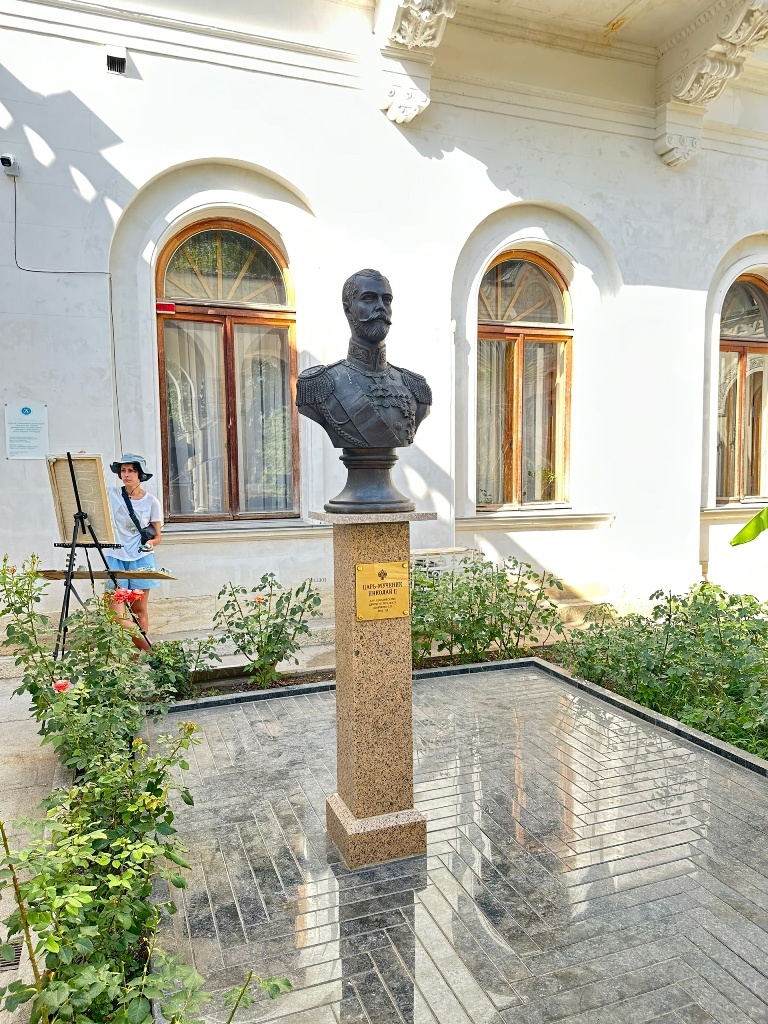
The bronze monument of Nicholas II was made at a factory in Smolensk. He is presented from the waist up wearing a ceremonial uniform, with a ribbon over his shoulder, crosses, orders and medals. The height of the monument is 125 centimeters [app. 4 ft.] without the pedestal. The granite pedestal was made in St. Petersburg. On the pedestal there is an inscription «Государь император Николай II» – “Sovereign Emperor Nicholas II”.

The monument is set against the backdrop of a large colourized photograph of the Imperial Family. The photo is famous, and part of a series taken in 1913 marking the 300th anniversary of the Romanov Dynasty. These black-and-white photos were mass produced and sold as postcards, the proceeds of which went to various charities supported by the Imperial Family.

It is interesting to add, that within 24 hours of the announcement of plans to install this monument to Emperor Nicholas II, local Bolsheviks and atheists reared their ugly heads in protest. The local branch of the Communist Party opposed its installation. The communists declared that they were “categorically against perpetuating the memory of ‘Nicholas the Bloody'”, as he organized the mass execution of unarmed workers in St. Petersburg and dragged Russia into two unnecessary wars.

Apparently, access to the monument is at present only possible during worship. The rest of the time the gates to the church are closed. Despite this, Vladimir residents still come to look at the bronze Nicholas II and take photos through the fence bars (see photo below).

It is known that Nicholas II came to Vladimir only once – on 16th May 1913, as part of the celebrations marking the 300th anniversary of the Romanov Dynasty.

The Vladimir Region is now home to two of Russia’s finest monuments to Emperor Nicholas II. In September 2021, Russia’s second largest monument to Nicholas II [featuring 8 colour photos + VIDEO] was also installed in the village of Sanino, Petushinsky District, Vladimir Region.

© Paul Gilbert. 12 June 2022

Emperor Nicholas II and King Edward VII meet at Reval, 1908

PHOTO: Pyotr Stolypin, Queen Alexandra, Emperor Nicholas II, King Edward VII, Vladimir Frederiks, Grand Duchess Olga Alexandrovna, Empress Alexandra Feodorovna, and Grand Duke Mikhail Alexandrovich, on the deck of the Russian Imperial Yacht.

On 9th June 1908, a meeting of the Russian Imperial and British Royal families took place in Reval [today Tallinn, Estonia]. The historic meeting marked the first visit of a reigning British monarch to the Russian Empire, although Edward had previously visited Russia as His Royal Highness The Prince of Wales in 1866, when he attended the wedding of the future Russian Emperor Alexander III in St. Petersburg. The meeting at Reval in 1908, served as an important diplomatic purpose in the aftermath of the 1907 Anglo-Russian Entente, which settled colonial disputes and instigated the Triple Entente.

King Edward VII arrived on the royal yacht Victoria and Albert roadstead of the port of Reval. He was accompanied by his wife Queen Alexandra (sister of the Dowager Empress Maria Feodorovna) and daughter of Princess Victoria of Great Britain. They were met by the Emperor, the Empress, their five children, Dowager Empress Maria Feodorovna, Grand Duke Mikhail Alexandrovich, Grand Duchess Olga Alexandrovna, and Queen Olga of the Hellenes (nee Russian Grand Duchess Olga Konstantinovna). In addition, the Emperor was accompanied by prominent members of his retinue, including Prime Minister Pyotr Stolypin, and the minister of the Imperial Court, Vladimir Frederiks.

On the morning of 9th June 1908, the hills and the wooded shores of the bay were crowded with thousands of well wishers. At 7 o’clock, the Imperial Train arrived in Revel from Peterhof. Crowds of children lined up to greet the Emperor and his family: “It is impossible to describe the delight of the children when the Imperial Family passed by. Their Majesties … were very touched,” the head of Nicholas II’s secret personal guard Alexander Spiridovich recalled. Passing the cheering crowds, the Imperial family proceeded from the train station to the port, where they boarded the Imperial Yacht Standart. Two other Russian Imperial Yachts were also in port, including the yacht of the Dowager Empress, the Polar Star and the smaller steam yacht Alexandria.

PHOTO: Nicholas dressed in the uniform of Colonel-in-Chief of the Royal Scots Greys, on the deck of the Imperial Yacht Standart. His son and heir Tsesarevich Alexei is standing beside him. 9th June 1908

Prior to meeting the British king, Nicholas dressed in the uniform of Colonel-in-Chief of the Royal Scots Greys. Nicholas II was appointed an honorary member of the distinguished regiment by Britain’s Queen Victoria in 1894, after he became engaged to Princess Alix of Hesse (Alexandra Feodorovna), who was Victoria’s granddaughter. King Edward, in turn, put on the uniform of the Russian Imperial Army, but it turned out to be clearly too small for him, but despite this, the king looked by no means impressive.

The British yacht Victoria and Albert anchored in the roadstead between the Standart and the Polar Star. The Imperial and Royal yachts were surrounded by British and Russian warships, also lying in the roadstead.

On board Nicholas greeted the British King by saying, “It is with feelings of the deepest satisfaction and pleasure that I welcome your Majesty and her Majesty the Queen to Russian waters. I trust that this meeting, while strengthening the many and strong ties which unite our Houses, will have the happy results of drawing our countries closer together, and of promoting and maintaining the peace of the world.”

An eyewitness recalled: “While the guests were very cordial towards one another, it was felt that Edward showed some condescension towards his nephew – he seemed to patronize him … he warmly hugged and kissed the Empress, and then carefully looked at the grand duchesses, who looked a little embarrassed. Then he went up to the heir [Alexei], took him in his arms and kissed him.”

The Dowager Empress Maria Fedorovna was delighted to once again meet her beloved sister Alexandra, the British Queen, with whom she maintained a prolific correspondence throughout her life. A luncheon was served on the Dowager Empress’s yacht, the Polar Star, but no speeches were made at this affair. The menu was traditional for such occasions: Toulouse consommé, pâté, champagne lobster, truffle and grouse rolls, vol-au-vents, Nantes duck, vanilla peaches and frozen strawberry puree.

At five o’clock, tea was arranged on the Royal Yacht Victoria and Albert. The Tsar arrived without his wife, since the Empress suffered from another attack of sciatica.

PHOTO: Imperial hosts and Royal guests gather for a state banquet in the dining hall of the Imperial Yacht Standart. Empress Alexandra Feodorovna can be seen in the center of the photograph, seated between King Edward VII [on the left], and His Royal Highness The Prince of Wales [future King George V, on the right]

At 8 pm, the hosts and guests gathered together for a state banquet on the Imperial Yacht Standart. During dinner, the orchestra played works by Borodin, Wagner, Liszt, Grieg, Glazunov and Gounod, while the monarchs made official speeches, both in English. The King thanked the Emperor for the warm welcome, recalling his previous visit to Russia, when he was still Crown Prince, and expressed hope for the Anglo-Russian alliance to be strengthened: “I believe that this will serve to closer uniting the ties that unite the peoples of our two countries, and I am sure that this will contribute to a satisfactory peaceful settlement of certain important issues in the future. I am convinced that this will not only contribute to a closer rapprochement between our two countries, but will also help maintain peace throughout the world,” Edward VII said. The emperor answered in the same spirit.

Early in the evening, boatloads of German and Russian residents steamed about in the roadstead and serenaded the Imperial and Royal visitors with national folk songs. After the sun set and darkness set in, the warships were all illuminated, and the Imperial Yachts Polar Star and Alexandria displayed special electrical effects.

The following day, the Emperor and Empress received a delegation from Reval, after which they again received British guests at lunch, during which a misunderstanding occurred. The King turned to the Empress and joked about the terrible accent with which the Grand Duchesses spoke English. The criticism hurt the Empress, especially since the King himself spoke English with a clear German accent. But the conclusions were made and soon the Grand Duchesses were appointed a new English tutor – Charles Sidney Gibbes, who after the revolution would follow the Imperial Family into exile to Siberia.

The inevitable exchange of gifts took place that day. The King presented his nephew with a sword made by Wilkinson, on which were engraved the words: “To His Imperial Majesty the Emperor of All Russia from His Loving Uncle Edward, Revel 1908.” The Emperor, in turn, presented his uncle with a jade vase with cabochon moonstones and chalcedony.

PHOTO: King Edward VII and and Emperor Nicholas II, Reval. 1908

That evening, dinner was served on the Royal Yacht Victoria and Albert. Shortly after the arrival of the Imperial couple, the King was faced with a dilemma. Who will accompany him to dinner: the Queen or the Dowager Empress? English protocol required that the Sovereign’s wife should precede the Dowager Empress, but this could offend Maria Feodorovna, who was also his wife’s sister. On the other hand, if the Empress was forced to take second place, she might well take the opportunity to leave. The King handled the situation with his usual aplomb. Taking both ladies by the arms, he declared: “Tonight I will enjoy the unique honour of inviting two Empresses to dinner.” After dinner, the King and his Imperial guests sat in comfortable chairs, coffee and liquors were served. There were also dances during which the Grand Duchess Olga Alexandrovna danced with the British Admiral John Fisher (1841-1920). Around midnight, the Imperial couple, having said goodbye to the guests, left the Victoria and Albert and returned to the Standart.

At 3 o’clock in the morning, the Victoria and Albert weighed anchor and arrived in Port Victoria in Kent three days later.

CLICK on the IMAGE above to view an album of photographs of the meeting of the Russian Imperial and British Royal families at Reval, on 9th June 1908

© Paul Gilbert. 9 June 2022

Obituary: German Yuryevich Lukyanov (1961-2022)

On 19th May, the prominent Russian lawyer German Yuryevich Lukyanov, died in Moscow at the age of 60.

Lukyanov was born on 30th October 1961 in Saratov. In 1984 he graduated from the Saratov Law Institute (forensic and prosecutorial department). In 1984-1986 he passed military service in the Armed Forces of the USSR. From 1987 to 1989 he served as an investigator of the Military Prosecutor’s Office of the Moscow Air Defense District (PVO). He retired from the reserve with the rank of Senior Lieutenant of Justice. In 1990 he began practicing law, and in 2001 became a member of the Moscow Bar Association.

In 1995, he was appointed legal representative for Princess Leonida Georgievna (1914-2010) and later her daughter Princess Maria Vladimirovna, the latter of whom he continued to serve to the present day.

Lukyanov’s legacy is worthy of honouring, because he worked for years to achieve the exoneration of Emperor Nicholas II, his family and their four faithful retainers, who were all brutally murdered by the Bolsheviks in 1918.

German Yuryevich Lukyanov died on 19th May 2022, the day marking the 154th anniversary of the birth of Russia’s last Emperor and Tsar. Some time ago Lukyanov had developed a severe form of COVID-19, recovered and returned to work.

It is symbolic that the Lord called German Lukyanov to Himself on the birthday of the Holy-Martyr Tsar Nicholas II, whose memory he sacredly honoured.

Memory Eternal! Вечная Память!

© Paul Gilbert. 4 June 2022